Green energy is in its heyday.
Renewable energy sources now account for 22% of the nation’s electricity, and solar has skyrocketed eight times over in the last decade. This spring in California, wind, water, and solar power energy sources exceeded expectations, accounting for an average of 61.5 percent of the state's electricity demand across 52 days.
But green energy has a lithium problem. Lithium batteries control more than 90%of the global grid battery storage market.
That’s not just cell phones, laptops, electric toothbrushes, and tools. Scooters, e-bikes, hybrids, and electric vehicles all rely on rechargeable lithium batteries to get going.
Fortunately, this past week, Natron Energy launched its first-ever commercial-scale production of sodium-ion batteries in the U.S.
“Sodium-ion batteries offer a unique alternative to lithium-ion, with higher power, faster recharge, longer lifecycle and a completely safe and stable chemistry,” said Colin Wessells — Natron Founder and Co-CEO — at the kick-off event in Michigan.
The new sodium-ion batteries charge and discharge at rates 10 times faster than lithium-ion, with an estimated lifespan of 50,000 cycles.
Wessells said that using sodium as a primary mineral alternative eliminates industry-wide issues of worker negligence, geopolitical disruption, and the “questionable environmental impacts” inextricably linked to lithium mining.
“The electrification of our economy is dependent on the development and production of new, innovative energy storage solutions,” Wessells said.
Why are sodium batteries a better alternative to lithium?
The birth and death cycle of lithium is shadowed in environmental destruction. The process of extracting lithium pollutes the water, air, and soil, and when it’s eventually discarded, the flammable batteries are prone to bursting into flames and burning out in landfills.
There’s also a human cost. Lithium-ion materials like cobalt and nickel are not only harder to source and procure, but their supply chains are also overwhelmingly attributed to hazardous working conditions and child labor law violations.
Sodium, on the other hand, is estimated to be 1,000 times more abundant in the earth’s crust than lithium.
“Unlike lithium, sodium can be produced from an abundant material: salt,” engineer Casey Crownhart wrote in the MIT Technology Review. “Because the raw ingredients are cheap and widely available, there’s potential for sodium-ion batteries to be significantly less expensive than their lithium-ion counterparts if more companies start making more of them.”

What will these batteries be used for?
Right now, Natron has its focus set on AI models and data storage centers, which consume hefty amounts of energy. In 2023, the MIT Technology Review reported that one AI model can emit more than 626,00 pounds of carbon dioxide equivalent.
“We expect our battery solutions will be used to power the explosive growth in data centers used for Artificial Intelligence,” said Wendell Brooks, co-CEO of Natron.
“With the start of commercial-scale production here in Michigan, we are well-positioned to capitalize on the growing demand for efficient, safe, and reliable battery energy storage.”
The fast-charging energy alternative also has limitless potential on a consumer level, and Natron is eying telecommunications and EV fast-charging once it begins servicing AI data storage centers in June.
On a larger scale, sodium-ion batteries could radically change the manufacturing and production sectors — from housing energy to lower electricity costs in warehouses, to charging backup stations and powering electric vehicles, trucks, forklifts, and so on.
“I founded Natron because we saw climate change as the defining problem of our time,” Wessells said. “We believe batteries have a role to play.”
Header photo of battery courtesy of Natron Energy
Every day the Good Good Good team collects the best good news in the world and shares it with our community. Here are the highlights for this week!
If you want to get good news in your inbox every day, join the Goodnewsletter — the free daily newsletter designed to leave you feeling hopeful.
The Best Positive News We’re Celebrating This Week —
Production of a more sustainable, cost-effective, low-carbon cement is on the rise — it could help reduce construction carbon emissions
Aside from water, concrete is the most-used material in the world, with about 14 billion cubic meters being used every year. But concrete production releases carbon dioxide (CO₂), one of the greenhouse gases that drives climate change.
Thankfully, production of a more sustainable and cost-effective low-carbon cement, often nicknamed “green” cement, is scaling up. A new plant next to an existing cement plant in Redding, California, will produce about 15,000 tons of low-carbon cement every year.
While this represents only a small percentage of the concrete produced annually — it’s part of a larger movement to make the process of concrete production more sustainable.
→ Read more
More good “green” construction news:
- A building material that actually consumes carbon dioxide is now being used for construction projects in the U.S.
- Researchers have figured out how to 3D print bridges with dramatically less waste and emissions.
- A startup in Africa is using plastic waste to build affordable housing.
- Scientists have figured out how to use newspapers and rice husks to make more eco-friendly insulation.
The U.S. now has one fast electric vehicle charging station for every 15 gas stations
In just the first quarter of 2023, the number of public fast-charging stations for electric cars across the U.S. increased by 7.6%. There are now nearly 8,200 total stations — one for every 15 gas stations.
Thanks to funding from the National Electric Vehicle Infrastructure program, $5 billion was allocated to help fill gaps in the electric vehicle charging networks.
Aside from the help from that funding, there’s another thing driving the growth: more people are driving electric vehicles. As electric vehicles continue to take up more space on the roads (cleaning up our air in the process!), companies running charging networks are busier than ever — helping their profitability, and furthering expansion plans for even more stations.
While one EV station for every 15 gas stations might not sound like a lot (it’s true, we need to have many more to meet growing demand!) — it’s incredible progress from where we were even just a few years ago. And another example of a good climate “tipping point.”
Ahead of shows in Omaha, country music star Zach Bryan took a detour to help Nebraskans impacted by devastating tornadoes
The recent tornadoes in Nebraska were a lot more devastating than Midwesterners are used to — in suburban Omaha and nearby Eklhorn, at least 150 homes were damaged or destroyed. One of the dozens of reported tornadoes registered as one of the most severe in the area’s history.
And while there were miraculously no fatalities, the damage across the region left hundreds of residents without homes.
Instantly, the Nebraska community rallied, with volunteers jumping in to help with cleanup — among them was country singer Zach Bryan, a Nebraska native who was coincidentally in the area for his “Quittin Time Tour.”
→ Read more
More celebrities doing good:
- Maggie Rogers is selling concert tickets to fans at real-life box offices to fight exploitation in the music industry.
- Jon Stewart helped raise $25k for an animal shelter after a heartfelt tribute to his dog Dipper on “The Daily Show.”
- Olivia Rodrigo donated to women’s shelters on the Canadian leg of her tour — after launching her Fund 4 Good to support reproductive rights on the U.S. leg.
- YouTubers Rhett & Link got colonoscopies together to educate fans about and raise awareness for colon cancer.
- Author John Green is making a $1 million annual donation to fight tuberculosis, the world’s deadliest disease.
A new, first-of-its-kind study found that global conservation efforts are helping slow biodiversity loss
A group of scientists from dozens of research institutes spent 10 years looking at 665 conservation initiatives — some from as long ago as 1890 — across different countries, oceans, and species. They just published their findings — and they’re incredibly encouraging.
In two out of every three cases, the conservation initiative had a positive impact on reducing biodiversity loss. The authors said the findings were a “ray of light” for conservationists looking to protect endangered and threatened animals and ecosystems.
Even more encouragingly, when a conservation initiative did not help the intended species — which happened in one out of five cases — others still benefited from the effort.
Why is this good news? Currently, one out of every three species being monitored is endangered due to human activity. While we need to stop that harmful activity in the first place, it’s really good news to find that human intervention in the form of conservation efforts can also help slow and reverse the damage we’ve already done.
Locals and wildlife officials worked together to save 130 beached whales in Western Australia
Recently, more than 150 pilot whales were beached in the town of Dunsborough in Western Australia. Together with rescue teams and veterinarians, locals quickly rushed to help save them.
They worked together to hold the whales upright and keep their blowholes clear until they could be returned to the water. While tragically some of the whales died — they were able to save a significant majority of them, 130 in total.
According to one expert, typically with a mass beach stranding like this, only a few whales survive. Pilot whales are highly sociable, and stick together even when an injured member of the pod gets too close to shore.
→ Read more
More good news for marine animals:
- People, organizations, and governments are working to reduce human-made ocean noise that could help save marine animals.
- Ten countries in the western Indian Ocean are banding together to create a network of marine conservation areas called the “Great Blue Wall.”
- An organization is using cutting-edge technology to create the world’s first livestream map monitoring the global fishing fleet to fight illegal fishing.
- Across the U.S., 40,000 salons are donating their hair clippings to be made into hair mats that help clean up oil spills.
Satellite imagery and AI just helped researchers uncover an extra 64,000 square kilometers of coral reefs
Using satellite images, machine learning, and on-ground knowledge from a global network of people living and working on coral reefs researchers uncovered an extra 64,000 square kilometers of coral reefs — an area the size of Ireland.
That means the world’s coral reefs are close to 25% larger than previously thought, and brings the size of the planet’s total coral reef ecosystems (critical for protecting marine life and coastlines from the impacts of climate change) to 348,000 square kilometers — the size of Germany.
Previous methods made it harder to determine the extent of coral reefs — but thanks to high-resolution satellite data covering the entire world, researchers can see reefs as deep as 30 meters down and get much more accurate measurements.
→ Read more
More good news for coral reefs:
- After years of being ravaged by disease, a nonprofit just successfully 40,000 coral substrates in the Caribbean.
- An all-women restoration team in Indonesia is working to regrow the island’s coral reefs and launch a training program to teach other citizens to do the same.
- A team of combat diving veterans are using their highly specialized skills to restore coral reefs, remove invasive species, and remove marine debris.
More than 100 tattoo artists are participating in a fundraiser to raise money for people in Gaza
Over the past few months, Palestinian American activists Randa Jarrar and Ariana Bazlamit have been organizing in Los Angeles, brainstorming ways to help their people as violence, starvation, and displacement wage on — when Jarrar came up with the idea for a tattoo fundraiser.
They started reaching out to their tattoo artist friends, and the Hibr project was born. Now, over 170 tattoo artists across the globe will be offering tattoos in support of Palestinians this weekend.
Profits from the artists’ designs will be sent back to Jarrar and Bazlamit, who will redistribute funds to folks on the ground in Gaza.
The response to the event has been so popular — they’ve already added two more dates, and opened the project to more tattoo artists looking to participate.
More good news of the week —
The EPA just passed a regulation that would force coal plants to nearly eliminate pollution or shut down entirely. Coal plants will now have until 2039 to reduce 90 percent of their greenhouse pollution.
A rainforest “cacao project” is providing a wildlife refuge while generating income for cacao farmers in Sierra Leone. The region is a biodiversity hotspot, home to more than 400 species of wildlife, including endemic and threatened species, and more than 100 forest-dependent communities.
A “significant milestone” for LGBTQ+ rights in the Caribbean, the Dominica High Court overturned a ban on same-sex relations. A gay man living in Dominica brought the case, saying the law violated his constitutional rights — and the court agreed.
Bloomberg is funding youth-led climate action in more than 100 cities around the world. Each city will receive an initial disbursement of $50,000 — with an incentive to receive an additional $100,000 to further support youth-led efforts.
And that’s good news because… Youth councils are playing a huge role in saving cities from climate change.
Hundreds of faith leaders urged Congress to support $1.65 billion in funding to fight AIDS, tuberculosis, and malaria. The leaders sent a letter to the appropriations committee asking them to fund the work of the Global Fund, which has saved 59 million lives since 2002, through 2025.
A new barbershop in Denver is staffed with formerly incarcerated people. R&R Head Labs exclusively employs formerly incarcerated and justice-impacted individuals, helping address the financial, logistical, and emotional inequities associated with reentry into society.
A transgender man fled Russia, where being trans is illegal, to find safety in the “trans refuge” state of Minnesota. Erik Beda and his husband fled to Minnesota — which just celebrated one year as a “trans refuge” state — after Russia added the LGBTQ+ community to its extremist list.
The EU just voted to ban the destruction of unsold clothes under new “ecodesign” legislation. Helping address overproduction in the textile industry, the legislation also requires a “digital passport” for product information on dishwashers, televisions, and more.
A new, non-invasive urine test is “changing the game” for prostate cancer screening. Affecting nearly 13% of American men, prostate cancer is the most prevalent cancer in men aside from skin cancer.
Scientists developed a new mRNA vaccine that can deliver treatments more effectively in children with brain cancer. Because many chemotherapies are unable to penetrate the protective barrier around the brain, brain cancers remain among the most challenging tumors to treat — especially in children.
Cities across the U.S. are raising taxes to help improve and provide access to child care for families. In New Orleans, for example, the money both helps cover the cost of children to attend — and toward improving child care center quality.
More than $6 billion in loans for 317,000 Art Institutes students was just forgiven. President Biden announced the relief for attendees of the now-closed art schools, saying they “falsified data,
Under new federal rules, LGBTQ+ employees can’t be misgendered or denied bathrooms at work. The new guidance strengthens protections for trans and nonbinary employees for the first time in 25 years.
A biomedical engineer designed a groundbreaking stroke screening for sickle cell patients in Africa. The affordable screening will help reduce the likelihood that children born with sickle cell disease — an estimated 300,000 babies per year — will die from stroke, one of the disease’s most common complications.
In similar good news... another innovative diagnostic approach is helping tackle one of the world’s deadliest diseases in children.
Activists are installing “guerilla benches” at bus stops in California cities, inspiring local officials to add official seating for transit passengers. One of them tweeted a photo of his 64-year-old neighbor sitting on the curb at a bus stop to draw attention to the lack of seating for bus riders.
— Police and wildlife authorities in Malawi have arrested two men suspected of having killed an elephant in Kasungu National Park.
— Residents of villages just outside the park’s boundaries informed police about two men selling elephant meat, who were subsequently found in possession of 16.6 kg (36.6 lbs) of ivory.
— Kasungu forms part of a transfrontier conservation area that extends into Zambia, a previous poaching hotspot where authorities have spent the past five years strengthening enforcement in collaboration with the International Fund for Animal Welfare.
— In July 2022, 263 elephants were translocated to Kasungu from Liwonde National Park in southern Malawi; communities have reported increased raids by elephants on farms and granaries since then, with four people killed by elephants between July and October.
Police and wildlife department officials in Malawi have arrested two men suspected of having killed an elephant in Kasungu National Park in the country’s west.
In July 2022, 263 elephants were translocated to the park, which forms part of a transfrontier conservation area covering 32,000 square kilometers (12,400 square miles) across Malawi and Zambia.
Parks authorities in the two countries, working alongside the International Fund for Animal Welfare (IFAW), have invested $8.5 million since 2017 to secure what was previously a hotspot for poaching and illegal wildlife trafficking.
Police say Grave Nkhoma, 48, and Nickson Nthukwa, 50, were arrested in Kasungu district on April 11 and found in possession of 16.6 kilograms (36.6 pounds) of ivory. Residents of villages just outside the park’s boundaries informed police about two men selling elephant meat.
“The community knew where they were operating from in those two weeks so they tipped the police and park officials,” said Anthony Chatama, vice chair of the Kasungu Wildlife Conservation for Community Development Association, a local community organization.
“This is one role we are playing in our partnership with the government in conservation in Kasungu National Park and surrounding areas.”
Joseph Kachikho, police spokesperson for Kasungu district, told Mongabay that investigators confiscated locally made weapons from the men, including a large-caliber muzzle-loaded gun that police say the two used for their poaching operations in the park.
They’ve been detained pending a date to appear in court to be formally charged.
Following their arrest, the two men led the officials to the carcass of a bull elephant in the park, where they admitted to killing the elephant on March 28. Department of National Parks and Wildlife (DNPW) officials told Mongabay that one of them had previously been convicted of poaching offenses in the same park: Nthukwa was jailed for five years in 2019 for killing an elephant in Kasungu. His sentence was commuted in 2021 and he was released.
Nkhoma has been on a wanted list for several years in connection with multiple incidents of poaching of elephants and buffalos in the park.
Officials say he previously avoided arrest by crossing the border to a second home he maintains in Zambia. He’s also wanted in Zambia for poaching-related offenses there.

Kasungu National Park, Malawi’s second largest at 2,100 km2 (810 mi2), was home to more than 1,200 elephants in the 1970s. However, decades of poaching for ivory decimated the elephant population.
According to government figures, there were only 50 of the animals left in the park in 2015.
The park lies on the border with Zambia and forms part of the Malawi-Zambia Transfrontier Conservation Area.
In 2017, IFAW, in partnership with the wildlife and parks departments in both Zambia and Malawi, initiated a five-year project to combat wildlife crime in the Malawi-Zambia landscape, which covers Malawi’s Kasungu, as well as Lukusuzi and Luambe national parks in Zambia, both also hotspots for elephant poaching.
In Kasungu, the project strengthened security through joint law enforcement operations and training of game rangers and police and judiciary in investigation and prosecution of wildlife crimes, leading to a reduction in elephant poaching cases.
In July 2022, 263 elephants and more than 300 other animals were translocated to Kasungu from Liwonde National Park in southern Malawi, in a month-long exercise.
Since the translocation, villagers around Kasungu National Park’s boundaries have reported increased elephant raids on their farms and granaries.
In a series of incidents between July and October 2022, four people were killed by elephants.
Malawi DNPW director Brighton Kumchedwa said the human-elephant conflict was due to the newly translocated elephants trying to establish their territory.
“With a new herd, there are always these movements from one corner of the park to the other until such time when they settle down,” Kumchedwa told Mongabay in October 2022.
Banner image: Savannah elephants at Majete NP, Malawi. Image by Peter Steward via Flickr (CC BY-NC 2.0)
This article was originally published on Mongabay.
There are few American pleasures as delightful as exploring one of the country’s 400+ national parks — but disabled visitors often find themselves excluded from the adventures so many outdoorists love most.
Slowly but surely, things are changing.

Last year, Great Smoky Mountains National Park — one of the most popular destinations in the NPS — launched a program of free, adaptive activities. And this year, the park is expanding its offerings.
Last year, the park and its partners hosted three hikes and one mountain bike outing with adaptive gear. But this year, between June and October, visitors can expect seven engaging events: Three hikes, two mountain bike rides, one kayak trip, and one night of camping in the beloved park.
“The programs allow individuals with disabilities and their families and community to move beyond the pavement to explore and enjoy the Smokies,” Emily Davis, a public affairs specialist with the national park, told the Washington Post.
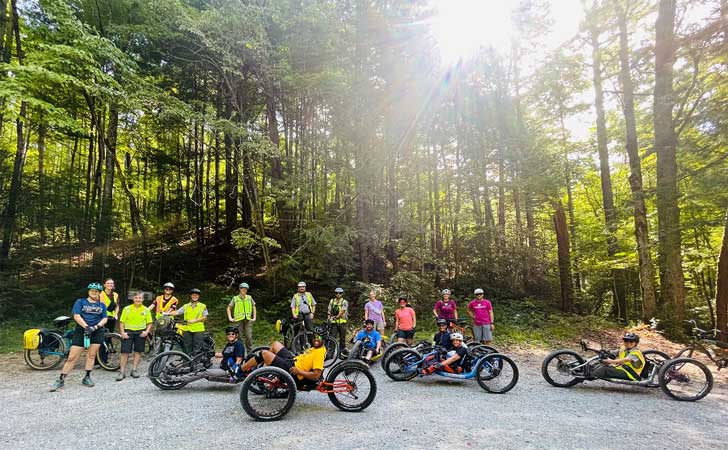
Adaptive excursions like these are made possible by programs with experts, like the folks at Catalyst Sports, who provide equipment and knowledge to park-goers.
“These ranger-led tours promise an enriching experience for visitors of all abilities and their families, allowing them to immerse themselves in the natural and cultural treasures of this magnificent park,” Catalyst Sports shared on its website.
Here are the planned adventures for the 2024 season:
- June 8-9: Overnight backcountry camping trip
- June 22: Kayak on Fontana Lake
- July 14: Hike and boat tour, starting at Fontana Lake Marina
- September 7: Hike at Bradley Fork
- September 14: Mountain Bike at Deep Creek Trail
- September 15: Mountain Bike at Forge Creek Road
- October 5: Hike at Middle Prong Trail
Folks who are interested in any of these events can register for free through Catalyst Sports’ website.
Making the outdoors more accessible
While Great Smoky Mountains National Park is contained in Tennessee and North Carolina, Catalyst Sports offers its services and programming in 11 cities, including Atlanta, Washington D.C., Birmingham, and more.
The organization’s equipment includes three-wheel off-road trikes for mountain biking, which come with e-assist for powering through steep terrain. Hiking chairs have levers and a front wheel for pushing through obstacles. And kayaks have adaptations that prevent tipping, custom seat supports, and modifications that are tailored for people with limb differences or limited mobility.

Participants are also welcome to bring their own gear — and their other friends and loved ones who don’t require additional assistance.
“It’s not just about making something accessible. It’s about making it inclusive, so that the entire family and friends can be part of it,” Mark Bogosian, of the Christopher and Dana Reeve Foundation told the Washington Post.
The Christoper and Dana Reeve Foundation is another integral part of making the outdoors more accessible; the organization created an Accessible Outdoor Checklist, which helps parks, trails, and organizations adopt inclusive practices.
These days, that assistance is needed more than ever, as other NPS sites begin to expand their accessibility offerings, including all-terrain wheelchairs, beach wheelchairs, and more.

Many of these parks, like Rocky Mountain National Park or the Great Sand Dunes National Park, still have limited supplies, meaning folks are encouraged to make reservations if they want to get in on the action.
Despite the logistical hurdles, disabled adventurers and their advocates know it’s worth the challenge.
“Today’s hike gave me hope for [the] future,” one of last year’s Great Smoky Mountains participants said in Catalyst Sports’ annual report. “Now I know there are options for me.”

And volunteers — who can be trained easily online — say that these accessible excursions enrich their own experience in the outdoors.
“My experiences with Catalyst have always been rewarding,” North Carolina volunteer and Mountain Bike Coordinator Matt Kirby shared in a blog post for the organization.
“Not only are we providing access for people to enjoy adventure sports, but I get to share things that I’ve accessed throughout my life with people who are in the forest for the first time. It tugs at my heartstrings.”
Header images courtesy of Catalyst Sports
The city of San Francisco is home to over 800,000 people, and dotted with countless pets, piers, parks, and bustling businesses.
Now, picture that same stretch of land copied and pasted atop the green, rolling hills of San Luis Obispo County, California.
There, on 27,512 acres of the property, rests Camatta Ranch, a cattle ranch that just completed the second biggest land conservation easement in the country.
“It’s an incredible landscape filled with rolling hills, green grass, oak woodlands and really important wildlife habitat,” Land Conservancy of SLO County executive director Kaila Dettman told The San Luis Obispo Tribune. “It’s really, really exciting to protect something of this scale.”
The cattle ranch has been in the hands of the Morrison family for six generations, since it was first purchased in 1978.
Going forward, the land will remain privately owned by the family, but it will also be open to nature tours for the public. And more importantly, the huge swath of land will be protected against any future development.
The land easement of Camatta Ranch is second only in size to the protected wooded peninsulas and vast grasslands of Hearst Ranch in San Simeon, California.
“It’s almost like a sibling because you look after it,” said Emilee Morrison, who was raised on the ranch. “We’re borrowing it from our grandchildren. We believe we’re just a link in the chain.”
Camatta Ranch co-owner Felicia Morrison agreed, saying that their family feels like their “ranch is a blessing” that needs to be shared.
“Southern California used to look like this,” Felicia said. “There’s no guarantee that it will stay like this unless we protect it.”
For the Morrisons, the conservation agreement is not just about opening up their emerald green land to the public.
It’s also about making sure the acreage — which spans from the Los Padres National Forest to Shandon, CA — is protected for the hundreds of animals that call it home: golden eagles, bald eagles, mountain lions, red-tailed hawks, and even bison.

The land is also a vital pathway for a local population of pronghorn antelope, who traipse across the ranch every year when they migrate.
“It really is a corridor of statewide significance for our local critters that call this county home,” said Dettman.
The Camatta Ranch is not just a haven for creatures, it’s also one of the last remaining homes to the threatened Camatta Canyon amole lily. In fact, a whopping 90% of the plant’s population grows on the land.
“The biodiversity on this ranch is phenomenal and so important to preserving threatened and endangered species,” said Dettman.
Another common sighting? Black bears, which were once threatened, but have been on the rise since they were removed off the endangered species list in 2016. They join bald eagles and red tailed hawks as once vulnerable species that are bouncing back due to conservation efforts like these.
“It was very important to protect this place so they can continue to thrive here,” Dettman said.
Header images via Vincent / RikkisRefugeOther (CC BY 2.0 DEED) and Becky Matsubara (CC BY 2.0 DEED)
It’s no secret that the Met Gala is a cultural mainstay for the celebrity elite — and those who love to ogle them. How many of us have retweeted a photo of Jared Leto dressed as a cat, or made our own memes re: Jason Derulo falling down the museum’s stairs?
But it’s that air of exclusivity that also makes the annual costume ball hard to take seriously.
In fact, over the years, the event has been the subject of calls for increased diversity and inclusion — including the need to make the event more wheelchair accessible.
But for a group of organizers in Brooklyn, the task is not to make the Met Gala more accessible to the average person — but to make their own gala entirely.
Enter: The Debt Gala, a comedy-fashion fundraiser that takes place the night before the Metropolitan Museum of Art’s big night.
As an event at Brooklyn’s Bell House concert venue, the DIY alternative to the Met doesn’t raise millions for the costume department of the city’s most-visited museum.
Instead, it seeks to raise awareness about medical debt and health care inequality, with proceeds from ticket sales going to organizations that relieve debt for people across the country.
This year’s tickets were $35 (a stark contrast to the $75,000 going rate of a Met Gala ticket), with proceeds going to the Debt Collective, and Dollar For.
The Debt Gala first debuted last May and donated funds to RIP Medical Debt — though it was mostly rained out by historic flooding in Brooklyn.
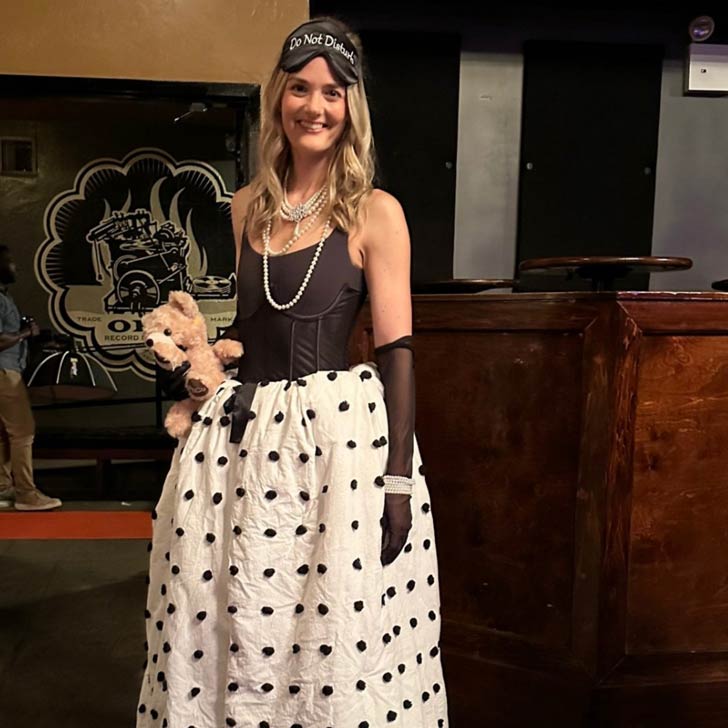
But last night, organizers and attendees were out in full force, dressing for the theme “Sleeping Baddies: Slumber Party,” which was a parody of the Met Gala’s theme, “Sleeping Beauties: Reawakening Fashion.”
Attendees donned their evening best, showing up to the Bell House in bathrobes, PJs, slippers, and more.
Allison Gould, a healthcare professional, wearing a dress made from teddy bears, was proud to be among the crowd.
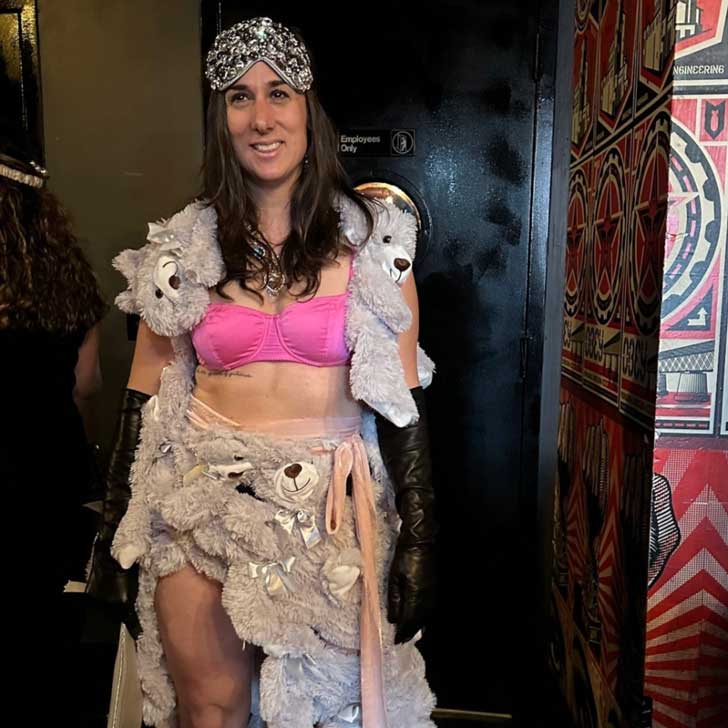
“No, I did not get invited to the Met Gala, but to me this is the bigger event,” Gould told the New York Times. “As an independent physical therapist, I’m a fan of the message here, and health care access is a very important topic to me.”
In fact, it’s a very important topic to a lot of people. With an estimated 100 million Americans burdened with medical debt, the Debt Gala became an easy creation for comedians Molly Gaebe, Amanda Corday, and Tom Costello.
“The Met Gala is a fun cultural touchstone to be distracted by, but at the root of it, it is disconnected from the rest of the world,” Gaebe told the New York Times.
“It doesn’t symbolize wanting to better the world in any way. Social justice is at the heart of the Debt Gala.”
Last night’s event included a variety show hosted by duo Zach Teague and Drew Lausch, a display by fiber artist Jo Luttazi that aimed to critique the health care system, drag performances by Chola Spears and Issa Dragon, and the musical stylings of the L Train Brass Band.
While funds have yet to be tallied from this year’s event, in 2023, the Debt Gala raised over $15,000, which alleviated $1,995,300.85 in medical debt for 1,082 families.
“The second annual Debt Gala is all about unleashing the individuality and ingenuity of New Yorkers for a common cause,” Gaebe said in a statement earlier this Spring.
“We’re thrilled to see… guests turn nightgowns into ballgowns and put their pajamas on parade – all in the name of debt relief.”
Header image courtesy of The Debt Gala
Monday night, Macklemore took to social media to drop a new song: “HIND’S HALL.”
The track is inspired by the work of student protesters at Columbia University, who occupied the campus’s Hamilton Hall last week and renamed it “Hind’s Hall.” It acts as a tribute to a six-year-old Palestinian girl, Hind Rajab, who was recently killed by the Israeli military in Gaza.
In fact, the whole song is a tribute to student protesters and their cause: An immediate ceasefire and a free Palestine.

“What you willing to risk? / What you willing to give? / What if you were in Gaza? / What if those were your kids?” He raps in the song.
“You’d want the world to stand up / And the students finally did.”
While it’s not yet available on streaming platforms, Macklemore said that the song’s proceeds will all be donated to the United Nations Relief and Works Agency once it is.
UNRWA works to support Palestinian refugees displaced across the Middle East, of which there are an estimated six million.
This isn’t the first time Macklemore has shown his support of Palestinians. Earlier this year, he waved a keffiyeh during a concert in Arizona. And in the fall of 2023, he took to the stage at a pro-Palestine demonstration in Washington, D.C.
“When I say Free Palestine, it’s not against anyone. It actually means we should protect everyone,” he said in an Instagram Reel, posted in December 2023.
“It means equality for all, respect, peace, and love. It means the right to exist, regardless of what sector you’re from… There’s innocent humans out in Gaza getting murdered with our dollars, and those precious human lives are an extension of us.”
The rapper has also consistently made posts on social media in support of Congresswoman Rashida Tlaib, the only Palestinian American in Congress, and has amplified the work of Palestinian journalist Motaz Azaiza.
Despite comments telling him to “shut up and rap,” Macklemore believes his music carries a deeper meaning.
“Art, in its purest form, is resistance. Art, in its purest form, is from the heart, and it connects with people. It brings people together,” he said on stage earlier this year.
“The day that I stop following my heart and talking about things in the world that matter is the day that I don’t need to be on stage anymore.”
So, to his loyal fans and supporters, the release of “HIND’S HALL” doesn’t come as a surprise at all.
“Thank you for using your platform for peace,” one fan commented on the song’s Instagram debut.
The song also earned praise from popular social justice activist adrienne maree brown, who shared a fire and heart emoji.
Additionally, a number of fans made comparisons between this song, and the diss track drama between Kendrick Lamar and Drake that has dominated entertainment news coverage this week.
“Jaw-droppingly embarrassing to see those rappers exchange schoolyard insults when THIS is what artists should be doing with their talent right now,” one supporter commented.
But longtime fans know that Macklemore isn’t one for petty disputes — rather, his game is creating change.
“You’re a real one, brother,” a fan wrote. “You’ve stood ten toes down since day one — no hesitation. You are loved and respected and will be remembered forever for your loud voice in a silent industry.”
And another, with fire and clapping emojis said: “The revolution always needs a soundtrack.”
Header images courtesy of Macklemore/Instagram
PPE, or personal protective equipment, is an acronym we all found ourselves familiar with in March 2020, as the COVID-19 pandemic had us all reevaluating our relationship with safety.
While many of us first turned to reusable cloth face masks to maintain some level of sustainability, it wasn’t long before the general public learned that the safest equipment was the kind that would be easily discarded; surgical masks like K95 and N95’s chief among them.
But the challenge of finding eco-friendly PPE goes beyond masks. As of 2021, over 57 million pounds of single-use plastic from the pandemic has found its way into the ocean, with nearly three-quarters coming from hospitals.

Between the use of lab coats or isolation gowns made with plastic, liquid-resistant materials and an array of other lab materials, it is estimated that scientists create approximately 5.5 million tons of plastic waste annually.
Most medical PPE is designed for a single use, and is either made of or lined with plastics that are not recyclable. The plastic in PPE can take up to 400 years to decompose.
Plus, sometimes the traditional means of protection aren’t as reliable as they should be. Beau Wangtrakuldee, Ph.D. learned this the hard way, after experiencing a preventable chemical spill in the lab that burned straight through her commonly supplied lab coat and onto her thigh.
Since then, she has dedicated her life to making sure both people and the planet were protected.
This work led Wangtrakuldee to found AmorSui, a modern PPE brand that makes sustainable options for all types of STEM professionals.
(And, as she told Good Good Good, one in four people in the workforce, including people who work in manufacturing plants, refineries, militaries, mining, food processing plants, and more).
Creating sustainable PPE
AmorSui’s new product line — debuting today — features a 100% recyclable lab coat with both men’s and women’s sizing, fire-resistant clothing (including a first-of-its-kind fire-resistant hijab), and reusable isolation gowns.
The isolation gowns are made with recyclable polyester and are built to last for at least 100 washes, meaning they can effectively repel fluids after 100 laundering cycles.
According to a press release from the company, just 100 AmorSui isolation gowns can replace 10,000 disposable isolation gowns, resulting in a 3,750-pound reduction in waste.

The recyclable lab coats are made with a blend of poly, rayon, and spandex fibers, and feature 10 pockets, hidden snaps, have an adjustable fit, and secure cuffs. They’re also certified anti-odor and fluid-resistant.
The fire-resistant collection utilizes a blend of cotton, modacrylic, aramid, and lyocell fabrics, with NFPA 2112 and ASTM F1506 fire-resistant and electric arc protection certifications.
While some plastic or synthetic fibers are still required to ensure the safety of PPE, the durability of AmorSui’s items keep them in rotation much longer than their single-use alternatives.
“AmorSui’s lab coat fabric is a blend of polyester, rayon, and spandex. The isolation gown is made from polyester that is recyclable,” Will McGinn, COO of AmorSui, said in a press release.
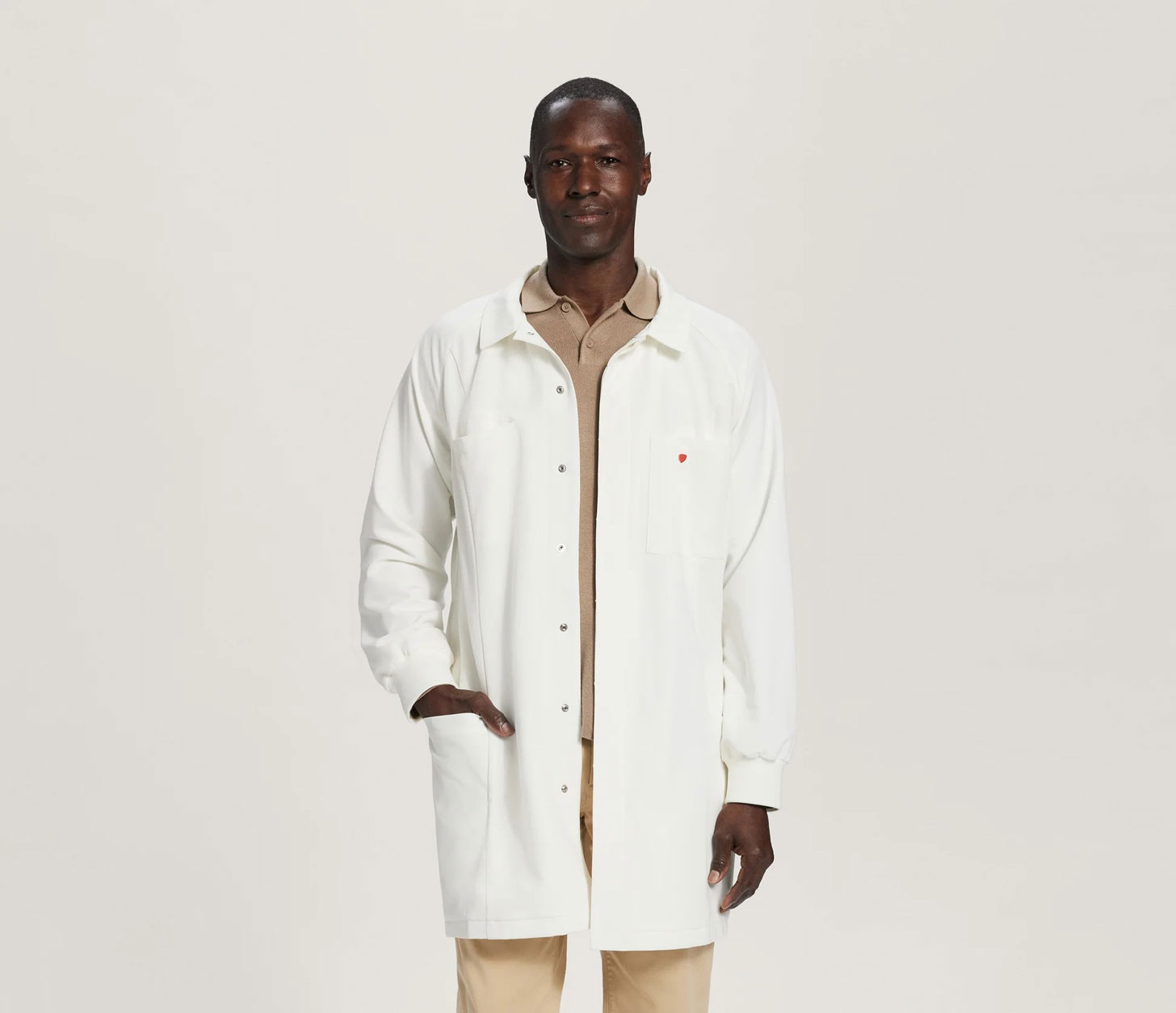
“At the end of their life, our products can be shredded or turned into a pulp to produce car interiors, airplane seats, artificial joints, and tarp fabrics, among other various use cases. We believe that circularity is the future.”
AmorSui will also employ a subscription service that includes professional laundering, as well as a take-back program to fully enforce that circularity.
But the task of creating safe and reliable PPE is not just about finding — and recycling — the right materials. It’s also about making products with actual STEM professionals in mind.
Prioritizing the safety of women in STEM
In 2020, it was quickly discovered that there was another type of gender gap in STEM; 77% of women in the UK’s NHS were wearing PPE that did not fit them.
Why? Because even though these items are labeled as ‘unisex,’ standard PPE was designed to fit caucasian male bodies and does not properly protect women — or any other people with different body shapes.
Not only does this mean that more PPE is getting wasted, but it’s costing women their safety. Wangtrakuldee’s first-hand experience was a testament to this — and she knew she wasn’t the only one who deserved better.
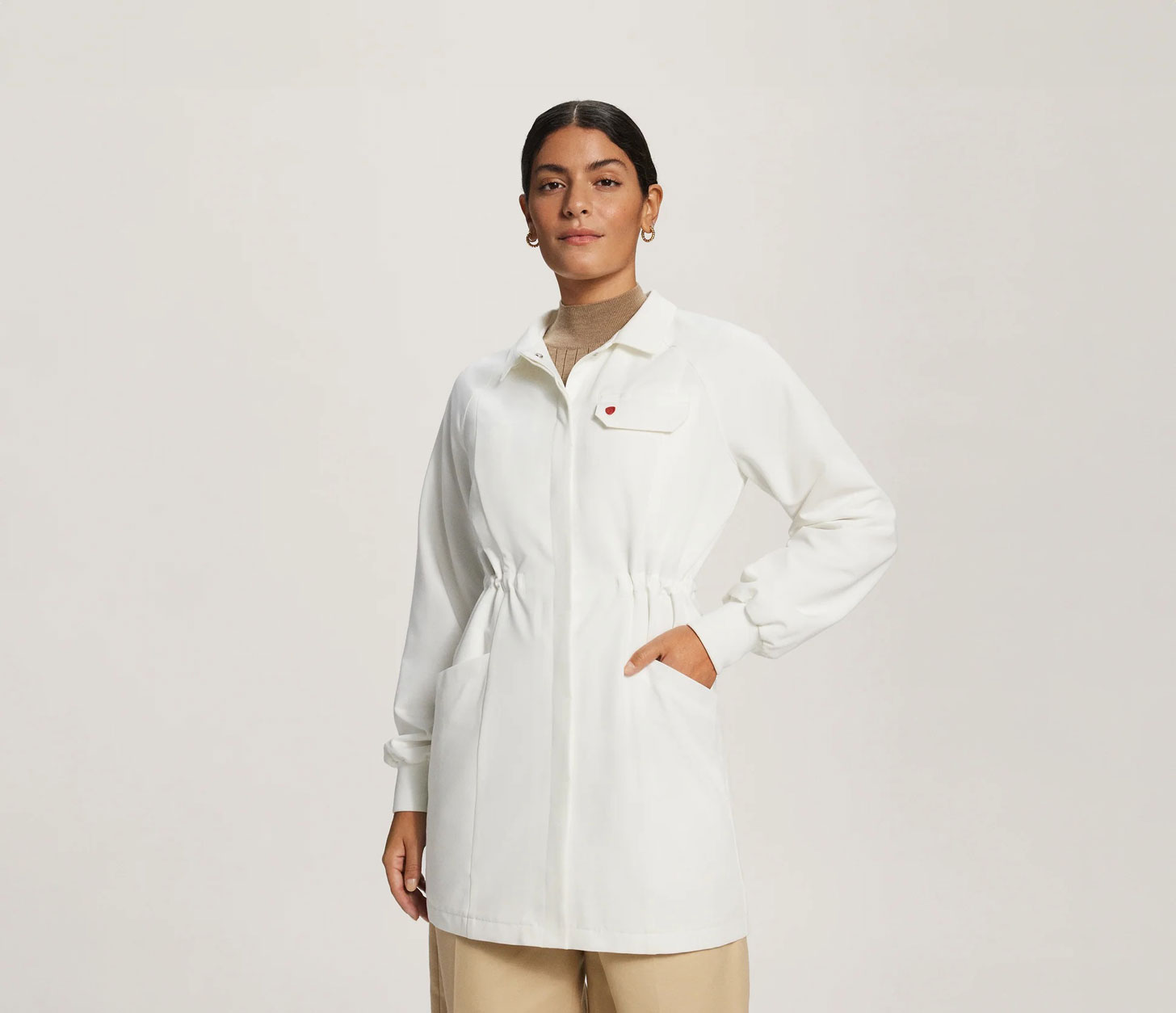
“From the very beginning of the brand and product conception, designing gender-inclusive products for different body types was central to everything we do. Going above and beyond the one-size-fits-all approach is non-negotiable for us,” Wangtrakuldee said.
“An ill-fitting, low-quality lab coat caused me a near-death experience during a chemical spill. Many of our early conversations with potential female customers also clearly pointed toward the need for products designed especially for women.”
In the design process for each product, she said, insights were collected from users of diverse genders, backgrounds, and cultural practices. A big product feature that came out of these conversations was the adjustable waist drawcord in AmorSui’s lab coats, for instance.

This also led to the development of a first-of-its-kind fire-resistant hijab, so women in STEM do not have to compromise their beliefs and identities with their safety.
“The development of our fire-resistant hijab was driven by a deep understanding of the unique safety needs of Muslim women working in various settings, including the lab,” Wangtrakuldee said.
“By prioritizing inclusivity in our product design, we aim to empower all frontline workers to feel safe and supported while doing their vital work.”
Changing the industry — one lab coat at a time
Obviously, the initial cost of a more thoughtfully designed and long-lasting stash of PPE is steeper than what many hospitals might be used to.
So, instead of directly selling to health and science enterprises, AmorSui (which is derived from Latin, meaning “self-love”), plans to “create a groundswell of awareness among all PPE users to eventually drive the implementation of better quality, size-inclusive, and sustainable options for the organizations they work for,” Wangtrakuldee told us.
That means, yes, it’s first up to individuals to buy these alternatives — but Wangtrakuldee is confident that seeing the difference in quality and safety will quickly influence decision-makers.
Plus, with initiatives like the Health Sector Climate Pledge calling on the industry to cut its emissions, AmorSui is hopeful that enterprises are eager to adapt to new technologies.

“From the enterprise perspective, AmorSui is the only net-zero PPE option that will reduce carbon emissions by up to 50% while providing 22% cost savings and better employee protection,” she said. “Hospitals and research facilities should invest in sustainable PPE like AmorSui, not only because it’s a responsible decision but it’s a smart business decision.”
So far, Wangtrakuldee’s leadership has led to AmorSui’s service for over 20,000 global customers, including leading research and development institutions like Harvard, the University of Pennsylvania, Lawrence Berkeley National Laboratory, Dupont, and Amgen.
Plus, beyond PPE, her team is working to create a life-cycle analysis tool and a full-service network of cleaning and recycling vendors to better serve AmorSui’s customers.
She’s optimistic.
“Our team has a big vision of what AmorSui can be. We are building a brand and company that will change how everyone buys medical supplies by creating circular commerce of the world's most essential and frequently used consumables,” she said.
“PPE is just one category of medical supplies that we are focusing on right now as a jumping-off point. We’re excited for what is to come.”
Header images courtesy of AmorSui
Teal Health is a woman-led company ready to revolutionize cervical cancer screenings in the United States.
The company is behind the proprietary Teal Wand, an at-home self-collect device that aims to improve rates of screenings and provide a comfortable and accessible alternative to traditional pap smears.

And now, the U.S. Food and Drug Administration has granted the Teal Wand with Breakthrough Device status; a designation awarded to medical devices that the FDA considers “life-saving” or “life-changing.”
“The FDA has recognized the importance of Teal Health’s ability to increase access to screening and wants to do their part to help accelerate the time to market by giving us priority review and feedback,” Teal Health CEO and co-founder Kara Egan told Good Good Good.
FDA Breakthrough was awarded after reviewing Teal Health’s promising clinical trial data and will grant the company priority status as it submits its final study data for FDA review.
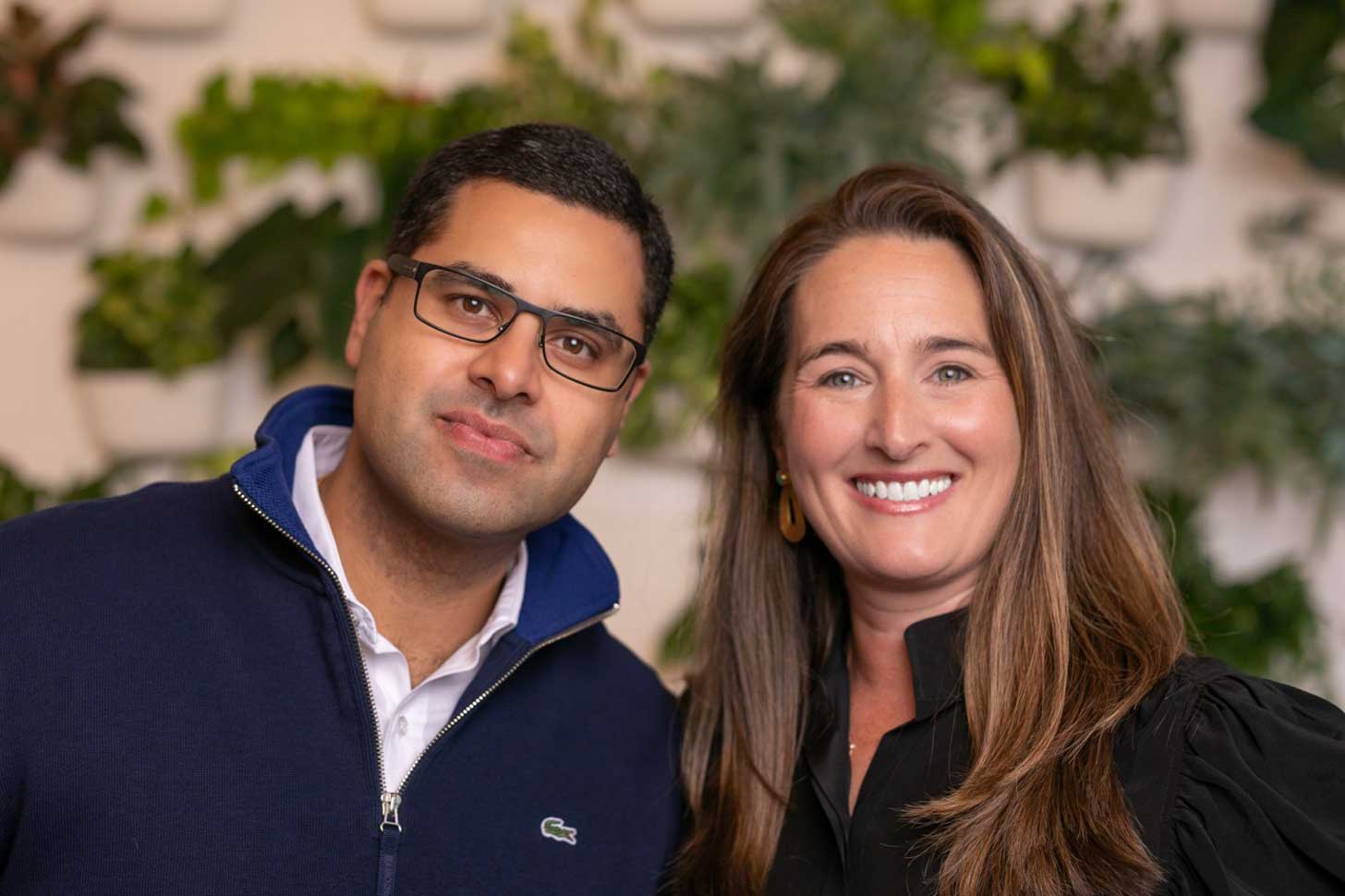
“We will still be held to the highest of standards, as we should — this is a nationally recommended cancer screening and needs to be taken very seriously,” Egan continued.
“We have completed our clinical trial and are on track to submit for FDA review and approval in the next few months. We look forward to working with the FDA for an expeditious process upon submission.”
What is the Teal Wand?
The Teal Wand, which is designed for a broad range of bodies and health literacy levels, was initially tested in a 215-person study that proved women were able to collect an adequate sample — and that the experience was much preferred to traditional methods.
Patients use the Teal Wand to comfortably collect their own vaginal sample for cervical cancer screening from the privacy of their homes or health clinics. Then, they mail their sample to a laboratory for testing for primary screening of high-risk HPV.

Lastly, using the Teal Health online portal, users receive clearly communicated test results, have direct access to women’s health providers, and may receive assistance to find follow-up care.
In Teal Health’s initial studies, 97% of participants said the device was “easy” or “very easy to use,” and 94% said they would choose the self-collect method over the current standard of clinician collecting.
“I think this is a huge win for women’s health. For far too long women and our experiences have been overlooked as a part of healthcare and research. It wasn’t until 1993 that women were required to be a part of clinical trials,” Egan said.
“It has been great to see the FDA recognize Teal Health’s solution with both the Teal Wand to collect a sample, and the telehealth solution to be able to increase access to screenings. Increasing access to care is critical to addressing the women’s health gap in the U.S. and this is a big step towards closing that gap for millions of women.”
Closing the cervical cancer screening gap
Teal Health joins a shortlist of companies that have received Breakthrough Designation within the category of microbiology, which accounts for less than 4% of all Breakthroughs awarded since the program’s inception nearly ten years ago.
The prioritization of self-screenings makes sense, as health organizations have been working hard to increase rates of cervical cancer screenings across the country.
Cervical cancer is the second leading cause of cancer death among women aged 20-39, even though it is preventable and is curable 92% of the time.
More than half of cervical cancer cases are in people who are not routinely screened, which is in large part due to barriers such as discomfort during the exam, as well as a lack of information, time, and access.
With one in four U.S. women not up-to-date on their cervical cancer screening — which Egan said adds up to an estimated 20 million people — it’s clear the current methods are failing.

Egan said another major barrier is simply that in-office cervical cancer screenings “can be especially difficult for people who experience pain or discomfort, have a history of trauma, or do not identify as female.”
Fortunately, self-collect models work. When the method was offered to all women in Australia, screenings increased 50-fold within its first year, and the county is now on track to eliminate cervical cancer as a public health concern by 2035.
Following Teal Health’s initial study, a nationwide clinical trial (called “SELF-CERV”) took shape last year, following 17 leading health organizations and more than 600 participants — all spanning different races and ethnicities, socioeconomic statuses, and sexual and gender orientations.
“The Teal Wand and self-collection really resonated with our patients and they were excited to be a part of the SELF-CERV trial,” Clair Kaplan, the Director of Clinical Research and Principal Investigator at Planned Parenthood of Southern New England, said in a statement.
“We saw upwards of an 80% enrollment rate, which more than met our expectations. I am honored to have been part of the efforts to advance cervical cancer screening and create more options for patients to get the care they need.”
In addition to the FDA’s support, and the evident success of the clinical trials, Teal Health has been financially backed by some big names, like Chelsea Clinton’s Metrodora Ventures and Serena Williams’ Serena Ventures.

This latest milestone is proof that they’ll soon be seeing a return on their investments — both in Teal Health and in a better future in women’s health.
“The Teal Wand achieving an FDA Breakthrough Designation is a watershed moment for women’s healthcare, and brings us one meaningful step closer to eradicating cervical cancer,” Clinton said in a statement.
“Women need better access to screening and early diagnosis for cervical cancer so that potentially life-saving care can be accessed as soon as possible, and with Teal Health, they will.”
Header images courtesy of Teal Health and FDA
Approved by the pope on March 25, 2024, the Vatican declaration asserts the Vatican’s opposition to gender-affirming surgery and surrogacy. While noting that people should not be “imprisoned,” “tortured” or “killed” because of their sexual orientation, it says that “gender theory” and any sex-change intervention reject God’s plan for human life.
The Catholic Church has long emphasized traditional binary views of gender. But in many places, both present and past, individuals have been able to push back against gender norms.
Even in the ancient Roman Empire, individuals could transgress traditional conceptions of gender roles in various ways. While Roman notions of femininity and masculinity were strict as regards clothing, for instance, there is evidence to suggest that individuals could and did breach these norms, although they were likely to be met with ridicule or scorn.
As a scholar of Greek and Latin literature, I have studied the “Galli,” male followers of the goddess Cybele. Their appearance and behaviors, often considered feminine, were commented on extensively by Roman authors: They were said to curl their hair, smooth their legs with pumice stones and wear fine clothing. They also, but not always, surgically removed their testicles.
Cybele: Mother of the gods
In the philosophical treatise “Hymn to the Mother of the Gods,” Julian the Philosopher, the last pagan emperor of the Roman empire, writes about the history of the cult of Cybele. In this treatise, he describes the cult’s main figures and how some of its rites were performed.

Often referred to as the Mother of the Gods, Cybele was first worshiped in Anatolia. Her most famous cult site was located at Pessinous, the modern Turkish village of Ballıhisar, about 95 miles southwest of Ankara, where Julian stopped to pay a visit on his journey to Antioch in 362 C.E.
Cybele was known in Greece by around 500 B.C.E. and introduced to Rome sometime between 205 and 204 B.C.E. In Rome, where she came to be recognized as the mother of the state, her worship was incorporated into the official roster of Roman cults, and her temple was built on the Palatine, the political center of Rome.

Cybele’s cult gave rise to a group of male followers, or attendants, known as Galli. Among the surviving material evidence related to their existence are sculptures, as well as a Roman burial of an individual Gallus discovered in Northern England.
Attis: Cybele’s human companion
A statue from Ostia, Rome’s port city, depicts a reclining Attis, Cybele’s youthful male human companion.

What is highly unusual about this statue, which is at the Vatican museum, is how the sculptor has draped the clothing to draw attention to Attis’ groin and stomach: No discernible genitalia are visible. Attis, at first sight, appears to be a woman.
In their tellings of Cybele’s myth, Greek and Roman authors give differing versions for Attis’ self-castration. The Roman poet Catullus describes how Cybele puts Attis into a state of frenzy, during which he castrates himself. Immediately afterward, Attis is referred to by female adjectives as she calls to her companions, the Gallae, using the female form instead of the masculine Galli. Catullus’ poem highlights the ambiguity in Attis’ gender and that of Cybele’s attendants.
Material evidence for the Galli
A relief sculpture from Lanuvium, now at the Musei Capitolini in Rome and dated to the second century C.E, is one of the few surviving representations of a Gallus.

This individual is surrounded by objects commonly associated with Cybele’s cult, including musical instruments, a box for cult objects and a whip. The sculpted figure is adorned with an elaborate headdress or crown, a torque necklace and a small breastplate, as well as ornate clothing.
Other than signaling the person’s connection to Cybele’s cult, the objects and adornments also suggest that the person’s gender identity is somewhat ambiguous, since Roman men shunned flamboyance and ornaments.
At Cataractonium, a Roman fort in Northern England, a skeleton was uncovered in the necropolis of Bainesse during excavations in 1981-82. Based on the accompanying burial goods, which included a torque anklet, bracelets and a necklace made of a type of gemstone that has been dated to around the third century C.E., archaeologists thought that these were the remains of a woman.
An examination of the bones, however, revealed that the remains were those of a young man — likely in his early twenties. Since Roman men typically did not wear the kind of jewelry found in the grave, archaeologists concluded that the individual may have been a Gallus.
Respect for Galli
Galli were attached to temples, where they formed a community. During processions in Cybele’s honor, they would follow behind the cult image and priests, chanting alongside musical instruments they played.
In Rome, they had permission to seek alms from the populace; they would also offer prophetic readings or ecstatic dances in return for payment. It is possible that they enhanced their looks in order to get more money.
Some scholars have argued that their feminine appearance was a way to differentiate themselves from the general public; likewise, that their voluntary castration signaled their renunciation of the world and devotion to Cybele, in imitation of Attis, her companion.
However, it does not seem out of the ordinary to think that some Galli were drawn to Cybele’s cult because it offered them a way to escape the strict binary gender system of the Romans. Galli, unlike other men in Rome or its empire, were able to openly present themselves or live as women, regardless of their assigned sex or how they identified.
Catullus’ poem and comments by other authors indicate that they perceived the gender of the Galli as differing from Roman concepts of masculinity. However, the Galli were also, reluctantly, respected for the role they played in Cybele’s cult. It is thus hard to know who exactly joined their communities and how they saw themselves, and whether the sources describe them accurately.
It is tempting to see the Galli as nonbinary or transgender individuals, even though the Romans did not know or use concepts such as nonbinary or transgender. Still, it is not inconceivable that a number of individuals found in the Galli both a community and an identity that allowed them to express themselves in a way that traditional Roman manhood did not permit.
The Vatican declaration asserts that the female and male binary is fixed and suggests that gender-affirming care “risks threatening the unique dignity the person has received from the moment of conception.”
Nonetheless, the existence of trans people today, as well as people who defied gender binaries in the past — including the Galli of ancient Rome — shows that it is and was possible to live outside prevailing gender norms. In my view, that makes it clear that it is unjust to impose moral teachings or judgments on how people experience their bodies or themselves.
This article by Tina Chronopoulos, from Binghamton University, was originally published by The Conversation.

Business education is changing, with schools embracing high-demand business concentrations dedicated to tech fields and offering online master of business administration (MBA) programs.
Our partners at BestColleges explain that curriculum isn't the only thing changing in business education: Business school leadership is also becoming more diverse, according to a new report.
According to a new report by the Association to Advance Collegiate Schools of Business (AACSB), the number of women leading business schools is on the rise.
The number of deans identifying as female rose to 30% in 2023-2024, up from 26% in 2020-2021, according to the AACSB Deans Survey.
The international accrediting body surveyed 434 deans and 36 interim deans as part of its report and found increasing diversity in business school leadership.
The number of white, non-Hispanic business school deans is also starting to mirror population levels, according to the report.
Additionally, representation of Asian or Pacific Islander deans doubled over the past six years.

Top business schools report progress toward gender parity in their programs
Sharon Matusik, the dean of the University of Michigan Ross School of Business, said in an emailed statement that the growing number of women deans at business schools was "encouraging."
"This not only provides encouragement for women faculty who aspire to academic leadership roles in the future, but it also provides examples for young women who may be considering a business education of the different ways that women can use a business education to make an impact in the world," Matusik said in the statement.
"My hope is that these increases inspire even more women to pursue a business education at all levels – undergraduate, master's level, and PhD."
Debora Jackson, the dean of the Worcester Polytechnic Institute (WPI) Business School, said the increasing number of women leading business schools reflects a changing education landscape.
"At the WPI Business School, I am the first female, first African American, and first non-academic hired as dean of the business school," Jackson said in an emailed statement.
"My presence demonstrates that changing times and changing demands have paved the way for a different kind of leadership. This is not unique to WPI. The changing demographic of leadership at the dean's level demonstrates that many institutions are sensing the winds of change and moving in accordance."
That changing landscape has meant more external partnerships with businesses, government agencies, and other higher education institutions for WPI, Jackson said.
"Believing that we have a responsibility to positively impact society, our focus has been on constructing and connecting a broad and diverse community of collaborating partners with whom to engage," Jackson said
A number of the nation's top business schools have women leaders. Some of those deans include:
- Erika James, who became the first woman and first person of color appointed as dean of the Wharton School at the University of Pennsylvania in 2020
- Anne Harrison, who has led the Haas School of Business at the University of California, Berkeley since 2019
- Sharon Matusik, who was appointed as the dean of the Ross School of Business at the University of Michigan starting in 2022
The increasing gender representation in business school leadership comes alongside an increasing number of women enrolled at top schools. The Forté Foundation reported last year that its 58 influential member schools reported an all-time high of 42% enrolled women in their master of business administration programs.
That figure has risen consistently over the past decade. The percentage of women enrolled in full-time MBA programs was 34% in 2013.
Five schools reported that their MBA programs achieved gender parity: The Oxford University Saïd Business School, Johns Hopkins University Carey Business School, the University of Pennsylvania Wharton School, and Pennsylvania State University's Smeal College of Business.
"Our efforts over the past two decades, along with our member schools and companies, have significantly impacted the increase in women interested in business careers and advancing to leadership," Forté Foundation CEO Elissa Sangster said in a 2023 press release.
"Every year, we see about a percentage point gain in women's enrollment, and, trust me, it's not easy to achieve."
An MBA can lead to higher earnings and upward career mobility by unlocking leadership roles for graduates, but women who earn an MBA still face barriers. Underrepresentation in higher-paying industries and barriers to negotiation lead to pay gaps for women MBA graduates, BestColleges previously reported.
Sangster said in the 2023 release that gender parity in business schools will help close those gaps.
"Getting to gender parity in MBA programs is an uphill climb, but it's critical to drive change and help more women lead in the C-suite, on boards, and as business owners," Sangster said.
This article was originally published by Stacker and republished with permission under a CC BY-NC 4.0 license.
Thanks to a new infusion of state funding, three projects benefiting traditionally under-resourced Black, Brown and Indigenous communities in the greater Chicago area have taken one important step closer to fruition.
In April, the Illinois Climate Bank unanimously passed a resolution to authorize loan funds of up to $1.6 million for three community-based solar projects owned by Green Energy Justice Cooperative, launched in 2022 by Blacks in Green (BIG).
This increases the total funding to $2.9 million for GEJC’s community solar projects, a portion of which is privately funded.
The money will be devoted to the pre-development phase of the project, including public outreach, an interconnection study, and a deposit for renewable energy credits awarded through the Climate and Equitable Jobs Act (CEJA), said Naomi Davis, founder and CEO of Blacks in Green.
“Our $2.9 million in predevelopment costs include payments to our electric utility, ComEd — fees to connect our solar system to their grid and a 5% down payment for our renewable energy credits — like buying a house, you have the financing and the down payment,” Davis said.
“The sweet spot of this pre-development funding is what we invest in building relationships, educating them about the power of cooperative ownership and management, and collaborating with them to build a clean energy economy right where they live,” she said. “We’ve got two years before we flip the switch and start monthly savings and clean energy comfort… and between now and then we’ll be enrolling thousands of community subscribers in conversations for organizing, training and hopefully inspiring them.”

“A community stake in clean energy”
Energy self-sufficiency is one of the eight key principles of BIG’s Sustainable Square Mile concept, which the organization aims to replicate around the country.
“We say communities should own, develop, and manage their land and energy, and with our $10 million EPA Thriving Communities Technical Assistance Center (TCTAC) award, BIG is offering free/open source access to our energy justice portfolio, which includes this 9 MW solar project and community geothermal and wind,” said Davis in a news release.
“With our energy affordability bill before the Illinois General Assembly, and our energy auditing workforce launching this summer, we aim to connect the dots of community-driven, community-scale energy solutions for low and moderate-income communities across America.”
In December 2023, the Illinois Power Agency recommended awarding the three solar projects, valued at $25.7 million, with $12.5 million in renewable energy credits. The three projects, located in Aurora, Naperville, and Romeoville, Illinois, would each generate 3 megawatts. Once completed, they will provide the dual benefit of lowering the disproportionate energy burden in BIPOC and low-income households, while providing a community stake in clean energy generation.
“When this project is completed over the next couple of years, it will be the largest non-governmental, non-utility, minority-community-owned solar project in Illinois. And as such, it will be the fulfillment of years of dreams and work by our Green Energy Justice Cooperative, to share middle-class jobs and wealth-building with historically deprived and distressed individuals and families throughout this area.” said Rev. Tony Pierce, GEJC board member and CEO of Sun Bright Energy, in a news release.
“In doing so, it will be the beginning of lifting these kinds of individuals and families from the bottom of our economic pyramid into the middle class,” Pierce said. “And it will therefore be the beginning of bringing some closure to the Black and White wealth gap that exists in metro Chicago; in addition to reducing the carbon footprint in our area, to reduce climate change.”
For Davis, this level of recognition and financial support reflects more than a decade of advocacy and effort to ensure energy independence for her community of West Woodlawn on Chicago’s South Side — and beyond.
“The cooperative (GEJC) that we organized and funded fits in with our overall mission because we have, as a stated pillar of our work [intend] to increase the rate at which neighbor-owned businesses are created and sustained,” Davis told the Energy News Network in December.
“We understand that the number one employer of Black folks in America is Black folks in America. And we are very committed in our understanding of the whole-system problem common to Black communities everywhere, that we are committed to being a solution.”
This article was originally published by The Energy News Network. and was reshared under a CC BY-NC 4.0 DEED license.

This article was originally published on Waging Nonviolence.
On March 27, Granite Shore Power, or GSP, announced that it will “voluntarily” stop burning coal at its Merrimack and Schiller Stations in New Hampshire by 2028. Major news outlets have been hailing the news as the “end of coal in New England” and casting GSP as a leader in the transition to clean, renewable energy.
Insofar as media have acknowledged the role of outside pressure on GSP at all, they have mainly cited a lawsuit by the Sierra Club and Conservation Law Foundation for alleged violations of the Clean Water Act.
But activists know better: Nonviolent direct action gets the goods.
Those of us who have participated in the No Coal No Gas campaign, or NCNG, have been anticipating Merrimack Station’s closure for some time.
(Schiller Station has not run since May 2020.)
In fact, in June 2023, we threw a festive retirement party outside Merrimack Station’s gates, complete with cake and surveillance by the New Hampshire Department of Homeland Security and Emergency Management.
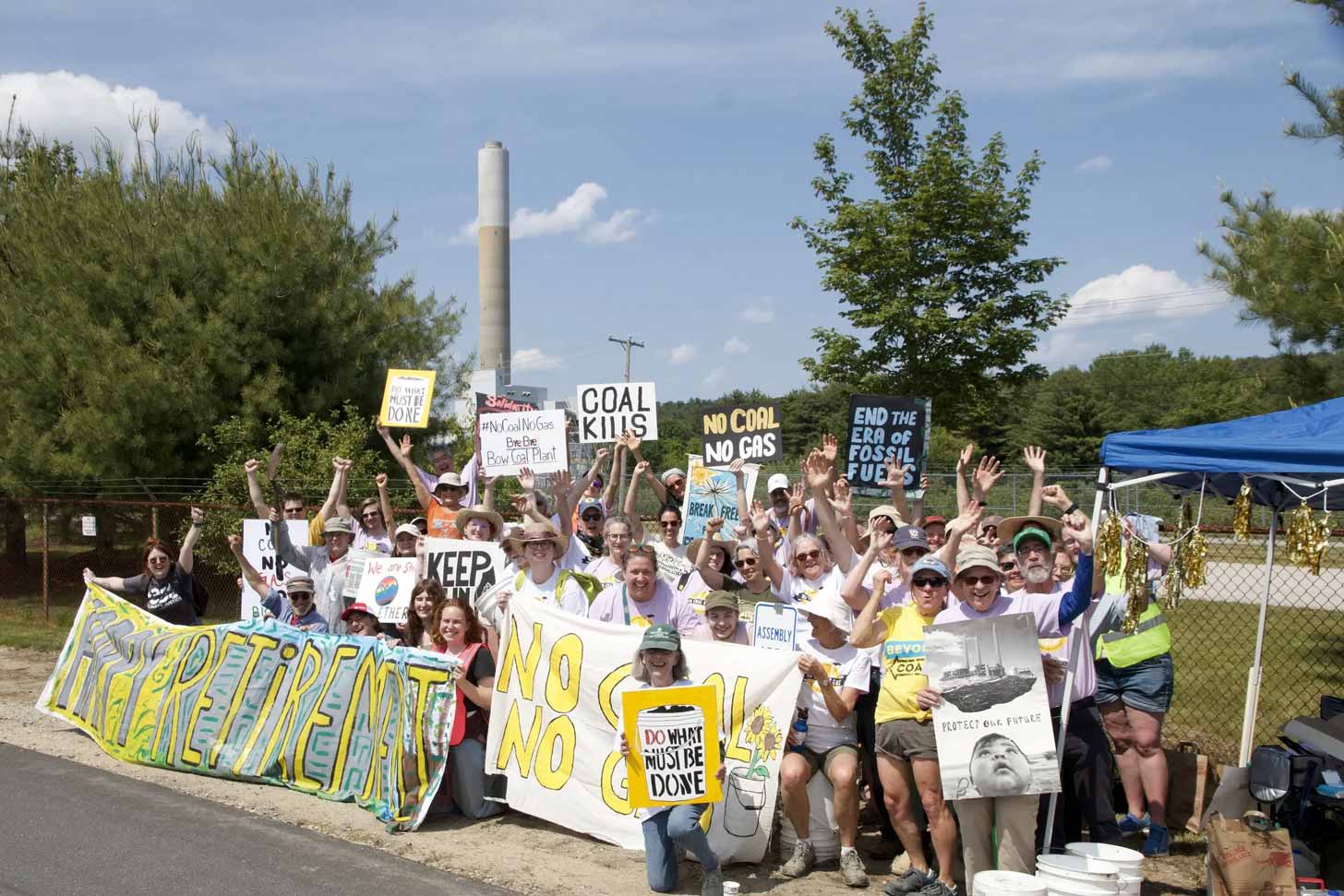
Then, just three weeks before GSP’s own press release, we held a weekend retreat to reflect on everything our campaign has accomplished, plan for the future and strategize when, how and whether to declare victory.
It had become obvious to us that victory was imminent, if not a fait accompli. In partnership with the Sierra Club and 350NH, we have been monitoring the plant’s failed attempts to complete federally-mandated stack tests to measure its pollution emissions.
At the same time, from conversations with local IBEW workers, we also know that employment at the plant has all but dried up, as union workers only come in to do repairs.
What’s more, by monitoring our regional grid operator’s annual “forward capacity payments” — which are effectively taxpayer subsidies for coal — we know that funding for Merrimack Station is slated to end in 2026.
However, the most striking bit of evidence pointing to the plant’s demise is the fact that we have not seen any new coal deliveries in well over a year. We believe this is largely due to the campaign’s rather spectacular and widely reported coal train blockades.
From December 2019 to December 2022, we stopped multiple trains in Massachusetts and New Hampshire.
We stopped a single train no less than three times on its route, and we stopped another for hours by erecting scaffolding on the tracks. This strategy pushed rail carrier CSX, in one case, to split a very long coal train into segments in an unsuccessful and expensive attempt to “hide” from activists.
Halting resupply, even temporarily, is one tactic to convince corporate oligarchs that coal is a bad investment. Another approach, used by NCNG’s corporate research group, was to directly target Merrimack Station’s two private equity owners, Castleton Commodities and Atlas Holdings.
We delivered coal to their corporate offices and even to the homes of CEOs, holding rallies and dropping banners. In 2021, Castleton decided to divest from the partnership.
Beyond pressuring for divestment, though, these tactics strive to show what’s possible. In this vein, we’ve also pursued civil disobedience at Merrimack Station itself. In 2019, 69 people in Tyvek suits were arrested as they carried buckets onto the property, vowing to carry the coal out bucket by bucket.
In 2021, 18 of us began renovating the facility’s driveway, digging up asphalt and planting food for people and flowers for soil remediation.
Like so much nonviolent direct action, these were not only attempts to interfere with business as usual; they were acts of collective imagination.
On the streets, in the courts, in our writing, art and advocacy, activists seek to expose, critique and upend systems of power.
Like anyone who practices civil disobedience, we’re often told that there are “more appropriate” ways to enact change. But as one of our members, Nastasia Lawton-Sticklor, puts it, “disobedience. . .[is] an uncompromising vision of radical, as in from the roots, change.”
This doesn’t necessarily mean that we see ourselves as some kind of extreme flank, “throwing ourselves into wild escalation to make lawsuits and the legislation seem inherently reasonable.”
Rather, Lawton-Sticklor says, “I see this as an invitation to continue peeling back the layers of systemic power, to make visible the inherent compulsion for self-preservation that grounds systemic concession, and to keep going.”

A campaign and a community, not an organization
How does a climate campaign “keep going”? How do we sustain such pressure and diversity of tactics over a period of years? It actually has a lot do with NCNG being a campaign, as opposed to a more formal nonprofit organization.
While we certainly benefit from — and could not continue without — support from the Climate Disobedience Center and 350NH, NCNG is not embedded in or beholden to the nonprofit industrial complex like many other organizations are.
As a result, our strategic decision-making is not driven by fundraising concerns or donor preferences. Rather, the campaign draws on capillaries of power running through multiple, shifting affinity groups and mutually beneficial relationships with other established groups and campaigns.
Since its inception in 2019, NCNG has had three precisely articulated goals:
1. Build unity and community;
2. Show what is possible;
3. Shut down the Merrimack Generating Station.
It’s worth noting that shutting down Merrimack Station was only ever our third — and arguably the least important — goal. We know, after all, that this coal plant is only one contributor to climate catastrophe and that our own actions are only one tiny part of a much larger, multi-pronged climate justice movement.
“Building community” does not simply mean that campaign participants become their own kind of cohesive in-group, although that has sometimes happened. Rather, the campaign seeks to establish and nurture relations among existing and yet-to-be communities.
We are college professors, ministers, farmers, artists, scientists, lawyers, students, parents, grandparents and shift workers. We bring connections to schools, churches, radical collectives and political formations. We help stitch together relations among existing nonprofits like 350.org and fellow campaigns like Fix the Grid; we encourage new affinity groups and support longstanding ones; and we have made our presence known to our regional grid operator ISO-New England.
Sometimes we have done so in playful ways — for example, by delivering a wheelbarrow of coal to their security gate during a blizzard on Super Bowl Sunday.
Moreover, we have intently studied their arcane operations and then elected members to their Consumer Liaison Group in what became known locally as the “ballroom coup.” In this capacity, we have pressured ISO-New England to stop giving ratepayer money to legacy fossil fuel plants. We have enlisted hundreds of friends and supporters in writing public comments urging the Federal Energy Regulatory Commission to reject these forward capacity payments.
In turn, we show up for others’ struggles. Perhaps because we did so much intensive organizing during the height of COVID — when so much work and sociality had to move online — we have been able to draw in like-minded activists from around New England and beyond, and to connect with other activist efforts.
NCNG participants routinely show up for each other’s actions on, for instance, LGBTQ+ rights or the Free Palestine movement. We sometimes even put the campaign on pause to lend support to major actions, as we did during 2021, when many of us traveled to Minnesota in the fight against Line 3, incurring arrest and continuing to provide remote legal support to fellow co-defendants.
Showing up for other groups’ struggles is critical, not only because our issues are all so intertwined, but also because in doing so, we learn. We share our skills and develop new ones. We engage in the critical, sustaining activity of thinking together.
New England after coal
On April 4 we held a mass call on Zoom to celebrate Merrimack Station’s closure announcement, and to sketch out our next phase.
Continuing to show what is possible, we are looking to shut down all of New England’s so-called fossil fuel peaker plants — those facilities that, like Merrimack Station, run only during times of peak electricity demand, generally during periods of extreme cold or heat.
As the Christian Science Monitor reported, Merrimack Station ran for only about 500 hours last year.
Peaker plants are expensive and dirty, and arguably unnecessary. In many places they are being replaced with battery storage.
They could also be eliminated, we believe, with better demand response, which means encouraging consumers to shift their electricity use to times when demand on the grid is lower.
We feel that leadership from our utilities and grid operator has been lacking in this regard, so we are doing what they won’t: building a ratepayer collective that will practice demand response on the New England grid ourselves.
As our demand response cohort puts it, this means “We will stay grounded in community and mutuality because we are more than individual ‘consumers.’ We have the power to choose to work collaboratively to shift our relationship to energy use, to become more intentional. And this means that together we have the power to transform how the energy markets in our region work.”
In short, by building an alliance of ratepayers “ready to support each other in the face of snowballing economic, environmental, health and social crises,” we will be laying the foundation “for joyful, community-centered conservation demand response and a just transition.”
This, maybe, is what “victory” in the climate fight really means: that we are learning what we can achieve together, with or without the necessary actions that our governments, economic leaders and regulators seem categorically or politically unwilling to take.
Something that has always stuck out to me is a series of questions I’ve heard posed by Marla Marcum, one of the founders of the Climate Disobedience Center (and our campaign).
Many times, after a nonviolent direct action, we will be debriefing, and Marla will ask, “Regardless of whether this particular action succeeds in shutting down this particular coal plant, what has it done for us? What have we learned? How have we grown stronger? What does this growth make possible?”
When we fight, we really do win. And what we win is the ultimate bulwark against climate grief and despair. We find each other.
— According to the FAO, the Democratic Republic of Congo (DRC) loses 500,000 hectares (1.2 million acres) of forest cover every year due to shifting cultivation, mining, and illegal and informal logging.
— As part of addressing this, a Congolese government program aspired to plant 1 billion trees between 2019 and 2023, aiming to strengthen climate resilience, alleviate poverty and protect biodiversity.
— Program officials say they achieved 90% of their target. A forestry specialist says that future reforestation efforts should include feasibility studies, informing tree species selection to maintain ecological balance.
Every weekend between January 2022 and December 2023, members of the nongovernmental organization Ferme Don de Dieu (FDD) planted trees on farmland in Yolo and Kinzono, on the outskirts of Mbankana, more than 140 km (87 miles) from Kinshasa.
With the help of technicians from the Congolese environment ministry’s reforestation department, they planted eucalyptus and acacia trees over an area of 33 hectares (81.5 acres). Eucalyptus was chosen for at least 22 hectares (54 acres), due to its ability to tolerate difficult soil and climatic conditions.
The trees are part of a Congolese government program known as Jardin scolaire 1 milliard d’arbres à l’horizon 2023 (School garden: 1 billion trees by 2023), which was officially launched in December 2019 with the aim of planting 1 billion trees across the country by 2023.
FDD’s Léa Nyakala Ngila says that reforestation is now an integral part of her organization’s mission, and that she and her teams will continue to plant trees even after the government program comes to an end.
“Although we plant cassava and other crops on our land, we can no longer avoid the question of reforestation,” she says. “This initiative reflects our commitment to help fight global warming.”
The overarching aim of the government program is to fight climate change and poverty, as well as protect biodiversity.
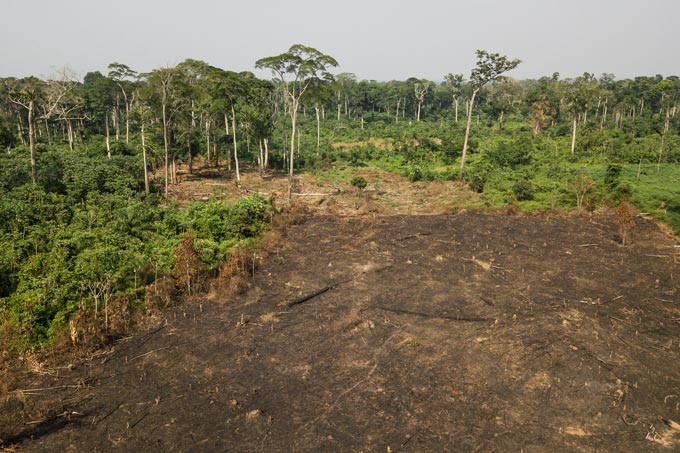
Forests under pressure
The DRC’s forests, which make up 60% of the Congo Basin’s forested area, are under pressure, due to shifting cultivation, informal and illegal logging and mining.
Deforestation is also happening around major towns and urban centers such as Kinshasa and Mbandaka. Forest loss in these peri-urban areas stems from the basic need for firewood and charcoal, used by households in the absence of alternatives such as electricity or gas.
“We began by drawing attention to the risks to which the entire planet is exposed,” Céline Pembele tells Mongabay. Pembele heads up the Reforestation and Horticulture Directorate (DRHo), the technical service in charge of implementing the program.
“We started with schoolchildren, who feature in the project’s name, then households and local communities. [We need] to bring about a mindset shift, in which they take ownership of this program their own and sustaining it.”
She says her department also called on civil society, local communities and several government bodies, such as the provincial environment and sustainable development offices and sectoral public services.
“Although the project got off to a shaky start due to a number of technical and financial difficulties, the government, encouraged by the enthusiasm of stakeholders, financed forest landscape restoration activities in several provinces, which will offset the felling of mature trees.”
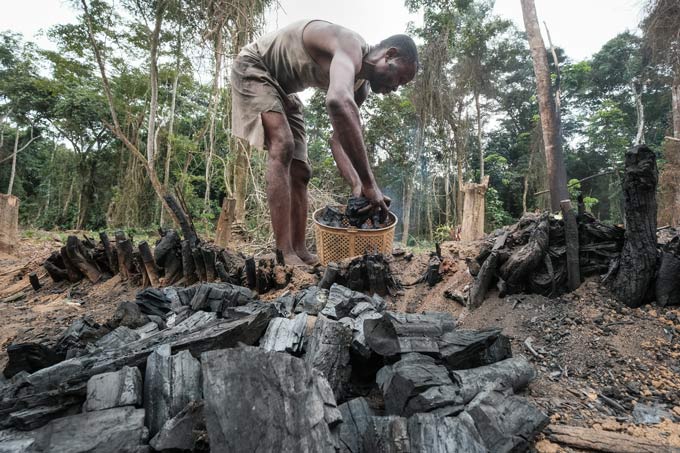
Reforestation is improving
Ten percent of the world’s tropical forests are found in the DRC. But the FAO estimates the DRC is losing 500,000 hectares (1.2 million acres) of forest every year.
In 2020, an FAO report revealed that reforestation in the DRC hovered around 1,000 hectares (2,470 acres) per year between 1990 and 2015.
Pembele says she believes that, as a result of stakeholders buying into reforestation, the situation has improved in recent years.
According to the DRHo that she leads, almost 895 million trees were planted between 2019 and 2023, covering just under 700,000 hectares (1.7 million acres) across 22 provinces.
“Surveys carried out by the DRHo show significant and remarkable growth in restored areas from 2020, after the launch of the program.”
Mongabay contacted Ludovic Mweya, a member of Réseau Congo Mazingira, an environmental organization based in Lubumbashi, who acknowledges the hard work of the project’s stakeholders.
“We must recognize the considerable efforts that have been made, and there are signs that a large area has been restored,” he says. “Our only fear is that the recently planted trees may not reach maturity due to a lack of follow-up now that the five-year project has come to an end.”
Significant losses were recorded even during the five years of the program. Pembele tells Mongabay that trees were removed from some reforested sites, most notably in the N’Sele Nature Reserve in Kinshasa, in Kabunene in Haut-Katanga and in the Masako Forest Reserve in Tshopo.
“Almost 20,000 seedlings in the nursery at Lodja in Sankuru were destroyed, and 240,000 seedlings were lost due to fire, due to a lack of maintenance of the firebreaks.”
As a result, almost 1 million seedlings are still languishing in DRHo nurseries around the provinces.
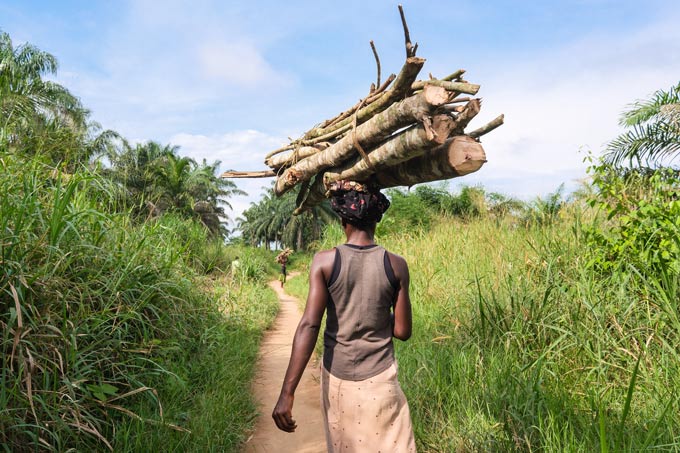
A forestry expert’s warning
Tree types were selected on the basis of the requirements of each restored site, Pembele says. Eucalyptus, fir (Abies), cacao (Theobroma cacao), acacia and calliandra (Calyandra cuspidata) were among the species planted as part of the project.
“In the Batéké Plateau [in Kinshasa’s agricultural commune of N’Sele], for example, we used agroforestry. There, we chose to plant acacias. As well as being a leguminous plant, acacias contain a wealth of fertilizers that has enabled farmers living in this area to produce well over the last three seasons,” Pembele explains.
A forestry specialist based in Goma, on the other side of the country, says he believes the initiative was a good idea insofar as it aimed to restore degraded forest.
But the specialist, who has closely followed the project from its inception and asked not to be named to protect relationships, says this project took place in the absence of a standardized framework to guide reforestation.
“With a reforestation policy, we would know which species can be used for reforestation and where to plant them in order to maintain the ecological balance of the areas or sites to be reforested, and we would also have an understanding of where the problem is most acute,” he says.
“A reforestation effort around Goma is not the same as one in Beni or Lubero, for example, because they fall into different ecological zones,” he tells Mongabay. “All of this must be taken into account when designing a reforestation project, in order to maintain the ecological balance. We should not reforest everywhere with exotic species like eucalyptus, cypress [Cupressus] or calliandra, which are not indigenous plants and, above all, not adapted to Goma’s soil.”
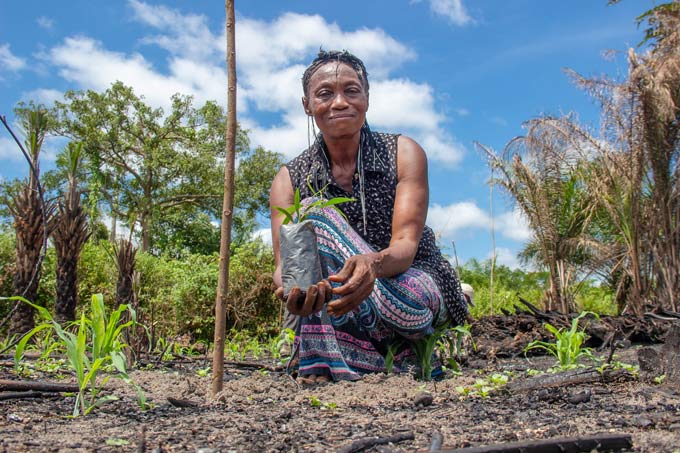
According to the specialist, there are serious consequences to reforestation carried out in this way, and the effects are already being felt in parts of eastern Congo, where eucalyptus was planted as part of the “1 billion trees by 2023” project.
“Farming has been disrupted, and the majority of the population [in eastern Congo] make their living from agriculture. In some towns, water sources are drying up.”
The area in and around Goma is a forest region, whereas Kinshasa and Lubumbashi are savanna environments. According to the DRHo’s Pembele, intercropping of fast-growing eucalyptus and acacia trees with cassava on the land in Yolo enriches the soil and boosts biodiversity.
But the forestry expert in Goma says he believes the coexistence between cassava and eucalyptus in Mbakana will cause problems in the long term.
“Clearly, there have been no feasibility studies. Eucalyptus acidifies the soil, and acidic soil is not productive. In around five years’ time, the risks will begin to show in these savanna strips with the gradual disappearance of the undergrowth. This will jeopardize food security.”
The expert says a better option in eastern Congo would be to plant endemic species, like the African juniper (Juniperus procera) or East African mahogany (Khaya anthotheca), okoumé (Aucoumea klaineana) or baobab (Adansonia digitata), because their ecological characteristics will promote local biodiversity and encourage natural ecosystem recovery.
This article was originally published by Mongabay.
Back in January, beloved “Sesame Street” Muppet Elmo logged on to an array of social media platforms to see how everybody was doing at the start of 2024.
“Elmo is just checking in!” He posted. “How is everybody doing?”
The check-in prompted a flood of responses as people vented to the Muppet-turned-therapist about break-ups, unemployment, rent increases, and more.
Elmo’s mental health check-in was quickly meme-fied as people saw the irony of “trauma dumping” on a character that is canonically only three and a half years old.
But it also opened up a national conversation about mental health and how important it is to look out for one another.
“Elmo I'm having a rough time. Love you though,” commented one user on Instagram.
“Elmo hopes you doing okay,” he replied. “Elmo loves you today and every day.”
This month, "Sesame Street" and its nonprofit Sesame Workshop want to “check in” on everyone again, this time they’re doing it with mental health-themed episodes and free resources for kids.
“The mental health crisis we're facing today is top of mind for many, yet its impact on young children is often overlooked,” Sherrie Westin — President and Interim CEO of Sesame Workshop — said in a press release, which came in tandem with Mental Health Awareness Month.
“We know developing a healthy mind, body, and heart, starts early,” Westin continued. “The presence of supportive, caring adults in children's lives makes a world of difference in their emotional well-being.”
To help children learn about big concepts like “emotional well-being,” Sesame Street produced an array of videos that feature self-soothing techniques developed in partnership with the American Psychological Association.
In one video, The Count finds The Countess crying over a broken tiara, and asks if she would like to try a grounding technique called a “Six Second Hug.”
“We all have big feelings sometimes, but I know something can help you! We can count a six second hug,” The Count tells The Countess — and the audience.
“First, we find someone we trust and feel safe with. Then, share a big hug…and we count to six!”
In another video, which teaches kids the power of gratitude, The Count helps Elmo count out “Three Joyful Things.”
(For fans curious about the new lore, Elmo picked singing, his friend The Count, and his puppy Tango.)
“That is three!” The Count exclaims as he embraced Elmo. “Three things that bring Elmo joy! HA-HA-HA!”
The initiative also comes with a free digital storybook for kids and parents to click through on their laptop or tablet. In the book titled “Thanks, Feelings Helpers!” Elmo gets help from a Sesame Street friend named Sofia, a therapist who helps him and his friends discuss “big feelings.”
“By showing children how to not only manage big feelings but embrace their power in finding joy in even the toughest times, we can help them build a strong foundation to grow and blossom,” said Jeanette Betancourt, senior vice president of social impact at Sesame Workshop.
“We all have big feelings,” Sofia tells Elmo in the book. “It’s okay to feel angry, sad, or scared — and all feelings are important. But sometimes our big feelings get so big that it makes it hard to do the things we want to do, like play, make friends, learn, sleep, try new things, and just have fun.”
Sofia then tells Elmo about her job as a therapist, or “feelings helper,” who helps kids, families, and adults regulate their emotions and work through difficult times in life.
The story is meant to normalize therapy, at a time where people of all ages are seeking it out more than ever.
“We all need different kinds of help at different times,” Sofia tells Elmo. “We can get through hard times together by asking for help when we need it.”
Header image courtesy of Sesame Workshop
After seemingly flying the coop, pelicans have returned to nest in the Great Salt Lake.
Last year, after American white pelicans completely abandoned their nesting colony on Gunnison Island — located on the northwest quadrant of the Great Salt Lake — Utah’s Division of Wildlife Resources was curious to see what would happen in 2024.
Fortunately, the birds are back and have started nesting again on Gunnison Island, as well as Hat Island — a very small island in the south arm of the Great Salt Lake.
This is the first time they have nested on Hat Island since 1943.

Both Gunnison and Hat Islands are owned by the DWR and have served as vital nesting areas for migrating pelicans over the years, since they offer the birds much-needed isolation and protection. The islands are closed to visitors, since even the smallest disturbances can impact the birds.
It is illegal for people to go within one mile of the islands by land, air, or water — but the department is happy to share these exciting updates with local bird lovers.
“Hello again, feathered friends,” the DWR shared on social media earlier this week.
It looks like the birds are here to stay — at least until the end of their nesting season in September.
Pelicans are very large birds, meaning their nesting period takes a long time, including a week to court, build a nest and lay eggs; a month to incubate the eggs; three weeks to feed a nestling; and nine to 10 weeks to care for a pre-fledgling.
“In total, this process takes about four months or longer, so pelicans need a protected space for a long period of time, and remote islands provide that protection,” DWR Great Salt Lake ecosystem program manager John Luft said in a statement.
With low water levels, however, both islands have become rife with predators like coyotes, pushing the pelicans to abandon their homes.
In 2014, the DWR began efforts to place transmitters on these pelicans, conducting annual surveys to monitor populations that use the Great Salt Lake during spring and fall migrations. It was on April 29 of this year that biologists confirmed that the pelicans were again nesting at Hat Island.
“As far as we can tell, pelicans are nesting at Hat Island again because some may be a little ‘gun shy’ about nesting at Gunnison Island after the disturbances that led to the colony abandonment last year,” Luft explained.
“So this year, some birds decided to find a new location to nest that is still close to the rich food sources in wetlands on the eastern shore of the Great Salt Lake.”
Monitoring surveys for this season are still ongoing, and pelicans are continuing to arrive at their nesting colonies, so the DWR doesn’t yet have a final tally of how many pelicans have returned this year. However, initial estimates show 800 birds on Gunnison Island, and about 1,300 on Hat Island.
In 2022 and 2023, the Gunnison Island pelican colony only had about 2,900 nests, with roughly 5,800 breeding adults — the lowest number since the 1970s.
Not only is this year’s return promising for the wetland environment, but it indicates hope about the population as a whole.
“Overall, pelican populations are doing well, and even the total abandonment of the Gunnison Island colony last year had little impact on the continental pelican population,” Luft said.
“Seeing birds nesting at both islands again is a good sign that shows the resiliency of breeding pelicans to re-establish historic pelican nesting colonies.”
To keep pelicans safe, experts have made it clear that the Great Salt Lake’s water levels play an important role.
“Unfortunately, both Hat Island and Gunnison Island are still accessible to land-based disturbance, even though lake levels are currently rising,” DWR Great Salt Lake Ecosystem Program Wildlife Biologist John Neill said in a statement.
“The threat of nesting colony abandonment will continue to persist as long as the islands aren’t surrounded by water.”

In fact, to get the lake up to a healthy level within 30 years, it will need to see average inflows increase by 471,000 acre-feet a year, according to the University of Utah. That’s a roughly 33% increase in the amount that has reached the lake in recent years.
Between robust water conservation efforts, shepherding that water back to the lake, and mitigating the rising temperatures of climate change through meaningful legislation, experts believe there is hope.
“Decision-makers must balance human, ecological, and economic health as they take actions to improve water management, mitigate adverse impacts, and increase water deliveries to the lake,” said William Anderegg, director of the Wilkes Center for Climate Science & Policy and co-chair of the university’s Great Salt Lake Strike Team.
The strike team’s latest analysis “makes clear the challenges Utah faces, but also demonstrates the value of working together, in a data-informed way, to ensure the health and sustainability of Great Salt Lake,” he continued.
While most of the responsibility to improve the Great Salt Lake is on humans, the pelicans prove that there’s cause for hope.
“Overjoyed to see how water conservation and two good water years can make such a big difference,” nonprofit Utah Water Savers commented on DWR’s social media post about the return of the pelicans.
“Our work is not done yet, though.”
Header image courtesy of Brian Forsyth/Pexels
This story was originally published by The 19th and was republished with permission.
The Asian American and Pacific Islander community is the fastest-growing racial group in the United States, growing over four times faster than the total population. Despite this tremendous growth, it is one of the most understudied racial groups in the country, both in terms of government data collection and private polling.
Many polls and surveys provide only one checkbox to represent all Asian-American people, even though more than 20 different Asian ethnic groups live in the United States. And this has wide-ranging consequences for everything from medicine to voting patterns.
When it comes to health, it wasn’t until researchers analyzed disaggregated data — data sorted into smaller ethnicity categories — that they found that breast cancer is a more prevalent cause of death for Asian Indian and Filipino women than Chinese, Japanese, Korean or Vietnamese populations. In politics, 6 in 10 Asian Americans identify as or lean towards the Democratic Party.
When looking at the disaggregated data, however, researchers found that Vietnamese Americans are the exception, with the majority voting in line with the Republican Party. This increased understanding of the AAPI community can inform policy decisions that have historically ignored whole ethnic groups by lumping all Asian Americans into one category.
But that may be about to change. The federal government announced in March that it had updated its race and ethnicity standards in response to “large societal, political, economic and demographic shifts in the United States,” according to the Office of Management and Budget.
Within five years, all federal agencies that collect demographic data will be required to start collecting more detailed race and ethnicity information beyond the current minimum categories, which represent the six largest Asian population groups in the U.S.: Chinese, Asian Indian, Filipino, Vietnamese, Korean and Japanese.
“If you collect data with just the Asian checkbox, you’re not really understanding the diversity in the community and outcomes ranging from poverty, health, education, housing and so many things,” said Karthick Ramakrishnan, the founder and executive director of AAPI Data. “We just scored a major win.”
For decades, Ramakrishnan has been pushing the federal government to disaggregate ethnicity data. AAPI Data was founded in 2013 to produce accurate, consistent and comprehensive data on the AAPI community.
“This is a success story: Academics coming together with community organizations and working with members of Congress to get this across one finish line,” he said of the new standards. “But a new race has begun.”
Ramakrishnan said his organization celebrated the announcement, but a few weeks later issued three recommendations on how to quickly and effectively implement a rollout. First, the organization demanded that the chief statistician of the United States publish a data disaggregation inventory of all current federal agency data.
Then, the chief statistician must create a centralized, coordinated body to provide technical assistance to agencies as they move to comply with the new standards. And lastly, there must be a formal mechanism to receive community input and expertise from researchers who work in data equity.
The government standards were initially developed in 1977 to provide consistent data on race and ethnicity across federal agencies. At the time, this data was used extensively to monitor the enforcement of civil rights, such as in employment, voting rights, housing and mortgage lending, health care services and educational opportunities.
The standards were revised in 1997 in response to criticism that the minimum race and ethnicity categories no longer reflected the country’s increasing diversity, immigration and interracial marriages. In total, the standards recognized five minimum categories for race — American Indian or Alaska Native, Asian, Black or African American, Native Hawaiian or Other Pacific Islander and White — and two categories for ethnicity.
The revision resulted in distinguishing “Asian” and “Native Hawaiian or Other Pacific Islander” as two separate race categories and changed the term “Hispanic” to “Hispanic or Latino,” referring to ethnicity. Notably, respondents were also able to check multiple boxes for the first time, allowing the government to collect multiracial data.
These standards remained unchanged until 2024. Now, race and ethnicity information will be collected using a single question in which respondents can select multiple categories. Middle Eastern or North African (MENA) will be added as a new category, separate and distinct from the White category. And federal agencies will be required to collect more disaggregated ethnicity data.
For example, instead of just providing “Black” as a designation, federal forms will also have to include options to identify as African American, Jamaican, Haitian, Nigerian, Ethiopian or Somali.
But not all data comes from the government. Private pollsters play an important role in surveying demographically representative samples of the population to better understand public sentiment — and how they collect and sort data is not bound by federal standards.
They face significant challenges, particularly when polling Asian-American communities, which make up about 6 percent of the national population and an even smaller share of voters. For one, it is expensive to survey a group large enough to include a representative sample of Asian Americans. A survey of 1,000 adults would typically include about 62 Asian respondents. Such a small number isn’t likely to be representative of Asian Americans, much less different ethnic groups.
We made it our business
…to represent women and LGBTQ+ people during this critical election year. Make it yours. Support to our nonprofit newsroom during our Spring Member Drive, and your gift will help fund the next six months of our politics and policy reporting. Can we count on you?
The second major obstacle is language. About two-thirds of Asian Americans speak a non-English language in their homes, so pollsters who want to reach them often have to invest in surveys written in different languages, translation fees or translators to conduct interviews.
Pew Research Center is one of the few organizations with the resources to overcome these obstacles. Neil Ruiz, the head of new business initiatives at Pew, has led a multi-year and multilingual comprehensive study of Asian Americans — the largest nationally representative survey of AAPIs to date. Launched in 2021, the project also involved 84 focus groups conducted in 18 different languages, moderated by members of specific ethnic groups.
“This took a lot of work,” Ruiz said. “Just to give you a perspective on why a lot of other organizations have a challenge in doing this, we had to mail over 216,000 mailings with $2 bills in them [as an incentive to complete surveys]. That yielded a sample size of 7,006 Asian adults. If you start adding that up, it becomes more than half a million dollars just with the mailings.”
Ruiz said this mega-project re-emphasized the importance of studying the diversity within demographic categories. Refugees are completely different from those immigrating as university students, and both are different from those coming into the U.S. as highly-skilled professionals.
“Being careful about examining within a major category provides the context and foundational facts for policymakers, storytellers, philanthropic organizations and foundations who should have a better understanding of Asian Americans’ unique needs and experiences,” Ruiz said.
Evangel Penumaka, the polling principal at the progressive think tank Data for Progress, said her organization doesn’t usually have the bandwidth to disaggregate data because they release national polling twice every week.
Their polls are primarily used to inform politicians’ understanding of current public sentiment, so speed is their priority.
The surveying team is typically only in the field for two to three days, compared to other large polls of Asian Americans, with teams that spend a month or so in the field to get a random sample that’s large enough to include various Asian groups.
“Since we focus on a universe of likely voters, we often don’t have enough [respondents] to show a cross tab for Asian Americans,” Penumaka said. “Ideally, if we had all the funding and time in the world, I would love to do a large Asian-American poll.”
However, as the Asian-American population continues to grow, along with pollsters’ understanding of their unique characteristics as voting blocs, Penumaka said policymakers will be more likely to invest in polling this community.
“The challenge of not disaggregating is we aren’t really looking at the disparities that exist by income or education,” Penumaka said. “There’s still kind of this model minority myth — that they’re a very highly successful population. But that ignores the income disparities, the health outcome disparities that exist within the community.”
According to the latest Pew data published in March, Asian Americans vary widely in their economic status and educational levels. About 1 in 10 lived in poverty in 2022, but looking at disaggregated data provides a better understanding of that situation. For instance, nearly 60 percent of the Asian Americans who live in poverty are immigrants and few speak proficient English. Looking even closer, Burmese and Hmong Americans have poverty rates nearly triple that of Filipino and Indian Americans.
Penumaka, who has a doctorate in political science with a focus on Asian Americans, said she thinks data collection among the AAPI community has “vastly improved” in recent years.
She pointed directly to research efforts from Pew, AAPI Data and NORC at the University of Chicago, previously the National Opinion Research Center, which have made collecting disaggregated data about Asian American communities more affordable and streamlined.
As a result of a partnership between AAPI Data and NORC, which established a survey panel made up of members of the AAPI community, Ramakrishnan said they are now able to publish monthly surveys on political views, hate crimes, the economy and current events — broken down by ethnicity.
“This is a game changer,” Ramakrishnan said. “In the past, we rarely — if ever — had any opinion data on our community. For every presidential election since 2008, we’ve had opinion data. But what about all the things that happen in between? We are now able to get timely information about things like Israel and Gaza, environmental attitudes and the Supreme Court’s decision on affirmative action. We should know these things about our community, but the possibility for that did not exist before.”
“Yesterday, I found out about a thing called Operation Olive Branch,” Hank Green — a beloved internet creator and author — said in a TikTok video on Wednesday.
This thing he is referring to — Operation Olive Branch — is a digital volunteer effort organizing and supporting fundraising campaigns that help displaced Palestinians gain access to safety and support. And it’s an effort Hank, and his brother John Green, will now be supporting.
OOB is led by a coalition of anonymous volunteers who collect and verify mutual aid campaigns of hundreds of Palestinian families and share them through a (very thorough and color-coded) spreadsheet.
These fundraisers, according to an (again, very detailed) FAQ page from OOB, “include campaigns from families regardless of their request, whether it be funds for medical aid, food, supplies of living, evacuation fees, or to rebuild their homes.”
The group’s aim is to take pre-existing fundraising campaigns — shared almost exclusively on GoFundMe — created and managed by families and get them in front of potential donors and advocates.
“I found out about this and I think it’s great,” Hank said in his video — which was broadcast to his over 8 million TikTok followers.
So great, in fact, that he announced his own $5,000 donation to Ismail, a doctor working in Rafah. (John also donated $5,000.) He also shared that they will match those funds by giving another collective $10,000 to Save the Children — as well as a dollar-for-dollar match to Save the Children for any other donation given to Ismail’s GoFundMe.
@erinhattamer #duet with @Hank Green #passthehat ♬ original sound - Hank Green
This announcement follows a video (that has since been set to private) shared by Erin Hattamer, a comedian with a following of over 1.5 million followers on TikTok. In it, Hattamer identified herself as a fan and mutual follower of the Green brothers and called on them to support OOB.
Hattamer herself has been amplifying calls for assistance in Gaza and the work of OOB, leading her to create a type of “adopt-a-family” program, in which she leverages her connections with other TikTok creators to help families reach their fundraising goals. She calls it “Pass The Hat.”
“My philosophy is that not one person — me or anyone else — should carry the burden of speaking out,” Hattamer said in a TikTok. “It’s not just up to me, it’s not just up to you; it’s up to everyone.”
By creating a form for other creators — big or small — to get involved, she has encouraged countless TikTok users to spread the word about individual people and families who need help.
Hattamer’s approach has been working and has gained support from major creators, including Mercury Stardust, Paris Paloma, Chris Olsen, and more.
But Hank and John’s support is especially meaningful, following Hattamer’s call to be more involved and vocal in their support of Palestine.
It’s worth noting that the Green Brothers have been donating to Gaza aid initiatives at larger organizations like Save the Children. In fact, during this year’s annual Project for Awesome fundraiser, they raised over $3.53 million, with 25% going to Save the Children.
Another 25% of total funds raised went to Partners in Health to treat tuberculosis — a disease that kills 4,000 people per day. The remaining 50% went to organizations chosen by fans and supporters.

During the Project for Awesome livestream, Hank interviewed Janti Soeripto, president and CEO of Save the Children. Soeripto shared stories of her recent trip to Gaza and the team’s ongoing efforts to provide aid to children in the region in the midst of life-threatening destruction.
“Actions do inspire hope,” said Soeripto. “For our colleagues to do whatever they can — to go out and distribute water, diapers, and food when we have it — it does inspire hope, for themselves but also for the people surrounding them.”
@hankgreen1 Replying to @Daniel Walker ♬ original sound - Hank Green
On TikTok yesterday, Hank also explained why he had been opting to support more established nonprofits in the area — until now.
“My focus has been supporting organizations that I know and have been on the ground working in Gaza for a long time, mostly Save the Children and Doctors Without Borders,” he explained.
He then goes on to explain the “tricky” nature of negotiating a border crossing — a call to action behind many of the GoFundMe campaigns that OOB shares.
To flee the violence in Gaza, there is only one way out: Through the border to Egypt. To do this, Palestinians must work with travel agents and brokers to pay fees and bribes — which hover at a starting rate of at least $7,000 per person. This is more than twice the average annual income of a family in Gaza, according to NBC News.
Many are trying to evacuate their entire families. And an estimated 5.9 million Palestinians are now displaced, according to UNRWA.
Prior to Israel’s military escalation last year, the cost to cross the border was closer to a few hundred dollars, rather than thousands, according to NPR. These price increases, steep demand, and ongoing corruption have made it impossible for Palestinians to manage on their own, though Egyptian officials deny any allegations of bribery.
There are more than 12,000 active campaigns on GoFundMe for Palestinians in Gaza, largely raising funds for evacuation. Since October 2023, over $75 million has been raised, according to a GoFundMe spokesperson for NBC.
(GoFundMe also has a “Giving Guarantee” policy that issues refunds to donors in the event of a misuse of funds, making it one of the more reputable options for mutual aid organizers and donors alike.)
But even after raising funds, Palestinians must ensure the smooth transfer of their money, wait in the backlog of the thousands trying to leave, and may even encounter further demands for payment.
So, Hank said, he worries about where the money is going when people donate to these grassroots campaigns.
“I spent some time looking into the complexities of these border crossings and also how the money functions, because if I’m going to ask people to give money, I want to make sure it’s not going to something that is not going to end up helping people,” he said in his TikTok.
And despite his best efforts to ensure the end result of every dollar donated, it’s complicated.
“But these are people who are trying to do the right things for their families, and so ultimately I’m like… you can just help,” he said.
“You could talk about [and] think about how it’s complicated, but ultimately, the money is going to the people who are trying to do what is right for their families. So the right thing to do is to help them.”

The matching donation element of John and Hank’s involvement also illustrates the need for short- and long-term support to the people of Gaza.
Funds from John and Hank that go to Save the Children will be available for the organization to “use that money now and in the future,” Hank explained, “because aid is getting through for the people who are not able to leave Gaza.”
With Israel’s latest invasion of Rafah, things are up in the air — including evacuations and aid availability. But with the support of a global network of advocates — like the Green brothers, Hattamer, and the people of OOB — there is a sense of hope.
“Through the OOB community, we’ve found that many people who had been asking ‘what more can I do to help?’ have found that answer through personally connecting with these families and supporting them directly,” OOB’s FAQ page explains, under a question about the importance of direct aid.
“Many who choose to participate in the social media community that has formed around this project have built genuine relationships with these families and are fundamentally transformed forever.”
Header photos courtesy of John Green, Hank Green, and Jen Hattamer
Lizzo might be known for her upbeat, soulful songs that inspire confidence and joy — but recently, she hopped onto TikTok to get serious about some major issues on the world stage.
“This is Doctor Ismail. He’s a doctor who lives in Gaza, who has been helping the people there, and he also needs help getting his family safely out of Gaza,” she said, as she introduced a GoFundMe fundraiser.
“I just donated to get him and his family safely out of Gaza… If you feel compelled to help, you can give as well.”
A listing under Melissa Jefferson — Lizzo’s off-stage name — shows a £8,000 (or a little over $10,000) donation on the GoFundMe page.
Doctor Ismail’s fundraiser is one of hundreds of campaigns amplified by Operation Olive Branch, a digital volunteer effort organizing and supporting fundraising campaigns that help displaced Palestinians.
Operation Olive Branch commented on Lizzo’s Instagram, where she also shared the video: “Deeply appreciate this use of your platform and we hope it inspires others to do the same.”
The fundraiser she shared has also been supported and shared by popular authors and creators Hank and John Green, who pledged to double their efforts by matching every dollar donated to Ismail’s campaign with donations to Save the Children.
@lizzo Thank you @Operation Olive Branch ♬ original sound - lizzo
Lizzo’s video also comes amid an ongoing project on TikTok which aims to get content creators involved in these grassroots fundraising efforts.
Led by comedian Erin Hattamer, the “Pass The Hat” movement matches creators with Palestinian families through Operation Olive Branch, encouraging them to donate or spread the word about people in need.
It has been Hattamer’s calls to action that have taken the app by storm, getting major names on board to support the people of Palestine.
“Lizzo? In this economy?” Hattamer gushed in a TikTok story.
“In case you don’t know, Lizzo posted about Operation Olive Branch. And gave the same link that Hank Green gave, so…” she trailed off, joyously.
The singer also shared some fundraisers for humanitarian crises in Sudan and the Congo.
“This is ‘Help Sudan - Sudan Relief,’ a GoFundMe dedicated to helping the Sudanese people who are dealing with atrocities of violence against them, famine, and genocide,” she shared, before adding that she donated to this campaign, as well.
A $7,550 donation by Melissa Jefferson can also be seen on the Sudan GoFundMe page.
The singer continued, sharing the third place she was directing her donations: “This is Pappy Orion, the founder of Focus Congo. Focus Congo is an organization that is dedicated to helping the people in the Congo and the Republic of Congo who are dealing with violence, famine, and genocide.”
This week in particular has been filled with critique of celebrities — especially the exclusive roster of those who attended Monday’s Met Gala (Lizzo was one of these attendees).
The event — which costs a reported $75,000 to attend — took place at the same time that thousands of displaced Palestinians in Rafah were met with violence during a ground invasion by the Israeli military.
Whether coincidentally or in light of this ongoing dialogue about wealth and privilege, Lizzo’s video carried a pointed message.
“I’m also talking to my fellow rich people with money,” she added. “If you don’t know how to help, you can help families directly get to safety and possibly save a life. Remember: We ain’t free till we all free.”
Header images courtesy of Lizzo/TikTok
This story was originally published by Grist. Sign up for Grist’s weekly newsletter here.
Aluminum is a crucial raw ingredient in the fight against climate change. But to ensure the transition off fossil fuels is a clean one, the industry needs a serious makeover. A new federally funded “green smelter” could help make that happen.
Making this remarkably versatile metal requires a huge — and near-constant — supply of electricity. Much of it is generated by burning fossil fuels, which is one reason aluminum manufacturers are responsible for about 1.1 billion tons of carbon dioxide emissions a year. That’s more than twice the amount all of Australia spews annually.
Cleaning things up poses a huge challenge, one the Department of Energy, or DOE, wants to help solve. In March, the agency announced $6 billion in funding for “industrial demonstration” projects that showcase promising strategies for reducing the climate impact of heavy industry.
The need is particularly acute, because heavy industrial processes like aluminum production generate nearly one-third of the country’s greenhouse gas emissions.
The beneficiaries of the government’s cleanup effort include Century Aluminum Company, which could receive up to half a billion dollars to build the nation’s first new aluminum smelter in 45 years.
The facility, dubbed the Green Aluminum Smelter, could double the amount of virgin, or primary, aluminum the country produces while emitting 75 percent less CO2 than older smelters, thanks to increased efficiency and the use of renewable electricity.
The grant, which is awaiting finalization, is a “huge vote of confidence and a shot in the arm” for the industry, said Annie Sartor, the aluminum campaign director at Industrious Labs, a nonprofit focused on industrial decarbonization.
That could boost a sector on life support. Although the United States once led the world in producing the lightweight and durable metal, most of the country’s aluminum smelters have shuttered since the 1980s due to rising energy costs, falling prices, and a broader trend of American firms sending manufacturing overseas.
Production, which peaked in 1980 at 4.65 million metric tons per year, has declined by more than 80 percent since then, according to the BlueGreen Alliance, a coalition of environmental organizations and labor groups. That puts the U.S. in a tricky position as demand surges: A report released last year by researchers at Dartmouth and Princeton universities found that the country’s wind and solar industries alone could require nearly 8 million metric tons of the material annually by 2035. That’s nearly double the amount of primary and recycled aluminum the country produced in 2022.
And that’s to say nothing of the aluminum required for EVs, power transmission lines, and countless other applications, from cookware to cell phones. Even recycling the stuff requires virgin material, which is mixed into all those melted cans and car parts and other scrap to produce quality metal.
While there’s little question the U.S. will need a lot more aluminum, how it is made is increasingly important. Production starts with converting bauxite, an aluminum-rich ore, into a purified powder called alumina. That material is then smelted to produce the metal.
All that mining and processing creates ecological destruction, generates toxic waste, and releases a cocktail of pollutants. It can also help warm the planet: Carbon emissions occur throughout the process, but more than 60 percent of them come from generating the electricity used in smelting. A large operation can require enough juice to power millions of homes.
“We’re talking about truly eye-watering amounts of electricity,” said Rebecca Dell, an industrial decarbonization expert with the nonprofit ClimateWorks Foundation. If the industry hopes to reduce its carbon footprint, “the first, most important thing to do is to use clean electricity.”
Such efforts are underway throughout the world. Although China, the world’s largest producer of primary aluminum, relies upon coal-fired power plants to generate much of the electricity needed to hold that title, others are proving that clean energy can deliver dramatic emissions reductions.
Smelters in Norway and Quebec, Canada, release far fewer greenhouse gases because they use hydropower, while those in Iceland tap the nation’s abundant geothermal resources.

Century Aluminum, a global producer that’s been around since 1995, already operates a low-carbon smelter in Iceland that’s capable of churning out over 300,000 tons of aluminum each year. The company hopes the DOE funding will allow it to bolster its presence in the U.S., where it operates two smaller smelters in Kentucky and another in South Carolina, while significantly expanding its production of low-carbon aluminum.
It hasn’t said exactly how much of the metal its proposed smelter will be able to produce, but based on the expectation that it will roughly double the nation’s virgin production, Sartor suspects the goal is to churn out “just under” a million tons of the metal annually. (The U.S. produced 750,000 tons of virgin aluminum in 2023.) Neither Century Aluminum nor the DOE have said when the smelter might begin operations.
While many details are uncertain, including the smelter’s production capacity and the construction timetable, one thing is clear: The new plant will be expensive. Sartor said Century Aluminum will need all of the money DOE is offering and much more.
“Building a new, large-scale, modern aluminum facility is far more than just twice that amount,” Sartor said. According to energy consultancy Wood Mackenzie, aluminum smelters outside of China can cost up to $4 billion per million tons of annual production.
Beyond building the infrastructure needed to produce aluminum lies the question of how to produce the clean electricity needed to power it. According to the DOE, Century Aluminum’s preferred site is in Kentucky, a state with lackluster clean energy credentials. In 2020, the Bluegrass State had a paltry 30.1 megawatts of solar generating capacity and no wind energy production whatsoever.
Sartor says she expects a plant of this size to require “somewhere in the neighborhood of a gigawatt” of power. That’s enough to serve 800,000 U.S. homes for a year. “The only way that will happen is if gargantuan amounts of clean energy get built in Kentucky,” Sartor said. “There’s no other way around this.”
A representative for Century Aluminum told Grist the company is “excited to move this transformational project forward,” but declined to answer other questions or say how it plans to secure the carbon-free energy required. The DOE wouldn’t speak to the challenges that may arise procuring clean energy, citing ongoing award negotiations.
That said, the site hasn’t been finalized, and locations within the Ohio and Mississippi River basins are also reportedly under consideration. Dell believes that brings an interesting political dimension to the project because Century Aluminum expects the smelter to create more than 1,000 full-time union jobs and another 5,500 construction jobs.
“That’s a very attractive economic development opportunity for a state like Kentucky — or maybe for its neighbors,” Dell said. Century Aluminum, Dell said, is effectively putting Kentucky and nearby states — many of which haven’t exactly embraced renewables — on notice that “there’s a huge opportunity on the table if you guys can figure out a way to develop the electricity that’s needed.”
If Century Aluminum succeeds in finding the clean energy it needs, it could help catalyze changes in other industrial sectors such as steelmaking. Dell notes that in most of the “high value added markets” for steel, like the automotive sector, the primary competition is aluminum.
“Both of these industries are constantly trying to convince the car companies, ‘use our metal, not their metal,’” Dell said. “Having more clean aluminum out there will certainly act as an encouragement to the steel industry to clean up their act.”
Header photo: Luke Sharrett / The Washington Post via Getty Images via Grist