The group behind a popular get-out-the-vote technology platform said Friday that it's registered more than 100,000 new U.S. voters since President Joe Biden withdrew from the 2024 presidential race, a surge that came amid mounting Republican efforts to make it harder to register and vote.
Vote.org said that 84% of voters registered in the new wave are under age 35. Nearly 1 in 5 new registrees is 18 years old. Andrea Hailey, the group's CEO, said that "since 2020, we have led the largest voter registration drive in U.S. history," with more than 7.8 million people registered.
After dropping out, Biden endorsed Vice President Kamala Harris to face former Republican President Donald Trump and Sen. JD Vance (R-Ohio) in the November election. The new presumptive Democratic candidate has already earned endorsements from many Democrats in Congress and groups advocating on issues including climate, labor, and reproductive rights.
Vote .org says it has now registered more than 100,000 new voters since President Biden withdrew from the race.
— Kyle Griffin (@kylegriffin1) July 26, 2024
Among the 100,000 new registrations:
• 84% are younger voters (ages 18-34)
• 18% are 18-year-old voters
• The top ten states for new voters are: TX, CA, FL, NY,…
Vote.org's success comes as Republicans at the federal level are proposing and passing legislation creating obstacles to the ballot box.
Earlier this month, U.S. House Republicans passed Rep. Chip Roy's (R-Texas) Safeguard American Voter Eligibility (SAVE) Act, which would require proof of American citizenship to vote in federal elections. Republicans claim the bill is meant to fix the virtually nonexistent "problem" of noncitizen voter fraud.
However, Rep. Summer Lee (D-Pa.) slammed the bill as a "xenophobic attack" meant to silence "Black voices, brown voices, LBGTQIA+ voices, [and] young voices."
Lee said the SAVE Act underscores the need to pass her recently introduced Right to Vote Act, "which would establish the first-ever affirmative federal voting rights guarantee, ensuring every citizen may exercise their fundamental right to cast a ballot."
Since 2020, we have led the largest voter registration drive in US history (7.8M+ registered!) and this year the train has left the station. Since Sunday, @votedotorg has registered more than 100K voters. Join the moment & find everything you need at https://t.co/ZNJINfoVeQ 🗳️ pic.twitter.com/8jqn6m0DuG
— Andrea Hailey (@AndreaEHailey) July 26, 2024
Earlier this year, U.S. Senate Democrats also reintroduced the John R. Lewis Voting Rights Advancement Act, legislation its sponsors say will "update and restore critical safeguards of the original Voting Rights Act."
Meanwhile, Republican-controlled state legislatures and red-state governors are enacting laws imposing tough restrictions on voter registration, with violations punishable by stiff fines that critics say are meant to dissuade people from registration drives and similar efforts.
Again under the guise of preventing fraud, Republican Florida Gov. Ron DeSantis last year signed legislation limiting voter registration drives, with fines of up to $250,000 for violators.
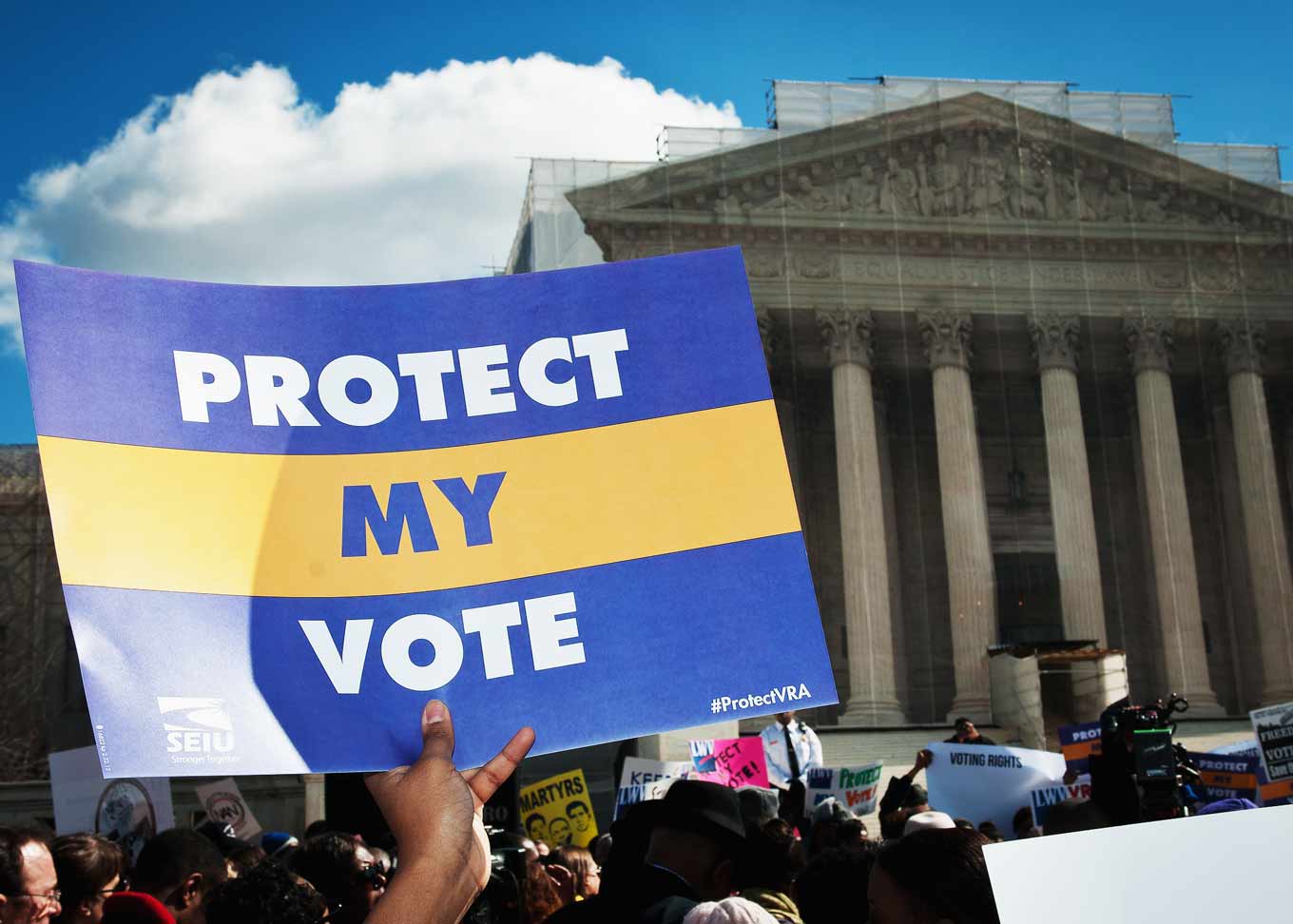
"These draconian laws and rules are like taking a sledgehammer to hit a flea," Cecile Scoon, an attorney and president of the Florida chapter of the League of Women Voters, toldThe New York Times in an article published Friday.
Three years after Kansas passed a law making "false representation" of an election official a crime, campaigners say it's become extremely difficult to sign up new voters.
"In 2020, even with the pandemic, we had registered nearly 10,000 Kansans to vote. Now, we haven't been able to register anyone," Davis Hammet, president of the youth voter mobilization group Loud Light, told the Times.
There is not a state in this country where the margin of victory is less than 3%, and where poor and low-wage voters don’t make up 35 to 40% of the electorate.
— Rev. Dr. William J. Barber II (@RevDrBarber) July 26, 2024
We are the swing vote.
cc: @votedotorghttps://t.co/eIiV3s6g1K
In Louisiana, Republican state lawmakers quietly passed legislation making it easier for election officials to toss out absentee ballots with missing details, limiting how people can mail in other voters' ballots, and restricting the ability to assist people with disabilities with their ballots.
"What we've found is that these measures have a disproportionate impact on voters with disabilities, both Black and white," NAACP Legal Defense Fund senior policy counsel Jared Evans told Nola.com earlier this week.
"It's clear that their goal is to make it harder to vote, harder for specific communities to vote especially," Evans added. "What they don't realize is that these laws hurt white voters, too."
In Nebraska, Republican Secretary of State Bob Evnen last week ordered county election offices to stop registering voters with past felony convictions who have not received official pardons. The move came after the state's unicameral Legislature passed a bill granting voting eligibility to felons immediately after they have completed their sentences instead of waiting two years.
"We refuse to accept thousands of Nebraskans having their voting rights stripped away," ACLU of Nebraska legal and policy fellow Jane Seu said in a statement. "We are confident in the constitutionality of these laws, and we are exploring every option to ensure that Nebraskans who have done their time can vote."
This article was originally published by Common Dreams and republished with permission.
At 11 years and 11 months old, Zheng Haohao is the youngest Olympian competing in the 2024 Olympic Games.
Born during the London 2012 Olympics, on the penultimate day of the competition, Haohao is not only the youngest Olympian this year, but the youngest Olympian to ever compete for the People’s Republic of China. (The youngest Olympian of all time is Dimitros Loundras, a male gymnast who took part in the 1896 Athens Olympics at just 10 years old.)
Haohao began learning how to skateboard at seven years old, but she has only been competing professionally for two years.
At the Budapest Olympic Qualifier Series in Budapest, Hungary, Haohao turned heads when she landed a 540 spin in the competition.
While training for the Olympics, she fractured her right middle finger doing an aerial maneuver.
It hasn’t slowed her down.
“It was painful. But I did not want to let go of the years of effort I had put in, so I chose to persevere,” she said in an interview with the International Olympic Committee.
On August 11, she will celebrate her 12th birthday, just days after she puts her skateboarding skills to the test in the Women’s Final on August 6th.
As the day approaches, the young athlete is trying to stay present and enjoy the moment.
“I don’t want to put any pressure on myself. I just want to show my best in Paris,” Haohao wrote on Weibo, a Chinese social media site.
Skateboarding itself is also young in the eyes of Olympic history.
As a sport, skateboarding originated in California in the 1950s. But it wasn’t until the Tokyo 2020 Summer Games that it made its official debut in the Olympic arena.
Surprisingly, when Tokyo first added skateboarding to the lineup, the announcement was met with some chagrin.
In fact, over 7,500 people signed a petition calling for a reversal of the decision, as many skateboarders felt like the Olympic recognition would limit the sport, both as an artform and a lifestyle.
Neftalie Williams is a postdoctoral scholar at the University of Southern California who specializes in skate culture. He’s also a skateboarder himself.
“What people are against, what they’re worried about, is that they’re going to lose a little bit of that freedom to explore,” Williams told CNN after the Tokyo announcement.
But some professional skateboarders celebrated the announcement, welcoming the global attention.
Women, in particular, saw it as an opportunity to step into the spotlight.
“For a very long time, our history as nontraditional skateboarders has been erased in media, so it is really exciting right now to see that playing out in the Olympics and having that public space,” female skater Adrian Koenigsberg told CNN.
As visibility increases for women in skateboarding, little girls — and boys — around the world will have a chance to watch Haohao make Olympic history on August 6th, as she faces young rivals like Parisian Louise-Aïna Taboulet, Argentinian Raicca Ventura, and American Ruby Lilley in the bowl.
“I want to tell the world that, even though I am young, I can skate well,” Haohao said. “I want to fulfill the dreams many adults have.”
Header images via @lilibet_skate on Instagram / (C) Paris 2024
Offshore winds have the potential to supply coastlines with massive, consistent flows of clean electricity. One study estimates wind farms just offshore could meet 11 times the projected global electricity demand in 2040.
In the U.S., the East Coast is an ideal location to capture this power, but there’s a problem: getting electricity from ocean wind farms to the cities and towns that need it.
While everyone wants reliable electricity in their homes and businesses, few support the construction of the transmission lines necessary to get it there. This has always been a problem, both in the U.S. and internationally, but it is becoming an even bigger challenge as countries speed toward net-zero carbon energy systems that will use more electricity.
The U.S. Department of Energy and 10 states in the Northeast States Collaborative on Interregional Transmission are working on a potentially transformative solution: plans for an offshore electric power grid.

At the core of this grid would be backbone transmission lines off the East Coast, from North Carolina to Maine, where dozens of offshore wind projects are already in the pipeline.
The plans envision it supporting at least 85 gigawatts of offshore wind power by 2050 – close to the U.S. goal of 110 GW of installed wind power by mid-century, enough to power 40 million homes and up from 0.2 GW today. The Northeast States Collaborative formalized their goals in July 2024 through a multistate memorandum of understanding.
Emerging research from the Department of Energy, the research company Brattle and other groups suggests that an offshore electric power grid could mitigate key challenges to building new transmission lines on land and reduce the costs of offshore wind power.
Cutting costs would be welcome news – offshore wind project costs rose as much as 50% from 2021 to 2023. While some of the underlying causes have subsided, such as inflation and global supply chain disruptions, interest rates remain high, and the industry is still trying to find its footing in the U.S.
What is an offshore electric power grid?
Today’s offshore wind projects use a point-to-point, or radial design, where each offshore wind farm is individually connected to the onshore grid.
This method works if a region has only a few projects, but it quickly becomes more expensive due to the cabling and other infrastructure. Its lines are also disruptive to communities and marine life. And it requires more costly onshore grid upgrades.
Coordinated offshore transmission can avoid many of those costs with what the Department of Energy calls “meshed” or “backbone” designs.
Rather than individual connections to land, many offshore wind farms would be connected to a shared transmission line, which would connect to the onshore grid through strategically placed “points of interconnection.” This way, electricity produced by an offshore wind farm would be transmitted to where it is most needed, up and down the East Coast.

Even better, electricity generated onshore could also be transmitted through these shared lines to move energy to where it is needed. This could improve the resilience of power grids and reduce the need for new transmission lines over land, which have been notoriously difficult to gain approval for, especially on the East Coast.
Coordinated offshore transmission was part of early U.S. discussions on offshore wind planning and development. In the late 2000s when Google and partners first proposed the Atlantic Wind Connection, an offshore transmission project, the benefits in both offshore renewables and the entire energy system were intriguing. At the time, the U.S. had just one utility-scale offshore wind project in the pipeline, and it ultimately failed.
Today, the U.S. has 53 GW of offshore wind projects being planned or developed. As energy researchers, we believe coordinated offshore transmission is important for the industry to succeed at scale.
Offshore grid could save money, reduce impacts
By enabling power from offshore wind farms and onshore electricity generators to travel to more places, coordinated transmission can enhance grid reliability and enable electricity to get to where it is most needed. This reduces the need for more expensive and often more polluting power plants.
A 2024 report from the National Renewable Energy Lab found the benefits of a coordinated design are nearly three times higher than the costs when compared with a standard point-to-point design.
Studies from Europe, the U.K. and Brattle have pointed to additional benefits, including reducing planet-warming carbon emissions, cutting the number of beach crossings by a third and reducing the miles of transmission cables needed by 35% to 60%.

In the U.S., offshore transmission lines would be almost entirely in federal waters, potentially avoiding many of the conflicts associated with onshore projects, though it would still face challenges.
Challenges and next steps
Building an offshore grid will require some important changes.
First is changing government incentives. The federal investment tax credit for offshore wind, which covers at least 30% of the upfront capital cost of a project, does not currently help pay for coordinated transmission designs.
Second, planning needs to take everyone’s concerns into account from the beginning. While the overall benefits of coordinated transmission designs outweigh overall costs, who receives the benefits and who bears the costs matters. For example, more expensive power generators could earn less, and some communities feel threatened by offshore development.
Third, greater coordination will be needed among everyone involved to dispatch power to and from the regional grids. The Federal Energy Regulatory Commission’s recent Order 1920, requiring power providers to plan for future needs, may serve as a blueprint, but it does not apply to interregional projects, such as an offshore transmission backbone connecting over a dozen states across three regions.

The U.S. reached an important milestone in March 2024 with the completion of South Fork Wind, the country’s first utility-scale wind farm, bringing U.S. offshore wind power capacity to nearly 200 megawatts. Eight more projects are under construction or approved for construction. Once built, they would bring installed capacity to over 13 gigawatts, roughly the same as three dozen coal-fired power plants.
An offshore transmission backbone could support offshore wind development and the East Coast’s energy needs for generations to come.
This article was written by Tyler Hansen and Elizabeth J. Wilson from Dartmouth University, Abraham Silverman from Johns Hopkins University, and Erin Baker from UMass Amherst, and was originally published on The Conversation.
Header image by Nicholas Doherty on Unsplash

In early July, a global team of scientists not only confirmed the existence of a species first discovered in the 19th century — they also ended a game of hide and seek that had stretched on for 26 years.
Discovered in 1986, the Berezowski’s reed snake was named after Russian zoologist Michael Berezowski — the very man who first captured it.
But apart from word of mouth, there was no verifiable proof that the reptile existed, and doubt began to creep in about Berezowski’s original account.
In fact, the last time that the snake was seen was reportedly 26 years ago, and many scientists felt like it had been misidentified altogether.
During “scientific expeditions in the Gongga Mountains, Luding County, Sichuan Province” of China, a research team did the impossible.
They saw not just one Berezowski’s reed snake, but three.
The team — which includes an array of herpetologists and zoologists from around the world, from Heidelberg, Germany to Guilin, China — published their findings on July 5.
In the study, lead author Ya-Ting Liang and her fellow researchers said that reed snakes, in general, are rarely seen in the wild, due to their “subterranean mode of life, digging behavior and mysterious habits.”

Even when looking at the snake dead on, the end of its body is so blunt that its head and and tail are barely distinguishable from each other — which makes for a good safety mechanism against predators.
And with the foot-long snake's dark brown coloring — save for a slightly yellow “collar” — helps it slither amongst the dirt of the Gongga Mountains without notice.
It’s a wonder that scientists rediscovered it at all.
Why is this good news?
Treasure-hunting hero Indiana Jones is not alone in his fear of snakes.
According to a Gallup poll, 51% of Americans are scared of them. The phobia (ophidiophobia) even beats out public speaking and heights as a top fear.
But at the end of the day, snakes are more important to the environment than some might think.
Snakes are mesopredators, which means they prey on smaller animals — like insects, fish, and rodents — but they also serve as prey themselves for birds of prey and foxes (and sometimes, other snakes).
By residing in the middle of the food web, snakes play a key role in biodiversity and keep the circle of life in balance.
Some snakes, like timber rattlesnakes for instance, also play a surprising role in stopping the spread of tick-borne illnesses like Lyme disease.
“Timber rattlesnakes are an important part of the ecosystem, and where you have more rattlesnakes, you tend to have lower occurrences of Lyme disease because the snakes are eating things like chipmunks and mice which are the main vectors for the disease,” Christopher Howey, assistant professor of biology at the University of Scranton, told Penn State University.
“Rattlesnake venom is also used in anticoagulants, in blood pressure medicine, and to treat breast cancer,” Howey continued.
“Our research will help us refine how we conserve these important animals.”
So, while news of snakes reemerging in the wild after decades may not be cause for celebration for all readers, it is a win for animal research and healthier biomes throughout southern China.
Header image via Liang, Huang, Ding, Vogel, Ananjeva, Orlov, Shi, Wu and Chen (2024)
Every day the Good Good Good team collects the best good news in the world and shares it with our community. Here are the highlights for this week!
If you want to get good news in your inbox every day, join the Goodnewsletter — the free daily newsletter designed to leave you feeling hopeful.
The Best Positive News We’re Celebrating This Week —
California’s first sports bar dedicated exclusively to women’s sports just opened
Just in time for the Paris 2024 Olympics, California just got its first sports bar dedicated to women’s sports — Watch Me! Sports Bar is now officially open and playing women’s sports on all its TV screens.
Modeled after bars like A Bar of Their Own in Minnesota and the wildly successful Sports Bra in Portland, Watch Me! Sports Bar is currently one of just five sports bars in the U.S. devoted to broadcasting women’s sports.
And it couldn’t have come at a better time, as women’s leagues are seeing record-breaking popularity and viewership — the bar has even partnered with Angel City FC, the wealthiest women’s sports club in the world.
Why is this good news? Not only is it simply meeting a growing demand, but as its owner put it: it’s giving younger generations the kind of place she wished she could have gone to watch her idols at, and the older generations a space to “get their due,” too.
The number of children who have died from air pollution globally is down 53% since 2020
The most recent State of Global Air report was just published and it found that the death rate from air pollution in children under five globally decreased by 53% since 2000.
The majority of those deaths came from exposure to PM2.5, or tiny particles commonly produced by cars, trucks, and airplanes and a major component of wildfire smoke.
And while PM2.5 levels are decreasing or stabilizing in many parts of the world (a trend that will likely continue thanks to new WHO air pollution guidelines) — they’re up to four times higher in low- and middle-income countries.
The risk factor of death from air pollution is second only to malnutrition in children under five.
And while there were heartbreakingly still 8.1 million total deaths attributable to air pollution for all age groups globally, this is important progress to celebrate — because it means progress is possible, and we can save even more lives.
Providing even more climate benefits than previously thought, researchers just discovered trees also absorb methane
It’s general knowledge that trees are excellent at sequestering carbon dioxide from the atmosphere, locking it in their trunks and branches, and storing it long-term.
Now, a new large-scale study also found that tree bark absorbs the greenhouse gas methane. While methane doesn’t last as long in the atmosphere as carbon dioxide, it does trap significantly more heat in Earth’s atmosphere. This discovery shows that forests provide even more climate benefits than previously thought.
The team of ecologists and climate scientists acknowledged how important decarbonization is in addressing climate change — but this groundbreaking research offers another nature-based climate solution.
→ Read more
More good news about trees:
- The National Forest Foundation planted over 8 million trees last year, reforesting over 21,000 acres of land — which is about the same as 198,450 NBA basketball courts.
- To improve the health of residents, wildlife, and the watershed, and to combat climate change, Tuscon, Arizona is planting a million trees by 2030.
- Protecting them from logging, a program is helping small-scale forest landowners access fast-growing “carbon markets” for the first time.
A family-owned restaurant in the Bronx is distributing over 500 free meals a day to recently arrived immigrants
In 2009, after immigrating from Oaxaca, Mexico in 1992, Natalia Méndez and her husband, Antonio Saavedra rented a space in the Bronx borough of New York City to open a restaurant — La Morada.
At first, it operated like a standard restaurant, until Natalia realized that New Yorkers were going to need to eat during the pandemic. So, they started making “the root soup” based on beets, carrots, potatoes, and anything that grows underground.
On the first day, the free soup meals were gone in an hour, and eventually, they were making upwards of 800 meals a day — distributing 5,000 in a week.
And the concept stuck. In addition to its standard menu items, including enchiladas, tacos, stuffed chiles, nachos, and more — La Morada gives out more than 500 meals for free every day to newly arrived immigrants in the city. Natalia calls herself the “mother to all those who are hungry.”
→ Read more
A new initiative is helping compensate and tell the stories of Native tribes displaced from national parks
While known for their stunning beauty, national parks have a darker history: one that displaced and dispossessed Native people. Yellowstone National Park, for example, is historically connected to around 30 tribes.
Now, the Sacred Defense National Parks and Monuments Initiative will give visitors the opportunity to make a donation, which will directly benefit Tribes with historical connections to each national park site.
The creators of the project hope it will help expand public awareness about tribal connections to the lands, help Native people share their own stories about the lands, and promote conservation.
→ Read more
More good news for Indigenous people:
- Through DeTours, Hawaii’s Indigenous communities are working to educate settlers and tourists about the state’s colonial past and present.
- The Confederated Salish and Kootenai tribes collaborated with the Montana Department of Transportation to design and build one of the largest networks of wildlife highway crossings in the U.S.
- Addressing two common issues on reservations, poverty and a lack of reliable power, a Native-led company is installing solar farms for tribal nations across the U.S.
Hours after the women’s team won bronze in the Olympics, USA Rugby received a $4 million donation
The USA Women’s Rugby team made history this week, earning USA Rugby’s first-ever Olympic medal. Mere hours after earning bronze — and heeding the call of Ilona Maher for more funding — a longtime women’s soccer supporter announced a $4 million donation.
Owner of the National Women’s Soccer League’s Washington Spirit, Michele Kang has invested in women’s soccer globally — and is now helping get USA Rugby’s program ready for the Los Angeles 2028 games with her four-year donation.
USA Rugby was “stunned” by the “transformative” gift and investment in USA Women’s Rugby, saying it will allow them to “supercharge the progression” of the program — and perhaps earn it a gold medal in four years.
Why is this good news? Take it away, Kang: “As corporate sponsors and broadcast networks increasingly see the value and enthusiasm for women’s sports, now is the moment to unlock the full potential of these incredible female athletes and inspire generations to come.”
→ Read more
Human rights are better protected in every part of the world than they were a century ago
According to recently released data, human rights are better protected in all regions of the world in 2023 than they were 100 years ago.
While progress hasn’t been linear, and each region has experienced setbacks, the overall trend is more human rights protected when compared to a century ago.
The positive progress also holds true when weighted for countries with larger populations. At the same time, there’s still room for progress in regions like Africa and Asia, which haven’t made as significant of progress.
But this data makes it clear: progress is possible.
→ Read more
A Michigan zoo just released more than 1,200 endangered butterflies back into their natural habitat
Once common across the Midwest, the Poweshiek skipperling is a tiny butterfly species that is now considered one of the rarest butterflies in the world. As of 2023, conservationists estimate only a few hundred remain in the wild due to factors like pesticide use and habitat loss.
Now, their numbers are rebounding thanks to the conservation work of the John Ball Zoo in Grand Rapids, Michigan and its partners — they just celebrated the release of 1,200 of the butterflies in their natural habitat.
The zoo’s breeding program successfully bred more than 45 pairs of the butterflies and then returned them to places they hadn’t been seen in years.
→ Read more
More good butterfly news:
- Right in his own backyard, a biologist brought the rare California Pipevine swallowtail back to San Francisco after it all but disappeared.
- The nickel-sized Fender’s blue butterfly population has quadrupled in size in Oregon, making it only the second insect to have recovered in the history of the Endangered Species Act.
- Listed as federally endangered in 1997, the bright orange Behren’s silverspot butterfly is making a return to Northern California thanks to a four-year conservation effort.
Persisting through decades of setbacks, a researcher’s dream of tracking (and protecting) animals from space is coming to fruition
Martin Wikelski came up with the idea to create an “internet of animals” back in 2001: A global system of animals that wear sensors and could be tracked remotely, helping researchers better understand the world of wildlife.
His motivation was to quietly follow migration patterns and ecological experiences of the world’s most fascinating species by attaching super-small, solar-powered trackers to these animals — some weighing less than a paperclip.
This would allow researchers to monitor the animals’ heart rates, body heat, sudden movements, as well as temperature, humidity, and air pressure in their environments.
Wikelski has faced varying setbacks since 2001, but knowing the enormous benefit the technology could have in the face of climate change and biodiversity loss, he and his team’s work persists — creatively pivoting as their resources do.
More good news of the week —
After Congress granted it new authority, the FCC closed the final loopholes keeping prison phone call prices high. The commission’s vote will cut the price of interstate calls in half and set price caps on intrastate calls for the first time.
A medical group in California is exclusively treating patients experiencing homelessness. Healthcare in Action has cared for about 6,700 homeless patients, managed roughly 77,000 diagnoses, and placed about 300 people into permanent or temporary housing.
Making wildlife conservation history, the Fort Worth Zoo just had the first-ever repeated breeding of endangered gharial crocodiles. The crocodiles are classified as critically endangered due to habitat destruction, pollution, and river fragmentation.
[Related: Scientists are feeling hopeful after another near-extinct crocodile is showing signs of making a comeback.]
Researchers developed 3D-printed blood vessels that could help improve heart bypass outcomes. The flexible tubes are as strong as natural blood vessels and could limit the scarring, pain, and infection risk involved with removing veins in heart bypass operations.
Since it imposed a mandatory fee, the number of single-use plastic bags found on UK beaches is down 80%. Given the success of the 5-10 pence charge on single-use plastic bags, advocates are urging the country to implement similar measures for other single-use plastic items.
A Colorado nonprofit is helping people who can’t pedal themselves get outside to enjoy a bike ride. The Cycling Without Age movement started in Copenhagen, and its Littleton, Colorado chapter’s over 100 volunteers gave 2,400 free rides last year.
Helping make affordable meals more accessible, a home chef is teaching people to stretch $100 of groceries over 30 days. While it started as a creative challenge, Rebecca Chobat realized just how vital her recipes were for families struggling to afford groceries across the country.
People are installing “pee-pee rocks” to protect native plants from the nitrogen compounds in dog urine. The landscaping feature is part of the movement to “rewild” lawns and gardens with native plants instead of turf grass.
In a “landmark moment,” Scotland has the same number of men and women entrepreneurs for the first time ever. A report has found that women were starting and running new businesses at virtually the same rate as men last year.
Using innovative technology, cylinder sails promise to reduce cargo ship fuel consumption by up to 90%. Facing the pressure of rising fuel costs, increasing government regulation will also require shipping companies to go carbon neutral “by or around” 2050.
In great news for the endangered species, there’s been a 250% increase in tiger numbers in a Thailand forest in the last 15 years. From 2007 to 2023, Thailand has seen remarkable success in increasing the number of tigers in WEFCOM from about 40 to more than 140.
Helping increase the number of screenings, the FDA just approved a blood test for colon cancer. The new test would especially improve screening rates among adults who are too young for routine colonoscopies.
Russia released a U.S. journalist and former U.S. Marine in a multi-country prisoner swap. In the largest prisoner swap since the Cold War, involving 24 people from seven countries, reporter Evan Gershkovich, former Marine Paul Whelan, and editor Alsu Kurmasheva were released.
A study found that an Alzheimer's blood test can detect 90% of early dementia cases. Neurologists and other memory specialists correctly diagnosed Alzheimer’s in 73% of their cases, and primary care doctors had only a 61% accuracy rate.
After a four-year fight, Disneyland unions just agreed to a “historic” 31% pay increase. The “biggest wage increases ever” for Disneyland resort employees will raise hourly pay by more than $6 over three years.
We’re officially one week into the 2024 Olympics. While they’d made history before they even began, so many historic, gold-medal-worthy good moments have already happened at this year’s Games.
We already told you about a “transformative” investment in USA women’s rugby, first-ever support for Olympians with children, and more. Here are some more can’t-miss moments from the first week of competition:
- One of the most iconic elements of the Games is doing its part to help Paris 2024 meet its ambitious sustainability goals.
- Breaking records and fighting gender barriers, the youngest Olympian in Paris was born during the 2012 London Games.
- Katie Ledecky continued to make history in the pool (and make a young girl's day).
- In a moment of Olympic-sized “sports diplomacy,” a viral podium selfie is bringing North and South Koreans together.
- The U.S. Women’s soccer team’s win over Germany was streamed by 4.2 million people — more than any match (men’s or women’s) from the past two summer games.
- Their parents fled war, and now the South Sudan basketball team is making history at the Paris Games.
- Flava Flav is making sure the reigning Olympic champion U.S. women’s water polo team has the support (financial and emotional) they need.
And if any of this has caught you tearing up, you’re not the only one. (*Grabs tissues*)
Sea urchins are prickly “hedgehogs of the sea” that exist in every ocean around the globe.
You might have seen their spines peeking out of the water during low tide — or even stepped on one while swimming — but their presence in small numbers is good for the environment. They graze on algae, which helps coral reefs thrive.
But it is true that you can have too much of a good thing.
When sea urchins overpopulate the sea floor, they mow down any algae and kelp in their path, even destroying entire kelp forests.
These forests under the sea serve as protection for over 1,000 species of fish, crustaceans, and invertebrates (including sea stars, anemones, and jellyfish).
When kelp forests disappear, the animals that live amongst them disappear in turn, taking critical food resources away from bigger marine life like sea lions and whales.
There’s even a climate cost to losing kelp forests, now that scientists have discovered that kelp forests temporarily store roughly 20 times more carbon per acre than woodest forests on land.
Fortunately, sea otters have emerged as the unsuspecting heroes of the sea. By snacking on sea urchins, they keep urchin populations in check.
Which is good, because sea otters are pretty hungry for fluffy, four-foot long carnivores.
To stay warm (without the blubber that other sea mammals have built in) sea otters eat a quarter of their body weight in food every day. In addition to sea urchins, they eat crabs, sea snails, clams, mussels, and slow moving fish.
To crack open their hard-shelled prey, otters will forage for sharp-edged rocks (and store them in their ‘armpits’ when they dive) to use them like anvils to open food up. Sometimes they can even rip dinner apart with their dexterous little paws.
But researchers are slowly realizing more and more just how important sea otters are to the environment.
In fact, researchers pored over a century of ocean maps and proved that wherever sea otters live — and have lived — the ocean has been better for it.
In the study, published in PLOS Climate, lead researcher Kyle Van Houtan said than increased otter conservation — and less human activity — “can have an impact which cascades through the ecosystem.”
Marine ecologist Brent Hughes has studied otters impact on the environment, especially in the area between Monterey and San Francisco.
He says another way that otters help the ocean is by feeding on destructive shellfish like the striped shore crab. Those crabs dig into mud and sand along the shore line, eating pickleweed and leaving marsh grass areas looking like “swiss cheese.” This, in turn, increases coastal flooding.
“[Otters] don’t completely reverse erosion but slow it down to natural levels,” Hughes explained to VOA News.
To keep the ocean thriving, in a number of ways, conservationists want to help sea otters thrive too.
There are three subspecies of otters: the “California” sea otter (or southern sea otter), the northern sea otter, and the Russian sea otter.
While the Russian sea otter species is considered stable, the California sea otter is listed as endangered under the Endangered Species Act, and a subsect of northern sea otters are listed as endangered off of the coast of Alaska.
Fortunately, sea otters have been making a comeback in California, and the ripple effect is extraordinary.

In a scientific study published in Nature, a team of conservationists and marine ecologists concluded that sea otters’ reintroduction to the Central California slowed erosion of the area’s creekbanks and marsh edges by 69%.
“In this instance, restoring the otter population was achievable through sustained conservation efforts, and as a result, we are now unlocking several decades of benefits,” said Christine Angelini, one of the authors of the study.
This specific conservation effort to save California sea otters stretches back to the 1980s, and marine biologists couldn’t be happier about the study’s resounding success.
“It would cost tens of millions of dollars for humans to rebuild these creekbanks and restore these marshes,” Brian Silliman, marine biologist at Duke University’s Nicholas School of the Environment, told Center for Coastal Solutions.
“The sea otters are stabilizing them for free in exchange for an all-you-can-eat crab feast.”
For Angelini, climate change challenges and broad species decline can sometimes feel “unsurmountable.”
But research like this gives her hope.
“This study indicates to us that, if we truly understand the ecosystem and know what levers to pull, we can see significant benefits to the health and stability of these systems,” Angelini said.
Header image via Wade Tregaskis (CC BY-NC 2.0)
Some scholars say beer and wine – and fermentation in general – helped develop civilization and shaped culture and landscapes over millennia.
Today, craft breweries, which are by definition small and independent and thus focus their production on innovative, small-scale methods rather than industrialized, mass-produced ones, are still playing that role.
They are increasingly prominent players in America’s social and environmental landscape, helping to produce what some people call fermented landscapes. They serve as community partners, and sometimes community leaders, to make change happen.
And you thought you were just going out for a beer.

Brewing change
In a 2023 study I conducted with colleagues Delorean Wiley, Walter Furness and Katherine Sturdivant, we found that craft breweries involve themselves in social and political change in three major areas: the environment, community and individual well-being, and the economy, the latter ranging from issues related to employee benefits to profit-sharing.
Consumers can see this advocacy in action in a variety of ways.
For example: Have you ever been to your favorite local brewery while they’ve hosted a local pet shelter adoption day? Or perhaps grabbed a pint amid a pop-up art exhibit? Perhaps you have purchased a funny – punny – or endearing beer named after a local cause?
All of these are ways that craft brewers are engaging with their communities, and how beer drinkers are taking part in change rooted in their backyards.
Although craft breweries still account for a relatively small proportion of the brewing industry overall – just over 13% by production volume and just under 27% by retail sales – their reach is wide and deep.
By 2018, 85% of people over the age of 21 in the United States had a craft brewery within 10 miles of their residence. Since 2018, the number of craft breweries has increased more than 28%, growing from just over 7,000 to just over 9,000 craft breweries in the nation, suggesting breweries are only further saturating towns and cities.

Linking beer to the environment and community
Craft breweries advocate for a wide range of topics. We found that the most common forms of advocacy involved representing nature positively, in both imagery and text, and promoting local community issues, such as local charities.
Beer labels convey information about the beer but also about the brewer’s priorities and interests. For example, images of mountains or trees or outdoor activities might invoke environmental values in consumers. Or, a beer might be named after a particular local cause as a way to bring attention to an issue of concern.
These themes – positive representations of nature and supporting local community issues or charities – accounted for nearly half, or 44%, of the total instances of advocacy we saw.
Other advocacy priorities we saw included bids for wildlife conservation, supporting sustainability initiatives, promoting public spaces, defending LGBTQIA+ rights and inclusion, fighting hunger, or homelessness and celebrating first responders and other front-line workers.
Nearly half of the breweries focused their advocacy activities on holding events, donating money, or sourcing the ingredients used to produce the beer locally or sustainably. So a brewery might host a water conservation workshop, or donate a portion of profits to a selected cause, or commit to using only grain grown and processed in state.
But advocacy takes many other forms for breweries, too, which is in keeping with craft brewers’ spirit of innovation and independence.
That advocacy includes operating an affiliated nonprofit organization; composting, recycling or generating renewable energy; using GMO-free or ethically sourced ingredients; or having at least one female owner.
Nearly half – 43% – of the breweries sampled were doing some sort of social advocacy, further cementing the role of craft breweries as important players in their communities. This comports with their long-standing reputation for being community-oriented entities, a characteristic acknowledged by the Brewers Association and beyond.
Nearly a third of the breweries sampled in our study engaged in environmental advocacy through representations of nature in website images, label art or beer names.
Whether this level of engagement substantively reflects the values – reflected in the recreational habits, political ideologies, beliefs about quality or sourcing – of the clientele, the owners of the establishments, both or neither, is harder to discern.
At the very least, it means that environmental imagery is a popular means for marketing craft beer as a local product.
Room for improvement
Very few breweries – just 1% of the sample – made direct donations of profits, despite “cause beer” as a highly visible example of brewery advocacy. The dearth of economically focused advocacy may be a reflection of the already tight margins that most of these enterprises operate under.
Also, despite gains in terms of diversity and inclusion following the release of the Brewers Association’s best practices, which include hiring more women and members of marginalized groups and fostering more inclusive spaces and policies, the pace of change has been slow.
Thus, women and other marginalized groups – including LGBTQIA+ communities – continue to be underrepresented in the world of craft brewing, including among the brewery workforce. But there are some efforts underway to change that.
So, while there is opportunity for more profound change in the industry, the evidence suggests breweries are stepping up to the plate to try to enact it.
This article by Colleen C. Myles from Texas State University was originally published by The Conversation.
Header photo courtesy of Pexels.

Antony Starr may play the most terrifying villain on TV right now, but outside of his Homelander costume, he’s charting a much more charitable path.
Recently, “The Boys” cast member teamed up with Pups Without Borders, a nonprofit based in Los Angeles that specializes in “rescuing pregnant dogs, nursing litters, and sick and injured puppies.”
On July 9, Starr and Pups Without Borders announced that 11 puppies were up for adoption. And in a nod to their mother “Starlight,” all of the puppies were named after characters from the Amazon Prime show — by Starr himself.
From “Mothers Milk” to “Kimiko” the uniquely named litter of 11 puppies included Homelander — who Starr called a mischievous “little guy” — a “super sweet, snuggly, and warm” Hughie, and a “handsome devil [who’s] maybe a little slower on the uptake” named The Deep.
For Starr, sponsoring the animal rescue and getting the word out was a no-brainer.
He adopted his own dog “Oliver Starr” from the same rescue in 2023, after Oliver was pulled from a hoarding situation in Tijuana.
“He’s an incredible little guy and this organization is doing an incredible job of saving these little furry friends from the streets and sometimes worse,” Starr wrote in the Instagram caption.
“If you’re looking for a dog I highly recommend you come to this organization and rescue a little soul that needs a home.”
And now that the puppies are eight weeks old, Starr cheekily announced that they were “cooked” and “ready for their new homes!”
“It’s taken a minute but they are all healthy, strong, and good to go!” Starr exclaimed.
As of publication,“handsome and dark” Butcher — named after Karl Urban’s brooding vigilante — was the first to be adopted, but the rest are still waiting to be placed in their forever homes.
As the weeks have gone by, the volunteers at Pups Without Borders have posted Instagram updates of their growth spurts and growing personalities.
According to the staff, Kimiko has “grown into quite the confident and outspoken young lady” and Sister Sage “has been sizing us up since she was two weeks old.”
Their journey hasn’t been without difficulties. The dogs named after Homelander and Victoria Nuemann came from a different litter rescued from the edge of the Mojave desert in Lancaster, CA.
“We brought mama and babies to our rescue, and noticed after about a week that mom refused to feed or tend to the babies,” a staff member wrote on Instagram. “So left without a mom to love or feed them, we decided to introduce them to our other nursing mama, Starlight. And she ended up loving them just like her own!”
Another complication arose when parvovirus spread throughout the rescue, and Nuemann contracted the highly contagious infection.
Fortunately, she very narrowly survived when it was caught early and treated, but the event exposed just how critical Pups Without Borders has been in caring for this young litter.
When it comes to the rest of “The Boys” actors, Starr’s castmates have supported the cause by liking and sharing his Pups Without Borders posts on social media.
Chace Crawford and Colby Minifie also joined Starr in supporting another rescue — the North Shore Animal League — on the The Late Show With Stephen Colbert segment “Rescue Dog Rescue.”
In addition to urging fans to “adopt don't shop” Starr has frequently spoken about the crisis of overcrowded shelters, specifically in Los Angeles.
In May, six shelters in L.A. were operating at over double its capacity — around 211% full.
“It’s sad because L.A.’s got such a problem with dogs,” Starr said at a CCXP panel in Mexcio earlier this summer. “There was an event last week; I made a push on social media because there was a lot of dogs that were going to be euthanized. [I thought] ‘F—k this. We gotta take care of these guys.’”
At the same panel, Starr went on to applaud the work that Pups Without Borders has accomplished in just four years.
According to their website, the rescue opened during the peak of Covid-19 and has since placed over 4,000 dogs “into loving forever homes.”
“They are amazing, they’re really trying to do good things,” Starr said. “I mean, I love all animals, but I do have a soft spot for dogs, because, you know, they’re my best friends.”
To donate to Pups Without Borders or look at their adoptable dogs, visit the nonprofit here.
Header images via Pups Without Borders / @pupswithoutborders
When nature photographer Kirk Keeler was diagnosed with stage 4 colon cancer two and a half years ago, he made a promise to himself: To climb Yosemite’s notoriously challenging Half Dome while he still could.
Nearly 5,000 feet above Yosemite Valley and 8,800 feet above sea level, this iconic climb took Keeler, 54, two years of training.
Training that punctuated the arduous cancer journey that motivated the hike in the first place.

Keeler didn’t just climb the cable route most well known to hikers, but instead opted for a roped climb up Snake Dike on the edge of the rock formation.
His goal on the flip side of the awe-inspiring feat? To raise awareness for cancer screenings.
“Hopefully people will get enthusiastic through this climb and think, ‘Hey, this guy did this for a reason,’” Keeler told The Press Democrat. “Whether it's for colon cancer, breast cancer, or prostate cancer, go get screened.”

Keeler was diagnosed with metastatic colon cancer in late 2021 and endured a number of chemotherapy rounds. After facing debilitating side effects and ongoing cancer symptoms, he decided to halt the treatments in February of 2023.
His doctor told him he could live for approximately a year after stopping the treatments — but at the beginning of August, Keeler summited the Half Dome after five and a half hours of strenuous climbing.
“For me personally, it's a great accomplishment,” Keeler said to the Press-Democrat. “Even two years ago, when I thought up this thing, or three years ago when I wasn't even diagnosed, I had no idea that I’d even try to climb something like this. So to accomplish it is awesome.”

Keeler was joined by famed climber Kevin Jorgeson, who is known for his pioneering climb of El Capitan's Dawn Wall.
“It was awesome — he just embodies why we climb,” Jorgeson told the Press-Democrat.
The duo was also joined by filmmaker Kaare Iverson, who plans to turn the journey into a short film — sharing Keeler’s goal to raise awareness for cancer screenings.
The Centers for Disease Control recommend colon and breast cancer screenings to start at age 45 (though, those who are at heightened risk for these ailments should talk to their providers about getting screened sooner).
Keeler’s doctor had recommended a colonoscopy around the time he turned 50, but he said he felt strong and healthy, so he put off the procedure.
Had he gotten screened when his doctor recommended it, Keeler may have been able to detect his cancer earlier.
He said he hopes this climb is especially resonant with other athletes or people near his age who believe they’re healthy, for whom “cancer may be the last thing on their mind.”

“Kirk’s goal, ultimately, is to climb Half Dome with Kevin, but more get the word out about how critical pre-screening is to discovering if you have colon cancer or not,” Jen Miramontes of Cancer Champions said in a trailer for the short film. “That’s what he wants people to know.”
The climb also represents a deliberate choice to make his life as full and as meaningful as possible — regardless of how much of it he has left.
“What am I going to do with the rest of my time here? What do I want to accomplish?” He posed in the trailer. “I want to climb Half Dome.”
The location — which is special to many national park lovers and climbing enthusiasts — holds a particularly special place in Keeler’s heart. In 2010, he moved to Yosemite, where he spent nearly a decade working as a photographer. In 2019, he met his wife, Anna, during a hike in Yosemite’s Cathedral Range, and later proposed to her at 10,000 feet.
Less than eight months after their wedding, he was diagnosed with cancer.

Anna and some of the couple’s friends hiked up the “easier” cable route on Half Dome, meeting her husband and his crew at the Sub Dome part of the formation.
“Seeing him come down, I felt full of joy and pride,” Anna told the Press-Democrat. “Kirk lived here for so long and knows this place so well. I felt, through this trip, that his soul really remembered him at his best.”
His best — according to Jorgeson — is the ability to face some of the world’s greatest challenges (literally, an 8,000-foot mountain) head-on.
“Most people shy away from suffering,” Jorgeson said in the short film trailer. “Kirk does not.”
Despite his resilience, Keeler is firmest on one thing: His desire to prevent the same pain in others.
“It’s really loud and clear to me that I don’t want people to go through what I’ve had to go through,” he adds at the end of the short film trailer. “It’s not just a climb that I want to do and accomplish. I want it to be for something bigger.”
Header images courtesy of Johan Viirok (CC BY-SA 3.0) and Kirk Keeler
— A new study shows that Bhutan has the potential to sequester 68% of its greenhouse gas emissions through biochar, a carbon-rich material made from organic waste that is used to help plants grow.
— The research shows that using crop residue as mulch and biochar can significantly increase yields; however, many farmers in Bhutan do not know about biochar nor do they have access to the raw materials, such as rice husks, necessary for its production.
— While many studies note biochar’s potential for mitigating climate change, some research shows that too much biochar under certain conditions can harm soil, soil organisms and water availability and can cause soil erosion.
A recent study reveals Bhutan’s potential to store 68% of its greenhouse gas emissions by converting crop residues into biochar, the highest among 12 countries noted in the report. This innovative approach could position Bhutan as a leader in sustainable agriculture and significant emissions reduction.
Biochar is a carbon-rich, lightweight, black material that looks like charcoal and is used in soil to help crops grow. It has potential for mitigating climate change because the carbon in biochar can remain in the soil for a long time, rather than being released into the atmosphere as CO2.
Globally, biochar has gained popularity due to its potential for mitigating climate change and improving soil health. A 2021 research review shows that biochar can store carbon, reduce greenhouse gases, boost plant growth, clean up heavy metal pollution and improve resource use, making it important for climate action, food security and sustainable practices.
But the full potential of crop residue for use in biochar had not been fully studied, so a research team set out to create a set of high-resolution maps indicating crop residues and their estimated potential use in biochar in countries around the world. Bhutan came out on top.
By turning crop leftovers into biochar, Bhutan can lower its emissions even more. Bhutan is already considered carbon-neutral, with emissions of 1.559 megatons of CO2, not counting land use changes and forestry.
The country’s constitution requires 60% of land to be under forest cover at all times, which aids Bhutan’s position as a carbon sink.
However emissions in the transport and industry sectors have been increasing in recent years, according to IMPACT, an economic model created in the early 1990s to help policymakers tackle hunger and poverty in a sustainable way.

But biochar is still new to most Bhutanese farmers, local experts say, and it’s currently difficult for growers in some regions to get their hands on the necessary raw materials.
Stephen Wood, a senior scientist in agriculture and food at The Nature Conservancy and co-author of the study, told Mongabay in an interview that the group’s research in India and Bhutan revealed that using crop residue as mulch and biochar significantly improved soil health and crop yields by 36%-64%.
The study involved more than 1,400 local farmers in India and more than 100 in Bhutan adopting these practices. The findings also show that turning all global crop leftovers into biochar could store up to 1 billion metric tons of carbon each year.
After 100 years, three-quarters of this carbon would still be stored, potentially offsetting about 80% of greenhouse gas emissions from agriculture.
“They provide guidelines for environmentally friendly crop residue management to boost agricultural yield and soil quality,” Wood said.
Bhutan has currently adopted rice husk biochar and wood chip biochar on a small scale, with biochar identified as a fertilizer and soil conditioner of plant or animal origin that is listed in the government’s standard for organic products.
Biochar produced from rice husks in a modified kiln is used as a potting mix component, soil amendment, hydroponics substrate and mulch in the west-central districts of Bhutan.
The country’s Agriculture Research and Development Centres (ARDC) use the technology for plant nurseries and research.
Wood noted that the nursery plants on which biochar is used are comparatively healthier. Farmers also reported decreased incidences of soil-borne diseases and increased yields in crops such as chiles, cole crops (in the cabbage family) and maize in the two districts of western Bhutan.
Yeshey Zangpo, senior agriculture supervisor with the Ministry of Agriculture and Livestock, mentioned that not all crop residues can be used for biochar. But rice husk, abundant in the country, is cost-effective and doesn’t turn into ash under heat due to its silicon content.
Ash is what’s left after burning biomass in the open, and it contains minerals such as potassium that aren’t good for plant growth.
Biochar, on the other hand, is a charcoal-like substance made by burning biomass without oxygen. This process also produces bio-oils and syngas, which can be used to generate heat or electricity.
The leftover biochar can be added to soil to improve its quality by storing carbon, retaining water and nutrients and even helping to control harmful soil organisms.
Many researchers worldwide are studying the benefits and drawbacks of using biochar.
Once produced, biochar can be spread on top of the soil, buried or mixed with compost or seeds.

Yeshey explained that rice husk biochar, as a soil amendment innovation, helps sequester carbon by converting the carbon content in the raw materials (husk) and feedstock (straw) to char, which conserves soil moisture and nutrients.
Although Bhutan is carbon negative, maintaining carbon in the soil would further enhance carbon stock by preventing its release, contributing to global carbon stock. Mitigating climate change through biochar could be a future priority, as it is considered a “climate-smart agriculture” technology.
A study by Birkha Bahadur Tamang, an agricultural researcher with the ARDC, published in the Bhutanese Journal of Agriculture examined wood-derived biochar as a growing medium for kiwifruit seedlings in Bhutan. The findings showed that kiwifruit seedlings had significant positive growth responses to biochar-amended media, with the best results using a mixture of 25% biochar and 75% compost.
Similarly, a study published in the Asian Journal of Agricultural Extension Economics & Sociology investigated the effects of biochar on soil properties and the growth and yield of chile in Samtenling, Bhutan’s wet subtropical agro-climatic zone.
It found that biochar greatly improved chile yields, pod weight per plant and number of pods per plant, with the best results at 3.2 tons per acre. Higher amounts of biochar reduced yields, showing there’s a limit to its effectiveness.

Smallholder benefits
Wood said that globally, the technology benefits smallholder and commercial farmers, offering enterprise opportunities to women in floriculture, horticulture and nursery businesses.
However, the innovation is yet to be widely adopted on a commercial scale in Bhutan. Yeshey noted that farmers are adopting biochar on a small scale as it is still new, and raw materials are not readily available in non-rice-growing areas.
Known as the country’s “vegetable capital,” Tsirang is one of the highest producers in the country. There, in the southern part of the country, Tek Bahadur Sunwar started a farmers group in 2020 that focuses on commercial ginger production. Sunwar said that the district agriculture sector trained farmers in biochar processing and production, but through his experience, biochar application is not effective for rhizomes like ginger. The 19-member farmer group mostly uses organic manure and cow urine to tackle outbreaks of pests and diseases on their 12-hectare (30-acre) commercial farm.
Not everyone in eastern Bhutan knows about the technique either. Rinzin Lhamo and her five friends in eastern Bhutan have never heard about the biochar method. The six-member female group grows vegetables and other agricultural products. While they had heard about soil-enhancing substances such as urea, their focus is on organic production, Lhamo said.
Another farmer’s group in Mongar district in the east did not hear about biochar use in the fields either. They use organic manure to grow commercial vegetables that are supplied to schools in the district. Moreover, the founder of the commercial farmer’s group, Sonam Jamtsho, said that as they do not grow paddy, the raw materials are not easily available to them for biochar production.

Meanwhile, a farmer’s group in central Bhutan said they did not get any kind of support or training from the Ministry of Agriculture and Livestock on soil enhancement methods. “We simply use organic manure,” the chairman, Phub Dorji, said. They feed the paddy straw to livestock. “If there is such skill development training, we are keen to learn,” Dorji added.
Studies say that research centers promote soil amendment technologies as climate-smart solutions, but farmers are hesitant to adopt them because they don’t see immediate, noticeable benefits that justify the resources required. To encourage adoption, clear evidence of the technology’s value is needed, and policies should guide institutions with this evidence.
The lack of dissemination of scientific studies, Yeshey said, poses challenges, as people are reluctant to adopt the method. He cited the example of researchers not being able to quantify the amount of soil carbon fixed and carbon from raw materials reduced to char.
If biochar is to grow into a large industry, new innovations are needed to make it cheaper and more efficient, and farmers need to be informed of its benefits to use it effectively.

Wood said incentives are key to achieve that. Farmers need to be able to affordably procure and easily apply biochar to their fields, and there must be returns on their investment, either in improved crop yields or payments for ecosystem services.
Yeshey said providing awareness programs on use and benefits through hands-on training would scale up adoption of biochar within Bhutan. Apart from a few video materials on biochar produced by the Ministry of Agriculture in Dzongkha, the national language of Bhutan, the innovation is not widely promoted to farmers.
Despite its benefits, biochar use is not without controversy. A review of 259 studies published in 2021 raised concerns about the long-term safety of using biochar. The researchers found that too much biochar under certain conditions can harm soil, soil organisms and water availability and can cause soil erosion.
High doses can degrade soil by changing its pH and nutrient balance, making it less fertile. While biochar can help retain water and nutrients, if not managed well, it can reduce water absorption and increase runoff.
This article was originally published by Mongabay.
Header image: A farmer applies biochar in the field. Image courtesy of the Ministry of Agriculture and Livestock, Royal Government of Bhutan.
Scientists from the University of Bath have just debuted a new invention that removes toxic chemicals from polluted water — and it looks a whole lot like your favorite frozen waffles, or a clump of dried instant noodles.
Their invention is a structure designed of lattices 3D-printed with ceramic ink and specially treated to bond with toxic chemicals.

These structures, which are being called “monoliths,” can remove up to 75% of “forever chemicals” in polluted water in just three hours, according to their research, which was recently published in The Chemical Engineering Journal.
The monoliths specifically target perfluorooctanoic acid (PFOA), one of the most common perfluoroalkyl and polyfluoroalkyl substances (PFAS), from water. Additionally, researchers concluded, the structures get better at their job the more they’re used.
If streamlined, the monoliths could become an important tool in future efforts to eliminate the chemicals from water supplies.
“PFAS, or ‘forever chemicals’, are a major focus in water treatment and public health,” Dr. Liana Zoumpouli, a research associate in Bath’s Department of Chemical Engineering said in a statement.
“We have created an efficient way to remove these chemicals from water without using lots of energy.”
You might also like: Scientists combat PFAS contamination in water using 'oxidizing bubbles'

Those “forever chemicals” are indeed a major concern across both environmental and public health sectors. In fact, PFAS are called “forever chemicals” because they can take up to 1,000 years to break down. The man-made substances are also known for causing health issues in reproductive, developmental, and cardiovascular systems.
Even worse? They’re nearly everywhere, appearing in domestic products like non-stick pans, fabrics, paints, and even food and beauty products. Because they are so ubiquitous in everyday use, PFAS have been found in blood streams, semen, and can even build up in the liver. PFAS are also linked to various cancers and diabetes — especially when found in drinking water.
It’s clear that removing these toxic chemicals is of urgent concern to health and environmental experts, and the monoliths developed by UK researchers represent a beacon of hope. But how do they work?
First, the ceramic “ink” material that is printed with 3D printers is infused with indium oxide, which bonds with PFAS molecules. The monoliths are then soaked in polluted water for a period of time, and when they are removed, a large amount of the chemicals are removed with them.
Following each use, the monoliths undergo high-temperature thermal “regeneration” at 500 degrees celsius to remove the PFAS from the structure, making them ready to reuse for another round of detoxification.
“Using 3D printing to create the monoliths is relatively simple, and it also means the process should be scalable,” Zoumpouli explained.
“3D printing allows us to create objects with a high surface area, which is key to the process. Once the monoliths are ready you simply drop them into the water and let them do their work. It’s very exciting and something we are keen to develop further and see in use.”

In initial testing, the monoliths were able to remove 53% of PFAS from water in three hours. After regeneration treatment, they were surprisingly even better at cleaning the water, and by the third cycle, the monoliths were removing 75% of the toxic chemicals.
Each monolith is about four centimeters in size, and its ceramic lattice structure almost appears like a bunch of toothpaste squeezed from a tube. Their ability to remove 75% of PFAS from water is also compatible with current water treatment plants in the UK, according to the university.
“Currently, these chemicals are not strongly regulated in the UK in drinking water, but there are guidelines, and we expect changes in policy quite soon,” co-author Davide Mattia added in a statement.
“Water companies are likely to be looking at integrating systems to deal with them.”
Next, the team of researchers will continue to further refine the monoliths to increase their efficiency and best understand how this technology can be implemented in wastewater treatment facilities.
“The effectiveness, robustness and reusability of the 3D printed indium oxide monoliths highlight their potential as an efficient and sustainable adsorbent for PFAS removal,” the researchers wrote in the abstract of their study.
And later in their research, they shared the exciting conclusion: “This study represents a significant step toward the development of practical and efficient solutions for mitigating the environmental impact of PFAS contamination, offering an environmentally sustainable and effective solution for PFAS remediation.”
Header image courtesy of the University of Bath
Many of us have likely watched a nature documentary and wondered how cinematographers got the perfect shot of a cheetah hunting its prey, or a school of fish navigating the deep blue.
But in a recent study, published by Australian researchers in Frontiers in Marine Science, there’s no wondering who was behind the camera this time. In fact, the whole study focuses on one camera crew in particular: Sea lions.
These endangered mammals didn’t have a goal of seamless filmmaking but were employed by researchers to collect video data about habitats and ecosystems in the waters of southern Australia.

“Using animal-borne video and movement data from a benthic predator is a really effective way of mapping diverse benthic habitats across large areas of the seabed,” the study’s first author, Nathan Angelakis, said in a statement.
“These data are useful both for mapping critical habitats for an endangered species such as the Australian sea lion, and more broadly, for mapping unexplored areas of the seabed.”
With the help of the sea lions, researchers identified six benthic — or underwater — habitats covering 5,000 square kilometers.
The idea to utilize the sea lions came from the fact that these seabeds are under-explored (Only about a quarter of the seabed has been mapped at high resolution worldwide) and using remote underwater vehicles can get extremely costly.

Plus, the sea lions seemed unfazed by the job of wearing cameras while roaming their natural habitats.
For this study, the researchers — who hail from the University of Adelaide and the South Australian Research and Development Institute — attached tiny, lightweight cameras to eight adult female sea lions.
The equipment was attached to neoprene patches that were glued to the backs of the sea lions and included GPS trackers, cameras, and motion sensors.
These pieces were designed to weigh less than 1% of the sea lions’ body weight, so they weren’t encumbered by their video equipment.
They then went on to capture nearly 90 hours of footage, which, most excitingly, included areas of the water that have never been mapped before.

“These are particularly deep and remote offshore habitats that you can’t get to by usual surveys that you would conduct from a boat,” Angelakis told Nature. “With the data we’re collecting, we’re essentially exploring new parts of the ocean that haven’t been mapped.”
After completing the project, the equipment was removed from their backs without damaging any of the sea lions’ fur, with the patches to easily fall off upon their next molting season. Additionally, this process was approved by the university’s Animal Ethics Committee, as well as government bodies responsible for animal welfare and the environment, according to the study.
Another interesting element of this work is that it puts the animals at the heart of the study in control of its findings, providing metrics that are clearly relevant to their survival, rather than human-subjective ideas.
“Traditionally, assessing the quality of different habitats and marine environments is done from an anthropocentric perspective,” Angelakis told Science.org in an interview.
“Whereas here, we’re using the sea lions as the tool to assess the marine environment, and they provide us information on the areas that are important to them. I think that’s an important shift and something that can be incorporated with more traditional data.”
This is especially important, as the Australian sea lion population dwindles. Hunted in the early 20th century and threatened by fishing nets, populations have declined by 60% in the past 40 years, with about 10,000 sea lions left across 80 breeding sites along Australian coastlines.
But this new insight into their homes shows researchers what they encounter every day.
“Information has been so elsive, because they are feeding at the bottom of the sea,” Professor Simon Goldsworthy of SARDI told The Guardian. “Now we get this amazing, exquisite detail. They’re giving us a window into their world that we haven’t had before.”
The researchers used the footage to assess biodiversity in the area and to help train a machine-learning model that aims to predict and map seafloor habitats, using variables like sea-surface temperature and distance from the coast.

They also hope to use the data to better understand habitat distribution and biodiversity in these areas, which will illustrate the value of various factors in a habitat and could contribute to the conservation efforts protecting sea lions.
While the future of these studies — and sea lions themselves — remains uncertain, knowing even a little bit more about the ins and outs of the species is significant to their survival — and to science at large.
“Just like humans know our streets, the sea lions know the seabed in intimate detail for hundreds of kilometers and they build up this knowledge over time,” Goldsworthy told the Guardian.
“They have a mental map of their environment and they are leading you to places of profound significance for them.”
Header images courtesy of Nathan Angelakis, et al
On August 11, 2014, Robin Williams passed away at 63 after a two-year battle with Lewy Body Dementia.
But his legacy extends far beyond his passing.
After skyrocketing to fame in the 1970s comedy scene, Williams leapt from stage to screen and captivated audiences with roles in “Hook” (1991), “Aladdin” (1992), “Good Will Hunting” (1997), and countless more.
However, his most vital role was off-screen, as a notable humanitarian and philanthropist.
As a comedian, actor, and beloved public figure, he proved just how much one person can touch millions of lives through laughter, warmth, and radical acts of kindness. Here are a few examples of Williams’s do-good efforts that remain an integral part of his legacy today.
He helped raise over $80 million for people experiencing homelessness.
Inspired by “Live Aid,” Comic Relief USA was created to combat the sharp rise of homelessness in America in the 1980’s.
With the guidance of comedian Bob Zmuda, Williams joined Billy Crystal and Whoopi Goldberg in leading the effort.
“When we started [Comic Relief], we had to figure out what would be a suitable cause,” Zmuda told the Los Angeles Times. “Nobody was more adamant than Robin that it should help the homeless.”
On March 29, 1986, Williams, Crystal, and Goldberg hosted a three-hour television event on HBO for the inaugural Comic Relief — and the donations poured in.
Through stand-up acts, sketches, stunts, songs — and a historic lineup of comedians — Comic Relief continued on annually until its final HBO broadcast in 2010.
Across 24 years, the benefit raised and distributed over $80 million to people in crisis.
He was the face of St. Jude Children’s Research Hospital for a decade.
Of all of his charitable contributions, Williams is perhaps best known for his work with St. Jude Children's Research Hospital.
Over the course of a decade, he filmed several commercials for the nonprofit — and never charged a dime for his appearances or time.
“Mr. Williams generously gave his time to raise awareness and funds for St. Jude and for our patients battling childhood cancer,” the hospital said in a statement in 2014.
“His humor brought bright smiles and laughter to our patients and families and his generosity deeply touched the hearts of all who knew him.
His daughter Zelda Williams also worked with the foundation to create the “St. Jude PLAY LIVE” charity program in 2014.
In a gaming livestream, Zelda raised over $9,000 for the organization — the same week that she lost her father.
After the outpouring of support, Zelda tweeted: “Thank you to all those donating to @StJude in memory of my father. I'm overwhelmed. The charity meant the world to him, as it does to me.”

Williams went above and beyond for military veterans.
Following in the footsteps of comedic legend Bob Hope, Williams worked prominently with the United Service Organizations.
According to TIME, Williams traveled to Iraq, Afghanistan, and 11 more countries throughout the Middle East, and performed for 90,000 troops across six USO tours.
“From entertaining thousands of service men and women in war zones, to his philanthropy that helped veterans struggling with hidden wounds of war, he was a loyal and compassionate advocate for all who serve this nation in uniform,” Defense Secretary Chuck Hagel said in a statement after Williams passed.
Lisa Jakub — who played Williams’ daughter Lydia in “Mrs. Doubtfire” (1993) — discovered later in life that her on-screen dad often hired veterans to work on film productions.
“He always had production crews hire local veterans to be background actors or things like that on set, which is not something I ever knew about when I worked with him,” Jakub shared this year.
“Robin was everything you would hope Robin would be, and it’s so wonderful to think back on him now.”
He fought for human rights alongside Amnesty International.
When Williams passed in 2014, the team at Amnesty International made a post memorializing his work with the international human rights organization.
In the post, they quoted the W.B. Yeats poem “The Stolen Child” — the same poem Williams’ character Dr. Know recites in the 2001 film “AI.”
The poem reads: “Come away, O’ human child! / To the waters and the wild: / With a faery, hand in hand / For the world’s more full of weeping / than you can understand.”
The post went on to say that although “the world was indeed full of weeping,” Williams devoted his art and advocacy to making “the world a better place.”
Williams began working with Amnesty International by starring in several commercials and headlining the Chicago leg of their Conspiracy for Hope Concert in 1986. He continued to work with the organization for remainder of his life, helping to raise funds for people fleeing war, disaster, and tyranny.
“We mourn his passing but his art will live on and his contribution to our movement and the cause of human rights will not be forgotten,” the organization's staff wrote in 2014.
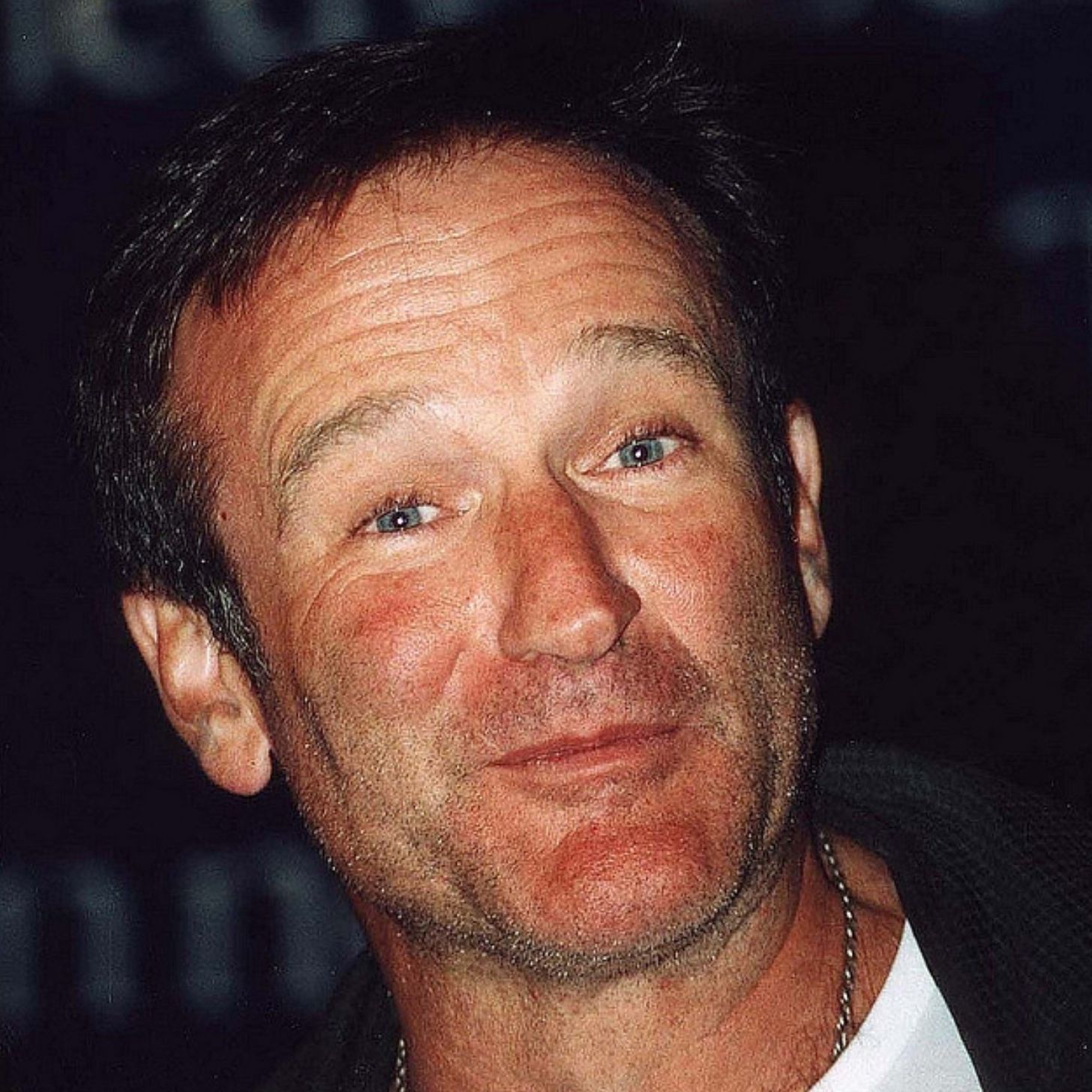
His job contracts quietly employed people who were unhoused.
Brian Lord, president of Premiere Speakers Bureau in Tennessee, never got to work directly with Williams.
But at one point he reportedly “got close enough” that the actor’s office sent over a contract rider, which outlined Williams’ stipulations for employment.
“When I got Robin Williams’ rider, I was very surprised by what I found,” Lord wrote in a blog post in 2014.
“He actually had a requirement that, for every single event or film he did, the company hiring him also had to hire a certain number of homeless people and put them to work.”
After Lord discovered this new facet of Williams’ character, he said he “never watched a Robin Williams movie the same way after that.”
“He was a great multiplier of his impact,” Lord added. “Let’s hope that impact lives on without him. Thanks, Robin Williams — not just for laughs, but also for a cool example.”
He did critical work for spinal cord injury research.
The Christopher & Dana Reeve Foundation has been instrumental in raising money for spinal cord injury research and improving the livelihood of thousands of people impacted by paralysis.
For Williams, his work with the Christopher & Dana Reeve Foundation was personal. He was roommates with Reeve at Julliard, and his friendship with the actor-director continued on for a lifetime.
In 2004 — the same year that Reeve sadly passed — Williams joined the board of directors and went on to work with the foundation for four years.
Beyond his work directly on the board, Williams also hosted “two or three” galas and events for the organization each year.
Peter Wilderotter, who served as the president and CEO of the foundation for 18 years, said that Williams was incredibly generous — both with his time and his frequent donations.
“These weren't token gifts,” Wilderotter told CNN.

He supported 38 charities throughout his life.
In addition to his aforementioned charity work with St. Jude, Amnesty International, and more, Williams supported a total of 38 charitable organizations throughout his life.
The long list of charities and nonprofits include the American Foundation for AIDS Research, Doctors Without Borders, UNICEF, Save The Children, Malaria No More, and so many more.
From health care and education to environmental action, Williams’s philanthropy touched so many different areas of the world in a wealth of ways.
At the heart of it all, Williams helped make the world brighter for everyone — regardless of race, gender, income, and situation.
And he did it not just with his time, his platform, and his money; he did it with his words.
As a comedian, an author, an actor and more, he showed how radically you can reshape people’s lives, simply with kindness and warmth.
“No matter what anybody tells you, words and ideas can change the world,” Williams says in “The Dead Poet’s Society” (1989).
“If you listen real close, you can hear them whisper their legacy to you.”
Header images via TSGT Vincent A. Parker (Public Domain), John William Smith / Flickr (CC BY-SA 2.0)
Thousands of Taylor Swift fans are coping with the loss of their highly anticipated “Eras Tour” shows in Europe this week.
Following news of a terrorism threat targeting Vienna, Austria’s three “Eras” shows, the superstar and her stakeholders canceled the gigs, which were slated to begin on Thursday this week.
Two arrests were made in connection to the terror plot, but Austrian concert promoter Barracuda Music made it clear that the threats had not been neutralized in time to promise a safe event.
“We have no choice but to cancel the three scheduled shows for everyone’s safety,” Barracuda Music shared in a statement posted to Instagram.
Swift’s official fan account Taylor Nation reposted the announcement, but the singer herself has not yet made any statements about the cancellation of the concerts.
Now, her fans are left to mourn — both the loss of a concert they were eager to attend (an estimated 200,000 people were expected to attend the three shows), as well as the threat to their safety.
Vienna’s tourism board has shared a list of local attractions fans can visit, including museums and restaurants, that are providing free entry, food, drinks, or gifts for Swift’s ticket holders.
But the Swifites — ever persistent — are creating their own DIY concert experience, too.
Since the shows were canceled, large crowds of fans began gathering in Vienna’s Stephansplatz square and Corneliusgasse Strasse (the city’s “version” of the famed Swift landmark Cornelia Street in New York City).
@katiewood____ swifties gather at cornelia street (corneliusgasse) in vienna in lieu of the cancelled eras tour shows here!! #erastourvienna @Taylor Swift @Taylor Nation ♬ original sound - katie wood
Here, they gathered around speakers and acoustic guitars, singing hit Swift songs, showing off their concert attire, and trading friendship bracelets.
“We’re going to Cornelia Street in Vienna to try to make the best of this day,” one fan — Katie Wood — said in a TikTok video, showing the crowded street.
“They have police there, and they’ve actually shut this street down,” she added. “Can you imagine living here and you have no idea why everyone’s upset, and you’re not a Swiftie?”
The video went on to show fans of all ages and backgrounds gathering outdoors, singing hits like “All Too Well” and meeting under a large sign that read “Bracelet Trading Spot.”
Additionally, a church located nearby — Lutherische Stadtkirche — offered fans a place to stay and listen to Swift’s discography in safety, with rows of pews filling with young women, bopping their heads to the lyrics of the hit song “Style:” “You’ve got that James Dean daydream look in your eye,” they sang along, beneath a crucifix.
thank you lovely church in #vienna that played Taylor swift songs the day of the first cancelled concert and gave lots of sad swifties a place to gather. Thanks to the police for keeping us all safe! #ViennaTStheErasTour pic.twitter.com/p9eZeIJaeT
— kristi hovington (@kristihov) August 8, 2024
This resilient positive spirit has become trademark of the often young, female fans — whose safety is unfortunately not always promised.
Just last month, three young girls were killed in Southport, an area near Liverpool, while attending a Taylor Swift-themed dance workshop. A knife-wielding assailant took the lives of three children and critically injured five others.
Swift did make a statement about this tragedy, citing the “loss of life and innocence,” and the “horrendous trauma inflicted on everyone who was there,” leaving her at a “complete loss for how to ever convey my sympathies to these families.”
As per usual, her fanbase turned out in support. A crowdfunding page called Swifties for Southport has since raised over £370,000, which will go to Alder Hey Children’s Hospital, where many of the injured survivors have been treated.
Despite these horrific acts — and terrorist threats — inflicting violence and vulnerability on innocent fans, the global community of Swifties seems connected to one another as they navigate the fear, loss, and connective tissue of this moment.
“It’s not pleasant to have to look over one’s shoulder,” Karoline Pedersen, a Norway-based fan, told the Associated Press on Thursday. “It angers me that a concert like this, where millions of girls have said they actually feel safe, should be turned into a place of fear.”
This is beautiful to see, Swifties come together in song and unity this morning, brings a tear to my eye.
byu/OK_SpeakToMe inTaylorSwift
Still, they sing.
One fan posted to the r/TaylorSwift subreddit on Thursday, with a video of the Vienna crowd crooning a Swift song in unison.
“This is beautiful to see,” they wrote. “Swifties come together in song and unity this morning. [It] brings a tear to my eye.”
Header photo courtesy of Pexels and iHeartRadioCA / CC BY 3.0
As national park visits skyrocket during peak seasons, it’s important to remain abreast of all safety precautions to keep you and your loved ones — including your canine companions — safe.
Recently, a visitor of Grand Teton National Park learned this lesson the hard way.
After letting their dog off its leash near a herd of bison, a video taken by another visitor shows the two animals in a heated moment, about to face off in a potentially violent battle.
The bison is clearly agitated by the curious dog, exhibiting behaviors like flicking its tail, and kicking up dust, before engaging in a “bluff” charge to communicate to the dog that enough is enough.

Fortunately, the dog, who appears to be a Husky, gets the message and runs off.
But for dog lovers, the video is certainly an anxiety-inducing watch, teaching a valuable lesson about wildlife safety.
Many wild animals found in some of America’s most popular national parks include elk, moose, and bison, all of which usually treat domestic dogs as they would wolves.
This means they are likely to attack or try to trample them — which is a danger to dogs, but also to their humans. While these animals rarely attack humans, they might feel a little more agitated if spooked or provoked by a dog.
In Grand Teton National Park specifically, dogs are allowed to visit, though strict rules apply to keep everyone safe. They must be on leashes at all times and are not allowed to enter indoor facilities like visitor centers and may not come along with humans on trails.
“A good rule of thumb is that a pet may go anywhere a car may go: roads and road shoulders, campgrounds and picnic areas, parking lots, etc,” reads guidelines from the National Park Service.
“Pets must be on a leash (six feet or less), under physical restraint, and within 30 feet of the roadway. Pets are not permitted on any park trails or in the backcountry.”
Service animals are allowed throughout the park, but also must meet requirements like being kept on a leash, and their handlers are required to fill out a form at the visitor center upon arrival.
Additional rules for pets at the park include things like not leaving them unattended or tied to an object, keeping them away from thermal water areas, picking up and disposing of pet waste, and ensuring that someone is with the dog inside a vehicle to ensure their safety.
According to the Instagram account that shared the original video: “These policies exist to protect pets from being killed by predators like bears and coyotes, to protect them from being burned or killed in hot springs, to prevent the exchange of diseases between domestic animals and park wildlife, and to allow others to enjoy the park without the disruption of pets.”
While safe visits to national parks like Grand Teton or Yellowstone are possible with canine adventure buddies, there are a number of other national parks that are notoriously more dog-friendly (and may even award your furry friend with an official BARK Ranger badge!).

BARK principles include the following:
- (B)ag and carry out your waste
- (A)lways wear a leash
- (R)espect wildlife
- (K)now where you can go
There are approximately 150 national parks that encourage and award BARK Rangers, making it easy — and fun — to abide by safety guidelines when enjoying the beauty of America’s public lands.
“The main purpose of the [BARK Ranger] program is to make contacts with visitors and their pets to help everyone have an enjoyable visit,” the NPS explains. “The goal is to increase awareness of positive pet behaviors and reduce the number of non-compliant dog incidents.”
Header image courtesy of NPS / David Restivo
Bison — the brown, fluffy trademarks of many of America’s public lands — are majestic and culturally significant creatures. But they can also weigh 2,000 pounds, are rather athletic, and aren’t exactly eager to welcome guests into their habitats.
In fact, Yellowstone National Park has seen more injuries from bison than any other animals, according to a New York Times article from May of this year.

On average, there are one two two reported incidents of bison injuring visitors — but there are also plenty of unreported close calls (and even some scary encounters with canine companions!)
Earlier this year, for instance, an 83-year-old visitor was gored by a bison that was defending its space in Yellowstone, sustaining serious injuries after being lifted about a foot off the ground by the bison’s horns.
With human-wildlife encounters on the rise, the National Park Service and tourism boards are coming up with clever ways to remind visitors about safety rules, while still encouraging responsible tourism.
Jackson Hole, Wyoming — which is home to parts of Yellowstone and Grand Teton National Park — has just launched a new Instagram filter: Selfie Control.

“We’ve all seen the videos on social media: someone gets too close to a bison for a selfie and the next thing you know, they are on the news with wild-animal-induced injuries,” a Visit Jackson Hole web page explains.
“‘Getting the shot’ is not worth the risk to you or the wildlife, and a little self control can go a long way in Jackson Hole.”
It works like this: Jackson Hole visitors can search for the filter on Instagram and navigate through the animal options on their screen to identify the type of wildlife they are looking at.
If the animal appears bigger than the icon on the screen, the user is too close and they need to move back. Once they reach an appropriate distance, they can take a photo and tag @visitjacksonhole when sharing on the app (either as a Story or static feed post).
“Selfie Control is your reminder that viewing and taking photos of wildlife is allowed and acceptable, but staying the appropriate distance is more than a suggestion,” the tourism board writes. “It’s a requirement — for your safety and the safety of the animal.”
While it might seem like the threat only goes one way, wild animals are certainly impacted by encounters with humans. As a result of negative experiences with people, wild animals can be cast out from their herds, or may avoid revisiting these areas altogether.
Not only does that mean visitors won’t be able to see or take photos of these beautiful animals, but the animals themselves might not have access to their safe habitats, putting them at risk to predators, population decline, or disease.
Official guidelines include giving bears, wolves, other large carnivores, and large nesting birds at least 100 yards of space. All other animals — like bison, elk, and moose — need at least 25 yards of space.
The tourism board acknowledges that it can be tricky to guess those distances on the scene, so the app aims to help make it a little easier.
“For professional photographers and amateurs alike, it’s hard to tell if a moose or bison is 25 or 100 yards away just by ‘eyeballing’ it, especially when you’re in a place like Grand Teton or Yellowstone National Park, with sprawling, wide-open spaces,” the Selfie Control webpage says.
According to Crista Valentino, the executive director of the Jackson Hole Travel & Tourism Board, the filter was created after officials noticed a “really big increase” in human-wildlife encounters.

She believes a rise in national park visitors and the emergence of high-quality smartphone cameras are to blame for the growing trend.
“Many [guests] are coming without the information of knowing and understanding that these are wild animals, that this is not a zoo, and that these animals need space,” Valentino tells ABC News.
“It's our hope that the filter can allow other wild destinations that are home to wildlife to keep their visitors and wildlife safe as visits are sure to increase during the summer travel season.”
And if the threat of one’s safety — or the danger it poses to the animals itself — isn’t enough of a motivator to abide by these wildlife rules, each violation can result in fines up to $5,000 and six months in jail, according to the Washington Post.
Plus, if visitors are especially interested in the local wildlife, they are more than welcome to take a tour led by an expert guide.
After all, humans probably wouldn’t like their personal space invaded by an unexpected house guest, either.
“Wildlife are at home here in the Tetons, even if it’s on the side of the road or trail,” Visit Jackson Hole says. “Humans are just guests.”
Header images courtesy of Visit Jackson Hole
Every day the Good Good Good team collects the best good news in the world and shares it with our community. Here are the highlights for this week!
If you want to get good news in your inbox every day, join the Goodnewsletter — the free daily newsletter designed to leave you feeling hopeful.
The Best Positive News We’re Celebrating This Week —
A boxer just made history as the first-ever athlete to win a medal for the Refugee Olympic Team
On Sunday, boxer Cindy Ngamba beat France’s Davina Michel to become the first-ever medal-winning athlete for the Refugee Olympic Team, earning bronze.
Ngamba, who was also the team’s flagbearer during the opening ceremony, took up boxing at 15 years old and came out as gay when she was 18. She competes on the Refugee Olympic Team because in her home country of Cameroon, homosexuality is banned and if she were to return, she could be sent to prison.
The Refugee Olympic Team has given refugee athletes a place to compete at the Games since 2016 — it was created for competitors just like Ngamba, who have been forced to flee their country.
Why is this good news? Refugees and displaced people all over the world have hopes and dreams, and deserve to pursue them in safety and freedom — no matter where they live. Ngamba’s historic achievement shines a light on that reality — and serves as an important reminder for us all to continue the fight for human rights around the world.
→ Read more
Severe food insecurity dropped by 85% last year in Brazil — from 8% of the population to 1.2%
A newly published report from the United Nations showed that severe food insecurity dropped significantly in Brazil last year.
In total, 2.5 million people went hungry in the country in 2023, down from 17.2 million in 2022 — an 85% decline, and a remarkable 14.7 million fewer people facing food insecurity. As of last year, 1.2% of the population faces food insecurity, down from 8% in 2022.
Severe food insecurity leads to acute hunger, which, when experienced frequently can lead to severe physical and mental health issues — especially among young children, who see impacts in development and cognitive function.
While there are 14.7 million reasons to celebrate in Brazil, the same progress hasn’t been seen globally, with an estimated 733 million people experiencing hunger in 2023 — still a decline over the 735 million reported in 2022, but room for much more progress.
The first zero-emission hydrogen-powered hybrid train in the U.S. just arrived in California
The zero-emission, hydrogen-powered hybrid FLIRT H2 train broke a Guinness World Record earlier this year for the longest distance traveled by a train of its kind on a single charge — 1,741 kilometers.
And now, it’s made its arrival in San Bernardino, California. While it will be used on a 9-mile stretch as a pilot case, the state plans to use them all across its Metrolink system if it goes well. And with only water vapor for emissions, passengers will enjoy a cleaner, planet- and people-friendly commute starting later this year.
While similar environmentally-friendly trains run on narrower tracks, this one is designed to work on existing railroad tracks, making it easier to integrate into existing infrastructure.
→ Read more
More good car-free news:
- From New York City to Houston, urban walkability is gaining a (literal) foothold across the U.S.
- Building around 47 miles this year alone, Chicago is on track to complete 150 miles of new bike paths by 2025.
- Cities closed streets to cars during the pandemic, and even years later — they’re staying that way
A group of Indigenous women in Ecuador are preserving their culture and protecting the Amazon from illegal mining
A group of Indigenous women in Ecuador first decided to come together to increase their families’ income by making and selling handicrafts, but when their territory was increasingly threatened by mining, they stepped up to make a difference.
Now, the “Yuturi Warmi” are the first Indigenous guard led by Kichwa women in all of Ecuador. Over 40 members are organized against all forms of interference in their territory, including the contamination of their rivers and the destruction of the Amazon rainforest.
But it’s their approach that’s unique and important: it includes not only physically guarding their territory from illegal mining, but also defending their culture, ancestrality, language, education, and health.
Just 10 months after a beloved, iconic tree was cut down due to vandalism, it’s started regenerating
Last fall, rangers and visitors on the Hadrian’s Wall Path in northern England were shocked and devastated to see the path’s iconic, 200-year-old Sycamore Gap tree had been cut down. Police deemed it an act of vandalism, and people mourned the loss of the landmark.
Since the tree was so well cared for and healthy, experts hoped it would regenerate. And now, just ten months later, those hopes have been realized: small chutes of new growth have begun bursting from the tree’s trunk.
The tree’s caretakers are now protecting the tree’s stump and root zone so that the new growth is given the best chance to survive and continue the tree’s long, storied history.
Why is this good news? While it’s devastating that the tree was cut down in the first place, it offers a larger message about our responsibility to preserve and protect nature — whether it’s one tree or an entire forest. When given the space and opportunity, nature will thrive — good news for the planet and for people.
→ Read more
A climber with stage 4 colon cancer summited Yosemite’s Half Dome to raise awareness for cancer screenings
When nature photographer Kirk Keeler was diagnosed with stage 4 colon cancer two and a half years ago, he made a promise to himself: To climb Yosemite’s notoriously challenging Half Dome while he still could.
Keeler didn’t just climb the cable route most well-known to hikers but instead opted for a roped climb up Snake Dike on the edge of the rock formation.
The climb was a big undertaking, but his ultimate goal was even bigger and better: To raise awareness for cancer screenings. He hopes to prevent others from enduring what he’s had to.
A filmmaker joined Keeler on his journey to the summit and is turning it into a short film — sharing Keeler’s goal to raise awareness for cancer screenings.
Sea lions are helping researchers collect video data about habitats and ecosystems in the waters of southern Australia
In a recent study, researchers detailed their discovery of six benthic — or underwater — habitats covering 5,000 square kilometers. They came by these habitats with a bit of help from sea lions.
Venturing into waters previously unmapped, eight adult female sea lions were outfitted with tiny, lightweight cameras attached to neoprene patches glued to their backs. It’s a much less costly alternative than using underwater cameras — and much more effective.
Exploring their own natural habitats, the data the sea lions collected helped the researchers map critical habitats for the endangered species — as well as help them better understand habitat distribution and biodiversity, and contribute to conservation efforts.
More animals doing good:
- Thanks to their tolerance for deep waters and ability to navigate rough currents, seals are helping climate scientists gather vital ocean data to fight climate change.
- Simply by eating sea urchins and destructive shellfish, sea otters are keeping kelp forests healthy and coastal erosion at bay.
- After getting in a round of practice at the zoo, a team of conservation dogs will go on to fight the poaching of endangered species.
‘World-changing’ solar tech can harvest energy from any light source and could eliminate cords and batteries
Based in Sweden, a company has created durable, flexible miniature solar cells that could soon find their way onto everyday items, from keyboards and headphones to speakers and bike helmets — a “world-changing” development that could mean the end of batteries and even power cords.
The lack of light during the winter months in Sweden inspired Exeger’s co-founders to look for other sources of power for photovoltaic cells — from direct sunlight to candlelight, and even moonlight.
They’re not sensitive to partial shading (unlike traditional photovoltaic panels), are waterproof, dustproof, and shockproof, and their patented skin-like material can morph into almost any material, opening it up to use on a huge range of products.
Why is this good news? Electronics giant Samsung estimates that TV remotes alone are responsible for 3.1 billion disposable batteries being thrown away every year. It estimates that switching to photovoltaic energy could reduce its greenhouse gas emissions by about 6,000 tons every year.
Good as Gold
The 2024 Olympics wrap up in Paris this weekend, and there have been so many inspiring, history-making moments at the Games. The Refugee Olympic Team earned its first-ever medal, gymnastics had its first podium made up of all Black women, and more.
Here are some more good, can’t-miss moments from Paris:
- Trans nonbinary runner Nikki Hitlz became the first openly transgender and nonbinary athlete to make an individual Olympic final (they race on Saturday!).
- Flava Flav (a.k.a. USA Water Polo’s hype man) helped a collegiate athlete and Olympian make sure their rent was paid.
- The Team USA gymnastics team is getting mental health support from the goodest boy.
- They’re also rebuilding trust with the doctors they deserved all along.
- There were so many beautiful moments of LGBTQ+ pride and love on display: from celebratory kisses (and more kisses) to proposals.
- The Games (and winning medals) were extra special and significant for war-torn countries like Ukraine.
- Just as Paris 2024 promoted sustainability, the IOC also awarded Olympic committees, international federations, and individual athletes for their climate action.
- Representation in the pool, on the track, and on the field inspired young athletes (2036 Games, here she comes).
The 2024 Olympics Closing Ceremony is on Sunday, August 11 at 2:00 PM ET. But don’t cancel your Peacock subscription just yet: the party is just getting started!
An 18-year-old in Oklahoma’s annual back-to-school fundraiser has distributed over 33,000 book bags and $1.3 million in school supplies
Reed Marcum is a 4-H teen from Oklahoma, and he just hosted the 2024 Michael Miller Book Bag Giveaway, a massive annual charity event for the back-to-school season.
At this year’s event alone, 6,000 book bags were distributed to students and families in the community. In its 9 years, the event has given away over 33,000 bags total, along with $1.3 million in school supplies.
And it’s a source of pride and excitement for the community for the back-to-school season, which extends even to nearby states.
Marcum himself was also a recipient of the 2024 4-H Youth In Action Awards for his community projects that have collectively raised more than $3.5 million in funds and donated items.
Marcum’s 4-H mentor acknowledged that his “commitment to his community is inspiring” and it’s had a massive impact.
→ Read more
More good news of the week —
The UK government just announced it’s making a record investment in renewable energy this year. The majority of the funding will be available to develop offshore wind power, which the Labour government says it wants to quadruple by 2030.
Baltimore saw a 36% decline in homicides and a 30% decline in non-fatal shootings in the first half of 2024. These statistics come after a 20% reduction in homicides the previous year, indicating a sustained positive shift in Baltimore's safety landscape.
An investor just launched the world’s first organization focused exclusively on the health of elite women athletes. Michele Kang, who also just donated $4 million to USA women’s rugby, launched Kynsica Sports International Ltd, with a goal of raising $100 million — including $50 million of her own.
The UK government just unveiled plans to put solar panels on millions of homes to help lower energy bills and tackle the climate crisis. In a “rooftop revolution,” it’s working with builders to make it easier to buy new homes with panels installed, or instal them on existing ones.
For the first time ever, an Olympic gymnastics podium was made up of all Black women. In the women’s floor exercise event, Brazil’s Rebeca Andrade took gold, and the USA’s Simone Biles and Jordan Chiles took silver and bronze respectively.
Scientists in Japan developed a new technique that can destroy 100% of “forever chemicals” overnight. In eight hours and using common equipment, their method fully disassembles two of the most common toxic manufacturing substances and even allows one to be recycled.
Scientists developed 3D-printed “waffle stacks” that can remove 75% of “forever chemicals” from water. The structures — called "monoliths" — were surprisingly found to be more effective after multiple uses, making them a reusable and affordable water treatment option.
AI that scans medical records has helped doctors in England improve cancer detection rates by 8%. Especially for cancers where early detection can be life-saving, the rate of cancer detection rose from 58.7% to 66.0% at practices using the “C the Signs” AI tool.
Bloomberg Philanthropies just announced a $600 million investment in four historically Black medical schools. Michael Bloomberg lamented the closure of all but these four schools, despite Black doctors having a well-documented impact on improved health outcomes for Black patients.
A group of volunteers just cleaned up 60 kilograms of waste from a UK beach. The cleanup was in celebration of Plastic Free July, and recyclable waste collected was taken to be made into new products, while other waste was converted into electricity.
The CDC just issued the first pain management guidance for IUD insertion. The form of contraception was introduced around 60 years ago, and they’ve earned a reputation for being incredibly painful to place, with some people reporting vomiting, fainting, and more.
A major electronics brand just unveiled a new solid-state battery with a 600-mile range that charges in 9 minutes. In an announcement that could revolutionize the electrification of motor vehicles, Samsung says its new battery also has a 20-year lifespan.
After riots caused severe fire damage, people donated more than £120,000 to a Liverpool library and community hub. The fundraising page had an initial target of £500 to help with repairs, but more than 6,000 donations helped them far exceed that goal.
New, cutting-edge technology is helping researchers better understand and prepare for hurricanes. The 23-foot Saildrone devices are packed with cameras and sensors to help scientists better understand hurricanes.
The U.S. Energy Department just announced $2.2 billion in funding to strengthen the grid and add clean energy. The funding will support eight projects across 18 states to strengthen the electrical grid against increasing extreme weather, advance the transition to cleaner electricity, and meet growing demand.
With a grizzly bear baby boom in Yellowstone National Park, wildlife experts have been eager to spot a famed mama bear — or sow — with her litter of five cubs.
Bo Welden, a wildlife naturalist, got exactly what he was looking for earlier this summer when he caught the family exploring through the woods when out with some guests.

Welden posted the rare footage to Instagram, where the sow leads her babies across a log. In the background, viewers can hear him and his guests attempting to suppress their squeals of delight in the background.
“Seeing the mother bear with five cubs will always be a highlight moment for my guiding career,” he wrote in the caption. “I’m not going to add any music to it because you can just hear the level of excitement from me and my guests!”
Grizzly bears usually only have three cubs per litter, making this family especially exciting — and one of the largest litters the park has ever recorded.
“When you have great days looking for wildlife you want what I call ‘the gravy,’” Welden continued in his caption. “It’s when you have already had such magical moments and your luck seems to be endless, so you want all the next moments to be even more amazing.”
Welden’s luck that day? Gravy, baby.
“While this doesn’t happen that often,” he wrote, “On this morning in Yellowstone, it surely did… Even listening to it brings me back to the tears of joy that hit Yellowstone National Park when we watched this happen.”
Bear Safety
Welden’s video is also a great example of wildlife safety in a national park. As evidenced by the distance between the camera and the grizzlies, it’s safe to assume that the spectators are at a comfortable distance and viewing the animals through a scope or binoculars.
Per Yellowstone’s safety guidelines, it is recommended that visitors remain at least 100 yards away from grizzly bears and other carnivorous mammals (like wolves).
Maintaining a safe distance from bison, elk, moose, and other wildlife is also important, with guidelines to maintain 25 yards in between humans and animals.
As far as bear safety goes, wildlife experts recommend that adventuring humans always carry bear spray.
In the event that visitors do come face-to-face with a grizzly bear — especially a protective mama and her babies — it’s important not to run away, which would likely trigger the bear’s instinct to chase or charge.
If unable to deploy bear spray, the next best method is to quickly move face-down on the ground, interlacing hands behind the neck. Bear spray should also remain in-hand, as the bear may bite into it, allowing time for escape.
This position should stay held, with legs spread wide, making it harder for the bear to flip a person right-side up.
If the attack continues, fighting back is recommended.
Fortunately, if visitors follow park guidelines — and continue to enjoy wildlife at an advisable distance — they can keep themselves safe while protecting their favorite animals, too.
Header image courtesy of NPS Photo / Emily Mesner
Across South Korea, it is nearly impossible to set foot in a restaurant without being greeted by bowls of “banchan:” specialty side dishes that run the gamut from cooked rice, soup, kimchi, bulgogi, beans, and potato pancakes.
When dinner ends and the check is paid, the sight of half-filled bowls, fermented juices, and fish scraps is the mark of a well-enjoyed meal.
In many countries around the world, those plates would be scraped into a trash can, contributing to the whopping 2.5 billion tons of food waste that is generated worldwide every year.
“It’s one of the biggest — and dumbest — environmental problems we have today,” climate scientist Jonathan Foley told the Washington Post.
But South Korea has accomplished something that many might consider impossible.
Over the course of three decades, the country has created a recycling, trash, and compost system that has allowed residents to recycle 98% of their food waste.
Every night after dinner service, Kim Young-Hee — a restaurant manager in Seoul — takes leftover bowls of banchan and carefully separates it out in the kitchen into a specialty-marked bag.
“Once the service is over we put it in a bin outside,” Young-Hee told FRANCE 24 news network. “We put this sticker on the bin to prove that we paid the fee, then the garbage collectors come and take it away.”
South Korea recycles roughly 5 million tons of food waste a year.
The goal? Divert unnecessary waste and reduce greenhouse gas emissions.
At food processing plants, the food is stored in tanks, ground up, dried out, and processed into animal feed and fertilizer for farms across the country.
To get to this milestone, the government began handing out fines for improperly discarded food waste. And that’s not just for littering, it also means getting fined for dumping food waste in the garbage bin (instead of a compost container).
To discourage food waste and promote sustainability, many citizens have a prepaid card that they use to track their composting habits.
“I tap my card here, and it opens,” Lee Seo-Un told FRANCE 24, gesturing to the yellow compost containers and the attached keypad.
With a touch of her card, the top of the bin lifts and she sets her food inside.
“I’m very careful about the food waste we generate, because we have to pay a fee based on weight,” she explained.

Each trip to the machine is a matter of pennies. The average family typically pays around $6 a month to compost.
Even so, Seo-Un said it’s made her more conscious of how she prepares and uses ingredients.
“[We] are very careful about reducing household expenses,” she added. “For example, I drain all the water from the food waste to make it lighter.”
The system isn’t flawless. According to the Washington Post, the wrong items find their way into the composting system, causing breakdowns in machinery (or resulting in less than savory animal feed).
To adjust to these issues, the government has been gradually prioritizing biogas centers more and more, to turn the compost into energy.
The Daejeon Bioenergy Center — just one of 300 centers across the nation — has transformed food waste into green energy that powers an estimated 20,000 households.
And though South Korea’s standards aren’t easy to replicate — or enforce — around the world, the process of composting food waste into energy is one aspect that is turning heads in America.
Biogas systems use anaerobic digestion — a process that breaks down organic waste into a renewable natural gas substitute — and they’re slowly catching on in the U.S.
For every 100 tons of food waste processed daily, those biogas systems supply energy for up to 1,400 households annually.
Currently there are 2,200 operating biogas systems today, but the upward potential is innumerable.
And it's important to celebrate milestones along the way.
This past May at BIOGAS AMERICAS — the “largest gathering of biogas and renewable natural gas professionals” in North America — engineers and industry leaders gathered to discuss the future of biogas in the U.S.
“The year-over-year increases at BIOGAS AMERICAS illustrate biogas’ growing role in addressing the climate crisis,” said Bernie Sheff, board chair of American Biogas Council, at the conference.
“As we celebrate this phenomenal success, we look forward to continuing our work to increase sustainability in the food, solid waste, agriculture and wastewater businesses.”
Header image via Bobby Palm (CC BY-SA 2.0)
Bringing clean energy to the seas is no longer a pipe dream.
From hydrogen ferries to innovative sail systems designed to reduce fuel consumption in cargo ships, the waters are slowly but surely going green with a wealth of climate-forward innovations.
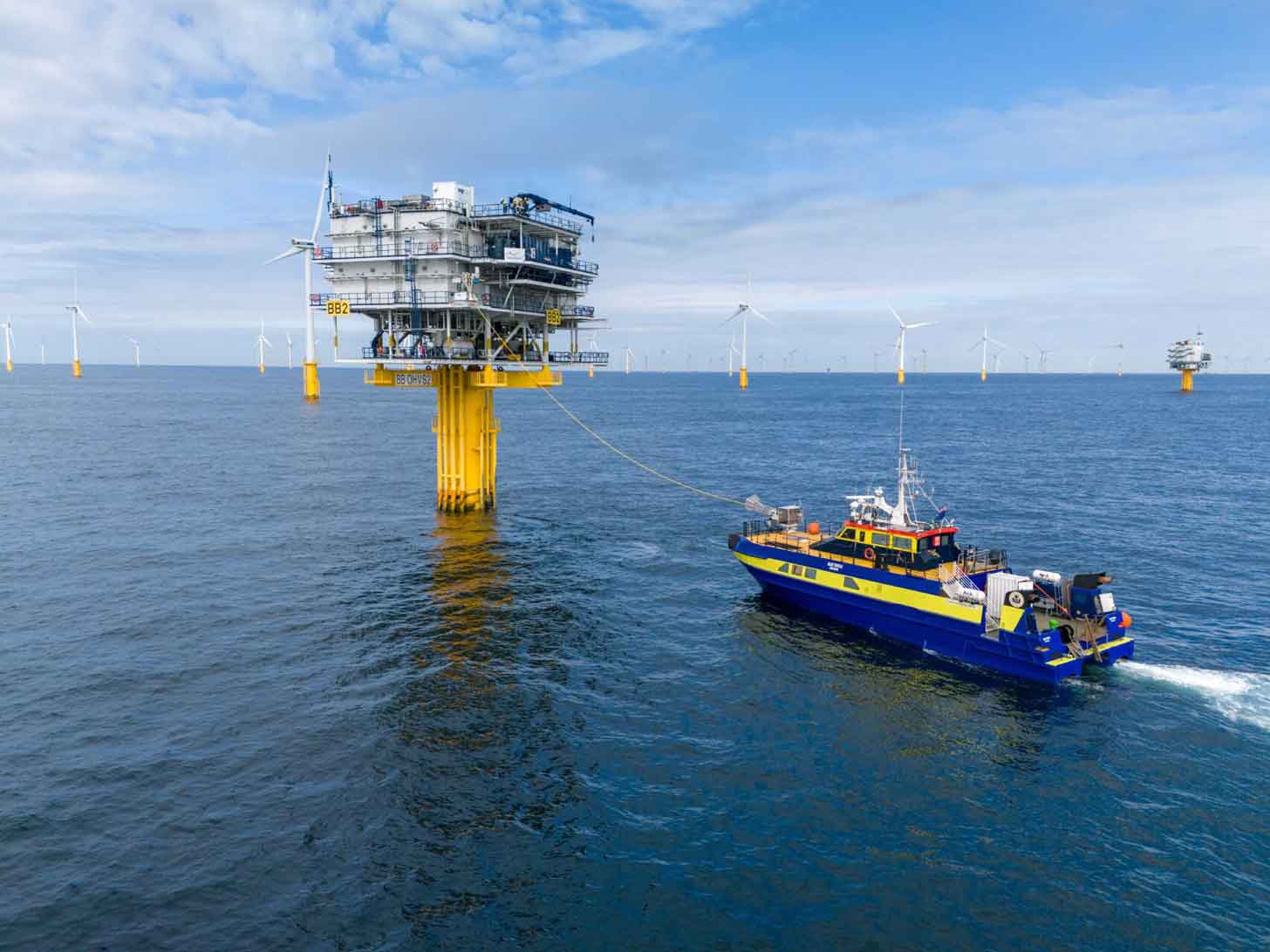
A new electric charging station, created by Parkwind and MJR Power & Automation, is already electrifying the seas with great success, according to New Atlas. In fact, it’s a world-first: A wind-powered electric charging station right in the middle of the Belgian North Sea.
Belgian company Parkwind created this substation wind farm, which is connected to its Nobelwind wind farm, located 29 miles off the country’s coast. The wind farm has been in operation since 2017, features 50 turbines, and is part of a system of wind farms that supplies power to about 190,000 households.
But the new charging station is going beyond household energy and powering maritime operations.

The biggest goal here is to create a sustainable, electric alternative to traditional gas and fuel systems used by maintenance and transport vehicles.
Earlier this year, the charging system was transported to the offshore substation and lifted in modules using the substation crane — resembling an offshore oil rig.
It was successfully set up in under two days and tested using a crew transfer vessel, which Parkwind reports went swimmingly, with no disruption to the facility’s operations.
“The trial proved the system can transfer electricity from a wind farm to the vessels safely without any disruption to the farm,” Kristof Verlinden, Head of O&M at Parkwind, said in a statement.
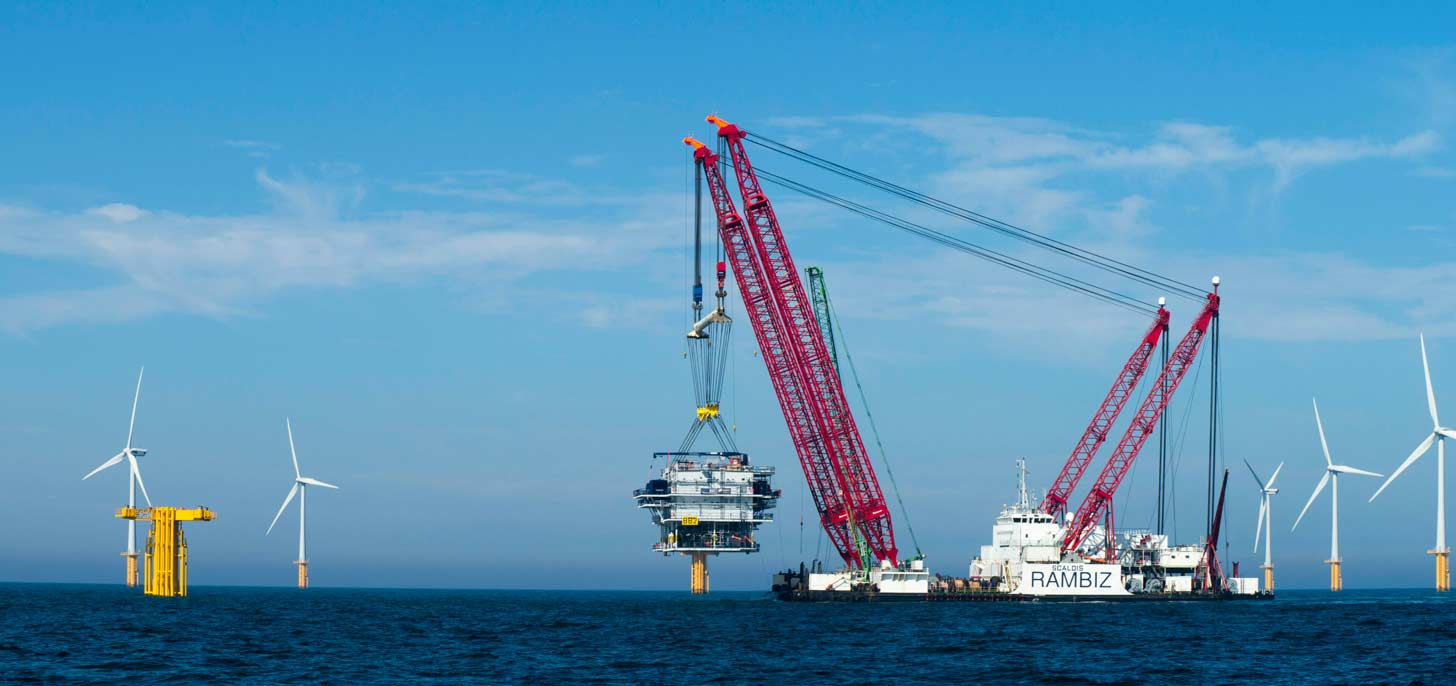
Not only was the trial successful, but it indicates a swath of benefits promised by these charging stations. The station itself is very versatile, powering smaller crew transfer vessels with up to two megawatts of power, as well as larger service operation vessels, with up to eight megawatts.
The station can also be used to supply offshore power to other vessels on standby, dramatically reducing their emissions from diesel generators.
Additionally, the charging station operates with hands-free coupling and uncoupling apparatuses, meaning ships can connect and disconnect to the charger with ease and safety.
It can also adapt to various conditions and will provide a solid charge, even on the choppiest waves, ensuring that the vessel stays in place while charging.
After testing the charging system, these lessons will be incorporated into the first commercial offshore charging system, which MJR hopes to have delivered in the first quarter of 2025.
Funded by The Offshore Wind Growth Partnership and the UK Department of Transportation, experts at Parkwind and MJR are hopeful for the possibilities of a cleaner, greener future for the deep blue.
“We are committed to making all of our activities as sustainable as possible,” Verlinden said. “This is a game changer for our maintenance vessels, which can now access green energy directly from our wind turbines as they carry out their work.”
Header image courtesy of Parkwind