Since 1995, the Rising Sun Center for Opportunity in California has trained over 3,000 young people for jobs in energy efficiency.
With a focus on placing young women, people of color, and formerly incarcerated individuals in renewable energy careers, the nonprofit also gives back to the surrounding community by offering “green house calls” to neighbors.
After visiting these homes and asking a few simple questions, the young employees are then able to offer energy efficiency and water conservation services, including LED light bulbs, power strips, weather stripping products, and water-saving devices.
And they do it all for free.
“We use this no-cost service that we provide to the community as a vehicle to provide the youth earn and learn experience and career exposure,” senior program manager Sofia Canela Torres told Yale Climate Connections.
In June of 2025, the center announced that it was expanding its climate careers program to 13 counties in the San Joaquin Valley, Monterey Bay Area, and Eastern Sierra.

“Central California communities — and in particular rural communities — have often been overlooked and underinvested in when it comes to programs that reduce utility bills,” said Rising Sun President and CEO Julia Hatton.
“This region has been a priority for Rising Sun for over a decade, and we’re honored to be able to partner with the CCR REN to provide our energy efficiency services and youth employment opportunities for many more local, rural residents.”
A version of this article originally appeared in the 2026 Home Edition of the Goodnewspaper.
Header image via Jimmy Aaja
Listening to the sounds of nature is pleasant and has real, proven health benefits, and now we know it can be a tool for maintaining healthy national park ecosystems, too.
In partnership with the National Park Service, Pennsylvania State University leads the Protected Areas Research Collaborative Listening Lab. Scientists set up microphones in national parks to send recorded sounds back to students at the lab, who analyze and inventory them.
Their findings are then sent back to park officials to help them better manage populations and protect the natural sounds of ecosystems.
“We need to understand how ecosystems across the globe are changing, and understanding base-level natural sounds helps do that,” Peter Newman, co-director of PARC said. “Once we have a baseline, we can understand how human-caused noise affects ecosystems around the world.”
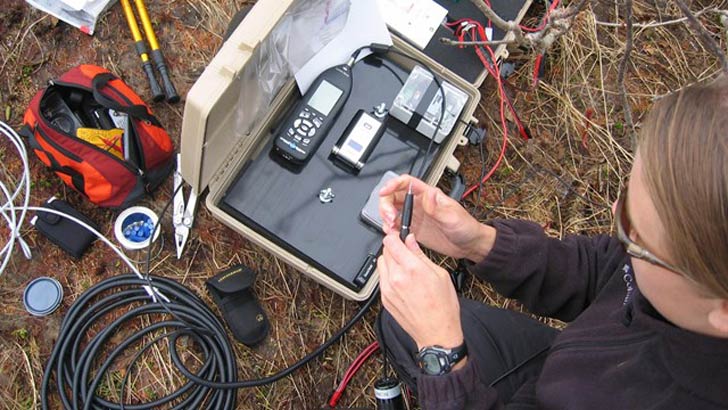
The students’ analysis also helps with park visitor management. By gathering data on how people utilize these spaces, they help improve infrastructure like trails and transportation systems.
Over 20 years’ worth of soundscapes in the lab’s collection gives national parks a better understanding of both their past and future.
“With help from this lab, national parks can get a better understanding of what is happening in their areas from an acoustics perspective and what has been happening,” Andrew Barnard, a Penn State professor of acoustics and engineering, said in a statement.
“This can be used to make better conservation decisions. The real benefit of this is understanding where we’ve been and then making informed decisions on the future of the parks.”
These soundscapes are also an archival tool to preserve the sounds that make a place what it is.

PARC has an archive of natural sounds people can explore on the NPS website, too.
“If a tree falls in the woods, and no one is around to hear it... it may have been recorded,” NPS writers quip on the federal website.
“Efforts to protect the soundscape and overall acoustic environment in our national parks are driven by NPS management policies. But before any action can be taken, park planners and managers need reliable data about a park's existing acoustic environment. What natural and cultural sounds can be heard at the park? What types of noise can be heard? Where, when, and how often are these sounds heard, and how loud are they?”
Penn State graduate researcher Morgan Crump, who studies both recreation, park, and tourism management, alongside social data analytics, said the work PARC does to track and improve national park data.
“It’s critical to understand these soundscapes,” Crump said. “This can be impactful to wildlife health but also visitor experience. For so many people, nature is that escape from reality, and soundscapes are a significant part of that.”
You may also like: This artist collects trash from national parks — and then paints it: 'A zero-waste practice'
A version of this article was originally published in The 2025 National Parks Edition of the Goodnewspaper.
Header image courtesy of NPS/Great Smoky Mountains National Park
When many of us imagine the visual impacts of climate change, we conjure up an image of an emaciated polar bear on a small floating iceberg. It makes sense; these bears rely on arctic sea ice to live, mate, and hunt — and their habitats are rapidly disappearing as the planet warms.
But in Svalbard, a Norwegian archipelago in the Barents Sea, a particular population of polar bears is adapting in surprising ways to the changing climate.
In a recent study, researchers took 1,000 body measurements from 770 polar bears over 24 years around Svalbard, noting an acute decline in sea ice over the years.

During this time, the ice melted rapidly, but the bears showed no decline in their body condition — a stark contrast to what researchers had anticipated.
The polar bears were not entirely unaffected by the drop in sea ice, as some relocated den areas or shifted their habitats to follow the receding ice. The findings also aren’t a blanket finding that suddenly protects all polar bears from the real and imminent threat of habitat loss.
In fact, Svalbard has strengthened polar bear protections in recent years. The animals have been protected by international law since 1973, with hunting banned entirely on Svalbard since the same year.
The Svalbard Environmental Act also prohibits disturbing, attracting, or pursuing polar bears unnecessarily. As of 2025, new distance requirements have taken effect, and all humans must keep at least 300 meters away from a polar bear year-round, with the requirement jumping to 500 feet of distance during mating seasons.
As ice continues to melt, however, hunting and close proximity aren’t the biggest threats to the species. But in Svalbard, less ice might mean better hunting conditions for the bears.

While scientists haven’t figured out exactly why Svalbard’s bears are firing decently well amid habitat loss, they think it may be associated with changes to the bears’ diet.
With less ice, seals “aggregate” on the ice and become easier to hunt. The bears may also be relying more on walrus carcasses or reindeer for food, Jon Aars, a senior researcher at the Norwegian Polar Institute, relayed to Scientific American.
“We have observed that although they spend a lot more time on land (because they have no sea ice for much of the year), they are not in worse condition,” Aars told the World Wildlife Fund. “If they survive the first few difficult years of their lives, they still grow up, have cubs, and grow old.”
“They have a shorter season for hunting ringed seals on the ice, but they make up for this by consuming more eggs and birds,” Aars continued. “In some areas, harbor seals are now more common and serve as prey. We also see more bears taking reindeer than we once did.”

And these results echo separate observations of another group of bears in the Chukchi Sea between Alaska and Russia, which also seemed to maintain health amid “substantial” sea ice decline.
That’s not to say that the bears are faring better than they would without rising temperatures, but for now, they are still okay.
“With continued monitoring of these and other subpopulations, we will likely learn more about the capabilities of polar bears as a species,” Lori Quakenbush, a researcher at the Alaska Department of Fish and Game’s Arctic Marine Mammal Program, told Scientific American.
The researchers assert we must continue to fight against a changing climate, as the next five, 10, or 20 years could still result in polar bears’ larger decline.
“But the good news,” Quakenbush said, “is that we are not there yet.”
You may also like: Experts worry Monarch butterflies could vanish in our lifetime. A new study is giving them hope
A version of this article was originally published in The 2026 Environment Edition of the Goodnewspaper.
Header image courtesy of Jon Aars/Norwegian Polar Institute
When the mayor of Alexandria, Virginia, Alyia Gaskins, discovered that the agency overseeing the city’s public housing owed $1 million in back rent, nearly 450 tenants suddenly faced eviction.
“I was curious how much did people owe and I learned it was everything from $50 to some owing close to $30K,” Gaskins told NBC Washington. “My concern was what happens next.”
The Alexandria Redevelopment & Housing Authority operates more than 1,000 public housing units in the city, and if the families in those units were evicted, the city would be overwhelmed with need.
According to the agency, it lost more than $1 million in unpaid rent from 445 of 1,000 public housing units, citing job market challenges, a rising cost of living, and lingering economic impacts of the COVID-19 pandemic.
Gaskins went to the Mayor’s Interfaith Council to seek guidance, and Rev. Howard-John Wesley of Alfred Street Baptist Church answered the call.
The church would donate $1 million to cover the back rent of residents in need.

The historically Black church has been a presence in the community since 1803, building a robust congregation and raising funds throughout the year. According to The Christian Post, congregants raised the sum to cover the donation as part of their annual SEEK action, a time of fasting and prayer held earlier in 2026.
“It is my joy to share with you that after doing the audits and the ledgers and speaking with all the families and verifying debt, I want to let you know that with that SEEK offering, you have helped stop the eviction of 338 families to the cost of $1,049,000,” Wesley announced at a recent service.
“Every single penny is going outside the door of the church. It’s connected to what we understand the purpose of fasting to be,” Wesley added to the Washington Post. “As the Lord changes our life, the Lord empowers us to change the lives of others.”
Alfred Street Baptist’s donation will be made to the local nonprofit ACT for Alexandria, which will disperse the funds to ARHA after reviewing the confirmed ledger balances of residents facing eviction.
Mark Jinks, chair of the ARHA board, said the agency plans to hire an independent accountant to make sure funds are distributed properly, according to the Washington Post.

In addition to wiping out this rent debt, the church and Interfaith Council will be part of an initiative to host individual meetings with each resident who fell behind on their rent, so they can make plans and provide resources to ensure it doesn’t happen again.
Other churches in the area, including Shiloh Baptist, will be part of this community service project. According to NBC Washington, these other faith groups will help fund follow-up services, like food banks and job skills training.
“Everybody is entitled to their opinion, but I serve Jesus Christ, and we have a duty to help our neighbors and look after the least of these, because that’s what Jesus said we should do,” Rev. Taft Quincey Heatley of Shiloh Baptist Church told NBC Washington.
Issues in the housing authority will also be addressed, Gaskins said. Last year, the city fired the ARHA chief executive officer after discovering he had been living in one of the agency’s units, even with 38,000 people on a wait list for housing.
After this recent financial discrepancy, Gaskins said ARHA must put in new internal systems and staff to mitigate future issues like this.
Wesley knew about these leadership issues prior to getting involved, the Washington Post reported, but said he did not want internal politics to interfere with taking care of people in need.
“People [want] to be connected to something bigger than themselves,” Wesley told NBC Washington, “and in the midst of the days and times in which we live which seem to be so callous and cruel to people who are impoverished, here’s a way to make a difference.”
You may also like: Indiana church launches $1M campaign to build homeless shelter: 'Every dollar will go toward construction'
Header image courtesy of Alfred Street Baptist Church
- Mongabay has launched a dedicated Solutions Desk to expand reporting on how people and institutions respond to problems about nature, rather than spotlighting solely the problems themselves.
- The desk reflects a strategic shift toward solutions journalism, emphasizing evidence-based analysis of outcomes, trade-offs, and lessons learned from real-world interventions.
- Mongabay’s solutions journalism has already contributed to tangible outcomes, including influencing Microsoft agroecology investment decisions in Latin America, supporting community-led wildcat conservation initiatives in Peru, and informing policy and accountability in the biomass industry.
- The Solutions Desk strengthens Mongabay’s capacity to deliver rigorous, independent journalism that helps audiences better understand effective responses to environmental challenges and supports more informed decision-making globally.
Think environmental news, and the headlines tend to be bleak: extinctions, habitat loss, unrelenting emissions. And often what gets lost in all the doom and gloom is the potential for solutions to emerge — solutions that, in many cases, hold the promise of hope.
Across environmental and climate actions, a wide range of stakeholders — from local communities to governments to organizations — are working to address the challenges facing nature. Yet, understanding whether these approaches actually work remains a persistent gap.
In response, Mongabay has launched a new Solutions Desk to explore how people are working to address environmental problems and reveal insights into the effectiveness of practices across contexts.
This new desk adopts solutions journalism, focusing on responses to complex problems, assessing evidence of outcomes, and identifying what works and what doesn’t, so that others can learn, iterate, and improve.
In other words, it highlights how people and institutions respond to problems about nature, rather than spotlighting solely the problems themselves.
“Years of grim headlines have revealed an uncomfortable truth: when people are offered only catastrophe, many disengage. They stop reading, stop caring, and, in some cases, stop believing that anything meaningful can still be done,” says Rhett Ayers Butler, Mongabay founder and CEO.
“By launching a dedicated Solutions Desk, Mongabay aims to rigorously document what’s working in conservation and climate, offering readers a sense of agency and grounded inspiration at a time when the challenges can feel overwhelming.”
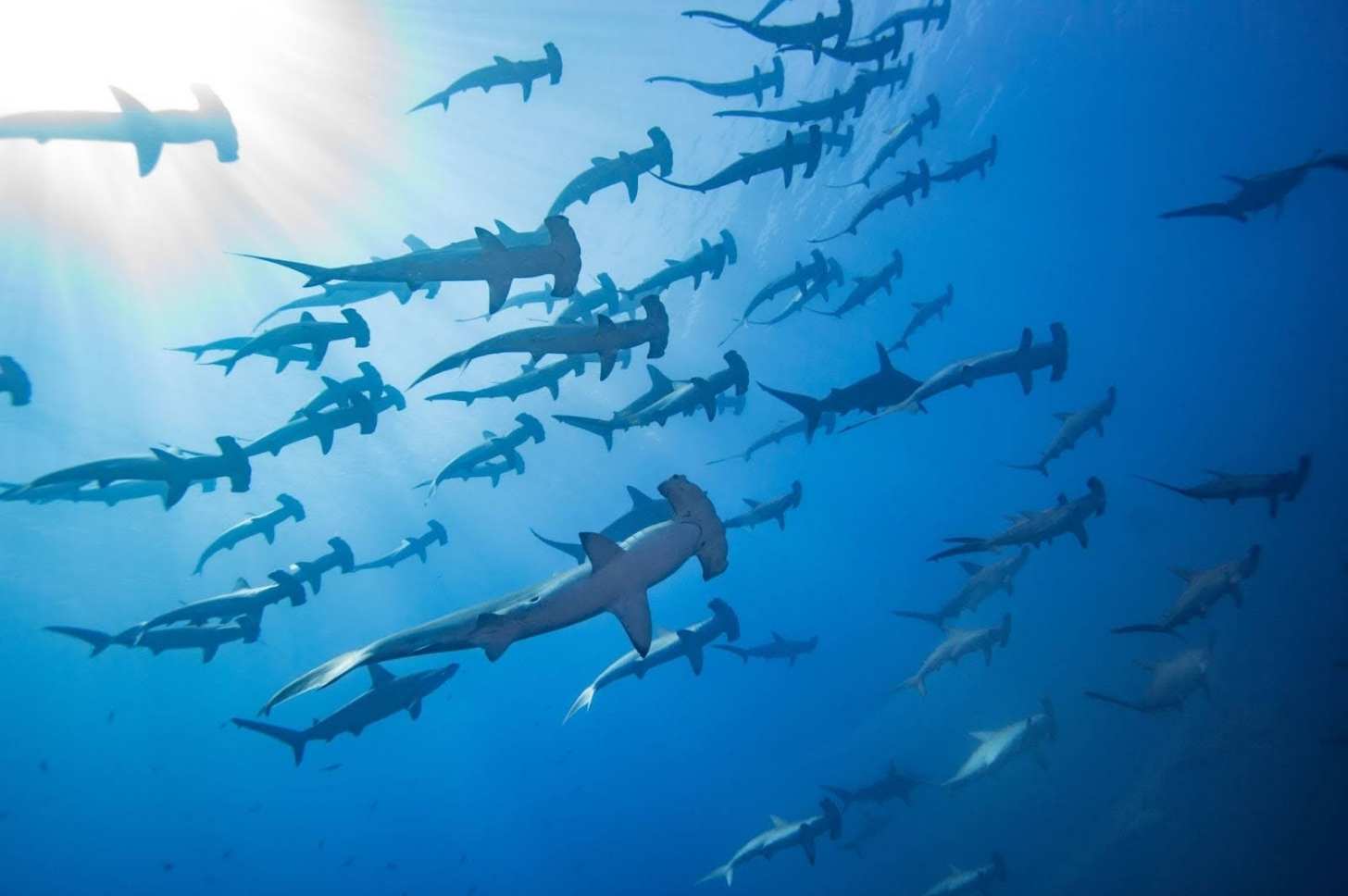
From an editorial perspective, the desk also reflects a shift in how environmental stories are framed and received.
“At Mongabay we report about the environment on a global scale every day. It is easy to fall into despair and doomerism, so the Solutions Desk exists to bring attention to a world filled with doers and to honestly address the perspective of reasonable doubters,” says Willie Shubert, Mongabay’s executive editor and VP of programs.
“Mongabay’s audience is part of an active global community that’s working to save species from extinction, halt deforestation, reduce the health burdens of pollution, and avoid the worst-case scenario of climate change,” Shubert says. “This community needs inspiration and insight from successful actions to address environmental degradation, and to learn from each other’s triumphs and mistakes.”
In practice, reporting on solutions requires considerable rigor, including careful evaluation of claims and supporting evidence. The desk builds on a core team of six staff, alongside many more journalists across Mongabay’s regional bureaus.
As the first step in strengthening capacity, Mongabay added a dedicated solutions researcher, Marina Martinez, in 2024. This role allows support including scientific evidence and fact-checking claims before publication.
While the Solutions Desk is new, Mongabay has a long history with this brand of journalism. This includes a Special Issue on Conservation Effectiveness and ongoing reporting projects focused on climate solutions, reforestation, fisheries, agroecology, and emerging policy areas such as the European Union Deforestation Regulation (EUDR).
“In the environmental arena, where long odds are the norm, there are meaningful gains underway,” Butler says. “Our Solutions Desk will cover them with the same scrutiny and independence that define all of Mongabay’s journalism, ensuring that hope is earned, not manufactured.”
By organizing this effort into a new desk, Mongabay plans to expand its capacity to produce rigorous, evidence-based reporting and make insights into environmental solutions more accessible to a global audience.
Examples of the Impact of Solutions Journalism
How Mongabay’s reporting led tech giant Microsoft to invest in agroforestry
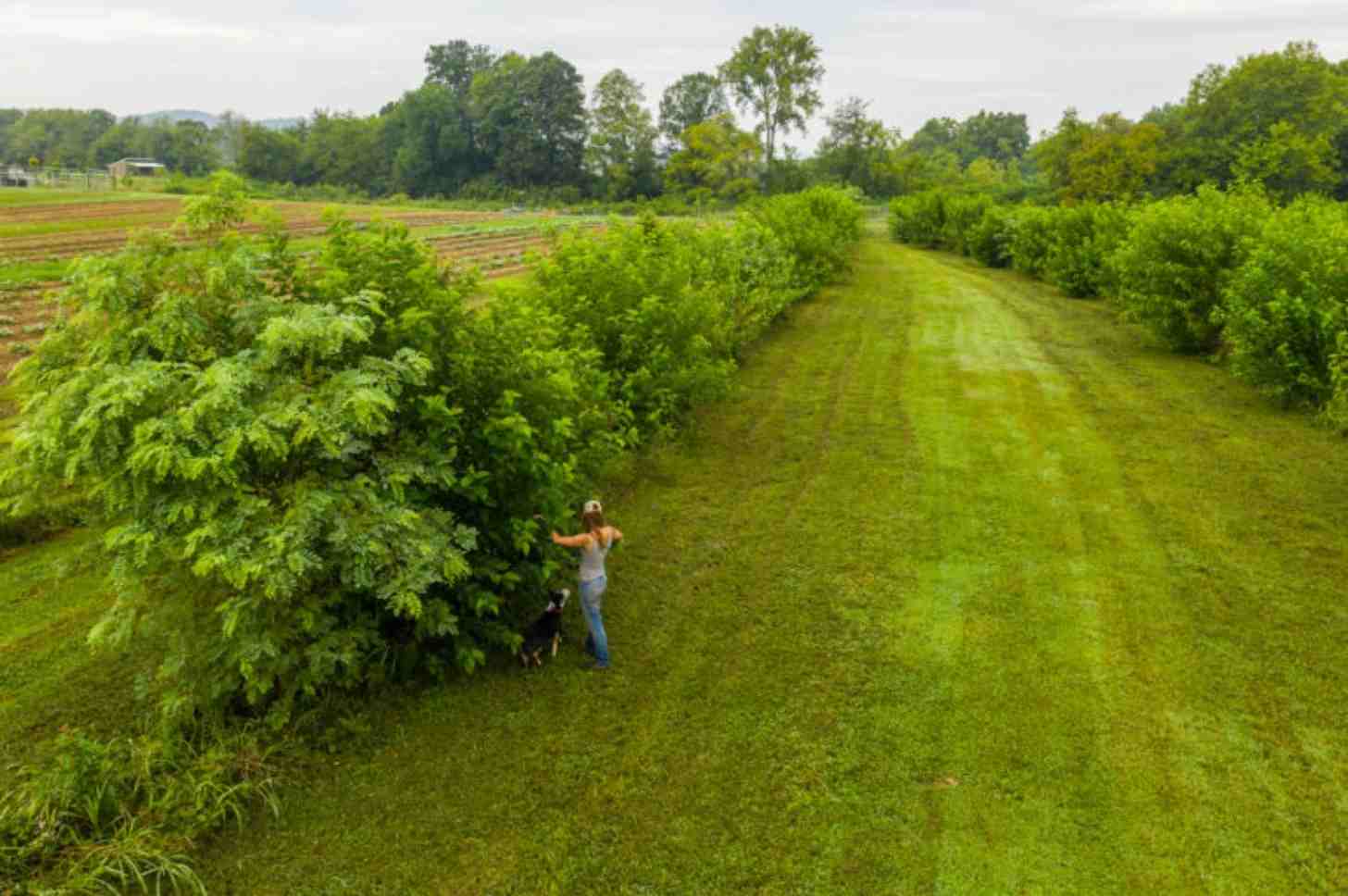
Mongabay’s dedicated series on agroforestry explores how the practice is used to help address widespread challenges like food insecurity, deforestation, and climate change across various sectors, from Indigenous communities and traditional agriculturists to smallholder farmers and large-scale ventures.
As part of Mongabay’s effort to inform evidence-based decision-making, Mongabay senior editor Erik Hoffner shared several articles with tech giant Microsoft’s leadership. Following the interaction, the Fortune 500 company decided to include agroforestry in its request for proposals for carbon investments.
As a result, in 2021, Microsoft announced a first round of investments, which included two agroforestry projects in Peru, Brazil, and Colombia: Jubilación Segura and the Acorn Project. Mongabay’s reporting enabled Microsoft, one of the largest companies in the world, to take informed action on socially responsible investments.
Report on Indigenous women’s wildcat conservation program sparks international support & funding
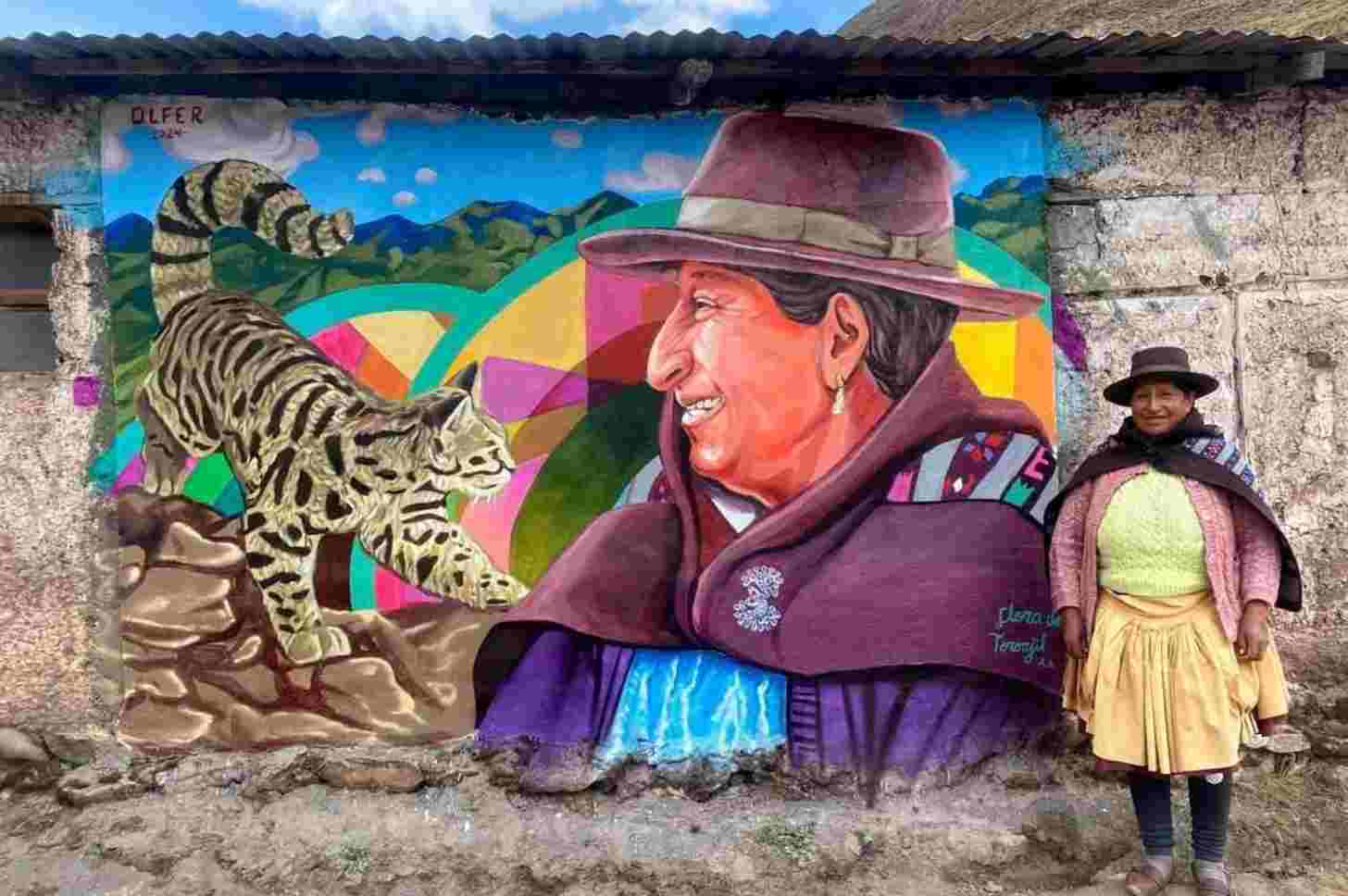
In August 2024, Mongabay reported on Mujeres Quechua por la Conservación (Quechua Women for Conservation), a pioneering women-led citizen science conservation project in central Peru that aims to mitigate conflict with wildcats like the Andean cat, Peruvian desert cat, and puma. The women also produce wildcat handicrafts to help fund their conservation work.
Following publication, the conservation organization Panthera commissioned a batch of handicrafts from the group and provided financial support for materials.
“We went on from this article and commissioned the production of 20 Andean cat stuffed animals made by 12 of the women,” Panthera board chair Jonathan Ayers told Mongabay. “It’s one of the most inspiring connections I’ve ever made.”
Conservationist Jim Sanderson, founding director of the Small Wild Cat Conservation Foundation, funded a workshop for the women to improve their production of stuffed wildcats and fabrics, which now provide a new source of income for the group.
Women from the project told Mongabay the visibility also increased their confidence to keep going and opportunities to strengthen their work. The group then secured another year of financial support from a foundation that Quechua conservation biologist Merinia Mendoza Almeida credited in part to Mongabay’s reporting.
Increased transparency and accountability for decision-makers

Mongabay is aware that decision-makers use our reporting on the biomass energy industry to improve business practices and advance accountability for profiteering from climate solutions that are dubious at best or outright false at worst.
In early December 2022, Mongabay published an exclusive whistleblower’s account exposing false claims by Enviva, the world’s largest producer of wood pellets burned for energy.
The company has touted its green credentials since its inception, but Mongabay’s reporting showed Enviva’s practices didn’t match its rhetoric. The written report and accompanying video sparked government action when the Netherlands decided to stop paying subsidies to any biomass company found to be untruthful about its wood pellet production methods.
The motion approved by the Dutch parliament to halt subsidies cited Mongabay’s article. We also learned that representatives pursuing a class-action shareholder lawsuit against Enviva contacted the whistleblower after reading Mongabay’s reporting.
This article was originally published on Mongabay.
Header image by Alejandro Prescott-Cornejo
- Birders in 2025 rediscovered five species of birds that scientists hadn’t documented in the wild for at least 10 years, according to the latest update of the Lost Birds List.
- All of the “found” birds are endemic to islands in Southeast Asia and Oceania.
- Two birds, one considered extinct and one reclassified as a subspecies, were taken off the list in 2025, and another bird, not seen in 94 years, was documented early this year.
- Six new species will be added to the list in 2026, those not documented in the wild for a decade. This puts the list at 120 birds — down from 163 when it started in 2022.
Five “missing” bird species — not seen, heard, or documented in the wild for a decade or more — were “found” in 2025, according to the 2026 annual update to the Lost Birds List.
It’s a tally of species that haven’t been photographed, recorded, or their genetic footprint detected for more than a decade. Another extraordinary rediscovery came earlier this year: A bird “missing” for 94 years was documented in Chad.
With the new changes, the overall number of “lost” birds, as defined in a 2022 study, dropped to 120 from the 163 listed when the list was first published in 2022. The list is maintained by the Search for Lost Birds project, a global partnership between the NGOs American Bird Conservancy, Re:wild, and BirdLife International.
Six species considered lost since 2016 will be added to the list in 2026.
Unlike the IUCN Red List, which tracks the extinction risk of species over time through extensive periodic assessments, the “lost species” list flags those that haven’t been documented in a long time — the first signs of trouble before they vanish forever.
John Mittermeier, director of the Search for Lost Birds project, called the list an “early warning system” for birds not seen in a while. He said it helps “fill conservation data gaps” before rigorous assessments catch up and spur action to protect species that might “potentially slip between the cracks.”
Every year, Mittermeier and his team scour through public birding platforms, such as eBird, iNaturalist, Xeno-Canto, and others, searching for observations of lost birds and adding them to the “found” list.
“The most fun part for me of this whole initiative and experience is seeing these discoveries that people around the world are making,” he said.
Scientists have created similar “lost species” lists for many other wildlife groups, including amphibians, sharks, and primates.
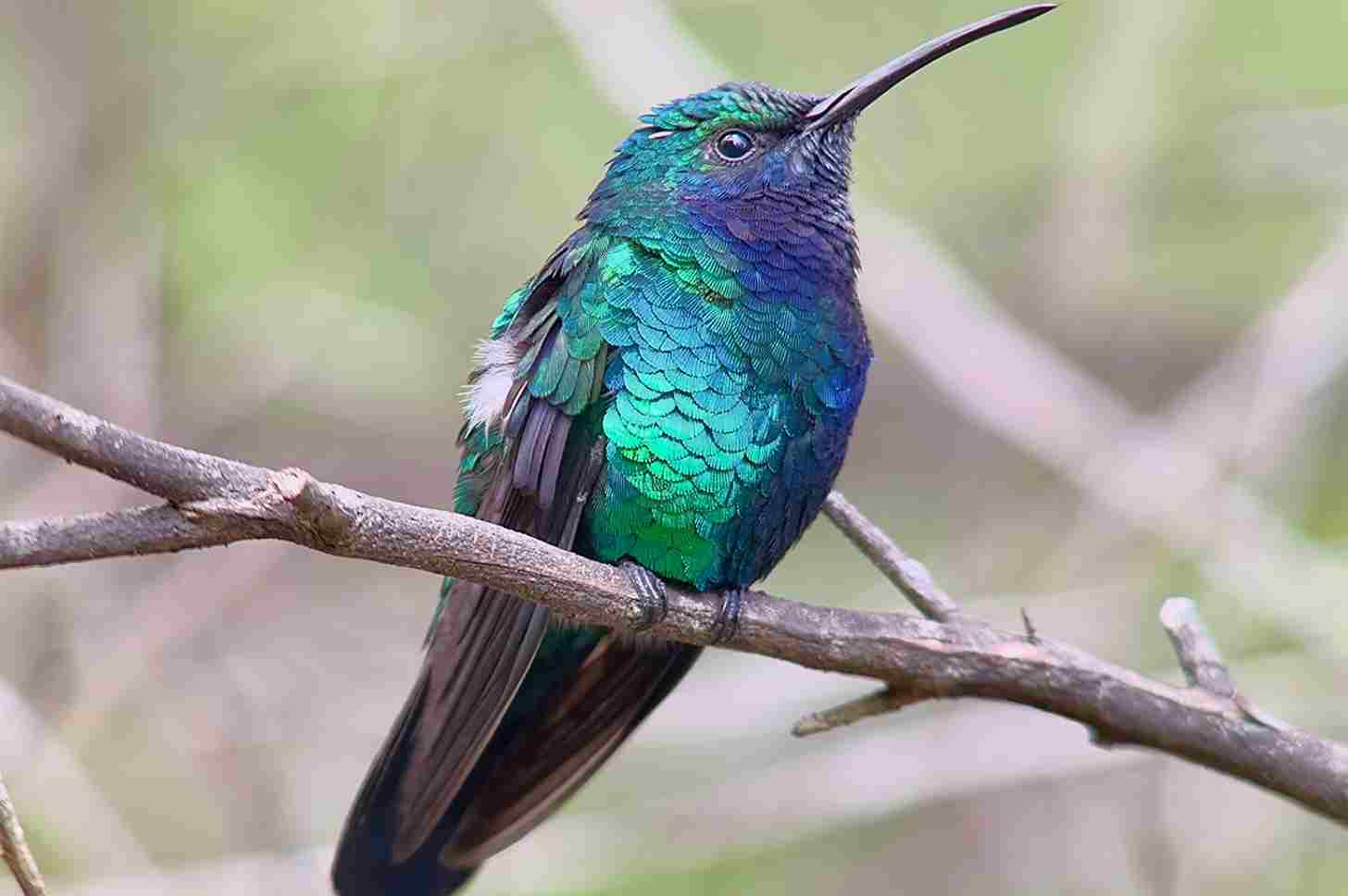
Lost birds found in 2025
In 2025, scientists and bird enthusiasts documented five “lost” birds, all from islands in Southeast Asia and Oceania.
Papua New Guinean ornithologist John Lamaris photographed the Bismarck kingfisher (Ceyx websteri), found only on the Bismarck Archipelago off the country’s northeast coast, in May. It had been 13 years since it was last recorded.
In neighboring Indonesian Papua, Ethan Skinner photographed the Biak myzomela (Myzomela rubrobrunnea), a honeyeater endemic to the islands of Biak and Supiori, documenting its presence for the first time in two decades.
Another “lost bird” from Indonesian Papua, the lyrically named broad-billed fairywren (Chenorhamphus grayi), was rediscovered when avid birder Daniel Hoops and his tour guide, Royke Mananta, photographed it and recorded its song — its first observation in 11 years.
Two birds were also found in the Philippines: Shareef Khaddafi clicked the first image of the Sulu cuckooshrike (Coracina guillemardi) in 18 years in the Sulu Archipelago, and birding guide Martin Kennewell snapped pictures of the rufous-breasted blue flycatcher (Cyornis camarinensis) in the tropical lowlands of Luzon Island, last seen in 2008.
In addition to these five observations, Harish Thangaraj made an extraordinary discovery: He recorded the sounds of Jerdon’s courser (Rhinoptilus bitorquatus), a critically endangered nocturnal bird endemic to South India’s shrublands that hasn’t been documented in 125 years.
However, scientists need photographs and additional recordings to confirm the bird’s identity before they can officially declare it “found.”
The latest addition to the “found” list came in February 2026, when two French birders photographed a rusty bush lark (Calendulauda rufa), a species native to the Sahel, in Chad. The last time scientists encountered the bird was 94 years ago.
Two bird species go off the list
Some “lost” birds are never “found”; a few vanish from the face of Earth. In 2025, scientists declared the slender-billed curlew (Numenius tenuirostris), a migratory shorebird, extinct.
Expanding farmlands, degraded wetlands, and persistent hunting of this slow-breeding species all led to its disappearance. It was last documented in 1995.
Advanced genetic analysis has also prompted changes to the list. For example, in 2025, the white-chested tinkerbird from Zambia, known from a single specimen collected in 1964 and given the name Pogoniulus makawai, is now reclassified as a subspecies, Pogoniulus bilineatus makawai, of the yellow-rumped tinkerbird, another lost bird from Zambia.
“People like the idea of finding the birds. That’s the most exciting,” Mittermeier said. But these other two categories — taxonomic reclassification and true disappearance — are important, he added.
While extinction is tragic, knowing a bird is gone focuses resources, ensuring “we’re not putting effort into looking for something that isn’t there and doesn’t exist,” Mittermeier said.

New ‘lost’ birds on the list for 2026
In 2026, six new species will join the list. Each is an island species, each not seen for at least 10 years.
These include the critically endangered Mindoro bleeding-heart (Gallicolumba platenae), last photographed in 2005 by a trapper, and its call last recorded a decade ago; and the Mindoro imperial pigeon (Ducula mindorensis), last documented in 2016. Both birds are native to the island of Mindoro in the Philippines.
The other newly listed birds are the Guadalcanal honeyeater (Guadalcanaria inexpectata), endemic to the highlands of Guadalcanal in the Solomon Islands; the Minahasa shortwing (Heinrichia simplex) from the Minahasa Peninsula in Sulawesi, Indonesia, that’s also one of the world’s few never-photographed birds; the Samoan white-eye (Zosterops samoensis) from the highlands of Savai‘i, Samoa; and the closely related Vanikoro white-eye (Z. gibbsi), endemic to the remote island of Vanikoro in the southeastern Solomon Islands.
Birds are in peril, with steep declines worldwide. Habitat loss is the greatest factor, but hunting and poaching also take a serious toll alongside a litany of other threats, including farming and climate change; extreme heat that’s killing tropical birds; and the highly pathogenic H5N1 avian flu that is decimating populations across the globe, among others.
But those endemic to islands, whose habitats are already small and may be plagued by invasive species, rising seas, or increasingly dangerous storms, have nowhere else to go.
“We know islands are at the forefront of extinction, and so having lost birds on small islands [is] a little bit concerning to me,” Mittermeier said.
But he said he’s hoping the birding community can come to the rescue once again, having already helped shorten the lost bird list by about 25% — from 163 to 120 — in just five years.
“I’m really hopeful that we can get this list down to zero,” he said. “I think that’s feasible … given the power and the interest of this global community.”
This article was originally published on Mongabay.
Header Image by kenny_well via iNaturalist (CC BY-NC 4.0).
In Big Bend National Park in southwest Texas, two park staff members stumbled upon a tiny plant they had never seen before.
It was nearly two years ago, in March 2024, when a volunteer with the park’s botany program and a supervisory interpretive park ranger noticed some “very tiny,” fuzzy plants sprinkled among desert rocks in a remote area of the park.
Once they realized it looked like something they had never seen before, they took some photos, and consulted species databases, herbarium records, plant taxonomy publications, and spoke with area experts to unearth what they may have found. They even posted photos online via iNaturalist to see if anyone else could identify the species.
Soon, it became clear that these tiny plants were a completely new discovery.

Together with park staff, researchers from the California Academy of Sciences, Sul Ross University, and Centro Interdisciplinario de Investigación para el Desarrollo Integral Regional recently published research on the new plant in the peer-reviewed botanical journal PhytoKeys.
Further investigations, including a formal scientific description of the plant and the results of a genetic analysis concluded that the plant is so distinctive that it is not just a new species, but is best classified as an entirely new genus within the Asteraceae, or daisy, family.
Once researchers confirmed the plant, which includes fuzzy leaves, and almost ribbon-like flowers, was a new species, they had to name it. Inspiration came from the plant’s appearance, and they landed on Ovicula biradiata.
Ovicula means “tiny sheep” and references the “thick white ‘wool’ that covers the leaves,” according to the National Park Service. Biradiata references “the two conspicuous ray petals in each flower.”
Researchers have affectionately called it the “wooly devil,” as a suggested “common name,” in reference to the fuzzy or wooly leaves of the plant, and its proximity to populations of the locality known as “Devil’s Den.” The ray florets in the plant also tend to resemble horns.

“Now that the species has been identified and named, there is a tremendous amount we have yet to learn about it,” Big Bend National Park Superintendent Anjna O’Connor said in a statement for NPS.
“I’m excited to discover whether there are other populations in the park, details of its life cycle, what are the pollinators, and due to the current drought, if it will be observed at all this spring.”
The Chihuahuan Desert, an area of the park where the plant was found, is the largest and most biologically diverse warm desert in North America. It is considered a microhabitat of Big Bend National Park, which is over 800,000 acres in size.

The wooly devil has, so far, only been found in this remote area of the park, and suggests that it is highly sensitive to variable weather patterns.
With the Chihuahuan Desert recently under severe drought conditions due to climate change, researchers have “preliminarily qualified” the wooly devil as a vulnerable species under a high threat of extinction, according to the study published in PhytoKeys.
While scientists will continue to research the plant and its surrounding area, its exact location has been obscured to protect it.
“The discovery of Ovicula biradiata underscores that the task of documenting and describing plant diversity is far from finished in the Chihuahuan Desert,” the researchers write in their conclusion.
“Furthermore, that discoveries are not limited to unexplored or unpopulated regions and that interest and purposeful attention may still reveal novelties in places such as national parks that might be considered ‘well-trodden’ or fully understood.”
In other words, even the most beloved and well-traveled public lands in the United States are still full of surprises.
You may also like: National park ranger photographs rare species for the first time while snorkeling on the job
Header image: NPS / C. Hoyt
Saturday, April 4 was a busy day in Mustang Island, Texas. As Gulf Beach lifeguard Nevaeh Vela scanned the shore for signs of trouble, the last thing she expected to find was a massive Kemp’s ridley sea turtle buried in the sand — one of the rarest turtles in the world.
“With the bigger swells and flooding, it’s not entirely uncommon for turtles to wash ashore, especially with it being the beginning of nesting season,” Vela told Chron.
But it was clear to Vela that the endangered sea turtle was in dire straits. As a marine biology student at Texas A&M University–Corpus Christi, she flagged the turtle’s sluggish movement and haggard breathing.
“It could barely lift its head for air when the surf broke over it,” she said.
Unfortunately, Vela knew she couldn’t intervene directly.
“I’m not a certified professional, and it’s a federal crime to touch a protected species,” she explained. However, she immediately started calling for reinforcements, ringing several rehabilitation centers in the area.
But because it was after 5 p.m. on a weekend, no one picked up. Desperate for help, Vela left a voicemail with Amos Rehabilitation Keep at the University of Texas at Austin.
Within 20 minutes, someone got the message. That’s when ARK staff supervisor Andrew Orgill and his colleagues came to the rescue.
As soon as they got to the scene, they knew that time was of the essence.
“The turtle was not moving, lethargic, and was taking frequent, raspy breaths with waves coming in onto the turtle,” Orgill said, adding that the shell was covered in algae, which suggested its health had been declining for some time.
After bringing the sea turtle in for X-rays, the team immediately clocked the problem: A small piece of a fishing hook was trapped in the turtle’s trachea.
“I felt horrible,” Vela said later, telling Chron that she had seen a person step on an abandoned fishing hook on the same beach that very day. “It goes to show that pollution and carelessness can stretch not only to animals but to humans as well.”
Fortunately, the ARK staff was able to safely remove the hook fragment from the sea turtle’s throat using an endoscopy.
“The turtle is being monitored closely, and he is on antibiotics, pain medication, and anti-inflammatories,” Orgill said.
Unfortunately, sea turtle cases like this are all too common in the Gulf.
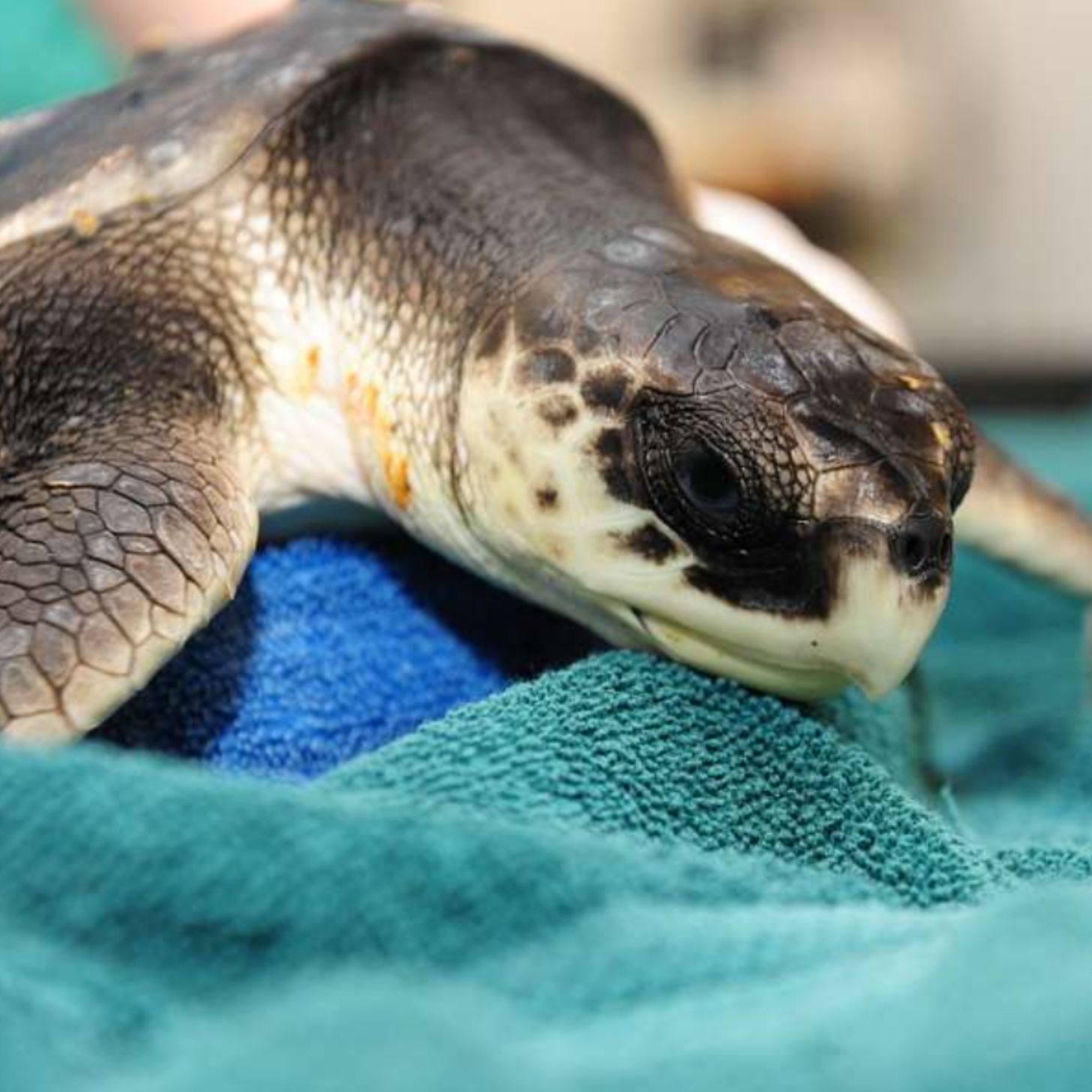
“Discarded gear is sometimes referred to as ‘ghost gear,’” Orgill said. “Other impacts include deep lacerations, flipper amputations, inability to swim properly, ingestion of baits, hooks, and line.”
To reduce the amount of abandoned fishing gear in the Gulf of Mexico, Florida natives Neill Holland and Danielle Dawley founded Ocean Aid 360: a conservation organization that works with fishing industry professionals, community volunteers, and government agencies to find, retrieve, and recycle marine debris.
Since 2018, they’ve hosted “ghost trap rodeos,” a fun twist on fishing tournaments that reward locals for salvaging abandoned fishing gear.
“In that first year, our target was 15,000 pounds of marine debris. We ended up collecting 27,000 pounds, and had fabulous numbers of community members coming out to participate,” Holland told the Port Charlotte Sun.
“Since then, we’ve worked all over Florida and the Bahamas, with more than 60 event days and about 60,000 pounds of marine debris collected — including more than 8,200 derelict traps.”
Ghost traps create a deadly cycle in the Gulf. As animals get trapped and die, they attract more creatures, creating a deadly cycle that harms ecosystems and damages habitats like coral reefs.
“Not only did we clear marine debris, but we also catalogued and freed thousands of bycatch specimens (lobster, crabs, sharks, groupers, etc.),” the nonprofit posted on their website in 2025, after their latest rodeo.
“[We’re] giving marine life a second chance — and helping local fishermen start the next season strong.”
You may also like: Woman spends 92 days saving sea turtle covered in hundreds of barnacles: 'She doesn't even look like the same turtle'
Header image via Jackie Erbaugh
At 240 pounds, Meatloaf the green sea turtle is as wide as a manhole cover. And after a harrowing rescue, she is safely recovering at the Aquarium of the Pacific in Long Beach, California.
“Meatloaf is our newest rescued green sea turtle and is now viewable in our new sea turtle rehabilitation area,” the aquarium posted to Instagram on April 9. “At over 200 pounds, she is one of the largest sea turtles we have cared for.”
On January 14, Meatloaf was pulled from the San Gabriel River after she was spotted by community science volunteers from the aquarium’s Sea Turtle Monitoring Project.
“She was entangled in fishing line and rope, and was transferred to the aquarium for medical evaluation and care because of the aquarium’s expertise in treating and releasing stranded and injured sea turtles,” the aquarium continued in their post.
Meatloaf is one of many marine animals that have been rescued from abandoned fishing gear in recent months.
On April 4, a lifeguard in Florida rescued a Kemp’s ridley sea turtle — one of the world’s rarest sea turtles — after it washed ashore with a fishing hook in its throat. In 2025, eight seals were rescued in Rhode Island after becoming entangled in fishing nets.
In many cases, fishing gear — also called “ghost traps” — can drag marine life down, drowning them. Despite her injury, Meatloaf was one of the lucky ones.
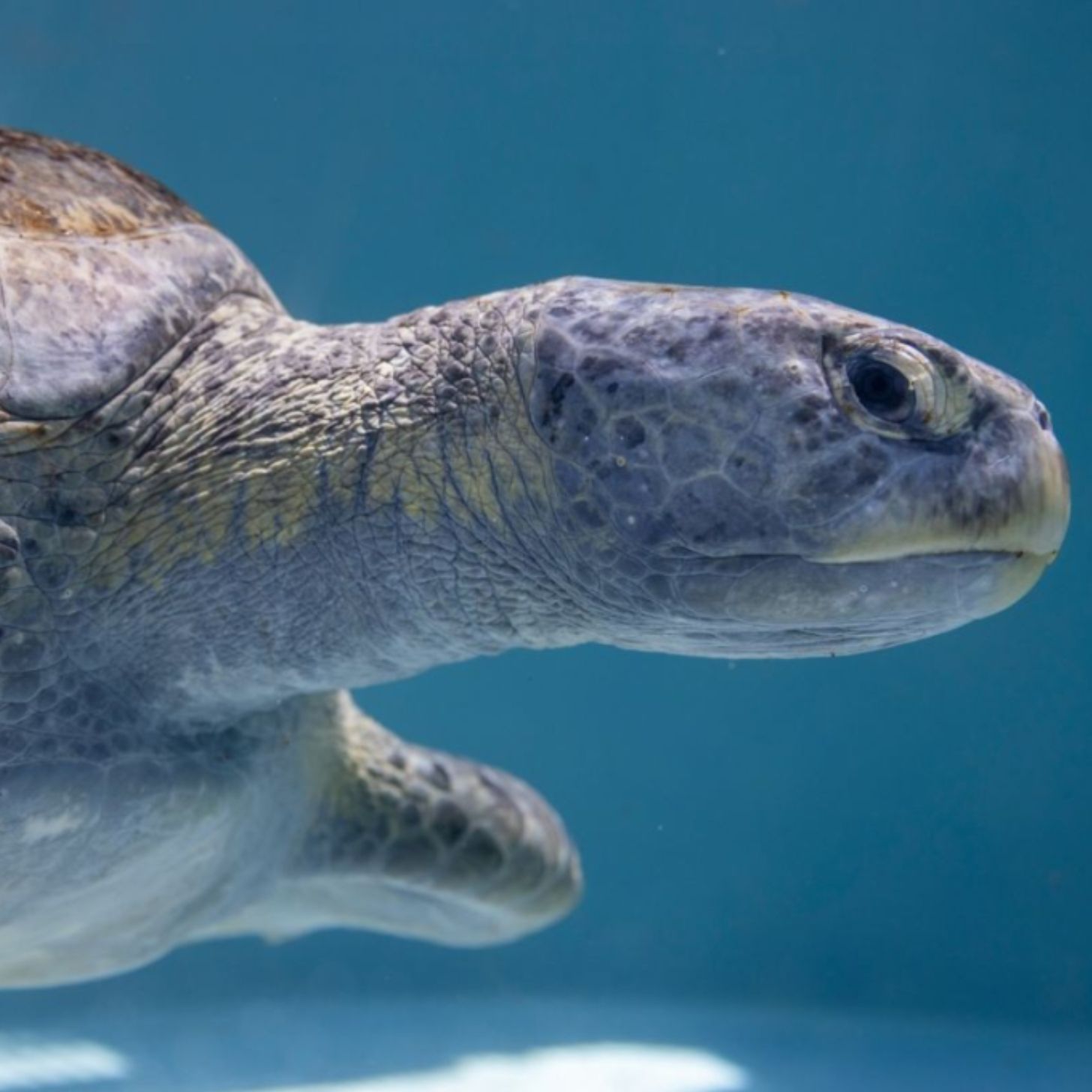
“The entangled line severely damaged a front flipper, cutting off blood supply,” said Dr. Lance Adams, Director of Veterinary Services. “We have been doing all we can, including surgery to try and save the flipper. It is showing some early promising signs of healing.”
For the last two months, Meatloaf has had several surgeries on her flipper. Currently, the plan is to keep the massive green sea turtle for at least another six months as the veterinary team redresses her wounds.
At the moment, Meatloaf’s flipper is twice the size that it should be, due to fluid buildup that will require further surgery.
Currently, the aquarium is raising $50,000 to fund Meatloaf's ongoing care and surgery. To support her recovery, people can visit the Aquarium of the Pacific’s fundraiser.
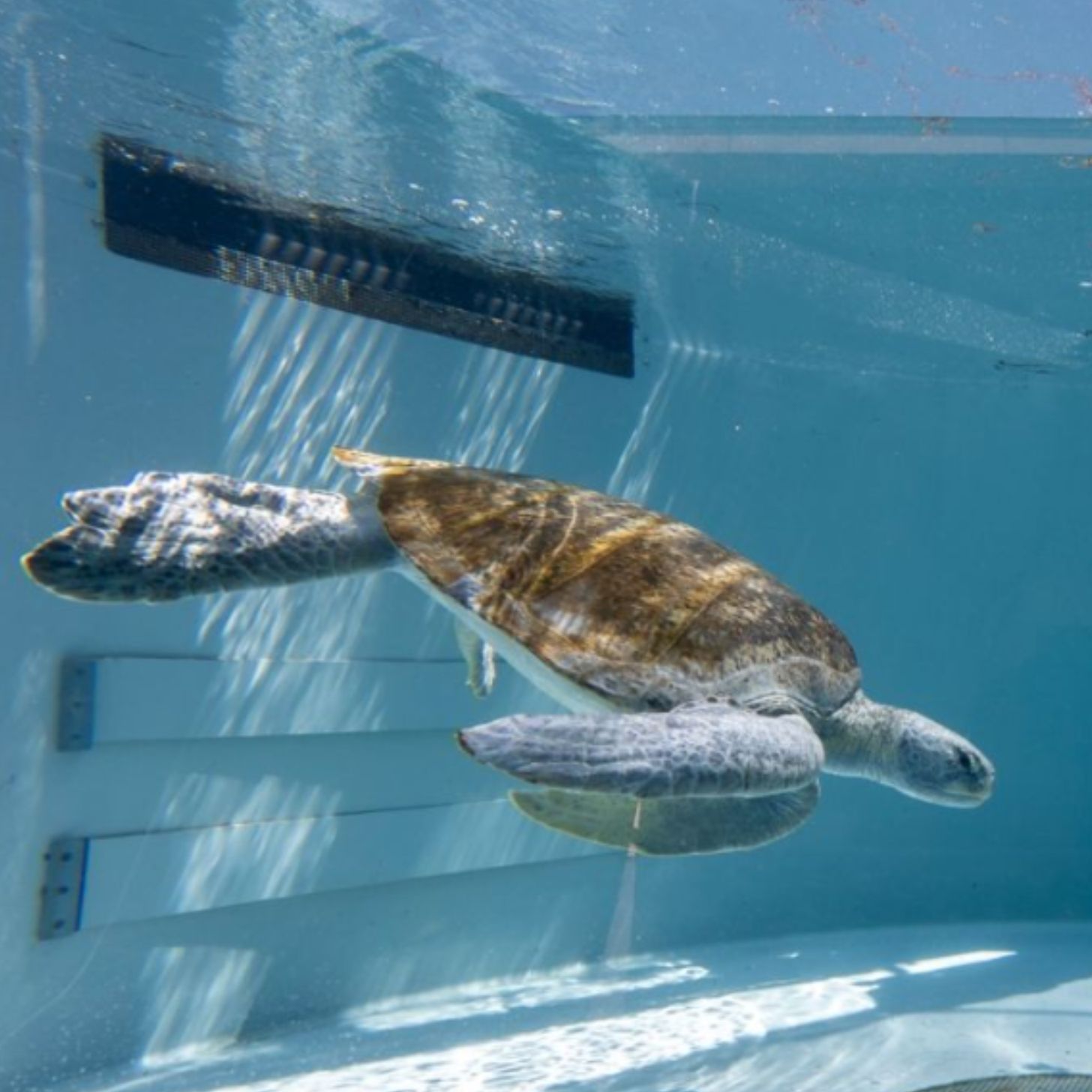
“The aquarium is currently one of only two facilities in Southern California that have dedicated spaces to rehabilitate sea turtles,” the Aquarium of the Pacific shared on Instagram.
In their latest update on Meatloaf, the staff also gave a shoutout to Porkchop, a three-flippered green sea turtle that was recently released back into the wild.
“Porkchop, the first rescued sea turtle to use the new area, was released into the wild in February and since then has been spotted with other sea turtles,” they shared. “The aquarium hopes that Meatloaf will be able to do the same.”
You may also like: This sea turtle was found 'gravely unwell' and covered in barnacles. See her amazing three-month recovery
Header image via Aquarium of the Pacific / Instagram
Every day the Good Good Good team collects the best good news in the world and shares it with our community. Here are the highlights for this week!
If you want to get good news in your inbox every day, join the Goodnewsletter — the free daily newsletter designed to leave you feeling hopeful.
The Best Positive News We’re Celebrating This Week —
Scientists just achieved an ‘impossible’ solar energy efficiency breakthrough
Researchers in Japan developed a new material that allows solar cells to generate an amount of solar energy previously thought impossible. They did it with a “spin-flip” emitter that can harvest solar energy typically lost as heat.
It’s the latest in a string of recent solar technology breakthroughs that will only make the renewable energy industry more efficient and cost-effective.
Why is this good news? Prior to this breakthrough, solar cells had an energy conversion efficiency limit of 130%, and could only harvest energy from about one-third of available sunlight. The discovery could pave the way for ultra-efficient solar panels, and even further reduce global dependence on oil and gas for energy production.
Climate activist hosts ‘playdates’ for parents to mobilize for the environment without having to find a sitter
→ Read more
The price of lithium-ion batteries has fallen 99% in the last three decades
Battery prices have dropped a lot over time — more than 99% since the early 1990s. Lithium-ion battery cells that once cost around $9,200 per kilowatt-hour now cost roughly $78, making technologies like electric vehicles far more affordable to the average consumer.
The price drop is not due to one breakthrough, but rather thousands of incremental improvements in the battery’s chemistry, manufacturing, and supply chain. As production has scaled up, engineers and firms have discovered more efficient ways to design and build batteries, leading to continuous cost reductions over time.
At the same time, batteries have also gotten better. They can store more energy in a smaller space than before, which makes devices last longer and cars go farther on a single charge.
→ Read more
A Texas elementary school installed an ASL playground sign to honor a deaf student lost to cancer
Nearly two years ago, 11-year-old Caleb Devereaux, affectionately called “Junior,” died from leukemia. Junior was deaf from an early age, quickly mastering sign language, which opened “a world of communication and connection with those around him.”
Junior’s former elementary school just installed an ASL playground sign in his honor, inspired by his playful and outgoing attitude.
It has the alphabet in ASL, as well as the hand signs for phrases like “friend,” “play,” “tag,” “share,” and more. Since its installation, hearing students have been able to play with their deaf classmates more freely.
Why is this good news? Junior’s former teacher, Letabeth Machogu, said hearing students can now “communicate with each other directly with our students who use sign language, and then they can play together without having to have an interpreter there to facilitate all the communication. They can have a direct friendship without having a third party … that is so important.”
A marine biologist spent 92 days saving a sea turtle covered in hundreds of barnacles: ‘She doesn’t even look like the same turtle’
Scientists discovered more than 110 new fish and invertebrate species in the Coral Sea
A team of scientists recently returned from a 35-day expedition with evidence of more than 110 new species of fish and invertebrates. The species were found in the Coral Sea marine park, Australia’s largest marine protected area, which is nearly twice the size of Spain and lies east of the Great Barrier Reef.
The team collected many different types of animals, including fish like sharks, rays, and a “ghost shark,” as well as invertebrates such as crabs, sea anemones, sponges, and brittlestars. As more samples are studied through genetic testing, researchers believe the total number of new species could rise above 200.
Since the voyage’s return, many of the species samples have been shared around the country at the Commonwealth Scientific and Industrial Research Organisation and the Australian Museum.
→ Read more
Four decades after poaching drove them to extinction, rhinos have returned to the wild in Uganda
The last free-ranging rhinos were seen in Uganda 43 years ago, and now the Uganda Wildlife Authority has welcomed four northern white rhinos back into a national park from a breeding sanctuary designed for reintroduction.
A total of eight rhinos will be released in the park by May to kick off a process aimed at establishing a sustainable population in Kidepo Valley National Park.
Around 300 northern white rhinos and 400 eastern black rhinos used to roam the country, but had been devastated by intense poaching during the country’s civil war starting in the late 1970s.
Why is this good news? Authorities hope that the rhinos’ reintroduction will help restore the environment, support national conservation efforts, and boost the local economy with increased tourism and conservation-related activities.
Here’s what happened when researchers gave homeless people $750 a month
→ Read more
New study finds that a connection to nature fuels well‑being worldwide
In a new study, more than 100 researchers surveyed roughly 38,000 people around the globe and found that people with a stronger connection to nature had better well-being. This connection was not just limited to spending time outside, but about feeling a deeper relationship with the natural world.
Overall, people with a relationship to nature reported higher life satisfaction, more hope and optimism, and a greater sense of purpose. They were also better at handling stress and were more mindful, meaning they stayed present and aware in their daily lives.
Researchers found that these benefits were consistent across different ages and genders in 75 countries, including Japan, Nigeria, Germany, Indonesia, the U.S., and beyond.
A new park is giving Miami residents both protection from flooding and connection to nature
Miami is on the frontlines of the climate crisis and is now building “green” infrastructure in the form of lush parks to help soak up excess water. It not only protects communities from frequent flooding, but it also helps keep residents connected to nature.
Designed by a local architecture firm, Bayshore Park opened last year, replacing a golf course. It features a system of hidden pumps that keep the lake healthy and ready to hold the water equivalent of a three-day storm.
When it rains, runoff flows into the lake, keeping streets clear and protecting Biscayne Bay, which has historically been devastated by this kind of runoff. For people, it features a walking path, playground, and immersive nature opportunities.
Why is this good news? Heavy rains, more frequent storms, and sea level rise, all of which are linked to the climate crisis, are causing streets to consistently flood in coastal cities like Miami Beach. That Bayshore Park is a great example of a climate resilience and mitigation solution to help communities on the frontlines of the climate crisis — while providing a beneficial resource for residents year-round.
The horror stories of renting inspired this college student to create a website to rate your landlord
The number of women representatives has increased since 2000 in parliaments across Africa
The number of women running for or holding seats in parliaments across Africa has increased significantly in the last two decades, with women holding at least 20% of the seats in the national legislatures of 31 of 54 recognized countries across the continent.
In Rwanda, women hold over 60% of the seats in the legislature. After Sierra Leone’s elections in 2023 and 2025, the share of women in parliament rose to over 28%. Notably, 45 African countries have gender quotas for political representation.
Studies have shown how this increased representation helps women have an impact on the issues that affect their lives, bringing about policies like paid maternity leave and more.
→ Read more
A megachurch in Virginia donated $1M to stop over 300 families from being evicted
After learning the agency overseeing public housing in Alexandria, Virginia owed $1 million in back rent, the city’s mayor approached the Mayor’s Interfaith Council for guidance.
Rev. Howard-John Wesley of the Alfred Street Baptist Church answered the call, donating over $1 million to cover the back rent, and stopping the eviction of 338 families.
Congregants had raised the money earlier this year during its annual SEEK action, a time of fasting and prayer, and Wesley said the donation was “connected to what we understand the purpose of fasting to be.”
Even better: The church and Interfaith Council will be part of an initiative to host individual meetings with each resident who fell behind on their rent, so they can make plans and provide resources to ensure it doesn’t happen again. These faith groups will also help fund follow-up services like food banks and job skills training.
→ Read more
Wildlife refuge saves barnacle-covered sea turtle on the verge of death: ‘She came to us in a terrible state’
→ Read more
India is set to quadruple solar power capacity and triple wind power capacity in the next decade
According to a new government report from the Central Electricity Authority, India is expected to undergo a major transformation in its power sector over the next decade, driven by rapid growth in renewable energy.
Solar power capacity is projected to increase fourfold, while wind capacity could triple by around 2035–36. This expansion is part of a broader national plan to meet rising electricity demand while shifting toward cleaner energy sources.
As renewables grow, India’s reliance on coal — the dominant energy source today — is forecast to decline significantly. Coal’s share in electricity generation is projected to fall from 70% to 49% in the next decade, as solar energy rises to make up roughly 65% of the clean power mix.
→ Read more
More good news of the week —
Luxembourg became the second country in the world to enshrine abortion rights into its constitution. France was the first to codify the right in 2024.
A massive solar project in California is getting even bigger. A sweeping plan to build 21 gigawatts of solar plus batteries on 136,000 acres could also be a lifeline for Central Valley farmers facing devastating water shortages.
A bipartisan bill introduced to the US Senate seeks to ban sports betting on online prediction markets. The bill follows several other state-level efforts to regulate marketplaces and protect consumers.
Researchers used bacteria to turn plastic waste into the “gold standard” for Parkinson’s care. Scientists at the University of Edinburgh successfully synthesized the drug from a raw ingredient in post-consumer waste plastic.
A seabird colony in the U.K. is finally rebounding after a trained detection dog helped eradicate ferrets from their island. Thanks to Woody, the red fox Labrador, Rathlin Island has been free of the invasive predators since 2023.
An iconic “Survivor” champion used his winnings to start a charity pinball arcade and shelter for homeless and at-risk men. Rupert Boneham became a million-dollar winner on “Survivor: America’s Tribal Council,” a special episode of “Survivor: All Stars,” where he accumulated 85% of a nationwide vote.
A critically endangered whale species now has a GoFundMe after its research grants cut were cut by the Trump administration. A nonprofit that is vital in the protection of North Atlantic right whales is turning the tide on their annual fundraising.
Chile’s “near threatened” seals gained protection with new marine park. The protection comes sixty years after Juan Fernández fur seals were first discovered.
The Irish language is steadily making a comeback after centuries of oppression. (May require login) Under British rule, Irish was banned in government proceedings and courtrooms for nearly 300 years.
After the UK government banned bottom trawling in Marine Protected Areas, kelp forests started thriving again. The restored habitats have led to better storm and erosion protection and supported sustainable fisheries.
After an animal shelter opened its doors for volunteers to take dogs on hikes, adoptions surged. Volunteer numbers have also skyrocketed, dogs are getting adopted faster, and the pups are noticeably happier when they have more time out of their cages.
A community in Colorado just became the first “pollinator district” in the U.S. By dedicating land to native plants, natural spaces, parks, and gardens, the district has helped bees, butterflies, moths, and beetles thrive.
A Denver nonprofit’s new campus helped homeless youth achieve stable housing three times faster than average. In addition to temporary housing, the 136-bed campus offers therapy, education, and employment support.
Thanks to a new drug, the World Health Organization is set to eliminate sleeping sickness disease by 2030. The single-dose treatment for acoziborole is expected to be rolled out early next year.
Brazil reintroduced toucans to Tijuca National Park 50 years ago — and now they’re saving native forests. By dispersing the seeds of endangered trees, the ariel toucans have become a critical source for reforestation.
Florence + The Machine is partnering with Planned Parenthood on tour amid a “life and death” fight for abortion rights. In 2023, Florence Welch received life-saving reproductive health care for an ectopic pregnancy that caused her to miscarry, and the experience informed her latest album.
Idaho banned Pride flags at government buildings, so Boise wrapped flag poles in rainbows instead. In addition to the new flag pole accessories, large white signs emblazoned with the Progress Pride colors were displayed in City Hall windows alongside the phrase “creating a city for everyone.”
The former Buenos Aires home of an Argentine soccer star was transformed into a soup kitchen. The home no longer belongs to the family of Diego Armando Maradona, who died in 2020, but for the last month, its current owner has lent its dirt yard to a group of volunteers who light a grill and cook for neighbors.
Families in Brazil are growing bananas to protect the world's largest urban forest. In the middle of the city, traditional growers blend crops with native species to preserve Pedra Branca state park’s biodiversity and provide financial and food security.
A trailblazing transmasc Ironman team won third place at an event in California. The trio competed in the 2026 Athletic Brewing Ironman 70.3 Oceanside competition in Oceanside alongside more than 3,000 age-group athletes and more than 60 professional athletes, and said they felt like they “were fighting for something bigger than ourselves.”
College students installed solar power in a rural Amazonian village that had never had electricity before. It’s giving the 40-household community the ability to respond to emergencies, access public services, and improve their education and economy.
Chicago Public Schools students can now access books, tutors, and more at public libraries with just their student ID. It’s the latest effort by CPS and the Chicago Public Library to expand access to library materials through an initiative that makes it easier for students to get books and other resources at all 81 public library branches.
Dolly Parton made a “generational and transformational” donation to the hospital named after her. The East Tennessee Children’s Hospital, now the Dolly Parton Children's Hospital, said the money will be a lifeline for years to come.
A formerly homeless teen returned to the shelter that raised her to thank them 15 years later. 26-year-0ld Zarina Sementelli, now a lawyer herself, credits her old case worker with changing the trajectory of her life.
A new app is helping nature lovers connect to the world around them in exciting ways. PlantNet, dubbed “Shazam!” for plants, is helping users identify weeds, check out the pollen map, and discover new species.
For the last five years, Folly Beach, South Carolina has held Toby’s Earth Month Island-Wide Spring Litter Sweep — an annual event that brings locals together for a community-wide beach cleanup.
“An important part of being a member of the community is to come down and help out,” volunteer Emerson Reece told local news station WCSC. “So we came down this weekend. I made like a two-and-a-half-hour drive today to make sure I was down here on time.”
During the event on April 12, volunteers collected over 10,000 pieces of trash in under two hours.
“What we do is born of our love for the ocean and our love for the environment,” said Sarah Butler, volunteer and executive director for the nonprofit Waves 4 Women. “And so, if we’re not good stewards of it, then it’s not going to be here for us to be part of. So, this impacts everybody.”
During the beach sweep, volunteers spotted something struggling in the water — a young Kemp’s ridley sea turtle, which is one of the most endangered sea turtles in the world.
“This was Folly Beach’s first stranding of our 2026 season,” Dave Miller, of Folly Beach Turtle Watch, said in a statement. “This turtle is a large juvenile Kemp’s ridley sea turtle. There are seven species of sea turtles in the world. The Kemp’s ridley is the smallest and most endangered of the seven.”
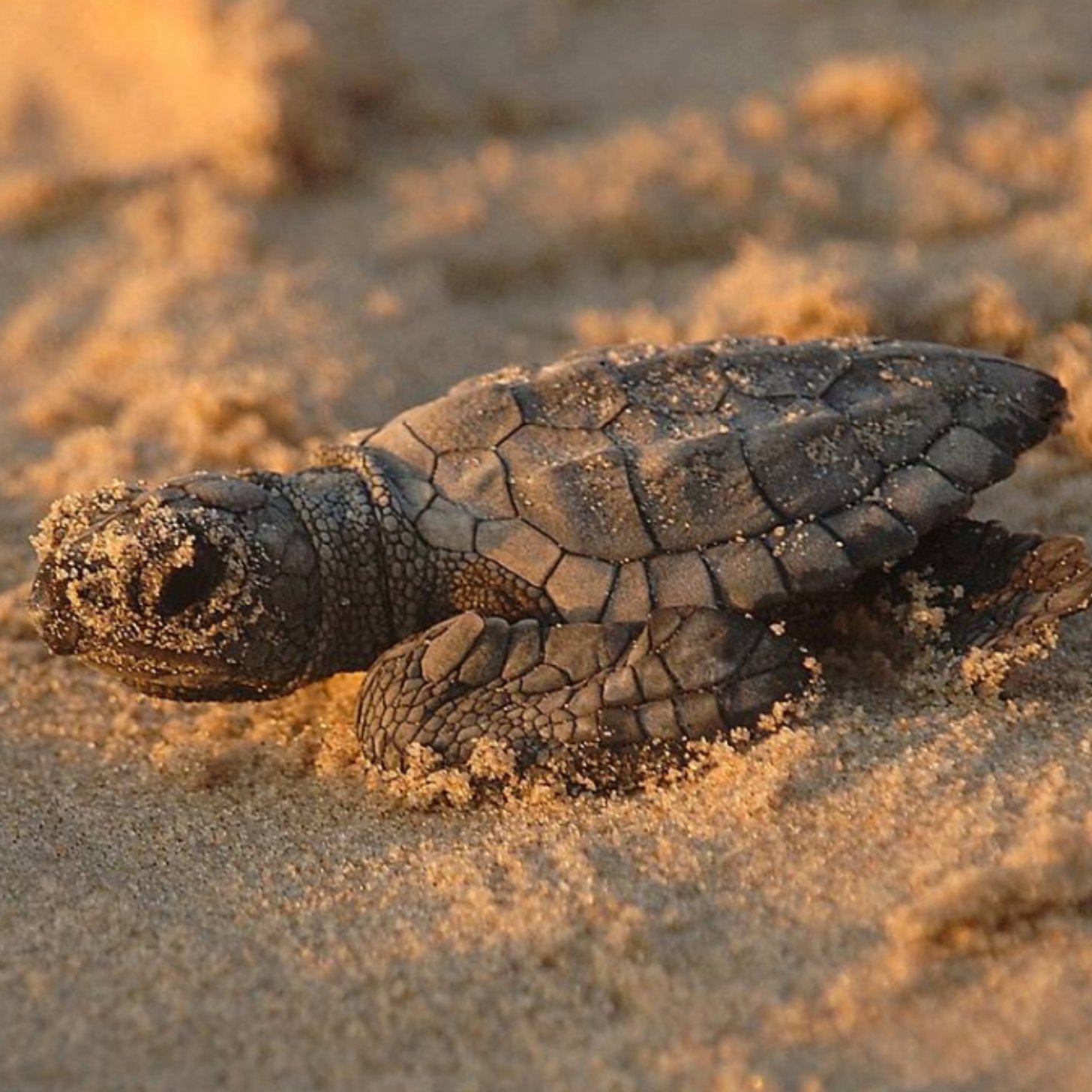
“Kemp’s ridley sea turtles rarely nest in South Carolina,” he explained. “They primarily nest on beaches in the Gulf of Mexico. They nest in large groups together and are the only sea turtle that nest during the day.”
According to Miller, the sea turtle had been hooked in the mouth by an angler off the Folly Beach fishing pier. Fortunately, when the rescue team raised the turtle using a drop net, the hook dislodged on its own.
“When a sea turtle is hooked by a fisherman, it’s important that the fisherman not try to remove the hook from the turtle’s mouth,” Miller advised. “The line should be cut, leaving several feet still attached. This makes it easier for the veterinarian to locate the swallowed hook … If a hook had been swallowed, the turtle would have been transported to the Sea Turtle Care Center.”
About a week prior, on April 4, another Kemp’s ridley sea turtle was found stranded on the sandy shores of Mustang Island, Texas. The female turtle was spotted by lifeguard and marine biology student Nevaeh Vela, who quickly realized that she was having trouble breathing.
Later, when the sea turtle was picked up by specialists from the Amos Rehabilitation Keep at the University of Texas at Austin, they discovered that she had a fishing hook fragment lodged in her trachea.
Fortunately, the team was able to remove the fragment safely with an endoscopy.
“The turtle is being monitored closely, and [she] is on antibiotics, pain medication, and anti-inflammatories,” ARK staff supervisor Andrew Orgill told Chron.
Unfortunately, the sea turtle’s predicament has become all too common for Orgill and his colleagues.
“Discarded gear is sometimes referred to as ‘ghost gear,’” Orgill said, emphasizing the importance of leaving the beach and ocean cleaner than you found it. “Other impacts include deep lacerations, flipper amputations, inability to swim properly, ingestion of baits, hooks, and line.”
It was an advisory that local Turtle Watch volunteer Vanessa Oltman echoed after the juvenile Kemp’s ridley sea turtle was rescued on Folly Beach.
“We only have one planet, and this is it,” Oltman said, through the voice of local mascot Toby the Turtle. “So, without the animals that we have on Earth, the wild and marine life, we will not exist either, because we are all supposed to coexist together. So, it’s very important that we teach the children from small all the way up how important it is to pick up litter.”
You may also like: An aquarium rescued a 240-pound sea turtle from a fishing line. They need your help saving her flipper
Header image Public Domain
In 2005, after Hurricanes Ivan and Katrina devastated the state, then-Alabama Department of Insurance commissioner Jim Ridling was surveying storm damage when a thought dawned on him.
Realizing that the storms would come no matter what, he aimed to make roofs stronger — and safer — to weather future hurricanes. His recommended roof improvements were simple: Seal the roof deck and use stronger nails.
Ridling’s standards later set the foundation for the Strengthen Alabama Homes program.
Since 2016, the program has installed fortified roofs on more than 53,000 homes in the state — all funded by insurance companies, not homeowners.
In 2025, a study from the Center for Risk and Insurance Research at the University of Alabama analyzed thousands of claims to see how the improved roofs — and homes — held up in the aftermath of Hurricane Sally in 2020.
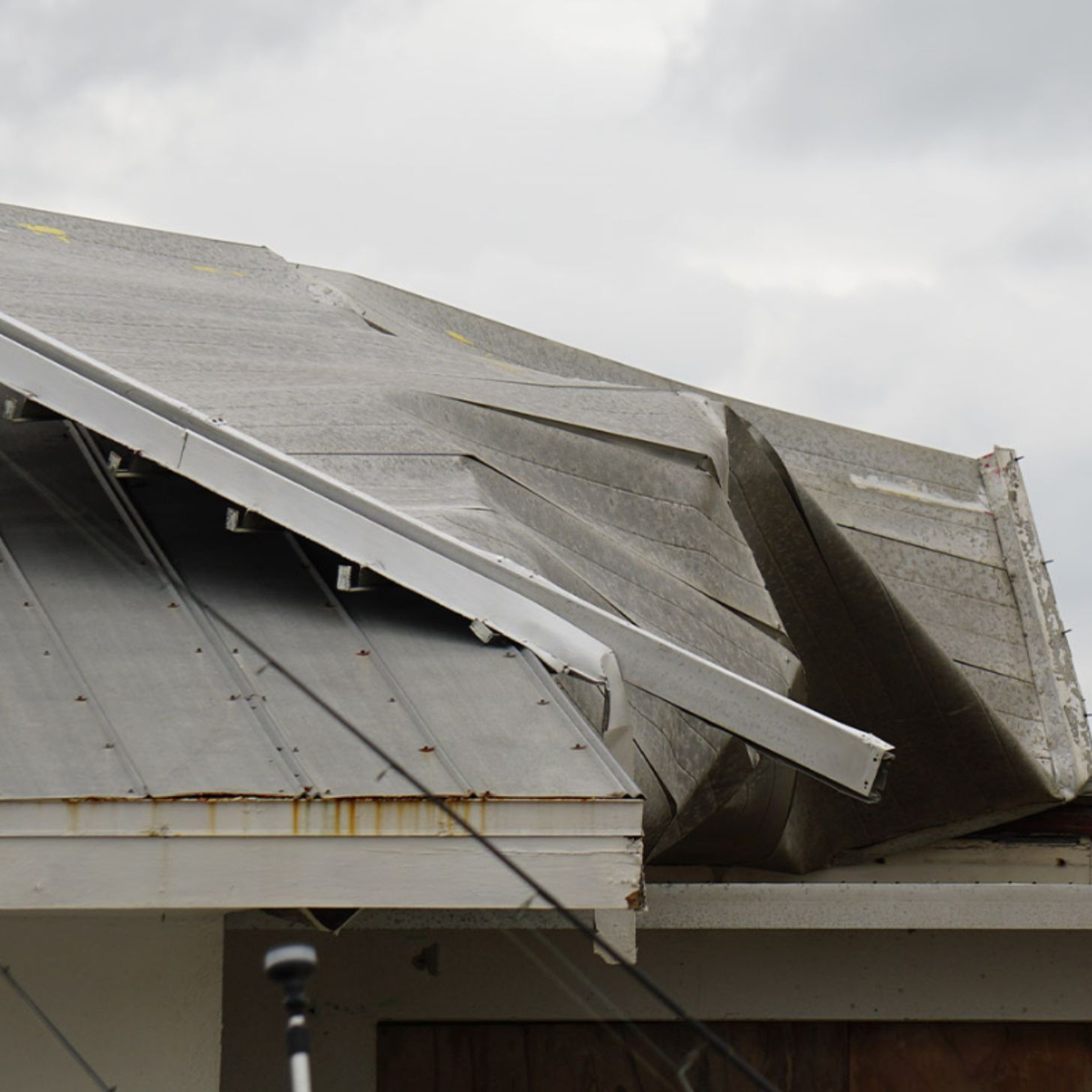
The researchers found that the fortified roofs reduced claim frequency by 56%. And when fortified homes were damaged, the losses were much less pronounced.
“Less damage means fewer displaced residents,” stated Mark Fowler, the department’s current insurance commissioner. “Less damage means students can go back to school. Less damage means local businesses stay open for business … Less damage means life can go on. Less damage means lives and livelihoods are potentially saved. The dominoes of progress and positive change just keep on falling.”
A version of this article originally appeared in the 2026 Home Edition.
Header image via Gebler Law Group (CC BY-NC 4.0)
Today, West Street Recovery is a full-fledged nonprofit that provides disaster recovery and flood protection for families across Houston, Texas.
But in 2017, it was just Doris Brown and her friends with a truck and a kayak, helping their neighbors however they could after Hurricane Harvey struck.
In the years since, Brown has been donating her time as the co-director of West Street Recovery. And after Winter Storm Uri knocked out her power in 2021, she decided to donate her home, too, by transforming it into a “hub house,” a space that can host her neighbors at the drop of a hat.
“I almost froze to death here,” she told Marketplace, in reference to the winter storm. “That's when West Street came up with the idea of a hub house right in your neighborhood.”
Powered by solar panels and a whole-house battery, her garage is now outfitted with emergency supplies, medical kits, sleeping bags, and ready-to-eat-meals.
“And the food is pretty good, because we tested it,” said Brown, who hosted several neighbors during Hurricane Beryl in 2024. “Especially the dessert back there.”
So far, West Street has installed eight “hub houses” like Brown’s throughout the Houston area using grant money and crowdfunded donations.
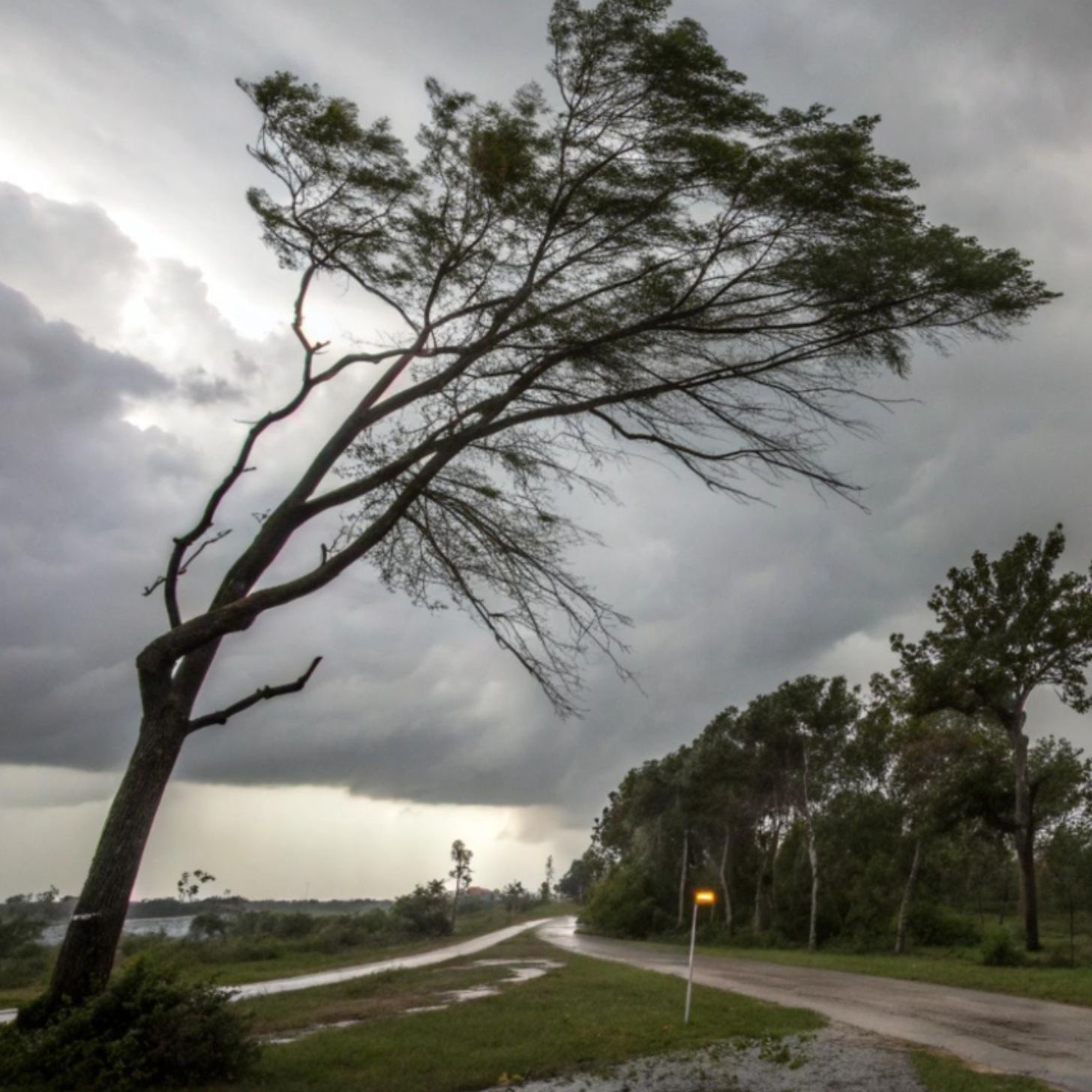
She said that hub house owners are the “first ones to hit the ground running” when disaster strikes, especially when it comes to checking in on house-bound neighbors.
“Eventually,” she said, “I would just like to see all neighborhoods getting a hub house ready, because it's no longer ‘if,’ it's just ‘when’ now.”
A version of this article originally appeared in the 2026 Home Edition of the Goodnewspaper.
Header image via Freshco (CC BY-NC 4.0)
New data from the Girl Scouts of the USA found that 85% of Girl Scouts surveyed between the ages of 5 and 13 said that they admired people for what they can do, not how they look.
“That statistic is an invitation for adults to take a deep breath and ditch the pressure to be perfect,” Sarah Keating, Girl Scouts’ Vice President of Girl and Volunteer Experience, told Good Good Good.
“Girls are reminding us that what lasts — and what earns real admiration — is character in action: how you show up, what you try, how you treat people, and the difference you make,” Keating continued.
“When adults model self-compassion and put the focus on effort, learning, and contribution (instead of appearance), we give girls permission to do the same—and we all end up feeling more confident and free.”
The data also had insight into how children and young teens feel about growing older, with 54% of girls saying that the idea of becoming an adult feels scary or overwhelming.
That concern increased with age, in 41% of girls ages 5–7, 62% of girls ages 8–10, and 60% of girls ages 11–13, respectively.
“Girls today have more access to information than ever before — whether it’s current events or social content of people reacting to those events,” Keating reasoned. “That kind of constant input can be a lot to carry. They’re absorbing not only what’s happening, but also how it’s affecting others, so it makes sense that the future can feel daunting.”
For adults looking for a way to ease that burden, Keating said that a gentle, face-to-face conversation is the place to start.
“When young teens seem worried or unsure, the most supportive first step is to get curious and listen,” she told Good Good Good. “Ask open-ended questions to understand what’s behind the feelings — whether it’s current events, social dynamics at school, or doubts about their own abilities.”
Keating said that once adults have pinpointed a source of anxiety, it’s important to normalize how they’re feeling, reassure them that they’re not alone, and share age-appropriate coping tools like grounding techniques or taking a break from the news.
She also told Good Good Good about the ways that the Girl Scouts are taking measures to ease their concerns as well.
“Girl Scouts recently added new programming, like Mental Wellness patches and Body Appreciation badges designed to help girls build healthy coping skills and a positive relationship with their bodies,” Keating said.
“Through guided activities and discussions, girls practice ways to manage stress, strengthen self-confidence, and push back on unrealistic messages about appearance — skills that support them well beyond their Girl Scout years.”
You may also like: A study of 38,000 people across the world found that a connection to nature improves well‑being
Header image via Girl Scouts of the USA
Mark Rober, a NASA engineer turned YouTube sensation with over 75 million subscribers, has spent his internet career making creative, silly, engaging science experiments for viewers, many of them young people.
His company, CrunchLabs, sells Build Boxes and Creative Kits to bring the fun home to kids. But underneath videos of swimming pools filled with Jell-O and Goalie Robots that can beat Cristiano Renaldo through the power of physics, Rober argues he’s introducing kids to real science.
“For the last 15 years, once a month, I’ve uploaded a free science or engineering video to YouTube,” Rober said in a TED Talk at TED 2026 in Vancouver, British Columbia earlier this week.
“And 16 billion views later, what I’ve learned is, I can’t teach you if I don’t have your attention. But if I can get your attention with something remarkable, well, now I have something to attach the learning to.”

He calls this method “hiding the vegetables,” by introducing “kids that grew up on YouTube and TikTok” to science, technology, engineering, and math, in fun, creative ways.
“It’s really boring if you make a video about the scientific method, but what’s not boring is if you make a video about a 15-ton Jell-O pool you can actually bellyflop onto. And in the process, I’mma sneak in all six steps of the scientific method.”
He noted he was inspired by his high school statistics teacher, Mr. Malloy, who used statistics lessons to predict a rival school soccer team’s penalty kicks.
“He was so good at attaching emotions to learning. He was so good at hiding the vegetables,” Rober said. “This is why I love teachers; I think they have the most important job on the planet.”
Rober said his dream job is ultimately to be a middle school science teacher, but in the meantime, he wants to make it easier for teachers to implement fun, engaging lessons in STEM, instead of forcing them to spend their own money on materials.
As Rober’s CrunchLabs website shares, he doesn’t think there’s a STEM talent shortage, but an “inspiration shortage.”
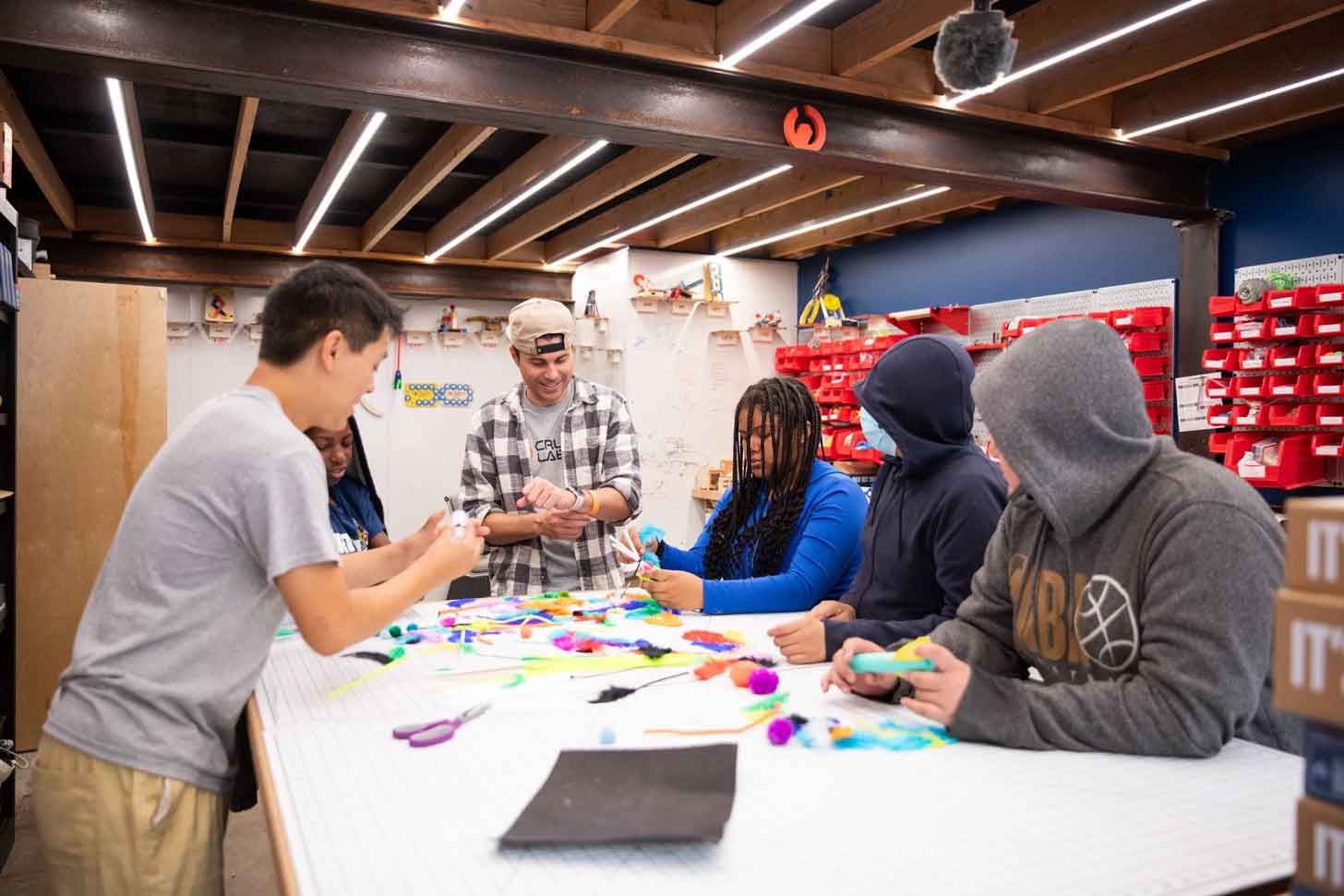
And with the size of his reach — if CrunchLabs were a school district, the website reads, “we would be larger than every public and private school in America combined” — Rober wants to change that.
On the TED stage, he announced something he’s been working on for about two and a half years with a team of science teachers across the country: Class CrunchLabs, an online STEM curriculum program tailored to grades 3-8.
“The reason we’re doing this is because it breaks my heart when I see teachers who get paid salaries that as a society we should be ashamed of, spending their own money on resources that totally suck.”
Class CrunchLabs “has everything they need,” Rober said.
This includes “banger videos kids are going to beg to re-watch that explain the science,” for example.
“It’s got ready-to-teach slide decks that are super clean and easy to use. It’s got this really thought-out, curated science demos that kids get to viscerally react to the science that teachers can make with stuff they just have lying around the classroom,” he explained.

Rober said the courses “exceed all the state science standards,” as well.
“The teacher becomes the hero as they engage the students in real science and engineering they actually care about,” he said. “It’s exactly what science class was meant to be: Super frickin’ fun.”
In total, Rober and CrunchLabs invested about $60 million in building this curriculum, he said. According to the CrunchLabs.org Foundation website, the nonprofit arm of Rober’s work launched with “a generous $7.2 million anonymous gift,” along with seed funding from CrunchLabs.
But for teachers, it will be completely free.
Rober said that of the teachers who taught pilot lessons to students, 95% said they wanted Class CrunchLabs to be their full science curriculum.
“The idea is you combine incredible teachers with incredible resources to get explosive output,” Rober said. “To all those teachers out there in the trenches, I want you to know: Reinforcements are on the way.”
The first round of Class CrunchLabs units are now available online.
You may also like: MrBeast, Mark Rober launch $40 million #TeamWater fundraiser: 'The biggest water campaign to ever exist in history'
Header image by Ryan Lash / TED
On Monday, April 13, Malala Yousafzai gave her first-ever TED Talk.
Many already know her as the Pakistani activist who, at just 15 years old, was shot in the face by the Taliban for her outspoken advocacy for girls' education.
After miraculously surviving the attack, she has continued to speak out about the importance of education for all children, regardless of gender.

In October of 2014, she became the youngest person ever to win the Nobel Peace Prize and later co-founded the Malala Fund, a nonprofit organization that provides girls with access to quality education. She graduated from Oxford University in 2020, and now supports the development of women’s sports teams, helps produce feminist films, and even Broadway productions.
Over the years, she said, “I came to believe that change was slow, but steady, incremental, but thankfully inevitable. My foundation had been hope and optimism. Faith that people would do the right thing. Trust that when leaders said they cared about making our lives better, they meant it, even if it took longer than I wished.”

But even amid all of this success, she revealed in her TED Talk, Yousafzai has often felt like she’s lost hope.
This became especially clear in 2021.
“But then in a single day, my belief in progress shattered,” she said.
In August 2021, when she was recovering from one final facial paralysis surgery, she saw the news that the Taliban had taken control of Afghanistan.
“I was stunned, shattered, terrified, angry,” she said in her TED Talk. “How could I continue to have faith that things would improve? How could anyone believe that leaders were committed to girls' education when they handed over an entire country to the men who pointed a gun at my head and pulled the trigger?”

Today, Taliban rule in Afghanistan has led to girls being unable to attend school past sixth grade, and women with careers being banned from attending college or working. A woman speaking in public is a crime in itself, Yousafzai said.
In fact, earlier this year, the Taliban decreed that it is legal for men to beat their wives, “as long as they don’t break bones or leave open wounds.”
“The Taliban have imposed a system of segregation and domination, a gender apartheid on millions of women and girls,” Yousafzai said.
The optimism she once had as a young woman has dulled, she added. But then she provided three tips for people to still make an impact when the problems of the world seem existentially unmanageable.
Malala’s tips to keep fighting for change when all hope is lost
1) Start with something.
“You have to start with something,” Yousafzai said in her TED Talk.
In immediate response to the Taliban takeover in Afghanistan, Yousafzai began by supporting underground schools.
“The Afghan girls are not giving up on learning, even if it means risking their lives,” she said. “Across the country today, they are listening to lessons on the radio, discreetly passing cassette tapes and books to each other, and trying to keep studying in secret. It is far from the education that they deserve, but it's a start.”

In 2025, the Malala Fund made a $3 million investment in alternative forms of learning in Afghanistan. Among the grantees of this investment was Education Bridge for Afghanistan, an organization providing 10,000 girls access to comprehensive secondary education in pre-recorded and live online classes with a pre-Taliban curriculum.
Other programs like Learn Afghan’s virtual Girls’ School offer similar learning opportunities for women and girls living under Taliban rule.
“Learning with other Afghan girls online fills my heart with pride,” one student, Pashtana, shared with the Malala Fund. “When I see my classmates smiling, answering questions and dreaming aloud, I know that Afghanistan’s future is still alive.”
2) Work with others.
Yousafzai’s second lesson was to embrace working with others, even in unexpected places, “like movie theaters and football fields.”
She spoke about the two films she produced, “Bread & Roses” and “Champions of the Golden Valley.”
“Bread & Roses” was co-produced with Jennifer Lawrence and told the stories of Afghan women fighting back against the Taliban. “Champions of the Golden Valley,” on the other hand, ties in Yousafzai’s love of sports and tells the story of Afghan skier Alishah Farhang.
In addition to telling these stories, Yousafzai is working hard to support women athletes, joining the campaign of the Afghan Women’s National Football Team to persuade FIFA to allow the team to compete in exile.

“The Taliban are erasing women from public life, but I am here to do the opposite of what the Taliban want,” Yousafzai said in her TED Talk. “That is why I am taking every opportunity to show Afghan women, speaking, singing, kicking the ball, and standing up for their rights.”
But Yousafzai’s investment in women’s sports doesn’t stop in the Middle East. In 2025, she and her husband, Asser Malik, co-founded an investment initiative called Recess, which aims to boost women's sports and promote gender equality.
“I started Recess to invest in ... the whole women's sport ecosystem," Yousafzai told Olympics.com. “I feel that sometimes [young girls] are asking us like, ‘Okay. You're telling us to follow our dreams, but where are the opportunities where we can really make our dreams come true?’”
3) Stay ambitious.
Yousafzai’s final word of advice was to confront the big problems of the world with big solutions.
“I know it might sound foolish to be setting high goals when you are losing a battle, but the bigger the fight, the bolder you have to be,” she said.
In the case of fighting the Taliban in Afghanistan, Yousafzai wants to end what she calls “gender apartheid” once and for all.

“We have no international laws against gender apartheid, no way to hold the perpetrators and their sympathizers accountable,” she said. “That is why Afghan women are campaigning to add these abuses to the UN's crimes against humanity treaty.”
Earlier this year, Yousafzai spoke at the United Nations General Assembly about this topic.
“This is not culture. It is not religion,” she said in March 2026. “It is a system of segregation and domination — we must call the regime in Afghanistan by its true name: gender apartheid.”
Adding gender apartheid to the U.N.’s Crimes Against Humanity Treaty is a “big goal,” Yousafzai said.
“I know it may take many years to see the Taliban brought to justice, but I will keep fighting so that these crimes are not committed against another generation of girls anywhere in the world,” she said in her TED Talk.
And that commitment to justice, even when things feel insurmountable, is what keeps Yousafzai moving forward.

“I don't have all the answers on how to change the world, and I don't believe anyone else does either. If I have learned anything, it is that progress is never guaranteed. There isn't one speech or one story, one moment, or one person that can bend the arc of history on their own,” she concluded.
“But if we start with something, work together, and stay ambitious, hope stops being a thing we wait to feel and becomes something we create.”
You may also like: Malala Yousafzai shares powerful story of how a Taylor Swift era gave her strength under the Taliban
Header photo by Ryan Lash / TED
Good Good Good has been covering TED's annual conference and spinoff events — like TED Women, TED Next, and TED Countdown — as press since 2023. Our journalists watch TED Talks live and interview speakers after they get off stage, giving Good Good Good the opportunity to share stories like this before TED Talks are released online.
On March 12, the Audubon Aquarium Rescue of New Orleans released 29 sea turtles back into the Mississippi Gulf Coast, where the Gulf of Mexico meets the Mississippi Sound.
“Yesterday, we released 27 Kemp's ridley and two green sea turtles in Biloxi, Mississippi,” the aquarium shared in a Facebook post. “The Kemp's ridleys are part of the group of 35 cold-stunned turtles sent to us from [the] New England Aquarium.”
According to the aquarium, the two green sea turtles — named Calvin and Martha — had been found in Port Fourchon, Louisiana in early February from a separate cold-stunning event.
Cold-stunning occurs when frigid temperatures cause sea turtles to go into hypothermic shock, often resulting in dehydration and pneumonia.
To track the recovery process for the group of Kemp’s ridley sea turtles, the aquarium staff named the rescues. Each one was named after a mineral like Jade, Mica, Opalite, Pebble, Aquamarine, Onyx, Quartz, Coal, and more.
“After months of rehabilitation, these rocks are polished and back to shining in the ocean!” The aquarium celebrated.
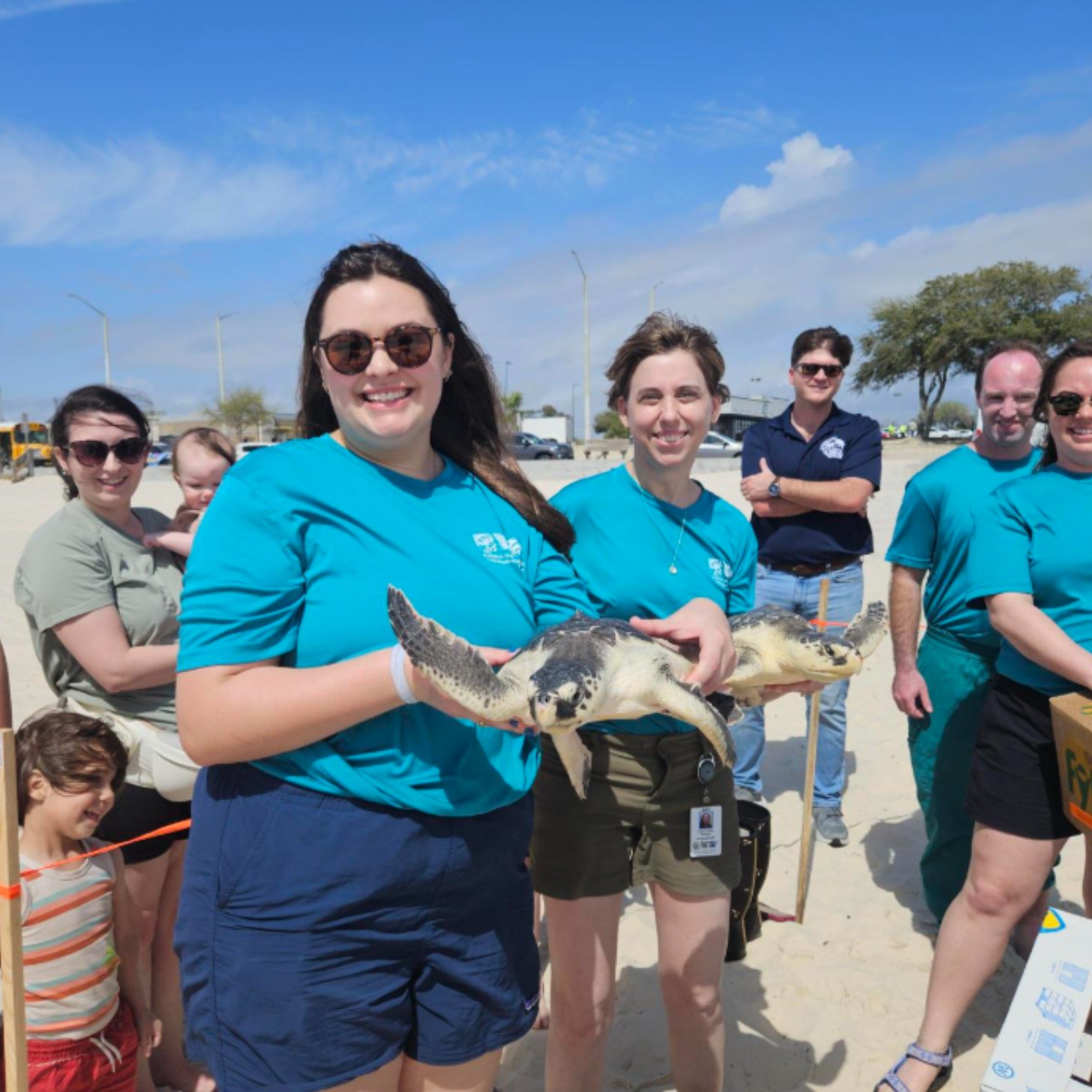
The release was a long time coming. The 35 Kemp’s ridley sea turtles had been found stranded along the New England coast in November after severe winter weather struck Cape Cod.
In total, the New England Aquarium saved the lives of over 450 sea turtles during the 2025–2026 season, including 404 Kemp’s ridley turtles, 48 green sea turtles, and 21 loggerhead sea turtles.
In December, the Audubon Aquarium Rescue stepped in to take nearly three dozen off their hands, transferring them via chartered flight.
“Some of these turtles arrived in rough shape; they will need more extensive rehabilitation than others,” Gabriella Harlamert, Audubon Aquarium Rescue Stranding and Rehab Coordinator, told New Orleans City Business in December.
At the time of the Gulf release, eight Kemp’s ridley sea turtles were still in recovery, requiring more time to get their swimming strong enough to return to the wild.
Kemp’s ridley sea turtles are the world’s smallest sea turtle. And in the last few decades, they’ve also become one of the rarest, which is why the aquarium staff is approaching their rehabilitation with the utmost care.
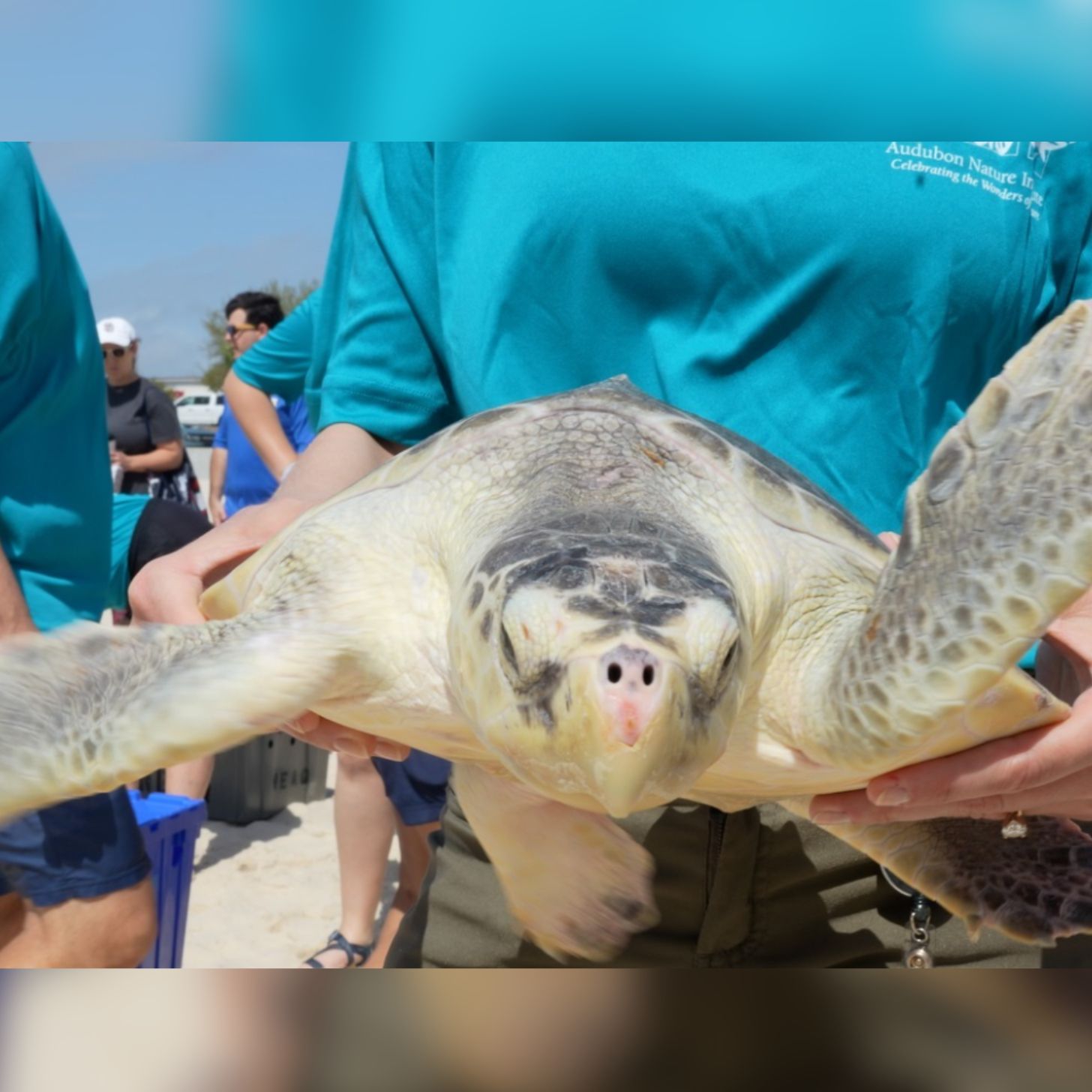
Today, 95% of the Kemp’s ridley nesting occurs in Tamaulipas, Mexico, along the Gulf of Mexico, where most of its global population lives. However, they have also been sighted in the eastern North Atlantic Ocean off the coastlines of Western Europe and Africa, and in the western North Atlantic Ocean as far north as Nova Scotia.
In the mid-20th century, Kemp’s ridley sea turtles were flourishing, with tens of thousands of females nesting throughout Rancho Nuevo, Mexico.
Unfortunately, their population has steadily declined since the 1980s. Their biggest threats? Getting swept up in bycatch by commercial fisheries and harmed by abandoned fishing equipment.
To combat these issues, the National Marine Fisheries Service has been working with local partners to safeguard sea turtles, protect their nests, and clean up trash and abandoned fishing gear all along the coast.
In October, the International Union for Conservation of Nature officially took green sea turtles off the endangered species list after decades of conservation efforts.
Wildlife experts like Bryan Wallace, who runs the IUCN’s assessment for sea turtles, hope that success translates to other vulnerable species, like the Kemp’s ridley.
“Our gains are dependent on continuing to kind of keep our foot on the gas and to continue to find, you know, the success stories — the things that are working, where they're working, and to keep up that momentum,” Wallace told NPR.
“If you do the right things in the right places with the right people, good things happen. And I think that extends far beyond nature conservation.”
You may also like: An aquarium rescued a 240-pound sea turtle from a fishing line. They need your help saving her flipper
Header image via Audubon Aquarium Rescue
On April 13, officials in Bangladesh rescued an endangered Bengal slow loris, locally known as the Lajjabati Banor, which roughly translates to “shy monkey.”
The adult male slow loris had wandered into Paschim Deorgach village from a nearby forest and was rescued by Mehedi Hasan, who works as an officer at Satchari National Park — a 243-acre area full of lush jungles, streams, and over 200 species of protected wildlife.
Fortunately, the animal was recovered without incident or injury and was safely released into the Satchari Reserve Forest later that same day.
In an interview with the Daily Star, Mahmud Hossain, a range officer of the Wildlife Management and Nature Conservation Department, said that human activity had been driving local species away from their native habitats and forcing them into local villages.
Similarly, Tofazzal Sohel, the general secretary of Bangladesh Poribesh Andolon Habiganj unit — a local chapter of the national environmental organization — urged for stronger conservation measures.
Sohel noted that the International Union for Conservation of Nature had “reclassified the species as vulnerable in 2008” and predicted “a 30% population decline over [the] next three generations due to hunting and habitat loss.”
Slow lorises are among the smallest primates in the world, with the Bengal slow loris being the largest in the genus. From head to tail, they average 10 to 15 inches in length and have large, bulbous eyes that help them navigate at night.
The Bengal slow loris is native to Bangladesh, Northeast India, Cambodia, Laos, Burma, Vietnam, southern China, and Thailand, although its populations in those regions have been shrinking in recent decades as they have been caught up in the illegal pet trade.
Slow lorises play a vital role in the biodiversity of Southeast Asian forests. As nocturnal omnivores that feast on tree sap, nectar, and insects, the primates help pollinate forests and dispense seeds as they move through tree canopies.

Slow lorises are also the world’s only venomous primate, with a toxic bite that is delivered after licking a sweat gland on its under arm. Although the venom can be used as a defensive move against predators, it's a behavior that the slow lorises commonly resort to during intra-species territorial disputes.
Unfortunately, deforestation has led to fewer protected habitats for slow lorises, making territorial disputes more common. It’s those deadly disputes that make the endangered species so difficult to reintroduce to the wild.
“It’s assumed that returning confiscated or rescued animals to the wild is always a positive conservation story,” Anna Nekaris, a professor of ecology, conservation, and the environment at Anglia Ruskin University in the U.K., told Mongabay. “But for animals such as the Bengal slow loris, this is not always the best course of action.”
Nekaris also serves as the vice chair of the IUCN’s Primate Specialist Group. In a recent study, Nekaris and her colleagues tracked several Bengal slow loris and found that reintroducing them to their native habitat can be a death sentence if they are released in an “unsuitable environment” or lack the essential skills to find food and integrate with wild populations.
For Nekaris, this all ties back to the root cause of the problem — the trafficking of exotic animals.
To her and her colleagues, rescue, rehabilitation, and release are small components of a broader conservation strategy that hinges on preventing poaching from happening from the start.
“The illegal wildlife trade is often likened to the cut-flower industry,” she said. “When you take an animal out of the wild, even though it’s still alive, it no longer has an ecological function.”
In the last decade, Bangladesh has begun taking measures to strengthen its efforts to combat poaching. Recent regulations banned advertising, buying, or selling wildlife on social media, while Spatial Monitoring and Reporting Tool (SMART) technology has helped officials gather data in poaching hotspots in protected areas.
“The SMART patrolling approach will help us to better combat poaching, illegal fishing, vessel and pollution infractions, and other forest crimes,” Mr. Zahir Ahmed, Khulna Division’s Conservator of Forests, said when the technology rolled out.
“It will strengthen the capacity of our frontline staff, and at the same time build training capacity for forest protection within our ranks.”
You may also like: The Kemp's ridley sea turtle is the most endangered sea turtle in the world. This aquarium just saved 35 of them
Header image via Helena Snyder (CC BY-SA 3.0)
The Builders Movement is a community organization that has worked with renowned humanitarians like Chef José Andrés and Dr. Bernice A. King. Partnering with organizations like the Bay Area Rescue Mission, the Builders Movement empowers local citizens to address food insecurity and housing affordability from the ground up.
And on November 30, philanthropist and KIND CEO Daniel Lubetzky welcomed a new “Builder” to the fold.
“Today I’m meeting a community leader who’s feeding the homeless, but here’s the twist — he’s 13 years old,” Lubetzky said in an Instagram video. “An amazing kid, Dan.”
In early 2025, Dan began sharing cooking videos on social media. Four months in, he pivoted away from recipes and tips to something that became the heart of his platform: making home-cooked meals for people experiencing homelessness.
After cooking dishes like bolognese, mac and cheese, and Mongolian beef, Dan goes to local shelters — and up to people on the street — and asks two questions, “How are you?” and “Would you like some food?”
In less than a year, Dan gained more than half a million followers across TikTok, YouTube, and Instagram. In his holiday video with Lubetzky, the two handed out carne asada burritos, salad, and water to people living on the streets of New York City.
“It turns out he’s a true Builder,” Lubetzky said. “Someone who sees the humanity in everyone and brings real light into the world, all at just 13 years old.”
A version of this article originally appeared in the 2026 Home Edition of the Goodnewspaper.
Header image via Dancooking7 / Instagram
On Wednesday evening, Randall Lane, editor-in-chief of Forbes magazine, announced a new layer to the publication’s wealth-tracking of billionaires: How much money they are giving away.
Lane is the editorial steward behind the Forbes World’s Billionaires List, which tracks the wealth of 3,428 people who Forbes believes has a real-time net worth of $1 billion or more.
On Wednesday, Lane spoke about the dissonance between the world’s wealthiest people and the general public.

“They all have one thing in common,” Lane said at this year’s TED conference, an annual event where speakers give TED Talks to a live audience, which are recorded and released at a later date. “Nobody likes them.”
He then showed an April 2026 Forbes favorability rating, where billionaires came in at 31%, tied with members of Congress.
“Why all the hate?” Lane asked. “Wealth disparity is some of it.”

But, he added, one of the biggest reasons people do not support billionaires is due to how little of their wealth they actually use to make the world a better place.
“People resent billionaires when they forget that the purpose of business is to create happiness; not who dies with the most toys,” Lane said in his TED Talk.
He showed a score card of the current five richest people in the world, in order: Elon Musk, Larry Page, Sergey Brin, Jeff Bezos, and Mark Zuckerberg.

“Less than 1% of their net worth has been donated to charity: 0.9%,” Lane added. “Compare that with the average American — teacher, fireman — [they] give 2% of his or her income to charity. That gap … bothers me.”
So, he launched a new way to track and measure billionaires’ philanthropic activity: A “True Net Worth” calculation.
“True Net Worth is your regular net worth, combined with the money you’ve donated, that we appreciate like you still own it,” Lane explained.

He then once again showed that list of the five richest people in the world and adjusted it in real time to include original net worth and appreciated giving. Bill Gates and Warren Buffett made an appearance.

“[Warren Buffett has] already given more away in today’s dollars than he still has, he’s pledged 99% of what’s left to charity, and he stipulated that all that money has to be spent down within ten years of his death, as opposed to just sitting in a foundation gathering interest for years,” Lane said. “That’s true net worth.”
Then he showed a new list of the five “Biggest Movers,” ranked by appreciated giving. They are, in order, MacKenzie Scott, Dustin Moskovitz, Reed Hastings, Lynn Schusterman, and John Arnold.

“MacKenzie Scott is giving away money faster, smarter — no strings attached — than pretty much anyone in history,” Lane said. “She’s the 84th richest person in the world by net worth; she’s 26th by True Net Worth.”
MacKenzie Scott has donated over $26 billion to charity since her divorce from Amazon co-founder Jeff Bezos in 2019. In 2025 alone, Scott donated $7.17 billion to approximately 225 organizations.

It’s unclear when the Forbes “True Net Worth” rankings will be available to view publicly online.
“True Net Worth offers role models for billionaires, for millionaires — for thousandaires,” Lane concluded. “Give while you live … [it] supports the system that makes all of us prosperous.”
Header illustration by Good Good Good. Images: The Giving Pledge, Forbes, Gage Skidmore/Flickr (CC BY-SA 4.0)
Editor's note: This article has been updated to embed the TED Talk