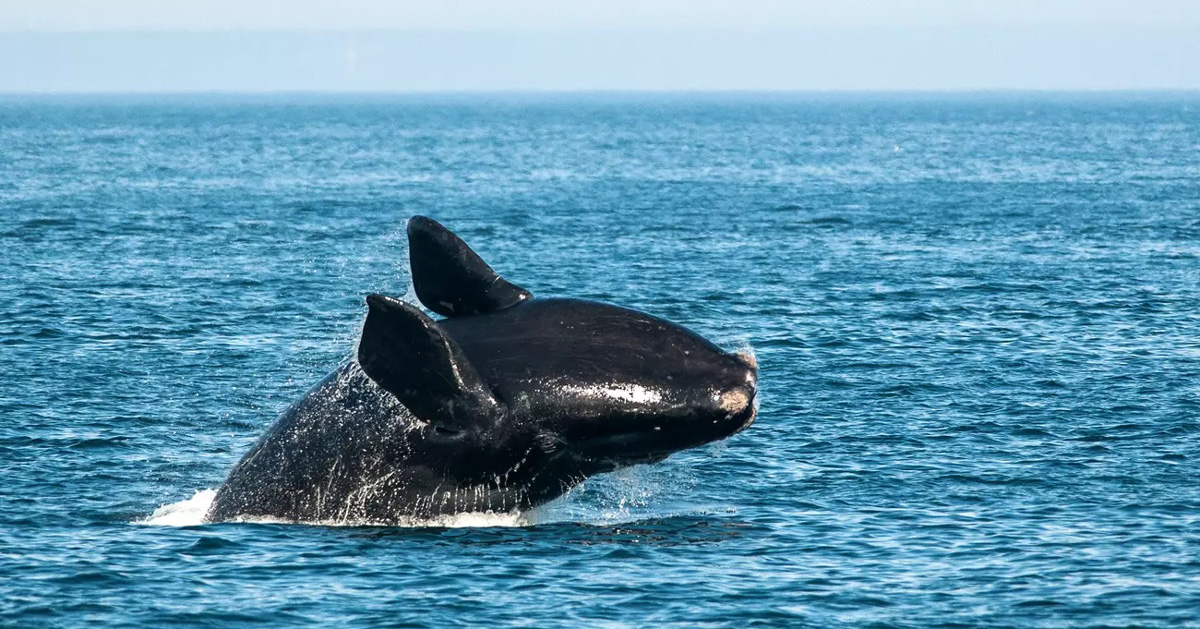
In 2020, the International Union for Conservation of Nature declared North Atlantic right whales to be critically endangered, with increased mortality rates and below-average reproductive rates making it especially difficult for the species to restore its population.
According to IFAW, North Atlantic right whales were nearly hunted to extinction in the 1800s, and although these hunting practices were made illegal in 1935, they still have yet to bounce back, as climate change and vessel strikes continue to threaten their small population.
Right now, only about 380 North Atlantic right whales remain, with just about 70 reproductively active females tracked by scientists. In the 2025 season, only 11 North Atlantic right whale calves were born.
Their threat level has not been helped by the Trump administration, as the president recently made it clear that he is planning to make deep cuts to federal research spending in his 2027 budget request to Congress.
“For the second straight year, the White House is asking Congress to make deep cuts to federal research spending, including a 55% cut to the National Science Foundation, a 23% cut to NASA, a 15% cut to the Department of Energy’s Office of Science, and a 12% cut to the National Institutes of Health,” Science reported last week.
“The plan also calls for eliminating a host of programs that focus on climate change and the environment, and limiting agency spending on publishing scientific papers and subscribing to journals.”
Earlier this year, lawmakers rejected similarly steep cuts to science, but it’s unclear what may happen in the next fiscal year. Regardless, environmental researchers are still struggling to make ends meet as federal funding becomes increasingly precarious.

In fact, it led a team of marine biologists in Massachusetts to try something new: Start a GoFundMe to protect the North Atlantic right whale.
Zoe Rauscher, a volunteer and drone pilot for the Marineland Right Whale Project, launched the fundraiser last week to raise $15,000. As of the publication of this article, over $4,400 has been raised so far.
The Marineland Right Whale Project is part of the Associated Scientists at Woods Hole, which supports the Cape Cod area, alongside a dozen local institutions, laboratories, agencies, and businesses that engage in research, technology, and education in the marine sciences.
“Given that the MRWP is a program run by a non-profit organization, we depend entirely on research grants (becoming increasingly more difficult to obtain due to federal budget cuts for environmental areas of research) and charitable donations to operate,” Rauscher wrote on the GoFundMe.
“In order for the researchers from Associated Scientists at Woods Hole to continue their impactful conservation efforts for the 2027 season, we must raise enough donations for the organization to be able to operate.”
Already, the MRWP and the scientists at ASWH have made direct impacts on the conservation of the species. Since it is not possible to chip or digitally track these whales, a designated team of volunteers surveys the ocean daily to locate the whales, working to achieve accurate annual counts and observe their wellbeing and mating outcomes each season.
But they also protect the whales in real time.
“When a team sights a whale, they inform MRWP project leaders who, in turn, provide photographic evidence of the sighting to the Florida Fish and Wildlife Conservation Commission,” Rauscher explained.
“In response, the FWC notifies the Early Warning System, a communication system that sends alerts to both commercial and federal ships, mandating that the ships slow down and/or change course to move away from the whales.”
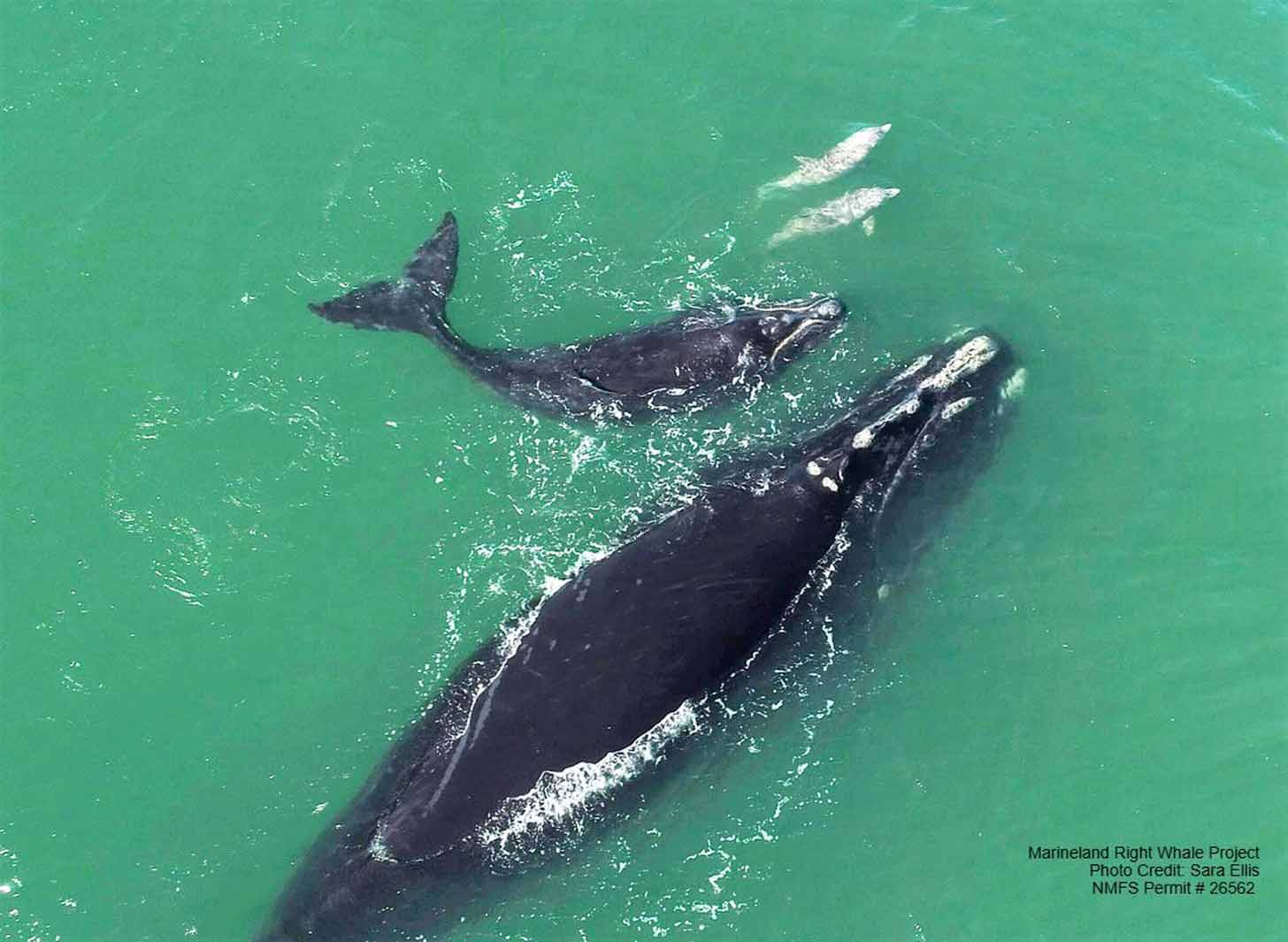
In doing this, the nonprofit helps protect vulnerable right whale mothers and calves during their annual migration, which increases their odds of survival, and in turn, grows the species population.
The MRWP began in 2001 and now includes over 250 volunteers. While many work in the Cape Cod area, their biggest location of focus is the coastal waters of northeastern Florida, where right whales migrate from December to March to give birth and nurse their calves before returning to New England and Canada.
“In northeast Florida, right whales often come in close to shore, sometimes within a quarter mile of the beach. Mothers can be seen with calves, and juvenile whales may be seen traveling or playing,” MRWP writes on its website.
“It is in these waters that a volunteer-based citizen network is growing and contributing to science, conservation, and stewardship of the species and its habitat.”
Those who want to donate to these efforts can do so via the group’s GoFundMe fundraiser.
But local citizen scientists can also help out. If anyone in the Cape Cod or migratory area actively spots a right whale, they can call the Right Whale Hotline at 1-888-97-WHALE, or 1-888-979-4253.
“Your donations support essential surveys, specialized equipment — such as remote-controlled drones, high-resolution cameras with telescopic lenses, and marine binoculars,” Rauscher concluded in the GoFundMe, “as well as research, reporting, and administrative costs.”
You may also like: A new website calculates how many marine animals are saved every time you pick up trash
Header image by IFAW © Nick Hawkins