December may have ushered in wintry weather to the United States, but over in New South Wales, Australia, the weather was heating up for summer. And as the temperatures climbed, more and more sea turtles were washing ashore, dehydrated and stranded.
“As the weather warms and ocean conditions shift, we’re entering the time of year when distressed sea turtles are more frequently washed ashore,” Conservation of Australian Seabirds and Turtles Incorporated wrote on Facebook. “These turtles may be exhausted, injured, sick, entangled, or suffering from buoyancy issues — and they urgently need help.”
The marine biologists at Mudgeroo Wombat & Wildlife Refuge heeded the call, with three sea turtle recovery missions in just three days.
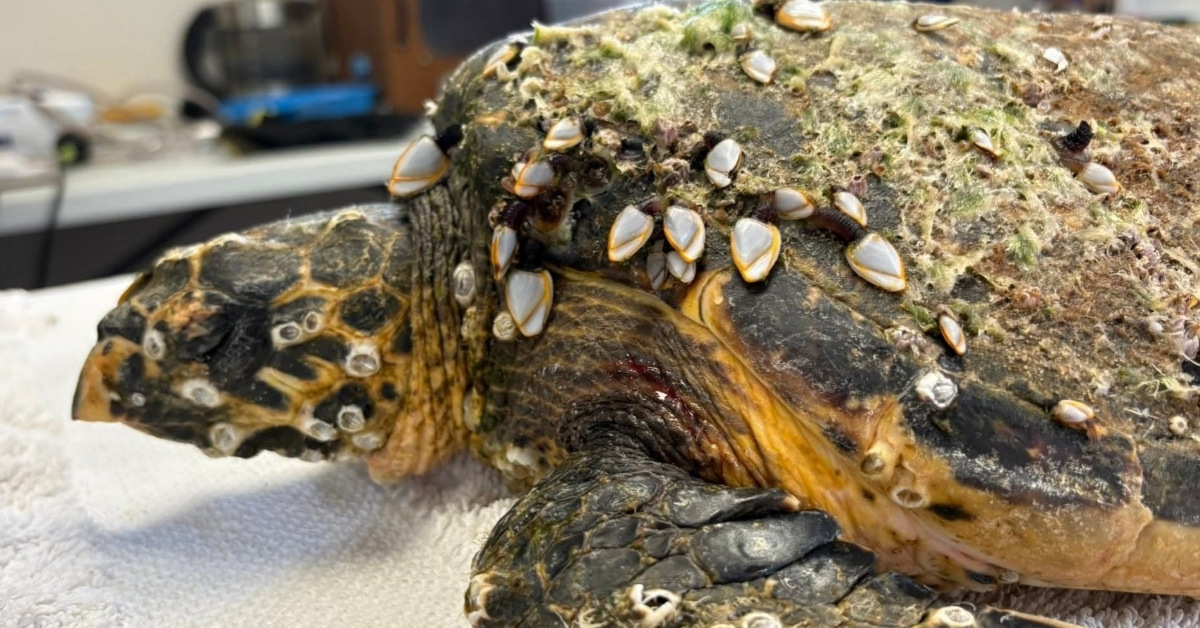
“[A] sea turtle found stranded is most likely critically unwell and needs experienced care and veterinary assessment as soon as possible,” the refuge posted on Facebook on December 2, alongside pictures of the turtles.
“Unfortunately, two of the turtles were critically unwell and did not survive. We still have one, ‘Bear’ the Hawksbill under veterinary care, as he is gravely unwell, too.”
That was the start of a 90-plus-day healing journey for Bear — who was soon correctly identified as a female sea turtle. The most critical part of her recovery was the first couple of weeks, when she was still in the danger zone.

“The initial stabilization phase requires several weeks, after which gradual changes help us monitor the pattern of physical recovery,” the refuge wrote in a Facebook update. “Thanks to the dedicated care from our team, Bear is now on a clear path towards recovery.”
By March, when she was healthier and free from barnacles, Bear almost looked like a completely different turtle.
“The increase in body weight is particularly encouraging, indicating improved overall health,” the refuge said. “A veterinary assessment and blood analysis are forthcoming to evaluate Bear's status. Bear's prospects for release are looking increasingly promising.”
By March 21, Bear was well enough to be re-released to the ocean.
“The hawksbill sea turtle is a critically endangered species, so her journey back to begin her reproductive life is so exciting and important to their species,” the wildlife refuge wrote. “For this reason, it was [such a] special feeling when she started improving, and further to see her so fit and ready to go.”
Hawksbill sea turtles became critically endangered after a swift three-generation decline that caused their population to shrink by 80%.
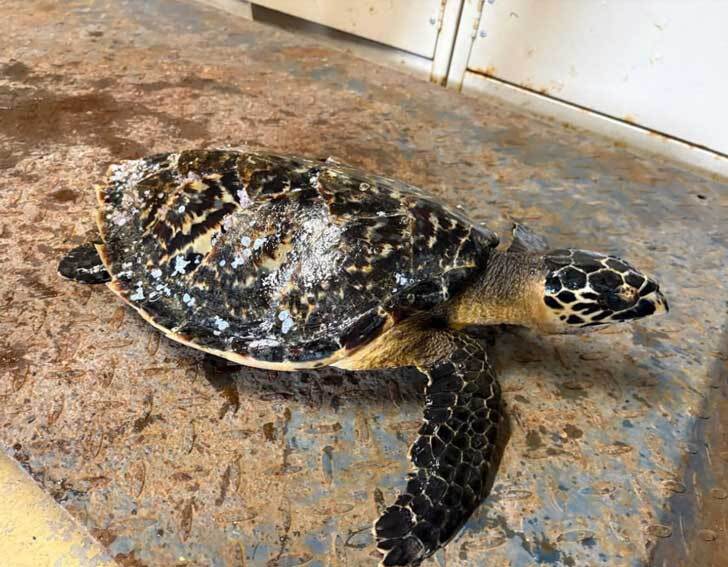
Although they can be found around the world in the subtropical waters in the Atlantic, Pacific, and Indian Oceans, only 8,000 nesting females are left in the wild.
In her farewell post, the marine biologists and volunteers at Mudgeroo thanked everyone who had been involved in her rescue from start to finish.
“There is no I in team, and dozens of people helped this happen,” an employee at the refuge stated. “We all need to know we do this all, for the conservation of the species, and should pat yourselves on the back. She is home.”
You may also like: Woman spends 92 days saving sea turtle covered in hundreds of barnacles: 'She doesn't even look like the same turtle'
Header image via Belinda / Mudgeroo Wombat & Wildlife Refuge