Saturday, April 4 was a busy day in Mustang Island, Texas. As Gulf Beach lifeguard Nevaeh Vela scanned the shore for signs of trouble, the last thing she expected to find was a massive Kemp’s ridley sea turtle buried in the sand — one of the rarest turtles in the world.
“With the bigger swells and flooding, it’s not entirely uncommon for turtles to wash ashore, especially with it being the beginning of nesting season,” Vela told Chron.
But it was clear to Vela that the endangered sea turtle was in dire straits. As a marine biology student at Texas A&M University–Corpus Christi, she flagged the turtle’s sluggish movement and haggard breathing.
“It could barely lift its head for air when the surf broke over it,” she said.
Unfortunately, Vela knew she couldn’t intervene directly.
“I’m not a certified professional, and it’s a federal crime to touch a protected species,” she explained. However, she immediately started calling for reinforcements, ringing several rehabilitation centers in the area.
But because it was after 5 p.m. on a weekend, no one picked up. Desperate for help, Vela left a voicemail with Amos Rehabilitation Keep at the University of Texas at Austin.
Within 20 minutes, someone got the message. That’s when ARK staff supervisor Andrew Orgill and his colleagues came to the rescue.
As soon as they got to the scene, they knew that time was of the essence.
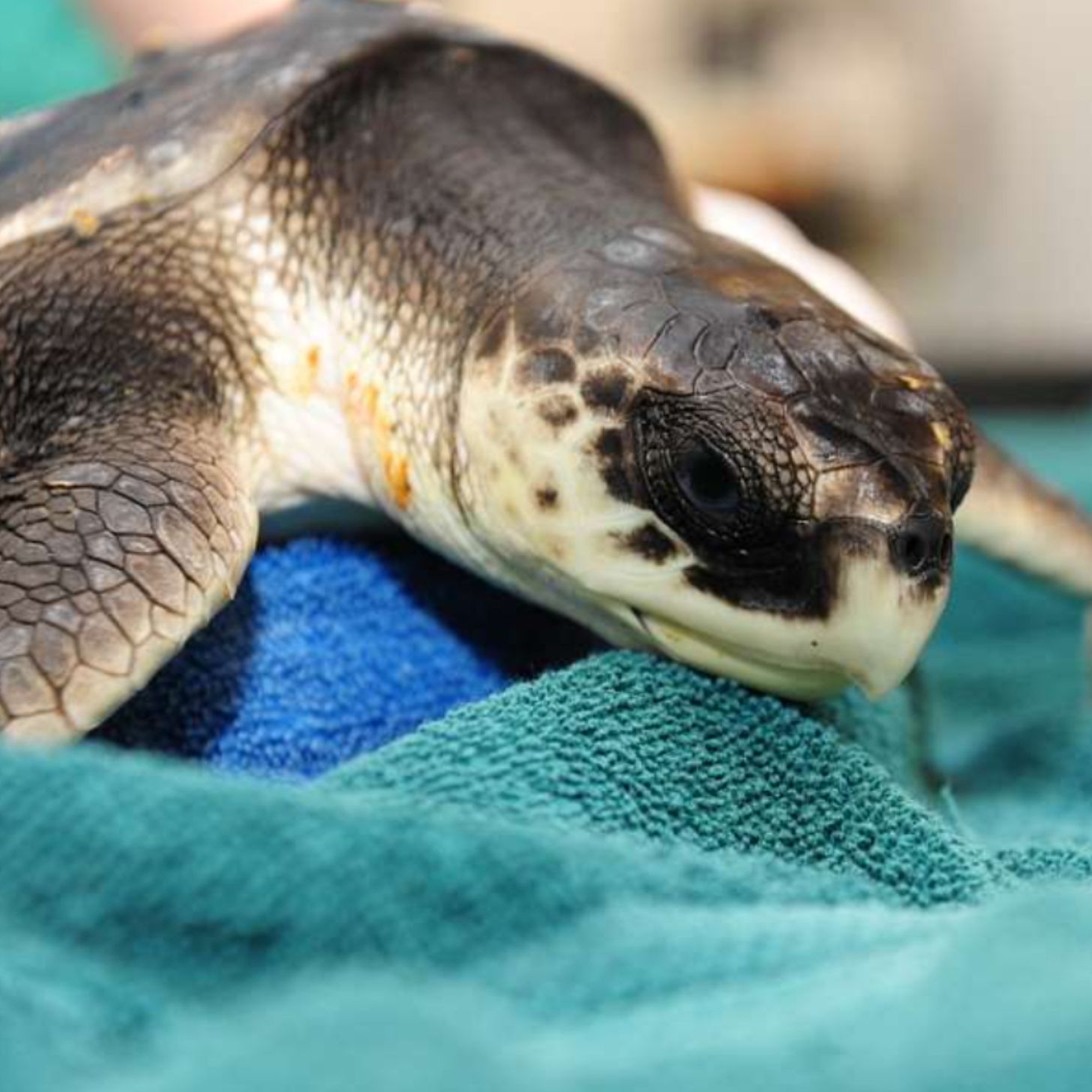
“The turtle was not moving, lethargic, and was taking frequent, raspy breaths with waves coming in onto the turtle,” Orgill said, adding that the shell was covered in algae, which suggested its health had been declining for some time.
After bringing the sea turtle in for X-rays, the team immediately clocked the problem: A small piece of a fishing hook was trapped in the turtle’s trachea.
“I felt horrible,” Vela said later, telling Chron that she had seen a person step on an abandoned fishing hook on the same beach that very day. “It goes to show that pollution and carelessness can stretch not only to animals but to humans as well.”
Fortunately, the ARK staff was able to safely remove the hook fragment from the sea turtle’s throat using an endoscopy.
“The turtle is being monitored closely, and he is on antibiotics, pain medication, and anti-inflammatories,” Orgill said.
Unfortunately, sea turtle cases like this are all too common in the Gulf.
“Discarded gear is sometimes referred to as ‘ghost gear,’” Orgill said. “Other impacts include deep lacerations, flipper amputations, inability to swim properly, ingestion of baits, hooks, and line.”
To reduce the amount of abandoned fishing gear in the Gulf of Mexico, Florida natives Neill Holland and Danielle Dawley founded Ocean Aid 360: a conservation organization that works with fishing industry professionals, community volunteers, and government agencies to find, retrieve, and recycle marine debris.
Since 2018, they’ve hosted “ghost trap rodeos,” a fun twist on fishing tournaments that reward locals for salvaging abandoned fishing gear.
“In that first year, our target was 15,000 pounds of marine debris. We ended up collecting 27,000 pounds, and had fabulous numbers of community members coming out to participate,” Holland told the Port Charlotte Sun.
“Since then, we’ve worked all over Florida and the Bahamas, with more than 60 event days and about 60,000 pounds of marine debris collected — including more than 8,200 derelict traps.”
Ghost traps create a deadly cycle in the Gulf. As animals get trapped and die, they attract more creatures, creating a deadly cycle that harms ecosystems and damages habitats like coral reefs.
“Not only did we clear marine debris, but we also catalogued and freed thousands of bycatch specimens (lobster, crabs, sharks, groupers, etc.),” the nonprofit posted on their website in 2025, after their latest rodeo.
“[We’re] giving marine life a second chance — and helping local fishermen start the next season strong.”
You may also like: Woman spends 92 days saving sea turtle covered in hundreds of barnacles: 'She doesn't even look like the same turtle'
Header image via Jackie Erbaugh