Can giving homeless people $750 a month to use any way they choose help them move into long-term housing?
I am the director of the University of Southern California Homelessness Policy Research Institute. My research team, in partnership with Miracle Messages, a San Francisco social services nonprofit, set out to answer that question in a study that will be published in an upcoming peer-reviewed issue of Social Work Research.
In one of the first randomized studies of basic income for homeless people in the United States, 103 homeless people living in California received $750 payments every month for a year.
Then we compared their housing situations with people who were homeless but did not receive this money. All study participants met the federal definition of literal homelessness. That basically means they either stayed in a homeless shelter or lived on the streets.
In 2022, when we began this study, we expected the answer to our question would be “yes.”
Beginning with optimistic expectations
A similar experiment in Canada with 50 homeless participants showed that providing 7,500 Canadian dollars in cash as a lump sum resulted in 99 fewer days homeless over a one-year period.
In addition, Miracle Messages had already completed a similar but smaller pilot in which six of its nine participants moved into long-term housing after receiving $500 monthly for six months.
But the results of pilots with so few participants can be misleading because the people who got money may have found housing anyway. What’s more, an experiment conducted in Canada may not directly translate to the U.S. — which has a weaker safety net than its northern neighbor.
Homelessness is often short-term for everyone
After receiving monthly payments for a year, nearly half of the participants in our study were no longer homeless.
But almost the same share of people who didn’t receive the payments had also found housing.
This points to an important reality: For many Americans, homelessness — while highly destabilizing — is often temporary. And, most people who are living on the street are actively trying to become housed.
Because the payments did not substantially change the rate at which participants obtained housing, we found ourselves asking another question: If the money didn’t alter housing outcomes, what did it change?
How people spent the money
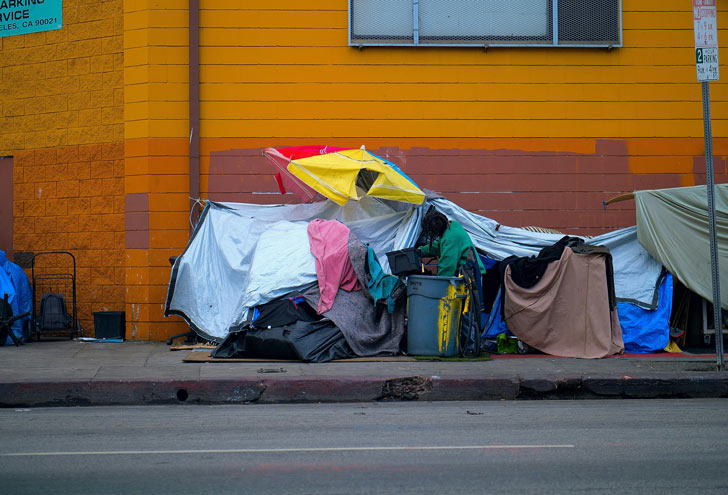
Basic income programs typically let people decide how to use the funds they get. Critics of giving people money with no strings attached often worry that they will spend it, or even squander it, on so-called “temptation goods,” such as alcohol and illegal drugs.
That isn’t what we observed.
The people taking part in this study overwhelmingly spent this money on basic needs, such as food, housing-related expenses, transportation, and health care. Spending on alcohol, cigarettes, and illegal drugs accounted for 5% of the money.
But those expenditures only tell part of the story. Cash also allowed people to meet their own immediate and personal needs.
One participant used this money to keep his car running — both for transportation to work and as the place where he slept at night. Another bought birthday and holiday presents for his relatives. One sent money to aging parents. Another donated to a charity because it restored a sense of contribution.
Another paid down credit card debt that had been a source of stress.
While we found no evidence that the basic income payments reduced homelessness, other aspects of the participants’ lives appeared to become more stable. We found no evidence that the money caused them any harm.
Why this result makes sense
The distribution of cash assistance has been evaluated in many places, usually targeting a specific kind of community, such as unemployed individuals or families living in poverty. Studies consistently find that people spend the money on necessities and end up better off.
Homelessness presents a different challenge.
Housing requires access to an available and affordable unit. In most U.S. housing markets, a $750 monthly payment doesn’t cover that month’s rent. Nationally, rent for a typical one-bedroom apartment was about twice that amount in February 2026.
Programs tied directly to housing, such as rent vouchers or subsidies, may therefore have a more immediate effect on housing status.
Moving forward, I believe our results suggest that for a basic income approach to help counter homelessness, monthly payments would have to be larger, continue over a longer period — or both. The payments should, that is, be closer to covering the full cost of a month’s rent in the local area.
This article by Benjamin F. Henwood, Professor of Social Policy and Health, University of Southern California, was originally published by The Conversation.
Header image by Timur Weber via Pexels

In 2003, a man named Rupert Boneham, often seen donning a signature rainbow tie-dye tank top and scruffy beard, first appeared on season seven of “Survivor.” He was such a hit that he returned to compete three more times, spending more than 100 days in the game.
While he did not win any of these rounds of competition, he became a million-dollar winner on “Survivor: America’s Tribal Council,” a special episode of “Survivor: All Stars,” where he accumulated 85% of a nationwide vote.
“They had 38 million votes in 72 hours,” Boneham reminisced to WFYI Public Media.

Though Boneham didn’t return to compete in the show’s 50th season, what he has done with his reality TV success has also made him an icon back home in Shelbyville, Indiana.
“I spent [the prize money] in three weeks,” he told WFYI, “getting myself and my family out of debt.”
Whatever was left, he let each member of his family split among charities of their choice.
That spirit of giving then blossomed into Rupert’s Kids, Boneham’s nonprofit, which is a re-entry program serving both juveniles and adults who are getting back on their feet after being incarcerated or in juvenile detention.
As part of this mission, Boneham opened the Rupert’s Kids Arcade, a pinball heaven he calls “a vocational training program cloaked in an arcade.” Here, formerly incarcerated individuals manage the arcade, which provides entry-level jobs and support as they find their footing. The proceeds from the arcade go directly to the charity to help more at-risk youth and adults.
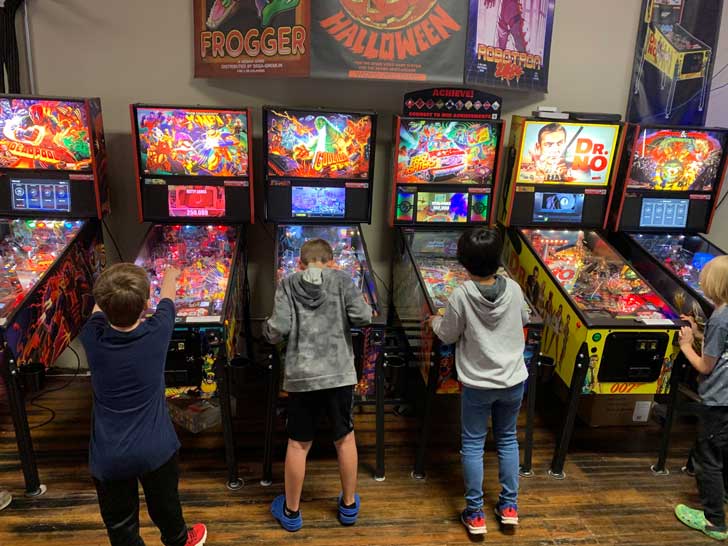
Additionally, Rupert’s Kids owns The WhereHouse, a donated warehouse turned shelter that can house up to 12 men, giving them a drug- and alcohol-free place to live and a path to recovery. They also build life skills by working at the arcade, can take GED classes, and have access to life coaching and financial literacy training.
“We’ve created a space where you can get assistance paying your rent, having food … you can even pay for your services by work,” Boneham told WFYI, “so you can save your money.”
Initially, the program was dedicated to helping at-risk youth stay out of trouble or combat homelessness.
But now, men coming out of correctional facilities are taught “how to have a legal living, how to have that sense of self-worth and work ethic, how to get out there … and enjoy life,” Boneham told WFYI.

When the Arcade finally got up and running in 2017, Boneham saw a 90% success rate of the people he worked with. Of the 34 people he supported in that first year, 29 stayed out of jail.
“We have young men and women in our mentoring program ready to go out into the workforce, but I wanted to teach them that there’s more than just showing up and expecting a paycheck,” Boneham told Indianapolis Business Journal.
“At the same time, we’re bringing something to the community that is safe and secure and affordable.”
@wfyipublicmedia Rupert's Kids is a non-profit that helps those struggling, through housing and mentoring. Rupert Boneham isn't your typical social worker. You might recognize him from his appearances on CBS's Survivor or The Amazing Race. But to the residents of Shelbyville, IN he's known for his non-profit work. Rupert's Kids is a re-entry program that helps both juveniles and adults who are struggling find their feet again. They also operate an arcade where the proceeds go directly to the charity and provide entry level jobs to those in the program. Learn about how Rupert helps those struggling to survive in this segment of Across Indiana! Watch the full story at wfyi.org/shows/across-indiana @rupertskids #WFYI #AcrossIndiana #RupertBoneham #Survivor #Gaming ♬ original sound - WFYI Public Media
Boneham also hosts “community days,” where neighbors can come shop a makeshift store of donated items for just $5, which all goes back to the nonprofit’s services.
Now nearly 10 years later, Boneham still has his sights set on bigger things.
“Every community has an overcrowded detention center. Every community has abandoned warehouses, abandoned properties. Every city is struggling with re-entry programs and vocational training, a path as you’re coming out of the detention center where you're actually going to succeed,” Boneham writes on his nonprofit’s website.
“I see in the future, Rupert's Kids being nationwide. Who wouldn't want to take the program? Who wouldn’t want to make their community great?”
You may also like: Former 'Queer Eye' star behind new tiny house village for Wisconsin's homeless veterans
Header images: Monty Brinton - © 2013 CBS Broadcasting, Inc. and Rupert’s Kids
It’s been almost two years since 11-year-old Caleb Devereaux Jr. — affectionately named “Junior” — passed away from leukemia in the town of Abilene, Texas.
But to his family, friends, and neighbors, his memory has never faded.
“He taught me a lot about how to be friendly to everyone, to hearing people and deaf people, and build those friendships, and also to see students as the whole person,” Letabeth Machogu, Junior’s former teacher, told local ABC news station KTXS12. “Yes, we're learning academics, but we can take time to be fun and be silly, too. Yeah, it's really important. He means a lot to me.”
Machogu teaches deaf and hard of hearing students at Ward Elementary, and Junior was one of her favorite pupils.
According to his family, Junior was deaf from an early age, but he quickly mastered American Sign Language, which opened “a world of communication and connection with those around him.”
“Junior’s zest for life was evident in everything he did. Whether he was dancing, singing, or creating TikTok videos with his cherished sisters, Makayla and Miyah, his infectious energy and creativity were boundless,” his obituary reads.
“His radiant smile could light up any room, and he found immense joy in spending quality time with his family and friends.”
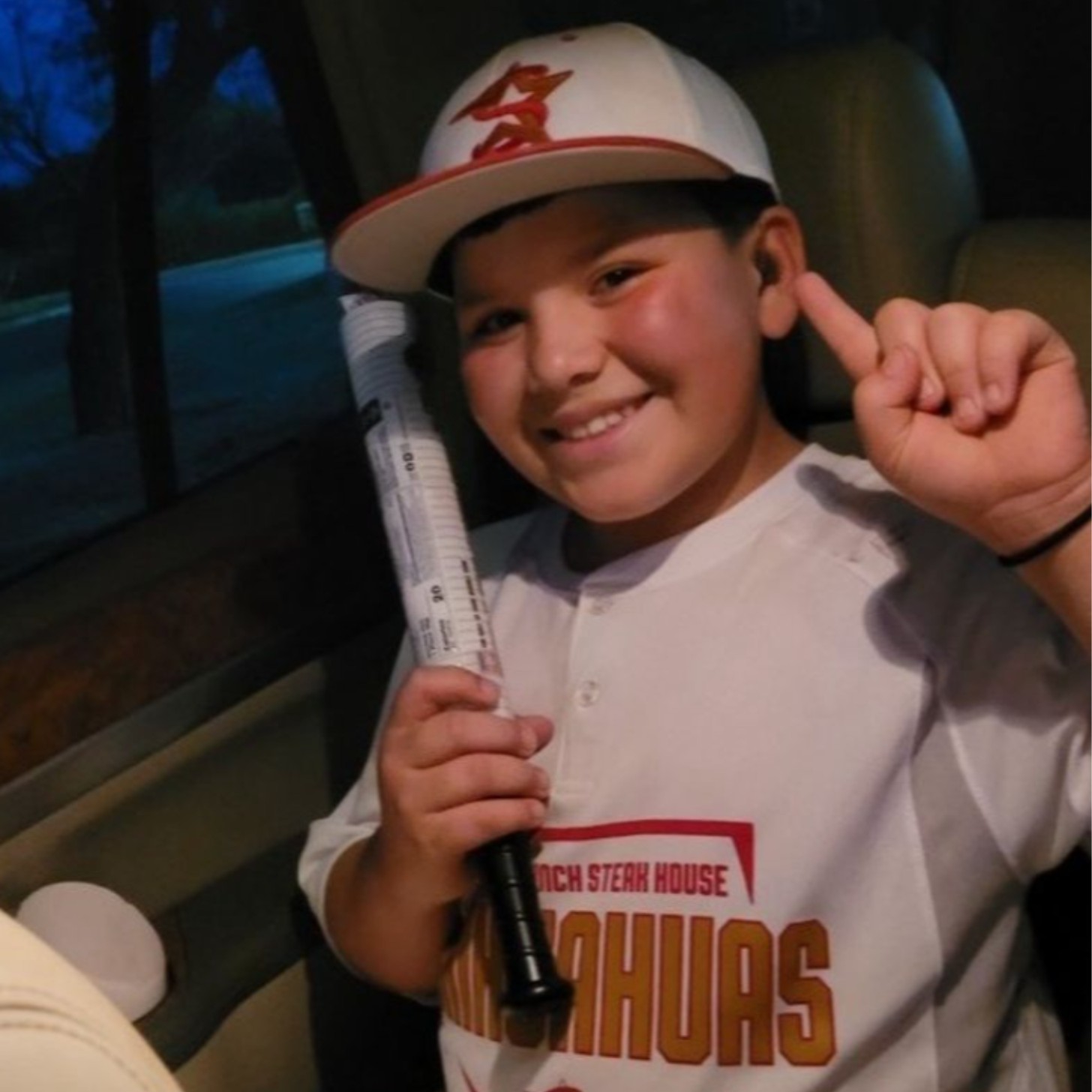
A few short months before he passed from leukemia, Junior had just completed fifth grade.
“When I came back after he passed, I was very angry because I just kept thinking that he should be here,” said Machogu.
Last summer, Machogu installed a new playground sign at Ward Elementary that was inspired by Junior’s playful and outgoing attitude. It has the alphabet in ASL, as well as the hand signs for phrases like “friend,” “play,” “tag,” “share,” and more.
The sign was designed and manufactured by Language Priority, a deaf-owned business dedicated to raising awareness about deafness, language acquisition, American Sign Language, and the Deaf community at large.
"We worked closely with Leta to make this memorial for Caleb Jr.," Sara Miller told Good Good Good.
Since its installation, hearing students have been able to play with their deaf classmates more freely.
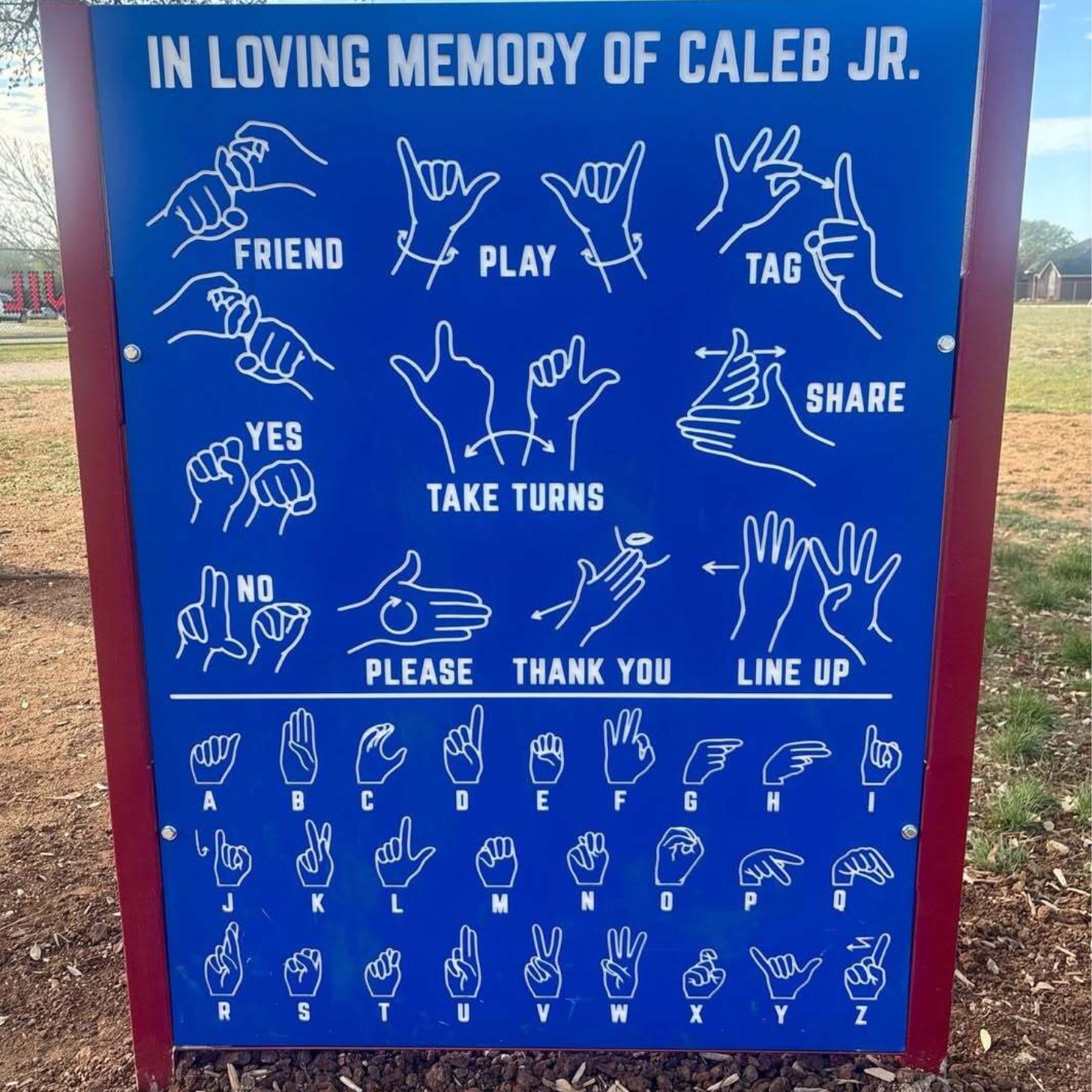
“They can communicate with each other directly with our students who use sign language, and then they can play together without having to have an interpreter there to facilitate all the communication," Machogu said. “They can have a direct friendship without having a third party. You know, that is so important.”
Etched into the top of the sign are the words: “In loving memory of Caleb Jr.”
“I think he'd be proud,” Machogu said. “I picture him looking at me like, 'Thank you, I love it.' That's what he would say.”
According to MJ Grein, an executive assistant at Harvard Medical School’s Countway Library and former sign language interpreter, everyone should learn sign language.
Even knowing a handful of basic signs can help bridge divides between the Deaf and hearing world — especially when it comes to empowering deaf children.
“Everyone can learn sign language,” Grein told the Harvard Gazette. “Deaf people can’t learn to hear, and that’s the difference.”
AUTHOR'S NOTE: This article was updated on April 17, 2026 to reflect Language Priority's involvement in the creation of the playground sign installation.
You may also like: At this café run entirely by deaf baristas, you must order in sign language. (Don't worry; they'll teach you)
Header image via Vanessa Rodriguez
In Broomfield, Colorado, a new mixed-use community called Baseline is challenging the traditional suburban setup.
It all started in 2019, when nonprofit Butterfly Pavilion wanted to create a movement that confronted the habitat destruction of the nation’s pollinators like bees, butterflies, moths, and beetles.
These critical species are vital in producing the food we eat every day, but they’re also a key part of the whole ecosystem.
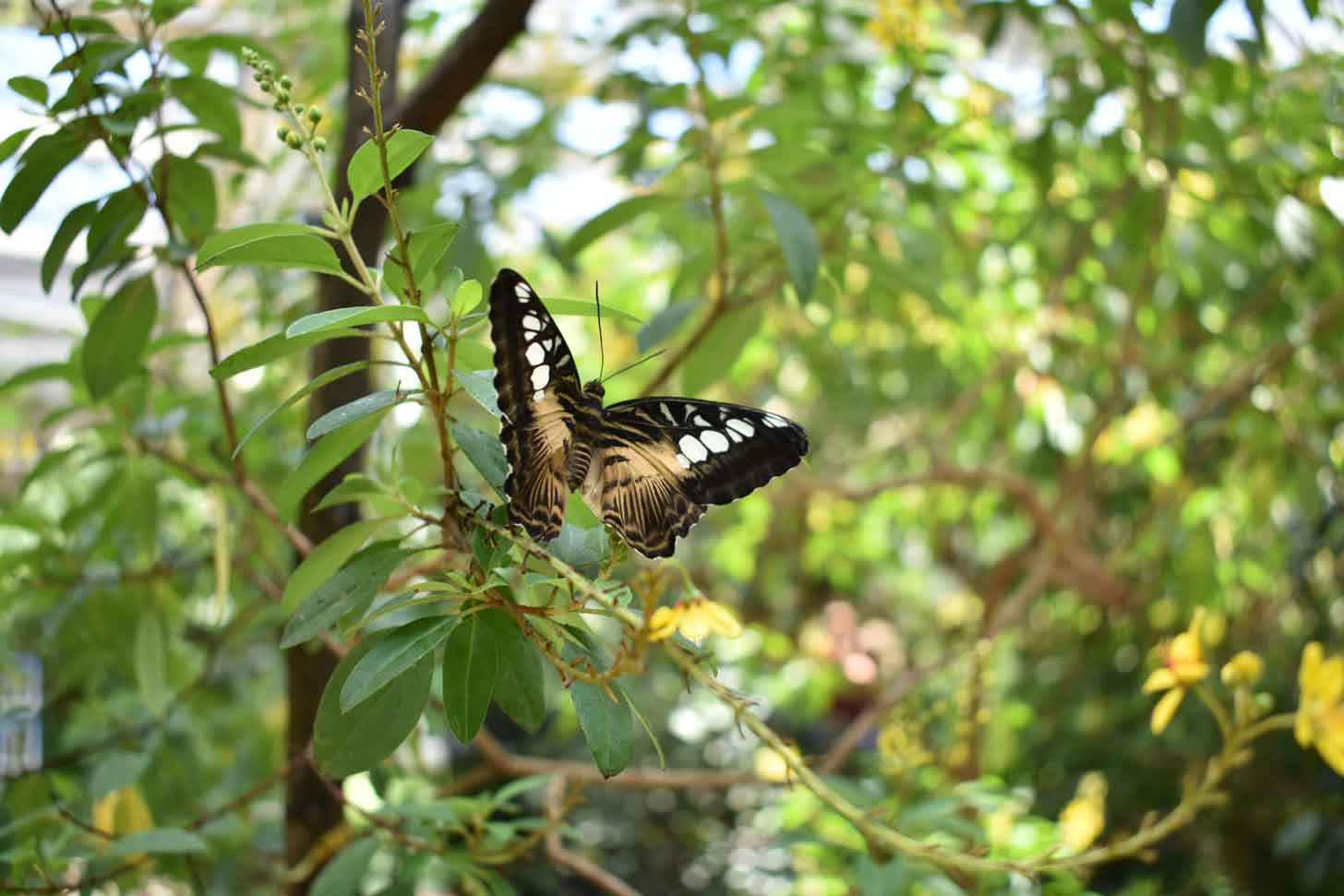
“They keep wetlands going. They keep our grasslands going. They make sure forests are diverse,” Amy Yarger, director of horticulture at the Butterfly Pavilion, told the Colorado Sun.
“And if they can keep those plant communities healthy and reproducing by assisting plants in their reproduction, that means our water is filtered, and we can hold on to our soil and not just have a big old dust bowl.”
So, the conservation organization came up with the idea of “pollinator districts,” or communities that are strategically designed and maintained to support pollinator habitat growth.
“At Butterfly Pavilion, we believe conservation is strongest when people work together,” the organization writes in a blog post. “When science, planning, and community commitment align, pollinators respond.”

Baseline became the blueprint.
While other Colorado cities, like the city of Manitou Springs, and Lafayette, are dedicated to the municipal pollinator district charge, Baseline was the first in the world to embrace the concept.
The neighborhood was once agricultural land that was used for growing wheat and later became uncultivated. Now, it’s home to 1,200 move-in-ready multifamily units that start in the low $500,000s, slightly cheaper than the median sale price for a standard home in Broomfield — between $600,000 and $625,000 in early 2026.
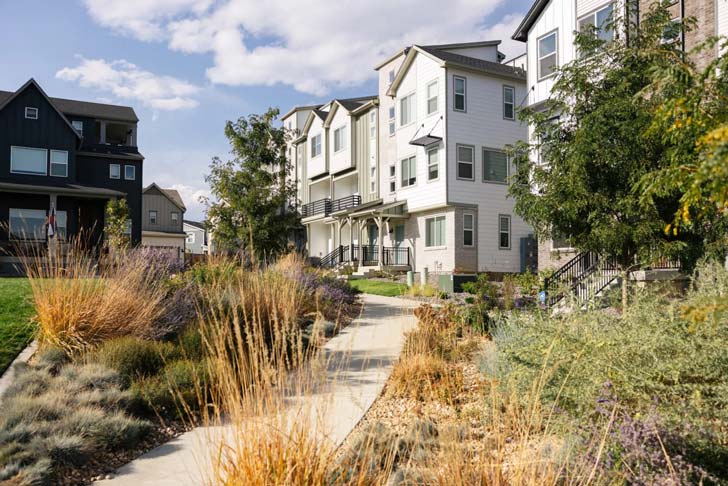
But the price isn’t the only attractive factor. The community is full of bike paths and trails, with a “pocket park” no more than 1,600 feet (or about 0.3 miles) away from any home. Every unit also meets Home Energy Rating System requirements, and all of the plants in the area are drought-tolerant, native plants that attract pollinators. In total, 170 acres of the community are dedicated to natural spaces and gardens.
And it’s working.

Before construction began at the development, scientists documented only 11 families of pollinators. By late summer 2025, scientists documented pollinators in 27 different families.
“This marked a significant increase in diversity compared to earlier years and reflected steady growth in both native pollinators and honey bees,” Butterfly Pavilion reported.
“Researchers consistently observed pollinators visiting native plants selected for habitat value and recorded broadtail hummingbirds, one of the region’s few vertebrate pollinators, for the first time. Several insect families, including longhorn beetles, plasterer bees, and digger wasps, were also documented at Baseline for the first time.”
In fact, scientists saw a 272% increase in Western honeybees in 2025 compared to the year prior. And in addition to the growth in pollinator families, individual pollinator counts jumped from 587 in 2023 to 3,805 in 2025.
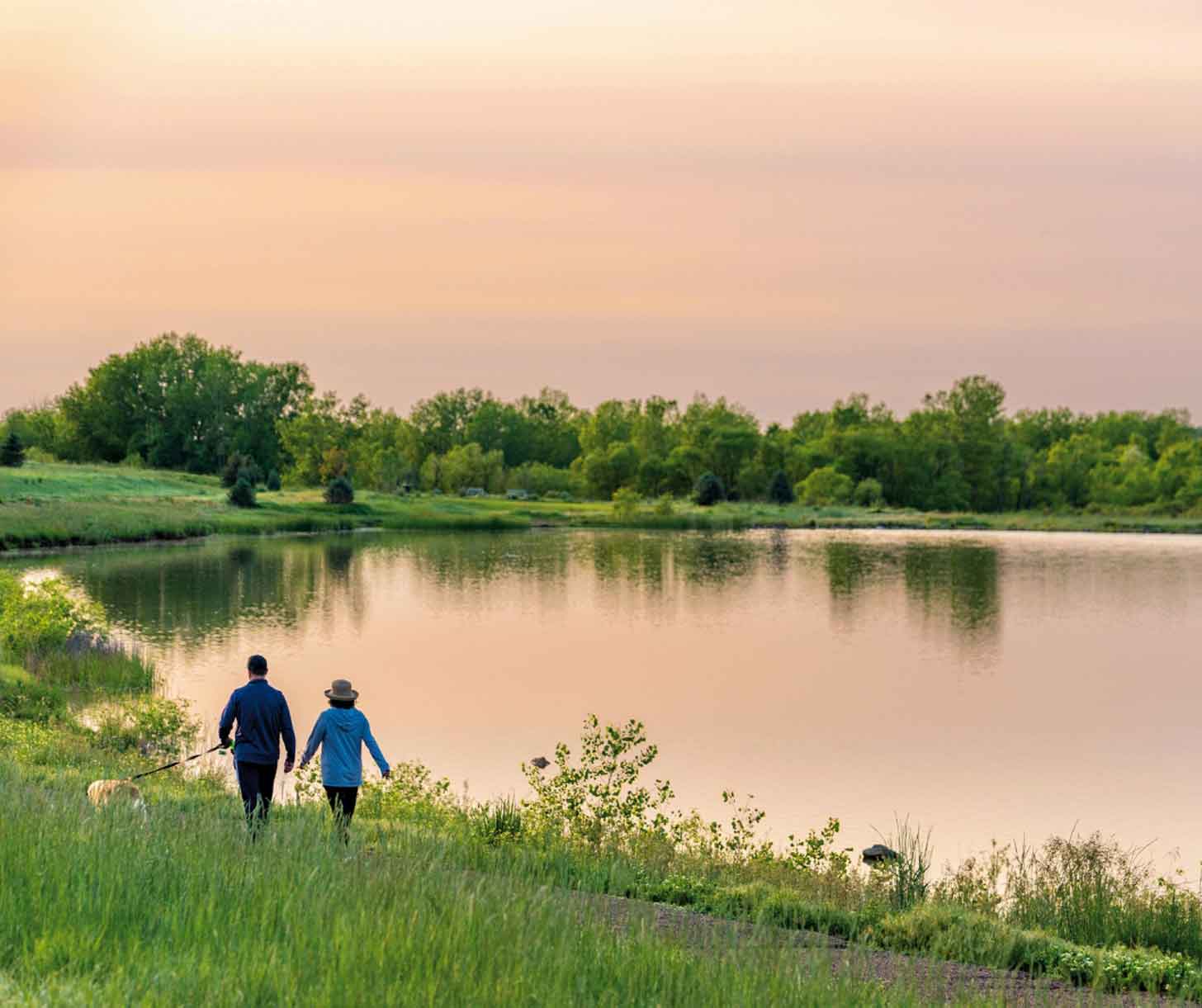
Yarger told the Colorado Sun that residents seem to be invested in the success of their neighboring pollinators.
When she is out doing surveys in the community, she said, “homeowners will come outside and want to tell me what they’ve been seeing. They just feel like I’m somebody that has things they want to talk about. They know I’m there for the pollinator district and they have ownership in that.”
To become a certified pollinator district, these surveys are required, and Butterfly Pavilion experts are bringing the approach to more transportation corridors and communities in Colorado’s Front Range.
It starts by documenting how these areas look now, and what recommendations scientists can provide to manage the landscape for prime pollinating.
For Yarger, this approach makes her feel “like … we have a way forward,” she told the Colorado Sun.
And science backs it up.
“This long-term, evidence-based approach mirrors the Pollinator District model developed at Baseline: assess first, design intentionally, monitor consistently, and adapt based on results,” Butterfly Pavilion concluded.
“Infrastructure can support biodiversity when guided by science and long-term stewardship.”
You may also like: Cities across Europe install 'moss banks' to reduce pollution from busy roadways
Header image courtesy of Baseline Community
In 2025, marine biologist Tabitha Siegfried of the Gulfarium C.A.R.E. Center spotted a sea turtle that was struggling to swim in the Gulf of Mexico.
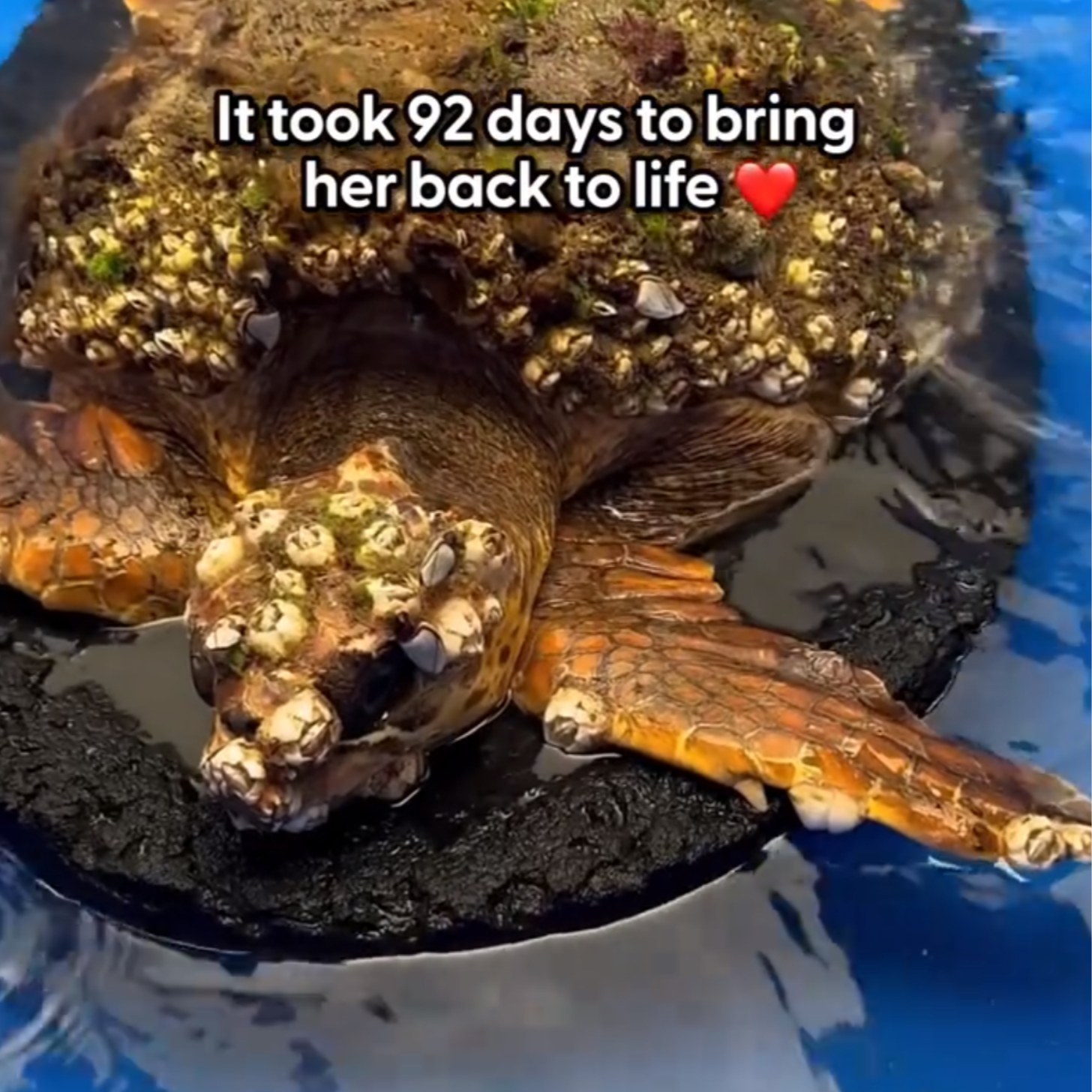
Without hesitation, she jumped into the water and brought the female loggerhead ashore, quickly realizing that it was afflicted with hundreds of barnacles and suffering from a severe case of debilitated turtle syndrome.
“We don't really know the underlying cause of debilitated turtle syndrome,” Siegfried said in an Instagram video. “It could be due to environmental factors or an infection [or] something that she ate. But it is characterized by excessive barnacles, lethargy, and anemia.”
“And usually when turtles are brought into a rehab facility with this disease or syndrome, their odds of survival are less than 25%,” she added soberly.
Five of the world’s seven species of sea turtle are found within the Gulf of Mexico, including the Kemp’s ridley, green turtle, hawksbill, leatherback, and loggerheads like the one Siegfried rescued.
All are listed as endangered or threatened under the Endangered Species Act and face severe threats from fishing bycatch, coastal development destroying nesting habitats, ocean pollution, and vessel strikes — and Siegfried has dedicated her career to saving them.
The turtle, which was named Syrena by the marine rehabilitation team, was in dire straits when she was brought in. And although Siegfried and her peers didn’t know the root cause of Syrena’s pain, they did know how to treat it: Lots of fluids and antibiotics.
“We’re so fortunate it actually pulled through with this condition because we have had a season where we have had 25 or more turtles and only one or two of them have actually survived.”
The turtle also needed a lot of care and patience when it came to removing her many barnacles.
“We have to do this in a slow, methodical way, because it can be very painful to the turtle underneath those barnacles,” Siegfried explained. “Barnacles are a living crustacean, but they can burrow into her shell and cause an infection.”
On July 14 of last year — after three months of recovery and multiple barnacle removals — Syrena was finally nursed back to full health and was ready for release.
“92 days ago, we found her struggling offshore — weak, disoriented, and in critical condition,” Siegfried wrote in an Instagram update. “I didn’t know if she’d make it. But Syrena showed us what resilience looks like.”
Siegfried shared footage of her and a colleague carrying Syrena to the shore so that she could return to the Gulf of Mexico.
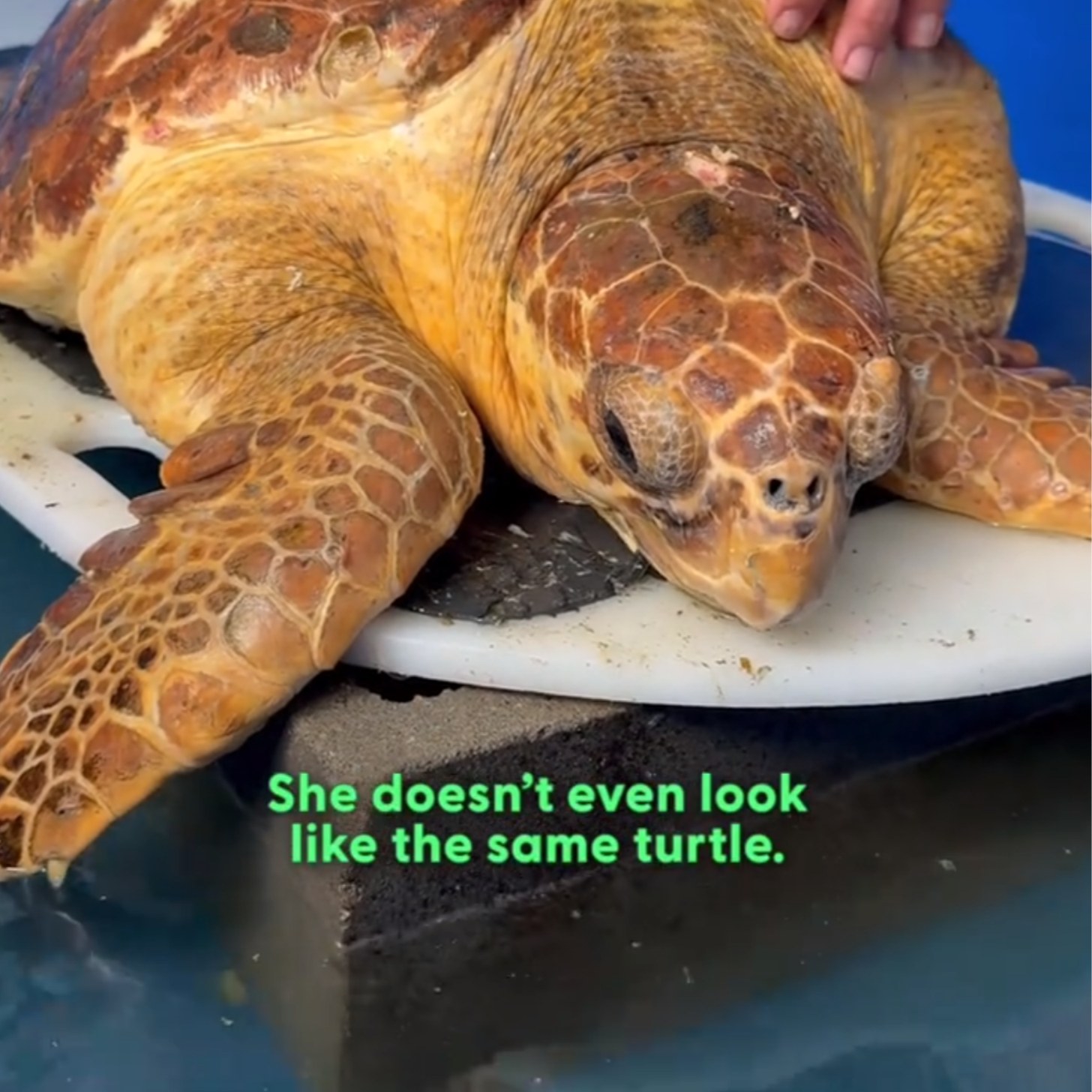
“After months of treatments, barnacle removal, antibiotics, and a whole lot of love… she swam back into the Gulf with strength and attitude (as she should),” she said.
Like all turtles that “graduate” from the rehab facility, Syrena was given two metal flipper tags and passive integrated transponders (PIT tags).
That way, if she is ever caught or brought in again, they know exactly who she is and where she came from.
And although Siegfried’s career is built around saving countless turtles like Syrena, she admitted that her release was particularly heartwrenching.
“Every release is emotional — but this one hit different. Because every turtle matters. Every rescue is worth it,” she emphasized. “Swim free, Syrena. You’ll always have a piece of my heart.”
You may also like: Three-footed turtle given 'new wheels' after museum staff gifts him a handmade LEGO harness
Header images via Tabby Siegfried | Marine Bio
Every day the Good Good Good team collects the best good news in the world and shares it with our community. Here are the highlights for this week!
If you want to get good news in your inbox every day, join the Goodnewsletter — the free daily newsletter designed to leave you feeling hopeful.
The Best Positive News We’re Celebrating This Week —
After a Texas ban on rainbow crosswalks went into effect, a Dallas man repainted a dozen of them in a few hours
Last week, Dallas began removing its rainbow-painted sidewalks in compliance with a new state directive requiring cities to remove “political ideologies” from public roadways.
Mason Whiteside moved to Dallas in 2023 and said that wasn’t “the Dallas I came to love.” So, in a few hours, with chalk and spray paint, he repainted more than a dozen crosswalks in red, orange, yellow, green, blue, and purple.
Whiteside was arrested for what police officials say were unrelated, outstanding warrants. Still, Whiteside said he’d do it again, “How much longer until it’s not just crosswalks? Until they take our spaces — our actual spaces?”
Why is this good news? Whiteside said he moved to Dallas to start over outside of his “small-minded” hometown — to a city that was more welcoming for a queer man like him. Visual symbols like rainbow-painted crosswalks help signal to queer people that they are celebrated and welcome in a community. Whiteside’s nonviolent resistance helps signal that for others, and to people in power to shape our communities.
→ Read more
California spent $15M to make homeless shelters pet-friendly. It got people off the streets
→ Read more
A famous actor and model are using their platform to fight tourist traps and invest in one of Sierra Leone’s islands
Actor Idris Elba and his wife, Canadian model Sabrina Elba, have made it their mission to couple ecological sustainability with economic growth on Sherbro Island in Sierra Leone. The project could transform development projects across the continent.
Idris is from Sierra Leone, and Sabrina is from Somalia. She said growing up, she heard damaging messages and stigmas about being African, and the pair wants “to see Africa represented the way that we knew it to be.”
The Elbas took a trip to the island — with its scarce electricity and wireless internet, lack of refrigeration, as well as miles of untouched beaches, lagoons, and fresh water — and saw an opportunity to change the narrative from “one of aid to one of investment.” They’re taking on the project through their Elba Hope Foundation.
Boston turned an old middle school into an inclusive, affordable housing complex for LGBTQ+ seniors
The site of William Barton Rogers Middle School in Boston’s Hyde Park neighborhood is now an independent senior living space called The Pryde that was designed specifically for members of the LGBTQ+ community.
Nine and a half years in the making, renovations to the school ensured it was fully accessible to seniors, kept “pride” on display throughout, and preserved some of the building’s historic charm, like chalkboards and a bell system.
It’s open to any community members over 62 who qualify for affordable housing, and residents live in rent-restricted studio, one- and two-bedroom apartments at various income tiers. They also enjoy amenities like a landscaped courtyard, walking track, fitness center, and even a resident cinema.
Why is this good news? In addition to providing much-needed housing support, the community offers safety that some have never experienced until now, like one resident who is a “long-term HIV-AIDS survivor” who had to stop working and “didn’t think I’d ever live to see retirement.”
A Michigan woman retrofitted a vending machine to dispense ideas for random acts of kindness
In countries with good waste management systems, far less plastic pollutes the environment
New data shows that plastic pollution is driven far more by how waste is managed than by how much plastic is produced. Even though high-income countries generate significantly more plastic waste per person, they tend to have effective systems that prevent waste from leaking into the environment.
Around one-fifth to one-quarter of global plastic waste is currently mismanaged, making it vulnerable to environmental leakage. Investing in basic infrastructure such as waste collection, controlled landfills, and proper disposal systems can dramatically reduce the amount of plastic that escapes into nature and the oceans.
Proper waste management systems include collection, recycling, incineration, and sanitary landfills. Across high-income countries, plastic pollution per person is 100 times lower than in lower-income countries. If every country managed its waste in this way, the world would cut plastic pollution by more than 98%.
Activists are selling symbolic ‘stock’ in national parks to remind Americans to ‘protect what’s yours’
A new stock market-inspired campaign called Going Public aims to celebrate Americans’ shared pride for the country’s iconic public lands and inspire people — regardless of identity or political affiliation — to help protect these natural spaces.
From now until May 30, people can support their public lands by claiming a free, symbolic “share” of their favorite public lands, like major national parks, local trails, protected forests, and other natural spaces visited every day.
Each share represents a vote for a favorite public land location, which then ends up on a leaderboard where advocates can watch their stock “climb.”
Even better: Nature Is Nonpartisan, one of the groups behind the Going Public, also plans to use the results to compile a report about how many people in each state and congressional district joined the campaign to “send a message to leaders.”
→ Read more (and claim your stock!)
Here’s what to say — and not say — to someone who is grieving, according to a death doula
→ Read more
By upcharging people for bags, a city in Canada dramatically reduced its use of plastic
In 2023, Edmonton — the capital city of Alberta — implemented a new law that banned Styrofoam plates, cups, and containers, as well as plastic shopping bags. Since then, customers who need a bag have had to pay 25 cents for a paper bag, or $2 for a reusable one.
New data shows the policy significantly changed behavior, with single-use bag use dropping by about 80%. City officials attribute this largely to the added cost, which pushed consumers toward reusable options and reduced overall waste entering landfills.
The policy also targeted smaller disposable items by making accessories like straws, utensils, and napkins available only upon request. This led to a noticeable decline — around 26% — highlighting how much waste comes from default distribution rather than real need.
→ Read more
The largest offshore wind farm in the U.S. just sent its first power to the grid
Dominion Energy’s Coastal Virginia Offshore Wind project has been under construction since 2024, and once complete, it will be the largest wind farm in the U.S. It’s currently about 70% complete, and power is now being generated from one of the wind turbines.
The wind farm’s turbines will be turned on gradually throughout the rest of the year, with construction scheduled to finish in early 2027.
Dominion was the first of five projects to sue the Trump administration late last year after the Interior Department ordered the projects to halt construction. All five wind farms have since been allowed to resume construction.
Why is this good news? Amid rising gas prices, energy providers and customers are looking for alternative, abundant fuel sources — and wind is one of them. When CVOW is fully online, it will produce enough electricity to power 660,000 homes and save customers an estimated $3 billion in its first decade of operation.
PBS Kids debuted its first autistic lead character — the show won an Emmy for ‘Outstanding Public Service Initiative’
After a transgender student was cut off by his parents, strangers donated nearly $90,000 to help him graduate on time
Matthew, a student at Massachusetts Institute of Technology, was recently kicked out of student housing after his parents discovered he was transgender and cut him off financially.
Despite working multiple jobs, Matthew was unable to afford tuition and housing on his own and was evicted from his dorm in mid-March. To help, his classmates set up a GoFundMe to cover his housing and allow him to back-register for classes before graduation.
By the end of March, Matthew’s donations totaled over $91,000, putting him back on track to graduate. According to his classmates, he hopes to pursue graduate research in astrophysics and continue his studies “about the mysteries of the universe’s origins.”
→ Read more
A nonprofit invented modular playgrounds for kids in war zones — and refugee children helped design them
London-based photographer and tinkerer Alexander Meininger built his own sons an indoor treehouse, but it wasn’t until he saw children displaced by the war in Ukraine that he realized the importance of play.
Now, he just launched his nonprofit, Playrise, which makes modular, packable play equipment and furniture for children living in disaster zones and refugee camps.
He worked with an architecture studio to design the fully customizable and reconfigurable play structures, which are built from simple wood components and colorful accessories.
Even better: Meininger and his team spoke personally with Sudanese, Palestinian, and Eritrean child refugees to learn what children living in displacement actually wanted. Their feedback confirmed what the inventors knew to be true: Play is vital for child development.
National park ranger photographs rare species for the first time while snorkeling on the job
→ Read more
Denmark generates a larger share of its electricity from wind than any other country
New data shows that wind power supplied almost 60 % of Denmark’s electricity in 2023, giving the country the highest share of wind‑generated electricity on a global scale. This reflects decades of investment in wind energy infrastructure and supportive policy, making renewables central to the nation’s power mix.
Wind contributes not only to electricity but also significantly to Denmark’s overall energy system. Combined with other renewables, wind helps reduce reliance on fossil fuels and supports the nation’s climate goals, including a net‑zero target by 2045.
Industry data show Denmark’s wind capacity continues to grow, with turbines producing over 19 TWh and national targets aiming for even higher renewable shares in the future.
→ Read more
More good news of the week —
The country’s oldest mall was transformed into an affordable housing complex, and rent is just $550 a month. The Arcade in Providence, Rhode Island closed after 188 years in business. Then, it was transformed into a community of micro-lofts.
Bipartisan lawmakers stepped in to buy an iconic Oregon waterfall and its surrounding land. After the waterfall went up for sale online, lawmakers ensured the land would remain protected and publicly accessible for generations to come.
Philadelphia now requires employers to provide accommodations for periods and perimenopause. The new ordinance serves as a model for other cities and states to provide relief for workers suffering from symptoms of hormonal cycles and changes.
Scientists discovered more than 2.3 million ancient regulatory DNA “switches” in plants. The findings could offer new opportunities for genetic research and crop improvement.
Conservationists are finding new ways to protect ecosystems without USAID funding. While the loss of U.S. funding has created challenges, it’s also pushing conservation organizations to innovate and diversify their funding sources.
A professor at U.C. Irvine received a prestigious award for her “myth-busting” research on immigrant crime. Professor Charis E. Kubrin was awarded the Stockholm Prize in Criminology — considered the field’s Nobel Prize equivalent — for decades of research challenging the notion that immigrants bring crime to their new communities.
A U.K. dad started a soccer team for grieving fathers who have lost children. What started as just six members, Forget-Me-Knot FC now has around 36 dads who come together regularly to connect and play soccer, with plans to expand across the country.
With wind turbines, a biogas plant, and independent grid, a tiny village in Germany is insulated from global energy crises. While war in Iran has sent oil prices soaring and households bracing for higher bills, Feldheim has spent 30 years making itself immune to exactly this kind of shock.
Nightjars have made a remarkable comeback in England’s South Downs National Park. By restoring the nocturnal bird’s native heathland habitats, the nightjar population has doubled over the last 5 years.
The Los Angeles City Council approved $177 million in funding for eviction defense and tenant support. A major portion supports free legal representation for renters facing eviction.
Comedian Caleb Hearon hosted a $15K matching campaign for Transgender Day of Visibility. Donations supported the Trans Justice Funding Project, which distributes funds to grassroots groups confronting racism, economic injustice, transmisogyny, ableism, immigration, and other “intersecting oppressions.”
An air conditioning manufacturer is turning units from energy hogs into grid assets by pairing batteries with HVAC. One of the fastest-growing users of electricity is air conditioning, which accounts for about 10% of global power use, and 40% of the U.S. grid is reserved to meet peak demand.
A U.K. charity set up a set of emergency “sleeping pods” in December that have been used 71 times since. While the pods are not a long-term solution to homelessness, they can be lifesaving on England’s coldest nights.
A new spray for loblolly pine trees increases biodiversity while reducing the need for artificial fertilizer. Thanks to the spray, the seedlings are primed to grow faster, causing them to draw down more carbon dioxide.
An open-air “sound museum” in China opened in the reclaimed ruins of a demolished factory. Oral histories broadcast from concentric walls were collected from former factory workers and residents.
Florida’s governor banned Pride crosswalks, so Miami Beach re-painted the rainbows in a park instead. The city used funds from a 2025 budget surplus to replicate the Pride crosswalk in a nearby park.
After their Catholic college banned any kind of birth control, students started a “womb service” to deliver it instead. DePaul University, a Catholic college in Chicago, Illinois, prohibits the distribution of birth control of any kind on its campus, so students went underground to share condoms and Plan B emergency contraception with students who need it.
Maryland will install $50 million worth of solar panels on land owned by the state’s Department of Transportation. The “highly visible” solar panels are coming to parking lots and brownfields across the state.
Hawaii researchers are testing asphalt made from recycled plastic waste and abandoned fishing nets. By reusing materials already on the islands, the project aims to reduce landfill pressure and avoid shipping waste elsewhere.
The iNaturalist app is turning nature lovers into citizen scientists every time they spot an animal in the wild. The 6 million monthly users provide data that researchers can use to study biodiversity, species decline, and habitat changes.
Taylor Swift is donating royalties from her new ‘Elizabeth Taylor’ music video to the late actress’s AIDS foundation. Swift has been vocal about her admiration for Taylor, and the lyrics in the song paint parallels between the high level of fame both women have experienced.
Stephen Colbert raised over $1 million for World Central Kitchen with “Late Show” t-shirts and a charity auction. In addition to more than 33,000 shirts sold, the auction has generated over $400,000, selling memorabilia like some of Colbert’s neck ties, an interview guest chair, prop pillows, and more.
A new study revealed that dogs can detect Parkinson’s years before symptoms show with 98% accuracy. “Timely diagnosis is key as subsequent treatment could slow down the progression of the disease and reduce the intensity of symptoms.”
A Bay Area city is divesting its funds from companies linked to human rights abuses and war crimes. The effort was driven by local activists who spent over a year organizing events, protests, and education campaigns.
An anonymous $1 million donation is helping nurses at a Pennsylvania hospital pay down student loan debt. The surprise donation will be split 173 ways between qualifying nurses.
Imagine being asked to sit alone in a quiet room for 15 minutes with nothing to do — no phone, no music, no external distraction. In a well-known 2014 study, many participants found that task so challenging that they chose to press a button to give themselves an unpleasant electric shock instead of continuing to sit with their thoughts and sensations.
Because being with their own thoughts, emotions, and bodily sensations can be so difficult, people often turn away from them. Smartphones offer constant distraction from boredom or stress, allowing users to disengage from their present-moment sensations and thoughts with a quick swipe or tap.
But avoiding unpleasant internal experience can backfire. Studies show that doing so is associated with a range of mental health problems, including anxiety and depression.
We are psychological scientists who study mindfulness and how it affects stress, health, and well-being.
Mindfulness is a mental state that people can learn to cultivate through training. When people are mindful, they direct their attention toward their moment-to-moment bodily sensations, emotions, and thoughts, and they meet those experiences with an attitude of curiosity and open acceptance.
Mindfulness can be cultivated through “mindful moments” in daily life, moments in which people intentionally stay present with what they do, hear, see, or feel. However, formal mindfulness meditation involves sustained practice that systematically trains attention and acceptance.
Our research shows that training acceptance during mindfulness meditation can substantially improve your emotional well-being.
Tuning into experience can be hard – and helpful
Popular culture often portrays mindfulness as a way of relaxing. But we’ve found that mindfulness practice can often feel surprisingly difficult. In one of our studies, participants who directed their attention to their thoughts and feelings during a 20-minute mindfulness meditation noticed six times more unpleasant experiences than pleasant ones.
This doesn’t mean they were doing it wrong. Turning your attention inward can feel challenging. Often, it brings you into contact with experiences that you normally try to push away, such as feeling bored, uncomfortable, or agitated. However, we’ve also found that facing difficult experiences during mindfulness training can have positive effects.
In particular, adopting an accepting attitude toward your experiences seems to drive many of the positive effects of mindfulness. Our research shows that developing the capacity for acceptance through mindfulness meditation can reduce feelings of loneliness and increase positive emotions, such as happiness.
It also reduces stress hormones and helps people notice more positive experiences during stressful situations.
In these studies, we have found that acceptance is the critical driver. When acceptance is removed from mindfulness training, these benefits largely disappear.
The power of learning to accept experience
A key part of mindfulness practice involves turning toward difficult experiences, such as stress, boredom, and pain, rather than seeking distractions or pushing those experiences away. It means noticing feelings and thoughts as they arise, sensing how they show up in the body, and approaching them with an attitude of acceptance rather than judgment or resistance.
A helpful way to think about this comes from the “two arrows” metaphor, which is rooted in East Asian Buddhist traditions. It teaches that there are two types of suffering, which can be likened to being struck by two arrows.
The first arrow is the unavoidable unpleasant experience that comes with being human — for example, feeling exhausted after a poor night’s sleep. T
The second arrow is how we react to that unpleasantness: tensing up, resisting it, replaying it in our mind, criticizing ourselves, or trying to escape it. Often this second arrow adds more suffering than the original unpleasant experience.
In mindfulness practice, the goal is not to stop having unpleasant sensations and feelings. Instead, mindfulness helps people accept the unavoidable difficulties of that first arrow and to soften the second arrow by letting go of struggle with those experiences and reactions that make them worse.
For example, let yourself feel bored without immediately reaching for distraction. Acknowledge anxiety, sadness, or grief with openness, instead of trying to suppress those feelings or fueling them with harsh self-criticism.
Practicing mindfulness in everyday life
One way to cultivate this attitude is to treat thoughts, emotions, and sensations as guests in your inner landscape. Instead of fighting them or clinging to them, notice when they arise. Acknowledge and welcome them, and when they naturally change, let them go.
Some people find it helpful to imagine holding a difficult feeling as they would a crying baby, with a touch that’s steady, supportive, and kind.
If you want to try this in daily life, the next time you feel a challenging experience, pause and open to the experience for a moment. Notice what you are feeling. Where does it show up in your body — a tightness in the chest or heaviness in the stomach? Can you allow it to be there, even briefly, without trying to fix it or distract yourself from it?
Then observe what happens. Does the challenging experience change over time in any way? Do your reactions shift or soften with repeated practice? Remember that a brief practice is unlikely to produce instant relief, and expecting quick results can actually make it harder to stay open to your experience as it is.
Rather, our findings suggest that meaningful change comes through consistent, ongoing practice. Every small step matters. Over time, brief moments of responding to stress or discomfort with mindfulness can reshape how you relate to challenges and provide greater resilience and ease.
In the study where people chose electric shocks over sitting alone with their thoughts, being with their inner experience felt almost intolerable. Mindfulness offers a different path: not escaping that experience but learning to stay with it. In doing so, what once felt unbearable can become something you can meet with greater emotional balance and well-being.
This article was written by Yuval Hadash and J. David Creswell from Carnegie Mellon University, and was originally published on The Conversation.
Header Image by Cris Trung on Unsplash

When life feels overwhelming, many people instinctively turn to nature. A walk in a park. Sitting by the ocean. Watching a sunset. Is this just a pleasant feeling, or is there something deeper at work?
A multitude of studies have linked spending time in nature with different aspects of mental health and wellness. For example, immersing oneself in outdoor natural spaces seems to lift depression and influence brain activity patterns. The effect may be especially relevant in children.
But most research on this question has looked at people living in so-called WEIRD societies — Western, educated, industrialized, rich, and democratic.
As environmental psychologists based in the U.S. and in Germany, we were part of a team of more than 100 researchers who set out to examine this phenomenon on a global scale and determine how consistent it is around the world.
Across countries as diverse as Brazil, Japan, Nigeria, Germany, and Indonesia, we saw a clear pattern: People who felt more connected to nature also reported higher well-being.
Worldwide oneness with nature
Researchers who study people’s relationship with the natural world often use the term “nature connectedness.” This phrase doesn’t simply mean going hiking or visiting a park. Nature connectedness refers to the extent to which people see nature as part of who they are — whether they feel an emotional bond with the natural world and experience a sense of oneness with it.
Someone who has a high degree of nature connectedness might agree with statements like, “My relationship to nature is an important part of who I am.” It reflects identity and meaning, not just exposure.
We drew on data collected between 2020 and 2022 from more than 38,000 participants through a large international collaboration that was established to gauge how people responded to the COVID-19 pandemic.
Participants came from 75 countries and were on average in their teens, 20s, or 30s. They completed questionnaires that explored the link between people’s bond with nature and several aspects of well-being.
The questionnaires probed people’s sense of purpose in life; their feelings of hope, life satisfaction, and optimism; their sense of resilience and their ability to cope with stress they felt; as well as whether they practice mindfulness as they go through their everyday life.
Across this large international sample, we found that people who felt more connected to nature consistently reported higher levels of well-being and mindfulness. This was true not just for feeling satisfied with life but also for deeper aspects of flourishing, such as having a sense of direction and meaning. And these associations held even when accounting for age and gender.
Does national context matter?
We also explored whether specific characteristics of a country strengthen the benefits of feeling connected with nature.
For example, we looked at things such as how well countries take care of their air, water systems, and ecosystems, as well as whether citizens have equal access to education, democratic participation, and other key social and financial resources, and whether cultures tend to prioritize collective well-being over individual priorities.
There were some differences, but the main takeaway was pretty clear: A connection with nature and well-being shows up across a wide range of economic, cultural, and environmental contexts.
In other words, the psychological benefits of feeling connected to nature do not appear to be limited to wealthy Western nations or specific cultural worldviews.

Why might connection matter?
One reason why feeling a connection with nature may be linked to well-being is that nature connectedness fosters mindfulness — the ability to be present and attentive.
In our data, people who had a stronger sense of nature connectedness tended to have a higher degree of mindfulness, which is itself strongly linked to mental health.
Another possibility is that bonding with nature may also make people more resilient. People who feel connected to something larger than themselves may find it easier to cope with stress and uncertainty.
A sense of belonging — even to the natural world — can provide psychological grounding in a world characterized by stressors. There may also be a feedback loop: Feeling better may encourage people to engage more deeply with nature, strengthening the bond over time.
Implications for policy and everyday life
These findings matter beyond academic debates. Around the world, policymakers are increasingly recognizing the links between human health and environmental sustainability. International agreements such as the Convention on Biological Diversity, a landmark treaty signed by 196 countries in 1992, emphasize the importance of restoring humanity’s relationship with nature.
These policy actions seek to protect Earth’s ecosystems, but our results suggest they may also benefit people’s psychological well-being. Similarly, designing cities with accessible green spaces, incorporating nature-based experiences into schools, and supporting community engagement with local environments may do more than beautify neighborhoods — they may also help people flourish.
Across cultures, languages, and economic systems, feeling connected to the natural world is consistently linked to living a more hopeful, purposeful, and resilient life.
At a time when mental health challenges are rising globally, reconnecting with nature is not a luxury but a fundamental — and widely shared — human need.
This article was written by Stylianos Syropoulos and Christina Jinhee Capozzoli from Arizona State University, and Lea Barbett from FernUniversität in Hagen, and was originally published on The Conversation.
Header Image by Alina Fedorchenko on Unsplash

Scientists can’t be everywhere all at once, as much as they’d like to. Many of the problems citizen science helps solve are concerned with spreading the net wider — or getting more helping hands on the task.
Biosecurity managers can’t make it to every regional town in their state. But if members of the public report suspicious species, such as through the popular iNaturalist app, they can take action.
Astronomers need more eyes to sift through vast databases of stellar explosions. Climate scientists can learn from our history, but deciphering the records takes time.
Below, we introduce five citizen science projects where large numbers of people have contributed impactful results or yielded new knowledge. Some of them even have new project stages you may be able to participate in.
5 citizen science projects making a difference
Atlas of Living Australia’s Biosecurity Alerts Service
Andrew Turley, Team Leader, Applications and Biosecurity — Atlas of Living Australia, CSIRO
Australia is one of the world’s most biodiverse continents, but we’re constantly at risk from introduced and invasive species. Even with current border controls, some pests, weeds, and diseases inevitably slip through.
The Atlas of Living Australia (ALA) is the nation’s largest open source biodiversity data source. In partnership with the Department of Agriculture, Fisheries and Forestry, a Biosecurity Alerts Service was set up to connect this trove of data — much of it collected through citizen science — with biosecurity managers across Australia.
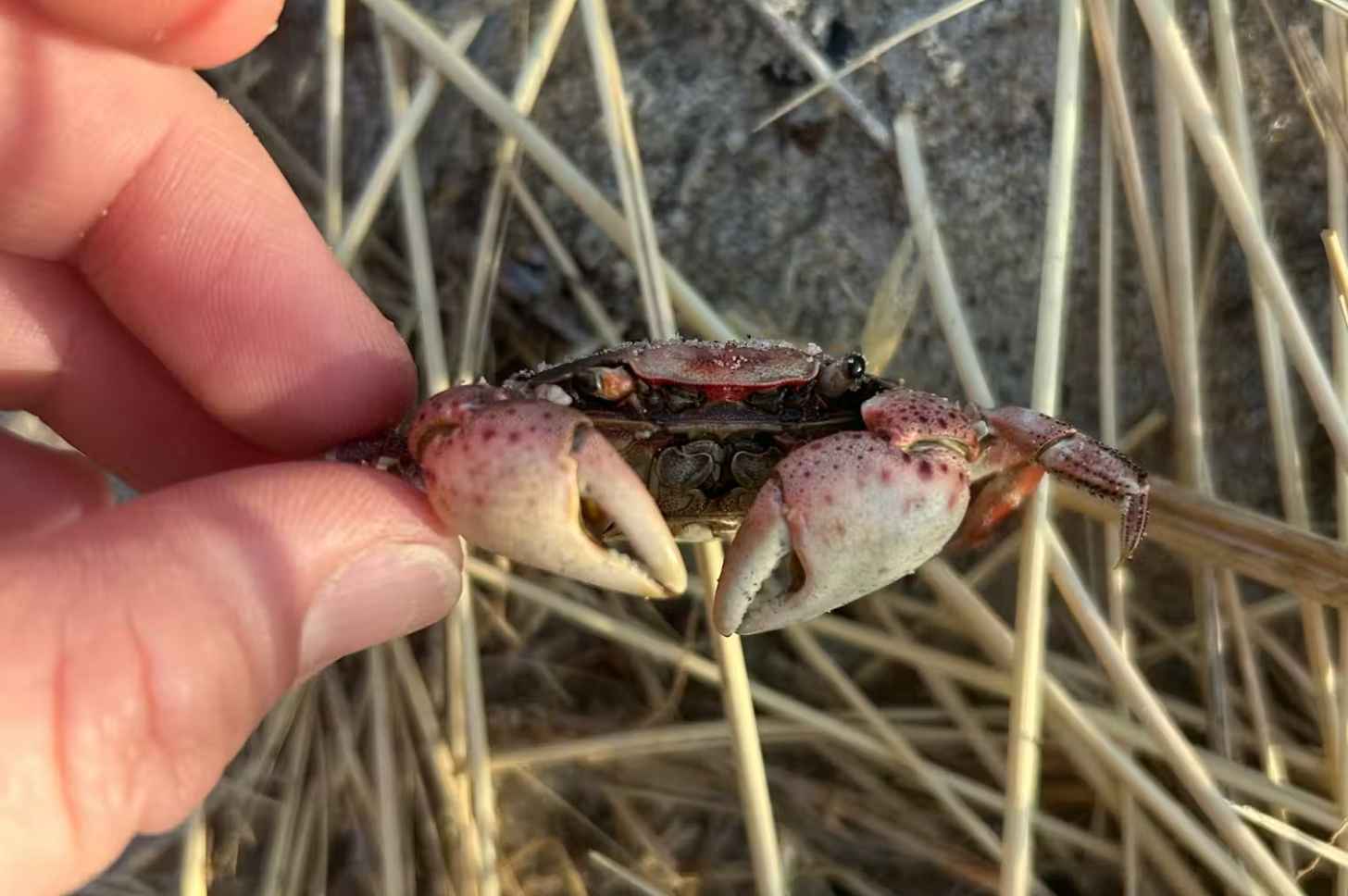
The service delivers weekly email notifications to biosecurity managers about new reports of introduced and invasive species of concern in their area. In 2020, this led to the first report of globally invasive Asian shore crab (Hemigrapsus sanguineus).
In 2024, an iNaturalist user recorded the first report of the invasive freshwater gold clam (Corbicula fluminea). Early detection allowed biosecurity managers to monitor and mitigate these species’ spread to other areas.
In 2025, an iNaturalist citizen scientist recorded Siam weed north of Brisbane. This record was more than 1,000 km from the nearest known infestation, near Townsville. The resulting alert allowed Biosecurity Queensland to eradicate the new infestation. Likewise, reports of the tree cholla cactus, red imported fire ants, honey fungus, and many other species have triggered local responses.
This work ultimately helps protect our environment and agricultural systems from the impacts of these introduced and invasive species.
The Biosecurity Alerts Service is ongoing, and every week we send alerts to biosecurity managers across the country. If you use one of the ALA-linked apps — such as iNaturalist, eBird, or FrogID, among many others — and choose to share your data publicly, the data you collect will be automatically checked as part of the service.
If you’re lucky, you may even be contacted by a biosecurity officer for more information or to collect a sample to help confirm the species. To get involved, just be curious, visit the outdoors with a biodiversity app, and make sure to record anything that looks odd or out of place.
Climate History Australia
Linden Ashcroft, Senior Lecturer, Climate Science and Science Communication, University of Melbourne
There are millions of valuable weather observations scattered across the world that only exist on paper. It would take thousands of lifetimes for scientists to transcribe these precious records on their own.
But with the help of citizen scientists, we’ve been able to rescue these vital observations from being lost to time. The data they provide have improved the coverage and accuracy of global data models used to understand how our climate is changing.
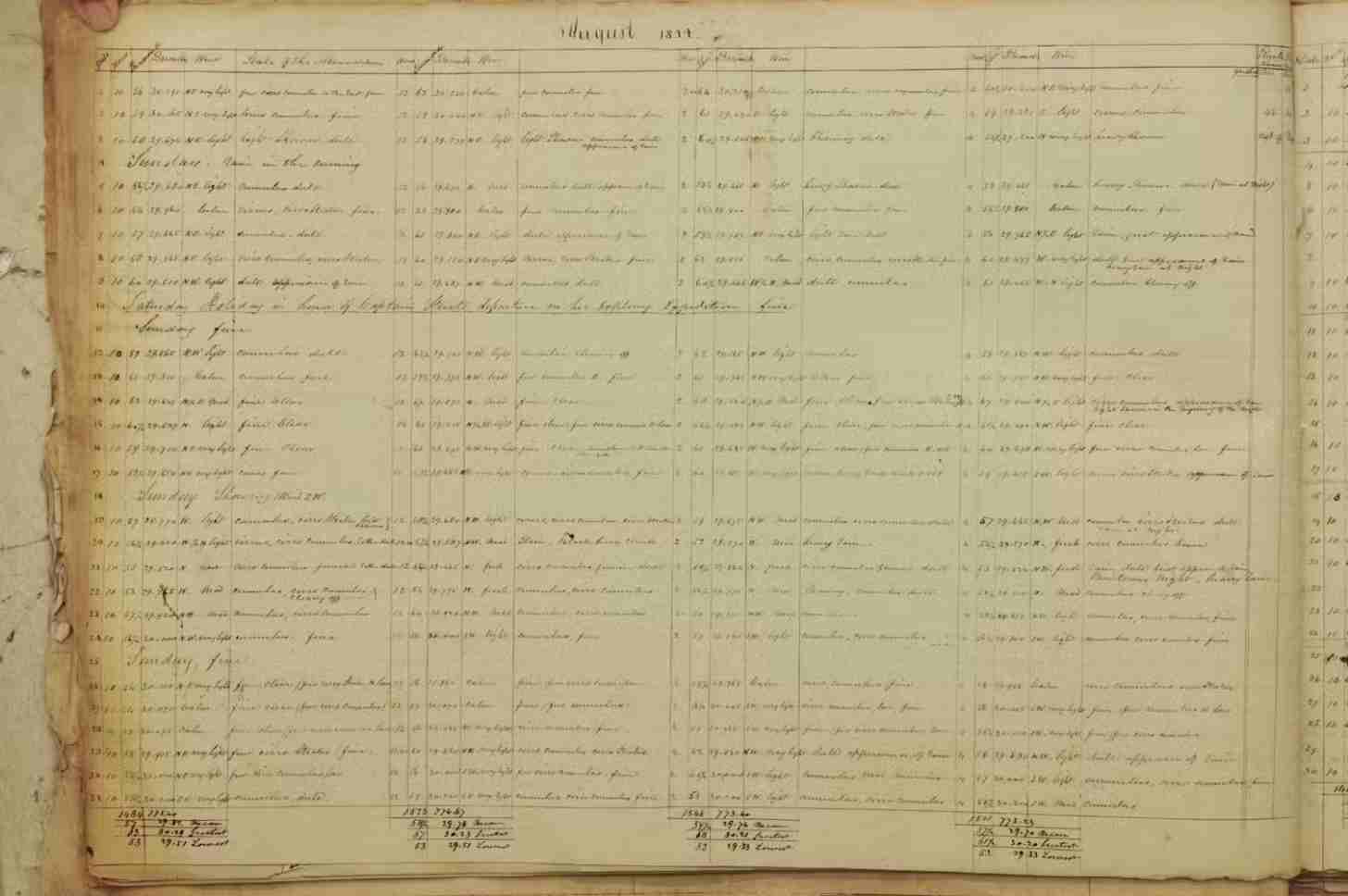
Climate History Australia was modeled on similar projects from the United Kingdom and New Zealand. Scanned images of historical weather data from the National Archives were split into chunks, allowing people to help us rescue these observations in a manageable way at home.
Across two projects in 2020 and 2021, more than 1,700 citizen scientists transcribed at least 67,400 weather observations recorded in the 19th century. The journals contained meticulous weather data, including descriptions of the clouds, type of rainfall, and other activities of the day. The project attracted amazing volunteers, including students, historians, and people who wanted to contribute to climate science.
Thanks to the recovered data, we have now filled gaps in weather observations in Adelaide and Perth, allowing us to build near-continuous records of the weather of these two cities back to 1830 and 1843, respectively.
We now know more about extreme weather events in Australia, which is so important because changes in the extremes are what will affect us the most as the world warms.
The rescued data have also fed into global weather and climate datasets, improving our understanding of weather and climate change in the entire Southern Hemisphere. While there are no active Climate History Australia data rescue projects, similar activities are happening in Ireland, Africa, and Italy.
Kilonova Seekers
Duncan Galloway, Associate Professor in Astrophysics, Monash University
Since 2023, the Kilonova Seekers citizen astronomy project has been sharing the excitement of transient astronomy, engaging citizen scientists in the discovery of some of the most exciting and energetic events in the universe.
Transient astronomy refers broadly to the study of cosmic objects that vary with time. Many types of normal stars, particularly those that have an orbiting companion, vary in brightness.
But of particular interest are short-lived explosive events that produce gamma-ray bursts, such as the supernova explosions of massive stars, or rare collisions between pairs of neutron stars.
Kilonova Seekers provides observations from the Gravitational-wave Optical Transient Observer (GOTO) telescope network to members of the public. GOTO collaboration members Lisa Kelsey from the University of Cambridge and Tom Killestein from the University of Warwick built an image comparison platform on the popular Zooniverse website.
To contribute, participants were invited to play “spot the difference” by comparing new images to old and looking for changes. This work helps astronomers to distinguish genuine new objects in the sky from imaging artifacts and other spurious signals.
The project has attracted thousands of volunteer observers and yielded more than 200 discoveries to date. A major discovery was published last year — an extremely bright star explosion, GOTO0650, captured as it took place. Once flagged, astronomers were able to look at it more closely with Earth-based and space observatories. The object was so bright, amateur astronomers could capture high-quality images, too.
Kilonova Seekers has just gone through a hardware and software upgrade and relaunched in February this year — so you too can have a hand in trying to discover new objects in space.
Mozzie Monitors
Craig Williams, Professor and Dean of Programs (STEM), Adelaide University
Mosquitoes are the world’s deadliest animal. It’s crucial for health departments and local governments to keep up mosquito surveillance to protect public health. But it takes a lot of resources to do so, leading to gaps in the system.
Launched by the University of South Australia in 2018, the Mozzie Monitors program comprised two main activities citizen scientists could help with.
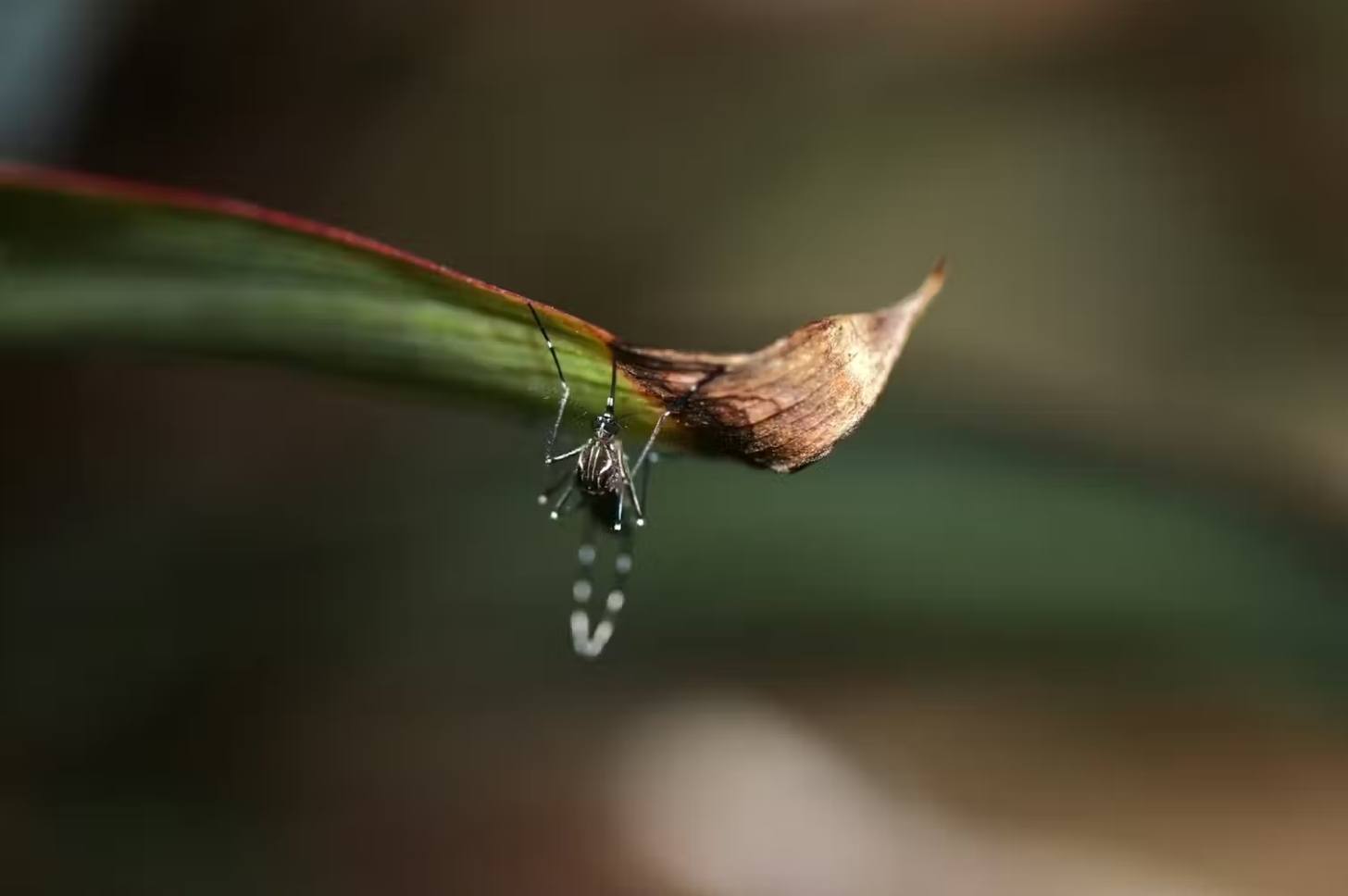
The first was setting low-tech mosquito traps at home and taking photos of the collections so experts could identify them remotely. The second was submitting mosquito images to the project page on the iNaturalist platform. It has been an amazing collaborative effort nationwide, with thousands of records submitted.
Originally, the program aimed to expand mosquito surveillance in Australia, detect exotic mosquitoes entering the country, and educate the public about mosquitoes and the diseases they carry.
It has since evolved to assisting remote communities in exotic mosquito surveillance, tracking mosquito-borne viruses, and running an education program in South Australian and Northern Territory schools. Hundreds of students aged 5–17 have participated in learning activities and even trapped some mosquitoes.
We designed and built Mozzie Monitors as we went along. It’s led to new mosquito trapping methods citizen scientists can use, has taught the participants a lot about mosquitoes, helped to establish a mosquito database with new species records, and even led to the discovery of mosquitoes not previously known to be in Australia.
The project continues to grow and evolve.
In the Northern Territory, the small town of Tennant Creek has experienced repeated invasions of exotic dengue mosquitoes. Currently, readers in the Northern Territory, anywhere between Katherine and Alice Springs, can become involved in Mozzie Monitors Tennant Creek. While Tennant Creek is the focus, we would dearly love to have participants across the region.
WomSAT: Wombat Survey and Analysis Tool
Julie Old, Associate Professor in Biology, Zoology and Animal Science, Western Sydney University
Hayley Stannard, Associate Professor in Animal Anatomy and Physiology, Charles Sturt University
Wombats are ecological engineers — they dig burrows to sleep in during the day and protect them from predators, but these burrows also provide shelter for other animals. Turning over the soil when they dig their burrows also helps plants grow, moving nutrients and water through the soil.
Due to their importance to ecosystems, there is a need to understand more about wombats and where they live, so that we can manage threats and aid their conservation. Sadly, wombats are at risk from several threats — these include collisions with vehicles, a devastating disease called sarcoptic mange, and habitat loss.
Started in 2015, WomSAT is a citizen science program that allows the public, researchers, and wildlife carers to record evidence of wombats across Australia. It collects real-time data on wombat sightings — dead or alive, the location of their burrows, and whether they appear to be affected by mange. Wildlife carers also use WomSAT to track the treatment of sarcoptic mange.
To date, the impacts have been significant: WomSAT has been pivotal to determining roadkill hotspots and tracking sarcoptic mange, and even the factors that affect mange occurrence. In collaboration with the Wombat Protection Society of Australia, the project also created online training courses for the public who have an interest in wombats and wish to learn more, and for wildlife carers on how to safely treat sarcoptic mange in the field.
WomSAT is an ongoing project. Anyone can become a “wombat warrior” by logging sightings of wombats on WomSAT to help identify roadkill hotspots and track the occurrence of sarcoptic mange. You can also follow #WombatWednesday on social media.
This article was written by Signe Dean and was originally published on The Conversation.
Header Image by Sara Cottle on Unsplash

In 2020, the International Union for Conservation of Nature declared North Atlantic right whales to be critically endangered, with increased mortality rates and below-average reproductive rates making it especially difficult for the species to restore its population.
According to IFAW, North Atlantic right whales were nearly hunted to extinction in the 1800s, and although these hunting practices were made illegal in 1935, they still have yet to bounce back, as climate change and vessel strikes continue to threaten their small population.
Right now, only about 380 North Atlantic right whales remain, with just about 70 reproductively active females tracked by scientists. In the 2025 season, only 11 North Atlantic right whale calves were born.
Their threat level has not been helped by the Trump administration, as the president recently made it clear that he is planning to make deep cuts to federal research spending in his 2027 budget request to Congress.
“For the second straight year, the White House is asking Congress to make deep cuts to federal research spending, including a 55% cut to the National Science Foundation, a 23% cut to NASA, a 15% cut to the Department of Energy’s Office of Science, and a 12% cut to the National Institutes of Health,” Science reported last week.
“The plan also calls for eliminating a host of programs that focus on climate change and the environment, and limiting agency spending on publishing scientific papers and subscribing to journals.”
Earlier this year, lawmakers rejected similarly steep cuts to science, but it’s unclear what may happen in the next fiscal year. Regardless, environmental researchers are still struggling to make ends meet as federal funding becomes increasingly precarious.

In fact, it led a team of marine biologists in Massachusetts to try something new: Start a GoFundMe to protect the North Atlantic right whale.
Zoe Rauscher, a volunteer and drone pilot for the Marineland Right Whale Project, launched the fundraiser last week to raise $15,000. As of the publication of this article, over $4,400 has been raised so far.
The Marineland Right Whale Project is part of the Associated Scientists at Woods Hole, which supports the Cape Cod area, alongside a dozen local institutions, laboratories, agencies, and businesses that engage in research, technology, and education in the marine sciences.
“Given that the MRWP is a program run by a non-profit organization, we depend entirely on research grants (becoming increasingly more difficult to obtain due to federal budget cuts for environmental areas of research) and charitable donations to operate,” Rauscher wrote on the GoFundMe.
“In order for the researchers from Associated Scientists at Woods Hole to continue their impactful conservation efforts for the 2027 season, we must raise enough donations for the organization to be able to operate.”
Already, the MRWP and the scientists at ASWH have made direct impacts on the conservation of the species. Since it is not possible to chip or digitally track these whales, a designated team of volunteers surveys the ocean daily to locate the whales, working to achieve accurate annual counts and observe their wellbeing and mating outcomes each season.
But they also protect the whales in real time.
“When a team sights a whale, they inform MRWP project leaders who, in turn, provide photographic evidence of the sighting to the Florida Fish and Wildlife Conservation Commission,” Rauscher explained.
“In response, the FWC notifies the Early Warning System, a communication system that sends alerts to both commercial and federal ships, mandating that the ships slow down and/or change course to move away from the whales.”

In doing this, the nonprofit helps protect vulnerable right whale mothers and calves during their annual migration, which increases their odds of survival, and in turn, grows the species population.
The MRWP began in 2001 and now includes over 250 volunteers. While many work in the Cape Cod area, their biggest location of focus is the coastal waters of northeastern Florida, where right whales migrate from December to March to give birth and nurse their calves before returning to New England and Canada.
“In northeast Florida, right whales often come in close to shore, sometimes within a quarter mile of the beach. Mothers can be seen with calves, and juvenile whales may be seen traveling or playing,” MRWP writes on its website.
“It is in these waters that a volunteer-based citizen network is growing and contributing to science, conservation, and stewardship of the species and its habitat.”
Those who want to donate to these efforts can do so via the group’s GoFundMe fundraiser.
But local citizen scientists can also help out. If anyone in the Cape Cod or migratory area actively spots a right whale, they can call the Right Whale Hotline at 1-888-97-WHALE, or 1-888-979-4253.
“Your donations support essential surveys, specialized equipment — such as remote-controlled drones, high-resolution cameras with telescopic lenses, and marine binoculars,” Rauscher concluded in the GoFundMe, “as well as research, reporting, and administrative costs.”
You may also like: A new website calculates how many marine animals are saved every time you pick up trash
Header image by IFAW © Nick Hawkins
While surveying the cloud forests of Peru, a group of herpetologists recently stumbled upon a new species of amphibian — a rare “marsupial” frog that carries its eggs in a pouch on its back.
In a study published in the New Zealand scientific journal Zootaxa, the researchers said the new frog — Gastrotheca mittaliiti — measured in at just 2.7 to 3.3 centimeters (1 to 1.3 inches) and was discovered in a mountainous Amazonas region bordering Ecuador.
“Our results highlight the Huancabamba region as the hotspot of Gastrotheca species richness,” the researchers said.
The new species was distinguishable from other frogs in its genus by several physical traits, such as its small size, rough and bumpy skin, raised ridges along its back, and “narrow discs on fingers and toes.”
Among over 7,700 known species of frogs, marsupial frogs are some of the most fascinating.
The females have a special pouch on their back — a rare trait among amphibians — and after the eggs are fertilized, the male helps place the eggs into this pouch using his toes.
The eggs then stay inside the pouch while they develop. Inside, they stay connected to the mother’s body, which gives them oxygen to help them grow.

In 2016, ecologists Robin W. Warne and Alessandro Catenazzi made a groundbreaking discovery while studying marsupial frogs.
By using a special method to track nutrients — like fats and proteins — from the mother to the embryos, they found that nutrients from the mother actually move into the developing babies.
Until then, it was thought that the frog pouches were built largely for protection.
However, Warne and Catenazzi proved that marsupial frog mothers don’t just carry their babies; they actually feed them nutrients while they grow inside the pouch, similar to how some mammals support their young.
“This finding revealed a suspected but untested trait in the evolution of parental care in marsupial frogs, in contrast to previous work on Gastrotheca species that release tadpoles, and suggests greater complexity in reproductive and provisioning modes than previously thought,” Catenazzi and Warne observed in their study, which was published in the scientific journal Biology Letters.
To date, scientists have found 74 frogs in the genus Gastrotheca.

This includes the Guenther's marsupial frog (Gastrotheca guentheri), which is the only known frog with true teeth in its lower jaw, and the horned marsupial frog (Gastrotheca cornuta), which makes a mating call that sounds like a champagne cork being popped.
Manuel Oliva, director of Toribio Rodriguez de Mendoza National University’s Ceja de Selva Research Institute for Sustainable Development, told AFP that with the discovery of the Gastrotheca mittaliiti, herpetologists have been able to paint a better picture of the frog genus — and how to protect them.
“This is further evidence of the enormous natural wealth we possess ... If we continue our research, there are many species still waiting to be discovered,” Oliva told AFP.
You may also like: Scientists discover three new species of toad that give birth to tiny 'toadlets,' skipping the tadpole phase altogether
Today, solar power is cheaper than nearly all new fossil fuel alternatives. And thanks to small solar devices that can be plugged into standard outlets, homeowners in Germany have been easily installing solar panels on their balconies and roofs in record numbers.
“Plug-in solar devices enable people to become part of the energy transition themselves, reduce their electricity costs and make themselves less dependent on energy price fluctuations,” Christoph Kost, an executive at the Fraunhofer Institute for Solar Energy Systems ISE, told Deutsche Welle.
The plug-in solar panels are part of Germany’s larger goal to become climate-neutral by 2045, and the innovation has inspired interest in Japan, Brazil, and the United States.
“Most plug-in solar devices are still sold in Germany, far ahead of the rest of the world,” said David Breuer, a managing director at Yuma, a German-based company selling plug-in solar devices.
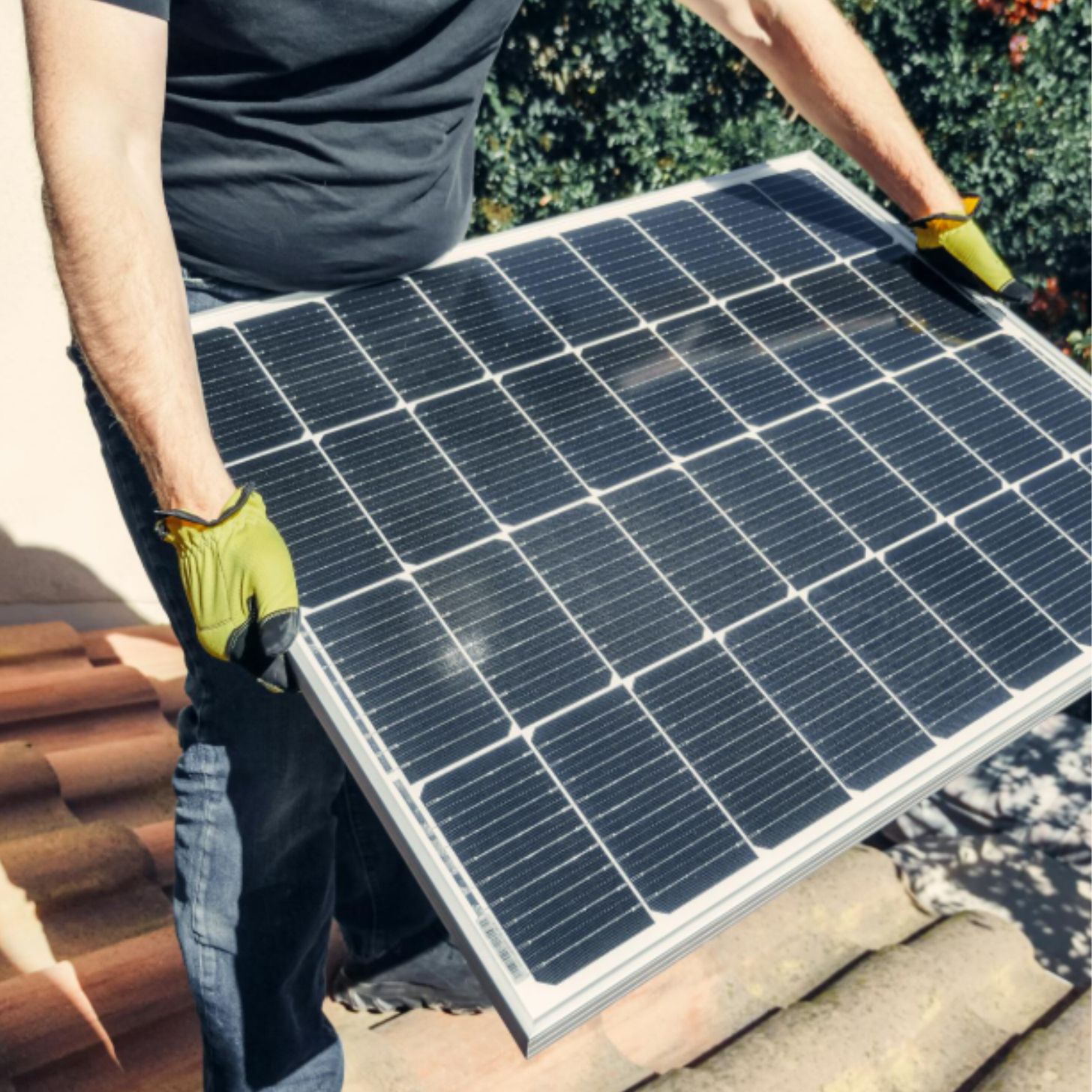
For years, the lack of safety standards and regulations for solar technology prevented the U.S. from adopting portable solar systems. However, in 2025, Utah became the first state in the U.S. to allow plug-in solar — prompting Vermont, Maryland, and New Hampshire to follow.
“When we do outreach in our town, we find that people are really eager to do something — to save energy, to save money, to cut emissions,” said Linda Gray, a member of Vermont’s Norwich Energy Committee. “Portable solar is another tool in the save-energy and clean-energy toolbox.”
A version of this article originally appeared in the 2026 Home Edition of the Goodnewspaper.
Header image via Kindel Media
In Glen Burnie, Maryland, Springer Blankenship spends most of his off days traipsing through overgrown lawns.
The Navy veteran volunteers with I Want To Mow Your Lawn, a nonprofit that provides free lawn care to people who can’t do it themselves.
“Every lawn that I've started with has definitely been overgrown or unkept or mismanaged,” Blankenship told WMAR 2 News Baltimore. “[One neighbor] had been reported to the county, and the county was gonna fine her and have somebody come out here and take care of this for her. She couldn't afford that, so she contacted us, and I came out here to knock this out.”
This past summer, Blankenship fielded more than 50 job requests at one time. That’s when two more volunteers, Kristen and Chris, stepped in to help.
“I love the opportunity to give back and really support people,” Kristen said. “I feel like that's what community is supposed to be.”
For Blankenship, it’s more than an act of service. It’s a chance to check in on those who need a little human connection.

“Sometimes it feels like some of these people just want somebody to talk to more than they want their lawn taken care of, and some of them will just sit there and talk to me forever,” he said.
“Mrs. Peggy, one of the people I do it for, she always brings me out snacks and water and stuff, and I swear I spend more time talking to her than I do mowing her lawn.”
A version of this article originally appeared in the 2026 Home Edition of the Goodnewspaper.
Header image via Magic K
Few things in this world could make people want to leave a tropical vacation early, and one of them is the unbearable pain of missing your dog at home.
For tourists visiting Hawaii, several animal shelters have opened up the option for volunteers to “borrow” an adoptable dog for a day to go on a field trip.
There are three programs — Field Trips for Shelter Dogs at Kauai’i Humane Society, Beach Buddies at Maui Humane Society, and ʻĪlio Explorers at Hawaiian Humane Society — for visitors to partake in.
All three options require visitors to book a spot ahead of time, and they all have varying fees.

Kauai’i Humane Society offers the opportunity for free to residents but costs visitors at least $75, with the option to donate more to support the shelter. At Maui Humane Society, participation fees are also $75 for visitors. And the ʻĪlio Explorers program requires a donation to the shelter, costing locals $50 and visitors $150.
For visitors who want to be thoughtful about tourism in Hawaii, this is one way to give back to local communities. The tourism board for the islands suggests that visitors practice ethical tourism by supporting local businesses, being respectful of Hawaiian culture, conserving the ocean and natural resources, and volunteering when possible.
“If you’re a visitor to the Islands, here’s a way for you to give back in a way that’s really meaningful, because it’s more than just a fun day out exploring dog-friendly locations, hiking trails and beaches,” Brandy Shimabukuro, manager of communications for the Hawaiian Humane Society, told SFGATE.
“It’s a way for you to get a dog that would otherwise be languishing in a kennel.”
Studies regarding dog behavior and health have shown that short term excursion programs are especially beneficial for dogs in a shelter setting, which helps to reduce stress and cortisol levels, according to Hawaiian Humane Society.
Plus, it helps dogs get adopted.

When visitors gather information about a dog’s behaviors and preferences during their time together, it makes it easier for the shelter to match potential adopters with dogs.
Julie Schultz-Wallace, a Colorado woman who visited Hawaii with her family recently, is a devout dog mom at home, with four huskies in her care. When she was in Maui, she and her mom spent a day with Buck, a young adult sighthound mix from the Maui Humane Society.
“They gave us everything we needed for an adventure with him in a backpack: treats, water, poop bags, toys, and a handy map that showed the places they both recommended visiting, and places that we should stay away from because they were not dog-friendly,” she told Good Good Good.
“We took Buck to the beach with us for a fun afternoon, and he was a delight! As someone obsessed with dog behavior and training, I was really taking in how he existed in the world and noting the things he reacted and responded to while we were out, so I could share that info with the shelter.”

Schultz-Wallace said Buck came wearing an “adopt me” collar and bandana, which made it easy to interact with strangers on the beach who might end up being his perfect match.
In some cases, dogs even go home with their temporary owners. And outside of these day excursions, the Maui Humane Society has a partnership with American Airlines to send volunteer passengers home with adoptable pups to get them in forever homes in other states.
“Dogs belong in homes, and so by going out and getting socialization, it just makes them happier, better-adjusted dogs while they’re here, and then they’re going to have a higher chance of being adopted,” Lisa Labrecque, CEO of the Maui Humane Society, told SFGATE.
“That is the biggest way that [the Beach Buddies program] impacts length of stay, is if they then get adopted,” Labrecque added. “We have visitors who take out a dog, and then they have such a good time, they ask for the same dog again, and then the next thing we know, they’ve decided they want to adopt the dog.”

Borrow-a-dog programs are growing in popularity across the country, with options for tourists visiting beautiful areas, and for locals to try “Dogs Day Out” options at their neighborhood shelters. It’s a great fit for those who want to try on dog ownership for a day, or can’t commit to fostering long-term.
And for Schultz-Wallace, dog lover above all, it was an excursion that made for an even better vacation.
“We did our visit with Buck towards the end of our trip, so I was really missing my dogs,” she said. “Dog people get it. There is no feeling like existing with a dog by your side, even when you’re on vacation in one of the most beautiful places in the world.”
You may also like: At this Alaska animal shelter, volunteers can borrow a dog to take on a hike. It's leading to more adoptions
Header images courtesy of Julie Schultz-Wallace
In Peru’s remote regions, Indigenous communities still experience energy poverty. About 30% of rural Amazonian neighborhoods do not have electricity, and in the Andes, access remains intermittent or completely inaccessible.
Not having electricity is an immense barrier to health services, education, food security, and basic connectivity, while also forcing people to rely on diesel generators and wood-burning stoves for costly, polluting, unsustainable power.
So, six students from the Federal University for Latin American Integration started Aylluq Q’anchaynin, which means “the energy of the community” in Quechua.
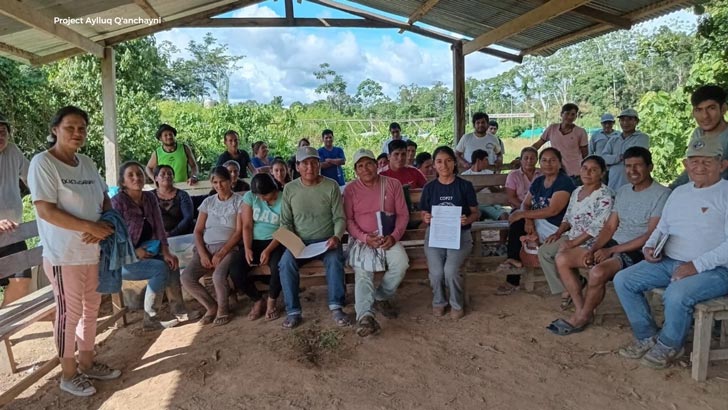
In 2020, while their studies were on hold amid the COVID-19 pandemic, they began their solar energy project, deploying photovoltaic power in the Alto Mishagua Rural Settlement, a remote and borderland area with no access to roads, healthcare, clean water, or electricity.
“Our idea was to be independent [and] promote the autonomy and self-management of the energy and communication systems,” Roxana Borda Mamani, the leader of Aylluq Q’anchaynin, told The Guardian.
Prior to Aylluq Q’anchaynin’s help, the community had to travel by boat to the nearest city with internet or electricity access, a round trip that takes five to eight hours and consumes up to 10 gallons of fuel.
First, they installed a satellite internet connection supported by a small solar-powered system where people could charge essential devices like phones and flashlights.
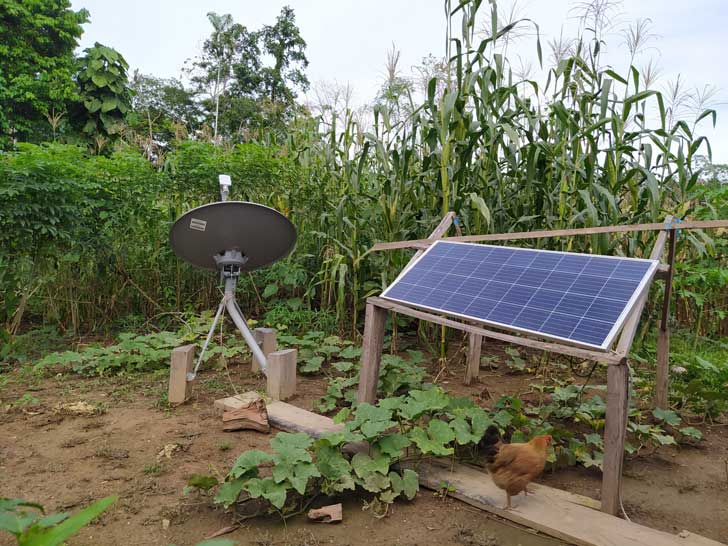
Then, the group installed a complete solar energy system for 40 households in the settlement, giving an entire community the ability to respond to emergencies, access public services, and improve their education and economy.
Their mission is to continue installing solar power in remote Indigenous communities that need it most.
“For us, fighting climate change means more than just resisting it — it means finding solutions, exploring alternatives, and transforming our way of life,” Borda wrote for the United Nations.
“It also means learning to adapt to increasingly frequent heatwaves, forest fires, and the growing scarcity of natural resources.”
You may also like: A viral video of adoptable dogs choosing their owners was debunked as AI. So this shelter made it a reality
A version of this article was originally published in The 2026 Environment Edition of the Goodnewspaper.
Header image courtesy of Roxana Borda Mamani
When Ofo Ezeugwu was a college student, he heard countless horror stories from students trying to find affordable apartments near campus.
So, he created WhoseYourLandlord, a platform where folks can submit landlord reviews. Users create a free account, leave a review on their current or past landlord, and share and read the perspectives of other community members.
“We use the possessive form of the word ‘who’ because we’re giving our community ownership of their living situations by putting housing in their hands,” the WYL website reads.
“We’re… bringing transparency, equity, and humanity to the everyday interactions between residents and home providers.”
According to the Pew Research Center, younger Americans (under age 35), as well as Black and Hispanic communities, are most likely to rent in the United States. The entire mission of WYL is to “learn before you lease,” putting the power back in the hands of vulnerable renters, who may otherwise be taken advantage of by corrupt housing companies.
Additionally, WYL works to close the feedback loop with WYL for Home Providers, giving landlords and property managers insights into the best possible living situation for residents, ultimately improving resident retention and keeping people in quality, safe homes.
Properties that are well managed can be listed as certified home providers, making them stand out to potential renters.
In fact, Ezeugwu has found that trust plays a big role in a healthy home environment, after surveying over 13,000 renters across 46 U.S. cities for most of 2024.
It inspired him to create the WYL Resident Trust Index, the first standardized metric to measure the trust and satisfaction residents have in their property management.
“The Resident Trust Index evaluates the critical factors shaping housing experiences and offers actionable insights for all stakeholders,” WYL’s website stated.

Resident feedback is anonymous and verified by a third party, property conditions are measured based on safety, cleanliness, and functionality, and management performance is assessed through responsiveness, communication, and maintenance.
“The result is a comprehensive score that empowers property managers to make data-driven improvements while building confidence and trust with residents,” WYL concluded.
And when people contribute to WYL, they not only provide feedback on their landlords, but they support others looking for housing.
“When a renter or student renter goes to provide their review, it’s not just comments and a star system,” Ezeugwu recently explained to CBS 8 News. “They’re actually filling out a shorthand survey that hits on those key markers within the resident experience, so that [they] can compute the score, that ‘Resident Trust Index.’”
The goal, overall, is to standardize the quality of renting across the country — and give often marginalized renters the information they need to thrive.
“Your home is supposed to be your safe haven — a place to laugh, cry, ponder, and to find reprieve,” the WYL website says. “WhoseYourLandlord is committed to leading a movement that centers humanity at the heart of housing, forever changing the relationship between residents and home providers.”
You may also like: Landlords are notorious for ripping off tenants. Renters are creating their own tech tools to fight back
A version of this article was originally published in The 2022 Home Edition of the Goodnewspaper.
Header image by SHVETS Production via Pexels
In 2025, the state of Idaho passed a law that banned Pride and other flags from government property. As a loophole, Boise City Council had made the Pride flag an official flag of the city.
But state lawmakers closed that workaround this past legislative session, when Republican State Rep. Ted Hill, brought two bills forward to punish cities that did not comply with the Pride flag ban.
One of his bills was signed into law by Gov. Brad Little at the end of March, which invokes a $2,000 fine per flag per day, and allows the attorney general to sue cities that do not comply.
Boise took their Pride flags down the day Little signed the new bill into law, but now, the city is resisting the measure in creative ways.
Over the past few days, new rainbow displays have begun popping up in front of and on city buildings.
The first loophole comes in the form of thick, rainbow stripes in the colors of the Progress Pride flag, wrapping around flagpoles. While not the same as flying the banner at the top of the pole, these designs still signal something to LGBTQ+ residents.
“The Pride flag is not a political statement. It is a symbol of heritage, welcome and safety,” Boise City Council President Meredith Stead said in a March 31 statement. “We are taking it down because the law forces us to, but our commitment to every person who has looked at that flag and felt seen does not waver for a single moment.”
In addition to the new flag pole accessories, large white signs emblazoned with the Progress Pride colors were displayed in City Hall windows earlier this week, with the phrase “creating a city for everyone” attached.

The city has also shown colorful lights on its official buildings in recent days, displaying blues, pinks, purples, and other rainbow hues to match the other new art displays.
Boise city spokesperson Maria Ortega confirmed to the Idaho Statesman that the city is responsible for rainbow lights on City Hall, the wrapped flagpoles, and the window display. Ortega was transparent about the cost, as well, adding that the window display and the flagpoles cost just under $6,000, and came from the city’s existing operating budget.
The lights did not cost additional money, she added.
“The city of Boise remains in compliance with the law and is not flying any city official Pride flags on our properties,” Ortega wrote in an email to FOX 26.
“The art additions to city hall demonstrate our unwavering commitment to the people that call Boise home and to the values that we uphold every day of being a safe and welcoming city for everyone,” Ortega concluded in a statement to the Statesman.
While State Rep. Hill seems dismayed by the changes (“She’s insulting everyone else,” Hill told the Statesman, referring to the Boise Mayor. “Is that City Hall or some activist Pride Hall?”), city officials seem to have no intention of backing down.
“The flag is not our only form of expression,” Boise council member and former state Rep. Colin Nash reportedly said to an audience on the day the flags were taken town.
“I’m excited for what both us and the community can come up with as other ways to identify our solidarity with each of you.”
For LGBTQ+ residents, like hairdresser Ryan James Lee-Goodman, these simple acts of defiance mean the world.
“You can order a flag down, but you cannot make people disappear. You can pass cowardly laws, but you cannot force dignity back into the closet. And you sure as hell cannot stop people from finding new ways to say: we are still here,” Lee-Goodman wrote on Threads.
“Boise understood the assignment.”
You may also like: DeSantis banned Pride crosswalks in Florida, so Miami Beach painted rainbows in a park instead
Header image courtesy of Ryan James Lee-Goodman/Threads
In August 2023, Florence Welch — the lead singer of Florence + The Machine — had a miscarriage.
Soon after, she realized that the pregnancy had been ectopic, a dangerous condition where the fertilised egg implants outside the uterus, commonly in the fallopian tube. Her fallopian tube ruptured, and a doctor informed her that she had “a Coke can’s worth of blood” in her abdomen.
“The closest I came to making life was the closest I came to death,” she told The Guardian in September 2025. “And I felt like I had stepped through this door, and it was just full of women, screaming.”
Her miscarriage, complications, and subsequent emergency surgery served as inspiration for her latest album, “Everybody Scream,” which was released on October 31, 2025.
“I’ve shared parts of my life with [fans] that I haven’t been able to say to my closest friends … But working again helped me,” she said. “It was like little lanterns in a fog. I could just pick my way through.”
There was also a lot of anger.
“There was a fury at how unsupported I felt by my industry, how clear it was that it wasn’t built for me.”

Welch’s experiences informed not only her album, but her current tour. On April 6, the musician announced that Planned Parenthood will have tables stationed at multiple stops on the next leg of her “Everybody Scream” tour.
“Planned Parenthood health centers are a lifeline for millions of people, and they are relentlessly attacked,” Welch said in a statement. “Having access to a trusted provider is essential and also the difference between life and death.”
Welch also referenced the Trump administration’s ongoing efforts to limit reproductive healthcare.
In 2025 alone, President Trump withdrew federal guidance that directed hospitals to perform life-saving abortions in emergency rooms, pardoned convicted anti-abortion protestors, and weakened data privacy rules protecting abortion patients.
“In this moment of uncertainty for our rights, I’m proud to support Planned Parenthood and create space on my tour for them to connect people with the care and information they need,” Welch said.
The Planned Parenthood partnership launched April 8, the same day that “Everybody Screams” returned from a month-long break, with representatives offering resources to concert fans at the Target Center in Minneapolis.
“Florence Welch has long used her platform to speak out for reproductive freedom and care, including bravely sharing her personal experience with pregnancy loss,” said Caren Spruch, national director of arts and entertainment for Planned Parenthood.
“Her new album, ‘Everybody Scream,’ is a powerful testament to the importance of ensuring everyone can make decisions about their own bodies.”
You may also like: Olivia Rodrigo launches reproductive rights initiative alongside Guts World Tour
Header image via Autumn de Wilde
Although dogs are not allowed at every national park, the National Park Service still believes in positive reinforcement.
At about 150 national park sites — of the 433 under the NPS umbrella — visitors who bring their dogs along can collect an official BARK Ranger badge, so long as owners and their canine companions vow to abide by a set of four rules:
- (B)ag and carry out your waste
- (A)lways wear a leash
- (R)espect wildlife
- (K)now where you can go
“The main purpose of the [BARK Ranger] program is to make contact with visitors and their pets to help everyone have an enjoyable visit,” the NPS explains. “The goal is to increase awareness of positive pet behaviors and reduce the number of non-compliant dog incidents.”
The badges make for a fun collectible, and meeting with the real park rangers is a playful photo op, but the program underscores the importance of safety and responsibility among visitors.
By teaching the basics of stewardship and respect for wildlife, the parks can be maintained and preserved by all who love them — four-legged or otherwise.

“As an owner, being a BARK Ranger means that you not only enjoy sharing adventures with your dog but also that you want to do it responsibly,” the NPS website states.
“Taking this adventure means you are setting an example for everyone with you, and everyone you meet on your walk.”
For anyone hoping to visit a national park with their pup, check out an interactive map, or keep scrolling for a full list of NPS and other national sites with BARK Ranger programs.
- Acadia National Park Hulls Cove Visitor Center
- Agate Fossil Beds National Monument
- Allegheny Portage Railroad National Historic Site
- Andersonville National Historic Site
- Apostle Islands National Lakeshore
- Appomattox Court House National Historical Park
- Arkansas Post National Memorial Visitor Center
- Assateague Islands National Seashore
- Big South Fork National River and Recreation Area
- Bandy Creek Visitor Center
- Big Thicket National Preserve
- Biscayne National Park
- Blackstone River Valley National Historical Park/ Old Slater Mill
- Blue Ridge National Parkway
- Booker T. Washington National Monument
- Boston National Historical Park
- Bryce Canyon National Park Visitor Center
- Buffalo National River
- Camp Nelson National Monument
- Cape Cod National Seashore Salt Pond Visitor Center
- Cape Hatteras National Seashore
- Cape Lookout National Seashore
- Capitol Reef National Park Visitor Center
- Carl Sandburg Home National Historic Site
- Cedar Breaks National Monument
- Chamizal National Memorial
- Charles Young Buffalo Soldiers National Monument
- Chattahoochee River National Recreation Area
- Chesapeake and Ohio Canal National Historical Park Williamsport
- Chiricahua National Monument
- City of Rocks National Reserve
- Congaree National Park
- Cowpens National Battlefield Visitor Center
- Crater Lake National Park
- Curecanti National Recreation Area
- Cuyahoga Valley National Park
- Death Valley National Park
- Delaware Lake US Army Corp of Engineers
- Delaware Water Gap National Recreation Area Park Headquarters
- Denali National Park and Preserve
- DeSoto National Memorial Visitor Center
- Devils Tower Visitor Center
- Ebey's Landing National Historical Reserve
- Effigy Mounds National Monument
- Eisenhower National Historic Site
- Eleanor Roosevelt National Historic Site
- Eugene O'Neill National Historic Site
- First Ladies National Historic Site
- First State National Historical Park
- Fort Donelson National Battlefield
- Fort Frederica National Monument
- Fort Laramie
- Fort Monroe Visitor & Education Center
- Fort Moultrie National Historical Site
- Fort Pickens Area of Gulf Island National Seashore
- Fort Pulaski National Monument
- Fort Raleigh National Historic Site Visitor Center
- Fort Scott National Historic Site
- Fort Smith National Historic Site
- Fort Stanwix National Monument
- Fort Union National Monument
- Fort Union Trading Post National Historic Site
- Fort Vancouver National Historic Site
- Fort Washington Park
- Fredericksburg and Spotsylvania National Military Park
- Friendship Hill National Historic Site
- Ft. Caroline/Timucuan Ecological and Historical Preserve
- Gateway Arch National Park Visitor Center
- Gateway National Recreation Area
- George Washington Birthplace National Monument
- George Washington Carver National Monument
- Gila Cliff Dwellings National Monument
- Grand Canyon National Park
- Great Falls Park
- Great Sand Dunes National Park and Preserve Visitor Center
- Great Smoky Mountains National Park
- Guilford Courthouse National Military Park Battlefield Visitors Center
- Gulf Islands National Seashore William Colmer Visitor Center/ Davis Bayou
- Hamilton Grange National Memorial
- Harpers Ferry National Historical Park
- Harriet Tubman Underground Railroad National Historical Park
- Hawai'i Volcanoes National Park Visitor Center
- Herbert Hoover National Historic Site
- Home of Franklin D Roosevelt National Historic Site
- Hopewell Culture National Historical Park Visitor Center
- Hopewell Furnace National Historic Site
- Hot Springs National Park Visitor Center
- Independence National Historic Site
- Indiana Dunes National Park Visitor Center
- James A. Garfield National Historic Site
- Jean Lafitte National Historic Site and Preserve Acadian Cultural Center
- Jean Lafitte National Historic Site and Preserve Chalmette National Battlefield
- Jean Lafitte National Historic Site and Preserve Prairie Acadian Cultural Center
- Jean Lafitte National Historic Site and Preserve Wetlands Acadian Cultural Center
- Jimmy Carter National Historical Park
- John Day Fossil Beds National Monument
- John Muir National Historic Site
- Johnstown Flood National Memorial
- Kaloko-Honokohau National Historical Park
- Kenilworth Park and Aquatic Gardens
- Kings Mountain National Military Park
- Knife River Indian Villages National Historic Site
- Lake Mead National Recreation Area Visitor Center
- Lassen Volcanic National Park
- Lewis and Clark National Historic Trail Headquarters and Visitor Center
- Lincoln Boyhood National Memorial
- Little River Canyon National Preserve Center
- Longfellow House Washington's Headquarters National Historic Site
- Lowell National Historical Park Visitor Center
- Lyndon B. Johnson National Historical Park
- Mammoth Cave National Park
- Marsh-Billings-Rockefeller National Historical Park
- Martin Van Buren National Historic Site
- Mill Springs Battlefield National Monument
- Minute Man National Historical Park Visitor Center
- Mississippi National River Coldwater Spring
- Monocacy National Battlefield
- Moores Creek National Battlefield
- Mount Rushmore National Memorial
- Mt. Vernon Trail George Washington Memorial Parkway
- Muskingum Area, US Army Corp of Engineers
- Natchez Trace Parkway Visitor Center
- New River Gorge National Park and Preserve
- Ninety Six National Historic Site
- North Cascades National Park
- Obed National Wild & Scenic River Visitor Center
- Ocmulgee Mounds National Historical Park Visitor Center
- Olympic National Park Kalaloch Ranger Station
- Ozark National Scenic Riverways
- Padre Island National Seashore
- Palo Alto Battlefield National Historical Park
- Paterson Great Falls National Historic Site
- Petersburg National Battlefield Eastern Front Unit Visitor Center
- Petrified Forest National Park Painted Desert Visitor Center
- Petroglyph National Monument
- Pictured Rocks National Lakeshore
- Pipe Spring National Monument Visitors Center
- Pipestone National Monument Visitor Center
- Point Reyes National Seashore
- President WIlliam Jefferson Clinton Birthplace Home National Historic Site
- Prince William Forest Park Visitor Center
- Pu'ukohola Heiau National Historic Site
- Reconstruction Era National Historical Park
- Redwood National and State Parks Thomas H. Kuchel Visitor Center
- Rock Creek Park
- Roger Williams National Memorial
- Russell Cave National Monument Visitor Center
- Saguaro National Park Rincon Visitor Center
- Saint Croix Island International Historic Site
- Saint-Gaudens National Historical Park
- Salem Maritime National Historic Site
- Salinas Pueblo Missions National Monument
- San Antonio Missions National Historical Park
- San Juan Island National Historical Park, American Camp Visitor Center or English Camp Visitor Center
- Sand Creek Massacre National Historic Site
- Santa Monica Mountains NRA
- Saratoga National Historical Park
- Saugus Iron Works National Historic Site
- Scotts Bluff National Monument
- Seneca Rocks Discovery Center
- Shenandoah National Park
- Shiloh National Military Park Visitor Center
- Sitka National Historical Park
- Springfield Armory National Historic Site
- Stones River National Battlefield Visitor Center
- Theodore Roosevelt National Park
- Timucuan Ecological and Historical Preserve Kingsley Plantation
- Tonto National Monument Visitor Center
- Tule Springs Fossil Beds National Monument
- Tuzigoot And Montezuma Castle National Monument
- Ulysses S. Grant National Historic Site
- Valley Forge National Historical Park
- Vanderbilt Mansion National Historic Site
- Vicksburg National Military Park Visitor Center
- Waco Mammoth National Monument
- War in the Pacific National Historical Park
- Washington-Rochambeau Revolutionary National Historic Trail Newport Historical Society
- Washita Battlefield National Historic Site
- Weir Farm National Historical Park
- Whiskeytown Visitor Center
- White Sands National Park
- William Howard Taft National Historic Site
- Wilson's Creek National Battlefield
- Wolf Trap National Park for the Performing Arts
- Wright Brothers National Memorial Visitor Center
- Yellowstone National Park
- Yosemite Valley Visitor Center
- Zion National Park
You may also like: Tourists in Hawaii encouraged to borrow shelter dogs to take on 'field trips' during vacation
A version of this article was originally published in The 2025 National Parks Edition of the Goodnewspaper.
Header image: NPS Photo/S. Muldoon
December may have ushered in wintry weather to the United States, but over in New South Wales, Australia, the weather was heating up for summer. And as the temperatures climbed, more and more sea turtles were washing ashore, dehydrated and stranded.
“As the weather warms and ocean conditions shift, we’re entering the time of year when distressed sea turtles are more frequently washed ashore,” Conservation of Australian Seabirds and Turtles Incorporated wrote on Facebook. “These turtles may be exhausted, injured, sick, entangled, or suffering from buoyancy issues — and they urgently need help.”
The marine biologists at Mudgeroo Wombat & Wildlife Refuge heeded the call, with three sea turtle recovery missions in just three days.
“[A] sea turtle found stranded is most likely critically unwell and needs experienced care and veterinary assessment as soon as possible,” the refuge posted on Facebook on December 2, alongside pictures of the turtles.
“Unfortunately, two of the turtles were critically unwell and did not survive. We still have one, ‘Bear’ the Hawksbill under veterinary care, as he is gravely unwell, too.”
That was the start of a 90-plus-day healing journey for Bear — who was soon correctly identified as a female sea turtle. The most critical part of her recovery was the first couple of weeks, when she was still in the danger zone.
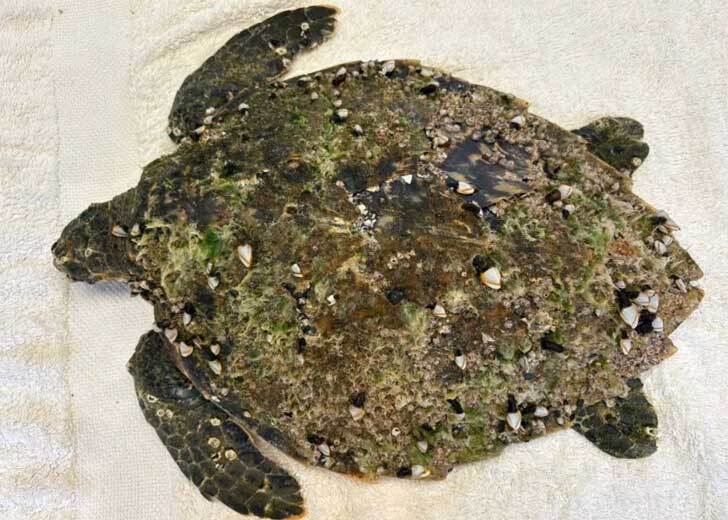
“The initial stabilization phase requires several weeks, after which gradual changes help us monitor the pattern of physical recovery,” the refuge wrote in a Facebook update. “Thanks to the dedicated care from our team, Bear is now on a clear path towards recovery.”
By March, when she was healthier and free from barnacles, Bear almost looked like a completely different turtle.
“The increase in body weight is particularly encouraging, indicating improved overall health,” the refuge said. “A veterinary assessment and blood analysis are forthcoming to evaluate Bear's status. Bear's prospects for release are looking increasingly promising.”
By March 21, Bear was well enough to be re-released to the ocean.
“The hawksbill sea turtle is a critically endangered species, so her journey back to begin her reproductive life is so exciting and important to their species,” the wildlife refuge wrote. “For this reason, it was [such a] special feeling when she started improving, and further to see her so fit and ready to go.”
Hawksbill sea turtles became critically endangered after a swift three-generation decline that caused their population to shrink by 80%.
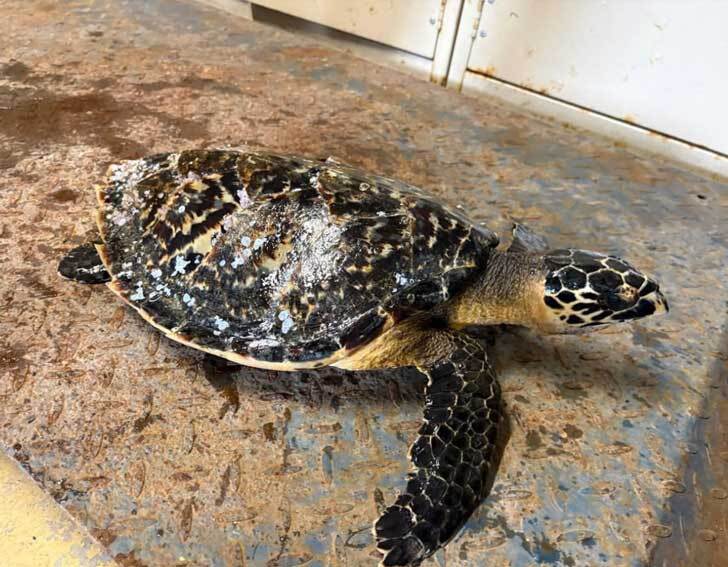
Although they can be found around the world in the subtropical waters in the Atlantic, Pacific, and Indian Oceans, only 8,000 nesting females are left in the wild.
In her farewell post, the marine biologists and volunteers at Mudgeroo thanked everyone who had been involved in her rescue from start to finish.
“There is no I in team, and dozens of people helped this happen,” an employee at the refuge stated. “We all need to know we do this all, for the conservation of the species, and should pat yourselves on the back. She is home.”
You may also like: Woman spends 92 days saving sea turtle covered in hundreds of barnacles: 'She doesn't even look like the same turtle'
Header image via Belinda / Mudgeroo Wombat & Wildlife Refuge