
We already know there’s an app for everything: A portal to message your doctor, a Bluetooth app to issue touchless payments to the washing machine at your laundromat, and yes, even a dashboard to pay your monthly rent.
While landlords can issue bills at the click of a button — and, up until a recent lawsuit ruled otherwise, use algorithms to jack up prices — technology designed for tenants lags.
But things are changing.
In New York City, two teen boys realized the country’s largest city didn’t have an easy-to-use portal for prospective tenants to find affordable housing.
So, they launched Realer Estate, a website that combines public data and real estate listings so users can search for below-market or rent-stabilized apartments.
Beckett Zahedi’s algorithm scans and cross-references information online to calculate affordability, factoring in preferences like amenities, price per square foot, and more.
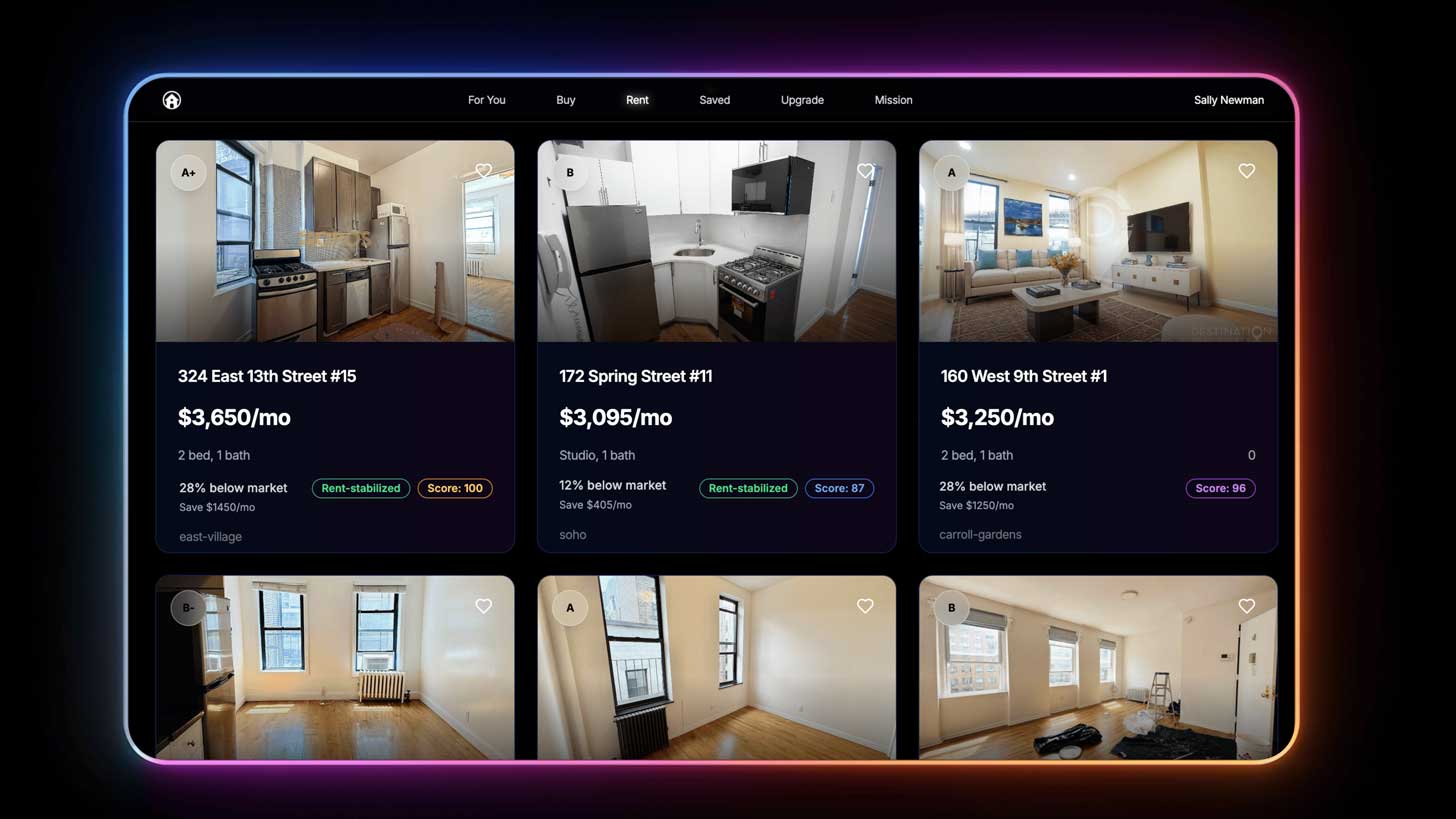
His co-founder, Derrick Webster Jr., codes email alerts for users to know when the algorithm finds them a good fit.
“This is basically the tool that my family needed,” 17-year-old Beckett told The New York Times. “We’d just see, like, one good apartment a month that we can afford. I thought it might be faster, instead of wasting more years, to just create an algorithm that would do that for me.”
Even places where rent is regulated still help.
My Old Apartment is a tenants-helping-tenants initiative on Canada’s Prince Edward Island, where landlords are subject to regulated rent increases. This means that charging above a certain rate is illegal and must be refunded to tenants.
But for people moving into new apartments, there was no way to find out what the previous tenant was paying, and therefore, no way for new residents to know if they were being duped.
So, My Old Apartment created a rental registry.

People fill out an online form about any old property they used to live in, sharing what their rent was during a specific time. Once they contribute to the registry, they fill out a card and mail it to their previous apartment’s address.
“Welcome to my old apartment,” the cards say. “Are you paying too much rent?”
From there, those new residents are given clear instructions on how to file an appeal and get refunded if they have been paying too much.
“[We] have created our own rental registry, and 10% of all properties on the Island now have a listing,” the project’s founder, Darcie Lanthier, wrote.
“Numerous hearings have been held thanks to the cards, and in every instance thus far, the tenants have won. More than $100,000 in repayments have already been made to tenants.”
You may also like: New Mexico pays landlords to refurbish abandoned homes and rent to people experiencing homelessness
A version of this article was originally published in The 2026 Home Edition of the Goodnewspaper.
Header image by Jakub Żerdzicki on Unsplash