Wildlife veterinarian Nielsen Donato is no stranger to sharing recovery stories with his Instagram audience of over 20,000 followers, but one recent case has reminded viewers of the doctor’s brilliance.
In late April, Donato had a new client referred to him: A 4-year-old Aldabra giant tortoise who was accidentally run over by a vehicle while grazing in a grassy field.

Donato and his team at Vets in Practice in the Philippines did a full exam and discovered that the right side of the tortoise’s carapace — its shell — was shattered and collapsed. X-rays revealed fractures of the shell but no limb fractures, so the experts helped get the patient stabilized and managed their pain and soft tissue damage.
But the reptile was still struggling to move in its first week of hospitalization.
Donato had to get creative — and not for the first time. Last month, he helped another Aldabra tortoise with hind leg injuries by affixing wheels to his bottom carriage.
But this case was different.
Donato’s team got to work developing a customized, temporary brace that would help bring the fragments of the carapace closer together as they healed.

They placed temporary hooks and bands to the tortoise’s back, irrigating the damaged part twice a day with saline to help exposed soft tissue heal.
“At this point, our main concern is to stabilize the condition of the turtle from shock, from the injury,” Donato told Popular Science.
“So for the first three weeks, we made sure that there were no flies that laid eggs and turned into maggots.”

After three weeks, the team then designed a sturdier framework to hold the shattered carapace in position, a set of wires that held the shell together as inverted screws placed with epoxy putty kept it stabilized.
“When we were twisting the wire, we noticed that we were starting to align the shell and the cracks were becoming more opposed to each other,” he told Popular Science.
The tortoise’s care team sealed the cracks with dental acrylic once they were confident in their contraption. From there, the animal was free to go home with its owner, wearing the brace as it moved around.
After three weeks, it was brought back, and the team was able to remove the brace, wires, screws, and putty.
“The steel framework was removed and she was sent home to recover further,” Donato wrote on Instagram.
“When it visited us lately, it started moving around more actively,” he added to Popular Science, “and the owners were not worried about its appetite because it was eating again.”

Donato clarified in the comment section of a recent Instagram post that the tortoise’s carapace will calcify and heal, giving the tortoise a full life, which could be up to 150 years for the species.
“This poor baby,” one person commented. “The makeshift cast is amazing.”
“Sometimes you just have to love humans,” another wrote. “Just when you think there’s nothing nice going on, people go out of their way to save and help what most people would just call a stupid turtle.”
You may also like: Beachgoer finds sea turtle stranded, so covered in barnacles she couldn't move. See her amazing 9-month recovery
Header image courtesy of Nielsen Donato/Instagram
Leopards need our help. While they’re not considered “endangered” on a global scale, several species (Amur, Arabian, and West African leopards) are critically endangered. And across South Asia, leopards at large have grown increasingly vulnerable.
“Leopards are found throughout India. India is the most populated country in the world, so their natural habitat is shrinking,” Nikki Sharp, the executive director of Wildlife SOS-USA, told Good Good Good.
Sharp explained that habitat degradation has forced leopards to adapt to the changing landscape, “where there are people and farmland.”
“When they live in these environments, their normal prey base is not usually available,” she said. “This leads them to find other food sources that include domestic livestock like goats, which then leads to conflicts with people.”
Those conflicts, in turn, threaten local leopard populations.
“Leopard populations in India have been declining in recent years,” Sharp said. “This contrasts with tigers that have actually been increasing.”
To limit human-leopard conflict, Wildlife SOS has been running conservation campaigns throughout India for over a decade, which highlight the benefits that leopards have on the environment.
As top predators, leopards regulate the prey populations of smaller herbivores and rodents, in turn preventing overgrazing and protecting local landscapes.
“Leopards are one of several large wild cat species found in India that play a critical role in a healthy ecosystem,” Sharp emphasized.
In addition to raising awareness for the species, Wildlife SOS has played a direct role in aiding leopards and their cubs.
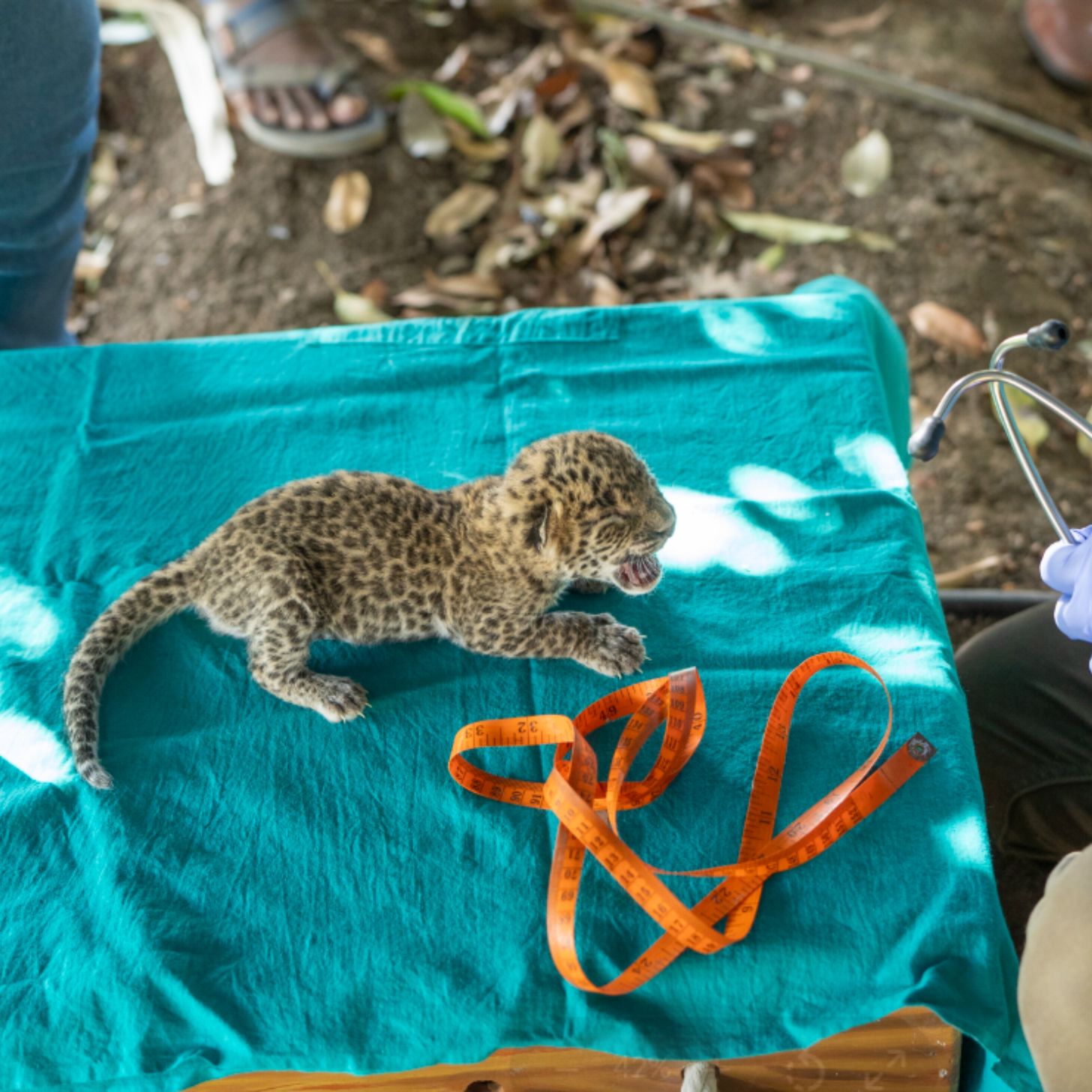
Shrinking habitats force leopardesses to roam widely when they hunt, increasing the time between their separation. Additionally, as habitat loss pushes wildlife closer to people, leopard cubs are increasingly being found in sugarcane and cornfields, which leopards use for cover and shelter.
During harvest, well-meaning farmers may move the cubs beyond the fields, unintentionally separating them from their mothers.
“Wildlife SOS works to reunite them by carefully placing the cubs back where they were found and monitoring [them] from a distance, so the mother can locate them by their cries,” Wildlife SOS said in a statement. “In most cases, she returns within just a few nights.”
When abandoned cubs are found, experts examine the young for health issues. Then they place the cubs in a “safe box” and monitor them from afar until the mother can return.
“We have been doing these cub reunifications successfully for over 15 years,” Sharp said. “Cubs learn from their mother for up to two years, and without this education, they won't survive on their own.”
“Wildlife SOS operates a rescue center for leopards, so if the mothers do not return for their young, the cubs are brought there to receive lifelong care,” she continued.
At the moment, Sharp said they have “a few” cubs under their care.
“However, over 95% of the attempts have been successful,” she stressed. “That is over 100 cubs who remain in the wild.”
In addition to protecting leopards and their cubs, Wildlife SOS has several animal campaigns in action.
“Currently, we have a big focus on saving India’s elephants. That includes efforts to protect elephants in the wild and to rescue all of India’s captive begging elephants,” Sharp said, alluding to the illegal practice of forcing elephants to perform tricks and solicit money in the streets.
“We also have several campaigns to protect and conserve bears,” she said. “Many people don’t know that there are four species of bears in India, and we are working with all four of them.”
For people looking to support Wildlife SOS’s conservation efforts, Sharp said it all starts with education.
“People can help by taking the first step to be informed about the challenges facing India's wildlife,” she said, adding that readers can learn more on their official website.
You may also like: Scientists use 'house cat' behavior to help jaguars
Header image via Wildlife SOS
On August 22, 2025, two loggerhead sea turtles were brought into Florida’s Loggerhead Marinelife Center in critical condition.
“Meet our new patients, Paddles and Swim Shady!” the rescue and rehabilitation clinic shared on social media.
“These two female loggerheads came in after suffering from boat strike-related injuries,” the post continued. “We need help from local boaters to ‘go slow for those below’ in the voluntary Sea Turtle Protection Zone — up to 1 mile offshore — to prevent these types of injuries.”
According to Loggerhead Marinelife Center, the “Eminem-inspired name” was chosen in a contest held by Pacsafe, a travel brand that sponsored Swim Shady and Paddles’ care.
Early on, it was clear that Swim Shady needed surgery to remove the loose piece of carapace on her shell. But first, she had to recover from anemia and build up her strength.
After she had the shell surgery, she continued healing through antibiotics and supportive care.
On October 22 last year, the Loggerhead Marinelife Center team noticed that one of her eyes “had an almost opaque discoloration.”
“[It] could mean possible scarring or damage to the eye that may be impairing her vision,” the center explained in a Facebook post. “During her exam, we applied a fluorescent dye, Fluorescein, to help us determine if she had corneal ulcers … Just a little optical flow for the real Swim Shady.”
Luckily, she passed the exam with flying colors. And 73 days after she arrived in critical condition, Swim Shady was finally cleared for release.
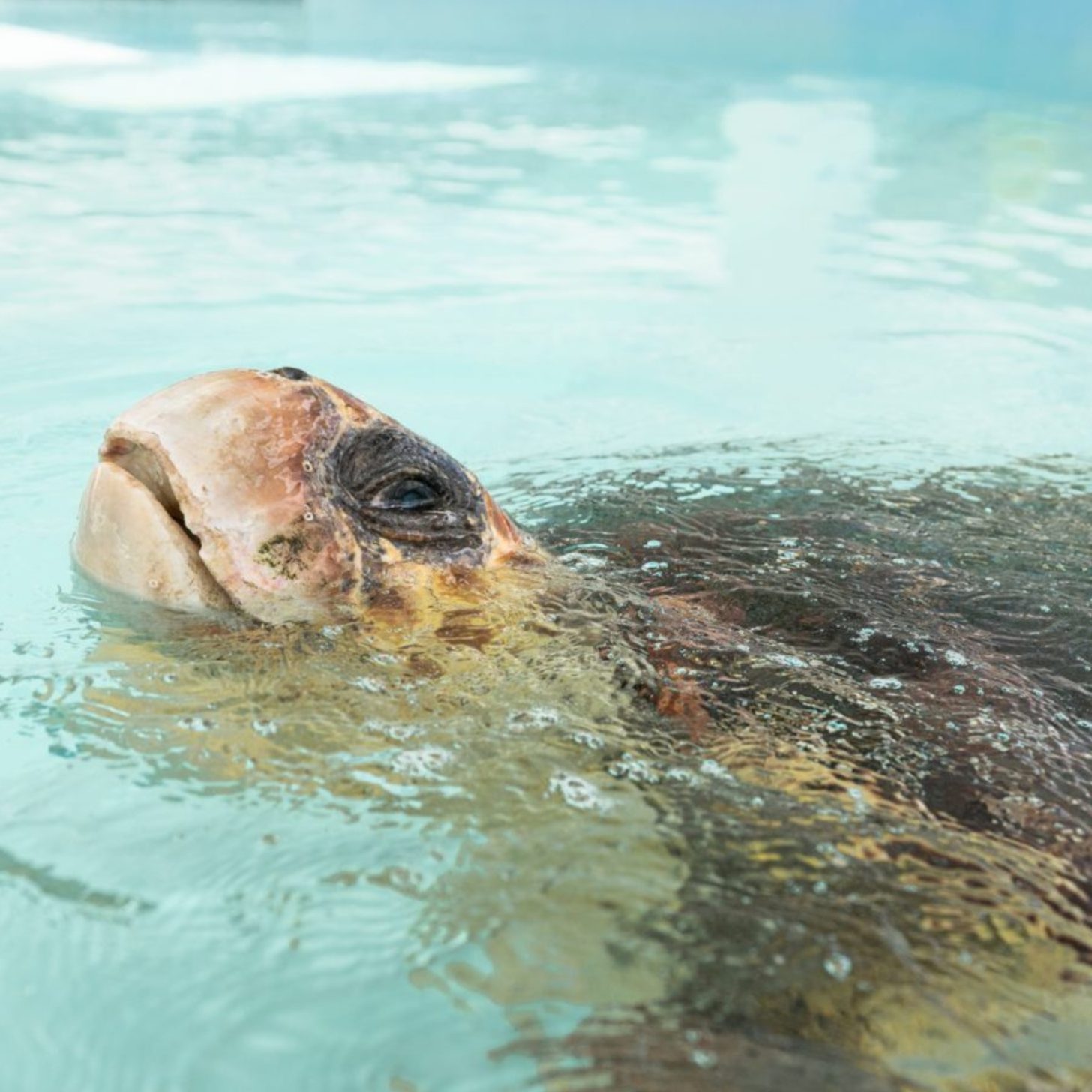
On November 3, Loggerhead Marinelife Center celebrated Swim Shady’s ocean release in a post that cheekily referenced the 2002 Eminem hit, “Without Me.”
“Guess who's back? Back again,” they wrote in the caption for her release video. “Swim Shady's back in the ocean after three months at our Center recovering from a boat strike! Thank you, Pacsafe, for helping Swim Shady return to her ocean home!”
Although Paddles required slightly more intensive care, the second rescued sea turtle was soon able to join Swim Shady in the Atlantic Ocean when she was released 10 days later on November 13.
“Her care required surgical bone plates, including a deep debridement, to stabilize and get it back into place while it healed,” a Loggerhead Marinelife Center team member shared on Facebook. “So today, after two months of rehab, we are excited to release Paddles!”
Many people commented with their well-wishes.
“Have a good life, Paddles!” one person wrote.
“Safe ‘paddling,’ gorgeous,” said another.
“Thank goodness for super kindness from humans who care and give of themselves,” one comment praised. “Bravo!
Header image via Loggerhead Marinelife Center
What if you could ride a boat, completely powered by the sun, that also purified the water you floated upon?
In South Korea, startup Ecopeace is at the forefront of technology that does just that.
It starts with Ecopeace’s Eco-Bot, an autonomous solar-powered boat that uses artificial intelligence to clean floating pollutants and oil spills in real time. It also cleans up excesses of green algae, which can be responsible for the mass deaths of fish and animals and pose health risks to humans.
In addition to this purification technology, the device is also used to collect field data about water quality conditions, which helps operators better understand and manage waterways across lakes, rivers, and reservoirs.
The company has also developed what they call the Eco-Station, which is a fixed water management system — also solar-powered — that gets installed for large-area water purification projects.

But perhaps its most exciting development is the Healing Boat, an autonomous ferry that can transport people across water, while purifying that water in the process.
The Healing Boat can purify up to 100 tons of water per day, according to Ecopeace, and can accommodate up to eight passengers per ride.
Ecopeace describes it as “a model that combines water quality improvement and waterfront use within a single public infrastructure concept.”
“Purification systems and treatment equipment typically belong to back-end operations,” the company continued in a statement.
“Public use areas — such as park lakes, recreational waterfronts, and tourism-oriented water spaces — are managed separately. As a result, even when water quality management is essential, it can still appear to citizens as a cost-heavy maintenance function rather than something that directly improves public service.”

By day, the Healing Boat operates as a guided tour boat and gives visitors a 30-minute tour of local freshwater facilities, sharing information about water systems and tourism resources. At night, visitors can board the boat for food truck tours and water fireworks displays.
The idea is to turn these water purification systems into an enjoyable experience for members of the public, giving them a stake in the sustainability of their community.
By integrating 3D digital video content, guests can also explore underwater ecosystems and contribute to conservation and sustainability efforts, simply by boarding a boat.
“Because purification happens in a visible, citizen-facing way, it becomes easier for agencies to explain why environmental investment matters and what practical benefits it creates,” the statement from Ecopeace said.
“Instead of remaining an invisible back-end function, water quality management becomes something people can directly see, understand, and in some cases even participate in. This makes the Healing Boat especially relevant in places where water quality, public use, and city image work together.”
@goinggreenmedia CLEANING RIVERS WITH SOLAR ENERGY💧🌞 Follow us for more projects like this! We recently visited this project on our trip to South Korea and were blown away by just how much waste they can collect. We were also pleased to find out they are animal friendly, as they are very slow moving and have guards to protect ducks and birds 🦆 Using solar power, the ECOBOT made by Ecopeace can clean all day, and can target the most polluted, hard to reach areas by following a route set by water management operators. It removes surface waste, and helps with algae blooms, and it can even clean up oil spills using microfilters and electrochemical treatment. It also has the potential to transport people autonomously, while simultaneously acting as a waste and climate mitigation device. By collecting data in real-world conditions and environments, they can help operators create a better understanding of even remote bodies of water. It’s a great preventive tool to help cities understand their water pollution before things get worse. They now operate across South Korea, and southeast Asia–but they need more exposure to go worldwide.
♬ Walking Around - Instrumental Version - Eldar Kedem
A TikTok video by Going Green Media about Ecopeace stated that the company works across South Korea and Southeast Asia, though the company suggests the Healing Boat could be utilized in any cities with large waterfront spaces.
And others seem to agree.
The Healing Boat received a 2025 CES Innovation Award in the Smart City category last year, gaining international acclaim for the design.
“Public freshwater management is no longer only about water quality. It increasingly sits at the intersection of citizen experience, urban identity, environmental policy, and spatial value,” Ecopeace’s statement concluded.
“That is why future waterfront management may require more than adding treatment equipment alone. In some places, it may become increasingly important to consider approaches that can both improve water quality and create visible public value.”
You may also like: Cities across Europe install 'moss banks' to reduce pollution from busy roadways
Header image courtesy of Ecopeace
On February 2, a sea turtle was found stranded off Port St. Lucie, Florida, with severe wounds.
It was a Kemp’s ridley, one of the world’s smallest — and most endangered — sea turtles.
She was discovered by a local nonprofit, Inwater Research Group, and rushed over to the Loggerhead Marinelife Center for medical care and rehabilitation. For the first few weeks after her rescue, she remained in critical condition.
“The right front flipper has been surgically debrided and is healing,” the care team logged on February 13. “They are not currently eating, so we placed a feeding tube, which has one end attached to her carapace.”
A week later, the sea turtle — named Amelie — was still not out of the woods, and narrowly recovered from “severe pneumonia.”
Then, she finally turned a corner in March.
“Amelie, our 82-pound adult Kemp’s Ridley sea turtle, is showing us what resilience really looks like,” the Loggerhead Marinelife Center shared in a Facebook post on March 20.
“After a traumatic predator-related injury that led to the loss of her right forelimb, our veterinary team stepped in to surgically treat and stabilize her injury.”
Although they will never be sure what caused her wounds, her care team suspects that she lost half her flipper in a shark attack.
“From suture removal to X-rays, exams, and a well-deserved shell cleaning, every step you see here is part of her journey back to strength,” the care team added.
“She’s healing, adapting, and making incredible progress in rehabilitation.”
Despite the seriousness of her injuries, Amelie made a full recovery in just 47 days. And once she was cleared for ocean release, she was also recruited for a new research project.
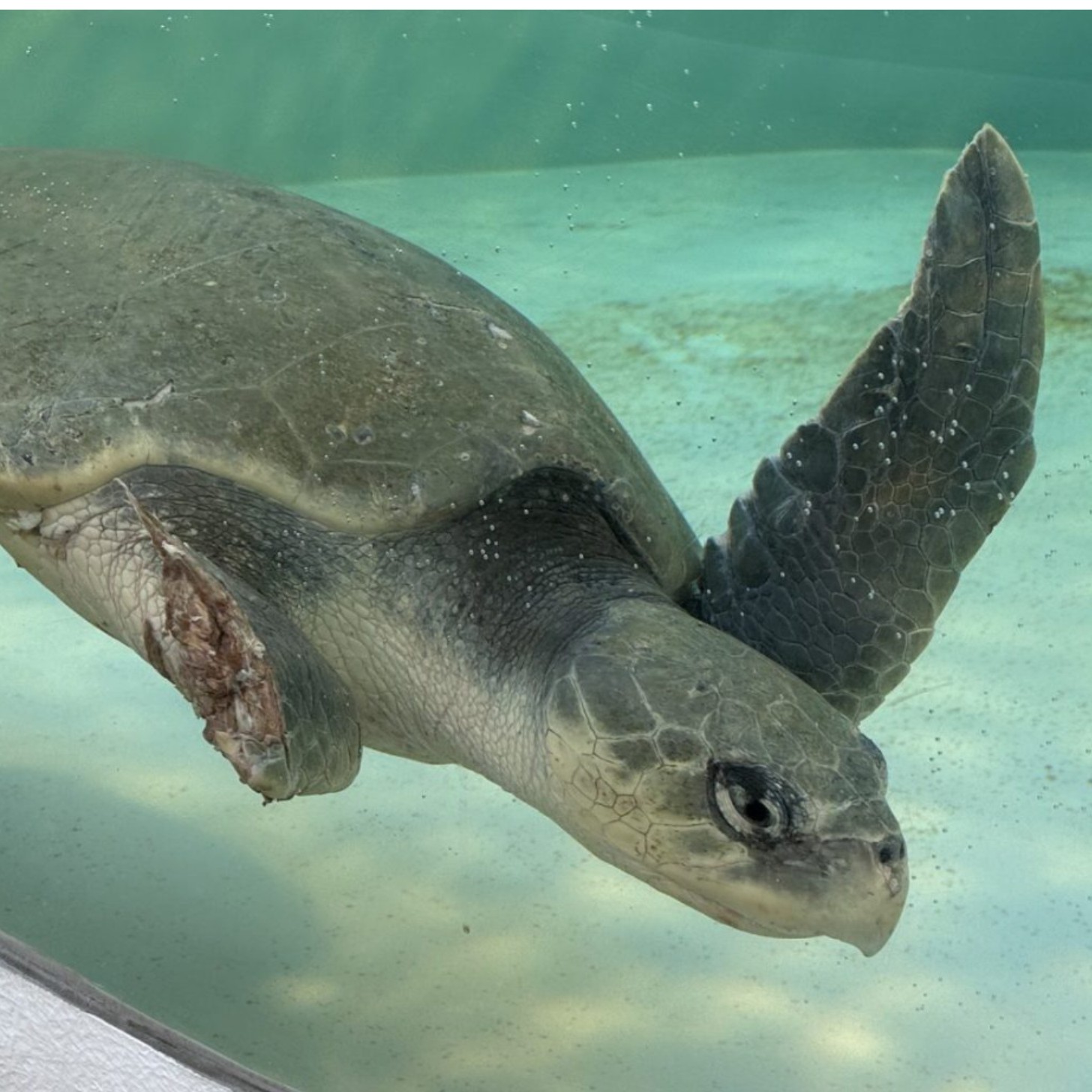
Using satellite-tracking devices, the Loggerhead Marinelife Center and the Smithsonian Conservation Biology Institute have been monitoring how sea turtles survive in the wild after losing a limb. By gluing a tracking device to her shell, scientists can track Amelie and other sea turtles from space.
Other amputee turtles in the program include a loggerhead sea turtle named Pyari, who survived attack wounds to both front flippers. Since her release in January, the three-limbed turtle has traveled nearly 700 miles.
“We do know that they can be successful in the wild because we have seen them on our nesting beaches, but we really want to understand their dive behaviors, how they're migrating once they're back in the wild,” Loggerhead Marinelife Center’s research director, Sarah Hirsch, told CBS News.
On March 25, locals gathered to cheer Amelie on as she waddled towards the shoreline.
“They've been through a lot,” Hirsch said. “They've gotten a lot of medical care here, and to see them be able to go back out and contribute to the population is really rewarding.”
A few weeks later, on April 7, Loggerhead Marinelife Center shared an update on Amelie’s movements.
“Just a couple of weeks after her release, Amelie has been spending time exploring the Florida Keys,” the center wrote in an Instagram post. “Based on her recent satellite pings, she’s been moving throughout the area and has likely found good foraging.”
They added: “We like to think she’s enjoying a well-deserved island getaway.”
You may also like: A passing boat shattered the back of this loggerhead sea turtle's shell. See her incredible four-month recovery
Header image via Loggerhead Marinelife Center
Back in August 2025, Florida Governor Ron DeSantis ordered the removal of about 400 “non-standard” pieces of street art — most of them rainbow, Pride-themed crosswalks and murals — even though they all received state approval when they were installed.
The new policy came to an inflection point when the DeSantis administration painted over a rainbow-colored crosswalk outside of what used to be Orlando’s Pulse nightclub, where 49 people were killed in a 2016 shooting.
Community members repainted the tribute themselves under the cover of darkness in response. Nearby business owners and other Florida municipalities also executed their own protests, displaying rainbow Pride colors in other, creative ways.
But other individuals also showed their support for the LGBTQ+ community on their own properties, like Nicole “Coley” Sohn and her wife, Linda Bagley-Sohn.
The Bagley-Sohns painted 12 pickets of their white fence in rainbow colors after their city of Key West complied with Gov. DeSantis’s directive.

And they weren’t the only ones — their protests inspired other neighbors to do the same. According to the American Civil Liberties Union of Florida, more than 50 rainbow picket fences were painted in Key West’s Old Town after crosswalk removals.
“However, some people did not agree with the message of the protest and complained to the city. This prompted the city to cite the Bagley-Sohns and other homeowners under regulations requiring all fences in Key West's historic district to be painted white,” the ACLU of Florida described in a press release.
“Despite the couple’s unanswered application for approval of their fence display, the city ordered them to repaint their fence white or else they would be subject to fines.”
The Bagley-Sohn family removed their rainbow display to avoid incurring fines, along with many other residents who were in on the protest. But the ACLU of Florida believes this censorship is unjust.
“While the city eagerly enforced its regulations against the rainbow pickets, it has chosen not to cite other noncompliant households for similar fence-color violations,” the ACLU of Florida explained.

The lawsuit includes photo evidence of other examples of fences and other exterior structures that do not comply with the same Key West Historic Architectural Review Commission guidelines being enforced on rainbow displays.
“The only fence- and gate-color violations the City has cited in recent years have been Plaintiffs’ and their co-protestors’ rainbow displays,” the suit argues.
ACLU of Florida attorney Nicholas Warren calls this “selective enforcement,” adding that “it’s illegal.”
“If the government is going to enforce the law, it can’t single out certain expression [or] messages and ignore others when it’s enforcing the law,” Warren told The Palm Beach Post.
With the help of their local ACLU chapter, the couple decided to proceed with a lawsuit, Sohn v. City of Key West, which has since been filed in the United States District Court of the Southern District of Florida.
“To protest the city’s removal of the rainbow crosswalks, we painted some of our fence pickets in rainbow colors, showing that our community still stands for inclusion,” Coley Sohn said in a statement.
“No one should lose their right to speak out simply because those in power disagree with the message, and the government can’t single out some views over others, deciding how to enforce its laws. That’s what the First Amendment protects us from.”
The couples’ lawyers agree.
“The forced removal of rainbow crosswalks and Pride-related street art across the state reveals the threat Florida leaders have unleashed on free expression. Allowing anti-LGBTQ+ rhetoric to escalate into censorship is an act of state overreach that should concern everyone,” Samantha Past, ACLU of Florida staff attorney, said.
“The Bagley-Sohn family have bravely and creatively protested the state’s attempt to erase LGBTQ+ identities and exercised their First Amendment rights on behalf of their community and the constitutional freedoms that protect us all.”
You may also like: Florida banned Pride crosswalks — so St. Pete installed rainbow bike racks instead
Header image courtesy of United States District Court for the Southern District of Florida
In Saltburn-by-the-Sea, England, a knitting circle has been saving animals in need for years through their favorite craft.
The “Knitting Nannas,” who are all in their seventies, eighties, and nineties, live at Hazelgrove Court Care Home.
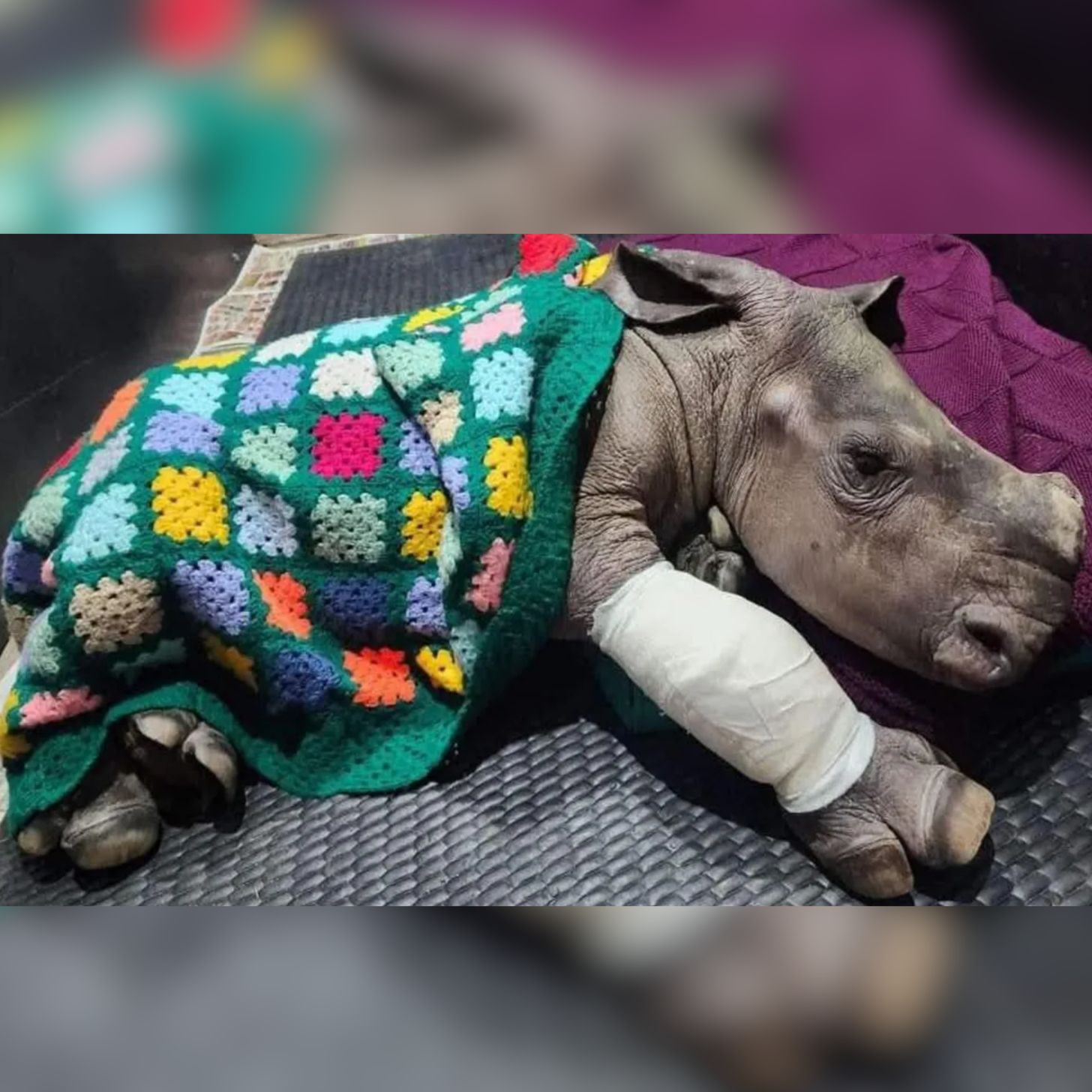
In December 2024, the Knitting Nannas came together to make blankets for Hercules, a three-week-old rhino from South Africa that was recovering from a hyena attack over 5,000 miles away.
“I feel extremely proud that I have been part of this project,” Joyce Wooffindin, one of The Knitting Nannas, told Hillcare. “And to see Hercules wearing one of our blankets brought a tear to my eye.”
In May 2025, they made miniature sweaters for the Penguin Foundation, a penguin charity in Australia.
The sweaters went to Phillip Island, which is home to more than 40,000 penguins. In the event of an oil spill, the “rehabilitation jumpers” are placed on affected penguins until their feathers can be cleaned by wildlife experts. The short window in between can prove critical.
“I have knitted jumpers for both my children,” Joyce Baxtrem, 94, laughed, “but have never knit for a penguin.”

In December 2025, they made woollen toys and blankets for monkeys at the International Primate Rescue in South Africa just in time for Christmas.
“One of our residents, Judith, said she had heard monkeys like to play with toys just like children,” said Sharon Lewis, the activities coordinator at Hazelgrove Court Care Home. “Apparently, they are called enrichment toys. So we thought it would make a great next project for the Knitting Nannas.”
The next nonprofit on the docket was Wildlife SOS, an organization that cares for endangered and vulnerable species across South Asia. In addition to reuniting leopards with their cubs and rescuing “dancing” bears from inhumane practices, the nonprofit is also dedicated to saving elephants.
“Currently, we have a big focus on saving India’s elephants,” Nikki Sharp, the executive director of Wildlife SOS-USA, told Good Good Good recently.
“That includes efforts to protect elephants in the wild and to rescue all of India’s captive begging elephants,” she added, in reference to the outdated and cruel practice of forcing elephants to perform street tricks for money.
When the Knitting Nannas learned about Wildlife SOS’s mission to save begging elephants, they leapt at the opportunity to help. They began knitting countless handmade woollen elephant plushies, with all proceeds going to Wildlife SOS.
“The knitted elephants have been flying out,” Lewis said. “They sell straight away, and the residents are already busy making more.”
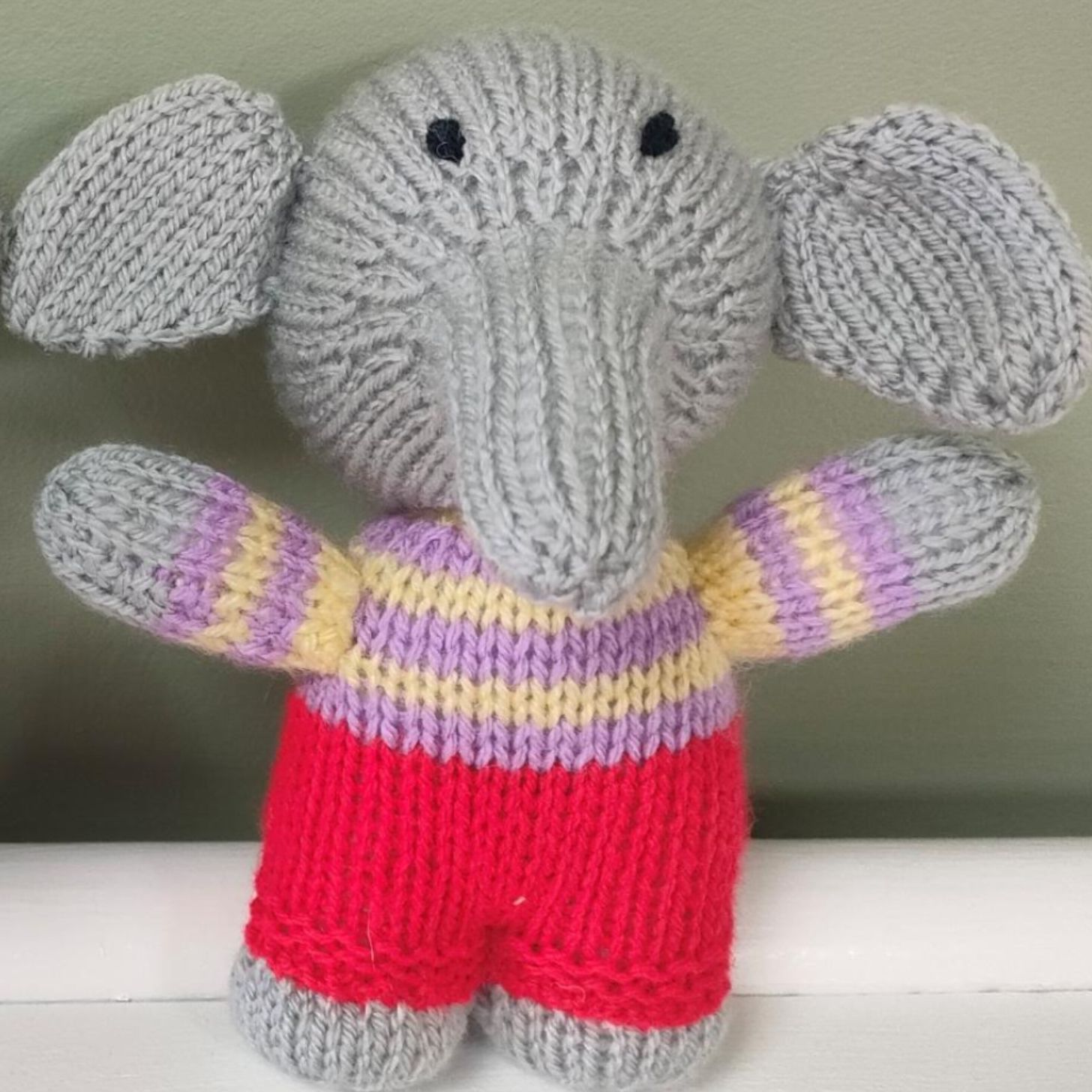
In the last decade and a half, Wildlife SOS has achieved major conservation milestones, including building India’s first Humane Elephant Rescue Center, opening India’s first elephant hospital, and even creating an “elephant” ambulance custom-designed to save elephants in distress.
On April 16, Save the Elephant Day, Hazelgrove Court Care Home residents joined a web call with Wildlife SOS to learn more about the cause from boots-on-the-ground experts.
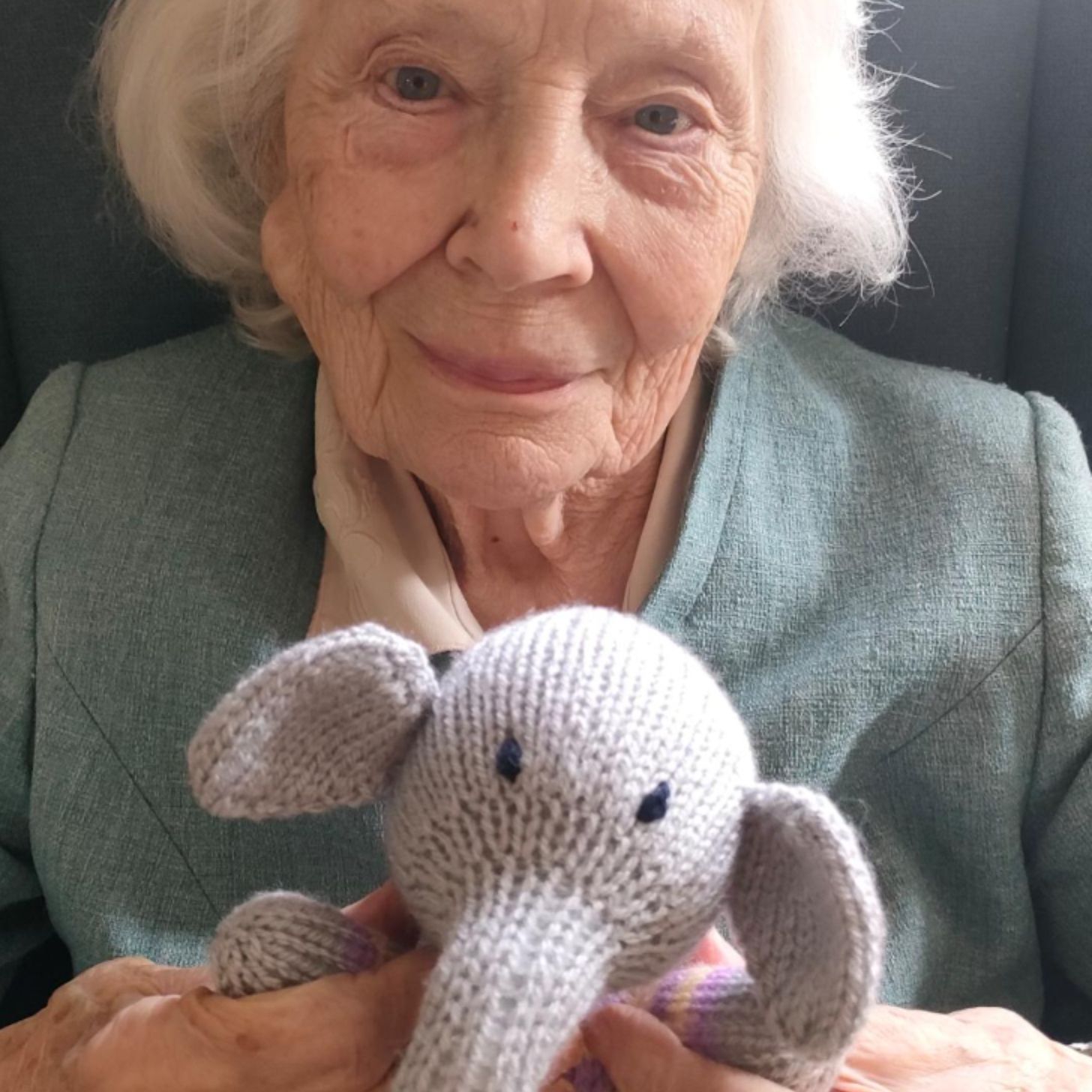
“It was wonderful to be invited to the webinar and see the amazing work the rescuers are doing,” 77-year-old resident Peter Rayson said.
“Elephants are my favorite animal, and it is heartbreaking to think people will take them from the wild and make them beg, breaking their spirit,” said 75-year-old Knitting Nana Tina Parker.
Wildlife SOS is thankful for the support.
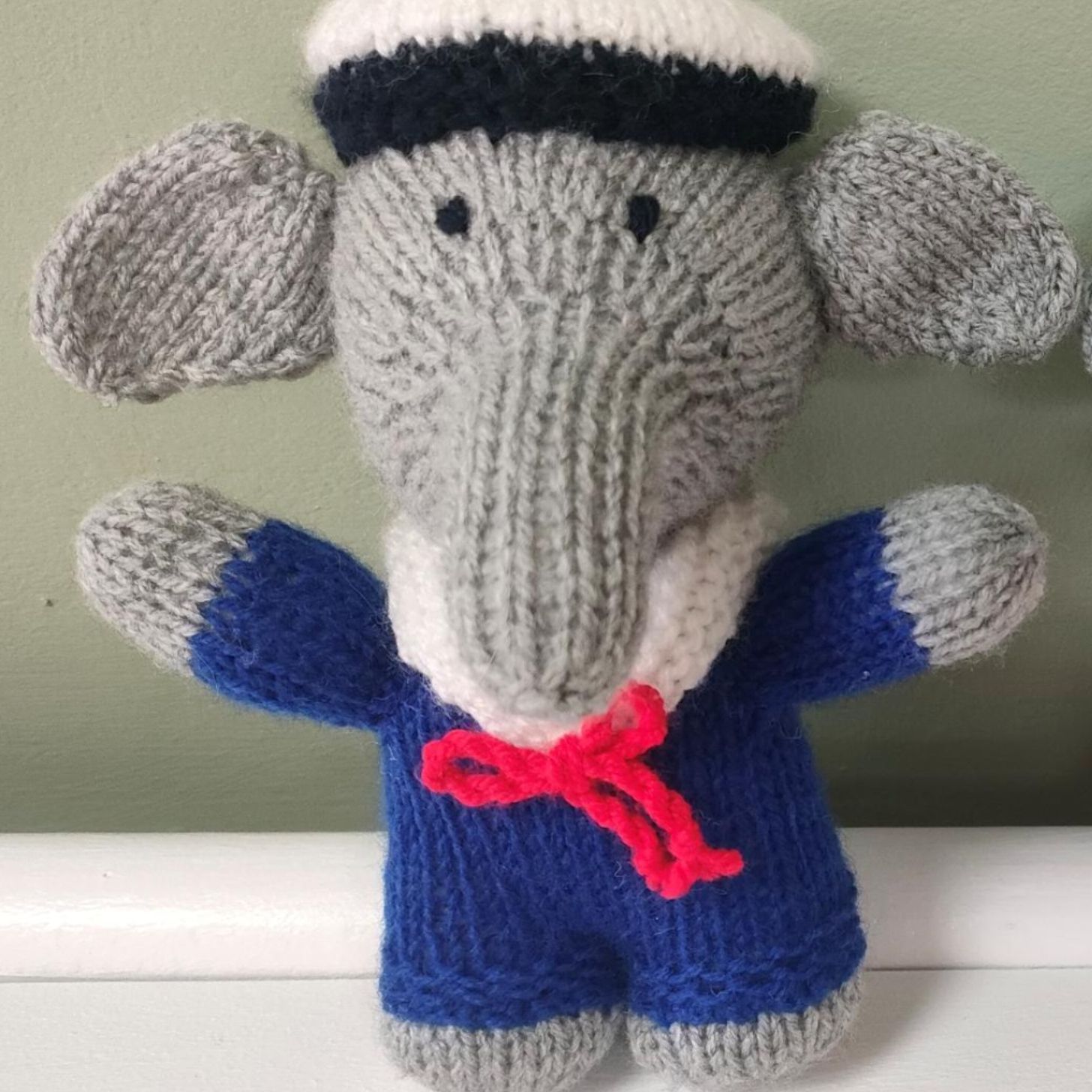
“The entire team and I are sincerely touched by the creativity, thoughtfulness, and generosity of the residents of Hazelgrove Court Care Home,” said Linda Whiteley, Wildlife SOS’s U.K. manager.
“Knowing that they care so deeply about the once-captive elephants in our care highlights the global appreciation for these endangered keystone animals.”
Lewis acknowledged how special this experience has been for the senior residents, as well.
“The Knitting Nannas love knowing that something they have made with their own hands is helping animals on the other side of the world,” Lewis said. “It gives them a huge sense of achievement and has sparked lots of conversations with families and visitors about wildlife and conservation.”
You may also like: When leopard cubs get separated from their mother, these wildlife experts step in with 'overnight boxes.' They've saved over 100 cubs
Header image via Marian78ro (CC BY-SA 4.0)
In August 2025, a charter fisherman found a loggerhead sea turtle wrapped in commercial fishing lines and tethered to a crab trap.
But once she was freed, the 170-pound turtle — soon named Molly — was still a long way from recovery. So she was taken in by the rescue team at the Turtle Hospital, the world’s first state-licensed veterinary hospital for sea turtles.
“When you see a turtle that is covered in barnacles like Molly, you know that it is not healthy,” Bette Zirkelbach, the Turtle Hospital’s general manager, told The Dodo.
To remove Molly’s barnacles, Zirkelbach and her colleagues used flathead screwdrivers to get under the barnacles and pop them out.
“It’s like a good back scratch,” Zirkelbach joked.
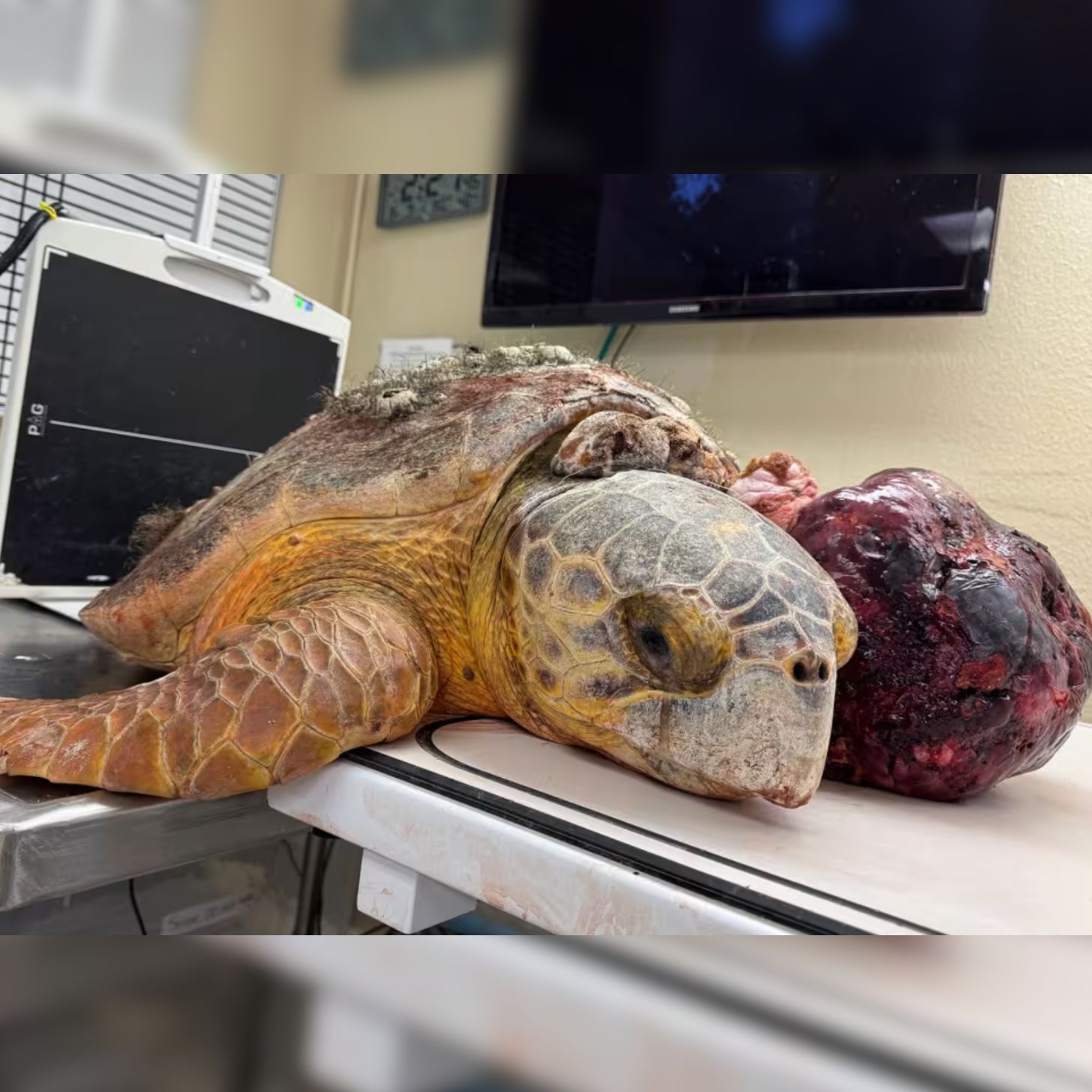
But the barnacles barely scratched the surface. Molly was anemic and dehydrated, with several tumors on her body. And it was the biggest tumor — weighing in at a whopping 10.1 pounds — that raised the loudest alarm bells.
“There is no other word but grotesque to describe that ginormous tumor,” Zirkelbach said. “It was much bigger than her head, and she was entangled in a crab trap line. I've been working at the Turtle Hospital for almost 14 years. Molly takes the cake for the scariest-looking tumor that I've seen.”
The root cause of the tumor was fibropapillomatosis, a disease that causes cauliflower-like tumors on sea turtles’ skin, eyes, mouth, and internal organs.
“It's only found in and around developed islands, which pretty much tells you everything you need to know about the disease,” Zirkelbach said. “It definitely is impacted by the quality of water.”
Molly underwent a three-hour operation to remove the tumor, which Zirkelbach said is the largest tumor she’s ever successfully removed in her career.
As for the loggerhead? She passed “with flying colors.”
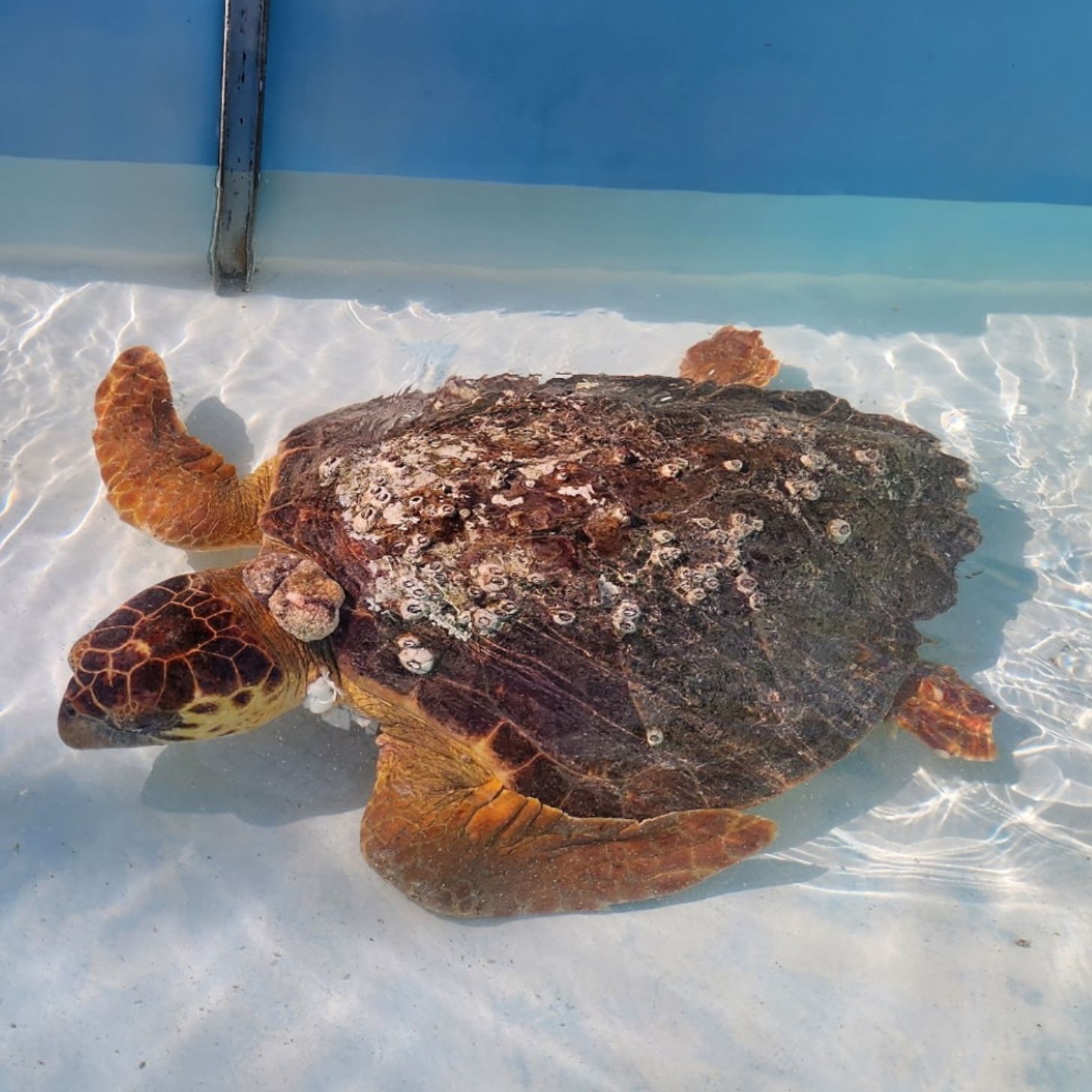
“Molly is doing well post surgery,” the Turtle Hospital shared in an Instagram update in August 2025. “She ate a good amount of mackerel, some squid, and munched on some lobster this evening.”
“Molly has a long road in recovery, and we are hoping her immune system is strong. Once her blood levels are built up, Molly will get the rest of her tumors removed. Please keep prayers and healing energies coming.”
After the largest tumor was removed, the loggerhead sea turtle’s personality blossomed.
“She seemed very happy to get it off, and she swam right away,” Zirkelbach said. “Each step of the way, she got stronger and feistier.”
After more surgery and several months of recovery, Molly was finally cleared to return home. She was released with a satellite tag on November 25, 2025 from Higgs Beach, Florida as a teeming crowd of locals cheered her on.
“Molly's incredible spirit of survival has touched hearts globally,” Zirkelbach said. “Molly's story really helps people to not only care about sea turtles, but about our oceans.”
“Sea turtles are on the endangered species list, so to see a turtle like Molly get strong enough to go back into the wild,” she continued. “I mean, it's why we do what we do … In my heart and my mind, she is the hope for the future of sea turtles.”
Since Molly was first released back into the ocean, she has swum over 870 miles around the tip of southern Florida. In March, the Sea Turtle Conservancy shared a map of Molly’s movements.
“Checking in with Miss Molly!” The Sea Turtle Conservancy posted to Facebook on March 5. “[She] has traveled up towards Marco Island and Ft. Myers before coming back down to The Keys.”
“I love Molly,” a Facebook user commented. “I check her out each morning.”
“So glad she’s doing well,” wrote another.
“Molly is smart,” one local joked. “If I could hang out in the Keys, I would, too!”
You may also like: One of the world's most endangered sea turtles lost her flipper in a 'traumatic amputation.' Her next chapter is being tracked from space
Header image via the Turtle Hospital
Founded in 1945, UNESCO is a global organization dedicated to the conservation of international culture, including endangered languages and World Heritage Sites.
One of its greatest efforts is the 1970 Convention, which calls on member states to prevent theft and trafficking of cultural property.
While stolen artifacts remain a concern for physical museums and institutions globally, in 2025, UNESCO launched a virtual museum of 250 looted cultural objects submitted by 46 countries.
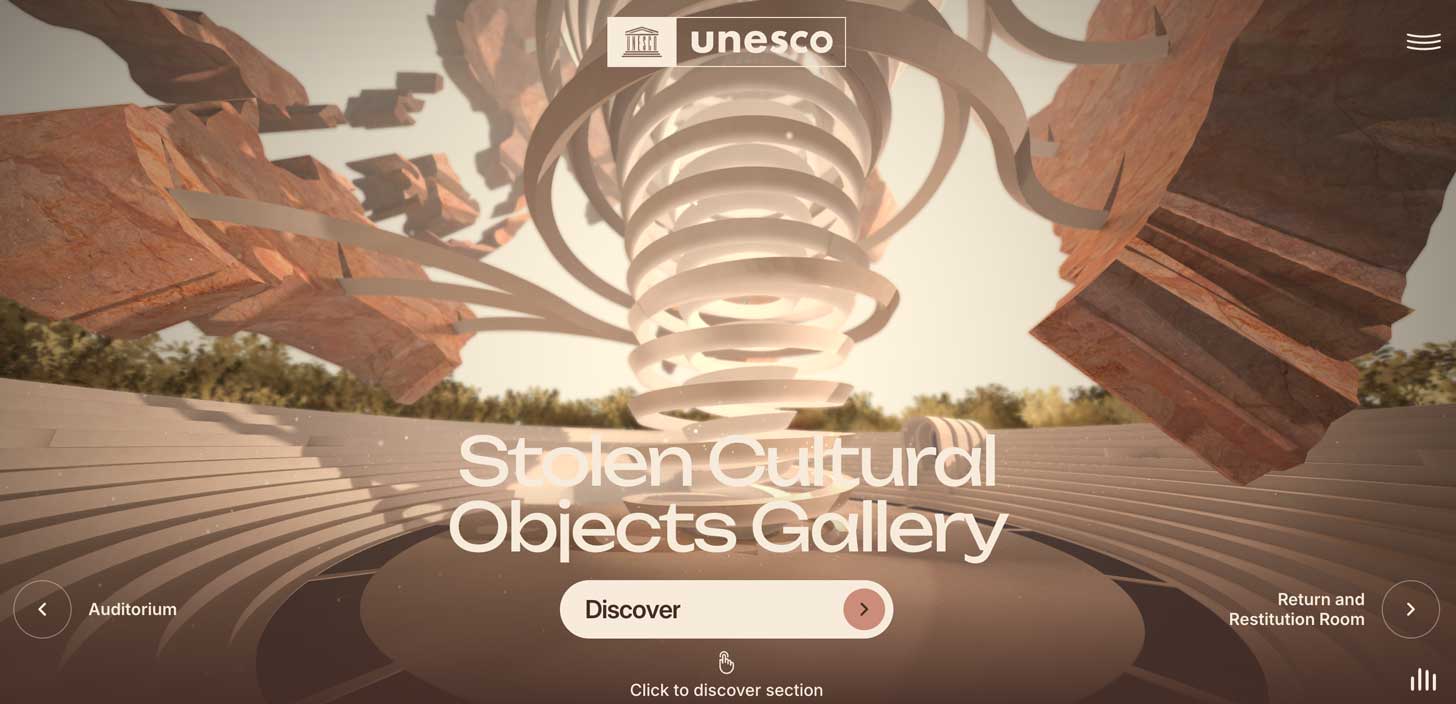
In the virtual museum, the objects have been rendered in 2D and 3D displays, which users can browse for free on their computers — or even pair with a virtual reality headset.
The rooms in the digital museum are divided by regions of the world, and users click on an item to learn more, or “admire” it close-up.
Some featured items include a 2,000-year-old gold bracelet from Romania, an elephant tusk from Cameroon, and an ancient coin from what is now Libya.

There is also a Return and Restitution Room where users can read the stories of looted objects that have been returned to their home countries and are now on display.
As of 2025, only three objects are featured in this “room,” though UNESCO’s ultimate goal is for its looted collection to shrink until everything lives in the Return and Restitution Room.

“Unlike traditional museums, the Virtual Museum is designed to gradually empty itself with the goal of returning and not accumulating,” UNESCO said in a statement.
“As stolen objects are recovered and restituted, they will be removed from the digital collection, symbolizing justice and restoration.”
A version of this article was originally published in The 2026 Storytelling Edition of the Goodnewspaper.
You may also like: Built with books found in the rubble, these two men have opened Gaza's first new library
Header image courtesy of UNESCO
In 2025, new data from the International Renewable Energy Agency showed that renewable energy had passed a “positive tipping point” as solar and wind power globally became cheaper than the lowest-cost fossil fuels.
The report showed that solar power was, on average, 41% cheaper than the lowest-cost fossil fuel alternatives, while onshore wind projects were 53% cheaper. Additionally, 91% of new renewable energy projects commissioned in 2024 were less expensive than any fossil fuel alternatives.
The data was backed by additional multi-agency reporting from the United Nations, which found that 74% of growth in electricity generation in 2024 came from wind, solar, and other clean energy sources.
"The fossil fuel age is flailing and failing," United Nations Secretary General Antonio Guterres said in a press conference. "We are in the dawn of a new energy era. An era where cheap, clean, abundant energy powers a world rich in economic opportunity.”

Guterres emphasized the business case for renewable energy, saying that it limits dependence on international fuel markets and improves energy security.
“Clean energy is smart economics, and the world is following the money,” Guterres noted, pointing to reports that showed that the U.S. invested $2 trillion in green energy in the previous year, compared to the country’s $800 billion investment in fossil fuels.
A version of this article originally appeared in the 2026 Environment Edition of the Goodnewspaper
You may also like: New study confirms that electric vehicles are already making the air cleaner
Header image via Red Zeppelin
Every year between May and September, hundreds of sea turtles make their way to the shores of North Carolina’s Cape Hatteras National Seashore to lay eggs.
In the dark cover of night, endangered species like green, leatherback, and Kemp’s ridley turtles crawl onto the sandy beaches, dig a large pit with their flippers, and lay hundreds of their leathery eggs to incubate for approximately 60 days.
Once the eggs hatch, the new babies use a combination of clues to find the ocean and make their great blue debut. Using the slope of the beach and the reflection of the moon off the water, the hatchlings move towards the part of the horizon that is at the lowest angle of elevation from their position.

After reaching the shore, they orient into the waves and use magnetic orientation to migrate further into the water. Typically, they will swim for 24-36 hours until they reach seaweed “nurseries” where they will be protected for their adolescence.
During the summer of 2025, experts monitored close to 300 sea turtle nests, and they hope to see similar numbers in 2026, according to Outer Banks Forever, a nonprofit partner of Cape Hatteras National Seashore, Fort Raleigh National Historic Site, and the Wright Brothers National Memorial.
To help support park rangers at Cape Hatteras who monitor and protect these nests, Outer Banks Forever offers symbolic “nest adoptions” to turtle lovers near and far.
Through the Adopt A Sea Turtle Nest program, visitors and supporters who make a donation of $100 or more receive an adoption certificate and information about their assigned nest, once activity really kicks into gear in early June.

Donors then receive updates when the nest hatches later in the summer or fall. Demand is high, and nests are assigned on a first-come, first-served basis.
“Our program is now in its seventh year, and more than 600 supporters have helped raise close to $126,000 to protect and enhance the Seashore,” Nicole Erickson, development and adoption programs manager for Outer Banks Forever, told Island Free Press.
“That collective effort is being felt every day.”
The sea turtle species found at Cape Hatteras are already categorized as endangered species, due to external forces like climate change, marine pollution, poaching, bycatch, and destruction of nesting beaches.
But they also face increased risks, as the nests are highly vulnerable to major weather events and predators.

The national seashore’s beaches have been monitored since 1987 to help ensure the best success rates for these nests. Numbers have fluctuated greatly in the last 30 years, with just 11 nests in that first year, and 473 in 2019.
No matter how many eggs are laid on the seashore, it is estimated that only one in 1,000 to 10,000 hatchlings survives to maturity.
“Your support helps fund critical projects that protect and enhance the Seashore and the vital habitat sea turtles depend on,” Outer Banks Forever writes about the adopt-a-nest program.
Visitors of the seashore can also witness nest excavations right on the beach, but national park rangers urge everyone to follow rules and do their part to protect the animals.

And for those who spot a turtle outside of scheduled events, rangers urge them to call 252-216-6892 to report any sightings.
“Like all national parks, the seashore is a special place that was established to help uphold the National Park Service's mission ‘to preserve unimpaired the natural and cultural resources and values of the National Park System for the enjoyment, education, and inspiration of this and future generations,’” the Cape Hatteras webpage reads.
“Conserving endangered species is an important part of this mission and a responsibility of all those who would be stewards of Cape Hatteras National Seashore.”
You may also like: Beachgoer finds sea turtle stranded, so covered in barnacles she couldn't move. See her amazing 9-month recovery
Header image courtesy of Outer Banks Forever
On November 18th, locals in Manuel Antonio, Costa Rica saw a rare sight: A baby two-fingered sloth clinging to the back of an older three-fingered sloth.
Unfortunately, there was no mother nearby, and the two-fingered sloth was far too young to survive on her own. So The Sloth Institute, a local nonprofit dedicated to rescuing and rehabilitating sloths, stepped in to help.
“That’s when Taylor, affectionately named after Taylor Swift by our team, arrived at The Sloth Institute to begin her rehabilitation journey,” the nonprofit explained on its website.
“Without her mother’s constant warmth, protection, and guidance, she needed round-the-clock care to survive. But from day one, Taylor showed us she was a fighter.”
Her progress came in small steps, first taking a bottle “with enthusiasm,” before diving “right in” to solid foods and munching on fresh leaves to her heart’s content.
“Even better? She’s gaining weight beautifully!” The Sloth Institute wrote. “Every gram matters when you’re a baby sloth, and Taylor is hitting all the right milestones.”
Beyond medical care and food, Taylor needed something else: Companionship.
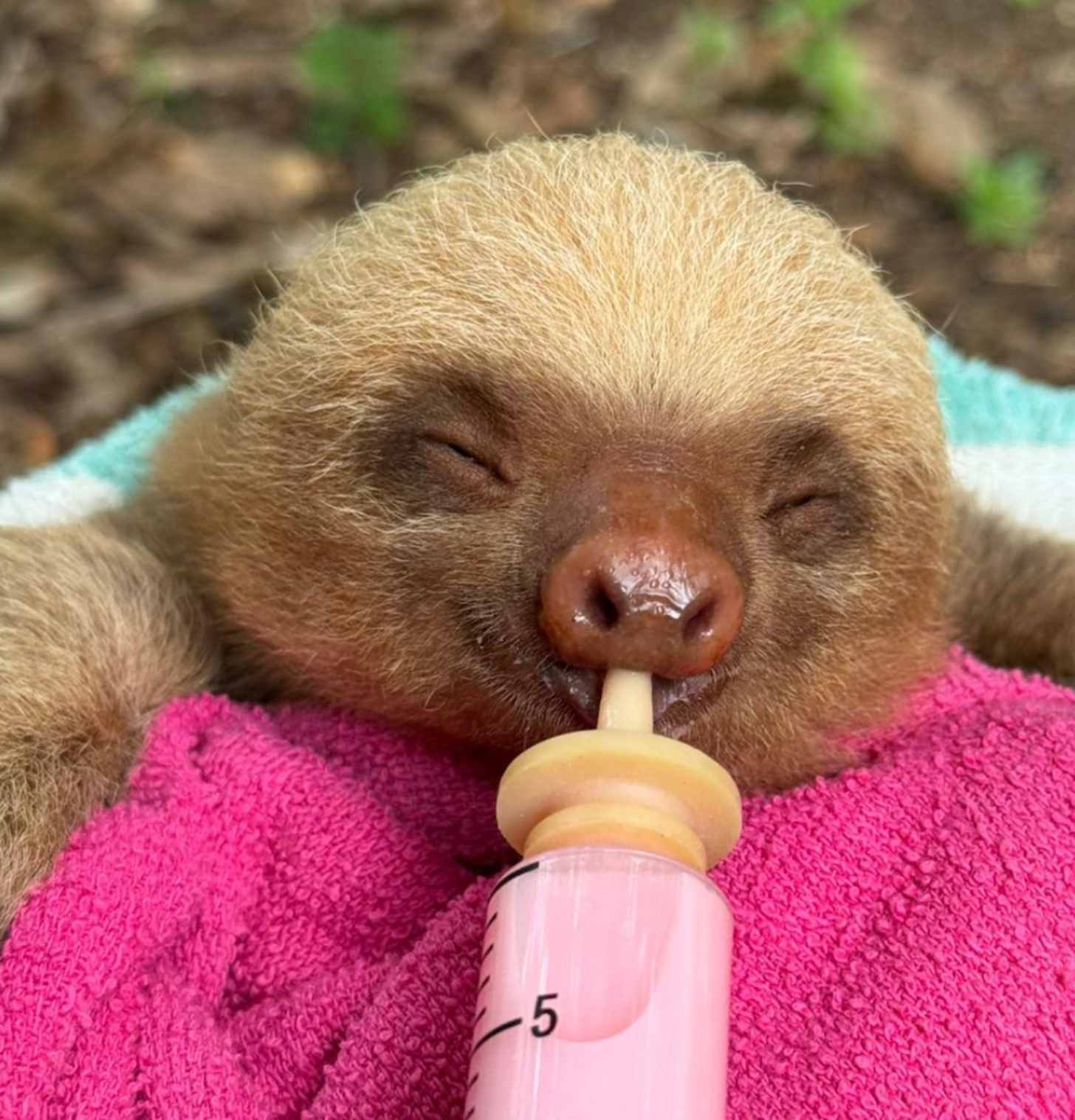
“We pair orphaned baby sloths together for the rehabilitation process because it helps them to have the comfort of another sloth, as well as aiding in the development of appropriate social skills,” the nonprofit explained in an Instagram post last December. “They would normally be with their moms still at such a young age.”
But Taylor didn’t have to wait long for a friend.
“Within a couple of weeks of her arrival, two other juvenile sloths came into our care: Travis (yes, we went there) and Opi, short for Opalite,” The Sloth Institute said, cheekily referring to Taylor Swift’s real-life fiancé, Travis Kelce, and her “The Life of a Showgirl” single.
Together, the three sloths were the newest students at the “Sloth School,” a program designed to help orphaned sloths learn crucial life skills.
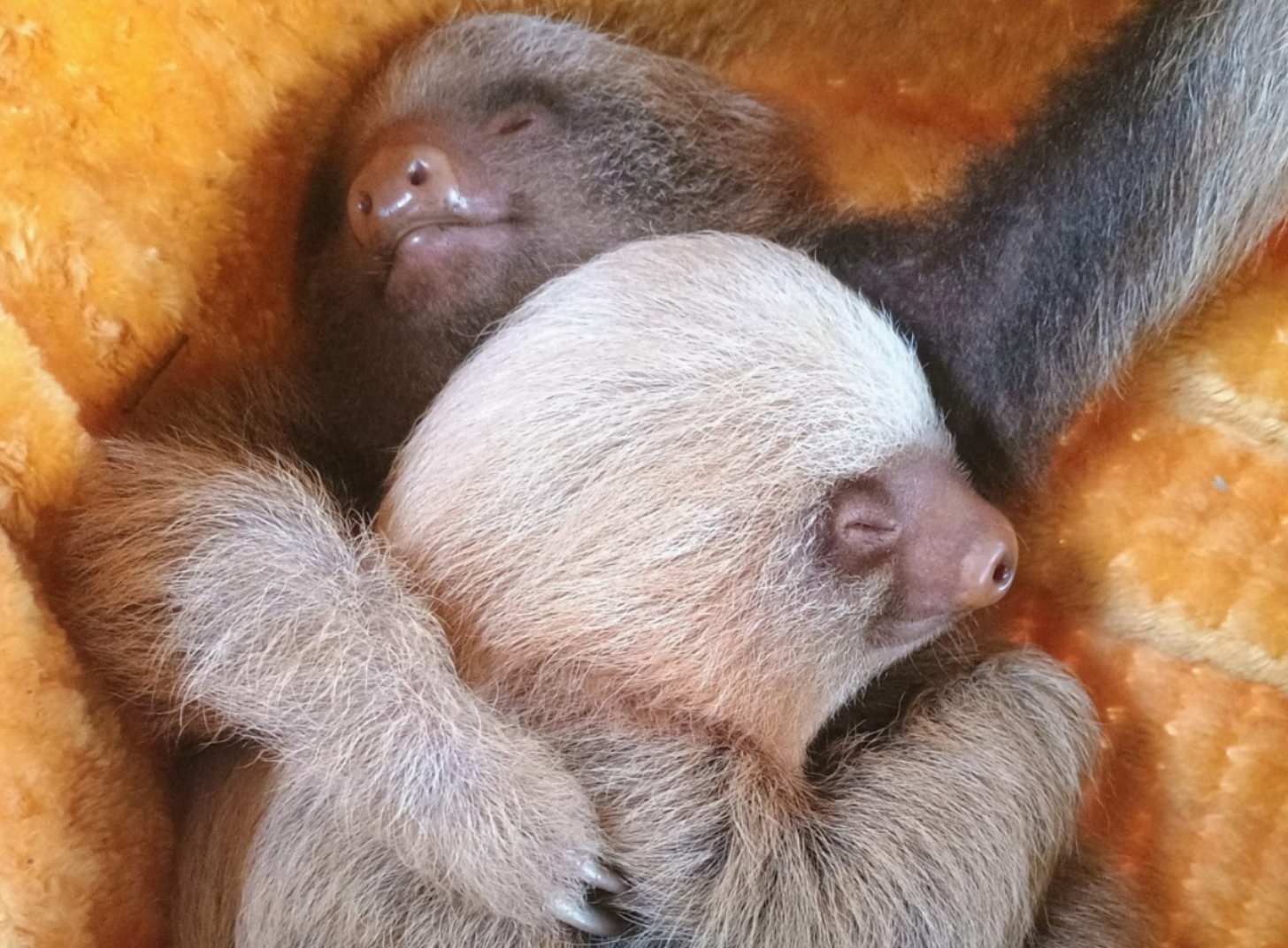
“In Sloth School, Taylor will learn essential survival skills such as how to find the right leaves to eat, how to navigate the forest canopy, how to recognize predators, and how to be… well, a sloth,” The Sloth Institute shared.
Taylor and her classmates all get along in class, but The Sloth Institute quickly noted a special bond between Taylor and Travis.
“Taylor meeting orphaned baby sloth Travis for the first time,” the nonprofit shared in a throwback video. “Luckily, she was in her Lover Era, and it was love at first sight.”
The Taylor Swift memes and references have helped The Sloth Institute grow its following, and they’ve used the opportunity to teach new followers about sloth conservation and rehabilitation.

“When the time comes, we’ll release Taylor back into the wild where she belongs,” they said. “That’s the goal for every sloth who comes through our doors — to return to the wild.”
In addition to their rewilding missions, The Sloth Institute has been fighting to stop private sloth ownership in the United States, an issue that gained international attention when more than 50 sloths died of negligence at Sloth World Orlando.
In early May, Sam Trull, the co-founder and executive director of The Sloth Institute, met directly with policymakers and officials to advocate for stronger protections for sloths in the U.S.
On May 13, Florida wildlife officials announced a temporary halt on sloth imports.
“This temporary pause is an important first step, but our work is far from over,” The Sloth Institute wrote on Instagram.
“This moment shows what is possible when science, experts, journalists, policymakers, and the public come together to demand change.”
You may also like: Monterey Bay Aquarium offers 'otter date' to Taylor Swift and Travis Kelce ahead of Sea Otter Awareness Week
Header image via The Sloth Institute
Just outside of Madison, Wisconsin lies a 170-acre oasis filled with wildflowers, chirping birds, and roaming rabbits. Decades ago, the sanctuary was just 40 acres, consisting of farmland cleared in the early 1900s.
Since the 1950s, the Benedictine sisters at Holy Wisdom Monastery have quadrupled that land into a haven for countless species of plants and animals.
In an interview with The New York Times, Sister Lynne Smith referred to their land as a “refugia,” a place where peace endures in crisis.
“We need refugia now for the human spirit where we can come and remember what it is to be human, remember that basically, inside of us, the best of us is kind and generous and compassionate,” said Sister Smith. “We want this to be a place, and it already is, where we live humanly and we nurture those human values.”
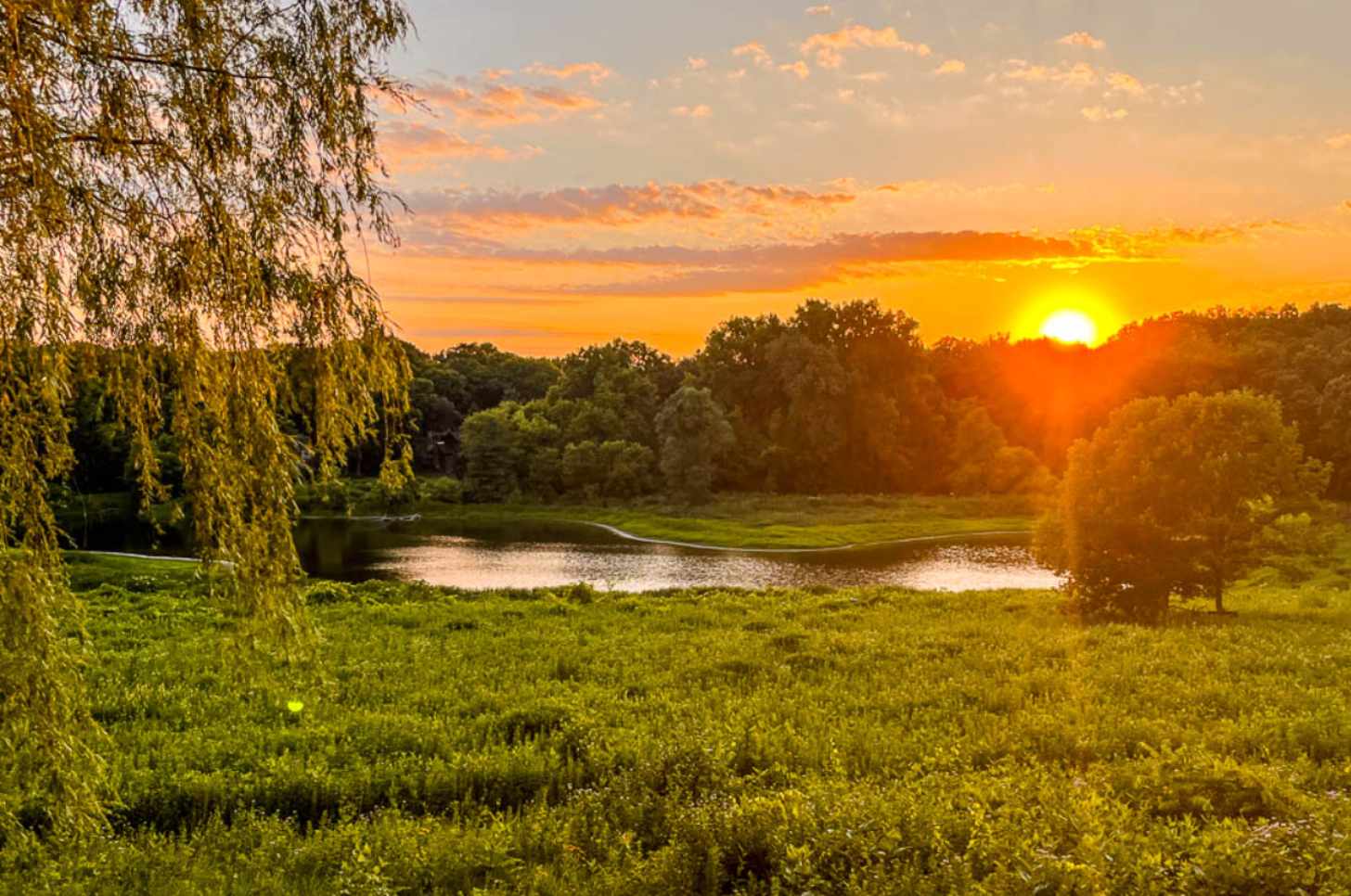
Their “refugia” did not pop up overnight. In 1996, the sisters broke ground on a restoration project for a 10,000-year-old glacial lake, removing 85,000 cubic yards of accumulated silt and restoring the shoreline with native plants.
In 2009, they traded their energy-inefficient monastery for a building so eco-friendly that it earned the Leadership in Energy and Environmental Design sustainability certification. A decade ago, they added 463 solar panels to the property.
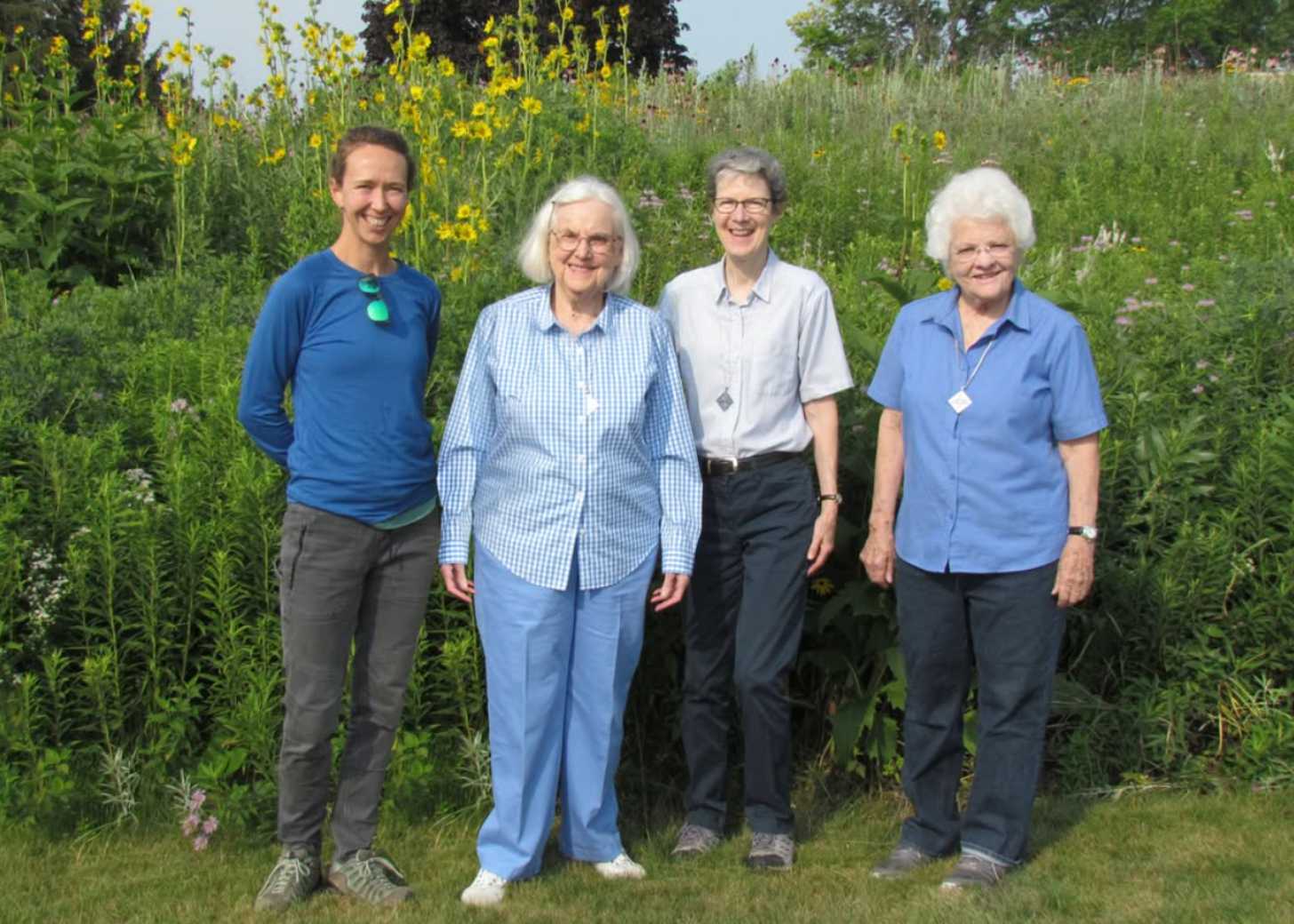
Their congregation has transformed over time, but as of 2026, there are just four sisters of the monastery: Sister Smith (71), Sister Mary David Walgenback (86), Sister Everline Jeruto (53), and Sister Joanne Kollasch (95).
“They’re small, but they’re mighty,” said Leah Kleiman, a land restoration specialist for the county.
A version of this article originally appeared in the 2026 Environment Edition of the Goodnewspaper
Header image via Holy Wisdom Monastery
For the tech-savvy youth of today, reading and writing cursive is a skill viewed as almost entirely obsolete.
Save for handwritten name cards adorning a wedding reception table, most don’t see the loss of cursive curriculum as a major deficit, though studies suggest it can improve cognitive development and fine motor skills.
But being able to read cursive could be the difference between remembering and forgetting the stories of the past.
A group of AmeriCorps volunteers at Bowling Green State University has taken up the mantle of deciphering cursive handwriting in old documents. Volunteers gather to translate handwritten cursive into typed text to preserve women’s history.
They call it “Cursive for a Cause.”
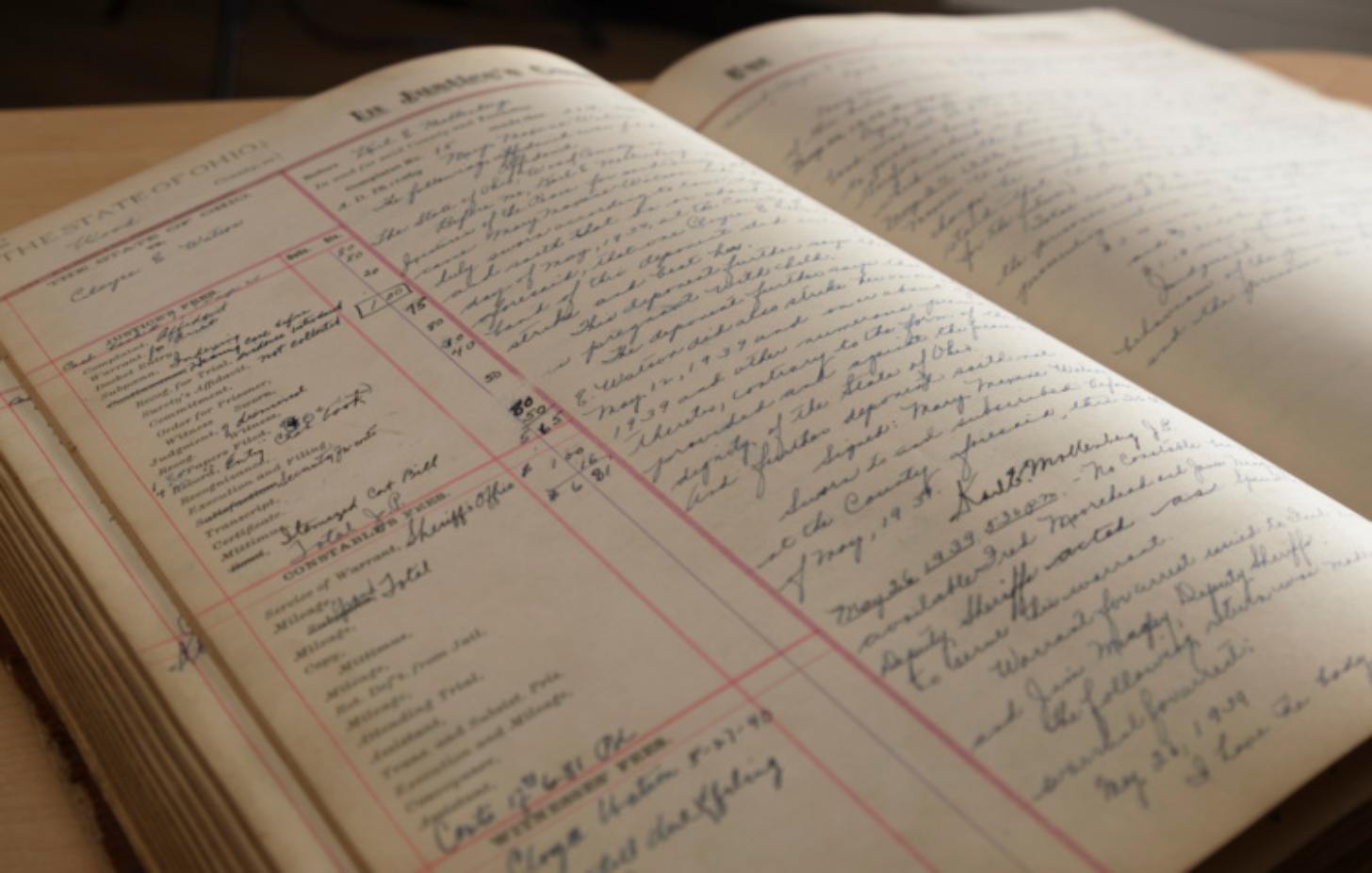
The documents are often written by women, and are letters, diaries, and journals that live in the university’s archives. Some are heartfelt correspondence between mothers and their children. Others might be recipes or financial documents.
All of them are worthy of remembrance, volunteers believe.
“That’s another aspect of history that shouldn’t be forgotten,” Cecilia Seibert of AmeriCorps told BG Independent News.
Many who work in these fields can read cursive with relative ease, but here, their efforts are focused on both the past and the future, ensuring historians will be able to understand archives in the future.
“I think it’s important to digitize these things to make them accessible to everyone,” Rob Snyder, a volunteer told BG Independent News.
It’s not always easy; some cursive is messy and lacks punctuation. But with laptops in hand — and reading glasses at the ready — volunteers are up to the task, one that seems small but plays a real role in preserving history.
“Many historical documents exist only in handwritten form, which limits their discoverability and use online. Many researchers find cursive to be challenging to read,” a summary of the event held at the university explained.
“By creating transcripts, volunteers help turn these materials into searchable digital resources that support accessibility, public history, and community research.”
A version of this article was originally published in The 2026 Storytelling Edition of the Goodnewspaper.
You may also like: Built with books found in the rubble, these two men have opened Gaza's first new library
Header image by Pixabay via Pexels
After being adopted by a public school music teacher, Cole, the deaf Pitbull, quickly became a symbol of support for disabled children.
Chris Hannah, Cole’s owner, was amazed by Cole’s ability to respond to sign language and quickly trained him as a certified therapy dog, who now comes to school, armed with the message that it is OK to be different.
Every day, the white dog sits on his bed next to a sign that reads: “Can I please have a hug?” and the students are eager to oblige.
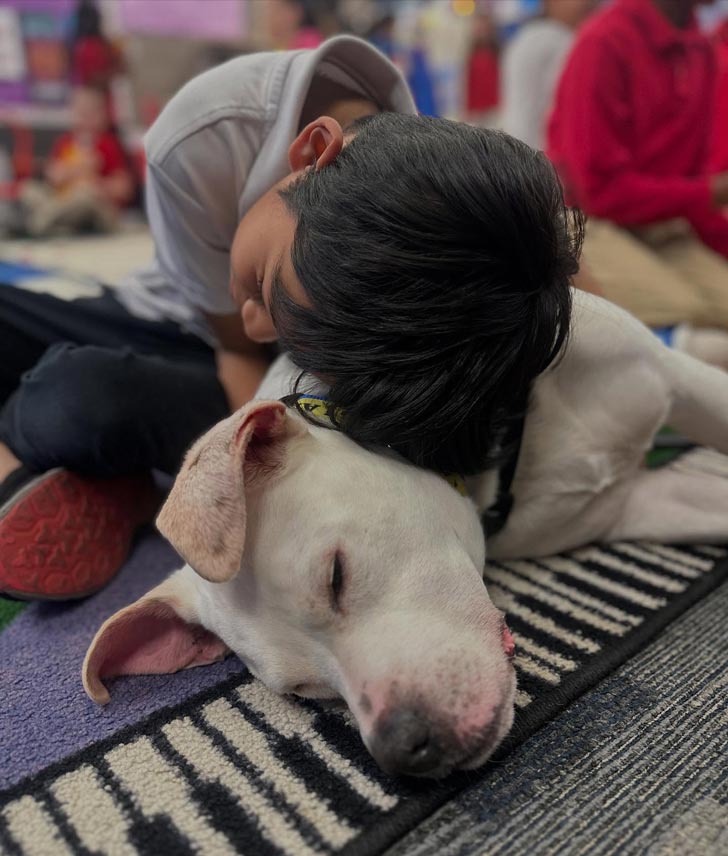
For his birthday last year, students learned how to sign the Happy Birthday song in American Sign Language, so they could throw him a party and learn something new at the same time.
Cole and Hannah — along with Hannah’s deaf nephew — have also launched a unique social-emotional learning program at their South Jersey school.
“Their program helps students reflect on their personal feelings of ‘brokenness’ in a new and self-empowering way and leaves an impression of acceptance and compassion that youth can take with them for years to come,” a statement on Cole’s website reads.
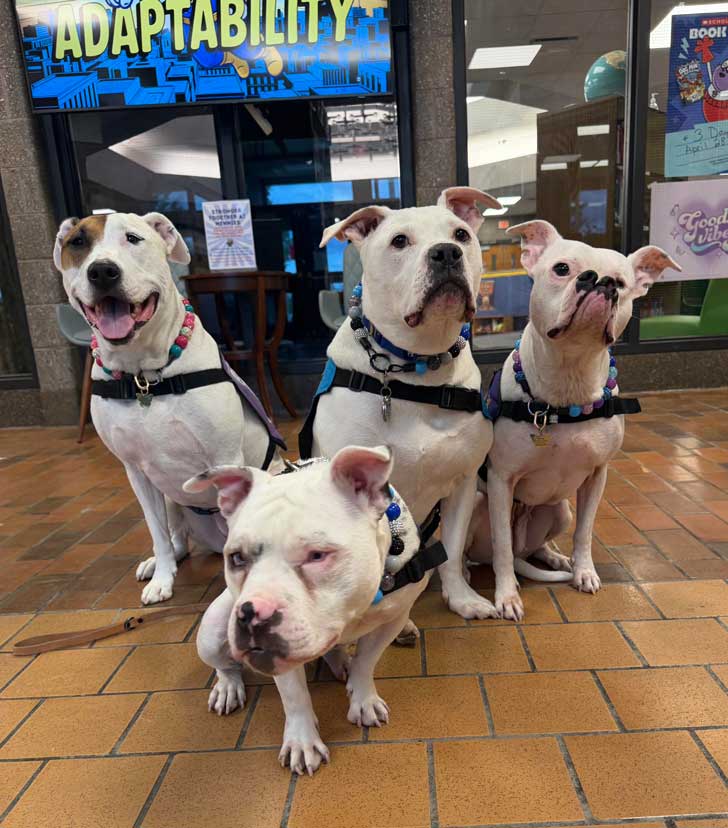
They have expanded over the years, as well, traveling to other schools in the region with their programming.
“We want kids to realize what makes you different is what makes you unique and what makes you special and everybody belongs,” Hannah told CBS News.
“We have a team of four dogs now. Three were born deaf and one was born deaf and blind. And they're all certified therapy dogs that work with Cole.”
During the summers, Cole is also a quasi-counselor at a camp for kids with disabilities. He performs tricks — by interpreting sign language — and because he doesn’t get too overwhelmed by noises, patiently accepts pets and greetings from all of his human friends.
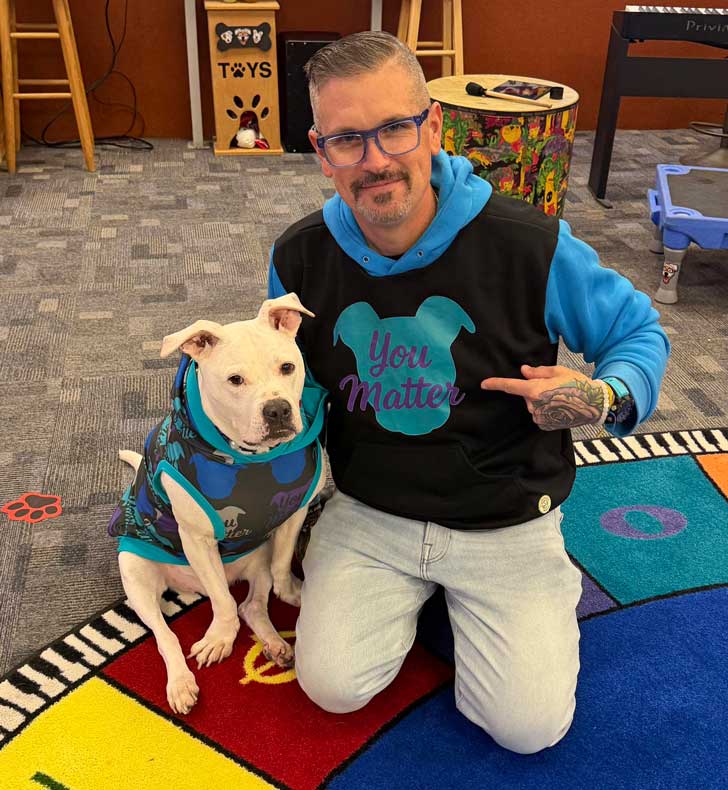
In 2023, Cole won the ASPCA’s National Dog of the Year title, honoring his work with youth — and as a therapy dog in area hospice care centers.
“Sometimes, with my students, I’m just trying to do my regular job on a daily basis, and I’m just watching the way these kids are connecting with him,” Hannah said in a video after Cole won his coveted title. “Cole is life to so many of these kids.”
In a TikTok caption, Hannah added: “Living this life of disability awareness through the eyes of a deaf Pitbull is a dream come true.”
@deafcole Deaf Pitbull Therapy Dog Has The Best Job #bullybreed #pitbullsoftiktok #deafdog ♬ original sound - Cupful Of Happiness
A version of this article was originally published in The 2024 Animals Edition of the Goodnewspaper.
You may also like: Tourists in Hawaii encouraged to borrow shelter dogs to take on 'field trips' during vacation
Header image courtesy of Cole the Deaf Therapy Dog/Facebook
As the director of animal health at the Nashville Zoo, Dr. Heather Schwartz has been handraising clouded leopards for 16 years.
“I'm here with our 50th clouded leopard cub,” Schwartz told ABC World News Tonight anchor David Muir. “We were very excited to have her join our team. She's just at a kilogram, so a few pounds, that's it right now.”
Eventually, the cub will grow to about 30 pounds, like her mother, Jewels.
Currently, the Association of Zoos and Aquariums has 64 clouded leopards under its care, with the Nashville Zoo producing 50 of them over the last 35 years.
The latest birth is a huge milestone for the AZA’s Clouded Leopard Species Survival Plan.
“We couldn't be more proud, so very big news, and she has a lot to say about that,” Schwartz laughed, as the cub let out a tiny cry. “She thinks it’s exciting, too.”
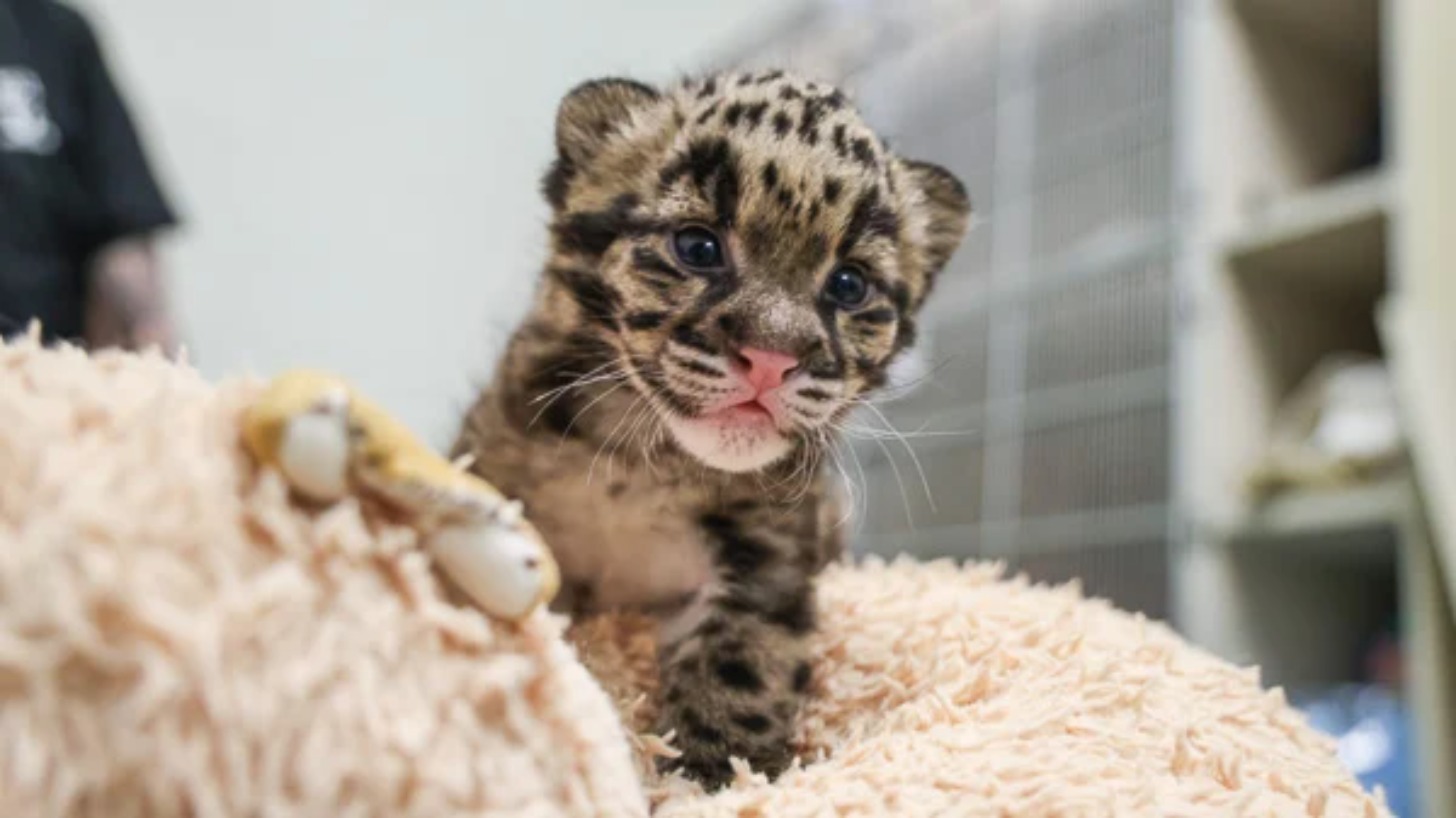
Today, clouded leopards are listed as vulnerable on the International Union for Conservation of Nature’s Red List of Threatened Species.
Experts estimate that only 10,000 clouded leopards remain in the wilds of Southeast Asia, including countries like Nepal, India, Bangladesh, Thailand, Malaysia, and China.
Their steady decline comes after decades of poaching, habitat loss, and wildlife trafficking.
“Specific populations can be difficult to track, as the clouded leopard is among the rarest of the world’s cat species and one of the most elusive,” reads a statement on the Nashville Zoo website. “ The reduced number of pelts encountered at markets and reduced sightings of clouded leopards by people within its range suggest the species is in decline.”
In coordination with the AZA, the Nashville Zoo has become a leader in conservation care through collaborative breeding programs and assisted reproduction.
By working with the Thailand Zoological Parks Organization, Smithsonian's National Zoological Park, and the Point Defiance Zoo & Aquarium, the Nashville Zoo helped create the Clouded Leopard Consortium in 2002.
The consortium, which is based in a national forest at the Khao Kheow Open Zoo in Thailand, has played a crucial role in stabilizing the local clouded leopard population and better understanding clouded leopard behavior at large.
Typically, clouded leopards are difficult to raise in captivity due to male aggression and parental neglect.
At the Clouded Leopard Consortium, unrelated male and female cubs are hand-raised and introduced to each other early to form bonds at a young age, a technique that the Nashville Zoo employs as well.
“Last year, Nashville Zoo celebrated the birth of one clouded leopard cub and the acquisition of three clouded leopard cubs,” the zoo shared on their website. “Gemma, Meru, Joker, and Quinn are still on view for the public to visit and can be seen in Critter Encounter and in Bamboo Forest in the clouded leopard habitat.”
“As part of the AZA’s Species Survival Plan program, the four cubs have been paired and will grow up together in hopes of successful reproduction in the future.”
For animal lovers looking for ways to help the threatened species in the wild, the zoo invited people to invest in sustainable palm oil.
“The biggest threat to clouded leopard populations in the wild is habitat loss, and one of the largest factors fueling the destruction of the clouded leopard’s habitat is palm oil production,” the zoo explained.
“Palm oil and its derivatives can be found in 50% of supermarket items, so as consumers, we can help clouded leopards by showing companies we prefer products made with sustainably produced palm oil.”
You may also like: When leopard cubs get separated from their mother, these wildlife experts step in with 'overnight boxes.' They've saved over 100 cubs
Header image via the Nashville Zoo
Life is pretty easy for the four African elephants who reside at Zoo Atlanta.
If Kelly, Msholo, Tara, and Titan lived in the wild, they would be foraging for food and remaining alert to keep their calves safe from predators.
But at the zoo, they don’t have to worry about their survival. However, that means these extremely intelligent creatures need to find new ways to stay mentally stimulated.
Zoo caretakers have built a concrete enrichment wall filled with holes for the elephants to reach through with their tusks, searching for food, treats, or other play objects. The idea is to help them engage in problem-solving and critical thinking in ways that would be natural to their wild environment.

But Arianna Mastali, a Ph.D. student at Georgia Tech’s School of Interactive Computing thought they could take things up a level.
As a member of the Georgia Tech Animal Lab, Mastali designed an audio enrichment component to improve the zoo’s interactive wall.
Her design uses cameras and computer vision to detect when an elephant’s trunk is inside one of the holes in the wall, which sends a signal to a nearby speaker to play a low-frequency tone that isn’t very loud to humans.
Kirby Miller, the senior elephant caretaker at Zoo Atlanta, said elephants have sharp memories and acute senses of hearing, meaning this intentional design makes their habitats well-suited to their needs.
“I think anything they can participate in that gives them choice and control is great for all zoo elephants,” Miller said in a statement.
“It depends on the elephants, but with our elephants, they can hear much higher frequencies than we can. That noise isn’t that loud for us, but for them, they’re feeling that noise, and they can hear much more, which makes it more stimulating for them.”

Mastali worked with colleagues in the animal lab to figure out how to incorporate sensing technology into the project, with the goal of enhancing the elephants’ wellness.
First, she tried incorporating sensing devices into a PVC pipe insert for the wall, which used a sensor with infrared beams to detect the elephant’s trunk. But their strong trunks broke the insert after a day or two.
Mastali persevered.
“They’re intelligent creatures that require a lot of complexity in their habitat,” Mastali said. “We wanted to add to that complexity while giving them more control.”
The next iteration required her to pivot to the camera and computer vision to remove the risk of damage to the wall, while still maintaining minimal invasion of the elephants’ habitat.
Then, it was time to see if the elephants even liked engaging with the design.
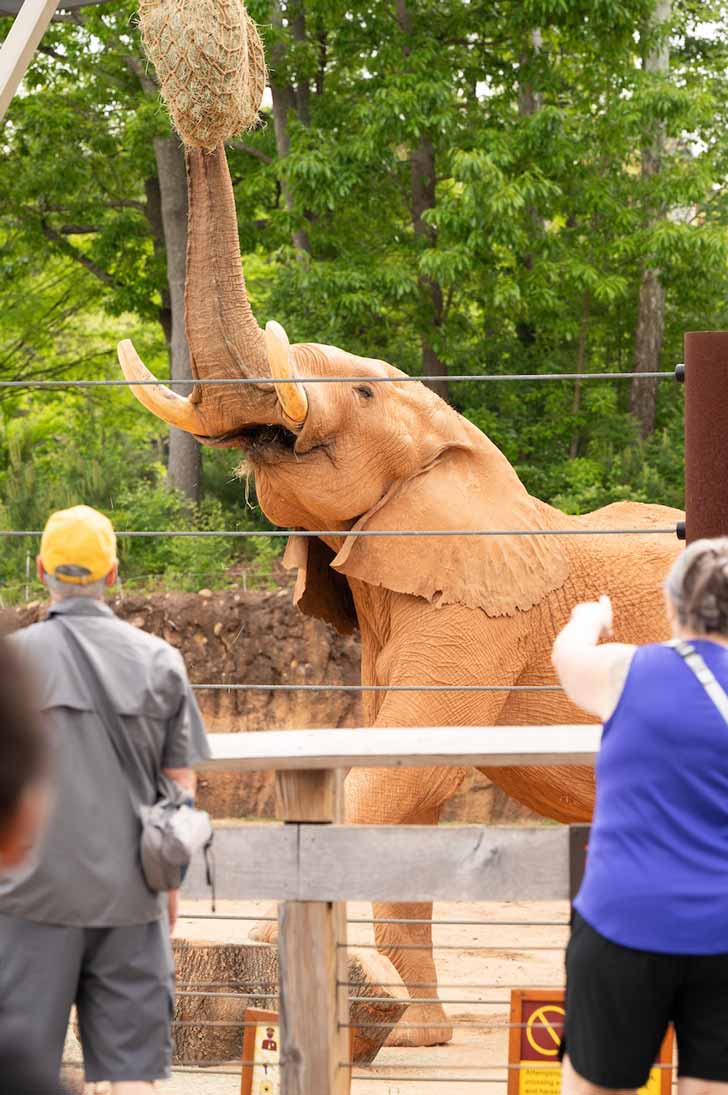
“We weren’t sure at first if they would care that much, so it was great to see how much time they spent at the wall, especially our less dominant females,” Miller said. “They seem to like it the most.”
In the past, she added, the elephants used to only approach the wall when they knew there was food behind it. Once the audio enrichment system was installed, they got more curious.
“We would be off somewhere else, and we’d hear the speaker playing the sounds, and we knew there wasn’t any food back there,” Miller said. “Tara had her trunk in one of the holes, just listening to the sound. That let us know they do like it, and they’re very curious about it.”
To test her system, Mastali observed the elephants’ behavior at the wall seven days before and seven days after the installation of the audio enrichment component.
The number of times the elephants approached the wall after installation increased by 176%, and time spent at the wall increased by 71%.
She calls that a success.
“We’re providing more choice and control over their habitat so that they have more autonomy over how they decide to interact with their surrounding environment,” Mastali told 11 Alive News. “And hopefully that will lead to better care.”
You may also like: British 'Knitting Nannas' sent mini sweaters to penguins, toys to monkeys, and baby blankets to a rhino. Now they're knitting for elephants
Header image courtesy of Georgia Tech
When a cow in the dairy industry gives birth to a boy, that calf is seen as little more than a by-product. Only female cows can produce milk, and that’s after they have been impregnated and given birth to a baby.
Typically, three fates await a male calf in the dairy industry: being raised for veal, raised for beef, or euthanized within their first week of life.
But this time, two farmers allowed two calves to escape to a different fate, by living out the rest of their lives in the sunny fields of Rosie’s Farm Sanctuary in Potomac, Maryland.
They just needed some help getting there.
That’s when filmmaker Joanna Zelman recruited the help of her father, Jared, to drive 600 miles to pick up the calves and bring them to their new home.
“As a filmmaker, sometimes I hear about animals needing help and can't do anything about it,” Zelman said. “But this time we could.”
They outfitted their car with tarps and hay and took off for their first farm.
Once they got there, Zelman’s father, a self-professed “burger lover,” was surprised by how emotional he became when he met the first calf, Mickey, for the first time.

“I didn't think I was gonna have such an attachment,” he said in Zelman’s short documentary, “Cow Trip.”
“I'd like to see him in a few years,” he said. “We're going to save his life.”
Mickey, a black-and-white spotted calf, was soon joined by Moose, a brown-and-white calf. Early on, a potential health scare raised concern in Zelman’s father, a retired emergency medicine physician. But after the two calves began snuggling and comforting each other in the back, a sense of calm washed over them.
“We finally got to Rosie’s,” Zelman said. “It's a sanctuary where rescued animals can just live free.”
As soon as they arrived, Moose and Mickey began playing in the barn, kicking up hay as they leapt around each other. As a precaution, they were quarantined in the barn for a full month.
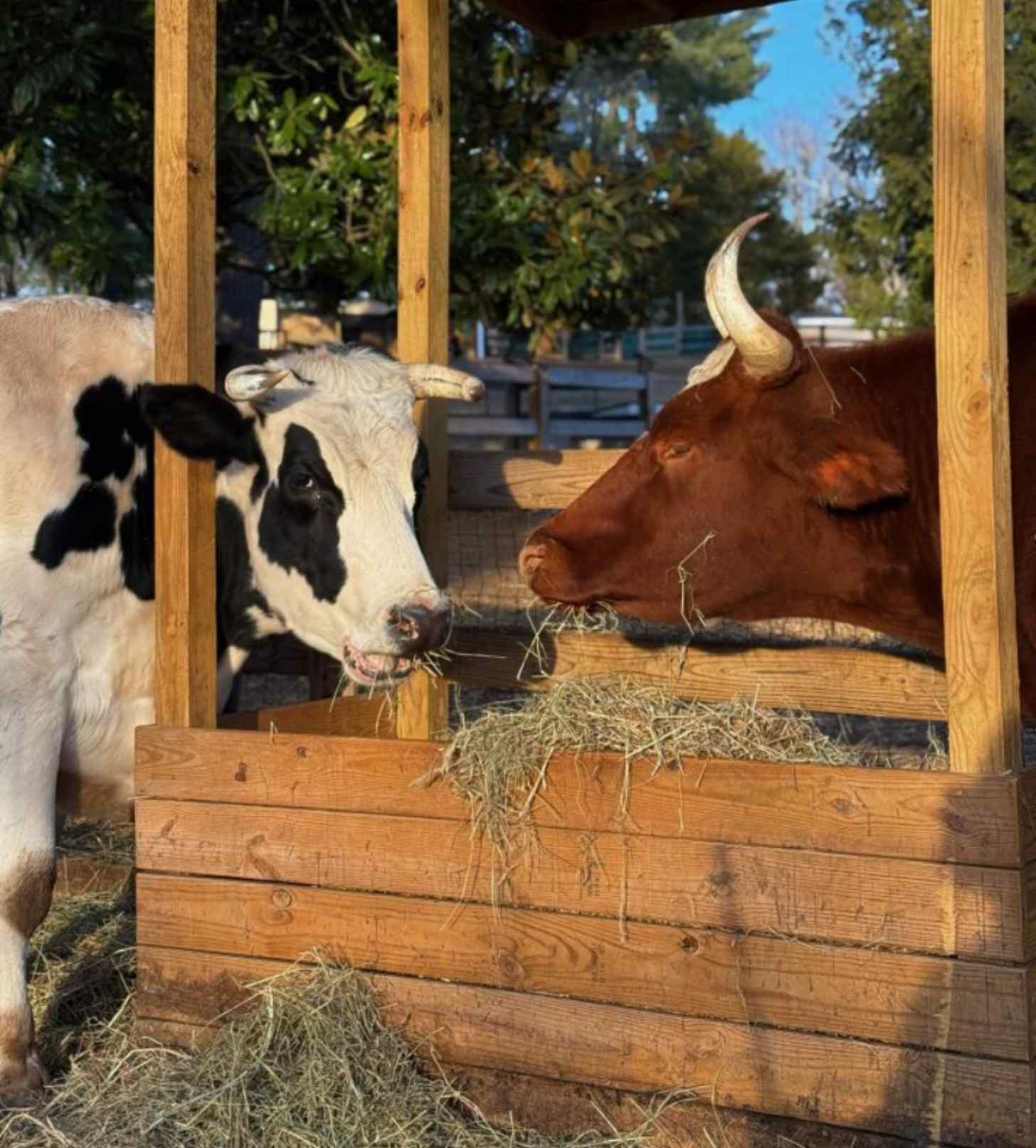
Then they were able to run free.
“Once they were free, their personalities started to really come out,” Zelman said.
The filmmaker hoped to bring Mickey’s mom, named “Twenty-Two,” to the same sanctuary a few months later, but she was sadly put down due to an injury. Zelman’s documentary, “Cow Trip,” is dedicated in memory of Twenty-Two.
Although the film just debuted on May 14 on The Dodo’s YouTube Channel, Mickey and Moose’s journey began four years ago.
And they’ve been at Rosie’s Farm Sanctuary ever since.

“Mickey and Moose are now safe at Rosie’s Farm Sanctuary, where they’re practically inseparable, best friends-slash-brothers who love to graze, wander, and stick close side by side,” the sanctuary posted on their website.
“Mickey is our lovable goofball, always thinking about his next snack and bringing a little extra joy wherever he goes,” they continued. “Moose is more of a gentle free spirit, often gazing out across the pasture as if he’s quietly composing poems in the sunshine.”
“Four years ago, they were two rescued calves on a road trip toward hope,” the sanctuary added in an Instagram post. “Now they are giant, joyful boys living the kind of life they were never supposed to have.”

You may also like: Orphaned sloths are paired together for comfort after abandonment. These two are named Taylor Swift and Travis Kelce
Header image via Cow Trip / Joanna Zelman LLC
Ten years ago, a group of 26 women, ages ranging from early fifties to mid-eighties, decided to fulfill their dream: Living together in harmony, with no men in sight.
They created Britain’s first all-female co-housing community, named New Ground. It was originally an old convent school, and now, it’s a three-story brick building they call home. Of the original 26 women, 21 still live in the community, which was designed by London architecture firm Pollard Thomas Edwards.
“Most women say it,” resident Hedi Argent recently told The Times. “Men a little less, I think. But women very much say, ‘Wouldn’t it be lovely to live together? We’ll buy a big house…’ ”
“ ‘… and we’ll have a kitchen in the middle and we’ll always have wine,’ ” Jude Tisdall, a 74-year-old resident, finishes her thought.
“But very few people are able to realize it,” Argent adds.

Realizing that idea wasn’t easy. In fact, New Ground dates all the way back to 1998 when Maria Brenton was teaching women’s studies at Cardiff University. She had visited North America, Denmark, and Holland on a mission to learn about how different countries took care of aging citizens.
She learned about co-housing and brought the ideas back to a group of women from a variety of feminist and housing networks she was involved in, The Times reports.
A group of those women fell in love with the idea, and the wheels were in motion. It took 12 years for them to find the right spot in London, but eventually their oasis was uncovered: St Martha’s, the former convent school in High Barnet, North London.
The old convent was transformed into 25 apartments with their own kitchens and “wet room” bathrooms, which are connected through hallways to a shared common house with a kitchen for communal meals, a recreation room, and garden.
The group was adamant about including eight apartments reserved for social housing tenants, and although that added some hurdles, eventually helped pave the way for the dream to become a reality.

London-based charities Housing For Women and Hanover Housing Association came aboard the project and helped finalize the funding and logistics, and for a decade now, it’s been a success.
“The women who started this didn’t want it to be seen as a place of privilege just for women who could afford to belong to this kind of community,” Tisdall told The Times.
The women come from all walks of life, including nine different nationalities, workers and retirees, widowed and divorced, happy singles, and one lesbian couple who shares an apartment.
Men are certainly welcome to visit; they just can’t sign a lease.
“We have brothers, fathers, sons, grandsons, lovers and everything in between,” Tisdall told The Guardian in 2023. “The only thing is they can’t come and live here.”
“It’s about taking control of our individual lives,” Tisdall told The Times three years later. “It’s not a rejection of men.”

New Ground is not a perfect utopia, but it comes pretty close.
“It’s not always easy to live with 25 other women. We deal with aging, illness and disagreements,” Tisdall told The Times. “We’re not Stepford Wives, we have to work at it and negotiate.”
Although disagreements come and go, the women are all formally trained in conflict-resolution skills. If decisions cannot be made by consensus, community members vote, requiring an 80% majority to pass. If a decision is blocked, the opposing group has one month to present a feasible solution.
The main benefit the co-housing solution provides is an opportunity to age with dignity and autonomy — together. All of the members of New Ground share responsibilities like finance, building maintenance, gardening, housekeeping, and more.

They have one contracted manager who helps keep the building in shape and collects service charges every month, a fee set by the residents.
And other than that, it’s pretty straightforward — and still a bit radical.
“The women who started this were adamant that they didn’t want to sit in a day-room singing ‘Daisy Daisy’ and ‘Pack Up Your Troubles’ for the rest of their lives,” Brenton told The Guardian.
“We were fiercely opposed to the ageism and paternalism, the infantilization of older people by social care services.”
Brenton, now 80, and a handful of the original group of women, have documented what they accomplished in a new book, “Our Later Years.”

“We are making history, and we are extremely proud,” one resident, Shirley, said in a statement for the architecture firm who built New Ground.
“We are unique, but we don’t want to be unique.”
They hope it inspires something new for other aging women like them — in London and everywhere.
“I don’t think we ever thought of it as a problem to be solved,” Argent told The Times. “We thought about it as an exploration of what was possible.”
You may also like: In this all-women tiny home neighborhood, rent starts at $450. Residents want it to be a nationwide blueprint
Header image courtesy of Pollard Thomas Edwards
For many birds, survival depends heavily on their beaks. Beaks are used for eating, hygiene and even fighting, so a broken or deformed beak can often be a death sentence.
But for one kea parrot, an endangered species endemic to Aotearoa New Zealand, scientists observed the exact opposite, despite the bird missing its entire upper beak.
Scientists found that the male kea parrot (Nestor notabilis), which they named Bruce, was using his lower beak as a jousting weapon, thrusting the implement forward — a behavior that other parrots with intact beaks did not replicate. Researchers observed Bruce participate in 36 combative interactions — and win all of them.
“Bruce shows us that behavioral innovation can help bypass physical disability, at least in species with the cognitive flexibility to develop new solutions,” Alexander Grabham, lead author of a recently published study describing the findings, said in a statement.
“Previous research has shown links between large brains, behavioral flexibility, and survival at the species level.”
Kea parrots are listed as endangered on the IUCN Red List, with an estimated 4,000 adults left in the wild.
Bruce was born in the wild but was taken into captivity around 12 years ago, after he was found with his entire upper beak missing. He has since lived in the Willowbank Wildlife Reserve in Christchurch, where the study was carried out.
Researchers found that Bruce was jousting more frequently than other keas, using different techniques and targeting different areas of his opponents’ body. Usually, keas target the neck, but Bruce distributed his attacks across the back, head, wings, and legs.
In total, researchers recorded 227 combative interactions among 12 different parrots, nine males and three females. Bruce participated in around 16% of them.

Fecal testing showed that Bruce had the lowest levels of a stress hormone metabolite called corticosterone in his group. They also noted that he had priority access to feeders, and he was the only male groomed by other males. In fact, four other males participated in his grooming.
“Bruce is the alpha male of his group,” said Grabham, a behavioral ecologist at the University of Canterbury.
“Our findings also raise an important welfare question: if a disabled animal can innovate its way to success, well-intentioned interventions like prosthetics might not always improve their quality of life. Sometimes the animal can do better without help.”
A previous study, published in 2021, recorded another innovative behavioral adaptation by Bruce: He used pebbles to preen his feathers, a behavior that had never been seen before by other individuals of his species with intact beaks.
This article was originally published on Mongabay.
Header Image by Alexander Grabham