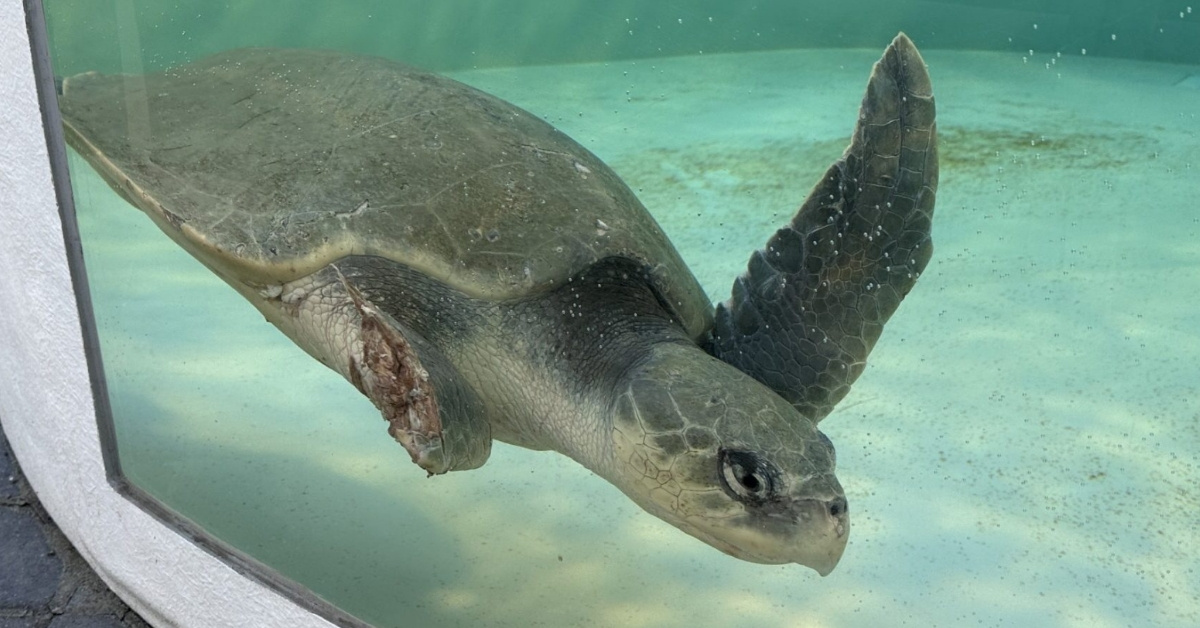
On February 2, a sea turtle was found stranded off Port St. Lucie, Florida, with severe wounds.
It was a Kemp’s ridley, one of the world’s smallest — and most endangered — sea turtles.
She was discovered by a local nonprofit, Inwater Research Group, and rushed over to the Loggerhead Marinelife Center for medical care and rehabilitation. For the first few weeks after her rescue, she remained in critical condition.
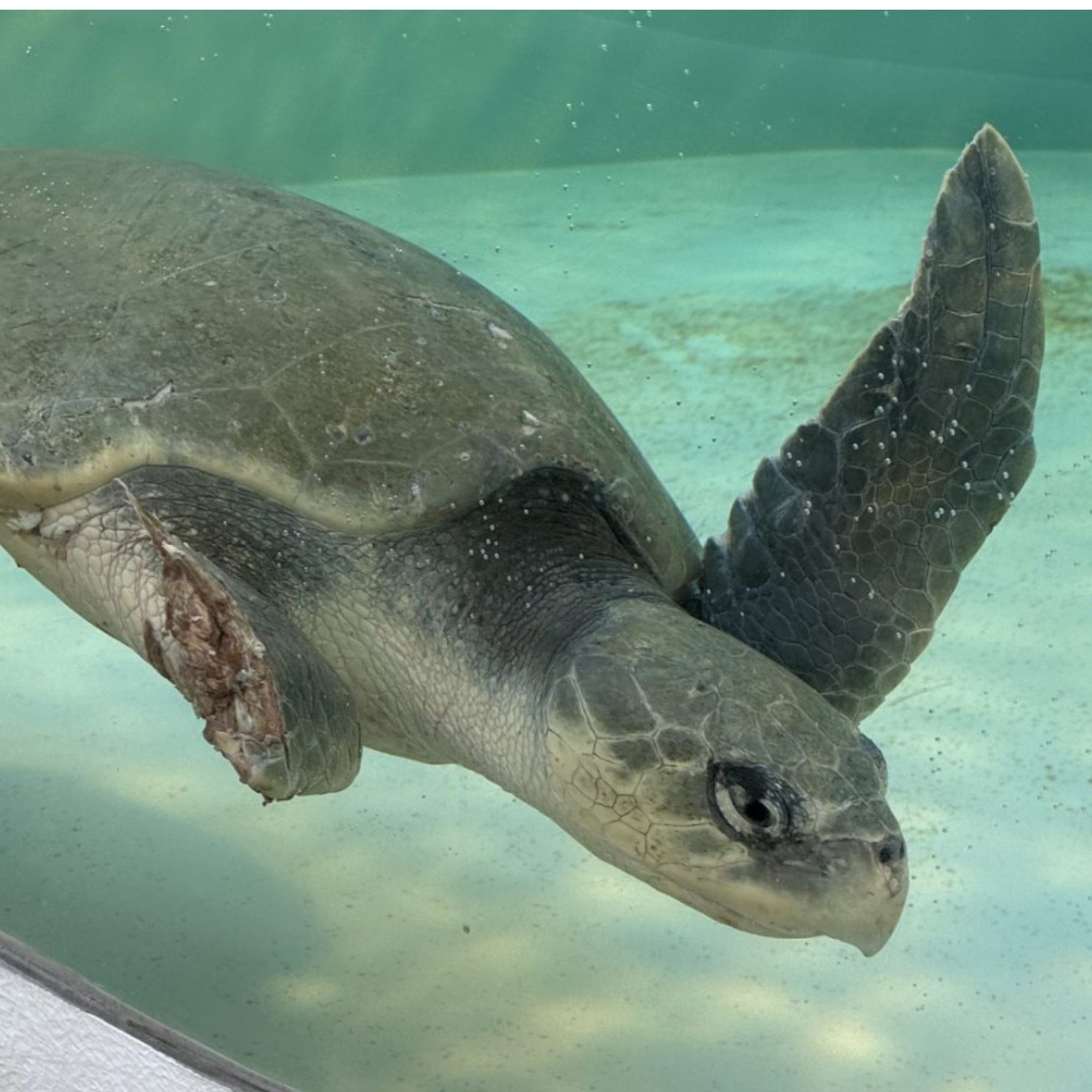
“The right front flipper has been surgically debrided and is healing,” the care team logged on February 13. “They are not currently eating, so we placed a feeding tube, which has one end attached to her carapace.”
A week later, the sea turtle — named Amelie — was still not out of the woods, and narrowly recovered from “severe pneumonia.”
Then, she finally turned a corner in March.
“Amelie, our 82-pound adult Kemp’s Ridley sea turtle, is showing us what resilience really looks like,” the Loggerhead Marinelife Center shared in a Facebook post on March 20.
“After a traumatic predator-related injury that led to the loss of her right forelimb, our veterinary team stepped in to surgically treat and stabilize her injury.”
Although they will never be sure what caused her wounds, her care team suspects that she lost half her flipper in a shark attack.
“From suture removal to X-rays, exams, and a well-deserved shell cleaning, every step you see here is part of her journey back to strength,” the care team added.
“She’s healing, adapting, and making incredible progress in rehabilitation.”
Despite the seriousness of her injuries, Amelie made a full recovery in just 47 days. And once she was cleared for ocean release, she was also recruited for a new research project.
Using satellite-tracking devices, the Loggerhead Marinelife Center and the Smithsonian Conservation Biology Institute have been monitoring how sea turtles survive in the wild after losing a limb. By gluing a tracking device to her shell, scientists can track Amelie and other sea turtles from space.
Other amputee turtles in the program include a loggerhead sea turtle named Pyari, who survived attack wounds to both front flippers. Since her release in January, the three-limbed turtle has traveled nearly 700 miles.
“We do know that they can be successful in the wild because we have seen them on our nesting beaches, but we really want to understand their dive behaviors, how they're migrating once they're back in the wild,” Loggerhead Marinelife Center’s research director, Sarah Hirsch, told CBS News.
On March 25, locals gathered to cheer Amelie on as she waddled towards the shoreline.
“They've been through a lot,” Hirsch said. “They've gotten a lot of medical care here, and to see them be able to go back out and contribute to the population is really rewarding.”
A few weeks later, on April 7, Loggerhead Marinelife Center shared an update on Amelie’s movements.
“Just a couple of weeks after her release, Amelie has been spending time exploring the Florida Keys,” the center wrote in an Instagram post. “Based on her recent satellite pings, she’s been moving throughout the area and has likely found good foraging.”
They added: “We like to think she’s enjoying a well-deserved island getaway.”
You may also like: A passing boat shattered the back of this loggerhead sea turtle's shell. See her incredible four-month recovery
Header image via Loggerhead Marinelife Center