Back in January 2025, a good Samaritan walking along Lennox Head Beach in New South Wales, Australia, called in a sighting of a stranded sea turtle.
Marine biologists at Australian Seabird & Turtle Rescue quickly made their way to the scene, where they found an adult green sea turtle in dire straits.
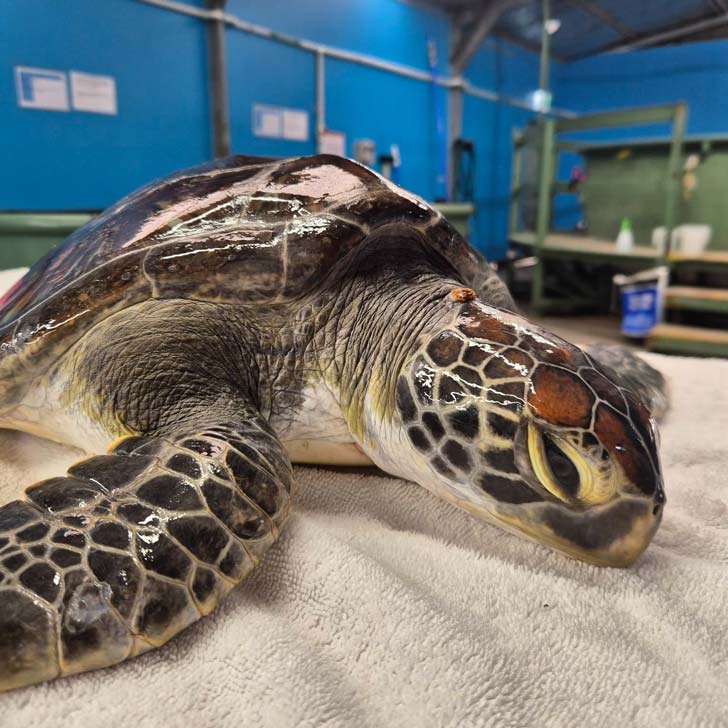
“She was lethargic, underweight, and covered in a heavy epibiota load, a clear sign she’d been unwell for some time,” ASTR shared on Facebook.
They named the female turtle Kalani, and after a quick examination, relocated her to their partners at Byron Bay Wildlife Hospital.

In addition to identifying epibiota — organisms including algae, barnacles, and leeches that live on the surface of a marine animal — veterinarians noticed she had a laceration on her left hind flipper and showed signs of possible renal failure.
Sea turtles don’t always face health concerns when they have epibiota on their bodies. In fact, healthy reptiles can scrape them off with their flippers.
Kalani was sick and injured, however, meaning she didn’t have the energy to control the epibiota, making it increasingly harder to swim because she was weighed down by the organisms on her exterior.
And she certainly isn’t the only sea turtle facing these challenges; As climate change and other human threats like fishing and pollution impact these animals’ homes, they are more at risk of injury and illness, making it harder to survive.

“But Kalani is a little fighter,” ASTR said.
Over the course of six months, veterinarians and conservationists took care of the turtle, as they do with the many they see every year.
They scraped off the epibiota from Kalani’s body, gave her medication, and monitored her during months of rehabilitation. Her recovery was slow, but after a few weeks, she began gaining weight and strength once again.
“Over the past six months, she’s continued to improve and is now thriving in our pre-release tank, strong, spirited, and very much the boss of the space,” rescuers at ASTR shared on social media in July 2025. “While she’s still under our care for a while longer, we’re thrilled with her progress so far.”

At this time, the rescue also shared “after” photos, featuring a shiny and healthy-looking green sea turtle.
“As turtles get healthier, their personalities really start to shine,” ASTR assistant general manager Amanda Philp told The Dodo. “Kalani is now … the first to appear at feeding time. We all love her.”
By September, it was time for Kalani to go back home into the ocean.
“It's been amazing to watch her defy the odds,” Philp told The Dodo. “She’s now healthy and truly flourishing.”
On a sandy beach, Kalani flapped her flippers alongside four other green sea turtles who were rehabilitated through ASTR: Bumble Bee, Vegas, Ugg, and India.
“Every release is a true celebration,” the ASTR team shared on Facebook.
“We are so grateful to our team, volunteers, and supporters who make moments like this possible. A heartfelt thank you to everyone involved in their rescue, rehabilitation, and release, we couldn’t do it without you.”
You may also like: 500 turtles saved from dying lake: 'There was so little water. They were stacked up as if they were on an elevator'
Header image courtesy of Australian Seabird & Turtle Rescue