The Imperial Lakes Nature Park of the Australian Outback is not known for its turtles.
But in January, a group of students from La Trobe University — a research university in Melbourne — discovered a staggering number of freshwater turtles living in its lakes.
Over 500, in fact.
“What makes these turtles unique is that they are out in very high numbers in a very arid part of Australia,” Ph.D. candidate Wesley Smith told the Australian Broadcasting Corporation.
“To get out here [to the lakes] they would need either outside assistance or a very large flood to move out here,” Smith said.
“Or,” he added, “they just had to have been out here for thousands of years.”
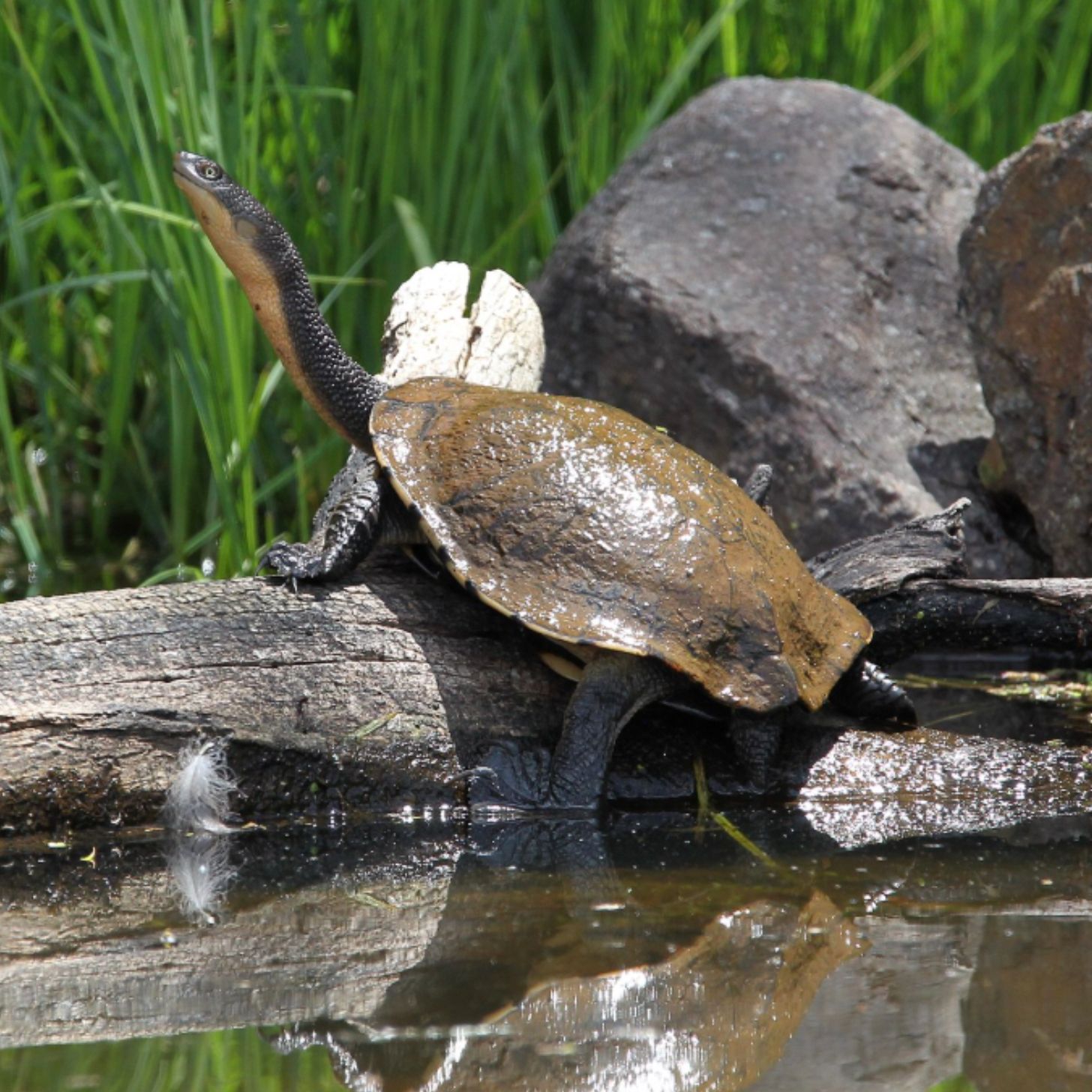
Among the more than 500 turtles, the researchers identified the eastern long-necked turtle, eastern short-neck turtle, and broad-shelled turtle species
Emma Kynaston, a Master’s student on the research team, was shocked by the discovery, saying that broad-shelled and long-necked freshwater turtles were much more suited to “overland movement” than staying in one habitat for long periods of time.
In recent decades, both species have faced population declines due to habitat loss and water quality issues related to climate change.
The eastern long-necked turtle is particularly vulnerable in southern Australia, and the broad-shelled turtle is listed as endangered in Victoria.
“I was just surprised they were out here in general,” she said. “I was expecting 100 or so … we got five times that.”
More shocking than the turtles themselves were the conditions in which they were found. When the researchers found them, they were in dire straits, with the lakes on the verge of drying up for the first time in their 130-year history.
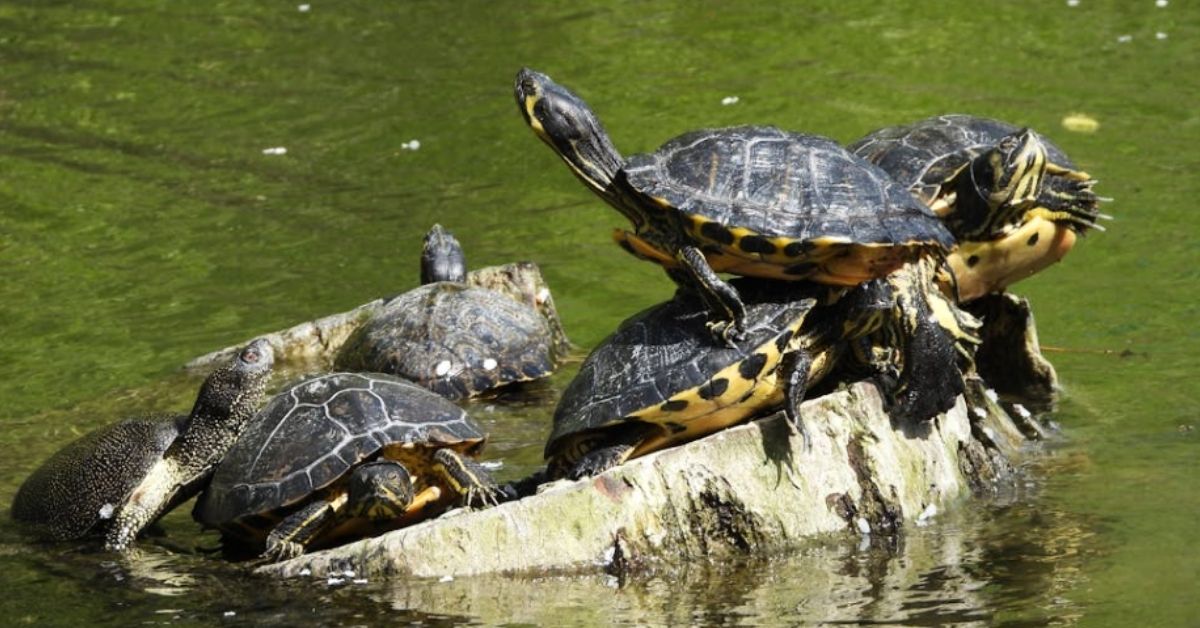
“[The turtles] must have been stacked up as though they were in an elevator…there was so little water there,” said Simon Molesworth.
Simon Molesworth is the president of Landcare Broken Hill, a grassroots network that partners with communities, government, and organizations to promote sustainable land management.
In January, after the research students raised the alarm, they put out an urgent call for emergency funds to collect enough water to save the lakes — and the turtles who lived there.
Ultimately, the nation-wide crowdfunding campaign raised more than $100,000 AUD (roughly $72,406 USD).
“It bought us seven weeks of time before the rain came on the very last day of February,” Molesworth said.
After record-breaking rains hit in late February and early March, the two park lakes were full again. And Molesworth said they had enough funds leftover from the campaign to survive Outback’s next dry period.
“We’ve basically set up a strategy whereby we can keep water in the lakes,” he said.
Before the turtles were discovered and saved, Smith said there was very little data available on turtle populations in arid areas. But after months of research, he and his peers have a much better grasp on the turtles living in the Darling and Lachlan river systems.
“This population seems to be thriving,” said Smith, who hopes to return next year for more research. “Which certainly is a good thing, but we’ll have to dig into it a bit more.”
You may also like: Luxury resort saves over 600 injured sea turtles and helps hatch 120,000 more
Header image via Iulian Florentin Stefancu