Nicole Milson may live in London Ontario, Canada, but right now she’s in Panama on an island, relaxing in an overwater bungalow.
“It's my ‘reward’ trip for all my hard work accomplishing my goal,” Milson told Good Good Good.
For the past five years, Milson has been pursuing a unique dream: to see all seven species of sea turtle.It’s a goal that took her around the world on various volunteer trips.
And in December 2025, she finally fulfilled that goal.
It should be noted that Milson is not a marine biologist or a scientist. She does office administration at McCormick, Canada — a spice factory.
But the 42-year-old mother of two is a self-professed “crazy turtle lady.” It’s a title she’s worn with pride since a life-changing trip to Hawaii in 2020.
“I had never seen any sea turtles at this point, and I spent a couple of days basically manifesting all of them to come to me,” Milson shared. “It was near the end of my trip, and I saw a sea turtle poking its head out of the water coming up for air. This was beyond exciting for me.”
“Little did I know though,” she added. “That night would change my life and switch me from a normal turtle lover to the crazy kind.”
That night, Milson and her friends took a walk along a beach.
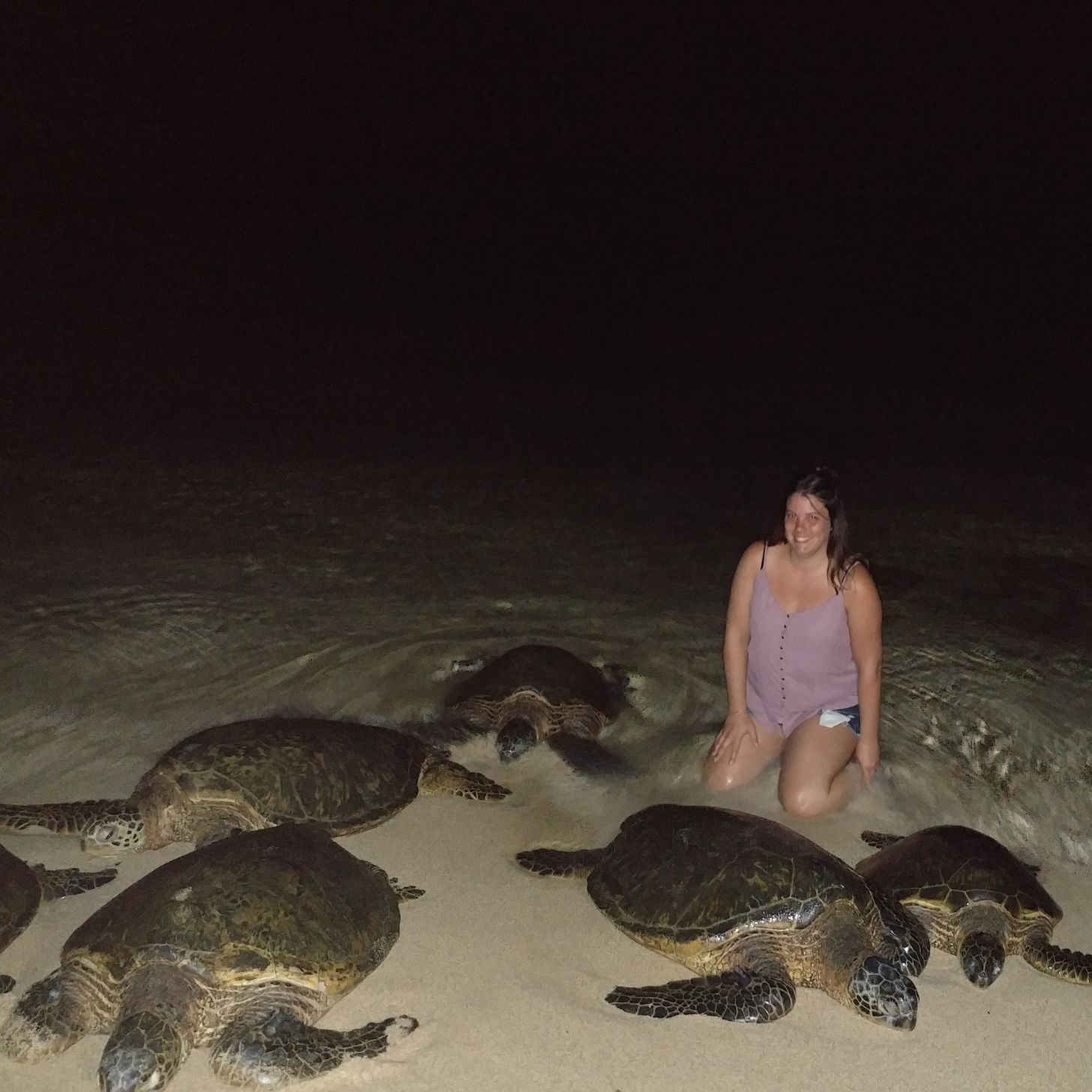
“When I arrived, I saw a rock that looked odd, so I went to check it out,” she said. “And there she was – a green sea turtle. As if that wasn’t spectacular enough, there were about 30 of them all lined up next to her, just sleeping peacefully on the beach.”
That moonlit moment sparked a fire within Milson.
“I’m not sure how to describe the feeling I had when I first laid eyes on these giant reptiles,” she recalled. “I suppose at first, I felt this rush of adrenaline that transformed into awe, and then came emotional tears. It’s like stepping into a different world, and you get a sense of serenity.”
Shortly after she returned home to Canada, Milson couldn’t shake that feeling. She plunged into sea turtle research online, and the more she learned about the animals — all of which are endangered or vulnerable — the more her passion grew.
“This is when I found a volunteer website where you can work with nesting sea turtles in Grenada, among many other places in the world,” she said. “This was it, I knew this was what I needed to do, and I had the epiphany: To see all the species.”
That’s when Milson set off for the Caribbean to volunteer as a research assistant through Working Abroad, taking part in leatherback sea turtle monitoring, research, and community outreach programs on the island of Grenada.
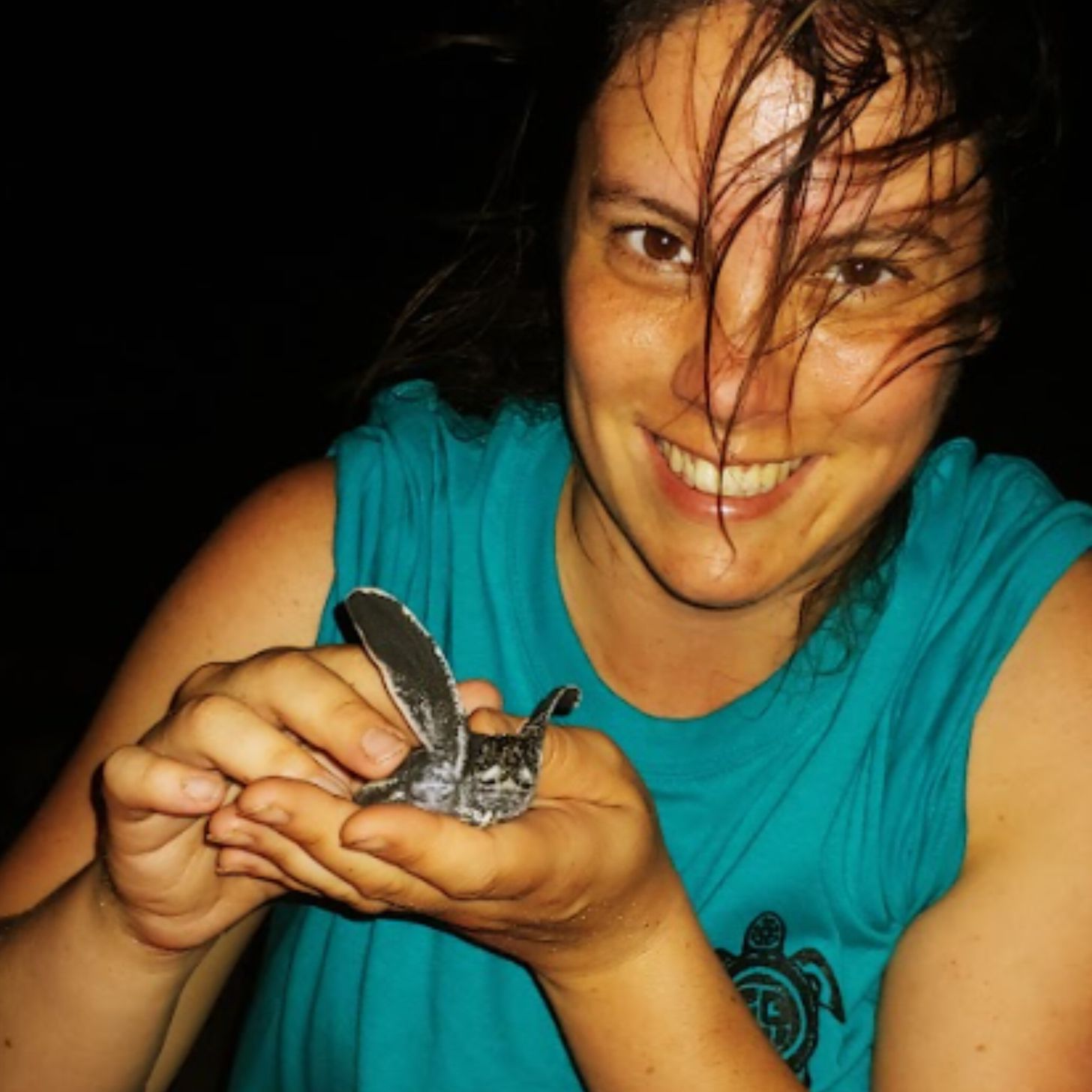
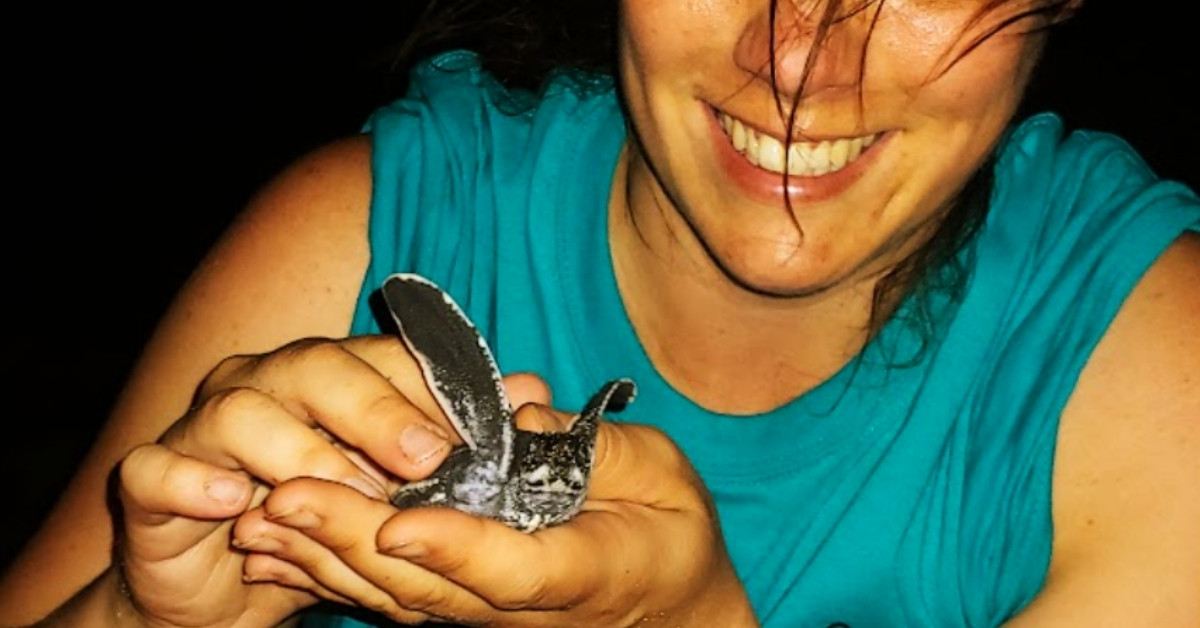
“That experience was incredible. Not only do you get to be up close to them, but you’re working in and around them and helping the species with data collection to save their future,” Milson explained. “I ended up seeing nine leatherbacks and a baby hatchling while there.”
While she was there, Milson was able to check another sea turtle off her list.
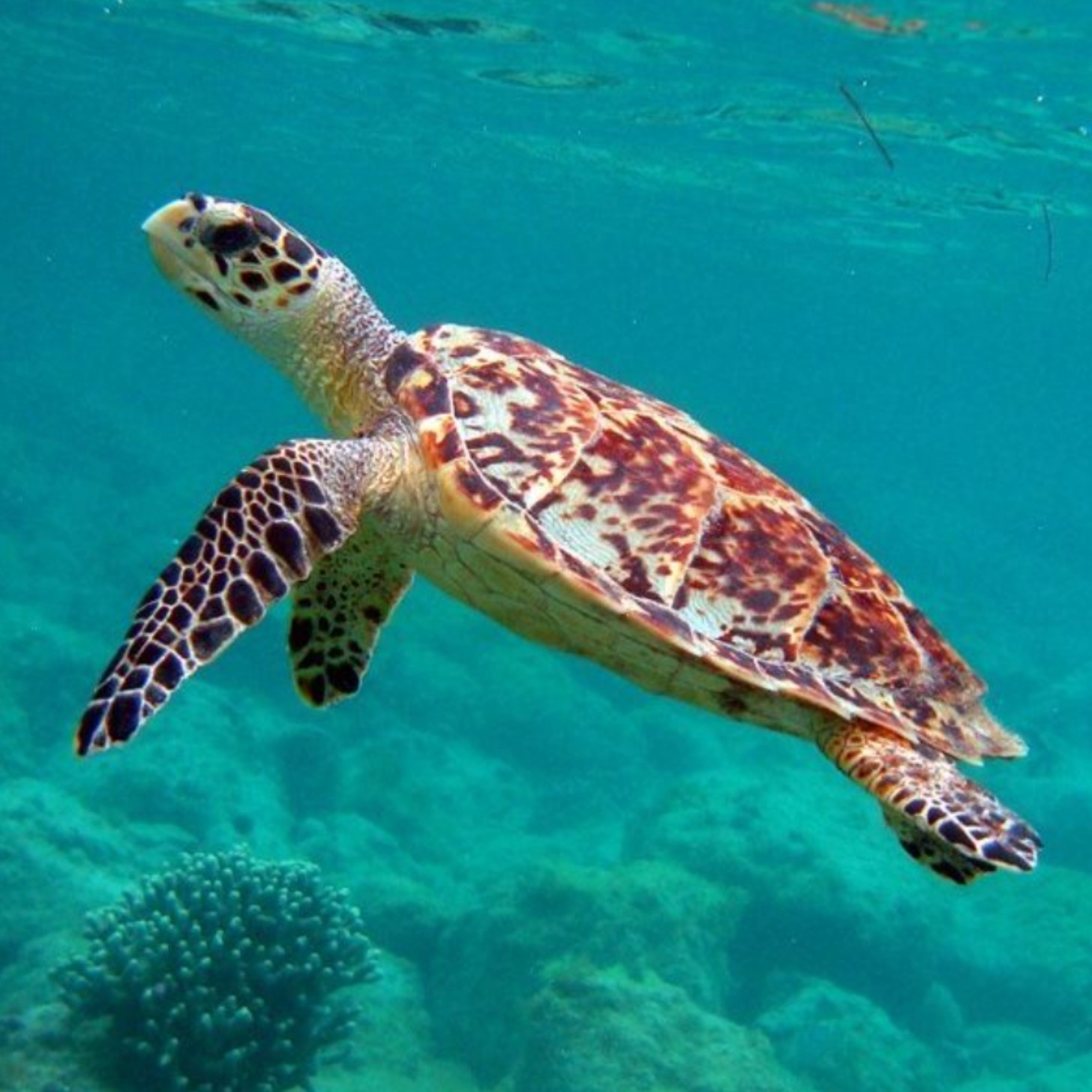
“[I] got really lucky and swam with a hawksbill turtle while snorkeling!” she said. “That amazing feeling you get when you see them for the first time doesn’t fade; it’s like seeing them for the first time all over again.”
The next sea turtle on her list? Loggerheads.
Fortunately, she didn’t have to start from scratch.
Milson had been following the Sea Turtle Conservancy on Facebook for years and knew they were experts in sea turtle conservation. So she reached out to the international organization for help.
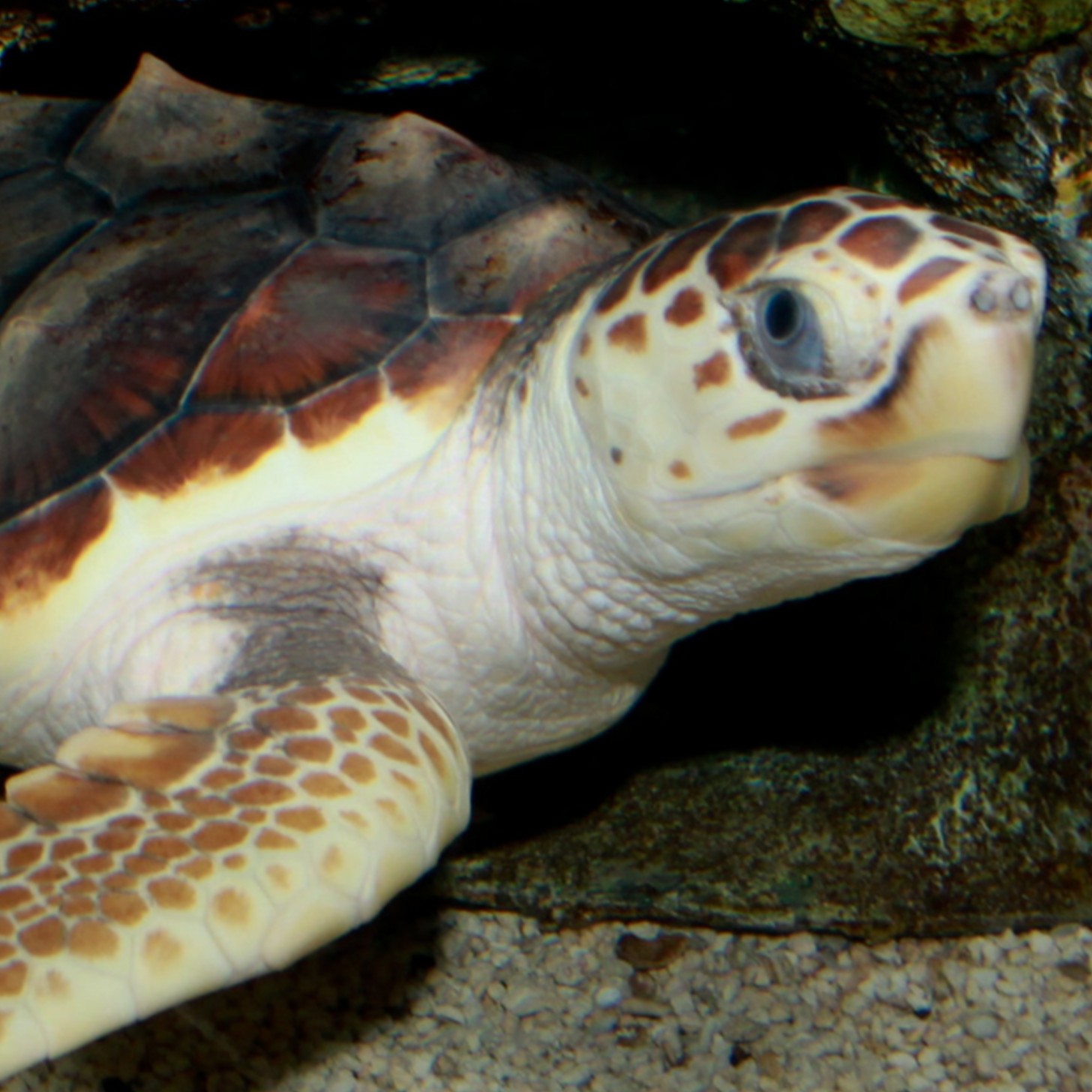
They pointed her to the Loggerhead Marinelife Center in Juno Beach, Florida — a nonprofit that specializes in sea turtle research, rehabilitation, and education.
“I planned my entire trip around that and made sure I visited all the most popular nesting beaches around,” she said. “No luck seeing a loggerhead out in the wild, but I did see many at the center, and that place was so inspiring.”
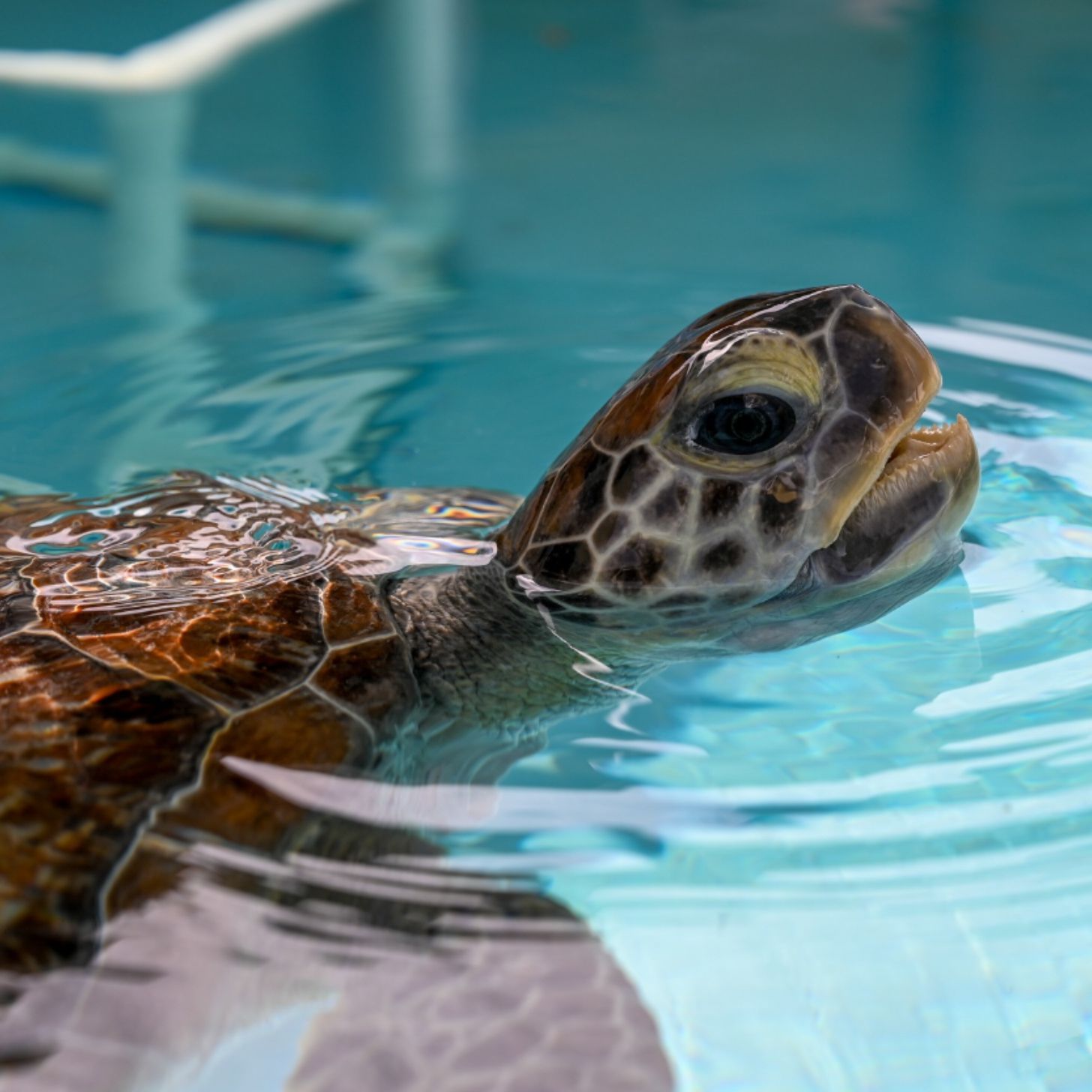
After Florida, Milson still had three sea turtles left. She set her eyes on finding the Olive ridley sea turtle and signed up for another volunteer program through Working Abroad — this time in Costa Rica.
“If I thought I was lucky before, in this experience, I got to see and work with 53 Olives,” Milson said, going on to describe the volunteer experience as the hardest she’s worked in her “whole life.”

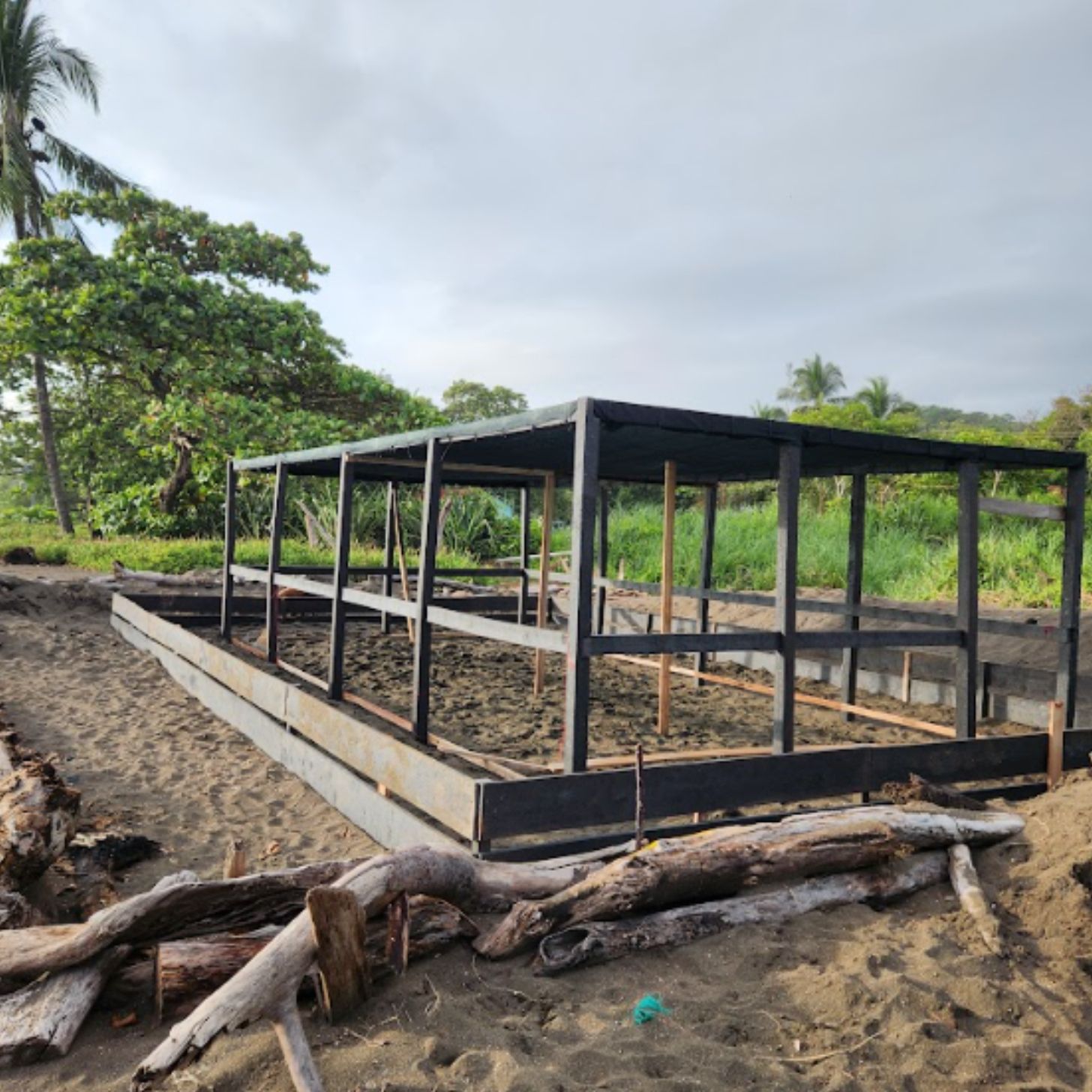
“You would go out and do an all-night walk on the beach, and during the day, we had cleaning duties and [built] a new hatchery for their eggs,” she said.
But Milson said it was time and effort well spent.
“I can’t believe something I’ve been a part of will be around for years to come,” she marvelled.
Five down and two to go. According to Milson, this is where things got complicated.
“Kemp’s ridleys are only found in one spot in the world and are the most endangered,” she said. “I spent a week in Texas on Padre Island just driving the beaches and camping on them, just hoping for the best.”
In the end, Milson turned to South Padre Island’s local rehabilitation center, Sea Turtle, Inc., for help. They arranged a meeting so that Milson could meet Hang Ten, a Kemp’s ridley sea turtle with a rare condition.
“Hang Ten hatched from Nest #23 during our 2009 nesting season with a unique birth defect,” Sea Turtle, Inc. explained on its website. “Her front flipper was forked and curled underneath her body. She was released on the beach with the rest of the hatchlings from her nest, but washed up several hours later.”
Although the hospital initially planned to release her when she grew to a larger size, they ultimately realized that she could never survive in the wild.
“When she was smaller, she traveled to local events and schools to educate the public,” Sea Turtle, Inc. shared, adding that she’s too big to travel now, but visitors can find her “happily eating shrimp on any given day.”
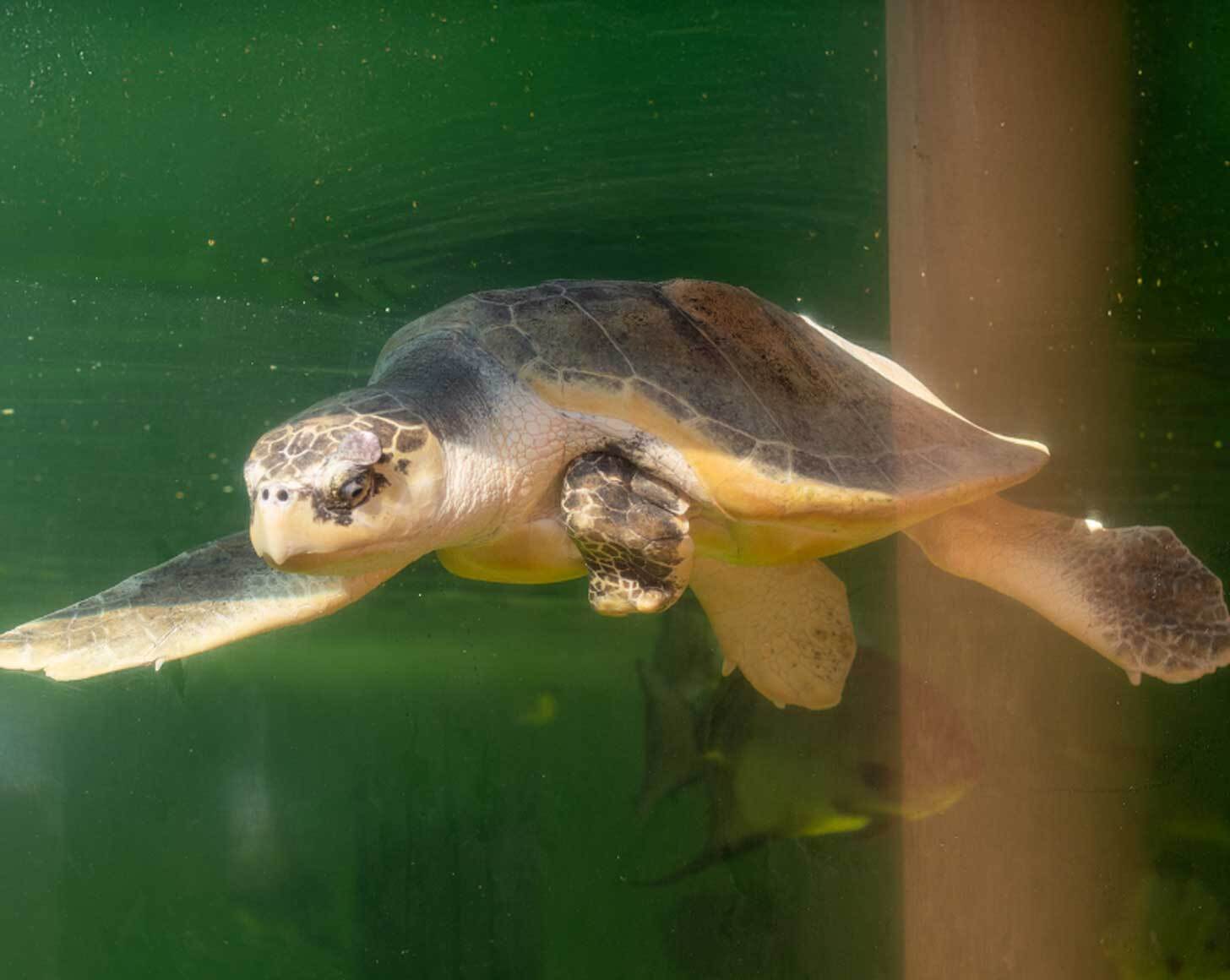
And that’s how Milson found her on the day she came to Padre Island.
“Hang Ten and I had a pretty special bonding moment while there,” Milson said. “This was my favorite moment with a turtle yet.”
After that, Milson only had one sea turtle on her list: the flatback. But she had her work cut out for her, as flatbacks are only endemic to Western and Northern Australia.
Through her research, she found the West Pilbara Turtle Program, a program that tasks community volunteers with monitoring turtle nesting beaches and counting turtle tracks and nests. Through the program, Milson volunteered in the small coastal town of Point Samson.
“I was nervous about accomplishing my goal, but stayed positive and spent my free time relaxing by the water,” she said. “If I have had this much success so far with this journey and it’s all I’ve been thinking about, then surely the universe knows it, and I don’t need to get all worked up about it.”
Four days into her seven-day volunteer trip, Milson began to worry.
“It wasn’t easy, but the coordinator gave me even more shifts so I could have more chances,” she said.
That very day, Milson returned to the beach to find her fellow volunteers gathered around a sand dune, greeting her with huge smiles.
“Everyone was aware of why I was there and everyone was cheering for me,” she said. “I asked why they wouldn’t stop looking at me, and everyone at the same time pointed to the water.”
It was a massive flatback, over 150 pounds in size.
“What a sight it was, seeing that turtle coming out of the water and crawling up the sand,” she said. “All of my experiences had been in the dark with red flashlights. But this one, and on my last adventure, she decided to come out during the day for me to catch it all.”
Milson's eyes flooded with tears.
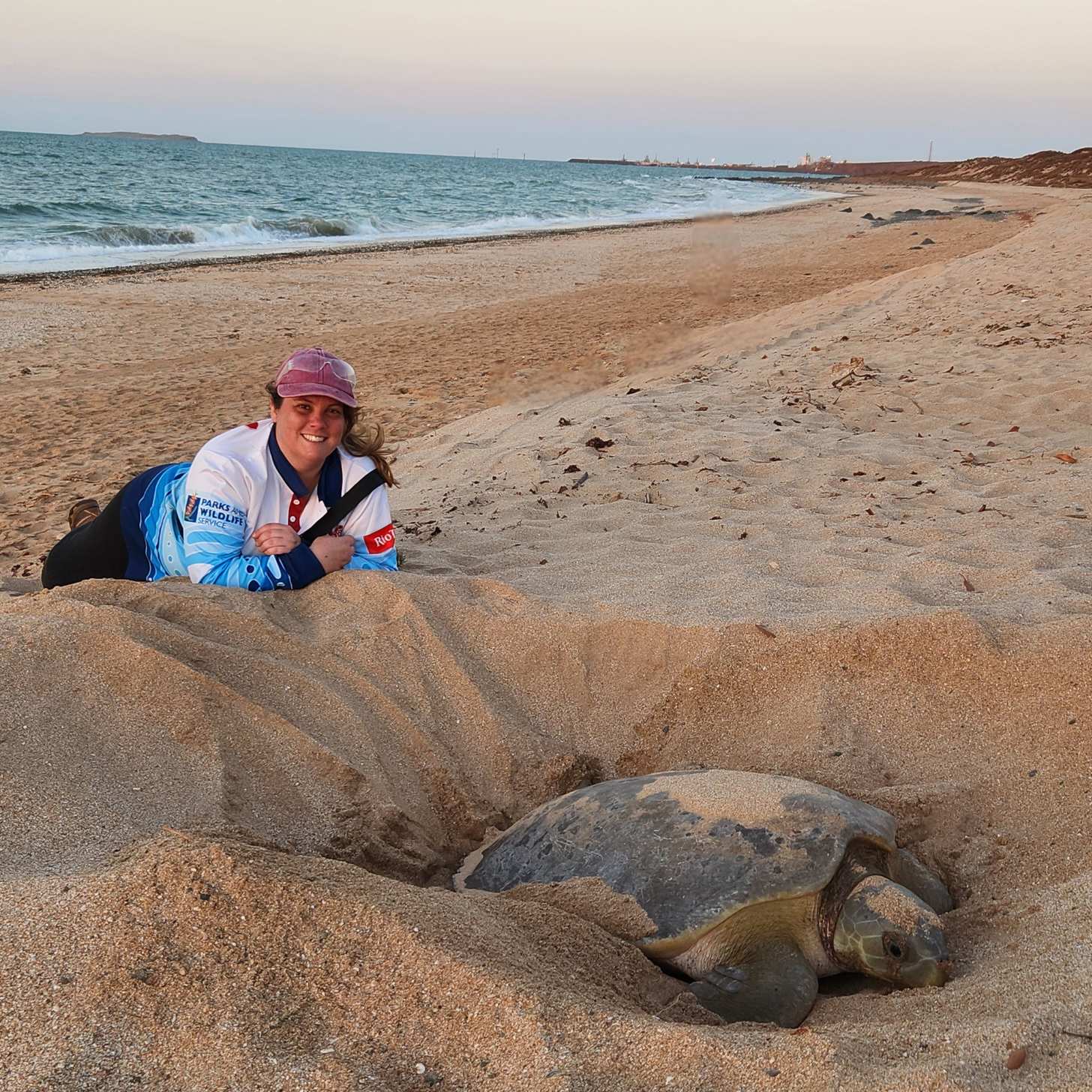
“I just stood there and soaked it all in,” she added. “[It] ended up being a really busy night, and I saw 14 turtles total while there.”
In fulfilling her dream of seeing all seven species of sea turtles, Milson helped protect them along the way.
By conducting research in Grenada, building egg hatcheries in Costa Rica, and monitoring nests in Western Australia, Milson’s everyday actions on nesting beaches around the world put protective measures in place to help generations of future sea turtles.
It’s the kind of grassroots work that is reminiscent of Jane Goodall’s advice in one of her last interviews.
“We have this stupid saying, think globally, act locally, but no,” she told Dax Dasilva, the founder of the environmental nonprofit Age of Union, in July. “Act locally first and do something.”
“What do you care about in your community?” she asked. “Maybe you don’t like the litter … do something, organize beach cleanups, get a group together to plant trees where there’s a little area from, you know, nothing growing.”
“Just do something that’ll make you feel better,” Goodall emphasized. “And then you want to do more, and then you will inspire others to join in.”
On May 4, Working Abroad celebrated Milson’s accomplishment.
“Huge congratulations on achieving your turtley dream, Nicole,” the organization shared on Instagram. “We wonder: What animal will Nicole have to find all of next?!”
You may also like: Scientists were delighted by the appearance of a rare rescued sea turtle. Then they ran a DNA test
Header image via Nicole Milson