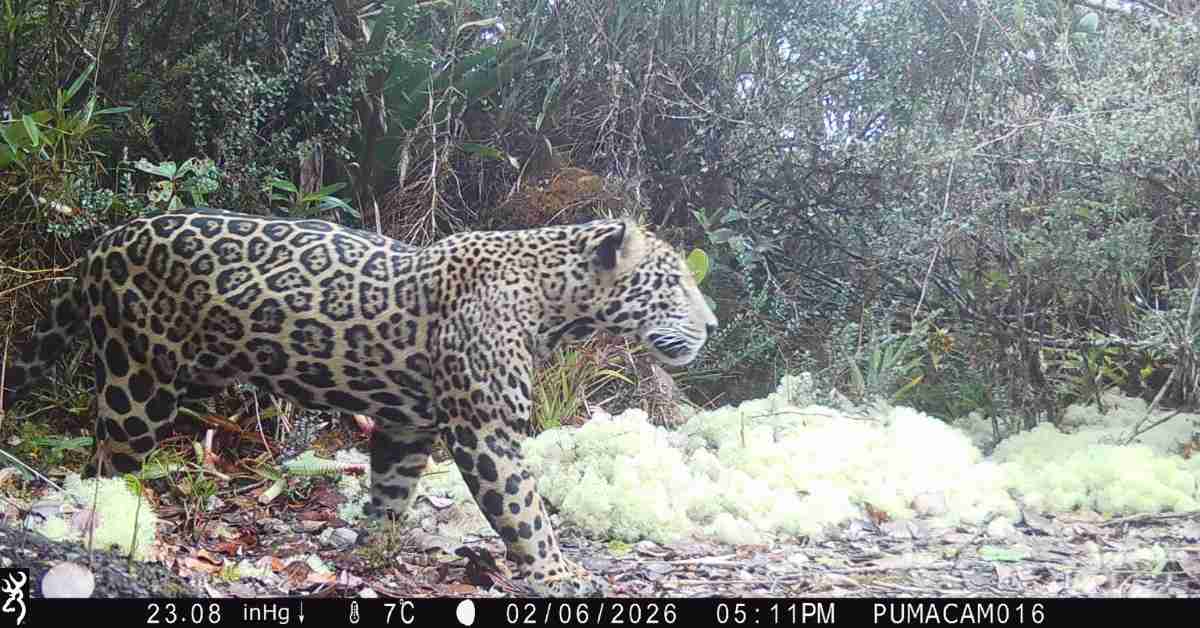
- For the first time in a decade, camera traps set up high in the Sierra del Merendón mountain range in Honduras captured images of a male jaguar.
- The cat was documented at an altitude of about 7,200 feet, much higher than their normal range. Jaguars typically live below 3,300 ft.
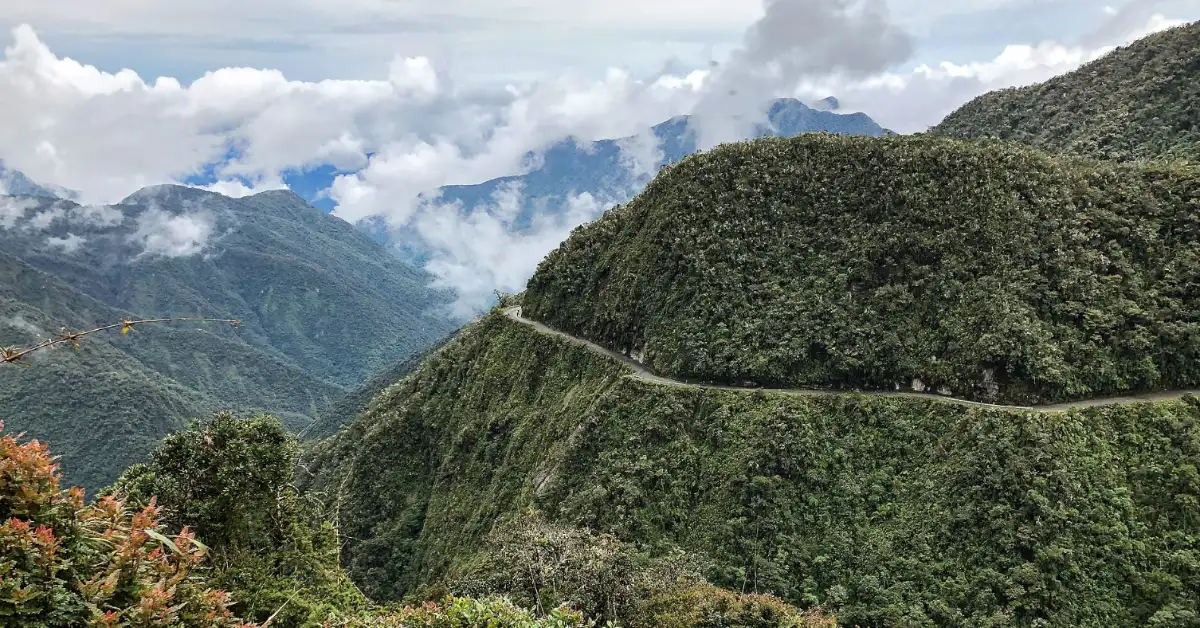
- These mountains can act as a high-elevation corridor for animals to move between landscapes in Honduras, Guatemala, and beyond.
- Jaguars, like all big cats, continue to lose habitat and are targeted by poachers. But this cat moving back into its former territory shows that conservation efforts, such as anti-poaching patrols, land protection, and the introduction of prey species, may be working.
High in the Sierra del Merendón mountains in Honduras, a jaguar has been photographed at 2,200 meters, or about 7,200 feet — an unusually lofty elevation for a species that usually sticks to lowland forests and wetlands.
Jaguars (Panthera onca) are typically found below 1,000 m (3,300 ft), making high-elevation sightings so unusual that scientists have coined a term for the big cats spotted here: cloud jaguars.
Seeing jaguars at this elevation is very rare, said Allison Devlin, who directs the jaguar program for United States-based wildcat conservation NGO Panthera.
“The fact that they’re able to travel through these high elevation areas also shows how resilient they are," she said.
The jaguar, a healthy-looking young male, was photographed by camera traps on Feb. 6 this year — almost 10 years to the day, and in the same location, where camera traps captured the first recorded glimpse of an elusive cloud jaguar in the Sierra del Merendón. The mountains form an important corridor between Honduras and Guatemala, linking the jaguar’s historical range, which spans 18 countries across the Americas, running from Mexico to Argentina.
As apex predators, jaguars play a key role in the ecosystem by keeping prey populations healthy and balanced, and in helping prevent zoonotic diseases that jump between species and can infect humans.
But like all wild cats, they face multiple threats. Once-intact forests are being felled to make way for human settlements, plantations, ranches, mines, and other developments. Climate change is also taking a toll: Forest fires are scorching wetlands and woodlands, and swamps are drying up. The species has disappeared from more than half of its historical range.
Its remaining habitat is a fragmented patchwork, making it difficult and dangerous for the world’s third-largest feline — and the Americas’ largest — to move, hunt, find water, or a mate, and for young cats to disperse and find their own territory. Jaguars are also caught in the crossfire of the U.S.’s “war on drugs,” with drug-producing and -trafficking groups operating in more than two-thirds of their habitat.
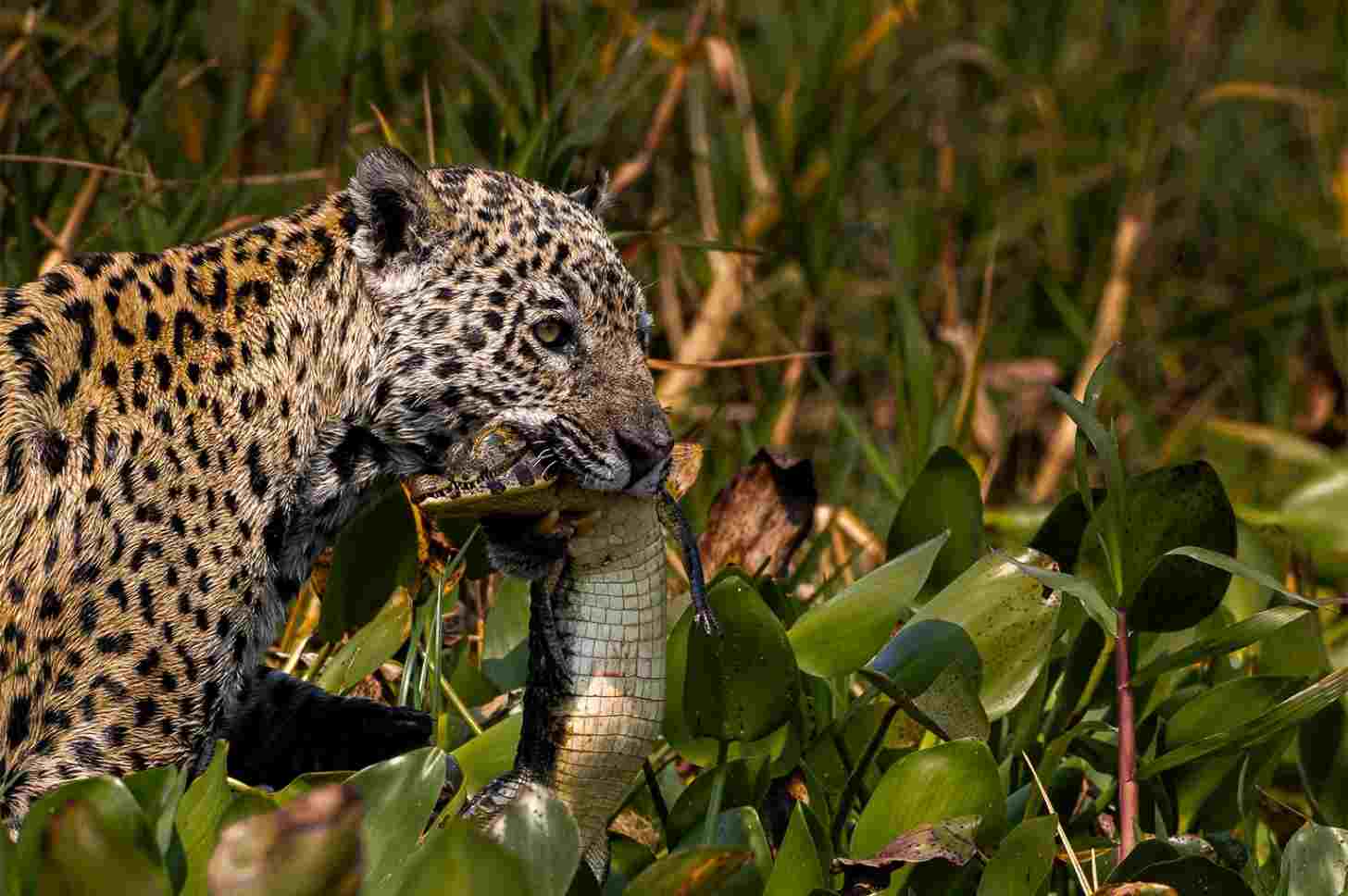
Prey is also dwindling, hunted by humans within shrinking wilderness. Without enough wild prey, jaguars often go after livestock, prompting retaliatory killings by ranchers. And as road networks expand, the cats are becoming victims of highway accidents.
Poaching and large-scale international trade in jaguars and their body parts dropped dramatically after the cat was protected in 1975 under CITES, the international wildlife trade treaty. But with a growing market for their roseate-patterned skins, canine teeth, skulls, and other bones, poaching is on the rise once again.
The result: Jaguar populations have declined by 20-25% over the last three generations, which is about two decades. The species is now classified as near threatened on the IUCN Red List, with populations continuing to drop. They have vanished altogether from some former habitat.
That’s why conservationists are excited by this recent sighting.
“It reaffirms that there are dispersed populations in the northwestern part of the country,” said Marcio Martinez, coordinator at the Honduran government’s National Institute of Forest Conservation.
And while there are no estimates of how many wild jaguars are left in the country, seeing the cat gives hope for their return to the Merendón mountains, Martinez said.

Renewed focus on jaguar conservation
Jaguar range countries are trying to come together to protect this majestic cat and its habitat, working with conservation organizations.
At the 2025 gathering of CITES representatives, range countries agreed to an action plan to protect the felines from illegal trade by strengthening national legislation and law enforcement. They also pledged to boost cross-border cooperation and invest in education and awareness to reduce conflict-related retaliatory killings. A regional plan was also finalized last year to protect habitat.
Other steps were taken at the 2026 meeting of the Convention on Migratory Species (CMS), where countries agreed to protect corridors, promote coexistence, and restore jaguar habitat as outlined in the ambitious Jaguar 2030 Roadmap. Its goal is to secure a network of 30 “jaguar conservation units” and connecting corridors by 2030.
Honduras has also pledged to eliminate deforestation by 2029 — one of the biggest threats to its jaguars and other wildlife — with plans to deploy about 8,000 soldiers for the job.
But conservationists note that political will must be supported by funds earmarked specifically to support these plans, as well as coordinated actions to protect jaguars on the ground — not just on paper. In 2021, conservation NGO WWF said “minimal progress had been made” three years into the launch of Jaguar Roadmap 2030. No current progress reports are publicly available.
Panthera, one of the main backers of the roadmap, is collaborating with local partners as well as the governments of jaguar range countries. Its biologists are installing more camera traps for monitoring, deploying anti-poaching patrols, working with private landowners to secure jaguar migratory corridors, and reintroducing prey species such as peccaries.
“These are important components to ensure that jaguars are going to continue to persist in the region,” Devlin said.
She said she’s pinning her hopes on the young male captured by the camera. “If he can move from a neighboring population to another one, that can help maintain functional connectivity and [their] genetic health,” Devlin said.
This article was originally published on Mongabay.
Header Image by Panthera-Honduras