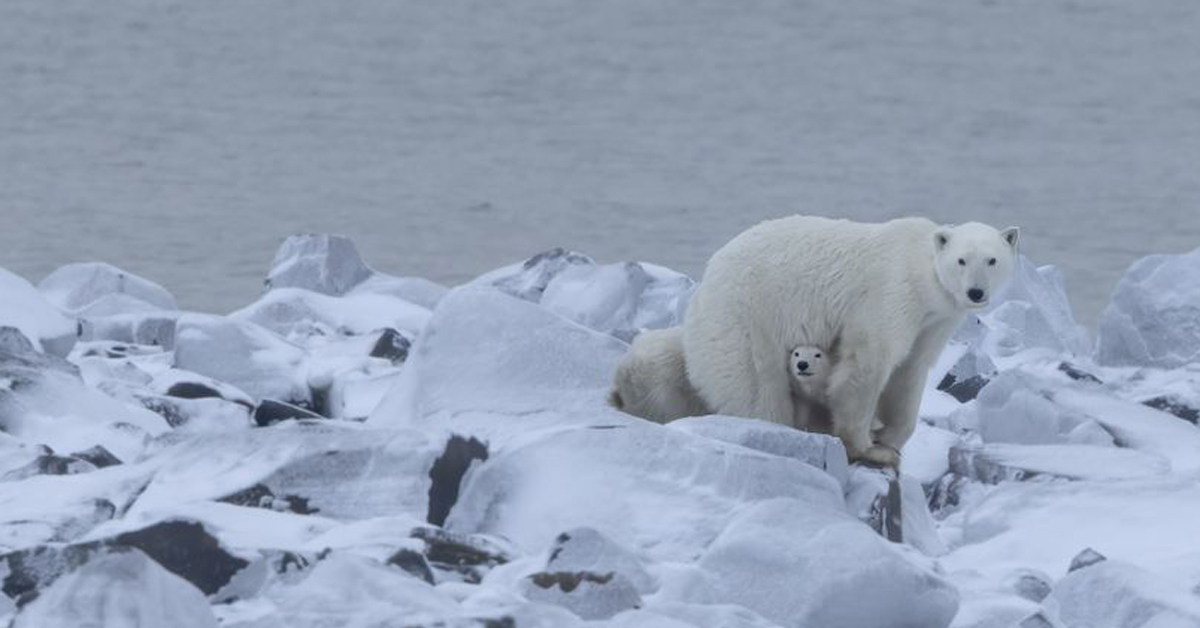
When a female polar bear located near Western Hudson Bay in Churchill, Manitoba emerged from her den last spring, researchers documented that she had one young cub by her side. The baby was tagged to be tracked by researchers, along with its mother.
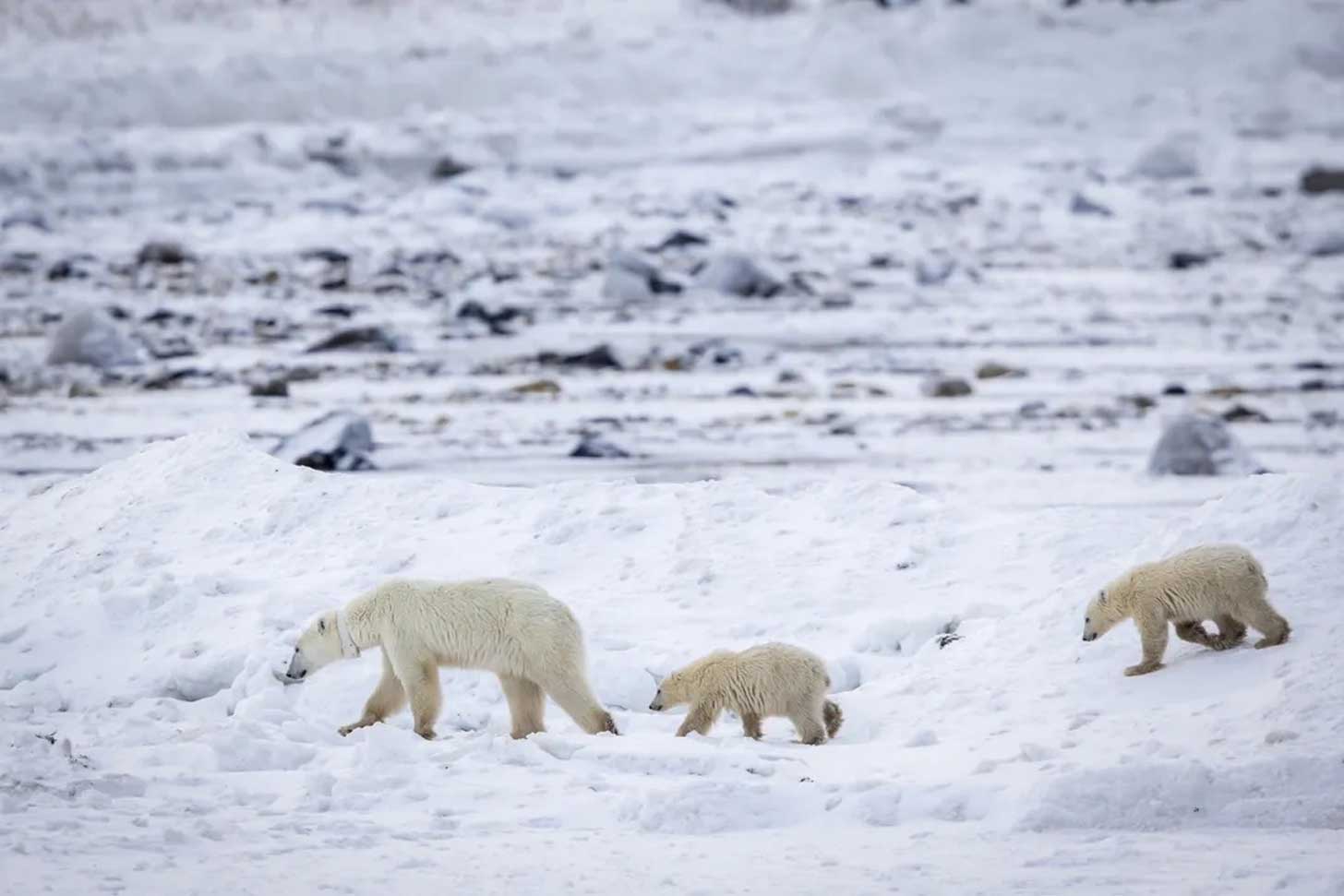
Months later, she was spotted again — denoted as polar bear X33991 — along with her baby. But this time, she also had another cub in tow.
The polar bears of this region are some of the best studied in the world, Polar Bears International said in a statement, but these bears still surprise experts, and X33991 did just that when she adopted a cub that is not her own.
Researchers have confirmed the phenomenon, taking genetic samples from the new cub and analyzing them against what they know about X33991 — and in hopes of finding the cub’s biological mother.
“Polar bear cubs will stay with their moms for between two and two and a half years,” Alysa McCall, Polar Bears International’s director of conservation outreach and staff scientist, said in a statement.
“It's not a lot of time to learn how to be a polar bear. But they do soak up a lot of lessons in that short period of time.”
As of December 2025, researchers believed the cubs to be about 10 or 11 months old, and the mother, X33991, was about 5 years old.
Polar bear adoptions are considered incredibly rare. The subpopulation in the Western Hudson Bay has been studied for over 45 years, and in that time, researchers have tracked more than 4,600 individual bears. This new observation marks only the 13th known case of adoption in this subgroup.
It’s unclear what happened to the adopted bear’s birth mom and whether she is still alive, but it’s also not uncommon for polar bears to pick up extra cubs or switch litters. So, there’s a real possibility that the cub is not an orphan, but rather just a mix-up.

“There must be some sort of confusion going on,” Evan Richardson, a scientist with Canada’s environment and climate change department, said in a video statement shared by Smithsonian Magazine.
“But we really think it’s just because they’re so maternally charged and such good mothers, and they can’t leave a cub crying on the tundra, so they pick them up and take them along with them.”
Now, X33991 and her two cubs have moved out onto the sea ice, where she will hunt seals and teach both babies essential survival skills, according to Polar Bears International.
The bear and her babies can even be tracked online, as they journey across the bay.
Only about half of all polar bear cubs will survive past their first year of life, experts say, and having the help of X33991 will significantly improve the adopted cub’s chances.
“The fact that this cub got adopted and has a chance to learn lessons about being a bear and to be taken care of for a couple years really does give it a shot at making it to adulthood,” McCall said in a statement.
“It's just another reason why the species is so incredible, why they're so fascinating and interesting. It gives you a lot of hope when you realize that polar bears maybe are looking out for each other out there.”
You may also like: Some polar bears are showing unprecedented resilience to climate change
Header image by Dave Sandford / Discover Churchill