Though artificial intelligence is making it easier than ever to produce images, music, and text, the technology is also making it harder for the people who have traditionally produced this work to earn a living.
A photographer who once was commissioned to make art for an advertising campaign is now competing with graphics produced by the AI image generator Midjourney. A novelist who used to make money on the side as a technical writer is seeing that work be replaced by a series of prompts in ChatGPT.
The extent to which AI will upend creative work remains unsettled. But that uncertainty has made guaranteeing income for creatives a more viable policy idea.
In fact, creatives in New York recently participated in the largest basic income program for artists in U.S. history, the Guaranteed Income for Artists initiative.
Spearheaded by Creatives Rebuild New York and primarily funded by the Andrew W. Mellon Foundation, the program gave 2,400 artists across New York state $1,000 a month beginning in June 2022. There were no work requirements and no restrictions on how the money could be spent. The program sought to improve the financial stability of artists and encourage the public to see them as workers who deserve a stable income and social support.
As researchers who study artists, cultural work, and public policy, we evaluated this program to see whether it achieved its stated goals. Our main finding was simple: Artists did not stop working. Instead, they changed the kind of work they did.
Cash buys time
Artists often make choices that look strange in standard economic models, which typically assume workers will prioritize higher wages while balancing work against leisure time.
Artists, on the other hand, may stay in poorly paid, unstable arts work, even when other work pays more. Economists have long described this as a “work-preference” model. Put plainly, they argue that artists get value from the work itself, not just from the paycheck.
The guaranteed-income program, which was geared toward low-income artists, offered a rare chance to see how a financial cushion would influence the kind of work they focused on, along with their overall earnings.
The program selected artists through a weighted lottery. It adopted an expansive definition of “artist.” Anyone engaged in artistic, cultural or community-centered creative practices — such as musicians, storytellers, or muralists — was eligible to apply. However, it excluded commercial workers like wedding photographers or food caterers.
Our analysis, which is forthcoming in the Journal of Cultural Economics, compared artists who received payments with applicants who hadn’t been selected.
For purposes of the study, artists broke down their work time into “artistic/cultural practice(s),” “other arts work,” and “non-arts work.” The work didn’t necessarily have to involve a paycheck or stipend; it could simply mean time spent on a personal artistic pursuit. However, it’s safe to assume that “non-arts work” usually involved some sort of side job to earn extra money.
The results lined up almost exactly with what the work-preference model predicts. Artists who received the payments spent about 3.9 more hours per week on arts work than comparable artists who did not receive the payments. They also spent about 2.4 fewer hours per week on non-arts work.
Opponents to basic income programs often argue that recipients will become less motivated to do any work whatsoever. That isn’t what happened, though. The money helped artists move time out of work they were doing mainly to survive, and into the creative work they preferred.
Earnings told a messier story
The earnings results were more complicated.
Artists receiving the monthly payments earned significantly less from non-arts work. That makes sense, given that many of them switched away from non-arts work. But total earnings from all work also fell by about $11,600 a year on average, close to the $12,000 annual value of the cash payments.
But we cannot confidently say that the basic income program reduced total earnings by that amount. That’s because artists’ incomes are so volatile: A few commissions, contracts, sales, or cancellations can dramatically change what artists earn in a given year.
Income varied widely among both the artists who received monthly payments and the applicants who hadn’t been selected, which made it hard to see the precise cause and effect of the program on total earnings.
The program may have given artists enough financial room to stop chasing some non-arts income, but it did not change their overall income from where it had been.
That is a very different policy effect than “more cash equals more income.” It is closer to “more cash equals more control over time.”
A lesson beyond the arts
The findings do not mean that guaranteed income is the right policy for everyone. Artists are unique. Many have strong reasons to keep doing creative work even when it pays poorly.
The study also took place after the COVID-19 pandemic, while the arts and entertainment sector was still recovering. And Creatives Rebuild New York’s guaranteed-income program was a temporary, one-time opportunity.
A longer-term follow-up could show whether these shifts lasted. Did artists keep making more art after the payments ended? Did the extra time they spent on their own artistic pursuits lead to new work, new income or more stable careers? Those questions remain open.
But to us, the most important lesson may be that work is not one thing.
A monthly cash transfer can reduce one kind of work while increasing another. It can lower earnings from gigs people take mainly to pay the bills, while freeing up time to spend on work that is meaningful, socially valuable, or personally sustaining.
For artists in this program, $1,000 a month did not buy a vacation or a chance to slack off. It bought time for work they valued more.
That distinction matters, particularly as debates over the use of basic income policies grow alongside advances in AI and automation. The question is not only whether people work when they receive cash with no strings attached. It is what kind of work becomes possible when financial pressures ease.
This article was written by Joanna Woronkowicz from Indiana University and Doug Noonan from Indiana University Indianapolis, and was originally published on The Conversation.
Header Image by Raden Prasetya on Unsplash

In early April, two puppies were found abandoned in Prospect, Connecticut. Despite being only four months old, the dogs were massive, with long snouts and a “certain look in their eye.”
Local animal control was baffled, but when Zilla Cannamela saw the story on the news, she immediately knew that they weren’t just dogs.
They were a canine hybrid known as wolfdogs.
“When you see one, you know,” Cannamela told WFSB, a local news station in Connecticut.
Cannamela is the co-founder and president of Desmond’s Army Animal Law Advocates, a volunteer-run organization that combats animal cruelty and fights for animal welfare legislation.
Upon hearing about the two puppies, named Barnaby and Spartacus, Desmond’s Army Animal Law Advocates funded DNA kits to get them tested. The tests soon confirmed that their mother is a dog and their father is 100% wolf.
And wolf dogs are illegal to breed or own in Connecticut.
“Combining the two, they’re living in separate worlds in one body,” Cannamela explained.

Due to their “wild” nature, wolfdogs need to be in an environment that can properly care for them. They require a lot of room to run, play, eat, and sleep — without the company of other pets that may activate their prey drive.
“We want to thank the Prospect Police Animal Control and Woodbury Connecticut Animal Control for taking care of them on an interim basis despite their specialized care needs and challenging instinctual behavior,” Desmond's Army posted to Facebook on April 15.
The organization added that they were “proud to play a small role” in rescuing these innocent animals.
“It isn’t their fault,” they emphasized. “The owner likely dumped them after struggling with their wild instincts and high-maintenance needs.”
Fortunately, Desmond's Army was able to connect the Prospect Animal Control with a specialized sanctuary.
“Today, these two boys are now safe and thriving at Howling Woods Sanctuary in New Jersey!” they celebrated.
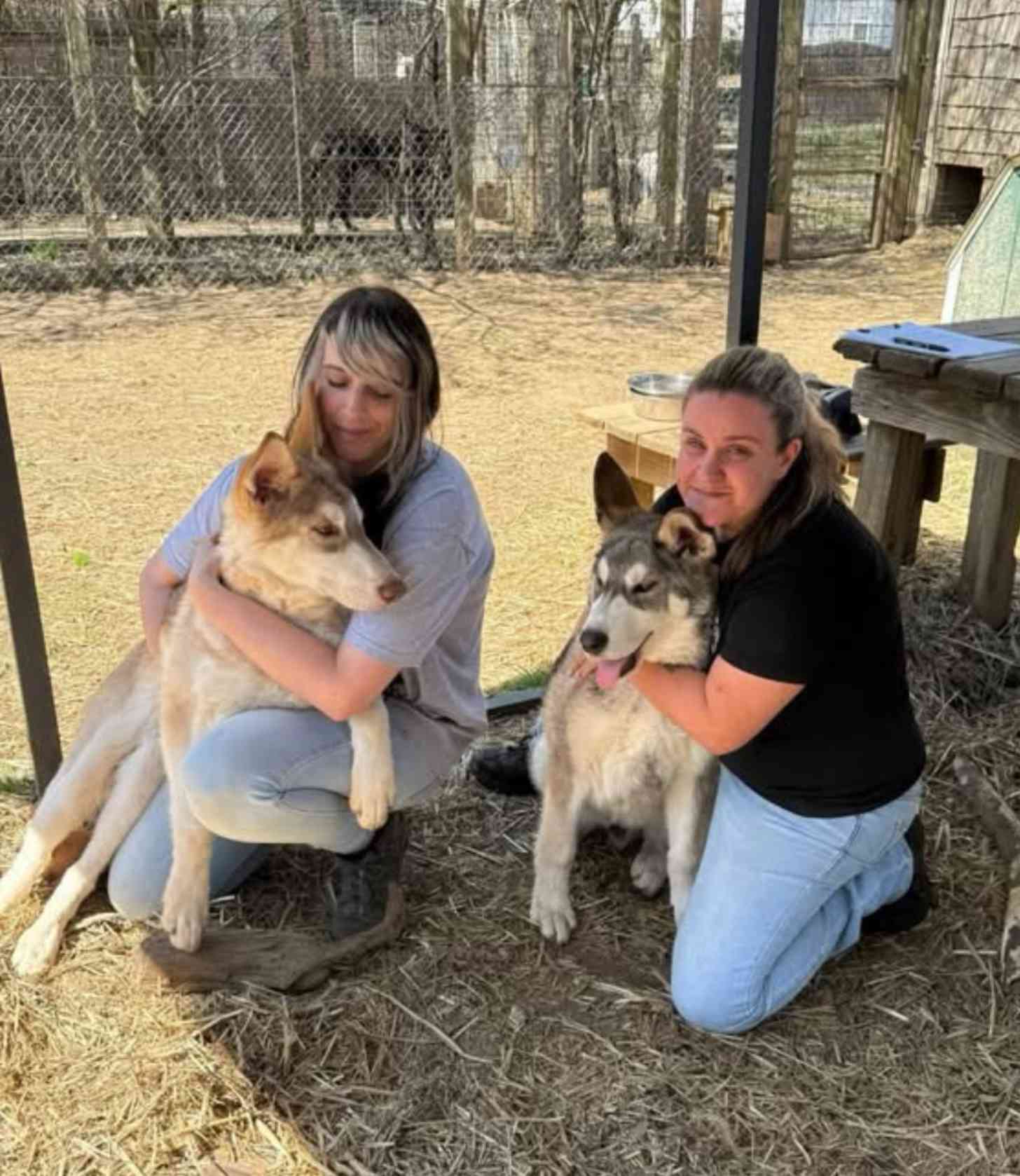
Howling Woods Sanctuary is a nonprofit educational center and rescue that specializes in wolves and wolfdogs.
“We welcomed two new additions this month — Barnaby and Spartacus,” Howling Woods Sanctuary posted to Facebook on May 1.
“Their puppy energy has been a lively addition to the group, and it’s a reminder of how much early development and socialization shape future behavior.”
Right now, Barnaby and Spartacus are enjoying long walks and “play dates” with their own kind. But eventually, the siblings will have the opportunity to join other wolfdogs on community outreach events.
“These visits continue to be an important part of outreach — giving the public a chance to connect with the animals while learning about wolfdog behavior, conservation, and responsible ownership,” the sanctuary said.
“As we move further into spring, we’re looking forward to continued growth, more educational outreach, and more opportunities for the public to connect with what we do.”
You may also like: 'Wolfdog' sanctuary helps veterans with PTSD heal in 'non-traditional therapy' program
Header image via Prospect Animal Control
This weekend, an event called Rededicate 250 will be taking place on Washington, D.C.’s National Mall. Organizers of the event, a group called Freedom 250, describes it as a “national jubilee of prayer, praise, and thanksgiving.”
Defense secretary Pete Hegseth will headline the rally. And according to The Guardian, the lineup also includes some speakers that experts have characterized as Christian nationalists or extremists.
The organization behind the event, Freedom 250, is a private nonprofit launched by the White House in December 2025, reported The Guardian, as a partner to the 250th anniversary commission established by Congress in 2016. The organization is now under congressional investigation over use of federal funds.
In February 2026, a multifaith commission, Interfaith Alliance, also sued the Trump administration, arguing its “Religious Liberty Commission” skews overwhelmingly Christian and breaches the Federal Advisory Committee Act’s requirement of “balanced membership.”
“Religious freedom for some is religious freedom for none,” Rev. Paul Brandeis Raushenbush, president and CEO of Interfaith Alliance, said in a statement.
“The government has no right to pick and choose which religious beliefs to promote, and which to marginalize. The Trump administration has failed to uphold our country’s proud religious freedom tradition, and we will hold them accountable.”

And Interfaith Alliance is protesting the May 17 event on the National Mall, too.
Ahead of the event, the group has partnered with Robin Bell of Bell Visuals, to project messages that support religious freedom on the exterior of D.C.’s National Gallery of Art.
“We reject Christian nationalism! Democracy, not theocracy!” Interfaith Alliance proclaimed on social media.
The displays say things like, “Religious freedom for all. Christian nationalism threatens everyone’s religious freedom, “Rededicate America to everyone’s religious freedom,” and “The separation of church and state is good for both.”
Interfaith Alliance brands itself as “the pro-democracy faith movement,” and features faith leaders of many different traditions, including Christianity, Islam, and Judaism.

The group was especially vocal during the Immigration and Customs Enforcement surge in Minnesota earlier this year, rallying faith leaders from across the country to help community members and urge ICE agents to retreat.
They also released an ad urging viewers to “choose love, not ICE” during the holidays in late 2025, broadcasting it on Fox News channels in Mar-a-Lago.
This new display along the National Mall seems to be the group’s latest contribution.
“The projections … will shine bright on the National Mall ahead of Trump’s ‘Rededicate 250’ event, in which a roster of almost exclusively conservative Christians will mark America’s 250th anniversary with a ‘rededication of our country as One Nation to God,’” Interfaith Alliance wrote on social media.
“America was not founded as a Christian nation. And we refuse to let anyone rewrite that history.”
You may also like: Virginia megachurch donates $1M to wipe out rent for 300+ families and keep them from being evicted
Header image courtesy of Interfaith Alliance
Last weekend, 277 dogs made history.
On May 9, Chewy invited 277 dogs to take a dip, all in hopes of setting a new Guinness World Record: The largest dog pool party.

They were successful, and hounds had a blast in a handful of pop-up pools at a Chewy Bark Park in Coral Gables, Florida. The event was designed to be a safe, joyful summer kick-off and do a little good in the process.
In addition to cooling off in some dog-friendly pools, the event included summer games, prizes, photo ops, treat tastings, and even a claw machine filled with summer dog toys.

“Chewy Summer Social brought pets and pet parents together to celebrate the joy of summer with pets through an experience rooted in safety, connection, and care,” Lisa-Marie Curti, head of brand activations at Chewy, told Good Good Good.
“Helping pets stay safe and cool during the summer is a real part of life with pets, especially in South Florida, and we loved creating a fun, meaningful way for dogs to beat the heat at Chewy Bark Park.”

The fun had a real purpose, too. Miami-Dade Animal Services was on-site with adoptable dogs, the Miami Fire Department provided dog CPR training demos, and Chewy Vet Care offered information on pet health to keep pups safe and cool all summer long.
Chewy is also donating pop-up pools and summer toys to shelters and rescues in Florida to help provide additional enrichment items for shelter dogs to stay active and engaged safely during the warmer months.

“What made the day even more special was being able to extend that care beyond the event itself,” Curti added.
“By donating toys and pools from the event to local shelters, we’re helping more pets experience comfort, enrichment, and moments of joy while they wait for their forever homes. That’s what Chewy is about — showing up for pets and pet parents through the everyday moments, big and small.”

Now, 10 pet parents who weren’t at the event also have a chance to win a pool of their own, along with a summer prize pack of new toys from Chewy’s partner Frisco. Anyone interested in entering to win can do so via Instagram.

“We absolutely loved the Chewy pool party last weekend. They truly thought of everything — it felt like being at a luxury resort poolside cabana just for the pups. From the fresh towels and pupsicles to the toys and treats … it surpassed anything I could have imagined,” pet parent and event attendee Michelle Arean said.
“Dog people truly are the best people to spend a weekend with... who else could break a Guinness World Record so superbly?”
You may also like: Viral therapy dog gives children a hug every day when they get to school: 'He is life to these kids'
Header image courtesy of Chewy
Oklahoma is now the 17th state in the United States to ban child marriage.
Senate Bill 504 requires anyone getting married in Oklahoma to be at least 18 years old, with no exceptions.
The measure became law Wednesday without Gov. Kevin Stitt’s signature and goes into effect Nov. 1.
State law currently allows minors to get married with the consent of a parent or guardian and children 16 or under can be married with authorization by a court.
The measure repeals all exceptions for minors getting married.
The measure passed through the Senate unanimously. It was met with fierce debate from some House Republicans and passed off the chamber’s floor by one vote.
The Legislature last session passed a law raising the age of sexual consent to 18, with a “Romeo and Juliet” exception for teens who are close in age.
State Senator Warren Hamilton said in February, “Though nearing adulthood, the fact remains that these are minors who are vulnerable and need legal protections from those who seek to prey upon them. By raising the legal age for marriage, we are closing dangerous loopholes and ensuring more children can grow up safely, without risk of coercion.”
This article was originally published by Oklahoma Voice, with small additions to their original article from Good Good Good.
Header photo courtesy Kyle Phillips/Oklahoma Voice
Every day the Good Good Good team collects the best good news in the world and shares it with our community. Here are the highlights for this week!
If you want to get good news in your inbox every day, join the Goodnewsletter — the free daily newsletter designed to leave you feeling hopeful.
The Best Positive News We’re Celebrating This Week —
Captive elephants were rehomed in Europe’s first large-scale elephant sanctuary
The first large-scale elephant sanctuary in Europe is receiving its first residents: Julie, the last circus elephant in Portugal, and Kariba, who has been living alone at a Belgian zoo.
The sanctuary is located on a former cattle ranch in the Alentejo, east of Lisbon, Portugal, and close to the border with Spain, and is opening to provide a more natural environment for the around 600 animals still living in captivity across Europe. It will not be open to the public.
Initially just 28 hectares — still a much larger area to roam than the elephants have been used to — the sanctuary will raise more funds to expand into the 405 hectares available, which could welcome 20 to 30 elephants.
Why is this good news? Studies have found reduced life expectancy and increased infant mortality rates among elephants held in captivity, with one study finding African females lived 17 years on average in zoos, compared to 56 years in the wild. These first two residents will not only have critical autonomy, but expert care available, too.
→ Read more
She was the first female CEO of an Afghan tech company. Now she teaches girls under Taliban rule in secret classrooms
→ Read more
More than half of US states now cover doulas under Medicaid
A new review of clinical trials published in the Journal of the American Medical Association recently found that doulas — or those who provide assistance before, during, and shortly after childbirth — greatly lower maternal anxiety and improve postpartum care.
According to the National Health Law Program, 26 states and D.C. are now actively reimbursing Medicaid coverage of doula care. Before 2020, only two states, Oregon and Minnesota, provided coverage for doulas.
Additionally, UnitedHealthCare recently announced it would allow for coverage of doula care in employer-sponsored programs nationwide, saying that parents, infants, and the healthcare system all benefit from increased access to doulas.
→ Read more
A new study confirmed that electric vehicles are already making a ‘remarkable’ difference for cleaner air
While scientists have long suspected that electric vehicles lead to an undeniable reduction in air pollution, scientists used satellites to measure just how big that impact is.
From 2019 to 2023, a national team of scientists measured nitrogen levels across nearly 1,700 ZIP codes in California, the state with the highest rates of EV use in the country, and found that for every increase of 200 electric vehicles, nitrogen dioxide emissions decreased by 1.1%.
As the study’s lead author said, “We’re not even fully there in terms of electrifying, but our research shows that California’s transition to electric vehicles is already making measurable differences in the air we breathe.”
Why is this good news? Air pollution from combustion engine vehicles has been shown to exacerbate asthma and respiratory disease, increase hospital and emergency room visits for respiratory illness, worsen lung cancer outcomes, cause adverse birth outcomes, and more. Cleaner air means a healthier planet and healthier people.
New study: Americans care more about future generations than we think
→ Read more
New study finds that people and wildlife are thriving in UNESCO-protected sites
A new report from the United Nations Educational, Scientific, and Cultural Organization found that wildlife and people are thriving in protected areas, even more so than expected.
Worldwide, there are more than 2,260 UNESCO sites across over 13 million square kilometers, and they support the livelihoods of 900 million people. About a quarter of these sites also overlap with Indigenous communities, many of whom help protect the flora and fauna that they live alongside.
Within these sites, wildlife populations have remained stable despite a 73% global decline in monitored species across five decades. In fact, 60% of the world’s species are found within the sites, which boast a stunning array of biodiversity.
A co-author of the study said, “It’s good news, it shows that these sites are extremely resilient in the face of a changing world.”
Two men opened the first new library in Gaza, filling it with books found in rubble
The Phoenix Library is a project of Omar Hamad and his friend, Ibrahim Massri, who together raised over $100,000 and secured a location to rebuild Gaza’s first new public library.
As a child, when Hamad first learned that Israel monitored curriculum in Palestinian schools, he would hide pocket money until he could buy a few books at the end of each month, which he describes as “the first seed of rebellion.”
While his book collection dwindled during numerous evacuation orders, they miraculously survived and became the foundation of the Phoenix Library, which is growing every day with new books donated from around the world, along with 1,000 collected from rubble throughout Gaza.
Why is this good news? Israel has destroyed 90% of Gaza’s schools, all of its universities, numerous archives, museums, and historical sites, and at least 13 libraries — destroying along with it critical works of art, literature, and historical information. While there are certainly urgent humanitarian matters to address in Gaza, preserving its history and knowledge is among them.
→ Read more
One of the world’s most endangered sea turtles lost her flipper in a ‘traumatic amputation.’ Her next chapter is being tracked from space
→ Read more
Over 6 million people in Greece have received preventive healthcare services
Greece is leading a nationwide shift toward prevention rather than treatment. The healthcare program, called Prolamvano (or “I Prevent”), debuted in 2024 with an emphasis on early detection and diagnosis. Today, the program has grown to include over six million patients.
A senior Greek health official said that early testing has already led to the detection of around 200,000 medical cases at an early stage and estimates that cardiovascular screenings alone have helped avert more than 60,000 strokes and heart attacks.
Industry officials said that preventative healthcare is a win-win-win: Screenings and early treatment are more affordable than active care, which means lower costs for patients, less strain on the hospital system, and fewer people in pain.
Illinois just opened a massive community solar project in an area where residents have faced a history of environmental harm
Located on the rooftop of an industrial building in Melrose Park, a new 1.62 megawatt community solar project just opened in Illinois thanks to the state’s Illinois Shines program, which prioritizes bringing the benefits of solar to “communities that have historically shouldered the burden of pollution.”
This new project is located in an Illinois Environmental Justice Community, areas where residents have faced a disproportionate burden of environmental harm due to heavy industry activity, air and water pollution, or an underinvestment in infrastructure.
The project also creates local jobs during both construction and ongoing maintenance, helps strengthen the state’s energy grid, and receives incentives for using existing rooftop space rather than undeveloped land.
Why is this good news? Communities that have long suffered the brunt of environmental injustice are often also the last to see the benefits of clean energy solutions like solar. This not only reverses that trend, it puts what would be wasted space atop massive industrial buildings to good use.
→ Read more
From mushroom caskets to coral cremations, these eco-friendly burials are gaining popularity
New Jersey reduced levels of ‘forever chemicals’ in its drinking water by 55%
According to the Environmental Protection Agency, 176 million people across the U.S. have been exposed to PFAS in their drinking water. PFAS are long-lasting chemicals that are linked to adverse health effects like cancer, but the federal government only started regulating the amount of PFAS in drinking water two years ago.
Fortunately, New Jersey had the foresight to create its own regulations much earlier. In 2018, New Jersey became the first state to adopt its own drinking water standards for PFAS.
And thanks to new data from researchers at Rutgers University, the state’s early adoption of anti-PFAS measures paid off. In the past eight years, levels of the regulated chemicals in its drinking water declined by as much as 55%.
The University of Chicago is offering free tuition for students from families earning less than $250k annually
In a move affirming its “core belief that costs should not prevent a student from joining UChicago’s community of extraordinary scholars,” the University of Chicago announced a significant expansion of its guaranteed free tuition program.
Not only will the university offer free tuition for students whose families earn less than $250,000 annually, it will also cover housing, meals, and other fees for families earning less than $125,000 annually.
Under the newly expanded threshold, it says that 90% of U.S. households would qualify for free tuition.
Why is this good news? Amid growing income inequality, rising tuition costs, and affordability issues in general, the University of Chicago’s move to dramatically expand access to free tuition to those who may not otherwise be able to afford it is critical to ensuring that education is accessible to everyone — not just the wealthiest.
→ Read more
College students invent interactive ‘enrichment wall’ for zoo elephants that plays music only they can hear
→ Read more
This athlete ran the Boston Marathon to raise money for cancer research in honor of his late brother
On September 17, 2019, at just 30 years old, GJ Gerner passed away from glioblastoma, the most common and aggressive form of brain cancer.
Seven years later, Colin Gerner ran the Boston Marathon to honor his late brother and their shared nonprofit: StacheStrong.
As the No. 2 global fundraiser for the race, StacheStrong announced a $1,000,000, five-year grant to accelerate glioblastoma research at the Massachusetts General Hospital, with the hopes of better understanding how the cancer evolves and how to treat it.
Gerner said, “For me, this is one step (or 26.2 miles) closer to flipping the script on brain cancer.”
→ Read more
More good news of the week —
A new study found that most Americans, including Republicans, believe that saving the environment is “worth the cost.” The research followed a 2024 Pew Research poll that found that the public’s trust in scientists was on the rise, with three-quarters of Americans saying they had a great deal or a fair amount of confidence in scientists to act in the best interests of the public.
The first of 1,500 beagles removed from a breeding and research farm are getting their forever homes. Big Dog Ranch Rescue and the Center for a Humane Economy negotiated a confidential agreement to purchase the 1,500 dogs for an undisclosed price from Ridglan Farms in Wisconsin.
Climate disaster survivors in Altadena, California are increasingly investing in prefabricated homes. The customizable homes have been proven to better withstand extreme weather like wildfires and hurricanes.
Ride-share drivers in Colorado are challenging Uber and Lyft by creating their own startup. The new platform, called Drivers Cooperative, is owned and operated by local drivers instead of tech giants.
A new augmented reading tool helps professors detect AI writing copied and pasted into their students’ papers. In DraftMarks, different fonts distinguish between human-written and AI-generated passages.
Scientists are turning cigarette butts into sustainable construction bricks. Cigarette butts are the most common form of litter in the world, with over 6 trillion tossed each year, and because they’re made of plastic, nicotine, tar, and heavy metals, they’re not just a public health risk — they’re an environmental hazard.
A wildlife veterinarian created a custom brace to save a tortoise that was run over by a car. The temporary brace helped bring the shattered fragments of the tortoise’s carapace, or shell, closer together as they healed.
Nearly a decade after a trawling ban went into effect in Scotland, scientists found a resurgence in seabed marine life. Scientists recorded the return of more than 1,500 species critical to the marine ecosystem – like worms and shellfish – in Scotland’s South Arran Marine Protected Area.
Research students created a biodegradable mycelium mushroom medical gauze that could dramatically reduce hospital waste. Typically made from cotton or synthetic fibers, gauze is one of the most essential but waste-generating categories of medical supplies.
As spring weather warms Alaskan rivers, students and teachers are measuring ice thickness to increase road safety. In Fairbanks, where frozen rivers are often used as roadways, kids are using STEM skills to measure ice and send “weather” reports to local radio stations.
Rare big cat caught on camera in Honduras is raising hope for conservation efforts. For the first time in a decade, camera traps set up high in the Sierra del Merendón mountain range in Honduras captured images of a male jaguar.
A lesbian couple in Key West, Florida sued the city after they were ordered to remove a rainbow fence on their property. A lawsuit by the ACLU of Florida argues that the city “selectively enforced” its ordinances against an LGBTQ+ couple.
South Korea just deployed a new ferry that purifies the water while people ride. Ecopeace’s Eco-Bot is an autonomous solar-powered boat that uses artificial intelligence to clean floating pollutants, oil spills, and excesses of green algae.
After a London synagogue was targeted by an attempted firebombing, Muslims rallied to feed and comfort their Jewish neighbors. Refugees from the Somali Bravanese community had experienced their own arson attack 13 years prior and showed up in “a quiet, radical act of solidarity.”
An Oakland nonprofit purchased an entire apartment building to provide low-cost housing to 33 teachers and their families. (Video) The new housing project is the first of 127 units planned across the state, and hopes to serve as a “model for the nation.”
A baby sloth was born in Scotland for the first time, and he’s named after Sir David Attenborough. “Atty” was born at the Edinburgh Zoo, and was named in honor of Attenborough’s 100th birthday and because he famously told the BBC that if he could be any animal for a day, he’d be a sloth.
Marie-Louise Eta made history as the first female head coach in the men’s top five European leagues. Eta will take over as coach of Union Berlin’s women’s team next season, but now has five games to secure the men’s Bundesliga survival after taking on the interim head coaching role.
An EV maker installed 4,000 “battery swap stations” around the world as a new alternative to charging stations. The novel approach avoids long charging breaks and makes EVs more accessible to drivers without charging ports.
Michigan just permanently protected 73,000 acres of land in the Upper Peninsula and opened it to the public. The deal, which was 5 years in the making, protects the land from habitat fragmentation and oil and gas exploration.
France will now reimburse young women for reusable menstrual products. The reimbursements for reusable menstrual cups and underwear aim to reduce the cost of essential hygiene items and tackle period poverty.
More than 130 patients in South Africa had their vision restored thanks to free cataract surgeries. The country hosted the event in an effort to tackle long backlogs in the public health system.
Wildlife experts reunited 100 lost leopard cubs with their mothers using “overnight boxes.” While they’re not considered “endangered” on a global scale, several species of leopards are critically endangered, and across South Asia, leopards at large have grown increasingly vulnerable.
Since the 1950s, a group of Benedictine sisters has painstakingly transformed their monastery’s land into a 170-acre oasis. The Wisconsin sanctuary started with just 40 acres, consisting of farmland cleared in the early 1900s.
A 12-week contest is challenging eleven Denver restaurateurs to incorporate food waste into their recipes. It’s part of Denver’s “Waste No More” ballot measure, which incentivizes waste diversion across the city.
Georgia passed the “Sickle Cell Disease Protection Act,” which requires the state to conduct annual reviews of emerging sickle cell treatments. Georgia has one of the highest patient populations in the country for sickle cell disease.
Scientists developed a hemp-based thermoplastic that could provide a more sustainable alternative to plastic packaging. The material notably has a high “glass transition temperature,” which allows plastics to stay dry and durable when they come into contact with boiling hot water.
Thanks to successful vaccination campaigns, South Sudan and Sudan officially eliminated maternal and neonatal tetanus. Neonatal tetanus is a silent but preventable killer that claims the lives of newborns within their first days of life, particularly in settings with unsafe delivery practices and poor umbilical cord care.
Rustom Basumatary is a naturalist and an avid birder from the remote Indian village of Bodoland Territorial Council. As an Indigenous Bodo boy, he grew up hunting small game inside Manas National Park, a UNESCO World Heritage site.
By his account, a large part of the Bodo upbringing involved poaching and deforestation. But today, he works with fellow conservationists to make sure that all wildlife inside the park is protected.
“We used to earn our living by hunting animals and cutting trees,” Basumatary said. “Now we have changed. Today, we earn our livelihood by guiding people to observe birds and animals.”
But Basumatary is more than a tour guide. He has also been a vital champion for endangered animals and even rediscovered the critically endangered white-bellied heron, which had long vanished from the park.
He has also made it his mission to pass his love for the park’s creatures, big and small, down to younger generations as a founding member of Manas Ever Welfare Society, a youth-led community initiative.
In 2023, Basumatary received the Assam Guarav Award, one of the top civilian honors in Northeast India, for his wildlife conservation efforts.
“The jungle offered him something the outside world could not: peace, wonder, and a sense of belonging,” said filmmaker Salma Sultana Barbhuiya.
Sultana Barbhuiya captured Basumatary’s story in the short documentary “Chasing Birds,” which won second place in the 2025 Yale Environment 360 Film Contest. In it, Basumatary acknowledged that his conservation efforts are ongoing.
“For every tree I plant, there are many people ready to cut it down,” he said. “It has many enemies with almost a 50-50 chance of survival. Conservation is not easy; it’s a tough task. Still, we are doing it, and we will continue our efforts.”
A version of this article originally appeared in the 2026 Environment Edition of the Goodnewspaper
You may also like: She was the first female CEO of an Afghan tech company. Now she teaches girls under Taliban rule in secret classrooms
Header image via Chasing Birds / Yale 360
When animation director Daniel Chong first started brainstorming for the Pixar film “Hoppers,” penguins kept popping up on his drawing board.
But after another producer pointed out that animated penguins had become a bit overplayed — à la “Happy Feet,” “Surf’s Up,” and “Penguins of Madagascar” — Chong realized he had to look for inspiration elsewhere.
That’s when he came across an astonishing good news story: After an 80-year absence, golden yellow aspen trees were flourishing again in Yellowstone National Park. And it was all thanks to two unlikely heroes: gray wolves and beavers.
“When I was trying to figure out who’s the star of our movie, who’s the main animal, I came across the story at Yellowstone, where they rewilded, because they had lost all these wolves and the ecosystem had gone out of whack,” Chong said in a press interview.
“They rewilded Yellowstone with all these wolves, and slowly the ecosystem started coming back — they would eat deer, and suddenly the grasses would grow back again.”
And beavers were a huge part of that equation, too.
“When the beavers return, they create these ponds and dams,” he continued. “Basically, when you have that, all the animals return, because you’ve got a water source and you’ve got this place for all this biodiversity to exist. And once I started seeing that, I thought, ‘these beavers, they’re ecosystem engineers. They shift the land.’”
“And then on top of that,” he admitted, “they’re super cute.”
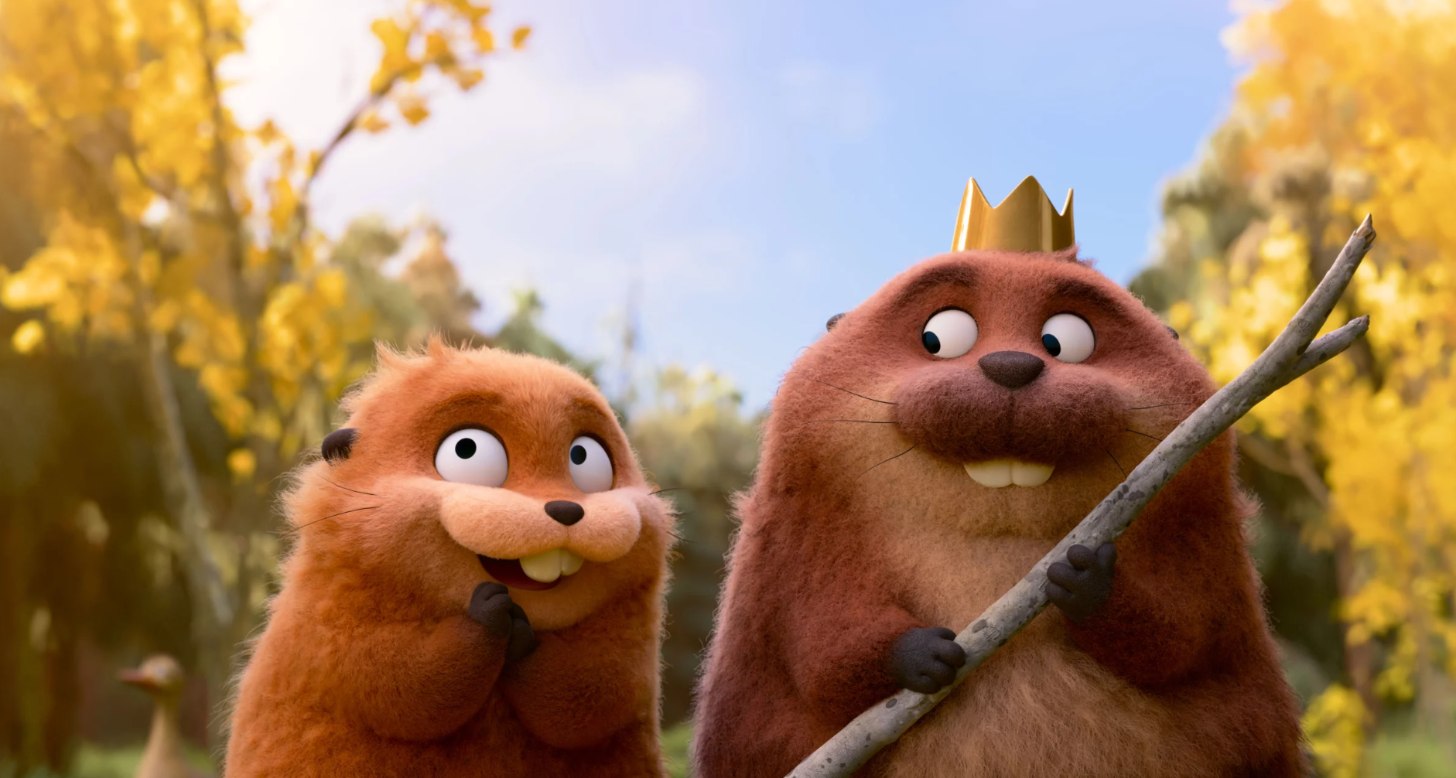
Pixar is no stranger to environmental messaging, producing films like “Finding Nemo” and “WALL-E.”
But “Hoppers” is the first time that the creative team has taken such a deep dive into the importance of biodiversity. In it, a 19-year-old animal lover named Mabel is transported into the consciousness of a robotic beaver to better understand her animal counterparts.
Chong said the heart of the film lies in Mabel’s desperate need to protect the wild world around her — a message that feels particularly resonant in modern times.
“Mabel is this woman who loves nature, loves animals, and she desperately wants to protect them,” Chong told Empire Magazine. “There's a specific place in the movie, a glade, that she cares a lot about, so the movie is really about her trying to protect this natural space. She loves nature, but she is also a chaotic energy herself. She has wildness in her.”
A version of this article originally appeared in the 2026 Environment Edition of the Goodnewspaper
Header image via Disney / Pixar
Jake Rosmarin has been a long-time traveler and content creator, going on exciting expeditions around the world and sharing professional photos and videos of his adventures.
But one recent trip turned into a completely different experience than anyone could have ever imagined: Rosmarin was on board the M/V Hondius cruise ship amid a hantavirus outbreak.
As soon as the highly dangerous virus was discovered, public health officials and doctors put expert protocols into action to keep other passengers safe, eventually resulting in people being returned to their countries of origin to be monitored by health officials and to keep the disease from spreading.
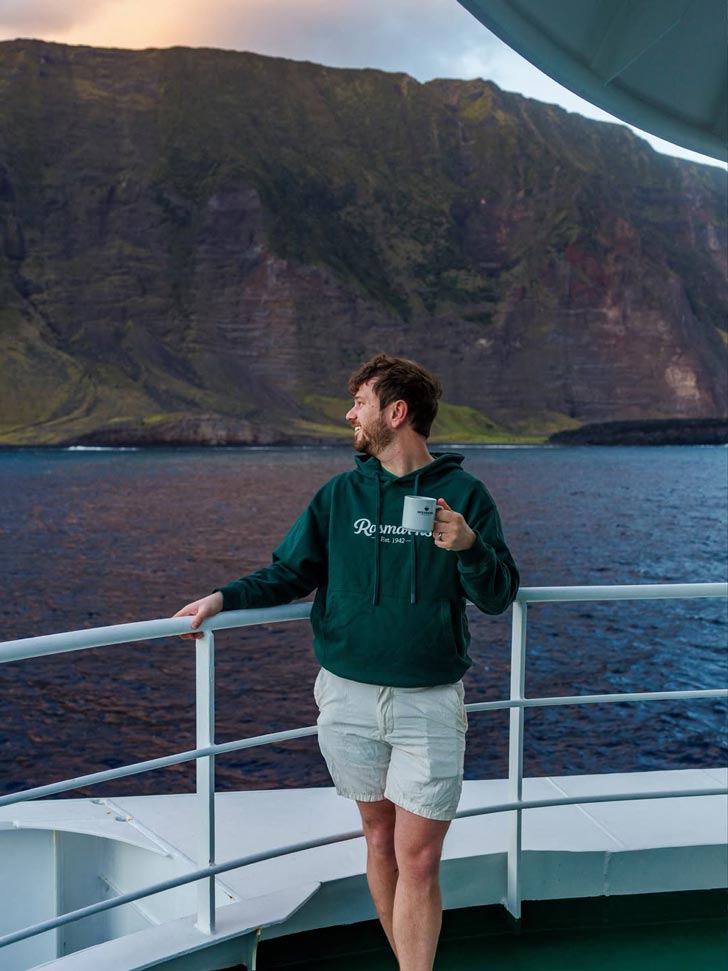
Rosmarin is from Boston, so he arrived back in the United States and was immediately placed in a national biocontainment unit in Omaha, Nebraska, where he will be monitored for 42 days.
Rosmarin has continued to share his experiences in daily video blogs and regular Instagram Story updates, now seven days into his quarantine experience.
While there are strict guidelines for him to remain indoors in his personal unit, Rosmarin is able to order food for all his meals and can receive packages. Some medical staff in the unit have also delivered encouraging notes and Starbucks drinks. But one recent experience brought Rosmarin to tears.
“I am learning what ‘Nebraska Nice’ is to the core,” he said in a video posted over the weekend. “The people here in Omaha have just been so kind to me, so many people sending me recommendations [for] if I can order in food, what I should order … and just offering to get me things.”
He then goes on to reveal that a follower reached out online and offered to pick up a photo print order from their local CVS, so Rosmarin could hang up some of his photographs, highlighting the good parts of his recent trip.

“It literally made my day to be able to get photos quickly and put them up here in my room,” Rosmarin said, voice breaking.
He also read a note the stranger included with the random act of kindness.
“Happy to help!” it begins. “I’m sure these pics will bring more life to your room. I’m looking forward to your video blog so I can see them!”
“That really just meant the whole world to me,” Rosmarin said, beginning to cry. “The people here have just been so kind and so generous and so nice.”
Rosmarin showed some of the photos now hanging on his wall in the small quarantine quarters.
Turning his camera around, he showed stunning images of Northern Rockhopper Penguins on Gough Island, a stop on the cruise expedition. He also showed a vibrant sunset photo with penguins in the foreground, taken on St. Andrew’s Bay.
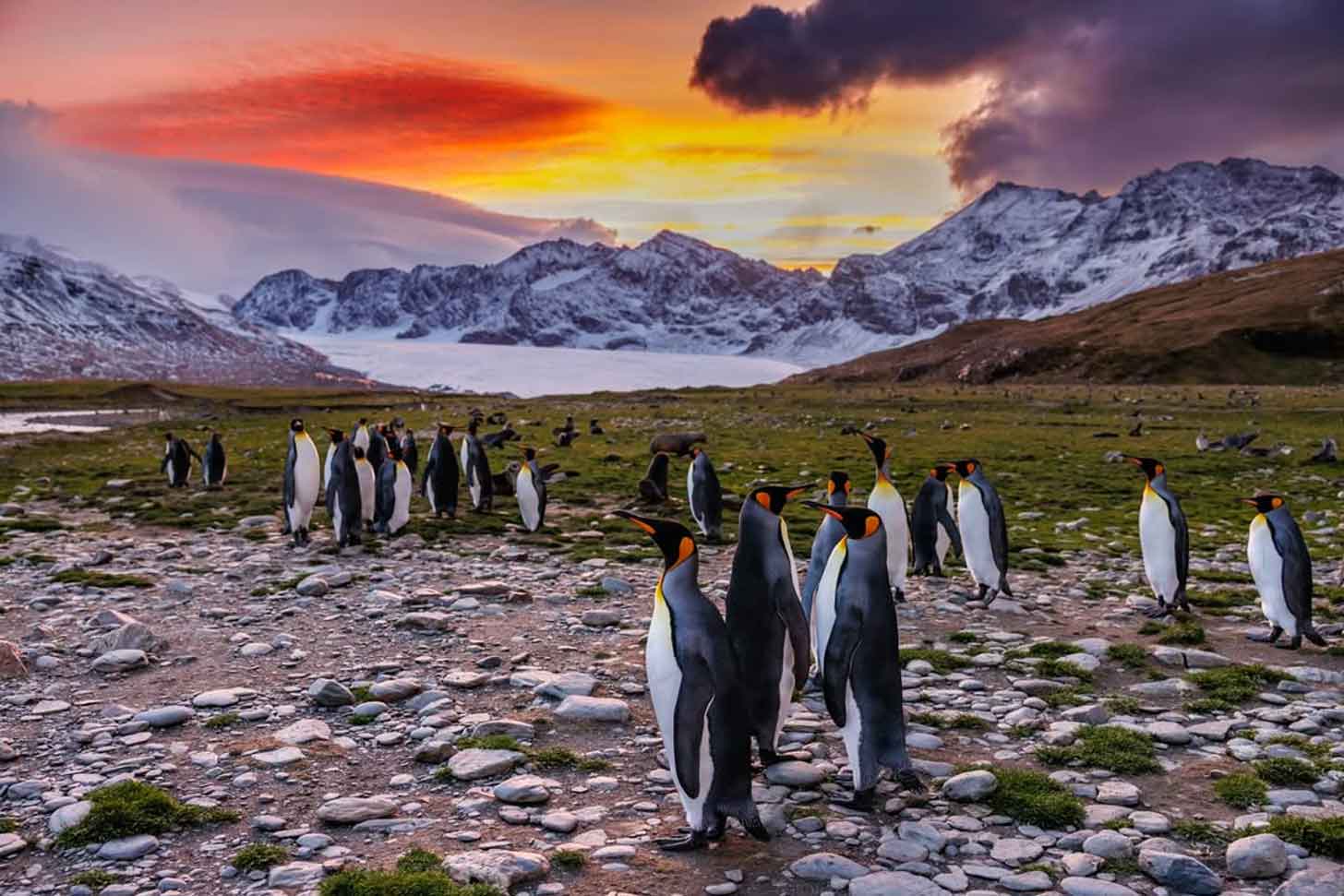
He promised a full room tour soon, now that he has added some additional comforts, smiling and in good spirits, saying “it’s just 5 more weeks left!”
“I’m going to get through it, and it’s going to be okay,” he reminded viewers. “I can’t wait for the quarantine to be up and for me to be able to get home.”
While Rosmarin has been quick to make his accommodations more comfortable, he stressed in a recent video that, while he is grateful for the support, he does not need people to send him additional packages.
“I truly feel like I have more than enough already,” he wrote in a comment. “If you would like to do something, I think it would be amazing to instead find an organization to donate to that supports hantavirus research and awareness.”
Commenters on his Instagram video reminded Rosmarin that he is doing a major act of kindness himself.
“Well, you are being nice to all of society by choosing quarantine right now,” someone wrote. “But glad that you are being treated well in return!”
Now that Rosmarin has remained well a week into quarantine, he is also beginning to share stories of his positive experiences from the cruise and reflect on his experience as a whole.
“At the end of the day, I love to travel, I love sharing the world with people, and I love inspiring others to experience places they may have never even heard of before,” he wrote in a recent Instagram caption. “I don’t want the traumatic ending of this trip to completely overshadow all of the amazing experiences that came before it.”
While the situation is still scary, and hantavirus headlines and reactions stir up fear and uncertainty globally, Rosmarin is setting an example by taking everything one day at a time — and doing his part to keep others safe.
“I’m really proud of how far I’ve come emotionally over this past week, and I absolutely owe that to my fiancé Alex, my family, my friends, the incredible staff at the NQU & UNMC, the people of Nebraska, and honestly strangers from all over the world who chose kindness during all of this,” he wrote in a caption reflecting on his first seven days in quarantine.
“It’s because of all of you that I’ve been able to stay positive through something that at first felt impossible.”
You may also like: 5 citizen science projects that have actually made a real difference for the environment
Header image courtesy of Jake Rosmarin/Instagram
In 2003, marine biologist David Harasti was diving off Papua New Guinea when he spotted a small fish-like creature flitting through the water. It was something very red, very hairy, and unlike anything he had ever seen before.
He went back to the same dive site six more times, but he couldn’t find it again.
But the fish stayed on Harasti’s mind. So he recruited the help of Graham Short, an ichthyologist and taxonomist at the California Academy of Sciences and the Australian Museum.
Together, they worked with Great Barrier Reef divers and looked through countless museum shelves in their mission to prove that the sea creature was real.
Through their research, they confirmed that Harasti had spotted a new species of hairy ghost pipefish from the Southwest Pacific. And it was just as red and “hairy” as Harasti had recalled.
On May 10, 2026, Harasti and Short published a paper in the Journal of Fish Biology formally describing the new species.
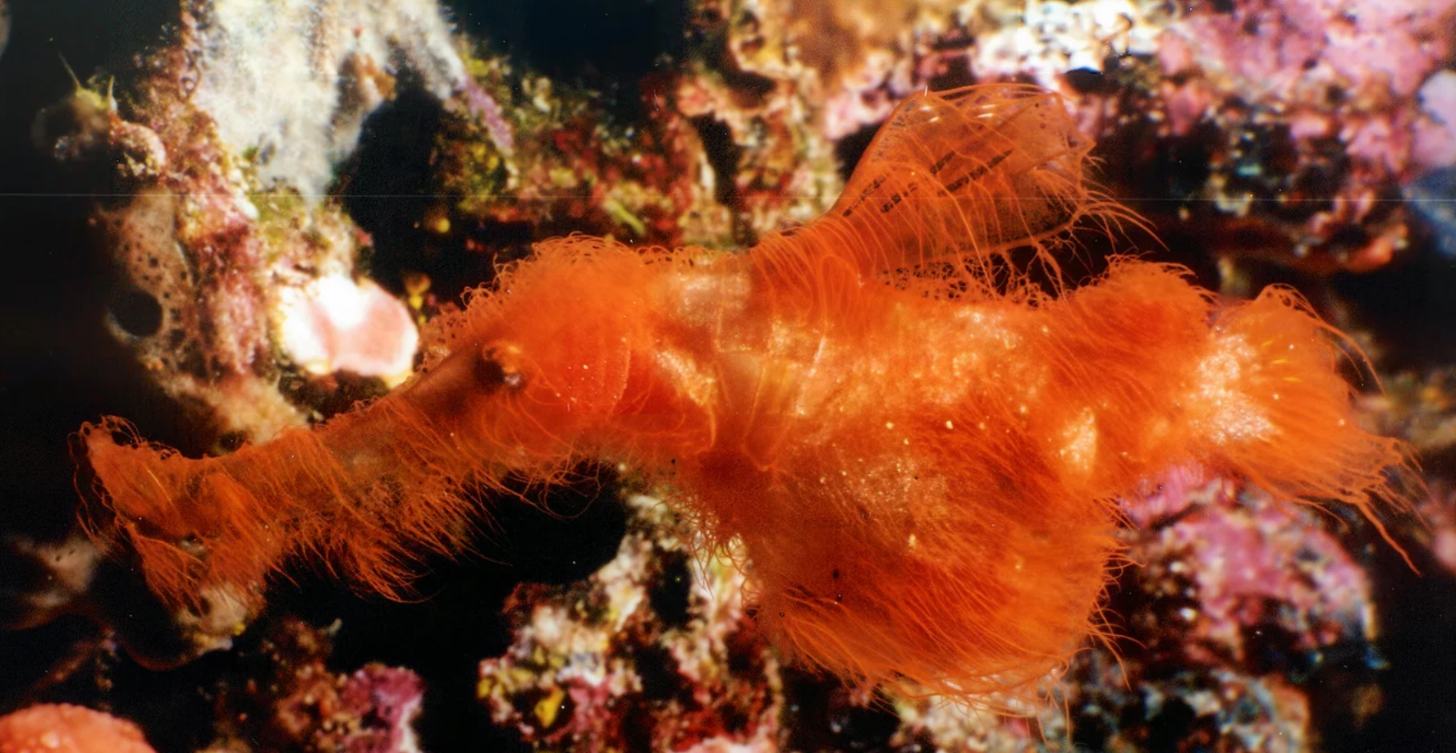
They decided to name it Solenostomus snuffleupagus after Mr. Snuffleupagus, Big Bird’s best friend from the beloved children’s series “Sesame Street,” in reference to the species’ “distinctly shaggy, filamentous appearance and snout reminiscent of the character's covering and trunk.”
“It was so easy to say, ‘Yeah, this looks like Snuffleupagus.’ I mean, it’s almost identical. It’s scary,” Short told Scientific American.
“We may have had a few drinks and decided to e-mail Sesame Street Australia,” he added, saying that they “answered the following day” and gave their blessing for the name.
The S. snuffleupagus is now the seventh known species of ghost pipefish. All ghost pipefishes share common ancestry with Syngnathidae, a family of fish that includes seahorses, pipefishes, and sea dragons.

According to Short and Harasti, they are masters in the art of camouflage, “frequently mimicking algae, seagrasses, crinoids, and soft corals in both form and coloration.”
When it comes to stature, the S. snuffleupagus is twice as small as the average pinky finger at just one to 1.5 inches in length. They play their part in the marine food web by feeding on even tinier creatures, like shrimp-like crustaceans and zooplankton.
“It’s so hairy compared to other species,” Short said, referring to the ghost pipfish’s filaments that stick out like an exoskeleton.
“Other species can be a little bit hairy in certain spots, like under the snout,” he explained.
“But this one took the hairy form all the way,” he laughed. “I mean, it looks ridiculous.”
You may also like: Spectacular blue 'cavern creature' spotted on expedition. It's a new species
Header image via David Harasti
When Habanero, the endangered loggerhead sea turtle was found off the coast of Witsand, South Africa last February, things were looking bleak.
He was found with thousands of leeches and their eggs covering his body, which was weak, dehydrated, and barely able to move. The leeches, which acted as parasites on his body, caused the turtle to be severely anemic.
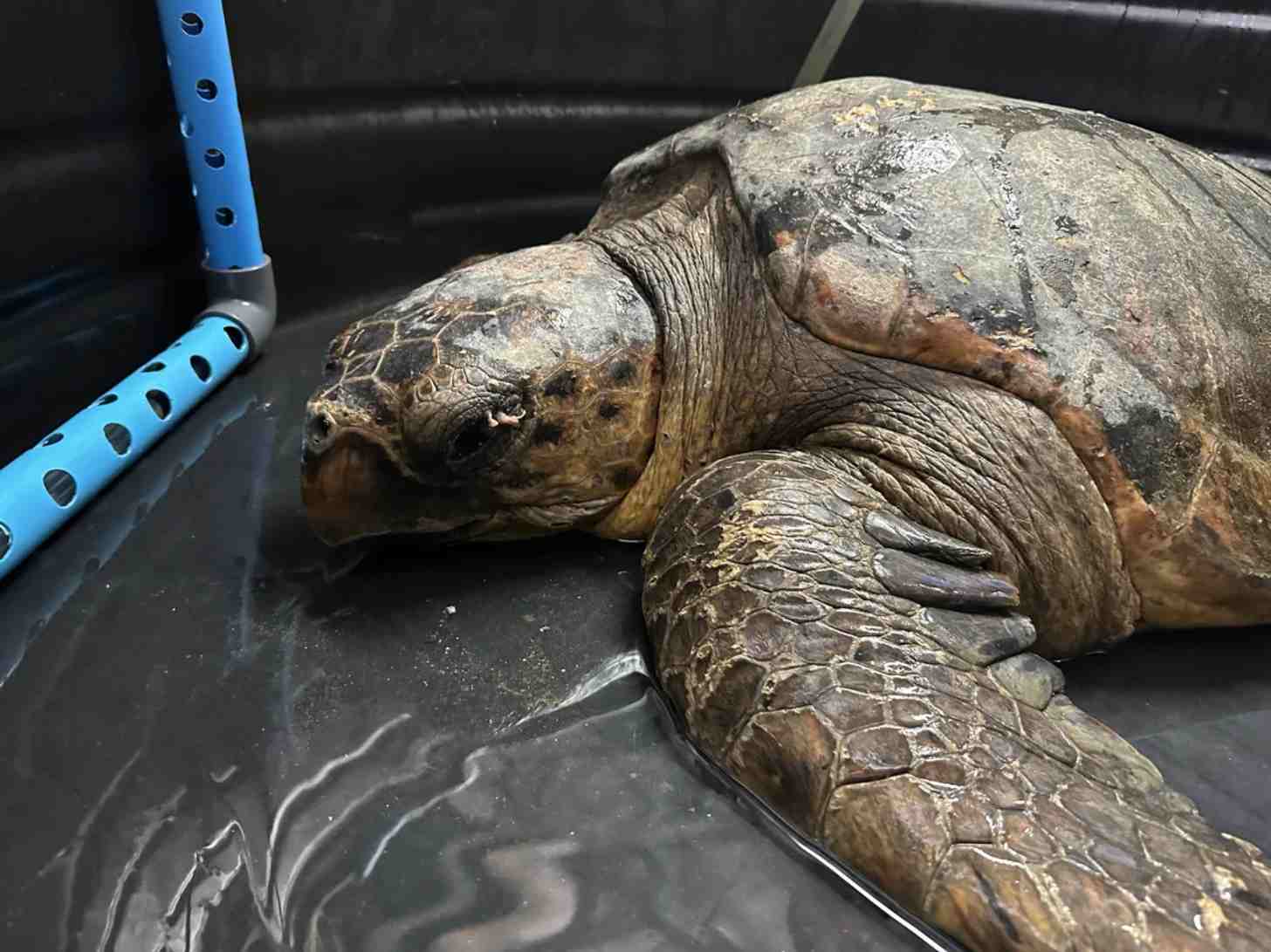
However, after he was de-leeched by experts at the Turtle Conservation Centre in Cape Town, a project of the Two Oceans Aquarium Foundation, his blood levels slowly returned to normal.
But he wasn’t out of the woods yet.
Veterinarians noticed early on in his rescue that the turtle had a very swollen and painful left elbow. An X-ray determined that the cause of swelling was severe destruction of the bones in the elbow joint, likely due to chronic infection.
His vet, Dr. Bernice van Huyssteen, then collected a sample of his joint fluid for analysis and once strong enough, the turtle was put under for surgery, where dead and infected tissue was removed from the damaged joint. The procedure was a vital step in his recovery, but even after months of antibiotic treatment, Habanero still wasn’t improving — and the infection was beginning to spread to other parts of his body.

The doctors had no choice: They would have to amputate his flipper.
“After thorough consultation with other sea turtle vets around the world, we all agreed: Continuing with antibiotics alone would not save the infected flipper or Habanero,” Dr. van Huyssteen said in a statement.
“After a lot of careful thought, our veterinary team made the difficult but hopeful decision to amputate the damaged front left flipper. Removing the original source of infection gives Habanero his best chance at life.”
The veterinarian community came together to make it happen, including the Morukuru Goodwill Foundation, which sponsored Habanero’s adoption to the aquarium, and the Sharp Exotic and Small Animal Veterinary Clinic, which provided resources while the Two Oceans Aquarium underwent construction.
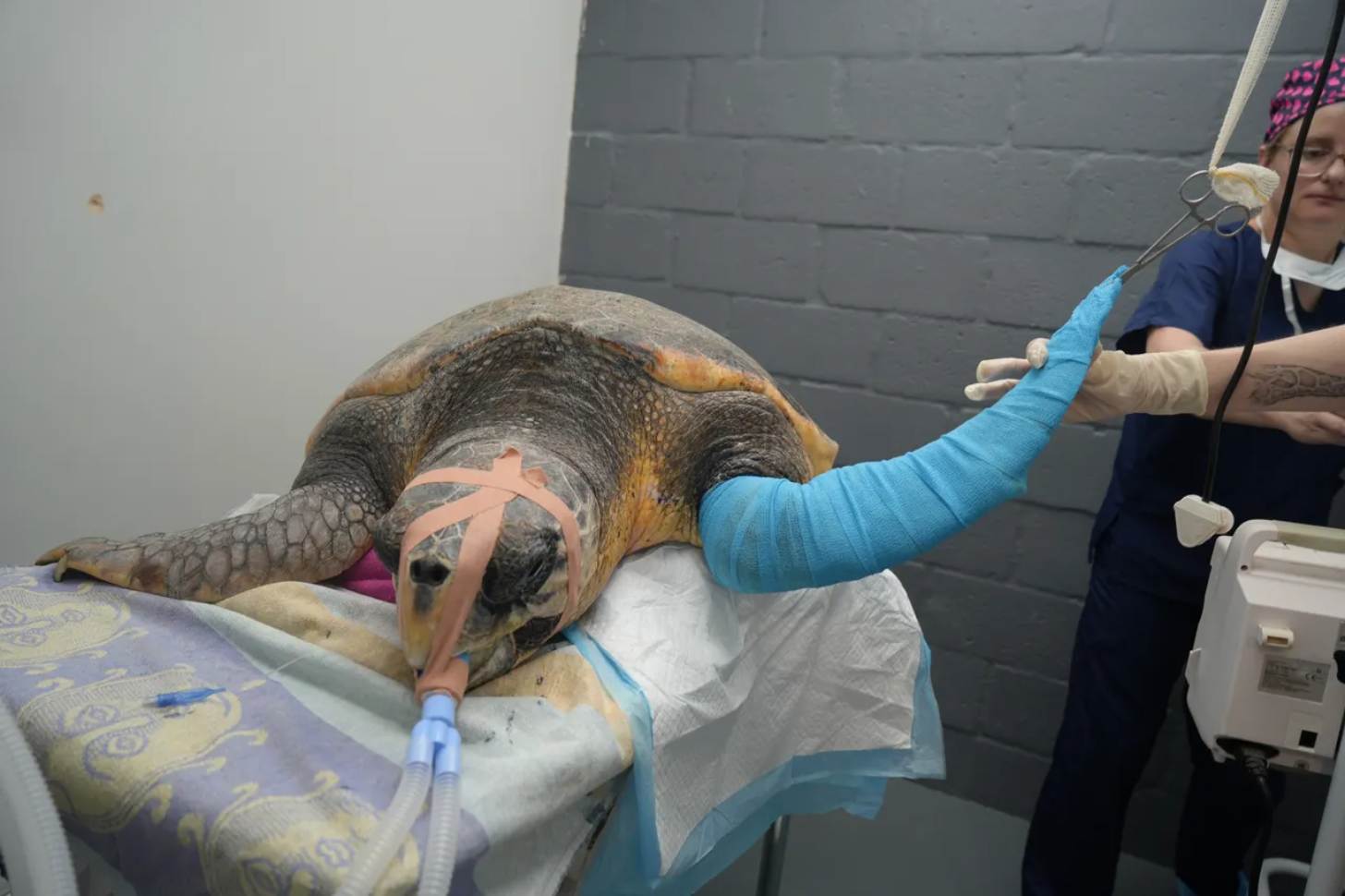
Finally, it was surgery day, and Dr. van Huyssteen’s team completed the amputation in about 1.5 hours. After the operation, the team discovered a large ball of necrotic material the size of a chicken egg inside the joint space — a very obvious sign that amputation was necessary to fully remove the infection.
Since his surgery in December, Habanero has been making incredible progress. He was moved into a large holding pool in the Turtle Conservation Centre’s rehabilitation space, where he has learned to readjust to swimming with just three flippers.
“We are truly happy that everything went well with his surgery. His prognosis for long-term recovery is still guarded, as he has small spots of bone infection present in his other flippers,” Dr. van Huyssteen said.
“We hope that, because the primary cause of infection (the original bad elbow) has been removed, the other spots of infection in the body will respond to systemic antibiotics, and the infection can be cleared up.”
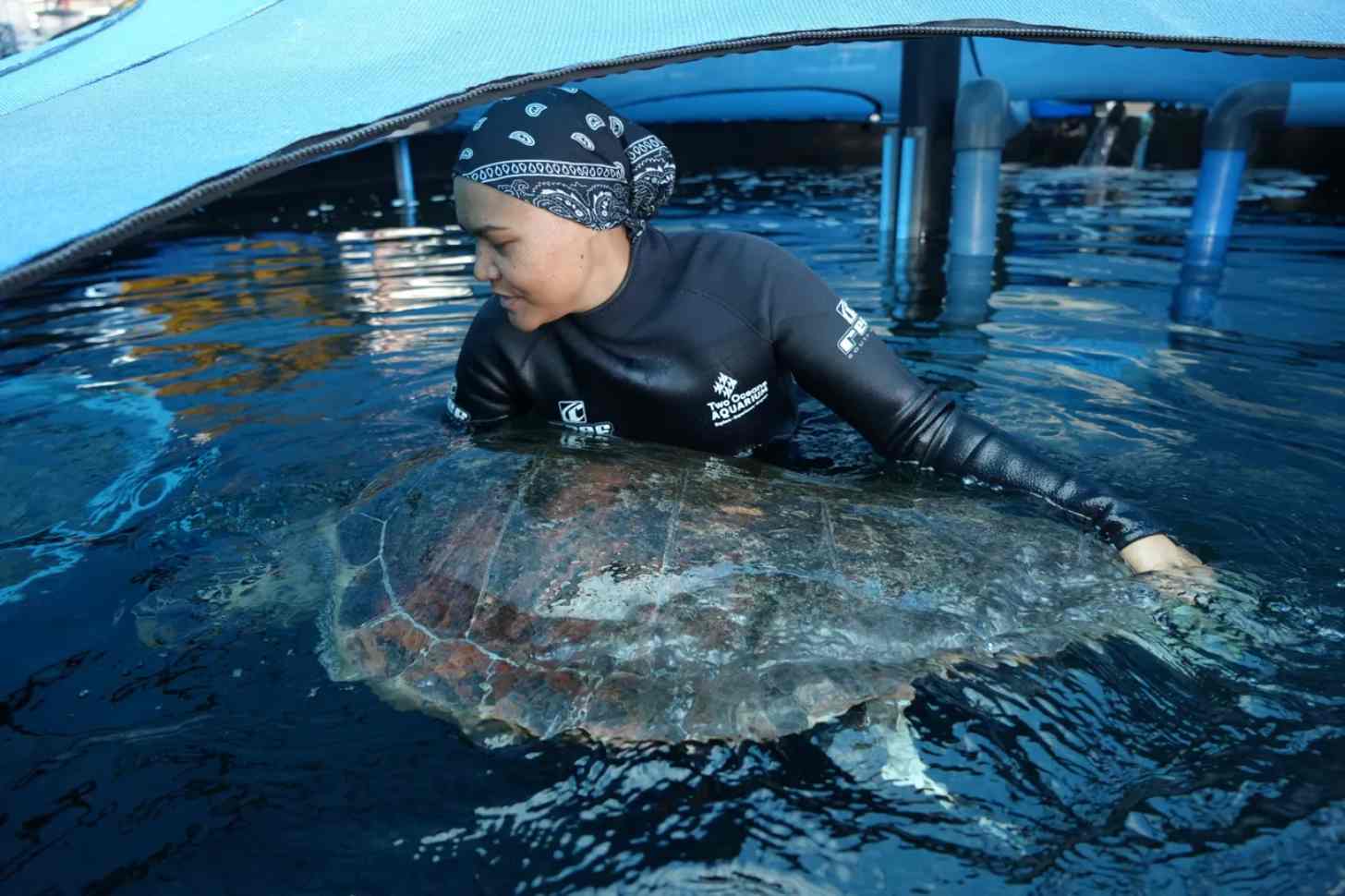
Habanero’s care team will continue to monitor him with bloodwork and CT scans, with treatment lasting several months before he is cleared to be released back into the ocean.
Regular radiographs have shown no new sites of infection, and Habanero’s other flippers appear stable, with his doctors hopeful he will make a complete recovery.
Habanero is far from the only sea turtle who has successfully undergone a flipper amputation. In fact, aquariums and conservation organizations around the world have begun to track rehabilitated sea turtles like Habanero, to see how these disabled turtles do back in the deep blue sea.
While his healing journey isn’t over yet, Habanero joins the ranks of thousands of other rehabilitated turtles fighting for the future of the species.
“Habanero’s story has not been a straightforward one; he has endured immense hardship with remarkable determination,” Two Oceans Aquarium Foundation writes in a blog post.
“Habanero is proof of the remarkable courage of turtles, and a reminder that there is real hope on the horizon.”
You may also like: Beachgoer finds sea turtle stranded, so covered in barnacles she couldn't move. See her amazing 9-month recovery
Header image courtesy of Two Oceans Aquarium Foundation
The Santa Catalina Island fox is found nowhere on earth other than Los Angeles’ Catalina Island.
But in 1999, the species was almost wiped out entirely from the face of the earth.
During that year, a canine distemper virus swept through Catalina and reduced the fox population by more than 90% in about a single year.
“The … population crashed from around 1,300 animals to just 100,” a Facebook post from Catalina Island Conservancy recently stated. “It could have been the end. But it wasn't.”

The virus was likely introduced by a raccoon that arrived by boat, an indicator of how easy it is for mainland diseases to reach the island and drastically impact its endemic species.
But this tiny fox — typically weighing just 4 to 6 pounds — was too important not to save. As the island’s largest native land predator, the Catalina Island fox controls prey and disperses native seeds, keeping the ecosystem healthy.
So, conservationists at the Conservancy and the Institute for Wildlife Studies got to work in the early aughts, using tools like captive breeding, vaccinating, and monitoring the wildlife population to steady the species’ decline.

By 2004, the fox population had tripled.
By 2016, the species was downlisted from endangered to threatened, hailed as the fastest mammal recovery in the history of the Endangered Species Act.
While the dramatic recovery of the Catalina Island fox is certainly inspiring, the species is still considered threatened due to risks of disease, ear mites, and vehicle strikes, according to the Conservancy.
But every year, experts continue their work, monitoring hundreds of native foxes on the island, performing health checks, and ensuring they are vaccinated against canine distemper and rabies. Volunteer pilots also team up with telemetry teams to track the animals from the air and on the ground, getting a clear picture of the species’ overall growth.

“Our community stays vigilant, too. It was Avalon residents who first alerted staff to sick foxes in 1999,” Catalina Island Conservancy shared on Facebook.
It is that love for the species that has made it the ideal ambassador for the island as a whole. An illustrated version of the Catalina Island fox is even the mascot for the area’s wildfire safety public information campaign.
“In conservation, we often have a charismatic species to represent the entire ecosystem that we have here, and the island fox is a great one for that,” Dr. Lauren Dennhardt, the senior director of conservation at the Conservancy, said in a video.
Dennhardt added that the fox species is one of 60 plant and animal species that are entirely unique to Catalina Island.
“Having something tangible that people can understand and relate to and want to save really helps us with our other conservation efforts,” she concluded.
The fox also serves as a reminder of what can be accomplished in conservation, she said, when financial support is prioritized.

“[The fox’s recovery] is a great marker for the conservancy on what it can accomplish when we have a dedicated team focused on conservation efforts to really change the course of the island,” Dennhardt said. “Conservation is hard. It’s a long path, and it takes a lot of dedication.”
But, based on this little fox alone, it’s proof that the work is worth doing.
“The Island fox is still here,” the Conservancy concluded on Facebook. “That's not luck. That's what conservation looks like.”
You may also like: This real-life 'good news' story inspired Pixar animators to make 'Hoppers'
Header image courtesy of Catalina Island Conservancy
Iberá National Park and Iberá Provincial Park are home to sweeping grasslands, marshlands, forests, and 4,000 species of flora and fauna. Together, they form the largest park in Argentina.
In early May, tour guides were leading tourists through the park when they spotted a jaguar resting on the trail. It was Ombú, a young male born in Iberá Park in Corrientes, Argentina.
He marked the first wild jaguar sighting in 70 years.
“Since we dedicate ourselves to this work and know what the jaguar represents in Iberá, throughout the province of Corrientes, and here in Argentina, it really fills us with joy,” park ranger Víctor Cereal said in an audio testimonial.
“And being able to share it with visitors makes us extremely, extremely happy,” he said. “It’s a mix of many emotions, and honestly, I’ll never forget this. It’s like the greatest reward someone can have as a guide.”
Seven decades ago, jaguars were driven out of Argentina by twin forces: logging and poaching. As hunters killed them for their pelts, the forest shrank around them.
The sighting comes after decades of hard-fought conservation work, education campaigns, and rewilding efforts.
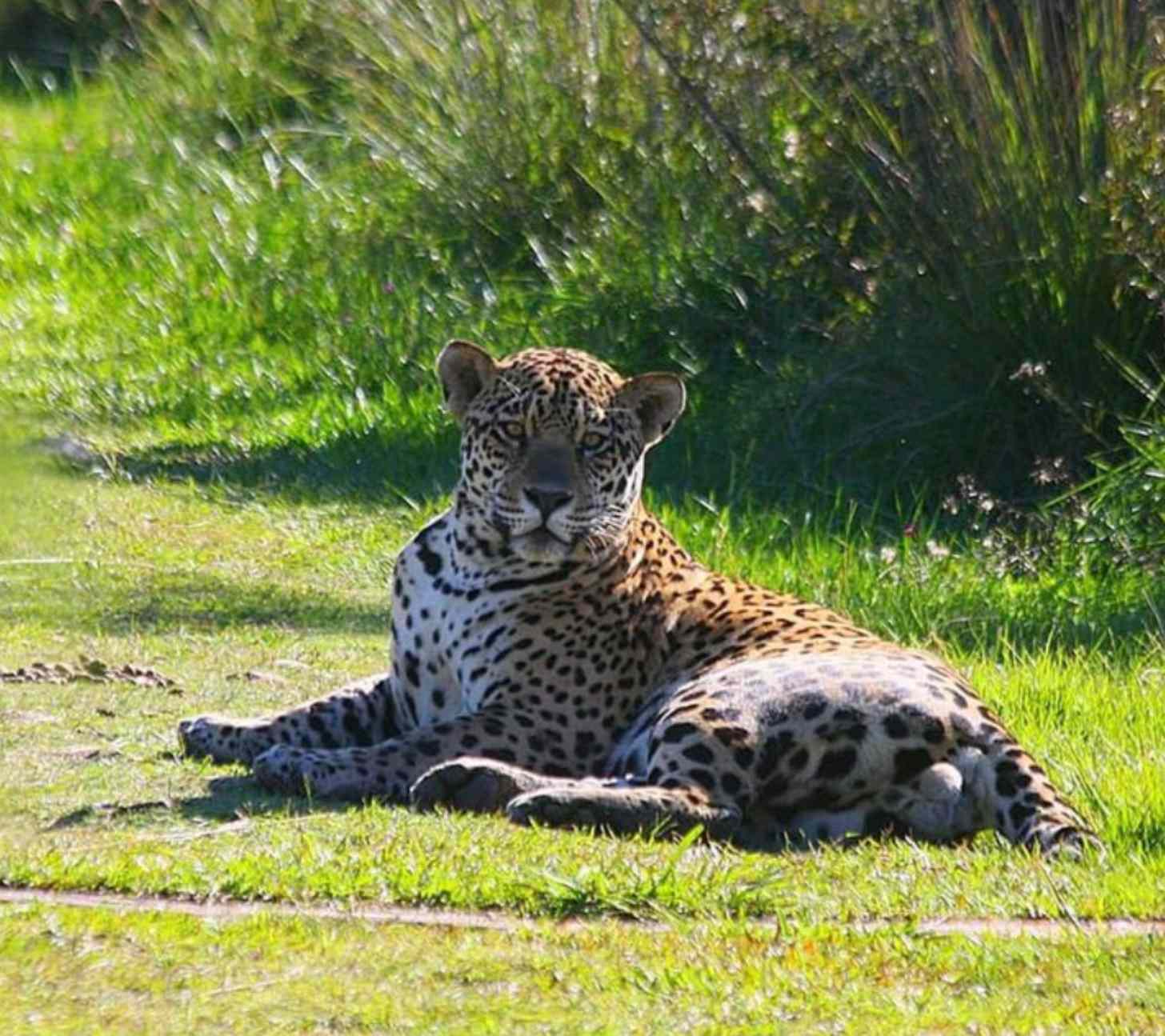
Thanks to Rewilding Argentina working in tandem with local institutions, scientists, park rangers, and ranchers, Corrientes went from having no free-roaming jaguars to now containing 50.
That’s nearly 20% of all the jaguars currently living in Argentina.
“After more than 70 years without the presence of the jaguar here in the wetlands, seeing it again in its natural habitat, as I said, is truly historic,” Cereal said.
“The arrival of the jaguar to this place is very important, especially at this stage of conservation, because it’s a predator that we were missing here in the wetlands,” the park ranger continued. “We’ve been seeing many capybaras, caimans, and different animals that complete the ecosystem, but we were missing him, the top predator. And well, honestly, that was what we lacked.”
Jaguars play a critical role in forest health. As an apex predator, they regulate the populations of other species, sending positive ripple effects down the food chain.
Mario Martins, a recently retired tour guide with a deep love for photography, recalled the moment that he saw the jaguar and captured it on camera.
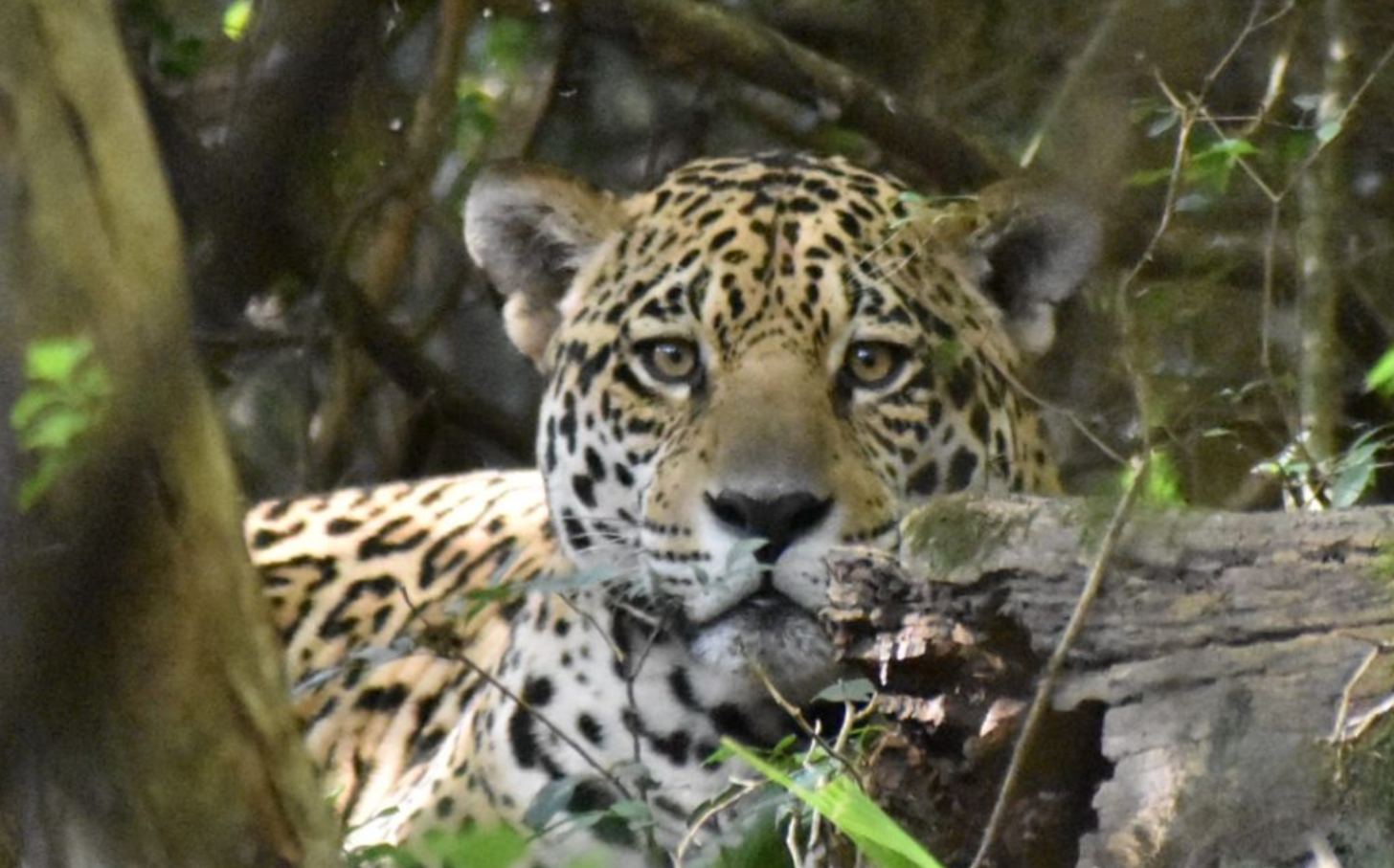
“That fleeting glimpse, that sign that the lord of the forest was there, was the moment when it really dawned on me just how significant what was happening was,” Martins said in an audio testimonial. “It was a face-to-face encounter between two beings in absolute silence.”
Martins added that the moment was bigger than a single jaguar — it was what it represented.
“This sighting is living proof of the success of a collective effort,” he emphasized. “The fact that a jaguar… roams the region shows that the ecosystem is regaining its health.”
Soon, the jaguar moved on, leaving Martins awestruck.
“[I] make the most of the experience,” he said, “knowing that the real magic lies in the animal continuing to feel free.”
[NOTE: Mario Martins and Víctor Cereal’s testimonials were translated into English using Happy Scribe]
You may also like: Clouded leopards are 'one of the most elusive cat species' in the world. The Nashville Zoo just celebrated the birth of its 50th cub
Header image via Mario Martins / Rewilding Argentina
Stephen Colbert’s final episode as host of “The Late Show” on May 21, 2026, won’t mark the end of his career.
But as a scholar of political satire, I think it offers a chance to reflect on the lasting impact of his comedy, which has spanned his work as a correspondent on “The Daily Show,” his conservative pundit persona on “The Colbert Report,” and his reinvention on “The Late Show.”
The best satirists do more than entertain. They influence public discourse and leave lasting marks on political life. This group includes towering writers such as Benjamin Franklin and Mark Twain, alongside performers like Lenny Bruce and George Carlin.
In my view, Stephen Colbert has earned a spot in the top tier. Here are five reasons why.
1. He didn’t just satirize the news – he informed the public
Most satirists offer wry commentary about political events.
Colbert often did something more ambitious: He helped audiences understand them.
Critics have long dismissed political comedy as superficial entertainment, but Colbert’s satire frequently offered valuable information to the public.
In 2010, the U.S. Supreme Court’s Citizens United decision transformed campaign finance law, tilting political influence toward wealthy people and corporations. As host of the “Colbert Report,” the comedian responded by creating an ongoing series of “Colbert Super PAC” segments. Working with former Federal Election Commission Chair Trevor Potter, Colbert was able to translate the opaque mechanics of campaign finance law into accessible civic education.
It’s hard to fully track the impact of this approach. But a 2007 Pew Research Center study did find that audiences for satirical news programs such as “The Daily Show” and “The Colbert Report” scored high on political knowledge measures, outperforming audiences who only consumed political news from traditional outlets.
That urge to use satire as a vehicle for civic education continued after Colbert became host of “The Late Show” in 2015.
With debates raging over the border wall proposed by the first Trump administration, Colbert brought experts on to the program to break down the engineering, financial, and logistical realities of building one that spanned the entirety of the U.S.-Mexico border.
Yes, the absurdity of the physics and finances elicited laughs. But Colbert also helped viewers understand why Trump’s promises were implausible.
2. He gave Americans a new political vocabulary
When the world is absurd, the satirist uses ironic wit to make sense of it.
Colbert excelled at distilling the spin and duplicity of politics into memorable soundbites.
On the first episode of “The Colbert Report” in 2005, he introduced the word “truthiness” to describe the tendency to prefer what “feels true” over what the evidence supports. It incisively gave a name to a deceptive political tactic, one that the Bush administration had repeatedly used, from “Mission Accomplished,” to “weapons of mass destruction,” and “enhanced interrogation techniques.”
“Truthiness” took on a life of its own. Merriam-Webster named it Word of the Year in 2006.
Colbert continued this rhetorical work on “The Late Show.”
For example, in February 2017, after Donald Trump escalated his attacks on the press by labeling major news outlets “the enemy of the American people,” the comedian shifted from parody to diagnosis.
He foregrounded the phrase’s authoritarian history, insisting that the rhetoric signaled a meaningful escalation in attacks on First Amendment rights, rather than a passing controversy.
In other words: There was nothing to laugh about here.
3. He blurred the line between satire and direct action
Media scholars have increasingly noted how political comedians now function as hybrid figures who blur journalism, entertainment, and civic engagement. According to communications scholar Joseph Faina, Colbert may be one of the clearest examples of that shift.
Colbert’s satirical presidential campaign in South Carolina in 2007 mocked the theater of American electoral politics. He actually attempted to enter the race through official channels, only to be blocked by the South Carolina Democratic Party.
But even in his failure to appear on the ballot, he was able to show how party control and media spectacle, not just voter choice, structure the field of viable candidates.
In 2010, he held a rally with Jon Stewart on the National Mall before a crowd of over 200,000 people. Assuming his conservative pundit persona, Colbert blended irony and sincerity, mocking the self-seriousness, sensationalism, and outrage-driven news cycles of cable news through his competing calls for “sanity” and “fear.”
But the event was also designed to motivate voter turnout in the midterm elections.
That interventionist impulse continued on “The Late Show.” During the 2020 election cycle, for example, Colbert encouraged voting through segments like “Better Know a Ballot.” A riff on his previous “Better Know a District” from “The Colbert Report,” the “Better Know a Ballot” series was designed to educate viewers about ballot access, voting procedures, and the practical elements of democratic participation.
4. He measurably influenced political behavior
Claims about comedians changing politics can easily become exaggerated. But Colbert’s influence has empirical support.
Research by political communication scholars Jody Baumgartner and Jonathan Morris found that exposure to political satire can increase viewers’ sense of what’s known as “political efficacy” — the belief that they can understand and engage with politics.
Other studies suggest satirical news audiences are often more politically active than they’re assumed to be.
Colbert is repeatedly cited in these studies as one of the prime examples of a satirist who makes an impact.
Take, for instance, the so-called “Colbert bump,” where candidates who appear on his programs experience boosts in fundraising, visibility and media coverage. Political scientist James H. Fowler found that Democratic candidates who appeared on “The Colbert Report” experienced a 44% increase in campaign donations within 30 days of their appearance.
A similar effect could be seen on “The Late Show.”
After Colbert interviewed Texas state Rep. James Talarico, a U.S. Senate candidate, in February 2026, CBS canceled the segment, claiming — perhaps disingenuously — that the network could be punished for not adhering to the FCC’s “equal time” rule, which requires broadcast stations to offer comparable airtime to opposing candidates.
A taped version of the interview was nonetheless posted to YouTube, where it racked up over 9 million views, helping fuel Talarico’s $27 million first-quarter fundraising haul, the largest amount ever raised by a U.S. Senate candidate in the first quarter of an election year.
5. He redefined American patriotism
To rank Colbert among America’s most important satirists requires one additional consideration: his role in redefining not only what America stands for, but what it means to be patriotic.
Many satirists lean toward cynicism, portraying politics as hopelessly corrupt and public life as fundamentally absurd. Not Colbert.
As linguist Geoffrey Nunberg argued in his 2006 book, “Talking Right: How Conservatives Turned Liberalism into a Tax-Raising, Latte-Drinking, Sushi-Eating, Volvo-Driving, New York Times-Reading, Body-Piercing, Hollywood-Loving, Left-Wing Freak Show,” conservatives had claimed a monopoly on patriotism as the 20th century drew to a close. At the same time, many of them promoted what’s known as “blind patriotism,” in which any criticism of the U.S. is cast as evidence of insufficient national loyalty.
Colbert’s satire directly challenged that framework.
To expose that performative patriotism, Colbert’s persona on “The Colbert Report” wrapped itself in exaggerated patriotic imagery: flags, bombast, overconfidence, and chest-thumping nationalism.
But the joke was never America itself. The target was a performance of patriotism that treated dissent as disloyalty, emotional certainty as evidence, and partisan identity as civic virtue.
As I argue in my 2011 book, “Colbert’s America,” Colbert’s satire consistently distinguished between nationalism and democratic patriotism. The former demands unquestioning loyalty. The latter demands accountability.
For example, through segments like “Threat-Down” on “The Colbert Report,” he satirized the way nationalism often depends on exaggerating fictive dangers and denouncing symbolic, external enemies.
In that sense, Colbert belongs in a distinctly American satirical tradition that stretches back to Benjamin Franklin. The great American satirists have used humor not to reject the national project, but to expose the gap between its ideals and its realities. They reshape how citizens understand power and civic responsibility.
For nearly three decades, Stephen Colbert has done exactly that.
This article was written by Sophia A. McClennen from Penn State, and was originally published on The Conversation.
Header Image: Scott Kowalchyk ©2026 CBS Broadcasting Inc. All Rights Reserved.

When “Barbie” hit theaters in 2023, think pieces surfaced on nearly every entertainment news website: “Why are so many women crying at the Barbie movie?” they pondered.
It was America Ferrera’s all-too-relatable monologue, they concluded. But Nivi Achanta, a climate activist, novelist, organizer, and CEO of Soapbox Project, knew it was also something else: The exposure to utopian fiction.
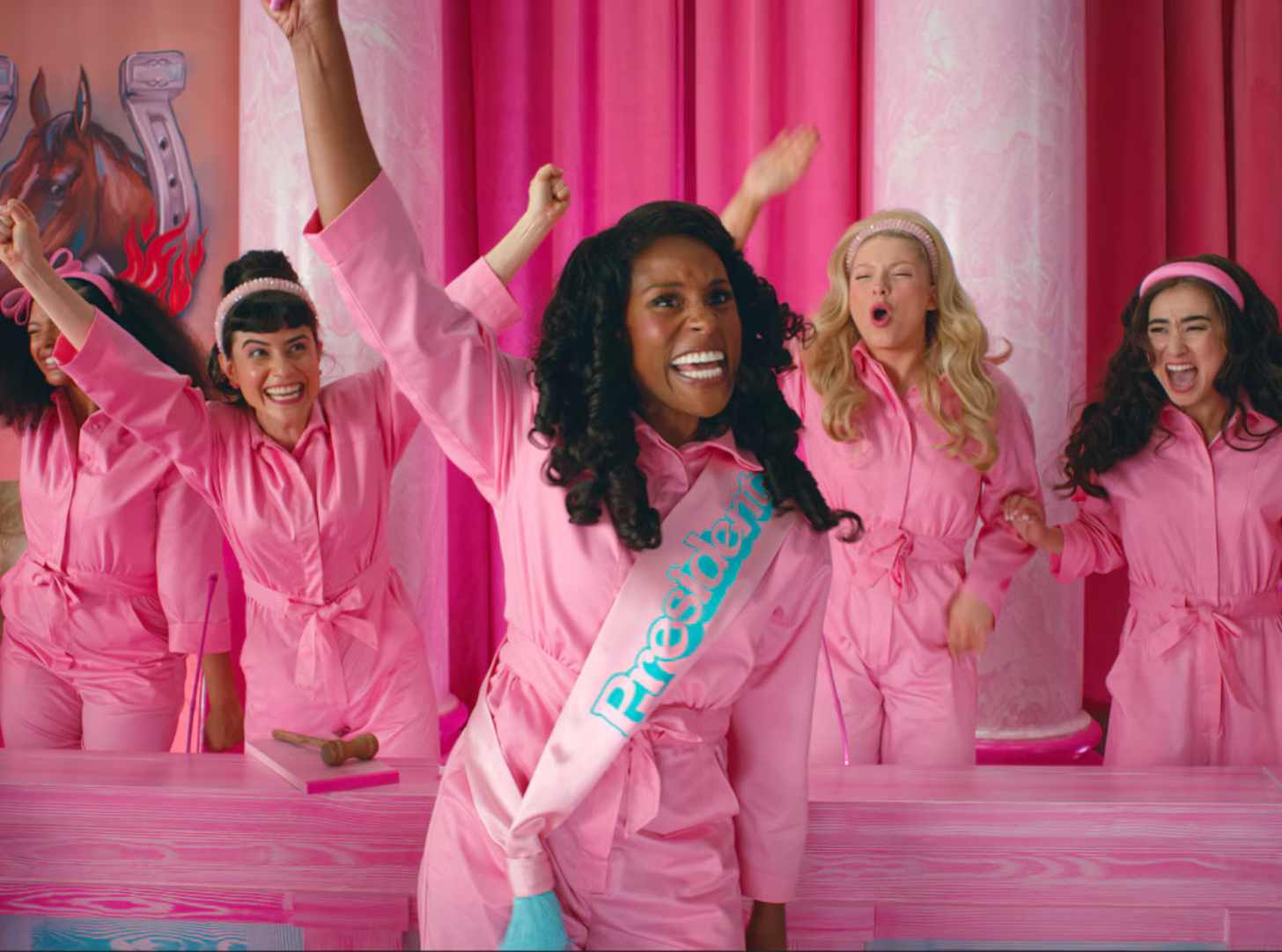
In Barbie World, women hold a Supreme Court majority and have dance parties with their friends every night. They live in walkable neighborhoods, share clothes, and seem to have safe working conditions. And when things go awry, they can retake power and make amends with men.
It’s a story that feels so far out of reach, yet so close we can taste it. It gives us a pink, frilly dose of imagination: What if we could disco at the club with our friends without worrying about men spiking our drink?
As CEO and founder of Soapbox Project, Achanta has been featured by The New York Times, Washington Post, Grist, and Nasdaq for her community building and social justice work.
Before this, she worked with companies like Google, Facebook, and The Bill & Melinda Gates Foundation, where she led employee impact work. Now, she leads climate-centric “Dream Sessions” for people to imagine a better future.
And as someone who reads 100+ books a year, she thinks utopian fiction fills a gap in the media market — and in our collective imagination.
“We are at a place where we want to know that a better future is possible and what it can look like,” Achanta told Good Good Good. “I think dystopia needs to die. It had its time and its place, like, ‘Wall-E’ changed my life. But if it came out now, I wouldn’t watch it because I could just go outside and look around.”
“I think we are past the point where we need warnings,” she added. “I believe we have all been sufficiently warned about the perils of the world. What we need are pathways forward.”
“Black Panther” provides a similar outlet for Black and African viewers, who see an autonomous and resilient world where people like them are free to thrive, in harmony with nature and innovation.
Another example, “Project Hail Mary,” also offers readers (and now, viewers) hope and collaboration in an apocalyptic landscape. While beloved science fiction classics like “Star Trek” carry utopian themes that have inspired viewers for generations, optimistic, speculative fiction also lives in the more realistic, less sci-fi-forward stories that many of us know and love.
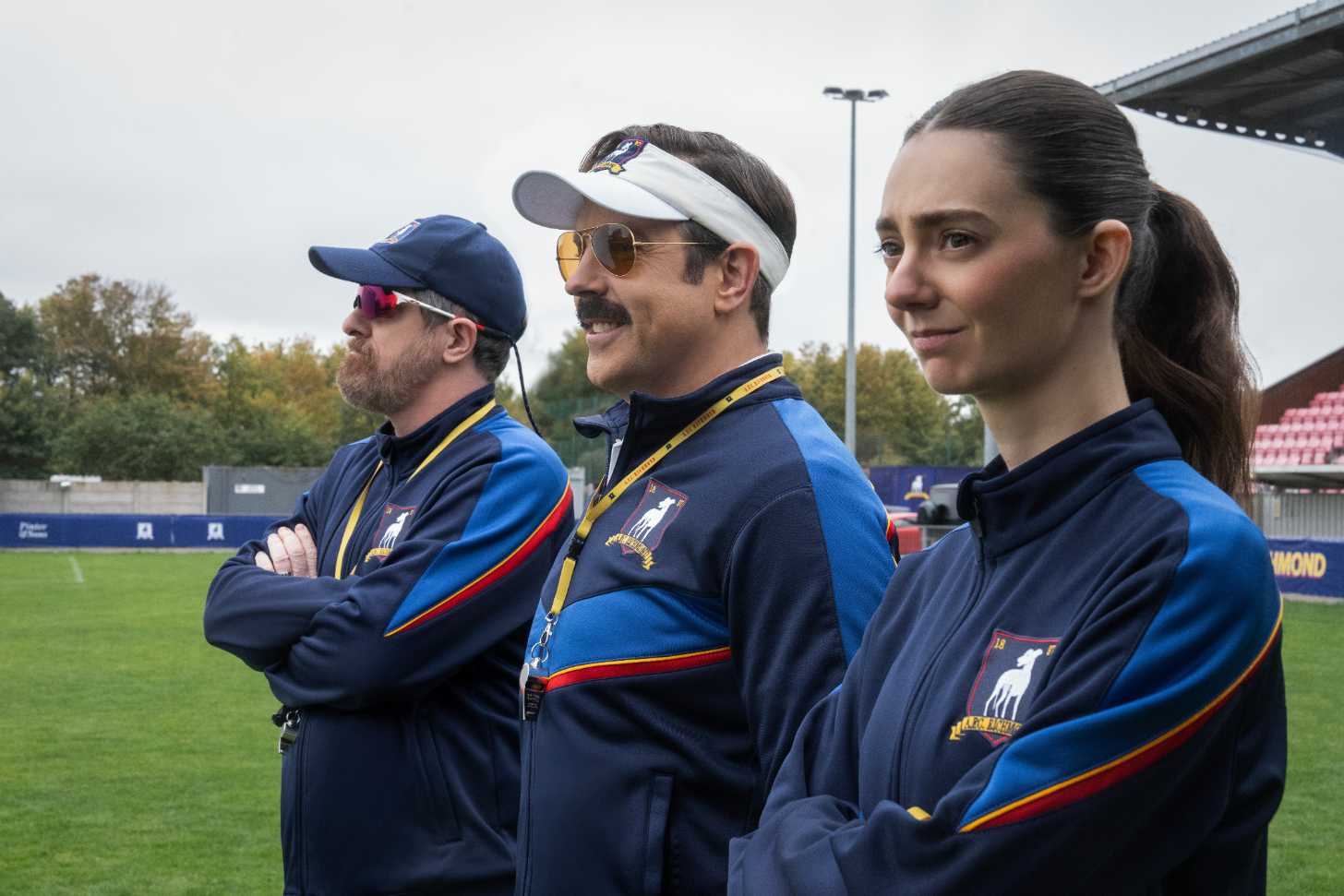
“I think this is why ‘Ted Lasso’ did so well. The one big speculative aspect of that show is healthy masculinity,” Achanta said. “‘Bridgerton’ is another example, completely reinventing the racial dynamics of Regency London.”
These media examples are pieces of a larger puzzle, one where the stories we, as a society, create and consume are a reflection of the future we want to build. They are an invitation to radical imagination.
Planting The Seed Of Radical Imagination
The roots of radical imagination stem from French-Greek philosopher Cornelius Castoriadis, who spoke of the concept as a sort of magma that flows beneath the Earth’s surface, something that was always simmering and able to change, even if humans saw the landscape before them as something eternal and unyielding.
But, Castoriadis posited, the world as we know it came from eruptions of the imagination, and it can be washed away by eruptions of imagination, too.
The term — and practice — of radical imagination has been popularized even more by other thought leaders and activists of our time, like adrienne maree brown, who argues that the social systems under which we currently operate were imagined into being, so a new — and ideally, better — way of thinking, living, and governing, can also be imagined.
“I believe that all organizing is science fiction — that we are shaping the future we long for and have not yet experienced,” brown writes in “Pleasure Activism.”
“I believe that we are in an imagination battle, and almost everything about how we orient toward … is shaped by fearful imaginations. Imaginations that fear Blackness, brownness, fatness, queerness, disability, difference. Our radical imagination is a tool for decolonization, for reclaiming our right to shape our lived reality.”
Practicing Dreaming Up Something New
Achanta’s Soapbox Project offers local, immersive concert experiences around the country, where, in between performances from musical artists, attendees are given prompts to imagine what a better world could look like in 100 years.
“What the moment calls for is for us to build a new world. We need to be able to explain what the future looks like and feels like, and what richness we will gain while having a clear picture of what we’ll have to give up or change,” Achanta said.
“If you think about the various challenges of the meta-crisis we’re mired in now, it’s someone else’s radical imagination that we’re living in. So when I think about radical imagination, it’s a process of casting away all of our assumptions and, in some ways, starting from scratch to figure out what we actually want.”

But, she said, it’s not an easy task. People struggle to come up with answers. So much of what they can imagine comes back to a prophecy of fear, a belief of implausibility under society’s current conditions.
Part of the reason, she believes, that people have trouble with this is that they don’t have access to many examples — and that “politicians, and billionaires, the fossil fuel lobby, and all of these bad guys have a hold of our imagination.”
“But imagination is literally free,” she said. “You are in the comfort of your own brain, where nobody is currently monitoring you. You can dream about anything. You just need practice.”
Breathing Life Into A New World
In the years she has hosted Dream Sessions with Soapbox Project, Achanta has also been conjuring up her own stories about a better world.
She moonlights as a novelist and will debut a “solarpunk romance” in 2027 under the pen name Raveena Raju. Her creative writing journey came from that desire to see a larger offering of utopian fiction that actually felt realistic.
“I think we have ideas of, like, really radically different futures, but what could be possible of the worlds we live in already?” she asked.
“My own storytelling practice came out of the frustration of wishing for something different. I love that, overall, many romance novels teach you to expect better from your romantic partners. A lot of them confront mental health in really great ways. We’re already packaging difficult topics into a delicious, fluffy cake, so why not climate?”
It boils down to simple switches, she said, like a character taking the bus or riding a bike, side plots about heat pumps, and settings in cooperative housing.
And these concepts don’t just live in books; they are stories pulled from the past, from other countries — fictional ideas borne out of real-world solutions.
As someone who wouldn’t have identified as a “storyteller” a mere three years ago, Achanta said, the practice of radical imagination can be as simple as providing the people in your life with real, bite-sized scenarios that could alter the way they think, like suggesting a trip to the local thrift shop instead of purchasing from a fast fashion brand.
“In the smallest ways, we can practice alternatives to our current reality,” Achanta said. “It could mean looking outside your window and seeing cars parked up and down the street. What if I took 30 seconds to think like, ‘What could my street look like without cars?’ Or, ‘What if I took five minutes to actually research what this street looked like before we had cars?’”
The goal is to fill the void between the thoughts of, “The current way of doing things sucks,” and “What do we want next?”
That exercise, she said, is an act of storytelling — whether or not people call it that.
“You don’t have to be a writer to know that stories shape our thinking, and therefore, shape our world. We are all living in someone else’s story of what they want to happen. Inevitability is a myth; it’s usually just some dude telling us, ‘Here’s my idea. It’s going to happen, and you must accept it or die,’” Achanta said.
“If we could all identify what in our society is just some dude telling a myth of inevitability, we could all learn that we can tell our own myths and bring those into existence instead.”
Her favorite example, one she says “lives rent-free” in her head, is Mr. Bloom, a man in San Francisco who dresses up in a bumblebee costume, takes his one-wheeler to the streets, and sprinkles seeds on any patch of open dirt he can find.
“He’s just some guy, too,” she said. “But he saw a patch of land and asked, ‘What if this could be wildflowers?’”
A version of this article was originally published in The 2026 Storytelling Edition of the Goodnewspaper.
You may also like: Built with books found in the rubble, these two men have opened Gaza's first new library
Header image courtesy of Apple TV+
John Stessel calls himself the “Shelter Dog Magician.”
His tricks go back to his eighth birthday, when he first got a magic kit and fell in love. In the two decades since, he has honed his craft and created a library full of tricks — that he uses for good.
One of those magic tricks? Making a dog treat vanish right before a pup’s eyes.

An entertaining trick for audiences and dogs alike, he began posting videos of dogs excitedly sniffing out the vanished snacks, aghast at the idea that it really could be gone.
Stessel reached out to St. Hubert’s Animal Welfare Center in New Jersey to collaborate on these videos — using adoptable dogs as his special assistants, and sharing the adorable clips in hopes of helping them find their forever homes.
“Dogs really have one centralized focus, and that’s usually their treats,” Stessel told ABC News.
“I thought, ‘What if I made a treat disappear into thin air and catch their reaction on camera?’ And that’s really when the dogs show their personalities off. Each dog reacts differently, and we gave them plenty of play time, lots of love, and the videos took on a life of their own.”
While social media comments poured in praising the pups, adoption applications poured in, too. The shelter continues to work with Stessel and sends him photos whenever the dogs he worked with get adopted.
He has also worked with Badass Animal Rescue, an New York-based rescue that has hosted Stessel at some of their adoption events.
Stessel posts videos of dogs in “adopt me” bandanas and vests, with disclaimers that, even though he tricks them, all dogs are handsomely lavished in treats after the magic happens.
“It really is the most impactful work I’ve ever done. Magic is that feeling when you truly are astonished by something, but it doesn’t have to be a trick,” Stessel told ABC.
“Even hearing that my videos got one dog adopted? That’s magic.”
A version of this article was originally published in The 2023 Helpers Edition of the Goodnewspaper.
You may also like: Viral therapy dog gives children a hug every day when they get to school: 'He is life to these kids'
Header image courtesy of John Stessel/Instagram
- Mongabay met Merlin Van Lawick, grandson of conservation icon Jane Goodall, in Paris during the ChangeNOW 2026 environmental forum.
- Van Lawick is involved in the communication science and communications teams at the Jane Goodall Institute, from his hometown in Dar es Salaam, Tanzania.
- In this interview with Mongabay, he talks about his relationship with his grandmother, how he developed a strong interest in storytelling, and new ways of thinking to scale up impact in a quickly changing world.
- The forum was also an occasion for him to share the challenges and hopes of the Jane Goodall Institute.
Five months after the passing of conservation icon Jane Goodall in 2025, Mongabay met her grandson, Merlin Van Lawick, at the ChangeNOW 2026 environmental forum in Paris. It was a first trip to the French capital for Van Lawick, who was born, raised and lives today in Dar es Salaam, Tanzania.
He has been connected to the Jane Goodall Institute (JGI), the conservation organization founded by his grandmother, for “as long as he can remember,” he says. Now, working for the institute’s conservation science and communications team, Van Lawick’s involvement has grown over the last several years. That’s even more so now that his grandmother has passed, he tells Mongabay.
Before starting his MBA at Arden University in the U.K., he spent a lot of time “learning through doing” in the field in Tanzania, connecting with communities and seeing firsthand the complexity of conservation work.
In this interview with Mongabay’s Juliette Chapalain, Van Lawick talks about his relationship with his grandmother, how he developed a strong interest in storytelling, and new ways of thinking to scale up impact in a quickly changing world, whether the obstacles are biodiversity loss or the difficulty NGOs face in obtaining funding. He also spoke of the challenges and hope of the JGI in engaging more communities and people in the “environmental mission.”

“Jane used to talk about a way to conceptualize hope. She would say: Imagine you’re in a tunnel, a dark tunnel. And at the end of the tunnel, there were these lights. This light symbolizes hope. It’s no good sitting there and just hoping that the light is going to come closer to you,” he says.
“What you have to do is start crawling towards that light. You have to get over obstacles, under obstacles, push against them. Do what you can to get to that light at the end of the tunnel. Hence, hope is rooted in action.”
The following interview has been edited for length and clarity.
A conversation with Jane Goodall's grandson, Merlin Van Lawick
Mongabay: First of all, Merlin, we would like to ask you: how do you feel?
Merlin Van Lawick: I think it’s been a very difficult year for my family and me, especially after losing our grandmother late last year. If you had honestly asked me to do this interview just two months ago, I wasn’t able to.
I’m doing a lot better now … taking it one day at a time. The world has to go on. We still have a lot to do with the mission, and we’re not going to give up.
We have to make this world a better place, and we all have to do our part. I’m going to do mine.
Mongabay: What gives you the strength to be here today at the environmental ChangeNOW forum in Paris, for the first time, and participate in diverse panels and conferences in the name of the Jane Goodall Institute?

Merlin Van Lawick: I believe a lot in the lessons that I learned from my grandmother. She always used to say that we all make a difference every day, and that we have to decide what sort of difference it’s going to be for us. She told me that if I decide to do something, I have to do it well, I have to do it to the best of my abilities.
I feel that I can’t just sit back and let things unfold the way they are. I understand that there is so much that one person can do, but I also realize that there are so many people out there who care for our world, our future, as much as I do.
And that gives me inspiration. That gives me hope. Knowing that our efforts, together, combined, can create a bigger impact.
We just need a critical number of people to change how they react to everything, to change their decisions, the way they affect one another.
And I think we have a chance. The window is small, but the opportunity is still there.
Mongabay: Is that why you’re stepping into the spotlight now?
Merlin Van Lawick: Yes, more than ever, I feel that I do have to. But one thing I want many people to understand is: no one can fill the gap that Jane has left. Jane was very special. No one is ever going to be her.
We were lucky to have a soul like hers. And we were lucky that she decided to invest her life the way she did. But I’m doing what I can because I feel there’s a part of me that can contribute to the mission.
But I’m not going to replace who she was.

Mongabay: How does it feel to see that so many people also miss her around the world?
Merlin Van Lawick: I’m very thankful for the amount of love and support that has been pouring in from all over the world. It’s just letters of condolences. People are telling us that they’re with us through this difficult time. And in the beginning, I couldn’t respond to everyone. But if anyone here is listening out there, then I just want to say thank you — my family and I really appreciated this.
She was so special to so many people. We miss her every day.

Mongabay: What’s the biggest lesson you’ve learned from her?
Merlin Van Lawick: I think one of the biggest lessons I learned was that I make an impact on the world around me every day and I get to decide what sort of impact that’s going to have on me. I think about everything I do, literally no matter how small.
It’s the way I treat a person that I meet on the streets. You know, someone needs help. Someone needs advice. An animal that’s hungry, thirsty. I may not be able to change the world, but I might be able to change the world for that individual.
Mongabay: What was Jane Goodall like as a grandmother and how did it influence the person you are today?
Merlin Van Lawick: Something that was very unique about my grandmother, and that is also very present in the programs that the institute does, the way the institute is structured, is that she never told people what to do.
She would always make you aware of the consequences of the decisions you make, of the issues around that are happening, but it was always up to you to decide what you wanted to do.
It was the same with us growing up. It was never obligated, it was never pushed.
Growing up as her grandson — and it’s the same with my siblings — I started off in a very different direction, actually, to be honest. As a young kid, I wanted to become a football player, like every other kid on the block, you know.
And my grandmother once looked at me and she said: “Merlin, I know you’re going to become a conservationist when you grow up. You don’t know it yet, but I know it.”
She never pushed it. But somehow … she was right. She saw something in me, maybe. Or maybe she just wanted to plant a little seed, without making it obvious, I don’t know. But she was right.
Mongabay: Do you have the feeling to pursue her legacy today?
Merlin Van Lawick: Yes, yes, … she was like my role model. I used to spend as much time as I could around her. I was like a sponge. I would just observe, listen. See how you deal with people. See the way she reacts. See how she comes up with solutions when issues arise. And I try and be half the person that she was.


Because for me, she was known for all the right things. She invested her life and things that really mattered. Her goals, I think, should be all of our own goals: the future of this planet and raising the next generation to be a better steward than we are.
Mongabay: Could you tell us more about your connection with nature during your childhood in Tanzania?
Merlin Van Lawick: My childhood was filled with being outdoors. Because back then, we didn’t really have mobile phones with all the applications that you have right now. We did have a PlayStation and I did play a little bit of video games, but I preferred being outside.
I was lucky enough that we had the ocean right next to where our house was. I spent a lot of time in the ocean, on the beach, and the forest was not too far away too because of my grandmother’s work. I knew a lot of people who were going back and forth to the forest that I would join. I had a lot of time being out in nature, appreciating nature.
And I also developed a love for animals from a very young age.

Something similar that my grandmother used to do as a child — she used to bring worms, one day to bed and then she was trying to figure out how they walk without legs — and her mother was like, “You know, Jane, they belong outside, if you keep them here, they’re gonna die.” So she took them back outside.
I also brought all sorts of things to the house.
Mongabay: What is your role at the Jane Goodall Institute today?
Merlin Van Lawick: I am currently working for the conservation sciences team. My time is [divied] into different departments within the organization. I spend part of the time in the conservation sciences team, part of my time in the communications team, and then also the youth-led program Roots & Shoots.
Conservation science is all about the application of technology to help with conservation. And this is everything from the use of satellite images to monitor forests’ health, to mobile technology to empower communities, to taking care of their forests when they record new wildlife sightings that they’ve never seen, or what’s happening in the forest that they would like to report and record.
This is all in a dashboard that decision-makers in the government use to make important decisions about the village forests, etc.
It also includes the use of more innovative or more emerging technology, which is something controversial to you. We’re looking into AI to help with a database of 60 years of research; so instead of going through it manually to search for a specific chimpanzee that was alive at a certain time, and figure out what they did, and who their relationship was within the chimpanzee community, you can have a chatbot that you can communicate with, and they will provide this information. We haven’t really implemented that, but we’re looking into it.
In communications, I promote advocacy efforts to journalists, do public speaking, and coordinate between our global bureaus.
And in Roots & Shoots, I work very closely with my sister there. We work with young people. We go into schools, talk to the students about the program and ask who is interested, and let them identify issues in their communities and come up with their solutions. We create the space for them to be organized.
It’s youth-led. We don’t tell them what to do. They choose their issues and design their own solutions. They just need to complete three types of projects: one helping people, one helping animals, and one helping the environment. And then they get creative.

We have about 4,000 clubs across Tanzania (from what we have recorded).
Mongabay: What are the main issues you are facing today?
Merlin Van Lawick: Last year, we had the USAID cuts while the JGI had actually won a grant for $30 million for the next five years. And we weren’t even done with the first year when USAID got cut. So we have a $30 million gap in our funding for projects that we had planned. And where we are right now is scrambling to fill that gap. Though we have an amazing chapter network that did step in, and a lot of other organizations have helped.
The Irish Embassy in Tanzania stepped in to help out, which was great. But we had to let go of 60-plus staff members who were critical to the mission. So what we’re trying to do right now is just maintain our presence on the ground, although it’s stretched.
I think we’re scrambling to make it work. Definitely, funding and resources have been a huge challenge, especially in the last two years. And I suppose it’s going to be even more of a challenge now without Jane in the picture, because she was our biggest fundraiser. We could go and walk into any door when she was there … everybody would listen to us. We had Jane, Jane Goodall, on our side, and now we don’t.

We are also trying to strategize differently now: breaking down the programs that we had in the past into smaller pieces that could be funded separately and diversifying our donors. Whereas before we’ll go for big agencies, now we’re working to find even smaller funding through corporate organizations that we believe are … not harming the environment, that we go through and check that are in line with what we want.
We don’t take money from [just] anyone. That’s very important for us. Diversifying our donor portfolio is one of the strategies I’ve been doing, trying to go for smaller funds, which is also hard, especially in Tanzania.
When you go and try to walk into these smaller funding doors, they’ll look at you, see that you’re from JGI, and say: “You’re supposed to be a big organization … this is not for you”. And we’re like, “No, we’re not. I mean, we are. But times have changed.”
Mongabay: What do you see in the future despite the challenges?
Merlin Van Lawick: Maybe some people might have heard this from Jane before. Jane used to talk about a way to conceptualize hope. She would say: Imagine you’re in a tunnel, a dark tunnel. And at the end of the tunnel, there were these lights. This light symbolizes hope. It’s no good sitting there and just hoping that the light is going to come closer to you.
What you have to do is start crawling towards that light. You have to get over obstacles, under obstacles, push against them. Do what you can to get to that light at the end of the tunnel. Hence, hope is rooted in action. So I don’t just believe that hope alone is enough … we have to do something about it. And that’s what she stood for.

This article was originally published on Mongabay.
Banner image: Merlin Van Lawick at the Change Now conference in Paris to celebrate Dr. Jane Goodall’s lifetime achievements and bring together figures closely connected to her work and life. Image by Mary Lou Mauricio / Hans Lucas.
While promoting the 3D concert film for her “Hit Me Hard and Soft” tour, Elle Magazine asked Billie Eilish what hill she was willing to die on.
“Y’all not gonna like me for this one,” the musician cautioned viewers in the video, which was posted on April 28. “Eating meat is inherently wrong.”
“Two things cannot coincide: ‘I love animals, I love all animals so much,’ and ‘I eat meat,’” Eilish said. “You can’t do both. Sorry. You can eat meat! Go for it! You can love animals. But you can’t do both.”
Her response immediately sparked backlash across the internet — and even within her own fanbase — eliciting disgruntled responses that called her “privileged” and “out of touch.”
“I love you, Billie,” one TikTok user said. “But I do both.”
“This is a terrible take,” another said.
“This is inherent privilege,” one commenter said. “Many eat meat to survive. We can’t all afford a plant-based diet.”
The video clip has continued making the rounds on the internet in the weeks since. In the wake of the backlash, Eilish doubled down on her Instagram, sharing footage of animals being slaughtered for beef, pork, and poultry.
“Go watch a documentary or two and some footage of what is done to the animals you claim to love and what it does to the planet you pretend to love as well,” she wrote in an Instagram story.
“If that footage was hard for you to watch, I encourage you to please take a look at yourself. Like, I am so tired of standing up for [and] having empathy for living beings being controversial.”
Eilish has been a vegan since she was 12-years-old.
“I learned about the dairy industry and the meat industry, which I already knew about,” Eilish said in a 2021 British Vogue interview. “Once you know about that kind of thing and you see it, it’s really hard to go back.”
“And, even now, while I have many friends that eat dairy and meat and I don’t want to tell anybody what to do, I just can’t go on in my life knowing what’s going on in the animal world and not doing anything about it.”
For Eilish, being vegan isn’t just a personal lifestyle decision anymore; It is something that is now factored into every career choice.
According to Reverb, Eilish’s “Hit Me Hard and Soft” tour funded 7.7 million plant-based meals for people in need through her family’s nonprofit, Support+Feed. By serving plant-based meals on tour to crewmembers, it also diverted 5 million pounds of food from landfills.
Additionally, 36,036 fans joined a month-long Support+Feed campaign where they pledged to eat one plant-based meal a day for 30 days.
Being vegan is just one facet of Eilish’s environmental advocacy. Her tour apparel uses recycled, upcycled, and organic materials with nontoxic dyes and water-based inks — and even upcycles “deadstock” that was destined for the landfill into new merch.
Across all legs of the tour, Eilish and her team chose the most sustainable and practical transportation methods available, selecting buses, ferries, trains, or commercial flights to reduce the tour’s carbon footprint.
“Know Before You Go” maps and park-and-ride shuttle programs in select cities helped fans get to tour venues sustainably as well. In Los Angeles, she even covered the public transportation costs for fans in collaboration with the LA Metro.
Every tour venue had a Support+Feed campaign sign that read: “When you eat one plant-based meal a day for a year, you save water equivalent to 11,400 showers and pollution equivalent to 3,000 miles driven.”
According to a study from the University of Oxford, a vegan diet is generally less expensive than a meat-based diet, often reducing food costs by 15% to 35%.
However, the same researchers did point out that healthy, high-protein vegan meals remain largely inaccessible to people living in low-income countries.
The researchers invited lawmakers and political leaders to strive towards expanded access to healthy and sustainable vegan food.
“Any of the healthy and sustainable dietary patterns we looked at are a better option for health, the environment, and financially, but development support and progressive food policies are needed to make them both affordable and desirable everywhere,” said Marco Springmann, researcher on the Oxford Martin Program on the Future of Food.
You may also like: Half a million unsold concert t-shirts sat in a warehouse for years. Billie Eilish gave them a second life
Header image via Petros Studio / Live Nation Concerts
When most people think of animals that support grueling search and rescue efforts in the wake of disasters, crime, or conflict, they picture dogs. And those canines can really make a difference.
But one thing they can’t do for long periods of time is do this work underwater.
So, Michael Hadsell, president of Florida-based Peace River K9 Search and Rescue, has turned to river otters.
Specifically, Splash.
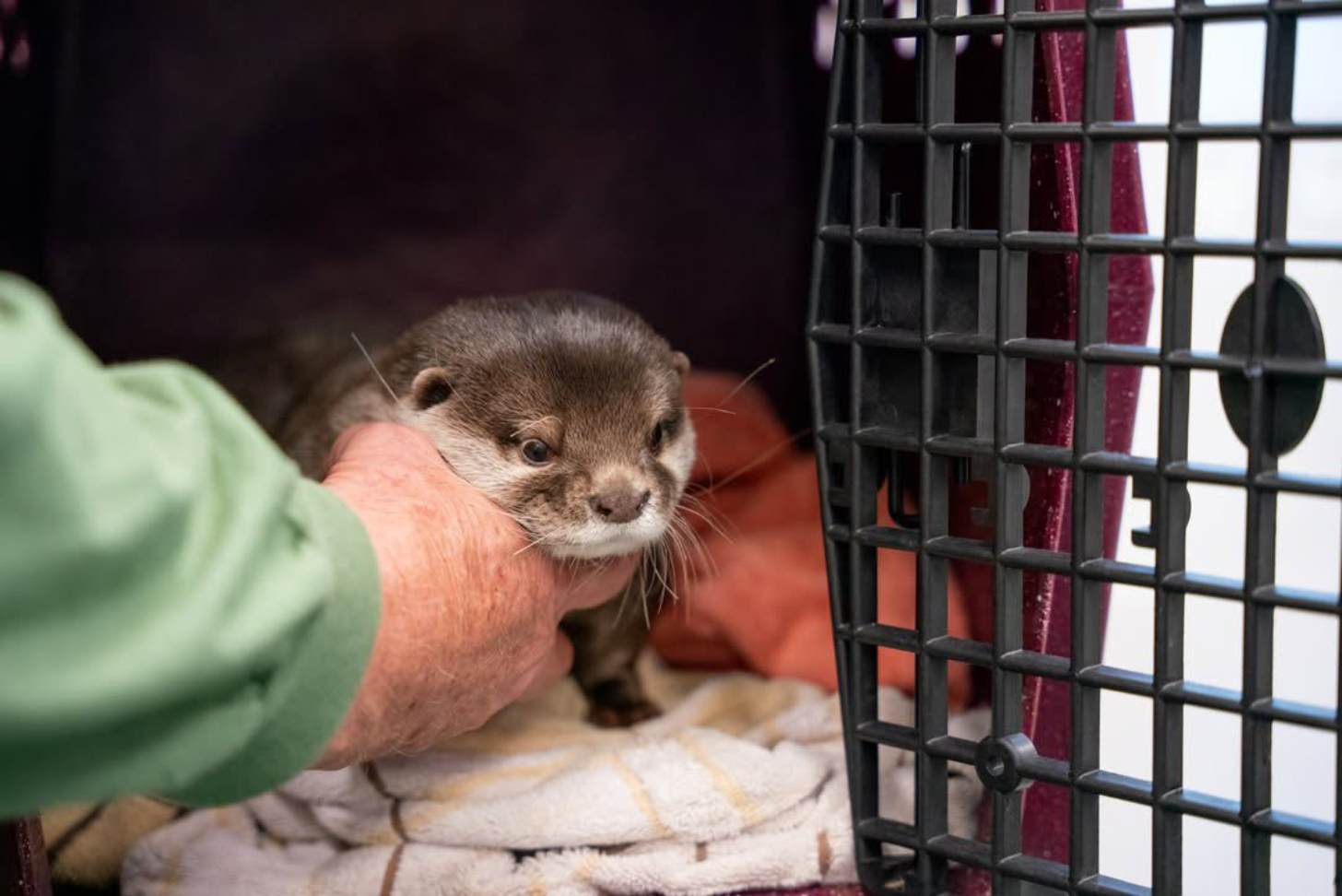
Splash is a 2-year-old Asian small-clawed otter who has been trained to assist in underwater search and recovery missions. He’s turned into something of a celebrity, believed to be the only otter in the country who has successfully been trained in this work.
After 46 years in the search and rescue world, Hasdell has worked with canines, horses, and drones across the United States and internationally. Once he realized there was a need to improve underwater missions, a spark of inspiration took hold.
“I was reading an article on a flight back from Los Angeles about otters and how they possibly can work odor underwater, and hunt underwater using odor and using their whiskers,” Hadsell told AAHA, a magazine of The American Animal Hospital Association.
“And I started thinking, well, if they can work odor underwater, then we can train them.”

Soon, he was a man with a plan.
Hasdell went to Mote Marine and Aquarium in Sarasota, Florida, where he observed trainers working with otters. He realized it was extremely similar to training a dog.
“I realized at that point that, yeah, I think we can do this. We can make this happen,” he told AAHA. “And so, we went to work.”
As it turns out, otters’ are incredibly intelligent and have strong sensory organs that can sniff out human remains. While Splash is mostly focused on search and recovery — not rescue — his role is paramount to bringing closure to people who may have lost a loved one.
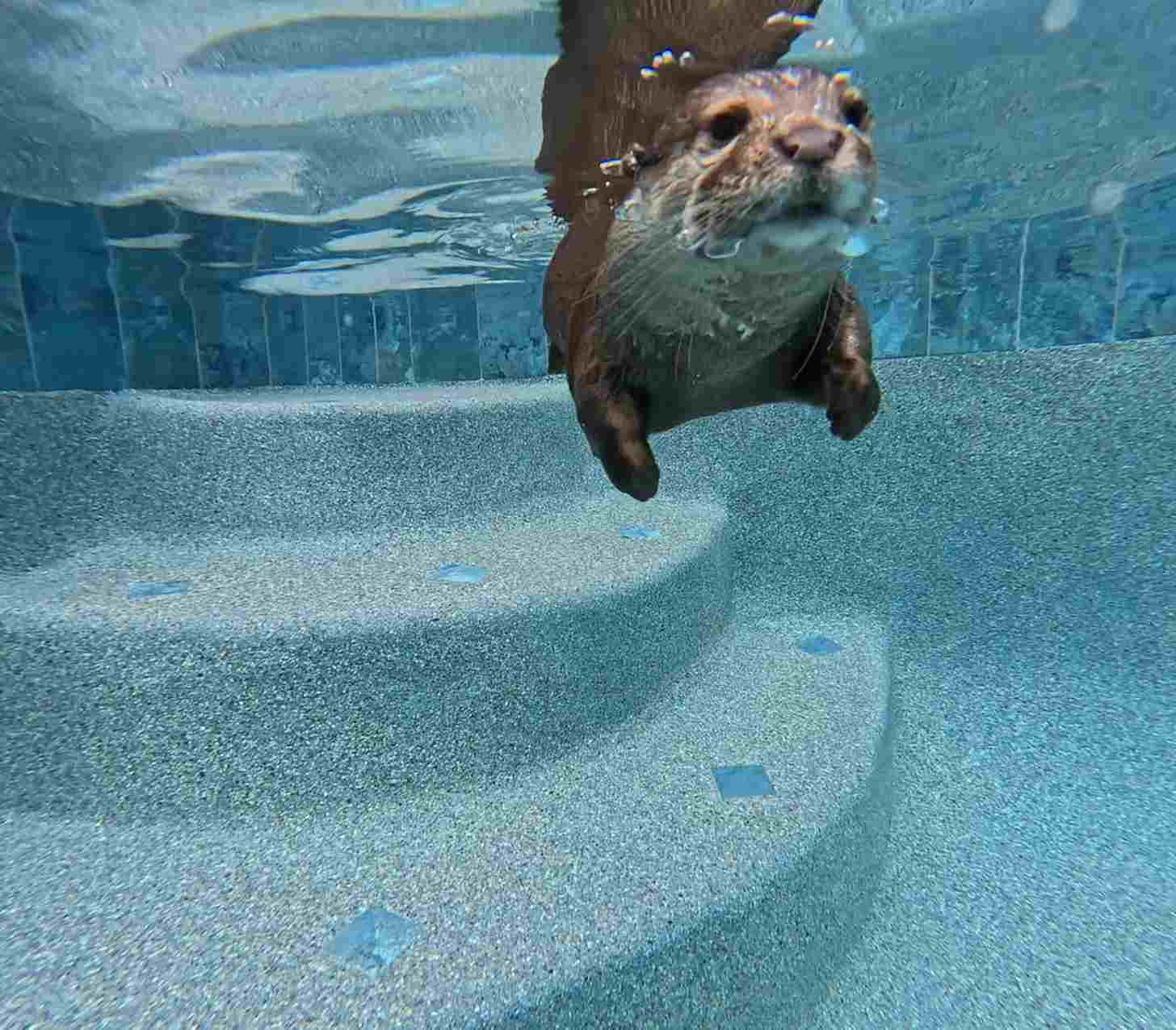
In fact, bodies of water like oceans and lakes have long been places where human remains are never recovered.
But Splash can hold his breath for five minutes, and he’s easy to train. In his home swimming pool, Hasdell hides an object that’s been marked with the odor of human remains, then places the same smell on a ball on the end of a stick. When he gives him a signal, Splash will sniff the ball and dive into the pool to seek out the target.
Otters smell underwater in a unique way: Blowing bubbles at a target and then quickly breathing them back in, where they absorb odors. Once Splash captures an odor target, he alerts his handlers, who are often diving with him.
“He comes up and starts grabbing my mask to tell me he’s got something, and he’s not going to let me get away until I start moving forward,” Hasdell said.
Splash wears a custom harness to be attached to Hasdell underwater, and once he spots a scent target, he lays on top of it so humans can mark a precise search area.
And when Splash is successful, he gets a piece of salmon.
“It has to be farm-raised salmon,” Hasdell quipped to Outside Magazine. “He won’t eat wild salmon.”
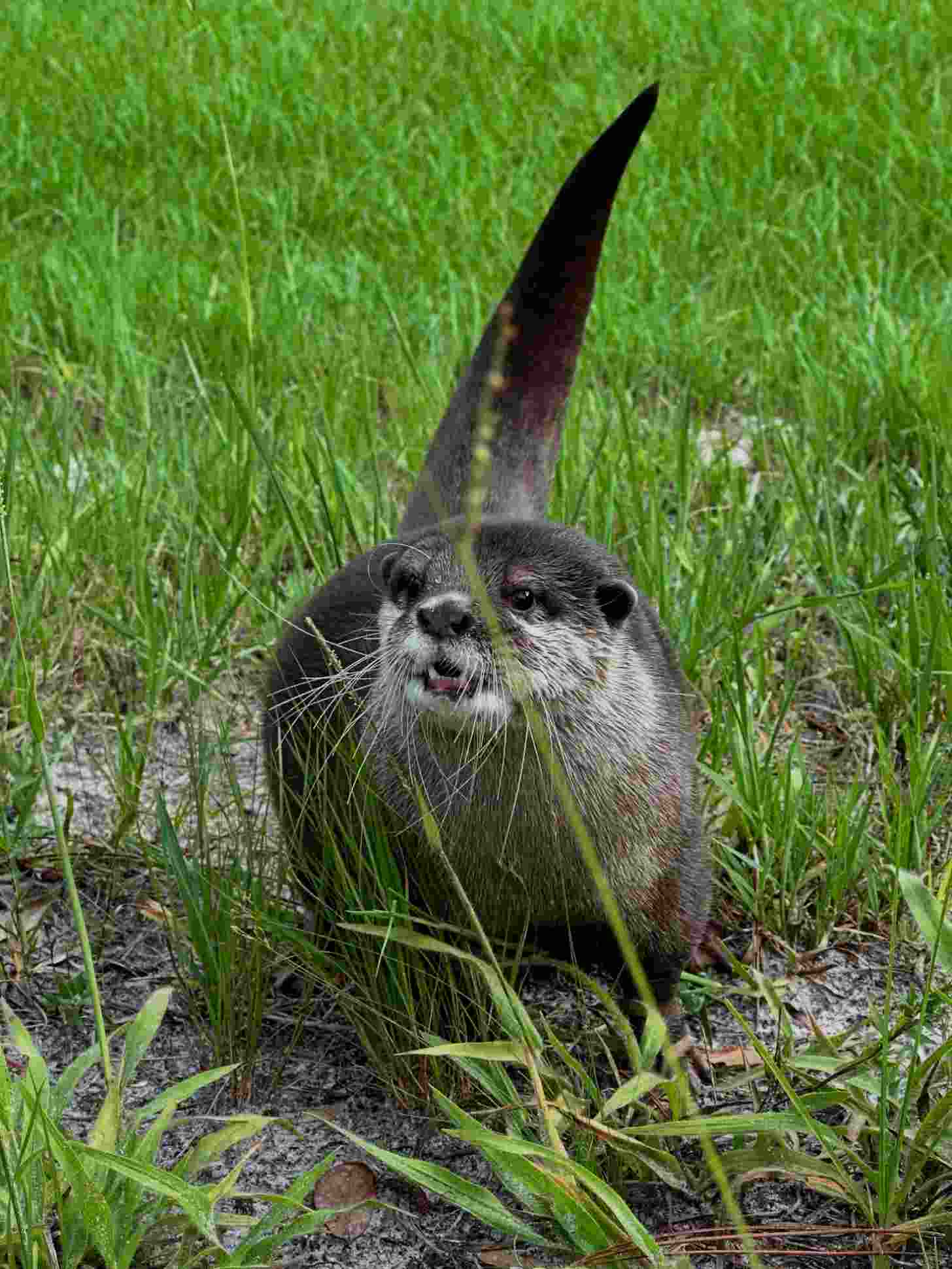
So far, Splash has been successful in the field. After four months of training, he was able to help recover a weapon used in a 25-year murder case. At just 8 months old, he was also able to locate human DNA on a clay brick at the bottom of a lake, bringing closure to the family of a murder victim.
And he’s been called on at least 20 other recovery missions since.
There are still safety concerns that keep the otter safe and well. Splash can work in all kinds of water — freshwater or salt water — but even if it’s perfectly clear, he is not allowed to go any deeper than 30 feet, and if currents are strong, he stays back, too.
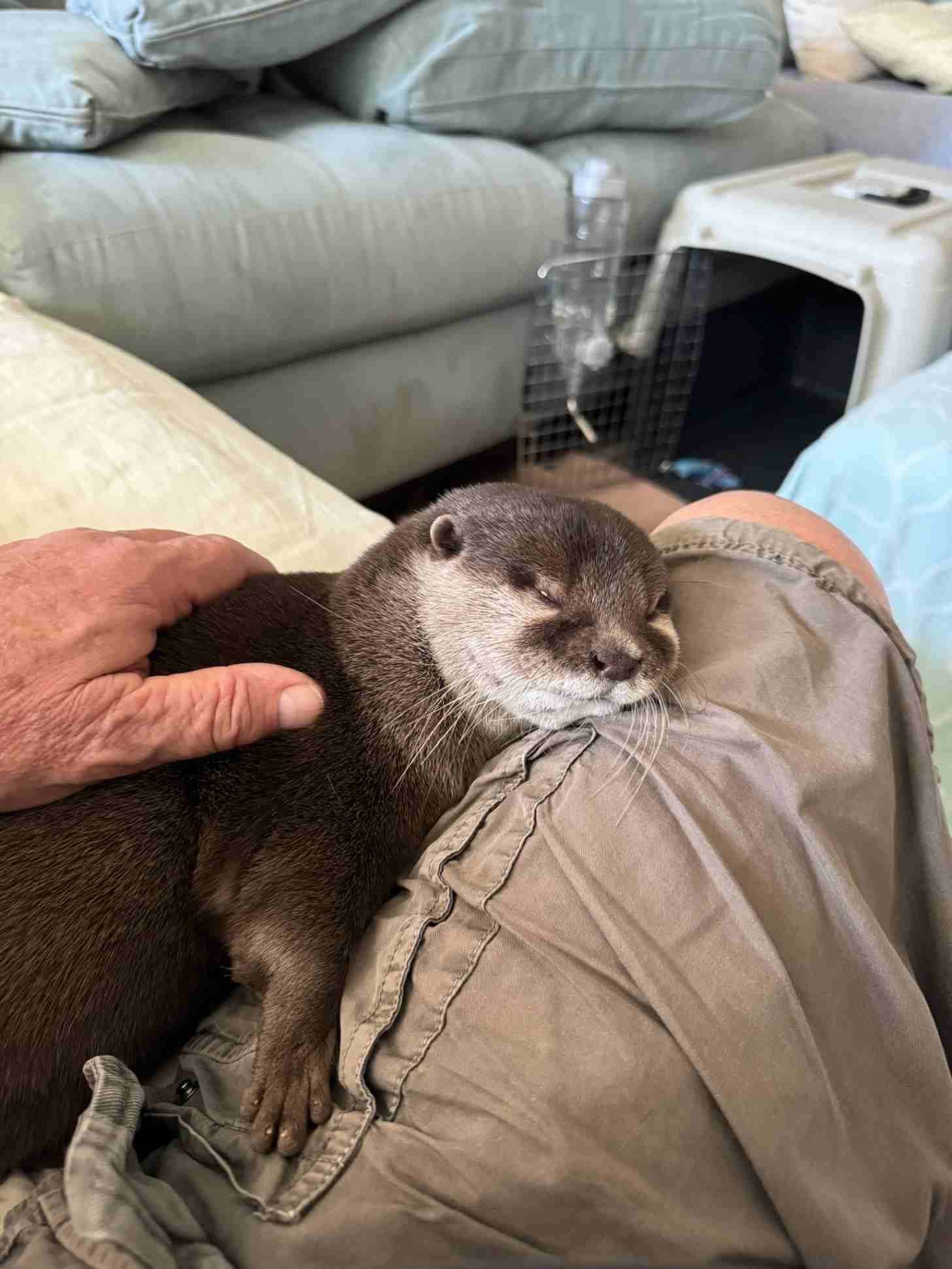
“The search has to qualify for the otter, or we don’t use him,” Hasdell told AAHA.
And then, of course, there are predators in open waters that pose a risk to Splash.
“I have folks on the team who wear shirts that say ‘Otter Spotter’ on them,” Hasdell added. “They watch for alligators and anything else, so they’re constantly keeping track of him so we know where he is and where the dangers are.”
Otters are also sensitive to illness, though Splash’s protective oil often keeps him protected in murky waters. But on rare occasions, he needs a bath with Dawn dish soap, and then he has to take a few days off to let his oils balance out.
As finicky as his nature may be, Splash has become a beloved member of the PRSARK9 team, even working alongside search and rescue canines, like his best buddy, Nova.
“He’s out there with the rest of them, wanting to do his thing,” Hadsell told AAHA. “He’s part of the team now.”
You may also like: Scientists are building cyborg cockroaches to create the world’s smallest search and rescue workers
Header image courtesy of Peace River K9 Search and Rescue
Since President Donald Trump has been sworn in for the second time, one of his consistent talking points is that climate change is “a con job.”
It’s a belief that has led to some of the largest deregulatory actions in the nation’s history, from the repeal of the endangerment finding — which required the Environmental Protection Agency to protect people from climate pollution — to large cuts to the Federal Emergency Management Agency.
And yet, progress continues in the larger fight against the climate crisis. In September, world leaders at the United Nations unveiled new targets to reduce greenhouse-gas emissions, despite Trump’s attacks. China reached its 2030 climate goals five years early. Uruguay built a power grid that is 99% renewables. In South Africa, courts blocked Shell’s oil exploration efforts due to inadequate community consultation.
And even in the United States, there have been a number of environmental wins in the past year, too. Researchers in Hawaii identified a native fungi that can break down microplastics, hypoxia levels dipped down to their lowest levels in the Long Island Sounds in 40 years, and New Mexico invested $50 million in wildlife corridors. A lot of this progress happened at the state level — a reminder of the power of local elections.
Beyond individual milestones, long-term progress continues, too.
Most of the world — yes, even the U.S. — has long agreed to phase down powerful greenhouse gases known as hydrofluorocarbons under the Kigali Amendment to the Montreal Protocol, an international agreement that was ratified in 2022.
HFCs are potent pollutants used in refrigerators and air conditioners that trap hundreds to thousands of times more heat in the atmosphere per pound than carbon dioxide. As of 2026, over 171 countries have pledged to cut down on HFC consumption, or freeze it entirely by using alternative coolants.
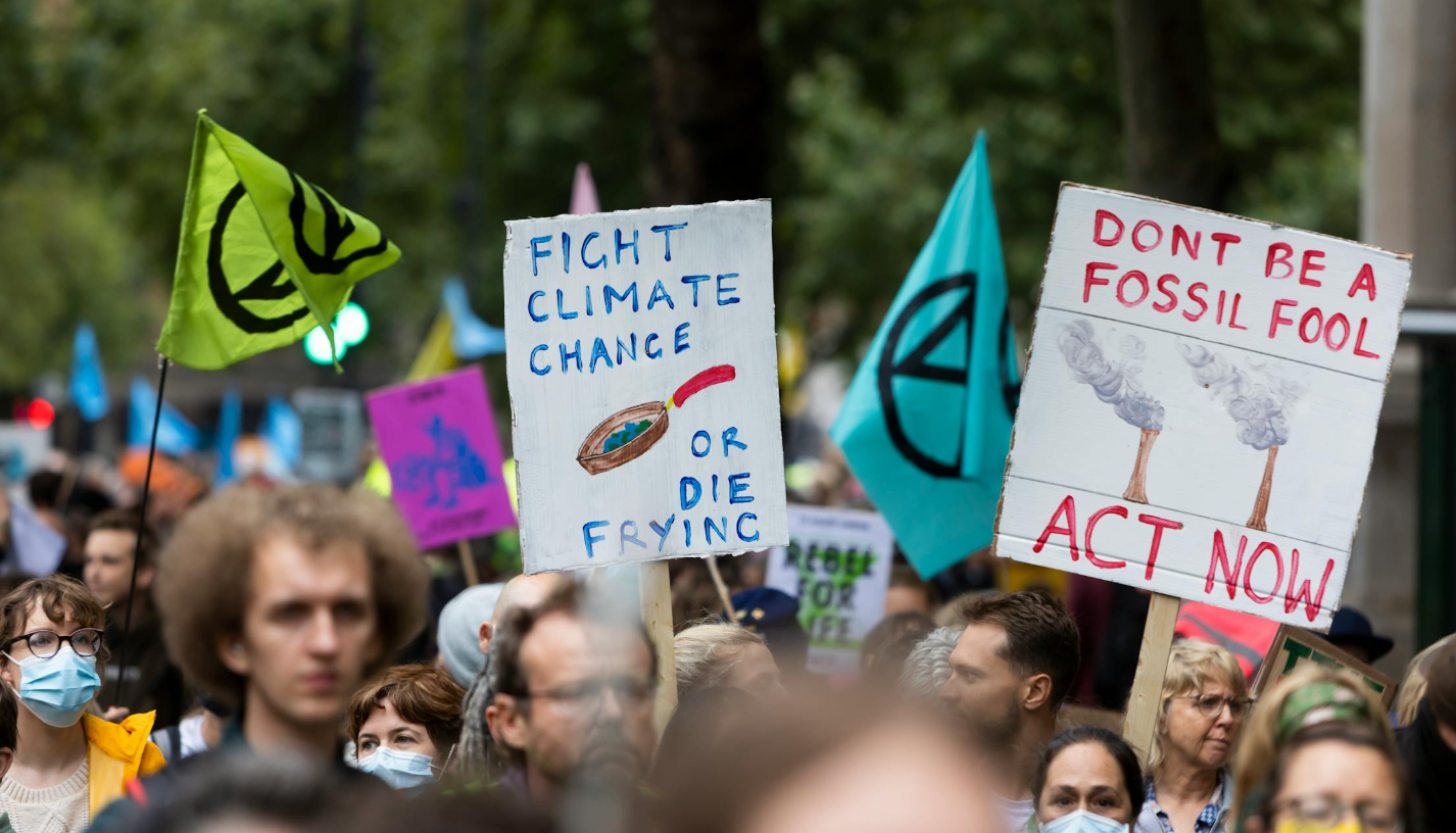
Even in the U.S., the amendment was met with bipartisan support, both then and now.
In fact, some environmental regulations haven’t just withstood the test of time — they’ve been strengthened by recent administrative challenges.
In 2025, the Trump administration attempted to eliminate the federal Energy Star program, a government-backed symbol that helps consumers identify energy-efficient products for their homes.
Not only was the program saved, but efforts were redoubled to keep it going, reversing a decade-long trend of budget reductions. The support came from both sides of the aisle, after more than 1,000 manufacturers, builders, and advocacy groups signed a joint statement in support of the program.
"What it shows very clearly is that Congress, both Republicans and Democrats, strongly support Energy Star and want to see it continued," said Ben Evans, the federal legislative director for the U.S. Green Building Council and an Energy Star advocate.
It wasn’t the first time that the administration’s attempts to block funding backfired. In the fall, as the Trump administration paused a $5 billion bipartisan effort to install electric car chargers from coast to coast, more than 40 U.S. states took action to build more EV charging stations through the National Electric Vehicle Infrastructure program.
“If you look at the states that are putting their [charging] plans and their money back into play the soonest, it’s really states that recognize their EV adoption rate is going to continue to climb,” said Joshua Rodriguez, program director for environment at the nonpartisan American Association of State Highway and Transportation Officials. “Red or blue or purple, it doesn’t really matter.”
But even as lawmakers from both sides of the aisle work to protect the planet, the administration has muzzled environmental advocates primarily by censoring information. In the first year of Trump’s second administration, thousands of federal government data sets have been altered or removed, including tools used to track climate risks and environmental hazards.
Eric Nost was prepared for this. As a geographer at the University of Guelph and member of the Environmental Data and Governance Initiative, Nost and his team began identifying and archiving dozens of high-risk public data sets as early as 2024.
That archive includes the Climate and Economic Justice Screening Tool, a website that helped identify disadvantaged communities that would benefit from Biden’s Justice40 initiative, which allocated 40% of climate investments to “disadvantaged communities.”
“EJScreen was the EPA’s tool for similarly trying to understand communities that are on the front lines of toxic pollutants,” Nost told Yale Environment 360. “There are a lot of problems with EJScreen, certainly there’s a lot of limitations. But that tool was well used by community organizations, by state and local governments, for grant-writing or communications or advocacy.”
So, within days of the Trump administration taking it down, Nost and his peers “made it pretty much fully functional again.”
“The U.S. government is the world’s biggest publisher. People from around the world turn to it as a source of information,” he emphasized. “So when you start taking down this information, changing how issues are described, and doing so in misleading ways, really, what it is, is censorship and propaganda.”
Fortunately, whenever Trump topples environmental datasets, people like Nost are there to put them right back up again.
On their website, EDGI states: “All people, especially minoritized communities who experience disproportionate harms, should have equitable access to comprehensive and legible environmental information in order to seek redress for harms and build relations of responsibility and accountability.”
Whether restoring vital environmental information, making sure consumers can get energy-efficient appliances and charge their EVs, or eliminating harmful greenhouse gas emissions, climate progress is happening — despite the administration’s efforts to derail it.
A version of this article originally appeared in the 2026 Environment Edition of the Goodnewspaper
You may also like: He grew up poaching animals and cutting down trees. Now he protects the same land he used to plunder
Header image via Centre for Ageing Better