In Florida, sea turtle nesting season typically runs from March 1 through October 31. On May 13, despite only being just two months into the season, the FWC Fish and Wildlife Research Institute had an exciting update to share.
“The 2026 sea turtle nesting season is officially off and with a strong start!” the FWC wrote in a Facebook post. “Loggerheads and leatherbacks are both currently outpacing their recent record-breaking years.”
In the post, the FWC reported 1,008 leatherback nests — up by 4% compared to May 2025. There were also three Kemp’s ridley nests, up by two from this time last year, marking a huge improvement for the world’s smallest and most endangered sea turtle.
But it was the number of loggerhead sea turtle nests that was truly remarkable. The 2026 count was already at 1,450 — roughly 82% better than it was this time last year.
“A huge thank you to the biologists, interns, volunteers, and permit holders who worked tirelessly to collect and report this data,” the FWC wrote. “Your dedication drives sea turtle conservation forward!”
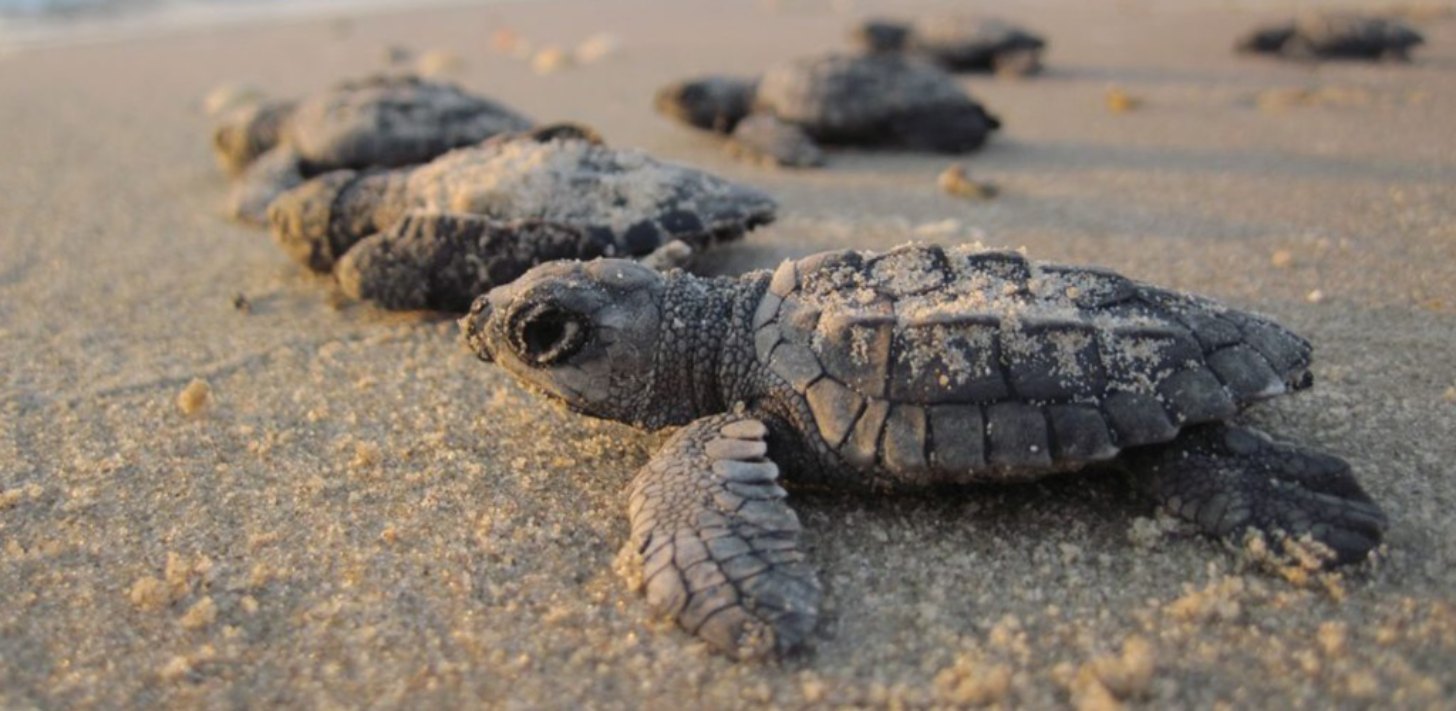
When one local expressed concern over the lack of green sea turtle nests, the FWC was quick to reassure them.
“Green turtles nest later in the summer, so we expect to start seeing green turtle nests around the end of May or beginning of June,” the organization explained.
In 2025, green sea turtles had a standout year with 66,476 nests, making 2025 the second-highest season on record. Leatherbacks set a new statewide record with 2,012 nests, breaking the previous high of 1,848 in 2022. And loggerheads remained “the dominant nester” with 100,951 nests, which the FWC called “a strong showing across the state.”
In 2024, scientists expected Florida to break nesting records, but Hurricanes Debby, Helene, and Milton caused severe flooding and washed away many sea turtle nests across the state.
Beaches were dramatically reshaped, destroying dunes and nesting habitats for loggerhead, green, and leatherback turtles.
Despite the damage, wildlife experts continued conservation and restoration efforts throughout the following year.
As for 2026, there is still a long way to go for the nesting season. But the FWC is expecting several sea turtle species to continue breaking records.
They wrote: “We can’t wait to see how the rest of the season unfolds!”
Header image via the National Park Service
While national parks don’t need too much PR to assemble a fanbase — the National Park Service saw a record-breaking 323 million recreation visits in 2025 alone — they are only one piece of a vast network of federal public lands in the United States.
In fact, nearly 40% of the United States is public land — equating to more than 600 million acres of land and water — supported by taxpayers and managed by federal, state, local, and tribal governments.
Public lands include the famous national parks and preserves, as well as national forests, wildlife refuges, conservation areas, wilderness areas, national monuments, historic sites, battlefields and memorials, wild rivers and lakeshores, national trails, and national recreation areas.
All U.S. public lands are the ancestral lands of Indigenous people and tribal nations, who managed them sustainably for thousands of years.
Devastatingly, many of these lands now face mounting threats from political leaders and companies looking to use these protected spaces for development and extraction. But local people remain committed to protecting them.
With that in mind, it is more crucial than ever to know what we’re fighting for. The following resources will help expand your knowledge, root deeper in your appreciation, and rise as an advocate for all public lands.
By the way, some of the links in this article (like books!) are affiliate links, which means if you make a purchase after clicking a link, we may earn a commission at no extra cost to you. Thank you!
The best books about national parks and public lands
“Our Common Ground: A History of America’s Public Lands” by John D. Leshy

“Our Common Ground” tells the story of how the U.S. government came to create its public lands, through political consensus not often seen in the country’s history.
The book offers a success story for government, education, conservation, and more, and acts as an essential primer for anyone who loves the beauty of America.
“Grand Canyon For Sale: Public Lands vs. Private Interests in the Era of Climate Change” by Stephen Nash

“Grand Canyon For Sale” uses the Grand Canyon to illustrate what a future without public lands would look like. Nash uses on-the-ground reporting and scientific research to make the case for climate action and wildlife conservation to safeguard these important places for years to come.
“Our National Forests: Stories from America’s Most Important Public Lands” by Greg M. Peters

“Our National Forests” specifically lauds the role of the U.S. Forest Service across our country and its diverse ecology.
Peters celebrates dedicated U.S. Forest Service members, engaged citizens, and the forests themselves for the triumphs and challenges that often go unsung.
Must-see documentaries about national parks and public lands
“This Land”
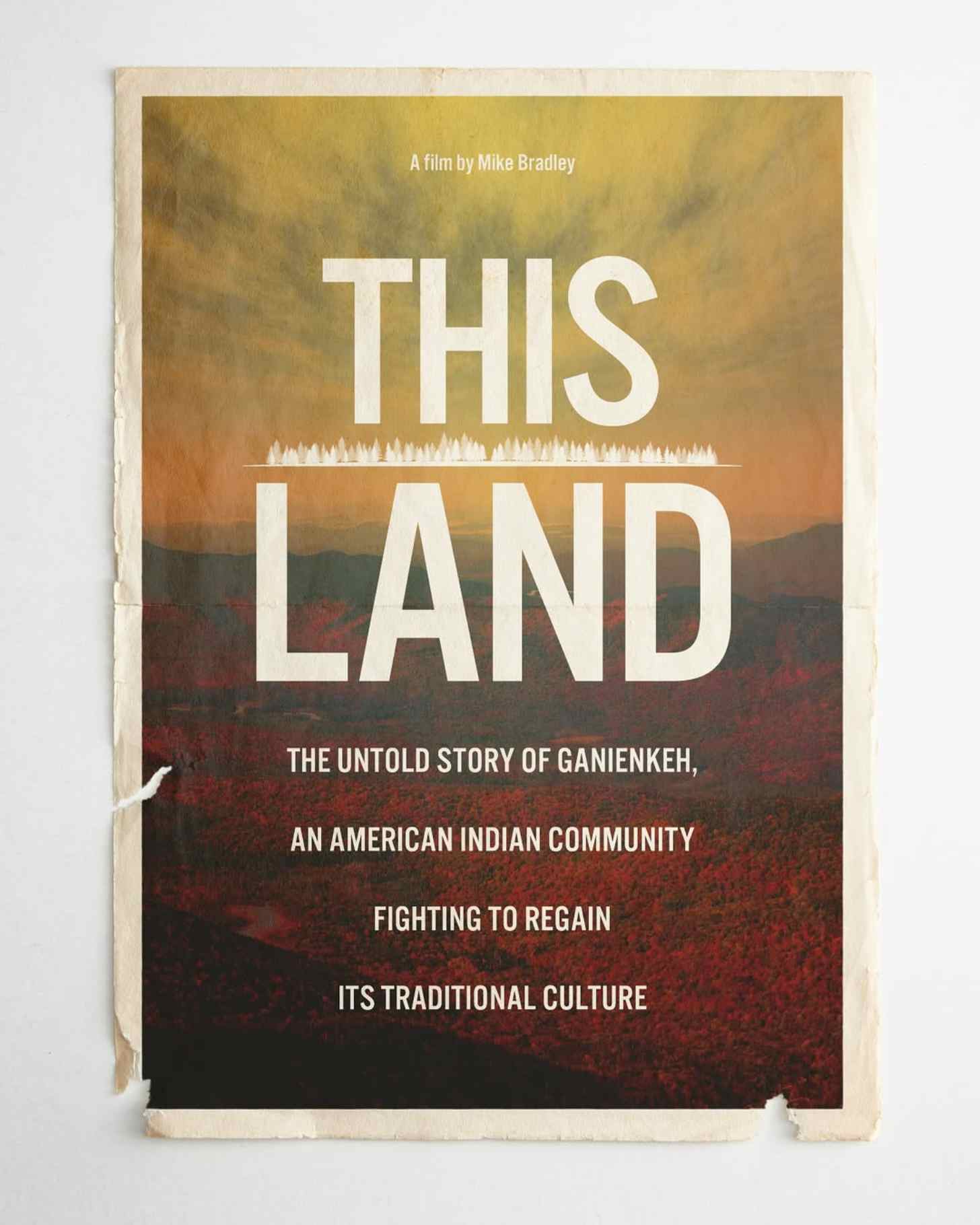
“This Land” is a short documentary film featuring runner and advocate Faith E. Briggs. Following Briggs as she runs 150 miles through three national monuments, viewers meet a diverse set of companions who adeptly explain what is at stake for the country’s public lands.
Available to stream for free online.
“Public Trust: The Fight for America’s Public Lands” by Patagonia Films

“Public Trust” is a feature-length documentary led by investigative journalists highlighting three land-based conflicts — and the heroic activists who are defending these lands from corrupt interests — to make a clear argument for protecting public lands.
Available to stream for free on Patagonia’s website.
“Understory: A Journey Into the Tongass”

“Understory” is a 40-minute documentary that follows three women on a 350-mile expedition through Alaska’s Tongass National Forest.
On this journey, they explore how logging could affect wildlife, local communities, and the planet as a whole.
Available to stream for free online.
Influencers using their platforms for public lands
@alex.haraus
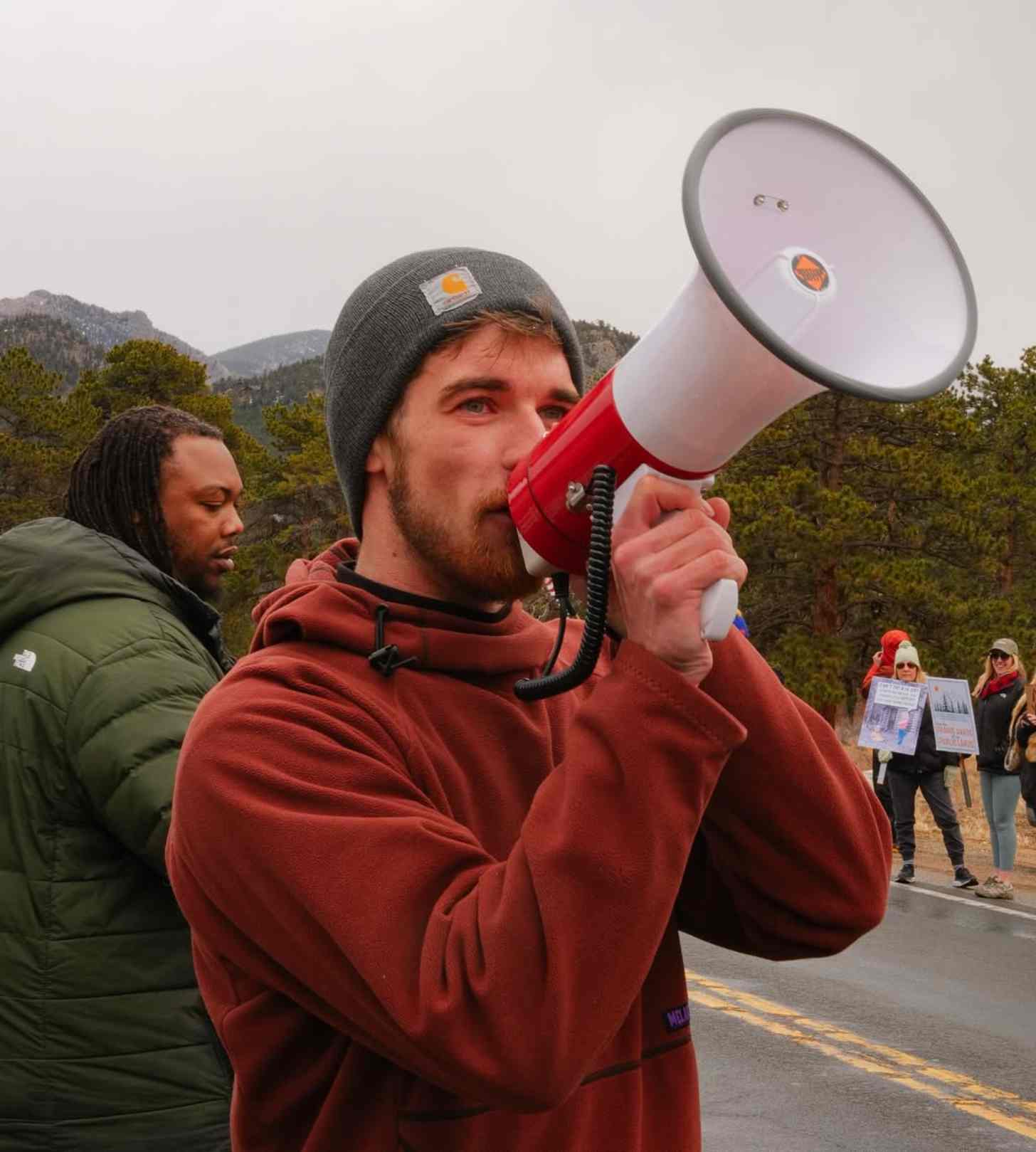
Alex Haraus empowers people to take action for nature. Based in Colorado, the environmental educator teaches his hundreds of thousands of followers more about public lands, federal policy, and how individuals can make a big difference.
He also organizes local protests and meetups to mobilize nature lovers like him.
@thesimpleenvironmentalist
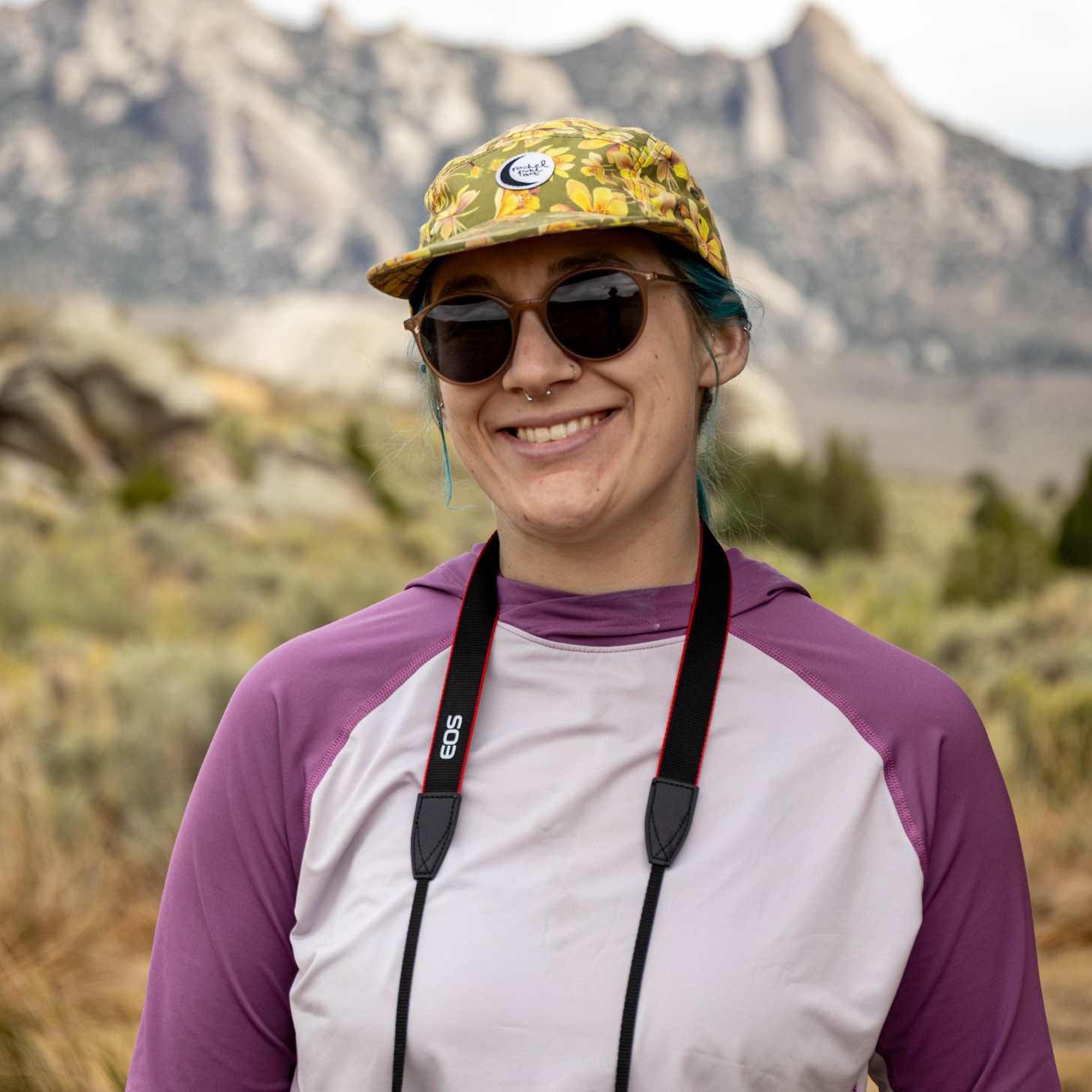
Emma Dendler uses her platform to welcome followers into a world of imperfect activism for the planet.
She shares helpful and accessible guides to take action for national forests, parks, and all public lands, and intentionally includes disabled and other marginalized voices in her efforts.
@fatblackandgettinit
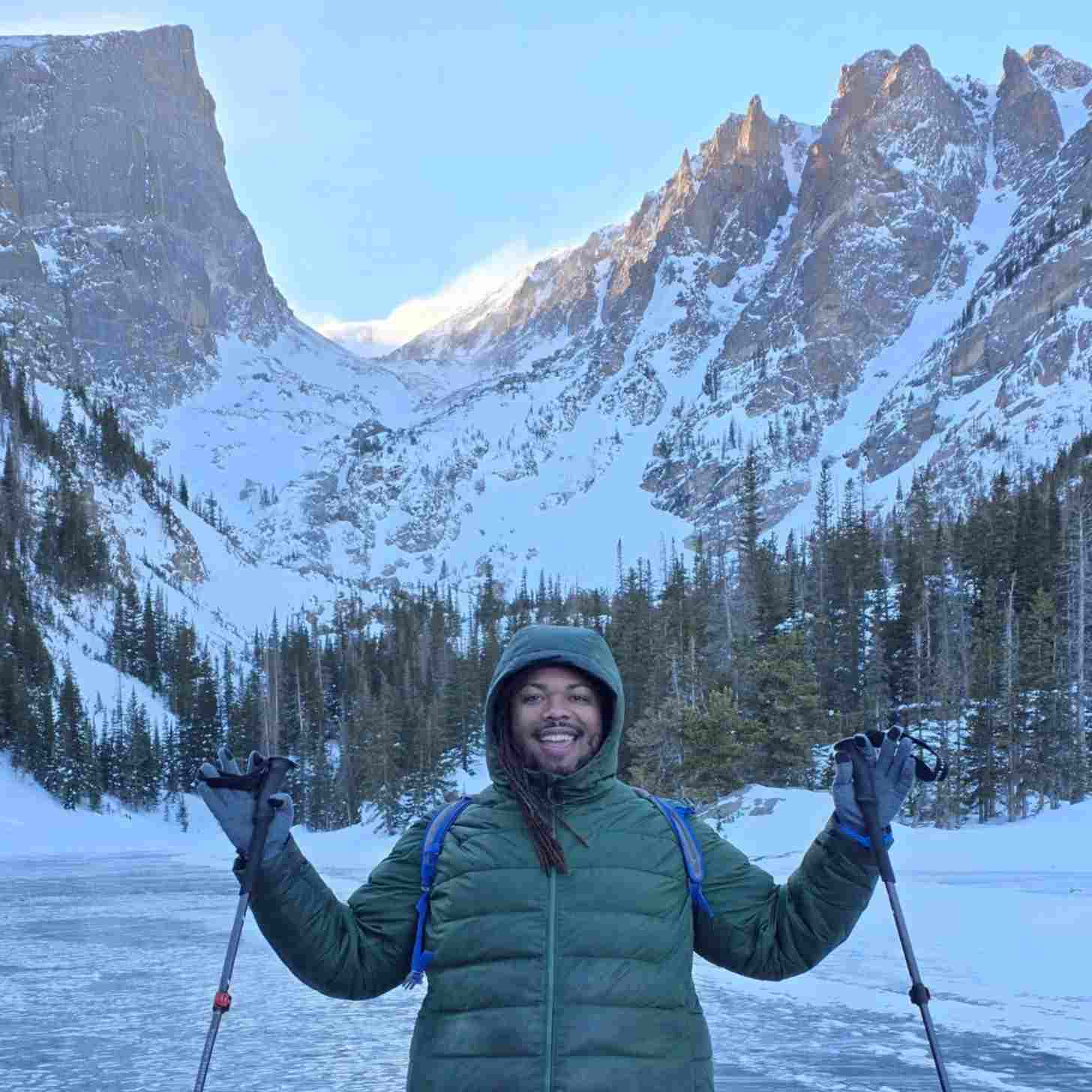
Nelson Holland may have started as an outdoorsy social media vlogger, but his platform has grown to encompass all kinds of activism.
From public lands advocacy and conservation efforts to providing practical tips to combat ableism and body-shaming in outdoor recreation, Nelson is a joyful and educational follow for all.
You may also like: These are all the national parks where your dog can become a 'BARK Ranger'
A version of this article was originally published in The 2025 National Parks of the Goodnewspaper.
Header image courtesy of NPS Photo
A three-story red brick building in Chicago’s South Side, formerly a component of the publicly-funded Jane Addams Homes built in 1938, is now the National Public Housing Museum, a first-in-the-nation museum dedicated to sharing the storied history of public housing in the United States.
Many public housing projects in the area were left vacant and in disrepair following an onslaught of crime, poverty, and segregation in the 1960s and 70s, though activists hoped to preserve these buildings and the stories they held.
In 1999, the Chicago Housing Authority introduced the Plan for Transformation, which ultimately led to bulldozing 11 public housing developments, forcibly relocating tens of thousands of families without any guarantee of affordable housing replacement.

“This demolition was the largest net loss of affordable housing in the history of the United States,” the museum’s website states.
In the wake of this plan, Deverra Beverly, a local commissioner of housing, organized with residents of the Jane Addams Homes to create a public housing museum.
“Residents profoundly understood the power of place and memory in the struggle for self-determination,” the museum’s website writes. “The museum would preserve and share the stories of public housing residents and serve as a site for resistance against erasure and forgetting.”
It wasn’t until 2025 that this vision was realized — 12 years after Beverly’s death.
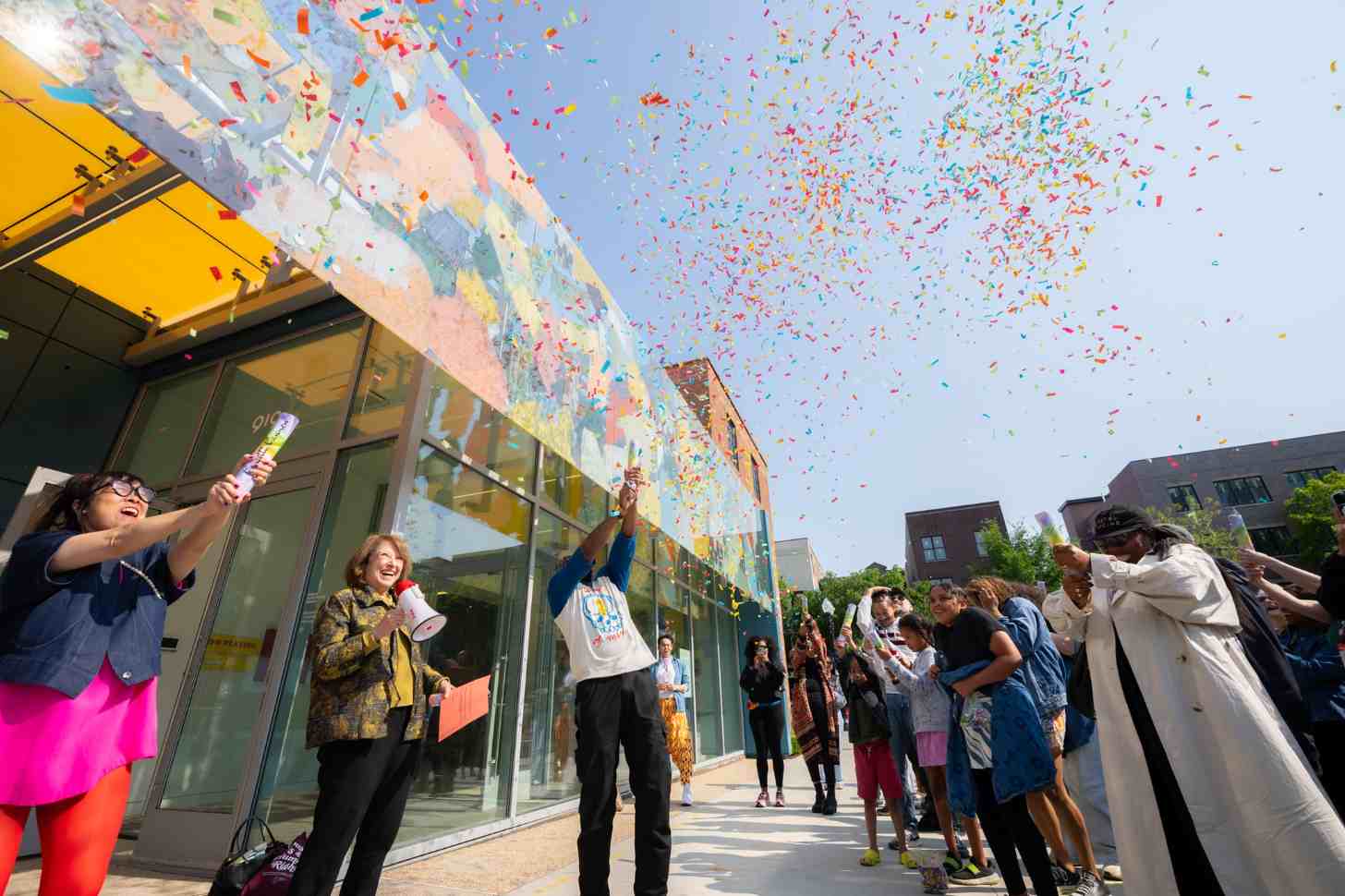
Now, her legacy, and the stories of Chicago’s public housing, have a place to live on.
The museum, designed by architect Peter Landon, includes large murals, posters from the 1930s advocating for public housing, wallpaper and ephemera salvaged from the original building, apartments furnished like the ones that once stood there, and even a “Rec Room,” where visitors can listen to records of oral history shared by people who lived in public housing.
Museum curators hope that the new museum will be a place for those working in housing today to better understand the past and more intentionally create the future.

“We need to house millions of people,” Sunny Fischer, the museum’s board chair, told NPR. “So what can we learn from all the good things that happened in public housing and all the bad things that happened?”
“We believe that in order to preserve history, you have to make it relevant to the most critical social justice issues of today,” the museum’s executive director, Lisa Yun Lee, added.
“There is no way that we can actually address any of the social issues that we want to unless we go back in time and ask, ‘What have we not yet learned from history?’”

A version of this article was originally published in The 2026 Home Edition of the Goodnewspaper.
You may also like: Church to demolish existing worship space, creating 110 units of affordable housing
Header image courtesy of National Public Housing Museum
Leslie Russell is a meteorologist based in Orlando, but she is first and foremost an animal lover. In early March, Russell was on social media when she came across a post about a young cow; he was black-and-white, with fluffy ears and soulful eyes.
And he was set to be processed as livestock in mid-March.
The young cow was raised through a local 4-H program, which is rooted in agricultural and farming education. Children and teenagers who participate 4-H, one of America’s largest youth development organizations, often raise farm animals to compete in local fairs for prize money.
“He’s had a life better than most cows,” Russell explained in a GoFundMe post. “Raised by hand, trained to be gentle, brushed and groomed for the county fair — a far cry from factory farming.”
“But at a recent weigh-in, Charley was too skinny to continue with 4-H,” she continued. “And in the livestock world … that usually means the slaughterhouse — unless we can save him.”
Russell added that she had named the cow Charley after the 2004 hurricane because he was “facing the biggest storm of his life.”
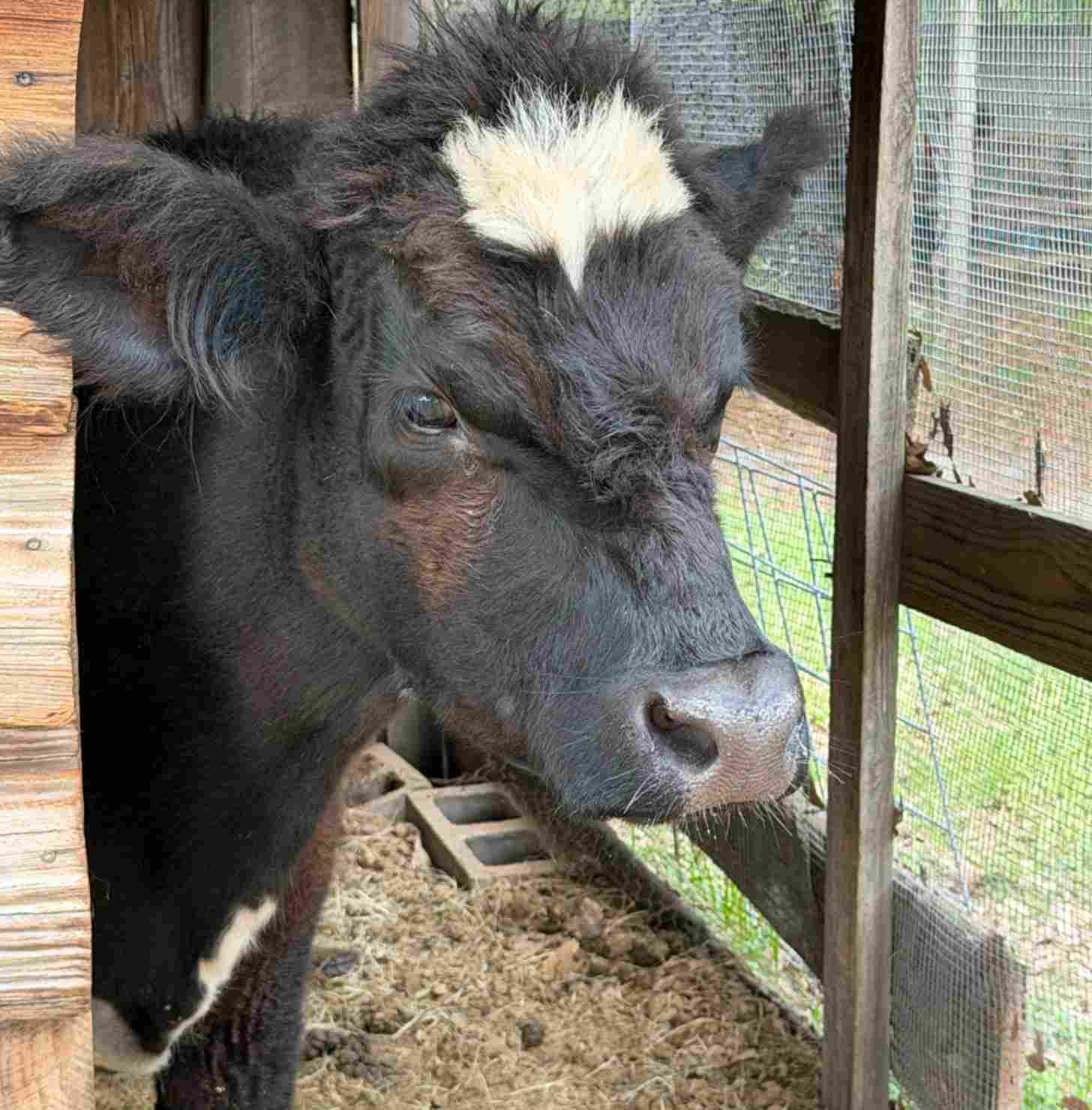
The Orlando meteorologist explained that she needed at least $5,500 to save Charley from slaughter and relocate him to Bell Family Farm in Polk City, Florida, where he could live out the next 15 to 20 years of his life in comfort.
Every cent would go to buying him out of the livestock trade, transporting him to his new sanctuary, and supporting the Bell Family Farm.
But by the time Russell saw Charley on social media, the clock had already started ticking.
“We only have about one week to save Charley,” she emphasized in a March 12 post. “If you’ve ever wanted to save a cow … this is your chance.”
In addition to starting a GoFundMe, Russell took to social media to ask for help. She even booked Charley for media appearances through local television stations like WESH and WFTV, as well as Magic 107.7's morning show with Chad and Leslye.
“[He’s] become quite the local celebrity,” she said.
Charley’s rescue was a rollercoaster. At one point, a rescue temporarily stepped in to help, but they backed out again by the end of the month. Fortunately, at that point, locals across Central Florida had raised enough to temporarily keep him out of the slaughterhouse by covering the cost of his daily meals.
On March 31, despite still not having enough money to cover the full cost of saving Charley, Russell paid the difference out of pocket.
“Charley is safe!” she shared. “I have temporarily covered the rest of his cost, but this is only a band-aid. I have one week to close the financial gap. I’m asking for help closing that final gap: $1,500.”
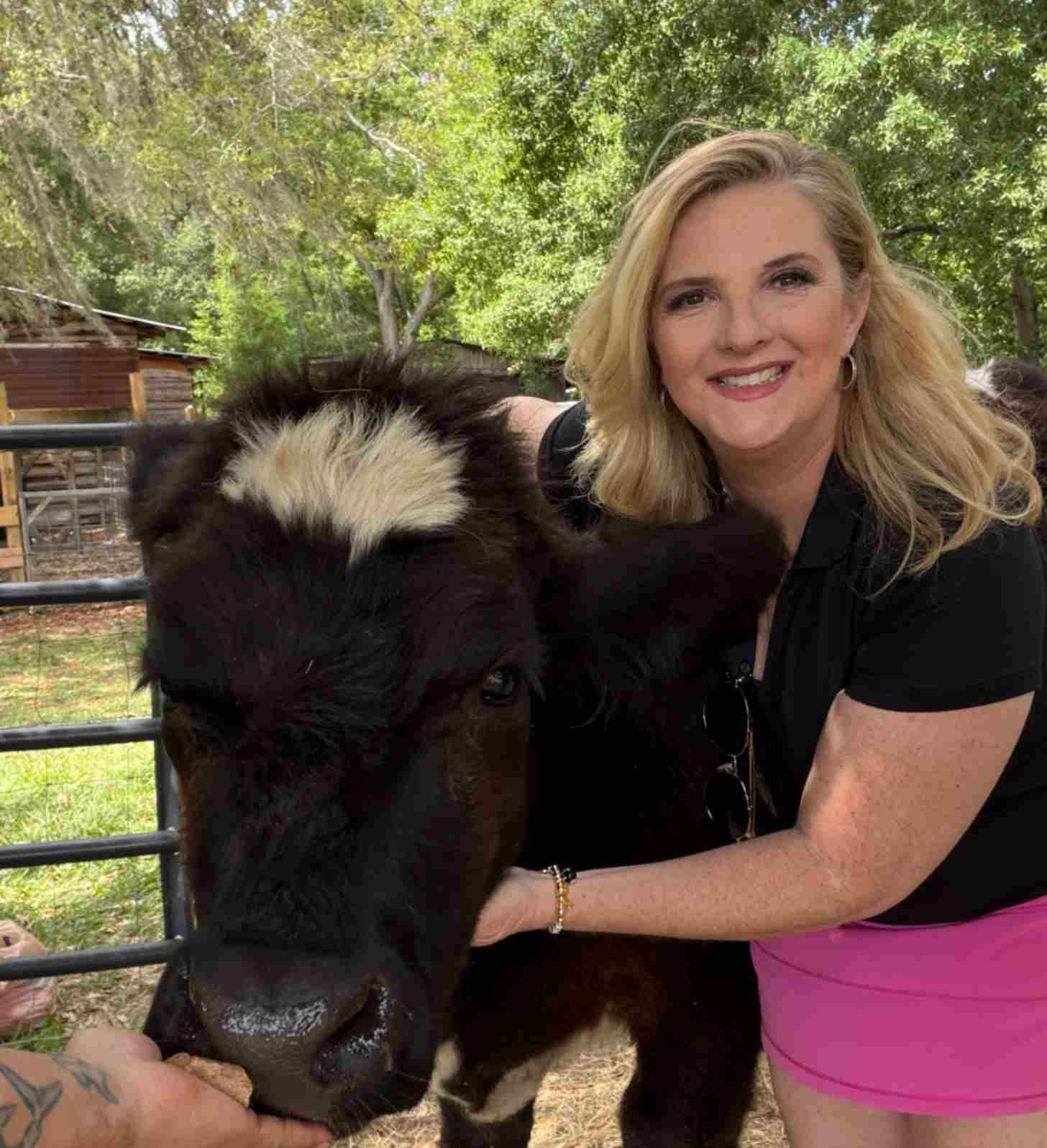
By April 27, Charley’s GoFundMe was still $900 short of its goal, but Russell had good news to share: Charley was home.
“Our boy is living his BEST life at the Bell Family Farm in Polk City!! Charley is OFFICIALLY a cow cuddler and is doing great!” she shared.
“Charley's story is remarkable,” the Bell family told WESH. “He managed to cross paths with all the right humans in our incredible community who would recognize his unique worth.”
Although Charley was rescued, his GoFundMe is still open to donations to support his continued care and give back to the people who stepped in to save him.
“I am trying to make a ‘beefy’ donation to Florida Farm School since Sarah Jones was a huge part in me being able to save him,” she said. “She donated her truck, trailer, and her time to deliver Charley to his new home. Let's show her some love!”
When the young cow arrived at his new home, Russell shared a video of her giving Charley his “inaugural cuddle” to welcome him into the next chapter of his life.
“Saving Charley wasn’t on my 2026 bingo card,” she said. “But sometimes the right thing appears when we least expect it.”
You may also like: Boy cows don't survive the dairy industry. A dad and his daughter drove 600 miles to save two of them
Header image via Leslie Russell / GoFundMe
In 2023, the PLOS Global Public Health journal published a global study that found that women and men are both more likely to live longer in countries with greater gender equality. According to a decade-long study, every 10% leap in gender equality corresponded with higher life expectancy: On average, women lived 3.6 years longer and men lived 2.9 years longer.
In a press release from The George Institute for Global Health and Imperial College London, lead researcher Cat Pinho-Gomes said that the roots of gender inequality still run deep in many countries.
“Many of the factors that determine how long you will live — like working and living conditions, exposure to pollution, access to health care, education, income, and social support — are layered with gender differences around the world,” explained Pinho-Gomes.
The extensive study — developed by the World Economic Forum — gathered data from 156 countries from 2010 until 2021. Researchers compared relative life expectancies in men and women to the modified global gender gap index, which quantifies gender parity across four dimensions: economic participation, educational opportunity, political empowerment, and physical wellness.
Above all factors, Pinho-Gomes said the leading correlation to life expectancy for men and women was gender equality in education.
“This suggests investing in education is paramount, particularly in low and middle-income countries, where many girls are still denied access to education and resources are limited,” added Pinho-Gomes.
Although Pinho-Gomes cautioned that the data did vary considerably between geographical regions, the conclusion remained the same in every country: When women are treated equally, everyone benefits.
“As countries make greater progress towards gender equality and women are afforded the opportunity to participate more fully in political, economic, and social life, the whole of society reaps the rewards,” said Pinho-Gomes.
A version of this article originally appeared in the 2024 Gender Edition of the Goodnewspaper
Header image via Diego Montalvan
A husband and wife team are on a mission to break the generational cycle of domestic violence.
In 2019, Taimalelagi Mataio (Matt) Faafetai Brown and his wife, Sarah, founded their campaign She Is Not Your Rehab to start an open dialogue about domestic violence. This year, the couple launched the free mental health program innerBoy.
The program — which is geared toward men who have suffered from and still perpetuate domestic violence — was born out of a glaring lack of free anger management and therapy resources online.
"Everything online was inaccessible. … The courses online were costly, white-washed, or outdated,” Matt told RNZ. “It was a huge gap in our mental health system.”
Although the 30-day program is free, Matt said that innerBoy is meant to be “a useful tool to go alongside men's healing journey” and not an outright replacement for therapy.
“It is a digital sanctuary for men, providing a safe space where they can reclaim their identities and break free from the chains of intergenerational trauma,” Matt explained.
For Matt, the issue of domestic violence is incredibly personal. In a 2019 TED Talk, the New Zealand-based communicator touched on his experiences as a survivor of family violence and sexual assault.
“If I could summarize in one word what my childhood felt like growing up, I would use the word ‘unsafe,’” Matt said.
For Matt and Sarah Brown, She Is Not Your Rehab and innerBoy are not just about creating safe spaces for domestic violence survivors, but also encouraging them to heal and move forward.
“What happened to you in your childhood isn’t your fault, but your healing is now your responsibility,” Sarah said in an interview with Te Karere TVNZ.
A version of this article originally appeared in the 2024 Gender Edition of the Goodnewspaper.
Header image via SHVETS production
On May 20, a fisherman accidentally hooked a sea turtle from a fishing pier in Emerald Isle, North Carolina. Once he realized what he had at the end of his line, he called the local Emerald Isle Sea Turtle Patrol for help.
“Thank you to the fishermen, Jeshua Rios, [who] accidentally hooked a Kemp’s ridley on the Bogue Inlet Pier yesterday, for reporting it and waiting for help,” the Emerald Isle Sea Turtle Patrol posted to Facebook on May 21.
“Nest Response Team’s Laurie Conrad and Neva Tucker responded,” the organization added. “The hook was removed without injury to the turtle … Laurie and Neva released the turtle from the beach.”
The call came just 9 days after another Kemp’s ridley had been hooked at the same fishing pier. Unfortunately, that sea turtle was found deceased prior to Emerald Isle Sea Turtle Patrol's arrival.
“This is very sad to see, and a stark reminder of the importance of proper disposal of fishing line,” the organization shared in a Facebook post. “Thank you to everyone that helped with the recovery of this turtle.”
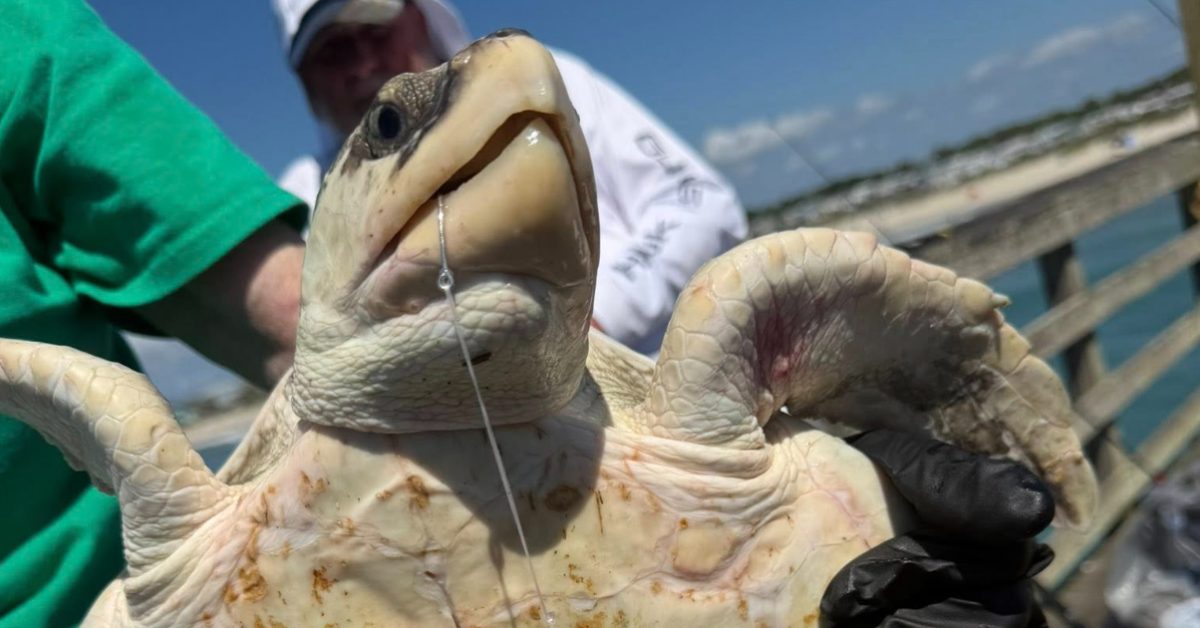
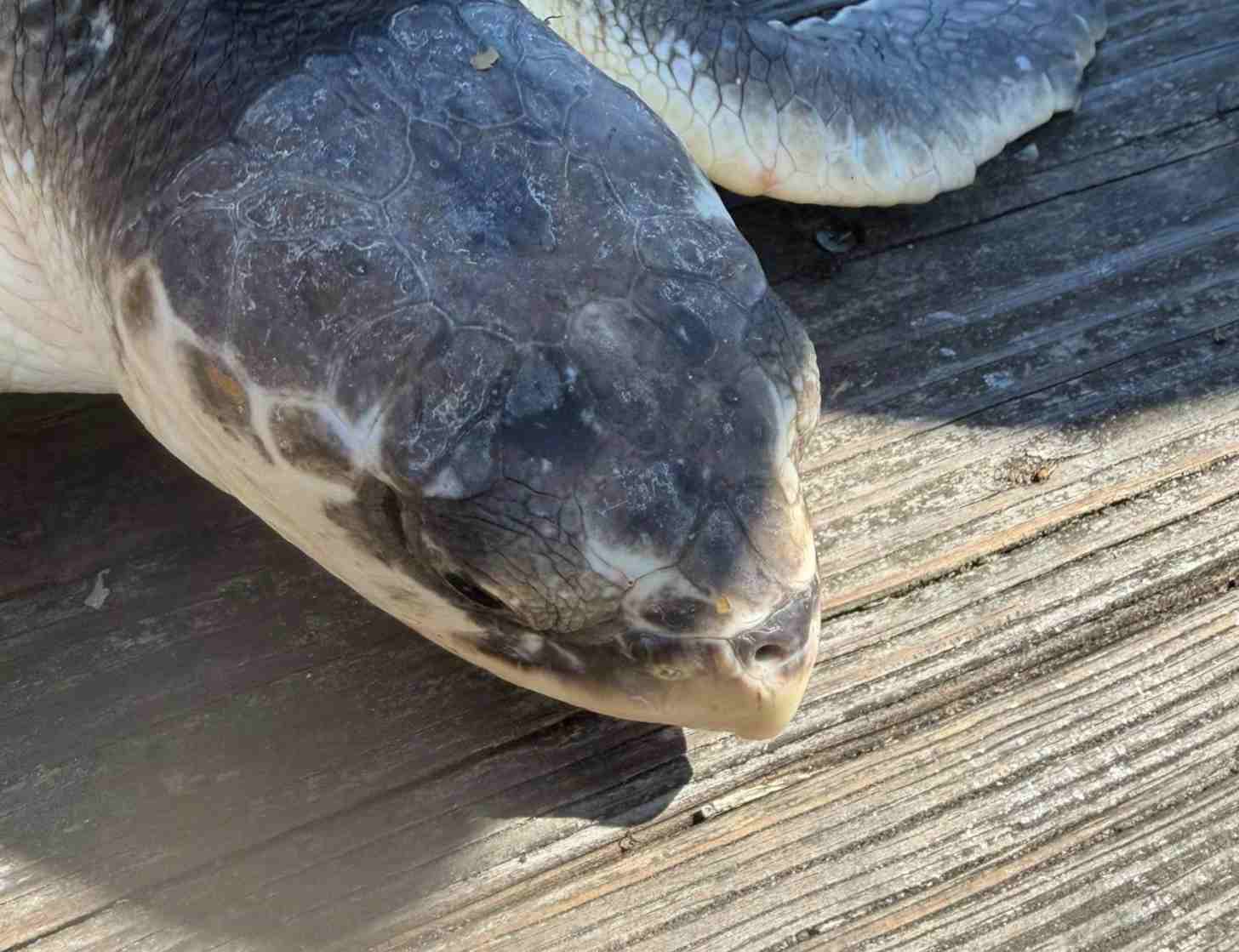
Kemp’s ridley sea turtles are the smallest and most endangered sea turtle species in the world — a fact which underscores the importance of every rescue mission.
The Kemp’s ridley sea turtle has been protected under the Endangered Species Act since 1970. Thanks to ambitious recovery efforts launched in 1978 in coordination with Mexico, conservationists have been able to bring them back from the brink of extinction.
“Saving the Kemp’s ridley sea turtle is one of the greatest ESA success stories of our time,” Mary Kay Skoruppa, the Service’s Sea Turtle Coordinator for Texas, told the U.S. Fish and Wildlife Service.
“While continued efforts are needed to fully recover the species, actions undertaken for the species in the last 50 years are paying off, and we are seeing increased numbers of Kemp’s ridley sea turtles nesting in the U.S. and Mexico.”
One of the survival plans for Kemp’s ridley sea turtles involves organizing patrols on nesting beaches in Mexico, Florida, and Texas to find, count, and protect vulnerable nests from predators, poaching, and human interference.
“One of the things that’s very rewarding to me and to everybody that works hard in the nest protection program and recovering Kemp’s ridley sea turtles is seeing the public’s reaction and the public support,” Skoruppa said. “People have it on their bucket list and come from all over the country and internationally to see the hatchlings released.”
In addition to nest monitoring, Skoruppa is well aware that every single rescue effort — like the one in Emerald Isle — is vital to species recovery.
“When you hold a sea turtle and release it back into the water, it really is a special feeling,” Skoruppa said. “Even though it's just one turtle, you’ve given it a second chance of survival, and this species needs every individual to survive.”
You may also like: Experts celebrate record-breaking start for sea turtle nesting season
Header image via Emerald Isle Sea Turtle Patrol
Samuel Weidenhofer is a self-described “kindness influencer,” known for surprising people in need through random acts of kindness for an audience of over 15 million people on platforms like Instagram and TikTok. He’s had countless experiences changing the lives of others and raising money with the support of dedicated followers.
But in December, when he helped 88-year-old veteran Ed Bambas, the kindness reached a scale he never imagined possible.
Weidenhofer introduced Bambas the way he normally would, highlighting the Michigan veteran's life of service, ultimately resulting in the 88-year-old still working as a cashier at the supermarket Meijer.
Bambas had retired from General Motors in 1999 but returned to work nearly a decade ago after his wife died. Around the same time, he told ABC affiliate WXYZ, his employer cut his pension.

“Despite everything, Ed shows up every day with quiet dignity, strength, and perseverance,” Weidenhofer wrote on a GoFundMe campaign for his new friend, Bambas. “His story is a stark reminder that too many of our seniors, especially veterans, face incredible challenges just to survive.”
The story struck a chord with viewers, and in just days, over 66,000 people donated more than $1.9 million to help Bambas finally retire.
“When Sam first came into my life, I thought he was just being kind to one old man working at a grocery store. I had no idea it would turn into something that would touch so many people,” Bambas told Good Good Good.
“The fundraiser changed my life, but what stayed with me even more was realizing how many strangers were willing to stop, listen to my story, and help. That’s when I started thinking this couldn’t just end with me.”
The transformation Bambas experienced ended up being a catalyst for something even bigger: A nationwide fundraiser to help 50 veterans in 50 states.

Weidenhofer and Bambas launched the campaign — For Your Service — on May 1 and have already raised over $1 million from 28,000 individual donors. They hope to eventually reach $10 million in total donations.
“When I first met Ed, the goal was just to help one person who deserved to feel supported. I don’t think any of us could have imagined that one video and one fundraiser would turn into this kind of movement,” Weidenhofer told Good Good Good.
“What means the most to me is that Ed didn’t just receive that generosity and move on; he wanted to pay it forward. That says everything about who he is. It’s a reminder that one act of compassion can create a chain reaction, and when people are given a real story and a direct way to help, they show up.”
Bambas doesn’t just help by platforming the other veterans. He is also contributing $1,000 of his own money to each fundraiser.
“For me … it’s personal. It’s my way of saying to those veterans: I see you, I appreciate what you’ve done, and I want to help pass along the kindness that was shown to me,” Bambas said.
“I know what it feels like to work hard, to struggle quietly, and to not want to ask anybody for help. A lot of veterans are like that.”
While there is a through line in the stories of all of the veterans the For Your Service campaign aims to support, Weidenhofer said that “there isn’t one single veteran experience.”
There’s Randy, an Army veteran who now lives with Alzheimer’s, and medical expenses have led his family to fall back on their mortgage, eventually at risk of losing their home. So far, people have rallied to provide them with over $16,000 of their $20,000 goal.
And then there’s Ronnie, a veteran who has been homeless for years, sleeping in motels and struggling to make it to doctor’s appointments. He finally regained access to his home earlier this year, but it has been severely damaged and isn’t a safe place for him to live. Nearly $84,000 of his $90,000 goal has been met.
@itssozer 50 days. 50 states. 50 veterans. 🇺🇸❤️ I went back to see Ed… the 88-year-old veteran you all helped retire. We sat there talking about how much his life has changed… and one thing kept coming up. He wasn’t the only one. There are thousands of veterans out there still struggling every single day. So this time, we’re not stopping at one. For 50 days, we’re travelling America to meet 50 veterans, hear their stories, and stand beside them. Our goal is to raise $10,000,000 to support veterans across the country. And Ed didn’t just want to sit back… he’s giving $1,000 to every veteran we meet. I won’t be able to reach every state on my own, so some of my friends will be stepping in along the way to help us find and support those who need it most. This is bigger than me. This is all of us. This is what social media should be about. Let’s change lives… together ❤️
♬ original sound - Samuel Weidenhofer
“These are real people with real families, real needs, and a lifetime of service behind them. Some of the stories that have really stood out are veterans facing the possibility of losing their homes, veterans battling cancer, older veterans still working into their 80s because they don’t have another choice, and families trying to manage medical bills, caregiving, or financial hardship,” Weidenhofer said.
“The tangible difference is immediate. This support can help someone stay in their home, pay for care, cover daily expenses, or simply feel less alone and more supported during an incredibly difficult time.”
Bambas said this was true of his experience, but he also gained something else through his GoFundMe.
“Emotionally, it was something I still have trouble putting into words. I felt seen. I felt like people cared. When that many people — people who had never met me — decided my life mattered, it really touched me,” Bambas said.
“I’ll always be grateful for the money because it gave me stability. But the bigger thing was the feeling that I wasn’t alone. That’s why I want to help other veterans feel that same support.”
For Weidenhofer and Bambas alike, it’s more than just money; it’s an opportunity to remind people that “support for veterans shouldn’t end when their service does.”
“A lot of these veterans have spent years quietly pushing through hardship,” Weidenhofer said.
“When thousands of people stop, read their story, donate, comment, or share, it tells them: we see you, we appreciate you, and your service still matters.”
Those interested in supporting For Your Service can do so by visiting the community campaign on GoFundMe.
You may also like: Hantavirus cruise passenger moved to tears by stranger's act of kindness during his 42-day quarantine
Header image courtesy of Samuel Weidenhofer
Alessia Lavigne is a third-year Ph.D. student studying marine biology and zoology at the University of Sheffield. As a self-professed “Turtle Eggsplorer,” Lavigne dedicates her page to turtle research, care, and conservation.
On May 3, Lavigne posted a video of a sea turtle hatchling release in the Seychelles, which showed hundreds of hawksbill sea turtles tumbling out of a bucket and racing for the shoreline.
Hawksbill sea turtles are one of seven types of sea turtles. The endangered species can be found in warm, tropical, and subtropical waters across the Atlantic, Pacific, and Indian Oceans — including the Seychelles, which is roughly 1,000 miles east of mainland Africa and northeast of Madagascar.
“All these baby turtles would not have survived without conservation intervention,” Lavigne explained in the video caption. “The conservation team on Cousine Island Seychelles [returned] these baby hawksbill sea turtles to the beach following their successful hatching in their hatchery.”
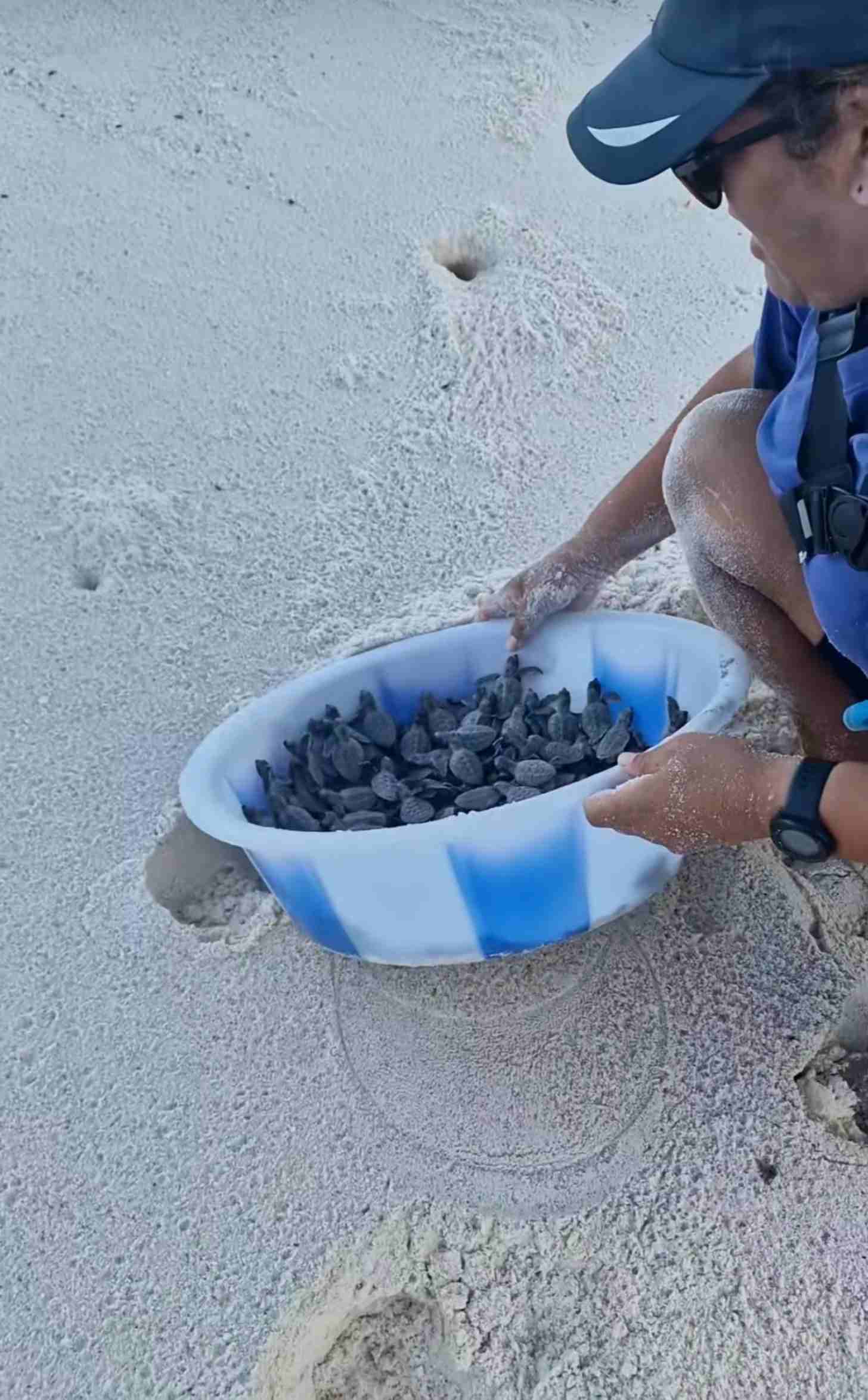
“Nests that would have otherwise perished are moved into the hatchery as a last resort,” she added. “For instance, this nest would have been completely washed away by the increasingly aggressive coastal erosion, potentially due to climate change.”
The video quickly went viral, raking in more than 4.5 million views. It also sparked questions from curious viewers who wanted to learn more about sea turtle behavior.
“How do baby sea turtles know to go towards the ocean?” one viewer asked.
“They actually don't know,’ otherwise disorientation would never happen, but [luckily] they do,” Lavigne replied. “They use a combination of natural cues to guide them, such as light — reflections on the water — and slope. If there aren't too many artificial obstacles, they tend to do a great job figuring it out.”
@turtle_eggsplorer All these baby turtles would not have survived without conservation intervention. 🌊 The conservation team on @cousineislandseychelles return these baby Hawksbill sea turtles onto the beach following their successful hatching in their hatchery. 🥚 Nests that would have otherwise perished are moved into the hatchery as a last resort. For instance this nest would have been completely washed away by the increasingly aggressive coastal erosion potentially due to climate change. 🐢 Thanks to the conservation team, they are given a second chance at life. #turtle #turtles #cuteanimals #wildlife #animals ♬ kingdom dance x eleanor rigby x dragons x avengers - Ams (they/them)
Several TikTok users also asked why the sea turtle hatchlings were released so far back from the water.
One person prodded, “You can’t get closer?”
“The conservation team is recreating where they were supposed to have naturally hatched above the high water mark — the highest point the tide can reach,” Lavigne said.
“They then must do the journey to allow them to imprint on the beach, which will allow them to know how to navigate the sea and return to breed as adults.”
The majority of the comments on Lavigne’s video were full of awe at the rare sight, as well as hope for the hundreds of hawksbill hatchlings.
“I hope they all make it,” another person wrote.
“They've been given the best second chance at life,” Lavigne said.
You may also like: Experts celebrate record-breaking start for sea turtle nesting season
Header image via Turtle Eggsplorer / TikTok
When catastrophic bushfires wreaked havoc on Australia in 2019 and 2020, one hero stood out for his life-saving work to protect koalas from the worst of the fires.
He is a dog, and his name is Bear.
After a decade of service, the 11-year-old pup has retired, but his work has been so instrumental to conservation efforts that the search for his successor has already begun.
About 10 years ago, Bear was recruited to sniff out koalas and other wildlife in need of rescue, working with IFAW and the University of the Sunshine Coast’s Detection Dogs for Conservation.
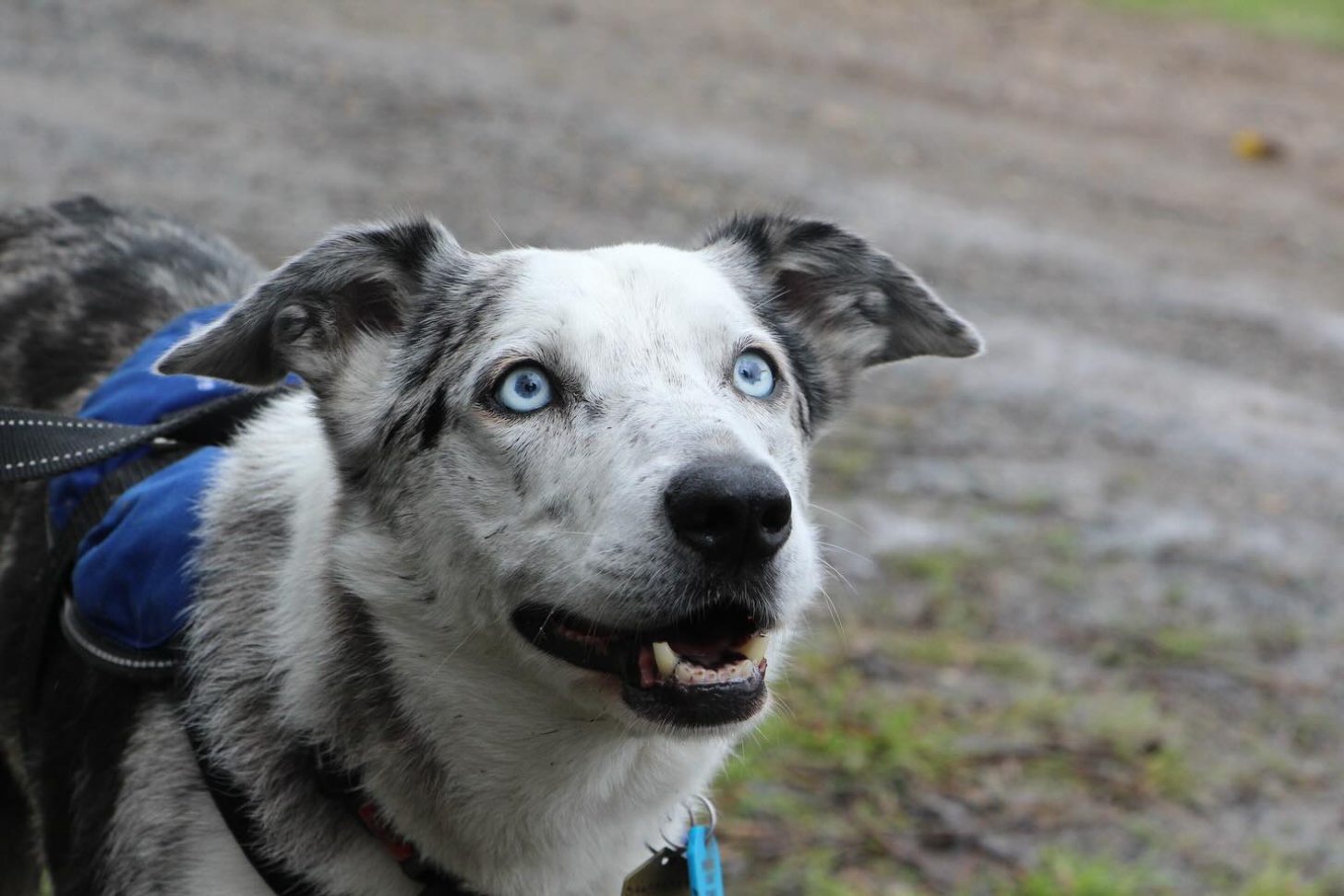
He was one of the first dogs in Australia to be trained on the scent of fur of live koalas, learning how to drop to the ground at the base of a tree when he finds a koala in need of saving.
And his payment? Time playing with his ball.
“Bear has been a huge part of our lives, and a tireless ambassador for koalas for a decade, and I can’t believe we won’t walk the bush in search of koalas together anymore,” University of the Sunshine Coast conservation ecologist and associate professor Romane Cristescu said in a statement.
Cristescu is one of Bear’s former handlers.
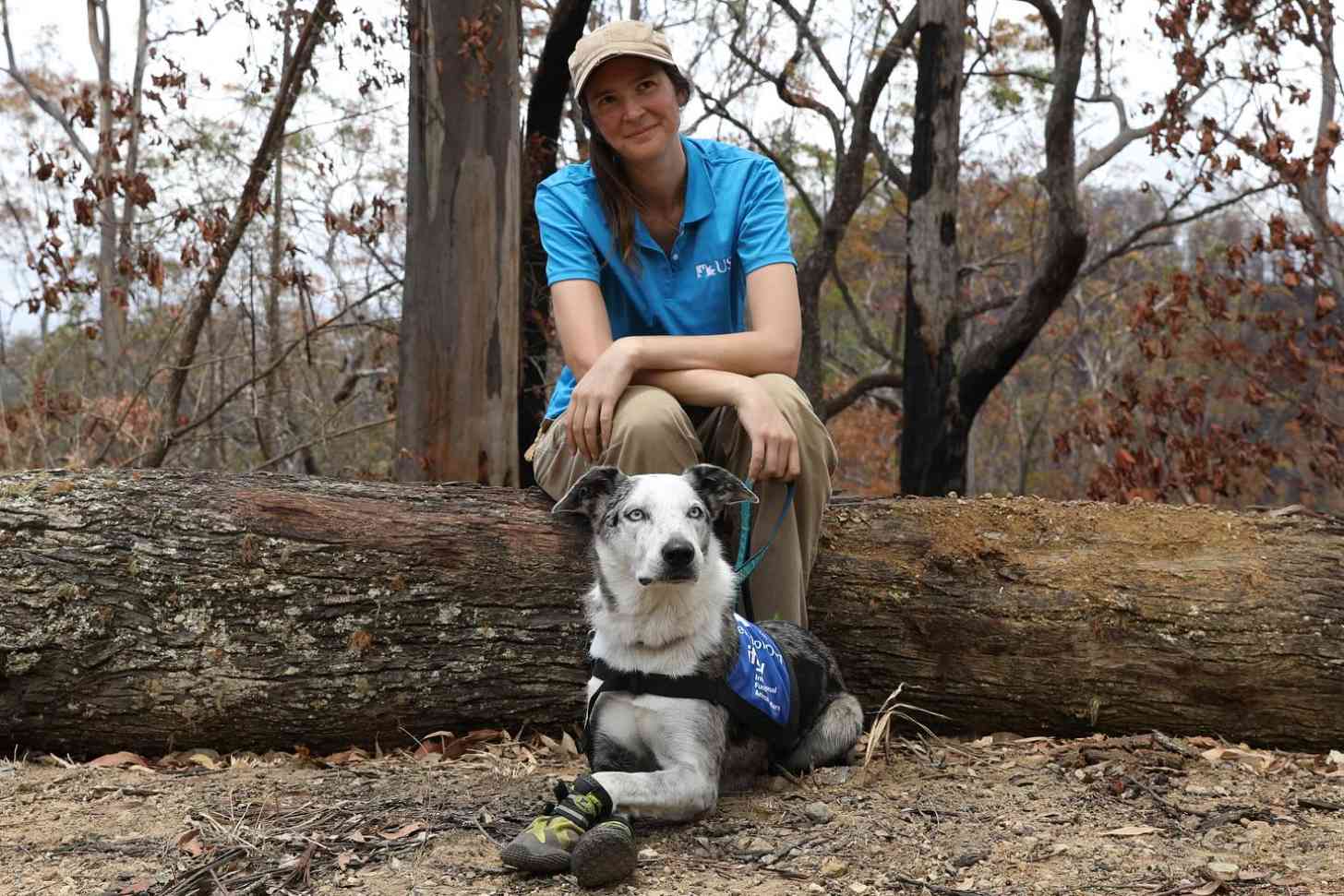
“He melted hearts all around the world, and opened many doors so we could have critical and difficult conversations about climate change and its impacts on the threatened koalas, as well as so many other species,” she added.
Thousands of koalas were impacted by the Black Summer fires, but Bear helped recover more than 100 koalas across the scorched bush in need of veterinary care.
“The moment Bear stepped onto that fireground, we had no idea what he’d be capable of, until he exceeded every expectation,” IFAW head of programs Josey Sharrad said.
“That’s when we realized we weren’t just working with a dog, but a true hero.”
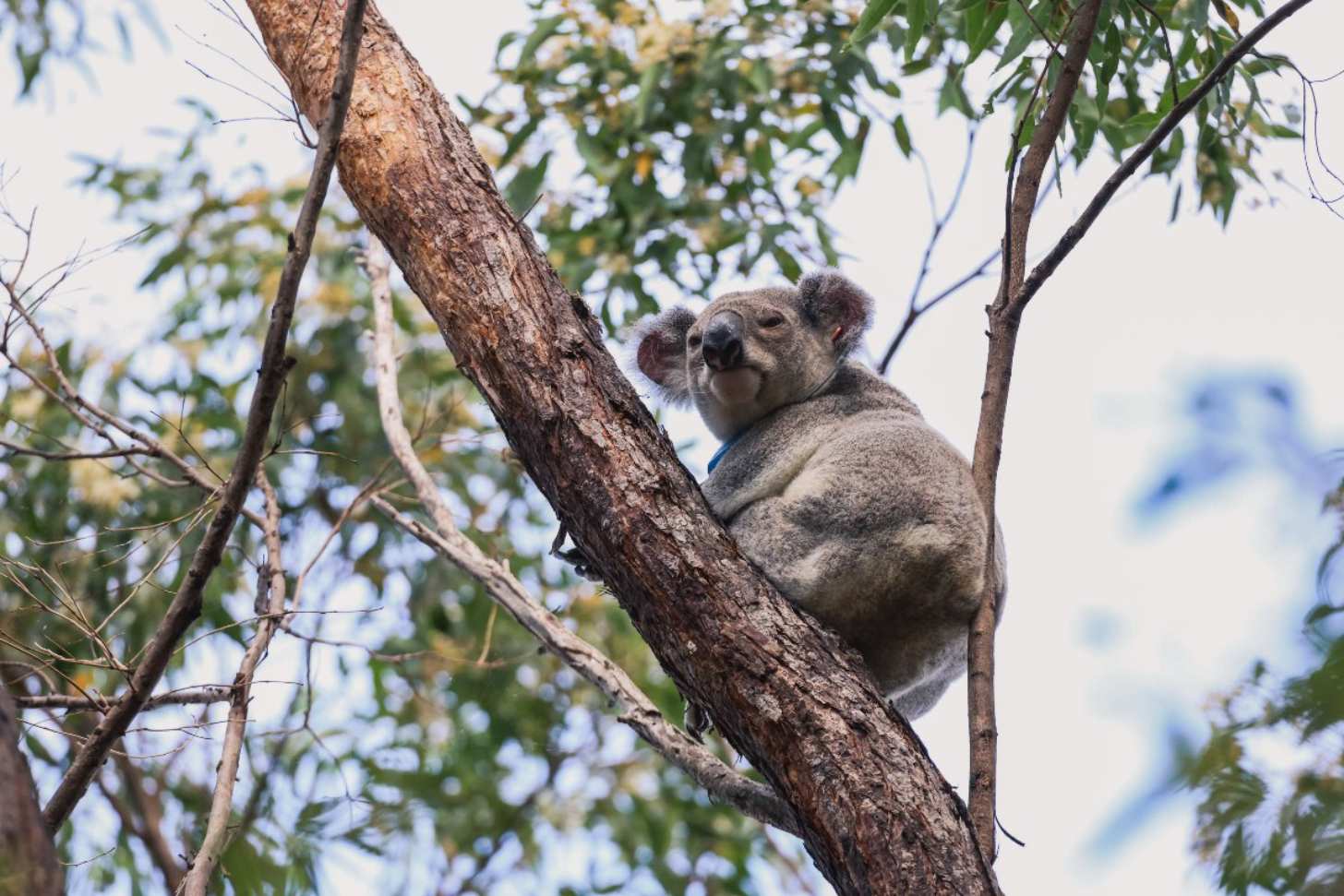
Bear was not exactly destined to be a family pet, Sharrad said. He had boundless energy and needed to be put to work.
“The worst pets often make the best detection dogs, and Bear is a classic example of this. His energetic nature and ball obsession made him the perfect candidate,” Sharrad said. “He literally went from chewing the walls of a Gold Coast apartment to roaming through the Aussie bush on a mission to save our most iconic species.”
Now, as Bear finally finds the capacity to rest, conservation groups are working with the Detection Dogs for Conservation team, along with a French canine expert, to find the next great koala detection dog.
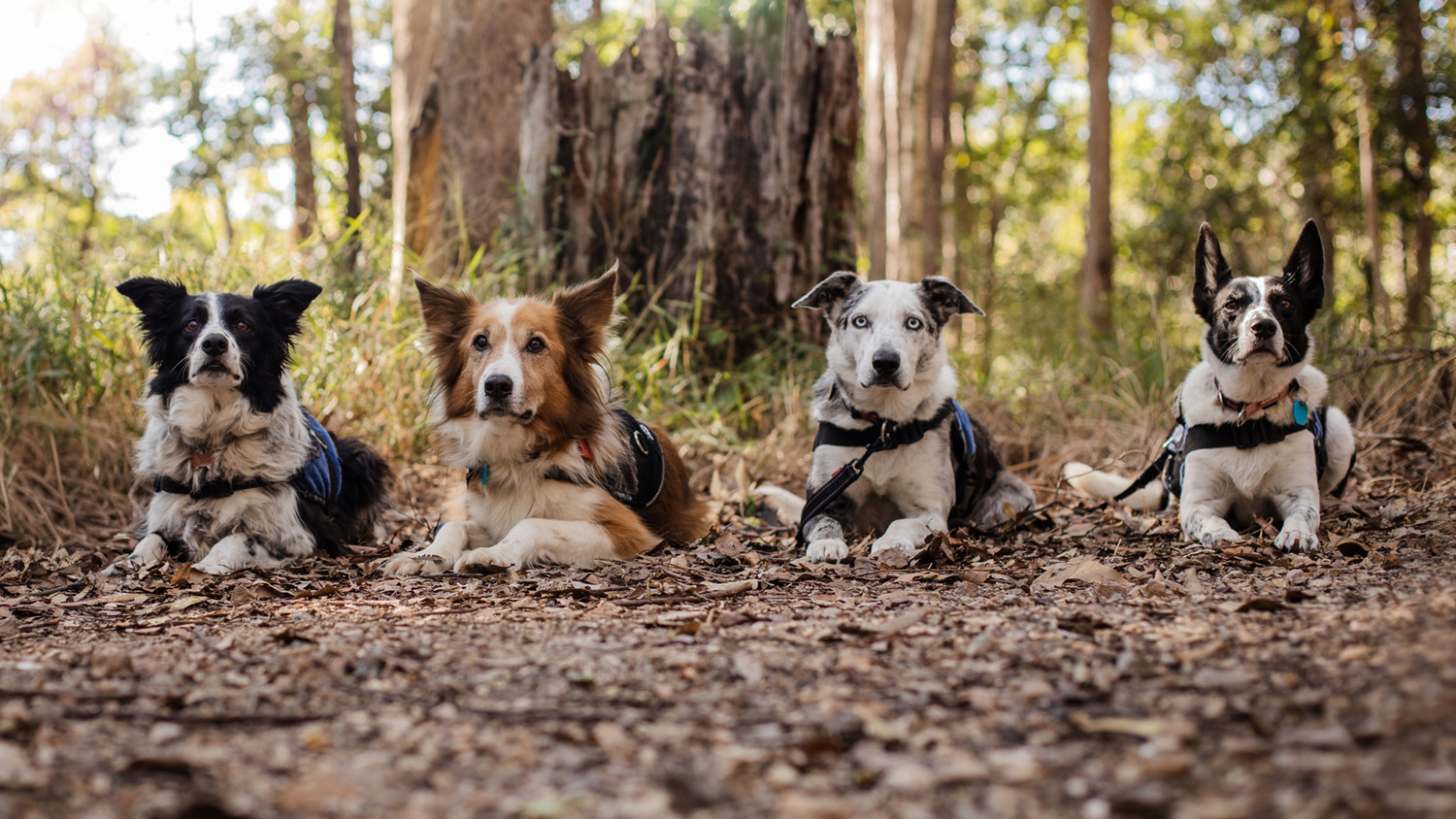
Other detection dogs with the group, Maya, Baxter, and Billie-Jean, also support conservation efforts, but many of them are trained to sniff out droppings — not injured koalas. So, Bear’s replacement will have to be the perfect fit.
“They can smell what we can’t see,” Sharrad told The Guardian.
The new recruit will likely be medium-sized and younger than two years old — and most importantly, comfortable charging through dense bush.
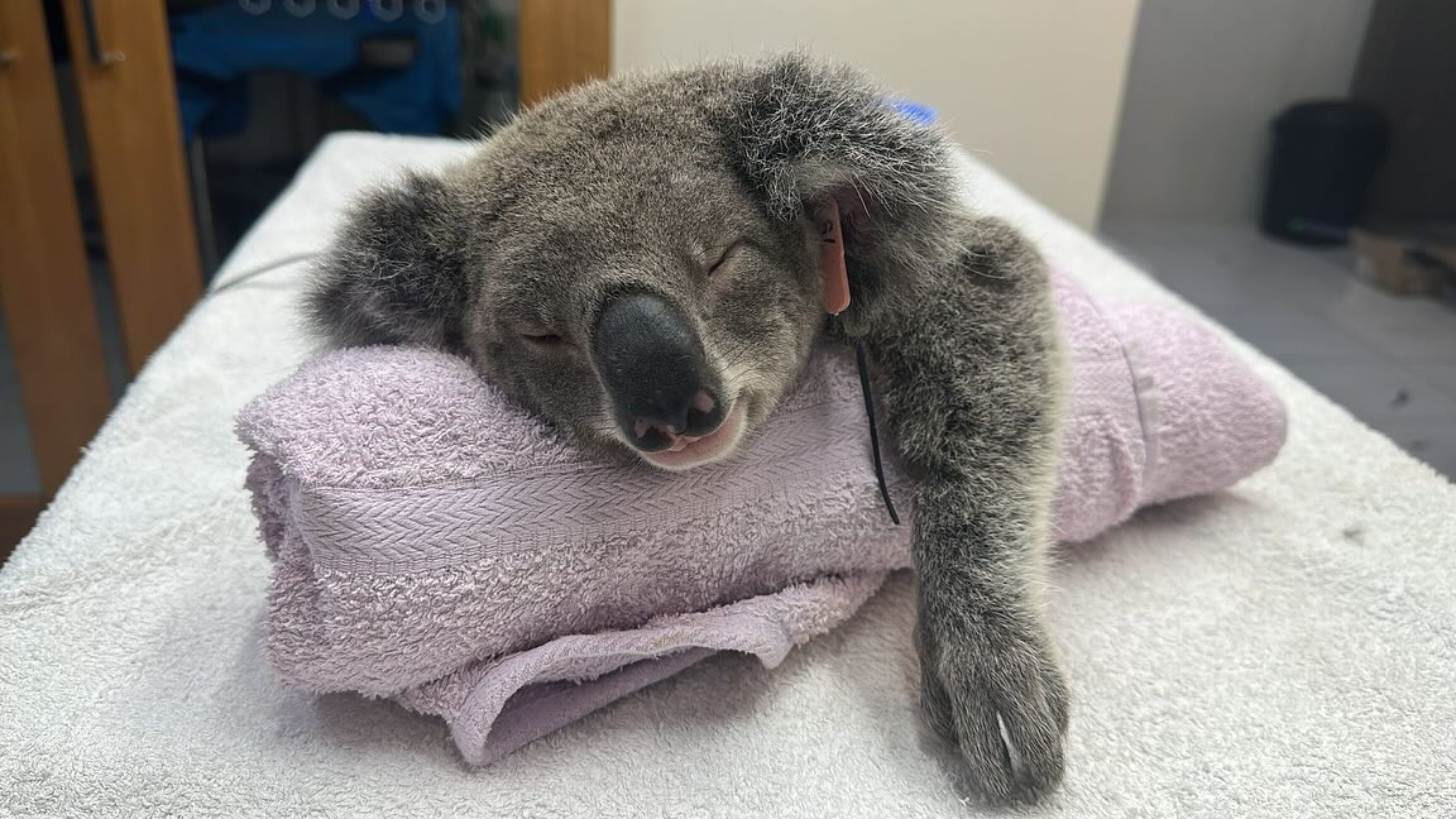
This dog will do work similar to Bear’s, sniffing alongside drones and human spotters, especially in the wake of bushfires, floods, and cyclones.
“[Bear] found his life’s true purpose and never stopped surprising us with his koality skills,” Sharrad said. “His legacy will continue through the next generation of detection dogs who will follow in his famous pawprints.”
As his canine colleagues continue their work to help conduct surveys for wildlife and habitat conservation research, Bear will be at home, with his human and one of his former handlers, playing fetch.

“By his personality, which is both joyful and goofy, he was able to bring light to the most dire moments of many people’s lives,” Cristescu, Bear’s handler, said.
“We are incredibly grateful and lucky to have had Bear as a companion in our lives and to fight for koala conservation.”
You may also like: 'Dog-sniffing dog' helps volunteers rescue lost pets: 'A game-changer'
Header image by Jimmy Malecki / IFAW
The Magnolia Mother’s Trust in Jackson, Mississippi, gives Black mothers $1,000 a month for one year with no strings attached.
The trust, which is an initiative of Springboard To Opportunities, was announced in 2018, designed to support low-income Black mothers living in affordable housing. The first cohort of women consisted of 20 women, and the second, third, and fourth cohorts financed about 100 mothers each.
“We want to change how our society talks about Black women and poverty — that it’s not a personal failing,” Aisha Nyandoro, CEO of Springboard To Opportunities, told the 19th News. “That there are systemic barriers that allow Black women to be the most vulnerable financially, even though they are the most highly invested in the labor market.”
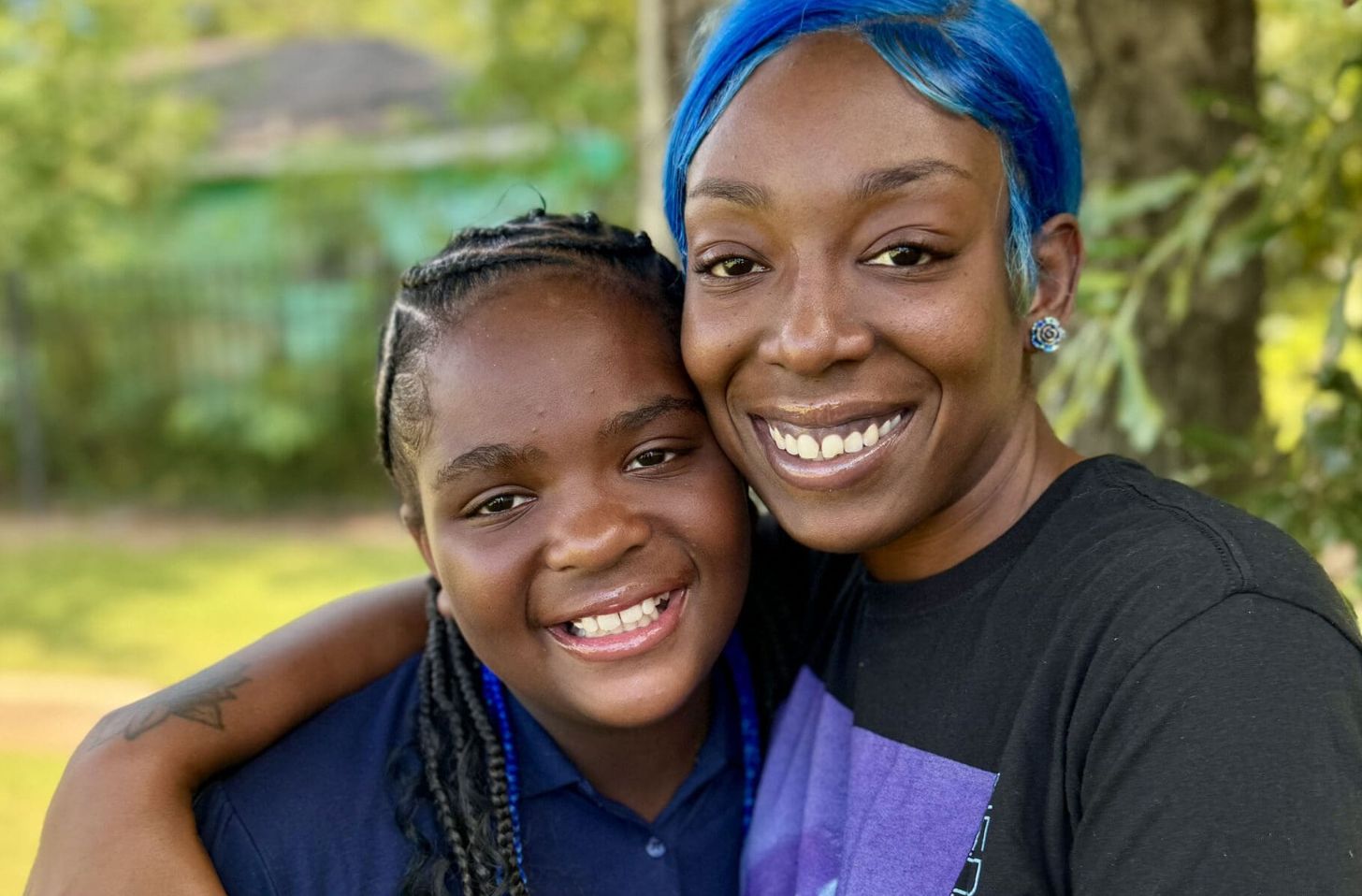
According to the organization’s report on the third cohort, 82% of participants felt more hopeful about their children’s futures; 79% felt more hopeful about their own futures, and 76.2% said with this money, they were able to take their children on trips, pay for extracurricular activities, and afford school supplies.
It’s certainly not the only guaranteed income scheme in the U.S., which is a concept that has risen in popularity in recent years. But it is a pioneer for Black women.
The organization continues its work, but more importantly, hopes for systemic change that better supports all women of color.
“Our goal is simple: To provide these women with the breathing room they need by giving them the financial resources they need to dream a little bigger,” Nyandoro said in a TED Talk in October 2023. “It allows you to shift your reality: from scarcity to abundance, from tunneling to imagination, from scraping by to genuine opportunity.”
A version of this article originally appeared in the 2024 Gender Edition of the Goodnewspaper
Header image via Magnolia Mother’s Trust
Situated on Staten Island with stunning views of Brooklyn and Lower Manhattan, the Alice Austen House is a historic landmark that celebrates the life of a trailblazing queer photographer from the mid-19th and early 20th centuries.
Its latest project is also pretty picture-perfect: The Queer Ecologies Garden.

In partnership with the New York Restoration Project and students from the Pratt Institute Graduate Center for Planning and the Environment, the park and its gardens were filled with flora that “challenge the notion of heteronormativity.”
Many of the plants that call the garden home are non-binary or sex-changing species, such as ferns and flowers that self-pollinate or have both reproductive organs.
The garden also features historically significant species such as violets and pansies, which both have symbology in LGBTQ+ history and culture.
Additionally, gender and sexuality alliance groups from area schools use the grounds as a learning environment, with storytelling and photography programming and volunteer gardening groups.

The engaging educational programs aim to inspire more LGBTQ+ young people to explore careers in horticulture or ecology. But at end of the day, the garden is first and foremost a safe — and beautiful — space for the queer community.
“Gardens have historically been used as symbols of freedom and escape from oppression. In the 19th and early 20th centuries, when homosexuality was illegal in many countries, gardens were often secret meeting places for queer people to socialize and express themselves,” the Alice Austen House shares on its website.
“Gardens provide a space for self-expression and creativity, where queer people can explore their identity and freely express themselves through gardening, art, and other forms of creative expression. Gardens have been places where queer people could come together, form communities, share experiences, and offer support to one another.”

The house and its surrounding park and gardens are nationally designated sites of LGBTQ+ significance, carrying the legacy of Alice and her loving partner, Gertrude Tate, who lived in the space for 30 years. Austen was also the founder of the Staten Island Garden Club and used her garden as a photographic muse on many occasions.
“We have created this garden to serve as a gathering place that offers freedom, comfort, and fosters understanding,” the Alice Austen House added.
For the young people — queer or otherwise — who have been invited into the space, it seems to have lived up to its mission.
“One of the main arguments against queer people in general is that it’s not a natural thing, or not normal,” Lexy Trujillo-Hall, a queer student who volunteers at the garden, told the New York Times.
“But this is like, nature supports you. Nature understands you, and it’s not a bad thing to want to be who you are.”
A version of this article was originally published in The 2024 Pride Edition of the Goodnewspaper.
You may also like: Can animals be gay? New study finds that many apes and monkeys are — and it may be a survival advantage
Header image by Anita Austvika on Unsplash
Every day the Good Good Good team collects the best good news in the world and shares it with our community. Here are the highlights for this week!
If you want to get good news in your inbox every day, join the Goodnewsletter — the free daily newsletter designed to leave you feeling hopeful.
The Best Positive News We’re Celebrating This Week —
California elementary school students are helping raise $10M to save a bald eagle habitat from development
When students at John Baldwin Elementary School in Danville, California heard that a wildlife area near the nest of a pair of viral bald eagles, Jackie and Shadow, was at risk of being developed, they immediately wanted to help.
The students wrote letters to community members, celebrities, and lawmakers, posted flyers, and picked up leaves, washed cars, held bake sales, and more to raise money in support of an effort to purchase and protect the land.
That effort is being led by the nonprofit Friend of Big Bear Valley, which has so far raised over $2.68 million since Feb. 19 toward its $10 million goal so the San Bernardino Mountain Land Trust can buy the land.
Why is this good news? Even beyond helping protect and preserve this critical bald eagle hunting and habitat area, these students are learning from an early age that we can turn our care and passion into real-life action that matters and makes a difference.
→ Read more
This all-women apartment complex is home to 26 elderly singles. Everyone is trained in conflict resolution
→ Read more
Wales celebrates record-breaking puffin season
According to The Wildlife Trust of South and West Wales, puffins are having a record-breaking breeding year.
Every year, the conservation nonprofit does boots-on-the-ground research to count every single puffin on Skomer Island in Wales, setting out with binoculars and a notepad in hand to record all puffins in sight.
This year, 52,019 puffins were counted on Skomer Island in Wales, beating the island’s 2025 record of 43,626.
The report came as a relief to The Wildlife Trust of South and West Wales, after high numbers of seabirds and marine life across southern Europe washed ashore last season. A spokesperson for the nonprofit said, “It’s a very pleasant surprise to see the puffin population thriving.”
→ Read more
In April, Baltimore saw its fewest monthly homicides in over 50 years
With four cases reported April, Baltimore recorded its fewest monthly homicides since at least 1970. The city has seen its “safest” period in more than 50 years, with significant declines in violent crime overall.
So far this year, the city has seen 33 homicides and 89 non-fatal shootings, compared to 37 and 101 over the same period last year — a 10.8% decrease in homicides and 11.9% decline in non-fatal shootings.
The city’s mayor credits its Group Violence Reduction Strategy, which launched in 2022 and is a partnership between police, the mayor’s office, and prosecutors. It’s since expanded to more neighborhoods in the city and has connected hundreds of people to resources, seizing firearms and ghost guns, and more.
Even better: Data shows that some non-violent crime is down, too, with carjackings down 38%, burglaries down 17%, auto thefts down 11%, and robberies down 16% compared to last year.
Hantavirus cruise passenger moved to tears by stranger’s act of kindness during his 42-day quarantine
Scientists created teabags that remove arsenic from drinking water
Man-made activities like mining can cause minerals to leech into groundwater supplies, causing buildups of concentrated arsenic. According to the World Health Organization, 140 million people in at least 70 countries have been exposed to arsenic contamination in their drinking water.
Fortunately, researchers at the City University of New York’s ASRC Nanoscience Initiative have created a 7-cent bag of tea that removes 90% of the arsenic ions in contaminated water.
In their study, researchers set out to create an affordable solution to “one of the world’s most urgent public health crises.” Their results prove that solutions can be affordable and scalable.
→ Read more
Olympic skier Hunter Hess turned Trump’s ‘real loser’ insult into a fundraiser for youth sports
At the 2026 Winter Olympics, Team USA freestyle skier Hunter Hess said in an interview that it brought up “mixed emotions” to represent the U.S. at the Games, saying, “Just because I’m wearing the flag doesn’t mean I represent everything that’s going on in the U.S.”
Then, President Trump called Hess “a real loser.”
Now, Hess is turning that insult into something positive. He just launched The Real Loser Project, a merchandise line where 100% of proceeds support Stoked, a nonprofit that gives underserved kids access to action sports and mentorship.
Why is this good news? What was initially meant to tear an athlete down will now serve to give more young athletes opportunities to join in and participate. Hess is showing us how we can use our platform and influence — big or small — to do good and build people up instead of tear them down.
→ Read more
A real-life ‘good news’ story inspired Pixar animators to make ‘Hoppers’
→ Read more
Two high schoolers drafted a bill that reduces single-use item waste
Two high schoolers, 15-year-old Erica Choi and 16-year-old Dominick Redmond, are asking Colorado restaurants to “skip the stuff” by cutting down on single-use items like plastic cutlery, napkins, straws, and condiments.
They drafted a new bill with the help of Democratic state lawmakers Sen. Lisa Cutter and Rep. Meg Froelich to reduce waste by requiring restaurants to provide single-use items only upon request. And now, the Colorado legislature is considering the bill.
Just a few months ago, Choi and Redmond had little political experience beyond AP U.S. History. Now their plunge into civic engagement has put them in front of the Senate Health and Human Services Committee. Choi said: “Anyone can do it, as long as you have the motivation and an idea.”
For the first time in 70 years, a wild jaguar was spotted in the largest park in Argentina
Together, Iberá National Park and Iberá Provincial Park are not only the largest park in Argentina, but they’re also home to sweeping grasslands, marshlands, forests, and 4,000 species of flora and fauna.
Earlier this month, tour guides spotted a young male jaguar named Ombú resting on a trail, marking the first wild jaguar sighting in 70 years.
The milestone was the result of decades of hard-fought conservation work, education campaigns, and collaborative rewilding efforts between local organizations, scientists, rangers, and ranchers — the park went from having no jaguars to now 50 total.
Why is this good news? Seven decades ago, jaguars were driven out of Argentina by twin forces: logging and poaching. As hunters killed them for their pelts, the forest shrank around them. This milestone proves conservation efforts are working.
This is what happened when thousands of NYC artists received $1K a month, no strings attached
The world is installing grid batteries 10 times faster than even just a few years ago
New data shows the world has gotten a lot more efficient when it comes to installing grid batteries. Installations of grid batteries surged by 48% from 2024 to 2025. In total, a record-breaking 112 gigawatts of battery storage capacity was installed worldwide in 2025 — a tenfold increase from 2021.
China and the United States lead the world in grid battery capacity, with China installing more than half and the U.S. accounting for 16%.
According to experts, battery installations are beginning to catch up to solar installations, largely thanks to the price of lithium-ion batteries dropping more than 90% in the last 15 years.
Experts are celebrating a record-breaking start to sea turtle nesting season in Florida
In Florida, sea turtle nesting season typically runs from March 1 through October 31. Just two months into the season, the FWC Fish and Wildlife Research Institute announced that both loggerhead and leatherback nests were “outpacing recent record-breaking years.”
The FWC reported 1,008 leatherback nests — up by 4% compared to May 2025. There were also three Kemp’s ridley nests, up by two from this time last year, marking a huge improvement for the world’s smallest and most endangered sea turtle.
Even more remarkably, the number of loggerhead nests so far this year is already at 1,450, roughly 82% higher than it was this time last year.
Why is this good news? In 2024, scientists expected Florida to break nesting records, but Hurricanes Debby, Helene, and Milton caused severe flooding and washed away many sea turtle nests across the state. Despite extensive damage, wildlife experts continued conservation and restoration efforts throughout the following year — and it appears to be paying off.
→ Read more
Good news: Men and women both live longer lives in countries with greater gender equality
→ Read more
Brazil’s anti-deforestation policies drove a 36% drop in tropical forest loss
In 2024, massive fires in the Amazon, fueled by climate change, led to a record high for global forest loss. In the aftermath, Brazilian President Luiz Inacio Lula da Silva pledged to curb deforestation with stronger regulatory measures — and it worked.
Recent data shows that from 2025 to 2026, forest loss dropped by 36% nationwide, easing the region out of the prior year’s record highs. Additionally, global forest loss beyond the tropics fell 14% last year.
A spokesperson for Global Forest Watch said the new data is evidence that there are “real interventions that work” when it comes to reversing forest loss.
→ Read more
More good news of the week —
New York City Mayor Zohran Mamdani is creating 50 car-free “soccer streets” ahead of the World Cup, mostly near schools. The streets will host youth soccer clinics, art stations, and block parties so that “every kid” in the city can “experience the joy of the game.”
A dad and daughter duo drove 600 miles across the country to rescue two baby cows. The dairy industry has no use for boy cows, so Joanna Zelman and her father drove across the country to save two of them.
Tennessee just celebrated the birth of its 50th clouded leopard cub, one of the most elusive cat species in the world. Today, clouded leopards are listed as vulnerable on the International Union for Conservation of Nature’s Red List of Threatened Species, and experts estimate that only 10,000 remain in the wild.
A flower once thought to be extinct is now flourishing in a South African national park. The Staavia dodii is among 2,785 plant species living in Table Mountain National Park.
Researchers are attaching tiny “backpack” GPS trackers to hedgehogs to track their movements across England. Wildlife experts believe that the data will help them better protect the endangered species.
A new battery program can power air conditioners offline during peak demand, easing strain on city power grids and preventing outages. The “renter-friendly” pilot program is currently being tested in New York City, just in time for summer.
A former poacher in India now protects the land and animals he grew up hunting. Rustom Basumatary is a naturalist and an avid birder from the remote Indian village, and received the Assam Guarav Award for his wildlife conservation efforts.
Rather than decreasing negative emotions, a promising new depression treatment focuses on creating joy pathways. (Gifted link) While psychotherapy and medication can be very effective at reducing negative emotions, it’s been more challenging to help people with depression or anxiety actually feel good.
High school students created a makeshift stretcher to rescue an injured hiker. Using tarp poles, a hammock, and their outdoor education training, the students hiked for two hours to get the man to safety.
Plans for a 2,100-acre data center in Northern Virginia were derailed after locals lobbied against it for 27 hours straight. In addition to its proximity to the historic Manassas National Battlefield Park, locals cited concerns for pollution and energy consumption.
An architect unveiled his design for a “fireproof home” that can withstand a fire for up to 24 hours. Ardie Tavangarian began working on the design after he lost his own house in the Palisades fire last year.
Sudan and South Sudan have both eliminated maternal and neonatal tetanus. Despite widespread conflict and displacement across the region, health workers, midwives, and vaccinators worked together to deliver life-saving vaccines.
National park volunteers in Nepal are standing guard between humans and tigers to prevent wildlife conflict. The region where they volunteer frequently experiences human-wildlife conflict incidents, mostly involving elephants and tigers, leading to fatalities and injuries among both communities and wildlife.
The first patient in Louisiana treated with a sickle cell gene therapy is showing promising signs of recovery. The groundbreaking gene therapy treatment marks a significant step forward in the fight against the inherited blood disorder.
One of the largest community-owned solar farms in the U.K. is now crowdfunding to invest in batteries, too. The nearly 36,000 solar panels installed demonstrate what can be achieved when a renewable energy project is co-owned by local people — it already generates clean energy for 7,000 homes during the day.
Engineers developed autonomous underwater robots that can plant coral seedlings and restore ocean reefs. Until now, coral plantings have been limited to divers doing it by hand.
An AI model was able to detect signs of pancreatic cancer three years before patients were diagnosed. Experts at the Mayo Clinic say that the model could be a “game changer” for early detection.
Virginia just became the 15th state to pass a paid family and medical leave program. The program is the first of its kind to be passed by a Southern state, and lawmakers hope it will have a positive ripple effect on the rest of the Sun Belt.
Even though Trump called climate change a “con job,” lawmakers on both sides of the aisle are still trying to protect the planet. Trump’s stance on climate change has led to some of the largest deregulatory actions in the nation’s history, but people are still fighting for protections.
Fulfilling a lifelong dream, a 72-year-old nurse practitioner is now graduating from medical school. (Gifted link) Dawn Zuidgeest-Craft put her dream on hold to raise her children, and will start a three-year residency in Michigan in July.
A new study suggests that a single immunotherapy infusion could suppress HIV for years. (Gifted link) After a single infusion of immune cells engineered to recognize the virus, two people in a new study have suppressed their H.I.V. to undetectable levels, one of them for nearly two years.
Australia’s new national park links forest corridors to state forests, creating more space for koalas to roam. Great Koala National Park is home to 20% of the country’s wild koala population.
Doctors are one step closer to treating pre-eclampsia, a life-threatening pregnancy complication. Researchers at Cedars-Sinai are finding success with early trials of a new “blood-filtering” technique.
Emergency responders in Wyoming are spearheading a new lifesaving blood transfusion method. Instead of waiting until patients get to the hospital, paramedics are now administering transfusions at the scene of the accident.
A brick building in Chicago that used to be public housing is now a first-of-its-kind museum. Despite most public housing residences closing in the 1960s and 70s, this one has been preserved for the future.
In one week, a Florida community raised enough money to save a cow from slaughter. Charley was hand-raised in a 4-H program to compete in local shows, but when he was too skinny at a weigh-in, his fate shifted until locals stepped in.
An 11-year-old girl in Rhode Island is raising a rare Navajo-Churro sheep breed. Izzy Hoffman and her sheep, Cadbury, are part of a nationwide farming program designed to revive the endangered species.
Seven years after Shanghai mandated household waste sorting, it is officially on its way to becoming a “zero-waste city.” The city’s circular economy has drastically reduced Shanghai’s carbon footprint from top to bottom.
In Bucharest, an abandoned government project from the 1980s is now home to the city’s largest green space. Over four decades, the concrete-lined eyesore has transformed into an “accidental wilderness.”
In 2023, two scientists from the Forest Research Institute and the Regional Museum of Natural History set out to study Himalayan forest ants in the mountains of Uttarakhand, India.
Instead, they stumbled across an entirely new species — a spider with marks on its abdomen that resembled a cheerful grin.
Strangely enough, the scientists felt like they had seen it before. It bore an uncanny resemblance to another species over 7,000 miles away: The Hawaiian happy-face spider, a “biological curiosity” that exists only in the Hawaiian Islands.
“The discovery was accidental because our survey was on ants,” co-author of the study Devi Priyadarshini said in a press release.
“But my co-author [Ashirwad Tripathy] kept sending me spiders from high altitude regions for identification,” she continued. “So, one fine day, when he shared this image from the underside of a Daphniphyllum leaf, I froze in shock because I had seen the Hawaiian spider during my master's program itself, and I knew instantly we had a jackpot because of its striking resemblance.”
Their study immediately pivoted away from Himalayan forest ants into an entirely new taxonomic record.
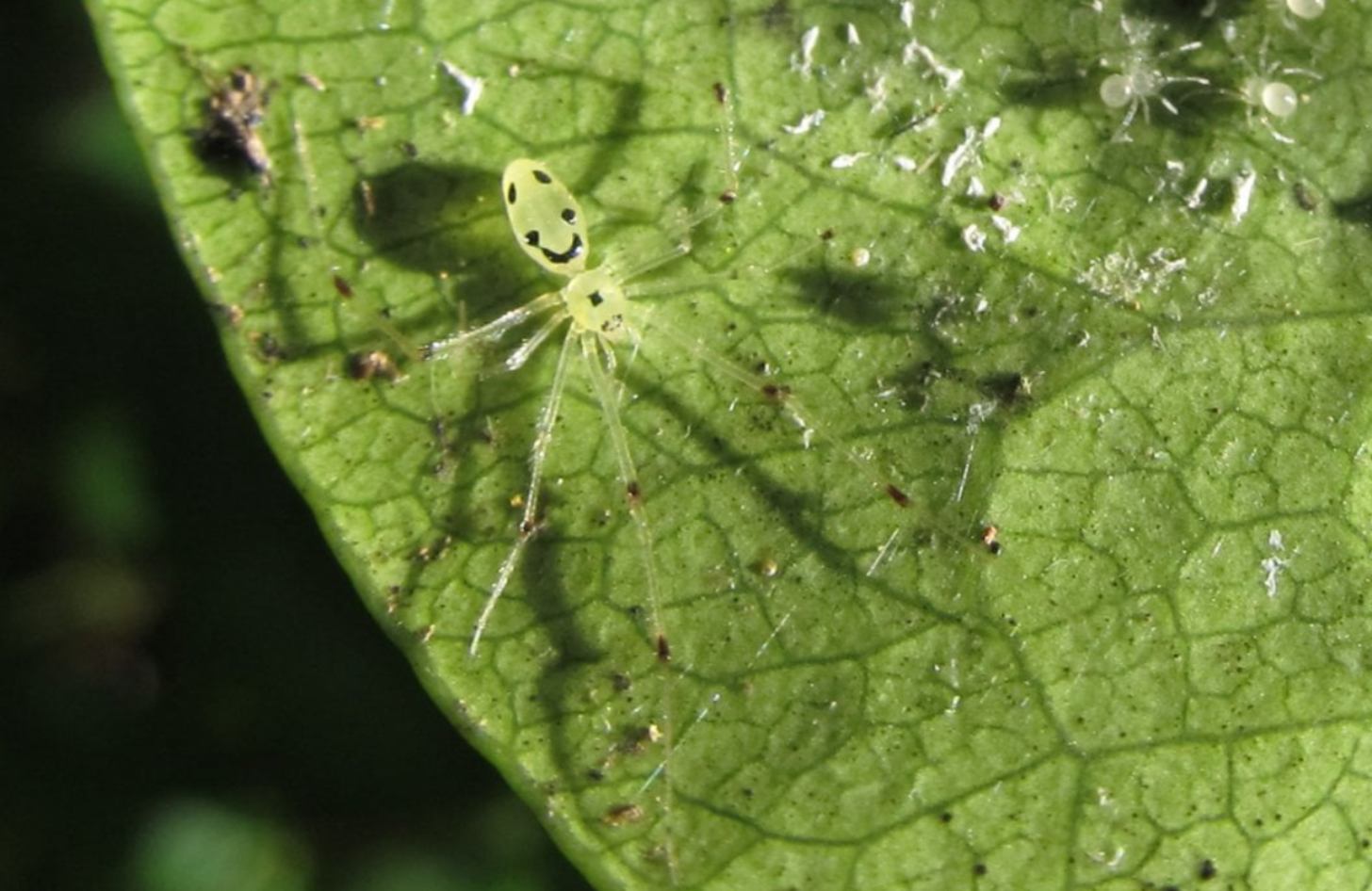
“I asked him to send all morphs that he found, and that led to the discovery in the next few months, from October 2023 onwards,” Priyadarshini said. “This almost came across as a gateway to look at other polymorphic species from this region.”
On April 24, “after months of fieldwork in the misty forests of Uttarakhand,” Priyadarshini and Tripathy finally published their study on the Theridion himalayana, the Himalayan Happy-Face Spider.
“This tiny beauty shows an incredible 32 different colour morphs with smiling faces in vibrant red, black & white — just like its famous Hawaiian cousin (Theridion grallator),” Tripathy shared in an Instagram post. “But here’s the twist: it evolved this striking polymorphism completely independently in Asia!”
“Even more fascinating — the patterns are strongly sex-linked (males & females look very different), and it spends its life hanging upside down on the underside of [ginger] leaves in the same niche as the Hawaiian species.”
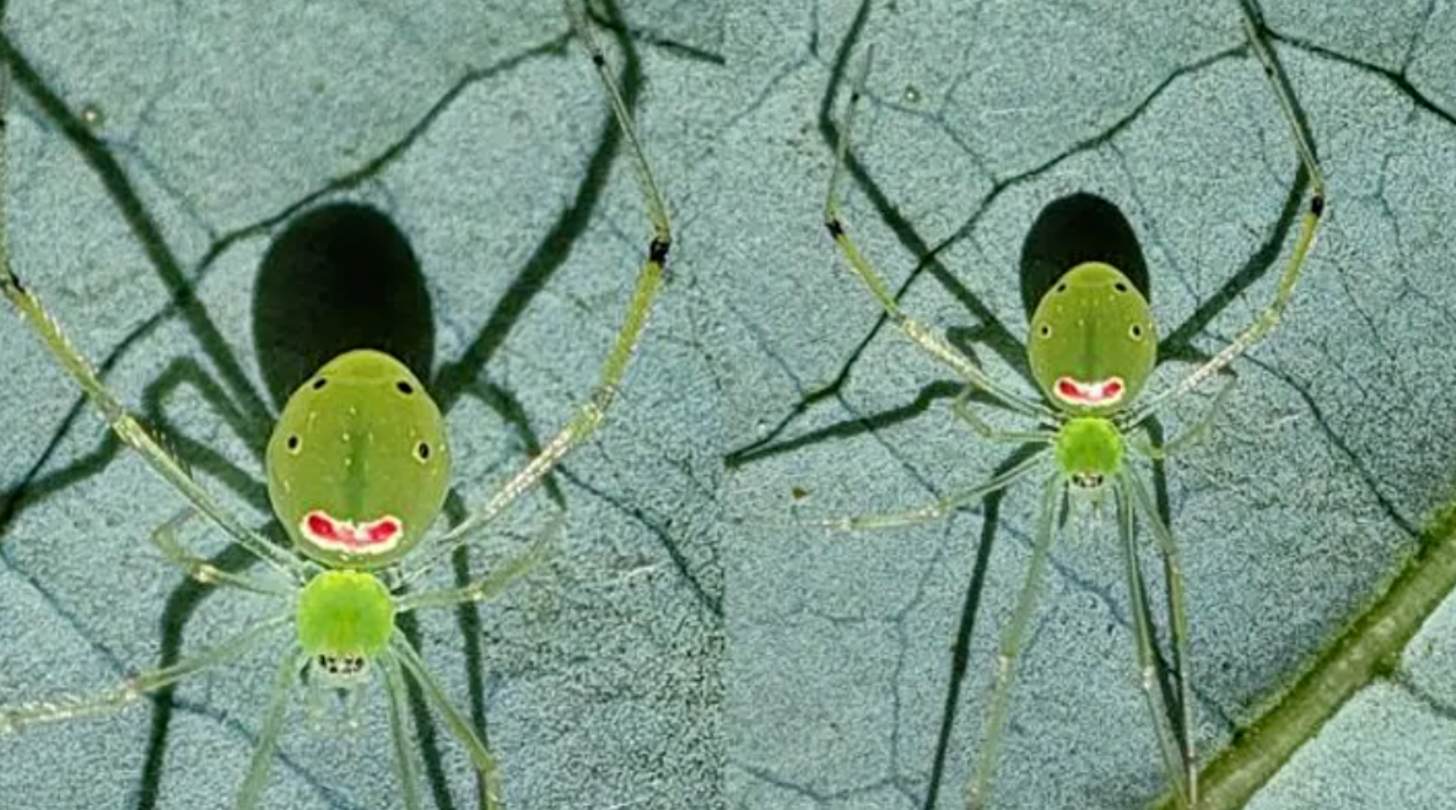
What puzzled the scientists was the fact that the ginger plant was not native to Hawaii.
“How did the spiders choose an invasive species and ginger exactly?” Priyadarshini posed. “If T. himalayana is an elder cousin of T. grallator, although discovered 125 years later! Although this sounds like a tall claim now, it will be our further scope of work to establish any missing links, if at all, through [that plant family].”
Tripathy and Priyadarshini saw many more “critters” in the same environment as the Himalayan Happy-Face Spider that shared similar colour patterns on their bodies. Tripathy said that could be evidence of either “coevolution or evolutionary adaptations.”
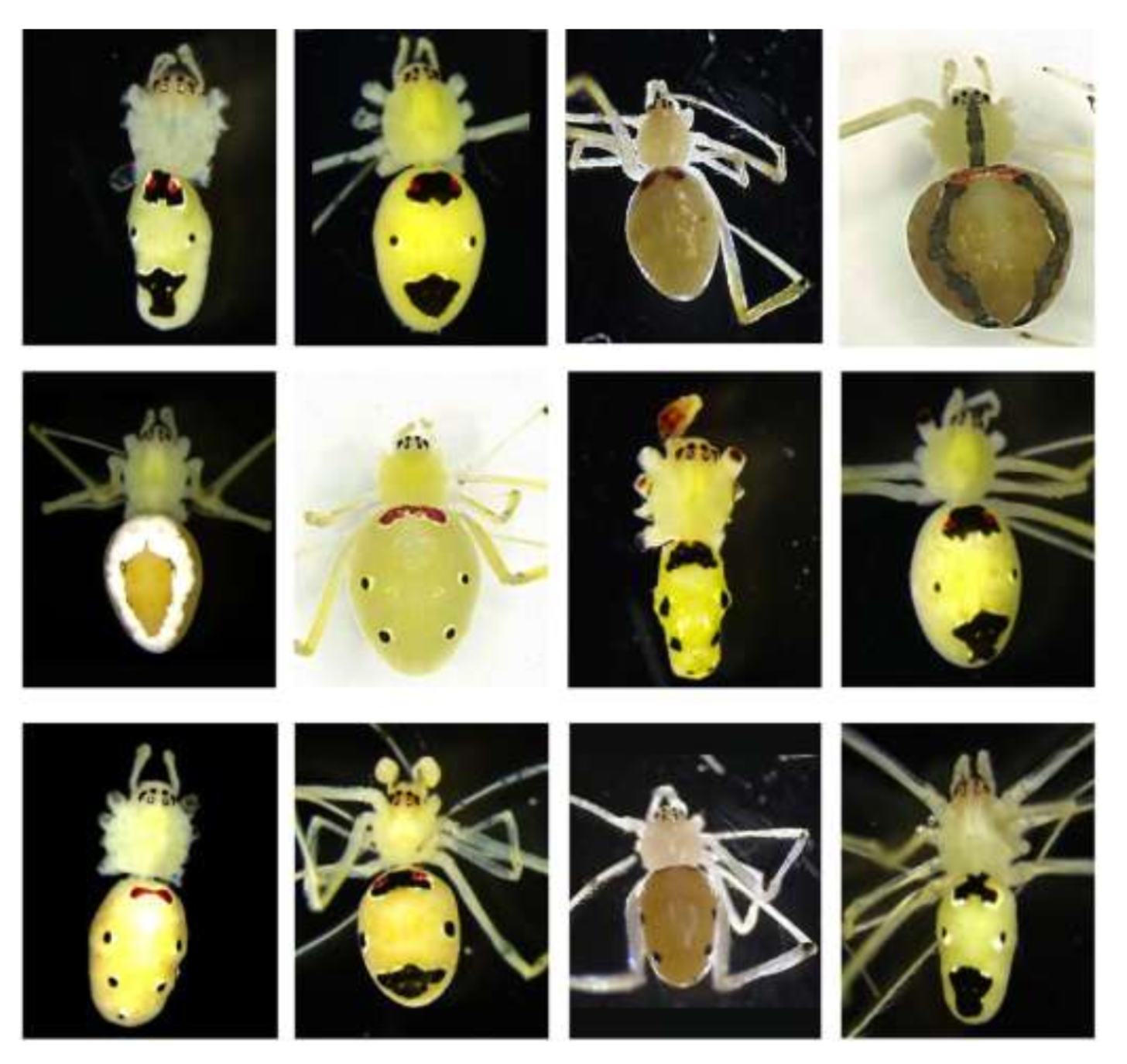
One thing was for sure: They uncovered a treasure trove of new scientific mysteries when they set out into the Western Himalayas in 2023.
“I am deeply grateful to my co-author, Dr. Devi Priyadarshini, for her constant guidance and support throughout this work,” Tripathy wrote in their Instagram post. “This discovery not only documents a new species but also provides a unique system to explore the evolution and maintenance of colour polymorphism, with future research aimed at uncovering its genetic basis and ecological drivers.”
He added: “Nature keeps surprising us with parallel evolution!”
You may also like: Scientists fell in love with this underwater 'Snuffleupagus' 23 years ago. It's finally being recognized as a new species
Header image via Devi Priyadarshini and Ashirwad Tripathy/CC BY
It sure is a beautiful day in the neighborhood.
The United States Postal Service has just announced the winner of its Stamp Encore contest, which encouraged members of the public to vote on 25 stamps to bring back into circulation in honor of the organization’s 250th birthday.
Competing alongside Disney characters, Snoopy, and other timeless favorites like popsicles and celebratory polka dots, the 2018 “Mister Rogers’ Neighborhood” design won, bringing back the stamps by popular demand.
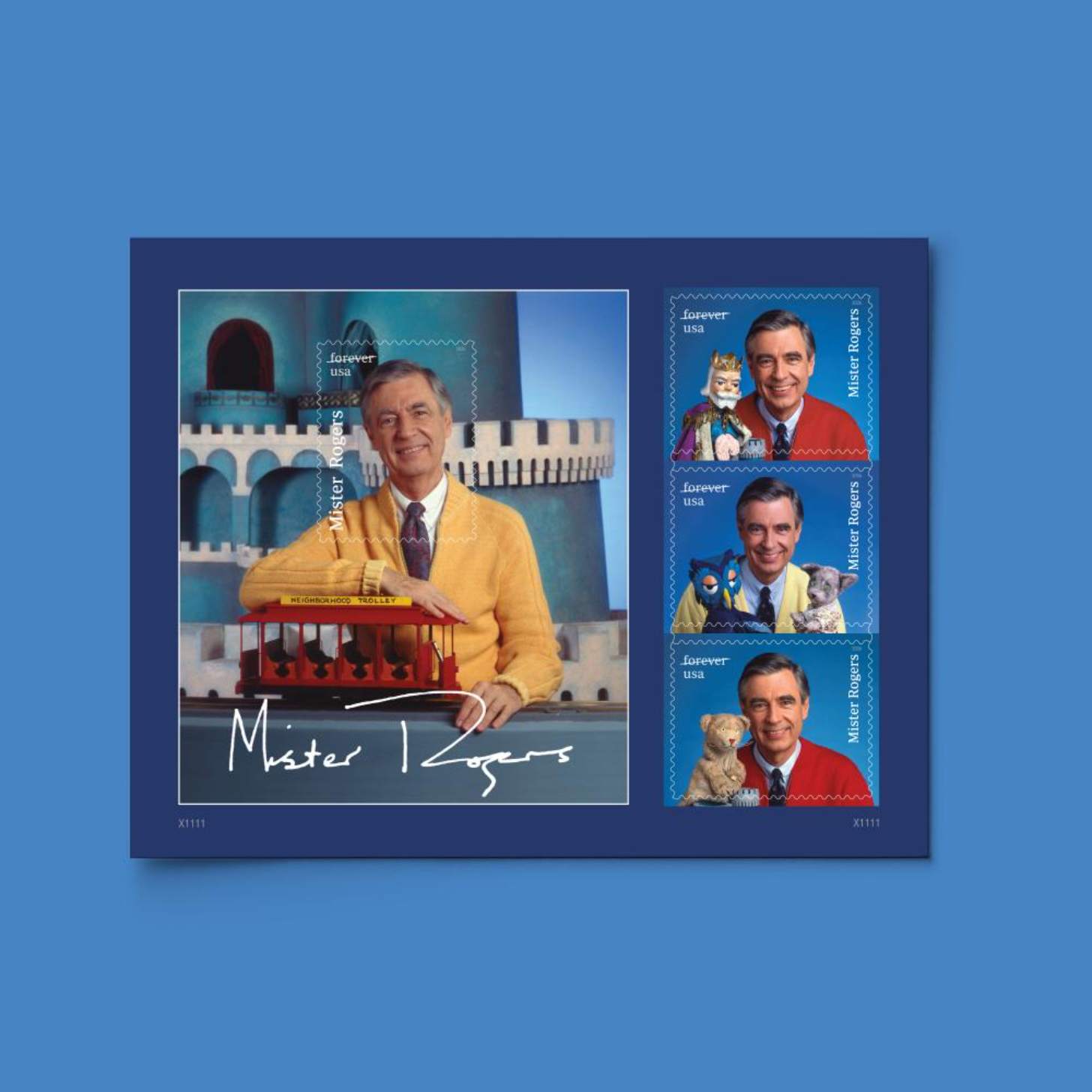
The Mister Rogers stamp was reissued, along with a new, four-image souvenir stamp sheet.
“When we issued the Mister Rogers stamp in 2018, we ordered a print run of some 12 million. That may sound like a lot, but Mister Rogers really took us by surprise,” Isaac Cronkhite, the Postal Service’s chief processing and distribution officer and executive vice president, said in a statement.
“Within just a few weeks, the stamps honoring this humble, soft-spoken man had sold out completely.”
Fred Rogers has had a lasting legacy for his kind demeanor as a children’s entertainer, with his words of wisdom still encouraging fans of all ages to this day.
That legacy is so powerful, it seems, that it rallied thousands across the country to bring back this small symbol of affection for the icon.
According to the USPS, when voting closed on the Stamp Encore contest back in September 2025, the agency tallied more than 580,000 online votes — and this didn’t include mail-in ballots yet. Once all the tallies were counted, it was determined that the Mister Rogers stamp secured the win by more than 40,000 votes over the next highest contender.
While fans rallied independently for the stamp, the city of Pittsburgh also campaigned for the Mister Rogers design. Rogers helped found the educational TV station WQED in Pittsburgh in 1953, where he began producing “Mister Rogers’ Neighborhood” for the network in 1963.
The city posted on social media, encouraging supporters to vote for the stamp’s return, garnering thousands of likes, shares, and votes.
“Fred Rogers often shared the idea that ‘You are not just the age you are. You are all the ages you ever have been.’ In this context, I believe the Mister Rogers stamp resonated with the child in each of us — and the children and former children who cast so many votes,” Cronkhite said.

Rogers was also a staunch supporter of mail, often exchanging letters with viewers.
“Fred Rogers considered the space between the television set and a viewer to be ‘holy ground,’” Emma Lee, director of the Fred Rogers Institute, said in a statement. “The mail children sent to Mister Rogers, and his letters back, became an essential extension of that sacred connection. Reissuing this stamp beautifully honors the enduring ties he built with his television friends.”
“Celebrating Fred Rogers’ legacy as the Stamp Encore honoree during such a historic year for our nation is a profound privilege,” Paul Siefken, president and CEO of Fred Rogers Productions, added.
“When people use this stamp, we hope it serves as a small, daily reminder of Fred’s enduring belief in the inherent worth of every human being.”
The designs of the stamps are simple and understated, befitting the man in the red cardigan.
The original stamp features Walt Seng’s photograph of Rogers in his signature cardigan and includes one of Rogers’ puppet characters, King Friday XIII. The new souvenir stamp sheet includes other images by Seng, featuring Rogers and other beloved "Neighborhood" characters.
“It’s all about the man, and his universal appeal, which will carry on,” Derry Noyes, the USPS art director who designed the stamp, said.
“The best I can do as a graphic designer is to portray him clearly, straightforward, without special gimmicks, just as he would have wanted.”
The Mister Rogers stamps are being issued as Forever stamps in a pane of 20. They will be on sale online and in post offices nationwide beginning June 1, 2026.
You may also like: 'Mister Rogers' Neighborhood' gets first-ever YouTube channel 25 years after final show aired
Header image courtesy of USPS
In the latest hockey romance to grace the silver screen, 28-year-old Belmont Cameli is seen shirtless on a myriad of occasions. As the main male lead of the first season of “Off Campus,” Cameli plays Garrett Graham, a college hockey star who viewers watch fall in love.
And eagle-eyed viewers were quick to notice that the actor has two small scars on his abdomen.
As it turns out, they are the result of Cameli’s decision to donate a kidney in 2018.
The story starts when Cameli’s childhood friend, Brendan Flaherty went into kidney failure and needed dialysis every day. Cameli volunteered to be tested as a donor, but unfortunately was not a compatible match.

Instead of giving up, he joined a paired kidney exchange program, in which incompatible donor-recipient pairs are matched with others in similar strangers. Cameli ended up donating his kidney to a stranger as part of a 14-person transplant chain, saving seven lives.
“Yesterday, I was blessed with the opportunity to and privilege to save a life,” Cameli shared in a 2018 Instagram post that has recently resurfaced.
“The fact of the matter is that most of us have two good kidneys, but thousands of people struggle to live day to day with only one failing kidney,” he wrote. “Every day, 20 people die waiting for a kidney transplant. It takes patients an average of 3.5 years on the waitlist before receiving a transplant, and that is only if they are so fortunate.”

In his caption, Cameli went on to add that after six years of waiting, his friend was gifted the organ he needed — and Cameli’s new friend Clotilde “will finally have a healthy kidney and a fresh new start to life.”
“I am so grateful to be a part of this swap program involving 14 people and blessing seven patients with new organs and brighter futures,” he concluded. “Soon my pain will disappear, and my scars will fade away, but the love in my heart from this experience will forever remain.”
As Cameli has gained popularity from his role in “Off Campus,” and his kidney donation story has made the rounds, the National Kidney Foundation has taken the opportunity to remind people that they can become living organ donors, too.
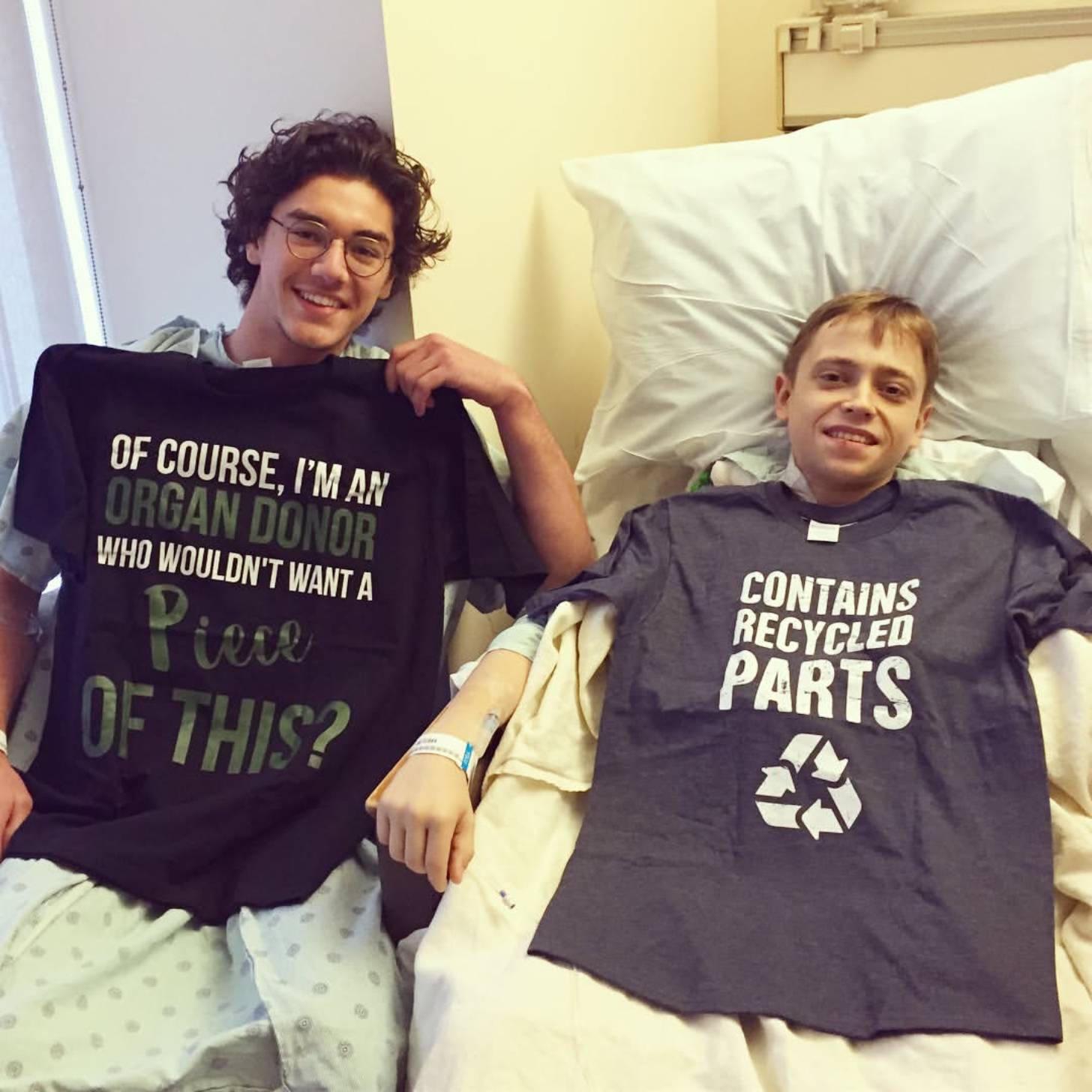
“More than 90,000 people in the United States are currently waiting for a kidney transplant. Many will wait years for a deceased donor kidney, and some may become too sick before a kidney becomes available,” the organization shared in a recent blog post.
The National Kidney Foundation also added that kidneys from living donors often last longer than a deceased donor kidney, work immediately after transplant, allow surgery to happen sooner, and improve survival and quality of life.
“As Cameli’s story shows, one decision can impact far more people than expected,” the foundation concluded.
“A single living donor can spark a chain reaction that reaches multiple families, communities, and future generations.”
You may also like: 'Heated Rivalry' fans raise $63K for children's hospital for Hudson Williams' birthday
Header image courtesy of Prime Video
For every 1,000 sea turtle hatchlings that break free from their eggs, only one or two will survive to adulthood.
Those are not favorable odds.
And back in 2020, those odds were stacked particularly steep against Kai, the loggerhead sea turtle, when he was found in Struisbaai, South Africa.
The juvenile, barely weighing more than a pound, was unable to swim. With no time to spare, Kai was taken in by the Two Oceans Aquarium Foundation’s Turtle Conservation Center team.
“He struggled intensely with balance, often floating nearly vertically in the water,” the Two Oceans Aquarium Foundation described on its website.
Diagnostic scans soon revealed that Kai had buoyancy issues caused by uneven lung development and recurring infections.
“Although our turtle vet, Dr. Bernice van Huyssteen, successfully treated the infection, the difference in Kai’s lung sizes remained an ongoing challenge,” the foundation explained.
“This little turtle needed serious intervention over and above our routine rehabilitation practices, which include quality nutrition, expert medical care, and regular enrichment activities to stimulate wild behaviors.”
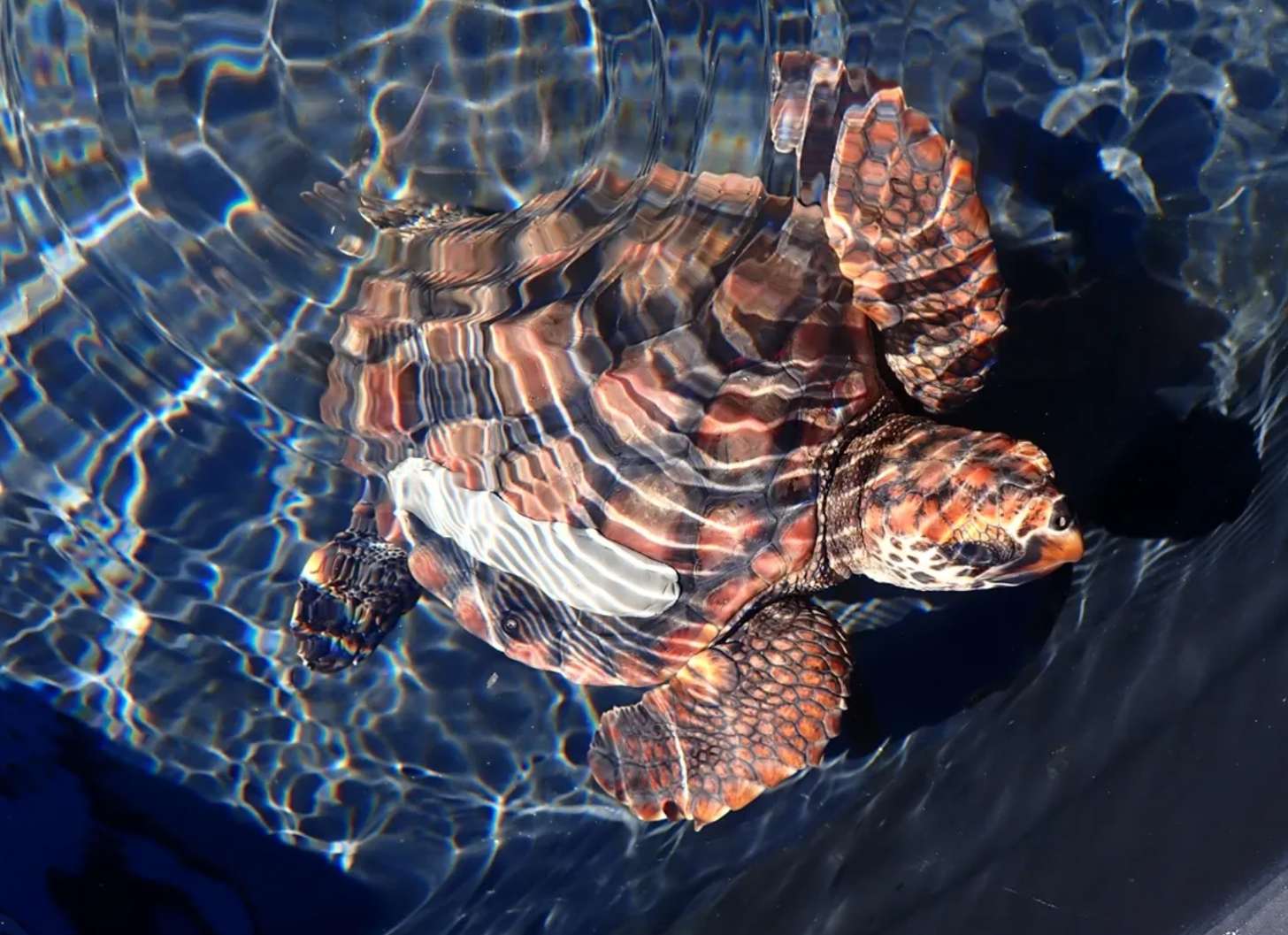
Over the years, Van Huyssteen and the Turtle Conservation Center team worked hard to help Kai move more easily and live more comfortably. They first attached special weights to his right side to help balance his body, so his weaker lung could get stronger without the stronger lung working too hard. Kai also received regular physiotherapy, which reduced strain on his lungs and improved blood flow to his injured areas.
Later, a physiotherapist at the center recommended a “floaty” to keep his therapy going. By attaching a modified pool noodle to his top shell, his buoyancy noticeably improved. That pool noodle later became a specialized buoyancy device made out of high-density foam.
By 2025, Kai achieved a huge milestone: He was able to swim without an assistance device. Later that year, after the care team was sure that he was stable in his recovery, he was cleared for release.
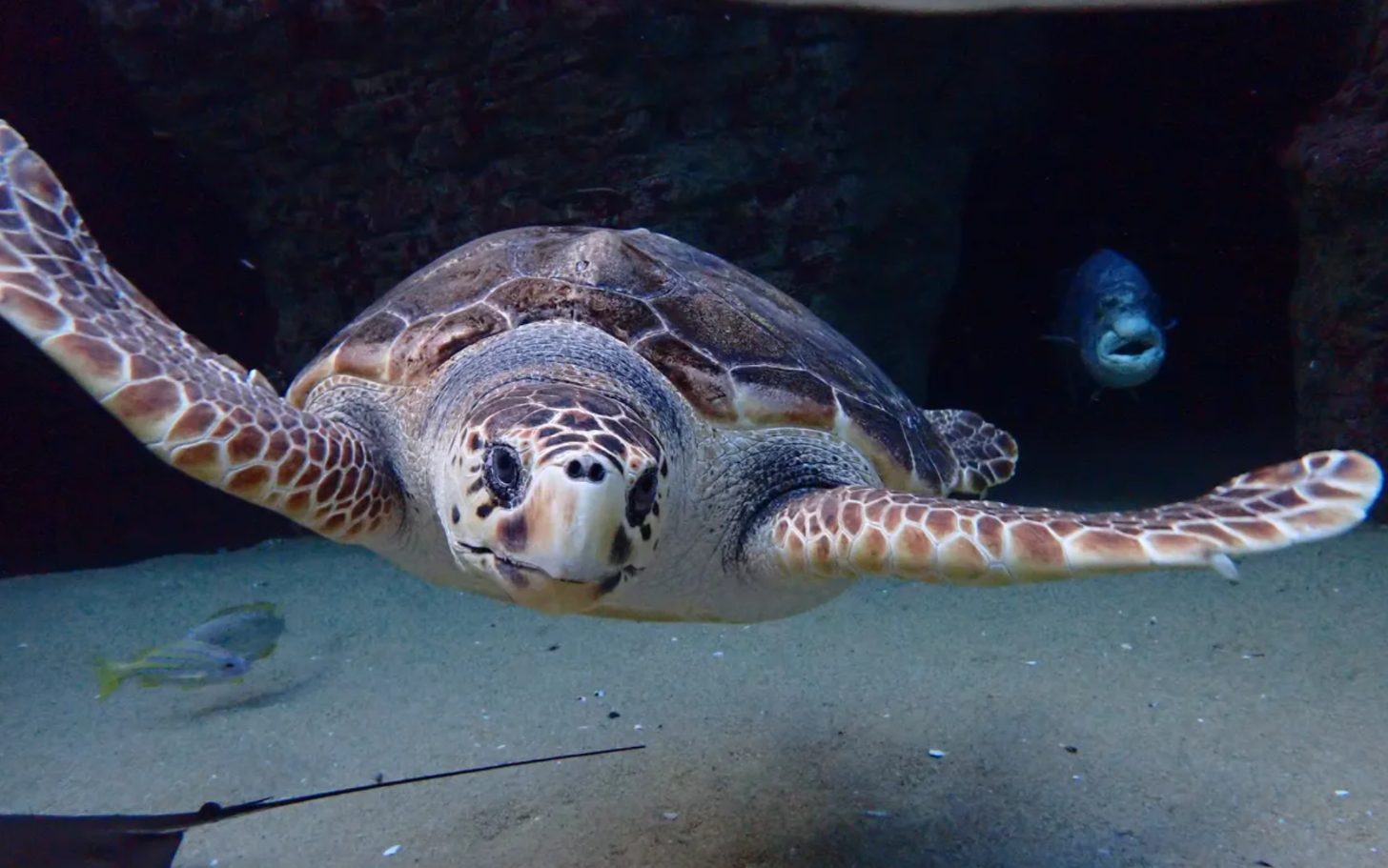
“Kai’s story is one of resilience, innovation, and hope,” Talitha Noble-Trull, conservation manager at the Two Oceans Aquarium Foundation, said in a press release.
On May 14, after six years of specialized medical treatment, rehabilitation, and care from the Turtle Conservation Center team, Kai was released into the waters of the De Hoop Marine Protected Area.
At the time of the release, he was a whopping 220 pounds.
“We are hugely excited to see where Kai ventures first, considering that he was last in the wild ocean six years ago as a young hatchling,” said Noble-Trull. “Watching him swim back into the ocean after such a long journey was deeply emotional for everyone who played a role in his recovery.”
“As his flippers touched the ocean for the first time since he was a tiny hatchling, he was watched over by the incredible community of people who supported his journey,” the Two Oceans Aquarium shared in an Instagram post.
Prior to his release, the conservation team affixed a satellite tag to Kai’s shell so that he could be tracked from space.
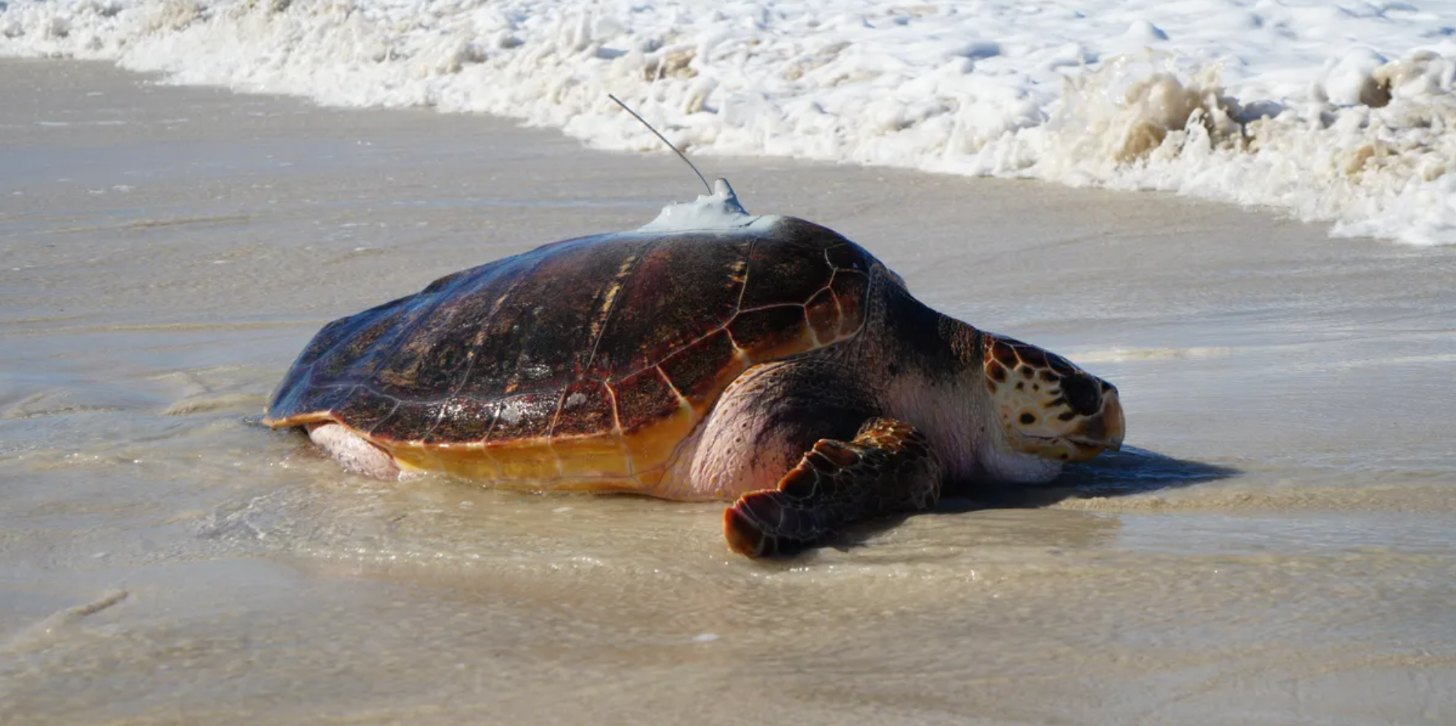
“Not only will we be able to follow his ocean travels, but his movements will also contribute to the global knowledge base on sea turtles and help us better protect his species.”
Below the Two Ocean Aquarium’s video, the comment section was filled with well-wishes.
“Safe travels, Kai,” one Instagram user said.
“Go Kai! May the ocean currents always be in your favor,” wrote another. “Thank you to the team.”
“Freedom!” cheered another user. “Thank you for the amazing work you do!”
You may also like: This sea turtle nest would have washed away without intervention. Thanks to a conservation team, hundreds of sea turtle hatchlings were saved
Header image via Roboflow Universe - Proyectos
For too long, Thai women like Ha Thi Binh were faced with a daily conundrum when they hopped on their motorcycles in Vietnam. Thai customs dictated that married women wear their hair in a high bun, but the law said all cyclists had to use a helmet.
The six-inch high bun is more than just a fashionable hairstyle. In an interview with the humanitarian organization CARE, Binh said that it's a revered tradition for married Thai women to wear the bun. She explained that if she let her hair down in public, it would signal that she was being “unfaithful” to her husband.
“It’s an affirmation that the woman is married,” Binh told CARE last summer. “We all do it the same way.”
As the breadwinner for her household, Binh drives her motorcycle daily to her coffee cooperative company Ara Tay in Son La, Vietnam. For years, she faced the frustration of choosing to follow tradition or follow the law.

Often, women attempted to do both, which was uncomfortable and dangerous. Others chose to forgo one or the other — choosing between safety or tradition — because there wasn’t a helmet that accommodated those high buns.
“The current ordinary crash helmets just fail to protect these women,” deputy chairman of Vietnam’s National Traffic Safety Committee, Khuat Viet Hung, said in a statement to the press.
After two years of tinkering, Vietnam’s Ministry of Science and Technology launched a special motorcycle helmet with added bun room. After it passed safety tests, it was distributed to low-income households in six provinces throughout Vietnam.
Today, it's commonplace to see the unique helmet atop cyclists’ heads on Vietnamese roadways. Thai women like Binh can finally travel in style: safely and fashionably.
A version of this article originally appeared in the 2024 Gender Edition of the Goodnewspaper
Header image via Laura Noel/CARE
Right-wing factions of the United States and the United Kingdom have spent recent years making claims that transgender women — especially in public restrooms and competitive sports — threaten the safety of cisgender women.
But U.K.-based advocacy group TransLucent wanted to put those claims to the test.
A new study from the group gathered data from hundreds of public institutions in England, and found that, over the last three years, there have only been four complaints about trans women in women’s single-sex spaces.
The investigations specifically examined “whether cisgender women patients or service users had formally objected to sharing spaces with trans women.”
Data was analyzed from over a three-year period, across 382 public institutions. A follow-up survey also covered 2024 data from councils serving over 16.5 million people. Through it all, only those four formal complaints were found.
“Across local authority toilets, hospital wards, and domestic abuse refuges, the evidence demonstrates that political and media rhetoric about trans women threatening women in single-sex spaces is unsupported by actual complaints,” the report reads.
Two of the complaints the researchers did track ultimately came down to complaints about a bathroom policy, another was based on perception of a trans woman and did not confirm the person’s identity, and another incident was not categorized by authorities as “serious.”

“With 382 public bodies reporting only four relevant complaints, the evidence is overwhelming: Trans women’s access to appropriate single-sex spaces is not creating documented safety or dignity problems in England’s major public services,” the report concludes.
“The numbers are clear: this is a manufactured controversy, not a documented crisis.”
While trans women still face discriminatory laws like bathroom bans, this study finds that cisgender women are not in danger, and the data does not point to anyone actually being disturbed by the presence of trans women in public spaces.
The moral of the story? TransLucent hopes this “empirical risk data” helps authorities understand that “same-sex” policies are not necessary and that “existing approaches to facility access are working effectively.”
Moreover, they hope to bust some myths about trans women.
“Behind the statistics are real people navigating daily life. Trans women using public toilets, accessing healthcare, or seeking refuge from domestic abuse are not engaged in political protest; they’re simply trying to live safely and with dignity,” TransLucent concluded in the investigation.
“Our FOI investigations demonstrate that their presence doesn’t generate ‘the wave of complaints’ that gender-critical and culture war rhetoric suggests. Instead, the data reveals quiet coexistence, where trans women use appropriate facilities without incident, and where services manage any concerns through existing individualized processes rather than blanket exclusions.”
A version of this article was originally published in The 2026 Feminist Edition of the Goodnewspaper.
You may also like: A lesbian couple in Florida was ordered to remove a rainbow fence on their property. So they sued the city
Header image by Sung Jin Cho on Unsplash
Last fall, a good Samaritan found a young great horned owl stuck in the drum of a concrete mixer in St. George, Utah.
He was found with a quarter of his body encased in dried concrete, unable to fly. To remove all of the concrete, the bird required daily 20-minute baths under anesthesia.
The owl was taken to Utah’s Wild Friends sanctuary, a wildlife rehabilitation center based at Best Friends Animal Sanctuary. Once he was in stable conditions, rescuers waited for him to molt, which would have replaced the damaged feathers naturally.
But his spring molt was not going as predicted.
“It was the first time Best Friends' staff had seen a case like this in its 40-year history," Bart Richwalski, the supervisor of Wild Friends, told People. “We reached out to other wildlife rehabilitators, and they had never heard of an owl falling into concrete before, either."
So, the Wild Friends team got creative and learned about a procedure they had never done before: Imping, or using donor feathers and adhesive to replace the feathers on the rescue owl.

In other words: This little friend was getting a feather transplant.
A wildlife rescue in Northern Utah gave Wild Friends feathers from a great horned owl of a similar size who had died. From there, the Wild Friends veterinarians kept track of their rescue owl’s feather patterns to ensure they were familiar with his unique anatomy.
“We looked at his feathers every few weeks so we knew which ones would have to be done, snipping damaged shafts in advance,” Richwalski said in a statement.

Finally, it was time. On May 1, the owl was placed under anesthesia for a 90-minute imping procedure.
The three experts were precise and methodical, laying out the donor feathers to replicate each wing, so they could be lined up with the replacement feather and cut to the necessary length before lining up and adhering to the owl.
“The first few feathers were extremely nerve-wracking,” Richwalski said, “but as we got into the groove, the imping became more comfortable, and everything went smoothly.”

In total, 10 primary and one second feather were replaced in the owl’s right wing, while the left didn’t require any replacements.
The Wild Friends team had learned that the best practice after this procedure is to release the bird into the wild as soon as possible once silent flight has been achieved. Silent flight is a skill owls have evolved to have, using their specialized feathers to disrupt air turbulence and absorb sound so they can fly silently without being detected by prey.
The owl was placed in the sanctuary’s largest aviary to recover from the surgery and prepare for takeoff.
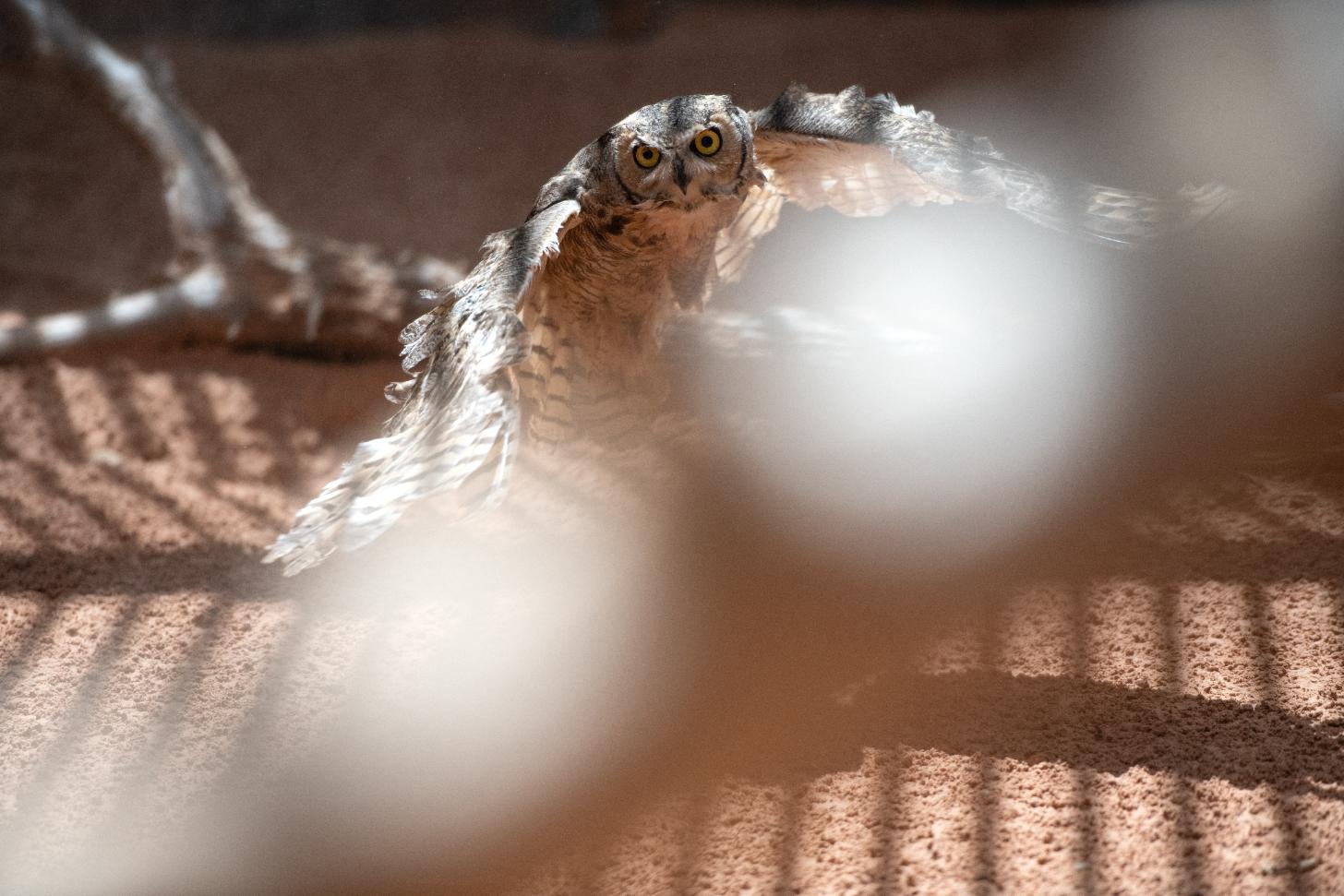
While in the aviary, the owl was soon seen flying to the highest perch, so Richwalski approached him to measure the sound of his wingbeat, determining that his flight was quiet enough for safe release.
The aviary roof was slowly opened, and the owl hovered tepidly before gaining speed, but then he was off into the sky.
“I don’t know that my heart was beating until I saw him leave,” Richwalski said, reflecting on the 7-month journey from the owl’s rescue to his release.
“I was beside myself, knowing that after all this time, he was healthy and back in the wild. It was such a good feeling.”
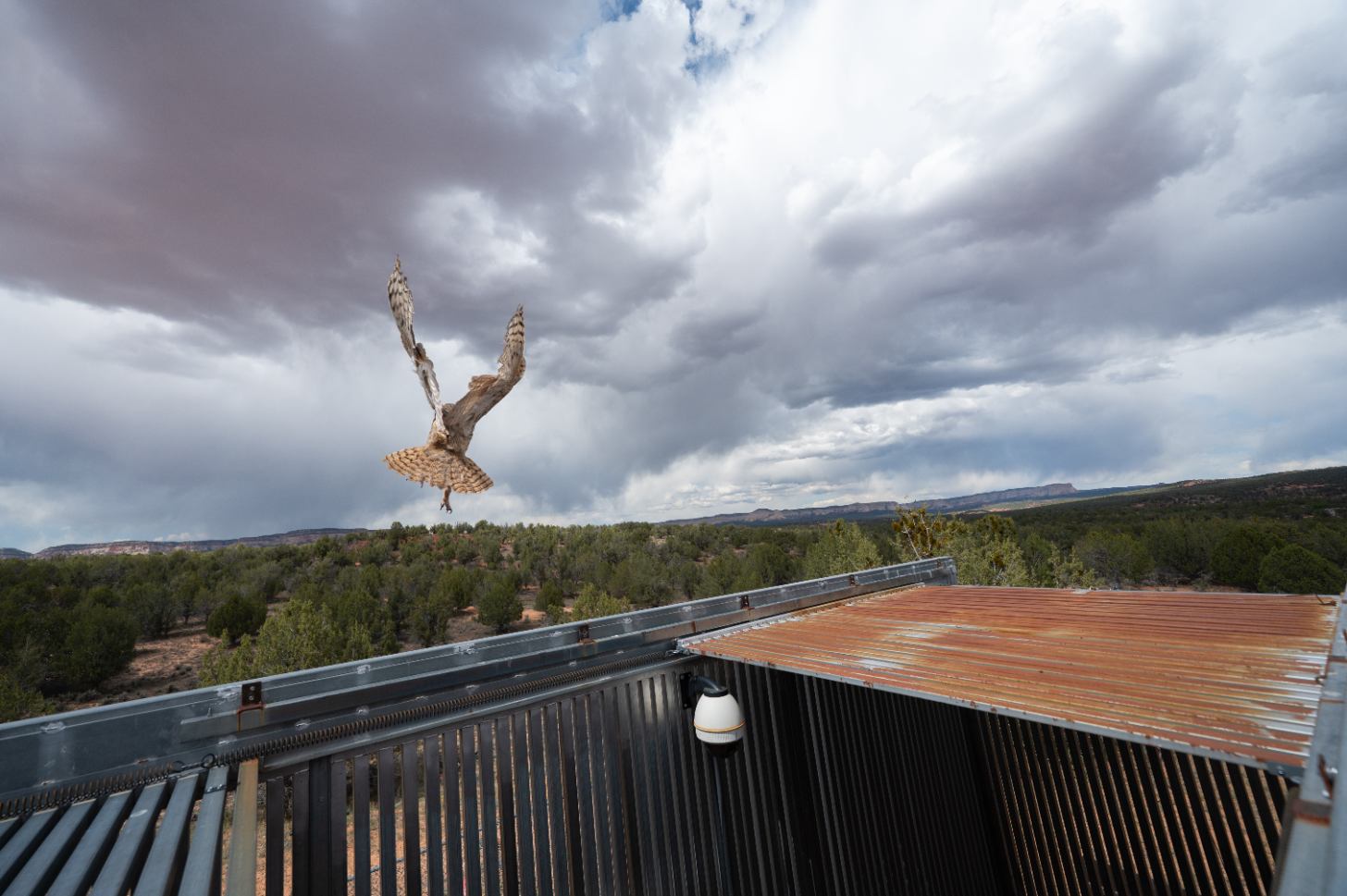
You may also like: After a fisherman accidentally hooked one of the world's most endangered sea turtles, these rescuers stepped in to save it
Header image by Molly Wald/Best Friends Animal Society