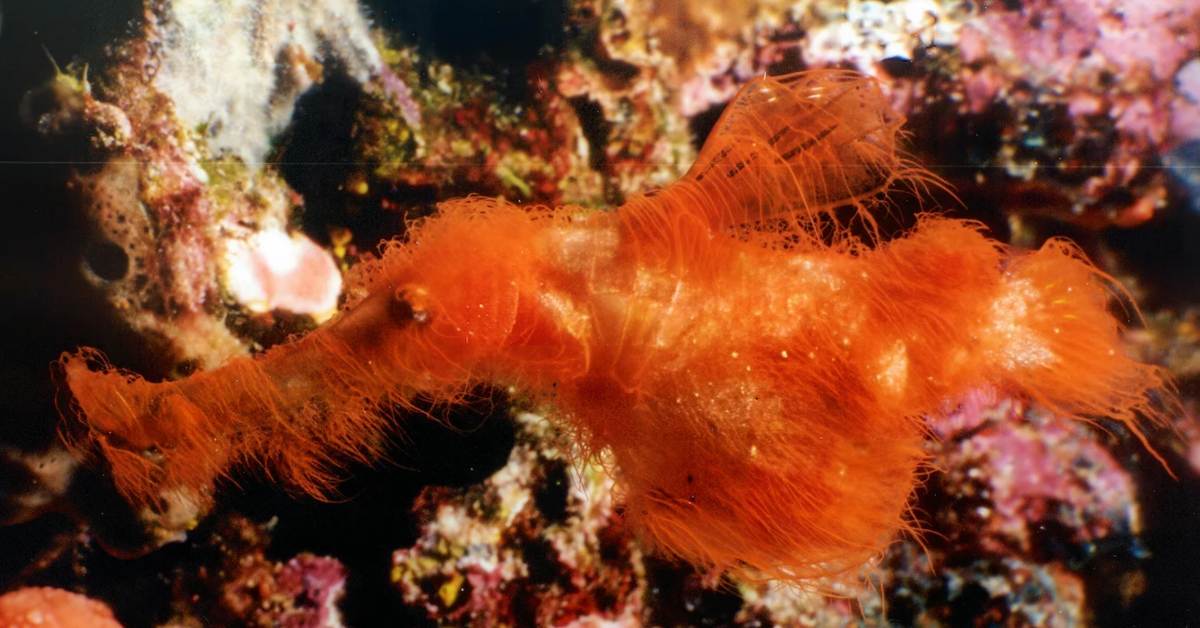
In 2003, marine biologist David Harasti was diving off Papua New Guinea when he spotted a small fish-like creature flitting through the water. It was something very red, very hairy, and unlike anything he had ever seen before.
He went back to the same dive site six more times, but he couldn’t find it again.
But the fish stayed on Harasti’s mind. So he recruited the help of Graham Short, an ichthyologist and taxonomist at the California Academy of Sciences and the Australian Museum.
Together, they worked with Great Barrier Reef divers and looked through countless museum shelves in their mission to prove that the sea creature was real.
Through their research, they confirmed that Harasti had spotted a new species of hairy ghost pipefish from the Southwest Pacific. And it was just as red and “hairy” as Harasti had recalled.
On May 10, 2026, Harasti and Short published a paper in the Journal of Fish Biology formally describing the new species.
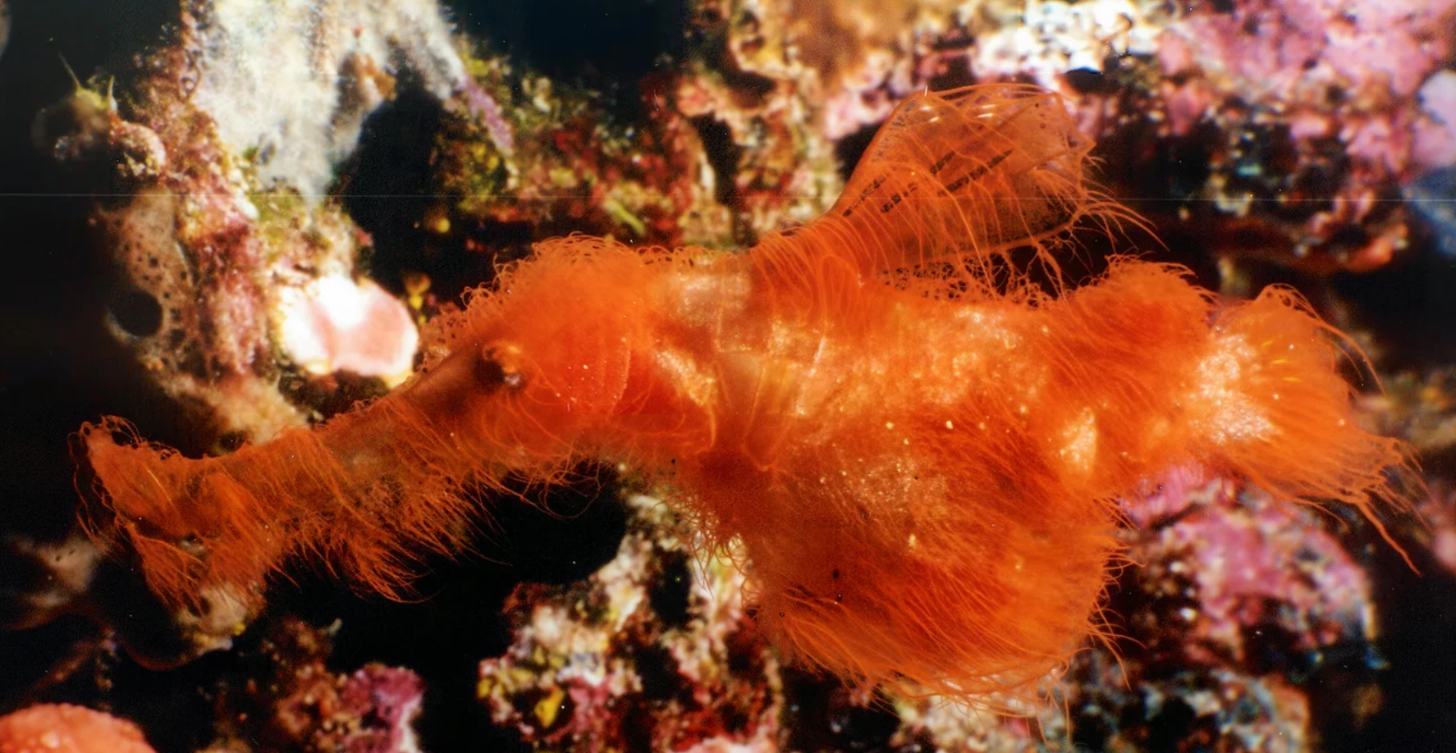
They decided to name it Solenostomus snuffleupagus after Mr. Snuffleupagus, Big Bird’s best friend from the beloved children’s series “Sesame Street,” in reference to the species’ “distinctly shaggy, filamentous appearance and snout reminiscent of the character's covering and trunk.”
“It was so easy to say, ‘Yeah, this looks like Snuffleupagus.’ I mean, it’s almost identical. It’s scary,” Short told Scientific American.
“We may have had a few drinks and decided to e-mail Sesame Street Australia,” he added, saying that they “answered the following day” and gave their blessing for the name.
The S. snuffleupagus is now the seventh known species of ghost pipefish. All ghost pipefishes share common ancestry with Syngnathidae, a family of fish that includes seahorses, pipefishes, and sea dragons.
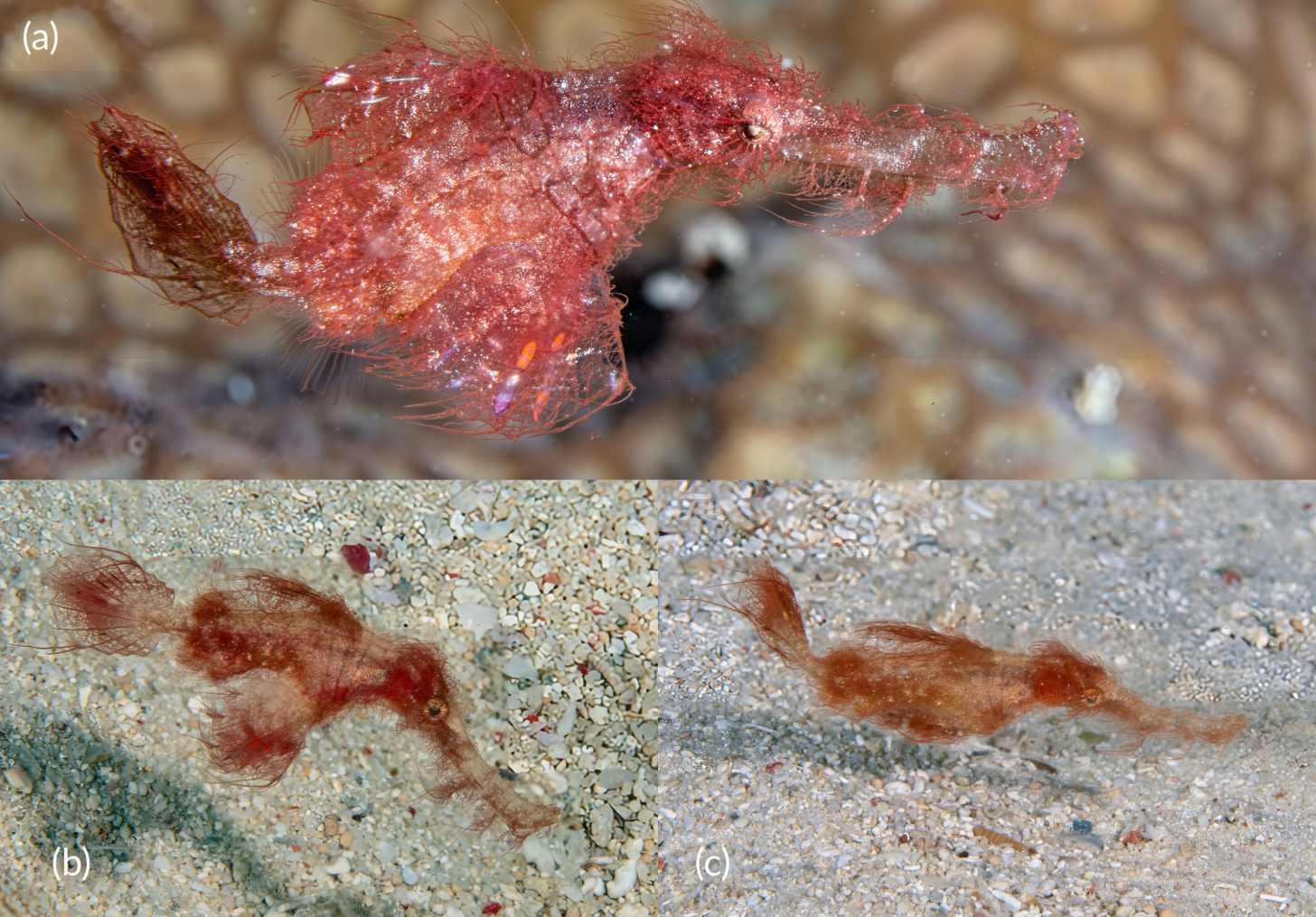
According to Short and Harasti, they are masters in the art of camouflage, “frequently mimicking algae, seagrasses, crinoids, and soft corals in both form and coloration.”
When it comes to stature, the S. snuffleupagus is twice as small as the average pinky finger at just one to 1.5 inches in length. They play their part in the marine food web by feeding on even tinier creatures, like shrimp-like crustaceans and zooplankton.
“It’s so hairy compared to other species,” Short said, referring to the ghost pipfish’s filaments that stick out like an exoskeleton.
“Other species can be a little bit hairy in certain spots, like under the snout,” he explained.
“But this one took the hairy form all the way,” he laughed. “I mean, it looks ridiculous.”
You may also like: Spectacular blue 'cavern creature' spotted on expedition. It's a new species
Header image via David Harasti