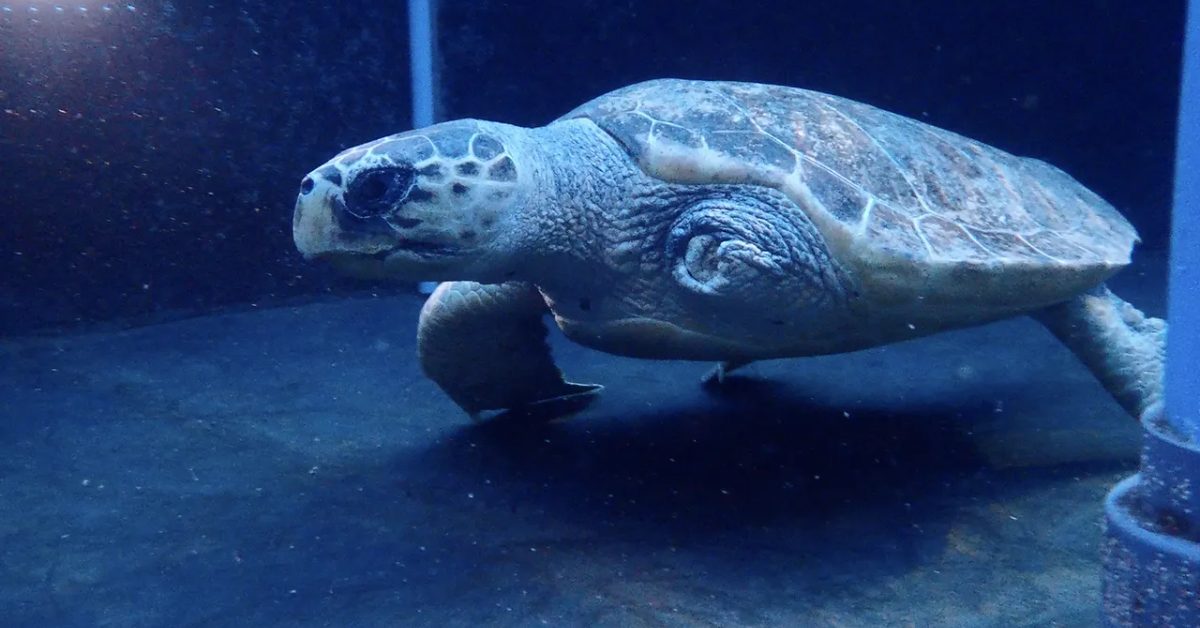
When Habanero, the endangered loggerhead sea turtle was found off the coast of Witsand, South Africa last February, things were looking bleak.
He was found with thousands of leeches and their eggs covering his body, which was weak, dehydrated, and barely able to move. The leeches, which acted as parasites on his body, caused the turtle to be severely anemic.
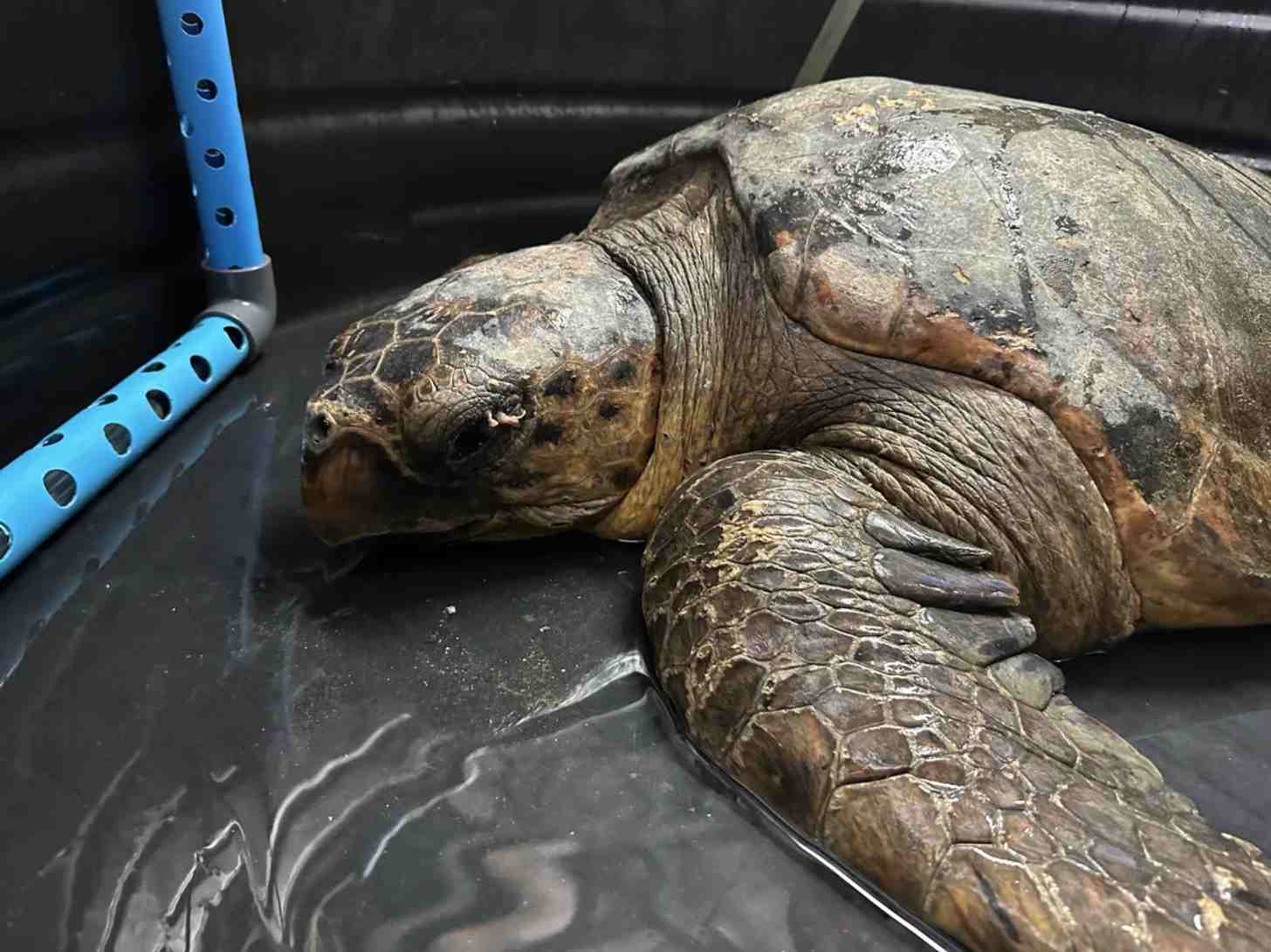
However, after he was de-leeched by experts at the Turtle Conservation Centre in Cape Town, a project of the Two Oceans Aquarium Foundation, his blood levels slowly returned to normal.
But he wasn’t out of the woods yet.
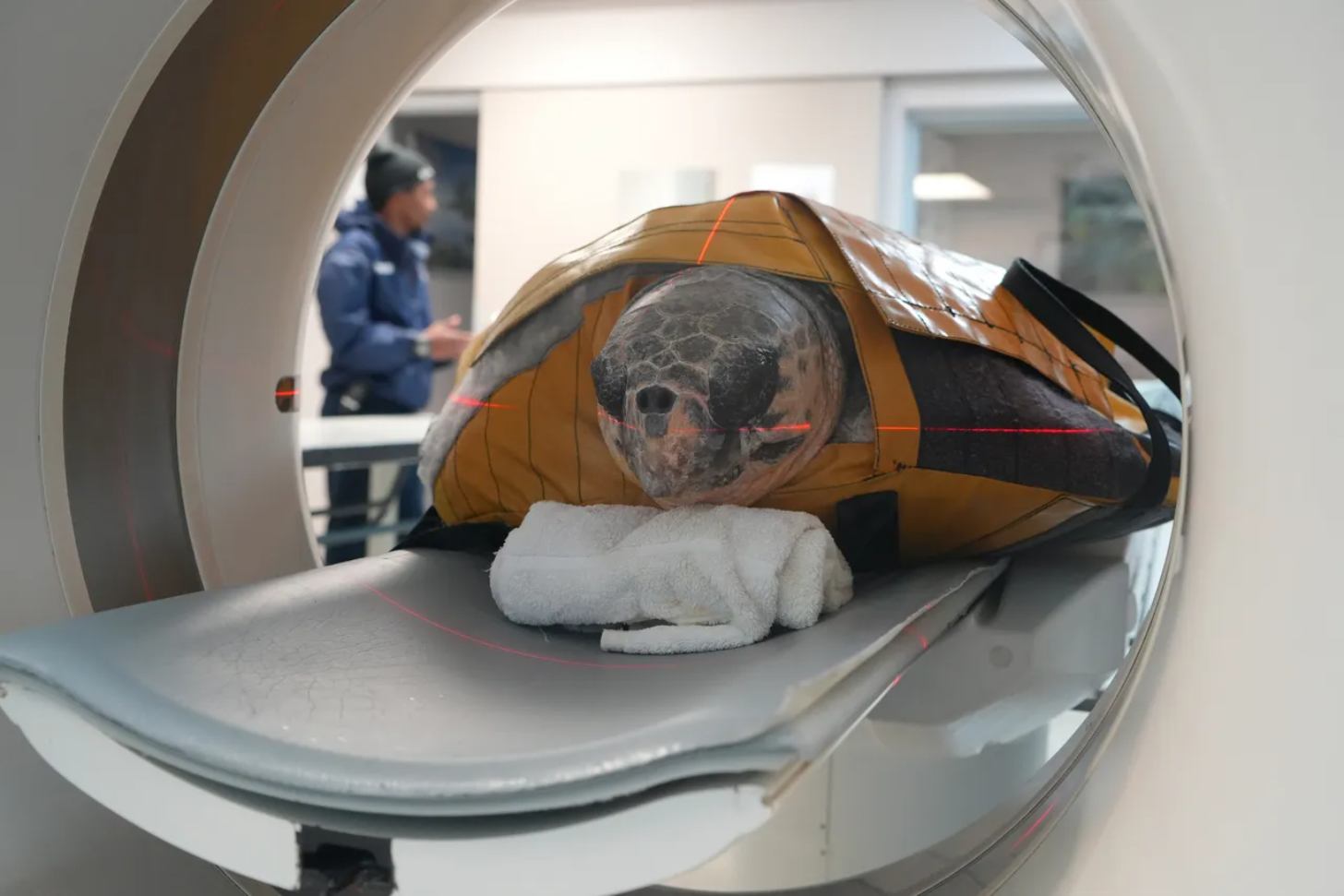
Veterinarians noticed early on in his rescue that the turtle had a very swollen and painful left elbow. An X-ray determined that the cause of swelling was severe destruction of the bones in the elbow joint, likely due to chronic infection.
His vet, Dr. Bernice van Huyssteen, then collected a sample of his joint fluid for analysis and once strong enough, the turtle was put under for surgery, where dead and infected tissue was removed from the damaged joint. The procedure was a vital step in his recovery, but even after months of antibiotic treatment, Habanero still wasn’t improving — and the infection was beginning to spread to other parts of his body.
The doctors had no choice: They would have to amputate his flipper.
“After thorough consultation with other sea turtle vets around the world, we all agreed: Continuing with antibiotics alone would not save the infected flipper or Habanero,” Dr. van Huyssteen said in a statement.
“After a lot of careful thought, our veterinary team made the difficult but hopeful decision to amputate the damaged front left flipper. Removing the original source of infection gives Habanero his best chance at life.”
The veterinarian community came together to make it happen, including the Morukuru Goodwill Foundation, which sponsored Habanero’s adoption to the aquarium, and the Sharp Exotic and Small Animal Veterinary Clinic, which provided resources while the Two Oceans Aquarium underwent construction.
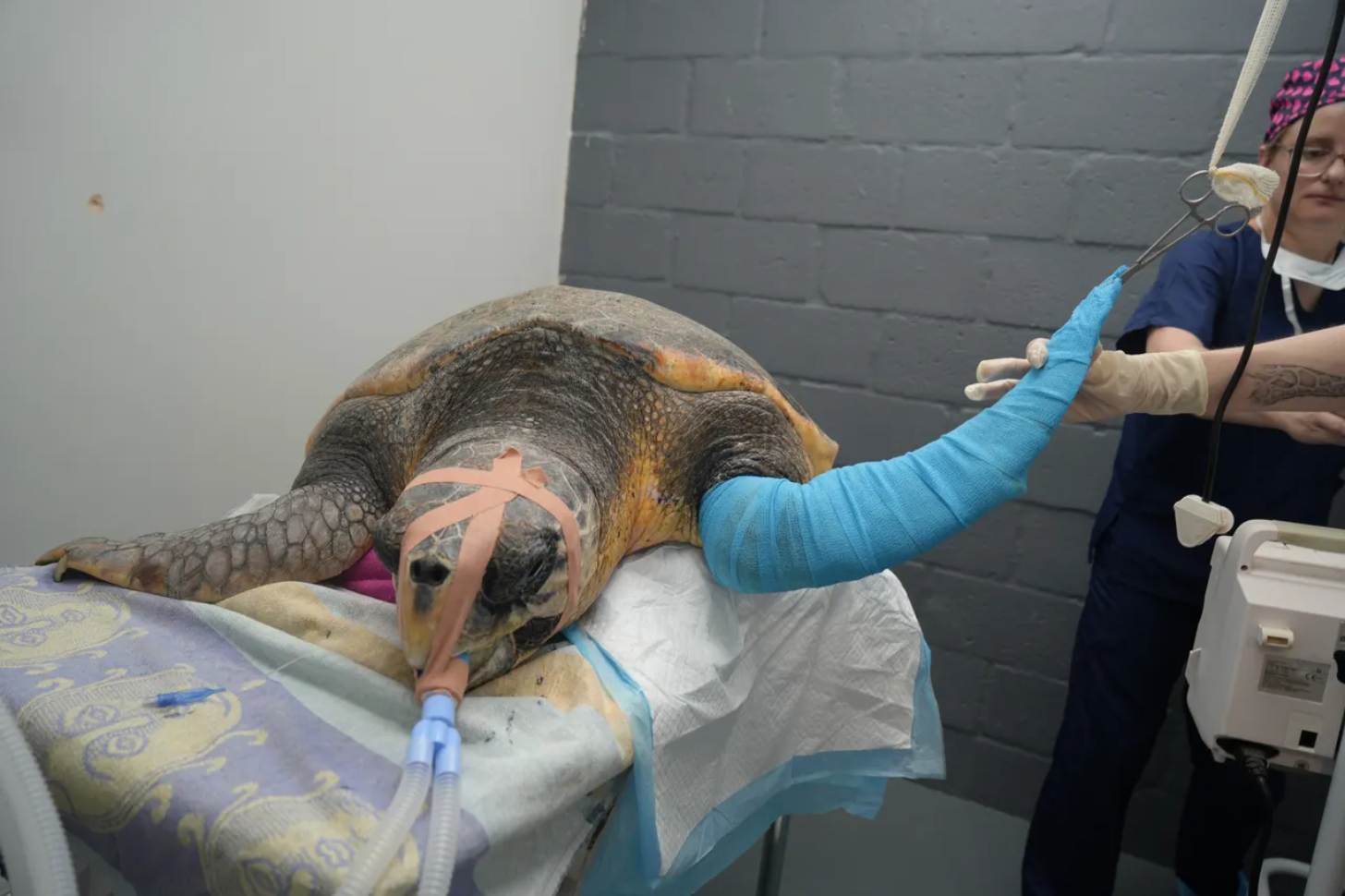
Finally, it was surgery day, and Dr. van Huyssteen’s team completed the amputation in about 1.5 hours. After the operation, the team discovered a large ball of necrotic material the size of a chicken egg inside the joint space — a very obvious sign that amputation was necessary to fully remove the infection.
Since his surgery in December, Habanero has been making incredible progress. He was moved into a large holding pool in the Turtle Conservation Centre’s rehabilitation space, where he has learned to readjust to swimming with just three flippers.
“We are truly happy that everything went well with his surgery. His prognosis for long-term recovery is still guarded, as he has small spots of bone infection present in his other flippers,” Dr. van Huyssteen said.
“We hope that, because the primary cause of infection (the original bad elbow) has been removed, the other spots of infection in the body will respond to systemic antibiotics, and the infection can be cleared up.”

Habanero’s care team will continue to monitor him with bloodwork and CT scans, with treatment lasting several months before he is cleared to be released back into the ocean.
Regular radiographs have shown no new sites of infection, and Habanero’s other flippers appear stable, with his doctors hopeful he will make a complete recovery.
Habanero is far from the only sea turtle who has successfully undergone a flipper amputation. In fact, aquariums and conservation organizations around the world have begun to track rehabilitated sea turtles like Habanero, to see how these disabled turtles do back in the deep blue sea.
While his healing journey isn’t over yet, Habanero joins the ranks of thousands of other rehabilitated turtles fighting for the future of the species.
“Habanero’s story has not been a straightforward one; he has endured immense hardship with remarkable determination,” Two Oceans Aquarium Foundation writes in a blog post.
“Habanero is proof of the remarkable courage of turtles, and a reminder that there is real hope on the horizon.”
You may also like: Beachgoer finds sea turtle stranded, so covered in barnacles she couldn't move. See her amazing 9-month recovery
Header image courtesy of Two Oceans Aquarium Foundation