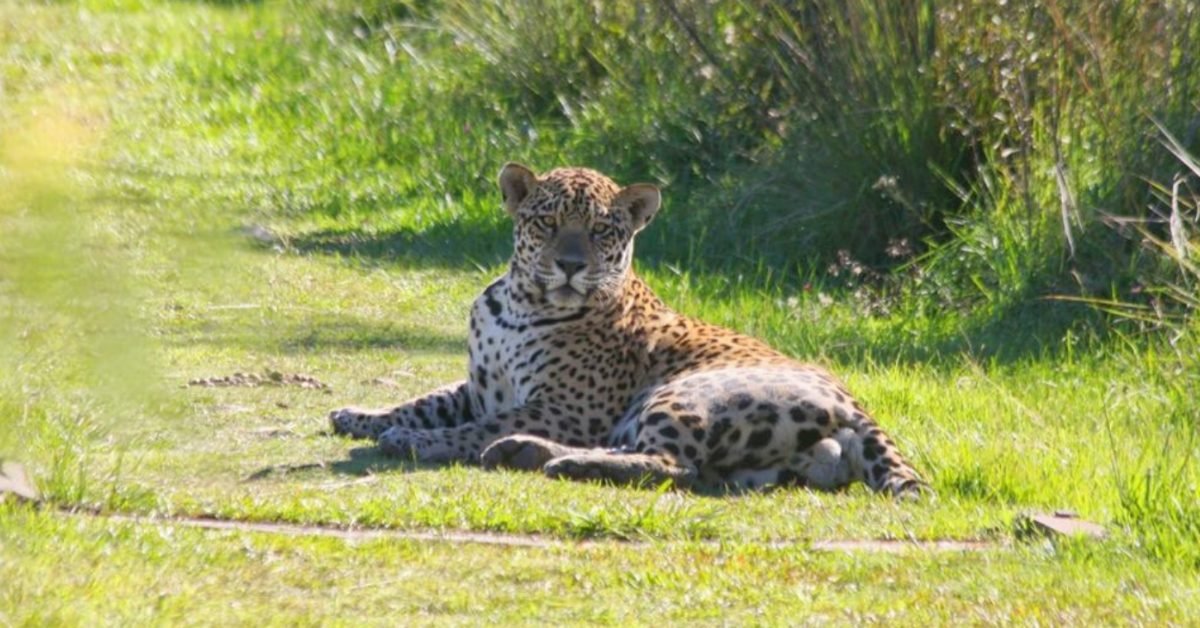
Iberá National Park and Iberá Provincial Park are home to sweeping grasslands, marshlands, forests, and 4,000 species of flora and fauna. Together, they form the largest park in Argentina.
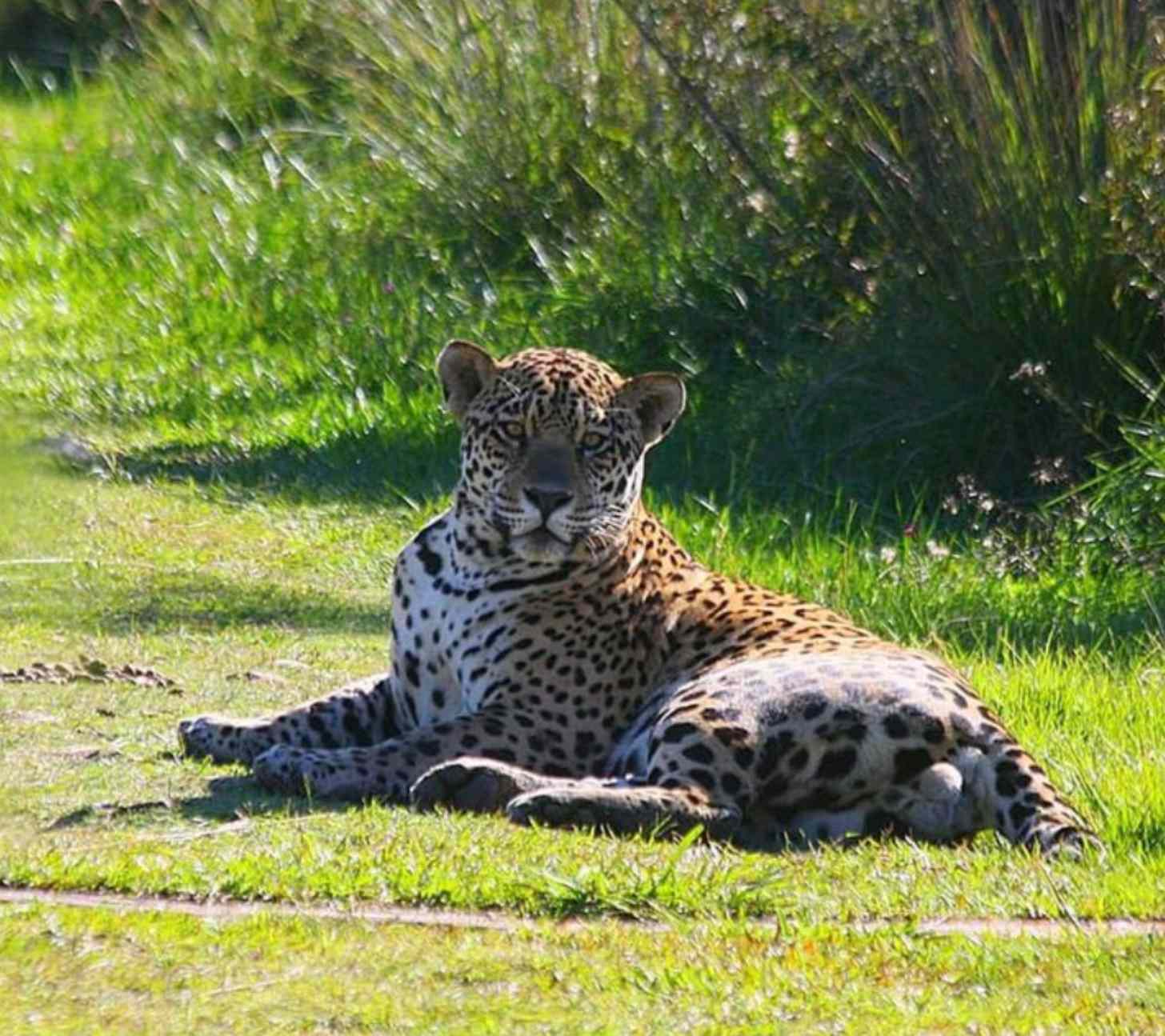
In early May, tour guides were leading tourists through the park when they spotted a jaguar resting on the trail. It was Ombú, a young male born in Iberá Park in Corrientes, Argentina.
He marked the first wild jaguar sighting in 70 years.
“Since we dedicate ourselves to this work and know what the jaguar represents in Iberá, throughout the province of Corrientes, and here in Argentina, it really fills us with joy,” park ranger Víctor Cereal said in an audio testimonial.
“And being able to share it with visitors makes us extremely, extremely happy,” he said. “It’s a mix of many emotions, and honestly, I’ll never forget this. It’s like the greatest reward someone can have as a guide.”
Seven decades ago, jaguars were driven out of Argentina by twin forces: logging and poaching. As hunters killed them for their pelts, the forest shrank around them.
The sighting comes after decades of hard-fought conservation work, education campaigns, and rewilding efforts.
Thanks to Rewilding Argentina working in tandem with local institutions, scientists, park rangers, and ranchers, Corrientes went from having no free-roaming jaguars to now containing 50.
That’s nearly 20% of all the jaguars currently living in Argentina.
“After more than 70 years without the presence of the jaguar here in the wetlands, seeing it again in its natural habitat, as I said, is truly historic,” Cereal said.
“The arrival of the jaguar to this place is very important, especially at this stage of conservation, because it’s a predator that we were missing here in the wetlands,” the park ranger continued. “We’ve been seeing many capybaras, caimans, and different animals that complete the ecosystem, but we were missing him, the top predator. And well, honestly, that was what we lacked.”
Jaguars play a critical role in forest health. As an apex predator, they regulate the populations of other species, sending positive ripple effects down the food chain.
Mario Martins, a recently retired tour guide with a deep love for photography, recalled the moment that he saw the jaguar and captured it on camera.

“That fleeting glimpse, that sign that the lord of the forest was there, was the moment when it really dawned on me just how significant what was happening was,” Martins said in an audio testimonial. “It was a face-to-face encounter between two beings in absolute silence.”
Martins added that the moment was bigger than a single jaguar — it was what it represented.
“This sighting is living proof of the success of a collective effort,” he emphasized. “The fact that a jaguar… roams the region shows that the ecosystem is regaining its health.”
Soon, the jaguar moved on, leaving Martins awestruck.
“[I] make the most of the experience,” he said, “knowing that the real magic lies in the animal continuing to feel free.”
[NOTE: Mario Martins and Víctor Cereal’s testimonials were translated into English using Happy Scribe]
You may also like: Clouded leopards are 'one of the most elusive cat species' in the world. The Nashville Zoo just celebrated the birth of its 50th cub
Header image via Mario Martins / Rewilding Argentina