Alessia Lavigne is a third-year Ph.D. student studying marine biology and zoology at the University of Sheffield. As a self-professed “Turtle Eggsplorer,” Lavigne dedicates her page to turtle research, care, and conservation.
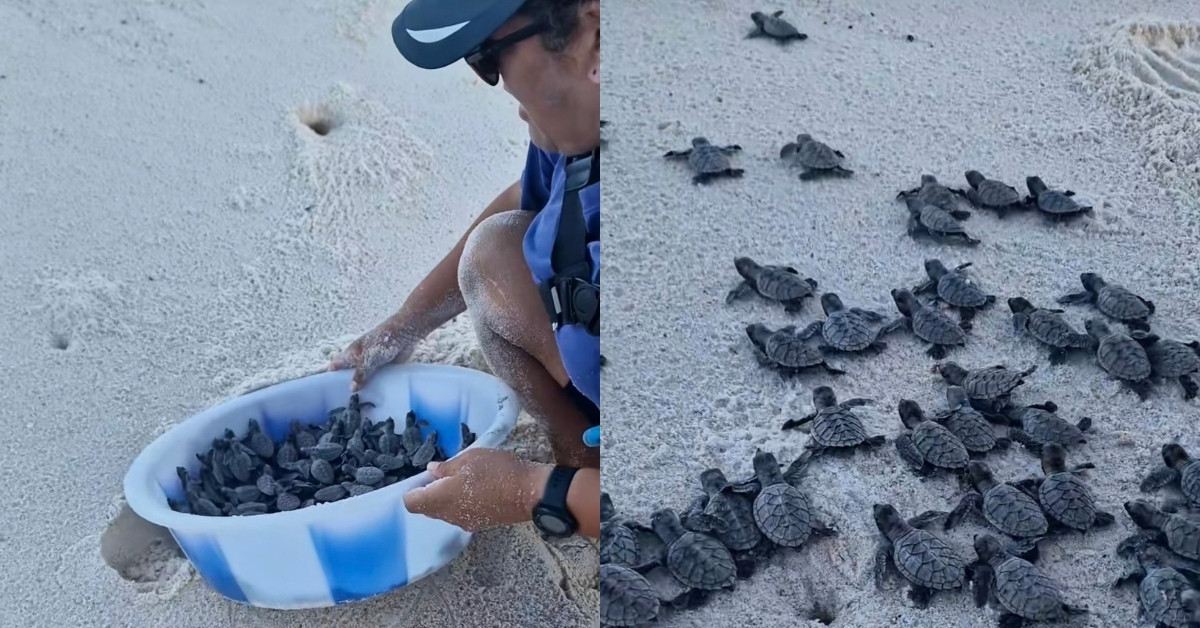
On May 3, Lavigne posted a video of a sea turtle hatchling release in the Seychelles, which showed hundreds of hawksbill sea turtles tumbling out of a bucket and racing for the shoreline.
Hawksbill sea turtles are one of seven types of sea turtles. The endangered species can be found in warm, tropical, and subtropical waters across the Atlantic, Pacific, and Indian Oceans — including the Seychelles, which is roughly 1,000 miles east of mainland Africa and northeast of Madagascar.
“All these baby turtles would not have survived without conservation intervention,” Lavigne explained in the video caption. “The conservation team on Cousine Island Seychelles [returned] these baby hawksbill sea turtles to the beach following their successful hatching in their hatchery.”
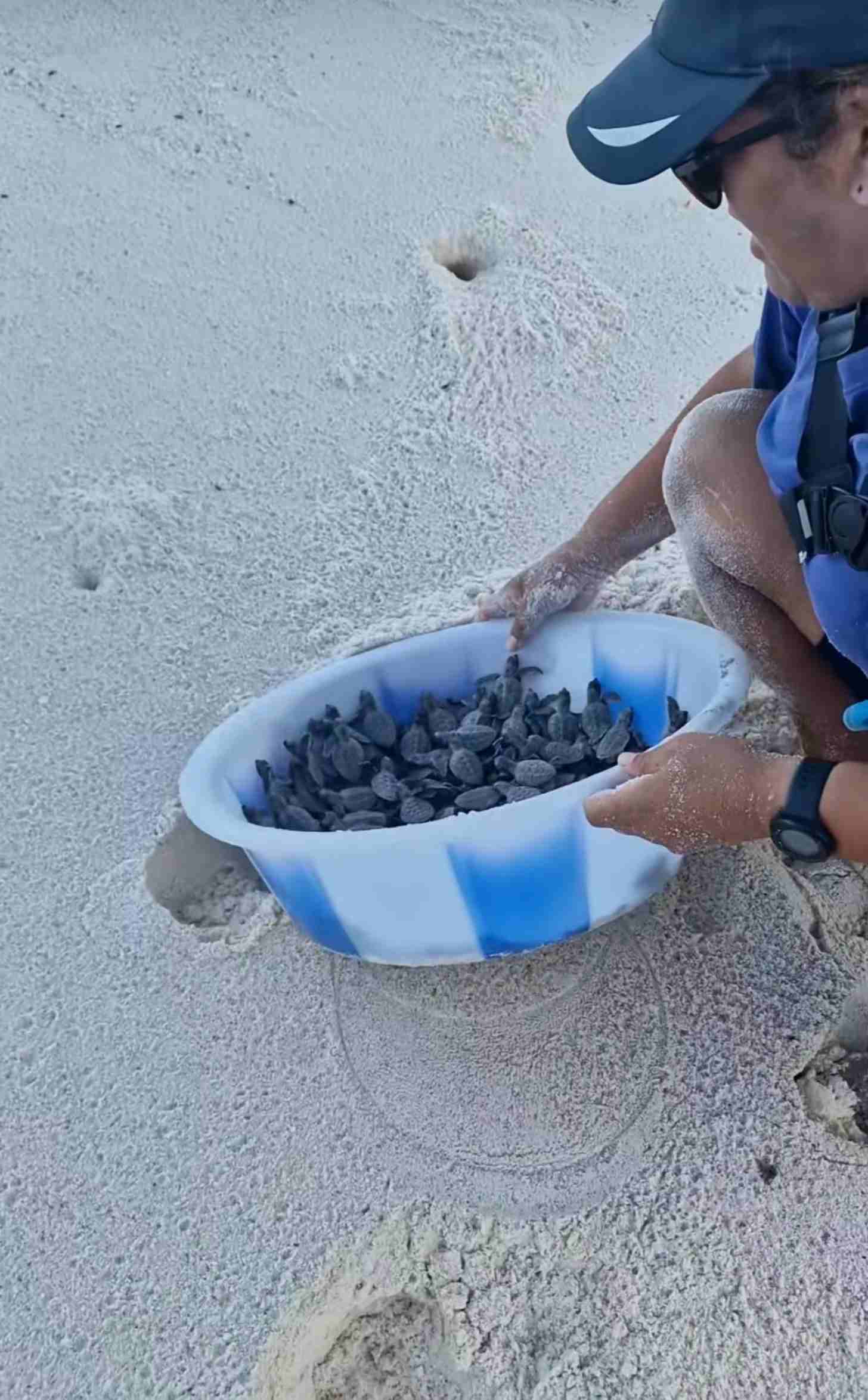
“Nests that would have otherwise perished are moved into the hatchery as a last resort,” she added. “For instance, this nest would have been completely washed away by the increasingly aggressive coastal erosion, potentially due to climate change.”
The video quickly went viral, raking in more than 4.5 million views. It also sparked questions from curious viewers who wanted to learn more about sea turtle behavior.
“How do baby sea turtles know to go towards the ocean?” one viewer asked.
“They actually don't know,’ otherwise disorientation would never happen, but [luckily] they do,” Lavigne replied. “They use a combination of natural cues to guide them, such as light — reflections on the water — and slope. If there aren't too many artificial obstacles, they tend to do a great job figuring it out.”
Several TikTok users also asked why the sea turtle hatchlings were released so far back from the water.
One person prodded, “You can’t get closer?”
“The conservation team is recreating where they were supposed to have naturally hatched above the high water mark — the highest point the tide can reach,” Lavigne said.
“They then must do the journey to allow them to imprint on the beach, which will allow them to know how to navigate the sea and return to breed as adults.”
The majority of the comments on Lavigne’s video were full of awe at the rare sight, as well as hope for the hundreds of hawksbill hatchlings.
“I hope they all make it,” another person wrote.
“They've been given the best second chance at life,” Lavigne said.
You may also like: Experts celebrate record-breaking start for sea turtle nesting season
Header image via Turtle Eggsplorer / TikTok