Back in August 2025, Florida Governor Ron DeSantis ordered the removal of about 400 “non-standard” pieces of street art — most of them rainbow, Pride-themed crosswalks and murals — even though they all received state approval when they were installed.
The new policy came to an inflection point when the DeSantis administration painted over a rainbow-colored crosswalk outside of what used to be Orlando’s Pulse nightclub, where 49 people were killed in a 2016 shooting.
Community members repainted the tribute themselves under the cover of darkness in response. Nearby business owners and other Florida municipalities also executed their own protests, displaying rainbow Pride colors in other, creative ways.
But other individuals also showed their support for the LGBTQ+ community on their own properties, like Nicole “Coley” Sohn and her wife, Linda Bagley-Sohn.
The Bagley-Sohns painted 12 pickets of their white fence in rainbow colors after their city of Key West complied with Gov. DeSantis’s directive.
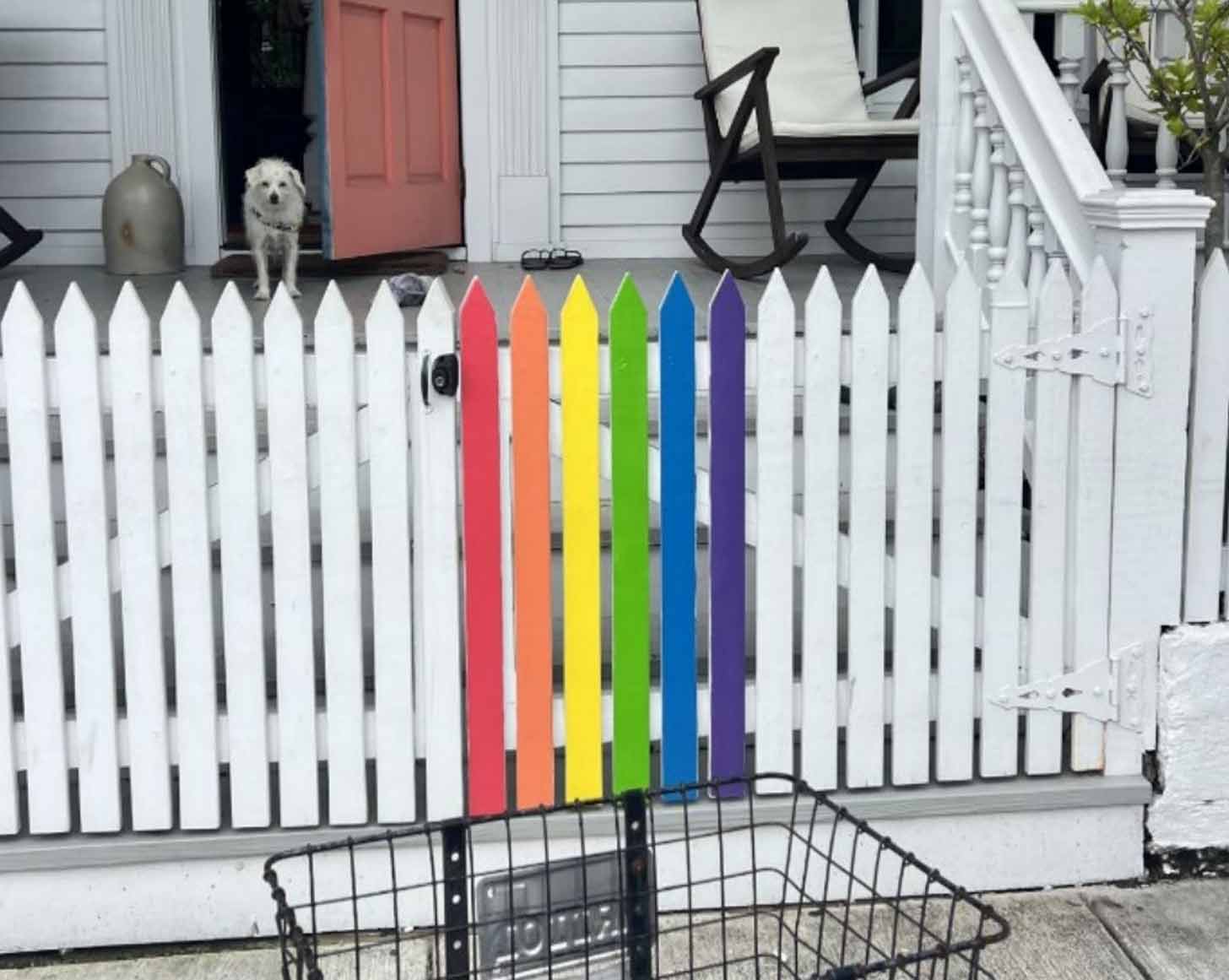
And they weren’t the only ones — their protests inspired other neighbors to do the same. According to the American Civil Liberties Union of Florida, more than 50 rainbow picket fences were painted in Key West’s Old Town after crosswalk removals.
“However, some people did not agree with the message of the protest and complained to the city. This prompted the city to cite the Bagley-Sohns and other homeowners under regulations requiring all fences in Key West's historic district to be painted white,” the ACLU of Florida described in a press release.
“Despite the couple’s unanswered application for approval of their fence display, the city ordered them to repaint their fence white or else they would be subject to fines.”
The Bagley-Sohn family removed their rainbow display to avoid incurring fines, along with many other residents who were in on the protest. But the ACLU of Florida believes this censorship is unjust.
“While the city eagerly enforced its regulations against the rainbow pickets, it has chosen not to cite other noncompliant households for similar fence-color violations,” the ACLU of Florida explained.

The lawsuit includes photo evidence of other examples of fences and other exterior structures that do not comply with the same Key West Historic Architectural Review Commission guidelines being enforced on rainbow displays.
“The only fence- and gate-color violations the City has cited in recent years have been Plaintiffs’ and their co-protestors’ rainbow displays,” the suit argues.
ACLU of Florida attorney Nicholas Warren calls this “selective enforcement,” adding that “it’s illegal.”
“If the government is going to enforce the law, it can’t single out certain expression [or] messages and ignore others when it’s enforcing the law,” Warren told The Palm Beach Post.
With the help of their local ACLU chapter, the couple decided to proceed with a lawsuit, Sohn v. City of Key West, which has since been filed in the United States District Court of the Southern District of Florida.
“To protest the city’s removal of the rainbow crosswalks, we painted some of our fence pickets in rainbow colors, showing that our community still stands for inclusion,” Coley Sohn said in a statement.
“No one should lose their right to speak out simply because those in power disagree with the message, and the government can’t single out some views over others, deciding how to enforce its laws. That’s what the First Amendment protects us from.”
The couples’ lawyers agree.
“The forced removal of rainbow crosswalks and Pride-related street art across the state reveals the threat Florida leaders have unleashed on free expression. Allowing anti-LGBTQ+ rhetoric to escalate into censorship is an act of state overreach that should concern everyone,” Samantha Past, ACLU of Florida staff attorney, said.
“The Bagley-Sohn family have bravely and creatively protested the state’s attempt to erase LGBTQ+ identities and exercised their First Amendment rights on behalf of their community and the constitutional freedoms that protect us all.”
You may also like: Florida banned Pride crosswalks — so St. Pete installed rainbow bike racks instead
Header image courtesy of United States District Court for the Southern District of Florida