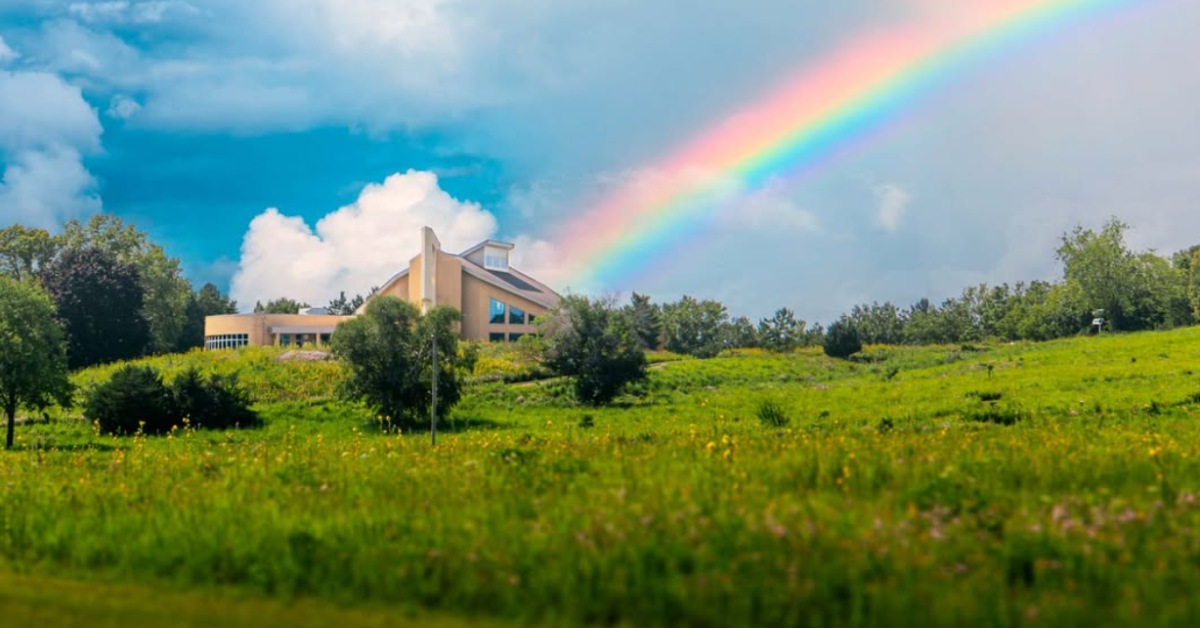
Just outside of Madison, Wisconsin lies a 170-acre oasis filled with wildflowers, chirping birds, and roaming rabbits. Decades ago, the sanctuary was just 40 acres, consisting of farmland cleared in the early 1900s.
Since the 1950s, the Benedictine sisters at Holy Wisdom Monastery have quadrupled that land into a haven for countless species of plants and animals.
In an interview with The New York Times, Sister Lynne Smith referred to their land as a “refugia,” a place where peace endures in crisis.
“We need refugia now for the human spirit where we can come and remember what it is to be human, remember that basically, inside of us, the best of us is kind and generous and compassionate,” said Sister Smith. “We want this to be a place, and it already is, where we live humanly and we nurture those human values.”

Their “refugia” did not pop up overnight. In 1996, the sisters broke ground on a restoration project for a 10,000-year-old glacial lake, removing 85,000 cubic yards of accumulated silt and restoring the shoreline with native plants.
In 2009, they traded their energy-inefficient monastery for a building so eco-friendly that it earned the Leadership in Energy and Environmental Design sustainability certification. A decade ago, they added 463 solar panels to the property.

Their congregation has transformed over time, but as of 2026, there are just four sisters of the monastery: Sister Smith (71), Sister Mary David Walgenback (86), Sister Everline Jeruto (53), and Sister Joanne Kollasch (95).
“They’re small, but they’re mighty,” said Leah Kleiman, a land restoration specialist for the county.
A version of this article originally appeared in the 2026 Environment Edition of the Goodnewspaper
Header image via Holy Wisdom Monastery