An average of 1,000 marine animals are found stranded on Pacific Northwest coastlines every year, according to Sealife Response, Rehabilitation & Research, or SR3, a wildlife rescue organization in Washington state.
Of those stranded marine animals, many include whales, sea turtles, and even baby harbor seals.
And recently, SR3 shared its new crop of harbor seal pups to the internet.
“The harbor seal pups we have at the SR3 Rescue Center are all cases of maternal abandonment,” a narrator said in a TikTok video. “They were found on busy beaches on the outer coast of Washington … Many of them were impacted by humans getting too close.”
When people get too close to harbor seals, it causes the animals severe stress and interrupts nursing. Oftentimes, if people get too close to a skittish harbor seal mother, the mammal will flee the area and will not return to nurse her newborns if she senses danger in the area.
Many of the seal pups rescued by SR3 are too young to manage on their own, making the organization’s rescue efforts crucial to their survival.
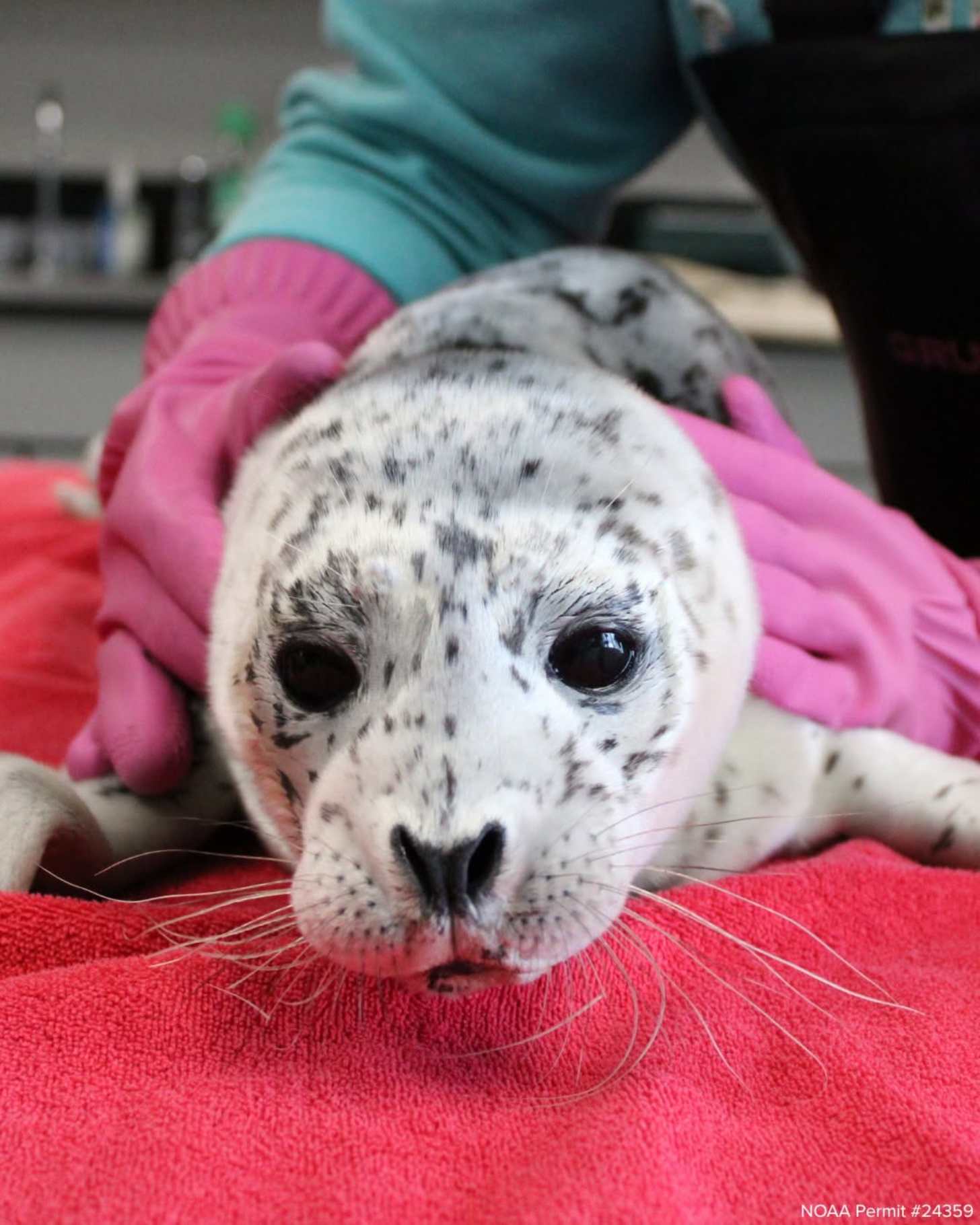
The new group of pups in SR3’s care are fed four times a day and spend most of the rest of their time sleeping next to human nursing pillows to shore up energy as they recover.
In many rehabilitation centers, these u-shaped pillows, stuffed toys, heating pads, or other props act as a calming tool that mimics the shape and behavior of a mother seal.
During an incredibly vulnerable time, these pillows provide psychological comfort to the seal pups. They also require vast amounts of energy to grow and regulate their body temperatures, so comfort items like this make it easier for them to lean their heads on a resting place out of the water.

Several of the newly rescued pups at SR3 also have respiratory diseases, like pneumonia or bronchitis, the organization shared, so they have been receiving breathing treatments, too.
“To treat this, they are nebulized in a carrier twice a day, which allows them to breathe in an antibiotic along with medications that help reduce the fluids or inflammation in their lungs,” the video explained.
SR3 takes care of plenty of different marine animals native to the area, but right now, it’s “pupping season,” meaning they are on the lookout for harbor seals and sea lions who may be abandoned and in need of help.
@sr3sealife Meet the harbor seal pups! 🦭
♬ original sound - SR3
The first harbor seal pup of the season arrived in late May, the organization shared on Facebook.
“The young pup was likely orphaned due to human disturbance after people were reportedly seen dragging him toward the water. Named Crumpet, he is now receiving treatment at SR3 for malnutrition and pneumonia,” the Facebook post shared.
“Please stay 100 yards away from marine mammals resting on beaches,” SR3 reminded followers. “While we can care for cases like this, it is always better for mom and pup to remain together in the wild.”

While it’s unclear how many animals will be helped this season, in 2025, SR3 admitted 56 patients to its Rescue Facility.
One success story from 2025 detailed the transformation of Ramen, a newborn harbor seal pup that was born underweight and abandoned quickly after.
“Through intensive care and a high-fat diet, Ramen steadily gained strength,” a blog post for SR3 shared. “Three months later, he returned to the ocean — a striking example of how science-based policy change and expanded capacity are transforming what’s possible for marine mammals in the Pacific Northwest.”
You may also like: See these ‘crusty green’ sea turtles after two months of rehabilitation: ‘The difference is remarkable’
Header image courtesy of Sealife Response, Rehabilitation & Research/Facebook
This story was originally published by Grist. Sign up for Grist’s weekly newsletter here.
In an increasingly divided nation, Americans agree on at least two things. For one, politicians across the political spectrum are scrambling to get more housing built, which happens to be an accidentally powerful way to fight climate change. And two, Americans love their parks: A recent poll found that 88% of them visited one in the past year.
Nearly 90% of people who voted for Kamala Harris, and 80% of those who voted for Donald Trump, consider these spaces critical infrastructure in their communities.
That alone should encourage elected officials to build as many of them as possible. But a new report finds another, potentially even more motivating, factor for American cities: For every dollar invested in parks and recreation, communities reap $3 in local economic benefits each year.
“You really do get so much goodness out of them,” said Will Klein, director of parks research at the Trust for Public Land, which produced the report. “People are healthier, people connect with each other. They drive business activity, especially for small businesses.”
Parks aren’t as much about land as they are about people. In an increasingly commodified world, they’re one of the few remaining public places where folks can roam without the pressure of spending money. That makes them a critical kind of “third place,” somewhere to gather beyond the workplace and the home. Whereas people must pay a premium to use a gym, they can use a park or rec center for free.
This brings huge benefits, and cost savings, to public health.
The new report notes that the United States spends $5.3 trillion annually on health care. Physical inactivity, which greatly increases the risk of chronic problems like cardiovascular disease, costs the country more than $200 billion a year.
“Our polling this year showed that the most popular place in America in 2025 to run around and play and exercise are parks and public spaces, much more popular than private gyms,” Klein said. “That physical activity has real health and economic benefits, about $2,000 per person in health care savings each year.”
Parks boost mental health as well. Simply being among greenery boosts positive well-being, research has shown. Parks also foster social interaction and reduce loneliness, which is a public health crisis of its own. This kind of commerce-free third place is especially important for the elderly, who may be living on fixed incomes and can’t afford to frequent cafes and the like.
“There’s movie nights in the park, concerts in the park,” Klein said. “Just playing on the playground, talking to neighbors, having barbecues — all that stuff allows people to afford that higher quality of life.”
Even though they exist outside of the frenzy of capitalism, parks provide major economic value. The crowds they attract, for example, filter into surrounding neighborhoods, buying food and drinks for picnics or perusing mom-and-pop shops and boutiques.
Famous green spaces — New York City’s Central Park, Chicago’s Millennium Park, San Francisco’s Golden Gate Park and newly minted Sunset Dunes — attract tourists, too. The Trust for Public Land says that the Florida Gulf Coast Trail, the 420-mile greenway it’s helping develop, will bring $200 million in economic activity in Sarasota County alone by attracting bicyclists and other recreationists.
Even if you own a home near a park but never visit it, you’re benefiting economically in a way.
“People want to live near green spaces,” Klein said. “So you see increased property values, which supports a broader tax base, which can be reinvested into community benefits through the increased property tax revenue.”
The trick is ensuring everyone — not just those who can afford condos and single-family homes — can enjoy the aura of these jewels.
While new housing developments might seem at odds with green spaces, the two can exist in harmony. Even if they’re crammed into the densest of cities, affordable complexes can incorporate pocket gardens, which have the added benefit of reducing increasingly unbearable urban temperatures. Some developers are even building communities around working farms, known as agrihoods, which bring yet another benefit of local food production.
Any additional green space will also help cities adapt to one of the stranger consequences of climate change: It’s raining a lot harder. City sewer systems were designed to handle the rainstorms of old, but are overwhelmed by the additional water falling today. By soaking up some of that liquid, parks help save money in two ways: They reduce the amount of water that a city has to pay to manage, and they help prevent the surrounding neighborhood from flooding, avoiding property damage.
More so than ever before, then, the humble green space is a surprisingly powerful way to solve a bunch of problems at once — improving mental health, helping cities adapt to climate change, and supercharging economic activity.
“Parks,” Klein said, “are actually one of these solutions hiding under the feet of all these local leaders.”
Header Image by Georg Wendt / picture alliance via Getty Images
Last summer, President Trump announced that Washington, D.C. would host a “magnificent” military parade to celebrate the United States Army’s 250th anniversary. The date, June 14, coincided with Trump’s 79th birthday.
The announcement immediately drew backlash from citizens across the country.
According to a poll by the Associated Press-NORC Center for Public Affairs Research, roughly six in 10 U.S. adults said the military parade was not a good use of government money — an opinion largely split along party lines (80% of Democrats, 72% of independents, and 35% of Republicans).
Trump’s promise of a “massive” display of military strength also drew comparisons to similar exhibitions held by monarchical and autocratic regimes around the world, prompting the defiant phrase: “No Kings.”
On June 14, over five million people participated in the first nationwide “No Kings” protest across more than 2,100 cities and towns. Subsequent protests were held on October 18, 2025 and March 28, 2026.
The “No Kings” protest in March attracted a swell of support across the country as people protested escalating Immigration and Customs Enforcement operations and the deaths of Alex Pretti and Renée Good.
It was the largest single-day protest in U.S. history.
However, the three “No Kings” protests didn’t just draw widespread attention and global press coverage for their crowd size. They also turned heads with the creative ways people protested.

Now, as the next “No Kings” protest approaches on June 14 — Trump’s 80th birthday — We The People is rewarding protesters for their wit, humor, and creativity with an ongoing contest.
“We The People is a political satire site where comedy collides with civic expression,” the contest hosts explain on their website, wethepeople.WTF.
“Each episode, comedians roast the boldest, weirdest protest signs, and you vote for your favorite. Your vote picks the winner and enters you automatically to win $1,000.”

Each episode is hosted by an array of comedians, including Margaret Cho, the Sklar Brothers, Greg Proops, and Alonzo Bodden. After the comedians discuss various signs — and roast the government in the process — viewers are encouraged to vote for their favorite signs.
Additionally, viewers can also submit their own signs for a chance to be featured in future episodes.
“Melding satire and democracy, it’s a game show that’s highlighting citizens' voices from all over the country while being a bright light during a tumultuous time,” We The People explained on its website.

“Together, we are raising the voice of the people,” the group pledges. “And laughing along the way.”
You can watch the latest episode below and then vote for your favorite sign by visiting the contest website.
You may also like: 60+ funniest protest sign ideas for the next time you take to the streets
Header image via We The People
A new point of protest against United States Immigration and Customs Enforcement activities is taking place at the Delaney Hall immigration detention center in Newark, New Jersey.
Last month, detainees at the center, owned by for-profit prison company Geo Group, launched a hunger strike, according to Cosecha, an immigrant advocacy group.
Detainees have reported experiencing medical neglect, as well as being fed moldy and expired food while being housed in overcrowded cells, according to PBS News.
To stand in solidarity and amplify the detainees’ calls for improved living conditions, protesters have gathered outside of the facility in recent weeks, facing violent pushback and arrests from local law enforcement and ICE agents.
But amid footage of demonstrators being pepper-sprayed and handcuffed, beloved children’s entertainer Ms. Rachel has shared another view of the situation on the ground.
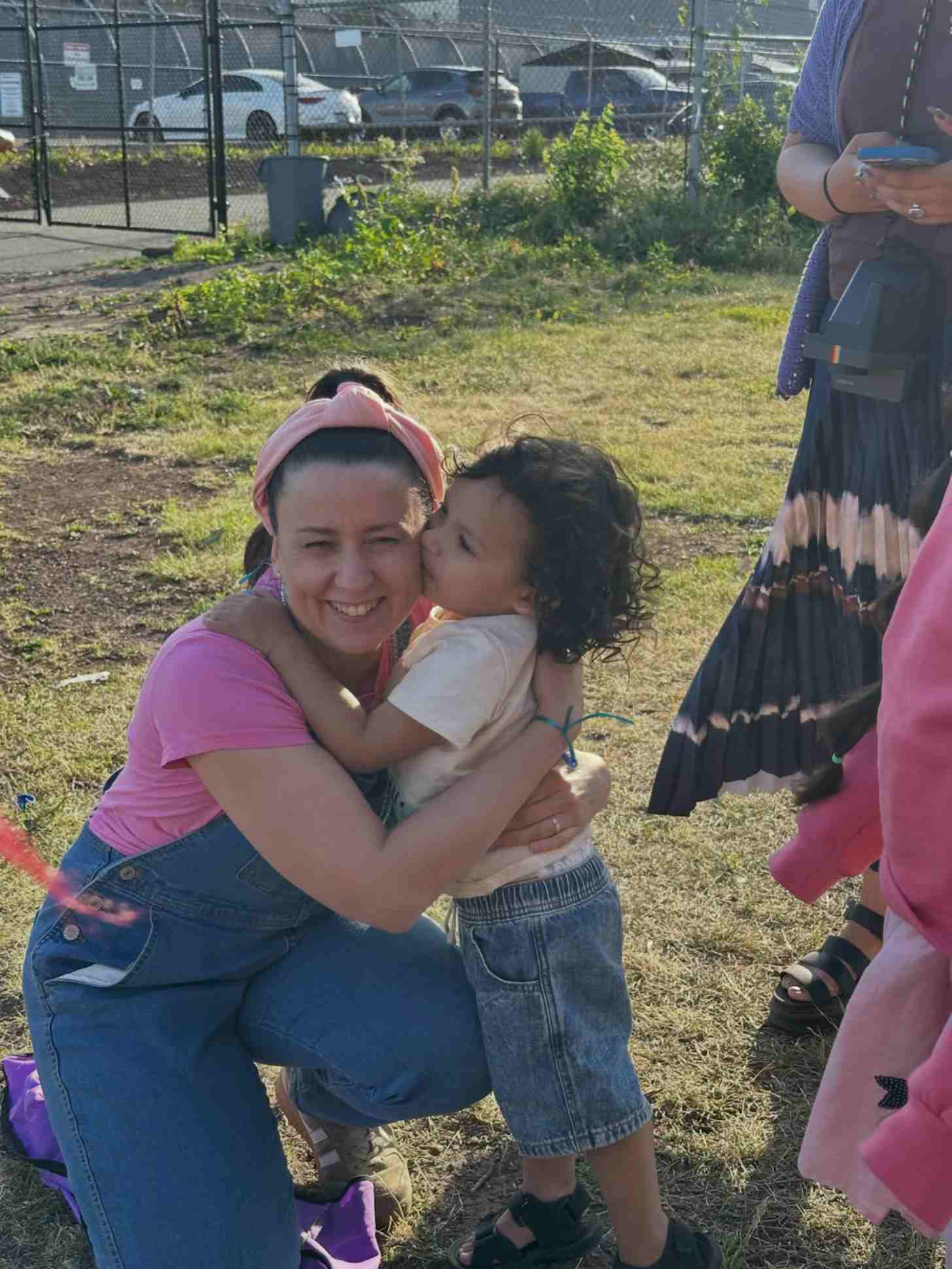
Yesterday, Rachel Accurso, known to most children as Ms. Rachel, visited with children and family members of those detained inside of Delaney Hall.
Inside the activist-created “Radical Hospitality Zone,” she hugged children, learned stories about loved ones inside, and sang protest songs.
“I’m still processing being outside Delaney Hall Immigration Detention Center in N.J. yesterday,” Accurso wrote on Instagram earlier today.
“I can’t say enough wonderful things about the children and families whose loved ones are inside. I can’t say enough about how this cruelty is harming and traumatizing precious children who should get to just be kids.”
Accruso has long been vocal about children’s rights, advocating for children in Gaza, Sudan, and the Congo, as well as other children impacted by ICE, detained at Dilley Detention Facility in Texas.
Her advocacy has sparked backlash, but she is steadfast in her commitment to children.
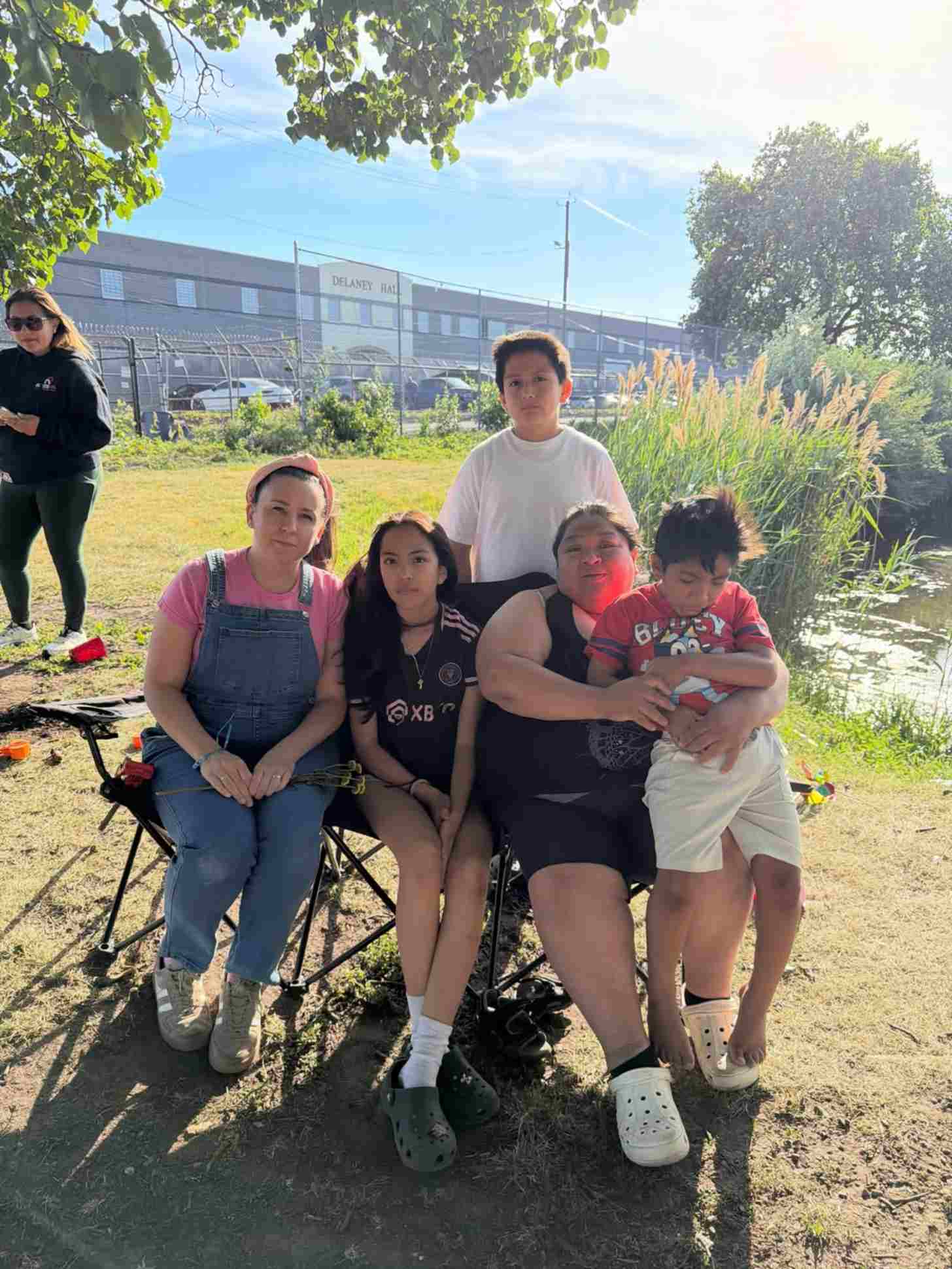
“I will always stand with these families,” she wrote in another post from her time outside of Delaney Hall, speaking with a family whose father — a truck driver who has lived and worked in the U.S. for 20 years — is detained in the facility.
“It makes no sense that their family has been ripped apart,” Accurso wrote. “Why are we traumatizing kids?”
Accurso also shared the GoFundMe for this particular family, which has reached its goal of $10,000.
In addition to learning the stories of families impacted by ICE, Accurso also sang with the children. Together, they sang a song called Sing Them Home, which Accurso said was written with children detained at Dilley Detention Facility alongside the group Peace Poets.
The lyrics are as follows:
“I’ll sing from here / and you sing from there / together, we’ll sing down the walls everywhere / with love in our hearts / rising up like the sea / together, we’ll sing until everyone’s free.”
She urged viewers at home to join the call.
“Please make a video of yourself singing this song with #singthemhome,” she wrote. “The children are singing in jail while we sing it outside to them at 7 p.m. every night. Until everyone is free.”
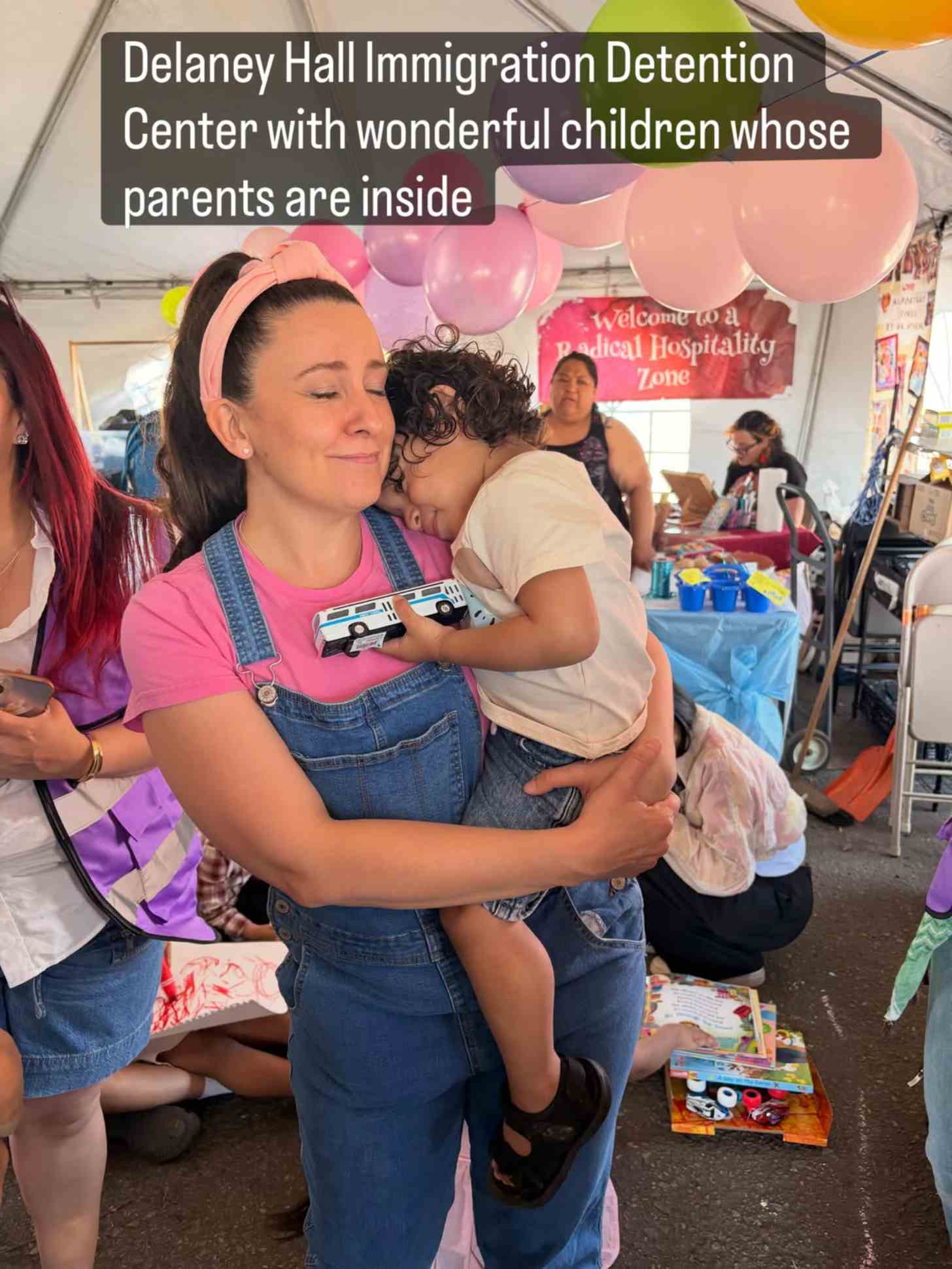
Accurso also made a point to thank the New Jersey Alliance for Immigrant Justice, a coalition of activists supporting on-the-ground efforts to help families and detainees, adding that she was “so moved by all the volunteer organizations that are helping.”
“These kids are so kind. They are also traumatized and miss their parents so much. After meeting them, I was up until 2 a.m. worried about them,” Accurso wrote in her reflection of the experience.
“I know if you came and played cars, and drew with chalk with them, and laughed, and sang, and saw their tears you wouldn’t want what is happening to happen,” she added.
“Please stand with these children, and the children detained at Dilley,” she concluded, adding a quote from James Baldwin: “All of the children are ours.”
You may also like: How historic protest music has inspired anti-ICE resistance in Minnesota
Header image courtesy of Rachel Accurso/Instagram
Folk-pop favorite Noah Kahan is no stranger to writing and singing about his hometown of Strafford, Vermont.
Whether he’s crooning about small town delights on “Dan,” or wistfully writing about seasonal depression on “Stick Season,” the artist evokes plenty of Northeastern imagery in his songs.
His newest album, “The Great Divide” features a song called “Haircut,” about how he imagines people responding to his return home after his many career successes on the road.
In the second verse of “Haircut,” Kahan sings from the perspective of his Strafford neighbors:
“For two hundred years, we laid bricks in the dirt, put solar in the copper mines,” he warbles.
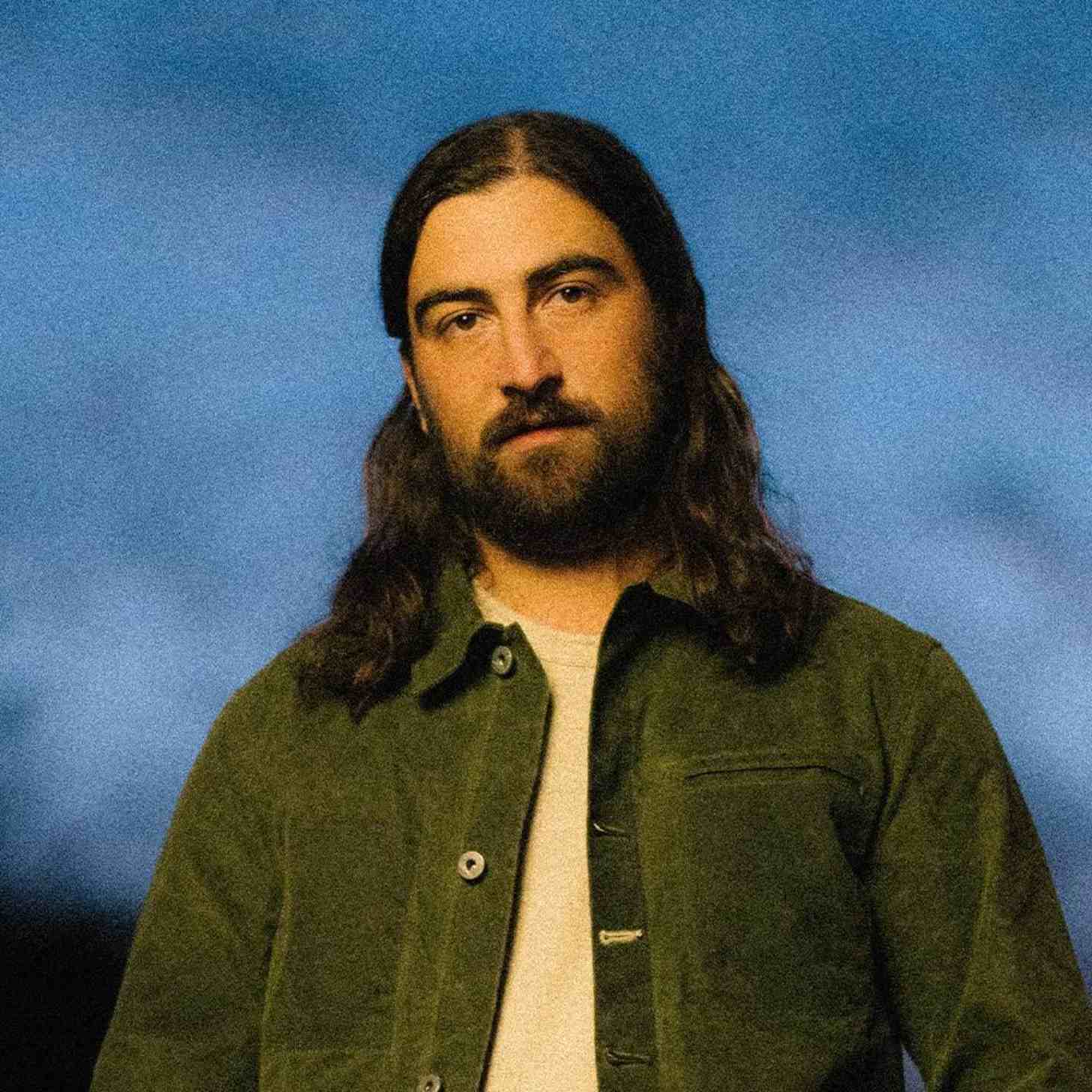
While plenty of fans were happy to just sing along to the fiddle-ridden tune, others became curious: What is this solar power project Kahan speaks of?
Eagle-eyed fans — and Genius contributors — believe he is referencing the Elizabeth Mine in Strafford, a mine that was opened after the discovery of ore in 1793, yielding 100 million pounds of ore throughout Vermont’s rich mining history.
However, the economic boon of such mining also had grave environmental and health impacts, as workers in the late 1800s had to roast the copper ore to make it easier to smelt, burning off iron and sulphur fumes.
“Workers tended a number of heaps on the roast beds, working among heavy sulphur fumes,” a historical report from the city of Strafford explained. “The sulphurous gases killed the vegetation in the surrounding environment, a fairly common occurrence in such mining districts until better methods were developed to capture the fumes or eliminate the need for roasting.”

Although mining practices improved over time, the Elizabeth Mine still posed great risk to miners and the surrounding environment, and it was finally closed in 1958, following longstanding public health concerns.
But it still had an impact on generations of Vermonters.
By the early 2000s, reporting from The Nature Conservancy explained, “the local river was already suffering.”
“A five-mile stretch of the Ompompanoosuc had more than 10,000 times the acceptable amount of copper. Fish counts were low, and the layer of sediment at the bottom of the river that is usually host to tiny bugs and other organisms was showing little life,” The Nature Conservancy reported. “One family had elevated levels of heavy metals in their drinking well, posing a threat to their health.”
So, a half-century after the mine was closed, in 2003, the Environmental Protection Agency spent about two decades and over $100 million in federal money on the cleanup process to stabilize the mine’s dam and clear toxic waste from waterways.
It was a historic restoration.
“In 2014, because of the EPA cleanup efforts, the State of Vermont delisted several nearby waterbodies from the Clean Water Act’s ‘Impaired Waters List’ based on the return of a healthy benthic and fish community,” the city of Strafford explains on its website.
“The cleanup also replaced eight acres of toxic wetlands with 15 acres of healthy wetlands and reduced the iron load to receiving bodies of water from 800 pounds per day to one-tenth of a pound per day.”
But perhaps the biggest climate victory was the transformation of the mining site into a solar field.

Local farmer John Freitag told The Nature Conservancy that it was another Strafford resident, Dori Wolfe, known to be a staunch solar advocate, who pushed to make it happen.
“Dori said that what we really needed to do was cover the Elizabeth Mine with solar panels,” Freitag said. “The Elizabeth Mine gave Strafford so much of its character. Adding solar panels would honor the mine’s history.”
And Dori was right.
“A solar project could be good for Vermont and good for Strafford,” Freitag said. “Vermont has renewable energy requirements, but the sites that are easy to develop are on farm fields. If this mine were used for solar, it would preserve farms and forests. And we could use the tax revenue from the project to improve the schools, help lower property taxes or fix up the roads. Roads can get pretty bad around here.”
After convincing local leaders and hesitant neighbors, the project was approved, and 20,000 solar panels were installed across the 45-acre site formerly home to the Elizabeth Mine in 2021.
Now, it generates enough power for every home for Strafford’s 1,100 residents — and then some.
“This 20,000-panel solar field generates an average of 8.7 million kilowatt-hours of electricity each year, enough to power 1,333 typical Vermont homes,” the city writes on its website, “and offsets the generation of 7,136 tons of carbon dioxide greenhouse gas.”
Now, Freitag is proud of his town’s power — and it seems Kahan is, too.
“It’s not always perfect, but communities can work with federal officials and have something positive come out of it,” Freitag told The Nature Conservancy in 2024.
“The Elizabeth Mine is an excellent model for putting solar in the right place, and it’s applicable to many other mines. Now my hope is that we can help other community leaders do the same.”
With a Billboard No. 1 debut for “The Great Divide” in April — and all 21 songs from the album charting on the Hot 100 — hopefully, this Strafford Easter egg can inspire a surge of support for renewable energy, too.
You may also like: L.L. Bean donates $100k to Noah Kahan's Busyhead Project: 'It's going to make a huge difference'
Header images courtesy of Universal Music Group and the City of Strafford
On June 6, a huge crowd of soccer players gathered in Miami Beach to beat a Guinness World Record. But they weren’t alone. On that day, 551 people across the United States, Mexico, Canada, Brazil, and the United Kingdom juggled a soccer ball in unison for 10 seconds.
The record-breaking, multi-city feat was organized by Where Football Lives, a global environmental campaign focused on protecting future generations of soccer players from extreme weather and climate change.
“Soccer belongs to everyone: to the kids playing in the parks of Miami, the communities gathered around a screen in Kansas City, and the volunteers keeping grassroots teams alive all across the U.S.,” Jenna Lamb, the U.S. Director of Where Football Lives, said in a press release.
“But extreme heat, flooding, wildfires, and poor air quality are putting all of that at risk.”
As climate change accelerates, extreme weather has been flooding soccer fields and causing temperatures to skyrocket, severely restricting the amount of time children can safely play outside.
According to Where Football Lives, youth sports families are already feeling the impacts of climate change.

Parents across the U.S. estimate that their children lost an average of one full week of practices or competitions in 2024 due to extreme temperatures, wildfire smoke, flooding, and unpredictable winters.
“Throughout my career, I’ve felt firsthand how the climate crisis is shifting the ground beneath our feet,” said Ali Riley, one of New Zealand’s most well-known professional soccer players. “Playing in suffocating heat isn’t just about a drop in performance — it is a serious health hazard.”
“While professional players have medical staff and cooling breaks, kids training on exposed neighborhood pitches have no protection,” she continued. “If we don’t act to safeguard our local fields, we are taking away the very spaces that shape the future of our game.”

Laura Biondo, a Venezuelan football freestyler and world champion, also took part in the record-breaking event.
“I've been fortunate to break multiple world records in my career, but this one feels different,” said Laura Biondo, a Venezuelan football freestyler and world champion.
“To be part of a global moment like this, here in Miami, one of the most heat-exposed World Cup host cities, and to help protect the places where football lives, is incredibly special.”

Proceeds from the global initiative will support upgrades to grassroots soccer sites across the U.S. and Mexico, enabling them to better withstand extreme heat, cold, and flooding.
Additionally, the organizers teamed up with the U.S. Soccer Forward Foundation and Football for Future, to launch “adaptation tool kits,” which are designed to help youth soccer communities around the world adapt to extreme weather.
On the day of the event, Lamb emphasized the importance of timing the global synchronized action just five days before the World Cup kicks off.
“We all love the game, but we also need to be safe, and it's going to be one of the hottest World Cups on record, and Miami is already set to be one of the hottest cities, as they don't have air conditioning,” she explained.
“We love the game — and it's a vibrant community — but we also need to be safe and protect the game.”
EDITOR'S NOTE: This article was updated on June 18 to correct the number of people who participated in the Guiness World Record event.
You may also like: This Argentinian teen once turned a plastic bucket into shin guards. Now he’s donated 5,000 pairs to kids in need
Header image courtesy of Tomás Diniz Santos / Getty (cleared for editorial use only)
Fado is more than a style of music. In the 1820s, it emerged as a form of storytelling in Portuguese taverns packed with sailors, bohemians, and courtesans.
Sung by, and for, working-class people, the melodies can be about anything and anyone — but it’s often laced with a touch of melancholy.
Today, modern fado is intrinsic to Portuguese culture. UNESCO recognizes it as an Intangible Cultural Heritage. Singers have brought it to NPR’s Tiny Desk Concert. It can be heard in cafes and bars across the country.
But despite fado’s ubiquitous nature, musician Lila Fadista felt like there were stories that were not being told.
“Fado is rooted in four elements: melody, harmony, rhythm, and the lyrics. Its main role has always been to tell a story: about the city, about love’s joys and sorrows,” Fadista told Divergente. “That’s exactly what we do: we tell stories; they are just different from those heteronormative stories that people are expecting to listen [to].”
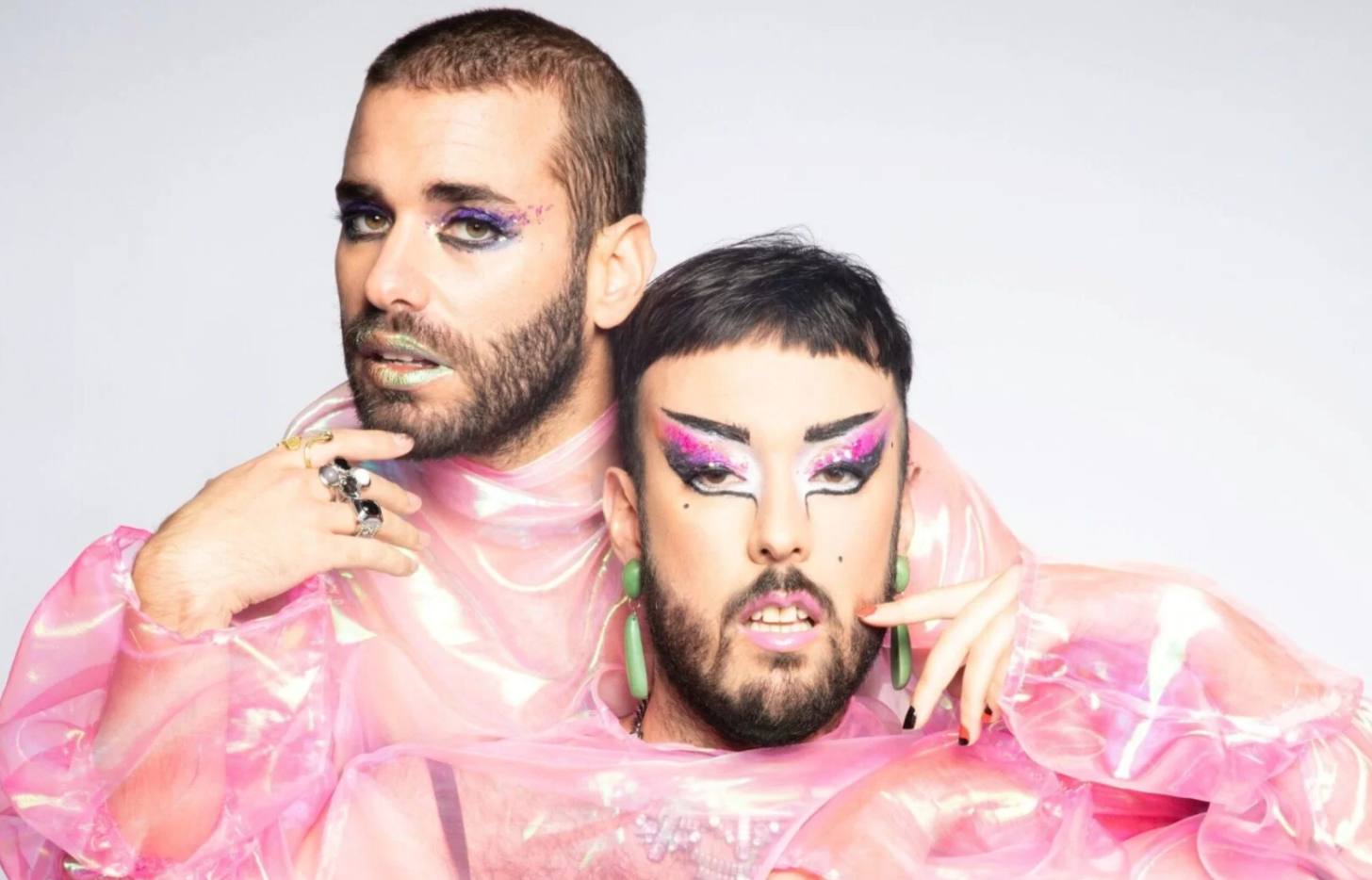
Inspired by a nightclub act in Lisbon, Fadista began incorporating elements of drag into her fado performances. She met guitarist João Caçador soon after, and together they formed the music duo Fado Bicha, a name which roughly translates to “queer fado.”
Since 2018, they’ve released two albums and starred in the documentary “As Fado Bicha.” As they’ve achieved multicultural fame, they pride themselves on being the representation they needed growing up.
“As a queer person who grew up in Portugal, I went through a whole process of realizing that no space — including our own home — was prepared to receive us,” Caçador told Bandcamp. For him, Fado Bicha was inevitable. “To think about making music that doesn’t talk about it, I think that would be the greater effort.”
A version of this article originally appeared in the 2026 Storytelling Edition of the Goodnewspaper
You may also like: This Florida drag queen doubles as a marine animal conservationist: 'Steve Irwin was my biggest inspiration growing up'
Header image via Fado Bicha
One of the world’s oldest art galleries is not hanging on the walls of a museum exhibit; it is carved into the red-rock faces and wind-blown outcrops at Murujuga in the Pilbara region of Western Australia.
There, thousands of generations of Ngarluma, Yaburara, Yindjibarndi, Mardudhunera, and Wong-Goo-Tt-Oo people have carved stories into the rocks.
Vincent Adams, a Yinjibarndi man and Murujuga Aboriginal Corporation director, says the rock art is a portal to the past, indicating traditions, spiritual customs, warnings, messages, and more. Together, they tell stories that are up to 50,000 years old.
These stories are called songlines.
“We have symbols that have been marked around the burrup that tell us we are in a sacred place, special place,” Adams told the Australian Broadcasting Company. “It tells us places, things that we want to do, how we can do it, where we can do it, what tools we need to do it with.”
As he toured the site, he pointed out certain images to ABC reporters, like ceremonial sites and extinct animals.
“You'll see animals that are no longer here no more, all wiped out,” Adams said. “Megafauna they call it.”

Adams is one of many “custodians” of Murujuga who protect the engravings and share stories of the region’s past.
In July 2025, he traveled to Paris to testify before the UNESCO World Heritage Committee, arguing that industrial emissions from gas processing facilities like the neighboring North West Shelf Project could lead to the degradation of the site, which contains a rock art collection of up to two million petroglyphs.
Just two weeks after Adams flew to Paris to plead his case, Murujuga was officially added as a protected UNESCO World Heritage site.
Under this designation, it receives the highest level of global protection, which obliges the Australian government to safeguard its integrity in coordination with the Aboriginal people.
But even before the decision was handed down, Adams told ABC that he was confident that Murujuga would long outlive capitalistic endeavors — even if another obstacle presented itself.
“One day [they] will be gone. This will still be here,” Adams said. “People like me will be telling that story in 200, 300 years' time.”
A version of this article originally appeared in the 2026 Storytelling Edition of the Goodnewspaper
You may also like: Bolivia's Indigenous communities have helped protect nearly 1 million hectares of the Amazon rainforest
Header image via Marius Fenger (CC BY-SA 4.0)
On Monday, June 8, the Nashville Zoo released a statement about a proposed 69,220-square-foot AI data center that would be built “just feet away from one of the most fragile and rare collections of animals in the country.”
“AI data centers are being built at an alarming pace, posing possible risks to diverse and vulnerable communities,” the zoo shared in a statement.
“With no regulations or safeguards in place, DC Blox, an Atlanta-based AI company, intend[s] to build a 69,000 square feet data center on land abutting the Zoo. We vehemently oppose the proposed data center and are asking for your support.”
According to the public permit for the potential project, the zoo shared, the data center would span 1.6 acres under one roof on a 23.5-acre lot, with two more buildings planned. With a substation and other support structures, it would use at least 50 megawatts of power.

“That amount of energy consumption is equal to 30,000 to 50,000 single-family homes,” the zoo’s statement explained.
“Pulling that amount of power 24/7 would put a strain on the community’s power grid which would have detrimental effects to the Zoo, nearby schools, and to the people of Tennessee’s most ethnically diverse communities.”
Zoo leaders also shared concerns about noise and light pollution, as well as water quality, for surrounding neighborhoods. In addition to the 3,000 animals who call the zoo home, a neighborhood “already facing economic challenges” would be impacted.
“Constant noise from cooling systems and generators, and light pollution from bright security and operational lighting can dramatically affect animal behavior, disrupting their natural photo periods and rhythms,” the zoo stressed.
“Stress on the animals from these factors can be detrimental to our conservation efforts, especially our clouded leopard breeding program. Many cities around the country have shared the negative effects that data centers are causing right now, including our neighbors in Memphis.”
In addition to the statement, the zoo shared it has been speaking with city leaders and community members, urging zoo supporters to sign a petition opposing the data center.
As of the publishing of this article, over 376,000 people have signed the petition. And a cultural and philanthropic leader in Nashville — country music Brad Paisley — has also spoken out against the data center.
“By now, you’ve probably heard about the proposed data center they want to build next to the Nashville Zoo, which is an absolute nightmare scenario,” Paisley said in a Reel posted to Instagram earlier this week.
“First of all, they don’t have the power to build this; they don’t have the water; it doesn’t belong there. It would be an enormous monstrosity, an absolute eyesore, and detract in every way, not only from the zoo but that area,” he added. “It’s not too late to stop it, either.”
He encouraged viewers to sign the zoo’s petition. And the zoo urged those who sign to take an additional step: Contact the Metro Nashville Council Members and Mayor, and encourage them to pass an ordinance that would amend the city code to establish strict zoning, water usage, and spatial regulations for data centers.
“The zoo is one of the sources of joy in the city. It is one of the top zoos in the world,” Paisley added. “It’s expanding itself; it’s got all these plans to become even better as a resource for our city. So, let’s sign the petition, and let’s stop it.”
“Let’s keep Nashville as beautiful and as great an attraction as it’s always been,” Paisley concluded.
You may also like: Brad Paisley & Kimberly Williams-Paisley launch free vet clinic to help Nashville pets (and their parents)
Header images courtesy of Brad Paisley/Nashville Zoo
Across Wisconsin this Pride Month, residents and visitors are likely to see a surplus of colorful flowers in unexpected locations: Sidewalk cracks.
As part of a campaign by the nonprofit Courage+, which provides LGBTQ+ youth housing, 75 locations across Appleton, Madison, Milwaukee, and Racine will host sidewalk art installations called “Courage to Grow.”
Each installation includes colorful flowers — from individual daisies growing in sidewalk cracks to lush flower gardens outside of local businesses.

The idea is to bring attention to the crisis of LGBTQ+ youth homelessness, something that impacts an estimated 1.7 million young people across the country.
According to the National Network for Youth, LGBTQ+ young people are 120% more likely to experience homelessness than their non-LGBTQ+ peers, often due to familial rejection, coming out, or abuse at home.
“[LGBTQ+ kids] slip through the cracks of a stressed system, surviving — or not — against all odds,” Courage+ shared in a statement. “Courage to Grow is dedicated to making an unseen issue visible, focusing on the human side of the story: all kids deserve a safe place to grow and thrive.”
Each planting is accompanied by a QR code that allows passersby to learn more information, find a map of other flowers, a route to PrideFest, and find opportunities to make a difference.

“We’re using the flowers coming out of the sidewalks and cracks as a symbol of the resilience and the bravery of these queer youths who continue to persevere,” Brad Schlaikowski, co-founder of Courage+, told the Milwaukee Journal Sentinel. “They're defying the odds by coming out of the cement.”
Local businesses participating in the campaign are called Bravemakers, offering up places from sidewalks to restaurant patios to host the flower installations. To become a Bravemaker, local businesses, organizations, and individuals must apply and actively demonstrate support for the LGBTQ+ youth community.

“Bravemakers commit to ongoing education, visibility and advocacy efforts that empower young people to show up as their authentic selves,” Courage+ explained.
In addition to expanding safe spaces and give-back programs for young LGBTQ+ Wisconsinites, Courage+ owns and leads Wisconsin’s first and only licensed group homes for displaced LGBTQ+ youth, Courage House and C2. The latter is designed for young adults ages 18-24 to blend Courage+’s existing affirming living arrangements with additional support as young adults move toward independence.
Both facilities offer case management and wraparound services to LGBTQ+ young people without another safe, stable place to call home.
“The ‘plus’ in our name is a promise; a promise to expand our care beyond safe housing and into the daily lives of LGBTQ+ youth and young adults. Their strength and resilience aren’t abstract,” Schlaikowski said in a statement.

He added that the Courage To Grow installations “are a way of acknowledging their strength and reminding every young person who sees the art installation that they’re not alone, and there are people in their community who truly care about them.”
The idea is to call attention to the urgent issue of LGBTQ+ youth homelessness, while also doing so in an eye-catching way, showing those young people that courage and resilience are beautiful and worth celebrating.
“Each [LGBTQ+ young person living on the streets] is a small miracle. Their very existence: an act of courage. They struggle to grow in a world that should be a place that’s safe for every kid, but all too often isn’t,” a video for the campaign said.
“Yet when people stand up for these kids, provide safe spaces where they can grow, they can find the courage to do more than just exist — to bloom and thrive.”
You may also like: A lesbian couple in Florida was ordered to remove a rainbow fence on their property. So they sued the city
Header image courtesy of Courage+
This week, four friends were boating on the Jupiter Sound when they saw a massive sea turtle struggling to swim in the water.
Without hesitation, the four men — Chris DeSousa, Will Savery, Michael Pickett, and Tony Anthony — jumped at the chance to help her.
“You know, when you see a beautiful animal like that struggling, it’s just — you can’t just turn your eye away from it, so I jumped in the water right away,” Savery told the West Palm Beach news outlet WPTV. “We saw the opportunity to save an animal, and we took advantage of it.”
But as soon as Savery jumped in the water and got a closer look at the sea turtle, he knew that it would be an all-hands-on-deck situation.
He would later learn that the green sea turtle — which he named Zoey — was a whopping 324 pounds.
“It took a big effort from each of us to pull this thing up,” Savery said.
It should be noted that it is illegal to touch or move a sea turtle, as they are federally protected under the Endangered Species Act.
“Handling sea turtles without proper training and permits is illegal and can cause further harm to the animal,” the Loggerhead Marinelife Center cautions on its website. “Turtles, especially those entangled in fishing gear or showing signs of illness, require professional care. Untrained handling can exacerbate their injuries or introduce infections.”
Even so, Good Samaritan protocols do allow people to intervene in extreme circumstances when an animal is in a life-and-death situation.
“You could tell she’d probably been fighting for hours out there,” Anthony emphasized.
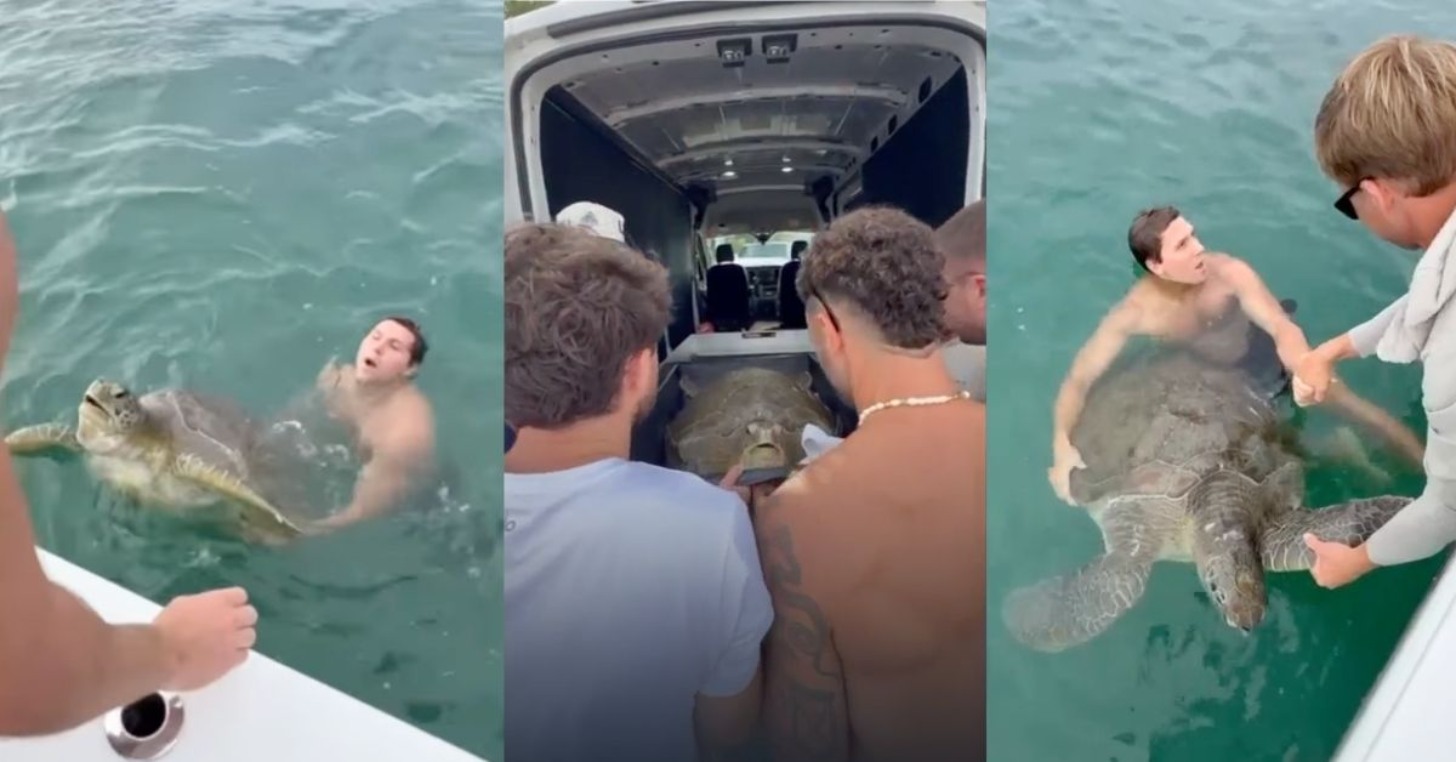
With the four of them working together, the men were able to tie a rope around the sea turtle’s midsection and haul her up on a pier as they awaited assistance from the Loggerhead Marinelife Center.
Unfortunately, once she was out of the water, it became clear that her injuries were more severe than they initially thought. The carapace of her shell was covered in deep cuts from an apparent boat strike.
According to the Loggerhead Marinelife Center, Zoey died from her injuries a few hours after she was rescued.
But Savery and his friends said they would do it again in a heartbeat if it meant giving an animal in need a “fighting chance.”
“I think [sea turtles] are a staple of our waters,” Savery said. “When there’s an accident that happens with one, we’ve got to do what we can to save them.”
Marine life boat strikes are unfortunately common in Florida, especially as more people go out on the water in the summer. On May 21, just a few weeks before Zoey’s rescue, the Loggerhead Marinelife Center shared the story of a green sea turtle named Aelin.
“This juvenile green turtle came to us with brutal injuries from an accidental boat strike in the intracoastal waterway in late March,” the rescue center posted on Instagram.
Fortunately, Aelin has a happy ending to her story.
“Aelin is battling her way through recovery and making great progress thanks to customized care by our team,” they said. “After [stabilizing her shell in surgery], Aelin is on the mend and out in one of our larger hospital pools. She is getting regular exams and wound cleaning as she continues to heal.”

The rescue center ended its post with an important reminder.
“Remember to ‘Go Slow for Those Below’ if you are out boating this time of year,” they said. “We can prevent injuries like these just by slowing down and keeping watch for these beautiful turtles.”
You may also like: This rescued sea turtle shocked scientists with its DNA results. After a 7-month recovery, he's returning to the ocean
Header image via Will Savery
In early June, firefighters in Bend, Oregon were asked to help with a pet rescue. Despite the well-documented cliché, the call was not for a cat stuck in a tree.
It was for a dog stuck on a cliff face.
“Can you spot our patient?” Bend Fire & Rescue asked in a recent Instagram post. “If you look closely, you’ll see Maverick, a dark-colored doggo who perfectly blended into the cliffside where he became stranded overnight after his leash broke while on a walk with his owner.”
“After tirelessly searching, his owner spotted him on the cliff and called for help when they realized the situation he’d found himself in,” the fire department explained.
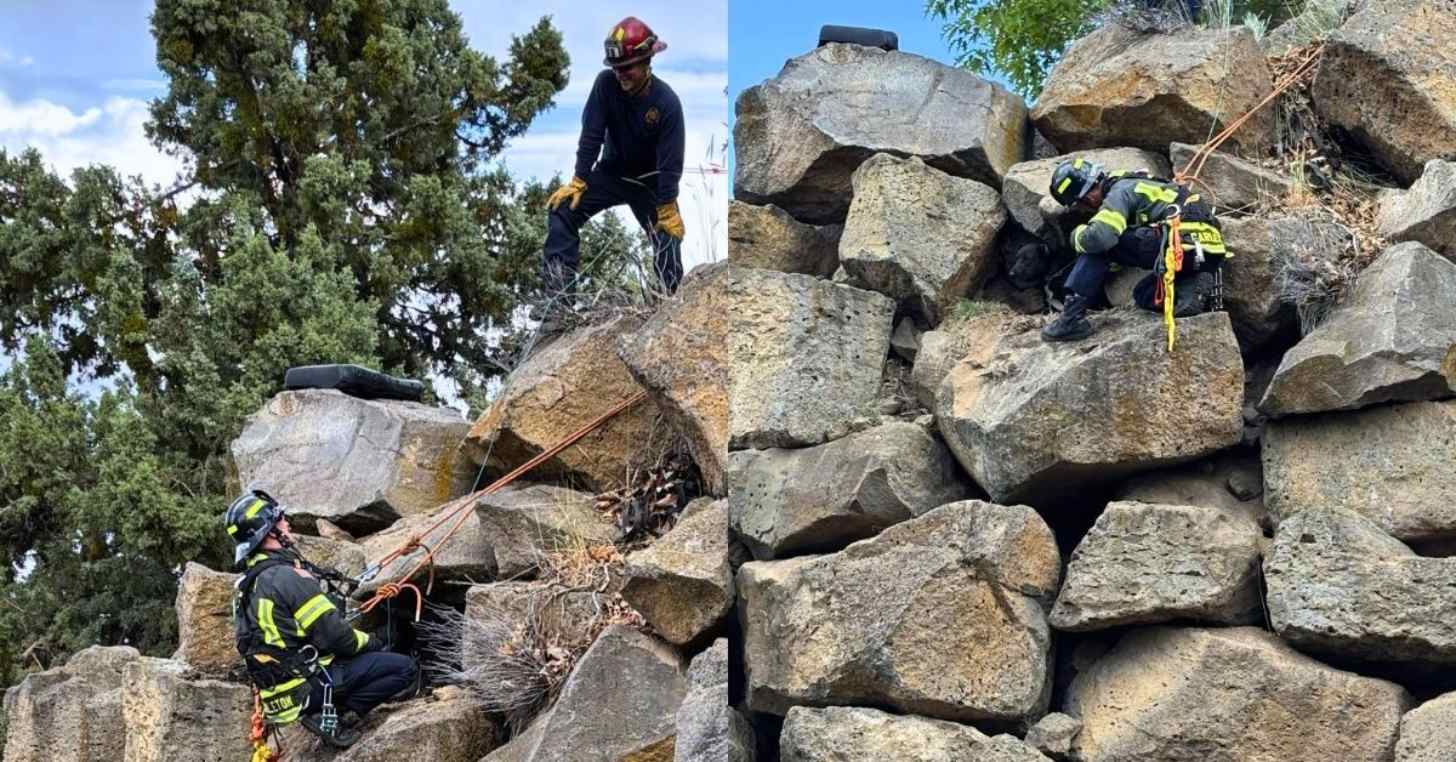
When crews arrived on the scene, they found Maverick on a narrow cliff ledge roughly 25 feet above the ground — about the height of a two-story building.
“Frightened and unsure, Maverick had tucked himself into a recessed area, making him both difficult to see and challenging to access,” the fire department wrote.
Using a high-angle rope system, one of the firefighters was lowered down to the ledge. After coaxing Maverick out of his hiding spot, the responder was able to secure a leash on him and gently guide him to the top.
“At Bend Fire & Rescue, we welcome every opportunity to sharpen our skills,” the fire department wrote. “Calls like this allow us to put those skills into action when it matters most — even with our four-legged community members.”
“We recognize that animals are family, and we treat them as patients with the same care, compassion, and professionalism we provide to all those we serve.”
The Bend Fire & Rescue post ended with their reassurance that Maverick was safe and sound.
“We’re happy to report Maverick is safe and back home where he belongs!” They wrote. “Big shout out to our responders for saving this good boy.”
Firefighters and first responders are trained to handle a wide array of scenarios far beyond housefires.
Last year, on January 9, 2025, firefighters in Colorado faced their own unique challenge: pulling a horse out of a frozen pond.
“LFRA responded to a large animal ice rescue late this afternoon on South County Road 13,” the Loveland Fire Rescue Authority shared on Facebook. “A horse found a way through a fence and onto a frozen pond, which unfortunately could not hold the weight of the horse.”
The firefighters had to work quickly, donning “ice rescue suits” and braving frigid waters to break up the ice with axes and sledgehammers. After a pathway was carved into the ice, the horse was gently guided to the pond’s edge.
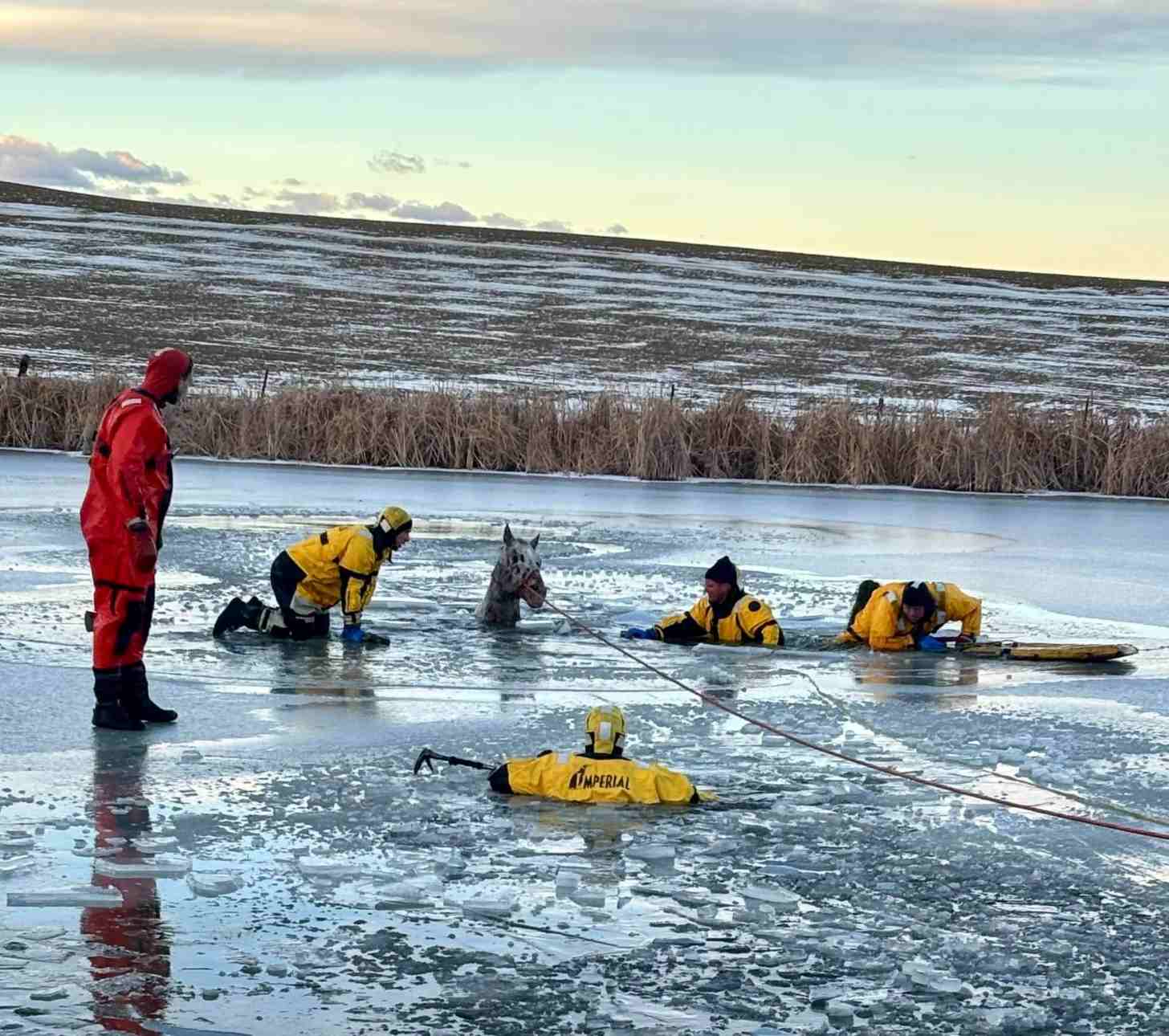
“The rescued horse was warming up and recovering as crews picked up equipment and returned to service,” the Loveland Fire Rescue Authority wrote.
The community responded with their well wishes.
“So glad that you guys are dedicated to rescuing any living creature!” one local responded.
“That’s a wonderful story, with a great ending, another person wrote. “What a wonderful group of rescuers.”
You may also like: This fire department just made history with its first woman-majority graduating class
Header image via Bend Fire & Rescue
Dungeons & Dragons, a table-top roleplaying game beloved by many since 1974 — and made especially popular by shows like “Stranger Things” and “Critical Role” in recent years — may be more than just a hobby.
A growing group of therapists and mental health providers is turning to the game as a tool to facilitate group therapy sessions, combining fantastical storylines and role-playing with topics like grief, procrastination, surviving trauma, and more.
One such practitioner is Victoria Smith, a licensed clinical social worker at DePaul University, who leads a group of six students in D&D therapy sessions.
“I wanted to create more unique ways for students to access group therapy,” Smith told the university.
“D&D therapy can feel more approachable than traditional therapy groups, providing a space where students can work on personal issues, develop skills and — most importantly — have fun.”
Smith and her colleague Nathaly Shammo, a social work intern, call their group sessions “Game to Grow.” Students develop their own characters, with goals and motivations, and then the facilitators lead the group through storytelling.

In addition to the fire-breathing dragons and sword fights often characteristic of D&D, the students role-play through real-life scenarios that might be impacting the students’ real-world mental health.
“Through storytelling and play, students are empowered to uplift each other and seek personal growth in a unique, memorable way,” Shammo said. “It encourages confidence building, problem solving, socialization and handling unexpected situations head-on.”
Recent studies have also found that D&D promotes identity-building and connection, especially for adults who don’t otherwise have an outlet for this kind of social exploration. In other words: The game is good for mental health.
“The idea of being able to use leisure to structure your time and gain some wins lets you see a positive return on what you’re dedicating your time to, and building on that and seeing your skill sets grow,” Florida International University’s Emily Messina said.
“That’s going to turn into self-determination. You’re going to be more motivated to build on your own skill sets and have a sense of autonomy.”
A version of this article was originally published in The 2026 Storytelling Edition of the Goodnewspaper.
You may also like: New study: Doing leisure activities — with high intensity — is good for well-being
Header image by Stephen Hardy via Pexels
While on a deep-sea expedition in the Galapagos in 2015, scientists found a golf-ball sized, short-armed blue octopus. In a recent study, they confirmed that it’s new to science.
The newly described octopus, named Microeledone galapagensis, was first sighted with a remotely operated vehicle near an underwater mountain, roughly 5,800 feet below the Pacific Ocean surface, close to Darwin Island.
Expedition researchers from the Charles Darwin Foundation and the Galápagos National Park Directorate collected it with their ROV. They saw two more octopus individuals on video. The body of the collected specimen was preserved and sent to octopus expert Janet Voight at the Field Museum in Chicago, Illinois, U.S.
Voight and colleagues at the museum scanned the octopus using computed tomography to create a 3D model of the individual. The researchers then used the CT model to examine its internal organs and mouth parts.

“When you describe a new species of octopus, you have to look at all the parts, including the mouth, the beak, and the teeth. And to see those things, you have to cut the specimen open. We only had the one specimen, so I didn’t want to take it apart,” Voight said in a press release.
A comparison of the blue octopus’ parts with those from other octopus species revealed that it was a new-to-science species.
Unlike many octopuses, Microeledone galapagensis is small, squat, and has short, stubby arms with few arm suckers.
“One of the interesting questions about this and related octopus species is how they survive in the deep sea, which we consider to be resource limited, with such short arms,” Voight told Mongabay by email.
“If you gather prey by moving your arms through the sediment (as we think they do), wouldn’t it be better to have longer arms with more suckers than short little arms?”
Voight said finding a new octopus species in the deep sea isn’t unusual since few people have looked in those places — there may be other deep-sea octopuses waiting to be discovered.
“Given the little we know about the deep sea, how large an area it is (the Pacific Ocean alone is larger than all land masses on the planet combined) and what seems to be limited dispersal of the very large young of deep-sea octopus, we definitely will be discovering new deep-sea octopuses for a long time to come,” Voight said.
Jim Barry, a senior scientist at Monterey Bay Aquarium Research Institute in California, U.S., who was not involved with the study, told CNN: “We just don’t know enough about the biodiversity of the deep sea in general, so as discoveries like this keep coming up every dive, you may see something new that’s never been seen before.”
Header image courtesy of the Charles Darwin Foundation
This article was originally published on Mongabay.
Pennsylvania has become a hot spot for data center proposals and public backlash about where to build them.
I’m a law professor and executive director of Penn State’s Center for Energy Law and Policy. I’m also a native of Archbald, a borough of 7,500 residents in the Lackawanna Valley in northeastern Pennsylvania. My hometown has drawn national attention because of proposals for multiple data centers that would cover 14% of its area.
Because of my professional and personal interest in data centers, I have been researching local responses to data center proposals across Pennsylvania. I’ve learned there are a host of considerations that local officials and citizens are taking into account when they evaluate data center proposals.
Proposed data centers would cover 14% of the town of Archbald in northeastern Pennsylvania

Pros and cons of big data centers
At its most basic, a data center is a building that houses and runs large computer systems.
Because data centers tend to be large developments, hosting one can provide a community more tax revenue. This revenue comes from increased property tax assessments as well as newly created jobs.
However, these job are mostly limited to the construction phase. One estimate suggests a moderately large data center would create about 15-30 long-term jobs.
On the other hand, data centers raise concerns about environmental and social impacts. They consume large amounts of energy and water, leading to fears of higher water and electric utility bills for other consumers.
Emissions from diesel generators can contribute to local air pollution and worsen asthma and other health conditions.
Data centers have also been shown to create heat island effects, raising the local air temperature by an average of 3.6 degrees Fahrenheit (2 degrees Celsius).
They can also be loud due to the noise from cooling systems and diesel generators. And some residents object to what they consider eyesores in rural or suburban communities.
Communities can plan ahead
Because of the significant impact that a data center can have on its surroundings, communities benefit from planning ahead before any proposal has even been made in their area.
One of the most powerful tools a Pennsylvania municipality has is its authority over zoning under Pennsylvania’s Municipalities Planning Code.
Under this law, a municipality generally cannot completely exclude from its zoning ordinance a legal use of a property unless it is inherently objectionable. An example of an inherently objectionable use might be a heliport in a heavily residential municipality.
But it can regulate where within the municipality buildings or other structures can be constructed and how they can operate.
Many Pennsylvania municipalities, including East Vincent Township and Jessup Borough, have amended their zoning ordinances to account for data centers.
Zoning ordinances are a powerful tool
The Pennsylvania municipalities of Fairview Township and Butler Township/Arendtsville Borough have restricted data centers to industrial zones. Mayfield Borough has restricted them to commercial zones.
Municipalities can also determine what level of municipal approval is required for a data center development. In Pennsylvania, uses can be allowed “by right,” “special exception” or “conditional use.”
“By right” means that no approval is required as long as ordinance provisions are followed.
By “special exception” requires approval from a municipal zoning hearing board.
By “conditional use” requires approval from the municipality’s governing body. This might be a board of supervisors or borough council.
Most Pennsylvania municipalities that have addressed this issue have designated data centers as a conditional use. Some, such as Butler Township/Arendtsville Borough, have allowed them as a special exception.
When a municipal body evaluates an application for a conditional use or special exception, it must determine whether the proposed data center complies with the zoning ordinance and that it would not otherwise injure the public interest.
Setback distances and impact studies
Another significant tool that municipalities have used is setback distances. A setback distance defines how far a data center structure must be from an adjacent property.
In Pennsylvania, ordinances have established setbacks for data centers from 50 feet (15 meters) to 400 feet (122 meters). Many ordinances establish longer setbacks from residential properties, hospitals, or schools than from industrial sites.
Many ordinances also require plans or studies to be submitted as part of a zoning application. Noise or sound studies are common ones. These studies are intended to establish background noise levels for the area of the proposed data center and to identify ways to mitigate noise impacts.
Municipalities may also require developers to submit an environmental impact assessment, transportation impact study, or emergency response plan, such as for a fire on-site.
How to protect your community
Learning about the specifics of a particular data center proposal can help a community to understand the potential impacts — both positive and negative — and prepare a response.
Local residents and officials should be poised to ask probing questions about:
- power and water demand, and the source of those resources
- infrastructure needs
- utility rate impacts
- cooling system design and noise and resource consumption impacts
- site design and landscape impact
- job creation and tax revenue projections
- noise mitigation strategies
- traffic effects
- air and water pollution emissions
Penn State Extension published a guide to common questions about data centers that may facilitate discussions with community officials and data center developers.
It may be possible in some circumstances for municipalities to negotiate community benefits agreements with data center developers. These agreements can ensure that the host community obtains certain specified benefits, such as local workforce guarantees or infrastructure development, as a result of the data center project.
The drive to build data centers and related infrastructure is moving quickly. By updating ordinances in advance, and diligently collecting information about any data center proposals that are made, local officials and citizens can protect the best interests of their communities.
This article was written by Michael Helbing from Penn State and was originally published on The Conversation.
Header Image by Chad Davis (CC BY 2.0)
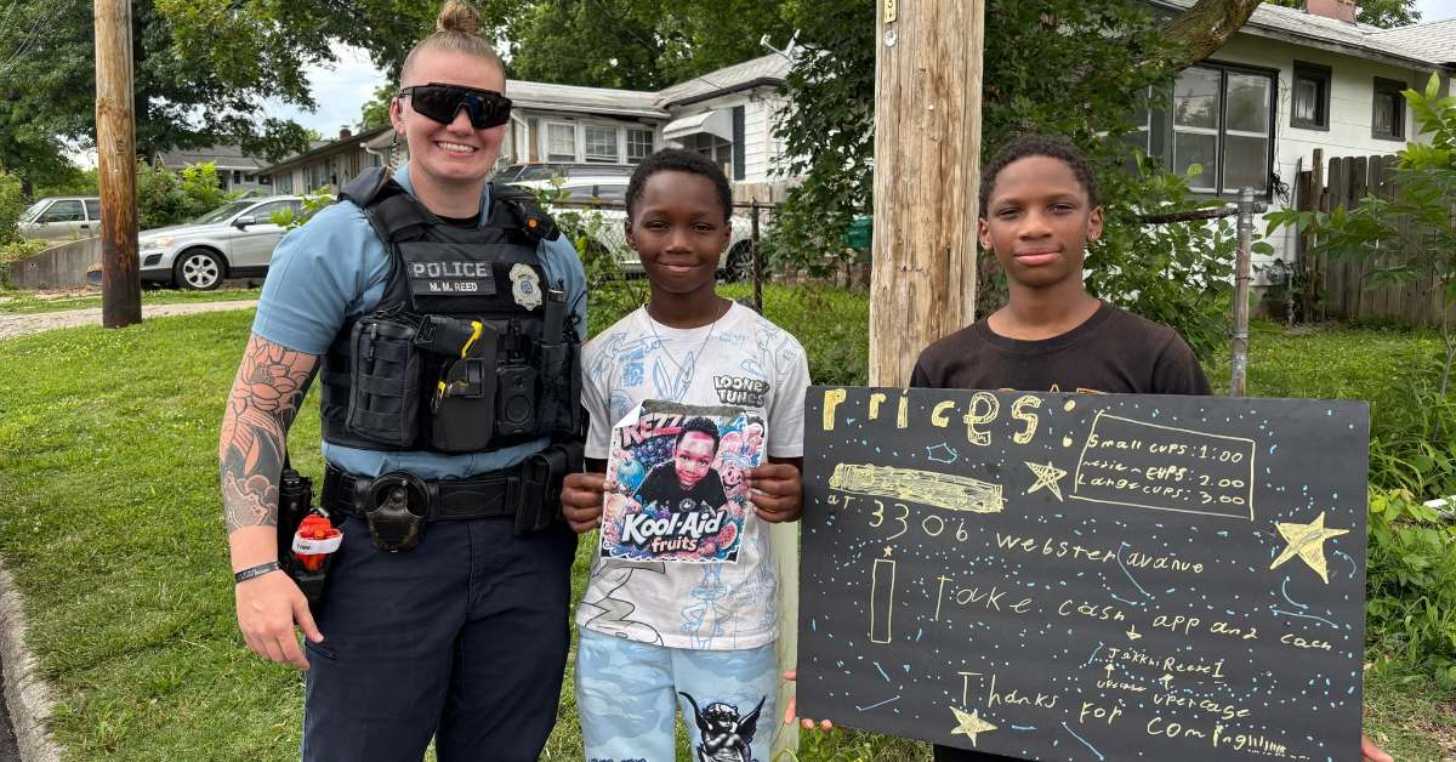
Brothers Parez and Jakkhi Reese have made an annual tradition out of selling lemonade in their neighborhood every summer. Their stand on 33rd and Webster — which sells lemonade, Kool-Aid, and snacks — has always been a hit in their Kansas City neighborhood.
But in early June, one neighbor took umbrage with the kids’ lemonade stand and called 911 to report the two brothers for selling products without a permit.
Local police officer Morgan Reed was one of the first officers to stop by their stand during an afternoon shift — not to issue them a warning, but to encourage them to keep going.
“I was calling everybody, yeah. I was just calling everybody — hey, make sure you guys stop by the lemonade stand,” Reed told local news outlet KCTV. “And then just whenever they were busy, a couple people were able to swing by.”
A “couple people” soon turned into a community-wide swell of support from police officers and firefighters across town. As first responders arrived in droves to drink lemonade and Kool-Aid, their money jar grew.
Within 30 minutes of Reed’s call to the community, Jakkhi and Parez made $280.

Visiting officers gave the two boys stickers to put on their shirts, making them “official” police officers. They were also invited to attend a free boys and girls football camp, held by the Kansas City, Kansas Police Department on June 6.
“It means a lot,” the brothers said.
The story soon went viral online, with people from across the country weighing in.
“I’ll bet the person who made the original 911 call was watching all this and seething,” one Facebook user wrote. “It’s ridiculous to try and discourage young people who are trying to improve themselves in their community.”
“I hope they get a lot more customers and have a great summer!” another wrote.
One Facebook user pointed out that the lemonade stand was, in fact, legal.
“Due to the recent Kansas Lemonade Stand Law (House Bill 2599) — minor-owned, intermittent businesses do not require government permits or business licenses,” they explained.
“The law was explicitly created to allow children to operate small businesses (like lemonade stands, lawn mowing, or craft tables) without having to navigate complicated commercial red tape.”
The day after the 911 call came in, Reed returned to spend another $40, telling KCTV that this is what “community policing should look like.”
For Parez and Jakkhi, that singular day of community-wide support has been a weight off their shoulders.
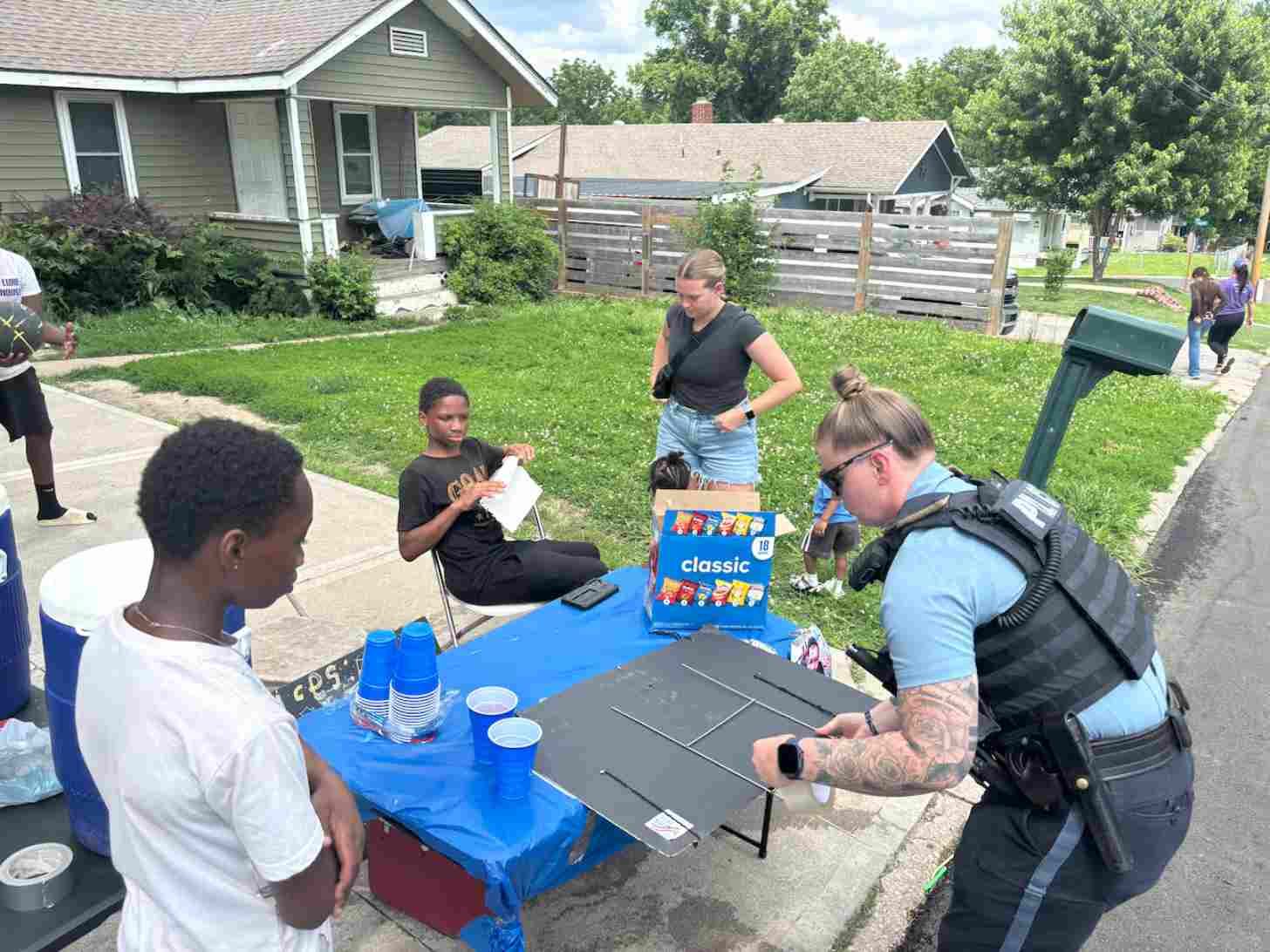
“I just wanted to help the homeless and buy [myself] a new e-bike because that has been my dream since I was little,” Parez said, as Jakkhi added that the money would also go to diapers for their nephew and niece.
The brothers said that they will continue running the stand throughout the summer — and Reed said she’d love to come back again to support them.
“I think [for] a lot of us, we’re kids growing up in this city,” she said. “And this was the thing that we always looked forward to as kids … these friendly police interactions.”
You may also like: A team of firefighters worked together to save a dog trapped on a two-story cliff in Oregon
Header image via KCTV (Courtesy of Greg Dailey)
Sea turtle nesting season is officially upon us.
What this means is that from late spring to early fall, beaches throughout the Americas become a vital nesting ground for the world’s endangered sea turtle species.
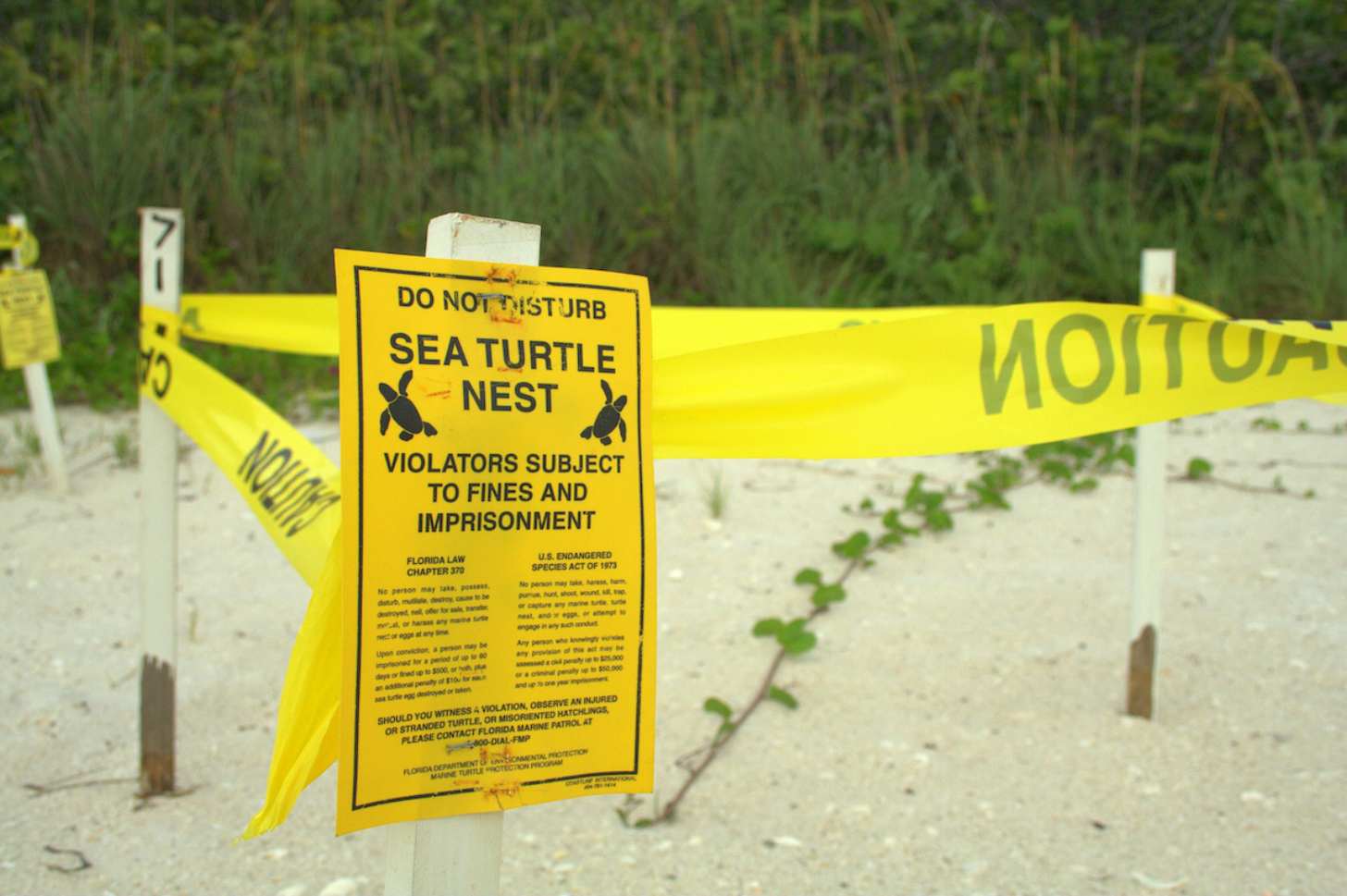
Mother turtles come to beaches and carve out a nest to lay their eggs, soon returning to the ocean. Conservationists and local volunteers often work to monitor these nests and ensure predators and other outside forces do not harm the eggs, and later, the hatchlings.
It’s also an opportunity for researchers to gather data about population sizes, behaviors, and more information about these turtles and their behavior.
And researchers at Gumbo Limbo Nature Center and Florida Atlantic University in Boca Raton are excited to report that they’ve seen a record-breaking season for endangered leatherback sea turtles.
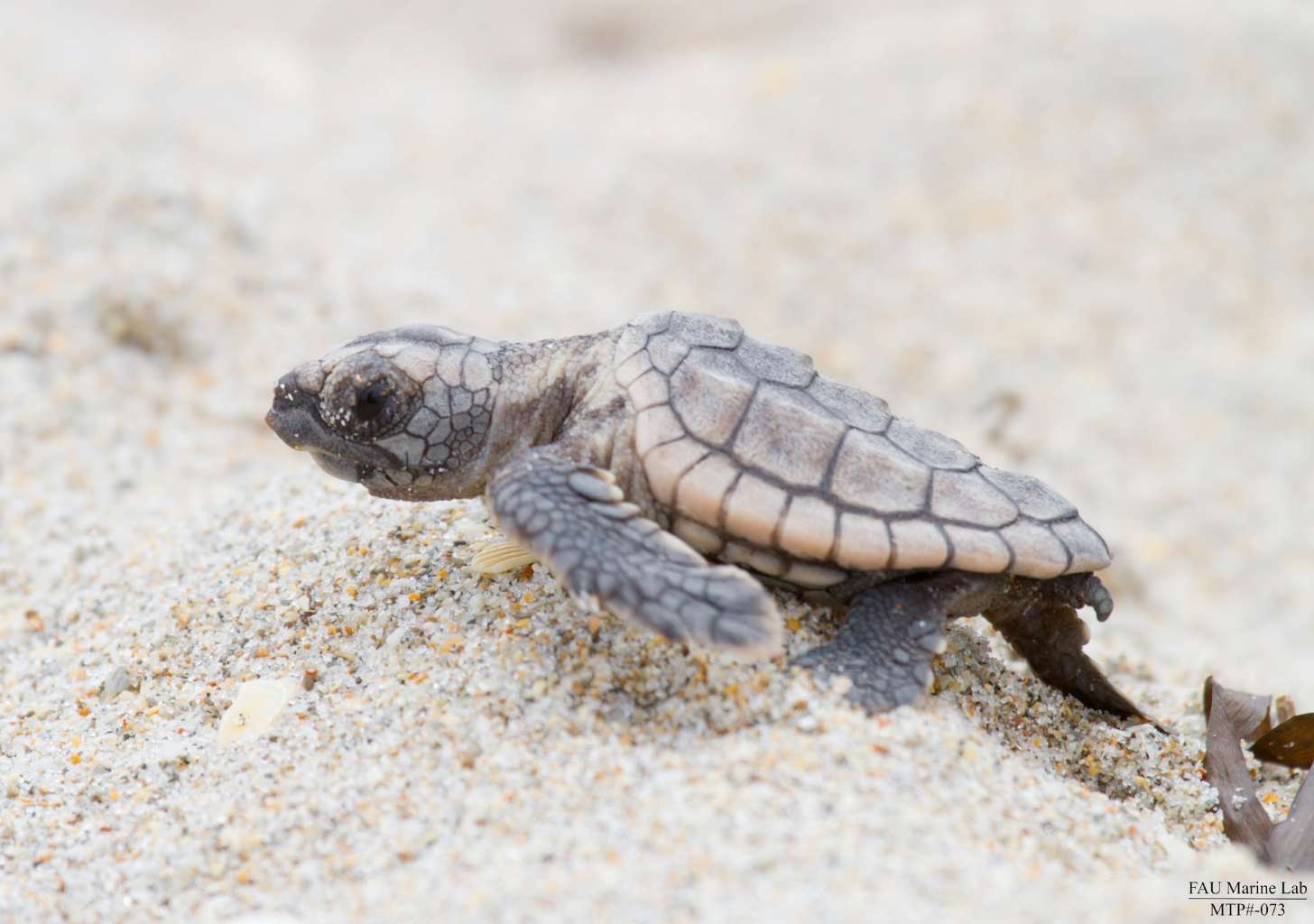
So far, the nature center has documented 42 leatherback nests in the area — more than double its typical annual average, and coming in as the highest number ever recorded locally.
“It’s huge,” Dr. Jeanette Wyneken, professor of biological sciences and director of the FAU Marine Science Laboratory, told WFLX News. “To go all the way up to 42 nests means there’s a lot of turtles nesting this year, which is good news for that species.”
Leatherback sea turtles flock to Palm Beach County every year to lay their eggs, making the area a critical hub for the species. In fact, beaches in this county account for roughly 50% of all leatherback nests in Florida, according to the state’s Fish and Wildlife Conservation Commission.
The species is the largest sea turtle species in the world and can weigh up to 1,500 pounds. They are also unique as the only sea turtle species that lacks scales or a hard shell. Named for their tough rubbery skin, leatherbacks have existed in their current form since the age of the dinosaurs, NOAA Fisheries explains on its website.
These turtles can swim over 10,000 miles a year between nesting and foraging grounds and face numerous threats. The population is on the decline, primarily due to fishing bycatch, hunting, and collection of eggs for human consumption. Pacific leatherback turtles are most at-risk of extinction.
So, all of this means that the species rides on the success of a fruitful nesting season.
While the numbers in Boca Raton are encouraging, scientists caution that it’s too soon to tell if they signal a long-term population recovery. Most nests are home to nearly 100 eggs, but it’s estimated that only 1 in 1,000 survives to adulthood in the wild.
Students at the FAU Marine Lab work hard to ensure the safety of these hatchlings throughout nesting season, providing signage and boundaries near nests on the beach, and studying environmental changes to better understand what the baby turtles are up against.
“What’s exciting is that many of these nests were laid earlier in the season when temperatures weren’t as high,” Emily Turla, laboratory coordinator at the FAU Marine Lab and a Ph.D. student studying integrative biology, told WFLX.
“I’m hopeful we’ll see strong hatching success and a lot of baby turtles getting their chance out in the ocean.”
You may also like: This sea turtle hatchling was barely a pound when he was rescued. 6 years later, the 220-pound loggerhead is ready to swim free
Header image by Elise Peterson (CC BY 3.0)
On May 1, Molly Selin was making her way home on the subway to her New York City apartment. The 27-year-old had just returned from a work trip to Spain.
“I was looking forward to that quiet in-between state, homestretch of traveling back,” Selin later recalled in a TikTok video. “I could already feel the shower I was going to take. I just had to get through the next 30 minutes.”
“AirPods in, world off,” she emphasized.
But then, a woman on the train asked her a question.
“I didn’t hear her,” Selin admitted. “My headphones were in, but she had already gotten my attention, so I looked up. We made eye contact. [She had] warm eyes, on the older side, cute glasses.”
So she took one AirPod out.
“Were you just traveling?” The woman asked.
Selin replied with a simple yes and popped her AirPod back in. Then the woman asked her a follow-up question.
“I was confused because I had already answered, and in my mind, that felt like a clear end to the conversation,” she explained. “I looked up again. Both AirPods were still in, and she repeated herself. ‘Where did you go?’”
So, Selin took an AirPod out again and replied: “Spain.”
That’s when the woman’s eyes lit up: “‘Spain! I've never been to Spain, but I've always wanted to go. Was it amazing?’”
Selin melted at her excitement, which reminded her of her own grandmother.
“Something about the way she said it made me take both AirPods out and put them in my case,” she said. “She had my full attention … and just like that, we started talking.”
The woman was an 81-year-old named Maria. From their seats on the subway, she shared the hardships she had endured, including losing her husband, parents, and daughter.
She also revealed a lifelong dream: returning to her native Puerto Rico, which she had left more than 70 years earlier. Although she longed to go back, a fear of flying had kept her from making the trip.
So Selin offered to make the journey with her.

“Even as I was telling her that I would fly with her, I couldn’t even believe that I was saying it,” Selin told TODAY. “But I just meant it.”
“She’s so funny. She’s like, ‘I never talk to strangers. I don’t know why I did that! But I felt like I wanted to,’” Selin said. “We don’t know how this happened, but it really was meant to happen, as we say.”
After she got home, Selin shared their encounter on TikTok, and received thousands of comments from people who resonated with her story of intergenerational friendship.
“Our second flight got cancelled,” a twenty-something TikTok user said, sharing a photo of an older woman and herself. “We were both on a layover and got to chatting while waiting for the airline to get us to the hotel. We had dinner together, and it was so fun!”
“Met these sweet ladies on a trip to Hawaii,” another user shared, alongside a photo of her and two senior seatmates on an airplane. “We exchanged numbers and still check on each other. Barb in the middle was 89 and living her best life!”
One user even had their own “Maria” story.
“I met a Maria on the bus,” she wrote. “She was around 60 years old and told me her friend just cancelled a concert that night. She asked if I wanted to join her — I said yes. We’re still friends.”
The comments section was also filled with kind words from people who said the story gave them hope.
“Reading people’s response to kindness and openness, and people sharing stories of people that they had met and other pictures and images … it was overwhelming in the most incredible way,” Selin said.
When Selin showed Maria the comments, she was baffled.
“What? People are saying that about me? You’re kidding. No one’s ever said that about me,” Maria told Selin.

When the video went viral — garnering over three million views — it also gained attention from global brands that wanted to support Maria’s lifelong wish.
“We’d be honored to help write the next chapter of this story,” Delta commented. “How about we take you both on that trip to PR?”
“We’d love to help make Puerto Rico happen!” Hotels.com chimed in.
“Such a suite [sic] story! Maria deserves to see the world, especially her family!” Hilton added.
Selin has continued having meals with Maria every week as they make plans for their trip to Puerto Rico in July.
“I feel like there are so many big and small moments that I’m excited to experience with her, whether it’s wristbands from something or Polaroid pictures,” Selin told TODAY. “ I think for both of us it’s going to be so much to take in over the course of the week.”
Months ago, in Selin’s original video, she said that she had no idea what her friendship with Maria could turn into.
“But I’m glad I took my AirPods out,” she said.
You may also like: Two brothers selling lemonade had the cops called on them. The first officer to respond invited the whole town to support them
Header image via Molly Selin
On April 27 of this year, neighborhoods across St. Louis, Missouri, were caught in a classic Midwestern spring storm. With hail as large as golf balls in some areas, and even reports of tornadoes just east of St. Louis, locals were hunkering down to keep out of the way of severe thunderstorms.
That is, except for one stray orange tabby cat, who was scooped up by local shelter, Stray Rescue of St. Louis.
“Yesterday during all of the storms, we rescued this kitty with an injured back leg,” a Facebook post from the animal shelter reported.
“Because we had KMOV’s Steve Templeton on all the TVs at the shelter, we knew exactly what to name our new rescue. He’s so happy to be safe inside and getting the medical care he needs.”
Steve Templeton is the chief meteorologist for local news outlet KMOV-4, reporting the weather live on air every weekday evening from 5 to 10 p.m. As one of the first meteorologists in the country to receive the Certified Broadcast Meteorology seal from the American Meteorological Society, he’s who locals turn to in times of inclement weather — including those on the frontlines of animal rescue.
Steve Templeton the cat has since resurfaced on the Stray Rescue social media pages, now donning a handsome collar and tie in front of a 7-day forecast.
The cat unfortunately had a rough road to recovery after being admitted to the shelter, but now, he’s ready to find his forever family.
“Our little Steve Templeton came in with a broken back leg that couldn't be fixed, so he had his leg amputated,” the shelter wrote in a June 5 update.
“He’s made a full recovery in his foster home, now he's ready for his forever home! This tri-pawed orange kitty doesn't mind being held. He's a major cuddler and very sweet. And he doesn't mind wearing a tie.”
And anyone who wants to take him home can do so for the low cost of $0. Local business Imo’s Pizza has offered to cover the cat’s adoption fee.
Stray Rescue is accepting applications for Steve’s potential family now.

You may also like: Dobby, the rare kitten with 4 ears, is bringing attention to pets with disabilities
Header image courtesy of Stray Rescue of St. Louis and KMOV
Every day the Good Good Good team collects the best good news in the world and shares it with our community. Here are the highlights for this week!
If you want to get good news in your inbox every day, join the Goodnewsletter — the free daily newsletter designed to leave you feeling hopeful.
The Best Positive News We’re Celebrating This Week —
Hungarian police issued an approval for this year’s Budapest Pride Parade, reversing last year’s ban
Last year, under the direction of former Prime Minister Viktor Orbán, Hungary’s parliament passed legislation that led to the banning of the Budapest Pride parade.
Defying that ban and risking legal consequences, organizers estimated that a record 200,000 people attended the parade anyway, making it the city’s largest parade in history.
Now, under Prime Minister Péter Magyar, Hungarian police said they will not prevent anyone from taking part this year’s Budapest Pride parade, and they “issued restrictive orders in relation to three counter-demonstrations,” clearing the way for this year’s celebrations.
Even better: Hungarian prosecutors have now also dropped charges against Budapest Mayor Gergely Karacsony for his role in defying the country’s ban and organizing last year’s Pride parade.
This rescued sea turtle shocked scientists with its DNA results. After a 7-month recovery, he’s returning to the ocean
→ Read more
Personal sense of freedom is up worldwide
In 2025, Gallup found that 82% of adults across 138 countries were satisfied with their freedom to choose what to do with their lives. It was a significant uptick from 2006, when the global satisfaction rate was 71%.
The largest gains occurred in former Soviet republics, where satisfaction with freedom rose sharply over the past two decades as former Eastern Bloc countries experienced economic and social improvements.
While the perceptions of freedom are strongly linked to economic well-being and financial stability, the report noted that freedom does not always match external measures of politics and civil liberties, with some countries with limited political freedoms reporting very high personal freedom satisfaction.
A rare, endangered bee species received new protections in six US states
Distinct for their rusty-colored patch in their middle section, on males only, the rusty patched bumble bee used to be found in about half of U.S. states — now only 13 states have recorded sightings, and in 2017, it became the first bee species to be listed as federally endangered.
To help the bee recover, the U.S. Fish and Wildlife Service designated 1.5 million acres of land across five states as critical habitat for the bee.
While it doesn’t establish new protected areas or reserves, the designation does impact “development or other actions” involving planning, permitting, and implementing projects that could impact the bee’s survival.
Why is this good news? The announcement is being hailed as “essential to the survival of one of America’s most imperiled pollinators,” and pollinators are essential not only to the larger ecosystem, but the food supply we all depend on.
This ‘turtle-sniffing dog’ searches miles of New York woods to save endangered species
→ Read more
The US sees a record start to 2026 for energy storage
According to new data from the United States Energy Storage Market Outlook report, the U.S. added 9.7 gigawatt-hours of new energy storage capacity in the first quarter of 2026 — a capacity that is up 32% from the previous year.
Across the country, Texas, Arizona, and California remain the leaders in top utility-scale storage markets, but 13 states now have explicit energy storage targets that are helping with storage acceleration. Most notably, Georgia, Iowa, and Mississippi are “most improved” when it comes to storage growth in the last quarter.
With this new data, industry experts estimate that more than 610 gigawatt-hours of energy storage installations will occur by 2030.
Ahead of the World Cup, thousands of athletes raised funds for climate-ravaged soccer fields — and set a Guinness record
On June 6, more than 500 soccer players gathered in Miami Beach alongside more than 5,000 people across the United States, Mexico, Canada, Brazil and the United Kingdom — to juggle a soccer ball in unison for 10 seconds and break a Guinness World Record.
Organized by the global environmental campaign Where Football Lives, proceeds from the event will support upgrades to grassroots soccer sites across the U.S. and Mexico, enabling them to better withstand extreme weather caused by climate change.
Laura Biondo, a Venezuelan football freestyler and world champion, took part in the event in Miami, one of the World Cup’s most heat-exposed host cities.
Why is this good news? Parents across the U.S. estimate that their children lost an average of one full week of practices or competitions in 2024 due to extreme temperatures, wildfire smoke, flooding, and unpredictable winters. Not only is it a health hazard for everyone, but kids deserve quality places to play as much as the professionals do.
→ Read more
Vermont turned a copper mine into a 20,000-panel solar farm. Noah Kahan made it an Easter egg in his new album
Two teens in Kenya turned farm waste into award-winning, pollution-reducing car exhaust filters
Two 17-year-old Kenyan students just won the Africa regional round of the Earth Prize, the world’s largest environmental sustainability competition for teenagers.
Fredrick Njoroge Kariuki and Miron Onsarigo won the award for inventing HewSafi, a low-cost vehicle exhaust filter made from the agricultural waste of maize cobs and coconut shells.
The students used recycled battery components, steel mesh, copper, and algae to capture harmful pollutants from vehicle emissions. When they tested their filters on minibuses in Nairobi, they found that HewaSafi reduced fine particulate pollution by 93.3% and cut carbon monoxide emissions by 42%.
Global mangrove forests are rebounding in a hopeful sign for both climate and coastal resilience
New research from Tulane University found that mangrove forests are showing signs of recovery worldwide, with regrowth and expansion largely offsetting decades of losses.
The study is based on four decades of satellite data and shows mangroves are now growing overall, following decades of decline due to deforestation and coastal development. The forests are regenerating naturally and expanding into new coastal areas.
Why is this good news? Mangroves were once considered one of the world’s most threatened coastal ecosystems. Not only do they provide unparalleled protection of coastal communities and coastlines, but they also support marine ecosystems and store an incredible amount of carbon dioxide.
One of the world’s oldest ‘art galleries’ lives on the rock faces of this Australian cultural site. These people have sworn to protect it
→ Read more
Electric vehicle sales are taking off around the world
More than 20 million electric cars were sold worldwide in 2025, up roughly 20% from 2024. Electric vehicles accounted for roughly 25% of new car sales globally, meaning one in every four new cars was electric.
According to the International Energy Agency, electric vehicle sales are projected to go up from 25% to 28% in 2026, handily beating last year’s record.
Although the United States lags in EV adoption, countries across Asia and Europe have continued to invest in them at growing rates. The IEA projects that by 2035, roughly half of all new cars sold globally could be electric.
→ Read more
A breakthrough pancreatic cancer drug nearly doubled the survival rates of patients
According to the American Cancer Society, pancreatic cancer is one of the deadliest cancers in the United States. While the exact cause of most cases remains unknown, many are driven by genetic mutations that trigger uncontrolled cell growth in the pancreas.
In a breakthrough clinical trial, researchers targeted these mutations with a new drug called daraxonrasib. Patients who took the once-daily pill lived a median of 13.2 months, compared with 6.7 months for those who received chemotherapy alone.
In a separate study at the UCLA Health Jonsson Comprehensive Cancer Center, researchers found that daraxonrasib reduced the risk of death among patients with metastatic pancreatic cancer by 60%.
Even better: In addition to extending the survival rates of patients with pancreatic cancer, researchers are studying daraxonrasib across the board to see how it interacts with lung cancer, colorectal cancer, ovarian, and endometrial cancers.
Two brothers selling lemonade had the cops called on them. The first officer to respond invited the whole town to support them
→ Read more
For the first time, solar provided more electricity in the US than coal
In May 2026, solar supplied a record 12.8% of U.S. electricity, generating an all-time high total of 45.5 terawatt hours, while coal fell to 12.2%, its fourth-lowest monthly share ever.
Solar exceeded its output from May of last year by 17% and surpassed the previous record set in July last year. Experts say that record could be broken again in the coming summer months.
The milestone also came despite the federal government’s attempts to hinder and stop renewable energy growth.
→ Read more
More good news of the week —
A new wildlife overpass in California got its first animal visitors months ahead of schedule. After construction crews left, three mule deer were spotted navigating the crossing, which is the first in the state to be built over a state highway and will be completed this fall.
Activist Erin Brockovich launched an interactive map to track AI data centers across the country. More than 2,700 reports from concerned residents have been submitted to the website so far.
Twin Cities residents were honored with a John F. Kennedy Profile in Courage Award. They received the prestigious award for demonstrating “compassion and unwavering commitment to the ideals that sustain our democracy” during the federal immigration enforcement surge.
A Thai island community is uniting to protect endangered dugongs through seagrass restoration efforts. The island of Koh Libong has also implemented dugong-friendly boat policies and safer fishing practices to save the species.
A family in Tasmania used their expertise in aluminium shipbuilding to build the world’s largest battery-electric vessel. The ship has 40 megawatt-hours of batteries and will eventually provide service between Buenos Aires and Uruguay.
British scientists made plastic “decoy” puffins to help real puffins build colonies on the Isle of Man. Because puffins are highly social and prefer to nest in busy colonies, the decoys have been a hit.
The world’s largest wildlife overpass is nearing completion over a 10-lane freeway in California. The bridge, which is set to open in early December, is already attracting hummingbirds to its vegetation areas.
Stevie Nicks donated $3 million to USC medical school to recognize the voice doctor who cared for her throughout her career. The donation supports the creation of an endowed chair in otolaryngology at USC’s Keck School of Medicine in honor of Dr. Joseph Sugerman.
The Gullah Geechee people of the American Southeast are keeping the indigenous art of basket weaving alive. Sweetgrass basket weaving is an enduring cultural tradition tied to enslaved African communities of the 18th century.
Papua New Guinea has officially barred fishing and all destructive human activity from an ocean area the size of the U.K. The world’s largest marine protected area is estimated to be home to over 700 reef fish species and over 300 species of hard coral.
As flooding worsens across the country, Britain is turning to beavers to help. The animals are part of an unlikely effort that’s both bringing back species that vanished help Britain adapt to climate change.
After a crocodile crushed his only functional arm, a diver is back in the ocean to fight plastic pollution. Alain Brandeleer started a “Running for the Ocean” initiative, a 20-kilometer race in Brussels where more than 250 participants raised funds to help intercept 1 million plastic bottles.
Ms. Rachel visited and sang a protest song with children of immigrants outside of Delaney Hall. The beloved children’s entertainer visited the “Radical Hospitality Zone” created by activists outside the center, visiting with families, hugging children, and singing in solidarity.
The Los Angeles Dodgers honored gay trailblazers Glenn Burke and Billy Bean with a permanent stadium display. Burke and Bean were the first two major leaguers to say they were gay, and a brief ceremony with their families was held on the team’s 13th Pride Night.
The world’s largest wildlife overpass got its first hummingbird visitor. Decades in the making, California’s Wallis Annenberg Wildlife Overpass will open in December, providing safe passage for wildlife across one of the busiest highways in the country.
A wildlife rescue is using mom-shaped pillows to save abandoned baby harbor seals. When beach-goers get too close to harbor seals, it causes severe stress and interrupts nursing, and sometimes the mammal will flee the area and will not return to nurse her newborns if she senses danger in the area.
A new, experimental pill is providing new hope for deadly pancreatic cancer. While it’s not a cure, new research shows the pill is helping people with advanced pancreatic cancer live longer.
A twenty-year-old climate activist is suing Trump and the fossil fuel industry. In the lawsuit, Eva Lighthiser argues that fossil fuels worsen climate change and violate people’s constitutional rights.
Brad Paisley shared a petition to block a 69,220-square-foot data center from being built next to the Nashville Zoo. The zoo’s leaders cited concerns over potential water quality degradation, light pollution, and noise disturbances.
Four men jumped into Florida waters to help a 324-pound green sea turtle that was injured from a boat strike. The Loggerhead Marinelife Center aided in the rescue, cautioning boaters to “Go Slow For Those Below” this summer.
Wisconsinites are planting flowers in sidewalk cracks to shed light on LGBTQ+ youth homelessness. Each installation has a QR code that redirects teens to lifesaving resources alongside a reminder that it “takes courage to flourish.”
Prince William is teaming up with British manufacturers to donate unsold appliances to people transitioning out of homelessness. The initiative is meant to reduce waste while creating stable living conditions for people in need.
Coral reefs off the coast of Western Australia survived a record marine heatwave with little bleaching. Researchers believe that the unusually heat-tolerant corals could help them better learn how to protect and restore reefs.
Scientists spotted a critically endangered marine snail in the wild for the first time in five years. The white abalone was found in the Channel Islands National Marine Sanctuary during a habitat survey.
Florida researchers are celebrating a record leatherback sea turtle hatchling season. So far, a Boca Raton nature center has documented 42 leatherback nests in the area — more than double its typical annual average, and the highest number ever recorded locally.
Billie Eilish and Finneas joined their mother in hosting a celebrity pickleball fundraiser to combat food insecurity. The proceeds went to the family’s nonprofit, Support+Feed, which donates plant-based meals to people experiencing homelessness.
High school coaches in Florida can now financially support players under the “Terry Bridgewater Act.” The legislation is named after an NFL player who had previously been penalized for helping underprivileged students at his alma mater.
Japan just opened the world’s first center to combat marine plastic pollution. Every year, Japan alone collects around 30,000 to 50,000 tons of marine plastic from its coastlines.
Nigeria’s senate passed a sweeping new law to strengthen wildlife protections. The country has become a hub for wildlife trafficking, and supporters are calling on the government to provide the resources, coordination, and political backing needed to enforce the law.
Tunisia is officially the latest country to eliminate trachoma as a public health problem. Linked to limited access to water, sanitation, and hygiene, trachoma was endemic in Tunisia in the early to mid-20th century, impacting at least half the population.