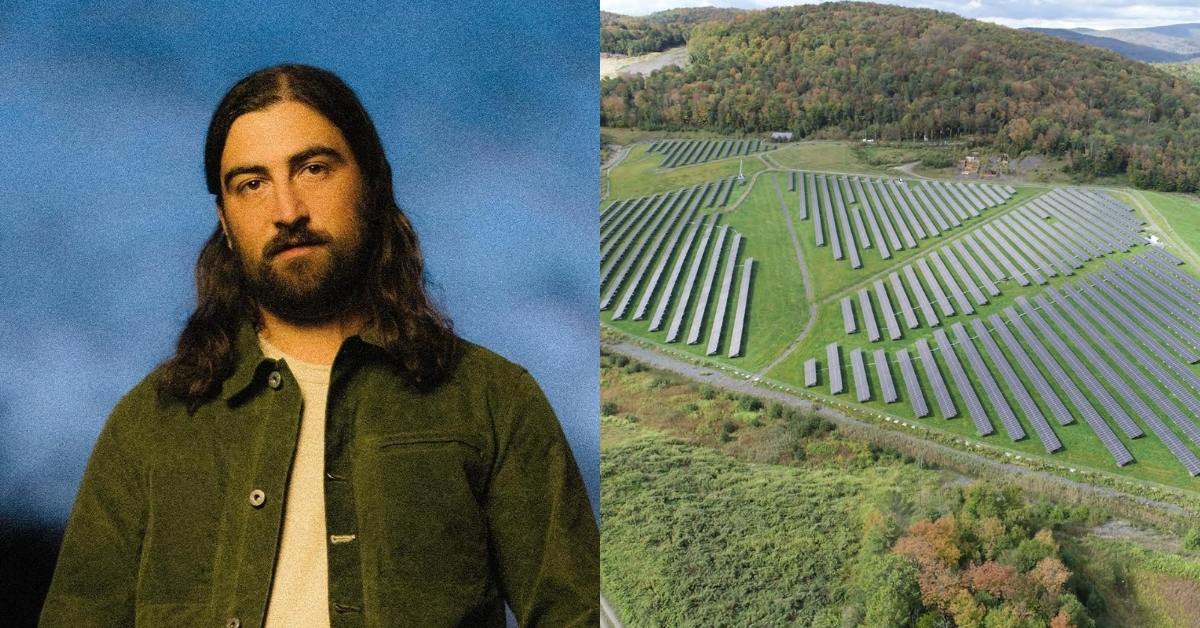
Folk-pop favorite Noah Kahan is no stranger to writing and singing about his hometown of Strafford, Vermont.
Whether he’s crooning about small town delights on “Dan,” or wistfully writing about seasonal depression on “Stick Season,” the artist evokes plenty of Northeastern imagery in his songs.
His newest album, “The Great Divide” features a song called “Haircut,” about how he imagines people responding to his return home after his many career successes on the road.
In the second verse of “Haircut,” Kahan sings from the perspective of his Strafford neighbors:
“For two hundred years, we laid bricks in the dirt, put solar in the copper mines,” he warbles.

While plenty of fans were happy to just sing along to the fiddle-ridden tune, others became curious: What is this solar power project Kahan speaks of?
Eagle-eyed fans — and Genius contributors — believe he is referencing the Elizabeth Mine in Strafford, a mine that was opened after the discovery of ore in 1793, yielding 100 million pounds of ore throughout Vermont’s rich mining history.
However, the economic boon of such mining also had grave environmental and health impacts, as workers in the late 1800s had to roast the copper ore to make it easier to smelt, burning off iron and sulphur fumes.
“Workers tended a number of heaps on the roast beds, working among heavy sulphur fumes,” a historical report from the city of Strafford explained. “The sulphurous gases killed the vegetation in the surrounding environment, a fairly common occurrence in such mining districts until better methods were developed to capture the fumes or eliminate the need for roasting.”

Although mining practices improved over time, the Elizabeth Mine still posed great risk to miners and the surrounding environment, and it was finally closed in 1958, following longstanding public health concerns.
But it still had an impact on generations of Vermonters.
By the early 2000s, reporting from The Nature Conservancy explained, “the local river was already suffering.”
“A five-mile stretch of the Ompompanoosuc had more than 10,000 times the acceptable amount of copper. Fish counts were low, and the layer of sediment at the bottom of the river that is usually host to tiny bugs and other organisms was showing little life,” The Nature Conservancy reported. “One family had elevated levels of heavy metals in their drinking well, posing a threat to their health.”
So, a half-century after the mine was closed, in 2003, the Environmental Protection Agency spent about two decades and over $100 million in federal money on the cleanup process to stabilize the mine’s dam and clear toxic waste from waterways.
It was a historic restoration.
“In 2014, because of the EPA cleanup efforts, the State of Vermont delisted several nearby waterbodies from the Clean Water Act’s ‘Impaired Waters List’ based on the return of a healthy benthic and fish community,” the city of Strafford explains on its website.
“The cleanup also replaced eight acres of toxic wetlands with 15 acres of healthy wetlands and reduced the iron load to receiving bodies of water from 800 pounds per day to one-tenth of a pound per day.”
But perhaps the biggest climate victory was the transformation of the mining site into a solar field.
Local farmer John Freitag told The Nature Conservancy that it was another Strafford resident, Dori Wolfe, known to be a staunch solar advocate, who pushed to make it happen.
“Dori said that what we really needed to do was cover the Elizabeth Mine with solar panels,” Freitag said. “The Elizabeth Mine gave Strafford so much of its character. Adding solar panels would honor the mine’s history.”
And Dori was right.
“A solar project could be good for Vermont and good for Strafford,” Freitag said. “Vermont has renewable energy requirements, but the sites that are easy to develop are on farm fields. If this mine were used for solar, it would preserve farms and forests. And we could use the tax revenue from the project to improve the schools, help lower property taxes or fix up the roads. Roads can get pretty bad around here.”
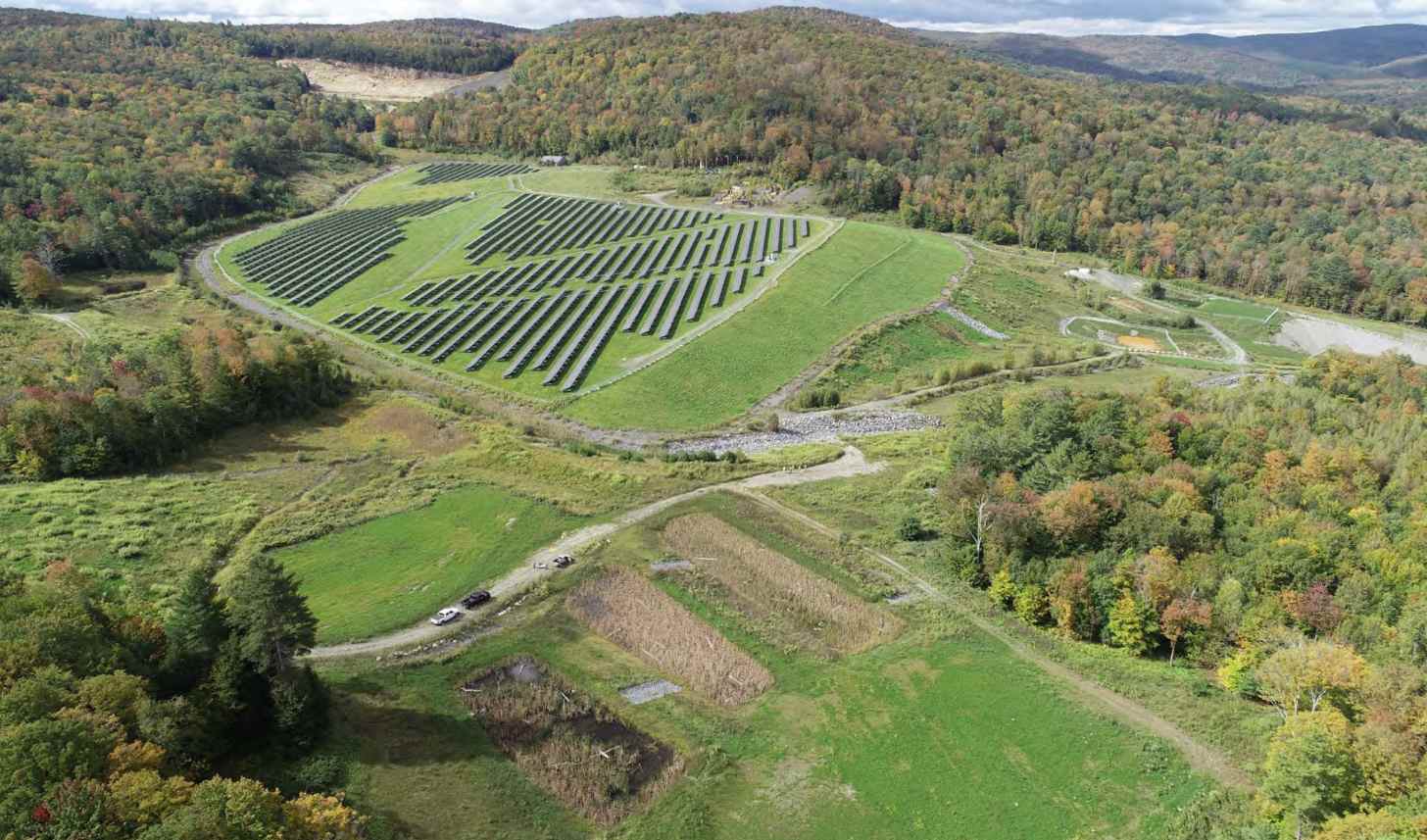
After convincing local leaders and hesitant neighbors, the project was approved, and 20,000 solar panels were installed across the 45-acre site formerly home to the Elizabeth Mine in 2021.
Now, it generates enough power for every home for Strafford’s 1,100 residents — and then some.
“This 20,000-panel solar field generates an average of 8.7 million kilowatt-hours of electricity each year, enough to power 1,333 typical Vermont homes,” the city writes on its website, “and offsets the generation of 7,136 tons of carbon dioxide greenhouse gas.”
Now, Freitag is proud of his town’s power — and it seems Kahan is, too.
“It’s not always perfect, but communities can work with federal officials and have something positive come out of it,” Freitag told The Nature Conservancy in 2024.
“The Elizabeth Mine is an excellent model for putting solar in the right place, and it’s applicable to many other mines. Now my hope is that we can help other community leaders do the same.”
With a Billboard No. 1 debut for “The Great Divide” in April — and all 21 songs from the album charting on the Hot 100 — hopefully, this Strafford Easter egg can inspire a surge of support for renewable energy, too.
You may also like: L.L. Bean donates $100k to Noah Kahan's Busyhead Project: 'It's going to make a huge difference'
Header images courtesy of Universal Music Group and the City of Strafford