Sea turtle nesting season is officially upon us.
What this means is that from late spring to early fall, beaches throughout the Americas become a vital nesting ground for the world’s endangered sea turtle species.
Mother turtles come to beaches and carve out a nest to lay their eggs, soon returning to the ocean. Conservationists and local volunteers often work to monitor these nests and ensure predators and other outside forces do not harm the eggs, and later, the hatchlings.
It’s also an opportunity for researchers to gather data about population sizes, behaviors, and more information about these turtles and their behavior.
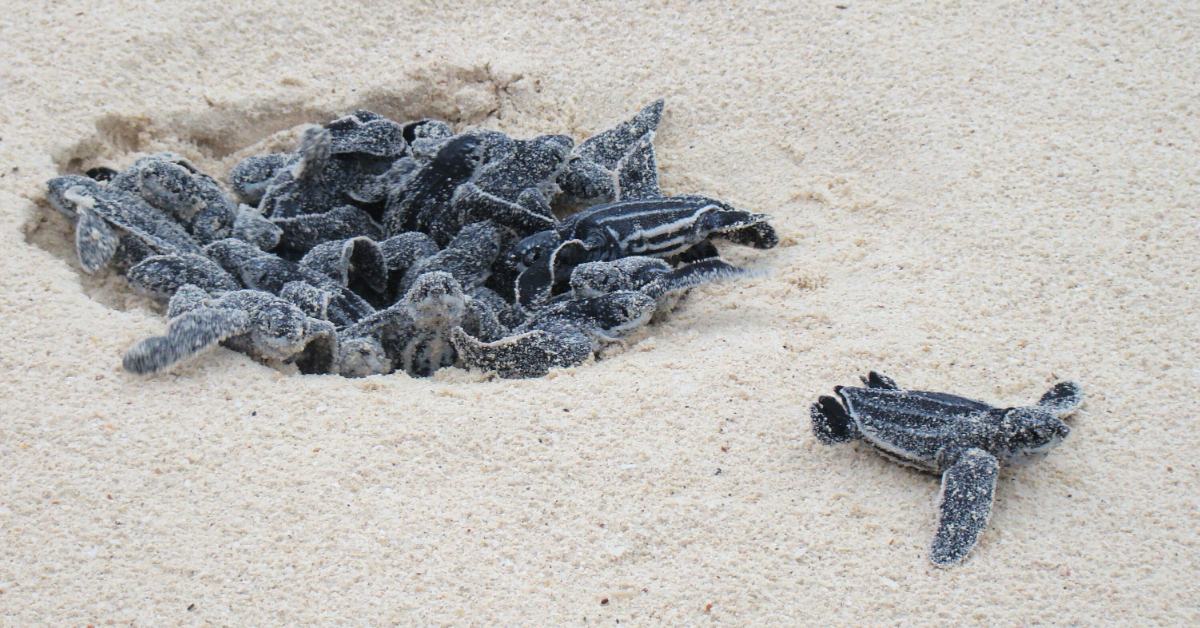
And researchers at Gumbo Limbo Nature Center and Florida Atlantic University in Boca Raton are excited to report that they’ve seen a record-breaking season for endangered leatherback sea turtles.
So far, the nature center has documented 42 leatherback nests in the area — more than double its typical annual average, and coming in as the highest number ever recorded locally.
“It’s huge,” Dr. Jeanette Wyneken, professor of biological sciences and director of the FAU Marine Science Laboratory, told WFLX News. “To go all the way up to 42 nests means there’s a lot of turtles nesting this year, which is good news for that species.”
Leatherback sea turtles flock to Palm Beach County every year to lay their eggs, making the area a critical hub for the species. In fact, beaches in this county account for roughly 50% of all leatherback nests in Florida, according to the state’s Fish and Wildlife Conservation Commission.
The species is the largest sea turtle species in the world and can weigh up to 1,500 pounds. They are also unique as the only sea turtle species that lacks scales or a hard shell. Named for their tough rubbery skin, leatherbacks have existed in their current form since the age of the dinosaurs, NOAA Fisheries explains on its website.
These turtles can swim over 10,000 miles a year between nesting and foraging grounds and face numerous threats. The population is on the decline, primarily due to fishing bycatch, hunting, and collection of eggs for human consumption. Pacific leatherback turtles are most at-risk of extinction.
So, all of this means that the species rides on the success of a fruitful nesting season.
While the numbers in Boca Raton are encouraging, scientists caution that it’s too soon to tell if they signal a long-term population recovery. Most nests are home to nearly 100 eggs, but it’s estimated that only 1 in 1,000 survives to adulthood in the wild.
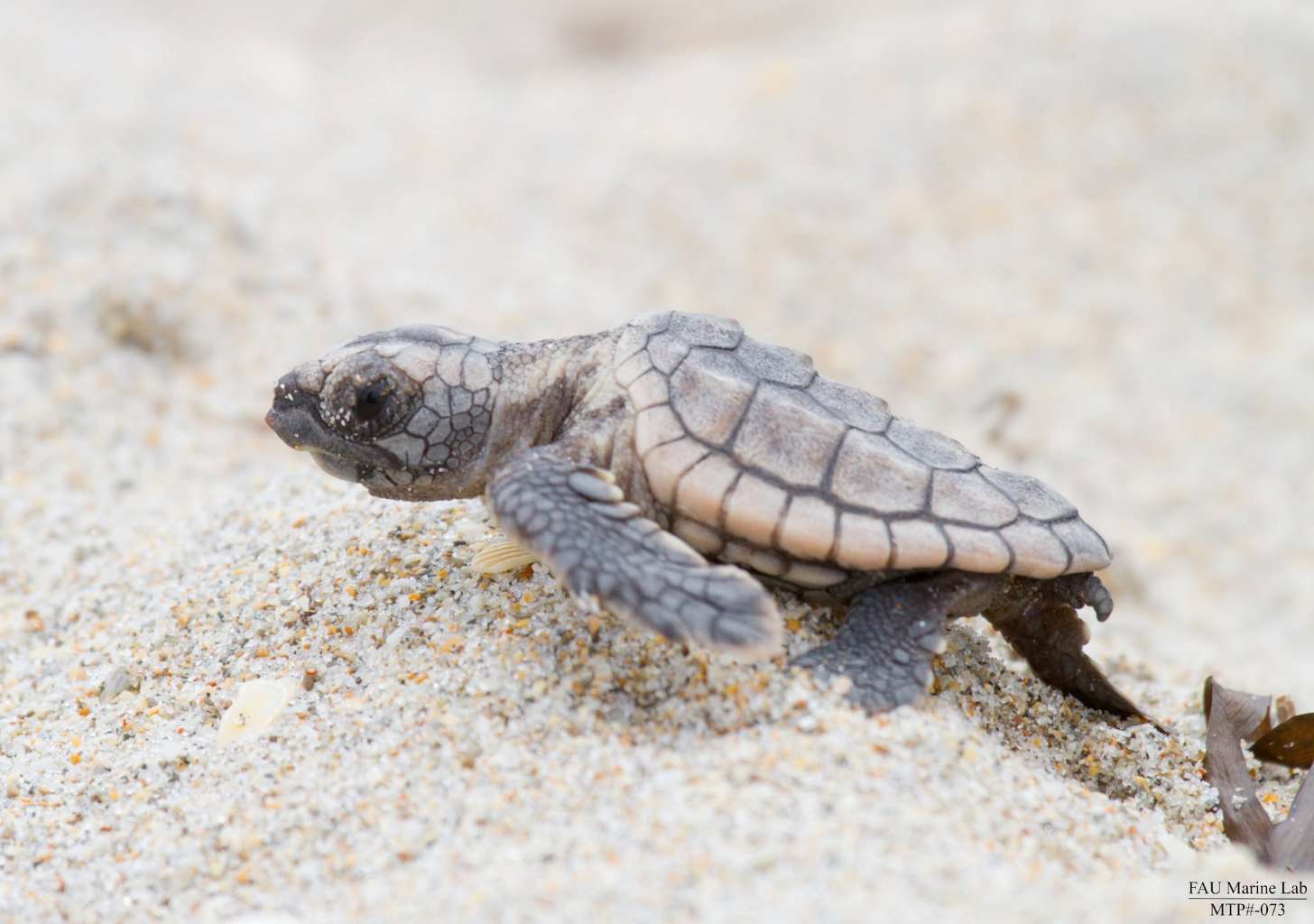
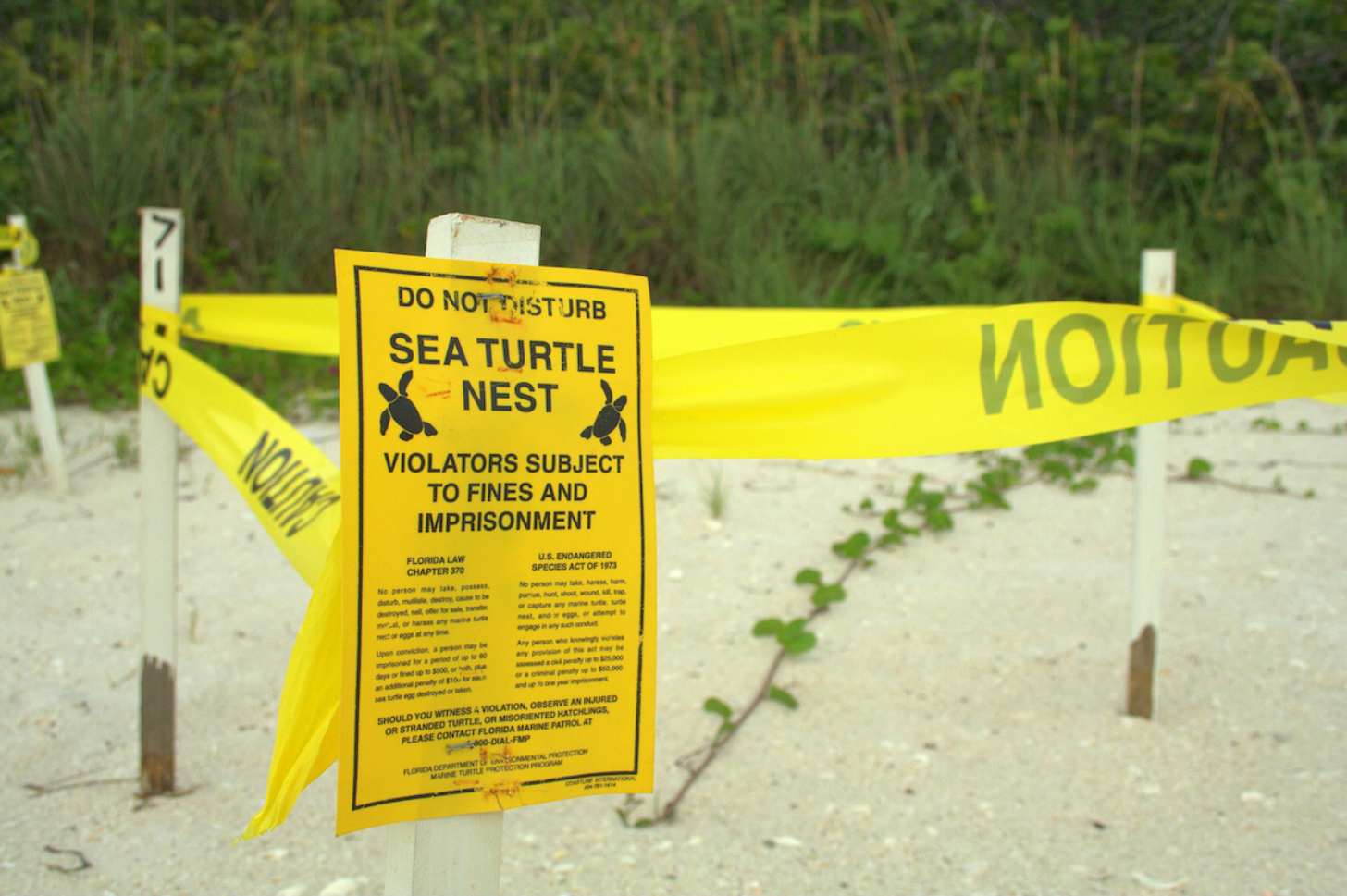
Students at the FAU Marine Lab work hard to ensure the safety of these hatchlings throughout nesting season, providing signage and boundaries near nests on the beach, and studying environmental changes to better understand what the baby turtles are up against.
“What’s exciting is that many of these nests were laid earlier in the season when temperatures weren’t as high,” Emily Turla, laboratory coordinator at the FAU Marine Lab and a Ph.D. student studying integrative biology, told WFLX.
“I’m hopeful we’ll see strong hatching success and a lot of baby turtles getting their chance out in the ocean.”
You may also like: This sea turtle hatchling was barely a pound when he was rescued. 6 years later, the 220-pound loggerhead is ready to swim free
Header image by Elise Peterson (CC BY 3.0)