


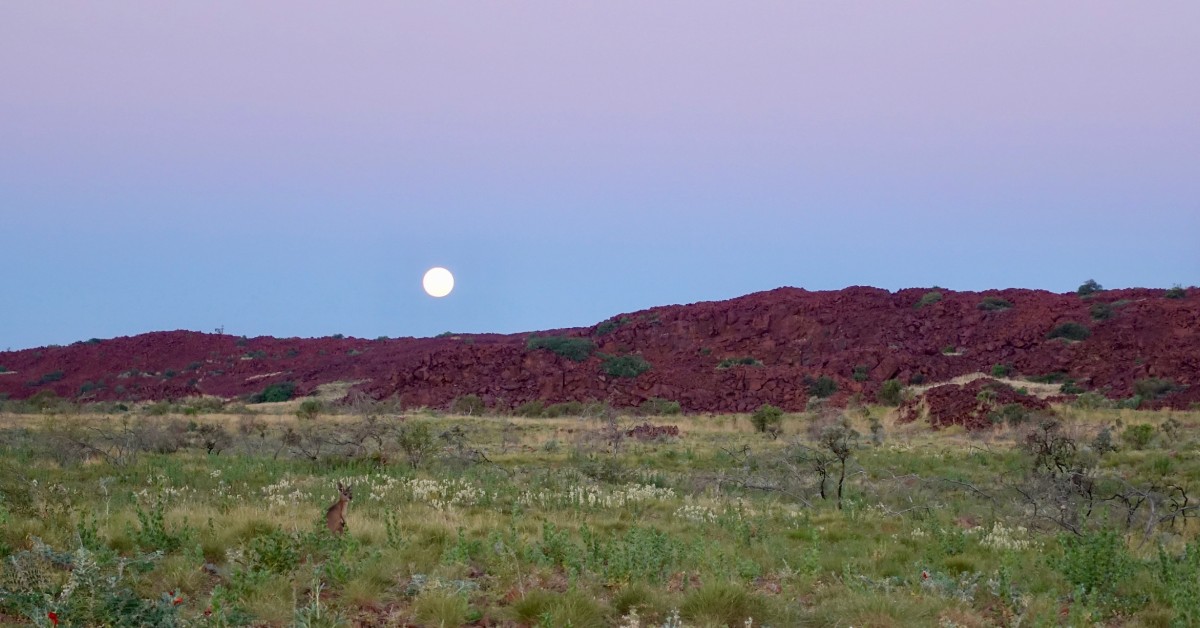
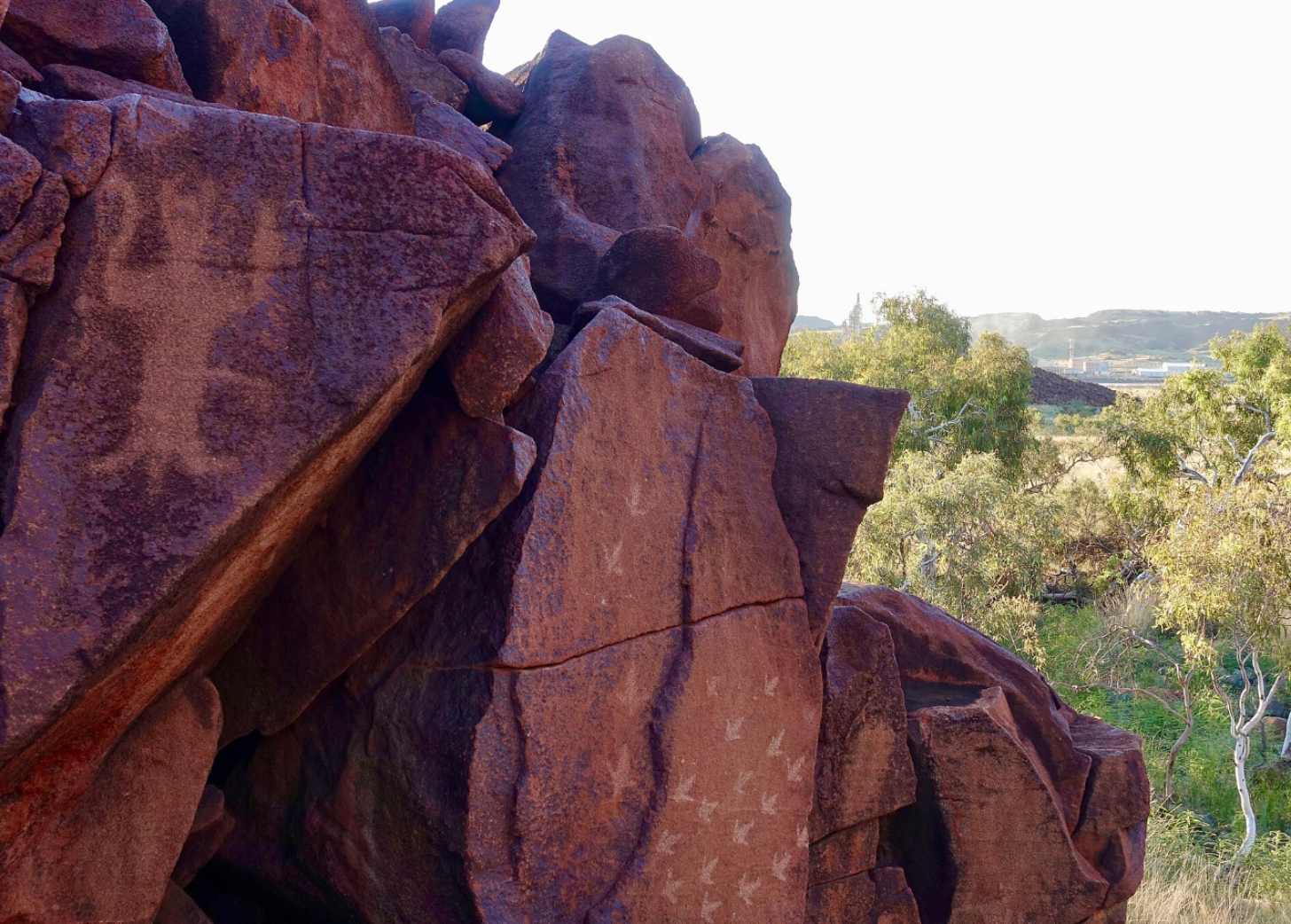
One of the world’s oldest art galleries is not hanging on the walls of a museum exhibit; it is carved into the red-rock faces and wind-blown outcrops at Murujuga in the Pilbara region of Western Australia.
There, thousands of generations of Ngarluma, Yaburara, Yindjibarndi, Mardudhunera, and Wong-Goo-Tt-Oo people have carved stories into the rocks.
Vincent Adams, a Yinjibarndi man and Murujuga Aboriginal Corporation director, says the rock art is a portal to the past, indicating traditions, spiritual customs, warnings, messages, and more. Together, they tell stories that are up to 50,000 years old.
These stories are called songlines.
“We have symbols that have been marked around the burrup that tell us we are in a sacred place, special place,” Adams told the Australian Broadcasting Company. “It tells us places, things that we want to do, how we can do it, where we can do it, what tools we need to do it with.”
As he toured the site, he pointed out certain images to ABC reporters, like ceremonial sites and extinct animals.
“You'll see animals that are no longer here no more, all wiped out,” Adams said. “Megafauna they call it.”
Adams is one of many “custodians” of Murujuga who protect the engravings and share stories of the region’s past.
In July 2025, he traveled to Paris to testify before the UNESCO World Heritage Committee, arguing that industrial emissions from gas processing facilities like the neighboring North West Shelf Project could lead to the degradation of the site, which contains a rock art collection of up to two million petroglyphs.
Just two weeks after Adams flew to Paris to plead his case, Murujuga was officially added as a protected UNESCO World Heritage site.
Under this designation, it receives the highest level of global protection, which obliges the Australian government to safeguard its integrity in coordination with the Aboriginal people.
But even before the decision was handed down, Adams told ABC that he was confident that Murujuga would long outlive capitalistic endeavors — even if another obstacle presented itself.
“One day [they] will be gone. This will still be here,” Adams said. “People like me will be telling that story in 200, 300 years' time.”
A version of this article originally appeared in the 2026 Storytelling Edition of the Goodnewspaper
You may also like: Bolivia's Indigenous communities have helped protect nearly 1 million hectares of the Amazon rainforest
Header image via Marius Fenger (CC BY-SA 4.0)


