As a young journalist, I have spent a good chunk of my professional life trying to convince people that “the news” and “the media” aren’t bad — but rather, nuanced.
While there is a big conversation to have about the news industry in America, how information is disseminated, and how we all have a responsibility to be critical thinkers in this late-stage-capitalism zeitgeist, I hold onto the belief that news is inherently a tool for radical empathy.
I hold onto the belief that it is a human right to have equitable access to information; that what we do with that information matters; and that being a privileged participant in the sharing of that information is a major responsibility.
However, it’s a hard, messy job being an engaged human in this day and age.
There’s a lot of information floating around out there, and many of us are constantly connected to that information. We’re feeling burnt out, overstimulated (and somehow also understimulated?), and exhausted.
We have all become reporters in one way or another, sharing and disseminating what we find important, and we have assumed the role of influencers in our circles — no matter their size. We have the noble and human responsibility to keep up with current events, so it’s up to us to do that with intention, discretion, and insight.
Good Good Good is your hub for good news and great solutions from all around the globe, but not all the news you consume is going to be as hopeful as what we publish here (bummer, we know).
We’ve compiled some advice from experts that can help you approach the news with a little more purpose, and hopefully, a little less panic.
So… should I stop watching the news?
First of all, we’d recommend reading your news instead of watching it. Graphic visuals of war and conflict don’t quite help to alleviate anxiety, and we find that written reporting is often more detailed and accurate.
But, no. Please don’t stop consuming news.
When we have the privilege to not be directly involved in conflict, social issues, or climate change, we have the responsibility to show up and care. That means we need to stay up-to-date.
However, if you’re feeling overwhelmed or anxious, you’re not at your best to show up for the causes you care about — or to show up for yourself. It is perfectly fine to take a break from the news.
That being said, how do we manage our news consumption while adhering to the duty of staying responsibly informed? How much information should we be consuming on a daily basis? Are my five free articles really the limit?
Let’s explore how we can think critically about our news consumption and set meaningful boundaries.
How to read the news without getting depressed
One of the most universal words to come out of recent years is “doomscrolling:” a phrase that describes the act of obsessively reading the news, even when it makes you anxious. My poison of choice is reading dozens of articles to find out when exactly I might get COVID-19. It’s not great.
In a 2020 study from the American Psychological Association, 56 percent of Americans who follow the news regularly reported that it causes them stress. And we know that chronic stress can have lasting effects on the body, including threats to the musculoskeletal, respiratory, cardiovascular, endocrine, gastrointestinal, nervous, and reproductive systems.
So, perhaps when my stomach acts up at the thought of clicking on another New York Times article, it truly is the real deal.
Let’s start with these tips:
Set boundaries with your news consumption
We’d suggest setting timers for your digital wellness using the settings on your phone. You can limit your exposure to certain apps or social media platforms that may be the source of your doom-scrolling.
You can also practice setting boundaries IRL. Perhaps you communicate with your circle that any news about a certain topic is off-limits for a day.
For me and my COVID-19 anxiety, I’ll remind myself and my loved ones: “I know everything I need to know to be safe at this moment. I’ll come back to learn more when I am ready, or if something urgent comes up.”
Experts also suggest a concept called “worry time,” where people can (attempt to) limit their ruminating time to a select time frame each day.
Perhaps you set aside 45 minutes each evening to check up on the news, process it, and compartmentalize. You can set an internal boundary to keep your news consumption to a necessary minimum and contain your overwhelming thoughts to a specific time of the day.
When it’s not that time, you can say to yourself: “It’s not time to worry about that just yet. I will think about it later.”
We know it’s not always that simple, but creating routines and processes can help us navigate overwhelming information on our terms.
Putting a cap on how much time you spend consuming news and thinking about news gives you the freedom to learn with greater intention and care.
Balance the bad news with information that makes you hopeful
Good Good Good was created for this exact reason! While we certainly cannot control the heartbreak people experience around the globe, we can celebrate those responding with creative solutions.
Balancing big, scary headlines with stories that inspire hope, optimism, and resilience is a great way to level up your empathy, add context to the major news stories of the day, and bring a little balance to your life.
Here are our 12 favorite places to find good news.
Channel your news fatigue into empathy and action
We get it. You care a lot about the world and the injustices surrounding you every day. However, we’ve found empowerment and beauty in using the scary news as a catalyst for action.
Next time a news article leaves you feeling scared, overwhelmed, or in a little personal pit of despair, we challenge you to ask yourself, “how can I help?”
This could be in the form of a donation to a reputable nonprofit or mutual aid fund, an afternoon volunteering to help underserved members of your community, or maybe it’s finding a podcast or book that teaches you more about areas where you can use your unique talents to make a difference.
We work on collecting resources and opportunities for folks to help in the midst of global conflict, threatening legislation, or any other sort of social challenge. Visit our Take Action page to find ways to be a helper and find hope in the heartbreak.
How to read the news critically
Now that we know how to set personal boundaries to consume the news, it’s important that when we do unfold that front page, we’re doing it right.
We wish staying informed about the big topics of our time was as easy as simply waking up every day, reading a couple of headlines, and moving on. However, we know that to read the news critically, we need to put in a little work.
“Challenging ourselves is very, very hard,” Harleen Kaur, co-founder and CEO of Ground News said in a Sounds Good podcast interview with us in 2021. “We all need to do it. In this world where we’ve gotten used to everything being reduced to a tweet, it’s the only solution. There is a whole movement of mindfulness and putting more thought into how we do things, and I think this has to translate to our news consumption, as well. Sometimes the issues are not straightforward enough to put in three lines.”
Read the full article
The best way to put in that work? It sounds obvious, but it needs to be said: fully read the news article at your fingertips.
We’re all guilty of reading a headline and taking it at face value, but even the best headlines cannot fully encompass the details or conflicting viewpoints of a current event. It is vital to fully read a news article, especially before sharing it or establishing an opinion.
Seek an opposing viewpoint
Sometimes a full article can’t even fully encompass the details and nuances of world events — so we urge you to also look at an opposing viewpoint to what you’re consuming.
Now, when people hear that, they often think that they need to flip on a channel with pundits they would never agree with, or get into a heated argument with the aforementioned Facebook-savvy relative.
We’re not asking you to subscribe to a partisan news outlet, or risk your peace by reading the comment section, but rather, to thoughtfully examine a different perspective.
If you’re consuming international news about a big issue, consider zooming into a local outlet. If you’re confused about why a certain demographic is supporting a political candidate, find a cultural publication or writer who could speak to a lived experience. Looking at an opposing viewpoint may even be as simple as following two different reporters from the same news outlet and considering how they approach stories from different angles.
Think twice before sharing
Lastly, be careful about what you’re consuming and sharing. Fake news does exist, and disinformation thrives off of our quick-tapping thumbs and hurried news consumption.
Before you share an article, take some time, ask meaningful questions, and follow the steps below to most effectively use your critical thinking skills when it comes to the news.
Questions to ask when reading the news:
Spotting fake news can be easy — like when publications or social media platforms post things that are overtly sensationalized, or when a website doesn’t look official or well-vetted.
However, sometimes false information hides in plain sight, and sometimes we just need to check our bias before sharing something. Common Sense Media has a great guide to help children develop their media literacy, but we think it’s great for all ages! Our questions are inspired by this guide to help you identify misinformation or think more critically about the information you just read:
- Who made this? Is this publication reputable? What have they published in the past?
- Who might benefit from or be harmed by this message?
- What is left out of this article that I think could be important?
- Who makes money when I read this article?
- What questions am I left with? Is more information available outside of this source?
- What am I missing?
How to spot fake news:
As much as the term “fake news” is thrown around by politicians, real and scary disinformation campaigns exist in the world, and they put real journalism in danger. It’s so important to be thoughtful when you find new information. Here are a few ways to spot fake news and vet the source of your information:
- Look for unusual URLs or site names. Is this website secure? Is it trying to look like a legitimate news site?
- Look for signs of low quality, like bad grammar, bold claims with no source, words in all caps, or tabloid-like images.
- Read a website’s “About Us” section to learn more about the publication, its funding, and leadership. This section can usually be found at the very bottom of a webpage, but if this section doesn’t exist, your source is likely not the best place to get important information.
- Check Snopes — a great fact-checking resource — and do your own research on Google before sharing news.
- Check to see if other credible, mainstream outlets are reporting the same news. Dig a little deeper before taking this new information as fact.
- Turn inward. What emotions are stirring as you read this piece of information? Fake news is meant to elicit a reaction. Is this too good (or too bad) to be true?
How to decrease bias when reading the news:
We all have internal biases that impact our view of the world. Many of us like to consume news based on these biases, finding publications that prove us right, or fuel our fire just a little more.
Can we challenge ourselves to step outside of our echo chambers and approach the world a little more mindfully and authentically?
“There are people from a variety of backgrounds, from a variety of political beliefs, religious beliefs, who are interested in seeking the truth, who are interested in having conversations based on facts,” Sharon McMahon, host of Government for Grownups, said in a Sounds Good podcast interview with us in 2021.
Here are a few ways to be mindful about bias and continue to seek truth when breaking news hits the headlines:
Detecting our own bias
Lots of folks like to pick a favorite news outlet and stick with it, so they have one consistent narrative to rely on. However, this can further our confirmation bias and make it hard to truly learn new things. It is so important to hear from different sources, viewpoints, and perspectives, to get the full picture of a piece of news.
We’re not asking you to ditch your NPR subscription or sell your New Yorker totes at your next garage sale, but we do urge you to continue to check your trust in your favorite publication by consuming something new — something that enables you to ask questions and check your blind spots.
Another great tool is Ground News, a website and free browser extension that assesses news and empowers consumers to think freely and critically about the issues of our world. Ground News has a rating system that shows readers percentages of political bias on each article, allowing you to consider the source of your news every time.
Holding media outlets accountable
Just like us, reporters and publications operate with bias, as well. This is unavoidable — we are all human beings! Bias is to be expected in a world where we all exist with intersectional identities and have personal stakes in day-to-day events, but that doesn’t mean bias needs to infiltrate all of the media we consume.
Many media companies — especially social media companies — make money from various corporations, investors, and stakeholders, which can impact the kind of reporting they do. Perhaps they hide certain topics behind a paywall or don’t publish as many articles about climate change or racial equity. That is an issue.
Here’s the good news: we are not passive consumers of information, and we get to be involved. If you are disappointed in the coverage of a certain issue by a publication or writer, you have every right to let them know (in a kind, productive way — no bullying reporters allowed!).
Send a letter to the editor, an email to a reporter, or give your local news station a call. Hot tip: if a news outlet has transparent contact information on their website, this is often a sign of a reputable publication!
We have a great guide to get you started in contacting a media outlet in a respectful and constructive way.
As a child, Lorenzo Lewis spent endless hours in a barbershop owned by his aunt, reveling in the banter, laughter, and murmured conversations between barbers and their customers.
“I grew up in my aunt’s barbershop, and it was a safe, comforting place,” he recalls.
It was the cornerstone of the Black male community, a combination of beloved social club, lounge, and salon.
The barbershop would surface again in his late 20s, when Lewis worked as a case worker with troubled teens at an Arkansas juvenile detention center. Many were African American males who suffered from trauma, depression, and other mental ills linked to their rough childhoods, but almost none of them had received any treatment before their encounter with the law.
Lewis came up with a novel idea: Since African American boys and men had little access to therapy, why not bring therapy to them?
The ideal setting for that therapy, he decided, was the barbershop.
Lewis had already tried in vain to hold town hall meetings to bring Black men and youth together to talk about mental health. “That didn’t work at all: Men just didn’t come,” Lewis said. “So we decided to try talking at barbershops,” a “safe, non-judgmental space” where men could let down their guard and talk about anything.
In 2016 he founded The Confess Project, a nonprofit based in Little Rock that trains barbers to be frontline counselors for clients who are depressed, traumatized, or even considering suicide.
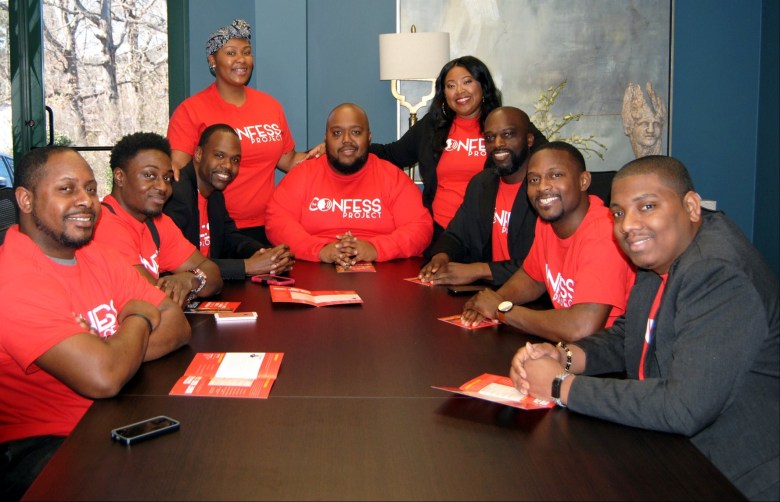
Traditionally, African American men have been loath to seek therapy for fear of appearing weak, but they are used to opening up to their barber, Lewis says.
“We wanted to build a loving community around them in which men could talk about their pain without being told to ‘man up,” he says. “We want to give ordinary people a voice, letting them know their stories hold power and sharing them can make a difference.”
With some seed funding, Lewis embarked on the journey to begin training barbers to become mental health gatekeepers. “The Black barbershop is where we go to be seen, heard, and celebrated,” he says.
The goal of The Confess Project is not to train barbers to be therapists, he explains, but rather to become mental health advocates, spreading awareness and destigmatizing mental illness.
"Ever been told to “man up” when all you wanted to do is cry? Wished there was someone to talk to who understood where you were coming from? Had a moment when all the -isms in life were too much to bear?
We’ve been there."
— from the confess project website
Interested barbers receive training around four pillars: active listening, validation, stigma reduction, and communication.
They’re taught to look for subtle changes in personality, such as withdrawal, lack of affect, or changes in grooming that might signal clients are depressed, anxious or isolated.
That way they can counsel them and direct them to other resources as needed, such as therapy, a pastor, or suicide prevention services.
In an initiative called “Beyond the Shop,” Lewis visited barbershops across the South and Midwest to spread his campaign. Barbers listened and joined in while they cut hair, and clients often jumped in, too.
Sometimes Lewis illustrated his point in a role play with a colleague, a Black youth in a white mask. In one taped interaction, Lewis asks the masked youth how he is doing. “Good, good,” the young man replies dully. As Lewis probed further, it turns out the young man is feeling suicidal.
The white mask, Lewis explains, “symbolizes the stigma of mental illness, the way men hold in their feelings, the mask of toughness that can create a sort of toxic masculinity that leads to toxic stress.”
In the role play, the young man has to take off his mask before he can share his feelings of despair and allow someone to help him.
The Confess Project teaches barbers how to see beyond the mask – recognizing signs of depression and steering men and youth to help.
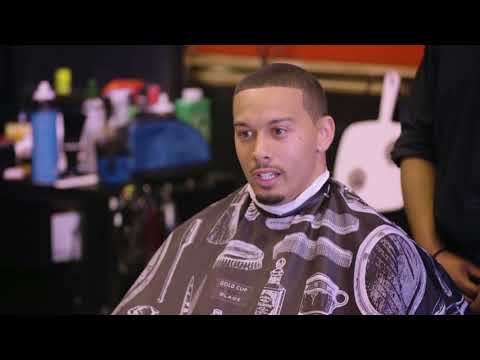
After enlisting barbers in Arkansas, Kentucky, Tennessee, South Carolina, Georgia, and Louisiana, he and his colleagues added videos and online classes to their outreach.
Since its founding in 2016 in Little Rock, The Confess Project has trained over a thousand barbers in 40 cities across 15 states, reaching more than one million people. It has grown from a team of two crisscrossing the country in a van to a staff of 15, and recently relocated its physical headquarters to Atlanta, with satellite locations in Little Rock and Los Angeles.
Lewis gives regular talks to churches and students ranging from kindergartners to 12th graders, and The Confess Project works with city governments, universities, and other organizations on mental health issues.
Most recently, he entered a new role, Chief Visionary Officer, and hired a new CEO, Dontay Williams, to take over operations.
The organization has also begun an ambassador program, which teaches barbers in a particular state or region how to train other barbers to be active listeners, provide emotional support to their clients and serve as a segue to mental health services, allowing the project to scale up more quickly.
Barber Craig Charles, who owns Craig’s Crown Cuts in Johnson City, Tennessee, is among those ambassadors. “The way The Confess Project has affected my life and my students is monumental,” he wrote the organization in a testimonial.
“The training has given me a whole new perspective on listening. Understanding cues, when someone says they are hurting, it’s not a time to take lightly, dismiss or bypass their feelings. (It’s) an opportunity to be a resource and an advocate for someone in need.”
Interviewed by the Johnson City Press, he elaborated: “Barbers are a pillar of the community. You have certain conversations with customers … when we realize the conversation is going a certain way, we can give them resources. I have personal relationships with my clients, and we have confidential conversations all the time.”
Barbers as first responders
The work is especially important because African Americans are more likely than any other group to have post-traumatic stress disorder but are less likely to be treated for it than whites, according to a study in Psychological Medicine.
Compared to whites, Blacks also experience higher levels of violent victimization and chronic stress, and suicide is the third leading cause of death for Black males from childhood to age 19.
This is where barbers can serve as first responders, Lewis says, offering support to clients and talking about self-care. They can also serve as trusted guides to therapists and support organizations that are culturally sensitive.
This is important, says Lewis, because after about a decade of working in psychiatric hospitals and behavior homes for children, he began to recognize a systemic issue within the industry that he hoped to address: a lack of Black male representation.
“A lot of the people were never getting the full help that they needed because they couldn’t be seen for who they really were in their blackness,” he says. “Being able to connect with people who looked like them and could help them…That wasn’t there.”
Studies have shown that mental health patients do better in therapy when they feel more aligned with their counselor, and though race is not the final determinant, it can be a key factor in fostering trust and authenticity in the client-counselor relationship.
Small wonder The Confess Project is widely recognized as one of the leading advocates of mental health for men and boys of color.
Lewis hopes to recruit men who are in recovery from struggles with mental health or substance use, including those released from prison, to join the initiative.
“We want to help people work with their trauma and ACEs (adverse childhood experiences) so they can heal,” Lewis says.
In fact, Lewis credits a barber for helping him through his own mental health woes.
It’s part of a story Lewis shares with barbershop audiences. Born in a jail cell in Secaucus, New Jersey, to incarcerated parents, Lewis was separated from them and sent to his aunt and uncle in Little Rock.
Both his parents died when he was young. At age 8, he was in school when he found himself weeping about the loss of his father.
His teacher, rather than comforting him, told him to stop crying and “man up.” He was devastated.
As Lewis recalls, society taught him early on that as a young African American man, showing any emotion was a sign of weakness.
“As a result, I bottled up the depression, anxiety, grief, and anger,” he said – something that led him to feel lost and alone and eventually to join a gang at school.
At 17, he was seeking revenge on someone who had jumped his friend at a basketball game and got caught in a high-speed chase in which a gun was thrown out of a car.
Lewis was given a three-month sentence, after which a judge reduced his felony to a misdemeanor.
This close call changed his life, he says, and he applied to college after college, finally getting accepted to the HBCU University of Arkansas at Pine Bluff, finishing his bachelor’s degree in human services at Arkansas Baptist College, and going on to earn a master’s degree in public administration at Webster University.
Yet despite so many things going right in his life, he didn’t feel whole.
At the barber shop, his aunt and a barber encouraged him to seek out therapy to deal with the deaths of his parents.
“I felt empty at that moment, and part of that was because I didn’t grieve,” Lewis says. “I didn’t get to process, and I didn’t get to heal. I needed to connect with being happy, but also connect with healing. And that’s when I realized therapy was going to be powerful.”
Lewis also praises the mentoring he received from a barber in his aunt’s shop named Sylvester, who took it upon himself to encourage him and the other young men he served to be positive while steering them away from trouble.
“These were people that were already mentoring us in a way that really kept us from going too deep out sometimes,” he says.
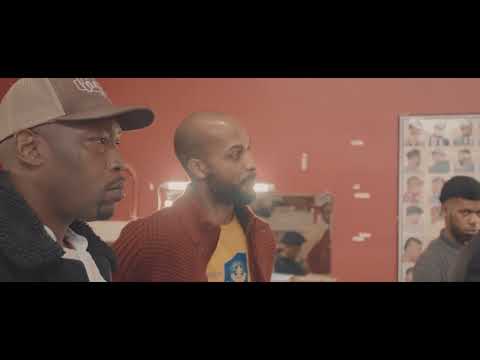
Lewis used his newfound energy and strength to start The Confess Project and to deal with the challenges that abounded.
He discovered that therapists – only 4% of whom are African American – generally had “zero understanding” of the historical and racial trauma in the Black men they served.
Finding a way to make therapy and religion coexist in the South was another hurdle, Lewis says, because for many Blacks, stigma around mental illness is tied not only to the larger society but to the Black church. Still, he says, “praying is a powerful tool. We can pray and get help, right? So it’s having a level of resilience to realize that you can do work on both sides.”
The name for The Confess Project itself is drawn from “confession” in its biblical sense: confessing to release yourself in order to become better. “That was the ideology behind it, recognizing that when we confess, we become our best. That’s our mantra,” Lewis says.
The organization’s hard work has been widely recognized, drawing foundation funding, private support and awards from the American Psychiatric Association and the National Alliance on Mental Illness.
It also partnered with Gillette, bringing The Confess Project’s tour to 16 cities across the country and was ranked as the #7 Most Innovative Health Company by Fast Company.
Lewis has been personally honored with fellowships from the Roddenberry Foundation and the Echoing Green Fellowship.
But the work is nowhere near done. Lewis’s plan is to reach 6 million people and train 5,000 barbers by 2024.
“We have to figure out a way to rebuild and to recreate a narrative that joy and wellness is at the epicenter of who we are and that it’s possible for us to thrive and to have quality of life,” he says.
The organization is also advocating for men and youth in hip hop, many of whom are suffering from depression. This is crucial, Lewis says, because Black men often walk around with unprocessed trauma and have come to accept such baggage as normal, something he traces to their history in this country, starting with slavery.
“We’re accustomed to how abuse and how depression has sat on us as a community,” Lewis said. “That has become a normal response and a normal way of how we live. There’s an ingrained programming that does not allow us to feel that we can thrive, but only survive.”
This internalization has led to the ‘man up’ mentality amongst Black men that The Confess Project combats, he says.
Historically, the Black barbershop has long played a central role in the Black community, promoting not just grooming, but camaraderie, mentorship, conversation and community-building.
In Cutting Along the Color Line, author Quincy T. Mills links Black barbers’ financial independence with their ability to support the civil rights and provide a forum for Black health.
“Black men continue to go to Black barbershops because they want to be around Black people,” Mills said in the radio show, Left on Black. “I think that space is ripe for all kinds of health interventions.”
Barbers, Lewis points out, are especially well-suited to reach out to all members of the community.
“They come in contact with your celebrities, your principals, your educators, and even people that are homeless,” he says.
“There is no socio-economic barrier when it comes to a barbershop. You can’t even find that in a church. That’s why it’s so critical that we do this work in a barbershop – it’s the only unfiltered place where people can loudly be themselves.”
This story is part of the SoJo Exchange from the Solutions Journalism Network, a nonprofit organization dedicated to rigorous reporting about responses to social problems. It was originally written by Akintunde Ahmad and published by MindSite News.
When MetroHealth set out to build its new $1 billion hospital campus in Cleveland, it wanted to use sustainable building practices.
That meant deconstructing, or carefully dismantling for potential reuse, parts of the old buildings that it was razing.
Similarly, the Cleveland-based manufacturing nonprofit MAGNET used deconstruction to fashion its new headquarters out of an old school building, the former Margaret Ireland at E. 63rd and Chester in Hough.
The school, which closed in 2004, is slated to become a manufacturing hub which will provide space for entrepreneurs and training for students.
What can be learned from these experiences was the subject of a recent panel discussion organized by the Cleveland 2030 District, a nonprofit advocating for a high performance (also known as “green”) building district downtown and in University Circle.

MetroHealth’s new 300,000 square foot Glick Center tower and 285,000 square foot visitor garage and buildings in Cleveland were designed to meet the US Green Building Council’s Leadership in Energy and Environmental Design (LEED) rating system.
That’s not all, though. Hospital leaders went beyond typical demolition practices and pushed to recycle or reuse materials from the older building.
It’s all part of the hospital system’s aggressive new building goals, which includes meeting the International WELL Building Institute’s standard which has gained popularity with healthcare institutions, and creating the first hospital-led certified EcoDistrict in the country.
“As an EcoDistrict, we have a long-term goal to move forward toward a net positive world, and part of that is diverting waste,” said Sarah O’Keefe, MetroHealth’s new sustainability manager.

A “net positive” building is one that produces more energy than it consumes and lowers rather than raises the amount of carbon emitted into the atmosphere.
Similarly, MAGNET is reusing an existing Cleveland Municipal School District (CMSD) building at E. 63rd St. and Chester Avenue to create a new headquarters and manufacturing education center.
In keeping with a plan to reduce its carbon footprint (the amount of carbon it’s releasing into the atmosphere), MAGNET is deconstructing the building.
Jessica Davis, owner of Rebuilders Xchange, a local business that warehouses and sells salvaged materials like hardwood floors and doors, was hired by MAGNET to remove maple hardwood flooring from the gym at the old school.
Her company also took out slate chalkboards and re-sold them to kitchen renovators.
“We were brought into the conversation early enough to have a plan,” Davis said.
“I really appreciate the team at MAGNET, Bialosky (Architects), and Precision (Demolition) asking how we can do it, and working together seamlessly to do it. Without [that kind of ] leadership, the building gets torn down.”

Both of these high-profile Cleveland building projects are part of what Kristin Hall, Cleveland’s former director of sustainability and now executive director of the Cuyahoga Soil and Water Conservation District, called a new priority for the city — building the circular economy.
The term refers to the cycle that results from keeping materials out of landfills and reusing them to create new products.
The $13 million MAGNET project kept more than 19 tons of material out of a landfill, Davis said.
Experts say integrating deconstruction is an essential part of greening Cleveland’s economy, a goal of the city since 2009, when former mayor Frank Jackson launched his Sustainable Cleveland initiative, a program current mayor Justin Bibb is expected to continue.
“To reach [carbon neutrality], a building has to include reuse,” said Aurora Jensen, a project manager with the sustainable building design firm Brightworks, during the 2030 District panel discussion. “A new building cannot really bounce back from the carbon deficit of not reusing a building.”
Deconstructed projects also help to avoid the high social and environmental costs of dumping building materials in landfills, an act that raises questions of environmental justice.
One example, from O’Keefe: the lingering disaster at Arco, a construction demolition dump that illegally operated in East Cleveland.
“That fiasco affected people’s health,” she said. “Landfills and the physical environment are a major determinant of health, and we know that minority and low income areas are more likely to have landfills.”
Understanding buildings’ carbon footprint

Analyzing the construction industry is Jensen’s job. She knows, for instance, that the high-heat process of making concrete and steel rebar accounts for roughly 85 percent of the carbon footprint of buildings and 11 percent of the global carbon footprint.
That’s why it’s so important to procure concrete and rebar from high recycled content, she said: it drives down carbon consumption.
“LANDFILLS AND THE PHYSICAL ENVIRONMENT ARE A MAJOR DETERMINANT OF HEALTH, AND WE KNOW THAT MINORITY AND LOW INCOME AREAS ARE MORE LIKELY TO HAVE LANDFILLS.”
— Sarah O’Keefe, MetroHealth’s new sustainability manager
What that means to companies like MetroHealth and MAGNET, who are pursuing green building bonafides, is that they will get recognized for considering what is called the “cradle to grave” impact of a building.
The cradle is how the materials came into being — where and how they were mined, for example — while the grave refers to how the building is dismantled. Are the materials deconstructed and donated, or simply discarded?
Jensen demonstrates this with a chart showing three ascending spikes representing the carbon footprint of a typical building.
The cradle is the first and tallest peak, because that is where a lot of carbon comes — in the mining and manufacturing.
The second spike is the longer “use” phase, representing the building’s life span. The third spike is the grave.
This is where MetroHealth and MAGNET shine. The third, or grave spike on their charts are much lower because of the way they tore down or retrofitted their buildings.
Deconstruction takes planning

The key to deconstruction, said O’Keeffe, is planning. MetroHealth started deconstructing a former skilled nursing facility a full year in advance of construction.
It worked with nonprofit groups like MedWish International, Cleveland Furniture Bank, Edna House for Women, and a private construction firm, Encore, to find institutions that would accept and reuse donations of furniture, medical equipment, and heavy machinery such as generators.
The effort paid off. O’Keeffe said MetroHealth found a new home for 60,000 pounds of furniture and equipment.
That’s on top of 11,181 pounds of concrete and steel that MetroHealth recycled when it took down the building at the site of its new visitor garage and outpatient center.
“It can be easier to knock it all down, but it was important [to deconstruct it] because a lot of this can be reused,” said O’Keeffe, noting that deconstruction is being evaluated for other projects, as well.
“Part of this is we didn’t want it to be a cost of trucking and demolition (and landfilling) the waste.”
Similarly, MAGNET hatched its plan early to salvage as many building materials as possible, said Davis.
The team it assembled included architects Bialosky and local demolition contractors Precision Demolition.
Rebuilders Xchange also works with more than 500 salvagers on a regular basis, some of whom came to extract materials from the building, which her company then sells at a 50/50 split.
Bringing up a baby industry
As it stands now, Rebuilder’s Xchange is swimming upstream as a for-profit deconstruction business. Others in Cleveland already have tried and failed.
The main stumbling block is, of course, the labor of pulling thousands of nails from old hardwood 2x4s or carefully removing tongue-in-groove flooring.
Mae Bowley operates Re:Purpose Savannah, a nonprofit that reclaims building materials. Like Rebuilder’s Xchange, she says the resale market is there for architectural salvage items like corbels and decorative finishes.
In a webinar held last August for Center for Community Progress, Bowley spoke of the environmental benefits of deconstruction, saying that “every house we keep out of a landfill equals a person’s total solid waste footprint for their lifetime.”
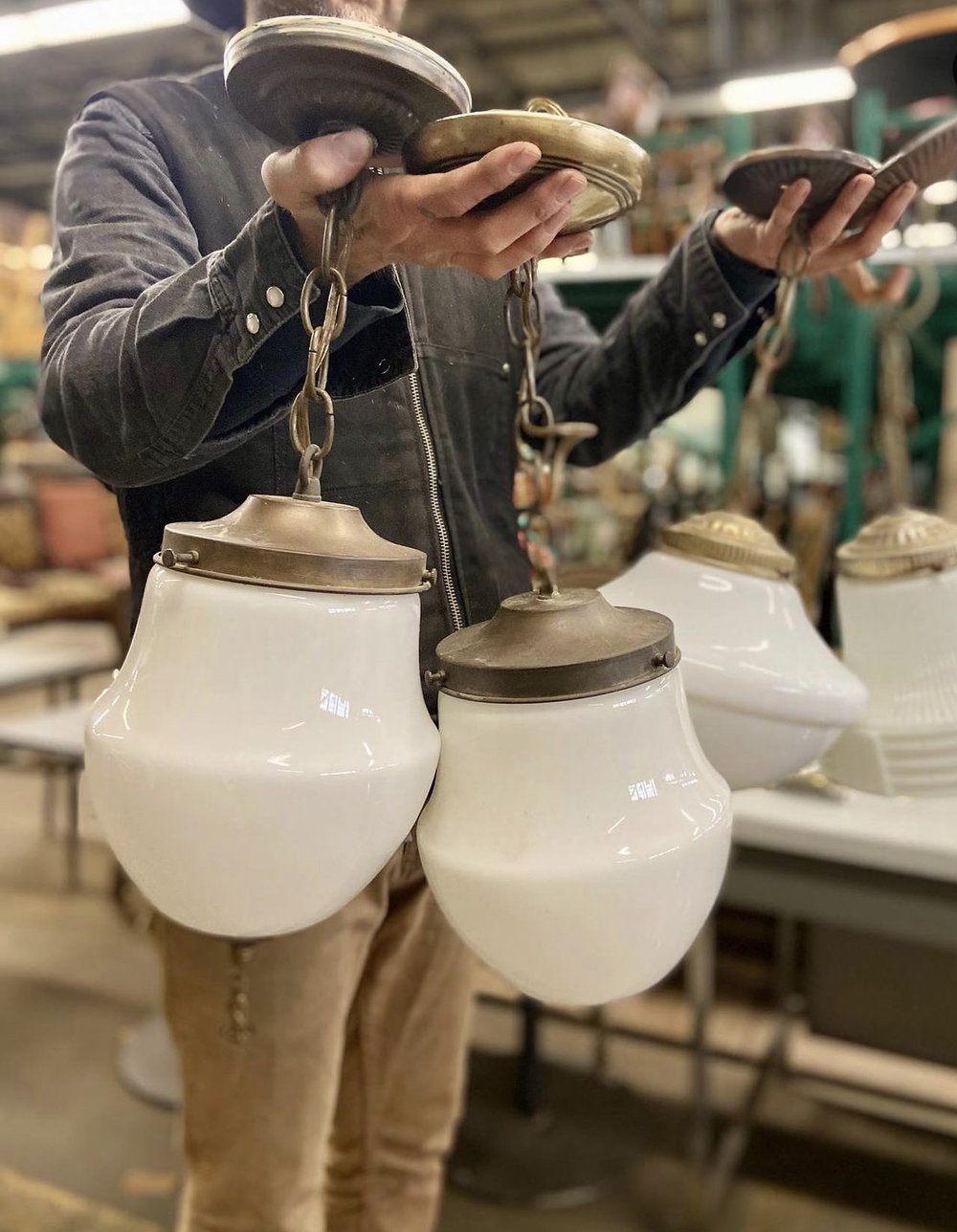
Yet Re:Purpose Savannah is a nonprofit because, simply put, deconstruction costs more than demolition.
It takes six people to dismantle a building to harvest materials for reuse vs. one “bubba in a backhoe” who can crush an empty house to the ground in a day, Bowley said.
Still, there’s recent interest in deconstruction, springing from sudden skyrocketing prices for virgin lumber.
This supply chain problem proved precarious for the building industry last summer, causing delays, scuttling projects, and increasing housing costs by 15 to 30 percent, according to Michigan State University professor and housing expert Dr. George Berghorn.
Berghorn added that it will take national climate policy, like placing a dollar-per-ton price on carbon, to incentivize builders to use salvaged lumber over clear-cut wood.
“Salvage lumber costs $833 per thousand board feet compared to $500 for virgin timber on the stump,” he said.
“It’s better than where it’s been, and can help with some of (the market volatility). With some carbon credits, you would have a national market that can add value to (salvage) products, and to close some of (the price difference).”
Local communities can help by adopting deconstruction ordinances, said Bowley, citing Portland and Pittsburgh, where all court ordered demolitions have to go through a deconstruction process.
As a result, she said, more historic buildings have been fixed up rather than being torn down.
Bowley reiterated the lessons of MetroHealth and MAGNET’s projects — that deconstruction has to be built into the project from the get-go.
“The significantly more time it takes to deconstruct could be met with planning,” she said. “It’s much harder when you wait till the last minute.”
This article was originally published by The Land.
One of thousands of online messages posted on Host a Sister, a free accommodations platform:
"#Ukraine We want to help!!
Where? A small city in Germany.
When? From now for as long as you need.
What? Free guestroom in our house with garden. Also food, clothing, medical care and more if needed. Animal friends are welcome, too. We can pick you up from a station or airport."

As the war rages in Ukraine, an unending stream of horrific imagery flickers across our screens. But go to online platforms such as Host a Sister, Ukraine Take Shelter, Host 4 Ukraine, RefugeBooking, or many other small, local platforms, and you’ll be met with a very different sort of refugee-related content: Offers from people all over the world to help those who have been uprooted and displaced.
The outpouring of generosity, kindness, and compassion is almost as unexpected as the war. When the Irish government set up a website for people to offer accommodation to Ukrainian refugees, so many hosts signed up on the first day that the website crashed.
“War brings out the worst and the best in people,” says Lynda Elliott, the founder of the Refugee Buddy Network.
Rashvinda Kaur, an avid traveler and daycare owner in New Orleans, started Host a Sister in 2019 after reading about female couch surfers facing sexual harassment. The online hosting platform connects women looking for friendships and a safe place to crash.
In contrast to paid sites like Airbnb, all accommodations on Host a Sister are free — even bartering is frowned upon.
On its launch day, Host a Sister got 2,000 requests to join, and now the network is nearly a quarter-million women strong.
“It was just supposed to be a fun thing, but it has evolved into so much more,” Kaur says via Zoom during her daycare lunch break. “Women helping women.”
Until two weeks ago, the site was mostly filled with images of lovely guesthouses in Italy, futons in Berlin, and joyful pictures of travelers celebrating their newfound friendships.
Within hours after the Russian invasion, however, a surge of offers started filling the site: “We have space for a mother and two children.” “Big house, big hearts.”
Most of the pictures of guesthouses and futons are hashtagged #Ukraine.
“We didn’t sleep for 48 hours,” Kaur says of the initial days after the invasion. (The site is entirely volunteer-run.) “I was so worried I would miss a message from someone in need.”
Many refugees land in neighboring countries, especially Poland, where a million Ukrainians were already living before Putin declared war on their country. But potential hosts chime in from Madrid to Berlin, Italian hamlets, and small villages in the South of France.
Farmers in Alabama, mothers in Connecticut, and dentists in Sydney have all posted offers of free accommodation, sometimes including generous assistance with travel fares.
“If you can make it to any international airport,” reads one post, “we can pay for a plane ticket to Texas.”
Where Ukrainian refugees actually end up will depend on individual countries’ policies. So far, a number of Western nations are taking measures to admit them.
The EU is invoking an unprecedented little-known emergency rule that grants Ukrainians the right to immediately stay and work in the EU for at least three years.
In the U.S., the Biden Administration announced that the roughly 34,000 Ukrainians who arrived in the U.S. before March can apply for a temporary protected status so they can legally work and live there.
The U.S. has also signaled that, while it expects most Ukrainian refugees will stay close to home in Europe, it is open to expanding the number allowed into the U.S. beyond current caps.
Host a Sister is especially valuable as adult men have largely remained in Ukraine to help defend their country, leaving fleeing women vulnerable to trafficking. Increasingly, even children and teenagers make their way across the border alone.
Recognizing the vulnerability of the refugees, the administrators for Host a Sister have turned off comments on all Ukraine postings and discourage sharing location details.
Kaur herself has received threats and noticed activity that points to Russian trolls and bots, so is asking everybody to communicate via private messenger and refrain from sharing screenshots.
Nevertheless, thank you notes speak to the success of the endeavor. “My sister is now in the safe hands of a fellow wonderful sister in Slovakia,” reads one that was sent to a host and posted on Host a Sister’s Instagram feed. “God bless you all and may you all never lack.”
Other guest-hosting sites have sprung up specifically in response to the crisis.
On Host 4 Ukraine, an initiative from Churchpool, a social media app for parishes, but with no religious strings attached, people of any nationality and gender can offer accommodation to those fleeing the conflict.
The platform has been promoted by the United Nations High Commissioner for Refugees as a valuable tool for Ukrainian refugees seeking shelter.
The Refugee Buddy Network is another little-known grassroots organization that has been active for years. It is mainly propelled by refugees themselves, who use it to trade information and advice: leads on possible accommodations and jobs, tips on how to navigate the unfamiliar systems of destination countries, and general knowledge of resources that could be of use to someone in transit.
“We are helping the minorities,” founder Lynda Elliott says, “the people with no voice.”
As examples, she mentions a Ukrainian woman who is married to a Yemeni and currently stuck at the Ukrainian border, or the large group of Afghans who settled in Ukraine and are now being pushed to the end of the line.
“We see brown and Black people who are not allowed on buses and trains,” Elliott observed. “There is this otherism that is so entrenched.”
She makes an important point: While refugees from Ukraine are welcomed with chocolates and flowers, refugees from Iraq or Syria are still being blocked at the borders in some of the same countries, especially in Poland.
“I see mountains of donations going to landfill at the Polish border, while I am desperately trying to find resources for a Syrian family stuck at the border under a tarp with a malnourished baby they can’t feed.”
Elliott started the platform in 2016. A corporate consultant living in London at the time, she had no background in helping refugees. She was simply moved by the plight of the people that she saw in the news, especially from Syria, Afghanistan, and Somalia.
“I saw the images from the war and thought, somewhere over there lives a woman like me, with the same dreams and hopes I have.”
With no budget or nonprofit status, the Refugee Buddy Network quickly grew to more than 5,700 members.
It is exactly what the name says: a network where refugees or their friends can post what they need — eye surgery, work, a safe place to stay, personal searches for separated family members — and others can provide whatever knowledge or help they can offer. Sometimes it’s money, usually small sums; more often, it is practical advice.
Frequently, within a day the poster has found what they’re looking for. There were already a lot of Facebook groups when Elliott started hers. “But in many groups, people simply expressed their sympathy,” she says. “What we do is find refugees a buddy. What we hear most from refugees is, ‘I feel invisible, isolated. I have been forgotten.’”
The unbureaucratic nature of these grassroots efforts leads to a little chaos and occasional mistakes. “Once I sent a small sum to a man who was posting as homeless but actually wasn’t,” Eliott says with a laugh. But to her, the many success stories outweigh the missteps.
To mitigate errors like this, Elliott cooperates with local groups whenever possible, but her sprawling, decentralized network has the advantage of being everywhere and anywhere, a good fit for refugees who are often on the move.
As the world throws open its arms to the dislocated populace streaming out of Ukraine, Elliott emphasizes the commonalities inherent to the plight of all refugees, wherever they come from.
“It has been an intense week. It has been amazing to see the offers of support for Ukrainians coming in from all over the world. Not just governments, but normal people everywhere offering accommodation, financial help, psychological support, transport, and more,” she says.
“I can’t help thinking that while the media and people around the world are laser-focused on this most recent war, there are other people who have fled wars in their countries over the last ten years, who appear to have become invisible and forgotten. I’ve read posts from war refugees asking why countries that have closed their doors to them and their kids are now opening their borders for others. It’s so sad. Let’s focus on all the people who have no voice.”
This story is part of the SoJo Exchange from the Solutions Journalism Network, a nonprofit organization dedicated to rigorous reporting about responses to social problems. It was originally published by Reasons to be Cheerful.
You might also like: Meet the organizations rebuilding housing in Ukraine
A tech startup has developed a way to bridge the nutrition gap for families, at least in the short term.
In May 2021, Chelsea Vasquez and her mother caught two metro buses from their Inglewood, California, home to St. John’s Well Child & Family Center clinic, where they had appointments to receive their first doses of the COVID-19 vaccine.
Vasquez’s stomach turned from hunger while in the waiting room. The clock was already approaching 1 p.m. and she hadn’t eaten all day—something she had become used to, but it didn’t make her hunger any less intense.
Vasquez, 17, is the youngest of three siblings in a household of four. Her mother, the family’s sole provider, works as a hotel housekeeper, but even with her income and access to dry goods from the local church pantry and food bank, it’s still hard to keep food in the fridge.
Vasquez says her mother had to take out payday loans with super-high interest rates just to buy essentials like milk and water, and when they shop, they’d catch the bus to the least expensive grocery store and load up on what seemed like a lifetime supply of instant ramen noodle soup.
Even though her family depends on ramen, Vasquez says the soups do more harm than good, especially since her mom and sister are diabetic.
“It’s like 50 cents for one cup of Ramen, but it’s like 300 calories in one cup,” Vasquez says. “We learn in school you need to have your veggies, your proteins, your meat, but [ramen noodles] have no source of vegetables, no source of protein, no source of healthy fats, or anything like that.”
Not knowing where her next healthy meal would come from each day had taken a toll on her, both socially and mentally.
At school, she was too embarrassed to chat with friends about food, and she found herself battling to stay focused in the classroom, which was problematic, because she has ambitions to attend college after graduation.
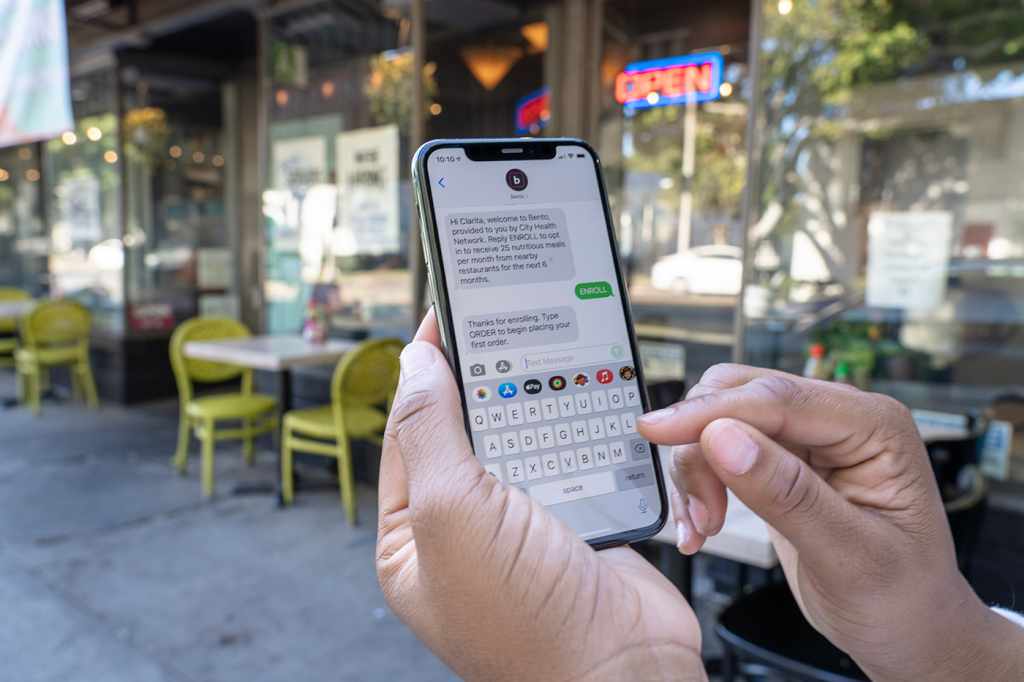
In the waiting room at St. John’s, a worker with Stop the Spread, an organization that helped local institutions like the St. John’s clinic support underserved neighborhoods hit hard by the pandemic, offered to enroll Vasquez’s family in Bento, a pilot health-intervention program that uses text messages to connect food-insecure people and families to prepaid groceries and full-balance meals. (Stop the Spread fulfilled its charter in December 2021 and ceased operations.)
According to Pew Research Center, 97% of all Americans now own a cell phone of some kind, and federal government assistance programs provide eligible low-income individuals with free phones and unlimited texting plans.
In addition, 38.3 million people lived in food-insecure households in 2020, according to the U.S. Department of Agriculture, while Feeding America, a hunger-relief organization, projected that number would jump to 42 million the following year (the final data for 2021 have not been released yet) as a result of the pandemic.
Research has also shown correlations between food insecurity and cardiometabolic diseases, such as heart disease, stroke, and Type 2 diabetes, and a 2019 study funded by the National Institutes of Health estimated that these diseases drive $50 billion a year in health care costs.
The first test market for what became Bento was in Texas in March 2020, when it was used to help the Boys & Girls Clubs of Greater Houston with the growing number of families and children in need of food due to pandemic-related job losses and school closures.
Now spun off into its own for-profit company, Bento sees eliminating food insecurity as a component of preventive health care.
“And if we’re dealing with a low-income population, that part of the health care system are Medicaid members, which is a taxpayer-supported program,” says company co-founder Adam Dole. “So, at the end of the day, this is a taxpayer issue that has never been thought of as a taxpayer issue.”
The Bento Model
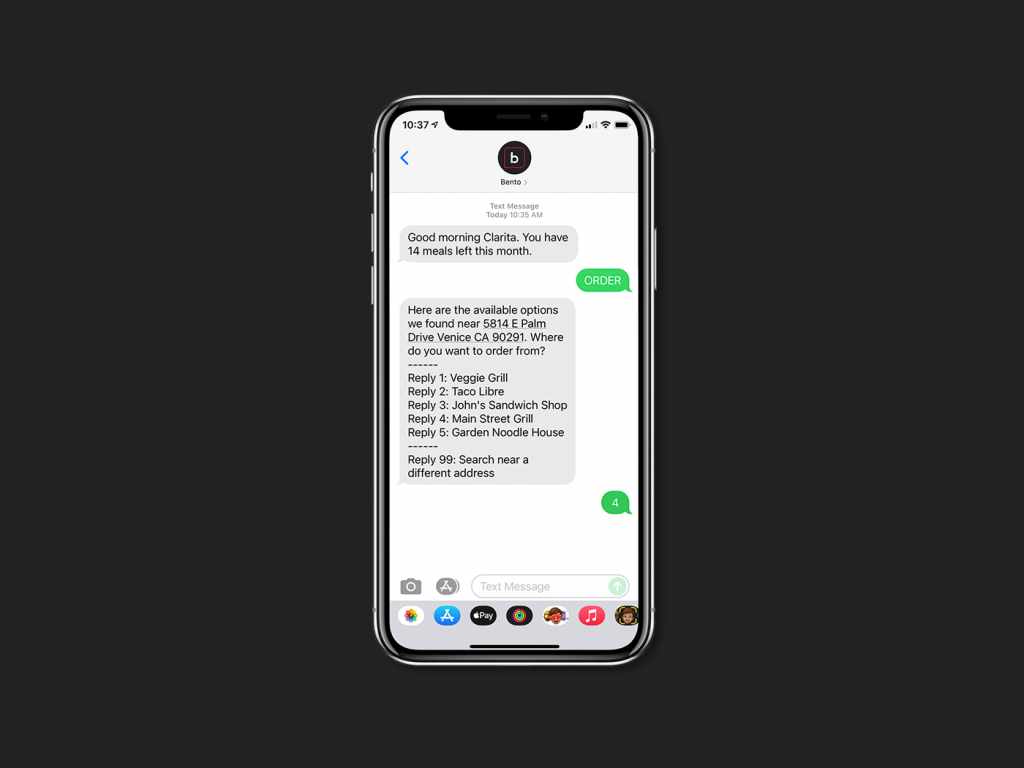
Bento’s text messaging software is integrated with other online ordering platforms, such as Postmates, allowing clients to order meals and groceries tailored to their dietary needs. That data is gathered, logged, and automated during enrollment in the program.
Bento plans to eventually sell its intervention program to the health care industry — especially health insurance companies — because they have the scale needed to improve the health of low-income, food-insecure populations as a whole, Dole says.
As the service rolls out in test markets, Dole says the company will be analyzing the health outcomes of Bento participants to gather more data. They expect to find that focusing on preventive health care results in lower costs for taxpayers and insurance plans that depend on public funding.
“One of the biggest misconceptions is that we have to be a nonprofit to address food insecurity,” Dole says. “We support nonprofits. We want them to exist, but we recognize that that alone isn’t going to solve the problem. There are not enough donations in our country to solve food insecurity.”
Establishing relationships and secure contracts with the health care industry takes a long time, Dole says, so Bento pitched its initial rollout to smaller community organizations that serve food-insecure individuals and families.
Stop the Spread was one of the first organizations to contract with Bento. English isn’t Vasquez’s mother’s native language, so the family enrolled in Bento using Vasquez’s cell phone.
For six months, the duration of the program, Vasquez says she received a text message from Bento every morning with a list of food options from about a dozen grocery stores and restaurants within walking distance of her home. She’d text back to order dinner for her family.
At the end of the school day, she’d throw on her headphones and zone out to Kim Petras and Lady Gaga as she strolled to the restaurant.
The restaurant staff would only see her as a regular customer; the app doesn’t reveal its participants to be part of a food-insecure program in order to maintain their dignity among Bento’s participants.
In contrast to the instant ramen, Vasquez says the dinners—which have included salads, green power smoothies, submarine sandwiches on wheat bread, chicken, raw and steamed vegetables, and brown rice — were fully balanced and met her family’s dietary needs.
Not only did she feel healthier and more focused in the classroom, but she also felt less insecure around her friends, and, most important, she enjoyed spending more quality time with her family.
“I don’t know if this may be cheesy or something, but I noticed me and my family got to sit down and enjoy food together,” she says. “It just feels good knowing that you’re around family and you don’t have to be stressing out over food.”
Bento also works with other organizations to connect clients to additional resources. For example, Bento and Stop the Spread helped Vasquez’s family apply for support from the local public utility to pay their electricity bill.
Foster Nation, a nonprofit that helps California youth aging out of foster care transition into adulthood, contracted with Bento to launch its Meal Nation program, says Chloe Kinman, the organization’s program director.
Meal Nation started as an emergency crisis program to support foster youth college students and their dependents who were food- and housing-insecure when campuses closed at the start of the pandemic.
The program works with colleges across California to enroll students in Bento. A survey of Meal Nation recipients showed that 86% of the participating students said it helped them stay motivated and keep up with schoolwork.
In its own preliminary survey, Bento found that all its participants wanted to sign up for the program again.
The company was named one of Time magazine’s “Best Inventions of 2021,” finalists Fast Company’s “World Changing Ideas 2021,” and placed on Fortune’s “Impact 20.”
Who Gets Meals? How Many, and for How Long?
To date, Bento has served about 200,000 meals to 4,000 families in 10 cites through a couple dozen local social services organizations.
However, Bento meals must be picked up at the restaurant or store. Foster Nation has had to contract with a delivery company to serve students who live in rural areas or food deserts.
According to hunger-relief organization Feeding America, Native Americans, senior citizens, and those living in rural areas comprise a significant portion of the food-insecure population.
Bento doesn’t target organizations that serve these communities right now, because the additional delivery costs would make Bento less affordable for the smaller nonprofits that serve those communities.
However, Bento is about to launch a pilot with the Detroit Area Agency on Aging, a nonprofit that serves older people, adults with disabilities, and caregivers.
In this program, the caregivers will deliver the meals for their clients, says Susan Schaffler, Bento’s director of strategic communications.
Vasquez says that even though her mother recently started working six days a week and is earning more money now, the time the family was enrolled in Bento gave her a little breathing room to save more, as the interest on those payday loans was continuing to compound.
Vasquez says there are good weeks and there are weeks where her family still survives off potatoes wrapped in fried tortilla shells and potato soup, which she says are stigmatized as “poor people’s food.”
“And now I’m back to ramen noodles,” she says. “I just think ramen is something that will always be a part of my life.”
At the height of the pandemic, Foster Nation provided its college students one meal a day for 90 days, but it has since scaled back to 30 days, using Bento as a short-term bridge to longer-term resources, such as CalFresh (California’s name for the federal SNAP program), which usually takes a month for approval.
Kinman says Foster Nation has paid about $100,000 to Bento since March 2020 to provide 13,500 meals to students in 57 different colleges and universities, which the organization funded through grants and crowdsourcing campaigns.
Foster Nation’s work is to help foster youth become self-sufficient, Kinman says. “[Bento] is a capital-intensive program, but we have been able to leverage and get foster youth way more resources, like mentorship and career readiness and life skills, because of this program. So, we see Bento as a program that’s worth it in the long run.”
Meanwhile, Vasquez is now preparing her college applications. Her first choice is California State University, Los Angeles, because of its criminal justice program, where she wants to study to become either a homicide detective or a forensic scientist. She is applying for scholarships to help her cover not only tuition, but also food costs.
“I wish I could have Bento with me in college,” she says.
Bento is working to develop its own partnerships with colleges, because not only college students coming out of foster care battle with food security, Schaffler says.
And the company is now branching out to work through health insurers, which would allow for longer-term support and reach more families. Bento plans to launch a pilot with Medicaid enrollees in Pennsylvania by late March.
“Those pilots [with the community organizations] have validated the product and given us the kind of data and evidence that allows us to achieve the kind of outcomes the health care systems are looking for,” Dole says.
Related: Read the best motivational quotes about hunger and feeding the poor
This story is part of the SoJo Exchange from the Solutions Journalism Network, a nonprofit organization dedicated to rigorous reporting about responses to social problems. It was originally published by Yes! Magazine.
The sports world would be very different without any of the women mentioned on this list. It’s impossible to deny the significant accomplishments of these athletes, but many of them represent more than medals, trophies, and numbers on scoreboards.
These barrier-breaking women disrupted long-held traditions, particularly at a time when women weren’t as accepted in the historically male-dominated world of sports.
From Little League Baseball to tennis to horse racing and beyond, these women defied the odds and unapologetically dared to take risks that others would have shied away from.
These women didn’t just make inroads in their sport with their courage, vigor, and tenacity—they created foundations to give back, served as mentors, and have funded and still continue to support athletic and humanitarian causes today.
Using data from news reports, sports sites, and athletes’ very own websites, Stacker compiled a list of 15 influential American women athletes and sorted them by the year each athlete accomplished a significant barrier-breaking moment.
While what makes something “barrier-breaking” can be subjective, this list is concerned with events that mark a woman-first achievement, whether in individual accomplishment or via an activism effort in support of a sport or a significant moment of representation for women.
Read on to learn about the history of these athletes and how they showcased their determination and drive.
1932: Mildred ‘Babe’ Didrikson Zaharias, track and field
—Olympic gold medal winner who broke world records in multiple sports and went on to found the Ladies Professional Golf Association
Mildred “Babe” Didrikson Zaharias was a multi-talented athlete who participated in several sports during her lifetime. At the 1932 Olympics in Los Angeles, she won two gold medals and a silver medal in track and field—one of which for her record-setting 80-meter hurdle run.
At that time, women were only allowed to compete in three events at the Olympics. Zaharias did not waste her opportunity: she took home the gold in the javelin throw, setting a new world record throw of 43.69 meters; and she also walked away with the silver medal in the high jump.
By the 1940s, Zaharias had become a professional golfer, where she continued to break barriers in a male-dominated sport, winning 82 tournaments throughout her career.
1944: Maria Tallchief, ballet
—First Native American (Osage Tribe) woman to break into ballet
Maria Tallchief became the first American dancer to obtain the title of prima ballerina. Life wasn’t all tutus and elaborate costumes for this barrier-breaking dancer, though.
Tallchief was proud of her Native American ancestry and was vocal against social injustices and discrimination. She was often rejected and went to various dance companies seeking work before making her big break.
The summer of 1944 was a pivotal moment for Tallchief, as it was at this time when she met choreographer George Balanchine. The two would go on to marry, and when Balanchine opened the New York City Ballet in 1948, he made Tallchief the troupe’s prima ballerina. S
he was featured in a wide array of ballets, among them “The Nutcracker,” for which she is still remembered as America’s first Native American prima ballerina.
1948: Victoria Manalo Draves, swimming
—First Asian American to win an Olympic gold medal
In 1948, Victoria Manalo Draves became the first Asian American to win gold in both springboard and platform diving at the London Summer Olympics.
The daughter of a Filipino father and British mother, Draves faced discrimination for her Asian heritage. In fact, one of her early coaches insisted she use her mother’s maiden name and go by “Vicky Taylor” during competitions.
In the mid-1950s, Draves continued her passion for aquatics and started a swimming and diving training program with her husband.
In 1969, she was inducted into the International Swimming Hall of Fame and Museum.
1950: Althea Gibson, tennis
—First Black player to receive an invitation to the U.S. Open
In 1950, tennis icon Althea Gibson became the first African American woman to compete in the U.S. National Championships. At this time, Black participation in professional sports, even for men, was in its infancy. Jackie Robinson had only just broken baseball’s color barrier three years earlier.
Given the fact that society at this time was markedly patriarchal in nature, Gibson’s achievement shines among other such advancements for Black athletes.
Gibson, who was raised in Harlem, New York, won a slew of tennis titles over the course of her career.
In 1956, she became the first Black player to win a Grand Slam title at the French Open. Gibson would continue her winning streak, garnering 16 titles in the 18 tournaments she competed in, including Wimbledon and the U.S. Nationals in 1957 and 1958.
And if this weren’t enough, in 1960, she became the first Black woman to compete on the women’s pro golf tour.
1953: Toni Stone, baseball
—First female professional baseball player in a top-tier men’s league
Toni Stone may not be a household name, but she played a significant role in the breakdown of gender barriers in the 1950s.
She was originally born Marcenia Lyle Stone but changed her name when she joined the baseball league. Stone was the first woman to play professional baseball in a men’s baseball league.
In 1949, Stone played for the New Orleans Creoles in a semi-pro league before signing with the Indianapolis Clowns in 1953 in the Negro American League, making her the first woman to cross the gender barrier and play in a men’s league.
Stone was subject to prejudice not only for her race but her gender as well, and while promoting her to the ticket-buying public was seen as a boon—both to her and to baseball—she nonetheless had to weather a campaign of misinformation put out by the very team she played for regarding her age and even her level of education.
The influence of her example, however, was felt almost immediately after she hit the field.
By 1954, just one season after she joined the team, the Clowns added two more female players to their roster.
1960: Wilma Rudolph, track and field
—First American woman to win three gold medals in a single Olympics
Wilma Rudolph had several odds stacked against her from the beginning. She was born prematurely, weighing less than 5 pounds, which resulted in her being prone to illness throughout her life.
By age four, Rudolph was battling pneumonia, scarlet fever, and polio—and this was at a time when there wasn’t a vaccine for the latter. Rudolph lost the use of her left leg and, for a time, had to be outfitted with metal leg braces. Her doctor even told her she wouldn’t be able to walk again—she was just 6 years old by then.
Smash cut to the 1960 Olympic Games in Rome: Rudolph became the first American woman to win three gold medals in track-and-field at the Olympics.
For her unprecedented feat, she was dubbed “the fastest woman in the world.”
1967: Kathrine Switzer, marathon
—First woman to complete the Boston Marathon as an official entrant
It may seem hard to believe, but women in 1967 still weren’t allowed to enter the Boston Marathon. This was not going to stop Kathrine Switzer, who, with a clever tweak to her name, entered as “K.V. Switzer,” so as not to reveal her gender.
During the marathon, Switzer was physically attacked by the race director who tried to pull her from the course, a historic moment that was captured in several photos.
Switzer was still able to finish the race and became the first woman to complete the marathon as an official entrant.
Her experience galvanized her belief that it was well past time for women to share the running road with men—in an official capacity.
In 1972, she campaigned for women’s official participation in the Boston Marathon and that same year was one of the creators of the first women’s road race.
Switzer would go on to win the New York City Marathon in 1974 and, after more than four decades as a marathoner and activist, was inducted into the Women’s Hall of Fame in 2011 for “creating positive global social change.”
1970: Diane Crump, horse racing
—First woman to ride in the Kentucky Derby
There aren’t many people who can call themselves a self-taught equestrian, but horse racing pioneer Diane Crump did just that, teaching herself how to ride without any formal lessons.
Crump had always loved horses as a child and worked on a horse farm near her home in Oldsmar, a suburb outside of Tampa, Florida.
In 1970, Crump made history as the first woman to ride in the Kentucky Derby, atop her mount, Fathom, and although she placed 15th out of 17th in the race, her historic accomplishment was cemented.
Throughout her horse racing career, Crump racked up 228 wins.
Having retired from competitive racing, she opened and continues to operate her own equine sales business in Virginia.
1973: Billie Jean King, tennis
—Defeated Bobby Riggs in the Battle of the Sexes
Billie Jean King won 39 Grand Slam titles in her career but actually started out playing softball, switching to tennis at age 11 only when her parents suggested she pursue a more “ladylike” sport.
In 1966, King made her first breakthrough, winning the women’s singles championship at Wimbledon, a title she upheld the following two years as well.
In 1973, more than 90 million viewers worldwide watched King defeat self-declared “hustler and male chauvinist” Bobby Riggs, in what came to be called the Battle of the Sexes.
Her victory was not only a significant moment for women in sports, it also put to rout Riggs’ assertion that women’s tennis was inferior to men’s.
Throughout her career, King rallied for equal prize money for men and women at the U.S. Open, and through her advocacy, the U.S. Open became the first major tournament to offer equal monetary rewards to both genders.
Despite being the founder of the Women’s Tennis Association and recognized as one of the greatest players in history, she was vilified in 1981 when she was publicly outed as a lesbian, losing all of her athletic endorsements.
Nonetheless, King continued to advocate for women and the LGBTQ+ community; her life’s work culminated in her receiving the Presidential Medal of Freedom in 2009 and founding the Billie Jean King Leadership Initiative in 2014.
1976: Janet Guthrie, NASCAR
—First woman to compete in NASCAR’s Winston Cup Series
In the 1970s, Janet Guthrie, a former aerospace engineer, was determined to pursue her passion and become a race car driver.
The 1976 World 600 marked the moment Guthrie would begin making historical strides in sportscar racing, becoming the first woman to compete in a NASCAR Winston Cup series superspeedway event.
In 1977, Guthrie became the first woman ever to start in the Daytona 500. In 1977, she qualified for speed trials and became the first woman to compete in the Indianapolis 500, but her debut was a bust due to mechanical problems.
Undeterred, the trailblazing Guthrie returned to the race in 1978 and finished in 9th place.
Despite never finishing above 6th in any race, Guthrie took the checkered flag for her generation and the generations that have followed in driving women into the world of speed racing.
1977: Lusia Harris, basketball
—First and only woman to be officially drafted by the NBA
In the 1970s, Lusia Harris won three consecutive national collegiate women’s championships at her alma mater, Delta State University.
At the 1976 Olympic Games in Montreal, “Lucy” became the first woman to score recorded points in Olympic women’s basketball history, and in 1977, she became the first and only woman ever drafted by an NBA team (the New Orleans Jazz) in 1977.
At the time, Harris, who had married her high school sweetheart, was pregnant and chose not to try out.
Harris was the first woman collegiate basketball player to be inducted into the National Basketball Hall of Fame in 1992, and to this day, holds Delta State records with 2,891 points, 1,662 rebounds, and an average of 25.9 points per game.
1991: Mia Hamm, soccer
—Won the Women’s World Cup in 1991 and 1999, and took Olympic gold medals in 1996 and 2004
Mia Hamm is often regarded as the best female soccer player of all time.
Hamm began playing soccer professionally at age 15 in 1987 and was the youngest athlete in history to join the U.S. women’s national soccer team. Hamm has won two Olympic gold medals and two FIFA Women’s World Cup championships.
In 2000, Hamm co-founded the Women’s United Soccer Association, the first women’s professional soccer league. Hamm’s notable accomplishments helped to popularize women’s soccer in the U.S.
Since retiring, Hamm now devotes her time to philanthropic efforts through the Mia Hamm Foundation, a nonprofit organization she started in 1999.
2007: Venus and Serena Williams, tennis
—Following Althea Gibson’s historic victories in 1957-58, Serena also became the first African American woman to win the U.S. Open in 1999, and Venus the first African American woman to win Wimbledon in 2000
Venus and Serena Williams, two of the most prominent athletes in tennis history, began their professional tennis careers during their humble beginnings as teenagers.
By the late 1990s, the Williams sisters shook the foundation of the sport, which had historically appealed to the white and wealthy.
Together, the sisters have transformed tennis for women with their bold confidence, powerful manner of play, and vocality in matters concerning equality.
In 2007, Wimbledon—one of the four Grand Slam tournaments and the oldest in the history of tennis—announced female players would receive the same prize money as male players. This decision came in the wake of intense social pressure from influential tennis players, notably Venus and Serena, as well as other members of the Women’s Tennis Association.
The Williams sisters continue to make their professional and personal mark in the sport.
As of 2021, Venus is a seven-time Grand Slam Champion and Serena Williams is a 23-time Grand Slam champion.
2013: Simone Biles, gymnastics
—First African American all-around world champion and most decorated gymnast among all athletes in world competitions
Simone Biles’ impact on the world of gymnastics goes beyond breaking records—her name is literally stamped on the art and discipline of the sport itself.
There are four gymnastic techniques named after her, paving a legacy that will live on through the sport’s history and create inroads for future generations.
Biles has dominated the world of gymnastics for years, accumulating 32 Olympic and World Championship medals as of 2022; in fact, her name has become so synonymous with the sport that many were surprised by her announcement to withdraw from participating in the 2020 Tokyo Olympic Games to focus on her mental health.
This move continued the discussion in the sports world of athletes and mental well-being, which may have inspired another famous athlete, tennis star Naomi Osaka, who withdrew from Wimbledon and the French Open for similar reasons.
What’s more, Biles has been open with her struggles with attention deficit disorder, which has inspired a generation of girls and young women similarly afflicted to seek treatment.
2014: Mo’ne Davis, baseball
—First African American girl to ever play in the Little League World Series
In 2014, at the age of 13, Mo’ne Davis made history as the first girl to pitch a shutout and score a victory in the Little League World Series.
She was also the first African American girl to ever play in the famed youth sports tournament and the first Little Leaguer to land on the cover of Sports Illustrated.
Davis was recorded pitching 70 mph fastballs for the Philadelphia Taney Dragons, who won 4-0 over their South Nashville opponents. As of 2022, Davis plays softball instead of baseball at Hampton University, where she studies communications.
The Little League has come a long way from its days in the 1950s and 1960s when the organization prohibited girls from participating.
That rule was overturned in 1974 when the National Organization for Women filed a lawsuit on behalf of a 12-year-old girl against the Little League for gender discrimination.
This article was originally published on Stacker.
Header photo courtesy of Danilo Borges(CC BY-NC-SA 2.0)
In 1992, when Anisa Ibrahim was five years old, she fled Somalia with her family and sought refuge in Kenya.
"There were so many people in small quarters, all of us were fleeing the downstream effects of violence and political unrest," Ibrahim said to CNN. "Our family was luckier, but there was a lot of poverty, malnutrition, and infectious diseases and outbreaks."
A year later, her family relocated to the U.S., and she and her sisters were treated at Harborview Medical Center's Pediatrics Clinic in Seattle, a clinic that primarily serves lower-income, immigrant, refugee, and minority populations.
Now, more than two decades later, she runs that same center.
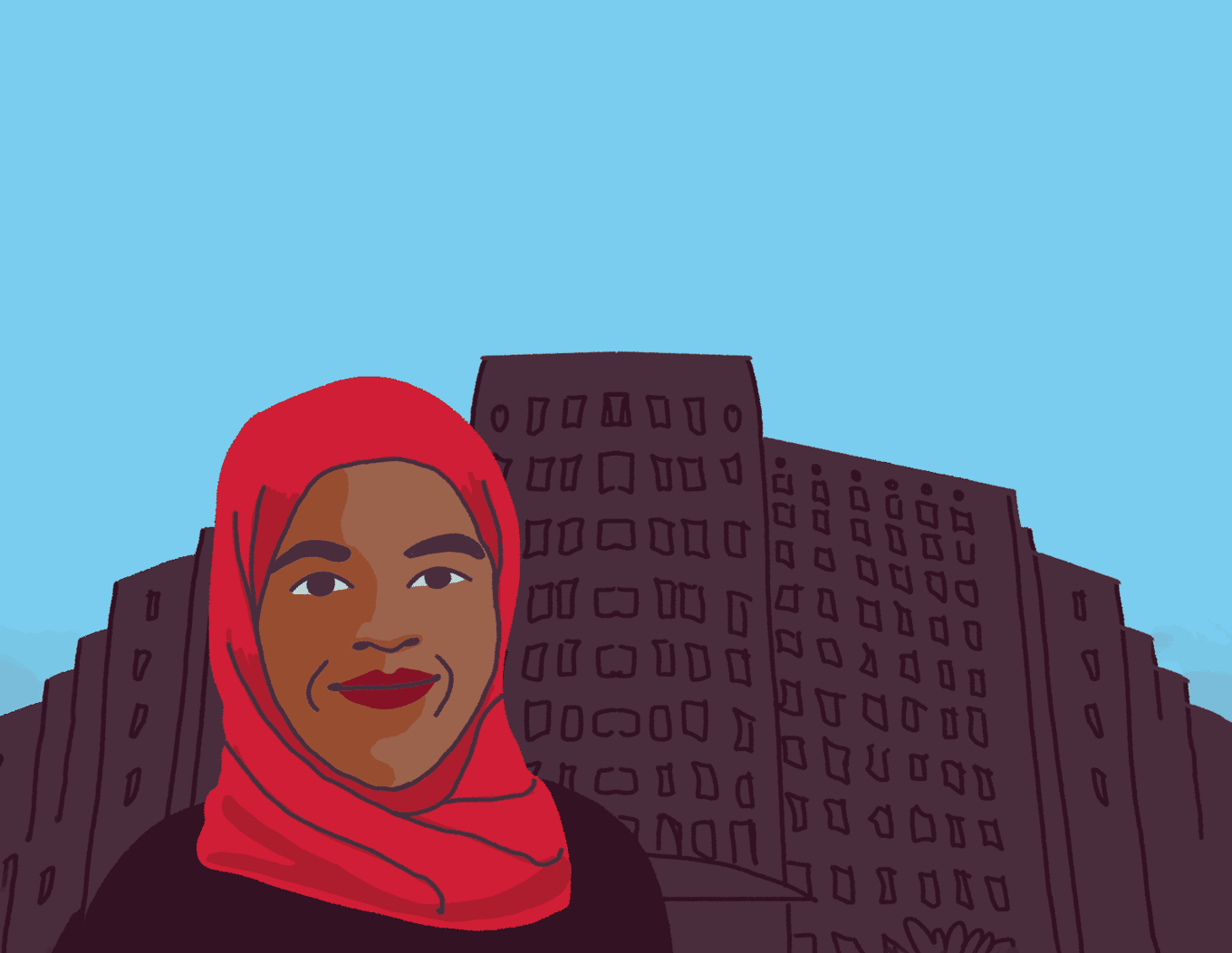
Ibrahim always wanted to be a doctor, but her time as a patient in the clinic solidified those dreams.
"My pediatrician at Harborview was one of the first people who believed in me and that I could become a doctor," Ibrahim said. "For me, as a young refugee, saying, 'This is my dream,' and having someone already doing it actually believing in you is so meaningful."
Her journey to becoming a doctor did not come without obstacles. As a refugee who wore hijab and did not see others who looked like her in her field, she was unsure she would even be accepted into medical school.
Since she was the first in her family to go to school in the United States, it was difficult to navigate an education system she was unfamiliar with. She felt socially isolated compared to the tight-knit Somali community she was used to.
In 2016 Ibrahim graduated from the University of Washington’s medical school and joined Harborview as a general pediatrician. In September 2019, she became the center’s medical director.
Now Ibrahim cares for many patients who are newly arrived or previously resettled refugees and immigrants. Along with improving the health of children in the same position she was in 26 years ago, Ibrahim hopes to fight the negative rhetoric surrounding refugees in America.
"There's almost this dichotomy where there's the good and exceptional refugees and the rest aren't so good," Ibrahim said. "But the reality is if they're all given time and space and opportunity and resources, everyone will contribute positively to places where they're resettled."
A version of this article was originally published in Issue 08 of the Goodnewspaper: The Helpers Edition, in April 2020.
In 2015, Devin Allen made history by being one of the few amateur photographers to make the cover of TIME Magazine.
Now, he’s trying to change the future for others.
If you’ve seen the shot, you remember it.
If you haven’t, it’s almost impossible to fully describe.
A Black man in Baltimore, running from what looks like an army of police officers. They’re after him, row after row of them, decked out in riot gear. Their masks give them an inhuman, almost robotic appearance — like something from Mad Max.
The Black man has a mask too, a bandana cinched around his face. He’s got a white ball cap, and a pair of slim trousers. His gait appears urgent but not strained. Not the run of retreat, but of regroup — putting a little distance between him and the police.
The image is in black and white, and so is the general sense of the shot. A Black man and whiteness.
The shot was taken in 2015, during the Baltimore protests spurred by the killing of the unarmed and innocent Freddie Gray by police officers who were subsequently acquitted of any wrongdoing.
The shot was taken by Devin Allen.
“It felt like I was in a movie,” Allen said in an interview with Branden Harvey on Sounds Good. “This wasn’t the first time I’d [photographed] a protest; I marched for Mike Brown, I marched for Palestine. But this hit home with a lot of people, because, you know I’m Freddie Gray. I could have easily been Freddy Gray. I’ve had my run-ins with the police. So just watching it, and watching the youth react, they inspired me to come out every day and take pictures.”
The TIME cover got all the attention, but the interior of the magazine shows even more of Allen’s unique eye. There’s a naturalism to the shots.
If all you know about the Baltimore protests is what you saw on television, with overturned police cars and broken storefront windows, you’d hardly know these pictures were taken in the same environment.
Protestors are captured in all the broad spectrum of humanity. There’s a woman weeping silently, her mascara streaming down her face. A young man holds a baby, his look one of muted exasperation. A man and a woman stare into the camera with calm defiance while young children around them raise their fists towards the sky, grinning. Perched on the man’s shoulders is a child — scarcely old enough to walk — flashing a peace sign.
It’s all deeply affecting, and it gets at the sort of things Allen wants to convey with his work.
Don't call Devin Allen an activist
“When it first started everyone was calling me an activist or a journalist,” Allen says.
“It feels good to have people believe in you! Activist is a big name and at first I was like, ‘Am I an activist?’ I don’t know. I consider myself a dialogue creator. I’m good at creating conversations. My images are meant to create a conversation. My job isn’t to take a picture and tell you what’s going on in the picture. I let you look at the picture and you come to your own conclusion based on the energy that’s transferred from you viewing my work. My heart goes into my work. I don’t want to say, ‘Look, this guy’s destroying a police car and that’s evil.’ I want to create awkward moments.”
Allen got into photography by necessity. He and a friend hosted a regular “poetry night”, and invited people from their community to show up. (It cost guys ten dollars to get in. It cost girls five dollars.)
The events were a success, and Allen wanted to document them, so he started taking pictures with an old camera. He took to it and, eventually, scrounged together the money to buy a nicer camera and started getting more ambitious with his art.
Allen speaks in measured tones, pushing the conversation to deeper, more interesting realms. He did not personally know Freddie Gray, but they shared mutual friends.
He’s a spiritual person, he says, and talks a lot about how his artwork creates energy between it and the viewer. He rarely says the word “Baltimore” instead preferring to call it “my city.”
“My city is different,” he explains. “It’s a very real and authentic city. There are two different sides to my city. Everyone knows all the pretty sights on the water but there’s a totally different side to my city that people don’t know anything about. A lot of people don’t know that my city is the heroin capital of the United States. My city’s not that big, but there’s 300 murders a year. A lot of schools get shut down and they jam two or three schools into one school. There’s a lot of charter schools. There’s been funding cut. Growing up here is tough.”
And that’s something Allen feels got ignored in the media narrative surrounding what happened in Baltimore. People weighed in on what was happening in his city who didn’t understand his city. That’s why he started documenting the protests — in an attempt to tell the real story before it got co-opted by people who didn’t have a real understanding of it.
When TIME Magazine reached out to Allen, he thought it was too good to be true. They informed him they might even make one of his photos the cover, but warned him against getting his hopes up, so he didn’t. He didn’t know they’d selected his shot for the cover until he saw it on social media.
“I remember getting on Twitter and seeing all these notifications,” he recounts. “And I scrolled to the bottom and it said ‘Amateur photographer lands the cover of TIME Magazine.’ I just bust out crying. I called my mother and she just dropped the phone. My whole family was crying. I’m the first Black photographer to do some of the things I’ve done.”
Allen’s deeply interested in the authenticity of his work and has to resist the temptation to edit the perspective for the sake of pushing a certain narrative.
“There are instances where I can become selfish and only think about my community while taking these pictures,” he says. “That was the most difficult thing for me. How can I tell this story in its raw form and not try to hide certain things, even if it’s negative? Or even if there are certain things that are positive but I don’t necessarily agree with. I had to clear my mind and just be a vessel for the movement. It was a struggle. It took a toll on me, the things I had to show. I didn’t want to show my people, my generation, my little brothers, stomping police cars. I don’t want to show that. But I had to. Because that’s the story. That’s what happened.”
Too often, Allen says, the real story gets hijacked by people or companies with agendas, or else, a lack of firsthand knowledge.
“It’s very difficult because, at the end of the day, my people — since we’ve been here — our stories have always been told by other people. It’s rare that we have the platform to tell our own stories without them being filtered.”
Allen’s fastidious about following this rule, and he’s strict about the kinds of stories he wants to tell. He only shoots things with which he feels kinship, no matter how much he might care about the issue at hand.
“At the end of the day, I’d never just walk into Chicago and just start documenting, even though I know the struggle and I’m a Black man,” he says. “But this story I knew I could tell. I’m not a photojournalist. My heart will always conflict with my work. The pictures come out better if I love, and I love my city.”
Providing cameras and mentorship to youth in Baltimore
His love for his city is taking on real, tangible work too. Allen started a GoFundMe to provide cameras for the youth in his community. Utilizing hefty donations from the likes of Samsung and Def Jam co-founder Russell Simmons, Allen has been staging art shows with pieces created by Baltimore area kids.
“My biggest accomplishment has been putting cameras into the community.
People donate cameras to me, and I just hand them out to kids.”
“My biggest accomplishment has been putting cameras into the community. I ran out of funding a long time ago, because I don’t know anything about funding a program. But I have a lot of support from my Instagram and Twitter followers. People donate cameras to me, and I just hand them out to kids.”
This has earned him the nickname “the Cameraman” in his community, and Allen speaks of his work with obvious pride.
He tells stories of handing out cameras to kids as young as six-years-old, only to come upon them in the streets months later, snapping photos of the world around them. Is it changing lives? Only time will tell, but Allen knows this much: it’s changed his.
“My heart is really in this. I’m very strong and adamant about you have to love what you do. Don’t just do it because you think it’s the right thing to do. You do it because you know your heart is in it.”
Allen takes all this seriously. His huge success in photography has provided opportunities to travel as a journalist, even getting the opportunity to travel to Asia with NBA MVP Steph Curry on assignment with Under Armour, but he’s eschewed all that to stay in Baltimore and focus on the community he grew up in.

He talks about how his work with kids in his area needs to go beyond simple involvement, but to real investment. “I want my stuff to be grassroot, raw essence,” he says. “It’s not about just working with them, but transferring my energy to them. Making moments. They will remember you for the rest of your life.”
There are a lot of challenges when it comes to starting a program, and Allen’s upfront about how difficult it’s been.
Beyond the simple logistical challenges of funding, there are the emotional challenges. Baltimore kids face a lot of difficult issues, and Allen has had to learn how to help his students overcome their obstacles.
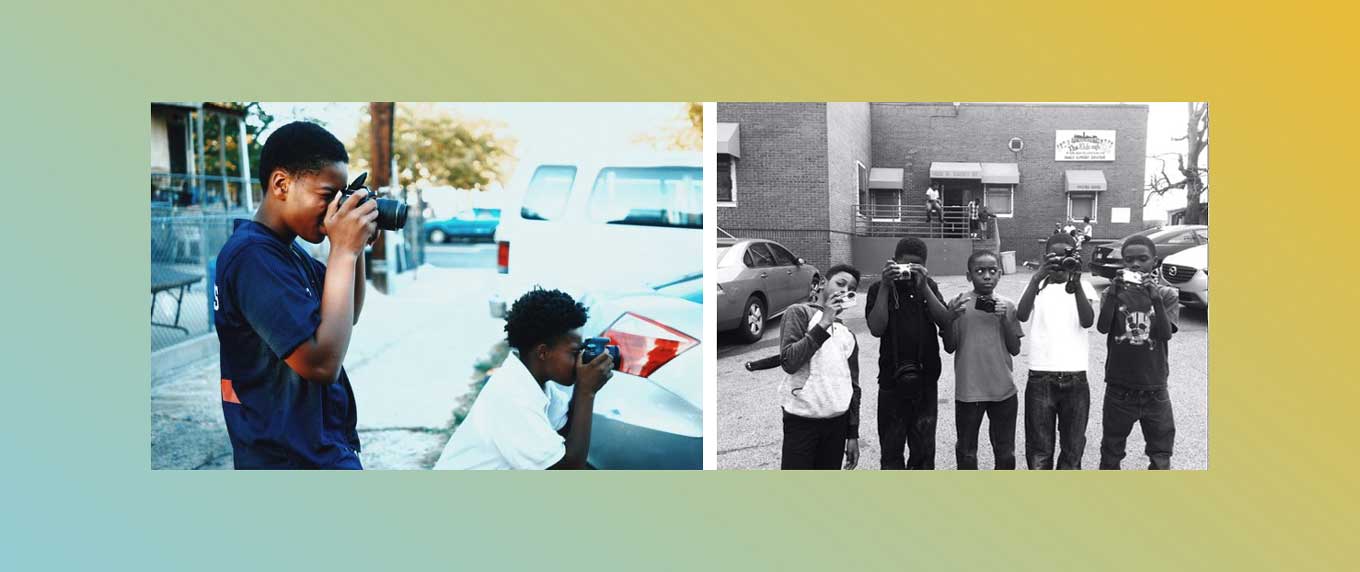
“I work with some tough kids. I work with some easy kids. I work with some smart kids. I work with kids that don’t have the same tools as the rest of them. I work with some kids through a middle school. I work with some kids through a rec center. I teach them the basics. Shutter speed. ISO. Aperture. You break it down to the simplest form that you can, and then I had some document their own life. A family. School. If you hate the school lunch and it’s nasty, take pictures of it.”
School lunch is one thing, but many of the kids in Allen’s programs also come from neighborhoods suffering from drugs and gang violence.
These challenges loom large, but Allen is uniquely equipped to help his students navigate them. After all, he grew up in the same environment.
“I’m just there to give them love.”
A version of this article was originally published in Issue 01 of the Goodnewspaper in 2018.
According to a Department of Justice policy, law enforcement officers are required to knock and announce their "identity, authority and purpose, and demand to enter" prior to entering a property on a warrant. While a federal policy, it’s one that most local jurisdictions also follow.
However, no-knock warrants, which are granted by a judge, allow law enforcement to forcibly enter a suspect’s home without knocking or announcing themselves, without notice or warning.
No-knock warrants are mostly used in suspected drug crimes, when police believe the situation is dangerous, or when the evidence they’re seeking with the warrant could be destroyed in the time it takes them to announce themselves.
This procedure was first introduced in the 1970s under President Richard Nixon, but grew in popularity and regularity in the 1980s under President Ronald Reagan as the “War on Drugs” was ramping up.
Peter Kraska, a School of Justice Studies professor at Eastern Kentucky University, collected data that found municipal police and sheriffs' departments used no-knock or quick-knock warrants about 1,500 times in the early 1980s.
Those numbers pale in comparison to how regularly no-knock warrants occurred in the decades that followed.
By 2000, Kraska found there were about 40,000 every year, and 60,000-70,000 in 2010. The majority of these raids were used to search for marijuana.
While specific data on no-knock warrants isn’t widely collected or available (there aren’t clear reporting requirements for warrants in courts or law enforcement), a Denver Post analysis found that in 2000, judges rejected just five out of 163 no-knock warrant requests from Denver police.
Additionally, about one-third of them did not get the required pre-approval from the district attorney. That same analysis also found that in 10 percent of cases, a judge approved a no-knock raid even when police requested a standard search warrant.
In another analysis in Little Rock, Arkansas, between 2016 and 2018, the Washington Post found judges approved 103 out of 105 police no-knock warrant requests.
Kraska told CNN that no-knock warrants should be as difficult to obtain as they are dangerous to carry out. While an overall picture of the data is incomplete, these analyses don’t demonstrate that they are difficult to obtain.
Breonna Taylor, Amir Locke, and more innocent people have died in no-knock raids
On February 2nd 2022, Amir Locke was killed by Minneapolis police executing a no-knock warrant. Body cam footage of the raid showed 22-year-old Locke sleeping in an apartment under a blanket, getting up, and holding a handgun when the officers fired their guns and killed him.
Locke was not the target of the warrant, was shot within 10 seconds of the officers entering, and legally owned his handgun.
“My son Amir was a law-abiding citizen who did not have a criminal history,” Amir’s father, Andre Locke said in a press conference. “My son Amir was loved by many of us, by our family and many people, everyone that he came in touch with. My son Amir did what was right. He did all the things that he was supposed to do.”
And on March 13, 2020 in Louisville, Kentucky, police officers killed 26-year-old Breonna Taylor who was sleeping in her home during a botched no-knock warrant drug raid. The officers were in plainclothes and were never charged in Taylor’s death.
Heartbreakingly, these are just two of the cases that have made national headlines in recent years. There are countless other raids that have resulted in the unnecessary and unjust injury, death, and trauma of innocent people.
No-knock warrants are bad for both law enforcement and civilians
No-knock warrants aren’t actually safer for police
Initially, it was believed that by taking dangerous criminals by surprise, law enforcement would be better protected because the suspect wouldn’t have time to prepare or react.
Between the margin for human error, spike in personal gun ownership, and more, no-knock raids aren’t actually safer for anyone — police officers included.
Radley Balko, an investigative journalist who reported on these types of raids for 15 years, told NPR, “When you break somebody's door down in the middle of the night, you elicit a very primal reaction in them, kind of a fight-or-flight response,” and added, “they're just extremely volatile with very low margin for error.”
Additionally, a study on new gun ownership from Northwestern University found that, between January 2020 and April 2021, around 7.5 million adults in the U.S. became first-time gun owners — 5.4 million of them to homes that had never previously had a gun in them.
The National Shooting Sports Foundation found a similar trend, reporting that gun sales in 2020 reached a new record high.
Not only does this increase in individual gun ownership bring a new level of risk to homes throughout the country in general, combined with the aforementioned human instinct toward self defense and fight-or-flight — more homes with gun owners adds significantly more risk for police officers entering those homes with no-knock warrants.
No-knock warrants aren’t effective enough to justify their use
A 2014 report from the ACLU looked at more than 800 SWAT deployments of no-knock and “quick-knock” (when officers enter less than 20 seconds after knocking) entries.
The report found that 62 percent of the warrants were for drug searches, and law enforcement actually found drugs in 35 percent of cases, and found nothing in 36 percent (the other 29 percent are unknown because the police reports didn’t include information about what was seized).
No-knock warrants are used disproportionately in Black and Latinx communities
The same report from the ACLU found that 39 percent of the SWAT team searches were for Black individuals, 11 percent for Latinx individuals, and 20 percent for white people (the other 30 percent were unknown because the police reports didn’t include sufficient information). Of the no-knock warrants for Black and Latinx people, 68 percent were for drugs.
These statistics are in line with a larger, familiar trend we see in arrests for marijuana in general among Black and Brown communities.
No-knock warrants cause unnecessary trauma and death
A New York Times investigation found that between 2010 and 2016 in the U.S., at least 81 civilians and 13 law enforcement officers died in no-knock and quick-knock raids, and many more were injured.
While we’re working with incomplete data around no-knock warrants due to a lack of clear reporting requirements, what is clear is that, like their lack of effectiveness in actually serving their intended purpose — the impact on innocent lives is at best traumatizing, and at worst deadly.
Breonna Taylor and Amir Locke are just two examples of no-knock raids going extremely and heartbreakingly wrong, resulting in the unnecessary and unjust deaths of two innocent people.
In other cases, police officers simply raid the wrong house because the address on the warrant is incorrect, is based on bad information, or they just enter the wrong home.
In 2010, seven-year-old Aiyana Stanley-Jones was killed by a police officer in Detroit after they raided the wrong apartment — the one they meant to raid was upstairs.
In 2003, the NYPD commissioner estimated that, of the more than 450 no-knock raids the city conducted every month, 10 percent were wrong-door raids.
How you can help ban no-knock warrants
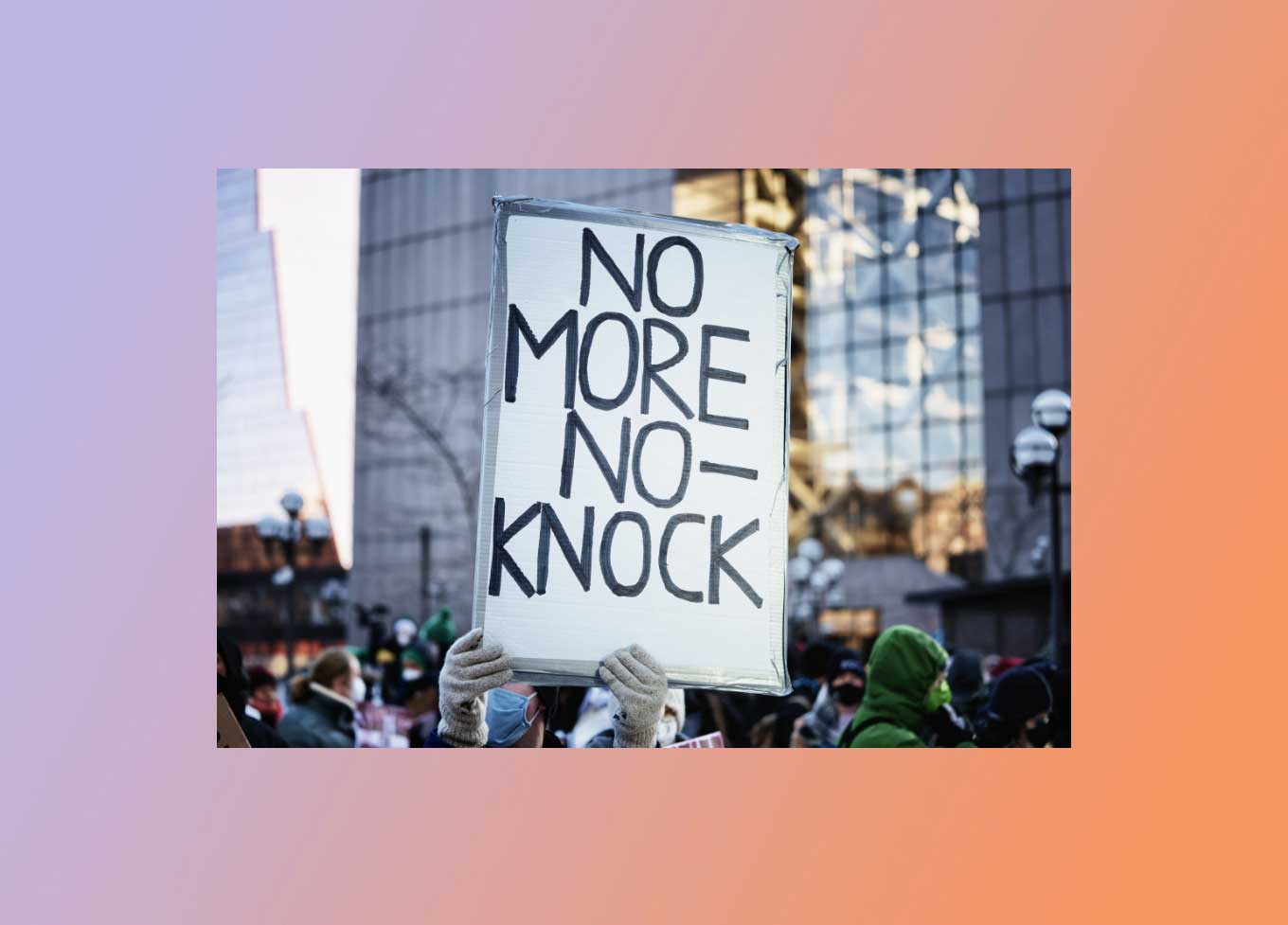
Currently, only four states — Connecticut, Florida, Oregon, and Virginia ban no-knock warrants statewide. Other states have laws in place that only allow them in certain circumstances.
At the federal level, in September 2021, the Department of Justice changed its policy to allow no-knock warrants only when there was a threat of physical violence, but not for threats of evidence-tampering.
Following Breonna Taylor’s death, the city of Louisville passed “Breonna’s Law” which bans no-knock warrants. Minneapolis is reviewing its no-knock warrant policy in the aftermath of Amir Locke’s death.
While true justice looks like Amir, Breonna, and all those who have been killed by police during raids being alive today, these changes are really encouraging and remind us that change is possible.
The organization Campaign Zero's #EndAllNoKnocks project is helping lead the effort to ban no-knock warrants, fight for better, fairer processes for warrants in general, increase police accountability — all in an effort to make our communities healthier and safer.
And encouragingly, according to Campaign Zero, a majority of voters in the U.S. — 59 percent — support banning no-knock warrants.
Learn more about no-knock warrant laws where you live via Campaign Zero’s interactive map
Laws vary from state-to-state and city-to-city. Learn more about what no-knock warrant laws look like, and case studies where you live with Campaign Zero’s interactive map.
Contact your local, state, and federal elected officials and tell them to take policy action
— Ask the White House to make an executive order on no-knock warrants
— Ask your senators and member of congress to pass a law limiting the use of no-knock warrants
— And ask your state and local officials to change no-knock warrant policies on a local level
Aside from cases where they deliberately don’t follow laws or policies, law enforcement officers act within legal pathways available to them to do their jobs.
We can take no-knock warrants away as a legal pathway by asking our elected officials to change the laws that allow police to request them — at both a state and federal level.
Check out our ultimate guide to contacting your elected officials and let yours know you want a ban on no-knock warrants where you live, clearer legal parameters around seeking warrants in general, and more accountability for police officers.
Sign up to volunteer with Campaign Zero to help end no-knock warrants where you live
According to Campaign Zero, right now just 22 cities and 27 states meet at last one of their proposed 15 criteria for banning and/or limiting no-knock raids.
You can sign up to volunteer and take action to make changes where you live.
On September 18th, 2020, we shared these words on Instagram:
We all just heard the news that long-time Supreme Court Justice (and a powerhouse for gender equality and women’s rights at that) Ruth Bader Ginsburg passed away after a longtime battle with cancer.
Not only did she manage cancer throughout her career, but she was also the 2nd woman ever on the U.S. Supreme Court. In her time on the court, she most notably and ardently fought for the advancement of gender equality, women’s rights — and true equality for all.
Especially the underrepresented and underserved members of society. All while maintaining bipartisan friendships with people with whom she had strong disagreements.
Her life and leadership certainly speak for themselves, but she also served as a volunteer attorney for the ACLU, a member of its board of directors and one of its general counsels in the 1970s. Prior to that, she was a trailblazer, as one of only a few women in law school.
To say that RBG shattered barriers — for herself, and for others — is the understatement of 2020.
Tonight, many are mourning this significant loss, on the court and in the U.S. (and we’ll probably be watching the RBG documentary... again). May we wake up tomorrow and continue RBG's fight for equal justice in America.
These words were true then — and they’re true today, on what would have been her 89th birthday.
Here are our favorite inspirational Ruth Bader Ginsburg quotes —
Famous RBG quotes about making a difference in the world
“Fight for the things that you care about, but do it in a way that will lead others to join you.”
— Ruth Bader Ginsburg
“Real change, enduring change, happens one step at a time.”
— Ruth Bader Ginsburg
“Justices continue to think and can change. I am ever hopeful that if the court has a blind spot today, its eyes will be open tomorrow.”
— Ruth Bader Ginsburg
“I am a very strong believer in listening and learning from others.”
— Ruth Bader Ginsburg
“Whatever you choose to do, leave tracks. That means don’t do it just for yourself. You will want to leave the world a little better for your having lived.”
— Ruth Bader Ginsburg
On her legacy
Ruth Bader Ginsburg on how she’d like to be remembered:
“Someone who used whatever talent she had to do her work to the very best of her ability. And to help repair tears in her society, to make things a little better through the use of whatever ability she has. To do something outside of myself.”
“I just try to do the good job that I have to the best of my ability and I really don’t think about whether I’m inspirational. I just do the best I can.”
— Ruth Bader Ginsburg
On feminism and equality
“Women belong in all places where decisions are being made. It shouldn’t be that women are the exception.”
— Ruth Bader Ginsburg
“As women achieve power, the barriers will fall. As society sees what women can do, as women see what women can do, there will be more women out there doing things, and we’ll all be better off for it.”
— Ruth Bader Ginsburg
“We have made huge strides ... but we have not reached nirvana. There’s still rampant discrimination on the basis of race, gender. It’s true that most of the explicit classifications — men are treated this way, women that way — are gone from the law books. But what remains is what has been called unconscious bias. One excellent example of that is the symphony orchestra. In my growing up years I never saw a woman in a symphony orchestra, except perhaps a harp player.”
— Ruth Bader Ginsburg
“I pray that I may be all that [my mother] would have been had she lived in an age when women could aspire and achieve and daughters are cherished as much as sons.”
— Ruth Bader Ginsburg
Related: Read quotes to empower women — by women
Related: Read empowering Women’s History Month quotes and International Women’s Day quotes
On democracy, justice, and the law
“A constitution, as important as it is, will mean nothing unless the people are yearning for liberty and freedom.”
— Ruth Bader Ginsburg

"The Constitution begins with the words, “We the people of the United States in order to form a more perfect union.” Think about how things were in 1787. Who were ‘We the people’? Certainly not people who were held in human bondage because the original Constitution preserves slavery. Certainly not women whatever their color and not even men who own no property. It was a rather elite group, ‘We the people,’ but I think the genius of our Constitution is what Justice Thurgood Marshall said. He said he doesn’t celebrate the original Constitution but he does celebrate what the Constitution has become, now well over two centuries. That is the concept of “We the people” has become ever more inclusive. People who were left out at the beginning — slaves, women, men without property, native Americans — were not part of ‘We the people.’ Now all the once left out people are part of our political constituency. We are certainly a more perfect union as a result of that.”
— Ruth Bader Ginsburg, at a 2019 event in Little Rock, Arkansas
“When contemplated in its extreme, almost any power looks dangerous.”
— Ruth Bader Ginsburg
“I am optimistic in the long run. A great man once said the true symbol of the United States is not the bald eagle, it’s the pendulum, and when the pendulum swings too far in one direction, it will go back.”
— Ruth Bader Ginsburg, speaking to BBC Newsnight
Related: Read quotes about justice
More short RBG quotes
“Reacting in anger or annoyance will not advance one’s ability to persuade.”
— Ruth Bader Ginsburg
“If you have a caring life partner, you help the other person when that person needs it. I had a life partner who thought my work was as important as his, and I think that made all the difference for me.”
— Ruth Bader Ginsburg
“Reading is the key that opens doors to many good things in life. Reading shaped my dreams, and more reading helped me make my dreams come true.”
— Ruth Bader Ginsburg
“So often in life, things that you regard as an impediment turn out to be great, good fortune.”
— Ruth Bader Ginsburg
Like many people, Dr. Hadiyah-Nicole Green’s life has been marred by cancer. Both her aunt and uncle, who raised Green after she lost her parents, were diagnosed with the disease while she was in school.
The cancer sadly killed her aunt, but by that time, Green had started a journey that might just change the way the world treats cancer.
She got a degree in Physics from Alabama A&M and then — after being crowned homecoming queen — got a full-ride scholarship to the University of Alabama, where she got her master's and Ph.D., making her one of fewer than 100 Black female physicists in the country.
She’s putting her genius to good use, figuring out a way to use lasers to remove cancer cells.
It’s as cool as it sounds, and it’s been successfully used on animals. Her work is so promising that she secured a $1.1 million grant to continue working on it.
Green saw firsthand how difficult cancer treatment can be. Her aunt chose to forgo chemotherapy during her own battle with cancer, deciding she wanted to avoid the common side effects of such treatment.
And Green took a few months away from school to help her uncle with his own treatment and assist him during the radiation treatment.
The medical technology that she’s working on today wouldn’t carry the sort of side effects patients get from chemo and radiation. That’s part of what makes it so exciting.
“I’m really hoping this can change the way we treat cancer in America,” Green told AL. “There are so many people who only get a three-month or six-month survival benefit from the drugs they take. Then three or six months later, they’re sent home with no hope, nothing else we can do. Those are the patients I want to try to save, the ones where regular medicine isn’t effective for them.”
A version of this article was originally published in Issue 01 of the Goodnewspaper in 2017.
You might also like these articles about cancer:
In 2017, New Orleans mayor Mitch Landrieu began to rid his city of several Confederate Army monuments. It was the culmination of a two-year legal battle that ultimately came down to a City Council vote.
Not everybody’s happy with the move, as a lot of New Orleans residents consider the Confederate Army to be a treasured part of New Orleans’ history, but Landrieu says that there are better ways to remember the legacy of the Civil War in Louisiana than monuments which ultimately commemorate an army that was fighting to keep America’s Black people enslaved.
Sure, a lot of modern-day apologists for the Confederacy will argue that the Civil War was waged over states’ rights, but that’s only half true. There’s no question that slavery was considered a vital part of the Confederacy and if the North had lost the war, slavery would have lasted a lot longer than it did.
Before the Civil War, New Orleans was the country’s largest slave market, with a port that saw hundreds of thousands of Black people brought over from other countries, only to be torn from their families, sold up the Mississippi River, and condemned to a life of inescapable hardship.
When the Civil War began and President Abraham Lincoln’s mission to preserve the Union began in earnest, New Orleans fell to the Northern armies fairly quickly.
Nevertheless, nearly fifty years after the Civil War had ended and Louisiana had been brought back into the United States, New Orleans and various other cities in the American South began erecting monuments to Confederate soldiers in an attempt to whitewash US history, recasting the Confederate Army as noble rebels instead of deeply misguided racists.
But the past few years have dredged some of the United States’ ugliest chapters into the spotlight and, along with that, a renewed energy in the need to atone for our past atrocities.
Removing the statues of men like Robert E. Lee and Jefferson Davis from the public square doesn’t erase what happens, but it does take that chapter of American history off of a pedestal and acknowledge to today’s descendants of the people they fought to enslave that we, as a nation, do not condone their actions or take pride in them.
In an op-ed published in the Washington Post, Landrieu said, “History, unfortunately, has seen great nations become lost, isolated and ultimately extinct by refusing to confront the sins of the past and evolve to meet the demands of a changing world. If we don’t want to be forever held back by our crushing history of institutional racism, it’s time to relegate these monuments to their proper place.”
Thanks to the work of people like Landrieu and New Orleans’ residents who are supporting the mission, those monuments are being relegated to their proper place, and the people of New Orleans can start focusing on the difficult work of racial equality.
A version of this article was originally published in Issue 01 of the Goodnewspaper in July 2017.
Solidarity, new friends, and old memories on the long road from Kyiv to (relative) safety.

Fleeing the War
A voice in the dark – “wake up, we need to go.” You cannot think where you’re supposed to go at 5 a.m., you’ve worked in war zones but you were never there when the bombing started. This is how it feels you think, while finding it hard to believe that around you there’s a war.
And if this is just a false alarm? If you’re just being too prudent? Maybe there’s no need to go anywhere. After all, working until 3 a.m. the previous night turned out not to be such a good idea. You need time to connect your brains.
You stop for a moment to remember the fake explosions during the Yugoslav war. You hope it’s the same but do you really want to take a chance? Putin has announced a massive “special operation” to demilitarize Ukraine. It will be hell, it’s just a matter of time.
Your ex-wife has already left the city when you have your family council with (ex) parents in law, babushka, and dog. For you it’s easier since you just need to go home but for them?
They need to decide in 10 minutes whether to abandon everything they’ve constructed in the course of their life. You can’t blame babushka’s naivety when she says Putin will never dare to kill Ukrainians, a brother nation.
Too much time is spent in discussions. When you hit the road cars are already everywhere. People are queuing outside supermarkets, ATMs, and gas stations in a solemn and apparently silent atmosphere. But you know it’s just a matter of time. It will get loud soon.
Surprised that electricity and the internet have not been cut so far, you still consider the possibility. How are you going to meet the other car if you have no means of communication?
You agree with your ex-wife on a meeting point that is easy to find even with no internet. First-comers will just wait for the other car there.
You contemplate staying in Kyiv, after all you’ve got your massage session and a few other appointments. Maybe it will not get that bad until next week and you could always catch a train to Lviv and then cross on foot, as you used to do in your student years, carrying small items for petty smugglers and fighting elbow-to-elbow to pass.
But it’s not the time to take chances, you understand that if you miss your chance to flee you might get stuck in the country for a long, long time and Ukraine is not the place to be for civilians now.
Change direction, roads, move to secondary ones, avoid major cities, get stuck in traffic jams because people are queuing at gas stations. You bless your ex-father-in-law’s intuition, he’s kept his car fully tanked for the past week.
An Unlikely Family Reunion
You manage to share locations and meet the other car on a desolate road between a sick-looking patch of trees and an abandoned gas station.
Your younger kid, the teenager who believes the best way to deal with his teenage crisis is not to talk to you (even as bombs fall), your ex-wife, her husband, parents, grandmother, two cats, and a dog.
The situation is so surreal that it calls for a selfie, the most unlikely one. Never before have you managed (or simply wanted) to meet all together in one place. But it’s wartime, not the time to handpick your travel companions. You’re bonded by danger.
You divide the crew. In one car your kids, ex-wife, husband, cats, and you, driving to the west of the country. Everyone else sets out for Kyiv where grandma, she keeps on repeating, wants to go.
You cancel all your meetings for the day and prepare for several hours on the road with poor connections and little comfort.
Even with poor internet, you can’t stop checking your phone hoping for some positive news. Maybe the attack will cease and it’ll be safe to return to Kyiv.
During breaks you try to enjoy the surroundings, the mountains, the trees, the beautiful sunset. Your ex-wife is silent but you know how much she loves this land, you feel her heart bleeding.
Everything around is so silent that you wonder whether the war will ever reach this side of the country. But according to the news Russians seem to be striking everywhere so there’s no time for calculations.
You arrive at a bridge with a sign, “Hydroelectric Power Station.” The military is checking every truck, every car. You think with two children in the car you will pass smoothly but they still manage to ask you if you have any explosives in the trunk.
Explosives? With kids on board? Ah yeah, it’s war, there are no rules.
A friend discovers you’re on the way to her relatives’ house and offers to call and ask them to give you shelter for the night and this comes as a blessing.
Strangers receive you as family, give you a meal, beds, a shower, and the next morning stuff your car with food for the road. All from their garden, all home made.
For the first time in two days you feel cared for, so you indulge and leave later than expected, not really a good idea in this situation.
The road to the border is slower and worse than you expected. To make things worse, you learn that Romania has closed all the minor border points and you must cross at a major one, where crowds of people are already piling up.
You consider for a second passing through Moldova but it’s too far and could become crowded by the time you arrive.
The Border
The car is stopped 6 kilometers from the border by a huge line of cars. The spectacle is bleak. All the cars are stuffed with luggage, people, most have children inside, from toddlers to teenagers.
People gather outside and silently stare at the queue perhaps wondering when it will move next. The traffic is just too slow, sometimes in an hour you advance 2 or 3 meters. Time to check the situation up there at the border.
You start walking to see where the line leads and it seems to have no end. People, cars, trucks, and more cars chaotically straggling in a single line, then two, then three, then again two until the road becomes two-way and you know you’re getting close.
You start asking people how long they’ve been waiting. Many arrived the evening before, the first in line got here 24 hours ago. How long will it take you and those who arrived on the second day?
You reach the border, crossing on foot is still an option. There’s a line but it’s definitely shorter than the line of cars and you might only have to wait a couple of hours, so you suggest to your ex-wife to abandon the car and go.
But her parents are on the way to the border and it’s better to wait for them, she says.
You are in a hurry to leave.
What if the Russians take power and then shut all the borders?
What if shops run out of water?
What if panic begins and people, now numbering in their thousands, start pushing from behind?
But the parents will need help and it’s a matter of a few hours. You walk back and set out to wait.
Back in the car you feel hunger for the first time. You have reached your 10,000-step target, your phone says.
Well, at least that, you think, while crunching a biscuit and drinking an odd-tasting juice.
Night brings the news that the grandparents are stuck at a police check and won’t be here until the next day.
This is the longest you’ve waited in your life in a traffic jam and you cannot even sleep. Someone needs to be ready to move the car a few meters when the car in front moves or you’ll be passed by other people, in addition to the sly ones in expensive cars that are just jumping the queue in hope of crossing the border faster.
It’s war out there. It’s jungle law down here. There’s no chance for the meek (or the honest).
Train Conversations
You eventually convince your ex-wife’s husband to pass a few cars when the driver ahead falls asleep.
It’s him or you so you move up a few hundred meters in a couple of minutes.
But now there’s a problem: how to get back in line? Who will let you pass? You notice a crowd of people and, even if it’s cold, you force yourself to go and socialize.
This turns out to be a good strategy. In a few minutes you negotiate your way back into the line and make new friends. A software engineer from the south fleeing to Bulgaria and a young man from Kharkhiv taking his wife and kids to the border.
He will not be allowed to pass (no adult male younger than 60 is allowed to cross the border) but at least he’s escorting them to ensure they cross safely.
You stay in the cold chatting nicely and sharing life stories, just like you’ve done a thousand times on night trains, when strangers gather, drink together, and share the most intimate stories.
Just the setting is gloomier now and you’re getting cold so go to the car and try to get some sleep.
You wake up not too far from where you fell asleep. Things are getting worse and the waiting time will probably be longer now so it’s time to check the foot crossing once again.
This time you do not go alone. Your youngest (and extremely energetic) son joins you and your new friend in this long walk.
The line is getting longer and is no longer a line, just an agglomerate of people crowding around the border gate.
Women and children might have priority but they are not let through, it’s a war within the war. Only the stronger, or more cynical, will survive?
When you came in January the lady at the airport shop convinced you to buy a panettone (Italian Christmas cake), price cut by half post-Christmas.
You’ve been waiting for a special occasion to open it but it never came. You think this could be the special occasion.
You invite your new friend and his daughters, gather your son and go to the playground for a mini-party with panettone, Pepsi, and sparkling water.
You share with the rest of the company and live a short serene moment in this anxious situation.
Splitting Up
The grandparents arrive and it’s time to move. Many more are walking to the border now, including families with very small children, older people, and students, many foreign students arriving all at once.
You split the team into three.
You will go on foot with the younger one, grandpa, and the older one will follow (if possible by car). Your ex-wife, her husband, and two cats will stay in the last car.
Parting is dramatic. You feel a sense of emptiness and ask if that’s a premonition or you’re just scared but you struggle to retain your tears while walking to the border.
The situation is worse than you thought and there is no line, no law, no first and last.
Even women with children have to fight their way through the line. You wonder how on earth you’ll be able to pass.
Call it luck, call it border wisdom accumulated in years of research on smuggling. Within 10 minutes you’ve found people who are gathering parents with children so they can drive over the border. They are in pole position to be let in and there’s hope you will cross the border before night.
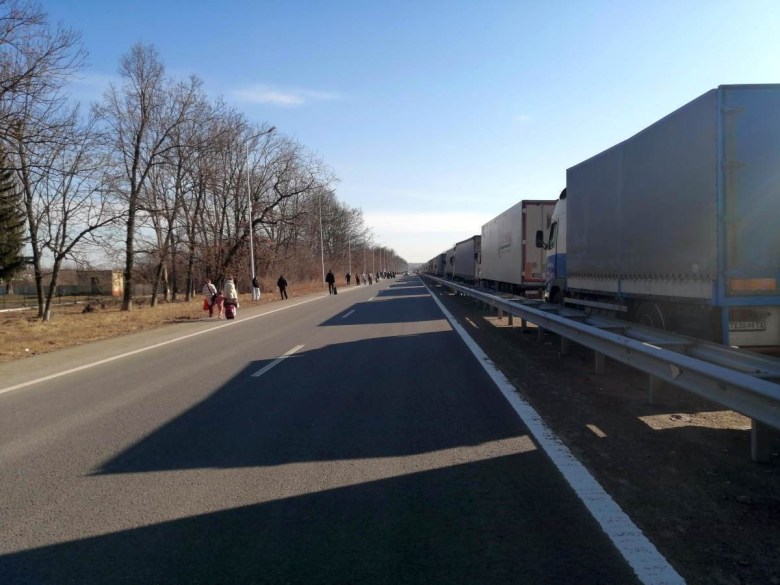
At first you are suspicious. Something for free in an area where many are trying to bribe their way out sounds odd. What do they have to gain?
But the more time that passes, the more your driver, a powerful lady capable of swearing in three languages at the same time at anyone trying to pass her, wins your admiration. You feel in good hands now.
The problem is just that students are trying to force their way through the border and the guards decide to close it completely. In the wait, you’re downgraded to the last row in the car and a lady with a 6-week-old baby takes your seat.
You are now five adults and three children, the border is a mess and there’s no way of telling how long this will last. There is only one thing to do: fall asleep and rest.
After an indefinite amount of time the car starts moving. More pushing, more fights, but your guardian angel (Angelica is her name) knows her way around.
The time spent on both sides of the border is ridiculously short, compared to what you’ve experienced so far. On the Romanian side tension dwindles and she even begins to tease you and your son. The nightmare is over.
Romania is another world. It’s calm, empty, and dozens of volunteers wait, offering food, accommodation, SIM cards, rides all across Romania.
You learn that COVID restrictions do not apply to Ukrainians, that you can get a free ticket to Bucharest or other parts of Romania, free accommodation, food and water points are everywhere.
All this is for you, your son, and anyone who has fled Ukraine as a refugee – a word you hear with mixed feelings.
You understand that they use it out of goodwill, as a way to highlight your urgent need for help. It’s thanks to this informal refugee status that your ex-wife is seen immediately when she goes to the vet to get an EU pet passport for the cats.
But you can’t stop thinking that, in some respects, you and your children are in fact refugees.
Luckier than many others but still among those who had to flee a war zone with whatever they could stuff into a suitcase.
Then your thoughts go to those who fled Ukraine and now have no place to go, who will just stay indefinitely in refugee camps and, with even more sadness, to those who did not flee in time and are now stuck in the country.
This story is part of the SoJo Exchange from the Solutions Journalism Network, a nonprofit organization dedicated to rigorous reporting about responses to social problems. It was originally published by Transitions.
When it comes to gender equality, we’ve all got a long way to go. From healthcare to income, the situation around the world is dire, with women in every country consistently being given opportunities at rates well below their male peers.
That’s unacceptable and untenable but there is some great news, if you know where to look.
Women are making incredible gains in one of the most important and foundational areas of all: education.
All of this matters because education literally saves lives! Studies show that if all women had at least a primary education, there would be 15 percent fewer child deaths.
If all women had a secondary education, the global rate of child deaths would be cut in half. Studies show that girls with an education are also less likely to be sexually assaulted and more likely to have access to lifesaving healthcare.
So pursuing education equality for women is a real matter of life and death and fortunately for all of us, life is winning.

Around the world, women still lag behind men when it comes to educational opportunities, particularly when it comes to secondary education.
But in primary school, there is good news. In poor countries, there are just as many girls enrolling in school as there are boys — a huge step up from just 15 years ago, when there were only about 91 girls for every 100 boys, according to The Guardian.

What happens when the gender gap in education closes?
A single year of primary school has been shown to increase women’s wages later in life by 10 percent to 20 percent. The returns to female secondary education are between 15 percent and 25 percent.
A child born to a mother who can read is 50 percent more likely to survive past the age of 5 than a child born to an illiterate woman.
Every 1% increase in women with a secondary education boosts a nation’s per capita income growth by 0.3%.
Women who complete primary education are half as likely to contract HIV/AIDS.
A version of this article was originally published in Issue 01 of the Goodnewspaper in July 2017.
Dubbed “America’s Government Teacher,” Sharon McMahon is making a difference with her online platform — and frankly, we should all be teacher’s pets.
McMahon’s digital community, the proud “Governerds,” follow her Instagram account, and take action in real life, channeling their newfound social studies knowledge for good.
Since McMahon launched her platform and rose to prominence in 2020, she and her community have raised funds for teachers, neighbors, and organizations, and have built a coalition of truth-seekers who appreciate McMahon’s dedication to sharing non-partisan facts about the U.S. government and democracy.
Who is Sharon McMahon?
Sharon McMahon (also known as @sharonsaysso), is a former high school government and law teacher who became everyone’s teacher when she brought her savvy and truth-seeking self to Instagram during the 2020 election. She is now a podcast host and entrepreneur doing good and teaching the public every day.
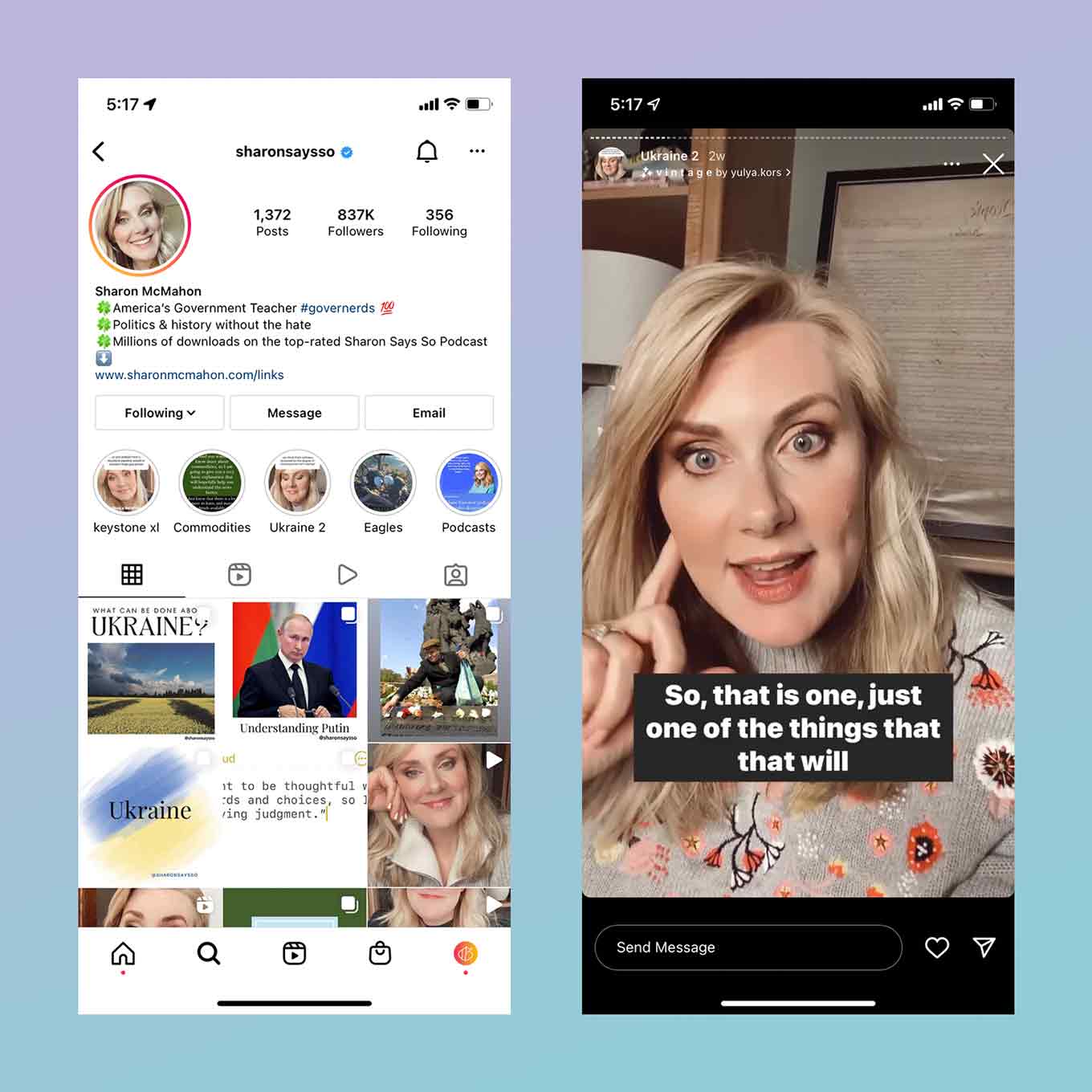
Through her simple mission to bring truth and logic to a society plagued by bias and conspiracy, Minnesota native McMahon has amassed thousands of followers, many of whom are fans of her podcast Sharon Says So, where she interviews experts on democracy, American politics, education, and society.
McMahon also teaches a popular workshop: Government For Grownups, which lives out her mission is to guide participants to relevant and accurate facts, so they can be “informed, empowered, and engaged.”
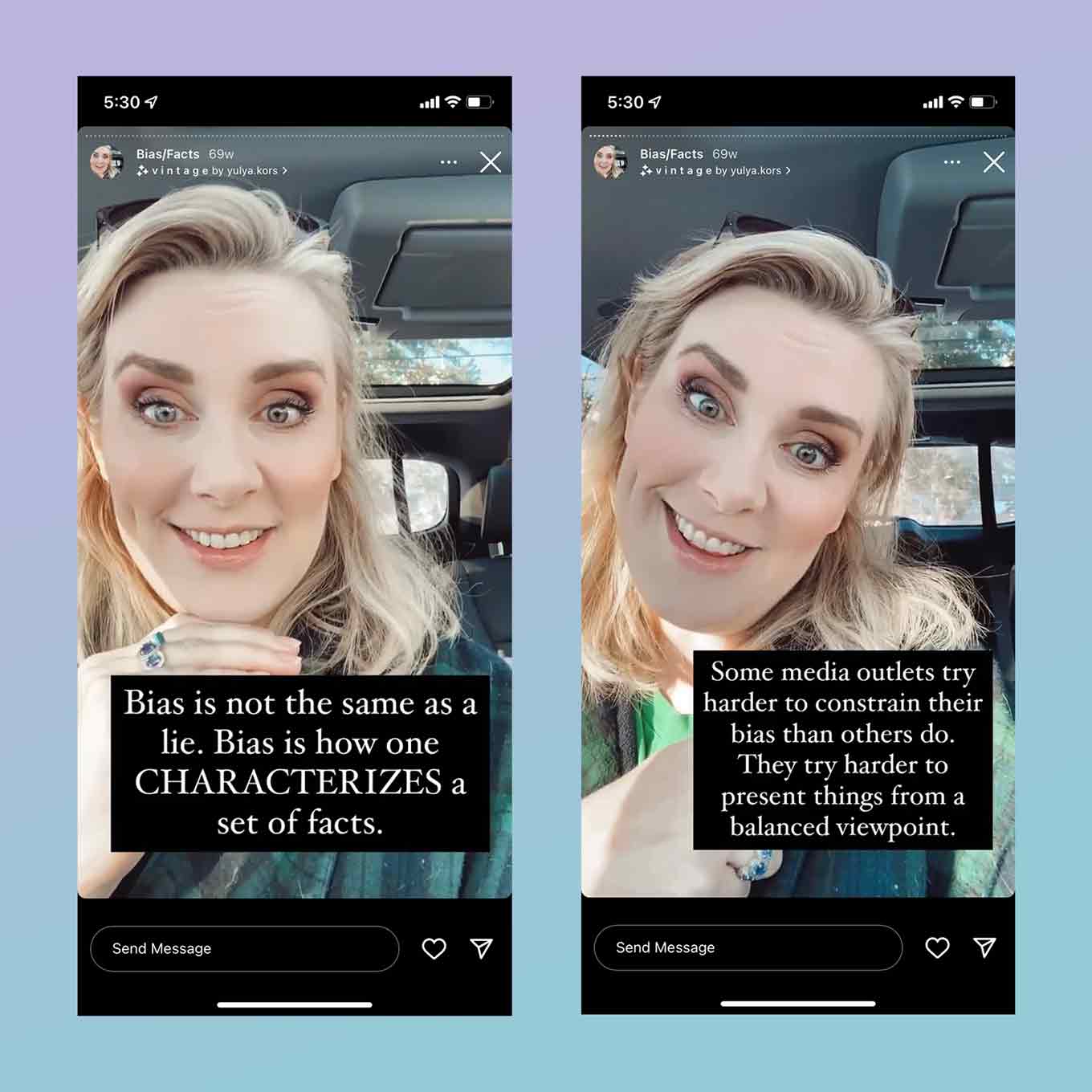
She’s a beacon for truth, a communicator on how to consume the news, and a leader for consuming and sharing information in our current political landscape.
We’re pretty big fans! She’s been on our very own podcast, Sounds Good, and has been a guest on The Daily Show with Trevor Noah. In 2022, she was named Communicator of the Year by PR Week.
Sharon also has a background as a photographer and loves wildlife — so you can always rely on her to share some super cute photos of animals — like baby ducks, eagles, and whales — along with fun facts.
McMahon’s community (there are over 800,000 Governerds!) is grateful to her for bringing balance in the form of cute baby animals, as well as taking strides help others understand the news, support people in need, and make a global impact through her work.
Who are the Governerds?
The Governerds is the name of Sharon McMahon’s fanbase on her Instagram, @sharonsaysso. This community of thinkers, feelers, and learners seek reliable, truthful information about current events and have raised more than $4.2 million for charities like RIP Medical Debt and World Central Kitchen.
McMahon has described Governerds as a “beautiful pocket of the internet,” who are trying to find ways to show up and be engaged with the world.
“A certain type of person is interested in being in this community,” she said on Sounds Good. “This is not a place where we’re going to scream at each other and have arguments. We’re going to have discussions, we’re going to respect each other, we’re not going to work to destroy each other.”
While Governerds come to McMahon’s platform for trusted information, many stay for the growing community that has been developed through informed discourse and innate generosity.
McMahon and her community have raised millions of dollars to support major charitable causes and individuals who need a little extra support from their neighbors.
“I am very encouraged by seeing what is coming out of my community, and what can happen when we work together instead of working against each other.”
How much money have Sharon McMahon and the Governerds raised for charity?
McMahon and the Governerds have raised over $4.2 million dollars to help pay off medical debt, support relief efforts in Ukraine, award grants and resources to teachers, and more.
Her first community fundraising effort sparked when she was looking for a way to celebrate a 50,000 follower milestone on Instagram. Folks suggested she accept Venmo donations so she could raise money to “make somebody’s day.” Through this, Governerds raised $125,000, which was all given away to individuals and organizations.
“I can’t take much credit for it,” McMahon said. “It truly is the amazing members of my community who have a heart for giving, for lifting other people up. I am continually floored by their generosity.”
McMahon and her community have continued to raise funds for other efforts. She allows her community to simply send money via PayPal and Venmo — and she shares public documentation of how much is donated and where the proceeds are donated via Instagram Stories.
McMahon also offers weekly giveaways to her podcast listeners, providing funds to a retailer of their choice just for tuning in.
On March 16th, McMahon announced that “this community has given $4.2 million in the past 15 months.”
The Governerds raised $560,000 to forgive medical debt
After her initial fundraising effort, McMahon had $15,000 left and decided to use it to help forgive medical debt, partnering with the organization RIP Medical Debt. She decided to open up the fundraiser to the community with a goal to raise just a little more, and they showed up with a lot more.
McMahon and the Governerds raised over $560,000 in grassroots donations to forgive $65 million of medical debt — within five days.
This generosity, coupled with the efficient and highly leveraged model of RIP Medical Debt made for a historical fundraising success story.
RIP Medical Debt combines the generosity of donors (like the Governerds) with debt industry expertise to help millions in mitigating medical debt. For every $100 donated, RIP Medical Debt is able to relieve $10,000 in medical debt.
In the end, RIP Medical Debt confirmed the Governerd community forgave $147,001,232.41 of medical debt.
McMahon explained that two-thirds of bankruptcies in the U.S. involve medical debt, and after finding RIP Medical Debt, she knew her community could make a difference. She just didn’t realize how big of a difference that could be.
This massive fundraiser relieved medical debt for 74,474 people.
“How did the most generous people on the planet coalesce onto my Instagram page?” McMahon asked on an Instagram story, crying. “It’s really kind of a miracle. There’s no logical explanation.”
The community raised more than $600,000 to help Ukrainians through World Central Kitchen and CARE
A little over a year after McMahon’s mind-blowing medical debt fundraiser, she came to her community again with a new request: to help care for Ukrainians fleeing their invaded homeland.
Donations once again came pouring in through Venmo, PayPal, and Cash App, as Governerds rallied to send their support to organizations on the ground in Ukraine: World Central Kitchen and CARE.
According to McMahon, as of March 16, 2022, the Governerds have raised over $623,000 for both organizations.
World Central Kitchen provides hot, fresh meals to refugees fleeing the conflict area and those staying in shelters or camps. Their team has been on the ground in Ukraine, as well as surrounding areas like Moldova and Romania.
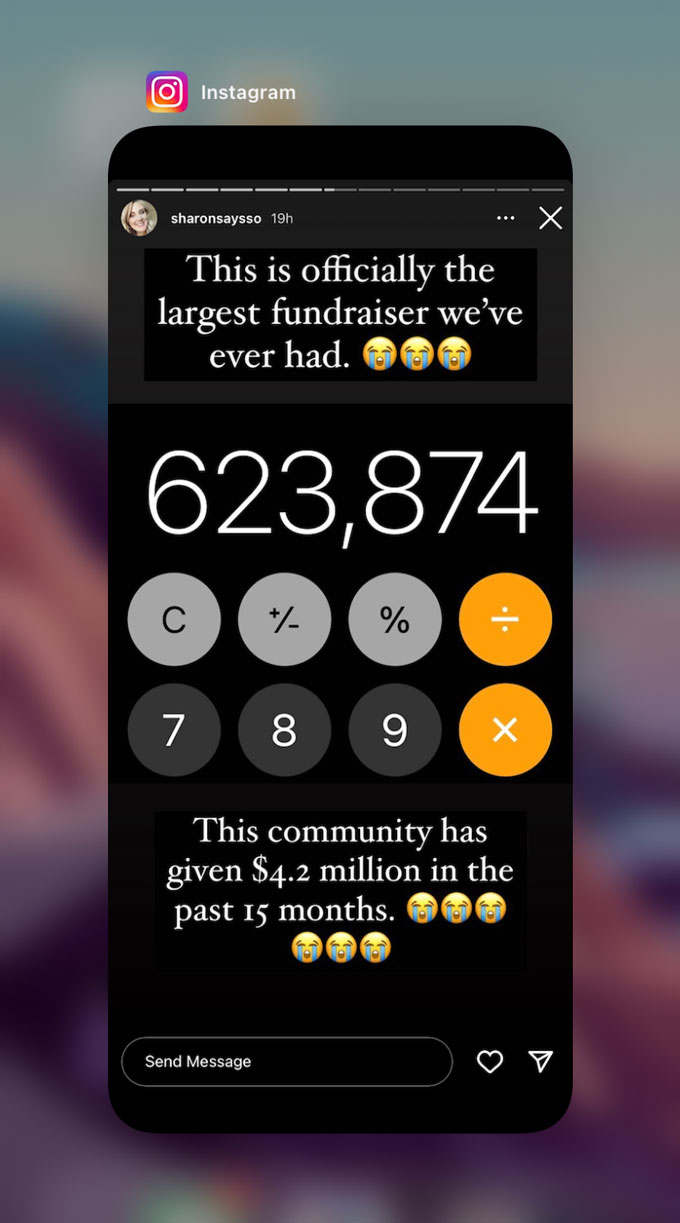
“Can you imagine how it has to feel to wait in line to leave your country that’s being invaded, and people show up with soup for you?” McMahon shared on an Instagram story.
“How that one bowl of soup might make such a difference for you, not just physically, but also emotionally? Someone cared. Someone cared enough to cook for you, and really, isn’t that one of the kindest offerings a human has?”
In addition, CARE works to bring humanitarian aid to areas affected by conflict. Their team has been working around the clock to help Ukrainians with food, water, hygiene kits, and more. They also provide mental health services, emergency shelter, and other essentials.
The community raised another $1.2 million to support teachers through grants
While McMahon had previously created a successful teacher teacher grant program that raised more $560,000 — she set a more ambitious goal for her July 2022 campaign: $1 million.
She sought to provide 2000 grants of $500 each to help give back to teachers from every corner of the U.S. There would be no stipulations on how the funds are used.
Within just one weekend the Governerd community had raised $1.1 million — and continued to raise more funds over the next week.
→ Read more about McMahon and the Governerd community's 2022 fundraiser for teachers
What does this community teach us?
McMahon and her community teach us that we have more in common than we think — that generosity, kindness, compassion, and optimism can be the way forward.
The Governerds model a community in which curiosity and a hunger for knowledge can lead to unprecedented care and change in our world.
McMahon leads a group of engaged citizens that have chosen to prioritize facts and a focus on togetherness, in a time where those beliefs are rare gems.
Her community proves that leading with honesty, empathy, and humanity truly is a powerful force that can change the tide.
“I am hopeful that we can be the change we wish to see; that every small action has an infinite number of ripples; that, incrementally, and slowly, and through this grassroots effort, we can affect significant change in the world.”
“I am hopeful that we can be the change we wish to see; that every small action has an infinite number of ripples; that, incrementally, and slowly, and through this grassroots effort, we can affect significant change in the world,” McMahon said.
How can you support @sharonsaysso’s community and make a difference?
You can follow along with Sharon McMahon on Instagram (@sharonsaysso) and keep an eye out for future Governerd fundraisers in her Instagram Stories.
You can also support her work by listening to her podcast, attending a workshop, or shopping her merch.
They just got a boost from Vice President Kamala Harris, after she announced the EPA would distribute $17 million to convert diesel school buses to electric, low emission buses.
This article was originally published by The 19th.
When the Cartwright School District purchased the first 84-seat electric school bus in Arizona, it was a satisfying day for moms like Erika Cortez, who spent months volunteering time to make that dream a reality.
“It was very exciting to be part of this first electric school bus in our district,” said Cortez, who, along with her eldest daughter, logged hundreds of phone calls in 2020 to help pass a school bond that would fund some of the infrastructure needed for the electric school bus.
Other organizers knocked on doors and put up flyers, and Cortez gave presentations to parents explaining the dangers of air pollution — particularly how it impacted the Phoenix neighborhood of Maryvale, where Cortez lived before relocating.
Cortez, a mother of four, had been working with Chispa — the Latinx organizing arm of the League of Conservation Voters — through its grassroots Clean Buses for Healthy Niños campaign.
“Moms are really organizing to protect their children’s health and their well being.”
When the bond passed, “it was a huge win for us in our community because it really came from the bottom up,” said Dulce Juarez, the co-director of Chispa AZ. “Moms are really organizing to protect their children’s health and their well being.”
Cortez is part of a growing movement of moms and other caregivers who have put pressure on school districts, and their state and federal officials to transition to electric school buses, working with Vice President Kamala Harris to secure funding.
Their advocacy has led to tangible results on the state level: In 2019, Nevada, Gov. Steve Sisolak signed a bill into law that expanded a subsidy program to help school districts make the costly transition to electric buses.
In other places like Michigan and Ohio, Chispa successfully pushed states to purchase electric school buses with some of the funds from a national $2.7 billion Volkswagen settlement after the company was caught using technology to evade diesel emissions standards.
Lower-income neighborhoods like Maryvale suffer disproportionately from the impacts of climate change.
Lower-income neighborhoods like Maryvale suffer disproportionately from the impacts of climate change. These neighborhoods are hotter than their wealthier counterparts in Phoenix due to a lack of investment in vegetation like trees and parks and other discriminatory practices, like the placement of interstates and industrial facilities in communities of color. High temperatures trap pollutants in the air, creating smog and worsening poor air quality.
As a result, children suffer from asthma emergencies at higher rates in Maryvale, according to a 2016 analysis by Cronkite News. It’s why it was so important to Cortez that the school district — where approximately 90 percent of the student body qualifies for free lunch — invest in an electric bus.
Related: Learn about intersectional environmentalism in the all-new Intersectional Environmentalist Edition of the Goodnewspaper.
“Thank God my children are healthy, but there are a lot of kids that have chronic problems or problems with asthma,” Cortez said. “This problem of air pollution, it makes their health worse and they are more likely to have asthma attacks or health problems that get worse.”
Moms mobilizing to protect their children’s health is not a new phenomenon; they’ve led the fight against fracking, air pollution, and contaminated water in their neighborhoods.
Moms mobilizing to protect their children’s health is not a new phenomenon; they’ve led the fight against fracking, air pollution, and contaminated water in their neighborhoods.
According to Joyce Barry, a researcher who has studied the connection between gender and the environmental movement, women play an outsized role in environmental justice advocacy, making up 90 percent of the membership in grassroots organizations across the country.
Groups like Moms Clean Air Force, which touts over a million members (including other caregivers like grandparents and dads), and Mothers Out Front, in alliance with other nonprofits, have had impact on the national level, too.
In 2019, they worked with Harris, who was a senator at the time, to develop the Clean School Bus Act, which would have established a federal grant program to electrify school buses.
“She’s a clean school bus champion,” said Molly Rauch, the public health policy director for Moms Clean Air Force.
“That is something that the school bus advocates were really excited about when she was elected as vice president, because we were hoping she would carry over that commitment into her office.”
And it appears that she has made it a priority. At a press conference last week, Harris announced $17 million to fund electric and low-emission buses in underserved communities like Maryvale through a rebate program run by the Environmental Protection Agency.
Lesser known is that the Bipartisan Infrastructure Law signed into law in November dedicated $2.5 billion to electric school buses — the largest amount in funding to date that will be distributed to schools.
For Rauch and other moms, the transition to electric buses is urgently needed.
“We’re very aware of the health impacts of diesel pollution, which is carcinogenic. It triggers asthma attacks, interferes with brain development and learning,” Rauch said.
“One of the most effective devices that delivers diesel pollution directly to children where they live, where they learn and where they play is the school bus.”
The infusion of billions of dollars is a welcomed step to build on these existing efforts, but Rauch said it’s just a drop in the bucket. There are approximately 480,000 diesel school buses in the country; an electric school bus can cost upwards of $400,000.
“We thought the funding was going to be much higher,” Rauch said. “We were asking for $25 billion for electric school buses.”
Instead, the bill laid out a plan for the $2.5 billion for electric buses and an additional $2.5 billion for “clean school buses,” which means they could be powered by propane or biofuels.
“We do not support that at Moms Clean Air Force because we are also concerned about climate impacts and burning fossil fuels,” she said.
Converting more diesel buses to electric is also an issue of environmental justice. As The New York Times recently reported, a study published last Wednesday found that in 202 cities, areas that were previously redlined, or the practice of banks denying investments like loans and mortgages in neighborhoods where primarily Black residents lived, have higher rates of air pollution.
“If a child is living in an area with high amounts of air pollution, the lungs are not going to develop as well as a child who lives in clean air,” said Dr. Afif El-Hasan, who specializes in childhood asthma and serves on an Environmental Justice Advisory Council in Southern California. As a result, they’ll have less lung capacity as an adult, he said.
School buses are a tiny portion of the heavy-duty vehicle fleet that leads to this disproportionate pollution, Rauch said.
“We really need to get a handle on air pollution from trucks, buses and all kinds of diesel engines wherever they are, because those are contributing to poor air pollution”
“We really need to get a handle on air pollution from trucks, buses and all kinds of diesel engines wherever they are, because those are contributing to poor air pollution and thousands of lives are lost each year to diesel pollution in the U.S.”
In Arizona, Chispa has broadened their organizing efforts to put pressure on city officials to electrify public transportation fleets.
“It really is going to take us holding political leaders accountable for updating our infrastructure and updating our local transportation fleet,” Juarez said.
“We have to do what we can to protect the lives of our children and future generations.”
The world can feel heavy. Heartbreak. Pain. Injustice.
It all weighs on us.
If you're wondering, "Will everything be okay?" — the short answer is, yes. The longer answer is, it's complicated, but still yes.
Bad things will continue to happen in the world. Each of us will continue to have bad days, but in the midst of bad things and bad days — there will be good things and good days.
At Good Good Good, we like to think we're experts in good things. And while it's important to acknowledge the heartbreak, pain, and injustice of the world — the reality is, there's more good than bad in the world.
Every day, a million good things happen — but because our brains are hardwired with an internal negativity bias, it's harder for us to see and remember the positive things happening.
If you feel overwhelmed by the state of the world, your feelings are valid. But we've created this list so you can breathe deeply and remember the good happening in the world.
Find a few ideas that speak to you, and let those carry you through your day. And maybe share this list, too. You never know who might need it.
The world is full of reasons why everything will be okay. Here are a few of our favorites:
- Mahatma Gandhi once said, “When I despair, I remember that all through history the way of truth and love have always won. There have been tyrants and murderers, and for a time, they can seem invincible, but in the end, they always fall. Think of it — always.”
- People all over the world are using their unique skills, talents, passions, and interests to make a difference. Runners are becoming activists. YouTubers are doing fundraisers. Boy band fans are advocating for human rights.
- Conservation efforts are saving whole species of animals! When climate anxiety gets the best of you, remember that experts are devoting their life’s work to reversing the impact of climate change. Just think of the baby humpback whales.
- If you could choose to be born at any time in human history, but you wouldn’t know where you’d be born, what your race would be, whether or not you’d be able-bodied, or how much money your family would have, you would absolutely choose the moment we’re living in today.
While the world is far from perfect, the world is a better place for the greatest number of people than at any time in history. And the fact that the world has slowly but surely gotten better, means the future will be better too.
- Fred Rogers (aka Mister Rogers) once said, “When I was a boy and I would see scary things in the news, my mother would say to me, ‘Look for the helpers. You will always find people who are helping.’”
The quote doesn’t say there might be helpers. The quote says you will always find people who are helping.
At Good Good Good it’s our job to look for Helpers in the midst of bad news — and time after time, we’ve always found them.
- Libraries are bringing education and resources to all. Wander the stacks of your local branch and learn something new!
- The world is filled with people turning heartbreak into hope, and grief into action. Parkland students committed to saving the next generation from gun violence. Ruthie Lindsey decided to share her story and help people feel less alone. And Jason Wang left prison and chose to help end recidivism.
- “A single individual is enough for hope to exist. And that individual can be you.” — Pope Francis
- Because delicious food exists.
Pizza. Soup dumplings. Doughnuts. French Fries. Oranges.
- Helpers are working to bring more justice and equity to the world in all kinds of ways. The Solutions Project funds BIPOC-led environmentalist efforts, activists are quickly confronting the injustices of the cannabis industry, and even you can do your small part by finding diverse stock photos to use online and shopping Black-owned businesses.
- Despite all of the bad news in politics, there are still a lot of ways politics are being used for good and making a positive difference. Sometimes these positive political stories are just a bit harder to see.
- There’s this quote from Brad Montague where he says, “Be who you needed when you were younger.”
Even if your childhood was challenging, you have the ability to make sure somebody else has a better experience. This quote has actually gone viral through the years, and it’s encouraging to think about the number of people who have committed to being who they needed when they were younger.
- The stigma around mental health is rapidly decreasing — and access to amazing mental health resources is at an all-time high. You can listen to mental health podcasts, explore mental health apps, or even sign up for a low-cost therapy session from (our partners at) BetterHelp within minutes.
- As far as we can tell, for the most difficult problems in the world, progress happens slowly and steadily.
In the book Factfulness: Ten Reasons We’re Wrong About the World — And Why Things Are Better Than You Think, Hans Rosling says, “Step-by-step, year-by-year, the world is improving. Not on every single measure every single year, but as a rule. Though the world faces huge challenges, we have made tremendous progress. This is the fact-based worldview.”
- If you need help, there are people who want to help you. In fact, it’s inspiring to think about people being so passionate about helping you that they created organizations, technology, and protocols to make sure you can get the help you need.
You matter.
Reach out to the Suicide Prevention Lifeline or the Crisis Text Line — or the Trans Lifeline, The Trevor Project Hotline, the Veterans Crisis Line, or any of these other mental health resources.
- “I do have reasons for hope: our clever brains, the resilience of nature, the indomitable human spirit, and above all, the commitment of young people when they're empowered to take action.” — Jane Goodall
- The world is filled with brilliant books from people like you — and people nothing like you. There’s a whole universe of words to explore. (Check out some of our recent book recommendations here.)
- You have the opportunity to be the change you wish to see in the world.
- While it’s heartbreaking to think about families needing to flee war, conflict, or persecution — it’s beautiful to see so many Helpers and nonprofits working hard to help refugees around the world. (You can find a refugee organization to help too.)
- “Discovering the truth about ourselves is a lifetime’s work, but it’s worth the effort.” ― Fred Rogers
- Dogs exist. Enough said.
- Healthcare workers and researchers are making a major impact on global health through vaccines for conditions like Malaria, COVID-19, HIV prevention, Lyme disease, and more.
- Melinda Gates says: “Optimism isn’t a belief that things will automatically get better; it’s a conviction that we can make things better.” Even when we feel powerless in the face of huge challenges, we can remember that our individual actions can make the world better.
- Can you believe that we live in a world filled beautiful music? Talented musicians release new songs every day. Styles and genres continue to evolve every year. And you can spend the rest of your life listening to your favorite memory-soaked songs — and discovering new music that speaks to you in a whole new way.
- Even though progress can feel slow, some brands and companies are in fact doing good. There are a variety of ethical Amazon alternatives (ahem, your local bookstore) who could use our support! And it's fun to be a part of creating change by voting with your dollar!
- This moment is teaching you something you need to learn.
- Taylor Swift is re-recording her entire discography. When things feel overwhelming, we like to turn on Red (Taylor’s Version) and have a little jam sesh. There’s something particularly hopeful about a woman reclaiming her voice.
- “Being truthful about the state of our nation and world does not equal losing hope. Hope sees truth and still believes in better. That which dismisses or does not seek truth, but grins, saying "It will be okay," is naiveté, not hope.” — Bernice King
- All around the world there are people of all faiths working for the betterment of their local communities.
- People are coming together through the Internet to raise money for world-changing organizations every single day. Some of our favorite online communities are the Nerdfighters and Governerds! Coincidence that they’re all nerds? We think not!
- “Remember: things can be bad, and getting better.” — Hans Rosling
- At Good Good Good, it’s our job to help readers feel more hopeful and do more good. Every day, we look for good news to share with our community. And there hasn’t ever been a single day where we didn’t find good news. In fact, we’ve never had the time and money to share all of the good news we find — there's that much of it.
There’s SO much good news in the world. So rest assured that today, good things happened in the world. And tomorrow, good things will happen again. We hope they help you feel more hopeful — and we also hope you’ll take the opportunity to create some good, too.
Stay on this topic — check out our curated list of ‘everything will be okay’ quotes
If you need more good in your life — you can sign up to get the week's best good news in your inbox.
And of course, you can also join thousands of other people who get our monthly print Goodnewspaper in the mail every month.
Everything will be okay. There's lots good news worth celebrating — and we each have the opportunity to be a part of creating that good news.
Fred Rogers was an American television personality, musician, puppeteer, writer, and producer. He was best known as the creator, composer, and star of the educational children’s television series Mister Rogers’ Neighborhood, which ran from 1968 to 2001.
Rogers was inducted into the Television Hall of Fame, was nominated for an Academy Award for one of his songs, and received a Lifetime Achievement Emmy Award. He was honored with the Presidential Medal of Freedom in 2002 shortly before he died from cancer at the age of 74.
At Good Good Good, our work celebrating good news has been highly influenced by Fred Rogers’ passion for filling the world with more love, kindness, and care.
We partnered with Rick Lee James — the creator of @MisterRogersSay on Twitter — to compile this collection of Fred Rogers best quotes.
As an expert on the life and words of Fred Rogers, Rick shares Mr. Rogers quotes on his Twitter account daily, and hosts the podcast “Welcome To The Neighborhood (A Mister Rogers Tribute Podcast)”.
Together we compiled 143 Mister Rogers quotes — because of Fred Rogers love for the numbers 143. 143 was Rogers’ code for “I love you” — a numerical shorthand derived from the number of characters in each word. “It takes one letter to say I and four letters to say love and three letters to say you. One hundred and forty-three,” he once said.
As we celebrate Fred Rogers’ birthday on March 20th, and 143 Day on May 23rd, our hope is that these love-filled quotes will leave you feeling encouraged, inspired, and ready to become a Helper.
Scroll through and enjoy the ultimate list of Fred Rogers’ best quotes —
Topics: Famous Quotes | Kindness | Short Quotes | Play | Silence | Education | Feelings | Forgiveness | Friendship | Anger | Diversity | Faith | Love | Media | Neighbors | More...
You might also like: Best Books By Fred Rogers | Best Books About Fred Rogers
Famous Mister Rogers Quotes
“When I was a boy and I would see scary things in the news, my mother would say to me, ‘Look for the helpers. You will always find people who are helping.’”
— Fred Rogers
“We live in a world in which we need to share responsibility. It’s easy to say ‘It’s not my child, not my community, not my world, not my problem.’ Then there are those who see the need and respond. I consider those people my heroes.”
“Try your best to make goodness attractive. That’s one of the toughest assignments you’ll ever be given.”
“You know you can always help to make each day a special day by just your being yourself. You grow in your own way; everyone does. That’s one reason each one of us is different and special and people can like us exactly as we are.”
“Anything that’s human is mentionable, and anything that is mentionable can be more manageable. When we can talk about our feelings, they become less overwhelming, less upsetting, and less scary. The people we trust with that important talk can help us know that we are not alone.”
“From the time you were very little, you’ve had people who have smiled you into smiling, people who have talked you into talking, sung you into singing, loved you into loving. Let’s take some time to think of those extra special people.”
“If you could only sense how important you are to the lives of those you meet; how important you can be to the people you may never even dream of. There is something of yourself that you leave at every meeting with another person.”
“Love is at the root of everything. All learning. All parenting. All relationships. Love, or the lack of it.”
“When I say it’s you I like, I’m talking about that part of you that knows that life is far more than anything you can ever see or hear or touch. That deep part of you that allows you to stand for those things without which humankind cannot survive. Love that conquers hate, peace that rises triumphant over war, and justice that proves more powerful than greed.”
“To me, what makes someone successful is managing a healthy combination of wishing and doing. Wishing doesn’t make anything happen, but it certainly can be the start of some important happenings.”

“You make each day a special day. You know how, by just your being you. There’s only one person in this whole world like you. And people can like you exactly as you are.”
— Fred Rogers, the words he used to close Mister Rogers Neighborhood each day.
About Kindness
“Being kind means responding to the needs of others — and people can be kind, no matter how old or young we are.”
“Caring comes from the Gothic word kara, which means ‘to lament.’ So caring is not what a powerful person gives to a weaker one. Caring is a matter of being there... lamenting right along with the one who laments.”
“I hope you’re proud of yourself for the times you’ve said ‘yes,’ when all it meant was extra work for you and was seemingly helpful only to someone else.”
“People have said, ‘Don’t cry’ to other people for years and years, and all it has ever meant is ’I’m too uncomfortable when you show your feelings: Don’t cry.’ I’d rather have them say, ‘Go ahead and cry. I’m here to be with you.’”
“There are three ways to ultimate success: The first way is to be kind. The second way is to be kind. The third way is to be kind.”
“There’s a part of all of us that longs to know that even what’s weakest about us is still redeemable and can ultimately count for something good.”
Short Mr. Rogers Quotes
“Anyone who does anything to help a child in his life is a hero.”
“Discovering the truth about ourselves is a lifetime’s work, but it’s worth the effort.”
“Do you get enough quiet?”
“Hate is such a strong word to use so lightly.”
“I really think that everybody, every day, should be able to feel some success.”
“I think children and adults long to be in touch with what’s real. Don’t you?”
“The child is in me still and sometimes not so still.”
— Fred Rogers, in an example of his sense of humor.
“How can we make goodness attractive? And how can we encourage quiet reflection rather than noise?”
— Fred Rogers, in an interview on PBS
“I think those who try to make you feel less than you are — that’s the greatest evil.”
— Fred Rogers, in an interview that appeared in Won’t You Be My Neighbor?
“The greatest gift you ever give is your honest self.”
“Anger makes us feel so isolated.”
“Often out of periods of losing come the greatest strivings toward a new winning streak.”
“People wear all sorts of things, but the best part is the part that’s on the inside. That’s what’s really you — the person inside.”
“There is no person in this whole world who is a mistake, no matter how different that person may seem.”
“There is one thought that I feel can be helpful to grown-ups and children alike: Sadness isn’t forever. I’m not suggesting that we remind ourselves of this in order to lessen our grief. On the contrary. The knowledge that time does bring relief from sadness and that sooner or later there will be days when we are happy again may allow us to grieve more fully and deeply when we need to.”
“Who you are inside is what helps you make and do everything in life.”
“You can think about things and make believe. All you have to do is think and they’ll grow.”
About Play
“Play is the work of childhood.”

“I loved children, I loved drama I loved music, I loved whimsy, I loved puppetry.”
— Fred Rogers, reflecting on his early days in broadcasting
“Play is often talked about as if it were a relief from serious learning. But for children, play is serious learning.”
“Playing about war is very different from having a real war. Play is one of the important ways children can work through their concerns. Of course, war play can become scary or unsafe. At times like that, children need to know adults are nearby to help reassure them, to stop the play when it becomes too scary, and to redirect the play into caring and nurturing themes, perhaps by suggesting they build a hospital for people who are hurt or tents and homes where others could go to eat and sleep.”
About Silence
“Our society is much more interested in information than wonder, in noise rather than silence... And I feel that we need a lot more wonder and a lot more silence in our lives”
“Sometime in your day today, try to turn off all the noises you can around you, and give yourself some ‘quiet time.’ In the silence, let yourself think about something... or if possible, think about nothing.”
“How many times have you noticed that it’s the little quiet moments in the midst of life that seem to give the rest extra-special meaning?”
About Education — Quotes For Parents and Teachers
“We speak with more than our mouths. We listen with more than our ears.”
“Do you remember your favorite teachers? They were probably the ones who wanted to learn your name; who had a warm smile; who made you feel that they were glad to be there to help you learn. No matter how old or young we are, we learn best from people who care about us. That relationship grows when teachers are friendly, respectful, and interested in us as unique human beings.”
— Fred Rogers, in an interview with Education World
“My mother would try to find out who was helping the person who got hurt. ‘Always look for the people who are helping,’ she’d tell us. ‘You’ll always find somebody who’s trying to help.’ So even today when I read the newspaper and see the news on television I look for the people who were trying to help... One of the most important parts of growing up is learning to talk and play about our feelings. Some people wonder if Mister Rogers ever gets angry. Of course I do, especially when I hear about people hurting other people or when somebody hurts me.”
— Fred Rogers, in another version of his famous quote
“You learn something old everyday.”
— Fred Rogers, said by X the Owl in Make-Believe
“A high school student wrote to ask, ‘What was the greatest event in American history?’ I can’t say. However, I suspect that likes so many ‘great’ events, it was something very simple and very quiet little or no fanfare (such as someone forgiving someone else for a deep hurt that eventually change the course of history). The really important ‘great’ things are never center stage of life’s dramas; they’re always ‘in the wings.’ That’s why it’s so essential for us to be mindful of the humble and the deep rather than the flashy and the superficial.”
“Children are not merely vessels into which facts are poured one week and then when it comes time for exams they turn themselves upside down and let the facts run out. Children bring all of themselves, their feelings, and their experiences to the learning.”
“Children need lots of free, quiet time to get used to all that’s developing within them. Have you noticed that unhurried time by yourself or with someone you really trust can be the best setting for personal growth? It’s no different for children.”
“How our words are understood doesn’t depend just on how we express our ideas. It also depends on how someone receives what we’re saying. I think the most important part about communicating is the listening we do beforehand. When we can truly respect what someone brings to what we’re offering, it makes the communication all the more meaningful.”
“I think that a fear of the world has a lot to do with some children’s difficulty in looking carefully and listening carefully. I’m thinking of those children who grow up amidst deprivation and in surroundings where so much of what there is to look at and listen to is painful and scary. A human being can take only so much frightening stimulation, and then he or she is likely to shut off the desire to look at or listen to anything carefully. If a child is confronted with murder, rape, domestic violence, and other kinds of destructive aggression in daily life, it doesn’t surprise me if that child ‘turns off’ careful looking and listening. I even feel that this may be one of the most frequent causes of trouble for children who can’t learn to read.”
“I think the most important part about communicating is the listening we do beforehand. When we can truly respect what someone brings to what we’re offering, it makes the communication all the more meaningful.”
“Our children will learn a lot about expressing their feelings by watching how we express ours. And we need to let them know that the violent expressions of anger that they see around them are not the way it has to be. Above all, we need to try to show our children that we love and value them. By doing so, we can help them learn that there is much in the world to love and value as well... and that goes for the people in it, too.”
“Please think of the children first. If you ever have anything to do with their entertainment, their food, their toys, their custody, their child care, their health care, their education — listen to the children, learn about them, learn from them. Think of the children first.”
“The best way to learn something well is to ask somebody to help you with it. But it takes hours and hours of practice to be really good at it. In fact, it takes a lot of practice to be good at almost everything. But it’s worth it.”
“The most important learning is the ability to accept and expect mistakes, and deal with the disappointments that they bring.”
“The thing I remember best about successful people I’ve met all through the years is their obvious delight in what they’re doing and it seems to have very little to do with worldly success. They just love what they’re doing, and they love it in front of others.”
“There’s a world of difference between insisting on someone’s doing something and establishing an atmosphere in which that person can grow into wanting to do it.”
“There are all kinds of artists in the world. If people can combine the talent that they have inside of them with the hard work that it takes to develop it, they can become a true artist of some kind.”
“When children bring up something frightening, it’s helpful right away to ask them what they know about it. We often find that their fantasies are very different from the actual truth. What children probably need to hear most from us adults is that they can talk with us about anything and that we will do all we can to keep them safe in any scary time.”
“When fears are present, many parents try to be reassuring, telling their children not to be afraid. But for inexplicable reasons, a child may actually need to be afraid. It may be more helpful to say, ‘There aren’t any real tigers out there, but I understand you’re scared, and I’ll be here to keep you safe.’ With reassurance like that, a child may feel strong enough to think about the ‘tiger’ and eventually tame it.”
“Where there is pain or sorrow in our children’s lives, as there is bound to be, there is often no way we can make it go away. Often our quiet availability is just what children need, far more than they need coaxes or cajoling or threats or punishments. Our reassuring presence may be enough to help them find inner resources of their own.”
“No matter how helpful computers are as tools (and of course they can be very helpful tools), they don’t begin to compare in significance to the teacher-child relationship, which is human and mutual. A computer can help you learn to spell ‘HUG,’ but it can never know the risk or the joy of actually giving or receiving one.”
“I usually say at the end of each Mister Rogers’ Neighborhood program, ‘You’ve made this day a special day by just your being you. There’s only one person in the whole world like you and people can like you just because you’re you.’ That’s meant for children to hear, but it’s meant for parents, too.”

About Feelings
“I used to cry to myself when I was alone. And I would cry through my fingers and make up songs on the piano.”
— Fred Rogers, on being bullied as a child when he was overweight
“It can be fun to be scared, as many of us will recall from Halloweens past. But if we think back, we’ll probably agree that there were two things that made it possible for that scariness to be fun. First, that we knew we were safe because someone we loved was nearby. Second, we knew that whatever was scaring us was only pretend.”
“It takes strength to face our sadness and to grieve and to let our grief and anger flow in tears when they need to. It takes strength to talk about our feelings and to reach out for help and comfort when we need it.”
“Children have very strong feelings. Children love intensely, and they get angry just as intensely. They can be so happy that they laugh out loud, and they can be so sad that they feel their hearts are breaking. And often the way children look at others depends a lot on how they feel within themselves.”
“I’m wary of people who insist on trying to make other people feel bad about themselves. The more I look around me and within me the more I notice that those who feel best about themselves have the greatest capacity to feel good about others.”
“The world needs a sense of worth, and it will achieve it only by its people feeling that they are worthwhile.”
“There is no normal life that is free of pain. It’s the very wrestling with our problems that can be the impetus for our growth.”
“There’s no ‘should’ or ‘should not’ when it comes to having feelings. They’re part of who we are, and their origins are beyond our control. When we can believe that, we may find it easier to make constructive choices about what to do with those feelings.”
About Forgiveness
“Forgiveness is a strange thing. It can sometimes be easier to forgive our enemies than our friends. It can be hardest of all to forgive people we love. Like all of life’s important coping skills, the ability to forgive and the capacity to let go of resentments most likely take root very early in our lives.”
“There is no chance of redemption if the goal is annihilation.”
“The only thing evil can’t stand is forgiveness.”
About Friendship
“When the gusty winds blow and shake our lives, if we know that people care about us, we may bend with the wind... but we won’t break.”
“Mutual caring relationships require kindness and patience, tolerance, optimism, joy in the other’s achievements, confidence in oneself, and the ability to give without undue thought of gain.”
“Neighbors are people who are close to us and friends are people who are close to our hearts. I like to think of you as my neighbor and my friend.”
“The connections we make in the course of a life — maybe that’s what heaven is.”
“Your real friends are the people who like you for who you are, not what you have.”
“You know how when you find somebody who you know is in touch with the truth, how you want to be in the presence of that person?”
About Anger
“Finding constructive ways to express our anger, whether we’re parents or children, is one of life’s important jobs.”
“Confronting our feelings and giving them appropriate expression always takes strength, not weakness. It takes strength to acknowledge our anger, and sometimes ‘more’ strength yet to curb the aggressive urges anger may bring and to channel them into nonviolent outlets.”
“If I’m angry with someone, and I say, ‘Oh, it doesn’t matter, I don’t care,’ then I probably don’t know what I’m feeling. On the other hand, if we can allow ourselves to be gentle with ourselves no matter what our feelings may be, we have the chance of discovering the very deep roots of who we are.”
“We all have negative urges, but we don’t have to act out those urges.”
About Diversity
“We want to raise our children so that they can take a sense of pleasure in both their own heritage and the diversity of others.”
“They didn’t want Black people to come and swim in their swimming pools. That is absolutely ridiculous.”
— Fred Rogers, actor François Clemmons recalled, about the iconic Officer Clemmons wading pool scene in Mister Rogers Neighborhood, in the film Won’t You Be My Neighbor
“It’s you I like —
Every part of you,
Your skin, your eyes, your feelings...”
— Fred Rogers, in a song
"As human beings, our job in life is to help people realize how rare and valuable each one of us really is, that each of us has something that no one else has — or ever will have — something inside that is unique to all time. It's our job to encourage each other to discover that uniqueness and to provide ways of developing its expression."
“As human beings, our job in life is to help people realize how rare and valuable each one of us really is, that each of us has something that no one else has — or ever will have — something inside that is unique to all time. It’s our job to encourage each other to discover that uniqueness and to provide ways of developing its expression.”
“What’s been important in my understanding of myself and others is the fact that each one of us is so much more than any one thing. A sick child is much more than his or her sickness.
A person with a disability is much, much more than a handicap. A pediatrician is more than a medical doctor. You’re much more than your job description or your age or your income or your output.”
About Faith
“You know, when I decided to look for work in television, I couldn’t possibly have known how I would be used... I’ve simply tried to be open to the possibilities God has made available to me.”
“When I think about heaven, it is a state in which we are so greatly loved that there is no fear and doubt and disillusionment and anxiety. It is where people do look at you with those eyes of Jesus.”
“You see, I believe that Jesus gave us an eternal truth about the universality of feelings. Jesus was truthful about his feelings: Jesus wept; he got sad; Jesus got discouraged; he got scared; and he reveled in the things that pleased him. For Jesus, the greatest sin was hypocrisy. He always seemed to hold out much greater hope for a person who really knew the truth about himself or herself even though that person was a prostitute or a crooked tax collector. Jesus had much greater hope for someone like that than for someone who always pretended to be something he wasn’t.”
“The kingdom of God is for the broken hearted”
— Fred Rogers, to his hurting friend, author Tim Madigan
“I realize that it isn’t very fashionable to talk about some things as being holy; nevertheless, if we ever want to rid ourselves of personal and corporate emptiness, brokenness, loneliness, and fear we will have to allow ourselves room for that which we cannot see, hear, touch, or control.”
“When I was ordained, it was for a special ministry, that of serving children and families through television. I consider that what I do through ‘Mister Rogers’ Neighborhood’ is my ministry. A ministry doesn’t have to be only through a church, or even through an ordination. And I think we all can minister to others in this world by being compassionate and caring. I hope you will feel good enough about yourselves that you will want to minister to others, and that you will find your own unique ways to do that.”
About Love
“It’s a wonderful feeling when you know that people love you.”
“You can’t really love someone else unless you really love yourself first.”
“When your heart can cry another’s sadness,
Then your heart is full of love”
— Fred Rogers, from the song, “The Your Heart Is Full of Love”
“Love isn’t a state of perfect caring. It is an active noun like struggle. To love someone is to strive to accept that person exactly the way he or she is, right here and now.”
— Fred Rogers, The World According to Mister Rogers: Important Things to Remember
“As you grow, I trust that you are finding many more ways to show and tell people that you love them. Those are the most important things that you’ll ever learn to do.”
"I don't think anyone can grow unless he's loved exactly as he is now, appreciated for what he is rather than what he will be."
“I don’t think anyone can grow unless he’s loved exactly as he is now, appreciated for what he is rather than what he will be.”
“In the disappointment of a defeat, a child may seem to find little comfort in our saying, ‘But you really tried hard, and I’m proud of you.’ It takes time to get over a disappointment. For those children who have learned to feel valued and loved by the people they love, these disappointments do pass. It’s the children who are less fortunate, those who feel they have to bank everything on their performance, who come to believe that losing in a competition means being one of life’s unloved ‘losers.’”
“It seems to me that the most essential element in the development of any creation must be love — a love the begins in the simple expressions of care for a little child and, once received, goes on to mature into responsible feelings about ourselves and others.”
“Listening is where love begins: listening to ourselves and then to our neighbors.”
“Love and success, always in that order. It’s that simple and that difficult.”
“Love and trust, in the space between what’s said and what’s heard in our life, can make all the difference in the world.”
"Love is like infinity: You can't have more or less infinity, and you can't compare two things to see if they're 'equally infinite.' Infinity just is, and that's the way I think love is, too."
“Love is like infinity: You can’t have more or less infinity, and you can’t compare two things to see if they’re ‘equally infinite.’ Infinity just is, and that’s the way I think love is, too.”
“May you seek out your own continuing life education and, over time, over your whole lifetime, may you grow in faith and reverence, uprightness in morals, knowledge of language and arts, forgiveness, honesty, commitment, maturity, and your capacity to love.”
“There isn’t anyone you couldn’t learn to love once you’ve heard their story.”
“What changes the world? The only thing that ever really changes the world is when somebody gets the idea that love can abound and be shared.”
“When we hear the word that we are not lovable, we are not hearing the Word of God. No matter how unlovely, how impure or weak or false we may feel ourselves to be, all through the ages God has still called us lovable.”
“Feeling good about ourselves is essential in our being able to love others.”
“You’re certainly somebody that people can love”
About the Media
“The media shows the tiniest percentage of what people do. There are millions and millions of people doing wonderful things all over the world, and they’re generally not the ones being touted in the news.”

“I got into television because I saw people throwing pies at each other’s faces, and that to me was such demeaning behavior. And if there’s anything that bothers me, it’s one person demeaning another. That really makes me mad!”
— Fred Rogers, talking about why he got into television. He hated television and wanted to do all he could to elevate its content, especially for children who may be influenced by it.
“I’m so convinced that the space between the television set and the viewer is holy ground. And what we put on the television can, by the Holy Spirit, be translated into what this person needs to hear and see, and without that translation it’s all dross as far as I’m concerned.”
“What we see and hear on the screen is part of who we become.”
About Being a Good Neighbor & Helper
“I’m one of the adults in your life who cares about what you’re doing.”
— Fred Rogers, in an episode of Mister Rogers Neighborhood
“The purpose of life is to listen — to yourself, to your neighbor, to your world and to God and, when the time comes, to respond in as helpful a way as you can find... from within and without.”
“Real strength has to do with helping others.”
“All of us, at some time or other, need help. Whether we’re giving or receiving help, each one of us has something valuable to bring to this world. That’s one of the things that connects us as neighbors — in our own way, each one of us is a giver and a receiver.”
“All we’re ever asked to do in this life is to treat our neighbor — especially our neighbor who is in need — exactly as we would hope to be treated ourselves. That’s our ultimate responsibility.”
“Because deep down we know that what matters in this life is much more than winning for ourselves. What really matters is helping others win, too, even if it means slowing down and changing our course now and then.”
“I have tried to encourage children to love and care for themselves and to love the parents who care for them. That’s the way true neighborliness grows — loving others as we first loved ourselves.”
“Imagine what our real neighborhoods would be like if each of us offered, as a matter of course, just one kind word to another person.”
"It's the people who feel strong and good about themselves who are best able to accept outside difference — their own and others!"
“It’s the people who feel strong and good about themselves who are best able to accept outside difference — their own and others!”
“The more I think about it, the more I wonder if God and neighbor are somehow One. ‘Loving God, Loving neighbor’ — the same thing? For me, coming to recognize that God loves every neighbor is the ultimate appreciation.”
“When I was very young, most of my childhood heroes wore capes, flew through the air, or picked up buildings with one arm. They were spectacular and got a lot of attention. But as I grew, my heroes changed, so that now I can honestly say that anyone who does anything to help a child is a hero to me.”
More Deep and Simple Mister Rogers Quotes
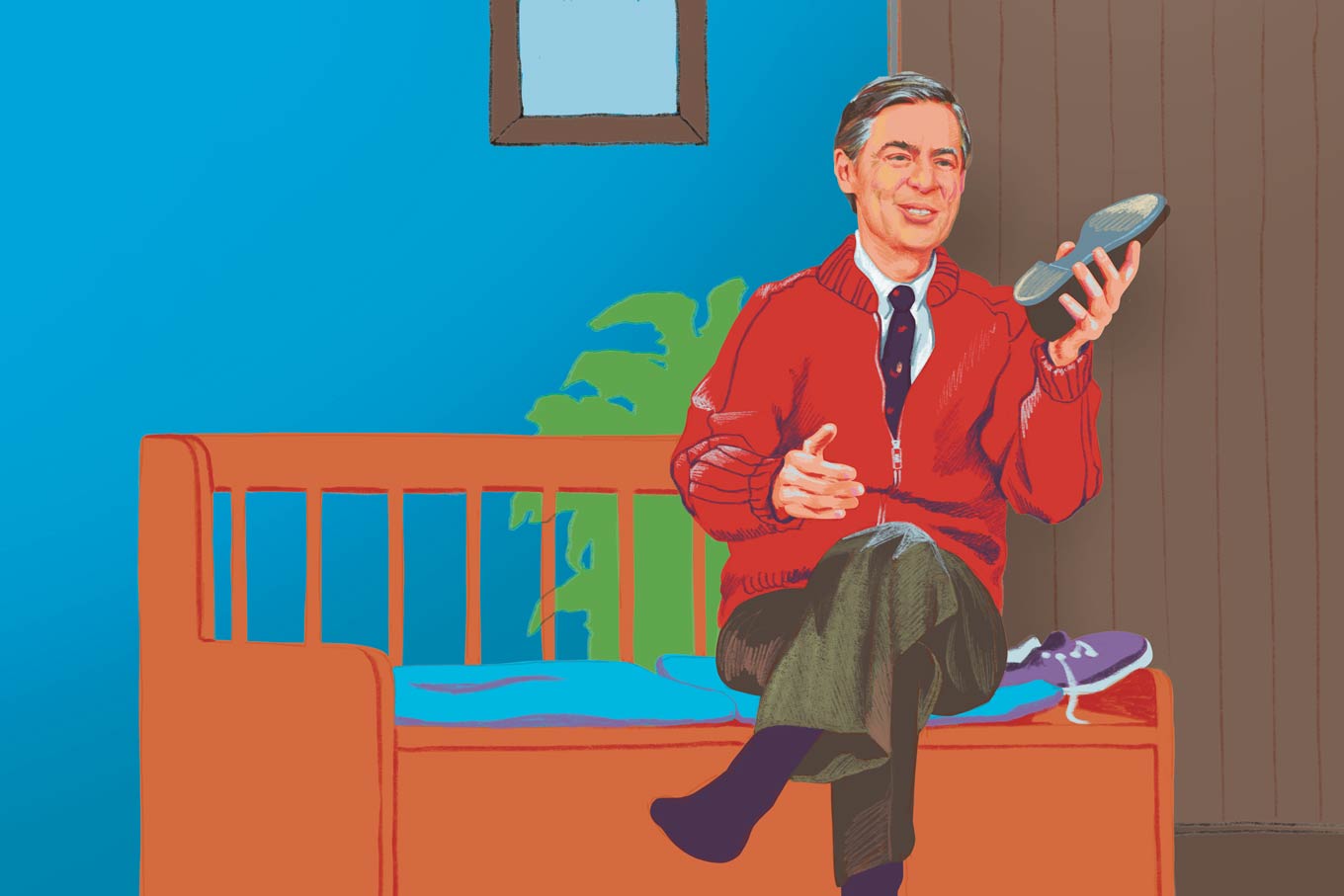
“This program is not for young children to watch alone. When children see and hear about frightening things it’s best for them to have an adult close by, somebody who loves them and can put their arm around them. So please get a grown-up that you love to watch this program with you because we’re going to talk about some sad and scary things. … Well, the people who are doing these terrible things are making a lot of other people sad and angry but when we get sad and angry, you and I, we know what to do with our feelings so we don’t have to hurt other people. When I was a boy and I would hear about something scary somebody getting badly hurt or something like that I’d ask my parents or my grandparents about it and they would usually tell me how they felt about it.”
— Fred Rogers, following the assassination of John Lennon, a series of murders in Atlanta, and the attempted assassination of President Reagan
“Knowing that we can be loved exactly as we are gives us all the best opportunity for growing into the healthiest of people.”

“After you’ve heard someone play beautiful music, sometimes you just like to have a quiet time to remember it. Let’s just sit and think about what we’ve heard.”
“All I can do is be myself. I’ve had the grace to be able to do that. I walk into the studio and I think, ‘Let some word that is heard be Thine.’ Whatever doesn’t come from the eternal is just dross anyway. So I just pass on what’s been given to me.”
“It’s really easy to fall into the trap of believing that what we do is more important than what we are. Of course, it’s the opposite that's true: What we are ultimately determines what we do!”
“It’s very dramatic when two people come together to work something out. It’s easy to take a gun and annihilate your opposition, but what is really exciting to me is to see people with differing views come together and finally respect each other.”
“It’s tempting to think ‘a little’ isn’t significant and that only ‘a lot’ matters. But most things that are important in life start very small and change very slowly, and they don’t come with fanfare and bright lights.”
“Frankly, I think that after we die, we have this wide understanding of what’s real. And we’ll probably say, ‘Ah, so that’s what it was all about.’”
“In the external scheme of things, shining moments are as brief as the twinkling of an eye, yet such twinklings are what eternity is made of — moments when we human beings can say ‘I love you,’ ‘I’m proud of you,’ ‘I forgive you,’ ‘I’m grateful for you.’ That’s what eternity is made of: invisible imperishable good stuff.”
“In times of stress, the best thing we can do for each other is to listen with our ears and our hearts and to be assured that our questions are just as important as our answers.”
“Little by little we human beings are confronted with situations that give us more and more clues that we are not perfect.”
“Are you able to believe in a loving presence who desires the best for you and the whole universe? With all the sadness and destruction, negativity and rage expressed throughout the world, it’s tough not to wonder where the loving presence is. Well, we don’t have to look very far. Deep within each of us is a spark of the divine just waiting to be used to light up a dark place. The only thing is — we have the free choice of using it or not. That’s part of the mysterious truth of who we human beings are”
— Fred Rogers
(Fred would often talk about the divine spark that exists in every human being.)
“It’s not the honors and the prizes and the fancy outsides of life which ultimately nourish our souls. It’s the knowing that we can be trusted, that we never have to fear the truth, that the bedrock of our very being is good stuff.”
— Fred Rogers, an often used quote from Fred while speaking at graduation ceremonies
“The big thing about God is God’s faithfulness: not giving up on those with whom God has made covenant... not even giving up on them as they torture and kill each other.”
— Fred Rogers, reflecting on the Holocaust, in an email to writer Tom Junod
“Music is the one art we all have inside. We may not be able to play an instrument, but we can sing along or clap or tap our feet. Have you ever seen a baby bouncing up and down in the crib in time to some music? When you think of it, some of that baby’s first messages from his or her parents may have been lullabies, or at least the music of their speaking voices. All of us have had the experience of hearing a tune from childhood and having that melody evoke a memory or a feeling. The music we hear early on tends to stay with us all our lives.”
— Fred Rogers, The World According to Mister Rogers: Important Things to Remember
“By listening, you minister to me.”
— Fred Rogers, to writer Tim Madigan when he was interviewing Fred Rogers
“Many children have imaginary friends. I think that’s because when a young child wishes for something that he or she doesn’t have, that child will often create it by imagining it. That’s a normal part of childhood.”
“Some days, doing ‘the best we can’ may still fall short of what we would like to be able to do, but life isn’t perfect on any front-and doing what we can with what we have is the most we should expect of ourselves or anyone else.”
“Whatever we choose to imagine can be as private as we want it to be. Nobody knows what you’re thinking or feeling unless you share it.”
“‘Sometimes People Are Good’ and ‘Good People Sometimes Do Bad Things’ are songs I sing to let children know that everyone does things that are naughty once in a while but that doing something bad doesn’t make you a bad person.”
“We all have different gifts, so we all have different ways of saying to the world who we are.”
“We get so wrapped up in numbers in our society. The most important thing is that we are able to be one-to-one, you and I with each other at the moment. If we can be present to the moment with the person that we happen to be with, that’s what’s important.”
“You rarely have time for everything you want in this life, so you need to make choices. And hopefully your choices can come from a deep sense of who you are.”
Sheila Roberts recalls walking through Cooper Plaza, the Camden, N.J. neighborhood she calls home in 2002, noticing something unusual: a newly planted, tree-lined street.
“Immediately upon looking at the street, I didn’t notice the trash. I didn’t notice the graffiti. And I didn’t notice how unkempt the street was,” Roberts says. “And it was because there were trees there.”
Roberts learned that the new planting was the work of the New Jersey Tree Foundation, a nonprofit dedicated to planting trees in the state’s urban neighborhoods.
She’s since worked with the foundation to get over 200 trees planted in Cooper Plaza, and she says the resulting positive effects on the community’s health and quality of life have been enormous.
“We were looking around for some miracle, and all it took was a tree,” Roberts said.
Before completing that transformative work, Roberts and her neighbors in Cooper Plaza experienced the same effect as many Americans living in historically marginalized neighborhoods: a startling lack of tree canopy equity.
It’s one of the many lasting legacies of redlining, the 1930s federal government policy of identifying neighborhoods of color as risky for investors.
Redlining resulted in numerous forms of disinvestment in those communities, just one of which was that they wound up with far fewer trees than whiter, more affluent areas.
But east coast cities Camden, Newark, and Baltimore have managed to buck the trend by embracing strong state and municipal urban forestry programs over many years, resulting in more trees being planted in marginalized communities.
Despite the odds, these places have built tree equity, in which low-income communities of color maintain healthier tree canopies than their counterparts in many other cities.

And that, in turn, has led to a host of ill effects for the formerly redlined neighborhoods.
Maps of the hottest areas in major American cities often correspond almost directly to redlined areas on maps from nearly a century ago.
Camden, for example, experiences an urban heat island effect that results in surface temperatures being far hotter than surrounding suburban areas, leading to escalated rates of heat-related illness and death.
One major cause of this temperature discrepancy is a lack of a cooling tree canopy in urban areas. And that effect is even more pronounced in low-income neighborhoods.
Because trees contribute to cleaner air, air quality is also often lower in urban settings. That presents more challenges for residents with asthma and other respiratory conditions.
Roberts says Cooper Plaza residents often felt like “prisoners in our own homes” in the summer, with no trees outside to help them beat the heat.
What’s more, that first planting she saw opened her eyes to the significant effect trees could have on residents’ sense of community and safety.
American Forests recently released the Tree Equity Score tool, allowing users to analyze tree canopy cover and factors like race, age, temperature, poverty levels, and more in census block groups across the country.
The tool also calculates a score for each block group, analyzing whether the neighborhood has enough trees for residents to experience their health, economic, and climate benefits.
Spending even a few minutes with the Tree Equity Score tool re-emphasizes the lack of tree equity in most major American cities. But it also reveals some cities, like Camden, that have made significant progress.
Cooper Plaza isn’t the only Camden neighborhood that has benefited from a focus on reforestation in recent decades.
Of the numerous Camden census block groups where the percentage of residents of color and the percentage of residents in poverty is higher than 50%, only one has less than 40% tree canopy – the baseline target American Forests has set for forested areas.
(Any block group with less than 40% canopy is considered to have a “canopy gap.”)
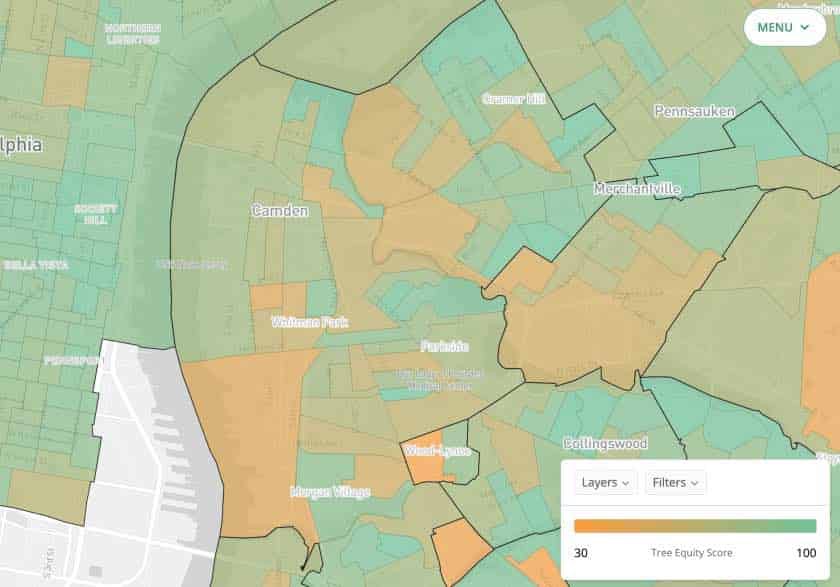
The New Jersey Tree Foundation’s long-running efforts have played a significant role in Camden’s success. Lisa Simms, the foundation’s director since its inception in 1997, says the organization has “always come from a place of equity.”
“Although we didn’t know to call it that, it was for me a matter of: Where do we need trees? Where are they needed for all their benefits?” Simms says.
“And that’s why we focused on urban areas because you will walk into a city and go, ‘My goodness. Where are all the trees?’I knew the real answer was, ‘Let’s see if we can’t get residents interested in planting trees.'”
The foundation began the Urban Airshed Reforestation Program in Camden in 2002. The program aims to engage residents in applying for, planting, and maintaining trees in their neighborhoods, with the foundation handling marketing, education, tree procurement, and other support.
One of its programs also trains residents to be certified “TreeKeepers” for their community.
Simms emphasizes that the foundation doesn’t “target” specific neighborhoods in the sense that it won’t initiate a planting project unless residents have invited it to do so.
Foundation staff endeavor to make their presence known in neighborhoods by posting information in public spaces and leaving flyers on residents’ doors. But in some cases, people and communities may get left out of opportunities.
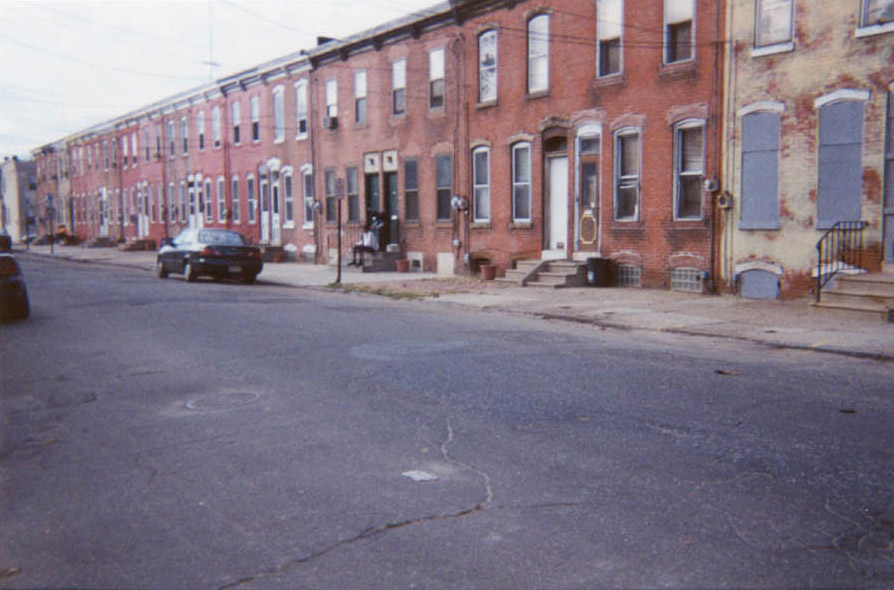
“We’re not intrusive, but we’re still in the neighborhood, and they can see us,” Simms says. “If they know anything about us – which, after all these years, most of the time they do – and they want trees, they’ll give us a call.”
Despite this limitation, the program has removed approximately 89,500 square feet of impervious surface to plant nearly 7,500 trees along city streets and engaged over 15,000 volunteers.
Simms says the key to the foundation’s work has been having “boots on the ground” – having staff out and about in the city, taking stock of the work to be done, and making themselves visible and accessible to residents.
Interest and enthusiasm for the foundation’s work have mainly spread by word of mouth, as residents like Roberts have noticed the foundation’s plantings and requested projects in their neighborhoods.
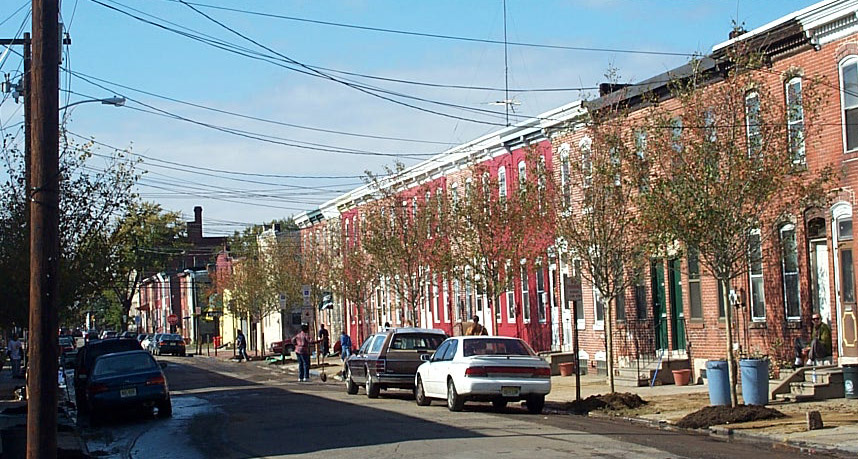
“That opens the door and the conversation,” Simms says. “Then you just have to follow up and do what you promised you would do, and be honest if you can’t do it because that’s how you build the trust.”
Roberts says the foundation has helped turn residents into “stewards” in Cooper Plaza and other Camden neighborhoods, with outstanding results.
“I think the trees were the best thing that could have happened to the city of Camden, and it was time for it to happen,” she says.
Staying cool in Newark
On the opposite end of New Jersey, Newark has also succeeded in advancing tree canopy equity – again thanks in part to the New Jersey Tree Foundation’s efforts.
The foundation’s Renaissance Trees Program has served the city since 2006, planting nearly 3,750 trees, removing nearly 22,000 square feet of concrete, and engaging more than 8,000 volunteers.
Nathaly Agosto Filión, Newark’s chief sustainability officer, chuckles as she notes that the foundation has been around since long before the city even had an office of sustainability.
Agosto Filión says trees are a tool that addresses all four of her office’s main priorities: advancing environmental health, quality of life, cost savings for the city and its residents, and access to green economic opportunities.
She’s also interested in addressing the city’s urban heat island effect, as data shows Newark is significantly hotter than many nearby communities.
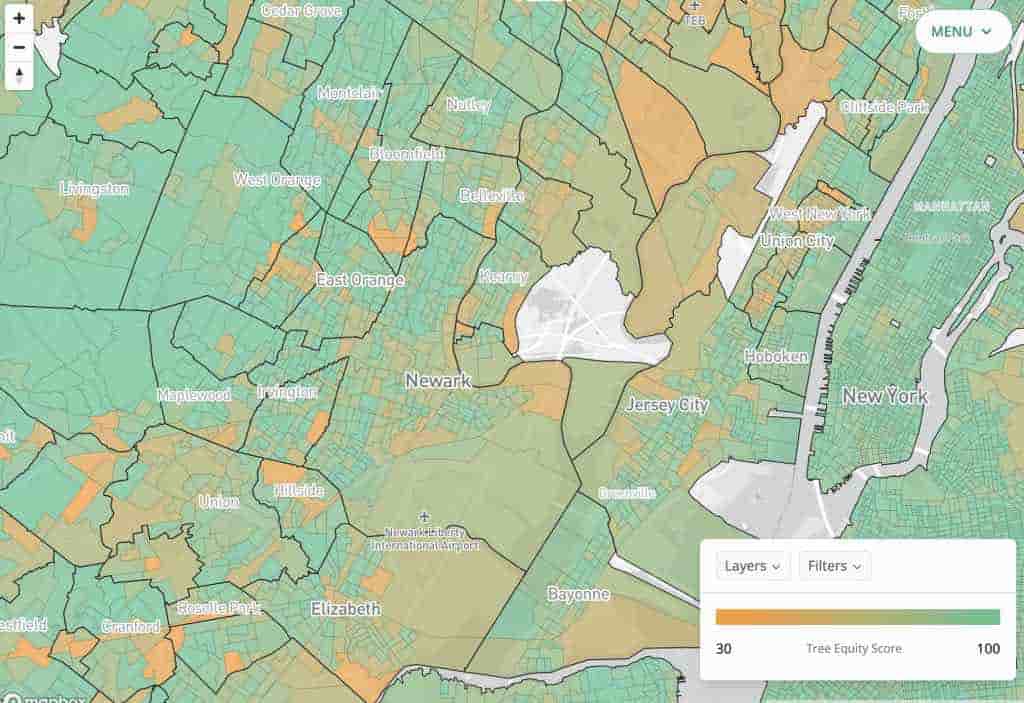
The city’s approach to planting trees is a bit more targeted than the New Jersey Tree Foundation’s. Using the forest analysis tool i-Tree, Agosto Filión and her staff have mapped out areas of the city with larger populations of people of color, lower-income people, seniors, and children, as well as those areas more prone to flood risks and poor air quality.
Then they worked with nonprofits and grassroots organizations, including the New Jersey Tree Foundation and the Newark Green Team, to choose areas to prioritize tree plantings.
“Because we have such a strong ethos around climate justice and environmental justice, we are all very aligned in making sure that communities that are first and worst hit by climate impacts are the ones where we want to bring resources first and most effectively,” Agosto Filión says.
The city is currently preparing to plant 400 to 500 trees over the next two years, thanks to a city tree fund that developers may pay into if they’re unable or unwilling to follow city master plan stipulations for the minimum number of trees that must be planted with new development. says
“The most effective tree-planting strategy is to put them where people want them,” Agosto Filión said, but also noted, “that’s not necessarily an equity-first strategy.”
She says the residents who actively seek out trees tend to live in wealthier neighborhoods. In some areas, residents may be hostile toward tree planting efforts because they are annoyed with older trees buckling the sidewalk or causing other issues.
That’s where community outreach has been crucial for Newark. The city has worked with community partners to encourage people to plant trees, adopt rain barrels provided by the city, and make other eco-friendly choices.
The city has also launched the Newark Climate Justice Ambassador internship program in collaboration with the Newark Green Team. High school students intern with Agosto Filión’s office, with the overall goal of helping young Newark residents and their communities become more aware of environmental justice work in the city.
“I find that the more you can do things that are hands-on and applied with folks, the more invested people are,” Agosto Filión says. “That’s fun on some levels, but it also builds that sense of stewardship. Every time I drive by a tree that I helped to plant, I feel a sense of pride that I was part of that little tree growing in that particular spot.”
Growing Baltimore’s tree canopy
Baltimore also has a lengthy history of efforts to improve its tree canopy. In 2007, then-mayor Martin O’Malley set a goal of doubling the city’s canopy from 20% to 40% by 2037.
The town is a bit behind that goal, but it’s made progress; the most recent data shows that the canopy has increased to 28%. And along the way, Baltimore has made strides toward improving tree equity.
One significant component of that work is TreeBaltimore, an initiative of the city’s Department of Recreation and Parks launched in 2007.
TreeBaltimore acts as an umbrella organization for city departments, private organizations, and individuals working to increase the city’s tree canopy.
TreeBaltimore Manager Charles Murphy says the organization regularly convenes others who lead tree plantings in the town and procures most of the trees they plant.
“We kind of became this hub of information and resources, administering all the other groups doing the work,” Murphy says.
Inventorying and monitoring existing trees is a vital part of Baltimore’s approach to forestry. In 2006, the U.S. Forest Service and the University of Vermont piloted a new land cover map in Baltimore.
And in 2017 and 2018, the city conducted its first street tree inventory, which mapped every single tree in a public right-of-way in the city, as well as empty tree pits (sidewalk cutouts where trees can be planted) and locations for future tree pits.
A new inventory will begin next year because, as Murphy notes, data becomes “stagnant” quickly as new trees are planted and existing trees fall to development and storms.
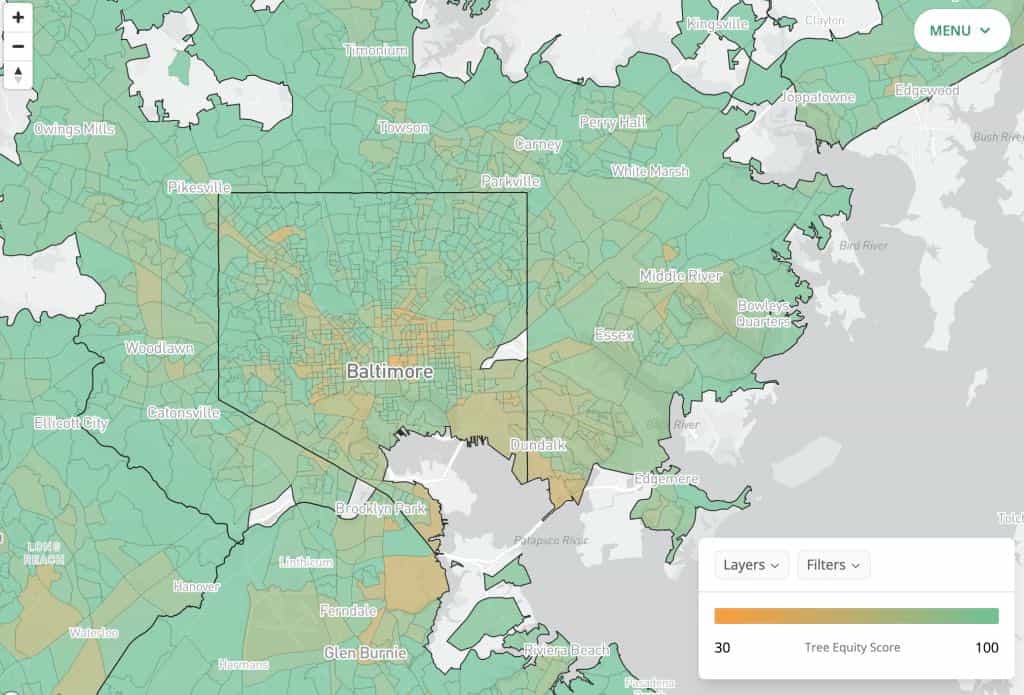
The department has used inventory data and numerous other data sets to create a prioritization map identifying areas of the city where trees are most needed.
It also does regular tree giveaways, but Murphy says those trees are consistently requested chiefly by residents of “neighborhoods we shouldn’t be prioritizing,” i.e., wealthier ones.
“What that taught us was that we need to focus even heavier on our planting efforts when it comes to street trees and opening up [tree pits] in the neighborhoods that do not have yards,” he says.
As in Camden and Newark, Murphy says community outreach work is essential to increase the number of trees on private property in Baltimore and to ensure that residents don’t “feel like we’re coming in and dumping a bunch of trees and just rolling out.”
Ryan Alston, communications and outreach manager for the Baltimore Tree Trust, a forestry nonprofit in the city, echoes that sentiment. Alston says staff at organizations like hers have historically not been reflective of the neighborhoods they most need to serve.
“That comes with a history of mistrust and organizations coming in and doing what they want and leaving,” she says.
“I think the city has to make up for that and has to make sure that the organizations that are coming in are doing their jobs to not only do the work but make sure the work is appreciated and that it’s understood why the work is being done.”
Alston says the Tree Trust has sought to improve relations with local leaders in the most in need of trees and hire staff from those neighborhoods.
The organization has launched a workforce development program that focuses on hiring returning citizens and those who haven’t had past access to job training resources.
“We make sure that they’re not only working with Baltimore Tree Trust but that we’re setting them up to, if they have an interest, go work for a larger organization or some other organization in the environmental industry,” she says. “We want to give them a launching pad for a career.”
As Baltimore looks to the future, Murphy is skeptical of the usefulness of the city’s 40% canopy goal. The city’s 8% gain since O’Malley set the goal is both more and less impressive than it seems.
The city made its biggest gain – from 20% to 27% – only two years after the goal was set, but Murphy says that’s because of improvements in data collection rather than a significant increase in tree plantings.
The city has added about 4% more trees since then. Still, Murphy says the net gain has been only 1% because the city lost about 3% of its trees to development and storms – a sobering number, but also one that’s lower than the average rate of tree loss in other major cities.
Although the 40% goal has helped to stoke public interest in trees and led to the formation of organizations like TreeBaltimore and the Baltimore Tree Trust, Murphy says the city “probably should have a more realistic goal” for canopy growth.
He points to Philadelphia, which has set a goal to achieve 30% tree canopy coverage for every neighborhood in the city by 2025, rather than a citywide objective.
“That’s way more equitable,” Murphy says.
This story is part of the SoJo Exchange from the Solutions Journalism Network, a nonprofit organization dedicated to rigorous reporting about responses to social problems. It was first published by Planet Detroit.
The President’s Emergency Plan for AIDS Relief (PEPFAR) was reauthorized at the end of last year.
The initiative, which began in 2003 under President George W. Bush, has taken on the effort of eradicating HIV/AIDS worldwide.
When the program began in 2003, only 50,000 people in Africa had access to antiretroviral therapy (ART) — now the program supports up to 14 million people through the treatment.

In November, the U.S. Congress passed a bill to reauthorize the program and its mandates through 2023, and the bill went into effect when President Donald Trump signed it into law in December 2018.
The reauthorization extends the program in its current state, with one only major addition being the expansion of funding through PEPFAR to faith-based organizations.
Support for the program has been wide-reaching and bipartisan — an example of politicians meeting across the aisle to support a humanitarian effort that saves lives.
Get More Good News
This story was originally featured in Issue 06 of the Goodnewspaper.
To get each issue of the Goodnewspaper delivered to your mailbox, join thousands of people by subscribing today.
You can also get good news delivered to your inbox every week by subscribing to the Goodnewsletter.