In a world that seems to be full of doom and gloom, it can be tough to find good news. But luckily, there are plenty of websites out there that focus on positive news stories.
In an interview with Good Good Good, neuropsychologist and New York Times best-selling author, Dr. Rick Hanson said that our brains are evolutionarily hardwired with an internal negativity bias.
“Bad news sticks to the brain like velcro,” he said. “And good news slides right off the brain like Teflon.”
Our brains are not naturally seeking good; they’re seeking a means to survive.
This is why it’s important that we are intentional about consuming good news. We must slow down, intentionally seek it out, and — most important of all — share it with others to help them find an outlet for hope, as well.
Every day our team looks for the most hopeful news stories from around the world — and we’ve quickly become experts in sourcing positive news. Here’s our collection of the best positive news sources and sites to leave you happy, hopeful, and ready to make a difference:
Here are the 12 best positive news sources:
1. Good Good Good

Good Good Good’s mission is to help you feel more hopeful and do more good. In a world full of heartbreak, pain, and injustice, Good Good Good shares stories of the people, ideas, and movements shaping the world for the better.
Inspired by Mister Rogers, Good Good Good helps you “look for the helpers.” We have a few key places where we help readers like you:
Good News Website
Every day, Good Good Good shares new articles that help you find the good in the world — or join in and become the good in the world.
Good Good Good’s goal with sharing positive news of heroes making a difference is that it would inspire readers to ask how they can become heroes and make a difference in their own unique ways.
Good Good Good also shares articles about practical ways you can make a difference to the world’s problems — big or small. Everyone has the power to make the world a better place.
Monthly Print Goodnewspaper
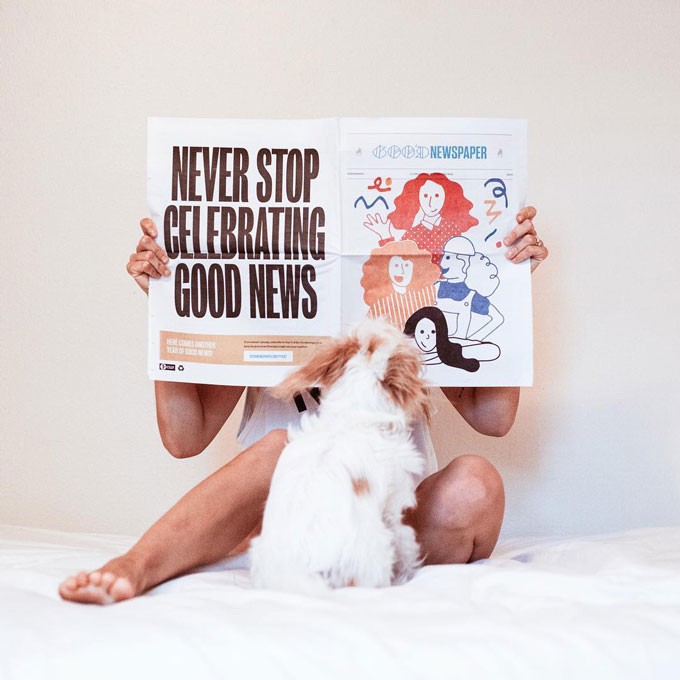
Sometimes it’s nice to take a break from screens, so Good Good Good created a monthly print newspaper filled with good news.
Every month, subscribers get a fresh new Goodnewspaper delivered straight to their front door.
Each issue is filled not only with positive news stories and ways to make a difference — but it also comes with a free centerfold poster with an inspiring quote — and is filled with beautiful illustrations.
By subscribing to the Goodnewspaper, you help make Good Good Good’s work filling the world with more good possible. (You can also give the Goodnewspaper as a gift!)
Good News Emails
Have you ever wanted an email that does actually find you well? Every day, Good Good Good sends out the day’s best good news stories in a beautiful email — with the hopes of being the best email in your inbox.
Good News on Instagram and TikTok
And last but not least, Good Good Good Instagram account has garnered the attention of The New York Times, Miley Cyrus, Rep. Alexandria Ocasio-Cortez, Katie Couric, and more.
Plus, you can find good news on TikTok, Twitter, Threads, and Facebook — so you can ensure all your news feeds turn into good news feeds.
2. Solutions Journalism Network
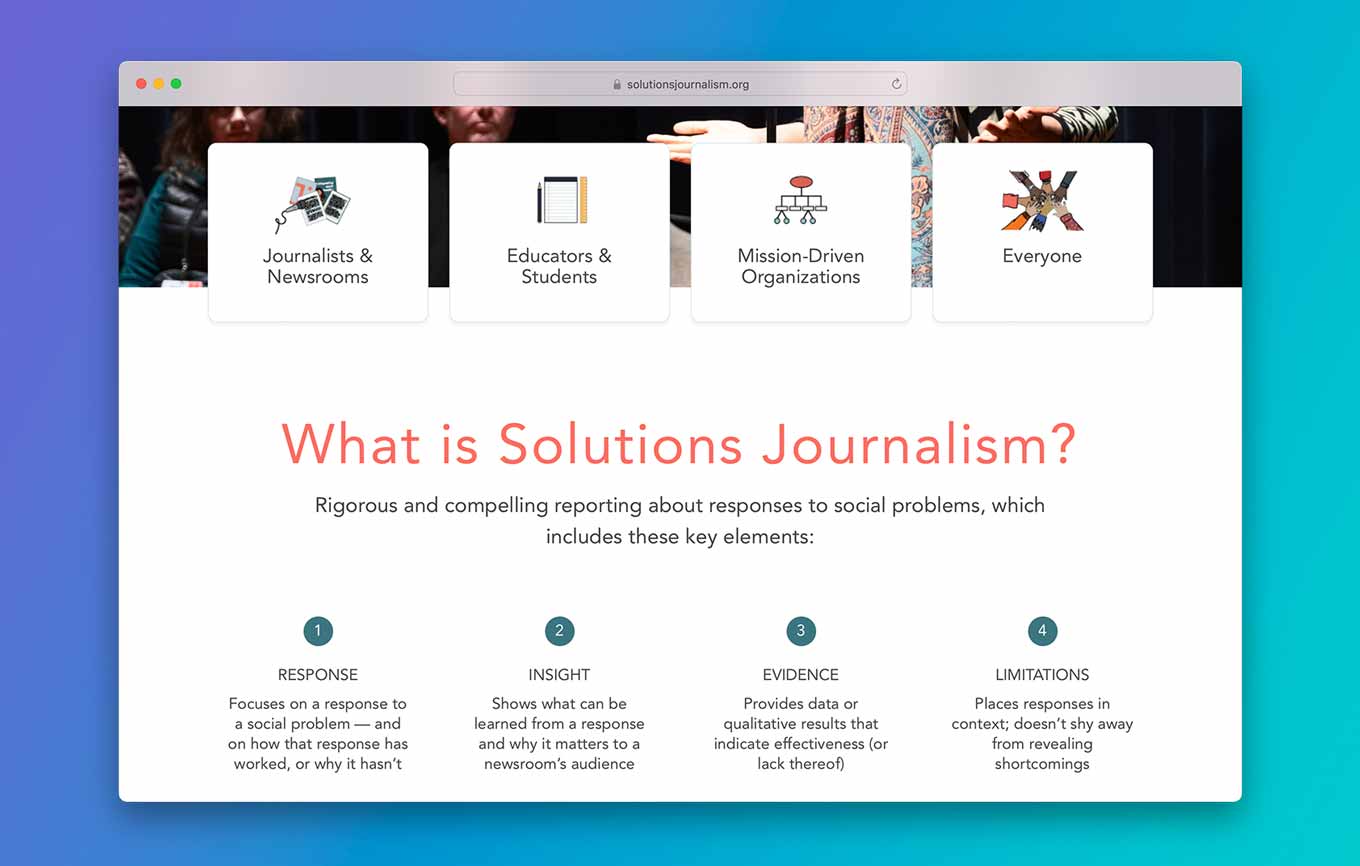
The Solutions Journalism Network is a nonprofit organization that aims to encourage more solutions-based journalism. They work hard to train journalists and increase public understanding of “solutions” when it comes to reporting on social issues. Their website has a lot of great stories from journalists trained in solutions journalism — plus resources on how you can follow their lead.
They also partnered with Google to help spread these stories even further. If you tell your Google Home or Google Assistant, “Tell me something good,” Google will share a summary of a positive news story with you, hand-curated by the team at the Solutions Journalism Network.
3. Good News Network

You can't write a list of good news websites without mentioning Good News Network. This iconic site is a one-stop shop for happy news only — featuring feel good news from the USA and around the world.
4. Positive News

Based in the UK, Positive News is an online and print magazine dedicated to high-quality journalism around positive news. They describe their work as “constructive journalism” — and uniquely, they’re a co-op fully owned by their readers and journalists.
5. A Plus

If you're looking for uplifting stories in video form, A Plus is amazing. Co-founded by Ashton Kutcher, this website is dedicated to “sharing uplifting and inspiring stories that impact people's day-to-day lives.” They have a huge library of videos, as well as articles on a variety of topics.
You can even check out this story they did about Good Good Good last year.
6. Reasons To Be Cheerful

Founded by David Byrne of The Talking Heads, Reasons to be Cheerful shares evidence-based stories with the goal of leaving readers curious about how each of us can contribute to making the world a better place.
We absolutely love their work, and they’ve even been gracious enough to allow us to republish a few of their brilliant journalism here on our website:
- 'Youth Councils' Are Playing a Big Role In Saving Cities From Climate Change
- How an Italian Denim Manufacturer Has Created the World's Most Sustainable Jeans
- Meet the World's First Carbon-Neutral Soccer Club
7. Yes! Media

Yes! Media is a non-profit media company that focuses on positive solutions to social and environmental problems. They’re most known for their quarterly magazine, Yes! Magazine, but you can also read most of their archives online for free.
8. Good Black News

Good Black News is a website dedicated to spreading positive news about “the good things Black people do, give, and receive all over the world.” Founder Lori Takin Hutcherson leads a team of volunteers with the commitment to sharing stories that are often overlooked by mainstream media outlets, in an effort to combat negative stereotypes and uplift their readers.
9. Pittsburgh Post-Gazette's Goodness Section

From the home city of Mister Rogers, the Pittsburgh Post-Gazette is no stranger to celebrating good. Their "Goodness" section features positive stories and uplifting news from around Pittsburgh, as well as some national and international pieces thrown in too.
A number of other traditional newspapers have also added good news sections in recent years — a trend we hope to see continue to grow.
10. The Happy Broadcast

From our talented artist friend Mauro Gatti, The Happy Broadcast shares beautiful illustrations covering various positive news stories. It's a great way to brighten up your day with some good vibes and beautiful art!
11. r/UpliftingNews

Every day, thousands of Reddit users share the best uplifting news stories from around the world on the biggest uplifting news subreddit on the platform. It’s a great place to explore hopeful articles — and also strike up conversations with other positive news lovers. While r/UpliftingNews is our favorite wholesome subreddit, we've also curated a list of the best subreddits about uplifting and wholesome news and our favorite wholesome memes.
If you’re interested in more opportunities to use social media for good, you can also find the best subreddits about combating climate change and protecting the environment as well.
12. Jane Goodall's Good For All News

As you can imagine, Jane Goodall's Good For All News is a website that shiningly covers good news about animals and conservation. The Jane Goodall Institute shares articles on topics like primates, science and technology, hope, and the power of youth making a difference. To be honest, we're absolutely honored to have our site be “competing” with our hero Jane Goodall.
(We also highly recommend her podcast, The Jane Goodall Hopecast)
Related: Good News Sources: Most Frequently Asked Questions
Related: The Best Good News Apps to Download
Related: How To Thoughtfully Consume the News
Related: How To Navigate Tragedies in the News
Related: The Best Good News Podcasts
Fill every day with only uplifting news
There’s a lot of bad news in the world, but we’re always encouraged by the words of Mister Rogers:
When I was a boy and I would see scary things in the news, my mother would say to me, "Look for the helpers. You will always find people who are helping."
— Fred Rogers
The key phrase here is “You will always find people who are helping.”
It’s important that we pay attention to what’s happening in the world — even when it’s bad news — but we should always heed these words and know that there will always be helpers.
At Good Good Good, we’re committed to helping you find those helpers — so you can feel encouraged by the good within the bad — and maybe even motivated to join in and become a helper yourself.
You might also like: The best green living websites
Julie Norman is leading a conversation about goal-setting with a class of high school students. As she speaks, she writes relevant terms in English on a whiteboard.
“Motivation,” she narrates, marker in hand.
After copying down the word, the teens look it up in the Spanish-English dictionaries that sit on every desk.
Motivación.
These kids know something about the topic. Most fled violence in Central America. Many traveled alone, on foot, to the United States, some with hopes of joining a parent they haven’t seen for years.
The names of the places they came from decorate the wall. Belen, Olancho, Yoro, San Pedro Sula, Puebla, Roatan, Tela, San Salvador.
Norman is a bilingual social worker. It’s her job to help these students simultaneously build new lives and heal the traumas of their journeys.
In her lesson, the word “motivation” serves multiple purposes. It’s sophisticated vocabulary. Reading, writing, and speaking the word boosts literacy and is constant practice in learning a new language. And it reinforces that as hard as the challenges are, progress is a reason to persist.
The exercise of looking up words and writing them down is part of every activity at Las Sierras Academy, New Orleans’s first formal effort to meet the particular needs of newly arrived immigrant youth.
To succeed in high school, these teens must simultaneously perform three challenging tasks: quickly acquire academic skills most U.S. students learned years before, master high school-level content, and learn enough English to move to regular classes.
Across the hall, a science class is structured the same way. As the teacher delivers biology lessons, she introduces new words, makes sure students use them repeatedly, and helps kids who missed past science instruction backfill academic content.
Most instruction is delivered in English, but students can ask for help in Spanish. Everyone receives individual and group counseling.
Stephanie, 17, walked from Honduras by herself, arriving last spring and ending up in a detention center before being reunited with her father.
Among the fears she tried to keep at bay as she made her way north was that she would never learn English.
If she couldn’t, the harrowing, lonely trip to the U.S. border would have ended with only dim prospects.
Roberto came from El Salvador with his father two years ago but had no idea school was even an option until a friend told him about Las Sierras, a program launched at the start of the current academic year specifically to aid new arrivals in making a quick transition to high school. (The 74 has agreed not to use students’ last names in this story.)
Housed in a wing of George Washington Carver High School, Las Sierras Academy is open to students who have been in the United States for two years or less and are enrolled at Collegiate Academies.
Those who score low on an English-proficiency test are referred to the program by staff at Carver and Collegiate’s other four Louisiana charter high schools, one of which is located in Baton Rouge.
Las Sierras offers classes in English, math, science, physical education, social studies and art. Students are eligible to participate for two semesters.
Individual and group counseling are among an array of services Las Sierras provides for students. In addition, there is a group for new mothers, a food pantry, access to a bilingual health clinic, and liaisons who help students establish permanent residency.
While English learners often require years of support to thrive in school, unaccompanied minors have special challenges.
Often, they have no idea they are eligible to attend school regardless of whether they entered the country legally or speak enough English to participate in a regular classroom.
Enrolling in school typically means forgoing paid work that could otherwise help their struggling families.
They may have missed years of formal school in their home countries and arrive in the States multiple years behind.
If they are teenagers, they have precious little time to catch up if they are to graduate.
They can’t wait until they are fluent in English to tackle grade-level academics.
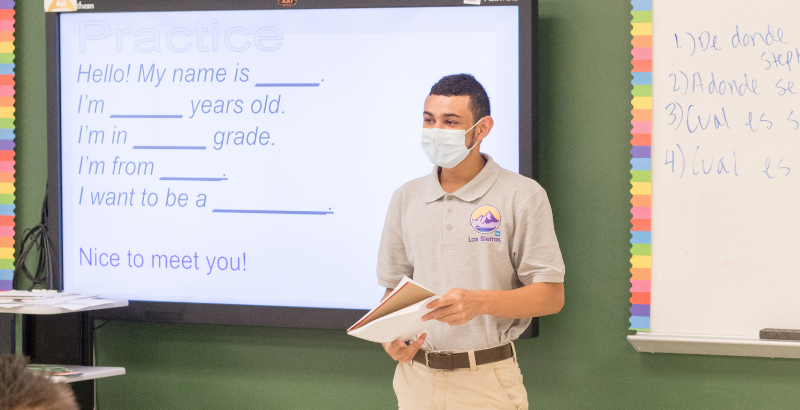
Las Sierras Academy students read, speak and write in both English and Spanish in every class. (Beth Hawkins)
Las Sierras is the brainchild of Emma Merrill, a teacher of both English as a second language and biology. She has served as Collegiate’s director of English language services for six years, a period of time that has seen rapid growth in the number of newly arrived Spanish-speaking youth in the city.
A decade ago, few Louisiana high schools enrolled only slightly more than a handful of English learners. That changed in 2014, when some 68,000 Central American children crossed the U.S. border. An estimated 2,000 ended up in New Orleans, which had a small but mushrooming Latino population and historic ties to Honduras.
Unlike traditional districts, NOLA Public Schools is composed entirely of charter schools. As autonomous programs, each is responsible for deciding how to comply with laws that require equitable access to education for English learners.
Individual schools do not report their EL enrollment to the district, but state data shows 7 percent of New Orleans’ 44,000 students are learning English.
Most are native Spanish speakers, but a number come from homes where the first language is Vietnamese, Arabic, Mandarin, or French.
At Collegiate’s schools, the first wave of unaccompanied minors meant dramatic growth in English learner enrollment. Between 2013 and 2014, the population at Carver rose from 3 percent of students to 9 percent. There was little in the way of services for them, or money to pay for intensive support.
Founded in 2015, Our Voice Nuestra Voz is a grassroots effort to expand educational opportunity for Latinos in New Orleans. A few weeks before the pandemic shuttered schools throughout the city, the group issued a report on gaps in schools’ efforts to serve English learners.
Among basic services the group’s parent canvassers found lacking were bilingual staff and materials, often resulting in a near total lack of communication with families.
As the first wave of unaccompanied minors in 2014 and 2015 propelled Merrill to start developing Collegiate’s ESL program, she noticed that her most recently arrived students struggled in a way others didn’t.
For starters, many had terrible attendance. When Merrill asked why, teen after teen told her that spending the entire day immersed in English was overwhelming.
So, four years ago, she started researching so-called newcomer programs, small schools, or subsets of classrooms where recent arrivals receive intensive help to simultaneously catch up on what might be years of missed academics, confront trauma and learn enough English to move into a traditional classroom.
‘A deeper connection’
Joe Luft will soon retire as executive director of the Internationals Network, a consortium of 30 schools across the U.S. that serve immigrants and refugees.
In a typical high school, he explains, most educators are experts in either an academic subject or a specialized service such as counseling.
To be effective, in a newcomer program, staff must be adept at teaching both English and high school-level academics, and ideally have some personal knowledge of students’ likely circumstances, he says: “They have to understand the challenges these students face and know how to interact with their families in a linguistically and culturally appropriate way.”
Often, young migrants are not just supporting themselves or their families financially, but are paying off debt they took on to get to the United States. Many live with people who are not relatives or with kin they don’t actually know.
Because of the short amount of time students have, in a newcomer program, all staff must make sure the same English-language instruction and opportunities for teaching missing academic skills are built into every class and activity. Relationships are key.

“Teachers should work in interdisciplinary teams who have a small cohort of students, so there is a deeper connection,” says Luft. “It has to be a very comprehensive approach.”
In August 2021, with a second wave of teen migrants from Latin America arriving in New Orleans, Las Sierras opened its doors to 25 students — twice as many as Merrill had been working with when COVID-19 hit.
The inaugural class mushroomed as word spread among the city’s estimated 700 unaccompanied minors, with one or two new students joining the program each week.
Heading into the holidays, the program enrolled 50 teens, including one French speaker. Eighty percent of Las Sierras’ students are from Honduras, 10 percent from El Salvador, and the rest from Guatemala, Nicaragua, and other countries. Attendance during the program’s first semester topped 95 percent.
A professor at UC Santa Barbara’s Gevirtz Graduate School of Education, Carolyn Sattin-Bajaj has studied how immigrant students choose schools and has collaborated with New Orleans researchers.
The number of hurdles Las Sierras’ students must vault to enroll is considerable, she notes.
Schools in the communities these young people fled may look very different from a large American high school, Sattin-Bajaj points out.
A classroom in a village might have students in multiple grades grouped together with a single teacher — who may teach only sporadically.
Unlike youth who come as refugees, with formal legal protection, unaccompanied minors have spent years hiding, first from violence at home and, in the United States, to protect themselves or undocumented family members from drawing attention.
Not only do many have no idea they are eligible to attend classes regardless of their legal status, they don’t know that immigration authorities have no right to enter their schools.
“That people feel comfortable taking this risk, this is inspirational,” says Sattin-Bajaj. “These kids really want to go to school.”
To enroll in Las Sierras, they must also vault some additional hurdles. New Orleans uses a computerized lottery to assign students to schools regardless of any unique needs they might have.
So newly arrived migrants must apply and be matched with a Collegiate school.
Merrill says 80 percent of her students have posttraumatic stress disorder and 20 percent qualify as having “interrupted formal education,” meaning they have missed at least two years of school.
The goal-setting lesson of Norman’s that so engaged Stephanie’s and Roberto’s class is a good example of how Las Sierras’s small, bilingual staff embeds language instruction in virtually every minute of the day.
Each lecture and activity must include practice in four skills: reading, writing, speaking and listening.
As Norman talks, she uses both English and Spanish vocabulary, weaving in the four skills. Along with doses of language and academics, the students are hearing — on repeat — that they can have agency, versus the powerlessness they may have experienced at home.
Indeed, across the hall in Merrill’s biology classroom, every student’s test scores are posted publicly. Starting with a baseline is part of setting reasonable goals, she explains. And meeting them is the definition of motivation.
“It’s good for [youth] to see academic progress to stay invested,” says Merrill. “Tolerance for struggle and risk-taking is something that has to be built for students.”
‘My experience opened the door’
In addition to rapid language acquisition, Las Sierras students have individual graduation plans. Louisiana has one of the strictest high school graduation exams in the country, which English learners frequently struggle to pass.
According to Our Voice Nuestra Voz, the city’s English learners have less than a 36 percent graduation rate. In 2019, before Merrill created Las Sierras, just 24 percent of her newcomers graduated.
Many of the students were achieving academically, but without years of experience taking tests or the necessary language proficiency, they were stymied.
“I was a mess, I was crying,” she says. “Most have never seen a bubble sheet.”
As she designed Las Sierras, Merrill built test prep into as many aspects of instruction as possible.
Why do Norman’s students use dictionaries to look up words like “motivation,” instead of Google Translate or apps on their phones? Because they are allowed to use them during some of the state exams.
Collegiate’s schools use an English-proficiency assessment that has five levels. The minimum fluency required to pass Louisiana’s high school graduation test, in Merrill’s experience, is around level three.
Students who get there before their time in Las Sierras ends can choose to return to conventional English learner services.
The constraints of COVID-era education inadvertently added evidence that the exit exam does not necessarily reflect whether a student merits a diploma.
With schools closed in spring 2020, the tests were not administered. Every newcomer graduated that year. Citywide, the rate jumped to 54 percent.

Last year, the state allowed Collegiate’s English learners who did not pass the test the option to take and pass 20 extra hours of instruction. Again, all graduated.
Encouraged by the experiment, Merrill recently asked state education officials to authorize an alternate path to a diploma.
Under her proposed Expanded Criteria for English Learners in Louisiana, or EXCELL Graduation Pathway, students will still be required to pass required classes and take the graduation test.
But those who fail the exam and were first identified as English learners after sixth grade can compile a portfolio of work that shows their knowledge meets state academic standards and that they are on track toward language proficiency.
Merrill met with Louisiana Superintendent Cade Brumley and members of the state Board of Elementary and Secondary Education, who asked her to spearhead getting support from officials in other parts of the state.
Her coalition includes the Orleans Parish School Board, national policy group The Education Trust and Our Voice Nuestra Voz.
Thanks to the latter group’s efforts, New Orleans schools receive 30 percent more money for each English learner and more than double for newcomers.
Still, Las Sierras still needs additional funding.
To date, Collegiate has simply swallowed the cost of hiring extra bilingual staff, keeping class sizes small and providing intensive mental health services.
But Merrill recently learned that The City Fund had awarded the program a three-year grant.
Next up on her wish list: a Spanish-speaking special education teacher.
As for Stephanie and Roberto, halfway into the school year, both reported that their fear of not learning English to navigate their new home has vanished.
Roberto has made a lot of friends among Carver’s U.S.-born students and gets lots of English practice talking to them.
After just six months in the U.S., Stephanie has an impressive command of the language that ranges from the practical — “May I go to the bathroom?” “Can you help me?” “Do you have a charger?” — to the inspirational.
“There are people here who can extend a hand and help you meet your goals, who can take away the pain,” she says.
“My experience opened the door and gave me the opportunity to use my voice.”
This story is part of the SoJo Exchange from the Solutions Journalism Network, a nonprofit organization dedicated to rigorous reporting about responses to social problems. It was originally published by The 74.
A growing number of African developers are pioneering the use of artificial intelligence (AI) to tackle their continent's challenges
— AI used to tackle poverty, translate languages
— African data seen vital to fighting racial bias
— More funding, wider digital access needed, say developers
Determined to use her skills to fight inequality, South African computer scientist Raesetje Sefala set to work to build algorithms flagging poverty hotspots - developing datasets she hopes will help target aid, new housing, or clinics.
From crop analysis to medical diagnostics, artificial intelligence (AI) is already used in essential tasks worldwide, but Sefala and a growing number of fellow African developers are pioneering it to tackle their continent's particular challenges.
Local knowledge is vital for designing AI-driven solutions that work, Sefala said.
"If you don't have people with diverse experiences doing the research, it's easy to interpret the data in ways that will marginalise others," the 26-year old said from her home in Johannesburg.
Africa is the world's youngest and fastest-growing continent, and tech experts say young, home-grown AI developers have a vital role to play in designing applications to address local problems.
"For Africa to get out of poverty, it will take innovation and this can be revolutionary, because it's Africans doing things for Africa on their own," said Cina Lawson, Togo's minister of digital economy and transformation.
"We need to use cutting-edge solutions to our problems, because you don't solve problems in 2022 using methods of 20 years ago," Lawson told the Thomson Reuters Foundation in a video interview from the West African country.
Digital rights groups warn about AI's use in surveillance and the risk of discrimination, but Sefala said it can also be used to "serve the people behind the data points".
She mapped out every suburb and township in South Africa and then combined this dataset with satellite data and machine learning algorithms to capture the growth of these neighborhoods over time.
She soon realized the algorithms she had built only went so far because some townships - including where she grew up - were not being correctly predicted.
Being able to refine the algorithms based on her lived experience meant the data collected became more accurate.
"Those kinds of decisions determine who you alienate or include when you build your AI models," said Sefala, the first AI research fellow at the Distributed AI Research (DAIR) institute - a community-driven research group.
'Delivering Health'
As COVID-19 spread around the world in early 2020, government officials in Togo realized urgent action was needed to support informal workers who account for about 80% of the country's workforce, Lawson said.
"If you decide that everybody stays home, it means that this particular person isn't going to eat that day, it's as simple as that," she said.
In 10 days, the government built a mobile payment platform - called Novissi - to distribute cash to the vulnerable.
The government paired up with Innovations for Poverty Action (IPA) think tank and the University of California, Berkeley, to build a poverty map of Togo using satellite imagery.
Using algorithms with the support of GiveDirectly, a nonprofit that uses AI to distribute cash transfers, the recipients earning less than $1.25 per day and living in the poorest districts were identified for a direct cash transfer.
"We texted them saying if you need financial help, please register," Lawson said, adding that beneficiaries' consent and data privacy had been prioritized.
The entire program reached 920,000 beneficiaries in need.
"Machine learning has the advantage of reaching so many people in a very short time and delivering help when people need it most," said Caroline Teti, a Kenya-based GiveDirectly director.
'Zero Representation'
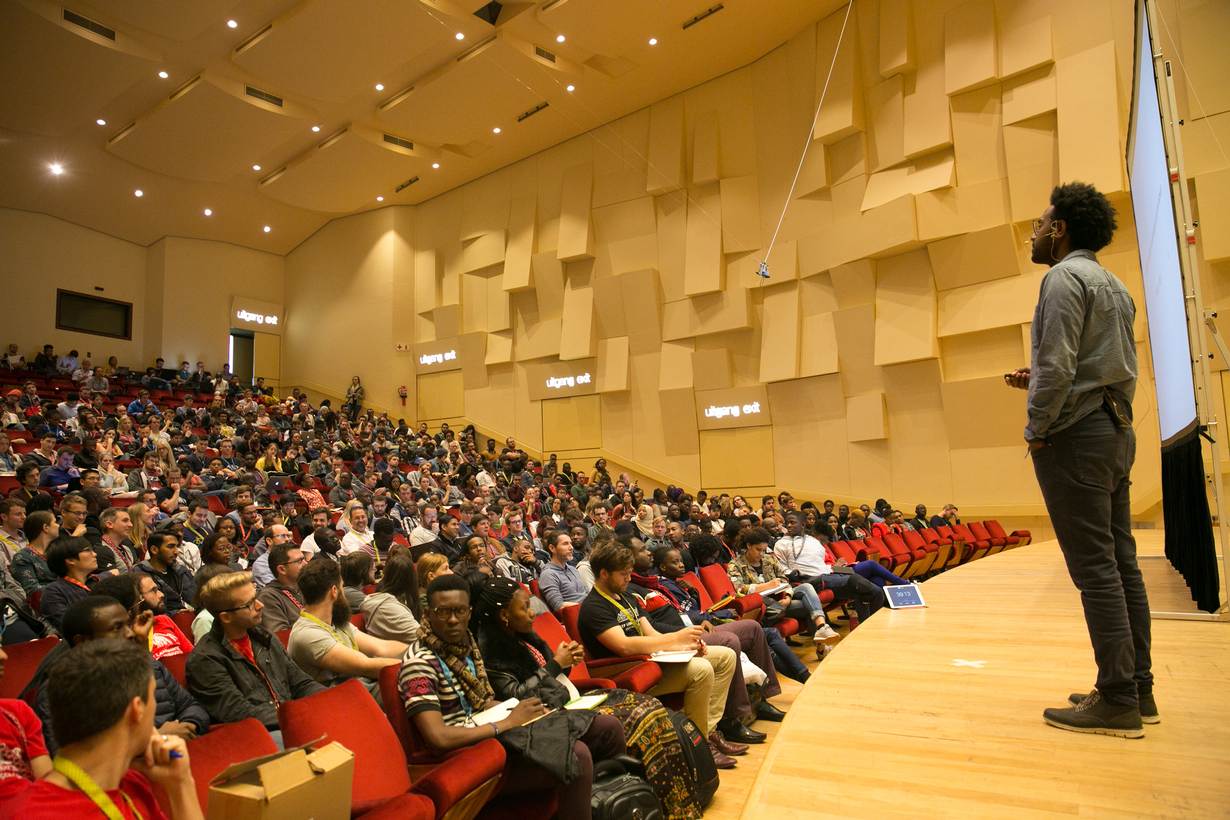
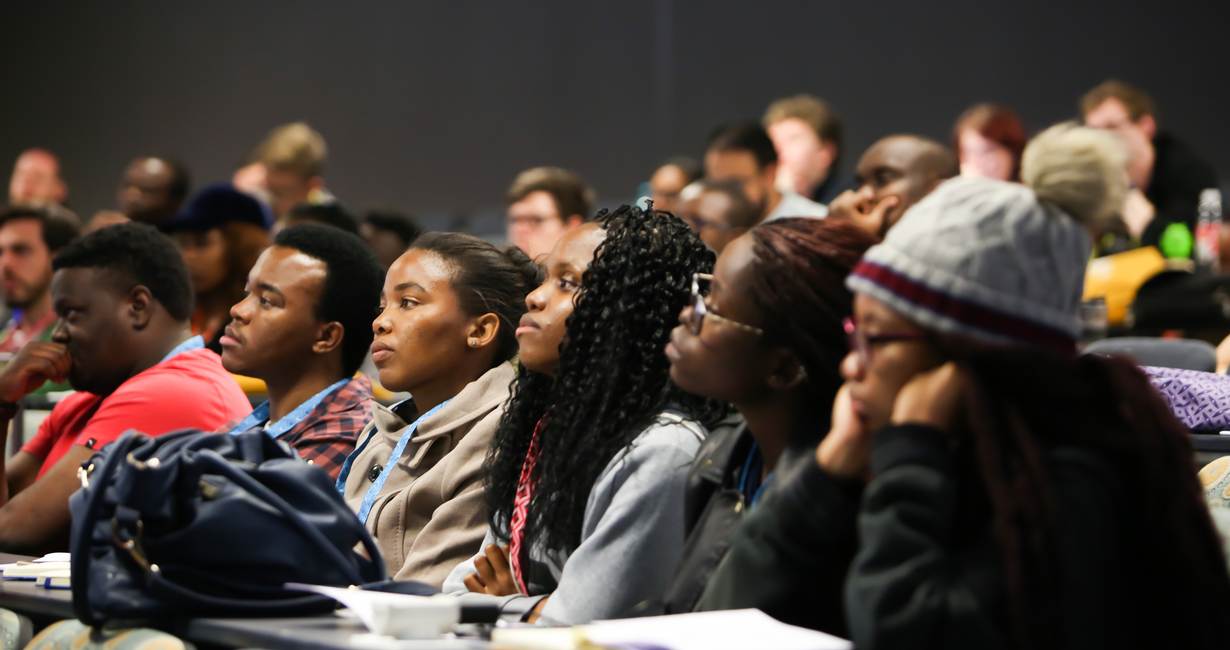
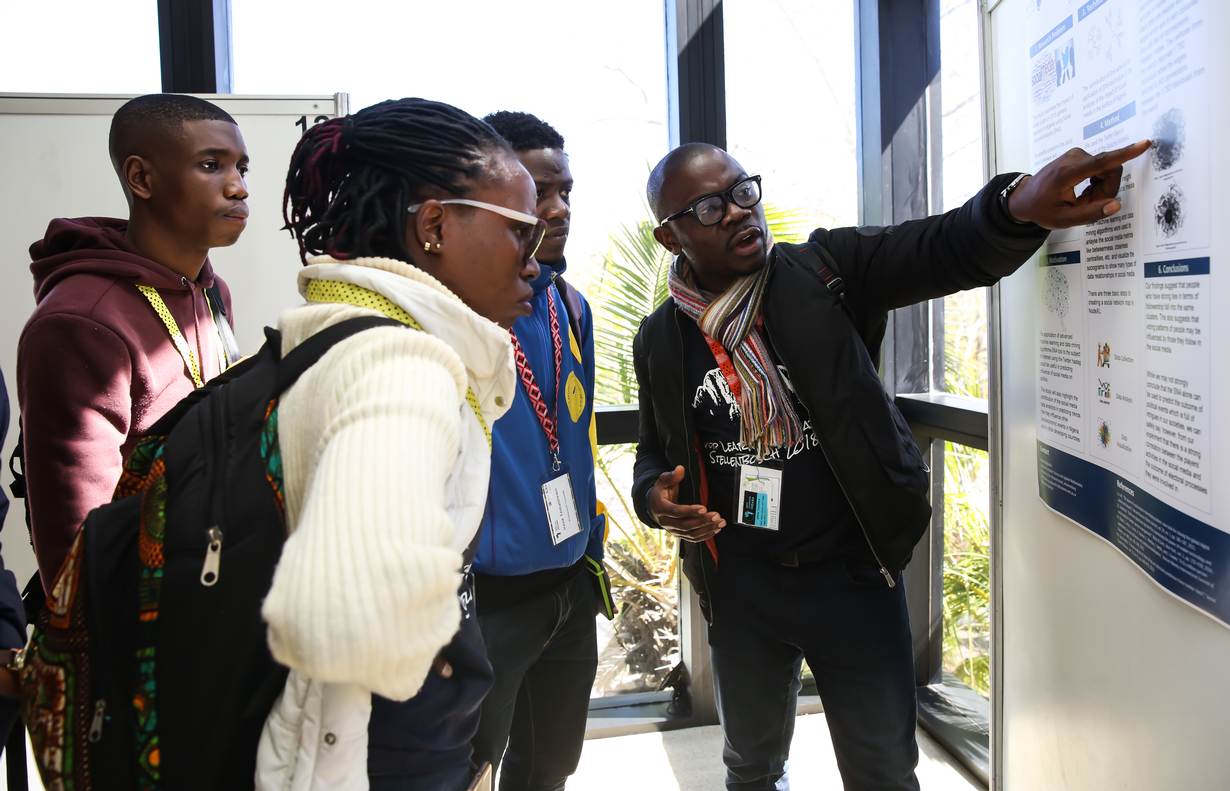
Aiming to boost discussion about AI in Africa, computer scientists Benjamin Rosman and Ulrich Paquet co-founded the Deep Learning Indaba - a week-long gathering that started in South Africa - together with other colleagues in 2017.
"You used to get to the top AI conferences and there was zero representation from Africa, both in terms of papers and people, so we're all about finding cost effective ways to build a community," Paquet said in a video call.
In 2019, 27 smaller Indabas - called IndabaX - were rolled out across the continent, with some events hosting as many as 300 participants.
One of these offshoots was IndabaX Uganda, where founder Bruno Ssekiwere said participants shared information on using AI for social issues such as improving agriculture and treating malaria.
Another outcome from the South African Indaba was Masakhane - an organization that uses open-source, machine learning to translate African languages not typically found in online programs such as Google Translate.
On their site, the founders speak about the South African philosophy of "Ubuntu" - a term generally meaning "humanity" - as part of their organization's values.
"This philosophy calls for collaboration and participation and community," reads their site, a philosophy that Ssekiwere, Paquet, and Rosman said has now become the driving value for AI research in Africa.
Inclusion
Now that Sefala has built a dataset of South Africa's suburbs and townships, she plans to collaborate with domain experts and communities to refine it, deepen inequality research and improve the algorithms.
"Making datasets easily available opens the door for new mechanisms and techniques for policy-making around desegregation, housing, and access to economic opportunity," she said.
African AI leaders say building more complete datasets will also help tackle biases baked into algorithms.
"Imagine rolling out Novissi in Benin, Burkina Faso, Ghana, Ivory Coast ... then the algorithm will be trained with understanding poverty in West Africa," Lawson said.
"If there are ever ways to fight bias in tech, it's by increasing diverse datasets ... we need to contribute more," she said.
But contributing more will require increased funding for African projects and wider access to computer science education and technology in general, Sefala said.
Despite such obstacles, Lawson said "technology will be Africa's savior".
"Let's use what is cutting edge and apply it straight away or as a continent we will never get out of poverty," she said. "It's really as simple as that."
Reporting by Kim Harrisberg; Editing by Helen Popper. This article was first published by the Thomson Reuters Foundation, the charitable arm of Thomson Reuters, that covers the lives of people around the world who struggle to live freely or fairly.
Okay, so it seems like everyone and their dog is getting diagnosed with something on TikTok. I’m one of them! I connected with a psychological nurse practitioner after a few too many videos describing ADHD symptoms in adult women popped up on my For You Page.
Spoiler alert: I take a stimulant every morning now, and it’s changed my life.
Of course, health practitioners warn of the dangers of self-diagnosis.
While it’s important to be cautious and thoughtful about pathologizing our behaviors (Dr. Google and I have been around the block a few times), it’s also important to note that there is a gender gap in diagnosing ADHD. Symptoms often manifest differently in women and girls than boys and men, being incorrectly treated as anxiety or depression in adolescence.
Studies also point to racial and ethnic disparities in these diagnoses, keeping BIPOC children from much-needed treatment and early intervention.
It’s only fair, then, that the Internet has become a deeply helpful and more accessible place to find real, authentic information about being a neurodivergent adult.
While there is a much-needed systemic shift to come in the medical community, there is no shame in learning a little more about yourself through the lens of some awesome ADHD creators.
The key is just knowing where to look.
We’ve collected the best resources to help you manage and learn more about your ADHD! Check out these blogs, newsletters, social media accounts, and podcasts:
The Best ADHD Blogs To Help You Understand Your Brain
“Black Girl, Lost Keys” by René Brooks

René Brooks is a late-life ADHD success story and channels her experience into supporting other Black women in their journey to living well with ADHD. Her blog details personal stories about her experiences, as well as tips for creating a routine, using gadgets to your advantage, and starting conversations around culture and mental health treatment.
Brooks also offers coaching services and is a frequent (and really great) tweeter.
Marla Cummins’ Adult ADHD Blog
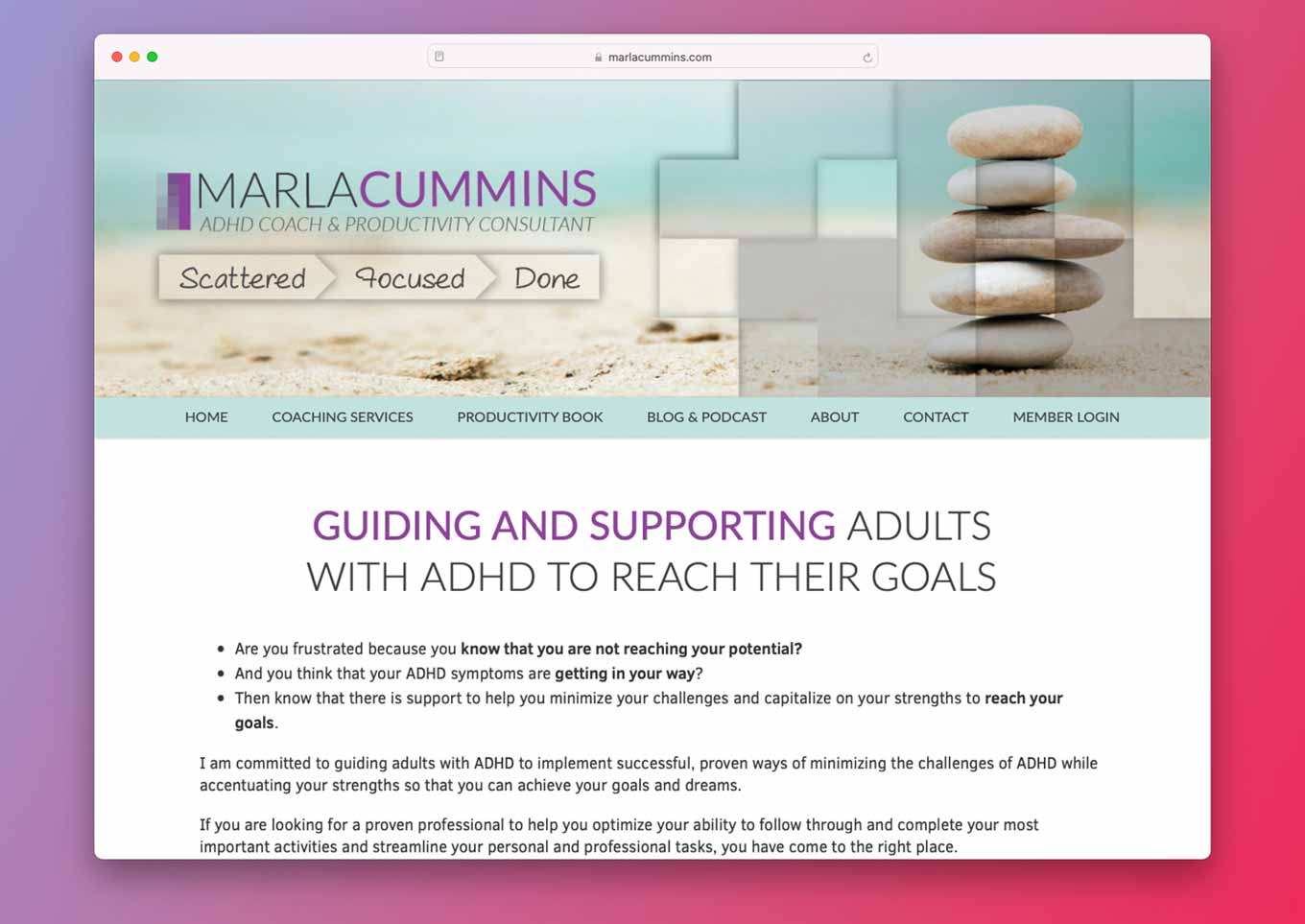
Marla Cummins is an ADHD and productivity coach who specializes in giving adults with ADHD creative solutions to minimize their challenges. Her blog shares helpful resources about topics like self-talk, habit-building, reducing distractions and rumination, and a whole lot more.
Cummins also hosts a podcast and has developed a productivity book for adults struggling with ADHD.
“Glitter Brain” by Liz Cordeiro
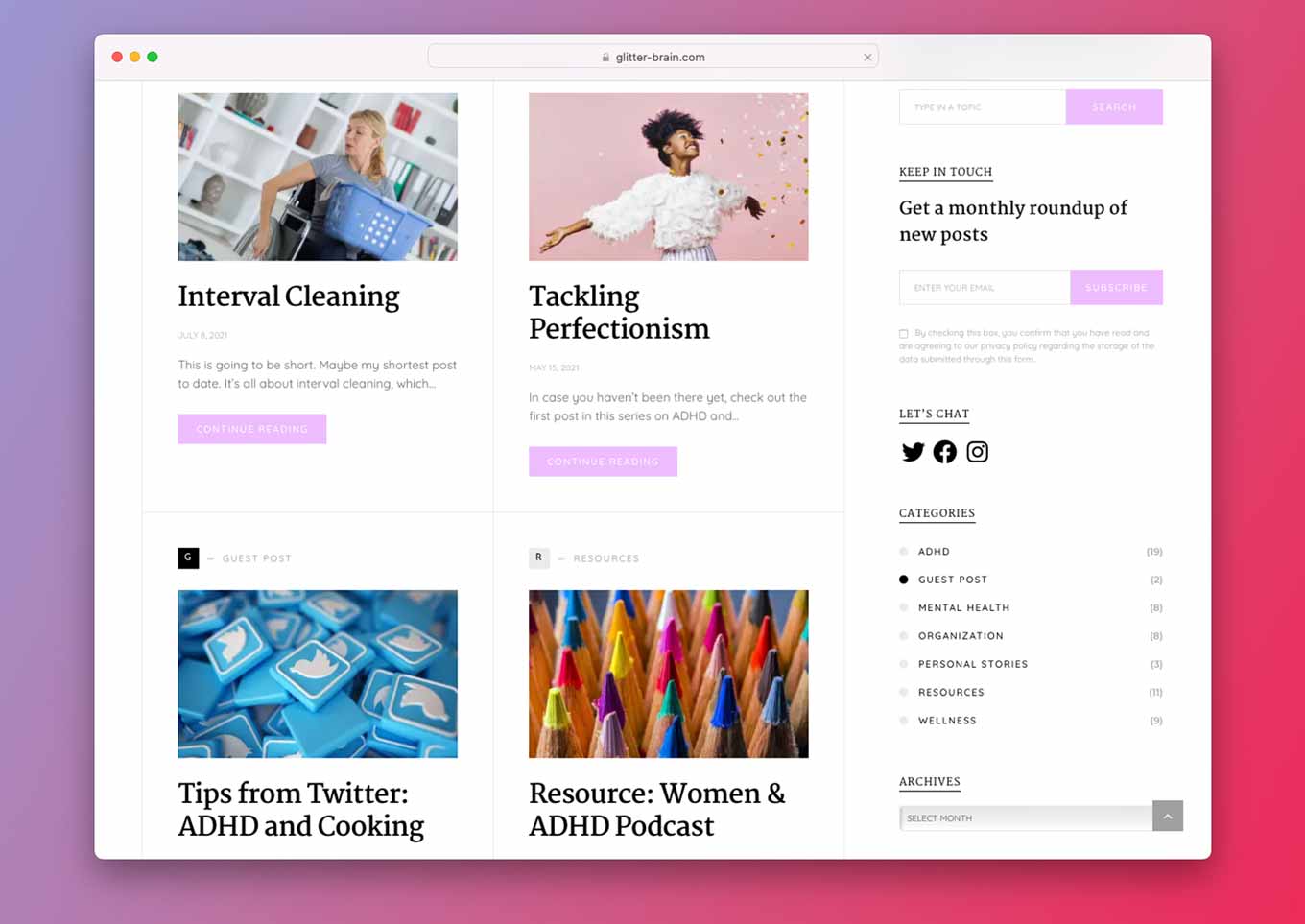
Liz Cordeiro is a writer who isn’t afraid of “opening up about the icky things.” She writes about ADHD, sobriety, anxiety, and depression.
“Glitter Brain” is filled with a variety of content, like asking for accommodations at work, supporting a child with ADHD, finding neurodiverse friends online, letting go of neurotypical standards, and even helpful ways to tackle chores.
Cordeiro also shares her day-to-day experiences on Twitter, creating a sparkly ADHD community online.
The Best ADHD Newsletters For All Your Neurodivergent Needs
Adulting With ADHD

Adulting With ADHD is a newsletter written by Rach Idowu, a London-based ADHD’er who was diagnosed at age 26. She has formed a community on Twitter, as well, and has created ADHD flashcards for people to better understand the condition.
Her newsletter is a collection of her comments and wisdom regarding ADHD and things like imposter syndrome, perfectionism, neurodivergence in the workplace, late diagnoses, and more.
Extra Focus
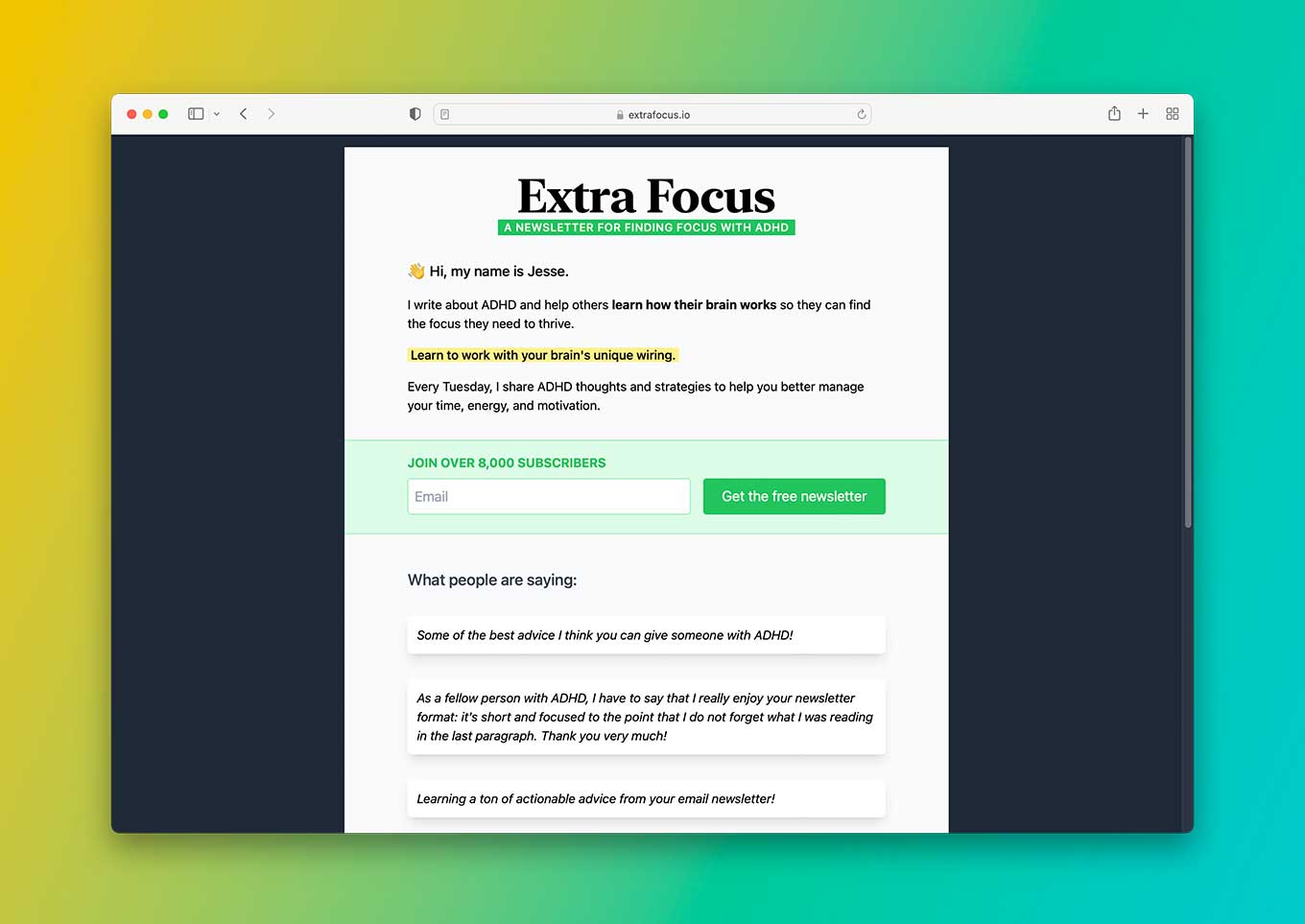
Extra Focus is a newsletter written by Jesse J. Anderson, where every Tuesday, subscribers learn ADHD tips and strategies so they can “learn how to work with your brain’s unique wiring, rather than against it.”
Anderson is also working on an upcoming book that will serve as an “ADHD starter guide.”
Looking for more great newsletters? Explore our curated list of the best mental health newsletters *and* our list of the best newsletters on the internet.
The ADHD Content Creators We Can’t Get Enough Of

Pina Varnel of ADHD Alien — Twitter
Pina Varnel is an artist who creates alien comics about her experiences with ADHD. Her art style is cute and inclusive and helps educate folks on the experiences, emotions, and types of ADHD. Her comics are also just, like, really relatable.
She is on Patreon and is working on a graphic novel, too!
Jessica McCabe of How To ADHD — YouTube
Jessica McCabe is a YouTuber helping her audience build an ADHD toolbox. She creates videos that teach and educate, as well as comment on things like ADHD portrayals in media, surviving major life transitions, and coping with negative thoughts and rejection sensitivity.
She’s basically the dean of “Neurodiversity University.”
McCabe also shares some great memes.
ADHD Artist and Creator Dani Donovan — Instagram
Dani Donovan is an ADHD meme queen you may have found on TikTok (she has over 600,000 followers), or Twitter, where she explores a number of ADHD-related topics, from fascinating therapy breakthroughs, to goofy, relatable experiences with a neurodivergent brain.
She is also a comic artist and public speaker.
Lina Fang of @ndwellness — TikTok
Lina Fang is a TikTok creator living with ADHD and Autism. She shares helpful resources and acts out different scenarios that detail her experiences with overlapping neurodivergent conditions.
Whether she’s explaining sensory issues, sharing her challenges with burnout, or helping viewers support an autistic loved one, Fang’s content is a major help for neurodivergent folks everywhere.
Kristen Bandy of @youradhdmom — TikTok
Kristen Bandy calls herself an “accidental ADHD advocate” after a late diagnosis at age 37. She shares her personal experiences with ADHD, and confronts topics like ADHD parenting, easy makeup and wardrobe tips as an ADHD’er, ADHD in the workplace, and everyday stories from a neurodiverse perspective.
She acknowledges that her experiences are not diagnostic criteria but still gives adult ADHD’ers a place to feel seen and understood.
The Best ADHD Podcasts to Add to Your Queue
Translating ADHD hosted by Cameron Gott & Shelly Collins
Cameron Gott and Shelly Collins are both experienced ADHD coaches who use their own experiences with ADHD to inform their episodes. On their website, Gott and Collins say they aim to provide listeners with the tools to “understand, own, and translate” their ADHD. Episodes confront topics like relationships with ADHD, listening to big signal emotions, navigating barriers, and of course, many more.
Faster Than Normal hosted by Peter Shankman
Peter Shankman says that the funny thing about ADD and ADHD is that “it's the only condition that truly makes you smarter and faster than everyone else, while at the same time, convincing you that you're incredibly stupid and can't do a damn thing.” That’s why he created the Faster Than Normal podcast.
On the show, he interviews ADHD’ers from all industries and backgrounds, learning about their creative and functional processes.
Catie and Erik’s Infinite Quest: An ADHD Adventure
TikTok creators Cate Osborn (@catieosaurus) and Erik Gude (@heygude) combine their two greatest loves: talking about ADHD and Dungeons & Dragons. On the pod, they talk about the challenges of navigating life as neurodivergent adults — all while playing DND.
This unique spin invites listeners to enjoy a fun narrative quest, while connecting with hosts who share vulnerable and pertinent information about ADHD. It’s a win-win!
You might also like: A roundup of the best mental health podcasts to listen to
The Best Random Adult ADHD Resources
We know; we have some pretty great taste in Internet resources. But this list is not comprehensive, and there are lots of other cool random resources, outlets, support groups, and communities out there that have helped ADHD’ers find their people.
To finish us out, here’s a list of some bits and bobs that stuck out to us! We hope that these items make you feel seen, supported, and embraced on your ADHD journey.
ADHD Babes
ADHD Babes is a digital support group of Black women and non-binary folks living with ADHD. They plan in-person events, send a newsletter, and have a Discord server for members.
Live Coworking
@ADHDdesigner (Shannon) is a freelance designer based in London. She hosts live coworking streams on Twitch, where folks from around the world can coexist and help each other stay on track.
The ADHD Subreddit
We love Reddit. r/ADHD is a great place for ADHD forums, community-building, and resources. It will leave you feeling seen and understood.
Neurodivergent Professionals
Neurodivergent Professionals (@ndprofessionals) is a Twitter and Discord community for neurodivergent folks working across sectors.
FindCenter
FindCenter is a growth and development platform with a large library of resources on a myriad of topics connected to direction and purpose. By creating a free account, users can customize their experience to find diverse resources that align with their identities; whether that’s age, gender identity, race, and more.
FindCenter also has a new section on the site for folks who identify as neurodivergent, curating a list of podcasts, articles, videos, and books covering areas like communication issues, work challenges, mental health, learning styles, parenting, and more.
This is a great free resource for our ADHD’er friends looking for even more selections on ADHD information.
Resources for Mental Health
Since all of these resources are not a substitute for professional or clinical assistance, we want to make sure you also know where and how to find a therapist or provider! In the past, we’ve rounded up a number of mental health resources, including resources to find a therapist.
Australian pop singer Troye Sivan hopes his starring role in ‘Three Months’ will help combat fear ignorance around HIV/AIDS
Australian pop singer Troye Sivan, whose YouTube videos and music have inspired a generation of young LGBTQ+ people, wants his first major film role to combat ignorance around HIV/AIDS.
In "Three Months", Sivan plays 17-year-old Caleb, who is exposed to HIV after a one-night stand on the eve of his high school graduation.
The film details the shame and anxiety Caleb experiences while waiting three months for diagnosis. Current medical guidelines require 12 weeks from exposure to be 100% certain.
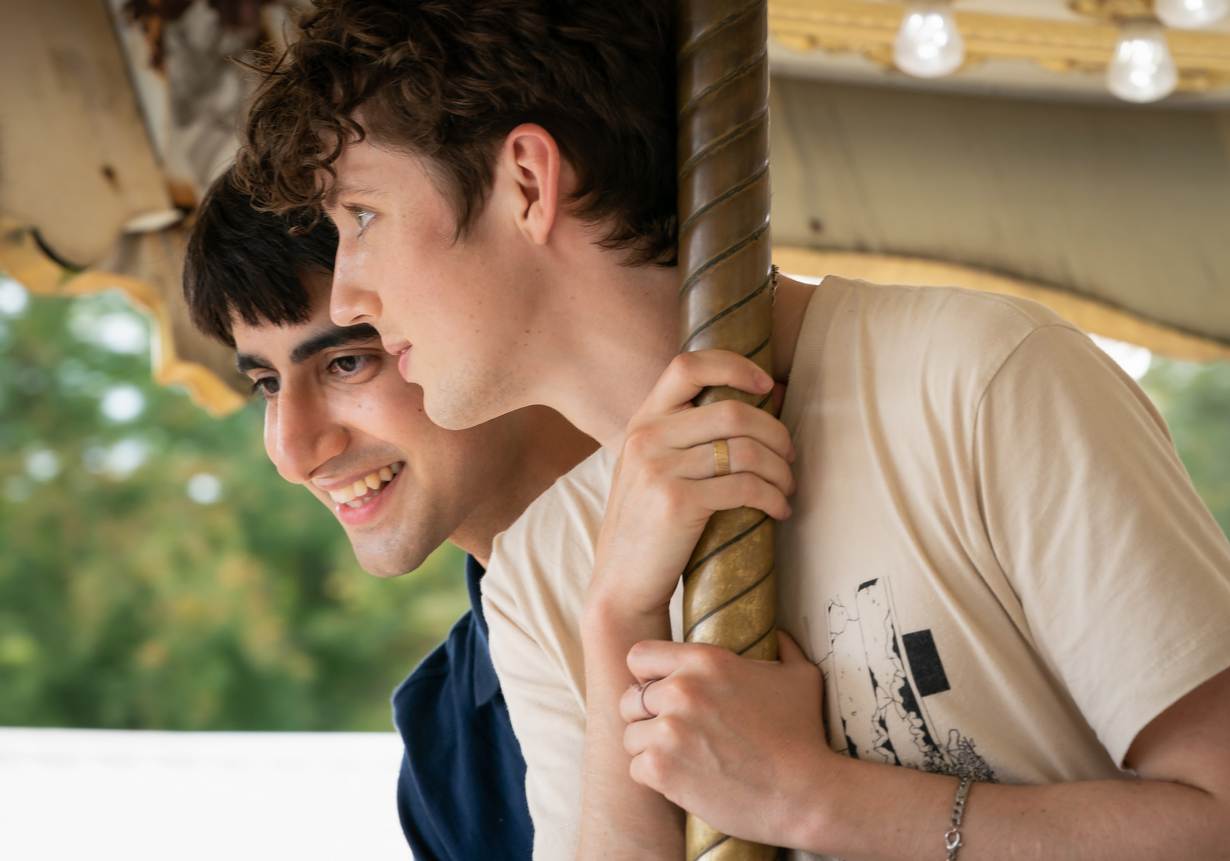
Set in 2011, when a positive diagnosis was no longer a death sentence but fear and ignorance remained rife, the film explores the lingering stigma faced by people living with HIV.
"I think there's a lot of, not necessarily misinformation, but a lot of kind of ignorance (around HIV)," Sivan told the Thomson Reuters Foundation in a video call from Los Angeles.
"I would love it if this movie plays a part in getting rid of the stigma around HIV and educates people on the fact that with access to healthcare, this is not a death sentence at all anymore."
The 26-year-old star rose to prominence after joining YouTube in 2007, coming out as gay in 2013, and becoming known for his music, personable nature, and collaborations with other YouTubers. He now has more than 7.5 million subscribers.
Sivan released his debut album "Blue Neighbourhood" in 2015 with his second, "Bloom", in 2018 peaking at No. 4 on the U.S. album chart. He is one of the most-streamed artists of all time on Spotify (Top 200) with more than 5 billion total streams.
Sivan has had smaller roles in South African teen drama "Spud" and Hollywood blockbuster "X-Men".
But "Three Months" - to be released on Feb. 23 on the Paramount+ streaming platform - marks his first major lead role.
For the film's writer and director, Jared Frieder, Sivan was the obvious choice.
"I always thought of Troye for this role," Frieder said in a video interview, adding that he started writing the script when Troye was rising to fame on YouTube.
Changing Times
Sivan was born in South Africa and raised in Australia. He now splits his life between Los Angeles and Melbourne.
Sivan said he was never schooled on either LGBTQ+ issues or HIV/AIDS while growing up.
"During sex ed at school, I was never ever, ever taught about HIV specifically ... gay sex was never, never spoken about."
There were also few openly LGBTQ+ characters on screen.
"When I was growing up, I remember the two, maybe three times I saw queer stories in TV and film. And I remember it being a very, very, very formative experience," said Sivan.
"Those were kind of like, these rare, rare moments that I remember felt so private to me, that I was like 'Oh, my God, I need to watch this in the middle of the night'," he said.
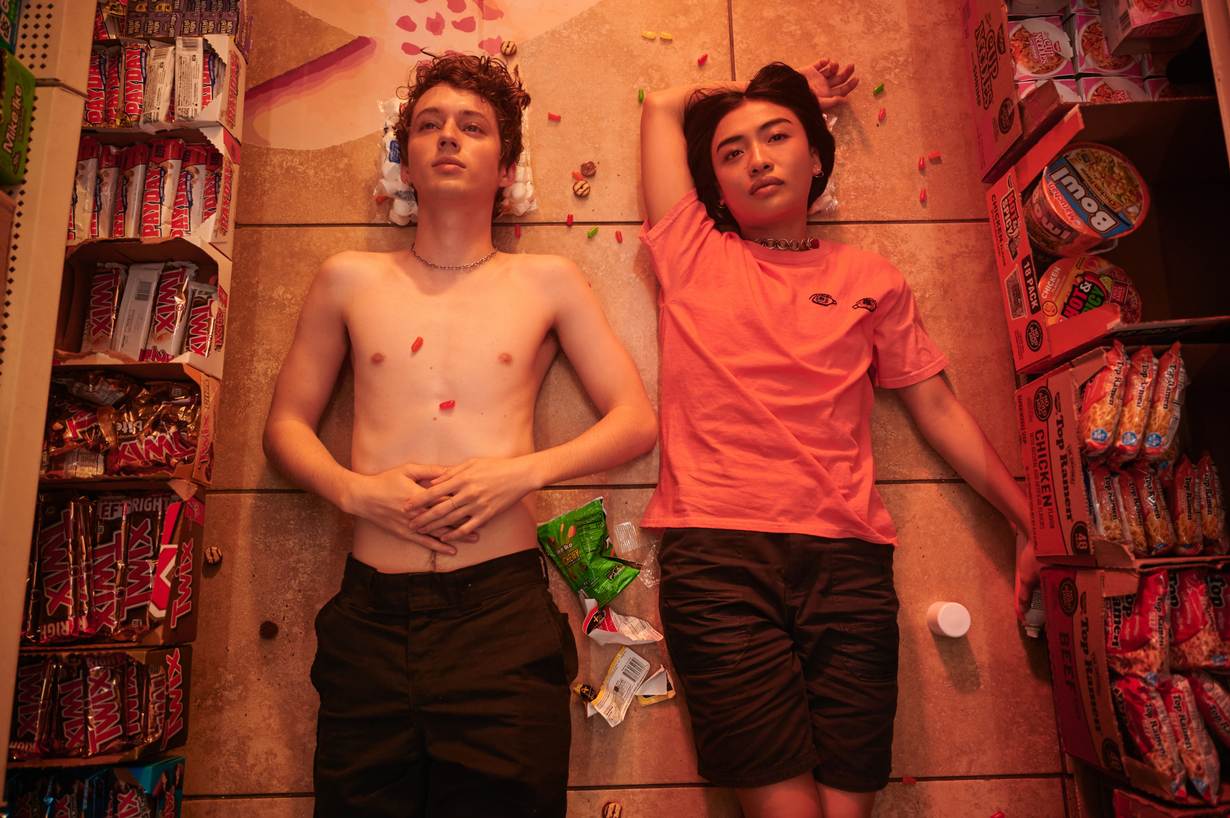
Frieder said he hoped "Three Months" would help fill the gap for LGBTQ+ people growing up, wherever they are in the world.
"I want people to feel less alone. If this movie helps kids see themselves on screen, especially queer kids, that would be the joy of my life," he said.
Reporting by Samuel George Baugh in London; Editing by Lyndsay Griffiths. This article was first published by the Thomson Reuters Foundation, the charitable arm of Thomson Reuters, that covers the lives of people around the world who struggle to live freely or fairly.
Today, in light of the tragic loss of Dr. Paul Farmer, we’re looking back on his most prolific quotes from his years as a humanitarian and a leader in global health.
Farmer was described as “the man who would cure the world” in the book Mountains Beyond Mountains by Tracy Kidder. He co-founded Partners in Health, and was a leader on issues of social inequalities, world hunger, global health, and human rights.
Farmer's work significantly influenced the work of many difference makers — and our work at Good Good Good. We're grateful for his impactful work and the legacy of impact he leaves behind.
Famous quotes from Dr. Paul Farmer:
On making a difference
“The idea that some lives matter less is the root of all that is wrong with the world.”
— Paul Farmer

“If I am hungry, that is a material problem; if someone else is hungry, that is a spiritual problem.”
— Paul Farmer, In the Company of the Poor: Conversations with Dr. Paul Farmer and Fr. Gustavo Gutierrez
“With rare exceptions, all of your most important achievements on this planet will come from working with others — or, in a word, partnership.”
— Paul Farmer, To Repair the World: Paul Farmer Speaks to the Next Generation
“For me, an area of moral clarity is: you're in front of someone who's suffering and you have the tools at your disposal to alleviate that suffering or even eradicate it, and you act.”
— Paul Farmer
“I feel it's part of my job to make the problems of the poor compelling.”
— Paul Farmer
“To pull a million people out of poverty in the last several years, to build stable institutions where none existed — to me, that is about hope and it’s about rejecting despair and cynicism. Those are the two biggest dead ends we’ve got: despair and cynicism.”
— Paul Farmer, in Bending the Arc
“That's when I feel most alive, when I'm helping people.”
— Paul Farmer
Related: The best quotes about hunger and feeding the poor
Related: The best quotes about poverty
On justice, equity, and power
“Equity is the only acceptable goal.”
— Paul Farmer
“There is nothing wrong with underlining personal agency, but there is something unfair about using personal responsibility as a basis for assigning blame while simultaneously denying those who are being blamed the opportunity to exert agency in their lives”
— Paul Farmer
“A decent provision for the poor is the true test of civilization.”
— Paul Farmer
“There is an enormous difference between seeing people as the victims of innate shortcomings and seeing them as the victims of structural violence. Indeed, it is likely that the struggle for rights is undermined whenever the history of unequal chances, and of oppression, is erased or distorted.”
— Paul Farmer, Pathologies of Power: Health, Human Rights and the New War on the Poor
“In this increasingly interconnected world, we must understand that what happens to poor people is never divorced from the actions of the powerful. Certainly, people who define themselves as poor may control their own destinies to some extent. But control of lives is related to control of land, systems of production, and the formal political and legal structures in which lives are enmeshed. With time, both wealth and control have become increasingly concentrated in the hands of a few. The opposite trend is desired by those working for social justice.”
— Paul Farmer, Pathologies of Power: Health, Human Rights and the New War on the Poor
Related: The best quotes about justice and social justice
On medicine and global health
“We've taken on the major health problems of the poorest — tuberculosis, maternal mortality, AIDS, malaria — in four countries. We've scored some victories in the sense that we've cured or treated thousands and changed the discourse about what is possible.”
— Paul Farmer
“But if you're asking my opinion, I would argue that a social justice approach should be central to medicine and utilized to be central to public health. This could be very simple: the well should take care of the sick.”
— Paul Farmer
“In fact, it seems to me that making strategic alliances across national borders in order to treat HIV among the world's poor is one of the last great hopes of solidarity across a widening divide.”
— Paul Farmer
“Medicine should be viewed as social justice work in a world that is so sick and so riven by inequities.”
— Paul Farmer, in The Boston Globe
Related: The best quotes about public health
On faith
“God gives us humans everything we need to flourish, but he's not the one who's supposed to divvy up the loot. You want to see where Christ crucified abides today? Go to where the poor are suffering and fighting back, and that's where He is.”
— Paul Farmer
“People call me a saint and I think, I have to work harder. Because a saint would be a great thing to be.”
— Paul Farmer
“The basis of our preferential option for the poor to say: I accompany them not because they are all good, or because I am all good, but because God is good.”
— Paul Farmer
On healthcare as a human right
“If access to health care is considered a human right, who is considered human enough to have that right?”
— Paul Farmer
“Human rights violations are not accidents; they are not random in distribution or effect. Rights violations are, rather, symptoms of deeper pathologies of power and are linked intimately to the social conditions that so often determine who will suffer abuse and who will be shielded from harm”
— Paul Farmer, Pathologies of Power: Health, Human Rights and the New War on the Poor
“The essence of global health equity is the idea that something so precious as health might be viewed as a right.”
— Paul Farmer
The world is celebrating the life of Dr. Paul Farmer, who spent his life working for justice in global health care
World-renowned infectious disease expert, humanitarian, and equitable global health advocate Dr. Paul Farmer just passed away.
According to an announcement from the organization he co-founded, Partners in Health, Farmer passed away in his sleep at 62 years old.
Starting with a clinic in Haiti, Dr. Farmer’s work became a network of healthcare facilities serving some of the world’s poorest communities. He was a champion and lifelong advocate for equity in global health, the responsibility of healthier, wealthier nations to care for those with less access to resources and organized health care systems.
Farmer started his first clinic in Haiti and his work helped shape global health initiatives
In 1982, Farmer started his first clinic in Cange, Haiti and grew it from one room into a hospital and nursing school serving a community of over 150,000 people.
He was the chair of Harvard Medical School’s Department of Global Health and Social Medicine, and professor of medicine and chief of the Division of Global Health Equity at Brigham and Women’s Hospital. His writings on health and human rights and the connection between inequality and infectious diseases have shaped global health.
In the biography Mountains Beyond Mountains, author Tracy Kidder called him “the man who would cure the world.”
Farmer co-founded the global health and social justice organization, Partners in Health
Partners in Health is a global health and social justice organization responding to the “moral imperative to provide high-quality health care globally to those who need it most.”
Partners in Health, and Farmer himself, operated within the belief that injustices lead to poverty and sickness, and that health is a human right — and no human is less deserving of that right than another.
Partners in Health works in 12 countries, from Haiti and Rwanda to Malawi and Kazakhstan focusing on equitable care for maternal health, tuberculosis, HIV, Ebola, and some of the world’s most infectious diseases.
→ We've collected Paul Farmer's most wise and inspiring quotes about health, equality, and making a difference.
→ We've also collected the best quotes about global public health
Leaders around the world are paying their respects to Dr. Paul Farmer:
Over the course of his career, Farmer's work was hugely influential to a number of leading healthcare professionals, global leaders, activists, and people who care about making a difference in the world. We collected a number of quotes from those sharing their experiences with the late icon.
Fellow Healthcare Professionals
Announcing Farmer's death, Partners in Health's CEO Dr. Sheila Davis said, “Paul Farmer’s loss is devastating, but his vision for the world will live on through Partners in Health. Paul taught all those around him the power of accompaniment, love for one another, and solidarity. Our deepest sympathies are with his wife Didi and three children.”
Paul taught all those around him the power of accompaniment, love for one another, and solidarity. Our deepest sympathies are with his wife Didi and three children.”
— Partners In Health (@PIH) February 21, 2022
3/3
Dr. Sriram Shamasunder, who was working alongside Farmer last week in rural Rwanda, described Farmer's deep empathy and care for patients over the course of decades.
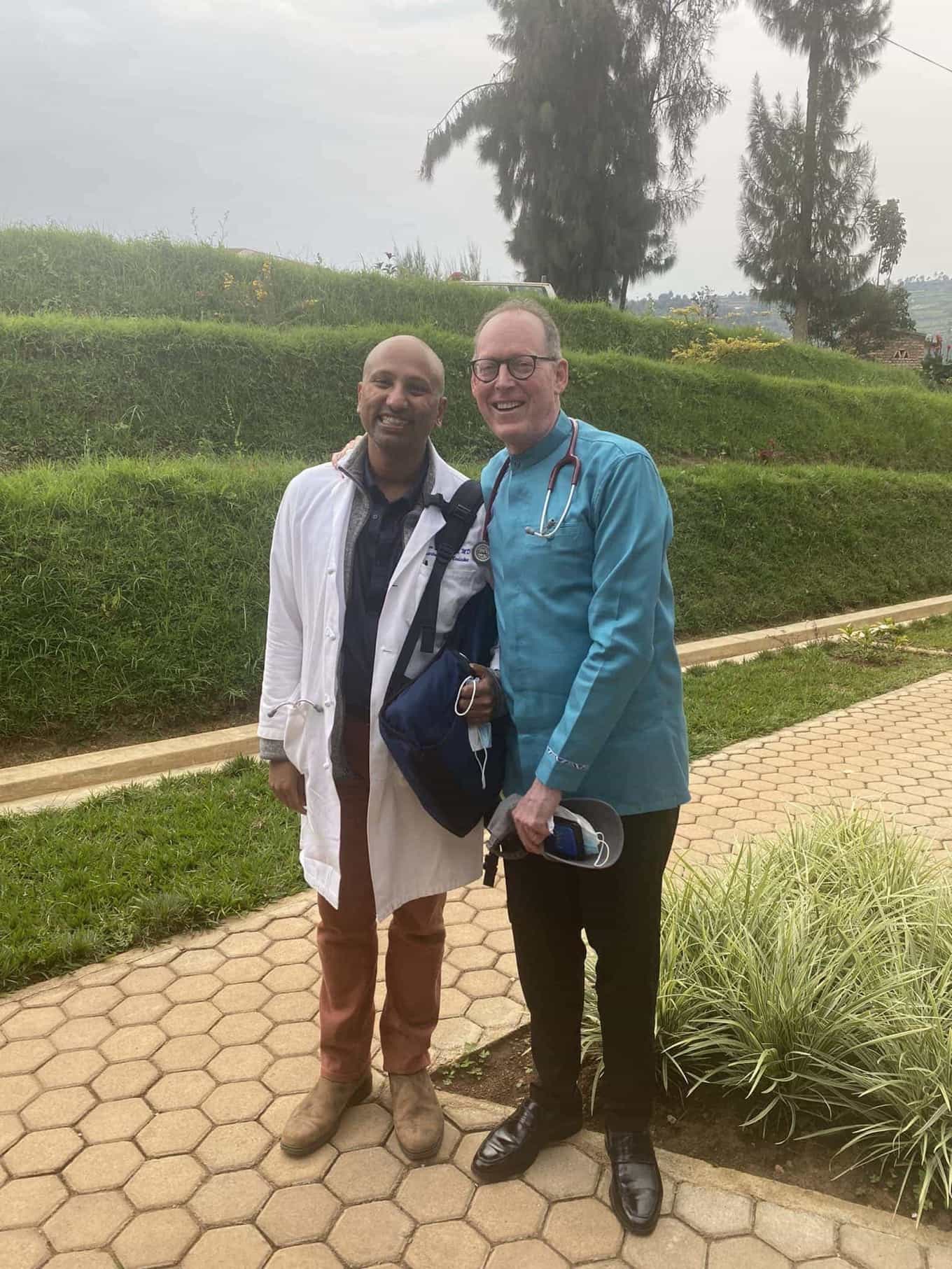
"This past week an AIDS patient passed away and Paul was incredibly devastated.," Shamasunder shared in a tweet. "I remember thinking this is why he is Paul Farmer, after 40 years losing a patient was like losing the whole world."
When I worked in rural Burundi 12 years ago, I complained a patient was “non compliant.” He responded sternly that the onus was on me and the structural violence of the system, not the patient. It was a lesson he continued this past week @ughe_org
— Sriram Shamasunder (@srijeeva) February 21, 2022
Epidemiologist and health economist, Eric Feigl-Ding, shared: "I’m crying. Global health hero Paul Farmer has reportedly just died. As co founder of [Partners in Health], he dedicated his life to healing and helping the poor. What a loss for the world."
I’m crying. Global health hero Paul Farmer has reportedly just died. As co founder of @PIH, he dedicated his life to healing and helping the poor. What a loss for the world. RIP. #Paulfarmer https://t.co/l896pEgFP6
— Eric Feigl-Ding (@DrEricDing) February 21, 2022
Dr. Céline Gounder, who works as the Editor-at-Large for Public Health for Kaiser Health News at the Kaiser Family Foundation, and as a Clinical Assistant Professor of Medicine and Infectious Diseases at New York University’s Grossman School of Medicine, describes how Farmer's work on HIV/AIDS played a role in her understanding of Ebola and COVID-19 as an epidemiologist.
2/ This is what I mean when I say COVID is HIV all over again.
— Céline Gounder, MD, ScM, FIDSA (@celinegounder) February 21, 2022
"It will become, rather, a disease of the poor... when the illness has settled in on those social strata, research on HIV infection and its prevention will be marginalized..."
-Paul Farmer, AIDS & Accusation pic.twitter.com/18zzED2EeI
Dr. Louise Ivers, the Executive Director of the Massachusetts General Hospital's Center for Global Health, and Professor of Medicine at Harvard Medical School described how Farmer's work impacted her work as an infectious diseases physician, and her life personally: "I can’t begin to count the ways in which knowing Dr. Paul Farmer changed my life. He was an inspiration, a transformative thinker, a friend, a health justice North Star, and a complex boss. He pushed us all to do better. He had not finished teaching."
I can’t begin to count the ways in which knowing Dr. Paul Farmer changed my life. He was an inspiration, a transformative thinker, a friend, a health justice North Star, and a complex boss. He pushed us all to do better. He had not finished teaching. I will miss you Paul 💔💔💔 pic.twitter.com/a8A1mfx4ab
— Louise Ivers MD MPH (@drlouiseivers) February 21, 2022
World Leaders
Paul Kagame, the president of Rwanda — a country in which Farmer spent a great deal of time, and expressed admiration for — paid his respects.
The weight of his loss is in many ways personal, to the country of Rwanda (which he loved and to which he contributed so much during its reconstruction), to my family and to myself. I know there are many who feel this way in Africa and beyond.
— Paul Kagame (@PaulKagame) February 21, 2022
Samantha Power, a Pulitzer Prize-winning author, former U.S. Ambassador to the United Nations, and current Administrator of USAID, shared what Farmer meant to her:
Devastating news. Paul Farmer gave everything—everything—to others. He saw the worst, and yet did all he could to bring out the best in everyone he encountered. Indefatigable, mischievous, generous, brilliant, soulful, skeptical, idealistic, beloved. A giant. https://t.co/x4Ug2KGGq7
— Samantha Power (@SamanthaJPower) February 21, 2022
In a statement, former U.S. President Bill Clinton said, "Paul Farmer changed the way health care is delivered in the most impoverished places on Earth. He saw every day as a new opportunity to teach, learn, give, and serve—and it was impossible to spend any time with him and not feel the same."
Paul Farmer changed the way health care is delivered in the most impoverished places on Earth. He saw every day as a new opportunity to teach, learn, give, and serve—and it was impossible to spend any time with him and not feel the same. Full statement: https://t.co/a5MgLrHeyE pic.twitter.com/nwodjTZ3g3
— Bill Clinton (@BillClinton) February 21, 2022
Activists, Nonprofit Leaders, Creatives, and Human Rights Defenders
Actor and United Nations Goodwill Ambassador for UNHCR, Ben Stiller, took to Twitter to share his thoughts on Farmer. "What a huge, huge loss. Paul Farmer saved lives on a huge scale. He was selfless, brilliant, funny, sweet and compassionate. He created [Partners in Health], one of the most effective organizations ever combating disease world wide. My heart goes out to his friends and beautiful family."
What a huge, huge loss. Paul Farmer saved lives on a huge scale. He was selfless, brilliant, funny, sweet and compassionate. He created @PIH one of the most effective organizations ever combating disease world wide. My heart goes out to his friends and beautiful family. https://t.co/tVHERCQSS7
— Ben Stiller (@RedHourBen) February 21, 2022
Filmmaker Ava DuVernay shared a clip of an interview with Farmer, and shared how he saved many Black lives:
Paul Farmer made a difference. His life saved many lives. Many Black lives. May he rest in wisdom and peace.
— Ava DuVernay (@ava) February 21, 2022
pic.twitter.com/FZwU0qzGaf
Internet creator and entrepreneur, Hank Green — whose community has raised millions of dollar for Partners in Health — expressed how he hopes his community can carry on his Farmer's legacy.
Still processing this but I know that we're going to honor his work and his vision together during the P4A this weekend. What a loss. But also, what a legacy that we all get to be a part of. https://t.co/fmcuIF8ecf
— Hank Green (@hankgreen) February 21, 2022
"The world is dimmer without him here," tweeted human rights lawyer Flynn Coleman. "Dr. Farmer’s contributions to global public health will live forever."
Such a devastating loss. My deepest condolences to his family, friends, colleagues, and all those he served. The world is dimmer without him here - and Dr. Farmer’s contributions to global public health will live forever. https://t.co/VPlz58W1Xn
— Flynn Coleman (@FlynnColeman) February 21, 2022
Nicholas Kristof, who worked with Farmer for years, expressed his admiration for his longtime friend:
Dr. Paul Farmer was a hero of global health and a model human being. He was a longtime friend and someone I hugely admired for his work fighting AIDS, TB and more, from Haiti to Rwanda. He also inspired so many young people to work on global health. The world weeps. RIP, Paul. https://t.co/ND6L8yAZoe
— Nicholas Kristof (@NickKristof) February 21, 2022
Melinda French Gates, the cofounder of The Bill and Melinda Gates Foundation, which worked closely with Farmer, expressed her respect and appreciation for his work. "He believed in the sacredness contained in every single person, and his commitment to making the world better encouraged other people believe in it, too," she tweeted. "I will miss my dear friend, and continue to be inspired by him, every day."
Most importantly, he believed in the sacredness contained in every single person, and his commitment to making the world better encouraged other people believe in it, too. I will miss my dear friend, and continue to be inspired by him, every day. https://t.co/chkEz21kAh
— Melinda French Gates (@melindagates) February 21, 2022
A former Partners in Health employee said she once asked Paul Farmer what kept him in global health when so many people become disillusioned or burned out. His answer, she said, was: "Doing hard things with friends"
When I worked at @PIH, I once asked Paul Farmer what had kept him in global health when so many people become disillusioned or burned out.
— Alyssa Bilinski (@ambilinski) February 21, 2022
His answer -- "Doing hard things with friends" -- embodied the ethos of @PIH and has stuck with me throughout my career. https://t.co/EJqJgTISds
How to honor Paul Farmer’s life and continue his work
Paul Farmer founded Partners in Health, a nonprofit organization funded by donations. You can support their work to make equitable, high-quality health care accessible to people who need it most by making a monthly or one-time donation.
And help make sure more people know about Farmer’s life and legacy, and the good Partners in Health is doing in the world by sharing this article — or our post on Instagram.
Indigenous communities are widely considered the best guardians of vanishing rainforests. From using farm plots later regrown as forest to looking at nature as having its own rights, here’s why that’s the case
Mirita-Parana, Colombia — Using a machete, Norma Souza Matapi slices a pineapple from its roots and places it into a woven bag slung across her forehead as she tends a family food plot deep in Colombia's Amazon rainforest.
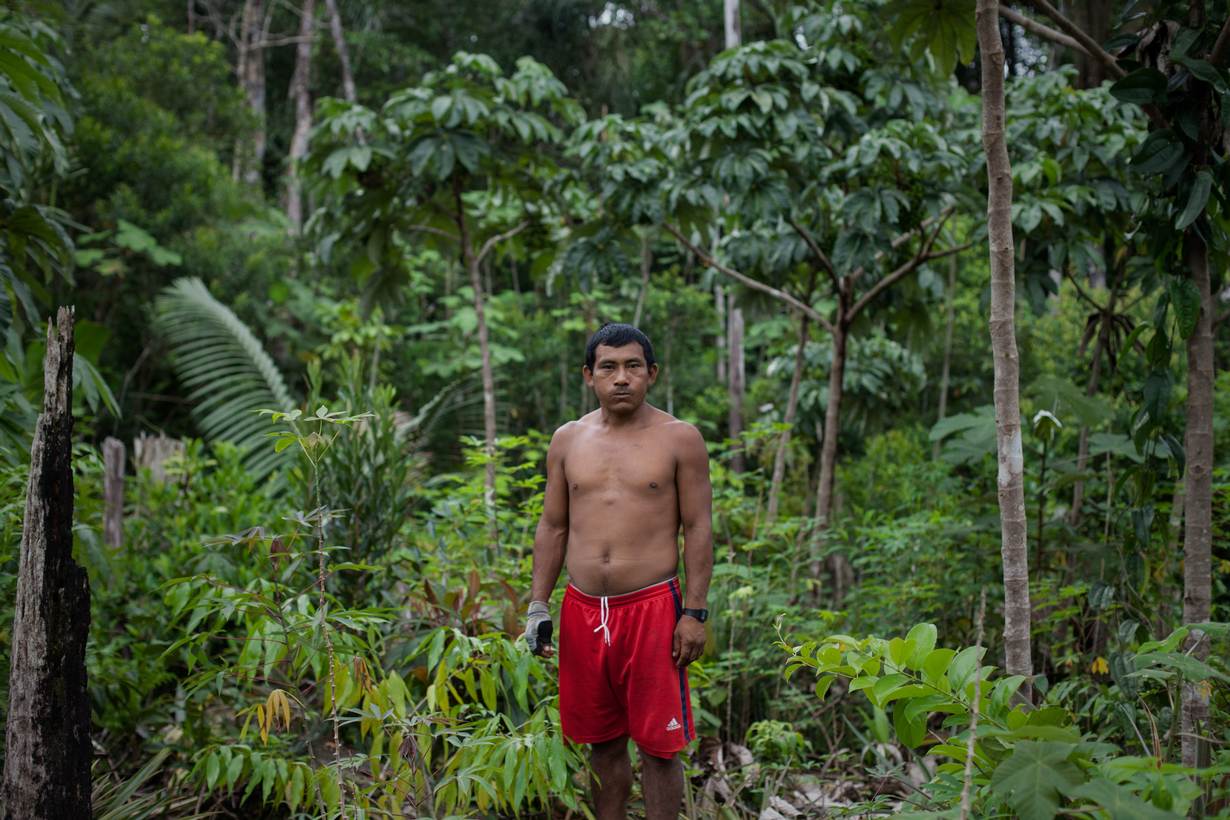
Indigenous communities in this remote corner of southeastern Amazonas province have preserved largely pristine tracts of forest for millennia based on ancient belief systems and a culture interwoven with nature.
"Women take care of the seeds and guarantee that each family and the community has enough to eat, and that food for our dances and meetings is available," said Souza, surrounded by dense jungle in the small riverside community of Bella Vista.
Based on age-old fallow farming techniques, Souza will cultivate this plot for five to seven years and then, using controlled slash-and-burn clearing, switch to a nearby patch, allowing soil to regenerate and trees to regrow.
"We give time for the earth to rest. We live off the forest and so we look after it, taking only what we need," she said, standing next to cassava crops, a medicinal herb garden, and tobacco and coca plants used in rituals.
"We've been living here for thousands of years and there's no destruction of the forest," said Souza, a member of the Matapi Indigenous group.
Indigenous people carry a map in their heads — and sometimes on paper as well — of how their land is divided up, with designated areas for hunting, fishing, and farming.
There are also areas that cannot be touched — both sacred sites and sections of land near small isolated Indigenous groups that avoid contact with others.
"We have to first get permission from the shaman before we cut down any trees, and we can only cut down certain species," said Celestino Yucuna, the community's 'captain' and Souza's husband.
Rules governing fishing also exist — including that setting off dynamite, a method used elsewhere in the Amazon to kill fish, is banned.
And "we don't have cattle. Cattle destroy everything and the soil," he said, as he sharpened a hunting spear used to kill peccary — a small wild boar — and other animals.
Forest Guardians
Such practices are why Indigenous people — in Colombia's Amazon and in many other parts of the world — are regarded by academics, environmentalists, and many officials as the best guardians of the forest.
Almost half of the remaining intact forests in the Amazon Basin are in Indigenous territories, according to the United Nations.
A 2021 U.N. report found that in nearly every Latin American country, Indigenous lands showed lower deforestation rates than other forest areas.
With deforestation rates still rising across the Amazon, finding effective ways to preserve those remaining strongholds of the planet's largest tropical rainforest will be crucial to tackling both climate change risks and surging losses of nature.
Trees absorb about a third of the planet-warming carbon dioxide produced worldwide through the burning of oil, gas, and coal. They also help regulate rainfall, ensuring more stable moisture for crops and reliable supplies of food.
Establishing and then maintaining Indigenous land rights in the Amazon basin areas of Brazil, Colombia, and Bolivia costs less than $6 per hectare a year, the U.N. researchers found.
They estimated securing land rights to 100 million hectares of Indigenous forests — an area almost twice the size of all Central America — would cost less than $600 million per year.
Evidence of the benefits of Indigenous stewardship of forests is now influencing funding priorities, with more money being spent to strengthen Indigenous cultures and protect their rights and unique knowledge.
Donor governments including Britain, the United States, Germany, Norway, and the Netherlands pledged about $1.7 billion at November's COP26 climate conference to help Indigenous people and forest communities advance their land rights by 2025.
In Colombia's isolated rainforest provinces of Amazonas, Vaupes, and Guainia, a $7.4 million project across 11 million hectares aims to help communities there become 'Indigenous territorial entities', or state-recognized local governments with greater power over their land.
'Mental Map'
Several hours downriver from Bella Vista, along the Miriti-Parana River that winds through thick jungle foliage of cascading vines and soaring palm trees, lies the Puerto Guayabo community of about 35 families.
Inside a maloka — a meeting place and traditional thatched communal dwelling — lives shaman Evelio Yucuna, who guides the community's relationship with nature.
That includes performing rites to protect farmers from snake bites before granting them permission to burn small patches of land allocated for growing crops.
His broad library of knowledge centers on a core belief that nature — including water and forests — have spirits and an owner, and that permission is needed from that owner to use anything.
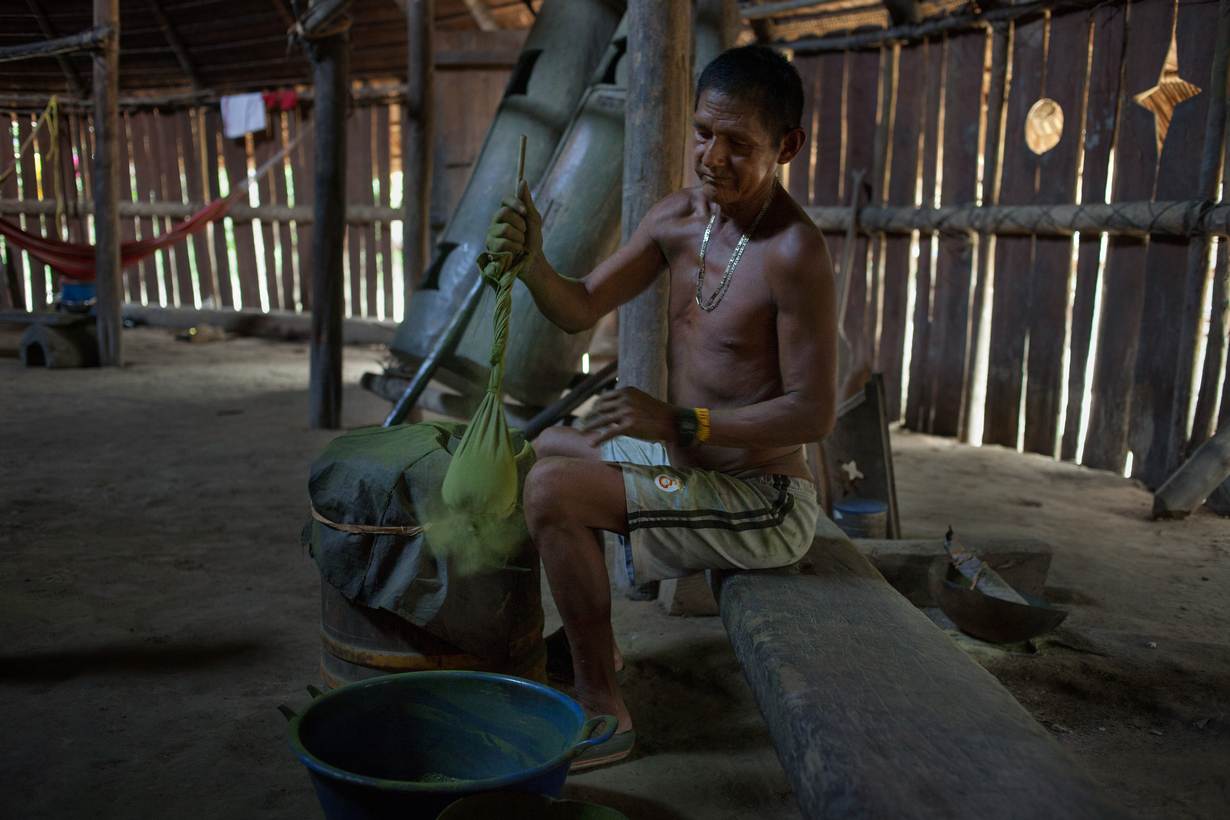
Shamans seek permission by performing healing rituals to connect with the spirits in the forest before trees are felled.
"Trees are treated like humans and are the source of life," he said, chewing on green powdered coca leaves and tobacco paste as part of the age-old mambe ritual used to start meetings and connect participants to nature.
"We are a product of nature, we were born from the earth. We live from and depend on nature," he said.
"That's why we care for it and have to defend it," he added, sitting below boxes in the structure's wooden rafters holding traditional clothing and sacred objects used in ceremonial dances.
As a spiritual leader, Evelio Yucuna is responsible for ensuring ancestral cultural practices and beliefs are preserved.
"I have a mental map that I need to transmit to future generations. I have to pass on theory and practice and what's sacred and what isn't. I am the memory of people," he said.
Looming Threats
In communities up and down the Miriti-Parana River, such beliefs are taught to children in dilapidated wooden schools on stilts, built by Catholic missionaries who once banned native languages and dance and have since been kicked out.
Indigenous teachers now instruct in both native languages and Spanish, and ensure children learn an ecological calendar, based on cycles of the moon, that helps produce two main harvests a year, allowing communities to be self-sufficient.
Indigenous leaders warn their culture and ancestral lands face mounting pressures from gold miners and loggers, who have yet to encroach into this part of Colombia's Amazon but are moving nearer.
Elsewhere in Colombia's tropical forest and across other parts of the Amazon, including Peru's Madre de Dios region, intermittent gold rushes and illegal mining have turned once-intact forests into dead landscapes of mining craters sunk amid sand dunes.
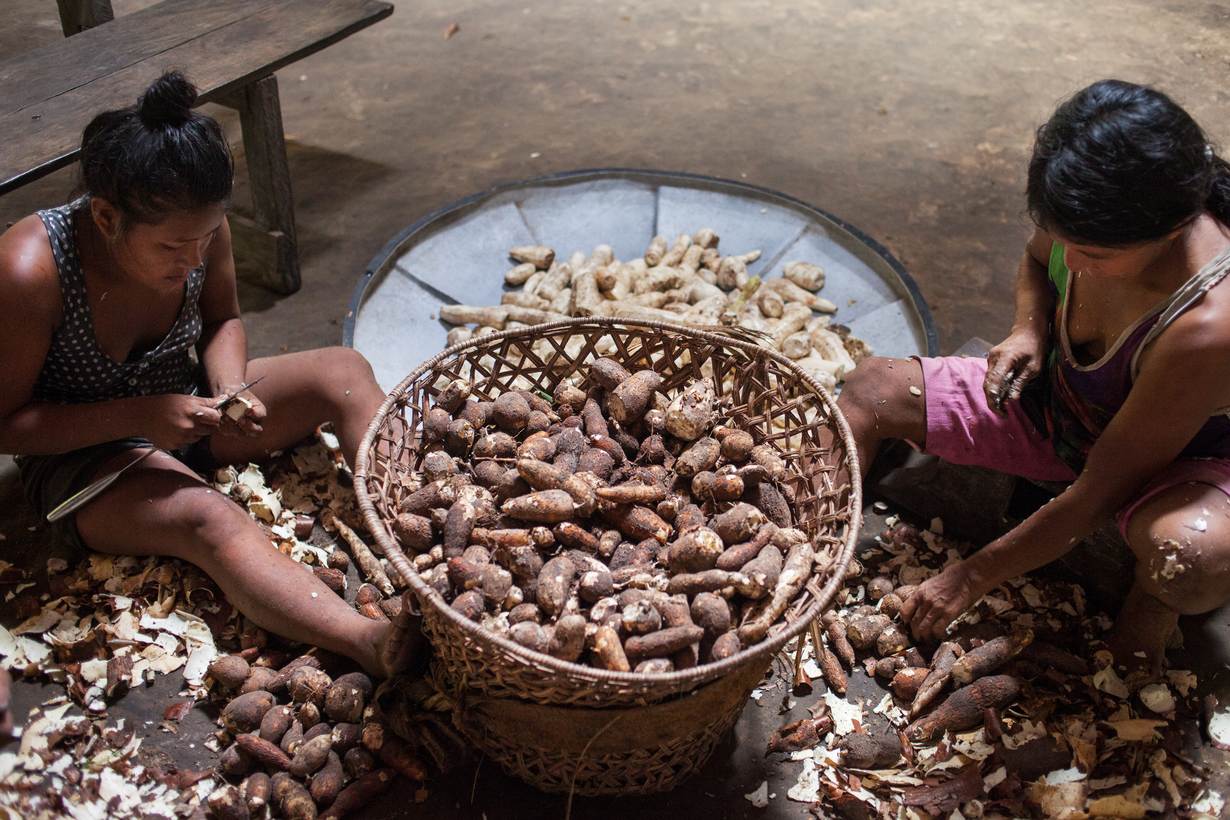
In the Indigenous worldview, nature is sacred and everything in the forest and its soils — including gold and other minerals — cannot be commercialized.
"Nature has its life and it lends us a service," said Alirio Yucuna, a 44-year-old indigenous leader, sitting on a wooden bench inside a shady maloka.
"It doesn't matter if it's legal or illegal gold mining — it causes the same harm. Gold isn't a product or something to be produced. For us, it's sacred," he said.
Francisco von Hildebrand, head of Gaia Amazonas, a Colombian non-profit that works with Indigenous people to protect the Amazon, said such views are at odds with western culture, in which "we see nature as a collection of objects to be used for human needs".
"Indigenous peoples see nature as a collection of subjects, each with souls, power and an owner" — and that view makes their definition of 'development' very different, he said.
Such Indigenous views are being increasingly integrated into laws in countries from Bolivia to New Zealand granting "rights of nature" to rivers and ecosystems.
Such laws, which now exist in at least 14 countries, might, for instance, prevent the allocation all of a river's water to human users without leaving a share for trees and animals.
It is likely more countries will introduce such laws to address increasing tension between the need to safeguard nature, the climate, and indigenous groups, and growing global demand for beef, soybeans, minerals, energy, and other products.
The pressures are particularly intense on rainforest nations that seek to create jobs, boost export earnings and often prop up budgets with oil and mining royalties — but find it hard to access green funding and are offered too little international finance to instead keep crucial forests intact.
If such incentives and financial pressures are not shifted, everyone will pay the price, indigenous leaders and environmentalists warn.
"Respecting nature maintains balance. If we don't obey its rules, it takes revenge," said Alirio Yucuna.
"Any kind of development must keep our balance and harmony with nature. Otherwise we don't want it and we cease to exist."
Reporting by Anastasia Moloney; Editing by Laurie Goering. This article was originally published by the Thomson Reuters Foundation, the charitable arm of Thomson Reuters, that covers the lives of people around the world who struggle to live freely or fairly
Update: It’s been one year since Russia invaded Ukraine. We’ve created an up-to-date action guide: How To Help Ukraine Now - 2023
Good Good Good's guide on what's happening in Ukraine — and how you can make a difference in Ukraine and in your community
On Thursday, after weeks of a military buildup and drills around the Ukrainian border, Russian president Vladimir Putin announced Russia would “carry out a special military operation” in Ukraine. The Ukrainian government says it will respond with an “all-out defense.”
Countries around the world have condemned the attacks, echoing U.S. President Joe Biden’s statements saying Russia’s invasion would bring a “catastrophic loss of life.”
Explosions have been reported in more than a dozen Ukrainian cities, with attacks coming from the ground, the air, and at sea, including in the capital city of Kyiv. Russian troops landed in the south of Ukraine in Odessa.
There is video footage of people living in Kyiv trying to evacuate as air raid sirens go off in the background, bombs going off in the city, and missiles flying through the air.
Just a day after the attacks began, the New York Times reported more than 100 Ukrainian soldiers and civilians had been killed and many more had been wounded.
It’s heartbreaking, terrifying, and devastating — to say the least.
And the truth is, because of both the nature of how quickly things change in the midst of a war as well as large-scale misinformation and disinformation campaigns from the Russian government, we don’t know everything about what’s happening.
And there’s also a limit to how much we can do to help. At Good Good Good, we always encourage our community to “wage peace” in their own lives, and to encourage it in others. And while that’s good, important, and makes a difference — this is beyond that scope.
But as with any scary, heartbreaking news — there are already good news in the form of incredible people and organizations helping both in Ukraine and from afar.
Nonprofits are gathering and distributing essentials, journalists are on the ground confirming reports so we can have the most accurate picture of what’s going on, professionals are helping care for children who already have trauma from war, and so many more.
If you’re feeling overwhelmed — because it truly is hard to know how to deal with constant bad news — and are looking for ways to support both Ukrainians and these Helpers, here are some ways you can do that:
How To Help Ukraine and Its People
Make a Difference Online By Combatting Misinformation and Disinformation
One of the best things you can do right now to support the people of Ukraine is to do your part to stop misinformation from spreading. As someone who wants to help and speak out about the injustices happening in the region, this can be challenging — but it’s so helpful.
Remember: Disinformation is false information that is spread with deliberate intention to mislead the public, while misinformation is false information that spreads regardless of the intent to mislead.
While disinformation is certainly at play in Russia’s attack, reliable news outlets will disprove that relatively quickly — because it is in direct opposition to factual information.
Misinformation is more challenging, because it often looks and sounds like it could very well be true — and in some cases, contains part-truths — but when you look a little closer, critical details are incorrect that could have negative consequences. When it comes to a war, those consequences get increasingly more severe.
Lastly, don’t spread hopelessness, panic, or fear. A significant secondary goal of Russia is to create this kind of response. The best thing you can do to combat this is to share hard facts, point people to opportunities to make a difference (like this list), and take positive action to support the people of Ukraine.
Be thoughtful about who you get your information from
Because we live in a world with a 24-hour news cycle — between television, social media, and online reporting — that system lends itself to rewarding the news outlet that breaks a piece of news “first.” But “first” is rarely the best, most reliable information.
Focus on getting your information from verifiable sources directly on the ground in Ukraine. And avoid getting information from political pundits, small or newly created social media accounts, or news organizations without accountability systems in place.
Be thoughtful about whose posts you share
When you share information about Ukraine on social media, practice slowing down, double-checking facts, and not hitting the retweet or repost button unless you feel confident about what you’re sharing.
“As we turn to social media for information, let’s be extra careful that we don’t become unwitting agents in the spread of disinformation. Go slow. Vet your sources,” University of Washington professor and online rumor researcher Kate Starbird tweeted.
You should even be thoughtful about sharing from your regular, trusted news sources — not because they’re wrong, but because they might not have complete information yet.
Starbird shared this tip: “Other folks are moving fast and maybe not vetting so well. Mistakes happen. Don’t let their mistake be your mistake and cascade through your network.”
Everybody makes mistakes, but if a piece of information you share about what’s happening in Ukraine turns out to be incorrect — you have a responsibility to take the time to correct your mistake as publicly as you shared it initially.
If you don’t want to (or can’t) take the time to verify the information you share, or issue a public correction when you get something wrong — don’t share it in the first place.
Donate to Ukrainian Nonprofits, Funds, and Organizations Making a Difference
Right now there’s a pressing need to respond to the direct military conflict occurring. Your donations towards immediate necessities — protection equipment, humanitarian responses, and providing food, water, shelter, etc. for people fleeing their homes — will help make a meaningful difference for people in Ukraine.
Also, Ukrainians are hopeful for a time of peace in the future, when their concerns can move back to other non-war-related needs. Your donations to these efforts — like sustainability efforts, art organizations, and programs that support children or the elderly — are also important and valued.
A valid concern you may have is whether or not the money you donate may be confiscated or redirected by the Russian government once they have access to physical control of Ukrainian banks.
It’s expected that, if that occurs, we’re still a ways away from that, and your donation is safe. These organizations need this money to address immediate needs, so it’s likely the money will be spent quickly. While the question is very thoughtful, it seems safe to say that your donation will make it to the right place and have a tangible impact on lives in this dire situation.
We’ve received these recommendations from Ukrainians living in Ukraine, and have vetted them to the best of our ability:
Donate toward Ukraine’s military response
Wings of Phoenix
This organization is equipping the Ukrainian military with non-lethal means of personal protection. Your donation to Wings of Phoenix will support things like bullet-proof vests, military-grade helmets, and individual first aid kits — in addition to treatment for wounded soldiers.
They’ve provided instructions in English for how to make a donation in foreign currencies, and you may also be able to go through their normal donation page.
Other Organizations Supporting Military Efforts
While many are choosing to make humanitarian donations or support non-lethal military efforts, there are a few places to directly donate to military combat. The National Bank of Ukraine has opened up a special account to raise funds for Ukraine’s Armed Forces and many people are also recommending donating to savelife.in.ua via their website.
Directly support people in Ukraine
Lifeline Ukraine
Mental health is always important, but it’s especially important during challenging times. Lifeline Ukraine is a 24/7 suicide hotline supporting Ukrainians. It was originally founded to support veterans and their families. You can donate to support their efforts to continue helping people.
Orphans’ Aid Society
For 25 years, this organization has been financially supporting children who have lost one or both of their parents in Ukraine. With an all-volunteer staff, Orphans’ Aid Society operates with very little financial overhead and is able to allocate a significant percentage of every donation directly to children in Ukraine.
Voices of Children
Voices of Children is an organization that helps children cope with the trauma of war. They give children and families psychological psychosocial support along the frontlines of the Donetsk and Luhansk regions. Donations can be made on their website.
Vostock-SOS
Vostock-SOS is a non-governmental organization founded in 2014 with the mission of providing assistance to victims of military aggression in Ukraine. Volunteers help find shelter for internally displaced persons and assist in the evacuation of people from conflict zones. They also collect and distribute humanitarian aid, such as food, hygiene, first aid, and educational materials.
Supporters can make a donation on their secure website.
Revived Soldiers Ukraine
Revived Soldiers Ukraine is an American-Ukrainian partner organization that provides aid to the people of Ukraine in support of their human rights, as well as medical rehabilitation for Ukrainian soldiers.
Their Next Step Ukraine program has built a neurorehabilitation center in Ukraine for people with brain and spinal cord injuries. Supporters can donate through Patreon, directly on the organization’s website, or through matched-employer donations.
Support the LGBTQ+ community in Ukraine
Insight
As community organizer and author Adam Eli tweeted: “In times of war, marginalized people are always hit first. This includes queer people, especially trans people.”
Insight is a Ukrainian public organization providing assistance to LGBTQ+ citizens in the form of advocacy, legal support, psychological support, medical support, education, and community building. The organization recently said they are on “crisis psychological support mode,” urging those seeking help to fill out a consultation form to be connected with mental health assistance.
Supporters can donate to Insight online.
Fulcrum
Another LGBTQ+ activism hub, Fulcrum is one of Ukraine’s largest national LGBTQ+ organizations. They work in areas like corporate equality, medical support, and advocacy for civil partnerships — but most relevant during the current crisis is their work supporting LGBTQ+ Ukrainian soldiers, veterans, volunteers, and paramedics.
Supporters can donate to Fulcrum via Patreon, and even serve as international interns or volunteers.
Support investigative journalism in Ukraine
Slidstvo
A crucial aspect of combating corruption is awareness. Slidstvo.info is an investigation agency that works to expose corruption and provide the public with helpful resources when they encounter it. Their investigative program is broadcasted weekly and Slidstvo.info hosts their documentary investigative films.
The Kyiv Independent
The Kyiv Independent is a Ukrainian English language media outlet, created in November 2021 by journalists who were fired from the Kyiv Post for defending editorial independence. Although a new outlet, their team is led by longtime journalists, as they report on war, politics, and business in Ukraine. The Kyiv Independent is funded independently by donors and supporters via Patreon and GoFundMe.
Zaborona Media
Zaborona Media is an independent media outlet reporting on social trends and culture in post-socialist countries in Eastern Europe, covering challenges faced by societies and individuals fighting for their freedom.
Zaborona means ‘taboo’ in Ukrainian, and their team aims to remove taboo from stories that matter and get to the heart of human rights issues in Eastern Europe, investigating topics such as violations of Ukrainian works’ rights, arms trafficking, and corruption. Folks can support their on-the-ground reporting via Patreon.
UKRPravda News
UKRPravda News was co-founded in 2000 by Georgiy Gongadze, a prominent journalist and film director who was assassinated the same year. This publication is among the most influential in Ukraine. Reporters break political scoops and unmask officials who abuse their power, pioneering freedom of information in Eastern Europe.
Help animals in Ukraine
IFAW
Animal welfare organization, IFAW, is rushing emergency aid to two local animal shelters in Donetsk and Gorlovka, Ukraine to provide pet food, veterinary supplies, and wages for daily care staff. IFAW first partnered with these shelters in 2014 and have maintained a relationship since then.
Sirius
Sirius has helped over 5,000 animals find loving and caring homes. In addition to finding animal housing and carrying out a spay-and-neuter program, they provide low-income families with free basic veterinary services.
Happy Paw
Happy Paw is a nonprofit dedicated to solving the problems of homeless animals in Ukraine. The charity helps owners find lost animals, sterilizes domestic animals of people in need & holds lectures on humane treatment of homeless animals for schoolchildren.
More ways to donate to Ukrainians
Etsy
People around the world are buying digital Etsy products from Ukrainian sellers. You can learn about how to support Ukrainians via Etsy — and the story of one Ukrainian entrepreneur making a difference — in our new article.
Editor's Note: We're actively working on vetting and adding organizations to this section — please continue to check back for more organizations and opportunities to help.
Make a Difference In Your Community
Reach out to a Ukrainian church in your community
Many communities around the world — and in the United States — are home to Ukrainian churches. The Ukrainian Orthodox Church of the USA alone has 85 congregations in the United States.
They may have unique ways of supporting people in Ukraine — and will also know of ways to help people who immigrated from Ukraine, who may be grieving or in need of support.
Check this list to see if there’s a church near you, kindly reach out via email or phone, and ask if there’s anything you can do to support their community — both locally and in Ukraine.
Similarly, many synagogues and other communities are finding ways to help. Regardless of your faith, there's likely a house of worship you can reach out to to support.
Look for mutual aid efforts being organized by Ukrainians in your community
We’re keeping an eye out for mutual aid efforts being organized in support of Ukrainians or Ukraine. We’ll update this article as they pop up.
In the meantime, follow activists, leaders, and organizers in your community so you’ll be the first to know about local efforts.
Support refugee programs, in light of the fact that Ukrainians may need to seek refuge in other countries in the near future
Refugee support programs are already severely underfunded in many countries around the world — especially in the United States. These organizations have worked diligently to support Afghan refugees in recent months and will continue to support the needs of new communities as necessary.
You can help them in their efforts to prepare for a possible influx of Ukrainian families needing support by making a donation to an organization in your community.
We’ve actually created the most comprehensive list of refugee organizations in all fifty states. Find your state, pick an organization, and make a donation or sign up as a volunteer.
Make a difference in your sphere of influence
The reality is that the world is filled with injustice — and it’s not possible for even the most empathetic people to take action on every issue. Know that whatever actions you’re taking to help people and improve the world, it matters.
To quote Ursula Wolfe-Rocca:
"It can be overwhelming to witness/experience/take in all the injustices of the moment; the good news is that *they're all connected.* So if your little corner of work involves pulling at one of the threads, you're helping to unravel the whole damn cloth."
So please, make a difference in the ways you can, and trust that others will do the same.
How to help Ukraine without spending money
In addition to being intentional about not sharing misinformation and disinformation, there are other ways you can help Ukrainians without spending any money.
Our partners at Tab for a Cause just launched the beta of Tab for Ukraine — which allows you to raise money for Save the Children every time you open a new browser tab.
You can also share this guide (by sharing the link to this article) and our Instagram version — to help more people know how to take action in support of Ukraine.
We will continue to update this guide and keep it up-to-date.
Over the last eighteen years, one online community has repeatedly come together to raise over $27 million for various charities.
Project for Awesome, an annual 48-hour livestream fundraiser event, connects viewers with a multitude of creators for the purpose of doing good in the world — and having some fun along the way.
What is Project for Awesome?
Started in 2007 by Hank Green and John Green, the Project for Awesome is a once-yearly 48-hour YouTube livestream. The stream, which features a variety of guests and hosts, is designed to raise money for causes selected by viewers.
The premise of the Project for Awesome is simple enough: over the course of two full days, viewers tune in to watch Hank, John, and a variety of internet creators and guest hosts as they chat, create art, make music, educate one another about charitable causes or even interact with wild animals.

During the stream, viewers make donations to the Foundation to Decrease World Suck. In return, donors are able to receive “perks” that range from exclusive digital content and project4awesome swag to one-of-a-kind art pieces, a life-sized cardboard cut out of Jimin from BTS, or a watch worn in the movie Deadpool — signed by Ryan Reynolds himself.
As they watch and donate, viewers are also able to cast votes for which charitable causes they want the community’s donated funds to support.
Naturally, as the hours progress, the content from streamers tends to get wackier. Long-time viewers know that no Project for Awesome is complete without “Sharpie Face,” an appropriately named segment in which John Green finds his face covered in Sharpie doodles.

The Green brothers, who rose to fame as internet creators and authors, have successfully harnessed the power of their fanbase for good, as evidenced by the community’s support for this annual event.
Fans of the Greens call themselves Nerdfighters, and Nerdfighteria (the nickname for the community) now embraces the Project for Awesome as a fandom holiday, dubbing it the P4A. This community support is a large part of what contributes to the authenticity and feel-good nature of the event.
The History of Project for Awesome
In 2007, with their YouTube channel in its infancy, Hank and John asked members of Nerdfighteria to post videos with a particular thumbnail to raise attention for a charity of their choice. Due to a loophole in YouTube’s recommendations algorithm at the time, these videos effectively took over YouTube.
The over 400 videos that resulted from this request launched what would become the Project for Awesome.

Over the years, the project grew to include the livestream that now serves as the cornerstone for the event.
Today, charity streams are a common occurrence across platforms like YouTube and Twitch. When the P4A began though, 48 consecutive hours of fundraising content was unheard of in online video. The Green brothers were pioneers in this area, bringing onboard a number of fellow internet celebrities throughout the years.
Behind the scenes, teams of volunteers work to produce and moderate the stream to ensure the experience stays functional and safe for everyone involved.
Since its origin, Project for Awesome has grown both in terms of its audience and its impact to charities.
Even in the face of the COVID-19 pandemic, Nerdfighters came together to support the P4A in record numbers. The 2021 Project for Awesome raised over $2.3 million, the highest amount of any previous year in the project’s history.
In 2022, Nerdfighters beat their previous record, by raising $3.2 million in less than 48 hours. 2023’s event raised more than $2.9 million — and then Nerdfighters broke their record again, raising more than $3.5 million in 2024. Once again, 2025's event broke previous records with $3.7 million.
What is the Foundation to Decrease World Suck?
The Foundation to Decrease World Suck is the foundation that supports the Project for Awesome. Incorporated as a nonprofit in 2012, the FTDWS serves to raise money for donations to various other charities.
The unique model of the Foundation to Decrease World Suck is part of what sets the Project for Awesome apart from other charity streams.
Because the Foundation redistributes its donations to other causes, viewers get to advocate for causes close to their own hearts and vote for organizations they want to support.
The donation money raised during the Project for Awesome livestream is split in two ways. For the first 24 hours, donations are divided between two organizations chosen by Hank and John — Partners in Health (whose founder, Paul Farmer, died just days before the 2022 P4A event) and Save the Children — which focus on bringing life-saving medical care and humanitarian aid to communities that need it most.
For the second half of the stream, all money raised is divided among viewer-selected organizations.
Just like in the earliest days of the P4A, viewers may submit an organization of their choice for consideration by creating a video highlighting the charity and its work.

Some of these videos are highlighted on stream, and viewers may cast their vote for any organization promoted in a video. After the stream, the charities whose videos earn the most votes receive a portion of the funds raised.
It’s also possible to support the Foundation to Decrease World Suck throughout the year by donating directly, participating in corporate giving, or via Tab for a Cause, a browser extension that raises money for charities every time you open a new tab.
How much has Project for Awesome raised for charity?
As of 2025, The Project for Awesome has raised more than $27 million for dozens of charities since its founding.
|
Year |
Raised |
|
2010 |
|
|
2011 |
|
|
2012 |
|
|
2013 |
|
|
2014 |
|
|
2015 |
|
|
2016 |
|
|
2017 |
|
|
2018 |
|
|
2019 |
|
|
2020 |
|
|
2021 |
$2,368,016 |
|
2022 |
|
|
2023 |
|
|
2024 |
|
|
2025 |
How To Get Involved in P4A
1. Support the Matching Fund
For a limited time before each year’s P4A, generous donors have the opportunity to donate $500 or more to the matching fund. Matching funds are an effective way to encourage donations from smaller donors who will be incentivized to unlock a doubled donation during the livestream.
2. Create a Video
Prior to the start of the livestream, anyone may submit a video promoting an organization or charity they wish to see supported by the Foundation to Decrease World Suck. Videos are uploaded to projectforawesome.com in the weeks before the stream, and they must be created specifically for the current year’s P4A in order to keep content relevant and engaging.
3. Vote for a Cause
Supporters have the chance to make their voices heard by voting for their favorite videos at projectforawesome.com. The videos with the most votes are selected to receive a portion of the funds raised by the P4A.
4. Donate and Claim Perks
During the stream (and in the days surrounding it), supporters can make a donation to the Foundation to Decrease World Suck. Project for Awesome donations are tax-deductible. In return for their donations, donors may select to receive a perk. Perks are available at varying dollar amounts and often refer to fandom jokes or hijinks happening on stream.
5. Watch the P4A Livestream
Even without a donation, anyone can tune into the livestream. Viewers can connect with one another in live chat comments, see real-time donation updates, and celebrate fundraising milestones with Nerdfighteria.
What are some other ways the Green Brothers and Nerdfighters make a difference?
Notably, John and Hank Green have found several creative ways to make a difference throughout their public careers.
Check out our articles about these initiatives:
This article was first published on 02/25/2022 — and has been updated annually since then.
NEW DELHI, India — Police threats, slurs, and even violence are all part of LGBTQ+ life in India, but a new rule could ease the onslaught in one southern state as it becomes a "pioneer" for sexual minorities.
The government of Tamil Nadu recently changed state conduct rules, telling its police officers to stop harassing LGBTQ+ Indians, on the orders of a high court judge.
The change, on paper at least, is radical - even if it is yet to trickle down to street level and mark a true turning point for sidelined minorities in socially conservative India, say LGBTQ+ rights campaigners.
"Tamil Nadu is a pioneer in LGBTQ+ rights, especially when it comes to recognizing trans lives," said Kalki Subramaniam, a trans activist and founder of Sahodari Foundation, which helps trans women in Tamil Nadu.
"With this amendment, a lot of innocent trans lives can be saved," she told the Thomson Reuters Foundation.
Tamil Nadu started taking trans-inclusive steps as far back as 1994, when it gave voting rights to trans Indians.
Then in 2008, it began offering free gender reassignment surgeries - all long before 2014 when India's top court ruled that trans Indians had equal rights.
India passed a transgender rights bill in 2019 and formed a national transgender council a year later.
After the Supreme Court decriminalized gay sex in 2018, the coastal state saw a series of firsts for LGBTQ+ rights - from banning so-called conversion therapy to barring sex assignment surgery on babies whose sex is not clear at birth.
Yet despite the gains on paper, gay and trans people still endure discrimination and routinely face police harassment, extortion, and abuse, according to LGBTQ+ campaigners.
They say that trans women are most vulnerable, often attracting unwanted attention due to their appearance and the nature of their jobs, which is usually begging or sex work, exposing them to further violence by law enforcers.
In 2016, a trans sex worker died after she was found severely burnt outside a police station in the state capital, Chennai.
A decade earlier, a trans woman immolated herself after police in Chennai physically and sexually abused her. The following year, the state high court punished the policemen for custodial violence.
Fear over police abuse, which is far worse in rural areas, leads to fewer crimes being reported by LGBTQ+ victims, said Grace Banu, a Chennai-based activist who is heralded as Tamil Nadu's first trans engineer.
She said while the changes in police conduct rules were encouraging, she expected no change absent enforcement measures or clarity over what penalties errant police officers now risk.
"Without any deterrence, the police will not follow any rules," she said, recounting the time she was stripped naked, verbally abused, and humiliated at a police station in 2017.
"Who will you go to when an officer harasses you? The police? They already threaten us and say they will slap false charges against us LGBTQ people."
The Tamil Nadu home department, which made the change in police conduct rules, did not respond to requests for comment.
More Must Be Done
Other states such as Odisha in the east and Tamil Nadu's neighbors, Kerala and Karnataka, which last year became the first in India to provide a 1% quota for trans people in government jobs, have also made pro-trans moves.
And High Court Judge N. Anand Venkatesh published an LGBTQ+ glossary this week to help the media depict the community "in a more dignified and inclusive manner".
He has also sought changes to the academic curriculum and backed LGBTQ+ awareness programs for criminal justice workers.
Yet, LGBTQ+ Indians say a lot more must be done.
Trans people are often rejected by their families, they say, and denied jobs, education and healthcare.
Same-sex relationships are taboo, forcing many gay people to conceal their identities for fear of discrimination in a country where pre-marital sex is still largely frowned upon.
Ending discrimination also makes financial sense, they say.
"Sensitive and supportive police, aware doctors and parents, sensitive reporting in (the) press will ... lead to more space in the economy," said Ramkrishna Sinha, a gay co-founder of LGBTQ+ consultancy Pride Circle.
There is no official data on India's LGBTQ+ population but campaigners peg it at about 105 million.
The World Bank estimates that homophobia costs India $31 billion a year due to lower educational achievements, loss of productivity and the added costs of providing healthcare to
LGBTQ+ people who are poor, stressed, suicidal, or HIV positive.
More and more corporates - from Accenture and consumer staples giant Procter & Gamble to India's Tata Steel - have introduced LGBTQ-friendly policies, including medical benefits for gay employees and their partners, since 2018.
But state-run companies have yet to follow suit.
Deepthi, a lesbian who works at an LGBTQ+ matchmaking app and runs a small soap business with her partner, said it was important to audit organizations, companies, and public offices alike, to assess the implementation of policies.
"(It) will ensure ... LGBTQ individuals make safer choices when it comes to their career and their career growth," said Deepthi, who goes by one name.
She also volunteers at Chennai-based LGBTQ+ rights network Orinam that worked with judge Venkatesh on framing the gay- and trans-friendly recommendations.
Several other LGBTQ+ Orinam volunteers pushed for job quotas, sensitization programs for the masses, and to legalize sex work-related activities such as soliciting.
"Bring in the necessary laws to protect queer individuals who take up sex work," said Sanjevi Jayaraman, a gay activist, adding that India's sexual harassment at the workplace law needed to cover LGBTQ+ people.
Reporting by Annie Banerji, Editing by Lyndsay Griffiths; This article was originally published by Thomson Reuters Foundation, the charitable arm of Thomson Reuters, that covers the lives of people around the world who struggle to live freely or fairly.
Header photo by Arpan.basuchowdhury (CC BY-SA 4.0) / Description, via photographer: "On 6 September 2018, the Supreme Court of India ruled that the application of Section 377 to consensual homosexual sex between adults was unconstitutional, "irrational, indefensible and manifestly arbitrary". This judgment showcased the victory for the LGBTQ community in India, who had fought for decades to legalize homosexuality in this developing country. To celebrate this occasion the LGBTQ community of Kolkata had organized a victory parade on 16/09/2018. This photo was taken in the parade on that very date."
Update: It’s been one year since Russia invaded Ukraine. We’ve created an up-to-date good news article: Good News in Ukraine - 2023
If you’ve spent any time consuming news or existing on the internet in the last few days, you know that you don’t have to scroll very far before feeling overwhelmed, stressed, or heartbroken about the conflict in Ukraine.
At Good Good Good, our team works to research, vet, and share authentic good news and action steps that can help our community feel empowered and hopeful to make meaningful change in the world.
We know that tapping into empathy instead of tapping out of current events energizes us and uplifts the people doing good around the globe. We aim to highlight hope — not to move past the heartbreak, but to get involved in the helping and healing process.
Although there is no lack of scary, heartbreaking news from Eastern Europe — like ongoing racism as Ukrainians attempt flee the country, disturbing racial implications of refugee protocols in Europe, and truly agonizing stories about Ukrainian civilians fighting to defend their country — we are hopeful as we share the stories of folks showing up for Ukrainians.
We find that when we “look for the helpers,” there is always someone with a creative solution, showing us what the best of humans can look like. There is always someone using their unique skills, talents, and passions to make revolutionary change, to care for others, and to generously show up in a time of crisis.
Read on about some amazing helpers who can help us turn our heartbreak into fuel as we support Ukraine.
And if these stories of helpers leave you feeling inspired to make a difference, we've already shared action steps anyone can take to support people in Ukraine.
Here are 7 positive stories coming out of what’s happening in Ukraine:
1. Russian citizens are protesting the actions of their government
As conflict rages on between the Russian government and the people of Ukraine, many Russian citizens are making it clear that they do not support Vladimir Putin’s invasion.
Protests against the invasion began in Russia on Thursday, February 24 and have continued since, according to TIME. Demonstrators are marching between city centers throughout Russia, chanting “no to war!” despite the threat of arrest.
We are in downtown Moscow where hundreds are protesting against the Ukraine invasion. Arrests. A large police presence. It takes a special kind of bravery to protest in Putin’s Russia - especially on the day he sends his country to war. pic.twitter.com/zDJEEKU03m
— James Longman (@JamesAALongman) February 24, 2022
Since protests began, over 2,000 people have been arrested, and over 5,500 have been detained by Russian police, according to Reuters.
2. Neighboring countries are welcoming Ukrainian refugees
According to the UNHCR, an estimated 660,000 refugees have already fled Ukraine, and warned it could create "Europe’s largest refugee crisis this century."
Almost immediately, neighboring countries like Poland, Hungary, and Slovakia committed to welcoming refugees from Ukraine, setting up stations at the border to process refugees and provide care for anyone injured. People started posting online that they had spare rooms to offer.
Germany even said it “will take in all Ukrainians fleeing” from the Russian invasion of their country.
While we wish these countries had been as welcoming to refugees in the midst of recent crises like Afghanistan, Somalia, Yemen, Palestine, Ethiopia, and other recent humanitarian crises throughout the world — we're glad these countries are committing to providing a safe place of refuge for Ukrainians fleeing the Russian invasion.
And we hope that by doing this good, each of these countries will be inspired to continue providing a safe place for all refugees — regardless of what they look like or where they come from.
If you live in the U.S., your state may be preparing to welcome Ukrainian refugees as well. Unfortunately, funding for refugee programs was cut drastically, so there’s a good chance they need more help than usual.
Find the refugee agency where you live, and reach out to see how you can help support them right now. There are also other creative ways to help refugees around the world.
The U.S. also has a historically low refugee cap right now. Contact your elected officials, express your care and concern for what’s happening in Ukraine right now, thank them for the swift action in imposing sanctions on Russia — and ask them to take further swift, helpful action by increasing the number of refugees the U.S. accepts.
3. Organizations are responding to support Ukrainians
While a number of Ukrainian organizations are working around the clock on the front lines to support civilians with protective gear, humanitarian aid, and even safety for their pets, other global organizations are responding to this crisis.
We know we can’t highlight every single organization showing up for Ukrainians (it’s a good problem to have — so many amazing first responders are doing their part!), but here are a few providing on-the-ground support as the conflict unfolds:
World Central Kitchen
When disaster is happening in the world, Chef José Andrés and World Central Kitchen are not far behind or far away. One day after the Russian invasion of Ukraine began, Chef Andrés shared a video to Twitter and said, “Like you, I am distraught watching Ukraine under attack. We must come together as a force for good!”
World Central Kitchen had arrived on the border between Poland and Ukraine, and were already serving meals to refugees and civilians in need. The first night alone they served “1,700 hot meals of chicken, rice & veggies” to the thousands of people crossing the border. And ever since, they’ve been partnering with local food trucks and restaurants to provide meals to people fleeing the violence in Ukraine.
Chef José and World Central Kitchen have been sharing updates on social media. They’re planning to expand their locations to Moldova, Ukraine, and Romania. You can support their efforts with a donation.
In addition, Flags For Good is selling Ukrainian flags for folks to show their support worldwide. 25 percent of profits from each flag sold will go to support World Central Kitchen. And Sharon McMahon's community of 'Governerds' has raised hundreds of thousands of dollars through Instagram.
Global Empowerment Mission
Global Empowerment Mission is a Miami-based organization founded in 2011 as a first-responder to global crises. Right now, their team is on the ground in Medyka, Poland, using donations to buy refugees plane and train tickets to help them reach loved ones in Europe. Their project works in three different phases to help those affected by crises: Disaster Relief, Gap Period, and Sustainability. This gives us hope that their work will continue for Ukrainians as they rebuild in the coming months, as well.
Global Empowerment Mission posts live updates on their website and social media feeds, so you can stay up to date with how donations are being used through direct action. Support them with a donation online.
International Committee of the Red Cross
The International Committee of the Red Cross (ICRC) has been working around the clock to assist Ukrainians in need. According to a statement on their website, the ICRC has delivered 3,000 liters of potable water to the Dokuchaevsk hospital and 7,000 liters to the Donetsk municipality.
They have also been visiting detention centers with personal hygiene and nutrition items. Barring safety and security, their team also plans to repair vital infrastructure in Ukraine, support health facilities with equipment, and support families with food and hygiene items.
Supporters can make a donation to help provide clean water and living necessities to those at the center of the conflict.
UNICEF
UNICEF has mobilized emergency support for families fleeing Ukraine. The organization provides humanitarian relief areas inside the hardest hit areas of Ukraine, and is working to set up 26 “Blue Dot” safe spaces in bordering countries, each able to provide relief for 3,000 - 5,000 people per day.
These safe spaces provide information to fleeing families, psychosocial support, referrals to social workers and health services, and reunification efforts for children who have become separated from their families. Donate to support their efforts.
4. Huge numbers of people are joining protests around the world
Not only are Russian citizens risking their safety and freedom to protest the conflict in Ukraine, but people from all around the world are showing up in protest and to support Ukrainians from afar.
Protests against Russia’s war in Ukraine and in solidarity with Ukrainians are taking place across the world. pic.twitter.com/M3dFHa899N
— VICE World News (@VICEWorldNews) February 27, 2022
The weekend after the Russian military invaded Ukraine, thousands took to the streets in neighboring European countries, as well as Japan, Iran, Australia, and the United States.
Reports show that the largest rally happened in Germany, as over 100,000 people gathered in Berlin to protest the invasion. Other areas around the world showed up in enormous numbers, as well. 30,000 rallied in Tbilisi, Georgia, which was the victim of a Russian invasion in 2008. Over 15,000 protesters lined the streets in Amsterdam. Thousands gathered in various city centers across the United Kingdom.
Protesters are calling for an end to the invasion with a message of peace. Look for opportunities to join peaceful protests in your community.
5. Athletes, celebrities, and cultural leaders are using their platforms for good
In addition to Russian civilian protests, Russian athletes have also publicly denounced their country’s invasion of Ukraine.
Russian tennis player Anastasia Pavlyuchenkova tweeted a statement that said, “I have represented Russia my whole life. This is my home and my country. But now I am in complete fear, as are my friends and family. But I am not afraid to clearly state my position. I am against war and violence.”
Moments after advancing to the finals at the Dubai Championships, another Russian tennis player Andrey Rublev took a marker and wrote on the lens of a television camera, “No war please.” Rublev went on to win the championship match, and wrote in a post on Instagram, “Now It’s not about tennis, It’s not about sport, It’s about having peace all over the world, We need to support each other.”
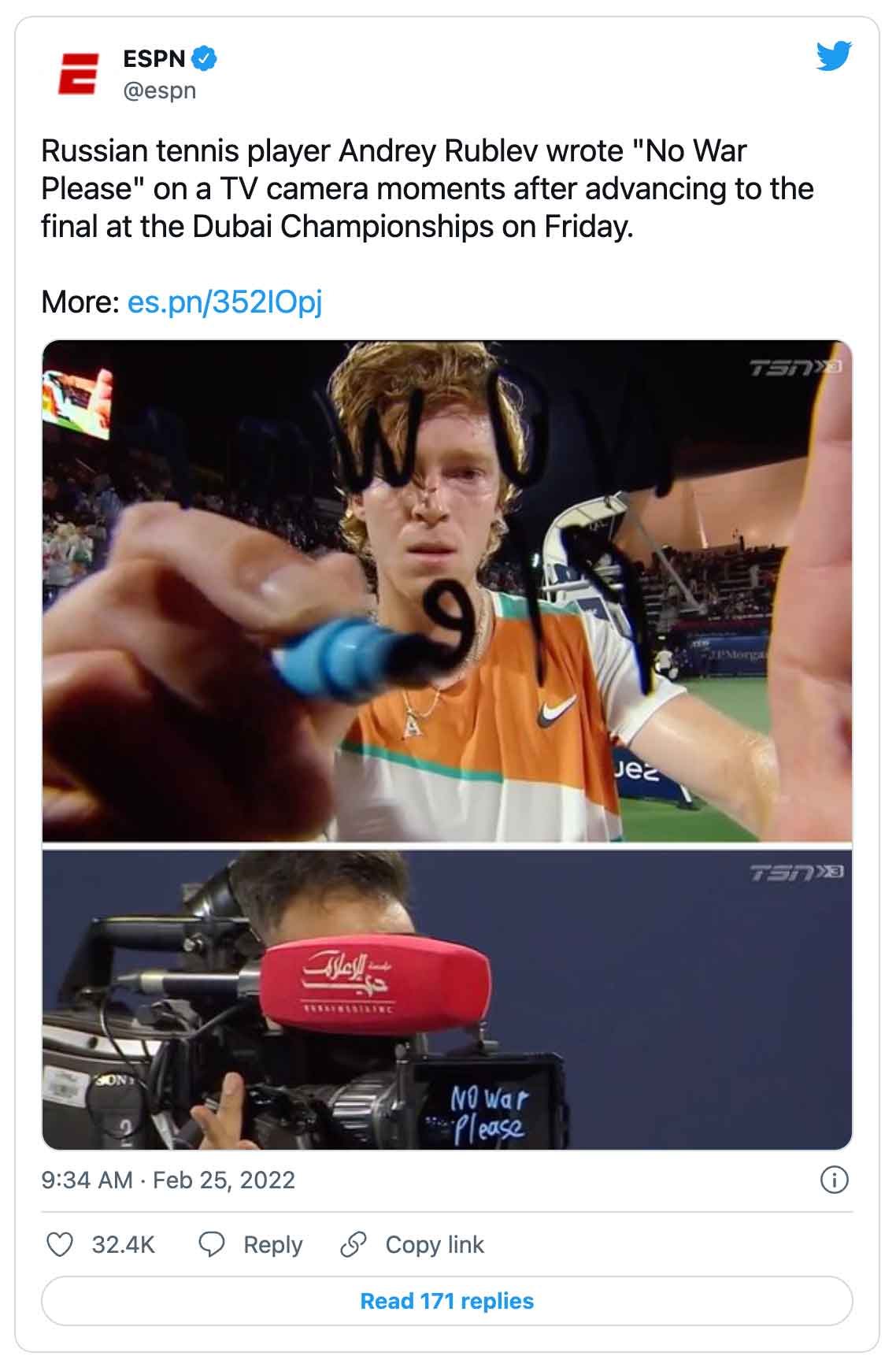
In a Portuguese professional league soccer game, fans waved Ukrainian flags and gave a standing ovation to Benfica’s Ukrainian forward Roman Yaremchuk after he subbed in and his teammate gave him the captain’s armband — he was visibly, and understandably emotional at the support from fans.
A similar moment happened for two Ukrainian soccer players before a Premier League game between Manchester City and Everton, and their teammates wore Ukrainian flags in support prior to kickoff.
Famous Russian rapper Oxxxymiron canceled six of his upcoming shows in Moscow and St. Petersburg "indefinitely" after Russia's attack on Ukraine. In an announcement video on Instagram, he said he was “specifically against the war Russia has escalated against the people of Ukraine,” calling it a “disaster and a crime.” He added, “I can't entertain you while Russian missiles fall on Ukraine.”
Green Day, AJR, Louis Tomlinson, and Yungblud have also canceled their shows in Russia.
And celebrities in the U.S. are using their platforms to fundraise and donate to refugees, as well. Blake Lively and Ryan Reynolds committed to matching up to $1 million in donations to the UN Refugee Agency. Bethenny Frankl’s B Strong disaster relief initiative committed to sending $10 million to the people of Ukraine, especially women and children, impacted by the invasion — and has already increased their goal to $20 million in aid.
6. Governments and large companies are taking action against Russia
While organizations and individuals show their support for Ukrainians, the geopolitical landscape is full of global leaders severing ties to Russia and taking action against Putin.
Switzerland — a country with a reputation for neutrality — has decided to freeze Russian assets. According to the New York Times, Swiss national bank data showed that in 2020, Russian companies and individuals held assets worth over $11 million in Swiss banks. Switzerland President Ignazio Cassis announced that the country would immediately freeze the assets of Vladimir Putin, Russian Prime Minister Mikhail Mishustin, and Foreign Minister Sergey Lavrov, in addition to 367 individuals sanctioned by the European Union.
German Chancellor Olaf Scholz announced a $113 billion increase in defense spending, which is a major reversal of German policy preferring deterrence over conflict. While we don’t want to see increased violence across Europe, this is a pivotal move from Germany in response to the Russian invasion.
Other nations have followed suit to freeze assets, and impose sanctions to penalize Russia.
In addition to global political response, major corporations have also stepped up to provide relief and send a message to Russian forces.
Tesla CEO Elon Musk has sent Starlink satellite internet terminals to Ukraine, and — in more good news for refugees — Airbnb has vowed to support 100,000 Ukrainian refugees with access to temporary housing.
Etsy also dropped all fees for Ukrainian — and people are stepping up to buy digital products from Ukrainian Etsy sellers.
Additionally, Mastercard and Visa have blocked Russian financial institutions, and FedEx and UPS have suspended deliveries to Russia.
7. Countries are decoupling from fossil fuels to reduce reliance on Russian oil, and even fossil fuel companies are divesting from the region
Globally, we need to eliminate our dependence on fossil fuels — and we can see first-hand how that’s especially true when it comes to getting them from Russia. 60% of Russia’s exports are oil and gas.
And countries in Europe and around the world know it, so they’re cutting off and divesting from fossil fuel projects in Russia.
Even before the military invasion, in response to Russia’s buildup of troops around Ukraine, Germany stopped the approval of Nord Stream 2 gas pipeline that would bring natural gas from Russia to Europe.
Later, in a moment of good environmental news, they announced they accelerated their clean energy transition plans so the country would reach 100% renewable energy by 2035 — 15 years ahead of schedule.
This isn’t a case for investing in fossil fuels elsewhere, though — it’s a case for gaining energy independence through renewable energy. It’s truly the only way forward — for a habitable planet, and to end all wars fought over oil and gas.
As ocean scientist Miriam Goldstein said in a tweet, “Clean energy is less expensive and less susceptible to manipulation by autocratic foreign leaders than fossil fuels. Transitioning to clean energy can protect consumers from the wild market fluctuations caused by global conflicts and save people money.”
And while we’re hesitant to celebrate oil and gas companies doing good for the planet — both because their overall efforts to transition to renewable energy pale in comparison to their investment in fossil fuels, and because of decades of hiding the truth about the damage they were doing to the planet — it is genuinely good news to see both BP and Shell make significant exits from investments and ventures in Russia.
We hope these stories of good action being taken on a global scale encourage you as you take action, too. Because there’s still more good to be done.
We need to increase our refugee cap in the U.S. We need equitable treatment of people seeking refuge at border countries. Humanitarian aid organizations need financial support to meet immediate needs locally. Hardworking independent journalists need safety and resources to report on the ground.
We have the privilege of watching this conflict unfold from a distance, so we also have the responsibility to do our part to help those at the center of the crisis.
You might also like: Meet the organizations rebuilding housing in Ukraine
In just two days, the Project for Awesome raised over $3 million for charity — breaking the record for all of the group's previous fundraising events.
Thousands of community members from around the world watched the 48-hour event, contributed donations, and voted on nonprofits to support. The funds collected will be distributed between various charities selected by supporters.
The 2022 Project for Awesome shattered all previous fundraising records
The 2022 Project for Awesome, an annual 48-hour charity livestream hosted by Hank and John Green, took place from February 25-27th.
Known by viewers as the P4A, the Project for Awesome encourages members of the Nerdfighteria fan community to not only donate but also to advocate for charitable causes.
In its 15th year, the 2022 P4A shattered its own records by raising over $3.2 million for The Foundation to Decrease World Suck with the goal of decreasing the amount of suffering in the world.
“It is wild to be fifteen years into this and to see so many still donating,” said John Green 36 hours into the livestream. “To see that there’s a real chance that this will be the biggest project for awesome ever in terms of money donated to charity is pretty mindblowing.”
That chance proved to be a reality as the livestream progressed, blowing past the $1 million mark within the first hour.
Viewers’ enthusiasm only grew over the next 48 hours as they gave money in exchange for “perks” like artwork, digital content, P4A swag, and more. By the time the stream reached its halfway point, the total amount raised had surpassed $2 million.
By the end of Project for Awesome 2022, viewers raised $3,236,501.42 for charity. The total amount raised in the 2022 stream surpassed the previous record, set in 2021, by more than $700,000.
P4A supporters made a significant impact during an especially challenging week
The Project for Awesome splits funds raised into two pools. During the first 24 hours of the stream, money raised is distributed between Partners in Health and Save the Children.
Money collected during the second half of the livestream is divided among charities submitted by and voted for by members of the community.
This year, supporters created 310 videos celebrating 155 nonprofits including World Central Kitchen, The Trevor Project, To Write Love On Her Arms, NaNoWriMo, The Audre Lorde Project, charity: water, and Rainbow Railroad.
The 2022 P4A occurred during a time when much of the world’s breaking news reflected tragedy and terror. News headlines covered Russia actively invading Ukraine, anti-LGBTQ+ legislation introduced in Florida and Texas, and the devastating loss of Paul Farmer, the inspiring co-founder of Partners in Health.
While the livestream served as a welcome break from doomscrolling for many viewers, Hank and John did not shy away from the gravity of the moment, either.
“A lot of us feel very helpless in the face of the suffering that is happening in Ukraine and from ongoing inequity in lots of different areas,” remarked John Green. “This is such a reminder that we choose the world we live in. We choose the human story.”
“It’s true that history is something that happens to people, but history is also something that people make. Historial forces are often much larger than any group of people, and groups of people are themselves historical forces,” he said of the community’s support for the P4A.
“There are no problems that aren’t connected to the other problems,” said Hank Green in his most recent YouTube video. “Ultimately, there is one thing that we’re all trying to do. It’s to make the world better. As long as the thing you’re working on makes the world better, you are doing the thing we are trying to do.”
Both Hank and John also highlighted the fact that Save the Children, which will receive over $1 million from the P4A, is actively involved in humanitarian work in Ukraine.
This year’s P4A also hit close to home for many members of Nerdfighteria with connections to Partners in Health. The Green brothers and their community have worked with PIH on a number of projects, including their current work to improve the healthcare system in Sierra Leone which is on track to raise over $25 million.
Last week, PIH’s co-founder, Dr. Paul Farmer, passed away unexpectedly. The over $1 million that will be donated to Partners in Health from the 2022 P4A serves to honor his legacy of advancing equity in healthcare.
Even in the midst of these tragedies, the team behind the P4A kept the mission of the project at the forefront of the weekend.
“The slogan of P4A, which is to Decrease World Suck, is super easy right now,” said Phil Plait, an astronomer and one of the livestream’s guests.
He went on to describe how, if there were very few problems in the world, it would be challenging for each of us to find a way to make a difference. But “because the world is so sucky right now”, we all have the opportunity to help.
Closing his segment with hope and a call to action, Plait said, “Point yourself in a direction and go, ‘I wanna fix that.’ It’s easy to do something to make the world better.”
2022’s P4A wasn’t short on funny and entertaining moments
In addition to raising money, viewers tuned into the livestream for chaotic, nerdy fun. Fan-favorite moments of this year’s stream included John dying his hair purple and his mustache pink, Hank utilizing a banana corer to fill a corndog with baked beans, and the emergence of “Crank Green,” the unofficial P4A mascot inspired by Hank’s crab impression.

Guest host Taylor Behnke’s dog Darcy became a star for adorably munching carrots. Destin Sandlin of Smarter Every Day returned with his annual Dino Space Program, raising over $150,000 in his two-hour segment alone.
Viewers also celebrated moments of connection between one another. Two Nerdfighters, Ellen and Cambria, utilized the chat “missed connections” style to meet in person after one spotted the other watching the stream on a bus.
Another viewer proposed to their significant other via messages written on plastic dinosaurs during the livestream.
As the livestream moved into its final hours, viewers weren’t ready to slow down their donations. The final hour of the livestream alone raised $200,000 as the community raced the clock to meet the goal of $3 million in donations.
In a storm of confetti, Hank and John celebrated the end of the largest Project for Awesome yet.
“I’m also thankful for the distraction and for the feeling of solidarity and commiseration and shared joy that is hard to get right now,” said an emotional John on Sunday morning.
The 2022 Project for Awesome fundraiser remains open until 12 pm EST on Tuesday, March 1.
Supporters can donate at projectforawesome.com/donate.

Welcome to the unofficial Good Good Good Book Club — we’re glad you’re here!
You’re in good company if you, too, are eager to consume the latest literary works from authors who don’t shy away from addressing pain and injustice, and instead inspire us — through their pages — to do good in the world.
Get your library card ready, because we’ll be updating this article every month with what we think are the best books to add to your ever-growing book list!
P.S. We’ve linked Amazon for convenience and accessibility, but we’re also linking to our favorite Amazon alternatives for books and audiobooks: Bookshop and Libro.fm, which are both great ways to support small, independent bookstores when you buy physical books and audiobooks. (Learn more about Amazon alternatives in our ultimate guide.)
Some of our links are affiliate links, which means that we may earn a commission if you buy something via this list. Thanks for supporting Good Good Good’s mission at no extra cost to you!
2022’s Best Books About Making a Difference, Caring for the Environment, and Doing Good
Every month we’ve updated this list with new-release book recommendations for people who care about doing good in the world. These are our favorite books of the year:
Best Books Coming Out in December 2022
“The Light Pirate” by Lily Brooks-Dalton
Genre: Fiction
Release Date: December 6
Amazon | Bookshop | Libro.fm
“The Light Pirate” is a climate fiction novel following Wanda — born during the catastrophic hurricane she's named after. Set in the not-too-distant future, we watch Wanda navigate the changing landscape of her community and the world.
Told in four parts — power, water, light, and time — it's not only a meditation on the changes caused by climate change, but also the hopeful stories of survival and resiliency spanning one extraordinary woman’s lifetime.
“Weightless: Making Space for My Resilient Body and Soul” by Evette Dionne
Genre: Nonfiction, Memoir
Release Date: December 6
Amazon | Bookshop | Libro.fm
Get ready for a brutally honest journey through cultural expectations of size, race, and gender from acclaimed writer Evette Dionne. From her early experiences of harassment to adolescent self-discovery in internet chatrooms, to her diagnosis of heart failure at age 29, “Weightless” asks us to hold a mirror up to the world we live in and imagine the future we deserve.
“Screaming on the Inside: The Unsustainability of American Motherhood” by Jessica Grose
Genre: Nonfiction, Parenting
Release Date: December 6
Amazon | Bookshop | Libro.fm
From New York Times writer Jessica Grose comes “Screaming On the Inside,” a book that takes down the unrealistic expectations faced by mothers. Each chapter aims to dismantle the concept of the “perfect mother” through personal, scientific, and historical accounts, detailing why this expectation of mothers is unsustainable and how we can begin empowering them to create an empathetic path towards caring for themselves, their children, and their communities.
“Feel the Bern: A Bernie Sanders Mystery” by Andrew Shaffer
Genre: Fiction, Mystery, Humor
Release Date: December 6
Amazon | Bookshop | Libro.fm
Who knew fighting for universal healthcare and a living wage could lead to an “Only Murders in the Building” plot twist? From the New York Times bestselling author of “Hope Never Dies: An Obama Biden Mystery” comes a story about Bernie Sanders and his Gen Z intern who are drawn into a murder investigation in a small Vermont town in this hilarious spin on cozy mysteries.
This lighter read can be a fun gift for the crime enthusiasts in your life who love a good Bernie Sanders moment. Plus, it also features recipes like Vermont Cheddar Mac & Cheese, “Feel the Bern!” Maple Sriracha Hot Sauce, and more.
Best Books Coming Out in November 2022
“Surrender: 40 Songs, One Story” by Bono
Genre: Nonfiction, Memoir
Release Date: November 1
Amazon | Bookshop | Libro.fm
It’s a beautiful day when the artist, activist, and lead singer of U2 (aka the one and only Bono) releases his highly anticipated memoir.
“Surrender” is the story of his remarkable life, challenges, more than 20 years of activism, founding (RED), and the friends and family who have shaped and sustained him. (We highly recommend listening to the audio version, which is a beautifully immersive experience narrated by the musician himself.)
“The World Keeps Ending, and the World Goes On” by Franny Choi
Genre: Poetry
Release Date: November 1
Amazon | Bookshop | Libro.fm
From acclaimed poet Franny Choi comes a poetry collection, or as Choi puts it, “an exercise in memory, in grief, in (ok, yes, I'll say it) hope.”
She reflects on our shared responsibilities to each other, argues that the apocalypse has already come in myriad ways for marginalized people, and, ultimately, how we can begin to chart new paths toward hopeful solutions.
“Art Is Life: Icons and Iconoclasts, Visionaries and Vigilantes, and Flashes of Hope in the Night” by Jerry Saltz
Genre: Art & Politics
Release Date: November 1
Amazon | Bookshop | Libro.fm
Jerry Saltz is a Pulitzer Prize-winning senior art critic at New York Magazine and Vulture, and the author of the New York Times bestseller “How to Be an Artist.” In his latest book, he draws on two decades of work to offer a real-time survey of contemporary art as a barometer of our times and the importance of the fearless artist (aka our most critical cultural observers).
An early champion of forgotten and overlooked female artists, Saltz is also known to celebrate long-marginalized creators within the BIPOC and LGBTQ+ communities.
“And Yet: Poems” by Kate Baer
Genre: Poetry
Release Date: November 8
Amazon | Bookshop | Libro.fm
Three-time New York Times bestselling author Kate Baer is known for her debut poetry collection, “What Kind of Woman” and “I Hope This Finds You Well: Poems” and for her raw, unapologetic work. “And Yet: Poems” is no different.
Baer explores present-day gut-punching feelings that we all wrestle with. From how to show up for our neighbors when we don’t know how, to being a partner without losing your identity, to the pain that comes with loss.
“Unruly Saint: Dorothy Day's Radical Vision and its Challenge for Our Times” by D.L. Mayfield
Genre: Nonfiction, Biography
Release Date: November 8
Amazon | Bookshop | Libro.fm
In 1933, in the shadow of the Great Depression, Dorothy Day launched the Catholic Worker Movement — the most prominent Catholic radical movement in the United States — that had a lasting legacy of truth and justice.
In “Unruly Saint,” activist and writer D. L. Mayfield brings a personal lens to Day's story through her exploration of the founding of the Catholic Worker movement and Catholic Worker newspaper, and how we can view it through the current American landscape. It’s an encouraging blueprint for today's activists, social justice advocates, and those seeking to live in the service of others.
“Marked for Life: One Man's Fight for Justice from the Inside” by Isaac Wright Jr.
Genre: Nonfiction, Memoir
Release Date: November 8
Amazon | Bookshop | Libro.fm
“Marked for Life” is the true story of Isaac Wright Jr.’s battle to win his freedom after being wrongfully convicted and imprisoned. It's a memoir of courage and hope in the face of injustice (and the basis for the ABC television show, “For Life”), as well as a call to action for us to look critically into America’s judicial system as it stands today.
“Create Your Bright Ideas: Read, Journal, and Color Your Way to the Future You Imagine” by Jess Ekstrom
Genre: Nonfiction, Memoir
Release Date: November 15
Amazon | Bookshop | Libro.fm
We’ve all heard the stories about CEOs (like Warren Buffet who got his start selling gum at six) and nonprofit leaders who got their start as kids. Entrepreneur and author Jess Ekstrom designed a fun, colorful interactive book for the curious and creatively-minded tweens and teens wanting to become entrepreneurs today.
From inspiring stories and journal prompts to coloring pages and fun business ideas to apply to their own lives, this book aims to encourage kids to be creators and ambitious doers.
“The Light We Carry” by Michelle Obama
Genre: Nonfiction, Memoir
Release Date: November 15
Amazon | Bookshop | Libro.fm
Former First-Lady and bestselling author Michelle Obama offers advice, wisdom, and strategies for staying hopeful in an uncertain world.
Instead of cliche affirmations, she offers strategies to help readers dig deeper into complex conversation topics and practical ways to cope. Obama hopes to empower readers to find connections in an ever-changing world, asking, “How can we channel our frustration into something positive?”
Best Books Coming Out in October 2022
“Which Side Are You On” by Ryan Lee Wong
Genre: Fiction
Release Date: October 4
Amazon | Bookshop | Libro.fm
In his debut novel, Ryan Lee Wong examines the complicated layers behind activism through the eyes of 21-year-old Reed — a vocal, idealistic Asian American organizer who devoted himself to the Black Lives Matter movement.
In a series of intimate, charged conversations with his mother — once the leader of a Korean-Black coalition — she demands that he rethink his outrage and what it means to be an effective organizer, student, and ally.
“Enslaved: The Sunken History of the Transatlantic Slave Trade” by Sean Kingsley and Simcha Jacobovici
Genre: Nonfiction
Release Date: October 4
Amazon | Bookshop | Libro.fm
From the writers behind the widely acclaimed documentary series “Enslaved” comes a deeply revelatory exploration of the transatlantic slave trade — spanning 400 years, allowing 12 million people to be trafficked and two million to die en route.
The book follows the tireless efforts made by a group of international divers from Diving with a Purpose (DWP) — an organization seeking to reclaim the stories and artifacts of their forgotten ancestors.
“Boldly Go: Reflections on a Life of Awe and Wonder” by William Shatner with Joshua Brandon
Genre: Nonfiction, Memoir
Release Date: October 4
Amazon | Bookshop | Libro.fm
Star of the science fiction television series Star Trek, William Shatner, reflects on the interconnectivity of all things, our fragile bond with nature, and the joy that comes from exploration in this collection of essays.
“Viral Justice: How We Grow the World We Want” by Ruha Benjamin
Genre: Nonfiction
Release Date: October 11
Amazon | Bookshop | Libro.fm
Internationally renowned author, speaker, and professor of African American Studies at Princeton University Ruha Benjamin shares her inspiring vision for building a more just and joyful world (spoiler alert: it starts with small, individual actions).
Part memoir, part manifesto, “Viral Justice” is a deeply personal exploration of how we can transform society through the choices we make every day.
“Rest Is Resistance: A Manifesto” by Tricia Hersey
Genre: Nonfiction
Release Date: October 11
Amazon | Bookshop | Libro.fm
Ever feel the unconscious urge to shame yourself for resting? Tricia Hersey, founder of The Nap Ministry — an organization examining the liberating power of naps — is here to change that for you.
Informed by her experience in theology, activism, and performance art, “Rest Is Resistance” is a call to action, a field guide, and a manifesto for the sleep-deprived justice seekers looking for ways to liberate themselves from the “grind culture.”
“My People: Five Decades of Writing About Black Lives” by Charlayne Hunter-Gault
Genre: Nonfiction
Release Date: October 11
Amazon | Bookshop | Libro.fm
From the legendary Emmy Award-winning journalist Charlayne Hunter-Gault comes a collection of invaluable accounts from the Civil Rights Movement through the election and inauguration of America’s first Black president and beyond.
Hunter-Gault shows us the breadth and nuance of the Black, intersectional experience through everyday trials, tragedies, and triumphs.
“I'm So Happy You're Here: A Little Book About Why You're Great” by Liz Climo
Genre: Graphic novel
Release Date: October 11
Amazon | Bookshop
We all need a fun little palette cleanser now and then — especially if we’re immersed in social causes that leave us feeling overwhelmed. Let this book be that gentle hug.
With the help of her charming animal drawings, international bestselling author Liz Climo encourages us to embrace the joyful moments, get back up after falling, and model ways we can love ourselves.
“Visual Thinking: The Hidden Gifts of People Who Think in Pictures, Patterns, and Abstractions” by Temple Grandin Ph.D.
Genre: Nonfiction
Release Date: October 11
Amazon | Bookshop | Libro.fm
Temple Grandin forever changed how the world understood autism after her groundbreaking memoir, “Thinking in Pictures,” was published in 1995. In her latest book, this scientist and disability advocate highlights the different ways our brains are wired, celebrating visual thinkers' minds and contributions.
Grandin draws on cutting-edge research to take us inside visual thinking and proposes new approaches to educating, parenting, employing, and collaborating with visual thinkers.
“A More Just Future: Psychological Tools for Reckoning with Our Past and Driving Social Change” by Dolly Chugh
Genre: Nonfiction
Release Date: October 18
Amazon | Bookshop | Libro.fm
Dolly Chugh, award-winning professor of social psychology and author of the acclaimed “The Person You Mean to Be,” gives us the psychological tools and practical advice to dismantle the systems built by our ancestors and work toward an equitable future for all.
This evidence-based guide for developing resilience and grit to confront history allows readers to acknowledge the pain while also providing ways to drive long-lasting social change.
“Black Women Will Save the World: An Anthem” by April Ryan
Genre: Nonfiction, Memoir
Release Date: October 18
Amazon | Bookshop | Libro.fm
White House correspondent, April Ryan, combines profiles and in-depth interviews with some of the most influential female movers and shakers (like Maxine Waters, Valerie Jarrett, and Kamala Harris). Ryan also chronicles her personal journey from her working-class Baltimore days to the elite echelons of journalism — all while raising two daughters as a single mother in the aftermath of a messy divorce.
“Black Women Will Save the World” is a beautifully kaleidoscopic look at women of different ages and diverse backgrounds who devote their lives to making the world a better place — even if that means stepping on toes.
“Newsroom Confidential: Lessons (and Worries) from an Ink-Stained Life” by Margaret Sullivan
Genre: Nonfiction, Memoir
Release Date: October 18
Amazon | Bookshop | Libro.fm
Margaret Sullivan has spent over four decades working in newsrooms big and small, making her a trusted champion and critic of the American news media.
With charm, keen observations, and nuanced criticism, Sullivan pulls the curtains back on the nation's most influential news outlets to explore how Americans lost trust in them and what it will take to regain it.
Best Books Coming Out in September 2022
“A Visible Man: A Memoir” by Edward Enninful
Genre: Nonfiction, Memoir
Release Date: September 6
Amazon | Bookshop | Libro.fm
“A Visible Man” follows the astonishing journey of a Black, gay, working-class refugee who worked his way into one of the world’s most exclusive industries: fashion.
Becoming the first Black editor-in-chief of British Vogue, Edward Enninful began putting first responders, octogenarians, and civil rights activists on the cover of Vogue, while also supporting designers and photographers of color. He’s since cemented his status as one of his world’s most important changemakers and global icons.
“How to Speak Whale: A Voyage into the Future of Animal Communication” by Tom Mustill
Genre: Nonfiction
Release Date: September 6
Amazon | Bookshop | Libro.fm
What if animals and humans could speak to one another? Tom Mustill — the naturalist and wildlife documentarian who went viral when a 30-ton humpback whale breached onto his kayak — asks this question in his thrilling investigation into whale science and animal communication.
From seventeenth-century Dutch inventors, the whaling industry of the nineteenth century, to the cutting edge of Silicon Valley, Mustill examines how scientists and start-ups around the world are decoding animal communications.
“Solito: A Memoir” by Javier Zamora
Genre: Memoir, Nonfiction
Release Date: September 6
Amazon | Bookshop | Libro.fm
A young poet takes us through his gripping journey from El Salvador to the United States at just nine years old. “Solito” not only provides Javier Zamora’s perspective on this near-impossible trek but also reflects the millions of other refugees who have made similar life-altering decisions to leave home for safety and protection.
“The Book Haters' Book Club: A Novel” by Gretchen Anthony
Genre: Memoir, Nonfiction
Release Date: September 13
Amazon | Bookshop | Libro.fm
If you love the iconic Meg Ryan and Tom Hanks rom-com, “You’ve Got Mail,” there’s a chance you might enjoy this read! “The Book Haters’ Book Club” follows the story of a beloved bookshop on the verge of being bought out by condo developers.
Filled with humor, family hijinks, and even some actual book recommendations, this novel is a feel-good read and love letter to the everyday heroes who fuel our literary thirst: the booksellers and librarians dedicated to providing their communities with access to books.
“How Not to Drown in a Glass of Water” by Angie Cruz
Genre: Fiction
Release Date: September 13
Amazon | Bookshop | Libro.fm
From Angie Cruz, author of “Dominicana,” comes an electrifying new novel about a 50-year-old woman who has lost everything but the chance to finally tell her story.
After Cara Romero lost her factory job due to the Great Recession, she was forced back into the job market for the first time in decades. Set up with a job counselor, Romero instead begins to narrate the story of her turbulent life, confronting her darkest secrets and regrets.
“Less Is Lost” by Andrew Sean Greer
Genre: Fiction, LGBTQ+
Release Date: September 13
Amazon | Bookshop | Libro.fm
In the follow-up to the best-selling and Pulitzer Prize-winning, “Less: A Novel,” the awkward and lovable Arthur Less returns, this time on an unforgettable road trip across America.
“Less Is Lost” is a profound and joyous novel about the enigma of American life, love, the stories we tell, and the people we meet along the way.
“Good Inside: A Guide to Becoming the Parent You Want to Be” by Dr. Becky Kennedy
Genre: Nonfiction, Parenting
Release Date: September 13
Amazon | Bookshop | Libro.fm
Dr. Becky Kennedy — also known as Dr. Becky to her followers — is a clinical psychologist, mother of three, and founder of the breakthrough global parenting community, Good Inside.
In this book, Dr. Becky provides a thoughtful, practical guide to raising resilient, emotionally healthy kids while offering overwhelmed parents a supportive and compassionate resource to turn to.
“Why We Travel: 100 Reasons to See the World” by Patricia Schultz
Genre: Nonfiction
Release Date: September 13
Amazon | Bookshop
From the author of “1,000 Places to See Before You Die,” who inspired many to venture out into the world, comes her brand new book, “Why We Travel.” Filled with personal stories, empowering quotes, and jaw-dropping images, this book examines the question: Why do we travel?
“Victory. Stand!: Raising My Fist for Justice” by Tommie Smith, Derrick Barnes, and Dawud Anyabwile
Genre: Nonfiction, Memoir
Release Date: September 27
Amazon | Bookshop
During the 1968 Olympic medal ceremony in Mexico City, Tommie Smith (a 200-meter sprint gold medalist) and John Carlos (bronze medalist) stood on the podium in black socks and raised their black-gloved fists to protest racial injustice inflicted upon African Americans.
As a result, both men were forced to leave the Olympics, received death threats, and faced ostracism and economic hardships. Smith, alongside coauthors Derrick Barnes — a Newbery Honor and Coretta Scott King Author Honor recipient — and Emmy Award-winning illustrator Dawud Anyabwile, worked to create this groundbreaking story. The graphic memoir pays tribute to Smith’s past and his continued fight for civil rights justice.
“Healing Through Words” by Rupi Kaur
Genre: Poetry
Release Date: September 27
Amazon | Bookshop
You might recognize the name Rupi Kaur from her #1 New York Times bestselling books “milk and honey,” “the sun and her flowers,” and “home body.”
Kaur’s latest release presents guided poetry writing exercises to help explore trauma, loss, heartache, love, family, healing, and celebration of the self.
“Illustrated Black History: Honoring the Iconic and the Unseen” by George McCalman
Genre: Nonfiction
Release Date: September 27
Amazon | Bookshop
“Illustrated Black History: Honoring the Iconic and the Unseen” is a gorgeous collection of 145 original portraits celebrating Black pioneers — famous and little-known — in politics, science, literature, music, and more.
Each entry includes beautiful artwork by artist and award-winning graphic designer George McCalman. His visual work is accompanied by insightful biographical reflections.
“Uncultured: A Memoir” by Daniella Mestyanek Young
Genre: Nonfiction
Release Date: September 27
Amazon | Bookshop | Libro.fm
Author Daniella Mestyanek Young was raised in Brazil's religious cult called The Children of God — also known as The Family. At fifteen years old, she escaped to Texas, enrolled in high school, graduated as valedictorian of her university class, and later joined the military as an intelligence officer.
“Uncultured” explores the dangers unleashed when the harmful group mentality goes undetected and the many ways women have to contort themselves to survive under these conditions.
Best Books Coming Out in August 2022
“Good Grief: On Loving Pets, Here and Hereafter” by E.B. Bartels
Genre: Memoir, Nonfiction
Release Date: August 2
Amazon | Bookshop | Libro.fm
There’s really no best practice or guidebook to get you through mourning your pet, but “Good Grief” captures what it means to love and lose beloved pets — and how others around the world grieve them once they’ve passed.
E.B. Bartels brings in the expertise of veterinarians, archaeologists, ministers, and more, offering a personal, inspiring collection of grieving rituals from Massachusetts to Japan and ancient Egypt to today’s modern era.
“Inventor of the Future: The Visionary Life of Buckminster Fuller” by Alec Nevala-Lee
Genre: Biography, Nonfiction
Release Date: August 2
Amazon | Bookshop | Libro.fm
If you’ve got an eye for architectural design and devotion to sustainability, this biography (written by Alec Nevala-Lee) gives us a behind the scenes look into the visionary architect, systems theorist, designer, inventor, and futurist: Buckminster Fuller.
From the widely recognizable Epcot Center at Walt Disney World Resort to the molecule named in his honor as the buckyball, Fuller’s legacy is alive and thriving. His work has not only transformed industries, but his belief in technology and innovation has profoundly influenced designers, activists, and innovators today.
“Acceptance: A Memoir” by Emi Nietfeld
Genre: Memoir, Nonfiction
Release Date: August 2
Amazon | Bookshop | Libro.fm
As a homeless teenager writing college essays in her rusty Toyota Corolla, Emi Nietfeld was convinced that attending an Ivy League school was the only escape from her dysfunctional childhood. From navigating through the foster care system and homelessness, to graduating from Harvard and working at Google, Nietfeld examines society’s fixation with resilience — and its cost to herself and others.
“Acceptance” challenges our ideas of what it means to overcome — and find contentment on your own terms.
“All This Could Be Different: A Novel” by Sarah Thankam Mathews
Genre: Fiction, LGBTQ+
Release Date: August 2
Amazon | Bookshop | Libro.fm
In her debut novel, author Sarah Thankam Mathews provides a riveting look into the life of a young immigrant seeking love and community amidst struggle. It’s a profound portrait of queer love, friendship, work, and the insecurity of living in 21st-century America.
“Walking Gentry Home: A Memoir of My Foremothers in Verse” by Alora Young
Genre: Biography, Poetry, Nonfiction
Release Date: August 2
Amazon | Bookshop | Libro.fm
“Walking Gentry Home” tells the story of author Alora Young’s ancestors through poetic verses that together give voice to those historically left out in America: Black girls and women.
Informed by archival research, the last will and testament of an enslaver, formal interviews, family lore, and even a DNA test, Young traces the lives of her foremothers in West Tennessee and beyond. It’s a story that speaks to generational curses, homes and small towns, fleeting loves and lasting consequences, and the cruel and ever-present legacy of slavery.
“A Map for the Missing: A Novel” by Belinda Huijuan Tang
Genre: Fiction
Release Date: August 9
Amazon | Bookshop | Libro.fm
In Belinda Huijuan Tang’s debut novel, she paints a very human portrait of a man desperately searching for his father and reconnection with the community he once knew and loved.
Set against a rapidly changing post–Cultural Revolution China, “A Map for the Missing” is a deeply felt examination of family, forgiveness, and ultimately the meaning of home.
“Longpath: Becoming the Great Ancestors Our Future Needs – An Antidote for Short-Termism” by Ari Wallach
Genre: Nonfiction
Release Date: August 16
Amazon | Bookshop | Libro.fm
If you feel overwhelmed by the constant bombardment of notifications and “Breaking News” updates, futurist and author Ari Wallach offers a way forward called “longpath,” a mantra and mindset to help widen our scope beyond today and tomorrow.
Drawing on history, theology, neuroscience, evolutionary psychology, and social technologies, “Longpath” teaches readers to strengthen their ability to look ahead, approach stressful situations, increase capacity for cooperation, and boost creativity.
“Owning the Future: Power and Property in an Age of Crisis” by Adrienne Buller and Mathew Lawrence
Genre: Nonfiction
Release Date: August 23
Amazon
Looking for a solutions-based guide to building a better world? “Owning the Future” offers a road map to its readers who seek to move from “the explosive concentration of wealth within the hands of the super-rich” to a more people-forward, post-pandemic system.
Authors Adrienne Buller and Mathew Lawrence outline achievable plans supporting decommodification, social welfare, and equitable opportunity and growth.
“Walking in My Joy: In These Streets” by Jenifer Lewis
Genre: Memoir, Nonfiction
Release Date: August 30
Amazon | Bookshop | Libro.fm
“Walking in My Joy” is a collection of stories by American actress, singer, comedian, and activist Jenifer Lewis. Her laugh-out-loud commentary and her insightful wisdom encourage readers to embrace each other’s uniqueness as a way to reach societal healing.
“Didn't Nobody Give a Shit What Happened to Carlotta” by James Hannaham
Genre: Fiction, LGBTQ+
Release Date: August 30
Amazon | Bookshop | Libro.fm
From the author of the PEN/Faulkner Award winner, “Delicious Foods” comes a harrowing story of a trans woman's re-entry experience. The novel challenges us to confront the glaring injustices of a prison system that continues to punish people long after serving their time.
Best Books Coming Out in July 2022
“The Displacements: A Novel” by Bruce Holsinger
Genre: Fiction
Release Date: July 5
Amazon | Bookshop | Libro.fm
Part disaster film, part page-turning novel, author Bruce Holsinger transports us into a tumultuous world where an unprecedented catastrophe wipes out an entire South Florida community.
Holsinger explores what happens when everyone is left on the same playing field. He examines what privilege, resilience, ethics, and morals look like when exposed to a catastrophic event.
“NSFW: A Novel” by Isabel Kaplan
Genre: Fiction
Release Date: July 5
Amazon | Bookshop | Libro.fm
Isabel Kaplan’s “NSFW” is a gritty exploration of the gray area between empowerment and complicity.
The story follows an unnamed female protagonist who is working her way up the ranks of the male-dominated Hollywood industry. The result is a stunning portrait of what women have sacrificed (and still sacrifice) to protect their careers.
Trigger warnings: This novel discusses sexual assault, eating disorders, and harassment.
“Growing Up Getty: The Story of America's Most Unconventional Dynasty” by James Reginato
Genre: Nonfiction
Release Date: July 5
Amazon | Bookshop | Libro.fm
Fan of “Succession,” or “The House of Gucci?” This enthralling and comprehensive biography gives us a glimpse into the current state of one of the wealthiest family dynasties in the world: the Getty family.
American industrialist J. Paul Getty — once the richest man in the world — is the patriarch of a cast of sons, grandchildren, and great-grandchildren who are building new empires, becoming award-winning environmentalists, and advocating for LGBTQ+ rights.
“Imagine a City: A Pilot's Journey Across the Urban World” by Mark Vanhoenacker
Genre: Travel, Biography
Release Date: July 5
Amazon | Bookshop | Libro.fm
Described as a “love letter to the cities of the world,” this travelogue meets memoir is a journey around both commercial airline pilot Mark Vanhoenacker’s inner thoughts and the planet's great cities.
Vanhoenacker’s warm and immersive accounts celebrates the cities he has come to know and love, while also honoring the overlooked beauty that lies within our own backyards.
“Soundings: Journeys in the Company of Whales: A Memoir” by Doreen Cunningham
Genre: Nonfiction
Release Date: July 12
Amazon | Bookshop | Libro.fm
Doreen Cunningham and her mischievous toddler decide to follow the grey whale migration from Mexico to northernmost Alaska. Throughout this journey, Cunningham dives deeper into understanding the history, habits, and attempts made by these whales and their calves to adapt to a world threatened by climate change.
They also find themselves voyaging onto the Arctic Sea ice and into the changing world of Indigenous whale hunters, where they become immersed in the ancient values of the Iñupiaq whale hunt.
In this unique blend of nature writing, whale science, and feminist memoir, Cunningham interweaves stories of motherhood, love, and enduring resilience.
“Crying in the Bathroom: A Memoir” by Erika L. Sánchez
Genre: Memoir
Release Date: July 12
Amazon | Bookshop | Libro.fm
When Emmy award-winning actress America Ferrera calls a book “equal parts pee-your-pants hilarity and break your heart poignancy” and “the perfect brunch date you never want to end,” you immediately add it to your reading queue!
From the New York Times bestselling author of “I Am Not Your Perfect Mexican Daughter,” Erika Sánchez gives us a brutally honest and insightful memoir-in-essays on growing up as the daughter of Mexican immigrants, intimacy, feminism, and mental health — while cracking a few jokes along the way.
“Why Didn't You Tell Me?: A Memoir” by Carmen Rita Wong
Genre: Memoir
Release Date: July 12
Amazon | Bookshop | Libro.fm
An immigrant mother’s long-held secrets upend her daughter’s understanding of her family, her identity, and her place in the world in this powerful and dramatic memoir by former national television host Carmen Rita Wong.
“Why Didn’t You Tell Me?” is a riveting and moving story of Wong’s experience of race and culture in America and how they shape who we think we are.
Best Books Coming Out in June 2022
“Noodle and the No Bones Day” by Jonathan Graziano
Genre: Children’s Literature
Release Date: June 7
Amazon | Bookshop
Famous for their sweet and silly “bones or no bones” series on TikTok, pet owner Jonathan Graziano gently wakes his sleepy 13-year-old pug, Noodle, every morning for his daily mood reading.
Capturing the attention of millions of TikTok users who resonated with their message, Graziano has written an entertaining picture book following Noodle the pug and his human as they navigate Noodle’s first No Bones Day — a self-proclaimed day for being extra kind to yourself!
“Still Life” by Jay Hopler
Genre: Poetry
Release Date: June 7
Amazon | Bookshop
When author and National Book Award-finalist of “The Abridged History of Rainfall” Jay Hopler was confronted with a terminal cancer diagnosis, he got to writing.
The result? A collection of poems that are described to be heartbreaking, terrifying, and deeply, darkly hilarious. Far from an elegy, “Still Life” is a testament to courage, love, compassion, and the fierceness of the human heart.
“Paul Laurence Dunbar: The Life and Times of a Caged Bird” by Gene Andrew Jarrett
Genre: Nonfiction, Biography
Release Date: June 7
Amazon | Bookshop | Libro.fm
Author Gene Andrew Jarrett offers readers a richly detailed and nuanced portrait of a significant figure in American literary history.
Paul Laurence Dunbar (1872–1906), born during the Reconstruction era to formerly enslaved parents, became one of the first African American writers to garner international recognition in the wake of emancipation. A prolific and successful poet, novelist, essayist, and playwright, Dunbar’s life and legacy live on through this beautifully fascinating biography.
“How to Raise an Antiracist” by Dr. Ibram X. Kendi
Genre: Self-help, Parenting
Release Date: June 14
Amazon | Bookshop | Libro.fm
Dr. Ibram X. Kendi, author of the bestseller “How to Be an Antiracist,” wants to help parents raise the next generation of antiracist thinkers. Combining scientific research with vulnerable and compelling personal narratives as a parent and as a child in school, Dr. Kendi takes readers through the stages of child development from pregnancy to toddler to schoolkid to teenager and how parents (and parents-to-be) can raise their children to be antiracist.
“Horse: A Novel” by Geraldine Brooks
Genre: Fiction
Release Date: June 14
Amazon | Bookshop | Libro.fm
Set in three different time periods and based on the remarkable true story of the record-breaking thoroughbred Lexington, “Horse” is a novel of art and science, love and obsession, and our unfinished reckoning with racism.
“Spirit Matters: White Clay, Red Exits, Distant Others” by Gordon Henry
Genre: Poetry
Release Date: June 14
Amazon | Bookshop
A major new collection from Indigenous author Gordon Henry comes a dazzling, surrealistic, original collection of poems informed by loss, love, and trauma.
Henry gains inspiration from imagined relatives, living, dead, and yet to be, providing us with an understanding of the living power of memory, story, and song.
“Under the Skin: The Hidden Toll of Racism on American Lives and on the Health of Our Nation” by Linda Villarosa
Genre: Nonfiction
Release Date: June 14
Amazon | Bookshop | Libro.fm
From an award-winning writer at the New York Times Magazine and a contributor to the 1619 Project comes “Under the Skin,” an intersectional book on the racial health disparities in America and the toll racism takes on individuals and the health of our nation.
“My Greatest Save: The Brave, Barrier-Breaking Journey of a World Champion Goalkeeper” by Briana Scurry and Wayne Coffey
Genre: Memoir
Release Date: June 21
Amazon | Bookshop | Libro.fm
A profoundly moving memoir from the trailblazing, World Cup-winning, Olympic gold medalist, and US Women’s soccer goalie Briana Scurry.
“My Greatest Save” is a story of triumph, tragedy, and redemption from a woman who has broken through barriers her entire life.
Best Books Coming Out in May 2022
“Inheritance: A Visual Poem” by Elizabeth Acevedo and Andrea Pippins
Genre: Young Adult Nonfiction, Poetry
Release Date: May 3
Amazon | Bookshop | Libro.fm
New York Times bestselling author of “Clap When You Land”, “With the Fire on High,” and “The Poet X,” Elizabeth Acevedo is known for her empowering views on embracing the complexities of Afro-Latinidad.
Paired with full-color illustrations by artist Andrea Pippins, this poem can only be described as a deeply powerful and inspiring homage to Afrolatinas of all ages.
“Now What?: How to Move Forward When We're Divided (About Basically Everything)” by Sarah Stewart Holland and Beth Silvers
Genre: Nonfiction
Release Date: May 3
Amazon | Bookshop | Libro.fm
If you’re a natural-born peacemaker and aspire to be a positive influence in your community, then “Now What?” is a great resource!
Sarah Stewart Holland and Beth Silvers, co-hosts of the popular podcast Pantsuit Politics present us with helpful tools on how to engage family and friends with curiosity, listen closely to the anxiety and fears of others, and hold lightly those things that are beyond our control around the world.
“All the Secrets of the World” by Steve Almond
Genre: Fiction, Mystery & Thriller
Release Date: May 3
Amazon | Bookshop | Libro.fm
Part crime story, part coming-of-age, part satire, part dissection of America’s criminal justice system, “All the Secrets of the World” is told from the perspective of 13-year-old, Lorena Saenz, in 1980s Sacramento.
An unlikely school project pairing takes two girls from starkly different backgrounds and offers an unflinching vision of the powerful and powerless colliding.
“Future Tense: Why Anxiety Is Good for You (Even Though It Feels Bad)” by Tracy Dennis-Tiwary, Ph.D.
Genre: Nonfiction
Release Date: May 3
Amazon | Bookshop | Libro.fm
Many of us who seek to create positive impact in the world struggle with the all too real, paralyzing, and uncomfortable feeling of anxiety.
Anxiety researcher and author, Tracy Dennis-Tiwary, Ph.D., presents us with a powerful new framework for reimagining and reclaiming the confounding emotion as the advantage it evolved to be: an emotion that protects us and strengthens our creativity.
By distilling the latest research in psychology and neuroscience — including her own — Dennis-Tiwary shows how we can acknowledge the discomfort of anxiety and see it as a tool, rather than something to be feared.
“Build: An Unorthodox Guide to Making Things Worth Making” by Tony Fadell
Genre: Nonfiction
Release Date: May 3
Amazon | Bookshop | Libro.fm
Creating change in the world looks different for everybody. Whether it be through volunteer work or activism, there’s a place for us all to make meaningful impact. “Build” is a book for the world-changer who aspires to grow at work and use their day-job as a means to create something that benefits the community at large.
Written by Tony Fadell — the leader behind the iPod, iPhone and Nest Thermostat — he shares over 30 years of Silicon Valley leadership and design experience. From decision-making to mentorship to devastating failure and success, Fadell throws out the traditional Silicon Valley credo that you have to reinvent everything from scratch to make something great and instead encourages his readers to take a more unorthodox approach.
“How to Prevent the Next Pandemic” by Bill Gates
Genre: Nonfiction
Release Date: May 3
Amazon | Bookshop | Libro.fm
Cofounder of a little-known company called Microsoft and author of the #1 New York Times best seller “How to Avoid a Climate Disaster” comes a brand new book that shares knowledge of the world's foremost experts, as well as Bill Gates’ own experience of combating fatal diseases through the Gates Foundation.
Gates clearly lays out lessons learned from COVID-19 and what all of us can do to ward off a future disasters like it.
“Nasty, Brutish, and Short: Adventures in Philosophy with My Kids” by Scott Hershovitz
Genre: Nonfiction, Parenting
Release Date: May 3
Amazon | Bookshop | Libro.fm
Father and University of Michigan professor of law and philosophy, Scott Hershovitz, has written a fresh, deep, and funny inquiry into life’s biggest questions — with the help of first-rate philosophers, which include his two young children.
Hershovitz calls on us to support kids in their philosophical adventures. But more than that, he challenges us to join them so that we can become better, more discerning thinkers and recapture some of the wonder kids have about the world.
“Seen and Unseen: Technology, Social Media, and the Fight for Racial Justice” by Marc Lamont Hill and Todd Brewster
Genre: Nonfiction, Political Science
Release Date: May 3
Amazon | Bookshop | Libro.fm
Marc Lamont Hill, host of BET News and journalist Todd Brewster join forces to incisively explore the evolution of American media and how the immediacy of technology and social media are allowing those on the frontlines to reveal injustice and allow for broader movements to gain traction.
“My Seven Black Fathers: A Young Activist's Memoir of Race, Family, and the Mentors Who Made Him Whole” by Will Jawando
Genre: Nonfiction
Release Date: May 3
Amazon | Bookshop | Libro.fm
Author Will Jawando provides us with a profoundly affirmative story of hope and respect for men of color at a time when they are routinely stereotyped and stigmatized.
Drawing from his personal experiences and involvement in My Brother’s Keeper Alliance, President Obama’s national initiative to address persistent opportunity gaps facing boys and young men of color, this book beautifully displays a transformative way for Black men to shape the next generation.
“Outdoor Kids in an Inside World: Getting Your Family Out of the House and Radically Engaged with Nature” by Steven Rinella
Genre: Nonfiction, Parenting
Release Date: May 3
Amazon | Bookshop | Libro.fm
In his latest book, author, father, and outdoorsman Steven Rinella explores what it means for children to ditch screentime and instead understand and engage with the outdoors.
He offers practical advice for getting kids radically engaged with nature in a muddy, thrilling, hands-on way, with the ultimate goal of helping them see their own place within the natural ecosystem.
No matter their location—rural, suburban, or urban — this book provides guardians and kids with activities that promote their curiosity about the world around them, confidence and self-sufficiency, and a lifelong sense of stewardship of the natural world.
“Be My Baby: A Memoir” by Ronnie Spector
Genre: Nonfiction, Memoir
Release Date: May 3
Amazon | Bookshop | Libro.fm
Hailed by Rolling Stone magazine as one of the greatest rock memoirs of all time, “Be My Baby” is the true story of how Rock and Roll Hall of Famer Ronnie Spector carved out a space for herself against tremendous odds amid the chaos of the 1960s music scene.
“Be My Baby” is not only a revealing representation of the artist’s turbulent past, but it’s also an empowering testament to one woman’s courage to face her abuser and pave a new path forward.
“The Power of Conflict” by Jon Taffer
Genre: Nonfiction
Release Date: May 3
Amazon | Bookshop | Libro.fm
Doing good in the world often means coming into direct contact with conflict. Many of us — like, ahem, myself — find conflict deeply uncomfortable and therefore something to avoid altogether!
Star and executive producer of the hit TV show Bar Rescue and New York Times bestselling author of “Don't Bullsh*t Yourself,” Jon Taffer reveals the transformational power of conflict, sharing his toolkit for arguing smarter.
“The Power of Conflict” provides readers with a guide to argue smarter and uphold your values.
“Permission to Come Home: Reclaiming Mental Health as Asian Americans” by Jenny Wang, Ph.D.
Genre: Nonfiction, Health
Release Date: May 3
Amazon | Bookshop | Libro.fm
Jenny Wang, Ph.D., is a licensed psychologist that works from a social justice and intersectional framework focused on understanding the impact of racial trauma and racial identity on mental health.
“Permission to Come Home” takes Asian Americans on an empowering journey toward reclaiming their mental health by weaving her insights as a clinician and evidence-based tools. She challenges the reader to question, feel, rage, say no, take up space, choose, play, fail, and grieve. For Asian Americans, this book is a beautiful road map that offers permission to return closer to home, a place of acceptance, belonging, healing, and freedom.
“Isn't Her Grace Amazing!: The Women Who Changed Gospel Music” by Cheryl Wills
Genre: Nonfiction
Release Date: May 3
Amazon | Bookshop | Libro.fm
Cheryl Wills, the granddaughter of a Gospel singer, provides us with a unique tribute to the often-overlooked women who have left an indelible mark on Gospel music.
The only book of its kind, “Isn’t Her Grace Amazing!” showcases the powerful talents who overcame racism and sexism to define the genre, establish its sound, and set the standard for generations.
“The Movement Made Us: A Father, a Son, and the Legacy of a Freedom Ride” by David J. Dennis Jr. and David J. Dennis Sr.
Genre: Nonfiction, Memoir
Release Date: May 10
Amazon | Bookshop | Libro.fm
A unique and effecting account of father-son, chronicling the extraordinary stories of the Civil Rights Movement of the 1960s and its legacy embodied in the Black Lives Matter movement.
A dynamic family exchange that shifts between the voices of a father and son,. David Dennis Sr. — a core architect of the 1960s Civil Rights movement — speaks out for the first time, swapping recollections both harrowing and joyful with David Jr, a journalist working on the front lines of change today.
“Bad Girls: A Novel” by Camila Villada
Genre: Fiction, LGBTQ+
Release Date: May 10
Amazon | Bookshop
An intimate, nuanced portrait of gender oppression in the trans community, “Bad Girls” — beautifully translated by Kit Maude — is a close cry to what trans youth in Texas and Florida are experiencing.
The novel, a work of autofiction, is a first-person coming-of-age story told by Villada. This gritty yet tender story is a trans woman’s tale about finding community on the margins challenges the reader’s ideas about love, sexuality, gender, and identity.
“A Place to Belong: Celebrating Diversity and Kinship in the Home and Beyond” by Amber O'Neal Johnston
Genre: Nonfiction, Education
Release Date: May 17
Amazon | Bookshop | Libro.fm
Creating a more inclusive and sustainable world starts in our families. “A Place to Belong” is a thoughtful guide for families of all backgrounds to celebrate cultural heritage and embrace inclusivity in their homes and beyond. Author Amber O'Neal Johnston provides parents with tools to empower children to embrace their unique identities while feeling beautifully tethered to their global community.
“We Were Dreamers: An Immigrant Superhero Origin Story” by Simu Liu
Genre: Nonfiction, Memoir
Release Date: May 17
Amazon | Bookshop | Libro.fm
Simu Liu made history as the first Asian superhero in film when he starred in “Shang-Chi and the Legend of the Ten Rings.” In his memoir, Liu discusses his own origin story, battling cultural stereotypes as a Chinese immigrant, and his identity.
“We Were Dreamers” is much more than a celebrity memoir — it's a story about growing up between cultures, finding your family, and carving out your own life.
“Black Boy Smile: A Memoir in Moments” by D. Watkins
Genre: Nonfiction
Release Date: May 17
Amazon | Bookshop | Libro.fm
“Black Boy Smile” is D. Watkins’s love letter to Black boys in urban concrete cities that provides a daring testimony of contradictions, fears, and hopes of boys hurdling headfirst into adulthood.
D. Watkins pinpoints how generational hardship — left raw and unnurtured — breeds toxic masculinity and instead urges his readers to seek healing through language and love. “Black Boy Smile” is evidently the story of a Black boy who found healing.
“We Measure the Earth with Our Bodies” by Tsering Yangzom Lama
Genre: Fiction
Release Date: May 17
Amazon | Bookshop | Libro.fm
“We Measure the Earth with Our Bodies” is a profoundly written reflection on colonization, displacement, and the lengths one Tibetan family went through to remain connected to their family and ancestral land.
Told through the lives of four people over 50 years, this novel provides a nuanced, moving portrait of the little-known world of Tibetan exiles.
“How to Grow: Nurture Your Garden, Nurture Yourself” by Marcus Bridgewater
Genre: Nonfiction, Environment
Release Date: May 24
Amazon | Bookshop | Libro.fm
Often compared to Bob Ross and Mister Rogers for his soothing TikTok videos on botany and humanity, Marcus Bridgewater — aka @gardenmarcus on TikTok — has created a beautiful manual offering lessons for growth rooted in his knowledge of the plant world.
“How to Grow” isn’t a gardening book, it’s a mental health guide filled with nurturing wisdom taken from perennial knowledge from plants to teach us about ourselves and our capabilities.
“Neruda on the Park” by Cleyvis Natera
Genre: Fiction
Release Date: May 24
Amazon | Bookshop | Libro.fm
In her debut novel, Cleyvis Natera, follows the lives of one Dominican family in New York City who all take radically different paths when faced with encroaching gentrification.
A beautifully layered portrait of family, friendship, and ambition, “Neruda on the Park” weaves a rich and vivid tapestry of community and the sacrifices made to protect what they love most.
“Rainbow Rainbow: Stories” by Lydia Conklin
Genre: Nonfiction, LGBTQ+
Release Date: May 31
Amazon | Bookshop | Libro.fm
A fearless collection of stories that celebrate the humor, darkness, and depth of emotion of the queer and trans experience that's not often represented.
In this prize-winning collection, queer, trans, and gender-nonconforming characters seek love and connection that reflect the complexity of our current moment.
“Black Oak: Odes Celebrating Powerful Black Men” by Harold Green III
Genre: Nonfiction, Art & Poetry
Release Date: May 31
Amazon | Bookshop | Libro.fm
As he did for Black women in Black Roses, Poet Harold Green III honors iconic men who are spearheading movements, fighting for equality, challenging the status quo, embracing fatherhood, providing a transformative model of masculinity for children, inspiring a new generation of creators, and more.
Featuring full-color illustrations by Melissa Koby, this book is divided into five sections — bravehearts, champions, dreamers, guardians, and humanitarians.
Best Books Coming Out in April 2022
“How to Tell a Story: The Essential Guide to Memorable Storytelling from The Moth” by The Moth, Meg Bowles, Catherine Burns, Jenifer Hixson, Sarah Austin Jenness, and Kate Tellers
Genre: Nonfiction
Release Date: April 26
Amazon | Bookshop | Libro.fm
If you’re getting ready to deliver a wedding toast, graduation address, or job interview, you’ve found your next book! From The Moth — an organization on a mission to promote the art and craft of storytelling while honoring and celebrating the diversity and commonality of human experience — comes the guidebook of any storyteller’s dreams.
Drawing on 25 years of storytelling experience, the experts at The Moth work with people from all walks of life to share easy-to-follow tips on what it takes to connect more authentically with those around you through storytelling.
“Bittersweet: How Sorrow and Longing Make Us Whole” by Susan Cain
Genre: Nonfiction
Release Date: April 5
Amazon | Bookshop | Libro.fm
We’re firm believers that in order to be helpers in this world, we must also do the work of helping ourselves. Author of the bestselling phenomenon “Quiet” reveals the power of a bittersweet outlook on life, and why we’ve been blind to its value.
“If we don’t acknowledge our own heartache, we can end up inflicting it on others via abuse, domination, or neglect,” Cain says. “But if we realize that all humans know — or will know — loss and suffering, we can turn toward one another.”
“Easy Beauty: A Memoir” by Chloé Cooper Jones
Genre: Nonfiction, Memoir
Release Date: April 5
Amazon | Bookshop | Libro.fm
Chloé Cooper Jones — Pulitzer Prize finalist, philosophy professor, and Whiting Creative Nonfiction Grant recipient — writes a groundbreaking memoir about disability, motherhood, and a journey across the world in search of reclaiming the spaces she’d been denied — and denied herself.
Born with a rare congenital condition called sacral agenesis, which affects both her stature and gait, she shares a fierce and revealing account of moving through a world in a body that looks different than most.
“Finding Me” by Viola Davis
Genre: Nonfiction, Memoir
Release Date: April 26
Amazon | Bookshop | Libro.fm
Viola Davis has graced our screens for decades, and is now intimately sharing her journey through life-changing hardship, navigating the entertainment industry as a Black woman, and arriving at her purpose.
“Finding Me” is a deep reflection, promise, and love letter to herself that she hopes inspires readers who feel untethered to create a path born from radical honesty and courage.
“The Candy House” by Jennifer Egan
Genre: Fiction
Release Date: April 5
Amazon | Bookshop | Libro.fm
Named one of the “Most Anticipated Book of the Year” by Time, Entertainment Weekly, Vogue, and many more, comes an electrifying, deeply moving novel about the quest for authenticity and meaning in a world where memories and identities are no longer private.
From one of the most celebrated writers of our time, Jennifer Egan imagines a world where new technology allows you to access your own memories, and share them in exchange for access to the memories of others. “The Candy House” exposes the consequences of this technology and the human longing for real connection, love, family, and privacy.
“We Are the Middle of Forever: Indigenous Voices from Turtle Island on the Changing Earth” edited by Dahr Jamail and Stan Rushworth
Genre: Nonfiction
Release Date: April 12
Amazon | Bookshop
When addressing the climate crisis, it’s crucial that we center Indigenous voices around the world since most — if not all — are at the forefront of its wrath and are diligently fighting for solutions.
“We Are the Middle of Forever” is a powerful, intimate collection of conversations with North American Indigenous communities who share their knowledge, experience, questions, observations, and dreams of maintaining a healthy, regenerative relationship to all of life.
“Slaves for Peanuts: A Story of Conquest, Liberation, and a Crop That Changed History” by Jori Lewis
Genre: Nonfiction
Release Date: April 19
Amazon | Bookshop
Americans consume over 1.5 billion pounds of peanut products every year. But few of us know the peanut's tumultuous history, or its connection to slavery and freedom.
As we grapple with the enduring consequences of slavery, “Slaves for Peanuts” provides us with a little-known chapter in global history and the characters who challenged the motives and people who supported it.
“Portrait of a Thief” by Grace D. Li
Genre: Fiction
Release Date: April 5
Amazon | Bookshop | Libro.fm
Named “A Most Anticipated Book of 2022” by Vulture, Marie Claire, Medium, and more, comes a book that author Grace D. Li describes as “Ocean’s Eleven” meets “The Farewell.”
This heist novel — inspired by the true story of Chinese art vanishing from Western museums — is a story about the colonization of art and the complexity of the Chinese American identity.
“Nowhere for Very Long: The Unexpected Road to an Unconventional Life” by Brianna Madia
Genre: Nonfiction
Release Date: April 5
Amazon | Bookshop | Libro.fm
A woman defined by motion, Brianna Madia bought a beat-up bright orange van — named Bertha — filled it with her two dogs Bucket and Dagwood, and headed into the canyons of Utah with her husband.
In this beautifully written, vividly detailed memoir, Madia chronicles everything from the backroads to the breakdowns, marriage and her reflections on living an unconventional life — all while traveling across the deserts of the American West.
“Riverman: An American Odyssey” by Ben McGrath
Genre: Nonfiction, Travel
Release Date: April 5
Amazon | Bookshop | Libro.fm
“Riverman” is a moving portrait and true story of Dick Conant, an American folk hero who, over the course of 20 years, canoed thousands of miles of American rivers — and subsequently disappeared near the Outer Banks of North Carolina.
This riveting story of a complex and fascinating man shows us the power of connection and how one person can bring countless people together.
“The Memory Librarian: And Other Stories of Dirty Computer” by Janelle Monáe
Genre: Fiction, Science Fiction
Release Date: April 19
Amazon | Bookshop | Libro.fm
What can’t Janelle Monáe do, right?! Drawing inspiration from the Afrofuturistic vision of her hit album “Dirty Computer,” this short fiction collection features stories by Monáe and a slate of "talented female and non-binary writers."
Monáe explores threads of liberation through queerness, race, gender plurality, and love, all while being transported into a world where thoughts could be controlled or erased by a select few.
“Nobody Gets Out Alive” by Leigh Newman
Genre: Fiction
Release Date: April 12
Amazon | Bookshop | Libro.fm
Named a “Most Anticipated” book by Vogue, Literary Hub, and Oprah Daily, this book chronicles the story of women creating space for themselves in a male-dominated Alaskan society.
From struggling to survive in the remote wilderness, to marriage and family, comes a phenomenal collection of stories about women navigating the outdoors and societal expectations.
“Such Big Dreams” by Reema Patel
Genre: Fiction
Release Date: April 26
Amazon | Bookshop | Libro.fm
If you’re looking for a fiction book with a strong female lead, look no further! Reema Patel takes us into the world of a fiercely intelligent protagonist and former street child working at a human rights law office in Mumbai.
Patel's transportive debut novel offers a moving, smart, and arrestingly clever look at the cost of ambition and power in reclaiming one's story.
“Take My Hand” by Dolen Perkins-Valdez
Genre: Historical Fiction
Release Date: April 12
Amazon | Bookshop | Libro.fm
From the New York Times bestselling author of “Wench,” Dolen Perkins-Valdez writes a profoundly moving story about a young Black nurse’s shocking discovery and burning quest for justice in post-segregation Alabama.
Inspired by true events, “Take My Hand” dives into the exploration of accountability, redemption, and hope.
“Bomb Shelter: Love, Time, and Other Explosives” by Mary Laura Philpott
Genre: Fiction
Release Date: April 12
Amazon | Bookshop | Libro.fm
Hailed by The Washington Post as “Nora Ephron, Erma Bombeck, Jean Kerr, and Laurie Colwin all rolled into one,” Mary Laura Philpott — bestselling author of “I Miss You When I Blink” — returns with her unique perspective on all things big, heavy, life, and death — with her signature dash of humor and optimism.
A self-proclaimed lifelong worrier, Philpott dissects protective instincts and the limits — both tragic and hilarious — of the human experience that we so often turn to when we’re faced with anxious thoughts.
“Hello, Molly!” by Molly Shannon
Genre: Nonfiction, Memoir
Release Date: April 12
Amazon | Bookshop | Libro.fm
You might recognize the hilariously brilliant Molly Shannon from her days on “Saturday Night Live” or “Superstar.” Finding a memoir that balances life’s inevitable challenges and grief with resiliency and humor can be a tough find, however, Shannon’s book is a testament that both can beautifully coexist.
In her heartbreaking memoir, “Hello, Molly!” Shannon candidly shares her experience with losing her mother, baby sister, and cousin in a car accident with her father at the wheel. She takes us through her tender and complicated relationship with her grieving father, who helped foster her drive and gifts which would eventually lead her to becoming the celebrated actress we know today.
“Memphis” by Tara M. Stringfellow
Genre: Fiction
Release Date: April 5
Amazon | Bookshop | Libro.fm
In Tara M. Stringfellow’s debut novel, she draws inspiration from her own family history.
“Memphis” — the Black fairy tale she always wanted to read — is a story that unfolds over seventy years, weaving back and forth in time to explore the complexity of what we pass down from one generation to the next, and how we have the power to alter its course.
“Young Mungo” by Douglas Stuart
Genre: Fiction, LGBTQ+
Release Date: April 5
Amazon | Bookshop | Libro.fm
A story of queer love and working-class families, “Young Mungo” is the brilliant second novel from the Booker Prize-winning author, Douglas Stuart, of “Shuggie Bain.”
Centering the voices of people rarely acknowledged in the literary world, “Young Mungo” is a gripping story about the bounds of masculinity, the divisions of sectarianism, and the violence faced by many queer people.
Best Books Coming Out in March 2022
“Burning Questions: Essays and Occasional Pieces, 2004 to 2021” by Margaret Atwood
Genre: Nonfiction
Release Date: March 1
Amazon | Bookshop | Libro.fm
In this collection of essays, award-winning, bestselling author of “The Handmaid's Tale” and “The Testaments” offers her funny and endlessly curious take on everything from debt and tech, to the climate crisis, freedom, and the importance of how to define granola.
“Faithful Antiracism: Moving Past Talk to Systemic Change” by Christina Barland Edmondson and Chad Brennan
Genre: Nonfiction, Spirituality
Release Date: March 22
Amazon
“Faithful Antiracism” will equip readers of faith with information to move past talk and enter the fight against racism, in both practical and hopeful ways.
“The Helpers : Profiles from the Front Lines of the Pandemic” by Kathy Gilsinan
Genre: Nonfiction
Release Date: March 1
Amazon | Libro.fm
You know how much we love Helpers! (Thank you, Mister Rogers!) This book is a deeply moving narrative of the Coronavirus pandemic, told through portraits of eight individuals who tirelessly worked to help others through COVID.
“All the White Friends I Couldn't Keep: Hope--and Hard Pills to Swallow--About Fighting for Black Lives” by Andre Henry
Genre: Nonfiction
Release Date: March 22
Amazon | Bookshop | Libro.fm
A leading voice for social justice shares his stories from his own path to activism and offers a proven way forward for Black people and people of color based on the history of nonviolent struggle.
You can read an excerpt of the chapter, How To Be Hopeful, here on our site.
“Change for Good: An Action-Oriented Approach for Businesses to Benefit from Solving the World's Most Urgent Social Problems” by Paul Klein
Genre: Fiction, Business Development
Release Date: March 15
Amazon
Paul Klein’s action-oriented book inspires readers, and their organizations, to make the shift from passive social responsibility to actionable solutions in solving the world’s most pressing social problems — as defined by the UN Sustainable Development Goals.
“Conversations with People Who Hate Me: 12 Things I Learned from Talking to Internet Strangers” by Dylan Marron
Genre: Nonfiction
Release Date: March 29
Amazon | Bookshop | Libro.fm
From the host of the award-winning, critically-acclaimed podcast “Conversations with People Who Hate Me” comes a thought-provoking, witty, and inspirational exploration of difficult conversations and how to navigate them. It serves as both a guide to anyone partaking in difficult conversations and a permission slip for those who are curious enough to believe that connection is possible.
“Brighter by the Day: Waking Up to New Hopes and Dreams” by Robin Roberts
Genre: Nonfiction, Self-Growth
Release Date: March 29
Amazon | Libro.fm
Host of “Good Morning America” and New York Times bestselling author, Robin Roberts crafts a compassionate guide to instilling hope and optimism — meeting readers where they’re at on their journey.
“All My Rage” by Sabaa Tahir
Genre: Fiction
Release Date: March 1st
Amazon | Bookshop | Libro.fm
From one of today’s most cherished — and bestselling — young adult (YA) authors comes a breathtaking YA novel about family, forgiveness, love, and loss.
“The Intersectional Environmentalist: How to Dismantle Systems of Oppression to Protect People + Planet” by Leah Thomas
Genre: Nonfiction
Release Date: March 8
Amazon | Bookshop | Libro.fm
This is the environmentalism textbook we wish we read in school! This essential read from Leah Thomas, the founder of Intersectional Environmentalist, addresses the most pressing issues that people and our planet face today. It examines and dismantles privilege, honors the history of the environmental justice movement, and looks to the future.
“Inclusion on Purpose : An Intersectional Approach to Creating a Culture of Belonging at Work” by Ruchika Tulshyan
Genre: Nonfiction, Business Development
Release Date: March 1st
Amazon | Bookshop
From warning against hiring for “culture fit,” to instead arguing for “culture add,” Ruchika Tulshyan’s latest book covers a more intersectional approach to culture-building in the workplace, one that takes action to address and prevent bias while centering women of color.
“The Worth of Water: Our Story of Chasing Solutions to the World's Greatest Challenge” by Gary White and Matt Damon
Genre: Nonfiction
Release Date: March 29
Amazon | Bookshop | Libro.fm
Founders of nonprofits Water.org & WaterEquity, Gary White and Matt Damon invite us to become a part of their mission to end the global water crisis.
Even better, all the authors’ proceeds from the sale of this book will be donated to Water.org!
Best Books Coming Out in February 2022
“White Lies: The Double Life of Water F. White and America’s Darkest Secret” by A.J Baime
Genre: Nonfiction
Amazon | Bookshop | Libro.fm
A riveting biography of Walter F. White, a little-known Black civil rights leader who passed for a white man in order to investigate racist murders, help put the NAACP on the map, and change the racial identity of America forever.
“What My Bones Know: A Memoir of Healing from Complex Trauma” by Stephanie Foo
Genre: Nonfiction, Memoir
Amazon | Bookshop | Libro.fm
A powerful memoir of reckoning and healing by acclaimed journalist Stephanie Foo, who investigates the little-understood science behind complex PTSD, and how it's shaped her life.
“Fortune: How Race Broke My Family and the World — and How to Repair It All” by Lisa Sharon Harper
Genre: Non-fiction, Religion & Spirituality
Amazon | Bookshop | Libro.fm
Christian activist Lisa Sharon Harper draws on her lifelong journey to know her family's history, and lights a path through national and religious history in order to expose the brokenness that race has wrought in America Lisa casts a vision for collective repair.
“Decolonizing Wellness: A QTBIPOC-Centered Guide to Escape the Diet Trap, Heal Your Self-Image, and Achieve Body Liberation” by Dalia Kinsey
Genre: Nonfiction, Self-Growth, LGBTQ+
Amazon | Bookshop | Libro.fm
Registered Dietitian and Nutritionist Dalia Kinsey helps readers improve their health without restriction, eliminate stress around food and eating, and turn food into a source of pleasure instead of shame.
This road map is specifically designed for BIPOC and LGBTQ+ communities and filled with constructive eating practices, journal prompts, affirmations, and mindfulness tools.
“The Awesome Human Project: Break Free from Daily Burnout, Struggle Less, and Thrive More in Work and Life” by Nataly Kogan
Genre: Nonfiction, Self-Growth
Amazon | Bookshop
Nataly Kogan, co-founder and CEO of Happier — a leading wellness company on a mission to make people, well, happier — shares an accessible, super-practical, and “unboring” guide for reducing daily struggle and burnout ― so you can live, work, and lead with more energy, joy, and meaning— even during difficult times.
“Why Design Matters: Conversations with the World's Most Creative People” by Debbie Millman
Genre: Nonfiction, Self-Growth
Amazon | Bookshop
Debbie Millman brings her widely successful and award-winning “Design Matters” podcast to the pages of her upcoming anthology.
She brings together insights and reflections from today’s leading creative minds across diverse fields, offering wisdom into new ways of being and living.
“Recitatif: A Story” by Toni Morrison
Genre: Fiction
Amazon | Bookshop | Libro.fm
The one and only short story from legendary Nobel Prize winner, Toni Morrison gives us a remarkable look into what keeps us together and what keeps us apart — with an introduction by Zadie Smith.
“Radical Healership: How to Build a Values-Driven Healing Practice in a Profit-Driven World” by Laura Mae Northrup
Genre: Nonfiction, Business Development, Personal Growth
Amazon | Bookshop | Libro.fm
Therapist Laura Mae Northrup navigates the complexities of being a healer today — and shows us how we can stay true to our calling in a world built from systems that were designed to extract, oppress, and exploit.
“How to Host a Viking Funeral: The Case for Burning Your Regrets, Chasing Your Crazy Ideas, and Becoming the Person You're Meant to Be” by Kyle Scheele
Genre: Nonfiction, Self-Growth
Amazon | Bookshop | Libro.fm
One man’s way of closing out his 20s turned into a worldwide community of 20,000 people sharing regrets they wanted him to burn in a mock viking ship.
This is a story of letting go of the people we used to be, the past, and embracing the future with hope.
Best Books Coming Out in January 2022
“The Urge: Our History of Addiction” by Carl Erik Fisher
Genre: Nonfiction
Amazon | Bookshop | Libro.fm
In the midst of the opioid crisis, Carl Erik Fisher — an addiction physician, bioethicist, and researcher — provides a voice to those who struggle with addiction by providing historical context on the issue and a way to empathize.
“Olga Dies Dreaming” by Xochitl Gonzalez
Genre: Fiction
Amazon | Bookshop | Libro.fm
Pulling from her personal experience in the high-pressure venues of New York City, author Xochitl Gonzalez tackles elitism, racism, and the pitfalls of ambition.
Set in the months surrounding the most destructive hurricane in Puerto Rico's history, “Olga Dies Dreaming” ultimately explores the reality — and the struggle — of the American dream.
“Living While Black: Using Joy, Beauty, and Connection to Heal Racial Trauma” by Guilaine Kinouani
Genre: Nonfiction
Amazon | Bookshop | Libro.fm
Psychologist Guilaine Kinouani gives us a powerful look at the impacts of anti-Black racism and a practical guide for overcoming racial trauma through radical self-care as a form of resistance.
“Wrong Lanes Have Right Turns: A Pardoned Man's Escape from the School-to-Prison Pipeline and What We Can Do to Dismantle It” by Michael Phillips
Genre: Nonfiction, Biography & Memoir, Grief, Love & Romance
Amazon | Bookshop | Libro.fm
The unforgettable true story of one man’s escape from the school-to-prison pipeline, how he reinvented himself as a pastor and education reform advocate, and what his journey can teach us about turning the collateral damage in the lives of our youth into hope.
“The Answers Are Within You: 108 Keys to Unlock Your Mind, Body & Soul” by Amber Rae
Genre: Nonfiction, Personal Development
Amazon | Bookshop | Libro.fm
If you haven’t stumbled upon one of Amber Rae’s viral Instagram posts, we encourage you to take a look!
In “The Answers Are Within You,” Rae offers an invitation to explore your inner world freely and joyfully through her brilliant illustrations and thought-provoking questions — from reimagining success, to setting heart-centered boundaries, to honoring your intuition.
“Lost & Found: A Memoir” by Kathryn Schulz
Genre: Nonfiction, Biography & Memoir, Grief, Love & Romance
Amazon | Bookshop | Libro.fm
Kathryn Schulz's book is part memoir, part guidebook to living in a world that is simultaneously full of wonder and joy, and tribulation and suffering — a world that always demands both our gratitude and our grief.
“How to Be Perfect: The Correct Answer to Every Moral Question” by Michael Schur
Genre: Nonfiction, Humor
Amazon | Bookshop | Libro.fm
Does the name Michael Schur ring a bell? From the creator of “The Good Place” and the co-creator of “Parks and Recreation,” “How to Be Perfect” is a hilarious, thought-provoking guide to living an ethical life, drawing on 2,400 years of deep thinking from around the world.
“The Sunny Nihilist: A Declaration of the Pleasure of Pointlessness” by Wendy Syfret
Genre: Nonfiction, Self-Improvement, Philosophy
Amazon | Bookshop | Libro.fm
“The Sunny Nihilist” explains why achievement has not made us happy and challenges us to turn to a philosophy usually associated with grumpy pessimists. Writer Wendy Syfret examines our modern experience of work, love, religion, and wider society, and asks whether a touch of upbeat nihilism could actually lighten our loads.
“Worn: A People's History of Clothing” by Sofi Thanhauser
Genre: Nonfiction
Amazon | Bookshop | Libro.fm
A sweeping and captivating panoramic social history of clothing and an unparalleled deep-dive into how everyday garments have transformed our lives, societies, and planet.
“Joan Is Okay” by Weike Wang
Genre: Fiction
Amazon | Bookshop | Libro.fm
“Joan Is Okay” is a portrait of a modern woman wrestling with being Chinese-American right now, working in medicine at a high-stakes time, finding one’s voice in a male-dominated workplace, and staying independent within a tight-knit family.
We’ll continue to update this post month by month, with new releases. Bookmark this page to easily find your next good good good read.
LGBTQ+ youth are at an enormously high risk of mental health conditions, suicide, homelessness, and poverty. Many of these challenges are caused and perpetuated by social rejection, stemming from caregivers, classmates, and — yes, policymakers.
Research shows that bullying and discrimination are key contributing factors to disproportionately high rates of socio-economic distress and mental illness among LGBTQ+ youth.
It is our job to protect our neighbors who are members of the LGBTQ+ community — especially youth who are exceedingly vulnerable to rejection and loss of support.
In fact, The Trevor Project — an organization that works to prevent suicide in LGBTQ+ youth — found that LGBTQ+ youth who reported having at least one accepting adult were 40 percent less likely to report a suicide attempt in 2019.
Creating safe, welcoming environments for LGTBQ+ youth to be their authentic selves is integral in protecting their futures and creating inclusive communities.
Lawmakers in Florida and Texas have recently introduced directives that do the exact opposite.
LGBTQ+ kids and teens are under attack in Florida and Texas
On Feb. 22, Texas Governor Greg Abbott released a letter directing the state’s Department of Family and Protective Services to conduct investigations into families of trans and gender expansive youth who have received gender-affirming care, asserting that this care can “legally constitute child abuse.”
Abbott also implored licensed professionals and members of the public to report parents of trans youth, leading to potential prosecution.
In a similar vein, Florida’s House of Representatives has just passed a “Don’t Say Gay” bill, which would ban classrooms from discussing LGBTQ+ topics that are not considered “age-appropriate or developmentally appropriate for students.” If the bill passes in the Senate, parents would also be able to take legal action by suing school districts that do not comply with the new legislation.
Unfortunately, these policies are reflective of a larger transphobic and homophobic rhetoric in American public policy. In 2021 alone, over 130 anti-trans bills were introduced into state legislatures, according to the Human Rights Campaign. These include 35 bills that would criminalize gender-affirming care.
The ACLU is also tracking similar bills introduced in 2022 — already seen in 17 state legislatures this year.
As unprecedented public policy targets LGBTQ+ youth, it is vital that trusted adults and advocates work to ensure the safety and affirmative care of these young people. We’ve compiled a list of resources to get you started.
How to support LGBTQ+ youth all the time
Regardless of whether there are ongoing legislative efforts seeking to impact LGBTQ+ youth, you always have the opportunity to make a difference. Here are a few of the best ways:
Increase your knowledge of the LGBTQ+ community and be an accepting ally
Becoming an informed advocate and ally for LGBTQ+ youth means taking a moment to consume content that will push us to learn, unlearn, and act.
Organizations like Out of Yer Shell and Trans Youth Equality Foundation provide comprehensive resource databases and support for transgender, gender non-conforming (GNC) youth, and their loved ones.
When speaking to a member of the LGBTQ+ community or fighting for policy change, it’s vital that we show up with a level of understanding and acceptance.
Donate to organizations that support gay and trans kids
Advocacy comes in many forms, and one of them is through funding organizations that are actively fighting to provide safe spaces and resources for LGBTQ+ youth.
Child Welfare Information Gateway — a service under the Children's Bureau, U.S. Department of Health and Human Services — offers an expanded list of K-12 advocacy and support organizations for LGBTQ+ youth.
Here are just a few of the many organizations focusing their efforts on this community:
The Trevor Project
The Trevor Project is the world’s largest suicide prevention and crisis intervention organization for LGBTQ+ youth. Since its inception, they’ve helped thousands through their free services. They provide essential resources & support 24/7, all year round, as well as work with policymakers to pass legislation protecting young LGBTQ+ people.
The Gay, Lesbian & Straight Education Network (GLSEN)
GLSEN seeks to assure that each member of every school community is valued and respected regardless of sexual orientation or gender identity.
GLSEN’s national network of educators, students, and local chapters work in tandem to develop supportive educators, comprehensive policies, inclusive curriculum, and support for students.
Transgender Law Center
Transgender Law Center (TLC) is the largest national trans-led organization supporting the trans community by providing legal expertise and advocating for safe and affirming spaces for trans youth.
Support and participate in ally trainings and education initiatives
Supporting and participating in ally trainings is another interactive way to deepen and expand your existing knowledge on LGBTQ+ youth. These trainings are often offered for different demographics, including caretakers and educators, healthcare providers, as well as individuals.
Organizations like The Trevor Project offer trainings that provide a basic framework for participants to explore their existing biases, build knowledge, and develop empathy in order to prevent suicide in LGBTQ+ youth.
Designate your home, classroom, or place of business as a safe space
Results from the 2019 Youth Risk Behavior Survey (YRBS) showed that LGBTQ+ youth are at an increased risk of being bullied or facing discrimination.
Though many external factors are out of our control, we can control how we show up within our immediate surroundings.
We do this by creating safe, affirming spaces in our homes, classrooms, or places of business. It’s also important to let LGBTQ+ youth know that you are a safe space. This can be done by hanging flags, signs, or other pride items, to identify your environment as an inclusive space.
Gender Spectrum provides educators with a Gender Inclusive School Toolkit which aims to create inclusive classroom environments for all children and teens.
Following similar frameworks or toolkits provides trans youth with the invitation to feel seen, valued, and heard — contrary to what they often face on a daily basis.
How to support LGBTQ+ youth in Texas
Contact elected officials in Texas to protect trans kids — here’s a script!
Texas Residents: Texas residents can find their representatives — specifically Greg Abbott’s office — and urge them to protect trans kids.
Here is a sample script to help you get started! Please note that this is only a sample, and we urge you to write or share something that is more meaningful or specific when speaking with your representatives.
Dear [representative’s name here],
My name is [your name goes here] and I am a constituent from [your address goes here]. I am reaching out to urge you to publicly denounce Governor Abbott’s directive regarding transgender youth.
This directive heavily discriminates against trans youth and prevents adults and healthcare providers from giving young transgender people the accurate and affirmative care they need. This directive could have deadly consequences. In fact, The Trevor Project found that the use of gender-affirming therapies is significantly related to lower rates of depression, suicidal ideation, and suicide attempts among transgender and nonbinary youth.
As a public servant, you have a responsibility to provide the LGBTQ+ youth of Texas the same care, access, and support as their straight, cisgender peers. Your constituents implore you to do the right thing to protect trans kids.
Thank you,
[Sign your name and include your zip code here]
Any American: Resistbot also has a template that quickly and easily sends text messages to your elected officials, asking U.S. Congress members to protect trans kids.
Support the Transgender Education Network of Texas
The Transgender Education Network of Texas (TENT) is an organization dedicated to furthering gender-diverse equality in Texas. Through education and networking initiatives, TENT strives to halt discrimination through social, legislative, and corporate efforts. They offer an emergency relief fund, resources for trans youth, and a number of safe and accessible community engagement activities. Donate to support their work.
Donate to Equality Texas
Equality Texas works to secure full equality for LGBTQ+ Texans through political action, education, community organizing, and collaboration. They offer a variety of civic engagement events and volunteer opportunities, but often work specifically in the Texas legislature to help citizens get involved and advocate for the LGBTQ+ community. Support their work by donating online.
Donate to Organización Latina de Trans Texas (OLTT)
Organización Latina de Trans Texas (OLTT) is a community-based organization made of trans women of the Latinx community. They work to increase visibility to advocate for the human rights and well-being of trans people in Texas. Volunteers support OLTT through legal assistance, outreach tasks, research projects, and more. Support their mission by donating.
How to support LGBTQ+ youth in Florida
Contact elected officials in Florida to advocate for LGBTQ+ youth — here’s a script!
Florida Residents: Florida residents can find their representatives online, and contact them via phone or email. Here is a sample script to help you get started! Please note that this is only a sample, and we urge you to write or share something more meaningful and specific when speaking with your representatives.
Dear [Insert representative’s name here],
My name is [your name goes here] and I am a constituent from [your address goes here]. I am calling to strongly oppose the Parental Rights in Education Bill — or the “Don’t Say Gay” bill.
This bill wrongly discriminates against LGBTQ+ youth and prevents adults from providing students with accurate and affirmative educational materials. When lawmakers treat LGBTQ+ topics as taboo, they tell young LGBTQ+ people that their identities are stigmatized and discriminated against, leading to higher rates of suicide, depression, and bullying in Florida schools.
We have a responsibility to the youth of our state to provide safe, inclusive, and welcoming learning environments for all.
Thank you,
[Sign your name and include your zip code here]
Any American: You can contact your local, state, or federal elected officials and tell them you’re heartbroken over what’s happening in Texas and Florida — and that you want to ensure similar legislation isn’t enacted in your community.
Support Equality Florida
Much like Equality Texas, Equality Florida is an organization advocating for the full equality of LGBTQ+ Floridians. This is done through public policy advocacy, LGBTQ+ protections in all areas of public life, working towards safe and healthy school environments for LGBTQ+ youth, HIV advocacy, gun violence prevention, and more. Supporters can donate to the organization online, seek volunteer opportunities — and even shop — to help their mission.
Donate to the onePULSE Foundation
After the tragic mass shooting at Orlando’s PULSE nightclub in 2016, the onePULSE Foundation was developed. While the organization’s main purpose is to memorialize the lives lost in this act of hateful violence, onePULSE also offers 49 annual scholarships to young people who show a love of community service, leadership, and advocacy. Programs also include a social justice academy, as well as family days for families and survivors of LBGTQ+ hate crimes to support one another and build new traditions.
Support their work with a donation.
Support youth LGBTQ+ organization JASMYN
JASMYN is an organization based in Jacksonville, Florida that supports and empowers LGBTQ+ youth by creating safe spaces and services, development opportunities, and resources that promote equality and human rights. They provide student support and health services, as well as housing support, family engagement, and direct contact to support staff via Discord. Support their events, programming, and advocacy work by making a donation.
How to fight anti-LGBTQ+ legislation nationwide
Support and learn more from Step Up
Step Up, from the Transformations Project, is an initiative that compiles a database of anti-trans legislation in the United States to help track and educate folks on the transphobic legislative crisis sweeping the country. Folks can search by state to find anti-trans legislation, identify, and contact their representatives. Supporters can donate to their mission online.
Support activists seeking to ban conversion therapy
Although a number of lawmakers are bringing anti-LGBTQ+ policy to their states, others are working to protect LGBTQ+ youth. One major way to do this is by banning conversion therapy, which encompasses a number of practices that attempt to change someone’s sexual orientation, gender identity, or gender expression.
Currently, 20 states and 100 municipalities ban conversion therapy, but a number of lawmakers are working to grow that number with every legislative session. You can support these efforts in your area, or support organizations like Born Perfect and GLAAD.
Sign the Human Rights Campaign’s petition
One quick and easy way to make your voice heard is by signing the Human Rights Campaign’s petition, telling state legislators to stop attacking LGBTQ+ communities. Signing this petition will also give you important updates from the Human Rights Campaign, which is one of the leading national organizations protecting the lives and futures of LGBTQ+ people in America.
Support the ACLU
The American Civil Liberties Union is a longstanding legal organization that supports the human rights of Americans through law and policy. They help track anti-LGBTQ+ legislation and give community members the resources to fight back.
What is “The Breakfast Club’s” timeless story without a school library? Who is Hermoine Granger without the magical stacks of books in the Hogwarts library? Where would “Breakfast At Tiffany’s” Paul Varjak tell Holly Golighty that he loves her — if not in the New York Public Library?
Where does a community gather safely, find free and necessary resources, preserve the heart of a culture — without a library?
You guessed it: I’m on my Dewey Decimal System soapbox.
Libraries are at the crux of both social and physical American infrastructure; a crossroads where intellect and information meet space and access, a place where social services are actualized, and people are put above profit.
However, our libraries are in dire need of funding, support, and maintenance.
How do libraries make money?
Most of us are aware that the literary world has changed dramatically in recent years, as the Amazon monopoly rears its many heads: bookselling, publishing, reading device development, and audiobook sales among them. Both independent booksellers and libraries have been impacted, even so far that books published under Amazon are not sold to libraries for folks to read for free.
So, how do libraries even make money to operate?
Public libraries are supported with state tax revenues, just like your local public school or road projects. Treated as a public good, libraries get a portion of this revenue to maintain their operations. However, this portion is often a very small percentage of the total tax revenue a state sees every year.
For example, the Ohio Public Library reported that they received less than 1 percent of Ohio’s state tax revenue in 2020 (.53 percent, to be exact). In fact, the amount they received from the state was less than half of their total funding revenue.
This funding is crucial for more than just buying new books, but the upkeep of buildings, paying staff livable wages, providing ongoing community support and programming, and funding archival research and projects. The San Diego Library Master Plan framework outlines a $50 million library maintenance backlog.
This deficit leaves many public library boards to do what they do best: get creative.
Many libraries will keep all operations free to patrons, but will charge late fees or book fines. This practice, however, is becoming less common, as libraries work to best serve low-income communities.
Libraries also offer other “paid-for” services, as well as read-a-thon events, summer camps, book signings, book sales, or rentable spaces like conference rooms.
Strategic partnerships and corporate sponsorships also allow libraries to raise funds, but as staff and board members struggle to maintain the integrity of their library systems, the clear solution altogether is to prioritize government funding for libraries.
How many libraries are in the United States?
There are over 16,000 public libraries in the United States, according to the American Library Association.
While this may seem like a lot (there are more public libraries in America than McDonald’s or Starbucks restaurants!) the U.S. is 62nd on the list of countries with the most libraries per capita.
These statistics indicate that, while libraries are plentiful (although perhaps not always spread out equitably), they are not prioritized or funded in the same way as other countries.
This begs the question: do Americans truly not value their libraries, or do we just not know why they are so important?
5 Reasons Libraries Are Important
1. Libraries support educational opportunities
Libraries are commonly considered educational institutions, providing students and researchers the tools and resources they need to learn and study.
In fact, libraries have long been dubbed “the people’s university,” for their equitable nature, bringing information and education to all people, regardless of socioeconomic status.
Many of us envision our libraries full of books, encyclopedias, computers, and workspaces, but what we often neglect to include in that description is offerings like film and music, access to other learning avenues like local zoos or botanical gardens, 3D printers, WiFi hotspot lending programs, art lending programs, recording studios, or even blood pressure monitors.
Libraries are not just spaces to borrow creative tools, but to make one’s own. Many institutions will hold writing workshops or other community events to teach patrons new skills or develop work in collaboration with other community members. Libraries have become spaces for people to set up a new podcast, write a zine, practice music, and more.
Like the beloved cartoon aardvark Arthur Read says: “having fun isn’t hard when you’ve got a library card.”
Educational opportunities also manifest through the encouragement of civil discourse and dialogue. The Human Library project, developed in Denmark, is an initiative that “publishes people as open books” and allows members of the public to meet and communicate with people outside of their communities.
This initiative has gone global, and many American libraries participate in this social program to keep people from judging each other “by their covers.”
Libraries are also increasingly expanding access to digital resources. As of 2018, over 90 percent of libraries offered digital loans, and resources like Libby, OverDrive, and Hoopla make these loans even more accessible.
Although many of us cherish the “old book smell” of a historical library setting, it’s valuable to keep in mind that libraries are continuously evolving to meet the needs of learners of all backgrounds.
2. Libraries preserve cultural heritage and history
Speaking of people from all walks of life, libraries play a key role in preserving the cultural heritage and history of their communities.
While not all libraries have archival services, those with professional archivists give patrons access to valuable historical stories and records that add tremendous value and context to their people.
Organized archives allow people to research genealogy and immigration history, do environmental research, find maps, digitize records, and more.
The National Archives funds a number of archival research projects across the country.
3. Libraries provide access to necessary resources for marginalized communities
Access to archival resources is only a small portion of what libraries do for marginalized communities. Libraries have long been institutions for social good, gathering members of a community together to fill a need or find solutions.
One basic service of a library is providing helpful materials to diverse populations, assisting non-English speakers, immigrants, LGBTQ+ youth, and disabled community members.
From American Sign Language and English As A Second Language courses, to citizenship information, or an anti-prom that welcomes LBGTQ+ high schoolers, libraries serve as gateways to new and welcoming communities and give marginalized folks the tools they need to become empowered.
Resources often extend beyond educational materials and into direct action, as libraries across the country host free library lunches for kids in need, farmer’s markets, seed lending programs, and even tool lending libraries, to give patrons access to items they otherwise may not be able to afford.
Youth are also able to utilize libraries in creative ways, benefiting from tutoring services, afterschool programming, homework help, outdoor learning initiatives, and summer reading programs.
Libraries are community-centered in a way few other institutions are; helping folks rebuild after disaster, feed their families, start a business, or simply feel seen and included for who they are.
4. Libraries are integral to the political and social life of a community
Public life and political discourse has long been a value of America’s libraries, as these institutions proudly advocate against banned books, and develop special collections to support niche groups. Libraries are hubs for democratic debate, social justice, and community action.
For example, an initiative in Baltimore aims to raise collective consciousness to decrease crime in the area. Librarians are training to learn de-escalation practices as a non-police avenue to reduce violence, aiming to train all Baltimore city employees with the same tools. This, along with avenues like the Baltimore Community Mediation Center for community members to work through disputes, serve as a case study for the social and political landscape libraries offer.
Libraries are also used as polling places or ballot drop-off locations during elections, and often offer voting guides or public debates and forums, encouraging civic engagement.
Students may participate in workshops or mock elections, and many public libraries hold voter registration events for community members. The American Library Association says: “informed citizens are engaged voters.”
5. Libraries are a safe and reliable space for all
While we’ve examined how libraries offer specific resources and offerings, one of the most valuable things libraries contribute to their communities is space.
While libraries are not substitutes for shelters, counseling centers, or long-term systemic solutions to homelessness, they are vital to public health and safety, offering people experiencing homelessness a safe and dignified space throughout the day.
Libraries are also integral for unhoused folks to find empowerment, using computers to apply for jobs and seek further assistance. While some folks may be unable to get a library card due to a lack of a permanent address, more resources are becoming widely available as public libraries work on the frontlines of the housing crisis.
In addition to serving patrons experiencing poverty and homelessness, libraries are simply safe and meaningful spaces for all members of the community.
Whether a library boasts grand architecture or modest design, the physical space of a library has a way of communicating our underlying values, The Public Library Association suggests: that libraries, information, and shared community space matter.
No one should have to go hungry, especially in a world with as much wealth as ours. But the sad reality is that more than 821 million people are currently suffering from hunger. That's one in nine people on earth who don't have enough to eat.
Hunger is a complex problem with many root causes, including poverty, conflict, and climate change. There is no one-size-fits-all solution, but there are things that we can all do to help bring an end to world hunger — and opportunities to create systemic change.
While world hunger is a massive and complex problem, it's important to remember that each and every one of us can do something about it — whether through combating food waste, advocating for fair policies, or supporting nonprofits. These inspiring quotes remind us of the importance of acknowledging the problem and working together to fight this global justice issue.
Quotes About Word Hunger, To Motivate You To Make a Difference
Best quotes about feeding the poor
“Hunger is not a problem. It is an obscenity. How wonderful it is that nobody need wait a single moment before starting to improve the world.”
— Anne Frank

“My work with the poor and the incarcerated has persuaded me that the opposite of poverty is not wealth; the opposite of poverty is justice. ”
— Bryan Stevenson, social justice activist & death penalty abolitionist

“They got money for wars but can’t feed the poor.”
— Tupac Shakur

“Food is national security. Food is economy. It is employment, energy, history. Food is everything.”
— Chef José Andrés, founder of World Central Kitchen

“Extreme poverty anywhere is a threat to human security everywhere.”
— Kofi Annan, Seventh Secretary-General of the United Nations

“Poverty is the parent of revolution and crime.”
— Aristotle, Greek philosopher

Related: The best quotes about poverty and the best quotes about homelessness
From Mahatma Gandhi, on feeding the hungry
“There’s enough on this planet for everyone’s needs but not for everyone’s greed.”
— Mahatma Gandhi

“There are people in the world so hungry, that God cannot appear to them except in the form of bread.”
— Mahatma Gandhi

“Poverty is the worst form of violence.”
— Mahatma Gandhi

From Paul Farmer, on poverty and eradicating suffering
“If I am hungry, that is a material problem; if someone else is hungry, that is a spiritual problem.”
— Paul Farmer

“For me, an area of moral clarity is: you're in front of someone who's suffering and you have the tools at your disposal to alleviate that suffering or even eradicate it, and you act.”
— Paul Farmer

Related: The best Paul Farmer quotes about justice and global health
From Mother Teresa, on making a difference for people who are starving
“I never look at the masses as my responsibility. I look at the individual. I can love only one person at a time. I can feed only one person at a time. Just one, one, one.”
— Mother Teresa

“If you cannot feed a hundred people, then feed just one.”
— Mother Teresa

“Make us worthy, Lord, to serve those throughout the world who live and die in poverty or hunger. Give them, through our hands, this day their daily bread; and by our understanding love, give peace and joy. Amen.”
— Mother Teresa

Related: The best quotes from Mother Teresa
From faith leaders, on caring for the poor and food insecurity
“It is important for people to realize that we can make progress against world hunger, that world hunger is not hopeless. The worst enemy is apathy.”
— Reverend David Beckmann
“You pray for the hungry. Then you feed them. This is how prayer works.”
— Pope Francis
“When I give food to the poor, they call me a saint. When I ask why the poor have no food, they call me a communist.”
— Dom Helder Camara, Dom Helder Camara: Essential Writings
“When people were hungry, Jesus didn’t say, ‘Now is that political, or social?’ He said, ‘I feed you.’ Because the good news to a hungry person is bread.”
— Archbishop Desmond Tutu
Related: The best quotes from Desmond Tutu about forgiveness and hope
From U.S. Presidents, on hunger in America
“Every gun that is made, every warship launched, every rocket fired, signifies in the final sense a theft from those who hunger and are not fed, those who are cold and not clothed.”
— Dwight D. Eisenhower
“We know that a peaceful world cannot long exist, one-third rich and two-thirds hungry.”
— Jimmy Carter
“The war against hunger is truly mankind’s war of liberation.”
— John F. Kennedy
Related: The best quotes from President Jimmy Carter on hope and human rights
From Martin Luther King Jr., on hunger and economic justice
“Why should there be hunger and deprivation in any land, in any city, at any table, when man has the resources and the scientific know-how to provide all mankind with the basic necessities of life? There is no deficit in human resources. The deficit is in human will.”
— Martin Luther King Jr.

“I have the audacity to believe that peoples everywhere can have three meals a day for their bodies, education and culture for their minds, and dignity, equality and freedom for their spirits.”
— Martin Luther King Jr.

“The rich nations must use their vast resources of wealth to develop the underdeveloped, school the unschooled, and feed the unfed. Ultimately a great nation is a compassionate nation. No individual or nation can be great if it does not have a concern for ‘the least of these.’”
— Martin Luther King Jr.

“Let us march on poverty until no American parent has to skip a meal so that their children may eat.”
— Martin Luther King Jr.

Related: The best quotes from Martin Luther King Jr.
Related: The best quotes from MLK's daughter, Bernice King — and his wife, Coretta Scott King
Related: The best quotes about justice
More inspiring quotes about conquering hunger and food distribution
“Poverty is a very complicated issue, but feeding a child isn't.”
— Jeff Bridges

Related: The best quotes about hope and optimism
“Saving our planet, lifting people out of poverty, advancing economic growth…these are one and the same fight.”
— Ban Ki-moon, Eighth Secretary-General of the United Nations
“In a world where one-third of all edible food never makes it to the mouths of the hungry, we all have an individual moral responsibility to do our part.”
— Madeleine Albright
“Hunger is not an issue of charity. It is an issue of justice.”
— Jacques Diouf
“It is an eternal obligation toward the human being not to let him suffer from hunger when one has a chance of coming to his assistance.”
— Simone Weil
“If we can conquer space, we can conquer childhood hunger.”
— Buzz Aldrin
“I went to bed hungry many nights as a child. It was a Dream that dressed me up when I was ragged, and it was a Dream that filled me up when I was hungry. Now it’s my Dream to see that no child in this world ever goes hungry, certainly not here in America, the most bountiful country in the world. We can do better…we must!”
— Dolly Parton
“If you want to eliminate hunger, everybody has to be involved.”
— Bono
You might also like:
- The best quotes from Bono about activism and music
- The best quotes from Dolly Parton about making a difference
- The best quotes about activism, from the world's leading activists
- The best RBG quotes about doing good.
- The best Earth Day quotes for creating a better environment
Leah Thomas is an intersectional environmental educator, writer, and creative based in Southern California. Her passion for the relationship between social justice and environmentalism led her to found @greengirlleah and the Intersectional Environmentalist platform.
Leah was the first to define the term “intersectional environmentalism,” giving advocates everywhere a vocabulary for the future of environmentalism.
She’s the author of The Intersectional Environmentalist: How to Dismantle Systems of Oppression to Protect People + Planet — and the guest editor of The Intersectional Environmentalist Edition of the Goodnewspaper.

As a part of our collaborative Intersectional Environmentalist Edition of the Goodnewspaper, we wanted to learn more from Leah's journey in environmental and social justice.
So our editorial team sat down with her for an in-depth interview about everything from her new book to coping mechanism to environmental liberation realized.
In a time when sustainability and environmentalism feels overwhelming, hopeless, or unattainable, Leah provides some much-needed grace, compassion, and nuance.
This interview has been edited for length and clarity.
A Conversation with Intersectional Environmentalist, Leah Thomas
On overlapping identities, privilege, practicing rest, and what our better future looks like —
Kamrin Baker (Good Good Good): So, Leah, we’ll start with the easy question. Give us a supersonic, super quick preview of your book. What’s it about, and why should people read it?
Leah Thomas: “The Intersectional Environmentalist: How to Dismantle Systems of Oppression to Protect People and Planet” — which is one of the longest names ever — is the textbook that I always wanted.
But instead of being a boring textbook, it has rainbows and art throughout. And it's all about intersectional theory, ecofeminism, the history of the environmental justice movement, and lots of examples of intersectional environmentalism.
Amanda R. Martinez (Good Good Good): Speaking of intersectional environmentalism, how do you define it?
Leah: Intersectional Environmentalism (IE) is an inclusive approach to environmentalism that advocates for the protection of both people and the planet.
IE argues that social and environmental justice are intertwined — and that environmental advocacy that disregards this connection is harmful and incomplete.
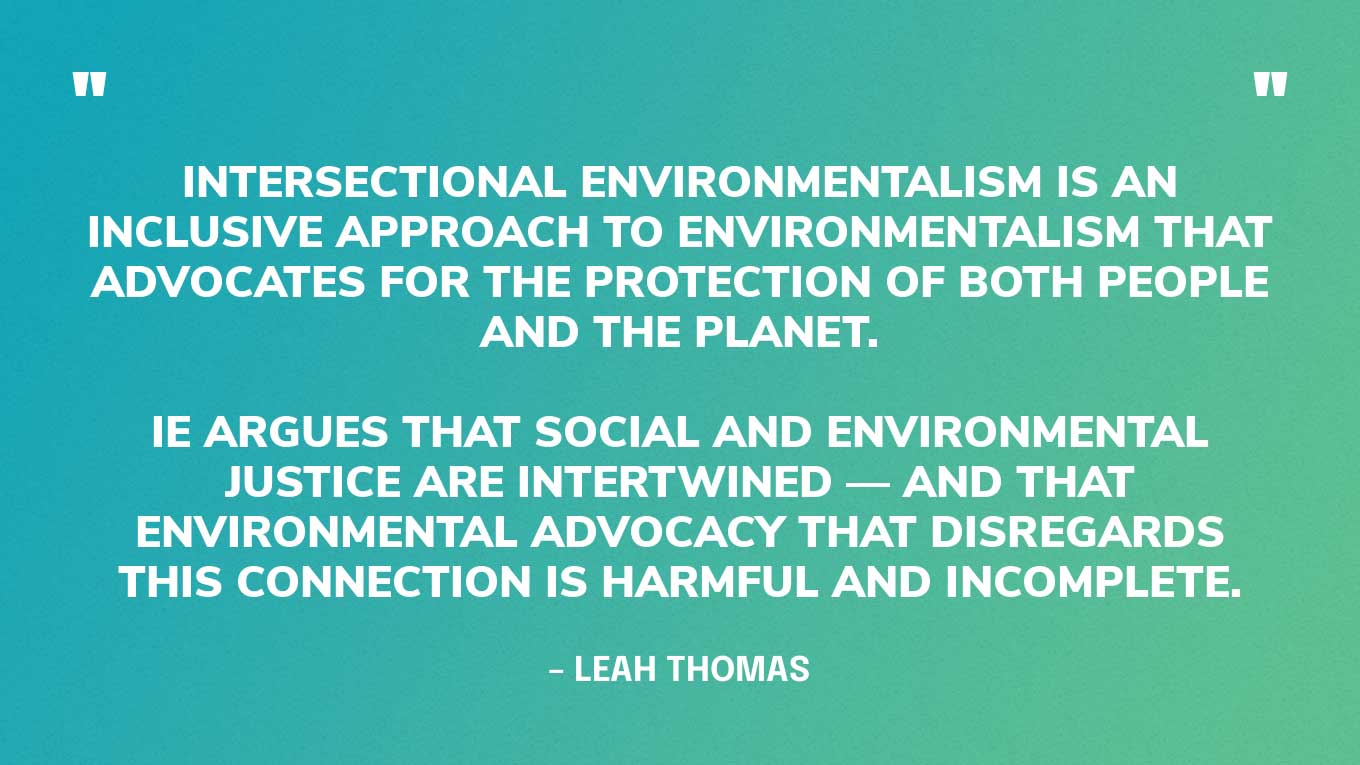
IE focuses on achieving climate justice, amplifying historically excluded voices, and approaching environmental education policy and activism with equity, inclusion, and restorative justice in mind.
Branden Harvey (Good Good Good): You mentioned earlier that this is an updated definition. Where did that evolution come from?
Leah: So, the first definition of intersectional environmentalism that I released into the world was on Instagram, and I honestly did it on a whim during the summer of 2020.
I was in my bed under my covers, frustrated and on Canva, and I just typed out, “okay, this is the type of environmentalism I want. I'm an intersectional feminist. I want to be an intersectional environmentalist. This is what it means.”
And it was similar, basically almost identical to what I just read, but I wanted to have a bit of a second chance to redefine what it meant to me and also my organization, knowing that IE will mean something different to everyone, which is the beauty of it.
But yeah, I just wanted to put a little bit more thought into it and not just, like, my bedroom Canva moment.
Amanda: Yeah, I definitely saw that intentionality displayed across your book! I was telling the team how I couldn't help but relate to some of the stories — thank you for including Latinx voices and the Chicana Movement! I loved that you covered overlapping identities. As a Latina, I've seen this play out on a generational level through the women in my family.
How can those who struggle to carry multiple identities — gender, race, ethnicity, etc. — practically find a middle ground of both honoring and advocating for these overlapping identities?
Leah: This is such a great question — and that's one of my favorite essays in the book. I have a story about this — and it may sound like a bit of a tangent — but I was on Twitter one day… And I don't like Ben Shapiro very much, and he was tweeting about how he hates intersectionality and he was talking about overlapping identities and why intersectionality is all about race and it doesn't make room for considering other religious identities, or even ethnicity, religion, spirituality, etc.
I was thinking about it in my head as if I were talking to him — or anyone — that intersectionality actually honors the argument that he is trying to make — because there's nuance. Even in something like white identity, there's nuance.
Like, considering, “okay, this person might be privileged in this area,” but there are so many other things to consider that impact how they're perceived by the world around them; from religion, to whether they're part of the LGBTQ+ community, ability, and so on and so on.
And I think when people don't consider that nuance and how those overlaps impact someone's experience, it's just a miss. And you can't really care or show up for people properly. So I know mentioning Ben Shapiro is probably a bit odd, but I was just thinking about that.
But I honestly think it's so important to consider. And even with myself, there's just so much nuance to my identity. Like, there are areas where I might hold privilege, but I know for sure being Black and a woman, those are not those areas where I hold privilege. So it's just really important to consider that nuance.
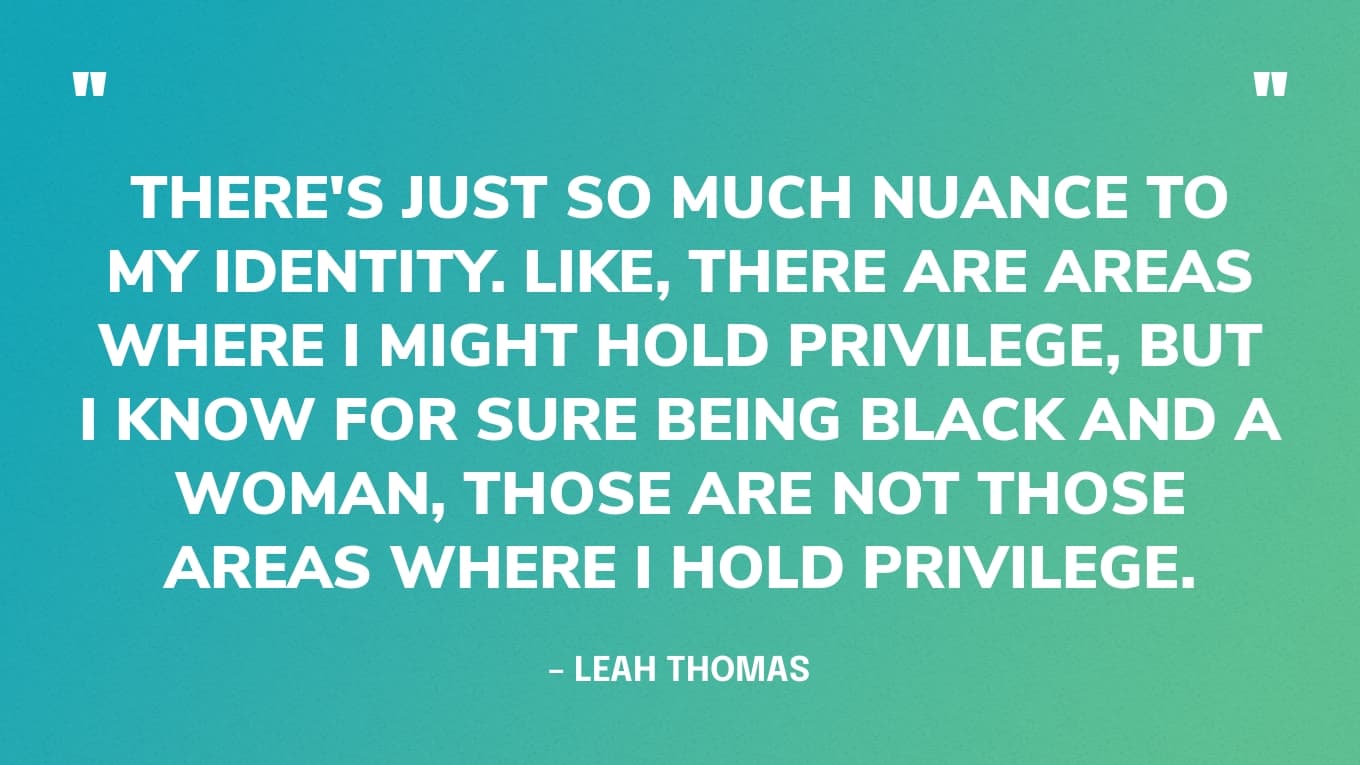
Like I was saying, to make sure you're showing up for people properly and you're also not offending people, and then the reverse is also true, acknowledging areas where you do hold privilege.
So me as a person who is Black and a woman, that doesn't mean that I shouldn't show up for other people who are also experiencing oppression in one way or another, based on an area of their identity, because that's just an act of lateral violence, which I talk about in the book.
Amanda: I know you touched on a lot of very big, heavy subjects so I'm just curious to know if there was one piece of it that challenged you while writing it?
Leah: I think something that I'm learning is progress over perfection. Even though [the book] was super collaborative and there were, like, four editors and me, I see there's three typos in the book, and it's going to be updated in future versions, but I think that was the hardest part of the process for me as a perfectionist, to know that this will be incomplete.
And I think that also goes into so many other areas of my life. Like I stated in the book, this is not a perfect book. I can never share every perspective.
And I think with IE, as a platform, we get a lot of people that want us to be perfect and they want us to do an in-depth analysis of every intersectional identity. And it's hard. It's really difficult. And I want to do that because I want each and every person to be reflected in everything that I write.
And I think grappling with the fact that I can never do that, especially in one piece of art.
But I can commit to a journey of learning, and then also, show people the pathways that maybe they can do that and they can contribute something that we might even share on IE or with their communities.
Kamrin: You kind of mentioned your Instagram origin story being in your bedroom on Canva, but I guess I would just like to know, how do you get so involved in this line of work or just environmentalism as a whole? And what's the journey that led you here?
Leah: I always have loved plants and animals and just, like, running around in nature. And then in school, I decided to go from biology to environmental science and policy.
So when I started studying environmental science at school, that was kind of the starting point of the Black Lives Matter movement in many ways, and also a lot of other things, like the Women's March, March for Science. Like, so many social and science-y things were happening at the same time.
So I was really active in social justice efforts while also studying the science behind the climate crisis. I was kind of being drawn to both movements and thought, “okay, there's actually a lot of overlap here.” And the same communities that I'm advocating for who are facing oppression are also not having access to all that Mother Earth has to offer because of things like air pollution, water pollution, proximity, the landfills on and on.
So, I think realizing that I didn't have to pick and choose, and learning a lot more about intersectional theory during college as well, because of things like the Women's March happening and learning about intersectional feminism, that kind of started me on this journey of, “okay, I feel like I should focus on this intersection between social justice and environmentalism.”
And even more, I started to realize that there's so much research that's been done since the 80s by people of color in the environmental justice space. It made me realize that it's not that the data isn't there, but it's not being taught and it's not being amplified. So that's how I started to kind of focus on talking about environmental justice history.
But onto social media, and the @greengirlleah origin story. Honestly, before I was about to graduate, I loved writing, and I had been doing freelance writing throughout college. I wanted to have some sort of digital portfolio that could show that I could curate a social media feed and kind of serve as an online resume.
And I also wanted to show other Black girls like me, like, just being Black outside on Earth, because I think representation is really important. So that was the initial purpose of @greengirlleah.
And then, over time, it just grew where I started to also talk about environmental justice advocacy. But it really did start out as a personal blog, and I'm trying to reclaim that a little bit because I feel like, in many ways, Intersectional Environmentalist is the resource.
Branden: I was going back through old Goodnewspapers the other day because we've done a few issues of the sustainability edition before — and in preparation for The Intersectional Environmentalist Edition — I was asking questions like: “What have we not included before that we want to include? What have we included that our audience already knows about?”
And I realized, before you made that viral post about intersectional environmentalism, we mentioned you in one of our issues of the paper, and I love that.
I know so many people discovered you through Intersectional Environmentalist, but it's really cool that you were making this impact on your personal account. You are helping make a difference.
And it's that idea that you do a lot of hard work every day and then sometimes just like that, hard work meets opportunity and then things explode, and it's cool that your origin goes back so far, and not everybody has seen that.
But that is what's making your work today so important and valuable. No question, just a comment!
Leah: That makes me really happy to hear. And I think it's funny because when my Instagram started taking off a little bit in 2020, I had a lot of people that were like, “who are you? You just showed up overnight, you just didn't do anything.” And I'm like, “Okay, first of all, no, but I have been an environmental science student for quite some time.”
And then like you said, who knows? Internet virality. It should happen to so many other people other than me. But sometimes, the algorithm just lines up in a certain way and I don't know, I'm just doing what I can with it.

But yeah, it is really interesting how that works out because I had my blog since 2016, and then in 2020 — four years later — it's just a thing now, I guess.
Amanda: What are the things on this beautiful planet that keep you grounded in your fight for justice?
Leah: I would say something that keeps me grounded is understanding the importance of community and that you can't do something alone, really. And the importance of resting because that's the great part about community and movements.

Like, it's not about one person, it's about all those people who are part of it. And if, say, one person— like me — needs to sit out for a little bit, that's fine. The movement goes on and on because there are other people that are there. And then when they need to sit out for a little bit, we can kind of hold each other up.
So I feel really grounded in the community that I've been able to find. And then also lots of narratives about rest and joy that are happening in the environmental and activism space, how people are kind of reclaiming the right to rest, to show up and advocate for what they care about.
Amanda: How do you rest during the week? What are things that you do to incorporate that?
Leah: I would say I have started going for runs and different things like that, just going outside to be in nature. I know that doesn't sound like a restful activity, but it's kind of like a mindful meditation in some way.
Really just spending time with my friends. And even if I can't see people because I'm so busy, like sending them a meme or sending TikToks, that's how some of my friendships have been sustained over the last year — it's, like, just TikTok DMs. And also watching things that have nothing to do with the destruction of the planet on Netflix. There are so many fun, amazing, funny shows out there!
Kamrin: How do you incorporate the teachings of intersectional environmentalism into your day-to-day life? I know you kind of just mentioned what that looks like on a community level with your friends, but we’d just love to know a little more.
Leah: I love nuance. So I feel like by, I don't know, like just kind of fighting against perfectionism, whether it's just individually understanding that I'll never be the perfect sustainable person and allowing room for imperfection.
And then I think, also, in conversations with people, even if they're an environmental activist that's, like, super-serious, it makes me happy to reassure them sometimes.
Like, it's okay if you had a plastic fork, it's fine. Or if you happen to travel because you went to this environmental event or whatever, like, it's okay, it's fine.
And kind of just talking about nuance… I don't know if this makes me a devil's advocate. I really wouldn't like to see it that way. But in conversations with, say, like, non-intersectional vegans, like, opening up the conversation to kind of root for the underdog and talk about Indigenous Peoples and the ways that they have participated in agriculture and not to place the blame on communities of color.
So, yeah, hopefully, that's not a devil's advocate and more of like an intersectional environmentalist advocate.
Kamrin: Yeah, definitely. I totally think it is. I think it's kind of the practice of just, like, finding those small moments where it's like, “actually, I think I can add a different perspective.”
We kind of just talked a little bit about rest, and this kind of acknowledges a bit of a double meaning with the word sustainability. But I'd love to know more about your creative process and how you create in a way that is sustainable for you. What are some practices that help you engage with the world without experiencing too much burnout?
Leah: I would say, in all transparency, I'm still figuring that out. There are some days in the week where I've been working, and I only had, like, chocolate today. That's not okay. And I think a mantra for myself, like you said, is redefining what sustainability means and self-sustainability.
I need to do these things in order to not even just do work, because sometimes it's like you need a rest so you can show up and work more, or so you can show up and advocate for the causes.
But I’m kind of reframing that. Like, I need to rest and take care of myself because that's what I need to do because I love myself. And I also love these causes that I care about. But to really care for causes, I feel like you have to love yourself properly in some ways.
Just like they say in relationships. Like, how are you going to love somebody if you can't love yourself? How are you going to show up for these causes that you care about if you're not really working on that self-love? So I try, but it's imperfect, and I’m figuring it out.

Amanda: What motivates you to keep doing good in a world that is increasingly demanding and scary, what makes you hopeful, what keeps you doing all this good?
Leah: I just have a lot of hope for the future. I took some personality test back in high school — I don't really remember what it's called — but it gives you, like, five characteristics of yourself or something that you're supposed to be. And one of them was, “futuristic,” which I thought was really cool. That's the only one I remember.
But, yeah, I just really believe that the future can be really cool and that the present can be not so bad if we, I don't know, just try.

And I also think that being good is so much easier than being bad. Like, you have to put so much energy into being bad. I just want to be joyful and do good.
Amanda: When it comes to doing good, what's ahead for your organization and the intersectional environmentalism movement as a whole?
Leah: IE, as an organization, yeah, I'm really excited for what's to come. We're kind of doing a rebrand right now and revisiting our mission and values and who we want to become.
There's a lot that we've done in our past year, from just, like, consulting behind the scenes to offering trainings, to student-led films and things like that.
And I think our main focus is: How do you put structure to grassroots online momentum? And it's a challenge, but it's good.
Something that we're investing in is our program called Earth Sessions. So these are going to be these really special music moments where we partner with BIPOC-led environmental justice organizations and artists, poets and creatives that care about the planet, bring them together, have a really cool event where artists get to be in conversation with these really rad environmental justice organizations. And then attendees get to learn and, like, boogie down. So, yeah, I'm excited for those.
Kamrin: To finish off, we just would love it if you could paint a picture of what a more just and equitable future looks like to you. Like, how would you love to see environmental liberation in practice?
Leah: I feel like once I start daydreaming, it's really easy for it to go into, like, a kind of utopia world. But you might as well imagine a utopia, and then maybe you'll land somewhat short of that, which is okay.
I guess your question is, what is environmental liberation actualized? I don't know. Just, like, thinking about people being able to breathe clean air and breathe and exist in every facet of that meaning. Being able to breathe and exist in a safe and healthy environment.

So really, it's just insane to me that in many ways, environmental liberation is like meeting basic human needs and rights, in my opinion, having clean air, having clean water, having food, the things that you need in order to achieve joy.
That's my dream. And I know that it's not a big one because people deserve basic human needs and basic environmental needs. So, yeah, that's my perfect future.
A version of this conversation was originally published in The Intersectional Environmentalist Edition of the Goodnewspaper in March 2022.
The Goodnewspaper is a monthly, carbon neutral, print newspaper filled with good news — and is delivered to thousands of subscribers passionate about celebrating good and making a difference.
Russia’s invasion of Ukraine “might be the biggest stimulus to the rollout of renewables that the continent has ever had”
— Invasion of Ukraine driving rethink of reliance on Russian gas
— Renewables seen as solution despite short-term fossil fuel boost
— Greater investment by governments needed in renewable energy
LONDON — As Russian troops encircle the Ukrainian capital Kyiv, European governments are scrambling to mitigate their exposure to Russian gas supplies in the face of public outcry over dependence on Moscow's energy.
But as Germany mulls slowing its exit from coal and Holland considers ramping up gas extraction, energy experts suggest that, beyond short-term fixes, one ancillary effect of the Ukraine crisis could be a renewed commitment to renewable energy.
"In the context of European Union, this might be the biggest stimulus to the rollout of renewables that the continent has ever had," said Richard Black, senior associate at the UK-based Energy and Climate Intelligence Unit.
"This is such a big crisis… clearly it is concentrating the minds of policymakers," Black told the Thomson Reuters Foundation.
Last year, Russian gas accounted for approximately 45% of European Union total gas imports and almost 40% of the bloc's overall gas consumption, according to figures from the International Energy Agency.
Germany and Italy are the EU's two largest consumers, with Russian gas accounting for 38% of German imports alone, according to data on the Economy Ministry's website.
Britain imports less than 5% of its gas needs from Russia, meaning the country is "in no way dependent on Russian gas supply", Britain's Energy Minister Greg Hands told the Thomson Reuters Foundation in emailed comments.
"To continue to protect consumers in the long term, we need to become even more self-reliant and generate more clean power in the UK whilst supporting our North Sea oil and gas industry as part of our transition," the minister said.
"That means more offshore wind, solar, tidal, hydrogen, and new nuclear."
But while other countries might not be able to pivot so easily away from Russian imports, the fact the conversation has started is remarkable, said Rachel Kyte, dean of the Fletcher School at Tufts University.
"This has been a moment where we're now waiting to see how the EU wants to wean itself off Russian gas, which, two or three weeks ago, was an unimaginable conversation," Kyte said.
On Thursday, the International Energy Agency released a 10-point plan for how the EU could reduce its reliance on Russian supplies.
The recommendations ranged from not signing any new gas supply contracts with Russia to, more crucially, investing in new wind and solar projects.
But if Moscow were to turn off the gas tap tomorrow – in retaliation for western economic sanctions – renewable energy sources are not yet in the position to pick up the slack, said Jonny Marshall, senior economist at British think-tank the Resolution Foundation.
"Not at the moment," Marshall said. "Renewables generate when it's windy or when it's sunny, and the fact that we still rely on gas to make up that shortfall shows that renewables aren't ready yet.
"But that doesn't mean they won't ever be ready," he added.
Concerns have also been raised that countries' short-term moves to increase fossil fuel production in response to the Ukraine crisis, including renewed lobbying in Britain for fracking, could stick.
However, Ajay Gambhir, a senior research fellow at the Grantham Institute on climate change and the environment at Imperial College, said existing commitments to a long-term switch to renewables made this unlikely.
"In the very short term, (increases in fossil fuel consumption) might be necessary," Gambhir said.
"But it's completely inconsistent with very challenging decarbonization pathways to then start relying on gas and oil for anything more than a few emergency months or years.
"We're just so close globally to blowing our carbon budget and exceeding 1.5 degrees C."
Under the terms of the 2015 Paris Agreement, countries worldwide committed to limiting global warming to below 2 degrees Celsius above pre-industrial levels, with a preferred aim of 1.5C.
In a major new report published on Monday, the United Nation's Intergovernmental Panel on Climate Change said that climate change is impacting the world far faster than scientists had anticipated.
U.N. Secretary-General Antonio Guterres warned that global emissions were set to increase by 14% over the next decade.
"That spells catastrophe," he told reporters.
The solution is a massive investment into renewable energy infrastructure, said Christian Egenhofer, associate senior research fellow at the Centre for European Policy Studies.
But that means a huge financial commitment from governments, he added.
"The essential issue is the scale," Egenhofer said.
"By 2050, in Europe, each year at a minimum we have to build at least twice, probably three times, (the) capacity that we have built every year over the past 10 years."
Reporting by Hugo Greenhalgh; Editing by Laurie Goering. This article was originally published by Thomson Reuters Foundation, the charitable arm of Thomson Reuters, that covers the lives of people around the world who struggle to live freely or fairly.
There’s no denying that the world is filled with a great deal of heartbreak, pain, and injustice. But at Good Good Good, it’s our job to respond to bad news by sharing good news stories about those pushing back to make the world a better place.
Fred Rogers once said, “When I was a boy and I would see scary things in the news, my mother would say to me, ‘Look for the helpers. You will always find people who are helping.’”
No matter what problems our world is facing — be it climate change, war and conflict, COVID-19, attacks on human rights, or political division — there are always Helpers to be found.
We’ve written this article to compile all of the best good news — stories of people creating solutions to problems, finding creative ways to make a difference, and reasons to feel hopeful — from the year 2022. (P.S. Check out the best good news from 2024.)
We’ll continue to update this piece as more positive news comes in, which we know will happen.
And in the meantime, find a way to make a difference to become the good you wish to see in the world — and sign up for our Goodnewspaper or Goodnewsletter to fill your life with good news.
Before we jump into the year's good news — we wanted to tell you: We make a monthly print Goodnewspaper!
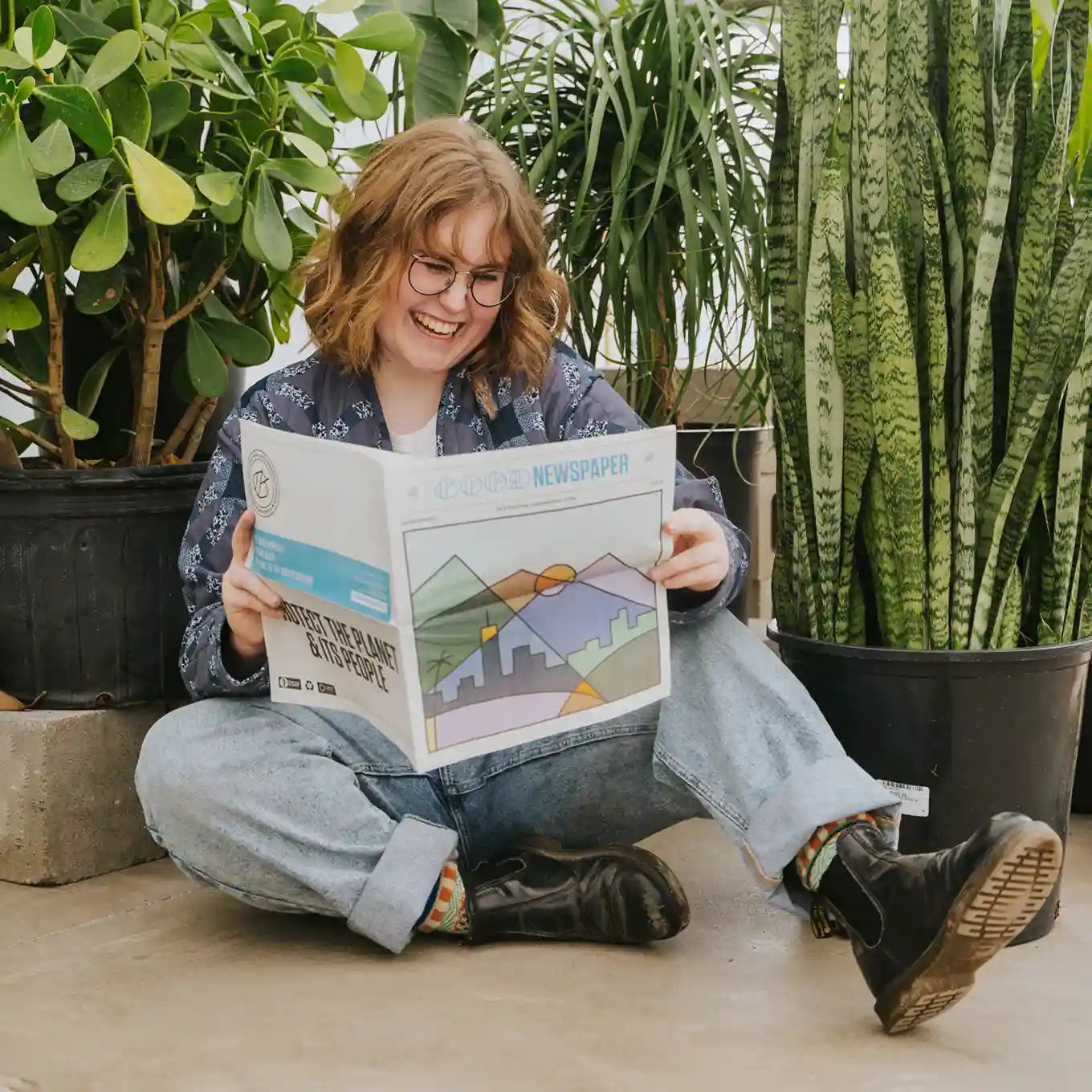
Every month we mail good news to thousands of incredible subscribers — and we'd love for you to get a monthly dose of good news too.
→ Learn more about the Goodnewspaper & subscribe today
Good News Worth Celebrating From January
With the turn of the new year, new bipartisan legislation went into effect that protects people from unexpected medical bills.
For years, millions of Americans who experienced a medical emergency could also get a bill from a doctor they did not choose and who did not accept their insurance. The "No Surprises Act" makes those bills illegal.
Bipartisan legislation passed during the Trump administration and fine-tuned by the Biden administration is a major new consumer protection, and covers nearly all emergency medical services and most routine care.
“I think this is so pro-consumer, it’s so pro-patient — and its effect will eventually be felt by literally everybody who interacts with a health care system,” said Senator Bill Cassidy, a Republican from Louisiana, who was part of a bipartisan group of lawmakers who wrote the bill. He said he counted the bill as among his top achievements as a lawmaker.
The new law eliminates the risk that an out-of-network doctor or hospital will send an extra, unexpected bill. Currently, those bills add up to billions in costs for consumers each year.
Conversion therapy was officially banned in Canada
Conversion therapy is now officially banned in all of Canada. The new law went into effect Friday, January 7th, and makes it illegal for anyone to provide or promote services intended to change someone's sexual orientation or gender expression.
Conversion therapy, as defined by GLAAD, is "any attempt to change a person’s sexual orientation, gender identity, or gender expression."
The practice has long been discredited, and research has uncovered its extremely harmful impacts. A San Francisco State University study found that “compared with LGBTQ young people who were not rejected or were only a little rejected by their parents and caregivers because of their gay or transgender identity, highly rejected LGBTQ young people were:
- 8.4x more likely to report having attempted suicide
- 5.9x more likely report high levels of depression
- 3.4x more likely to use illegal drugs
- 3.4x more likely to be at high risk of HIV and STDs”
“The passing of Bill C-4 and the unanimous support it received from every official in Parliament sends a clear message to LGBTQ2 Canadians: you are valid and deserving of a life free from harm,” said Nicholas Schiavo, founder of No Conversion Canada in a joint statement with U.S.-based advocacy group The Trevor Project.
“Today, as we celebrate this historic moment, we must thank survivors and their tireless advocacy to reach this moment where conversion ‘therapy’ is finally outlawed in our country.”
In 2020, hundreds of religious leaders came together in support of the LGBTQ+ community, to call for a ban on conversion therapy. And in 2022, people in Texas and Florida rallied to support LGBTQ+ youth in response to harmful state policies.
Canada joins more than a dozen other countries that have passed legislation against it, including India, Malta, Ecuador, and Germany.
In honor of what would have been Betty White’s 100th birthday, people joined the #BettyWhiteChallenge, donating to animal shelters and rescues
On what would have been her 100th birthday, people came together to honor the late Betty White — by donating to an animal shelter or rescue in her name.
Called the #BettyWhiteChallenge, the movement calls on animal — and Betty White — lovers to donate $5 (or any amount) to a shelter or rescue before or on her birthday, January 17th — and give White "the movement she deserves."
White, who passed away on December 31st, 2021, was known for her starring roles on The Golden Girls and Mary Tyler Moore Show — and was also celebrated for maintaining a strong sense of humor throughout her life.
She was also a lifelong animal advocate who worked to make a difference in the lives of homeless pets, and advocate for animal rights around the world. She left behind a legacy of good news for animals.
She supported organizations like American Humane and the Best Friends Animal Society, served on the board of trustees at the nonprofit Greater Los Angeles Zoo Association (GLAZA), and was a volunteer at the Los Angeles Zoo & Botanical Gardens.
Maya Angelou became the first Black woman to be featured on a U.S. quarter
With the first round of coins shipping around the country, Maya Angelou is now officially the first Black woman to appear on a U.S. quarter dollar coin.
Angelou was a celebrated and decorated writer, performer, and social activist. It's also not her first time making history. At the 1992 inauguration of President Clinton, she became the first African American woman to write and recite a poem — “On the Pulse of Morning” — at a presidential inauguration.
(She also paved the way for Amanda Gorman’s iconic 2020 inaugural poem, The Hill We Climb.)
In 2011, she was awarded the Presidential Medal of Freedom by President Obama.
The tails side of the quarter features Angelou with her arms uplifted, in front of a bird in flight with rays of sunlight shining behind her. The images were both “inspired by her poetry and symbolic of the way she lived,” the Mint said.
Angelou was perhaps best known for her 1969 memoir, “I Know Why the Caged Bird Sings,” which was about her childhood in the Jim Crow South. As reported by the New York Times, it was among the first autobiographies by a 20th-century Black woman to reach a wide general readership.
Angelou is the first of five women who will appear on U.S. quarters this year as a part of the U.S. Mint's "American Women Quarters" program, a 4-year program in which the Mint will issue five quarters a year to honor women in fields including women’s suffrage, civil rights, abolition, government, humanities, science and the arts.
This year, we'll also see quarters for Sally Ride, the first American woman in space; Wilma Mankiller, a Native American activist; Nina Otero-Warren, a leader in New Mexico’s suffrage movement; and Anna May Wong, the first Chinese American film star in Hollywood.
Related: Read one of our favorite Maya Angelou quotes — and more good news quotes — in this roundup
10 countries created a conservation network that will speed up the protection of marine ecosystems critical to fighting climate change
Ten nations in the western Indian Ocean committed to create a network of marine conservation areas — called the 'Great Blue Wall' initiative — to speed up progress toward the goal of protecting 30% of the oceans by 2030.
Currently, less than 10% of this region is protected, and a recent assessment highlighted the price of failure: all the coral reefs are at high risk of collapse in the next 50 years.
The focus of the initiative won’t just be coral reefs, but also mangroves and seagrass meadows, which are a lesser-known underwater ecosystem critical for carbon sequestration and oceanic biodiversity.
“Corals, mangroves, and seagrasses are vital organs of the ocean. Like a human body, if you don’t take care of those organs, the rest of the ocean will not survive,” said Thomas Sberna, a regional head for Eastern and Southern Africa at global conservation authority the International Union for Conservation of Nature.
As Mongabay reports, even as overfishing and warming are already taking a massive toll on marine health, threats from oil and gas extraction are intensifying in this corner of the Indian Ocean.
This is really exciting news in the global fight against climate change — because even as countries around the world announce protections and conservation efforts for lands and oceans, it's not happening fast enough.
The Great Blue Wall initiative makes us hopeful that more countries will see the urgency, and come together to make climate action happen as swiftly as it's needed.
The COVAX global vaccination program reached the milestone of delivering its 1 billionth COVID-19 vaccine
The United Nations-backed vaccine-sharing program, COVAX officially delivered over 1 billion doses to poorer nations around the world, according to the World Health Organization. The program reached the milestone after a shipment of 1.1 million vaccine doses was delivered to Rwanda on January 15th.
The COVAX program has delivered vaccines to 144 countries so far, “but the work that has gone into this milestone is only a reminder of the work that remains,” WHO said in a statement.
While this is an incredible milestone to celebrate, we need to further prioritize equipping the COVAX program with the vaccines it needs. The WHO reports that 36 of its 194 member countries have vaccinated less than 10% of their population, 88 had vaccinated less than 40%.
There's some good news to report on that front, too. GAVI, the agency overseeing the COVAX global vaccine distribution program, announced its plans to deliver the next billion in half the time it took to reach the 1-billion-dose milestone.
Once-endangered humpback whales are growing in population globally thanks to conservation efforts
Humpback whales were almost entirely wiped out by commercial whaling in the 19th and early 20th century, according to the Endangered Species Coalition, and were one of the first species to be federally protected under the Endangered Species Act and the Marine Mammal Protection Act in 1970.
However, due to amazing global conservation efforts, the current global population of humpback whales has rebounded from a low point of 10,000 back to nearly 80,000, as of 2022.
While a number of humpback populations in areas of the world are still listed as threatened, this upward tick shows incredible promise for ongoing conservation efforts.
523 acres of California redwood forest were returned to a group of Native American tribes
After purchasing the land in July 2020, Save the Redwoods League officially transferred ownership of 523 acres of redwood forest in California to a group of 10 Native tribes.
The Save the Redwoods League donated the land to the InterTribal Sinkyone Wilderness Council, a group of 10 Northern California tribal nations focused on environmental and cultural preservation, as reported by NPR.
The forest will be renamed "Tc'ih-Léh-Dûñ" — which means "fish run place" in the Sinkyone language — as "an act of cultural empowerment and a celebration of Indigenous resilience," the league said in a release.
The league's purchase of the land for $3.55 million was fully funded by Pacific Gas & Electric, who has been behind multiple wildfires in the region. PG&E also contributed a $1.13 million endowment to support ongoing stewardship of the area.
Tc'ih-Léh-Dûñ is home to ancient trees, including 200 acres of old-growth redwoods, important bodies of water, and a variety of endangered species.
"We believe the best way to permanently protect and heal this land is through tribal stewardship," said Sam Hodder, resident and CEO of Save the Redwoods League. "In this process, we have an opportunity to restore balance in the ecosystem and in the communities connected to it, while also accelerating the pace and scale of conserving California's iconic redwood forests."
Moderna announced the first doses of its HIV vaccine have been given to trial patients
In huge HIV/AIDS good news — Moderna announced they have officially entered Phase 1 of the clinical trial for their mRNA HIV vaccine — the first doses were administered to about 60 trial participants.
Moderna worked with the International AIDS Vaccine Initiative (IAVI) on the groundbreaking vaccine.
"We are tremendously excited to be advancing this new direction in HIV vaccine design with Moderna's mRNA platform," said IAVI CEO Mark Feinberg in a statement announcing the program. "The search for an HIV vaccine has been long and challenging, and having new tools in terms of immunogens and platforms could be the key to making rapid progress toward an urgently needed, effective HIV vaccine."
They will test both an initial and booster dose on HIV-negative individuals, monitoring them for safety, and their immune response to determine effectiveness.
This is incredibly good news for global health, and another exciting moment of progress for the world. According to U.S. government statistics, approximately 1.2 million Americans have the virus. Treatment options and outcomes for HIV patients have improved dramatically in recent decades, but no vaccine had passed early trials — yet!
Hopeful Stories From February
The world's largest floating wind farm was approved to be built off the coast of the United Kingdom
Once completed, the floating wind farm will generate around 1GW of power — enough for around 927,400 homes in the UK. Called “Gwnt Glas” (“blue wind” in Welsh), the project is 20 times the size of the current largest floating wind farm in the world, Kincardine off the coast of Scotland.
Floating wind farms are a new technology, and have a lot of benefits, including providing jobs in coastal communities. Conventional offshore turbines are rooted into the sea bed, so the places they can be installed are limited to depths of 50 meters. Since floating farms are built on platforms anchored underwater, they can be installed in a wider range of locations — which is really good news, because around 80% of the potential offshore wind power capacity is estimated to be in much deeper waters.
Floating wind farms can also better accommodate fishing and shipping lanes, reach stronger winds, cannot be seen from shore, and more.
Doctors in four Canadian provinces were approved to begin prescribing a year-long pass to national parks
To help improve the mental and/or physical health of their patients, doctors in four Canadian provinces can now prescribe a year-long pass to national parks.
Parks Canada announced they are now backing Canada's "national nature prescription program" known as PaRx — or A Prescription for Nature — which looks to get people into nature for a minimum of two hours per week.
With Parks Canada's backing, around 1,000 health care professionals in the Canadian provinces of British Columbia, Ontario, Saskatchewan and Manitoba can now prescribe a Parks Canada Discovery Pass — worth over $70 — to a patient.
The pass gives them one year of unlimited admission at over 80 national parks, national historic sites, and national marine conservation areas.
As Business in Vancouver reports, more and more studies are finding that a variety of mental health problems — including those triggered by climate change, or eco-anxiety) can be effectively treated by spending time in nature. Studies have also found it can also reduce chronic diseases, improve birth outcomes, and even help children succeed in life.
“We need to reduce barriers to nature,” said Dr. Melissa Lem, a Vancouver-based family physician who launched PaRx in 2020 with the BC Parks Foundation.
PaRx is also working on reducing other barriers that keep people from spending time in nature, like transportation.
And there's another benefit to the program: when people are more connected to nature, they're more likely to protect it.
(If you live in the United States, you can find out how to get free or discounted access to national parks.)
Rihanna committed to giving $15 million to climate justice organizations in the U.S. and the Caribbean
You may have seen Rihanna's baby news (!!!) — but you may have missed this good news too... her foundation committed to giving $15 million to climate justice groups!
The Clara Lionel Foundation, founded by Rihanna, announced it would be giving $15 million in grants to organizations focused on climate justice in the U.S. and the Caribbean. The funding is supported by Twitter co-founder Jack Dorsey's #StartSmall initiative.
"At the Clara Lionel Foundation, much of the work is rooted in the understanding that climate disasters, which are growing in frequency and intensity, do not impact all communities equally, with communities of color and island nations facing the brunt of climate change. This is why CLF prioritizes both climate resilience and climate justice work across the U.S. and Caribbean," Robyn "Rihanna" Fenty said in the foundation's announcement.
The grants will go to 18 grassroots organizations, which are primarily led by women, youth, BIPOC, and LGBTQ+ communities.
The organizations selected for support include:
- The Solutions Project
- Black Feminist Fund
- Black Visions Collective
- Caribbean Youth Environment Network (CYEN)
- Center for Popular Democracy (CPD)
- Climate and Clean Energy Equity Fund
- Climate Justice Alliance
- Deep South Center for Environmental Justice (The Center)
- GirlsCARE
- Helen’s Daughters
- HEY Campaign (The Ashley Lashley Foundation)
- Hive Fund for Gender and Climate Justice
- Indigenous Environmental Network
- Integrated Health Outreach
- Movement for Black Lives (M4BL)
- Native Movement
- NDN Collective
- The Caribbean Climate Justice Project
"CLF believes strongly that funders must build partnerships with organizations and acknowledge their deep understanding of what is necessary to achieve climate justice in their own communities," said Justine Lucas, Executive Director of the Clara Lionel Foundation.
These grants are going to bring so much good into the world — and we're celebrating the foundation's commitment to supporting intersectional environmentalism organizations most impacted by the climate crisis. We're looking forward to following their lead as we join in the work of protecting the planet.
Related: Get to know Leah Thomas, founder of Intersectional Environmentalist
The Irwin family celebrated the milestone of saving their 90,000th animal at the Australia Zoo Wildlife Hospital
The Irwin family announced they saved their 90,000th animal at the Australia Zoo Wildlife Hospital, and many of the animals they’ve saved have been vulnerable species rescued from wildfires, including the 90,000th — “Ollie,” an orphaned platypus.
"'Ollie' the orphaned platypus is receiving round the clock care until he can be released back to the wild," Robert Irwin posted on Instagram, adding, "With pressures from drought to bushfires, wildlife need our help now more than ever."
As ABC News reported, the current wildfires in Australia have burned over 12.35 million acres of land — about twice the size of Vermont. Ecologists at the University of Sydney estimate at least 480 million animals lost their lives since the start of Australia’s bushfire season.
We’re celebrating the Australia Zoo Wildlife Hospital’s milestone, and are grateful for their work in protecting and preserving Australia’s vulnerable wildlife species.
Bengals fans donated nearly 26,000 meals to a Kansas City food bank after beating the Chiefs to go to the Super Bowl
This year, the Cincinnati Bengals and Los Angeles Rams competed in Super Bowl 56, and while there are a number of problematic things happening surrounding the NFL and the game itself — it's also true that people are stepping up to create a lot of sports good news.
In the days since the Bengals defeated the Kansas City Chiefs to go to their first Super Bowl since 1989, Bengals fans have been sending in donations to Harvesters, a local food bank in Kansas City.
Sarah Biles, Harvesters’ director of communications told local news station KSHB in Kansas City that so far they've received $8,500 — and counting. And since every dollar can provide three meals, that adds up to nearly 26,000 meals.
It isn't the first time this season that fans have been giving back. Bengals fans were inspired by the Chiefs who, just the week before after defeating the Buffalo Bills, donated over $300,000 to a Buffalo children's hospital.
The fans chose a food bank because of Bengals' quarterback Joe Burrow's advocacy and activism for food insecurity and fighting hunger. After Burrow won the Heisman Trophy two years ago, he spoke about food insecurity in his hometown of Athens, Ohio — and donations started rolling in for the Athens County Food Bank, totaling about $650,000. There's now an entire "Joe Burrow Hunger Relief Fund" set up.
Related: Read the best motivational quotes about hunger and feeding the poor
The White House announced a 5-year, $5 billion investment in electric vehicle charging stations around the country
The U.S. Departments of Energy and Transportation announced a plan to distribute $5 billion over the next five years to install electric vehicle (EV) charging stations around the country.
It’s a part of the Biden Administration’s goal to work towards having 500,000 EV chargers by 2030. Currently, the U.S. only has about 100,000 charging stations.
In the first year, $615 million will be available for states to install chargers on interstate highways to form “the spine of the new national EV charging network,” according to the DOT. Part of the DOT’s guidance for the states’ build out of that network is having charging stations no more than 50 miles apart, and at least four “DC fast” charging plugs per location. Those types of plugs can charge an EV in 30 to 45 minutes.
Once that network is in place, states will then be able to apply for additional funds for chargers in other public places like transit stations, schools, and parking lots.
Lack of charging stations is still one of the largest hurdles to a more widespread adoption of electric vehicles, this funding announcement is really good news to get that infrastructure built out quickly.
Up from just 2,000 in 2020, researchers counted nearly 250,000 monarch butterflies in California in 2021
In recent years, the number of monarch butterflies migrating through California have fallen to concerning numbers. In a new report, researchers saw a hopeful trend — they counted nearly 250,000 monarch butterflies in California, the highest in 5 years, and up from just 2,000 in 2020 — which was the lowest in history.
While these numbers are encouraging, it's still less than 5% of how many there were in the 1980s, according to Emma Pelton, senior endangered species biologist with the Xerces Society for Invertebrate Conservation, which organizes the annual count and report.
Researchers point to a number of factors that could have led to the sharp increase in population, like good weather (monarchs don't do well in too-hot or too-cold conditions), availability of milkweed (habitat restoration and/or good growing conditions), fewer pesticides in the air as a result of less crops being planted (yet another reason to re-visit our agriculture systems!), interchange between populations and migratory groups, and more.
Pelton said in an online news conference that she was excited about the turnaround, but it doesn't indicate the monarchs are making a full recovery.
“It will take multiple more years to understand if this is the beginning of a trend or just a blip,” she said in an online news conference.
Climate change, habitat destruction and more have led to the critical decline in the number of monarch butterflies, which are critical to ecosystems — and critical pollinators for our food systems! — in the U.S. and globally. We need to pay attention to these trends so we know how to do our part to protect pollinators.
Scientists may have cured HIV in a woman for the first time
A team of researchers in the U.S. announced they've potentially cured HIV in a woman for the first time ever. The woman is now off of HIV medication and remains “asymptomatic and healthy,” the researchers said.
The woman was diagnosed with HIV in 2013 and leukemia in 2017, and joins a group of three men who scientists very likely cured HIV in as well.
Carl Dieffenbach, director of the Division of AIDS at the National Institute of Allergy and Infectious Diseases told NBC News that the accumulation of repeated apparent triumphs in curing HIV “continues to provide hope," and that it's "important that there continues to be success along this line."
The scientists used a cutting-edge stem cell transplant method, which given this successful case study, they now expect to be a viable treatment for "dozens" more people each year. While that's only a handful of the estimated 1.2 million people living with HIV in the U.S. alone, it's still good, hopeful progress to celebrate!
Because of cheaper renewables, Australia’s announced its largest coal-fired power plant will close 7 years earlier than originally planned
Saying it wasn't able compete with the "influx of renewables" much longer, the operators of Australia's largest coal-fired power planet, Origin Energy announced it would close the plant in 2025 — 7 years earlier than it had originally planned.
This is really good news from a country that still primarily relies on coal to supply its energy needs. As the BBC reports, coal supplies 60% of Australia's electricity, and it's one of the highest carbon-emitting nations per capita.
Renewables, on the other hand, accounted for one-third of energy generation in Australia in 2021, and are predicted to reach 70% by 2030.
This announcement from Origin Energy comes after two other energy companies announced they'd be closing their coal power plants several years ahead of schedule as well.
As more and more countries and companies recognize the benefits — both environmentally and economically — of renewables, we're hopeful we'll see more and more headlines just like this!
In his first starring film role, pop singer Troye Sivan fought stigma, fear, and ignorance around HIV/AIDS
Australian pop singer Troye Sivan, whose YouTube videos and music have inspired a generation of young LGBTQ+ people, wants his first major film role to combat ignorance around HIV/AIDS.
In "Three Months", Troye Sivan playsed 17-year-old Caleb, who is exposed to HIV after a one-night stand on the eve of his high school graduation.
The film details the shame and anxiety Caleb experiences while waiting three months for diagnosis. Current medical guidelines require 12 weeks from exposure to be 100% certain.
Set in 2011, when a positive diagnosis was no longer as heartbreaking as it once was, but fear and ignorance remained rife, the film explores the lingering stigma faced by people living with HIV.
"I think there's a lot of, not necessarily misinformation, but a lot of kind of ignorance (around HIV)," Sivan told the Thomson Reuters Foundation in a video call from Los Angeles.
"I would love it if this movie plays a part in getting rid of the stigma around HIV."
The U.S. has saved millions of adoptable pets from being euthanized by moving them from states with too many, to states that need more
Good news for dogs: While there isn’t a shortage of adoptable dogs in the U.S., there is a difference in where they are adopted most. States like Mississippi have too many, but Massachusetts needs more.
To compensate for these gaps in supply and demand, sophisticated dog-relocation networks have sprung up over the past decade, bringing adoptable dogs and cats from states with too many to states that need more.
“How do we connect those shelters that have too many animals and are at risk of euthanasia simply because they were born there, to those shelters where these animals are gonna fly off the shelves?” Matt Bershadker, CEO of the ASPCA, the New York–based animal-welfare giant said to TIME.
Over the past five years, the ASPCA has poured resources into its “relocation” program, and March will celebrate moving its 200,000th animal in March. While the ASPCA may be the largest and most organized operation, there are also smaller, local nonprofits and groups moving animals to where they’re needed most.
The “animal relocation” movement isn’t just helping pets find homes, it’s helping euthanasia rates plummet, and helping build capacity to help all kinds of animals.
The world celebrated the life of Dr. Paul Farmer, who spent his life working for justice in global health care
Along with the rest of the global health community, we were devastated to hear about the passing of Dr. Paul Farmer at the beginning of 2022.
Farmer spent his life working for justice in global health care. He brought high-quality health care to people in world who needed it most — and deserved it as much as anyone else.
Beginning with his first clinic in Haiti, Farmer's work went on to become a global network of healthcare facilities through Partners in Health, serving some of the world's poorest communities, from Malawi and Rwanda, to Kazakhstan, and Peru.
He wrote extensively about the relationship between health and human rights, and inequality and the outcomes of infectious diseases — and it's helped shape what we know (and do) about global health initiatives today.
Dr. Farmer life and legacy is an inspiration to all of us looking to make the world a more just, equitable place for all human beings.
Related: Read the most inspiring quotes from Dr. Paul Farmer about justice, health, and equality
The 2022 'Project for Awesome' livestream raised a record $3.2 million for charity in just 48 hours
In just two days, the Project for Awesome raised over $3 million for charity — breaking the record for all of the group's previous fundraising events.
Thousands people from around the world watched the annual 48-hour event — hosted by John Green and Hank Green — contributed donations, and voted on nonprofits to support.
2022 marked Project for Awesome’s 15th-annual livestream, and as the 48 hours came to an end, viewers had raised a total $3,124,662.89 for charity. The total amount raised in the 2022 stream surpassed the previous record, set in 2021, by more than $700,000.
The Project for Awesome splits funds raised into two pools. During the first 24 hours of the stream, money raised was distributed between Partners in Health and Save the Children.
And any money collected during the second half of the livestream is divided among charities submitted by and voted for by members of the community. This year, those charities included World Central Kitchen, The Trevor Project, The Audre Lorde Project, Rainbow Railroad, and more.
Positive World News From March
A synagogue in Ukraine turned its basement into a bomb shelter for 'all people' looking for safety from air raids
A synagogue in the small town of Uman, Ukraine converted its basement into a temporary bomb shelter open to anyone and everyone looking for a safe place to hide from Russian troops and air raids.
"We invite all the people, all Ukrainians, all Hasidic people, doesn't matter who," Irina Rybnitskaya, a lawyer for the U.S.-owned foundation that runs the synagogue told CNN. "We prepare this place especially for them, in order to hide [when] there is [an] alarm."
The basement is stocked with mattresses and blankets, and people taking shelter there brought personal belongings in case they have to hide out for days at a time.
Uman was attacked in the earlier days of the invasion, and as a result many residents fled. While they haven't seen attacks more recently, there are still checkpoints around the city run by Ukrainian soldiers — and for those who can't or don't want to leave, the synagogue is offering a place of refuge.
And while Russian President Putin has claimed the Ukrainian government is a "gang of drug addicts and neo-Nazis" and the invasion is for the "demilitarization" and "denazification," the Jewish community in Uman say Ukrainians have been nothing but welcoming and supportive.
As CNN reported, Uman's Rosh Hashanah new year celebrations have become the biggest Jewish festival outside of Israel in the last few years, with tens of thousands of Jewish pilgrims coming to visit the tomb of Rabbi Nachman of Breslov, the founder of the Breslov Hasidic movement.
And now, that same community is offering refuge to anyone who needs a safe hiding place.
This isn’t the only good news from Ukraine — people, organizations, and governments from all over the world came together in March to help make a difference for Ukrainians.
World Central Kitchen showed up at the Ukraine-Poland border providing fresh-cooked meals to people arriving from Ukraine
When disaster is happening in the world, Chef José Andrés and World Central Kitchen are not far behind or far away. One day after the Russian invasion of Ukraine began, Chef Andrés shared a video to Twitter and said, “Like you, I am distraught watching Ukraine under attack. We must come together as a force for good!”
That first night, they served “1,700 hot meals of chicken, rice & veggies” to the thousands of people crossing the border. And ever since, they’ve been partnering with local food trucks and restaurants to provide meals to people fleeing the violence in Ukraine.
One of their partners, pictured above, is the food truck “Oh My Ramen!” The owners are from Ukraine and now live in Poland.
World Central Kitchen tweeted that they would soon be expanding to have feeding centers in Moldova and Ukraine, as well as Romania.
(Read more from @WCKitchen on Twitter, or make a donation.)
Since June 2020, Denver has been dispatching mental health teams on certain 911 calls – the program is so successful, they’re expanding it again
In June 2020, Denver announced its Support Team Assisted Response (STAR) program, which dispatches licensed mental health professionals instead of police for certain 911 calls. In its first year, the program was so successful, the city expanded it to include more vans and more response teams.
Now, the Denver City Council has unanimously approved $1.4 million to expand the STAR program again — from 3 vans to hopefully 6 teams and 10 total response teams.
Since it launched, local CBS News affiliate reports the STAR program has responded to over 2,700 calls. The program dispatches a mental health clinician with a paramedic or EMT for each call they respond to.
"It means that we're going to be able to make it to more calls, which is really exciting after running a very small pilot program with one van working predominantly downtown," STAR operations manager Carleigh Sailon said. "So we're now responding citywide, and responding to more calls for service. And our goal is to make it to all the calls for service that are STAR eligible, and ensure that folks in our community who are vulnerable or marginalized or struggling have that support, and have access to that right response."
The funding will also help them set up a network of specific providers around the city, so they can direct people to the right places when they respond to calls.
An online community of over 800,000 ‘Governerds’ has raised over $4.2 million to forgive medical debt, give grants to teachers, support Ukraine, and more
There's one main thing we love here at Good Good Good: the Helpers — the people stepping up and stepping in to make the world a better place. And there's a “beautiful pocket of the internet" that's filled with thousands of them.
Sharon McMahon's community of over 800,000 "Governerds" is filled with thinkers, feelers, and learners not only looking for reliable, truthful information about current events, government, and politics — they've raised millions of dollars to support incredible causes along the way.
Starting with a fundraiser to commemorate Sharon's 50,000th follower on Instagram — they've since raised over $4.2 million total (and counting... they're in the middle of a fundraiser right now!).
That money has gone to support incredible causes like grants for teachers for classroom supplies and forgiving $147 million of medical debt for over 72,000 people through RIP Medical Debt. Right now, they're fundraising to support the efforts of World Central Kitchen and Care in Ukraine, which has already been the Governerds' largest fundraiser yet — with over $620,000 raised so far.
McMahon and her community teach us that we have more in common than we think — that generosity, kindness, compassion, and optimism can be the way forward.
“I am hopeful that we can be the change we wish to see; that every small action has an infinite number of ripples; that, incrementally, and slowly, and through this grassroots effort, we can affect significant change in the world,” McMahon said.
The world surpassed 1 terawatt of installed solar energy capacity
The world passed a major renewable energy milestone: There are now enough solar panels installed throughout the world to generate 1 terawatt (TW) of electricity from the sun, according to the latest estimates.
That's enough to meet the electricity demands of nearly every country in Europe combined:
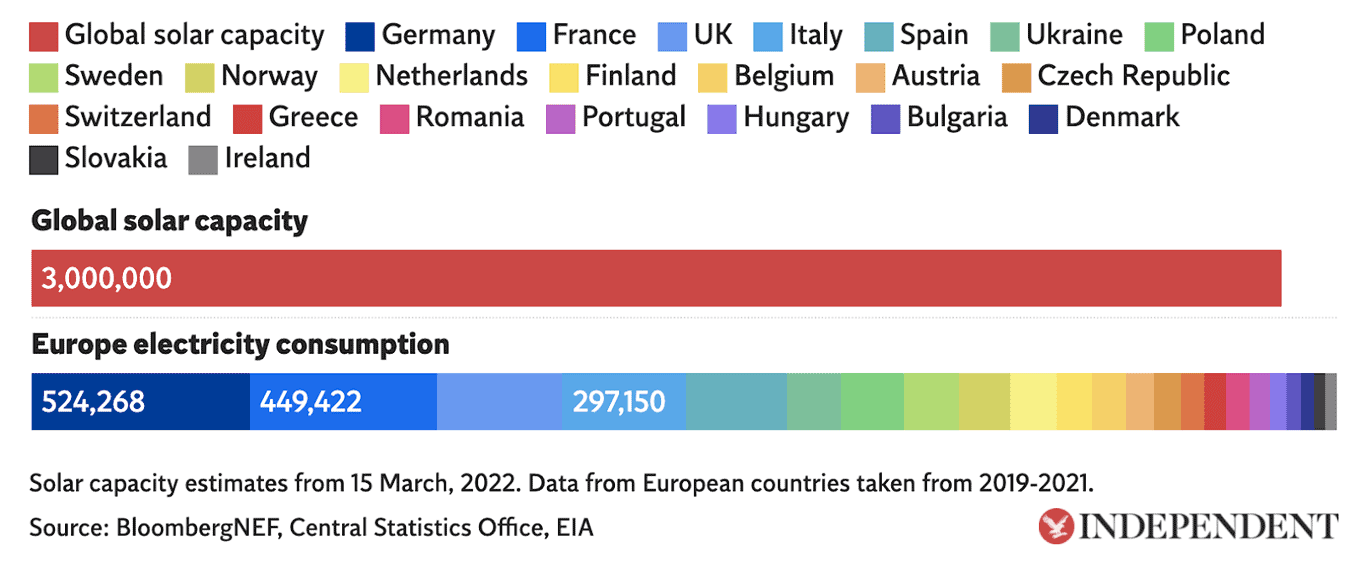
China, Europe, and the U.S. are the major drivers behind reaching the milestone, and combined account for more than half of solar energy capacity globally.
According to the BP Statistical Review of World Energy 2021, the world generated 26,823 terawatt hours of electricity in 2020 — so while 1 TW is only a fraction of today’s global electricity demand, it’s still an incredible milestone to celebrate as we work to increase capacity, storage, and distribution.
An estimated $60 billion in medical debt was removed from consumers’ credit reports
Good news for people with medical debt! The 3 major credit reporting agencies — Equifax, Experian and TransUnion — announced that, beginning this summer they will implement three changes that will remove roughly 70% of medical collection debt from Americans' credit reports.
First, as of July 1, all paid medical debt will no longer be included on reports — previously, any debt that went to collection would be included for 7 years, even if it had eventually been paid.
Second, people will have 12 months to pay medical bills before any unpaid collection debt appears on reports — it used to be 6 months.
Lastly, beginning early next year, no medical debt under $500 will appear on a report at all. This one is especially good news because, recent data from the Consumer Financial Protection Bureau (CFPB) showed the majority of medical debt is under $500.
According to the CFPB, as of June 2021, there was $88 billion in medical debt on consumer credit records. And as Axios reports, an analysis of the announcements found the changes are expected to eliminate $60 billion of that.
This is really good news because when medical debt appears on a credit report, it negatively impacts a person's credit score, making it hard to get a mortgage, car loan — which can also make it challenging to get a job.
And according to the CFPB, the issue also disproportionately impacts Black and Hispanic people, as well as all young adults and low-income individuals.
Four Bengal tigers and four lions are now living at wildlife sanctuaries in South Africa after being rescued from circuses
Thanks to two separate rescue missions, four Bengal tigers and four lions who had spent most of their lives in train carriages for circuses are now living at wildlife sanctuaries in South Africa.
The four tigers had spent over four years together in a metal train carriage on a farm in Argentina, after being abandoned by the circus, according to Plant Based News. Sandro, Mafalda, Messi and Gustavo, were rescued by Four Paws International and now live at the Lionsrock Big Cat Sanctuary in Bethlehem, South Africa.
“By rescuing these four tigers in Argentina, we provide a better life for them individually and create awareness for all animals globally to be treated with respect, empathy and understanding," Four Paws CEO Josef Pfabigan said.
The four lions had been part of a traveling circus from the time they were cubs until 2018, when they were abandoned by the circus. They were held at a rescue center in France and have now been moved to the Shamwari Reserve in the Eastern Cape of South Africa by the Born Free Foundation.
“We have a large natural bush enclosure with space the size of possibly two rugby fields for them, space that they have never experienced in their life, with natural vegetation, with the sights and sounds and smells of Africa,” Catherine Gillson, Born Free Manager at the Shamwari Reserve, said in a statement.
While we wish these animals had never experienced life in captivity in the first place, we're celebrating the efforts of these rescue organizations to bring them safely to spaces that feel more like the home they were meant to live in!
A national survey found that a large majority of voters and parents trust librarians, and oppose book bans
Lately, headlines have been dominated by states and school districts working to push through book bans. When this happens, it can be easy to think that, since it's dominating the news and policymaking, this must be the way "most people" feel and think.
A new national study from the American Library Association (ALA) confirmed the opposite: 7 in 10 voters oppose efforts to remove books from public libraries — across party lines, too — and three-quarters of parents of public school children "express a high degree of confidence in school librarians to make good decisions about which books to make available to children."
Here are some findings from the survey:
📚 71% of voters oppose efforts to have books removed from their local public libraries — including 75% of Democrats and 70% of Republicans.
📚 90% of and 92% of parents have a "favorable opinion" of librarians who work in local public libraries and school libraries
📚 75% of voters are confident in local public libraries to make good decisions about what books to include in their collections
📚 74% of parents are confident in public school libraries’ decisions about their collections
More than 330 unique cases of book bans and challenges were reported to American Library Association's Office for Intellectual Freedom (OIF) between September 1 and November 30, 2021. These statistics don't reflect public sentiment around book bans, though — and that's really good news.
Learn more about how to help stop book bans
Heartwarming News Stories From April
A new report found that if the current pace of wind and solar growth continues, the world will meet its climate targets
A new report from independent climate think tank Ember found that if the current pace of wind and solar power capacity growth continues through 2030, the world is on track to limit global warming to 1.5 degrees Celsius.
While some impacts are already unavoidable, the 1.5-degree target is what climate experts say warming needs to be limited to avoid many of the worst impacts of climate change globally. So this is really good news.
Currently, Ember’s analysis found that the 10-year average compound growth rate of solar and wind is 20%. The Netherlands, Australia, and Vietnam had the fastest growth rates, switching around 10% of their electricity demand from fossil fuels to wind and solar in the last two years.
"If these trends can be replicated globally, and sustained, the power sector would be on track for 1.5 degree goal," Ember said in their report.
The main thing holding back progress and slowing the growth rate is on-the-ground constraints like permitting. To resolve this, governments need to address anything causing those kinds of slow-downs.
This should also be an encouragement to us, because not only are the efforts we've already been making really working — we also have a large role to play in holding our leaders and elected officials accountable for doing all they can to speed up the transition to clean energy.
Ketanji Brown Jackson was confirmed and will make history as the first Black woman ever to sit on the U.S. Supreme Court
Ketanji Brown Jackson's nomination was confirmed by the Senate, and she will make history when she becomes the first-ever Black woman to sit on the U.S. Supreme Court. Her historic confirmation marks a moment of long-overdue progress for representation in the judicial branch of the U.S. government.
One of President Biden’s first judicial nominees, Judge Jackson was confirmed with bipartisan support to the U.S. Court of Appeals for the D.C. Circuit in 2021. Prior to that, she was confirmed with bipartisan support in 2013 to be a district court judge for the U.S. District Court. She also served as Vice Chair of the U.S. Sentencing Commission, and clerked for Justice Stephen Breyer, whose place she will take upon his retirement.
Judge Jackson also brings unique experience of being a public defender to the U.S. Supreme Court — she is the first former federal public defender to serve on the Supreme Court. This is significant, because the right to a lawyer is a fundamental right detailed in the Constitution. Judge Jackson is now the only and first-ever Justice with the background of representing defendants who did not have the means to pay for a lawyer.
We're celebrating her historic nomination, and a Supreme Court that looks, thinks, and represents America a little better than it did before.
A team of engineers at Stanford developed solar panels that can generate electricity at night, too
Standard solar panels can provide electricity while the sun is up during the day, and while installing a battery can help store electricity for use when the sun is down, panels that can generate electricity at night is even more efficient and sustainable.
As NPR reports, the solar cell uses a thermoelectric generator, which can pull electricity from the small difference in temperature between the air outside and the solar cell itself.
"Our approach can provide nighttime standby lighting and power in off-grid and mini-grid applications, where [solar] cell installations are gaining popularity," the study said.
Mini-grid applications are independent energy networks, which are often installed in smaller communities, or in ones without close access to a power grid. So this is really good news for people without reliable access — or any access at all — to a power grid to provide backup electricity when the panels aren't generating it.
We know that renewable energy sources have limitations (we also know those limitations pale in comparison to the damage done to the health of people and the planet by burning fossil fuels), and we're celebrating this team of researchers for helping solve a big one: how to generate "solar" energy while the sun is down!
The world’s largest wildlife overpass is being built over a California highway
Good news for wildlife in California! The largest wildlife crossing bridge is being built over a 10-lane highway in California. The overpass will create a safe corridor for animals living in the Santa Monica mountains to cross over a busy, 10-lane stretch of highway.
As The Guardian reports, the overpass is nearly a decade in the making, and once completed, will be 210 feet long and 165 feet wide. It will be surrounded by an acre of native plants, as well as sound walls covered with vegetation to help shield nocturnal animals from noise and light from the highway below.
This is really good news, because not only do wildlife deserve safe, relatively unrestricted access to their natural habitat — but this region in particular is a critical habitat for "specially protected" mountain lions. At least 25 of them have been killed on Los Angeles freeways since 2002, the most recent on March 23. The crossing is also important for biodiversity.
“The freeway is a formidable and virtually impenetrable barrier for many wildlife species including mountain lions, bobcats, gray foxes, coyotes, and mule deer that inhabit and travel between these two mountain ranges,” the Santa Monica Mountains Conservancy said in a press release. “For mountain lions in particular, the consequences of this restriction results in increased inbreeding and territorial fighting, and very low genetic diversity, within the Santa Monica Mountains.”
A Canadian art therapist is using TikTok to help people heal and create – and to help make art therapy more accessible
In addition to offering clinical care through one-on-one client relationships, as well as open studio and group sessions through her private practice, Canadian art therapist Amelia Hutchison — the art psychotherapist behind @art_therapy_irl — uses TikTok and social media to make the power of art therapy more accessible for more people.
“What color is your heart today?” she’ll ask the camera, holding out a bushel of colored pencils, wide-eyed behind her rainbow assortment of glasses.
And the people in the comments answer. In poetic one-liners, questions about their own healing journeys, and stitched videos; more than 85,000 followers respond to Hutchison’s prompts.
A tech company is electrifying the world’s high-polluting scooters through networks of swappable batteries
Taiwan-based tech company Gogoro is helping electrify the hundreds of millions of high-polluting two-wheelers around the world through networks of swappable batteries.
And it's a good thing, too: you might be surprised to learn how many people drive them — and how polluting they are. China, India, and Indonesia alone have more than 500 million two-wheelers, and globally, "over 50% of all commute miles done every day is actually done on two wheels," Gogoro CEO Horace Luke told the Volts podcast.
Two-wheeler motors can emit up to five times the pollutants as a new car in the U.S. Millions of people have died from the air pollution they cause — and those emissions also contribute significantly to climate change.
In the past, Luke said two-wheelers have been challenging to electrify, because most of the people who drive them don't have a lot of extra cash, theft is a concern, and plugging in to recharge in a dense urban environment can be difficult.
Gogoro addresses all of these issues: Customers own the scooters, while Gogoro "owns" the batteries. Drivers don't have to worry about waiting for a charge, they can just swap their dead battery for a fully charged one from a battery "bank" (pictured) located around the city — and the bank recharges it for the next driver.
They also addressed theft by making "smart" batteries that are "keyed to the person using them, so if they or the scooters containing them are stolen, they simply stop working," Roberts said in a tweet.
And while it started successfully in Taiwan, it's already expanding to other densely populated urban areas. There's also hope that the model could be expanded to four-wheel vehicles, too.
Top Good News Stories From May
Google is now letting users limit ads about topics like pregnancy, dating, weight loss, and more
In December 2020, Google allowed users to limit ads related to alcohol and gambling — and now, users can also limit the ads they see about other sensitive topics like parenting, pregnancy, dating, and weight loss.
“We conduct user surveys and try to understand what kinds of categories they are interested in us adding,” Karin Hennessy, Google’s group product manager for ads privacy told The Washington Post.
“What came through at the very top was alcohol and gambling, so we provided that. The very next four categories were parenting, pregnancy, dating, and weight loss. It's all based on what we perceive as sensitive categories, but also very much on what we're hearing from users.”
This is really good news to celebrate as we begin #MentalHealthAwarnessMonth too — as all of these topics can be incredibly difficult for people, especially when you aren't expecting to see content related to them, as is the case with web ads.
And while there are much larger conversations to have around user data and privacy, this is really good news to celebrate, and it will undoubtedly help protect the well-being of so many people!
To opt out of ad categories, go to myaccount.google.com. Select “Data & Privacy” from the menu on the left, then go to “Ad settings” and look for “Sensitive ad categories.”
For the first time ever, renewable sources met 100% of its electricity demand in California
For the first time ever, renewable electricity sources met 100% of California's energy demands. As the Desert Sun reports, on Saturday, April 30 at 2:45 p.m., energy demand statewide hit 18,672 megawatts.
Of that demand, 101% of the power provided came from renewables, according to a continuous tracker provided by California Independent System Operator (CAISO) a nonprofit that oversees the state's bulk electric power system and transmission lines.
Two-thirds of the 18,000 megawatts were provided by solar power, and the rest came from wind, geothermal, and other renewable sources. The renewable electricity lasted almost 15 minutes before decreasing to about 97% renewables.
While it only lasted 15 minutes, it's an incredibly encouraging and exciting milestone as we work to decarbonize our electric grid — and proof of what we already knew: a carbon-free future is a realistic, viable goal.
After incarceration rates hit a 35-year low, Massachusetts is closing one of its two maximum security prisons.
Thanks to falling crime rates and sentencing reform, one of two maximum security prisons in Massachusetts is closing. State officials announced the prison would close over the next two years, saying the facility was too expensive to repair and a statewide effort to phase out solitary confinement.
“Crime rates are decreasing, and prison populations are falling. That is due to years of hard work and an overarching recognition that we cannot jail our way to a safer society,” Anthony Benedetti, chief counsel for the Committee for Public Counsel Services told The Boston Globe.
“As we move forward, I hope we let existing criminal justice reforms work and continue to follow the evidence: that tough-on-crime policies do nothing but hurt the community and our neighbors," Benedetti continued.
The prison, Cedar Junction was built in 1955, and officials said it currently has a population of 525 inmates, which is about 68% of its capacity.
In a medical breakthrough, scientists identified a blood marker in babies at higher risk of SIDS
Good news! A team of Australian researchers has identified a biochemical marker in the blood that could help doctors identify newborn babies at a higher risk for sudden infant death syndrome (SIDS).
According to the CDC, 1,248 infants died in 2019 due to SIDS. While this number has steadily declined over the past two decades — from 130.27 per 100,000 live births in 1990 to 33.3 in 2019 — as preventative measures have been recommended by doctors and implemented by parents, any risk indicators or exact causes of SIDS have been unknown.
The researchers found that babies who died of SIDS had lower levels of an enzyme called butyrylcholinesterase (BChE) shortly after birth. As Reuters reports, BChE plays a major role in the brain's "arousal pathway," and low levels would "reduce a sleeping infant's ability to wake up or respond to its environment."
This discovery is incredibly good news, as it gives doctors the ability to identify and provide better treatments and/or recommendations for infants with this biomedical marker.
"An apparently healthy baby going to sleep and not waking up is every parent's nightmare and until now there was absolutely no way of knowing which infant would succumb," study leader Dr. Carmel Harrington of The Children's Hospital at Westmead said in a statement. "But that's not the case anymore. We have found the first marker to indicate vulnerability prior to death."
And the Sydney Children's Hospital Network in Australia called the discovery "a world-first breakthrough."
The Buffalo community came together to ensure residents have access to fresh, affordable food
Almost immediately after a gunman killed 10 people and injured three more at Tops Friendly Market in Buffalo, people and organizations in Western New York activated to make sure residents had what Tops gave so many of them: access to fresh, healthy, affordable food.
Tops is one of only a few grocery stores in the neighborhood, and the only one within walking distance. The grocery store is now closed indefinitely, making access to affordable food no longer accessible for many in the community.
But beginning Monday, May 16 and through at least May 27, The Buffalo News reports the Resource Council of WNY and Feedmore WNY are holding daily food distributions of emergency food.
New York Gov. Kathy Hochul announced a partnership with Uber and Lyft to provide residents free rides to and from nearby grocery stores.
“We are seeing a tremendous response to the tragedy at the Jefferson Avenue Tops and we will be distributing food to the community, sponsored in part by Tops,” said the Rev. Terry King, CEO of Saving Grace Ministries and board chair of the Resource Council. “We talk about being ‘the City of Good Neighbors,’ and this is that response.”
People donated so overwhelmingly to @buffalocommunityfridge, that the organization is now redistributing funds to other food access partners in the area.
We know the community has a lot of grieving and healing to do, but we're so inspired by these Helpers who jumped into swift action. We hope they also help bring a measure of hope and healing to the people of Buffalo.
In a historic agreement, the U.S. men’s and women’s soccer teams will now be paid equally
It's a landmark victory for equality! US Soccer and the unions for both the US Soccer MNT and US Soccer WNT announced they reached a new agreement that will achieve "equal pay and set the global standard moving forward in international soccer."
So, in 2019, they filed another lawsuit demanding "at least equal playing, training, and travel conditions; equal promotion of their games; equal support and development for their games; and other terms and conditions of employment." That lawsuit ended in a settlement with players on on the women's team, which was a helpful step forward.
Now, under the new, historic agreement, players on both teams will receive the same pay, including appearance fees and game bonuses, and be provided the same working conditions. While players on the women's team previously had guaranteed salaries, they will now have the same pay-to-play structure as players on the men's team. They will also pool and share any FIFA World Cup prize money.
The agreement runs through 2028, and is incredibly good news to celebrate — as it will not only impact equality in sports in the U.S., but hopefully set a new international standard.
A Texas restaurant owner bought cases of baby formula and gave them away to his community for free
After seeing both the news stories surrounding the national baby formula shortage, and his neighbors struggling to find food for their babies, one restaurant owner in North Texas wanted to find a way to help.
While Our Place Restaurant owner Benji Arslanovski didn't need any for his own children, he looked into purchasing cases of baby formula through his restaurant supplier, so he could help out families that did need it.
He was able to purchases six case of Gerber formula — and then proceeded to hand them out for free to people in the community who needed it.
“There were so many people who needed it, especially new moms who are struggling to produce milk,” he told The Dallas Morning News. “I have three boys so I can imagine what it’s like to be in that situation.”
“I’ll keep doing this as long as people need it and as long as US Foods has formula in stock,” Arslanovski said. “I’m just trying to give back to the community that has been so good to me.”
Students across the U.S. are participating in school walkouts to protest gun violence and demand action
On Thursday, May 26, students across the U.S. organized and participated in school walkouts to protest gun violence and demand legislative action on gun reform.
Hundreds of students from Spokane, Washington to Oxford, Michigan (the site of another school shooting late last year), Whitefish Bay, Wisconsin to Charlottesville, Virginia participated in a walkout today, organized by Students Demand Action.
In a tweet, Students Demand said, "We've had ENOUGH. We're sick and tired of lawmakers' inaction. We #Walkout to demand they take ACTION to #EndGunViolence."
We're so inspired by the example of these students, and undoubtedly so many teachers and school administrators standing beside and behind them. Nobody should fear for their life at school.
Harry Styles and Live Nation donated over $1 million to Everytown to support their work to end gun violence
From the thousands of protesters showing up at the National Rifle Association's convention in Texas; to the countless DMs, comments, and posts we've seen of each of you calling your representatives to demand action on life-saving gun safety laws; to this incredible donation to Everytown from Harry Styles and Live Nation — we've seen so many stories of so many Helpers stepping up to take meaningful action and demand change to the reality of gun violence in America.
Shortly after Harry announced that on his North American LoveOn tour would be donating to support the work of Everytown to end gun violence, Live Nation announced they were matching his donation — and together, they donated over $1 million, "and counting," as Live Nation posted.
Everytown is the largest gun violence prevention organization in the U.S. They're doing a lot of incredible work to advocate for and educate around data-backed, evidence-based solutions to gun violence — and they're a big reason why we have lots of progress to celebrate.
And remember: Whether you can give $1, $10, $100, or $1 million, or you can have a challenging conversation with a loved one about gun safety, or you can make a daily phone call to your elected officials — your action matters in the fight against gun violence.
Each of our good actions will add up to make a real difference.
Optimistic News from June
To help individuals looking for a fresh start after prison, a St. Louis bakery only hires people with a criminal record
Five years into working at Farmington Correctional Center, chaplain Kalen McAllister began to notice a pattern. A few weeks before they were released, people would visit her office with a familiar refrain: “I don’t even want to get out because I won’t be able to get a job.”
Ms. McAllister would offer support but soon realized counseling from inside the prison walls was only a partial solution. Change was needed outside, too. When she retired, she saw her opening: “On my way out the door, I said, ‘I’m going to do something to solve this.’”
In 2015, McAllister opened Laughing Bear Bakery in St. Louis, a nonprofit business where a criminal record is required to land the job.
A new report found sales of gas-powered cars are in ‘permanent decline’ and likely peaked in 2017
Good progress for the clean energy transition: A report by industry analysts at BloombergNEF found that sales of non-plug-in, internal combustion-powered vehicles peaked in 2017 and are now in "permanent decline."
While the report found that in 2025, traditional gas-powered vehicles will still make up the majority of car sales — that same year, 20.6 million plug-in vehicles will be sold globally. That's about triple the projected 6.6 million that will be sold in 2022.
“Most importantly, the market is shifting from being driven primarily by policy, to one where organic consumer demand is the most important factor,” lead authors Colin McKerracher and Aleksandra O’Donovan wrote in the report.
While we acknowledge that investments in public transportation, electrifying the grid that provides power for these electric vehicles, and other factors are also at play here — it's incredibly good news to see that a world not reliant on purely fossil fuel-powered cars is more and more of a reality.
When we can imagine a better, cleaner, different future — that's how we tap into hope and making it happen.
Home to a bison range, the U.S. government returned 18,000 acres of undeveloped land in Montana to Native tribes
In the 1900s, 18,000 acres of undeveloped land in northwest Montana was taken by the U.S. Government without the consent of the Confederated Salish and Kootenai Tribes.
In 2020, Congress passed a law that would transition management of the land from the U.S. Fish and Wildlife Service back to the tribes, and in 2021, U.S. Interior Secretary Deb Haaland signed off on the law.
A bison range is located on the acreage, and over the years, the herds have been depleted and the tribes' traditional connection with the animal was lost, Haaland said.
"But in spite of that tragedy and loss, we are still here. You are still here. And that's something to celebrate," Haaland told a crowd celebrating the restoration of the bison range.
Haaland said returning management of the land to the tribes was thanks to a few factors: Native peoples' resilience in having the land returned, conservation guided by Indigenous knowledge, and the Biden administration's commitment to honor treaty obligations.
We're celebrating with these Native tribes, and can't wait to see how this undeveloped land is preserved, restored, and managed for years to come under their expert management.
A collaborative of Virginia businesses, including a family-owned fossil fuel company, are on track to cut 45% of their carbon pollution by 2025
Need a dose of climate optimism? The 16 members of the Green Business Alliance in Charlottesville, Virginia pledged last spring to cut their carbon pollution by 45% by the end of 2025. Just a year in, the alliance is already over halfway there — achieving a 28% reduction.
As Energy News Network reports, calculations reveal that members have stopped spewing the equivalent of 4,800 metric tons of carbon dioxide, which translates to removing 1,000 cars from roadways for a year.
One of the alliance's favorite success stories is about Tiger Fuel, a family-owned fuel distribution company and local gas station chain that recently acquired a local solar company, grew it to over 300 employees, and have already finished major solar installations.
"Lots of companies in their shoes would look at climate action as a threat to their business and actively resist it," said Coles Jennings, the alliance's director of corporate sustainability. "But instead, they’re asking how they can get ahead of it."
Stopping climate change is going to take all of us, and while some fossil fuel companies engage in massive misinformation, disinformation, and greenwashing campaigns — this smaller fossil fuel company proves it's possible to not only embrace but join in taking meaningful climate action.
A ‘game-changer’ for disaster relief settings, solar microgrids are helping keep Ukraine’s hospitals running
During any conflict, fuel sources and power grids are a critical target for an invading force. In Ukraine, Russian missiles have attacked the country’s only fully-functioning oil refinery and a blockade of Ukrainian seaports means resupplying the country by tanker is not possible.
In April, Russian hackers targeted the Ukrainian power grid, attempting to cause a blackout that would have impacted two million people.
"You have to look at the vulnerability of the grid," Paul Shmotolokha, CEO of New Use Energy told Reasons to be Cheerful. "What we see in Ukraine is the physical damage to transmission infrastructure, to power generation. All those flying missiles that are going after diesel and gas supplies."
Shmotolokha partnered with Will Heegaard, operations manager of Footprint Project, and they have now shipped more than two dozen 2kWh portable solar battery systems to 13 hospitals in cities all over Ukraine.
In a conflict where power sources may be targeted, a solar microgrid has the additional advantage of being less detectable than a diesel generator, both because it's quieter and because it gives off less heat. It also negates the need to store large amounts of highly flammable fuel.
Joining the Carolina Panthers’ TopCats team, Justine Lindsay is now the NFL’s first openly transgender cheerleader
Good sports and Pride Month news! Earlier this year, Justine Simone Lindsay announced she made the Carolina Panthers TopCats cheerleading team, officially becoming the NFL’s first-ever openly transgender cheerleader.
TopCats director Chandalae Lanouette and the Panthers have both said Lindsay's skills are what secured her spot on the team, and in a statement to NPR said, "We wish all the TopCats, including Justine Lindsay, an incredible season."
"I would like to thank the beautiful and talented dancers who supported me along the way... This is a moment I will never forget and I cannot wait to show you all what this girl has to bring. Thank you TopCats a dream come true," Lindsay wrote on Instagram.
While acknowledging it isn't always easy, Lindsay said she plans to continue "paving the way for those under me who are scared and afraid to take that step."
Thousands of people gathered in hundreds of cities across the U.S. to protest against gun violence
On Saturday, June 11 in hundreds of cities all across the U.S. — from Washington, D.C. to Fort Meyers, Florida and Chicago to San Antonio — thousands of people gathered to protest and rally against gun violence in America.
Organized by March For Our Lives, the collection of protests follow the school shooting in Uvalde, Texas — and the 41 mass shootings that have happened in communities since then.
According to March For Our Lives, in Washington, D.C. alone there were around 40,000 people gathered to protest.
Whether you made it out to a protest today or not, you can make your voice heard, too. Join in taking action with March For Our Lives at mfol.us/next.
A bipartisan group of 20 senators announced a ‘breakthrough’ agreement on gun violence
In a tweet, Senator Chris Murphy said, "We have a deal," and went on to announce the details of the "breakthrough agreement on gun violence" made by a bipartisan group of 20 senators: 10 Democrats and 10 Republicans.
The bipartisan proposal includes:
☑️ Funding to help states pass and implement red flag laws
☑️ Billions in funding for mental health and school safety, including a "national build out community mental health clinics"
☑️ Closing the "boyfriend loophole" so nobody convicted of domestic abuse can purchase a gun
☑️ The first-ever federal law against gun trafficking
☑️ Enhanced background checks for gun buyers under 21 years old, and only allowing them to purchase the gun once it's completed
☑️ Clarifying laws around licensed gun dealer registration "to make sure all truly commercial sellers are doing background checks"
"Will this bill do everything we need to end our nation's gun violence epidemic? No. But it's real, meaningful progress," Murphy tweeted.
And that's what we're here to celebrate at Good Good Good — real, meaningful progress. Real good news.
Creating thousands of jobs, the U.S. is plugging abandoned oil and gas wells leaking climate-warming methane
According to the U.S. Interior Department, there are tens of thousands of old oil and gas wells on federal lands nationwide, and at least another 130,000 on state and private lands.
And now, as reported by Thomson Reuters Foundation, for the first time, the government is giving the abandoned wells major attention in an effort to curb environmental pollution, reduce climate-heating emissions of methane, and create green jobs.
In November, it allocated $4.7 billion to tackle the problem of the orphan wells nationally. Officials released guidance on how to apply for the money and 26 states — almost every one with documented orphan wells — have indicated they intend to apply for the grants, according to the Interior Department.
The U.S. Interior Department announced it will phase out single-use plastics at all national parks
The U.S. Department of the Interior and Secretary Deb Haaland announced the nation's plans to phase out and eventually eliminate all single-use plastics — like plastic bags and water bottles — at all more than 400 U.S. national parks.
Secretary Haaland issued an order telling the department to "reduce the purchase, sale, and distribution of single-use plastic products and packaging on 480 million acres of federally managed lands," as reported by PBS News Hour. The goal is to completely phase them out by 2032.
According to the department, in 2020 Interior-managed lands generated nearly 80,000 tons of solid waste — a lot of it plastic. And of the more than 300 million tons of plastic produced every year, at least 14 million tons ends up in the ocean every year — plastic makes up 80% of all marine debris.
We're not saying eliminating single-use plastics at U.S. national parks alone will prevent disasters caused by climate change (like the historic flooding that devastated Yellowstone National Park this week), or do enough to stop all plastic from ending up in our oceans. But eliminating single-use plastics (not to mention the oil that would have otherwise been used to produce them) is really good news — especially at our national parks — and it chips away at a larger-scale dependence on them in our everyday lives.
This progress is important to celebrate, but it's important to remember there's more that the U.S. government can do to care for the environment.
A Flint, Michigan pastor built a laundromat at his church to help families experiencing ‘hygiene poverty’
During the height of the COVID-19 pandemic, North Flint’s Good Church participated in food distribution events at surrounding apartment complexes, and it was during that time that Lead Pastor Leo Robinson II and his wife Mio Robinson learned of the area’s need for a laundromat.
As Flint Beat reports, Robinson had never considered a nearby, affordable laundry facility could be of greater importance than dinner, but he has since learned about “hygiene poverty” — or the condition of being unable to afford hygiene products — and its effects on the Flint community.
So, he went on a mission to build a laundry facility in the church basement — aptly called Good Laundry — that would be available to the entire community.
Note: As with most good news we share, we wish this solution wasn't even needed. Nobody should be forced to choose between purchasing food or hygiene products, but we're grateful for helpers like Robinson and Good Church who saw their neighbors in Flint confronting that heartbreaking choice and stepped in to help.
President Biden signed the most significant gun safety legislation in decades into law
President Biden officially signed the first major gun safety legislation in nearly 3 decades into law.
Now the Bipartisan Safer Communities Act, the bill started as a bipartisan framework written by 10 Democrats and 10 Republicans, then passed both the Senate filibuster and the chamber in a 65-33 vote, and swiftly passed in the House before heading to President Biden’s to sign into law.
As The New York Times reports, the bill enhances background checks for gun buyers between 18 and 21 years old, incentivizes states to implement “red flag” laws that enable firearms to be temporarily confiscated from people deemed dangerous, provides hundreds of millions of dollars for mental health and school safety, extends a federal law that prohibits domestic abusers from purchasing guns to dating partners (instead of just married partners), and more.
Are these measures enough to eliminate the threat of gun violence from all the places it need to be? Absolutely not. And yet, while we certainly wish there was a lot more included — without a doubt, these measures *will* save lives from gun violence. And that’s important progress worth celebrating.
Dylan Mulvaney celebrated her first Pride as trans woman, taking us all along her journey into ‘girlhood’ on TikTok
"This year, Pride looks a little different for me: I’m no longer that boy who would lie about my whereabouts to privately live my queer truth, I’m now a newly realized trans woman living in Los Angeles with a large queer social media following.
Although this year I may still wear tiny short shorts and flail my limbs to Katy Perry’s “Firework” (no promises!), the main difference between then and now is honesty.
Honesty to myself, to my family, to my community."
For the last 100+ days, @dylanmulvaney has been highlighting her transgender journey in a TikTok series titled "Days of Girlhood," which has received over 200 million views. We were beyond honored to have Dylan contribute a guest column in The Pride Edition of the Goodnewspaper about celebrating her first Pride as a trans woman.
And as a special treat on this last day of #PrideMonth — we made Dylan’s piece available for the whole world to read!
Justice Ketanji Brown Jackson was sworn in, making history as the first Black woman ever to serve on the U.S. Supreme Court
Justice Ketanji Brown Jackson was sworn in, making history as the first Black woman ever to serve on the U.S. Supreme Court. Justice Jackson takes the place of Justice Stephen Breyer, who announced his official retirement this week.
“It has taken 232 years and 115 prior appointments for a Black woman to be selected to serve on the Supreme Court of the United States,” Jackson said in April at a White House celebration following her confirmation. “But we’ve made it. We’ve made it. All of us.”
Justice Jackson brings the unique experience of being a public defender to the U.S. Supreme Court — she is now the first former federal public defender to serve on the Supreme Court. This is significant, because the right to a lawyer is a fundamental right detailed in the Constitution. Justice Jackson is now the only and first-ever Justice with the background of representing defendants who did not have the means to pay for a lawyer.
We're celebrating her historic nomination, and a Supreme Court that looks, thinks, and represents America a little better than it ever has before.
And in the midst of heartbreaking decisions released by the court — from abortion access to the recent ruling removing authority from the EPA to regulate emissions — we needed a bit of good news to come from this branch of government.
The Best News from July
Stepping up their climate action, retirees and elders are marching on big banks to protest their fossil fuel investments
Third Act is a national climate justice organization and movement Bill McKibben launched last September inspiring elders to fight for a planet that is just, safe, and abundant for future generations.
One of Third Act’s campaigns is Bug the Banks. The idea is to pressure the big four — Wells Fargo, JPMorgan Chase, Citibank, and Bank of America — to stop lending billions to corporations that build oil and gas pipelines and other fossil fuel-centric projects.
And the elders are joining in the fight. Amidst a multigenerational mix of protesters at a recent march on a Wells Fargo in Richmond, members of Third Act's Virginia chapter could be heard chanting (directed at Wells Fargo CEO Charlie Scharf):
“How does Charlie make his green?He’s a fracking funding fiend.How does Charlie make his moola?Underwriting fossil fuela!”
Google searches for ‘get a vasectomy’ in the U.S. reached an all-time high
In the days and months following both the leak of and the official release of the Supreme Court decision overturning Roe v. Wade, Google search queries for "get a vasectomy" (and other related searches) peaked and reached an all-time high.
This Google Trends data is aligned with what urologists and doctors are seeing across the country, too. In Florida, urologist Doug Stein (also known as the "Vasectomy King" for his advocacy of the procedure) told The Washington Post he went from receiving four to five vasectomy requests a day — to 12 to 18 requests per day now.
Stein's colleague John Curington also told The Post that "at least 60 or 70 percent are mentioning the Supreme Court decision" and citing Justice Thomas' opinion on contraception being next, which wasn't something that ever made it into the doctor-patient conversation, "until this week.”
A urologist in Los Angeles reported a “300 to 400 percent” increase in vasectomy consultations, and an Iowa-based urologist who trained under Stein reported seeing a “200 to 250 percent” increase in website traffic specifically for information about vasectomies.
The responsibility of contraception has historically (and still today) fallen on women and people with the capacity to become pregnant, and has long come with its own challenges — from access, affordability, pain, side effects, and more.
We're celebrating the news that more sperm-carrying individuals (even if it's their partner doing the Googling!) are sharing the responsibility of managing contraception and taking care of their own reproductive health — and supporting the reproductive health of others.
Mattel unveiled the Jane Goodall Barbie, the first in its inspiring Women Series made with recycled ocean-bound plastics
Jane Goodall is one of the world's most celebrated primatologists and conservationists. You may know her from her groundbreaking research on chimpanzees and her lifelong commitment to chimpanzee protection and animal conservation as a whole through the Jane Goodall Institute.
And now, she's a Barbie! Mattel, the toy-making company that creates Barbie, unveiled the Jane Goodall Barbie as part of its Inspiring Women Series — and the best part? It’s made of recycled ocean-bound plastics.
In addition, Goodall’s Barbie was introduced alongside Barbie’s “2022 Barbie Career of the Year Eco-Leadership Team,” — a doll set including a conservation scientist, renewable energy engineer, a chief sustainability officer, and an environmental advocate.
The Suicide and Crisis Lifeline ‘988’ officially launched across the U.S.
The national Suicide and Crisis Lifeline "988" is now officially launched in the U.S. Starting today, July 16, anyone experiencing a mental health emergency can call or text the 3-digit number, 24/7, and be connected to a network of 200 local crisis centers and trained counselors.
Previously, those experiencing a mental health crisis had to dial a 1-800 number which could be difficult to remember or track down in the midst of an emergency — or 911, which was not set up to respond to mental health needs.
"Unlike other medical emergencies, mental health crises overwhelmingly result in a law enforcement response," psychologist Benjamin Miller told NPR. "If you look at the data from the police, about 20% of their total staff time is spent responding and transporting individuals who are experiencing a mental health crisis."
Just last year, more than "2 million people with serious mental illness were booked in jail," Miller said, and added that almost a quarter of fatal shootings by the police in recent years have involved people with mental illness.
Something needed to change to address this devastating statistic, and lawmakers and mental health advocates are hopeful the new number will be an opportunity to transform the mental health care system and make care more easily accessible. The Biden administration has also invested more than $400 million in crisis centers and other mental health services to support the new lifeline.
While not a perfect solution, having a specific, dedicated phone number that will connect those in need of mental health support with the professionals best trained to respond to them is really good progress to celebrate — especially in the U.S., which so often fails to adequately and appropriately care for mental health.
After nearly going extinct in the region, as many as 150 fin whales were seen feeding off the coast of Antarctica
In more whale good news: A new study published in Scientific Reports details the first scientifically documented observation of a large group of fin whales feeding off Elephant Island in Antarctica.
The incredible success story is credited to a 1982 decision by the International Whaling Commission to ban the practice of commercial whaling that had driven several species to the brink of extinction.
“[If] you enforce management and conservation, there are chances for species to recover,” study lead author and University of Hamburg marine mammal ecologist Dr. Helena Herr told The New York Times.
Fin whales are the second-largest whales on the planet, and as commercial whaling grew exponentially in the 20th century, their populations were devastated. In the southern hemisphere, there were only a couple thousand left, Herr said.
This is incredibly good news, and proof that conservation and protective measures do so much good to restore marine animal populations — and the entire ecosystems they exist in. This good news should encourage us to keep fighting for more of these protections, because they really do work.
Delaware’s new solar equity program is giving free home solar panels to low-income residents – and covering a majority of the cost for others
In an effort to bring the benefits of home solar to more people in the state, a new solar equity program in Delaware gives low-income residents solar panels for free — and covers 70% of the cost of panels for moderate-income residents.
The program is aimed to help those who wouldn't normally be able to afford the upfront cost of installing a home solar panel system because they don't qualify for a conventional loan, pay too little in taxes to benefit from the federal tax incentives on solar panel systems, and more.
As Canary Media reports, low-income households could potentially benefit the most from having home solar panel because they typically spend a higher percent of their income on energy. Their "energy burden" can be up to three times higher than high-income households, according to the American Council for an Energy-Efficient Economy.
And in even more good news: Delawareans are taking advantage of the program! The two-year pilot program is open to 50 households per year, and dozens of people have already called to inquire about it.
We love seeing communities and whole states creatively use their budgets and power to make a difference for both people and the planet.
The number of independent bookstores is at its highest in years – with more diverse owners than ever
The American Booksellers Association (ABA), the trade group for independent bookstore owners, says it now has 2,010 members at 2,547 locations — 300 more than it had in Spring 2021, and the most members its had in years. That’s doubly significant because in 2020 the ABA also tightened its rules to only allow stores which “primarily sell books” (over 50 percent of inventory), as opposed to any stores offering books.
While the ABA credits the spike in members to owners that delayed their memberships during the pandemic, over 100 of them are stores that opened in the last year — dozens of them by non-white owners.
The ABA has historically been predominantly white, and one of its board members acknowledged in June 2020 that it had not done enough to “break down barriers to membership and service for Black, Indigenous, and people of color.
Explore our guide on how to find a non-Amazon bookstore to support
Sharon McMahon and the ‘Governerds’ raised more than $1.2 million in a single weekend for teachers
In addition to her regular “government for grownups” lessons on social media, Sharon McMahon is known for leading major fundraising efforts with her digital community — over 965,000 ‘Governerds,’ named for their participation in McMahon’s digital social studies classroom.
This time of year, it’s common to see teachers sharing their “Clear the List” classroom wishlists and asking friends, family, and followers to help get their classrooms ready for a new school year. Last year, McMahon opened a teacher grant program and raised over $560,000 with her digital community.
Her goal this year was to reach $1 million in funding to give back to teachers from every corner of the U.S. — allowing them to spend the money however they see fit. In just one weekend, the community met and exceeded that goal — and has now raised over $1.2 million, which will go directly to teachers in the form of grants.
Happy News from August
The Biden Administration announced it will plant 1 billion trees in the western U.S.
Good climate news! 🌳 A large-scale win for reforestation efforts, the Biden Administration announced its plans to plant over 1 billion new trees across millions of acres of burned and dead woodlands in the Western part of the U.S.
Ecologists and foresters are battling the increasing brunt of wildfires and insect infestations, leaving the government overwhelmed by the need to plant new trees, as forests struggle to naturally regenerate.
There’s a backlog of 4.1 million acres in need of replanting, meaning the U.S. Department of Agriculture will need to quadruple the number of tree seedlings produced in nurseries to meet forestation needs. Now, The Forest Service will scale up its replanting efforts from 60,000 acres a year, to about 400,000 acres.
Hawaii got it’s last-ever shipment of coal – its last coal plant is closing in September
Good climate news! The Governor of Hawaii announced that the state received its last-ever shipment of coal — Hawaii's last remaining coal plant is shutting down in September.
This historic milestone is a part of Hawaii's 2014 pledge to get to 100% renewable energy by 2045 — becoming the first state to make a net zero pledge. In 2020, the state Senate banned the use of coal power on the islands, but even before that, the coal plant's owners announced the plant would be closed.
While we celebrate this incredible milestone in the necessary clean energy transition, we also acknowledge a just transition for the plant's worker is also necessary. The two are not mutually exclusive, and we can — and must — imagine and create a future that accounts for both.
Breaking from fast fashion brands, Love Island UK 2022 was sponsored by eBay – all the contestants wore pre-loved clothing
The 2022 season of Love Island UK is sponsored by second-hand giant eBay. It’s a significant deviation from the fast fashion brands Love Island has partnered with to date — one of them dressed islanders in pieces viewers could buy in real-time via the Love Island app.
This year, contestants dressed in pre-loved clothes chosen by celebrity stylist Amy Bannerman, who has worked with stars including Jonathan Van Ness, Lena Dunham, and Rita Ora.
A new Lyme disease vaccine is now in the final phase of its clinical trial
Created by Pfizer and French drugmaker Valneva, a new vaccine for Lyme disease called VLA15 is now officially in its third and final phase of a human clinical study. If it's successful, the companies say they'll seek authorization for use in 2025 — while that's still a few years off, this is incredible progress to celebrate.
Lyme disease is spread by black-legged ticks (a.k.a. deer ticks), and they’ve found their way into more parts of the world due to climate change, deforestation, and the removal of predators that help control deer and mice populations, which also carry Lyme. It's estimated to impact around 476,000 people in the U.S. and 130,000 people in Europe every year — and the parts of the world where it spreads is growing, making the need for a vaccine even more important.
"We are extremely pleased to reach this important milestone in the development of VLA15. Lyme disease continues to spread, representing a high unmet medical need that impacts the lives of many in the Northern Hemisphere," Valneva's chief medical officer, Juan Carlos Jaramillo, said in a statement.
About 6,000 people in the U.S. and Europe are participating in the study, and are at least 5 years old and live where Lyme disease is “highly endemic.” In earlier trials, the vaccine showed strong immune response in both kids and adults.
Congress passed the Inflation Reduction Act – it includes the largest federal investment ever in fighting climate change
Congress passed the Inflation Reduction Act, officially sending it on its way to President Biden’s desk to be signed into law. In addition to important tax and health care changes, the bill includes the largest-ever federal investment in fighting climate change.
It includes: extending incentives and tax credits for building clean energy capacity, providing financial incentives to consumers for purchasing electric vehicles and making efficiency and electrification upgrades at home, investments in environmental justice, and more.
It's the largest-ever investment in fighting climate change in the U.S. — around $370 billion total. And energy experts say the bill will cut emissions by about 40 percent below 2005 levels by 2030, both getting the Biden administration on track to meet its goal of cutting emissions in half by that year *and* getting the U.S. two-thirds of the way to its Paris Agreement goal.
While the bill contains disappointing compromises, including ones for fossil fuel companies, it truly is better than the alternative — no action at all.
We’re celebrating this historic, significant progress in the fight against climate change — and all the activists, leaders, and lawmakers who worked hard and came together to make it happen.
Pottery Barn just launched its first-ever accessible furniture collection - 150 pieces designed with experts to accommodate a range of disabilities
Good news for accessibility! Pottery Barn just debuted its first-ever accessible furniture collection of 150 pieces designed specifically to accommodate the elderly, the injured, and those with disabilities.
As Fast Company reports, Pottery Barn worked with experts at the Disability Education & Advocacy Network, which is led by people with disabilities, and designers that specialize in designing for disability to recreate some of its most popular products for maximum accessibility.
For example, they redesigned mirrors to tilt so those in wheelchairs can easily see themselves, made desks in dimensions that accommodate wheelchairs and open shelves instead of drawers, and added power lift to popular armchairs to make it easier to get and out.
Pottery Barn's president said it all started when she noticed the bathroom at a Pottery Barn store didn't have their own pieces in it — a store designer told her it was because nothing they carried was ADA-compliant.
Pottery Barn is a major brand in the home furnishings space, and though their prices remain inaccessible to many people, we're celebrating this new collection, and what it could mean for the growth of accessible home furnishings in the future!
It's also important to note that some of Pottery Barn's offerings are Fair Trade Certified, including from this collection.
To encourage fans to vote, the NBA announced it will have no games on Election Day
The NBA released its schedule for the 2022-2023 season — and it intentionally scheduled no games on November 8, midterm Election Day. All 30 NBA teams will play the day before, to encourage fans to vote and share the importance of civic engagement.
Teams are being encouraged by the NBA to share election information, like voter registration deadlines, with fans leading up to election day.
“The scheduling decision came out of the NBA family’s focus on promoting nonpartisan civic engagement and encouraging fans to make a plan to vote during midterm elections,” the league said in a tweet.
“Players, coaches, event staff, and fans all deserve to have the time and space to make their voices heard at the ballot box. The league is setting an important precedent that I hope other businesses and leagues will follow," said Andrea Hailey, the CEO of Vote.org, which has partnered with the National Basketball Players Association on various initiatives in recent years.
The Biden Administration canceled $10,000 in student loan debt for borrowers earning less than $125,000/year
The Biden Administration announced its plans to forgive $10,000 in student loan debt for borrowers making less than $125,000/year. The administration estimates this will eliminate the student loan debt of about 20 million borrowers entirely.
Additionally, borrowers who received Pell Grants — loans specifically for those from lower-income backgrounds to pursue higher education — are eligible for an additional $10,000 forgiven, helping ensure the debt relief goes to those who need it most.
According to federal data, 43 million people have federal student debt and owe an average of $37,667. Nearly one-third of them owe less than $10,000, and about half less than $20,000.
The administration's plan will likely face legal challenges, so when exactly the forgiveness will come is TBD, but this is important to celebrate! While more needs to be done to address the rising cost of higher education, inequality in access and opportunity, and more — we're celebrating the Biden Administration's keeping true to this important campaign promise.
In Burundi, former rival combatants are now working to rebuild forests destroyed by civil war
Burundi, one of the smallest countries in Africa, has just 6.6% of its original forests remaining, the legacy of a brutal civil war in which forests weren’t spared the violence inflicted by either side.
Today, as Mongabay reports, the formerly warring factions are working together on a reforestation project launched by the country in 2018. It's been hailed as a fantastic initiative, with over 150 million trees planted already.
California will ban the sale of new gas-powered cars starting in 2025
A first in the U.S., California's Air Resources Board just voted to ban the sale of new gas-powered cars starting in 2035. According to state data, transportation makes up about 50% of the state's greenhouse gas emissions.
The approved plan will happen in phases, with te number of gas-powered cars decreasing each year — 35% of new passenger vehicles sold would need to be powered by batteries or hydrogen in 2026, 51% by 2028, 68% by 2030, and 100% by 2035. It also outlines a goal to have zero-emission medium and heavy-duty vehicles by 2045.
After California's announcement, both Washington and Oregon announced they would be implementing similar rules in their states, too.
Scientists just found a new ‘simple’ way to break down some PFAS, or ‘forever chemicals’
Scientists just discovered a new way to break down some types of PFAS, or "forever chemicals" that have been linked to a ton of different health problems, like thyroid disease and some cancers.
PFAS are used in food packaging, nonstick cookware, furniture, cosmetics, and even firefighting foam. But the very thing that makes them "useful" also makes them impossible to get rid of, and they've been found in water, soil, air, and even human blood. One study estimates PFAS are in the blood of 97% of Americans.
And in even more good news, the EPA just designated two PFAS as hazardous substances, making it easier to quickly clean them up.
Good News from September
France became the first country in the world to ban fossil fuel advertisements
First proposed in 2019, France just implemented a ban on all advertisements promoting coal and oil, becoming the first country in the world to do so. Beginning in June 2023, the ban will include advertisements for natural gas, too. Companies who violate the ban will be fined $100,000 for each instance and could pay double for repeated violations.
While some environmentalists say the ban doesn't go far enough — fossil fuel companies will still be allowed to sponsor events, museums, etc. — the fact remains that fossil fuel companies have long gotten away with pervasive and misleading advertisements about their products, so this is really good progress to celebrate.
Similar bans have been implemented in cities like Amsterdam, and others have bans in the works.
Mary Peltola made history as the first woman and Alaska Native elected to represent the state in Congress
For the first time in history, an Alaska Native will represent the state in Congress. In a special election using ranked-choice voting (!!), voters elected Yup’ik Alaska Native Mary Peltola.
As Alaska Public Media reports, Peltola is also the first woman to hold the state's singular seat in Congress. She has served 10 years in the state legislature, and will now complete the remainder of former Congressman Don Young's term, who passed away in March. She also says she's committed to serving "normal" Alaskans, avoiding partisan politics and divisiveness, and bringing people together to "fight for the Alaska values that are crucial to our way of life."
Peltola's history-making election is good news for representation — for women and Native Alaskans. When leaders in decision-making positions reflect the perspectives and experiences of those they represent, it's good news for all of us.
For too long, that's not been the reality of Congress and U.S. politics in general — and we're celebrating Peltola's election getting us a bit closer.
Organizations around the world are rebuilding mangrove forests in coastal areas where they’ve been destroyed
For coastal communities like those in the Bahamas, mangroves mean stability and protection. They’re a safe harbor for hundreds of creatures. And they help protect communities from threats associated with climate change, including worsening storms, rising sea levels, and erosion.
They’re important for those living far from a coastline, too: Mangrove forests are an important tool in combatting climate change. Compared with other forests, the mangrove ecosystem (swipe to see it underwater!) has a superior ability to store carbon, and that can help slow the warming of the planet.
Mangroves have also been devastated by both hurricanes and development of beach houses, condos, and more. But Rotary International clubs are partnering with local organizations to restore them.
The world’s largest offshore wind farm is now fully operational – it will help power 1.4 million U.K. homes
A beautiful sight to see: The Hornsea 2, the largest offshore wind farm in the world is now operating at full capacity. Located off the east coast of England, it’s 165 turbines cover an area equal to more than half the size of New York City, and it help power more than 1.4 million homes in the U.K.
After she was called a ‘lunatic’ on Fox News, country music artist Maren Morris raised over $100,000 for trans youth
After she was insulted on-air by Fox News host Tucker Carlson, country music artist Maren Morris went on to raise more than $100,000 in support of transgender youth.
Morris criticized transphobic comments made by another country artist's wife on social media regarding gender-affirming care for trans children. Then, Carlson called her a "lunatic country music person" during his show.
Morris turned the hateful rhetoric into something good: She created merch with the quote on it, and donated all proceeds from sales to Trans Lifeline and the GLAAD Transgender Media Program.
TV series Abbott Elementary used some of their marketing budget to buy school supplies for teachers
In honor of the Emmy Awards tonight, we're celebrating the good Abbott Elementary is not only bringing to the TV screen — but to real-life classrooms around the country.
To celebrate the premiere of Season 2 (on September 21!), Abbott Elementary teamed up with Lakeshore Learning to use a portion of the show's promotional budget to gift $10,000 worth of school supplies to real-life teachers around the country.
In addition, as reported in The Education Edition of the Goodnewspaper, the show has tackled important topics for teachers like teacher retention, teachers having to crowd-fund for new school supplies, poor classroom conditions for teachers and their students, and more.
In a world that so often looks the other way while teachers are struggling, Abbott Elementary invites us all to sit, watch, listen, and most importantly, learn.
And in even more good news, the show's creator, Quinta Brunson became the first Black woman to earn three Emmy comedy nominations in the same year.
Patagonia founder Yvon Chouinard just donated the entire $3 billion company to fight climate change
"Earth is now our only shareholder." Patagonia founder Yvon Chouinard just announced he would be donating the entire company, worth about $3 billion, to a trust and a nonprofit organization fighting climate change. Any profits that they don’t reinvest in the company will go to fight climate change — which will be about $100 million per year.
“Hopefully this will influence a new form of capitalism that doesn’t end up with a few rich people and a bunch of poor people,” Mr. Chouinard, 83, said in an interview with The New York Times. “We are going to give away the maximum amount of money to people who are actively working on saving this planet.”
We can't stop celebrating this incredible news — Patagonia has long been setting the standard for what it looks like to run an ethical, truly sustainable company. And while many large corporations throw those words around to benefit their bottom line — Patagonia has now solidified, "in perpetuity," as Dr. Ayana Elizabeth Johnson put it, that it will take the action necessary to back up those claims.
We're hopeful that other corporations will look at this latest action from Patagonia and see that we can chart a new path forward — one that does the most good for the planet and for people.
The Martha’s Vineyard community is coming together to provide food, shelter, and support for migrants flown from Texas
When two chartered planes filled with 50 migrants landed unexpectedly in Martha's Vineyard on Wednesday — the community quickly came together to help.
St. Andrews Church provided shelter, the Salvation Army and other organizations brought food and water, local high school Spanish students helped translate, and members of the community showed up with clothes and other necessities.
The planes originated in San Antonio, Texas, and Florida Governor Ron DeSantis confirmed it "was part of the state's relocation program to transport illegal immigrants to sanctuary destinations."
With how quickly the community came together with an outpouring of support, you would have never known Martha's Vineyard hadn't actually been expecting the migrants.
The migrants were told they would receive housing and jobs upon arriving, but the chief executive officer of Martha’s Vineyard Community Services said, “We don’t have refugee services, I had no idea about any of this.”
“In a typical Vineyard fashion, it is a community effort,” one community member told the Vineyard Gazette.
Bottom line: This should have never happened. Nobody should be lied to and treated as less-than... ever. We're celebrating the Helpers of Martha's Vineyard for infusing a lot of hope into a heartbreaking situation.
The world’s largest shipping container line is rerouting its fleet to protect endangered blue whales
The largest shipping container company in the world, the Mediterranean Shipping Company (MSC) announced it is rerouting its entire fleet to protect endangered blue whales near Sri Lanka.
MSC made the decision after research from International Fund for Animal Welfare and others found that rerouting would reduce the risk of ships hitting the world's largest animals by 95 percent.
“By ensuring these small changes, MSC is making a significant difference for these endangered whales. Whales often die as a result of collisions and this population is at risk. Ship strikes are both a conservation and a welfare problem, and even one whale death is one too many,” Sharon Livermore, Director of Marine Conservation at IFAW said in a statement.
October Positive News
For more than a decade, John and Hank Green’s annual ‘Pizzamas’ fundraiser has helped raise millions for charity
Pizza John is back! It started with a bad mustache, became a piece of viral fan art, and has now been a community tradition for more than a decade. "Pizzamas" is an annual internet holiday celebrated by internet creators and authors Hank Green and John Green.
Created organically with their fanbase, known as Nerdfighters, the two-week event is equal parts fundraiser and celebration of community. Each year, Hank and John partner with independent artists to design and sell a variety of limited-edition merchandise.
Pizzamas 2022 is happening now through October 7, and all of the profits from Pizzamas merchandise are donated to charity. In recent years it’s contributed to the millions of dollars that have been donated to Nerdfighteria’s ongoing project with Partners in Health — a maternal health center in Sierra Leone.
North America’s first utility-scale renewable energy plant combining wind, solar, and storage opened in Oregon
We've seen clean energy with onsite storage before — but we’ve never seen it like this! A small town in Oregon just opened North America's first utility-scale "hybrid" wind-solar-battery renewable energy plant.
It has the capacity to power 100,000 homes and when operating at maximum capacity, can produce over half the power that was generated by Oregon’s last coal plant, which was demolished in August.
Since the facility can store energy onsite, it’s addressing a key challenge in the clean energy transition — not relying on fossil fuels to fill the energy demand when the wind isn’t blowing and the sun isn’t shining.
The FDA approved a new drug to treat ALS that was funded by money raised in the Ice Bucket Challenge
Back in 2014, your social media feed was likely filled with people doing the Ice Bucket Challenge to raise money to fight ALS, also known as Lou Gehrig's disease.
17 million people participated in the challenge, including celebrities, athletes, and politicians, and it raised over $115 million. A large portion of that money went to researching treatments for ALS — the first of which was just approved by the FDA.
According to the ALS Association, $2.2 million of funds that were raised from the Ice Bucket Challenge went into funding the development and trial of the new drug, called AMX0035.
"We thank the millions of people who donated, participated, and enabled us to invest in promising therapies like AMX0035 that will immediately help people living with ALS," Calaneet Balas, president and CEO of the ALS Association said in a statement.
While it's not a cure for the fatal neurodegenerative disease, it does slow down the progression of ALS and extends the life of those living with ALS.
President Biden pardoned thousands of people convicted of marijuana posession
BREAKING GOOD NEWS — President Biden just announced he was pardoning thousands of people with federal marijuana possession convictions. He also urged state leaders to follow his lead and pardon those with similar state-level convictions.
Additionally, Biden said his administration would begin the process to review how marijuana is classified, because it "makes no sense" that it is currently classified at the same level as heroin, and more seriously than fentanyl.
The pardons will clear about 6,500 people who were convicted between 1992 and 2021 and thousands more who were convicted of possession in the District of Columbia.
This is really exciting progress to celebrate, as it truly does make no sense that someone could be in jail or have a conviction on their record for something that is perfectly legal in another part of the country. And as President Biden noted, there are still deep racial disparities to address — and we're hopeful this will be a step in that direction.
The 2022 Nobel Peace Prize was awared to a jailed activist in Belarus and human rights organizations in Russia and Ukraine
The 2022 #NobelPeacePrize was awarded to a human rights activist currently in jail in Belarus, and two human rights organizations, one in Ukraine and one in Russia.
Activist Ales Bialiatski "was one of the initiators of the democracy movement that emerged in Belarus in the mid-1980s. He has devoted his life to promoting democracy and peaceful development in his home country," Nobel Prize wrote on Instagram. Government officials have long tried to silence him, he was jailed from 2011-2014, and has been in jail in Belarus since 2020, yet he "has not yielded an inch in his fight for human rights and democracy in Belarus."
The human rights organization Memorial was established in 1987 by human rights activists in the former Soviet Union to ensure that victims of the communist regime’s oppression would never be forgotten. The organization was founded on the notion that confronting past crimes is essential in preventing new ones. Though authorities have tried to force it to shut down, its chairman said "Nobody plans to give up.”
The Center for Civil Liberties was founded in Kyiv in 2007. Since Russia’s invasion of Ukraine, it has engaged in efforts to identify and document Russian war crimes against the Ukrainian civilian population. Along with international partners, it is working to hold the guilty parties accountable for their crimes.
In the midst of horrifying injustices and heartbreaking human rights abuses, Ales, Memorial, and Center for Civil Liberties have been the Helpers — the ones who see that heartbreak and injustice and work to make a difference, no matter the obstacles.
We're celebrating this well-deserved honor with each of them.
Ownership of a California Redwood Forest is being returned to Indigenous guardianship
Donated by Save the Redwoods League, 532 acres along California’s north coast was recently returned to Sinkyone tribes — formerly known as Andersonia West, it has been designated as tribal protected area and renamed Tc’ih-Léh-Dûñ.
Nonprofits, businesses, and engineers are coming together to help house internally displaced Ukrainians
In the midst of an enormous global geopolitical event, rife with countless atrocities, Ukraine is now facing another major humanitarian crisis within its own borders — over 8 million internally displaced persons (IDPs).
Many IDPs have chosen to stay in Ukraine for any number of reasons — to join the resistance, to remain with family, or because they cannot leave due to disability or financial limitations. And IDPs don’t receive the same support as refugees who flee to another country.
However, individuals, businesspeople, and nonprofits have come in to fill that support gap. Like Move Ukraine, which is helping refurbish and repurpose existing buildings to provide safe, secure, and dignified housing (and so much more) for as many displaced folks as possible.
The Gates Foundation just pledged $1.2 billion to eradicate polio globally
Good news on World Polio Day! The Bill and Melinda Gates Foundation announced it would commit $1.2 billion to the fight to eradicate polio globally.
The money will go to the Global Polio Eradication Initiative's work specifically in Afghanistan and Pakistan — the last two countries where polio is endemic — through 2026. It will also be used to help stop new outbreaks of the virus.
Pakistan has reported 20 new polio cases this year, and has long struggled with militants targeting polio vaccine workers. That, combined with weather disasters has made vaccination campaigns difficult.
Afghanistan has reported two cases so far this year. Due to ongoing violence, the Taliban wouldn't allow polio vaccination teams into the country, but a few months after taking control of Afghanistan they agreed to let the United Nations start a national campaign.
Incidents of polio have been reduced by 99%, but the virus maintains a stubborn stronghold in Afghanistan and Pakistan. We're celebrating the news that the organizations working hard to eliminate it there will be able to continue their important work.
Uplifting News from November
A San Antionio restaurant honored the 53 migrants tragically found dead in a tractor-trailer with a Dia de los Muertos altar
Today is also Día de los Muertos, a holiday that originated in Mexico to remember and celebrate the lives of lost loved ones. And a popular restaurant in San Antonio is commemorating this year's celebrations with an altar honoring each of the 53 migrants who were tragically found dead in the back of a tractor-trailer near the city.
This past June, authorities discovered the Central American migrants dead in the back of a sweltering hot, abandoned tractor-trailer.
“We highlight, celebrate, and prayerfully embrace the families of every man, woman, and child who lost their lives as they journeyed towards a life of opportunity and justice in the United States. Our hearts are forever marked by the knowledge of their strength, courage, and faith to wander out into the many unknowns, above all consequence, on their quest for the American Dream,” Deborah Cortez, a third-generation member of the Cortez family and the creator of the altar, shared with a local news station.
The altar is on display at Mi Tierra for residents, guests, and customers to visit and pay tribute until November 9.
Harry Styles helped set a new single-day voter registration record with HeadCount
Ahead of the #MidtermElections on November 8, Harry Styles partnered with HeadCount to run a sweepstakes where fans would be entered to win tickets to Harry's annual #Harryween concert in Los Angeles — if they register, or confirm they're already registered to vote.
In the first 24 hours of the sweepstakes, 28,760 new voter registrations were submitted — a new single-day record for HeadCount. In total, the sweepstakes registered over 54,000 new voters.
According to HeadCount, Styles’ partnership now makes up one-third of the total 190,000 voters they’ve registered so far in 2022. In a news release, they called the spike in voter registration an “unprecedented number for a midterm season.”
After two years of deadly conflict, Ethiopia’s civil war agreed to stop fighting
After two years of conflict that has killed thousands, displaced millions, and resulted in famine for hundreds of thousands, the Ethiopian government and Tigray regional forces announced this week they've agreed to end hostilities.
Formal peace talks were mediated by the African Union in Pretoria, South Africa, and after a week both sides signed an agreement on a "permanent cessation of hostilities".
"The two parties in the Ethiopian conflict have formally agreed to the cessation of hostilities as well as to systematic, orderly, smooth and coordinated disarmament," Olusegun Obasanjo, head of the AU mediation team, said at a ceremony.
While analysts say the road to a comprehensive peace deal will be long, experts are celebrating the announcement for the significant diplomatic breakthrough that it is. And we are too!
John and Hank Green’s Awesome Socks Club is helping build a maternal health hospital in Sierra Leone
Since 2019, Hank and John Green, along with their fanbase, have been committed to raising at least $25,000,000 to support the construction, staffing, and supplying of a new maternal health hospital in the Kono District of Sierra Leone.
They’re reaching this goal through a number of projects, and one of them is a sock subscription service.
Now entering its third year, the Awesome Socks Club has grown to over 40,000 subscribers and has surpassed the million-dollar threshold each year. Just as it was always intended, 100% of this money has gone to charity.
In addition to supporting an incredible cause, each month’s awesome socks feature a new design by an independent artist, which is a secret to subscribers until their monthly sock shipment arrives, and are high quality and created with garment makers and the planet in mind.
Farmers started an ‘open source’ seed initiative to combat monopolies and improve biodiversity
Farmers and agriculture experts founded an “open source” seed initiative to combat global seed monopolies and improve biodiversity
Most farmers don’t own the seeds they sow on their fields — they rent them. A few companies have a monopoly on the global seed trade, and breed “cash crops” like corn and soy — with profits as the priority, not biodiversity, world hunger, or small farmers.
To combat that destructive model, in 2012 a handful of agriculture experts founded the Open Source Seed Initiative (OSSI) as an alternative to the monopolies. The model is similar to open source software — someone develops the seeds, and offers the resource for everybody to share.
About 50 seed breeders have already signed on with OSSI in the US to offer nearly 500 seed varieties, and other open source seed organizations are popping up in Europe, Argentina, India and more.
A new mental health helpline specifically for farmers and ranchers began rolling out across the U.S.
The launch of the AgriStress Helpline for Farmers and Ranchers comes at a time of renewed attention on mental health resources, particularly with the recent launch of the 988 National Suicide Prevention Lifeline.
While farmers and ranchers in need can always call that lifeline, they might meet providers who don’t understand the unique challenges they face: keeping the ranch in the family, operating on slim financial margins, battling waves of grasshoppers or watching crops wither during drought.
The AgriStress Helpline is staffed 24 hours a day, seven days a week by professionals trained to work with members of agricultural communities.
Using transparent solar cells, Swiss scientists developed windows that can generate electricity
Get lots of natural light while generating electricity? Scientists in Switzerland are making it possible with transparent solar cells that can be used to make electricity-generating windows — and they just reached a new efficiency record, too.
The low-cost dye-sensitized solar cells use photosensitized dye on a semiconductor surface that converts visible light into energy. Previous versions of the type of solar cells were dependent primarily on direct sunlight, but a new scientific breakthrough found a way to make them absorb light across the entire spectrum of visible light.
December Good News To Celebrate
Rapper Yung Gravy collected bras thrown onstage by fans and using them to help other women
Yung Gravy, a 26-year-old rapper known for his viral TikToks and satire-filled beats, is collecting the bras thrown on stage by his fans and transforming them into an act of good.
One of his TikToks has circulated widely, depicting a recent concert in Minneapolis, where Yung Gravy collected 159 bras. This rounds out his collection to 678 bras across the U.S.
He's taking the time-honored concert tradition — and using it for good. At the end of his tour, he plans to donate them all to women’s shelters, and he’ll match the value of the donated bras with a donation to a breast cancer charity — and it's all part of Yung Gravy’s “Save The Nip” campaign.
TIME named President Volodymyr Zelensky as the 2022 Person of the Year
Each year, TIME Magazine chooses a "Person of the Year" — someone who had a notable influence on the world for the past year. Their list of finalists usually includes world leaders, billionaires, politicians, philanthropists, activists, advocates, scientists, and more — but we love when they honor a Helper with the title.
This year, that Helper is Ukraine President Volodymyr Zelensky and the spirit of Ukraine. In fighting a war they did not ask for, Zelensky and the Ukrainian people have courageously and successfully pushed back on Russia's invasion.
But as Time writes, President Zelensky "seeks much more than battlefield victories. What he wants to achieve during his tenure is to break the cycle of oppression and tragedy in which Ukraine has been trapped for generations."
Zelensky's courage has inspired courage in his fellow Ukrainians, and in millions across Europe and even around the world in the fight for freedom and human rights.
The Women of Iran are TIME’s 2022 Heroes of the Year
Heroes in every sense of the word, TIME has honored the Women of Iran as the 2022 Heroes of the Year. Sparked by the death of 22-year-old Mahsa Amini, who was arrested by Iran's morality police for not wearing her hijab and died in police custody on September 16, women in Iran have been at the frontlines of, as TIME writes, the "most sustained uprising" in the Islamic Republic's 43-year history.
Protesting much more than the government's mandatory hijab law, the women are leading the fight for life, women's rights, and freedom.
At Good Good Good, we share the best “real good” news (not just “feel good” news) — and will continue to update this article with the best positive news stories from 2022.
Bookmark this page or subscribe to the Goodnewsletter or Goodnewspaper to stay up-to-date on reasons to feel hopeful.