It is almost impossible to go on Facebook or Instagram without seeing quotes or comments accompanied with motivational words such as, “Look on the bright side,” “Focus on the good things,” or “Be positive.”
If anything, the pandemic has exacerbated the phenomenon of “toxic positivity.” In Québec, the famous catchphrase, “It’s going to be OK,” is undoubtedly one of the best known examples of this.
Though well-intentioned, these phrases can end up creating more distress instead of helping. Why? Because they are examples of toxic positivity, a school of thought that operates on the principle that one should always have a positive attitude, even when things get difficult.
As a doctoral student in psychology, I am interested in internalized symptoms (depression, anxiety and social withdrawal) and externalized symptoms (delinquency, violent, oppositional/defensive, disruptive and impulsive behaviors). I believe it is important to focus on the negative consequences of “emotional invalidation” and to understand why we need to live with our negative emotions.
Emotional invalidation
When a person talks about what they are feeling, their main goal is usually to validate their emotions, to understand and accept the emotional experience. In contrast, emotional invalidation involves ignoring, denying, criticizing or rejecting another person’s feelings.
Several studies have looked at the effects of emotional invalidation. The conclusions are clear: it is very harmful to mental health. People who experience emotional invalidation are more likely to have depressive symptoms.
Emotional invalidation has many negative effects. A person who is regularly invalidated may have difficulty accepting, controlling and understanding their emotions.
What’s more, people who expect their emotions to be invalidated are less likely to exhibit psychological flexibility, which is the ability to tolerate difficult thoughts and emotions and to resist unnecessarily defending oneself.
The more psychological flexibility a person has, the more they are able to live with their emotions and to get through difficult situations. For example, in the aftermath of a breakup, a young man feels anger, sadness and confusion. His friend listens to him and validates him. The man then normalizes his conflicting feelings and understands that the feelings will not last forever.
In contrast, another man going through the same type of breakup doesn’t understand his feelings, feels ashamed and fears losing control of his emotions. His friend invalidates him and won’t listen to him. The man then tries to suppress his emotions, which creates anxiety and can even lead to depression.
These two examples, drawn from the study “Processes underlying depression: Risk aversion, emotional schemas, and psychological flexibility” by American psychologists and researchers Robert L. Leahy, Dennis Tirch and Poonam S. Melwani, are neither rare nor harmless. The avoidance reaction, which involved doing everything possible to avoid experiencing negative emotions, is often amplified by the people around us.
Some people are so affected by other people’s unhappiness that just seeing this sadness makes them unhappy. This is why they react by making positive comments. However, the ability to live with our emotions is essential. Suppressing or avoiding them does not solve anything. In fact, trying to avoid negative emotions at all costs does not bring about the desired effect — on the contrary, the emotions tend to return more often, and more intensely.
Being negative: A state of mind with ancient origins
Unfortunately, humans are not designed to be positive all the time. On the contrary, we are more likely to recall bad memories. This probably goes back to a time, ages ago, when our survival depended on our reflex to avoid danger. A person who ignored signs of danger, even once, could end up in a catastrophic or even deadly situation.
In this article, “Bad is stronger than good,” the authors, both psychologists, explain how in evolutionary history the organisms that were better at identifying danger were more likely to survive threats. So the most alert among human beings had a higher probability of passing on their genes. The result is that we are in some ways programmed to pay attention to potential sources of danger.
How the negativity bias manifests itself
This phenomenon is known as the negativity bias. Research has identified four manifestations of this bias that allow us to better understand it. One of these manifestations is linked to the vocabulary we use to describe negative events.
In a phenomenon called negative differentiation, it turns out that the vocabulary we have to describe negative events is much richer and more varied than the vocabulary used to describe positive events. In addition, negative stimuli are generally interpreted as more elaborate and differentiated than are positive ones.
The vocabulary used to describe physical pain is also much more complex than that used to describe physical pleasure. Another example: parents find it easier to judge their babies’ negative emotions than their positive emotions.
No more prefabricated sentences
Negative emotions are a product of human complexity and are as important as positive ones.
The next time someone confides in you about their emotions, if you don’t know what to say, opt for listening and emotional validation. Use expressions like, “It looks like you had a hard day,” or, “It was hard, wasn’t it?”
It’s worth noting that being positive is not always synonymous with toxic positivity — the goal of which is to reject and avoid everything negative and only see the positive side of things. An example of positive and validating language is, “It is normal to feel the way you do after such a serious event, let’s try to make sense of it.” Toxic positivity, on the other hand, sounds more like, “Stop seeing the negative side, think about the positive things instead.”
Finally, if you are unable to validate and listen, refer the person to a mental health professional who will know how to help them.
When the world feels heavy, it's easy to question whether it's worthwhile to have faith in humanity. Our team of journalists spends each day look at the day's most heartbreaking news stories — but as a positive news media company, we do things a bit differently.
For every bad news story we encounter, we always take an extra step and "look for the helpers." And time after time — no matter what is happening in the world — we always find countless examples of people making a difference in the world.
Despite seeing the weight of the world, we still have a lot of hope in humanity. And we believe you should too.
In honor of World Humanitarian Day (and every day), we collected and curated the best quotes about humanity. Looking for more after you finish this article? Check out our list of the best humanitarian quotes, too.
Explore these inspiring humanity quotes
Famous Quotes About Humanity
“To deny people their human rights is to challenge their very humanity.”
— Nelson Mandela
“An individual has not started living until he can rise above the narrow confines of his individualistic concerns to the broader concerns of all humanity.”
— Martin Luther King Jr.
“Every one of us is, in the cosmic perspective, precious. If a human disagrees with you, let him live. In a hundred billion galaxies, you will not find another.”
— Carl Sagan
“If we have no peace, it is because we have forgotten that we belong to each other.”
— Mother Teresa
“Be certain that you do not die without having done something wonderful for humanity.”
— Maya Angelou
“The bond of our common humanity is stronger than the divisiveness of our fears and prejudices.”
— Jimmy Carter

On Kindness
“Love and compassion are necessities, not luxuries. Without them, humanity cannot survive.”
— Dalai Lama
“In recognizing the humanity of our fellow beings, we pay ourselves the highest tribute.”
— Thurgood Marshall
“Sometimes we’re fractured by the choices we make; sometimes we’re shattered by things we would never have chosen. But our brokenness is also the source of our common humanity, the basis for our shared search for comfort, meaning, and healing. Our shared vulnerability and imperfection nurtures and sustains our capacity for compassion.”
— Bryan Stevenson
“For me, forgiveness and compassion are always linked: how do we hold people accountable for wrongdoing and yet at the same time remain in touch with their humanity enough to believe in their capacity to be transformed?”
— bell hooks
On Love For Humanity
“If you judge people, you have no time to love them.”
— Mother Teresa
“We may have different religions, different languages, different colored skin, but we all belong to one human race. We all share the same basic values.”
— Kofi Annan
“Humanity is good. Some people are terrible and broken, but humanity is good. I believe that.”
— Hank Green
→ Read quotes about caring for the environment
Short Quotes
“We cannot despair of humanity, since we ourselves are human beings.”
— Albert Einstein
“A feminist is anyone who recognizes the equality and full humanity of women and men.”
— Gloria Steinem
“The idea that some lives matter less is the root of all that is wrong with the world.”
— Paul Farmer
“The sole meaning of life is to serve humanity.”
— Leo Tolstoy
→ Read short quotes
We Are All Human Quotes
“You must not lose faith in humanity. Humanity is an ocean; if a few drops of the ocean are dirty, the ocean does not become dirty.”
— Mahatma Gandhi
“During bad circumstances, which is the human inheritance, you must decide not to be reduced. You have your humanity, and you must not allow anything to reduce that. We are obliged to know we are global citizens. Disasters remind us we are world citizens, whether we like it or not.”
— Maya Angelou
“The moment we cry in a film is not when things are sad but when they turn out to be more beautiful than we expected them to be.”
— Alain de Botton
“I think music in itself is healing. It's an explosive expression of humanity. It's something we are all touched by. No matter what culture we're from, everyone loves music.”
— Billy Joel
On Helping Humanity
“You cannot hope to build a better world without improving the individuals. To that end, each of us must work for his own improvement and, at the same time, share a general responsibility for all humanity, our particular duty being to aid those to whom we think we can be most useful.”
— Marie Curie
“What is tolerance? It is the consequence of humanity. We are all formed of frailty and error; let us pardon reciprocally each other’s folly – that is the first law of nature.”
— Voltaire
“We should preserve every scrap of biodiversity as priceless while we learn to use it and come to understand what it means to humanity.”
— E. O. Wilson
“My humanity is bound up in yours, for we can only be human together.”
— Desmond Tutu
→ Read more quotes on activism and quotes on making a difference
On Being of Service to Humanity
“There is no higher religion than human service. To work for the common good is the greatest creed.”
— Woodrow Wilson
“One way or another, we all have to find what best fosters the flowering of our humanity in this contemporary life, and dedicate ourselves to that.”
— Joseph Campbell
“Act in such a way that you treat humanity, whether in your own person or in the person of any other, never merely as a means to an end, but always at the same time as an end.”
— Immanuel Kant
“If you’re in the luckiest one percent of humanity, you owe it to the rest of humanity to think about the other 99 percent.”
— Warren Buffett
“The story of humanity is not a story of a few people who had huge, gigantic effects on the world. That's only the story we hear, because it's the easy story to tell. Caring for ourselves and other people is the only thing that has ever mattered to the future of our species.”
— Hank Green
“Make a career of humanity. Commit yourself to the noble struggle for equal rights. You will make a better person of yourself, a greater nation of your country, and a finer world to live in.”
— Martin Luther King Jr.
→ Read more hope quotes
More Deep and Inspiring Quotes
“Each day holds a surprise. But only if we expect it can we see, hear, or feel it when it comes to us. Let's not be afraid to receive each day's surprise, whether it comes to us as sorrow or as joy It will open a new place in our hearts, a place where we can welcome new friends and celebrate more fully our shared humanity.”
— Henri Nouwen
“When freedom does not have a purpose, when it does not wish to know anything about the rule of law engraved in the hearts of men and women, when it does not listen to the voice of conscience, it turns against humanity and society.”
— Pope John Paul II
“We have a choice about how we take what happens to us in our life and whether or not we allow it to turn us. We can become consumed by hate and darkness, or we're able to regain our humanity somehow, or come to terms with things and learn something about ourselves.”
— Angelina Jolie
“Dignity does not come from avenging insults, especially from violence that can never be justified. It comes from taking responsibility and advancing our common humanity.”
— Hillary Clinton
“Unless one lives and loves in the trenches, it is difficult to remember that the war against dehumanization is ceaseless.”
— Audre Lorde
“I’m for truth, no matter who tells it. I’m for justice, no matter who it is for or against. I’m a human being, first and foremost, and as such I’m for whoever and whatever benefits humanity as a whole.”
— Malcolm X
“You should not underestimate the power you have to affirm the humanity and dignity of the people around you. When you do that, they will teach you something about what you need to learn about human dignity, but also what you can do to be a change agent.”
— Bryan Stevenson
“If you can’t draw close to the other and feel their humanity, then there won’t be any movement toward justice.”
— Ken Wytsma, on the Sounds Good Podcast
→ Read more quotes about light and darkness (and also light quotes and dark quotes)
Every day the Good Good Good team collects the best good news in the world and shares it with our community. Here are the highlights for this week!
If you want to get good news in your inbox every day, join the Goodnewsletter — the free daily newsletter designed to leave you feeling hopeful.
The Best Positive News We're Celebrating This Week —
Researchers in Mississippi just spotted the first sea turtle nest in the state since 2018
A series of major hurricanes and storms, the 2010 BP oil spill, and other events significantly impacted Mississippi’s beaches, wildlife, and habitats. The damage was so extensive that the state went four years without any sea turtle nests on its beaches.
Researchers at the Institute for Marine Mammal Studies (IMMS) in Mississippi are now celebrating (and closely monitoring) the state’s first sea turtle nest since 2018, likely a loggerhead or a Kemp’s sea turtle.
"The return of nesting is a good sign that the environment is recovering and the restoration efforts of IMMS are paying off," the IMMS said.
The U.S. is taking historic action to fight climate change, getting to two-thirds of its Paris Agreement goal by 2030
Last week, Congress passed the Inflation Reduction Act, and it’s on its way to President Biden’s desk to be signed into law. By way of consumer incentives for purchasing electric vehicles and making efficiency upgrades at home, industry incentives, and investments in clean energy infrastructure, the U.S. will be making its largest-ever investment in fighting climate change — about $370 billion.
Energy experts say the bill will cut emissions by about 40 percent below 2005 levels by 2030, both getting the Biden administration on track to meet its goal of cutting emissions in half by that year — and getting the U.S. two-thirds of the way to its Paris Agreement goal.
While the bill contains compromises, including ones for fossil fuel companies, it truly is better than the alternative — no action at all. Not only is it incredible, significant progress in the fight against climate change, but it’s also a reminder that lawmakers can come together to make important, necessary, and publicly supported change — and we should continue to hold them accountable for that!
Turning ‘swords into plows,’ a nonprofit organization decommissions donated guns and creates gardening tools out of the pieces
Hosted by police departments, local churches, nonprofit organizations, and even sports teams, gun buyback events are growing in popularity and seeing unprecedented numbers of guns being donated to be decommissioned to organizations like RAWtools, which turns them into gardening tools.
Turning "swords into plowshares" — quite literally — RAWtools' mission is to “disarm hearts and forge peace” by choosing which tools we use to navigate conflict.
"As we lose more than 100 people a day to gun violence in the United States, it’s becoming more and more clear that guns have no place in conflict resolution,” RAWtools says.
They recently received a donation from a woman who inherited $30,000 worth of firearms, the Denver Broncos have hosted donation events with RAWtools at their stadium, and a gun safety organization in New Mexico has hosted more than a dozen.
The largest cage-free no-kill dog rescue in the U.S. is opening a new location in Alabama — at the site of a former greyhound training facility
Big Dog Ranch Rescue, which currently operates at a location in Palm Beach County, Florida, announced it is officially opening a second, 100-acre location on a former greyhound training facility in Macon County, Alabama.
The rescue will serve as a rescue, rehabilitation, and adoption center for neglected and abused dogs.
“The expansion will allow us to double our impact in saving last-day dogs from euthanasia by increasing our capacity to a facility where our rescue efforts are desperately needed,” Big Dog Ranch Rescue Founder and CEO Lauree Simmons said. “Together, we can make a difference in ending dog homelessness and saving more lives with the help of Shorter, Alabama’s resourceful community.”
To help combat high temperatures, Phoenix is creating 100 ‘cool corridors’ by installing ‘cool pavement,’ planting trees, and more
Because of climate change, Phoenix saw its hottest summer in 2020: 50 days were at or above 110 degrees, and for a record of 28 nights, temperatures never fell below 90 degrees. High temperatures like that pose serious health risks for residents — about 300 people die in Phoenix annually — so the city has been implementing measures to help cool the city down.
Following a successful year of its “Cool Pavement Pilot Program,” the city of Phoenix installed the “cool pavement” in more parts of the city. The special sealant keeps the pavement 10 to 12 degrees cooler than traditional asphalt, and now about 73 miles of the city’s streets are covered in it. Phoenix’s program is similar to what Los Angeles did to cool down its neighborhoods, too.
Additionally, the city named a “chief heat officer” to lead the implementation of other cooling efforts. Now, Phoenix is on track to create 100 “cool corridors” by planting hundreds of trees (which can drop air temperatures by as much as 40 degrees in the shade), reflective roofs, and cooling sidewalks.
Scotland is now officially the first country in the world to provide free period products to anyone who needs them
In 2020, Scottish Parliament unanimously approved the Period Products Act, making it a legal requirement for councils and education providers to ensure free sanitary products are available to anyone who needs them. This week, that legislation now officially went into effect.
"As the cost-of-living crisis takes hold, the Period Products Act is a beacon of hope which shows what can be achieved when politicians come together for the good of the people we serve," Labour MSP Monica Lennon, who originally introduced the legislation, told Sky News.
Scotland’s 32 councils will decide how to implement the legislation but are legally obligated to give “anyone who needs them” “reasonably easy” access to a variety of period products. It’s an important moment of progress in the effort to destigmatize menstruation and alleviate period poverty.
More good news of the week —
Africa just announced the continent saw a 10-year increase in its healthy life expectancy from 2000-2019. It’s the highest growth for any region across the world over the same period.
After a Michigan town voted to defund a local library for carrying LGBTQ+ books, people around the world donated over $100,000 to save it. Library officials say the donations will help them keep operating until they can appeal to voters.
An increasing number of researchers agree that the world can reach 100% renewable energy by 2050. “The science clearly shows that a global 100% renewable energy supply is technically and economically possible.”
The London Marathon now will allow pregnant and postpartum runners to defer their qualification for up to three years. It’s one of three policy changes to make the race more inclusive — previously they could only defer one year.
To help end anti-LGBTQ+ discrimination in the country, Vietnam made an official statement to medical professionals that homosexuality is not a disease. Misinformation about sexual orientation and gender identity is widespread in the country.
Researchers at U.C. Berkeley have developed a simple, inexpensive way to capture carbon dioxide. They first developed the technology in 2015, and it uses a polymer called melamine, which has crystalline structures that trap CO2 molecules.
Though farm numbers are declining in much of the U.S., Alaska has seen a significant increase in the number of small grower farms. Warmer temperatures caused by climate change have resulted in a longer growing season for the state.
California is now the first U.S. state to offer free meals to all kids in school regardless of their household income. During the pandemic, free meal programs were implemented in schools throughout the U.S., but those programs have since expired.
Fourteen years in the making, Switzerland developed an underground hydroelectric power plant. It will open next month and has the capacity to store enough electricity to charge 400,000 electric cars at once.
A group of TikTok creators are pledging to stop working with Amazon until the company meets the demands of the Amazon Labor Union. The “People Over Prime Pledge” has been taken by 70 creators with a combined following of over 51 million.
Georgia has seen a record number of sea turtle nests on its beaches this year. Most sea turtles are endangered species, and these record numbers could signal protections are successful.
All period products and diapers are now exempt from sales tax in Colorado. Originally set to take effect in 2023, lawmakers moved the start date up to this month.
After losing 90% of their lands during the 20th century, an alliance of Black farmers and civil society groups is working to get property back. They want to obtain 15 to 20 million acres across both rural and urban areas, to match what was lost.
The U.S. is returning dozens of stolen artifacts to Cambodia. The items include bronze and stone statues of Buddhist and Hindu deities carved more than 1,000 years ago.
The FDA will now allow hearing aids to be sold over the counter without a prescription to adults. Consumers have been asking for the change, because of high exam and difficulty getting a prescription.
The Fish and Wildlife Service in early June announced that several petitions to add Yellowstone bison to the List of Endangered and Threatened Wildlife under the Endangered Species Act of 1973 presented “substantial” arguments that ESA protections “may be warranted.”
It wasn’t too long ago — roughly 150 years — that nearly 30 million American bison (Bison bison) lived throughout the Great Plains between the Rocky Mountains in the West and the Appalachian Mountains in the East. But with white settler populations exploding throughout the region in the late 19th century, hunters severely diminished the bison population by killing around 5,000 of the animals every day in 1871 and 1872. At the same time, bison habitat rapidly eroded as farmland, cities, and fenced-off pasture for cattle were established in the shadows of bison territory. Novel diseases took care of the rest.
By 1889, free-ranging bison numbers dwindled to almost zero. This reduction of more than 99.9% of the population ushered in a century of bison-less Great Plains. Natural habitat, grassland, other animal populations, and Indigenous communities all suffered.
A modest collection of federally managed herds in the early 20th century brought bison back from the brink. With approximately 11,000 Plains bison in 19 herds, the Department of the Interior is today’s lead conservation steward for North American Plains bison across 4.6 million acres of National Park Service, U.S. Fish and Wildlife Service, and Bureau of Land Management lands in 12 states.
Conservation efforts, responsible farming, and an ambitious relocation effort have afforded a bison population boom in recent years. While small and isolated, populations are ascending with roughly 350,000 Plains bison in production herds, 30,000 in public herds, and around 20,000 in tribal herds.
To learn more about the ultimate American comeback story, Stacker explored the history of bison populations in the U.S. and repopulation efforts underway.
Yellowstone represents the largest conservation herd of buffalo in the US
Yellowstone bison present the purest bloodline to native Plains bison that lived in North America prior to European settlers who crossbred the bison with cattle. These animals can reach a staggering 2,000 pounds, live for more than 20 years, and provide an essential link in the habitat and ecosystem of the Great Plains.
“Meaningful things are happening in animal conservation, particularly with Yellowstone bison,” Chamois Anderson, the senior Rockies and Plains representative at Defenders of Wildlife, told Stacker in an interview. Anderson’s work includes collaborations with conservation partners and state and federal agencies, and education and outreach.
Defenders of Wildlife supports the National Parks Service’s Bison Conservation Transfer Program in cooperation with the Assiniboine and Sioux Tribes of Fort Peck to return bison to tribal lands.
Bison are critical to the ecosystems they sprang from and the cultural fabric of Indigenous populations
Bison are critical not just to the Great Plains ecosystem, but, equally important, to the cultural and spiritual lives of Native Americans.
“These animals are extremely important to our grasslands,” Anderson said. “They are an ecological engineer. They have the ability to graze in a mosaic pattern, clipping them down just enough so they grow back succulent and nutritious for a number of species.”
Bison have symbiotic relationships with grasses and animals alike. The black-tailed prairie dog, for one, attracts bison with piles of dirt the dogs dig in creating their burrows. Bison fertilize the soil around the tunnels and eat tall grass, allowing shorter, nutritious grass to grow and feed the prairie dogs.
Indigenous tribal communities represent a cultural connection to bison. The Buffalo Treaty of 2014 represents the first, formal acknowledgment of the importance of bison to Native Americans and First Nations peoples. In ratifying the treaty, 13 nations from eight reservations formed an intertribal alliance committed to the reintroduction of wild bison across North America. President Barack Obama in 2016 took another step in signing legislation that officially named bison the first national mammal of the United States.
The bison’s decimation is due to a constellation of factors — and repopulation efforts are complex
Not long after white settlers arrived in the eventual United States, bison hunters overexploited the species’ population for meat, hides, and other products.
In addition to hunting, development created a big problem for bison — from railroads to towns and industry. “We have to acknowledge that what we did to the Plains Indians was to take out their food source,” Anderson said.
“Many of my friends and partners say, ‘This [bison] was our family.’ We pushed them onto reservations and destroyed the buffalo. We did a number on the species, so much so that we only had about 1,000 left.”
Many estimates are much lower, with a National Bureau of Economic Research paper suggesting there may have been fewer than 100 bison at one point.
As numbers increase within national parks, conservation projects and organizations have undertaken relocation efforts. But this work requires creativity, as grazing animals of this size need significant space to roam.
Complicating repopulation efforts is the fact that bison can be carriers for brucellosis, a disease that easily passes to livestock and causes abortions and stillbirths in those animals affected. Because of the potential for devastating effects of brucellosis on the agriculture industry, much effort has been put into ensuring bison — particularly animals carrying brucellosis — do not intermingle with cattle.
While the transmission is largely the result of contact with matter leftover from a bison birth, federal officials have claimed males may also carry brucellosis. Methods of testing for brucellosis are hardly foolproof. Testing is tricky and often faulty — between 1996 and 1999, 80% of all bison that field-tested positive for brucellosis and were killed tested negative in subsequent lab tests.
Bison repopulation is also highly political, stymied by a limited natural resource: grass.
Like wild bison, the agriculture industry depends on having massive spaces for growing food and for cattle farming. As bison numbers swelled through mid-20th-century conservation efforts, animals that wandered outside park property lines were met with scars of highways etched across the countryside, housing developments, and mile after mile of paddocks for domesticated grazing animals.
“We can do this together,” Anderson said, adding that restoring bison herds doesn’t necessitate tearing down farm fencing. “Cattle ranching is important out west,” Anderson said. “We can do both.”
One of the most ambitious repopulation efforts to date is The Bison Conservation Transfer Program, launched in 2019 by the NPS to identify bison that don't have brucellosis and transfer them to new areas as an alternative to sending them to slaughter. Since 2019, 182 bison have been successfully transferred to the Assiniboine and Sioux Tribes of the Fort Peck Indian Reservation.
Tribal lands offer the space these animals desperately need and a culture that has respected bison since the beginning. “The transfer program is all about diverting animals from slaughter,” Anderson said, sending them to Fort Peck for quarantine, then we partner with the Intertribal Buffalo Council. Their mission is to take genetically viable herds and bring them to tribal lands as cultural herds.”
The transfer program takes a long time — and a lot of testing
The transfer of bison is a yearslong process for each animal.
If a bison captured for transfer tests negative for brucellosis, Anderson explained, it goes to quarantine. “Part of the protocol is that the female has to have at least one baby [in quarantine],” Anderson said, “and that animal has to be tested. Males can’t spread this, but they are still scrutinized. Meanwhile, quarantine is two and a half years, on average.” Animals that test positive are sent to slaughter (the disease does not affect the meat) and utilized by the tribe that would have received the transferred animal.
Bison that pass quarantine are transported in large groups by truck. “There’s an 800,000-acre facility at Fort Peck. Animals show up and are released into a large pasture on the prairie in divided pens with additional testing.” After the last test, it’s time for transport.
“The bison are in these big pastures on the edge of Yellowstone,” Anderson said, “foraging on native grasses. They run them through a shoot and do the blood test, and then at that point, they’ll [oftentimes] microchip. We partner with the Smithsonian on that. Then we get the truck there. It’s not like moving cows or cattle — you can’t just throw a bunch of bulls in the back and hit the road. You have to separate the bulls. We’ll often put the cows with the calves.
“Then they drive 600 miles from Yellowstone to Fort Peck in one stretch. We hire a veterinarian to be part of the state transportation plan in case something happens. We get them there, usually in the middle of the night, and we want to make sure to unload them so the moms can find their babies and the babies can find their moms. Sometimes the bulls get stubborn — we have to put hay out to lure them. They get to their final destination a year later.”
Last December, 56 bison were relocated to tribal lands in Washington and Oklahoma, with the Yakama Nation and Modoc Nation each receiving entirely intact families of bison: 28 to each nation of cows, bulls, and yearlings. “That’s really good because you want to give diversity of ages, genders, and so forth,” Anderson said.
“These wild herds get started on a dedicated landscape. Once they hit that prairie, they are wild.”
The goal: A 'metapopulation'
The Bison Conservation Transfer Program seeks to transfer 175 bison by the end of the summer in 2022 — a significant jump from the 192 transferred over the last three years. The goal is to ultimately have a metapopulation whereby smaller herds add up to a wild bison population stretching from Canada to Mexico.
“We’re not going to have this giant connected land for bison — there will still be space for cattle grazing, but on a site-by-site basis,” Anderson said. “We’re never going to see 30 million … but we’ve got to move the needle.”
This story was originally published by Stacker and republished pursuant 3to a CC BY-NC 4.0 License.
Every job applicant is trying to find the sweet spot between two numbers: the salary they would need to take on a job they really didn’t like, and the lowest salary they could live on in order to take a job they truly loved.
In a perfect world, one’s passion for a job would be matched by salary.
But unfortunately, that’s not always how the job market works — ask anyone who has ever settled for a small paycheck in order to follow their dream.
Anthropologist David Graeber made headlines with a book on the “useless jobs that no one wants to talk about” (though the actual title was slightly more profane).
In countries around the world, 30–40% of adults reported wondering why their jobs even existed, even though most are well-compensated for their time.
Some blame the rise of technology and automation making it harder to find jobs that are high-paying, productive, and fulfilling (to say nothing of the jobs that are none of the above).
Graeber argues in his book and elsewhere that people would be a lot happier if these jobs didn’t exist and if productive jobs (for example, teaching) were better paid.
Stacker considered two data metrics compiled by PayScale to find out which jobs are the most meaningful. In a 2013–2015 survey, PayScale asked more than 2 million workers if their job makes the world a better place, a metric that the company calls “job meaning.” Stacker compared this data to the national median salary to find the 50 most meaningful jobs in the country.
Read on to discover which jobs were rated the most meaningful and to decide if it might be time to consider a career change:
#50. Middle school teachers, except special and vocational education
- Median pay: $44,100
- High meaning: 84%
- High satisfaction: 72%
Jobs in the education field appear several times on this list, starting with middle school teachers, who find playing a role in the development of young minds to be a particularly meaningful experience.
→ Read good news about education
#49. Secondary school teachers, except special and vocational education
- Median pay: $47,100
- High meaning: 84%
- High satisfaction: 76%
Though high school teachers found their jobs just as meaningful as middle school teachers did, they had a higher rate of satisfaction. One reason behind this could be because their salaries were also slightly higher.
#48. Medical and health services managers
- Median pay: $70,800
- High meaning: 84%
- High satisfaction: 81%
The medical field also appears repeatedly on this list, indicating that medical professionals find a high level of meaning in their jobs overall. Medical and health services managers (also known as health care administrators or executives) take a lot of satisfaction from their jobs, possibly because they know they make a direct impact on others’ health.
#47. Substance abuse and behavioral disorder counselors
- Median pay: $36,100
- High meaning: 85%
- High satisfaction: 74%
Though substance abuse and behavioral disorder counselors typically make less each year than people in some other professions on this list, they still find their work especially meaningful. Like health services managers, these counselors likely find helping people better their health to be very impactful.
#46. Recreation workers
- Median pay: $32,800
- High meaning: 85%
- High satisfaction: 76%
Recreation workers design and lead activities at summer camps, parks, after-school programs and other social settings. While this job title does not tend to lead to a very high salary, the ability to help people become more active and social might be what led to a higher degree of satisfaction.
#45. Child, family, and school social workers
- Median pay: $33,700
- High meaning: 85%
- High satisfaction: 65%
Social workers found a very high degree of meaning in their work. However, job satisfaction was a bit lower than other professions in this section of the list. It’s possible that the dramatic nature of this work could have something to do with those results: Although social workers can have an incredibly positive impact on families, they also often witness tragic circumstances.
#44. First-line supervisors/managers of fire fighting and prevention workers
- Median pay: $65,500
- High meaning: 85%
- High satisfaction: 82%
First-line supervisors of fire fighting and prevention workers have an extremely important job: coordinating the activities of firefighters and other emergency personnel. The significance of their day-to-day duties might have driven these workers to report finding their jobs so meaningful.
#43. Police, fire, and ambulance dispatchers
- Median pay: $37,100
- High meaning: 85%
- High satisfaction: 74%
Like first-line supervisors, emergency dispatchers who answer emergency calls and send first responders out to emergencies found their jobs extremely meaningful—even though they are paid a much lower salary than the former.
#42. Fitness trainers and aerobics instructors
- Median pay: $39,800
- High meaning: 85%
- High satisfaction: 71%
Like other professionals in the health and fitness industries, fitness trainers and aerobics instructors find lots of meaning in their work. People who seek out these careers are often very dedicated to their own health and likely enjoy helping others become healthier.
#41. Veterinarians
- Median pay: $70,600
- High meaning: 85%
- High satisfaction: 70%
Pursuing a career in veterinary medicine can feel very meaningful for any animal lover, as it gives them the priceless opportunity to heal cats, dogs, and other animals.
→ Read about famous veterinarians
#40. Orthotists and prosthetists
- Median pay: $50,200
- High meaning: 85%
- High satisfaction: 79%
Orthotists and prosthetists design and fit patients for artificial limbs, braces, and other medical support devices. Professionals who chose this career path also found it very meaningful, likely because they relish the opportunity to make a difference in the lives of others.
#39. Physical therapist aides
- Median pay: $24,100
- High meaning: 86%
- High satisfaction: 74%
Although they receive the lowest median pay of anyone on this list, physical therapist aides feel their jobs are extremely meaningful. This could be due to the gratification they feel after helping a patient recover.
#38. Military enlisted tactical operations and air/weapons specialists and crew members, all other
- Median pay: $38,400
- High meaning: 86%
- High satisfaction: 68%
Members of the military with this job title often work in data collection and intelligence gathering, which helps the military plan missions and defense. The importance of this work is likely what makes these specialists find such a high degree of meaning in the job.
#37. Marriage and family therapists
- Median pay: $47,900
- High meaning: 86%
- High satisfaction: 75%
The day-to-day work of marriage and family therapists is directly tied to their patients’ happiness. It can be rewarding to see a couple or family have a breakthrough after working with them for months or years.
#36. Optometrists
- Median pay: $102,000
- High meaning: 86%
- High satisfaction: 81%
Putting on glasses after living with poor vision is a revelation: The world suddenly looks sharper and brighter than one ever thought possible. Helping their patients achieve perfect vision is optometrists’ way of making the world a better place, one pair of glasses at a time.
#35. Dentists, general
- Median pay: $129,000
- High meaning: 86%
- High satisfaction: 82%
Dentists take a lot of satisfaction and meaning from their work—perhaps because a smile is one of the first things that is noticed about someone else. Dentists are also often their own boss, so they generally have control over their work lives.
#34. Physical therapist assistants
- Median pay: $50,800
- High meaning: 86%
- High satisfaction: 82%
Although this job is similar to physical therapist aides, physical therapist assistants also need an associates degree from an accredited program. The higher level of education required translates into a higher median pay, perhaps leading to higher overall job satisfaction.
#33. Occupational therapist assistants
- Median pay: $52,300
- High meaning: 86%
- High satisfaction: 81%
Occupational therapist assistants help their patients recover and build the skills needed for daily life and work—things like learning to climb the stairs again or finding ways to shower independently after a surgery. Because of their ability to help people in their day-to-day lives, occupational therapist assistants say their jobs are very meaningful.
#32. Recreational therapists
- Median pay: $30,900
- High meaning: 87%
- High satisfaction: 74%
Recreational therapists plan and coordinate treatment programs for people with injuries, illnesses, or disabilities. Their work can be lighthearted and fun—treatments often take the form of art projects, games, or outings—but it also has the potential to dramatically improve their patients' lives.
#31. Funeral directors
- Median pay: $44,800
- High meaning: 87%
- High satisfaction: 68%
Funeral directors see their clients on one of the saddest days of their lives: They have just lost a loved one and have to navigate the often confusing process of planning a funeral. In that dark moment, funeral directors can provide some dignity, comfort and kindness.
#30. Health educators
- Median pay: $55,600
- High meaning: 87%
- High satisfaction: 75%
Health educators teach various communities about health and wellness; they cover everything from safe sex to proper nutrition. The effect that this work has on the wellbeing of others must make health educators feel their jobs are extremely important.
#29. Water and liquid waste treatment plant and system operators
- Median pay: $40,800
- High meaning: 87%
- High satisfaction: 72%
Water and liquid waste treatment plant and system operators manage machines used to treat water and wastewater. Though this might not seem like the most glamorous job, it is undeniably important to the health of society.
#28. Health diagnosing and treating practitioners, all other
- Median pay: $91,200
- High meaning: 87%
- High satisfaction: 81%
This category includes all health practitioners not included in PayScale’s other categories, such as acupuncturists, naturopathic physicians, and orthoptists. Like dentists and doctors, professionals in this field likely find a high degree of meaning in their work because of the influence they have on their patients’ health.
#27. Audiologists
- Median pay: $69,500
- High meaning: 88%
- High satisfaction: 72%
Audiologists identify, diagnose, and treat hearing and auditory disorders. Similar to optometrists, audiologists have the power to restore their patients’ senses, opening up a whole new world of sounds.
#26. Fire fighters
- Median pay: $43,100
- High meaning: 88%
- High satisfaction: 83%
There’s a reason why so many kids want to be firefighters when they grow up: This job has a huge effect on the safety of communities nationwide. Firefighters themselves also found a lot of meaning and satisfaction in their work.
#25. Music directors and composers
- Median pay: $46,500
- High meaning: 88%
- High satisfaction: 80%
Though conductors and composers don’t make an especially high median salary, they still find a very high degree of meaning in their work. People who choose this field often feel a deep, emotional connection to music and relish the chance to pursue their passion.
#24. Clinical, counseling, and school psychologists
- Median pay: $60,800
- High meaning: 88%
- High satisfaction: 78%
These types of psychologists diagnose and treat learning disabilities, mental disorders, and cognitive, behavioral, and emotional problems. Whether they work in schools, outpatient care centers or other offices, psychologists know that their work can hugely benefit their patients.
#23. Pediatricians, general
- Median pay: $149,000
- High meaning: 88%
- High satisfaction: 89%
Pediatricians diagnose and treat children, something that many find extremely rewarding. People in this profession had a very high degree of meaning, high satisfaction, and a high median salary—the professional trifecta.
#22. Mental health counselors
- Median pay: $40,700
- High meaning: 89%
- High satisfaction: 70%
Mental health counselors use cognitive therapies to help their patients deal with difficult life events or manage mental disorders. Similar to psychologists and marriage and family therapists, mental health counselors likely find their job very meaningful due to the lasting effects their work can have.
#21. Physicians and surgeons, all other
- Median pay: $225,000
- High meaning: 89%
- High satisfaction: 80%
Like other professionals in the medical field, physicians and surgeons find their work very meaningful. They are also well compensated for their work, bringing in the second-highest median pay on this list.
#20. Education administrators, preschool, and child care center/program
- Median pay: $33,200
- High meaning: 90%
- High satisfaction: 81%
Education administrators at preschools or other child care centers work with preschool teachers to plan and coordinate activities for children. Though they don’t make a very high salary compared to some of the jobs on this list, these administrators still took a lot of satisfaction from the job.
#19. Physical therapists
- Median pay: $73,400
- High meaning: 90%
- High satisfaction: 79%
Since physical therapist assistants and aides also appear on this list, it’s no surprise to see licensed physical therapists rank higher. Physical therapists likely find great meaning in their ability to help patients recover after an illness, injury, or surgery.
#18. First-line supervisors/managers of police and detectives
- Median pay: $69,200
- High meaning: 90%
- High satisfaction: 85%
Supervisors of police and detectives have some extremely important responsibilities: It’s their job to coordinate shifts and directly oversee the actions of the police force. This line of work is one that has considerable weight in public safety.
#17. Medical appliance technicians
- Median pay: $37,900
- High meaning: 90%
- High satisfaction: 78%
Without the complex medical devices they need, doctors wouldn’t be nearly as effective at treating their patients. Medical appliance technicians know how essential their work is to patients’ treatment and recovery, which likely leads them to find their jobs so meaningful.
#16. Family and general practitioners
- Median pay: $165,000
- High meaning: 90%
- High satisfaction: 78%
Family and general practitioners treat everything from the common cold to chronic health conditions. Because they often see the same patients for many years, general practitioners and family doctors also forge strong personal connections with their patients.
#15. Counselors, all other
- Median pay: $34,000
- High meaning: 90%
- High satisfaction: 77%
This category includes counselors who weren’t listed by their specific area of focus. Although the median pay for these jobs is rather low, counselors still rated their job meaning very highly.
#14. Speech-language pathologists
- Median pay: $65,700
- High meaning: 90%
- High satisfaction: 79%
Speech-language pathologists (or SLPs) assess, diagnose, and treat disorders related to speech, language, swallowing, and communication in patients of all ages. Like other professionals in the medical field, SLPs have a significant influence on their patients’ day-to-day lives, perhaps leading them to rate their jobs so highly on meaning.
#13. Epidemiologists
- Median pay: $69,000
- High meaning: 91%
- High satisfaction: 77%
Since these public health experts investigate the causes of injury and disease, their work could not only improve the well-being of a few people, but society at large.
#12. Kindergarten teachers, except special education
- Median pay: $39,000
- High meaning: 91%
- High satisfaction: 81%
While being a kindergarten teacher is hard work, the good times involved make this a rewarding job for anyone who enjoys spending time with children.
#11. Occupational therapists
- Median pay: $64,400
- High meaning: 91%
- High satisfaction: 77%
Occupational therapists land much higher on this list than their assistants, likely because of the difference in pay and seniority. Still, the job’s direct impression on the lives of others remains the same.
#10. Rehabilitation counselors
- Median pay: $39,100
- High meaning: 91%
- High satisfaction: 74%
While the term “rehabilitation counselors” might bring up ideas of drug or alcohol rehab centers, these counselors don’t only work in those settings. Rehabilitation counselors often work in nursing homes, community centers, or other medical offices and help their patients overcome physical, mental, developmental, or emotional disabilities.
#9. Anesthesiologists
- Median pay: $273,000
- High meaning: 91%
- High satisfaction: 83%
Anesthesiologists play a crucial role in surgery: Without their expertise, physicians would not be able to safely put their patients under general anesthesia. Due to this incredibly important role in medical care, anesthesiologists feel their work is very meaningful.
#8. Psychiatrists
- Median pay: $197,000
- High meaning: 92%
- High satisfaction: 85%
These doctors focus on the diagnosis, treatment, and prevention of medical, emotional, and behavioral disorders. Though the illnesses psychiatrists treat can’t be seen with the naked eye, they play a huge role in patients’ lives.
#7. Chiropractors
- Median pay: $60,100
- High meaning: 92%
- High satisfaction: 70%
Anyone who has ever felt back pain knows how helpful chiropractors can be, as one simple adjustment can really mitigate the discomfort. These health care professionals found plenty of meaning in their work, perhaps because many sessions help their patients feel better right away.
#6. Radiation therapists
- Median pay: $70,200
- High meaning: 93%
- High satisfaction: 86%
Radiation therapists administer treatments to cancer patients in hospitals, doctors’ offices and outpatient treatment centers. The heartbreak involved in this work is outweighed by seeing patients recover after months of treatment.
#5. Education administrators, elementary and secondary school
- Median pay: $76,700
- High meaning: 95%
- High satisfaction: 88%
Principals, superintendents, athletic directors, and school administrators all fall under this category. Education administrators at the elementary and secondary level ranked their jobs as much more meaningful job than teachers did.
#4. Directors, religious activities and education
- Median pay: $37,600
- High meaning: 96%
- High satisfaction: 84%
Religious activities and education directors plan and run religious programs for a particular denominational group. They might also serve as counselors and trusted advisors to their parishioners. For someone with a deep connection to their religion, it’s no surprise that this job would make someone feel as though they’re making the world a better place.
#3. Surgeons
- Median pay: $304,000
- High meaning: 96%
- High satisfaction: 83%
Surgeons not only receive the highest median pay of any job on this list, but they also ranked as the third most meaningful job. The opportunity to save lives in their job every day must be the thing that makes a career in surgery so rewarding.
#2. English language & lit teachers, postsecondary
- Median pay: $43,600
- High meaning: 96%
- High satisfaction: 74%
Teachers or professors who focus on the English language and literature at the college level also found their jobs incredibly meaningful. Forging intellectual connections with students makes these teachers’ work truly meaningful.
#1. Clergy
- Median pay: $46,600
- High meaning: 98%
- High satisfaction: 90%
The most meaningful job on this list doesn’t pay much and isn’t particularly glamorous. Nevertheless, deeply religious individuals who feel called to work as clergy members feel that their everyday work makes the world a better place, and that’s enough for them.
→ Read good news stories about faith
| Number | Occupation Name | Median Pay |
|---|---|---|
| 1 | Clergy | $50,800 |
| 2 | Physical Therapists | $89,440 |
| 3 | Physicians and Surgeons | $208,000 |
| 4 | Psychiatrists | $220,380 |
| 5 | Teachers and Instructors | $64,450 |
| 6 | Social Workers | $50,470 |
| 7 | Architects | $80,750 |
| 8 | Urban and Regional Planners | $71,490 |
| 9 | Healthcare Administrators | $115,160 |
| 10 | Funeral Service Workers | $50,850 |
A version of this story was originally published by Stacker and republished pursuant to a CC BY-NC 4.0 License.
After NGOs captured satellite and drone imagery they said showed timber firm Samling operating in deep forest and culturally sensitive sites in the Malaysian Bornean state of Sarawak, Indigenous activists filed a police report and planned to mount a blockade July 16.
— According to Penan Indigenous organization Keruan, the firm removed its equipment by July 15, a move the organization counts as a win for forest conservation.
— The area is slated for inclusion in the Upper Baram Forest Area (UBFA), a new conservation project led by the government and approved by the International Tropical Timber Organization.
— Samling denies encroaching on recognized Indigenous land, and said the UBFA has not been approved by the government or discussed with the company, which holds the timber concession for the most of the forest included in the project area.
Malaysian timber giant Samling has removed logging equipment from a long-disputed area in Sarawak state’s Upper Baram Forest Area, in what the Penan Indigenous community is calling a win for forest protection.
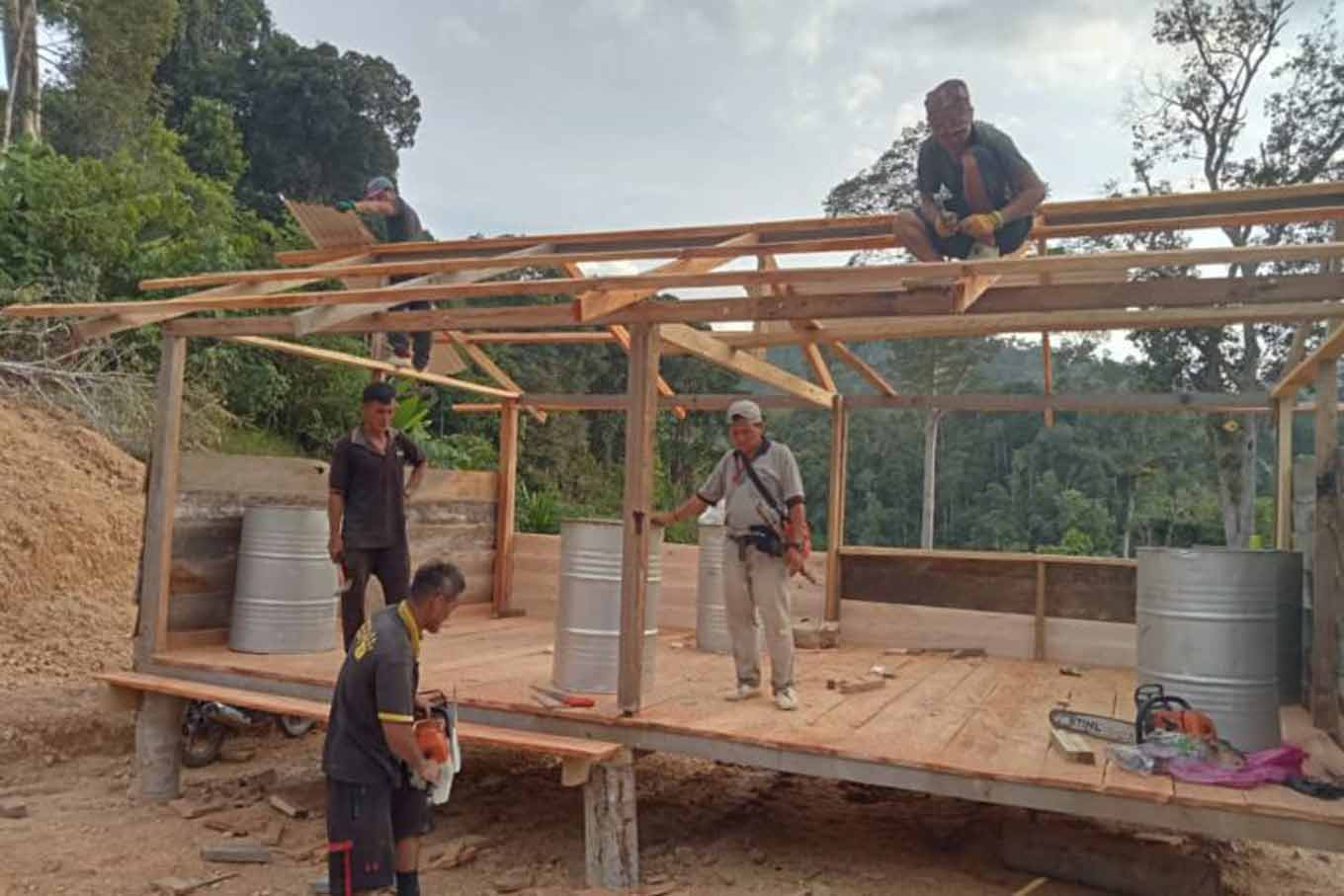
In May and June, organizations monitoring some of the last untouched forest in the Bornean state captured satellite and drone imagery they say shows Samling Timber entering deep forest and culturally sensitive areas near the Batu Siman mountain, according to a joint press release from the Penan Indigenous organization Keruan, the Bruno Manser Fund and the Borneo Project.
In response, Penan community members on July 9 filed a police complaint against Samling, a giant concessionaire based in the Sarawak city of Miri, and planned to begin blockading the site July 16. However, Komeok Joe, the head of Keruan, said group members saw Samling workers had dismantled and moved equipment from the area by July 15.
Joe said he wasn’t sure why equipment was moved, but that he was happy to see the operation stopped and holds no animosity toward the company as long as it doesn’t encroach on the community’s land.
“We are willing to cooperate, even with Samling and the government, to protect this area, because this area is for all” to appreciate, he said, adding that Indigenous activists had still erected blockades to affirm their commitment to protecting the forest.
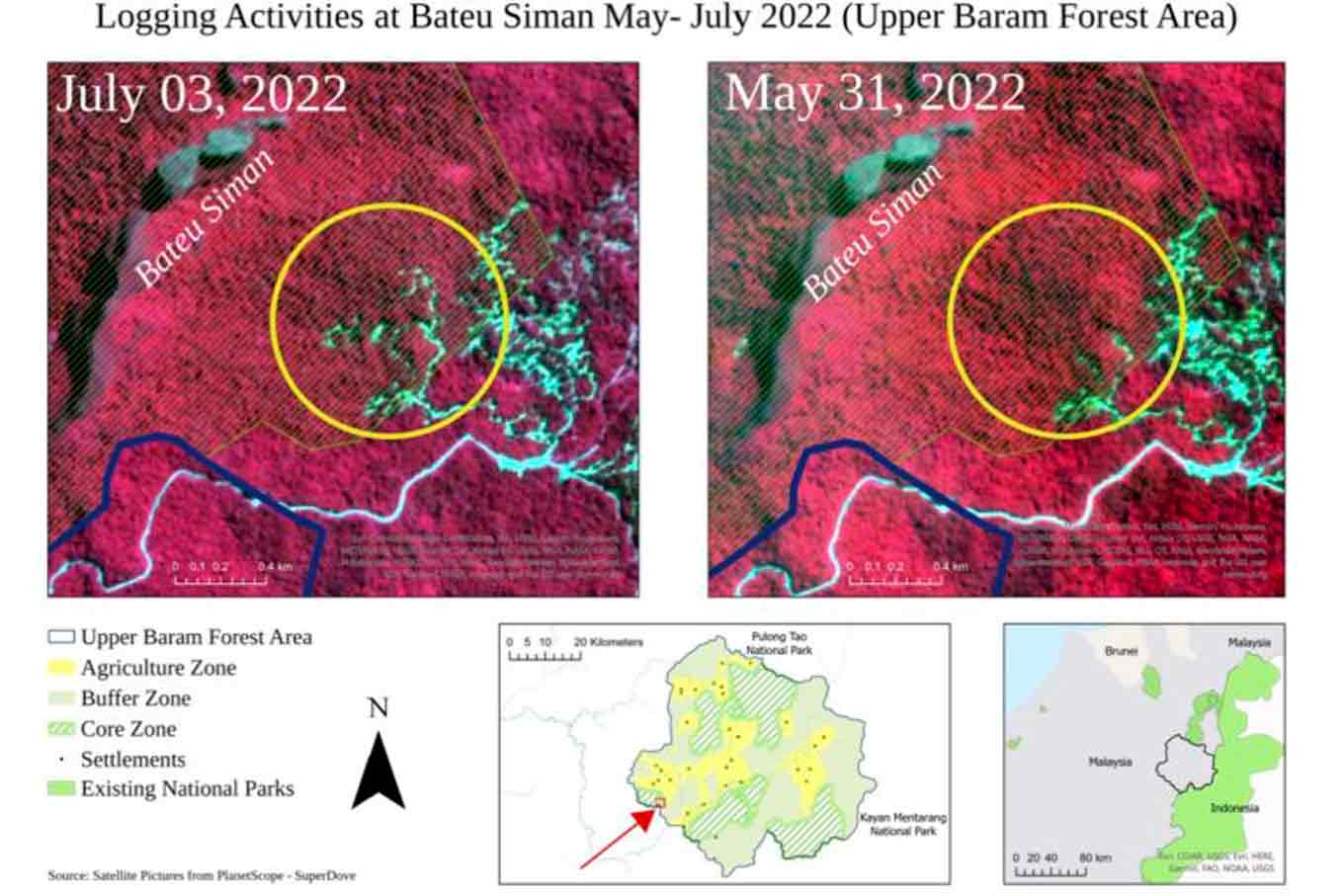
Annina Aeberli, a Switzerland-based campaigner for the Bruno Manser Fund, said the three Penan communities living along the border of this area of deep forest — the Long Ajeng, Long Lamam and Long Murung — took similar actions against Samling’s encroachment last year, filing a police report in early March and setting up a blockade in September.
Joe noted that they were promised a meeting with a manager, but it got delayed and eventually Samling took down the blockade around November 2021.
Aeberli said she doesn’t know why Samling removed its equipment last month, but speculated the Sarawak and Malaysian governments might have new reason to protect the forest around Batu Siman: The area is slated for inclusion in the Upper Baram Forest Area (UBFA), a new conservation project led by the government and approved by the International Tropical Timber Organization.
The UBFA, which is an outgrowth of a conservation initiative that began as the “Penan Peace Park” and was later renamed the “Baram Peace Park,” also has confirmed financial support from Japan, the Swiss city of Basel, and the Bruno Manser Fund.
Samling did not respond to questions sent by Mongabay, but the company publicly posted a response after NGOs announced they had imagery of forest clearing in the Upper Baram Forest Area on July 13.
In that statement, Samling denied encroaching into any officially recognized Indigenous land, and said the UBFA had not been ratified by state authorities nor discussed with the company.
However, Aeberli said the project was submitted to the ITTO in part by the Malaysian government, and that with ITTO approval secured, the zoning and conservation plans will be established soon.
While the project allows for sustainable timber harvesting in a natural forest setting, the style of logging that Samling pursues would be counterproductive, Aeberli said, especially in core zones. “Because the project is still developing, you need to do a moratorium on [logging] the areas you intend to protect.”
Joe, the head of Keruan, said the community has held blockades against Samling’s operations in different sections of the same area since 1991. “Samling said they have the license [for timber harvesting] in this area, but without ever filling in the communities,” he said.
“This is the area that the 18 [Penan Indigenous] communities all defend. We try to protect this area from any logging encroachment, and we are committed to protecting this area.”
In its July statement, Samling said it has permission to harvest timber from the Long Selaan community. However, Joe said the area is primarily the territory of the Long Ajeng, Long Lamam and Long Murung communities, while Aerberli noted the indigenous land claims were complicated and thus all communities therefore should have been consulted by Samling.
Joe said the Long Selaan community might have agreed to Samling’s timber practices because the land isn’t their own, but that forest was important to keep intact for other Penan communities. He said several communities had already given land to Samling, adding he hopes the company will continue to respect the thick forest and culturally important areas.
“We hope that Samling can [continue to] stay out from this area,” he said. “If there is no encroachment, there is no conflict.”
Banner image: the July 16, 2022 barricade, courtesy of Komeok Joe.
This article was originally published on Mongabay.
The little girl was 6 years old, and life hadn’t been kind to her.
When Catherine Meek walked into a homeless shelter for their tutoring session, she found the child hiding under a desk.
No questions asked, the volunteer joined her on the floor and began reading to her. For an hour a week, the session would allow the girl to be just a kid, getting the assistance she needed, and for at least a moment forgetting about the circumstances that put the girl educationally behind by about a grade.
The space remained their meeting spot for six sessions until, one day, Ms. Meek walked in to find the girl sitting at the desk waiting for her.
“I had, I remember, the biggest smile on my face, and she did too,” Ms. Meek says. “I think even at that young, vulnerable age she understood that something had changed, that there was a set level of trust, that she could trust me.”
Ms. Meek lights up recalling that moment – one of her greatest success stories as a volunteer tutor for School on Wheels, a nonprofit addressing educational needs of children K-12 who are experiencing homelessness. She and the girl worked together for about two years until the child moved out of state and they lost touch.
Recently, Ms. Meek – now executive adviser to the organization – attended that no-longer-little-girl’s wedding after they reconnected through social media.
A brainchild of the late Agnes Stevens, a retired schoolteacher, School on Wheels began in 1993 when she started tutoring kids living in shelters on Skid Row, an area of Los Angeles known for its large homeless population. In the next few years, she formalized her efforts, recruited more volunteers, and grew the organization with the help of Ms. Meek, who joined in 1999.
“She was the inspiration and teacher and had the education background, and I had the business and financial background,” says Ms. Meek. “The need was there in 1993, and it’s just grown astronomically since then. One in 30 kids in California in a classroom is homeless.”
The organization grew steadily, partnering with shelters, school districts, motels, libraries, anywhere homeless families could be – even reaching those living in cars, in foster homes, and on the streets.
With year-round operations in six counties, prior to the pandemic, the organization reached more than 3,000 homeless children a year, and it recruited and trained more than 2,000 tutors annually.
During the pandemic, the number served dropped to about 2,000, and tutors were down to 1,300. Annual funding reached $3.5 million in 2020.
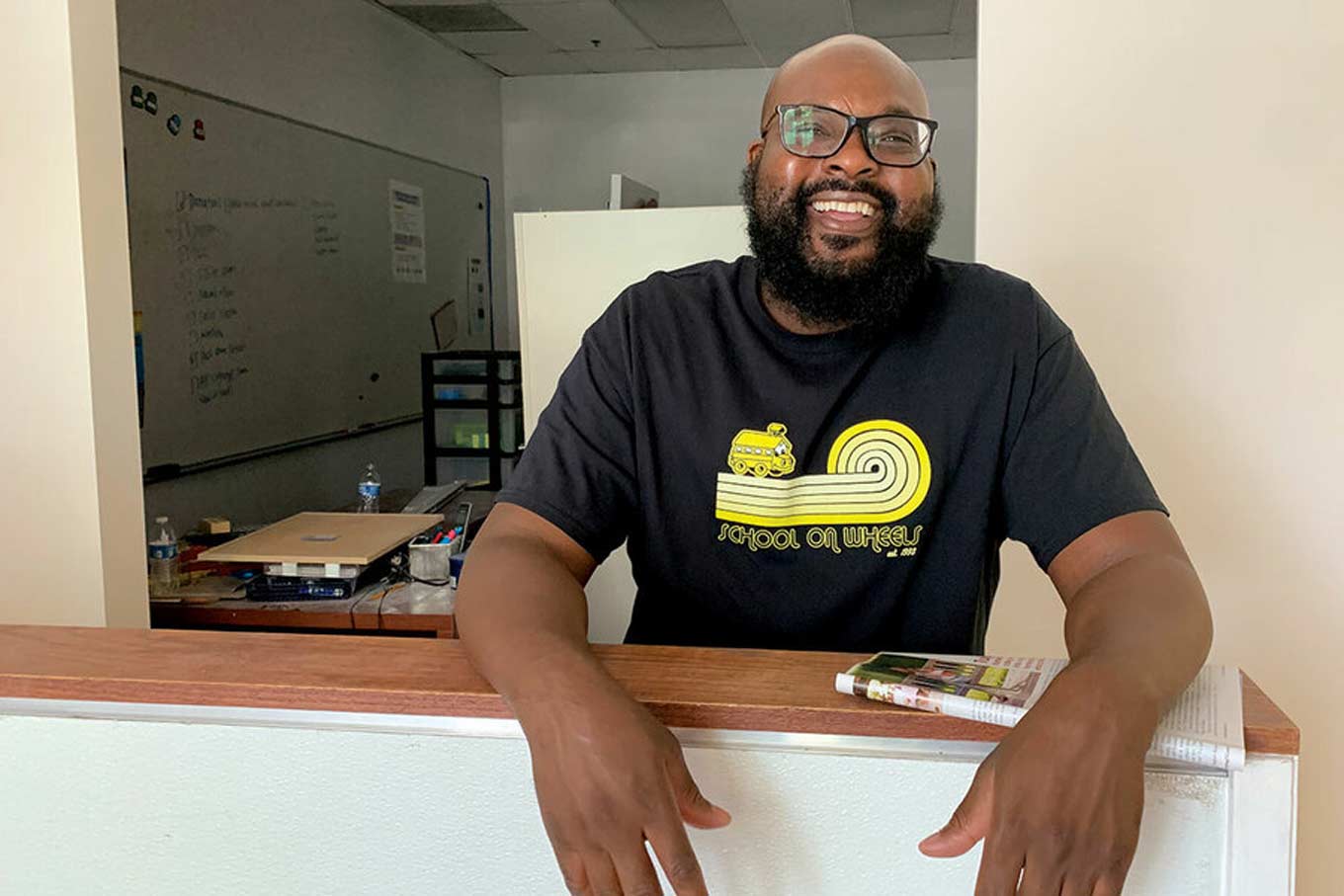
“Students experiencing homelessness move on average about three to four times a year, and with each move, it’s estimated that they fall behind four months academically,” says Charles Evans, the organization’s executive director. “Our whole goal as an organization is to really try to fill in those academic gaps.”
School on Wheels doesn’t get into the students’ backgrounds but focuses solely on assessing the kids’ educational needs – like a fourth grader who is two grades behind in reading or a 10th grader who’s struggling with pre-algebra and biology – and matching them with tutors.
“We’re really here to just support the child, and I think a lot of our families like and appreciate us and what we do for them,” says Mr. Evans. “We don’t pry and try to figure out why a family became homeless.”
The children are assessed every few weeks to make sure they’re improving. Ms. Meek says that in 2021, K-4 students improved their literacy skills by 21%; in the past six months, fifth through eighth grade students increased math skills by almost one grade level, and self-efficacy surveys showed a 40% increase in confidence in ninth through 12th graders.
Leavening the community
Before the pandemic, tutors would meet students wherever they were – motels, shelters, libraries. But tutoring sessions have been remote – via donated Chromebooks and laptops – in the past couple of years.
The drastic change had benefits and drawbacks.
On one hand, students could stay in touch with tutors even on the move. On the other, School on Wheels had to pivot from handing out backpacks and school supplies to figuring out how to get digital equipment into kids’ hands and making sure they had Wi-Fi access.
The digital transition was already in progress when COVID-19 hit, says Mr. Evans. Now, the organization is returning to in-person sessions, particularly for younger kids. But it will keep the hybrid model.
The School on Wheels’ Skid Row Learning Center, which closed and was completely made over during the pandemic, is getting ready to welcome kids again. Many clients of the center come from one of the biggest shelters in California, the Union Rescue Mission just down the street.
Mr. Evans, who runs the learning center, describes its leavening place in the community: Staff used to pick up about 25 children at the Union Rescue Mission as they got off the school bus and walk them to the learning center for after-school programs. They’d sing along sidewalks where people sitting on the ground would put away drug paraphernalia or anything inappropriate for young eyes.
Later, the organization worked with the school district to have students dropped directly at the learning center’s front door and is likely to return to that system in the coming school year.
Erasing stigma
Outside of tutoring, School on Wheels is out to erase the stigma of homelessness. Many of the families the organization works with found themselves homeless through no negligence of their own – victims of domestic violence or economic hardship, doing their best to get back on their feet.
For example, one single mother in her 20s, who for security reasons asked not to be named, left an abusive relationship, and ended up in a shelter with her four young kids. When she noticed her children falling behind in school, she connected with School on Wheels.
“It’s been the best thing ever, because my kids love their tutors,” says the young woman, who works and goes to school. She now gets reports from school that her kids are doing much better: “The teacher did see a lot of improvement in [my daughter’s] math and her spelling.” That motivates her to do better herself, says the mother.
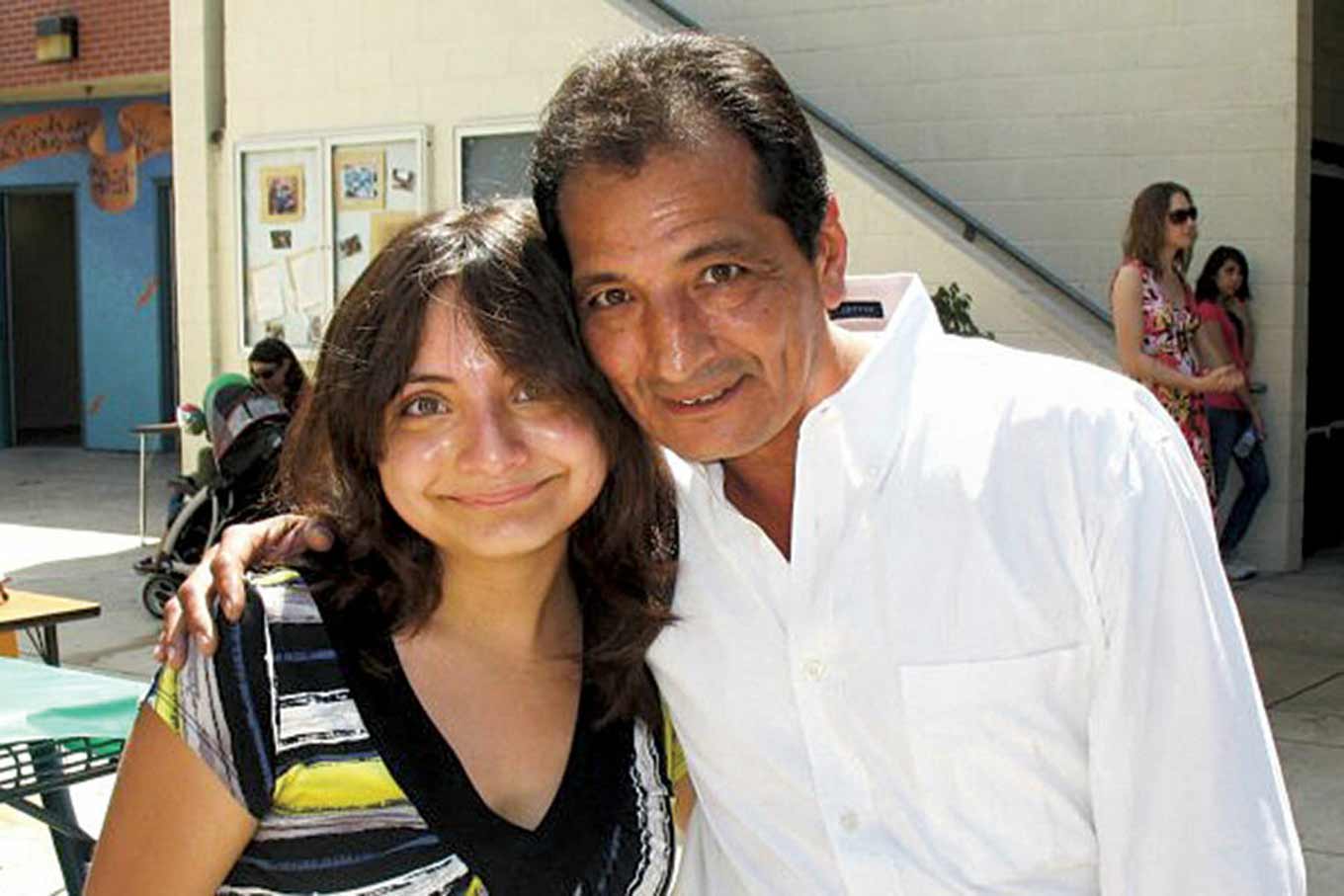
Angela Sanchez gets it. The School on Wheels board member experienced homelessness during her last two years of high school, after her father lost his job and couldn’t afford rent.
“Once we went homeless, I wasn’t sure what my options would be or if I would even be able to go to college,” she says, adding that she hid her circumstances to avoid the stigma.
School on Wheels changed her outlook: Ms. Sanchez’s math tutor was a grad student in astrophysics at the California Institute of Technology who didn’t see her as a homeless kid, but understood her dreams and aspirations.
“I literally had a rocket scientist helping me with my math homework,” she says.
He gave her a tour of Caltech, the first college she ever visited. The experience opened her eyes to possibilities and got her thinking about career options.
She says it also gave her the confidence she needed to get her undergraduate history degree and master’s in education.
Now in her 30s, she’s an equity consultant, a published author, and homeowner.
Aside from a literacy program for the youngest kids and tutoring specific subjects for older students, School on Wheels helps high schoolers plan their futures – getting into college, getting a house, and becoming independent.
“Homelessness keeps you locked in a mentality of day-to-day survival. But that shouldn’t stop anyone from thinking about what it means for life afterward, and I think we forget a lot about that,” Ms. Sanchez says.
— 39% of U.S. forest land is privately or family owned
— New carbon credits projects allow just 30 acres to be enrolled
— Cost, contract length obstacles for small-scale landowners
For Sara Velazquez and her husband, purchasing the 55 acres behind their rural Pennsylvania home was the start of a lengthy effort to preserve and resuscitate the hilly forestland.
The question was how to pay for that work.
“A nice, healthy oak forest – that’s what I want,” Velazquez, 28, told the Thomson Reuters Foundation in June, sweeping her arm across the property’s shadowed valleys and mixed tree stands.
“We have a lot of invasive species in here, so dealing with that is part of our plan over time,” said her husband, Dan Nelson, 37.
Just after they purchased the land in 2019, however, the pandemic forced them both out of work, raising concerns about how to pay the annual taxes on the land.
One option could be logging, a common priority in the region, Nelson said.
“It’s sort of the culture here. When we bought the property, everyone was like, 'Are you going to log it?'” he said, noting that many see timber as “free money up in the woods".
Now they think they have found a different solution.
In December, the couple signed a 20-year contract with the nonprofit American Forest Foundation’s Family Forest Carbon Program, which aims to help small-scale landowners with as little as 30 acres do something new: access fast-growing “carbon markets”.
The trees on Velazquez and Nelson’s properties will now absorb and store a measured amount of carbon for at least the next two decades.
Credits for that effective reduction in climate-changing emissions will in turn be sold to help corporations such as outdoor outfitter REI move toward their “net zero” emissions goals.

To achieve the goals, companies are supposed to reduce their own emissions to nearly zero but can buy emissions reductions elsewhere - known as "offsets" - to cover any remaining hard-to-cut pollution.
Velazquez and Nelson, in turn, receive cash that helps them cover their tax payments, plan for revitalizing the forest and, for now, stay away from logging.
In the United States, the largest portion of forest land – 39% – is family owned, according to the American Forest Foundation, in addition to that owned by the government, timber companies and other entities.
As such there has long been promise in connecting small-scale landowners with carbon markets, said David N. Wear, a senior fellow with the Washington-based Resources for the Future think tank.
But there has also been a question of how to do so, given upfront costs of up to $200,000 for project development, monitoring and more, as well as the 100-year contracts typically involved.
“Now we’re at a juncture,” Wear said of new efforts bridging this gap.
“This is the emergence of something like agricultural coops: You don’t have the ability to market directly to your purchaser as an individual, but you can come together and engage the marketplace as an aggregate.”
Such efforts are now set for a major boost under climate legislation passed this week by the U.S. Senate, which would provide $450 million to push private landowners toward forest management practices with climate benefits, according to the nonprofit American Forests.
The bill includes a particular focus on underserved communities and family forest owners, and would likely bolster programs such as the Family Forest Carbon Program.
If passed by the U.S. House of Representatives, the legislation would “unlock the power in family-owned forests to tackle climate change,” American Forest Foundation President Rita Hite said in a statement.

Logging Alternative
For small landowners, these new programs seek to help tip the scales on the value of forests, making standing trees more valuable than harvested timber, and in turn guiding new management practices.
“The majority of landowners don’t actually say their number-one interest is in timber but the majority do end up timbering their land,” said Sarah Hall-Bagdonas, senior forestry manager for the Family Forest Carbon Program, which launched in 2020 and also helps landowners come up with a sustainable forest management plan.
“So the voluntary carbon market really provides them with another option besides the timber market.”
The voluntary carbon market more than doubled from 2020 to 2021 to more than $1 billion, according to the Ecosystem Marketplace research group.
That growth might make it seem “as if there’s conflict between managing for carbon and managing for timber”, as landowners increasingly opt for carbon, said Nathan Truitt, a senior vice president with the American Forest Foundation.
But the two are not exclusive, he said.
“Rather than thinking about harvest versus not harvest, good projects will think about how you adjust harvesting so you maximize productivity of the land … to create more carbon and more timber.”
As yet, the financial incentive for storing carbon is not enough to prompt harvest reductions, said Jim Hourdequin, CEO and managing director of the Lyme Timber Company, which manages about 1.5 million acres of forest.
For that to begin to happen, "the price needs to be a lot more than the current price of carbon," he said – around $30 to $60 per ton, or two to three times today’s price.
'All of The Landowners'
At the other end of Pennsylvania from Wayne County, Raul Chiesa and Janet Sredy own and manage Beckets Run Woodlands – 110 acres that has been in Sredy’s family but long saw poor agricultural and management practices, she said.
Since 2007, the couple has been working to resuscitate the land's forests, manage for wildlife and safeguard rare plant species such as snow trillium, which blooms when snow still covers the ground.
The work costs around $10,000 a year, defrayed through grants, timber harvesting, hunting leases and other earners - now including carbon sequestration.

Chiesa and Sredy are working with a company called NCX, which uses satellite imagery and artificial intelligence to gauge carbon-storage potential on small land holdings. It then sells carbon credits, with the income going to help landowners defer logging for a year at a time.
Since last year, the company has enrolled nearly 2,500 U.S. landowners who hold over 4 million acres, with a median size of around 200 to 400 acres per landowner, it said.
“If our societal goal is to mitigate climate change and enable climate storage on land rather than in the atmosphere … we’ll need to enable all of the landowners to participate in the carbon market,” said Jennifer Jenkins, chief sustainability officer at NCX.
Lengthy sequestration contracts can be obstacles to small landowners participating in carbon storage efforts - but shorter contracts can help drive immediate action to protect forests, she said.
"It's too late if we wait 99 years," said Jenkins, who noted NCX hopes to extend its year-long contracts to two to five years.
Critics, however, question the approach’s climate impact.
Chiesa and Sredy, who started thinking about carbon sequestration a decade ago, signed with NCX in January, and in December they should receive a little over $1,400.
They can then re-enroll, though first the pair plan to compare timber and carbon prices.
For now, the process has deepened their appreciation of the property’s trees – and Chiesa said carbon credits feel like a real opportunity.
“This is the business of conservation that is being sustained, supported by a different type of economy … other than conventional forest products. This is something that’s absolutely new," he said.
This story was originally published by the Thomson Reuters Foundation, the charitable arm of Thomson Reuters, that covers the lives of people around the world who struggle to live freely or fairly.
Globally, 1 in 100 deaths is a suicide. But it doesn’t have to be this way.
At Good Good Good we know that hope is real and change is possible. This is true when it comes to the heartbreak, pain, and injustice of the world — and it’s just as true for anybody who’s struggling.
It’s not possible to move forward without acknowledging that the pain we experience is real and shouldn’t be ignored. Your story matters — and it isn’t finished. There’s so much left to be written.
We’ve collected meaningful and hopeful quotes about suicide and suicide prevention — but also about experiencing pain, and heaviness, and the big questions of life.
Our hope is that these words will remind you of the hope that lies ahead — and that you are not alone on your journey. Countless people have experienced this weight and made it through. These words are a testament to that.
Scroll through, find a few quotes that especially speak to you, and find a way to hold them close. Write them in a journal, change your computer background, or share on social media. Whatever you do, please don’t forget that hope and help are real.
Please know that asking for help is a sign of strength — not weakness. If you’re in a crisis, please dial 988 to reach the Suicide & Crisis Lifeline. If you’re looking for professional help or looking for specific support, we encourage you to use Good Good Good’s Mental Health Resources Guide. You can also text HOME to 741-741 to instantly connect with a trained crisis counselor, 24/7, for free.
You might also like…
…some hope: Explore our list of 30+ reasons why everything will be okay
…some self-care: Check out 101 self-care ideas & the best self-care quotes (that aren’t all toxic positivity… ugh)
…some good news: We send daily emails filled with good news and even better — a monthly snail mail Goodnewspaper
…some opportunities to make a difference: Learn how to help somebody struggling with suicide, how to ask hard questions (because they matter), & how to celebrate Mental Health Awareness Month, Suicide Prevention Month, and Suicide Prevention Week
Explore these quotes about suicide & hope
Quotes About Suicide Prevention
“Sometimes even to live is an act of courage.”
— Lucius Annaeus Seneca
“No matter what happens, or how bad it seems today, life does go on, and it will be better tomorrow.”
— Maya Angelou
“Soak up the views. Take in the bad weather and the good weather. You are not the storm.”
— Matt Haig
“When you feel like giving up, just remember the reason why you held on for so long.”
— Hayley Williams
“The real reason for not committing suicide is because you always know how swell life gets again after the hell is over.”
— Ernest Hemingway
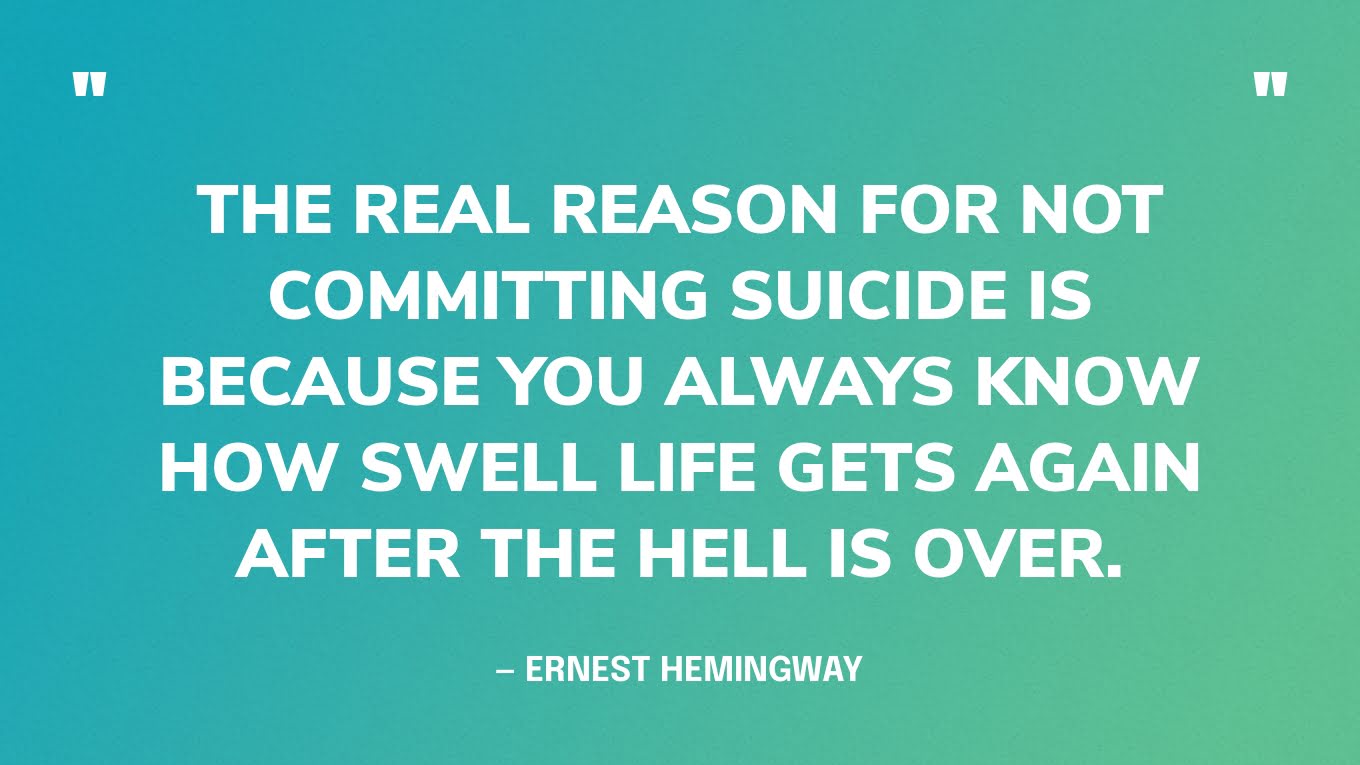
“When you are tempted to give up, your breakthrough is probably just around the corner.”
— Joyce Meyer
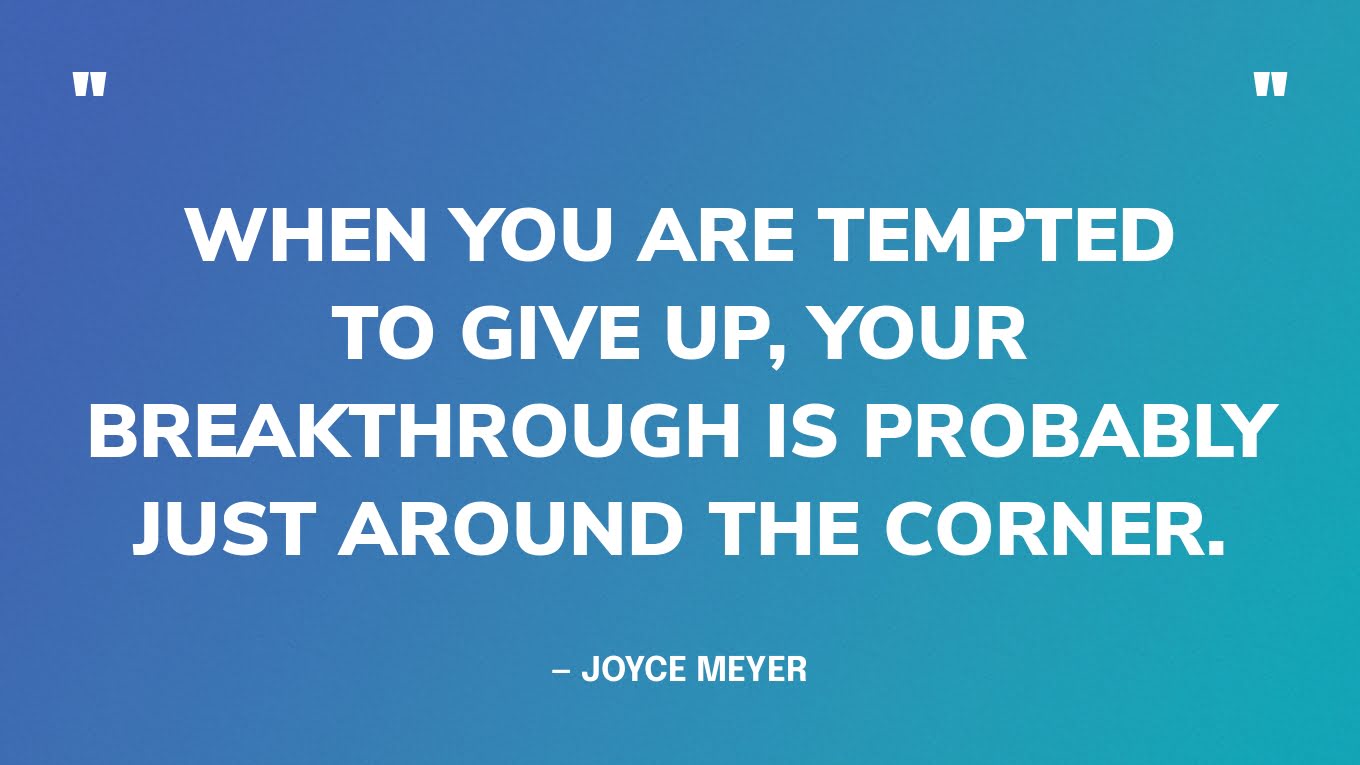
“To anyone out there who’s hurting — it’s not a sign of weakness to ask for help. It’s a sign of strength.”
— Barack Obama
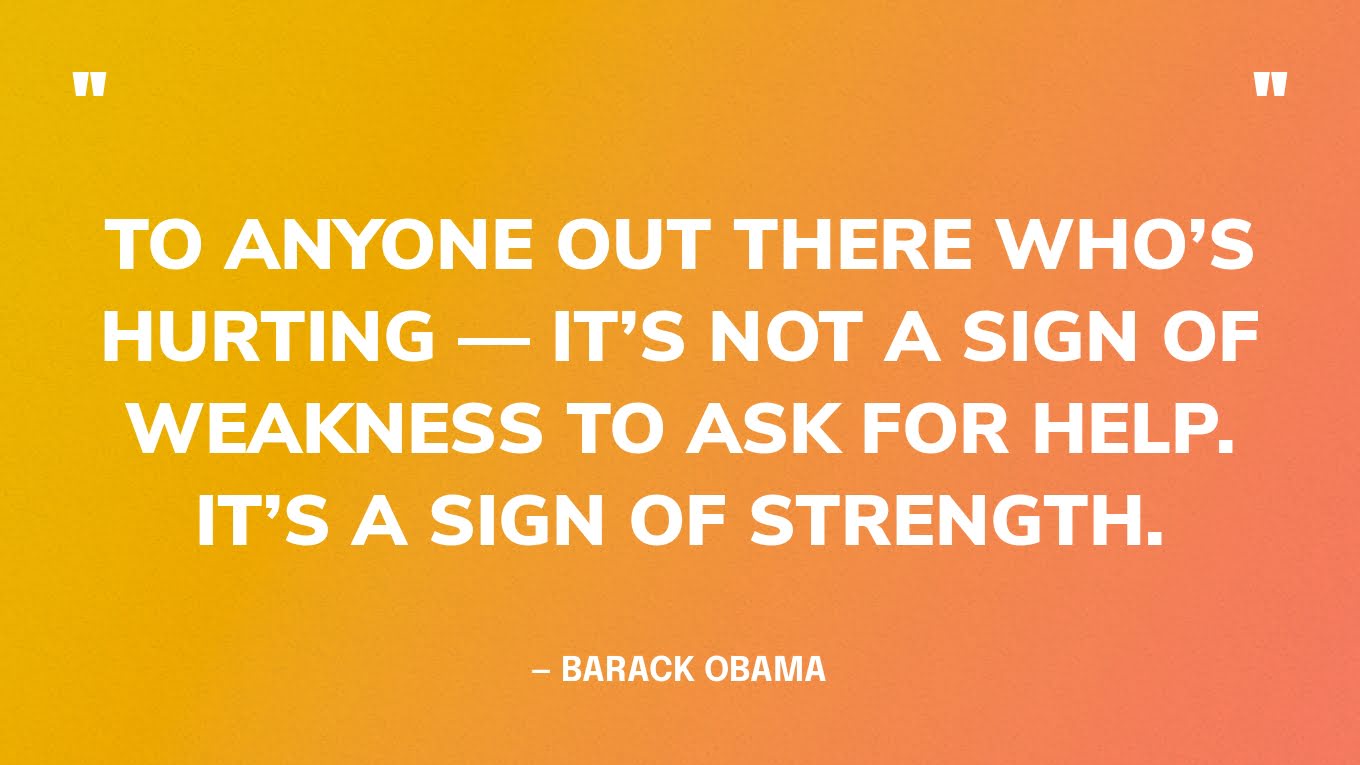
“It’s so much darker when a light goes out than it would have been if it had never shone.”
— John Steinbeck
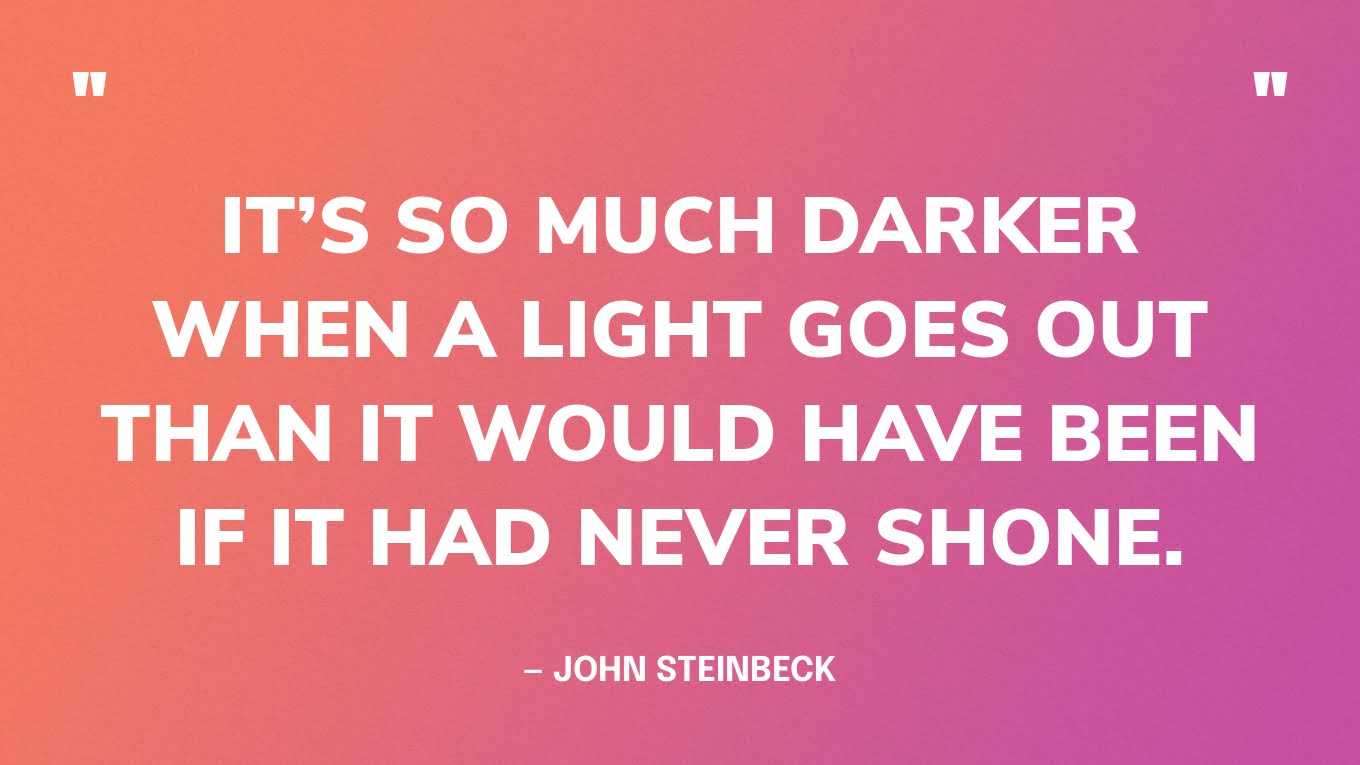
“Hope is a funny thing because in a way it’s everywhere. Like, people will say ‘Everything happens for a reason’ or ‘It will all work out in the end’ — which are very hopeful sentiments — it’s just that they’re also, you know, bullshit. And for me anyway, they just don’t hold up in the face of real suffering. But I’ll tell you what does hold up for me. There’s an Emily Dickinson poem that starts out, ‘Hope’ is the thing with feathers - That perches in the soul - And sings the tune without the words - And never stops - at all.’
And you’ll notice that Emily Dickinson doesn’t say that one never stops hearing the song of hope — only that it doesn’t stop playing.
I’m really sorry that you’re in so much pain, and your pain is real, but the song of hope is still singing. And I know you can’t hear it, but someday soon you will.”
— John Green
“You can't see the future coming — not the terrors, for sure, but you also can't see the wonders that are coming, the moments of light-soaked joy that await each of us.”
— John Green

On Making It Another Day
“The bravest thing I ever did was continuing my life when I wanted to die.”
— Juliette Lewis
“I am very glad I lived through some hard days so that I could have this one.”
— John Green
“Take a shower, wash off the day. Drink a glass of water. Make the room dark. Lie down and close your eyes. Notice the silence. Notice your heart. Still beating. Still fighting. You made it, after all. You made it, another day. And you can make it one more. You’re doing just fine.”
— Charlotte Eriksson
“Sometimes the only cure for a bad day is to make a cup of tea, take a deep breath, and hope that tomorrow is better.”
— Dominee Calderon
“For all the air that's in your lungs For all the joy that is to come For all the things that you're alive to feel Just let the pain remind you hearts can heal”
— Paramore
“These mountains that you are carrying, you were only supposed to climb.”
— Najwa Zebian
“If you feel too much, there’s still a place for you here. If you feel too much, don’t go. If this world is too painful, stop and rest. It’s okay to stop and rest. If you need a break, it’s okay to say you need a break. This life — it’s not a contest, not a race, not a performance, not a thing that you win. It’s okay to slow down. You are here for more than grades, more than a job, more than a promotion, more than keeping up, more than getting by. This life is not about status or opinion or appearance. You don’t have to fake it. You do not have to fake it. Other people feel this way too. If your heart is broken, it’s okay to say your heart is broken. If you feel stuck, it’s okay to say you feel stuck. If you can’t let go, it’s okay to say you can’t let go. You are not alone in these places. Other people feel how you feel. You are more than just your pain. You are more than wounds, more than drugs, more than death and silence. There is still some time to be surprised. There is still some time to ask for help. There is still some time to start again. There is still some time for love to find you. It’s not too late. You’re not alone. It’s okay — whatever you need and however long it takes — it’s okay. It’s okay. If you feel too much, there’s still a place for you here. If you feel too much, don’t go. There is still some time.”
― Jamie Tworkowski, If You Feel Too Much: Thoughts on Things Found and Lost and Hoped For
“We held on to hope that better days were coming. And when we did, we were right.”
— The Mountain Goats
“To all who walk the dark path, and to those who walk in the sunshine but hold out a hand in the darkness to travel beside us: Brighter days are coming. Clearer sight will arrive. And you will arrive too. No, it might not be forever. The bright moments might be for a few days at a time, but hold on for those days. Those days are worth the dark.”
— Jenny Lawson, Furiously Happy: A Funny Book About Horrible Things
→ Read more quotes about depression
Inspirational Quotes
“This life. This night. Your story. Your pain. Your hope. It matters. All of it matters.”
— Jamie Tworkowski
“The most beautiful people we have known are those who have known defeat, known suffering, known struggle, known loss and have found their way out of the depths. These persons have an appreciation, a sensitivity and an understanding of life that fills them with compassion, gentleness, and a deep loving concern. Beautiful people do not just happen.”
— Elisabeth Kübler-Ross
“The shadow is the greatest teacher for how to come to the light.”
— Ram Dass
“If you were born with the weakness to fall, you were born with the strength to rise.”
— Rupi Kaur

“There are far, far better things ahead than anything we leave behind.”
— C.S. Lewis
“I hope you live a life you are proud of. If you find that you are not, I hope you have the strength to start all over again.”
— F. Scott Fitzgerald
“You are proof that beauty can grow in the most difficult of places.”
— Wednesday Holmes

Quotes To Help
“If you're going through hell, keep going.”
— Winston Churchill
“More than anything, my wish for you is this: That when your awful darkest days come, you will know you’re not alone. Pain will tell you to keep quiet, but that’s a lie. Life is fragile and we all break in different ways. I hope you know you can be honest. I hope you know that you can ask for help. Did you catch that? It is absolutely positively okay to ask for help. It simply means you’re human. Help is real and it is possible; people find it every day.”
— Jamie Tworkowski, If You Feel Too Much
“There is hope, even when your brain tells you there isn’t.”
— John Green
“We’re all in this together. It’s okay to be honest. It’s okay to ask for help. It’s okay to say you’re stuck, or that you’re haunted or that you can’t begin to let go. We can all relate to those things. Screw the stigma that says otherwise. Break the silence and break the cycle, for you are more than just your pain. You are not alone. And people need other people.”
— Jamie Tworkowski, If You Feel Too Much
“You are imperfect, you are wired for struggle, but you are worthy of love and belonging.”
— Brené Brown
“Don’t give up. Don’t give up on your story. Don’t give up on the people you love. Hope is real. Love is real. It’s all worth fighting for.”
— Jamie Tworkowski, If You Feel Too Much
Uplifting Quotes From Matt Haig
Matt Haig is a beloved writer, known for his bestselling works of fiction like The Midnight Library, How To Stop Time, and The Humans — but he positively changed the world forever when he released Reasons to Stay Alive, a memoir that shares his own struggles with mental health and suicide and explores what it means to be truly alive. He's since released other books on mental health, Notes on a Nervous Planet and The Comfort Book. His words have provided millions of people hope — and we hope they'll do the same for you today. (We also hosted Matt Haig on our podcast, Sounds Good!)
“You will one day experience joy that matches this pain. You will cry euphoric tears at the Beach Boys, you will stare down at a baby’s face as she lies asleep in your lap, you will make great friends, you will eat delicious foods you haven’t tried yet, you will be able to look at a view from a high place and not assess the likelihood of dying from falling. There are books you haven’t read yet that will enrich you, films you will watch while eating extra-large buckets of popcorn, and you will dance and laugh and have sex and go for runs by the river and have late-night conversations and laugh until it hurts. Life is waiting for you. You might be stuck here for a while, but the world isn’t going anywhere. Hang on in there if you can. Life is always worth it.”
― Matt Haig, Reasons to Stay Alive

“[Books] were, in and of themselves, reasons to stay alive. Every book written is the product of a human mind in a particular state. Add all the books together and you get the end sum of humanity. Every time I read a great book I felt I was reading a kind of map, a treasure map, and the treasure I was being directed to was in actual fact myself.”
— Matt Haig, Reasons to Stay Alive
“Life is waiting for you. You might be stuck here for a while, but the world isn’t going anywhere. Hang on in there if you can. Life is always worth it.”
— Matt Haig, Reasons to Stay Alive

“Once the storm is over you won’t remember how you made it through, how you managed to survive. You won’t even be sure, in fact, whether the storm is really over. But one thing is certain. When you come out of the storm you won’t be the same person who walked in. That’s what this storm’s all about.”
— Matt Haig, Reasons to Stay Alive
“If you have ever believed a depressive wants to be happy, you are wrong. They could not care less about the luxury of happiness. They just want to feel an absence of pain.”
— Matt Haig, Reasons to Stay Alive
“Even more staggeringly, depression is a disease so bad that people are killing themselves because of it in a way they do not kill themselves with any other illness. Yet people still don’t really think depression really is that bad. If they did, they wouldn't say the things they say.”
— Matt Haig, Reasons to Stay Alive
“The key is in accepting your thoughts, all of them, even the bad ones. Accept thoughts, but don’t become them. Understand, for instance, that having a sad thought, even having a continual succession of sad thoughts, is not the same as being a sad person. You can walk through a storm and feel the wind but you know you are not the wind.”
— Matt Haig, Reasons to Stay Alive

To Write Love On Her Arms Quotes
Somehow it seems the nonprofit organization To Write Love On Her Arms always has the right words we need to hear. Here are a few of our favorites related to suicide:
“It’s OK to be scared of what lies ahead. You are not alone in feeling this way, nor are you a burden for it — no matter how much you are made to believe otherwise.”
— TWLOHA
“You deserve to love and be loved, to care and be cared for, to hold and be held.”
— TWLOHA
“It makes sense that amidst what is often being said ... The things we label as ‘too heavy’ to share morph into a deep nagging sense that we have become a burden. Stigma is vicious and the primary enemy of suicide prevention.”
— TWLOHA
“You are not alone in feeling burnt out. You are not alone in feeling discouraged. You are not alone.”
— TWLOHA
“We’re asking you to stay. For your friends. For your loved ones. But above all else, for yourself.”
— TWLOHA

“Hope tells us the truth. Tonight, let it tell you that you matter very much.”
— TWLOHA
“It's OK to feel weighed down by the heaviness. If you need time to process, there’s nothing wrong with that. Sometimes self-care means setting boundaries, and you deserve the space those boundaries can provide.”
— TWLOHA
“If you feel alone, know that you deserve to be cared for. If you feel silenced, know that you deserve to be listened to. If you feel unimportant, know that you deserve to be appreciated.”
— TWLOHA
“The light you bring into this world is beautiful, irreplaceable, and needed.”
— TWLOHA
“When you feel like you can’t fight anymore — don’t give up. Just take some time to rest.”
— TWLOHA

“So much of the good and beauty that exists in the world comes from people like you who choose to continue telling their story. When the pain around us feels overwhelming, know that you are one of the bright spots shining through.”
— TWLOHA
“Your existence brings a light into this world like no other. Please keep that light shining.”
— TWLOHA
“You are a story still going. You deserve to be proud of yourself for all the chapters you've made it through.”
— TWLOHA
“Yesterday may have been tough. Today may be tough. Tomorrow may be as well. But you're tough, too.”
— TWLOHA
“You are worthy of seeing the sun rise again and again.”
— TWLOHA
“This is not the end of your story. You still have chapters to write, new characters to meet, and victories to celebrate. Keep going.”
— TWLOHA
“If the heaviness is weighing down on you, know that it’s OK if you don’t feel hopeful. It’s OK to be scared, upset, or sad. You are not alone for any of it.”
— TWLOHA

“Please stay alive isn’t a sentiment that ends with those three words. It continues on into each day after we make that plea. It manifests by making this life one that has less suffering, and more support. It provides the kind of community that not only believes that better days are ahead, but wants to put in the work to make them possible for everyone.”
— TWLOHA
More Suicide Awareness Quotes
“Love belongs to the people who feel they are not enough. Love belongs to the kids who grow up wondering why they’re different. Love belongs to the person reading this right now. Love is for everyone.”
— Erin Kingham
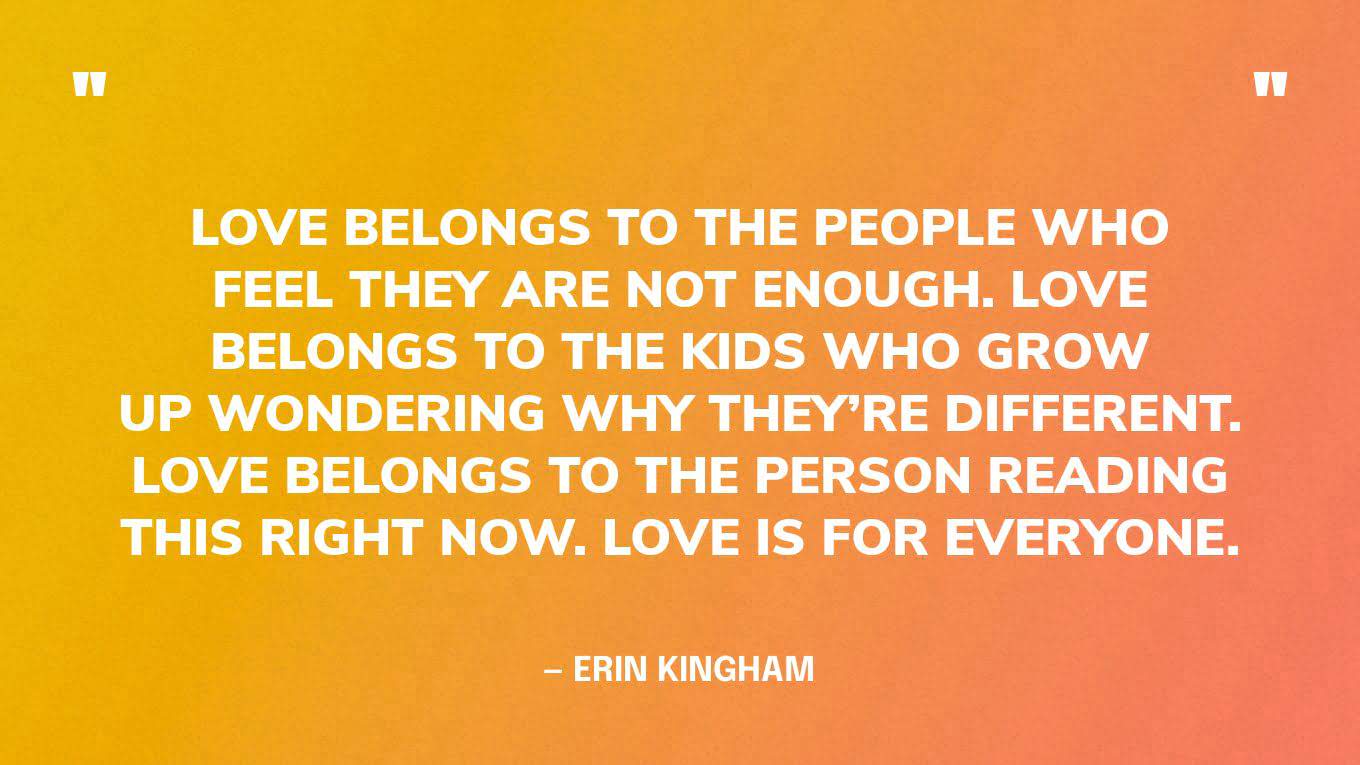
“There is beauty in the journey, regardless of the outcome. Let's grieve and hope, and fight together.”
— Marie White
“The presence of fear and darkness does not mean that the hopeful parts of me cease to exist.”
— Erin Frye, on a TWLOHA blog post
“I will love the light for it shows me the way, yet I will endure the darkness because it shows me the stars.”
— Og Mandino
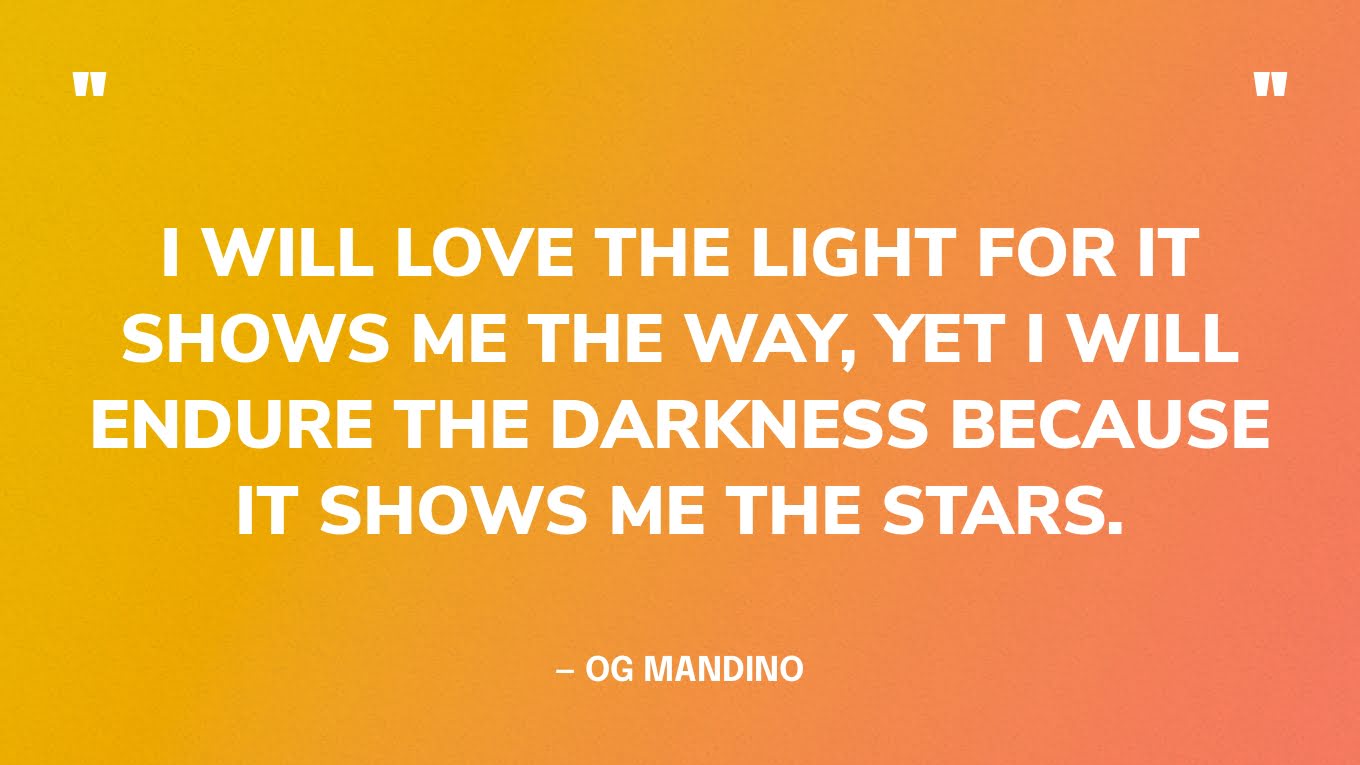
“Death will come for all of us but let us fight to live.”
— Jamie Tworkowski, If You Feel Too Much
“We are all that girl on the bathroom floor. Rock bottom just means crisis. It is not the end. Life does not evict us from anything unless it’s inviting us to something better.”
— Glennon Doyle

Every day the Good Good Good team collects the best good news in the world and shares it with our community. Here are the highlights for this week!
If you want to get good news in your inbox every day, join the Goodnewsletter — the free daily newsletter designed to leave you feeling hopeful.
The Best Positive News We're Celebrating This Week —
To help encourage fans to vote, the NBA isn’t playing any games on election day this November
The NBA just announced its schedule for the 2022-2023 season — and it intentionally scheduled no games on November 8, midterm election day. All 30 NBA teams will play the day before, and the league hopes they use it to encourage fans to vote and share the importance of civic engagement.
Teams are also being encouraged by the NBA to share election information, like voter registration deadlines, with fans leading up to election day.
“The scheduling decision came out of the NBA family’s focus on promoting nonpartisan civic engagement and encouraging fans to make a plan to vote during midterm elections,” the league said.
Rwanda is on track to be one of the first countries in the world to eliminate cervical cancer
The most common cancer impacting women in Rwanda, cervical cancer killed 940 women in the country in 2019. But with rapidly expanding testing, tens of thousands of community health workers helping raise awareness, and a successful HPV vaccination program for 12-year old girls — officials say the country is on track to be the first in Africa, and potentially the world, to eliminate cervical cancer.
Community health workers visit remote villages to let people know about it, and encourage them to attend screenings so they know if they need to receive treatment.
Worldwide, cervical cancer is the fourth most common cancer in women, and about 90% of deaths are in low- and middle-income countries. The news that Rwanda has successfully implemented a screen-and-treat and vaccination program, putting it on the way to leading the world in preventing cervical cancer is incredibly hopeful progress to celebrate.
In part to protect an endangered owl, environmentalists in Australia fought a proposed toxic waste dump at an ancient rainforest — and they won
Environmentalists with the Bob Brown Foundation, a Tasmanian NGO that works to protect ecologically significant places in Australia, took legal action to stop a Chinese mining company from creating a toxic waste dump in one of the country’s rainforests, Tarkine.
They just won, securing protections for both the rainforest and the endangered Tasmanian masked owl that lives there. The federal court found the government didn’t apply the “precautionary principle” — which requires an ecological assessment of the area to estimate a new project’s impact — before issuing approvals to the mining company.
The court said the impact of the mining company’s project on the endangered Tasmanian masked owl wasn’t considered. While an assessment will still take place, this is a major victory for environmental and endangered wildlife protection.
A library in Upstate New York created the world’s first “library farm” to help grow healthy, affordable food for the community
While urban gardens are growing in popularity, land access and availability can still be an issue. Recognizing this barrier to growing healthy, local, affordable food, a library and members of the community worked together to create the world’s first “library farm.”
In 2011, about 40 members of the Cicero Branch of the Northern Onondaga Public Library in Upstate New York planted seeds on an empty plot of library-owned land to see if it would produce food — and it did.
Now, the Library Farm and its programming have grown so much that it’s collaborating with local community organizations which provide seeds, seedlings, compost, mulch, and other resources needed to keep the farm operating.
→ Learn more about innovative library programs
The Biden Administration announced plans to cancel $10,000 in student loan debt for borrowers earning less than $125,000
The Biden Administration announced its plans to forgive $10,000 in student loan debt for borrowers making less than $125,000/year. The administration estimates this will eliminate the student loan debt of about 20 million borrowers.
Additionally, borrowers who received Pell Grants — loans specifically for those from lower-income backgrounds to pursue higher education — are eligible for an additional $10,000 forgiven, helping ensure the debt relief goes to those who need it most.
The administration's plan will likely face legal challenges, so when exactly the forgiveness will come is uncertain. While more needs to be done to address the rising cost of higher education, inequality in access and opportunity, and more — we're celebrating this starting point and are hopeful it will lead to addressing even larger issues with higher education and student loan debt.
A startup is using recycled plastic to 3D-print homes faster and at a lower cost than traditional building techniques
Addressing a trifecta of issues — housing affordability, housing availability, and abundant plastic waste — Los Angeles-based startup Azure created technology to 3D print tiny homes using plastic waste.
According to Azure, most 3D-printed homes use a concrete mix to form the structure, but using plastic offers more flexibility in design, and gives a “second life” to plastic that would otherwise have ended up in a landfill or burned, emitting toxic fumes into the atmosphere.
Over 60% of Azure's printing material uses inherently waterproof plastic polymer often found in plastic bottles and food packaging, and “builds” homes 70% faster and 30% cheaper than "traditional home construction methods."
→ Read more (and see more photos!)
More good news of the week —
A hummingbird that was believed to be extinct was just spotted in Colombia. The emerald green Santa Marta sabrewing was officially documented for the second time since it was discovered in 1946.
Taking another large step to reach its climate goals, India just passed an energy conservation bill. The bill makes it easier to put a price on carbon and encourages the use of non-fossil fuel sources to generate power.
Helping more than 3 million people, a nonprofit organization has forgiven $6.7 billion in medical debt. RIP Medical Debt purchases bulk amounts of medical debt at a discount, forgiving $100 of debt for about $1.
Since it launched in 1995, Dolly Parton’s Imagination Library has given out more than 187 million free books to kids. Ohio’s governor declared August 9 “Dolly Day” — the state has the most enrollees in the book giveaway program.
Pennsylvania’s governor signed an executive order banning conversion therapy in the state. Conversion therapy is a discredited form of therapy for minors that seeks to change their sexual orientation or gender identity.
A 17-year-old designed a motor that could make manufacturing electric cars even more sustainable. His design is made without magnets made from rare-earth elements, which can have a high financial and environmental cost to extract.
Despite a history of underrepresentation in the industry, a crew of entirely Black women operated a flight from Dallas-Fort Worth International Airport. The flight celebrated the 100th anniversary of the first Black woman to earn a pilot's license, Bessie Coleman.
As climate change makes water more scarce in the Mediterranean, ancient farming practices are helping. Terracing has been used for centuries to help prevent fire, moderate temperatures, and make farming possible even when water is scarce.
Museums in New York are now legally required to note which artworks were stolen by Nazis. “We are united in our solemn commitment to Holocaust survivors: We will never forget,” Governor Kathy Hochul said.
The first-ever member of Gen Z just won a primary for Congress. 25-year-old Maxwell Frost won the Democratic primary in Florida’s 10th District and is expected to win the general election in November.
Migrant groups in Spain self-organized to get both their rights and legal residence. Spain’s convoluted immigration and naturalization laws make it harder for undocumented migrants to find a path to citizenship.
A Netherlands-based organization is using technology to stop poaching. The tech is helping anti-poaching teams with real-time data on animal locations, vehicle movements, fence voltages, and more.
Members of combatant groups in Burundi are now working together to rebuild the forests they destroyed during a civil war. Burundi has just 6.6% of its original forests remaining, and launched a national reforestation program in 2018.
New research found it’s possible to electrify 40% of the world’s fleet of containerships by the end of the decade. And, we can do it cost-effectively using current technology.
Researchers in Australia just made coral reproduce for the first time in the middle of winter. The spawning is a breakthrough int he race to restore the Great Barrier Reef.
On the heels of the largest wildfire season in California’s modern history, Royal Ramey traded in his work on the scorched mountainsides for an office desk in San Bernardino.
He had been battling wildfires for a decade, among the thousands of incarcerated Californians who were trained by the correctional system and paid well below minimum wage to help contain the state’s increasingly deadly blazes.
Now, as temperatures in Southern California reach triple digits, Ramey says his air-conditioned office at the bottom of the parched San Bernardino National Forest is markedly better than the concrete box where he once spent nearly 24 hours a day.
Not only does he go home to his family after work, he also helps people use the skills they gained in prison to build full-time — and fully paid — wildland firefighting careers.
Looking down at a set of pristinely clean firefighting tools on his office floor, Ramey said, “I got a desire and love for fire, but also love and desire to help people.”
Ramey has helped more than 170 formerly incarcerated people join the ranks of professional firefighters in the National Fire Service through his nonprofit organization, the Forestry and Fire Recruitment Program.
Co-founded in 2015 with Brandon Smith, who trained with Ramey at the Bautista Adult Conservation Fire Camp in Riverside County, the program provides training and job connections for people who worked in California prison fire camps.
Ramey said his program fills many crucial needs: combatting the more frequent impacts of climate disasters, while helping formerly incarcerated people re-enter the workforce. It also reminds the world that no person should be defined by their greatest mistake.
“There are different ways to fulfill your purpose, and when we think about the environment, climate change, and building community, we need better examples of how to do so,” said Ramey.
“We’re out here building structural support for people to be successful and make a difference in this world despite barriers put in front of them.”
Disposable land, disposable lives
More than 5,000 wildfires have ravaged California this year. That number could increase by about 20% in the next two decades, according to a 2021 study, requiring a growing workforce to aid in disaster recovery and making homes and power grids more climate resilient.
Through his own work combatting the impacts of climate change, Ramey said he’s learned that it is “very imperative that we become stewards of the land we’re on.”
It also has revealed a deep connection between human-caused climate change, the country’s use of the prison system, and racial inequality.
“In Black and Latino communities we’re told our lives are disposable,” he said, “just like the land is.”
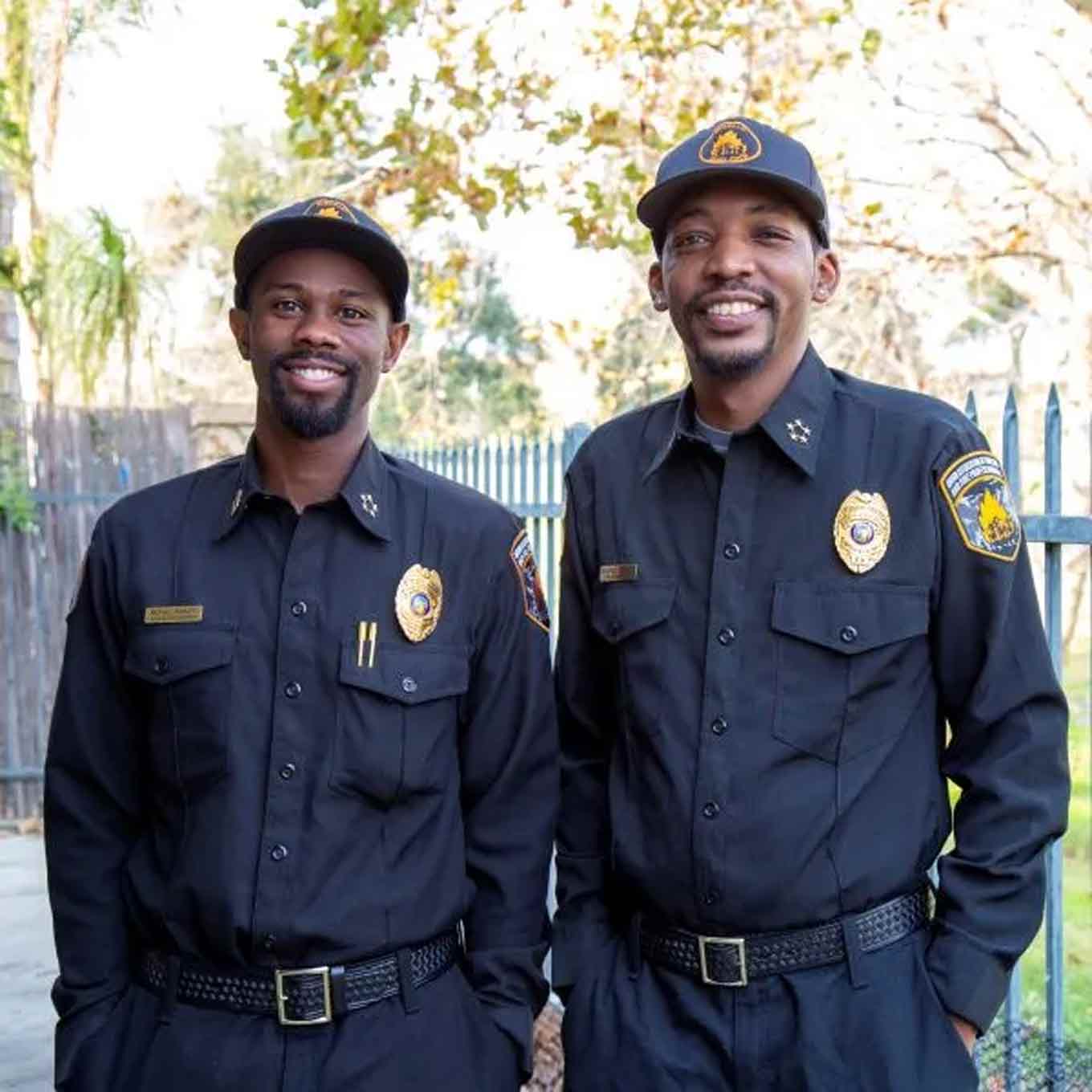
This relationship between disposability and climate change has made using incarcerated people to fight fires even more complicated.
For decades, California has relied on fire crews of quickly trained inmates — mostly Black or Latino — to perform some of the most backbreaking work in firefighting: plowing and cutting through brush in suffocating temperatures to create perimeters to contain the flames.
Imprisoned people make up roughly one-third of California’s wildland firefighting workforce.
The United States has a history of using its Black citizens to do the dirty work of fire fighting. During World War II, as the Japanese army used “balloon bombs” in attempts to destroy America’s western forests, an all-Black U.S. Army paratrooper group known as “smokejumpers” spent months “saving the American West” and fighting fires.
But there are benefits to California’s prison fire camps, Ramey says. While incarcerated, he and Smith fell in love with fighting fire and the feeling of being needed.
“We need firefighters, and to be doing a job that is needed by the world makes it more fulfilling,” he said. “Purpose is something they take from you in prison; this gives it back.”
Firefighting is among the highest-paid jobs for state prisoners: Fire camp detainees earn around $5 a day, with an additional $1-$2 an hour when assigned to active fires.
The conditions at the camp are also better than the average state-run facility. Namely, participants can be out in the “real world” rather than in a cell all day.
“It works in [the state’s] favor and ours,” Ramey said. “As an incarcerated person, you’re already of the mindset, ‘I’m already in prison. I’m already in an environment where there’s threats each and every day, so I might be better taking a chance on this threat [of firefighting].”
But many advocates argue that incarcerated laborers should receive a living wage, contending that the pay does not match the dangers of the job. Several prisoners in the program have sustained serious injuries and even died in the field over the last decade.
The program has also opened up conversations around race and privilege within the wildland firefighting field. While incarcerated laborers are primarily Black or Latino, the professional firefighters who work the same fires are almost exclusively white. Using prison labor saves the state roughly $100 million annually in comparison to what professional firefighters are paid.
An untapped labor pool
Seeing the racial disparities in the field, Ramey and Smith knew that they wanted to continue fighting fire after they were released. But they bumped up against a troubling reality: Once released from prison, there was no roadmap for incarcerated laborers to make a career out of the skills they learned.
One of the biggest barriers, Ramey explained, is a California law that bars those with felony convictions from earning the emergency medical certification that most municipal fire departments require.
It was “egregious,” Smith said in a 2020 interview with KQED News. “You have this labor pool of people that are just sitting here and underutilized only because [of] an issue of perception.”
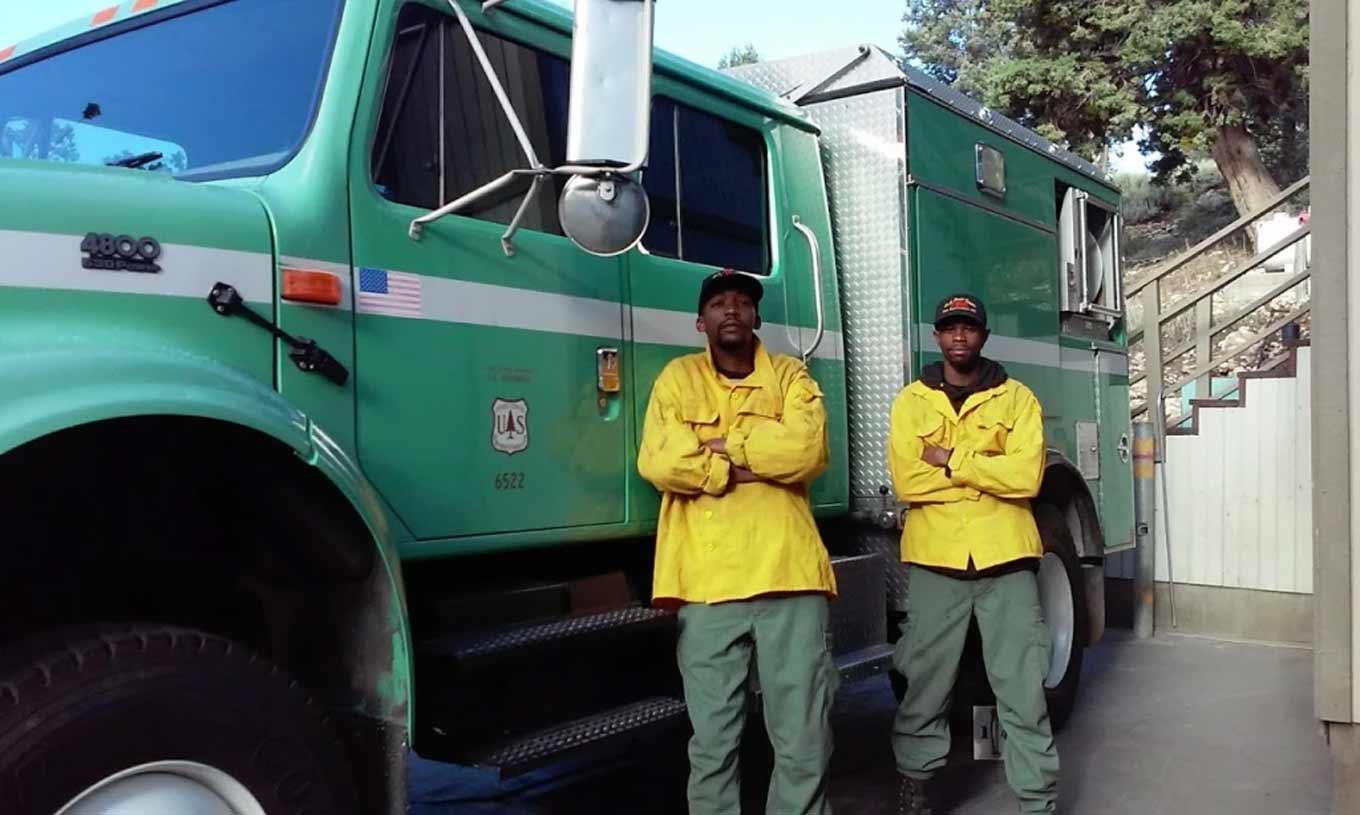
Despite their training and experience in the field, Smith and Ramey had to start at square one to build a career in wildland firefighting after being released.
It would take them roughly three years to climb back to a position equal to their role while incarcerated. After being denied from a handful of crews, it wouldn’t be until the summer of 2015 when a state emergency declaration opened up an easier pathway for hundreds of people, including themselves, to join the professional ranks.
Needing more bodies to fight what was at the time a record-breaking fire season, the hiring process was temporarily made much easier.
Throughout the ordeal, the pair prioritized going to prison fire camps and talking to incarcerated people about finding jobs in the Forest Service once they were released.
They saw a need to put their “work on paper” and institutionalize a program connecting recently released prisoners with professional firefighting posts.
Through their nonprofit, they partner with local governments to give on-the-job training for formerly incarcerated people, help people with state firefighting applications, and offer a community support system for people navigating the difficult process.
In less than six months, participants in the FFRP program receive the same training they would get in a yearslong state firefighting academy — and they’re paid at least $15 an hour. Training includes field work, hiking, practicing plowing and cutting down fields, and equipment training in their new San Bernardino office.
In addition to the paid transitional work in fire prevention, the program provides formerly incarcerated people access to social workers who help ease their reentry process, life skill seminars, and access to housing and mental health care.
In 2020, Ramey and Smith were influential in getting California Gov. Gavin Newsom to sign a law that made it easier for prison camp fire crews to have their records expunged in hopes of removing a significant barrier to seeking a job as a firefighter.
In April, the pair received a $250,000 private foundation grant to expand the program to other parts of the state beyond Southern California.
“I think that the world is finally accepting that we’ll need everyone, even abnormal and complex folks, to address the situations we created and have tried to keep quiet,” said Ramey.
“We got to acknowledge our weaknesses and mistakes and say that it is OK to work on them as individuals because we need everyone to combat the world’s issues.”
That kind of community rehabilitation, he says, will help quell and contain more fires than just the ones ripping through California.
“What are we doing if not trying to make this world a better place?”
Being a travel editor who’s given up flying for the climate elicits a range of responses: incredulity, cynicism, enthusiasm, awe, disgust — any and all are possible depending on the demographic and worldview of the listener.
I’ve gotten used to the inevitable questions that come next since I first went flight-free in 2019. “But, why?” “How do you do your job?” “Doesn’t your boss mind?” And: “But really, why?” Yet I’ve also become bolder in sharing my decision. Because, in response to that last query, my answer is simple: I believe individual decisions can and do make a difference.
Of course, the myriad reasons behind any massive lifestyle change are a bit more complicated. For me, the seeds of the idea were sown slowly, seductively, and their leaves unfurled so gently that I didn’t even realize they were there until what seemed to be an entire tree growing in my brain.
Three years ago, talk of the climate crisis was everywhere: in the school strikes started by teen activist Greta Thunberg, on the streets with widespread Extinction Rebellion (XR) protests, on our screens with David Attenborough’s usually soothing tones warning us of the threat to our planet if we didn’t dramatically adapt the way we lived.
The conversation extended to travel, too. Actor Emma Thompson got dragged in the press for choosing to fly to the UK for an XR demonstration despite the carbon emissions the journey entailed. Prince Harry and Meghan Markle received similar scrutiny for hopping on private jets. And the flygskam, or “flight-shame,” movement was gaining traction in Sweden.
This last was a new phenomenon, given extra momentum by famous proponents including renowned opera singer (and Greta Thunberg’s mother) Malena Ernman and Swedish Olympic athlete Björn Ferry. The concept? That, at this juncture in the climate emergency, jetting off should be something that makes us feel guilty, not an aspirational activity to proudly shout about from the proverbial rooftops of social media.
A related campaign, Flight Free Sweden, was encouraging Swedes to pledge to quit flying for one year in the hopes that kicking the habit short-term would spark longer-term behavior change. This idea inspired similar chapters to spring up around the world, including in the US, France, Australia, Slovenia, Peru — and in my home country, the UK.
As I increasingly struggled to reconcile aviation emissions with net-zero targets, an idle thought crossed my mind: what if I took the flight-free pledge? From then there was no turning back. The hulking great tree in my brain had taken root.
The inequality of flying
Whenever you challenge the status quo with your actions — and, strange as it may seem, not flying is still regarded by many as inherently counter-cultural — you’ll get pushback. One argument I hear frequently runs thus: flights are cheap, alternatives are not. Therefore, if you raise the price of flying to reflect aviation’s detrimental impact on the planet, you’re really punishing the poorest in society.
This is something of a smokescreen. The idea that flying is the “norm,” and consequently akin to a human right we are entitled to, is completely skewed. In fact, most of the world’s population have never set foot on a plane. Even in the UK, where a proliferation of budget airlines and cut-price tickets made us the leading nationality for international flights taken in 2018 — one in 12 international air travellers was British — just over half of the population (52 percent) will fly annually.
“We think everyone’s on the move but, in reality, just four percent of the world’s population fly in any given year,” says Professor Stefan Gössling of the School of Business and Economics at Linnaeus University in southern Sweden. “When we talk about flying, we are really talking about an elite activity.”
A 2020 study he authored found that at most one percent of the global population likely accounted for more than half of all carbon emissions from passenger aviation in 2018.
David Banister, emeritus professor of transport studies at the University of Oxford, made a similar case back in 2018 when debating whether a third runway at Heathrow would really benefit the UK. “The evidence would suggest overall that cheaper flights have enabled those already flying to travel more frequently and possibly to save money,” he said. “The richest 10 percent make nearly seven times as many trips by air as the poorest 10 percent of the population.”
But why bother?
When it comes to individual behavior regarding anything sustainability-related, the same question always comes up: why bother? If oil companies are going to keep drilling, frackers to keep fracking, and the entire gamut of global corporations to keep prioritizing profits over people and planet, what possible difference can I make? It is, of course, an extremely valid — and dangerously persuasive — argument. But it’s not the whole story.
“The more research I do, the more I believe that individual action has a wider ripple effect,” says Steve Westlake, a PhD researcher in environmental leadership at Cardiff University in the UK.
“Social norms are very powerful — the idea of what we all agree to do. If someone does something different that challenges the social norm, like giving up flying, we assess why they are doing it. We balance and judge our own behavior against what others are doing.”
Westlake’s Masters dissertation looked at the effect that individuals’ decision to stop flying for the climate had on others. The research looked at both climate leaders — including established environmental scientists and writer and activist George Monbiot — and “normal” people. Although the influence of the former was more pronounced, with around two thirds of those surveyed saying they flew less as a result of the leaders’ decisions, regular people’s actions also had a significant impact: roughly half of the 380 people surveyed said they flew less in response to knowing someone who had gone flight-free.
Anecdotally, I’ve noticed this ripple-effect through my social circle. A friend told me about their decision to take the train to Italy this summer, my brother-in-law opted to travel by rail to and from a recent conference in Glasgow, and my boyfriend took the plunge and booked a ferry back from the Channel Islands when he’d usually fly.
But don’t just take our word for it. Let’s look at Sweden, our test case thanks to the aforementioned flygskam movement, which had a real-life, tangible effect. In 2019, Swedish domestic air travel decreased by nine percent and train travel surged by 11 percent, in part attributed to flight-free campaigners and greater climate change awareness.
“You could say that there’s no point in voting in an election because your individual vote won’t make a difference, yet we do it because we’re part of a collective trying to steer society in a different way,” says Westlake. “It’s the exact same thing with climate change. Solving this problem is going to be a collective effort and we can contribute with our personal choices and the effect of our decisions within society. You do have agency.”
The silver lining
In the end, as much as all the above is undoubtedly true, I have one much more selfish reason for carrying on with my flight-free pledge in 2021, 2022 and likely beyond: slow travel is just plain wonderful. As Mark Smith, aka the rail guru known as The Man in Seat 61, puts it: “Airlines suck the joy out of travel. But trains and ships are real travel, romantic travel… The journey can be as fun — and sometimes more fun — than the destination.”
I have found this to be true. Every trip I’ve taken since swapping planes for trains, ships, buses, bikes and legs has been gilded with a giddy sense of adventure, bringing with it a real connection to place as I’ve passed through landscapes, not over them. Going flight-free has introduced me to the appreciation that comes with arriving into a destination, buoyed up by a childlike sense of wonder, after a proper journey by land and sea.
I may have started travelling flight-free for the climate but I’ll keep travelling flight-free for the sheer joy of it.

Marta Segura has seen firsthand how heat can harm a person. She grew up in Northern California, where her mother worked in the steamy canneries of San José, and her father in the fields.
“Both were exposed to extreme heat in their workplace, and I saw them suffer as a consequence,” she says. “My dad once almost died in the fields as a result.” Segura remembers that her mother organized other workers, particularly women who “could not even go to the restroom without authorization from the foreman,” which limited their water intake.
The temperatures that plagued Segura’s parents decades ago have only gotten worse. About a fifth of the most populated cities in the world could warm by more than 4°C by 2050. About a quarter could warm by more than 7°C by 2100, a magnitude of change that would alter life in dramatic ways.
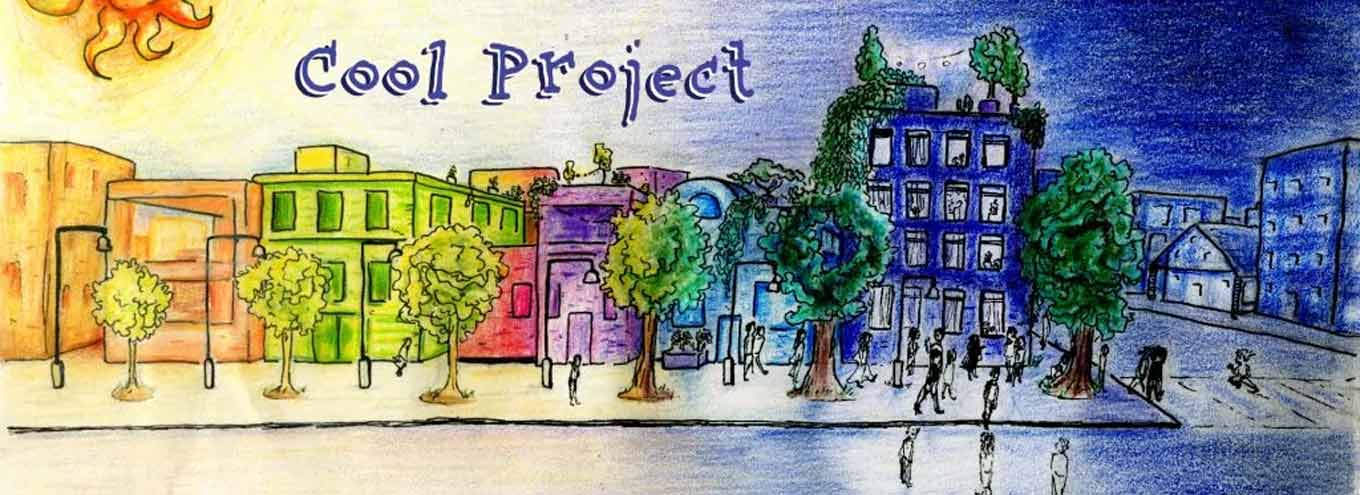
Researchers estimate that heat is responsible for 12,000 premature deaths annually in the US, a toll that could rise to 97,000 by 2100. And yet, drive through California’s agricultural areas on a hot summer day, and you’ll see hundreds of workers plucking strawberries and tomatoes in the midday blazing sun.
Segura now has a chance to do something about this. In June 2022, she was appointed Chief Heat Officer for Los Angeles, the first Latina in the US to hold such a job. She follows in the footsteps of long-term city planner Jane Gilbert, who became Miami-Dade County’s — and the world’s first — heat officer last year. The cities of Santiago, Athens, Freetown in Sierra Leone, and Phoenix have all created similar positions. More plan to follow suit.
CEMO Director Marta Segura @Segura4Change has been appointed LA's first Chief Heat Officer. In this new role, she will oversee the City's response to extreme heat, LA's primary (and deadliest) climate hazard. Read more: https://t.co/2VjHMkPHed pic.twitter.com/QmTMZi33D8
— City of LA - Climate Emergency Mobilization Office (@CEMO_EJ4LA) June 3, 2022
The need is extremely urgent. Wildfires and hurricanes may grab the big headlines, but heat is actually the deadliest weather phenomenon in the US.
In California alone, heat has caused some 3,900 deaths over the past decade, which is why, when FEMA recently declared Los Angeles County the area most at risk for natural disasters in the country, it did so not only because of wildfire and earthquake threats, but also because of heat waves — and the city’s low resilience to them.
According to UCLA’s Heat Risk Map, Los Angeles experiences more weather-related emergencies than any other city in California, even more than Arizona. “Extreme heat is our primary climate hazard,” Segura says.
How hard this heat hits you depends largely on your zip code. While the wealthy can afford swimming pools and insulated windows for their villas in tree-lined Beverly Hills, temperatures in the poorer areas of the city are higher by an average of 10 to 15 degrees Fahrenheit.
These areas are often home to people of color — a recent study published in Nature showed that Black and Hispanic residents are twice as likely to be exposed to urban heat islands.
This is why Segura plans to focus on “historically neglected communities that also suffer from immense pollution. Black and brown communities experience the most comorbidities like kidney disease, heart failure, asthma and COPD. So when you combine all these factors, those are the communities where we see increased hospitalizations and premature deaths as a result of extreme heat.”
While Americans over the age of 65 and patients with cardiovascular and respiratory illnesses are most at risk, it would be a mistake to think that heat only harms the elderly. Segura mentions that “a young UPS worker died of a heat stroke two weeks ago in Los Angeles.”
Because of the urgency of the threat, Segura is going for “the easy wins” in her first summer on the job: a campaign to educate Angelenos about the risks and first signs of heat-related illnesses; air conditioning units for underserved communities; and a “cooling network” of shops, department stores and fast-food chains at which people can come in and cool down, “so that everybody who starts feeling overheated on their way to the bus stop knows: I can get a glass of cool water here and sit down in a cooled space to recover at no cost.” Los Angeles also plans to plant thousands more trees, especially in historically neglected communities.
These efforts aren’t taking place in a vacuum. Los Angeles is a charter member of the C40 Cool Cities Network, a coalition of nearly 100 cities that crowdsource solutions, discuss best practices and share information. These ideas are collected in the C40 urban cooling toolbox, where they’re broken down into six categories: Green infrastructure (such as trees, green roofs, permeable pavements), blue infrastructure (drinking fountains, public swimming pools and other forms of water cooling), gray infrastructure (cool roofs, cool pavements, passive cooling in buildings), communication (outreach, cooling centers and campaigns), policy (climate design guidelines, heat emergency response plans, cooling tax rebate programs) and urban development (urban geometry, building materials).
The list makes the challenge obvious. To tackle the heat problem, nearly all of a city’s departments — from health to parks to buildings to environmental protection — need to subscribe to the same goal. Segura has been tasked with designing a budget to realize these objectives. Until such a budget has passed, she needs to rely on building relationships with the relevant decision-makers. But she is convinced that the City of Los Angeles has identified heat resilience as a priority.
“We all have the same goal,” Segura says. Mayor Eric Garcetti launched L.A.’s “Green New Deal” in 2015, pledging to lower the city’s average temperature by three degrees over the next 20 years. That’s a target he’s likely to miss, not least because Los Angeles is part of the larger, warming world.
And yet, there is a lot a city can do. Some of the tools are universal; others are specific to each city. In Miami-Dade, for instance, Segura’s counterpart Jane Gilbert has been serving as Heat Officer for more than a year. “For us, the biggest problems aren’t just the extremely hot days,” Gilbert says via Zoom in her sleeveless blouse, already facing 82 degrees Fahrenheit at 10 a.m.
“Unlike California, we have a chronic heat problem. For instance, last summer, we had over 30 days in a row with the heat index over a hundred degrees Fahrenheit. Combined with the high humidity, a lot of people struggle.”
After she started her job, Gilbert first engaged in “listening tours,” speaking with residents, doctors and emergency personnel. Because the warm temperatures attract tourists year-round, Gilbert learned to worry about out-of-town visitors. “We are a party town,” Gilbert says, “and this increases the risk that tourists might not pay attention to their water hydration.”
Even knowing how many residents die of heat exposure is tricky, since heat-related deaths are often not recorded as such. “How do we even measure heat deaths?” Gilbert asks, “Heat as such is not the cause of death, but it will be a heart attack or something like that.”

From the vulnerability analysis she completed in her first year on the job, Gilbert has learned which areas of Miami have the highest temperatures and are therefore most at risk.
She aims to increase the tree canopy in these areas from less than 10 percent to at least 30 percent by 2032. She also discovered that several nursing homes and public shelters don’t have backup generators, which could be used for cooling in case of a power outage.
“Hurricanes and floods come with a bigger price tag,” she says about why awareness of heat risks is only growing slowly, “but heat waves kill people, too.”
Oregon was the first state to pass a law forcing employers to provide outdoor workers with cool water, rest breaks and shade when temperatures reach 80 degrees.
“We have over 300,000 outdoor workers in Miami-Dade county who are exposed every day, plus the homeless population,” says Gilbert. “We have to protect them.” But a proposed law resembling Oregon’s recently failed in Florida.
“So we have to focus on what we can do here, on the ground,” Gilbert says pragmatically. She makes a case for naming heatwaves like tornados so the danger can be recognized and communicated more widely. (The Spanish city of Sevilla just started doing that.) But she also recognizes that the current system, which sounds the alarm when thermometers hit 108 degrees, doesn’t suffice. “Just this week, a three-year-old girl died of heat stroke while being left in a car,“ she says.
The truth is that few communities are prepared. Miami has spent a decade prioritizing hurricane and flood prevention while underestimating heat risks. “The mayor has charged me with raising public awareness on the level of our hurricane preparedness efforts.”
Yet Gilbert’s office has not been invested with much power or money. She has only one employee and hardly any budget. “But I report directly to the mayor,” she says emphatically. “When I reach out to other departments, they know I’m speaking for the mayor, Daniella Levine Cava, and she regards this topic as a priority.”

Her next big focus is on housing, “really helping homeowners and renters access energy efficiency, retrofits to reduce their bills. Our building department is looking to get a building code amendment to require cool roofs on larger commercial buildings. Going forward, all county-funded buildings will require a cool roof and higher efficiency standards.”
Miami and Los Angeles are both part of the “cool roadways partnership,” a group of 25 cities that aim to install cooler building materials. The group wants to use its power not just to exchange information about which materials work best, but also to negotiate better prices for the often costly materials.
“We’re trying to leverage the purchasing power of these 25 cities instead of each city following their own effort,” says Greg Spotts, Chief Sustainability Officer of Streets LA. “That’s going to be a game-changer.”
Like Segura, Gilbert’s perspective on her new job has been influenced by her past. Initially from Connecticut, she studied environmental science at Barnard College in New York and moved to Miami 27 years ago, drawn by the tropical climate.
“My system just does better in the heat,” she says. In between, she spent several years working in Central and South America for environmental NGOs, to protect Indigenous people and the rain forests. One could say she was addressing some of the root causes of climate change before working in community development and becoming Miami’s Chief Resilience Officer in 2016.
Next month, she will be on the streets of Miami again on a Saturday, giving away 2,000 trees to low-income residents. “I still love the heat,” she says with a sigh. “But it’s almost getting too much, even for me.”
This story is part of Cool Project, a series about surprising ways cities are cranking down the heat in a warming world. Learn more about the series and the artwork here.
A 5-year-old in a watermelon-themed swimsuit makes it across the wading area at St. Paul’s Como Park Regional Pool on her second day of swim lessons, holding onto her instructor in knee-deep water.
“Look how far you swam!” exclaims her teacher.
The lessons are a major victory, said the little girl’s dad, Josh Marcus, who signed his two daughters up for the free lessons after he learned about them from a friend.
“I can swim, so I’m normally the teacher, but with how afraid my 5-year-old is of the water, I wanted to leave it to the pros,” said Marcus as he watched the lesson from the pool deck. “As long as I’m seeing they’re safe out there.”
In response to recent high-profile drownings and growing awareness of racial disparities in drowning statistics, Minneapolis and St. Paul have ramped up youth water safety education through free swimming lessons this summer.
Drowning is the leading cause of accidental death for children under age 5 in the United States. And national statistics reveal racial disparities in who’s most at risk: Black youth ages 10 to 14 are 3.6 times more likely to drown than their white peers, Centers for Disease Control and Prevention data show.
Younger Black children ages 5 to 9 are 2.6 times as likely to drown as their white counterparts. And overall, Black Americans are 1.5 times more likely to drown than white peers, based on data from 1999 to 2019.
Local data echo that: Hennepin Healthcare says 12 of 24 drownings that HCMC has overseen over the last four years were people of color, seven were white, and the racial makeup of five was unknown.
(The Minnesota Department of Natural Resources can’t break down its data by race because the required U.S. Coast Guard incident reports don’t have an option for race or ethnicity, according to Lisa Dugan, boat and water safety outreach coordinator at the Minnesota Department of Natural Resources. The DNR recorded 53 non-boating drownings for 2021; data for 2022 aren’t yet fully compiled.)
On top of that, this year’s nationwide lifeguard shortages have heightened disparities in access to safe swimming areas.
While it’s too soon to know how this summer will compare to others, the grim disparities are unlikely to change substantially, water safety advocates say. There’s no quick fix.
But three main strategies can help keep children safe in the water: education, life jacket use, and access to lifeguarded places to swim.
“This is not a one-time thing,” said David Albornoz, aquatics facilities supervisor for the city of St. Paul, who has long dreamed of offering the free, safety-focused swimming lessons that began last week at the Como Regional Pool. “One great week will do nothing. We want a great three years.”
Lessons, lifeguards, and life jackets
The free lessons, offered to 300 children for three consecutive years through St. Paul Parks and Recreation and funded with $94,910 from a Met Council equity grant, target “residents at highest risk of drowning,” according to the grant proposal.
The lessons emphasize safety over swimming stroke development, Albornoz said.
A few very specific safety concepts can make a significant impact in preventing drowning in a way that simply teaching swimming may not, he said. For instance: Wear a life jacket. Don’t go into a body of water you’re not familiar with. Don’t play around drains in pools.
For parents? Keep a close, steady eye on kids when they’re in the water. A child can drown in the time it takes to watch two TikTok videos, said Alison Petri, program manager with Abbey’s Hope Foundation, an Edina nonprofit named after Abbey Taylor, a 6-year-old girl killed in a pool-drain accident in 2008.
“Do you know the most dangerous area here?” Albornoz asked, indicating the Como complex, which includes a lazy river, a kiddie pool with fountains and a slide, a pool with a zip line and rock-climbing wall, and a traditional lap-lane or free swim pool.
“It’s right here,” he said, pointing at the deepest area of the kiddie pool. “Toddlers tip over and they can’t get back up, and parents aren’t paying attention.”
He assigns four to seven lifeguards to that pool.
Swim teachers reiterate those crucial safety lessons in each class, Albornoz said, and also correct subtler unsafe behaviors. When, for example, one boy let go of the wall in the deep end, a teacher quickly corrected him, gently reminding him to keep a hand on the wall.
Once kids know how to swim, it’s easy for them to gain a false sense of security, he said. Good swimmers often think they don’t need life jackets, and swim in places they shouldn’t.
“Don’t go into the f-ing Mississippi because you know how to swim,” he said.
Overconfidence can also tempt people into unsafe rescue situations that end up exacerbating the emergency, Albornoz said. During lessons, he’ll ask students: What do you do if your sibling is struggling in the water? Answer: Throw something like a rope to them and call for help, and do NOT go after them.
“People have an insane strength and power of will to survive” when they start drowning, Albornoz said, which often starts a chain reaction that puts a potential rescuer’s life in danger as well.
“People [who are drowning] have an insane strength and power of will to survive” that can make them dangerous to would-rescuers.
— David Albornoz, St. Paul Aquiatics Facilities supervisor
A Colorado survey of survivors of near-drowning experiences found that 85 percent said they could swim, Petri said.
“And often, they’re good swimmers,” she said. “That’s why we’re pushing for life jackets on open water. On lakes and rivers, currents and conditions are continually changing. In Minnesota, people tend to think they’re good swimmers so they don’t need life jackets. But then they go to Galveston and get caught in a rip current or under a pier.
“We think we become drown-proof when we’re good swimmers,” Petri said. “No one is drown-proof.”
We think we become drown-proof when we’re good swimmers. No one is drown-proof.
— Alison Petri of Abbey's Hope Foundation
A 2019 Australian study of river drownings asked 30 experts to narrow down the most effective safety strategies. They agreed that education on river-specific risks, the dangers of alcohol, and swimming survival skills is key, as are lifejackets and physical barriers in dangerous areas. And an earlier study on swim lessons for Black youth in Florida showed drowning disparities can be eliminated.
Local efforts focus on lessons, lifeguards, and life jackets.
In addition to the St. Paul lessons, free swimming and swim lessons at North Commons Waterpark began this year with new funding earmarked for equitable youth programming from Minneapolis Parks and Recreation.
Both the swimming lesson program and the North Commons Swim Camp are full, said Sarah Chillo, aquatics manager for the Minneapolis Park and Recreation Board. A citywide swimming lesson scholarship program allows qualified residents to take lessons at other sites for $5.
The YMCA of the North offers some free lessons as well.
Abbey’s Hope, is giving away 2,022 life jackets this summer. The organization recommends that everyone wear them while in a boat, and that people who aren’t strong swimmers wear them in any open-water setting.
“In Minnesota, you legally only need to wear them until age 10,” Petri said. “But I don’t recall kids magically getting buoyant when they turn 10.”
In Minnesota, you legally only need to wear [life jackets] until age 10. But I don’t recall kids magically getting buoyant when they turn 10.
— Alison Petri of Abbey's Hope Foundation
Most beach drownings occur when no lifeguards are present, according to the CDC. And with fewer lifeguards at beaches this year nationwide, there are fewer free safe places to swim.
“Despite the [Minneapolis Park and Recreation Board’s] significant lifeguard wage increase, recruitment, scholarship opportunities to become a lifeguard, and a certification reimbursement program, lifeguards continue to be hard to find,” Chillo wrote in an email to Sahan Journal.
“We were able to hire approximately 70 percent of our desired workforce and had to make adjustments to ensure our operational footprint reflects a safe staffing capacity.”
The YMCA of the North used similar recruitment strategies to find lifeguards, but could have used more, said Shannon Kinstler, senior director of aquatics for YMCA of the North. A reservation system helps manage the number of swimmers, she added.
Other initiatives
After several river drownings in recent years, victims’ families raised the question of signage to mark hazardous sites. In August 2020, Isaac Childress III, 6, drowned at a boat landing on Boom Island.
The island, like all river areas in Minneapolis, is not marked as a no-swimming area. Instead of indicating where not to swim, Minneapolis Parks and Rec has long followed a policy of indicating where to swim (although beaches are marked with signs when closed).
But in St. Paul, several areas of the river are marked with no-swimming signs in St. Paul. Several no-swimming signs, in multiple languages, are posted at Hidden Falls Regional Park, for example, a known hazardous swimming area.
Minneapolis is reconsidering that policy. “Beach sites without lifeguards are signed accordingly—No Lifeguard on Duty,’” Chillo said.
The park board’s director of communications, Dawn Sommers, “is heading up an internal team being formed to address signage along water access points” across the Minneapolis parks system, Chillo said.
With research scant, it’s unclear whether warning signs help prevent drowning. One survey of Australian beach-goers showed that only 45 percent of those questioned noticed signs at all. There is no significant research on signage in river areas.
With inconsistent signage and no current statewide education efforts, Abbey’s Hope started circulating a list of lifeguarded areas to swim this summer.
Back at the Como Pool, the teacher of the reluctant 5-year-old checks in near the end of the lesson.
“How did that feel?”
The little girl smiles and flashes a thumbs up. And her dad grins.
When Lindy Knowles thinks back to his childhood in the Bahamas, a particular tree is the backdrop of his best memories: the mangrove. Spindly, with twisted roots, mangroves thrive in tidal areas around the islands, including a creek near his grandmother’s house. Knowles learned to fish among the forests, which are home to conch, lobsters,and a variety of fish; he learned to swim in the calm waters around the trees, their roots buffering him from ocean waves. For a kid like Knowles, mangroves meant adventure. “It was just part of my upbringing,” he says.
For coastal communities like those in the Bahamas, mangroves mean stability and protection. They’re a safe harbor for hundreds of creatures. And they help protect communities from threats associated with climate change, including worsening storms, rising sea levels, and erosion. They’re important for those living far from a coastline, too: Mangrove forests are an important tool in combatting climate change. Compared with other forests, the mangrove ecosystem has a superior ability to store carbon, and that can help slow the warming of the planet.
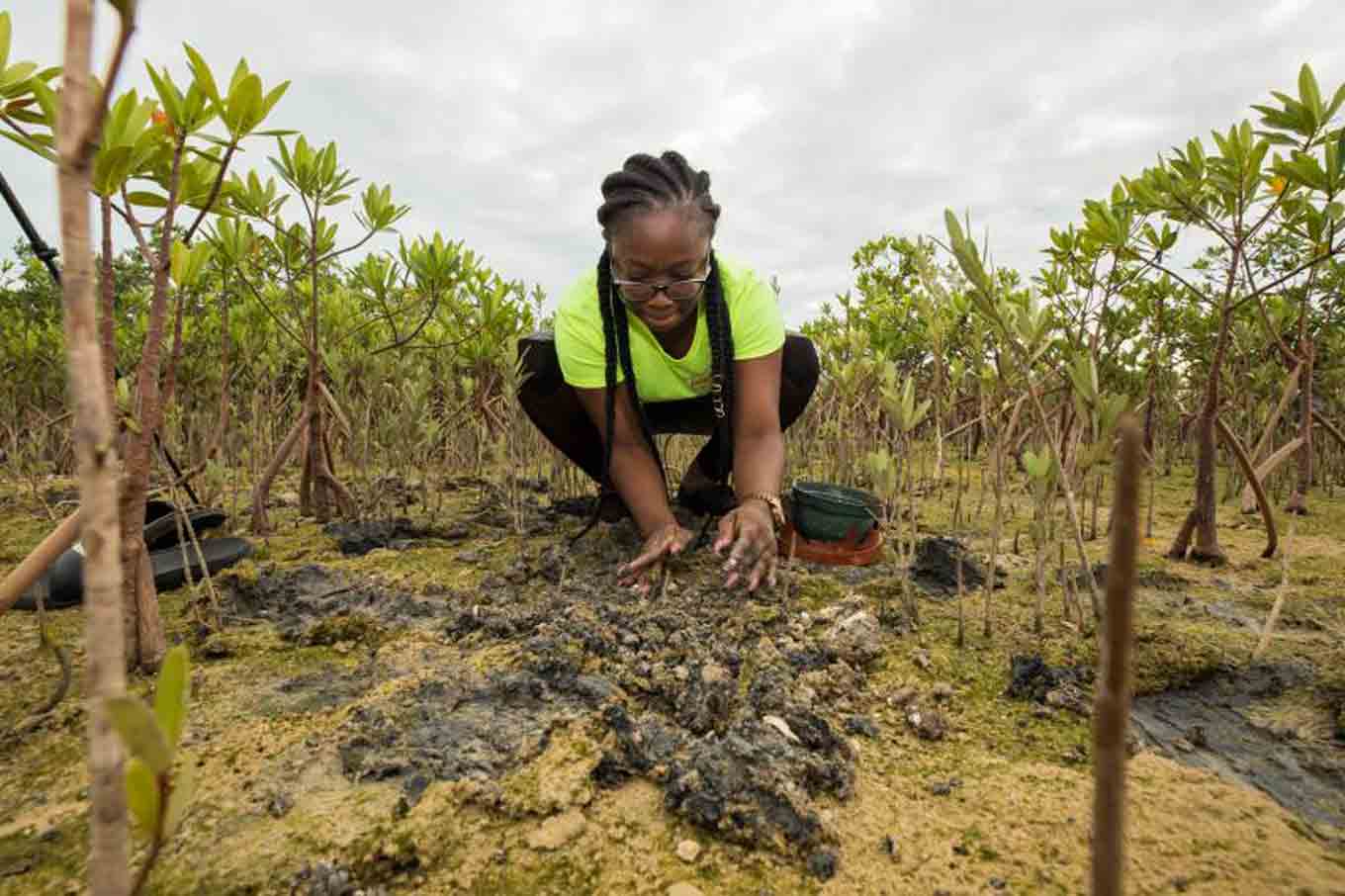
But mangroves are disappearing. When Knowles, now 37, looks around the islands, he can see beach houses, condos, hotels, and parking lots where mangroves used to be. “We do like marinas,” he says. The island of New Providence, for example, has lost an estimated 57 percent of its mangroves since the 1940s, mainly to development.
Mangroves have also been devastated by hurricanes. In 2019, Hurricane Dorian damaged an estimated 73 percent of the mangroves on Grand Bahama and 40 percent on the Abaco Islands. And the Bahamas is in no way unique. Studies indicate that between 1980 and 2000, at least 35 percent of the world’s mangroves were destroyed.
Knowles is trying to change that, one seedling at a time. His love of mangroves led to his career as the senior science officer with the Bahamas National Trust, a nonprofit organization that manages the national park system and oversees conservation and restoration efforts. In his role, he works to protect and rebuild marine systems, and his success depends on the help of community members to care for the land and to educate others.
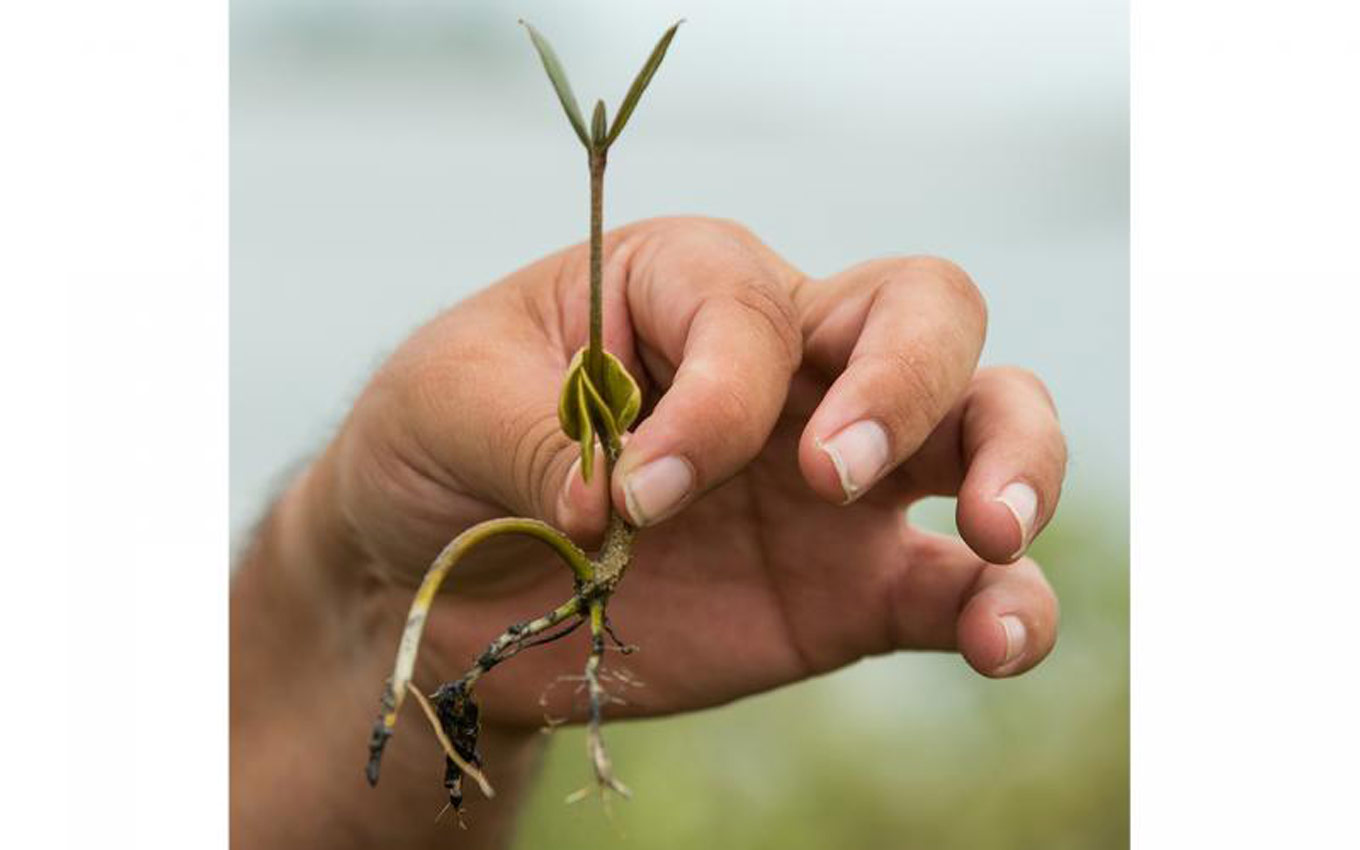
Fortunately, Knowles is not alone. In June 2020, Rotary, a global service organization with 1. 4 million members, made protecting the environment its newest area of focus. Rotary’s goal is to link interested clubs with nongovernmental organizations already focused on mangroves, so that they can collaborate.
At COP26, the 26th United Nations Climate Change Conference in Glasgow, Scotland, in November 2021, Rotary International President Shekhar Mehta announced that mangrove restoration will be a focus of Rotary’s environmental work. “The impact of climate change is rising sea levels, tornadoes, and cyclones,” he said. “And the best and first defenders in tropical, coastal communities are the mangroves.”
Christopher Puttock, a member of the Rotary Club of College Park, Maryland, is a botanist with a deep appreciation for mangroves. He began researching this type of flora early in his career, while working at the University of New South Wales in Sydney. Mangroves, of which there are about 70 species, grow in tropical and subtropical areas, like Africa, South Asia, Australia, and South America. In the United States, the greatest concentrations of mangroves are in southern Florida, where kayakers can paddle through mangrove tunnels that dot the Gulf and Atlantic coasts.
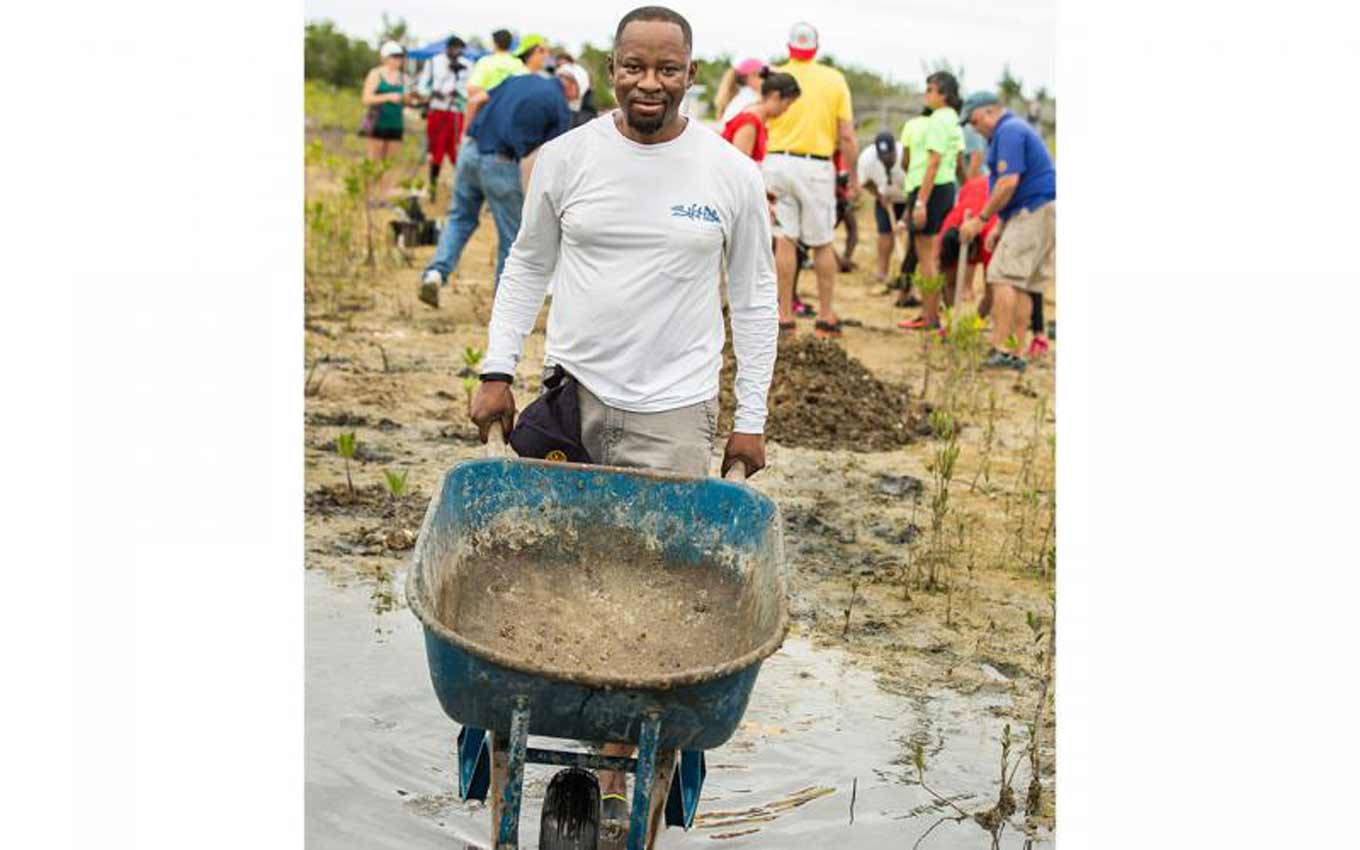
Puttock says the global threats to mangroves have been many: Often, mangrove forests are gutted and turned into shrimp farms. They’re lost to agricultural and industrial development, cut down for firewood or construction materials. And that development is crowding them out as humans strive to live and vacation ever closer to the coast.
Mangroves are unique not just for their stilt root appearance, as seen with a common species called Rhizophora mangle, or red mangrove, but also for their hardiness and their ability to survive in hot, salty, muddy conditions.
Knowles has seen the power of those roots. The Bahamas is a vulnerable chain of islands, so the roots of plants and trees play a crucial role in its survival. In 2016, when Hurricane Matthew swept through the Caribbean, Knowles saw the impact of a storm surge that powered through Bonefish Pond National Park. It was nearly 6 feet high and strong enough to lift a schoolroom-sized pavilion off its pilings and move the entire structure. Thanks to a grove of mangroves, the farmland behind the park remained unscathed.
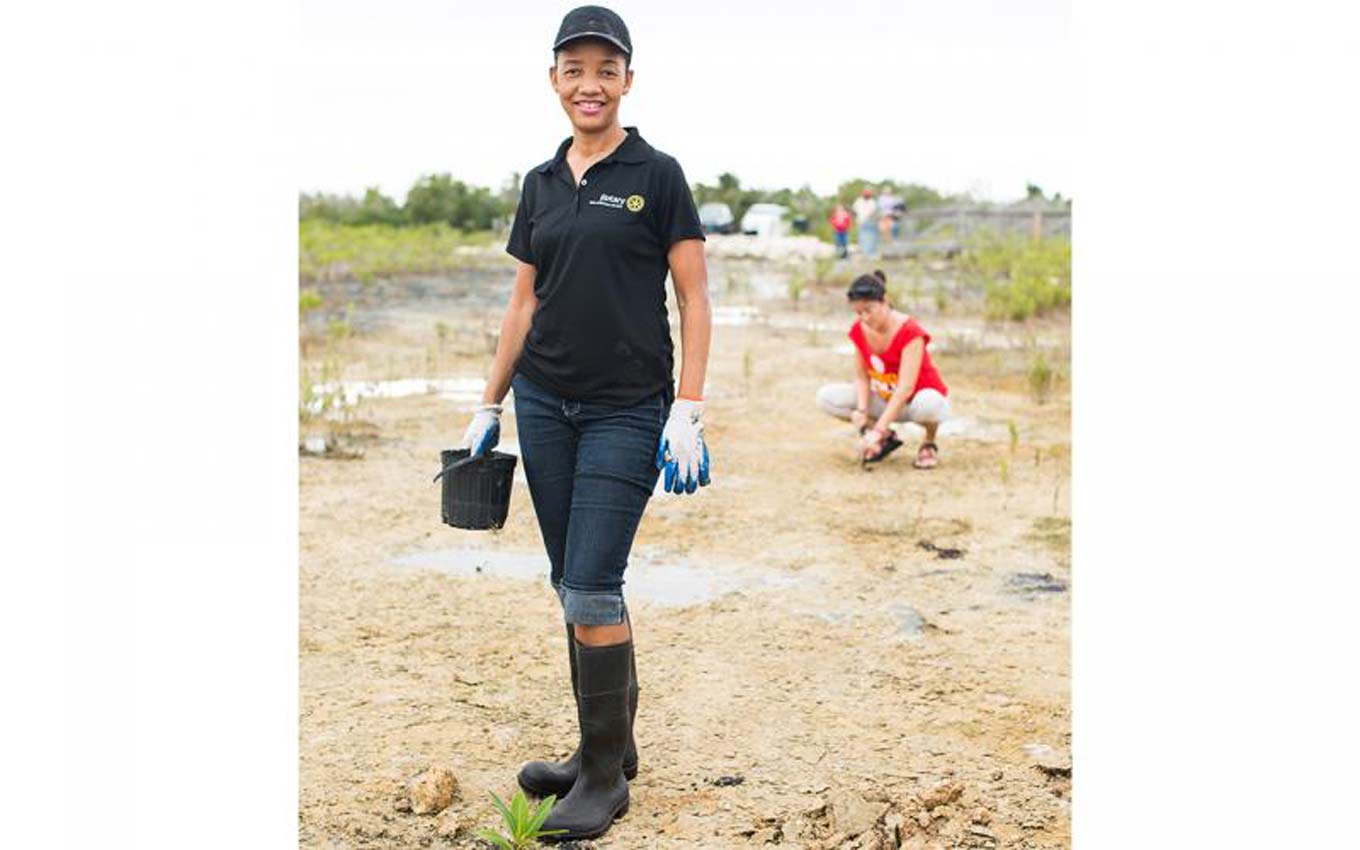
And then there’s the mangrove’s superpower: its ability to store carbon within its own ecosystem. Mangroves live on top of peat swamps — think mud mounds — that have been accumulating for centuries. The creatures that live in the surrounding water and mud, like worms, shrimp, lobsters, and fish, take the mangrove leaves and detritus, which absorb carbon, down into the mud and sand. There, that matter gets locked in place under the mangrove in a kind of natural storage vault.
When you consider all the benefits, perhaps it’s no surprise that there is now a rallying cry for mangrove restoration. But as Puttock cautions, these efforts must be coordinated and based in science to be sustainable. In other words, this isn’t a situation where everyone, everywhere should step in and plant mangroves in their communities. “When we’re just going around and collecting seedlings and thinking they can be put into any sort of mud anywhere, we’re almost doomed to failure,” he says. “The mangrove knows where it needs to be; we don’t.”
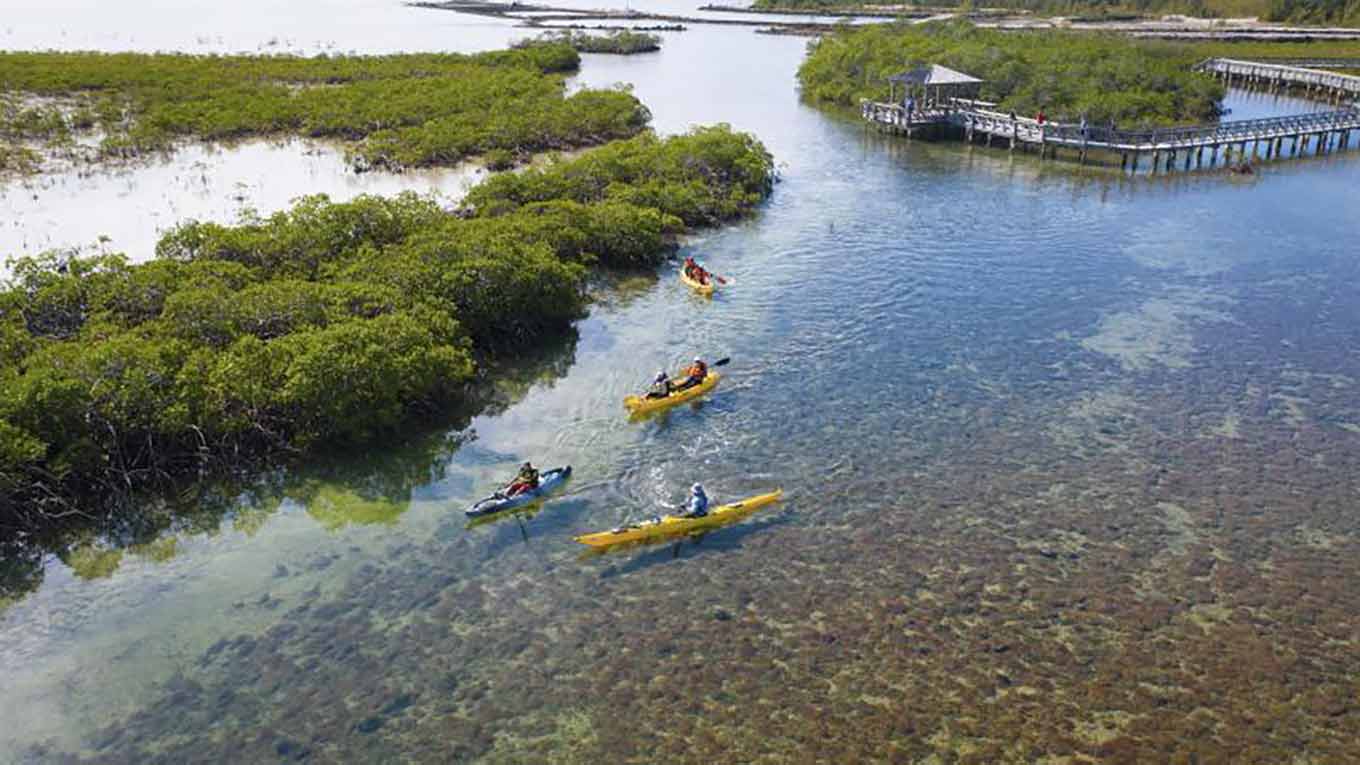
Martin Zimmer is a professor who leads the mangrove ecology working group at the Leibniz Center for Tropical Marine Research in Bremen, Germany. He explains that the right species of mangrove must be planted in the proper location, within a community where people support the work. Otherwise, the efforts are wasted. “There are many examples that we know from mangrove replanting activities that were high up in the media, in local or regional press, hundreds of people planting, sticking little mangrove seedlings into the mud of a mud flat,” says Zimmer. “And that looks very good, but then after a couple of weeks, a month, if you went there again you would not find them anymore, because they would be lost, they would be washed away. And if they were not washed away, they would probably die very soon because this was just not the right environment.”
Zimmer is quick to point out that his aim isn’t to discourage planting, but rather to encourage proper planting designed around long-term goals and community buy-in.
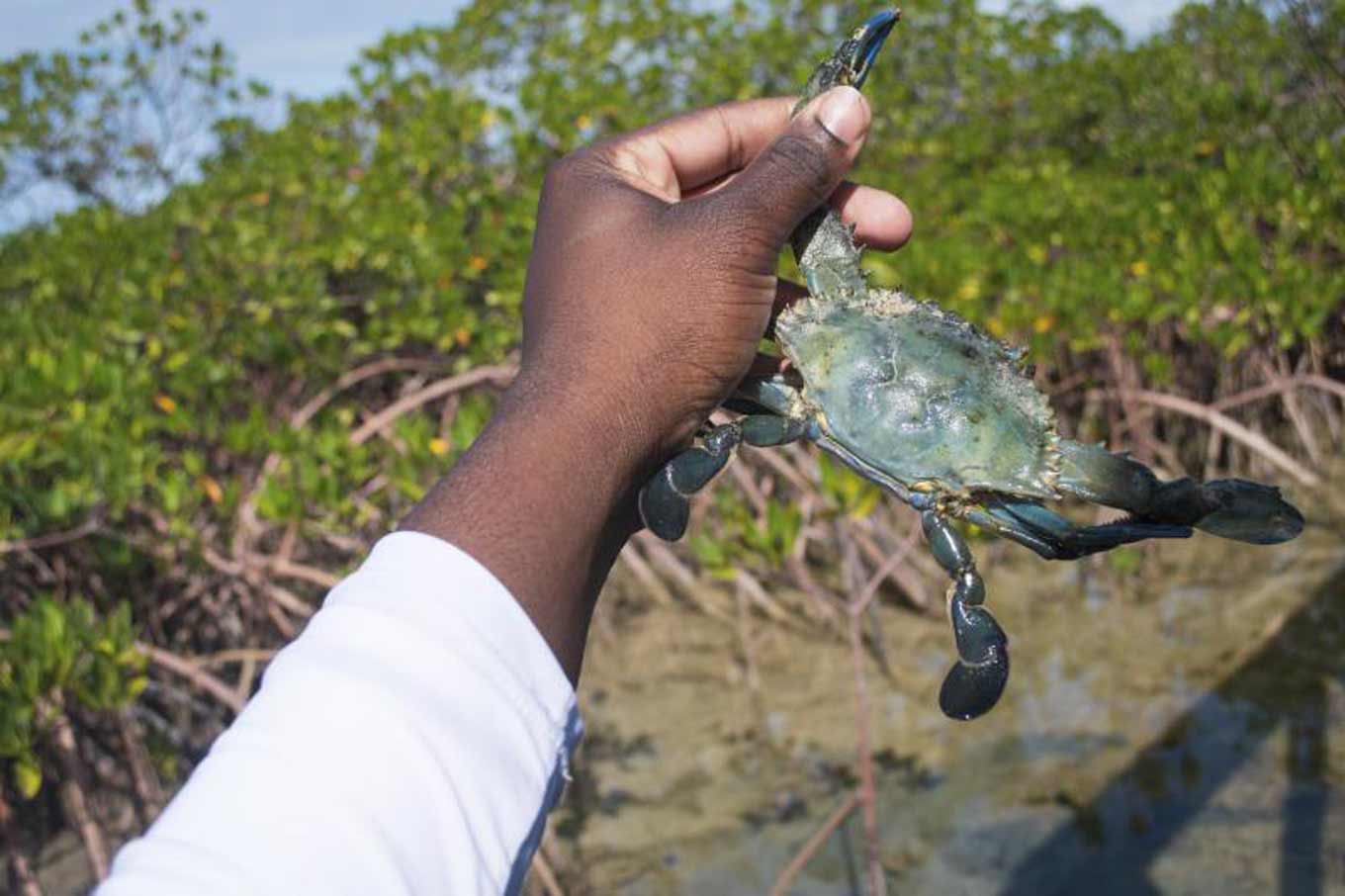
One of the many struggles that mangrove advocates face is convincing others that wetlands are not wastelands. Knowles says that for decades, locals saw the wetland area now known as Bonefish Pond National Park, located in the southern part of New Providence Island, as a wasteland. At 1,235 acres, it is the largest intact marine ecosystem in the region, but it was covered in garbage: abandoned cars, an old roof, cement blocks, you name it. In 2002, the Bahamian government took over, establishing it as a national park. The Bahamas National Trust drew up a 30-year plan for the area, which involved cleaning it up, digging ditches to improve water flow, and planting thousands of mangrove plants. In time, the hope is that the new plantings will be indistinguishable from the old growth.
Knowles remembers the cleanup days well: All told, he estimates they removed 30 tons of trash. “You know the saying you get everything but the kitchen sink?” he says. “I’ve removed everything from that area, including a kitchen sink.”
His team depends on the physical and financial assistance of nonprofits and volunteers in the community to help with projects like this. That’s how the Rotary Club of East Nassau, which has a longstanding relationship with Bahamas National Trust, learned that volunteers were needed for the Bonefish Pond project. In 2017, a representative with Bahamas National Trust spoke to the club about some of its ongoing restoration. Eager to help in environmental projects, the club participated in two planting events with other Rotary clubs in the Bahamas.
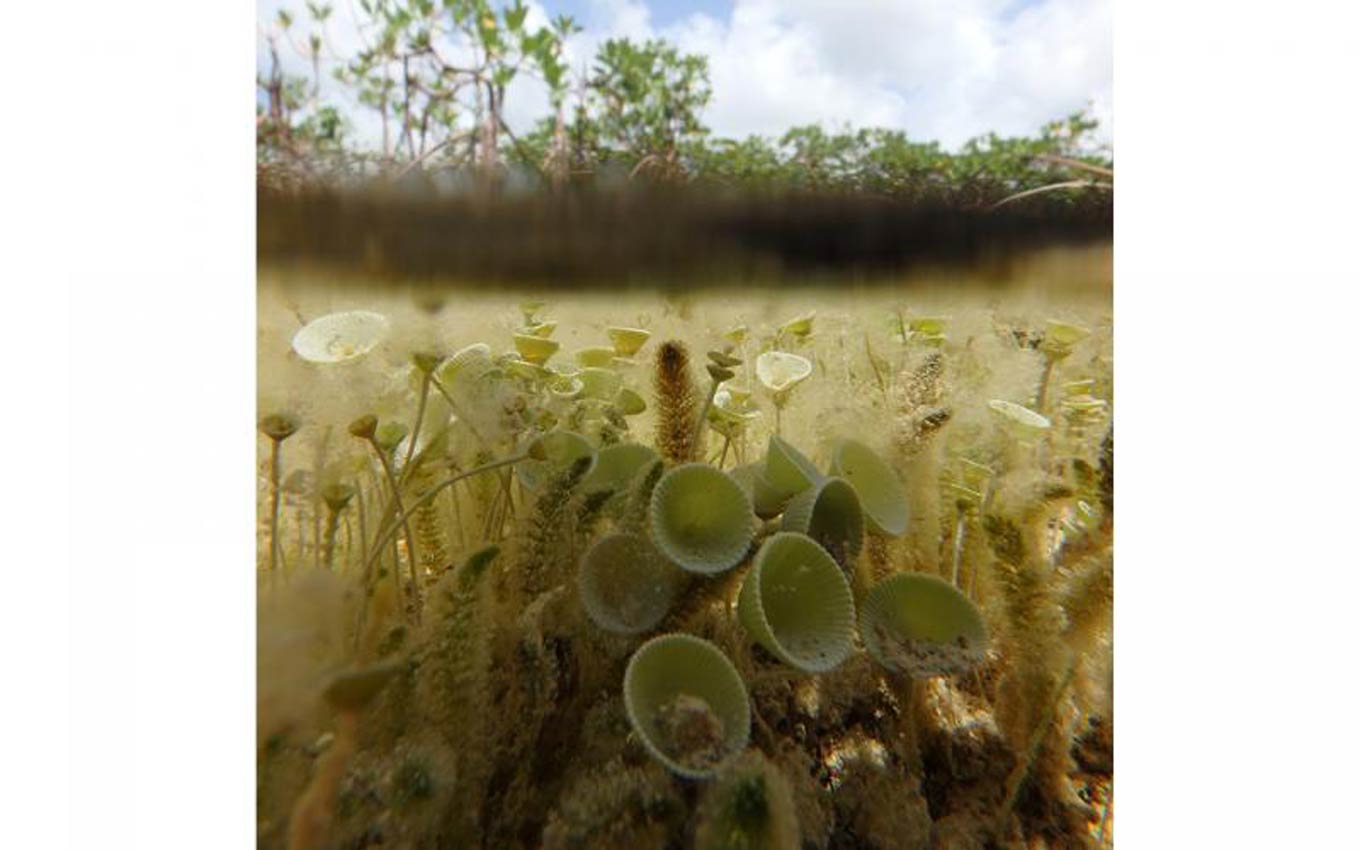
For Knowles, the newfound interest in mangroves has meant more attention and more plantings: In years past, he led one mangrove planting a year; since last summer, he has already led five. It also gives him hope. “No matter how much we try to differentiate the global north or the global south, it’s still one planet,” he says. “We all really have to work together to achieve some semblance of success.”
Today, visitors to Bonefish Pond National Park find a wasteland-turned-wetland that residents cherish. Families walk along a boardwalk that’s raised above the flora, to a calm creek that’s protected by mangroves. Smiling and laughing, they snorkel, kayak, and take in the beauty, so recently restored.
And it’s the kind of backdrop that Knowles grew up with, now protected for future generations to enjoy. “Lo and behold,” he jokes. “Mangroves are sexy.”
Sometimes it's hard to put words to the experience of a day spent among trees — and on those occasions, it's helpful to turn to the words of others. This week we've compiled the most meaningful quotes about trees, forests, and environmentalism from folks who care greatly about protecting the Earth. Their words are powerful reminders of our responsibility to our planet.
Explore this quotes and share them far and wide — whether you're seeking out a great Instagram caption, a way to celebrate Arbor Day, or just want to remind people that caring for nature matters.
Also: At Good Good Good we're all about celebrating good news. Make sure you check out our collection of the best good news about trees.
Dive into these inspirational tree quotes —
Popular Quotes
“The true meaning of life is to plant trees, under whose shade you do not expect to sit.”
— Nelson Henderson
“Ancient trees are precious. There is little else on Earth that plays host to such a rich community of life within a single living organism.”
— Sir David Attenborough
“In nature, nothing is perfect and everything is perfect. Trees can be contorted, bent in weird ways, and they're still beautiful.”
— Alice Walker
“The care of the Earth is our most ancient and most worthy, and after all, our most pleasing responsibility.”
— Wendell Berry
“The best time to plant a tree was 20 years ago. The second best time is now.”
— Chinese Proverb
“Trees are poems that the earth writes upon the sky.”
— Kahlil Gebran
“There is a serene and settled majesty to woodland scenery that enters into the soul and delights and elevates it, and fills it with noble inclinations.”
— Washington Irving
“To be without trees would, in the most literal way, to be without our roots.”
— Richard Mabey
“For in the true nature of things, if we rightly consider, every green tree is far more glorious than if it were made of gold and silver.”
— Martin Luther
“Never say there is nothing beautiful in the world anymore. There is always something to make you wonder in the shape of a tree, the trembling of a leaf.”
— Albert Schweitzer
→ Read more quotes about nature
Tree Planting Quotes
“Even if I knew that tomorrow the world would go to pieces, I would still plant my apple tree.”
— Martin Luther
“The creation of a thousand forests is in one acorn.”
— Ralph Waldo Emerson
“Someone's sitting in the shade today because someone planted a tree a long time ago.”
— Warren Buffett
“On the last day of the world I would want to plant a tree.”
— W.S. Merwin
“Acts of creation are ordinarily reserved for gods and poets, but humbler folk may circumvent this restriction if they know how. To plant a pine, for example, one need be neither god nor poet; one need only own a shovel.”
— Aldo Leopold
“He that plants trees, loves others besides himself.”
— Thomas Fuller
“Until you dig a hole, you plant a tree, you water it and make it survive, you haven't done a thing. You are just talking.”
— Wangari Maathai
On Protecting Trees
“These young people are saying we all have a right to know what is in the air we breathe, in the water we drink, and the food we eat. It is our responsibility to leave this planet cleaner and greener. That must be our legacy.”
— John Lewis
“A nation that destroys its soils destroys itself. Forests are the lungs of our land, purifying the air and giving fresh strength to our people.”
— Franklin D. Roosevelt
“When the last tree is cut, the last fish is caught, and the last river is polluted; when to breathe the air is sickening, you will realize, too late, that wealth is not in bank accounts and that you can’t eat money.”
— Alanis Obomsawin, Indigenous filmmaker
“Together we can preserve the forest, securing this immense treasure for the future of all these our children.”
— Chico Mendes
“If we lose the forests, we lose our only teachers.”
— Bill Mollison
“When trees burn, they leave the smell of heartbreak in the air.”
— Jodi Thomas
“We need to protect our forests to protect all of life.”
— Samantha Lynch
“A grove of giant redwoods or sequoias should be kept just as we keep a great or beautiful cathedral.”
— Theodore Roosevelt
→ Read inspiring quotes about national parks
On Life & Being Like a Tree
“What we are doing to the forests of the world is but a mirror reflection of what we are doing to ourselves and to one another.”
— Chris Maser
“I feel a great regard for trees; they represent age and beauty and the miracles of life and growth.”
— Louise Dickinson Rich
“Deep down, at the molecular heart of life, the trees, and we are essentially identical.”
— Carl Sagan
“Knowing trees, I understand the meaning of patience.”
— Hal Borland
“Trees are as close to immortality as the rest of us ever come.”
— Karen Joy Fowler
“This oak tree and me, we're made of the same stuff.”
— Carl Sagan
“Be like a tree. The tree gives shade even to him who cuts off its boughs.”
— Sri Chaitanya
“Be as useful as a tree! Give life to others; be shelter to everyone; grant fruits to all! Be good like a tree!”
— Mehmet Murat Ildan
“Learn character from trees, values from roots, and change from leaves”
— Tasneern Harneed
“You know me, I think there ought to be a big old tree right there. And let's give him a friend. Everybody needs a friend.”
— Bob Ross
→ Read more quotes about life
Quotes About Forests & the Woods
“Finland is officially the world’s happiest country. It is also 75 per cent forest. I believe these facts are related.”
— Matt Haig
“I found far more answers in the woods than I ever did in the city.”
— Mary Davis
“I took a walk in the woods and came out taller than the trees.”
— Henry David Thoreau
“Forests were the first temples of the divinity, and it is in the forests that men have grasped the first idea of architecture.”
— Francois-Rene de Chateaubriand
“Forests are like churches, hallowed places. There’s a stillness about them, a sort of reverence.”
— Sabrina Elkins
”There is always an adventure waiting in the woods.”
— Katelyn S. Bolds
“In some mysterious way woods have never seemed to me to be static things. In physical terms, I move through them; yet in metaphysical ones, they seem to move through me.”
— John Fowles
From John Muir
John Muir played a significant role in conservation efforts in Yosemite Valley and in protecting Sequoia National Park's iconic trees. While his iconic quotes about the great outdoors have become ubiquitous in the world of hiking, camping, and the American wilderness, more attention has recently been given to some of his other words, namely his racist remarks and views. In recent years, the organization Muir founded, The Sierra Club, has condemned him for the racist comments he made about Black and Indigenous people.
If you're currently researching quotes about trees and the outdoors, we encourage you to think twice about using John Muir quotes — or consider also including quotes from Black and Indigenous environmentalists. (You can find more in our roundup of Earth Day quotes.) The outdoors has no place for racism and xenophobia — and we all have a role to play, as intersectional environmentalists, to care for all people as we celebrate nature.
“And into the forest I go to lose my mind and find my soul.”
— John Muir
“Between every two pines is a doorway to a new world.”
— John Muir
“The clearest way into the Universe is through a forest wilderness.”
— John Muir
“Keep close to nature’s heart… and break clear away, once in a while, and climb a mountain or spend a week in the woods. Wash your spirit clean.”
— John Muir
“Of all the paths you take in life, make sure a few of them are dirt.”
— John Muir
“Going to the woods is going home.”
— John Muir
“Come to the woods, for here is rest. There is no repose like that of the green deep woods. Sleep in forgetfulness of all ill.”
— John Muir
Tree Hugging Quotes
“Love the trees until their leaves fall off, then encourage them to try again next year.”
— Chad Sugg
“If you would know strength and patience, welcome the company of trees.”
— Hal Borland
“The trees will tell their secrets to those that tune in.”
— Steven Magee
On Loving & Learning From Trees
“Whoever has learned how to listen to trees no longer wants to be a tree. He wants to be nothing except what he is. That is home. That is happiness.”
— Herman Hesse
“Trees exhale for us so that we can inhale them to stay alive. Can we ever forget that? Let us love trees with every breath we take until we perish.”
— Munia Khan
“Trees do not preach learning and precepts. They preach, undeterred by particulars, the ancient law of life.”
— Herman Hesse
“In a forest of a hundred thousand trees, no two leaves are alike. And no two journeys along the same path are alike.”
— Paulo Coelho
“Love is like a tree, it grows of its own accord, it puts down deep roots into our whole being.”
— Victor Hugo
“Trees are sanctuaries. Whoever knows how to speak to them, whoever knows how to listen to them, can learn the truth.”
— Herman Hesse
“Trees give peace to the souls of men.”
— Nora Waln
“It is not so much for its beauty that the forest makes a claim upon men’s hearts, as for that subtle something, that quality of air that emanation from old trees, that so wonderfully changes and renews a weary spirit.”
— Robert Louis Stevenson
“We can learn a lot from the forests, regrowth, change, and beauty.”
— Catherine Pulsifer
“But I’ll tell you what hermits realize. If you go off into a far, far forest and get very quiet, you’ll come to understand that you’re connected with everything.”
— Alan Watts
More Quotes for Instagram Captions & Whatever Else
“All our wisdom is stored in the trees.”
— Santosh Kalwar
“Anyone who thinks fallen leaves are dead has never watched them dancing on a windy day.”
— Shira Tamir
“Storms make trees take deeper roots.”
— Dolly Parton
“The tree is more than first a seed, then a stem, then a living trunk, and then dead timber. The tree is a slow, enduring force straining to win the sky.”
— Antoine de Saint-Exupéry
“Of all man’s works of art, a cathedral is greatest. A vast and majestic tree is greater than that.”
— Henry Ward Beecher
“Knowing trees, I understand the meaning of patience. Knowing grass, I can appreciate persistence.”
— Hal Borland
“Nothing is more beautiful than the loveliness of the woods before sunrise.”
— George Washington Carver
“The way you would draw a tree is different from the way anyone else would draw a tree — and that’s the way it’s supposed to be!”
— Fred Rogers
“He who plants a tree, plants a hope.”
— Lucy Larcom
“Time spent amongst trees is never wasted time.”
— Katrina Mayer
“I went to the woods because I wished to live deliberately, to front only the essential facts of life, and see if I could not learn what it had to teach, and not, when I came to die, discover that I had not lived.”
— Henry David Thoreau
“It is astonishing how ideas can change an experience. How we can be in a beautiful forest, on a hike through verdant beauty, but if someone told us that the forest was the site of a brutal massacre, the entire hike would be transformed. It would turn ominous and sad. Or if I was told the forest was where Walk Whitman had walked every morning before working on "Leaves of Grass," the place would take on a holy majesty. Same forest. Same trail and trees. But the idea layered on top of it mutates it, glorifies or damns it.”
— Jedidiah Jenkins, To Shake the Sleeping Self: A Journey from Oregon to Patagonia, and a Quest for a Life with No Regret
“I felt my lungs inflate with the onrush of scenery — air, mountains, trees, people. I thought, 'This is what it is to be happy.”
— Sylvia Plath
“When we walk into a grove of trees or under an open sky the magic of nature takes over and the heaviness of life lifts a little.”
— Natassia Cassinero
“For in the true nature of things, if we rightly consider, every green tree is far more glorious than if it were made of gold and silver.”
— Martin Luther
Pause for a second and examine the role drinking glasses play in your life. Perhaps you start your day off with a refreshing cup of water, or maybe you look forward to busting out that Olivia-Pope-sized wine glass at the end of a long workday.
Whatever the experience, it’s fair to assume that drinking glasses play a significant role in our lives.
Their impact, though, isn’t limited to the confines of our home. Glass, as it turns out, offers us a way to enjoy our favorite beverages while keeping the planet in mind.
In fact, glass is 100% recyclable and made from readily available domestic materials (like sand, soda ash, limestone, and “cullet,” the industry term for broken up pieces of recycled glass).
According to the Glass Packaging Institute, glass can be endlessly recycled without sacrificing quality or purity — all within as little as 30 days.
Yet, because of the lack of accessible glass recycling programs throughout the United States, and processing costs, we only really recycle a third of it — with an estimated 37% of container glass actually recycled, compared to 74% in Europe, a 2018 report found.
The good news is that cities — like Cleveland and Jacksonville — as well as states across the U.S. are creating programs and laws to boost the amount of glass recycled.
For those who don’t have access to these programs, there’s another way you can reduce glass waste and conserve natural resources: shopping for recycled glassware.
We’ve put together a quick guide to help you find the perfect (or, as you’ll find out, the imperfect) vessels to complement your home and lifestyle. We’ll also give you some more information about recycled glassware to help paint a bigger picture.
Cheers!
Why recycled glassware?
Before we go any further, it’s important to understand why we’re opting to purchase these everyday items in the first place.
As the world collectively works toward lowering its carbon emissions, reusing and recycling are becoming commonplace in our economy.
According to the Glass Packaging Institute, using recycled glass to produce new products cuts emissions, reduces the consumption of raw materials, extends the life of glass-making equipment (like furnaces), and saves energy.
However, producing brand new glass winds up consuming more energy and water in the process — making it among the most energy-intensive industries, according to the U.S. Energy Information Administration.
Another crucial (and often overlooked) reason why we elect to purchase recycled glassware? The people behind these one-of-a-kind vessels.
Much of the recycled glass you’ll come across here and in marketplaces are handmade and incorporate practices passed down over generations. These glasses not only mean your table or bar have beautiful (eco-conscious) eye candy on them, but it also tells a very human story of artistry, history, and resilience.
What to look for in recycled drinking glasses:
With so many consumers prioritizing sustainability and fair trade, it’s important to know whether or not the drinking glasses you’re investing in are recycled and support businesses that promote sustainability and human rights.
1. Artisan Craftsmanship
A good first step in making any purchase decision is by instinctively asking: Where was this piece made? Who made it? Most of the time, we can find those answers by simply turning to the product’s description or About page.
Transparency — and honoring the craft and humans — behind this practice is and should always be a crucial part of the purchasing process. If a retailer or business does not disclose where or who made it, we suggest continuing your search (we promise there are loads of options)!
2. Imperfections
Perfectionists, I’m sorry to break it to you, but because of the nature of how recycled glass is made (handblown vs. machine-made), it’s fair, and almost expected, to find subtle irregularities that speak to the handmade nature and unique character of the product.
While one vessel may be a smidge shorter than the other or have small air bubbles throughout, finding those variations provides visible evidence of the individual attention and craftsmanship each product underwent to make it to your hands.
3. Fair Trade or B Corp Certifications
Fair trade is a global movement made up of a diverse network of producers, companies, consumers, advocates, and organizations putting people and the planet first.
Being Fair Trade Certified is a rigorous, globally recognized sustainable sourcing certification that encourages the improvement of livelihoods, protects the environment, and builds resilient, transparent supply chains.
Finding Fair Trade-certified (or worker-owned cooperatives) products is always a good sign that your purchases have verifiable benefits to people and this planet — however, there’s nuance to this practice.
As with any system, there are people who find ways to take advantage of vulnerable communities and consumers. So while there have been instances (like the one highlighted in this 2014 University of London report) and valid criticisms of product inaccessibility, overall, Fair Trade is a good option for those who prioritize increased economic, environmental, and social benefits for artisans and labor workers.
Similarly, Certified B Corporations is another certification you can start looking out for while shopping. Unlike other business certifications, it measures a company’s entire social and environmental impact. It consists of leaders in the global movement for an inclusive, equitable, and regenerative economy.
This certification, too, comes with its own set of critiques, however, they are required to undergo the verification process every three years — which includes third-party audits — in order to recertify. This means that those who are certified are routinely expected and challenged to continuously improve existing practices.
Our favorite recycled drinking glasses:
The brands you see listed here sent members of our team some glassware to review for this article. (Our reviews are always honest. Receiving free products for testing never impacts our writing — and brands don’t get any influence on our editorial process.)
We broke down our reviews based on the packaging, craftsmanship, and special features of these pieces to help you make the best decision for your next glassware purchase.
By the way, some of the links in this article are affiliate links, which means if you make a purchase after clicking a link, we may earn a commission at no extra cost to you. Thank you!
Hand-Blown Glassware from NOVICA

What’s good: NOVICA has been in the direct artisan-to-consumer business since 1999. Fair Trade and B-Corp certified, this company is headquartered in the U.S. but offers a worldwide platform to artisans who seek to preserve and amplify their cultures. NOVICA features handmade creations from thousands of creators (this site isn’t only limited to recycled glassware).
To date, NOVICA has sent more than $115 million directly to artisans in developing nations and offers small microloans (with 0% interest) to jumpstart small businesses.
We included NOVICA in our list of the best Amazon alternatives.
Details: NOVICA sent me a set of four eight oz. hand-blown recycled glass “Icy Amber” juice glasses. Made in Guatemala by The Cantel Blown Glass Artisans of Guatemala, these glasses are free of lead and toxins and are dishwasher safe (though hand washing is recommended).
Price: $94.99 for a set of 4
Amanda’s Thoughts:
- Packaging: This set was thoughtfully packaged and wrapped with kraft filler paper. They included a small handwritten postcard — which I felt was a meaningful reminder of the impact that these items have.
- Craftsmanship: The Cantel Blown Glass Artisans of Guatemala, a cooperative formed in 1976, offers several recycled glassware designs. The set I received was a warm translucent amber color peppered with tiny air bubbles that give it a bit of dimension and texture when you look at them up close. The glasses have a bit of thickness to them which makes them feel a lot more durable than my other (more fragile) glasses.
- Why it’s special: As someone who has ties to Guatemala, I immediately knew the kind of craftsmanship, heart, and intentionality that went into creating these pieces. This collective takes great pride in the work they’ve done to preserve the environment and their culture. These glasses are functional, sustainable, and works of art — a huge plus if you’re limited on space and hope to find something that ticks all those boxes.
→ Shop NOVICA’S Hand-Blown Recycled Glass Amber Juice Glasses
Our Place’s Drinking Glasses

What’s good: Known for its cult-favorite best-selling Always Pan, Our Place is an LA-based brand that turns to vetted artisans and factory partners in Thailand, China, and Mexico to manufacture its products. Our Place’s Drinking Glasses are crafted by a team of expert glassblowers and produced by traditional handmade techniques.
Each glass is sustainably made from recycled glass and sand, as well as naturally dyed (so there’s no need to worry about ingesting any yucky chemicals while you drink).
Details: This set of four or eight 12-ounce glasses comes in various colors, including mix and match color options. These versatile handmade glasses are dishwasher safe and stackable (to save on precious shelf space).
Price: $50 for a set of 4

Megan’s Thoughts:
- Packaging: All of Our Place’s products ship plastic-free in custom cardboard boxes, and these glasses were no exception. They were perfectly placed in cutout holes within the box to eliminate the need for any bubble wrap or padding — no clinking or rolling around here!
- Craftsmanship: These drinking glasses are specially designed to be stacked — and they actually do, unlike glasses that technically can be stacked, but actually kind of stick together when you try to grab one. (Just me?) They’re dishwasher safe, fully recyclable (but why would you ever get rid of them?), and the glass feels really durable.
- Why it’s special: As someone who drinks out of the biggest glass possible during the day, I was worried these would feel a bit too small, but they’re the perfect size for an afternoon iced coffee, matcha, or when you want a “special” cup to drink out of. I’m a pretty firm believer that glassware is like half of what makes a drink! I find myself reaching for these over all my other cups, and want them in every color.
→ Shop Our Place’s Drinking Glasses
Topo Chico Recycled Glasses from Made Trade
What’s good: We discovered these glasses made with Topo Chico bottles through Made Trade, a woman-owned, family-run online marketplace that supports small businesses and artisan collectives around the world. Its comprehensive partnership program asks applicants to disclose detailed information around products offered, manufacturing process, labor conditions, Fair Trade status, and more.
Sturdy, compact, and Montessori-friendly, these glasses are thoughtfully shipped in carbon-neutral packaging, with each purchase even including additional carbon offsets that help guarantee a carbon-neutral purchase.
Details: Made Trade sent Kamrin a set of six Upcycled Glass Cups. They’re made from recycled Topo Chico bottles and handmade in Texas. This classic set comes in a green or clear finish, and at eight ounces, they’re a great size for a quick sip of juice, or a morning glass of lemon water. These glasses are dishwasher safe.
Price: $48 for a set of 6
Kamrin’s Thoughts:
- Packaging: Made Trade sent this set of glasses in a small cardboard box with perfectly-sized cutouts for the glasses to sit without the danger of damage or movement. The box even had fun facts about sustainable glassware printed on the side!
- Craftsmanship: These glasses are genuinely one of my new favorite items on my shelves. They are durable and thick, and every time I use them, I’m amazed knowing it was once a Topo Chico bottle. I love the simplicity of the design and the green tint, as well.
These glasses are only able to hold eight ounces, making them small and compact. However, when I fill them to the brim, I have the perfect amount of what I need, and I can easily clean them in the dishwasher and use them all over again.
- Why it’s special: These glasses have become a part of my daily ritual. Whether it’s an afternoon iced chai, or a little splash of lemon water, I’m always excited to pull one from my shelf and enjoy a drink. I don’t drink alcohol, but if I did, these could even be a great cocktail glass, too.
→ Shop Upcycled Glasses from Made Trade
Artisan Upcycled Glassware from Lil Darlin Studios
What’s good: Lil Darlin Studios is a small business based in North Carolina, where artist Sarah May creates upcycled art, including glassware. Created in small batches, all glasses are made from items like wine bottles or other glasses destined for a landfill. They are made by hand from start to finish — from scraping off old labels, to cutting the glass to create a perfect edge. Sarah’s designs are also transferred onto the final product for a unique design to elevate your home.
Details: Kamrin received a pair of 17-ounce drinking glasses that are both about 5.5 inches tall. Due to the nature of Lil Darlin’s glasswares being made from preloved bottles, all sizes and shapes are approximate, and the items should only be hand-washed. Small “imperfections” may also be seen on the glasses but do not impact the item’s durability or use.
Price: $48 each
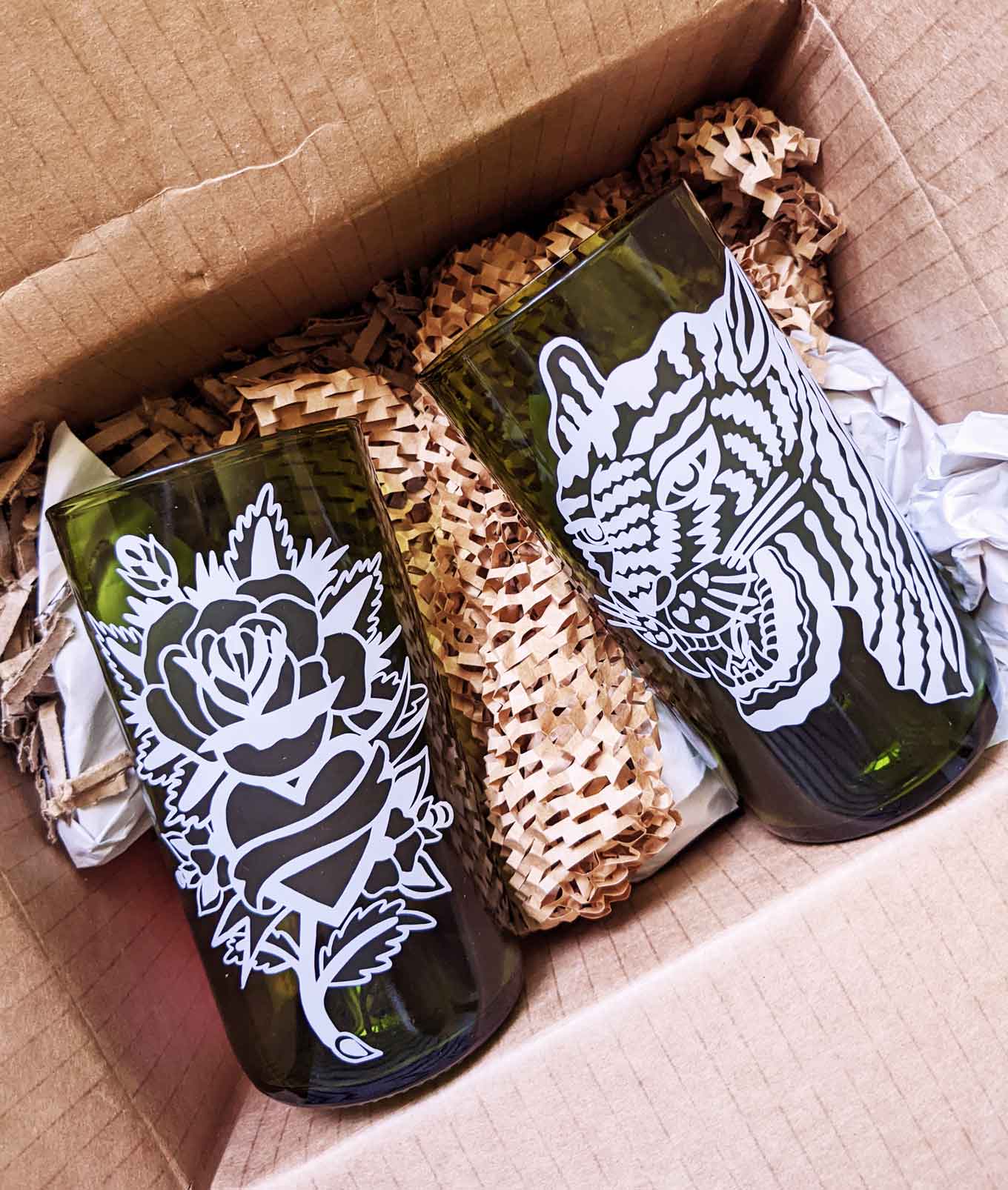
Kamrin’s Thoughts:
- Packaging: Lil Darlin’s packaging contains zero plastic and even has a cute stamp on the box reading “please do not throw me in the trash!” Recyclable corrugated paper, craft paper, and cardboard filler were used to individually wrap glasses and protected them perfectly. My box also had a compostable shipping label attached.
- Craftsmanship: These glasses are beautiful. Made with a deep emerald green, they each have a white design, a tiger and a flower respectively, and they make for beautiful art pieces, as well as a durable and large drinkware option.
- Why it’s special: You can see the love that goes into these glasses. Sarah’s artistry makes them such a unique item to use, and they take something that would otherwise be thrown away and turned into practical and stylish home goods. I love that Sarah collects her original glass items from local businesses in her community and now I get to enjoy them in my home.
→ Shop recycled art glasses from Lil Darlin Studios
Other environmentally-friendly drinkware options:
Newly’s Spanish Wine Glasses

What’s good: Newly is a certified B-Corp that makes beautiful home goods from 100% recycled or repurposed materials. As of January 2022, the company has diverted 14 tons of trash through its 100% recycled manufacturing process and has saved 2.73 tons of greenhouse gasses through its recycled glass practices. Not to mention, Newly has also saved three tons of carbon dioxide and 17,000 gallons of water by using 100% recycled packaging.
Details: This set of six stemless seafoam-tint wine glasses are handmade and mouth-blown by Spanish artisans from 100% recycled glass. Its design is clean, simple, and artistic. This product's environmental impact is transparently displayed on the product page (find out more), which is a huge green flag.
Price: $70 for a set of 6
→ Shop this set of Spanish Wine Glasses from Newly
Authentic Mezcal Infusing Set from Uncommon Goods
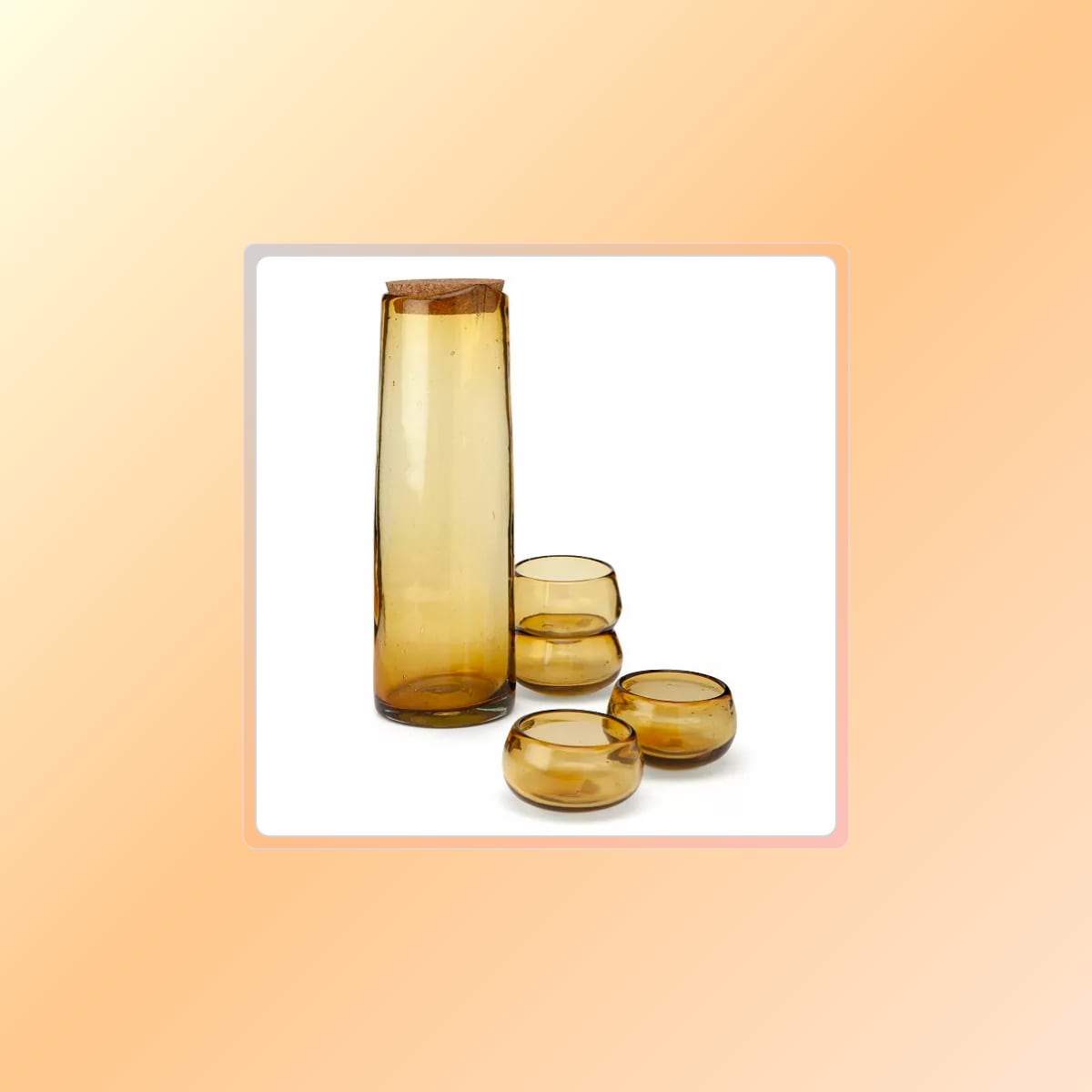
What’s good: Uncommon Goods is a Certified B-Corp company that supports independent makers from all over the world. Each product in this online marketplace serves a purpose and aims to help solve a problem. They believe in, advocate for, and offer fair, livable wages and paid family leave to their team members.
Since launching its give-back program in 2001, Uncommon Goods has donated more than two million dollars to causes like the American Forests, International Rescue Committee, and The Thurgood Marshall College Fund.
Details: We thought we’d throw in a little curveball just in case someone was interested in incorporating recycled glassware into their bar area. This hand-blown mezcal set comes with one amber-tinted pitcher and four tasting glasses and is made in Mexico. It’s great for those who love to infuse tequila or mezcal with fruit or spice to create DIY craft spirits.
Uncommon Goods is another one of our favorite Amazon alternatives.
Price: $98 for a pitcher with cork top and 4 mezcal glasses
→ Shop this hand-blown mezcal set from Uncommon Goods
Food52’s Hand-Blown Recycled Glassware

What’s good: Food52 is a one-stop shop for foodies! The company has spent a decade cultivating a strong community of people who love food and cooking. What makes it different from similar online communities is that it brings handmade goods (like recycled glass) to the table. From recycled drinking glasses to mugs, Food52 provides sustainable options to a community of passionate individuals looking to tell a story.
Details: The Hand-Blown Recycled Glassware set was handcrafted in Poland (check out the story behind it). This set comes in four distinct sizes: short, medium wide, medium narrow, and tall.
Price: $60 for a set of 4 medium wide glasses
→ Shop Food 52’s Hand-Blown Recycled Glassware
Support Small Businesses
While some of these recommendations we’ve put together offer beautifully sustainable options for your home, they are not the only options. In fact, there are so many other small businesses in the market that offer recycled glass — all while also centering artistry and environmental impact into the products they create.
Considering buying small — like those who have Etsy storefronts — is a great option if you’re committed to supporting small businesses. With an overwhelming number of options, you’re sure to find glassware that speaks to your values, supports small businesses, and enhances your kitchen’s aesthetic — win, win, win!
Buy Secondhand
If you don’t have a particular aesthetic or look in mind when purchasing glassware, consider buying or accepting secondhand goods — it saves you money and allows you to participate in the circular economy.
Reuse Salsa, Pasta, or Mason Jars
With social media constantly showcasing the newest products to incorporate into your low-waste lifestyle, (I’m looking at you TikTok, Instagram, and Pinterest) it can get a little discouraging when you care about your environmental impact, but money is tight.
The secret that many of these brands and influencers aren’t telling you? The most sustainable thing you can do is to use what you already own. Reuse any salsa, pasta, yogurt, or mason jars already lying around at your place. (There are even a few eco-friendly candle brands whose vessels are meant to be reused as drinking glasses.) Yep, it’s as simple as that!
Make It Yourself
For the crafty folks out there who have a knack for glassblowing or pottery — or simply love a good challenge — creating your very own set of vessels is a great way to elevate both your style and values into everyday pieces. If getting your hands dirty and creating something new excites you, this is your invitation to get started.
You can grab a glass cutter online, too, and turn other glass items into drinkware or vases. Just be careful when using a new tool with sharp edges!
Outfitting your whole kitchen? Explore our guide to the best eco-friendly products for your home!
Every day the Good Good Good team collects the best good news in the world and shares it with our community. Here are the highlights for this week!
If you want to get good news in your inbox every day, join the Goodnewsletter — the free daily newsletter designed to leave you feeling hopeful.
The Best Positive News We're Celebrating This Week —
Brazil is building the world’s biggest urban garden — covering an area equivalent to 15 soccer fields
Working with a group of several local favelas, the city of Rio de Janeiro’s “Hortas Cariocas” initiative aims to both improve access to fresh, organic food and provide economic opportunity for those living in the favelas.
First launched in 2006, the project has grown to now include 56 active community gardens in favelas and schools across the city, with about 50,000 families involved. The gardens are connected through the schools and neighborhoods, and once complete, they will cover an area equivalent to 15 soccer fields and benefit up to 100,000 families.
The urban garden is already and will continue to help meet a massive need in the country — more than 33 million Brazilians face hunger.
Clean energy made up just over two-thirds of new electrical generation capacity in the U.S. in the first half of 2022
According to data recently released by the Federal Energy Regulatory Commission (FERC), wind and solar alone provided 67.01% of electrical capacity added in the first half of 2022. In addition to this positive progress in the transition to clean energy, no new coal power capacity was added.
With this new capacity, clean energy now makes up 26.74% of the total available generating capacity in the U.S. — up from 19.7% five years ago, and 14.76% 10 years ago.
This is incredibly encouraging progress, especially in light of President Biden officially signing the Inflation Reduction Act into law, which includes billions of dollars for building up clean energy infrastructure.
California will be the first state in the U.S to install solar panel canopies over its canals
In an effort to help fight drought and generate clean energy, “Project Nexus” will consist of an estimated 8,500 feet of solar panels installed over canals in Central California. First announced earlier this year, the project breaks ground this fall and is estimated to be completed in 2023.
The project addresses both climate action and climate resilience — it will increase clean power generation in the state and reduce the amount of water evaporating from canals. California has seen worsening droughts in recent years due to climate change.
A 2021 University of California, Merced study found that covering all the state’s approximately 4,000 miles of canals with solar panels could save about 63 billion gallons of water every year, and save the state energy and money.
Dutch ‘bicycle platforms’ are helping communities try out transitioning from car parking to bike parking — and it’s helping more make the switch permanently
A parking spot for a car can hold as many as 10 bicycles, but with car parking limited in some cities, drivers can have a difficult time letting go of a parking spot. At the same time, bicycle owners have nowhere to lock up their rides, so they end up spilling onto sidewalks, making it difficult for pedestrians.
Cities in the Netherlands have found a helpful solution: temporary bike platforms (in Dutch, a “fietsvlonder”) that fit into one parking space for residents to try out before making a permanent switch.
In one installation on a crowded street in The Hague, residents had a temporary platform for two months and were allowed to give feedback — 86% of residents liked the bike rack. A permanent one was installed, and the temporary platform was moved to another neighborhood for a trial run.
France just became the first country in the world to ban fossil fuel advertisements
First proposed in 2019, France just implemented a ban on all advertisements promoting coal and oil. Beginning in June 2023, the ban will include advertisements for natural gas, too. Companies who violate the ban will be fined $100,000 for each instance and could pay double for repeated violations.
Fossil fuel companies have long gotten away with misleading advertisements about their products, so this is really good news to celebrate. Similar bans have been implemented in cities like Amsterdam, and others have bans in the works.
Environmentalists say the ban is good but doesn’t go far enough to stop the influence of fossil fuel companies, as they’ll still be allowed to sponsor events and more.
After 99.9% of their population was depleted, bison are now making a comeback in the U.S.
About 150 years ago, nearly 30 million American bison lived throughout the Great Plains between the Rocky Mountains in the West and the Appalachian Mountains in the East. But with white settler populations exploding throughout the region in the late 19th century, hunters severely diminished the bison population, at one point killing around 5,000 per day.
A modest collection of federally managed herds in the early 20th century brought bison back from the brink. With approximately 11,000 Plains bison in 19 herds, the Department of the Interior is today’s lead conservation steward for North American Plains bison across 4.6 million acres of land in 12 states.
Conservation efforts, responsible farming, and an ambitious relocation effort have led to a bison population boom in recent years, with numbers reaching around 400,000 total.
More good news of the week —
A new encampment strategy in Seattle is hoping to help get people into permanent housing. While the results are varied, understanding the effectiveness of housing solutions is an important step toward change.
In a breakthrough, scientists discovered a way to destroy some harmful PFAS. It’s simple, potentially really inexpensive, and could open doors for solutions to destroy all types of these “forever chemicals.”
Starting in 2025, all city operations in Chicago will be powered by clean energy. That’s 10 years earlier than its initial goal, and thanks to a new agreement with a clean energy provider.
Low-cost sensors are helping communities across the U.S. fill gaps in air quality data. In one Ohio town, citizen-run sensors picked up high levels of benzene, toluene, and more, which state air regulators didn’t detect.
Women who were excluded before the Title IX gender equality legislation passed are discovering the sports they missed out on. A large tournament in Tennessee has age divisions ranging from 30- to 70-and-over.
The King family just announced a coalition that will invest millions of dollars in groups that promote freedom, justice, and equality. The Drum Major Coalition will initially invest $5 million in Black and Brown organizers around the country.
Partnering with Indigenous leaders, organizations are helping ensure Navajo Nation has access to clean water. Alongside Rotary and the nonprofit DigDeep, the Navajo are bringing a vital commodity to their ancestral homeland.
Women, particularly women of color, will benefit most from the Biden Administration's student loan forgiveness plan. Women hold two-thirds of the student loan debt, and women of color have the highest amount owed.
Kevin Hart just opened the first location of his plant-based, all-vegetarian fast food restaurant. Hart House also offers employees “a living wage alongside other benefits like savings, retirement, and lifestyle spending accounts for things that are wellness-related.” (Explore more vegetarian fast food options)
As climate change threatens lobster populations, fisheries in Maine have a new climate-fighting catch: kelp. The seaweed is a useful ingredient in cosmetics, ice cream, toothpaste, and more — and like all plants, absorbs carbon while giving off oxygen.
Spain just passed a landmark “only yes means yes” consent law. After two years of pushing the legislation, the new law protects victims of sexual abuse by requiring explicit consent for sex.
The largest solar panel manufacturer in the U.S. is building a new manufacturing facility in the Southeast. It will invest $1 billion in the factory and said the Inflation Reduction Act was the catalyst for the expansion.
Mary Peltola just became the first Alaskan Native to be elected to Congress. Alaska used ranked-choice voting to elect Peltola, who also served 10 years in the state Legislature.
Bank of America is testing a no-down-payment mortgage program for minority communities. Helping remove longtime obstacles for Black and Hispanic homebuyers, the bank also won’t require closing costs or minimum credit scores.
The FDA has now approved vaccines targeting the Omicron variant and subvariants. The vaccines will also include the original virus targeted by all prior vaccines and could be available any day.
National Suicide Prevention Month is honored each year in September. These important awareness events have been recognized for more than a decade, as mental health activists and practitioners across the country work to reduce the prevalence of suicide and provide support to those who struggle.
With events, screenings, activities, and more, Suicide Prevention Month is a catalyst for us to learn more, seek help, offer support, and open our hearts and minds to vulnerable conversations.
We’ve collected ideas for action steps on how each of us can use this annual event as an opportunity to educate ourselves, support the people in our lives, and take action to reduce suicide rates on a massive scale.
Scroll through our guide and find a few action steps you can take — and then share this guide with others so they can join in as well.
Please know that asking for help is a sign of strength — not weakness. If you’re in a crisis, please dial 988 to reach the Suicide & Crisis Lifeline. If you’re looking for professional help or looking for specific support, we encourage you to use Good Good Good’s Mental Health Resources Guide. You can also text HOME to 741-741 to instantly connect with a trained crisis counselor, 24/7, for free.
Activities To Honor & Celebrate Suicide Prevention Month —
Learn
Learn the warning signs of suicide.
Suicide is a deeply complex and personal issue, and it’s important to remember that not everyone who has a mental health condition or experiences risk factors contemplates or plans suicide. Nevertheless, it is vital to know the warning signs that someone might be at immediate risk for a suicide attempt.
Thanks to the National Institute of Mental Health for this helpful information— check out the organization’s suicide prevention guide for more helpful resources.
- Talking about wanting to die or wanting to kill oneself
- Talking about feeling empty, hopeless, or having no reason to live
- Talking about feeling trapped or that one has no solutions
- Feeling unbearable emotional or physical pain
- Talking about being a burden to others
- Withdrawing from family and friends
- Giving away important possessions
- Saying goodbye to family and friends
- Putting affairs in order, such as making a will or arranging home and financial logistics
- Taking great risks that could lead to death, such as driving extremely fast or using drugs and alcohol more often
- Displaying extreme mood swings
- Making a plan or looking for ways to acquire lethal weapons, stockpiling pills, or purchasing a gun
- Showing rage or talking about seeking revenge
Learn the correct terminology.
In order to break through and have difficult, life-saving conversations, we need to know what language to use. Here are a few helpful words to add to your vocabulary and help you dive a bit deeper into suicide prevention work. Again, these insights are from the National Institute of Mental Health. You can check out the organization’s suicide prevention guide for additional information and resources.
- Suicide: when people harm themselves with the goal of ending their life, and they die as a result.
- Suicide attempt: a non-fatal, self-directed, potentially injurious behavior with intent to die as a result of the behavior. A suicide attempt might not result in injury. (Experts suggest avoiding terms like “failed suicide” or “successful suicide,” which perpetuate negative stigmas.)
- Suicidal ideation: refers to thinking about, considering, or planning suicide.
Another helpful language tip is to use the phrase “died by suicide,” instead of “committed suicide” when talking about someone who lost their life. Suicide is not a crime that one commits, but rather a complex outcome of illness and risk factors.
Learn the stats about suicide.
The statistics about suicide are very overwhelming and disheartening, but they help us get a better picture of the issue at hand. Here’s what you need to know:
- In 2020, suicide was the twelfth leading cause of death overall in the U.S., claiming the lives of over 45,900 people.
- Rates of suicide are highest among male Native Americans, at 37.4% per 100,000, according to the CDC in 2020.
- The use of firearms is the number one method of suicide, followed by suffocating and poisoning. For 57.9% of males and 33% of females, firearms are the chosen method, while 7.8% of males and 28.6% of females select poisoning.
- In 2020, the prevalence of serious suicidal thoughts was highest among young adults aged 18-25 at 11.3%
- LGBTQ youth are more than four times as likely to attempt suicide than their peers.
- Between 2007 and 2018 the suicide rate among those age 10 to 24 increased nearly 60%, according to the CDC.
- Suicide is the number one cause of gun deaths in the U.S., factoring at 60.3% of the number of gun deaths by intent in 2019.
Learn about effective ways to reduce suicide.
Suicide is a culmination of a number of nuanced factors, and preventing suicide includes loads of different people and institutions. From psychologists, clinicians, social workers, and public health experts, to first responders, policymakers, community members, and law enforcement — suicide prevention starts with basic science.
Diverse expertise and widespread education efforts are necessary to prioritize funding and resources for suicide prevention. Experts are advocating for greater funding for research to do their jobs and create effective policies for combatting suicide.
One of the key ways to reduce suicide is to enact stricter gun laws. By making guns more difficult to acquire, or by putting more time between gun licensing and purchasing, or simply by improving gun safety practices, firearm suicide will become less pervasive.
Additionally, suicide prevention efforts can be greatly supported by more accessible healthcare, allowing people to access help for their mental health as a preventative measure, rather than a reactionary one.
Developing mobile crisis services, peer crisis services, and crisis warmlines can also support people in crisis. This is often presented as an alternative to law enforcement intervention, removing the threat of institutionalization and allowing people to have agency over their suicide prevention care.
Another deeply important suicide prevention measure is by creating a world that is safer and more accepting of LGBTQ+ youth, who are highly at risk of suicide, due to social isolation, conversion therapy, and stress.
Though these are certainly not the only ways to reduce suicide, and we could spend hours writing about and researching each of these topics, these are a great starting point to learn more about suicide prevention in an intersectional and intentional way.
“The field of psychology is unique in our ability to move science from the lab to providers’ offices, and even into legislative efforts,” Mitch Prinstein, Ph.D. shared with the American Psychological Association. “Psychology can make an enormous difference by working together across science, practice and policy. Together, our work can truly save lives.”
Learn how to ask hard questions.
While most of us assume that asking a loved one about suicidality can increase suicidal tendencies, several studies have found that questions about suicide do not increase potential suicidality.
In fact, doing so could actually save a life.
Becka Ross, LCSW, is the Chief Program Officer at Crisis Text Line — and wrote a helpful article for Good Good Good about why and how to ask about suicide.
Learn how to help someone struggling with suicide.
If someone shares their suicidal thoughts with you, you may feel a lot of pressure to respond “correctly”, but first and foremost remember: the fact that they shared this with you is a positive thing, and you now have the opportunity to help.
We put together a guide so you can preemptively learn how to provide support if the opportunity arises in the future.
Read quotes about suicide prevention.
Sometimes you just need to hear (or share) the right words. We collected some of the best quotes about suicide (and more mental health quotes) that speak to the ideas of hope, story, and strength.
Take Action
Make a donation.
Donating directly to organizations helping to prevent suicide allows them to continue doing their work all year long. We recommend the following nonprofits:
- To Write Love On Her Arms
- American Foundation for Suicide Prevention
- The Jed Foundation
- The Trevor Project
- Crisis Text Line
- Your local crisis call center
Volunteer at a crisis hotline (or text line).
It’s incredibly valuable and important for people to have somewhere safe and accessible to turn to when they’re experiencing a crisis. Fortunately, thousands of volunteers continually and eagerly show up to provide support.
Crisis centers offer training and support to help empathetic volunteers get started helping people. Many volunteer positions can be done remotely at times convenient for you.
Here’s a brief list of volunteer opportunities available to folks who aren’t mental health professionals:
- Crisis Text Line
- The Trevor Project
- Trans Lifeline (All positions are currently filled! Yay!)
- Your local crisis center (This is the best way to get involved in supporting the 988 Suicide & Crisis Lifeline)
(You can read some of the behind-the-scenes of how Crisis Text Lines makes volunteering “stick”.)
Join a community walk.
The American Foundation for Suicide Prevention (AFSP) hosts National Suicide Prevention Week Walks all across the country! This is a fundraising event that allows people to walk in memory of loved ones, walk in support of those struggling, walk for themselves, or to connect with others who understand.
Visit their website, search your state, and find a walk in your area.
Attend an event.
The AFSP will host a variety of digital events throughout National Suicide Prevention Month that you can add to your calendar.
Additionally, you can search the organization’s main website to locate an in-person event supporting suicide prevention near you.
Leadership organization Key Club is also encouraging folks to participate in events throughout Suicide Prevention Month, including digital storytelling efforts and seeking help through mental health screenings.
On Social Media
Share resources.
Whether it’s a hotline, a shareable graphic, or a comprehensive guide (feel free to share this one!), you can use your social media platforms to share resources with your community.
The AFSP has a number of helpful shareables to help you get started.
Share your story.
If you are comfortable and feel ready to share your story, it can be a beacon of hope for those who may be struggling. Whether you create your own post or share your story through ASFP or the National Alliance on Mental Illness, know that somewhere, someone will feel more understood and more compelled to seek help because of your vulnerability.
More Ways To Make a Difference
Wear mental health apparel.
When we struggle with our mental health, it’s easy to feel like we’re alone and that we’re the only ones who feel this way. That’s why it’s important to be able to talk about mental health openly and honestly — because you never know who is struggling in silence.
While we can’t strike up a conversation about depression or suicide with every person we pass on the street, we can find other ways to remind people they’re not alone: through the clothes we wear.
There are some incredible brands creating shirts and apparel that creatively represent mental health awareness with the goal to end the stigma of mental illness. We rounded up the best mental health shirts that also give back to nonprofits (and, of course, look good).
Shop around for some new clothes and make a small difference in the lives of strangers everywhere you go.
Put up a sign.
Just like you can wear a shirt that reminds people they are not alone — your yard can spread a message of hope to all who pass it.
In 2017, a woman in Oregon decided to stake yard signs around her neighborhood with messages like “You Matter”, “Don’t Give Up”, and “You Are Not Alone”.
The meaningful messages, which were created in response to a number of suicides in her community, began to go viral — with thousands of people asking how they could put similar signs up in their own neighborhoods.
She started a nonprofit called Don’t Give Up and has now shipped signs (and stickers and more) to every state.
You can learn more about the Don’t Give Up movement and get your own sign to fill your community with more hope.
Listen to mental health podcasts.
Podcasts can be a simple way to learn from experts and learn about anything from self-care tips and guided meditations — to people’s specific life experiences and stories of overcoming mental health challenged. Plus, research has shown that narrative audio storytelling (like podcasts) can have a positive effect on our brains.
While podcasts don’t take the place of therapy, they can be a helpful addition to therapy and can aid in the therapeutic process.
We rounded up the best mental health podcasts to subscribe to during Suicide Prevention Month — and to keep listening to all year long.
Watch mental health documentaries.
Similarly, documentaries are a great way to learn about important ideas and mental health is no exception. Whether you want to learn about systemic issues or hear individual stories of someone’s mental health journey, there is a documentary for you.
We curated a list of the best mental health documentaries to stream and watch during Suicide Prevention Month.
Frequently Asked Questions
When is Suicide Prevention Week?
Generally, Suicide Prevention Week takes place a week after Labor Day. In 2024, Suicide Prevention Week takes place September 8th through 14th.
When is World Suicide Prevention Day?
World Suicide Prevention Day takes place on September 10th every year.
What is the 2024 theme for Suicide Prevention Month?

Mental health nonprofit To Write Love On Her Arms’ theme for 2024’s Suicide Prevention Month is “Please Stay Alive” This simple theme isn’t a sentiment that ends with those three words. It continues on into each day after we make that plea — inspiring us to take action to make sure more people know better days are ahead.
What was the 2023 theme for Suicide Prevention Month?
Mental health nonprofit To Write Love On Her Arms’ theme for 2023’s Suicide Prevention Month was “The World Is Not Better Without You.” This theme is a reminder that what people believe about suicide determines what people do about suicide prevention.
What was the 2022 theme for Suicide Prevention Month?
In 2022, To Write Love On Her Arms’ theme for Suicide Prevention Month was “You Are Not a Burden”. You can learn more about this theme and get access to resources at twloha.org.
When is Mental Health Awareness Month?
Mental Health Awareness Month takes place in May each year. You can learn more about how to take action during Mental Health Awareness Month via our guide — and you can learn more about mental health awareness days and months via our calendar.
P.S. Hispanic Heritage Month begins on September 15th. Learn how to celebrate via our guide! & World Mental Health Day is next month. We created an activity guide as well!
None of us can get enough of it: time. Whether we’re snoozing our alarms, color-coding the Google calendar, or urgently feeding the dog when he whines at exactly 5 p.m. every day, time has a hold on us unlike anything else.
It makes sense you’d want to keep track of it. Some folks are happy using their phones or peeking at the clock on the wall, but when you’re on the go or looking for a stylish and practical item to add to your wardrobe, a watch is the way to go.
But you know us — we want to help you make ethical and sustainable purchases that you can depend on, all while doing the least damage to the planet in the process.
Before we jump into some recommendations on your watch-buying journey, we want to remind you that, as always, the best watch to wear is one you already have (maybe you just need to replace a battery on a watch that’s been collecting dust on your nightstand), or one you can buy second-hand. See if you can trade with a friend, stop by a pawn shop, or pick one up on your next thrift or garage sale adventure.
That being said, if you’re really in the market for a new, reliable watch, we’ve compiled a list to help you find the right fit. And we’ll provide a few insights into sustainable and ethical watch-making!
By the way, some of the links in this article are affiliate links, which means if you make a purchase after clicking a link, we may earn a commission at no extra cost to you. Thank you!
What makes a watch ethically or sustainably made?
When looking to buy an eco-friendly watch, you’ll want to keep your eye on the materials used, as well as the general ethos of the brand you’re shopping from.
Sustainable and ethical watches are often artisan or hand-made and use repurposed materials, reclaimed woods, or some toxin-free vegan leather alternatives. Watch bands play a big role in these considerations, as many watch brands move away from leather straps and into vegan, recycled, or other sustainable options.
You may also want to consider how the watch is powered. Can you recharge it by plugging it in? Is it solar-powered? Standard alkaline batteries are disposable and less sustainable (But you can recycle your batteries in a number of different ways — check out Call2Recycle for more info!)
Not every item you purchase can be perfect or leave no trace on the environment, so that’s why it’s also important to ensure you’re shopping with a reputable brand that cares about its labor and sustainability practices.
Look out for companies that give back to environmental organizations, who have carbon-neutral goals, practice equity and inclusion in their employment practices, and responsibly source their materials.
Our favorite ethical watches to shop:
The brands you see listed here are watches we’ve worn, tested, and reviewed ourselves. For many of them, the companies sent members of our team a watch to review for this article. Our reviews are always honest. Receiving free products for testing never impacts our writing — and brands don’t get any influence on our editorial process. We broke down our reviews based on the watch’s packaging, aesthetic, and quality to help you make the best decision.
Solar-powered watches from Solios
What’s good: For Solios, sustainability is at the core of the company’s values. It was the first watch company to become a certified B-corp, and all of their watches use solar energy. Not to mention, Solios uses an innovative cork approach to vegan leather, making all vegan leather watch bands free of rubbers and plastics.
Other recycled and sustainable materials, like recycled stainless steel, eco coloration, cork packaging, and zero single-use plastics. Solios has pledged net zero internal and external emissions by 2025. All employees make above the minimum family wage, and the company hosts monthly community environment projects for its staff.
The company also gives back with its partnerships with the Rainforest Trust and the Make-A-Wish Foundation.
Details: Kamrin received The Solar White watch, a 36 mm rose gold face with a cream vegan leather band made from cork materials. Like all of Solios’s watches, this watch is solar-powered and water resistant for up to 30 meters. It is made with sapphire-coated hardened mineral glass and can be recharged with natural and artificial light. You can also swap out this watch with interchangeable straps.
Price: $275
Kamrin’s Thoughts:
- Packaging: My watch came packaged in a sleek box, wrapped around a cork insert for protection. The box included all of the information I needed to know, had beautiful branding elements and was easy to recycle.
- Aesthetic: This watch is the perfect subtle accessory, especially since I selected neutral tones that work with the rest of my wardrobe. I like how shiny the face is and how comfortable and professional the vegan leather band is. I feel like I’ve elevated my whole aesthetic when I put it on!
- Quality: The quality of this watch is evident from the moment you open the packaging. The watch is lightweight but well-made, and the cork strap feels sturdy and supportive.
- Other Notes: That being said, the cork watch band will be a little stiff at the beginning. Just like a fancy pair of shoes, it’ll be broken in with time.
→ Shop The Solar White at Solios
The Bradley Timepiece by Eone

What’s good: Eone makes watches that are uniquely functionally for blind and visually impaired people.
With raised hour markers and two magnetized ball bearings (one for the minute and one for the hour), users can run their fingers over the raised markers and ball bearings to check the time. Not only is this design inclusive to those with visual impairments, but it’s also discreet and works in the dark for everyone.
Dedicated to inclusive and functional design — and not at the expense of the environment — Eone’s Bradley collection reinvents the wristwatch so that all people can tell time.
Eone has also recently introduced its Relay program, which allows shoppers to trade in their existing timepieces to receive a $50 credit for a new watch. These items will be refurbished and either donated to a partner organization or sold under the Relay section of the company’s website.
Eone also partners with nonprofits The Seeing Eye and Kilimanjaro Blind Trust to promote accessibility and independence for everyone with visual impairments.

Details: The Bradley is made with well-sourced materials like stainless steel, ceramics, and Ronda quartz. It comes in both 36 and 40 mm (Branden got the 36 mm) and has an adjustable buckle. The watch uses a Renata 371 button cell battery and can withstand brief contact with water but is not intended to be submerged in water.
Price: $310

Branden’s Thoughts:
- Packaging: This watch was shipped and packaged in environmentally responsible paper-based packaging with no hint of plastic in sight. I audibly gasped as I unwrapped the packaging because of how gorgeous the unboxing experience was. I was especially drawn to the beautiful use of braille throughout the packaging and the accompanying booklet.
- Aesthetic: The unique drawing point of this watch is the two ball bearings that magnetically rotate to allow you to tell the time without sight, creating a really delightful experience whether you’re sighted or not. I love the look of the stainless steel and ceramics and the simplicity of the band.
- Quality: This quickly became my favorite watch to wear because of the heftiness of the materials. It feels substantial on your wrist and the materials feel really strong — which is a nice balance to the delicate experience of the two rotating ball bearings.
- Other Notes: My favorite thing about this watch is the story around it. The Bradley timepiece is named for former naval officer Bradley Snyder who lost his sight in 2011 while serving as a bomb diffuser in Afghanistan. He went on to win gold and silver medals at the 2012 Paralympic Games.
The folks at Eone created this watch — and other products — in collaboration with underrepresented users “to diminish unnecessary obstacles” and “create inclusive products that serve everyone.”
→ Shop the Bradley watch from Eone
Solgaard’s Shoreline Watch

What’s good: Solgaard is a company dedicated to creating everyday items with a positive impact on the environment. With watches made from recycled plastics and polycarbonate that would otherwise end up in the ocean, the brand delivers to be plastic-negative and carbon-neutral.
Each purchase from Solgaard saves 229 plastic water bottles (or five pounds of plastic) from the ocean. At this time, 600,000 pounds of plastic have been diverted from the ocean for use in Solgaard’s goods. By 2023, the brand’s first visitor-friendly plastic reclamation site will be completed for innovative recycling and robust carbon capturing initiatives.
Solgaard uses third-party organizations to audit 100% of its factories, and all freight shipments have reached their carbon offset goals to achieve neutrality. The company also partners with Sungai Watch, Eco-Brick Project, and NextWave Plastics to further its impact through projects like river clean-ups, the building of an eco-brick facility, and joining a coalition of other recycled plastic manufacturers.

Details: Branden received a Shoreline Watch in the Laguna Lilac color way (uh, take us to the beach immediately, please). Made with “SHORE-PLAST” plastic that would otherwise end up in our oceans, a naturally biodegradable silicone strap, and mineral glass, the Shoreline Watch is 42 mm in size and is water resistant up to 50 meters.
Its hexagon watch face allows users to tell time easier, with six corners and six flat sides that make up the 12 hours on the watch.
Price: $175
Branden’s Thoughts:
- Packaging: I like that this watch ships with zero single-use plastic, but I especially love the gorgeous tin case the watch is actually packaged in. I could see myself leaving this on my dresser to store my watch when I’m not wearing it.
- Aesthetic: This watch is truly one-of-a-kind. It takes the aesthetics of a minimalist watch but adds the hexagonal shape to make it easy to tell the time quickly. Because the shape is bold, I chose to order a bold color too — though they have more “standard” colors as well if you want to dial it back a little.
- Quality: While this is among the lighter watches we reviewed, the quality is fantastic. The watch continues to hold up to everyday use and the strap shows no signs of wear or staining.
- Other Notes: I love the size of the watch on my wrist. It’s large enough to take up space without being so big it’s annoying. And the strap is really comfortable and lightweight. (Also, on an unrelated note: Wearing this watch is making me want to try out Solgaard’s gorgeous backpacks and luggage made from ocean-bound plastic.)
→ Shop the Shoreline Watch by Solgaard
More places to buy ethical and eco-friendly watches:
TRIWA’s 2030-certified watches

What’s good: TRIWA is an acronym for Transforming the Industry of Watches, and the company aims to use watches as a vehicle for modern statements, instead of traditional status symbols. The company calls that it’s “time for change” and “transparency,” and is constantly innovating manufacturing methods to reduce its carbon emissions. In fact, each product features a specific calculation of its carbon footprint in its description.
TRIWA operates using the 2030 Calculator as a way to factor in all parts of its energy consumption and emissions for the lowest possible impact. Additionally, TRIWA was the first company to receive the 2030 Certification by Doconomy.
Details: TRIWA has a number of innovative designs, including a watch that can give you insights into your mood, solar-powered watches made from recycled materials, and a collection of watches assembled using completely recycled ocean plastics.
However, it was TRIWA’s Time For Peace watches that stopped us in our tracks. The Humanium watches are all made with the metal of destroyed illegal firearms with the aim of highlighting the issues of gun violence. For every watch sold, 15% of profits are given to conflict-torn societies and victims of gun violence. So far, TRIWA has donated over $100,000 to the cause.
The Humanium watches are made with Humanium metal and straps of various recycled materials, like PET canvas and vegetable-dyed leather. They come in 34 or 39 mm sizes and are water resistant for up to 50 meters.
Price: $269
→ Shop TRIWA’s watches made from recycled and destroyed firearms
Mondaine’s Essence watch collection

What’s good: Mondaine is known for its long-time Swiss watchmaking — now with a forward-thinking commitment to the planet’s future. Mondaine Watch Group uses a photovoltaic system (basically, fancy solar power) and hydroelectricity to meet the company’s annual energy needs.
Additionally, Mondaine recycles its production waste materials through strict separation and collection practices. Through its efforts, the company saves around 77 tons of CO2 emissions each year, making it carbon-neutral. Mondaine also adheres to Swiss labor practices, ensuring employee wages are above average.
Details: Mondaine’s Essence watch collection is made with high-quality, recycled, and renewable materials, like recycled PET bottles, a cork lining, castor bean oil, glass powder, and fossil plastics. Choose from a variety of colorways, as well as 32 mm or 41 mm faces.
The collection interprets the company’s long-standing Swiss railways design with sustainability in mind. Essence watches are water resistant up to 30 meters and have a two-year international warranty.
Price: $220-245
→ Shop Mondaine’s Essence watch collection
Raw material watches by JORD

What’s good: JORD creates timeless pieces by using raw materials for high-quality, eco-friendly watches. Whether with steel or wood timepieces, or even infusing coffee into a watch, JORD is a creative and sustainable option with sleek craftsmanship.
Details: JORD’s Stearman series uses high-quality materials and care to create a staple item for your wardrobe. (And it doesn’t even require a battery!) Made with marblewood and stainless steel, the Stearman has adjustable elements and is available in 34, 44, or 52 mm sizes.
To encourage longevity and durability, each Stearman comes with a cedar watch box, cleaning cloth, and a six-month supply of a custom-formulated wood treatment gel and applicator pen.
Price: Starts at $495
Time IV Change’s Pinatex watch

What’s good: Time IV Change (TIVC) poses: “Time is all we have — why not invest in the future?”
The company believes in high-value handcrafted vegan watches that are cruelty-free and Peta-approved. From eco-suede options made from recycled materials and Pinatex bands that use natural fibers, to vegan microfiber “leather” watches in 36 and 40 mm sizes, you’re sure to find something you’ll love.
All of TIVC’s watches are manufactured in an SA8000 certified ethical factory, and its leather production does not include any high-concern substances, as requested by the European Chemicals Agency.
Details: TIVC’s Pinatex watches are made with a new patented material made from pineapple leaf fibers! The fibers are gathered by partner farming cooperatives in the Philippines and are the byproduct of an already existing pineapple harvest, meaning no extra land, water, fertilizers, or pesticides are required to produce them. TIVC was the world’s first company to use the material for watch bands.
The Pinatex collection comes in natural or black color ways and with gold, silver, or rose gold watch faces (all of which are only available in 36mm sizes). All watches are fitted with quick-release straps, making it easy for users to change the styles of their watches with new straps.
Price: $220 AUD (or just over $153 USD)
→ Shop the natural Pinatex watch from Time IV Change
Recycled PET watches by 2 Degrees East

What’s good: 2 Degrees East is an Asian-owned watch brand dedicated to making accessories that don’t cost you or the planet. The company uses materials like sapphire crystals, Japanese movement, zero-waste ion plating, Italian full-grain leather, vegetable tanning, recycled PET, and recycled craft paper packaging.
2 Degrees East also owns its own assembly factory, meaning there are no middlemen, and your watch will be high-quality and will ship directly to you. The company shares that all workers involved in watch production receive fair wages and conditions that meet or exceed the fundamental standards set out by the International Labour Organization.
Lastly, 2 Degrees East partners with the nonprofit Trees For The Future, which works to end hunger, poverty, and deforestation internationally. With each watch sold, 30 trees are planted.
Details: One of 2 Degrees East’s popular designs is the NATO watch, which is a minimal but mindfully crafted watch with a breathable strap woven from 100% post-consumer RePET recycled plastic bottles. Available in 36 mm and 40 mm diameters, the NATO watch is made with stainless steel and zero-waste ionic plating for a sleek and stylish look that puts the planet first.
Price: $130
→ Shop the NATO watch from 2 Degrees East
Votch’s AppleSkin straps for Apple Watch

What’s good: Votch is a cruelty-free accessory brand creating watches for the conscious consumer, made with high-quality faux leather and other vegan materials. The company also promises one tree planted with every order through a partnership with CFree, a nonprofit that plants Mangroves in Madagascar.
Votch also supports a number of animal welfare organizations with a give-back program every three months. Additionally, Votch operates a circular model, offering discounts for every recycled watch (of any brand or condition!). The funds made from recycling the watches go directly back into Votch’s give-back program.
Details: Though Votch offers a variety of adorable vegan watches, what stood out to us was its Apple Watch-compatible watch bands made with a material called AppleSkin. All of these straps are made with a bio-based material produced by using residual fibers from the apple juice industry in Northern Italy. These fibers are transformed into a durable leather alternative.
Price: $48
→ Shop Apple-compatible AppleSkin watch straps by Votch
Customizable Vegan watches from Tense

What’s good: Tense is a Canada-based watch company that designs high-quality wooden watches made with 100% recycled or reclaimed wood. Tense is also a member of 1% for the Planet, pledging to donate one percent of its sales to organizations dedicated to the welfare of local and global environmental initiatives.
Each Tense watch is manufactured by hand in Vancouver and can be customized with your choice of case, wood materials, dials, and even free custom engraving.
Details: One of Tense’s vegan-friendly watches is the Hampton II, made with totally recycled wood for a premium leather alternative. It uses a Miyota watch movement from Japan and features a stainless steel clasp.
With a two-year warranty, the Hampton II can also be customized with watch and box engraving, as well as customized specs, for a fully one-of-a-kind piece.
Price: $209.99
→ Shop the vegan Hampton II watch from Tense
(PRODUCT)RED Apple Watch
What’s good: While we understand that Apple is a major corporation that doesn’t always deserve our applause, but if you’re in the market for a smart watch and want to make a difference — look no further than the Apple Watch.
Apple’s 15-year-long partnership with PRODUCT(RED) has raised almost $250 million to fund HIV/AIDS programs and provide life-saving treatment to over 13.8 million people.
When you buy a (RED) Apple Watch, your purchase helps save lives. 100% of the money contributed by (RED) partners goes to the Global Fund to fight pandemics like AIDS and COVID.
Additionally, Apple has some pretty great sustainability practices. The Apple Watch (Series 7) is made with 100% recycled aluminum and recycled magnetic elements. Additionally, Apple’s trade-in program helps you get money back on your used products and do good for the planet all at the same time.
Details: The (RED) Apple Watch (Series 7) is crack, dust, and water resistant and offers all the same smart watch capabilities we’ve come to know and love. Whether that’s wellness tracking, phone and text features, emergency calling, or the Always-On Retina display, the Series 7 Watch comes in 45 or 41 mm sizes.
Additionally, if you already have an Apple Watch, you can swap your bands out for a (PRODUCT)RED band (in Sport Loop, Modern Buckle, or Sport Band), the Black Unity band (in Sport Band), or the Pride Edition band (in Nike Sport Loop or Sport Loop) — all of which directly donate to nonprofits.
Price: $399-459
→ Shop the PRODUCT(RED) Apple Watch from Apple
Looking for more eco-friendly products? Explore our guide!