This is an article in an ongoing series where we’ll be diving deep into pressing injustices our world is facing. (You can check out our previous resource about garment workers!)
For each article, we begin by unpacking the history of the problem (in this case, food waste) so that we can learn from the past as we look towards solutions, then we’ll explore current policies connected to the issue, practical steps for individuals to get involved with, places to shop that shift our dollars in a better direction, and people to learn from. And we'll always end with positivity.
Just so you know, some of the links in this article (like those in the Places to Shop section) are affiliate links, which means if you make a purchase after clicking a link, we may earn a commission from our sponsors at no extra cost to you. Thank you!
What’s the problem with food waste?
On a planet where 30% of the population currently lives in a state of food insecurity, it’s cruelly ironic that a third of the world’s food supply is wasted every year.
The problem is not only a humanitarian one, it’s also a significant contributor to the environmental crisis. All the energy and water it takes to grow, harvest, transport, and package food is wasted when it’s discarded.
To make matters worse, as uneaten food rots in a landfill, it produces huge amounts of methane — a greenhouse gas at least 28 times as potent as carbon dioxide.
To put that into perspective, unused food in the U.S. alone generates the equivalent of 32.6 million cars worth of greenhouse gas emissions.
Perhaps an even more astonishing comparison: the carbon footprint of U.S. food waste is larger than that of the airline industry.
It’s been estimated that 8% of all human-caused greenhouse gas emissions could be avoided if food waste was curbed.
The issue of food waste is as complex as the food supply chain itself. While much of the waste occurs “upstream” in the process during the production and storage phase, a significant percentage also occurs “downstream” at the consumption level.
The later food is wasted along the chain, the greater its environmental impact, because more energy and natural resources have been expended in processing, transporting, storing, and cooking it.
So, we hate to tell you, but tossing out that moldy bag of green beans that you forgot to eat has a more significant negative impact than if the beans were discarded at the time of harvest.
This should serve not only as a sobering reminder to consumers that their actions matter but also an empowering fact. Changing habits in our own kitchens, where we can control what happens, has just as important of a role in the issue of food waste as the large-scale issues that we may feel powerless to address at a systemic level.
A study from the Food and Agriculture Organization of the United Nations found a clear pattern that middle and higher-income regions of the globe showed greater food loss and waste during the downstream phase — or at the consumption level — while less wealthy countries were more likely to lose or waste food at the upstream phase due to lack of proper infrastructure.
In fact, waste generated at the household level in high-income countries represents about half of the total food waste, making this level one of the biggest contributors.
This pattern can be attributed to the fact that households in developing countries are less likely to throw out food since their access to it is more limited.
Another factor is that many cultures in the global south still embrace Indigenous values that prioritize respect and a more communal approach to resources than wealthy countries in the global north where food has been largely flattened into a mere commodity that can be discarded when the supply surpasses the demand at an individual level.
Our current linear (take-make-dispose) economic model is a framework that will continue to generate waste across food and other industries until it’s holistically reimagined into a circular economy at scale.
Still, even within the current framework, there is much that can be done to mitigate the problem of food waste and begin to shift that destructive line into a generative circle. For example, communities in India are converting food waste into green energy and saving residents money in the process.

Are there any current governmental policy solutions for food waste?
In 2015, the U.S. Department of Agriculture (USDA) and the Environmental Protection Agency (EPA) announced the U.S. 2030 Food Loss and Waste Reduction goal, the first official domestic goal to reduce food loss and waste. This goal seeks to cut food loss and waste in half by the year 2030.
While there is a tremendous amount of work that needs to be done to meet that goal, it’s being taken very seriously.
In 2021, the EPA redefined goal terms to expand its reach to even more categories of waste than the original draft. As of summer 2022, the 2023 Farm Bill is currently in its first Senate hearings. A myriad of important policies are included in the bill, and the reduction of food waste at a systemic level is one of the key components.
One helpful website dedicated to the cause — Food Waste Action Plan — offers updates on the bill, as well as a breakdown of specific policies for citizens to voice their support of.
The U.S.’s goal represents just a fraction of the same goal set forth by the United Nations: to cut food waste in half globally by 2030.
The reality is, the world is a very different place than it was in 2015 when this goal was set. No one could have predicted the long lasting setbacks that the effects of COVID-19 would have as it wreaked havoc on our globalized food systems. These problems have been compounded by supply chain issues triggered by the conflict in Ukraine.
Still, the goal stands. It must, as millions of lives depend on it being met. The UN reinforces the point made so clear from every analysis of food waste: in addition to the need for system change, household and individual actions are a key element of this challenge.
Practical ways you can prevent food waste
Plan your meals
Plan your meals and make a specific grocery list — and only buy what you’re sure you’ll use. Multiple studies have shown that people who plan their meals ahead instead of grocery shopping spontaneously throw out significantly less food.
Store your food correctly
Even the best meal planners can unintentionally end up wasting precious ingredients if the food hasn’t been stored properly. This helpful guide shares best practices for lengthening the shelf (or fridge) life of nearly any food you can imagine.
Embrace less-than-perfect produce
Roughly 20% of all fruits and veggies are thrown away each year for being “cosmetically undesirable.” Lumpy, bumpy plants taste just as good – sometimes better – than the perfectly symmetrical stacks at conventional grocery stores.
Look for produce that others might pass over at your local farmers market or sign up for a grocery delivery service that rescues these homely heroes.
Turn leftovers into a creative challenge
Instead of tossing yesterday’s dinner in the trash, use the ingredients to make something new and interesting! Respect Food offers an easily-searchable online cookbook for ways to use aging ingredients, leftovers, and scraps such as potato peels.
Netflix’s cooking competition show, ‘Best Leftovers Ever!’, will similarly leave you inspired to find creative ways to turn your leftovers into a masterpiece.
Learn about mold
While mold isn’t something you want to mess around with, it’s important to know that not all moldy food needs to be fully discarded. The general rule is that mold spreads more easily in soft foods such as bread, fruits, and soft cheeses, which is why you shouldn't just cut off the moldy portion and eat the rest.
However, if you spot mold in harder foods, they might still be salvageable. Here’s a guide with more in-depth information.
Blend up extra food
If you’ve got over-ripe fruit, blend it into a puree to add to smoothies at a later date. Extra veggies? Toss them in the blender, freeze, and melt them into soups or stews when the time comes. Take it one step further by learning to can your own food at home to preserve in-season abundance.
Understand expiration dates
There’s been a huge push to standardize expiration dates, but as of right now, the labeling is still determined by individual brands.
This causes a lot of consumer confusion and many perfectly find cans of food to end up unused. Familiarize yourself with the difference between common food expiration terms.
Compost whenever possible
If your city doesn’t offer municipal curbside pickup, there are alternative options. Even if you don’t have a yard, composting at home is increasingly accessible with innovations such as compact worm composters that are attractive enough to be placed in eyesight within any home. (We also recommend this small, easy to clean compost bin — and some others listed below — for collecting your daily kitchen scraps.)
Be mindful when traveling
While trying a new cuisine is exciting, it often leads to excessive waste when tourists take a bite or two of a new-to-them dish and discard it if it doesn’t appeal to them.
One study in China found that tourists generated a noticeably large percentage of food waste in the region due to their taste and portion preferences differing from local norms.
If you’re visiting somewhere with a different menu than you’re used to, consider committing to finishing any dish you order — even if it takes some getting used to.
Connect with your community
From neighborhood potluck dinners to borrowing rarely-needed ingredients from a friend instead of buying a whole box, staying connected to the people that you physically live near is critical for combatting both food waste and food insecurity.
Keep your eyes peeled for those who may be hungry near you and share your food with dignity.

Items to shop to save food and cut down on food waste
Just so you know, some of the links in this section are affiliate links, which means if you make a purchase after clicking a link, we may earn a commission from our sponsors at no extra cost to you. Thank you!
Misfits Market

Misfits Market is an online value grocer dedicated to making affordable, high-quality food more accessible while helping break the cycle of food waste.
They work directly with farmers and food producers to source organic produce, high-quality meats, seafood, plant-based proteins, and dairy products, sustainably sourced pantry staples, wine, and other groceries that might otherwise go to waste and deliver them at up to 40% off grocery store prices.
(And read our Misfits Market review!)
Eartheasy Dual Tray Worm Composter

Eartheasy is a family business committed to offering practical products and information for sustainable living. Inspired by their personal experience living off-grid, Eartheasy provides solutions in the form of eco-friendly products, comprehensive guides, and informative articles.
They work with values-based brands making a positive impact in the world, support carbon-reduction projects, and plant a tree for every order. Their dual-tray worm composter is the perfect solution for those who want to compost at home but have limited space.
The Dual Tray Worm Composter is great for folks who don’t have citywide compost services and want to start composting on their own. The modern design makes this a stylish and eco-friendly item to add to one’s home.
Vitamix FoodCycler

Though the brand is best-known for its popular blenders and food processors, Vitamix also offers a FoodCycler that breaks down food scraps to up to 90% of their original volume and transforms them into a nutrient rich fertilizer that can be added to soil.
Bee’s Wrap Storage Paper

Bee’s Wrap is a fantastic way to take care of the food in your fridge. Instead of using disposable or plastic wraps, consider reaching for reusable (and compostable!) materials to seal your food for freshness.
From produce bags to sandwich wraps to custom-cut rolls, Bee’s Wrap has a wide variety of options for keeping things fresh without adding to the planet’s plastic pollution problem. Plus, they’re a great gift or sustainable stocking stuffer — and they’re on a mission to protect the bees!

Here are the helpers making a difference in food waste
Taking control of your own kitchen is the easiest and best place to start making a difference, but if you want to dive even deeper into preventing food waste, there are fantastic organizations to get involved with at both community and global levels.
Whether it’s making a monetary donation, volunteering your time, or starting an initiative in your own neighborhood — be inspired by the helpers below:
Organizations
Food Waste Reduction Alliance
Food Waste Reduction Alliance is an industry-led initiative focused on reducing food waste by increasing food donation and sending unavoidable food waste to productive use, such as energy and composting instead of landfills.
The organization works to address the root causes of food waste within operations and secure pathways to donate or recycle unavoidable food waste.
Too Good To Go
Too Good To Go is an easy-to-use app that connects consumers with food from local restaurants, bakeries, and grocery stores to sell “surprise bags” at a third of the list price.
These bags range from $4 to $6, significantly lower than your typical dine-in experience. The do-good app has partnered with over 87,000 local food businesses across the globe and is also actively involved with pushing forward essential policy to prevent food waste globally.
Hotel Kitchen
World Wildlife Fund has created a comprehensive resource focused entirely on fighting food waste in the hospitality industry called Hotel Kitchen. Its website offers food waste reduction toolkits that anyone on the team can utilize — from culinary teams and kitchen managers, to HR and marketing staff.
Other food waste organizations to support
The majority of organizations fighting food waste have a more localized approach that often focuses on redistribution of food to those who are hungry. Here are just a handful across the globe, but there are hundreds of others that are worth looking up to find one near you!
- Australia: OzHarvest
- Brazil: Full Belly Brasil
- Bahamas: Hands for Hunger
- California, USA: Food Forward
- Canada: Second Harvest
- China: Rare
- Colorado, USA: Boulder Food Rescue
- Germany: Culinary Misfits
- Hawaii, USA: Aloha Harvest
- India: Food Dosti
- Italy: Food For Soul
- Jordan: Tkiyet Um Ali
- London, UK: Food Cycle
- New York, USA: City Harvest
- Michigan, USA: Forgotten Harvest
- Spain: Yonodesperdicio
- Taiwan: World Vegetable Center
People
Andrew Shakman
Andrew Shakman is the co-founder and CEO of LeanPath, an Oregon-based foodservice technology company. He advocates for food waste prevention and works with culinary teams to reduce their waste.
LeanPath uses specialized technology to measure, analyze the data, and generate recommendations for food waste reduction.
JoAnne Berkenkamp
JoAnne Berkenkamp is a senior advocate in the Food & Agriculture Program at the NRDC, with considerable experience working in food systems and food waste. Berkenkamp tackles food waste through industry-based approaches, consumer education, and policy advocacy.
Lauren Singer
Lauren Singer is the founder of Trash is for Tossers and Package Free Shop. While her mission is more broadly to make a zero-waste lifestyle accessible to all, food is a huge part of her impact.
Through documenting her own journey, she’s inspired thousands to rethink the way they shop for and consume food.
Massimo Bottura
Massimo Bottura is a world-renowned chef. In 2016, Bottura started the nonprofit Food for Soul. Food for Soul aims to tackle the dual issue of food waste and food insecurity by creating inclusive community projects that utilize surplus food.
These include innovative community kitchens and weekly dining services offered in community spaces. He has also created Bread is Gold, a recipe book that offers dishes that can be made with simple and potentially wasted ingredients.
Nicholas Lim, Tylor Long & Jiacai Lau
Nicholas Lim, Tylor Jong, and Jiacai Lau co-founded TreeDots, These three entrepreneurs developed TreeDots as an outlet to connect consumers with unsold food. They are encouraging people to embrace imperfect foods and hope to expand into other countries in Asia.
Niyati Parekh
Niyati Parekh and her colleagues in NYU’s Public Health Nutrition research group are creating an app called “Food2Share,” designed to connect local restaurants with food-insecure individuals.
Once the app is launched, people will be able to claim food from local restaurants willing to provide free or highly discounted food donated by other customers.
Oscar Ekponimo
Oscar Ekponimo developed the app Chowberry to facilitate the redistribution of extra food to the hungry in Nigeria.
In grocery stores and supermarkets, barcodes on food products link to the cloud-based app, with the item’s price decreasing as it nears the end of its shelf life. These discounts are visible to low-income individuals and charities, who then redistribute the food to populations in need.
Rob Greenfield
Rob Greenfield is the creator of The Food Waste Fiasco, a campaign that strives to end food waste and hunger in the U.S.
He has dove into more than 2,000 dumpsters across the United States to demonstrate how nearly half of all food in the U.S. is wasted while one in seven citizens are food insecure.
Selina Juul
Selina Juul is a forceful advocate for sustainability in food consumption and has become recognized for her forward-leaning activism to combat food waste.
She established the Denmark-based nonprofit Stop Wasting Food and is well known for her TEDx Talk around this topic.
Ximena Adriazola Du-Pont
Ximena Adriazola Du-Pont is CEO of the Peru-based startup Bio Natural Solutions. She and her team created the Bio Natural Cover, a colorless, odorless spray that prolongs the shelf life of fruits. The spray is edible and is sprayed on fruits post harvest, reducing the amount of food that goes to waste.
Pausing for positivity before we go on our way…
It can seem challenging to find positivity in such a daunting problem, but there is great reason to be engaged and hopeful in the movement to reduce food waste.
Despite the setbacks that 2020 brought, UNEP’s food systems expert Clementine O’Connor said in an interview near the end of 2021 that she is hopeful the 2030 goal can be met, as 2021 was a “...momentous year with 148 countries holding food systems dialogues and now developing national food systems pathways under the auspices of the UN Food Systems Summit.”
Outside of any regulations, some businesses are already taking initiative to voluntarily tackle food waste in their own supply chains. Young entrepreneurs are launching innovative businesses that are built entirely around upcycling food waste into delicious treats.
Wasting less is better for businesses, in addition to being important for the environment, so it’s expected that more companies will take advantage of the resources being created to improve their processes.
In 2016, France became the first country ever to ban supermarkets from throwing away or destroying unsold food, pushing them instead to donate it to charities and food banks. Other countries are watching this closely to learn from the bold endeavor. Cities like Milan have launched Food Waste Hubs to funnel excess food from supermarkets to those in need.
It’s an incredibly exciting time to see individuals, businesses, and entire countries waking up to the urgency of our collective food waste problem and do something about it.
To learn more about hope and helpers in the food industry, you can check out Good Good Good’s page featuring good food news.
Our inboxes deserve to house more than just work emails. A great newsletter can brighten your day, help you learn, make the world easier to understand, or empower you to make a difference.
At the same time, we’re all receiving way too many emails as it is. Our email addresses are sacred — and only the best newsletters deserve to get access to our inboxes.
Our team collected and curated the best niche newsletters that are actually worth subscribing to. (Yes, we subscribed to hundreds of newsletters so we could choose the very best to include in this guide.)
Explore this list, subscribe to any of the newsletters that stand out to you, and fill your inbox with a bit of goodness.
Newsletters are organized into the following categories:
- Daily News
- Positive News
- Climate News
- Sustainability
- Inspirational
- Business
- Self Improvement
- Fun
- Travel
- Funny
- Sports
- Creativity
- Pop Culture
- Substack
By the way, some of the links in this article may be from partners or affiliates — which simply means we may get to make money at no cost to you. As always, all our recommendations are genuine, unbiased, and based on our actual experiences. Thanks for your support!
Have a suggestion on newsletters you’d like to see in next year’s update? Make a submission via our contact page.
Explore the best daily and weekly email newsletters to subscribe to:
Daily News Emails:
Vox Sentences
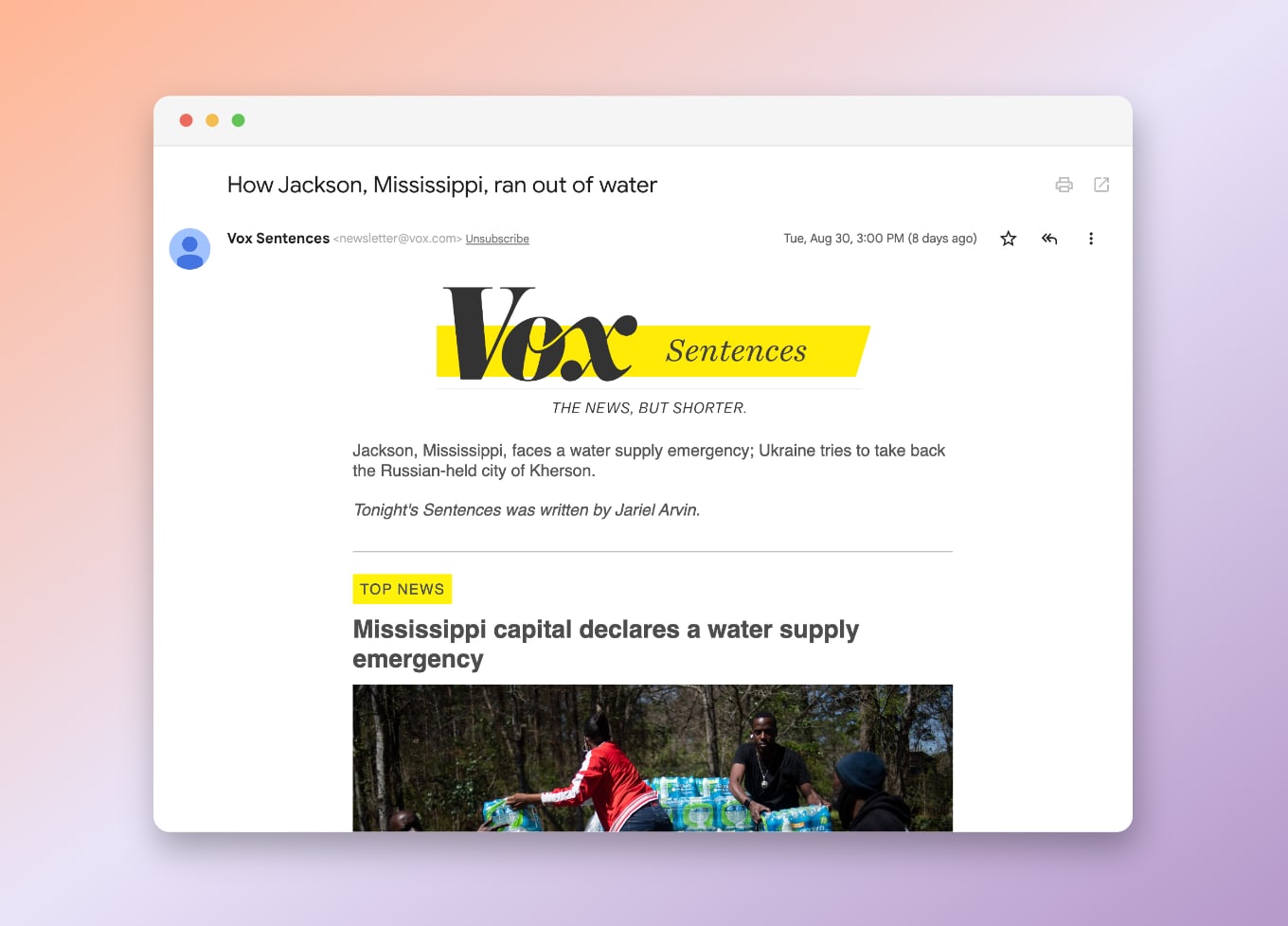
We subscribed to a lot of newsletters as a part of researching this article — and this daily newsletter from Vox is hands-down the easiest news-oriented email to digest. It’s sent in the afternoon/evening as a roundup. A nice bonus: the newsletter doesn’t just link to Vox stories; it points to authoritative articles from across the internet.
The Morning
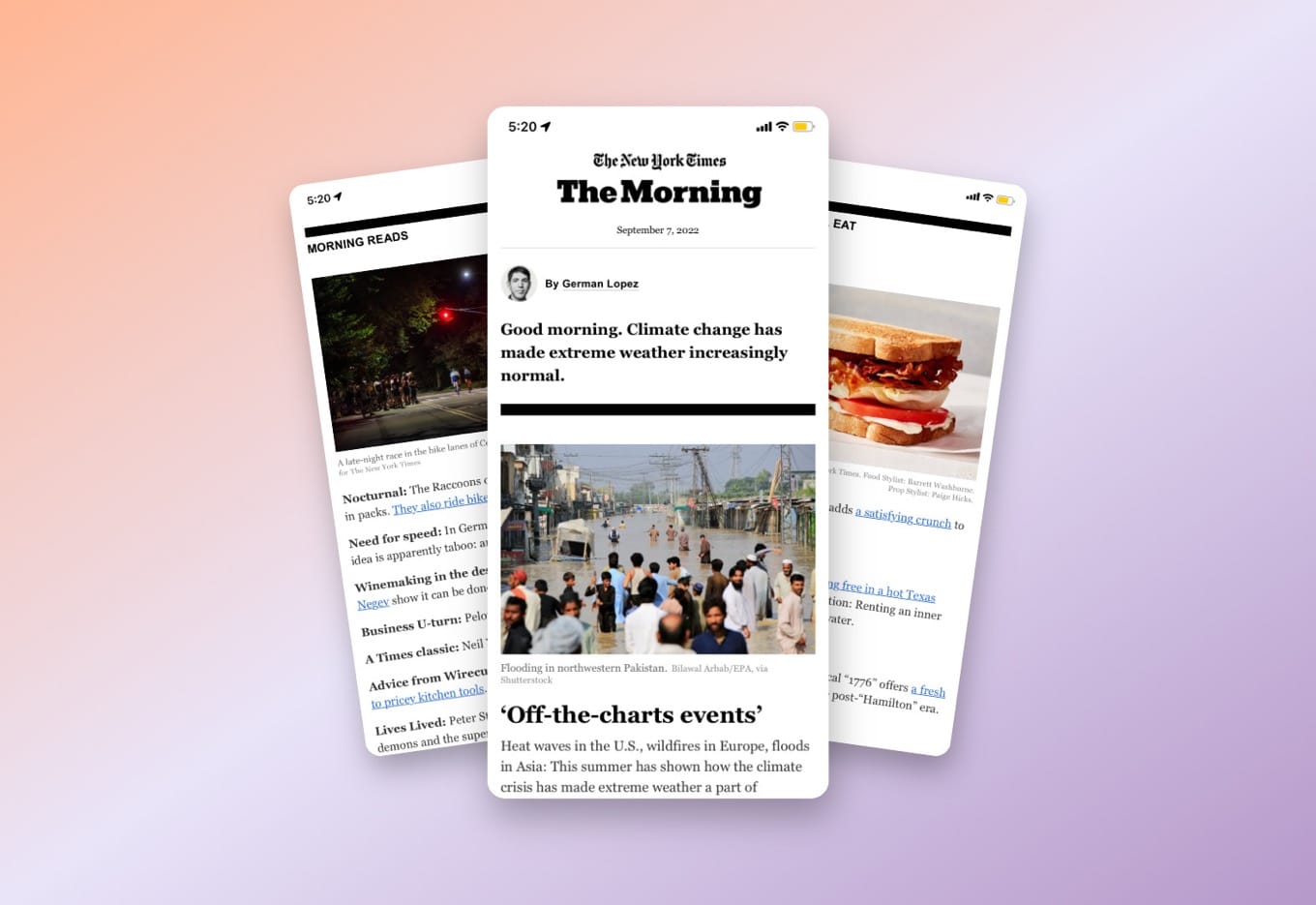
You’ve heard of The New York Times podcast The Daily? This is, essentially, the newsletter equivalent. Every day you’ll get the day’s top news and analysis from Times journalists — plus other helpful resources from across the NYT universe.
Tangle
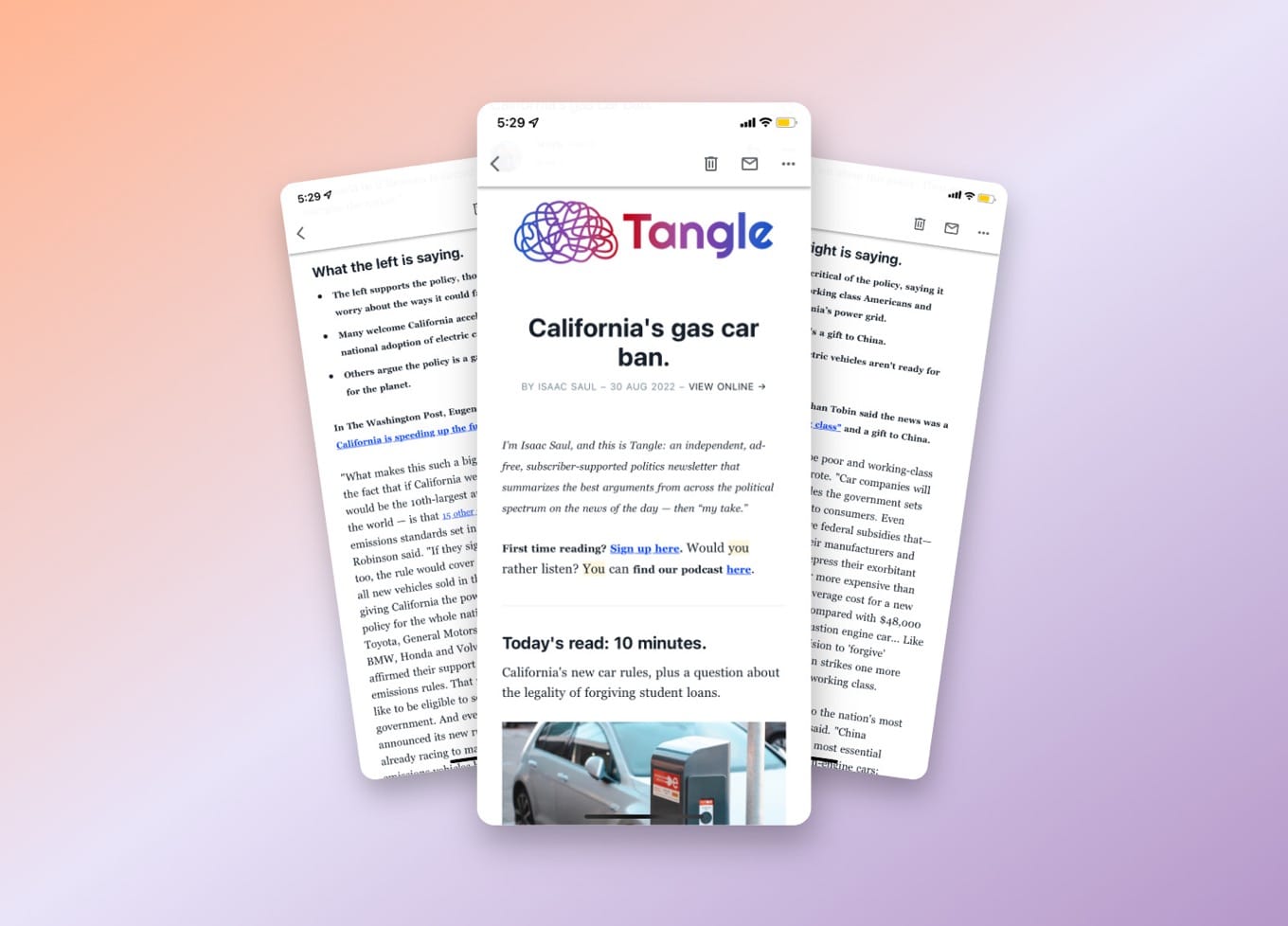
This indie non-partisan newsletter chooses one top news story each day and summarizes the best arguments from across the political spectrum. Each email leaves you feeling better informed about the partisan conversations happening around the news — while still avoiding “bothsidesism.”
The 19th
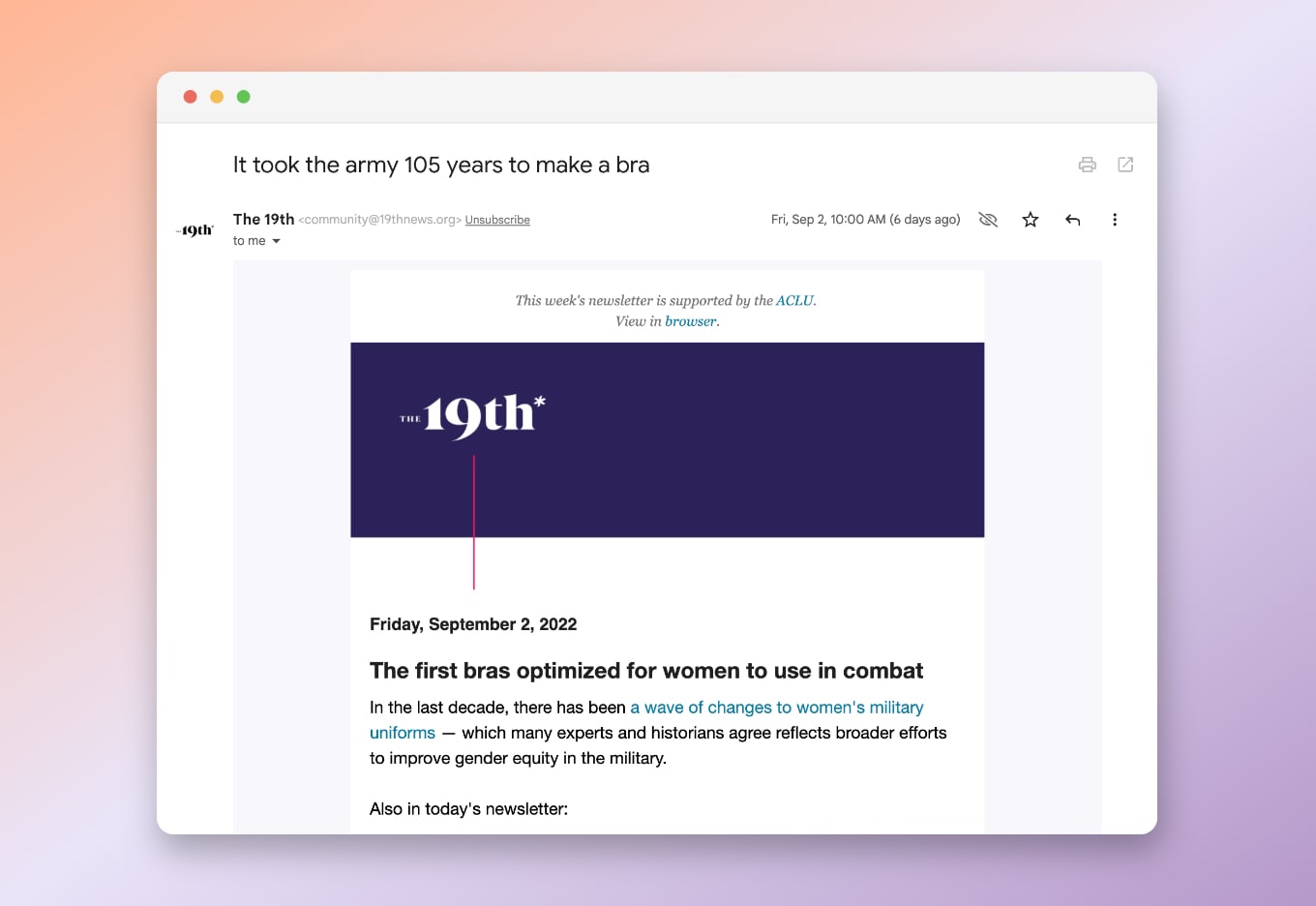
This nonprofit newsroom is already beloved for its reporting at the intersection of gender, politics, and policy — and now their newsletter delivers the same great perspective in deep, yet easy-to-digest email dispatches.
Notable mentions:
- 1440 — They scour hundreds of news sources so you don’t have to
- The Newsette — News and inspiring interviews for badass women
- The Current by RocaNews — We first heard about this newsletter on TikTok
Positive News Emails:
The Goodnewsletter
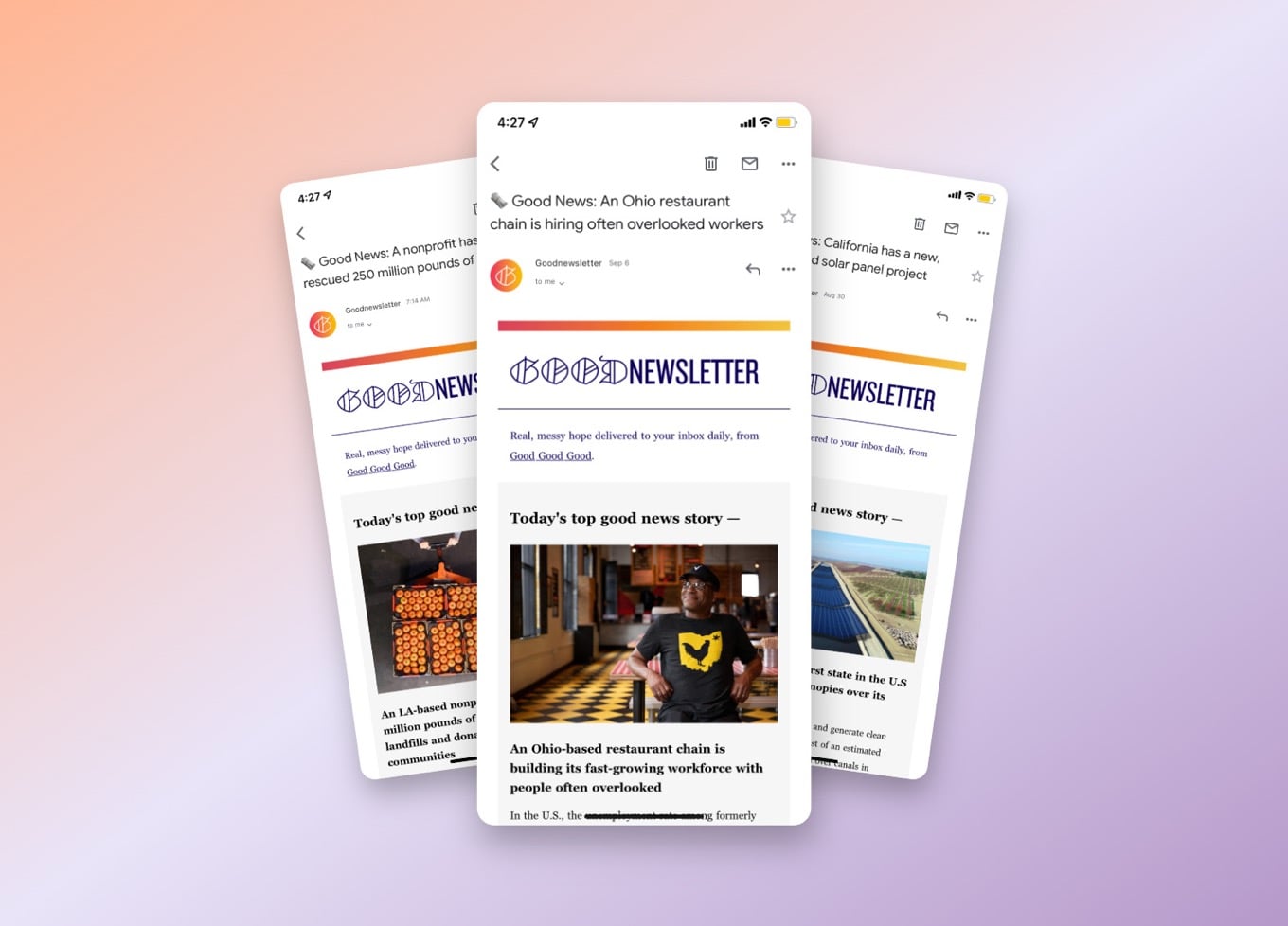
Of course, we have to toot our own horn: Every morning our team of good news journalists delivers the top good news story of the day — plus a few bonus stories — all to leave you feeling more hopeful about the world.
The Response by The Solutions Journalism Network
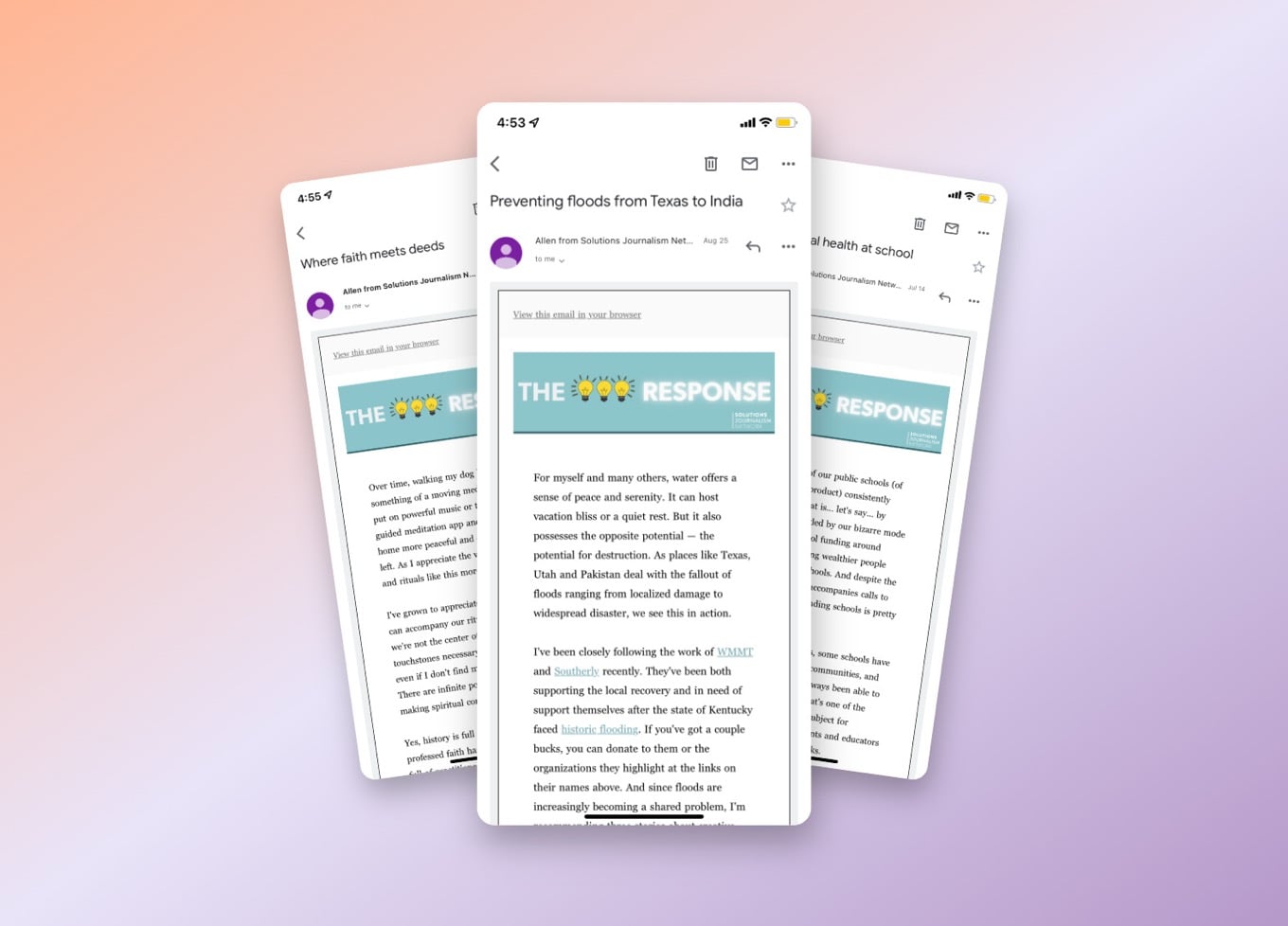
The team at The Solutions Journalism Network supports journalists that cover stories about solutions to problems. In their biweekly newsletter, they highlight the best solutions stories revolving around a recent event or an important theme.
Feel Good Newsletter
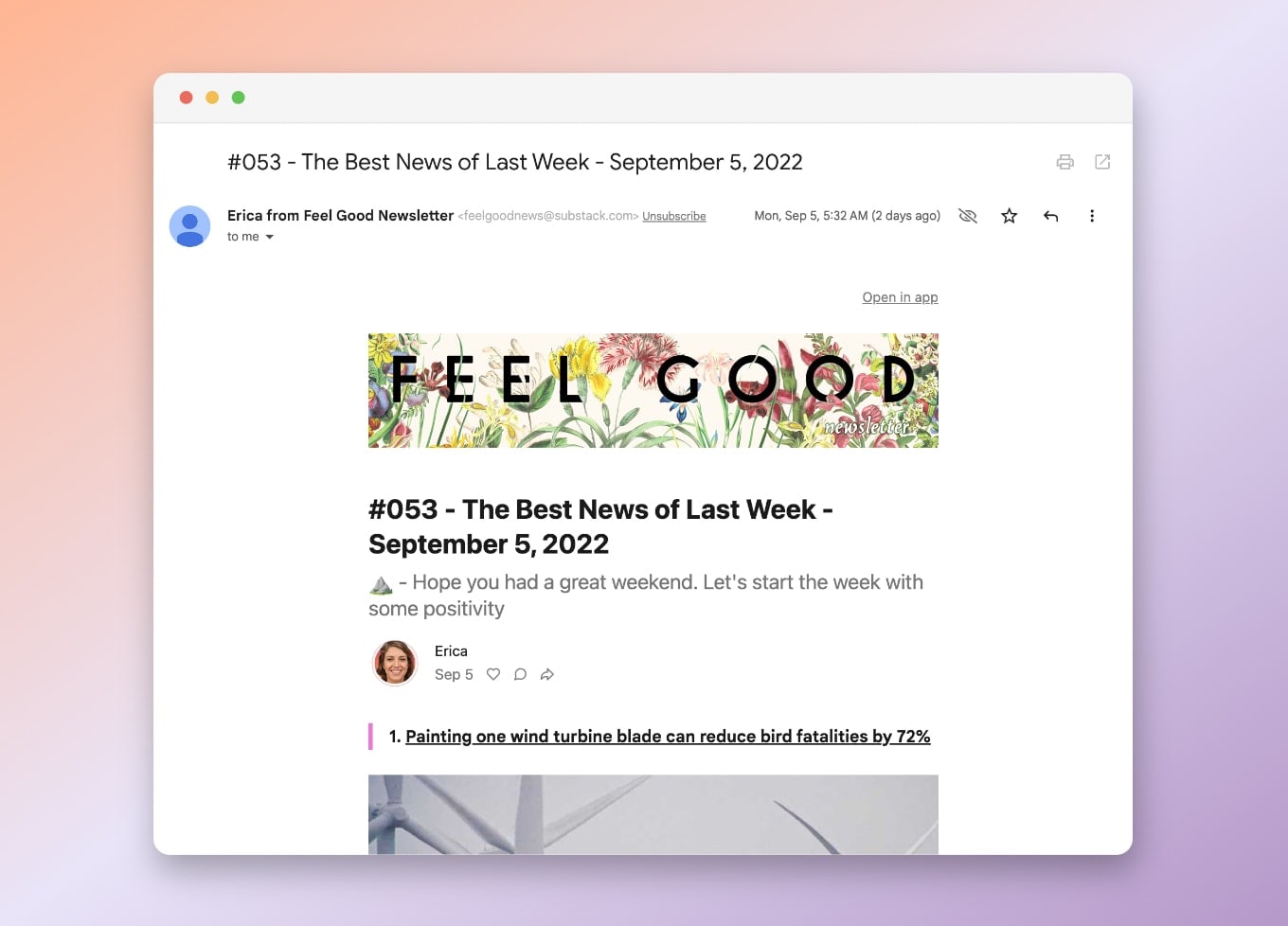
This newsletter curates positive, feel-good news stories from around the world. Emails are sent each week on Mondays, with a roundup of the previous week’s top stories.
The DONUT

The DONUT stands for “The Dose Of News Useful Today. This newsletter turns anxiety-ridden daily news into a more pleasurable and engaging format. Plus, they have a weekly “Positive DONUT” email filled with all the good news of the week.
Climate News Newsletters:
Grist
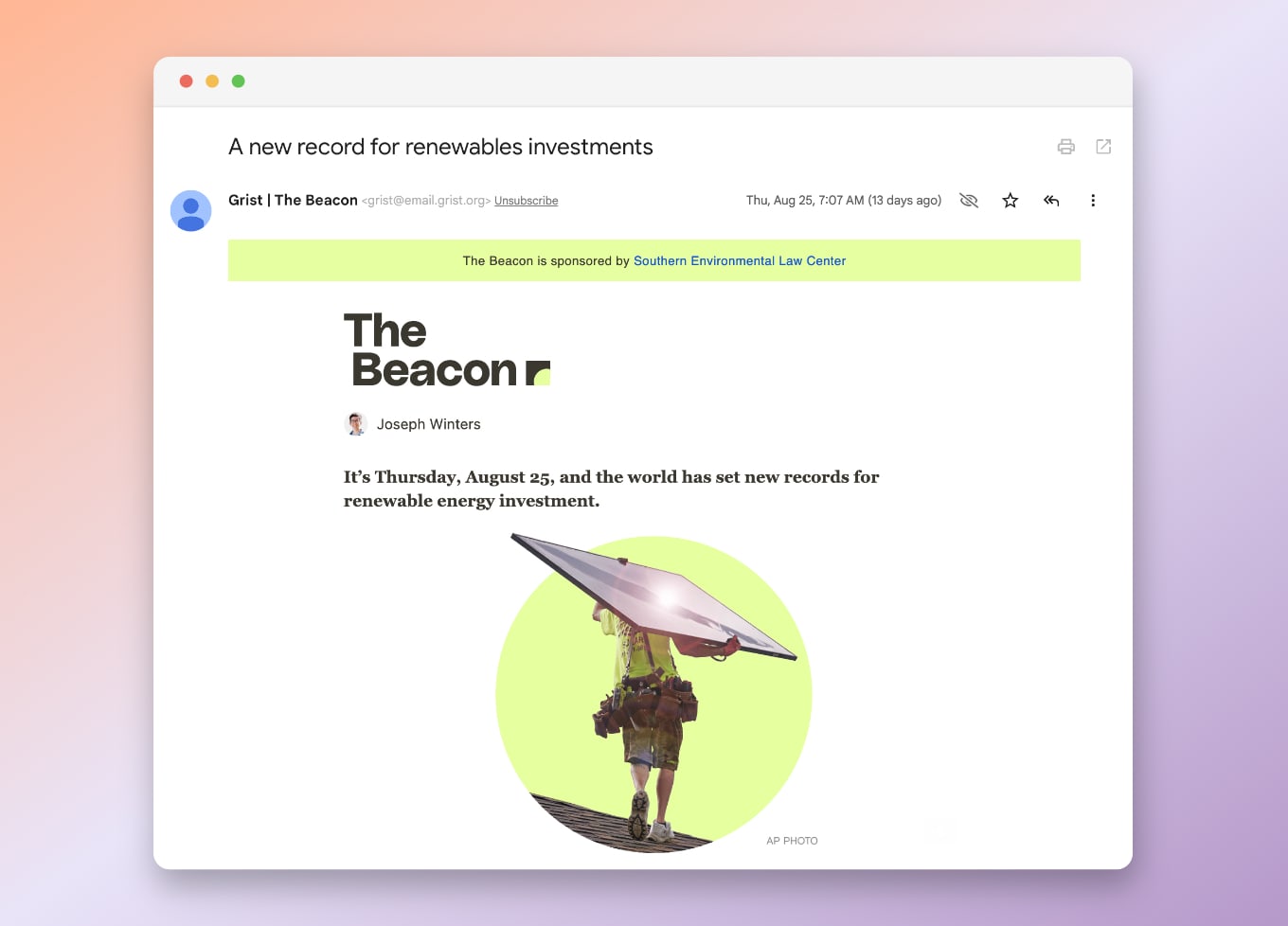
Grist is respected for its hard-hitting climate journalism that also maintains a hopeful tone throughout its coverage. They have a number of quality newsletters, but we recommend getting started with The Beacon and The Weekly.
HEATED by Emily Atkin
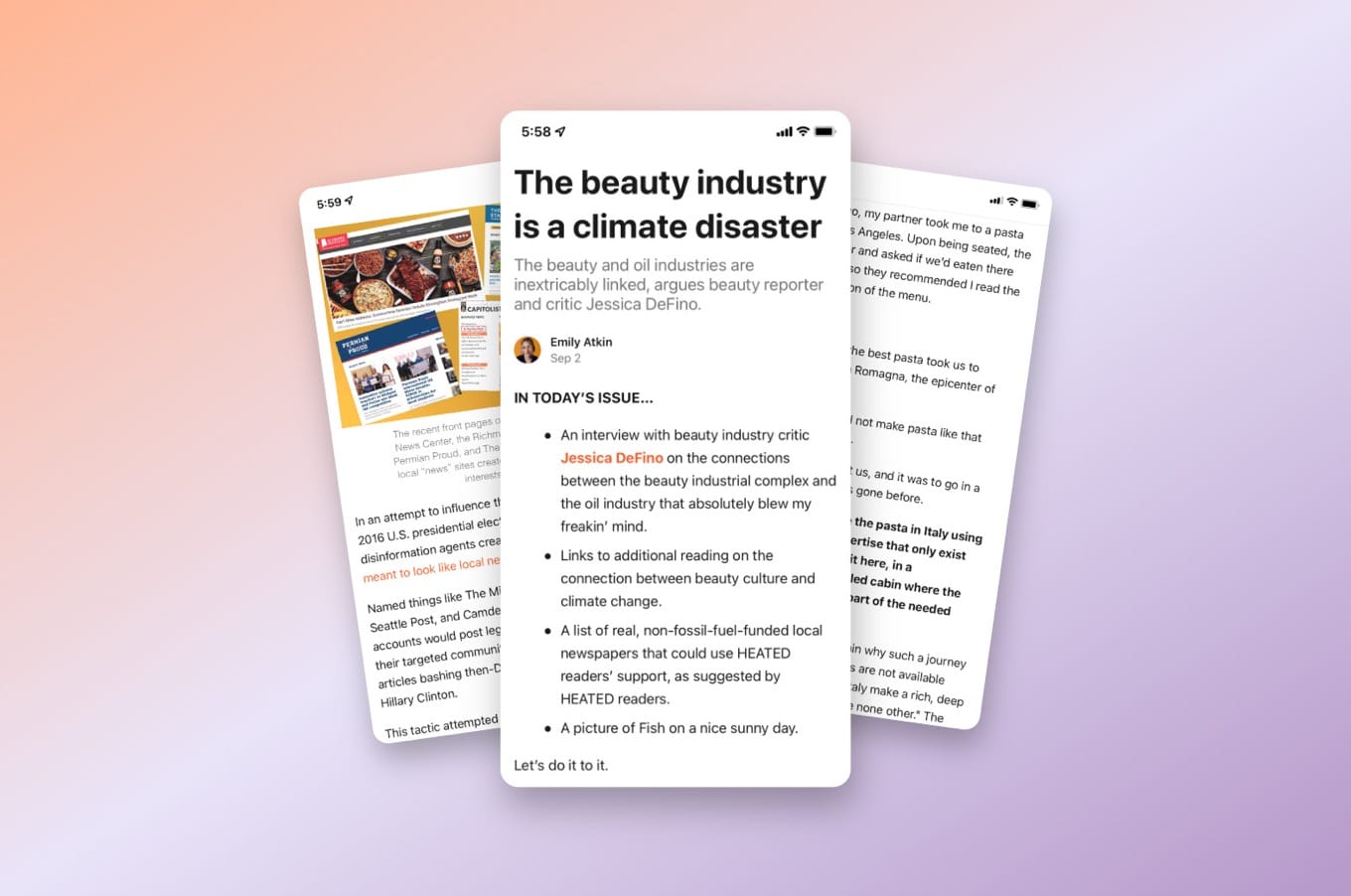
Anger can be a powerful tool for driving change. Emily Atkin’s accountability journalism helps direct your anger at the systems and people most responsible for the climate crisis — to help you make a more meaningful difference for our planet.
Sustainability Newsletters:
Changeletter by Soapbox Project
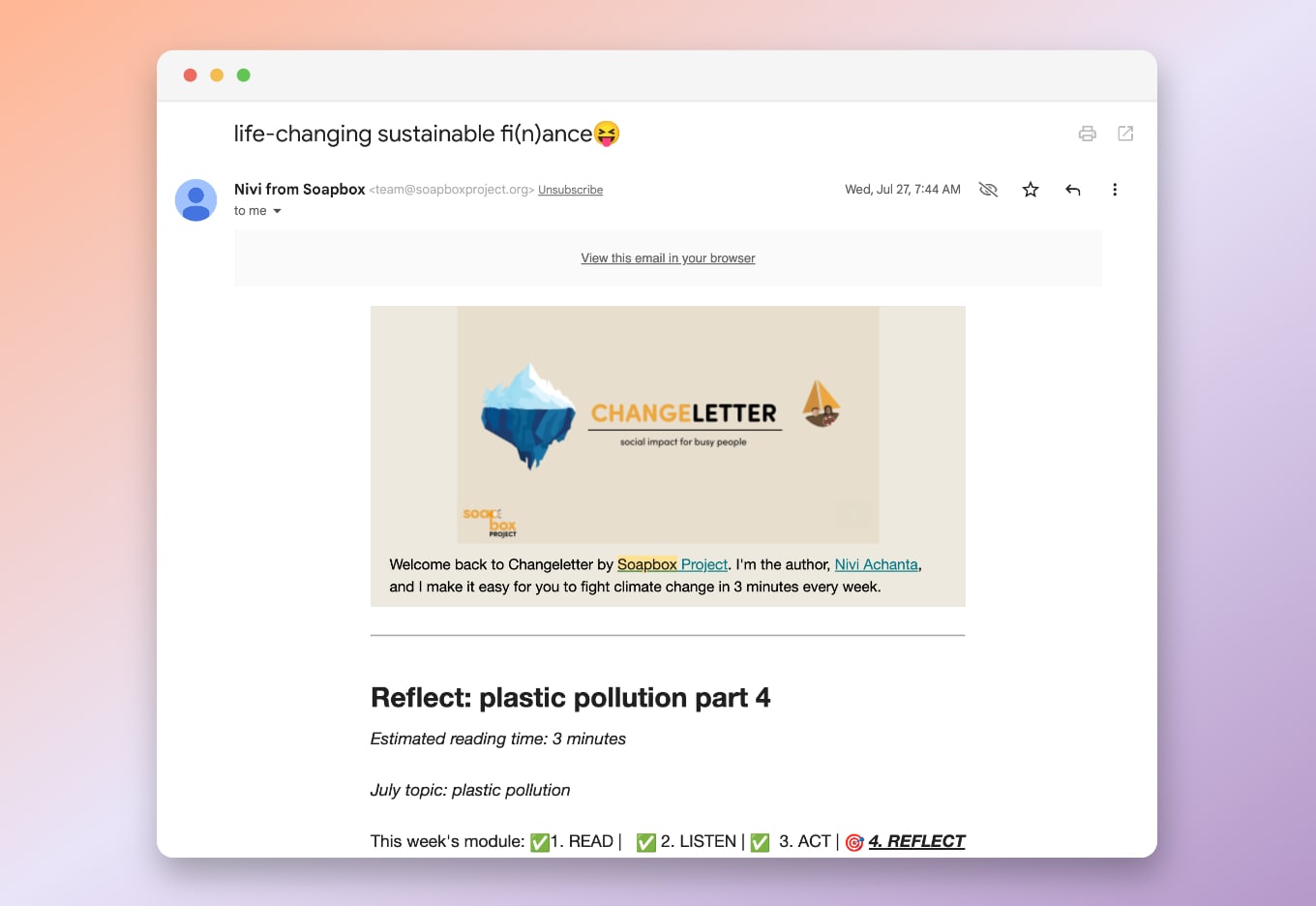
Sometimes doing something about climate change feels like too big of a task. For those moments, there’s Changeletter — a weekly newsletter with curated action steps on how to make a difference.
Vox’s Meat/Less Newsletter Course
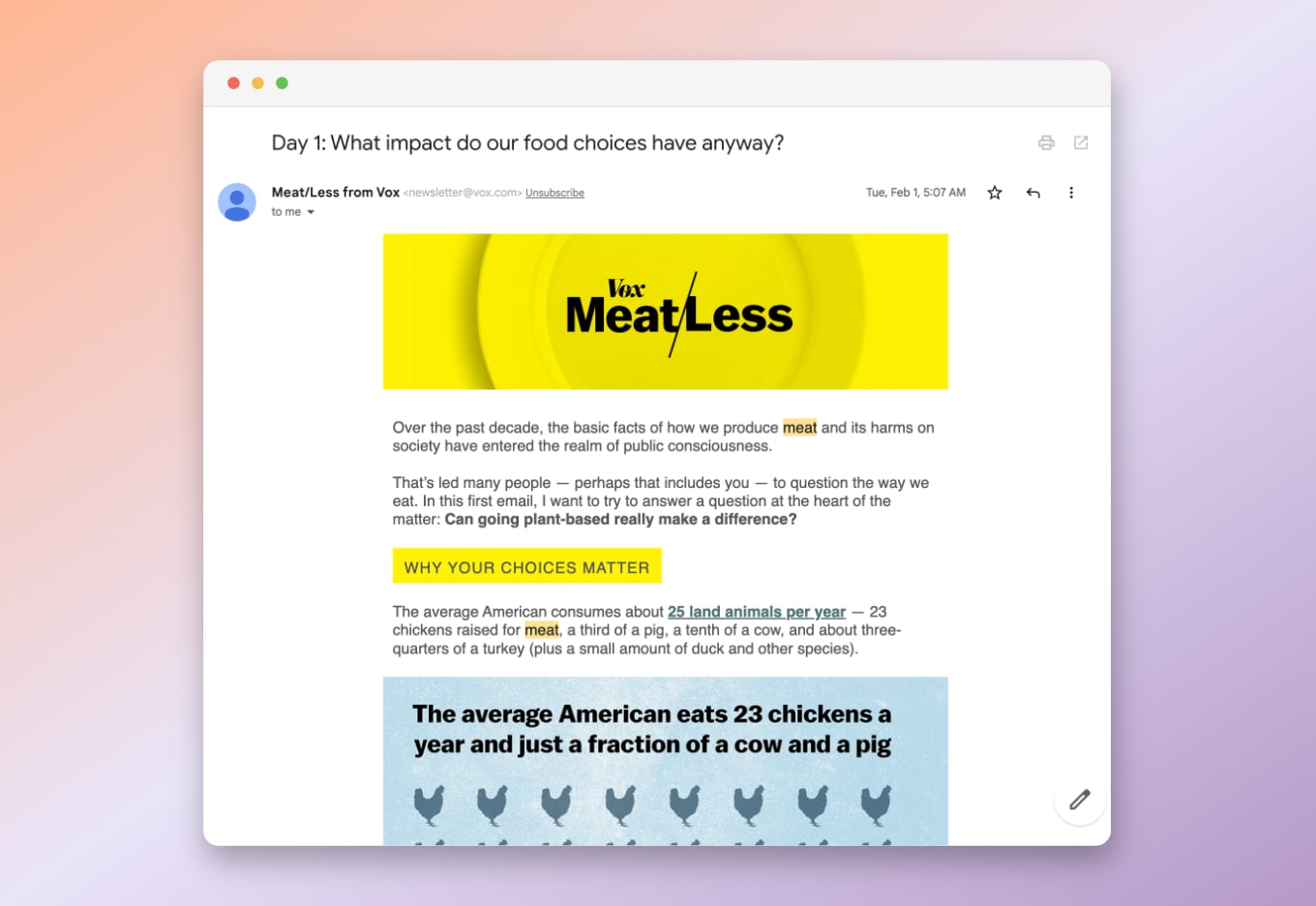
More and more people are becoming interested in eating less meat — or going vegetarian altogether. Whether it’s for the environment, animal welfare, health, or curiosity, it’s nice to have some support. This short-run newsletter teaches you how to add more plant-based meals to your lifestyle and helps you make it last.
Notable mentions:
- The Daily Good — Ideas and inspiration for thoughtful and sustainable living, from The Good Trade.
→ Explore more of our top picks for sustainability and climate change newsletters
Inspirational Newsletters:
3-2-1 by James Clear
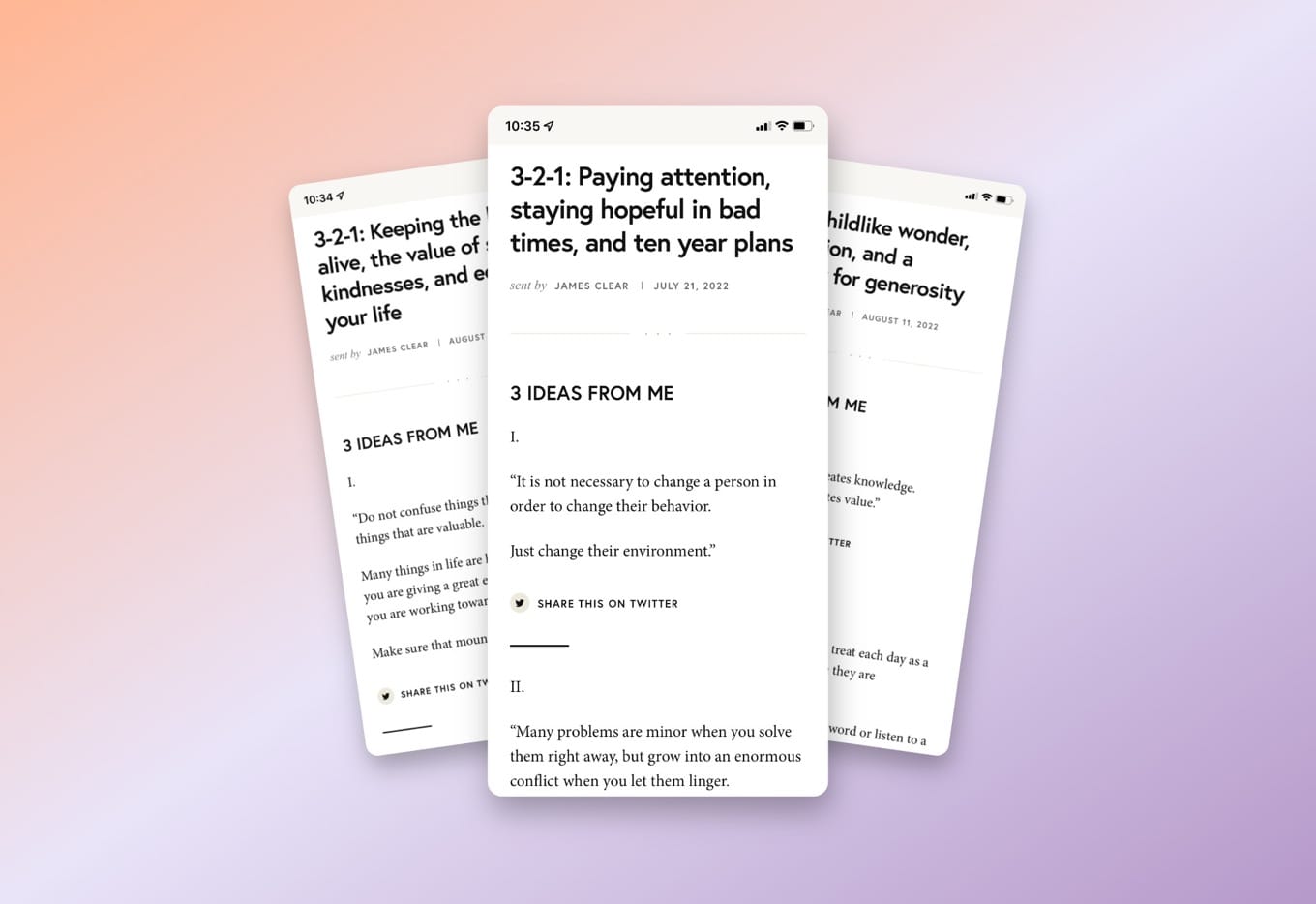
This famous weekly newsletter from the author of Atomic Habits always includes 3 short ideas from James Clear, 2 quotes, and 1 question to think about as you head into the weekend.
Gretchen Rubin’s Moment of Happiness
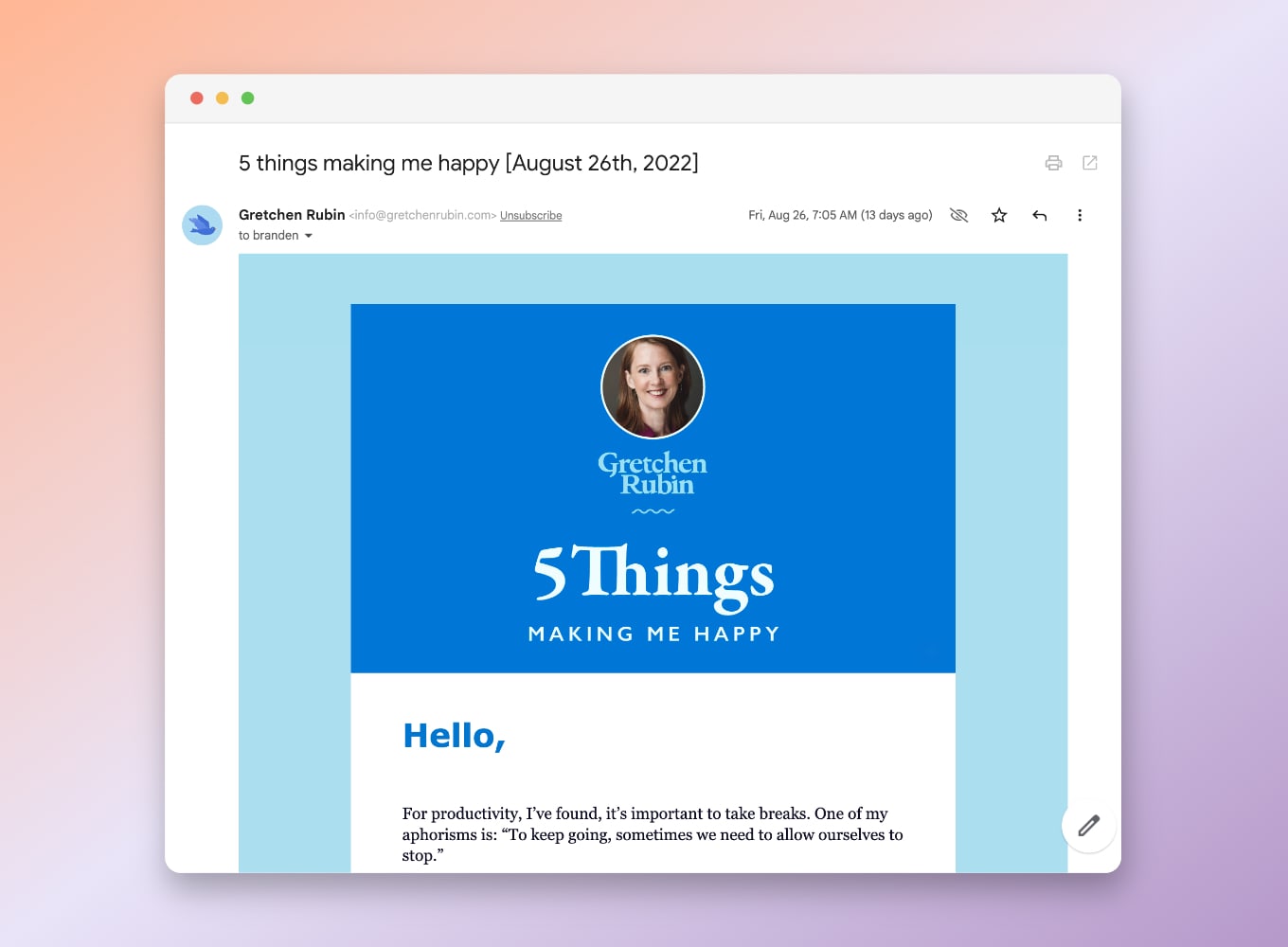
More than a million people subscribe to this newsletter from acclaimed author and host of the podcast, “Happier”, Gretchen Rubin.
Business Newsletters:
Morning Brew
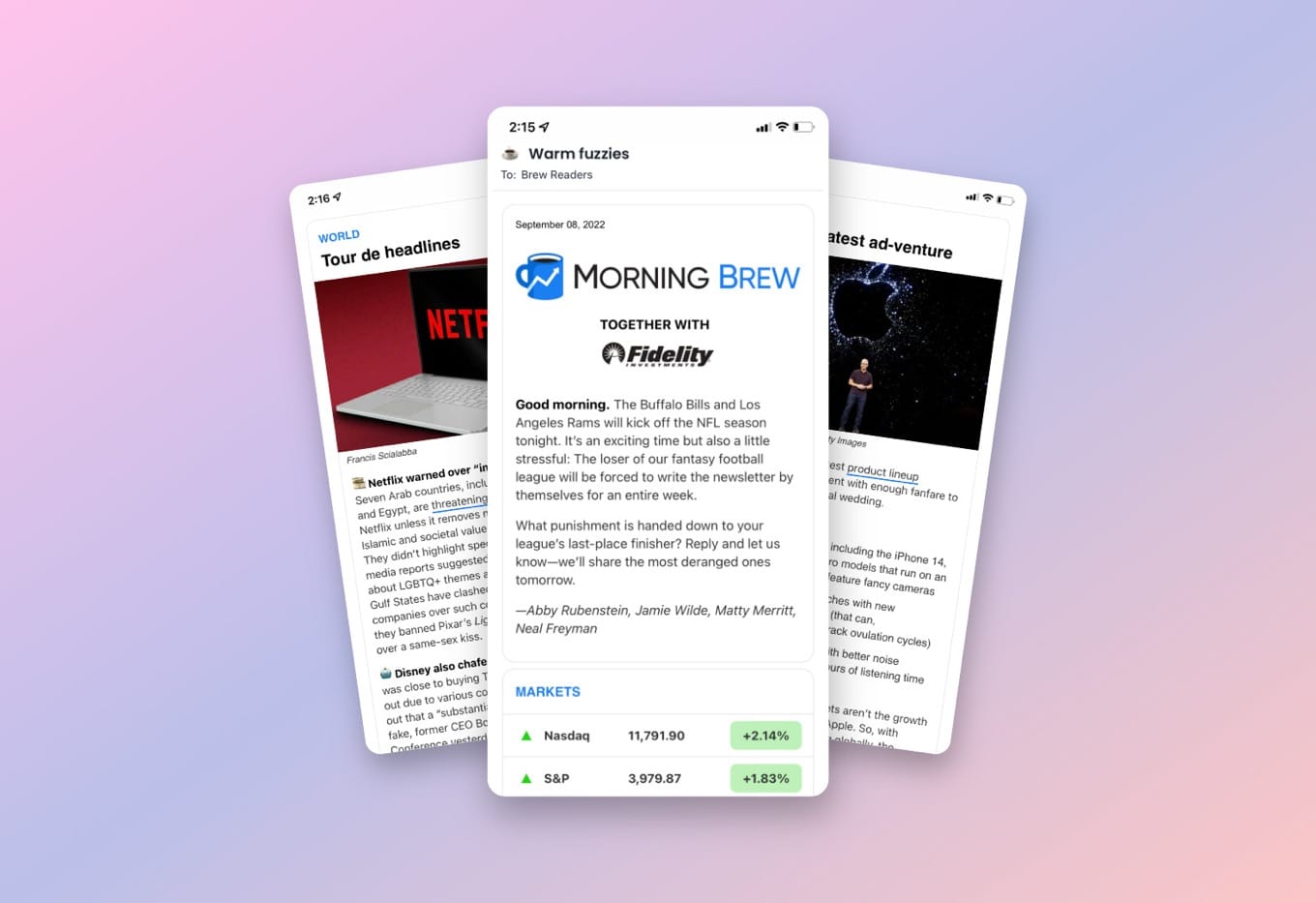
Start your morning with Morning Brew. (Apparently more than 2.6 million already do.) The free daily email keeps news from Wall Street and Silicon Valley interesting and digestible.
The Assist

Being a professional doesn’t have to be boring! The Assist makes it genuinely fun to learn, grow, and find resources to advance your work life. What’s especially great is that each email feels actionable and helpful for your work week.
(One smart thing that we love — their newsletter comes on Tuesday, Wednesday, Thursday, and Saturday — because they know that you don’t need another email on Monday or Friday.)
The Daily Upside

Another popular business newsletter, The Daily Upside covers top business news and seems to pride itself on highlighting stories that other outlets miss. Each email feels engaging and insightful.
Notable mentions:
- The Knowledge — Frameworks to help you think deeper, work smarter, and level-up up your decision-making
- Craftsman Creative — Learn how to build your creative business
- Swipe Files — Curated ideas and inspiration for marketers
- Creator Wizard — The perfect resource for content creators and small business owners
Self Improvement Newsletters:
NPR Life Kit
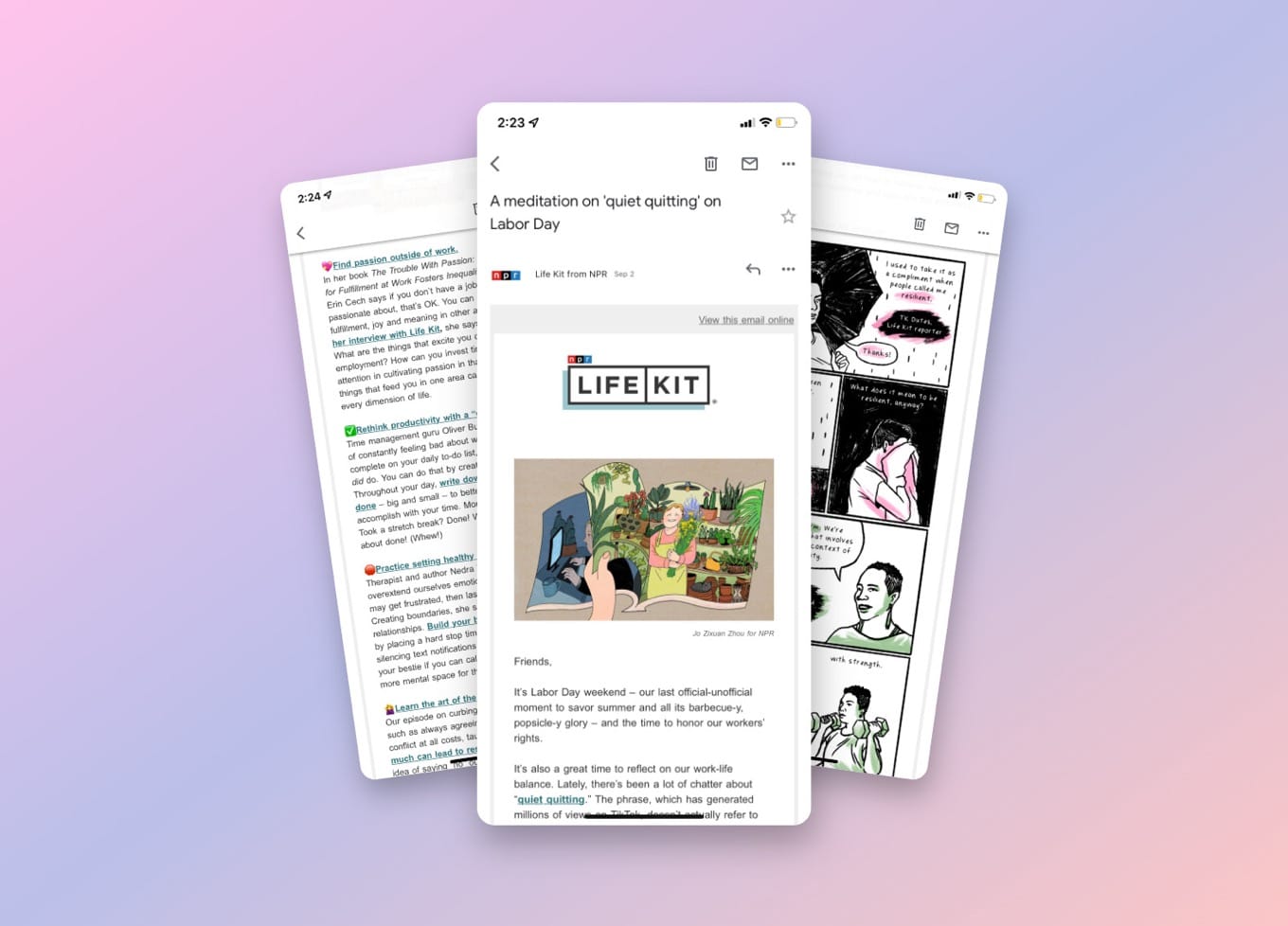
The folks at NPR (and subject matter experts) are creating guides to help you get your life together in a helpful, non-judgmental way. If podcasts are more your thing, check out the audio version as well.
→ Explore more of our favorite mental health newsletters
The Nerdletter

Every week the “Hell Yeah Group” sends out an almost-spiritual newsletter about personal finance, helping readers think better about earning, saving, investing, and spending.
Extra Focus
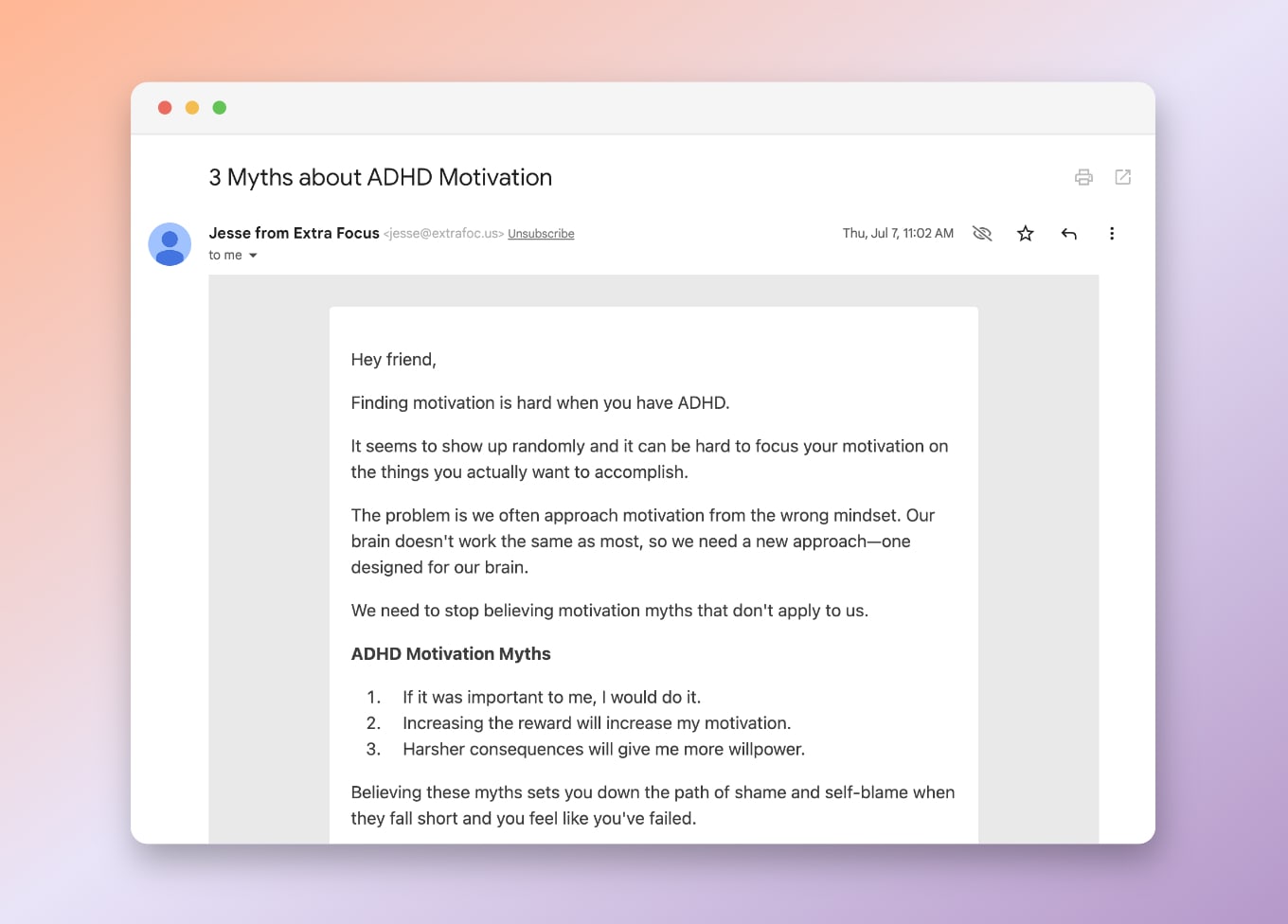
If you have ADHD or love someone with ADHD, this simple newsletter will help you understand ADHD brains. Each email includes ideas and strategies on time management, energy, and motivation.
→ Explore more of our favorite ADHD newsletters, blogs, podcasts, and other resources
Notable mentions:
- The Boonly — This newsletter has a philosophy we can get behind: self-growth should be enjoyable, not stressful
- Finny — Another personal finance newsletter, this one offers 5-minute breakdowns on money trends, personal finance, and investing tips
- Android Intelligence — For the nerds: Get three tips to help you optimize Gmail, Chrome, or your Android
Fun Free Newsletters:
Everything Is Amazing
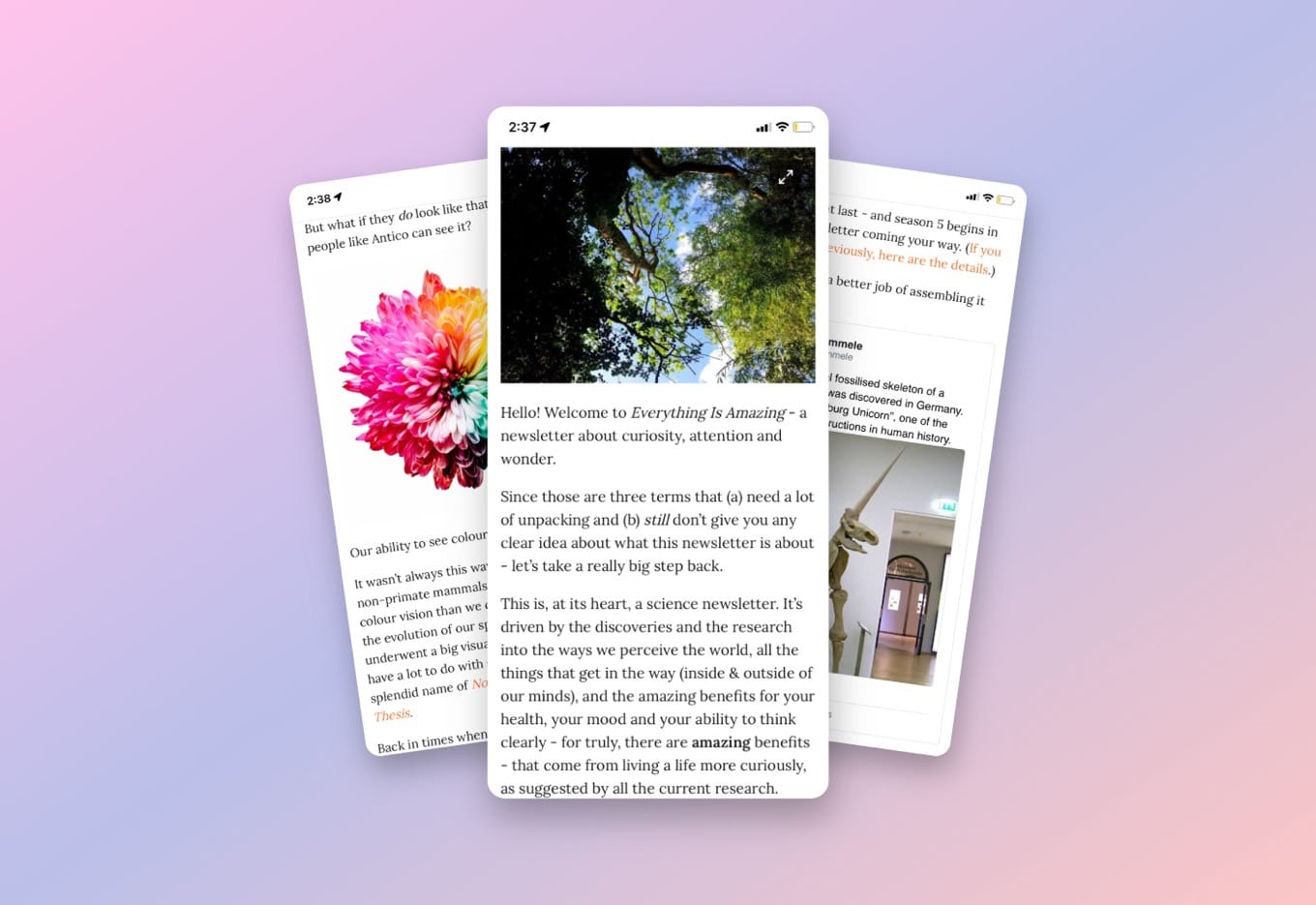
Curiosity makes everything better — and this science newsletter celebrates the everyday curiosities that make the world awe-inspiring. Self-described as a “good source of those ‘wow!’ moments that make you feel more wide-eyed and hopeful about everything,” this newsletter is absolutely a solid addition to your inbox.
Making Humans Smile Club
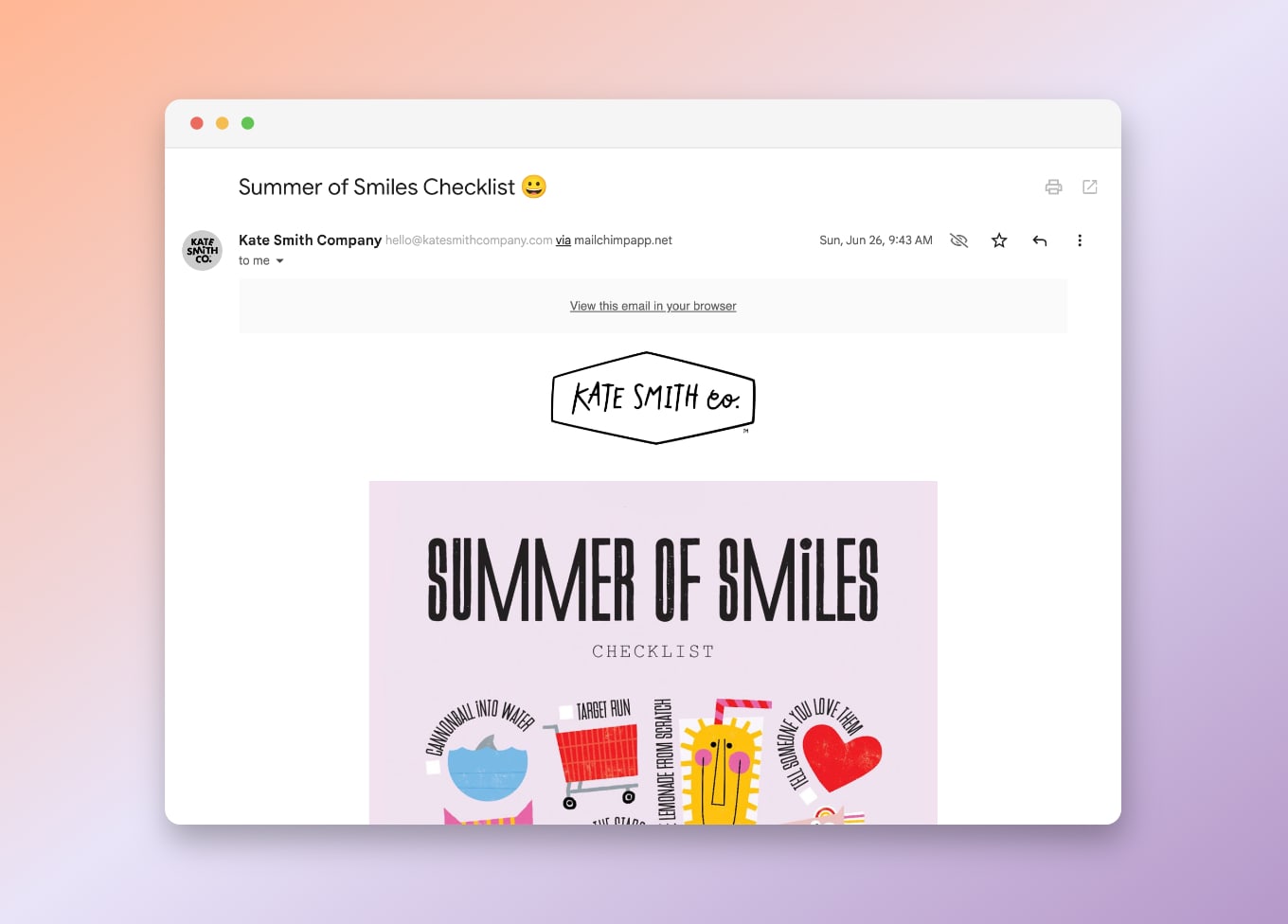
A newsletter for humans who want to make the world around them brighter. The sign-up form may seem a bit out of place compared to some of these other newsletters, asking for your mailing address, birthday, and more. Why? Because this newsletter goes beyond their delightful emails and sometimes includes surprise gifts in the mail.
Girls’ Night In (Now Downtime)

The coziest newsletter on this whole list, Girls’ Night In focuses on comfort for your downtime. Each newsletter includes product recommendations, ideas, and sometimes cute spreadsheets.
→ Explore more of our favorite wellness newsletters
Notable mentions:
- Haley Wrote This — Webcomics about anxiety from artist Haley Weaver
- Refind — Seven awesome links, curated to your personal interests, every day
- Weekly Filet — A serendipitous selection of great things to read, watch, and listen to
Travel Newsletters:
Going

If you don’t already use Going (formerly Scott’s Cheap Flights) you’re missing out. Just choose your local airports and get ridiculously cheap flight alerts anytime prices drop to somewhere cool around the world. While Going has a free option, you’re essentially guaranteed to cover the cost of a premium subscription with the savings from your first flight deal you take advantage of.
Atlas Obscura

This newsletter helps you discover the world without ever leaving your inbox. (But of course, it’ll inspire you to take your PTO, turn on your OOO auto-reply, and chase some adventures of your own.)
Funny Newsletters:
What You Need to Know

Comedian Geoff Plitt curates the best standup, jokes, late night clips, and sketches from the week so you’re always in the know on comedy.
Memes of the Week
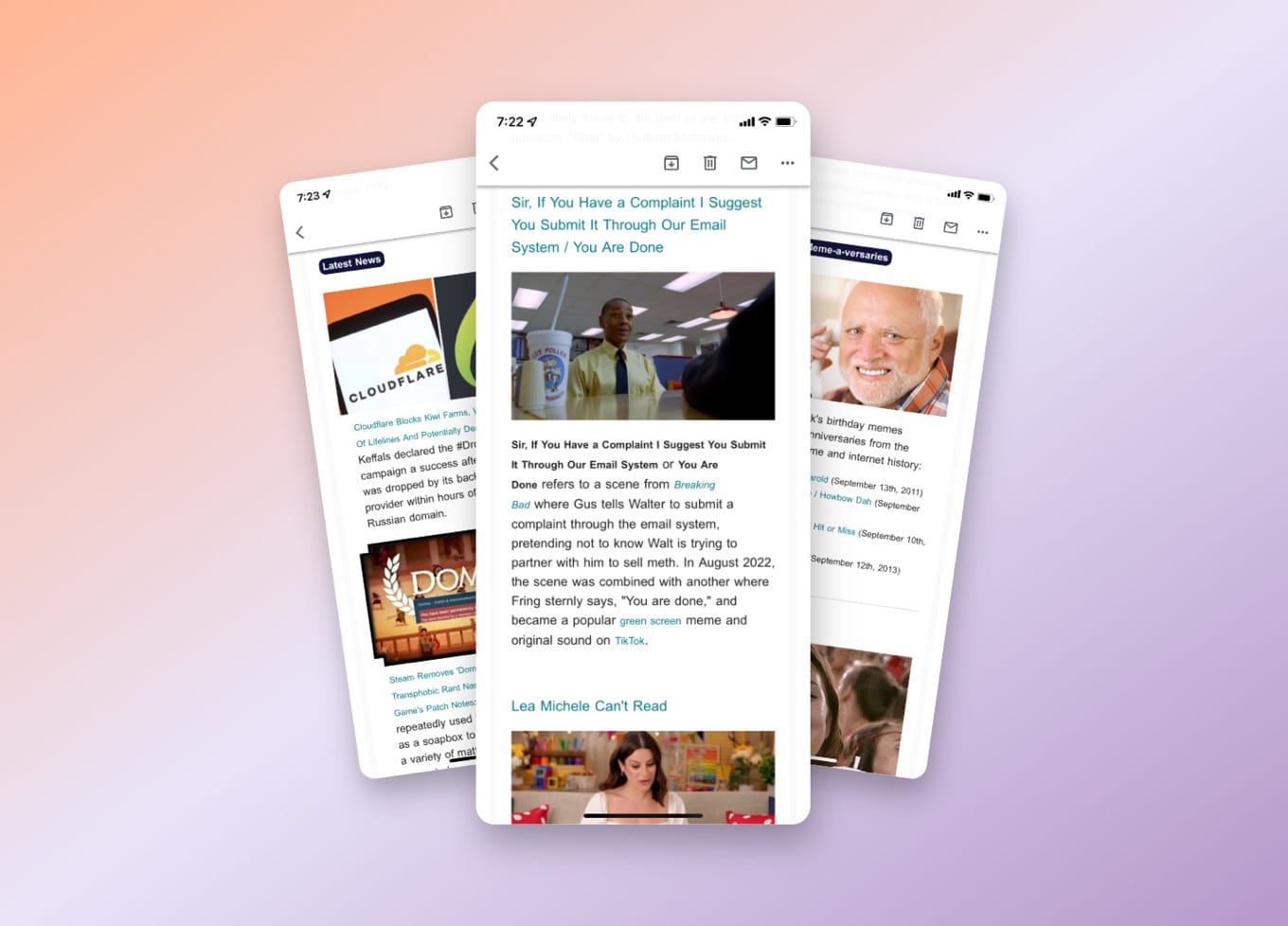
From the team at Know Your Meme, this weekly newsletter will keep you up-to-date on the meaning of trending memes (including wholesome memes) and reminders of memes of the past.
Sports:
The GIST

This women-founded newsletter addresses the gender gap in sports coverage by providing equal coverage of men’s and women’s sports. We also recommend subsribing to their additional newsletters specifically for college sports and sports business!
The Athletic Pulse

This newsletter from The Athletic allows you to choose your favorite teams and leagues during sign-up, and delivers the top stories in sports every day, Sunday through Friday.
Hreal Sports

Sports intersects with so many other areas of life: politics, social justice, business, education, etc. This newsletter focuses on the non-athletics parts of the sports world.
Notable mentions:
- Front Office Sports — Learn about the influence of sports on business and culture
For Creatives:
Dense Discovery
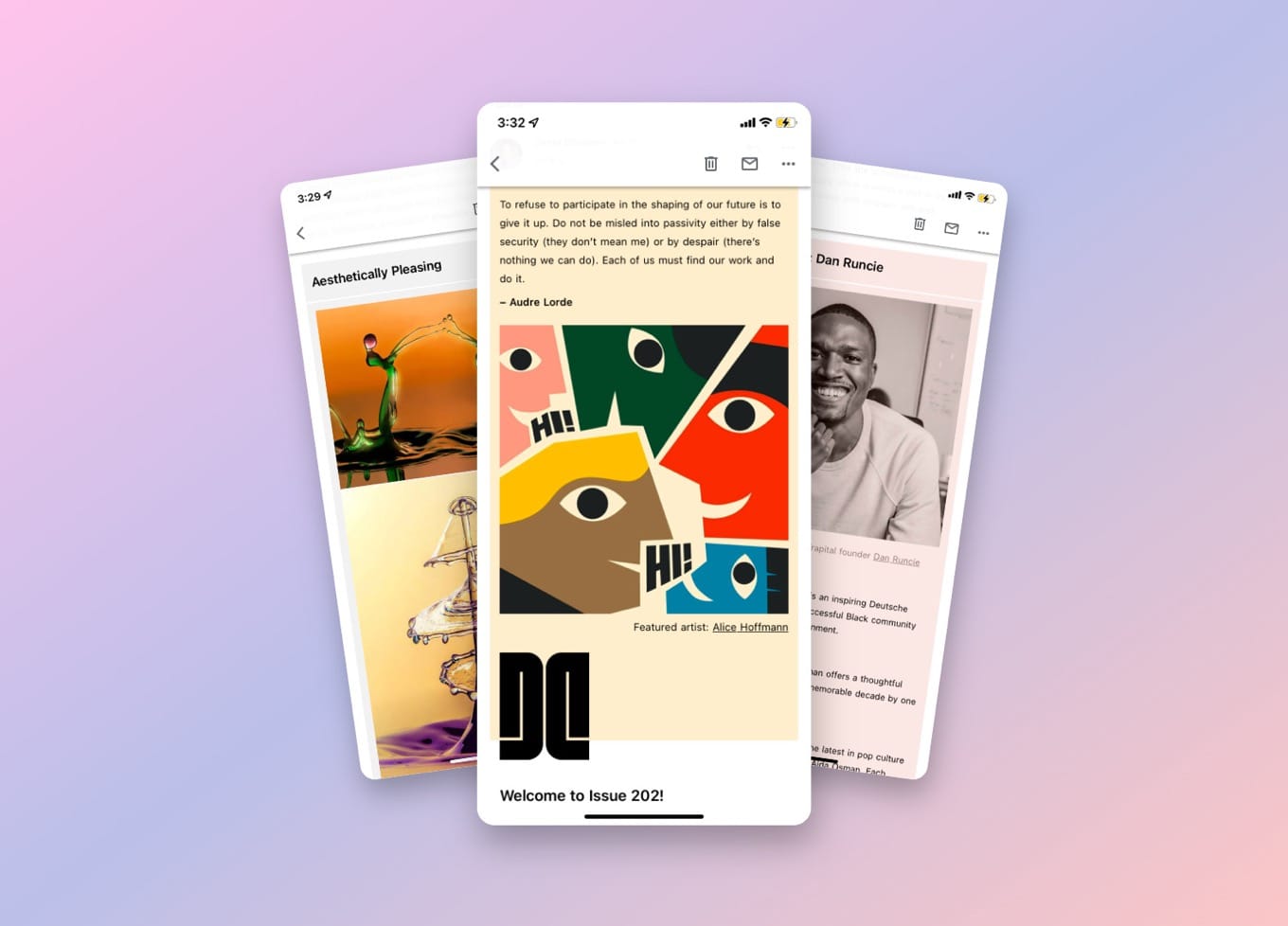
Artists, writers, and newsletter creators hold this beautiful and artistic newsletter in high esteem. Come for the thought-provoking ideas and recommendations — stay for the creative design and attention to detail. (Or vice versa!)
CreativeMornings
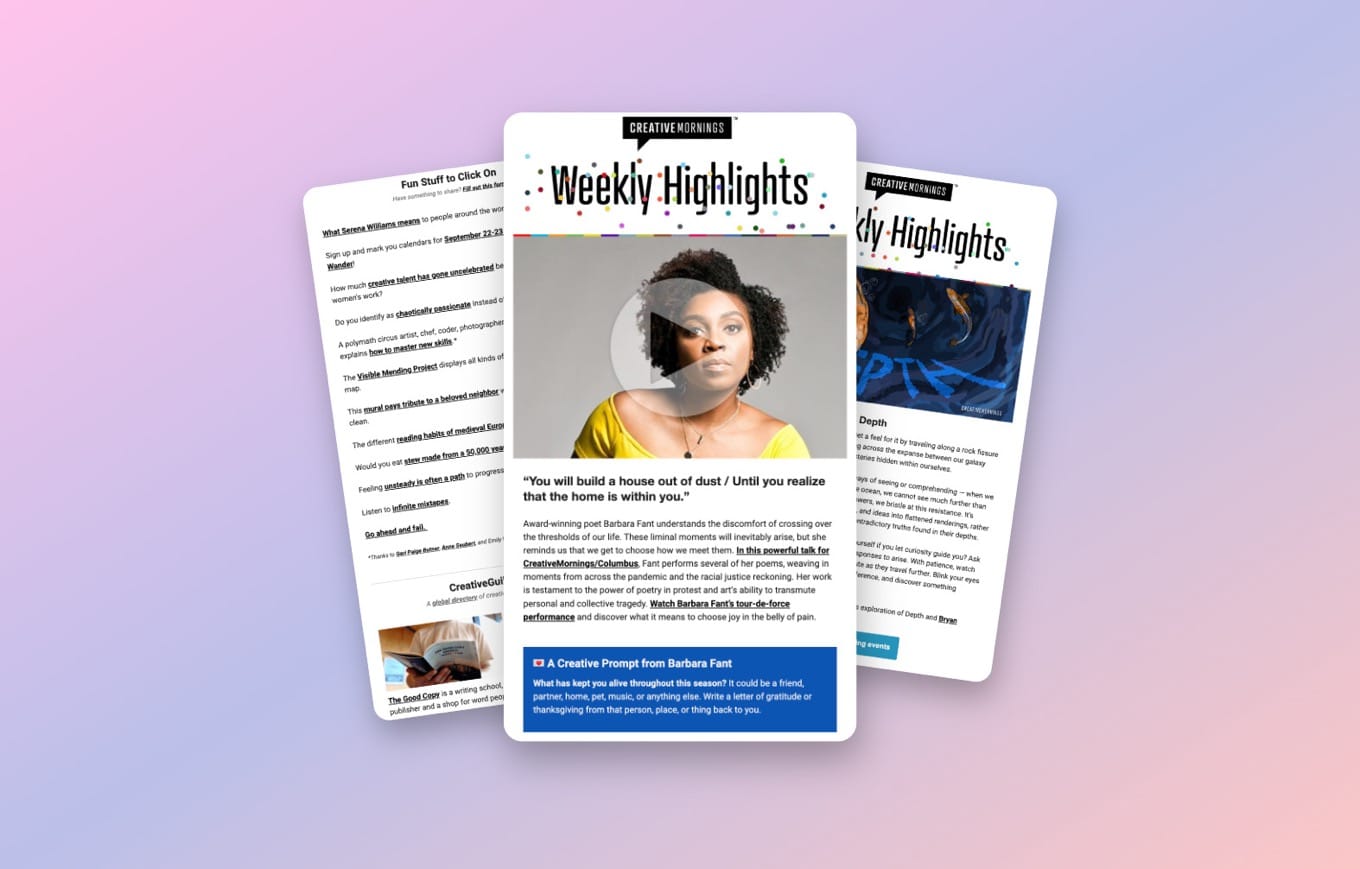
From the team that hosts monthly creative meetups all over the world, the CreativeMornings newsletter is an incredible source of inspiration, ideas, and even job opportunities for artists and creatives.
Austin Kleon’s Weekly Newsletter
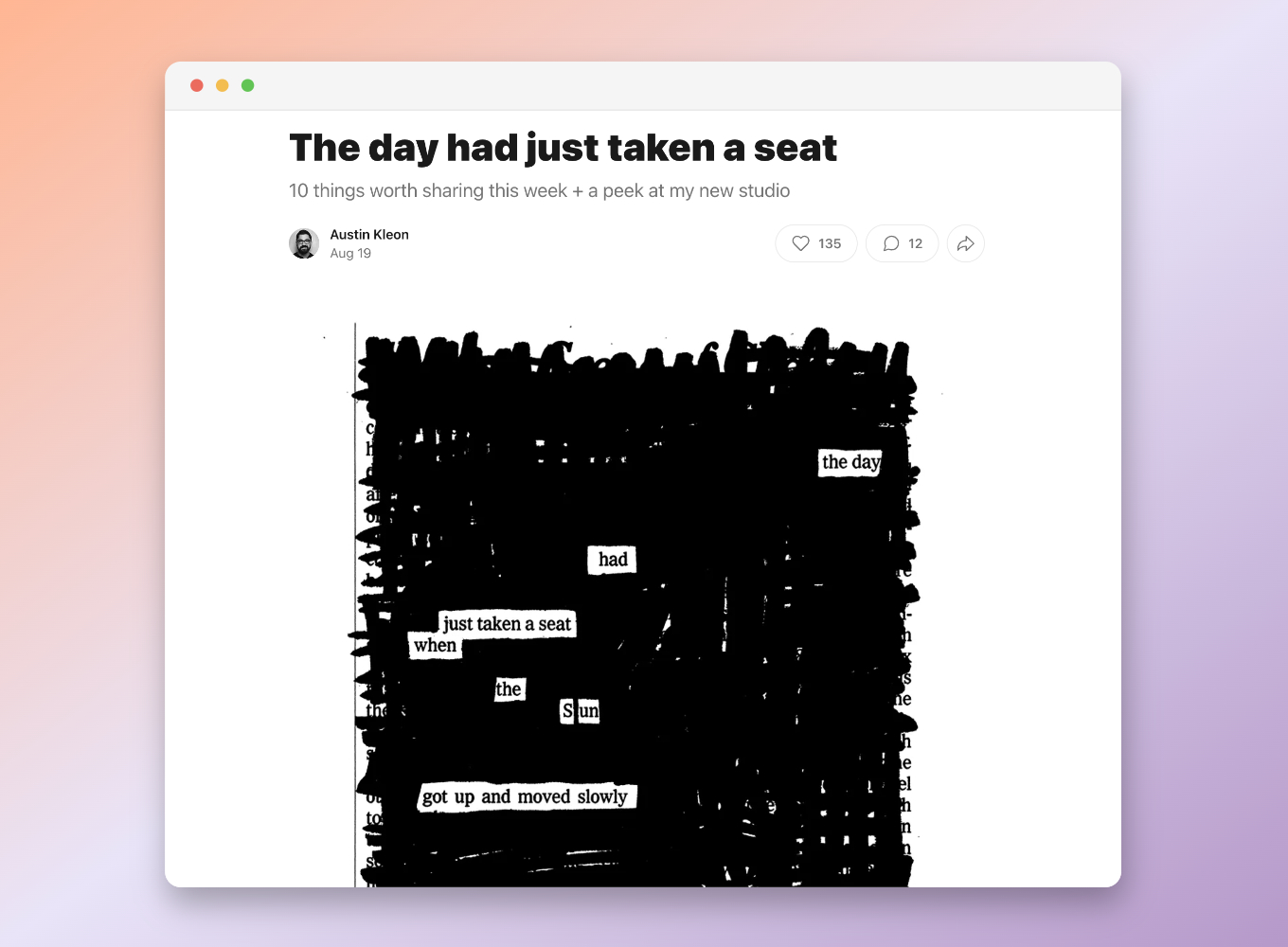
From the author of Steal Like An Artist, this weekly newsletter simply highlights 10 recommendations — as well as art, writing, and probably some blackout poetry.
Entertainment & Pop Culture:
The Sunday Stream
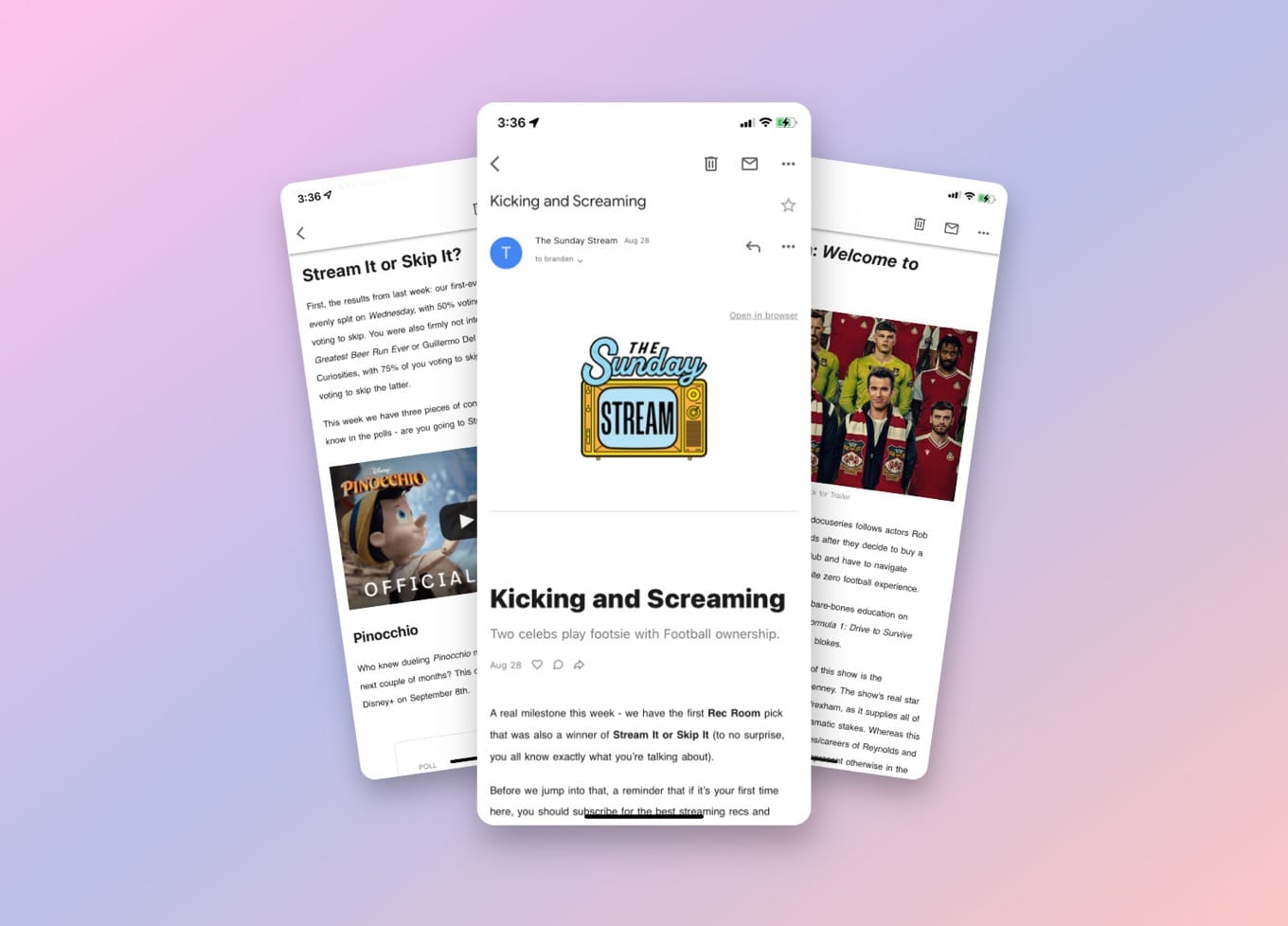
What do I want to watch this week? Now you never need to scroll endlessly through your streaming platforms. The Sunday Stream delivers all the best recommendations for TV and movies every Sunday.
Pop Culture Happy Hour

Your guide to the best TV shows, movies, books, video games, music, award shows, and so much more. Delivered with personality from the team behind the Pop Culture Happy Hour podcast at NPR.
Please Like Me
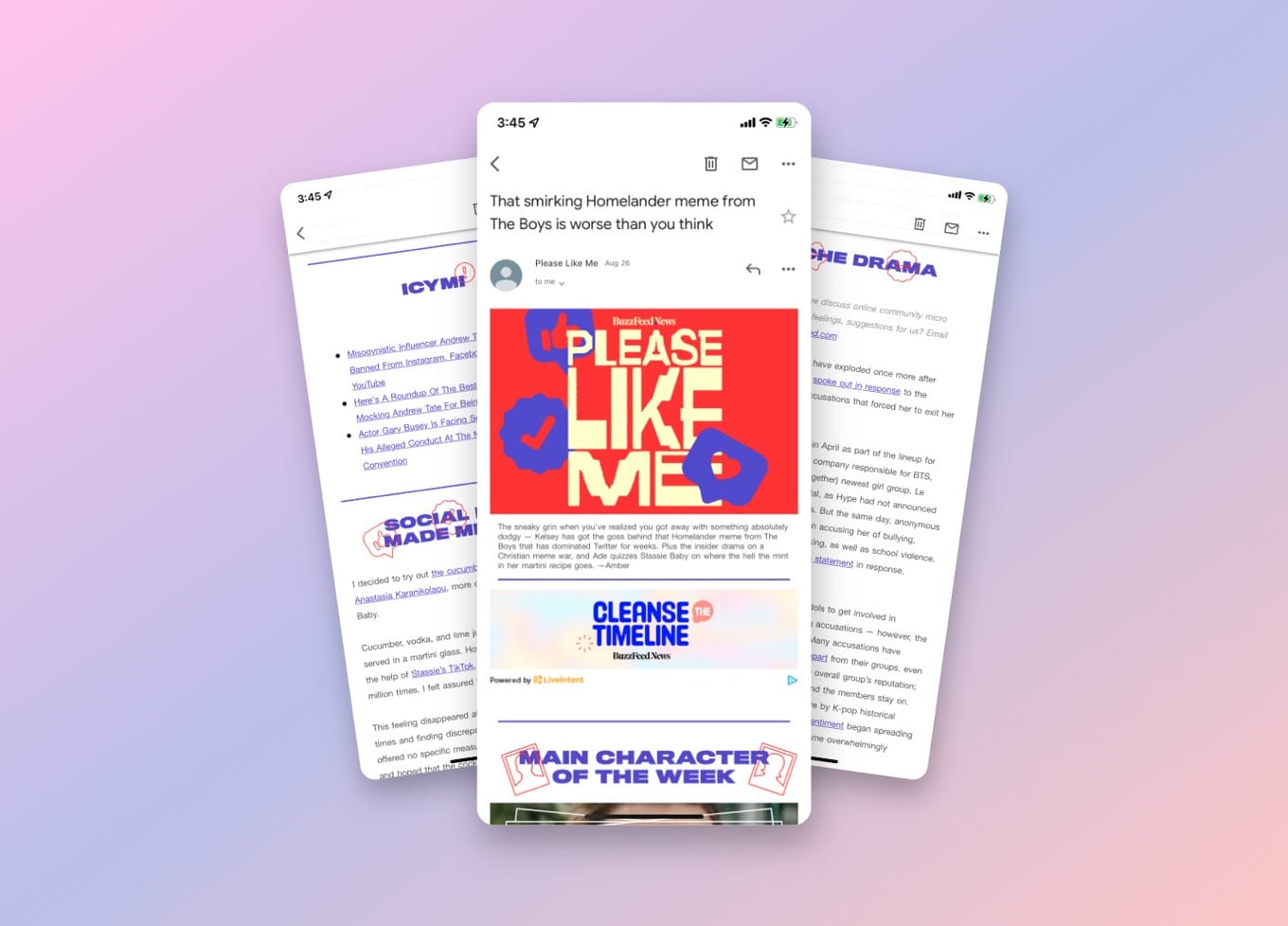
This Buzzfeed newsletter focuses on internet culture, influencers, and the cool online trends that shape our world. While many of us think of movies and music when we think of the entertainment industry, the reality is that social media plays a bigger role in creating culture than anything else.
Substack Newsletters:
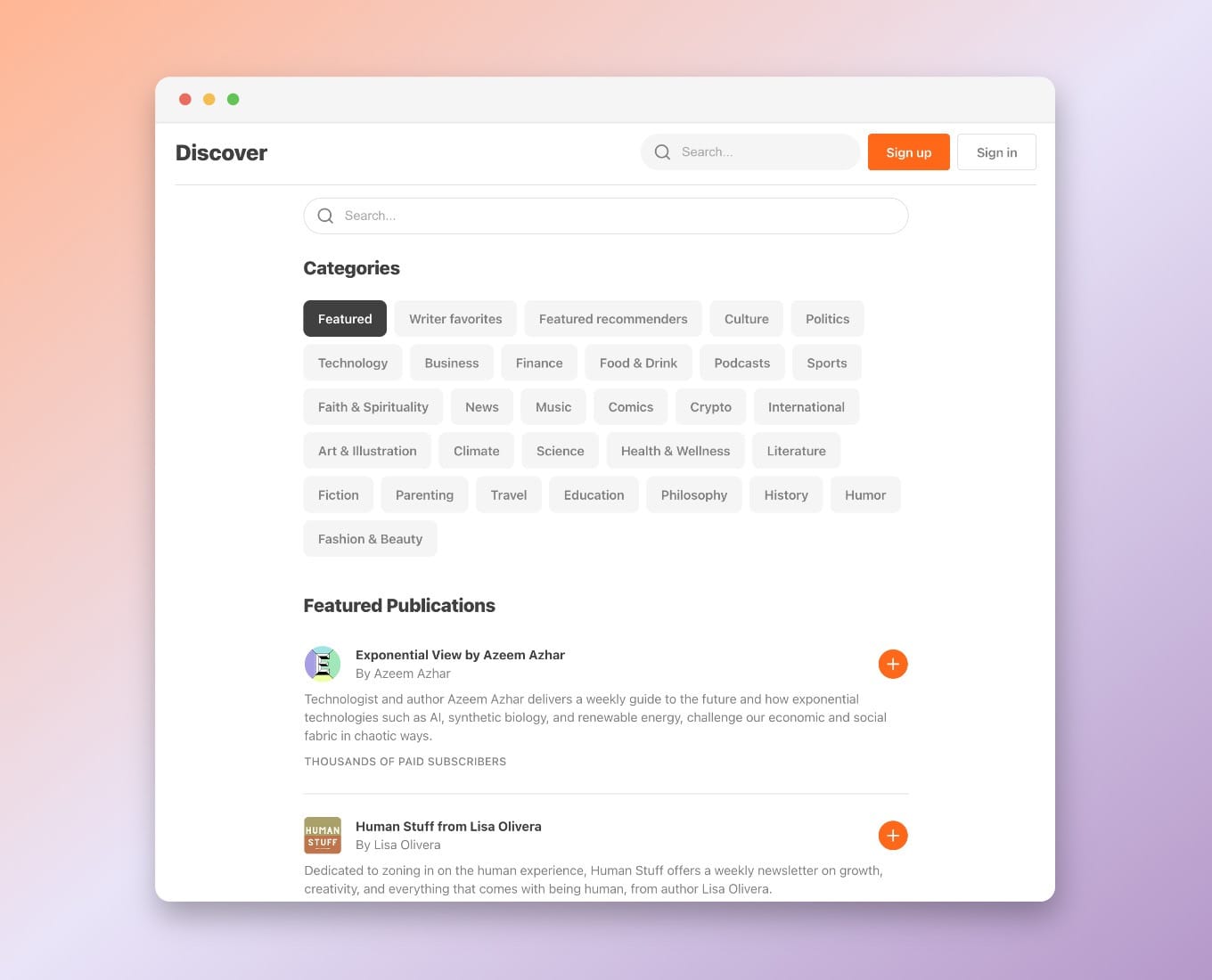
There are so many incredible Substack newsletters worth subscribing to, so we’re just going to list a few to get you started:
- Culture Study by Anne Helen Petersen
- My Sweet Dumb Brain
- Wonder Tools
- Explore more on Substack’s discovery tool…
More Popular Newsletters We Recommend:
The Sample
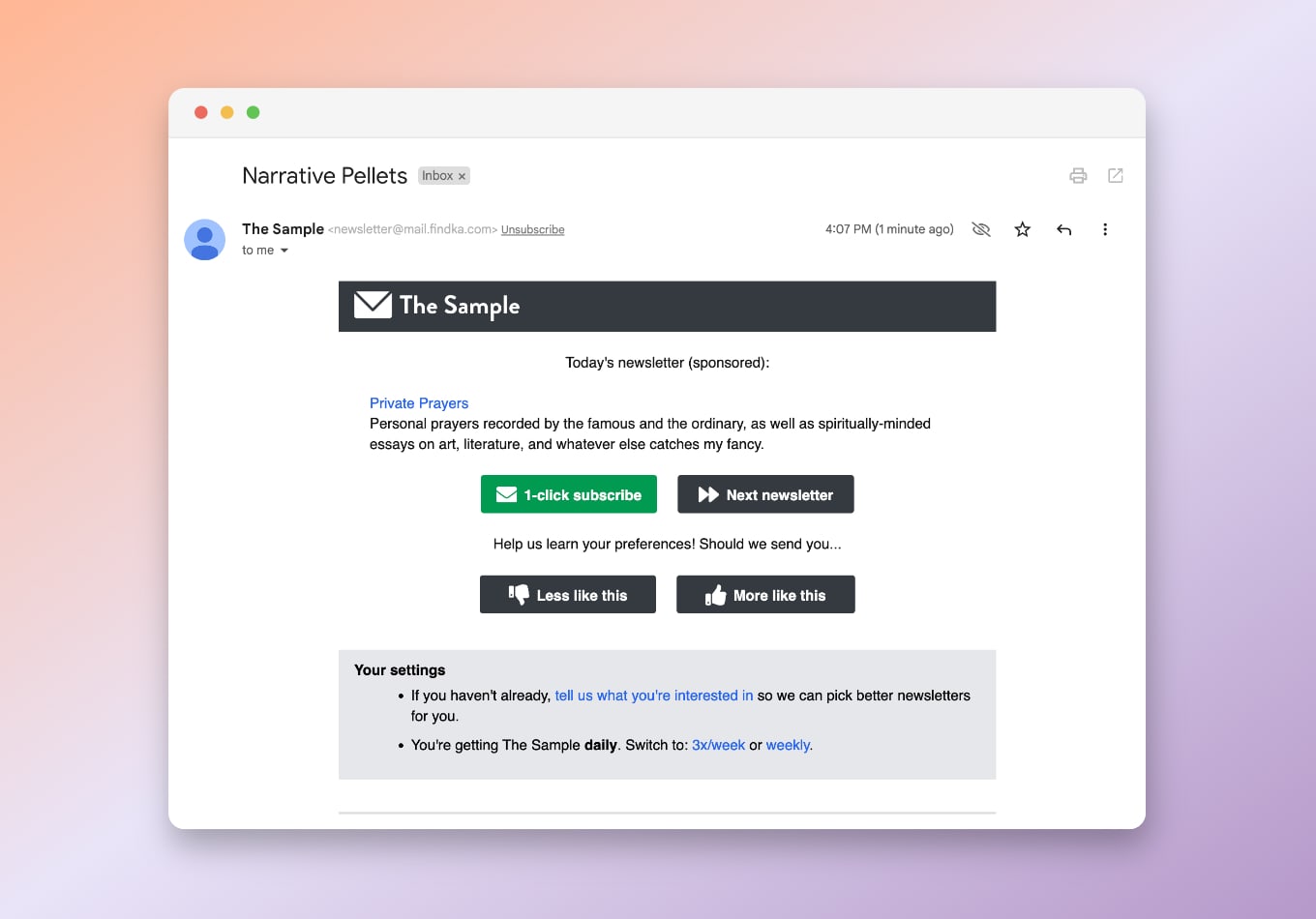
Still not sure what newsletter to subscribe to? Sign up for The Sample and read curated articles from dozens of leading newsletters. Subscribe to the ones you love as you discover them.
Ground News
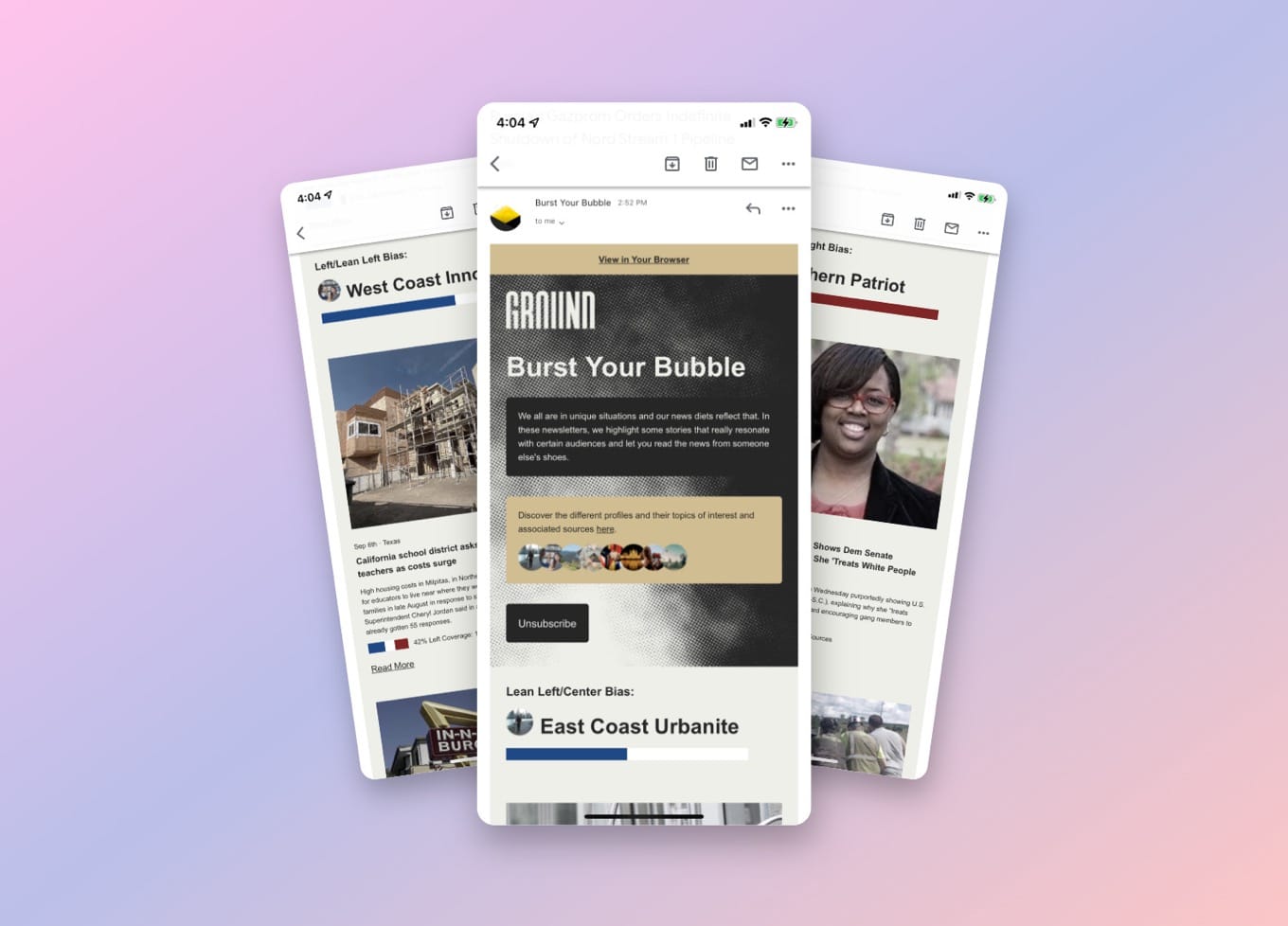
If you’re a long-time listener to our podcast, you’re familiar with Ground News — a startup that helps identify and eliminate media bias. They have several newsletters; we especially recommend their paid newsletter, Burst Your Bubble, which delivers the top news stories that people outside of your bubble are consuming right now.
Have more recommendations for the best daily and weekly newsletters?
Send them our way via our contact page! We'll consider them for future updates to this article. Thanks for reading!
One final note: If you want to unplug from digital communication (or just want good news) — subscribe to our monthly print Goodnewspaper. We’ve been featured by The New York Times, Mashable, and Forbes — and thousands of subscribers love getting our snail mail every month.
Lesbian footballers report widespread discrimination
— Players say they face harassment, career impacts
— LGBTQ+ team offers a 'safe space' for players
All Imani wanted to do was to play football. But Kenyan fans, gossiping about her sexuality, had other ideas.
"That one is always with girls," Imani overheard one man saying as she was in the middle of a match in the coastal city of Mombasa.
"Jersey number four, she is a renowned lesbian."
There and then, Imani knew her game was over. She faked an injury and went straight home, worried for her safety in a country where discrimination against
LGBTQ+ people is rife and can lead to abuse including taunts, attacks and rape.
"Those remarks got to me, and it wasn't just because I had been outed publicly," said Imani, who — along with other lesbian footballers interviewed by the Thomson Reuters Foundation — asked to be identified by a pseudonym.
"The spectator went on to announce... that he knew my friends and even where I lived."
Around the world, lesbian and bisexual football players are at the forefront of top women's teams, unlike in the men's game where only a small number of elite players have come out.
South Africa's Banyana Banyana team, which last month was crowned champion of the 2022 Africa Women Cup of Nations, is captained by lesbian Janine van Wyk. It is the continent's only national team to have any openly lesbian or bi players.
There were seven openly lesbian or bisexual players on the 23-strong 'Lionesses' England women's team that clinched victory over Germany in July's Euro 2022 championships.
Megan Rapinoe, a lesbian, led the U.S. national women's team to gold in the 2012 London Olympics and bronze in Tokyo last year. In July, she became the first football player to receive the Presidential Medal of Freedom.
While women's football is gaining popularity in Kenya, stigma against LGBTQ+ people forces players to stay in the closet.
Secrecy is the safest choice for Kenyan female footballers who harbor ambitions of playing professionally, internationally, or in the national Harambee Starlets team.
"Lesbian players are discriminated against. So, it would be best to hide who you really are," said Farida, 33, a retired professional footballer who kept her sexuality hidden for all of her career.
Bullied and Harassed
Aisha, a Kenyan semi-professional player, aspires to play football abroad not only because of the career opportunities but so that she can be her true self on and off the pitch.
She has found herself excluded during matches because of rumors about her sexuality.
"Sometimes the straight teammates ignore you on the pitch and only involve you when necessary," Aisha said with a resigned laugh.
"If you don't have thick skin, it will get to you and your game. I believe in myself and know I am a star and play well. So, I won't let anyone put limits on my game."
Coaches do not speak up for lesbian and bi players who are being bullied over speculation that they are gay - and some even sexually harass them, said Imani.
"No coach has ever stood up in defense of any lesbian players. Some even refuse to include us in their teams unless we give into their demands," said Imani, who is semi-professional.
"They want to protect their reputation, their jobs, and are afraid of taunts from the fans."
Safe Spaces
Some LGBTQ+ women say football has helped them find others like them and create safe havens.
Farida was shamed and threatened with expulsion by her school for being gay. But she said she found her "rainbow" people — as she describes her fellow lesbian players — after enrolling in a football talent academy.
Recognizing an increasing number of lesbians are passionate about football, former amateur player and LGBTQ+ rights campaigner Anita Wanjiru founded a women's team in 2017.
Though the all-lesbian team is organized through the Kenyan LGBTQ+ activist group Minority Women in Action (MWA), the team does not publicize the link and keeps the details of their sexuality a secret from the wider community.
"Initially, we used the game as a tool to conduct sexual reproductive health advocacy and to build talent," said Wanjiru.
"But it turned out to be a safe space away from the discrimination that our members were facing in their teams and the mainstream leagues."
Within the confines of MWA's football team, players are free from the barrage of lewd comments, threats of physical attacks or what has been termed as "corrective rape" — the attempt to make a woman straight through sexual assault.
Despite LGBTQ+ women's secrecy, rumors and discrimination against players who don't match up to stereotypical feminine norms mean they have struggled to get support.
Aisha, who plays for MWA, said the players have resorted to training themselves as no licensed coach will work with them. She said the team is also denied access to training grounds or sponsorship opportunities.
For lesbian or bisexual women, the only way to progress in the league is to stay in the closet, said Imani.
"It is not easy being yourself and performing," she said. "Even though you are playing your best football, someone will still say something negative, something for people to start pointing fingers at you, and you could lose everything."
This story was originally published by the Thomson Reuters Foundation, the charitable arm of Thomson Reuters, that covers the lives of people around the world who struggle to live freely or fairly.
Before Juana Camacho joined Liberty Cleaners, the country’s first women-led workers’ hub, she made less than minimum wage as a cleaner and felt she had no rights to negotiate with her employers.
But as she organized alongside the women in the group, who together learned about their rights from wages to safe working conditions, her perspective changed.
“I lost the fear,” she says. She began advocating for minimum wage – and now works for employers who pay it. “I had used my children to help negotiate deals and now I can do that.”
Camacho is one of about 50 women who make up the quickly-growing Liberty Cleaners, a group under the New York City-based Worker’s Justice Project that started four years ago with just a few women.
In July, the group celebrated the completion of a first-of-its-kind training program, developed in partnership with the State University of New York’s Harry Van Arsdale Jr. School of Labor Studies, with a focus on green cleaning, technology and labor empowerment.
A few weeks ago, the group kicked off ESL training at the Worker’s Justice Project Williamsburg HUB to support women negotiating in English.
“This was a group motivated to see a change, organize themselves, and grow,” says Maria Valdez, Worker’s Justice Project Williamsburg HUB director who leads the Liberty Cleaners.
The group loosely modeled themselves after Los Deliveristas Unidos, a group of app delivery workers who also organize under Worker’s Justice Project.
Their early work included OSHA and “know your rights” training, as well as outreach to women day workers who gathered on a corner of Williamsburg, Brooklyn — known as La Parada — in search of work.
As they continued to organize, the women rejected the title of domestic workers.
“The word sounds like we’re being domesticated,” Valdez says. “We thought we deserved a name … we identified as a powerful group of cleaners.”

Two years ago, roughly 20 women settled on the name Liberty Cleaners and picked the Statue of Liberty as a logo. “Many of the community are immigrant community, and the statue represents changes and better opportunities,” Valdez says.
Liberty Cleaners noticed a major difference between the informal economy of the women day laborers and Los Deliveristas Unidos, whose work is mediated by apps.
“Women would pick up work and sometimes at the end of the day, the employer doesn’t pay,” Valdez says. “If the employer sees you don’t speak English, they will take advantage.”
Liberty Cleaners wanted to increase tech education among workers, with the goal of utilizing existing apps as well as developing an app to pick up jobs and ensure fair pay.
They turned to SUNY’s Harry Van Arsdale Jr. School of Labor Studies — which had previously worked with Los Deliveristas Unidos — about developing a curriculum that covered tech education alongside green cleaning and worker’s rights.
“The idea was to combine workforce development with labor education and leadership,” says Maria Figueroa, dean of the school. She and Liberty Cleaners worked with one faculty member, two university employees and two consultants to design a curriculum.
The team found that when it came to comprehensive training for the cleaning industry, “there wasn’t much,” says Figueroa.
The team broke down the training into soft skills and hard skills modules. Topics include cleaning training, with a focus on green products that have less health implications, technology basics, filling out safety forms, negotiation and business principles of the industry. They also added tips on self-advocating for better working conditions and wages.
They picked a two-day span to hold the training at the university. “These two days meant a lot for the women,” Valdez says. “For many of them, they left hours of work, had to find babysitters, and had to do a lot of juggling.”
Camacho, the Liberty Cleaners member who advocated for minimum wage, also attended.
“Through the training I learned more about how to negotiate with my employers, how to use eco-friendly products, and about technology,” she says.

The class was an opportunity for the women to converse with each other and instructors about their experiences in the cleaning industry, their purpose in doing this work, and the skills acquired over the years.
For participant Merced Aguilar, who has been organizing with Liberty Cleaners since the beginning, it was also a way to share the power of organizing.
“I want to let more of my compañeros know that being part of Liberty Cleaners will help you get more fair wages and more respect and dignity,” Aguilar says. “I want others to have the opportunity and learn the way I did.”
A total of 50 women graduated from the new program with a formal ceremony, wearing caps and gowns. “It was a special date and I wanted women to feel proud,” says Valdez.
She and Figueroa hope to continue the partnership and evolve the curriculum into an accredited course and apprenticeship program. “It can become something official that can contribute to a degree,” Figueroa says.
Liberty Cleaners, for its part, is building off the SUNY curriculum with twice-a-week ESL classes, which includes tech practice skills, at the Williamsburg HUB to help women negotiate in English.
Liberty Cleaners knows the importance of this skill — it’s what allowed Camacho to speak out against employers who weren’t paying minimum wage.
Valdez believes that trainings can be the main strategy to attract new women to Liberty Cleaners — she plans to expand options if the group receives more funding.
Her dream is to start a collective retirement fund to support the women in the group.
“Liberty Cleaners are here and they’re growing,” she says.
“These are women dominating whatever they need to face, powerful women that are giving themselves an opportunity to learn.”
Marine mammal experts this week expressed deep concern over the potentially devastating effects of the U.S. Navy's recent detonation of 40,000 pounds of explosives off the Atlantic coast of Florida on sea life, while progressive observers blasted what they called the government's misplaced spending priorities.
"Some smaller species of marine mammals would be expected to die within one to two kilometers of the blast, and... [others] would suffer injury including hearing loss out to 10 kilometers."
— Michael Jasny, NRDC
The Navy set off the massive blast — which registered as a magnitude 3.9 earthquake on shore — on June 18 about 100 miles off Palm Coast as the first in a series of full ship shock trials on the USS Gerald R. Ford, a $12.8 billion nuclear-powered aircraft carrier commissioned in 2017.
"The U.S. Navy conducts shock trials of new ship designs using live explosives to confirm that our warships can continue to meet demanding mission requirements under harsh conditions they might encounter in battle," the Navy explained in a press release.
The statement claimed the explosion occurred "within a narrow schedule that complies with environmental mitigation requirements, respecting known migration patterns of marine life in the test area."
The region is home to various marine mammal species including bottlenose dolphins, humpback whales, and North Atlantic right whales. While whales are not typically seen off the northern Florida coast in June, marine experts nevertheless expressed alarm over potential harm to mammals and other sea life.
"The Navy's own modeling indicates that some smaller species of marine mammals would be expected to die within one to two kilometers of the blast, and that some marine mammal species would suffer injury including hearing loss out to 10 kilometers of the blast," Michael Jasny, director of the Natural Resources Defense Council's (NRDC) Marine Mammal Protection Project, told The Guardian. "That gives some sense of the power of the explosives we are talking about."
Hey I don’t think this is good for sea creatures @POTUS https://t.co/P7dfnuTcrQ
— Jackie Fielder (@JackieFielder_) June 22, 2021
"A large whale might need to be within a few hundred meters of the blast to die, while a small mammal could be a couple of kilometers away," added Jasny, who said that even if the animals survive the blast, potential hearing loss still poses a grave risk to species which use that sense to locate food and their companions.
The U.S. Navy has previously come under fire for its use of undersea sonar, which can injure and kill marine mammals. In 2015, the Navy agreed to limit its use of underwater sonar and explosives in particularly sensitive areas for scores of vulnerable species.
While numerous observers worried about the effects of blast testing on marine life, others expressed concerns about misplaced government priorities, with the advocacy group Public Citizen tweeting that "94% of public school teachers spend their own money on school supplies." Some social media users responded to CBS News' tweet about the explosion lamenting that the United States still does not have universal healthcare.
Janet Weil, an activist with the peace group CodePink and the Portland, Oregon branch of Extinction Rebellion, called the text a "waste of tax dollars and resources."
This story was originally published by Common Dreams.
The street outside the Brownsville Community Justice Center used to be a hub for drug use and violence. The dead-end road lacked sufficient lighting, had hardly any overlooking windows, and little car traffic. The combination meant it wasn’t safe for the people who needed to use it as a pedestrian pathway. The surrounding neighborhood in east Brooklyn has historically suffered from some of the highest rates of gun violence and violent crime in the city.
Now, the street is a public plaza: tables and chairs, lush plants and trees, and a colorful mural reading “Brownsville Stronger Together.” It’s a well-lit, largely safe passageway between the Langston Hughes public housing towers and the bustling storefronts along Belmont Avenue. The broader 73rd Precinct, which includes Brownsville, has seen murders and shootings fall significantly since last year.
This remarkable transformation didn’t come about by accident. Mallory Thatch, a program manager at the Justice Center, has seen it firsthand: She helps oversee the center’s effort to improve Brownsville’s public spaces, including by organizing resources such as overdose prevention training and clean needle exchanges. The key, she says, is not going to extremes by cracking down too hard. “We don’t want to push these issues further into the neighborhood,” she said. “We want to remedy them at the source.”
As Brownsville, so Brooklyn. New York’s most populous borough has addressed the pandemic-era surge in gun violence with a strategy that would have once been a nonstarter: using police and incarceration as a last resort.
It appears to be working. Across New York City, shootings surged in the early months of the pandemic and continued throughout 2021. Brooklyn, however, saw violence fall in 2021, with a significant decline in both shootings and homicides. It has continued this year: Shootings are down roughly 20 percent, compared to the 11 percent decline in shootings citywide and 7 percent across the other boroughs.
But the new mayor, Eric Adams — the former Brooklyn borough president who ran on a “tough on crime” platform — has taken the opposite strategy to Brooklyn. He has called on prosecutors and judges to go harder on those who break the law. He has blamed the uptick in gun violence in the city on reforms to the state’s bail laws, and on prosecutors and judges for being lenient on lower-level offenses up to and including gun possession.
“No one takes criminal justice seriously anymore,” Adams told a news conference on June 6. “These bad guys no longer take them seriously. They believe our criminal justice system is a laughing stock of our entire country. We have to get serious about this, because innocent people are dying.”
In New York City, mayors are not in complete control of public safety, nor can they control the criminal justice system. Adams, however, has pushed for his counterparts in the courts and in prosecutors’ offices to adopt his rhetoric and his policy prescriptions.
By contrast, the Brooklyn district attorney, Eric Gonzalez, who was formally elected in 2017 (he took over the year before on an acting basis), has pledged to lead the “most progressive” prosecutor’s office in the country — and he hasn’t shifted his tone, even in the face of Adams’ calls for a tougher response to crime.
“My strategy has been consistent,” Gonzalez said in an interview. “I’m going to focus my prosecutorial resources on the so-called drivers. And I’m going to refrain from doing mass arrests, mass takedowns, or things that I think undermine our community’s trust in law enforcement.”
The Trace worked with BRIC TV, Brooklyn’s nonprofit community TV channel, to explore the lives of city residents who are affected by gun violence. This episode of “The Damage Done” profiles a Black firearms club. View the full series here.
Instead of lots of petty arrests, Gonzalez has aimed to drive down crime without driving up prosecutions. He prioritizes early release in most parole proceedings, and his prosecutors are encouraged to resolve cases without jail time. He has also dismissed tens of thousands of low-level summonses.
Most notably, along with community partners like Brownsville Think Tank Matters, Gonzalez has developed intensive diversion and mentorship programs. These hand over responsibility in many misdemeanor cases to social services instead of jails. His office is also one of very few across the country that allows for diversion for people who carry guns but aren’t believed to be doing so maliciously.
“We saw people across America arm themselves for protection [during the pandemic]. And then we’re shocked that people in low-income neighborhoods are doing the same,” Gonzalez said.
“That program is something that I’m proud of. It takes a lot of courage to run it because, obviously, if any of those young people hurt someone with a gun in the future there’s going to be fallout.”
Gonzalez has also supported the Brownsville Safety Alliance, a community mobilization that pulls officers from several blocks for five-day periods, while a coalition of community groups gives residents help — with employment, food, job training, and mental health services. Violence interrupters are on standby to defuse any potentially dangerous situations.
These progressive policies may soon come into more direct conflict with those of the mayor. Adams has expressed support for community-based solutions to gun violence, but his first budget is set to cut funding for the city’s Crisis Management System from $135 million this fiscal year to $100 million in the fiscal year that begins in September.
Nevertheless, Gonzalez has maintained a diplomatic relationship both with the Police Department and with Adams, despite their differences in tone.
“His gun safety plan is a lot more than simply, ‘Let’s arrest more people and prosecute,’” Gonzalez said of Adams. “But I don’t think that that message gets adequately or fairly conveyed to the public. I hope that the things he’s saying will be reflected in our city budgets moving forward. That there’ll be more and more investments made in East New York and Brownsville, and other difficult parts of our city.”
The Trace worked with BRIC TV, Brooklyn’s nonprofit community TV channel, to explore the lives of city residents who are affected by gun violence. View the full series here.
While Gonzalez has focused on alternatives to police and incarceration, he has still worked with the NYPD on efforts to target and take down suspected gangs. He is concerned, however, about the intense rhetoric surrounding crime and public safety in New York.
“It’s hard to know exactly where the city goes on this, but I do know — as the district attorney of the largest county — that I’m always going to look at folks and use jail as a last resort,” Gonzalez said.
“The alternative is to get services in people’s lives to deal with the addiction issues, mental health issues, poverty issues that are driving a lot of this low-level offending.”
Though the causes of why shootings have declined in Brooklyn are complex, Gonzalez credits Brooklyn’s network of community-based organizations and its more-developed infrastructure of Crisis Management System groups. Those groups, too, say they’ve seen a lot of positive change.
“There’s been a lot of different types of investments in Brooklyn. There are a lot of more community-based efforts here, specifically with CMS,” said Hailey Nolasco, director of community-based violence prevention at the Center for Court Innovation, the parent organization of the Justice Center.
Though Gonzalez can’t control the Police Department, local police commanders have also been willing to shift their thinking on alternatives to policing, Gonzalez and the community organizers agree. They’ve been more willing to share information directly with anti-violence groups, intelligence that helps violence interrupters and outreach workers better target their services.
Brownsville still has problems. Numerous vacant storefronts still line the Belmont corridor; the landlords are hard to track down. There’s a lack of lighting on the sidewalks, which the Brownsville Community Justice Center has been imploring the city to address. The organization is also working with the Department of Transportation and design firms to clean up another dead-end road nearby that has also suffered from violence and drug use.
There is work to be done outside the physical space, too. Since 2020 the center has connected roughly 300 young people to mentors, paid internships, and entrepreneurship trainings. It also supports local Black-owned businesses, operates diversion initiatives, and provides legal help and housing resources.
Perhaps most important of all, these community-based efforts have transformed the notion that Brownsville is a home for violence, said Deron Johnston, the deputy director for community development at the Center for Court Innovation. Repairing those narratives of failure, which are often perpetuated by the media, is vital — and Brownsville now means something else than it once did, he said.
“This is a place where families are. This is a place where children are. This is a place where fun happens.”
Every day the Good Good Good team collects the best good news in the world and shares it with our community. Here are the highlights for this week!
If you want to get good news in your inbox every day, join the Goodnewsletter — the free daily newsletter designed to leave you feeling hopeful.
The Best Positive News We're Celebrating This Week —
Researchers are developing wave-riding generators that could provide the cheapest clean energy ever
While wind and solar clean energy technologies have rapidly grown in recent years, researchers have long been working on ways to harness the energy of tides and waves. Sea Wave Energy Ltd has been working for a decade on wave-riding generators that could provide massive amounts of clean energy — at an extremely low cost.
The technology has yet to be perfected, but early research is promising, and experts say if successful it could be a “clean energy revolution.”
Support for labor unions in the U.S. is at a 57-year high
According to a new poll from Gallup, support among Americans for unions is the highest since 1965. Up from 68 percent last year, 71 percent of Americans say they approve of labor unions.
The support comes as large corporations like Amazon and Starbucks have seen their workers organize and successfully form unions. As reported in the new Money Edition of the Goodnewspaper, unions help represent workers’ voices in organizational policies, health and safety conditions, benefits, and more.
An Ohio-based restaurant chain is building its fast-growing workforce with people often overlooked
In the U.S., the unemployment rate among formerly incarcerated people is nearly five times higher than the general population, and college applicants with a former felony conviction are almost two and a half times more likely to be denied admission. Without equal access to employment or education, they can get stuck in a cycle of poverty and recidivism.
Looking to help reverse this trend, Hot Chicken Takeover specifically hires people that may otherwise have trouble finding employment because of prior incarceration, drug addiction, or homelessness. Almost 40% of its 172 workers have come out of the justice system, and they’ve already expanded to seven locations — with three more on the way.
An LA-based nonprofit has saved 250 million pounds of fresh produce from landfills and donated it to food insecure communities
Founded in 2009, Food Forward surpassed 250 million pounds — or 1 billion servings — rescued from the landfill and donated to food insecure communities. Based in the part of the country that receives and ships the most food, they’ve built a network of 350 partners that deliver rescued produce to 12 counties in California and two Tribal nations.
Not only is sending food to a landfill bad for the environment, but with an estimated 38.3 million Americans experiencing food insecurity, food should rarely (if ever) just go to waste.
Thanks to Food Forward and their partner Vegan Outreach’s efforts, communities like Cherokee Nation in Oklahoma now have access to fresh produce at two community centers — saving it from a landfill, and feeding those in need.
Three dolphins rescued from a small resort hotel pool are now swimming freely off the coast of Bali
After spending years in a traveling circus, three bottlenose dolphins — Johnny, Rocky, and Rambo — were sold to a resort hotel where they lived in a small pool for the entertainment of tourists.
Three years ago, they were rescued from the hotel, and after spending time recovering their health and strength in a larger sanctuary, officials in Indonesia just released them to swim freely in the open sea off the coast of Bali.
The world’s first fully hydrogen-powered train service is now running in Germany
With only steam and condensed water as emissions, five Coradia iLint hydrogen-powered trains recently began running in Germany, with nine more trains on the way. The trains will replace 15 diesel trains currently used in the region.
The manufacturer says the trains have a range of 1,000 kilometers, which means they can run all day with a single tank of hydrogen. They’re also bringing trains to the Frankfurt, Germany area as well as regions in Italy and France.
More good news of the week —
A global organization is partnering with local NGOs to replant and restore decimated mangrove forests. The mangrove ecosystem has a superior ability to store carbon compared to other forests.
A Virginia judge dismissed a lawsuit attempting to ban the graphic novel, Gender Queer. Maia Kobabe’s memoir is one of more than 1,500 book bans and challenges in the 2021-2022 school year alone.
The world’s biggest wind farm is now fully operational. Situated off the coast of England, the Hornsea 2’s 165 turbines will help power more than 1.4 million U.K. homes.
A major Christian Evangelical group just called for urgent action to address human-induced climate change. The National Association of Evangelicals represents more than 45,000 local churches and millions of congregants.
America’s first “Heat Officers” are helping cool down the most marginalized neighborhoods in Miami and Los Angeles. Heat is the deadliest weather phenomenon in the U.S., causing around 3,900 deaths in California alone in the last decade.
Best-selling romance novelist Nora Roberts just donated $50,000 to a Michigan library defunded for having LGBTQ+ books. Residents of Jamestown Township voted to defund the library after a parent complained about the content of one of its books.
In the race to save Caribbean coral, marine biologists just successfully reproduced the critical elkhorn coral species. Now rarely seen alive in the wild, elkhorn coral is important both to reef ecosystems and protection against hurricanes.
A new library in Vancouver is dedicated to elevating books written by people of color. The Vancouver Black Library hopes to serve as a hub for the community through events and lower the barrier to accessing resources.
After she was insulted on-air by Tucker Carlson, a popular country music artist raised more than $100,000 for transgender youth. Maren Morris donated the money to TransLifeline and the GLADD Transgender Media Program.
Electric vehicle adoption in the U.S. is happening a lot faster than anticipated. The trend is encouraging, but sustainable growth in the manufacturing of batteries and vehicles is still needed.
Brooklyn Public Library is giving free library cards to teen students anywhere in the U.S. facing book bans. Through the Books UnBanned campaign, cards will be good for one year in the hopes of complementing teens’ local access to resources.
Students at BYU shielded their LGBTQ+ classmates from protesters at a Pride event. The protesters directed anti-LGBTQ+ slurs at the Back to School Pride Night event.
Broward County, Florida just unanimously approved the first portion of a new regional commuter rail link. It’s an important project that will hopefully cut down on commuter traffic to the Miami area.
Scientists discovered an antibody that can target all COVID-19 variants. They’re hoping to create a new vaccine with it.
The next season of Dancing with the Stars will feature two disabled cast members. Selma Blair, who recently shared her multiple sclerosis diagnosis, and “CODA” actor Daniel Durant, who is deaf, will also join the show’s first-ever drag queen contestant, Shangela.
At Good Good Good, we’re all about celebrating the good in the world — and then taking action to fill the world with more good.
While we can do that through volunteering in our communities, donating to nonprofits, advocating for governmental policies that help people, participating in mutual aid, etc — one simple way to make a difference is to be thoughtful about the products we buy.
We know we’re going to buy things — so why not vote with our dollar by only choosing to purchase products that are ethically made, in line with our values, and aren’t harmful to the planet.
Every thoughtful purchasing decision means less money to bad companies and more money to good companies — plus you receive a product you can feel great about.
Sometimes it’s hard to know where to get started with sustainable swaps — so we created this guide to help bring inspiration and ideas. Remember that the most sustainable thing you can do is to keep, repair, or repurpose what you already own before you buy something new. You can always bookmark this page so you can come back to it over time.
Some of the links in this article may be affiliate links, which means we may get a commission for purchases made through these links — at no extra cost to you. As always, everything listed here is independently recommended by the Good Good Good team.
Sections in this guide:
- Kitchen
- Bathroom
- Bedroom
- Living Room
- Laundry Room
- Office
- Outside
- More
Meet the Eco-Friendly Products Making Your Home and the Planet a Better Place:
For the kitchen —
Reusable Paper Towels
Once you switch to reusable paper towels, you’ll never want to go back. Wiping up spills and messes with single-use paper towels feels like throwing away money (and cutting down trees) — and it literally is. But as long as you have access to a washer and dryer, using reusable towels or rags is even more effective and affordable than their paper-based counterparts.

We recommend:
Compost Bin
While you’d think that food that ends up in a landfill will naturally break down, uniquely, landfills are so compacted that it takes a long time to break down and when it does, it releases a significant amount of methane.
That’s why composting is important: it turns your food scraps into something helpful for the planet. But what’s the best way to collect food scraps throughout the week without making your kitchen yucky?
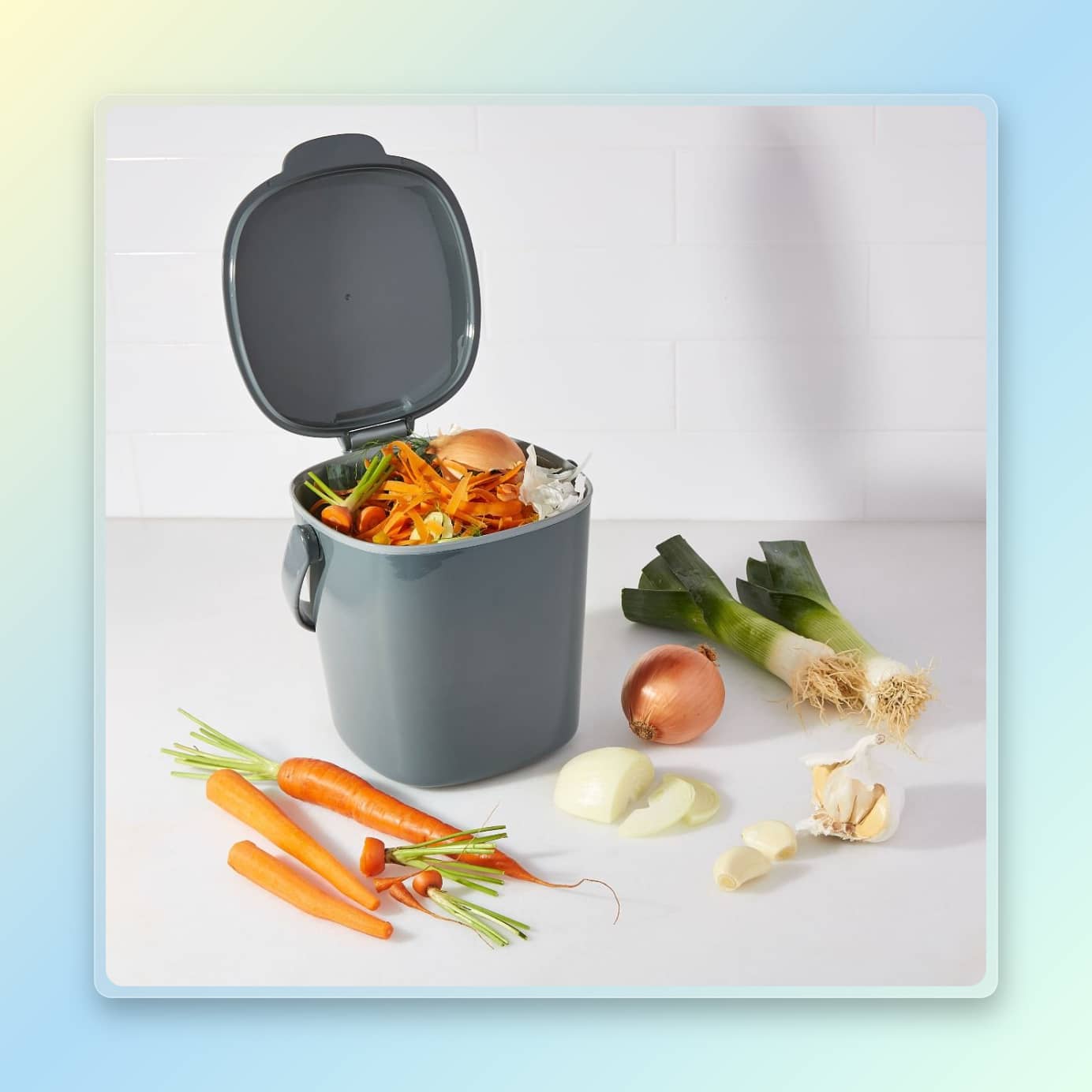
We recommend:
Recycled Glassware
Glass is infinitely recyclable — and while we’re seeing more wine bottles, food packaging, and household glass containers being made with more recycled glass, we seldom see our actual drinking glasses made from recycled materials. Fortunately, a number of artisans are making beautiful, unique glassware you’ll love showing off.

We recommend:
- NOVICA’S Hand-Blown Recycled Glasses
- Our Place’s Recycled Drinking Glasses
- Recycled Glass Set from Magda Made
→ Explore our entire guide to the best recycled drinking glasses
Ziploc Bag Alternatives
One of the best ways to reduce food waste is to simply ensure you have functional food storage containers you’ll actually want to use. Bonus points if those containers are sustainable, as well.

We recommend:
Other Green Kitchenware
Once you begin making sustainable swaps in your kitchen, you’ll begin to see a million more ways to reduce waste. The biggest key is to think through how to buy high-quality items that will last a lifetime without needing to be replaced — and consider how products that will end up in landfills (like garbage bags themselves) can have a reduced negative impact.

We recommend:
For the bathroom —
Low-Waste Toothbrush
The American Dental Association recommends swapping out your toothbrush every three to four months, but that doesn’t mean we have to send the whole toothbrush to a landfill. By swapping out your plastic brush for something more eco-friendly, you can make the planet happy while you make your dentist happy. (And it’s worth mentioning there are a number of eco-friendly electric toothbrushes these days, too!)
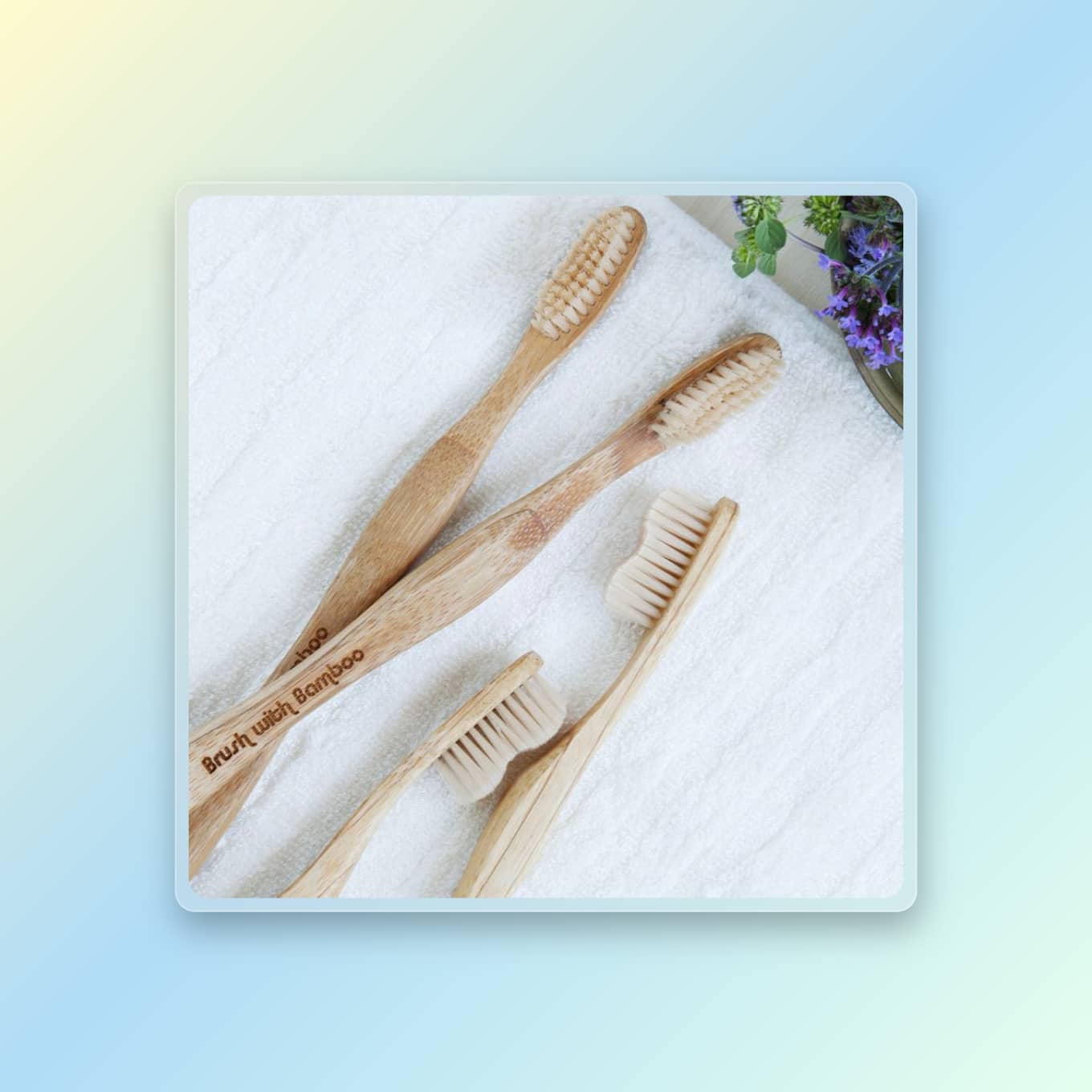
We recommend:
- Bamboo Toothbrush from Brush with Bamboo
- FOREO ISSA 3 Rechargeable Electric Toothbrush with Long-Lasting Brush Head
- Recycled & Mail-Back Toothbrush from Preserve
Zero Waste Toothpaste
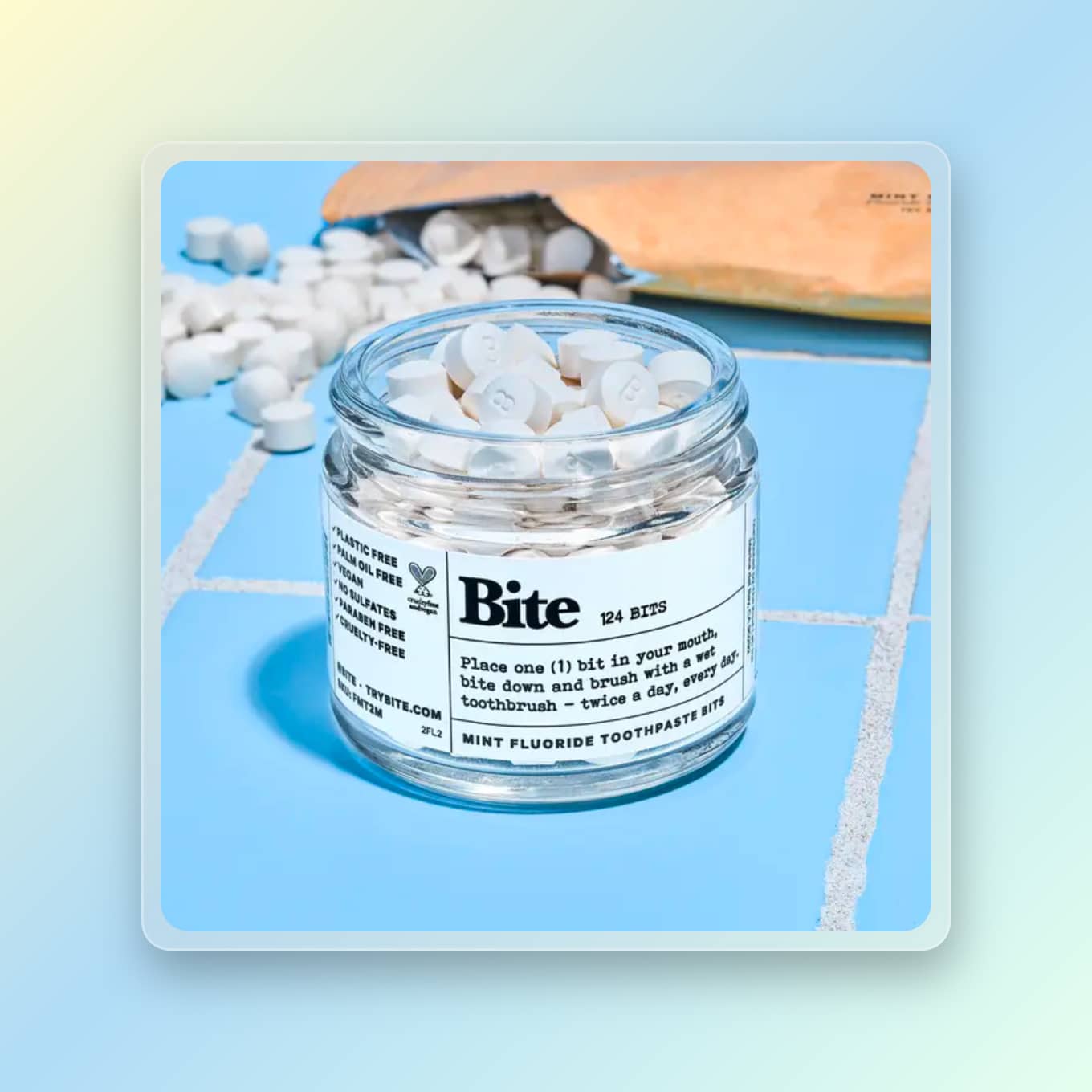
Toothpaste tubes are notoriously hard to recycle (and nearly impossible to get all of the paste out of). In recent years, companies have created more sustainable alternatives. While they definitely will take time to get used to, these sustainable swaps help eliminate waste from your daily (hopefully twice a day!) routine. (These also make for a great sustainable stocking stuffer around the holidays)
We recommend:
- Zero Waste Toothpaste Bits from Bite
- Uncle Harry’s Toothpaste in Glass Jar
- Toothpaste Tabs from The Humble Co.
Zero Waste Shower Supplies
While 90% of packaging is recycled from our kitchens, a study found that only 50% is recycled from the bathroom. While one solution is to keep a small recycling bin in your bathroom and be intentional about changing those stats in your own home — another is more simple and more impactful.
Instead of buying a series of plastic bottles for all your shampoos, conditioners, body washes, and face washes, swap them out for zero-waste alternatives!

We recommend:
- Suds & Co. Shampoo Bar
- Ethique Conditioner Bar
- Shampoo, Conditioner, and Body Wash Waterless Concentrate from Everist
Razor
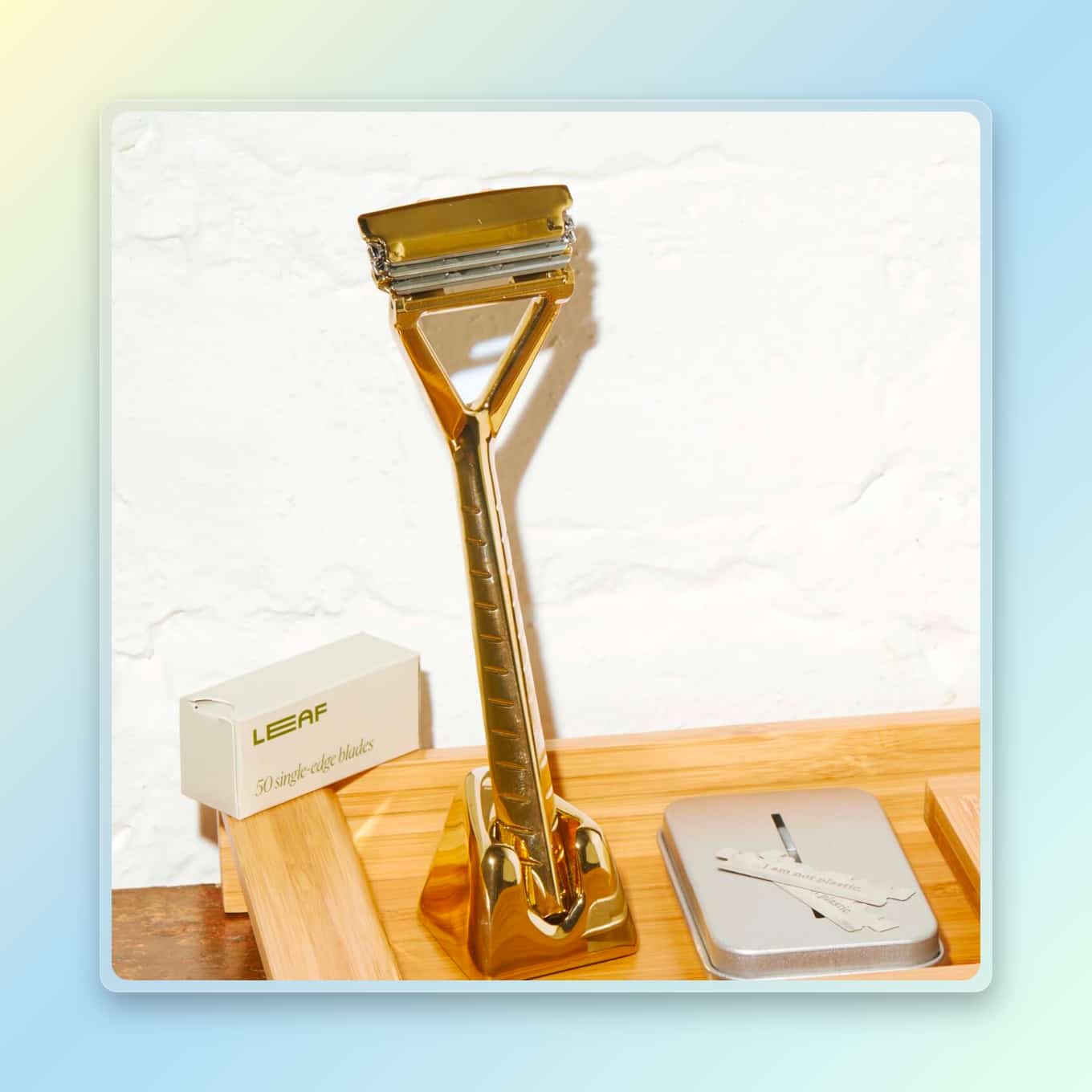
Disposable razors are low quality, short-lasting, and live forever in landfills. By switching to a (beautiful!) reusable razor, you can save money and the planet — all while you get a better shave.
We recommend:
Recycled or Bamboo Toilet Paper

It feels really weird to chop down trees specifically to… wipe our butts with. Fortunately, it’s easy, affordable, and kind of cool to shop for more sustainable toilet paper. If you can make this swap, you’re on a roll!
We recommend:
- 100% Recycled Toilet Paper from Who Gives a Crap
- Bamboo Toilet Paper from Who Gives a Crap
- Bamboo Toilet Paper from Reel
Bidet Converter Kit
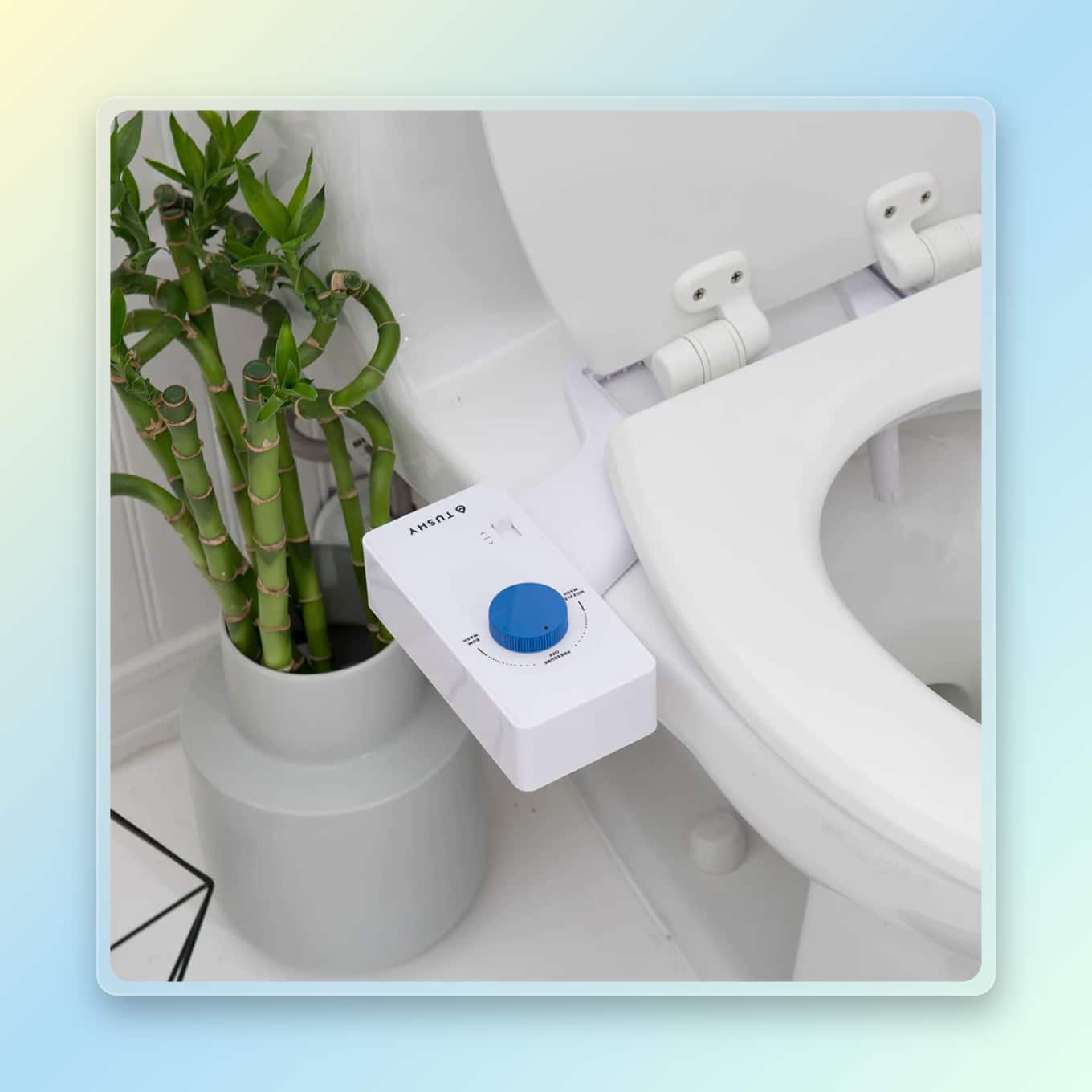
According to Business Insider, a bidet uses only an eighth of a gallon of water — while it takes roughly 37 gallons of water to make a single roll of toilet paper. Even though many bidet users still use toilet paper to dry off, the amount of toilet paper necessary is significantly lower. Plus, bidets are more hygienic — and these days, super easy to install.
We recommend:
For the bedroom —
Explore Good Good Good’s complete guide to eco-friendly bedroom products
Eco-Friendly Bed Frame
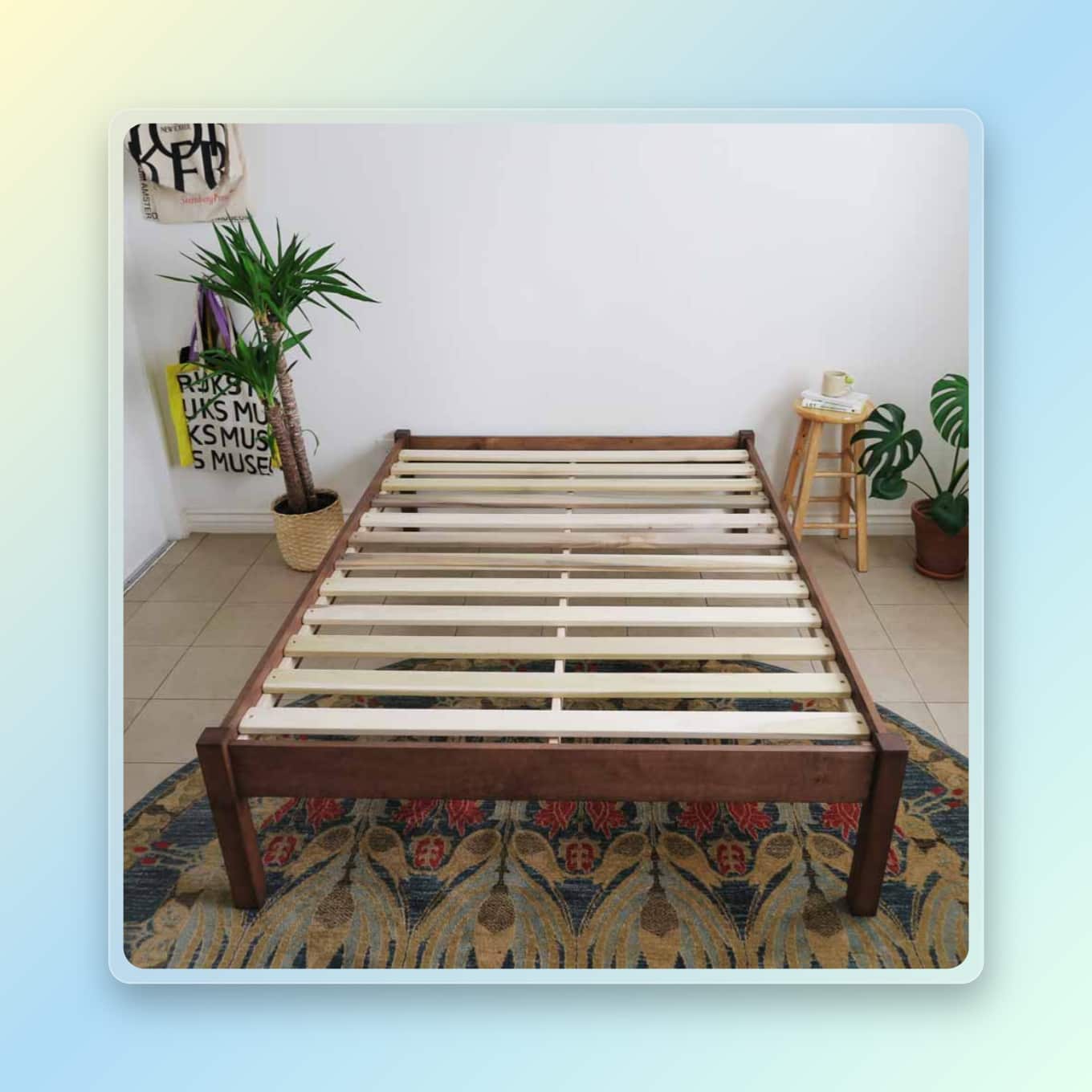
An average, wooden bed frame lasts 7-10 years and metal bed frames hold up for nearly 15 years. When you’re committing so much time to a (oftentimes expensive) product, it’s worth factoring the earth into your purchasing decision.
We recommend:
→ Explore our entire guide to eco-friendly bed frames and peek at photos
Environmentally Safe Mattress
A lot of mattresses contain chemicals, fabrics, and components that are dangerous to the health of humans and the planet. While sustainable mattresses generally cost more than the basic mattresses you hear about in podcast ads, they’re worth considering for the sake of your well-being — and the well-being of mother nature.
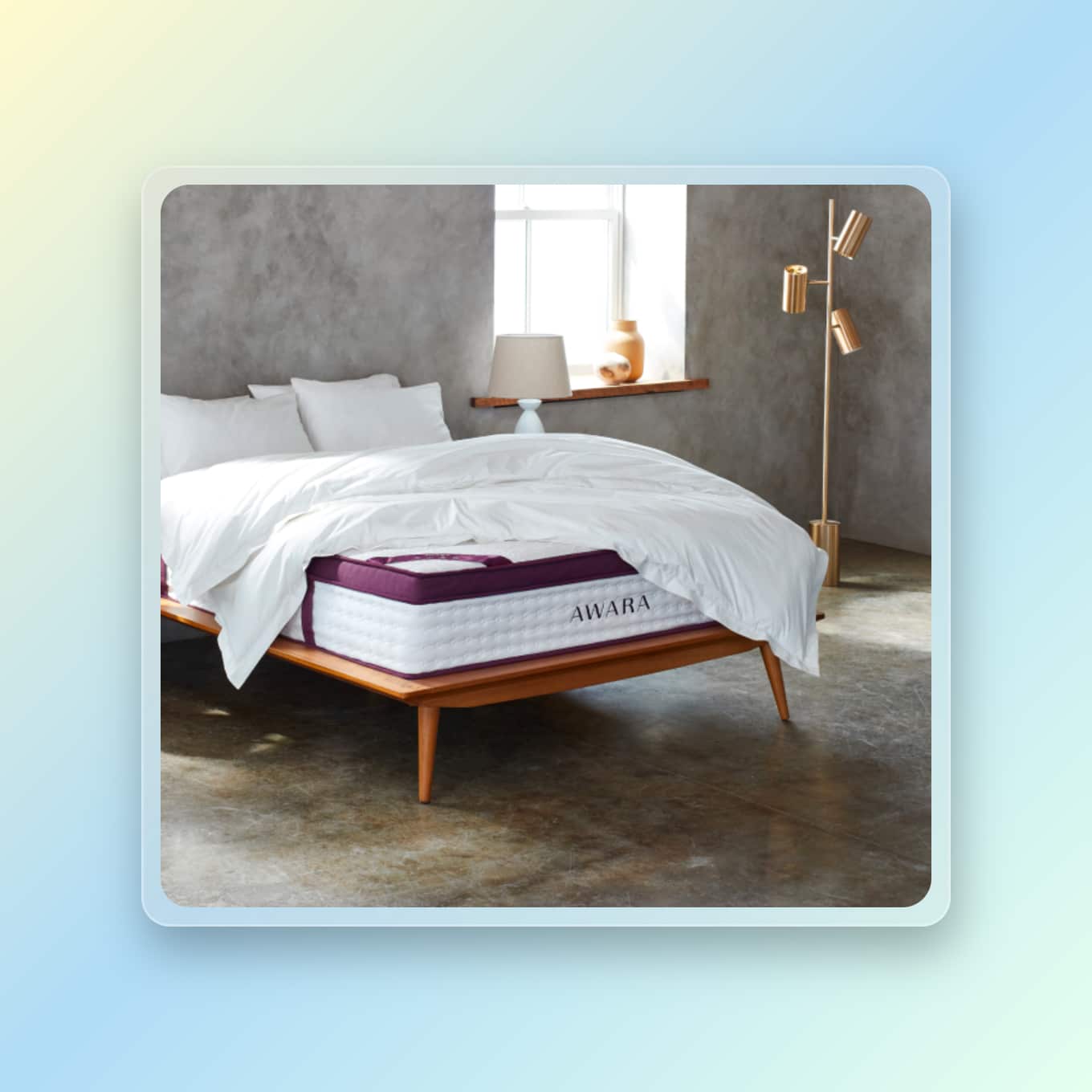
We recommend:
→ Explore the Good Good Good guide to eco-friendly mattresses
Sustainable Sheets & Bedding

If you’ve already been dreaming of new sheets that actually feel like luxury, spend a tiny bit more money on thoughtfully, sustainably made bedding that will actually last you a long time. You’ll be resting responsibly in no time.
We recommend:
→ Explore the Good Good Good guide to eco-friendly bedding
Sustainable Sex Stuff

Sex and intimacy brands can care about the environment too — and that extra care can go a long way in caring for the health of your body too. Whether you’re shopping for something new to try, or just want a sustainable swap for something you use all the time, these products have you covered… and feeling good in all the right ways.
We recommend:
→ Explore the Good Good Good guide to eco-friendly sex toys
→ Explore the Good Good Good guide to eco-friendly lube
→ Explore the Good Good Good guide to eco-friendly sex and intimacy products
Sustainable Rug

A rug is another product that you don't buy very often, and when you do, you want to make sure it’s a worthwhile investment. You can intentionally choose to purchase a rug made from renewable materials, ethically made by expert artisans, and created to last a lifetime.
We recommend:
→ Explore the Good Good Good guide to sustainable rugs
For the living room —
Eco-Friendly Candles
Candles are wonderful and there is no shortage of candle companies being thoughtful about using sustainable ingredients and thoughtful (often reusable) vessels. Next time you’re purchasing a candle, try factoring the environment with your scent and aesthetic choices, too. A little extra thoughtfulness with your next candle purchase can go a long way.
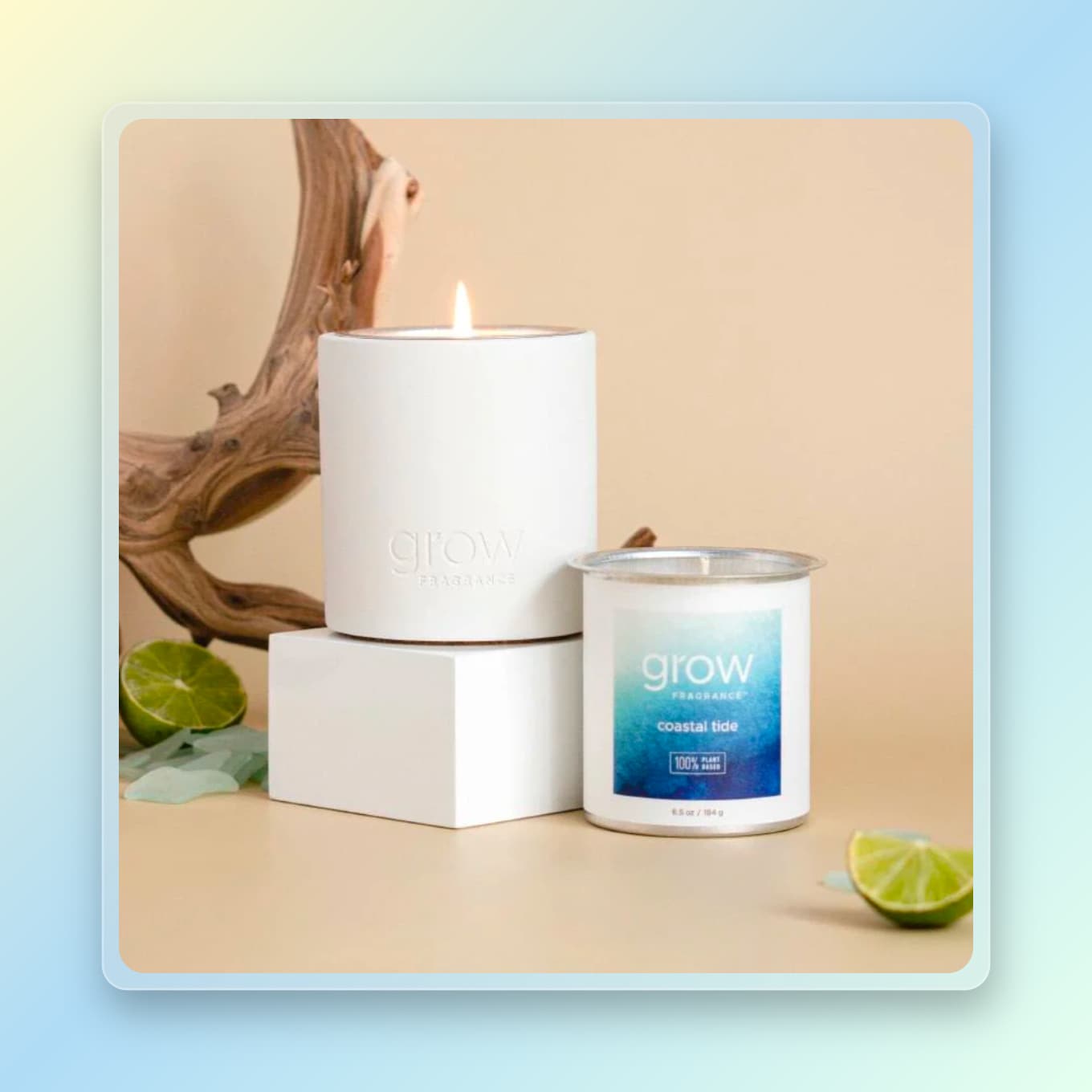
We recommend:
- Refillable Candles from Grow Fragrance
- Non-toxic Candles from Calyan Wax Co.
- Sustainable Candles from La’ F.E.M.
→ Explore our complete guide to the best sustainable candle companies worth shopping or gifting
Rechargeable Electric Lighter
There’s no need to rely on fuel-based lighters (or even matches) when we have access to incredible, long-lasting, rechargeable electric lighters. Use these fancy (but surprisingly inexpensive) tech lighters to light a candle, grill, or whatever else — just don’t buy another fossil-fuel-powered lighter again.
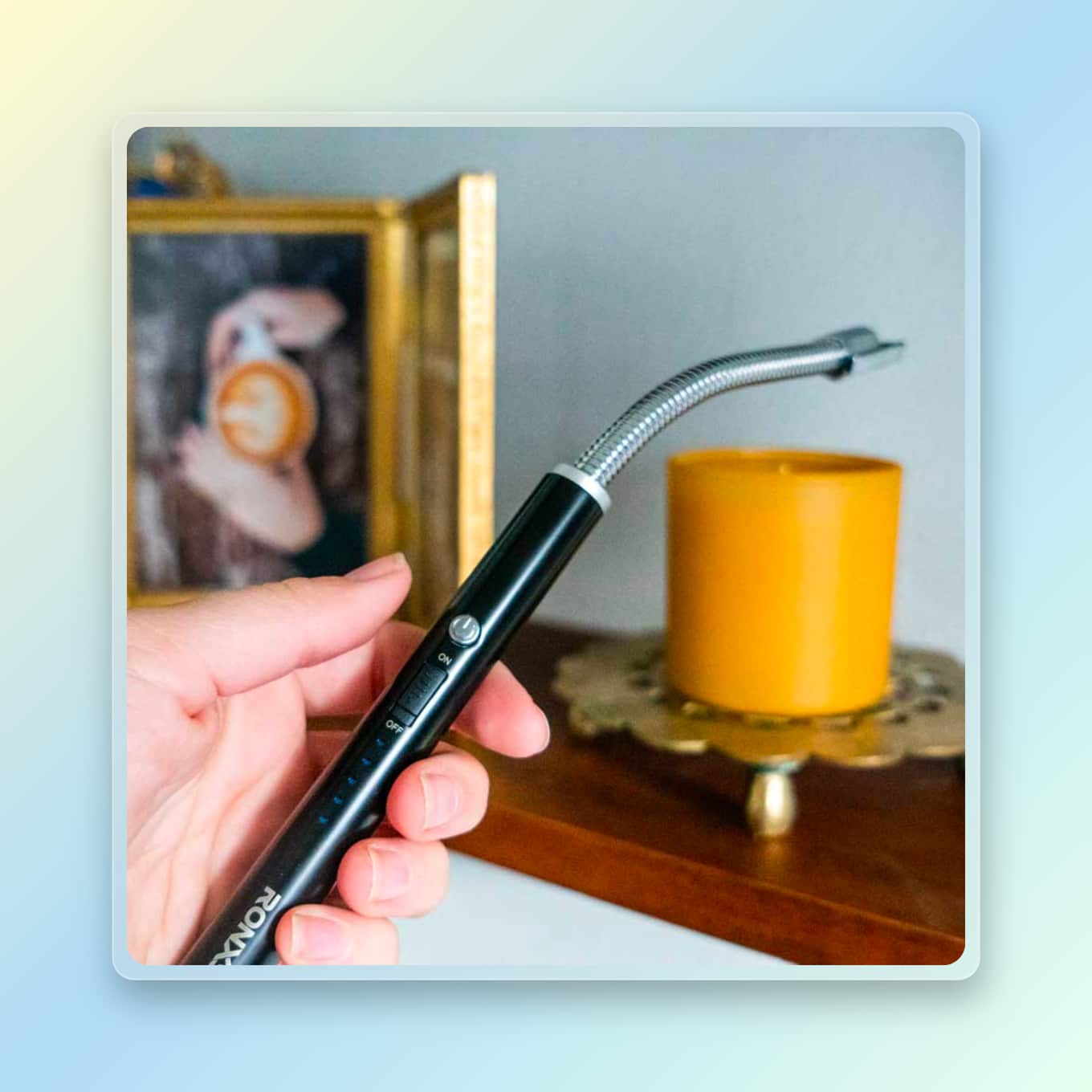
We recommend:
A Goodnewspaper
While this is a shameless plug, we really do think the Goodnewspaper is the perfect addition to any home. Each issue is filled to the brim with good news and arrives sustainably at your doorstep each month. The Goodnewspaper is printed on recycled paper using soy-based ink. We’re proud members of 1% for the Planet and we reduce and offset 100% of our carbon footprint, certified by Climate Neutral.
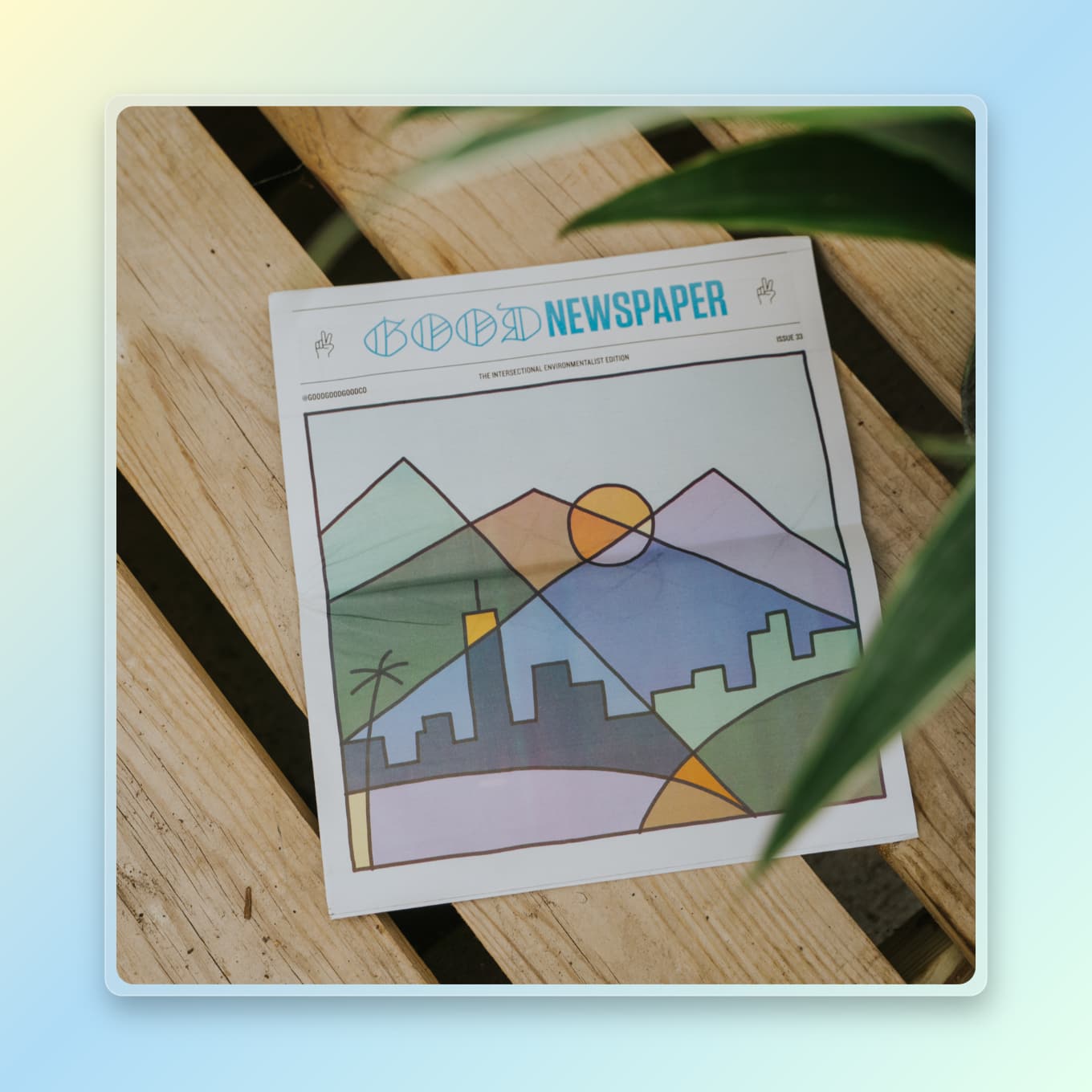
→ Subscribe to the Goodnewspaper today
For the laundry room —
Ecologically Friendly Detergent
Gone are the days of needing to buy a big plastic container of detergent to effectively wash your clothes. Pods, sheets, and concentrated laundry liquid cut back on waste, all while getting out stubborn stains and smells.
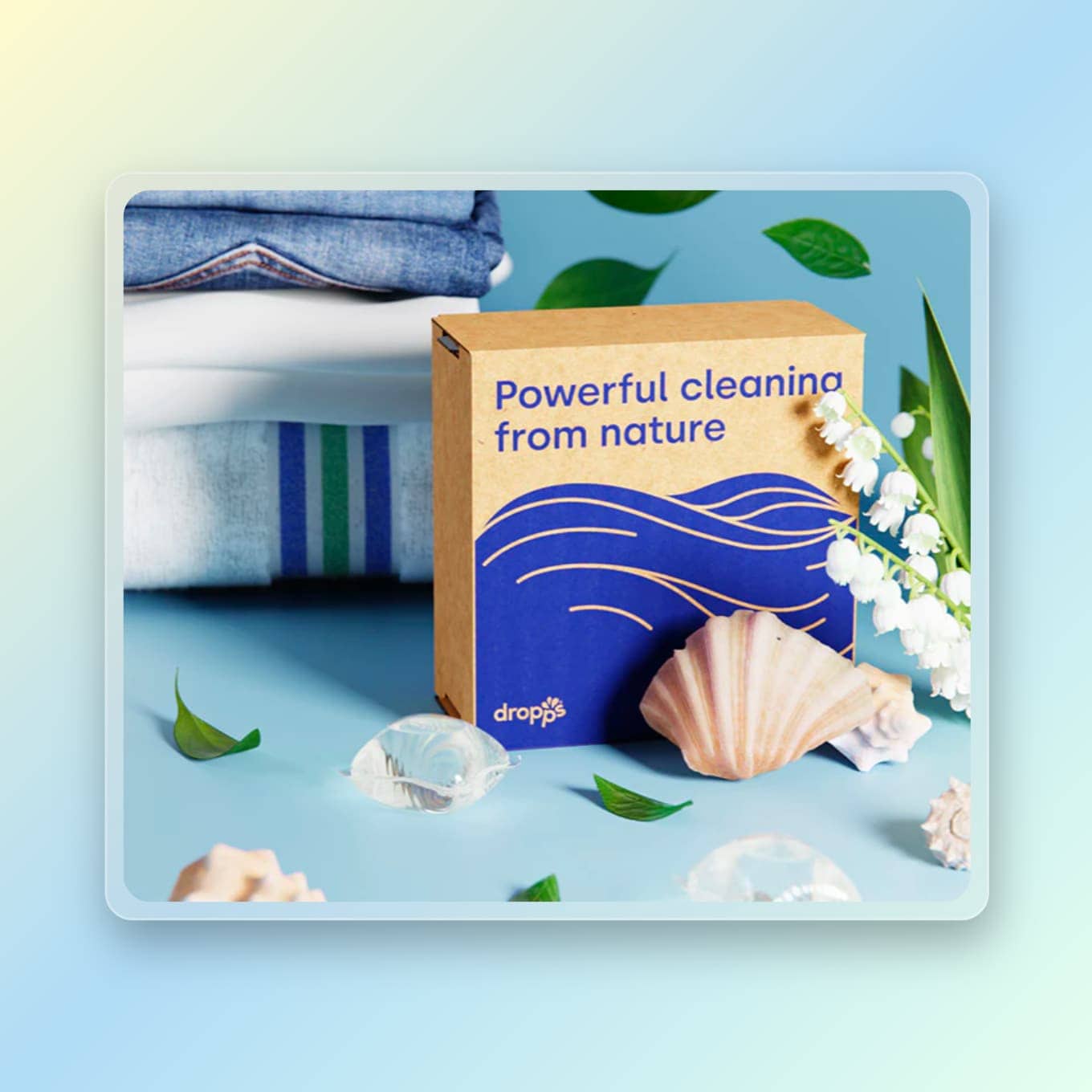
We recommend:
Microplastic Filter
If you wear any clothes with synthetic materials, the process of washing them can shed plastic fibers into the wastewater — which end up making their way into fish and aquatic animals… and eventually back into humans.
Fortunately, there are some simple, affordable options for ensuring you’re not part of the problem.
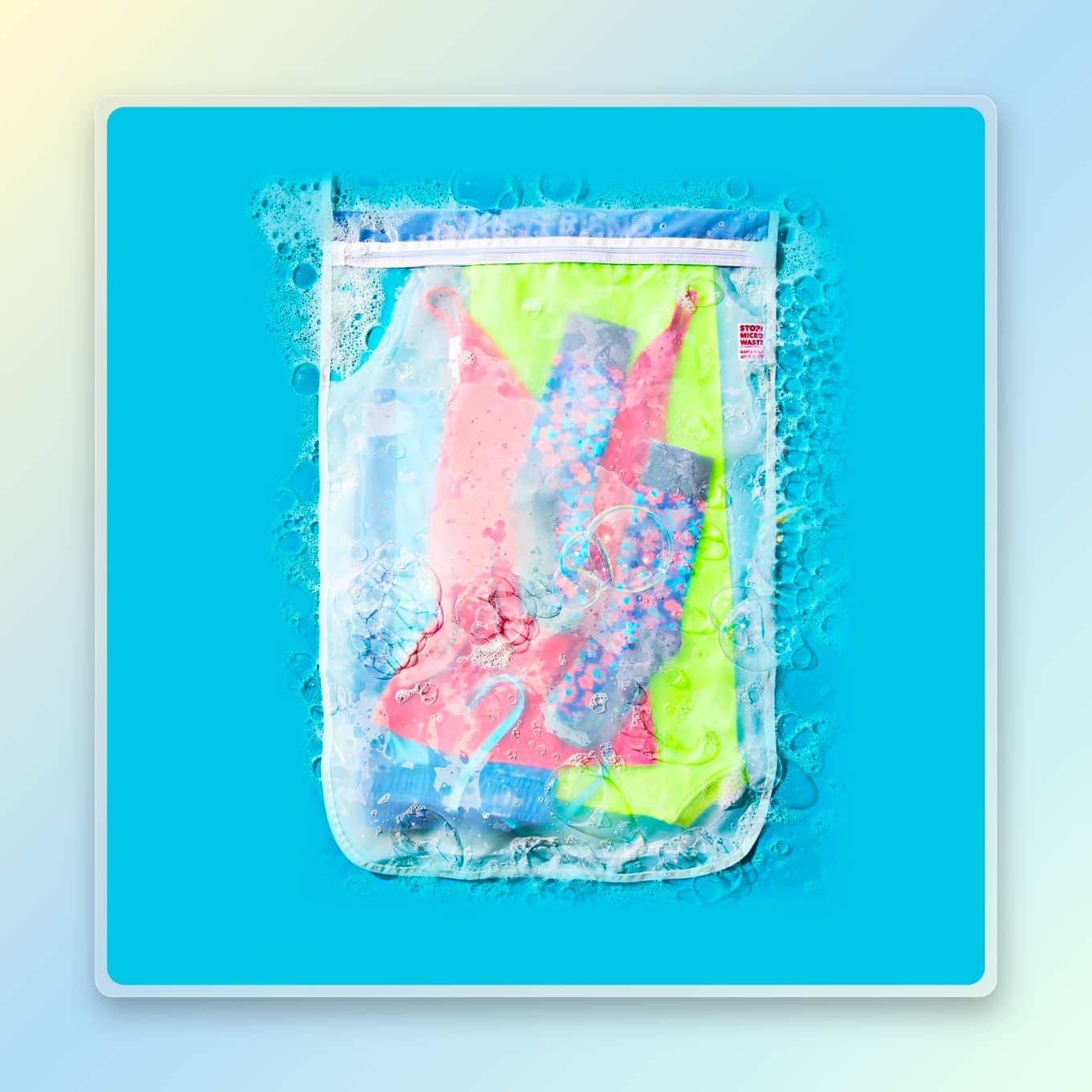
We recommend:
More Laundry Accessories
Laundry is bound to be a part of our lives, so why not make it fun and sustainable? Here are a few more ideas to make this chore lighter on your to-do list and the planet!
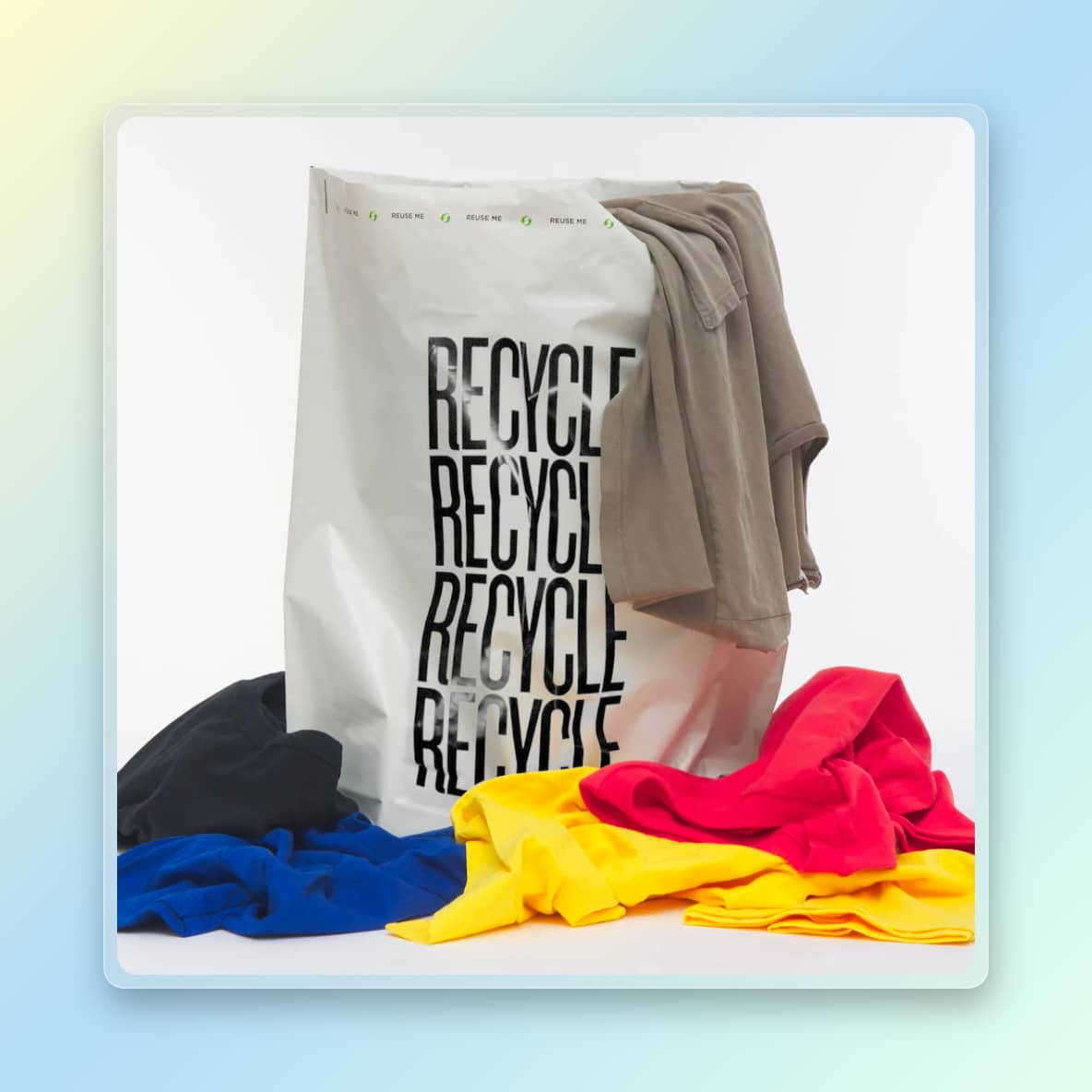
We recommend:
For the office (or home office) —
Sustainable Standing Desk
If you’re finally ready to upgrade your work-from-home setup, make sure to keep the planet in mind as you make your purchase. There are a number of great options available, but we really recommend shopping with Fully — a B Corp that always keeps sustainability at the center of its products.

We recommend:
Recycled and Paper-Free Stationery
Writing letters and thank you cards can make all the difference in personal and business relationships. And being extra thoughtful about the stationery you choose can make all the difference for the planet.

We recommend:
Refillable Pen
Most of us have probably owned hundreds of pens in our lifetime — only for them to somehow disappear at some point (or to run out of ink eventually). Usually, we lose pens because they’re not important enough to keep track of — but that habit can lead to a lot of waste over time.
One solution is to swap out our low-quality pen purchases for one singular beautiful, special, refillable pen.
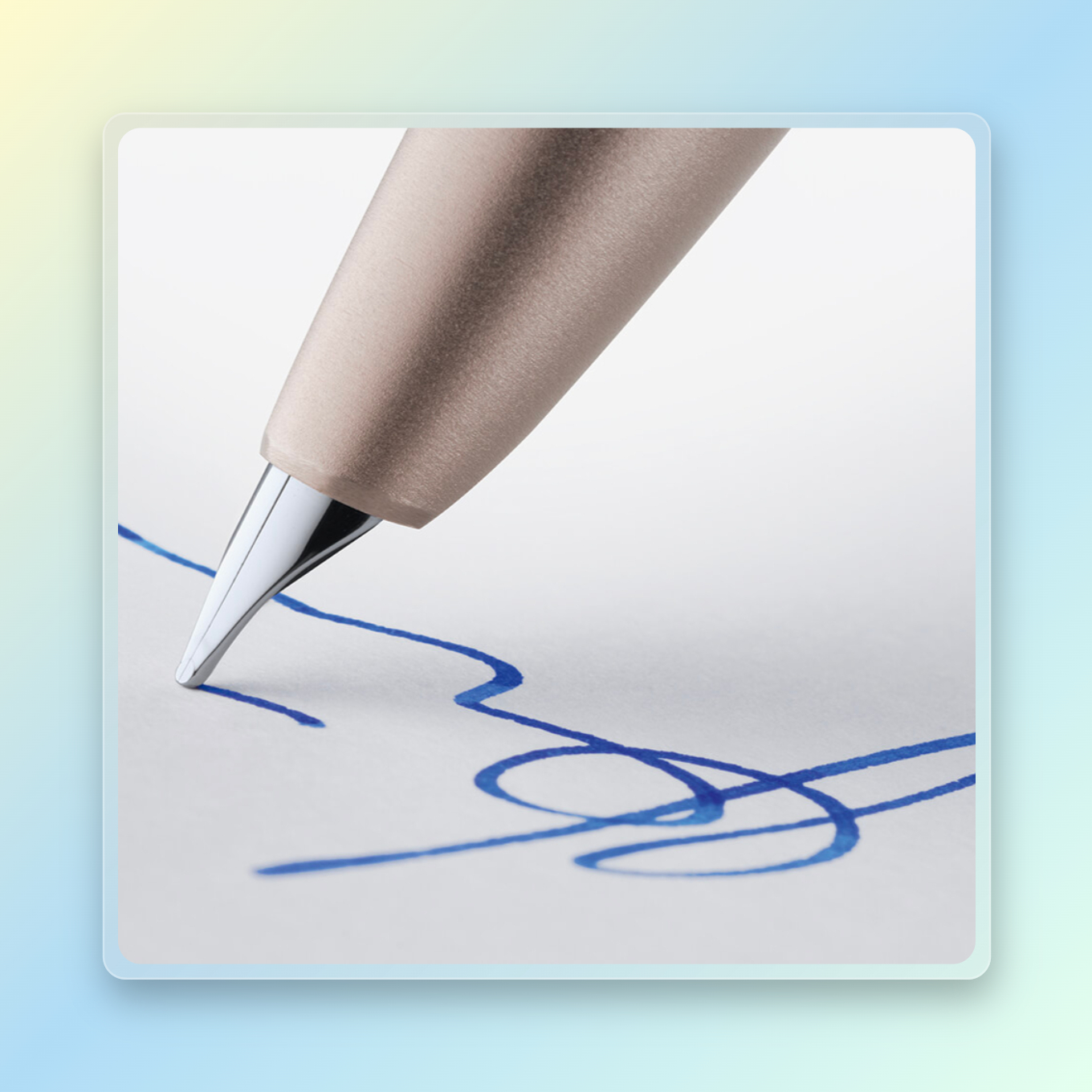
We recommend:
Conscious Apps That Help the Environment
If you’re spending your whole workday online, you might as well turn your internet browsing into positive environmental impact. Fortunately, there are a number of web apps that do this… for free.
We recommend:
→ Dive into our entire list of apps that make a difference
Outside the home —
Mini Greenhouse
While a mini greenhouse is definitely a nice-to-have, not a need-to-have, these easy-to-assemble habitats make it easy to grow more of your own food all year round. Plus, they’re cute!
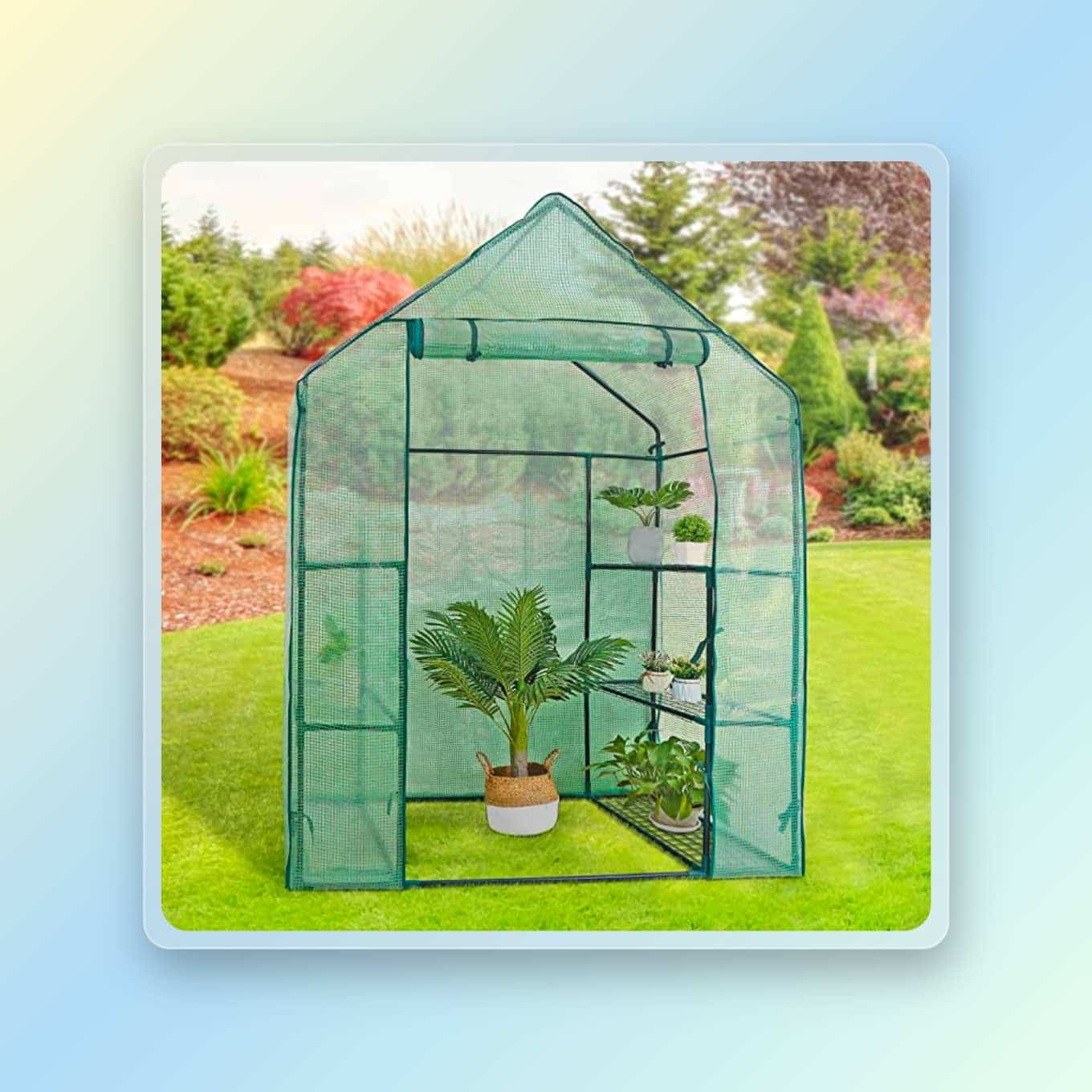
We recommend:
Biodegradable Dog Poop Bags
For those of us trying to be conscious about reducing the amount of plastic in our lives, it can feel weird to use a brand new plastic bag just to wrap dog poop in and immediately send it to a landfill to live forever. Fortunately, more sustainable options are available for lovers of dogs and the planet.
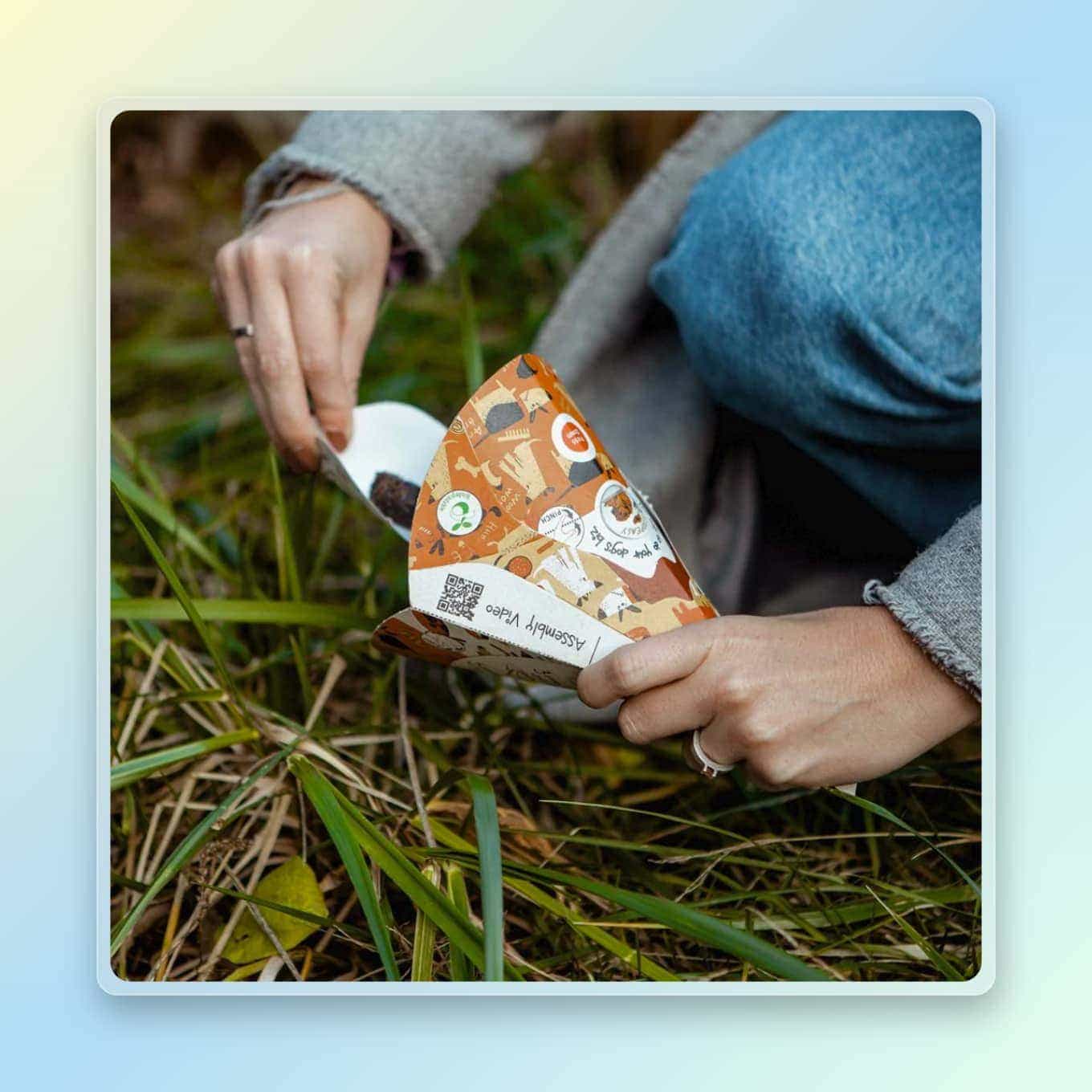
We recommend:
More —
Eco-Friendly Phone Case
Phone cases don’t last forever — so it’s worthwhile to be extra thoughtful about which ones we buy. Instead of a virgin plastic case that will live forever in a landfill, opt for something recycled or compostable.
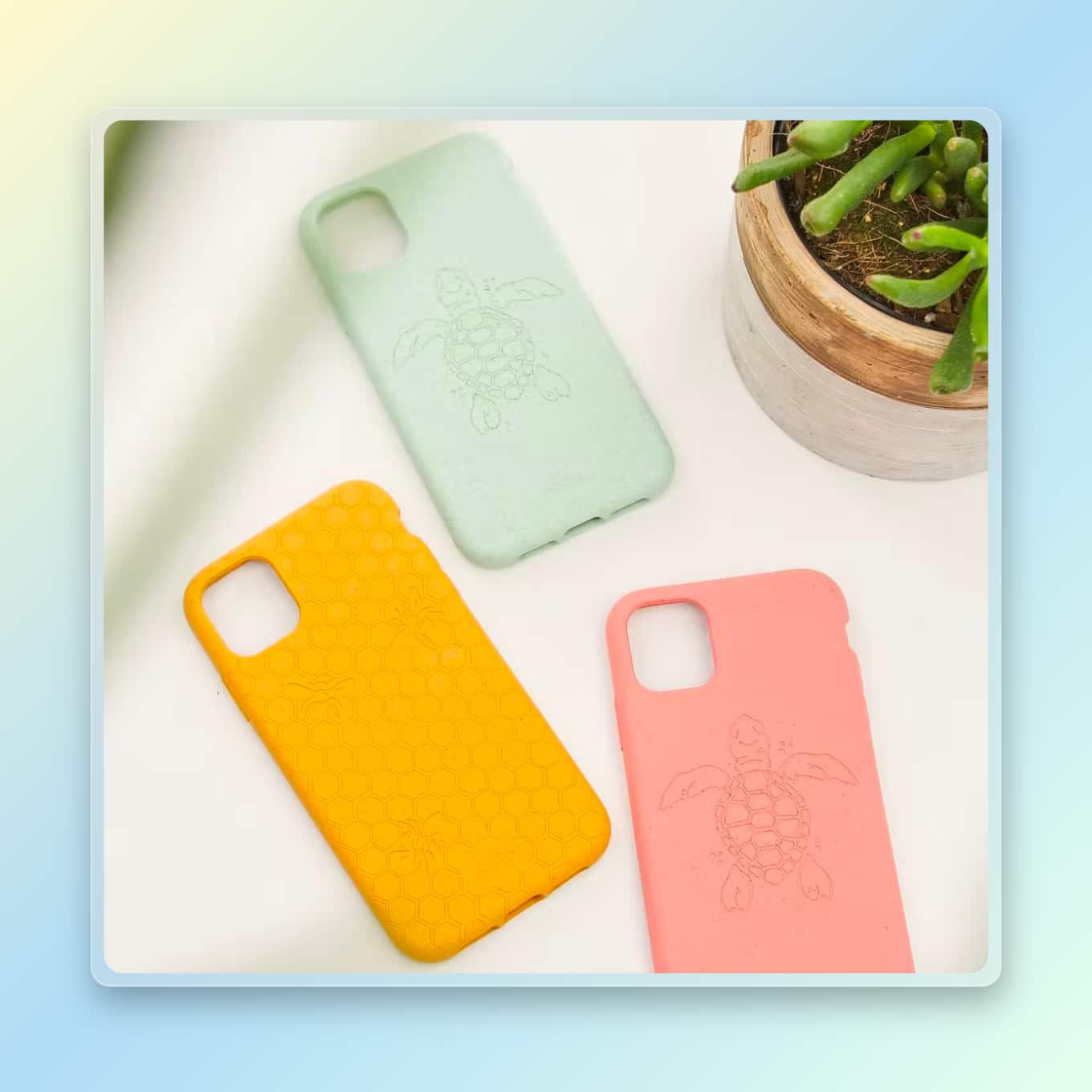
We recommend:
- Pela’s Compostable Phone Case
- Oakywood’s Tree-Planting Wood Case
- CASETiFY Compostable Bamboo Fiber Case
Sustainable & Ethical Watch
Thanks to our phones, watches have moved from functional tools we use to tell the time — to unique accessories that make a statement. Why shouldn’t that statement be centered around caring for people and the planet?

We recommend:
→ Check out our complete guide to the best eco-friendly watches that give back
Consumable Gifts
Too many gifts end up as waste, but consumable gifts — gifts that can be used up one way or another — will never end up in a landfill. Think: food, drinks, soap, gift cards, candles, and even audiobook credits. They’re the perfect gift for minimalists, environmentalists, or the person who has everything.
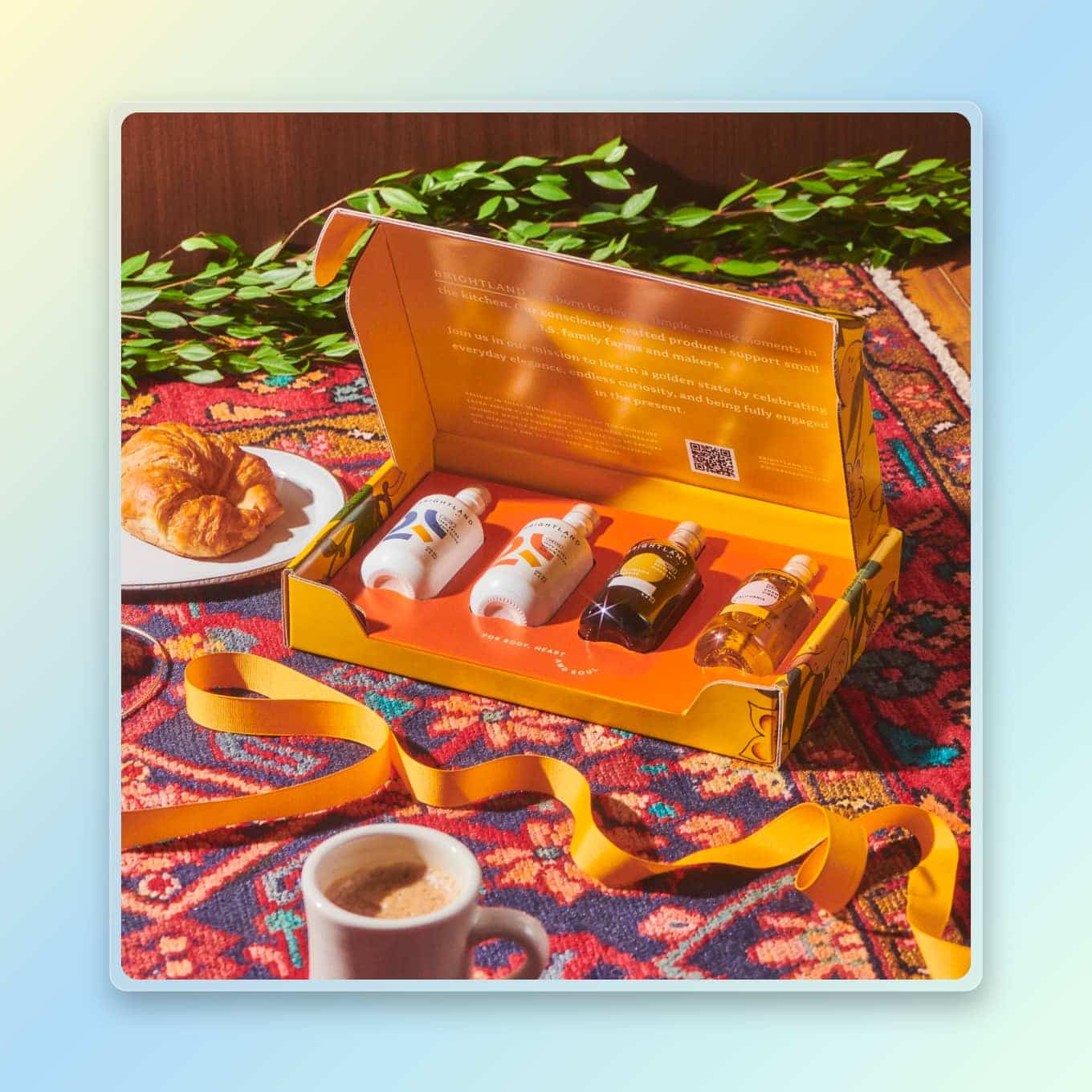
We recommend:
→ Check out our entire collection of the best consumable gifts
Amazon Alternatives
Amazon is a great, accessible tool for making shopping simple — but its giant operations don’t come without an environmental impact. When you have the chance, consider shopping for select items on other platforms that center their values above their profits.

We recommend:
→ Explore our collection of Amazon alternatives & online bookstores
At Good Good Good, we help you feel more hopeful and do more good.
For years — since printing the first issue of the Goodnewspaper — we've been slowly collecting quotes about hope. In fact, if you follow us on Instagram, you've probably heard us talk about hope a million times. And that's because we think it's incredibly important.
There's an interesting nuance to be found in the difference between hope and optimism — and there's power in pushing back against cynicism. (Despite how easy it is to feel cynical these days.)
We wanted to share our favorite short quotes about hopefulness (and the difference between hope and optimism) — in the hopes they'll leave you feeling more hopeful, and empowered to use that sense of hope as fuel to help you do more good.
The Best Inspirational Hope Quotes
Famous Hope Quotes
“Do not get lost in a sea of despair. Be hopeful, be optimistic. Our struggle is not the struggle of a day, a week, a month, or a year, it is the struggle of a lifetime. Never, ever be afraid to make some noise and get in good trouble, necessary trouble.”
— John Lewis
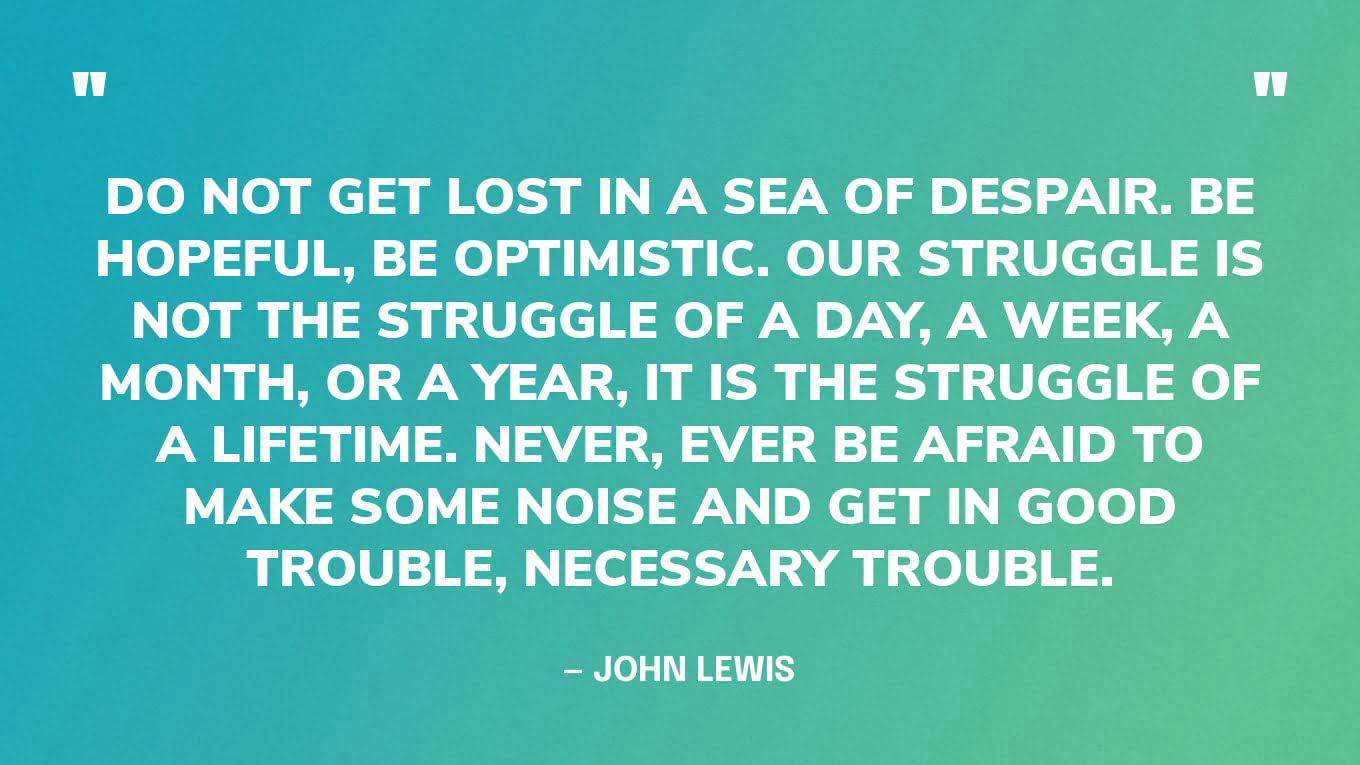
“To be optimistic is to assume things will work out. To be hopeful is to realize things can work out if you work at them. Hope requires responsibility and agency; optimism relieves us of both. In rooting for your sports team, choose optimism. In rooting for democracy, choose hope.”
— Eric Liu
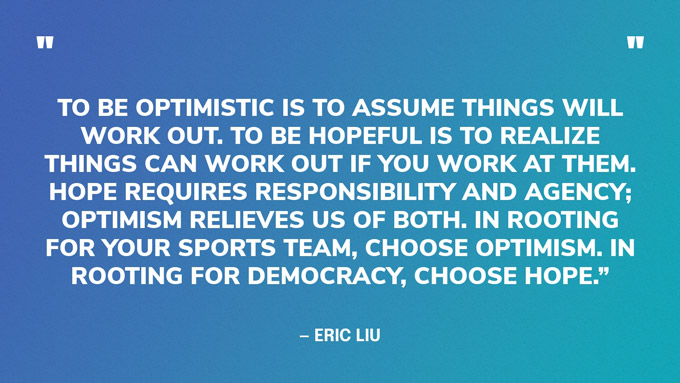
“What I am trying to cultivate is not blind optimism… but radical hope.”
— Junot Diaz
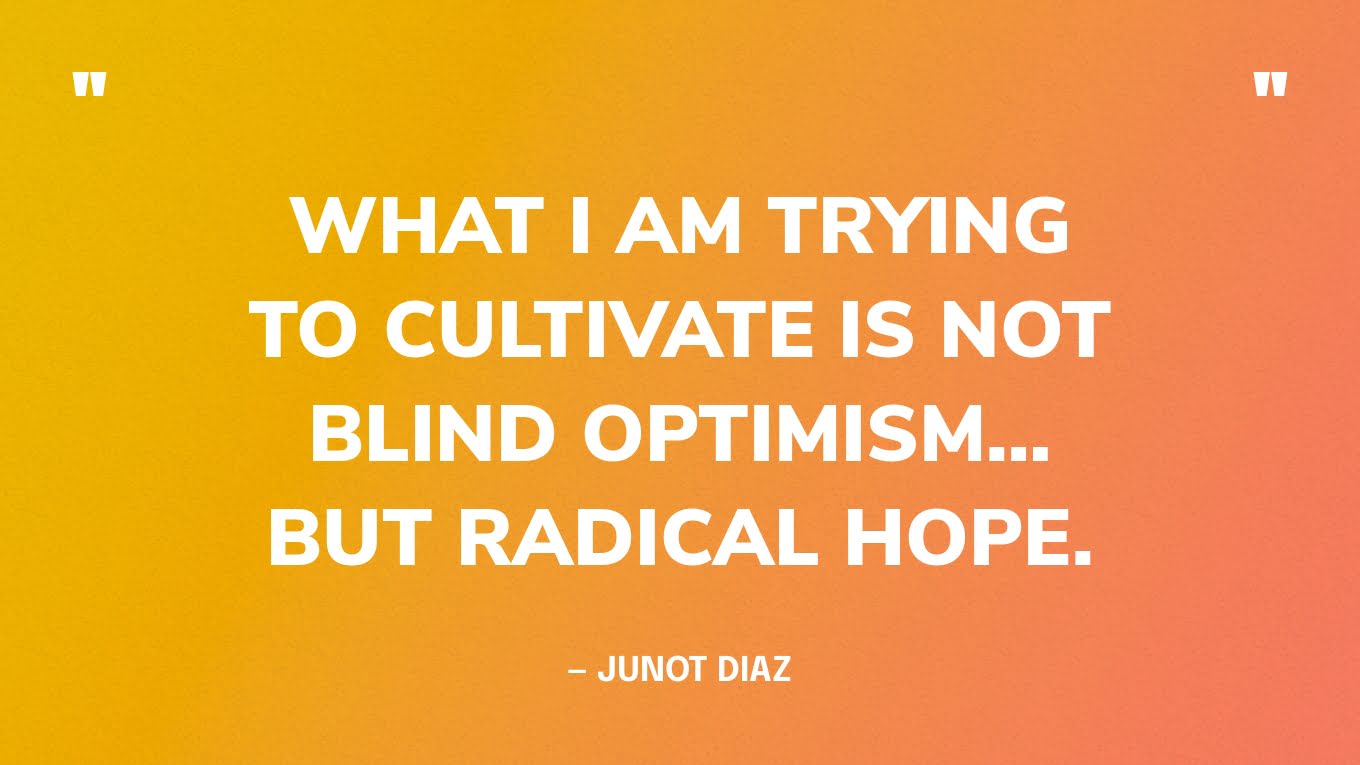
“Optimism is a strategy for making a better future. Because unless you believe that the future can be better, it's unlikely you will step up and take responsibility for making it so. If you assume that there's no hope, you guarantee that there will be no hope.”
— Noam Chomsky
“To be hopeful in bad times is not just foolishly romantic. It is based on the fact that human history is a history not only of cruelty, but also of compassion, sacrifice, courage, kindness.
What we choose to emphasize in this complex history will determine our lives. If we see only the worst, it destroys our capacity to do something. If we remember those times and places — and there are so many — where people have behaved magnificently, this gives us the energy to act, and at least the possibility of sending this spinning top of a world in a different direction.
And if we do act, in however small a way, we don't have to wait for some grand utopian future. The future is an infinite succession of presents, and to live now as we think human beings should live, in defiance of all that is bad around us, is itself a marvelous victory.”
— Howard Zinn, You Can't Be Neutral on a Moving Train
“We choose hope over fear. We see the future not as something out of our control, but as something we can shape for the better through concerted and collective effort. We reject fatalism or cynicism when it comes to human affairs; we choose to work for the world as it should be, as our children deserve it to be.”
— Barack Obama
Hope For The Future Quotes
“In this moment, we can either choose despair or revolution.”
— Brittany Packnett Cunningham
“Understanding that this is America shouldn’t evoke hopelessness. Hope and truth are connected. Hope is not naïveté. It is bearing witness to truth, still believing in better and yielding the energy to contribute to better.”
— Bernice King
“I do have reasons for hope: our clever brains, the resilience of nature, the indomitable human spirit, and above all, the commitment of young people when they're empowered to take action.”
— Jane Goodall
“When we remember the stories of people power overcoming oppression in the past, it serves as the grounds for hope that it can happen again. For this reason, I define hope not as a feeling but as a conviction, based on the knowledge of all the ordinary people who have won against injustice before.”
— Andre Henry
“The fact that we have made progress is a proof point that progress is possible to make. And that’s exciting. That means you can do it. Whether or not you’re optimistic or pessimistic is beside the point. The point is that it’s possible.”
— Ezra Klein, in conversation with Kim Stanley Robinson
On Making a Difference
“Hopelessness is not hard. Hopelessness is a resignation – a luxury folks might have if their children were not being sacrificed on the altar of profits and power. Hopelessness is not the way of people who do hard things. Hope can do hard things.”
— Glennon Doyle
“Hope is not blind optimism. It's not ignoring the enormity of the task ahead or the roadblocks that stand in our path. It's not sitting on the sidelines or shirking from a fight. Hope is that thing inside us that insists, despite all evidence to the contrary, that something better awaits us if we have the courage to reach for it, and to work for it, and to fight for it. Hope is the belief that destiny will not be written for us, but by us, by the men and women who are not content to settle for the world as it is, who have the courage to remake the world as it should be.”
— Barack Obama
“One of the greatest ways to maintain attention to an issue is to build, instill, and maintain hope.”
— Imani Barbarin
“Hope is a fuel. Use it to burn down something terrible.”
— Ashley C. Ford
“We are in a time of crisis, but we are also in a time of hope. And it’s not passive hope. It’s let’s get out there, roll up our sleeves, and get the job done hope.”
— Jamie McLeod-Skinner
“No one has a right to sit down and feel hopeless. There is too much work to do.”
— Dorothy Day
“But I do think it’s important that we stay hopeful about our capacity to overcome that bigotry. And I am persuaded that hopelessness is the enemy of justice; that if we allow ourselves to become hopeless, we become part of the problem. I think you’re either hopeful, or you’re the problem. There’s no neutral place. Injustice prevails where hopelessness persists. And if I’ve inherited anything from the generation who came before me, I have inherited their wisdom about the necessity of hope.”
— Bryan Stevenson
“The best way to not feel hopeless is to get up and do something. Don’t wait for good things to happen to you. If you go out and make some good things happen, you will fill the world with hope, you will fill yourself with hope.”
— Barack Obama
“History and data have convinced me that change, from the bottom up, is possible. I’m hopeful because I believe history is a story we’re writing together, not something happening to us — which means we all get a say in how the story ends.”
— Andre Henry
On Optimism
Explore our complete collection of the best quotes about optimism
“Hope is an embrace of the unknown and the unknowable, an alternative to the certainty of both optimists and pessimists. Optimists think it will all be fine without our involvement; pessimists adopt the opposite position; both excuse themselves from acting.”
— Rebecca Solnit, Hope in the Dark
“In our culture, to say you’re optimistic is maybe not the right thing. But hope, optimism, this attitude is necessary political stance to take, because we are in a position of privilege, and the situation can be saved. And given those two, it’s dereliction of duty to be pessimistic, to be cynical. It’s just a chicken thing to do.”
— Kim Stanley Robinson, on The Ezra Klein Show
“Optimism doesn’t mean that you are blind to the reality of the situation. It means that you remain motivated to seek a solution to whatever problems arise.”
— The Dalai Lama
“Optimism isn’t a belief that things will automatically get better; it’s a conviction that we can make things better.”
— Melinda French Gates
“It turns out, somehow, there are a tremendous number of things to be optimistic about.”
— Hank Green
On Never Losing Hope
“Being truthful about the state of our nation and world does not equal losing hope. Hope sees truth and still believes in better. That which dismisses or does not seek truth, but grins, saying 'It will be okay,' is naivete, not hope.”
— Bernice King
“Hope confronts. It does not ignore pain, agony, or injustice. It is not a saccharine optimism that refuses to see, face, or grapple with the wretchedness of reality. You can't have hope without despair, because hope is a response. Hope is the active conviction that despair will never have the last word.”
— Cory Booker
“When too much cynicism threatens to engulf us, it is buoying to remember how pervasive goodness is.”
― Carl Sagan
“The world may be broken, but hope is not crazy.”
— John Green
“We must accept finite disappointment, but never lose infinite hope.”
― Martin Luther King Jr.
On Waiting For Hope
“Hope is a good thing, maybe the best of things, and no good thing ever dies. ”
— Andy Dufresne, 'Shawshank Redemption'
“This conviction that we can win isn’t static. It’s a flame that must be fed and tended. We tend our hope by setting boundaries about how we consume news content that makes us feel despair.”
— Andre Henry
“Hope is a funny thing because in a way it’s everywhere. Like, people will say ‘Everything happens for a reason’ or ‘It will all work out in the end’ — which are very hopeful sentiments — it’s just that they’re also, you know, bullshit. And for me anyway, they just don’t hold up in the face of real suffering. But I’ll tell you what does hold up for me. There’s an Emily Dickinson poem that starts out, ‘Hope’ is the thing with feathers - That perches in the soul - And sings the tune without the words - And never stops - at all.’
And you’ll notice that Emily Dickinson doesn’t say that one never stops hearing the song of hope — only that it doesn’t stop playing.
I’m really sorry that you’re in so much pain, and your pain is real, but the song of hope is still singing. And I know you can’t hear it, but someday soon you will.”
— John Green
“Hope is the correct response to the strange, often terrifying miracle of consciousness. Hope is not easy or cheap. It is true.”
— John Green, The Anthropocene Reviewed
On Mental Health
Read our complete collection of quotes about mental health
“For me, finding hope is not some philosophical exercise or sentimental notion; it is a prerequisite for my survival.”
— John Green

”Hope is the feeling you have that the feeling you have isn’t permanent.”
— Jean Kerr

“Perhaps you have to have a little bit of hope to believe that beauty can be found, to believe that life does come back, that something can surprise you. And maybe hope and wonder are somehow related. Maybe wonder feeds hope and hope feeds wonder. You see something beautiful and it reminds you that it’s possible to see something beautiful.”
― Jamie Tworkowski, If You Feel Too Much: Thoughts on Things Found and Lost and Hoped For
“Hope exists all around us. Keep looking for the pockets of light that remind you life truly is worth living.”
— TWLOHA

On Love
“When I despair, I remember that all through history the way of truth and love have always won. There have been tyrants and murderers, and for a time, they can seem invincible, but in the end, they always fall. Think of it — always.”
— Mahatma Gandhi
“I still sometimes stop hearing the tune. I still become enveloped by the abject pain of hopelessness. But hope is singing all the while. It’s just that again and again, I must relearn how to listen.”
— John Green, The Anthropocene Reviewed
“We are only asked to love, to offer hope to the many hopeless. We don’t get to choose all the endings, but we are asked to play the rescuers. We won’t solve all mysteries and our hearts will certainly break in such a vulnerable life, but it is the best way. We were made to be lovers bold in broken places, pouring ourselves out again and again until we’re called home.”
― Jamie Tworkowski, If You Feel Too Much
Short Quotes
Read more short motivational quotes
“A single individual is enough for hope to exist. And that individual can be you.”
— Pope Francis
“A cynic is a man who knows the price of everything, and the value of nothing.”
— Oscar Wilde
“Hope. I’ve got no problem with it.”
— Aleksei Navalny, in a letter
“Hope will never be silent.”
— Harvey Milk
“Can we overcome apathy? Yes, but only if we have hope.”
— Jane Goodall
“Hope is contagious!”
— Greta Thunberg
More Quotes About Hope
“It is in collectivities that we find reservoirs of hope and optimism.”
— Angela Davis
“I am highly suspicious of attempts to brightside human suffering, especially suffering that — as in the case of almost all infectious diseases — is unjustly distributed. I’m not here to criticize other people’s hope, but personally, whenever I hear someone waxing poetic about the silver linings to all these clouds, I think about a wonderful poem by Clint Smith called “When people say, ‘we have made it through worse before.’” The poem begins, “all I hear is the wind slapping against the gravestones / of those who did not make it.” As in Ibn Battuta’s Damascus, the only path forward is true solidarity — not only in hope, but also in lamentation.”
— John Green, The Anthropocene Reviewed
“We need to be strong in a moment of crisis by saying, yes, it can be done. And if we’re in a race between bad catastrophe and some kind of beginning prosperity for all — when you’re in a race that intense, you don’t want to sit down on the ground and start crying. Oh, we’ve lost already. That would be a bad thing to do, because you’re in a race.
You actually need to run as hard as you can. If you lose the race, well, that is a dystopian novel. And I don’t really want to go there. If we lose the race, we’re in terrible trouble, and we’ll be in emergency mode for years. But if we win the race, it’s a big win for the biosphere, for the other creatures, for humanity. So it’s worth pretending to be optimistic, or using optimism as a club, and beating it. Yes, we can succeed. Bang, bang, bang.”
— Kim Stanley Robinson, on The Ezra Klein Show
Every month at Good Good Good, we plan upcoming good news content for our Instagram, Goodnewsletter, Goodnewspaper, podcast, website, and more. Our work is always centered on hopeful stories about people making a difference in the world — and action steps on how each of us can join in with that good work.
With so many holidays, awareness days, education weeks, and activism months happening all year long, we’ve been slowly collecting all of these events in a private internal calendar for years.
We made our Monthly Cause Awareness Calendar publicly available earlier this year. We’ve also published:
- The Ultimate Calendar of Heritage Months
- Disability Awareness Days Calendar
- LGBTQ+ Pride Days, Weeks, & Months Calendar
- Animal & Pet Awareness Calendar
- Cancer Awareness Months Calendar
- Mental Health Days & Awareness Months Calendar
And now we’re publishing our guide to environmental holidays and sustainability days.
Our hope is this resource will help you or your organization bring attention to important issues and communities — not just around Earth Day — but all year long.
Where applicable, we've included resources around highlighted holidays — usually in the form of good news around particular topics — or action steps on how to make a difference. We encourage you to share them if you find them helpful.
We've worked hard to make this the most comprehensive collection of environmental days and months on the internet. (We’ve also just finished collecting all of the animal-related environmental days in a separate calendar!) Always double-check dates, as organizers may occasionally change dates.
Bookmark this page and revisit it as often as you need. We'll continue to update it and add to it over time.
The Good Good Good Calendar of Sustainability Days, Environmental Awareness Weeks & Climate Months —
January
Days
New Year’s Day - January 1st
Read the guide on sustainable New Year's Resolutions to help the Earth and come up with your “word of the year”
Greta Thunberg’s Birthday - January 3rd
Explore this timeline of Greta Thunberg’s environmental activism and Greta Thunberg’s best quotes
National Bird Day - January 5th
National Electricity Day - January 9th
Dian Fossey’s Birthday - January 16th
Read about how the population of endangered mountain gorillas has grown by 71% in a decade
Months
Veganuary
February
Days
World Wetlands Day - February 2nd
Transit Equity Day - February 4th
The Great Backyard Bird Count - February 18th
World Whale Day - Third Sunday of February
Read good news about humpback whales and learn how noise reduction can save whales
March
Days
World Seagrass Day - March 1st
World Wildlife Day - March 3rd
Read and share the ultimate guide on how to celebrate World Wildlife Day
Solar Appreciation Day - Second Friday of March
International Day of Action for Rivers - March 14th
World Consumer Rights Day - March 15th
Global Recycling Day - March 18th
Taxonomist Appreciation Day - March 19th
World Rewilding Day - March 20th
Read the good news about rewilding projects multiplying across the UK with the goal of boosting biodiversity
International Day of Forests - March 21st
World Planting Day - March 21st
Learn how to plant trees for free by reading our review of Ecosia — an alternative to Google’s search engine
World Wood Day - March 21st
World Water Day - March 22nd
Read about the kids raising money for charity: water & listen to our interview with the organization’s founder, Scott Harrison
World Meteorology Day - March 23rd
Earth Hour - Last Saturday of March
April
Days
World Aquatic Animal Day - April 3rd
Jane Goodall’s Birthday - April 3rd
Celebrate Jane Goodall’s birthday by reading her most famous inspirational quotes
Zoo Lovers Day - April 8th
International Cli-Fi Day - April 20th
Explore our list of the best “climate fiction” books
World Fish Migration Day - April 21st
Read about the fish doorbell going viral online
Earth Day - April 22nd
Read and share the ultimate guide on how to celebrate Earth Day and explore the best quotes about Earth Day
Weeks & Months
Earth Month
Explore our guide on the best ways to celebrate Earth Month
National Garden Month
National Park Week - Week-long event in April
Read and share our guide about how to celebrate National Park Week. Plus: Learn about fee-free days at national parks and the best national park gifts you can give
International Dark Sky Week - Week-long event in April
Read our good news story about reducing light pollution... through parkour.
Fashion Revolution Week - Week-long event in April
Create a more ethical and sustainable fashion industry by asking “Who made my clothes?” and “What are my clothes are made of?”
May
Days
Greenery Day in Japan - May 4th
Green Up Day in Vermont - First Saturday of May
World Migratory Bird Day - Second Saturday of May
World Bee Day - May 20th
Listen to this inspiring podcast with Bee Girl Sarah
Endangered Species Day - Third Friday of May
Bike-to-Work Day - Third Friday of May
Read about the cities where bike commuting is growing fastest in the U.S.
Eat More Fruits and Vegetables Day - May 21st
Find out what fruits and vegetables are in season right now
International Day for Biological Diversity - May 22nd
European Day of Parks - May 24th
Intersectional Environmentalist Day - May 28th
Learn about intersectional environmentalism and the founder of the organization Intersectional Environmentalist, Leah Thomas
June
Days
National Trails Day - First Saturday of June
World Reef Day - June 1st
World Environment Day - June 5th
World Oceans Day - June 8th
Read and share this guide about how to celebrate World Oceans Day
Coral Triangle Day - June 9th
Global Wind Day - June 15th
Nature Photography Day - June 15th
World Refill Day - June 16th
World Day to Combat Desertification and Drought - June 17th
#ShowYourStripes Day - June 21st
World Rainforest Day - June 22nd
Weeks & Months
Great Outdoors Month
National Pollinators Month
National Rose Month
Oceans Week - Week-long event in June
National Mosquito Control Awareness Week - Week-long event in June
July
Days
Global Energy Independence Day - July 10
World Population Day - July 11th
International Day for the Conservation of the Mangrove Ecosystems - July 26th
World Nature Conservation Day - July 28th
World Ranger Day - July 31st
Weeks & Months
Plastic Free July
Latino Conservation Week - Week-long event in July
National Clean Beaches Week - July 1st to 7th
August
Days
Anniversary of the Great American Outdoors Act - August 4th
Mountain Day - August 11th
National Honey Bee Day - Third Sunday of August
September
Days
International Primate Day - September 1st
National Wildlife Day - September 4th
Amazon Rainforest Day - September 5th
International Day of Clean Air - September 7th
National Cleanup Day - 3rd Saturday of September
International Day for the Preservation of the Ozone Layer - September 16th
World Water Monitoring Day - September 18th
Clean Up the World Weekend - Third Weekend of September
Arbor Day - September 21st
Read the best quotes about trees to celebrate Arbor Day & read all of our good tree news
Zero Emissions Day - September 21st
World Car-Free Day - September 22nd
Explore this list of ways to live and get around without a car
National Public Lands Day - Last Saturday of September
Read and share this guide on how to celebrate National Public Lands Day. Plus: Get free access to national parks today!
World Environmental Health Day - September 26th
National Crush a Can Day - September 27th
World Rivers Day - Last Sunday of September
International Day of Awareness of Food Loss and Waste - September 29th
Learn about how to reduce food waste
Weeks & Months
Zero Waste Week - First Week of September
As you’re preparing for the holiday season, explore our guide to consumable gifts that help you reduce waste in your gift-giving
European Mobility Week - Week-long event in September
National Drive Electric Week - Week-long event in September
Climate Week - Week-long event in September, while the United Nations General Assembly is in session
October
Days
World Habitat Day - First Monday of October
World Vegetarian Day - October 1st
National Green City Day - October 1st
World Farm Animals Day - October 2nd
World Animal Day - October 4th
Read and share some meaningful good news stories about animals
Energy Efficiency Day - First Wednesday of October
International Day for Natural Disaster Reduction - October 13th
International E-Waste Day - October 14th
Learn more about the “right to repair” and how different countries are creating solutions
World Food Day - October 16th
Learn more about World Food Day: Your appetizer is reading about world hunger, your main course is food-related good news, and your dessert is quotes about solving world hunger.
International Day of Climate Action - October 24th
Sustainability Day - Fourth Wednesday of October
Weeks & Months
World Habitat Awareness Month
National Vegetarian Month
Junk Mail Awareness Week - October 1st to 7th
Learn how to unsubscribe from pesky junk mail to reduce paper waste
National Herbal Medicine Week - Last Week of October
November
Days
World Vegan Day - November 1st
International Day for Preventing the Exploitation of the Environment in War and Armed Conflict - November 6th
National Recycling Day - November 15th
National Hiking Day - November 17th
World Fisheries Day - November 21st
Green Friday - First Friday after Thanksgiving
Explore this sustainable shopping guide to make sure your holiday shopping is eco-friendly
Giving Tuesday - First Tuesday after Thanksgiving
Learn how to volunteer with or donate to environmental organizations for Giving Tuesday (and more ideas to help the planet)
Weeks & Months
Native American Heritage Month
Learn about how to honor the earth (and other ideas and actions) during Native American Heritage Month
December
Days
Wildlife Conservation Day - December 4th
Meet these famous wildlife conservationists you may not know yet
World Soil Day - December 5th
International Mountain Day - December 11th
Look for an Evergreen Day - December 19th
More Green Holidays & Events
Meatless Mondays
Take one day off from eating meat each week as a way to care for the planet and animals. A small reduction can make a huge difference.
Fridays For Future
Join thousands of youth from around the world who walk out of school or participate in strikes on Fridays — all as a way to demand climate action.
Is this list missing a holiday or awareness week/month? Let us know. We want to ensure this list is comprehensive and inclusive.
Chiapas is Mexico’s second-most biodiverse state and provides 30% of the country’s freshwater, but has lost 55% of its forests for farmland and livestock pasture.
— Now, an unlikely alliance of conservationists, farmers and cattle ranchers is working to incorporate 2.5 million hectares (6.2 million acres) of land into sustainable management schemes, focusing on soil health and aiming to restore and reforest 1.4 million hectares (3.5 million acres).
— The initiative intends to restore soil health and in the process store carbon, free up more land for conservation, and maintain jobs in rural areas.
Standing in her cornfield in Chiapas state, surrounded by mountains and dry tropical forests, Maria Luisa Gordillo Mendoza looks concerned. “They said we were pigs for sowing like this,” she says of the other farmers’ reaction to her fields covered with sticks and old corn husks and dotted with lanky trees.
Yet Mendoza’s unorthodox farming method in Chiapas, in southeastern Mexico, are gaining recognition for restoring soil health, as well as making more money for farmers, freeing up land for conservation, and storing carbon in the ground.
Traditionally, Mendoza says, farmers in the region would clear their fields in preparation for planting by burning the stubble on the ground and spraying agrochemicals — herbicides to kill the weeds and fertilizers to boost the crops.
“My dad taught me the same thing,” Mendoza tells Mongabay. “But my plot became quite poor, it became so impoverished that it turned sandy and hard. So the corn, if it grew at all, didn’t yield very much.”

The fall in productivity at Mendoza’s farm mirrors a wider trend in the Central American Dry Corridor, the dry tropical forest region that stretches from Chiapas to Panama. Here, lower crop yields and higher food insecurity linked to climate change and land degradation are some of the main drivers behind migration, according to a 2019 report.
Mendoza says that in a year with good rains, she would harvest maybe around 2.5 metric tons of corn per hectare (about 1.1 short tons per acre).
Sometimes the droughts would kill her father’s entire crop, she remembers, forcing the family to survive by foraging for plantains and native breadnut fruit (Brosimum alicastrum), a staple food of the ancient Maya. Yet these days, with technical assistance and working to boost soil health, her corn yields have grown to 8.5 metric tons per hectare, or 3.8 short tons an acre.
“Due to the subsoil now there is enough water down there even with 40 days of drought,” Mendoza says, pointing to her green-patched fields.
In-the-field studies
“Corn in particular is one of the most damaging crops to natural resources mainly because of its management and because some government programs have encouraged the destruction of natural resources,” says Walter Lopez Baez, Chiapas coordination and liaison director with the Mexican government’s National Institute of Forestry, Agriculture and Livestock Research (INIFAP).
Baez, who has worked with farmers in the region for more than 30 years, tells Mongabay that although crop productivity initially increased after the start of the Green Revolution in Mexico in the 1940s — a farming model that promoted high-yielding crop varieties and the use of chemical fertilizers and pesticides — yields began dropping about 20 years ago, despite the continued intensive use of agrochemicals.
In 2010, INIFAP worked with The Nature Conservancy (TNC) to analyze 300 plots in Chiapas, Mendoza’s among them, and found similar results. Results showed that soils had high levels of acidity and aluminum, were lacking nutrients, and were highly compacted from tractors. This meant roots couldn’t grow deep, creating drainage problems — all signs of bad land management, according to Baez.

“Farmers were saying that the soil was tired,” Baez says. “It’s extractive agriculture where you’re not giving anything back to the soil, unlike what happens in forests.”
Based on research in Guatemala and Honduras, the team began to experiment with intercropping the corn with species that can help the soils recover, focusing on two key species: the trailing legume Canavalia and the ice cream-bean, Inga edulis, locally known as guama.
This practice is part of agroforestry, an agricultural system combining trees with growing crops and raising livestock which not only produces food, but supports biodiversity, builds organic content in soils, boosts water table levels and sequesters carbon from the atmosphere.
Both the guama and the Canavalia are part of the Fabaceae or bean family, and as such have roots that fix nitrogen in the soil. They also grow quickly, making them a “permanent biomass factory,” providing a cover of organic matter on the ground surface that maintains soil moisture, breaks down nutrients for other plants, and prevents the growth of weeds, thereby reducing the need for herbicides.
The research showed using traditional methods resulted in an average yield of 3.5 metric tons per hectare (1.6 short tons per acre) with an investment of roughly $865 per hectare ($350 per acre), Baez tells Mongabay. Yet an additional investment of between $312 and $480 per hectare ($126-$194 per acre), could bring yields up to 7 metric tons per hectare (3.1 short tons per acre) in the first year and maintain that level going forward.
While this increase in revenue is important for farmers, Baez says it also has wider community benefits: boosting water availability, reducing particulate matter in the air from fires, and capturing more carbon from the atmosphere. Additionally, INIFAP found that regenerative methods alleviate compacted soils, allowing moisture to penetrate deeper into the ground even during droughts.
Connecting farming to conservation
“In a forest there is a lot of diversity and yet there is no chemical fertilization, there is no control, there is no use of insecticides or herbicides, and a forest is super productive and resilient,” says Alejandro Hernandez, TNC’s Chiapas coordinator, who has worked on conservation issues with communities in the region for more than 40 years. “We are copying the forest model and applying it using agroforestry systems.”
Chiapas is Mexico’s second-most biodiverse state and provides 30% of the country’s freshwater, so using agroforestry here becomes especially important, Hernandez tells Mongabay.
He notes that greenhouse gas emissions in Mexico’s industrialized north come mainly from industry and motor vehicles, while in the south the main emitters are agriculture and cattle ranching. This is abundantly apparent in Chiapas, where 55% of the state’s forests having been cleared for farmland and pasture.
Hernandez says inefficient production systems are pushing farmers and ranchers to either abandon their fields or cut down more forests for more land. This doesn’t solve the problem, he says, as continuing these bad practices only increases the need for more land after just a few years, putting pressure on the remaining forests.
The solution requires seeing farmers and ranchers as allies rather than as threats, Hernandez says. By working together with conservationists to find models that are economically attractive to producers, he says, food and water security issues can be addressed while agricultural expansion into forests can be stopped and lost forests can be restored.
“I think that generates more empathy between both sides, because then we aren’t fighting,” Hernandez says. “If we do this right, we’re going to free up for restoration areas in marginal zones that are not suitable for agriculture.”
In Chiapas, TNC plans to massively scale up these impacts through Vision 2030, a road map for incorporating 2.5 million hectares (6.2 million acres) of land into sustainable agriculture and cattle-ranching schemes by 2030, as well as restoring and reforesting 1.4 million hectares (3.5 million acres) of land. In addition to corn, the project will also focus on beans and coffee, which are grown extensively in the state.
The initiative seeks to build a broad alliance. The Mexican environment ministry’s climate change fund is providing $340,000 for the project, while INIFAP is contributing $150,000 and TNC is sourcing funding from its international “Plant a Billion Trees” campaign.
Vision 2030 will also form part of TNC’s broader initiatives across Latin America, such as the Regenerative Ranching and Agriculture (R2A) strategy, which managed to restore 5 million hectares (12.4 million acres) of degraded soil and capture 550 million metric tons of carbon in Argentina, Brazil, and Colombia between 2018 and 2020.
The climate implications
The most comprehensive report yet from the U.N.’s Convention to Combat Desertification (UNCCD) makes the case that land restoration can act as a cost-effective solution for multiple issues, including climate change, biodiversity conservation, and forced migration.
Published in April 2022, the Global Land Outlook 2 (GLO2) report notes that soil health and biodiversity are the foundation of societies and economies, as roughly $44 trillion of economic output — or more than half of global GDP — is moderately or highly reliant on natural capital.
“Land is really the overlooked issue when it probably should be the one with the most attention, because that’s where we live,” said Miriam Medel, the UNCCD’s chief of external relations, policy, and advocacy, who led the production of the report. “Land … is the connector between biodiversity and climate change and between humans and nature.”
Speaking to Mongabay at the launch of the report, Medel said their findings showed that 99% of the resources that humans use come from land, and 99% of the calories we consume, even if limited to just fish, would come from land in one way or another.
The GLO2 report also says that when supported by the right policies and regulations, improved soil health will increase not only land productivity and biodiversity, but also the total amount of carbon sequestered.
Scaling up solutions
The sight of bare soils and farmers working in their fields with herbicide tanks on their backs is still a common sight in rural Chiapas. And while Vision 2030 provides a blueprint for a nature-positive food system in the state, there’s still a long way to reach the 2030 targets: only 200 hectares (495 acres) of corn are under regenerative agriculture, out of the 700,000 hectares (1.7 million acres) under conventional production.

Yet more communities are already joining the Vision 2030 initiative. In the municipality of Tiltepec, the community council decided to protect and reforest the entire 3,000-hectare (7,400-acre) watershed, banning the burning of fields and implementing regenerative agriculture techniques. Yields subsequently went up from 1.5 to 5 metric tons per hectare (0.7 to 2.2 short tons per acre) in the first year. The community hopes to soon increase this to 8 metric tons per hectare (3.6 short tons per acre).
Global events have also driven more farmers to look for alternatives. Farmers in Chiapas were already feeling the pinch of rising fertilizer prices in recent years, blamed on the international energy crisis. The Russian war in Ukraine, between two of the world’s biggest producers of fertilizers, has further restricted supplies, leading to a tripling of the chemicals’ prices in the Mexican market.
The value of moving away from agrochemical inputs is being increasingly recognized. A 2018 study in the U.S. showed that regenerative corn fields generate nearly twice the profit of conventionally managed ones, largely because legume-based cover crops can reduce fertilizer costs, with these accounting for 32% of gross income for conventional fields versus 12% in regenerative fields.
A study published this year in the journal Nature Sustainability also shows that using ecological processes to replace human-produced inputs like pesticides and fertilizers can maintain or increase food production, while reducing the environmental and economic input costs.
“Both for us as technicians and for them as producers, we have to unlearn many things,” Baez says. “It was very hard for me to let go of many things that I learned in college, [where] they taught us a lot of chemistry, and for them as producers, everything they learned from their fathers … We are rethinking a lot of knowledge.”
Climate change and water scarcity are front and center in the western U.S. The region’s climate is warming, a severe multi-year drought is underway and groundwater supplies are being overpumped in many locations.
Western states are pursuing many strategies to adapt to these stresses and prepare for the future. These include measures to promote renewable energy development, conserve water, and manage natural and working lands more sustainably.
As engineers working on climate-smart solutions, we’ve found an easy win-win for both water and climate in California with what we call the “solar canal solution.” About 4,000 miles of canals transport water to some 35 million Californians and 5.7 million acres of farmland across the state. Covering these canals with solar panels would reduce evaporation of precious water – one of California’s most critical resources – and help meet the state’s renewable energy goals, while also saving money.
Column: Restrictions under California's groundwater law are being formulated, but it’s evident farmers will not be able to pump as much as they want to offset curtailed supplies from reservoirs. "Many will be compelled to leave some fields unplanted." https://t.co/i5149xL2Mc
— Ian James (@ByIanJames) April 26, 2021
Conserving water and land
California is prone to drought, and water is a constant concern. Now, the changing climate is bringing hotter, drier weather.
Severe droughts over the past 10 to 30 years dried up wells, caused officials to implement water restrictions and fueled massive wildfires. As of mid-April 2021, the entire state was officially experiencing drought conditions.
At the same time, California has ambitious conservation goals. The state has a mandate to reduce groundwater pumping while maintaining reliable supplies to farms, cities, wildlife and ecosystems. As part of a broad climate change initiative, in October 2020 Gov. Gavin Newsom directed the California Natural Resources Agency to spearhead efforts to conserve 30% of land and coastal waters by 2030.
Most of California’s rain and snow falls north of Sacramento during the winter, while 80% of its water use occurs in Southern California, mostly in summer. That’s why canals snake across the state – it’s the largest such system in the world. We estimate that about 1%-2% of the water they carry is lost to evaporation under the hot California sun.
In a 2021 study, we showed that covering all 4,000 miles of California’s canals with solar panels would save more than 65 billion gallons of water annually by reducing evaporation. That’s enough to irrigate 50,000 acres of farmland or meet the residential water needs of more than 2 million people. By concentrating solar installations on land that is already being used, instead of building them on undeveloped land, this approach would help California meet its sustainable management goals for both water and land resources.
In Mendocino and Sonoma counties [drought conditions] are very acute. If you are in another part of the state you probably need to know that this will one day happen to you. We are all Californians here and we all need to be doing our part. – Karla Nemeth, DWR Director #cawater pic.twitter.com/1rffbA4l9U
— CA - DWR (@CA_DWR) April 29, 2021
Climate-friendly power
Shading California’s canals with solar panels would generate substantial amounts of electricity. Our estimates show that it could provide some 13 gigawatts of renewable energy capacity, which is about half of the new sources the state needs to add to meet its clean electricity goals: 60% from carbon-free sources by 2030 and 100% renewable by 2045.
Installing solar panels over the canals makes both systems more efficient. The solar panels would reduce evaporation from the canals, especially during hot California summers. And because water heats up more slowly than land, the canal water flowing beneath the panels could cool them by 10 F, boosting production of electricity by up to 3%.
These panels could also generate electricity locally in many parts of California, lowering both transmission losses and costs for consumers. Combining solar power with battery storage can help build microgrids in rural areas and underserved communities, making the power system more efficient and resilient. This would mitigate the risk of power losses due to extreme weather, human error and wildfires.
We estimate that the cost to span canals with solar panels is higher than building ground-mounted systems. But when we added in some of the co-benefits, such as avoided land costs, water savings, aquatic weed mitigation and enhanced PV efficiency, we found that solar canals were a better investment and provided electricity that cost less over the life of the solar installations.

Benefits to the land
Solar canals are about much more than just generating renewable energy and saving water. Building these long, thin solar arrays could prevent more than 80,000 acres of farmland or natural habitat from being converted for solar farms.
California grows food for an ever-increasing global population and produces more than 50% of the fruits, nuts and vegetables that U.S. consumers eat. However, up to 50% of new renewable energy capacity to meet decarbonization goals could be sited in agricultural areas, including large swaths of prime farmland.
Solar canal installations will also protect wildlife, ecosystems and culturally important land. Large-scale solar developments can result in habitat loss, degradation and fragmentation, which can harm threatened species such as the Mojave Desert tortoise.
They also can harm desert scrub plant communities, including plants that are culturally important to indigenous tribes. As an example, construction of the Genesis Solar Energy Center in the Sonoran and Mojave deserts in 2012-2014 destroyed trails and burial sites and damaged important cultural artifacts, spurring protracted legal conflict.
Clearing the air
By generating clean electricity, solar canals can improve air quality – a serious problem in central California, which has some of the dirtiest air in the U.S. Solar electricity could help retire particulate-spewing diesel engines that pump water through California’s agricultural valleys. It also could help charge growing numbers of electric light- and heavy-duty vehicles that move people and goods around the state.
Yet another benefit would be curbing aquatic weeds that choke canals. In India, where developers have been building solar canals since 2014, shade from the panels limits growth of weeds that block drains and restrict water flow.
Fighting these weeds with herbicide and mechanical equipment is expensive, and herbicides threaten human health and the environment. For large, 100-foot-wide canals in California, we estimate that shading canals would save about US$40,000 per mile. Statewide, savings could reach $69 million per year.

Bringing solar canals to California
While India has built solar arrays over canals and the U.S. is developing floating solar projects, California lacks prototypes to study locally.
Discussions are underway for both large and small demonstration projects in the Central Valley and Southern California. Building prototypes would help operators, developers and regulators refine designs, assess environmental impacts, measure project costs and benefits, and evaluate how these systems perform. With more data, planners can map out strategies for extending solar canals statewide, and potentially across the West.
It will take a dozen or more partners to plan, fund and carry out a solar canal project in California. Public-private partnerships will likely include federal, state and local government agencies, project developers and university researchers.
California’s aging power infrastructure has contributed to catastrophic wildfires and multi-day outages. Building smart solar developments on canals and other disturbed land can make power and water infrastructure more resilient while saving water, reducing costs and helping to fight climate change. We believe it’s a model that should be considered across the country – and the planet.
Humorist Josh Billings once said, "a dog is the only thing on Earth that loves you more than he loves himself." Never is that sentiment more obvious than during a life or death emergency.
Time after time, dogs display loyalty, bravery, and intelligence in the face of imminent danger to protect their family members.
The relationship between dogs and humans goes back millennia. After centuries upon centuries of selective breeding, dogs are now the most abundant terrestrial carnivores on the planet and come in all manners of shapes, sizes, and colors.
Hollywood is chock full of movies about our best friend; hundreds of movies and TV shows feature them, from 2017's "A Dog's Purpose," starring Josh Gad, to Wes Anderson's stop-motion masterwork "Isle of Dogs." Both stories, along with countless others, detail the bond between a dog and their human companion, a bond that transcends distance and time.
These bonds aren't exaggerated by the movies. As you'll learn, the relationship between you and your dog can save your life.
Whether they're elderly, blind, scared or hurt, dogs have repeatedly taken split-second action to rescue people — most times, the very person who rescued them.
From car accidents and house fires to near-drownings and overseas combat, countless humans owe their lives to the bravery and determination of their dogs, a neighbor's dog, or even a four-legged stranger.
Our partners at Stacker compiled 10 heartwarming examples of why dogs truly are humanity's best friend. The photos of dogs adjoining the following stories are not always the actual dogs being discussed but represent similar breeds.
Peanut
A dog named Peanut, who endured appalling abuse before being adopted into a loving home, in 2017 went from rescued to rescuer. That year, People magazine reported that Peanut's frantic barking alerted her owners to trouble outside their Michigan home. Following her out in the cold, they found a hypothermic 3-year-old girl near death: She had wandered away from an abusive home of her own. When first responders arrived at the house, the traumatized girl reportedly mouthed the word "doggie."
Kelsey
In the same winter of 2017, a man slipped in the snow in the frigid Michigan wilderness and broke his neck. As he lay paralyzed, he believed he was fated to freeze to death. His golden retriever, Kelsey, however, was determined to save him. The Telegraph reported that Kelsey lay on top of her owner to keep him warm for a full 19 hours, barking incessantly until help arrived, long after her owner lost consciousness.
Jazzy
In the spring of 2018, a local Fox affiliate in Candor, New York, reported that a Yorkshire terrier named Jazzy made the leap from rescue dog to rescuer. When Jazzy's diabetic owner fell unconscious, she tried to wake him by nudging his chin and barking frantically. This alerted the man’s mother, who was able to wake him before he went into diabetic shock. Thanks to Jazzy, her owner survived.
Buddy
An 87-year-old man in Boynton Beach, Florida, probably owes his life to his dog, Buddy. A local news station there reported that when the elderly man fell and couldn't get up, the 12-year-old Buddy—no spring chicken himself—sprang into action. The dog sensed the danger, broke through a screen door, ran to a neighbor's house, alerted them to the danger, and led them over to the injured man, who was then saved.
Major
Some dogs call for help by barking, but not Major. When his owner, a combat veteran who suffers from PTSD after being wounded in action, was overwhelmed with a seizure, the labrador/pitbull mix called 911 by stepping on his owner's iPhone. Thinking it was a prank or accidental call, dispatchers repeatedly hung up, which forced the service dog to call emergency services not once, but 10 times, as reported by the Huffington Post in 2014.
Todd
A golden retriever named Todd returned from a hiking trip in 2018 in Arizona with a severely swollen snout. That's because he took a full-force rattlesnake bite to the face when he jumped between the dangerous snake and his owner, who was unaware she was about to step on one of the deadliest animals on Earth.

Sako
In 2017, a king shepherd from British Columbia named Sako was inducted into the Purina Animal Hall of Fame for an amazing act of heroism. Having survived a car accident that killed all passengers apart from Sako and his teenage owner, the dog took care of his badly wounded master for 40 hours until rescuers found them. Throughout the ordeal, Sako kept his master warm, led him to water, and fought off coyotes.
Layka
A Belgian malinois Army dog named Layka lost a leg in 2012 after being shot four times with an AK-47 while clearing a Taliban compound in Afghanistan. The soldiers she served credited her actions with saving their lives. On their return home to America, one of them, Staff Sgt. Julian McDonald, adopted the three-legged dog of war.
Cheyenne
Senior Airman David Sharpe was living with undiagnosed post-traumatic stress disorder and depression when he adopted a pit bull puppy from an animal shelter and named her Cheyenne. Months later, Sharpe was on the verge of suicide, sitting on the kitchen floor of his home with a handgun. Cheyenne came up alongside Sharpe, sat down, and licked his ear, making Sharpe laugh. The veteran later said that the puppy in that moment gave him a new reason for living, and that in saving Cheyenne, she’d saved him, too.
Lucca
During her six-year career, retired Marine Corps military working dog Luca led around 400 patrols in search of improvised explosive devices (IEDs) and positively identified almost 40—saving innumerable lives. During her final act of service, Lucca was struct by one of those explosives, ultimately losing her leg but avoiding permanent hearing or vision loss. In 2016, she became the first U.S. military working dog to receive the Dickin Medal, which recognizes bravery or devotion to duty by service animals in the armed forces or civil defense.
This story was originally published by Stacker and republished pursuant to a CC BY-NC 4.0 License.
It’s business in the front, party in the back… and mental health awareness all around.
Every September, Black Dog Institute (BDI) — a mental health research organization in Australia — runs the Mullets for Mental Health campaign, encouraging community members to grow mullets and fundraise together to support mental health research initiatives.
BDI is the only medical research institute in Australia that investigates mental health across the lifespan. The organization’s goal is to create a mentally healthier world for everyone — and especially the five million Australians who experience symptoms of mental illness every year.
This research is done through studies, educational programs, digital tools and apps, clinical services, and public resources. The goal is to discover new solutions, foster connections, and create real-world change.
Combining science, compassion, and action, BDI’s partnerships with Australian communities, governments, schools, and businesses seeks to make evidence-informed change in mental health.
The cool haircut is just a bonus.
So you want to grow a mullet for mental health?
In years past, it might have felt silly to grow a mullet for any reason, but even GQ UK declared mullets as the “must-have hairstyle of 2022.”
So, growing a mullet in the name of mental health awareness? It’s a win-win.
The campaign goes like this: Community members sign up for free to join the circle of style icons. Then, it’s up to individuals to shape and grow their mullets and debut their new ‘do during September. Lastly, participants use their sweet style to promote the mission of Black Dog Institute and raise funds to support mental health.
Folks can sign up as individuals, as a team, or through a workplace. (We’re absolutely obsessed with the idea of the whole Zoom call being filled with mulleted managers.)
Not ready to make the chop? You can also groom your pets or encourage your kiddos to rock a mullet all month long.
There are also some comedic campaign rewards, like a mullet hat and a pair of underwear, for participants to earn through their fundraising efforts.

The campaign comes at an especially thoughtful time, as September is also Suicide Prevention Month. BDI reports that suicide is the leading cause of death for Australian men aged 18-24. By sporting this style, men can drive real change — and conversation — to support one another.
BDI shares that the funds of these campaigns help reach people through free workshops, support research to better understand why people at risk of suicide don’t seek help, and develop new technology to help people manage ongoing mental health conditions.
In the past, the fundraising efforts have raised over $1.4 million for mental health research, all thanks to over 8,300 mullets.
Why is this good news?
Creative solutions to problems, including fundraising efforts, innovative technology, and ongoing research make the world a better place. With a subject as personal and heavy as mental health, BDI and the Mullets for Mental Health project brings joy and community to conversations that may otherwise be stigmatizing.
The funds raised in this initiative are also something to celebrate. This money helps BDI connect with rural communities to provide educational and support services, help students access apps to help them sleep, deepen clinical research, and improve biological treatments and psychological therapies.
BDI works specifically to support the 65% of people in its community who would not ordinarily seek help when struggling with mental health. A conversation starter and connector, a haircut can mean the difference between siloed mental health struggles and a system of support.
How can you make a difference?
Although this year’s campaign is already well under way, you can still support the fundraising efforts of the Mullets for Mental Health project, or read some of the stories of BDI’s Mullet Legends, who have made an impact in previous campaigns.
And you don’t have to be from Down Under to participate, either! The only restriction for the campaign is that children 16 and under need a signed parental consent form to begin fundraising. People from all over the world can participate in this event and raise funds for mental health research.
Plan your mullet style for next September, see if your local barbershop will host a team, or ask your employer to match your donation. You can even sponsor a mullet and help raise funds without cutting your own mane.
To learn more, visit the Mullets for Mental Health webpage.
You might also like:
- This collection of mental health shirts that raise money for nonprofits
- Our guide to the best mental health podcasts
- And these apps and resources to support the mental health of Black Americans
- This curated list of suicide quotes to cultivate hope
- Actions you can take for Mental Health Awareness Month and Suicide Prevention Month
- This good news story about Black barbers supporting mental health and this one about a peer-run mental health respite center
Soon after giving birth to a daughter two months premature, Terri Logan received a bill from the hospital. She recoiled from the string of numbers separated by commas.
Logan, who was a high school math teacher in Georgia, shoved it aside and ignored subsequent bills. She was a single mom who knew she had no way to pay. “I avoided it like the plague,” she said, but avoidance didn’t keep the bills out of mind.
“The weight of all of that medical debt — oh man, it was tough,” Logan said. “Every day, I’m thinking about what I owe, how I’m going to get out of this … especially with the money coming in just not being enough.”
Then a few months ago — nearly 13 years after her daughter’s birth and many anxiety attacks later — Logan received some bright yellow envelopes in the mail. They were from a nonprofit group telling her it had bought and then forgiven all those past medical bills.
This time, it was a very different kind of surprise: “Wait, what? Who does that?”
RIP Medical Debt does. The nonprofit has boomed during the covid-19 pandemic, freeing patients of medical debt, thousands of people at a time. Its novel approach involves buying bundles of delinquent hospital bills — debts incurred by low-income patients like Logan — and then simply erasing the obligation to repay them.
It’s a model developed by two former debt collectors, Craig Antico and Jerry Ashton, who built their careers chasing down patients who couldn’t afford their bills.
“They would have conversations with people on the phone, and they would understand and have better insights into the struggles people were challenged with,” said Allison Sesso, RIP’s CEO. Eventually, they realized they were in a unique position to help people and switched gears from debt collection to philanthropy.
What triggered the change of heart for Ashton was meeting activists from the Occupy Wall Street movement in 2011 who talked to him about how to help relieve Americans’ debt burden. “As a bill collector collecting millions of dollars in medical-associated bills in my career, now all of a sudden I’m reformed: I’m a predatory giver,” Ashton said in a video by Freethink, a new media journalism site.
After helping Occupy Wall Street activists buy debt for a few years, Antico and Ashton launched RIP Medical Debt in 2014. They started raising money from donors to buy up debt on secondary markets — where hospitals sell debt for pennies on the dollar to companies that profit when they collect on that debt.
RIP buys the debts just like any other collection company would — except instead of trying to profit, it sends out notices to consumers saying their debt has been cleared. To date, RIP has purchased $6.7 billion in unpaid debt and relieved 3.6 million people of debt. The group says retiring $100 in debt costs an average of $1.
RIP bestows its blessings randomly. Sesso said it just depends on which hospitals’ debts are available for purchase. “So nobody can come to us, raise their hand, and say, ‘I’d like you to relieve my debt,’” she said.
Yet RIP is expanding the pool of those eligible for relief. Sesso said that with inflation and job losses stressing more families, the group now buys delinquent debt for those who make as much as four times the federal poverty level, up from twice the poverty level.
A surge in recent donations — from college students to philanthropist MacKenzie Scott, who gave $50 million in late 2020 — is fueling RIP’s expansion. That money enabled RIP to hire staff and develop software to comb through databases and identify targeted debt faster.
New regulations allow RIP to buy loans directly from hospitals, instead of just on the secondary market, expanding its access to the debt.
Sesso said the group is constantly looking for new debt to buy from hospitals: “Call us! We want to talk to every hospital that’s interested in retiring debt.”
Sesso emphasized that RIP’s growing business is nothing to celebrate. It means that millions of people have fallen victim to a U.S. insurance and health care system that’s simply too expensive and too complex for most people to navigate.
As KHN and NPR have reported, more than half of U.S. adults say they’ve gone into debt in the past five years because of medical or dental bills, according to a KFF poll.
A quarter of adults with health care debt owe more than $5,000. And about 1 in 5 with any amount of debt say they don’t expect to ever pay it off.
RIP is one of the only ways patients can get immediate relief from such debt, said Jim Branscome, a major donor. Policy change is slow. Numerous factors contribute to medical debt, he said, and many are difficult to address: rising hospital and drug prices, high out-of-pocket costs, less generous insurance coverage, and widening racial inequalities in medical debt. The pandemic, Branscome added, exacerbated all of that.
The “pandemic has made it simply much more difficult for people running up incredible medical bills that aren’t covered,” Branscome said. He is a longtime advocate for the poor in Appalachia, where he grew up and where he says chronic disease makes medical debt much worse. It undermines the point of care in the first place, he said: “There’s pressure and despair.”
For Terri Logan, the former math teacher, her outstanding medical bills added to a host of other pressures in her life, which then turned into debilitating anxiety and depression. Now a single mother of two, she described the strain of living with debt hanging over her head. She had panic attacks, including “pain that shoots up the left side of your body and makes you feel like you’re about to have an aneurysm and you’re going to pass out,” she recalled.
Some hospitals say they want to alleviate that destructive cycle for their patients. Heywood Healthcare system in Massachusetts donated $800,000 of medical debt to RIP in January, essentially turning over control of that debt, in part because patients with outstanding bills were avoiding treatment.
“We wanted to eliminate at least one stressor of avoidance to get people in the doors to get the care that they need,” said Dawn Casavant, chief of philanthropy at Heywood. Plus, she said, “it’s likely that that debt would not have been collected anyway.”
One criticism of RIP’s approach has been that it isn’t preventive: The group swoops in after what can be years of financial stress and wrecked credit scores that have damaged patients’ chances of renting apartments or securing car loans.
(The three major credit rating agencies recently announced changes to the way they will report medical debt, reducing its harm to credit scores to some extent. However, consumers often take out second mortgages or credit cards to pay for medical services.)
“A lot of damage will have been done by the time they come in to relieve that debt,” said Mark Rukavina, a program director for Community Catalyst, a consumer advocacy group.
Rukavina said state laws should force hospitals to make better use of their financial assistance programs to help patients. “Hospitals shouldn’t have to be paid,” he said. “Basically: Don’t reward bad behavior.”
Most hospitals in the country are nonprofit and in exchange for that tax status are required to offer community benefit programs, including what’s often called “charity care.”
Depending on the hospital, these programs cut costs for patients who earn as much as two to three times the federal poverty level. But many eligible patients never find out about charity care — or aren’t told. They are billed full freight and then hounded by collection agencies when they don’t pay.
Recently, RIP started trying to change that, too.
RIP CEO Sesso said the group is advising hospitals on how to improve their internal financial systems so they better screen patients eligible for charity care — in essence, preventing people from incurring debt in the first place. Ultimately, that’s a far better outcome, she said.
“We prefer the hospitals reduce the need for our work at the back end,” she said. “I would say hospitals are open to feedback, but they also are a little bit blind to just how poorly some of their financial assistance approaches are working out.”
Terri Logan said no one mentioned charity care or financial assistance programs to her when she gave birth. Nor did Logan realize help existed for people like her, people with jobs and health insurance but who earn just enough money not to qualify for support like food stamps.
The debt shadowed her, darkening her spirits. “I don’t know; I just lost my mojo,” she said. “But I’m kinda finding it,” she added. Logan’s newfound freedom from medical debt is reviving a long-dormant dream to sing on stage.
Her first performance is scheduled for this summer.
The sun beat down on hundreds of Iraqis who met on the banks of the Tigris, in Baghdad, to clean the river.
They gathered this past April under the banner of “Clean Iraq,” a grassroot movement organizing weekly cleanups. It was founded in February by Murtadha Al-Tameemi, a software engineer who grew up in Baghdad but has been traveling the world for the past few years.
“When I came back to Baghdad after being away for a while, I wanted to enjoy the sunset by the river,” Al-Tameemi tells me. “But when I arrived, I could not help noticing the trash that ruined the beautiful nature.”
He started going to the riverbanks every day to pick up trash, and he spread the message on social media. Soon other Iraqis started getting involved. Now, every time there’s an event, several hundred volunteers participate.
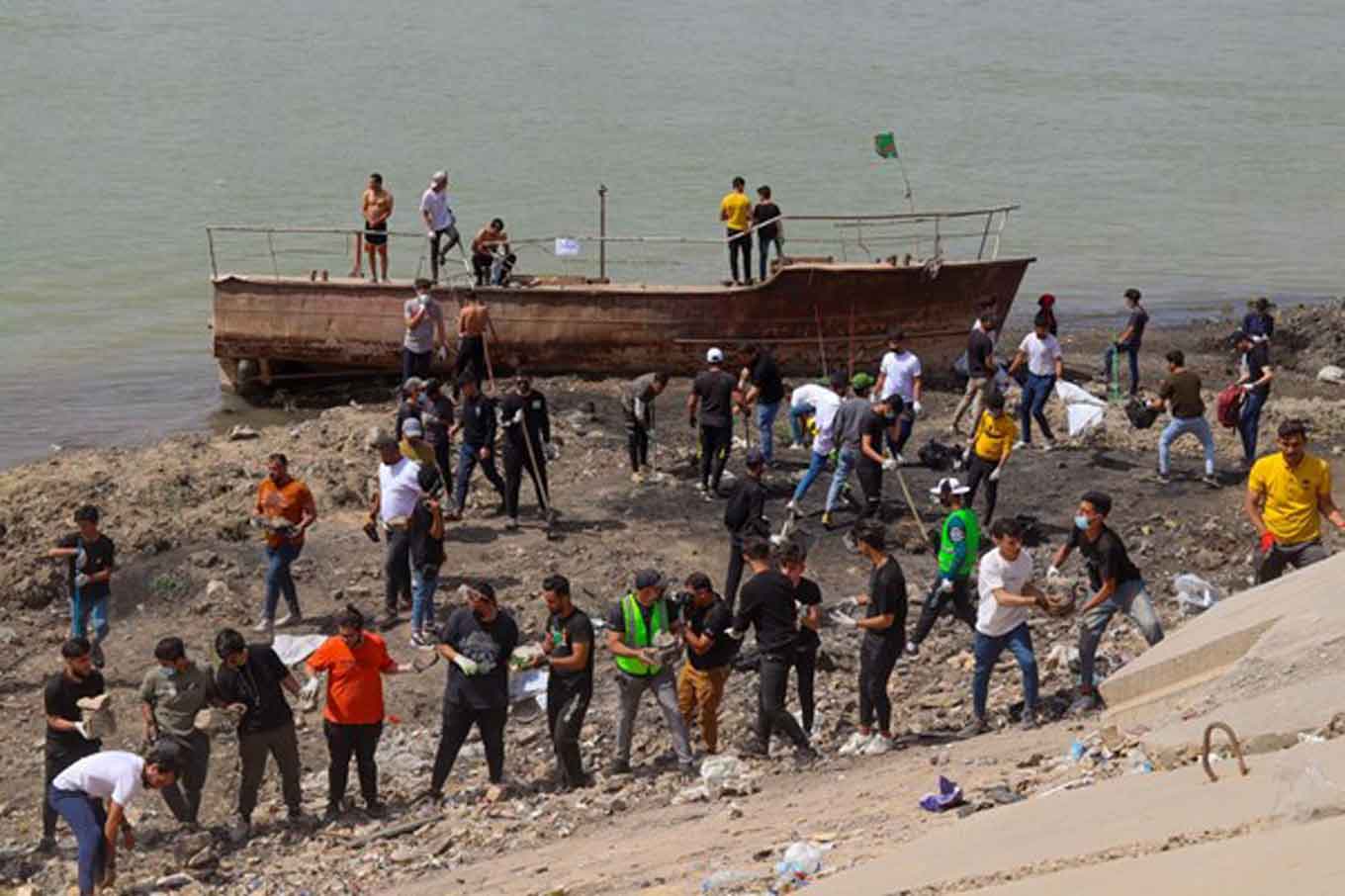
He only expected to spend only a few weeks at home, visiting friends and family, but when his project took off he decided to stay longer to oversee it.
The April event, though it was hard work, carried a welcoming and friendly atmosphere. People got to know each other a bit, making a seemingly tedious activity enjoyable while making visible progress. With every hour I spent by the river, I saw garbage bags piling up at the water’s edge.
Similar cleanup events take place at rivers and creeks around the world, but in Iraq this initiative is something new. Al-Tameemi says he believes it has the power to drive positive change well beyond the environmental benefits — it could help transform the image many people have of Baghdad and Iraq as a whole.
But I couldn’t help but wonder: Is the movement making a real change, or is the destruction of the Tigris irreversible?
An Ancient River Suffers From Modern Pollution
For centuries the Tigris has been the lifeline of Iraq. Ancient civilizations settled around the river, boosting trade, urbanization and economic growth.
Historically it was also a symbol of the country’s prosperity. Iraq used to be one of the water-richest states in the Arab world.
Now, however, the pollution of the Tigris River has reached levels so high that those who rely on its water are at risk of contracting life-threatening diseases.
For decades Baghdad has produced more sewage than its three main wastewater-treatment plants can handle — about twice as much every day. A study published this April in the journal Water found that the Tigris in Baghdad contained unhealthy levels of fecal coliform bacteria — about three times what the Environmental Protection Agency considers safe for domestic water supplies in the United States.
A paper published in 2020 in the Polish Journal of Environmental Studies identified severe pollution of Tigris’s water as “one of Iraqis’ major sources of cancer.” And a 2017 report published by Save the Tigris, a network of civil society organizations working together to ensure safe access to water for the people of Mesopotamia, found that “every 24 hours around 400 children were being admitted to Baghdad’s Sadr Hospital with diseases caused by polluted water.”
Inappropriate sewage treatment is just the tip of the iceberg, however.
After ISIS gained control over parts of Iraq in 2014, extremists would regularly demolish dams and poison wells to cut Iraqi forces off from clean water and coerce local communities into obedience. To contaminate groundwater, ISIS would release oil or metal debris into outlets such as the Tigris.
As if that wasn’t bad enough, ISIS fighters would also dump the bodies of their victims into the river. During the war and in months following, corpses washed up on the riverbanks downstream from Baghdad or Mosul. Hundreds of undiscovered bodies stayed in the water and decomposed, contributing to the pollution.
ISIS also targeted oil wells in towns close to the Tigris, spilling crude oil into the streets and river. Even when attacks did not directly target oil installations or water infrastructure, explosions would damage nearby sewage networks, pipelines and water-treatment plants.
It’s been five years since the war against ISIS officially ended, but more than 1 million Iraqis remain what’s known as “internally displaced persons” living in informal settlements. In Baghdad alone, there are more than 1,000 informal settlement areas that lack sanitation facilities and sewage disposal. These displaced people often have no choice but to dispose of their waste directly into the Tigris River.
And it’s not just these internal refugees. In a country that lacks proper strategy for waste collection and disposal, throwing trash into the river has become a common practice.
Can the Tigris and Its People Be Saved?
Experts say the Tigris is dying and requires urgent action.
Last November Cascades — a consortium established to examine how cascading climate change effects can cross international borders — published a study of the Euphrates-Tigris basin which found that ”the gradual deterioration of water quality is rendering a significant proportion of water unusable.” The researchers said Iraq urgently needs to reduce the sources of water pollution and use its water supplies more efficiently.
Unfortunately no government projects currently focus on putting an end to the gradual destruction of the river.
But the rapid growth of Clean Iraq suggests that at least some Iraqis themselves want to mobilize and work together to restore the Tigris’s glory. Already some 30,000 volunteers have contributed to cleaning the river. The first cleanups took place only in Baghdad, where they’ve managed to fill more than 24,000 garbage bags with trash found around the river and cleaned a stretch of three kilometers. As the initiative gained publicity, citizens of other governorates expressed interest in joining. With the permission of Al-Tameemi, they started organizing events in other parts of Iraq as well.
Despite their achievements, there’s a risk that the campaign could become stagnant, especially if people start losing their motivation to clean the river.
That could happen if they fail to see any progress. Many of the volunteers I met told me that it’s not uncommon for Iraqis to throw their waste into the river without realizing the harms. Therefore, even as the campaign grows, there will always be people who keep polluting the Tigris.
Cascades’ paper confirmed that, saying Iraq is characterized by “low public awareness on environmental topics.”
And even if all the rubbish is removed from the river’s banks and people stopped adding new garbage, the water is still contaminated with toxins from trash that already broke down, oil spills and industrial waste.
Environmental Peace
Al-Tameemi, recognizing that gap, says he wants to not only clean the river but teach people about the importance of keeping the environment garbage- and pollution-free.
“It’s not just about cleaning the river,” says a videographer named Karrar, who creates content for the campaign’s social media accounts. “It’s about spreading awareness, making a change and bringing people together.”
Theoretically, it might achieve even more for Iraq.
According to a special issue of the journal International Affairs published in January 2021, environmental initiatives like this can play a major role in peacebuilding in conflict areas. Papers in the issue used cases from Colombia, Liberia, Yemen and other countries to show how working together on protecting nature reduces tensions, drives integration and unites members of society.
“Environmental challenges offer opportunities for cooperation,” the editors wrote, “because they transcend political boundaries, may be less sensitive politically than other topics, and may stimulate actors to consider longer time horizons… Cooperation on environmental challenges can be instrumental in building trust and understanding between social groups.”
After decades of tyranny, Iraq finally appears to be stable enough that people can focus on actions such as this. Environmental degradation is a major consequence of armed conflict, so cleaning the Tigris River could be a sign of the country’s cautious recovery.
As part of that, the Clean Iraq movement — which has received global news coverage — could show foreigners that Iraq is open to the world and that it’s no longer a war-torn country where people live amid horror and fear.
“We are always happy to see foreigners in Baghdad,” says Abdul, a participant at one of the cleanup events. “Not many people come here because they think the war is still happening. But Iraq is peaceful now, and it is a beautiful place.”
When I think about what it means to be Hispanic, I think about the love we all share for our mothers’ food, the beautiful music that inspires us to dance until sunrise, and the ability to laugh no matter how challenging life can get.
At the same time, I think about the strength it takes to live in some Hispanic countries, and the even greater strength it requires to pack your valuables, kiss your parents goodbye, and move out to an entirely new country to build a better life for yourself and your family.
So many of us experienced this firsthand — and many others are just a generation or two from this experience.
The voices of Latinos, as diverse as they may be, come together into a familiar and united chorus; we are resilient, funny, caring, hardworking, and love our families above all else.
We’ve curated a collection of beautiful quotes about what it means to be Hispanic and Latino — to celebrate during Hispanic Heritage Month and all year long.
Of course, don’t forget to explore our guide on ideas for how to celebrate Hispanic Heritage Month this year.
The Best Hispanic Heritage Month Quotes
Famous Hispanic Heritage Month Quotes
“You are not lucky to be here. The world needs your perspective. They are lucky to have you.”
— Antonio Tijerino, President & CEO of the Hispanic Heritage Foundation

“At the end of the day, we can endure much more than we think we can.”
— Frida Kahlo

“Preservation of one’s own culture does not require contempt or disrespect for other cultures.”
— Cesar Chavez
“The most valuable possession you can own is an open heart. The most powerful weapon you can be is an instrument of peace.”
— Carlos Santana

“Your great strength is knowing who you are.”
— Oscar de la Renta

“When I was growing up, my parents insisted that we speak Spanish and read Spanish. I’m so happy they did that, because we developed their culture and their roots.”
— Tito Puente

“It is important for all of us to appreciate where we come from and how that history has really shaped us in ways that we might not understand.”
— Sonia Sotomayor
“The more you speak more languages, the more you understand about yourself.”
— Sandra Cisneros
“If you have a dream, don’t let anybody take it away.”
— Selena Quintanilla

“Forgiving is not forgetting. Forgiving is remembering without pain.”
— Celia Cruz

“This month we honor and celebrate the achievements of Latinos who have pushed our great American experiment forward — to grow, prosper, and pursue its highest ideals — from those who recently arrived to those who have been here for generations.”
— President Joe Biden
Hispanic Quotes About Life
“What matters in life is not what happens to you, but what you remember and how you remember it.”
— Gabriel García Márquez
“We must use our lives to make the world a better place to live, not just to acquire things. That is what we are put on the earth for.”
— Dolores Huerta
“If you have an opportunity to make things better and you don’t, then you are wasting your time on Earth.”
— Roberto Clemente
“Every day begins like a blank chalkboard, on which each one of us can write the poem of our present and our dreams of the future.”
— Ricky Martin

“You only have what you give. It’s by spending yourself that you become rich.”
— Isabel Allende
“We tend to think of meditation in only one way. But life itself is a meditation.”
— Raul Julia
“I don’t want an uneventful and safe life, I prefer an adventurous one.”
— Isabel Allende
→ Read more quotes about life
Quotes About Being Hispanic
“We have to be visible. We are not ashamed of who we are.”
— Sylvia Rivera
“In the end, the American dream is not a sprint, or even a marathon, but a relay. Our families don’t always cross the finish line in the span of one generation. But each generation passes on to the next the fruits of their labor.”
— Julian Castro
“I am the one thing in life I can control. I am inimitable — I am an original.”
— Lin-Manuel Miranda
“Yes, I am the first Latino poet laureate in the United States. But I’m also here for everyone and from everyone. My voice is made by everyone’s voices.”
— Juan Felipe Herrera
“I know now that he who hopes to be universal in his art must plant in his own soil... The secret of my best work is that it is Mexican.”
— Diego Rivera

“There was nobody that I could look up and say ‘“That’s somebody like me’”. Which is probably why I’m now known in my community as ‘La Pionera’, or the Pioneer. I really don’t think of myself as a role model. But it turns out that I am to a lot of the Hispanic community. Not just in show business, but in life. But that’s what happens when you’re first, right?”
— Rita Moreno
“Growing up, there wasn’t an exact Hispanic role model that I had. I didn’t realize how big a difference I was making, going to the Olympics and being Hispanic, until I would be in an autograph session, and parents would come up to me and say, ‘You know, our family is so proud of you, you’re really doing Hispanics proud.’”
— Laurie Hernández
“While our culture, traditions and religion may differ, we pride ourselves on working hard, educating ourselves as much as possible, striving for better lives for our children, loving our often large and blended families, and sharing as much of our history and customs as we can with anyone who chooses to really see us. We are not so different after all. People simply need to see us for who we are and not who they expect us to be.”
— Natalie Morales
“I’m proud of being Hispanic.”
— Lisa Guerrero
Inspirational Quotes by Latinas
“The Latina in me is an ember that blazes forever.”
— Sonia Sotomayor
“I don’t study to know more, but to ignore less.”
— Juana Inés de la Cruz
“They are afraid of us because we are not afraid of them.”
— Berta Caceres
“Whatever it is your heart desires, please go for it, it’s yours to have.”
— Gloria Estefan
“People think of Latina women as being fiery and fierce, which is usually true. But I think the quality that so many Latinas possess is strength. I’m very proud to have Latin blood.”
— Zoe Saldana

“As an immigrant, I appreciate, far more than the average American, the liberties we have in this country. Silence is a big enemy of morality. I don’t want our blunders in history to get repeated.”
— Gloria Estefan
“You have to remember the value of your individuality — that you have something special and different to offer that nobody else can.”
— Jennifer Lopez
“My mother gave me one piece of advice that stuck with me. She said don’t forget where you came from.”
— Eva Longoria

Latino Quotes
“Be proud to be Latino and never lose that pride!”
— Bad Bunny

“I feel very proud to be Mexican. I didn’t have the opportunity to learn Spanish when I was a girl, but… it’s never too late to get in touch with your roots.”
— Selena Quintanilla
“We are all individuals; we are all human beings; we are all connected together; and we all have the same rights, the same freedom.”
— Sylvia Mendez
“The Latino population has become such a presence. We are part of the American tapestry in a very profound way, in every area you can think of, and are very significant in popular culture.”
— Jimmy Smits

“Many Latino kids should become scientists because we need scientists all over the world from all different backgrounds. We have many tough problems, and we need everybody’s help to solve the problems.”
— Mario J. Molina
“I feel so much pride to represent my community and be Latino. No doubt about it, above my career and sales being a Latino comes first.”
— Daddy Yankee

Chicano Quotes
“I am not Mexican. I am not gringo. I am not Chicano. I am not gringo in the U.S. and Mexican in Mexico. I am Chicano everywhere. I don't have to assimilate to anything. I have my own history.”
— Carlos Fuentes

“No Statue of Liberty ever greeted our arrival in this country… we did not, in fact, come to the United States at all. The United States came to us.”
— Luis Valdez
“Deslenguadas. Somos las del español deficiente. We are your linguistic nightmare, your linguistic aberration, your linguistic mestizaje, the subject of your burla. Because we speak with tongues of fire we are culturally crucified. Racially, culturally and linguistically somos huérfanos — we speak an orphan tongue.”
― Gloria E. Anzaldúa
“I am proud to be born in the USA, but my Mexican roots are my foundation and what make me never give up, always keep fighting and finish the fight till the end.”
— Oscar de la Hoya

More Empowering Quotes for Instagram & Beyond
“Justice is about making sure that being polite is not the same thing as being quiet. In fact, oftentimes, the most righteous thing you can do is shake the table.”
— Alexandria Ocasio-Cortez
→ Read more quotes about justice and social justice
“Action is the antidote to despair.”
— Joan Baez
→ Read more quotes about optimism and hope
“Success is its own reward, but failure is a great teacher too, and not to be feared.”
— Sonia Sotomayor
“You can cut all the flowers but you cannot keep spring from coming.”
— Pablo Neruda
→ Read more positive quotes
“Widen the path of opportunities and continue to leave a powerful and positive legacy in this world.”
— Luis Fonsi
→ Read more quotes about making a difference
“I tell students that the opportunities I had were a result of having a good educational background. Education is what allows you to stand out.”
— Ellen Ochoa

“I believe that fortitude is key. More than anything, be consistent. Go at it. Go at it. Go at it. When you succeed, don’t forget the responsibility of making somebody else succeed with you.”
— Antonia Novello
Every day the Good Good Good team collects the best good news in the world and shares it with our community. Here are the highlights for this week!
If you want to get good news in your inbox every day, join the Goodnewsletter — the free daily newsletter designed to leave you feeling hopeful.
The Best Positive News We're Celebrating This Week —
Thanks to Indigenous activists, a Malaysian logging firm removed all their equipment from a protected forest
Earlier this year, organizations monitoring some of the last untouched forest on the island of Borneo in Southeast Asia captured satellite and drone imagery showing Malaysian logging firm Samling Timber entering deep forest and culturally sensitive areas.
The Penan Indigenous organization Keruan filed a police report and planned to start a blockade to protect the forest. The day before their blockade was set to begin, the company removed all their logging equipment from the area.
This isn’t the first time the Penan have had similar run-ins with Samling, but it may be the last time — at least for this part of the island, as the part of the forest they’re protecting is slated to be added to a new conservation project.
And though the world has more trees than it did three decades ago — it still needs more. We must protect and preserve the old-growth forests we already have, while planting more trees.
Approval of interracial marriage is at a new all-time high of 94% — up from just 4% in 1958
According to new Gallup polling, 94% of Americans say they approve of interracial marriage — up from just 4% when Gallup first asked in 1958. And the approval rate holds relatively true regardless of age, race, or location — in every instance, approval of interracial marriage is over 90%.
Additionally, according to the Pew Research Center, the number of interracial marriages has increased too. Today, 20% of marriages are interracial — whereas in 1967, when it first became legal, 3% were.
While we’d love to see 100% approval, this is incredibly significant progress to celebrate. Because even as justices, leaders, and lawmakers threaten to overturn the legalization of interracial marriage — it’s helpful and hopeful to know that nearly all of your neighbors don’t agree with them.
England’s government is supporting a “once in a generation” farmer-led plan to restore biodiversity in the country
Farmers and landowners across England put together ambitious land and biodiversity restoration plans in 22 locations, and the government just announced it will support them all with an initial £12 million pound investment.
Importantly, the plans will both restore nature and prevent flooding, as well as continue to allow the land to produce food. Land managers and conservationists are calling the plans the most “exciting and important” step in a generation to restore lost biodiversity.
This effort is part of an even larger wave of farmers implementing restorative, regenerative farming practices that are better for the planet and for people.
An LGBTQ+ soccer team in Kenya is offering a “safe space” for lesbian players
Around the world, lesbian and bisexual soccer players are at the forefront of top women's teams, unlike in the men's game where only a small number of elite players have come out. But in Kenya, where women's soccer is gaining popularity, stigma and discrimination against LGBTQ+ people force players to stay in the closet.
Recognizing an increasing number of lesbians are passionate about football, former amateur player and LGBTQ+ rights campaigner Anita Wanjiru founded a women's team in 2017. The all-lesbian team is organized through the Kenyan LGBTQ+ activist group Minority Women in Action (MWA) and offers a “safe space” for players while maintaining secrecy from the wider community.
Patagonia’s founder just donated the entire company to ensure profits would go to fight climate change
Patagonia founder Yvon Chouinard just announced he would be donating the entire company, worth about $3 billion, to a trust and a nonprofit organization fighting climate change. Any profits, about $100 million per year, that they don’t reinvest in the company will go to fight climate change.
“Hopefully this will influence a new form of capitalism that doesn’t end up with a few rich people and a bunch of poor people,” Mr. Chouinard, 83, said in an interview with The New York Times. “We are going to give away the maximum amount of money to people who are actively working on saving this planet.”
Australians are growing mullets and raising money in support of mental health research
Every September, Black Dog Institute (BDI) — a mental health research organization in Australia — runs the Mullets for Mental Health campaign, encouraging community members to grow mullets and fundraise together to support mental health research initiatives.
BDI’s research is done through studies, educational programs, digital tools and apps, clinical services, and public resources with the goal of discovering new solutions, fostering connections, and creating real-world change.
Combining science, compassion, and action, BDI’s partnerships with Australian communities, governments, schools, and businesses seeks to make evidence-informed change in mental health.
The cool haircut is a fun bonus.
The Martha’s Vineyard community came together to provide food, shelter, and support to migrants flown from Texas
When two chartered planes filled with 50 migrants landed unexpectedly in Martha's Vineyard on Wednesday — the community quickly came together to help.
St. Andrews Church provided shelter, the Salvation Army and other organizations brought food and water, local high school Spanish students helped translate, and members of the community showed up with clothes and other necessities.
Their response was so swift, that you would have never known Martha's Vineyard hadn't actually been expecting the migrants, who had been told they would receive housing and jobs upon arriving.
“In a typical Vineyard fashion, it is a community effort,” one community member told the Vineyard Gazette.
More good news of the week —
Mackenzie Scott just donated two mansions worth $55 million to charity. The California Community Foundation plans to sell the homes and use the money for affordable housing grants and an immigrant integration program.
Using money from the Inflation Reduction Act, the IRS is developing a free online filing platform. The digital filing tool would end years of for-profit corporations dominating tax season.
Princeton just announced it will cover tuition for students from families making less than $100,000. It was the first university to replace loans with grants, and now 25% of its undergraduates won’t pay anything to attend.
For their Season 2 launch, Abbott Elementary used some of their marketing budget to buy school supplies for teachers. In its first season, the show opened viewers’ eyes to struggles faced by teachers, like retention, poor classroom conditions, and more.
California just passed a law requiring employers to post salary ranges on job descriptions. Posting pay scales both increases transparency and helps close pay gaps.
The European Union is writing legislation to ban both products and imports made with forced labor. The move was started by lawmakers concerned about human rights abuses in the Chinese province of Xinjiang.
A Swiss coffee maker is creating a coffeemaking system to replace the ones that use wasteful plastic capsules. Migros’ CoffeeB system uses “coffee balls” that are compostable and can be discarded with the used coffee grinds.
San Francisco lawmakers unanimously approved a measure to decriminalize psychedelics. The measure cited research showing the ways they can potentially help those with mental health illnesses and recovering from drug addiction.
Thanks to the Inflation Reduction Act, workers in rural Virginia are pivoting from coal to clean energy jobs. The state’s first solar energy youth apprenticeship scheme is now underway.
Tokyo will require all new homes and buildings to include solar panels beginning in 2025. It would be the first prefecture in Japan to do it and would apply to homes and buildings under about 21,500 square feet.
The Boston Marathon added a nonbinary runner option to its 2023 race registration. More than 200 races around the country have added a nonbinary division for runners to compete in, and now the country’s most popular running event has too.
A new study found that switching from fossil fuels to renewable energy could save the world as much as $12 trillion. They say the cost to switch pales in comparison to how much sticking with fossil fuels would cost.
After two months, Jackson, Mississippi’s water is safe to drink again. Certain people still need to take precautions, and the city needs to make major improvements to its water system to ensure a crisis like this never happens again.
The world’s largest shipping container line is rerouting its entire fleet to protect the world’s largest animal: blue whales. Researchers found it would reduce collisions to avoid Sri Lankan waters where the whales congregate.
Europe’s largest charity stream raised a record-breaking $10.3 million in just three days for environmental organizations. Fifty-seven French streamers participated, and the money will go to WWF France, Sea Shepherd France, The SeaCleaners, and more.
The feminist movement of the 1960s and 1970s reminded the world that women have always played important historical roles, despite often being overlooked. But even in the 21st century, many popular history books are written by and about men — usually covering war heroes, generals, and the country's founding fathers.
Studies of U.S. history and social studies classes also find that state education standards focus on men and gloss over the roles of women outside of the home.
Though many people today proudly proclaim to be feminists, women around the world are still paid less for the same work, live in fear of physical violence and sexual assault, and lack rights and representation across industries.
Through decades of activism and organizing, women have made hard-won gains across social, economic, political, and cultural spectrums. Observing milestones in women's history also reminds us of the steps still required to achieve true gender equality.
Our partners at Stacker dug through historical records and selected inspirational or important moments in women's history every year from 1919 to 2022.
Women have left marks on everything from politics to entertainment and music to space exploration, athletics, and technology. Each passing year and new milestone makes it clear both how recent this history-making is in relation to the past, as well as how far we still need to go.
The resulting timeline shows that women are constantly making history worthy of best-selling biographies and classroom textbooks; someone just needs to write about them.
Scroll through to find out when women in the U.S. and around the world won rights, the names of women who shattered the glass ceiling, and which country's women banded together to end a civil war.
Iconic moments in women’s history from the year you were born —
1919: National Women's Party sparks 'Watchfires of Freedom'

Members of Congress introduced a constitutional amendment enshrining women's right to vote in 1878, but it would take decades of protest for it to become the law of the land. In 1918, President Woodrow Wilson started supporting women's suffrage, but members of the National Women's Party thought he wasn't using his influence to sway the last two senators needed for an amendment to pass. In January 1919, activists started burning Wilson's speeches outside public buildings, implying he was a hypocrite for not doing more. The amendment passed a few months later.
1920: The 19th Amendment becomes law

After the 19th Amendment passed through Congress, it was turned over to the states; two-thirds (or 36) had to ratify the amendment before it could become law. Seven states rejected the amendment outright. The decisive vote came from Tennessee after a young representative's mother convinced him to vote in support of suffrage, breaking a tie in that state's legislature. The amendment was certified on Aug. 26, 1920, and women in every state could vote in elections that November.
1921: Edith Wharton wins the Pulitzer Prize
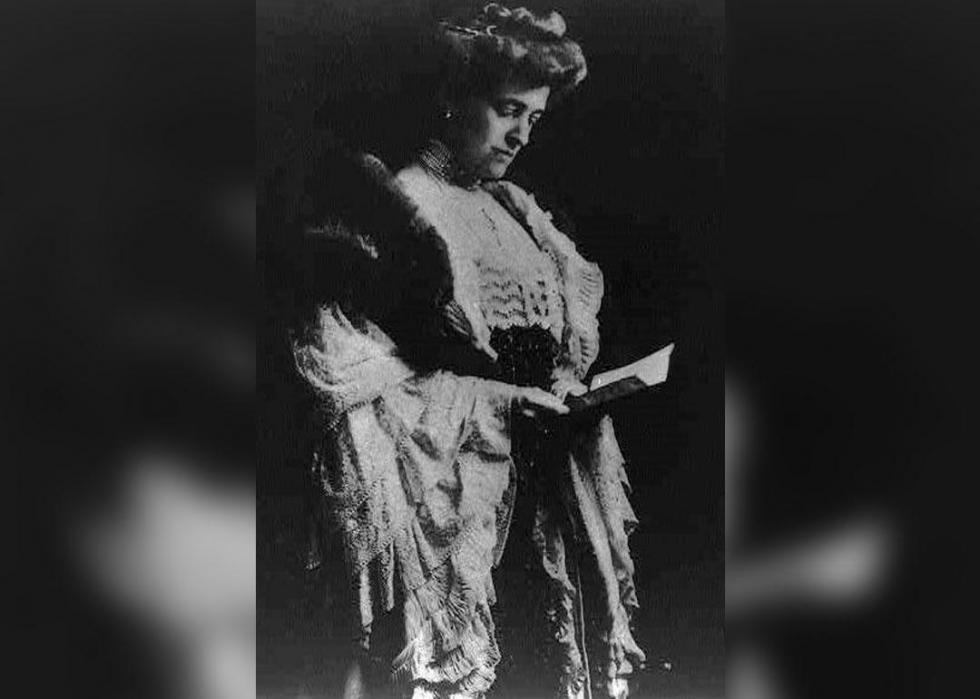
In 1921, Edith Wharton won the Pulitzer Prize for Fiction (then called the Novel Prize), becoming the first woman in the award's four-year history to do so. She was honored for her 12th novel, "The Age of Innocence," which explores the upper-class 1870s New York society in which Wharton grew up. Her win was controversial, but not because of her gender; the committee originally decided to give the prize to the novel, "Main Street," a decision that was changed for political reasons.
1922: First woman serves in the Senate
The first woman to serve in the U.S. Senate held her role for only two days. Rebecca Ann Felton of Georgia was appointed to fill a vacancy and served from Nov. 21–21, 1922. Her short appointment was largely ceremonial, honoring her long career in journalism and state politics. It would take another decade before another woman was elected to a Senate seat.
1923: Equal Rights Amendment is first proposed

Even after women won the right to vote, Alice Paul—a women's rights activist and founder of the National Woman's Party—realized the U.S. still had a long way to go before it reached true equality. She fought for the Equal Rights Amendment, which, if added to the Constitution, would make it illegal to discriminate on the basis of sex. The amendment was proposed in every Congress from 1923 to 1972 when it finally passed, but it fell three states short of being officially added to the Constitution.
1924: First woman diplomat gets to work

Revolutionary Marxist Alexandra Kollontai joined the new Russian government formed after the 1917 Bolshevik Revolution as the People's Commissar of Social Welfare. In that capacity, she founded a Women's Department that fought to improve the lives of women in the Soviet Union. After a few years, she was asked to tackle diplomatic work, and in 1924, Kollontai was promoted to second-in-command of the Soviet Union's Norwegian embassy, which officially added her to the diplomatic corps. She continued working in Sweden, Finland, and Mexico until her retirement in the 1940s.
1925: Nellie Tayloe Ross becomes the first woman governor in the U.S.

One month after her husband, Gov. William B. Ross, died of appendicitis, Nellie Tayloe Ross was elected to fill his seat. Through her victory, Wyoming, the first state to give women the right to vote, became the first to elect a woman to a state's highest office. Ross was inaugurated in January 1925, but lost reelection in 1926. She had a long career in politics after her term, and remains the only woman governor in Wyoming's history.
1926: Gertrude Ederle swims the English Channel

Gertrude "Queen of the Waves" Ederle did what only five men had done before her when she swam the 35-mile length of the English Channel on Aug. 6, 1926. An Olympic gold medalist, Erdele first attempted the swim between England and France in 1925, but she didn't let her failure prevent a second try. Covered in grease and wearing a more practical self-designed suit, Erdele beat the men's record by over two hours, at a time when women's sports were just coming into the spotlight.
1927: Women petition to become 'persons' in Canada
Five Canadian women's rights activists, dubbed the "Famous Five," brought a case before the country's Supreme Court in 1927 arguing that women had the right to be appointed to the Senate. In 1928, the Court ruled that women were not considered "persons" according to the Canadian constitution and therefore ineligible for Senate seats. An appeal reversed the ruling, opening up new opportunities for women in Canada.
1928: Britain's Equal Franchise Act becomes law
British women technically won the right to vote before Americans, but it took 10 years for them to achieve the same voting rights men already had. The 1918 Representation of the People Act allowed all men over 21 to vote, but only female householders or those married to householders, female university grads over 21, or women over 30 could vote. The Equal Franchise Act of 1928 removed all those restrictions; any British citizen over 21 was now free to vote.
1929: Nigeria's Women's War wins rights
Through the late 1920s, British colonial rule in Nigeria wildly changed how the country was governed. The native Igbo women, who had an important political role in their communities, found themselves increasingly undermined by new leaders. These women used their powerful communication networks to stage a nonviolent protest against their mistreatment. The British didn't understand the cause of the protests, and the campaign ended after just over one year when the British turned to violence—but not before Nigerian women won important protections for their rights and regained some of their political power.
[Pictured: Community of men, women, and children standing in front of the Akaniobio Church, Old Calabar, Calabar, Nigeria, sometime between 1900–1930.]
1930: Frances Marion writes Oscar-winning 'The Big House'

As movies transitioned from silent black-and-white affairs into talkies and Technicolor, screenwriter Frances Marion and actress Mary Pickford became some of early Hollywood's biggest names. The two worked together to adapt dozens of novels and stories into films, from classics like "Anne of Green Gables," to "The Big House," which won Marion her first Oscar (Adapted Screenplay). By the end of her career, Marion had written over 100 scripts.
1931: Jackie Mitchell strikes out two of baseball's best

Jackie Mitchell, a 17-year-old pitcher, took the mound against the New York Yankees in an early season exhibition game. One of the first female pitchers in the league with a contract, Mitchell managed to strike out legends Babe Ruth and Lou Gehrig. But then a few days later, her contract was revoked amid claims that the occupation was dangerous for women. Some modern historians believe that Mitchell's history-making pitches were staged to get more people in the stands, but many still see her achievement as important, either way.
1932: Amelia Earhart's first solo flight across the Atlantic
Amelia Earhart became the first woman to fly non-stop across the Atlantic Ocean when she traveled from Newfoundland to Ireland on May 21, 1932. Earhart had already completed a similar feat a few years earlier as part of a three-person crew, and her fame only grew after flying solo—just like Charles Lindbergh, who had completed the feat five years before. Earhart, who was awarded the Distinguished Flying Cross by Congress, infamously disappeared a few years later while attempting to fly around the world.
1933: First female Cabinet member is appointed
Frances Perkins spent the early days of her career working to improve the lives of disadvantaged people living in New York City, making her well suited to the position of U.S. secretary of labor. President Franklin D. Roosevelt appointed her to the post during the height of the Great Depression in 1933. As the first female member of a presidential cabinet, she pushed for the New Deal and spearheaded the creation of the Social Security program, one of Roosevelt's most important legislative achievements.
1934: First woman serves on board of directors of a major corporation
Lettie Pate Whitehead Evans married a wealthy man who struck a deal with the brand new Coca-Cola company to bottle their syrupy-sweet product. Her husband died young, leaving Evans to take over his share of the bottling empire, where she expanded her own wealth as well as the company's success. When her branch of the company was bought out, she was appointed to the board of directors, a position she would hold for nearly 20 years. Lettie ultimately used her fortune to create a scholarship foundation.
1935: National Council of Negro Women is founded

Disappointed by the lack of communication and cohesiveness between groups advocating for African American women's rights, educator and civil rights leader Mary McLeod Bethune founded the National Council of Negro Women. In the decades since, the Council has grown to represent more than 25 national organizations, and more than 4 million women have been associated with the organization.
1936: Wallis Simpson is Time's first female Person of the Year
Time's Person of the Year award has been given to an individual woman only five times. Wallis Simpson, an American socialite, was the first. Her relationship with King Edward VIII took the world by storm, and the 1930s press was obsessed with their movements. Edward, who caused a scandal by courting Simpson while she was still married to her second husband, was told he couldn't marry her and keep the throne. He became the only British monarch to voluntarily give up the throne; the two married and lived out the rest of their years together.
1937: First woman climbs the Adirondack High Peaks

Born and raised in New York's Adirondack Mountains, Grace Dolbeck Leach Hudowalski became the ninth person and first woman to climb all 46 peaks in the mountain range between 1922 and 1937. She went on to start the Adirondack 46ers club alongside her husband, promoting the high peaks she loved and keeping track of others who managed to climb them. In 2014, the U.S. Board on Geographic Names officially renamed one of the peaks in her honor.
[Pictured: A view of some of the Adirondack Mountains high peaks.]
1938: First woman wins the Nobel Prize in Literature
Pearl S. Buck used her experience growing up in China with her missionary parents to fuel much of her writing career, which focused on the life of the peasant class in the country. Her most notable work was a family trilogy: "The Good Earth" (1931), "Sons" (1932), and "A House Divided" (1935), which propelled her to become the first female Nobel laureate in Literature.
1939: Kitty O'Brien Joyner is NASA's first woman engineer
Kitty O'Brien Joyner broke ground twice in 1939. After suing to be admitted into the University of Virginia's engineering program, she was the first woman to graduate from the program that year. The electrical engineering knowledge she gained let her blaze a new trail several months later when NACA, the predecessor to NASA, hired her. She worked there for decades, eventually becoming branch head, before retiring in 1971.
1940: First African American woman wins an Oscar
It took 12 years for the Academy Awards to acknowledge a nonwhite performer. Even when Hattie McDaniel won for her supporting role as Mammy in "Gone with the Wind"—making her the first Black person to win any Oscar—she was seated at a separate table from her costars, and the show's organizers had to fight for her to be allowed inside the venue. Though later audiences would take issue with McDaniel's stereotypical character, her win was still historic; another Black actor would not win an Oscar until 1964, and diversity in the Academy remains an issue.
1941: Wonder Woman debuts
Wonder Woman wasn't the first female superhero to grace the racks of comic book shops across America, but her appearance in 1941 sparked an obsession that's lasted just as long as Batman and Superman. Created by a psychologist, the Amazon woman was heavily influenced by feminism. In 2017, her enduring popularity made her the first female superhero to earn her own movie, which smashed records and gender barriers alike.
1942: First woman is awarded Purple Heart medal
On Dec. 7, 1941, Annie G. Fox found herself organizing the response to the chaos and numerous injuries caused by the attack on Pearl Harbor. The first lieutenant and head nurse of Hickam Field Hospital was awarded the Purple Heart for her work on Oct. 26, 1942, alongside several other army nurses. When the criteria of the award later changed to apply only to those injured in the line of duty, Fox was awarded the equally prestigious Bronze Star in place of the Purple Heart in 1944.
1943: Women's Army Corps is created
The U.S. entered World War II at the end of 1941, and quickly found itself in need of soldiers. Women, who had served as nurses and in other unofficial military roles in prior wars, were formally recruited for behind-the-scenes roles through the Women's Auxiliary Army Corps. By 1943, Congress decided to drop Auxiliary from the name, and female non-combatants finally received the same benefits as their male counterparts. Men and women would remain in separate military units long after World War II, though, before finally integrating in 1978.
1944: French women win the right to vote

France fell behind many of its European counterparts in granting women the right to vote. Sixteen years after Britain finally enshrined equal rights at the ballot box, the newly liberated French government signed a law allowing women to cast votes. French women still struggle to see themselves represented in the federal government, though numbers have started trending up after recent elections.
1945: Ireland's laundry workers go on strike

After years of mistreatment, Ireland's laundry workers (who were almost entirely women) decided they were done putting up with the long hours and harsh conditions. The Irish Women's Worker Union went on strike, and after 14 weeks, they won the right to a second week of holidays every year for all Irish workers.
1946: UN establishes the Commission on the Status of Women
Soon after the United Nations was founded, it established the Commission on the Status of Women, the first intergovernmental body with the sole purpose of promoting the rights of women around the world. The Commission's 15 female representatives first met in New York, and until 1962, they focused on setting global standards for women's rights, changing discriminatory language in different documents, and bringing awareness to women's issues to a worldwide audience.
1947: First woman wins a Nobel Prize in medicine
Alongside her husband, Gerty Cori became the first woman to win a Nobel Prize in medicine, and only the third woman in history to win the award in any category. The couple won for developing the Cori cycle, which explained how energy moves through different parts of the body. Though colleagues warned her she could hold back her husband's career, Cori and her husband continued working together and went on to make further important biological discoveries.
1948: UN Declaration of Human Rights debuts
The United Nation's historic Declaration of Human Rights was the first international document to explicitly state that both men and women should have their "dignity and worth of [their] human person" protected. The Commission on the Status of Women was integral in the fight to make sure gender-neutral language was inserted into the document, which was adopted by the General Assembly on Dec. 10, 1948.
1949: 'The Second Sex' is published
In 1949, French essayist, political theorist, and intellectual Simone de Beauvoir published her most famous and influential work on the oppression of women. De Beauvoir attempted to explain why women are oppressed in society and argued that political advancements like the right to vote meant nothing to women who don't have the means to support themselves in other ways. Its English translation (published in 1953) was long considered deeply flawed, but that didn't stop the work from becoming required reading for feminists and scholars around the world.
1950: First girl plays Little League baseball
At 13, Kay Johnston wanted nothing more than to play Little League baseball. So she decided to sign up as a boy named Tubby. Even after revealing her identity, she played a successful season as a member of a team. After that year, the "Tubby Rule" was put into place, barring girls from playing Little League under any circumstances. The rule was abolished in 1974, and since then, 18 girls have made it all the way to the Little League World Series.
1951: Rosalind Franklin makes crucial DNA discoveries
James Watson and Francis Crick were credited with the discovery of DNA's double-helix structure, which won them a Nobel Prize in 1962, but they would not have been able to do so without the help of a pioneering female scientist. Rosalind Franklin's expertise in X-ray diffraction techniques allowed her to take clear pictures of DNA's structure. A male colleague who often disagreed with Franklin gave her photographs to Watson and Crick, and they formed the basis of their eventual model. Franklin never knew her work had been so integral to their discovery, as she died in 1958.
1952: Grace Hopper revolutionizes computers

A trailblazer throughout her life, mathematician and U.S. Navy Admiral Grace Hopper revolutionized the way we use computers. After working on the Mark I computer during World War II, she moved into private industry, where she and her team developed the compiler. This device allowed software developers to write code in humanlike language—instead of 1s and 0s—and was a precursor to the widely used COBOL programming language.
1953: First woman breaks the sound barrier

Jacqueline Cochran worked her way out of poverty to become one of the most successful female aviators of the 20th century. After obtaining her pilot's license in three weeks while working as a cosmetics saleswoman, she took the aviation world by storm and set record after record. Her most notable feat might be flying faster than the speed of sound (761.2 miles per hour), a speed she later doubled in 1964.
1954: UN Convention on the Political Rights of Women goes into force

The Convention on the Political Rights of Women became the first piece of international law explicitly formed to protect and expand women's political rights. A total of 122 United Nations member states and the state of Palestine have since signed onto the document, parts of which formed the basis of later, more comprehensive treaties protecting women's rights.
1955: Rosa Parks sparks Montgomery Bus Boycott
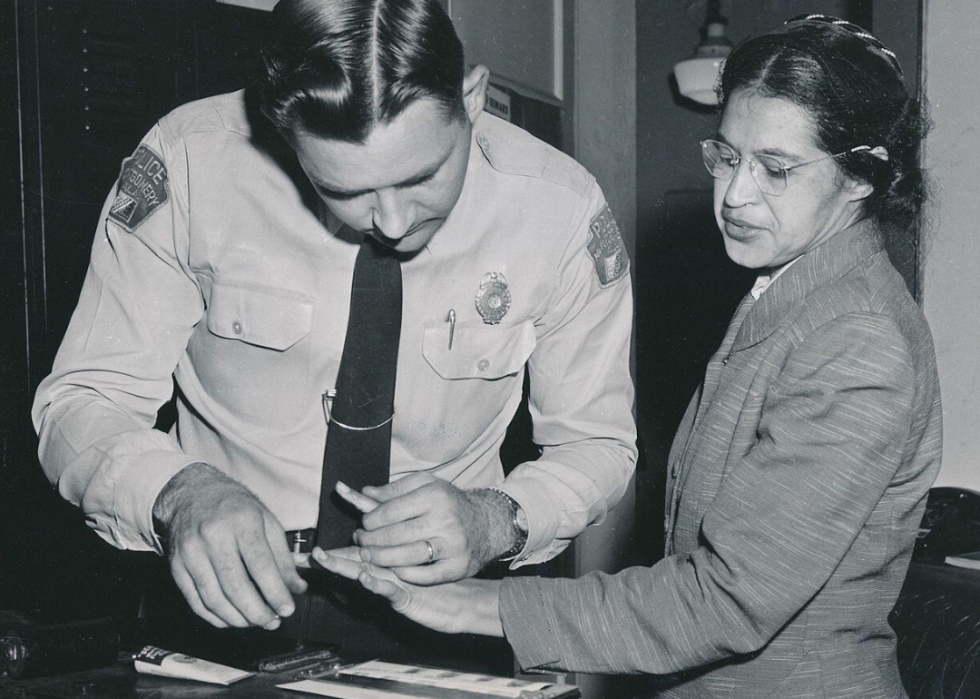
Rosa Parks' decision not to give up her seat to a white man on an Alabama bus changed the course of American history. The same day Parks was convicted of violating segregation laws, black community leaders, including Dr. Martin Luther King Jr., organized a boycott of the Montgomery bus system.
It would not end until the Supreme Court ruled bus segregation laws were unconstitutional. Parks subsequently became a symbol of the civil rights movement and continued her work as an activist against inequality.
1956: Women march on Pretoria
In the 1950s, South Africa's government passed new laws to limit the movement of African women in the country, with the goal of further entrenching the deep racial separation, also known as apartheid. Thousands of women from across South Africa marched on the capital city in protest of these laws, including several who would later become key figures in the apartheid resistance movement. When the prime minister wouldn't meet with them, the women stood in complete silence for 30 minutes before singing songs of protest and female empowerment.
1957: First television show built around a female protagonist airs
"Decoy: Police Woman" might be an all-but-forgotten relic from the early days of television, but it was groundbreaking as the first show to feature a female police officer and a female protagonist. If not for "Decoy," the powerful female characters in "Brooklyn Nine-Nine" and "Law and Order" might not exist. Shot on location in New York (another first), Casey Jones went undercover as a ballerina, model, and other aliases to catch criminals, doing her job without any discrimination from her male colleagues.
1958: First woman wins multiple Grammys

Ella Fitzgerald became a household name when she made her debut on the stage of New York's famous Apollo Theater in 1934. "The First Lady of Song" went on to become a jazz icon, and at the first Grammy Awards, she took home Best Female Vocal Performance and Best Individual Jazz Performance. She'd go on to win 13 awards over her 40-year career, capping off her Grammy success by becoming the first woman to win a Lifetime Achievement award.
1959: Tibetan Women's Uprising commences

The long struggle for Tibet to gain independence from China came to a head in the late 1950s, ultimately forcing the Dalai Lama to flee to India in exile. Tibetan women made their voices heard when they took part in a protest against the Chinese government on March 12, 1959. The women surrounded the Dalai Lama's home but were later arrested; many were beaten and executed.
1960: Sri Lanka elects world's first female prime minister
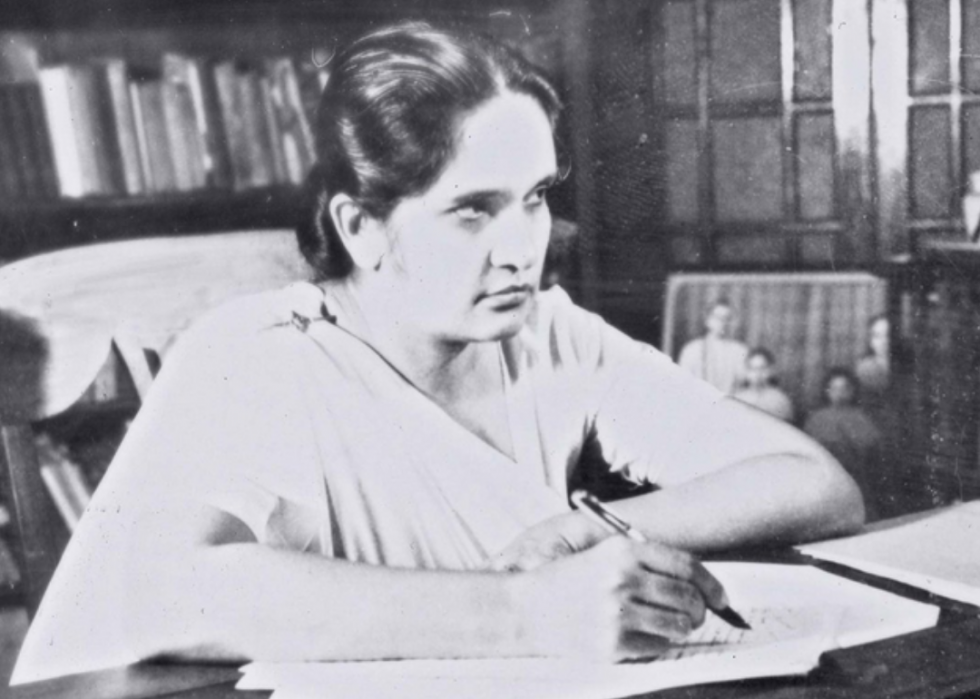
When Sirimavo Bandaranaike won Sri Lanka's 1960 election, she became the first woman head of state to hold the title without inheriting the position due to her birth. She was elected after her husband was assassinated the year before and continued implementing his socialist economic policies and promotion of Buddhist cultural practices in the country (then called Ceylon). Bandaranaike stepped down in 1965, but returned in the 1970s to serve two more terms before retiring for good at 84.
1961: India bans dowries

Dowries were a common custom in Indian culture hailing from its days as a British colony; a bride's parents would give money or other gifts to help their daughter start a new life, but the practice soon became more of a payment to the groom's family at the time of marriage, as an incentive for the union. Unfortunately, the custom also led to violence against the women it hoped to protect. Sometimes a woman's husband or in-laws would attack her in hopes of getting a higher bride price. The 1961 Dowry Prohibition Act aimed to stop this violence against women by getting rid of the tradition, but it's been difficult to enforce and is often misused.
1962: Katherine Johnson helps send a man to space
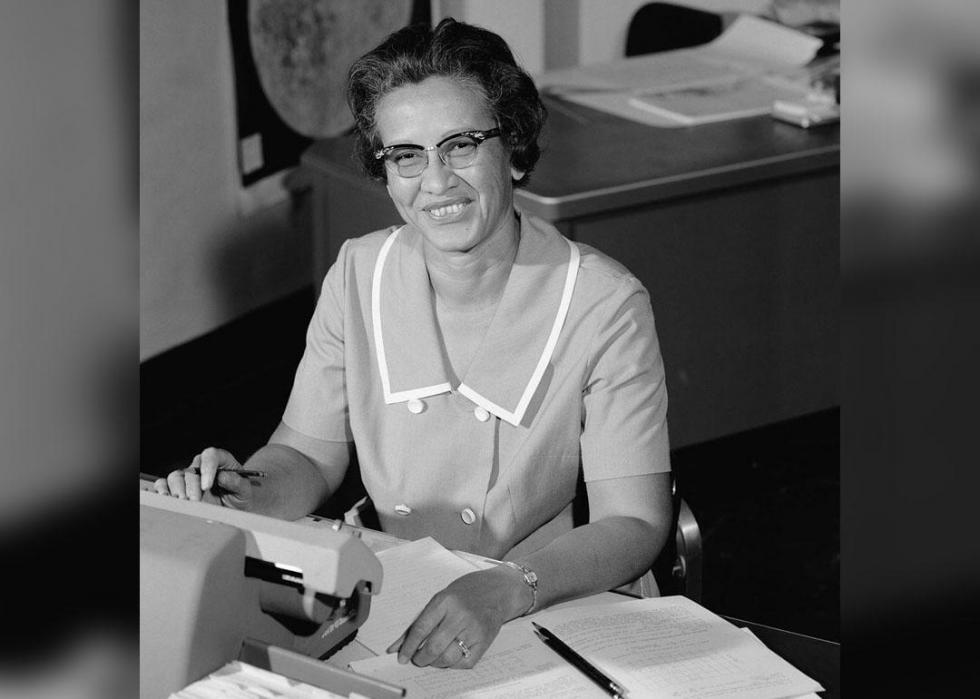
In NASA's early days, African American women often worked as human computers, doing the necessary calculations for different projects by hand. In 1953, Katherine Johnson became one of them. By the 1960s, she was working on flight trajectory calculations and often double-checking the work done by electronic computers. Astronauts like John Glenn relied on her calculations to ensure a safe landing, contributions that were immortalized in the 2016 movie "Hidden Figures."
1963: Betty Friedan publishes 'The Feminine Mystique'

People often describe feminism as coming in several waves and historians often credit Betty Friedan's seminal book, "The Feminine Mystique," with helping spark the second wave. While far from a perfect book, the tome sold nearly 3 million copies, which allowed more women to think about, discuss, and discover the "problem with no name" shaping their lives for the first time. Friedan's writing gave a voice to the anger and repression many women were feeling.
1964: First woman of color elected to Congress

Patsy Takemoto Mink became the first woman of color elected to Congress when she won one of Hawaii's seats in the House of Representatives in 1964. She served until 1977, advocating for the rights of women, immigrants, and children. Mink also worked hard to pass Title IX, which increased opportunities for women in education.
1965: Dolores Huerta directs a five-year strike
Working alongside fellow labor activist Cesar Chavez, Dolores Huerta co-founded the United Farm Workers Union in 1965 and quickly took the lead in negotiating contracts between the Coachella Valley grape growers and their employers. Five years later, she won a historic victory when 26 grape growers agreed to sign fairer contracts. Huerta continued to fight for the rights of farmworkers — as well as women and other Mexican Americans — and she continues to be an active, influential figure in those communities today.
1966: National Organization for Women is founded

On June 30, 1966, Catherine Conroy put a $5 bill on the table in Betty Friedan's hotel room and told the 15 other activists in the room to "Put your money down and sign your name." The National Organization for Women (NOW) was founded at that moment, and it originally aimed to figure out how to enforce the Title VII section of the Civil Rights Act. NOW has grown over the past half-century, but still uses grassroots power to advocate for women's economic, political, and social equality.
1967: First woman runs the Boston Marathon
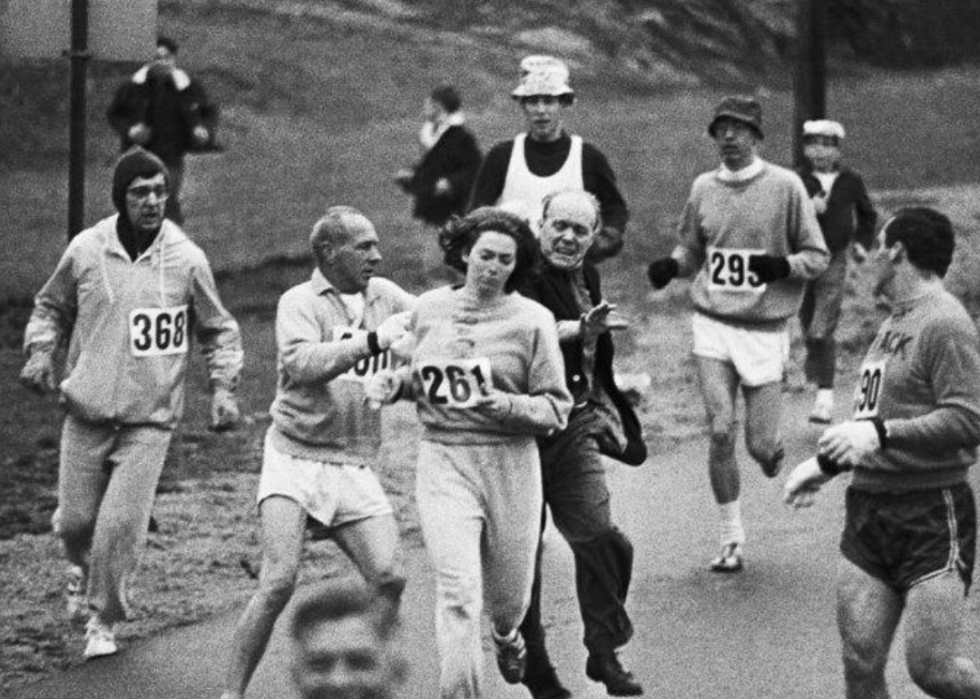
At 19, Kathrine Switzer — who was unofficially competing with Syracuse University's men's cross-country team — told her coach she wanted to run the Boston Marathon. After proving she could complete the 26-mile race, she registered for the marathon, which didn't technically have gender limitations. Though officials tried to pull her out of the race once she started, Switzer ultimately completed the run and spent years advocating for women to be officially allowed to enter.012
1968: Miss America ignites 'bra burning' protests
Contrary to popular belief, no bras were burned during this Sept. 7, 1968, protest outside the Miss America beauty pageant. But 400 feminists did throw symbols of what they thought society used to oppress them—including bras—into a "freedom trash can" in protest of the pageant's support of what they saw as unattainable beauty standards.
1969: Nation's first 'no fault' divorce law passes

California's no-fault divorce law, adopted in some form by every other state by 2010, made it much easier to obtain a divorce. Instead of couples having to prove that their spouse wronged them in some way, one person's desire to leave a relationship became grounds for ending unhappy marriages. Advocates believed that with this law in place, women were able to leave relationships they did not find fulfilling in a safer, fairer way.
1970: First woman plays American football
Patricia Palinkas joined the Orlando Panthers alongside her kicker husband, beginning a short, but historic career as the first woman signed to a professional football team. As a holder for her husband, Palinkas only played a few games before deciding she'd rather do something other than hold the ball for someone else. Still, her short career impacted a generation of female athletes, who wouldn't see another woman in professional football until Katie Hnida in 2010.
1971: Reed v. Reed is decided

Reed v. Reed was a Supreme Court case that invalidated an Idaho law requiring a man to be chosen when an equally qualified man and woman were arguing over who should execute a will. As such, it is a consequential case for the legal rights of American women. For the first time, the Supreme Court ruled that the Equal Protection clause of the 14th Amendment applied to discrimination against women. This established a stricter standard for sex discrimination and set a precedent for others — like future Supreme Court Justice Ruth Bader Ginsburg — to argue more cases on gender discrimination.
1972: Title IX goes into effect

Title IX is part of a larger education reform act that requires gender equality for boys and girls in any education program that receives funding from the federal government. This applies to college athletics, sexual assault and harassment, employment, financial aid, and more. Title IX has been subject to a number of controversies since it was passed, most recently around issues of sexual assault, even as schools continue to work toward gender equity.
1973: Roe v. Wade is decided

One of the most well-known and controversial Supreme Court decisions, Roe v. Wade established a woman's right to an abortion at any time during the first three months of her pregnancy, and, with some restrictions, in later trimesters as well. In the decade since the decision, the battle over abortion and reproductive rights has been among the most heated in American politics.
1974: Women earn the right to open their own credit cards

Before Congress passed the Equal Credit Opportunity Act, banks made men co-sign when a single, widowed, or divorced woman wanted to open a credit card, no matter how much she made. The new law made it illegal to discriminate based on gender, race, or national origin when issuing credit cards, giving women more independent access to money. Studies today still find that women are paying more for their credit cards.
1975: Icelandic women go on strike
The women of Iceland were tired of being paid less than men and not seeing women in government. So on Oct. 24, 1975, 90% of Icelandic women didn't go to work, take care of their children, or do any housework; instead, 25,000 marched in the streets of the capital city. The rousing turnout led to some changes, and Iceland's first female president was elected five years later. Iceland, the country where political representation of women is highest in the world, is now considered one of the best places in the world for women, and it is currently working on ending its persistent pay gap within five years.
1976: First class of women enters West Point

American women worked alongside men in wars throughout the country's history, but on July 7, 1976, 119 female cadets first entered the service academy at West Point. Sixty-two would graduate in the class of 1980, completing their training as future military officers.
1977: First woman wins an EGOT
Actress Helen Hayes — the first woman to win an Emmy, Grammy, Oscar, and Tony Award — started on the stage at age 8, and went on to have a Tony-winning Broadway career spanning decades. She also picked up an Oscar in 1931 for her performance in "The Sin of Madelon Claudet" during a brief stint in Hollywood. After discovering an allergy to theater dust in the 1970s, she went on to star in several TV shows and took home a Grammy in 1977 to finish her sweep.
1978: Pregnancy Discrimination Act passes

Prior to the passage of this law, some employers refused to hire a woman if she was pregnant, while others commonly refused to promote or give raises to pregnant women for fear they'd soon quit and stay home with their families. The law protected the rights of women who also wanted to have children, but working mothers are still not treated equally compared to their male counterparts; studies have found the gender wage gap increases when women start families.
1979: UN adopts the Women's Bill of Rights
The United Nations' Commission on the Status of Women netted another huge win for women's rights when the General Assembly adopted the Convention on the Elimination of All Forms of Discrimination against Women (CEDAW) on Dec. 18, 1978. The most comprehensive document the office has produced to date, the treaty defines equality, lays out clear steps on how to achieve it, and requires countries that sign CEDAW to actively work for women's rights.
1980: First democratically elected female president takes office

Five years after a women's strike ground Icelandic society to a halt, citizens elected their first female president, the first democratically elected female president in the world. Vigdís Finnbogadóttir's 16-year-long presidency put her in a mostly ceremonial role, but she enjoyed actively promoting her country abroad. After her victory, Icelandic women's representation in their government shot up to the highest levels of any country without a quota system, and Iceland is now one of the most gender-equal countries in the world.
1981: First woman is appointed to the Supreme Court

Even though Sandra Day O'Connor graduated third in her class (and a year early) from Stanford Law School, the Texas-born lawyer struggled to overcome gender discrimination and find work in her field. She eventually earned her way into the courtroom, then began a career in Texas state politics. In 1981, President Ronald Reagan nominated her to the Supreme Court, and she was confirmed unanimously by the Senate. Before her retirement in 2006, O'Connor was known for defending women's rights from the bench, even blocking a case that would have overturned Roe v. Wade.
1982: First African American principal ballerina leads a U.S. company
When Debra Austin joined the Pennsylvania Ballet as its principal dancer, she became the first African American woman to lead a major American ballet company. Others have attributed the title to Lauren Anderson, who rose to the same position in Houston the same year Austin retired in Pennsylvania. In an art form that has long struggled with racism, both women were history-makers and positive influences for aspiring ballerinas today.
1983: Sally Ride becomes first American woman in space

The U.S. might have won the Space Race by putting a man on the moon, but the Soviet Union put the first woman in space in 1963, two decades before the Americans managed the feat. Of course, that doesn't make Sally Ride's trip to the stars any less monumental. As the first American woman and youngest astronaut to go to space, Ride inspired generations of girls and worked to promote women in science long after she hung up the space suit for good.
1984: First woman is selected VP candidate for a major political party

Geraldine Ferraro's career as a lawyer in New York, and later as a leading Democratic politician, was marked by her dedication to women's rights. She established a special victims unit as an assistant district attorney in Queens and kept her seat in a conservative New York House district despite her progressive voting record. Ferraro's ambition helped her climb the ranks of the party before she became Walter Mondale's running mate in his 1984 presidential campaign against Ronald Reagan. Reagan was re-elected in a landslide, but Ferraro remained an important voice in party politics until her death in 2011.
1985: Guerilla Girls forms

The Guerilla Girls were formed in New York City by a group of anonymous female artists tired of sexism and racism holding back women and people of color in the art world. Wearing gorilla masks and going by the names of famous deceased female artists, the collective still works today in hopes of using art to reveal "gender and ethnic bias, as well as corruption in politics, art, film, and pop culture" to the wider public.
1986: Oprah becomes first woman to own and produce her own talk show
After overcoming an abusive childhood, a young Oprah Winfrey briefly worked in radio and TV broadcasting. Later, she landed her own chat show in Baltimore, Maryland, which eventually became the area's #1 show. She went on to star in Steven Spielberg's 1985 adaptation of "The Color Purple," and Oprah used that success to launch a nationally syndicated talk show. Running until 2011, the program turned Oprah into a household name. She now runs her OWN TV network.
1987: First woman inducted into the Rock & Roll Hall of Fame
Aretha Franklin, the Queen of Soul and one of the most powerful singers of modern music, received the r-e-s-p-e-c-t her talent deserved when she became the first woman inducted into the Rock & Roll Hall of Fame. One of the most awarded artists in history, her induction opened doors for other black female musicians. Of the 50-plus women inducted after Franklin, more than half are African American.
1988: Switzerland establishes Federal Office of Gender Equality
Swiss civil law still explicitly said that women's roles were as traditional homemakers until 1988. That year, new changes went into effect that wrote gender equality between the sexes into law and established the Federal Office of Gender Equality (FOGE) to enforce the mandates. Though it has struggled at times, FOGE took home the 2018 United Nations Public Service Award due to its ongoing commitment to ensuring equal pay in Switzerland.
1989: First woman receives IBM fellowship
IBM offered Frances E. Allen a job fresh out of grad school and she spent years developing more efficient coding languages. After decades of work, she was the first woman to receive an IBM fellowship, a prestigious program honoring the company's best employees. Her gifts as a computer programmer won her recognition throughout her career; she was also the first woman to win the Turing Award in 2006, the computer science equivalent of a Nobel Prize.
1990: First female president of the Americas is elected
Violeta Chamorro's history-making term as the first democratically elected female president of the Americas might not be the most interesting aspect about her life. Living in war-torn Nicaragua, Chamorro took over a newspaper opposed to the government and used the power of the press to call for peace and democracy. By 1988, she was a prominent opposition leader and she easily won the presidency at the conclusion of a war which she is credited with helping to end.
1991: Anita Hill testifies before the Senate
Clarence Thomas' nomination to the Supreme Court was controversial before Anita Hill came forward with allegations of sexual harassment, as many wondered if he was qualified for the job. But Hill's testimony about Thomas' behavior while she was his assistant changed the tone of the hearings, and her tense questioning by the Senate Judiciary Committee—all white men—that October proved to be a historic moment. Thomas was still confirmed, but Hill inspired more women to run for office the next year, sparked new conversations about sexual harassment, and is sometimes credited with starting third-wave feminism.
1992: Junko Tabei finishes climbing the Seven Summits
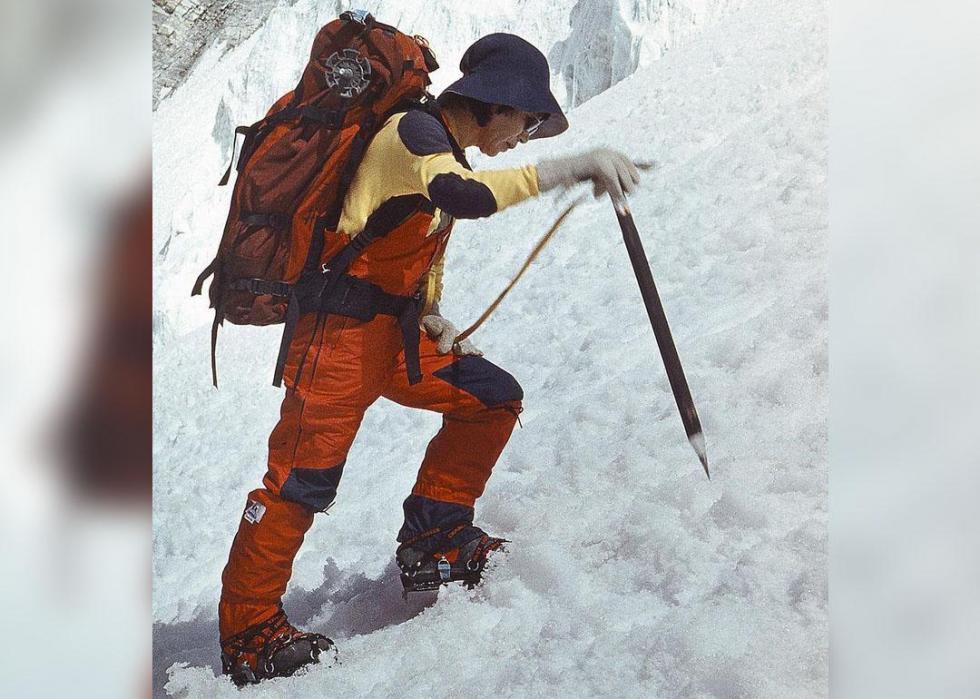
Japanese climber Junko Tabei became the first woman to summit Mount Everest in 1975 as part of an all-female team of climbers, but even climbing the world's tallest mountain couldn't sate her desire for adventure. In 1992, she reached the top of Carstensz Pyramid in Indonesia and became the first woman to reach the top of the Seven Summits, the highest mountains on every continent. Before her death in 2016, she climbed the highest peaks in 79 countries and blazed trails for other women along the way.
1993: Family Medical Leave Act becomes law

The Family Medical Leave Act (FMLA) provides up to 12 weeks of unpaid time off to certain employees dealing with particular medical situations and guarantees their job will be there upon return. This was a huge win for working moms, who previously had no guarantee that they'd be able to take time off to recover after giving birth. Still, many women can't afford to take three months off work without pay, and the U.S. remains one of the only countries in the world that doesn't give new parents paid family leave.
1994: Violence Against Women Act passes

The Violence Against Women Act was a landmark bill that gave new attention to issues faced by women like stalking, intimate partner violence, and sexual assault. The bill created the Office on Violence Against Women, administered grant programs to state and local governments to open new shelters and information centers, and required the government to study these issues. It's been reauthorized three times, but lapsed during the 2018–2019 government shutdown. The House of Representatives approved its reauthorization in early 2021, despite 172 Republicans voting against it.
1995: Fourth World Conference on Women commences

Then-First Lady Hillary Rodham Clinton gave her famous "women's rights are human rights" speech at this United Nations conference, which saw tens of thousands of activists convene in Beijing, China, to discuss issues of women's rights. The conference produced the Beijing Declaration, reaffirming commitments to women's rights and laying out new plans of action for achieving them that still serve as a source of guidance for leaders and activists.
1996: United States v. Virginia is decided

Virginia Military Institute was an exclusively male college until it was sued by the federal government, which argued that its gender-exclusive admissions policy was unconstitutional. The school proposed that, rather than letting women enter, it would establish a separate, all-female school instead. The court disagreed in a 7-1 decision — Clarence Thomas sat the case out, as his son was a student at VMI — arguing that the school didn't show "exceedingly persuasive justification" for the policy and wouldn't offer women in the new school the same opportunities as men.
1997: First female secretary of state joins Cabinet
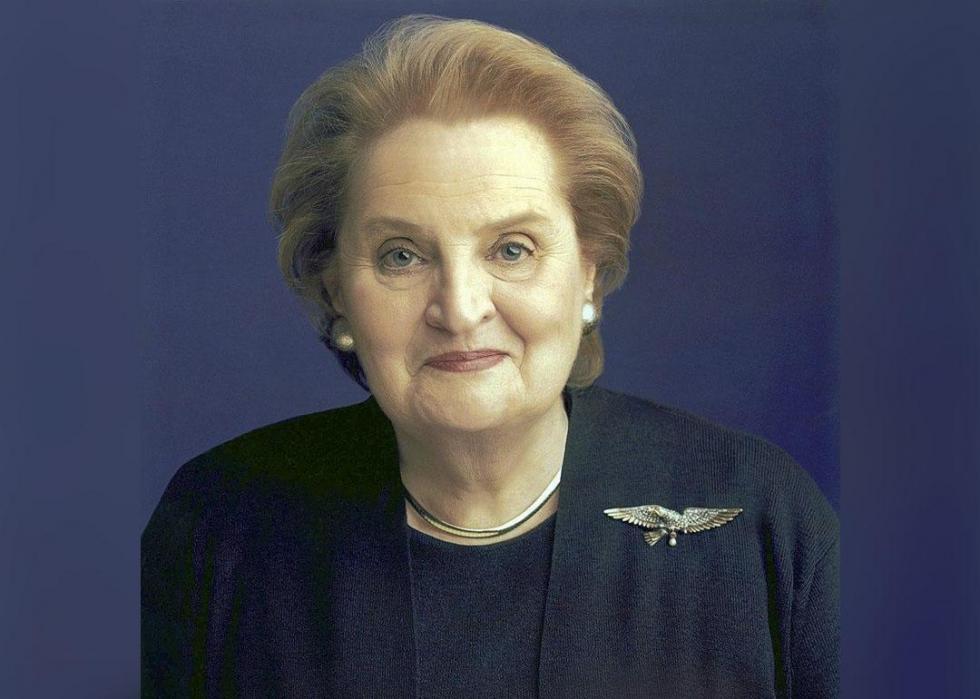
Before Madeleine Albright was appointed secretary of state in 1997 by the Clinton administration, she worked on President Jimmy Carter's National Security Council, taught foreign affairs at Georgetown, and spent several successful years as the U.S. representative to the United Nations. With this experience under her belt, Albright pursued an active foreign policy, visiting North Korea, encouraging sanctions against Iran, and more. Her term ended once George W. Bush was elected president, but she remained enmeshed in politics and foreign policy debates.
1998: Senegalese mothers end female circumcision in their villages

Procedures that require men to be circumcised at birth are more familiar in the U.S., but some cultures require young girls to undergo a similar treatment in order to enter adulthood. A controversial and often misunderstood practice, female genital cutting became a topic of debate in the international rights community in the late 1990s. It was common in the small Senegalese village of Malicounda Bambara until a group of mothers decided to put an end to the practice. They educated others on the harm female circumcision caused young girls, and the village and those around Malicounda Bambara decided to abandon the practice, inspiring 5,000 other villages in the country to do the same.
1999: Google's first female engineer gets to work

Google only hired 19 employees at its start, but among them was its first female engineer, Marissa Mayer. As the company became the technology behemoth we know today, she rose up the ranks to become the head of Google's successful Maps and Location Services. In 2012, Mayer became the CEO of struggling rival Yahoo for several years before stepping down in 2017, amid accusations of mismanagement.
2000: Million Mom March commences

In a true show of grassroots activism, an estimated 750,000 people marched in Washington D.C., on Mother's Day to protest gun violence and advocate for stricter gun control reforms. Donna Dees-Thomases had watched news coverage of a shooting and created a website in hopes of rallying other moms horrified by the carnage they were seeing. The march was organized entirely by word of mouth and led to dozens of Million Mom March chapters around the country advocating for gun control.
2001: Take Back the Night Foundation forms

Take Back the Night got its start in two unrelated marches: one in Philadelphia in 1975 and another in Brussels in 1976. Participants marched down streets with candles, protesting increased violent crime against women. In the years since, the movement became more focused on issues of sexual assault and in 2001, Katie Koestner — who had publicly shared her own story of being assaulted on campus — created the Take Back the Night Foundation. Today, the foundation provides resources to survivors and holds annual marches on college campuses.
2002: U.K.'s Sex Discrimination (Election Candidates) Act passes

In 2001, the number of women in British parliament declined for the first time in two decades, after a policy used by one party to ensure half their candidates would be women was declared unconstitutional. The Labour Party decided they would prioritize changing laws that would allow parties to use "positive discrimination" to ensure that more women would have their voice heard in Parliament; this promise eventually became the 2002 Sex Discrimination (Election Candidates) Act.
2003: Women of Liberia Mass Action for Peace ends a civil war
A second civil war broke out in Liberia in 2000, a bloody conflict that killed 200,000 people by the end of its second year. As it continued into 2003, social worker Leymah Gbowee brought together women from her church in protest, spawning a movement that quickly grew to include women of all faiths encouraged to speak out for peace in the country. Women marched in the streets, withheld sex from partners fighting in the war, and continued nonviolently protesting. By the end of 2003, their efforts helped begin a peace process.
2004: March for Women's Lives takes place

The April 25, 2004, March for Women's Lives capped off a year of planning by seven diverse women's activist groups, creating one of largest marches in the abortion debate in U.S. history. Their effort saw hundreds of thousands march in Washington to support access to abortion, birth control, more comprehensive reproductive health care, and improved sex-ed programs while protesting policies they saw as "anti-women."
2005: Kuwait's Blue Revolution secures women's suffrage
Women of Kuwait finally achieved victory in their decades-long struggle over the right to vote. From 2002 until their May 2005 triumph, activists used nonviolent protest in a final push, protesting outside voter registration centers and casting fake ballots. Activists often protested wearing light blue clothing, representing one of several nonviolent campaigns associated with a color to signify international solidarity in the fight for human rights that peaked in the late 1990s and early 2000s.
2006: Iran's One Million Signatures campaign ends polygamous marriage
Iranian women hatched an ambitious plan in order to achieve an ambitious goal. To get the government to reform laws that discriminated against women, they would get 1 million Iranian citizens to sign a petition asking Parliament for equal rights including marriage and divorce rights, an end to polygamous marriages, equal inheritance rights, equal rights to testimony in the country, harsher punishments for honor killings, and more. The two-year campaign never reached its million-signature goal, but did manage to put an end to polygamous marriages.
2007: First woman Speaker of the House takes the gavel

The 2006 midterm elections in the United States swept huge majorities of Democrats into Congress, and California representative and party leader Nancy Pelosi was subsequently named speaker of the House. With her powerful new position, Pelosi facilitated the passage of some of President Barack Obama's key legislative victories, including the economic stimulus and the Affordable Care Act. She ceded the gavel in 2011 when Republicans regained a majority, but she returned to the position starting with the 2019–2020 congressional session, during which she oversaw both impeachments of former President Donald Trump.
2008: Rwanda becomes first country with majority-female legislature

The 2003 Rwandan Constitution reserved 30% of the seats in its decision-making bodies for women. In 2008, Rwanda's female politicians claimed those seats and then some, winning 56% of parliamentary seats after elections where most of the winning women ran against male opponents. Rwanda became the first modern democracy where women held the majority in the legislature that year, and the country continued breaking its own records. By 2013, 64% of members of Rwanda's parliament were women.
2009: Lilly Ledbetter Fair Pay Act is signed into law
After years of fighting for equal pay, women still make on average 77 cents for every $1 a man makes. The Lilly Ledbetter Fair Pay Act, signed by President Obama in January 2009, allows women to file for wage discrimination suits within 180 days of their most recent paycheck, rather than from their first paycheck on the job. The law was named after Goodyear employee Lilly Ledbetter, who was awarded $3.3 million after discovering she made less than a male manager.
2010: First woman wins Oscar for Best Director
Kathryn Bigelow took home two of the Oscars' biggest prizes — Best Director and Best Picture — for "The Hurt Locker," a dramatization of the Iraq war. Lauded by critics for her tight, suspenseful action sequences and realistic depictions of soldiers at war, she bested a cadre of well-known male directors (including her ex-husband, "Avatar" director James Cameron) and shattered the stereotype that women can only be successful directing films about women.
2011: Saudi Arabian women protest driving ban

Saudi Arabia was the last country in the world that prevented women from taking the wheel. But in 2011, Saudi women's rights activists used social media to organize a protest of this rule and grabbed the world's attention. They made some headway — one female driver was given a ticket rather than being arrested when she was pulled over — and the ban was finally lifted in 2018.
2012: UN passes resolution to ban FGC

Female genital cutting (FGC) is a traditional but harmful cultural practice in many countries that affects an estimated 100 to 140 million women and girls around the world. Ending FGC has become a key issue for human rights advocates internationally, and on Dec. 20, 2012, they scored a huge win in the United Nations, when the General Assembly unanimously voted to ban the practice. It set Feb. 6 as the International Day of Zero Tolerance, but the practice persists since the UN has no means to enforce it.
2013: Pentagon announces end to ban on women in combat

The formation of the Women's Auxiliary Corp in the 1940s marked the first time women could officially serve in the U.S. military in some capacity, but even as more roles opened, women were still banned from direct combat. The Pentagon announced plans to lift the final official barrier for women in the military in 2013, in an effort seemingly driven by the military itself. It went into full effect in 2015.
2014: Malala Yousafzai wins the Nobel Peace Prize

Pakistani teenager Malala Yousafzai had been an advocate for girls' education from a young age, but she came to global notice at the age of 15, when she was shot in the head by the Taliban for her outspokenness. Yousafzai gave a powerful speech at the United Nations on her 16th birthday, stating "We cannot all succeed when half of us are held back." In 2014, she became the youngest winner of the Nobel Peace Prize, and in 2020 she graduated from Oxford University.
2015: Emma Sulkowicz carries her mattress across campus
Columbia University senior Emma Sulkowicz's year-long visual arts thesis, "Mattress Performance (Carry That Weight)," became a flashpoint in the ongoing conversation about sexual assault on college campuses. Sulkowicz — who uses they/them pronouns — carried a dorm mattress from September 2014 to May 2015, using art as a way to protest the school's failure to remove the student that alleged sexually assaulted them from campus. Since then, they've continued using art to bring attention to issues of sexual violence and harassment while universities continue to grapple with an issue that affects 23% of women in college.
2016: Hillary Clinton becomes first female presidential candidate for a major party

Eight years after losing the 2008 Democratic presidential primary to Barack Obama, former First Lady Hillary Clinton wrote her own name into the history books when she beat Bernie Sanders to win the 2016 Democratic nomination. Gender played a role throughout the election; the late-breaking tape showing Donald Trump making lewd comments about women made Clinton the clear favorite for many in the campaign's final days. The 2016 election saw the biggest gap in men and women's voting in history.
2017: #MeToo movement takes off
In October 2017, The New York Times and The New Yorker released stories detailing horrific allegations of sexual assault against Hollywood mogul Harvey Weinstein, and a pervasive culture of sexual harassment in the entertainment industry. A few days later, actress Alyssa Milano reignited the #MeToo movement started by activist Tarana Burke in 2006, encouraging women to share their stories.
2018: Record-breaking number of women are elected to Congress
1992 was America's first "Year of the Woman" after Anita Hill's Senate testimony inspired record-breaking numbers of women to run for—and win—seats in Congress. Donald Trump's presidency, the #MeToo movement, and Christine Blasey Ford's Senate testimony about an alleged assault by Supreme Court nominee Brett Kavanaugh, were among the factors that drove record gains by women in the House, as well as historic firsts at the state and local levels.
2019: First all-woman spacewalk

In late October 2019, NASA astronauts Jessica Meir and Christina Koch performed the 221st spacewalk; only this time, the space station assembly support marked the first all-woman spacewalk. Although the milestone wasn't intentionally planned, NASA explains, "It was bound to happen eventually because of the increasing number of female astronauts," and that "the agency looks forward to putting the first woman and next man on the moon by 2024." Meir and Koch replaced a battery unit that had failed to activate on the exterior of the station, and their achievement is the latest shining example of women influencing and leading an industry historically controlled by men.
2020: First woman elected US vice president
Kamala Harris made history on several major fronts in 2020 when she was elected vice president of the U.S. Born to an Indian mother and a Jamaican father, Harris is not only the first woman to become vice president, she is also the first Black American and the first South Asian American to win the vice presidency. In her victory speech, Harris said, "While I may be the first woman in this office, I will not be the last. Because every little girl watching tonight sees that this is a country of possibilities."
2021: Most gender-balanced Olympics in history
The Tokyo 2020 Olympic and Paralympic Games, rescheduled to summer 2021 because of COVID-19, commenced on July 23 with the first-ever gender balanced Olympics. Nearly 49% of the participating athletes were women. Primetime coverage of the games was also distributed equally between women and men.
2022: Ketanji Brown Jackson becomes first African American woman to serve on US Supreme Court
For 232 years, no African American woman had served on the U.S. Supreme Court. That changed in June 2022 when Justice Ketanji Brown Jackson was sworn in, becoming the 116th Supreme Court Justice and the first African American woman to hold the position. Jackson was nominated by President Joe Biden earlier that year and was confirmed by the U.S. Senate by a 53-47 vote largely down party lines.
This story was originally published by Stacker and republished pursuant to a CC BY-NC 4.0 License.
“I started the pandemic cisgender, and now I’m getting my boobs chopped off next week,” Lou Flott said in response to my Instagram story question box about experiencing identity changes during COVID-19. “So, yeah, I would say things have changed.”
I am one of the many Pandemic Turned Me Gay case studies and came out as bisexual (along with my partner of nearly a decade) in the summer of 2021. Many of my friends also came out during COVID; waving Pride flags in Instagram posts, quietly changing their pronouns in their social media profiles, and like Flott, even crowd-funding for gender-affirming surgeries at the link in their bio.
While the pandemic undoubtedly rocked the world in tragic, traumatic ways, and we will still be putting together the pieces from the rubble for decades to come, it did leave room for unexpected growth, funneling us all into one major reckoning:
Who am I when no one else is around?
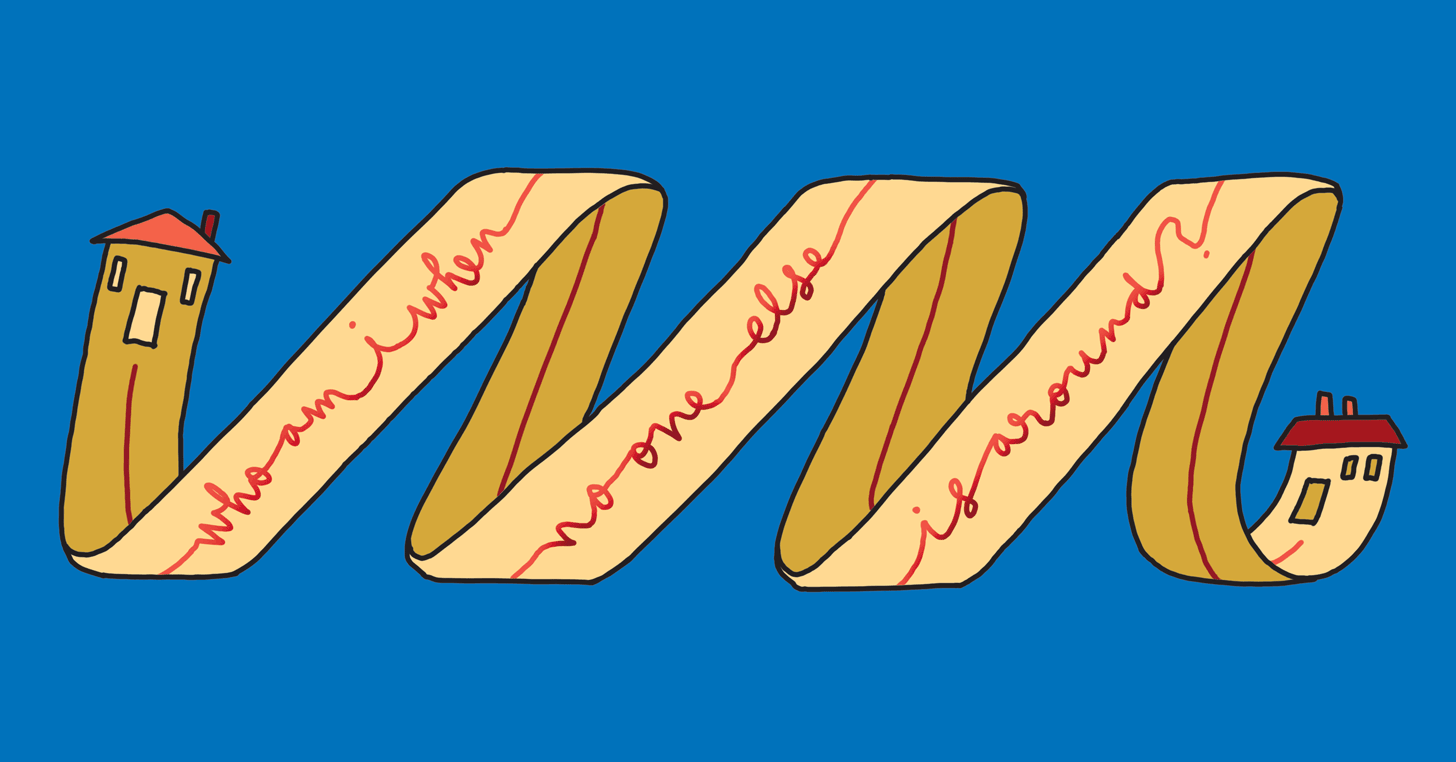
The BBC reports that dating app Bumble conducted a 2020 survey that found 21% of surveyed users said they were planning to “express their sexuality differently… compared to a year ago,” and 14% shifted their sexual desires during the pandemic.
The data shows that folks of all backgrounds experienced these identity twists and turns during the pandemic, but how did that even happen? Surely, the virus did not actually “turn” us gay. (And, for the record: neither did the vaccine.) Did we really just need the time and space to be?
Judith Butler’s gender theory has become a widely studied element of gender and sexuality research, as Butler questions the belief that our gendered behaviors are natural, and posits that they are rather examples of learned performance, imposed upon us by normative heterosexuality, according to Purdue University.
So, when COVID-19 asked us to step off the stage, or as Taylor Swift would sing in her 2020 song mirrorball: “called off the circus, burned the disco down,” folks were left with lingering questions about their gender and sexuality.
“People discover things about themselves that they may have known all along, or were afraid to admit,” Silvia M. Dutchevici, a psychotherapist and founder of the Critical Therapy Center, told Mashable.
Whether folks spent isolation alone, with a close circle, or alongside their trusty telehealth therapists, tools for self-discovery shifted from outside perceptions to inner wisdom.
“The pandemic allowed me the space to move in my own time without needing to meet public standards,” another friend of mine, Scott Fields said, about coming into their non-binary identity. “Changing my name went from a terrifying endeavor to a beautiful thing I had a lot of time to meditate on, practice, and announce to the close people in my bubble. Without the pandemic, I think it would’ve taken me a few more years.”
Not only did COVID-19 provide that juicy time to marinate on these major identity developments, but, ironically, the deadly virus brought a level of personal safety to LGBTQ+ folks. This gift of time and space allowed the fluidity of gender and sexuality to shine on in its magical, unpredictable ways without the threat of public bigotry, violence, or isolation.
We were already alone and afraid of what came next — what else did we have to lose?
“I was able to take the time I needed to get uncomfortable with myself,” Flott said. “I was quarantined with my best friend at the time and felt really safe with her, so I asked her to try out they/them pronouns with me. No one else was around to watch me or judge me while I was exploring more of myself.”
As with revelations about social justice, capitalism, or the self, COVID-19 did not bring a wave of new thinking, but rather, forced us to confront what lay dormant. Sarah Harte, LICSW and director of mental health treatment community The Dorm, told Mashable something similar.
“It’s not necessarily ‘realizing’ it for the first time — although that probably has happened, as well — but being able to hear that quiet voice inside, coming to the point of saying: ‘I do want to live within my true self and my true identities instead of feeling pressure to feel closeted,’” Harte said.
While it’s unclear exactly how trends will bend next, or how the world will embrace the LGBTQ+ community in the coming years, one thing is certain: there is no going back.
This article first appeared in The 2022 Pride Edition of the Goodnewspaper. You can subscribe to the Goodnewspaper to receive a monthly print newspaper filled with positive news.