LaShondra Jones went through years of mental illness and alcohol addiction, and in her late 40s she was living in a women’s shelter in Brooklyn.
Finally stable and sober, she needed work — any type of work — for which her history wouldn’t count against her.
Jones Googled “free training in NYC” and learned that several area community colleges offered training for people to become certified recovery peer advocates for those coping with alcohol or drug addiction.
Her experience, in this case, would be a big plus.
There were obstacles. Jones needed special permission to stay out past the shelter bed check time because her classes at Bronx Community College ended at 9 p.m. and the subway trip back to Brooklyn could take hours. But she completed the training, passed the certification test and now works as a certified recovery peer advocate with people in, or in danger of becoming caught up in, New York’s criminal justice system.

“I enjoy the fact I never know who I’m going to meet. I never know what their story is. I get to sit down and listen to them — I might be the only person who has ever listened to them,” said Jones, 50, who now lives in and works out of her own apartment in Manhattan.
The success of Jones and others who have gone on to become recovery peer advocates shows that with the right financial and other kinds of support, and in fields where they can use their personal experiences to help others, even some of the most vulnerable can succeed at college-level training — and colleges at graduating them into good jobs.
This has become more important as the number of students over age 24 enrolled in higher education has continued to slide, down nearly 6 percent, and more than 16 percent at community colleges, since the start of the pandemic, according to the National Student Clearinghouse Research Center.
“Adults are disappearing from higher education. We have to build back their confidence,” said Van Ton-Quinlivan, chief executive officer of Futuro Health, a California nonprofit that helps train health care workers.
Futuro, in partnership with community colleges and employers, has provided training and education to more than 5,000 people for jobs such as patient care representatives, pharmacy technicians and peer support specialists. It has found that even students who have been out of school for years will come back if they have flexibility in when and how they can learn and coursework that engages them. They also need ongoing support, but that support has to be subsidized by the government or employers to be affordable.
They also need to know they’re training for jobs that are immediately available.
“Adults are skittish to commit to pursuing a degree,” Ton-Quinlivan said. “One way higher education can bring them back is through industry-valued certifications or credentials offered in a highly supportive environment.” Some of those students might continue on to a degree.
In a system that is often not very good at anticipating labor market demand, however, it can also take a confluence of events for such efforts to work.
“Adults are skittish to commit to pursuing a degree. One way higher education can bring them back is through industry-valued certifications or credentials offered in a highly supportive environment.”
— Van Ton-Quinlivan, chief executive officer, Futuro Health
While Jones got where she is through determination and hard work, national trends also helped drive her success. About 14.5 percent of Americans older than 12 have alcohol or drug use disorders, according to the federal Substance Abuse and Mental Health Services Administration, or SAMHSA; the numbers spiked during the pandemic thanks largely to opioid misuse, creating an urgent demand for more trained people to respond to the crisis.
Still, only 6.5 percent of those 12 years and older with substance use disorders had received any type of care in the last year, according to the most recent National Survey on Drug Use and Health. More than a million peer support specialists are needed, SAMHSA estimates — more than 40 times the 23,507 now at work.
This gap between supply and demand — and the increasing number of training programs provided through higher education and elsewhere — means that some of the country’s most marginalized and ignored people now have a chance to acquire skills and find fulfilling employment.
Peer support for people grappling with mental health and substance use challenges is not new, but recent developments have “radically changed the addiction field,” according to the national Peer Recovery Center of Excellence, established last year with federal funding.
“We’re seeing a growing understanding of the peer-based recovery profession,” said Keegan Wicks, national advocacy and outreach manager for Faces and Voices of Recovery, an advocacy organization. Other boosts to the field include Medicaid expansion, which allows employers to be reimbursed for recovery peer advocates’ services, and federal, state and local grants for training programs.
The City University of New York’s College of Staten Island, or CSI, launched a certified recovery peer advocate training program in 2018 in response to the opioid epidemic. Until it was recently surpassed by the Bronx, Staten Island was the New York City borough with the highest rates of opiate overdoses and deaths.
“Every resident of Staten Island could say they were impacted in some way by substance use disorder,” said Lisa Spagnola, the college’s former director of workforce development who helped develop its certified recovery peer advocate program. “Everybody can say they know someone who died of an overdose.” Staten Island is the least populated of New York City’s five boroughs.
More than a million peer support specialists are needed nationwide, according to one estimate, far more than the 23,507 now at work.
Almost all states now offer certification for peer support specialists; most combine mental health and substance use, while 12 states, including New York, offer separate credentials for the two. A national certification is available but hasn’t been widely adopted.
Other types of training programs in New York State generally charge between $500 and $1,000, said Ruth Riddick, a spokesperson for Alcoholism and Substance Abuse Providers of New York State.
CSI sought out funding — primarily from the federal government — so students training to become peer advocates could attend for free. Another CUNY school, Queensborough Community College, already had its own recovery peer advocate program, so Spagnola used some of its curriculum in the CSI course design, along with input from prospective employers.
New York State requires a minimum of 46 hours of training to become a certified recovery peer advocate. The CSI course, administrators say, takes 75 hours over about eight weeks and teaches skills such as communication, teamwork, cultural competency, note-taking and how to use electronic health records.
Raymond Jordan, 57, was part of the first group of graduates and since then has worked 25 hours per week at a local social service nonprofit called Project Hospitality.
His mother died when he was three, alienated as a young gay Black man, a drug-user since he was 15 and formerly incarcerated, Jordan had tried rehabilitation more times than he can count. He supported himself with prostitution and stealing and lived on the streets.
In 2017, he was sober and in outpatient treatment at Project Hospitality. Laura Novacek, the nonprofit’s associate area director, called him over.
“She asked me, ‘Raymond, would you be interested in becoming a peer?’ and told me about the program at CSI and said, ‘I think you’d be really good at it,’ ” Jordan said. His voice shaking, he added, “That was the first time someone had believed in me.”

Jordan enrolled in the first recovery peer advocacy training class CSI offered and took to it immediately. He loved the role-playing, which made him feel as if sharing his experience was helping someone.
“This is my first job,” Jordan said. “When Laura told me I was a valuable worker I broke down. That’s why I’ve stayed clean, because I’m so happy to be alive, so happy to help others.”
Jordan’s remaining obstacle to becoming a certified peer advocate is the state’s certification test, which he has failed twice. He can take it as many times as needed, but has to wait 90 days and pay $80 each time; Project Hospitality picks up the licensing exam fees for its employees. In the meantime, Jordan works in the residential program, which, unlike outpatient care, doesn’t bill Medicaid for recovery peer advocacy reimbursement, so the peers don’t need to be certified.
One key aspect of training for these kinds of jobs is the selection process; prospective students need a high school diploma or equivalent but often have limited work experience, so trainers have to judge the candidates primarily based on a sense of their potential.
“It was the first time in my life that my substance use history became an asset instead of a liability.”
— Kevser Ermendi, a graduate of a program that trains recovery peer advocates
“That means someone great at listening, able to share their recovery story in order to inspire others and able to work on a team,” said Curtis Dann-Messier, founding director of the NYC Health + Hospitals Peer Academy, which was established last year specifically to train peers to work in the city’s public health system.
At CSI’s information sessions, prospective students are told about the requirements for the program, the jobs available, including how much money they could make (barely above minimum wage, without much room for promotion, though national groups are trying hard to change this), and the demand for graduates. If they’re still interested, they sign up for a 30-minute interview.
The intake process tries to make the program sound rigorous “without making it so intimidating that you drive them away,” Spagnola said.
Many of those who apply to the peer programs never enroll once they realize the time and effort required, but, according to administrators, 70 to 90 percent of students who start the courses at the Peer Academy and at New York City’s three community colleges where they’re offered finish.
Classes usually include no more than 25 students. At CSI, 44 out of 49 students have so far completed the course, Spagnola said.
Those who join the programs say the combination of support from teachers and classmates, engaging coursework that emphasizes role-playing and the sharing of personal experiences and the realization that they can go on to meaningful careers keeps them coming back to class even when life feels overwhelming.
Kevser Ermendi, 60, said she has a long history of starting courses and not finishing them, then falling back into drugs. The CSI recovery peer advocate course was the first she’s completed since high school. She passed the certification test and now works at a community organization on Staten Island.
“It was fun to go to class. It wasn’t something I dreaded,” Ermendi said. “It was the first time in my life that my substance use history became an asset instead of a liability. It was definitely a topic I knew back and forwards.”
State certification boards decide if it’s necessary for a peer to have personally experienced substance use disorder; in some states people with family members or close friends who have been or are addicted or those who just consider themselves allies can also become recovery peer advocates.
“That was the first time someone had believed in me.”
— Raymond Jordan, one of the first graduates of a program to train recovery peer advocates
Often trainers themselves are recovering from addiction, and many of the students in recovery said they are the best equipped to do the job.
Those who haven’t experienced substance use challenges directly can be affected “but not infected by this disease,” Ermendi said. “If I’m in a treatment facility and I’m a patient, you’re not really my peer. You don’t know what it’s like to have this voice in your head that’s telling you you have to use.”
Spagnola estimates that half her former students are employed and certified, most at about a dozen nonprofits on Staten Island. But many have difficulty staying in their jobs over the long term.
Of about 10 peers she has hired (not all from CSI’s program), said Novacek, only two — Jordan and one other — have stayed. Peers don’t last “for a variety of reasons. They don’t have their own addictions under control, or their mental health is unstable, or it’s been so long since they worked,” she said. “We’re very flexible, but sometimes they still can’t do it.”
Novacek stressed, however, that she sees CSI’s program as a success.

“Look at Raymond — he’s someone who never worked and has now successfully been working for four years,” she said. “The only time I had to write him up is when he worked too many hours.”
Dan McCawley, director of operations for West Virginia Sober Living, a residential recovery program that uses and trains recovery peer specialists, said he believes two years of abstinence is “that sweet spot” for people engaging in peer support for substance use disorder.
“We’re a vulnerable population serving a vulnerable population. I wouldn’t have trusted myself with six months in recovery to be out on the streets, under the bridges doing the kind of work I was doing. It would have been a potentially dangerous situation for my own personal recovery. And that’s the last thing we want to do, is put one more person back out there.”
Jack Chudasama, 51, for years a functional — and then nonfunctional — alcoholic, was at one point drinking a gallon of vodka a day. Five years ago, when his wife threatened him with divorce and his children told him they wished he were dead, he stopped drinking and has been in recovery for five years.
He is one of 18 (of 28) students in the first class of the Peer Academy who graduated in June, Dann-Messier said. He was recently hired by a Queens hospital as a peer.
The Peer Academy, housed in the downtown Manhattan office of NYC Health + Hospitals, is free — and intense: Students have to commit to about three months of full-time attendance, with 177 hours of classroom training, 126 hours of hospital-based internship and at least 20 hours of online workshops.
For Chudasama, the most surreal aspect was “transitioning from being in the bed to being on the other side with the treatment team. I was always used to being a patient.”
Chudasama, who was born in India but moved to the U.S. with his family as a child, appreciates that some Indian patients who won’t communicate with the medical team have opened up to him.
“I see this as a career opportunity and not just a job,” he said. “I saw this as an opportunity to do what I want to do and love.”
While employment is the end game, trainers say just taking the course — learning what drugs do to bodies and brains, how to listen and interview, how to give and receive respect — is invaluable.
“We are engaging our own community to become more empowered,” said Barbara Hart, who ran the Bronx Community College certified recovery peer advocate program from its start in 2018 until 2021, when, she said, it did not receive the grants it needed to continue.
“Adults are disappearing from higher education. We have to build back their confidence.”
— Van Ton-Quinlivan, chief executive officer, Futuro Health
LaShondra Jones was working two peer advocates jobs for a while. But then she was offered a full-time position with the Center for Alternative Sentencing and Employment Services, a nonprofit that focuses on providing services for people in or potentially involved with the criminal justice system. She makes a decent salary and gets benefits. And her bosses understand if she’s having a bad day and needs to take off or work with clients by phone.
The other peer advocates at her organization, which has branches around the city, just started their own support group. And now she has a formerly incarcerated client who wants to be a peer, who she hopes to guide down the same path she took.
Jones has now signed up for an online bachelor’s program in wellness and nutrition; she’s still sometimes amazed at where she has landed.
“I feel like I didn’t choose this profession,” she said. “It chose me.”
Activists, environmentalists, and lovers of all creatures great and small, brace yourselves. We are about to share with you the ugliest animals on the planet (well…at least in our opinion).
It’s important that each of us play a role in protecting animals — but why should cute, fuzzy animals have all the fun? We’ve included details about how to protect these not-so-gorgeous animals and give you an inquisitive look into some of the fascinating creatures that call this beautiful planet home. Buckle up, it's going to be a wild ride!
Meet the Ugliest Animals in the World
Blobfish
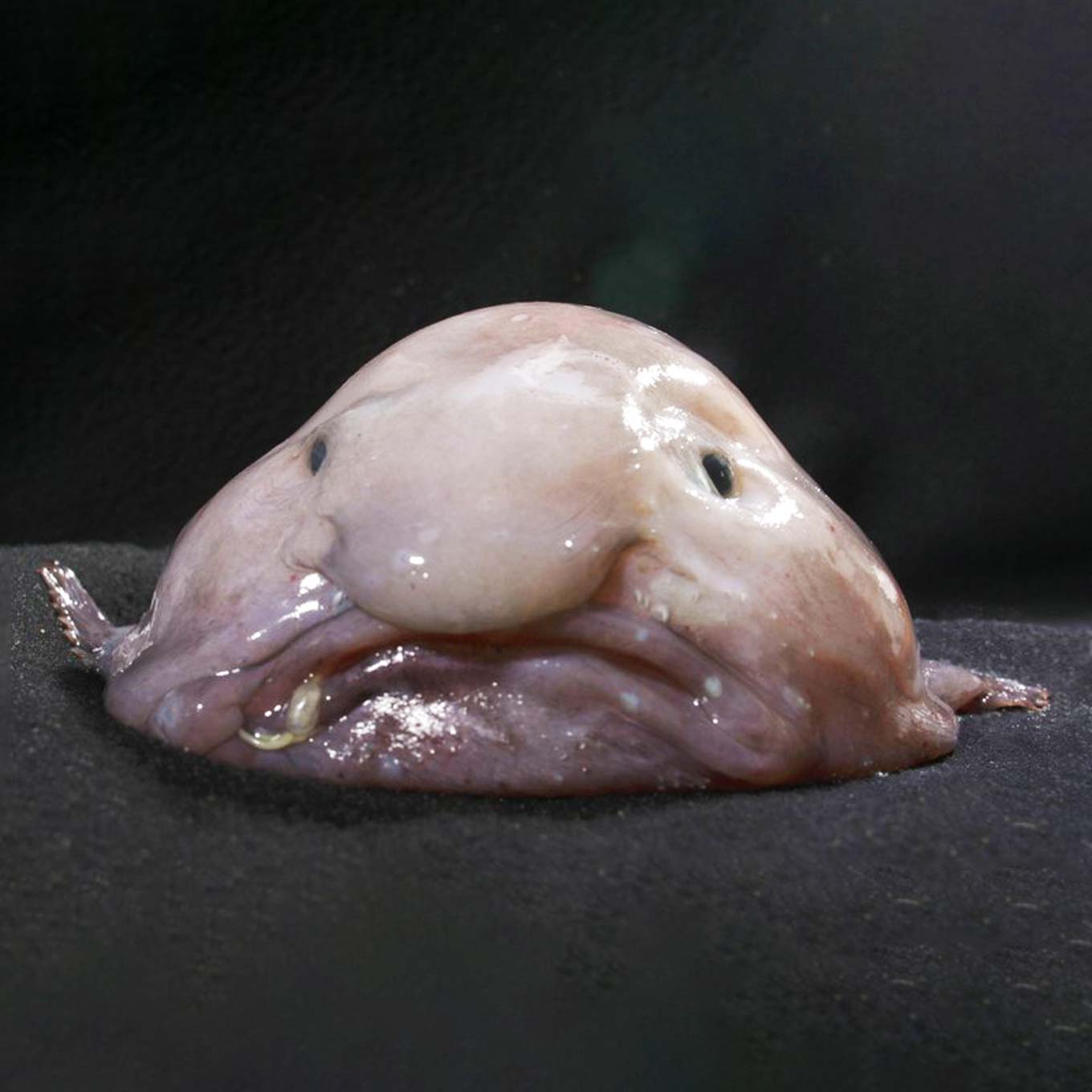
Scientific name: Psychrolutes microporos
The blobfish is an unusual deep-sea fish that lives in the waters off of Australia and Tasmania’s coasts. These grisly creatures are gelatinous, which means they have no skeleton or scales, and look as if they wear a perpetual frown. Honestly, it’s really easy to look at a photo of one on a bad day and go “same.”
Blobfish can reach a length of up to 12 inches and dwell at depths of up to 3,900 feet. In 2013, the blobfish was named the ugliest animal in the world by the Ugly Animal Preservation Society.
In 2023, TikTok user @polkadothead filmed a viral TikTok about how the most-commonly used image of blobfish (seen above) is actually not an accurate representation of blobfish. You can read about the playful demand for “justice for blobfish” and see more photos of blobfish underwater in our new article.
(We’re keeping this creature in our ugly animal rankings — but we can absolutely agree that the blobfish is (a little bit) less ugly underwater than on land.)
How to protect them: The biggest known risk to the blobfish is from deep-sea trawlers. If you live in Australia or New Zealand, the most effective way you can help is by advocating for governmental bans or restrictions on deep-sea trawling.
California Condor
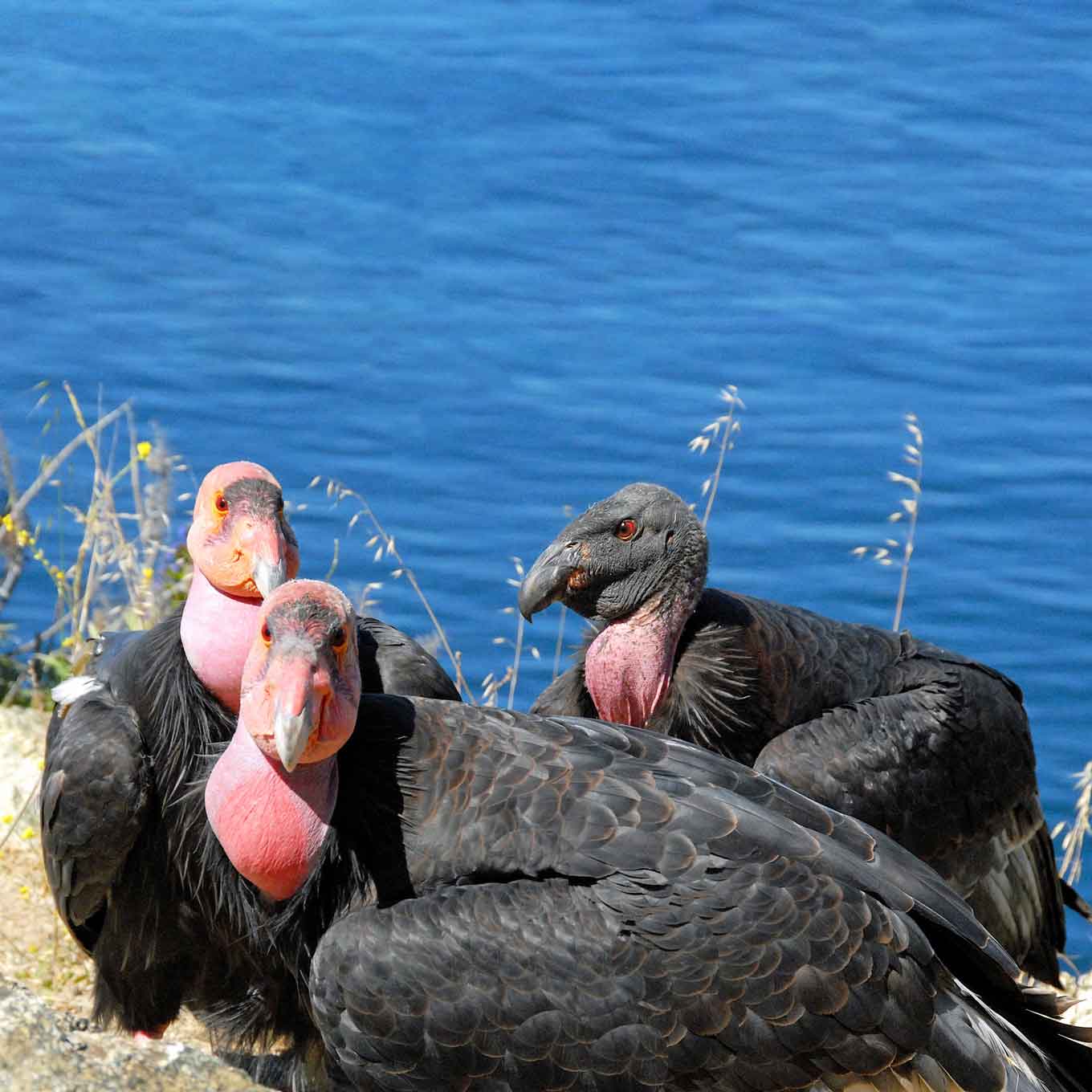
Scientific name: Gymnogyps californianus
The California condor is a large bird that is found in the western United States. These ugly animals have a wingspan of up to 10 feet and are one of the heaviest flying birds in the world. They are bald, with pinkish-gray skin on their heads and necks, sporting a lovely double chin.
How to protect them: The California condor is “critically endangered” and efforts are underway to save the species. One way you can make a difference is to donate to the Condor Recovery Center at Oakland Zoo, which rehabilitates California condors who suffer from lead poisoning.
Proboscis Monkey
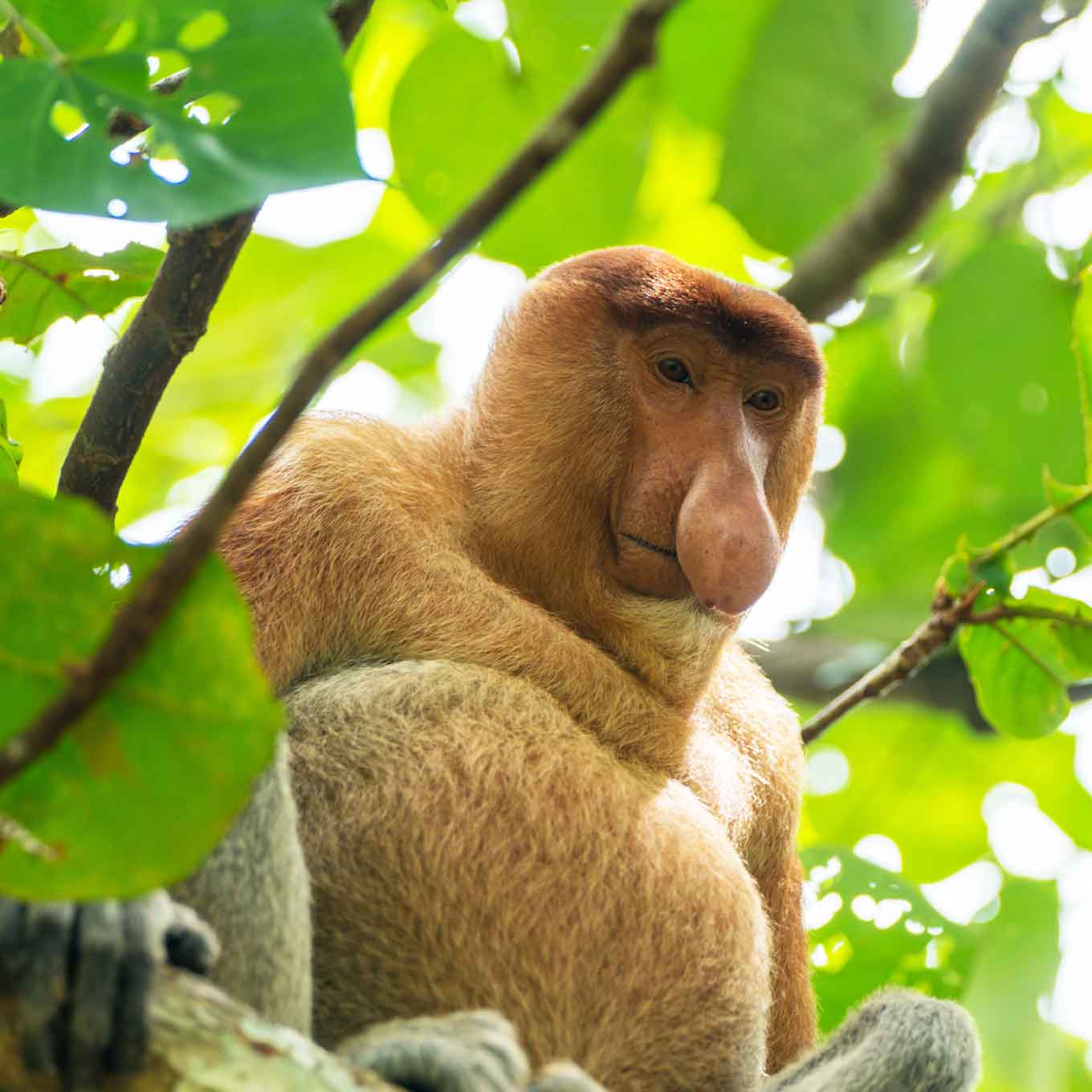
Scientific name: Nasalis larvatus
The proboscis monkey is a primate that is found on the island of Borneo. These unique animals are easily recognizable by their long, bulbous noses — especially in males. These honkers are impressive, but we’re not advocating for a nose job here! According to scientists, proboscis monkeys use their big sniffers to attract mates.
They are also known for their reddish-brown fur and pot bellies. Proboscis monkeys are proficient swimmers and can often be seen wading in rivers or swimming in lakes. Truly role models for living a body-positive, unbothered life. We have to stan.
How to protect them: Unfortunately, the proboscis monkey is currently assessed as endangered by the IUCN Red List of Threatened Species — and its population has decreased more than 50% in the last 50 years. The primary reason is deforestation — with companies cutting down the creatures’ habitats to use the land for palm oil production.
You can make a difference by reducing your use of palm oil and choosing sustainably-sourced palm oil products.
Naked Mole-Rat
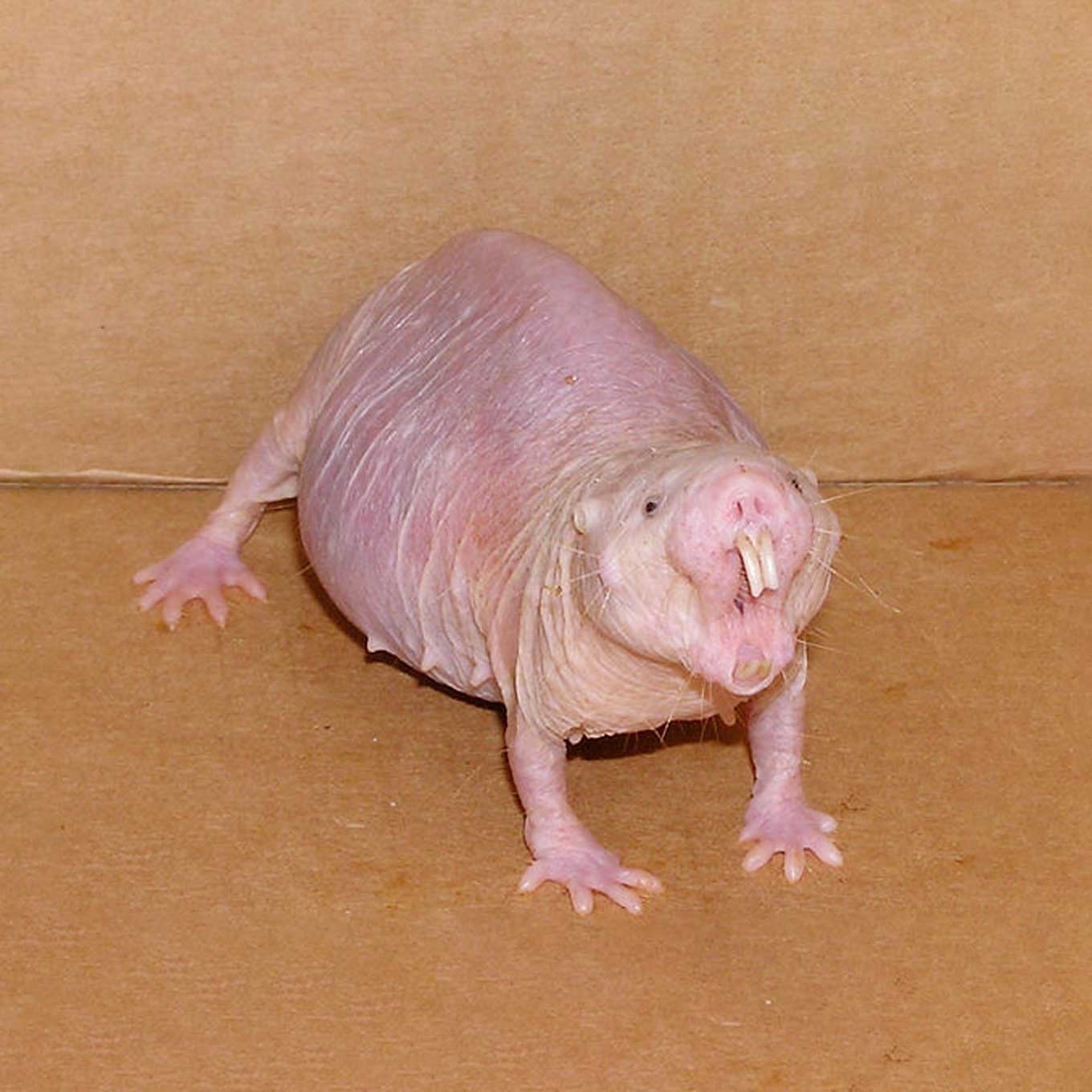
Scientific name: Heterocephalus glaber
The naked mole-rat is a subterranean rodent that is native to East Africa’s Somalia, Kenya, and Ethiopia. These creatures have wrinkled, pink skin with almost no hair. They live in groups of up to 80 and dwell in underground tunnel systems. They’re uniquely resistant to cancer, and scientists think they may hold the key to a cure for humans.
Between these facts and our collective love for Rufus on “Kim Possible,” we might be able to look past these guys’ weird, wrinkly exteriors.
How to protect them: Naked mole-rats aren’t currently threatened. In fact, they live remarkably long lives.
Star-nosed Mole
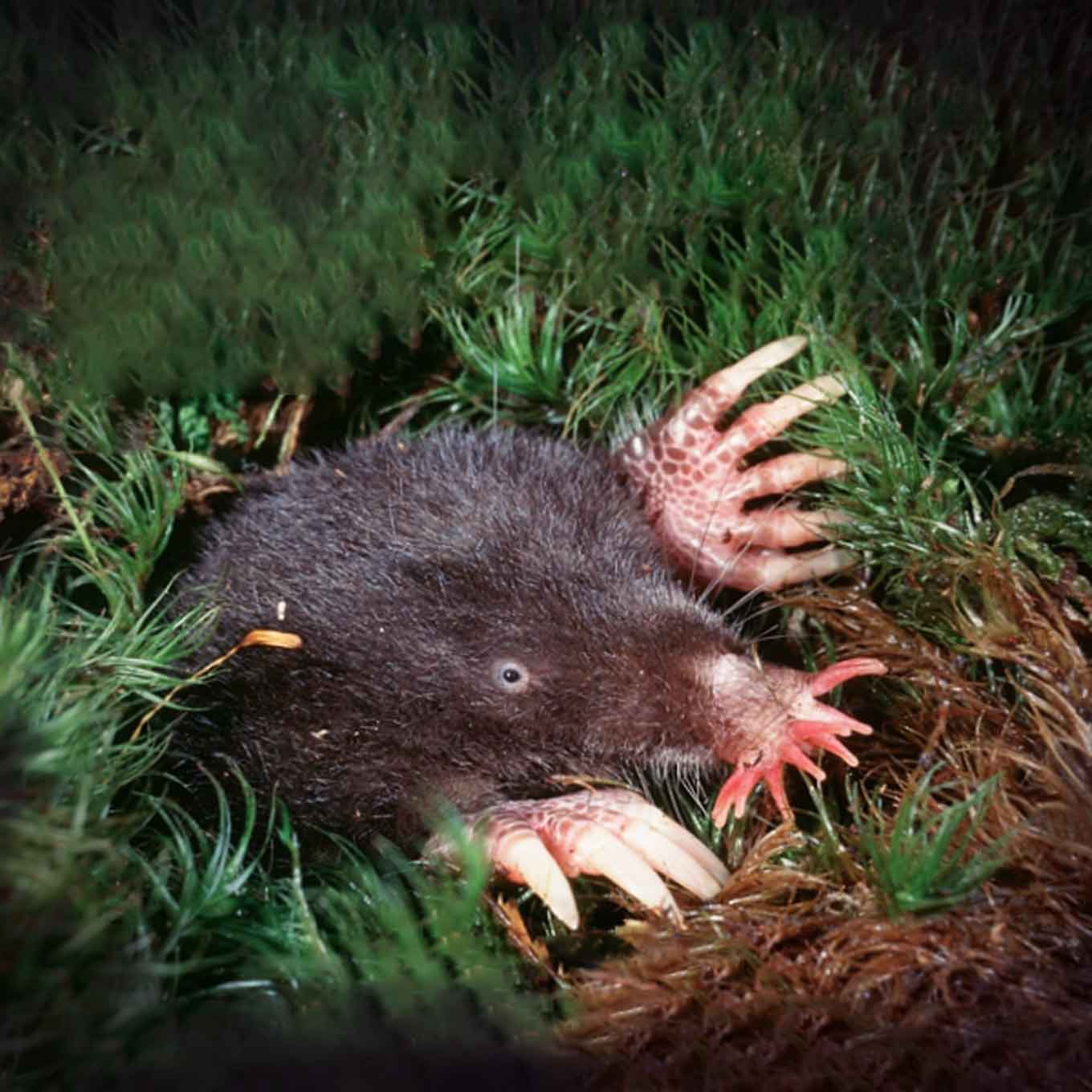
Scientific name: Condylura cristata
The star-nosed mole is a small, burrowing mammal that is found in parts of Canada and the northeastern United States. Their noses aren’t quite the shiny gold stars we’re used to, but are made of 22 pink, fleshy tentacles that protrude from their snouts. They are excellent swimmers and can even survive being submerged underwater for up to half an hour.
How to protect them: Fortunately, the star-nosed mole isn’t currently at-risk.
Yeti Crab
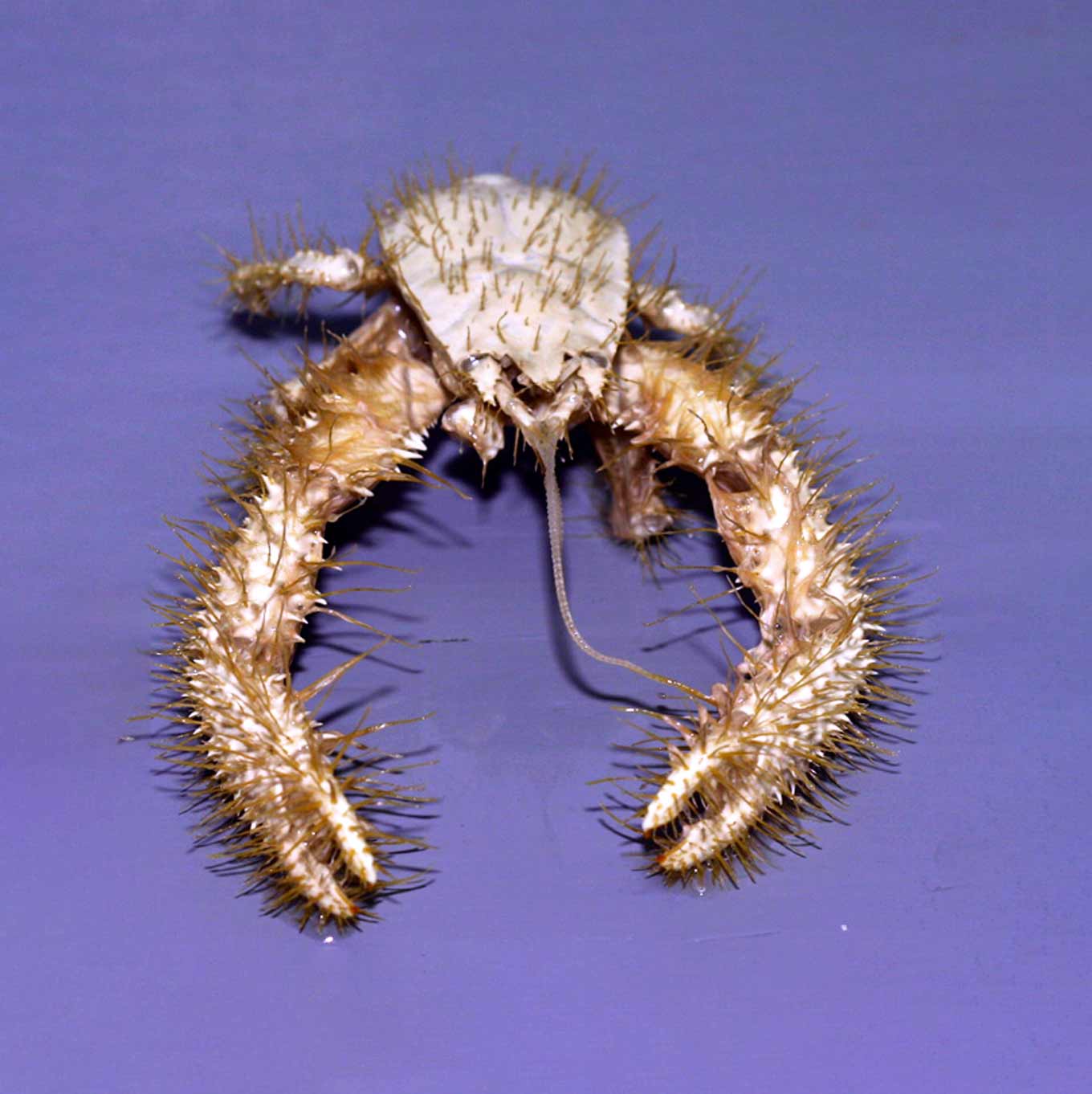
Scientific name: Kiwa hirsuta
What would happen if you took the Abominable Snowman and Mr. Crabs and did a little remix? The yeti crab, probably. This species is a deep sea creature that is found in the South Pacific Ocean. These crabs are covered in hair-like filaments and have claw-like appendages. They grow to be up to six inches long and are currently considered a delicacy in some parts of the world.
How to protect them: The yeti crab was recently discovered — and there’s still so much to learn about them. You can donate to the organization that discovered the creature, Monterey Bay Aquarium Research Institute, to help them continue their research.
Marabou Stork
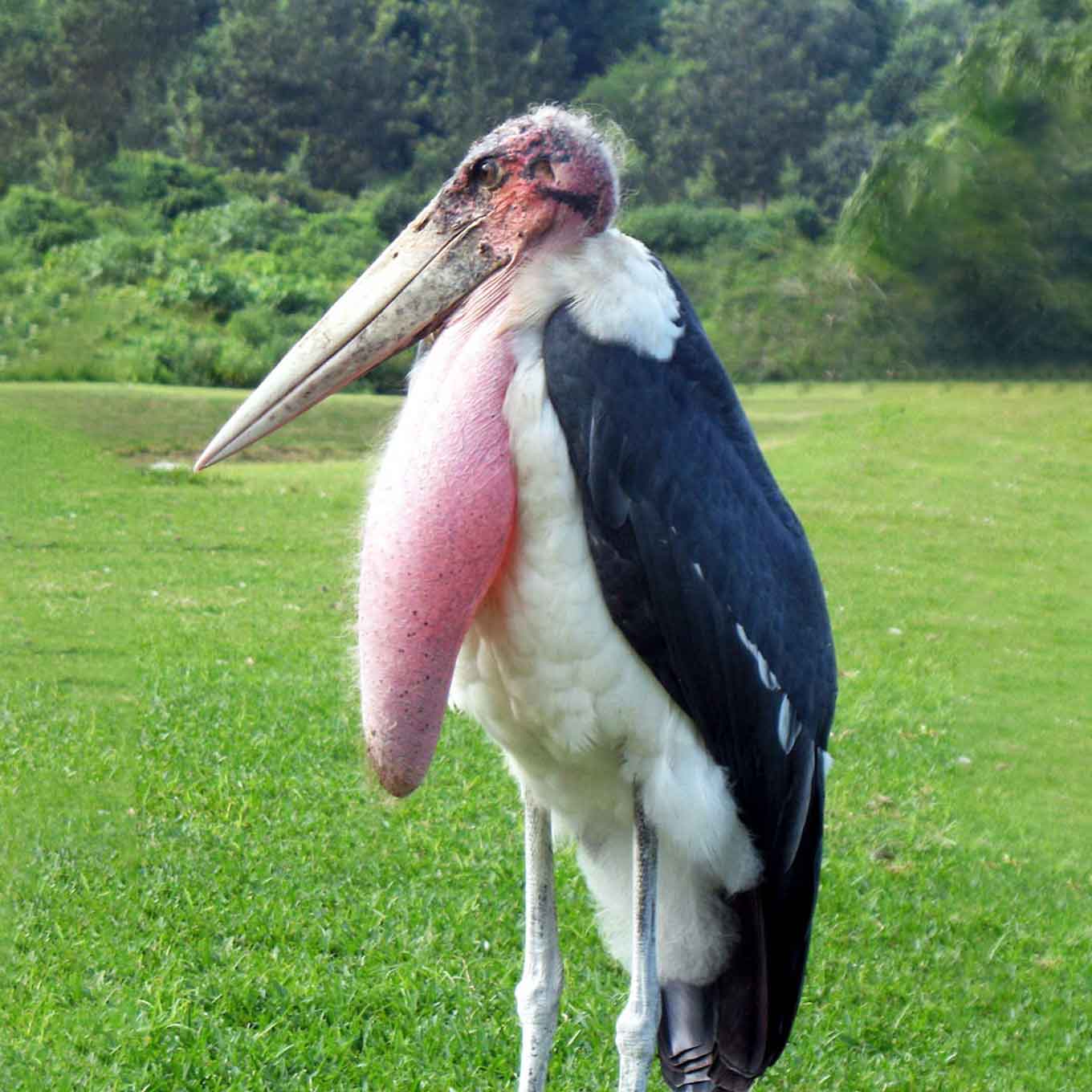
Scientific name: Leptoptilos crumenifer
The marabou stork is a large bird that is found in Africa, south of the Sahara. These animals have bare, pink heads and necks and can grow to be up to 5 feet tall. They are scavengers, often feeding on carrion or garbage.
How to protect them: Marabou down is frequently used in the fashion industry. While the creature isn’t endangered, you can protect Marabou and other feathered animals by avoiding down and other animal products in your fashion choices.
Monkfish
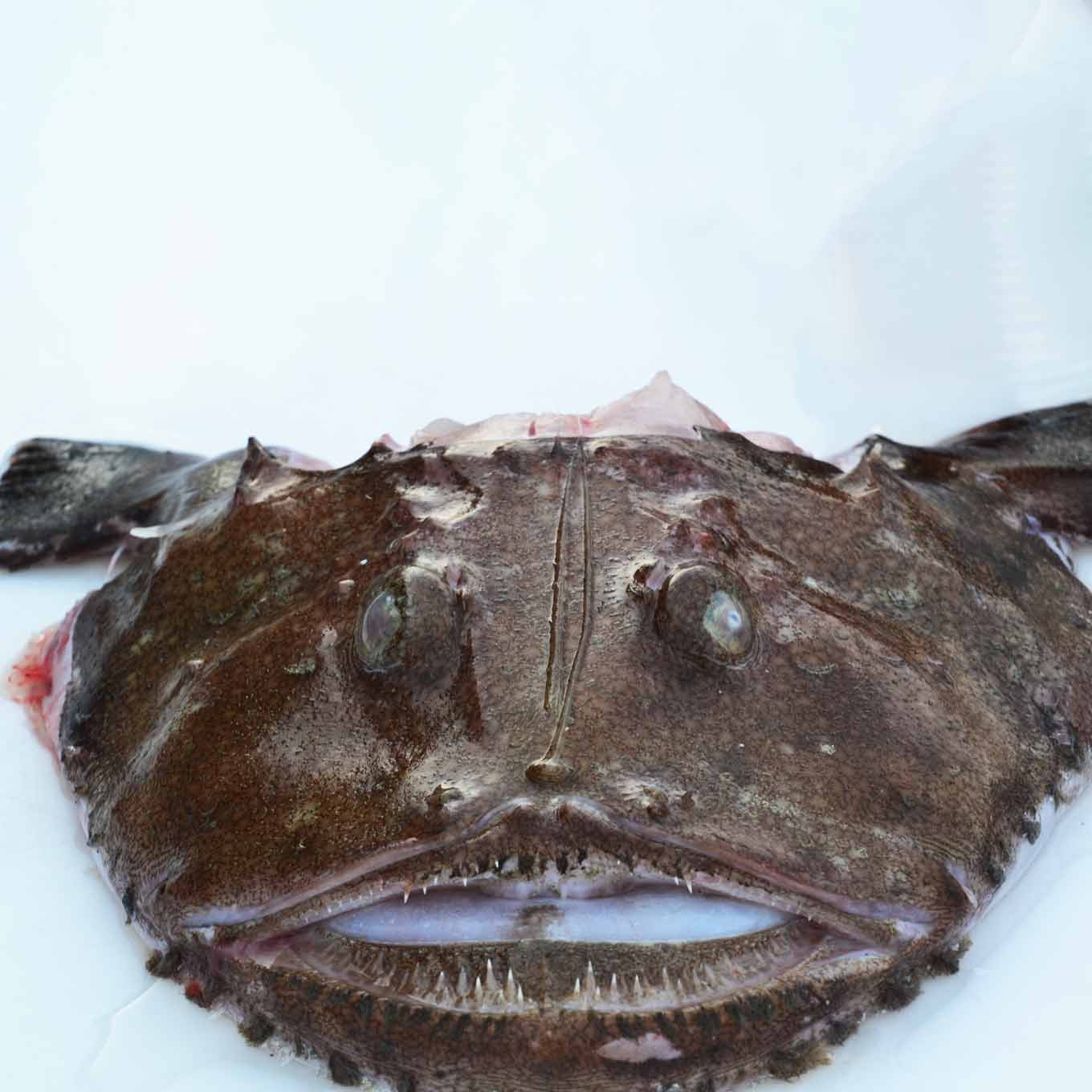
Scientific name: Lophius
The monkfish is a marine fish that is found in the waters off the coast of Europe — and definitely something you might find in an episode of “River Monsters.” These ugly sea creatures have large heads and mouths, and can grow to be up to 5 feet long. They are considered a delicacy in many parts of the world, even despite their appalling attributes
How to protect them: The way monkfish are fished is unsustainable and harmful to the marine ecosystem. The best thing you can do is call your elected officials about creating laws to ban beam trawling, a fishing technique that destroys seafloors.
Roti Island Snake Necked Turtle
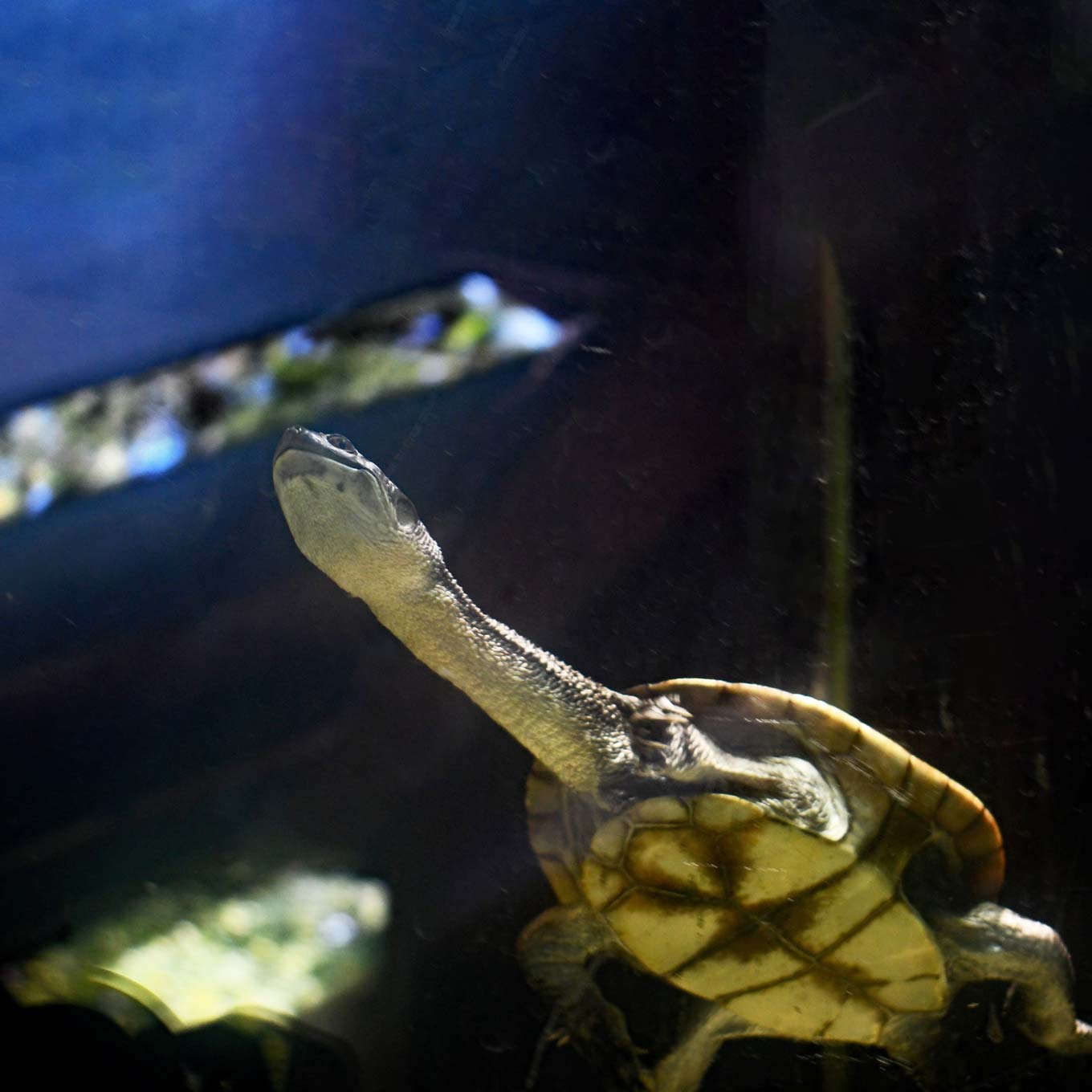
Scientific name: Chelodina mccordi
Imagine a turtle… but with the neck and head of a scary snake. The Roti Island snake-necked turtle is a turtle that is found on the island of Rote in Indonesia. These repugnant reptiles get their name from their long, snake-like necks and beady eyes. They are also known for their brown and orange coloring.
How to protect them: The Roti Island snake-necked turtle is critically endangered due to illegal trade and hunting but you can make a difference by donating to Turtle Conservancy.
Aye-aye
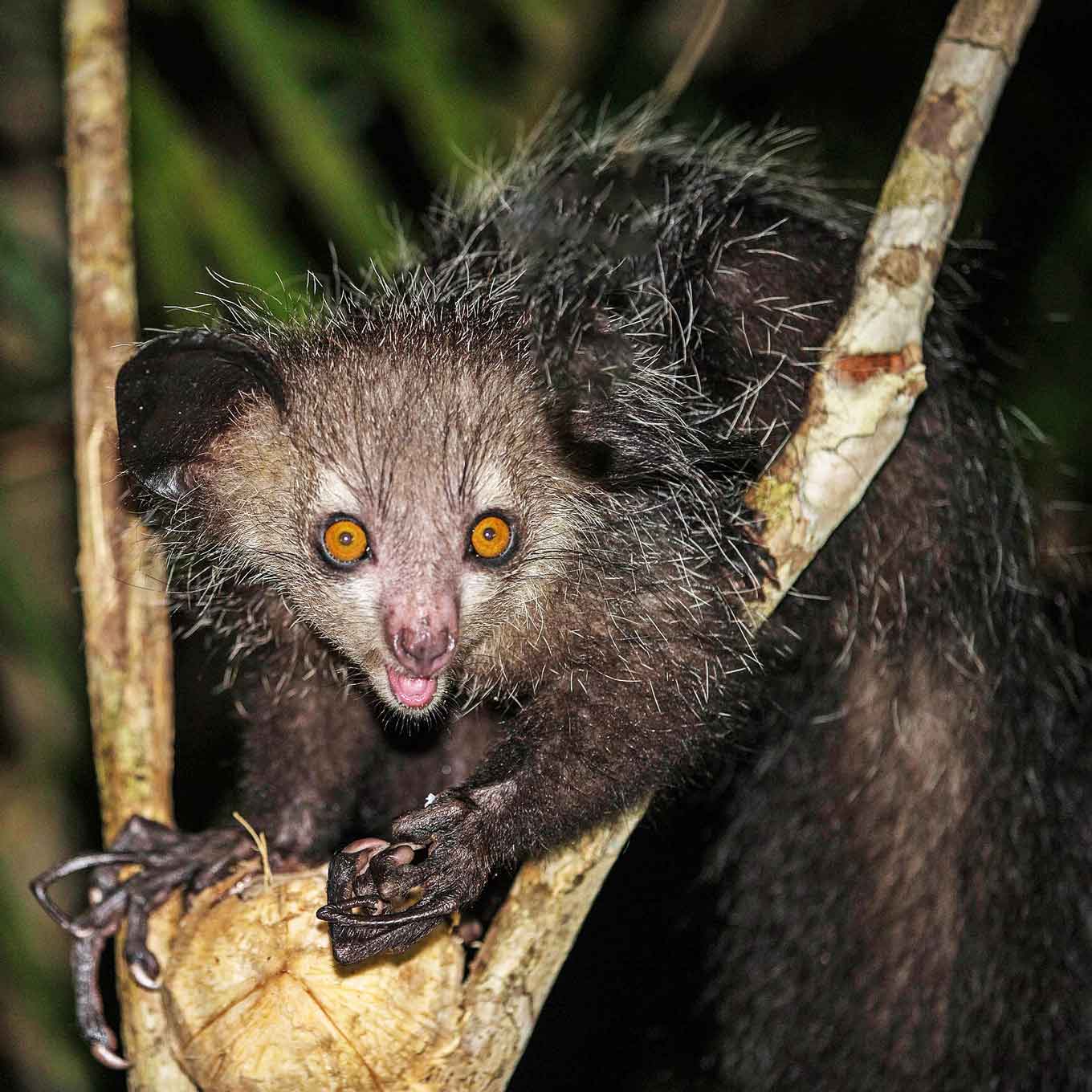
Scientific name: Daubentonia madagascariensis
The aye-aye is a lemur that is found on the island of Madagascar and mostly lives in trees. The world’s largest nocturnal primate is known for its large, furry tails and its long, thin fingers. Though aye-ayes sort of have the “so ugly they’re cute” vibe, you still might want to “move it, move it” in the opposite direction of these unseemly lemurs.
How to protect them: The aye-aye was previously thought to be extinct but was rediscovered in 1957. The species is still endangered and you can help protect them by donating to the Duke Lemur Center. You can also support tree planting efforts by using Ecosia.
Japanese Spider Crab

Scientific name: Macrocheira kaempferi
The Japanese spider crab is a marine crustacean that is found in the waters off the coast of Japan. These creepy crawly animals have distinct long, spider-like legs, and might give you the willies. They can grow to be up to 12 feet wide and weigh up to 42 pounds.
How to protect them: The biggest concern to the Japanese spider crab is overfishing. New laws have been put in place to prohibit fishing during their mating season, but more work can be done. Donate to the Environmental Defense Fund to help empower finishing communities to fish more sustainably.
Elephant Seal
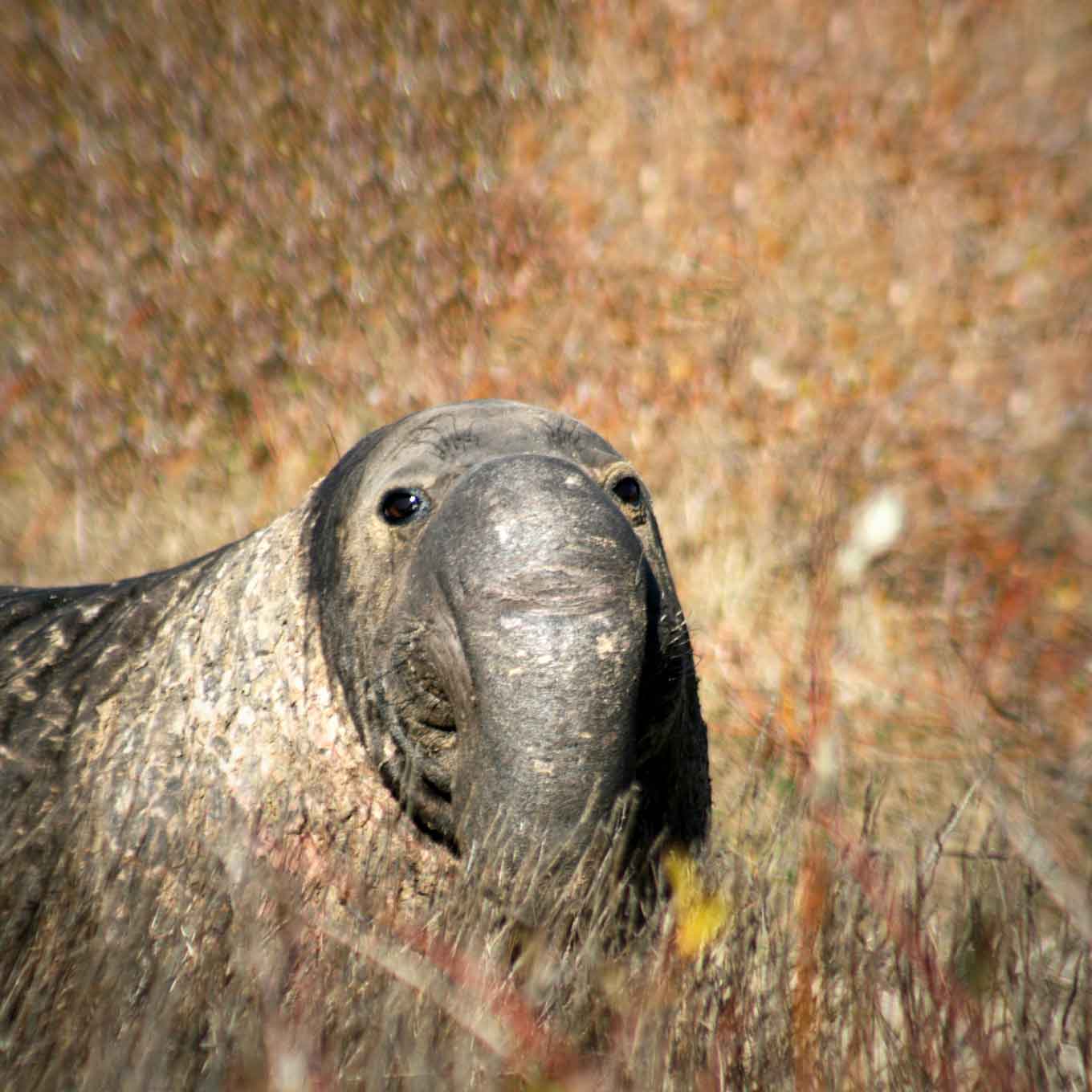
Scientific name: Mirounga leonina
The elephant seal is a marine mammal that is found in the waters off the coast of Antarctica. These grotesque guys can be spotted by their large size and their long, trunk-like noses. They can grow to be up to 20 feet long and weigh up to 4,000 pounds.
How to protect them: Fortunately, elephant seals aren’t at-risk at this time.
Yellow Striped Tenrecs

Scientific name: Hemicentetes semispinosus
The yellow-striped tenrecs are small, insectivorous mammals that are found in the forests of Madagascar. They sort of look like Sonic the Hedgehog got a rebrand and are known for their yellow and black stripes. They can grow to be up to six inches long and have a lifespan of up to 10 years.
How to protect them: Like many species in Madagascar, the biggest risk to tenrecs is a loss of habitat. You can donate to the Landforest Trust to help support Madagascar’s forests.
Hammer-headed Bat
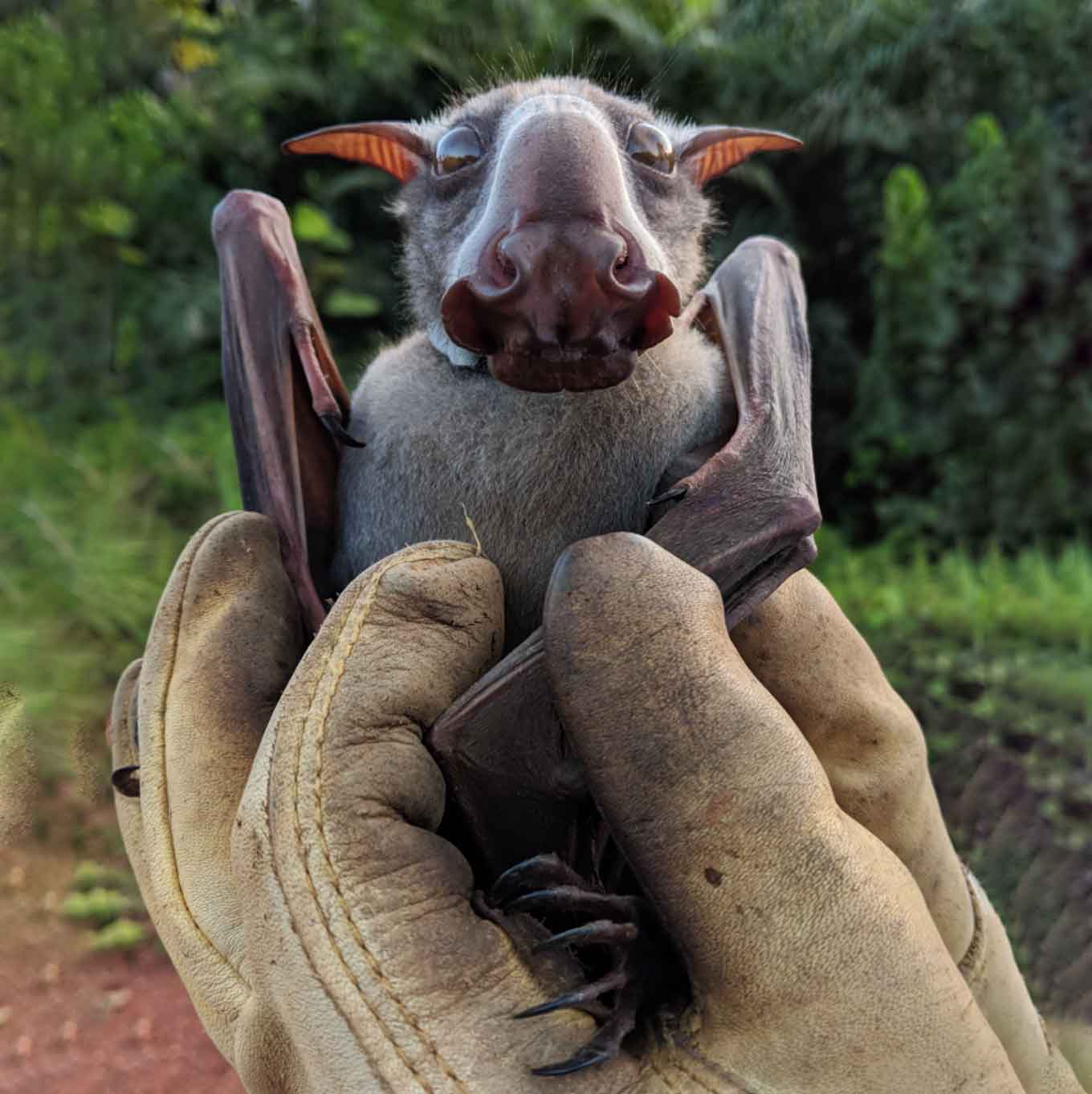
Scientific name: Hypsignathus monstrosus
The hammer-headed bat is a large, insectivorous bat that is found in Central and West Africa. These beastly bats have large, hammer-shaped noses. They can grow to be up to 16 inches long and have a lifespan of up to 20 years.
How to protect them: Hammer-headed bats are evaluated as a species of least concern by the IUCN.
Blue Glaucus
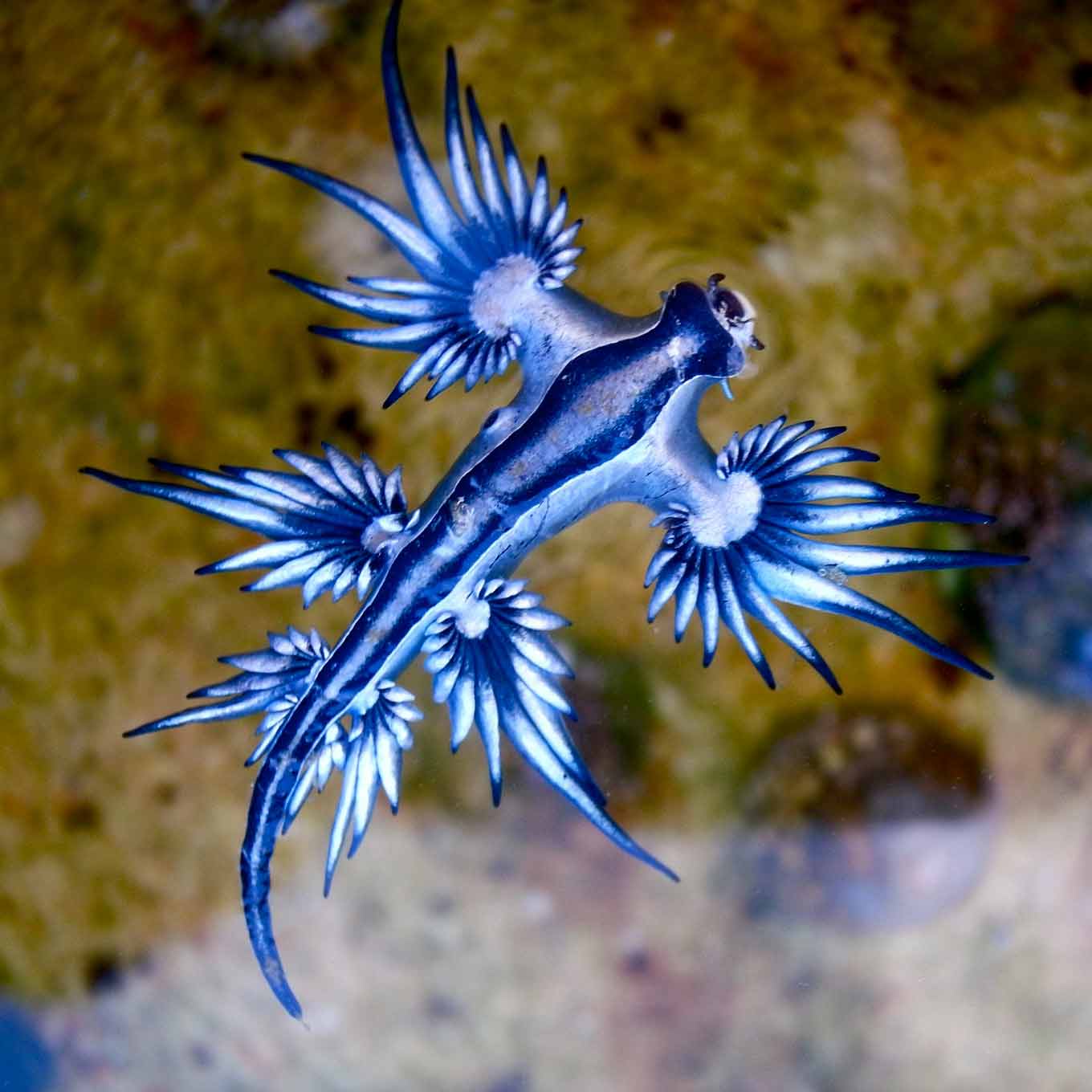
Scientific name: Glaucus atlanticus
The blue glaucus is a small, marine gastropod that is found in the waters off the coast of Australia. With bright blue coloration, these creatures look like tiny, make-believe dragons, but they’re totally real! They can grow to be up to three inches long and have a lifespan of up to two years.
How to protect them: The blue glaucus is not currently at-risk (but watch out — because their poisonous stinging cells make them incredibly dangerous to humans).
Giant Chinese Salamander
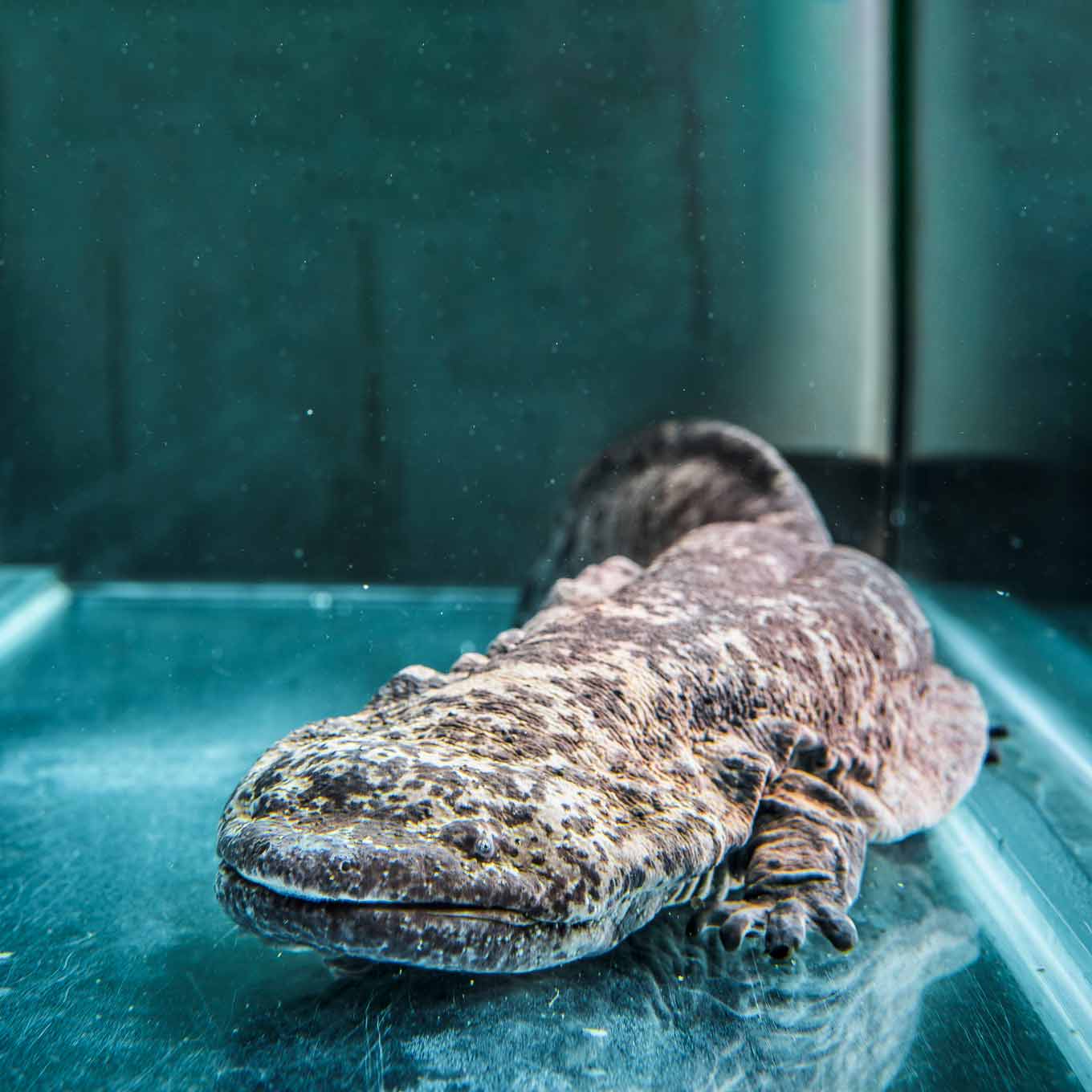
Scientific name: Andrias davidianus
The giant Chinese salamander is a permanently aquatic amphibian that is found in the rivers and lakes of China. The largest species of salamander in the world, these long, flat-headed beasts can grow to be up to six feet long. They’re experts of camouflage, settling among rocks.
How to protect them: These creatures are critically endangered but you can play a role in protecting them by not consuming giant salamander meat or using any parts of their body.
Warthog
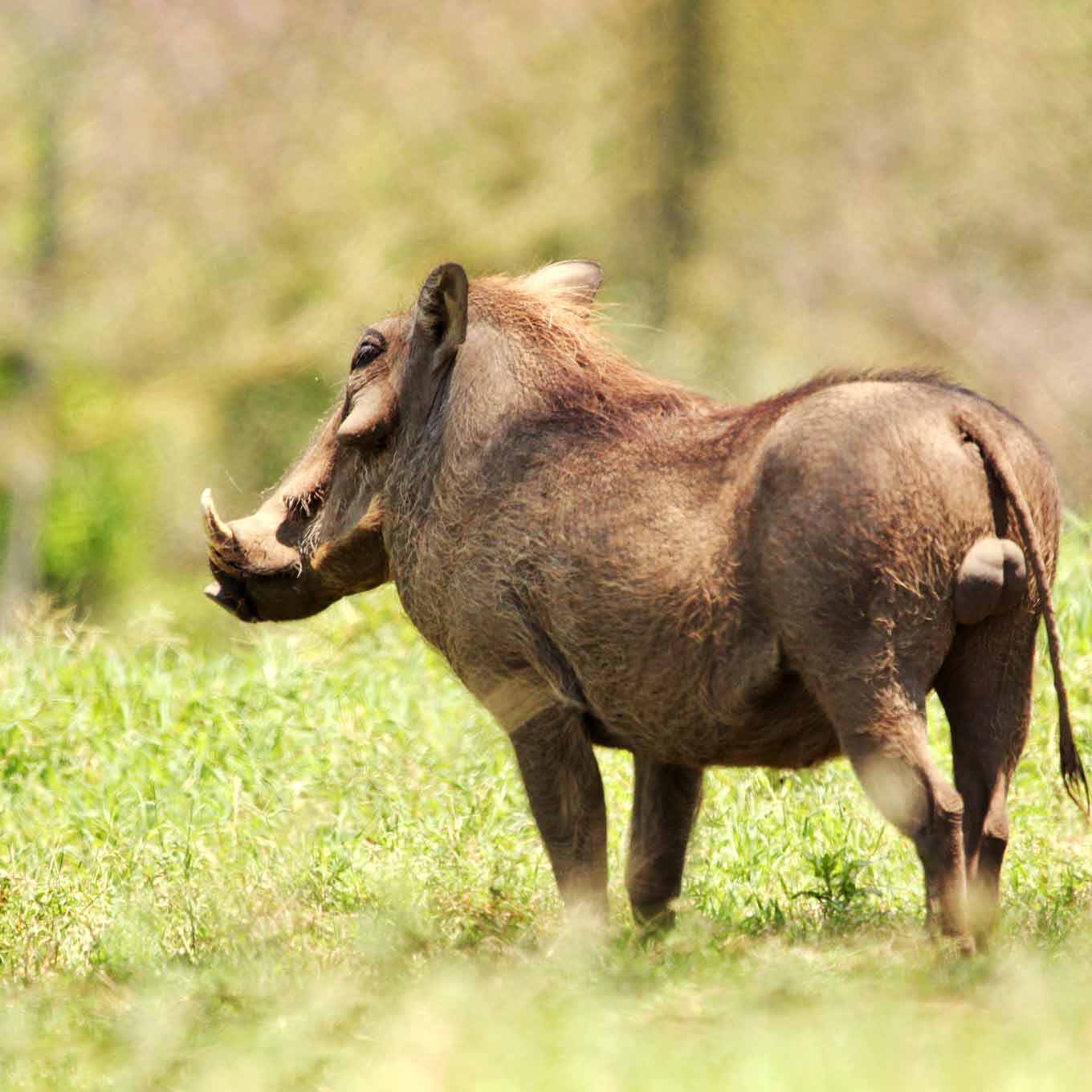
Scientific name: Phacochoerus africanus
No defaming Pumbaa here! The warthog is a large, terrestrial mammal that is found in Africa, and you likely already know these tusked animals from Disney’s “The Lion King.” They can grow to be up to four feet long and weigh up to 150 pounds.
How to protect them: You can donate to the African Wildlife Foundation to support warthog conservation efforts.
Hyena
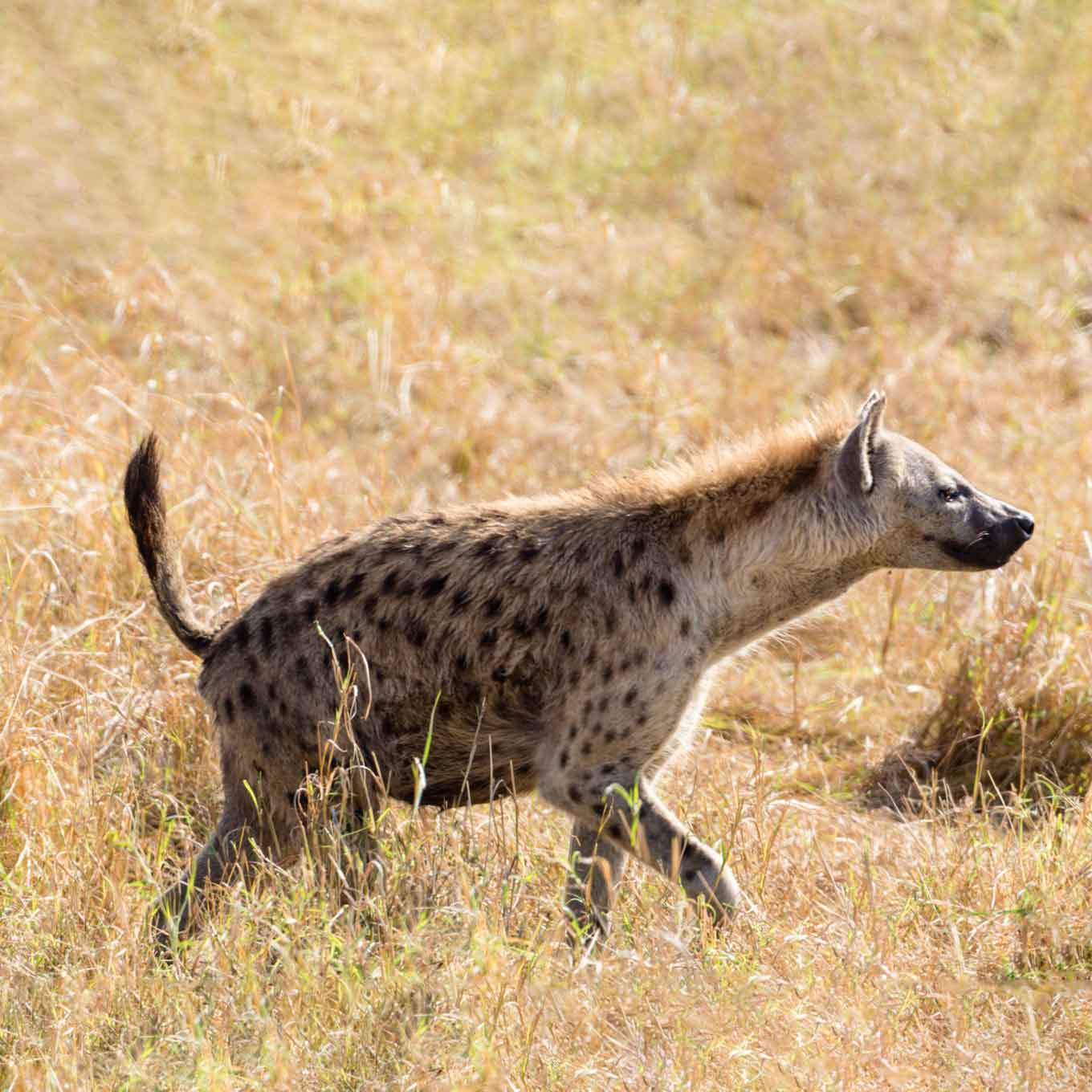
Scientific name: Hyaena
Another Lion King-related animal, the hyena is a large, terrestrial mammal that is found in Africa and Asia. These spooky animals are way uglier IRL than they are in the movie, with big, intimidating eyes that’ll scare you right into your place.
How to protect them: Many hyena deaths are retaliatory killings by humans. You can donate to Botswana Predator Conservation to help reduce human-wildlife conflict.
Titicaca Water Frog
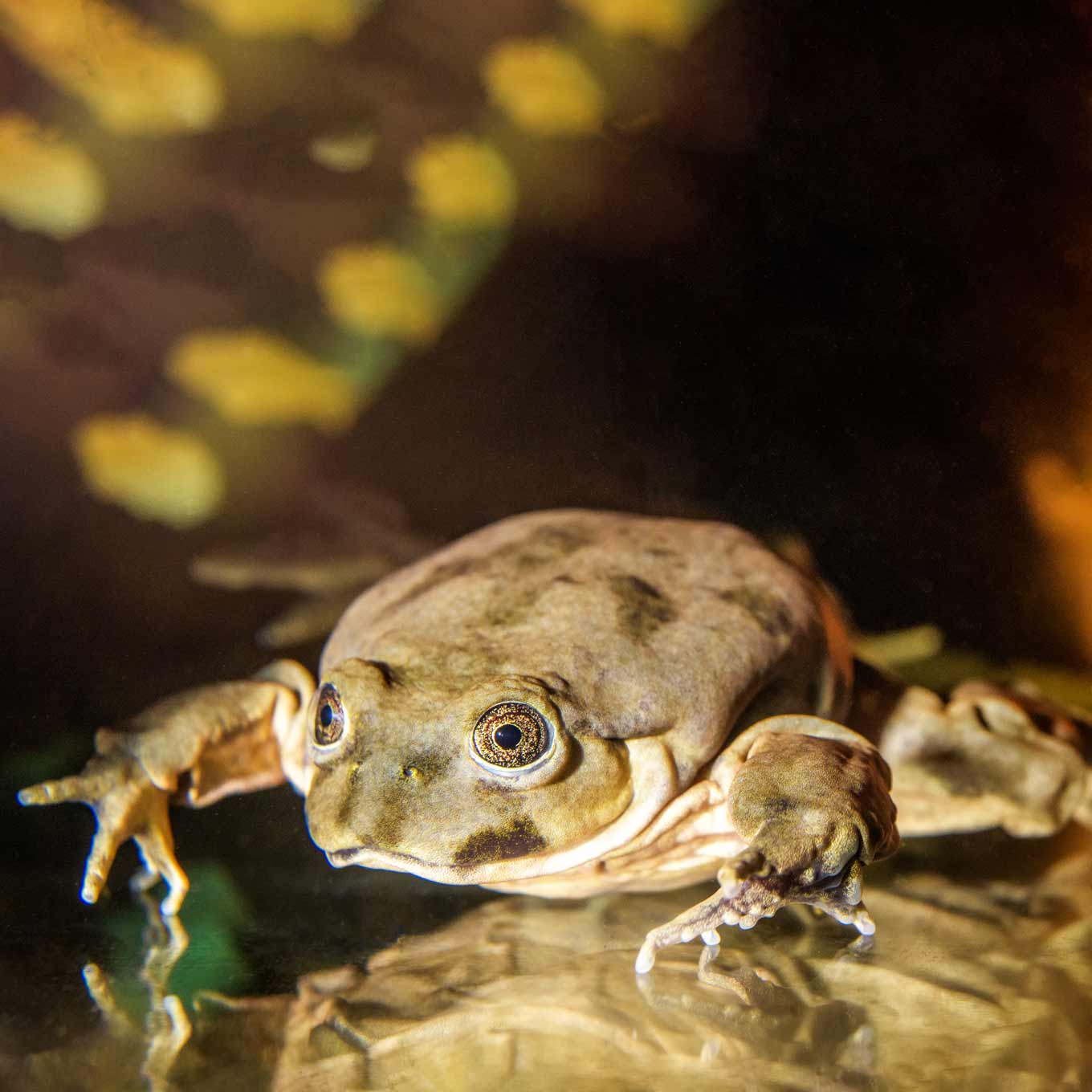
Scientific name: Telmatobius culeus
The Titicaca frog is a permanently aquatic amphibian that is found in the lakes of the Andes mountains. These dark-colored frogs are lumpy and unseemly and can grow to be up to eight inches long and have a lifespan of up to 10 years.
How to protect them: The IUCN ranked the Titanica water frog as endangered. One way you can make a difference for this little creature is to reduce pollution through personal climate action and systemic change.
Black Rain Frog
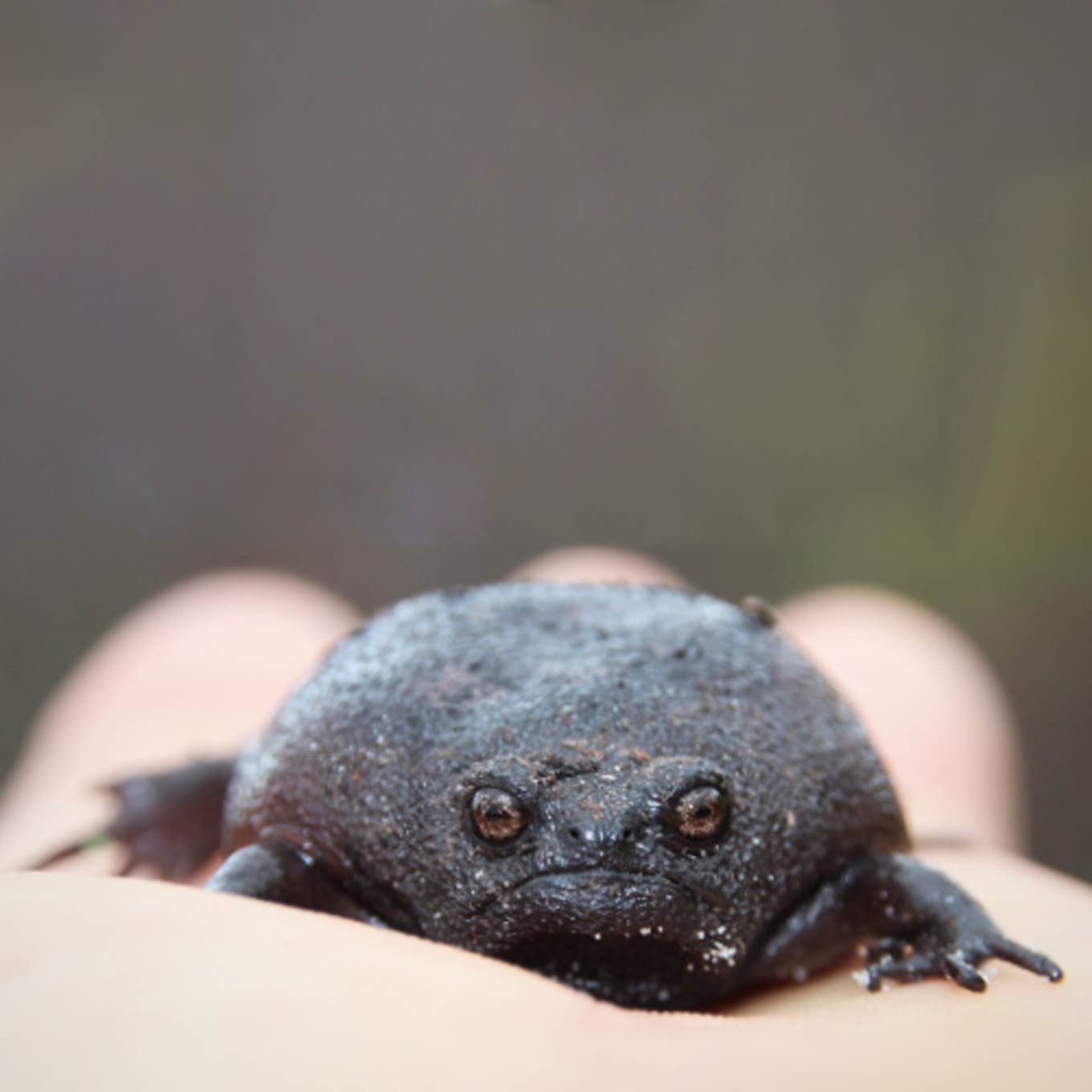
Scientific name: Breviceps fuscus
The black rain frog is a small amphibian that is found in coastal southern Africa. Round and bulbous, black rain frogs have black coloration and bumps across their backs. They also sport a constant frown and seem to have a lot of attitude. They can grow to be up to four inches long and have a lifespan of up to 12 years.
How to protect them: The Black Rain Frog is not currently at high risk, but any efforts to reduce habitat disturbances will make a huge difference for this species and so many others.
Axolotl
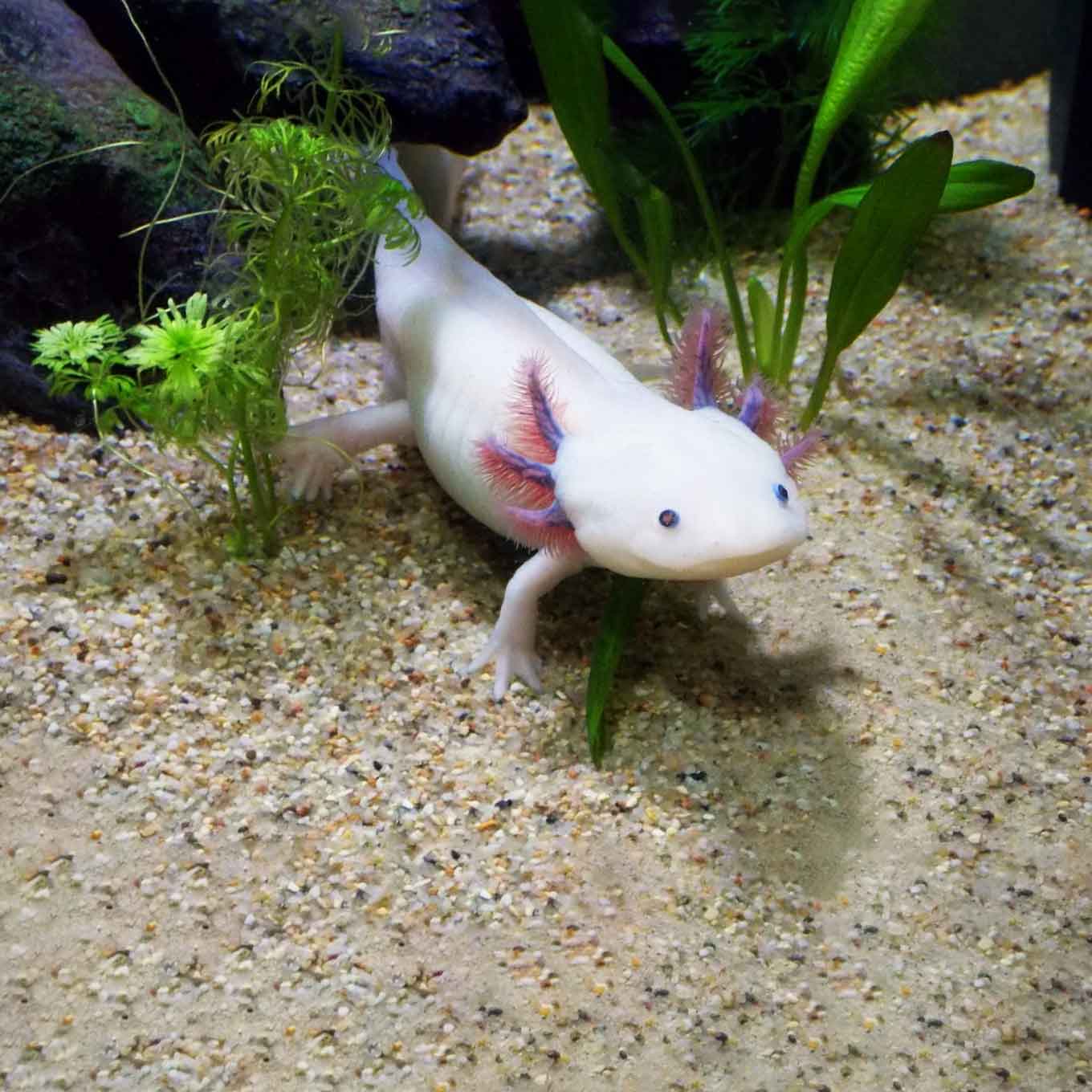
Scientific name: Ambystoma mexicanum
The axolotl is a permanently aquatic salamander that is native to Mexico. It’s safe to say that this is the cutest ugly animal on this list, with a distinctive pink coloration and subtle smile. They can grow up to 12 inches in length and live in freshwater lakes and ponds. The longer you look at them, the friendlier they look. Talk about the power of a smile!
How to protect them: The axolotl is critically endangered, but fortunately, there’s a lot of interest in protecting the unique creature. Check out these guides from Smithsonian Magazine and wikiHow.
Thirteen-year-old Michael Weilert did everything just as his mother had taught him. He pressed the button to activate a blinking pedestrian signal at Pacific Avenue in Parkland, Washington.
He waited until the first car stopped at the intersection before entering the crosswalk on his bike. Then, a young woman in a Jeep Wrangler failed to yield and struck the boy, killing him.
Here is the sad truth: Crosswalks don’t work.
According to various studies, only between five and fifteen percent of drivers slow down at pedestrian crossings. The vast majority of drivers simply don’t pay attention to them.
Given their ineffectiveness, it’s surprising that city planners rely on these unassuming white stripes to keep us safe from cars — particularly since America’s streets just keep getting deadlier: 42,915 people died in traffic crashes in 2021, according to the National Highway Traffic Safety Administration, a 16-year-high and a 10.5 percent increase from 2020. The risk for pedestrians keeps rising even more, with an unprecedented year-on-year rise in deaths in 2021.
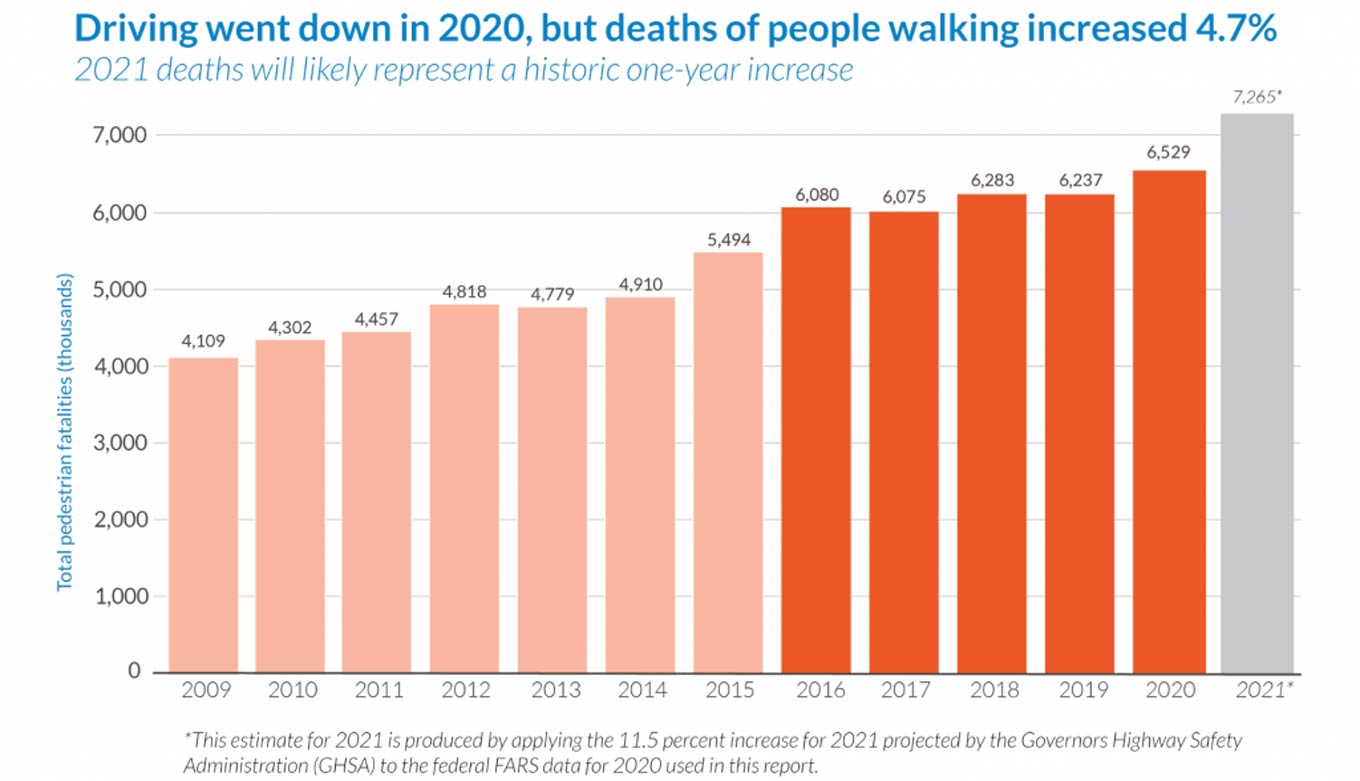
These deadly collisions are worst in low-income communities, which are less likely to have safe sidewalks, street crossings or recreational walking areas. A recent report titled “Dangerous by Design” by the Washington nonprofit Smart Growth America, which advocates for equitable urban planning, mainly blames the way those roads are designed — which is to say, for speed, with wide lanes and scant pedestrian infrastructure.
A simple truth is: The wider the lanes, the higher the speed, and US cities have plenty of wide lanes that invite drivers to hit the pedal.
America’s deadly streetscape is the subject of The Street Project, a new PBS documentary about citizen-led efforts to make streets safer. When filmmaker Jennifer Boyd started making it, she assumed distracted driving must be behind the alarming rise in pedestrian deaths. But as she soon learned, digital screens are less of a culprit than most people realize.
“Less than one percent of pedestrian deaths involved portable electronic devices,” she found.
Instead, she discovered that two of the biggest factors are speeding and bigger cars.
In a chilling demonstration, she lines up elementary school kids in front of a standard size SUV. It takes ten kids until the driver can finally spot their raised hands.
“There is no doubt the rise of SUVs has had a huge impact,” Peter Norton, a professor at the University of Virginia who studies urban mobility, tells her in the documentary.
Picturing a solution
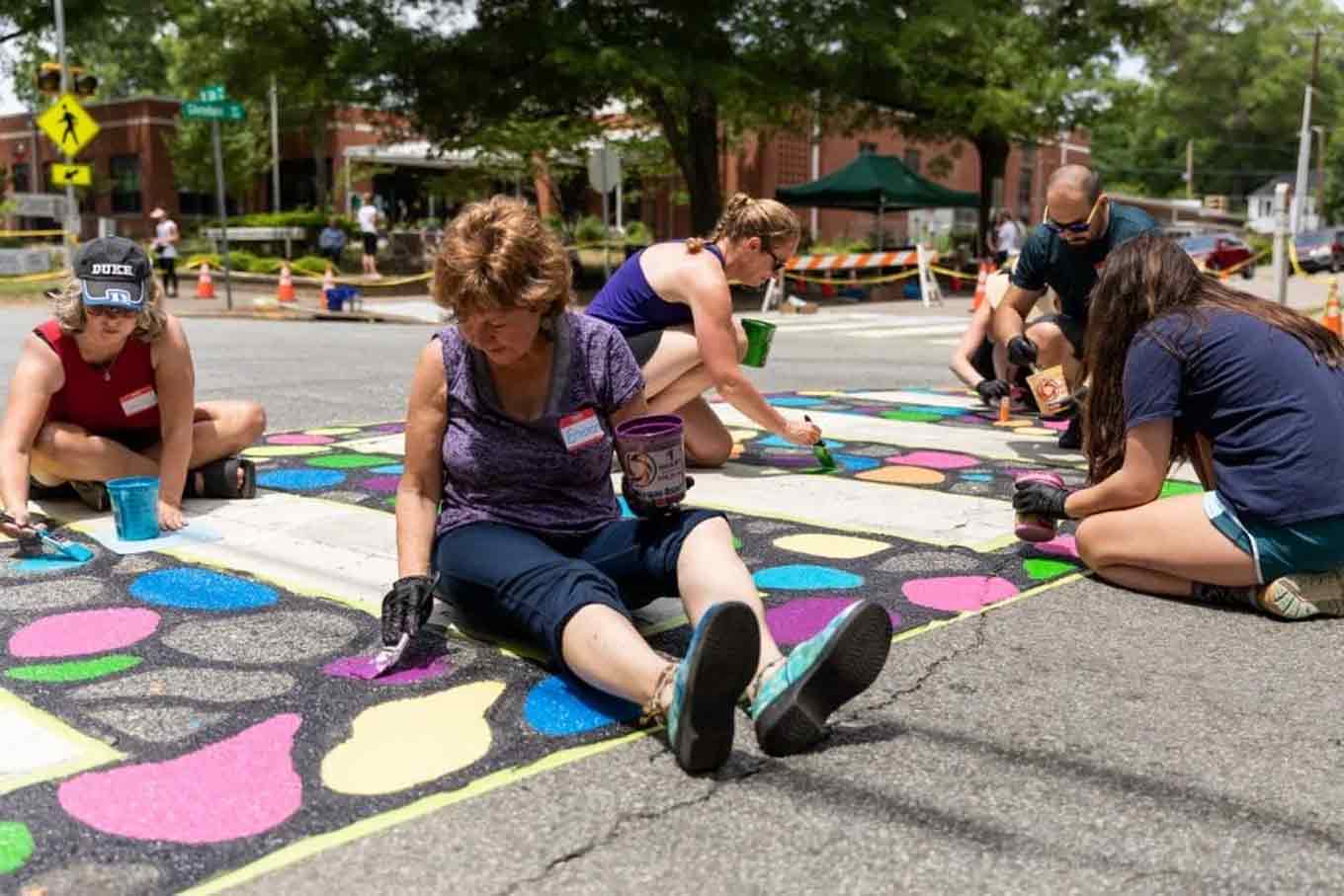
If speeding and visibility are the problem and crosswalks can’t stop it, color might. The Asphalt Art Initiative, a program funded by Bloomberg Philanthropies, provides grants to create art to modify dangerous streets.
One of these projects is in Chattanooga, Tennessee, where artists and residents transformed a high-traffic commercial thoroughfare with a block-long asphalt mural, while students marked safe walking paths in the area with stencils and wheat paste.
In Durham, North Carolina, residents chose a high-risk crossing in front of an elementary school for a makeover. Together, they created a vibrant mosaic of dots and a blue mural with colorful fish.
“Our oasis,” as the residents called it, had a surprising effect. “Potentially dangerous conflicts between drivers and pedestrians crossing the street decreased by 30 percent, and the percentage of people who felt unsafe crossing fell from 85 percent to six percent.”
In Lancaster, California, locals designated a busy five-way intersection for an artsy redesign. With the help of concrete stain, they shortened the crosswalks by more than half, added over 3,000 square feet of new pedestrian space, narrowed car lanes and added a stop sign.
The result got the drivers’ attention: The average speed at the intersection dropped by 20 percent, the rate of drivers yielding to pedestrians increased by 10 percent, and bike ridership increased by 12 percent.
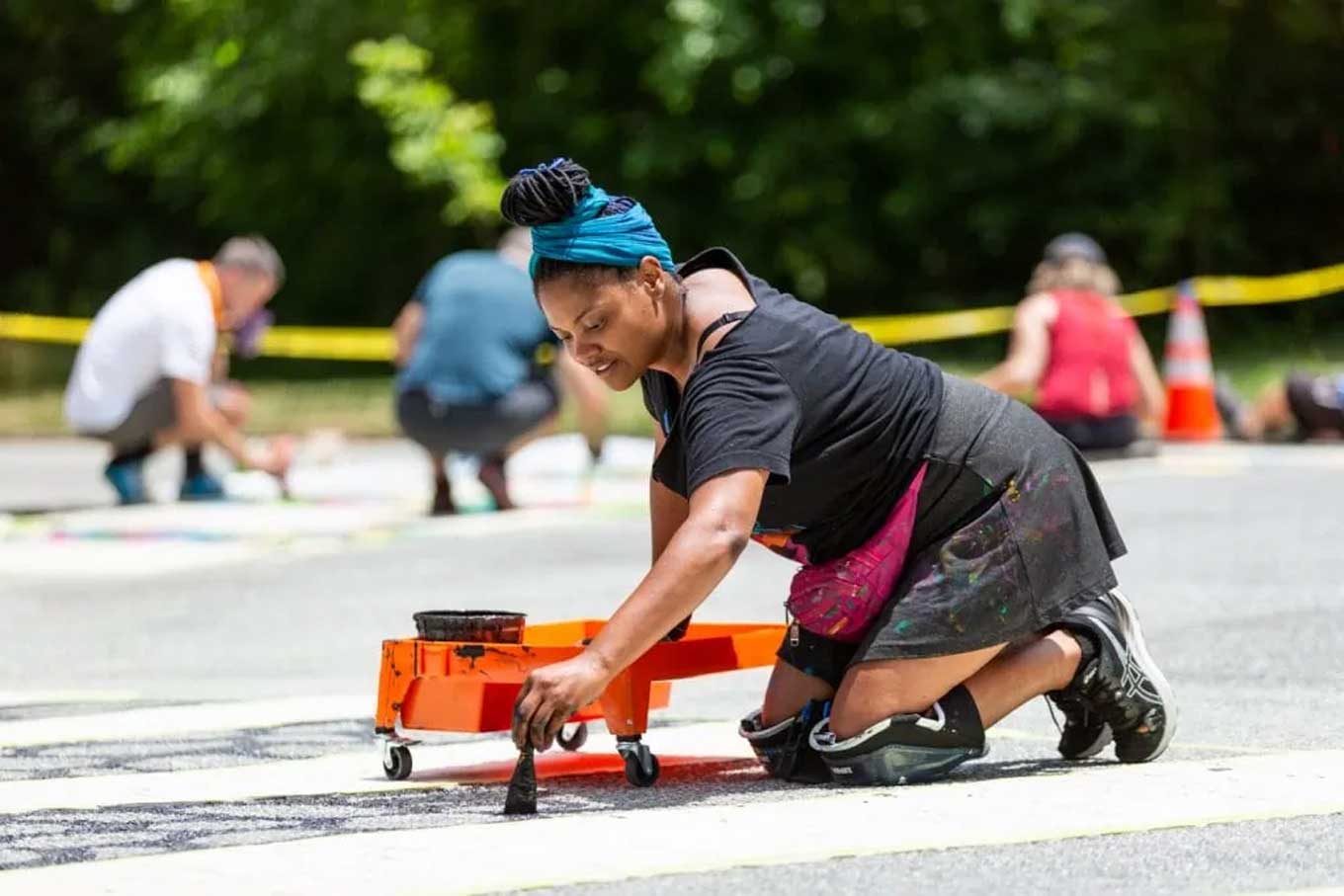
Overall, according to the Initiative, “the data showed a 50 percent drop in crashes involving pedestrians or cyclists and a 37 percent drop in crashes leading to injuries. Intersections with asphalt art saw a 17 percent reduction in total accidents.”
Dozens of places around the world have treated their streets to similar forms of art therapy, including Boston, Oklahoma, Vancouver, Delhi, and several cities in China and Europe.
In some cities, 3-D decals painted on the road create the illusion of raised roadblocks or children in the street. In Delhi, 20 streets now appear to be cut off by knee-high cement blocks — a sophisticated optical illusion. Ontario has experimented with painted potholes in the road to convince drivers to slow down.
The illusion works best in the first few weeks when drivers are surprised, then tapers off a bit when commuters get used to it. But even then, it continues to slow down drivers, according to the founder of Delhi Street Art, which painted crosswalks in Delhi, and a spokesperson for Transport for London.
In Vancouver, a painted “Pavement Patty” dashes into the street, seeming to chase a ball on Delta Avenue between two elementary schools. Along with signs reading “In a rush at a school zone? Seriously?” the effect has slowed down drivers there as well.
Despite these successes, the model faces roadblocks, not least of which is the U.S. Federal Highway Administration, which has a history of cracking down on communities for non-regulation crosswalk art. But this might be changing.
The agency is currently revising its rulebook, and as part of those revisions, aims to “reinforce the primacy of safety for all users in the interpretation of design standards” and “make ‘Complete Streets’ FHWA’s default approach.”
A culture of blaming the victim
Colorful crosswalks may reduce vehicular violence one intersection at a time, but the broader problem is more difficult to tackle: most US cities prioritize cars.
Even costly new projects, such as the 6th Street Bridge in Los Angeles, come up short in regards to pedestrian and bicyclist safety. Contrast this with many European countries, particularly in Scandinavia, that have redesigned their streets by taking space away from cars and designating lanes exclusively for people and bikes.
Since Sweden implemented “Vision Zero,” an initiative that has since been adopted by other cities in Europe and the US, traffic fatalities there have fallen by half.
Likewise in Norway, where, after five years of committing to safe traffic strategies, Oslo, a city of over 600,000, marked its first full year with no pedestrian or cyclist fatalities in 2019.
“Good design keeps people safe,” says Mikael Colville-Andersen, a Danish-Canadian city planner, in Boyd’s documentary. An avid bicyclist, Colville-Andersen has a suggestion: “City planners should be forced to ride their bikes to work every day for at least a month before planning a city.”
But in the U.S., urban planners and police tend to blame the victims. In Michael Weilert’s case, the crosswalk was equipped with a center island and signals on both sides of the road. The driver had ignored all the cues, and yet here is how Robert Reyer of the Washington State Patrol described the crash: “He all of the sudden appeared in front of her car, and she was unable to stop.”
So far, the driver has not been so much as ticketed because the trooper didn’t consider her driving reckless.
“Charges would only be forwarded if there was a criminal offense, such as being impaired and killing somebody, or driving in a manner that is, basically, reckless,” Reyer said. “We could completely exclude both. There was no impairment, and there was no reckless driving.”
Meanwhile, Weilert’s mother is fighting to prevent more accidents where her son was killed. She is advocating for changes at the intersection and points out the obvious: that failure to yield at a pedestrian crossing is by definition reckless.
“I can’t imagine knowing that someone is stopped at a crosswalk and you wouldn’t stop, too,” she told local TV station KIRO 7. “Just that behavior alone is reckless.”
There are officially 355 wild tigers in Nepal, according to the latest census, nearly triple the figure of 121 from 2010.
— Nepal is one of 13 tiger range countries that pledged in 2010, the last Year of the Tiger in the Chinese zodiac, to double the global tiger population by 2022, the current Year of the Tiger.
— The massive conservation success is expected to make Nepal the only one of the tiger range countries to even come close to doubling its population of the big cat.
— But Nepal’s success has also raised concerns that its tiger population may fast be approaching the limit of what the country’s protected areas can host, with implications for an increase in human-tiger conflicts.
The number of tigers in Nepal has nearly tripled over the past 12 years, officials announced July 29th, on the occasion of International Tiger Day.
The figure of 355 tigers blows past the 250 that the Himalayan country was expected to achieve as part of global efforts to double the wild tiger population — but also puts the number of the big cats close to the maximum that Nepal can hold, conservationists say.
Nepal was home to 121 tigers in 2010, the same year that it and 12 other tiger range countries agreed to double the population of Panthera tigris by the next Year of the Tiger in the Chinese zodiac, which is 2022.
Following the latest census, the country is now home to 355 tigers, Prime Minister Sher Bahadur Deuba announced at an International Tiger Day event in Kathmandu.
“This success was possible due to the unwavering political will of the government of Nepal, contributions of many stakeholders including enforcement agencies and conservation partners, but most of all the communities that live alongside tigers,” said Pem Narayan Kandel, secretary at the Ministry of Forests and Environment.
“A key challenge moving forward is to ensure cohabitation between people and nature, as well as to reconcile the country’s growth aspirations with the need to keep nature secure.”
Amid the euphoria, and with no other tiger range country expected to see a doubling of their big cat population since 2010, there’s growing concern in Nepal that the country’s tiger habitats may have hit their carrying capacity.
Conservationists warn this may further aggravate the threat of human-wildlife conflict in a country, where three people have been killed every month on average in encounters with tigers in the last fiscal year.
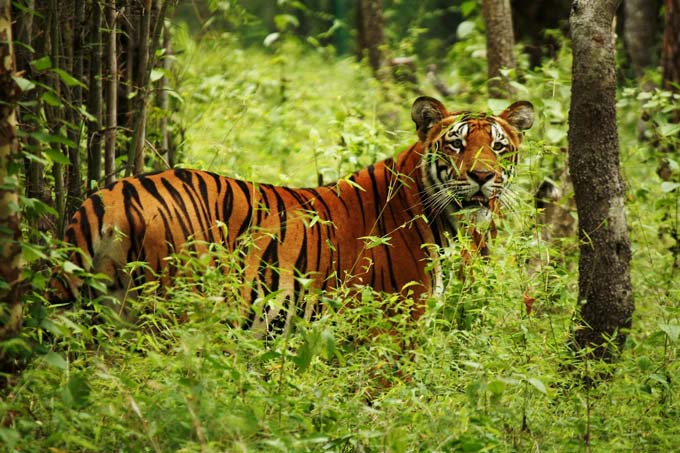
The new total is just 45 tigers shy of the approximately 400 that conservationists and experts consider the carrying capacity of the country’s limited habitat for the big cats.
In the Chitwan-Parsa complex, the most important tiger habitat in Nepal, the subpopulation of 169 tigers is already close to carrying capacity of 175 calculated in a government study.
Even before the latest census figures were released June 29, local community representatives had warned that the country’s protected areas may have already hit their carrying capacity.
However, conservationists involved in the census and the carrying capacity study say that upper limit isn’t set in stone, and that with improved habitat management, Nepal can host even more tigers.
“Carrying capacity of protected areas are not constant, they change with time,” said Babu Ram Lamichhane, a biologist with the National Trust for Nature Conservation, a semigovernmental body.
“When we estimated the carrying capacity of the Chitwan-Parsa complex, we hadn’t factored in the areas outside protected areas, especially the community forests,” he added. “As we are yet to conduct carrying capacity studies in other habitats, we can say that we certainly haven’t hit the carrying capacity yet.”
Every month at Good Good Good, we plan upcoming good news content for our Instagram, Goodnewsletter, Goodnewspaper, podcast, website, and more. Our work is always centered on hopeful stories about people making a difference in the world — and action steps on how each of us can join in with that good work.
With so many holidays, awareness days, education weeks, and activism months happening all year long, we’ve been slowly collecting all of these events in a private internal calendar for years.
We made our Monthly Cause Awareness Calendar publicly available earlier this year. We’ve also published:
- The Ultimate Calendar of Heritage Months
- Disability Awareness Days Calendar
- LGBTQ+ Pride Days, Weeks, & Months Calendar
- Environmental Holidays and Sustainability Calendar
- Cancer Awareness Months Calendar
- Mental Health Days & Awareness Months Calendar
- Pet & Veterinary Holidays Calendar
And now we’re publishing our guide to animal and wildlife conservation-related days.
Our hope is this resource will help you or your organization bring attention to important issues and creatures all year long.
Where applicable, we've included resources around highlighted holidays — usually in the form of good news around particular topics — or action steps on how to make a difference. We encourage you to share them if you find them helpful.
We've worked hard to make this the most comprehensive collection of animal-related days and months on the internet. (We’re also collecting all of the environmental-related days in a separate calendar!) Always double-check dates, as organizers may occasionally change dates.
Bookmark this page and revisit it as often as you need. We'll continue to update it and add to it over time.
National & International Awareness Days for Animals & Pets
January
Days
National Pet Travel Safety Day - January 2nd
National Bird Day - January 5th
Dr. Gladys Kalema-Zikusoka’s Birthday - January 8th
Learn about Dr. Gladys’ inspiring conservation efforts
National Save the Eagles Day - January 10th
National Dress Up Your Pet Day - January 14th
Dian Fossey’s Birthday - January 16th
Betty White’s Birthday - January 17th
Read about Betty White’s legacy of caring for animals
National Penguin Day - January 20th
National Squirrel Appreciation Day - January 21st
National Geographic Day - January 27th
Rattlesnake Roundup Day - January 28th
International Zebra Day - January 31st
Weeks & Months
Veganuary
National Adopt a Rescued Bird Month
Walk Your Dog Month
The dog poop bag industry is full of greenwashing, but fortunately, we’ve put together a guide on compostable and sustainable dog poop bags and alternatives
National Train Your Dog Month
Unchain A Dog Month
February
Days
National Serpent Day - February 1st
Groundhog Day - February 2nd
Marmot Day - February 2nd
National Hedgehog Day - February 2nd
World Wetlands Day - February 2nd
Read these good news stories about wetlands.
National Cordova Ice Worm Day - February 3rd
National Golden Retriever Day - February 3rd
Western Monarch Day - February 5th
World Bonobo Day - February 14th
World Hippopotamus Day - February 15th
Steve Irwin’s Birthday - February 22nd
World Pangolin Day - Third Saturday of February
World Whale Day - Third Sunday of February
Learn how noise reduction can save whales
International Polar Bear Day - February 27th
Weeks & Months
Humpback Whale Awareness Month
Read good news about humpback whales
National Bird-Feeding Month
Pet Dental Health Month
Dog Training Education Month
National Cat Health Month
Adopt a Rescued Rabbit Month
National Nestbox Week - February 14th to 21st
The Great Backyard Bird Count - Four-day event in February
National Justice for Animals Week - February 20th to 26th
Read our entire collection of dozens of good news stories about people making a difference for animals
Bird Health Awareness Week - February 20th to 26th
Homes for Birds Week - Second Week of February
National Invasive Species Awareness Week - Starts on the Last Monday of February
March
Days
World Seagrass Day - March 1st
Learn how the “Great Blue Wall” will help protect seagrass and the oceans
National Pig Day - March 1st
Meet Hamlet the Pig and a dozen other celebrity pet influencers
National Horse Protection Day - March 1st
Meet the man who has built prosthetics for birds, horses, sheep, camels, gazelles, and even elephants.
International Rescue Cat Day - March 2nd
World Wildlife Day - March 3rd
Read and share these activities and ideas to celebrate World Wildlife Day
National American Paddlefish Day - March 9th
Key Deer Awareness Day - March 11th
K9 Veterans Day - March 13th
International Day of Action for Rivers - March 14th
Meet the advocates working to give water legal rights
Save a Spider Day - March 14th
Buzzards Day - March 15th
International Day of Action Against Canadian Seal Slaughter - March 15th
National Panda Day - March 16th
Save the Florida Panther Day - Third Saturday in March
Taxonomist Appreciation Day - March 19th
World Sparrow Day - March 20th
World Frog Day - March 20th
World Rewilding Day - March 20th
Read the good news about rewilding projects happening across the UK
International Day of Forests - March 21st
Read the good news about a California redwood forest being returned to Indigenous guardianship
World Planting Day - March 21st
Read about the tree-planting initiative in Chicago supporting intersectional environmentalism
World Water Day - March 22nd
International Seal Day - March 22nd
World Meteorological Day - March 23rd
Listen to a podcast episode featuring Eric Holthaus, a meteorologist working to fight climate change
World Puppy Day - March 23rd
Manatee Appreciation Day - Last Wednesday of March
Earth Hour - Last Saturday of March
Weeks & Months
Adopt a Rescued Guinea Pig Month
Professional Pet Sitters Week - First Week of March
National Animal Poison Prevention Week - Third Week of March
April
Days
National Ferret Day - April 2nd
World Aquatic Animal Day - April 3rd
Read a good news story about how Sri Lanka is turning old buses into new homes for aquatic animals
Jane Goodall’s Birthday - April 3rd
Celebrate Jane Goodall’s birthday by reading her most famous inspirational quotes
World Rat Day - April 4th
World Stray Animals Day - April 4th
National Siamese Cat Day - April 6th
International Beaver Day - April 7th
Zoo Lovers Day - April 8th
Pygmy Hippo Day - April 8th
ASPCA (American Society for the Prevention of Cruelty to Animals) Day - April 10th
National Pet Day - April 11th
Read and share the ultimate guide on how to celebrate National Pet Day
World Hamster Day - April 12th
National Dolphin Day - April 14th
Save the Elephant Day - April 16th
Bat Appreciation Day - April 17th
Tuna Rights Day - April 21st
World Curlew Day - April 21st
Earth Day - April 22nd
Read and share the ultimate guide on how to celebrate Earth Day this year and explore the best quotes about Earth Day
International Pallas’s Cat Day - April 23rd
National Lost Dog Awareness Day - April 23rd
World Day for Animals in Laboratories - April 24th
World Penguin Day - April 25th
World Tapir Day - April 27th
Marine Mammal Rescue Day - April 27th
International Guide Dog Day - Last Wednesday of April
International Hyena Day - April 27th
Arbor Day - April 28th
Read our curated list of the best tree quotes — and read our review of Ecosia, the tech tool that helps you plant trees for free
National Animal Advocacy Day - April 30th
Explore our complete list of all animals — organized from A to Z
National Therapy Animal Day - April 30th
World Veterinary Day - Last Saturday of April
Learn about these inspiring famous veterinarians who inspire us to do good
Save the Frogs Day - Last Saturday of April
Weeks & Months
Earth Month
Explore and share the best ideas for how to celebrate Earth Month
National Frog Month
Prevention of Cruelty To Animals Month
Read and share the best quotes about stopping animal cruelty
National Heartworm Awareness Month
National Adopt-a-Greyhound Month
National Wildlife Week - Week-long event in early April
National Dog Bite Prevention Week - Second Week of April
Animal Cruelty / Human Violence Awareness Week - Third Week of April
International Dark Sky Week - Week-long event in April
Read about the French parkour athletes turning out lights — and how to protect animals from light pollution
Lab Animal Week - Week surrounding April 24th each year
May
Days
Save the Rhino Day - May 1st
World Tuna Day - May 2nd
International Leopard Day - May 3rd
Wild Koala Day - May 3rd
World Donkey Day - May 8th
World Migratory Bird Day - Second Saturday of May
Fintastic Friday - Second Friday of May
International Kangaroo Care Awareness Day - May 15th
National Sea Monkey Day - May 16th
World Bee Day - May 20th
Listen to this inspiring podcast with Bee Girl Sarah
Endangered Species Day - Third Friday of May
National Rescue Dog Day - May 20th
Read and share these reasons to adopt a rescue dog
World Dog Day - May 21st
Read good news about dogs
World Fish Migration Day - May 21st (Celebrated every other year)
International Day for Biological Diversity - May 22nd
World Turtle Day - May 23rd
Read this good news story about drones protecting turtles
World Otter Day - May 25th
National Alligator Day - May 29th
World Parrot Day - May 31st
Weeks & Months
Be Kind to Animals Month
Pet Cancer Awareness Month
Learn about the inspiring work being done by the 'We Rate Dogs' community to support dogs with cancer and other medical problems
Gardening for Wildlife Month
Read about the water-guzzling yards getting a celebrity makeover
National Pet Week - First Week of May
Follow your new favorite pet influencers on social media
Puppy Mill Action Week - Starts the Monday before Mother’s Day
Be Kind to Animals Week - First Week of May
June
Days
National Trails Day - First Saturday of June
World Reef Day - June 1st
Meet the all-women conservation group working to protect our coral reefs
National Black Bear Day - First Saturday of June
International Corgi Day - June 4th
Seaweed Day - June 4th
Read the good news story about Maine harvesting more seaweed instead of lobster
National Animal Rights Day - First Sunday of June
Read and share the best quotes about animal rights
World Environment Day - June 5th
International Day for the Fight Against Illegal Unreported and Unregulated Fishing - June 5th
June Bug Day - June 7th
World Oceans Day - June 8th
Read and share this guide on how to celebrate World Oceans Day
International Day of Action for Elephants in Zoos - June 8th
Coral Triangle Day - June 9th
E.O. Wilson’s Birthday - June 10th
Learn about biologist E.O. Wilson’s contributions to our planet by reading his most famous quotes
International Lynx Day - June 11th
National Cougar Day - June 12th
Nature Photography Day - June 15th
World Sea Turtle Day - June 16th
Read this good news story about sea turtles
World Crocodile Day - June 17th
National American Eagle Day - June 20th
Ugliest Dog Day - June 20th
While not exactly dog-focused, check out this collection of ugly animals (and learn how to protect them)
World Giraffe Day - June 21st
World Camel Day - June 22nd
World Rainforest Day - June 22nd
Read these good news stories about Indigenous activists protecting rainforests
Pink Flamingo Day - June 23rd
Weeks & Months
Great Outdoors Month
National Pollinator Month
National Zoo and Aquarium Month
Ocean Week - Celebrated in early June
Week of the Philippine Eagle - June 4th to 10th
Bed Bug Awareness Week - First Full Week of June
Pet Appreciation Week - First Week of June
Animal Rights Awareness Week - Third Week of June
Read and share the best animal rights quotes
National Insect Week - Last Week of June
Fish Are Friends Not Food Week - Last Week of June
Rabbit Awareness Week - Last Week of June
July
Days
American Zoo Day - July 1st
Independence from Meat Day - July 4th
National Koi Day - July 7th
National Kitten Day - July 10th
Shark Awareness Day - July 14th
World Chimpanzee Day - July 14th
World Orca Day - July 14th
Celebration of the Horse Day - July 15th
World Snake Day - July 16th
Guinea Pig Appreciation Day - July 16th
National Urban Beekeeping Day - July 19th
World Nature Conservation Day - July 28th
Meet the world’s most famous animal conservationists
International Tiger Day - July 29th
Read the good news about Nepal’s huge successes with tiger conservation and endangered Siberian tigers bouncing back in China
World Ranger Day - July 31st
Read about Zimbabwe’s all-women rangers unit fighting poachers and poverty
Weeks & Months
National Bison Month
Read the good news about America’s bison making a comeback
Wild About Wildlife Month
Learn about the initiatives to take down livestock fences to help support wildlife
National Clean Beaches Week - July 1st to 7th
Learn about the YouTubers cleaning up beaches and the ocean through #TeamSeas
Shark Week - Week-long event in July
Coral Reef Awareness Week - Third Week of July
Learn about the combat diving veterans using their skills to protect coral reefs
National Zoo Keeper Week - Third Week of July
National Moth Week - Last Week of July
August
Days
International Clouded Leopard Day - August 4th
National Oyster Day - August 5th
Learn how oysters can be creatively used to clean the ocean
National Sea Serpent Day - August 7th
International Moon Bear Day - August 8th
Scottish Wildcat Day - August 8th
International Cat Day - August 8th
World Lion Day - August 10th
Mountain Day - August 11th
World Elephant Day - August 12th
Meet the biologist who became an ivory detective
World Hirola Day - August 12th
International Wolf Day - August 13th
World Lizard Day - August 14th
World Orangutan Day - August 19th
World Mosquito Day - August 20th
National Honey Bee Day - Third Sunday of August
International Bat Night - August 26th
International Whale Shark Day - August 30th
National Zoo Awareness Day - August 31st
Weeks & Months
National Catfish Month
September
Days
International Primate Day - September 1st
Japan Dolphins Day - September 1st
World Cow Day - September 1st
National Hummingbird Day - September 3rd
National Wildlife Day - September 4th
Amazon Rainforest Day - September 5th
National Iguana Awareness Day - September 8th
International Vulture Awareness Day - First Saturday of September
World Manta Day - September 17th
Zero Emissions Day - September 21st
International Red Panda Day - Third Saturday of September
International Golden Lion Tamarin Day - September 22nd
World Rhino Day - September 22nd
Read about the “smart park” protecting rhinos from poachers thanks to technology
National Elephant Appreciation Day - September 22nd
Bluebird of Happiness Day - September 24th
Fish Amnesty Day - Fourth Saturday of September
World Gorilla Day - September 24th
Read about how the population of endangered mountain gorillas has grown by 71% in a decade
National Public Lands Day - Fourth Saturday of September
Read and share this guide on how to celebrate National Public Lands Day.
World Environmental Health Day - September 26th
World Cassowary Day - September 26th
Alpaca Day - September 26th
National Shamu the Whale Day - September 26th
World Rivers Day - Last Sunday of September
Save the Koala Day - September 30th
Puppy Mill Awareness Day - Third Saturday of September
Weeks & Months
Animal Pain Awareness Month
National Save a Tiger Month
Good news! The number of endangered tigers has increased by 40%!
World Animal Remembrance Month
Sea Otter Awareness Week - Last Week of September
October
Days
World Habitat Day - First Monday of October
World Vegetarian Day - October 1st
International Raccoon Appreciation Day - October 1st
World Farm Animals Day - October 2nd
Read this unique good news story about… potty training cows
World Animal Day - October 4th
Feel more hopeful by reading good news stories about animals
Feast of St. Francis of Assisi - October 4th
Kindness To Animals Day - October 4th
Choose today to do a random act of kindness for animals or start thinking about next month’s World Kindness Day
National Badger Day - October 6th
World Octopus Day - October 8th
Indigenous People’s Day - October 11th
Learn about how conservation efforts are thriving thanks to Indigenous knowledge
National Pug Day - October 15th
Learn about how Doug the Pug is making a difference for kids with cancer
International Sawfish Day - October 17th
International Sloth Day - October 20th
Reptile Awareness Day - October 21st
Read about the good news about endangered land iguanas finally reproducing
International Wombat Day - October 22nd
International Snow Leopard Day - October 23rd
Freshwater Dolphin Day - October 24th
World Gibbon Day - October 24th
International Day of Climate Action - October 24th
National Mule Day - October 26th
World Lemur Day - Last Friday of October
Weeks & Months
National Vegetarian Month
World Habitat Awareness Month
Squirrel Awareness Month
World Animal Month
Bat Appreciation Week - October 24th to 31st
November
Days
World Vegan Day - November 1st
Listen to our podcast episode about how going vegan can change the world
World Jellyfish Day - November 3rd
National Bison Day - First Saturday of November
Read about how wild bison are back in the UK for the first time in thousands of years
World Numbat Day - First Saturday of November
International Day for Preventing the Exploitation of the Environment in War and Armed Conflict - November 6th
National Take A Hike Day - November 17th
World Fisheries Day - November 21st
Read the good news story about land-based aquaculture startups that are producing healthier fish without polluting the sea
Alascattalo Day - November 21st
Humane Society Anniversary Day - November 22nd
Giving Tuesday - First Tuesday after Thanksgiving
Learn how to volunteer with or donate to animal-related organizations for Giving Tuesday (plus explore more ideas to get involved)
International Jaguar Day - November 29th
Weeks & Months
Native American Heritage Month
Celebrate Native American Heritage Month by caring for animals and the earth
Adopt a Turkey Month
Manatee Awareness Month
Polar Bear Week - First Week of November
December
Days
International Cheetah Day - December 4th
Wildlife Conservation Day - December 4th
Meet these famous wildlife conservationists you may not know yet
National Llama Day - December 9th
International Animal Rights Day - December 10th
International Mountain Day - December 11th
Monkey Day - December 14th
Visit the Zoo Day - December 27th
Weeks & Months
Christmas Bird Count Week - Two-week period in December
If you're giving gifts this holiday season, explore these amazing gifts for animal lovers
Is this list missing a holiday or awareness event? Let us know. We want to ensure this list is comprehensive and inclusive.
October 10th is World Mental Health Day!
This international day of awareness and action has been recognized since 1992, as mental health activists and practitioners across the world work to spread the word that mental health is something everyone should care about.
In some countries, this day is a part of a week-long mental health event.
The day was initially created by the World Federation of Mental Health, an over 70-year-old organization that supports mental health awareness and support in more than 90 countries.
With events, screenings, activities, and more, World Mental Health Day is a catalyst for us to learn more, seek help, offer support, and open our hearts and minds to vulnerable conversations.
We’ve compiled some ideas for how you can honor World Mental Health Day on your own, or in community with those you love.
How To Celebrate World Mental Health Day
Activities and Actions
Attend an event in support of World Mental Health Day.
Events are being held around the world to connect with others through mental health. And the World Federation For Mental Health is compiling them on its website.
Don’t see an event near you? Host your own! From open forums, to fundraisers, to documentary screenings, and everything in between, your efforts are welcome.
Get certified in mental health first aid.
Mental Health First Aid offers in-person courses around the world, led by certified instructors.
Participants will learn how to help someone experiencing a mental health crisis by identifying, understanding, and responding to signs of addiction or mental health conditions.
If you’re looking for a digital certification, the Born This Way Foundation and Jack.org have created the Be There Certificate, which teaches participants how to recognize when someone might be struggling with their mental health and how to safely support them while maintaining one’s own mental health.
The course is free of charge and has six interactive lessons that can be accessed at any time. It is also offered in English, French, and Spanish.
Share your story.
Part of spreading awareness means sharing your story and your experiences in a safe way.
The National Alliance on Mental Illness encourages folks to share their experiences with mental health to be shared on their website or social media channels.
Volunteer or donate.
Use your time, talents, or financial means to support a mental health organization! It’s easy to make a difference.
Whether you want to donate to a national nonprofit like NAMI or Mental Health America, or support a community member affected by mental illness through a mutual aid fund, your assistance can make a difference.
If you’d like to donate your time, you can sign up to become a volunteer at a crisis hotline or text line.
Contact your representatives to urge them to prioritize mental health.
You have the tools to urge your elected officials to make mental health a priority! Here are a few things you can do:
- Contact your elected officials to express why you think they should make mental health policy a priority.
- Check out Mental Health America’s State of Mental Health In America report and share it with your elected officials.
Share mental health resources.
Making mental health resources widely accessible makes it that much easier for even one person to get the help they need.
You can view our mental health resource guide here!
By Learning
Learn more about your own mental health.
Learning more about your own mental health can be one of the most empowering things you can do for yourself. Do this by taking an online mental health screening.
You can use this opportunity to seek professional help (in the form of therapy), journal about your findings, or connect with a loved one who may also have experience with a certain mental health condition.
Read books or articles about mental health.
We’re certain your local library has a wide array of resources for your mental health studies, but if you’re looking for some new approaches, here are a few learning opportunities for you to expand your mental health knowledge:
- This Mental Health Media Guide that is changing the way the entertainment industry tells stories about mental health
- This list of book recommendations that will leave you feeling more hopeful (and with a big TBR list)
- This compilation of good news stories about mental health
- This website, called Find Center, where you can curate a feed of information on a variety of topics, like anxiety, depression, ADHD, eating disorders, relationships, and more.
Learn more about mental health online.
Listen to mental health podcasts, read mental health newsletters, or explore mental health apps to access a broader and deeper understanding of how diverse people experience mental health conditions.
Read and share quotes about mental health.
Sometimes we have the right words to say… but someone else does. Fortunately, we’ve curated the best quotes about mental health in a variety of articles:
- The Best Quotes About Mental Health
- The Best Quotes About Suicide To Help Prevention
- The Best Quotes About Self Care
- The Best Quotes About Darkness, Quotes About Light, & Quotes About Finding Light in the Darkness
- The Best Positive Quotes & Quotes About Toxic Positivity
By Taking Care of Yourself
Create strong self-care practices.
Self-care is a big buzzword these days, but we encourage you to create strong, proactive self-care practices that give you the energy and space to thrive.
(Plus, if you need some inspiration — we’ve compiled a collection of the best self-care quotes.)
Find a therapist.
A great therapist can help you gain valuable insights, provide support and guidance when you are facing challenges, help you confront and heal trauma, and give you the tools to create a life you love.
You deserve to find your perfect fit! Good news: we created a comprehensive guide to finding a therapist.
Try meditating.
Apps like Headspace, Calm, and Breethe make self-care activities like meditation easy and accessible. Give your meditation practice a go today and see what can happen when you expand your self-care toolkit.
Celebrate good news.
Speaking of good news, the world is full of it! Take it from us, we’re a good news media company that literally makes a monthly print newspaper filled with good news. (And you should subscribe!)
When we fill our brains with reminders that there’s lots of good in the world, it helps us feel more hopeful about the future and encourages us to be a part of creating that better future.
Subscribe to a positive news email newsletter like ours, check out good news websites, more good news resources, and do everything possible to make sure you’re exposed to hopeful news stories on a regular basis.
At Work
Advocate for or use mental health days or paid time off at work.
Mental health days are an important tool for all workers to access time off when they need to, while also facilitating important conversations about mental health and burnout in the workplace.
Perhaps October 10th is the opportunity for your company to roll out company-wide mental health days, or even more generous paid time-off offerings.
By prioritizing time to rest, we can boost morale, redefine the modern workplace, and show people we care.
Check out Empower Work, a program that provides confidential support for work challenges.
Empower Work is a nonprofit on a mission to build healthier, more equitable workplaces.
They offer immediate, confidential support for work challenges through SMS or webchat with trained peer counselors.
Use your platform or company to advocate for mental health.
Raise funds, release a product supporting mental health awareness, create a social media campaign, publish a blog post, or invest in new benefits that support your team and your community on (or beyond) World Mental Health Day.
Whatever you do, we encourage you to use reliable research to make your offerings inclusive and equitable.
At School
Offer resources and information to students.
Teachers and trusted adults are responsible for making sure that students know what mental health resources are available to them.
If your school doesn’t have a lot of resources or materials for these conversations, mentalhealth.gov has a great landing page for educators to help get the ball rolling.
Support LGBTQ+ youth.
LGBTQ+ youth are at an increased risk for mental health conditions and suicide.
In fact, The Trevor Project — an organization that works to prevent suicide in LGBTQ+ youth — found that LGBTQ+ youth who reported having at least one accepting adult were 40% less likely to report a suicide attempt.
There are a number of ways to support LGBTQ+ youth inside and out of the classroom — we even have a comprehensive guide! In the meantime, consider doing the following:
- Designate your classroom as an LGBTQ+ safe space
- Take an ally training course through The Trevor Project with your colleagues
- Fight book bans so that all kids can access books they can identify with
- Sponsor a Gay Straight Alliance or another inclusive club in your school. The Gay Lesbian & Straight Education Network has awesome resources for teachers and students.
Engage in a World Mental Health Day project at school.
Can you hand out lime green ribbons for mental health awareness? Is there a suitable movie or documentary viewing and discussion you can share with your students? What about celebrating your appreciation for school counselors or social workers during this time?
Consider hosting a spirit day in your school to open the dialogue about mental health and engage with one another in a meaningful way.
Host a Q&A with a mental health professional for parents and students.
School administration and counseling teams can host a forum for parents and students, offering expert insights into mental health.
Choose a topic and host a Q&A-style chat for parents with a clinician or representative from your local Department of Behavioral Health. This can also be done for students during the school day, all inviting participants to ask experts any questions they may have regarding mental health.
Educators may consider creating a safe space for students to anonymously submit questions, to keep things well-organized and confidential.
Get help if you need it.
All of these action items and activities are a great way to get you and your community involved in the conversation surrounding mental health. However, we know that when you’re struggling with your mental health, it can be hard to find the help, support, and community you need.
If you are in immediate need of safety, please contact the following:
Emergency Medical Services
911
National Suicide Prevention Lifeline
suicidepreventionlifeline.org
988
Crisis Text Line
Text CRISIS to 741-741
crisistextline.org
And if you are not in immediate crisis and would still like access to more resources, visit our list of Mental Health Resources for more information.
Frequently Asked Questions
What day is World Mental Health Day?
World Mental Health Day is held on October 10th every year. The annual event is celebrated by the World Federation for Mental Health, the World Health Organization, and dozens of other organizations.
What is the theme for World Mental Health Day 2025?
The theme of World Mental Health Day 2025 is “mental health in humanitarian emergencies.” This year’s campaign focuses on the urgent need to support the mental health of people affected by natural disasters, conflicts, and public health emergencies.
What was the theme for World Mental Health Day 2024?
The theme of World Mental Health Day 2024 was ‘It is Time to Prioritize Mental Health in the Workplace.’ This year’s campaign aimed to engage employees, employers, organizations, and more in advocacy to promote well-being at work and in professional environments.
Is World Mental Health Day in October or May?
Mental Health Awareness Month takes place during the month of May. However, World Mental Health Day — National Depression and Mental Health Screening Month, as well as ADHD Awareness Month — are celebrated in the month of October. It can be easy to get them mixed up!
What is the World Mental Health Day color?
Many nonprofits encourage advocates to wear the color purple in honor of mental health action. Some other organizations utilize green ribbons for World Mental Health Day.
Every day the Good Good Good team collects the best good news in the world and shares it with our community. Here are the highlights for this week!
If you want to get good news in your inbox every day, join the Goodnewsletter — the free daily newsletter designed to leave you feeling hopeful.
The Best Positive News We're Celebrating This Week —
In response to increasing gun violence, a Portland neighborhood created a vibrant community plaza
An intersection in Southeast Portland’s Mt. Scott-Arleta neighborhood used to be filled with driveby gun violence, car accidents, and more. Instead of increasing police presence in the area, the neighborhood took a more positive approach: they built a public plaza, filled it with trees, colorful paint, and more.
Spearheaded by residents, the project analyzed what was causing the accidents, violence, and more and implement changes like more lighting and changing the flow of traffic lanes where cars would speed, drive recklessly, or utilize as a getaway after shooting.
Portland already has plans to bring it to more neighborhoods, and it’s another great example of ways to combat gun violence and public safety issues without increasing police presence.
The U.S. just performed its 1 millionth organ transplant
Last week, the U.S. recorded its 1 millionth organ transplant, which is a historic milestone to celebrate for a procedure that has saved thousands of lives since the first successful transplant was performed in 1954.
Then, doctors at a hospital in Boston transplanted a kidney to Richard Herrick, who was suffering from chronic kidney failure, from his identical twin brother. At the time, Dr. Joseph Murray, the lead surgeon received the Nobel Prize in Medicine.
We’re celebrating this good progress, even as organ transplants are relatively common today — because they are no less life-changing. In 2021 alone there were more than 41,000 transplants — the most ever recorded and twice as many as there were 25 years ago.
Organ transplants are truly one of the most innovative, life-saving medical advancements in our lifetime.
Conservationists, farmers, and cattle ranchers in Mexico are restoring 3.5 million acres of land — while boosting crop yields
Mexico’s second-most biodiverse state, Chiapas provides 30% of the entire country’s freshwater but has lost 55% of its forests for farmland and livestock pasture.
Now, an unlikely alliance of conservationists, farmers, and cattle ranchers is working to incorporate 6.2 million acres of land into sustainable management schemes, focusing on soil health and aiming to restore and reforest 3.5 million acres.
The initiative will help restore soil health while storing carbon, freeing up more land for conservation, and maintaining jobs in rural areas.
In response to proposed book bans, a Colorado town approved a measure to prevent any restrictions on resources offered at its public library
About a month ago, a group of residents in Wellington, Colorado sought to restrict 19 books from the shelves of the town’s public library — some even wanted them banned entirely. In response, the town’s board of trustees approved a measure that essentially bans any book bans at the Wellington Public Library.
While the library does have some restrictions around who can get a library card with or without a parent/guardian, the measure will prevent the board from restricting what the library can or cannot place on its shelves, and who is allowed to access it.
This is good news to celebrate, especially during Banned Books Week! As Ibram X. Kendi puts it, “To fight off the book bans is to fight for basic human freedoms.”
Southwest Florida has had its best turtle nesting season ever recorded
This year, Bonita Beach, Vanderbilt Beach, Naples, Marco Island, and Keewaydin Island in South Florida had record-setting turtle nesting seasons.
Bonita Beach had 282 nests, shattering its previous record of 238 nests in 2019. Collier County has 1,945 nests total, breaking the 2016 record of 1,927. Keewaydin Island had 609 nests, Marco Island broke its record with its 101 nests — and maybe even more as part of the island is only accessible by kayak.
In the early 2000s, there were so few nests that turtle experts were worried about the survival of the species. The area has implemented various turtle programs to find and protect nests.
Initially looking to double its tiger population, Nepal tripled it instead
In 2010, Nepal was one of 13 tiger range countries that pledged to double its population by 2022. In the 12 years since that pledge, Nepal tripled its tiger population, becoming the only one of the countries to not only meet but exceed its goal.
Nepal now has 355 tiger total, blowing past the 250 that the country was expected to achieve as part of global conservation efforts to double the wild tiger population. Conservationists also say it puts the number of the big cats close to the maximum that the country can hold.
A Canadian couple has helped nearly 200 Ukrainian refugees fly to safety
Michael Garnett played hockey in Russia for 10 years, and his wife Rebecca Rider is a pilot for a Calgary-based airline. When Russia invaded Ukraine, Garnett told CBC News he “couldn’t believe that this country that I love — Russia — could just start attacking full on.” Rider saw how it impacted him, and encouraged him to take action and help.
Initially, they spent an entire month in Poland helping drive refugees from the border to aid centers. When they returned to Canada, they took over a “buddy pass” program from one of Rider’s pilot colleagues, who had collected 50 passes from airline employees.
Rider and Garnett started an official charity called Help From Canada, have received buddy pass donations from around 100 employees, and have helped nearly 200 Ukrainian refugees fly to safety in Canada.
More good news of the week —
A nonprofit has eliminated $6.7 million in medical debt, and they’re now expanding their eligibility pool. RIP Medical Debt has already eliminated medical debt for 3.6 million people in the U.S.
Rocky Mountain National Park just got 40 acres larger thanks to an astronaut’s donation. Former astronaut Vance Brand’s family said they hope the donation “will keep the land in its natural state for the benefit and enjoyment of current and future generations of Americans.”
California is providing free, 24/7, live online tutoring to all its residents in all K-12 subjects. Governor Newsom also announced a $245 million investment to improve libraries across the state.
A court revoked a permit for a new plastic manufacturing plant in Louisiana’s “Cancer Alley.” The plant would have doubled toxic emissions in St James parish, which already has some of the worst air quality in the country.
A Montana judge ended a ban on transgender women competing in college sports. The judge said the legislature overstepped and violated the state’s constitution.
Denver is trialing a basic income program for people experiencing homelessness. The Denver Basic Income Program will give 140 people up to $1,000 in cash per month for up to a year.
Scientists predict the ozone layer will completely heal within the next 50 years. The concentration of ozone-depleting chemicals has declined by just over 50 percent compared to the 1980s, which the NOAA says is a “significant milestone.”
California’s new set of climate laws will create 4 million jobs, reduce the state’s oil use by 91%, and cut air pollution by 60%. The California Climate Commitment will also protect communities from oil drilling, and accelerate the state’s transition to clean energy.
As of July, 385,000 Ukrainian refugees have found jobs in Poland. The country has also given more than 1.2 million Ukrainians social security numbers, which gives them access to health care, education, and other social benefits.
Dozens of the largest corporations in the U.S. have pledged to hire thousands of refugees. Companies like Marriott, Pfizer, and more have taken the Tent Partnership for Refugees’ pledge to hire more than 22,000 refugees.
Solar power is helping some people in Puerto Rico avoid losing power. Though millions are still without power on the island, local nonprofits have led the way in helping people adopt solar power and prepare for climate disasters like Hurricane Fiona.
TikTok gave 10 Latinx creators $50,000 grants to invest in their “dream projects.” TikTok partnered with two media companies to award the grants in honor of Latinx/Hispanic Heritage Month.
The U.S. has ratified a treaty to phase out the use of HFCs, which trap 1,000 times more heat than carbon dioxide. Some of the most potent greenhouse gases, hydrofluorocarbons were initially adopted as a replacement for CFCs, which damage the ozone layer.
Europe’s largest river restoration project is benefiting both wildlife and people. The rewilding project on the Meuse River in the southern Netherlands aims to undo 500 years of damage.
Puerto Rican artist Bad Bunny used his latest music video to raise awareness about inequities and ongoing issues in the country. Residents of the U.S. territory don’t have representation in Congress and are unable to vote on a federal level.
National Book Month is held each October! This annual month-long event is honors the power of reading and writing — and is celebrated by authors, booksellers, publishers, and readers.
Since 1950, the National Book Foundation has highlighted the best fiction, nonfiction, poetry, translated literature, and YA literature. In 2003, the organization created the first National Book Month.
This themed month is the perfect opportunity to read books, support others’ rights to read books, make the choice to support independent bookstores, and maybe even chip away at a book of your own.
We’ve curated a few recommendations for this month to help you make the most of it!
By the way, some of the links in this article are affiliate links, which means if you make a purchase after clicking a link, we may earn a commission at no extra cost to you. Thank you!
Ideas & Activities to Celebrate National Book Month
Read a new book.
Simply put, National Book Month is a wonderful opportunity to read a book (or two!). Whether you take a book to a coffee shop, or turn off Netflix early so you can read before bed — it’s unlikely you’re going to regret digging into a great new book.
If you need a new book, definitely check out Good Good Good’s curated lists of book recommendations about making a difference, connecting to others through empathy, and better understanding the world.
And, of course, if you already have a stack of books collecting dust, maybe this is your excuse to read one of those before you buy something new.
Reread a favorite book.
Why should new books have all the fun? In honor of National Book Month, maybe reread your favorite book from years (or decades!) ago.
You’ll reconnect with a book that played a role in shaping who you are — and you might even recognize how much you may have changed in the years since.
Help fight book bans.
In the 2021–2022 school year, 1,586 books were banned in schools across the United States — and a significant percentage of those books directly addressed issues of race, racism, and LGBTQ+ rights.
Book bans erase history and represent the effort to silence the people who are already the most underrepresented in literature.
Diverse stories are essential because they validate the experiences of those who can see themselves in those stories and they encourage empathy and understanding in those who don’t. Reading is a powerful act of resistance.
We’ve compiled a guide on how to combat book bans in your community and around the country — with simple action steps like Read banned books, Report banned books, and Support student activists
→ Explore our guide on how to fight book bans
Pay a visit to your local library.
Libraries are absolutely remarkable — serving as an intersection between intellect and information and space and accessibility. They serve as a social service — and a place where people are put above profit.
Many of us take libraries for granted — and this month is an opportunity to change that.
Renew your library card, spend an afternoon among the bookshelves, utilize your library’s services, and maybe even bring a friend along.
→ Explore our guide on why libraries are important
Support an independent bookstore.
2022 ushered in some great news: The American Booksellers Association, the trade group for independent bookstore owners, says it now has 2,010 members at 2,547 locations — 300 more than it had in Spring 2021, and the most members it has had in years. On top of that, the stores are more diverse than ever.
Jeff Bezos initially founded Amazon as a bookselling empire, ultimately putting many physical bookstores out of business.
Amazon is able to leverage its massive scale to sell books for incredibly cheap. They’re able to slash prices (sometimes to a point of losing money) to ensure they have the lowest price — in the hopes of making the money back from other purchases and means.
It’s a radical act to choose to buy books from a more ethical marketplace, knowing that you may be paying more than you’d pay with Amazon.
However, many smaller booksellers offer incredible exclusive products (signed copies, merch, and more), or even intimate events with your favorite authors. It’s worth it to know that a writer or indie publishing house you love can keep doing the work they love because you chose to spend a few extra dollars.
Choosing ethical and sustainable alternatives is a choice that thousands of people are intentionally making, in an effort to support other booksellers.
We’ve compiled a list of the best online bookstores that aren’t Amazon — and details on how to find an IRL bookstore near you — to help you join the rebellion.
→ Explore our guide to the best Amazon alternatives for books
Try audiobooks.
If you’re already an audiobook lover, you know how amazing they can be. And if you’re not yet an audiobook convert, you’re in for a treat.
There are a few reasons why audiobooks are great:
- They allow you to multitask, diving into a book while you workout, do chores, or drive
- They’ve been proven to help improve your vocabulary and even your comprehension
- A study has found that audiobooks can help you connect on a more emotional level than simple reading
- For many folks with disabilities, audiobooks make reading much more accessible
While Amazon’s Audible is the most well-known audiobook seller, there’s a myriad of Amazon alternatives that allow you to support ethical bookstores and get access to audiobooks at an amazing price.
→ Explore our guide to the best alternatives to Audible for ethical audiobook lovers
Read good news about books.
At Good Good Good we’re all about good news — and over time we’ve collected a number of positive news stories about books and reading.
- Meet the Black literary society helping high schoolers fall in love with books
- The 'Human Library' is supporting diversity & inclusion in a creative way
- For students in juvenile detention, school doesn't stop. These teachers won't let it.
- Actress Emma Watson is creatively recommending her favorite books about climate change
Want even more good news, all year long? Subscribe to our free email Goodnewsletter — or get our monthly print Goodnewspaper!
Follow authors on social media.
It’s second nature to follow our favorite actors, photographers, and YouTubers on social media — but somehow it’s easy to forget to do the same for the authors of our favorite books.
Let this month be your excuse to seek out your favorite authors on Instagram, Twitter, TikTok, and their email newsletters.
By following them, you’ll get access to their words between book launches — plus, you’ll be supporting them by signaling to publishers that they have an eager audience excited to buy their future books.
And who knows — maybe you’ll reply to one of their posts and strike up a conversation!
Put up a Little Free Library.
You’ve surely seen the cute oversized mailboxes filled with books popping up in neighborhoods around the world.
The Little Free Library movement is filling communities with more books — and creating a connecting point for neighbors who may have otherwise simply walked past each other.
You can learn how to start your own Little Free Library on the official Little Free Library website.
Give the gift of books.
If you’re looking for a thoughtful and sustainable, and “consumable” gift, we highly recommend gifting a book the next time you attend a birthday, wedding, or holiday celebration.
When you gift a book you love to someone you care about, you share a piece of yourself, inviting them to understand you better and connect over something new.
You can gift a book from your own collection, a used book from a used bookstore, or even an audiobook.
Write your own book.
Everybody has a story to tell. While writing a book sounds daunting, know that every great book started with an author sitting across from a blank page.
Whether you journal every day or only write text messages, use this month to begin writing the story you want to tell. You never know who needs to hear it.
Good Good Good is excited to announce that the Goodnewspaper is now available at libraries around the world via Libby and OverDrive.
Effective immediately, thousands of library-lovers can access every issue of the Goodnewspaper — past, present, and future — at no cost.
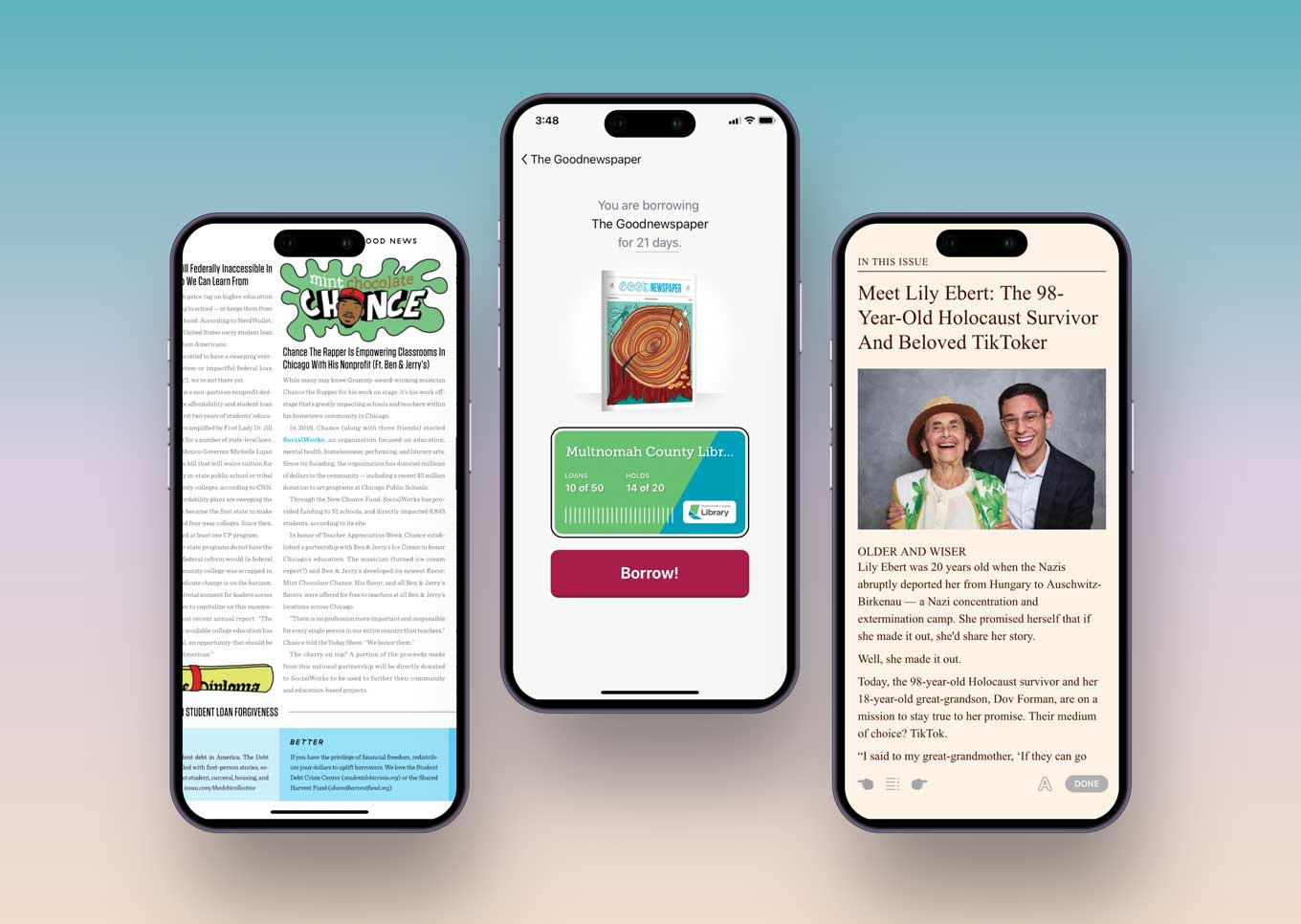
The Goodnewspaper is the monthly print newspaper filled with good news. Thousands of subscribers get the Goodnewspaper delivered to their homes every month. And now, hundreds of thousands more people will have access to good news in a digital format.
This service is made possible by Good Good Good’s paying subscribers. Revenue from Goodnewspaper subscriptions has always gone towards helping share good news — and now the impact of subscribers is bigger than ever.
What to know:
Why did Good Good Good make the Goodnewspaper available for free?
Since its founding, Good Good Good has been mission-driven, not profit-driven. Our mission is simple: We want to help people feel more hopeful and do more good.
While our incredible monthly subscribers (who receive a beautiful print newspaper via snail mail every month!) cover the costs of our team researching, reporting, writing, designing, and sharing good news — we never wanted good news to only be accessible to people with money to spare.
Libby makes it possible for more people to find good news through their local library — regardless of personal finances.
What is Libby?
Libby is a digital platform designed to make accessing books, audiobooks, and other digital media from your local library straightforward and convenient. Created by OverDrive, it allows library card holders to borrow and enjoy digital content right from their phones, tablets, or computers. In addition to books and audiobooks, Libby connects users to a range of digital publications, ensuring that valuable magazines and newspapers, like the Goodnewspaper, are easily accessible to everyone.
For those who value sustainable and community-based alternatives, Libby stands out as a prime choice, presenting an eco-friendly and community-centered way to access literature and news. Libby is also a great alternative to buying books and audiobooks.
You can use OverDrive’s map to discover libraries near you that use Libby. Libby is available at 90% of public libraries in North America. The Goodnewspaper should be available at any library that includes Libby’s magazine package in their digital collection.
If your library doesn’t utilize Libby or Libby’s magazine package, you can kindly reach out to your library to request that they add the magazines and newspapers collection from OverDrive.
How do you access the Goodnewspaper on Libby?
Reading the Goodnewspaper via Libby is as simple as searching for “Goodnewspaper” in the app. We’ve included a step-by-step tutorial to make it easy:
Accessing the Goodnewspaper via Libby:
Find the Goodnewspaper in Libby
1. Download the Libby app
Libby is available for iOS and Android — and is also accessible via web browsers and some e-readers.
Libby is owned by OverDrive, and is also available in the OverDrive app. If your library says it uses OverDrive, they also use Libby. Generally speaking, users prefer Libby because it’s a bit easier to use.
2. Enter your library card information
You can log in via your local library by entering your library card number and pin number.
If you forgot yours, you can contact your library’s customer service and they’ll be able to help take care of you quickly. And if you need a new library card, Libby may be able to direct you toward instructions on how to sign up.
3. Search for Goodnewspaper
Then, simply search for “Goodnewspaper” just like you’d search for any book or audiobook. (Search “Goodnewspaper” as one word, but searching as 2 words (“good newspaper”) will likely work too.)
Depending on your device, you may be able to follow this link directly to the Goodnewspaper’s page in Libby.
Download and read the Goodnewspaper in Libby:
4. Borrow as many issues at once as you wish, for free
Every issue of the Goodnewspaper is designed to be evergreen, meaning the stories will still be relevant whether you read them hot off the presses or two years later.
We highly recommend downloading two or three (or all 40+!) issues of the Goodnewspaper. You can scroll through and find some themes that stick out to you — whether it’s about sustainability, animals, art, or anything else.
The publication is set up so that there’s no limits to the number of issues you can download — and there are no holds necessary. An unlimited number of people can check it out each edition of the Goodnewspaper from each library.
5. Choose how to read the Goodnewspaper
There are two ways to read the Goodnewspaper in Libby:
Option 1: Read the Goodnewspaper visually, laid out just like the print edition. This is a great way to keep the “newspaper vibes” that are beloved by print subscribers. Flip from page to page.
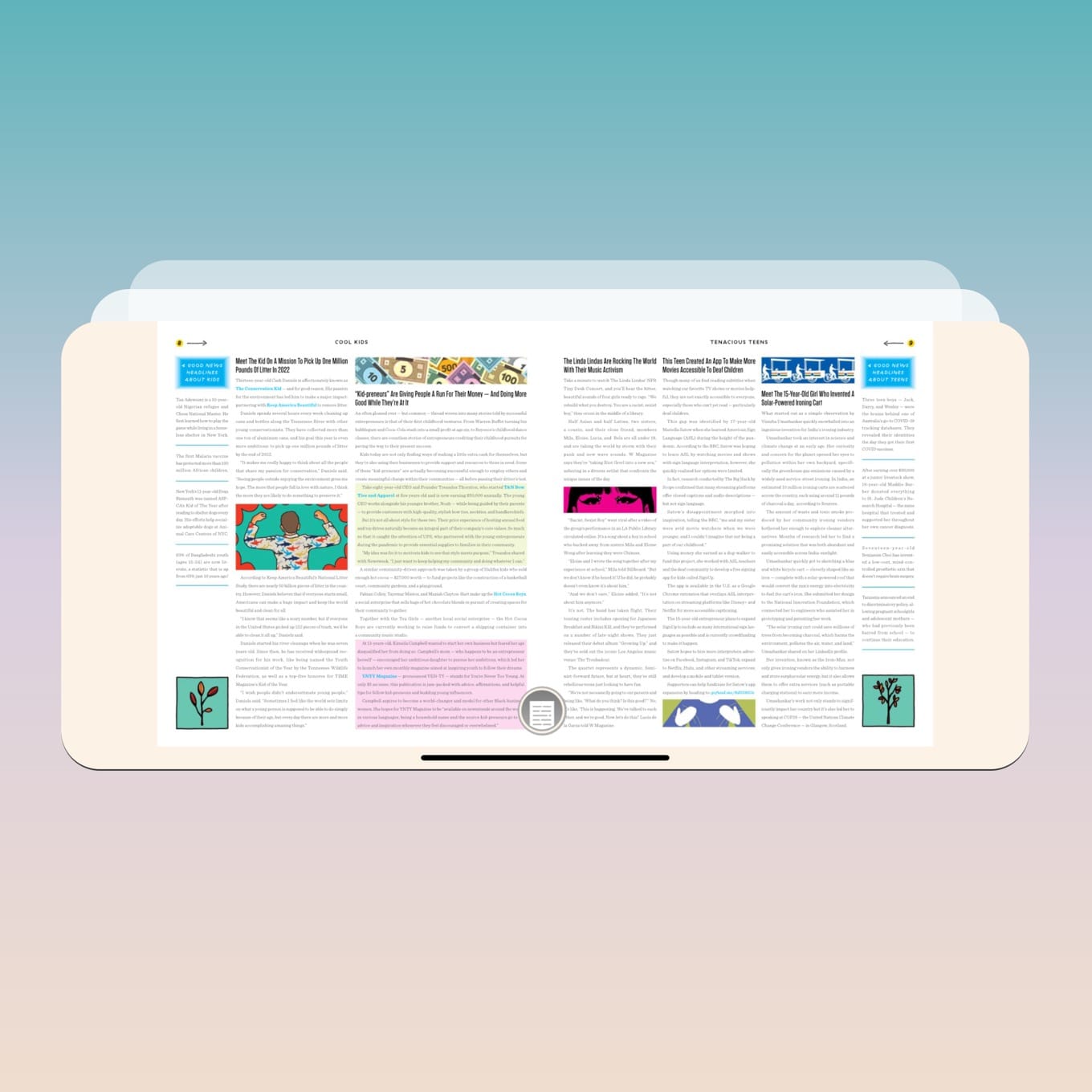
Option 2: Read each article individually. On any page, you can click the article icon to switch to a reader view. You’ll still be able to read 100% of the words and view the art, but it will be laid out more like a blog post than a magazine.
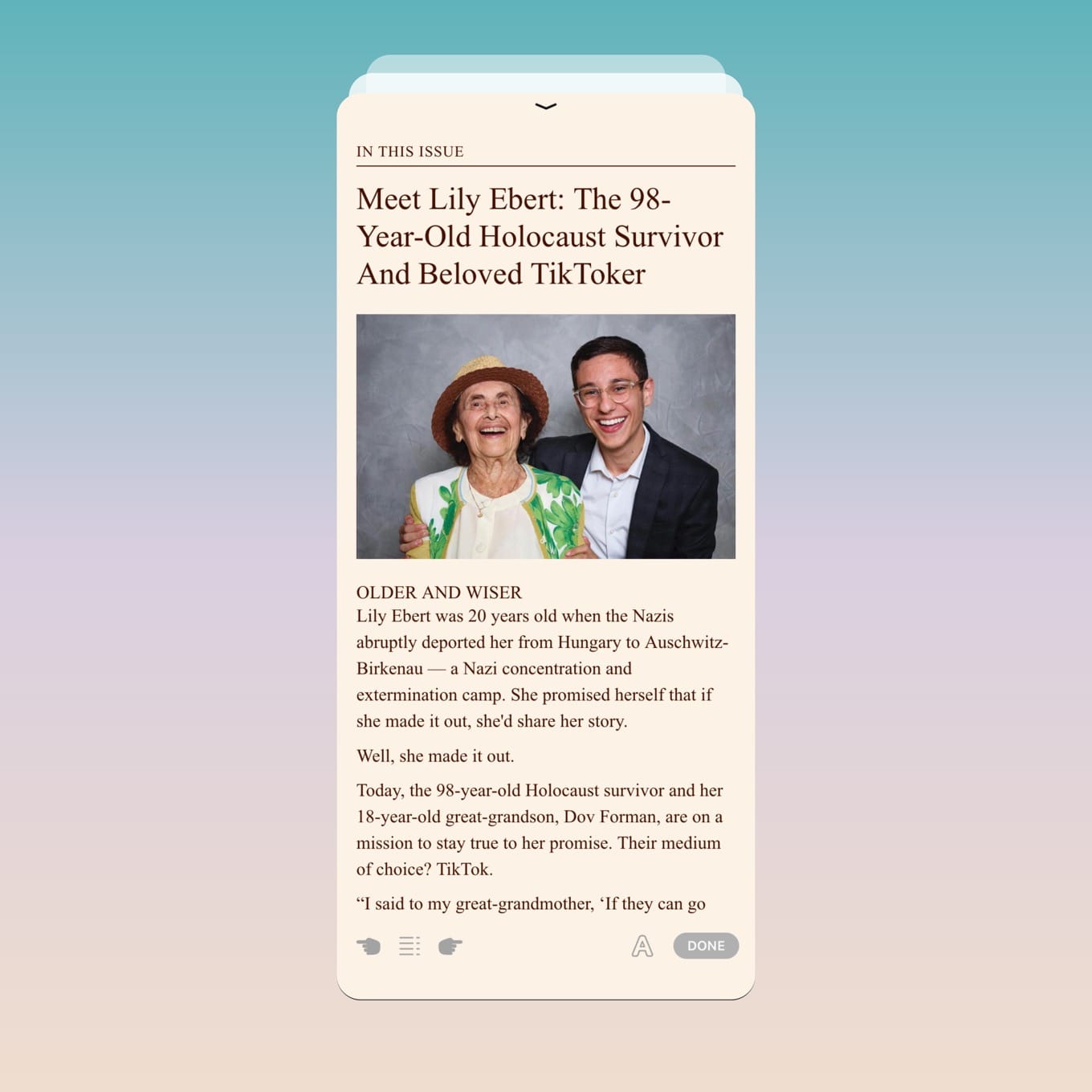
And in accessibility good news, this view also makes it possible to use with screen readers.
6. Make sure to “subscribe”
Good Good Good launches a new edition of the Goodnewspaper on the 1st of the month, every month. Libby makes it easy to ensure you never miss an issue. After you download your first Goodnewspaper, Libby will prompt you to get notified when new issues are available. It’s a smooth process and we highly recommend it.
Final notes:
Don’t hesitate to download more
As a reminder, your library should have unlimited copies of each issue of the Goodnewspaper — so please never feel shy about renewing your checkout or downloading another issue. We’re passionate about ensuring the world is filled with more good news.
Consider supporting Good Good Good
The Goodnewspaper is available in Libby thanks to the support of monthly subscribers. You can support Good Good Good’s efforts to fill the world with more good by joining the subscriber community.
We have three tiers of subscription available, depending on how much support you’d like to offer and which perks you’d like to subscribe to:
- Digital Subscription: Support Good Good Good and get access to subscriber perks
- Print Subscription: Support Good Good Good, get access to subscriber perks, and get a beautiful print newspaper delivered via snail mail every month
- Community Subscription: Show even more support to Good Good Good, get access to subscriber perks, and get five copies of the Goodnewspaper delivered to you each month — so you can share with your community
If paying for a subscription isn’t in the budget right now, no sweat! We hope you keep loving the Goodnewspaper in the Libby app.
More great ways to support Good Good Good:
- Tell people about the Goodnewspaper
- Subscribe to our free good news email newsletter
- Read our articles here on our website
More questions about Libby?
Libby’s support documents are incredibly helpful for troubleshooting any issues you may have.
Thanks for celebrating good news and filling the world with more good news! — Team Good Good Good
While it’s no secret that Jimmy Carter is among the most overlooked and dismissed U.S. presidents of the modern era — and yet — he’s also one of the more remarkable and impactful leaders of the last 50 years of American history.
Carter’s time in the White House was short-lived and shrouded in high-profile crises; his poor showmanship and communication skills left him with poor media coverage and sub-par approval ratings. All of this largely overshadowed Carter’s presidential impact as an early adopter of climate action and his profound focus on human rights in foreign policy.
His post-presidency is where Carter finally earned well-deserved public praise. After losing his re-election campaign, Carter graciously accepted defeat and returned to his humble life in Georgia. He quickly got to work establishing The Carter Center, a nonprofit organization with the mission to wage peace, fight disease, and build hope.
By and large, the organization has succeeded in that mission.
Carter and the Center committed to preventing and eradicating diseases throughout the global south, served as leaders in the advancement of human rights, and played a significant role in the impact of Habitat for Humanity.
Under his watch, Guinea worm disease has dropped from 3.5 million annual cases to only 15 total cases in 2021 —and we’ve seen significant progress in the fight against other potentially eradicable diseases. He was awarded the Nobel Peace Prize in 2002.
On February 18, 2023, the Carter Center released a statement saying that Carter, 98, made the decision to spend his “remaining time at home with his family and receive hospice care instead of additional medical intervention.”
Carter’s long life of service, speeches, and writing have resulted in countless inspiring quotes about what it means to live a life of service and hopefulness and the role each of us can play in making our world a better place.
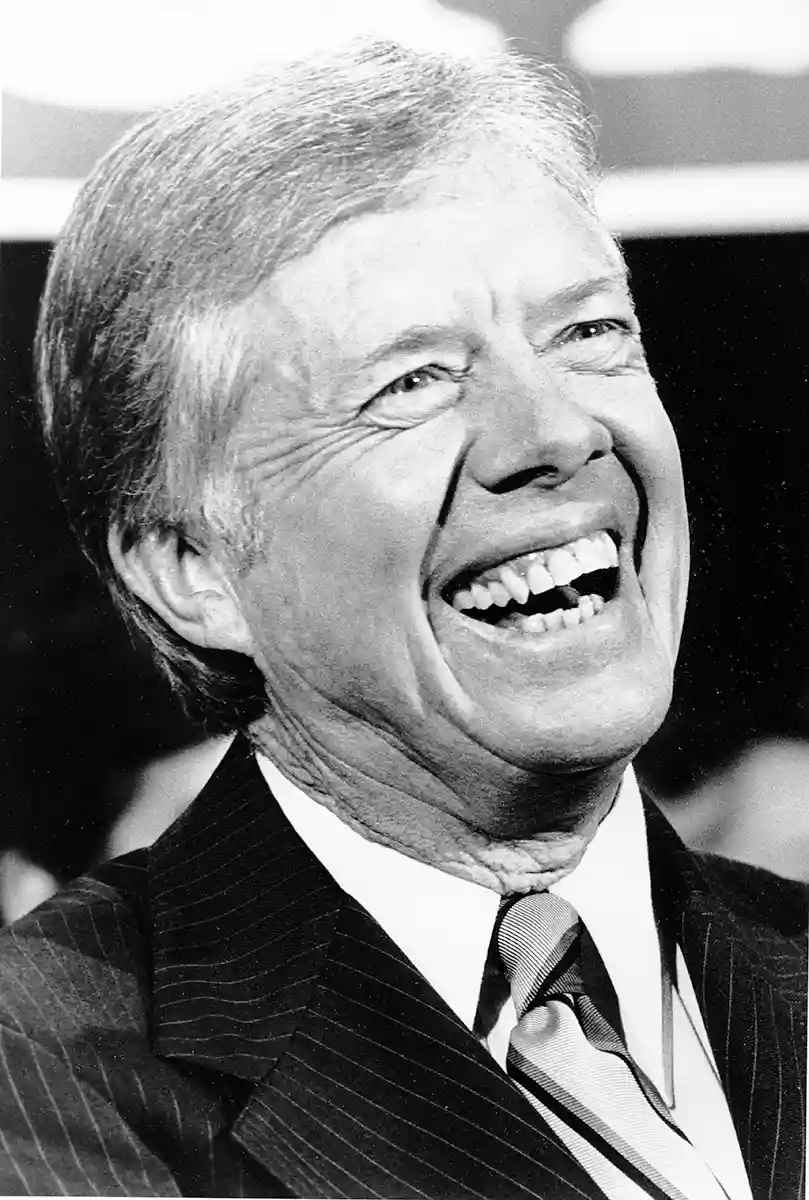
We’ve collected Jimmy Carter’s most famous quotes — as well as some of his most inspiring lesser-known quotes:
The Best Quotes From Jimmy Carter —
Famous Quotes
“To be true to ourselves, we must be true to others.”
— Jimmy Carter, in his Inaugural Address

“The bond of our common humanity is stronger than the divisiveness of our fears and prejudices.”
— Jimmy Carter

“I have one life and one chance to make it count for something... My faith demands that I do whatever I can, wherever I am, whenever I can, for as long as I can with whatever I have to try to make a difference.”
— Jimmy Carter

“Like music and art, love of nature is a common language that can transcend political or social boundaries.”
— Jimmy Carter

“America did not invent human rights. In a very real sense… human rights invented America.”
— Jimmy Carter, in his Farewell Address

“We have become not a melting pot but a beautiful mosaic. Different people, different beliefs, different yearnings, different hopes, different dreams.”
— Jimmy Carter

“You can do what you have to do, and sometimes you can do it even better than you think you can.”
— Jimmy Carter

"My position has always been, along with many other people, that any differences be resolved in a nonviolent way."
— Jimmy Carter

“We have to inspire our children and grandchildren to take on challenges and risks that at first may seem to be overwhelming, or even impossible. They need to understand that the only failure is not trying.”
— Jimmy Carter, in a speech at the 2016 meeting of the Coalition for Operational Research on Neglected Tropical Diseases

On Life
“When I reflect upon my blessings during my very nice lifetime, I am inspired to make sure that I spend the balance of the days of my existence in a productive way.”
— Jimmy Carter

“I believe that anyone can be successful in life, regardless of natural talent or the environment within which we live. This is not based on measuring success by human competitiveness for wealth, possessions, influence, and fame, but adhering to God's standards of truth, justice, humility, service, compassion, forgiveness, and love.”
— Jimmy Carter, Our Endangered Values: America's Moral Crisis
“Sometimes we face potential failure, and we have to remember to try anyway to find a way to reach our goal. We can overcome many global problems and build a better world if we all work together as a community”
— Jimmy Carter, in a speech at the 2016 meeting of the Coalition for Operational Research on Neglected Tropical Diseases
“Earlier in my life, I thought the things that mattered were the things that you could see, like your car, your house, your wealth, your property, your office. But as I've grown older I've become convinced that the things that matter most are the things that you can't see — the love you share with others, your inner purpose, your comfort with who you are.”
— Jimmy Carter
“Failure is a reality; we all fail at times, and it's painful when we do. But it's better to fail while striving for something wonderful, challenging, adventurous, and uncertain than to say, ‘I don't want to try because I may not succeed completely.’”
― Jimmy Carter, Sources of Strength: Meditations on Scripture for a Living Faith
“We all know grandparents whose values transcend passing fads and pressures, and who possess the wisdom of distilled pain and joy.”
— Jimmy Carter
“Wherever life takes us, there are always moments of wonder.”
— Jimmy Carter

→ Read more quotes about life
→ Read more positive quotes about life and quotes about self care
On Peace
“It is clear that global challenges must be met with an emphasis on peace, in harmony with others, with strong alliances and international consensus.”
— Jimmy Carter, The Nobel Peace Prize Lecture

“Because we are free we can never be indifferent to the fate of freedom elsewhere. Our moral sense dictates a clearcut preference for these societies which share with us an abiding respect for individual human rights. We do not seek to intimidate, but it is clear that a world which others can dominate with impunity would be inhospitable to decency and a threat to the well-being of all people.”
— Jimmy Carter
“Unless both sides win, no agreement can be permanent.”
— Jimmy Carter

“It is good to realize that if love and peace can prevail on earth, and if we can teach our children to honor nature’s gifts, the joys and beauties of the outdoors will be here forever.”
— Jimmy Carter
“It is clear that we must embrace human rights and aggressively challenge our society’s acceptance of violence, which should never be seen as normal or as the preferred means of solving problems.”
— Jimmy Carter, in a 2016 speech at the Center's annual Human Rights Defenders Forum
“Let us learn together and laugh together and work together and pray together, confident that in the end we will triumph together in the right.”
— Jimmy Carter, in his Inaugural Address
“We know that a peaceful world cannot long exist, one-third rich and two-thirds hungry.”
— Jimmy Carter
“I think the basic elevation of peace and human rights to the top of our priority list will submerge war and animosity and hatred and persecution to a very low level.”
— Jimmy Carter, in an interview for The Elders
“The bond of our common humanity is stronger than the divisiveness of our fears and prejudices. God gives us the capacity for choice. We can choose to work together for peace. We can choose to alleviate suffering. We can make these changes and we must remember, that there are many ways to accomplish our goals, together.”
— Jimmy Carter, in a speech at the 2016 meeting of the Coalition for Operational Research on Neglected Tropical Diseases
→ Read more quotes about peace
→ Read more humanitarian quotes
On Faith
“As we ask God for some blessing, we have an obligation to participate ourselves in the fulfillment of those dreams, aspirations, hopes, and ideas.”
― Jimmy Carter, Through the Year with Jimmy Carter: 366 Daily Meditations from the 39th President

“You only have to have two loves in your life: for God, and for the person in front of you at any particular time.”
― Jimmy Carter
“We should live our lives as though Christ were coming this afternoon.”
― Jimmy Carter

“In recent years, I have spoken out the best I could about the abuse of religious scriptures to promote various forms of violence, including the death penalty, discrimination and abuse of women, and unjust resort to warfare. These are direct violations of my own faith and other great religions, which are founded on love, kindness to strangers, not judging others, justice, and resolving disputes in the least violent manner.”
― Jimmy Carter, in a 2016 speech at the Center's annual Human Rights Defenders Forum
“I’m not in favor of the government mandating a prayer in school because our country was founded on the fact that no particular religious faith would have ascendance over or preferential treatment over any other.”
― Jimmy Carter
“When our mothers, wives, sisters, and daughters are considered both different and inferior in the eyes of the God we worship, this belief tends to permeate society and everyone suffers.”
— Jimmy Carter, A Call to Action: Women, Religion, Violence, and Power

“We have a tendency to condemn people who are different from us, to define their sins as paramount and our own sinfulness as being insignificant.”
― Jimmy Carter
“We generally fail to realize is that all the major religions have the same basic principles. Everyone professes to believe in peace, professes to believe in hospitality, professes to believe in caring for those in need, professes to be generous with our time and with our money to others who are in desperate states.”
— Jimmy Carter, in an interview for The Elders

→ Read more quotes about poverty
On Service
“We can choose to alleviate suffering. We can choose to work together for peace. We can make these changes — and we must. ”
— Jimmy Carter

“In our democracy, the only title higher and more powerful than that of president is the title of citizen. It is every citizen’s right and duty to help shape the future legacy of our nation.”
— Jimmy Carter, in an op-ed in the Wall Street Journal
“In this great country of ours, it is inexcusable that so many children grow up in poverty and despair. The well-being of our children must be the national priority and the responsibility of every individual.”
— Jimmy Carter

“Each of us citizens, especially in a democracy, must examine ourselves — individually and as a nation — to see how we can improve. We do this not with condemnation, but constructively.”
— Jimmy Carter
“[The next] generation, including my grandchildren, can join in making our great country a superpower in all meanings of the word: an exalted example of being a champion of peace, justice, democracy, human rights, environmental quality, and generosity to those in need. This is America's destiny, which you must help to shape.”
— Jimmy Carter

→ Read more quotes about making a difference
On the United States
“Democracy is a framework that permits a people to accommodate changing times and correct past mistakes. Since our independence, the United States has rid itself of slavery, granted women the right to vote, ended almost a century of legal racial discrimination, and [reformed election laws].”
— Jimmy Carter, in a speech from Cuba

“We must resist the polarization that is reshaping our identities around politics. We must focus on a few core truths: that we are all human, we are all Americans and we have common hopes for our communities and our country to thrive.”
— Jimmy Carter, in an op-ed in the New York Times
“My nation is hardly perfect in human rights. A very large number of our citizens are incarcerated in prison, and there is little doubt that the death penalty is imposed most harshly on those who are poor, black, or mentally ill. For more than a quarter century, we have struggled unsuccessfully to guarantee the basic right of universal health care for our people. Still, guaranteed civil liberties offer every citizen an opportunity to change these laws.”
— Jimmy Carter, in a speech from Cuba
“For American democracy to endure, we must demand that our leaders and candidates uphold the ideals of freedom and adhere to high standards of conduct.”
— Jimmy Carter, in an op-ed in the New York Times

“While citizens can disagree on policies, people of all political stripes must agree on fundamental constitutional principles and norms of fairness, civility, and respect for the rule of law. Citizens should be able to participate easily in transparent, safe, and secure electoral processes. Claims of election irregularities should be submitted in good faith for adjudication by the courts, with all participants agreeing to accept the findings. And the election process should be conducted peacefully, free of intimidation and violence.”
— Jimmy Carter, in an op-ed in the New York Times
“Ours was the first nation to be founded on the idea that all are created equal and all deserve equal treatment under the law. Despite our missteps and shortcomings, these ideals still inspire hope among the oppressed and give us pride in being Americans.”
— Jimmy Carter, in an op-ed in the Wall Street Journal

“My prayer is that we also, the United States, become the undisputed champion of peace. Wouldn’t it be nice if every country on earth, when they have a threat of warfare, would say, ‘Why don’t we go to Washington, because the American people are dedicated to peace?’
"I pray also that we become the undisputed champion of human rights. We should restore the United Nations to its original purpose and commitment. Our hallmark should be a peaceful diplomacy.”
— Jimmy Carter, in a 2016 speech at the Center's annual Human Rights Defenders Forum

→ Read more death penalty quotes
On Serving as President
“Thoughtful criticism and close scrutiny of all government officials by the press and the public are an important part of our democratic society.”
— Jimmy Carter, in his Farewell Address

“The life of every human being on earth can depend on the experience, judgment, and vigilance of the person in the Oval Office.”
— Jimmy Carter
“Human rights is the soul of our foreign policy because human rights are the very soul of our sense of nationhood.”
— Jimmy Carter
“Everyone who has run knows that its most important value is in removing tension and allowing a release from whatever other cares the day may bring.”
— Jimmy Carter

On War & Conflict
“War may sometimes be a necessary evil. But no matter how necessary, it is always an evil, never a good. We will not learn to live together in peace by killing each other’s children.”
— Jimmy Carter, The Nobel Peace Prize Lecture
“We cannot be both the world's leading champion of peace and the world's leading supplier of the weapons of war.”
— Jimmy Carter
“War and good health are incompatible. There’s no way we can go [eradicate diseases] in an area that is at war.”
— Jimmy Carter
“So I think that we need to be more reluctant to go to war, and to go there only in desperate conditions when all avenues towards peace are exhausted, including good-faith discussions, either directly with our potential adversaries or through a trusted intermediary.”
— Jimmy Carter, in an interview for The Elders
On Leadership
“What is needed now, more than ever, is leadership that steers us away from fear and fosters greater confidence in the inherent goodness and ingenuity of humanity.”
— Jimmy Carter, in a 2016 speech at the Center's annual Human Rights Defenders Forum

“A strong nation, like a strong person, can afford to be gentle, firm, thoughtful, and restrained.”
— Jimmy Carter
“We must adjust to changing times and still hold to unchanging principles.”
— Jimmy Carter
“We have learned that ‘more’ is not necessarily ‘better,’ that even our great nation has its recognized limits, and that we can neither answer all questions nor solve all problems... we must simply do our best.”
— Jimmy Carter

On Immigration
“We have become not a melting pot but a beautiful mosaic. Different people, different beliefs, different yearnings, different hopes, different dreams.”
— Jimmy Carter
“After 43 years of animosity, we hope that someday soon, [Cuba] can reach across the great divide that separates our two countries and say, ‘We are ready to join the community of democracies,’ and I hope that Americans will soon open our arms to you and say, ‘We welcome you as our friends.’”
— Jimmy Carter, in a speech from Cuba
“We need a fair and responsible national policy that enforces laws and protects the human rights of those on our country who are not yet citizens.”
— Jimmy Carter
“Our nation has long been a beacon of hope for those fleeing violence or persecution. [Rosalynn and I] urge Americans to open their hearts to these refugees and support them as they work to build new lives here among us. We stand with the people of Ukraine in their courageous fight for democracy and freedom.”
— Jimmy Carter
“Americans know the heart of the stranger. The colonies that became the United States were founded by refugees from religious persecution, and our religious traditions call on us to welcome the stranger.”
— Jimmy Carter, in a statement commemorating the anniversary of the Refugee Act of 1980

On Health
“We have a moral obligation to prevent suffering wherever we can.”
— Jimmy Carter

“I am cheered by the knowledge that there are mothers in Colombia and Ecuador and Mexico and Guatemala that never have to worry again about their families going blind from river blindness. I have to remember that there are women in Ethiopia who will never suffer from the ravages of blinding trachoma. There are millions of people in Plateau and Nasarawa States in Nigeria no longer exposed to lymphatic filariasis. And I have to remember that there will soon be no Guinea worm anywhere in the world. I think of these realities and I am energized again.”
— Jimmy Carter, in a speech at the 2016 meeting of the Coalition for Operational Research on Neglected Tropical Diseases
“The awareness that health is dependent upon habits that we control makes us the first generation in history that to a large extent determines its own destiny.”
— Jimmy Carter
“I think all Americans believe in human rights. And health is an often overlooked aspect of basic human rights. And it's one that's easily corrected. The reason I say that is that many of the diseases that we treat around the world, I knew when I was a child. My mother was a registered nurse. And they no longer exist in our country.”
— Jimmy Carter

→ Read more quotes about public health
→ Read more quotes about hunger
On the Rights of Women & Girls
“I can tell you without any equivocation that the number one abuse of human rights on Earth is the abuse of women and girls.”
— Jimmy Carter, in his TEDWomen talk

“Women are key agents of the changes we need. Women are excluded from leadership in religion, in family and community decision-making, and in legislatures and other political offices. When half of the world’s population is not consulted on important decisions and policies, it is no wonder that so many problems persist.”
— Jimmy Carter, in a 2016 speech at the Center's annual Human Rights Defenders Forum
“When women are empowered in significant numbers, in the corporate world as well as in politics and in daily life, better decisions are made and more sustainable solutions are adopted.”
— Jimmy Carter, in a 2016 speech at the Center's annual Human Rights Defenders Forum

“I have become convinced that the most serious and unaddressed worldwide challenge is the deprivation and abuse of women and girls, largely caused by a false interpretation of carefully selected religious texts and a growing tolerance of violence and warfare.”
— Jimmy Carter, A Call to Action: Women, Religion, Violence, and Power
“The best thing that we could do today is for the women in the powerful nations like this one, and where you come from, Europe and so forth, who have influence and who have freedom to speak and to act, to take the responsibility on yourselves to be more forceful in demanding an end to racial discrimination against girls and women all over the world.”
— Jimmy Carter, in his TEDWomen talk
“I hope that all of you will join me in being a champion for women and girls around the world and protect their human rights.”
— Jimmy Carter, in his TEDWomen talk

→ Read more quotes about hope
→ Read more quotes about optimism
On Race & Diversity
“The test of a government is not how popular it is with the powerful and privileged few but how honestly and fairly it deals with the many who must depend on it.”
— Jimmy Carter

“We are of course a nation of differences. Those differences don't make us weak. They're the source of our strength.”
— Jimmy Carter
“No poor, rural, weak, or black person should ever again have to bear the additional burden of being deprived of the opportunity for an education, a job, or simple justice.”
— Jimmy Carter
“I say to you quite frankly that the time for racial discrimination is over.”
— Jimmy Carter
“People of power, privilege, and moral conscience must stand up and say ‘no more’ to a racially discriminatory police and justice system, immoral economic disparities between whites and blacks, and government actions that undermine our unified democracy. We are responsible for creating a world of peace and equality for ourselves and future generations.”
— Jimmy Carter

→ Read more quotes about humanity
→ Read more quotes about justice
More Inspiring Jimmy Carter Quotes
“Tremendous progress can be made if we persevere through difficult challenges.”
— Jimmy Carter

“When people are intimidated about having their own opinions, oppression is at hand.”
— Jimmy Carter
“If you fear making anyone mad, then you ultimately probe for the lowest common denominator of human achievement.”
— Jimmy Carter
“In every instance that I have known of with confrontation with the government and the press, the press was always right. So keep it up.”
— Jimmy Carter
“Remember these words: ‘We hold these truths to be self-evident, that all men are created equal; that they are endowed by their creator with certain inalienable rights; that among these are life liberty and the pursuit of happiness.’
This vision still grips the imagination of the world. But we know that democracy is always an unfinished creation. Each generation must renew its foundations. Each generation must rediscover the meaning of this hallowed vision in the light of its own modern challenges. For this generation, ours, life is nuclear survival; liberty is human rights; the pursuit of happiness is a planet whose resources are devoted to the physical and spiritual nourishment of its inhabitants.”
— Jimmy Carter
“The more involvement that people have in choosing their own leaders and shaping their own destiny, the better off they are.”
— Jimmy Carter, in an interview for The Elders
“To learn how to use new technology is very good, because it gives people access to each other’s thoughts and beliefs and it breaks down national barriers, religious barriers, and generic values.”
— Jimmy Carter, in an interview for The Elders
“I’ve learned that people who are desperately poor have the same hopes, the same work ethic, and the same dreams, as you and I. They are just as dedicated and just as intelligent. When they receive the right tools and training, they will implement the solutions themselves, become empowered, and be ready to address other challenges. They want to improve their own lives, and they just need some help.”
— Jimmy Carter, in a speech at the 2016 meeting of the Coalition for Operational Research on Neglected Tropical Diseases
“But I owe my deepest thanks to you, the American people, because you gave me this extraordinary opportunity to serve. We have faced great challenges together. We know that future problems will also be difficult, but I am now more convinced than ever that the United States — better than any other nation — can meet successfully whatever the future might bring.”
— Jimmy Carter
The current threat to the Earth’s biodiversity is no laughing matter, but it may be that raising a smile might help some vulnerable species dogged by unfortunate looks or dark reputations.
Explore: See photos of the ugliest animals (and learn how to protect them)
Studies of conservation strategies for two endangered primates — the proboscis monkey from Borneo and the aye aye lemur native to Madagascar — show the surprisingly powerful influence of public attitudes towards less photogenic creatures at risk of extinction.
September 1st marks International Primate Day, an opportunity to take a look at how conservationists can best raise the profiles of less-loved primates.
The proboscis monkey, Nasalis larvatus, regularly features in public votes of the world’s ugliest animals. Both males and females have conspicuous noses, but sexual dimorphism (differences in shape, size or color between the sexes) also results in dominant males with pot bellies, piggy eyes and a vivid red penis contrasting against a black scrotum: none of which induce impressions of beauty, majesty or cuteness — the usual criteria for public affection.
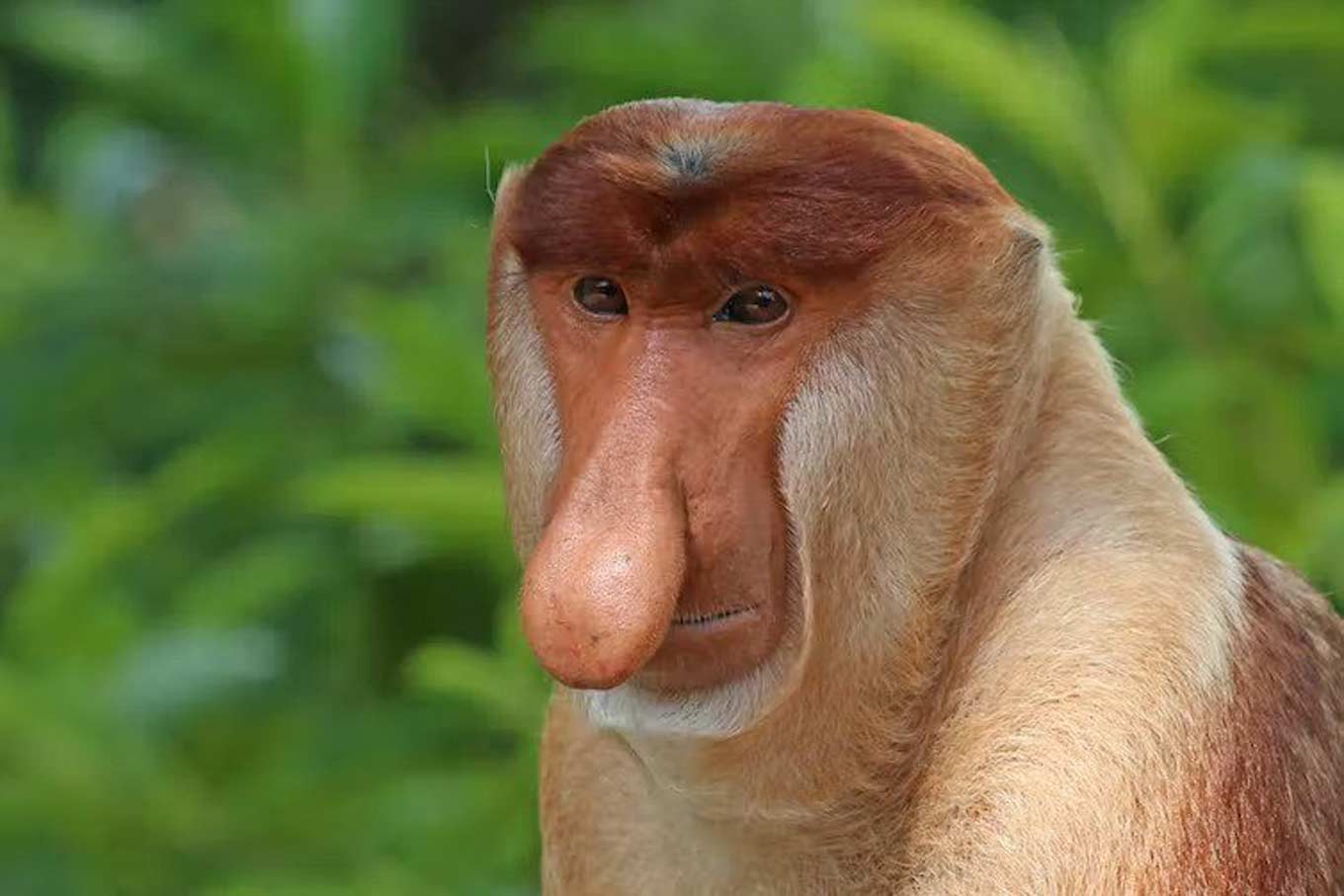
The power of memes
A recent study conducted in Poland aimed to illuminate ways to inspire people’s concern about protecting species, including the proboscis monkey, that aren’t so aesthetically pleasing.
Researchers explored the possibility of raising public interest in conserving this curiously ugly monkey through spreading amusing internet memes — images of the monkey with text linking its appearance to Polish jokes and cultural references — within social media and in conservation marketing.
The team then monitored the interest in proboscis monkeys versus conservation superstars such as koalas and gorillas by analyzing public donations made to related conservation campaigns.
As a result of the campaign, media interest in the proboscis monkey – virtually negligible in Poland prior to 2016 — increased significantly, equaling coverage for traditional conservation celebrity species.
Explore: See the best wholesome memes
The amusing memes, focusing on the funny side of the monkey’s looks, attracted more positive coverage that inspired several amateur crowdfunding campaigns raising money for the species’ protection in Borneo: which received donations from 218 donors in total.
Overall, a creature previously all but unknown to the Polish public became a focus of important attention that ultimately contributed to its protection by helping to pay for the conservation of its habitat.
These findings suggest that conservationists shouldn’t shy away from using memes to create interest in and raise money for the more overlooked endangered members of the animal kingdom.
Changing myths
The aye aye lemur, Daubentonia madagascariensis, provides another example of the power of public attitudes to influence conservation efforts.
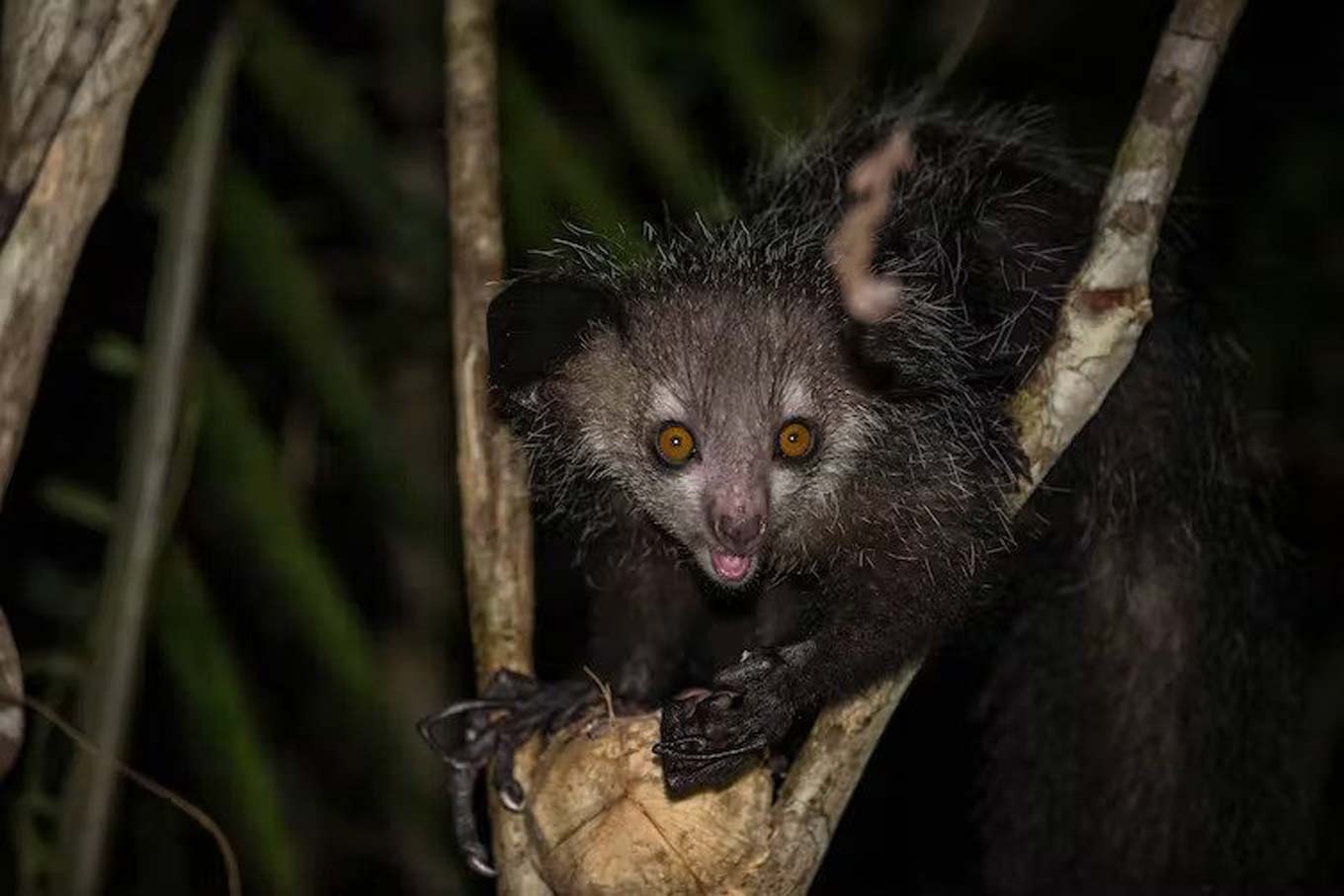
Where the proboscis monkey is corpulent and flabby, the nocturnal aye aye is spindly, bug-eyed and unkempt. Its two front incisors stick out much like the teeth of Murnau’s Nosferatu, complemented by an unusually elongated, skeletal central finger used to unearth grubs from trees (but also to curse unsuspecting humans, according to Malagasy legend).
Even its name, “aye aye”, is possibly a linguistic trick to avoid calling the creature directly by instead imitating its cry.
Yet despite these creatures’ damning reputation as harbingers of catastrophe to humans, it is in fact humans who threaten the aye aye’s continued existence. Aye aye numbers have been in sharp decline since the 1980s, thanks to hunting, deforestation of their habitat for construction and culturally driven persecution due to their “evil” reputation.
Although it was thought that negative perceptions of aye ayes were fairly universal in Madagascar, a recent study by academics from Madagascar and Germany revealed unexpectedly varied attitudes among Magalasy villagers, with certain areas such as the Makira region of northeastern Madagascar even being potential strongholds for aye aye conservation due to the local prevalence of positive attitudes towards aye ayes.
In places where negative attitudes dominated, the villagers themselves often could not identify aye ayes in pictures. The animal remained an unfamiliar, imaginary threat.
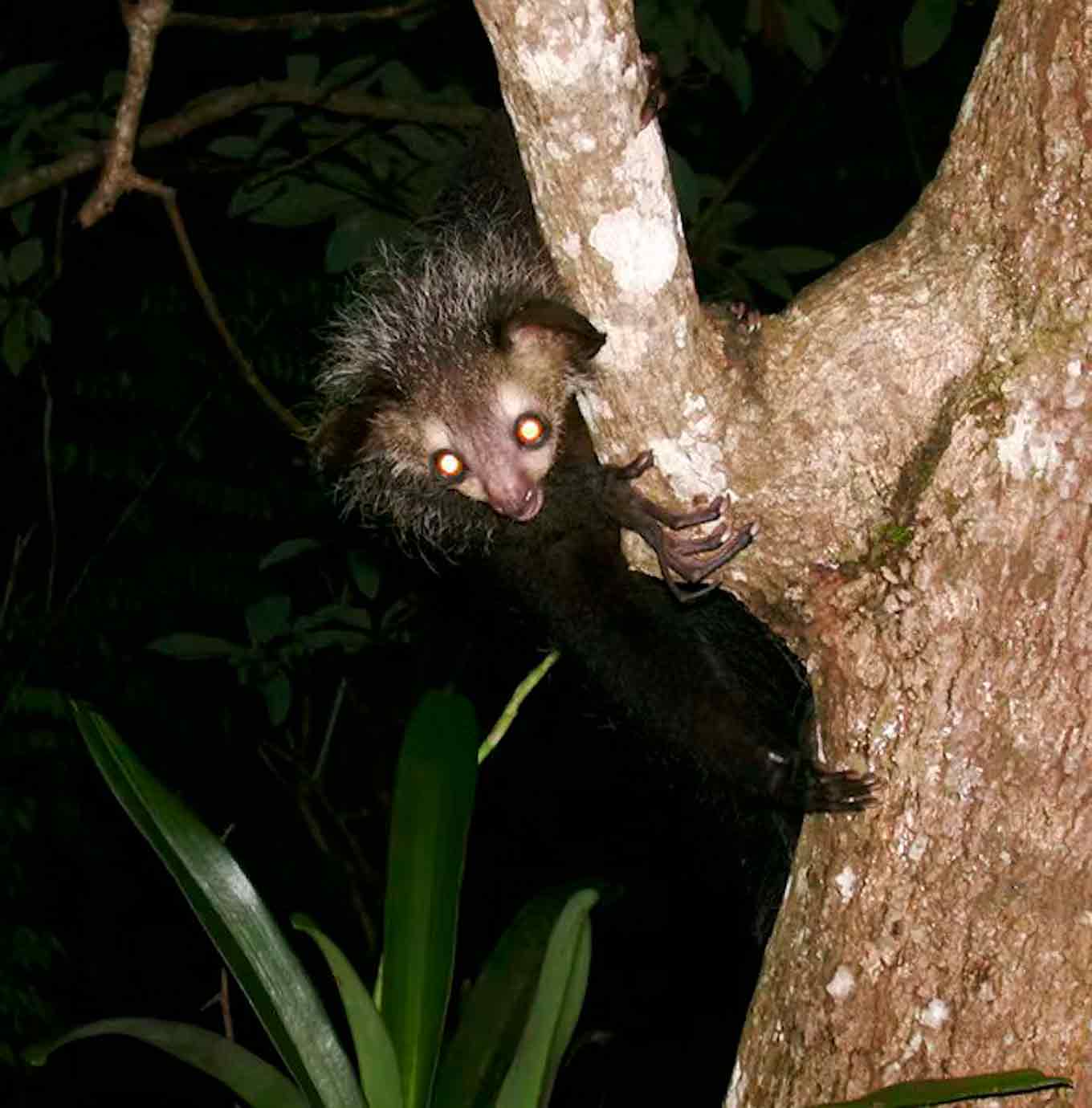
In fact, interviewees’ regard for the aye aye seemed to vary with direct knowledge of aye aye behavior. Although negative views were more frequent than positive, the latter were associated with understanding about the aye aye’s usefulness for controlling pests on vital crops.
Firsthand knowledge and experience of aye ayes was associated with positive views, pointing to the importance of sharing knowledge within conservation strategy as well as the possibility of shifting seemingly entrenched beliefs.
In time and with patience, farmers aware of the aye aye’s pest control powers might help generate vital local action in support of conservation by helping to craft new narratives centering the creature’s role in our ecosystems.
Understanding how and why people perceive certain animals as less appealing than others could be the key to expanding public conservation efforts successfully.
This story by Mike Jeffries, from the Northumbria University, was originally published by The Conversation.
The first clue to this library’s offbeat lending habits sits inside a tall glass display case near the entrance. Sprinkled amid storybooks, atlases, and a globe are a remote-controlled drone, an electric balloon pump, a DJ mixing board, and a Nintendo game console.
And those aren’t the strangest items available to borrow. A few steps away — past a Lego dinosaur and a pair of hulking automated checkout towers — an open binder lists more than 100 nonbook offerings, from bounce houses and hedge trimmers to a ukulele, a popcorn maker, and a $585 cheese warmer.
The Dewey Decimal System never saw this coming. It’s called “the library of things,” and Placentia’s collection is part of a nationwide movement that is reshaping public libraries and how they serve patrons in the digital age.
More than half of America’s 9,000 public library districts now lend nontraditional objects, says Maria McCauley, president of the Public Library Association.
Many have also revamped their event calendars to include such programs as punk rock aerobics, speed dating, cow milking demonstrations, and indoor miniature golf.
These and other innovations reflect the ingenuity of librarians in adapting to changing community values and needs. “Libraries all over the country are doing creative things like this,” Ms. McCauley says.
The beyond-books trend began, depending on who is asked, either a decade ago in Sacramento, California, or in the 1800s, most notably in Braddock, Pennsylvania, a Pittsburgh suburb whose library featured a boxing ring, eight billiards tables, a swimming pool, a bowling alley, a game room, and a 964-seat music hall with cushioned opera chairs.
The Sacramento model has spawned a wave of copycats, including Placentia’s public library. Its 19th- and 20th-century predecessors are largely forgotten, says author Wayne Wiegand, a professor emeritus of library and information studies at Florida State University.
“History holds thousands of precedents for what’s now called a movement. The problem is librarians don’t generally know much or care about their past,” he says.
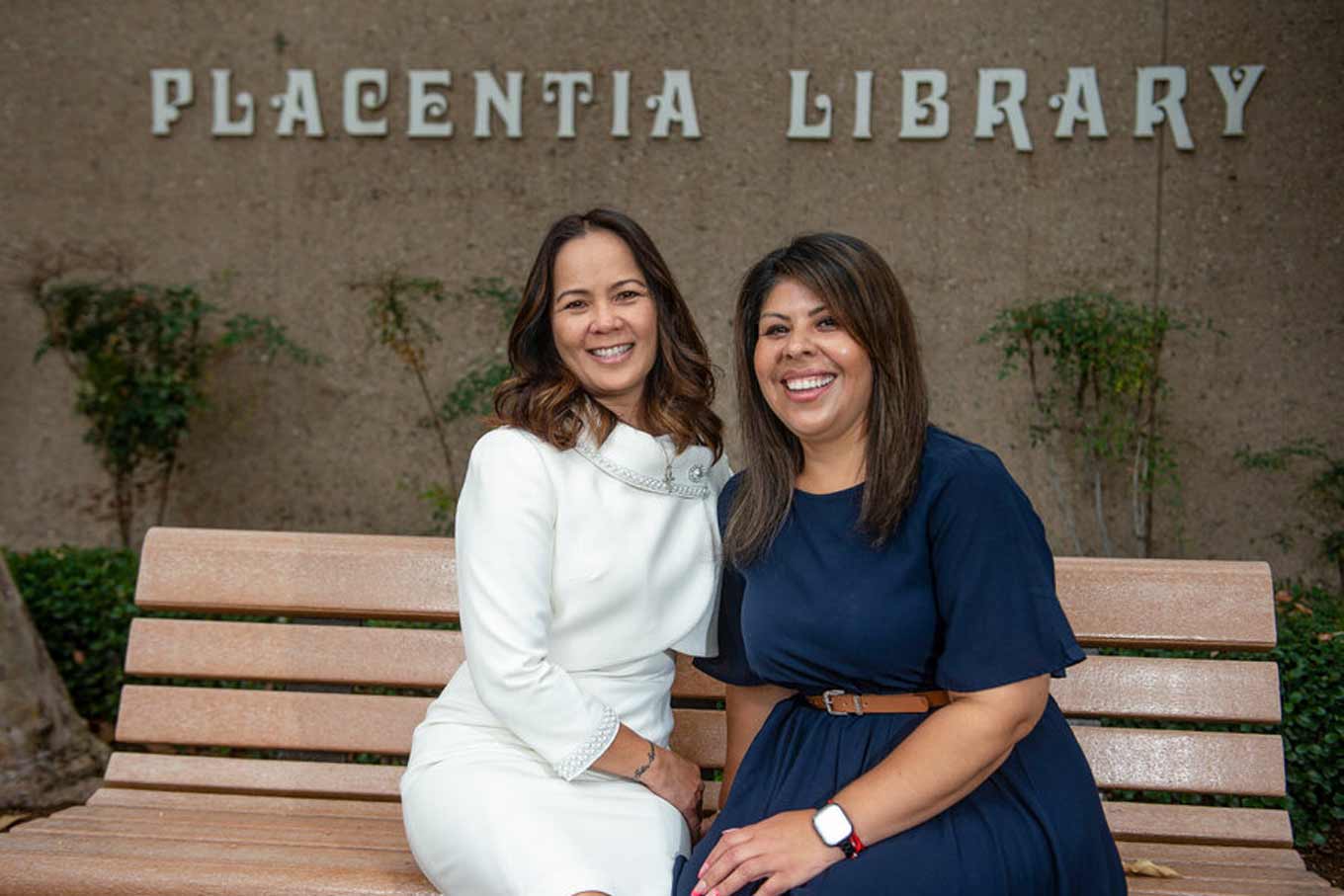
Balancing the books
“It was one of those middle-of-the-night things,” says librarian Lori Easterwood, recalling the 2013 inspiration for Sacramento’s pioneering library of things.
After waking up with the idea and the name, she checked Google, saw nothing, and jotted a note.
“I used to keep a pad of paper by the bed,” for overnight thoughts, she says. “Eighty percent were inexplicable the next day.”
This brainstorm wasn’t completely out of the blue. For several years, Ms. Easterwood and colleague Jessica Jupitus, a branch supervisor who moonlighted as a roller derby queen, had been experimenting with various “harebrained schemes” to attract new clientele and keep their library relevant.
They launched “zombie survival aerobics” classes, hosted “bad art” craft nights, sponsored “haunted stacks” tours in which the “ghosts” of historical figures recounted their gruesome deaths, and organized truck rallies with Brinks armored cars, drag racers, and SWAT vehicles.
For Ms. Easterwood’s library of things concept, the duo successfully applied for a $55,000 state grant. “Sometimes people don’t just need a book about sewing – they need the sewing machine too,” the application said. To decide which products to add, they set up a website for patron suggestions.
As part of the grant, library employees also received customer service training from the Ritz-Carlton luxury hotel chain. It would come in handy.
In early 2015, when Sacramento’s things collection debuted, the atmosphere was a little bit crazed. “It became very popular very quickly,” says Justin Azevedo, who managed the lone branch that offered the program. “We had huge waitlists.”
Storage was a challenge. Checking in books and DVDs is one thing; checking in guitars and lawn mowers is trickier. “We had sewing machines under people’s desks,” Mr. Azevedo recalls. But eventually, the kinks were ironed out, and staffers even mastered skills not normally taught to library science majors.
“I learned how to replace a sewing machine flywheel and how to restring guitars,” Mr. Azevedo notes.
By the end of the first year, the library of things branch reported a 9% jump in customers and a 25% increase in attendance at adult programs.
That and a spurt of media attention led to the next hurdle: fielding a (still steady) stream of calls from other towns wanting to emulate the concept. One of the inquiries came from Placentia’s century-old library, one of only 11 independent library districts in California.
Overseen by an elected board, the library predates the city, a bedroom community near Disneyland originally known for oil, citrus, and — in the late 1800s — a quirky colony of vegetarian spiritualists.
“We worked with Sacramento to create our liability form and rules,” says Placentia library director Jeanette Contreras. Borrowers must be at least 18 years old and agree to pay for cleaning, repair, or replacement costs if an item comes back in worse condition than it left.
To underscore that caveat, Placentia’s things catalog includes the price of each entry. The podcast kit clocks in at $508.86, for example, and the KitchenAid commercial mixer is $541.
“People have been pretty good,” Ms. Contreras says, with the exception of an MIA violin and several crashed drones.
Since launching with a $5,000 budget in 2017, the collection has grown to include mobile Wi-Fi hot spots, a rechargeable leaf blower, and a snow cone machine, all based on patron input. In April, the library added day passes to state parks, courtesy of a California initiative to improve access to nature.
Kaitlin Uthus, a mother of five, recently tried the library’s outdoor movie projector and screen after stumbling upon the catalog while returning books. “I was amazed by all the things you can get,” she says.
Eight-year-old Amyra Diwan, who lives in Cypress, California, discovered the things binder while she and her mother were waiting for her brother to finish a saxophone lesson nearby.
“With my mom, I’ve borrowed the ukulele, this really cool art kit, and the park pass” for a Father’s Day trip to Crystal Cove State Park, she says.
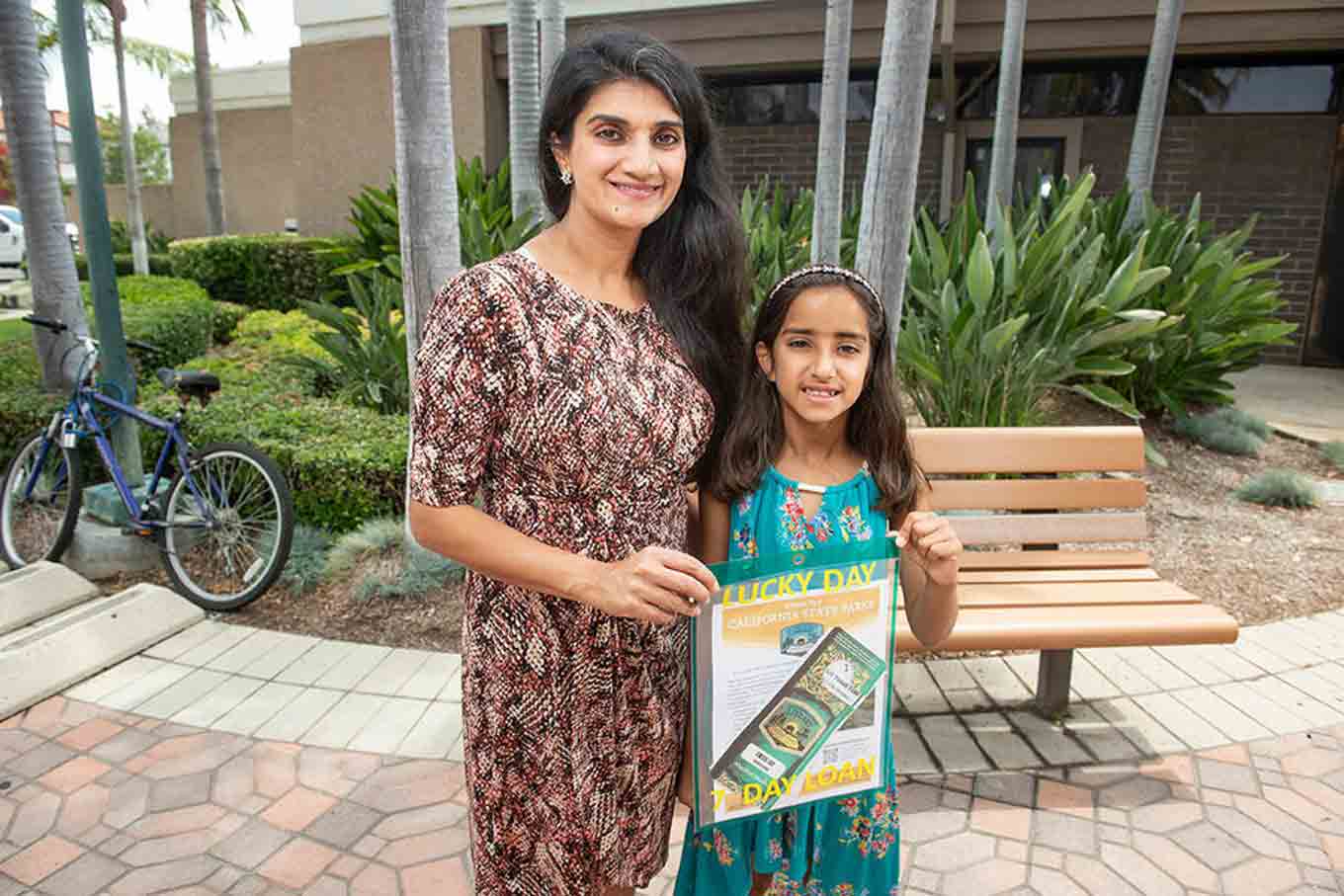
Santa suits and Roomba vacuums
When the pandemic hit, it knocked the wind out of things programs all over the nation.
Placentia converted a meeting room into a sterilization chamber in which masked employees wiped down returned items and quarantined them for two weeks, Ms. Contreras says.
That kept books and DVDs in circulation, but the library of things went dark — except for laptops — until July 2021.
At the same time, COVID-19 spurred some U.S. libraries to start or expand things collections, says Ms. McCauley of the Public Library Association. Branches that didn’t lend laptops or hot spots, for instance, began doing so when patrons could no longer come in to use desktop computers, she says.
(Similarly, sidelined Los Angeles County public libraries beamed their Wi-Fi into parking lots, so customers could still enjoy free internet access.)
“Libraries are intended to help people live their very best lives,” says Ms. McCauley, who also serves as director of the Cambridge Public Library in Massachusetts. “Nontraditional items broaden that mission.”
Each library seems to put its own stamp on the concept.
In Brunswick, Maine, patrons can check out Tibetan singing bowls and meditation cards.
Mississippi’s Bolivar County Library System stocks Santa Claus costumes.
And the library in Telluride, Colorado, circulates Roomba vacuums and check-engine light code readers.
Some libraries pair their items with seminars or special events. The Guilderland Public Library in upstate New York teaches “cut the cord” lessons to go with its “try before you buy” assortment of cable TV alternatives: Amazon Fire TV Sticks, Apple TV boxes, HDTV antennas, and Roku streaming devices. And New Jersey’s Borough of Totowa Public Library celebrates its stockpile of cake pans with family cake-decorating nights.
Such customizations are about “making sure we offer what people need,” says Ms. Jupitus, the Sacramento book maven who now helps run the public library in Tempe, Arizona.
In 2014, Dallas librarian Melissa Dease distributed donated prom dresses at a neighborhood branch in a low-income area. “People came from a hundred miles away,” she says.
“It was kind of heartbreaking to think they might not have been able to attend their dances otherwise.” Today, the prom initiative boasts nearly 1,000 dresses, along with shoes from Neiman Marcus and a smattering of suits.
“The importance of amusements”
Although all of this might sound new and unusual, the history of American libraries isn’t as bookcentric as many assume.
“I trust you will not forget the importance of amusements,” steel magnate Andrew Carnegie declared at the 1889 dedication of Braddock, Pennsylvania’s amenity-laden library, the first of nearly 1,700 public library buildings he bankrolled over the next 30 years.
Most of the structures were far more modest, but Carnegie’s blueprints always included a community room, says Mr. Wiegand, the library historian.
“For decades, public librarians used these rooms for myriad purposes, including sewing classes, kitchen instruction for farm housewives, health clinics, and hundreds of other ‘things,’” he explains.
But eventually, many of the rooms were converted to storage for more books and their original mission faded from memory, he notes.
Even before Carnegie, libraries commonly housed art galleries, conversation parlors, and rooms to play chess and checkers.
Some also lent nonbook materials. In 1894, St. Louis patrons could take home tennis rackets and board games, says Mark Robison, a University of Notre Dame librarian who co-edited “Audio Recorders to Zucchini Seeds: Building a Library of Things.”
Other early precedents for today’s smorgasbord of borrowable objects include framed paintings (1904 in Newark, New Jersey), piano rolls (1907 in Evanston, Illinois), and stereoscopes (1909 in Portland, Oregon).
In 1936, the Los Angeles Public Library added 7,126 used toys to its catalog, according to Mr. Wiegand’s book “Part of Our Lives: A People’s History of the American Public Library.”
Like their modern counterparts, librarians of the past worried about staying relevant, especially to younger age groups. In 1945, a library basement in Santa Monica, California, was transformed into a “young people’s room” where a radio played constantly and a social worker presided instead of a librarian, Mr. Wiegand says.
(Teen spaces are now common in libraries around the United States.)
During the 1960s, libraries hosted jazz concerts, talent contests, movie nights, and anti-poverty programs. Denver’s public library held a 1973 multicultural series – with such titles as “Black Awareness” and “Viva Mejicano” – that drew up to 3,700 people per event, dwarfing an appearance by novelist James Michener that pulled in just 350, Mr. Wiegand reports.
In some locales, the emphasis on reaching new audiences grew so pronounced that, in 1975, The Wall Street Journal ran a story headlined “With a Little Luck, You May Even Find Books in the Library.”
“Over the generations, librarians have tried all sorts of things to get people to use them,” Mr. Wiegand says. “I applaud that.”
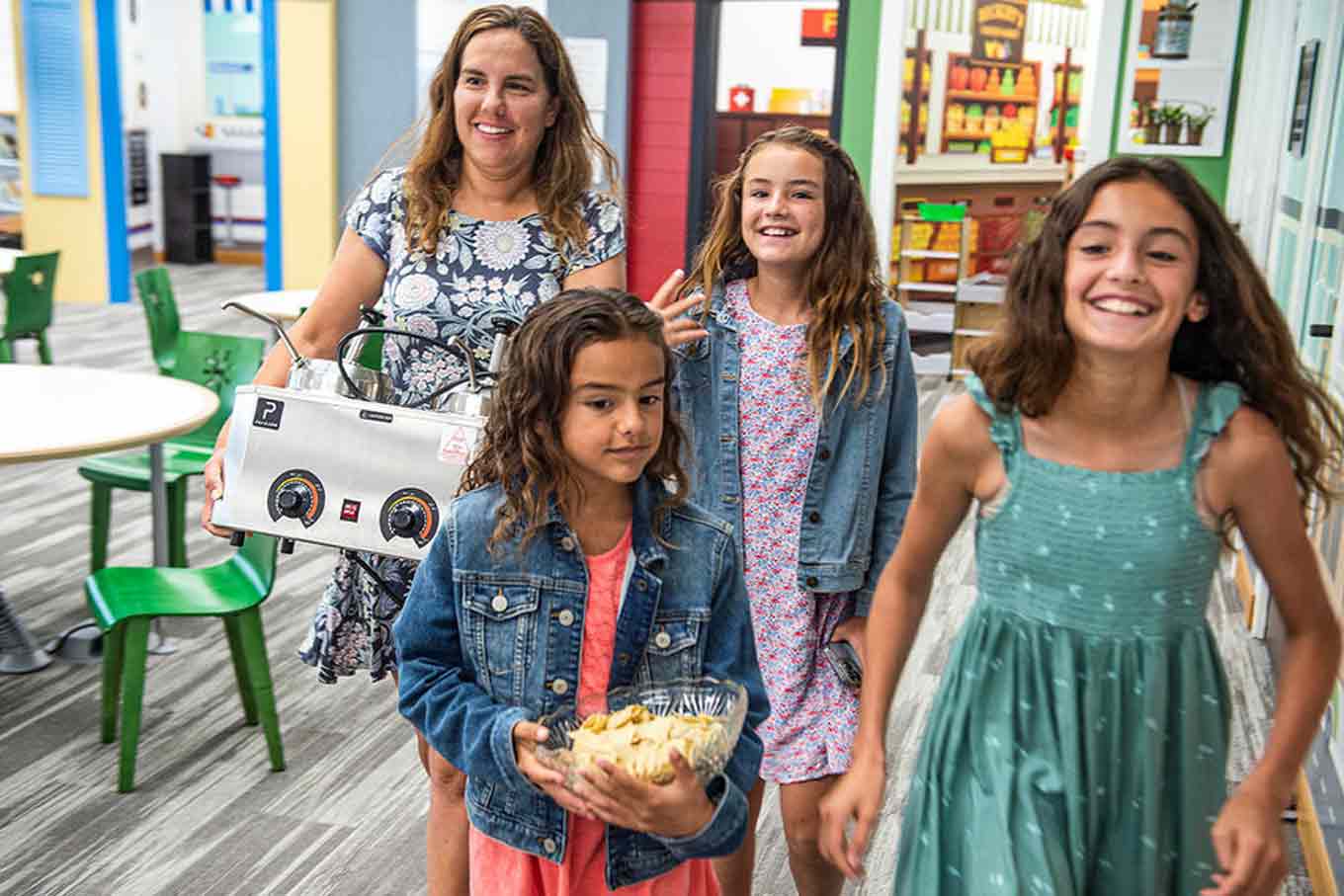
The fine print
But there can be pitfalls, says library scholar Michael Gorman, a former president of the American Library Association and retired dean of library services at California State University, Fresno.
“Public libraries have limited physical, financial, and staff resources — and have had to make trade-offs in recent years,” he explains.
“I am not against libraries providing any needed social service,” but their primary purpose should revolve around books and “the human record.” As long as other activities don’t undercut that central mission, “I’m all for all of it,” he says.
The funding for things collections typically comes from property taxes, grants, philanthropic gifts, or even — in the case of Placentia — revenue from an in-house passport services office. Some libraries also accept donated objects.
In 2012, shortly before Sacramento started plotting its things program, a backyard astronomers’ club in Michigan gave a set of telescopes to the Ann Arbor District Library.
The district, which had been lending framed artwork since 1969, added the night-sky equipment to its “Unusual Stuff to Borrow” catalog, which also listed home energy monitors (to gauge the efficiency of appliances) and “science to go” educational kits, according to The Ann Arbor Chronicle.
The telescopes proved so popular that the collection soon expanded to include music synthesizers, models of the human brain, and outdoor games, says Rich Retyi, the library’s communication and marketing manager.
Although Ann Arbor began building its nontraditional storehouse first, Mr. Robison and other observers credit Sacramento’s public library with inspiring the nationwide explosion of copycats.
Two factors set Sacramento’s effort apart: the breadth of its offerings and the patron survey on what objects to lend.
Ms. Easterwood, who now runs the public library in California’s infamous prison town of Folsom, says the trend also taps into the “sharing economy” movement that gave rise to the likes of Airbnb and Uber.
Ms. McCauley of the Public Library Association agrees: Being able to borrow pricey, rarely used tools and gadgets “reduces consumption and waste,” and gives financially strapped families access to technology and gear beyond their budgets.
Will the concept last?
Absolutely, predicts Mr. Robison. As Google searches and Kindle e-books continue encroaching on traditional library turf, things collections help attract new crowds, he says.
Meanwhile, librarians keep devising new categories of items and activities. Six years ago, for example, when Mr. Robison was working on his handbook, he found few libraries lending passes to museums, zoos, parks, and other attractions.
Now, such passes are ubiquitous, according to the Public Library Association.
Educational kits are another staple. In Northern California, the Solano County Library system created social justice tote bags (with materials to spur family conversations and action on such issues as Indigenous rights and immigration) and multisensory kits to help trigger memories for people with Alzheimer’s, says Ms. Jupitus, who had a hand in developing some of the items.
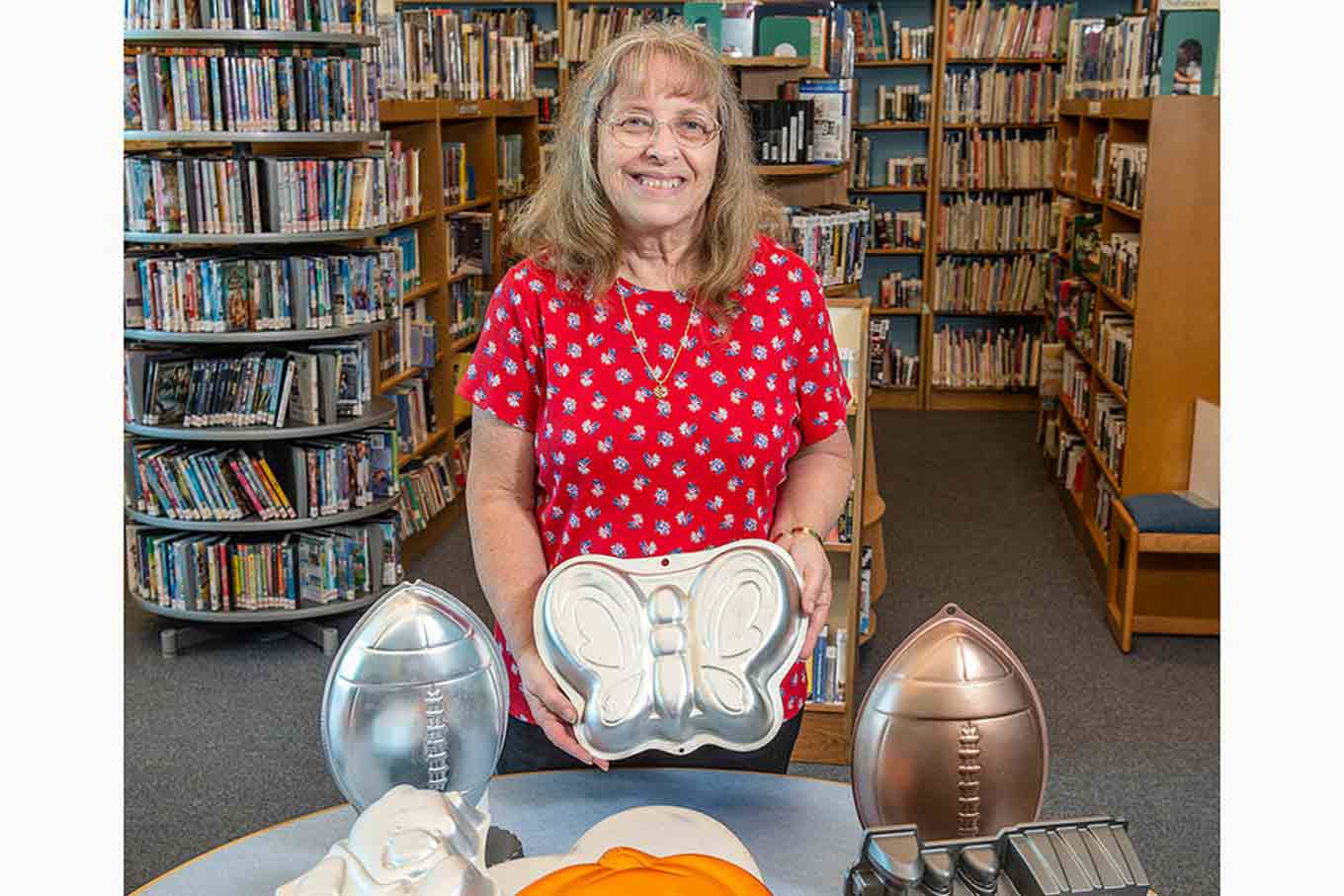
Placentia’s kit list ranges from “World of Bugs” to “Learning About Money.”
Clever marketing is also important. Sacramento’s library used to hold winter holiday craft-making nights that invariably drew just “10 to 14 older women,” Ms. Jupitus says.
On a whim one year, she and Ms. Easterwood rebranded the event as “Broke A$$ Holidays” — and 80 people showed up. “The content was identical,” Ms. Jupitus says. “We just called it something different.”
The next big thing could be pet care products, Mr. Robison suggests. Libraries looking to diversify into the animal arena “should consider the kinds of expensive items that pet owners use only occasionally, such as travel crates, harnesses, cooling mats, and yard stakes,” he says.
The field appears wide open. While researching this story, the only pet object uncovered was a dog training agility kit at the Middle Country Public Library in Centereach, New York.
Everything should be fair game, Mr. Azevedo advises.
After Sacramento unveiled its initial batch of things in 2015, nominations poured in for future items – many of which sounded unworkable, he says.
When people asked for weed wackers and cake pans, he recalls, “I said, ‘No way.’”
But now the library carries both, he notes.
“I’m curious to see what we’ll have in three years that seems impractical now.”
On June 26, 2018, Donna Nathan typed the words “gun stores New Orleans” into her phone and followed the GPS on her screen to the nearest firearms shop. Minutes after arriving, though she had never owned a gun and had been diagnosed with bipolar disorder, she had herself a .38 Smith & Wesson and a box of bullets — pink ones, to promote breast cancer awareness.
Then she drove to the Tree of Life in Audubon Park, and shot herself.
“I was shocked to find out that her buying a gun was so easy and completely legal,” says Katrina Brees, Nathan’s daughter. “It was just one button away on her phone.”

Firearms are the most common means of suicide in the US, accounting for 53 percent of all suicides in 2020. Her mother’s death was the fourth gun suicide in Brees’ family history, and a tipping point. “The next morning, I went straight into action.”
Now Brees is advocating for a simple solution: A way for people like her mother to voluntarily add themselves to a Do-Not-Sell List that prevents them from quickly buying a gun.
“There are almost no barriers to buying a gun in Louisiana,” Brees says. “Every year we have more than 600 suicides here, and two thirds are by firearms.”
State by state, Brees’ solution is becoming a reality. Versions of the Voluntary Do-Not-Sell List — or Donna’s Law — have since been passed in Washington State, Virginia, and Utah. The law grants people the option to voluntarily and confidentially add their names to their state’s background check system to prevent them from impulsively purchasing a gun.
Anybody can sign up, no questions asked. If they want to buy a gun, they can file a request to have their name removed after a 21-day waiting period.
“It actually gives people more gun rights,” Brees says.

At least nine more states are currently considering similar laws, including Pennsylvania, Tennessee, New York and Wisconsin. In July, Washington Congresswoman Pramila Jayapal (D) and Utah Congressman John Curtis (R) introduced a bill to take the law national.
“The odds of successfully committing suicide are 140 times greater when there is a gun,” Jayapal said in a statement. “Our bill ensures that people who are liable to hurt themselves cannot access a firearm.”
It’s one of the few pieces of gun safety legislation both parties can agree on. The Wall Street Journal called it a “libertarian approach” to gun control.
“I didn’t know this before, but nearly 24,000 people die by gun suicide in America every year,” Curtis said in a recorded conversation with Jayapal. “That’s 65 per day.” In his home state of Utah, suicides make up 84 percent of all firearm deaths.
Katrina Brees is sure her mother would have signed up. “My mom had fought so hard to stay alive. She had voluntarily checked herself into psychiatric hospitals three times in the months before her death when she thought she might harm herself.”
If she had been committed involuntarily to a psychiatric hospital, she would have been automatically added to the background check system. “But because she went there voluntarily, there was no way for her to prevent herself from buying a gun,” Brees says. “Part of the commitment of putting yourself in there is to separate yourself from lethal means.”
In October 2017, her mother had changed her Facebook profile picture to show a gun crossed out.
Brees recounts all the ways her mother tried to save herself during her 30-year struggle with mental health, and that previous suicidal periods had always been very impulsive, “almost like a panic attack. Right before my mom died, she was in the fight for her life… The last time I spoke with her, she was talking about not letting go of hope and that she would do everything she could to get through this.”
Her mother had gone to “hundreds of doctor appointments in her life,” Brees says. “She worked with her psychiatrist; she took medication that had tremendous side effects. She had doctors and family totally committed to her. She literally said, ‘I don’t want to die.’ She was excited about her new grandbaby. I think one of the saddest pieces of suicide misinformation is for us to think these people wanted to die. But the impulsivity of this really became obvious because this does not feel like the choice she really wanted.”
The laws are too new for their effects to be evaluated in the three states where they have already been implemented, but mental health experts agree that delaying access to firearms in times of crisis is a life-saving strategy.
The American Foundation for Suicide Prevention, the National Alliance on Mental Illness, the National Education Association and Suicide Awareness Voices of Education all support the bill.
The most common objection to such laws is that suicidal people will simply find another way, but many suicide attempts occur with little planning during a short-term crisis, and 90 percent of attempters who survive do not die by suicide later. Reducing access to lethal means saves lives.
Already, waiting periods for purchasing handguns significantly reduce gun suicides with no increase in non-gun suicides.
Even if some might try other methods, few are as lethal as a firearm. For example, the estimated fatality rate of a suicide attempt using drugs is less than five percent.
Another objection is that the people who might need it the most won’t sign up. According to Fred Vars, a University of Alabama at Birmingham law professor who has bipolar disorder and has experienced suicidal ideation himself: “So much about suicide is impulsive. [These laws are] about people helping themselves versus the government saying, you can’t have a gun. I don’t want to die, and me signing up for this list would reduce the probability of me dying.”
When Vars asked 200 psychiatric patients at the University of Alabama Medical Center, nearly half said they would sign up. Brees says she receives messages from people all over the United States who tell her, “This would work,” and plead for the right to sign up.
“People like me, who recognize that they are prone to suicidality, need this act,” mental health advocate Bryan Barks recently wrote in the Washington Post about her battle with bipolar disorder.
“I have mental clarity most of the time, but I know the storms will come again. I want to have the ability to preempt crises. I want to have the ability to protect myself from the version of me that is not thinking clearly.”
‘Self-defense against suicide’
Katrina Brees drove to the Skamania courthouse in Washington State to sign herself up for the Do-Not-Sell List, just to try it out, and found it was an easy process. But of course, the law only works statewide.
“This is why we need federal legislation,” Brees urges. She and mental health experts also believe that allowing people to sign up in schools or doctors’ offices could increase participation. “And there are no side effects!” Brees says.
“It’s just such a great way for people to empower themselves in self-defense against suicide.”
Some states recommend that gun owners let friends or the police “babysit” their guns during a depressive episode.
However, “there is a lot of shame around this topic,” Brees knows. “Some don’t want their friends to know they’re going through a rough patch, or they don’t trust they’ll get their guns back later.”
Despite the history of gun suicides in her own family, Brees says the topic was rarely addressed because of the shame and stigma associated with it, and is relieved that her activism has opened up the gates for her and her family to speak about the issues.
Brees, an artist, shows pictures of her mom and reminisces about the many New Orleans parades she and her mother attended together. Brees is head of a dance troupe called the Bearded Oysters, and she made some of the big floats with giant animals.
“My mom loved to ride in the pickup truck and then dance with the troupe.” She tears up when she says, “We were all just so naive about how easy it was for her to get access to a gun.”
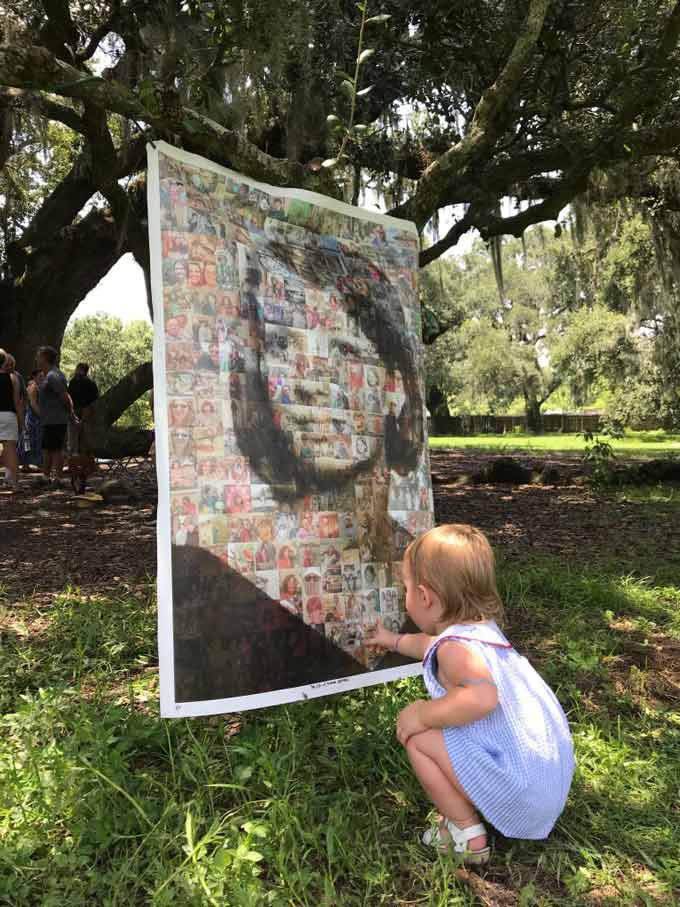
That day in June 2018, Nathan’s partner Patrick Burke had a “really bad feeling.” When he couldn’t reach his girlfriend, he called the police five times, begging for support.
“But there is no magic button that the police department can press that notifies gun stores in a mental health emergency,” Brees says. “This is why I’m so passionate about creating this little piece of legislation that has the potential of letting families like ours feel like we did everything, and also for the gun dealer.”
Her mom had “severe tremors at the time. How could anybody sell a gun to someone who couldn’t even hold a fork?” Brees even called the gun shop and told the owner what had happened after she had found his business card in her mother’s car. She said she asked him if she could return the gun. “He said, ‘All sales are final,’ and hung up.”
Since then, she had learned from police that another family had called that store begging them not to sell a gun to their son who was in the midst of a mental health crisis. According to Brees, their son went, bought the gun anyway, and shot himself. “I think this must weigh on the gun store owner as well.”
Brees was not able to prevent her mom from buying a gun. But she can work toward making sure others will have this option, potentially saving their lives.
Patagonia founder Yvon Chouinard, his wife, and their two adult children have irrevocably transferred their ownership of the outdoor apparel company to a set of trusts and nonprofit organizations.
From now on, the corporation’s profits will fund efforts to deal with climate change, as well as protect wilderness areas. It will, however, remain a privately held enterprise. According to initial reports about this unusual approach to philanthropy that ran on September 14, 2022, Patagonia is worth about U.S. $3 billion and its profits that will be donated in perpetuity could total $100 million every year.
The Conversation U.S. asked Indiana University’s Ash Enrici – a scholar who studies how philanthropy affects the environment – to explain why this arrangement is so significant.
1. Is this move part of a trend?
The biggest donors, those giving away billions of dollars, are increasingly making climate change a priority. Amazon founder Jeff Bezos, for example, announced in 2020 that he was putting $10 billion into his Earth Fund, and Laurene Powell Jobs, the widow of Apple co-founder Steve Jobs, said in 2021 that she would devote $3.5 billion of her fortune to fighting climate change.
Likewise, big donors are increasing their funding of conservation efforts.
In September 2021, the Earth Fund joined with eight other philanthropic powerhouses to pledge $5 billion to “support the creation, expansion, management and monitoring of protected and conserved areas of land, inland water and sea” around the world. This initiative aims to conserve 30% of Earth by 2030.
Within days of Chouinard’s announcement, another splashy climate gift emerged, setting a similar precedent. Filmmaker Adam McKay, who wrote, co-produced and directed the movie “Don’t Look Up,” said he will donate $4 million to a group that funds climate activism. His satirical film was a metaphor regarding climate inaction.
No matter how frequently these donations occur, it’s important to keep in mind that the cost of meeting the world’s environmental challenges is enormous and will cost trillions of dollars. So while all of these gifts are certainly significant in their scale, donors and governments will need to do and spend much more.
2. What makes it stand out?
What’s unusual about Chouinard’s climate-change gift is its structure. By giving away his company and directing that the profits be spent fighting climate change in the long term in the form of regular installments, he is creating a new model for large-scale donations.
It also sets a notable precedent. Chouinard and his family are giving away the source of their wealth and setting things up in a way that is going to result in a predictable form of support for work on climate issues – an estimated $100 million each year from Patagonia’s profits.
I think it’s a great example for other business owners and very wealthy people to follow.
3. How are conservation and climate change efforts connected?
Journalists, scholars and the public often treat addressing climate change and conserving ecosystems as being two distinct priorities. But they are instead closely related. Having ecosystems thrive in a way that protects biodiversity is a way to slow the pace of climate change.
Climate change itself will harm ecosystems and contribute to the loss of biodiversity through, for example, raising temperatures in large bodies of water to the point where established marine ecosystems become so disrupted that many species die off.
And the flip side of that is that maintaining healthy ecosystems can help counter climate change. For example, mangroves are often cut down for shrimp farming and other industries. But protecting them offers the potential to retain as much, or more, carbon as tropical rain forests, while also safeguarding the animals and plants on the land and in the water.
4. What do you think this money should fund?
To me, how they – the newly minted Patagonia Purpose Trust, which will own and run the company, and the Holdfast Collective, the nonprofit funded by Patagonia’s profits – operate will be just as important as what they fund.
Based on research I’m engaged in, I believe that they can do more good by reflecting on how they work, hopefully in ways that are both equitable and effective. For example, they can consider highly collaborative approaches, incorporate flexibility for adapting circumstances and long-term funding to match ecological timescales. It’s also essential that indigenous people living in the places affected by environmental work have a say and are heard.
Because the Holdfast Collective is a social welfare group, rather than a charity, it will be free to emphasize policy reform – which I think should be a major priority.
Government and international aid agencies are often too constrained by bureaucracy to be able to adapt and adjust their practices in a way that might be needed to address urgent environmental challenges.
Philanthropists are more free in terms of how they work. That means funders like Patagonia’s trust can provide seed money to jump-start new initiatives that later may be more heavily funded and scaled up by governments.
5. Why are many people troubled by gifts like this?
In recent years, scrutiny of philanthropy of all kinds has been on the rise. Some of the criticism takes aim at big donors, like Bezos, whose sources of wealth contribute to the problems their gifts are supposed to be solving.
Concerns about how philanthropy can perpetuate or excuse discrimination and oppression are also growing, leading to calls for its “decolonization.”
Even avid environmentalists are expressing deep concerns about the potential downsides of this new model. They’re asking whether it might be used to fund causes championed by other wealthy donors with starkly different agendas.
Regardless of what concerns you may have about what the Chouinard family decided to do, or regarding other billion-dollar donations that take aim at climate change, one thing is for sure: The cost of doing nothing at all will surely be much higher than taking action, however imperfectly.
— Trial gives IDs to refugees from Central African Republic
— Cards allow access to education, jobs and bank accounts
— Tens of thousands still lack ID, data privacy a concern
As a refugee in Cameroon, Shelley Teckombi Yazembrou struggled for nearly seven years to open a bank account, or even move around freely, simply because she did not have a national identity card.
That changed in June, thanks to a pilot program by Cameroon's government and the U.N. refugee agency (UNHCR) to issue 6,000 refugees from Central African Republic (CAR) with biometrics-based IDs to help them access basic services.
Now they have the identity cards, Central Africans in the eastern Gado-Badzéré camp - where Teckombi Yazembrou lives - and the Mandjou area are starting to access education, jobs, healthcare, and travel around without fear of arrest.
"Having the ID card has really helped me," said Teckombi Yazembrou, 34, who works as a community organizer, helping aid agencies and local authorities assist nearly 30,0000 Central African refugees at the camp.
"It isn't as good as Cameroonian nationality, but I'm still grateful," she told the Thomson Reuters Foundation.
Violence in CAR has forced more than 700,0000 people to leave the country since rebels ousted then-President François Bozizé in 2013 , according to UNHCR. About half of them found refuge in neighboring Cameroon, mostly in eastern and northern regions.
Without a legal ID, refugees across the continent often suffer discrimination and abuse, human rights groups say.
Cameroon - which hosts about half a million refugees in all - joins a handful of African nations including Senegal, Mali and Rwanda that have issued a limited number of refugee IDs, said Mbav Tshilombo, UNHCR deputy representative in Cameroon.
"The card is a form of empowerment, so they can have access to jobs and financial institutions," he said, adding that Central Africans with the ID can also set up businesses easily, no longer needing a Cameroonian intermediary to help them do so.
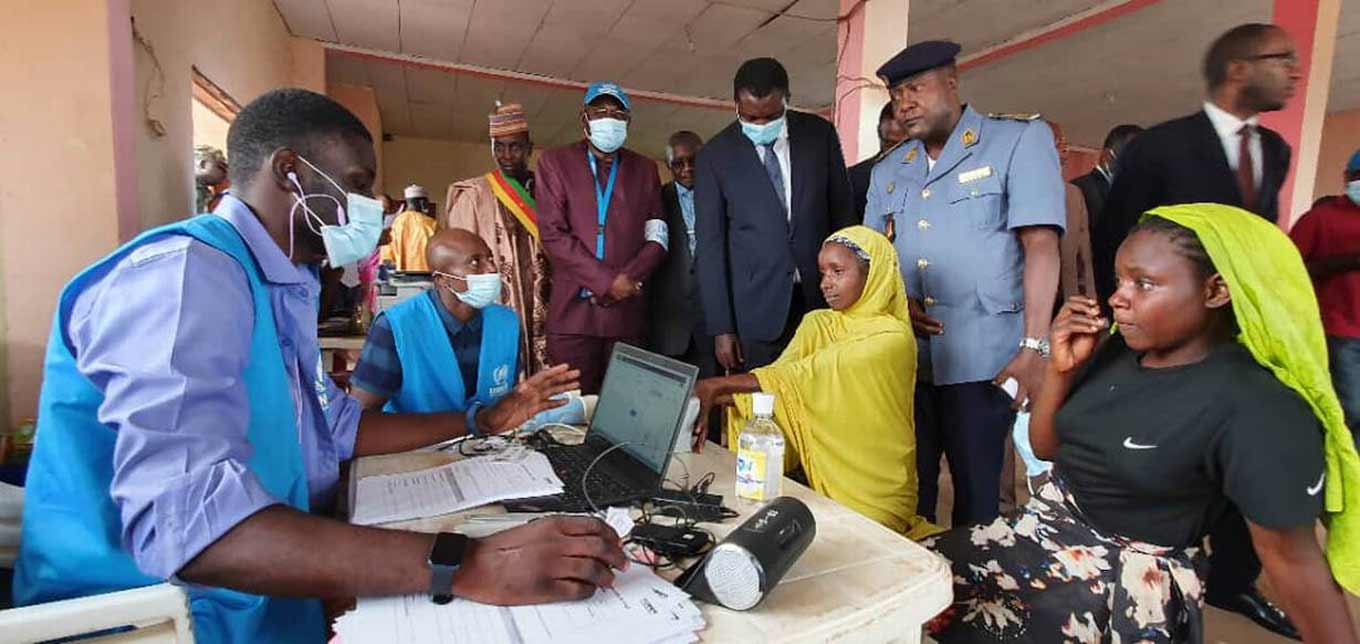
Empowering Women
More than 1 billion people globally - 40% of whom live in Africa - do not have official proof of identity, greatly limiting their ability to access basic public and financial services, according to the World Bank.
In Cameroon, the UNHCR issues its own ID cards to all refugees, but these are not widely recognized, and refugees generally cannot use them to apply for jobs, enroll in university or undertake other everyday tasks.
"We're working with the government for them to recognize the identity cards issued by UNHCR, so that those who haven't received the biometric cards won't have problems," said Tshilombo.
For the new biometric IDs, authorities are prioritizing refugee women, who are at greater risk of abuse or exploitation without a proper livelihood, he added. About half the refugees in Cameroon - or adults over the age of 18 - are eligible for the new biometric IDs, according to local officials.
Digital IDs have proven to be "the most effective" way for governments and aid agencies to provide relief and resources to displaced people, said Kathleen Ndongmo at the African Digital Rights Network, an advocacy group.
"Existing inequalities in refugee populations may be exacerbated without such interventions, denying the most vulnerable life-enhancing opportunities," she said.
At the same time, host nations must take care to safeguard the data that is held in the digital IDs, she added.
"Due to the fact that many of them may be fleeing persecution, protecting their data is crucial."
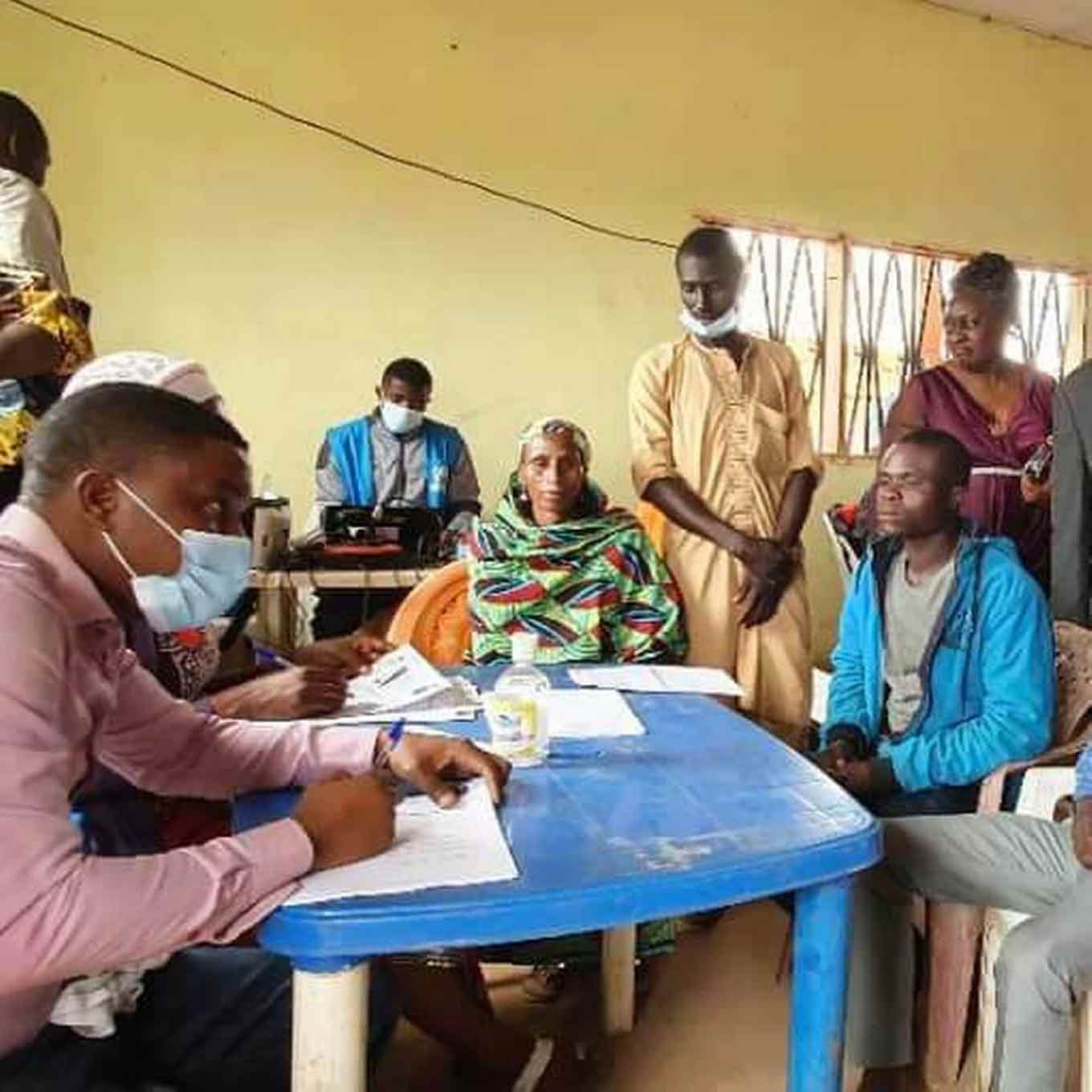
Particularly Vulnerable
Across Africa, more governments are issuing digital IDs that are necessary for everything from opening a bank account to buying a mobile SIM card to getting a passport.
Yet the system leaves out poor and marginalized people who may lack the necessary documents for an ID, or face other challenges, rights groups say.
Kenya's high court last year declared the rollout of the country's biometric ID scheme as illegal, while a group of charities in Uganda recently sued their government, arguing that vulnerable groups have been denied potentially life-saving services due to flaws in the national biometric ID system.
Many countries also lack strong data protection laws, which leaves migrants and refugees particularly vulnerable due to the large amount of information they have to submit during the asylum process, said Ndongmo.
Cameroon's constitution guarantees data protection rights, but there is no data protection law. A privacy bill is currently being drafted, and refugees "are not safe as long as this is not guaranteed and enforced", Ndongmo added.
Systems are in place to ensure that the personal data of the refugees is protected, said Norbert Wirnkar, an official at Cameroon's Ministry of Foreign Affairs who helped coordinate the digital ID project.
The biometric ID cards are also necessary for security reasons, such as policing checkpoints and identifying suspected criminals, he said.
"It's almost impossible to track every refugee in the country. Less than 30% live in identified refugee settlements ... which complicates any attempt of surveillance," Wirnkar said.
With the pilot finished, the government and the UNHCR are now waiting for more funds to issue biometric ID cards to all eligible refugees by the end of this year, said Tshilombo.
"If we have funding, we'll restart the process. Within two to three months, we can distribute to all the remaining refugees," he said.
Enjoying her newfound freedom and rights, Teckombi Yazembrou, is making plans for the future.
"What I really want to do now is to open a bank account," she said.
Reporting by Maikem Emmanuela; Editing by Rina Chandran and Helen Popper. This story was originally published by the Thomson Reuters Foundation, the charitable arm of Thomson Reuters, that covers the lives of people around the world who struggle to live freely or fairly.

Call us old-fashioned, but receiving some snail mail from our beloved USPS mail carriers is peak dopamine rush — especially when the elusive nature of an Instagram DM or Slack message makes our normal communications seem so unimportant.
A hand-written note is something special. Whether it contains a quick thank you or a heartfelt message, you want to send it on something made with quality materials.
And, of course, we want to do our best to reduce our carbon footprints in the process, so we rounded up some of our favorite eco-friendly stationery brands to help you find exactly the right aesthetic for your snail mail moments.
First, let’s learn a little bit more about stationery and making sustainable choices in our paper products.
But if you’re in a rush, here’s a quick breakdown of our top three picks:
→ Minted: Uses FSC-certified recycled paper with designs by independent artists
→ Paper Culture: Plants a tree with every order
→ Artifact Uprising: Design your own cards on recycled paper
By the way, some of the links in this article are affiliate links, which means if you make a purchase after clicking a link, we may earn a commission at no extra cost to you. Thank you!
Are paper products really bad for the environment?
You’ve likely heard someone in your office talk about “killing trees” when they hand out a stack of papers in a meeting, or folks ditching a receipt at the checkout counter to “save paper.” (Receipts come with their own environmental and health impacts, so definitely consider this next time you shop, too!)
But, are paper products like stationery and cards really bad for the environment?
Well, it depends.
People use a lot of paper. Like, a lot. According to The World Counts, globally, we produce 420,000,000 tons of paper and cardboard annually. That number equates to two pieces of paper for everyone on earth every single hour.
And we are indeed killing the trees — but we’re also doing more environmental damage than just that. The climate impact of paper production includes deforestation, enormous amounts of energy and water use, as well as air pollution. In fact, the paper industry is the largest single industrial consumer of water in Western countries.
Paper also accounts for about 26% of total waste in landfills, but the good news is that paper is also very easy to recycle, and we can do our part!
Statistics on Recycled Paper:
According to The World Counts, each ton of recycled paper can avoid the following:
- 17 trees
- 1,440 liters of oil
- 2.3 cubic meters of landfill space
- 4,000 kilowatts of energy
- 26,500 liters of water
Similarly, eco-friendly paper is a great option, too. The Forest Stewardship Council (FSC) gives certifications to paper companies that have less of an impact on the environment by sourcing paper from FSC-managed forests.
The FSC has faced valid criticism, but we do find its certifications process to be a helpful starting point for understanding brands’ thoughtfulness when it comes to their paper sourcing.
The FSC is a global network of over 1,000 individuals and member organizations that work in a democratic system to find solutions to safeguard healthy, resilient forests around the globe.
This work to safeguard forests is done through a set of responsible forestry standards, including:
- Zero deforestation
- Safeguarding of ancient and endangered forests
- Fair wages and work environments
- Biodiversity preservation
- Community rights, including the rights of Indigenous peoples
So, what do you say? Can we stick to recycled and eco-friendly stationery products moving forward?
How to shop eco-friendly stationery
First of all, as we always like to remind you, the best and most sustainable products are the ones you already own! Get crafty with scrap paper or send an e-card, if you can. But if you’re looking for some professional personal stationery, a holiday card, or even wedding invitations, there are sustainable options out there.
When shopping for eco-friendly stationery, you’ll want to consider the brand’s social responsibility, packaging materials, as well as the way products are manufactured.
Keep an eye out for those Forest Stewardship Council certifications we mentioned earlier, too. FSC Certified paper products have less impact on the environment by using sustainable sourcing or post-consumer waste.
By the way, post-consumer waste is just what we toss in our recycling bins. It’s the stuff average humans use and discard. Post-industrial waste, on the other hand, is the waste generated from the manufacturing process before it gets to us as consumers.
With that in mind, FSC labels might include certifications like FSC 100% (the products contain wood from FSC-certified forests), FSC Recycled (the products are made from recycled material), or FSC Mix (the products are made from FSC-certified forests and recycled materials).
All of that being said, we took out some of the guesswork in finding responsible stationery products for you to add to your collection.
The best sustainable stationery brands to shop —
Minted
This article is presented and supported by Minted — and as a part of that, we were able to test out the Minted shopping experience and some stationery products to add a brief review to this particular section. Everything in this article was independently and honestly written by the Good Good Good team. Thank you!
What’s good: Minted is a marketplace with unique designs by independent artists. The company uses 100% recyclable packaging that is made from over 80% recycled, post-consumer waste or plant-based materials.
Minted’s stationery is available with recycled paper options, made with FCS-certified 100% post-consumer waste for a smooth matte-finish, all manufactured with wind power! It’s exciting to think about something as simple as the card on your desk being created with all kinds of natural materials out in the world.
Whether you need professional stationery for your own business, new holiday cards, or even invitations for your kiddo’s birthday party, you can choose recycled options from Minted and mail your stationery mindfully.
In fact, all recycled paper options are optimized for the highest photo print quality, so you can feel good about the visual aspect of your purchase, no matter what you pick.
Stationery options:
- Personalized Stationery
- Foil-Pressed Stationery
- Thank You Cards
- Business Stationery
- Holiday Stationery (check out this season’s new collection!)
- Kids Stationery
- Also: Wedding Suites, Gift Wrap, Art Prints, Textile Art, Photo Pillows, and Gifts
Price: Check current prices
Kamrin’s thoughts: Minted sent me my own set of recycled stationery, and I selected the Happiness stationery set, complete with my own personalizations. Of course, I selected the recycled paper option, which runs a few dollars more, but has a tangible quality that can’t be beat.
Minted’s stationery options are endless and all have their own beautiful designs that can be customized to your unique liking. I loved shopping around for the perfect fit and selecting features to make my purchase more sustainable and better fitted to my needs. I loved how fun this design was, and the paper quality is truly impressive.
My stationery came in a beautiful recyclable box that can be used for storage, as well.
→ Shop Minted’s Personalized Stationery
Papier
What’s good: Papier is a UK-based paper goods company (don’t worry; there’s a U.S. shop with normal shipping rates!) dedicated to curious designs and sustainable practices. With FSC-certified paper goods, Papier creates items on a made-to-order basis to reduce waste, all while shipping your new sleek stationery in simple, recyclable packaging.
Stationery options:
- Notecards
- Letter Writing Paper
- Thank You Card Sets
- Also: Invitations, Planners, Notebooks, Gifts, and Desk Accessories
Price: Check current prices
→ Shop Papier’s sustainable stationery
Twigs Paper
What’s good: Twigs Paper’s mantra is: “If we can’t do it sustainably, we won’t do it at all.” The paper company uses 100% recycled post-consumer waste paper that is FSC-certified. Instead of using carbon or nuclear energy, Twigs products are made with biogas (energy released from landfills that is captured and used as renewable energy).
Additionally, Twigs uses non-toxic inks to prevent air and water pollution. Twigs ships products completely plastic-free. Their national park line makes for a great gift for the national park lover in your life.
Stationery options:
Price: Check current prices
→ Shop sustainable paper goods from Twigs
Paper Culture

What’s good: Paper Culture creates stationery and other paper goods by combining the sentiment of paper with modern design. To create these products, Paper Culture uses 100% post-consumer waste and wood alternatives and offset the company’s carbon footprint by planting a tree with every order.
Stationery options:
- Monogram Stationery
- Thank You Card Sets
- Personalized Stationery for Adults
- Personalized Stationery for Kids
- Photo Stationery
- Also: Holiday Cards, Photo Books, and Wedding Paper Suites.
Price: Check current prices
→ Shop Paper Culture’s eco-friendly stationery
Artifact Uprising

What’s good: You may already know and love Artifact Uprising for its gorgeous, high-quality photo books and prints. The company creates photo prints and paper goods with recycled materials, so you can cherish your favorite memories — and not at the cost of the planet. They make it easy to turn your photos into beautiful stationery.
Stationery options:
- Design Your Own Folded Cards
- Design Your Own Flat Cards
- Thank You Cards
- Holiday Cards
- Also: Photo Books, Wedding Save the Dates, Calendars, and Frames
Price: Check current prices
→ Shop Artifact Uprising for photo prints and stationery
Em & Friends
What’s good: Em & Friends is a paper goods and gift company created by Emily McDowell and Knock Knock to bring together like-minded artists to make high-quality goods.
Their famous “Empathy Cards” help you find the words to say when you don’t quite know what to say. Examples include: “There is no good card for this. I’m so sorry” and “Please let me be the first to punch the next person who tells you everything happens for a reason. I'm sorry you're going through this.”
All paper products are printed in Los Angeles using soy inks on recycled paper.
Stationery options:
- Birthday Cards
- Thank You Cards
- Encouragement Cards
- Anniversary & Love Cards
- Mental Health Cards
- Sympathy/Empathy Cards
- Also: Journals, Card Decks, Notepads, Magnets, and Postcard Books
Price: Check current prices
→ Shop Em & Friends cards made from recycled materials
Quilling Card

What’s good: Quilling Card is a greeting card company that uses the historical art of quilling, which shapes pieces of paper into a rolled, 3D decorative design.
These cards encourage recipients to not just read and throw them away, but to give a second life to the greeting card by turning it into accessible art.
Quilling Card is a member of the Fair Trade Federation, and each card is meticulously handcrafted by artisans in Ho Chi Minh City. Each piece takes one hour to create, encouraging a slow production cycle and longer product lifespan. Quilling Card also offers braille options!
Stationery options:
- Just Because
- Birthday Cards
- Holiday Cards
- Love Cards
- Special Occasion Cards
- Also: Decorative Wall Art, DIY Kits, and Luxury Pens
Price: Check current prices
→ Shop Quilling Card’s greeting cards
Botanical Paperworks

What’s good: Botanical Paperworks offers seed paper products from coasters to save-the-date cards. Botanical Paperworks’ plantable seed paper is a biodegradable eco-paper made with post-consumer and post-industrial paper waste that is embedded with seeds.
When the paper is planted in a pot of soil, the seeds grow and the paper composts away. All that is left behind is flowers, herbs, or vegetables — and zero waste.
Stationery options:
- Letterhead
- Thank You Notes
- Event Stationery
- Business Stationery
- Holiday Cards
- Birthday Cards
- Also: Wedding Invitations, Eco-Friendly Confetti, Packaging Materials, and Bookmarks
Price: Check current prices
→ Shop Botancial Paperworks seed paper stationery
Oblation Papers & Press

What’s good: Based in Oregon, Oblation Papers & Press creates handmade paper with 100% cotton remnants from the garment industry. Using traditional paper mill techniques, the papermakers are either in the production studio or at the letterpress making custom stationery and invitations with soy-based inks.
Additionally, Oblation gives back to its community through the Children’s Healing Art Project and other projects with local schools and churches.
Stationery options:
- Handmade Paper Packs
- Custom Letterpress Stationery
- Letterpress Card Sets
- Custom Address Labels
- Thank You Notes
- Greeting Cards
- Also: Wedding Invitations, Papermaking Kits, Notebooks and Journals, and Fountain Pens
Price: Check current prices
→ Shop handmade stationery from Oblation Papers & Press
Craft Your Own DIY Paper
Want to learn a fun new skill and turn your snail mail into something sustainable? Take old bills and junk mail into something special and create your own paper! Check out this how-to video or blog to get started.
You’ll just need a paper-making deckle and a few other (more-normal) things.
Thrifted or Secondhand Stationery

Sometimes others aren’t as committed to the craft of letter writing as you are. And when that happens, boxes of gorgeous cards end up at a thrift store. Regardless of what kind of paper, ink, or production processes were used to make these cards, you can feel great about making good use of them because you’re saving them from a landfill and giving them a second life.
Next time you’re at a thrift shop or consignment store, keep an eye out for half-empty boxes of stationery. You can also keep an eye on eBay and other secondhand selling platforms.
P.S. Looking for stationery for the holidays? Check out our guide to the best eco-friendly holiday & Christmas cards!
Over a decade ago, a meme created by Hank and John Green’s fans became a niche internet joke. Today, Pizza John is recognized with a two-week annual fundraiser and celebration known as Pizzamas, which raised over $100,000 in 2021 alone.
Pizzamas: An internet holiday for good
What is Pizzamas?
Pizzamas is an annual internet holiday celebrated by internet creators and authors Hank and John Green. The holiday was created organically with their fanbase, known as Nerdfighters, and takes on a life of its own each year.
“Every year I know what Pizzamas is a little less,” said Hank in a 2021 recap of the event. The two-week event is equal parts fundraiser and celebration of community, with a healthy dose of absurdity and nostalgia.

During Pizzamas, Hank and John “return to their roots” — as Hank explained in a 2020 video — by uploading YouTube videos to one another every weekday, just like they did when they launched their vlogbrothers YouTube channel in 2007.
The topics of these videos range from educational and current events to Q&As and plain goofiness, with one element consistency: the return of John’s mustache.
Every year, John’s first Pizzamas upload features him with a mustache, marking the annual return of Pizza John.
Who is Pizza John?
Understanding the identity of Pizza John requires a brief Nerdfighteria history lesson.
In 2009, John uploaded a YouTube video in which he gradually shaved his face, resulting in a brief clip of John sporting a thick mustache. Nerdfighter Valerie Barr then used a still from this video to create the beloved piece of fan art known as Pizza John — a white outline of John’s mustached face against a red background with the word “Pizza” in bold font.

Pizza John quickly became a fan favorite among Nerdfighters, and Hank and John embraced the chaos. In 2010, the first Pizza John t-shirt was officially created by Hank and John.
Over the years, fans created their own versions of Pizza John art, and a combination of creativity and community led to a fandom inside joke that has lasted over twelve years.

The History of Pizzamas
Pizzamas started as a celebration of fandom legend Pizza John by selling various t-shirts and products for a limited time. It began with recognizing the wacky adaptions of Pizza John created by Nerdfighteria, and that legacy lives on every year that the holiday has been celebrated. In 2012 and 2013, the event solely celebrated artistry and fandom through merchandise.
In 2014, the first year of Pizzamas in its current format came to life, with Hank and John adding additional videos into their upload schedule as a nod to their early YouTube origins. Each year’s event also includes limited-time merchandise that can only be purchased during the duration of that year’s Pizzamas.
How does Pizzamas raise money?

Each year, Hank and John’s e-commerce company DFTBA partners with independent artists to design and sell a variety of limited-edition merchandise.
The merchandise staple of Pizzamas is the t-shirt — of which multiple designs are created each year — but products have become increasingly absurd over the years, ranging from blankets and tote bags to pizza scented air fresheners and a marble bust of Pizza John.
All of the profits from Pizzamas merchandise is donated to charity. In recent years, including 2022, the profits are donated to Nerdfighteria’s ongoing project with Partners in Health.
Nerdfighteria Gives Back
Since its earliest years as an internet community, Nerdfighteria has held charity as a core value. Over the last few years, the community has stepped up to fund its biggest project yet.

Strengthening Healthcare in Sierra Leone
In 2019, John and Hank announced that along with Nerdfighteria, they were making a multi-year commitment to raise $25,000,000 to support Partners in Health (Partners in Health) in decreasing maternal and child mortality in Sierra Leone. When the project was announced, the Kono District of Sierra Leone had the highest maternal mortality rate worldwide.
In just the first three years, nearly $30,000,000 was pledged for the construction and staffing of a Maternal Center of Excellence at Khoitou Government Hospital in the Kono District. The center officially broke ground in April of 2021.
In early 2026, the Paul E. Farmer Maternal Center of Excellence opened its doors. The center will also serve as a teaching hospital to educate and provide employment to future healthcare workers from Sierra Leone.
Partners in Health
Sierra Leone is just one of many projects from Partners in Health. The organization’s goals are “to bring the benefits of modern medical science to those most in need of them and to serve as an antidote to despair,” with projects across the globe ranging from pediatric care to AIDS treatment and prevention.
At the core of every project is the idea that simply providing a one-time solution is not adequate to solve structural problems. That’s why simply building a hospital is not enough; the funds raised for Sierra Leone will also provide staffing, training, and supply to create a sustainable healthcare center for the community.
One of the most influential forces behind Partners in Health was its co-founder, Dr. Paul Farmer. As the Chief Strategist at Partners in Health, Dr. Farmer forged new pathways to create access to healthcare in the face of extreme social inequity. Devastatingly, Dr. Farmer passed away in February of 2022.
“Paul Farmer’s loss is devastating, but his vision for the world will live on through Partners in Health,” said Partners in Health CEO Dr. Sheila Davis. “Paul taught all those around him the power of accompaniment, love for one another, and solidarity. Our deepest sympathies are with his family.”
Nerdfighteria in Action
Pizzamas is far from Nerfighteria’s only form of giving back. Each year, the community comes together for the Project for Awesome, a 48-hour charity live stream known for raising millions. In 2022 alone, the Project for Awesome raised over $3 million for Partners in Health and various other charities.
Beyond events, Hank and John have launched two subscriptions devoted solely to fundraising for Sierra Leone. The Awesome Socks Club allows members to receive a monthly pair of socks with surprise designs from independent artists, and the Awesome Coffee Club delivers ethically sourced, high-quality coffee monthly or bi-weekly to subscribers.
All profits from both subscription services go directly to supporting the community’s work with Partners in Health.
How can I get involved in Pizzamas?
Pizzamas is essentially a made-up holiday, meaning there are no right or wrong ways to celebrate. Community members and curious onlookers alike can watch videos, receive pizza-adjacent dad jokes by text, and shop the Pizzamas merch.
“I get the joke… but why?”

This exact question was asked by John’s son Henry in the 2022 Pizzamas kick-off video. Henry was referring to a Shrek-themed Pizza John shirt, but the same question can be asked of Pizzamas as a whole. Why does Pizzamas exist?
“There’s something confusing but also really lovely about doing a thing that isn’t a thing,” said Hank of the two-week event. This description holds true, as fans come together to celebrate a low-stakes, lighthearted recognition of community and charity.
Even more than the fun, though, Pizzamas is a reminder of the change that can occur just from making noise around a charitable cause.
“Whether you can donate or not, please know that paying sustained attention to the structural system-wide challenges of poverty really can lead to change,” said John. It turns out that sometimes, that attention comes in the form of a slightly confusing piece of fan art with a haunting mustache.
Frequently Asked Questions
What is a Pizza John shirt?
Pizza John shirts are worn to celebrate Pizzamas, an annual charity event hosted by Hank and John Green. The first Pizza John shirts were made in 2010, and have since become a symbol of the Nerdfighteria fan community. Wearing a Pizza John shirt is recognized as a way of finding other Nerdfighters in public. The proceeds of each shirt goes to charity.
When is Pizzamas each year?
Pizzamas takes place annually in the fall. While the specific dates vary year to year, John’s infamous mustache typically makes its debut in October.
How long is Pizzamas?
Pizzmas officially lasts for two weeks. During this time, Hank and John will upload 10 YouTube videos — one each weekday.
Where do proceeds from Pizzamas go?
All proceeds from Pizzamas merchandise go to Hank and John’s continued work with Partners in Health. Since 2019, the brothers and their fan community have been committed to raising money in for the building, staffing, and supplying of a Maternal Center of Excellence in the Kono district of Sierra Leone, an area known for having the world’s highest maternal mortality rate.
According to the Pizzamas website, Pizzamas profits have already raised $475,000 for the Maternal Center of Excellence in Sierra Leone in just the past three years.
This article was originally published in September 2022, and has continued to be updated
Every day the Good Good Good team collects the best good news in the world and shares it with our community. Here are the highlights for this week!
If you want to get good news in your inbox every day, join the Goodnewsletter — the free daily newsletter designed to leave you feeling hopeful.
The Best Positive News We're Celebrating This Week —
Artists are painting crosswalks and intersections to make them safer for pedestrians — and it’s working
According to various studies, only between five and fifteen percent of drivers slow down at pedestrian crossings. In 2021, deaths from traffic accidents reached a 16-year-high, and the risk for pedestrians keeps rising, too, with an unprecedented year-on-year rise in deaths.
A documentary filmmaker looked into why this was happening, and found the biggest culprit wasn’t distracted driving — it was speed and visibility. White lines painted on asphalt weren’t solving either of those issues, but color might.
The Asphalt Art Initiative provides grants to create art to modify dangerous streets, like in Chattanooga, Tennessee, where artists and residents recently transformed a high-traffic area with street murals and crosswalk art.
There are more cancer survivors in the U.S. than ever before
Cancer death rates in the U.S. have been steadily declining for years, dropping 32% between 1991 and 2019 — especially dramatically in more recent years. There are now more than 18 million cancer survivors in the U.S. — up from just 3 million in 1971.
The American Association for Cancer Research credits improvements in treatments, diagnosing the disease, and prevention strategies.
The use of immunotherapies to treat cancer, as well as more development in drugs that target DNA mutations have helped improve treatment courses. Additionally, programs to screen regularly for common cancers like breast, colon, cervical, and prostate cancer have resulted in more early diagnoses — when it’s easiest to treat.
As we continue to fight for improvements in equitable access to treatment and diagnoses for marginalized communities, this is really good progress to celebrate.
Once in decline, a city in Spain prioritized pedestrians and small businesses grew
Officials in Pontevedra, Spain have spent two decades redesigning the city so that it’s easy, safe, and enjoyable for its 80,000-some residents to walk — not drive. Cars are allowed in very few places in the city, and even where they are, the speed limit is extremely low.
Not only has it led to a much higher quality of life for residents, but no pedestrians have been killed in a traffic accident in over a decade. It’s also been great for small businesses: there’s been a 7% increase in new restaurants and shops opening up.
The city has done so well, it was at one point named the most comfortable city in Europe to live in. It's also another instance of cities taking action to make cars less of a city centerpiece by prioritizing the safety and walkability of their cities for pedestrians.
Cities in the U.K. are turning bus stop roofs into gardens for bees and butterflies
Atop bus shelter roofs, cities are growing miniature gardens filled with pollinator-friendly plants like wild strawberries, poppies, and pansies. The number of these “bee bus stops” across the United Kingdom is set to grow by 50% by the end of the year.
The bus stops have to be specially designed to accommodate the weight of the soil, especially when it rains, so the company in charge of them is installing them as bus stops need replacing.
In addition to providing much-needed, welcoming habitats for pollinators in the city, these bus stops help offset urban heat — even if only a small amount.
Once believed to be extinct, Colorado’s state fish is now reproducing naturally
Colorado’s state fish, the greenback cutthroat trout was first listed as extinct by federal officials in the 1930s. Though small groups of them were found in parts of the state over the years, they turned out to be subspecies of the trout.
Then in 2012, after researchers found a small purebred population of the fish, they immediately implemented a hatchery to grow and maintain the species. And their efforts have now resulted in the species naturally reproducing in Colorado's native waters.
“This is just another affirmation that our conservation practices work and that we can save species on the brink,” Kevin Rogers, an aquatics researcher for Colorado Parks and Wildlife, told Colorado Public Radio.
John and Hank Green’s annual “Pizzamas” fundraiser has helped raise millions of dollars for maternal health in Sierra Leone
It started with a bad mustache, became a piece of viral fan art, and has now been a community tradition for more than a decade. Pizzamas is an annual internet holiday celebrated by internet creators and authors Hank and John Green.
Created organically with their fanbase, known as Nerdfighters, the two-week event is equal parts fundraiser and celebration of community. Each year, Hank and John partner with independent artists to design and sell a variety of limited-edition merchandise.
All of the profits from Pizzamas merchandise are donated to charity, and in recent years it’s contributed to the millions that have been donated to Nerdfighteria’s ongoing project with Partners in Health — a maternal health center in Sierra Leone.
After going viral for his “terrible sandwich” packed lunch review, a 10-year-old is now fighting childhood hunger
Four years ago, Abe Ndege got off the bus from his first day of kindergarten and told his mom Ricki Weisberg, “Terrible sandwich, by the way.” She caught the honest moment on camera and shares it every year on social media to mark the beginning of the school year.
This year, she shared it on TikTok — and as TikTok does, it quickly went viral. It has more than 15 million views, and the now 10-year-old Ndege started getting recognized at school, too. Wanting to turn the newfound attention on to others, the two launched a website to raise money to fight childhood hunger through Feeding America.
"It's a cause that's close to our hearts. And we wanted to use this little moment in the spotlight to give back and try to do some good,” Weisberg said.
More good news of the week —
A guaranteed income program is providing support and healing for Black residents in Portland. The Black Resilience Fund is awarding about 50 Black Portlanders up to $2,000 a month for the next three years.
Connecticut will be one of the first states to require schools to teach about climate change science. A new law says public schools must integrate lessons on human-caused climate change into their science curriculum starting in July 2023.
At least half of the U.K. companies currently trialing a four-day workweek plan to keep it permanently. Halfway through the largest-ever four-day workweek trial, they’re reporting no drop in productivity.
An Iraqi software engineer started a Tigris River cleanup project that draws hundreds of volunteers. He believes it could help drive positive change for both the environment and transform the image many people have of Iraq.
Cuba has officially legalized same-sex marriage. Cubans voted in favor of the new family code, which also allows LGBTQ+ couples to adopt, and extends greater protections to women, children, and the elderly.
India developed a new cervical cancer vaccine that’s 87% less expensive and highly effective. Cervical cancer is the fourth most common cancer among women globally, and about 90% of new cases and deaths worldwide occurred in low- and middle-income countries in 2020.
A nonprofit is helping bring free tutoring to children experiencing homelessness. School on Wheels began in 1993 when its founder started tutoring kids living in shelters in Los Angeles.
John Cena just set the record for the most wishes granted through the Make-A-Wish Foundation. The WWE superstar has granted 650 wishes.
For the first time in 28 years, people in prison will be eligible for federal grants for higher education. While the rising cost of education still needs to be addressed, this is a positive, hopeful change for those who are incarcerated.
A veterinarian writes children’s books that break stereotypes about the medical profession. In her “Real Doctor” book series, Dr. Cherice Roth uses humor and furry friends to talk about representation.
A Colorado man started building benches for bus stops without them. James Warren makes the benches out of scrap wood, writes “Be Kind” on them, and hopes it helps make riding the bus a little easier.
Two Finnish engineers figured out how to use sand to store wind and solar energy. Their battery can supply power year-round and has already been hooked up to a commercial power station in Finland.
Decades after the last major policy to address food insecurity, the White House has renewed its commitment to ending hunger. The Biden Administration is investing in five key areas, like improving food access and affordability and enhancing nutrition and food security research.
A U.K. man set up collaborative woodworking sheds to help combat loneliness in his hometown. Philip Jackson hosts meetups once a week for people in the community to come together and woodwork.
Amidst worsening wildfires, a pilot program in California is recruiting and training women to become firefighters. The Yosemite Women’s Fire Internship at Yosemite National Park is addressing both the shortage of firefighters and equity in the profession.
While it might feel as though it's been an inalienable right for as long as we can remember, it really wasn't that long ago that women not only didn't have the right to vote, but also couldn't own land, travel freely, or work outside the traditional roles prescribed by society.
The 19th Amendment to the U.S. Constitution, which granted American women the right to vote, was passed by Congress on June 4, 1919, and ratified on August, 18, 1920.
It was also incomplete, benefiting white women almost exclusively due to Jim Crow laws and barriers to citizenship for many women of color in the U.S. at the time.
While the United States was one of the earlier countries to grant the vote, they were by no means the first, with countries such as New Zealand and Australia leading the way in equal rights for women.
Other countries fell far behind the rest of the world in granting women equal voting rights, and many are still fighting gender bias and discrimination when it comes to equality for women.
Regardless, women everywhere continue to make strides, make history, and make changes. And while there is still much to be done before all women can experience gender equality, there is no doubt that the women's rights movement is alive and well today, and progress will march on for those rights.
Using news reports and historical websites, Stacker compiled a list of 50 countries and when they gave the majority of women the right to vote. The countries are listed in chronological order.
Stacker is releasing this story as part of Democracy Day, a nationwide initiative that aims to shed light on the importance of protecting our democracy.
This comprehensive list not only showcases the dates women gained suffrage but also how they did it and what their political standing looks like around the world today.
Check out the timeline and see when women around the world earned the right to vote:
Women’s Right To Vote, By Country
The Good Good Good team put together a simple breakdown of when women got the right to vote in countries around the world.
Scroll down below for a country-by-country breakdown as well.
| Country | Year |
|---|---|
| New Zealand | 1893 |
| Australia | 1902 |
| Finland | 1906 |
| Norway | 1913 |
| Denmark | 1915 |
| Iceland | 1915 |
| Canada | 1917 |
| Russia | 1917 |
| Poland | 1918 |
| Germany | 1918 |
| Britain | 1918 |
| Netherlands | 1919 |
| United States | 1920 |
| Sweden | 1921 |
| Ireland | 1928 |
| South Africa | 1930 |
| Spain | 1931 |
| Brazil | 1932 |
| Turkey | 1934 |
| France | 1944 |
| Italy | 1945 |
| Japan | 1945 |
| Argentina | 1947 |
| Pakistan | 1947 |
| India | 1947 |
| Greece | 1952 |
| Mexico | 1953 |
| Colombia | 1954 |
| Honduras | 1955 |
| Egypt | 1956 |
| Malaysia | 1957 |
| Zimbabwe | 1957 |
| Algeria | 1962 |
| The Bahamas | 1962 |
| Iran | 1963 |
| Morocco | 1963 |
| Libya | 1964 |
| Ecuador | 1967 |
| Switzerland | 1971 |
| Bangladesh | 1972 |
| Jordan | 1974 |
| Portugal | 1976 |
| Iraq | 1980 |
| Namibia | 1989 |
| Western Samoa | 1990 |
| Kazakhstan | 1993 |
| Moldova | 1993 |
| Oman | 1994 |
| Kuwait | 2005 |
| Saudi Arabia | 2011 |
1893: New Zealand
Led by suffrage activist Kate Sheppard, the women of New Zealand campaigned in the late 1800s, putting together multiple petitions that called for parliament to grant women the right to vote.
While the women received a great deal of opposition, with many cabinet members concerned that women would vote for the prohibition of alcohol, their lobbying finally paid off and on September 19, 1893, the bill was signed into law.
1902: Australia
In Australia, the women's suffrage movement was initially divided between two regions, South Australia and Western Australia. In the south, after a struggle for equal rights that lasted for decades, the South Australian parliament passed the Adult Suffrage act in 1894, which not only granted women the right to vote, but also to stand for parliament.
In 1899, Western Australia followed suit, and in 1902, the Australian parliament passed the Commonwealth Franchise Act, granting voting rights to all Australian women.
Unfortunately, that did not include Indigenous Australian women, who were not given the right to vote until 1962.
1906: Finland
Women in Finland were granted the right to vote in 1906, making it the first European country to do so. After political unrest led to a general strike against the czarist regime in 1905, a decree was issued for the creation of a parliament based on universal suffrage in Finland.
In 1907, 19 women were elected as members of parliament in Finland's first parliamentary election, and women continue to play strong political roles in the country today.
1913: Norway
Even though Norway has long been known for being a leader in equality, Norwegian women actually fought for nearly 30 years for the right to vote.
Norway's parliament first debated the issue in 1890, when it was said that voting could cause women to lose their identities, that it would lead to their degradation, and that it would disrupt homes and families.
By 1910, however, women had won the same voting rights as men in local elections, and by 1913, the Norwegian Constitution was amended to include all Norwegian citizens in the right to vote.
1915: Denmark
In the 1800s, Denmark's political activity was only allowed for men over the age of 30 who were the head of their households, which accounted for just 15% of Denmark's population.
Activist Matilde Bajer formed a women's suffrage group in 1871 and became the leader of the political wing of the Women's Progress Association, which fought for women's rights until finally winning the right to vote in 1915.
1915: Iceland
Iceland's first political women's group, The Icelandic Women's Association, was formed in 1894. Although women had been allowed to vote in local elections since 1881, it took years of lobbying and petitions for them to win the right to vote in national elections.
They were granted those rights in 1915, but the law only applied to women over the age of 40. It wasn't until 1920 that the age restriction was removed.
Today, Iceland leads the world in gender equality, ranking #1 by the Global Gender Gap Report for more than a decade.
1917: Canada
The fight for women's suffrage in Canada spanned across the provinces, and women fought for decades for the right to vote. In 1917, those rights were awarded to the majority of Canadian women, with the exception of Indigenous Canadians, both male and female, who did not win the right to vote until 1960.
1917: Russia
It took 40,000 women marching through the streets of St. Petersburg for Russia to concede on the right to vote. Organized by The Russian League for Women's Equality, which was started in 1907, the march took place after Prince Georgy Lvov took over in 1917.
Lvov had announced new government provisions, which did not include women's suffrage. After the protest, Lvov amended his provisions to include the right to vote for women.
1918: Poland
In 1918, Poland gained its independence after more than 100 years of subjugation by Russia, Germany, and Austria-Hungary. With that milestone came independence for Polish women as well, as the new government awarded women the right to vote and to participate in elections for the Sejm, Poland's parliament. Women went on to fight for and win rights in matters of holding office, civil law, and property ownership.
1918: Germany
The women's suffrage movement in Germany began in the late 1800s, with women gaining the right to vote in 1918. Activist Clara Zetkin was one of the most well-known leaders of the movement who campaigned to develop the women's movement and organized the first international women's conference.
As Germany transitioned from imperial rule to the Weimar Republic, the movement gained momentum, and equality for all sexes was eventually included in the new Weimar Constitution.
1918: Britain
Suffragette groups in Britain spent years campaigning, marching, rallying, and protesting before women won the right to vote. One of the largest demonstrations took place in 1908 and was organized by the Women's Social and Political Union with 250,000 attendees.
Suffragettes at the rally showed their frustration with the system by smashing windows and tying themselves to nearby railings.
Women over 30 were given the right to vote in 1918, but universal suffrage wasn't granted until 1928 when the law was changed to allow anyone 21 and older to vote.
1919: Netherlands
In the Netherlands, the women's suffrage movement gained ground in the late 1800s, when the feminist movements taking place in England and the United States inspired women in the Netherlands to also take up the cause.
Women were granted what was called a passive right to vote in 1917, which meant they could run for office and get elected in politics, but couldn't vote themselves. It wasn't until 1919 that women won the right to actually vote in the elections.
1920: United States
Women in the United States won the right to vote in 1920, a decision that came after decades of a women's suffrage movement that began in the first half of the 19th century.
Activists such as Susan B. Anthony worked tirelessly to promote women's rights and convince the government that women should be allowed to vote. Unfortunately, Anthony did not live to see the women's right to vote become law.
The 19th Amendment to the U.S. Constitution that gave women the right to vote was named the "Susan B. Anthony Amendment" in honor of her work.
But while the amendment marked a milestone, its main beneficiaries were white women.
Jim Crow voting policies kept many Black people from voting for decades after the amendment, while Asian Americans and Native Americans often had a difficult time obtaining citizenship from the federal government and therefore could not vote.
On August 18, 2020, President Donald Trump posthumously pardoned Susan B. Anthony, who was arrested in 1872 for voting illegally.
1921: Sweden
Swedish women were legally permitted to vote in municipal elections as of 1862, but even those rights were restricted to the rarity of women who owned property and paid taxes.
This level of income-graded voting was eliminated in 1919, and women were granted universal suffrage, although they were not able to act on this new freedom until the national elections in 1921.
1928: Ireland
In the late 1800s in Ireland, women not only weren't able to vote in local or parliamentary elections, but they also were discouraged from employment and higher education, had any property they owned conferred to their husbands after marriage, and were only able to claim custody of their children until the age of seven.
The Irish Women's Franchise League was formed in 1908, and suffragettes fought tirelessly, and sometimes violently, for women's rights. Women over the age of 30 were granted some voting rights in 1918, and full voting rights to all women over the age of 21 were granted in 1928.
1930: South Africa
Suffrage for women in South Africa began in 1899, with the founding of the Women's Christian Temperance Union, the first group to campaign for women's voting rights there.
The group eventually became known as the Women's Enfranchisement Association of the Union and through the support of Prime Minister Hertzog, won equal voting rights in 1930.
The voting was restricted to just white people until limited suffrage was offered to other non-Black racial groups in the 1950s.
Black citizens would not have full voting rights until the end of apartheid in the 1990s.
1931: Spain
The fight for women's suffrage in Spain was spearheaded by activist Clara Campoamor, who, along with the Spanish Social Party, worked to improve the lives of women and campaigned for their right to vote.
After the revolution of 1931 and the rise of Spain's Second Republic, women won voting rights but weren't actually able to exercise those rights until the 1933 election.
1932: Brazil
While women in Brazil had petitioned for equal rights since the late 1800s, the movement didn't gain momentum until the early 1900s, when activist Bertha Lutz wrote an article for a Brazilian newspaper that called on women to demand the right to vote.
Lutz went on to found the Brazilian Federation for the Advancement of Women, and the group led a successful campaign, winning suffrage in 1932.
1934: Turkey
The Republic of Turkey was founded in 1923, and just seven years later, women were granted the right to vote in local elections; however, suffrage on a national level didn't come until 1934, when legislation was enacted granting full political rights for women.
Women became more active in politics after this, with Turkey electing its first female government minister in 1971 and its first female prime minister in 1993.
1944: France
Women in France began their fight for the right to vote in the early 1900s when the French Union for Women's Suffrage was formed. Suffrage campaigns ground to a halt with the advent of World War II and the German occupation; but after the liberation, women were granted universal suffrage.
1945: Italy
Italy granted women the right to vote in local elections in 1924, but they did not win the right to full suffrage until 1945. In 1951, Italy elected its first female secretary of state and by 1961, women were allowed to serve as judges and diplomats.
1945: Japan
Until 1922, women in Japan not only couldn't vote, they were not allowed to attend political activities or even voice their opinions on the subject. While women were allowed more autonomy in the political process over time, they weren't granted full suffrage until 1945.
More than 13 million women voted in 1946, the first general election after World War II. Since then, women have become more prominent in politics, although they still represent less than a quarter of the government's seats.
1947: Argentina
Argentina's congress granted women the right to vote in 1947. This right was signed into law by President Juan Domingo Peron, whose wife Eva Peron had been a big part of the campaign for women's suffrage.
Eva went on to establish the Peronist Women's Party, which she headed until her death in 1952. Women were not able to exercise their newfound rights until the general election in 1951 when 3.5 million women turned out to vote.
1947: Pakistan
Pakistan granted women the right to vote in 1947, which was reaffirmed in 1956 to include a provision for a certain number of reserved seats in parliament.
In 1988, Benazir Bhutto was elected as prime minister, the first Muslim woman to hold this post, and in recent years, more Pakistani women have been registering to vote.
1947: India
The movement for women to vote started when India was a British colony, and some women were able to vote following reforms passed in the 1920s. But universal suffrage only really came into play after India gained independence in 1947, and when the Indian constitution was enacted in 1950.
While women have continued to become more politically active, they are still underrepresented in India's parliament, with men occupying the majority of political seats.
1952: Greece
Women in Greece campaigned for universal suffrage as early as the late 1800s, but Greece didn't grant full voting rights until 1952. Previously, women who were educated and over the age of 30 could vote in local elections, but could not participate on a national level.
In 2020, Greece elected Katerina Sakellaropoulou as president, making her the first woman to fill that role.
1953: Mexico
Women in Mexico were able to start participating in municipal elections as of 1947, but the right to vote in national elections didn't come until six years later.
A reform was actually passed in 1937 that granted full political rights to women, but it was never officially enacted, and it wasn't until President Adolfo Ruíz Cortines was elected in 1952 that women gained universal suffrage.
1954: Colombia
Colombian dictator Gustavo Rojas Pinilla granted women the right to vote in 1954, despite opposition from the Catholic Church. Women were able to exercise that right in elections in 1957, and Colombia has since gone on to elect women for various government offices, although they are still underrepresented as a whole.
1955: Honduras
Honduras was the last Latin American country to allow women to vote, granting suffrage in 1955. Women had been fighting for equal rights since the 1920s when the Women's Cultural Society was established and began to campaign for economic and political rights. As of 2021, just over 27% of political seats in Honduras were held by women.
1956: Egypt
After years of campaigning by the Egyptian Feminist Union, which was founded by activist Huda Sharawi, Egypt granted women the right to vote in 1956. Sharawi, who worked to reform women's personal status and education as well as voting rights, is well known for removing her veil in a Cairo train station, an act of protest that prompted other Egyptian women to do the same.
1957: Malaysia
Women in Malaysia, along with all other Malaysian citizens, were granted the right to vote in 1957, after the country gained political independence from the British regime.
Activists had been fighting for women's emancipation since the 1920s, with campaigns for higher education and equal rights. Despite continued lobbying for women to have more power in politics, the percentage of women holding seats remains small — though is slowly rising.
1957: Zimbabwe
The campaign for women's rights in Zimbabwe was originally initiated by white women, and before 1957, only men and European women were allowed to vote. After 1957, Black women were included, but women didn't gain the right to stand for office until 1978.
1962: Algeria
Algeria was under the rule of France until 1962, at which time it obtained its independence. With that freedom came independence for women as well, and they were awarded the right to vote. Despite this, women had to continue fighting for equal rights and are still underrepresented politically.
1962: The Bahamas
The women's suffrage movement in the Bahamas took hold in the 1950s when activist Mary "May" Ingraham founded and eventually became president of the movement. The group held public demonstrations and petitioned the secretary of state for the colonies until a bill giving women the right to vote was eventually enacted in 1962.
1963: Iran
Women in Iran won the right to vote and run for parliament in 1963, as well as rights to obtain a divorce and to keep custody of their children. By 1978, 22 women had seats in parliament, and more than 300 served on local councils; however, that ended with the 1979 revolution.
Women were removed from office, made to observe the Islamic dress code, and could only work in more traditionally female fields. Today, women can hold public office but are still vastly underrepresented
1963: Morocco
Morocco granted women the right to vote in 1963, but women weren't appointed to any political seats until 1997. The state has since mandated that 30% of national and regional legislatures be filled by women. As of 2021, 23% of parliamentary seats in Morocco were held by women.
1964: Libya
Women in Libya were given the right to vote in 1964, and a prohibition against gender bias was issued. After the 1969 military coup of the Moammar Gadhafi regime, women were encouraged to become more involved in politics, but few women were elected or appointed to parliamentary seats. As of 2020, just 16% of seats in Libya's national parliament were held by women.
1967: Ecuador
Ecuador originally granted women the right to vote in 1929, when President Isidro Ayora allowed literate Ecuadorian women to vote. Voting was required for men, but remained optional for women until 1967 when a new constitution made voting obligatory for both women and men.
In 1979, the literacy requirement was removed, and in 1987 a law was passed that also gave women equality in divorce and property rights.
1971: Switzerland
The suffrage movement started in Switzerland in the late 1800s, but it wasn't until 1971 that women were legally allowed to vote, and in some Swiss cantons, women couldn't vote until 1991.
The country has progressed exponentially since that time, and as of 2021, more than 40% of national political seats are held by women.
1972: Bangladesh
Bangladesh gave women the right to vote in 1971, after women fought alongside men in the Liberation War, helping the country to gain independence.
Over time, women have become more prominent in Bangladesh's politics, with female prime ministers regularly elected since 1988. Current Prime Minister Sheikh Hasina Wazed has served since 2009.
1974: Jordan
Jordan's constitution was written in 1952 and asserts equal rights for all citizens, barring discrimination based on race, language, or religion; however, those rights didn't translate to women; women were not awarded the right to vote until 1974.
While women have the right to vote and to obtain an education, societal norms still restrict them on many levels. As of 2020, only 12% of political seats in the country were held by women.
1976: Portugal
While women in Portugal were awarded the right to vote in 1931, that right was restricted to women who had completed secondary or higher education, as opposed to men who only had to know how to read and write.
Those restrictions weren't fully lifted until after the 1974 revolution, and in 1976, full equality and full voting rights were granted to all.
1980: Iraq
Iraq granted women the right to vote in 1980; however, after the Gulf War in 1991 and subsequent leadership changes, many women's rights have been reversed, leaving women to continue their fight for equality.
As of 2021, women occupied 29% of the political seats in Iraq, and women continue to run for office, working to increase their political quotas.
1989: Namibia
After a campaign tied to universal suffrage rights and racial equality, women in Namibia won the right to vote in 1989. In 2021, women held 44% of the political seats in Namibia.
Namibia recently implemented training in female representation in politics as part of its goal to obtain full gender equality by 2030.
1990: Western Samoa
Samoa, originally known as Western Samoa, gave women the right to vote under universal suffrage in 1990. Unfortunately, women's involvement in politics remains low, with just 8% of political seats in Samoa held by women in 2021.
Several advocate groups have been formed in recent years to advocate for Samoan women's rights, including the Ministry of Women Community and Social Development, and the U.N.'s Human Rights Committee on the Elimination of Discrimination Against Women (CEDAW).
1993: Kazakhstan
Kazakhstan awarded women the right to vote in 1993, and since then, women's political activity has grown steadily. In 2006, women held only 10.4% of the seats in parliament, but by 2021, that percentage had increased to 27%. In 2019, the country had its first female presidential candidate, Dania Espaeva.
1993: Moldova
Women in Moldova won the right to vote in 1993 under universal suffrage, but there were no gender quotas for political seats until a new law in 2016. As of 2021, 40% of parliament seats belonged to women.
While women in Moldova are considered some of the world's most disenfranchised, gender equality groups continue to fight for progress in the women's rights movement.
1994: Oman
In 1994, Omani women were awarded the right to vote and stand in parliamentary elections. While all women of the Gulf can now participate in elections, only 2% of Oman's political seats were held by women in 2021, despite ongoing efforts to close the political gender gap.
2005: Kuwait
The first attempt to give women the right to vote and run for office in Kuwait was in 1973, when a bill was presented to parliament but was quickly overturned.
Women continued to campaign for suffrage, and in 1999 a decree was issued by the emir but was again overturned. In 2005, after multiple demonstrations and public rallies, the right to vote was finally granted.
2011: Saudi Arabia
Saudi Arabian women were not granted the right to vote until 2011, when King Abdullah issued a decree ordering that women be allowed to stand as candidates and vote in municipal elections.
Their first opportunity did not come until December 2015, almost a year after the king's death. As of 2021, 20% of the parliamentary seats in Saudi Arabia were held by women.
This story was originally published by Stacker and republished pursuant to a CC BY-NC 4.0 License.
Gratitude may be more beneficial than we commonly suppose. One recent study asked subjects to write a note of thanks to someone and then estimate how surprised and happy the recipient would feel — an impact that they consistently underestimated.
Another study assessed the health benefits of writing thank you notes. The researchers found that writing as few as three weekly thank you notes over the course of three weeks improved life satisfaction, increased happy feelings and reduced symptoms of depression.
While this research into gratitude is relatively new, the principles involved are anything but. Students of mine in a political philosophy course at Indiana University are reading Daniel Defoe’s 300-year-old “Robinson Crusoe,” often regarded as the first novel published in English.
Marooned alone on an unknown island with no apparent prospect of rescue or escape, Crusoe has much to lament.
But instead of giving in to despair, he makes a list of things for which he is grateful, including the fact that he is the shipwreck’s sole survivor and has been able to salvage many useful items from the wreckage.
Defoe’s masterpiece, which is often ranked as one of the world’s greatest novels, provides a portrait of gratitude in action that is as timely and relevant today as it has ever been.
It is also one with which contemporary psychology and medicine are just beginning to catch up.
Simply put, for most of us, it is far more helpful to focus on the things in life for which we can express gratitude than those that incline us toward resentment and lamentation.
The benefits of gratitude
When we focus on the things we regret, such as failed relationships, family disputes, and setbacks in career and finance, we tend to become more regretful.
Conversely, when we focus on the things we are grateful for, a greater sense of happiness tends to pervade our lives.
And while no one would argue for cultivating a false sense of blessedness, there is mounting evidence that counting our blessings is one of the best habits we can develop to promote mental and physical health.
Gratitude has long enjoyed a privileged position in many of the world’s faith traditions. For example, the Biblical Book of Psalms counsels gratitude that is both enduring and complete, saying, “I will give thanks to you forever” and “with my whole heart.”
Martin Luther writes of gratitude as the heart of the Gospel, portraying it as not merely an attitude but a virtue to be put into practice.
The Quran recommends gratitude, saying “Whoever gives thanks benefits his own soul.”
Recent scientific studies support these ancient teachings. Individuals who regularly engage in gratitude exercises, such as counting their blessings or expressing gratitude to others, exhibit increased satisfaction with relationships and fewer symptoms of physical illness. And the benefits are not only psychological and physical.
They may also be moral – those who practice gratitude also view their lives less materialistically and suffer from less envy.
Why gratitude is good for you
There are multiple explanations for such benefits of gratefulness. One is the fact that expressing gratitude encourages others to continue being generous, thus promoting a virtuous cycle of goodness in relationships.
Similarly, grateful people may be more likely to reciprocate with acts of kindness of their own.
Broadly speaking, a community in which people feel grateful to one another is likely to be a more pleasant place to live than one characterized by mutual suspicion and resentment.
The beneficial effects of gratitude may extend even further. For example, when many people feel good about what someone else has done for them, they experience a sense of being lifted up, with a corresponding enhancement of their regard for humanity.
Some are inspired to attempt to become better people themselves, doing more to help bring out the best in others and bringing more goodness into the world around them.
Gratitude also tends to strengthen a sense of connection with others. When people want to do good things that inspire gratitude, the level of dedication in relationships tends to grow and relationships seem to last longer.
And when people feel more connected, they are more likely to choose to spend their time with one another and demonstrate their feelings of affection in daily acts.
Of course, acts of kindness can also foster discomfort. For example, if people feel they are not worthy of kindness or suspect that some ulterior motive lies behind it, the benefits of gratitude will not be realized.
Likewise, receiving a kindness can give rise to a sense of indebtedness, leaving beneficiaries feeling that they must now pay back whatever good they have received.
Gratitude can flourish only if people are secure enough in themselves and sufficiently trusting to allow it to do so.
Another obstacle to gratitude is often called a sense of entitlement. Instead of experiencing a benefaction as a good turn, people sometimes regard it as a mere payment of what they are owed, for which no one deserves any moral credit.
While seeing that justice is done is important, supplanting all opportunities for genuine feelings and expressions of generosity can also produce a more impersonal and fragmented community.
Practicing gratitude
There are a number of practical steps anyone can take to promote a sense of gratitude. One is simply spending time on a regular basis thinking about someone who has made a difference, or perhaps writing a thank you note or expressing such gratitude in person.
Others are found in ancient religious disciplines, such as meditating on benefactions received from another person or actually praying for the health and happiness of a benefactor.
In addition to benefactions received, it is also possible to focus on opportunities to do good oneself, whether those acted on in the past or hoped for in the future.
Some people are most grateful not for what others have done for them but for chances they enjoyed to help others. To envision gratitude at its best, imagine a person hoping and perhaps even praying for an opportunity to make a difference in someone else’s life.
In regularly reflecting on the things in his life he is grateful for, Defoe’s Crusoe believes that he becomes a far better person than he would have been had he remained in the society from which he originally set out on his voyage:
“I gave humble and hearty thanks that God had been pleased to discover to me, even that it was possible I might be more happy in this solitary condition, than I should have been a liberty of society, and all the pleasures of the world… It was now that I began sensibly to feel how much more happy this life I now led was, with all its miserable circumstances, than the wicked, cursed, abominable life I led all the past part of my days.”
Reflecting on generosity and gratitude, the great basketball coach John Wooden once offered two counsels to his players and students. First, he said, “It is impossible to have a perfect day unless you have done something for someone who will never be able to repay you.”
In saying this, Wooden sought to promote purely generous acts, as opposed to those performed with an expectation of recompense. Second, he said, “Give thanks for your blessings every day.”
Some faith traditions incorporate such practices into the rhythm of daily life. For example, adherents of some religions offer prayers of thanksgiving every morning before rising and every night before lying down to sleep.
Others offer thanks throughout the day, such as before meals. Other less frequent special events, such as births, deaths and marriages, may also be heralded by such prayers.
When Defoe depicted Robinson Crusoe making thanksgiving a daily part of his island life, he was anticipating findings in social science and medicine that would not appear for hundreds of years.
Yet he was also reflecting the wisdom of religious and philosophical traditions that extend back thousands of years.
Gratitude is one of the healthiest and most nourishing of all states of mind, and those who adopt it as a habit are enriching not only their own lives but also the lives of those around them.