In Indonesia, a busy road in Pakpak Bharat cuts through the natural habitat of roughly 350 critically endangered Sumatran orangutans, separating them into two forest areas: the Siranggas Wildlife Reserve and the Sikulaping Protection Forest.
Over time, as the road was upgraded, the gap in the forest canopy between the two forests widened into a gap far too big for tree-dwelling animals to traverse safely.
That’s when conservationists from the United Kingdom’s Sumatran Orangutan Society joined with Tangguh Hutan Khatulistiwa, or TaHuKah, to build an artificial canopy bridge to reconnect the two vital habits.
“Development was necessary for people,” Erwin Alamsyah Siregar, executive director of TaHuKah, told The Associated Press. “But without intervention, it would have left orangutans trapped on either side.”
Since the canopy bridge was first built in 2024, only smaller animals were seen traversing the roadway. Camera traps recorded footage of squirrels, langur monkeys, macaques, gibbons using the artificial canopy.
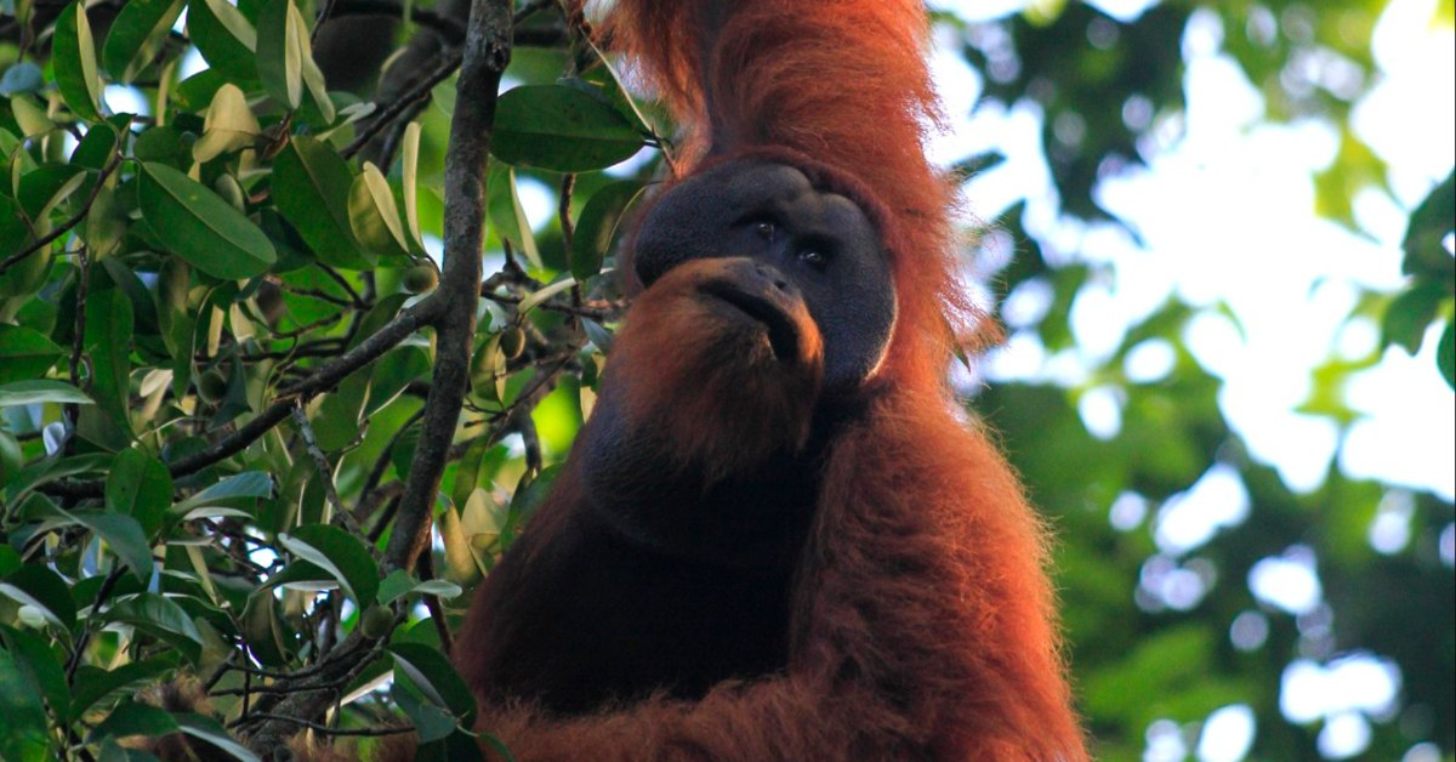
But for two years, officials saw no sight of the 100-plus pound Sumatran orangutan attempting the crossing.
Then, they slowly appeared. Building nests near the bridge and testing its ropes.
“They observe,” Siregar said. “They don’t rush. They watch, they try, they retreat. Only when they’re certain it’s safe do they move.”
On April 27, a Sumatran orangutan finally stepped across the bridge for the first time.
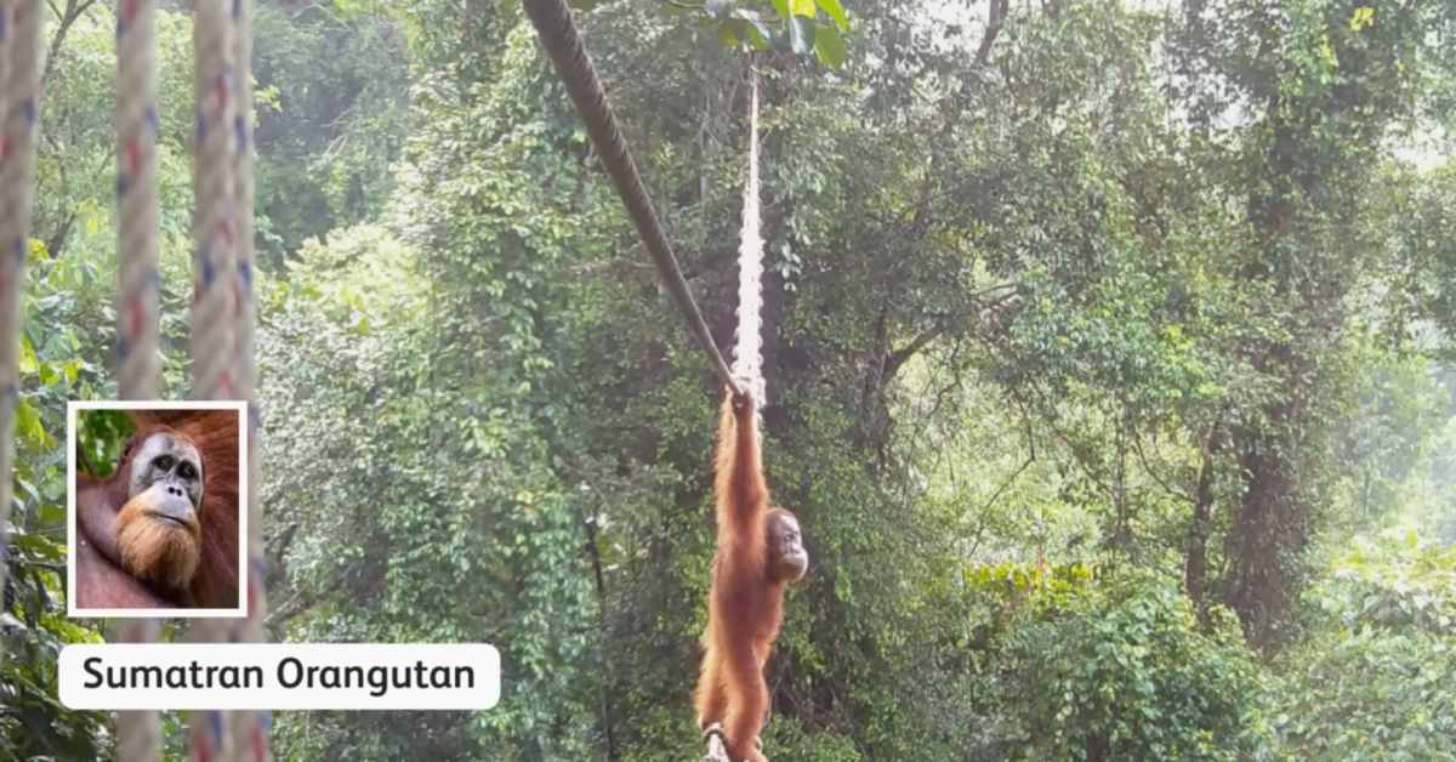
“This was the moment we had been waiting for,” Siregar said. “We are very grateful that the canopy here provides benefits for orangutan conservation efforts.”
Habitat fragmentation can isolate animal populations, increasing inbreeding and reducing genetic diversity.
By reconnecting the two forests, the canopy bridge can help orangutans move freely — and keep their population from declining any further.
“These bridges allow orangutans to move, to mix, to maintain healthy populations,” Siregar emphasized. “It reduces the risk of extinction.”
Watch the historic crossing in the YouTube video below:
You may also like: California is building a new overpass to reduce crashes and protect wildlife. It's already working
Header image via Sumatran Orangutan Society / TaHuKah
- A new study finds an 80-fold increase in the population of loggerhead turtles nesting at three beaches in Boa Vista, Cabo Verde’s third-largest island, over 27 years.
- Globally, the loggerhead population has decreased by 47% over the past three generations, a decline largely attributed to anthropogenic pressures such as habitat loss, marine pollution, fishing bycatch, poaching, and multiple climate change-driven impacts.
- The authors of this first-of-its-kind study of Cabo Verde’s nesting loggerheads attribute the remarkable local recovery to decades-long conservation efforts.
In 2018, night patrol teams on Boa Vista, the third-largest island in the Cabo Verde archipelago, started noticing a change along the beaches: The loggerhead turtles were arriving in significantly larger numbers than usual.
In previous years, each team, comprised of staff and volunteers from local conservation NGO Cabo Verde Natura 2000 (CVN2), encountered between five and 10 female turtles (Caretta caretta) a night. But now, the teams were each recording between 20 and 30 females a night. By 2021, that number had grown to between 30 and 40.
A recent study published in Biological Conservation confirms the upward trend: An 80-fold increase in the population of loggerheads nesting at three of Boa Vista’s beaches over 27 years, from 1998 to 2024.
The authors of this first long-term study of Cabo Verde’s nesting loggerheads ascribe the remarkable trend to decades-long conservation efforts at the local and national level.
Loggerheads, which primarily inhabit temperate and subtropical regions of the Pacific, Atlantic, and Indian oceans and the Mediterranean Sea, are long-lived, slow-maturing migratory animals. With a lifespan of 80 years or more, female loggerheads take decades to reach sexual maturity.
The global loggerhead population has declined by 47% over the past three generations, according to the last IUCN Red List assessment, where it remains listed as a globally ‘vulnerable’ species. The IUCN, the global wildlife conservation authority, largely attributes this decline to anthropogenic pressures such as habitat loss, marine pollution, bycatch, poaching, and multiple climate change-driven impacts.
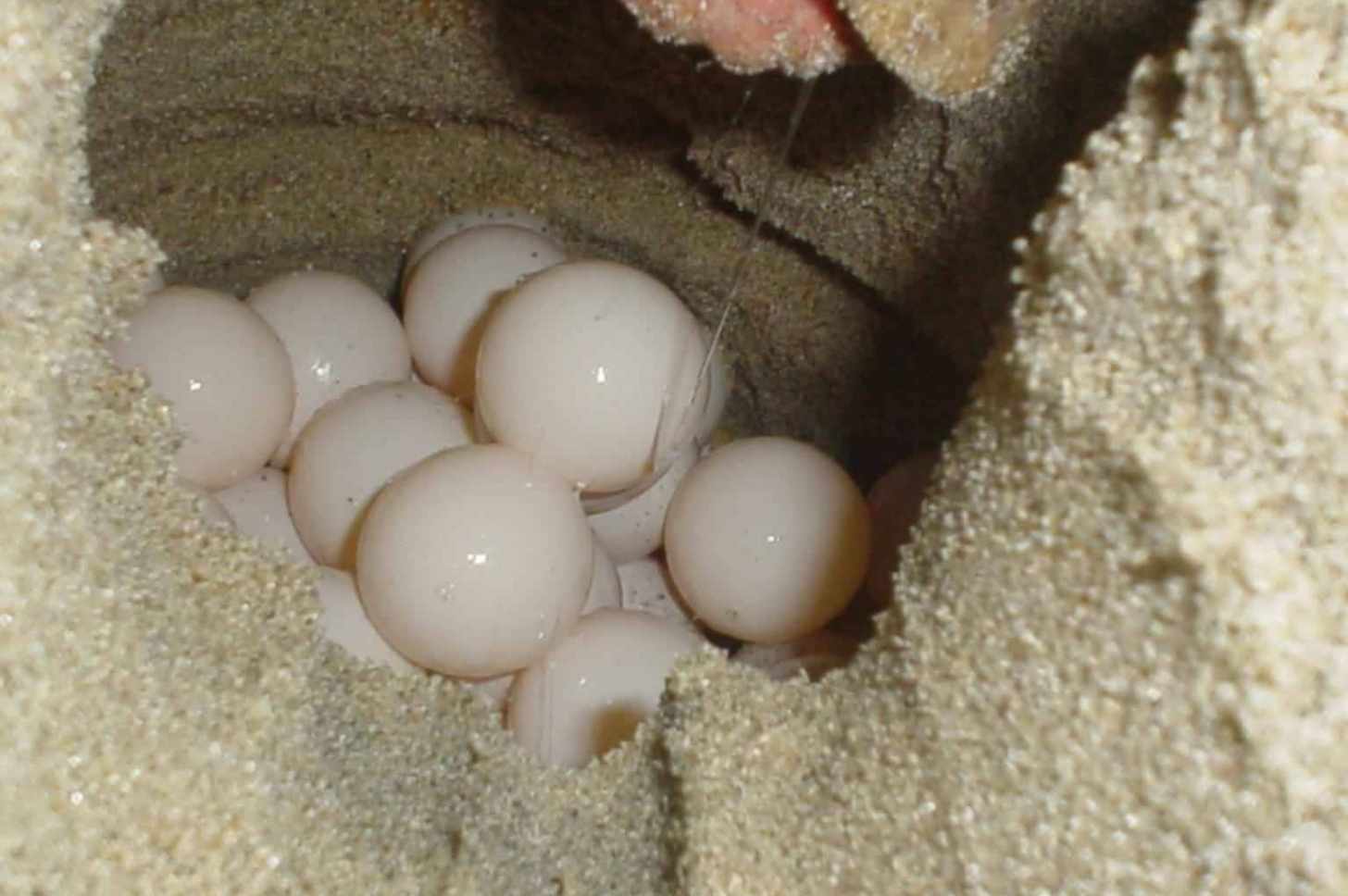
Relative to other global loggerhead nesting sites, the numbers at Boa Vista are striking.
Whereas biologists have recorded up to 600 nests per kilometer (0.62 mile) at sites in the U.S. state of Florida and in Oman (the only other sites with more than 10,000 females nesting per year), the new study found that the three largest nesting sites at Boa Vista reached a whopping 22,000 nests per kilometer in 2021.
Since Boa Vista’s loggerhead nesters were first documented in 1997, according to the paper’s authors, activities including habitat protection, anti-poaching enforcement, hatchery programs, and growing local engagement efforts like beach patrols and the rise of turtle watching have helped to protect nesting sites.
Those activities, along with careful data collection by CVN2 and other local conservation groups, are now supporting loggerhead recovery in Cabo Verde.
“This study is a good example of how long-term NGO conservation datasets can be transformed into scientific evidence that supports both local conservation and global understanding of sea turtle recovery,” study co-author Carlos Angulo-Preckler, a member of Saudi Arabia’s King Abdullah University of Science and Technology (KAUST) marine research team, told Mongabay in an email.
Counting eggs and anticipating future threats
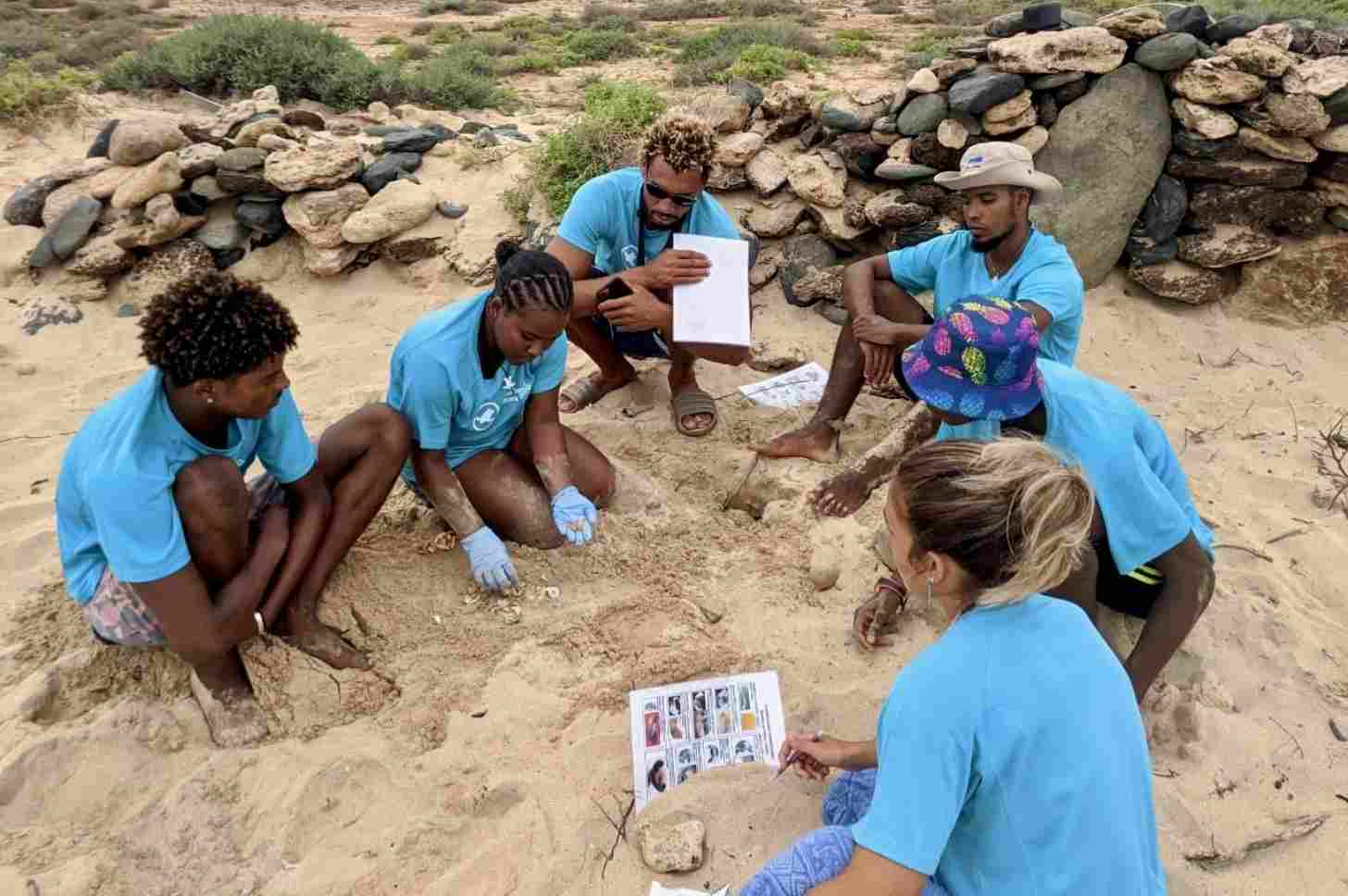
During the nesting months starting in June, CVN2 and a team of volunteers conduct nightly patrols to locate new nests, counting every egg in each clutch before erasing the female turtle’s tracks to avoid double-counting.
By October, they return to the nests to see how many eggs have successfully hatched, adding to a data pool that has grown steadily since Spanish zoologist L.F. Lopez-Jurado founded the organization in 1998.
CVN2, staffed by 90% Cabo Verdeans, recognized that as an organization it lacked the capacity to analyze decades of nesting data. So in 2024, it approached the marine studies team from KAUST to collaborate.
According to Jeanette Wynecken, a biologist specializing in sea turtles at Florida Atlantic University who was not involved in the study, the research is significant for showing the impact of long-term conservation efforts on a loggerhead population.
“Since sea turtles are slow to age and late to mature, analysis over such a long period of time is essential to understanding the effect that conservation has on turtle populations, as turtles that were born at the start of the study only came of mating age around 2013-2014,” Wynecken told Mongabay.
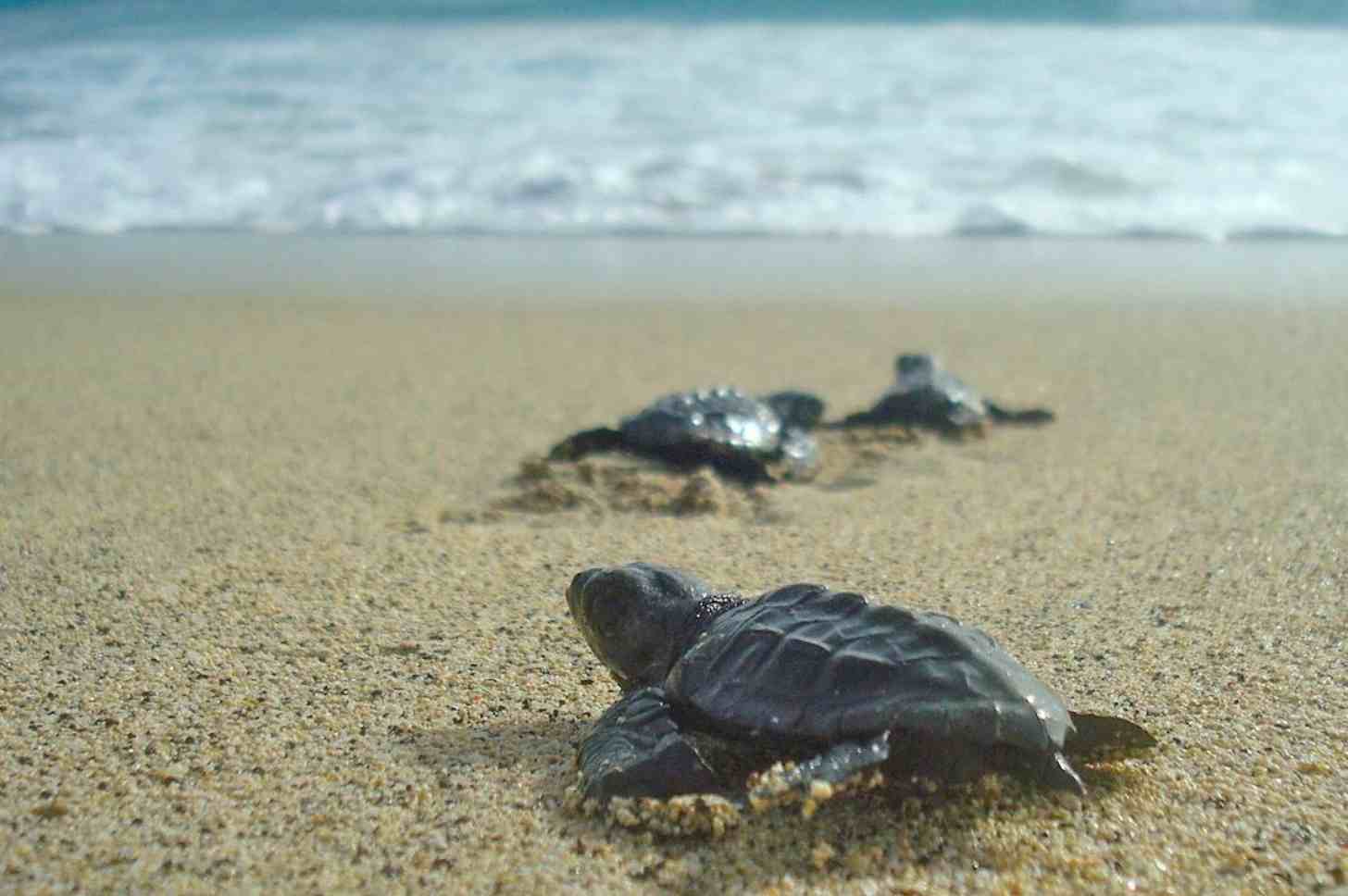
However, the study’s authors caution that Boa Vista’s loggerhead recovery also creates risk, with the high density of nests making the nesting grounds very susceptible to localized disturbances. Those disturbances can range from anthropogenic activity, such as tourism development or a resurgence of concentrated poaching, to natural hazards that alter the coastline.
In addition, nesting turtles often end up destroying other nests to secure space for their own, Ana Liria-Loza, a study co-author and president of CVN2, told Mongabay.
Wynecken, along with the study authors, expressed concern that climate-driven increases in sand temperature may also impact the long-term population growth of the loggerhead since their sex is determined by incubation temperatures, with higher temperatures producing females.
“Sea turtles have survived significant climate alterations,” lead author of the study Cassandra Roch, a KAUST researcher, told Mongabay in an email. “Therefore, consistent and continuous monitoring of their populations is crucial to identify adaptive strategies to climate change.”
This article was originally published on Mongabay.
Header Image by © Roberto Pillon via iNaturalist (CC BY-NC 4.0)
Every day the Good Good Good team collects the best good news in the world and shares it with our community. Here are the highlights for this week!
If you want to get good news in your inbox every day, join the Goodnewsletter — the free daily newsletter designed to leave you feeling hopeful.
The Best Positive News We’re Celebrating This Week —
France just added over 387,000 acres of protected forest
On June 9, France moved one step closer to its 2030 goal of placing 10% of its land under “strong protection” by creating seven new biological reserves and expanding two existing ones.
The largest land area protected under the new measures is the Armontabo Rocky Peaks integral reserve in French Guiana. The reserve accounts for 156,290 hectares — or 387,955 acres — of tropical rainforest and granite peaks.
The other eight reserves are spread across metropolitan France and range from the mountain forests of Vosges to the Mediterranean woodlands of Hérault.
Why is this good news? Protected nature reserves are widely known to prevent species extinction, mitigate climate change by safeguarding carbon storage, and buffer neighboring areas from flooding and erosion.
Divers on a marine litter mission shocked by ‘insane’ great white shark encounter: ‘It was pretty special’
→ Read more
Thanks to solar and batteries, the US grid is better equipped and will be more reliable this summer
The U.S. is on track to see an unusually hot summer, but thanks to rapid expansion of solar and battery storage — and just a few new gas plants — its grid is equipped to handle the high temperatures and power demands that they bring.
The NERC forecasted “strengthened readiness” thanks to the widespread, lowest-cost new sources of power — and their assessment didn’t include any of the aging coal power plants the Trump administration forced to remain open.
The 30.5 gigawatts of new solar power in particular is generating 16.4 gigawatts of capacity when demand is at its highest — during the day in summer. A few regions still face risks of shortfalls, but it’s a major improvement over last summer.
A free grocery store in Portland will serve 100,000 households this year
To fight food insecurity in Portland, a nonprofit called Sunshine Division recently opened a grocery store where everything is free. The market is designed to give families in need access to fresh, nutritious food in a way that feels similar to a traditional grocery shopping experience.
The new market is located in a 30,000-square-foot facility with warehouse space, cold storage, loading docks, volunteer areas, and offices — and it expects to serve 100,000 households this year.
Much of the store’s offerings are made possible through donations, and about 80% of the inventory comes from contributions by local grocery stores, retailers, farms, and other food partners.
Even better: Instead of handing out prepacked food boxes, the market lets people shop for themselves and choose the items that best fit their family’s needs, allergies, and dietary restrictions. This approach gives people more choice and a shopping experience that feels familiar and dignified.
Harry Styles donated to a British marathon runner who ran across the UK from ‘end to end’ for charity
Gas’s share in the global energy mix declined for the fifth consecutive year
Electricity demand is rising around the world, but for the fifth year in a row, the share of gas meeting that demand declined, replaced primarily by renewables.
Even in traditionally coal-heavy regions like Asia and Oceania, which are relying less and less on coal, gas still has a relatively limited share of the supply — accounting for 10.2% in Asia, down from 13.9% in 2015, and 15.1% in Oceania, down from 18.5%.
And in Europe, the share of gas peaked in 2010 at 28.4% and has fallen ever since alongside the decline of coal, while renewable sources continued to grow. The only parts of the world where gas power is rising is in North America, parts of the Middle East, and Africa.
Spain just launched a new floating ocean solar farm
Spain just launched one of its biggest marine solar energy projects to date with the “Paiporta” platform, a megawatt floating photovoltaic system designed to operate in offshore waters and port environments.
The project is a huge step forward for Spain when it comes to renewable energy. Instead of competing for agricultural land and forests, offshore floating solar installations have been shown to speed up the energy transition by taking advantage of underutilized marine surfaces.
The design of the floating solar farm itself has an added benefit. The cooling effect of the water beneath the platforms reduces the risk of panels overheating, which in turn generates higher electricity. Researchers from Oregon State University said that the cooling effect on floating solar farms can boost panel efficiency by up to 15%.
Why is this good news? When offshore solar farms succeed on a large scale, it helps reduce dependence on fossil fuels and cut greenhouse gas emissions — all while avoiding many of the land-use conflicts that often slow new energy projects.
‘Girl dads’ are talking periods and hairstyles over beers at the pub: ‘It's not a mom topic, it’s a parenting topic’
China’s rapid transition to electric vehicles cut enough pollution to prevent 262,000 deaths
A new study found that China’s swift shift to electric vehicles has cut urban air pollution so much, it’s prevented an estimated 262,000 premature deaths. It’s among the strongest evidence so far that transit electrification brings real-world public health benefits.
Using air quality data and machine learning across 150 cities, researchers found that the growth of “new energy vehicles” – including battery-electric, plug-in hybrid, and hydrogen – was linked to a 28.80% reduction in PM2.5, and a 30.67% reduction in carbon monoxide.
They then estimated that improvement in air quality prevented an estimated 262,000 non-accidental deaths, as well as around 75,000 all-cause deaths.
Stephen Colbert’s ‘Peanuts’ gag on the Late Show finale led to a major donation to World Central Kitchen
Before its cancellation, “The Late Show with Stephen Colbert” poked fun at its parent network. In the finale, Colbert read a headline about how license holders for Vince Guaraldi’s famous “Peanuts” compositions frequently sue for unauthorized use of the music.
Immediately after, the house band, Louis Cato and the Great Big Joy Machine, began playing the Guaraldi tune: “Linus and Lucy.” In response, Colbert smiled and said, “Oh no! I hope this doesn’t cost CBS any money!”
CBS just confirmed it would pay the licensing fee. The license holders, Lee Mendelson Film Productions, announced they would donate the payout to World Central Kitchen — the same nonprofit that “The Late Show” recently donated $2.5 million to.
Why is this good news? World Central Kitchen was founded by Chef José Andrés in 2010. Since then, their organization has served over 600 million chef-prepared meals to people around the world, often at the heart of natural disasters and the frontline of humanitarian crises.
Young women move in with NYC nuns to save money. Rent is $200 a week, and no boys are allowed after curfew
→ Read more
A new study found that the COVID-19 vaccine is linked to a lower risk of heart attack and stroke
According to new research, the COVID-19 vaccine lowered the risk of cardiovascular death from the virus by nearly 60%, the risk of heart attack by around 40%, and the risk of stroke by over 30%.
The researchers also found that the risk reduction for these health issues was greatest for people over the age of 75 and those with preexisting health conditions.
The study looked at the impact of the vaccine on these health conditions in veterans in particular, and supports findings from prior research.
→ Read more
Juneteenth celebrates freedom from slavery — and it recognizes the Black struggle for education
Prior to the enactment of the 13th Amendment in 1865 — and the origin of the Juneteenth holiday two years later — anti-literacy laws in southern states across the U.S. continued to impact formerly enslaved people.
While responses to their newfound freedom varied, a primary goal of newly freed people was to receive an education. They gathered in churches, homes, cellars, sheds, and more to learn how to read and write.
About 90% of the Black population in Southern states were illiterate in 1865 — that percentage dropped to 70% by 1880. In the 15 years following the Civil War, a total of 59 HBCUs had opened their doors to Black students.
Juneteenth is a celebration of that progress — and the continued struggle for true freedom and equality.
→ Read more
More good news of the week —
Arizona wildlife experts saved a baby coyote after he was found covered in hundreds of cholla cactus barbs. The Southwest Wildlife Conservation Center said the four-week-old pup is recovering well after two and a half hours of careful cactus removal.
Ariana Grande launched a new foundation that will help protect trans and LGBTQ+ rights. Also supporting youth mental health and arts education, the Brighter Days Ahead Foundation includes four different funds that partner with existing organizations including Lambda Legal, Trans Lifeline, and more.
A Florida sea turtle made a miraculous recovery after a boat propeller cut open the underbelly of its shell. A vet at the Florida Aquarium said the sea turtle has its “feisty” attitude back and will soon return to the ocean.
Charli XCX is donating 50% of ticket sales from her “Music, Fashion, Film” tour to the Transgender Law Center. The human rights group is the largest American transgender-led civil rights organization in the US.
Researchers found that weather radar data could be used to reduce the risk of bird collisions with wind turbines. Strategically shutting down turbines when particularly large numbers of birds are in flight could save birds while having a minimal impact on electricity production.
Farmers in a national park are turning down lights to protect wildlife and improve the health of their crops. Research indicates that pressures on ecosystems from things like light pollution could also create a devastating decline in the insect population, and subsequently, the food chain.
Defying a statewide ban on rainbow crosswalks, El Paso wrapped Pride flags around its street lights. City officials collaborated with local LGBTQ+ communities to find a legal loophole around Governor Greg Abbott’s 2025 order.
Matt Damon is challenging Gap, Starbucks, and Amazon to roll back irresponsible water consumption. Damon’s nonprofit, Water.org, successfully pressured America’s biggest corporations to give back by embedding water philanthropy into day-to-day operations.
Kyrgyzstan established a “climate-ready corridor” for snow leopards, argali sheep, and wild goats. The corridor connects 2 million acres of pastureland, forest, and high-altitude landscapes and is designed to protect wildlife from predicted climate scenarios.
In new trials, dogs consistently detected spotted lanternfly eggs that experts had missed, outperforming humans 2-to-1. Thanks to the trial’s success, researchers believe everyday dogs and their owners could be crucial to early pest detection.
Thanks to new, living “microbots,” scientists are one step closer to repairing spinal cord injuries. The tiny robots, which are a tenth of the width of a human hair, are already being used to repair damaged nerve tissue in laboratory mice.
Residents in a Pennsylvania town are fighting back against proposed data centers that could cover 14% of their town. Residents of Archbald, Pennsylvania are creating the blueprint for how to protect communities from the noise, heat, and utility costs of massive data centers.
A Scottish man is walking 3,200 miles from Los Angeles to Boston for the World Cup while raising money for men’s mental health. Craig Ferguson’s mission is rooted in the loss suffered by his best friend, Struan, whose father, Russell, died by suicide seven years ago.
More than 50 organizations and 25 countries launched a new alliance to protect the Atlantic Ocean’s leatherback sea turtles. Leatherbacks are classified as “vulnerable” globally on the IUCN Red List, but more recent regional conservation status assessments for the turtles show more concern about their status.
Amtrak delivered its first high-speed train for final testing in Seattle ahead of passenger service launch later this year. It’s the first of eight that will replace the aging fleet of passenger trains currently serving the Amtrak Cascades route, and 83 trains Amtrak plans to deploy around the country.
Researchers created a 3D-printable architectural material made out of yeast. Traditional construction materials are long-lasting and durable, but also contribute a large amount to global emissions and consumption of resources, while the yeast-based material is biodegradable, sustainable, and zero-waste.
Mushrooms helped remove sewage and filter out 80% of E. coli bacteria in a U.K. river. In a separate trial, a similar mushroom filter barricade caught 83% of phosphorus and 35% of nitrogen from rainwater running off farmers’ fields.
A rare olive ridley sea turtle was seen nesting in Florida for the first time ever. Olive ridleys, also known as Pacific ridley sea turtles, are among the most abundant sea turtle species in the world and are primarily found in India, Mexico, and Costa Rica.
A first-of-its-kind hepatitis B drug is helping a subset of patients achieve a “functional cure.” In recent trials, 1 in 5 patients saw their virus reduced to levels low enough for their natural immune system to keep it in check.
The biggest expansion in federal scholarship money in 50 years is set to launch this summer. The new policy, known as Workforce Pell, widens the scope of federal Pell Grants by helping lower-income learners pay not just for associate or bachelor’s degrees, but for nondegree job training in high-demand fields.
A six-year-old girl in England has had her eyesight fully restored after a pioneering eye gene therapy. The little girl, Saffie, had been born with a rare condition called Leber’s Congenital Amaurosis, which causes low vision from infancy.
U.K. conservationists just welcomed a new baby pancake tortoise, giving hope for one of the world’s most endangered reptiles. The new hatchling is the child of tortoise parents Waffle and Maple and will soon be named by the public.
Scientists at the University of Missouri mapped 2,000 acres of land to better understand how nature has progressed in the last 200 years. The field research is part of the Lewis and Clark Trail Resurvey, which aims to map America’s forests ahead of the country’s 250th anniversary.
For more than five years, evidence has suggested that the entire wild population of mountain bongos existed only in the Aberdare Mountains of Kenya.
As one of Africa’s rarest mammals, the critically endangered bongo is a chestnut-colored antelope with vertical white stripes. Fewer than 100 of them are thought to live in the wild.
But a new discovery may change those assumptions.
New trail camera footage spotted three wild mountain bongos wandering through the Maasai Mau forest in Kenya, a location where the mammals had not been documented for years.

Experts had thought they had all but vanished from the forest area.
Chester Zoo, a partner of the Mountain Bongo Project, worked with other conservation groups to set up AI-powered cameras on a recent survey of the area and came away with worrying results.
Their cameras had only detected 28 individual bongos in the Aberdares stronghold. But the Maasai Mau region is about 125 miles (or 200 kilometers) from the Aberdares protected area, meaning conservationists have a newfound hope for the species in Kenya.
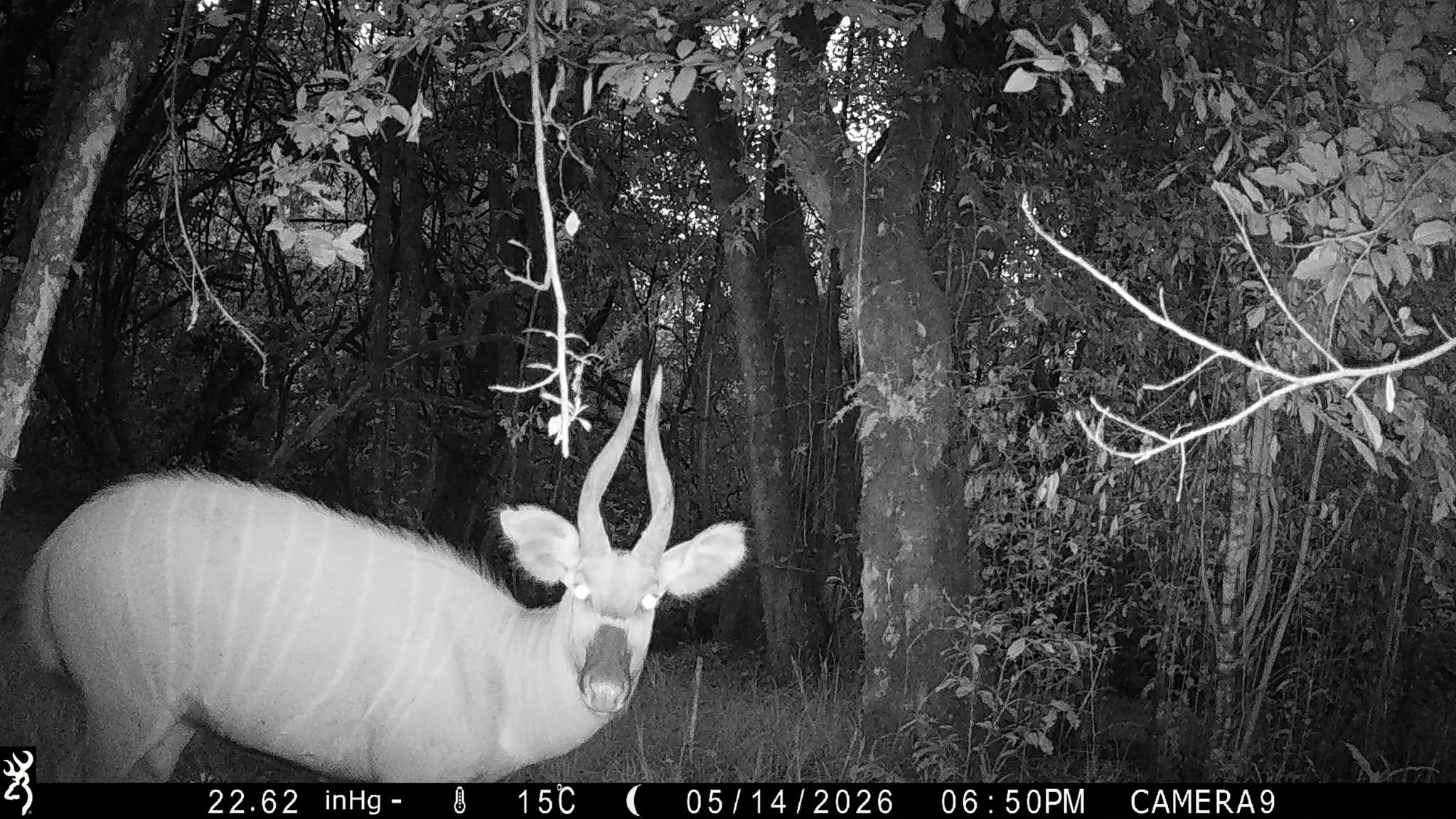
“The excitement in camp was unbelievable when we first looked through the photos,” Oscar Dyer, the director of operations at Mountain Bongo Project, said in a statement for the zoo.
“This image is the result of years of hard work by our rangers on the ground in one of Kenya’s most inaccessible forests.”
Zoos and sanctuaries worldwide are home to about 900 mountain bongos, but finding them in the wild is increasingly difficult. Game hunting, disease, habitat destruction, and human interference have driven the species to near extinction over the past 100 years.
Illegal logging is also a threat to the species, which thrives in areas with rich soil and a water supply — also in high demand for agriculture.
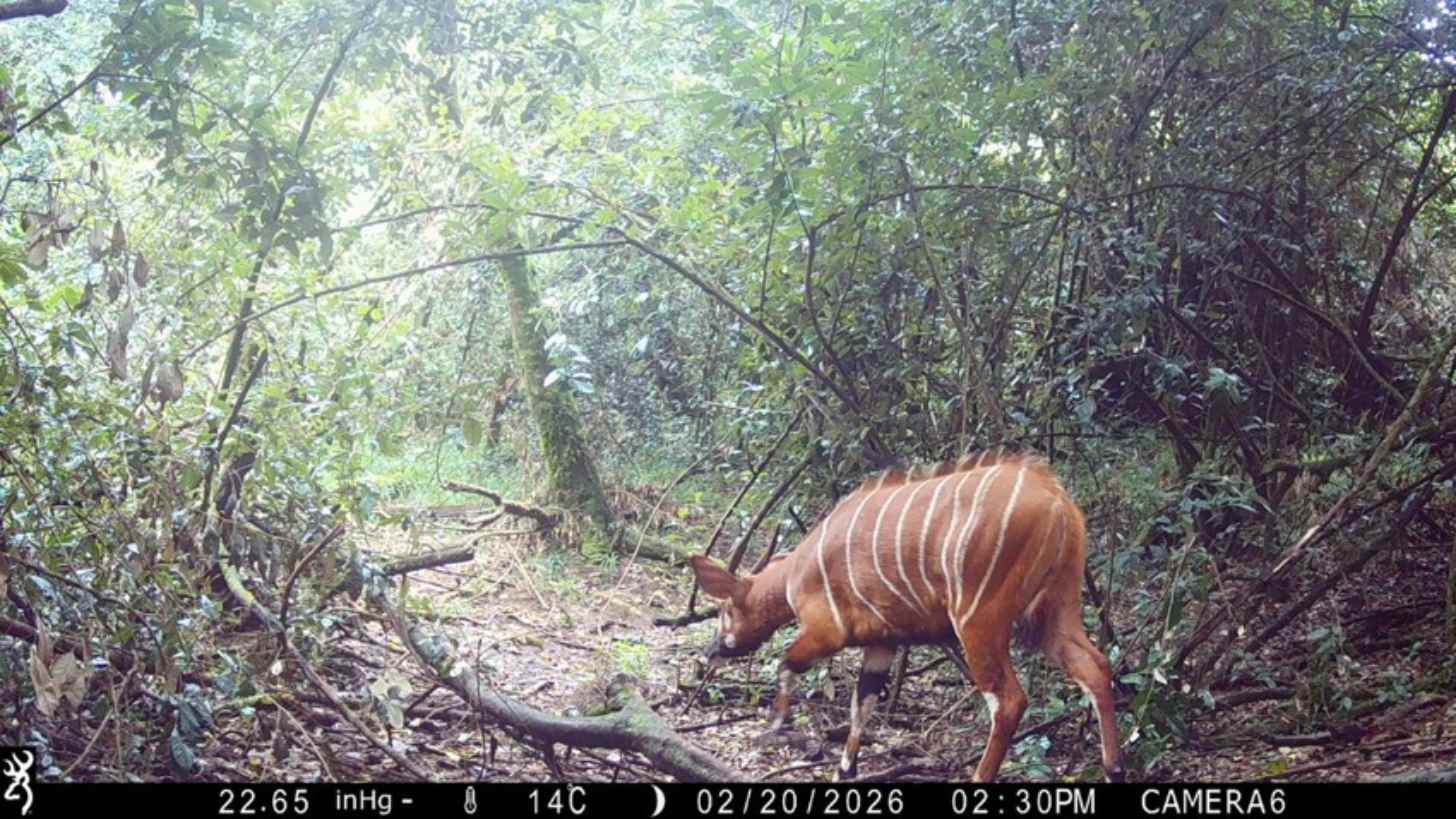
The trail cameras in the Maasai Mau region observed an older male first identified in 2018, along with a younger male and female, exploring the area.
Rangers working in the area are native to the local environment, Okiek and Maasai people who “draw on long-held knowledge about the local ecosystem,” Chester Zoo explained.
It takes time for the ranger to set up the motion-sensing cameras to collect photos, physically visiting the camera site through remote, rugged forests.
But seeing their efforts pay off? Worth every step.
“This is huge news. Unlike Aberdares, Maasai Mau is not a national park, and the reappearance of bongo may focus organizations on increasing broader protections,” Dr. Tommaso Sandri, a conservationist at Chester Zoo, said in a statement.

Conservationists with the Mountain Bongo Project are now working on an action plan to expand bongo safeguarding work in the forest area.
They hope that this news, with broadened public support, will help play a vital role in helping the wild population bounce back.
“The best chance for bongos is to highlight the need to protect the forests where they’re found, before these habitats disappear,” Chester Zoo wrote on Instagram.
“Chester Zoo and MBP are both keen to push for formalized protection for Maasai Mau.”
You may also like: Conservationists 'ecstatic:' Trail cameras spot one of the world's rarest mammals — with a baby in its pouch
Header image courtesy of Mountain Bongo Project
New York City Mayor Zohran Mamdani has been incredibly clear about one of his major policy positions: New Yorkers deserve affordable access to quality childcare.
On day eight in office, Mamdani and Governor Kathy Hochul announced a $1.2 billion partnership to launch free, universal childcare for two-year-olds (also known as “2-K”).
Hochul did endorse Mamdani for mayor in 2025, though she noted that they do not always see “eye to eye” on every issue.
But childcare — and the major expense it is for New York residents — is something it seems they both agree on.
“Our city’s in an affordability crisis. After housing, the number one cost pushing families out of the city is childcare, and it’s clear that New Yorkers need universal childcare that isn’t means-tested or just available to the few, that can actually address the needs of so many New Yorkers across all five boroughs,” Mamdani told Good Good Good in an interview earlier this year.
“In partnership with Governor Kathy Hochul, and a $1.2 billion investment from the state, we are on the path to delivering universal childcare to New Yorkers. This will save some families more than $20,000 a year. [This] will put our future New Yorkers on the path to lifelong success. And it will confront the affordability crisis.”

“People want to see government leaders that are actually rolling up their sleeves and putting the focus on the needs of families and businesses,” Hochul added to Good Good Good in a separate interview.
“I think it's just an expectation that families have, that they have leaders who understand them. And especially being a mom myself, I had to give up a job I love because I couldn't find childcare way back when my children were babies and toddlers. And now those kids are having their own kids, and childcare has not gotten any easier — and it's gotten more expensive.”
The rollout of the pilot program will provide 2,000 free 2-K seats to families in four communities this fall, with 12,000 more seats the following year. Four years in, Mamdani said, there will be a free seat for every 2-year-old in N.Y.C.
This effort has a strong foundation; Mayor Bill de Blasio spearheaded efforts to provide free Pre-K and 3-K for all. And Mamdani has also announced the effort to double the number of free 3-K seats across the city earlier this year.
“For families who have access to 3-K, the city's free preschool program for three-year-olds, mothers are more likely to seek employment and to continue employment even after their child finishes 3-K,” Emmy Liss, the executive director of the Mayor's Office of Child Care, told Good Good Good.
“Families who have access to free child care are able to put 20, 30, even $40,000 back in their pocket on an annual basis, which is money that they can put towards other expenses. It's money they can save for the future. It's money that allows them to feel more secure in their economic future here in the state, not to mention the additional money that they may be able to make by having more work flexibility, knowing that their kids are being cared for.”

Seeing the immediate and tangible benefits of the existing program made it easy for Hochul and Mamdani — two people who already care about improving childcare infrastructure — to find common ground.
“To me, it's an important part of my job,” Hochul said about collaborating across disagreements. “I don't decide who gets elected president. I don't decide who gets elected mayor. But once people are in office, my job is to have a relationship that delivers for our mutual constituents.”
For Mamdani, there are inspirations he often cites for his approach to governance, even and especially with people who don’t always agree with his democratic socialist values. One of those people is Fiorello La Guardia, who served as N.Y.C. mayor from 1934 to 1946.
“He is a model for all of us who are looking to meet the needs of working-class New Yorkers. Needs which have so often been overlooked at best, and at worst, exacerbated by City Hall,” Mamdani said.
“He would often demonstrate that in order to face a crisis, you have to ensure that your solution is at the same scale as it. And that’s something that I’m always thinking about in delivering for the people of our city.”
But for people who don’t follow New York politics as closely as its current mayor, there’s another name that might ring a bell.

When asked if there was a piece of children’s media that was foundational to his childhood, Mamdani told Good Good Good, “I’ve always loved Curious George.”
Namely, he adds, “the lesson that it gave all of us about finding our way in a big city and always staying curious each and every day.”
Curiosity will be foundational to fully executing this vision for universal childcare.
Liss, whom Mamdani has selected to lead this ambitious project, calls universal childcare “an all-of-government effort.”
She said that there are over a dozen agencies whose work touches childcare, and her work is to coordinate among them and make sure families, providers, and communities have their voices heard and reflected in that work.
Some of those agencies, she said, include New York City Public Schools, the Department of Health, the Administration of Children’s Services, the Department of Buildings, and more.
Together, these people work to make sure there’s enough space for these childcare providers, that children are healthy and safe, and that low-income families have the support they need to enroll in the programs that help them.
While Hochul and Mamdani often make the headlines, the path to universal childcare is paved by so many more who care about delivering for New Yorkers.
“There are hundreds of really dedicated, thoughtful public servants who are behind the scenes building the system out,” Liss said, “who are working through every last detail to make sure that we build a system that works for families and works for childcare providers.”
Enrollment for free 2-K is now open for eligible N.Y.C. families at myschools.nyc.
You may also like: NY leads the nation in youth mental health. Hochul says it's thanks to this one policy 'every governor should enact'
Header image by Kara McCurdy/Mayoral Photography Office
One of the world’s least-known mammals is a mammal with stubby limbs, a fox-like tail, and partially webbed feet, and it roams the dense tropical rainforests of South America.
This solitary, semi-aquatic animal is called the short-eared dog. But in the Amazon Basin, it is better known as the “ghost dog” of Latin America.
Due to its acute hearing and strong sense of smell, the mammal keeps a wide berth from human activity, making it notoriously rare to spot in the wild.
In Brazil and Colombia, it is officially classified as endangered, but researchers have only hazarded a guess at its true population size.
Now, a new study has shed light on the evasive predator.
“The short-eared dog (Atelocynus microtis) is one of the world’s least-known canids and one of Latin America’s least-known carnivores,” Dr. Robert Wallace, the lead researcher, wrote in the study, which was published in the journal Neotropical Biology and Conservation on March 27.
“Even the geographical and habitat distribution of this species is unclear, with its ecology virtually unknown,” Wallace and his peers observed.
“After decades of speculation, more recent continental-scale habitat analyses suggest that short-eared dogs are forest specialists, with occupancy studies in southern Peru suggesting a strong preference for … upland forests away from rivers.”
Together with study co-authors Guido Ayala, Maria Viscarra, and Zulia Porcel, Wallace ran 34 intensive camera-trap surveys across Bolivia and southeastern Peru from 2001 to 2024 to better understand the endangered species.
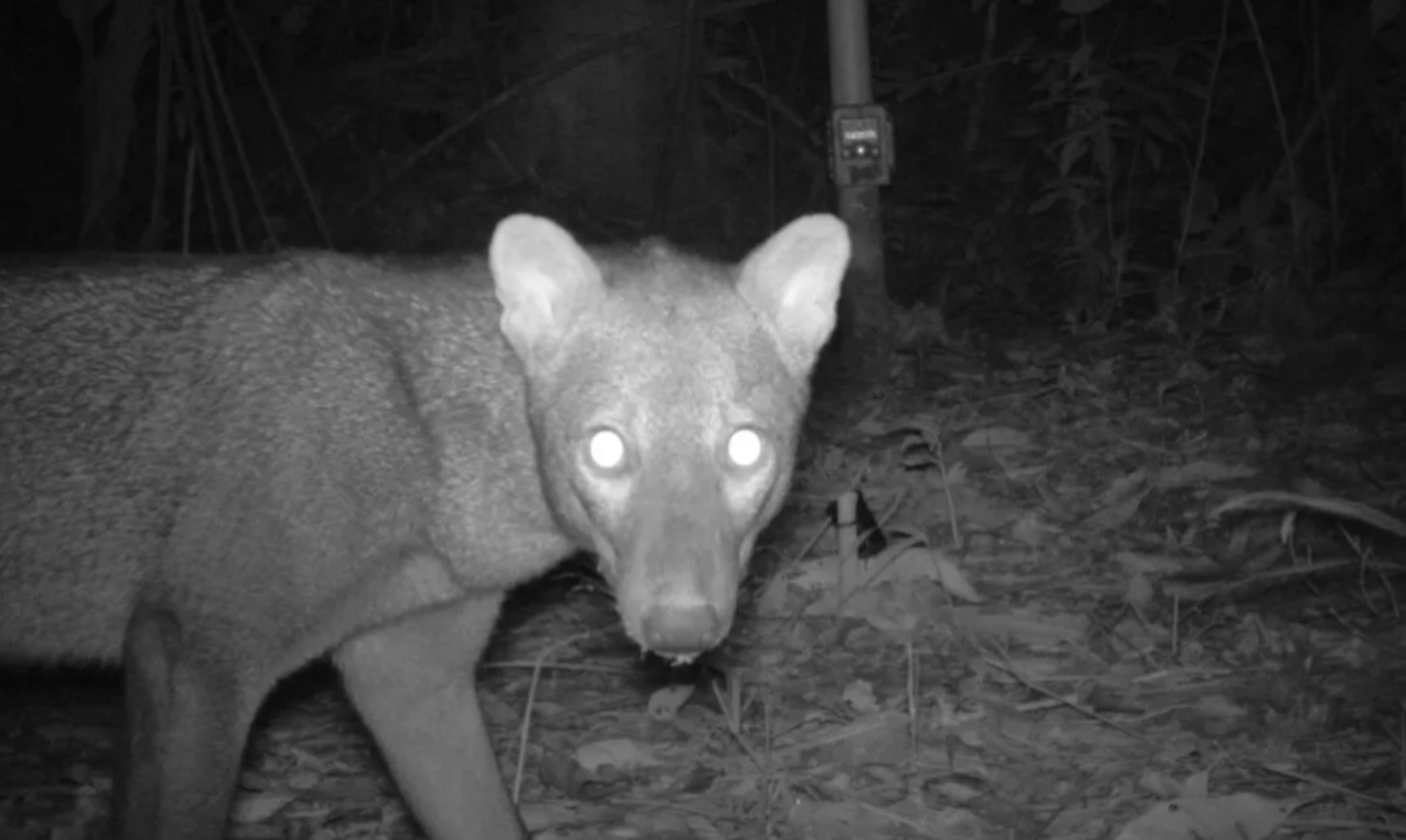
Over the 23-year study, they captured 594 recordings of short-eared dogs in the Greater Madidi-Tambopata and Llanos de Moxos regions. Those camera-trap capture rates — and estimated population density of 15 individuals per 100 square kilometers — revealed a more optimistic look at the endangered species.
“The most surprising aspect of the results was that despite being an almost mythical beast, short-eared dogs are much more abundant than we had imagined,” the researchers said in a shared statement.
By studying the ghost dogs for over two decades, the researchers were able to confirm just how critical upland forests were to the carnivore, which weighs roughly the same as the average beagle.
In fact, the presence of short-eared dogs was noticeably higher in protected areas and Indigenous territories than in unprotected lands that were vulnerable to deforestation and logging.
In turn, in habitats where short-eared dogs thrived, the ecosystem flourished. As medium-sized carnivores, they help control a range of prey populations across forest floors and riverbanks, including fish, insects, rodents, birds, frogs, and crabs.
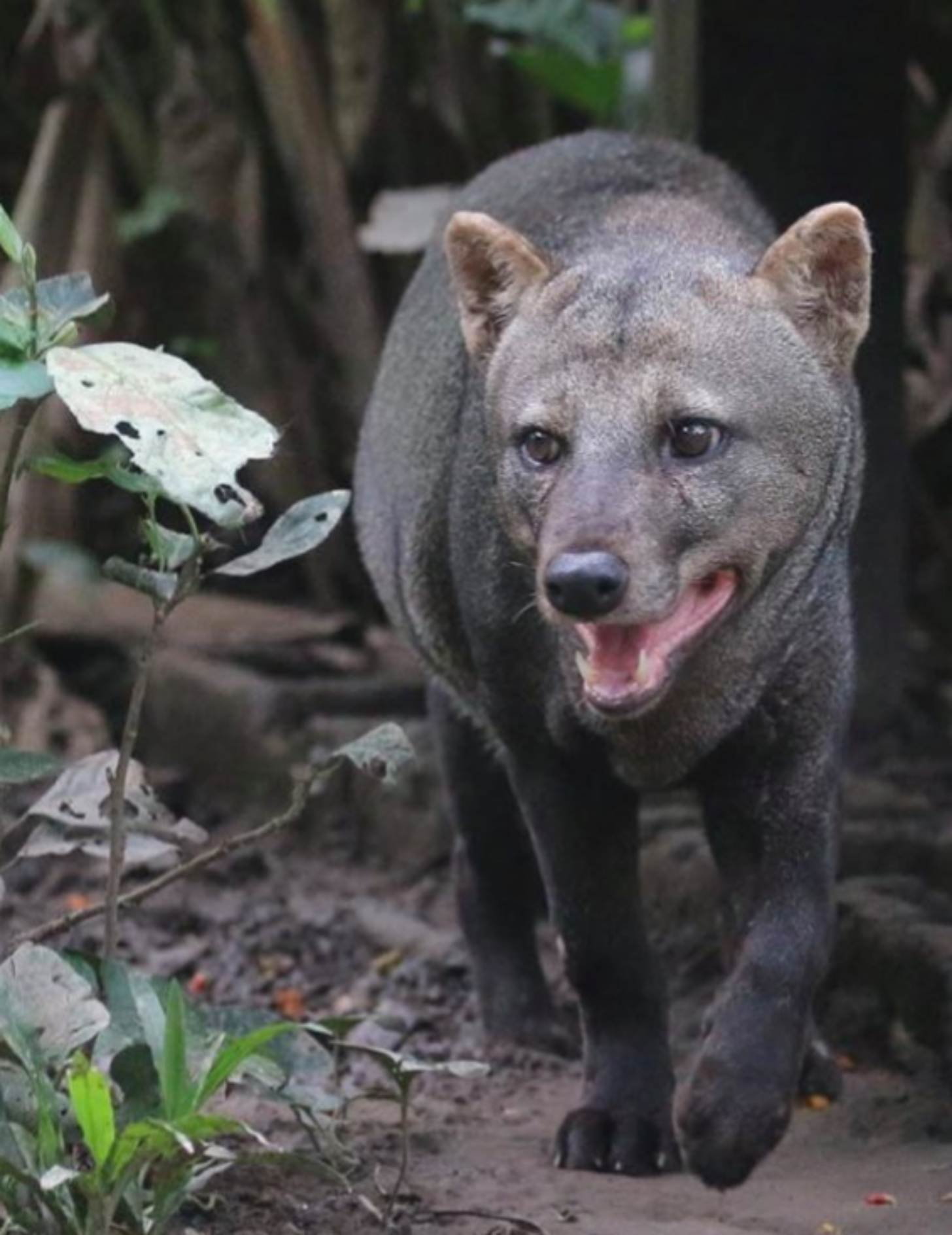
In their study, Wallace and his peers emphasized just how critical their habitat was to their species' survival.
“The most important management strategy is the protection of Amazonian forest canopy, for which the creation and effective management of protected areas is the most important element, in combination with the sustainable management of Indigenous territories,” the researchers said.
Wallace added that their extensive study was also a testament to the important role that trail cameras can play in monitoring species, especially ones as rare as “ghosts.”
“[Our research is a] wonderful example of how conservation technology and remote sensing — in this case the intensive use of camera traps — can provide substantial data on one of the least-known species of the Amazonian rainforests,” he said.
You may also like: Experts thought this critically endangered species had vanished. Then, one was spotted on a trail camera
Header image via Wildlife Conservation Society
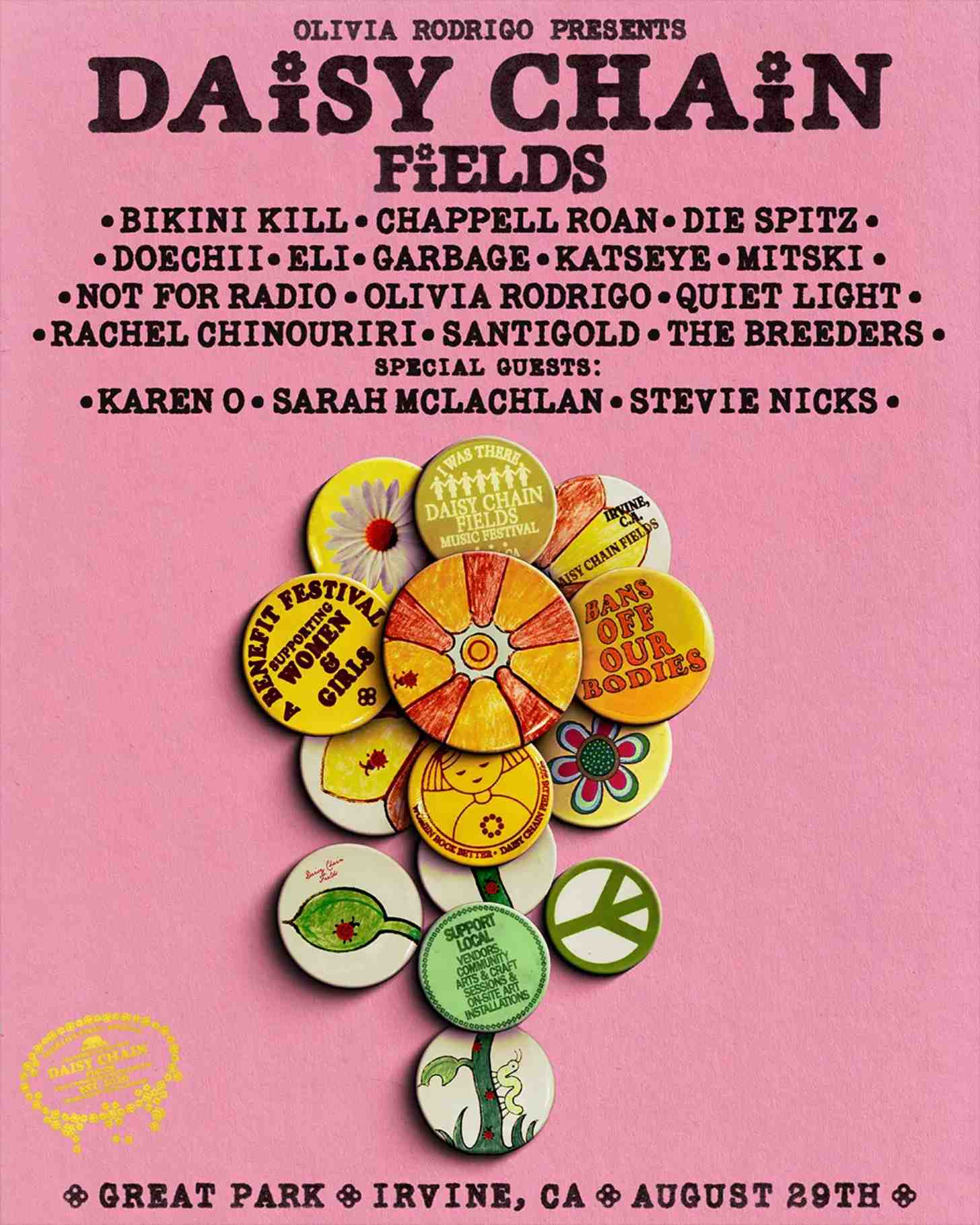
Olivia Rodrigo has just announced her very own modern-day Lilith Fair.
The “stupid song” singer is producing and headlining an all-women music festival this August called “Daisy Chain Fields,” featuring mega acts like Chappell Roan, Bikini Kill, Katseye, Doechii, and even Stevie Nicks.
But the event will do more than just draw crowds to Great Park in Irvine, California.
“The festival celebrates the voices, artistry, and contributions of women in music, fostering an inclusive environment in which all are welcome,” a mission statement on the festival’s website reads.
“Daisy Chain offers more than live performances; it provides opportunities for education, dialogue, and engagement around issues affecting women and girls in the United States and globally.”
“Through partnerships and on-site resources, the festival seeks to ensure that girls and young people have access to information and support they may not otherwise know how to find, and real-life interactions with women and girls who are the bright lights in our world.”
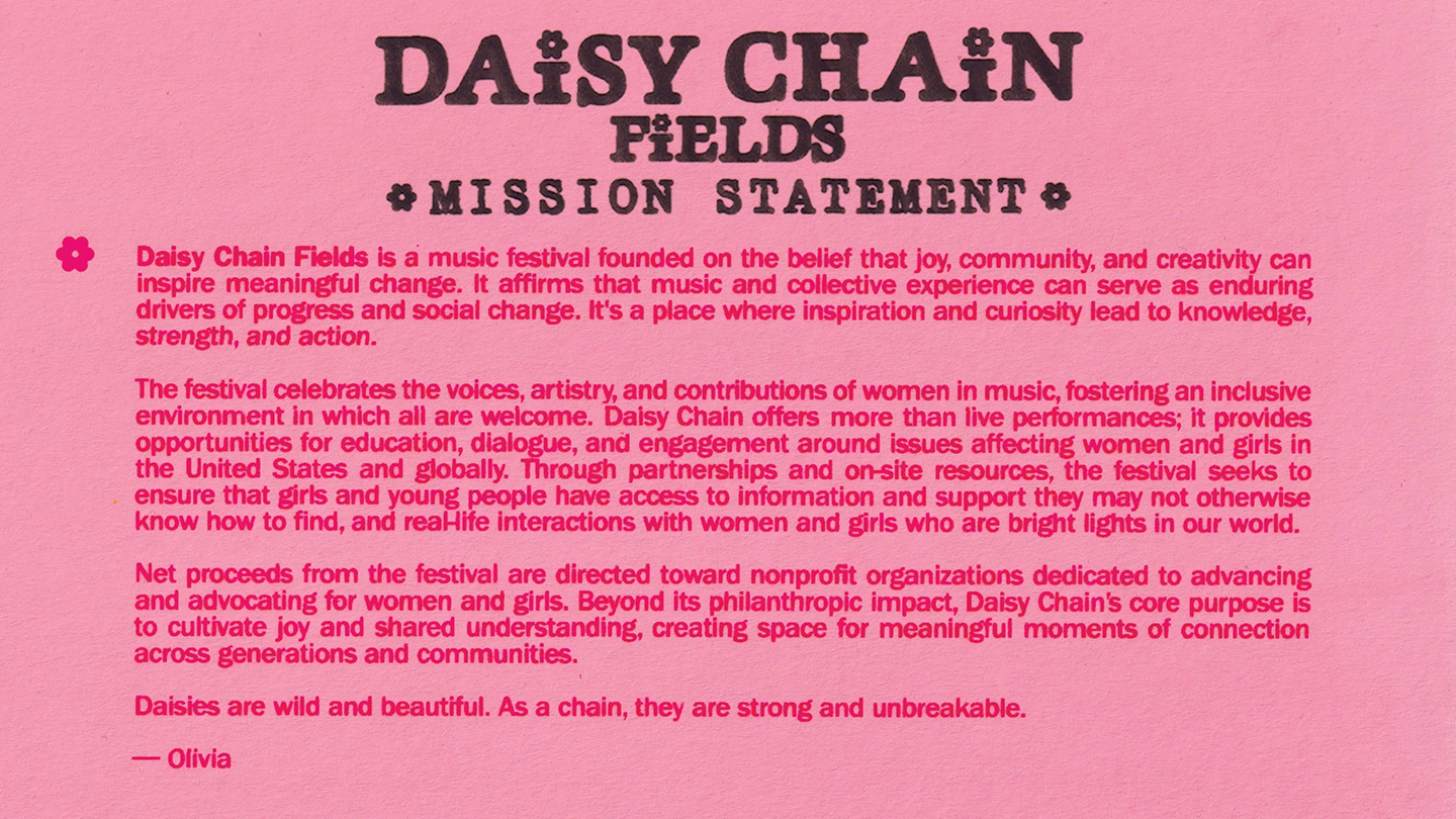
Additionally, 100% of the net proceeds will go to charities “dedicated to advancing and advocating for women and girls.”
On the Daisy Chain Fields website, the following nonprofits are listed as beneficiaries:
- Baby2Baby
- Jhpiego
- National Institute for Reproductive Health
- Black Mamas Matter Alliance
- Johns Hopkins Center for Indigenous Health
- National Women’s Law Center
- Center for Reproductive Rights
- National Domestic Workers Alliance
- Planned Parenthood
- FreeFrom
A diverse range of organizations, many ultimately continue to echo Rodrigo’s previous work advocating and fundraising for reproductive rights.
“I firmly believe that joy, community, and music can be the drivers of meaningful change,” Rodrigo wrote in an Instagram caption announcing the festival. “And I’m hopeful this festival will be just that.”

“Daisy Chain Fields … affirms that music and collective experience can serve as enduring drivers of progress and social change,” the festival mission statement continued. “It’s a place where inspiration and curiosity lead to knowledge, strength, and action.”
Tickets for Daisy Chain Fields will be available for presale starting June 24, 2026. Prices are already available to view on the website, with general admission beginning at a flat rate of $250, and more exclusive options for VIP tickets ($500) and pit viewing ($1,250).
“Daisies are wild and beautiful,” Rodrigo writes in the mission statement. “As a chain, they are strong and unbreakable.”
Presale signups are available now on the Daisy Chain Fields website.
You may also like: All the times Olivia Rodrigo showed us she's a feminist — from girlhood to the 'Guts' Tour
Header image by Nick Walker
State boundaries can be iconic. Many were drawn by human hands, but some of the most recognizable contours were shaped by nature: the boot of southeastern Louisiana, carved by the Mississippi River, or the ocean waves sculpting the hook of Cape Cod in Massachusetts.
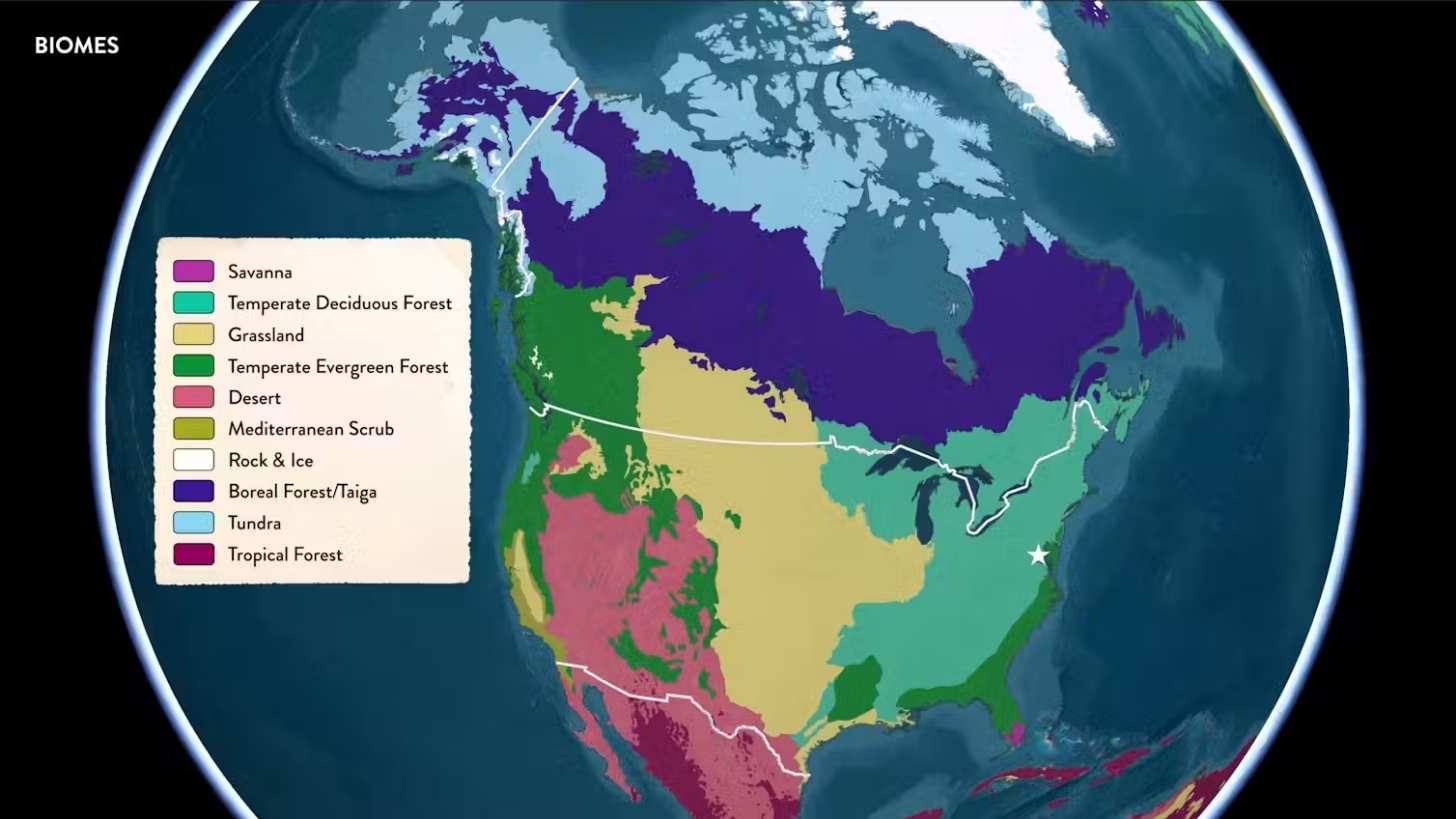
For a moment, imagine that there are no state lines. View the United States through its natural contours. As curators at the Smithsonian’s National Museum of Natural History, we often look at our nation this way, drawing different kinds of maps that trace mountains, watersheds, animal migrations, biomes, ancient seas, and so much more.
These kinds of maps show us how connected we all are by nature, since it transcends state boundaries. That idea is central to our new exhibition, “From These Lands: Sharing Our Natural and Cultural Heritage,” now open at our museum to mark the 250th anniversary of the United States.
We are co-curators of the show, part of a team of exhibit designers and developers who created the exhibition.
“From These Lands” uses items from the museum’s collections to explore these patterns and ideas, offering a way to see the country’s natural and cultural heritage beyond state lines.
One country, many pine cones
Pine cones can be easy to overlook.
When you’re out for a walk in the woods, you see the forest, maybe even the trees, but not always the cones at your feet. For many people, a pine cone is just a pine cone. But when you look closely, subtle differences in the styles of cones carry clues about the trees that produced them and the places where those trees live.

There are 43 pine species native to the United States, making up nearly a third of the world’s pine tree diversity. Together, they stretch across surprisingly different combinations of climate, terrain, plants, and animals, the regions scientists call biomes.
Something as simple as the pine cone can let you hold that concept in your hand: soils, fire, rain, birds, and rodents all helped shape the tree that made it.
For example, cones from the sand pine can shield seeds for years, only to release them as the heat from low-intensity fires melts their resin and opens their scales. These scrubby and fire-shaped landscapes are one part of the larger temperate evergreen forests that spread through the southeastern U.S.
On the other side of the country, the Coulter pine produces cones that can be more than a foot-and-half long and weigh up to 8 pounds. This large cone size helps its seeds to survive fires, allowing small birds and mammals to then disperse them into new areas in the Mediterranean Scrub of Southern California.
A pine cone comes from one tree in one place, but its form reflects a wide set of environmental conditions. Pine cones provide an interesting way to view the different biomes found in the United States and its territories.
An ancient ocean in the middle of the country
The land under your feet can be millions of years old, and it has not always been dry ground.
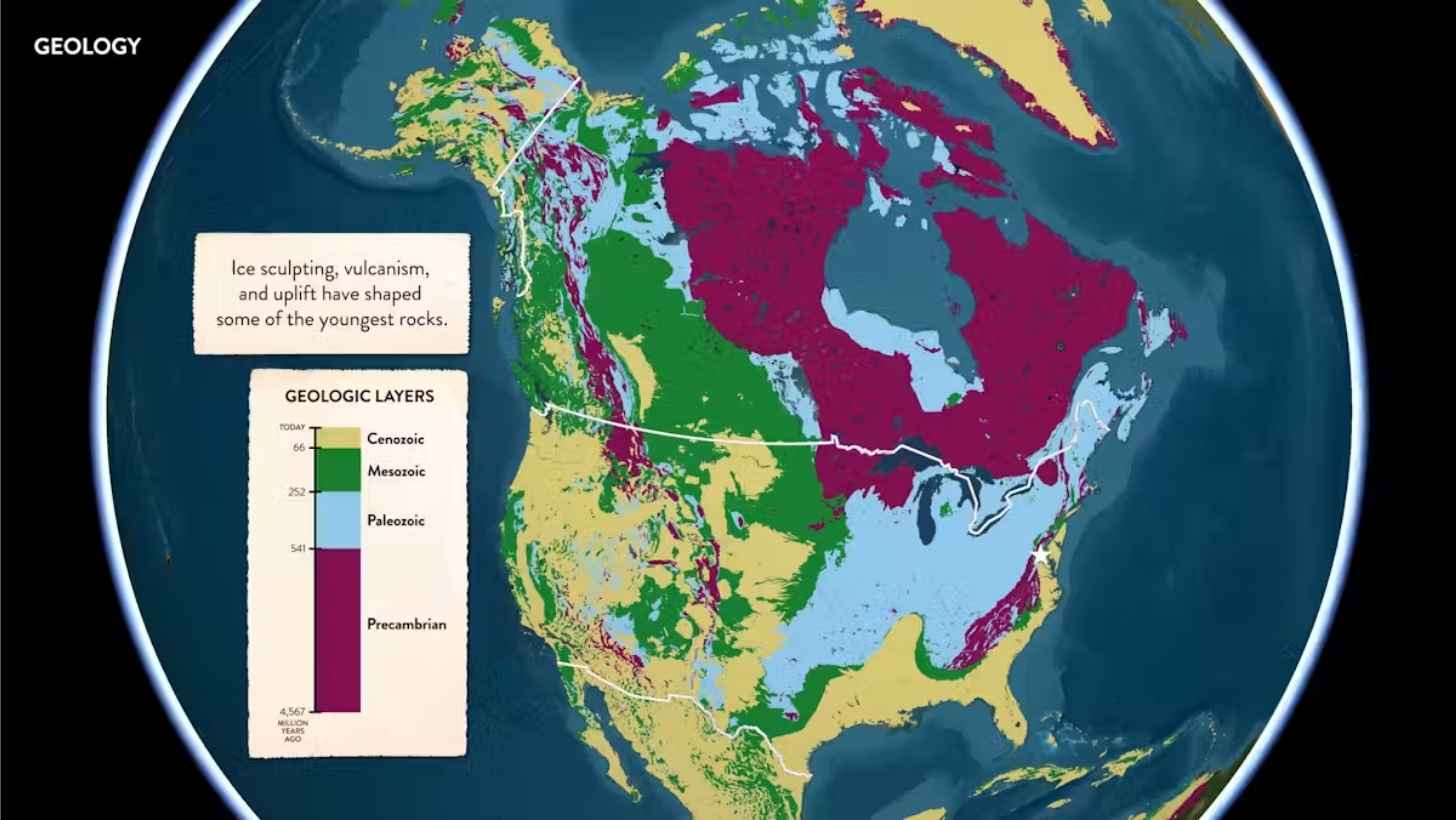
During the late Mesozoic Era — the time interval made famous by the dinosaurs — a warm, shallow inland sea covered states from North Dakota to Texas. This Western Interior Seaway laid down many of the rocks and sediments that you can see today throughout the Great Plains and Badlands.
The sea was also full of life, and the rocks it left behind are full of fossils.

There were familiar characters living on this ancient seafloor: clams, snails, and sea stars. But swimming in the waters above were the now-extinct animals called ammonites.
These coiled, shelled relatives of squid and octopuses were abundant predators, hunting in the same waters as fish, turtles, sharks, and extinct marine reptiles called plesiosaurs. Ammonites used the chambers in their shells to control buoyancy, much like the modern nautilus.
Ammonite fossils demonstrate that much of the central U.S. was an ancient ocean. They also remind us that the landscapes we know today are just the latest version of those reshaped over and over by the slow work of geologic time.
Unlikely pairing: Shorebirds and horseshoe crabs
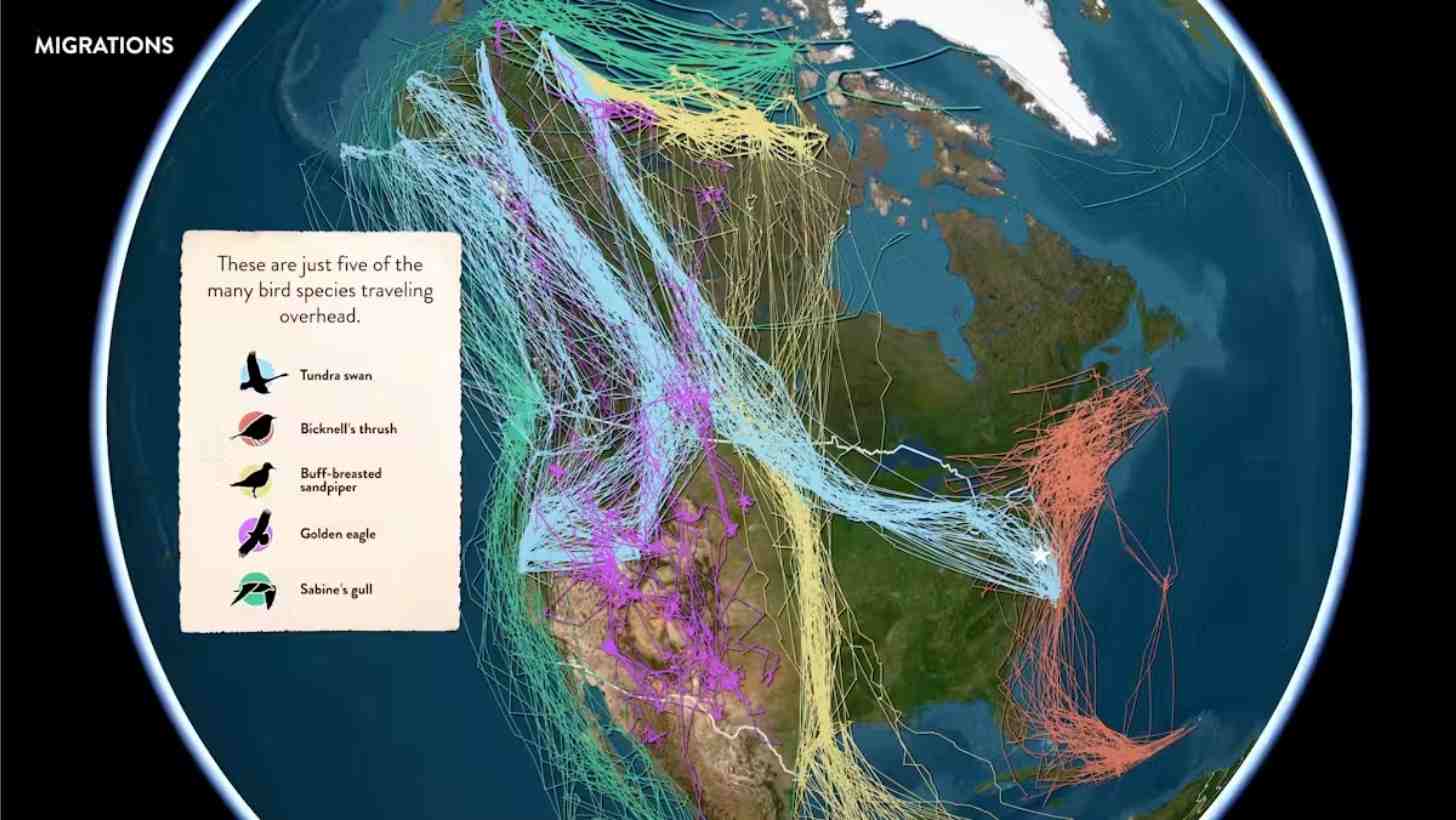
Animals move. Some travel only short distances with the seasons, but others travel thousands of miles, crossing not only state lines, but countries, oceans, and hemispheres.
Animal migration routes might look chaotic on a map, but birds, whales, turtles, and more forge these paths for specific reasons.
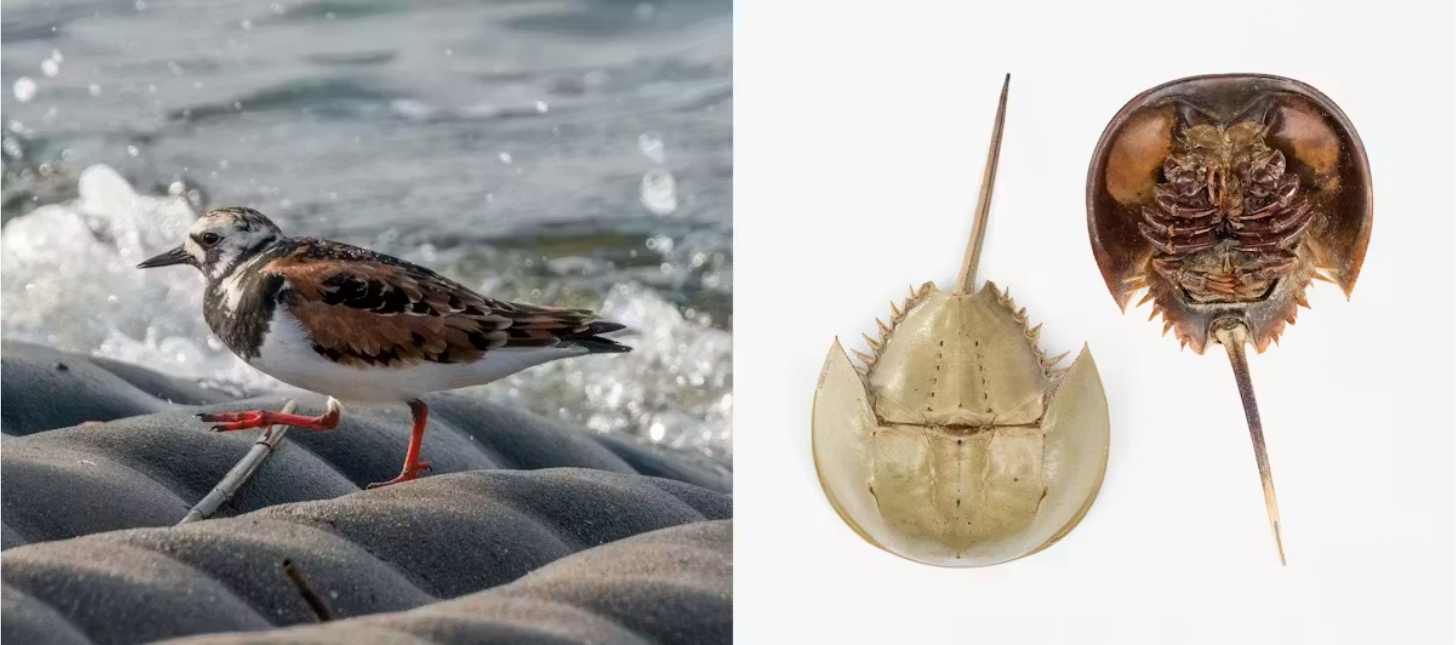
Timing is a key component of migration. Thanks to a critical refueling stop in Delaware Bay, the ruddy turnstone shorebird manages to migrate thousands of miles each year to its breeding grounds in the high Arctic.
These East Coast migrants time their layover with the migration of horseshoe crabs, which come ashore to lay millions of nutrient-packed eggs on beaches. The turnstones gorge themselves on those eggs before continuing their journey north.
It is a strange and wonderful handoff between an ancient marine animal hauling itself out of the ocean and a weary shorebird bound for the Arctic. A single bay brings them together, illustrating how the many migration routes through these lands can hinge on key moments and places.
Salamander country
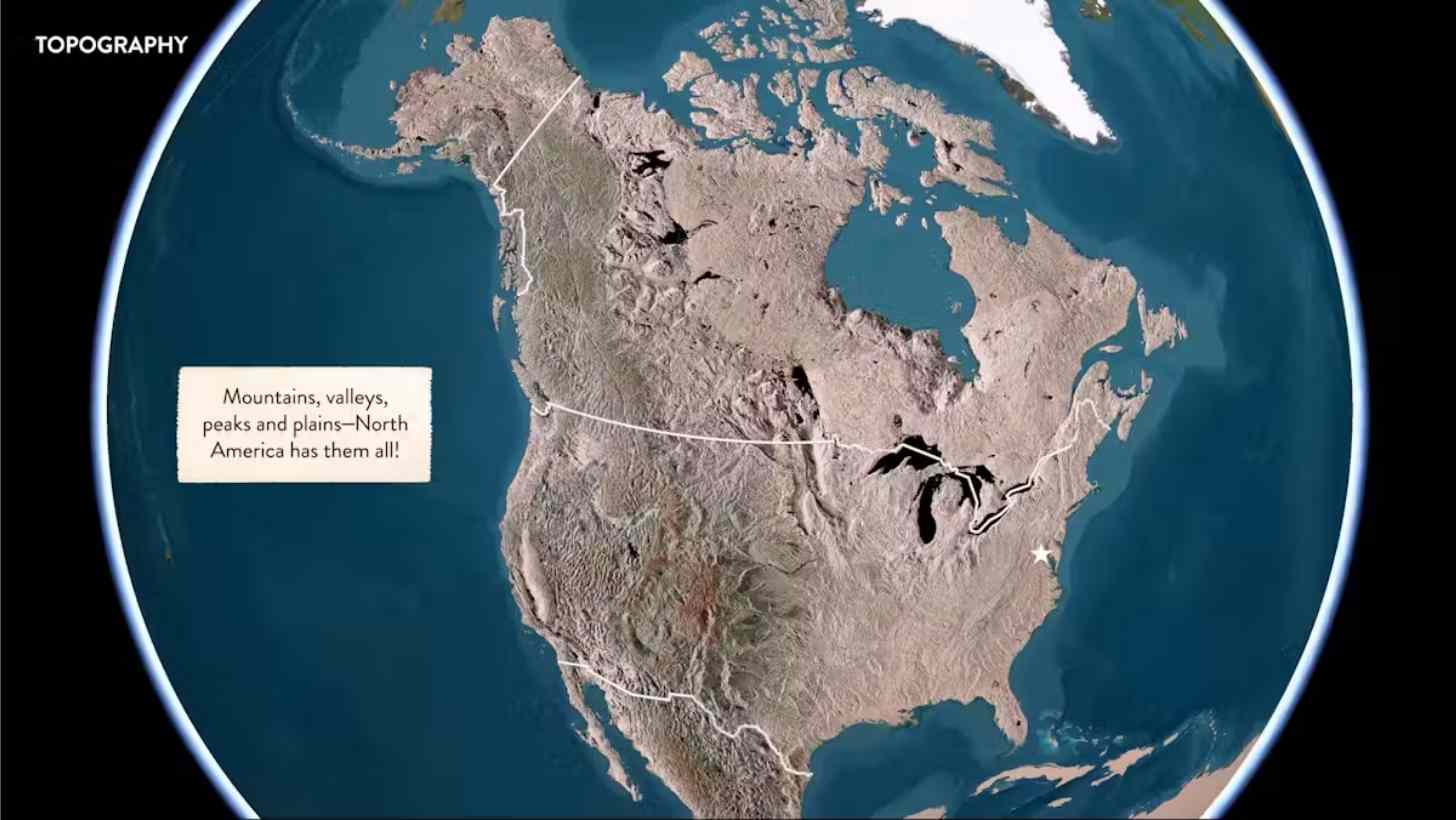
Topography is more than scenic landscapes. Everything from the flat coastal plains to the ridges, valleys, and stream-cut mountainsides helps shape where animals can live and how biodiversity accumulates.
The rugged terrain of the Appalachian Mountains creates cool, wet forests, shaded hollows, caves, ponds, and streams. These habitats can differ from each other in elevation, temperature, moisture, and water flow — and salamanders take note.
More salamander species live in the Appalachian Mountains than anywhere else in the world. It can feel as though every other rock you turn over hides yet another species.
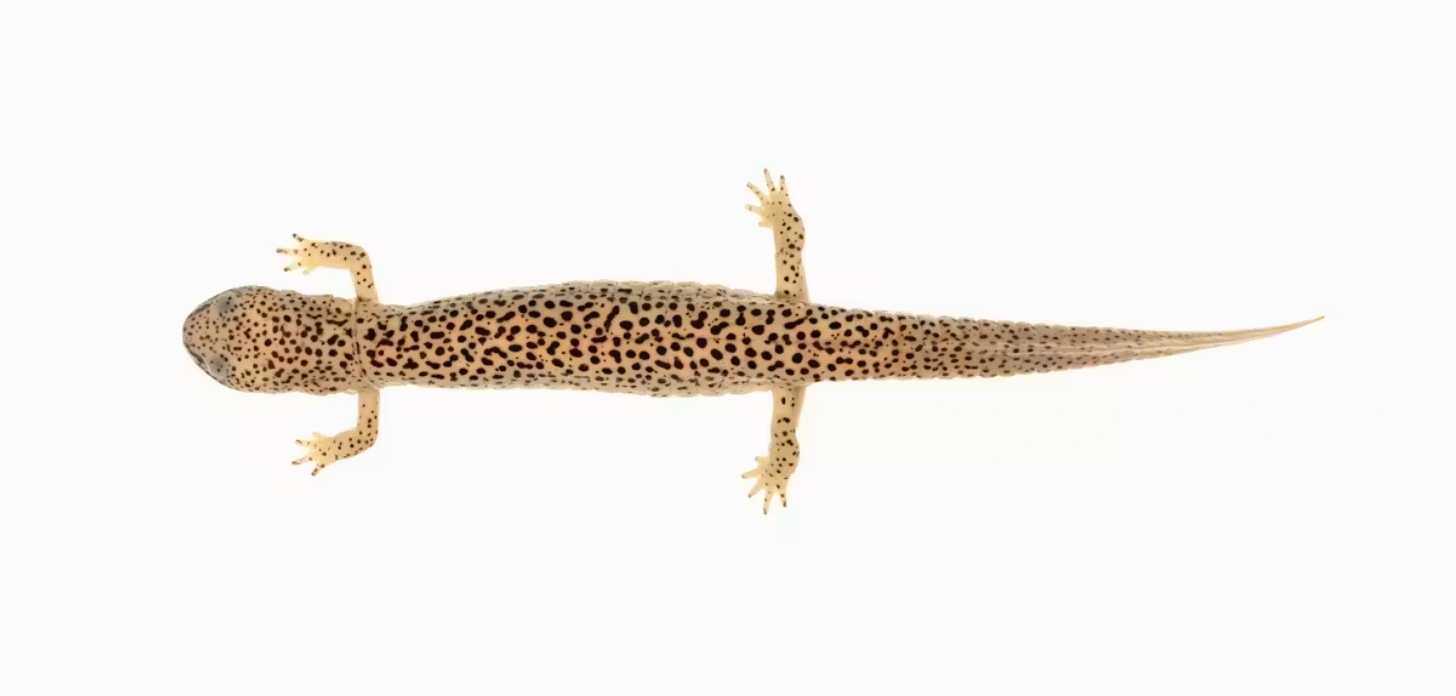
The trio of Plethodon salamanders, the southern gray-cheeked, red-cheeked, and red-legged salamanders, were once thought to be regional variations of the same species. But these salamanders live at varying elevations in different mountain ranges, and genetic sequencing confirmed that each was, in fact, its own species.
Topography and shifting climates had broken up these populations into different habitats, allowing each to evolve into distinct species.
Following the American shad
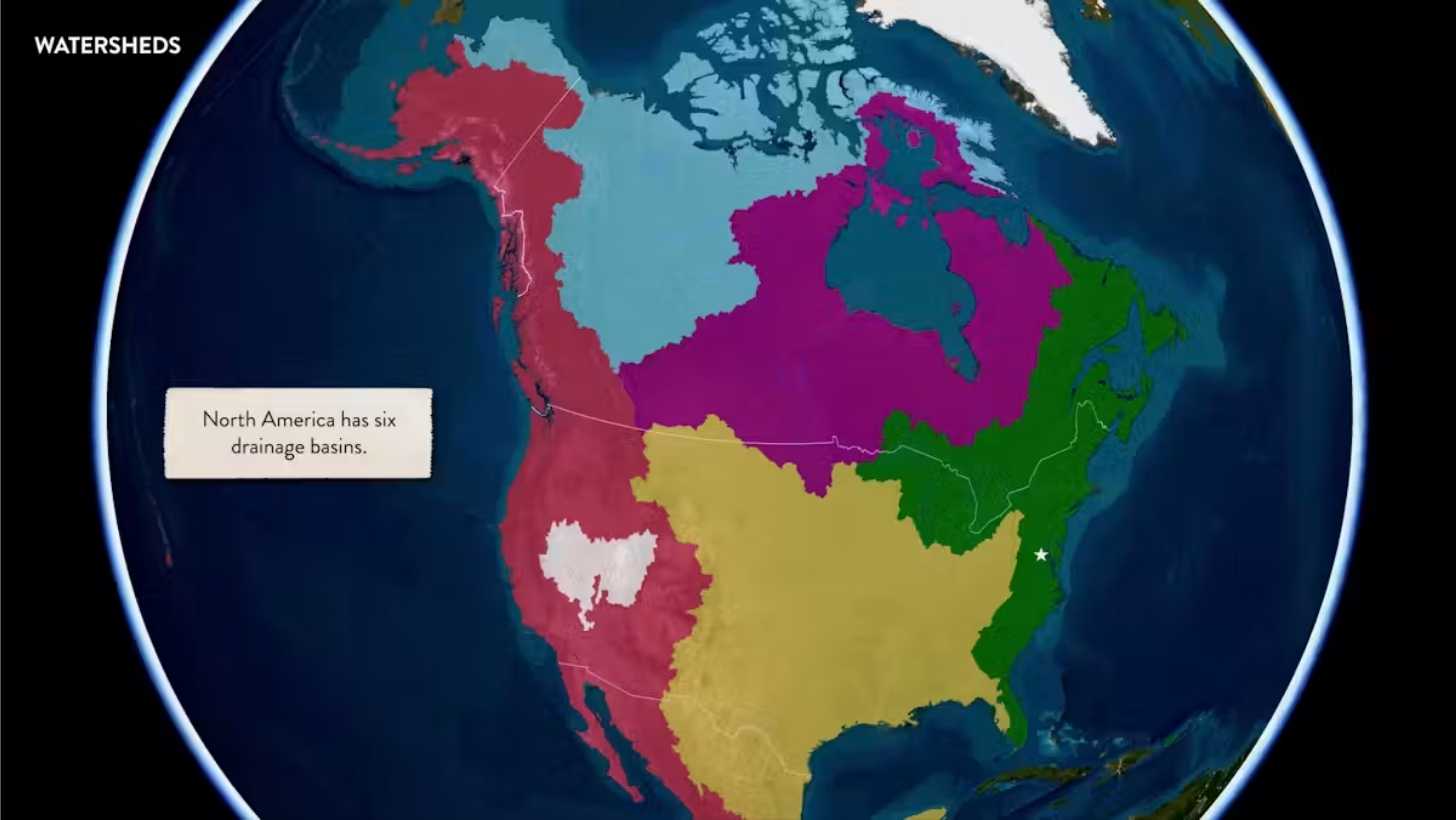
Chesapeake Bay is the largest estuary in the U.S., fed by a watershed connecting rivers and drainage basins that reach into six states and the District of Columbia. It’s home to more than 3,600 species, including oysters and blue crabs. But one fish in particular has become strongly intertwined with the lives and cultures of many people around the bay.
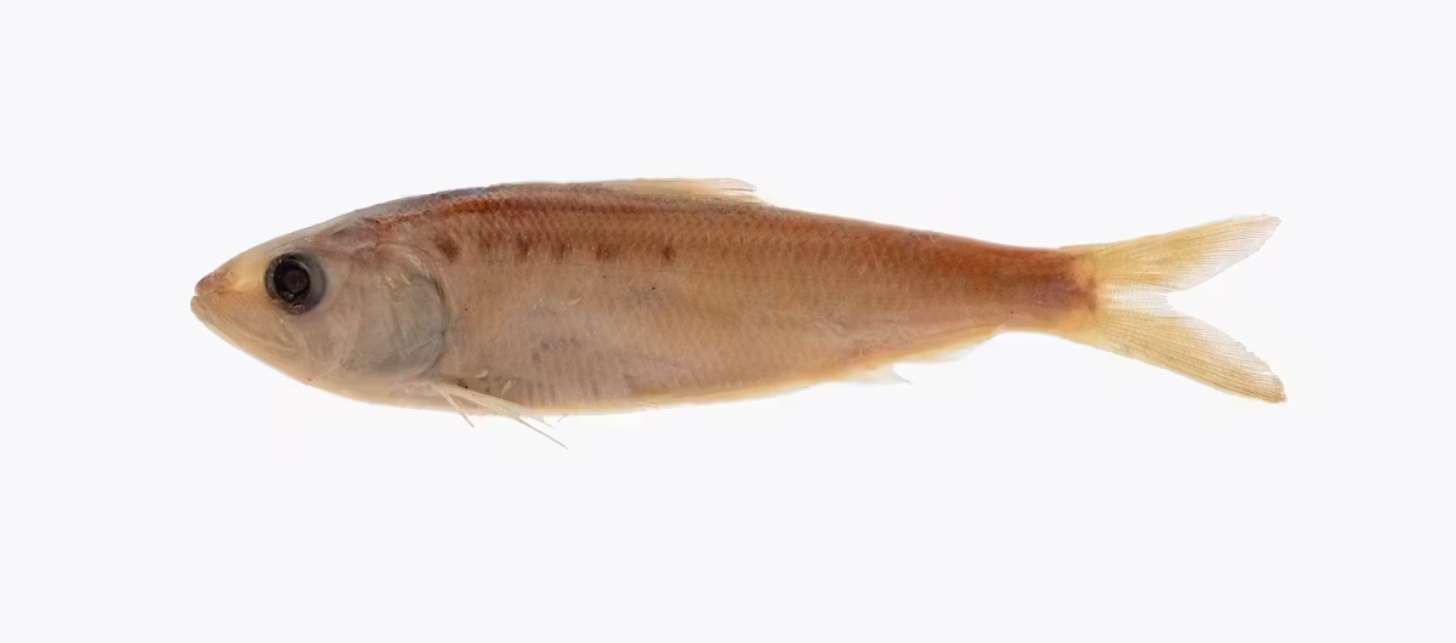
The American shad spends much of its adult life in the Atlantic Ocean but returns to the freshwater rivers in the upper reaches of the Chesapeake Bay to spawn. For more than 12,000 years, this herring’s spring migration has been part of Pamunkey Indian Tribe diet and culture.
From 1918 to 2019, to mitigate declining populations of herring, the tribe ran a hatchery to “give back to the river.” The Pamunkey Tribe’s fishing rights date back to their 1677 treaty with the British Crown.
Today, only the Pamunkey and citizens of other tribes in Virginia can legally fish for shad in this region.
A single type of fish moving between salt and freshwater, tracing the paths of the watershed, has helped to shape centuries of diet, law, culture, and stewardship, highlighting the many connections between nature and culture.
Different ways to map the country
Pine cones, ammonites, shorebirds, salamanders, and shad tell more than individual stories about particular places. Together, they point to older and larger patterns: varied forests, vanished seas, seasonal migrations, mountain habitats, and rivers that harbor a fantastic diversity of life.
State lines are one way to picture the U.S., but natural history provides another — one that shows the ancient and living connections running across the landscape.
This article was written by Stewart Edie and Torben Rick from the Smithsonian Institution, and was originally published on The Conversation.
Header Image by Smithsonian/Esri, CC BY-ND

As corporations sponsor floats and employee marches during Pride Month parades, it’s important to remember just how recently the majority of American office workers felt they had to conceal their sexuality in the workplace.
In the 1970s there were no legal protections for LGBTQ+ workers outside of a handful of cities. If a company found out you were gay, it could fire you on the spot.
It took a group of pioneering LGBTQ+ workers in the 1980s and ’90s who challenged widespread homophobia in corporate America to make workplaces safer and more inclusive, not only for LGBTQ+ workers, but for everyone.
Since 2021, I’ve been studying LGBTQ+ workplace rights activists at one of those corporations: Kodak.
The iconic camera and film manufacturer has been headquartered in Rochester, New York, since 1881. At a time when most employees were closeted, a group of the company’s gay, lesbian, bisexual, and trans employees came together to form the Lambda Network to reshape Kodak’s corporate culture and company policies. The company officially recognized the group in 1993.
Alongside my undergraduate research assistants at the Rochester Institute of Technology, I’ve been documenting and preserving the history of the Lambda Network.
We’ve interviewed more than 30 Lambda members and their allies. Even as Kodak filed for bankruptcy in 2012 and emerged as a significantly smaller company, many Lambda members kept their records, giving us access to a unique archive that includes corporate policies, correspondence, photographs, and video footage.
‘The early years were scary’
Many Lambda members shared their stories with us and explained how difficult it was to remain closeted at work in the 1970s and ’80s.
It could mean silently tolerating homophobic jokes, having to conceal one’s private life from co-workers, and living in fear of the consequences of being outed, which could include being socially ostracized and even losing your job.
As Kodak executive Cynthia Martin, who later came out as a lesbian and became a corporate champion for Lambda, recalled, “Rochester was a Kodak town, so you’d always run into people (from work). … If it was Valentine’s Day and you were out at a restaurant (with your partner) or, you know, even just grocery shopping, it was awkward. And that was just an everyday occurrence, so it was hard. It was stressful.”
At a time when there were few workplace protections for LGBTQ workers, coming out was even more terrifying. The U.S. Supreme Court would not rule until 2020 that workers cannot be terminated based on their sexual orientation, and few states had LGBTQ labor protections in place.
The AIDS crisis of the 1980s amplified homophobia; some companies, like Cracker Barrel, were firing employees for being gay as recently as 1991.
Analytical chemist Emily Jones, who started working at Kodak in 1975, was one of Lambda’s founding members. She began coming out in her private life in the 1980s but remained closeted at work.
“The early years were scary,” Jones said. “I remember coming out to my boss, who told me he sent his son to Utah to be saved for being gay. You worried about it, you got stomachaches, you threw up, you thought about leaving your job. I was a single mom then.”
Part of what gave Jones the courage to come out and to become a leader at Lambda was the broader LGBTQ+ workplace equality movement taking place in companies across the U.S.
LGBTQ employees at Xerox, AT&T, Apple, Bausch and Lomb, IBM and Corning were also forming employee resource groups to provide support, build community for queer workers, and encourage them to come out of the closet.
They educated co-workers and managers about the challenges LGBTQ+ workers faced and advocated for equitable benefit policies, including health insurance for domestic partners, bereavement leave, and adoption benefits.
Beginning in the mid-1990s, LGBTQ activists from leading Fortune 100 corporations would meet at yearly Out & Equal conferences to network and share strategies for creating LGBTQ-inclusive workplace cultures. They also shared data in order to overcome wrongful assumptions about how much implementing health insurance for domestic partners would actually cost corporations and to advocate for changes to the federal tax code, which imposed penalties on health insurance benefits for same-sex domestic partners but not for heterosexual married couples.
Photography as activism
At the 1990 Gay Games in Vancouver — the world’s largest LGBTQ+ sporting event — two Kodak employees met and discussed creating a monthly support group for their gay and lesbian colleagues.
Encouraged by Susan Connelly, the leader of Kodak’s Human Resources Diversity Initiative, they began meeting regularly. In 1993 the group hosted its first public event, which featured Deb Price, the first nationally syndicated columnist on gay life.
In 1995, Lambda invited Elizabeth Birch, who had secured domestic partner benefits at Apple and would go on to lead the Human Rights Campaign, to headline their first educational event with Kodak’s executives. It was attended by Kodak CEO George Fisher and his wife, Anne, and their support for Lambda proved decisive in transforming the corporate culture.
While Kodak’s LGBTQ+ workers soon found they had much in common with their queer colleagues at other corporations, their activism also built upon Kodak’s distinctive identity as a photography company.
At Lambda events, the group often included a popular photo booth equipped with Kodak technology to provide free, professional-grade portraits to attendees. Queer people were encouraged to get their portraits taken with their partners and to display them in their workplaces as a way of coming out.

The group also brought important early LGBTQ family photography projects, such as Love Makes a Family and FAMILY: A Portrait of Gay and Lesbian America, to Rochester, staging exhibitions of the works in several locations across Kodak’s campuses.
Both initiatives helped convey the same messages: It was important to be visible.
LGBTQ+ couples might be unique in some ways, but they were also similar to heterosexual couples in many other ways. And behind all the heated political rhetoric were real people with real families.
By incorporating queer family photography into their activities, Lambda members smartly tied their own organization’s goals and identity to that of Kodak. For decades, the company had encouraged Americans to take and display family photographs via its iconic advertisement campaigns.

Simply the right thing to do
Lambda’s educational efforts at Kodak didn’t just compel the corporation to change its own policies, which included implementing domestic partner and adoption benefits, as well an early policy on gender transitioning in the workplace.
They also led to Kodak becoming a national leader in LGBTQ+ rights, with executives testifying before Congress in favor of nondiscrimination in employment bills.
Because of Lambda, Kodak’s marketing team implemented gay and lesbian themes into the corporation’s advertisements. This helped normalize depictions of same-sex couples and contributed to Americans’ broader acceptance of LGBTQ+ rights and people in the 1990s and 2000s.

Perhaps most importantly, workplace activists in Lambda and beyond transformed American corporate culture from one in which sexist, racist, and homophobic jokes and remarks were commonplace and tolerated into one that generally aspires to value diversity and celebrate differences.
Lambda’s straight allies at Kodak, like those at many other companies, learned that an inclusive environment allowed everyone to be more authentic at work.
To me, Lambda’s history reveals the power that workers have when they come together as a group and share their stories. It also reveals how much is at stake in current efforts to roll back protections for LGBTQ+ people — particularly trans rights — and to dismantle diversity, equity and inclusion programs.
In 2002, Kodak’s vice president of human resources, Robert Berman, told Congress that embracing diversity wasn’t just a business imperative. It was simply the right thing to do.
I know that’s still true today.
This article was written by Tamar Carroll and was originally published on The Conversation.
Header Image by Remembering the Lambda Network at Kodak, CC BY-SA

The mayor of Aurora, Colorado, Mike Coffman, recently admitted something to his constituents: He’s been sleeping in the city’s homeless shelters since February.
But it’s not because he needs a place to sleep. It’s because he wants to make sure the Aurora Regional Navigation Center is “a model program for serving the needs of the area’s homeless.”
According to the 2026 Point-in-Time Count Survey from the Metro Denver Homelessness Initiative, there are 832 people experiencing homelessness in Aurora. While the ARNC opened its doors in November 2025, the city is still short a few hundred beds for the people who need them.
Additionally, a few months after opening, the ARNC came under fire for bad plumbing, noxious odors, sickness, and maintenance issues, as reported by the Aurora Sentinel in February.
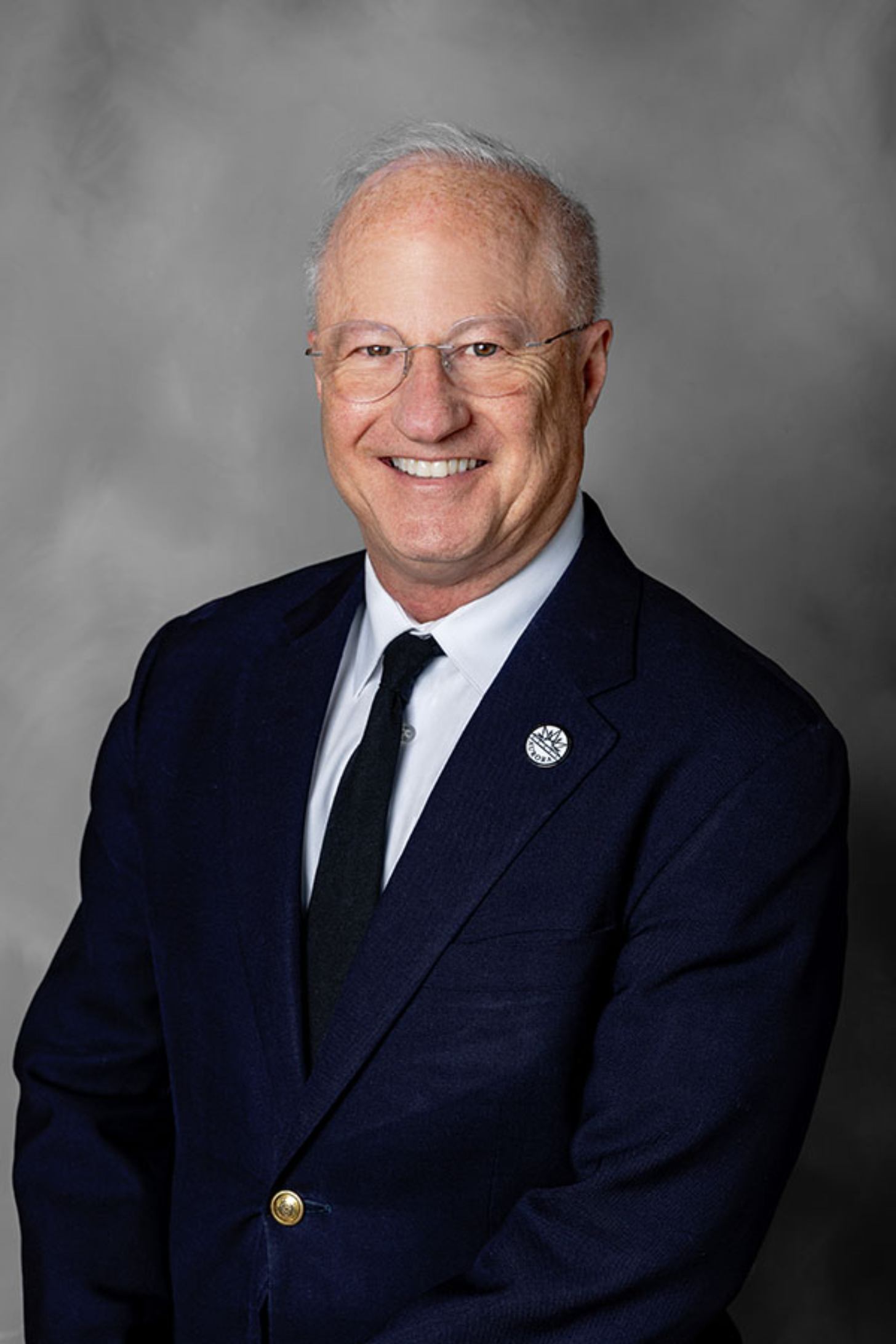
In addition to being the mayor, 71-year-old Coffman is also a board member for Advance Pathways, the nonprofit partner that operates the ARNC.
So, he has embedded himself in the program to understand how it works, where there might be snags like the ones reported early on, and how he can leverage opportunities to improve the city’s housing services even more.
On June 17, Coffman revealed on Facebook that he had been sleeping at ARNC every Friday night since late February, meeting residents in the men’s entry-level dorm, and helping to serve breakfast on Saturday mornings.
“It’s definitely a humbling experience being there,” Coffman told Axios.

Staff were aware of the arrangement from the start, according to Axios, but some residents are now starting to recognize him as the mayor. It seems he hasn’t been trying to go fully undercover, but he also wasn’t trying to draw attention to himself.
Coffman shared in the Facebook post that he gives his business cards to people in the shelter in case they need to contact him during the week.
“Consistency is important so that they know that I will be there every Friday,” he wrote on Facebook, “and as I've become more familiar to them, they have become more relaxed and open about talking to me about their challenges and expectations for their future.”
The ARNC program has three separate tiers. Tier I is an “austere” option for those who are newly homeless or recently coming in from sleeping on the streets. Tier II includes addiction recovery, mental health, and job training support, with more private accommodations and storage for belongings. Tier III includes individual rooms that were part of a former hotel and acts as more of a transitional housing approach for those who are working full-time and seeking their own accommodations.

Every Friday afternoon, Coffman said, he leaves his office and goes directly to the ARNC.
He added that he has brought construction ear protection to try to snuff out extra noise.
“We are one of the few shelters that allow dogs, and the dogs are with them,” Coffman told Denverite about the shelter residents. “And so if one dog starts barking, they all start barking. And then the lights are completely on until 10 o'clock. I'm used to going to bed a little earlier than that.”
But, he ultimately said, the discomfort is worth upholding a value he has held since his days in the military.
“Never order somebody to do something you yourself would not do,” he told Denverite.

On Facebook, Coffman said he would continue to stay in the shelter every Friday night “until the program is everything that I believe it can be.”
His goal is to make it a model “not just for Colorado, but for the country.”
“The experience has enabled me to better understand [the residents’] unique and complex challenges,” he concluded, “and it has helped me to see them with compassion, as individuals, and not through a lens of condescension or contempt.”
You may also like: A public library in Oklahoma is offering housing right upstairs. It’s a statewide first
Header images courtesy of Mike Coffman/City of Aurora
According to the National Oceanic and Atmospheric Administration, leatherback sea turtles live an estimated 50 years in the wild. And one leatherback has spent half of her life returning to the sandy shores of Juno Beach, Florida.
Her name, fittingly enough, is Juno.
“A local legend returned to our beaches this season,” the Loggerhead Marinelife Center shared in an Instagram post on June 3. “Juno … returned to nest 25 years since she was first encountered.”
“This 1,200-pound leatherback was first documented as nesting on our beaches in 2001 and has returned to Loggerhead Marinelife Center’s monitored beaches nearly 30 times since,” the sea turtle research center continued.
“Over the years, our research team has watched her journey unfold, documenting her nesting activity, tracking her life history, and witnessing her incredible resilience.”
The leatherback sea turtle is the largest turtle in the world. Their evolutionary lineage can be traced back by more than 100 million years to the Cretaceous period, where they existed side by side with dinosaurs.
Their appearance has changed little over the last 100 million years, retaining the tough, rubbery skin of their namesake.
Today, leatherbacks are endangered. Sea turtles like Juno have traded neighbors like the tyrannosaurus rex, velociraptor, and triceratops for modern fish, beachside tourists, and a seemingly endless parade of boats.
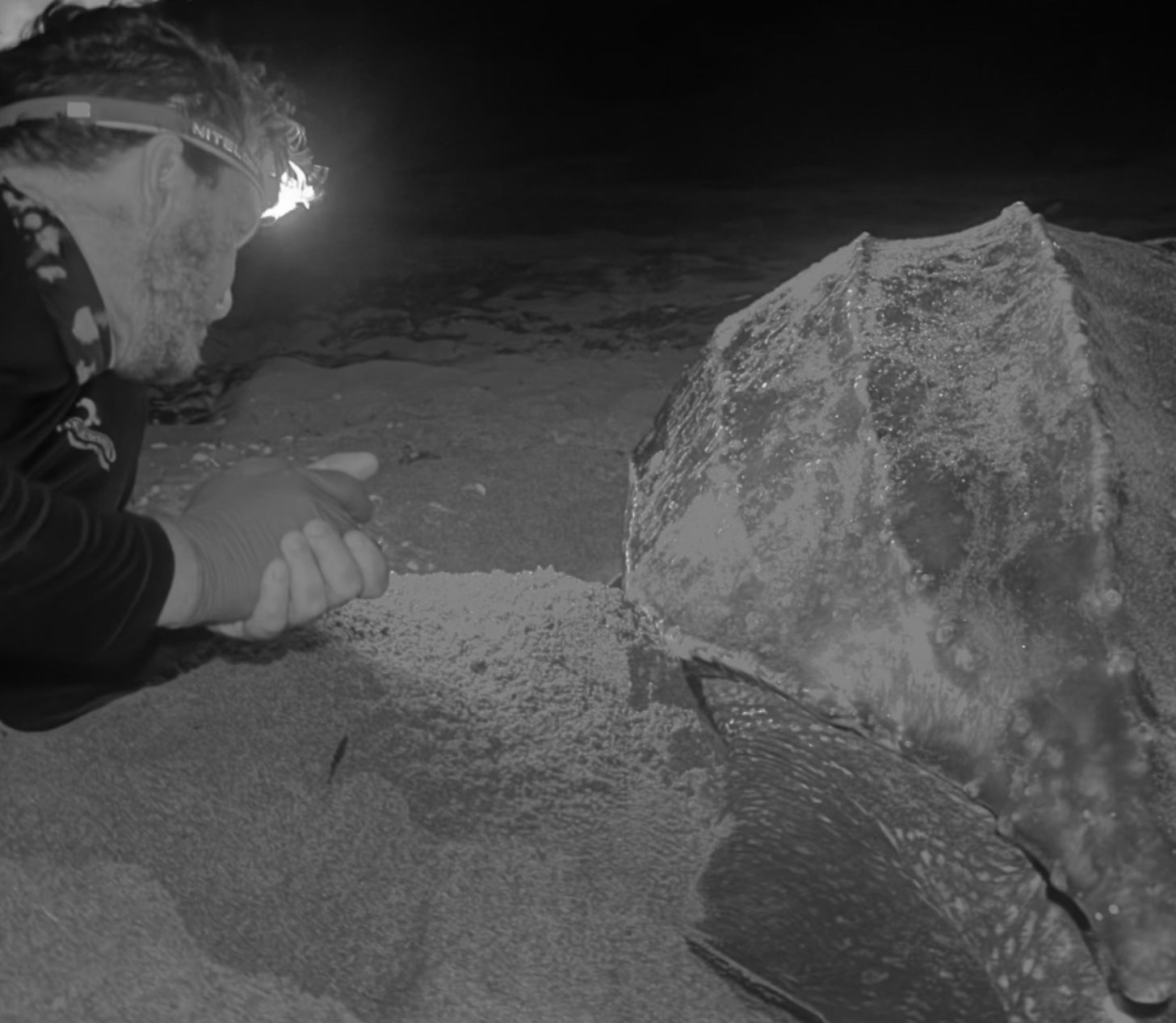
“Juno tells the story of a life spent navigating an increasingly busy ocean,” the Loggerhead Marinelife Center wrote. “She bears the scars of past interactions with boats and fishing gear, including a large, healed boat strike across her carapace and a scar on her left shoulder from a fisheries interaction.”
“Yet, despite these challenges,” they said, “she continues to return to our shores to nest.”
Loggerhead Marinelife Center’s vice president of research, Dr. Justin Perrault, celebrated Juno’s return by saying that every time she returns sheds light on a “new chapter in her journey.”
“Her story is a powerful reminder of both the fragility and tenacity of these animals and the chance to see an old friend again,” Perrault said in a statement.
This year has been a banner year for leatherback sea turtle nests. On June 22, the Loggerhead Marinelife Center’s research team documented the 300th leatherback nest of the season.
“This is only the second time in the history of our monitoring program that this milestone has been reached,” they shared on their Facebook page. “In 2009, 331 leatherback nests were laid along Juno, Jupiter, and Tequesta Beaches.”
And the turtle behind the historic milestone was none other than Juno.
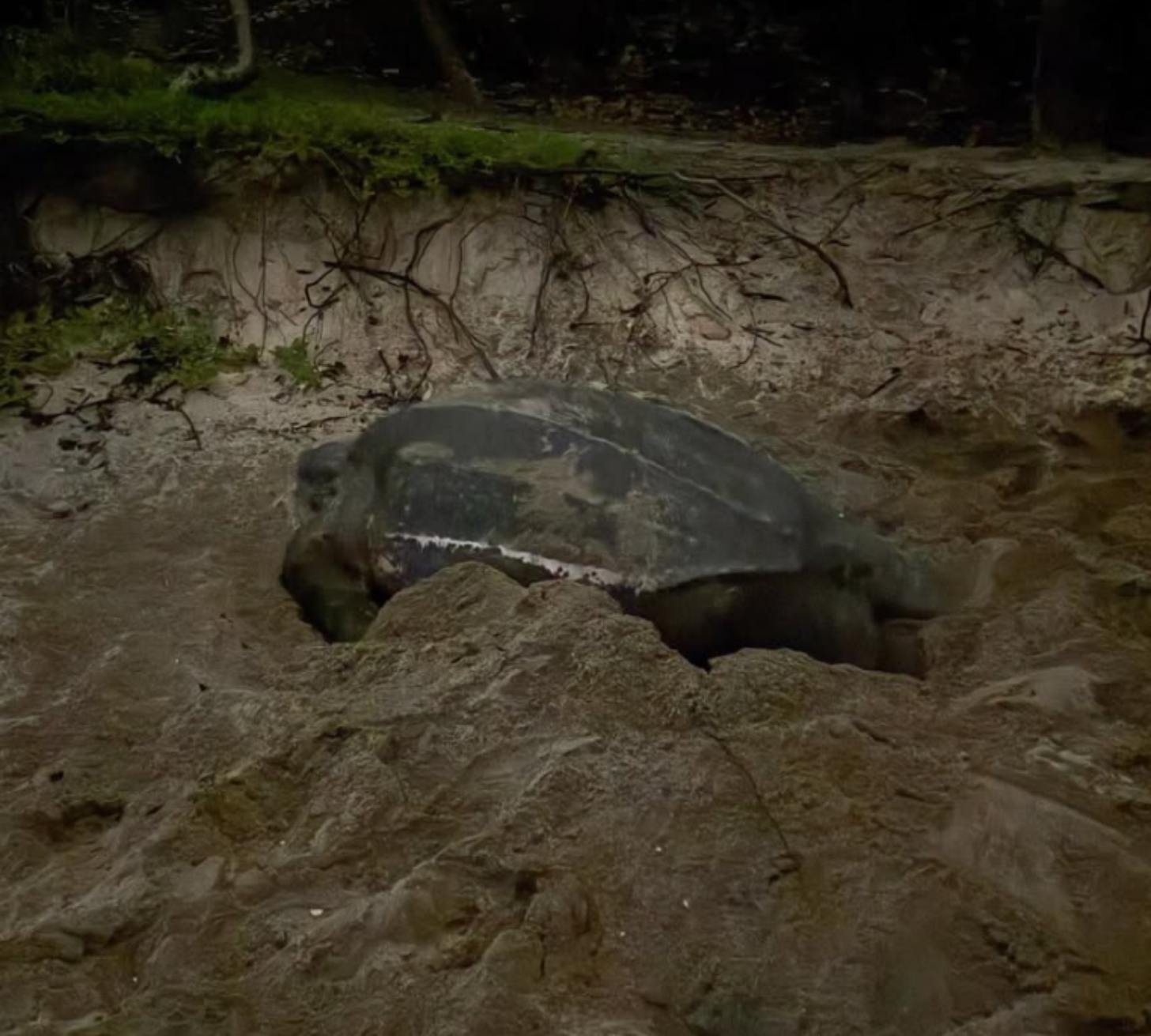
“Reaching 300 leatherback nests reflects decades of dedicated conservation work, and having Juno be the turtle to get us there makes it all the more meaningful,” the researchers wrote.
“Thank you, Juno, for continuing to inspire us and for helping make this nesting season one for the history books.”
The Loggerhead Marinelife Center also shared a reminder to tourists and locals alike to “Go Slow For Those Below.”
“As sea turtle nesting season continues, please remember to slow down and stay alert while boating in coastal waters,” they stressed. “The choices we make on the water can help ensure turtles like Juno continue returning to our beaches for generations to come.”
You may also like: Experts delighted: Olive ridley sea turtle seen nesting in Florida for the first time ever
Header image via Rabon David U.S. Fish and Wildlife Service
When it comes to states with the most wildlife overpasses and crossings, Colorado definitely leads the pack. As of 2025, the state has over 100 structures — including underpasses and overpasses — with more projects underway.
Colorado’s most recent wildlife overpass is the Greenland Wildlife Overpass along I-25, which also doubles as the largest wildlife overpass in the world.
According to Colorado Governor Jared Polis, the overpass was completed in less than a year, “ahead of schedule and on budget.”
“Colorado is leading the way in reducing wildlife-vehicle collisions and improving safety for both our motorists and wildlife,” Polis said in a statement. “The I-25 Greenland wildlife overpass is a momentous feat in our continued work to expand safe transportation options for both humans and wildlife, protecting critical habitat and our amazing outdoor spaces for generations to come.”
The area is home to huge swaths of migrating animals, including big game animals such as moose, bears, mountain lions, and more.
It’s also home to elk, mule deer, and pronghorn, who are notoriously distrustful of underpasses and enclosed tunnels. The overpass was designed with the hopes of enticing them to cross six lanes of highway safely.
And on June 20, six months after completion, the Greenland Overpass finally received its first elk visitors.
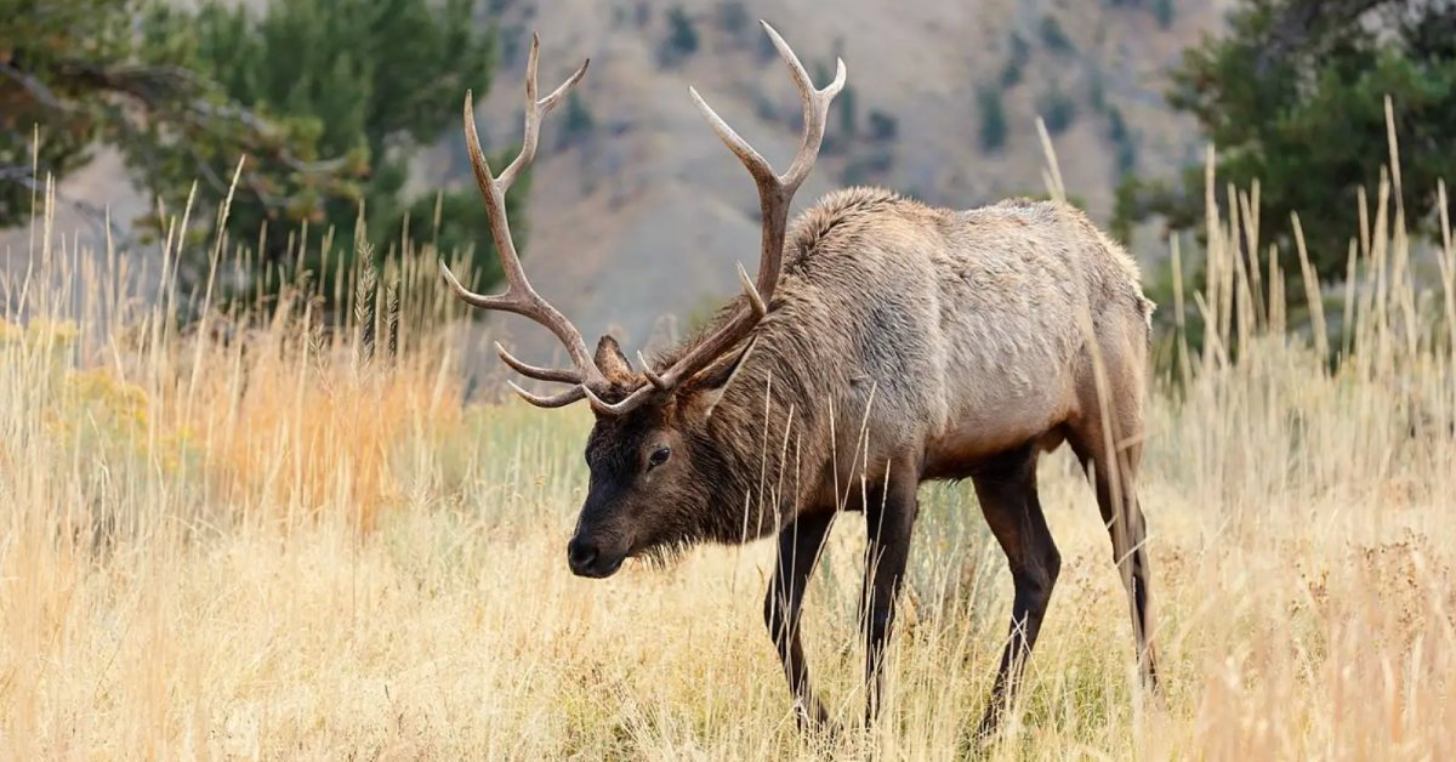
“The first elk have been recorded using the newly constructed Greenland Wildlife Overpass!” The Colorado Department of Transportation shared in a Facebook Post.
“The overpass was built through a partnership between CDOT, Colorado Parks and Wildlife, and Douglas County Government and is designed to improve wildlife connectivity and reduce the risk of wildlife-vehicle collisions.”
“These early crossings show the new structure is working! Check out as three elk make their way across the overpass.”
In the video, three elk can be seen picking their way along the bridge, which is 200 feet wide and 209 feet long, with gradually sloped entrances.
When it comes to size, the Greenland Wildlife Overpass won't be the biggest forever. After four years of construction — and 30 years of planning — California is currently nearing completion of the upcoming Wallis Annenberg Wildlife Crossing. The overpass, which is set to be finished in December 2026, will extend over a 10-lane urban freeway.
“You’re going to see this ecological transformation,” said Beth Pratt, California’s regional executive director for the National Wildlife Federation. “And that part of it is going to be over one of the busiest freeways in the world — that, to me, is just such a hopeful statement for what’s possible.”
“We can redeem a freeway.”
You may also like: The world's largest wildlife overpass is coming to California this year. It will help animals safely cross 10 highway lanes
Header image via Yellowstone National Park
In Des Moines, Iowa, a new tiny home village has been approved for an innovative new housing scheme.
It’s called Joppa Village, and it will include tiny cottage homes, where rent starts at $300 a month. Each home comes with a bedroom, bathroom, and kitchenette, and an abandoned 19th-century schoolhouse will be at the center of it all, serving as a community hub with a chapel, gym, and free health services.
It’s all designed to lift people out of homelessness.
Joppa is a Des Moines-based homeless nonprofit and cleared its first approval hurdle in the fall of 2025 for the tiny house project. And last month, the Des Moines Zoning Board of Adjustment unanimously approved a conditional-use permit, which will allow the nonprofit to use the 15,000-square-foot former school building, as well.
“Every dollar raised to purchase the previously proposed County Line Road property will be fully reinvested into this new site,” Jim Hagberg, Joppa Village Project Director and Joppa Board Member, said in a statement.
“This support from the City of Des Moines is essential for the Village and its residents to be successful, and we are eager to move forward.”

A statement from Joppa shared that this new village is a proud replication of the Community First! Village in Austin, Texas, which has become home to nearly 400 formerly homeless community members and launched a blueprint for tiny home solutions across the country.
While Joppa Village will be a smaller version of the Austin inspiration, it promises to provide permanent homes to 50 men and women “who would otherwise be chronically homeless.”
The village’s supportive services will include work opportunities, access to public transportation, healthcare, communal dining, and more. Rent starts at $300 monthly but goes up to $700, depending on which cottage home a resident lives in. The homes range from 192 to 384 square feet in size.
The city council’s resolution will provide a 20-year lease for the village on the property. However, that lease could be void if Joppa does not keep up with performance standards like emergency service volume call, infrastructure condition, tenant turnover, neighborhood feedback, health safety concerns, or city codes and financial transparency, according to WHO 13 News.
But that doesn’t seem to be a deterrent for Joppa leaders, who have been eager to get this project off the ground for a while.
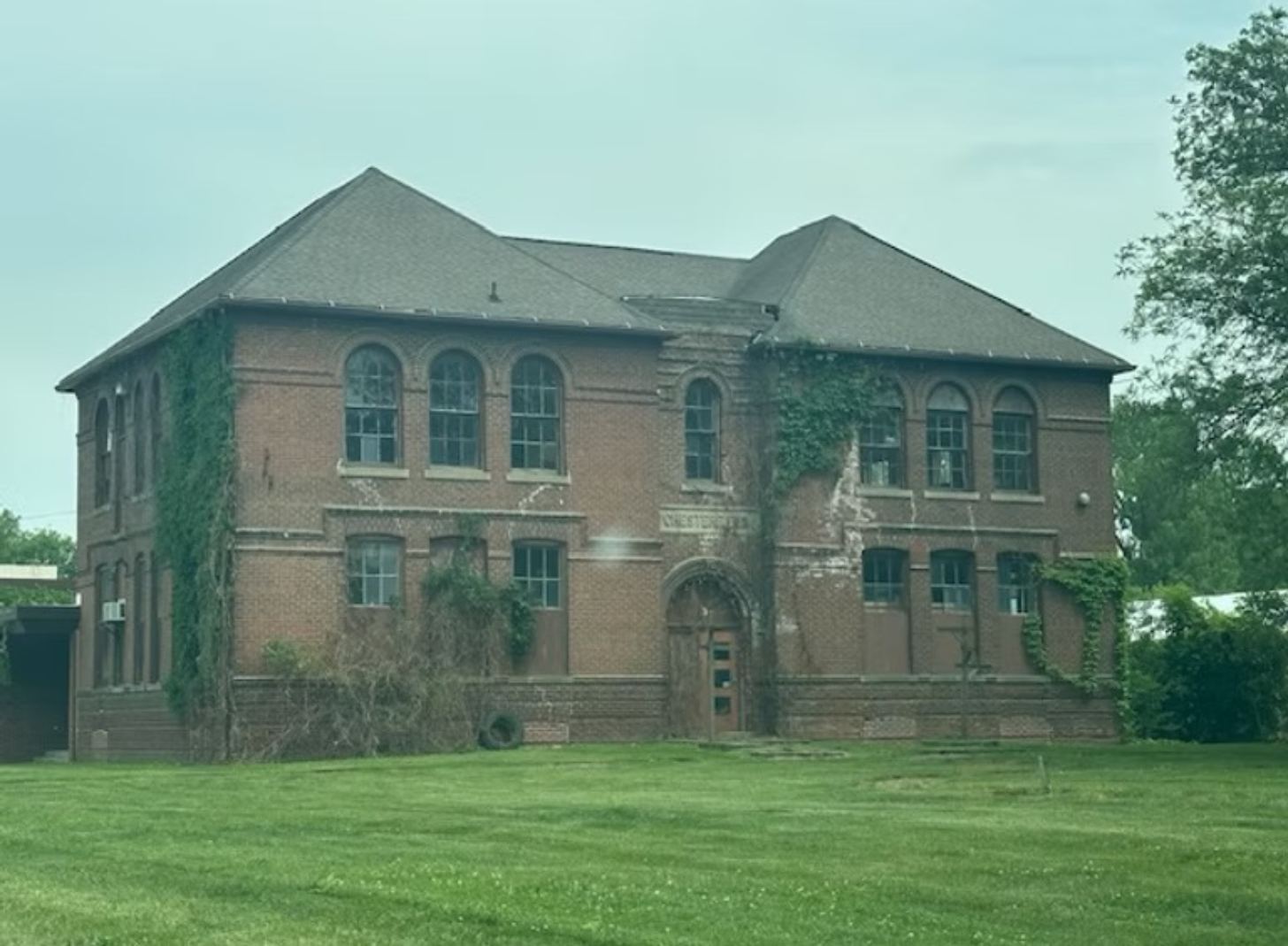
“We have been working with the City of Des Moines for years to develop a community that will provide permanent supportive housing for chronically homeless individuals,” a spokesperson for the organization told WHO 13 News.
“While some project details have evolved over time, our vision for the Joppa Village has remained the same: Create a village community of unconditional love and support for our chronically homeless neighbors and help them rediscover hope, so they can once again become productive citizens and live a life of meaning.”
Joppa aims to break ground on the Tiny Village this year, with the first residents potentially moving in 2027, Axios reported.
To qualify for move-in, potential residents need to meet federal criteria for chronic homelessness. This criteria includes having a disability or substance use disorder, experiencing at least a year of continuous homelessness, or cycling through three or more separate homeless cycles within the last three years.

Those residents will not be required to have an income to move in, as the village will offer on-site employment opportunities, like $15/hour groundskeeping, gardening, and janitorial work.
Calling it “a proven model,” Joppa leaders made a compelling case to city officials.
“Improving lives for people experiencing homelessness in our community is an effort that requires collaboration from partners who are invested in finding solutions,” Joe Gatto, Des Moines city council member, said in a statement.
“People living in our community deserve safety and shelter, and projects like the Joppa Village will help our residents experiencing homelessness start on the path to a better future.”
You may also like: Young women move in with NYC nuns to save money. Rent is $200 a week, and no boys are allowed after curfew
Header image courtesy of Joppa
In 1973, an arsonist started a fire that spread across 750 acres in Ashland, Oregon, consuming thousands of trees in its wake. Several years after the Hillview Fire had spread, its destruction still hung heavy over the forests of the Siskiyou Mountains.
In 1987, landowners Bill and Sarah Epstein purchased 400 acres of land in the region, half of which had been leveled by the disaster. Originally, they purchased it with the intention of turning it into a forest preserve to protect it from potential logging.
But they quickly realized that an extraordinary amount of maintenance was required to prevent another wildfire.
“In 1988, they began implementing forest management activities with the primary goal of reducing both the likelihood of fire ignition and the potential for high-intensity fire behavior,” researchers at Oregon State University observed in a forestry case study.
“This shift in understanding was the result of the realization that almost all the values of importance to the Epsteins, if not the entire Ashland wildland-urban interface area, would be negatively affected by another large, high-severity wildfire.”
In the following decades, the Epstein family worked tirelessly to safeguard the forest by reducing ignition risk on public trails, creating more fire-resistant forests, and implementing prescription burns and thinning techniques.
As a result, the forest itself hasn’t just been fire-free. It has flourished, becoming a safe haven for the hundreds of birds, amphibians, and mammals that roam the land.
The property also sits within the Oregon Conservation Strategy's Siskiyou Crest Conservation Opportunity Area, which is home to 16 rare and threatened animal species.
One such species is the North American ringtail, which is listed as “sensitive” on Oregon’s Sensitive Species list. The ringtail is a member of the raccoon family, with a fox-like face and muzzle and a striped tail.
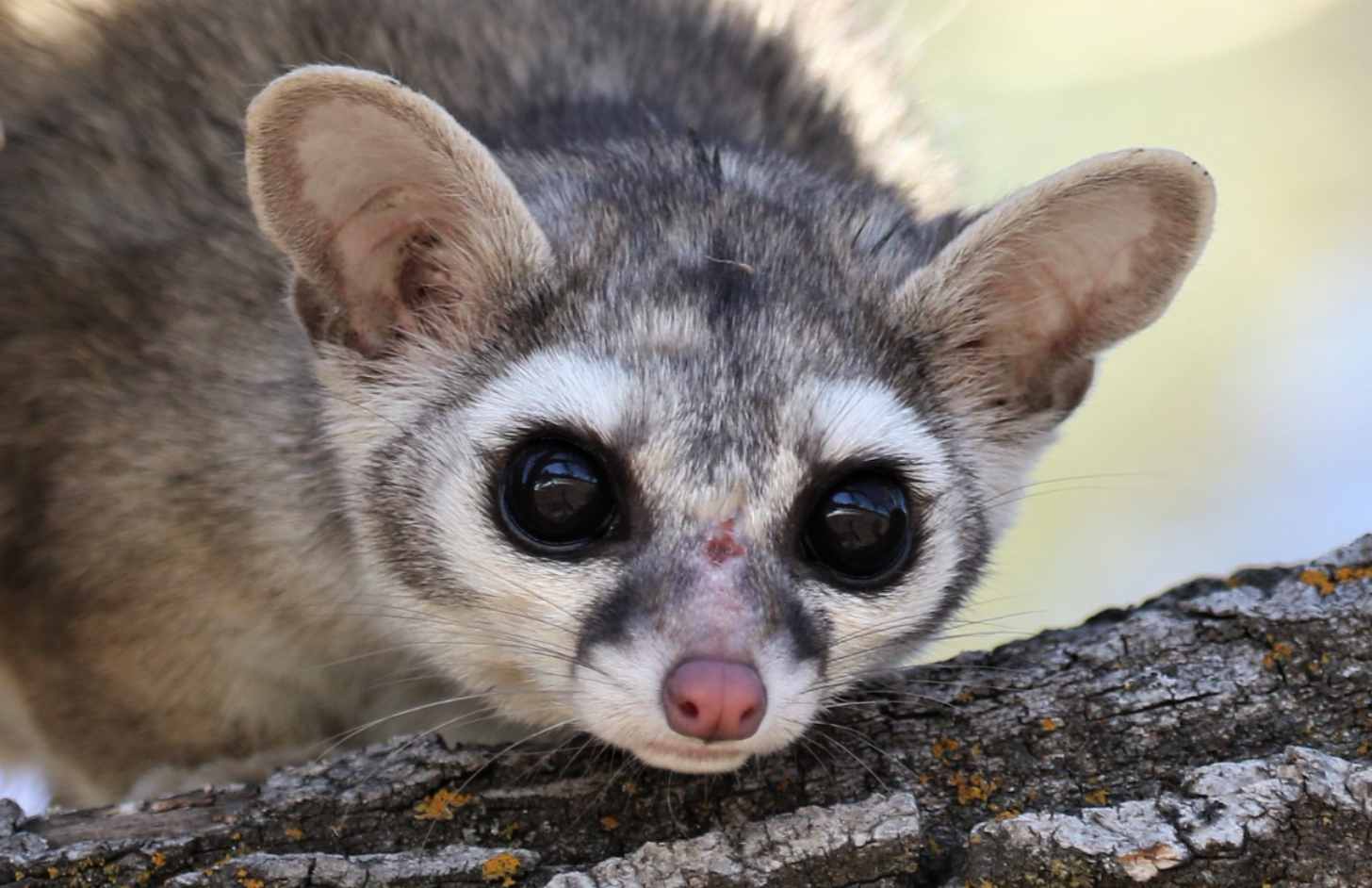
According to mammalogist Lowell Sumner, ringtails were once domesticated as pets by early colonial settlers and coal miners. The ringtails were trained as “mousers” to keep cabins free from rodents, granting them the nickname “miner’s cat.”
Today, little is known about their ecology. Researchers at Oregon State University only recently learned that they use the hollows of living trees — or standing dead ones, called snags — to hide from predators and make dens to raise their young.
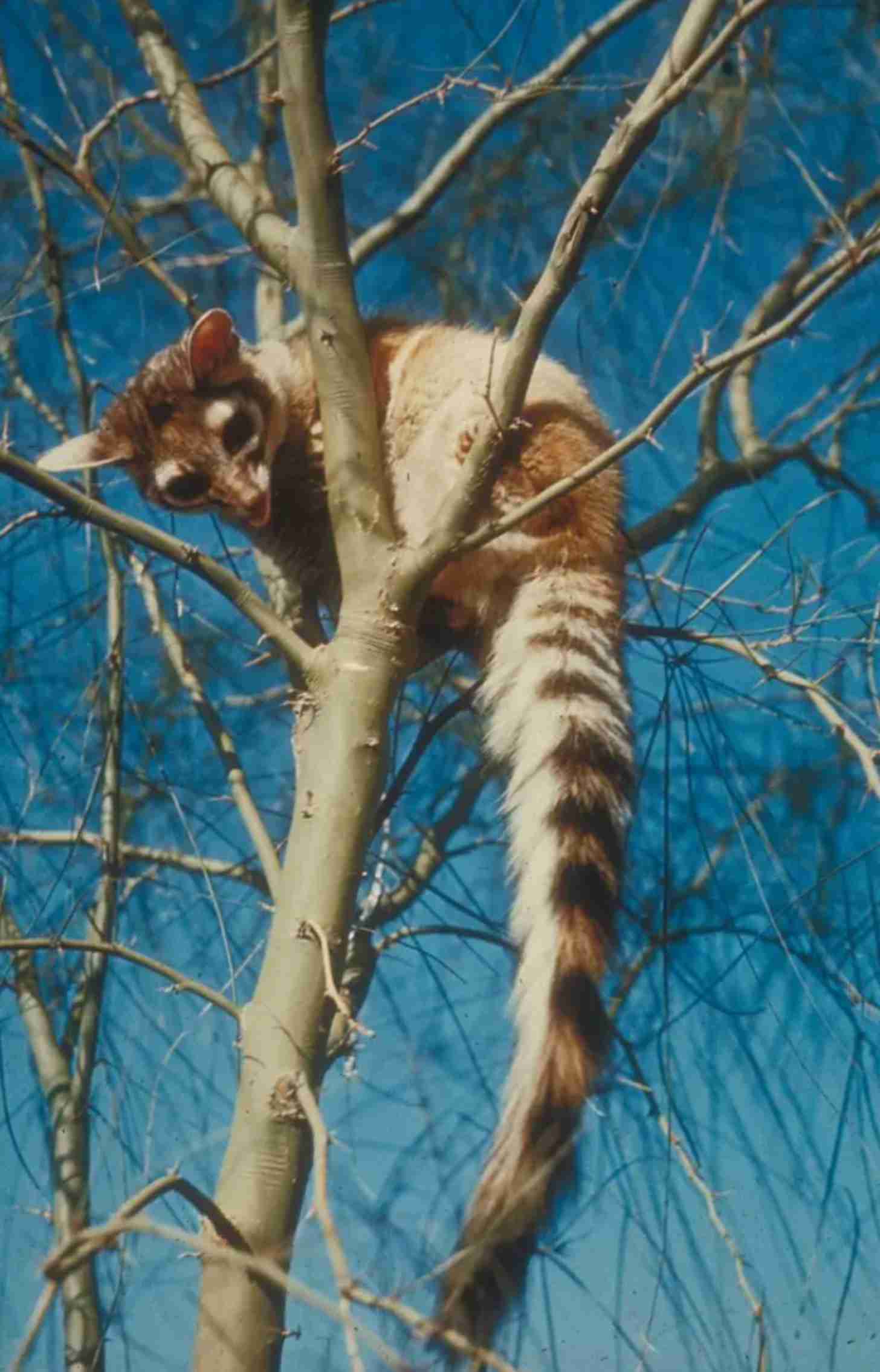
Typically, the nocturnal mammal is notoriously hard to spot in the wild. However, trail cameras across the Epstein Family Forest recently captured footage of a ringtail scurrying through the brush, and poking its head up to look around before traipsing back into a treeline.
The sighting is the Epstein Family’s latest sign that their conservation work has been successful.

After a member of the family received a stage-4 cancer diagnosis, the Epsteins partnered with the Pacific Forest Trust to ensure that the land would be protected forever.
“It is a profound comfort to know the goals we have for our property will be steadfastly managed and protected in perpetuity,” the Epsteins said in a statement. “With this conservation easement, we will be preserving 400 acres of natural carbon sequestering woodland, assuring protection of wildlife habitat and a riparian zone replete in biodiversity.”
You may also like: Researchers have been following this rare 'ghost dog' species for 23 years to better learn how to protect it
Header image via Elster Photography
On and off the pitch, soccer’s biggest stage has seen the world celebrate and embrace humanity and community… at a time when we all really need it.
The beautiful game has been inspiring some equally beautiful displays of community, humanity, and multiculturalism — and we’re not even out of the group stage yet.
Read some inspiring moments from the 2026 World Cup so far
After being embraced by the community, Scottish fans donated nearly $30k to local providence charities
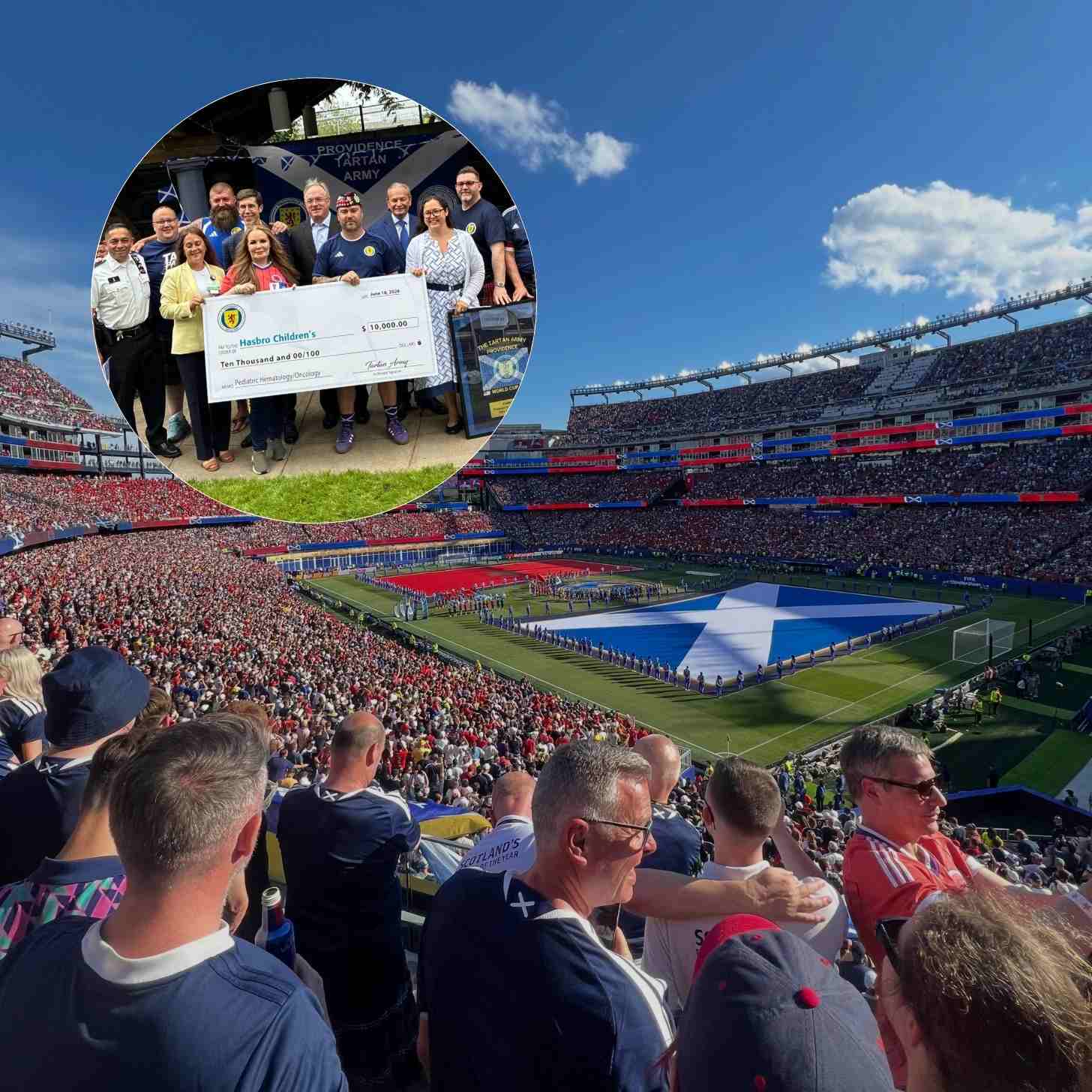
Fans donated to express their gratitude for the city’s hospitality, and one of the largest donations was $10,000 to a local children’s hospital’s cancer unit.
Boston and Glasgow, Scotland even became sister cities after fans formed a special bond.
Three women became the first all-American, all-women officiating crew at the men’s World Cup

Tori Penso, Brooke Mayo, and Kathryn Nesbitt officiated the group-stage match between Czech Republic and South Africa.
Penso also refereed the final of the women’s World Cup in 2023, the first American to do so.
Suzanne Huurman made history as the only woman team doctor at the 2026 World Cup
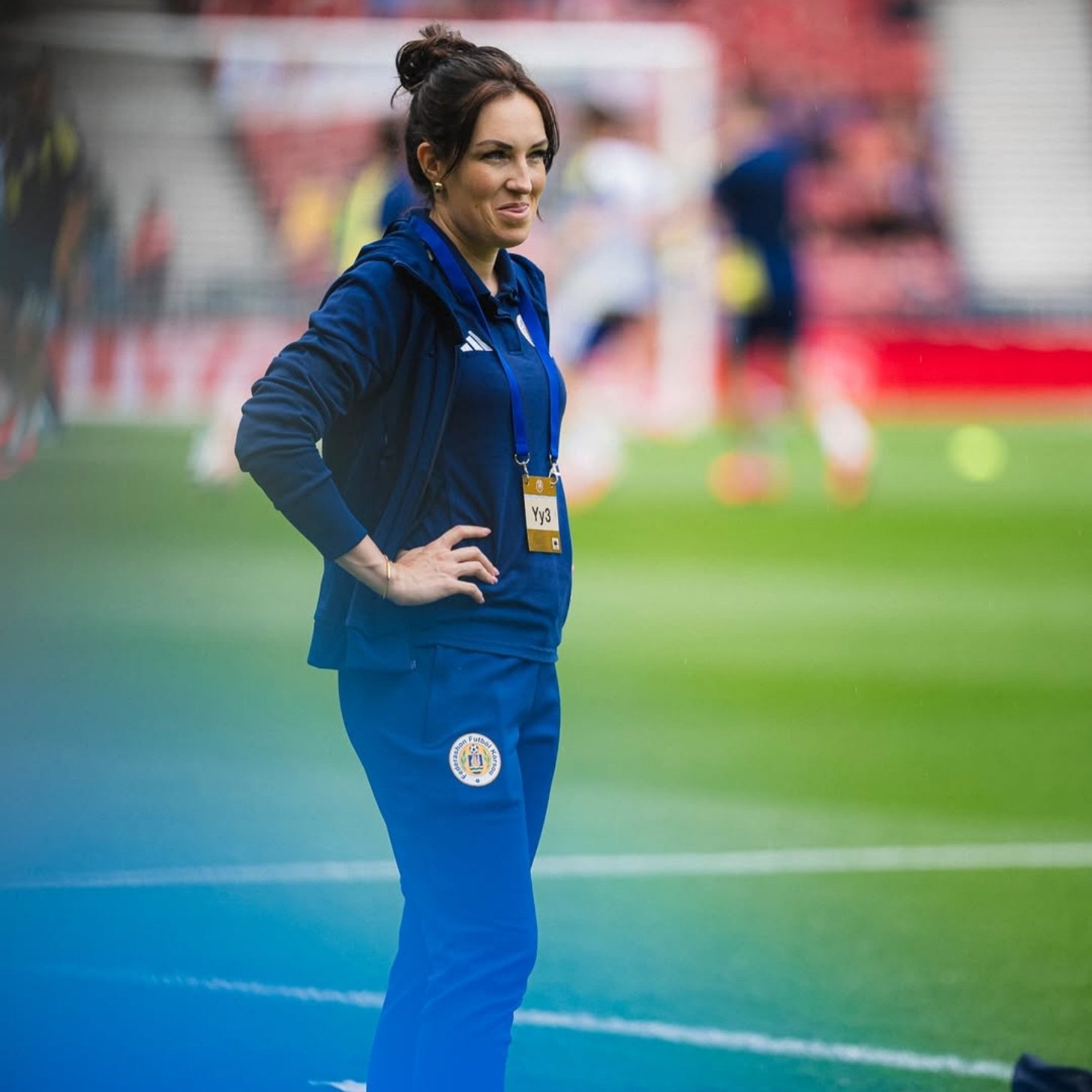
Head of the medical staff for Curaçao’s men’s national team, Huurman is also the third-ever female team doctor in the 96-year history of the tournament.
Curaçao, the smallest country to ever reach the World Cup, also scored its first-ever World Cup goal against Germany.
The Iranian national team left a message of gratitude to LA for World Cup hospitality
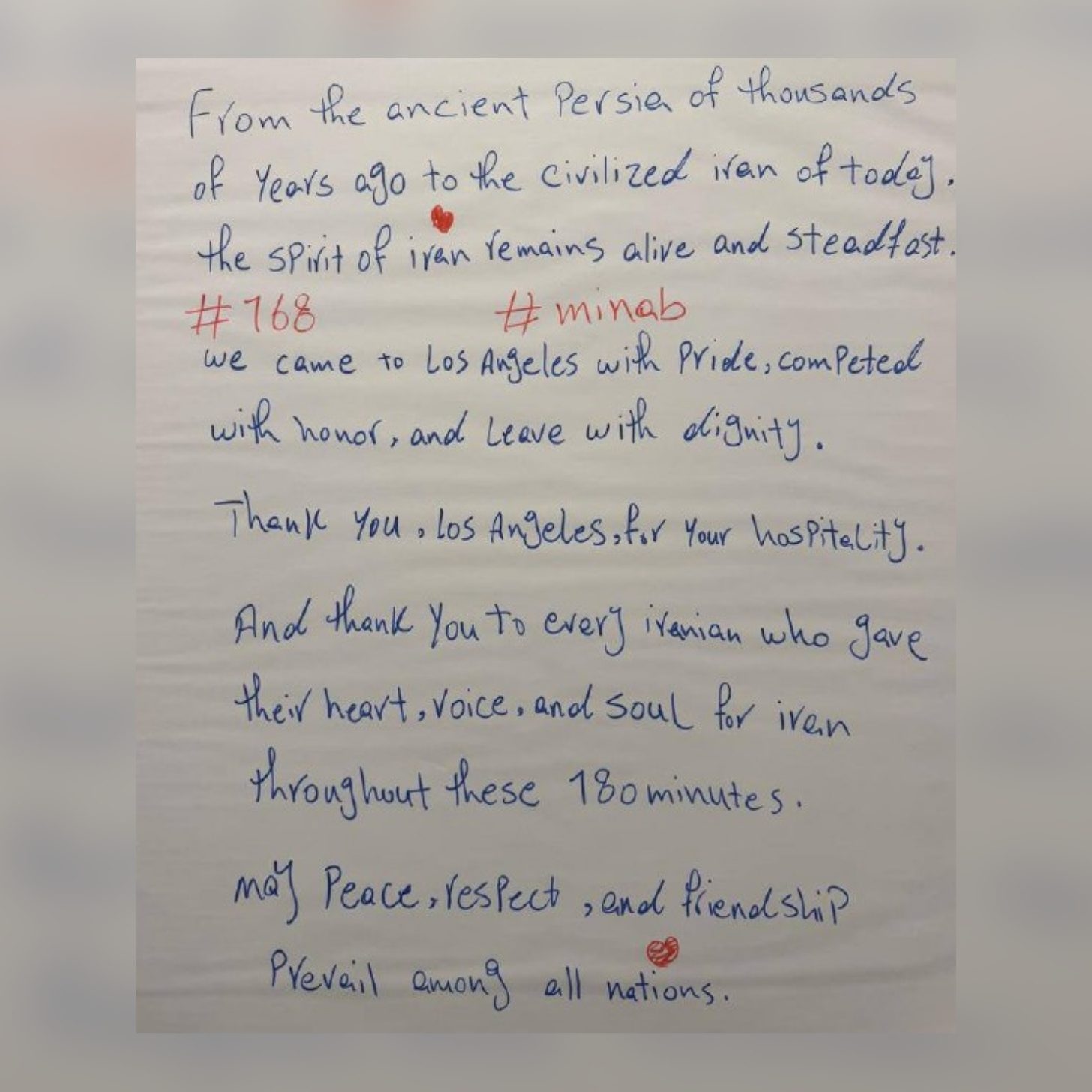
Another player thanked the people of Mexico for welcoming the team after it was forced to relocate its training camp from Tucson, Arizona.
The team has been based in Tijuana and commuting to matched in the U.S. due to travel restrictions the team says has led to unfair challenges that no other team is facing.
Residents of Lawrence, Kansas, went all-out to welcome Algeria’s national team to the city

Thousands of residents of the college town attended an open practice, where the University of Kansas’s band played the Algerian national anthem for the team.
The story of Lawrence, Kansas embracing the Algerian team has been, perhaps, the story of the World Cup so far — with thousands welcoming them from the literal moment their bus arrived in town.
A world-renowned crop artist created a quarter-acre-sized art installation of the Algerian flag
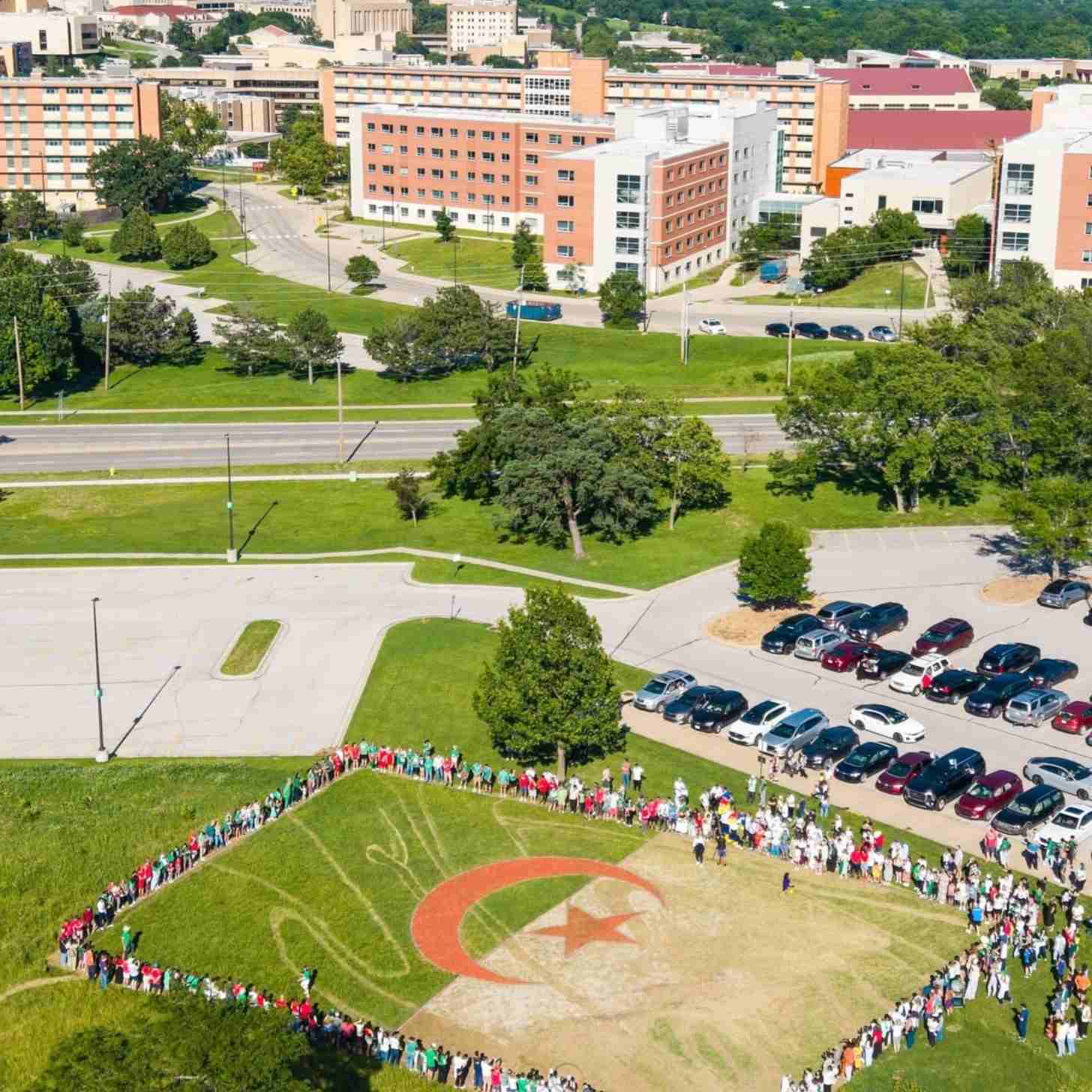
Some say Lawrence, Kansas local Stan Herd’s artwork could be the largest Algerian flag in the world.
Despite having the necessary papers, a Somali referee was denied entry to the US — then Canada invited him to officiate there

Omar Abdulkadir Artan was named Africa’s best men’s referee last year and was set to become the first from his country to officiate the World Cup.
So far, Arten has not made it to Canada for any matches, but he was given a hero’s welcome when he returned to Somalia.
Ahead of the World Cup, soccer players around the world broke a Guinness World Record while raising funds to upgrade local fields
More than 5,000 people across 50 cities participated in the event, which highlighted the impact of climate change on the sport.
While the pros have access to resources to mitigate the impacts of climate change on their play, local fields and young players are more exposed. This effort aims to change that.
NYC Mayor Zohran Mamdani created 50 car-free ‘soccer streets’ for the World Cup — mostly near schools

Dozens of city streets have gone car-free to host youth soccer clinics, art stations, and block parties.
“We want every kid in this city to experience the joy of the game,” said NYC Mayor Zohran Mamdani, announcing the initiative. “Soccer Streets takes that energy directly into our neighborhoods — closing streets to cars, opening them to play and making sure this celebration isn’t reserved for people who can afford a ticket. ... These activations are another step toward bringing the World Cup to our city’s young people.”
The New York City metro area is host to eight World Cup matches this summer. The city’s Soccer Streets activations will “pop up” in different neighborhoods until public schools go on summer break on June 26.
In a landmark, first-of-its-kind study from Queen Mary University of London and published in The Lancet medical journal, researchers found that children vaccinated at age 12 to 13 against human papillomavirus, or HPV, now have close to zero risk of dying from cervical cancer before age 30.
The study, which analyzed national mortality and vaccination records in England, showed that deaths have dramatically declined since school-age girls started being offered the vaccine in 2008, and it’s saved around 200 lives in England so far.

Between 2000 and 2024, for the first time ever over a five-year period, there were no recorded cervical cancer deaths among women between the ages of 20 and 24.
Without vaccination, around 23 deaths would have been expected.

Why is this good news?
In the United States, approximately 1 in 3 people will be diagnosed with cancer in their lifetime. People around the world long for a good news headline announcing a “cure for cancer.”
While the HPV vaccine is not a “cure for cancer,” it is exceptionally effective at preventing cervical cancer and other cancers from developing.
When the vaccine was first introduced in the United States in 2006, it was effective against four strains of the virus. In 2014, it was expanded to nine strains of the virus, which account for approximately 90% of HPV-causing cancers worldwide.
On the 20th anniversary of the vaccine’s FDA approval, medical professionals around the United States have been celebrating the vaccine for its historic success in women’s and public health.
“The HPV vaccine was a groundbreaking discovery and invention — having a vaccine that prevents cancer is truly life-altering,” said Dr. Megan Yanny, a pediatrician at University of Wisconsin Health Kids and an assistant professor of pediatrics at the University of Wisconsin School of Medicine and Public Health.
“Nationally, the incidence of HPV lesions, including precancerous cervical lesions detected through screening in young women, has decreased by nearly 80% since 2008, and mortality from HPV-related cancers has also dropped significantly.”
What’s the nuance?
In January 2025, during the confirmation hearing to become Secretary of the Department of Health and Human Services, Robert F. Kennedy Jr. refused to say that the HPV vaccine is safe. He had previously claimed that the HPV vaccine is “dangerous and defective.”
Kennedy’s statements run counter to the U.S. government’s own goal of getting 80 percent of adolescents vaccinated against HPV by 2030, though he leads the department responsible for achieving the goal.
Outside the U.S., Australia and the U.K. have found dramatic success with the HPV vaccine.
What can I do?
An article in the Journal of Cancer Education says “ineffective messages and misinformation about the vaccine have negatively impacted its uptake in the U.S.” A study found that messaging around the HPV should include focusing on cancer prevention rather than sexual transmission, routinizing the vaccine, and highlighting risks/costs of HPV.
When talking about the HPV vaccine with friends and family, talk about the vaccine’s proven effectiveness in preventing cancer. Americans can also call their elected officials and ask them to use their power to ensure the United States meets its HPV vaccination goals.
Evan Speigel, co-founder and CEO of Snap, Inc., the company that owns Snapchat, along with his wife, Australian model Miranda Kerr, have just announced a partnership to relieve $550 million in medical debt for an estimated 261,000 Californians.
The couple announced on Thursday morning that they have partnered with nonprofit Undue Medical Debt to provide relief to families struggling with medical debt and rising healthcare costs.
Undue Medical Debt is a nonprofit that buys debt “in bulk,” meaning that for every $10 donated to the organization, $1,000 of medical debt is relieved for families in need. In total, the organization has relieved over $40 billion in debt in all 50 states.
And it’s simple — those offered debt relief don’t have to do anything. The gift reaches people directly through qualifying debt acquired and canceled by Undue Medical Debt. According to the organization, California families benefiting from this relief can expect envelopes to start arriving in the mail in mid-July.
“One of the reasons we wanted to share this directly is because if you happen to receive a letter in the mail saying your medical debt has been forgiven, we want you to know it’s real,” Kerr said in a video announcing the news.
Medical debt has become the leading cause of bankruptcy — a more pressing concern than the economy — which takes a serious toll on mental well-being.
“When someone is sick or recovering, the focus should be on healing and caring for the people you love, not on bills that can follow a family for years,” Spiegel and Kerr said in a statement.
“At a time when so many Californians are already struggling with rising costs, medical debt can make it even harder for families to regain their footing. We’re grateful to support Undue Medical Debt’s work to help lift that burden, and we hope this relief gives families more peace of mind and more room to prioritize their health, their loved ones, and their future.”
Why is this good news?
This announcement will clear half a billion dollars worth of debt for just over a quarter of a million California families. Undue Medical Debt is able to do this by acquiring qualifying medical debt “in bulk” from providers like hospitals, physician’s groups, and collection agencies.
By purchasing debt for pennies on the dollar, the organization uses donations, like the support from Spiegel and Kerr, to erase those debts out of the blue, surprising recipients.
The top 10 counties in California that will benefit from this partnership are as follows:
- San Diego County
- Riverside County
- San Bernardino County
- San Joaquin County
- Los Angeles County
- Stanislaus County
- Monterey County
- San Francisco County
- Sonoma County
- Alameda County
For recipients of medical debt relief, the impact is immediate and powerful.
“In 2018, I was in a traumatic car accident during a medical crisis. The ambulance bill alone was over $4,600 — a number that haunted me for years while I was trying to rebuild my life, go back to school, and raise my daughter as a single mom,” Brooklyn, a former recipient of medical debt relief in Woodland, California, shared in a statement.
“I never thought I’d get relief. When I opened the letter from Undue Medical Debt, I cried. Not just because the money was erased, but because someone out there believed I deserved a second chance. This isn’t just about debt — it’s about hope.”
What’s the nuance?
While this partnership signals generosity from Spiegel and Kerr, it’s worth noting that Spiegel is a billionaire. As of the writing of this article, Forbes reported he had a personal net worth of $2.1 billion. He has also made waves for Snap’s recent release of a new AR glasses product, priced at $2,195.
This level of wealth, combined with the reality that millions of Americans are forced into debt to access medical care, highlights growing wealth disparities between the working class and ultra-wealthy figures like Spiegel and Kerr.
While some may point to more systemic solutions to confront the healthcare crisis, like universal healthcare or medicare for all, organizations like Undue Medical Debt still provide much-needed relief for people in the here and now.
Representatives at Undue Medical Debt also praise Spiegel and Kerr for their support of these efforts.
“The scale of this gift to Californians is truly astonishing, unburdening over a quarter million families of over half a billion dollars of un-payable medical debt,” Undue Medical Debt president and CEO Allison Sesso said in a statement.
“In the U.S. 1 in 4 adults are in medical debt; it’s a growing crisis undermining healthcare access, economic wellbeing, and mental health. We’re so grateful that Evan Spiegel and Miranda Kerr share our belief that no one should go bankrupt because of a cancer diagnosis, and no family should have to choose between insulin and groceries.”
Who else is helping?
Undue Medical Debt has relieved over $40 billion in medical debt across the country, and that has been made possible with the support of other public figures, as well as everyday people.
For instance, in 2023, thousands of people rallied to raise over $1 million for the nonprofit in honor of Casey McIntyre, a woman whose dying wish was to relieve medical debt for people in her community.
Sharon McMahon, an Instagram educator and commentator, raised over $1 million to clear medical debt, as well, alongside her followers.
Entire communities have also gathered to support the cause, including churches, and even party-goers at New York’s annual “Debt Gala,” an alternative to the coveted MET Gala.
These examples make it clear: You don’t have to be a billionaire to make a difference.
“We … wanted to shine a light on the incredible work Undue Medical Debt is doing because so many people have never actually heard of them,” Kerr said in the announcement video.
“If this resonates with you, we encourage you to learn more about Undue Medical Debt and consider supporting their work,” Spiegel added.
You may also like: A Woman’s Posthumous Medical Debt Fundraiser Went Viral — Surpassing Humble Goal and Raising Over $1M
Header image courtesy of Snap, Inc.
Back in 2021, the Maine Department of Transportation partnered with the Maine Turnpike Authority to install a new culvert, or a wildlife underpass, under Route 236 in Eliot, Maine.
It was all in service of one special creature: The Blanding’s turtle.
Blanding’s turtle is a species of semi-aquatic turtle native to the central and eastern parts of Canada and the United States. While it does not have a federal Endangered Species Act designation, it is considered to be endangered throughout much of its range and has a state-level designation in Maine.
The U.S. Fish and Wildlife Service also supports conservation efforts of the turtle at a high school in Massachusetts, where students raise Blanding’s turtle hatchlings in captivity until they are ready to be released into national wildlife refuge lands.
Many of the threats facing these turtles include habitat loss, the illegal pet trade, low reproductive rates, and traffic deaths.
So, Maine officials decided to help mitigate at least one of those threats by making it easier for the area’s turtles to cross the road.
The tunnel, which is the first of its kind in Maine, is an 8-foot-wide, 6-foot-tall culvert that connects wetlands on each side of a busy state highway, including a 100-acre parcel of land protected by the Great Works Regional Land Trust.
The size of the tunnel makes it inclusive to wildlife beyond just the small turtle species, with roadside fencing designed to usher critters towards the tunnel rather than the road.
Back in 2021, it cost about $400,000 to install, with the Maine Turnpike Authority contributing much of the funding to mitigate wetland disturbances from the construction of a high-speed toll plaza on a nearby turnpike, according to The Maine Monitor.
In the years since, biologists at the Department of Inland Fisheries and Wildlife said the tunnel has proven to be a success.
“There’s been a substantial reduction in turtle mortalities,” Greg LeClair, a municipal planning biologist at the state agency, said at the presentation. “Follow-up surveys have shown much fewer turtles being crushed on that section of road.”
In the summer of 2025, the Maine DOT added a special trail camera with light beams that can detect the presence of small, slow-moving wildlife, providing proof of the Blanding’s turtles using the accommodation and keeping safe from what another state biologist called “a highway of death.”
Over a five-month period, the camera also captured over 270 photos of other wildlife in the tunnel, including snapping turtles, salamanders, muskrats, and mink.
Not a single Blanding’s turtle has been found dead on the road since the crossing was installed, according to the department, though a small number of snapping turtles and painted turtles have been killed.
“The closeness of the roads and the houses and the wetlands down in southern Maine means that throughout the course of its life, a turtle is going to come into contact with human infrastructure quite a bit,” Kevin Ryan, a reptile and amphibian biologist at the Maine Department of Inland Fisheries and Wildlife, said in a presentation.
But that doesn’t mean humans can’t live in harmony with the local wildlife.
While the new culvert has been a life-saving intervention for these reptiles, LeClair also said that locals can do their part to protect endangered turtles, like making their backyards “turtle-friendly.”
His tips included growing native plants and allowing leaves, logs, and other debris to “stick around” for turtles to use to create safe habitats.
People can even go the extra mile and provide a nesting area for turtles with abandoned compost heaps or sand piles. However, LeClair warned, people should contact a local rehabilitation center when they see eggs and should not remove them on their own.
He also recommended that locals keep activities away from wetlands to create a “turtle buffer” so the species can move around their natural habitat as much as possible.
“It’s basically a playground for these turtles,” LeClair said in the presentation, about area wetlands.
Ultimately, like the “turtle tunnels” that bridge different parts of Maine for its beloved native species, Maine conservationists hope locals can find a way to bridge the gaps between conservation and development.
“Communities are dealing with what seems like, on the surface, competing interests. There is a huge demand for housing. And yet there is also a huge desire to preserve open space,” Pete Egelston, chair of the Eliot Conservation Commission, told The Maine Monitor.
“It’s one of the things that I think has caused a lot of communities to put a different shape to their approach to housing and zoning and so on, because … what we really want to do is have the best of both worlds.”
You may also like: British neighbors are cutting holes in their backyard fences to create a 'hedgehog highway'
Header image courtesy of the Maine Department of Transportation
In 2024, the Wilman Wadandi Highway, a 16.7-mile (or 27-kilometer), four-lane highway, opened in Western Australia. The $1.46 billion project sits about 105 miles south of Perth and connects the Forrest Highway to the Bussell Highway in Bunbury.
But it also does something else.
When building the major highway, local officials also integrated 45 different wildlife corridors into the design: 19 rope bridges, 24 underpasses, and two land bridges.
These corridors, which also feature more than 200,000 feet of fauna fencing, are meant to help wild kangaroos and possums safely traverse the giant expanse. But local animal rescuers initially doubted the design, saying the new protections weren’t actually saving the lives of animals.

New data from the West Australian Department of Transport hopes to ease their worries.
New night-vision cameras have recorded thousands of wildlife sightings on the many wildlife corridors, including endangered species like brush-tailed phascogales and western ringtail possums.
“Monitoring to date has far exceeded our expectations and has shown regular and widespread use of the structures,” a government spokesperson told the Australian Broadcasting Corporation.
Main Roads, the local transit agency, began monitoring animal crossings in April 2025 with 50 motion-sensor cameras.
“A sample review of 12 nights of monitoring across spring 2025 and summer 2026 recorded almost 1,000 images of possums and phascogales using the structures across 46 cameras,” a spokesperson said. “This equates to an average of more than 75 recorded uses each night.”
Local conservationists remain skeptical and are not eager to assume that these numbers outweigh the negative impact of the new highway. But they are open to learning more, as the government said it plans to publish a more detailed technical paper on these findings.

“I don’t think we have enough information to say that [the corridors are working] yet, and I know there’s been a lot of scepticism about whether they’re working,” Manda Page, the CEO of conservation group South West NRM, told the ABC.
“This was a great experiment to find out if these sorts of structures across much wider roads were going to be used by wildlife, and I really look forward to delving into the data.”
What’s the deal with wildlife crossings?
Wildlife crossings, whether large overpasses, small culverts, or rope systems, are corridors designed to connect separated populations of wildlife, often across busy roads and highways or residential areas.
Across the globe, these installations have gained popularity and served as helpful case studies for proven solutions to reduce traffic deaths among wildlife.
Across the United States, a handful of states have invested heavily in wildlife crossing development, including Colorado and Arizona, both of which have seen major reductions in wildlife collisions since implementing this infrastructure.
California is getting ready to open the world’s largest wildlife corridor, which has already welcomed mule deer before construction has been completed.
In the U.S. alone, there are more than 1,000 dedicated wildlife crossings, including overpasses and underpasses.
And these crossings have also been popular in other parts of Australia, as well as Malaysia.
“Wildlife crossing structures — such as overpasses, underpasses, and fencing — that provide safe passage for migrating animals across busy roads can reduce wildlife-vehicle crashes by more than 90%,” Pew Research Center reports.
“This infrastructure not only prevents deaths, injuries, property damage, and medical costs but also reconnects important habitat that has been fragmented by roadways. Research has found that one wildlife crossing can prevent about 1,400 accidents over a 70-year lifespan, which translates into billions of dollars in savings.”
You may also like: Endangered monkeys kept dying on a road compared to a 'meat grinder.' Locals built them a bridge made from recycled fire hoses
Header image courtesy of WA Department of Transport
During his first presidency, Donald Trump said, “We’re putting America first … we’re taking care of ourselves for a change,” and then declared, “I’m a nationalist.”
In another speech, he stated that under his watch, the U.S. had “embrace[d] the doctrine of patriotism.”
Trump is now president again. When he announced his candidacy for the second time, he stated that he “need[s] every patriot on board because this is not just a campaign, this is a quest to save our country.”
One week later he dined in Mar-a-Lago with Nick Fuentes, a self-described nationalist who’s been banned from Facebook, Instagram, Twitter, YouTube, and other platforms for using racist and antisemitic language.
Afterward, Trump confirmed that meeting but did not denounce Fuentes, despite calls for him to do so.
The words nationalism and patriotism are sometimes used as synonyms, such as when Trump and his supporters describe his America First agenda. But many political scientists, including me, don’t typically see those two terms as equivalent — or even compatible.
There is a difference, and it’s important, not just to scholars but to regular citizens as well.
Devotion to a people
To understand what nationalism is, it’s useful to understand what a nation is — and isn’t.
A nation is a group of people who share a history, culture, language, religion, or some combination thereof.
A country, which is sometimes called a state in political science terminology, is an area of land that has its own government.
A nation-state is a homogeneous political entity mostly comprising a single nation. Nation-states are rare, because nearly every country is home to more than one national group. One example of a nation-state would be North Korea, where almost all residents are ethnic Koreans.
The United States is neither a nation nor a nation-state. Rather, it is a country of many different groups of people who have a variety of shared histories, cultures, languages, and religions.
Some of those groups are formally recognized by the federal government, such as the Navajo Nation and the Cherokee Nation. Similarly, in Canada, the French-speaking Québécois are recognized as being a distinct “nation within a united Canada.”
Nationalism is, per one dictionary definition, “loyalty and devotion to a nation.” It is a person’s strong affinity for those who share the same history, culture, language, or religion. Scholars understand nationalism as exclusive, boosting one identity group over — and at times in direct opposition to — others.
The Oath Keepers and Proud Boys — 10 of whom were convicted of seditious conspiracy for their role in the Jan. 6 attack on the U.S. Capitol — are both examples of white nationalist groups, which believe that immigrants and people of color are a threat to their ideals of civilization.
Trump has described the events that took place on Jan. 6, 2021, as having occurred “Peacefully & Patrioticly”. He has described those who have been imprisoned as “great patriots” and has said that he would pardon “a large portion of them” if elected in 2024.
Editor's note: He did.
There are many other nationalisms beyond white nationalism. The Nation of Islam, for instance, is an example of a Black nationalist group. The Anti-Defamation League and the Southern Poverty Law Center have both characterized it as a Black supremacist hate group for its anti-white prejudices.
In addition to white and Black racial nationalisms, there are also ethnic and lingustic nationalisms, which typically seek greater autonomy for — and the eventual independence of — certain national groups. Examples include the Bloc Québécois, the Scottish Nationalist Party, and Plaid Cymru – the Party of Wales, which are nationalist political parties that respectively advocate for the Québécois of Québéc, the Scots of Scotland, and the Welsh of Wales.
Devotion to a place
In contrast to nationalism’s loyalty for or devotion to one’s nation, patriotism is, per the same dictionary, “love for or devotion to one’s country.” It comes from the word patriot, which itself can be traced back to the Greek word patrios, which means “of one’s father.”
In other words, patriotism has historically meant a love for and devotion to one’s fatherland, or country of origin.
Patriotism encompasses devotion to the country as a whole — including all the people who live within it. Nationalism refers to devotion to only one group of people over all others.
An example of patriotism would be Martin Luther King Jr.’s “I Have a Dream” speech, in which he recites the first verse of the patriotic song “America (My Country ‘Tis of Thee).” In his “Letter from Birmingham Jail,” King describes “nationalist groups” as being “made up of people who have lost faith in America.”
George Orwell, the author of “Animal Farm” and “Nineteen Eighty-Four,” describes patriotism as “devotion to a particular place and a particular way of life.”
He contrasted that with nationalism, which he describes as “the habit of identifying oneself with a single nation or other unit, placing it beyond good and evil and recognizing no other duty than that of advancing its interests.”
Nationalism vs. patriotism
Adolf Hitler’s rise in Germany was accomplished by perverting patriotism and embracing nationalism. According to Charles de Gaulle, who led Free France against Nazi Germany during World War II and later became president of France, “Patriotism is when love of your own people comes first; nationalism, when hate for people other than your own comes first.”
The tragedy of the Holocaust was rooted in the nationalistic belief that certain groups of people were inferior. While Hitler is a particularly extreme example, in my own research as a human rights scholar, I have found that even in contemporary times, countries with nationalist leaders are more likely to have bad human rights records.

After World War II, President Harry Truman signed the Marshall Plan, which would provide postwar aid to Europe. The intent of the program was to help European countries “break away from the self-defeating actions of narrow nationalism.”
For Truman, putting America first did not mean exiting the global stage and sowing division at home with nationalist actions and rhetoric.
Rather, he viewed the “principal concern of the people of the United States” to be “the creation of conditions of enduring peace throughout the world.” For him, patriotically putting the interests of his country first meant fighting against nationalism.
This view is in line with that of French President Emmanuel Macron, who has stated that “patriotism is the exact opposite of nationalism.”
“Nationalism,” he says, “is a betrayal of patriotism.”
This article was written by Joshua Holzer from Westminster College, and was originally published on The Conversation.
