A deer can appear in the road before a driver has time to brake. For a high-speed train, the stakes are even higher: imagine an elephant stepping onto the tracks with only seconds to spare.
According to Sri Lanka’s Department of Wildlife Conservation, two wild elephants have been killed in train collisions so far this year, while 21 deaths were recorded across 2025.
That is why rail engineers are turning to new safety technology aimed at detecting wildlife before it becomes an obstacle — and giving trains the warning they need to avoid a strike.
According to Ranjan Marasinghe, the general director at the Department of Wildlife Conservation, officials have been trying to perfect the technology for years.
“We tried various methods previously,” Marasinghe told The Sunday Morning. “We tested sensors on trains, but mounting cameras on trains presented issues. When a train rounds a bend, the camera cannot see around the curve, so an elephant near the turn goes undetected. Most accidents happen at such bends.”
With the new system, sensors will be installed along the railway line rather than mounted to the top of trains. It collects data in numerous ways, by detecting ground vibrations and capturing the sound of approaching animals.
“A set of sensors is now stationed along the tracks. These sensors detect seismic waves — the ground vibrations produced when an elephant walks,” he explained. “Beyond that, it uses multiple sensors to capture sound and other inputs. We then use AI to accurately identify the animal and issue alerts to the train driver and personnel along the station line. The system includes SMS alerts and light warnings.”

According to Clean Sri Lanka engineer S.P.C. Sugeeshwara, the technology has been installed at 13 locations along Sri Lanka Railways routes known for frequent elephant crossings.
“Sensors are installed at intervals. If an elephant is present, those sensors detect it,” he said.
According to Sugeeshwara, the system is designed to signal train conductors with enough warning for them to slow down and prevent an unnecessary collision.
“It detects large animals and senses significant mass,” he explained. “Our plan is to take that signal from the sensor and pass it to the train driver. In short, the driver gets advance notice that an elephant is in the vicinity. Then they can slow down, reduce their speed accordingly, and take appropriate action.”
With the pilot project underway, wildlife officials are trying other tactics to promote elephant safety.
For example, the Department of Forest Conservation is currently working to clear vegetation in areas known for high rates of elephant migration.
“To ensure elephants are not hidden from view when approaching the train tracks, we clear a certain extent on both sides of the track in the areas where elephants cross — their usual routes or crossing points,” said P.S.C. Palamakumbura, the conservator general of forests.
In areas known for high elephant crossings, the Department of Forest Conservation will clear roughly 100 feet of vegetation on both sides of the train tracks in two-mile stretches.
Palamakumbura also said that they were doing their part to ensure that elephants had better access to water sources — as lack of water causes elephants to migrate farther than they typically would.
“Another way in which we contribute is by rehabilitating water sources and water bodies in areas inhabited by elephants. If there are abandoned tanks, we rehabilitate them so that elephants will remain in such spots for longer periods,” he explained.
Their multi-pronged plan also involves restoring natural forests. The average adult Asian elephant can eat up to 330 to 660 pounds of vegetation a day, using its trunk to gather grasses, tree bark, leaves, and soft shoots.
“We carry out forest restoration activities, such as making grass more available, in order to ensure abundant food for the animals,” Palamakumbura added. “Once this has been done, we believe elephant movements will decrease to some extent, as they mostly roam in search of food and water.”
You may also like: Baby elephants are learning how to 'play doctor' at a young age: 'They can participate in their own medical care'
Featured Image: Endangered Wildlife Trust
Paying college students about $5 a night to sleep seven hours got them a quarter more nights of adequate sleep — and better grades.
That is what we found in a study we published in July 2026.
We gave more than 1,100 undergraduates at University of Pittsburgh a Fitbit — a wearable activity tracker that looks similar to a watch — and an app that sent bedtime reminders and morning feedback. We randomly chose 468 students and paid them about $5 for every night they slept at least seven hours, over the course of four weeks. We verified how much they slept using the device they wore.
The students were about 19 years old, on average, and half of them were first-year students. Roughly 72% of them were women. About 55% were white, 28% Asian, 9% Black and 4% Hispanic.
Our study shows that offering an immediate financial reward can help students meet a seven-hour sleep goal, and that those effects can persist up to a month beyond when the students are paid.
Not just a student problem
About one-third of American adults sleep less than seven hours a night, and a similar share say they wish they slept more. Among adolescents and young adults, roughly two-thirds routinely fall short of getting seven hours of sleep a night — the amount of shut-eye that health authorities recommend.
One prominent sleep researcher has called sleep deprivation the most prevalent high-risk behavior.
Short sleep is linked to obesity, diabetes, high blood pressure, heart disease, stroke, and early death.
Irregular sleep predicts mortality risk even more than sleep duration does. Sleep loss shows up in decision-making, even when it comes to issues like whether people vote.
Students are running on empty
Before we changed anything, the average student in our study slept 6.6 hours a night.
Half were going to bed after 1 a.m. on average — a quarter after 2 a.m.
Students got the recommended seven hours of sleep on a typical weeknight on only 43% of their nights, and more than 85% fell short at least once a week.
They also did not know how much sleep they were getting. Two-thirds told us they usually slept seven hours — the trackers showed only about one-third of students slept that much on even three nights out of five.
And 94% said their ideal night of sleep was longer than the one they were getting.
What the money bought
The 468 students we offered nightly payments reached seven hours of sleep on 26% more nights than 380 students who were not offered the money. That is a large shift for a group in which fewer than half were hitting the mark to begin with.
Students receiving the monetary incentive slept 19 more minutes per school night, roughly the difference between closing the laptop at 11:40 p.m. or at midnight.
Among students receiving the payment incentive, their GPA rose by about 0.08 points that semester — roughly a quarter of the gap between students who arrived with above-average and below-average high school grades.
Once the payments stopped after four weeks, students who had received the money were still sleeping about eight minutes longer per night for the remaining three to four weeks of the study. The effect was smaller than during our study, but our findings suggest that some of the change in sleep habits persisted for up to a month after the end of the incentive.
The effects of the intervention on sleep and GPA were largest among first-term freshmen, whose routines are not yet necessarily fixed.

Rewards work – if they come right away
Timing mattered too: Delivering the payment as a lump sum at the end of the semester, rather than every morning, produced only about two-thirds of the effect on sleep.
The effects of the intervention on GPA faded over a couple of academic terms. Grades remained higher in the following semester, but two semesters later we could no longer detect an effect.
Bedtime reminders and morning feedback on their own — with no money attached — had little effect. Students who received them slept only marginally more. The problem was not motivation: Nearly all said they wanted more sleep than they were getting. The challenge was following through on that intention night after night.
Investing in sleep
Our results show that universities should look at how the environment they create fosters or discourages good sleep habits.
Late evening deadlines to submit assignments and early classes can both make it harder for students to get enough sleep. Changing some of these features costs little compared with many academic support programs, and it may be worth testing alongside other interventions aimed directly at students.
Reminders and feedback might also work better if they change over time, rather than becoming familiar and easy to tune out.
Very few universities or students treat sleep as part of an investment in education, or ask whether the schedules and incentives schools create make adequate sleep harder. Our results suggest they should.
This article was written by Osea Giuntella from the University of Pittsburgh, Sally Sadoff from the University of California, San Diego, and Silvia Saccardo from Carnegie Mellon University and was originally published on The Conversation.
Featured Image: Yaroslav Shuraev/Pexels
Since 1977, the Sheldrick Wildlife Trust has been a pioneering conservation organization for wildlife and habitat protection in East Africa.
It is best known for its Orphans’ Project, one of the first programs to rescue and rewild orphaned elephants and rhinos.
When a baby elephant or rhino is separated from its herd, there’s a crucial time window when rangers from the Sheldrick Wildlife Trust do everything they can to reunite it with its family.
Last September, rangers faced a high-stakes rescue mission when an elephant calf fell into a water trough and became trapped. Its mother stood by in distress, unable to help.
“As we have seen too many times in these situations, a mother elephant will only wait around for so long before abandoning a hopeless situation,” the Sheldrick Wildlife Trust wrote in a YouTube video caption. “The window was closing to extract the baby and reunite the pair.”

With the clock ticking, local rangers drove as close to the trough as possible — they needed the mother to give them space to safely rescue the calf, but they didn’t want to drive her too far away.
“We honked and revved the engine to buy us some time to approach the trough,” Roan Carr-Hartley, a pilot for the Sheldrick Wildlife Trust who assisted with the rescue, told The Dodo. “In those moments, you become narrowly focused on the task at hand: the little elephant in front of you, but with one ear tuned to hear if the mother was coming back.”

“When you know a mother and calf are in such a stressful situation, the anticipation builds with every passing minute — I was eager, anxious, desperate to help them,” Carr-Hartley said. “Desperate because we know time isn’t on our side; eventually, an elephant mother will be forced to move on from her young calf, especially if she gets spooked by people around her, unintentionally frightening her away.”

After several attempts, the rangers pulled the 200-pound calf out of the watering hole. The men scrambled back to give the mother space to run back to her baby.
“There’s nothing better than seeing a mother and calf reunited, especially when the odds are against them,” Carr-Hartley said. “That’s what we strive for. It’s the most incredible feeling: a huge mix of relief, happiness, a flood of emotions washing over you.”

“That’s our primary mission: to keep wild families together,” Carr-Hartley said. “To see this realized, despite all the challenges, was deeply rewarding.”
Watch the heroic rescue below:
You may also like: Migrating elephants kept getting struck by high-speed trains. New radar sensors will bring trains to a halt to let them pass in peace
Featured Image: Sheldrick Wildlife Trust
Every day the Good Good Good team collects the best good news in the world and shares it with our community. Here are the highlights for this week!
If you want to get good news in your inbox every day, join the Goodnewsletter — the free daily newsletter designed to leave you feeling hopeful.
The Best Positive News We’re Celebrating This Week —
Incarcerated people in Kansas raised over $4,000 to pay off kids’ school lunch debt
When inmates at Norton Correctional Facility in Kansas learned that Norton public county schools were left with approximately $6,000 of unsettled school lunch account debt — they stepped up to help.
On August 3, nearly 30 incarcerated men gathered to present Corey Roy, the USD 211 Superintendent of Schools, with a final total of $4,267 — much of it raised from their own, personal funds — covering about 71% of the district’s debt.
Many inmates who donated told Roy that they had often gone hungry growing up, and the lack of support negatively impacted their studies.
Why is this good news? Over 1.5 million U.S. children lost access to SNAP benefits following the passage of the One Big Beautiful Bill Act in July 2025, leaving even more families to face food insecurity. And despite receiving a number of bills that sought to erase lunch debt nationwide, Congress has yet to do so.
The country’s two largest school districts have restricted AI for students. Will others follow?
→ Read more
99.9% of materials from Scotland’s first wind farm have been recycled or reused
One of the critiques of wind energy is the recyclability of wind turbine materials at their end-of-life. In particular, turbine rotors are typically made from a composite material that’s difficult to break down.
A new analysis of turbines decommissioned from the oldest wind farm in Scotland is giving new, hopeful insight: 99.9% of the materials have either been reused or recycled. And most of it happened within 30 miles of the site of the wind farm.
The report found that 79.5% of the materials were recycled into polymers for construction materials, and 20.4% were reused.
→ Read more
Amid record-breaking temperatures and drought in Europe, solar performed better than any other energy source
This summer, Europe recorded its hottest June on record, at the same time that drought brought rivers to record low levels. Both crises put pressure on the region’s energy system, as nuclear, gas, and coal plants had to reduce their output due to a lack of water for cooling systems. Even wind output was impacted by the hot, stagnant weather.
But one energy source performed better than normal: solar power. When combined with batteries, it covered the rise in electricity used by air conditioning units amid the historically hot weather.
Europe’s solar panels produced 17% more power during the summer’s heat waves than they normally do, keeping the region’s grid stable as cooling demand grew in the afternoon.
Why is this good news? Studies have found that individual heat events are, and will continue to be more likely and more intense because of climate change. Humanity will need adaptation solutions like AC to withstand extreme weather — notably only 23% of European households currently have access to or use AC — and we’ll need clean energy sources like solar to supply it. This news proves its merit as a reliable source of power in a warming world.
→ Read more
Scientists figured out a way to map the planet’s melting permafrost in real time
→ Read more
Homicides are down 51% in Mexico since President Sheinbaum took office in September 2024
In July, there were an average of 42.5 homicides per day, representing the lowest monthly average in nearly two years. It was also the least-violent July in more than a decade.
In the first seven months of the year, homicides are down 30.8%, the lowest for the time period since 2015.
While authorities acknowledged the real progress, they also said “the job is not finished, as crime is concentrated in certain states and areas — nearly half of murders are happening in seven out of Mexico’s 31 states.
→ Read more
In just two years since the dam removal, 20,000 salmon have returned to the Klamath River: ‘Faster than expected’
Exactly two years ago, after a years-long effort led by Indigenous groups, crews removed the last of four dams on the Klamath River in northern California, allowing salmon to swim freely for the first time in over a century.
New research shows that over 20,000 chinook salmon have already migrated up the river, past former dam sites and into traditional spawning grounds, “much faster” than the study’s authors anticipated.
Within just the first year, the salmon repopulated close to 90% of their pre-dams range. Additionally, natural flows of the river allowed water quality to improve, and other imperiled species returned.
What’s the nuance? The Klamath isn’t in the clear. The dam removal was one important solution to help return it to its original health, but challenges over water rights, drought, and remaining dams on tributaries still impact both the river and the people, animals, and ecosystem that depend on it.
Hamster-sized ‘burramys’ had to cross a major roadway during mating season. So scientists built them a ‘tunnel of love’
→ Read more
India has added a record 27 gigawatts of solar energy in the first half of the year
In the first half of 2026, India installed a record 27 gigawatts, up 50% year over year from the 18 gigawatts added in early 2025.
By June, India’s cumulative installed solar capacity surpassed 165 gigawatts. Large-scale solar projects represented 83% of the installed capacity, while rooftop solar accounted for the remaining 17%.
According to the report from India Solar Market Update, the rise in solar power installation was driven by key policy changes and the growing demand for clean energy.
→ Read more
In China, solar power just overtook coal as the largest source of installed power capacity
While coal still dominates the actual amount of energy generated, China has now officially more installed capacity for solar power than coal. As of July, the country had 1,288 gigawatts of solar capacity installed, surpassing coal’s 1,285 gigawatts.
In March 2025, wind and solar power capacity in China together surpassed coal for the first time, but this is the first time solar alone has achieved the milestone.
What’s the nuance? Coal still dominates the actual amount of electricity generated in China, at 49.7%, whereas solar provided 24.6%. Still, even this is good progress, as it also represented the first time coal’s share of generation dropped below 50%.
The surprising way to get people to recycle more? Collect their garbage less often
A group of Cherokee youth won legal rights for a waterway in first all-female effort in the US
A group of Indigenous girls aged 10 to 17, the NAIWA Daughters, brought a resolution to the Eastern Band of Cherokee Indians Tribal Council, seeking to recognize the legal rights of the Longperson, a waterway system in the Great Smoky Mountains region.
It passed the council unanimously and became the first all-female-led rights-of-nature effort in the country — as well as only the second youth-led resolution passed by a Tribal nation.
An 18-month grassroots effort built on the rights-of-nature movement, which says ecosystems and nature should have the legal right to exist and flourish.
→ Read more
You may also like: 5 ways environmental law is fighting climate change
New ‘blockbuster’ tuberculosis vaccines could save 7 million lives globally by 2050
Despite being entirely curable, tuberculosis is still the world’s deadliest disease. The next generation of tuberculosis vaccines are expected to be available starting in 2029, and it’s estimated that they’ll save 7.3 million lives by 2050.
The new vaccines will also help combat growing resistance to existing treatments and would generate up to $135 billion in economic benefits for low- and middle-income countries.
The current vaccine for tuberculosis is voer 100 years old, and despite being effective in preventing severe forms of the disease in infants and young children, its protection wanes, and new tools are still needed to protect young people and adults.
What’s the nuance? CEO of Gavi, The Vaccine Alliance noted how incredible the life-saving potential of these “blockbuster” vaccines, but “they will only realize their potential if we can ensure sufficient, predictable, and affordable supply for those countries that need them most,” where the disease burden is highest.
→ Read more
More goats, sheep, and cattle are being used as wildfire prevention heroes: ‘A tried-and-true strategy’
→ Read more
New York City has filled 200,000 potholes across the city in just nine months
On Thursday, Mayor Zohran Mamdani joined city Department of Transportation crews to fix a pothole in Bushwick, officially marking its 200,000th pothole filled since the mayor took office.
The mayor has made fixing potholes a key priority, reaching the 100,000 milestone in April, and launching several “pothole blitzes” throughout the year.
He said that every time a New Yorker feels a pothole, “they also feel a diminishing of faith in city government.” He also praised the city workers who make it “a little bit easier for New Yorkers to live in this incredible city.”
→ Read more
More good news of the week —
A South Carolina aquarium welcomed seven critically endangered penguin chicks. The IUCN estimates there are fewer than 20,000 African Penguins remaining in the world, largely due to food shortages tied to commercial fishing, ecological damage, climate change, and historic habitat destruction.
After pivoting to planting crops under solar panels, farmer are seeing their plants “growing well for the first time.” Called agrivoltaics, the additional shade reduces evaporation and stress on the plants, all while generating clean electricity.
A new textile recycling company is turning polyester abundant in the outdoor industry into new materials. Reju is developing a process that separates polyester from blended fabrics and turns it back into material for new clothes—like base layers, fleeces, and shells.
A new Vatican document saus harming nature is a “sin against creation and the Creator.” The document went on to say it also harms “our neighbors, especially the poorest and future generations."
A growing number of men in Africa are becoming midwives to help fight high rates of maternal mortality. In Lesotho, for example, for every 100,000 live births, about 530 women die — far above the global average of about 200.
A new “devil flower” species was discovered in a national park in Thailand. Unlike most plants, they contain no chlorophyll and cannot photosynthesize, instead drawing nutrients from underground fungi and spending almost their entire lives hidden beneath leaf litter.
An Indigenous community in Colombia went “from hunter to protector,” trading shark fishing for conservation. While Indigenous communities still see shark as a valuable source of protein, their fishing methods have changed drastically.
In a landmark conservation project, nearly 2,000 acres along a Wisconsin river are now permanently protected. It’s one of the most significant land conservation efforts in southern Wisconsin in recent years.
Student engineers created a wearable device that can help visually impaired people detect obstacles that canes or guide dogs may miss. Inspired by one student’s airport experience, the device uses time-of-flight sensors to detect nearby objects and haptic feedback to alert the person wearing it.
A new federal grant program is helping provide financial aid to students enrolled in short-term job training. Previously not covered by Pell grants, the expenses associated with a shorter-term class can be an obstacle for cash-strapped students who need it to get a job or a wage increase.
The largest-ever molecular “map’” of autism may help develop new targeted therapies. Using artificial intelligence and data on tiny brains grown in the lab, researchers mapped out the ways in which certain genetic mutations that are associated with autism can rewire the brain and lead to the condition.
An orphaned Bornean sun bear cub in Malaysia is getting a second chance through a “soft release” into the wild. As opposed to a one-time release into the forest, the approach models the support a cub would typically receive from its mother.
Scientists in North Dakota uncovered the first known series of footprints from an adult Tyrannosaurus rex. The 23-foot-long trackway, which consists of four three-toed footprints, dates back to 66.5 million years ago.
After solar farms in Minnesota turned the ground beneath their panels into pollinator-friendly habitats, native bee abundance rose 20-fold. The five-year study revealed the unexpected benefits of tending to oft-forgotten parts of solar infrastructure.
An ancient woodland in Sheffield, England, has gone untouched for over 100 years. The protected area, unofficially dubbed “No Man’s Land,” has become a vital sanctuary for local bird populations.
Save the Children installed free children's book vending machines across California, Kentucky, Mississippi, Texas, and Washington. It’s part of the organization’s new “Learn Without Limits” program, which is designed to help every American child read by grade three.
Two Nigerian entrepreneurs are bringing 109 solar mini-grids to remote parts of their country. Ifeanyi Orajaka and Henry Ureh’s locally owned enterprises will provide energy to more than 230,000 homes and businesses.
The largest bird rehabilitation flight cage in South Florida just opened. The 120-foot corridor will let injured owls, falcons, hawks, eagles and other raptors rebuild strength and practice sustained flight before they’re released back into the wild.
Indigenous “turtle women” are helping save endangered freshwater turtles in the Amazon. To help the turtles recover, a group of seven Siekopai women, who call themselves Tari Nomiowa’i, or “turtle women,” patrol the riverbanks looking for turtle tracks and nests.
A startup is helping build out solar capacity across the U.S. by giving homes free solar panels. Resilience Energy pays to install solar and batteries across a network of homes, then sells power back to the grid at peak moments.
The Smithsonian National Zoo’s newest baby elephant, Linh Mai, is learning how to help with her own medical check-ups. Through early training, Asian elephants can hold their trunks, stand still for X-rays, and say, “Ahh,” on cue — eliminating the need for anesthesia.
Actor Christian Bale opened an 11,000-square-foot foster care village in Palmdale, California, that aims to keep siblings together. The village, which is the first of its kind in the state, includes 12 furnished homes.
Philadelphia Eagles quarterback Jalen Hurts donated $600,000 to upgrade the HVAC system at a local high school. Northeast High School is just one of 52 district schools that have been operating without a working air conditioning system.
A new cat species was just discovered for the first time in 100 years. Most new species are bugs, plants, and sea creatures. Scientists just discovered an entirely new type of cat for the first time in over a century.
A first-of-its-kind shipping container housing village just opened for homeless seniors. It’s also entirely off-grid, and the community is powered by solar panels by day and lithium batteries at night.
A new 3D-printed home project in Maine is using “ink” made of residual wood from local sawmills. It’s part of an initiative to build more homes faster and with greater efficiency.
Mexico’s home health program has reached 10.9 million people in the last year. The figures position the program as the data backbone feeding a national registry that will support the 2027 rollout of Mexico’s Universal Health Service credential.
Airbnb announced a $250 million investment to help build more affordable rental homes in the U.S. and abroad. CEO Brian Chesky even acknowledged the criticism that his own company has gobbled up supply for long-term residents and made cities more expensive to live in.
The world’s largest battery-electric ship just in South America after journeying from Tasmania. It was built for a South American transport company to service a roughly hour-long, 30-nautical-mile route across the Rio de la Plata between Colonia del Sacramento and the Argentinian capital Buenos Aires.
Craig Berg, a 70-year-old hiker, was on a planned nine-day solo backpacking hike through Isle Royale National Park, on an island off of Lake Superior, when things took a turn.
Berg was supposed to return on a ferry to Michigan's Upper Peninsula on September 5, but when he didn’t arrive home, his family reported him missing. Search and rescue efforts began just a day later.

He was an experienced hiker, but Isle Royale is a particularly rugged landscape — one of the least-visited national parks in the United States due to its remote location in the middle of Lake Superior. There are no roads or wheeled vehicles, nor cell service, on the island.
On the fourth day of his trip, Berg veered off the trails and fell into a swamp, drenching all of his clothes, bag, and food. His cell phone was lost. For the next 11 days, he screamed for help thousands of times, surviving off of a small allotment of freeze-dried food and dirty water.
Search and rescue efforts initially began in a narrow area based on Berg’s last confirmed location. From there, crews expanded their search via boat and air — and when footage of Berg walking on foot on a trail camera near the Greenstone Ridge Trail emerged from August 30 — they expanded the search even further.

“This is a 44-mile island with extreme habitat,” Department of Natural Resources Law Enforcement Sgt. Marc Pomroy said in a statement. “You have to narrow down where you’re searching.”
The trail camera images gave search teams a greater picture of where Berg had been on the island, deploying ground search teams to navigate through dense forest and rocky ridges.
But it was finally when Berg spotted two kayakers that authorities nailed down his location and rescued him 11 days after his fall. The paddlers were veterans of the Michigan National Guard and knew exactly what to do.

“On Saturday, Sept. 12, two paddlers located Berg on Intermediate Lake and relayed his location,” a statement from Isle Royale National Park reads. “The National Park Service immediately deployed park staff and additional resources by foot and coordinated with the U.S. Coast Guard for aviation support. The Coast Guard transported Berg to Marquette, Michigan, for medical care.”
“The successful outcome reflects the combined efforts of search teams, partner agencies and members of the public who assisted throughout the operation.”
After his airlift rescue, first responders noted that Berg was injured and hypothermic, but were nonetheless thrilled to find him “alive and alert.”
“This is a remarkable timeline given the location and extreme habitat,” Pomroy concluded.
Berg’s family was relieved he made it back in one piece.
“He was in rough shape, but he’s okay,” Berg’s son, Evan, told TV6. “He’s able to speak. He asked for food and water. We’re just so grateful, and we couldn’t be more happy and relieved, and we appreciate all the support we’ve had on social media, and we are just so grateful.”
In an interview with The Washington Post, Berg credited his wife, Debbie, for pushing for further rescue efforts and working tirelessly to get him back home.
“He is not senile,” Debbie told The Washington Post. “He is not suicidal. He just likes a good solid adventure in nature.”
During the 11-day search, Debbie wrote on Facebook, an outpouring of public support made it possible to see the light at the end of the tunnel.
“Your words of comfort, calls to family and to support rescue efforts, not to mention what appears to be the millions of people all over the country praying and pulling for our family to find Craig, has been nothing short of amazing. We are overwhelmed,” she wrote after his rescue.
“I felt comforted by each and every one of you and by the countless posts of people taking time to pray for a total stranger. Wow, America, you are beautiful.”
For now, Berg himself is happy to be home — but still knows he has to recover from the trauma.
“I have some things to sort out,” he told the Post. “Physically, I’m okay. Mentally, I’m still processing. Emotionally, I’m getting there, but I have a ways to go still.”
You may also like: Stray cat rescued from tornado gets a 'job' at local news station to help him get adopted
Featured Images: Courtesy of Debbie Berg
Researchers at the Australian Wildlife Conservancy are rejoicing after a major discovery: Confirmed sightings of a tiny wallaby for the first time in 50 years.
The Nabarlek is Australia’s second-smallest wallaby, and new trail camera footage confirmed its presence at two new locations in Western Australia’s Kimberley region.

The camera traps — and a scat analysis — verified the presence of the 2.6-pound (or 1.2-kilogram) rock-wallaby on Yampi Sound Training Area on Dambeemangaddee Country. A second population was also confirmed around 105 miles away in the northeast of Dambeemangaddee Country.
These were the first detections of the species on mainland Dambeemangaddee Country in over 50 years, and the first on record for the Yampi Sound Training Area, one of 20 priority places for the federal government’s “threatened species action plan.”
Seeing these tiny wallabies in the wild provides both major insight into the species’ ecology and hope for the endangered species in the northern part of the country.
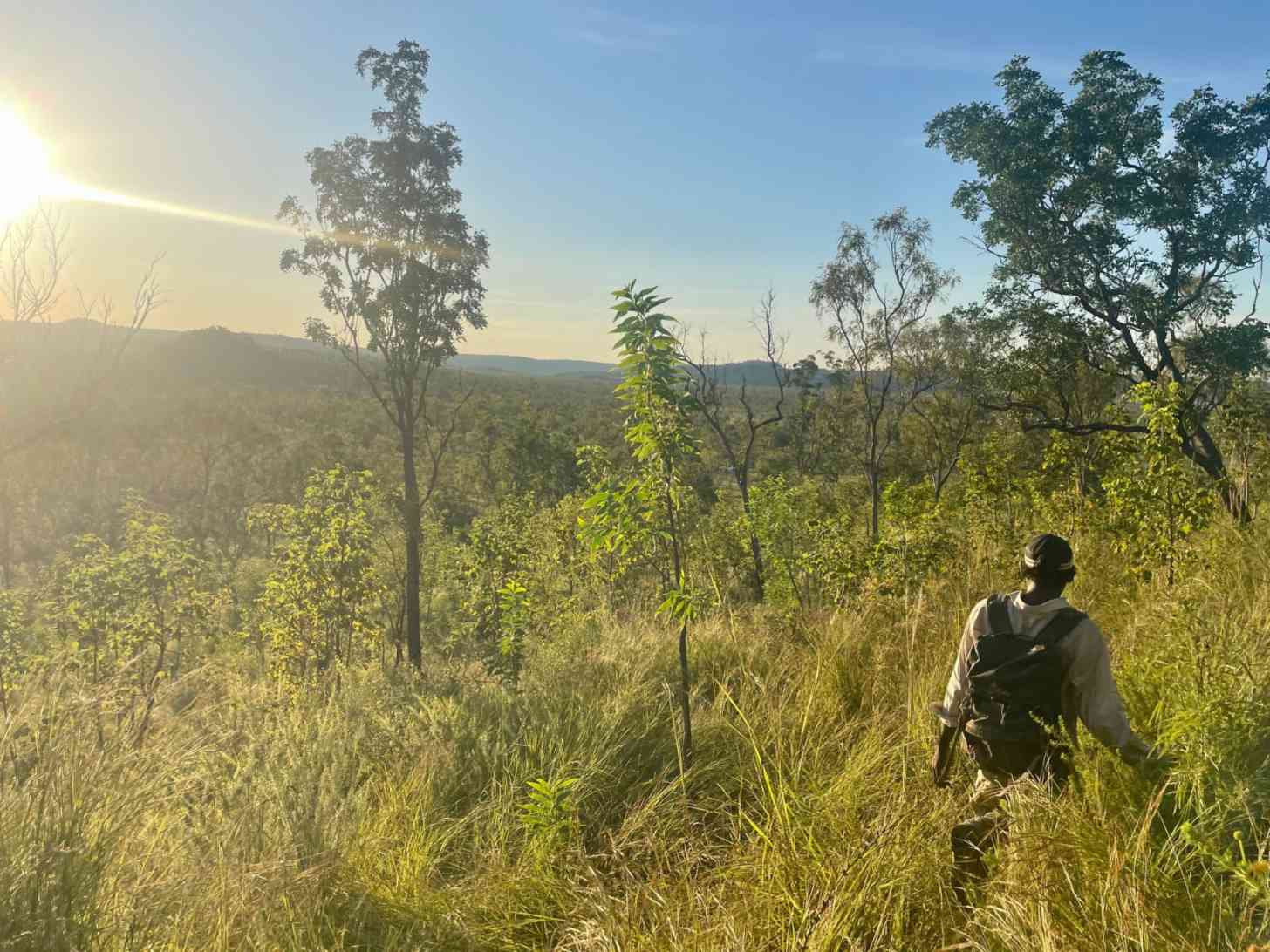
“This is very exciting and great news for the species,” Larissa Potter, AWC senior field ecologist, said.
“Confirming the Nabarlek’s presence at two new sites on mainland Dambeemangaddee Country is a major step forward for our understanding of where the species occurs. It’s also reassuring as it indicates that this threatened wallaby is persisting on the Kimberley mainland in places we didn’t previously know about.”
The Nabralek is believed to have once been widespread across the area, but in recent years, there have been very few records of the species in any part of Australia. Feral cats, more herbivores influencing the ecosystem, and severe wildfires may be to blame for the species’ decline.
About as long as a loaf of bread, the tiny critters are also elusive, due to the fact that they live in very remote, rocky habitats.
Additionally, the Nabralek looks very similar to two other wallaby species, the Monjon and the Short-eared Rock-wallaby, making it even harder for researchers to confirm the species’ presence.
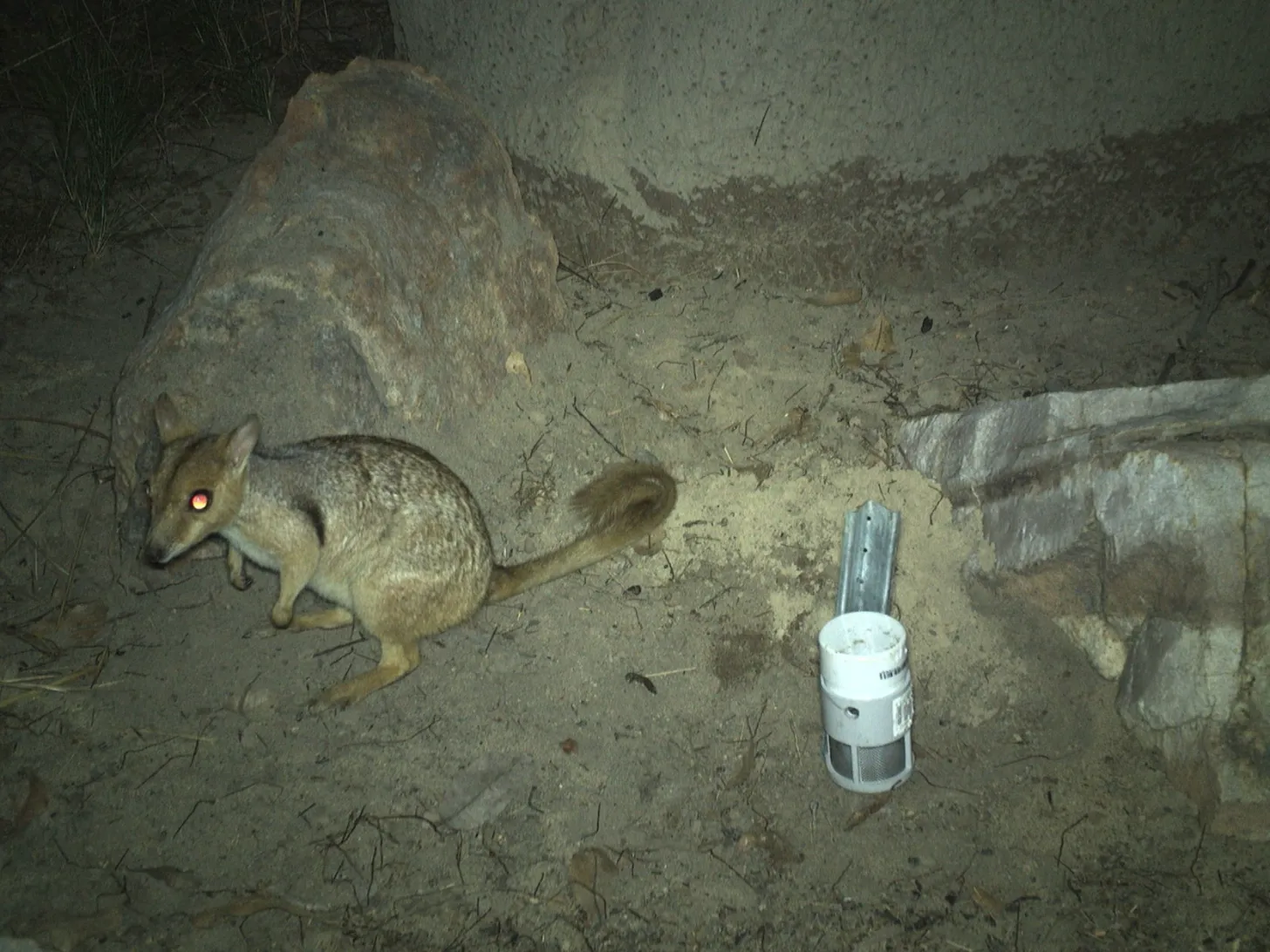
The AWC worked with the Dambimangari Aboriginal Corporation to study the Nabralek, using camera images and genetic analysis through scat samples, later examining the images more thoroughly for distinctive markings and physical traits that differentiate the species from other wallabies.
“Every animal has its own song and story, they might be small, they might be big, but they all play their part in keeping [the country] healthy. They’re part of the ecosystem,” Inga Pedersen, Dambeemangaddee traditional owner, said.
“We heard that the Nabarlek didn't exist anymore [on the mainland], so it’s good to know that they’re there; it shows their country is healthy.”

Now, the AWC and DAC will continue to survey the area to find more Nabarlek populations. This will allow them to further investigate threats facing the species and implement conservation efforts to protect it.
“Now we want to know more about them. Is it a healthy population?” Pederson said. “We want to compare them to the ones on the islands, and make sure this animal isn't disappearing.”
You may also like: Trail cameras catch elusive, endangered ocelots using wildlife crossing in Texas
Featured Image: Courtesy of Australian Wildlife Conservancy
As a pediatrician at Michigan State University College of Human Medicine in Flint, Michigan, I perform well-child checks, treat asthma, and discuss nutrition with families. I prescribe medicine and arrange follow-up visits.
Earlier in my career, when I would see families that struggled to pay rent, keep the lights on, feed their families, afford their medications, or buy diapers, I saw how those hardships directly harmed their health, yet I felt powerless.
I remember thinking, “What can I do about poverty?”
In medicine, poverty is often screened for, documented, and then ignored as a “social” issue outside the scope of medicine. It becomes a side note in a medical chart. We do not treat it or prevent it with the same urgency as we treat infections, diabetes, or hypertension.
For over a century, academic medical centers in the United States have produced scientific discoveries that improve health. Achievements such as vaccines, genome mapping, and the management of deadly diseases save lives daily.
But even with all our medical advances, the biggest factors that shape health are still social, and a family’s income remains one of the strongest and most lasting.
A prescription for poverty
In 2024, Michigan State launched Rx Kids, the country’s first universal and unconditional prenatal and infant cash program.
Rx Kids provides mothers with $1,500 during pregnancy and families with babies with $500 a month until the baby’s first birthday. Rx Kids is a place-based treatment — everyone who lives in a participating community is eligible. There are no income requirements and no conditions on how the cash is spent; the program is designed on dignity and trust.
This is not an entirely new idea. Similar efforts across the globe reduce child poverty with child allowances. In the U.S., the child tax credit was expanded under the American Rescue Plan Act in 2021, which reduced child poverty to the lowest level recorded by providing benefits to low-income families. At the end of 2021, however, the expansion was not renewed and millions of kids went back into poverty.
Rx Kids is designed to treat poor places, not poor people. By means-testing communities instead of individuals, the program has a population-wide reach. This minimizes stigma and administrative burden for families while also maximizing efficiency for administration.
So far, more than 15,000 families in dozens of Michigan communities have received over $55 million in direct cash.
The relationship between low income and poorer health is one of the most reliable findings in social science. When poverty strikes during pregnancy or early childhood, it has the potential to leave lifelong scars. It’s linked to maternal and infant health disparities, including preterm births, low birth weight, maternal depression, infant death, and chronic illness.
For many families, income plunges and poverty spikes right before a child is born, and these effects continue throughout the first year.
In some ways, it’s no surprise that an academic medical center is leading one of the largest anti-poverty programs in the country.
Land-grant universities like MSU were created to use knowledge and rigorous science to solve real-life problems. Just as important, MSU’s College of Human Medicine has its own public health department, which allows it to bring together the often siloed fields of healthcare and public health. Its medical school has always been centered on public service.
Rx Kids builds on these traditions by leveraging the resources of academia to address a major health threat to mothers and children. It’s sustained through a robust public-private partnership that brings together community members, nonprofits, philanthropies, and government.
Moms can focus on health instead of survival
To date, the program has expanded from our first site in Flint to over 60 Michigan communities, including the entire rural Upper Peninsula.
Our largest launch came in February 2026, when Rx Kids expanded its reach to over 7,500 babies born each year in Detroit.
In total, Rx Kids is expected to reach almost 25,000 Michigan babies each year, and it just celebrated its launch in Ohio.
The results are encouraging. The program leads to more stable housing and better nutrition. Communities have seen moms start prenatal care earlier and stick with it.
Birth outcomes have improved, too. There’s been an 18% drop in preterm births and a 27% drop in low birth weight in the city of Flint, the first Rx Kids community. Early research also reveals a 50% drop in neonatal mortality. Studies also show less postpartum depression, anxiety, and stress and better overall well-being for mothers.
The program is linked to a 32% drop in infant maltreatment reports, which represents a massive prevention of child welfare involvement. Beyond health, direct cash support boosts local economies by creating jobs and stimulating spending. It also saves public money by preventing expensive problems, such as stays in neonatal intensive care.

“Cash support helps us keep housing, pay bills, maintain our health, and support our partners, too,” Nyah Phillips, an Rx Kids mom from Inkster, Michigan, told us. “It allows parents to focus on health instead of survival. And every parent deserves that.”
How it helps clinicians
Rx Kids is also helping physicians like me feel less powerless, too.
In a new qualitative study, released while undergoing peer review, pediatricians reported that having Rx Kids in their community improved their sense of professional fulfillment, allowed them to use appointment time more efficiently, and made them feel more supported.
When patients can meet their basic needs, pediatricians can practice the kind of care that they were trained to provide, reducing the moral distress and burnout that so often comes when we can’t treat patients’ hunger and homelessness.
At a time when healthcare spending continues to rise while health outcomes in the U.S. lag behind those of peer nations, especially when it comes to maternal and infant outcomes, programs like Rx Kids suggest that some of our most powerful health interventions may not just come from new drugs or technologies, but from addressing the conditions in which families live.
Years ago, I wondered what a pediatrician could do about the pathogen of poverty. Today, I know we can study it, measure it, treat it, and, better yet, even prevent it before it makes our patients sick.
This article was written by Mona Hanna from Michigan State University and was originally published on The Conversation.
Featured Image: Courtesy of Rx Kids
The officers at the Sheldrick Wildlife Trust are no strangers when it comes to rescuing elephants from sinkholes — in 2025, the conservation organization rescued 17 in total.
The Sheldrick Wildlife Trust is based in Kenya, where sinkholes and ground fissures are relatively common, particularly along the active tectonic fault lines of the Great Rift Valley, a divergence of three major tectonic plates pulling apart from one another.
On February 25, the Kenya Wildlife Service responded to reports of a bull elephant trapped shoulder-deep in a sinkhole in Chakama, a region roughly 30 miles inland from the Indian Ocean.
“Sheldrick Wildlife Trust pilot Roan Carr-Hartley flew down to the scene, where he met with the Kulalu anti-poaching team and KWS,” the nonprofit stated in a press release.
“While it was too deep and steep to escape, he could move around inside, which made it challenging for teams to position the straps needed to free him,” it continued.

The elephant was in a panic, which meant that the rangers couldn’t get too close without risking their own safety.
Carr-Hartley called Campaign Limo, who heads a mobile vet unit in the Greater Tsavo Conservation Area, who was busy helping with another rescue operation. With the veterinarian miles away, Carr-Hartley and the KWS rangers knew they had to continue the operation without anaesthetising the bull and pulling it to safety.
“Finally, the team managed to loop straps behind the bull and attached them to a vehicle,” the Sheldrick Wildlife Trust reported. “Inch by inch, they pulled him from his muddy trap.”
In video footage of the incident, the elephant’s body language seemed to change after it realized that it was being helped, not harmed. After a harrowing back-and-forth, the exhausted elephant is finally pulled free from the sinkhole.

“This was a very challenging operation, but the team didn’t give up,” the organization wrote. “A life was saved, leaving all involved with a deep feeling of accomplishment.”
On YouTube, people were quick to offer their praise for the organization.
“What seems like an impossible rescue made totally possible by a community of passionate can-do individuals only wanting the best for these animals,” one user wrote.

“It was amazing to see how quickly he realized they were here to help and stopped wasting energy struggling at the sight of them,” another person commented. “Phenomenal work all around.”
One YouTube user said: “These individuals — each and every one participating in this rescue — are tipping the scales to the good on our planet.”
Watch the rescue below:
You may also like: Park rangers leap to the rescue to save baby elephant trapped in man-made watering hole
Featured Image: Screenshot via Sheldrick Wildlife Trust/YouTube
Since 1977, the Sheldrick Wildlife Trust has been a leading conservation organization in East Africa. Across Nairobi National Park and Tsavo East National Park, it operates the most successful orphan elephant rescue and rehabilitation program in the world.
By working with the Kenya Wildlife Service, the nonprofit rescues distressed elephants, as well as rhinos, giraffes, lions, leopards, and more. When reunification isn’t possible, the Sheldrick Wildlife Trust provides sanctuary for animals in need, always with the goal of returning them to the wild.
On November 4, 2025, the Kenya Wildlife Service received reports of an orphaned elephant sighting in Tsavo East, “a place of open skies and big predators.”
“Tourists had spotted her, alone and with no other elephants in the area,” the Sheldrick Wildlife Trust stated on its website. “Several hours had elapsed since the sighting, but fortunately the tour driver had pinned the location of the tiny elephant.”
Trevor, a Tsavo works manager, led a search party with a team of field agents through the Wangalla plains. After a little more than an hour, they finally found her “deep in the bush,” huddling among a herd of zebras.

“Frightened and desperate, she had latched onto the closest creatures who could provide company and protection,” the nonprofit explained.
“It was a heartbreaking scene: The little calf was visibly distressed, crying and pacing in search of her mother. The team extensively looked for her family, but there were no other herds in the area.”
According to the Sheldrick Wildlife Trust, wildlife officials believe that the calf’s family had been scared off by a pack of lions that had been hunting buffalo the night prior. In the confusion, she was likely separated from her own herd and had journeyed too far to find them again.
“It’s a miracle she survived the night on her own; a calf so small would be easy prey for the lions, jackals, and hyenas who prowl under cover of darkness,” the Sheldrick Wildlife Trust said.
After she was rescued, the calf was transported by vehicle and then by helicopter to the Kaluku Field Headquarters and Neonate Nursery.
“We named the orphan Wangalla, to connect her to her origins,” the nonprofit said. “Barely a week old, we knew that we had a challenge on our hands — a challenge for one of our most experienced keepers.”
Wangalla was paired with Misheck, an elephant care team member who had first joined the organization in 1998, when he was 22 years old. In the decades since, he had become the go-to keeper for orphaned elephants.

“Wangalla fell fully and completely in love with Misheck — and the feeling was mutual. He has been extraordinarily committed to this little elephant, spending nearly every minute of every day by her side. Despite our many pleas that he take a well-earned break, he refused to take leave for a full five months after her rescue.”
According to the Sheldrick Wildlife Trust, whenever Misheck was asked if he needed a break, he would always reply: “There is nowhere else I would rather be.”
Today, Wangalla is 10 months old. She still spends her evenings with Misheck, who hand-plucks leaves for her to eat at sunset.

During the day, she plays among the guineafowl at the sanctuary and dusts herself near Musumbi, the hippo’s, pool. She has also joined the social circle of the sanctuary’s older elephants, joining them for walks and running between their legs.
“In the fullness of time, Wangalla’s journey will take her back to the wilds of Tsavo East, where her story began,” the Sheldrick Wildlife Trust wrote. “But now, this remarkable little elephant has a family with us, in the bosom of the birds, the elephants, and the extraordinary keepers that make Kaluku home.”

You may also like: After an elephant became trapped shoulder-deep in a sinkhole, these brave rangers came to its aid
Featured Image: The Sheldrick Wildlife Trust
Ms. Rachel — or, off-screen, Rachel Accurso — is no stranger to sharing her views. Frequently, the children’s entertainer and activist posts simple writings on Instagram with bold human rights statements, like “It’s wrong to be silent during a genocide,” and “Black boys deserve to grow up.”
But on the latest episode of “Subway Takes” — a video series hosted by artist and comedian Kareem Rahma where New Yorkers share their “hot takes” on the subway — Accurso made a couple of stances even clearer.
The first one may have taken viewers by surprise.
“Some nursery rhymes and kids’ songs need to be retired,” Accurso said, clad in a light pink cardigan and matching headband.
Rahma is easily swayed: “100% agreed. It’s time for a new crop.”
He then asked Accurso which nursery rhymes she would like to remove from the zeitgeist. She starts gently, saying that some can be changed, rather than retired altogether. Take “Three Little Kittens,” she said, a nursery rhyme about three little kittens who lose their mittens and are later denied pie by their mother.

“I feel like [the kitten’s mom] can give them some strategies for not losing their mittens all the time,” Accurso said with a giggle and a shrug. “So that one, maybe change a little bit.”
But then, she clarifies that the nursery rhymes that “really need to be retired” are “racist ones.”
She tells Rahma that the songs that fall into this category are “Jimmy Crack Corn” and “Oh! Susanna,” which both have ties to blackface minstrelsy, and “Eeny Meeny Miny Moe,” which originated in 19th century America with a racial slur in its lyrics.
“People are like, ‘What will we do?’ and I’m like, you know how many wonderful nursery rhymes and kids’ songs exist?” Accurso said. “And, we can make new ones! Like, it’s okay.”
The two joke a bit more about original songs — of which Accurso has composed many — but then she sobers up even more to deliver the most important take.
“No child should be in an immigration detention center,” Accurso says bluntly.
“100% agree,” Rahma affirms.
“The medical neglect is abuse in there,” Accurso says passionately. “Some pediatricians I’ve talked to even say torture.”
Accurso has been vocal about calling for the closure of detention centers across the country, as United States Immigration and Customs Enforcement ramps up raids nationwide. She has shared letters of children in detention centers to members of Congress and has come to sing alongside families outside of Delaney Hall in New Jersey.
Back on the subway, Rahma asks Accurso why members of the Trump administration continue these practices.
“Many of them have children, and they don’t see their children in those children,” he said, puzzled.
“The adults of the world have a responsibility to take care of all the kids,” she responded. “It’s one of our most sacred responsibilities. But we just keep killing and maiming and harming kids.”
They pivot their conversation to the number of children estimated to have been killed in Gaza, another cause close to Accurso’s heart.
“I always think, Kareem, that when this comes out, the world’s gonna act,” she said, alluding to any number of atrocities in the news. “And then, like, there’s two days when some of us say, ‘Hey, look at this,’ and then it goes back to silence.”
Accurso and Rahma share a moment of frustration, and then, in her classic Ms. Rachel style, she says, “But at least we’re talking about it.”
Rahma nods as Accurso concludes. “That’s something.”
Watch Ms. Rachel’s full Subway Takes episode below.
You may also like: Ms. Rachel sings protest song with children of immigrants outside of Delaney Hall: 'Why are we traumatizing kids?'
Featured Image: @subwaytakes/Instagram
Back in 2022, team members of the Sheldrick Wildlife Trust rescued an “emaciated” elephant calf in Tsavo National Park, Kenya’s largest protected wildlife area.
During this time, a massive drought had swept across the park, which was devastating to elephants. The gentle giants require great quantities of vegetation to sustain themselves, rescuers from SWT explained, and as the drought killed plants, elephants struggled to survive.
“Older calves were particularly vulnerable, as they struggled to consume enough and then were unable to keep pace with the rest of the herd,” SWT explained in a press release earlier this month.

That’s what experts believe happened to Ushindi, an orphaned female elephant calf their team spotted in the southern part of Tsavo East. The calf was all alone, though they watched as she attempted to join a new herd, to no avail.
SWT teams rescued her and said she was “in a state of collapse” when she arrived at the Voi stockades, where she would be hydrated and stabilized among other abandoned elephants.
In 2022 alone, the organization said, they rescued 33 orphaned elephants. While the goal is always rehabilitating the elephants to be released back into the wild, the need was vast following the drought.
Among the bunch of rescues in 2022, 13 elephants, including Usindi, formed something of a “found family,” and the team nicknamed the group “The Voi Kids.”
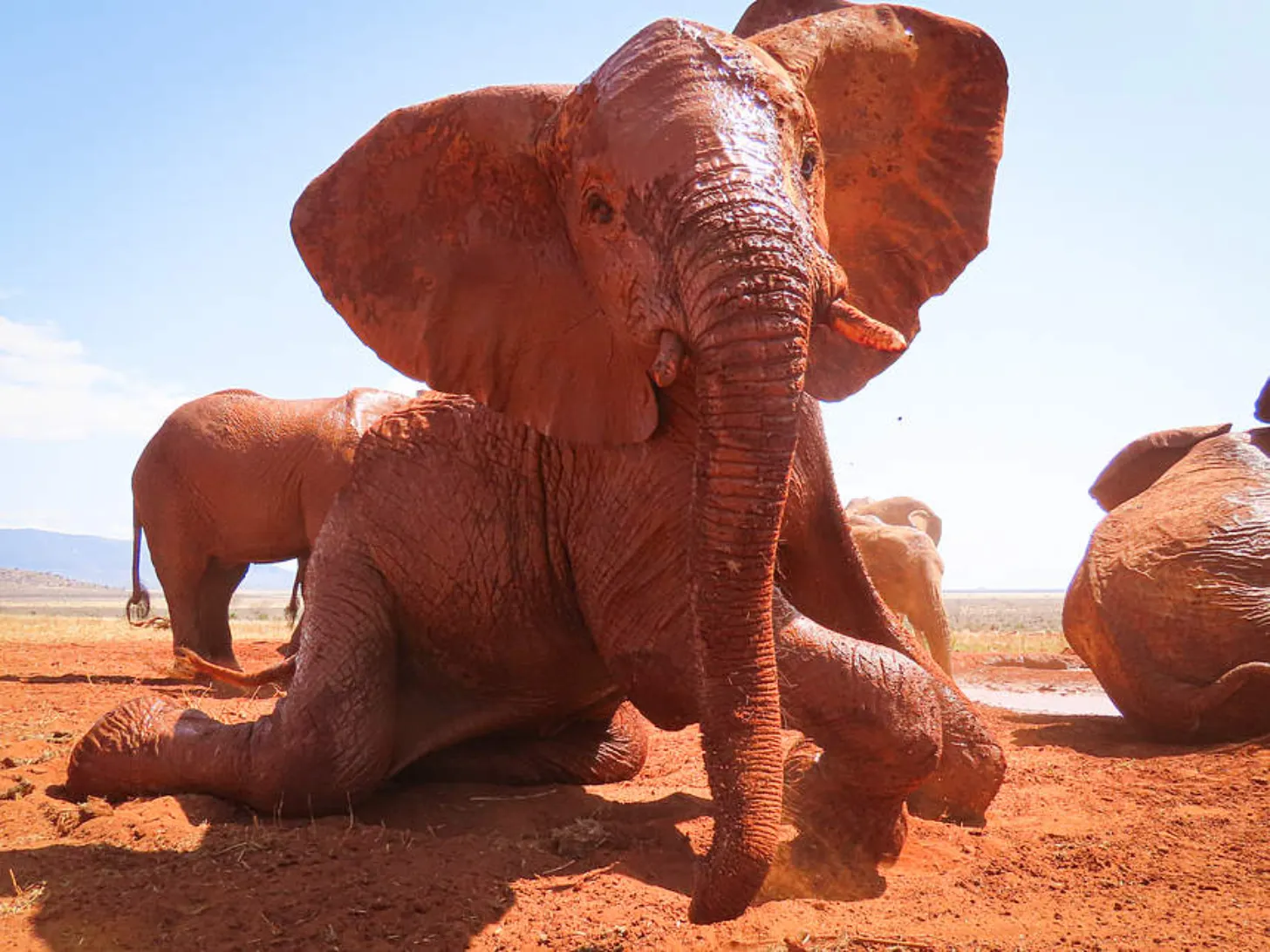
In the four years since her initial rescue, Ushindi — whose name means “victory” in Swahili — remains in the care of rescuers. They say she has “always been well-liked as a friendly and calm girl,” but now, she’s taken on the role of “nanny” among her rag-tag friends.
“She has adopted little Serenget as ‘her’ baby and diligently shadows her from sunup to sundown,” SWT shared in a recent Facebook post. “When Serenget emerges from her room, Ushindi is there to scoop her up; when she drinks her milk bottles, Ushindi stands guard; when she enjoys a mud bath, Ushindi splashes right beside her — and so on and so forth!”
This companionship among the elephants is an encouraging sign, considering, at first, “Ushindi’s survival was by no means certain,” SWT said.
“Now, our victorious young elephant will continue to grow up in the place she was born, raising her own family in the fullness of time — and perhaps even reuniting her natal herd.”
You may also like: Migrating elephants kept getting struck by high-speed trains. New radar sensors will bring trains to a halt to let them pass in peace
Featured Image: Sheldrick Wildlife Trust/Facebook
More than a year after federal regulators abruptly canceled a $7 billion solar energy grant program — with funds already distributed and even partially spent — a Rhode Island federal judge has ordered them to revive the program.
But it’s too early for the group of union laborers, solar panel installation companies, homeowners, and nonprofit advocates who filed the complaint in October 2025 against the U.S. Environmental Protection Agency to declare victory.
“The result is maddeningly difficult to talk about what happens next because we just don’t know what they’ll do,” said Kevin Hubbard, executive director of the Lawyers’ Committee for Rhode Island, one of the attorneys for the plaintiffs.
The 20-page order issued on Friday by U.S. Judge Mary S. McElroy of the U.S. District Court for Rhode Island determines that the federal agency overstepped its statutory authority when it ended the $7 billion Solar for All grant program in August 2025.
Originally included in the 2022 Inflation Reduction Act, the Biden-era incentive program sought to make solar panels more widely accessible by offsetting the installation costs for low-to-moderate-income homeowners and renters. Funding was distributed in 2024 to state and local governments, nonprofits, and tribal organizations, including a $49.3 million allocation to Rhode Island through the state’s Office of Energy Resources.
Many funding recipients, including Rhode Island, had already set up the framework to begin giving out the money to eligible applicants, with union laborers and solar development companies at the ready for an expected 200,000 jobs over the course of the five-year program.
The grants were expected to help $900,000 households nationwide save $350 million annually on their energy bills, according to prior estimates from the Biden administration.
“This will be a really big deal for solar deployment in Rhode Island,” said Patrick Crowley, president of the Rhode Island AFL-CIO, which was one of the plaintiffs in the suit. “This program could really be a game changer for meeting our Act on Climate goals.”
The 2021 decarbonization law requires the state to reach net-zero emissions by 2050, with incremental benchmarks starting in 2030. Based on the 9.52 million metric tons of net greenhouse gas emissions measured in 2023, Rhode Island would need more than 25,000 megawatts of solar, wind, and other renewable powered-electricity to reach net zero. Including the 400 megawatts from the nearly finished Revolution Wind project, the state has 1,418 megawatts of clean energy capacity, as of the second quarter of 2026.
The prospect of advancing Rhode Island’s renewable energy while boosting the local economy through the Solar for All program never materialized, almost immediately thrust into limbo when President Donald Trump took office in January 2025, and ended permanently by the EPA via a social media video published Aug. 7.
The AFL-CIO, accompanied by other nonprofit and business groups, sued in October 2025.
Federal environmental regulators pointed to the “One Big Beautiful Bill Act,” signed into law on July 4, which rescinded the congressional authority for the program and clawed back any unspent funds, as justification for the termination.
McElroy rejected this interpretation.
“Defendants’ preferred approach runs contrary to Congress’s clear intent that already obligated Greenhouse Gas Reduction Fund monies, including SFA grants, not be disturbed by the repeal of Section 134,” she wrote. “They provide no legal authority for their proposition that the obligated SFA funds were somehow converted into lump-sum amounts untethered to the program for which they were originally appropriated.”
Although McElroy threw out the cancellation order, she didn’t specify how federal administrators should revive the solar grant program.
The “ideal” outcome, said Hubbard, would be that the federal agency allows the program to continue through the recipients already awarded grant funds. But, it could decide to start anew, forcing recipients to reapply for the competitive funding and delaying the entire process of putting more solar panels on rooftops.
Based on the Trump administration’s actions in almost every legal challenge it has encountered, Hubbard is expecting federal regulators will appeal McElroy’s order anyway.
An unidentified spokesperson for the EPA said the agency is “reviewing the decision and considering options for appeal.”
If and when the case is finalized and funds are released, Crowley said there are electricians, iron workers, and laborers ready to jump in on the jobs.
“We already have trained tradespeople to start doing this work,” he said, noting that renewable energy sector jobs have dried up since the change in presidential administrations.
There were more than 15,000 clean energy jobs in Rhode Island as of January 2025, according to an August report by Rhode Island Office of Energy Resources. The job count, which does not reflect any changes to the state economy since Trump took office, marked the highest industry employment in five years, buoyed by large increases in heating and cooling jobs thanks to a state rebate program for residential heat pumps. Wind and solar employment stayed relatively flat year over year, the report showed.
But the state needs clarity on the outcome of the Solar for All complaint before it can proceed with Rhode Island’s $49 million grant, Robert Beadle, a spokesperson for the Office of Energy Resources, said in an email.
Other plaintiffs in the lawsuit include the Rhode Island Center for Justice, which had increased its staff of public interest attorneys in preparation for the grant rollout; a Georgia homeowner who applied for free solar installation; and businesses and nonprofits that work on solar panel installation, financing, and education.
“Our low-income clients continue to face ever-escalating housing and utility costs, Jennifer L. Wood, executive director of the Rhode Island Center for Justice, said in a statement. “This is a major step toward restoring an important path to utility affordability for Rhode Islanders struggling to afford stable housing and access to utilities.”
The Southern Environmental Law Center, Lawyers for Good Government, and the Conservation Law Foundation also represented the plaintiffs.
This article was originally published by the Rhode Island Current.
Featured Image: Laura Paton/Rhode Island Current
The Sheldrick Wildlife Trust has seen some tough cases in their time. Since 1977, they have been leading rescue and rehabilitation efforts for orphaned and injured elephants in East Africa.
But on May 26, 2025, the conservation organization encountered one of their toughest cases yet. The Mara North Conservancy had discovered a days-old elephant hovering near its mother, who had died of natural causes.
The rangers searched the rest of the herd for any lactating females and found none. As they looked, the frightened calf tried to suckle from a bull in its herd.
It was then that they realized that time was of the essence.
“After assessing the situation, the Kenya Wildlife Service called for the orphan to be rescued,” the Sheldrick Wildlife Trust stated on its website. “Darkness was rapidly falling and, given the Mara's formidable predators, she was unlikely to survive the night in her current situation.”
Together with the Mara Elephant Project, the MNC rangers loaded the elephant calf into a Land Cruiser and transported her to a local vet for immediate care.
The next morning, the Sheldrick Wildlife Trust deployed pilots to the MNC headquarters, and she was promptly transported via aircraft to the organization’s Kaluku Neonate Unit in Kenya.
There, a new chapter began for the baby elephant, whom they named Kaikai.
“All neonate orphans are complex, but Kaikai was particularly challenging,” the nonprofit explained. “She was still very stressed when she arrived at Kaluku and remained that way for some time.”
“Confused and missing her mother, she spent her first nights pacing her stable and crying,” the post continued. “We assigned two of our most experienced keepers to her care, and as the days and weeks unfolded, Kaikai started to heal from her emotional trauma.”
Once Kaikai realized that she was in safe hands, she completely transformed.

Often, orphaned elephants at the sanctuary are paired with one or two dedicated keepers, but Kaikai was given three: Mishak, Joseph, and Simon. According to the nonprofit, she leads them around “like a tiny mother goose with her ducklings.”
“Kaikai feels like she’s the one and only elephant in the world — she’s a spoiled girl!” Joseph told the Sheldrick Wildlife Trust. “She can’t stand even a second without seeing me or her other keepers, because she knows us as her parents.”

“Kaikai is very happy to have found a second chance with her human family, and she is very happy with us,” he continued. “She is the baby who understands things easily and helps herself, like finding fresh greens. At night, she sleeps like a new baby. She’s our little princess."
On June 22, the Sheldrick Wildlife Trust shared a video update on social media site X of Kaikai rooting through a bush to peruse empty milk bottles.
“Kaikai was a girl on a mission,” the nonprofit wrote in the video’s caption. “She slunk away from the mud bath with one thing in mind: more milk.”

“The empty bottles hadn’t escaped her notice, and she had clearly been plotting ever since. Her belly was already full — courtesy of the now-empties — but she thought they might just bear a surprise extra serving.”
At the time, Kaikai still wasn’t old enough to hold her own bottle with her trunk, but she tried to copy the “technique” of her keepers, even so.
“It was fascinating, and impressive, to watch her problem-solve her way through the situation,” the caption continued. “She’s such an ingenious little elephant.”
“And don’t worry,” SWT wrote, “We lent a helping hand in the end.”
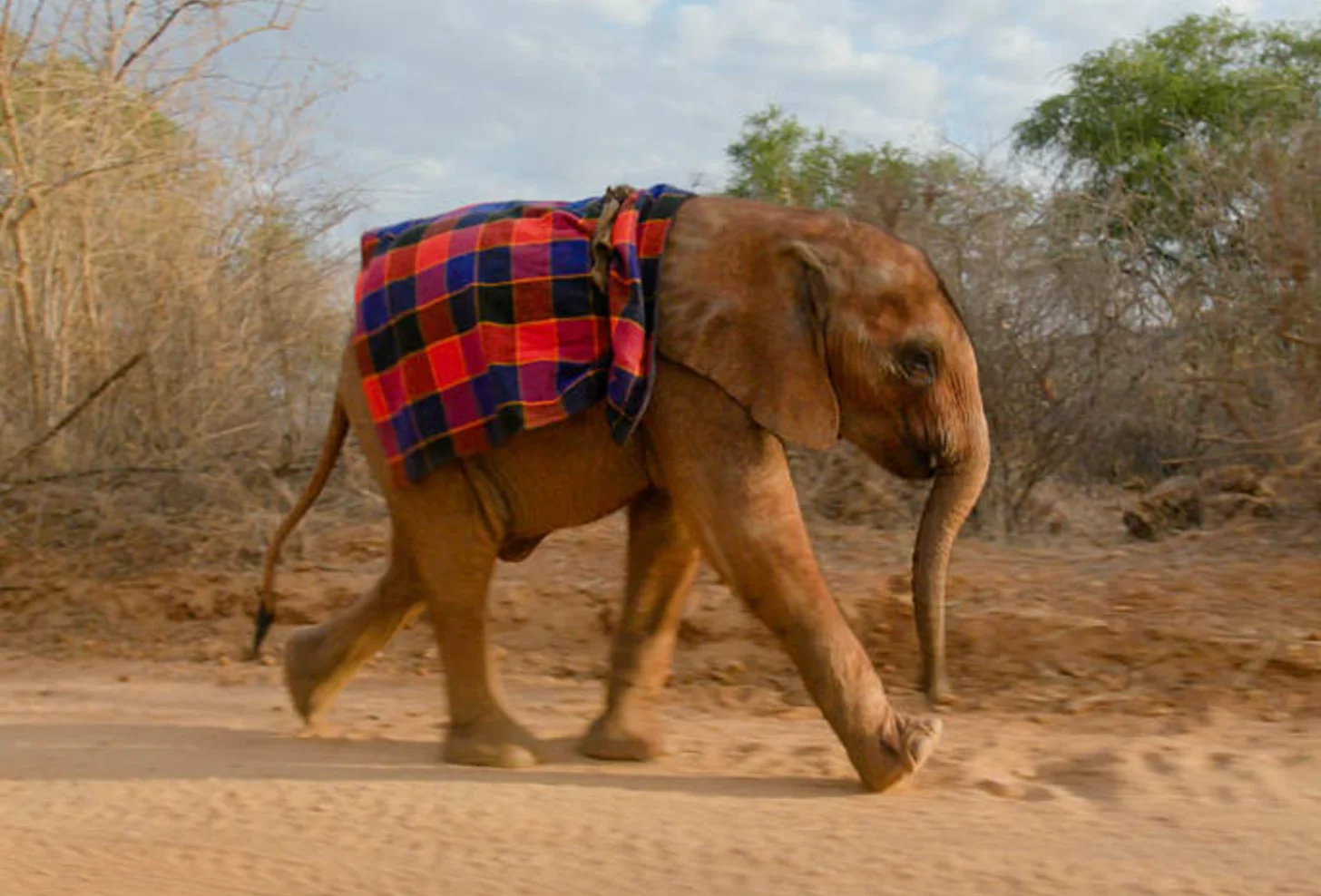
For the rescued animals under its care, of which there are many, the Sheldrick Wildlife Trust’s ultimate goal is to return them to the wild. But elephants are slow-growing, often taking three years to be fully weaned off their mother. Currently, Kaikai is still just 16 months old and is enjoying life alongside her fellow elephants — and her “human parents.”
“If one ever needed a graphic display of how love conquers all — Kaikai is living proof,” the nonprofit stated. “We know this extraordinary little elephant will go on to do extraordinary things. She already has.”
You may also like: Park rangers rescue days-old elephant after she was separated from her mother and hid among a herd of zebras for safety
Featured Image: Sheldrick Wildlife Trust
It would be an understatement to say that Bungalu the African elephant has been through a lot. Today, the 16-month-old calf is in safe hands at the Sheldrick Wildlife Trust, a conservation organization that raises and rehabilitates orphaned elephants.
But 6 short months ago, Bungalu narrowly escaped death.
In February 2026, the Kenya Wildlife Service received reports of a baby elephant wandering alone in Bungule, near the foothills of Mount Kasiagau. Despite frequent patrols, the calf remained hidden.
On February 27, after locals spotted the calf again, the Sheldrick Wildlife Trust raced to the scene via helicopter, only for him to flee again out of fear.,
As February neared its end, the Tsavo area was rocked by lightning storms and extreme rain.
“It was a miracle that the calf had lasted for as long as he did without his mother’s milk or the protection of his herd,” the nonprofit stated on its website. “Now, it seemed too much to hope that he had survived such a storm.”
On March 1, locals from the Maasai tribe had seen the elephant and corralled it to a tree until help could arrive.
But it wasn’t until the Sheldrick Wildlife Trust rangers transported the calf back to their Kaluku Unit sanctuary that they realized the full extent of its injuries.
“His back was laced with deep claw marks. The wounds had scarred over, but he had clearly been pursued by lions — and based on the number of claw marks, he was very lucky to have survived the attack,” the Sheldrick Wildlife Trust recounted. “It seems probable that this is how he initially came to be separated from his herd.”
Additionally, Bungalu was “riddled with parasites,” which the veterinary care team linked to his lack of nutrients at such a young age.
“He was skin-and-bones and really struggled to put on weight, even as the keepers plied him with milk bottles and healthy greens,” the nonprofit explained.

“After all he experienced, one might have expected Bungalu to be withdrawn or even aggressive, but he embraced his keepers from the outset,” the account continued. “As we have seen with other orphans, he had spent so long on his own that he was just relieved to be cocooned amongst a family once more.”
“There was very little settling-in period; by the first night, he was bottle-feeding and suckling his keepers’ fingers.”
Bungalu also found an elephant companion in Kaikai, another calf who was orphaned at just a few days old.
“Bungalu and Kaikai make for a wonderful, odd couple. As hyper as she is, he is staid. While she dashes ahead, he happily lopes behind. Bungalu is content to follow Kaikai's lead — which is fortunate, because she wouldn't have it any other way!”
Kaikai, who has three keepers tending to her care, has been affectionately called a “princess” at the sanctuary.
“Sometimes, when her bossiness gets a bit out of hand, he keeps her in check with a firm headbutt, but he mostly lets her continue her little reign uncontested,” the nonprofit added.
On September 14, the Sheldrick Wildlife Trust shared a video update of Bungalu on Instagram.

“Bungalu has an adorable little habit: When he’s drinking his bottle, he delicately grasps the handle with his two trunk fingers,” the caption read. “He’s not strong enough yet to hold the whole bottle, but he wants to pull his weight!”
The nonprofit added that Bungalu’s ability to use his trunk as “fingers” is a trait unique to African elephants.
“They have two prehensile ‘fingers’ on the end of their trunk, which give them the dexterity to pick up the tiniest pebble, the thinnest blade of grass — or the tubular handle of a milk bottle!”
You may also like: This baby elephant was orphaned just days after she was born. Now 3 rangers 'share custody' of her: 'She knows us as her parents'
Featured Image: Screenshot via Sheldrick Wildlife Trust/YouTube
The organizers of Save a Life Day — an annual naloxone distribution planned for Thursday — aim to keep promoting harm reduction, even after the Trump administration shifted federal funding away from some supplies that make drug use safer.
Volunteers representing health departments, healthcare providers, community organizations and more will distribute naloxone — a drug that reverses an opioid overdose — at more than 1,000 sites in all 50 states this year. The theme of this year’s Save a Life Day is “elevate harm reduction.”
Many distribution sites will not offer drug testing strips, after the Substance Abuse and Mental Health Services Administration said earlier this year that federal funds cannot be used to purchase the supplies.
Organizers say the testing strips, which detect deadly contaminants like fentanyl or xylazine – are an important safety tool for people who use drugs.
“They’re an important part of harm reduction overall,” said Caroline Wilson, national coordinator for Save a Life Day. “I think one thing that people forget is that overdose not only affects daily opioid users, but also people who are using drugs recreationally, because fentanyl is mixed in with a lot of other drugs.”
People can use the strips to use drugs to determine if fentanyl is in it and then decide whether to take it or use in a safer way, she said.
“I think (testing strips) are very important for a lot of people that are using recreational drugs,” Wilson said. “I think we forget how many people are really out here using drugs.”
An executive order last year said that substance abuse agency’s funding could no longer be used for “so-called ‘harm reduction’ or ‘safe consumption’” efforts. The government has previously restricted funds from being used to purchase clean syringes for distribution.
In a “Dear colleague” letter dated April 24, the agency outlined that grant funding can also not be used for certain other harm reduction supplies, including drug testing strips. It said funding could still support naloxone and infectious disease prevention services.

Wilson said Safe a Life Day volunteers in different states are interpreting the federal guidance differently — some plan to offer test strips if the supplies are paid for with another funding source. Some won’t distribute them at all because they’re using time paid for with a federal grant, she said.
Other participating organizations — including Charleston-based overdose prevention organization SOAR — do not get federal funding at all, and will continue to distribute drug testing supplies.
Sarah Stone, a co-director for SOAR and a founder of Save a Life Day, said she’s leaving it up to volunteers working at sites throughout Kanawha County whether or not they’ll distribute testing strips.
Stone worries the new federal restrictions will reverse the progress being made to combat the substance abuse crisis. Drug overdose death rates dropped in almost every state last year, according to the U.S. Centers for Disease Control and Prevention.
“Things have taken a turn,” Stone said. “We talk a lot about not celebrating until we get to overdose zero because every single overdose is somebody, but we were making some real progress. That’s just gonna reverse all of that, all of these extra rules on providers, and more stringent policies and more punitive laws on drug use and selling drugs. All of that stuff is going to drive that number of fatal overdoses (up) tremendously.”
Wilson said some organizations have changed their names to eliminate the reference to harm reduction because of last year’s executive order.
“I’ve had a few organizers let me know that they’ve had to change the names of their programs and instead of calling it a harm reduction program, they now (call it) something like an overdose prevention program,” she said.
In a statement to West Virginia Watch, a spokesman for the U.S. Department of Health and Human Services said that the “National Drug Control Strategy calls for improved drug testing in clinical and workplace settings as well as assessing the value of community-based drug checking programs using more sophisticated technologies such as mass spectrometry testing to inform public health, law enforcement and others in the community about emerging substances in the community illicit drug supply.”
They said that Substance Abuse and Mental Health Services Administration’s role is to make sure government funds are used for “effective, common-sense solutions that have been proven to save lives and keep people out of an endless cycle of addiction and moves them into a life of recovery.” The new requirements do not prohibit states and communities from using other grants to purchase drug testing strips, the spokesman said.
Save a Life Day was founded in 2020 in two West Virginia counties: Kanawha and Putnam. The state has historically had some of the highest drug overdose death rates in the country. Last year, 133,000 doses of naloxone were distributed during Save a Life Day 2025.
The event aims to lessen the stigma around naloxone and to get it into the hands of as many people as possible, Wilson said. Volunteers will also train people on how to administer the drug. It only takes a few minutes to come get a naloxone kit and get trained, Wilson said.
“This is one of the easiest ways and one of the easiest solutions to the overdose crisis,” she said. “We have seen a huge drop in overdoses in West Virginia, and that is because of a lot of different things that have been done between prevention, treatment, recovery, harm reduction, etc.
“Naloxone is a piece of that as well,” she said. “And it’s something anybody can do. It’s really easy.”
For more information or to find a naloxone distribution site near you on Thursday, see https://savealife.day
This article was originally published by West Virginia Watch.
You may also like: 'Hostile architecture' makes it impossible for homeless people to rest in public. One city just voted to eliminate it
Featured Image: Sarah Stone, a cofounder of SOAR and a Kanawha County organizer for Save a Life Day, looks over supplies for this year’s Save a Life Day event, planned for Thursday, Sept. 24. Lori Kersey/West Virginia Watch
Veterinarians at the Georgia Sea Turtle Center in Jekyll Island, Georgia give all of their sea turtle rescues care and attention. But one of this year’s patients, Cebu, has been especially pampered on their road to recovery after being struck by a boat.
Cebu, a juvenile green sea turtle, was rescued by GSTC staff in April after being struck by a boat. The turtle, whose sex has not been determined by experts, had severe spinal cord trauma, impacting its ability to swim.
“Cebu was initially so weak that they could not safely swim in a tank at a normal water depth and spent an extended period in very shallow water. Or at the beginning, no water at all,” Jaynie L. Gaskin, the director of GSTC, told Popular Science.
With veterinary intervention, Cebu began to recover. Now, experts are pulling out all the stops for the little green turtle.

In July, the organization shared an update on Facebook about Cebu’s care.
“Cebu is currently receiving weekly acupuncture treatments to help improve flipper mobility following injuries sustained from a boat strike,” the update reads.
“Their plastron and carapace wounds continue to heal with the support of cold laser therapy, RediHeal, and Silver Honey treatments. Cebu has recently been upgraded from a white tub to a tank, marking an exciting milestone in the recovery process!”
A couple weeks later, another update shared that Cebu underwent stem cell therapy, which helps treat their injuries by repairing injured tissue and reducing inflammation.

Then, Gaskin told Popular Science, the team wanted to introduce Cebu to physical therapy in deeper water, where they could practice normal flipper movements to rebuild strength and mobility.
There was just one problem: Cebu still needed to be supported by flotation devices or a human helper. Being held for long periods proved stressful for Cebu, and long-term use of flotation supports can damage the fragile carapace, or shell, of the turtle.
So, their care team went the extra mile and constructed Cebu a custom 3D-printed harness to help them stay afloat during physical therapy.

“We’ve created harnesses for other cases in the past, but Cebu needed something completely customized,” Gaskin told Popular Science. “Our conservation team has 3D-printing capabilities, so our veterinary and conservation teams worked together to develop a solution specifically for Cebu.”
The harness sits atop the turtle’s back, with a small flotation device on the stomach; it’s kept in place with clickable buckles, much like a standard pet harness.
After testing it out for the first time, Cebu’s care team reported that they are “encouraged by the results.”

“The harness provided the flexibility Cebu needed while allowing our rehabilitation team to take a more hands-off approach during physical therapy,” an update on the GSTC Facebook page reads.
“This gives Cebu more opportunities to move independently, strengthen those front flippers, and practice natural swimming movements while still receiving the buoyancy needed to reach the surface for breaths.”

Cebu still has a long journey before they can be released back into the wild, but with this multi-pronged approach to their healing, there’s cause for optimism.
“There is still a long way to go before we know whether release will be possible,” Gaskin concluded to Popular Science.
“At this point, Cebu’s prognosis remains guarded, but we are encouraged by the progress we are beginning to see.”
You may also like: 'Turtle-safe' nets prevent countless sea turtles from drowning. An appeals court just upheld a rule requiring shrimpers to use them
Featured Image: Georgia Sea Turtle Center/Facebook
This story was originally published by Grist. Sign up for Grist's weekly newsletter.
The food chain you learned about in school isn’t the full picture. Yes, the rat eats your garden crops, the ermine snags the rat, and the eagle picks off the ermine. But that linear story misses a whole lot of nuance.
Parasites like ticks and intestinal worms feed on the eagle and ermine. When those predators die, ants and other scavengers devour their carcasses. Oh, and rats are known to eat their own babies, so they’re predators of themselves.
Capturing the extraordinary complexity of species interactions has been a time-honored — and time-consuming — process of scientists getting out in the field and spying on birds’ nests, for instance, to see what the parents feed their young. Less romantically, they’ve had to sift through scat for the bones of prey animals.
Now they’ve got an even more powerful — and far less smelly — tool in the form of a citizen science project called Who Eats Whom.
It taps into the nonprofit social network iNaturalist, which identifies species in photos that people upload and geotag. You can search for “brown rat,” for example, and find an image of an American ermine carting one off near Monty Drive in Ottawa, Canada. If that’s not metal enough for you, search for “red-tailed hawk” to see the raptors laying waste to snakes and squirrels all across the United States.
Who Eats Whom isn’t just engrossing — it could help inform conservation efforts on a rapidly warming planet. So far, it’s incorporated 17,000 interactions involving 5,700 species in more than 100 countries.
“That’s just kind of the power of crowdsourcing,” said ecologist Bradley Allf, who developed the platform while at North Carolina State University but is now at Colorado State University. “You can generate a ton of valuable information in a way that you can’t if you’re just an individual scientist trying to follow snakes around and hope they eat something while you’re watching them, or waiting for them to poop and be able to take their scat.”
While the database literally offers snapshots in time, the idea is to amass data over the coming years, revealing how ecosystems are transforming alongside the planet as a whole.

“Even if we look back, say, five years ago, there have been a lot of changes in the feeding patterns of these animals,” said Aditi Mallavarapu, a computer scientist at North Carolina State University and co-author of a new paper describing the work in the journal PLOS Biology. “So not only looking at what is being observed, but also noticing what is not being observed.”
Who Eats Whom, then, is more than a repository of captivating photos. If you click on “Interactive Food Web” at the top right of the site, it brings up a sprawling web of interactions. Search again for “red-tailed hawk” and you’ll see a plethora of small mammals that people have photographed them predating. (Arrows pointing to a species indicate the food going into it.) Look even closer and you’ll find that one of its meals, the American robin, eats the common buckthorn and yaupon holly.
And let’s not forget the pollinators. Search for “Western honey bee” in the interactive food web and you’ll see that it — among many other insects — ends up in the belly of the goldenrod crab spider, an absolutely gorgeous, ghostly white arachnid. But notice also all the plants that the bee feeds on — honeysuckles, thistles, buttercups — and helps reproduce by spreading their pollen around.
“There’s all kinds of complicated ways that energy moves through real food webs, and we’re trying to document that messiness as much as we can,” said Allf, who is also the lead author of the new paper.
Who Eats Whom offers plenty of surprises. People have snapped New World vultures dining on all manner of carcasses, from wild boars to raccoons to groundhogs. On a beach in California’s San Luis Obispo County, though, at least one of the birds found itself a baby white shark, which had likely been stillborn.
With so many smartphone-wielding folks wandering beaches and forests and deserts, ecologists have gained an army of invaluable allies.
“The biggest challenge is really data acquisition, because there’s so many species and so many interactions out there,” said Peter Roopnarine, curator of invertebrate zoology and geology at the California Academy of Sciences, who wasn’t involved in the project. “They sometimes can be ephemeral — like it happens once in a lifetime of a species, and that’s it. And they’re dispersed all over the place.”
By better understanding who eats whom, scientists and conservationists can better protect species.
As the planet rapidly heats, species are marching toward the relative coolness of the poles. This is reshuffling ecosystems and changing how species interact. With a platform like Who Eats Whom, normal people with smartphone cameras may well be the first to document the arrival of a new animal in their area.
“It’s obviously super engaging, I think, for the people who are participating,” said Rebecca Johnson, director of the Center for Biodiversity and Community Science at the California Academy of Sciences, who wasn’t involved in the project. “It gives you a new way of thinking about your nature observations that you might share.”
At the same time, invasive species — most notoriously, things like the lionfish — are shaking up ecosystems the world over. Left unchecked, hungry invaders can decimate native species, which may already be weakened by skyrocketing temperatures and worsening droughts.
“We need to know who’s being consumed by these invasive species,” Roopnarine said, “and are there species on that menu that we really need to be worried about?”
To properly protect species in this topsy-turvy world, conservationists can’t just set aside some land or sea and call it a victory. They also need to ensure that carnivores and omnivores have the prey they usually hunt, and herbivores have the plants they usually graze.
“Species don’t just need space — they don’t just need a habitat,” Allf said. “They need the relationships that allow them to survive.”
Featured Image: Jevgeni Fil/Unsplash
On September 21, two fishermen were navigating the rising floodwaters of the Teesta River in West Bengal, India when they saw a trunk poking out of the water like a tiny periscope.
According to Mudit Kumar Verma, a Baikunthapur divisional forest officer for the Indian Forest Service, the calf had been swept nearly three miles downstream after it had tried to cross the Teesta River.
“Our forest team, with help of local fishermen, rescued the drowning calf and reunited it with its mother,” Verma wrote on the social media site X.
According to IFS agent Parveen Kaswan, the elephant was given a clean bill of health from a veterinarian on the scene. Upon closer inspection, the calf was estimated to be only three or four days old.

Fearing that prolonged human contact would make it harder to reunite the calf with its mother, the IFS officials worked quickly to locate the adult nearby. They then watched from a careful distance as the mother nursed and accepted the baby back into its herd.
According to The Indian Express, a significant population of Asian elephants — which are endangered — occupies the forested regions of Siliguri and Gajoldoba in West Bengal. There, they are often forced to contend with human-dominated landscapes and local rivers, which can rise to treacherous heights during monsoon season.

Other countries in South Asia have been engineering ways to protect elephants as they migrate.
In Sri Lanka, the Department of Wildlife Conservation recently launched a pilot program to add sensors along railway tracks in areas known for high-elephant crossings.
“We tried various methods previously,” Marasinghe told The Sunday Morning. “We tested sensors on trains, but mounting cameras on trains presented issues. When a train rounds a bend, the camera cannot see around the curve, so an elephant near the turn goes undetected. Most accidents happen at such bends.”
The new sensors record weight and sound to alert approaching train conductors to animals on the tracks.
“A set of sensors is now stationed along the tracks. These sensors detect seismic waves — the ground vibrations produced when an elephant walks,” Marasinghe explained. “Beyond that, it uses multiple sensors to capture sound and other inputs.”
“We then use AI to accurately identify the animal and issue alerts to the train driver and personnel along the station line. The system includes SMS alerts and light warnings.”
The technology is designed to give them enough time to safely bring the train to a halt and prevent deadly collisions.
“It detects large animals and senses significant mass,” said Marasinghe. “Our plan is to take that signal from the sensor and pass it to the train driver. In short, the driver gets advance notice that an elephant is in the vicinity. Then they can slow down, reduce their speed accordingly, and take appropriate action.”
You may also like: After an elephant became trapped shoulder-deep in a sinkhole, these brave rangers came to its aid
Featured Image: @parveenkaswan/X
For nearly 50 years, the Sheldrick Wildlife Trust has been a pioneering conservation leader in elephant rescue and rehabilitation across East Africa.
Through its “Orphans’ Project,” the nonprofit rescues giraffes, rhinos, hippos, and elephants that have been separated from their mothers at an early age. After the animals are hand-raised by experts at their various sanctuaries, they are released back into the protected wilderness.
One of the youngest elephants under its care is Kipekee, a 16-month-old calf rescued from the Maasai Mara National Reserve in southwestern Kenya.
On June 17, 2025, a concerned local reported that an elephant calf had followed his cattle home to their “boma,” or livestock enclosure.
“She was all alone and appeared exhausted and emaciated,” the Sheldrick Wildlife Trust stated on its website.

Together, rangers from the Pangolin Project and Mara Elephant Project arrived at the scene to examine the calf, just moments before she collapsed.
“At approximately four weeks old, she was far too young to be on her own and had clearly been without milk and possibly water for some time,” the nonprofit recounted. “It later emerged that others in the community had seen her wandering alone three days prior. This brave little elephant had already pushed the limits of survival for one so young.”
That’s when the Sheldrick Wildlife Trust entered the scene. As officials from the Kenya Wildlife Service provided Kipekee with an IV drip, the Mara Elephant Project located the calf’s mother in the nearby Nyekweri Forest. Due to the arrows piercing her hide, the rangers surmised that the elephant had become caught in the crosshairs of a conflict with locals.
“As her condition deteriorated, she had stopped producing milk, and Kipekee was ultimately forced to abandon her mother,” the Sheldrick Wildlife Trust explained. “The wider herd had probably scooped up the calf, but as she grew weaker, they could only look after her for so long.”
As the calf was taken to the organization’s Nairobi Nursery, mobile vets from the Kenya Wildlife Service and the Sheldrick Wildlife Trust came to provide emergency aid to her mother.
“It was always a long shot, given [that] her condition was critical,” the nonprofit reported. “Despite surviving the operation, heartbreakingly, she passed away the following day.”
Then, all eyes were on Kipekee.

“Kipekee arrived at the nursery in a desperate state. She continued to collapse for a number of days after her rescue,” the nonprofit continued. “To further complicate matters, she was riddled with parasites, which drained what little sustenance remained in her. The first week was very touch-and-go, as we patiently nurtured her back to life.”
As they provided around-the-clock care, the team named her Kipekee, which means “unique” in Swahili.

“For all she was up against, Kipekee really has helped herself,” said the Sheldrick Wildlife Trust. “After what must have been a long, frightening spell on her own, she was visibly relieved to find herself loved and cared for. She latched onto her keepers and has become incredibly attached to them. From milk bottles to blankets, she eagerly embraced nursery life, understanding that she finally had a safe place to call home.”
On August 21, the nonprofit posted a video update of Kipekee nuzzling Zuri, a 9-month-old calf that was rescued in May after she was found trapped in a septic tank.

“Dare we say that naughty Kipekee is … growing up?” the Sheldrick Wildlife Trust asked on Instagram. “Ever since Zuri arrived, dethroning her as the smallest and most spoiled member of the herd, Kipekee’s manners have improved by a mile. It’s as if she wants to prove that she’s the more mature of the two!”
“Of course, Kipekee is still a little princess in the eyes of our nursery nannies — and that position comes with perks,” the caption continued. “Here, she helps herself to mouthfuls of Nyambeni’s hard-earned greens, with nary a complaint from the older girl!”
You may also like: Fishermen stop to save baby elephant from rising floodwaters after it was swept 3 miles from its mother
Featured Image: The Sheldrick Wildlife Trust
On July 5, 2023, the body of a female elephant was found in the Pardamat Conservation Area, a protected savannah in southwestern Kenya. The elephant — which had been speared to death in a human-wildlife conflict — had all the signs of a lactating mother who had recently given birth, but her baby was nowhere to be found.
According to the Sheldrick Wildlife Trust, a leading conservation organization in East Africa, a yearling calf was spotted in the same area a week later. It tried to enter a boma, or fenced area for livestock, belonging to a local Maasai farmer.
“By the time rangers arrived to track him down, he had already joined a nearby herd,” the nonprofit recounted on its website. “Hoping that the calf was not an orphan, but rather belonged to a female in the herd, the decision was made to leave him in place and closely monitor the situation.”
Despite their monitoring, the elephant calf slipped out of sight once more — and the rangers grew anxious. On July 28, rangers from the Pardamat Conservation Area received reports of another elephant calf sighting.

“There were no other elephants in the area, and the young calf was determinedly trying to enter [another] Maasai boma,” the Sheldrick Wildlife Trust explained. “Arriving on the scene, they quickly realised it was the same baby elephant from two weeks prior.”
The rangers were finally able to restrain the elephant and take it to a mobile vet unit, where he was assessed for immediate harm. Although he was uninjured, the calf had been on the brink of starvation for nearly three weeks.
“When our keepers landed at the airstrip, they were greeted by a most remarkable sight: The little elephant was tucked in the back of the Land Cruiser, his heart-shaped ears spread wide and his trunk extended in greeting,” the Sheldrick Wildlife Trust said. “While he was certainly flustered, he was not overly stressed by the day’s proceedings.”

The “precious cargo,” who they named Pardamat, was then loaded onto a plane and flown to the organization’s animal nursery in Nairobi.
“Many orphaned elephants arrive at the nursery frightened and suspicious, particularly those who have witnessed the death of a parent,” the Sheldrick Wildlife Trust said. “However, Pardamat never skipped a beat. He calmed down immediately, embraced his keepers from the outset, and accepted his bottle with gratitude.”
Over the last three years, Pardamat has grown close to the other elephants at the nursery — Mokogodo, Taroha, and Talek — who were all orphaned at an early age.
Edwin, the head elephant keeper, said: “Pardamat is a buddy to all.”

He also has a special bond with Ahmed, a female elephant who lost her own mother when she was two and a half years old.
“Ahmed has adopted him as ‘her’ special baby, which is an interesting development, as she never displayed any maternal instincts until Pardamat arrived,” the nonprofit noted.

According to the nursery, Pardamat is happiest when he’s tagging along after his keepers and playing with his elephant friends.
“After such a long spell searching for care and friendship, Pardamat will never be alone again,” the Sheldrick Wildlife Trust said. “[He’s] a hopeless rascal, he is a delightful menace — particularly during milk feeds.”
You may also like: At 4 weeks old, this baby elephant was found hiding amongst a farmer's cattle. The discovery turned into a lifesaving mission
Featured Image: Sheldrick Wildlife Trust