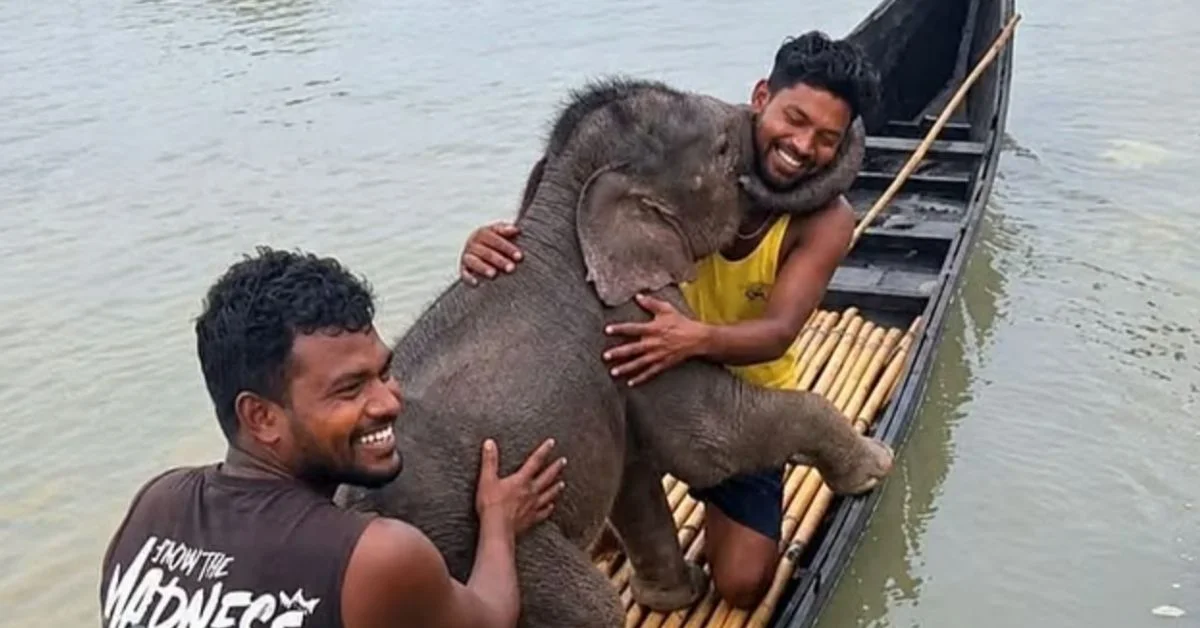
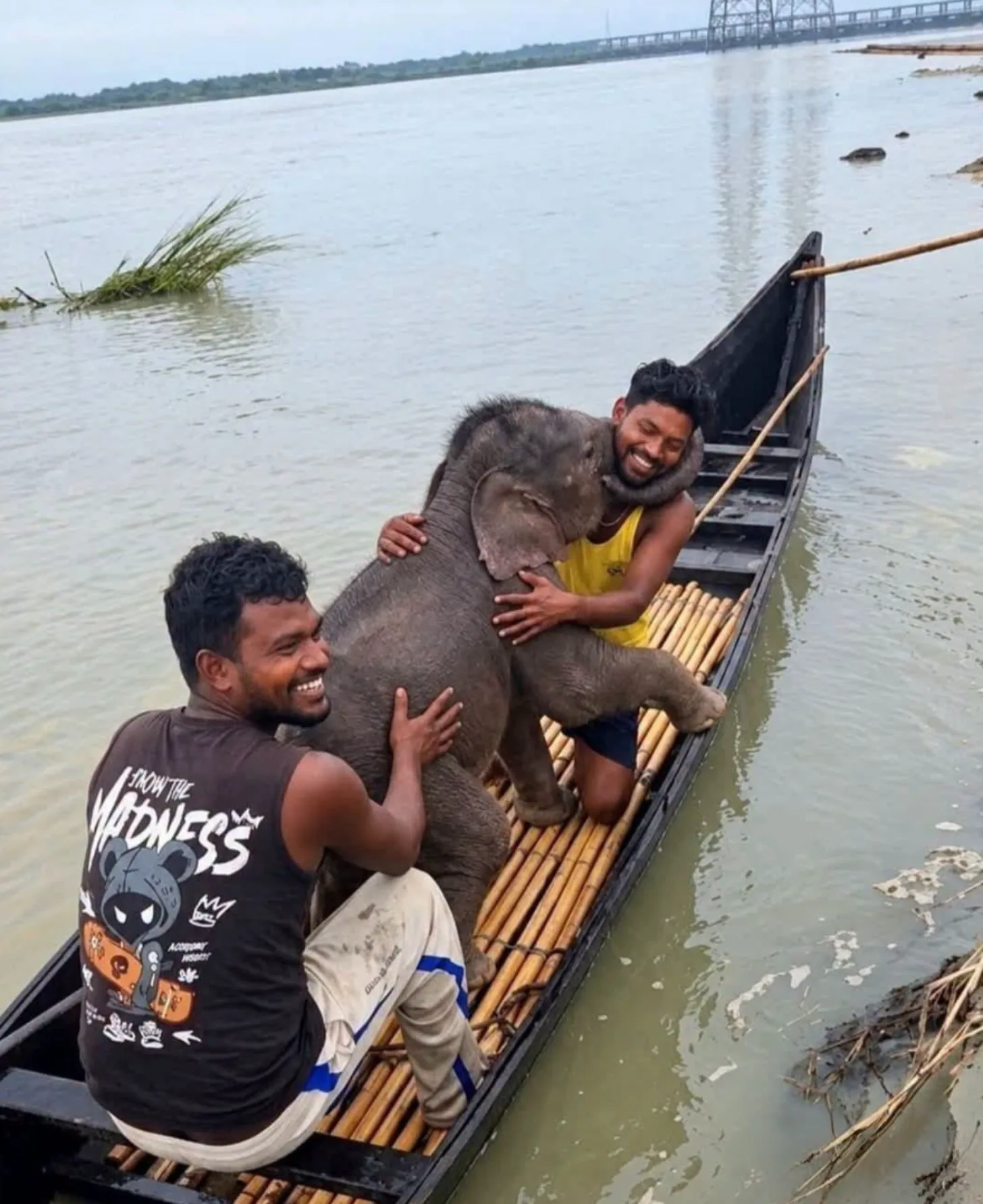
On September 21, two fishermen were navigating the rising floodwaters of the Teesta River in West Bengal, India when they saw a trunk poking out of the water like a tiny periscope.
According to Mudit Kumar Verma, a Baikunthapur divisional forest officer for the Indian Forest Service, the calf had been swept nearly three miles downstream after it had tried to cross the Teesta River.
“Our forest team, with help of local fishermen, rescued the drowning calf and reunited it with its mother,” Verma wrote on the social media site X.
According to IFS agent Parveen Kaswan, the elephant was given a clean bill of health from a veterinarian on the scene. Upon closer inspection, the calf was estimated to be only three or four days old.
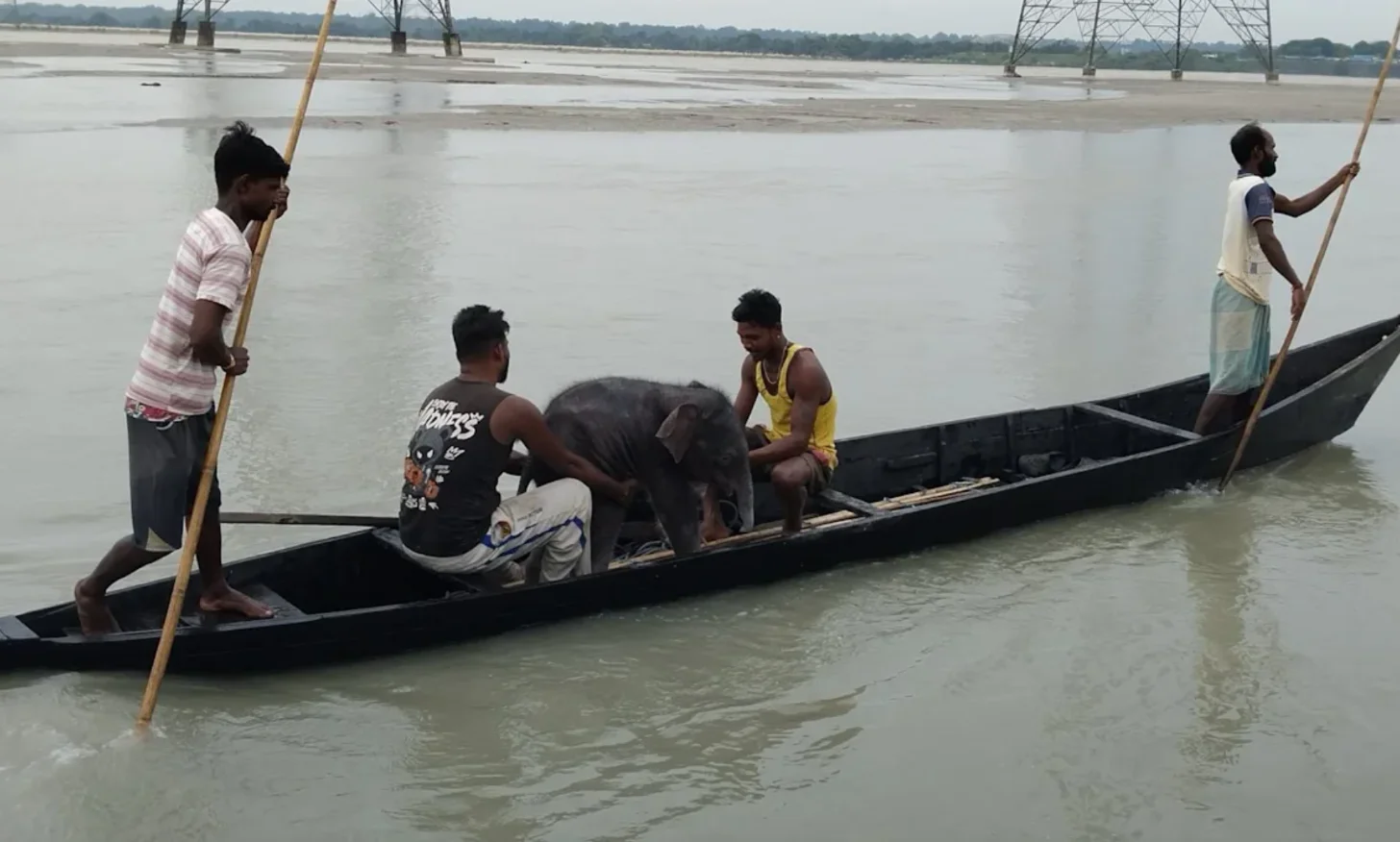
Fearing that prolonged human contact would make it harder to reunite the calf with its mother, the IFS officials worked quickly to locate the adult nearby. They then watched from a careful distance as the mother nursed and accepted the baby back into its herd.
According to The Indian Express, a significant population of Asian elephants — which are endangered — occupies the forested regions of Siliguri and Gajoldoba in West Bengal. There, they are often forced to contend with human-dominated landscapes and local rivers, which can rise to treacherous heights during monsoon season.
Other countries in South Asia have been engineering ways to protect elephants as they migrate.
In Sri Lanka, the Department of Wildlife Conservation recently launched a pilot program to add sensors along railway tracks in areas known for high-elephant crossings.
“We tried various methods previously,” Marasinghe told The Sunday Morning. “We tested sensors on trains, but mounting cameras on trains presented issues. When a train rounds a bend, the camera cannot see around the curve, so an elephant near the turn goes undetected. Most accidents happen at such bends.”
The new sensors record weight and sound to alert approaching train conductors to animals on the tracks.
“A set of sensors is now stationed along the tracks. These sensors detect seismic waves — the ground vibrations produced when an elephant walks,” Marasinghe explained. “Beyond that, it uses multiple sensors to capture sound and other inputs.”
“We then use AI to accurately identify the animal and issue alerts to the train driver and personnel along the station line. The system includes SMS alerts and light warnings.”
The technology is designed to give them enough time to safely bring the train to a halt and prevent deadly collisions.
“It detects large animals and senses significant mass,” said Marasinghe. “Our plan is to take that signal from the sensor and pass it to the train driver. In short, the driver gets advance notice that an elephant is in the vicinity. Then they can slow down, reduce their speed accordingly, and take appropriate action.”
You may also like: After an elephant became trapped shoulder-deep in a sinkhole, these brave rangers came to its aid
Featured Image: @parveenkaswan/X