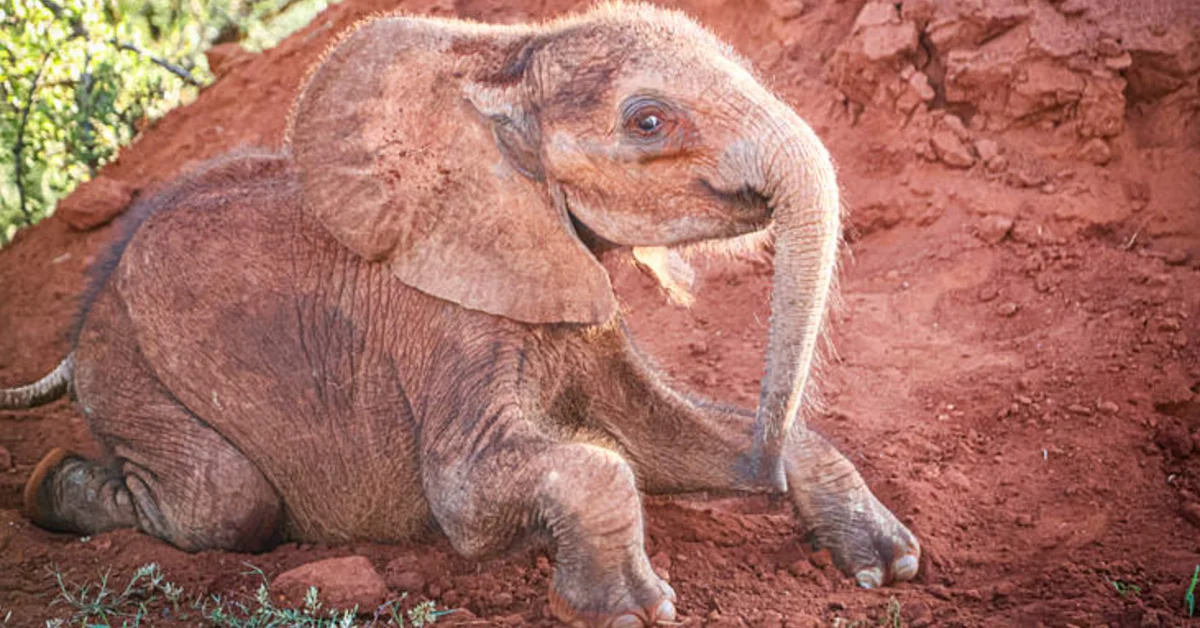
Since 1977, the Sheldrick Wildlife Trust has been a leading conservation organization in East Africa. Across Nairobi National Park and Tsavo East National Park, it operates the most successful orphan elephant rescue and rehabilitation program in the world.
By working with the Kenya Wildlife Service, the nonprofit rescues distressed elephants, as well as rhinos, giraffes, lions, leopards, and more. When reunification isn’t possible, the Sheldrick Wildlife Trust provides sanctuary for animals in need, always with the goal of returning them to the wild.
On November 4, 2025, the Kenya Wildlife Service received reports of an orphaned elephant sighting in Tsavo East, “a place of open skies and big predators.”
“Tourists had spotted her, alone and with no other elephants in the area,” the Sheldrick Wildlife Trust stated on its website. “Several hours had elapsed since the sighting, but fortunately the tour driver had pinned the location of the tiny elephant.”
Trevor, a Tsavo works manager, led a search party with a team of field agents through the Wangalla plains. After a little more than an hour, they finally found her “deep in the bush,” huddling among a herd of zebras.
“Frightened and desperate, she had latched onto the closest creatures who could provide company and protection,” the nonprofit explained.
“It was a heartbreaking scene: The little calf was visibly distressed, crying and pacing in search of her mother. The team extensively looked for her family, but there were no other herds in the area.”
According to the Sheldrick Wildlife Trust, wildlife officials believe that the calf’s family had been scared off by a pack of lions that had been hunting buffalo the night prior. In the confusion, she was likely separated from her own herd and had journeyed too far to find them again.
“It’s a miracle she survived the night on her own; a calf so small would be easy prey for the lions, jackals, and hyenas who prowl under cover of darkness,” the Sheldrick Wildlife Trust said.
After she was rescued, the calf was transported by vehicle and then by helicopter to the Kaluku Field Headquarters and Neonate Nursery.
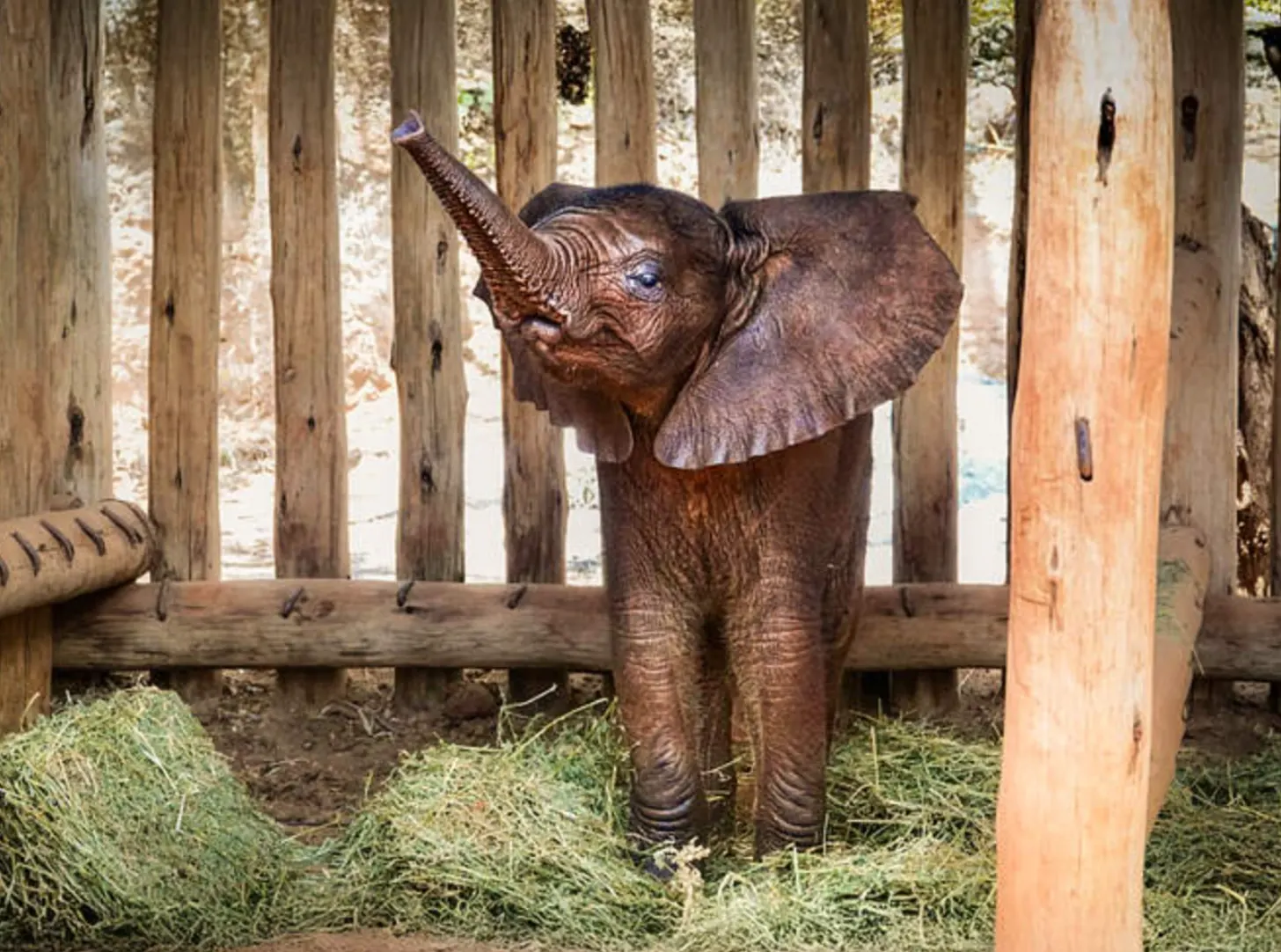
“We named the orphan Wangalla, to connect her to her origins,” the nonprofit said. “Barely a week old, we knew that we had a challenge on our hands — a challenge for one of our most experienced keepers.”
Wangalla was paired with Misheck, an elephant care team member who had first joined the organization in 1998, when he was 22 years old. In the decades since, he had become the go-to keeper for orphaned elephants.
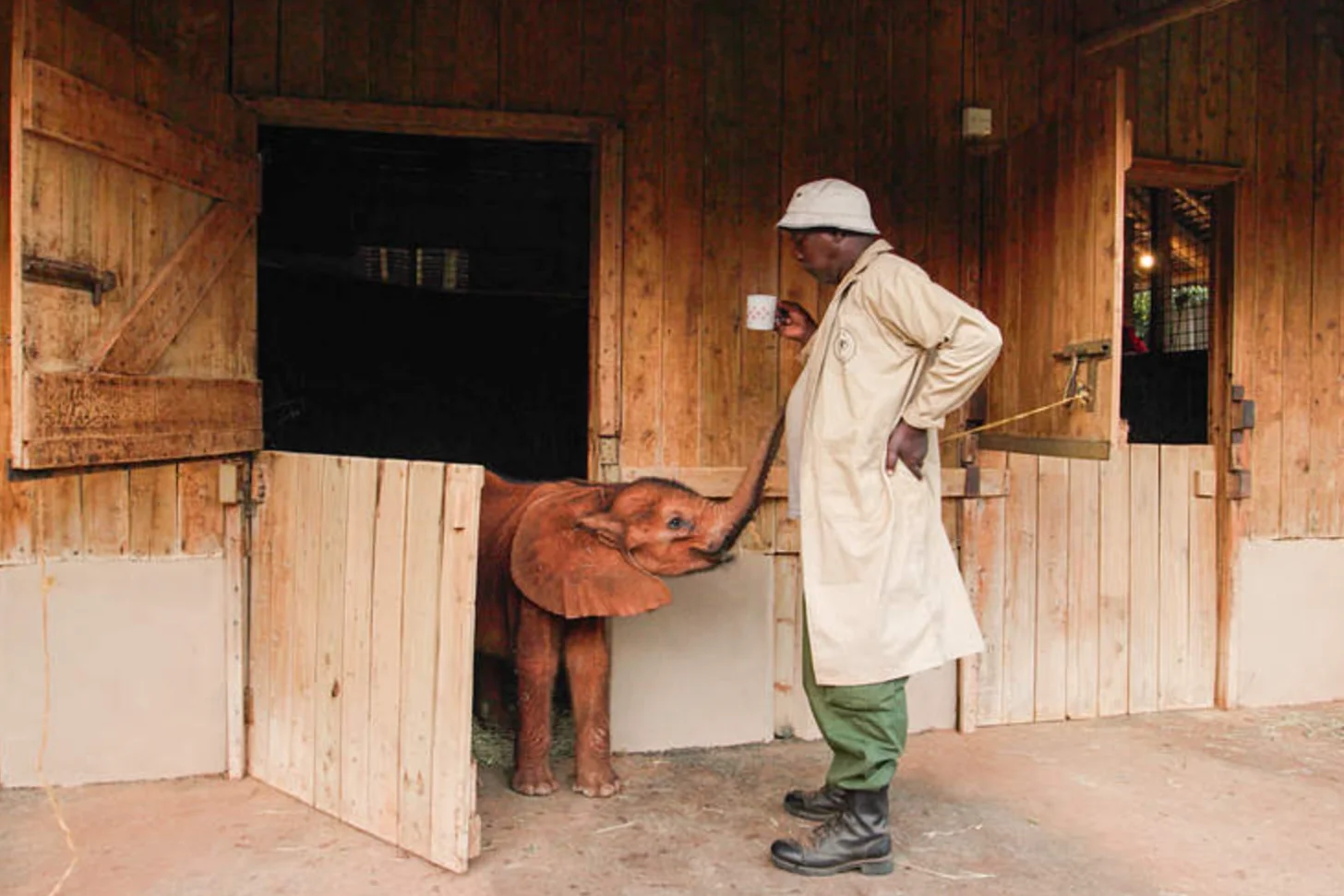
“Wangalla fell fully and completely in love with Misheck — and the feeling was mutual. He has been extraordinarily committed to this little elephant, spending nearly every minute of every day by her side. Despite our many pleas that he take a well-earned break, he refused to take leave for a full five months after her rescue.”
According to the Sheldrick Wildlife Trust, whenever Misheck was asked if he needed a break, he would always reply: “There is nowhere else I would rather be.”
Today, Wangalla is 10 months old. She still spends her evenings with Misheck, who hand-plucks leaves for her to eat at sunset.
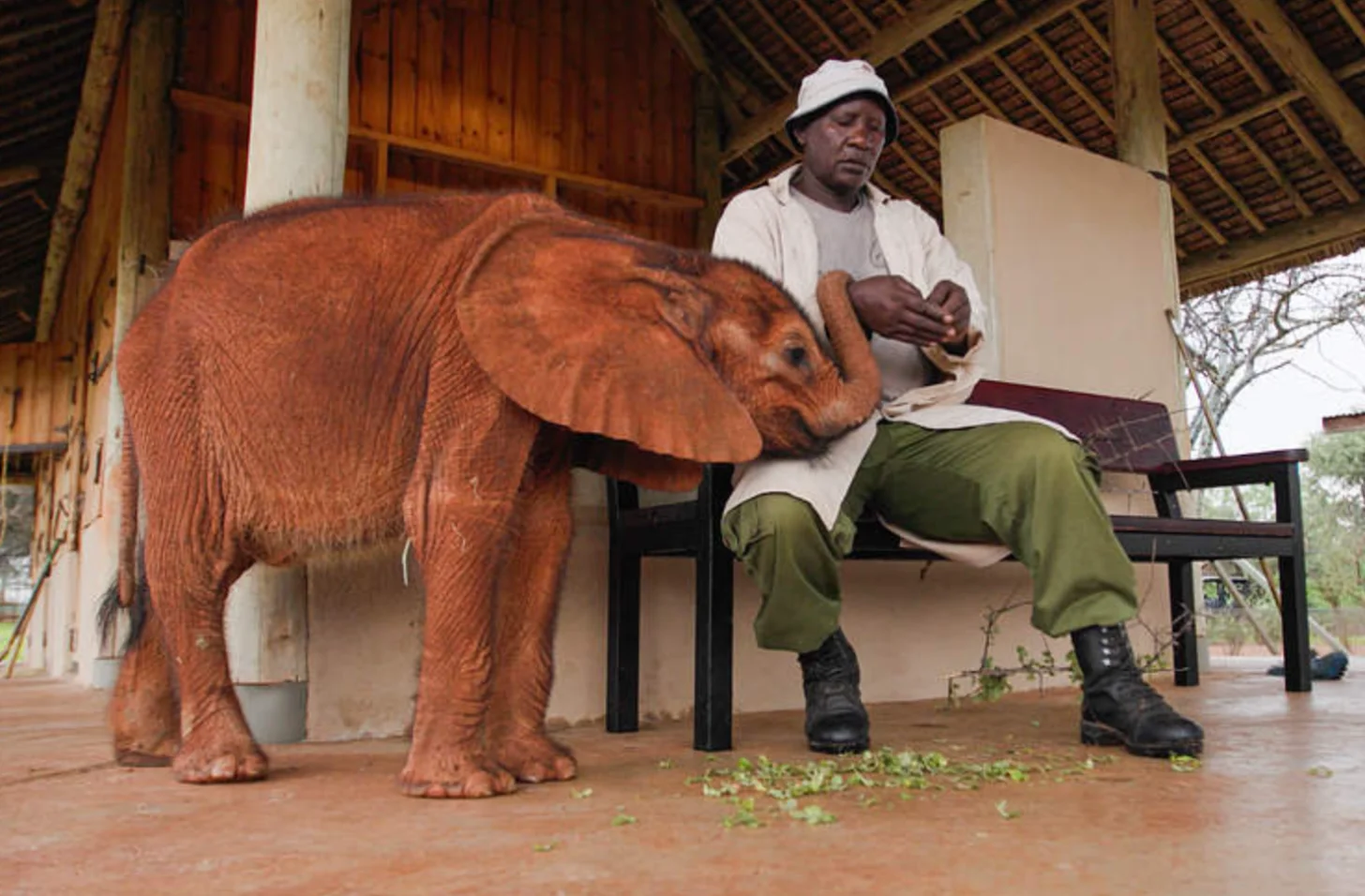
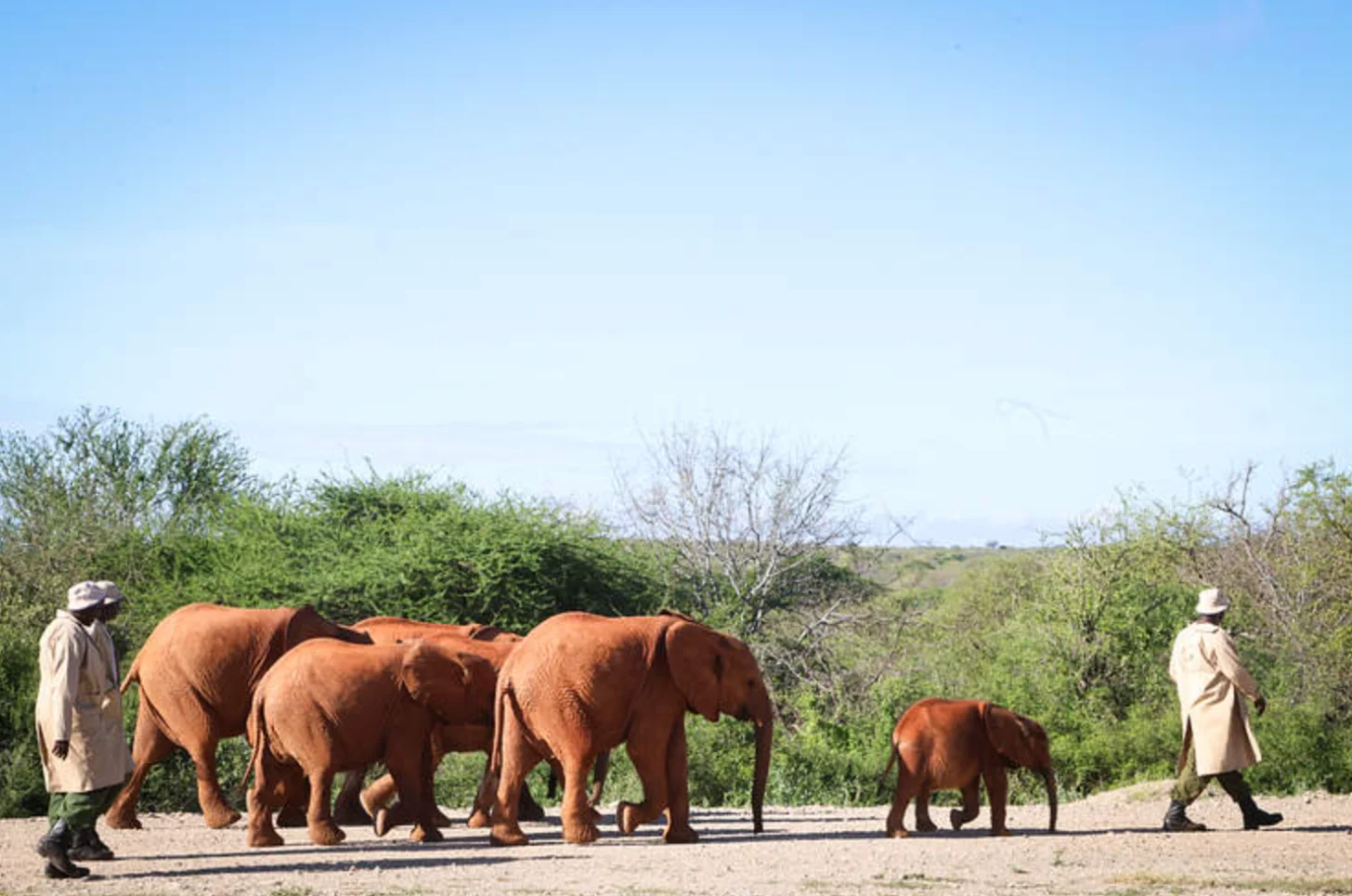
During the day, she plays among the guineafowl at the sanctuary and dusts herself near Musumbi, the hippo’s, pool. She has also joined the social circle of the sanctuary’s older elephants, joining them for walks and running between their legs.
“In the fullness of time, Wangalla’s journey will take her back to the wilds of Tsavo East, where her story began,” the Sheldrick Wildlife Trust wrote. “But now, this remarkable little elephant has a family with us, in the bosom of the birds, the elephants, and the extraordinary keepers that make Kaluku home.”
You may also like: After an elephant became trapped shoulder-deep in a sinkhole, these brave rangers came to its aid
Featured Image: The Sheldrick Wildlife Trust