This story was originally published by Grist. Sign up for Grist’s weekly newsletter here.
Ancient Egyptian civilization blossomed in the scorching desert thanks to the Nile River, which delivered fresh water and annual dumps of nutrient-rich sediment. Clever engineering moved H2O so efficiently that farmers were able to churn out huge surpluses of staple crops like wheat, which fed the Roman Empire.
Thousands of years later, the African nation’s farmers — like so many others around the world — are grappling with water shortages and ever-fiercer temperatures, which threaten to wilt their crops.
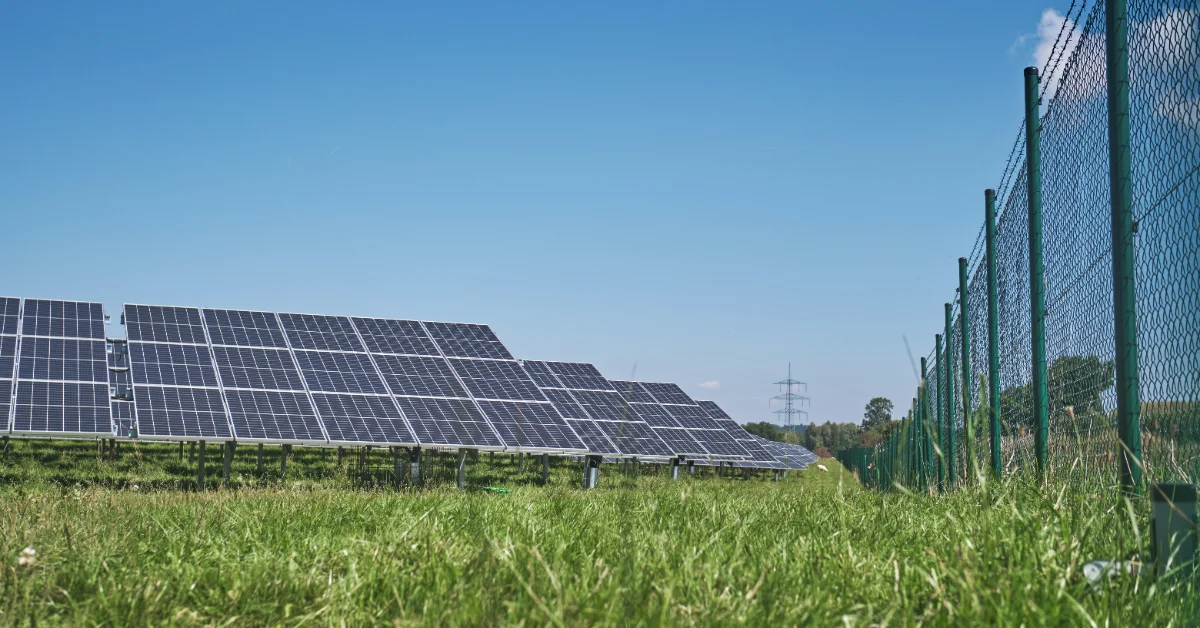
So like their ancestors before them, they’re innovating, this time with a burgeoning technique known as agrivoltaics: By covering fields with solar panels, farmers generate clean electricity and shade crops, reducing evaporation, and mitigating heat stress.
Two pilot projects in Egypt — from a variety of funders and partnering organizations — are testing how the technology might fare in small farming communities and on a larger scale in the country.
“There is no perfect guideline on how to get there, so I imagine many projects like ours will be trying out different things,” said Gofran Chowdhury, head of innovation at the renewable energy company 3E, one of the partners in the campaign.
Researchers around the world are finding that instead of solar panels stopping plants from flourishing, what with all that shade, they can supercharge growth. Many plants evolved to grow in the dappled light of the forest floor, for instance, and struggle under full sun.
The partner groups and farmers in Egypt are experimenting with different arrangements of panels, like a checkerboard. This doesn’t generate as much electricity as a sprawling solar farm, with row after row of solid panels with few gaps, but it lets more sunlight reach the crops.
At the same time, the panels’ shade reduces water loss from the soil. Other researchers in the deserts of Nevada have found that this hydrological protection helps a rare plant there thrive.
And up in Colorado, scientists are growing crops on rooftops under panels, finding that this uses a third as much water than if the plants weren’t shaded. (Agrivoltaics also provides relief from the relentless amount of sun on a rooftop, and shields the plants from high winds up there.) They’re also experimenting with transparent solar panels, which let light through while still producing power.
Really, every crop is going to have different needs, hence the variety of projects in Egypt and beyond. Early results from experiments are promising: On those Colorado rooftops, cucumbers are growing to the size of baseball bats. Not that anyone is going to force Egyptian farmers to grow cucumbers — they’ll keep cultivating what they’ve always cultivated.
“We want to adapt and see what is the community doing right now,” Chowdhury said, “and trying to see if we can support them with that adaptation.”
All the while, the program’s organizers will collect data on the performance of plants and panels, which will inform how to deploy agrivoltaics elsewhere.
Maged El-Said, founder of Habiba Community, which runs a regenerative farm in South Sinai, said that it’s still too early to tell what crops will do best under the panels installed in May. But one early candidate seems to be watermelon. “Honestly, it’s growing well for the first time,” El-Said said.
The community will also have to decide what model works best as they decide if farms should adopt agrivoltaics individually, or band together in groups. There’s also the question of who should get the clean electricity, and what it should be used for. For now, it’s helping run irrigation equipment, but could also potentially power desalination plants for purifying the region’s brackish water.
With that additional H2O, more places could support agriculture and agrivoltaics — a self-reinforcing cycle. Ultimately, the simple application of solar panels promises to make agriculture more resilient as temperatures continue to climb.
Whatever the model that works best for a given community, agrivoltaics obviates the tension between using land to generate electricity and using it to make a living growing crops. “I have the solution that I can have both,” El-Said said. “Well, why not?”
Featured Image: Michael Förtsch/Unsplash