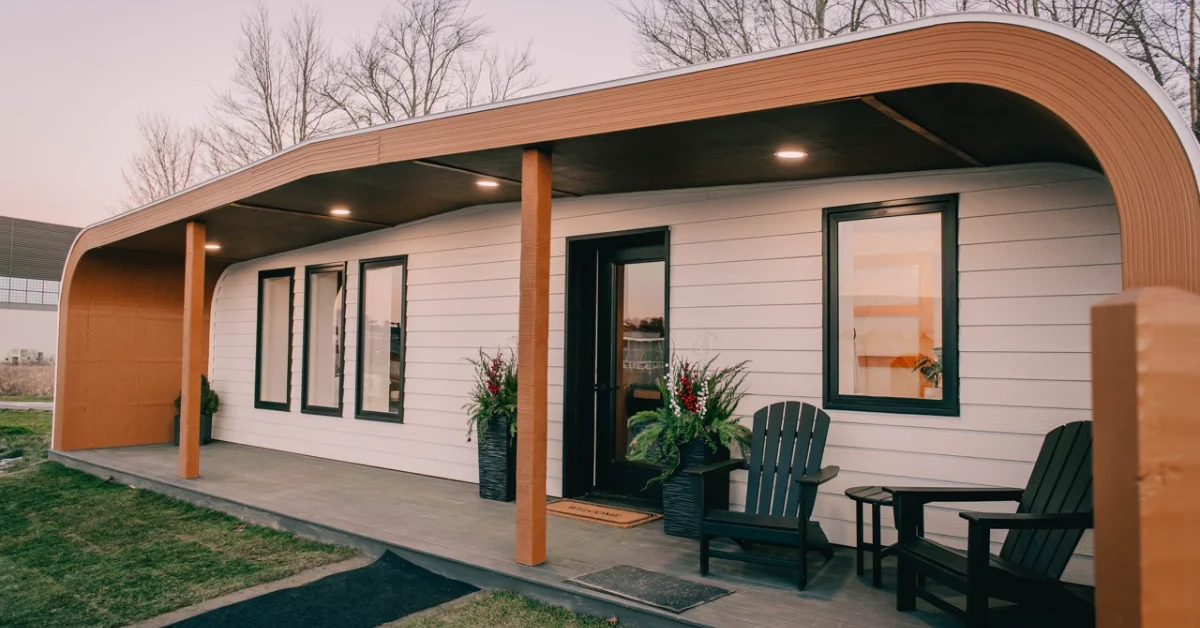
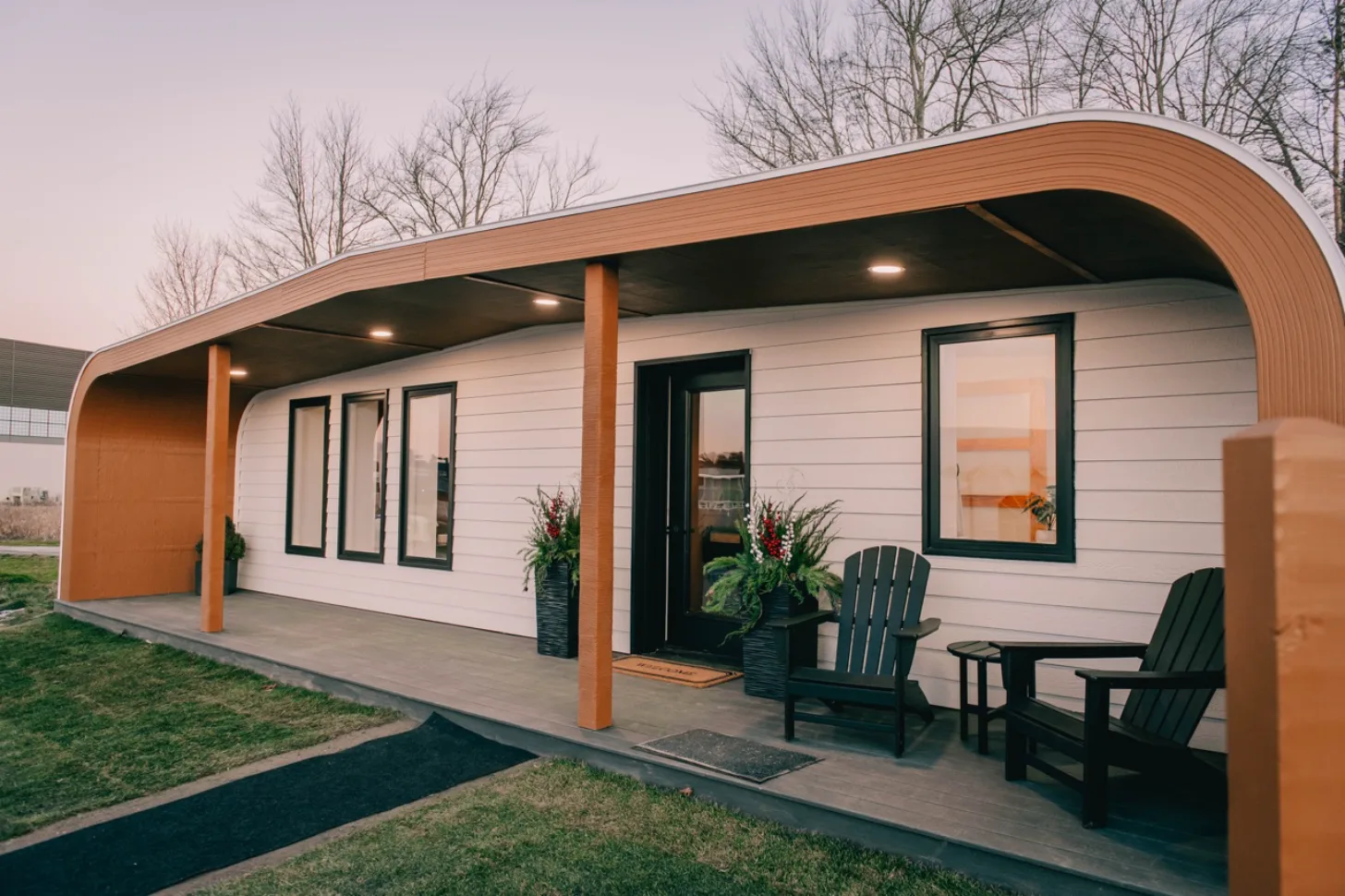
Four years ago, researchers at the University of Maine’s Advanced Structures and Composites Center unveiled the world’s first fully bio-based 3D-printed house, the BioHome3D.
Now, that center is working with Penquis, a housing assistance nonprofit in Maine, to produce nine BioHomes as a pilot project across the Greater Bangor area.
The idea is to learn how the BioHome3D can go beyond a one-time experiment and into a repeatable manufacturing process to build more housing — and quickly.
Each home in the project will be built in three stages, which will allow researchers to test each round and make adjustments as they apply what they’ve learned to the subsequent stages and builds.

“We’ve already demonstrated that we can build the house,” ASCC executive director Habib Dagher said in a statement for the university. “Now the challenge is how do we scale this technology so we can manufacture homes faster, more efficiently, and in much greater numbers.”
Dagher’s long-term vision is to create a “Ford factory of homes,” which would allow builders to automate the home-building process and provide housing to more people, more quickly.
In 2022, when UMaine unveiled the first BioHome3D prototype, its floors, walls, and roof were all printed using bio-resins from residual wood fibers sourced from Maine sawmills. That prototype was manufactured, transported, and secured on its foundation in half a day.
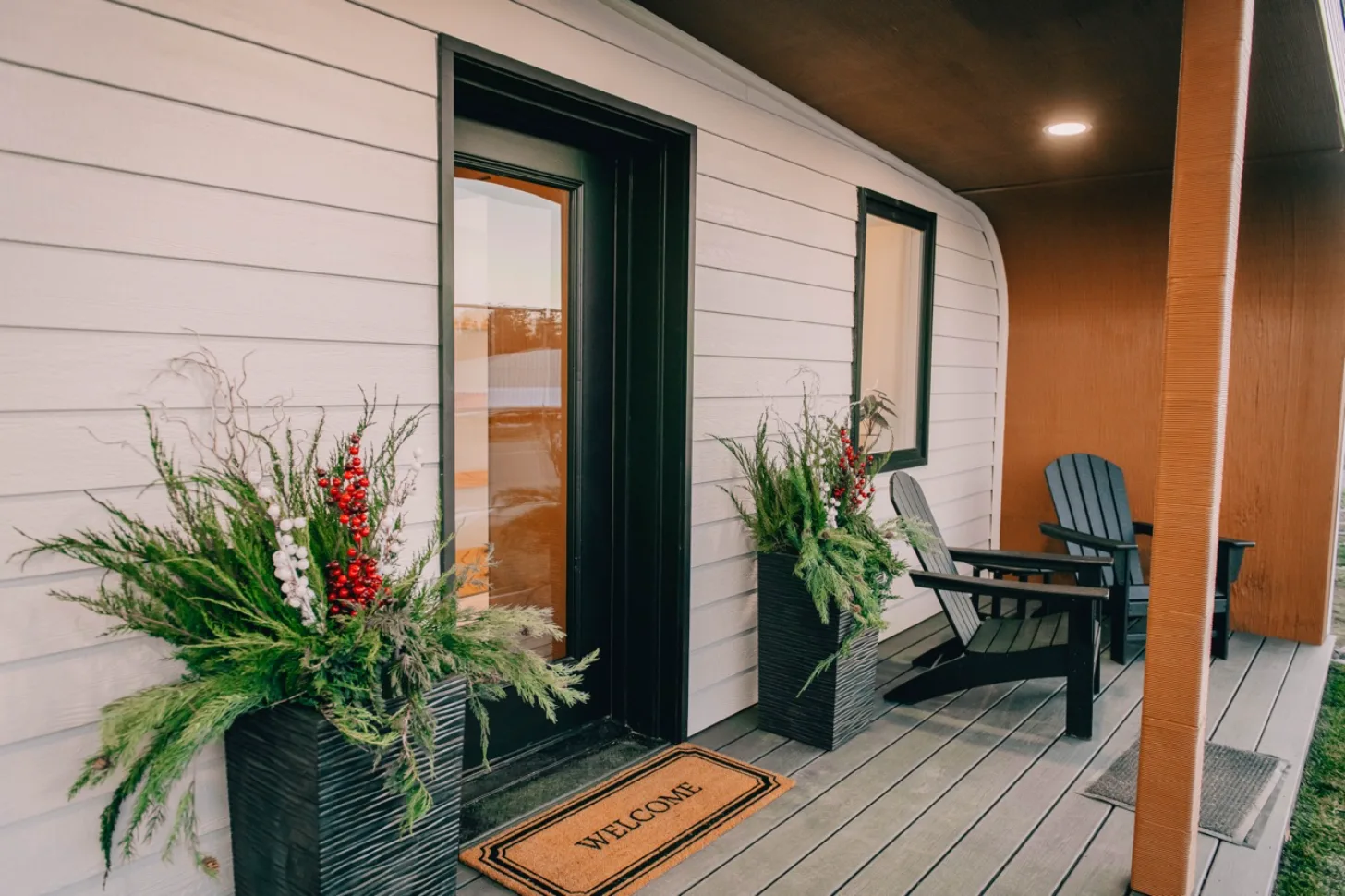
Since then, UMaine’s manufacturing capacity has grown, with a new large-scale printer that can create deposited material at 500 to 1,000 pounds per hour. In 2022, it was just 100 pounds per hour.
And that original prototype has continued to be a success. It has now withstood three Maine winters, and researchers continue to monitor its durability and long-term performance.
This new project — which has received $4 million in Congressionally Directed Spending — will support even further research, while adding much-needed housing to the region.
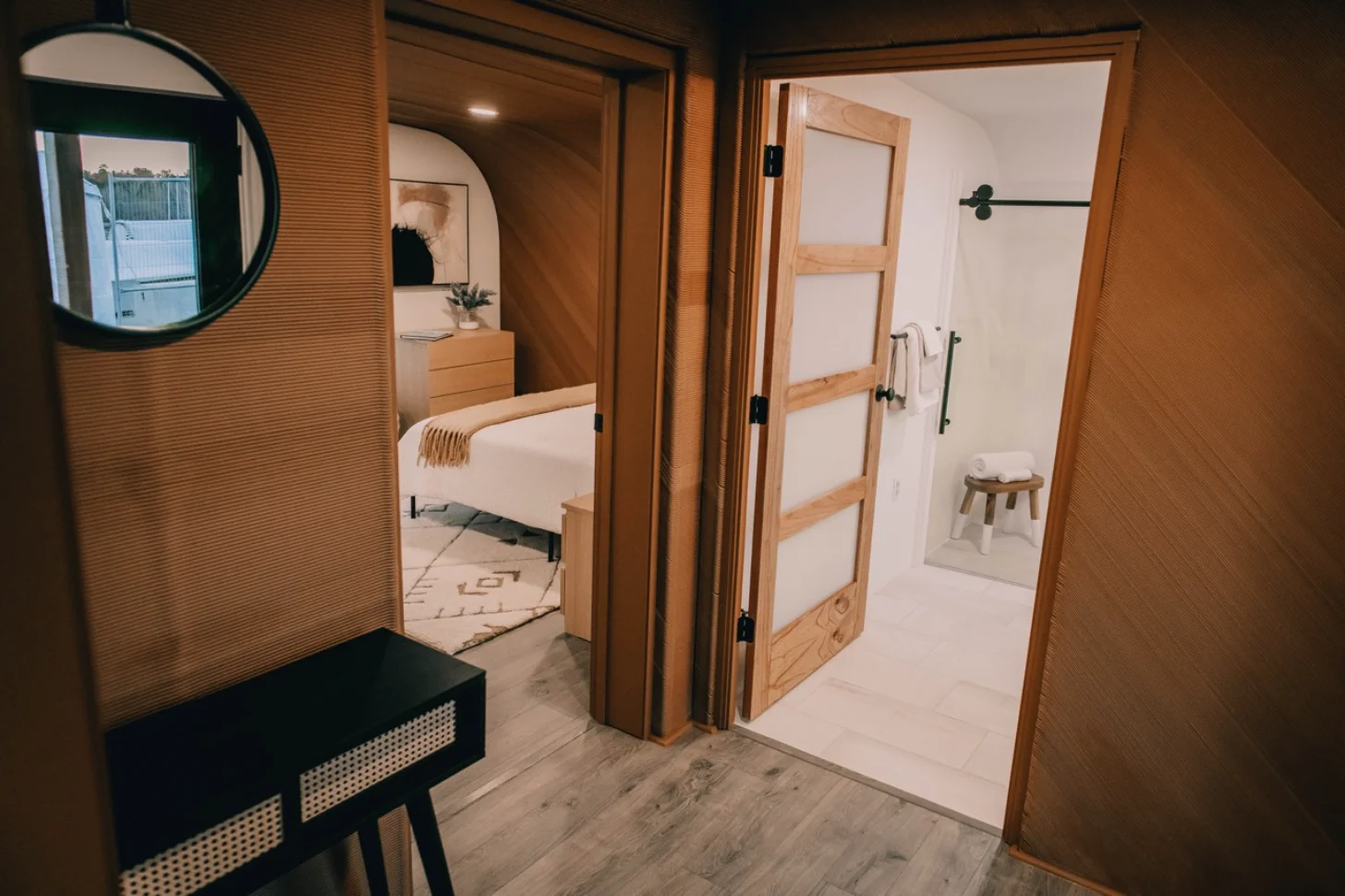
“Housing remains a significant challenge in communities across Maine, and this project offers an opportunity to explore an innovative approach to creating additional housing,” Lawrence Rogers, housing development director at Penquis, said in a statement.
“Significant planning work has already been completed, including selecting architectural and engineering partners. This funding represents meaningful progress toward advancing the project and achieving our broader mission of expanding affordable housing.”
Dagher said the team will also be testing safety as the technology is scaled, focusing on developing fire-resistant materials and completing additional testing to make sure the homes are able to meet the standards required for broad application.
“This project is about much more than nine homes,” Dagher added. “Those homes give us an opportunity to validate and improve the manufacturing system we would need to ultimately produce housing at a much larger scale.”
The new BioHome3D builds will provide more people with affordable housing, but they are also an effort to confront systemic issues like labor shortages and supply chain issues that drive high housing and construction costs.
“This marks a major milestone for UMaine’s BioHome3D technology,” Dagher concluded. “... By combining local sawmill waste with cutting-edge additive manufacturing, we are demonstrating how code-compliant, sustainable housing can be produced faster and more efficiently.”
You may also like: Bamboo tiny homes survive a 7.7 magnitude earthquake. They were built for the price of a smartphone
Featured Image: Courtesy of University of Maine Advanced Structures & Composites Center