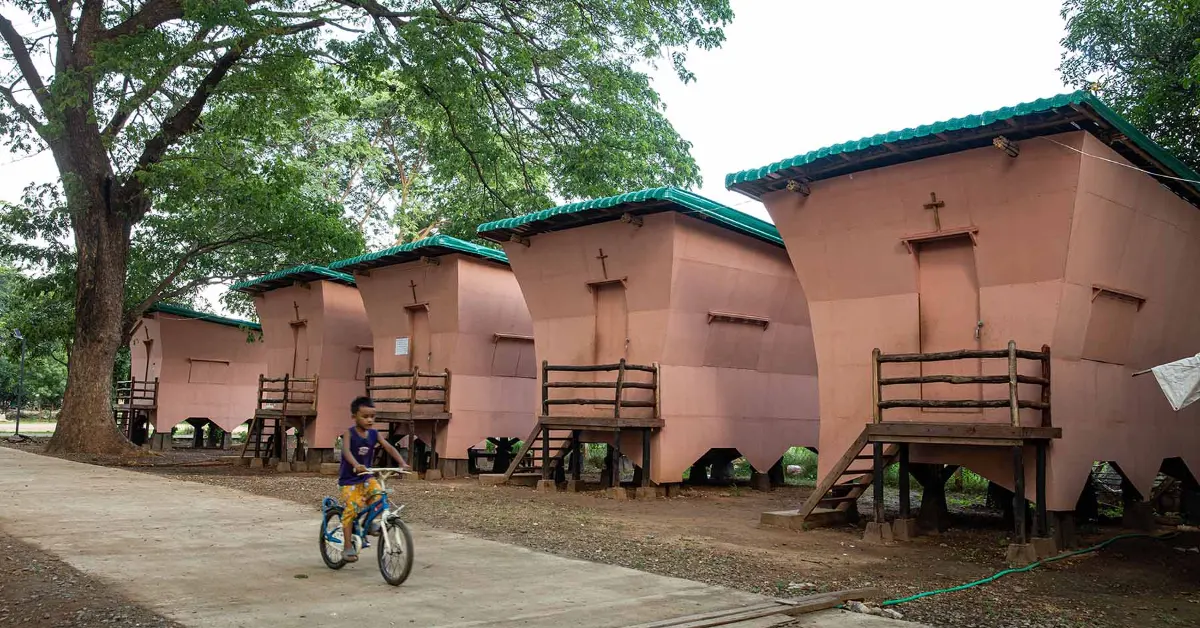
Back in 2019, architecture firm Blue Temple embarked on a mission alongside spinoff construction company Housing Now: Create low-cost housing for families displaced by civil war in Myanmar’s Bago region.
The project was called Housing Now Modular Bamboo Housing, and the result is essentially what it sounds like: Small, one-room modular bamboo homes that can be built rapidly to provide disaster-proof shelter.
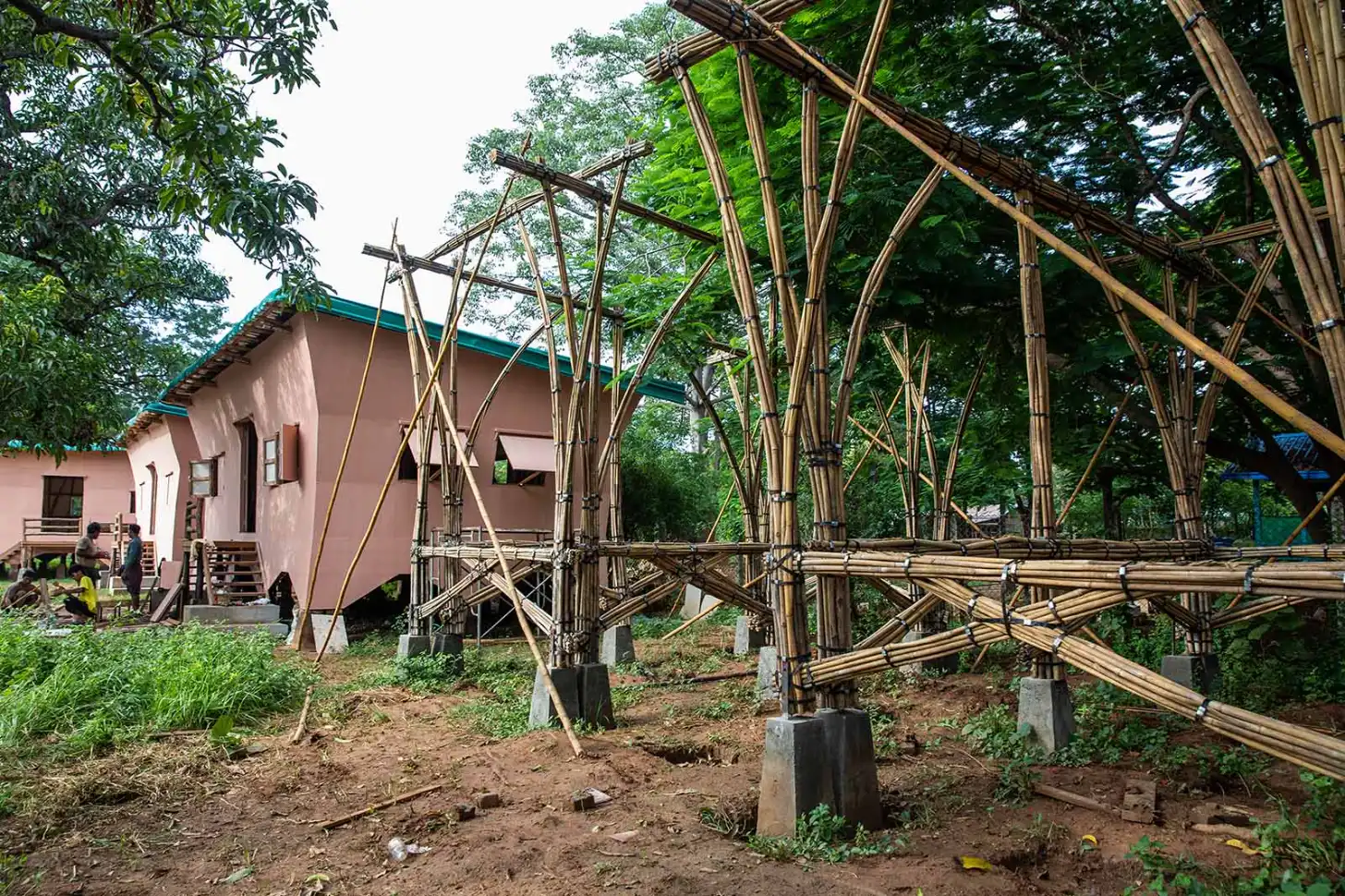
“We built them for the price of a smartphone — about $1,000 U.S. dollars per house,” architect and Blue Temple founder Raphaël Ascoli told Fast Company. “[And] we can just assemble like an Ikea kit.”
And they were indeed disaster-proof.
Just a week after the Blue Temple homes were finished, a 7.7-magnitude earthquake struck, its epicenter just 10 miles from where the first 26 homes were constructed.
Roads buckled. Thousands of buildings collapsed. But the small bamboo houses were completely free of damage.
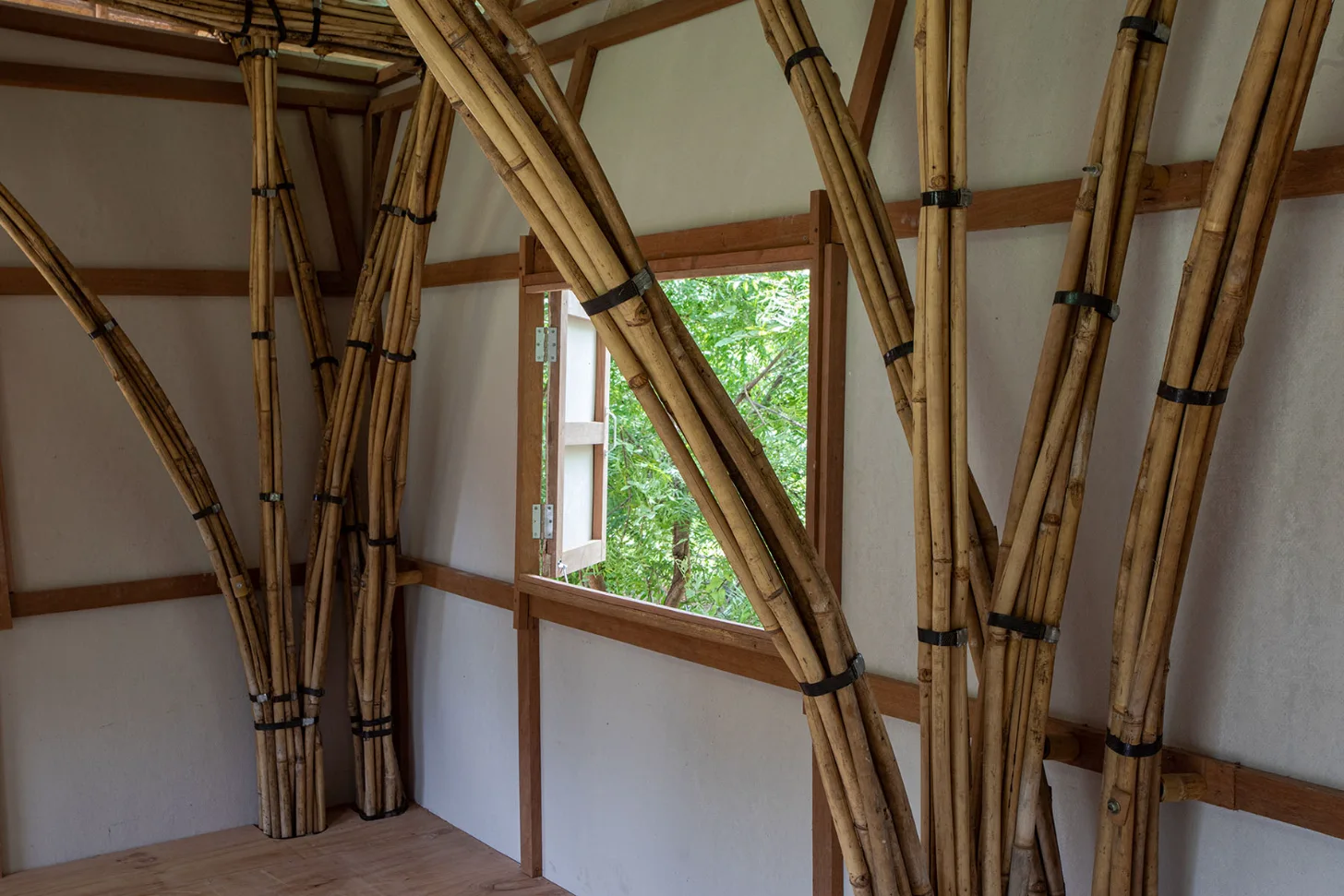
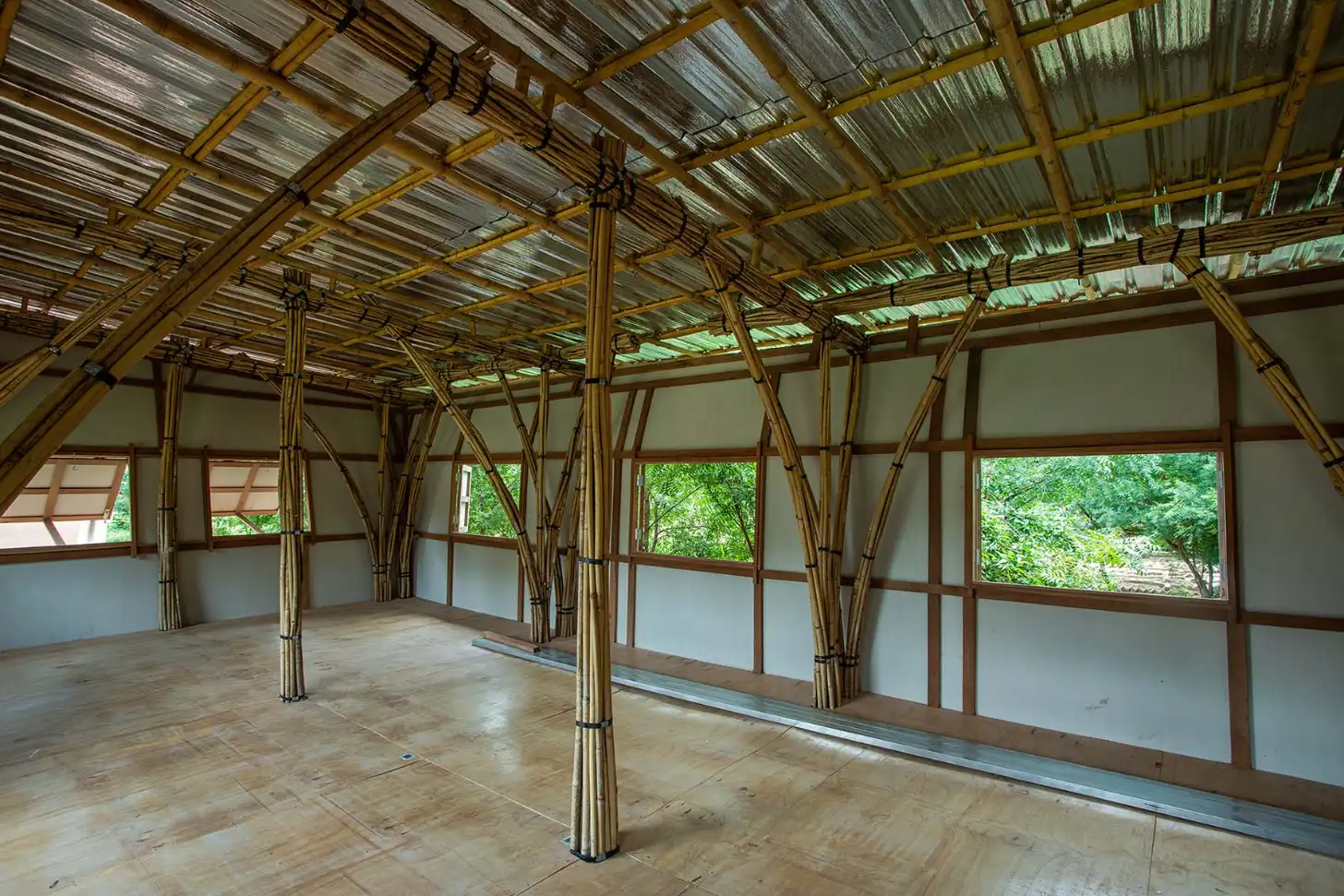
The design of the homes, assembled in collaboration with local families, uses interlocking arched bamboo elements made from “small-diameter” bundled bamboo. This is a resource widely available in Myanmar with timber-grade strength.
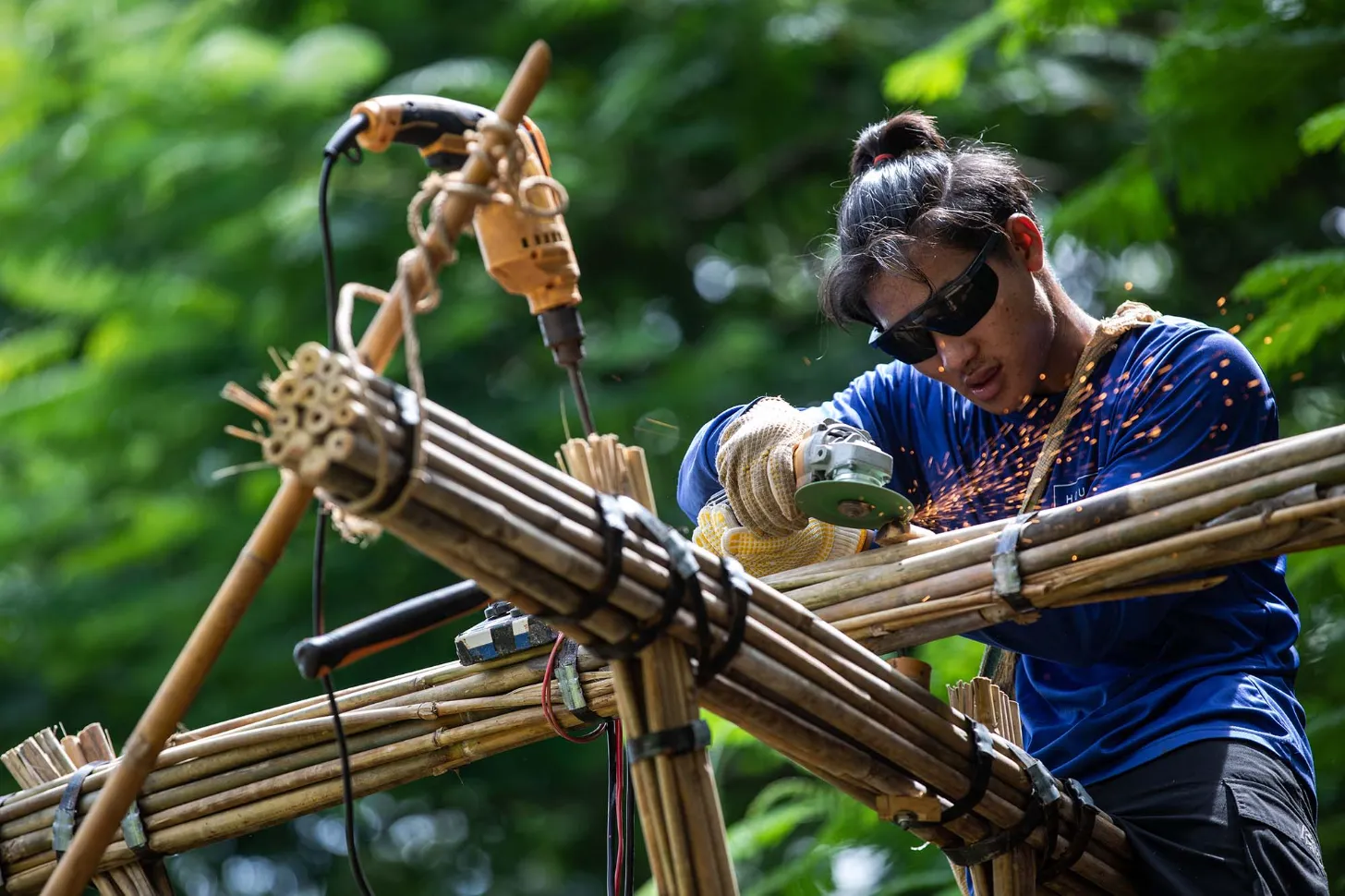
Blue Temple designers say the homes they built are “designed to carry all seismic loads.”
“In Myanmar, bamboo is the cheapest construction material, and small-diameter species are the most abundant,” Ascoli told Dezeen. “By bundling, overlapping, and strapping them through a jig-guided system, we achieve timber-grade strength with a fraction of the cost and a fully local supply chain.”
But how does the bamboo really withstand the pressures of an ever-precarious environment prone to disasters like earthquakes?
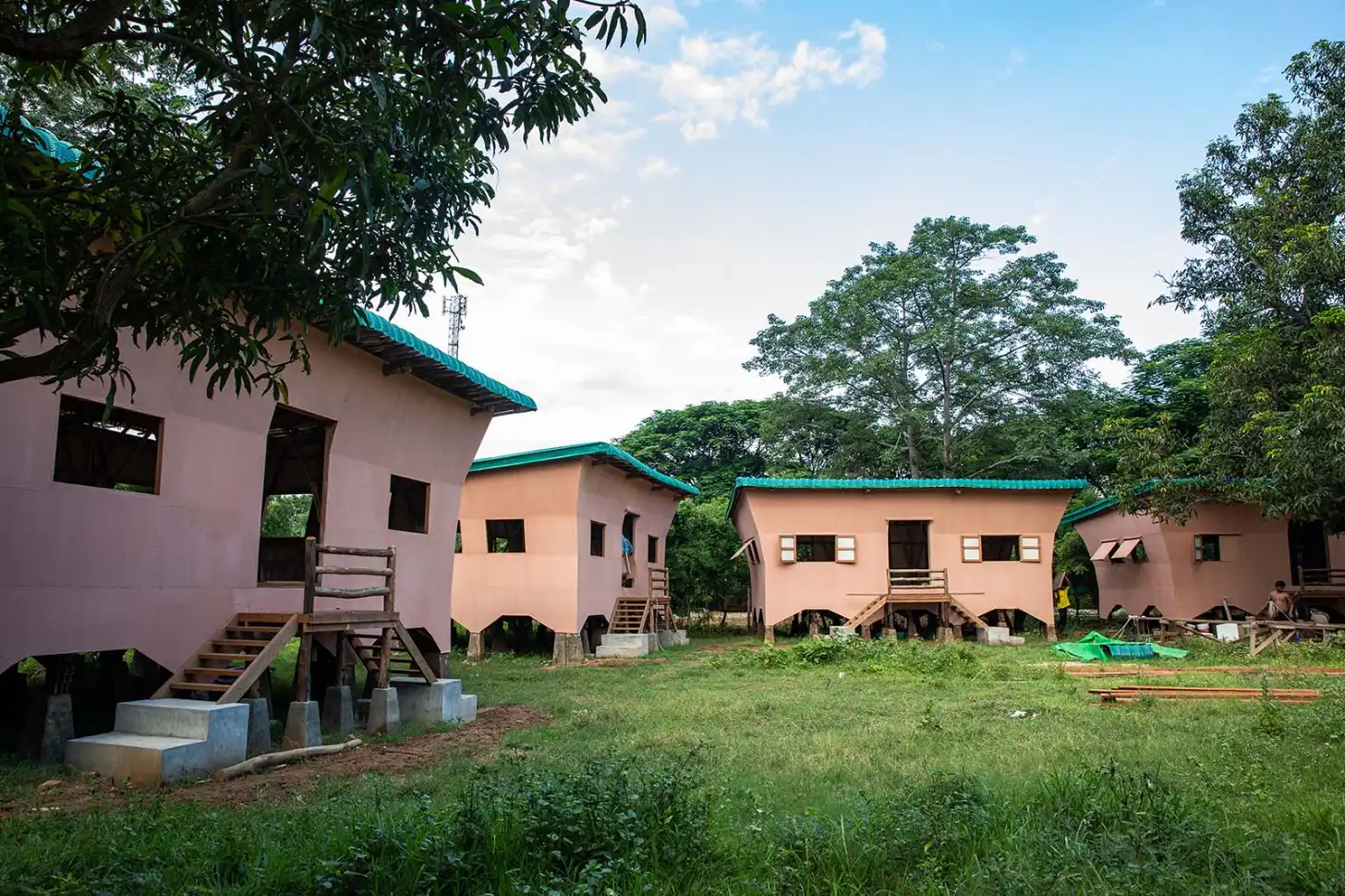
“Because of the organic [nature] of the bamboo that we weave together into the frames, it gives the house a bit of flexibility,” Ascoli explained to Fast Company. “Instead of being very stiff and brittle like concrete, it can move a little bit.”
The Blue Temple team worked on a myriad of prototypes, testing them to their breaking point, to make sure the homes could provide stability, along with scalability.
The homes are also raised on concrete plinths and have sloping roofs that shelter the structure. There are also windows on each home, with wooden steps into the main entrance. Each structure is small, with just one main room, but families use partitions and panels to separate them to make personalized layouts.
And soon, Ascoli hopes to give more families the tools they need to create their own homes. Blue Temple has recently rolled out a DIY construction manual that teaches people how to build their own bamboo homes using the methods they perfected with Housing Now.
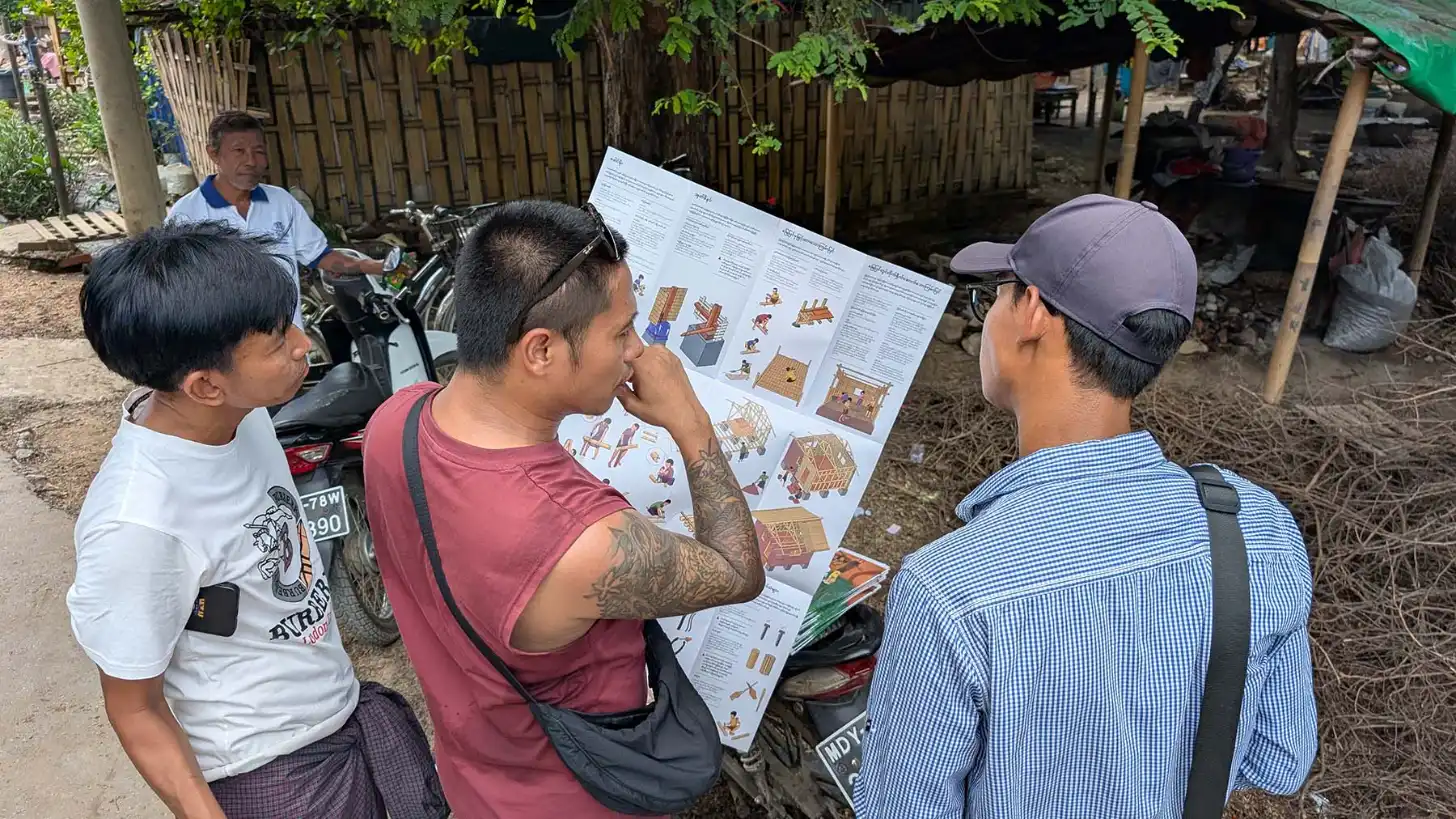
“We’re basically trying to test out if there is an alternative to traditional humanitarian response,” Ascoli told Fast Company, as a response to the changing landscape of humanitarian aid in recent years.
The methods may evolve, but the Blue Temple mission remains the same.
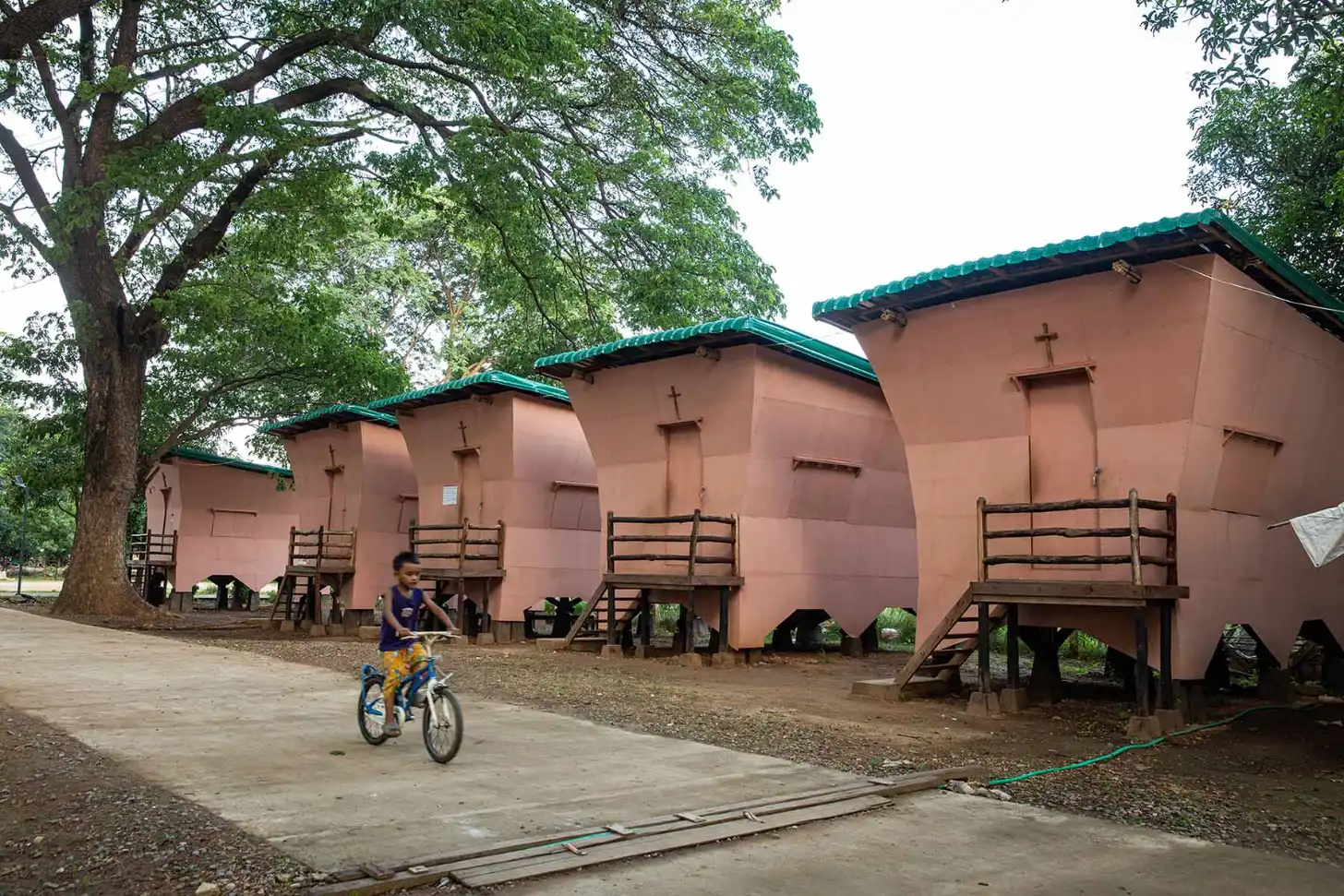
“Our focus is on making high-performance architecture accessible under extreme constraints,” Ascoli told Dezeen, “using local materials, local labor, and prefabrication methods that can survive conflict and natural disasters.”
You may also like: Indian families living in slums given opportunity to transform one-room shacks into their dream homes
Featured Image: Courtesy of Blue Temple