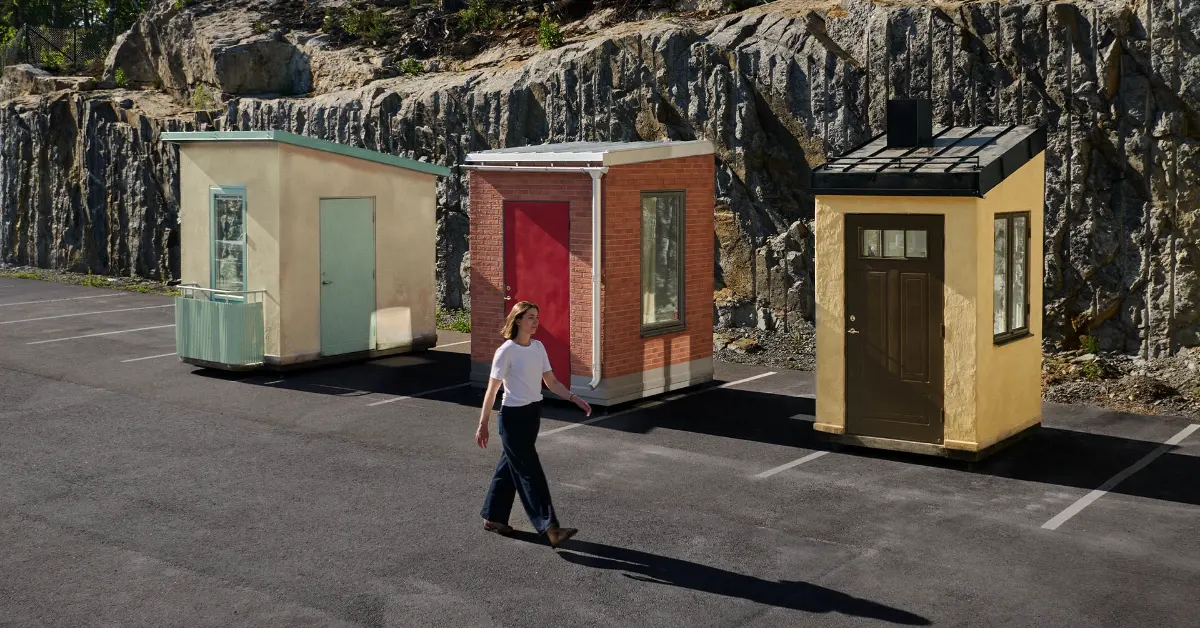
Swedish housing developer Riksbyggen and creative agency BBDO Nordics have just built the country’s smallest houses.
They’re not meant to be trendy tiny homes or cute sheds for the backyard; they were built to draw attention to the cost of living crisis among young people.
The three new homes are designed and built to match the average incomes and savings of Sweden’s 25-year-olds. They represent the average statistics across three major cities: Stockholm, Gothenburg, and Umeå.
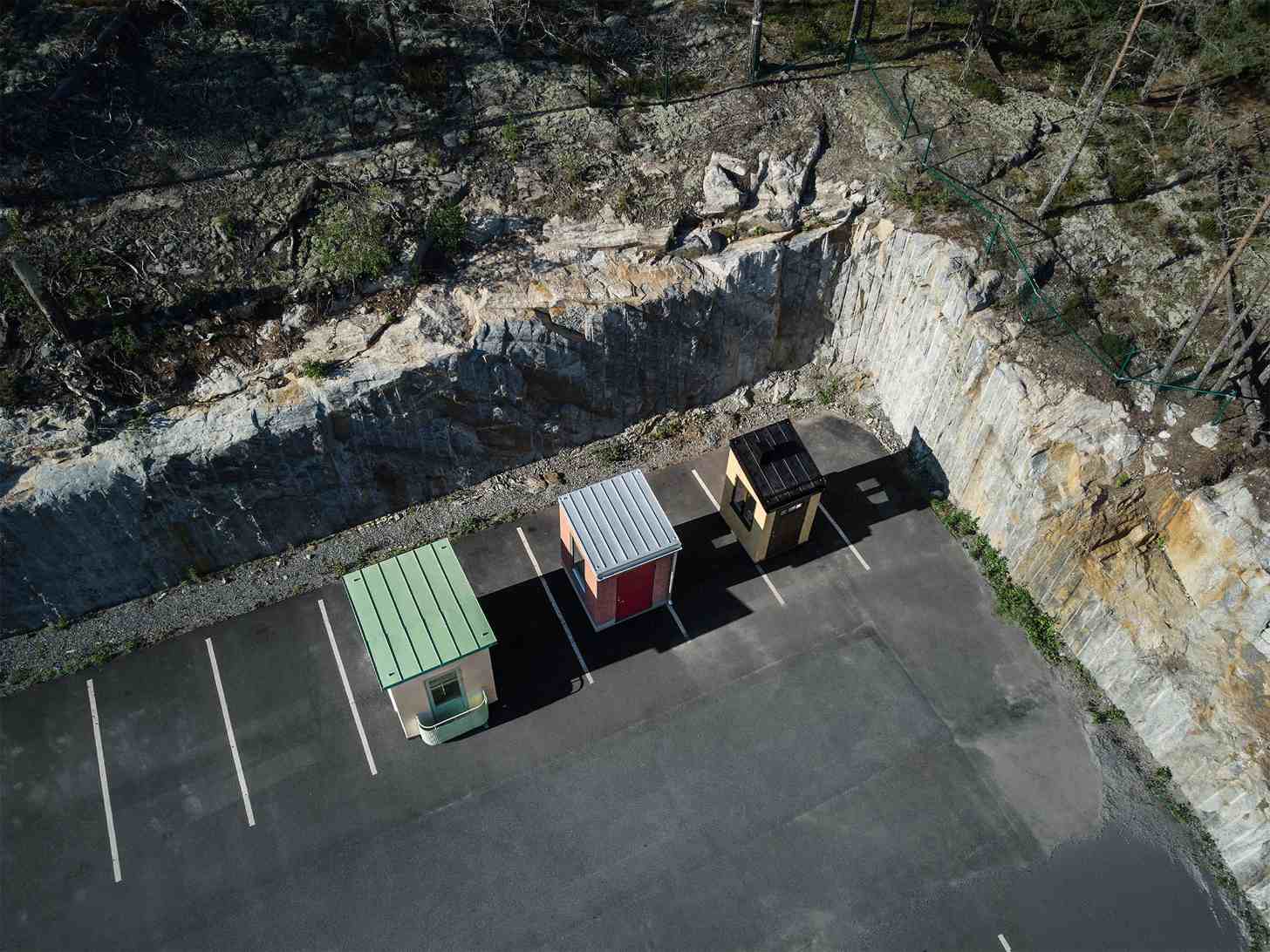
While that may sound like an ideal setup, to fit within the budgets of Swedish twenty-somethings, the homes are oppressively small, ranging in size from 20 to 48 square feet (or 1.9 to 4.5 square meters).
For reference, the average size of a walk-in closet is 45 to 90 square feet.
Each home appears confiningly cozy, with four simple walls and a roof, a toilet, and a bed that is too small for most adults to actually lay flat in.
Fortunately, the homes are not made to be moved into, but rather, are part of a housing reform campaign to show the affordability crisis at scale.
“Stockholm, Gothenburg, and Umeå are among the Swedish cities where young people have a particularly strong need for housing, while also facing significant difficulties finding and affording it,” BBDO Nordics art director Anton Bolin told Dezeen.
“Together, the three cities show that the issue affects young people across Sweden, from south to north.”
The sizes of the three homes were based on Riksbyggen’s Square Meter Index, which combines income, property prices, and mortgage conditions to show what is affordable to young people who make average incomes in various Swedish cities.
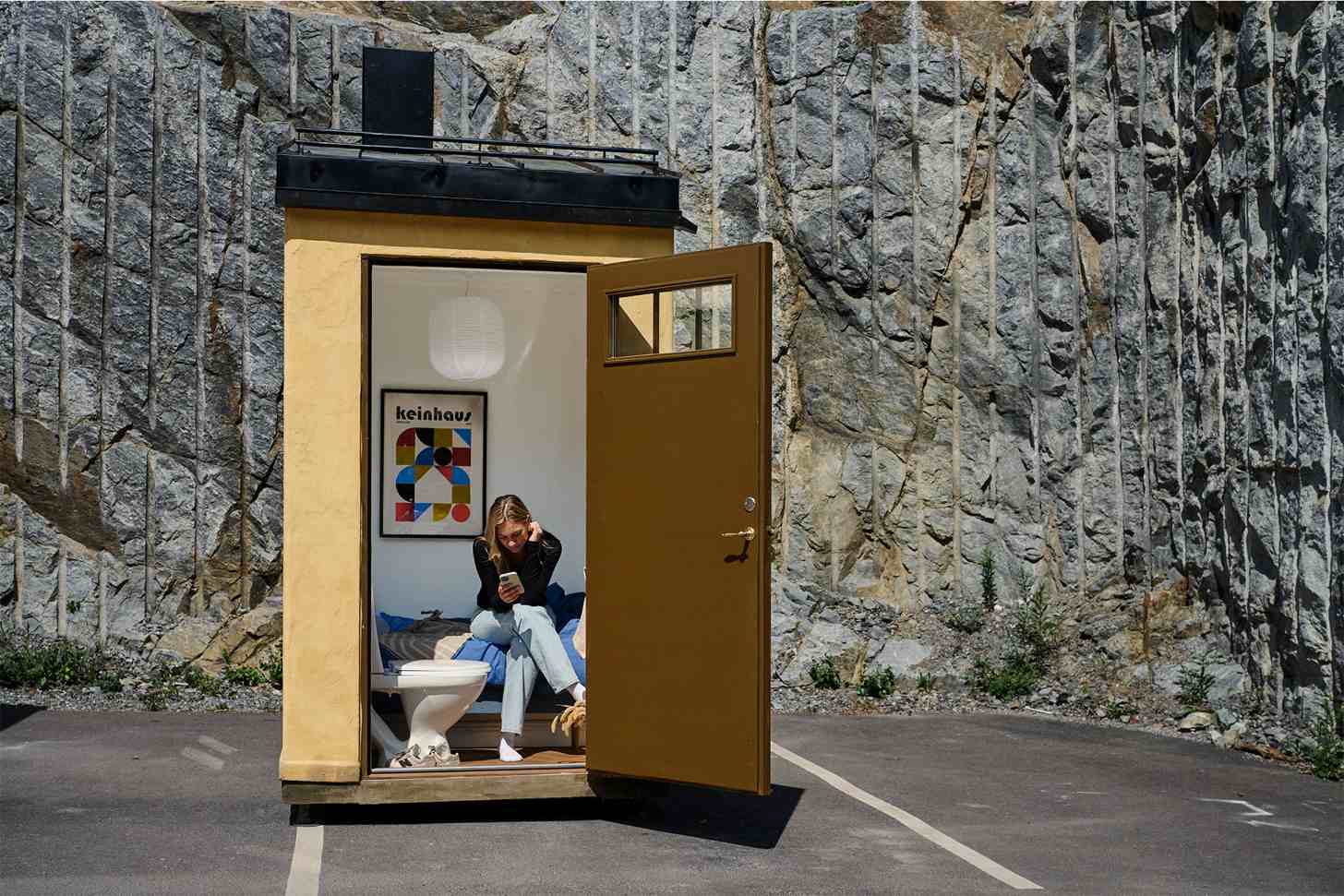
In Umeå, the average young person could afford a 48-square-foot home (the biggest of the three cities). In Gothenburg, the average affordable house comes in at 33 square feet, and in Stockholm, an affordable home would account for just 20 square feet.
“The idea is to make the housing crisis facing young people visible and tangible,” Bolin said.
“We see numbers and statistics about it everywhere, but they can easily become abstract. So we wanted to show exactly how much home an average 25-year-old can afford today, and let people experience that reality.”
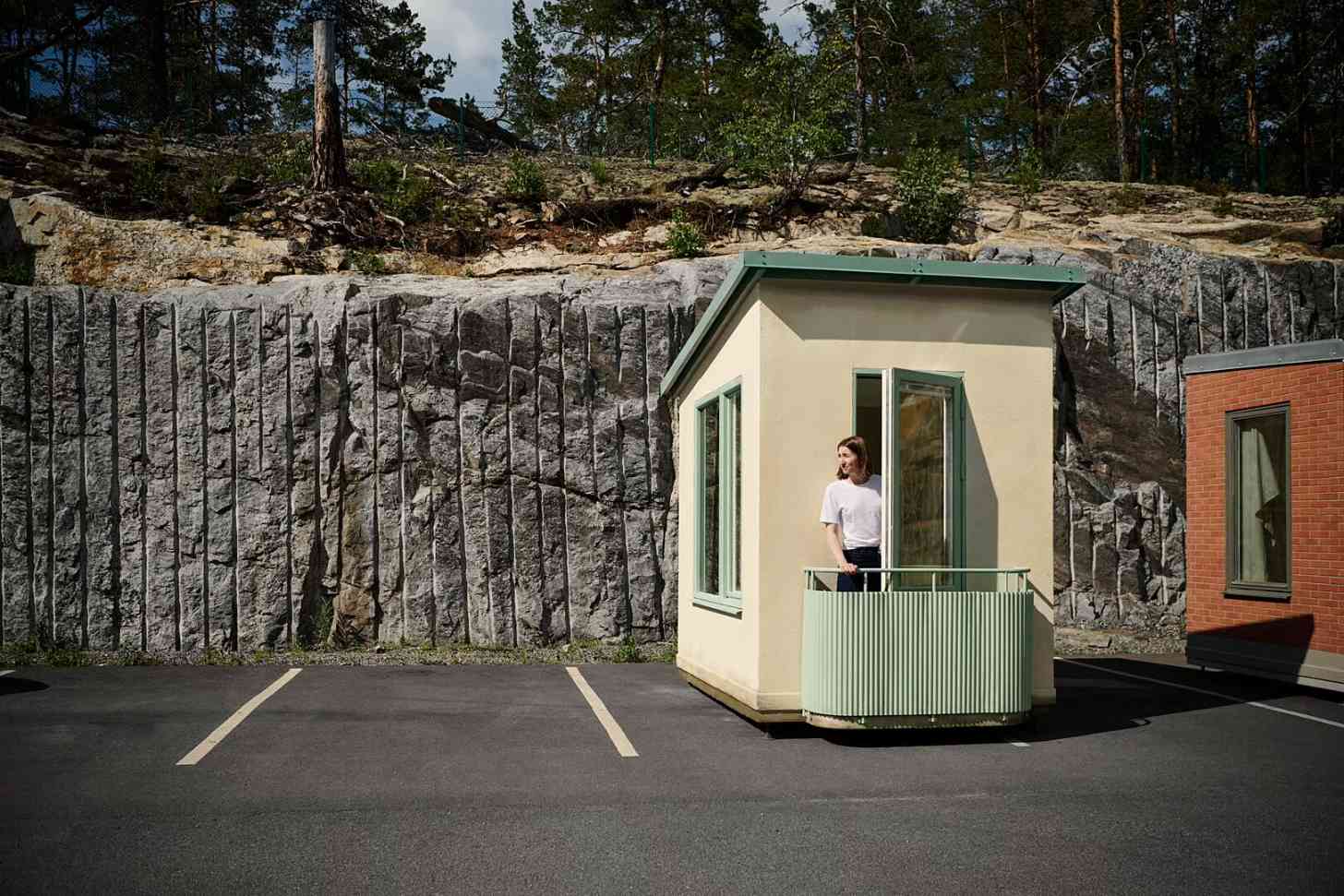
On Riksbyggen’s website, each of the three models is described with tongue-in-cheek seriousness, similarly to how realtors depict luxurious properties for sale.
The tiny Stockholm model is called a “turn-of-the-century dream with consistent limitations.”
“Here you live in an environment where the historic architecture creates a dreamlike atmosphere, while the surface sets the framework for a realistic existence,” the description reads.
“In its 1.9 exclusive square meters, the bedroom, living room, kitchen, and bathroom coexist in an unusually cohesive symbiosis. Storage is included in the living space.”
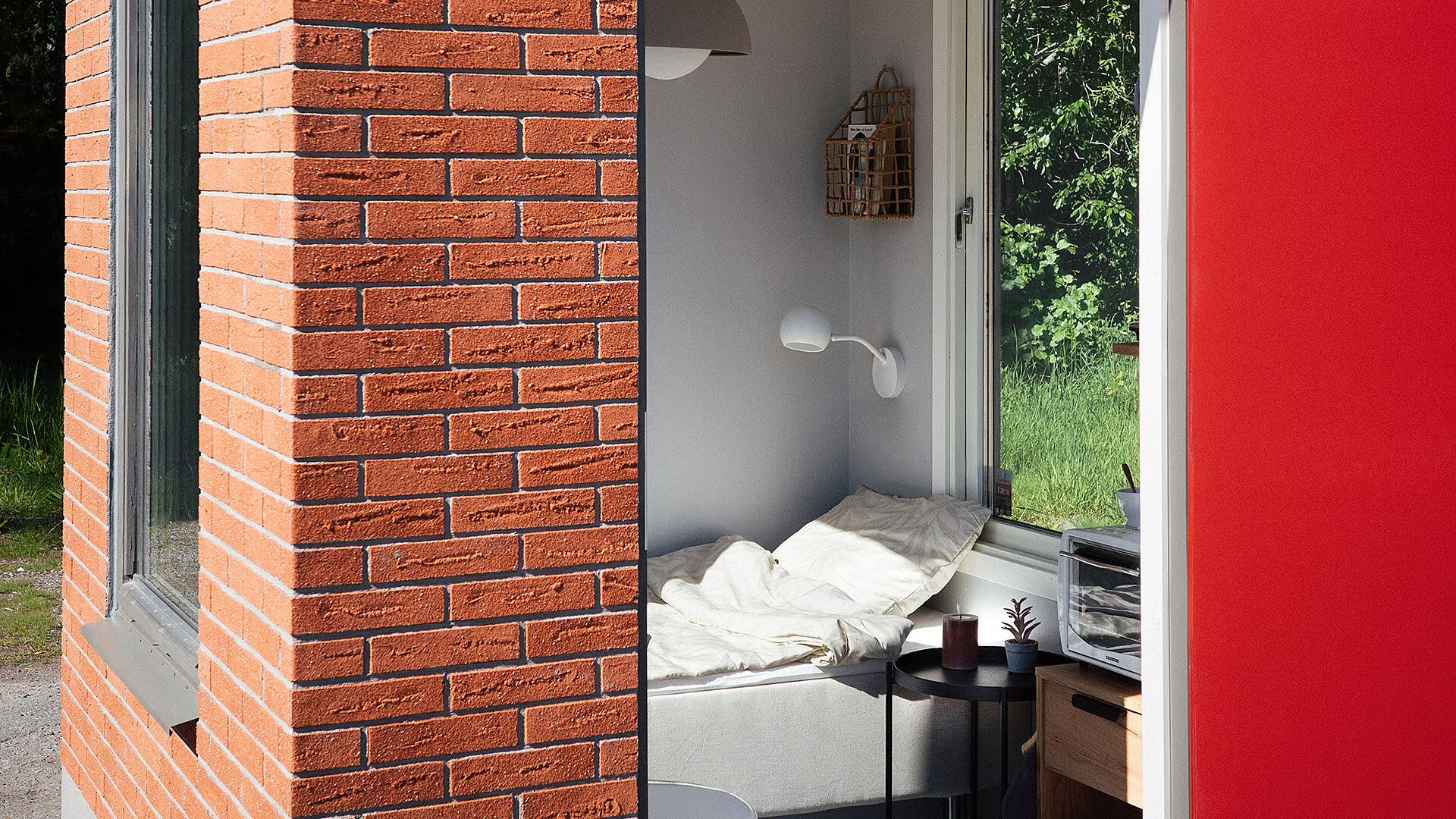
The homes are designed to be inviting, as if they came right out of an Ikea catalogue. But they have been shrunken down to an absurd scale, matching the shocking nature of housing costs.
In addition to making a real statement about the inaccessibility of home ownership for young people, Riksbyggen has a call to action: Introduce three housing reforms.
Those reforms include boosting housing production, making lower-cost loans available to first-time buyers, and reintroducing a program that builds social housing for the elderly, which would make more homes available to younger buyers.
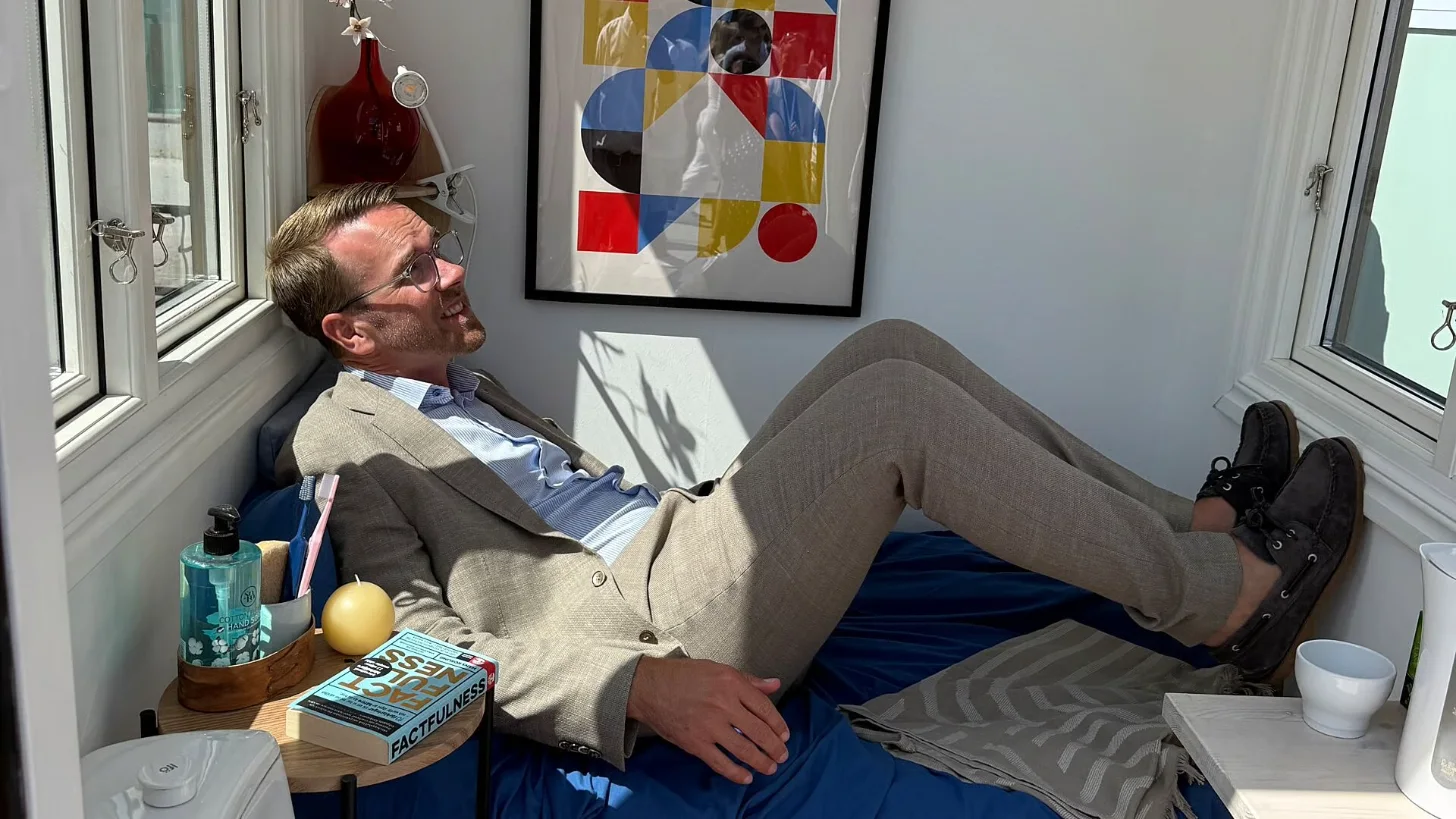
And so far, the designs have stirred interest. Sweden’s housing minister, Andreas Carlsson, has visited the homes — and even attempted to lie on a tiny bed inside, with little success.
“We see real political momentum behind all three proposals, although to varying degrees,” Riksbyggen’s CEO, Johanna Frelin, told Fast Company. “The strongest political support currently seems to be for a state-backed start loan for first-time buyers, while investment support for housing for older people is also gaining renewed attention.
“Our proposal for the state to share more of the risk in new housing construction is more politically challenging,” Frelin continued, “but the need for action is increasingly recognized. Ultimately, we hope the campaign can help turn that recognition into concrete policy.”
You may also like: New tiny home village will house the homeless with $300 monthly rent and free healthcare
Featured Image: Courtesy of BBDO Nordics