For nearly 50 years, the Sheldrick Wildlife Trust has been a pioneering conservation leader in elephant rescue and rehabilitation across East Africa.
Through its “Orphans’ Project,” the nonprofit rescues giraffes, rhinos, hippos, and elephants that have been separated from their mothers at an early age. After the animals are hand-raised by experts at their various sanctuaries, they are released back into the protected wilderness.
One of the youngest elephants under its care is Kipekee, a 16-month-old calf rescued from the Maasai Mara National Reserve in southwestern Kenya.
On June 17, 2025, a concerned local reported that an elephant calf had followed his cattle home to their “boma,” or livestock enclosure.
“She was all alone and appeared exhausted and emaciated,” the Sheldrick Wildlife Trust stated on its website.
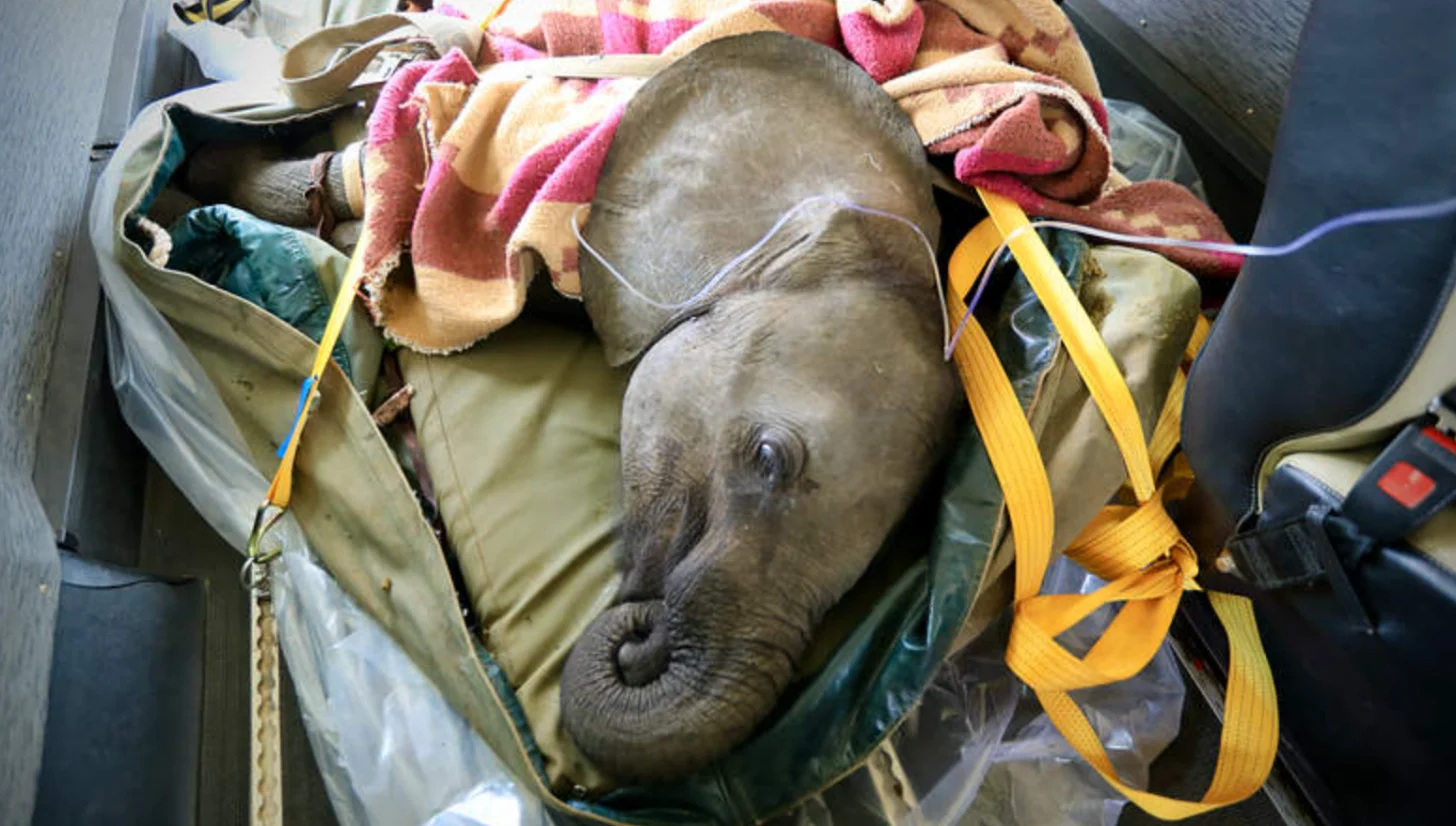
Together, rangers from the Pangolin Project and Mara Elephant Project arrived at the scene to examine the calf, just moments before she collapsed.
“At approximately four weeks old, she was far too young to be on her own and had clearly been without milk and possibly water for some time,” the nonprofit recounted. “It later emerged that others in the community had seen her wandering alone three days prior. This brave little elephant had already pushed the limits of survival for one so young.”
That’s when the Sheldrick Wildlife Trust entered the scene. As officials from the Kenya Wildlife Service provided Kipekee with an IV drip, the Mara Elephant Project located the calf’s mother in the nearby Nyekweri Forest. Due to the arrows piercing her hide, the rangers surmised that the elephant had become caught in the crosshairs of a conflict with locals.
“As her condition deteriorated, she had stopped producing milk, and Kipekee was ultimately forced to abandon her mother,” the Sheldrick Wildlife Trust explained. “The wider herd had probably scooped up the calf, but as she grew weaker, they could only look after her for so long.”
As the calf was taken to the organization’s Nairobi Nursery, mobile vets from the Kenya Wildlife Service and the Sheldrick Wildlife Trust came to provide emergency aid to her mother.
“It was always a long shot, given [that] her condition was critical,” the nonprofit reported. “Despite surviving the operation, heartbreakingly, she passed away the following day.”
Then, all eyes were on Kipekee.
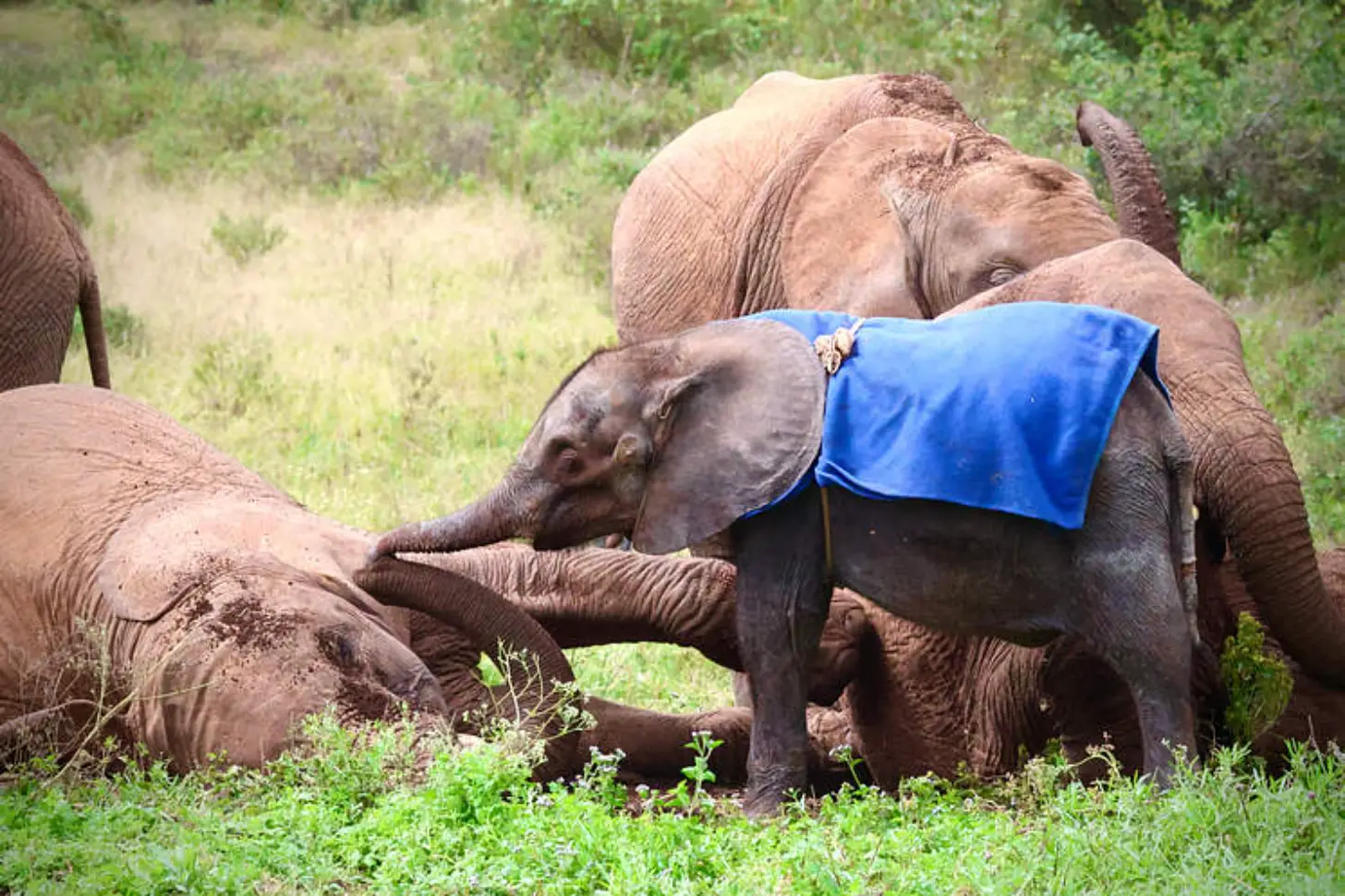
“Kipekee arrived at the nursery in a desperate state. She continued to collapse for a number of days after her rescue,” the nonprofit continued. “To further complicate matters, she was riddled with parasites, which drained what little sustenance remained in her. The first week was very touch-and-go, as we patiently nurtured her back to life.”
As they provided around-the-clock care, the team named her Kipekee, which means “unique” in Swahili.
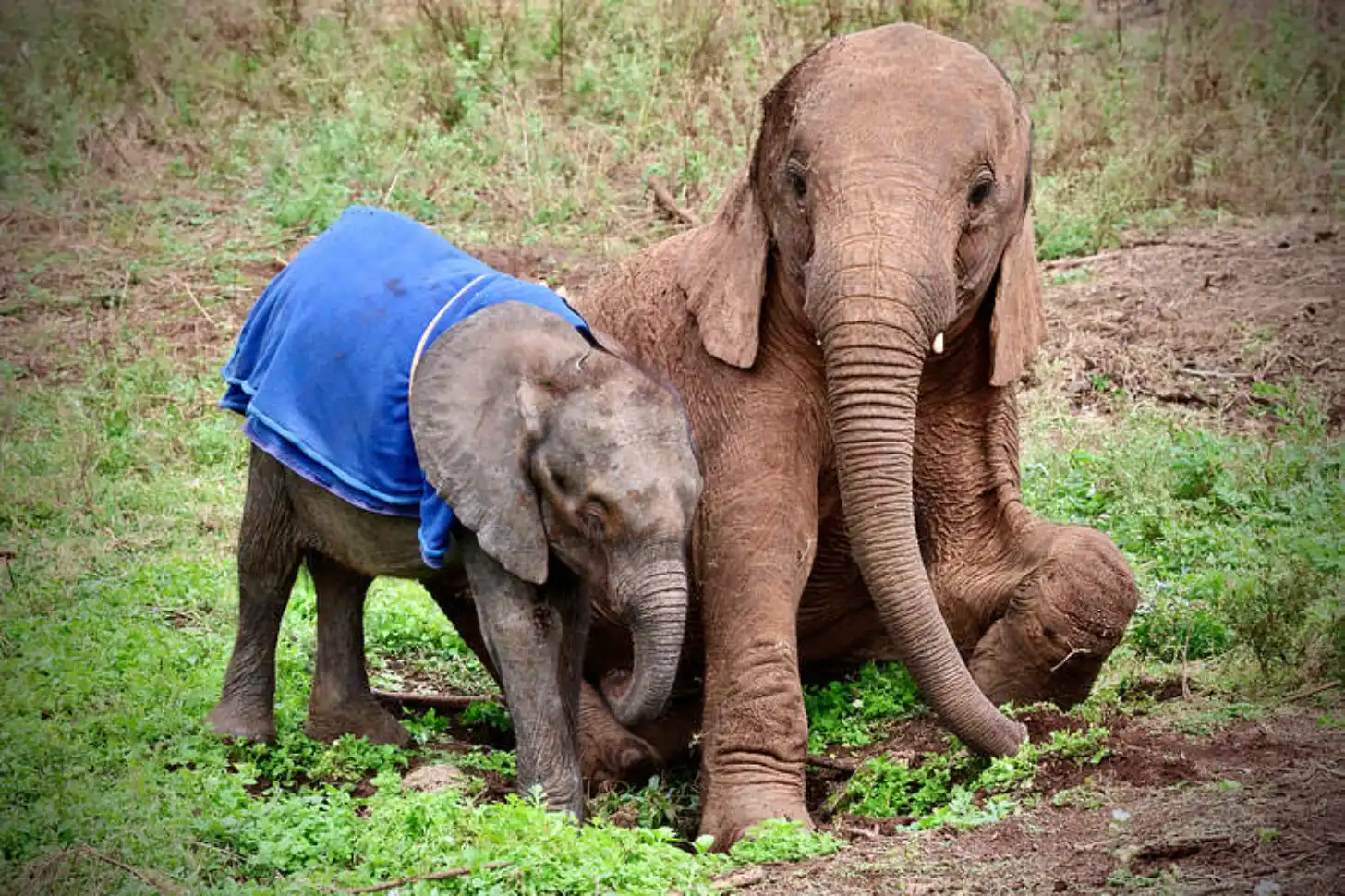
“For all she was up against, Kipekee really has helped herself,” said the Sheldrick Wildlife Trust. “After what must have been a long, frightening spell on her own, she was visibly relieved to find herself loved and cared for. She latched onto her keepers and has become incredibly attached to them. From milk bottles to blankets, she eagerly embraced nursery life, understanding that she finally had a safe place to call home.”
On August 21, the nonprofit posted a video update of Kipekee nuzzling Zuri, a 9-month-old calf that was rescued in May after she was found trapped in a septic tank.
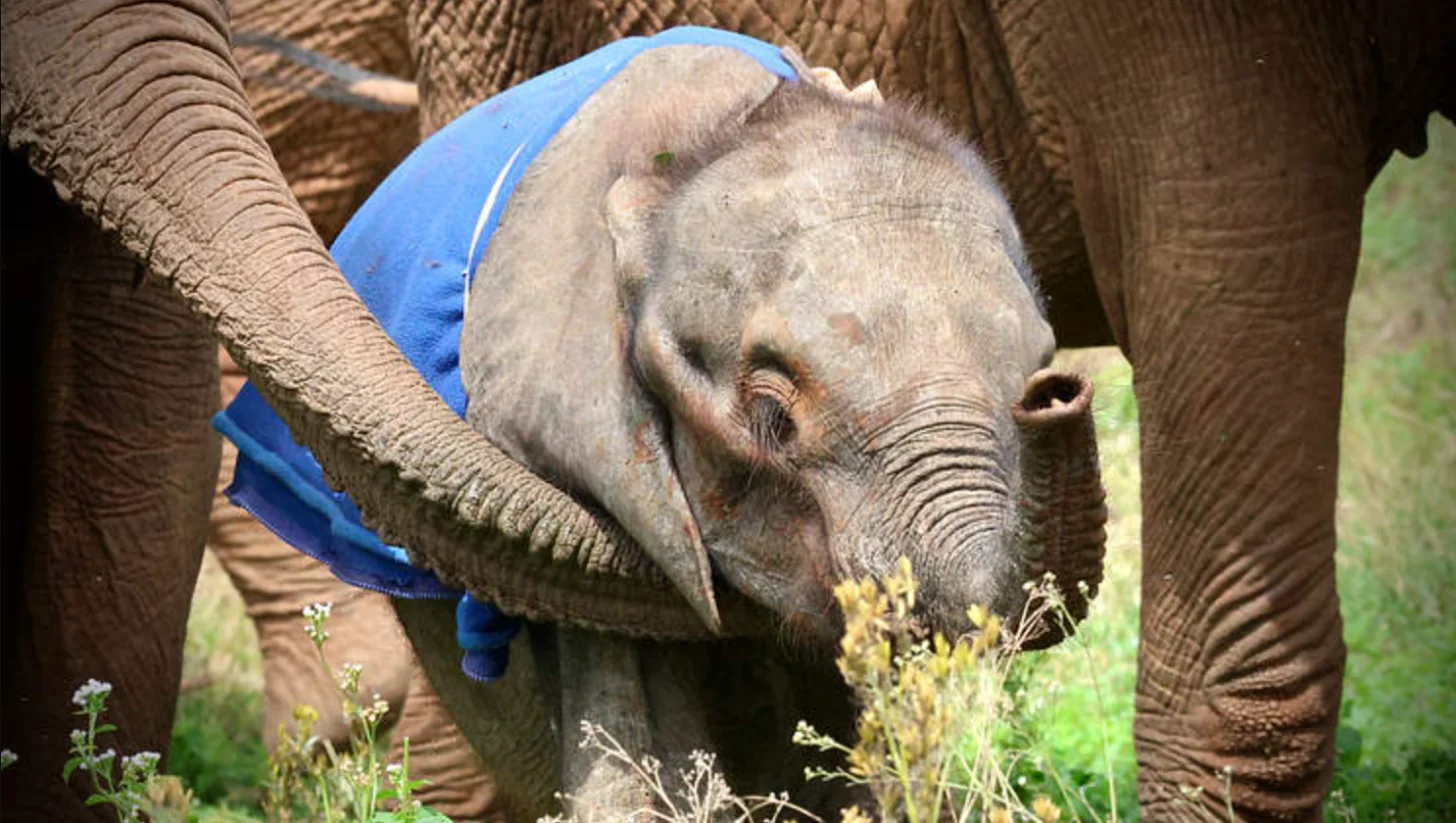
“Dare we say that naughty Kipekee is … growing up?” the Sheldrick Wildlife Trust asked on Instagram. “Ever since Zuri arrived, dethroning her as the smallest and most spoiled member of the herd, Kipekee’s manners have improved by a mile. It’s as if she wants to prove that she’s the more mature of the two!”
“Of course, Kipekee is still a little princess in the eyes of our nursery nannies — and that position comes with perks,” the caption continued. “Here, she helps herself to mouthfuls of Nyambeni’s hard-earned greens, with nary a complaint from the older girl!”
You may also like: Fishermen stop to save baby elephant from rising floodwaters after it was swept 3 miles from its mother
Featured Image: The Sheldrick Wildlife Trust