When Sara Belmer, Savannah Lovelace, and Grace Pfeffer took off on their bikes to cycle 1,700 miles of the Pacific coast to raise funds to fight human trafficking, they didn’t realize their three-person team would turn into a movement.
In fact, they began the journey with humor, donning light blue cycling jerseys that identified them as “hilariously un-athletic girls cycling to end human trafficking.”
The trio started the organization, Pedal the Pacific, as college students looking to make a difference for a cause they cared about: Human trafficking. They did this by cycling from Seattle to San Diego, posting about their journey across social media.
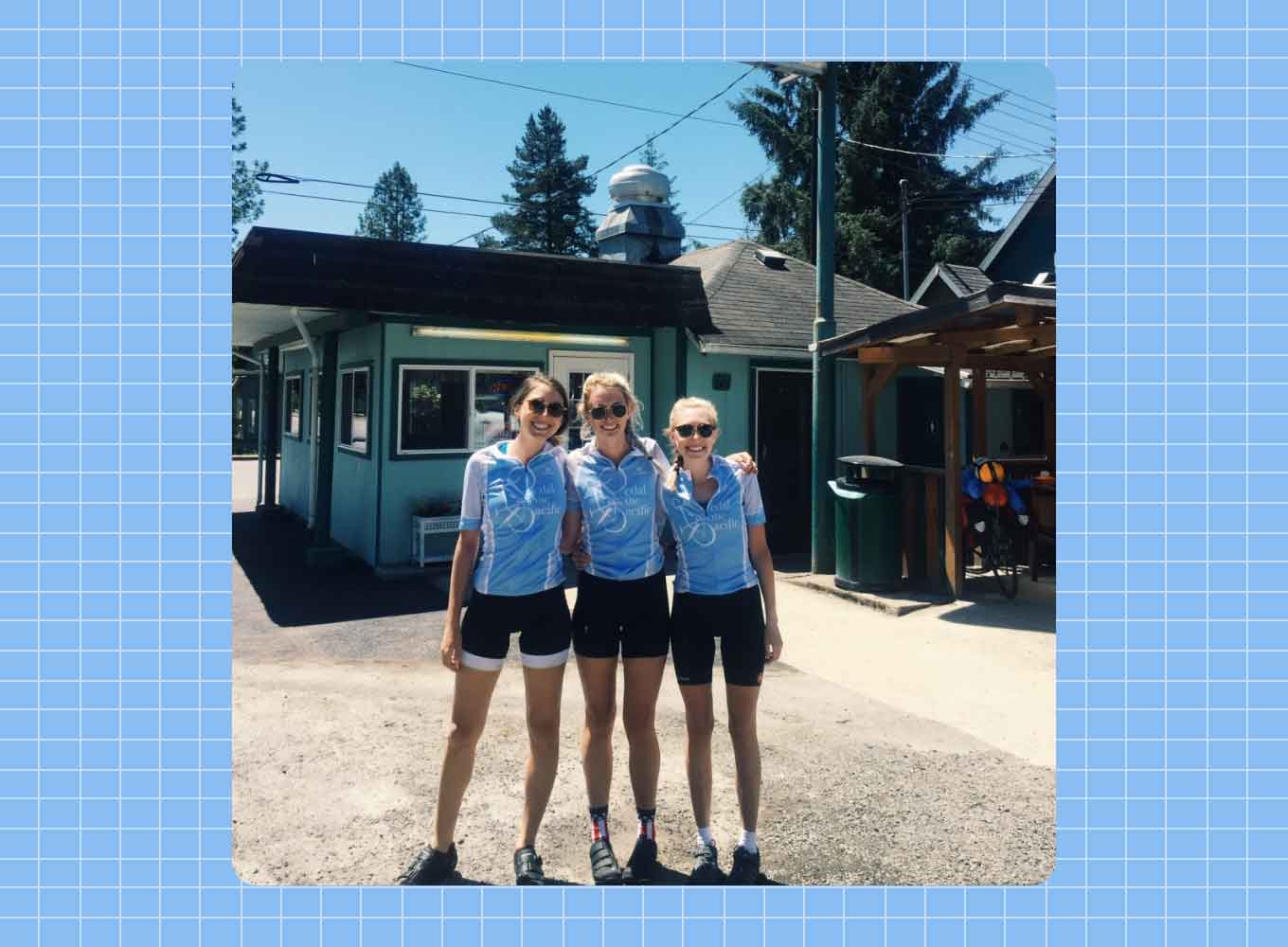
“We noticed that approaching the topic of sex trafficking in this way made it a lot less intimidating for people to approach and ask questions,” a Pedal The Pacific TikTok shares.
After seven weeks on the road, they had raised over $60,000 (six times their original goal) for survivors of trafficking.
But the adventure was far from over. After the inaugural ride, teams of young women emerged each year, completing the same journey every summer to raise more awareness and funds in the fight to end trafficking.
@pedalthepacificorg The short version of how we began and what we do🫶 Today, Pedal the Pacific is a leadership development program that helps college-aged women recognize the power of their voice. Apply for ptp 2023 through the link on insta! #pedalthepacific #bikepacking #seattletosandiego #humantraffickingawareness ♬ Ooh La La - Faces
As of September 2022, Pedal the Pacific’s 61 alumni have raised over $860,000 for leading organizations in the anti-trafficking movement.
Pedal the Pacific focuses on combating domestic trafficking and especially shares information on how vulnerable populations, such as unhoused LGBTQ+ youth, BIPOC women, and immigrants are most at-risk of trafficking.
Team members work with local, grassroots organizations along the Pacific Coast through fundraising, grants, and advocacy work.
“Each summer as our teams bike down the West coast, we connect with communities through partnerships with local organizations and experts raising awareness about sex trafficking,” the organization’s website reads.
“In order to support these communities even further, organizations along our route have the opportunity to receive a $5,000 grant towards their anti-trafficking programming.”
While the mission of the nonprofit stays true to the cause of ending human trafficking, another element of its identity has emerged: Raising up women leaders.

Riders who apply for the program are signing up for a fun summer adventure, but also for a long and grueling journey — one that focuses on a topic the organization says “isn’t casual dinner party conversation.”
“Riders learn the power of their voices when fighting for justice, something that lasts long after their time with us is finished,” Pedal the Pacific’s website reads.
“Pedal the Pacific is more than just a bike ride. It’s a launching pad that teaches women to advocate responsibly and believe in their ability to make a difference.”
The annual class of cyclists isn’t just a crew that gears up for a scenic ride; they complete vigorous training in both advocacy and outdoor stewardship, meeting for bi-weekly team calls and a retreat months prior to the ride.
The program also aims to be accessible and inclusive, offering gear paid for by sponsors, as well as equal opportunity scholarships for BIPOC and/or low-income applicants.
Pedal the Pacific also notes that, while the program is intended for anyone who identifies as a woman (regardless of sex assigned at birth), it also welcomes folks who are non-binary or gender nonconforming who want to “learn in a women-centered environment.”
When off their bikes, the group consistently uses its platform to educate folks on trafficking and has a resource library for folks who want to learn more.
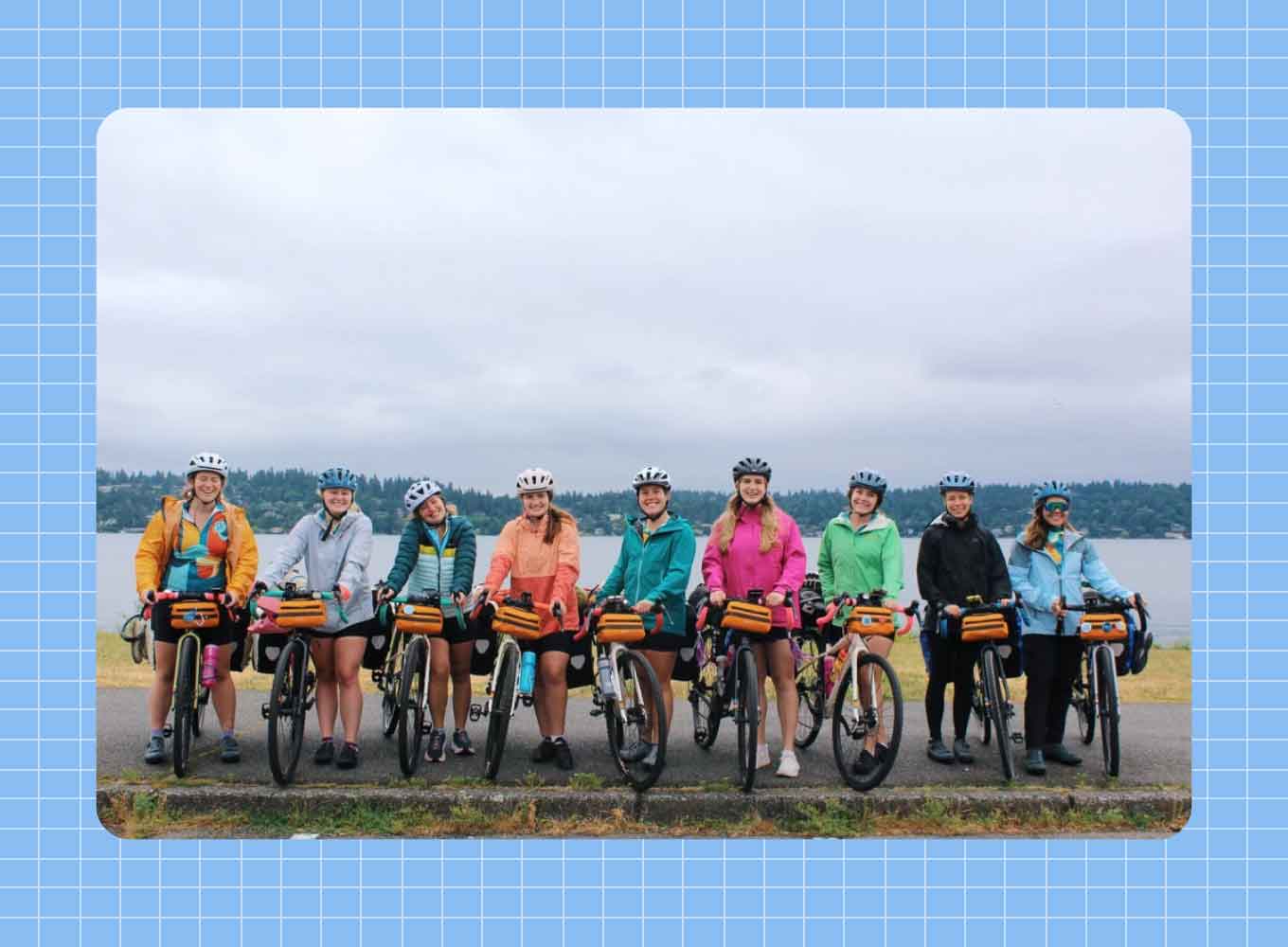
And while cycling is the “main attraction,” the organization reminds its supporters that the bikes are simply one platform to educate people about trafficking and raise funds for survivors and organizations alike.
“The fight against trafficking needs everyone, with all different skills,” a 2023 rider, Katherine Thomas, wrote from the road on the organization’s blog.
“We’ve met so many people who use their strengths to contribute to this fight, whether they’re a lawyer, an educator, or started a nonprofit. No matter what path you take in life, there are ways to be an advocate in your field. Knowing that we are not alone gives us hope and encouragement for, not only our ride, but for the future.”
As systemic injustices keep millions of Americans in poverty, folks face compounding difficulties. From food insecurity and inaccessible educational opportunities, to medical debt and a worsening housing crisis — people are in need help.
One challenge that might be left out of the conversation is hygiene insecurity: the inability to afford everyday hygiene products.
This could be anything from shampoo or toothpaste, to dish soap, toilet paper, or menstrual products.
And it has a major impact on the health and wellbeing of folks who are already dealing with unjust obstacles in their daily lives.
In fact, being unable to afford hygiene supplies can affect both mental and physical health.
Living with limited income (and therefore being unable to afford basic needs like food or hygiene) is associated with a 275% higher risk of anxiety and a 253% higher risk of depression, according to a 2021 study in BMC Public Health.
A 2016 national survey also found that 67% of people experiencing homelessness reported one or more preventable health conditions and 34% reported that their health made it difficult to keep a job or handle daily living activities. Studies also show that lack of hygiene products can exacerbate chronic conditions.
And this isn’t an uncommon problem.
According to a survey from Feeding America, one in three low-income families found it difficult to afford basic household necessities in the past year — and there are no national public programs that provide support for this specific — yet universal — need.
Nonprofit Simply the Basics is stepping in.
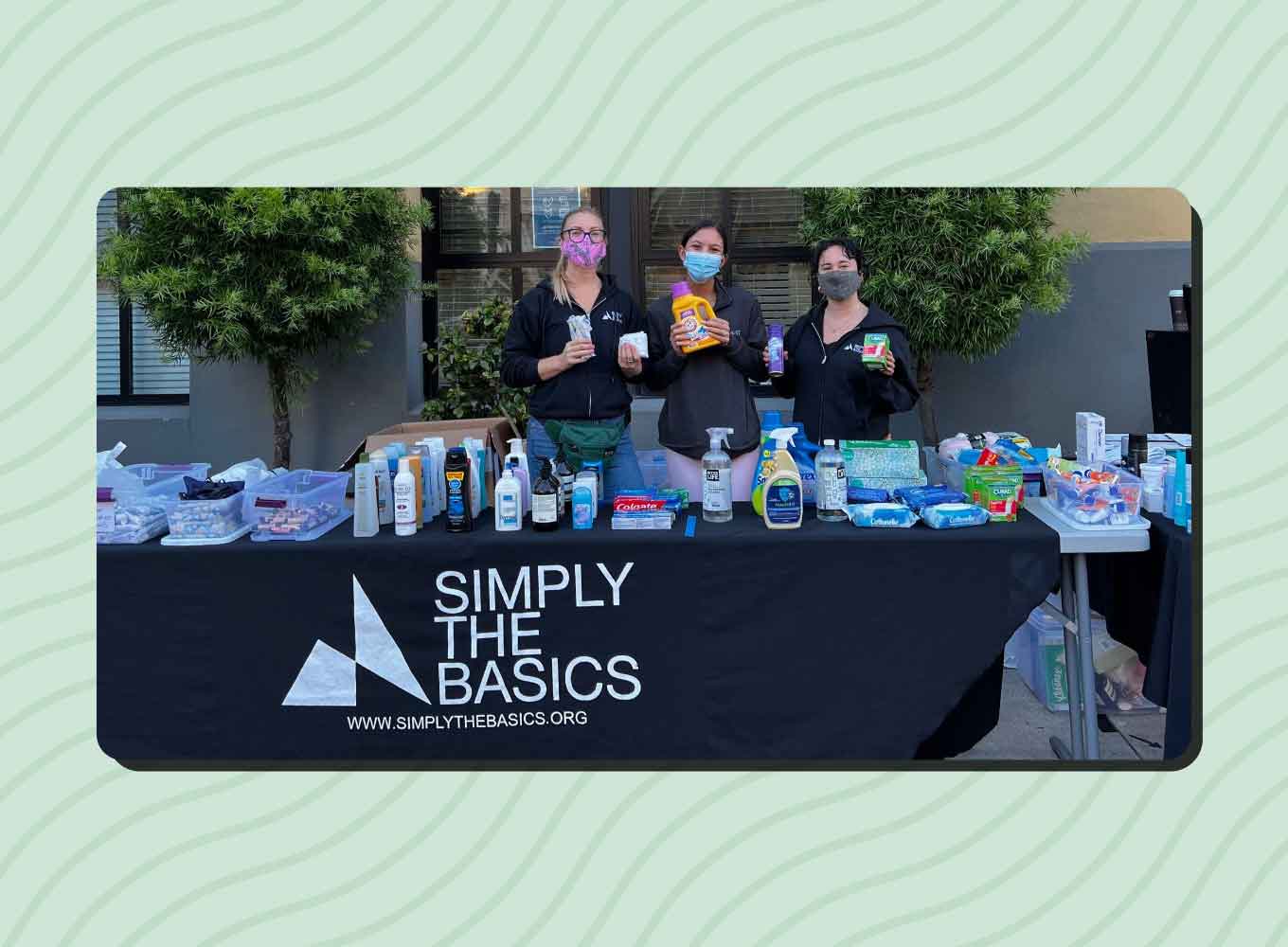
The organization has recently announced its brand new Hygiene Locator map and database. This digital network of hygiene services helps connect people in need of support to organizations in their area that provide necessary hygiene supplies free of charge.
It also helps folks interested in donating supplies in finding a hygiene distributor nearest to them (which helps reduce wasted products — a win-win!)
The Hygiene Locator is searchable by “Find Hygiene Supplies” or “Donate Hygiene Supplies” and lists various nonprofits or community organizations (like community centers, churches, or health departments) with hygiene programs.
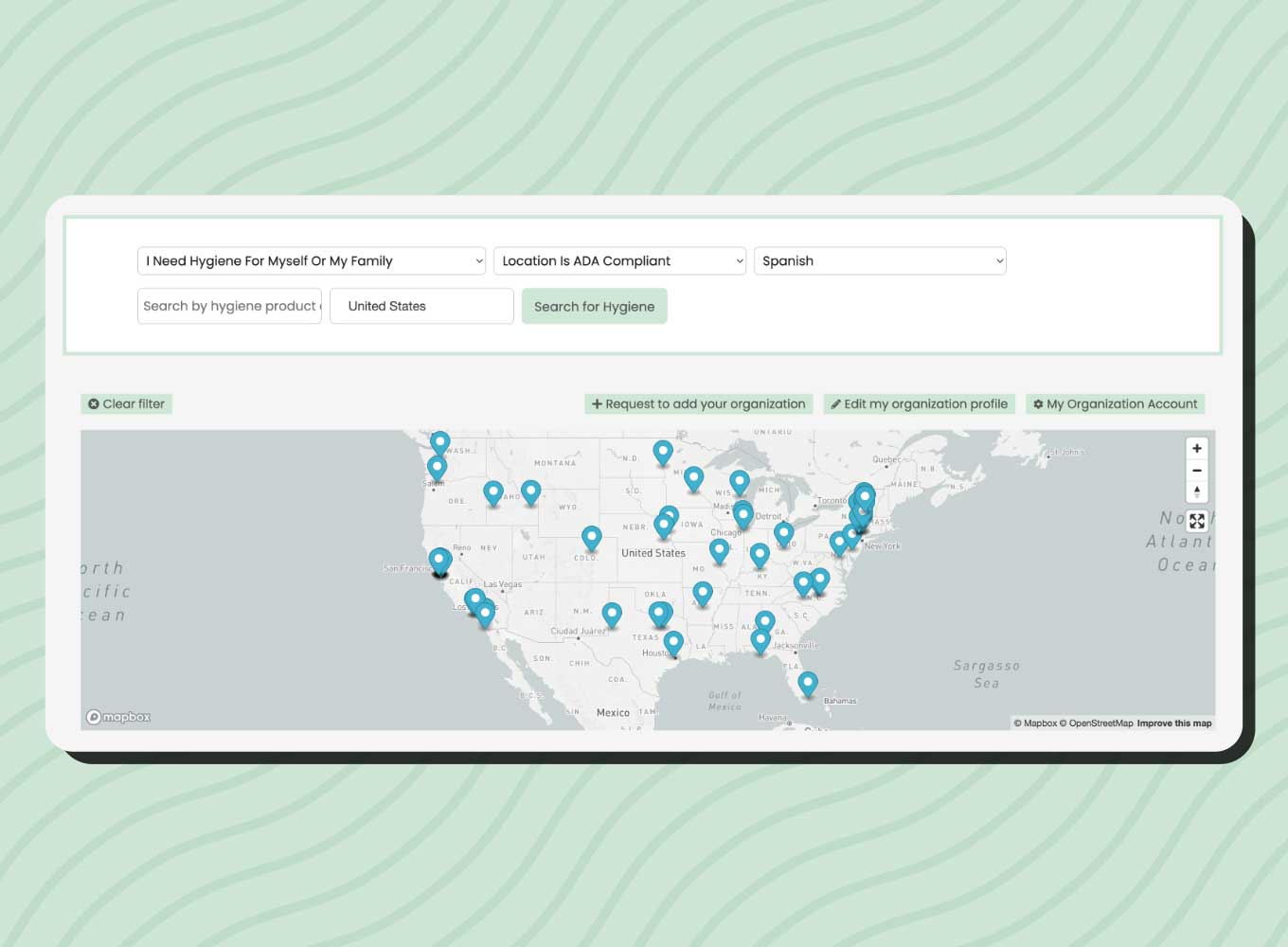
Users can also search for specific available hygiene products or see if a facility is ADA-compliant. Those interested in donating can learn more about what supplies an organization may be looking for from donors.
“It can be cumbersome and time consuming to find services that have your specific hygiene needs,” Simply the Basics’ CEO and founder Meghan Freebeck told Good Good Good.
“The Hygiene Locator allows people to search for the items they are looking for, such as diapers or textured hair shampoo, in addition to filtering for parameters such as ADA accessibility of the location, languages spoken, additional services offered, public bathroom availability, hours of service, and more.”
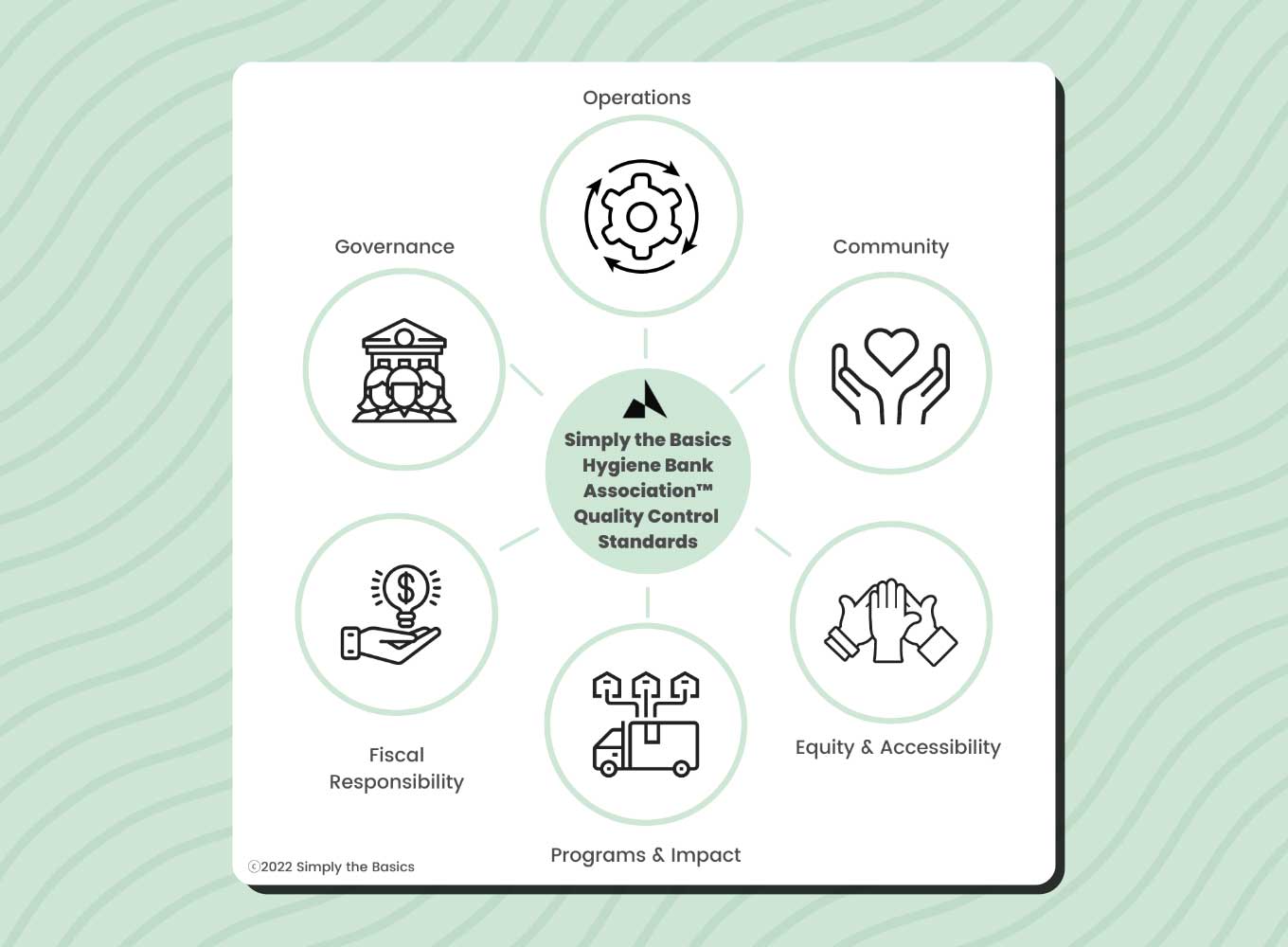
Many organizations or community distributors listed in the database are part of Simply the Basics’ Hygiene Bank Association, which is the first system in the world to establish quality control standards for the distribution of these products.
Additionally, membership in the association helps hygiene distribution banks connect to one another and provide tools in equitably and efficiently getting these items in the hands of people who need them.
These two initiatives at Simply the Basics were created in partnership with the personal care and cleaning brand Method Products, which will support Simply the Basics' quarterly grant program with its line of hygiene products. The grant program aids newly developed and growing hygiene banks across the country with the goal of closing the hygiene gap.
“Simply the Basics has been working since 2016 to make hygiene care equitable and accessible to everyone, regardless of their income or housing status,” Freebeck said in a press release.
“We believe that everyone has a right to their most basic human needs, and hygiene is an essential need for health and wellness.”
Since its inception about seven years ago, Simply the Basics has distributed over 2 million items to people in need across 185 cities. As of June 20,2023, the organization has distributed the following items:
- 413,094 PPE (began tracking in 2020)
- 272,931 dental hygiene items
- 416,293 menstrual hygiene items
- 4,325 healthy food and snack items
- 148,531 infant care items
- 36,942 razors and shaving supplies
- 160,978 shampoo and conditioner
- 384,917 soap/body wash/wipes/deodorant
- 8,535 towels and bedding
- 89,127 socks and undergarments
- 244,202 miscellaneous health and wellness items (like lotion and first aid supplies)
- 111,270 complete hygiene kits in reusable tote bags
These new digital resources will only amplify this reach.
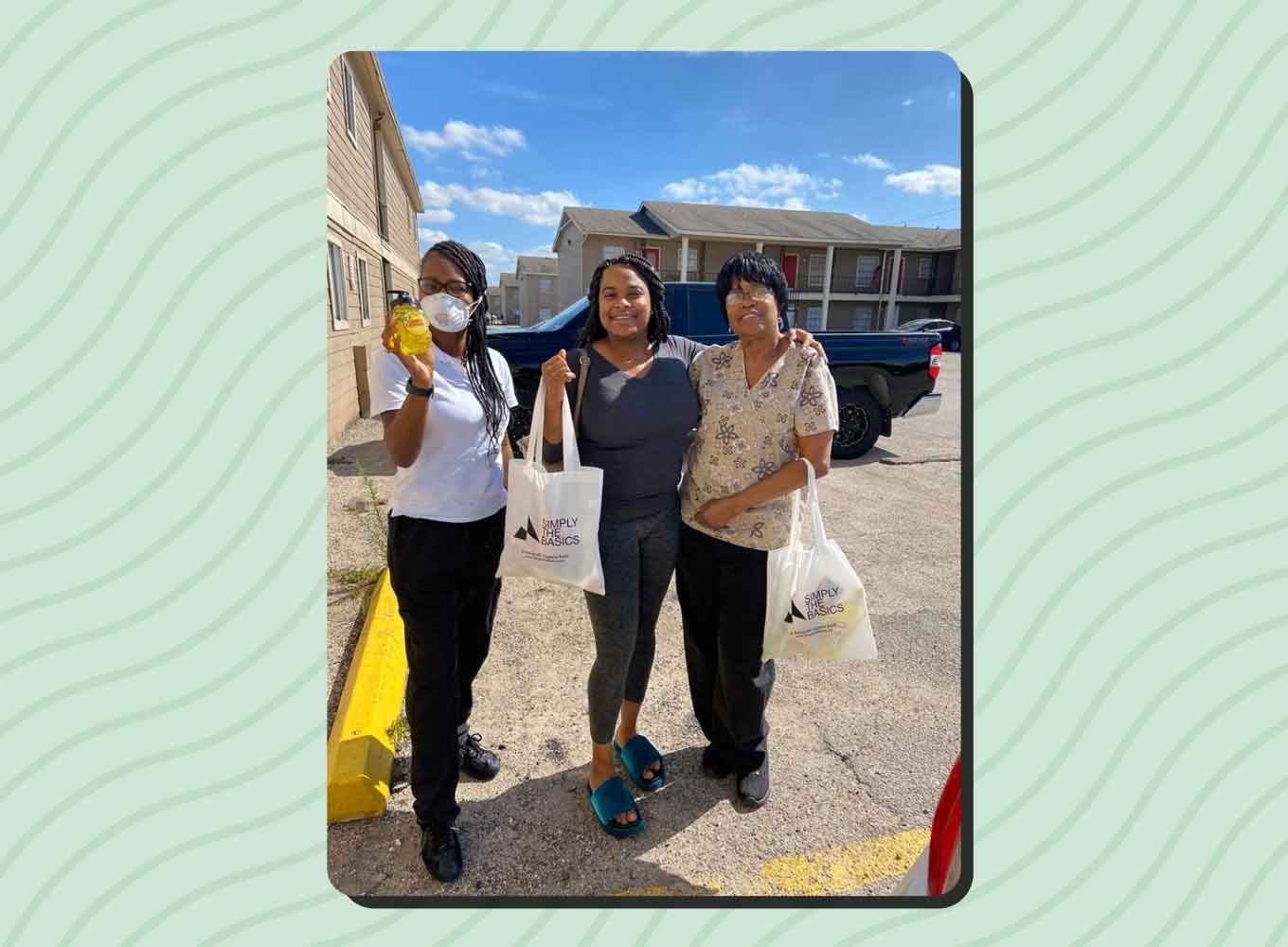
“With access to hygiene, communities become stronger and healthier as a whole,” the Simply the Basics website reads. “We remove the dehumanization of handouts and empower our most underserved community members to have the dignity and benefits that come with good hygiene and choice.”
Hygiene health is public health. Those who have accessed supplies through Simply the Basics’ work know this to be true.
“It feels good to know that there are people and organizations like Simply the Basics that care,” one recipient shared in an annual report. “If not for caring people, I and many others would not have the opportunity to live better lives.”

Haiti has a long and heartbreaking history with cholera — a digestive infection caused by contaminated food or water — totaling in over 10,000 deaths from the disease between October 2010 and February 2019.
The first outbreak in Haiti arrived shortly after a catastrophic earthquake killed over 200,000 people and displaced over one million residents, and it took over a decade before Haiti was considered “cholera-free.”
Between January 2019 and January 2022, Haiti reported zero cases of the illness.
This streak was maintained for about three years until breakthrough cases made their way back into the country during the fall of 2022.
“The ongoing social unrest has negatively affected public health infrastructure, creating an environment that has facilitated the current resurgence and associated high mortality across the country,” a January 2023 report from the Centers for Disease Control & Prevention reads.
“In addition, recent fuel shortages have hindered water treatment efforts and other cholera response activities nationwide. These factors have reduced the supply of safe drinking water, forcing an increasing number of residents to rely on unsafe sources and untreated water, substantially worsening the cholera outbreak and hindering the response.”
Now a mounting epidemic, combined with horrific climate disasters, Haitians are confronted with deadly infrastructural damage and a public health crisis only worsened by recent catastrophes.
On June 3, severe flooding impacted nearly 40,000 households in Haiti’s Ouest and Sud-Est regions, and just three days later, on June 6, a 4.9 magnitude earthquake rocked southern Haiti, near Jérémie, a commune with a population of about 30,000.
Not only did these disasters threaten the lives and resources of Haitians, but they also impacted a number of cholera treatment centers in the region.

Assessments from humanitarian organization Project HOPE indicate that at least three hospitals and three medical centers were flooded, a number of regions were quickly without operational cholera treatment centers, and ongoing violence and trauma pervade the affected areas.
While deeply devastating, humanitarians have shown up eager to help and bring people to safety.
One doctor in particular has dedicated her life to using her expertise in medicine on the front lines of humanitarian crises. And in a time where many healthcare professionals are fleeing Haiti for better opportunities, she has committed to serving her home country.
Dr. Regine Necessaire, the site lead for Project HOPE’s office in Jérémie, has wanted to work in medicine since she was a little girl in Port-au-Prince.
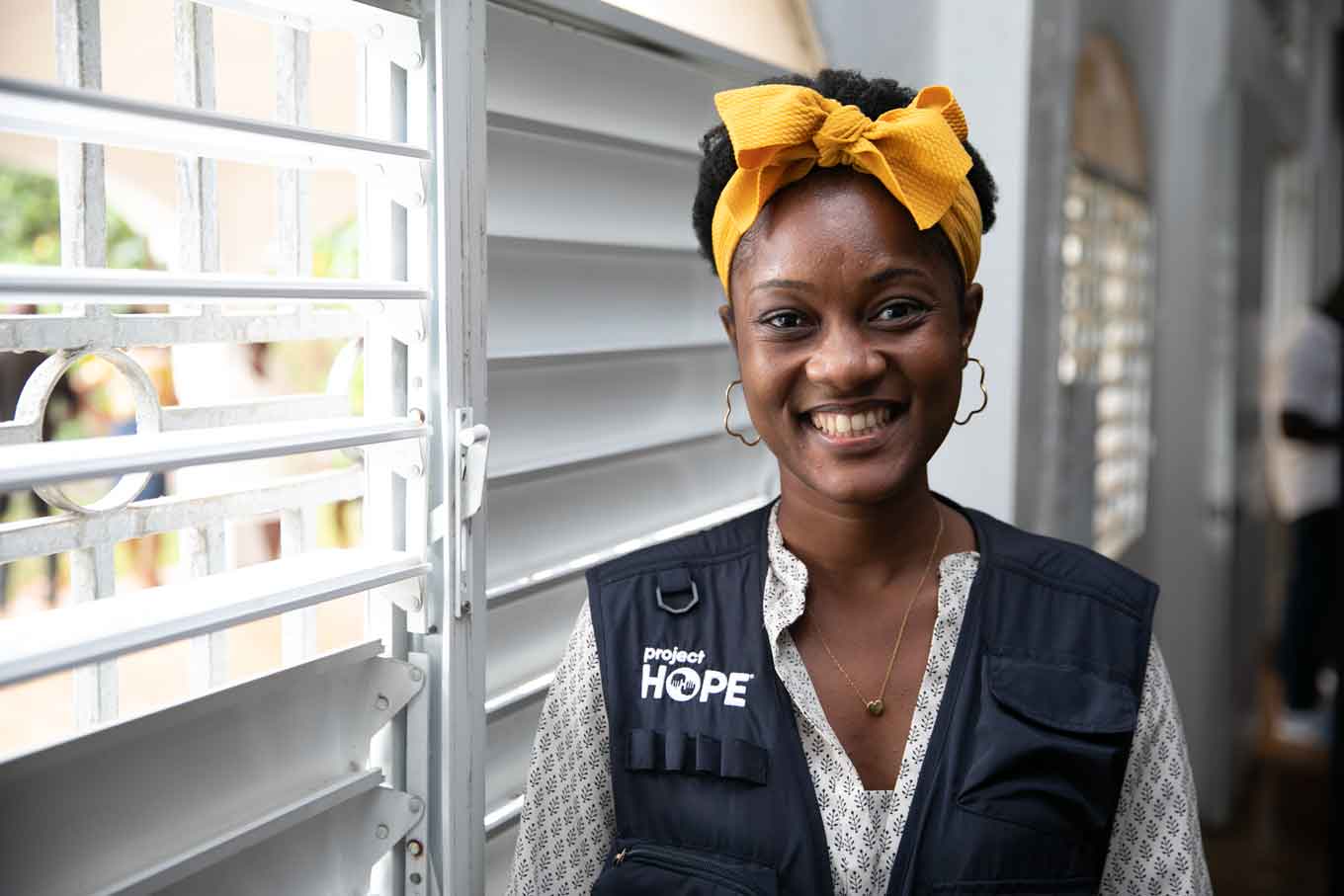
Two major events had led her to this discovery: a human biology class in elementary school, and an experience in referring car accident victims to a nearby hospital when she was just 10 years old.
“I was deeply moved by the organization of the medical staff in the emergency department taking care of the injured,” Necessaire told Good Good Good. “This last event reinforced my burning desire to study medicine and become a doctor, in order to relieve patients’ suffering.”
After she completed her education, she made the firm resolution to work with a humanitarian organization and found a home with Project HOPE.
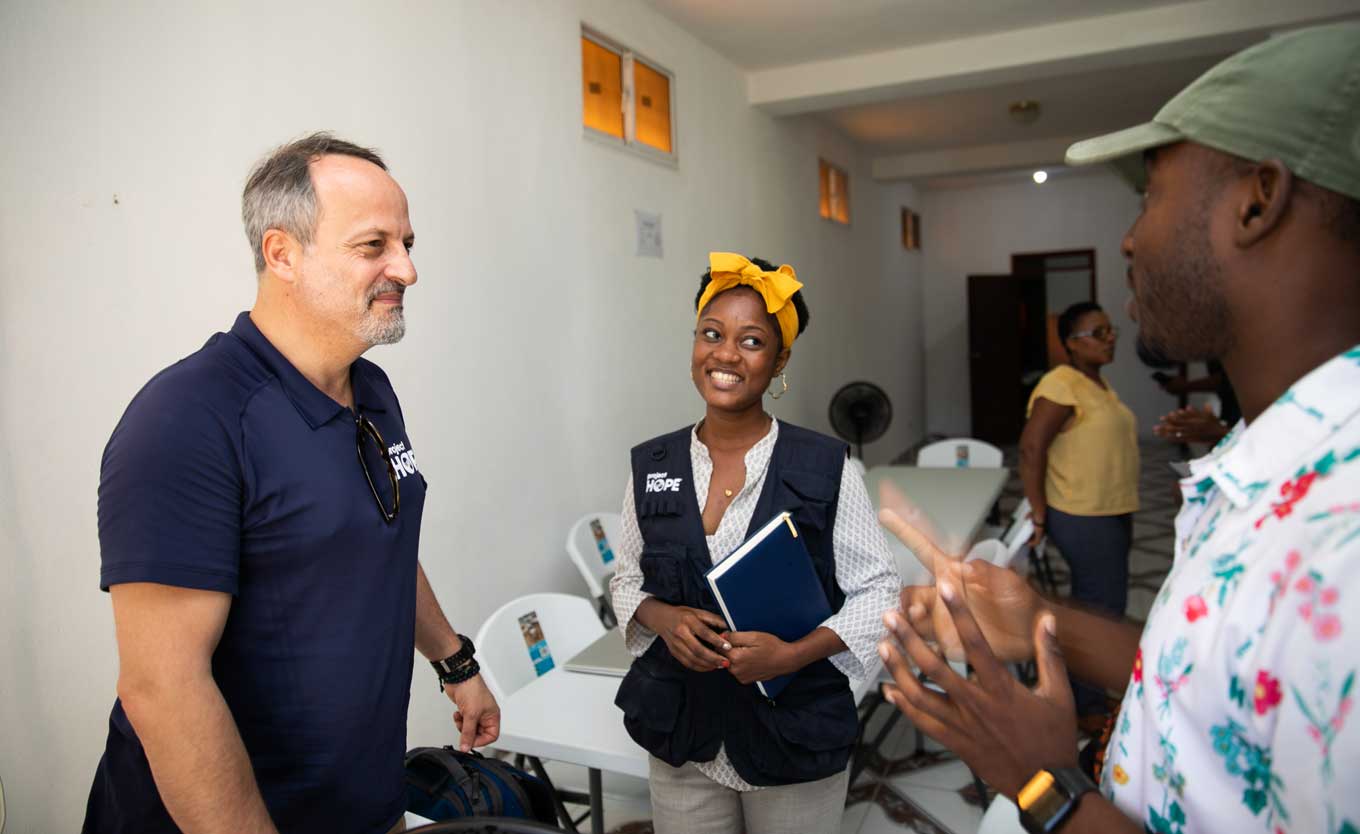
“This first opportunity marked the beginning of the realization of my dream to serve vulnerable communities affected by various shocks,” she said.
Necessaire leads a multidisciplinary team of 68 support staff and consultants who specialize in the country’s cholera response, medical, water, sanitation and hygiene services, human resources, finance, and more.
On the day of the earthquake, the 33-year-old doctor leapt to action.
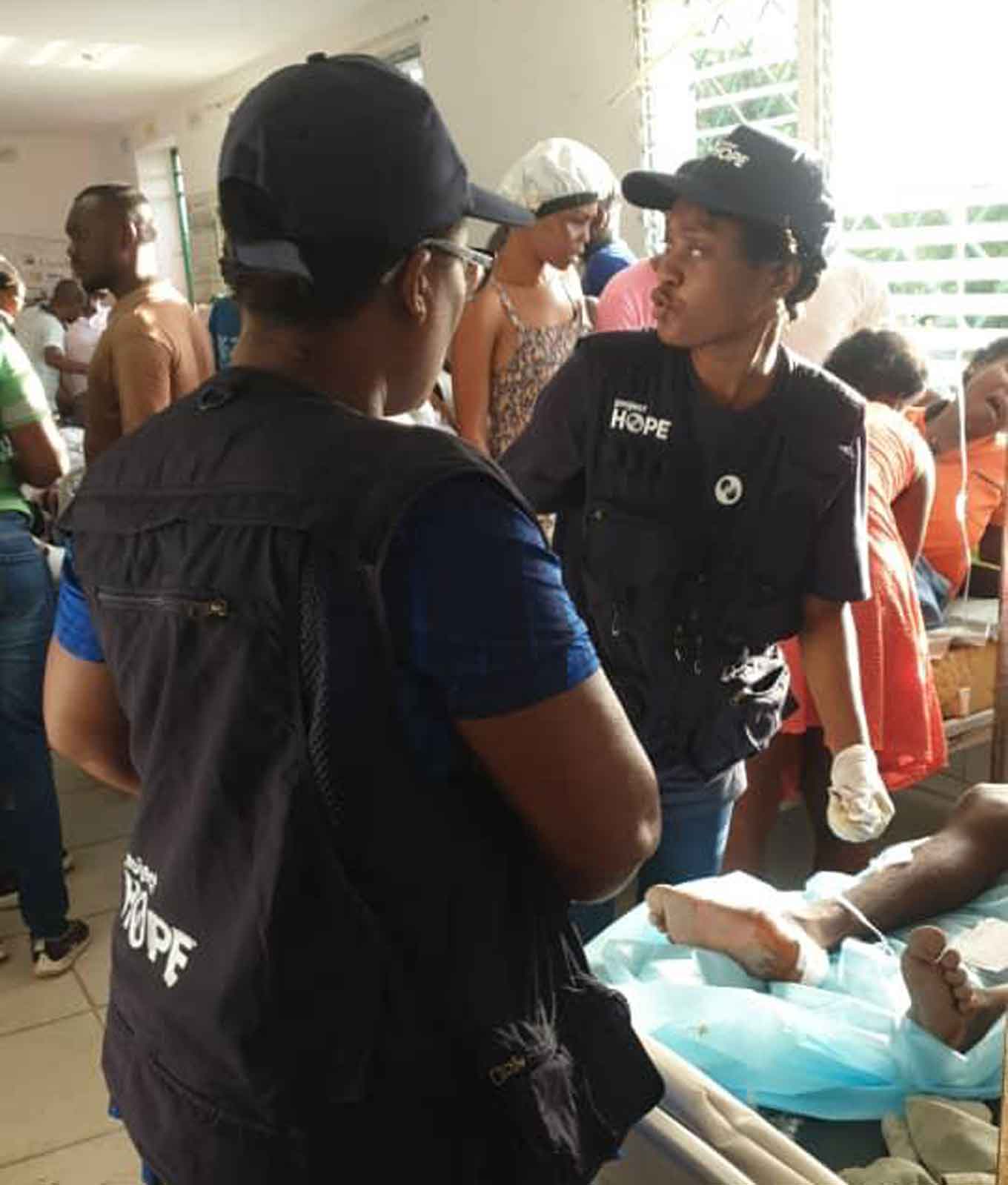
“As the site lead, in charge of the Jérémie base, everything came to my mind as soon as the shock passed, and I called everyone in my team to know if they were alright,” she recalled. “I really called them one by one. I was so worried.”
Once she confirmed the status of her team, Necessaire, clad in a utilitarian emergency uniform, began treating patients herself at 6 a.m.
In the weeks following, she and her team — with members from Project HOPE, as well as Haiti’s Ministry of Public Health & Population — have continued leading the humanitarian response in the Grand ‘Anse Department.
While Project HOPE’s main efforts in the area started with the distribution of cholera kits across affected areas, the flooding and earthquake have ushered in rapidly shifting needs.
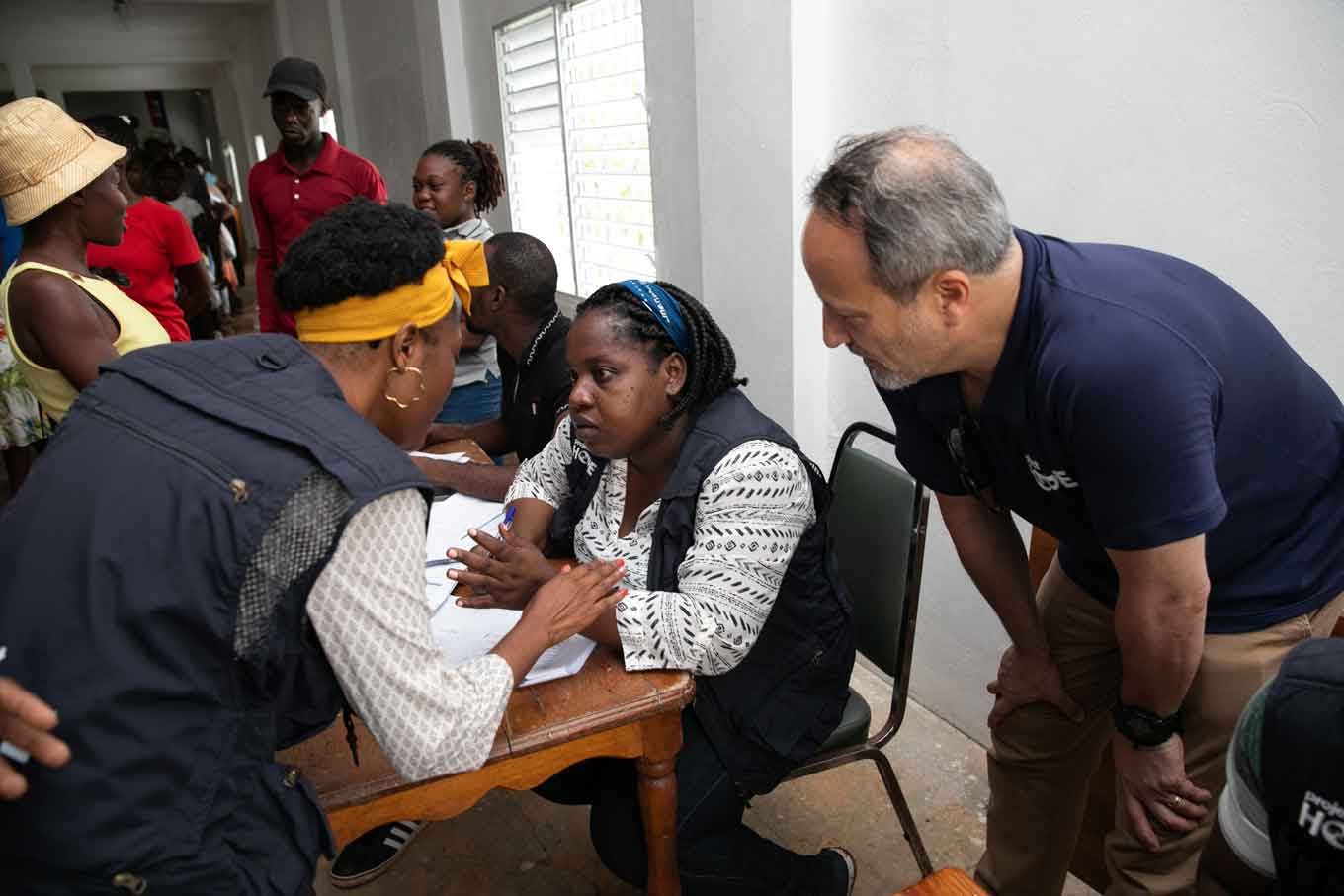
Now, the organization is supporting the Saint Antoine Hospital with medical supplies, allowing medical professionals to treat hundreds of additional patients impacted by the earthquake.
And every day, Necessaire leads her response team, in conducting humanitarian needs assessments, distributing hygiene kits, and working with local partners to provide care to bring her fellow Haitians to safety and stability.
“When I showed up, many others had come to respond to the emergency, as well, and that made me feel good that we had so many people who cared and wanted to do something,” Necessaire said, recounting her experience at the hospital the day of the earthquake. “I enjoy taking care of others.”
There is a gender gap when it comes to hobbies and leisure. While it might seem superficial in comparison to the gender pay gap or disparities in healthcare across the gender spectrum, hobbies are often an elusive aspect to a woman’s self-care.
Historically — and presently — women often fill a role of a caretaker or homemaker and statistically have less leisure time than men.
This makes it pretty difficult for women to break into traditionally masculine (whatever that means!) hobbies, or to find a hobby that is fun, engaging, and self-affirming.
Women and girls deserve more time to themselves to explore, play, and relax in whatever ways are most enjoyable to them — without shame.
If you’re someone who feels lost in the daily soup of work schedules, caretaking, homemaking, or just finding 10 minutes to enjoy a nice shower, you’re probably also someone who feels lost trying to identify what they like to do in those rare moments of free time.
Never fear! Read on for a comprehensive (but not complete!) list of hobbies and activities for women — because you deserve to have a little fun.
Note: While this article is dedicated to the experiences of women, we want to remind our readers that we are not the gatekeepers of gender, and anyone of any identity can participate in these hobbies.
Want to explore even more hobbies? Explore this comprehensive list of hobbies!
By the way, some of the links in this article are affiliate links, which means we may earn a commission at no extra cost to you. Thank you for your support!
The Ultimate List of Hobbies for Women
The Arts
Painting
Watercolor, oil, acrylic, gouache, you name it! Break out the paints and make something beautiful. Or just something you want to express.
Not sure what to create? Check out some inspiration from the lovely art therapist Amelia Hutchison on TikTok, or start with something that inspires you, like flowers, landscapes, or even your pets.
Drawing
Not so far off from painting, you can unlock your creativity with a marker, colored pencil, crayon, — or digital pencil!
You can even take drawing lessons at a local community center or art studio — or find drawing tutorial books or YouTube videos.
Sewing
Sewing isn’t just for hemming dresses. You can find a gently used sewing machine online, check one out from your local library, or take a class at a nearby fabric store and execute all kinds of projects.
From up-cycling thrifted clothes, repairing items in your closet, or making pillows, aprons, bags, and more, sewing might just be the perfect fit for you.
Knitting / Crocheting
More fiber arts! YouTube is full of resources for beginner knitters and crocheters, and it’s never been cooler to make your own sweater.
Whether you prefer knitting needles or a crochet hook, there are loads of patterns and projects waiting to be brought to life.
Quilting
Did you know that quilting has long been a hobby associated with feminist movements? According to the International Quilt Museum, “activists employed quilts because they were historically women’s work, and therefore, considered less abrasive than standard activism.”
Whether you get into quilting for craftivism, to create a family heirloom, or to relax and unwind, we support it.
Embroidery / Needlepoint
Embroidery and needlepoint are another form of artwork that have long been deemed “women’s work.” Instead of seeing it as work, many women artists have embraced the fun, creative freedom of hand-stitching a beautiful design to display on walls, clothing — and even a snarky throw pillow.
Photography
One of the coolest things about the digital age is having a high-quality camera right in the palm of your hands. Whether you use your smartphone, a film camera, or a fancy schmancy mirrorless DSLR, learning photography is easier than ever.
If you feel like you have an eye for beautiful things and want to take it to the next level, you can also check out a photography course at your local community college or learning center!
Video Editing
This might sound controversial, but making and editing TikToks is indeed a hobby!
While a lot of us are now amateur video editors thanks to the nature of social media, you can level up with all kinds of small videos or montage videos through video editing software on your phone or computer. Keep learning that choreo and making memes — it’s totally valid!
Filmmaking
If you’re really into production, scriptwriting, set design, or special effects, filmmaking could become a great passion project, too!
Not sure where to get started? Turn your lifelong idea into a script, sit your family and friends down for a documentary-style interview, or tap into your inner Ben Wyatt and try claymation. (Be warned: That last one might not be very encouraging, though.)
Acting
Were you a theater kid in high school? Have you ever dreamed of being on stage? Check out your local community theater for acting opportunities — or find an improv class near you! It’s all about the yes, and…
Pottery / Ceramics
You don’t need to be Patrick Swayze in “Ghost” to lean into that potter’s wheel. Find a ceramics studio near you, take a class, or just freestyle it with some clay and see what happens!
Interior Design
Do you find yourself oohing and ahhing over home tours on Architectural Digest’s YouTube channel? Or do you often get the urge to rearrange furniture or put new art on the walls? Put your interior design and decorating skills to use!
Whether you stick to projects in your own home or tag along with a friend when they hit the furniture store, let your creativity run wild.
Writing
Writing is an amazing and affordable way to tap into your creativity and tell your important stories. Poetry, prose, fiction, essays: It’s up to you!
You can even start by journaling or brain-dumping every morning.
Scrapbooking
With the resurgence of film and polaroid photography, lots of us have tangible memories we’re not sure where to keep. Instead of tossing your polaroids aside or keeping your film scans on a hard drive, print them out and create scrapbook spreads you can look back on fondly.
You don’t even need to get anything fancy to make this happen! Once you have your scrapbook or photo album, you can use found objects, papers, or stickers to create meaningful memories to cherish forever.
DIY Crafts
Are you someone who loves to put those “life hack” or DIY videos to the test? Create a Pinterest board full of ideas and use found or recycled items to craft your heart out.
Metalworking
Maybe you’re into welding, or maybe you’re into jewelry making, but either way, silversmith, you’ve got a talent for making something amazing.
Visit a local workshop for tools, or build out your home workbench and get going.
Woodworking
Another fun project for the workshop? Woodworking! Build your birdhouses, furniture, picture frames, or wood-burned signs with your own two hands. Bonus points if you use recycled, found, and ethically sourced materials!
Making Candles
Paging Jan Levinson from “The Office!” We all love a good candle, so why not try making some yourself? If you’re intimidated by starting on your own, there are many candle shops that offer DIY workshops to help you pick your perfect scent and learn the process from start to finish.
Jewelry Making
From polymer clay earrings to beaded bracelets, there are countless ways to make cute, unique jewelry right from your own craft bench.
Skip the easily-tarnished jewelry from the department store and make something that will stand out!
Glassblowing
Arguably one of the art forms with the most bad-ass reputations, glassblowing is a great avenue for those who love detail work and learning about unique processes.
Search for a glassblowing class near you or join a studio to partake in the fundamentals.
Calligraphy
If you believe that letter-writing is a lost art or just want to try your hand at something new, calligraphy is a fun, traditional art that will have you flexing your new skills every time you need to address an envelope, create a name tag, or produce signage for an event.
Start with a workbook (anybody remember those elementary school cursive lessons?) and then break out the beautiful stationery once you’ve leveled up.
Singing
Calling all high school show choir alumni! Do you love to sing? Like, outside of the shower? Show off your chops!
Take singing lessons, join a community choir, audition for an a capella group, or just make plans to take the stage at your local karaoke bar.
Nail Art
Nail art has been around for centuries, but modern nail art traces its roots back to disco culture popularity among Black women in the 1950s.
Once you learn this storied history and can embrace the origins of such a unique and beautiful art form, you’ll be able to lean into your own creativity, too! Maximize your at-home manicures or practice your work on a friend.
Miniatures
Building a dollhouse? Painting miniatures for your next Dungeons & Dragons campaign? Creating fairy gardens? No matter your end goal, the medium of miniatures can be a whimsical way to build a new world within your own reality.
Just be sure to use the tiny paint brushes!
Fashion Design
Regardless of if you’re starting from a sketch, sitting at a sewing machine, or wearing artfully curated outfits, fashion design is an explorative and expressive avenue for showcasing your truest self.
For Fun
Shopping
While stereotypes paint women as people who just like to gossip and shop, it takes real skill to strategically and consciously shop.
Use your ethical shopping skills to curate a cozy home, grow your apparel selections, or consult with your friends as they take on the challenge of discovering their perfect finds.
Thrifting
An even more exhilarating experience? Finding exactly what you’re looking for at the local thrift store — or any online second hand retailer.
Dive in the bargain bins, sift through the racks, and eyeball the housewares like there’s no tomorrow.
Plus, you can feel even better knowing that your thrifting helps the planet by creating a circular life cycle for your new-to-you items.
Antiquing
The estate sale girlies know how to get things done. If you’re already a pro at the window shopping and thrifting game, consider the possibilities of antiquing.
Antiques and vintage wares are especially fun because they often have a story or a historical significance that can bring even more meaning to the artifact at hand.
Cosplay
Super fans, this one’s for you. If you’re going to a convention or just want to unleash your alter-ego through photos or videos, dedicate your free time to perfecting your character cosplay with elaborate costuming, makeup, and more.
Who will you be?
Collecting
Having a collection is not only a great way to explore the world, but it’s a great outlet for finding community.
Connect with the stamp collectors, vinyl collectors, or Beanie Baby collectors of the world and enjoy the mission of finding the next holy grail item in your lot.
Genealogy
Have you ever caught yourself looking at old family photos and desperately wondering about the stories behind them? Genealogy might be a path for you to travel.
You don’t even have to take a DNA test just yet! Start by exploring what you already know about your family tree, ask your relatives questions, look through family documents, check state or federal records, or even stop into your local library to learn more.
Learning a New Language
Whether you dust off those AP Spanish books from high school, or you download an app to help you learn a new language, this is a great hobby to add to your roster. Plus, it’ll help you tremendously if you’re hoping to travel to a different country one day!
Computer Programming / Coding
In this day and age, knowing how to work with computers and code is an extremely valuable skill. If you never learned how to code and want to get into programming and web development, there are plenty of great avenues to get started!
You can take online courses and “coding bootcamps,” or even learn from video tutorials (Crash Course even has a video on coding!)
Plus, if you really fall in love and want to pursue it professionally (not that any hobby ever needs to be monetized), there are loads of resources from organizations like Women Who Code to help you break in as a woman in STEM.
Geocaching
If you’re a sucker for scavenger hunts, you may have found the hobby of your dreams.
Geocaching uses GPS to help people hide and seek containers or “caches” at specific locations marked by coordinates all over the world. They might have been right under your nose this whole time!
Download the Geocaching app and start exploring.
Metal Detecting
If geocaching is totally your vibe, you might also love metal detecting. It might sound like something for an old dude in a floral shirt and cargo shorts, but isn’t this whole thing about reclaiming our leisure time?!
You might find some treasures — or, at the very least, help clean up some litter in your area! All you need to get started is a metal detector, headphones, some sturdy boots, and something to dig with. Ahoy!
Magic Tricks
No more being the “lovely assistant,” am I right? Learn some card tricks, practice your sleight of hand, and impress even the most cynical of audiences.
Taking Online Classes
There is no shortage of niche subjects to explore online. Whether you enroll in a course at a college or university, purchase a few sessions on MasterClass, or even scour YouTube for some videos in your special interest, you can truly lose yourself in the journey of lifelong learning on the world wide web.
Entertainment
Reading
No matter your genre of choice, we can guarantee there’s a good book to be read that you haven’t found yet. Read through our list of book recommendations, check out your local library, or pick a read from your TBR List!
Not sure if reading is for you? Try starting with an audiobook while working on another task or chore. It’ll make time fly by.
Video Games
If you’ve been video game-averse for a while (thanks, first-person shooter games), I’d love to introduce you to the world of “cozy gaming.”
If you’d prefer to play Grand Theft Auto or Fortnite, do your thing! But if you’re more into a relaxing vibe, there are truly countless games out there designed with you in mind.
Visiting Museums
Whether you want to explore museum collections digitally or spend some time at a local museum, you’d be pleasantly surprised by how much there is to uncover.
Challenge yourself to read all the plaques at each exhibit, bring a notebook or sketchbook for your next solo art museum jaunt, and make a habit of checking out all the new and exclusive exhibitions.
Bonus points if you can become a member at your local museum to help preserve arts and culture right in your own community!
Party Planning
Social butterflies, spread your wings and soar! I’d argue that there is no greater time to be a party planner. Between inspiring Pinterest boards and aesthetically pleasing TikToks, there are so many themes, ideas, and activities floating around for the best get-togethers.
You don’t need an excuse to celebrate, either! Sure, it can be fun to plan your nephew’s fourth birthday, but if you love hosting, you can be the go-to gal for monthly dinner parties, book club meetings, and more.
By the way, you might love Priya Parker’s book, “The Art of Gathering” — described by the owner and curator of TED as a must-read for hosts of all kinds.
Listening to Music
We know, we know. Putting on your headphones and listening to an album with no distractions? Feels fake.
Challenge yourself to lean into an album, take it in, and jam out. If you need an end goal or a project, consider making custom playlists or listening to the Rolling Stones’ “500 Greatest Albums Of All Time” from top to bottom. You can even take it to the next level by listening to the podcast “Song Exploder.”
Watching TV
Behind on “Abbott Elementary?” Itching for a new high-stakes series that’ll keep you on the edge of your seat?
No matter your taste, watching TV is a perfectly acceptable hobby and can provide a great relaxation outlet — or a thought-provoking platform to stir up your own creative ideas.
Watching Movies
OK, we know not every movie can be a Greta Gerwig film, but there are still plenty of good ones out there. Watch from a list of classics, explore titles from A to Z on your streaming platform of choice, or take yourself to the movies with no agenda.
Well, except to get extra butter.
Listening to Podcasts
Another entertainment avenue with infinite possibilities? Podcasts. True crime, pop culture commentary, interviews with celebrities, or news of the day: Podcasts are a great way to spend your time and enjoy something for your ears only.
Playing an Instrument
If we’re being honest, most of us have had some sort of lifelong desire to be a pro musician. Whether you’ve always wanted to rock out on the bass guitar or tinker away on the piano, there’s no reason you can’t start today!
Search for lessons in your community, watch tutorials online, or learn from a friend who has been riffing away and threatening to play “Wonderwall” at parties for years.
Stand-Up Comedy
Raise your hand if you’ve ever been told that your life is so absurd it sounds like a plot from a TV show.
Good news: You’ve got some material on your hands.
If you get a rush from making people laugh or you’re always in on a bit, stand-up comedy might be the endeavor for you.
DJ-ing
Do you have experience with music or sound production? A huge library of music? A desire to share your mashups with the world? Start spinning, DJ!
Chess
You don’t have to be a prodigy to enjoy a game of chess. Heck, you don’t even need a board! Play chess online with anonymous opponents, or set up a little tournament within your friend group. It’s good for the brain.
Book Clubs
If you’re an avid reader but feeling a little lonely after you finish a book and have to say goodbye to all of your new favorite characters, it’s time to take it up a notch with a book club.
Find some friends or acquaintances who truly love to read, plan discussion topics, and get creative partaking in themed gatherings (any excuse for a cheese board, right?!).
At-Home Hobbies
Cooking
For many of us, cooking is a chore. It’s another thing on the daily list of to-dos that can feel overwhelming and inaccessible on the best of days and damn near impossible on the worst.
But for those who love the culinary world, playing with new recipes, or exploring flavorful dishes, cooking can be a great way to relax, unwind, and have fun.
If you’re a foodie, try dedicating at least one meal a week to your own culinary practice! You can challenge yourself to trying new methods or flavors, perfecting a favorite recipe, or experimenting with dietary guidelines like veganism or dairy-free alternatives.
Baking
This sentiment goes for the bakers, too! Grab your apron, scoop your flour, and make yourself something sweet. Might we suggest starting with Bon Appetit’s brown butter and toffee chocolate chip cookies?
Grilling
Get those Impossible Burger patties and fire up the grill! OK, fine, you can use “normal” meat, too, but try to be as sustainable as possible when sourcing your BBQ groceries.
And… invite us over when the smoker’s almost done.
Mixology
Be it cocktails or mocktails, your mixology moment is here! Get all your ingredients, garnishes, and mixers and impress your partner or your friends (or yourself!) with a delicious drink.
Props if you serve it up in some recycled glassware!
Winemaking
Wine enthusiasts, do you live in a temperate climate and want to grow your own grapes? Give it a shot! This hobby definitely takes time, patience, and research, but if you’re dedicated to the craft, hopefully you’ll be on your way to bottling in no time.
Brewing
Now for the beer buffs! Get ready to grow some hops, grab your raw ingredients, and get to fermenting. Not exactly sure where to start? Check out the Homebrewer’s Association for lots of resources and tips!
And if you need a little inspiration, read about how these three women opened up their own brewery in Colorado, dedicated to giving back to their community.
Gardening
Start by tending to some small herb plants and then make your way to the big leagues with a garden bed full of your favorite seasonal produce, plants, and flowers.
Gardening also gives you a great opportunity to fully commit to composting! Less waste, more fresh harvests, happier you.
Flower Arranging
Whether you clip flowers from your own garden or support a local farm stand, flower arranging can be a soothing and special craft to try out. Just be sure you’re making sustainable choices and opting for natural supplies (no foam blocks here!)
Home Renovating
HGTV has nothin’ on you. Throw on some work pants, grab the power tools, and make some upgrades around your place!
If you want to up the ante, challenge yourself to make energy-efficient swaps in your renovations, stick to a certain color palette, or thrift all of your decor items. Let your creativity run free! (But, like, don’t forget the tape measure.)
Puzzles
There are few things on this earth more soothing than a good jigsaw puzzle. Whether you tinker around with one in your free time or time yourself tournament-style, puzzle-making is a great way to enjoy your leisure time.
Pet Care
Pet care might also be one of those things that can feel like a chore, but most times, it’s a great way to connect with your furry (or scaly!) friends, get active, and try a new activity.
If your pup is already pretty well-trained, consider enrolling them in a sport! For real, dog sports, like dock-diving and agility courses, are a great way to keep your pup stimulated, engaged, and happy.
Plant Care
If you’re a houseplant hustler, it can be truly rewarding to watch your plant babies grow. Plus, being around greenery is proven to be great for our mental health!
Consider this your permission slip to grow that houseplant jungle.
Athletics & Outdoor Activities
Hiking
Strap on your boots, take the scenic route, and be prepared for elevation gain. Whether you’re trying out a chill new path in your area or gearing up for a big climb, hiking is a wonderful activity to connect you with nature, your body, and your community.
Running
OK, speedster, we see you! It doesn’t matter if you’re training for a marathon or going for a relaxed jog; Running has amazing health benefits.
Plus, once you get past the “running” of it all, it actually feels pretty darn good.
Cycling
Bikes aren’t just for commuting without a car (but they’re great for that, too). Pump some air in your tires and take off for a leisurely ride.
Serious cyclists can get into racing (and even fundraising), or you can find a cycling crew in your community and join them for a ride to get tacos or donuts.
Fishing
If you’ve never been fishing, you might not realize how truly lovely it is. Seriously — you’re sitting by a nice big body of water, enjoying nature, and probably chatting it up with a friend. Plus, you have a strategic activity to focus on while you’re there! My ideal scenario, to be honest.
But… fishing has been perceived as a rather masculine endeavor, so it’s not always easy to get into. Good news: there are tons of other helpful anglers who would love to help you out!
Do some research and see if there is a group in your area — like Ladies, Let’s Go Fishing in Florida — to get started.
Camping
What better way to experience the great outdoors than by sleeping under the stars? Pitch your tent, lay out your gear, start a fire, and you’re set!
Plus, once you become comfortable camping, you have a great skill to use if you want to road trip or travel across the country. Might we suggest checking out America’s national parks?
Weight-Lifting
Gym intimidation is a big hurdle for women who want to get into weightlifting or other athletic endeavors (and it sure would help if dudes stopped making weird comments or catcalling us while we’re there).
But weight-lifting can be extremely rewarding! This hobby is a great way to build strength, confidence, and discipline, especially if you do it alongside other empowered women.
Check out Ladies Who Lift to find some more resources and community in the weight-lifting world!
Golf
A day on the green? Beating your personal record? Picking out a cute little outfit to wear on the course? Yeah, you don’t have to ask me twice.
If you want to really get into golf as a hobby, try finding a home course, starting a group, or even searching for a teacher or mentor to help you perfect your game.
Intramural Sports
Whatever happened to Little League and flag football teams? It seems like once you become an adult (if you’re not a pro athlete), playing sports on a regular basis is nearly impossible. Myth: busted.
Try intramural sports or a recreational league! You can sign up for these teams through local community centers like the YMCA, or you can form a squad with some friends and grow your circle online or with other acquaintances.
Lots of gyms, baseball fields, tennis, or sand volleyball courts are available to the public for free — or for a small rental fee.
Yoga
Roll out the mat and find your breath! Regardless of if you practice yoga at home or in a studio, it’s a great way to unwind, relax, and improve your strength all at the same time.
Find a class near you — or even consider getting certified to teach a class of your own!
Pilates
If you want to combine your love of exercise and strength training with yoga and breathwork, pilates might just be the activity for you.
Check out Pilates studios in your area (or find a free routine on YouTube!).
Dance
There are definitely days when I wish I never hung up my ballet slippers when I was in kindergarten, but dance doesn’t always have to be choreographed!
Embrace the natural movements and rhythms of your body and dance to your favorite tunes, or consider taking any number of classes: Ballroom, tap, ballet, hip hop — you name it!
You’d be surprised how many “adult beginner dance classes” are just a Google search away.
Pole-Dancing
The love child of dance and strength training, pole-dancing is another exciting and energizing activity to get your blood pumping! If you’re looking for an athletic endeavor that might be a little more “off the beaten path” than some traditional exercise classes, look into pole-dancing lessons near you.
Zumba
If you’re looking for a more structured aerobic activity, Zumba combines cardio fitness with upbeat music and dance for a session of sweat and serotonin.
Attend a class near you or find a guided session online!
Skateboarding
Another frequently male-dominated hobby, skateboarding is a creative, active pastime that builds problem-solving skills, coordination, and flexibility.
But… definitely be sure to bring the helmet and knee pads with you.
Surfing
If you live near a body of water and want to get on a board, maybe it’s time you boogie out to sea. Beaches are full of helpful surf instructors, rental equipment, and more.
If you’re not ready to hang ten, you can also try paddle-boarding or kayaking!
Traveling
Get out there and see the world. There are so many elements to traveling that can be hobbies of their own!
From planning an itinerary and making a road map, to problem solving on the road or camping in an RV, cure your wanderlust and hit the road.
Swimming
Perfect your backstroke. Beat your personal record. Jump from the high-dive. Lounge by the pool. Whatever your definition of “swimming,” we endorse it.
Water Sports
If you want to take things to the extreme, you can try out some fun water sports like water polo, rowing, dragon boat paddling, outrigger canoeing, water skiing, jet-skiing, and more.
Bowling
Strike! Join a bowling league at your local bowling alley — or just make time to hit up “open bowl” hours a few times a month. Bonus points if you get a custom ball or bowling shirt for the full aesthetic experience.
Kickboxing
We’re not telling you to immediately get in the ring with someone, but kickboxing sure is a great outlet for big feelings — and is known to boost your strength, and act as a stress reliever.
Plus, it’s a pretty handy self-defense tool to have in your back pocket.
Beekeeping
If you are ready to do your research and commit to taking care of a hive in a climate-controlled environment, beekeeping could be a great hobby for you!
Aside from helping to save the bees and pollinate your native plants, beekeeping provides you (and your neighbors!) with fresh honey. What’s better than that?!
Horseback Riding
Saddle up! Tap into your inner “horse girl” and take some riding lessons, visit some local stables, or even explore the possibilities of equine therapy.
Horseback riding provides a number of stress relieving benefits and helps you see nature from a totally different perspective.
Archery
You don’t have to be Katniss Everdeen to wield a bow and arrow. If you have the space to practice at home, there are a variety of resources for on-your-own learning, but you can also research to find some local archery ranges near you for the full experience.
Making An Impact
Fundraising
We all have a cause close to our hearts that could use some more support. If you love project management, working with others, and doing good, fundraising can be a great way to channel your “I want to be productive but also have fun” energy into something that makes a difference.
Whether you fundraise for a political campaign, nonprofit, or mutual aid request, there are tons of creative ways to host events or charity drives, or garner support among your community.
Volunteering
Another way to make a difference for a cause you care about is to volunteer your time and talents. You can help distribute meals or resource kits for people in need, phone bank or canvass for a candidate you support, or even sign up to field calls at a crisis line.
Find something that’s aligned with your values and give it your all!
Litter Clean-Up
Want to combine your love of walking with your desire to protect the earth? Get out there and clean up some litter! You can do this activity with a local organization or just gather some friends and head to your local park or beach to clean up trash on your own.
Just be sure to be safe and have all the supplies you need!
Mentoring
Want to have a positive impact on a young person’s life? Consider becoming a mentor! Sign up with an organization like Big Brothers Big Sisters and connect with someone who could use your wisdom and guidance.
Mentors aren’t just for career or academic goals either! Your role is that of a fun and supportive presence in a young person’s life — in whatever way is best for everyone involved.
Every day the Good Good Good team collects the best good news in the world and shares it with our community. Here are the highlights for this week!
If you want to get good news in your inbox every day, join the Goodnewsletter — the free daily newsletter designed to leave you feeling hopeful.
The Best Positive News We’re Celebrating This Week —
Making a ‘remarkable recovery,’ California’s Lake Oroville is back to 100% capacity for the first time since 2019
California’s Lake Oroville is the state’s second-largest reservoir, and like others in the drought-stricken state, has been at critically low levels of water for the past few years. In 2021, it was at just 24% of its total capacity — so low, that a major hydroelectric power plant had to be shut down for the first time since it first opened in 1967.
Now, after an unusually wet spring, the reservoir has made a “remarkable recovery,” according to the California Department of Water Resources. Lake Oroville is now at 100% of it’s total capacity, and at 127% of the levels it should be at this point in the year.
Why is this good news? A so-called “megadrought” has fueled the emptying of reservoirs in California, like Lake Oroville — which the state depends on to fuel its hydroelectric power plants (which provide around 13% of the state’s electricity), and provide water to millions of Californians.
The latest gender gap report found the world is making slight, but important progress toward closing the gender gap
Since 2006, the World Economic Forum has assessed gender parity in more than 100 countries around the world, now looking at 145 total. Since last year, the global gender gap improved — reaching 68.4% closed, an improvement of 0.3 percentage points over the prior year.
When looking at just the original 102 countries the first-ever gender gap report assessed, the gender gap would be 68.6% closed. According to the World Economic Forum, if this current rate of progress continues, it will take 131 years to reach full gender parity globally.
You may read that and wonder why we’re celebrating a 0.3 percentage point improvement and 131-year outlook in the Goodnewsletter. It’s because this portion of the newsletter (and truthfully, most of the good news we celebrate) is all about progress — no matter how seemingly “small.” And often the most important progress we make in the world happens imperceptibly slowly — but it’s important progress nonetheless!
We can also be inspired by those countries that are much further along, like Iceland, which has now reached 91.2% closed and has held its place at the top of the closed gender gap list for 14th year in a row. The next eight countries on the list have closed at least 80% of their gap: Norway, Finland, New Zealand, Sweden, Germany, Nicaragua, Namibia, and Lithuania.
→ Read more
An organization created the world’s first livestream map to track the global fishing fleet, fight overfishing, and save the ocean
Sushi, smoked salmon, or a tuna salad sandwich: Until now, it’s been impossible to know if the food on your plate has been caught illegally. But researchers have a pretty good idea — and Global Fishing Watch is adding some much-needed transparency to the fishing industry.
The organization uses cutting-edge technology to create the world’s first livestream map monitoring the global fishing fleet — and made it public and freely available to the entire world. This map finally allows us to trace and track fishing and other activity in our oceans better than ever before, all in one place.
In North Korea, for example, some fishing vessels will turn off GPS tracking and go out onto the waters unregistered. Global Fishing Watch tracked these “dark vessels,” found they were pillaging one billion dollars worth of squid every year, and reported it to authorities who responded accordingly. Now, illegal fishing in that area has gone down by 75%.
Why is this good news? Illegal fishing accounts for up to $23.5 billion worth of seafood every year — or one out of every five fish taken from the ocean. It also accounts for major environmental and human threats. A key driver of global overfishing, illegal fishing threatens marine ecosystems, increases food insecurity and regional economic instability, and is linked to huge human rights violations.
Queer activists are hosting a multi-faith “day of prayer” for the safety, well-being, and flourishing of LGBTQ+ youth
Beloved Arise is the first national organization for queer youth of faith, building relationships, offering support, and inspiring youth to embrace their truest selves. It takes a multi-faith, inclusive approach to its variety of programming, like youth groups, ambassadorships, campus groups, mental health resources, and more.
One of its major initiatives is Queer Youth of Faith Day. This multi-faith national holiday occurs on June 30 to round out Pride Month and unite in prayer for the “safety, well-being, and flourishing” of LGBTQ+ youth.
The organization’s goal is to connect 1.8 million people for the event to represent the estimated 1.8 million LGBTQ+ youth who will seriously consider suicide each year in the U.S.
Why is this good news? While many of us see a clear, preconceived distinction between faith communities and LGBTQ+ communities — one in five LGBTQ+ youth says that their spirituality is important to them. But while many young LGBTQ+ people find community and connection to their faith, they also experience ostracization, shame, and bullying in their homes and social circles.
A new ‘hygiene locator’ tool is helping get free soap, deodorant, tampons, and more to people who need it
Amidst the compounding systemic injustices that keep Americans in poverty is one that doesn’t always get much attention: hygiene insecurity, or the inability to afford everyday hygiene products like shampoo, toothpaste, dish soap, toilet paper, or menstrual products.
Hygiene insecurity has a major impact on the (physical and mental) health and wellbeing of folks who are already dealing with unjust obstacles in their daily lives. And while there are currently no national public programs that provide support for this specific (yet universal) need, the nonprofit Simply the Basics is stepping in to help.
The organization has recently announced its brand new Hygiene Locator map and database: a digital network of hygiene services that connects people in need of support to organizations in their area that provide necessary hygiene supplies free of charge.
Why is this good news? Living with limited income (and therefore being unable to afford basic needs like food or hygiene) is associated with a 275% higher risk of anxiety and a 253% higher risk of depression. And a Feeding America survey found that one in three low-income families found it difficult to afford basic household necessities in the past year.
→ Read more
Three ‘un-athletic’ women are fighting human trafficking by riding their bikes — and it turned into a whole movement
Sara Belmer, Savannah Lovelace, and Grace Pfeffer started Pedal the Pacific in 2017 as college students looking to make a difference for a cause they cared about: human trafficking.
Documenting their journey on social media, the “hilariously un-athletic” trio started by cycling 1,700 miles of the Pacific coast, from Seattle to San Diego, to raise funds to fight human trafficking. After seven weeks on the road, they raised over $60,000 (six times their original goal) for survivors of trafficking.
After that inaugural ride, teams of young women emerged each year, completing the same journey every summer to raise more awareness and funds in the fight to end trafficking. As of September 2022, Pedal the Pacific’s 61 alumni have raised over $860,000 for leading organizations in the anti-trafficking movement.
Pedal the Pacific focuses on combating domestic trafficking and especially shares information on how vulnerable populations, such as unhoused LGBTQ+ youth, BIPOC women, and immigrants are most at-risk of trafficking.
After nearly half of colonies died last year, beekeepers helped stabilize the U.S. honeybee population
Honeybees are crucial to our food supply, and pollinate over 100 of the crops we eat, like nuts, vegetables, melons, berries, and more. Large die-offs like these (and by extension, we) keep happening due to a combination of parasites, pesticides, starvation, and climate change.
Despite a year that saw the second-highest death rate on record for honeybee populations — where 48% of colonies were lost — a recent survey found that the number of colonies in the U.S. “remained relatively stable.”
And it’s thanks to the efforts of beekeepers — who went through costly and time-intensive measures to repopulate the colonies, as quickly as they lose them. They were able to maintain the current population by split and restocking existing hives, finding or buying new queens, or even by starting entirely new colonies from scratch.
What’s the nuance? While it’s incredibly good news for all of us that honeybee populations are remaining relatively stable in the U.S. thanks to the efforts of these beekeepers — the future prognosis for the bees is neither really good or really bad, according to the scientists who conducted the survey.
We need to make major systemic changes — from climate change to agriculture — to ensure a sustainable future for honeybees and their keepers.
More good news of the week —
A new documentary is shining a light on how universal basic income programs are helping people around the country. The film, “It’s Basic” debuted at the Tribeca Film Festival and follows five participants in pilot programs in different cities around the U.S.
President Biden signed an executive order to expand and protect access to contraception around the country. The order will help lower out-of-pocket costs and increase ways for people to access contraception, which has been shown to reduce abortions.
In what could signal an end to the practice entirely, Iceland just suspended its annual whale hunt. One of the few countries that still hunt whales, a government report found that the annual hunt does not comply with the country’s animal welfare laws.
Manitou Springs, Colorado was just named the world’s first certified municipal Pollinator District. Pollinator Districts are designed to engage an entire community in conserving and improving habitat for pollinators in all aspects of development and operation.
Connecticut pharmacists can now prescribe certain kinds of birth control without a doctor’s visit. The new legislation is intended to improve access to contraception, especially in rural and underserved areas where access to reproductive care is limited.
Thanks to queer restaurant chain Hamburger Mary’s, Florida’s drag ban was just blocked by a federal judge. The judge said the law was too vague and overbroad and served as “purposeful discrimination” of transgender people.
The Supreme Court rejected a theory that would have given state lawmakers unchecked power over federal elections. “Independent state legislature theory” says that election rules made by state legislatures aren’t subject to judicial review, and came to the Supreme Court through a North Carolina case.
A dog retrieved 155 discs from the woods, and is auctioning them off to raise money for the community disc golf park. You read that right: Daisy the dog is hosting a fundraiser to help maintain her local park in West Virginia.
Chemical and manufacturing giant 3M reached a $10.3 billion settlement over their use of polluting “forever chemicals.” The money will go to kickstart the PFAS clean up process, which impacts the drinking water of 1 in 20 people in the U.S.
A new federal law guarantees a range of workplace arrangements for pregnant and postpartum employees. The Pregnant Workers Fairness Act went into effect this week and gives workers rights when they’re experiencing morning sickness, postpartum depression, and more.
The Biden administration is restoring Endangered Species Act protections that were removed under the former president. The restored rules will make it easier to designate a protected area, and could help with the recovery of species in areas like the Southeast.
The Church of England announced it will divest from fossil fuels this year. The church announced its plans to divest from Shell over the company’s insufficient plans to align its strategy to the goal of limiting global warming to 1.5 degrees Celsius.
One doctor is leading the fight against Haiti’s cholera outbreak amidst worsening health and climate crises. Where others see only a grim outlook, Dr. Regine Necessaire sees an opportunity to help, leading a team of 68 in responding to the mounting epidemic.
Ukrainian activists, scientists, and architects are already planning the country’s climate-centered reconstruction. Even before the war has ended, the massive rebuild project is underway and will have as small a carbon footprint as possible and improve the nation’s resilience to impacts of climate change.
The Biden administration announced its plans to invest $40 billion to support broadband installation nationwide. Each state will get at least $100 million as part of the administration’s goal of connecting everyone in the U.S. to high-speed broadband by 2030.
It’s arguably the event of the century: Taylor Swift’s Eras Tour.
If you were fortunate enough to get an invite (ahem, battle through Ticketmaster’s seven layers of hell to acquire tickets), the next most important question on your mind was likely: What on earth do I wear?
Thousands upon thousands of Swifties have cosplayed as the woman herself, styled their looks after one of her “eras,” or opted for a witty t-shirt and shorts in the name of comfort (we see you and we support you.)
But we’re here to set the record straight: The best outfit you can wear to the Eras Tour is one you already have.
We know, it’s controversial.
But think about it like this: You just spent an arm and a leg on tickets, and probably gas, lodging, and food to see Taylor in a nearby city, and you’re probably going to try your best to snag one of those navy blue sweatshirts at the merch stand.
Wearing something you already own — or thrifting and trading with fellow fans — is just the most economical and sustainable way to go. Plus, you don’t have to forego fashion to be eco-friendly.
With so many online second hand retailers, Facebook groups, and “Taylor Thrift” events at local thrift stores, you’re bound to find something to help you “dress like a daydream.”
Two main buy-sell-trade Facebook groups that help Swifties find their perfect fit are “Broke Swifties” and “Eras Tour Outfits,” which have over 30,000 and 40,000 members, respectively.
Alyssa Monreal co-founded the Broke Swifties group with her friend and fellow Swiftie Gabriella Schoch, after they were eager to get their hands on the coveted “folklore cardigan” that sold out of Swift’s official merch shop.

“Somewhere along the lines, we just decided to create a community of our own,” Monreal said in a message to Good Good Good.
“We’ve seen people use it to connect with each other, as well as buy, sell, and trade. It’s honestly really fun to watch from behind the scenes.”
While the Broke Swifties group is full of fan-to-fan commerce for exclusive vinyls, collector’s items, and more, Monreal and the other admins decided to dedicate Mondays and Tuesdays as Eras Tour outfit-selling days because they saw such a demand for people looking to rehome their clothes.
“I recall seeing people specifically mentioning that they were doing what they could to be more sustainable for their outfit choices and wanting to be more thrifty,” Monreal said. “It has also definitely sparked debates about fast fashion, as well.”

Similarly, the group rules in the Eras Tour Outfits group even include a rule that users cannot endorse fast fashion brand Shein. Rules also require members to sell their clothes for as close to retail price as possible — no price-gouging here!
“We are here to educate and protect one another,” the page reads. “Post what outfits you want to try and re-create or create for Taylor Swift's 2023 Eras Tour, show off what outfits you make once the tour starts, and sell what you've worn before to be loved and used again!”
In a world where the fashion industry causes so much damage to the planet, it’s refreshing to see fans (predominantly young women) pass down these garments, filled with so many meanings and memories, to protect the planet, and connect in community.
If you’re still on the hunt for the perfect look for the perfect night, or just want to ooh and ahh over some cute and creative outfits, we’ve got you covered.
Here are our favorite thrifted Eras Tour outfits we’ve found online — because giving your clothes a longer lifespan “never goes out of style.”
Thrifty Swifties: The Best Sustainable Eras Tour Outfits
This pink fringe number
@haley.lovin Such a slay thrift find💅🏻. One month till I can wear it for my queen @taylorswift ♬ ERAS TOUR OUTFIT TRANSITION - paige (willow remix)
If there’s one thing Taylor Swift loves (besides selling four versions of the same record), it’s a sparkly fringe two-piece.
This fan found a perfect ‘dupe’ at the thrift shop!
A DIY ‘Bejeweled’ moment
@alondralez Bejeweling this thrifted dress 🤩 #fyp#erastour#taylorswift#erastouroutfits#erastouroutfitideas ♬ original sound - taylor nightcores 🌙
After the jaw-dropping “Bejeweled” music video stole our hearts, and led to a viral TikTok dance, it’s a no-brainer why fans flocked to the rhinestone section of the craft store.
Check out how this Swiftie turned a thrifted dress into the perfectly unique take on Taylor’s iconic look.
A fully thrifted fit that feels like a mix of ‘Reputation’ and ‘Cowboy Like Me’
@lexie_lynne it’s giving yeehaw🤝🏻reputation #taylorswift #erastour #erastouroutfit #swifttok #thrifted #vintage #vintagefashion #fyp #foryoupage ♬ taylor rap in end game - Ty
A little yee-haw energy never hurt anyone. This leather outfit has the makings of a perfect ‘Evertation’ or ‘Repermore’ crossover. (We’ll keep workshopping the name.)
An iconic thrift flip denim jacket
@nataliatrevinoamaro Replying to @__bevutifulstrvnger she’s done and ready to be worn on tour 🤩 #erastouroutfits #thriftflip #erastouroutfitideas ♬ som original - nobody???
We’re astonished by how far a little fabric dye, paint, and patches can go.
This jacket is the perfect thrift flip — and reminds us that a DIY look can continue to be a special souvenir after Taylor sings her last note.
A ‘Lover’ and ‘Midnights’ love child found in a Denver thrift store
@saridiskin GAHHH @taylorswift 🪩🪩🪩🪩🪩 lover meets midnights. #erastour #erastouroutfits #erastouroutfit #tstheerastour #swifttok #swiftie @taylornation ♬ son original - tswiftmusic
Is there anything better than scoring the perfect thrift find in your size?
Yeah, scoring the perfect Eras Tour thrift find in your size.
This real-life ‘mirrorball’
@rachtastic126 sexy and sustainable 😩 #taylorswift #theerastour #thift #thrifthaul ♬ ERAS TOUR OUTFIT TRANSITION - paige (willow remix)
Contrary to the lyrics of ‘mirrorball,’ this Swiftie is actually a natural. Look at this effortless dress and earring combo!
One creatively upcycled ‘Maroon’ look
@morganevelyncook I’m so proud of how this turned out 💗 #thriftedfashion #secondhandfashion #erastouroutfit #erastouroutfitideas #lovereraoutfits #secondhandstyle #slowfashiontiktok #slowfashionmovement #secondhandfirst #upcycledfashion #swiftietiktok ♬ Karma - Taylor Swift
This Swiftie leveraged a number of different preloved avenues to find an outfit, bag, and jacket for the show!
That’s a real effing legacy, if you catch our drift.
The perfect sparkly night-sky aesthetic for a night out
@millennialmoneyhoney Replying to @Tina DONE! ✔️ How’d I do?! 🖤 Dress is secondhand NBD from @Revolve #erastouroutfits #erastour #taylorswift #taylornation ♬ Cruel Summer - Taylor Swift
This Swiftie took us on her whole thrifting journey before finally landing on the perfect look for her Eras Tour show!
If this outfit could talk, it would say “this night is sparkling; don't you let it go.”
The most darling ‘Willow’ inspired dress that was already in someone’s closet
@balloonbreath have had this thrifted evermore willow outfit in my closet waiting for this moment for months!!! ✨✨✨ #erastourtaylorswift #taylorswift #chicagonight1 #blondie #evermore #vintagedress #secondhandfashion #erastourchicagonight1 #willow #taylorsversion #erastouroutfits #taylorswifttransition #balloonbreath ♬ willow - Taylor Swift
This Swiftie really watched the “Willow” music video and said “wait, I think I have that dress in my closet already” and then proceeded to blow us all away with an adorable remote-cottage-in-the-woods look.
Wherever you go, we’ll follow.
A same-day sequin outfit thrifted 8 hours before the show
@endofjunevintage did I make the right choice or should I go to another eras tour show so I can wear the other dress? 🫢 #thriftwithme #erastouroutfits #erastouroutfit #erastouroutfitinspo #detroitthrifting #thriftingdetroit ♬ Au Revoir - Sweet After Tears
Now, this one has to be some kind of record. This fan visited five different thrift stores the day of her concert, and it’s giving “Mastermind.”
She found a fabulous sequin dress, all while showing us that thrifting an iconic outfit for the Eras Tour is truly possible.
This ‘ME!’ inspired look made from a bedazzled thrifted dress
@morgraco_ will forever be obsessed with this look @taylorswift #erastour #erastouroutfits #taylorswift #april29erasatl #taylortour #erasoutfitideas #loveroutfits #loverera ♬ cruel summer - sophie 🪩
This creative soul used a thrifted dress as a base for a stellar “ME!” music video re-creation.
Spelling is fun! And so is thrifting!
A Reputation Tour re-creation for under $25
@threadsofgoldproject thrifty swifties rise up 👑 #erastour #tserastour #erastouroutfits #tserastour2023 #thrifted ♬ original sound - musiclair
We love how this fan went into the thrift store with a plan of action — and executed it!
Styling a sequin dress with a purple blazer, this outfit is an awesome Reputation Tour cosplay that doesn’t break the bank.
And last but not least, the world’s luckiest ‘Speak Now’ thrift that was — if you can believe it — $13
@taylorswiftsbaee WENT FERAL TBH #taylorswift #swifttok #speaknowtaylorsversion ♬ Speak Now - Taylor Swift
The purple “Speak Now” chiffon dress is among Taylor’s most recognizable tour outfits, as most long-time Swifties know.
We’re only a little jealous that this fan found a clone of it for $13 at the thrift store. Only a little.
Other Sustainable Eras Tour Outfit Ideas
Shop from someone who has already been to the show.
Those Facebook groups we mentioned earlier are a great way to find trendy looks without shopping directly from a fast fashion retailer.
Since many Eras Tour outfits are often ornate and sparkly — and not something you’d necessarily wear over and over again to work — extending the lifespan of a sparkly dress or a pair of leather pants is a great, sustainable way to shop for your concert outfit!
You can also try to host a clothing swap with friends or other community members if you want to try on different outfits IRL.
Repurpose something you already own.
If you already have a red scarf — boom, you are now “All Too Well (Ten Minute Version) (Taylor’s Version) [From The Vault].”
All jokes aside, there are so many ways you can repurpose something that’s already in your closet. Perhaps you dye a garment a different color, sew on some embellishments, or style it in a new way.
Buy a sustainably-made item you will wear time and time again.
We totally understand that bug to buy something new for a special event. And it’s not off-limits!
But consider buying something that will have a lifespan beyond the concert: An item that is ethically and sustainably made, can fit into a number of outfits that already exist in your wardrobe, and is durable and made to last.
Maybe instead of a quick, sequined top, you can opt for a hand-sewn linen dress that can be dressed up with all kinds of fun jewelry in your collection! Just because this show is a once-in-a-lifetime event doesn't mean wearing your outfit has to be.
Quilting is an art born out of necessity. The act of sewing padded, patchworked fabrics together has been prominent for centuries, as folks innovated to extend the lives of their worn fabrics in order to stay warm.
Of course, it was also a tool to illustrate and depict culturally significant beliefs, patterns, and life events, like weddings and births.
For those of us who are familiar with quilting through the lens of American folk art, the mass manufacturing and domestic production of fabric allowed quilting to become more affordable and accessible.
This allowed large, ornate tapestries to take on an artistic quality among people of all backgrounds (ahem, not just royalty) and serve as a family heirloom, telling stories across generations and identities.
Quilting, in part, due to its socially feminized connotation, has subsequently been used for years as a tool in activism.
Feminists have used quilts to empower and detail the value of women’s work; racial justice activists have connected quilts to African heritage; and perhaps one of the most famous examples is the AIDS Memorial Quilt, created and displayed along the National Mall in Washington DC in 1987.
As LGBTQ+ folks, namely the transgender community, face continuous persecution in the United States (and across the globe), fiber artists have once again turned to the power of the quilt to tell their stories.
The Norfolk Trans Joy Community Quilt
Take, for instance, The Norfolk Trans Joy Community Quilt, a project led by partners Beau Brannick and Alice Bigsby-Bye in the UK.
“Quilts have a long history of being used as a way for community building in resistance movements,” Brannick and Bigsby-Bye shared in an email to Good Good Good.
“A big part of the Norfolk Trans Joy Community Quilt wasn’t just the end product, but establishing safe spaces for transgender, gender non-conforming, and allies to be in one space and celebrate, process, and learn in a non-judgemental group.”
The duo, who were inspired to create the quilt “following an onslaught of biased media, dangerous politics, and the rise in hate crimes against transgender people close to home and further afield,” wanted to create a project that celebrated the diversity and beauty of trans joy.
Also inspired by the AIDS Memorial Quilt and textile activism like union banners and Pride protest and poster displays, they set off to engage their community in events and solo quilt-making, encouraging individuals to share their own patch to be a part of the final quilt.
They held workshops and craft days with other community groups (like OUT! Norwich, the Norfolk LGBT+ Project, and Queer Craft Club), putting an emphasis on the flexibility and originality afforded by fiber arts as a hobby.
58 total patches were included in the final quilt, which took four months to complete.
Now, the quilt is a traveling display for the community, and the pair works alongside local nonprofit Queer Norfolk to archive the quilt through photography and collected information.
This work is also done alongside a local zine maker and small press publisher who have helped tell the story of the quilt through interviews, writing, and photographs. The zines are available to purchase and a percentage of every zine sold goes toward Norwich Trans Pride.
Through these documentary projects, Brannick and Bigsby-Bye hope the quilt will maintain its symbolism as a piece of shared history among trans and gender nonconforming folks in Norfolk.

“Hope and joy are just as important as direct action,” Brannick and Bigsby-Bye shared. “Using these factors keeps community spirits up, brings us closer together… and forms long-lasting, meaningful bonding moments that help keep us going through these tougher times.”
The Euphoria Quilt Project
On the other side of the pond, Eliot Anderberg, a non-binary fiber artist based in New Mexico, has started a similar project: The Euphoria Quilt Project.
Though Anderberg had been thinking about a community quilting project for a long time, as political tensions rose and threats toward the safety of trans futures became more imminent, they knew it was time to act.
They were also inspired by a recent group quilt project in Oklahoma that set out to make 18 quilts to represent the 18,000 quilts that were burned in the Tulsa Race Massacre.
“I was so impressed with the project and the way it was organized,” they told Good Good Good. “It made me feel like, ‘okay, there are people who will want to participate in this project. I can do this.’”
Anderberg is currently in the submission stage of the quilt project, accepting mailed-in blocks from queer and gender-variant folks from any place in the world.
The prompt is to “create a quilt block that expresses or explores your gender expansive joy” within specific dimensions and made with machine-washable materials (though the quilt block does not only have to be made through sewing — participants are welcome to make use of fabric paint, dye, printing, and more!)
The project invites any trans, nonbinary, intersex, or gender nonconforming folks to send in a quilt block, but also encourages queer folks of any gender identity or expression to send in a block of their own, too.
Anderberg sees it as a “communal archive” of that unique relationship queer and trans folks have to joy and celebration. It’s that joy that drives all of their work, too.
“In my own work, I try to follow the phrase ‘Joy is the goal. Joy is the guide,’” they said. “I both want my work to bring joy to others and have it be driven by a conviction that joy isn’t frivolous. Joy certainly is resistance, but for me, it feels less like resistance and more like the thing that keeps me alive.”
Aligned with the goal of the quilt, Anderberg is deeply curious about how queer and trans people explore the concept of joy and how it might show up in their lives — or, unfortunately, how it might not show up.
“There are different ways that you can think of joy in relation to trans and queer people, and I hope all of them can apply to the quilt in one way or another,” they said.
“One of them is acknowledging the truth that joy is inaccessible to us because the world is not safe. I also think joy is an aesthetic in queer life and art in a way that it isn’t in heteronormative society.”
As much as it is a love letter to other gender-expansive people, Anderberg also sees the project as a love letter to quilts. According to them, quilting offers a visual medium to experiences that so often feel inexplicable with words alone.
In my own work, I try to follow the phrase ‘Joy is the goal. Joy is the guide.’ I both want my work to bring joy to others and have it be driven by a conviction that joy isn’t frivolous. Joy certainly is resistance, but for me, it feels less like resistance and more like the thing that keeps me alive.
“For so many trans and gender non-conforming people, words completely fail us when we are talking about gender,” Anderberg said. It also brings up this sense that we as gender non-conforming people have to explain ourselves to cis people, which we are so tired of having to do.”
“I am really excited about having a visual representation of our joy, made by us and for us — not to explain our identities, but because we shouldn’t have to.”
While the quilt is still in its infancy, they are considering the best way to display and honor the final product, welcoming the ideas of collaborators whose work will be a part of the patchworked tapestry of stories.
“Quilts provide comfort, and I think that becomes even more true when they are made in a group,” Anderberg said.
In fact, when they were trying to figure out what to name the project, a Google search for ‘gender euphoria’ turned up as a surefire sign. It was this definition that wrapped Anderberg in love — in possibility — for this dream project.
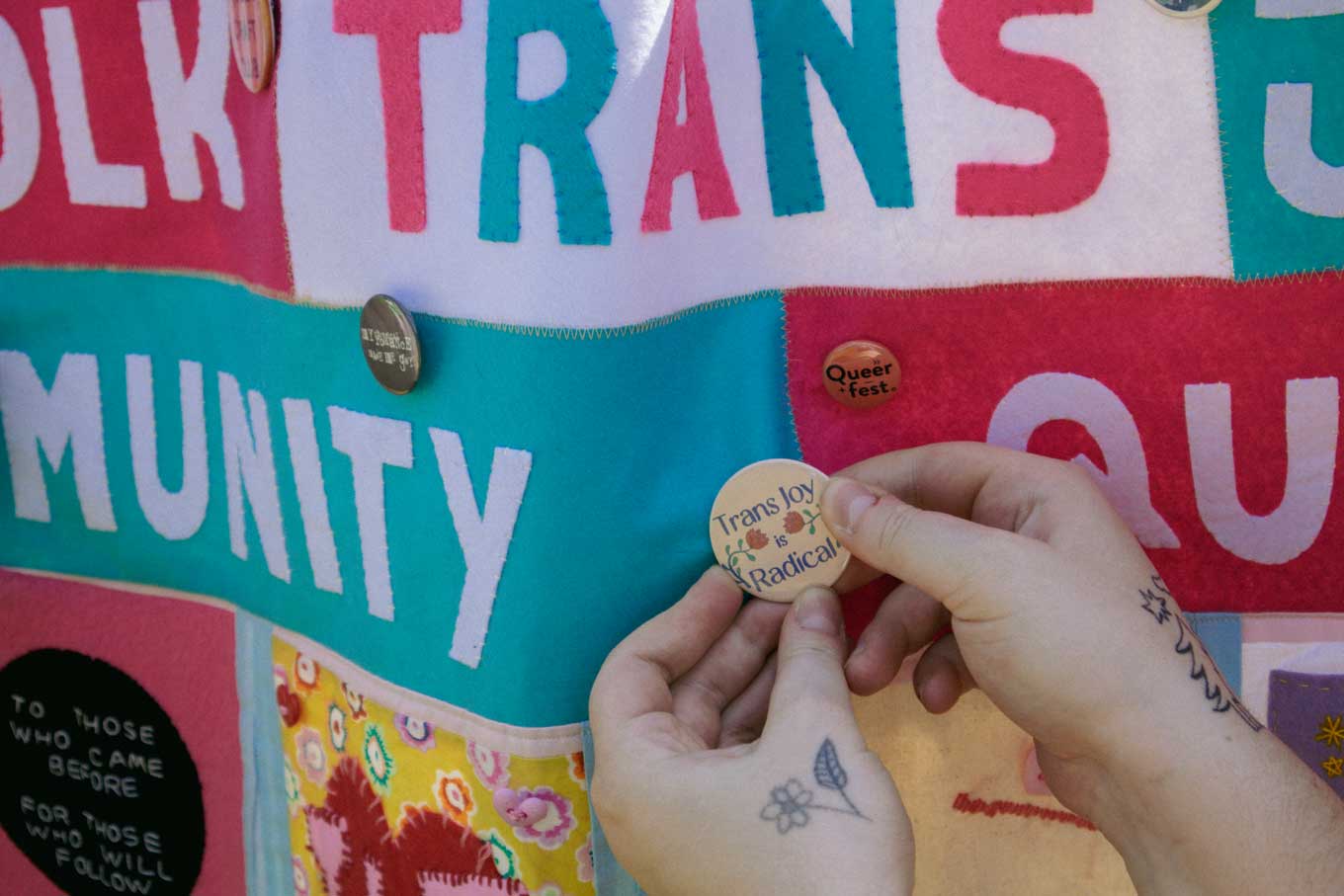
And it’s the experience and safety all trans and gender non-conforming folks deserve.
Gender euphoria: ‘The profound feeling of joy and comfort that some transgender people feel when their internal gender identity aligns with their external gender presentation.’
August is here — ushering in the end of summer and painting the world in the warm hues of sunflowers and sunset skies! It’s a month that feels slow and easy as we savor the heat and begin to settle back into our routines.
To help you bask in the golden light of August, we’ve curated a selection of inspiring quotes (and poems) about the eighth month of the year.
And because we’re Good Good Good — we’ve also highlighted the best quotes around August’s awareness days and notable events — like World Humanitarian Day, Women’s Equality Day, the anniversary of the March on Washington, and more. Plus, quotes from inspirational celebrities and leaders with August birthdays.
Whether you’re soaking up the daylight, celebrating an August birthday, or just looking to add a sunbeam of positivity to jumpstart the month, these quotes are for you. Scroll all the way through to find some hidden gems.
Here’s to making the most of August!
Explore more monthly quotes: January | February | March | April | May | June | July | August | September | October | November | December
The Best August Quotes —
Famous Quotes About August
“August is the slow, gentle month that stretches out the longest across the span of a year. It yawns and lingers on with the light in its palms.”
— Victoria Erickson

“This morning, the sun endures past dawn. I realize that it is August: the summer’s last stand.”
— Sara Baume, A Line Made By Walking

“August rain: the best of the summer gone, and the new fall not yet born. The odd uneven time.”
— Sylvia Plath, The Unabridged Journals of Sylvia Plath
“In August, the large masses of berries, which, when in flower, had attracted many wild bees, gradually assumed their bright velvety crimson hue, and by their weight again bent down and broke their tender limbs.”
— Henry David Thoreau
“Those late August mornings smelt of autumn from day-break till the hour when the sun-baked earth allowed the cool sea breezes to drive back the then less heavy aroma of threshed wheat, open furrows, and reeking manure.”
— Colette, The Ripening Seed
“I love borders. August is the border between summer and autumn; it is the most beautiful month I know. Twilight is the border between day and night, and the shore is the border between sea and land. The border is longing: when both have fallen in love but still haven’t said anything. The border is to be on the way. It is the way that is the most important thing.”
— Tove Jansson

“When summer opens, I see how fast it matures, and fear it will be short; but after the heats of July and August, I am reconciled, like one who has had his swing, to the cool of autumn.”
— Ralph Waldo Emerson
“August was nearly over — the month of apples and falling stars, the last care-free month for the school children. The days were not hot, but sunny and limpidly clear — the first sign of advancing autumn.”
— Viktor Někrasov
“Some days in late August at home are like this, the air thin and eager like this, with something in it sad and nostalgic and familiar.”
— William Faulkner

“But I can see us lost in the memory
August slipped away into a moment in time
‘Cause it was never mine
And I can see us twisted in bedsheets
August sipped away like a bottle of wine
‘Cause you were never mine”
— Taylor Swift, August
“August creates as she slumbers, replete and satisfied.”
— Joseph Wood Krutch
“August is the slow, gentle month that stretches out the longest across the span of a year. It yawns and lingers on with the light in its palms.”
— Victoria Erickson
“The first week of August hangs at the very top of summer, the top of the live-long year, like the highest seat of a ferris wheel when it pauses in its turning, The weeks that come before are only a climb from balmy spring, and those that follow a drop to the chill of autumn, but the first week of August is motionless, and hot. It is curiously silent, too, with blank white dawns and glaring noons, and sunsets smeared with too much color.”
— Natalie Babbitt
“When summer gathers up her robes of glory, and like a dream of beauty glides away.”
— Sarah Helen Whitman
“I love borders. August is the border between summer and autumn; it is the most beautiful month I know.
Twilight is the border between day and night, and the shore is the border between sea and land. The border is longing: when both have fallen in love but still haven't said anything. The border is to be on the way. It is the way that is the most important thing.”
― Tove Jansson
Quotes for Awareness Holidays in August
A collection of quotes to celebrate August’s awareness months and national days.
→ Explore more of this month’s awareness days in our August calendar
Esther Day
August 3
“Esther Day is a reminder that we should all make an effort to appreciate the people we love while we have them.”
— John Green
“She just hugged me; held me close, didn’t say anything. And I realize now that that was… that’s the best way to love someone. Hold them close, know that you’re loved, let it wash over you. We got to love her and she got to love us. Amen?”
— Esther Earl, This Star Won’t Go Out
“A life is not meant to be half lived. It is meant to be fully, wholly embraced. If you want to make a change in the world you have to be strong. You have to take chances. You have to persevere. Sometimes you must blindly go in a direction that you may be unsure of, but one that you have faith will lead you to the right place.”
— Esther Earl, This Star Won’t Go Out
→ Read about how to celebrate Esther Day
International Day of the World’s Indigenous People
August 9
“Indigenous peoples are the guardians of the earth, the protectors of biodiversity, and the custodians of ancestral knowledge.”
— Tarcila Rivera Zea
“Awareness of the settler-colonialist context of U.S. history writing is essential if one is to avoid the laziness of the default position and the trap of a mythological unconscious belief in manifest destiny.”
— Roxanne Dunbar-Ortiz
“Indigenous people and particularly Indigenous women are vital gatekeepers of health for their communities. The United Nations Declaration on Rights of Indigenous People safeguards the right to health without discrimination while also highlighting their to traditional medicines and health practices. Indigenous people also have unique knowledge and experience in traditional medicine, food systems, and one health approach that encompasses the health of humans, animals, and our environment.”
— Tedros Adhanom Ghebreyesus, WHO Director-General in a statement
World Humanitarian Day
August 19
“Optimism doesn’t mean that you are blind to the reality of the situation. It means that you remain motivated to seek a solution to whatever problems arise.”
— The Dalai Lama
“I do have reasons for hope: our clever brains, the resilience of nature, the indomitable human spirit, and above all, the commitment of young people when they’re empowered to take action.”
— Jane Goodall
“Every action, no matter how small, is like drips on a rock — over time, they can carve a canyon through even the thickest, most immovable layer of rock.”
— Shannon Watts
→ Read more humanitarian quotes
Women’s Equality Day
August 26
“I am not free while any woman is unfree, even when her shackles are very different from my own.”
— Audre Lorde
“We have to ensure that women have the opportunity to compete. We may have to start with girls’ education to ensure that we have enough well-educated, knowledgeable women in a critical mass to be able to hold leadership positions… Women are not asking for gifts in leadership, they’re now asking to just be made leaders, they want to compete effectively but too often they’re not allowed that opportunity to compete.”
— Ellen Johnson Sirleaf, in an interview
“A feminist is anyone who recognizes the equality and full humanity of women and men.”
— Gloria Steinem
→ Read more quotes to empower women
Anniversary of the March on Washington
August 28
“It is our goal to really have America show up, this is not about issues for one group or one ethnic group. It’s about Americans. It’s about creating a climate for America to fulfill its true promise for all of its citizens.”
— Martin Luther King III, in an interview with The Washington Post
“We have come a great distance in this country in the 50 years. But we still have a great distance to go before we fulfill the dream of Martin Luther King Jr.” — John Lewis, in a speech, 2013
“We’re seeing oppression being legislated. I think everyone’s looking at all of this and in a lot of ways thinking, ‘What in the world is going on?’”
— Arndrea Waters King, in an interview with The Washington Post
National Grief Awareness Day
August 30
“I think that all human relationships are like a two-way street. You give and take. I think that’s especially important in grief. You give to your patients and their family members, but you can also take these beautiful, terrible moments.”
— Sandra Menendez, in an interview
“Grief is not linear. It doesn’t have a set endpoint or a predictable path. It comes and goes, ebbs and flows. It’s messy and painful, but it’s also a testament to the love we shared.”
— Megan Devine
“And when great souls die, after a period peace blooms, slowly and always irregularly. Spaces fill with a kind of soothing electric vibration. Our senses, restored, never to be the same, whisper to us. They existed. We can be. Be and be better. For they existed.”
— Maya Angelou
Birthday Quotes from Inspiring People Born in August
James Baldwin
August 2
“I imagine one of the reasons people cling to their hates so stubbornly is because they sense, once hate is gone, they will be forced to deal with pain.”
— James Baldwin, The Fire Next Time
“Love takes off the masks that we fear we cannot live without and know we cannot live within.”
— James Baldwin, The Fire Next Time
“It took many years of vomiting up all the filth I’d been taught about myself, and half-believed before I was able to walk on the earth as though I had a right to be here.”
— James Baldwin, Collected Essays
→ Read more James Baldwin quotes
Barack Obama
August 4
“You can’t let your failures define you. You have to let your failures teach you.”
— Barack Obama
“Change will not come if we wait for some other person, or if we wait for some other time. We are the ones we’ve been waiting for. We are the change that we seek.”
— Barack Obama
“What I’ve realized is that life doesn’t count for much unless you’re willing to do your small part to leave our children — all of our children — a better world. Any fool can have a child. That doesn’t make you a father. It’s the courage to raise a child that makes you a father.”
— Barack Obama
→ Read more Barack Obama quotes
John Green
August 24
“Everything goes except the love you pour into others and the world.”
— John Green
“For me, finding hope is not some philosophical exercise or sentimental notion; it is a prerequisite for my survival.”
— John Green, The Anthropocene Reviewed
“You can’t see the future coming — not the terrors, for sure, but you also can’t see the wonders that are coming, the moments of light-soaked joy that await each of us.”
— John Green, The Anthropocene Reviewed
→ Read more John Green quotes
Marsha P. Johnson
August 24
“We have to be visible. We should not be ashamed of who we are.”
— Marsha P. Johnson
“As long as gay people don’t have their rights all across America, there’s no reason for celebration.”
— Marsha P. Johnson
“How many years has it taken people to realize that we are all brothers and sisters and human beings in the human race? I mean how many years does it take people to see that? We’re all in this rat race together!”
— Marsha P. Johnson
→ Read more Marsha P. Johnson quotes
Mother Teresa
August 27
“Not all of us can do great things. But we can do small things with great love.”
— Mother Teresa
“Yesterday is gone. Tomorrow has not yet come. We have only today. Let us begin.”
— Mother Teresa
“Life is a song, sing it. Life is a struggle, accept it.”
— Mother Teresa
→ Read more Mother Teresa quotes
August Poems
“A golden afternoon of August: every breath from the hills so full of life that it seemed whoever respired it, though dying, might revive.”
— Emily Brontë, Wuthering Heights

“August of another summer, and once again
I am drinking the sun
and the lilies again are spread across the water.
I know now what they want is to touch each other.
Each of us wears a shadow.
But just now it is summer again
and I am watching the lilies bow to each other,
then slide on the wind and the tug of desire,
close, close to one another,
Soon now, I’ll turn and start for home.
And who knows, maybe I’ll be singing.”
— Mary Oliver, Felicity
“Let July be July. Let August be August.
and let your just be even in the uncertainty.
You don’t have to fix everything.
You don’t have to solve everything.
And you can still find peace
and grow
in the wild
of changing things”
— Morgan Harper Nichols
“My life’s long radiant Summer halts at last, And lo! beside my pathway I behold Pursuing Autumn glide: nor frost nor cold Has heralded her presence, but a vast Sweet calm that comes not till the year has passed Its fevered solstice, and a tinge of gold Subdues the vivid coloring of bold And passion-hued emotions. I will cast My August days behind me with my May, Nor strive to drag them into Autumn’s place, Nor swear I hope when I do but remember. Now violet and rose have had their day, I’ll pluck the soberer asters with good grace And call September nothing but September.”
— Ella Wheeler Wilcox
“Long drawn, the cool, green shadows
Steal o’er the lake’s warm breast,
And the ancient silence follows
the burning sun to rest. The calm of a thousand summers,
And dreams of countless Junes,
Return when the lake-wind murmurs
through golden August noons.”
— William Braithwaite
“You lead me
Into the spacious,
Autumnal country of my mind,
There to dig in fallen leaves,
And talk about the world.”
— Amy Lowell
“Let July be July
by allowing
yourself to trust:
it’s okay
if you cannot
make sense of it all
right now.
What matters
is that somehow,
you found grace
to breathing through.
And now,
you’ve made it to August
where you’ll find:
there is more to you.
Let August
be August
by allowing
yourself to trust:
you do not have to be
so hard on yourself
if you cannot make sense
of all that is changing.
In the coming days,
you will find mystery,
and you will also
find room to breathe
and you might just find
even in these unknowns:
you are more prepared
than you think.
You are free to take the time you need to feel what you need to feel… including the good feelings.
Don’t let them rush you. You are traveling at the pace you were meant to.
You are still free to pursue peace right here in the in-betweens.
Whatever happens this month, be gentle with yourself.
Even here, there is still space for us to rise above the fear... propelled into motion by love.
There is more to come.
More love.
More joy.
More grace.
More peace.
Let this be the August
you look back on and say:
somehow, through it all,
I learned to fall in love
with the journey.”
— Morgan Harper Nichols, August Reminders
Funny August Quotes
“Leaving any bookstore is hard, especially on a day in August, when the street outside burns and glares, and the books inside are cool and crisp to the touch.”
— Jane Smiley
“Always keep mint on your windowsill in August, to ensure that buzzing flies will stay outside, where they belong. Don’t think the summer is over, even when roses droop and turn brown and the stars shift position in the sky. Never presume August is a safe or reliable time of the year.”
— Alice Hoffman
“Walking the streets of Charleston in the late afternoons of August was like walking through gauze or inhaling damaged silk.”
— Pat Conroy
“Everything good, everything magical happens between the months of June and August. Winters are simply a time to count the weeks until the next summer.”
— Jenny Han
Short August Quotes
“The month of August had turned into a griddle where the days just lay there and sizzled.”
— Sue Monk Kidd, The Secret Life of Bees
“Breathe the sweetness that hovers in August.”
— Denise Levertov
“No one can believe that God is not good when the August gardens are in their heyday.”
— Gladys Taber, Stillmeadow Daybook
“One day you discover you are alive… but, not long after, the sun goes out. Snow falls, but no one sees it, on an August noon.”
— Ray Bradbury
“August, the summer’s last messenger of misery, is a hollow actor.”
— Henry Rollins
“Breathe the sweetness that hovers in August.”
— Denise Levertov
“Dry August and warm, doth harvest no harm.”
— Thomas Tusser
“The cutting of the grass reminds me of the August practice.”
— Garth Brooks
“That August time it was delight. To watch the red moons wane to white.”
— Algernon Charles Swinburne
More August Quotes & Captions
“August has passed, and yet summer continues by force to grow days. They sprout secretly between the chapters of the year, covertly included between its pages.”
— Jonathan Safran Foer
“It was August and the fields were high with corn. In the orchard the last of the peaches clung to their branches and the apples were showing their first pinkish blush. The vegetable garden overflowed with produce: peppers, green beans, zucchini, tomatoes, cucumbers, and squash.”
— Melanie Gideon, Valley of the Moon
“The first week of August hangs at the very top of summer, the top of the live-long year, like the highest seat of a ferris wheel when it pauses in its turning. The weeks that come before are only a climb from balmy spring, and those that follow a drop to the chill of autumn, but the first week of August is motionless and hot. It is curiously silent, too, with blank white dawns and glaring noons, and sunsets smeared with too much color. Often at night there is lightning, but it quivers all alone.”
— Natalie Babbitt
“August brings into sharp focus and a furious boil everything I’ve been listening to in the late spring and summer.”
— Henry Rollins
“It is best to be born in April or August when the life-giving Sun is in its exaltation… for then we enter the sea of life on the crest-wave and are backed in the battle of existence by an abundant fund of vim and energy.”
— Max Heindel
The recycling sector across Africa isn’t as robust as other regions in the world — in fact, Africa salvages just about 4% of the waste produced across the continent.
And with 70 million tons of plastic found in landfills and streets in Africa’s urban landscape every year, solutions need to be speedy and strategic.
Kubik, an upcycling startup in Kenya and Ethiopia, is hoping to use some of that waste for good.
By turning hard-to-recycle plastics — like polyethylene, polypropylene, and polystyrene — into affordable and low-carbon building materials, aptly called ‘plastic bricks,’ Kubik removes about 45,000 kilograms of plastic waste from landfills every day.
In addition to the environmental impact, Kubik is confronting an overwhelming reality: that Africa is the fastest-growing continent in the world.
“By 2050, more than half of the continent’s population will be living in a city, and every year, more than 60 million tons of plastic waste goes unrecycled in Africa,” Kubik co-founder and CEO, Kidus Asfaw, shared in an Instagram video. “This growth is also fueling a large housing demand, with over 100 million homes needed by 2030.”
Current costs for building materials means the current ecosystem cannot meet this demand, leaving millions of Africans unhoused.
Asfaw and co-founder Penda Marre realized the answer to this crisis was wasting away in landfills.
“These are plastics found in landfills, if we are lucky, and in rivers and streets when we are not,” Asfaw wrote for the company’s Medium blog. “Instead of tackling these problems individually, we need to find a system that can tackle these interlinked issues.”
The duo met while working on a plastic-to-schools project in Côte d’Ivoire, which was foundational to Kubik’s mission and technological development.
By seeing the deployment of non-toxic, durable, and fire-safe plastic bricks to build schools, the two realized: What if more of Africa’s residential, commercial, and community buildings could be made with the same stuff?

Kubik’s plastic bricks and other building materials (like columns, beams, and jambs) are 40% cheaper than regular building materials — and twice as strong and over 100 times more durable, thanks to the 1,000-year lifespan of many plastics.
And while it’s not great for plastic to sit in a landfill emitting greenhouse gasses, these products are about five times lower in carbon emissions than cement-based products, according to Asfaw.
“What we’re making is adult-size Lego that can make walls for any building,” Asfaw explained in an interview with African Arguments.
“We take plastic that is usually going into a dump site or that you find in your rivers. We separate it by the different plastic types and clean it to a point it’s safe. We then use varying proportions of those plastic types as a formula to make the material for these Lego blocks.”
Kubik is also able to buy its base materials from previously disenfranchised waste collectors and empower them with meaningful and ethical work.
This is done by paying waste collectors a direct market rate, instead of the pennies they might get from waste aggregators who have long made the majority of profits from plastic collection.
“We believe this is the right model because now you’re incentivizing waste collectors to strengthen the supply chain,” Asfaw continued in the interview. “At the same time, you provide them with a very dignified pathway to economic empowerment.”
That’s what’s at the heart of Kubik’s work: dignity.

“We are on an unwavering mission to build dignity through clean and affordable living for all,” Kubik’s website reads. “Growth does not have to be a dirty process.”
And others see the vision, too. Kubik was recently named Startup of the Year at the 2023 Global Startup Awards and recently closed $3.34 million in a seed funding round.
This funding can rapidly scale Kubik’s operations, allowing the company to expand beyond Ethiopia and Kenya and into larger factories across the region.
Kubik projects that this scale will allow the company to build over a quarter-million square meters of wall surface area every year. In other words: about 10,000 affordable homes, just to start.
“An African Renaissance is here,” Asfaw writes. “And Kubik is one of many companies who will build dignity for all Africans.”
It’s no secret that healthcare workers are at the end of their rope. Over three years into a global pandemic, people are leaving the field (or traveling to other places to work) at unprecedented rates.
In fact, the World Health Organization estimates that the world will be short 10 million healthcare workers by 2030 — particularly in low- and middle-income countries.
Difficult working conditions coupled with high rates of anxiety and depression (over one in three health workers have suffered from these conditions since the start of the COVID-19 pandemic) not only impact worker retention, but also the wellbeing of individual humans who deserve their own health and safety.
Access to mental health services is more vital than ever, and Project HOPE has a solution.
The organization, which provides humanitarian assistance across the globe and especially supports global health initiatives, has created and implemented a training program for health workers on mental health and resiliency.
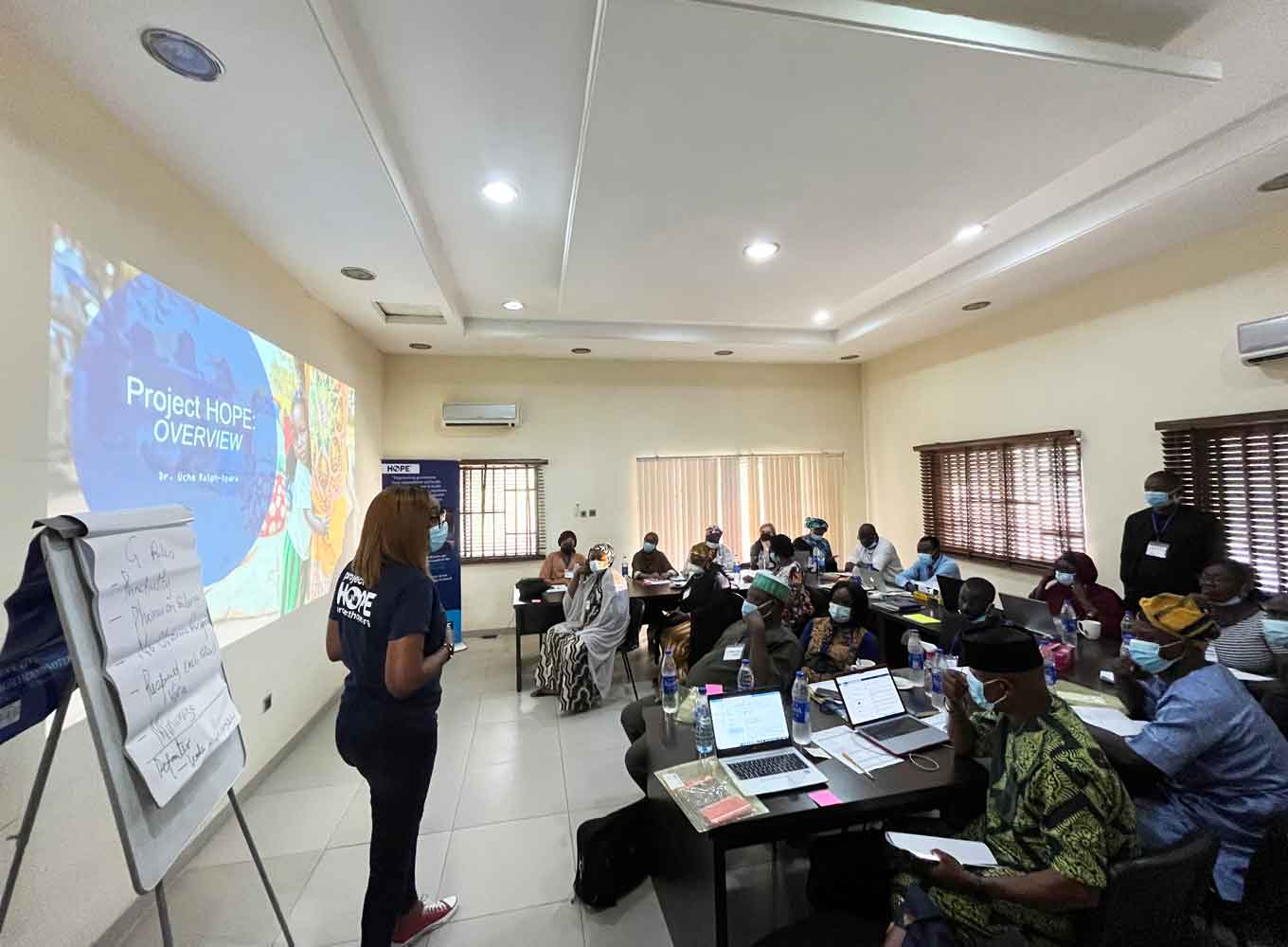
The training teaches health workers how to avoid and cope with burnout, skills to handle stress, PTSD, and anxiety, and practice self-care.
Project HOPE program officer Rawan Hamadeh says the training curriculum covers five main learning objectives.
These include stress, trauma, and resiliency; personal and professional wellness; the impact of stress on health workers; how to seek help for oneself and others; and the development of resilience programs and systems within individual hospital and care environments.
Beyond the U.S., the training program has been adapted and implemented across 41 countries and has reached over 100,000 healthcare workers since the start of the pandemic. This includes countries like Indonesia, the Philippines, Bangladesh, South Africa, Ghana, Sierra Leone, and more.
“One of the key successes of this project was the collaboration with local implementing partners instead of having international organizations and speakers implement the training,” Hamadeh told Good Good Good.
“Relying on local experts and resources made it easier to get the approval and endorsement of governments and made healthcare workers connect with the facilitator of the session. Project HOPE’s mission is to place power in the hands of healthcare workers, and this project is the best actualization of the mission.”
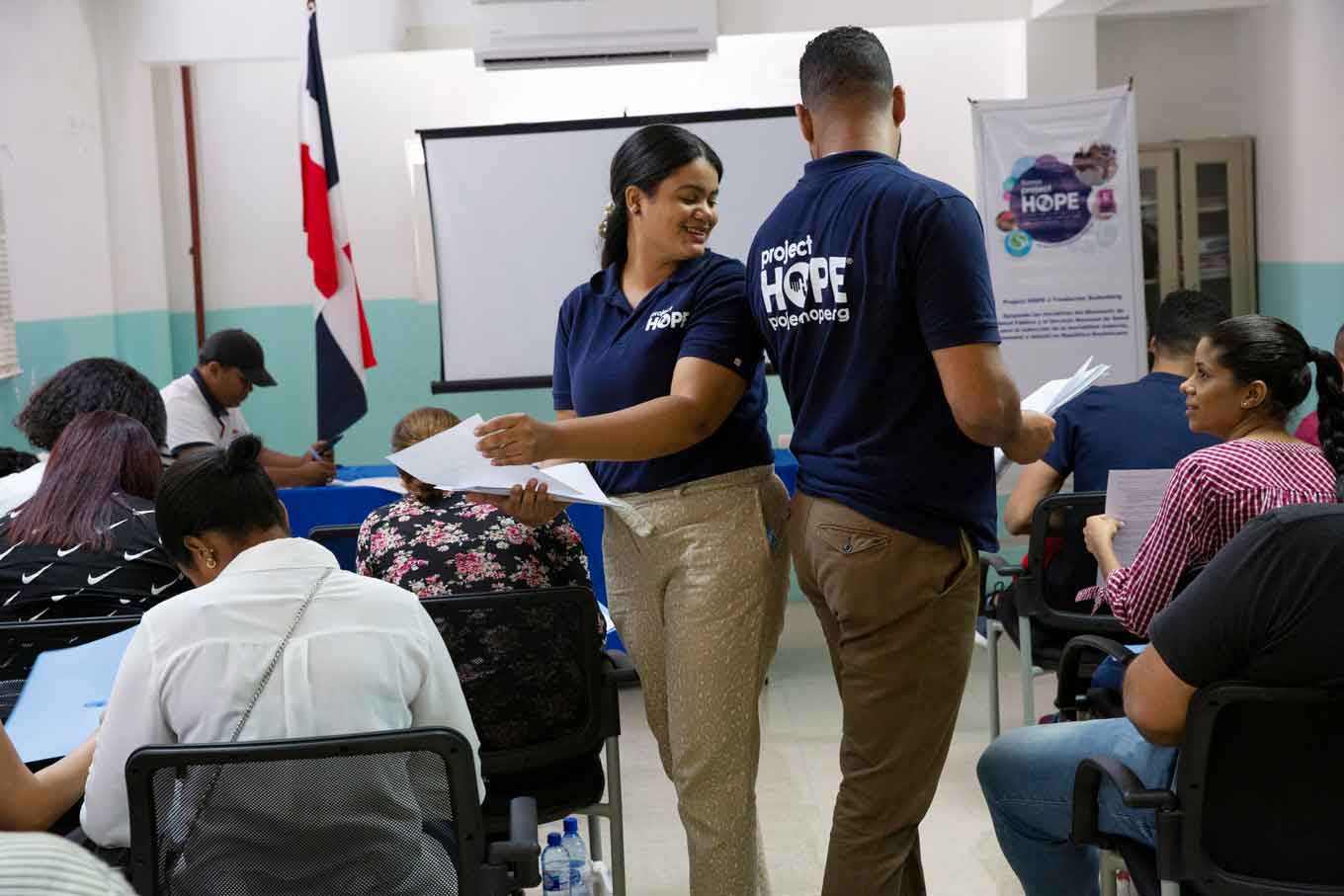
Large-scale projects like this are certainly only one piece of the puzzle, but they lay a foundation for long-term solutions to healthcare burnout, giving leaders the tools to create their own systems in ways that work best for their communities and cultures.
With this in mind, the curriculum was translated into over 15 languages and has undergone several rounds of review by local mental health experts, academics, and health departments in their respective countries.
“The curriculum was reviewed and edited to be culturally appropriate and to include examples, exercises, and local resources that are relevant to the target population, in addition to adding relevant studies and data whenever available,” Hamadeh said.
“We connected with the ministries of health and departments of mental health in most of the implementing countries to highlight the mental health needs of the health workforce and the importance of this initiative.”

It’s a milestone never seen on such a large scale. Over 40 diverse, individual local governments agreeing on a common goal: to support their healthcare workers.
“Being a mental health advocate, I consider that the silver lining of the pandemic is the global acknowledgement of the need to address healthcare wellbeing and shortage — and the huge losses that might happen if this topic is neglected,” Hamadeh said.
“One of the most important testimonials I heard from participants is that, as healthcare professionals, they are used to attending trainings to learn about patient care, however, it was the first time that they attended something targeting them, and not the patient. They are used to taking care of other people, but now they’ve learned something to take care of themselves.”
Every day the Good Good Good team collects the best good news in the world and shares it with our community. Here are the highlights for this week!
If you want to get good news in your inbox every day, join the Goodnewsletter — the free daily newsletter designed to leave you feeling hopeful.
The Best Positive News We’re Celebrating This Week —
The largest data set ever collected is now showing us how coral reefs can survive climate change
Over the course of two years, the Tara Pacific expedition searched the entire Pacific Ocean to understand the conditions needed for coral to survive — and it collected the largest-ever genetic inventory of any marine system.
The expedition’s team of 70 scientists collected around 58,000 samples from the 100 coral reefs they researched — and their first findings were just published. It’s freely available and will help the world uncover ways to help corals survive climate change.
Their research included three key findings: global biodiversity is ten times higher than we previously thought, the impact of the environment on evolutionary adaptation is specific to each coral species, and certain genes that are important for the coral’s survival are duplicated.
Why is this good news? Aside from the findings being freely available to the public, which will spur further research and discovery in how we can help protect and preserve coral reefs, understanding more about the most biologically diverse marine ecosystem on Earth is critical to their survival — and humanity’s.
Global solar panel installation grew by 50% in 2022 — and is projected to continue increasing annually
According to Solar Power Europe, 239 total GW of new solar capacity was installed in 2022 — 118 GW of rooftop solar, and 121 GW of utility-scale solar. That’s equivalent to a 45% growth rate overall (and a 50% growth rate of rooftop solar specifically), it’s the highest growth rate since 2016.
Installations in China drove the record growth, with nearly 100 GW added in a single year — a 72% growth rate. The U.S. installed the next-highest amount of solar capacity with 21.9 total GW. Brazil saw the largest year-over-year growth: 5.3 GW installed was a 193% increase over 2021.
And this rate of growth is expected to continue in the coming years (as solar panel costs continue to fall, too), and experts predict “the world could be installing 1 TW of solar annually by the end of the decade,” and even hit up to 800 GW per year hitting up to 800 GW per year” by 2027.
The number of people who die after a breast cancer diagnosis has decreased by two-thirds since the 1990s
A 10-year study of more than half a million women in England found those diagnosed from 1993 to 1999 had a 14.4% risk of dying within 5 years. That risk fell to 4.9% for women diagnosed from 2010 to 2015.
It also found that the risk of death decreased across nearly all age groups, both for women who were diagnosed through screening and those who were not screened.
The reason for the huge increase in the number of breast cancer survivors is unclear, though it could be due to increased awareness of breast cancer since the 1990s, screenings offered routinely and regularly to more women (which results in earlier diagnoses), and better treatment options.
→ Read more
More good global health news:
- Early stages of a new “poo transplant” trial showed promising results for people struggling with liver disease.
- After years of work, several new drugs have shown small but positive results in reducing the cognitive decline in people with Alzheimer’s disease.
- A world-first trial of a new treatment for the third most common type of pediatric brain cancer is now underway in Australia.
New Zealand just became the first country in the world to ban single-use plastic produce bags at grocery stores
Building on a ban of single-use plastic shopping bags from 2019, New Zealand just also became the first country in the world to ban single-use plastic produce bags at grocery stores. The ban went into effect on July 1 and includes recyclable, biodegradable, and plant-based plastics bags.
Instead, customers are encouraged to bring their own reusable mesh, paper, or fabric produce bags to carry and store produce in. The new ban is estimated to eliminate 150 million plastic produce bags from circulation each year.
New Zealand has also banned the manufacture, sale, and distribution of single-use plates, bowls, and cutlery. Additionally, stores can only offer single-use plastic straws to people who need them due to a disability or other health requirement.
Why is this good news? Single-use plastic bags cause major harm to the environment in a number of ways, including clogging storm drains, polluting landscapes and oceans, and killing wildlife. Not to mention, most of them are made with petroleum, so they cause double the damage by furthering our reliance on fossil fuels.
Using the same technology in your microwave, researchers found a way to more easily recycle solar panels
Thanks to rapidly declining costs, solar panel installations are popping up everywhere — from homes to canals and open fields. And while this spells very good news for the clean energy transition, one of the major drawbacks is what to do with the panels at end-of-life.
While it’s getting longer, the lifespan of solar panels installed in recent years could be just a few decades — leaving the world with a major waste problem. And it’s something researchers are thinking a lot about, since current recycling methods are expensive and difficult.
A team in Australia came up with a relatively simple, common solution: microwave technology. The same tech that warms up your leftovers makes it easier to heat up parts of a solar panel, take it apart, and recover and reuse the materials.
Why is this good news? Without new discoveries and solutions like these, the potential waste associated with end-of-life solar panels could be an environmental disaster — like the harm that the (however small amounts of) toxic metals they're made of could do if they end up in a landfill instead.
A member of Cherokee Nation is using the tribe’s long-promised place in Congress to help undo decades of harm
One of 573 other federally recognized tribes, Cherokee Nation is the most populous with 450,000 citizens. And the treaty that pushed them off their ancestral lands almost 200 years ago also promised them a non-voting seat in the U.S. House — which was filled for the first time by Kim Teehee.
Teehee was appointed by her tribe’s leaders, and while it’s to-be-determined how her actually taking the seat in Congress will look, she has plans to use it to help shape federal policy for the benefit of tribal nations.
Among her priorities: tackling the epidemic of violence against Native women, saving the Cherokee language from extinction, and protecting funding for health care and housing.
It’s also significant that the first person to represent Cherokee Nation in Congress is a woman, not only because it’s a highly man-dominated chamber, but because empowering women to lead is a cornerstone of the tribe’s culture and history.
More good news of the week —
Thanks to conservation efforts, Bangladesh had a record number of olive ridley turtle eggs laid on its beaches. This nesting season, researchers found 7,528 eggs at 58 spots on three different islands — 30% more than last year.
A federal judge gave an oil company three years to shut down an oil and gas pipeline that crosses tribal lands. The Enbrige Line 5 pipeline runs through Wisconsin and is at immediate risk of being exposed by erosion and rupturing on the tribal land.
Thousands of people in prison will be eligible for free college under the Pell Grant program expansion. Next month, about 30,000 more students will be able to receive $130 million in financial aid per year, helping them earn degrees, diplomas, and certificates while behind bars.
To combat climate change, all city buildings in Detroit will be powered by neighborhood solar power. The city announced a unique grassroots plan where neighborhoods and block clubs can apply to host and benefit from solar farms in their area.
Trans fiber artists are using community quilts to bring together queer and trans artists in an act of joyful activism. Due in part to its socially feminized connotation, quilting has long been used as a tool in activism for feminists, racial justice activists, and more.
More than 60% of U.S. unionized railroad workers at major railroads are now covered by new sick leave agreements. The railroads came under fire last year for not agreeing to paid sick leave during negotiations with unions.
Thanks to its solar power supply, Texas has avoided rolling blackouts during the current record-breaking heatwave. A large number of the state’s coal and gas-fired power plants have failed amid record temperatures, while solar has remained reliable.
Believed to be the largest of its kind in Africa, Kenya is launching a new free school meals program. Under the new scheme, 250,000 children living in the country's capital Nairobi will receive a hot meal every day.
New York’s first Narcan vending machine is working, saving lives and intervening in more than 850 overdoses. The vending machine is in Brownsville, which had one of the highest rates of death from overdoses in 2021.
The WHO announced the 12 countries in Africa that will receive the first 18 billion doses of the world’s first malaria vaccine. Malaria is one of the continent’s deadliest diseases, killing nearly half a million children under the age of five every year.
Forty-one countries have now implemented mental health and resiliency training for thousands of healthcare workers. The training teaches them how to avoid and cope with burnout, skills to handle stress, PTSD, and anxiety, and practice self-care.
Toyota says it has invented a battery with a range of 745 miles that charges in just 10 minutes. The breakthrough would allow the carmaker to halve the weight, size and cost of batteries, which could be a major leap forward for electric vehicles.
The dogs of British Columbia have had enough of the area’s silly goose antics.
More specifically: The Canada goose population has taken over public beaches and parks in the British Columbia district of Peachland, and officials are training dogs to help humanely move the birds out of the way.
We know what you’re thinking: Besides the honking and occasional pecking, what’s wrong with a few geese near the beachfront?
“The [goose] population likes to languish on our beaches. Unfortunately, so does the public,” Kirsten Jones, a communications officer for Peachland, told CBC News.
Jones shared that the geese often leave behind droppings, which has become a public health concern, since geese droppings might carry diseases that can be passed on to people.
“The beach becomes quite fouled by the excrement, and kids don’t know any better. They pick it up. It is everywhere.”
Not only this, but geese can even cause ecological damage by destroying natural habitats, and can become aggressive toward humans if they venture too close to a nest or goslings.
No harm needs to be done to these geese, of course, but folks are ready to gently bully them away from human-centric areas.
Officials in the district have already tried a number of tactics, including scarecrows, reflective tape, and noisemakers, but they haven’t had much success getting the geese to move out of the way. And it’s not exactly a situation fit for man-handling.
Americans have been getting creative in their dealings with these pesky birds for years, since the Federal Migratory Bird Act of 1918 states that no Canada goose can be touched or harmed by a person.
Not only do these dog patrols abide by the protective law, but inviting a natural predator to play a game of chase is also a lot more effective.
In fact, a number of small businesses across North America offer geese herding services on residential properties, like Geese Police and Wild Goose Chase (yes, those are their names, and yes, they’re amazing).
“We offer complete goose control programs working with dogs and trained handlers to chase, harass, and work to keep geese off your property,” the Wild Goose Chase website shares. “Our border collies are trained to chase geese but do not harm them, as they effectively disperse the geese from your property. This is one of the most humane and effective means of harassment or hazing.”
Wild Goose Chase, which is based in Chicago, works with a number of bird species, like Canada geese, and uses border collies specifically for their herding capabilities.
“Border collies have been bred for 300 years to manage and herd livestock without harm,” the company’s website continues. “Border collies provide the presence of a natural predator on a property through their instinct to quietly stalk with the ‘eye’ and then pursue until the targeted species of unwanted birds leave the area.”
The district of Peachland is looking to hire its own herding squad for the new pilot program.
“We are looking for dogs who like to put birds on the run,” Jones told CBC News.
The dogs will be leashed and trained, all while wearing some very official “Goose Patrol” vests and bandanas. They’ll focus on the geese’s most common hangouts, including the waterfront, popular parks with playgrounds, and food service areas.
While the Peachland program is still in its infancy, it sounds like this might just be the silver bullet to shoo the birds away to safety.
“When handled properly, Canada geese will become exasperated or annoyed to the threat of being chased by border collies,” Wild Goose Chase’s website shares. “They will most likely choose another place to spend their time.”
Header image courtesy of Wild Goose Chase
Think back to a time in your childhood when you played a big game or challenge with other kids your age: scavenger hunts, team sports, casual recess games, chess tournaments.
You may have some negative memories, like getting picked last for kickball, or clumsily taking a hockey puck to the face.
But in the best-case scenario, you solved problems as a team, persisted against challenges, and found meaning in a shared activity — even if it was just for a 45-minute P.E. class.
It’s this best-case scenario ethos that drives Edgard Gouveia Jr., a Brazilian game inventor and co-founder of Livelab.
When Gouveia was a kid himself, his community in Brazil played a game called gincana, where a whole town or city was invited to play in a series of challenges, with teams of 500 or 600 people coming together to find solutions to silly, impossible missions — like procuring a real-life pink elephant.
“We did it together,” he told NPR in an interview. It’s kind of collective intelligence … a brainstorm the size of a city. Even if you lost, you couldn’t believe these groups actually brought real elephants to your town. As a boy, I witnessed the creative potential we have to solve anything.”
Gouveia has taken that energetic, communal problem-solving and fueled his nonprofit, Livelab, a social innovation organization that develops collaborative games to make positive change in the world.
“Through games and playful activities, we create a field of trust, of safety, of love and empathy,” he told NPR. “When you create abundance of connection, abundance of possibility, people sense it right away.”
Livelab is currently running a game campaign called Jordana X, which in English means “X Journey.” The goal is to encourage young people to save the planet one block at a time. This could mean planting a block of trees, starting a community garden, restoring a neighborhood ecosystem — you name it.
The challenge starts with a Matrix-style video with a call-to-action, essentially explaining the climate crisis and how a group of young kids can awaken their superpowers and save the world.
The catch is that, in order to unlock that superhero potential, participants have to call upon at least three more friends to form a team.
Once they assemble their squad and sign up for the challenge, young people start receiving “missions” that ask questions about what needs fixing in a neighborhood. By the end of seven weeks of missions, the team has to find a solution and begin building it with their community.
This encourages an even farther ripple effect, as young people need to find allies in their neighborhoods to complete their challenges, mobilizing adults and experts to take meaningful action.

“When the community sees kids healing their neighborhood, they come together and say, ‘there’s something meaningful here. We need to be part of it. We’ve been waiting for the government or companies to support us, but we are the people who can act to restore our neighborhood,’” Gouveia continues in the NPR interview.
He takes inspiration from giant global events like the Olympics or The World Cup, watching people come together in pursuit of something “fast, free, fun, and fantastic.”
Gouveia launched Jordana X first as a pilot program, which began with 50 youth participants, and over the course of six months, expanded to 40 hands-on actions across 15 communities, mobilizing over 1,000 people.
And he has confidence that it will continue to catch on. The challenges have been rolled out in Brazil and 15 other countries, and he has his sights set on going global.
“Well, kids play war games all the time,” he explains in the interview. “They collaborate to kill people. It's not that they like death, but they want to have this kind of adrenaline. What could be more exciting? My answer is saving the planet in a way that adults haven't been able to.”
Aside from Jordana X, Livelab has also fostered challenges dedicated to improving mental health and belonging in Brazilian school communities, fighting food insecurity during the COVID-19 pandemic, preserving waterways across the country, and more. Livelab’s website calls them “radical journeys of protagonism.”
The task is to gamify some of the biggest social, political, and environmental challenges; to make problem-solving fun.
“By belonging to a group that we love and that’s doing good in the world, these are ways of energizing our collective power, our collective meaning,” Gouveia told NPR. “By playing the game, we strengthen our personal and collective portions of confidence, joy, and willingness to do good.”
Former U.S. Vice President Al Gore has been a huge player in the fight against climate change for as long as most of us can remember. As the founder and current chair of the Climate Reality Project, he has dedicated his life to climate action.
And he says we have a lot to celebrate.
Gore took the stage at the TED Countdown Summit in Detroit, Michigan this week to speak to the progress — and required action — in the climate movement.

A seasoned speaker, Gore has presented at a number of TED events over the years, in 2014, 2021, and 2022. This year, like always, he led with optimism and hope rooted in reality.
“The most important question these days is: How can we speed up solutions to the climate crisis? I’m convinced we are going to solve the climate crisis; we’ve got this,” Gore begins his talk. “The question remains: Will we solve it in time?”
With a clock that seems to tick more rapidly (and loudly) than ever, Gore keeps us grounded in the truth: The climate crisis demands action — and we’re moving forward.

“Obviously, the crisis has to be addressed,” he said. “The good news is… we are seeing tremendous progress.”
Here are a few pieces of good news Gore highlighted in his TED Talk that keep us hopeful — and activated — in the climate crisis:
These are some of Al Gore’s favorite climate change good news stories worth knowing —
The U.S. passed The Inflation Reduction Act, the largest and most comprehensive climate bill in U.S. history.
As Gore reminds us, in August 2022, the United States passed the Inflation Reduction Act: A historic piece of legislation that will invest an estimated $1.2 trillion in climate action.
The bill includes a variety of clean energy, climate mitigation and resilience, agriculture, and conservation-related programs and is the largest (and best!) federal climate policy the country has ever seen.
Australia adopted a new law that would reduce emissions 43% below 2005 levels by 2030.
A month after the Inflation Reduction Act passed in America, Australia began changing its laws to reduce emissions, too. The law is the most significant climate law in over a decade, according to experts.
Brazil elected Luis Inácio Lula da Silva as President, which is already a win for the Amazon.
Journeying over to South America, Brazil has a lot to celebrate under the leadership of Luis Inácio Lula da Silva. His plans to protect the Amazon have already seen significant progress.
Just six months into Lula’s presidency, deforestation has dropped 34% in the Amazon rainforest.
The EU announced its renewable energy generation would grow from 37% in 2021 to 69% in 2030.
Resisting war-motivated efforts of Russia’s fossil fuel industry, the European Union has rapidly accelerated its renewable energy capacity.

Nations like Denmark, Lithuania, and the Netherlands lead the way in solar, wind, and electric power — leading to astonishing numbers that give us hope in reaching clean energy goals by 2030.
India has paused plans to add coal plants for the next five years, focusing on renewable energy instead.
Gore also recently shared some good news from India. The world’s third-highest emitter and most populous nation, the country hit pause on new coal plants for the next five years, committing to building renewable energy systems instead.
According to the Associated Press, India plans to install 500 gigawatts of clean energy by 2030, enough to power anywhere from 150 to 500 million homes.
“This is a significant step toward a clean energy future,” Gore tweeted in June.
Investments in solar and battery factories have put us closer to net-zero goals by 2030.
A new analysis from the International Energy Agency suggests that the industrial capacity to manufacture solar panels, wind turbines, and electrolyzers put us on track to reach net-zero goals by 2030.
Investments in these manufacturing operations mean solar, wind, and electric power can help cut emissions in half by the end of the decade.
Once the world reaches net-zero carbon emissions, global temperatures will stop increasing within three to five years.
According to Michael Mann, distinguished professor of the atmospheric sciences and Director of Earth System Science Center at Penn State, once the world hits true net-zero, temperatures will stop going up.
Gore reminds us that some impacts of climate change will continue, like melting ice, but temperatures will stop increasing — with a lag time of as little as three to five years — once that net-zero goal is achieved.
And — if we can stay at true net-zero, half of the human-made CO2 would be taken out of the atmosphere within 30 years.
According to Drew Shundell of Duke University, halting our net CO2 emissions would put us on track to see a near 50% reduction in the carbon in our atmosphere, as it would be absorbed into the upper ocean and trees within approximately 30 years.

“Can you imagine?” Gore asks on the TED stage. “30 years from when we reach net-zero, we could be down to 350 ppm.”
Young climate activists are demanding that we do the right thing.
In every corner of the globe, young people are stepping up in protest, demanding a better, cleaner, greener future for all. Whether it’s Greta Thunberg, Vanessa Nakate, or any of the local grassroots organizers activating their community — the future is one of intersectional environmentalism.
We can save the planet.
If there’s one thing that Gore’s good climate news shows us, it’s that climate solutions work. Climate activism works.
If we continue on a path of progress — and accelerate renewable energy transitions and comprehensive climate policy — we can save the world.
“Do not be vulnerable to despair,” Gore said. “We are going to do this, and if you doubt that we, as human beings, have the will to act, always remember that the will to act is, itself, a renewable resource.”
Header image courtesy of Gilberto Tadday/TED

When governments invest in public health, remarkable progress can be made.
In 2003, the U.S. President’s Emergency Plan for AIDS Relief (PEPFAR) became the world’s largest commitment by any nation to address a single disease in history.
Throughout its last 20 years of action — and bipartisan support across four presidential administrations — PEPFAR has invested over $100 billion in the global HIV/AIDS response and had saved 25 million lives in 55 partner countries.
Additionally, AIDS-related deaths have declined by 68% since 2004, and new HIV infections are down by 42%. The work done through this program has also allowed for a more robust response to global health crises like Ebola and COVID-19.
Lost in the noise of other, more partisan concerns, this work is a triumph and deserves to be celebrated — especially in Namibia.
HIV/AIDS Progress in Namibia
Namibia has one of the world’s highest HIV prevalence rates, with an estimated 11.8% of adults living with HIV, according to a 2021 report from UNAIDS. The virus is still the leading cause of death in the country, and women are most impacted by the disease.
But that makes this progress even more impressive: Namibia is well on track to hit 95-95-95 UNAIDS targets before its 2030 deadline.
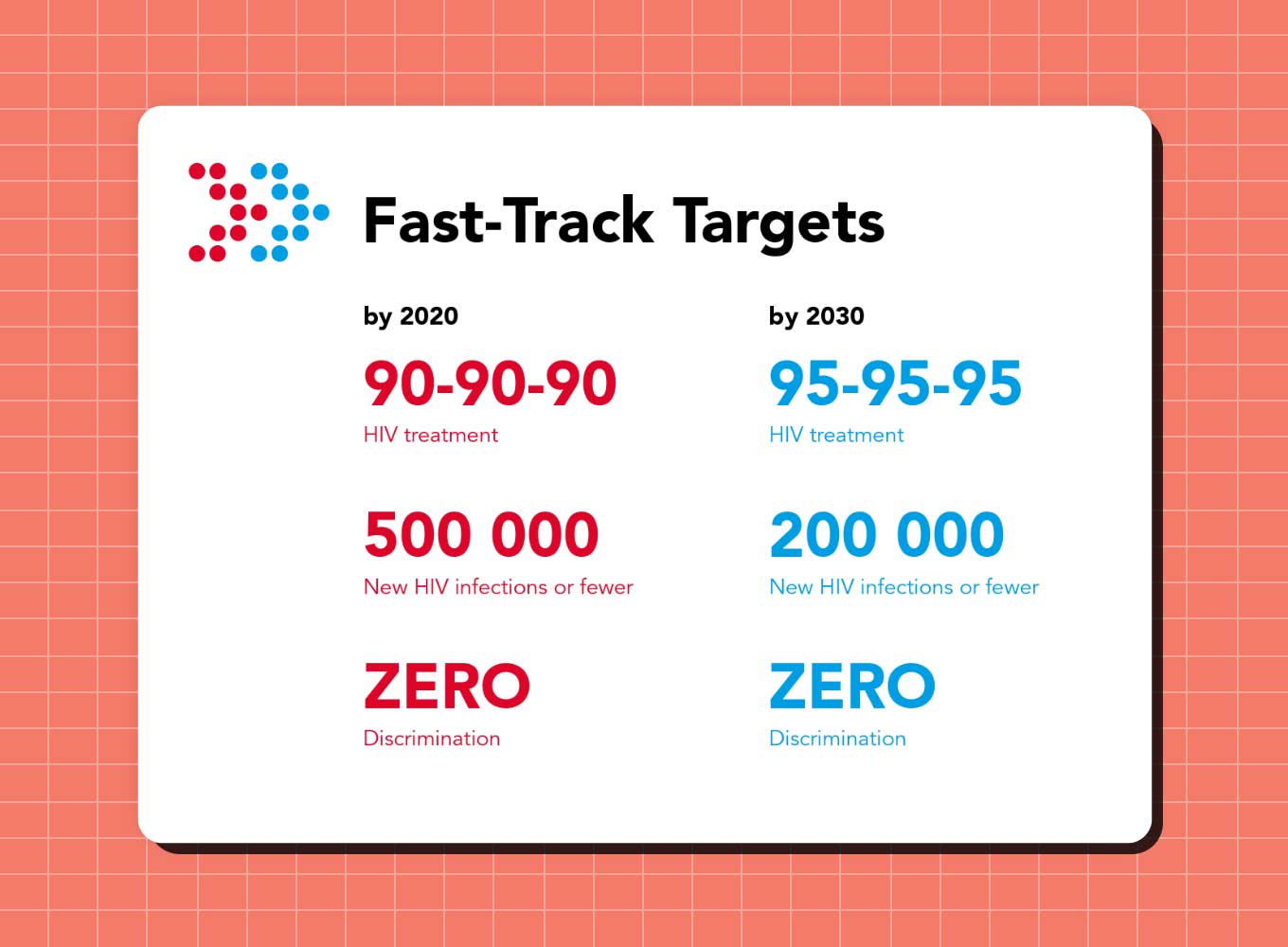
95-95-95 is a Fast-Track approach set by UNAIDS with a goal to end the global HIV/AIDS epidemic in middle- and low-income countries by 2030. A country reaches this goal when it meets these data targets:
- 95% of people living with HIV know their HIV status
- 95% of people who know their status are on treatment
- 95% of people on treatment have suppressed viral loads, meaning the virus is not detectable in their bodies
- There are 200,000 or fewer new HIV infections
This is executed through improved and scaled operations, like community-based testing and treatment deliveries, intensified education and prevention campaigns, zero discrimination policies, and more.
So, how’s Namibia doing?
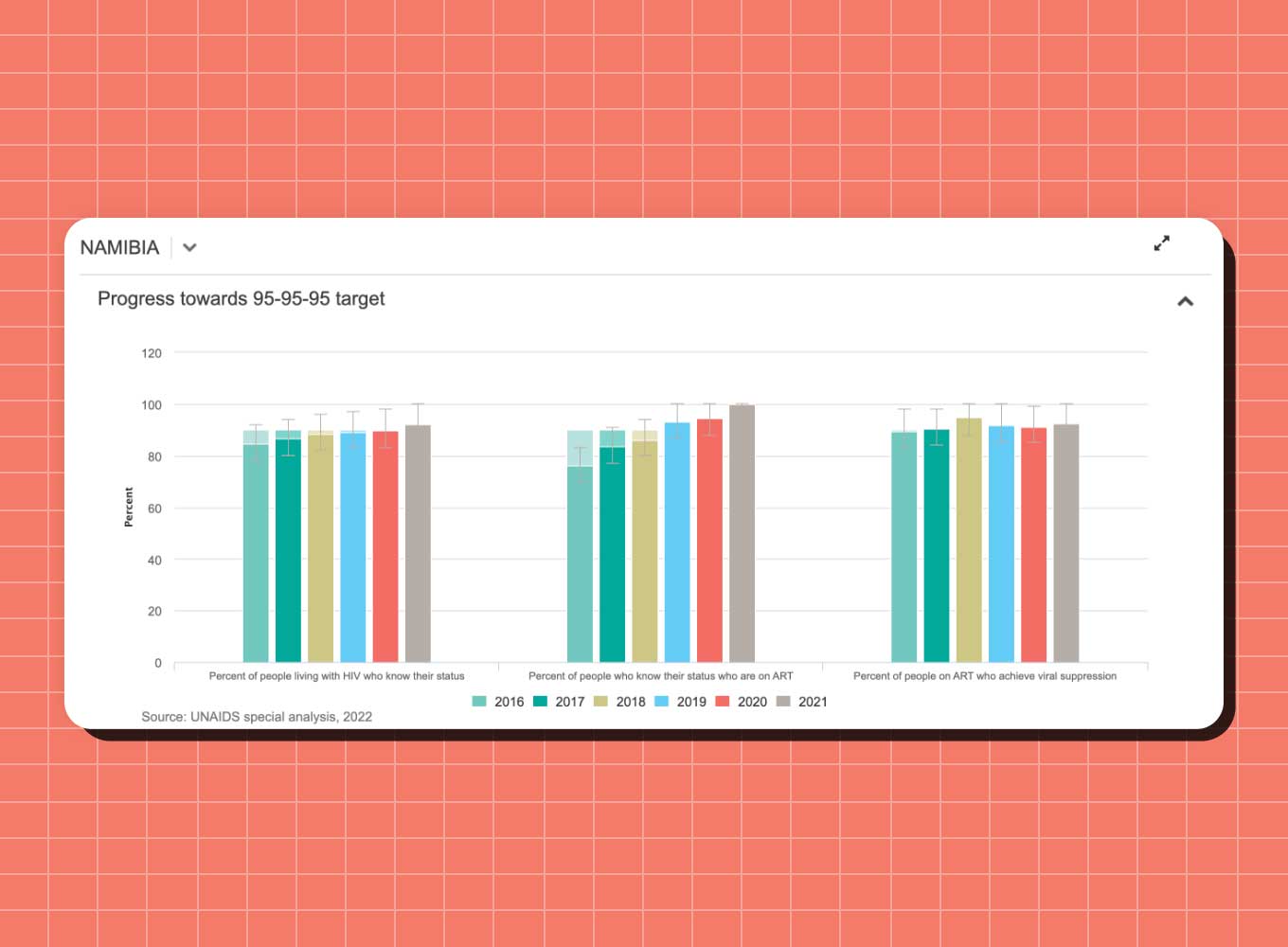
Most recent counts show that in Namibia, 92% of people know their HIV status, 99% of people living with HIV are on treatment, and 94% of people living with HIV who are on treatment are virally suppressed.
In addition to these exciting statistics, new infections have plummeted. The estimated rate of new HIV infections in Namibia is five times lower than it was in 2002, and the estimated number of people dying from HIV is three times lower in the same time period, according to the Centers for Disease Control & Prevention.
These encouraging numbers are thanks to the investment and strategic response of PEPFAR, but also to the willingness of local governmental agencies and organizations to adhere to the Fast-Track approach.
For instance, for 90% of children living with HIV in the Ohangwena Region, HIV concentration is so low that a blood test can no longer detect HIV. This result is thanks to strict adherence to antiretroviral therapy and other support services in the region.
Those support services include initiatives like the DREAMS (Determined, Resilient, Empowered, AIDS-Free, Mentored & Safe) project, which is implemented by Project HOPE Namibia and funded by PEPFAR and USAIDS to specifically support adolescent girls and young women in the fight against HIV/AIDS.
DREAMS supports young women and girls ages 10–24 through educational initiatives about HIV, financial literacy, gender-based violence prevention, sexual and reproductive health services, menstrual hygiene supplies, job placement, and, of course, PrEP and HIV testing services.
As a result of these interventions, over 13,000 young Namibian women have been enrolled on PrEP treatment, and over 32,000 are actively enrolled in other DREAMS programs.
Along with these community-centered programs, political commitment and reliable data are to thank for the amazing achievement in the reduction of HIV/AIDS in Namibia.
“One should know the epidemiology of that disease in terms of person, place, and time,” Namibia’s Minister of Health Kalumbi Shangula said in a statement earlier this year. “We have always used this principle in monitoring and controlling the HIV epidemic in Namibia.”
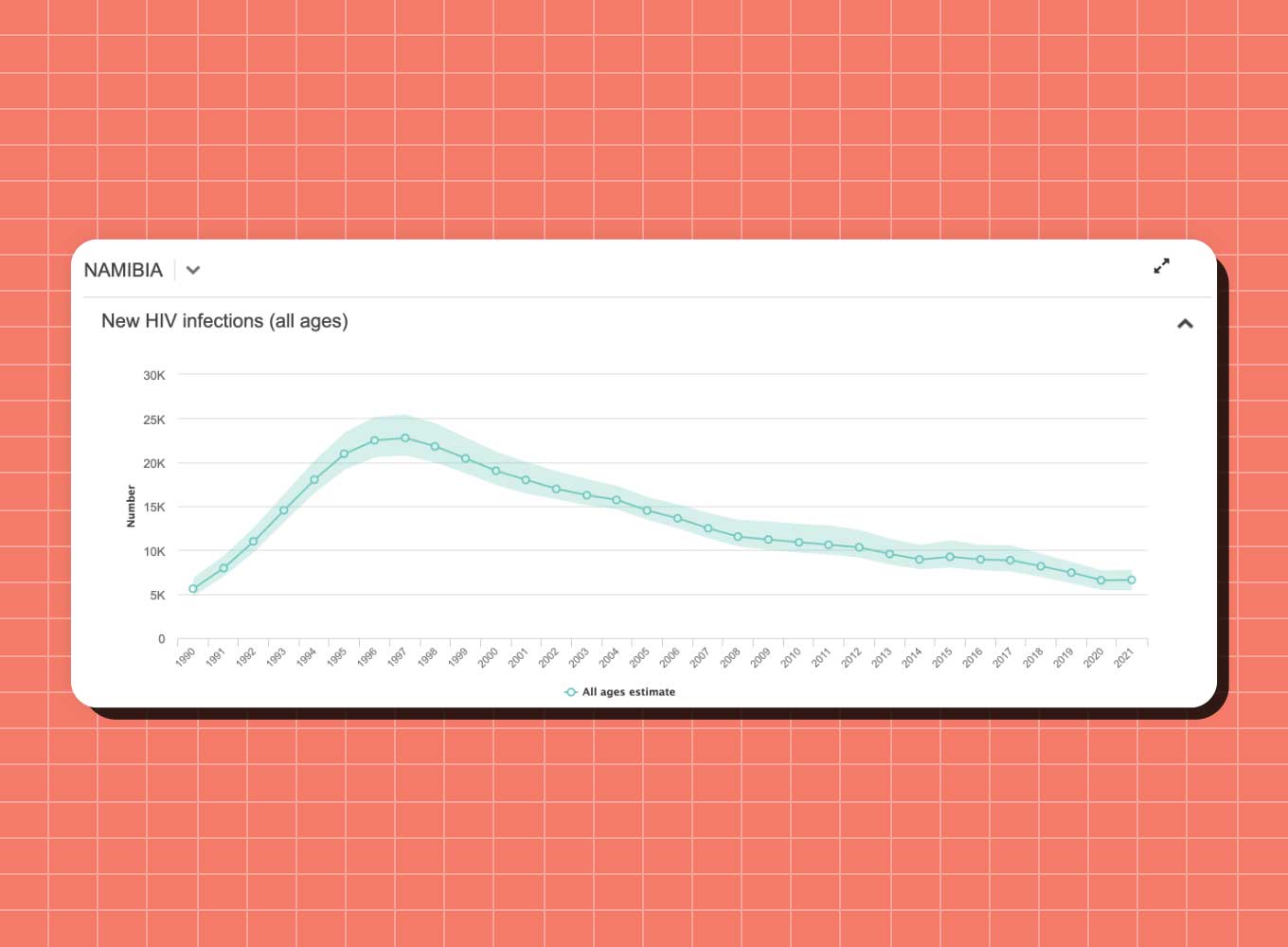
As Namibia celebrates this milestone and continues to fight the HIV/AIDS epidemic across the country, it stands as an example for the future of disease mitigation across the globe — and provides a shining light of hope.
“Namibia, once overwhelmed by a high HIV prevalence, has undergone a remarkable transformation in its fight against the epidemic,” Uche Ralph Opara, deputy regional director for Africa at Project HOPE, told Good Good Good.
“Achieving the global targets of 95-95-95 seven years ahead of schedule, Namibia is a global exemplar in tackling HIV. With continued focused effort, it is now possible to see a future in Namibia where children grow up free from the fear of an HIV/AIDS death sentence.”
Header image courtesy of Project HOPE
A net-zero power system is closer than we think.
New research, published by RMI, indicates that an exponential surge in renewable energy deployment is outpacing the International Energy Agency’s most ambitious net-zero predictions for 2030.
That’s right: Surging solar, wind, and battery capacity is now in-line with net-zero scenarios.
“For the first time, we can, with hand on heart, say that we are potentially on the path to net zero,” Kingsmill Bond, Senior Principal at RMI, said. “We need to make sure that we continue to drive change, but there is a path and we are on it.”
And that’s really good news.
Exponential growth in renewable energy has put the global electricity system at a tipping point. What was once seen as a wildly daunting task — transitioning away from fossil fuels — is now happening at a faster pace every year.
Based on this new research, conducted in partnership with the Bezos Earth Fund, RMI projects that solar and wind will supply over a third of all global electricity by 2030, up from about 12% today, which would surpass recent calls for a tripling of total renewable energy capacity by the end of the decade.
Global progress in the renewable energy sector
China and Europe have been leading the way in clean energy generation, but the deployment of renewable energy has also been widely distributed across the Middle East and Africa.
Research from Systems Change Lab shows that eight countries (Uruguay, Denmark, Lithuania, Namibia, Netherlands, Palestine, Jordan, and Chile) have already grown solar and wind power faster than what is needed to limit global warming to 1.5°C, proving that a swift switch to renewable energy is not only feasible — it’s entirely achievable.
In order to make that switch, globally, wind and solar need to grow from 12% to 41% by 2030. Denmark, Uruguay, and Lithuania have already achieved that increase in the span of eight years.
Meanwhile, Namibia, the Netherlands, Palestine, Jordan, and Chile have grown solar and wind energy at sufficient rates for five years.
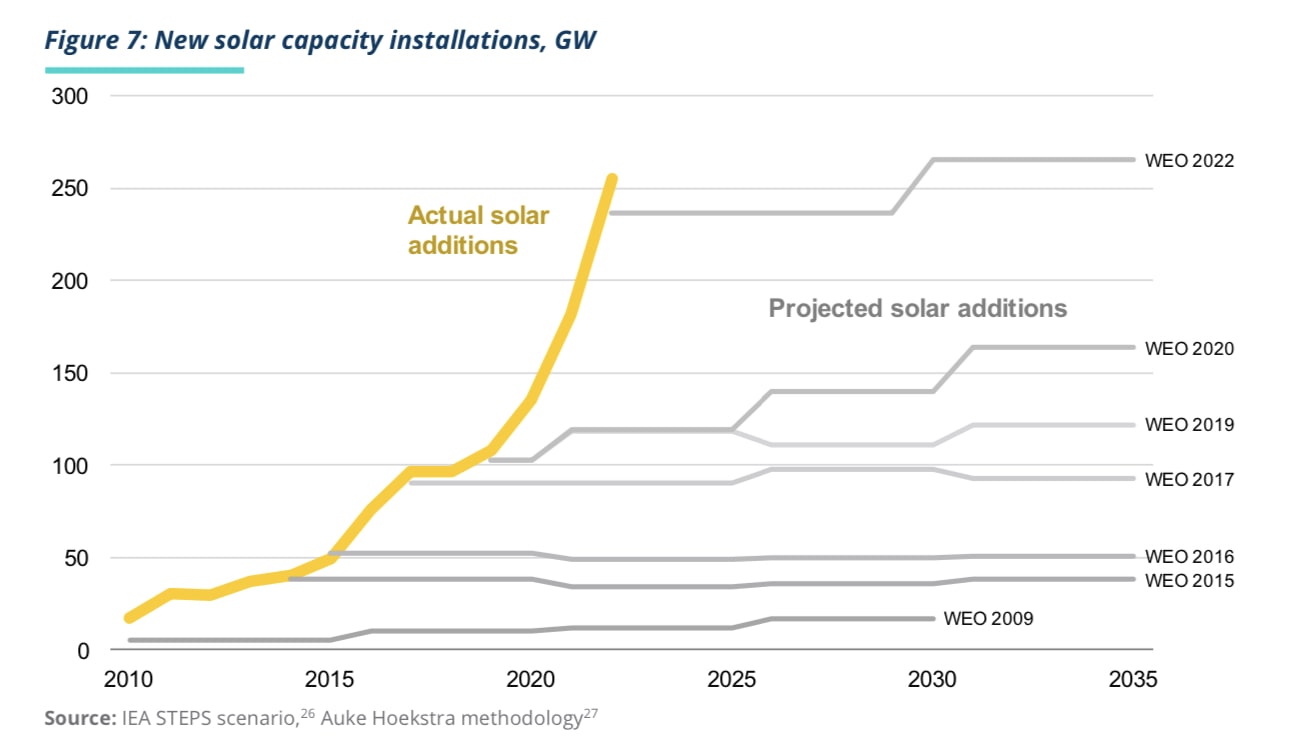
As clean energy surges, fossil fuel demand for electricity continues to move in a steep decline. According to the RMI analysis, demand will be down as much as 30% between 2022 and 2030.
In fact, researchers believe fossil fuel demand has peaked, and the electricity sector will be in free fall by the end of the decade.
The economic impact of climate progress
Not only is this an exciting and unprecedented development for the health of the environment, but this rapid transition to clean energy includes widespread benefits, like jobs growth, more secure supply chains, and reductions in energy price inflation.
This progress spans both developing and developed countries, all driven to accelerate renewables for a number of different reasons: adopting smart and effective policies, maintaining political commitments, lowering the costs of renewable energy, and improving energy security.
And with exponential growth of clean energy means sharp declines in prices. This puts fossil fuels at a higher, uncompetitive cost — both financially and figuratively.
RMI suggests that solar energy is already the cheapest form of electricity in history — and will likely halve in price by 2030, falling as low as $20/MWh in the coming years. This follows previous trends: solar and battery costs have declined 80% between 2012 and 2022, and offshore wind costs are down 73%.
“Exponential growth of clean energy is an unstoppable force that will put more spending power in the pockets of consumers,” Bond said.
“The benefit of rapid renewable deployment is greater energy security and independence, plus long-term energy price deflation because this is a manufactured technology; The more you install, the cheaper it gets.”
Staying on the path to net-zero will take collaborative effort
As electricity and road transport reach unprecedented demand — both away from fossil fuels and toward renewables — these numbers indicate that now is the time to further accelerate the clean energy transition.
“This is a clear signal to policy makers, businesses and investors to seize the opportunity of accelerating the energy transition,” Christina Figueres, the former executive secretary of UNFCCC and a founding partner of nonprofit Global Optimism said.
“The call to triple renewable electricity investment and capacity by 2030 are deliverable. But only by removing barriers to faster renewable deployment, from streamlining permitting to redirecting subsidies for polluting energy. Otherwise, the exponential growth we are seeing and the benefits that come with it could be derailed unnecessarily.”
In addition to permitting and redirecting subsidies, some of those barriers include building out the grid, improving regulatory and market systems, and speeding up renewable capacity deployment in the Global South.
Exponential growth is already happening, and as Faustine Delasalle — the executive director of Mission Possible Partnership — said, “It’s important to encourage corporate leaders and policymakers to think with that exponential [growth] in mind, because we will only reach the big dream if we continue dreaming big.”
“If we dream small, then policymakers and corporate decision makers will continue to make decisions based on small calculations of short-term profits.”
And dreaming big is something we can all do to make a real, meaningful difference to keep the world on our current path to net-zero.
Header image of solar power plants in Denmark courtesy of Erik Christensen (CC BY-SA 3.0)
When Johnson & Johnson refused to end their patent on a life-saving tuberculosis (TB) drug, beloved author, internet personality, and passionate global health advocate John Green called on the internet to take a stand.
After thousands of people called on the pharmaceutical company to make tuberculosis treatment accessible and affordable to those who need it most, Johnson & Johnson announced Thursday morning that it would grant licensing to supply generic versions of the drug to low- and middle-income countries, in partnership with the Stop TB Partnership.
But first, a quick overview of the circumstances that led to this good news —
The Patent
In late 2012, the FDA approved a new medication called bedaquiline to treat drug-resistant tuberculosis. This approval came after decades of research and testing.
The drug, developed and owned by Johnson & Johnson, was approved for use and sale under the name SIRTURO. Despite its ownership by J&J, the research and development of the medication were largely publicly funded.
Since 2003, J&J has maintained a patent for bedaquiline, preventing generic versions of the medication from being produced and distributed.
In 2007, the company filed a second patent on an additive to the drug, extending its ownership in a practice known as “evergreening.”
These patents gave the company a monopoly on the drug and allowed them to set their own price as the sole producer of the medication.
J&J’s original 2003 patent was set to expire on July 18, 2023, generating excitement among scientists and medical professionals eager to see a generic version of the drug create accessible treatment.
However, J&J decided to honor its 2007 patent, effectively maintaining its monopoly of the drug and preventing generics for an additional four years.
While many countries, including the United States, have legally denied J&J’s “evergreen” patent extension, many other countries still do not have access to these more cost-effective generic treatments.
The Response
Upon learning this news, New York Times Bestselling Author John Green took to the internet.
Green, who has developed a reputation as an amateur tuberculosis historian and an established philanthropist, shared the news from J&J in a YouTube video explaining the implications of J&J’s patent extension.
“During those four years, experts estimate that up to six million people who would have access to bedaquiline in a world of generics won’t be able to afford it, and most of those people will die,” explains Green.
“So if it sounds like I’m angry, that’s because I’m angry.”
As Green reminds viewers, tuberculosis is the world’s deadliest infectious disease — despite the fact that it is curable.
This fact is particularly staggering to individuals living in wealthy countries, where investment in treatments has resulted in the near eradication of the disease, keeping it out of mind as it is not a part of daily life.
In many other areas of the world, though, TB continues to claim lives. In 2021, the WHO reported 1.6 million deaths from tuberculosis.
J&J’s bedaquiline has the potential to be an invaluable tool in the fight against tuberculosis, but its price makes it unattainable to millions of vulnerable people who could be saved by it.
A generic version of the same medication would cost an estimated 60% less than its J&J-owned alternative, creating a critical pathway to access for patients in the countries currently affected by the extended patent.

Green appeals to the humanity of the people behind these decisions at J&J — and to his viewers.
“Johnson & Johnson is not some evil monolith,” he says in the video. “It’s a company made out of people, and I genuinely believe that most of those people want to make the world better.”
Green cites the company’s Credo in the video, which starts with this sentence:
“We believe first that our responsibility is to the patients, doctors, nurses, mothers, and fathers, and all others who use our products and services.”
The company’s decision to place the financial value of the patent over the value of the lives of patients stands in conflict with this statement, and Green used that conflict to inspire action.
The Action
Green’s video goes beyond simply revealing J&J’s disappointing decision. Rather, he calls on viewers to take action and bring attention to the issue, something his online community is used to hearing and doing.
Along with his brother Hank, John has a long history of organizing an online community for good. Hank and John’s fans, known to the internet as Nerdfighters, have built a reputation for raising money for charitable causes in creative ways.
From the annual Project for Awesome, to charitable coffee, soap, and sock subscriptions, Nerdfighters have contributed millions of dollars to various charities and organizations.
The community’s latest project is a commitment to build, staff, and maintain a hospital in Sierra Leone in partnership with Partners in Health. This project has raised nearly $40 million so far.
Green’s video gained over 500,000 views within its first 22 hours live. Given the community’s track record, it’s no surprise that viewers followed John’s lead and took steps to bring attention to the bedaquiline patent.
Patients, Not Patents: Public accountability for Johnson & Johnson
As mentioned, Green tactfully illustrated the dissonance between J&J’s Credo and its actions to evergreen the bedaquiline patent.
“It might cost J&J some pennies, but that should be OK with them, because they set their credo in stone at their headquarters,” tweeted his brother, Hank, about the company’s decision.
“It is beautiful, and it begins with the words ‘We believe our first responsibility is to the doctors, nurses, and patients.’”
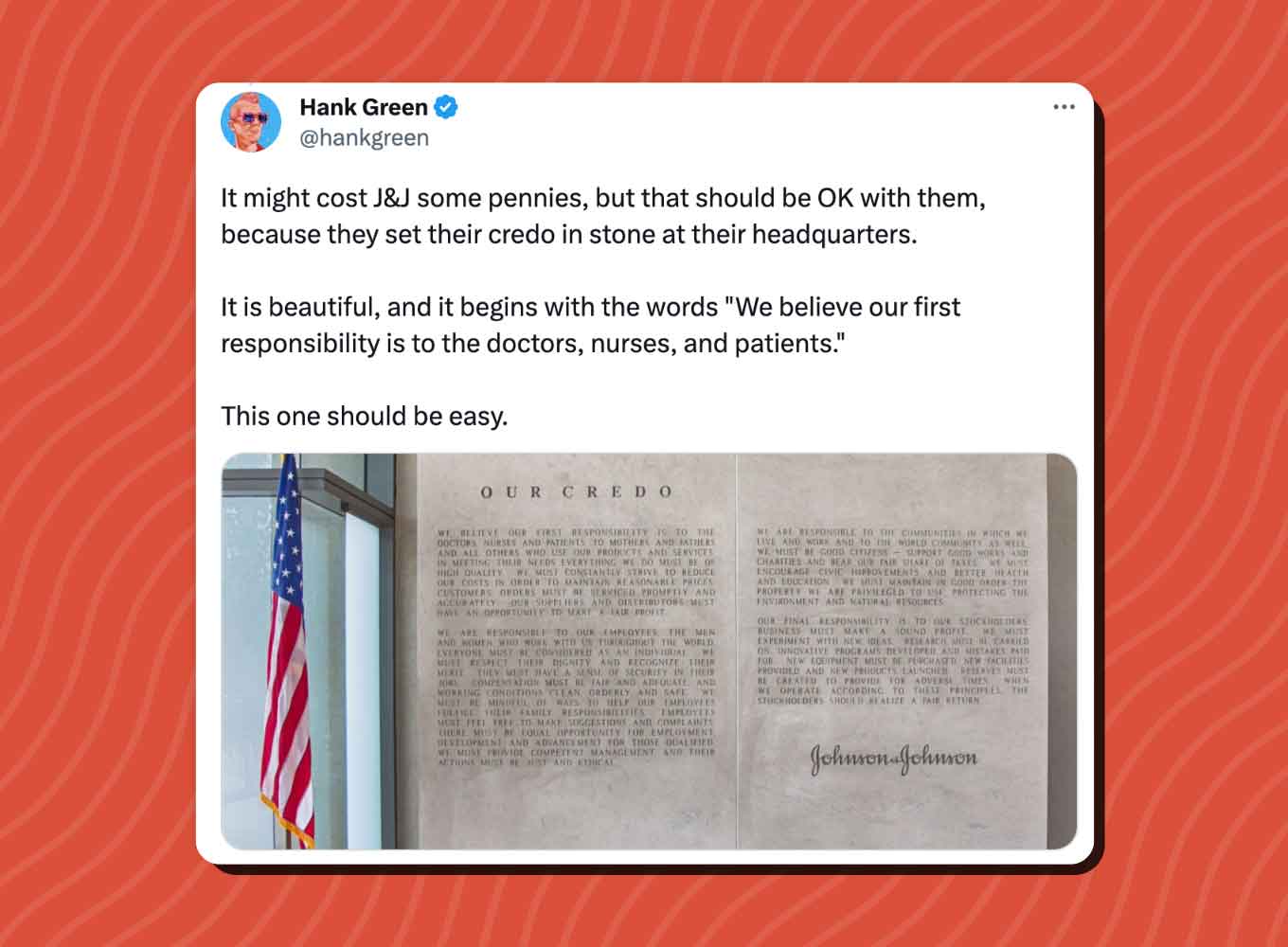
Any individual can submit a concern to the company online — or share their concerns on social media.
John’s second call to action is simple: make noise and raise attention online.
While J&J is a private company able to make its own decisions, consumers are also able to raise awareness of these decisions and their impacts.
Nerdfighteria has risen to the challenge of doing this through social media. In fact, many Nerdfighters did so with strategically crafted memes.
It's a no brainer#patientsnotpatents pic.twitter.com/NAIQlUltlT
— Louis JNJ FOR LIFE💚 (@louismyers110) July 11, 2023
Within two hours of the video going live, the Patients Not Patents hashtag trended on Twitter. J&J’s Twitter accounts, @JNJNews and @JNJGlobalHealth, received thousands of mentions and replies.
Prominent health organizations and even celebrities joined the cause online, too.
“You can use your voice to save millions of lives this year,” said Wonder Woman actress Lynda Carter, sharing John’s video in a tweet.
Treatment Action Group shared an open letter to J&J. Partners in Health joined the fight online as well, calling for the company not to enforce its evergreen patent.
“I was reminded today of the old adage: never underestimate Nerdfighteria,” shared John about the community’s response.
“Thousands of messages to J&J about an illness and patient population too long neglected. I love this community so much and am so, so grateful for it.”
With just a week left until the expiration of the original contract, the need to call for action is pressing, but the potential for change is immense.
As John said, “The time has come for this drug funded primarily by the public to be returned to the public as a public good.”
The Impact
Early in the morning on Thursday, July 13, the Stop TB Partnership shared an update. It reads:
“Following lengthy negotiations, Johnson & Johnson has granted Stop TB Partnership’s Global Drug Facility’s licenses that enable Global Drug Facility (GDF) to tender, procure, and supply generic versions of SIRTURO (bedaquiline) for the majority of low-and middle-income countries, including countries where patents remain in effect.
GDF has shared with the TB community important updates on plans to launch a global, competitive tender for bedaquiline by end July 2023. All bedaquiline suppliers that meet GDF’s quality criteria are eligible to participate in the GDF bedaquiline tender and have been briefed on the tender goals, processes, and timelines.
This is an important agreement that will support our common goal of ending TB.”
Upon hearing this exciting news, John — and the Nerdfighters — rejoiced.
“Takes real guts to live up to your credo,” John tweeted upon first reacting to the news. “Generic bedaquiline WILL BE AVAILABLE in almost every country with a high tuberculosis burden.”
“I am so happy and grateful to the Stop TB Partnership, J&J, and especially the activists around the world who are standing up for TB patients. So much more work to do, but WHAT WONDERFUL NEWS TO WAKE UP TO.”
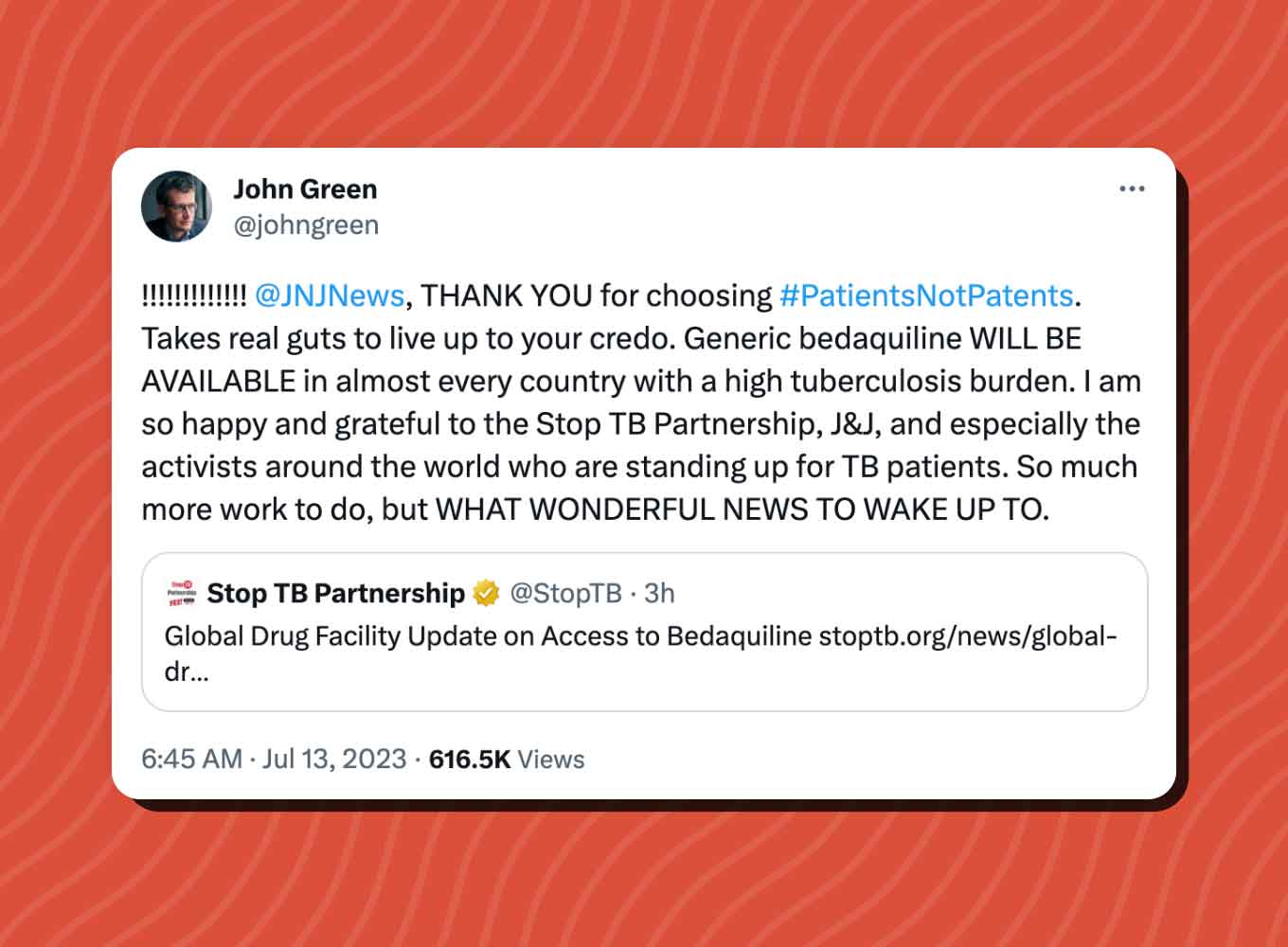
Nerdfighters chimed in on Twitter and Reddit.
“This is why I'm proud to be a Nerdfighter!” one Reddit user shared. “Way to go everyone!”
“You are an incredible inspiration for change and the power for good,” a Twitter user replied to John.
While this is a huge win — that comes at the efforts of thousands of activists like TB-survivors Phumeza Tisile and Nandita Venkatesan, and undoubted years of negotiations at the Stop TB Partnership — Green still seeks a few more actions from Johnson & Johnson. He outlines them in a tweet:
- Commit to the deal with the Global Drug Facility in perpetuity
- Provide the list of countries that can access bedaquiline through this deal
- Publicly acknowledge this amounts to a functional abandonment of secondary patents on bedaquiline in countries with high TB burden
This from Dr. Mitnick, Harvard professor and one of the world's leading TB researchers. So @jnjnews, if you could take just a couple more steps and...
— John Green (@johngreen) July 13, 2023
- Commit to this new deal with GDF in perpetuity
- Provide the list of countries that can access bedaquiline through this deal… https://t.co/RswIU3tXyp
Still, this progress is worth celebrating — and as John leads the way in anger and action, so too, does he in joy and hope.
“They did the right thing! And I'm sure it wasn't an easy decision for them,” John tweeted. “But they have chosen #PatientsNotPatents, and we have to celebrate when corporations make these choices — not least to encourage other corporations to do so!!!”
“We keep going from here,” he continued, in a response to the Stop TB Partnership, “together in solidarity with all those affected by TB.”
Isabella Kirkland’s 2003 painting “Back” is a masterful documentation of flora and fauna brought back from the brink of extinction.
In warm natural tones, she depicts 48 species that were carefully husbanded back to existence — or thought to be extinct and joyously rediscovered.
Some subjects include the Madagascar red owl, the black-footed ferret, and the Wollemi pine.
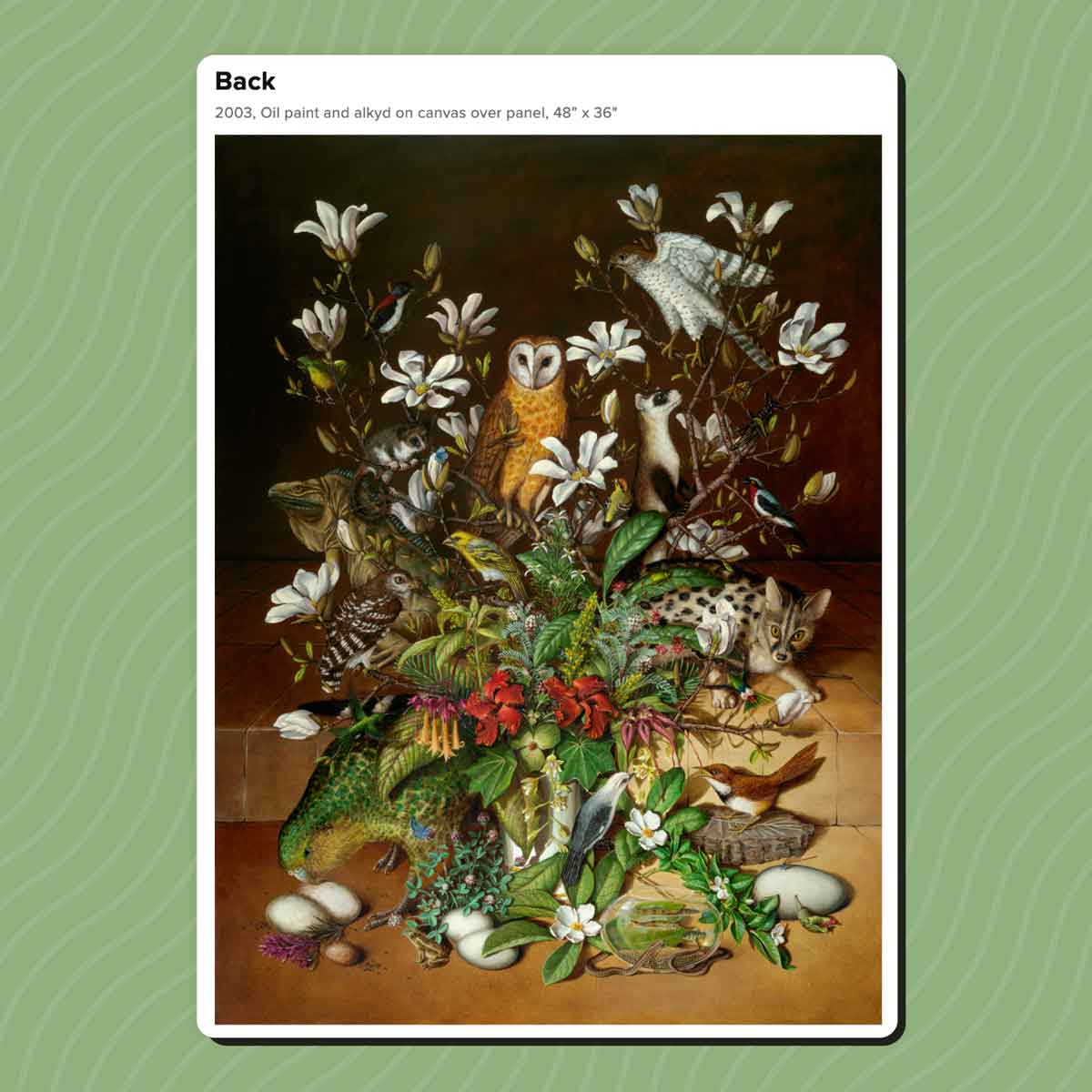
Conversely, her piece from the following year, “Gone,” is a tribute to 63 species that had all become extinct since the 1700s, likely due to the colonization of the New World.
In darker, colder hues, Kirkland paints the paradise parrot, a golden toad, the skull of a Tasmanian tiger, and even a tiny tree snail; all of which have been wiped from existence.
Her many paintings, combining art and science, bear witness to the massive ecological challenges, crises — and victories — our world faces.

“My artistic practice is an investigation into humanity’s relationship with nature — both what we have, and also what we’ve lost,” Kirkland said during a talk at TED Countdown, the organization’s climate summit, in Detroit, Michigan.
Her TED Talk provided a peek behind the curtain, offering more insights into her work and how this detailed documentation attempts to salvage history and save the future.
“I think of my paintings as alarm clocks in a way,” she said. “They are reminders of what’s at stake. The only real problem is that we keep pressing the snooze button.”
Her goal is to build an analog visual record of what we stand to lose — and what we’ve already lost — when it comes to the vast biodiversity of the planet.
Kirkland’s art style is founded on the techniques and aesthetics of the Dutch Old Masters, which have remained prominent and of high quality for hundreds of years.
By using oil paints and creating with scientific accuracy, Kirkland aims to produce final paintings that also survive the test of time and remain as evidence of the life forms lost in our lifetimes. She has been doing so for about three decades.
“The paintings are kind of an environmental snapshot, a moment in time, or maybe even better, like a message in a bottle,” she said. “With luck, these paintings can talk to the future.”
In order to do this, Kirkland’s many landscapes, collections, and studies require fastidious research. She often starts her creative process with rubrics and databases before sketches and drawings.
She collects samplings of species — some simply observed or foraged — others found in boxes of specimens at a natural history museum. Her most complicated paintings take a year to complete, on average, and all species are meticulously depicted to scale.
“I do all this work because I really want to depict them accurately, as if they’re alive,” she said. “I want them to be remembered correctly, as if they are living — not just a dried skin.”
Kirkland’s paintings do often carry a grim quality, giving viewers a visualized representation of grief and loss. But they also act as a sort of rebirth, if not a familial archive, of who we once shared the earth with — and the hope that we will one day live in harmony.
As she broke down some of the species in her “Gone” painting on the TED stage, Kirkland expressed a desire in both her creative process and environmental aspirations.

“This was the first painting I did of extinct species, so it’s kind of ‘Gone One,’” she explained. “But I really, really don’t want to have to paint ‘Gone Two, Three, Four, or Five.’”
While Kirkland has a large library of works, her most well-known series of paintings are the “Gone,” “Resurrected,” and “New” collections, that respectively depict species that have been extinct, rescued from extinction, or freshly discovered.
She also illustrates the cruel reality of black market animal trade and collection.
“These works are my form of activism,” she said.
Her work has been shown at the National Academy of Sciences, the Field Museum, and more. In 2016, she began working for Art in Embassies of the U.S. State Department, detailing and documenting species on-site in Suriname.
Day-to-day, Kirkland is a research associate at the California Academy of Sciences. She is also an artist partner to the organization Art To Acres, which supports large-scale land and animal conservation across the globe through art and financial donations.
“I plan to keep documenting, in paint, biodiversity that’s at risk, making a record of it, and advocating for biodiversity as I can,” she said. “But what’s probably more important is the next message that gets carried through these paintings, into the future. It’s humanity, collectively, that will decide.”
She speculated what that message may be.
“I’ve thought it could be, you know, ‘Well, too bad, these are the ghosts. These are what we lost,’” she said. “But it would be much better if that message was: ‘This is the moment we started to take action, when we really tried to save life on this planet — including our own.’”
Good Good Good has been covering TED's annual conference and spinoff events — like TED Women, TED Next, and TED Countdown — as press since 2023. Our journalists watch TED Talks live and interview speakers after they get off stage, giving Good Good Good the opportunity to share stories like this before TED Talks are released online.
Every day the Good Good Good team collects the best good news in the world and shares it with our community. Here are the highlights for this week!
If you want to get good news in your inbox every day, join the Goodnewsletter — the free daily newsletter designed to leave you feeling hopeful.
The Best Positive News We’re Celebrating This Week —
A startup in Africa is using hard-to-recycle plastic waste to build affordable housing
The recycling sector across Africa isn’t as robust as other regions in the world — just about 4% of the waste produced across the continent is salvaged, and 70 million tons of plastic end up in landfills and streets in Africa’s urban landscape every year.
Kubik, an upcycling startup in Kenya and Ethiopia, is hoping to use some of that waste for good.
By turning hard-to-recycle plastics — like polyethylene, polypropylene, and polystyrene — into affordable and low-carbon building materials, aptly called ‘plastic bricks,’ Kubik is removing about 45,000 kilograms of plastic waste from landfills every day.
Why is this good news? In addition to the environmental impact, Kubik is confronting another overwhelming reality: Africa is the fastest-growing continent in the world and needs more than 100 million new homes by 2030.
Current costs for building materials cannot meet this demand, leaving millions of Africans unhoused. Kubik’s solution also dramatically lowers this cost barrier.
Deforestation in the Amazon rainforest in Brazil is down 34% in the first half of 2023
Deforestation in Brazil’s Amazon rainforest has now fallen to its lowest level in four years — down 34% in the first six months of the year. The decline is due in large part to stronger policies from President Luiz Inacio Lula da Silva, who took office in January.
Lula promised to end deforestation entirely by 2030, and this early data from just his first six months in office is encouraging progress.
Experts note that the height of deforestation and fire season is still ahead (from July to September), and deforestation is still happening at an alarming rate — in Brazil and other countries — the amount of forest cleared in that same time is about three times the size of New York City.
Still, with stronger policies in place, this is really good progress for the country to build on.
The world’s leading ocean cleanup company just recovered a record 30 million pounds of plastic waste from waterways
Operating in 12 locations around the world, 4ocean is the global leader in cleaning up ocean plastic — and they just crossed a historic, record-setting cleanup milestone. The company officially surpassed 30 million pounds of plastic waste and man-made debris from oceans, rivers, and coastlines since they first started in 2017.
Since the 1950s, the world has produced an estimated 18.3 trillion pounds of plastic, of which less than 10% has been recycled, and 79% has accumulated in the environment.
Cleaning that up is a tall order, but it’s absolutely essential (as is reducing our plastic consumption in the first place) for the health of the planet, marine life, and humanity — and it’s one that 4ocean is committed to for the long haul.
Why is this good news? Plastic pollution doesn’t just have a devastating impact on the environment — it also impacts the global economy and food security. Seafood is a primary food source for more than 3 billion people, and ocean-based industries provide employment for billions of people and contribute trillions of dollars to the global economy every year.
Cities around the U.S. are turning old landfills into solar farms — almost 300 are completed so far
Much like the country as a whole, cities all around the U.S. have ambitious plans to reach net-zero emissions as soon as 2030. They’ll reach these goals largely by expanding their renewable energy capacity.
Running low on suitable land for solar power projects, cities are getting creative — and hundreds are putting them on land that would otherwise be unused, and in some cases, a liability: old landfills.
While the number of solar parks being built on landfills has increased in recent years, there is still huge untapped potential, industry specialists say. There are at least 10,000 disused or closed landfills across the United States — and most are publicly owned.
Why is this good news? In addition to helping cities (and the whole nation, by extension) reach its clean energy goals, these projects could also help address long-standing grievances over the location of landfill sites, which historically have tended to be built close to Black and other marginalized communities.
New research found that the renewable energy sector on track to reach net-zero emissions by 2030
A net-zero power system is closer than we think. New research published by RMI, indicates that an exponential surge in renewable energy deployment is outpacing the International Energy Agency’s most ambitious net-zero predictions for 2030.
Exponential growth in renewable energy has put the global electricity system at a tipping point. What was once seen as a wildly daunting task — transitioning away from fossil fuels — is now happening at a faster pace every year.
Based on this new research, RMI projects that solar and wind will supply over a third of all global electricity by 2030, up from about 12% today, surpassing recent calls for a tripling of total renewable energy capacity by the end of the decade.
Why is this good news? The world must dramatically and quickly reduce carbon emissions in order to avoid the most catastrophic impacts of climate change. Not only an exciting development for the health of the environment, this rapid transition to clean energy includes widespread benefits, like jobs growth, more secure supply chains, and reductions in energy price inflation.
John Green and fans achieved a breakthrough after pressuring J&J to make a life-saving tuberculosis drug available to lower income countries
When Johnson & Johnson (J&J) refused to end their patent on a life-saving tuberculosis (TB) drug, beloved author, internet personality, and passionate global health advocate John Green called on the internet to take a stand.
After thousands of people called on the pharmaceutical company to make tuberculosis treatment accessible and affordable to those who need it most, J&J announced that it would grant licensing to supply generic versions of the drug to low- and middle-income countries, in partnership with the Stop TB Partnership.
And as promised, Green and fans are celebrating this move by J&J — and calling for much-needed transparency around the decision.
Why is this good news? In addition to demonstrating the power of collective action, this will save millions of lives. Tuberculosis is the world’s deadliest infectious disease — despite the fact that it is curable. In 2021, the WHO reported 1.6 million deaths from tuberculosis.
If J&J had extended their patent for four more years, experts estimated that up to six million people would have been left without access to the life-saving drug.
A Philippines aid worker is helping restaurants, grocery stores, and entire communities reduce plastic consumption and waste
A summer trip to Danjugan Island nature reserve in 2015 opened development worker Princess Bala-an's eyes to the wonders of marine life in the Philippines island region of Negros. Around that same time, Ellen MacArthur, warned plastic waste would outweigh fish in the sea by 2050, unless people stopped polluting the ocean.
Bala-an decided to dive deep into the cause by joining the Philippine Reef and Rainforest Conservation Foundation as community manager for a project to reduce plastic waste and raise public awareness of the problem.
Her project, called Wala Usik (“nothing wasted”), supports grocery stores, entire provinces, restaurants, and even individual residents. For example, she and her team set up a one-year pilot program for “sari-sari” grocery stores, whose customers are often low-income Filipinos, to use reusable or refillable containers for common household items and to sell solid versions of liquid products.
More good news of the week —
Passengers can now book a ticket to ride on North America's first-ever hydrogen-powered train. The train will show how electricity stored as hydrogen can replace diesel fuel on railways where installing electrified rails or overhead wires would be challenging.
A bill was introduced in Congress to invest $100 million to build five tiny home villages for veterans around the country. The new tiny home villages would help house at least some of the 33,100 veterans who don’t have permanent housing.
A large new study has shown how moss both significantly improves soil quality and sequesters a lot of carbon. Mosses are one of the planet’s most common plants, found everywhere from deserts to arctic regions, but they have long been under-researched.
The first blood test that can detect preeclampsia in pregnant people was just approved by the FDA. The condition is a leading cause of maternal death and disability worldwide, impacting one in 25 pregnancies in the U.S., disproportionately among Black women.
A mining company found a massive phosphate rock deposit that could meet global demand for the next 50 years. It’s in Norway, which can also observe stricter environmental standards when extracting the minerals, including carbon capture and storage.
Dating back to World War I, the U.S. just finished destroying the last of its chemical weapons stockpile. Workers have been working for decades to eliminate the stock, which had reached more than 30,000 tons by the end of the Cold war.
Scientists at Washington University developed an air monitor that can detect Covid-19 in a room within 5 minutes. It’s a breakthrough that, when available, could be used in hospitals, schools, community living facilities, and more — and it could be adapted to detect the flu and RSV, too.
A new tuberculosis vaccine could save 8.5 million lives over the next 25 years. Tuberculosis kills one person every 20 seconds, and even though it’s treatable, around 1.6 million people each year, mostly in poor countries, die from it.
Portugal just doubled its goals for installing new solar and hydrogen capacity by 2030. The country also plans to decommission natural gas-fired power plants by 2040 and possibly become carbon neutral by 2045 — five years earlier than its original commitment.
Thanks to the loyalty of pandemic-era customers, farmers markets around the country are thriving. There are now nearly 7,000 farmers markets listed in the USDA local food directory, up from about an estimated 2,000 in 1994.
Texas banned homeowners’ associations from discriminating against renters who receive federal housing aid. The law came after a North Texas neighborhood tried to oust poorer tenants who get assistance from the federal housing choice voucher program and keep new ones from taking their place.
Arizona is now the latest state to approve over-the-counter sales of contraception at pharmacies. The new rule went into effect immediately and applies to self-administered birth control such as hormonal and oral contraceptives, improving access to contraception throughout the state.
Namibia is on track to hit targets to end the HIV/AIDS epidemic before its 2030 deadline. Namibia has one of the world’s highest HIV prevalence rates and it’s still the leading cause of death in the country, with women most impacted.
For the first time in the U.S., the FDA approved a birth control pill to be sold without a prescription. It will become the most effective form of contraception available over the counter, and help people who face hurdles in visiting a doctor to get a prescription.
Kids and teens in Colorado who visit the hospital for a mental health emergency can now receive free therapy. The initiative is spearheaded by the Follow-Up Project, which has suicide hotline staff call people who’ve been discharged from a hospital.
Think about how much time you spend indoors.
Now think about the electricity you use every time you’re inside. Your furnace, your oven, your air conditioning, your water heater; chances are, right now, they’re powered by fossil fuels.
According to Donnel Baird, the founder of BlocPower, 30% of American emissions are tied to our buildings.
So he created a company dedicated to “greening”— a process of making something more environmentally sound — buildings across the country.
“There are 125 million buildings in America, coast to coast,” Baird, the founder of BlocPower, said at the TED Countdown Summit in Detroit, Michigan. “These buildings are where we cook and eat and work and pray and raise our kids. A lot of us spend almost 90% of our time indoors, in buildings — and these buildings are powered by fossil fuels.”
Baird believes that there is no true way forward in responding to the climate crisis without greening all of the existing buildings in America — and that’s what BlocPower does.
So far, the company has greened more than 1,200 buildings in 25 cities across the U.S. by replacing unhealthy fossil-fueled heating and cooling units with sustainable electric systems — especially those in low-income communities.
Growing up in a one-bedroom apartment in Brooklyn, New York, Baird saw first-hand dangers of fossil fuel-powered buildings, when, as a child, he would heat his home by turning on the gas oven and opening the door — like millions of other Americans without clean, reliable HVAC systems.
While his parents already knew about the dangers of carbon monoxide poisoning and insisted he keep a window open, more recent studies show that gas heating systems in many homes and buildings leak chemicals like benzene, methane, and nitrogen dioxide.
These chemicals are toxic and can lead to grave health complications that can be worse than breathing in secondhand cigarette smoke, according to Baird.
But of course, there’s good news.
“It’s 2023; we don’t live in ancient Mesopotamia,” Baird exclaimed. “We don’t have to dig up dead dinosaurs from the ground and burn them in our buildings for energy. We’ve got options!”
Whether it’s the use of electric appliances, cold climate heat pumps, solar panels, high-efficiency lighting, and a mix of other clean, green technologies, BlocPower is electrifying homes and buildings across America — and quickly.
In fact, the company recently announced a historic partnership with the city of Ithaca, New York, to decarbonize 100% of the city’s buildings by 2030.
“We can electrify buildings,” Baird said. “Is it simple? Is it easy? No… we have to solve a finance problem, a workforce problem, and a data problem.”
He continued to outline some solutions to these barriers.

When it comes to the high cost of transitioning to electric energy, he poses the approach of a mortgage-like plan that spreads costs out over about 15 years, making monthly payments manageable — and often cheaper — than what families are already paying for fossil fuels.
As for the labor force, BlocPower trains and hires skilled electricians who are part of vulnerable and low-income communities, like veterans, formerly incarcerated or homeless folks, and people who live in areas with high risks of gun violence.
Lastly, it’s important that electricians have reliable data, since every building in America is different (“like a snowflake,” Baird quipped). Working with the Bezos Earth Fund, BlocPower is aggregating data on all 125 million buildings in America.
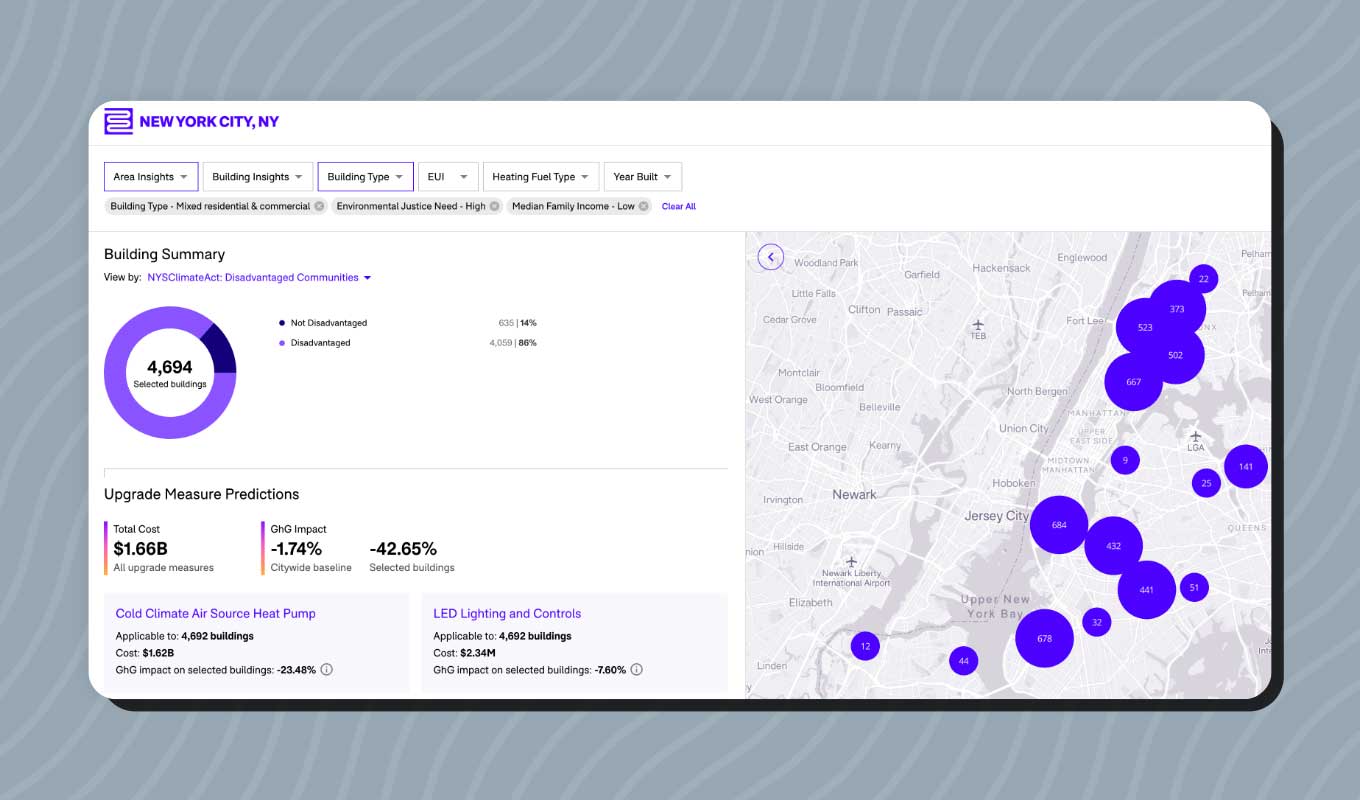
With this data collection, families can search for their address, get an electrification work plan, and hand it to a qualified electrician to understand what they need.
While, of course, electrification comes with its many unique challenges and barriers, Baird has created an approach dedicated to making American homes “smarter, healthier, and greener,” one project at a time.
“Electrification is possible,” Baird said. “If we can electrify one building, that means we can electrify a whole block of buildings. If we can electrify a whole block of buildings, we can electrify a neighborhood. If we can electrify a neighborhood, we can electrify a city. And if we can electrify a city, we can electrify a country.”
Header image courtesy of BlocPower.