Sylvia Rivera is a name synonymous with resilience, activism, and the pursuit of equality. A pioneering figure in the LGBTQ+ movement, Rivera tirelessly fought for the rights of transgender people — especially trans people of color — and was instrumental in the Stonewall uprising in 1969.
Her passionate advocacy extended beyond the LGBTQ+ community, reaching out to those affected by poverty and racial discrimination, creating a legacy of fierce activism and compassionate outreach.
Known for her powerful speeches and candidness, Rivera’s words carry a lot of wisdom and raw emotion. They speak of the struggle for acceptance, the fight for rights, and the importance of unity and compassion in bringing about change.
Rivera died of liver cancer in February 2002 at the age of 50. The nonprofit organization, The Sylvia Rivera Law Project, continues her work to this day.
We’ve gathered some of the most profound and famous Sylvia Rivera quotes — encapsulating her audacity, spirit, and unwavering resolve.
These quotes, much like Sylvia herself, inspire a call to action, fostering courage and resilience in the face of adversity.
Whether you’re well-versed in the history of the LGBTQ+ rights movement or are just beginning to explore it, these quotes will offer powerful insights into the fight for equal rights through the enduring legacy of Sylvia Rivera.
Read on to experience the passion and wisdom of this trailblazing activist:
The Best Quotes from Sylvia Rivera
Famous Quotes
“Hell hath no fury like a drag queen scorned.”
— Sylvia Rivera
“We have to do it because we can no longer stay invisible. We have to be visible. We should not be ashamed of who we are. We have to show the world that we are numerous. There are many of us out there.”
— Sylvia Rivera, in an essay
“I was a radical, a revolutionist. I am still a revolutionist. I was proud to make the road and help change laws and whatnot. I was very proud of doing that and proud of what I’m still doing, no matter what it takes.”
— Sylvia Rivera, in an interview
“Before gay rights, before the Stonewall, I was involved in the Black Liberation movement, the peace movement… I felt I had the time and I knew that I had to do something. My revolutionary blood was going back then. I was involved with that.”
— Sylvia Rivera, in an interview
“We would sit there and ask, ‘Why do we suffer?’ As we got more involved into the movements, we said, ‘Why do we always got to take the brunt of this shit?’”
— Sylvia Rivera, in an interview
“I’m glad I was in the Stonewall riot. I remember when someone threw a Molotov cocktail, I thought: ‘My god, the revolution is here. The revolution is finally here!’”
— Sylvia Rivera, in an interview
“Remember that as you celebrate this whole month, of how you are liberated.”
— Sylvia Rivera, in a speech
“I go by what I feel. What my spirits tell me, I’m following. Every time I went with what my spirits told me (except for two times, and both times I had to fight my way out of a situation), I was right.”
— Sylvia Rivera, in an essay
“I am tired of seeing my children — I call everybody including yous in this room, you are all my children. I am tired of seeing homeless transgender children, young, gay, youth children.”
— Sylvia Rivera, in a speech
“You get tired of being just pushed around.”
— Sylvia Rivera, in an interview
Inspirational Quotes
“Before I die, I will see our community given the respect we deserve. I’ll be damned if I’m going to my grave without having the respect this community deserves. I want to go to wherever I go with that in my soul and peacefully say I’ve finally overcome.”
— Sylvia Rivera, in an essay
“People now want to call me a lesbian because I’m with Julia, and I say, ‘No. I’m just me. I’m not a lesbian.’ I’m tired of being labeled. I don’t even like the label transgender. I’m tired of living with labels. I just want to be who I am. I am Sylvia Rivera. Ray Rivera left home at the age of 10 to become Sylvia. And that’s who I am.”
— Sylvia Rivera, in an essay
“I was wearing makeup in the fourth grade. I did it because I liked makeup, and I didn’t think there was anything wrong with it.”
— Sylvia Rivera, in an essay
About Stonewall
“I guess there was tension in the air. It was a hot, muggy night, in the 80s or 90s, like when most riots happen. I don’t know how many other patrons in the bar were activists, but many of the people were involved in some struggle.”
— Sylvia Rivera, in an essay
“He says he thought it was going to be a routine bust. That’s why they went in with only a few men. But to his surprise, we fought back. As he put it, ‘Those people would never give us any problem, because they had a lot to lose.’ So this night was different. This was the start of our talking back, speaking up for ourselves.”
— Sylvia Rivera, in an essay
“Part of history forgets, that as the cops are inside the bar, the confrontation started outside by throwing change at the police. We started with the pennies, the nickels, the quarters, and the dimes. ‘Here’s your payoff, you pigs! You fucking pigs! Get out of our faces.’ This was started by the street queens of that era, which I was part of, Marsha P. Johnson, and many others that are not here. I’m lucky to be fifty in July, but I’m still here and I’ll be damned if I won’t see a hundred.”
— Sylvia Rivera, in a speech
“People have also asked me, ‘Was it a pre-planned riot?’ because out of nowhere, Molotov cocktails showed up. I have been given the credit for throwing the first Molotov cocktail by many historians, but I always like to correct it. I threw the second one — I did not throw the first one!”
— Sylvia Rivera, in a speech
“We also have to remember one thing: that it was just not the gay community and the street queens that really escalated this riot — it was also the help of the many radical straight men and women that lived in the Village at that time, that knew the struggle of the gay community and the trans community. So the crowds did swell.”
— Sylvia Rivera, in a speech
“I always believed that we would have a fight back. I just knew that we would fight back. I just didn’t know it would be that night.”
— Sylvia Rivera, in an interview
“When the cops did finally get there, which was the reinforcements that finally got there forty-five minutes later, you had the chorus line of street queens kicking up their heels, singing their famous little anthem that to today still lives on that, ‘We are the Stonewall girls — the Village girls, we wear our hair in curls, we wear our dungarees above our nelly knees, we show our pubic hairs’.”
— Sylvia Rivera, in a speech
“The more that they beat us, the more we went back for. We were determined that evening that we were going to be a liberated, free community, which we did acquire that. Actually, I’ll change the ‘we.’ You have acquired your liberation, your freedom, from that night. Myself, I’ve got shit, just like I had back then… I will struggle ‘til the day I die and my main struggle right now is that my community will seek the rights that are justly ours.”
— Sylvia Rivera, in a speech
“All of us were working for so many movements at that time. Everyone was involved with the women’s movement, the peace movement, the civil-rights movement. We were all radicals. I believe that’s what brought it around.”
— Sylvia Rivera, in an interview
“We were not taking any more of this shit. We had done so much for other movements. It was time.”
— Sylvia Rivera, in an interview
“So Stonewall is a great, great foundation. It began the modern-day liberation movement, like we spoke before about the Daughters of Bilitis, the Mattachine Society.”
— Sylvia Rivera, in a speech
“I am proud of myself as being there that night. If I had lost that moment, I would have been kind of hurt because that’s when I saw the world change for me and my people. Of course, we still got a long way ahead of us.”
— Sylvia Rivera, in an interview
On the Gay Rights Bill
“That bill was mine as far as I’m concerned. I helped word it and I worked very hard for it. And that’s why I get upset when I give interviews and whatever because the fucking community has no respect for the people that really did it. Drag queens did it. We did it, we did it for our own brothers and sisters. But, damn it, don’t keep shoving us in the fuckin’ back and stabbing us in the back and that’s… And that’s what really hurts. And it is very upsetting.”
— Sylvia Rivera, in an interview

“Because for four years we were the vanguard of the gay movement and all of a sudden it was being taken away. We were being pushed out of something we helped create.”
— Sylvia Rivera, in an essay
“I got arrested for petitioning for gay rights. That’s how my whole activist career started. Besides, I didn’t consider that night at Stonewall to be so important out of all the other movements going on. Getting that first arrest for something that I believed in was...wow, what a rush!”
— Sylvia Rivera, in an essay

“I enjoyed Gay Liberation Front better because we concentrated on many issues for many different struggles. We’re all in the same boat as long as we’re being oppressed one way or the other, whether we are gay, straight, trans, black, yellow, green, purple, or whatever. If we don’t fight for each other, we’ll be put down. And after all these years, the trans community is still at the back of the bus.”
— Sylvia Rivera, in an essay
“It was like a god-sent thing to me. I mean, I just happened to be there when it all jumped off. I said, ‘Oh, well, great,’ I said, ‘Now it’s my time. Here, I’m out there being a revolutionist for everybody else.’ I said, ‘Now it’s time to do my thing for my own people.’ And I joined GAA, and that first year that we were petitioning for gay rights, on April 15, of that year.”
— Sylvia Rivera, in an interview
“The reason we, right now, as a trans community, don’t have all the rights they have is that we allowed them to speak for us for so many damn years, and we bought everything they said to us: “Oh, let us pass our bill, then we’ll come for you.”
— Sylvia Rivera, in an essay

Regarding Marsha P. Johnson
“She [Marsha P. Johnson] called me to her side, we introduced ourselves, and a very strong sistership was born… We stood by each other, had each other’s back for many years… We’d be getting high or something and we’d start talking politics. We’d start talking politics and about when things were going to change for us as human beings.”
— Sylvia Rivera, in an essay
“Marsha and I fought a lot for the liberation of our people. We did a lot back then. Marsha and I had a building on Second Street, which is called STAR House… And now we were taking care of kids that were younger than us. I mean, Marsha and I were young and we were taking care of them… I mean, we took a building that was, I mean, a slum building. We tried. We really did. We went out and made that money off the streets to keep these kids off the street.”
— Sylvia Rivera, in an interview
“Marsha and I had always sneaked people into our hotel rooms. Marsha and I decided to get a building. We were trying to get away from the Mafia’s control at the bars. We got a building at 213 East 2nd Street. Marsha and I just decided it was time to help each other and help our other kids. We fed people and clothed people. We kept the building going. We went out and hustled the streets. We paid the rent. We didn’t want the kids out in the streets hustling. They would go out and rip off food. There was always food in the house and everyone had fun. It lasted for two or three years.”
— Sylvia Rivera, in an interview
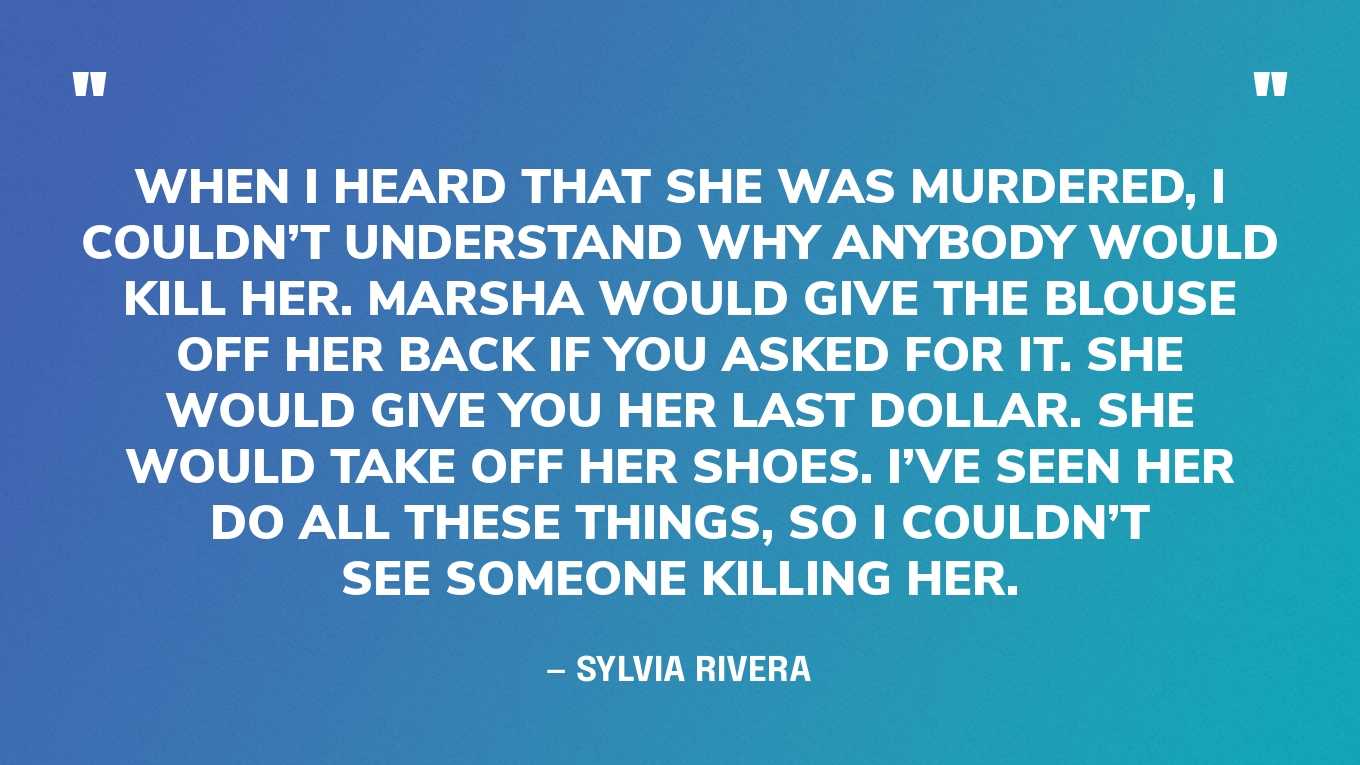
“When I heard that she was murdered, I couldn’t understand why anybody would kill her. Marsha would give the blouse off her back if you asked for it. She would give you her last dollar. She would take off her shoes. I’ve seen her do all these things, so I couldn’t see someone killing her. I know there are crazy people out there. I know there are transphobic people out there. But it’s not like she wasn’t a known trans person. She was loved anywhere she went. Marsha was a great woman.”
— Sylvia Rivera, in an essay
→ Read these quotes from Marsha P. Johnson
More Sylvia Rivera Quotes
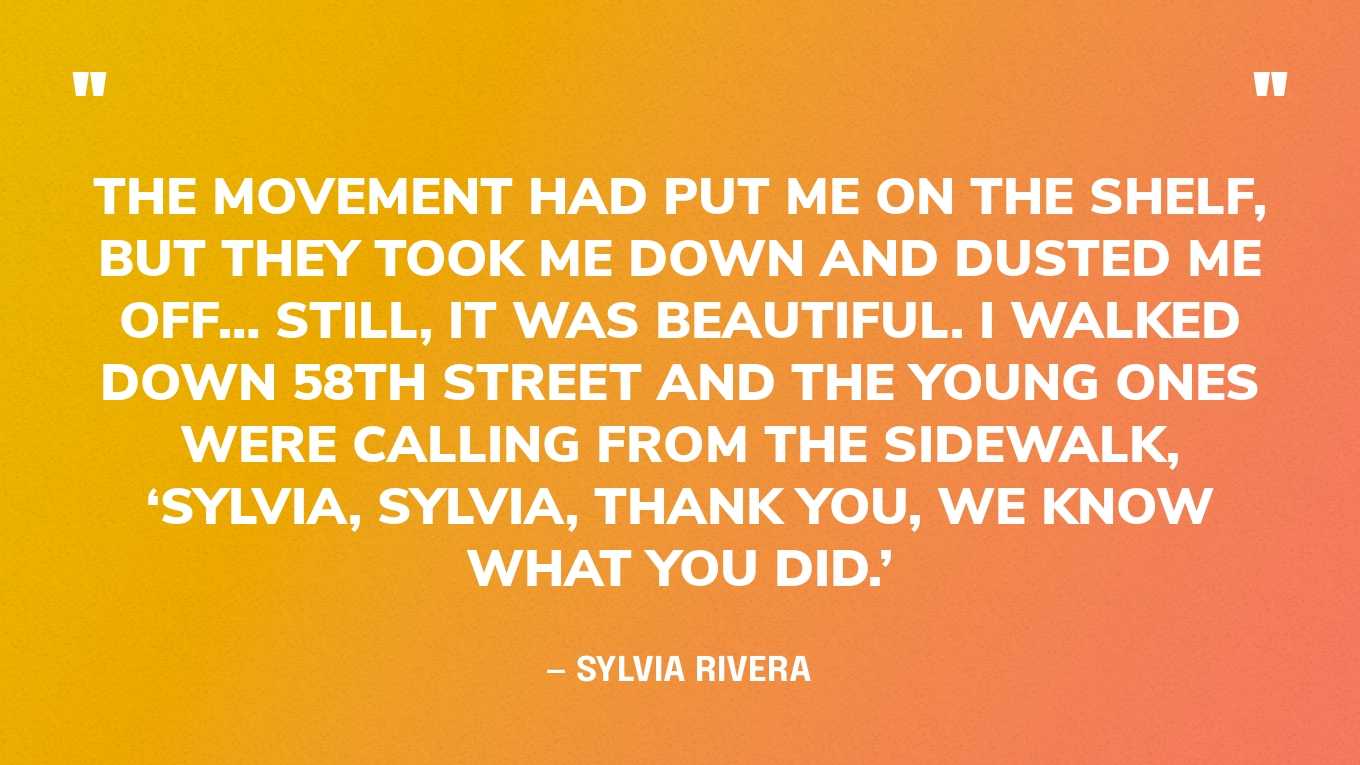
“The movement had put me on the shelf, but they took me down and dusted me off… Still, it was beautiful. I walked down 58th Street and the young ones were calling from the sidewalk, ‘Sylvia, Sylvia, thank you, we know what you did.’ After that I went back on the shelf. It would be wonderful if the movement took care of its own. But don’t worry about Sylvia.”
— Sylvia Rivera, in an interview
“I thought about having a sex change, but I decided not to. I feel comfortable being who I am. That final journey many of the trans women and trans men make is a big journey. It’s a big step and I applaud them, but I don’t think I could ever make that journey… I don’t need the operation to find my identity. I have found my niche, and I’m happy and content with it. I take my hormones. I’m living the way Sylvia wants to live. I’m not living in the straight world; I’m not living in the gay world; I’m just living in my own world with Julia and my friends.”
— Sylvia Rivera, in an essay
“I'm not missing a minute of this. It's the revolution!”
— Sylvia Rivera
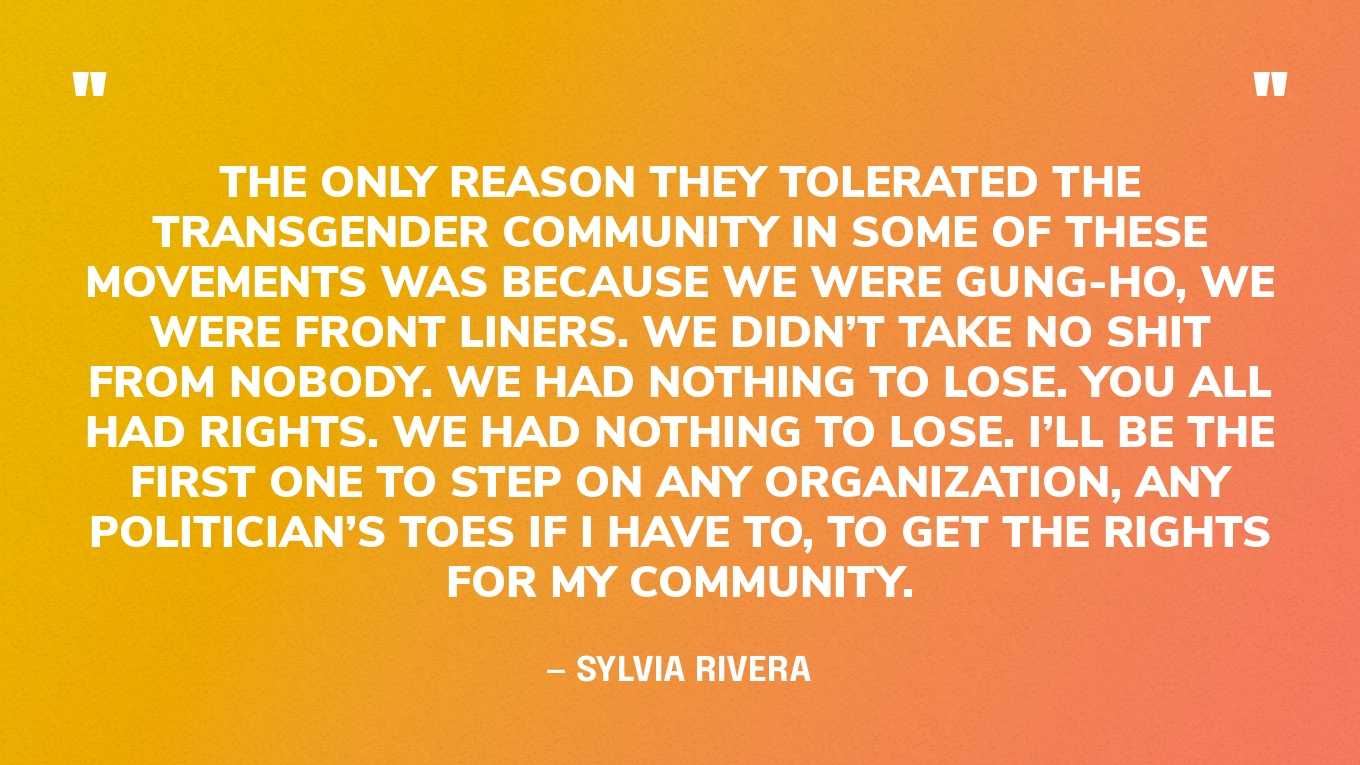
“We were all involved in different struggles, including myself and many other transgender people. But in these struggles, in the Civil Rights movement, in the war movement, in the women’s movement, we were still outcasts. The only reason they tolerated the transgender community in some of these movements was because we were gung-ho, we were front liners. We didn’t take no shit from nobody. We had nothing to lose. You all had rights. We had nothing to lose. I’ll be the first one to step on any organization, any politician’s toes if I have to, to get the rights for my community.”
— Sylvia Rivera, in a speech
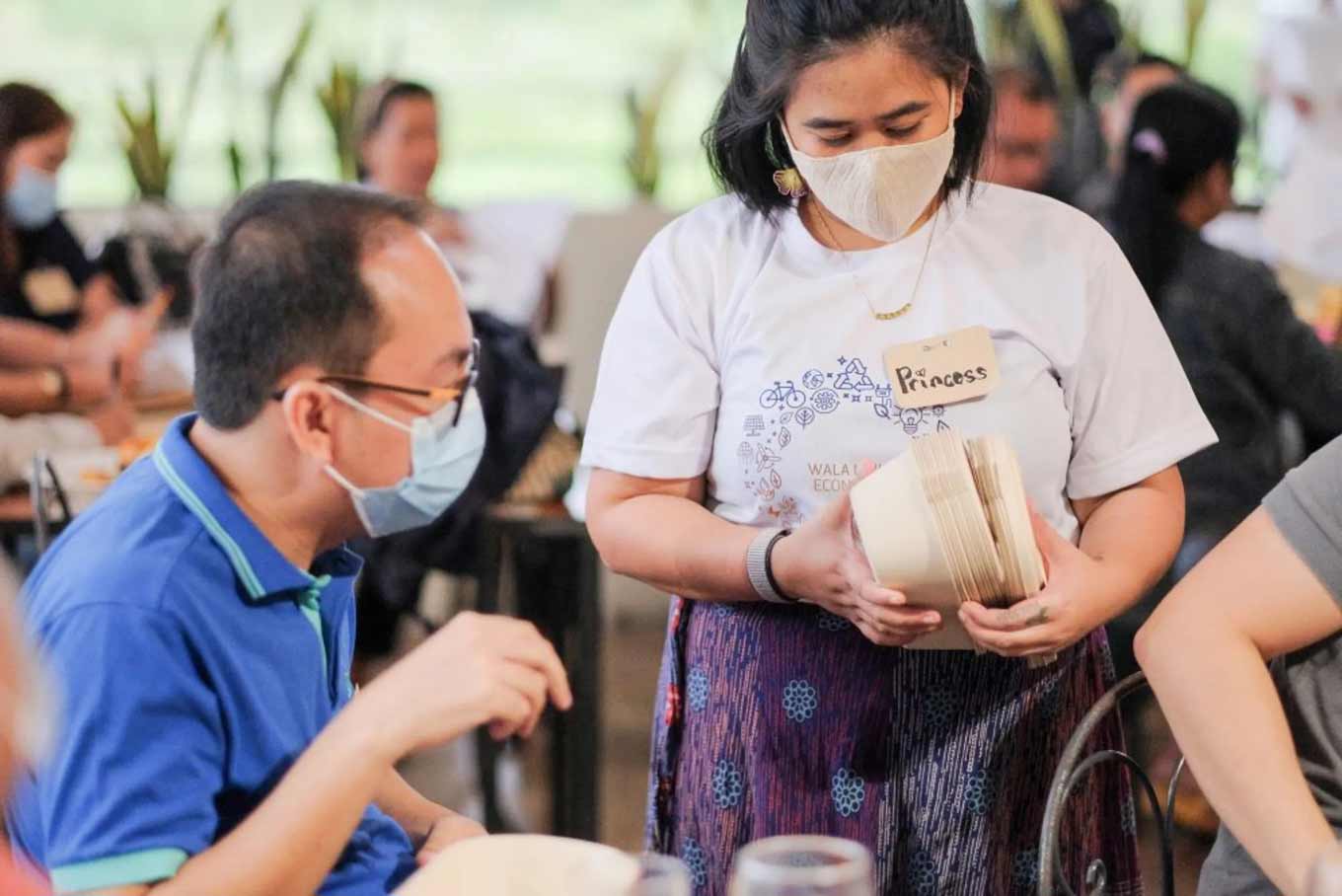
A summer trip to Danjugan Island nature reserve in 2015 opened development worker Princess Bala-an's eyes to the wonders of marine life in the Philippines island region of Negros.
It was around the time when Ellen MacArthur, a retired British sailor and circular economy advocate, warned plastic waste would outweigh fish in the sea by 2050, unless people stopped polluting the ocean.
Bala-an decided to dive deep into the cause by joining the Philippine Reef and Rainforest Conservation Foundation as community manager for a project to reduce plastic waste and raise public awareness of the problem.
There she helped small businesses such as neighborhood grocery stores and cafes use less plastic and promote a zero-waste economy across Negros Occidental, a central island province prone to flooding, landslides and devastating typhoons.
Her project, called Wala Usik ("nothing wasted") in the local language, challenged the toxic "sachet culture" that is choking the seas of the Philippines.
Bala-an and her team set up a one-year pilot program for "sari-sari" grocery stores, whose customers are often low-income Filipinos, to use reusable or refillable containers for common household items and to sell solid versions of liquid products.
She also guided restaurant and café owners to source local and compostable materials as alternatives to plastic packaging.
In addition, she taught residents of coastal towns to conduct their own waste audits through clean-ups, to better understand the problem and how it manifests in the ocean.
The 30-year-old is now expanding this work as strategic projects officer for the Negros Women for Tomorrow Foundation, a group that helps women achieve economic independence.
Bala-an and the plastic tide fight: An interview
Why did you choose this job?
"I used to work with a humanitarian foundation in the field of disaster risk reduction, providing safety to the most vulnerable (people). It dawned on me that their vulnerabilities are tied to the environment. That made me closer to conservation and gave me the energy to explore the root cause of disasters, find solutions and work with communities as stewards of the environment."
How did you get the job?
"I was introduced to Danjugan Island by the Philippine Reef and Rainforest Conservation Foundation during a summer marine camp in 2015. There, I learned about the beauty of marine life and how it is connected to what we do on land.
I started joining the camp every year, until the foundation opened a position as community manager of the Wala Usik program in 2018. I applied for the job. I was lucky to be chosen. I started doing the work with communities and learning about solid waste management laws."
What do you enjoy the most about your job?
"Community development is the best part of my job. It requires patience, presence and time. Despite the challenges in my role as project manager for Wala Usik, I saw how community members — from households to store owners and micro-enterprises — can also be environmental protectors. I am not alone in this job. That connection is what I really like and love in my field of work.
Behavioral changes take a long time. But it is inspiring to see small, meaningful changes in people through the program. At times, when I go back to a partner village, some would say our workshops and waste audits convinced them to choose better lifestyle options. Local government units who worked with us before passed laws to ban single-use plastics or to improve their solid waste management policies. It's an entire community that I'm lucky and blessed to be part of."
What is the biggest challenge you have encountered in your job?
"At the end of 2019, I thought we were reaching our project goals. Then the COVID-19 pandemic happened and posed a great challenge to people in conservation. Wala Usik partner stores had to close due to lack of customers. We needed to go back to square one and do it all over again, and it made us realize that the program must be sustainable.
This is why I stayed with the program after the pandemic and decided to work on it with another organization... I thought, if I didn't continue (it), no one else would take up the challenge and we would lose grasp of what we have built so far in our communities. Changes take a long time and there should be continuity in terms of conservation efforts."
How do you see jobs in your sector evolving in the next decade?
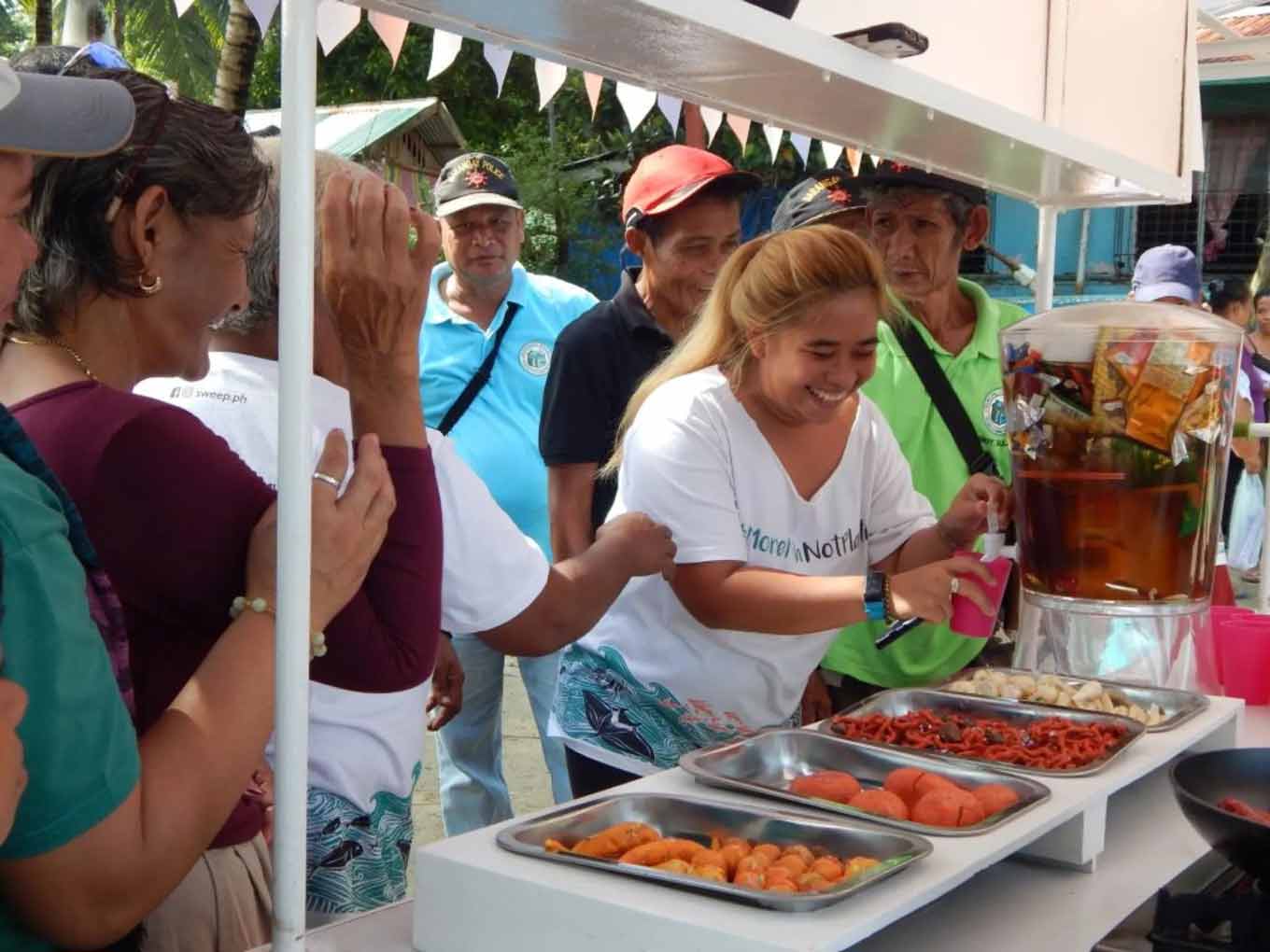
"When people say 'green workers', they usually think of people like me. But I also want them to think about others in the sector — like waste pickers who are still considered as informal workers, without benefits, hazard pay and assurance of income. I want to see them as formal workers with social and financial stability. We need more opportunities and programs to capacitate unseen workers in the green sector.
I would also be happy to see other non-governmental organizations, corporations or enterprises committing to hiring more people, especially women, for greener and sustainable programs. As an NGO worker, I take risks and innovate — just like in Wala Usik. But these projects often have limited funding and short timelines — and we need to think of ways to make them sustainable."
This article was originally published by Context from the Thomson Reuters Foundation, the charitable arm of Thomson Reuters, that covers the lives of people around the world who struggle to live freely or fairly.
The idea that there are only two genders is outdated. Some people don't identify as exclusively a man or a woman.
And one of the most common terms used to describe those who break the binary is the umbrella term nonbinary.
Gender, like sexuality, is a spectrum. As media coverage becomes more diverse, nonbinary celebrities are breaking down barriers by sharing their stories and just being themselves.
The Human Rights Commission defines nonbinary as including people who identify as neither a man nor a woman, both, somewhere in between, or outside those identities altogether. It also clarifies that many nonbinary people also identify as transgender.
While nonbinary people can use the pronouns he/him, she/her, or they/them, not everyone who uses gender-neutral pronouns is nonbinary.
As more celebrities in the spotlight highlight the nuances of gender identity and expression, it normalizes these discussions and gives issues affecting the community center stage.
After one of the tensest years for transgender rights and its advocates, gender — and those who fit within or outside of its constraints — must continuously be explored.
States across the U.S. introduced numerous bills to limit the rights of those from the LGBTQ+ community, and there have been pro-LGBTQ+ nondiscrimination bills introduced as well, each with its own reasons for success or failure.
Our partners at Stacker researched nonbinary, genderqueer, or otherwise gender-nonconforming actors, writers, models, directors, musicians, and other celebrities and highlighted 28 you should know if you don't already. Good Good Good made its own edits and additions.
Meet these actors, musicians, and celebrities you may not know are nonbinary —
Janelle Monae
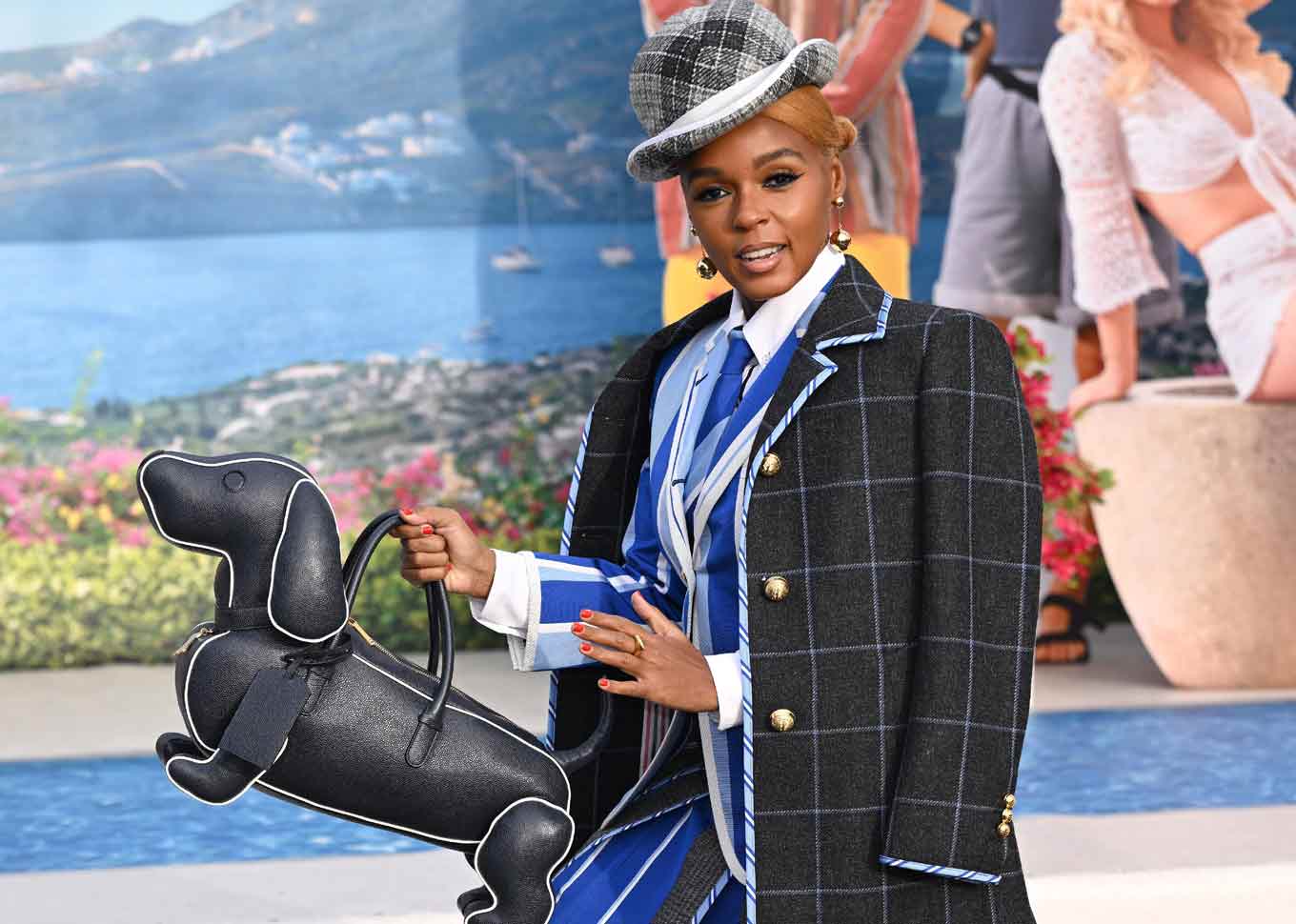
Janelle Monáe came out as nonbinary while promoting their book "The Memory Librarian: And Other Stories of Dirty Computer" during an appearance on "Red Table Talk." "My pronouns are … they/them, her/she," they told the Los Angeles Times in April 2022, adding that they will always stand with women on important issues — especially Black women.
Sam Smith
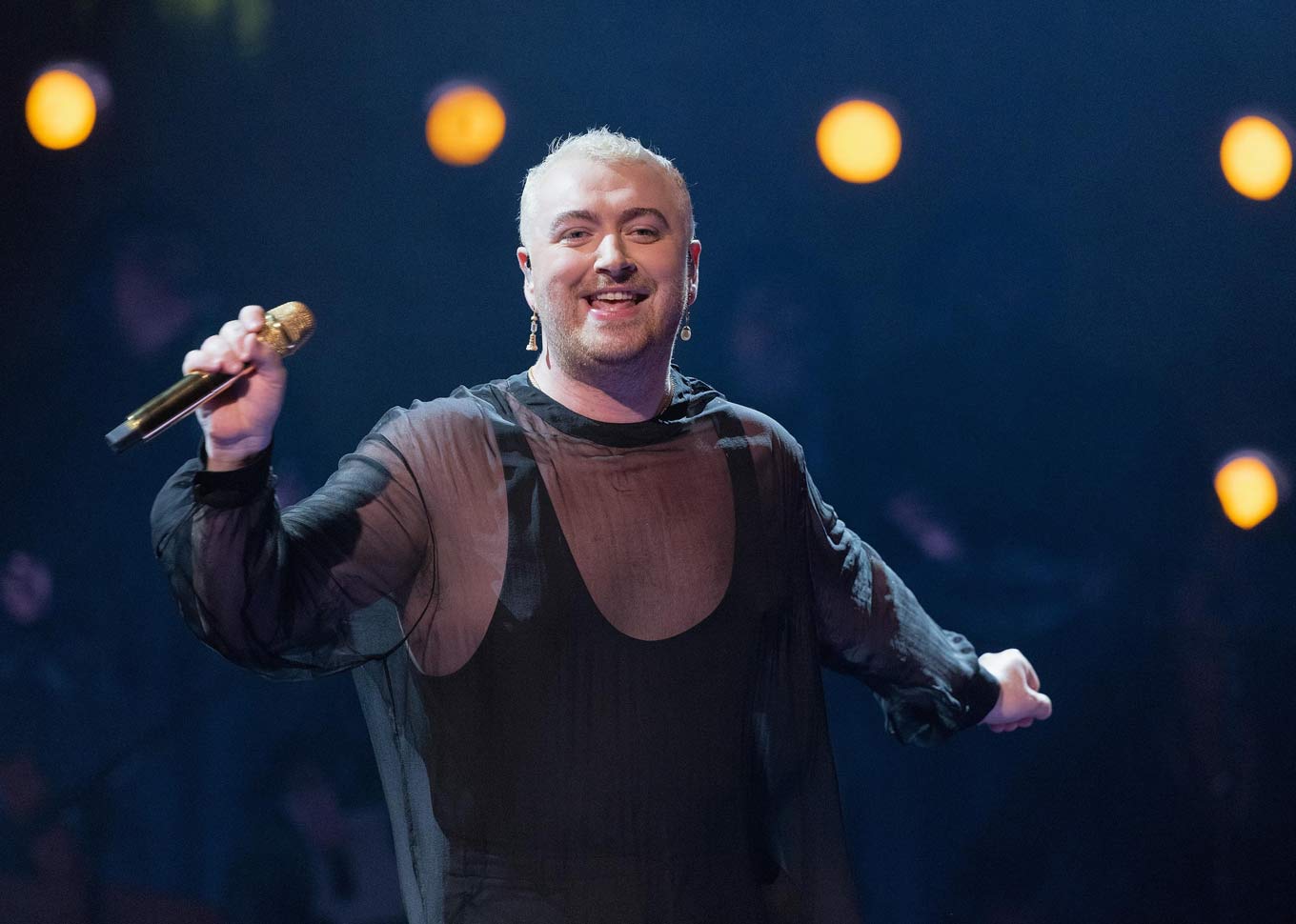
During a 2019 interview with Jameela Jamil, Sam Smith stated: "I'm not male or female, I think I flow somewhere in between. It's all on the spectrum." Six months later, they officially changed their pronouns to they/them.
In 2022, Smith and Kim Petras became the first nonbinary singers to hit #1 on the Billboard Hot 100 chart with their song "Unholy."
John Cameron Mitchell
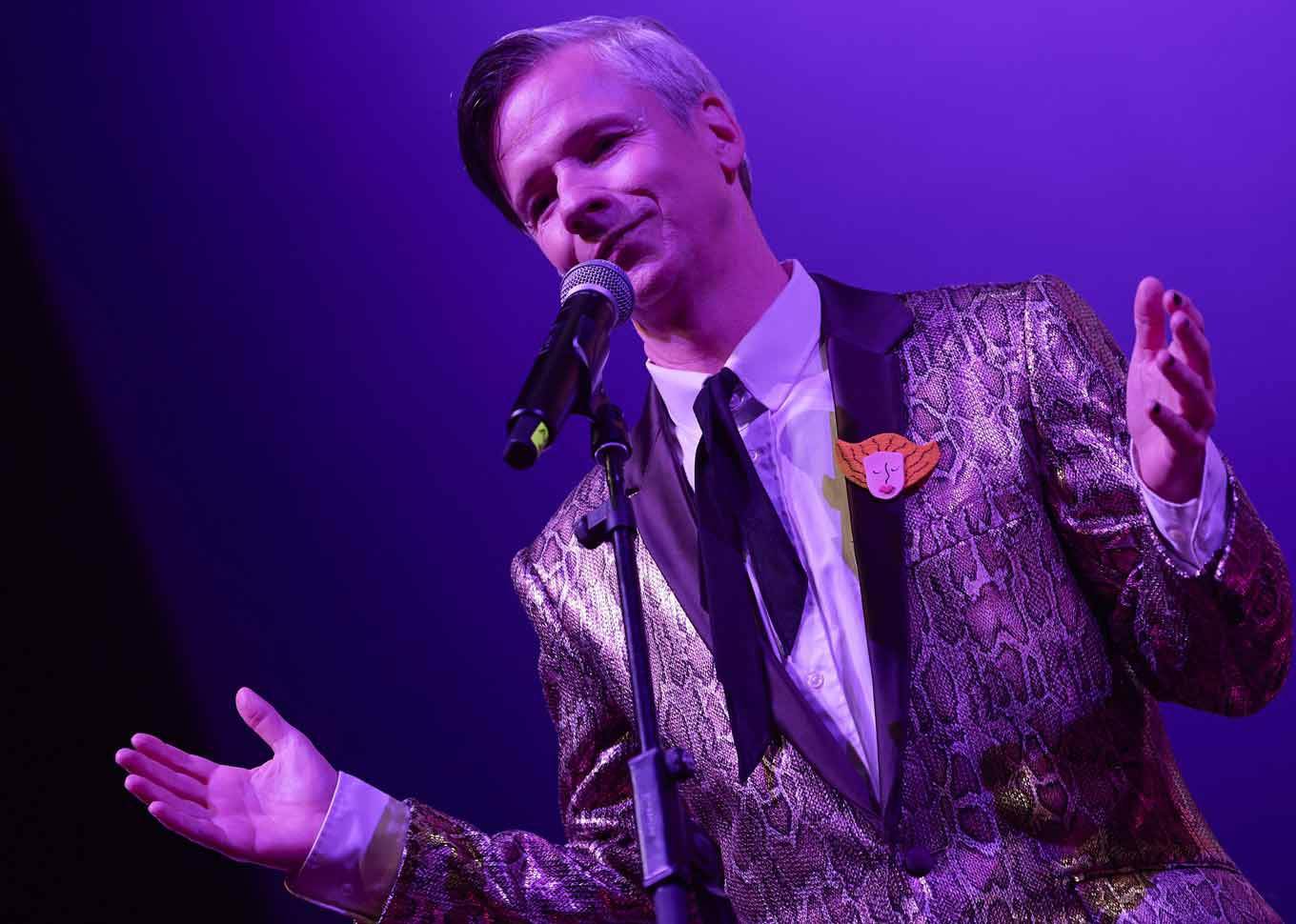
The legendary actor John Cameron Mitchell casually came out in March 2022 during an interview with Pride. When discussing his iconic role in "Hedwig and the Angry Inch," which has garnered him a little bit of flack, Mitchell casually mentioned he is nonbinary.
After the interview, Pride's staff reached out to Mitchell's team to clarify the actor's pronouns but received no reply. Mitchell later indicated in a Los Angeles magazine article the following June that he had not changed his pronouns.
Cara Delevingne
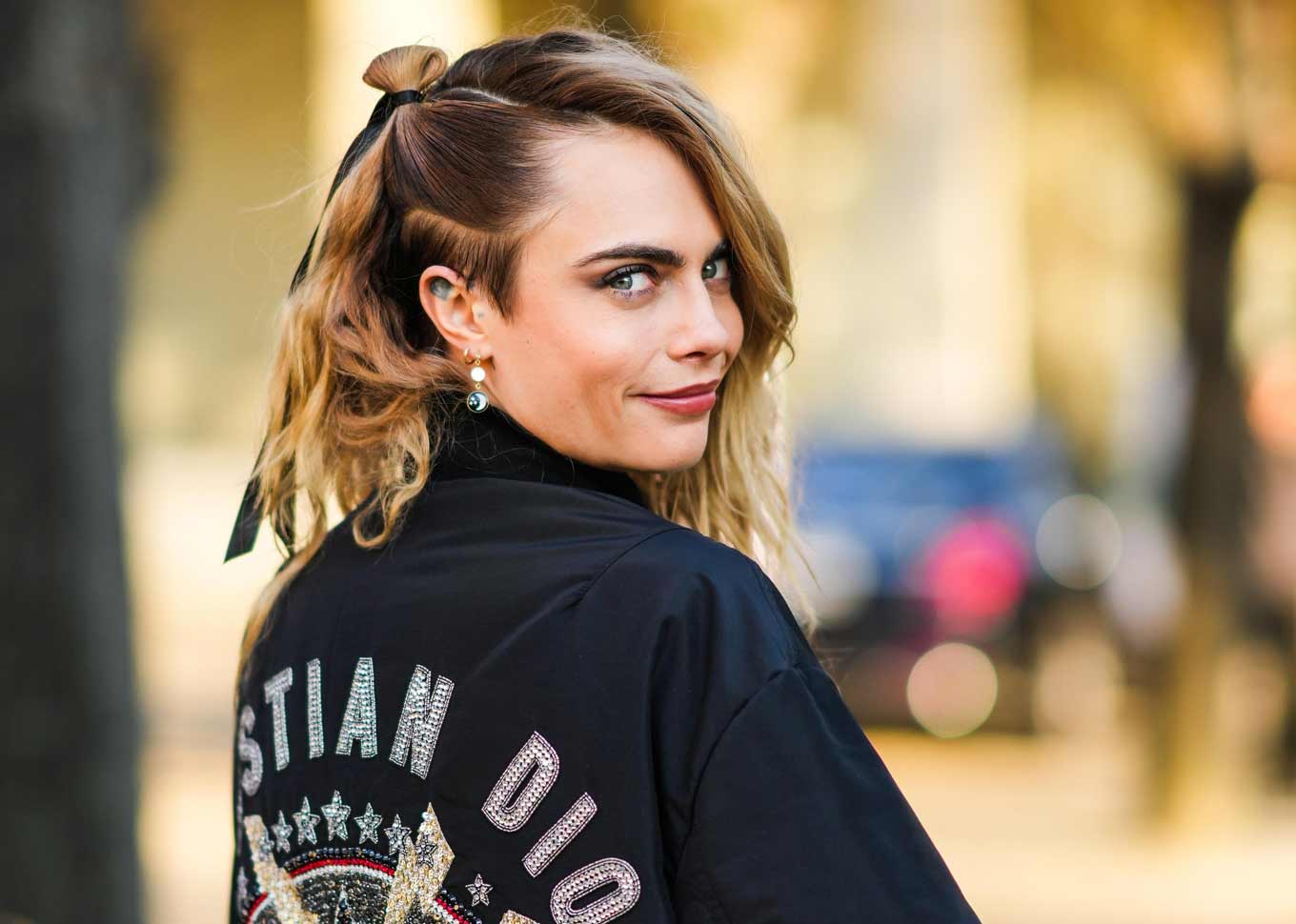
Already a queer icon in her own right, Cara Delevingne initially talked about her "sexual fluidity" in a 2017 interview with British Vogue. Three years later, while speaking with Variety for its Pride issue, Delevingne stated: "The thing is with me, I change a lot … I feel different all the time. Some days, I feel more womanly. Some days, I feel more like a man."
Justin Vivian Bond
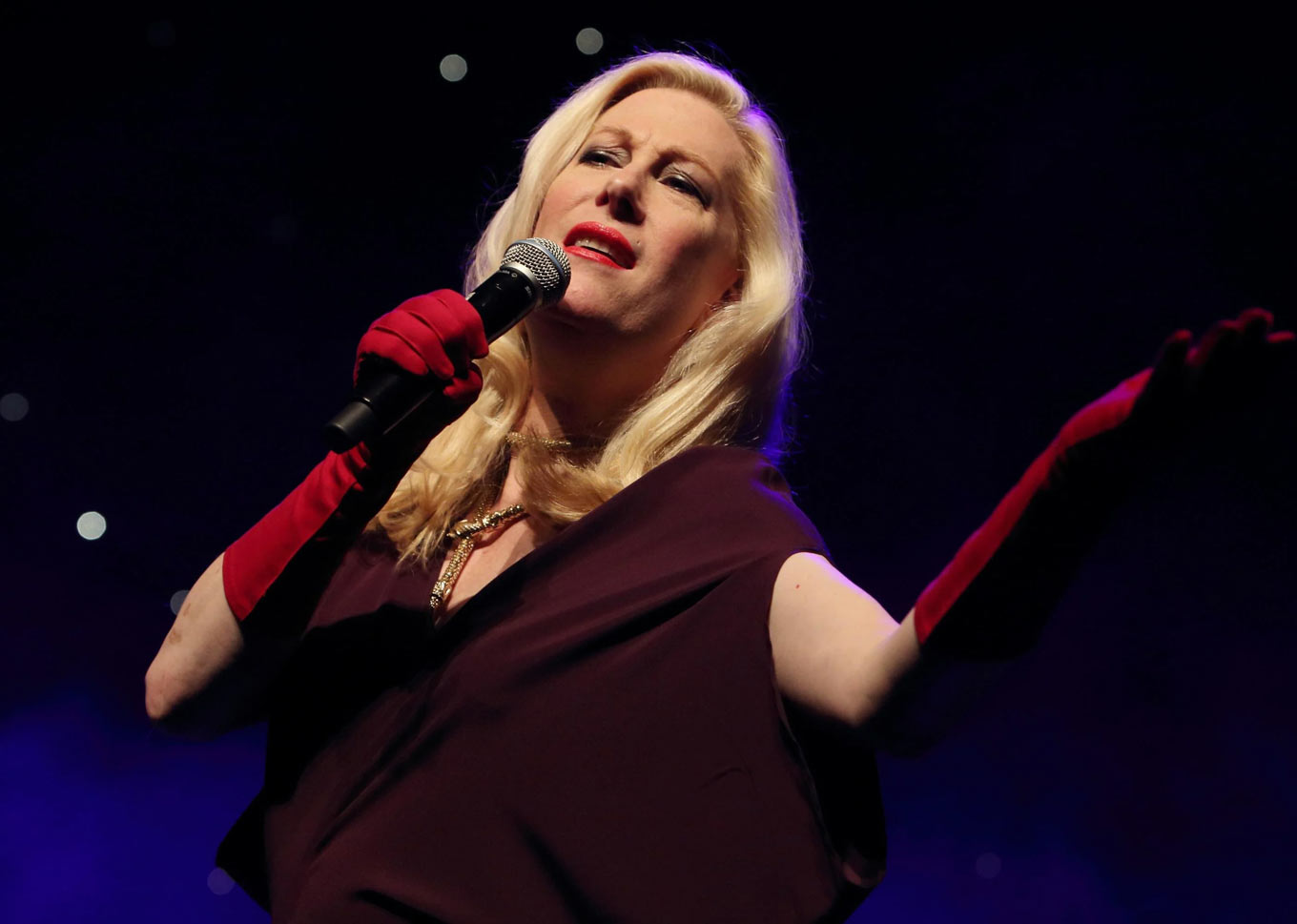
In a 2012 interview with the New York Times, the Tony-nominated performer said: "I always thought of myself as a transgendered person. … I just lived my life and I didn't really have the exact language for what I was."
They use the gender-inclusive honorific "Mx." instead of "Ms." or "Mr." and neopronoun "v" with "vself" instead of "herself" or "himself," a reference to Bond's middle name.
Miley Cyrus
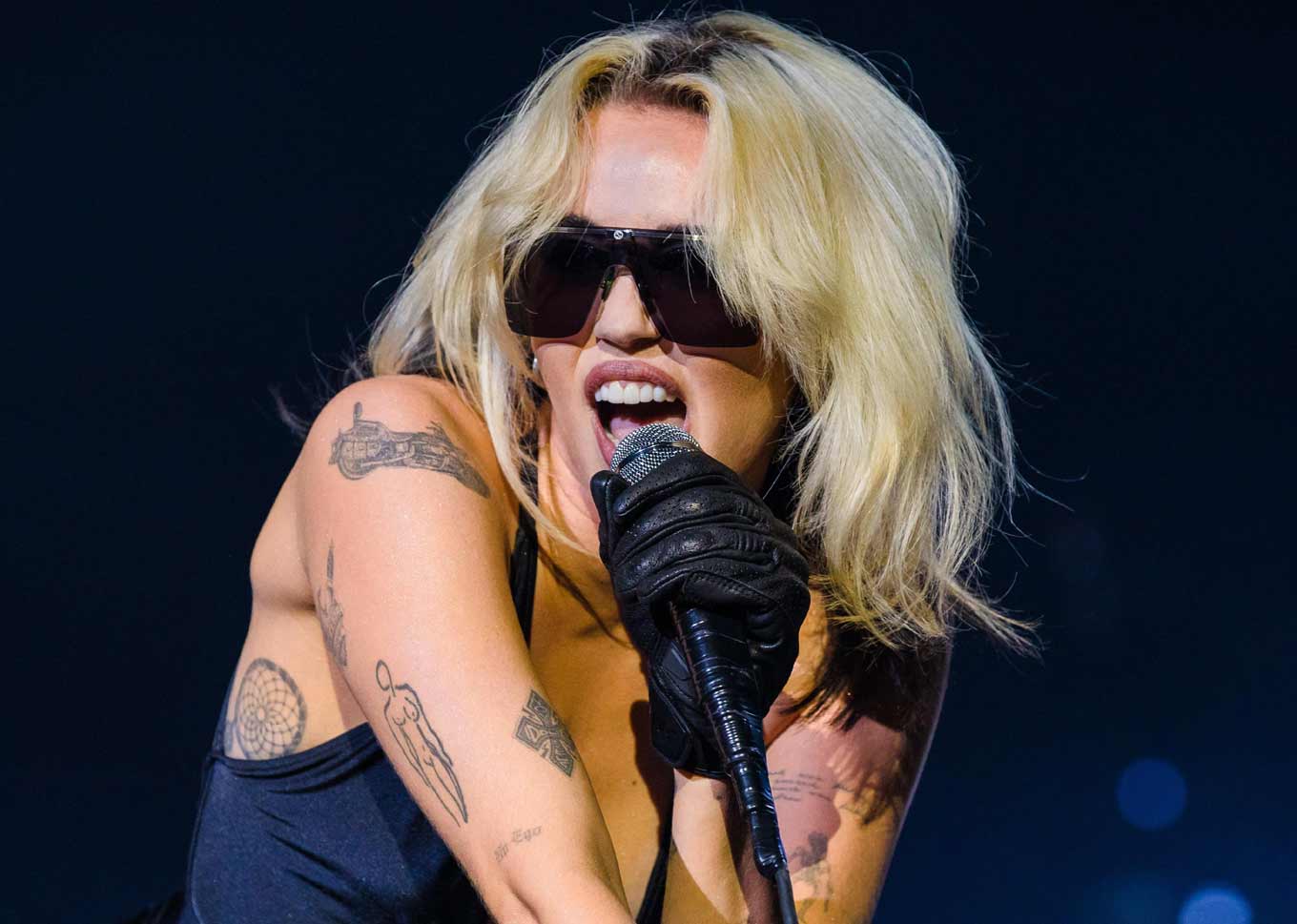
While promoting her #InstaPride campaign in 2015, Miley Cyrus told Time magazine: "I'm just even. It has nothing to do with any parts of me or how I dress or how I look. It's literally just how I feel."
That same year, the Disney star-turned-pop sensation founded the Happy Hippie Foundation in memory of Leelah Alcorn, a transgender teen who took her own life.
Brigette Lundy-Paine
Brigette Lundy-Paine, known for their role as Casey Gardner in the Netflix series "Atypical," publicly came out as nonbinary in 2019. In an Instagram post, they wrote, "I'm non-binary, always felt a lil bit boy, lil bit girl, lil bit neither."
Lundy-Paine's portrayal of Casey, a character navigating her own sexuality, has resonated with many viewers, and their off-screen openness about their gender identity has made them a prominent figure within the nonbinary community.
Lundy-Paine uses they/them pronouns and has expressed a desire to continue exploring gender-fluid roles in their acting career.
Lachlan Watson
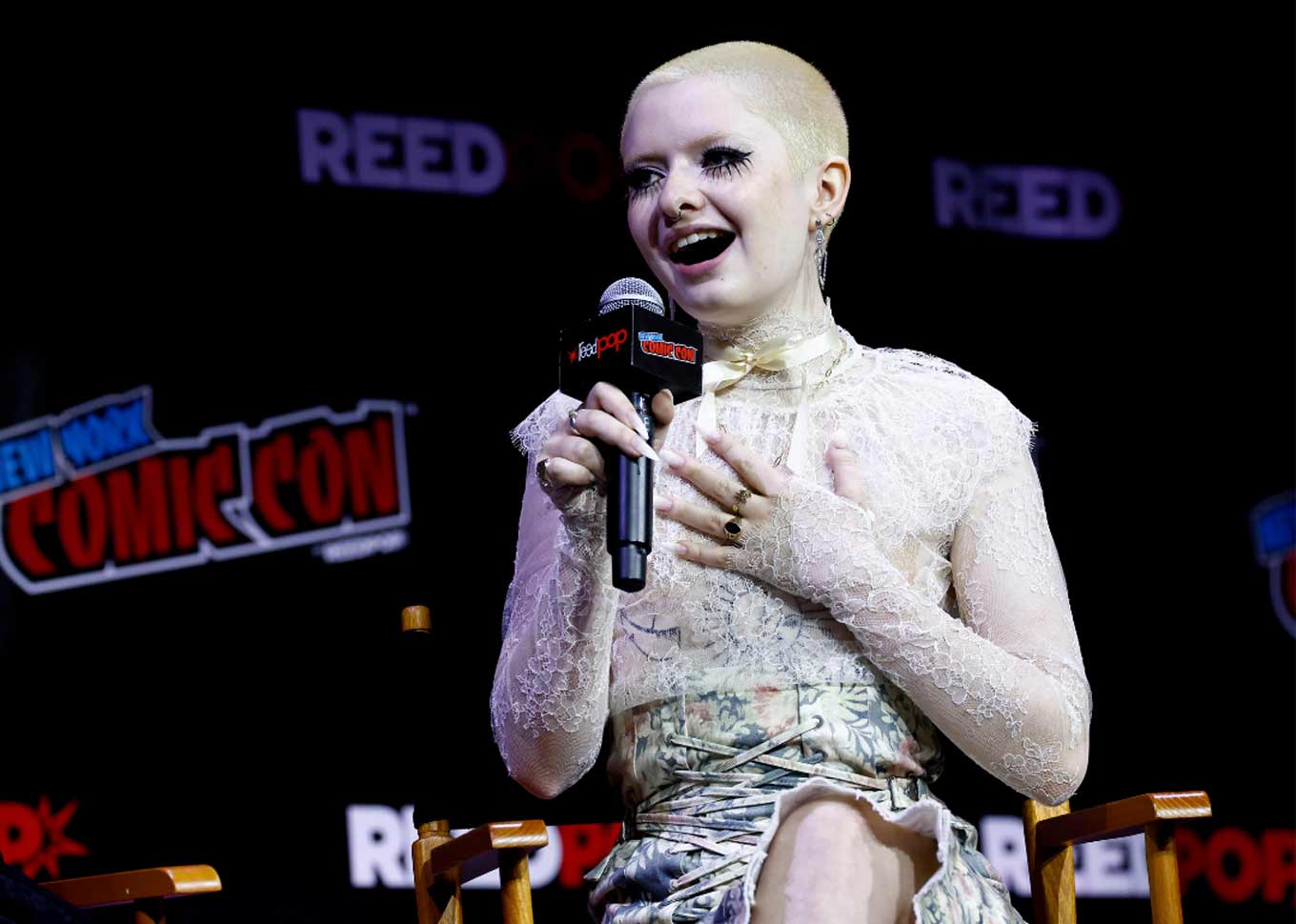
Lachlan Watson experienced their first taste of fame as the nonbinary character Susie Putnam on Netflix's "Chilling Adventures of Sabrina," inspiring gender-nonconforming youth everywhere. Watson, who is also nonbinary and uses they/them pronouns, described their gender journey as "a revolution against the system" and said, "I don't have to live my life and do the things to my body that the world tells me that I have to do."
King Princess
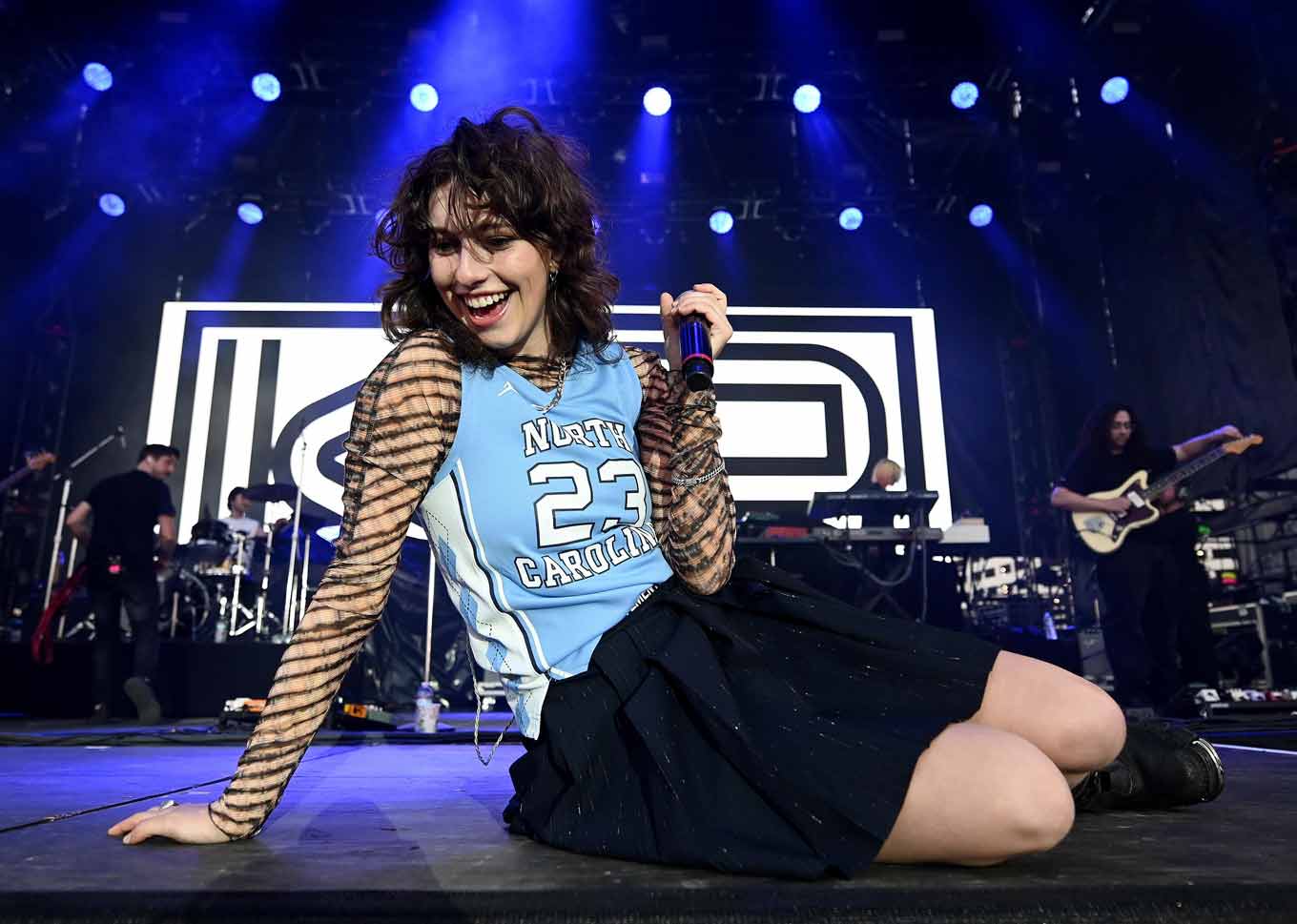
Ahead of their debut EP, "Make My Bed," in 2018, the now 24-year-old singer said, "I've always been kind of a genderqueer person." King Princess still identifies as genderqueer and doesn't seem to mind any pronouns. "I've never felt offended [by] the pronoun situation in my life," they told Rolling Stone in June 2022. "He. She. It. They. Xenu."
Elliot Page
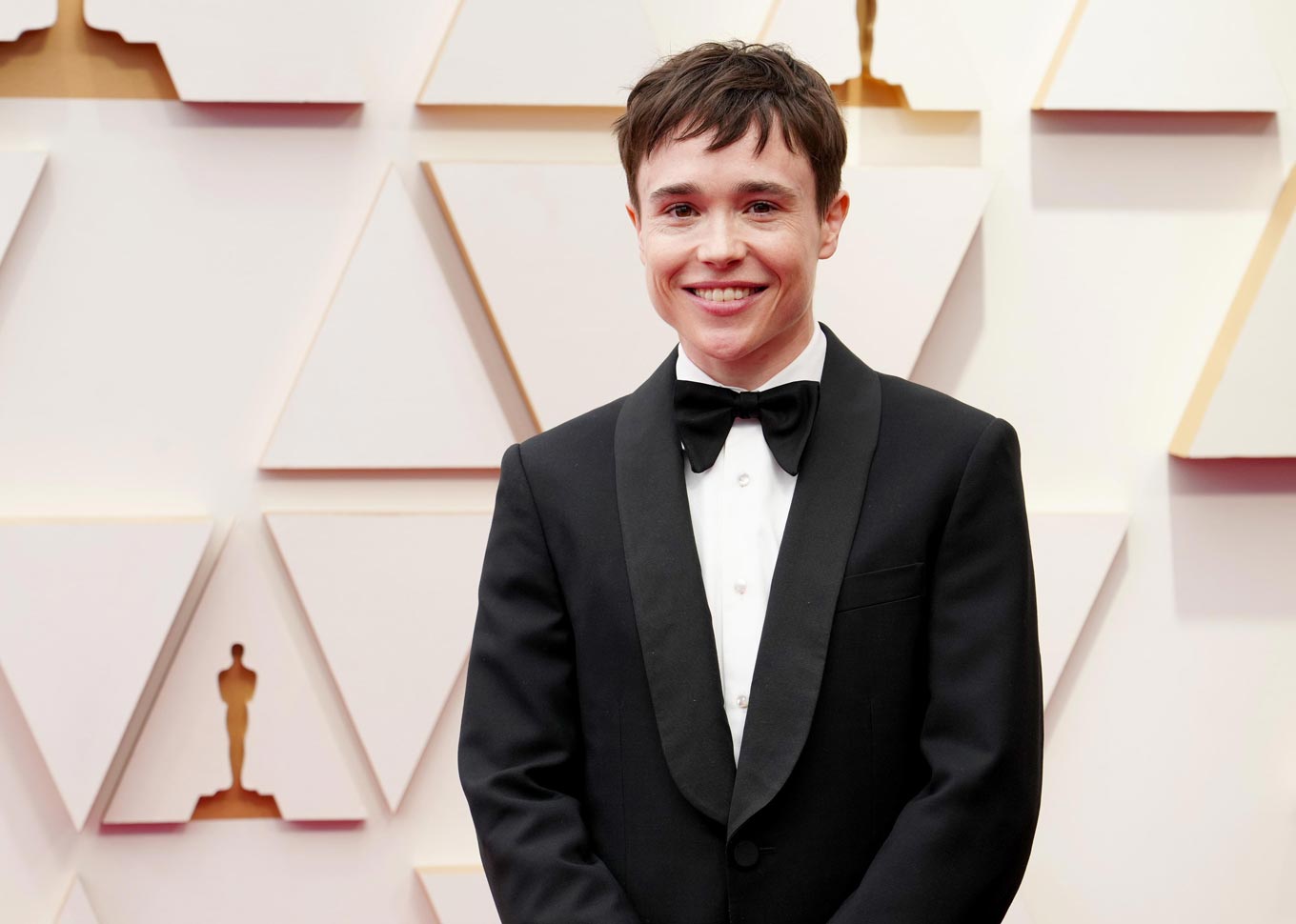
The Canadian actor Elliot Page initially came out as trans in late 2020, stating in an Instagram post: "I want to share with you that I am trans, my pronouns are he/they and my name is Elliot. I feel lucky to be writing this. To be here. To have arrived at this place in my life."
Page appeared on the cover of Time magazine's April 2021 issue, becoming the first trans man to do so. Speaking with the publication, Page expressed, "No matter the challenges and difficult moments of this, nothing amounts to getting to feel how I feel now."
Bex Taylor-Klaus
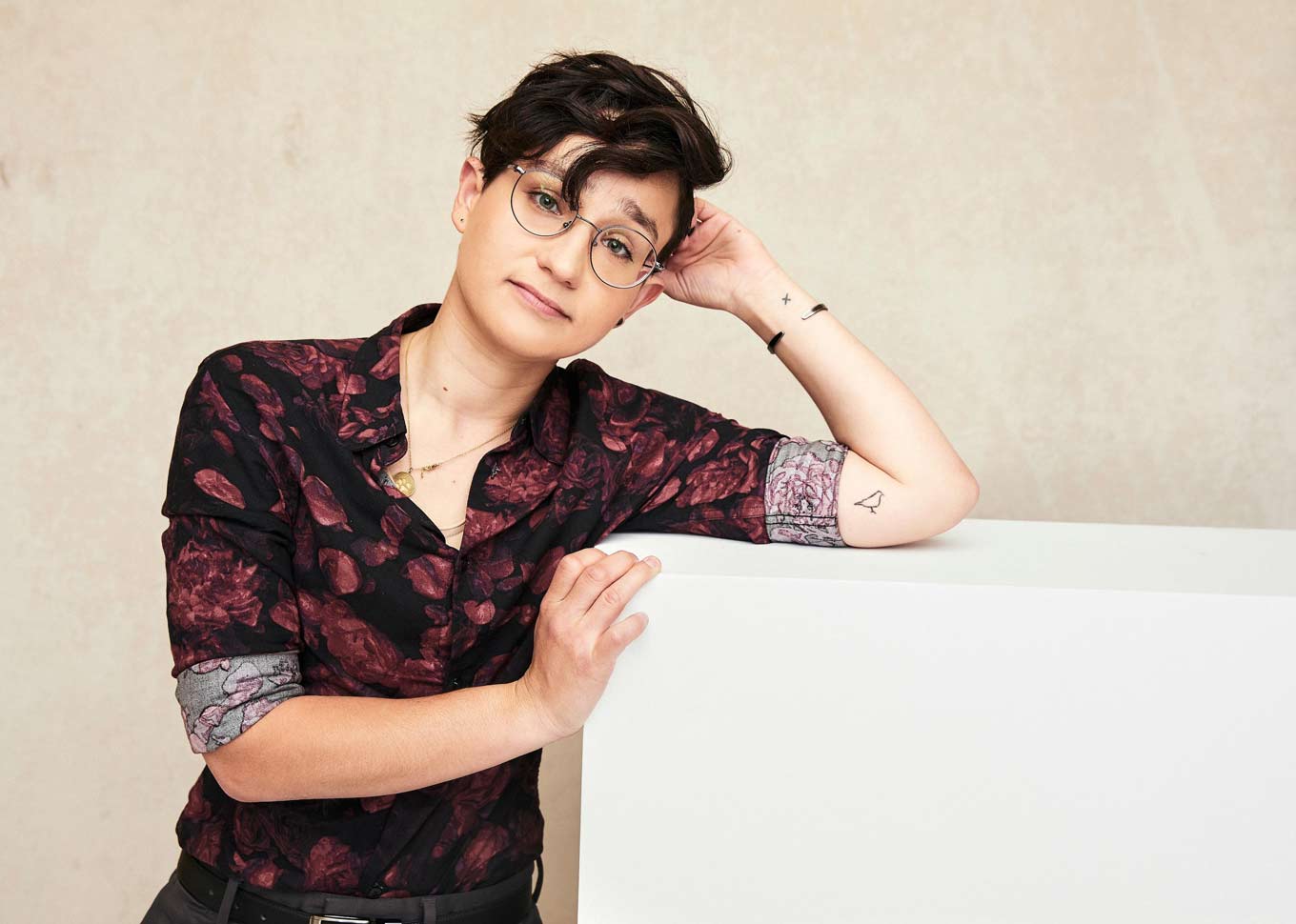
Bex Taylor-Klaus came out in 2018 via Twitter, stating: "I came out as trans non-binary in a room full of people today. Guess it's time for me to do that on here, too. Hi. I'm Bex, and the rumors are true. I'm v enby." The fan-favorite "Scream" television actor has since gone on to play a nonbinary character on Fox's "Deputy" and expressed being "eternally grateful to the writers for letting us put these intricacies in there."
Emma Corrin
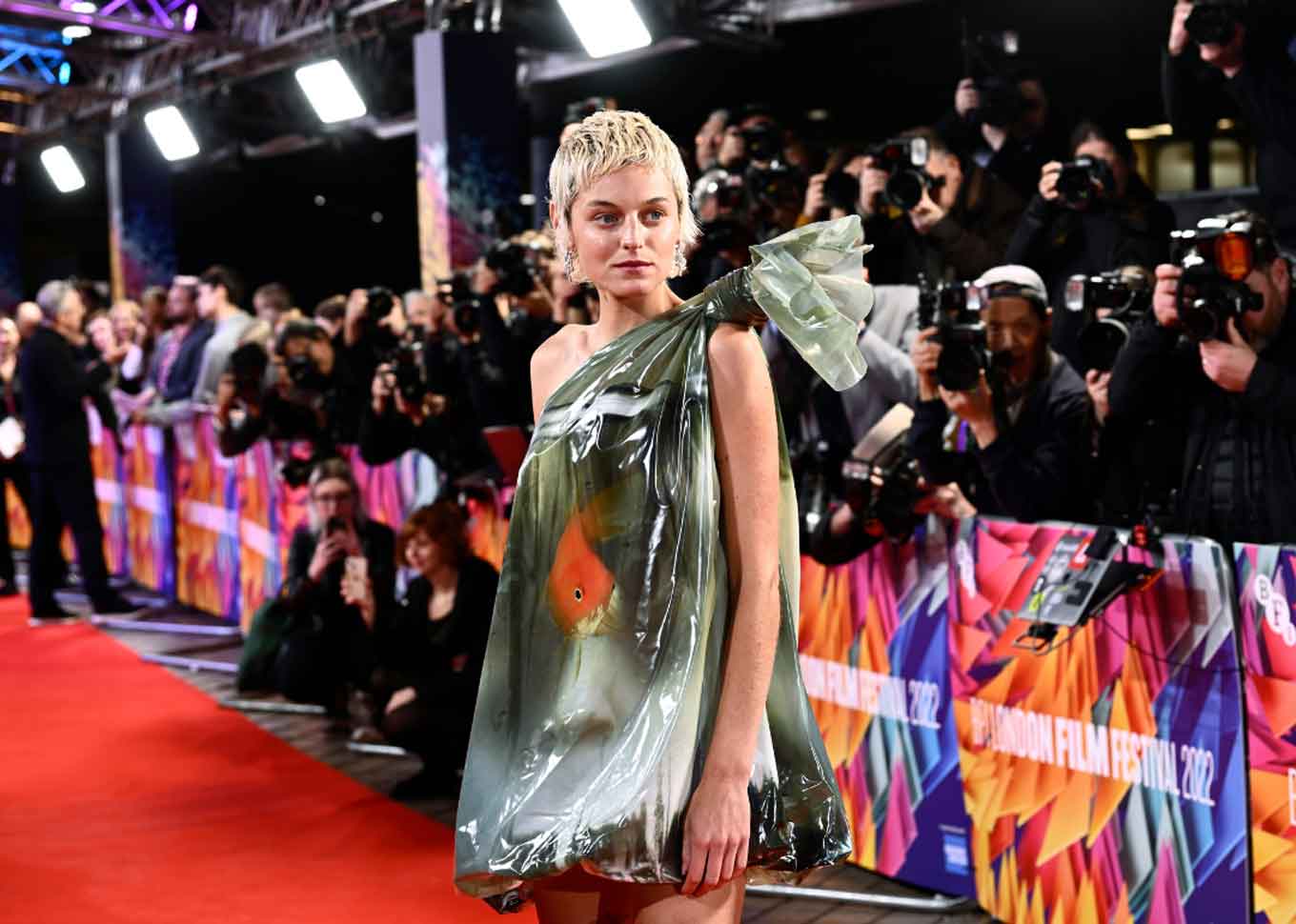
After playing Princess Diana on Netflix's "The Crown," Emma Corrin came out as nonbinary in 2021. "That's the way society works within these binaries and it's taken me a long time to realise that I exist somewhere in between and I'm still not sure where that is yet," Corrin explained. The Golden Globe-winning actor's pronouns are listed as they/them in their Instagram bio.
Jonathan Van Ness
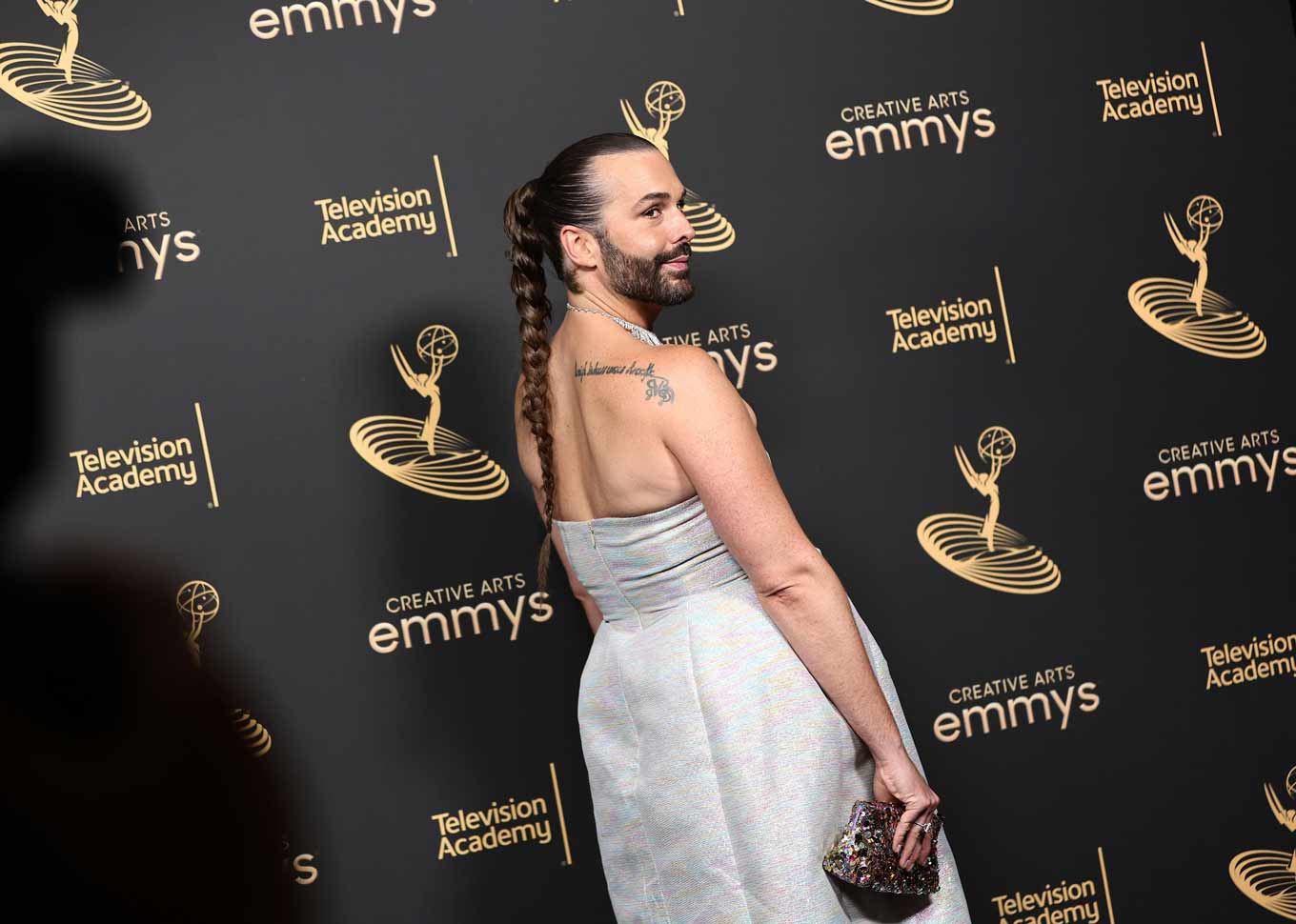
While promoting their Essie nail polish collaboration in an interview with Out, "Queer Eye" star Jonathan Van Ness shared: "The older I get, the more I think that I'm nonbinary — I'm gender nonconforming. Like, some days I feel like a man, but then other days I feel like a woman." In a 2022 interview with Parade, Van Ness stated they are "equally great" with he, they, or she pronouns.
Miss Fame
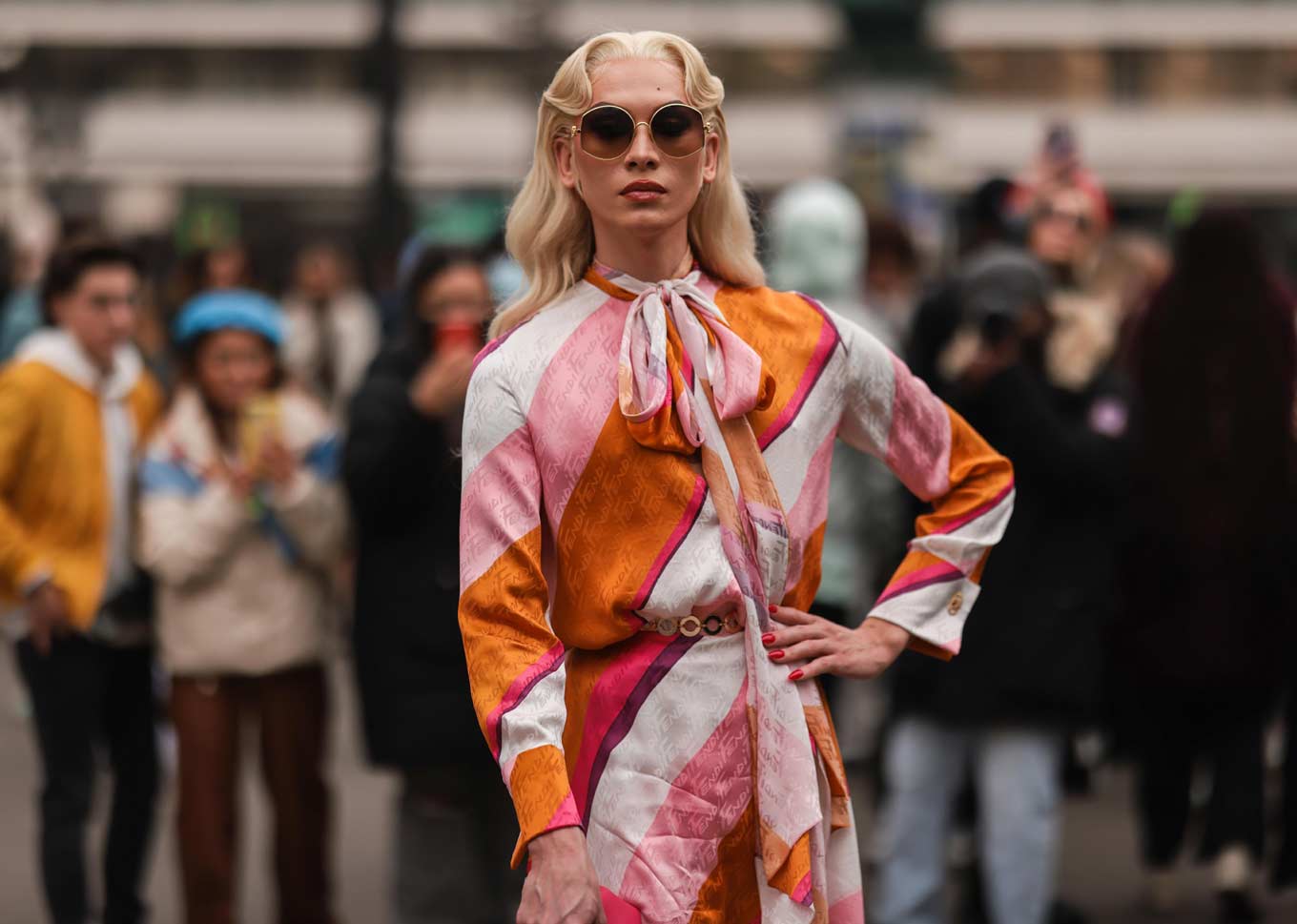
In 2020, the "RuPaul's Drag Race" Season 7 star took to Instagram to state, "This is not a mask! I am femme, I am an artist. I will not be tokenized," followed by multiple hashtags including #TheyThem. The multitalented artist has since served as a guest judge on "Germany's Next Topmodel."
Sara Ramirez
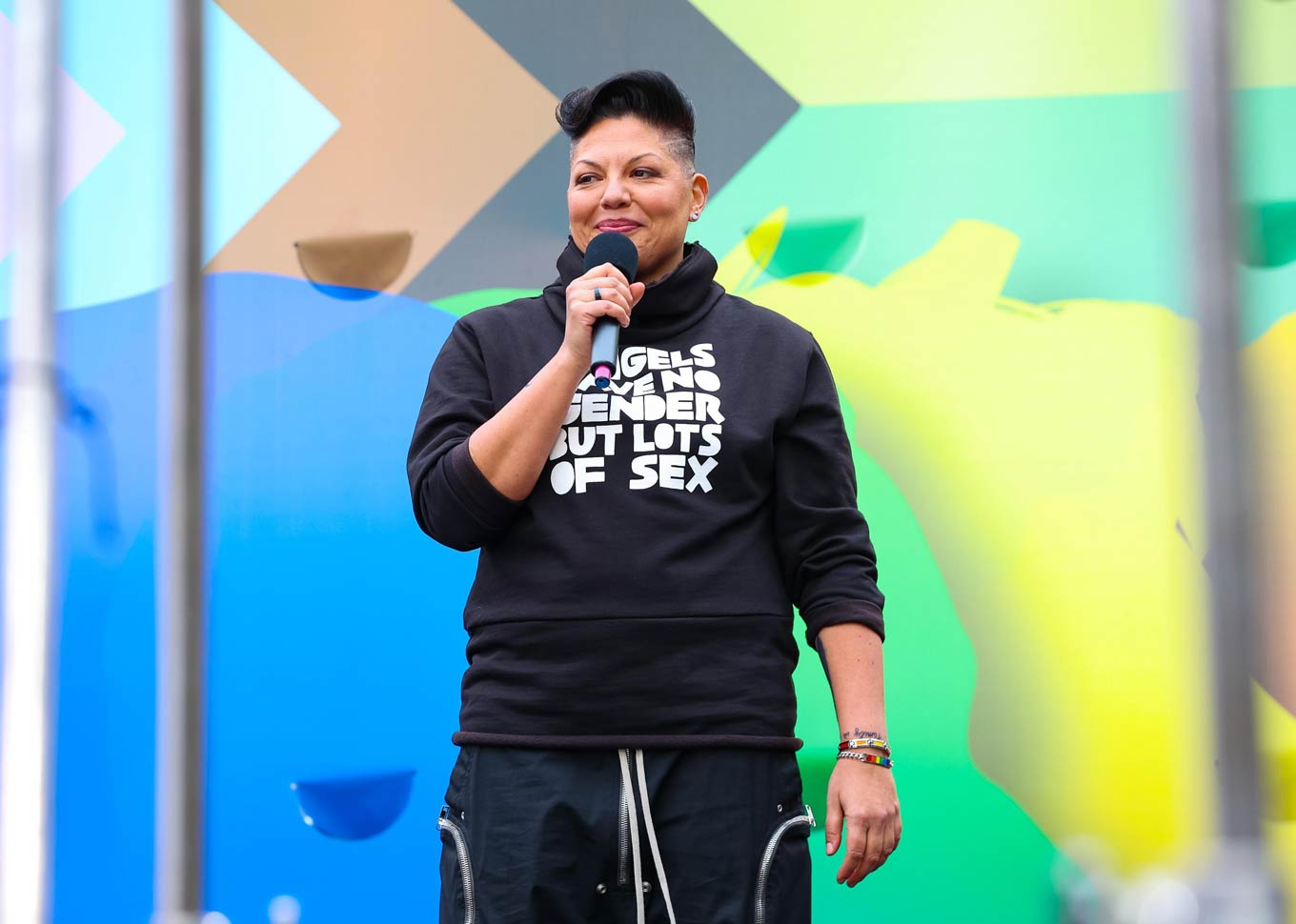
A queer icon since their days starring on "Grey's Anatomy," actor Sara Ramirez came out as nonbinary via Instagram in 2020. In the post, they expressed having "the capacity" to be a "girlish boy," "boyish girl," or neither.
Ramirez went on to play Che Diaz, the nonbinary love interest of Miranda Hobbes on the "Sex and the City" spinoff "And Just Like That…"
ROES (formerly known as Angel Haze)
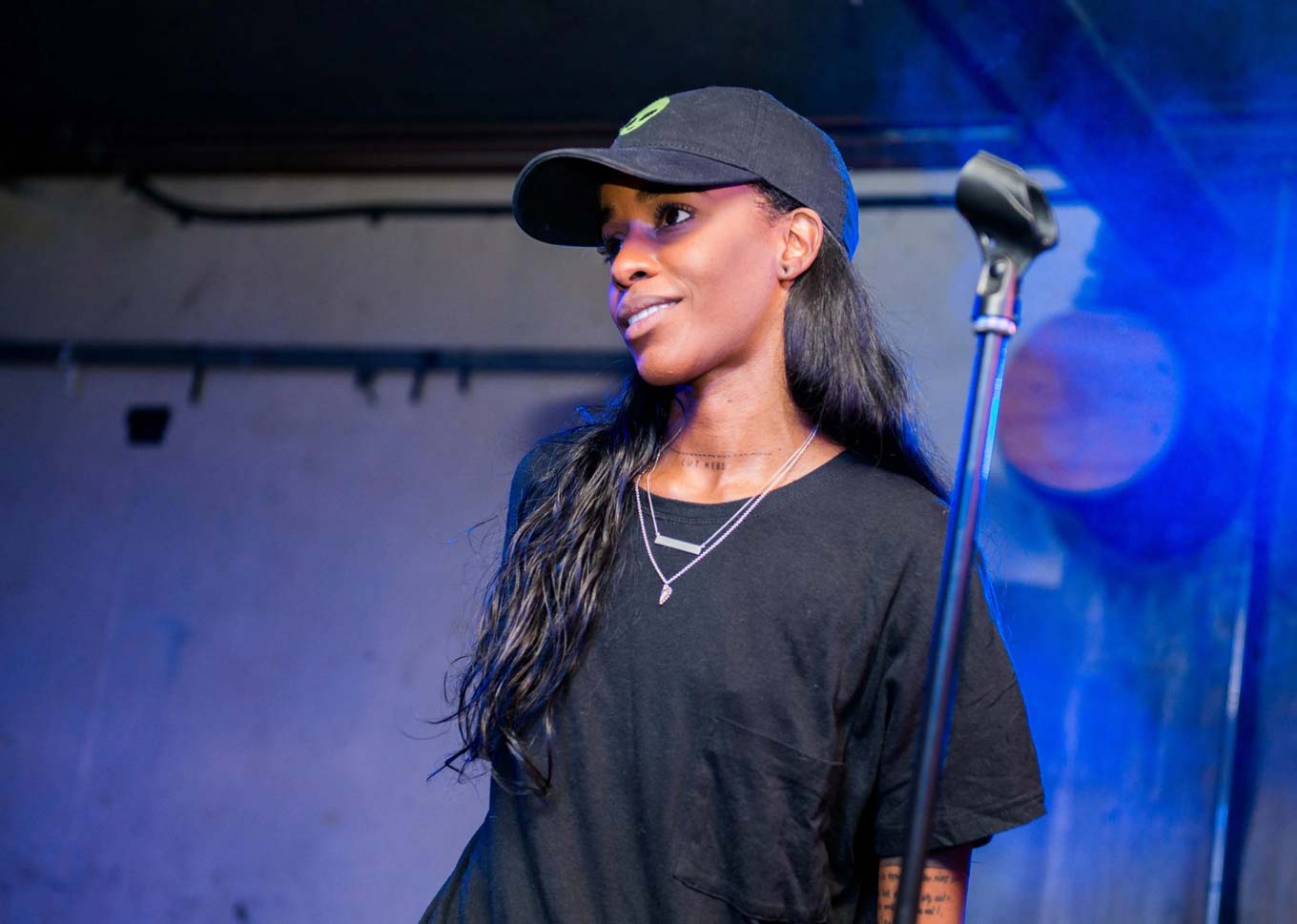
Rapper ROES's gender identity has been public knowledge throughout most of their career, a fact they've remained unapologetic about. In a 2015 interview with CBS Philadelphia, ROES said: "I don't care what people call me. If they wanted to use the word he … I would be ok with that."
Ruby Rose
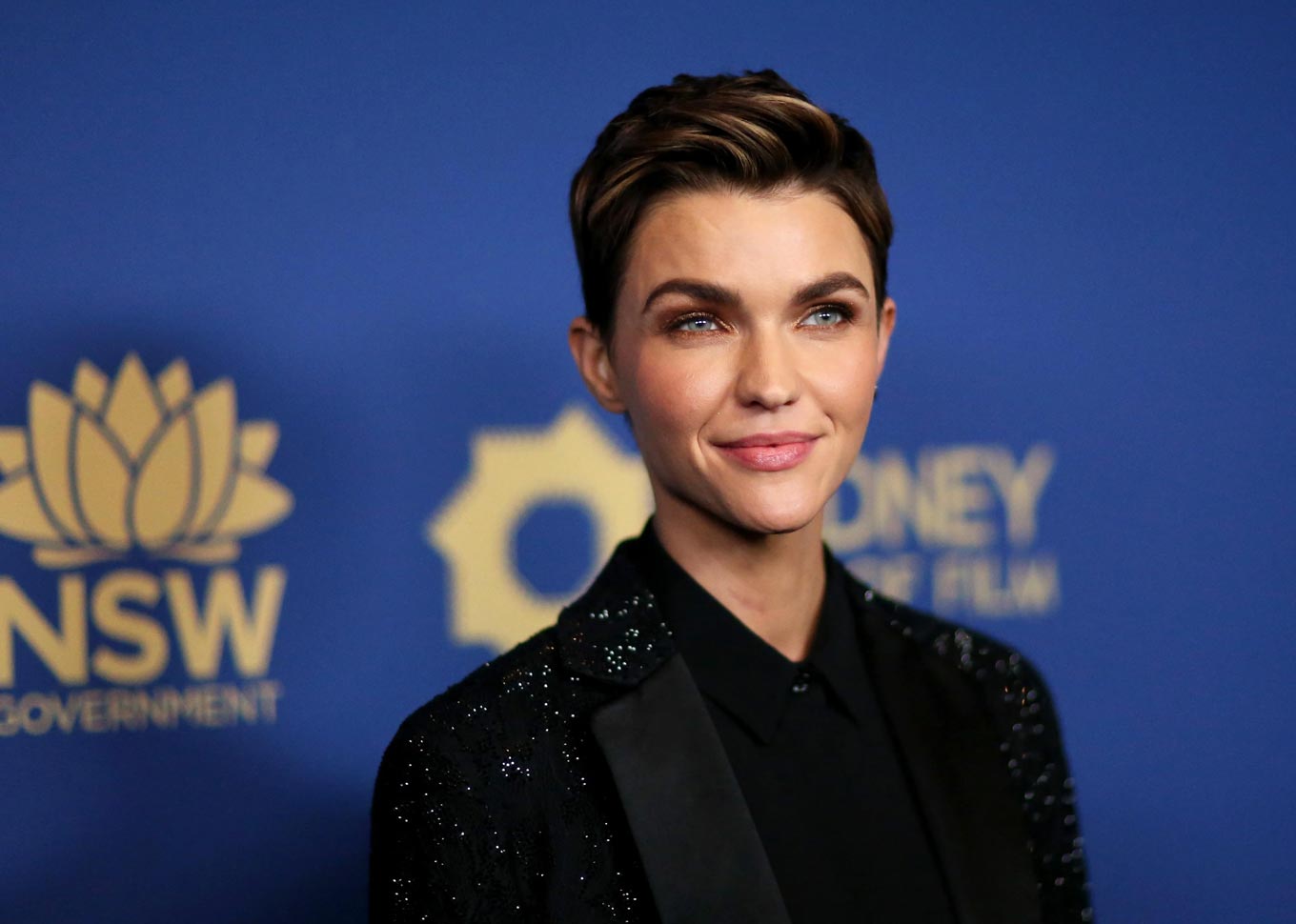
Ruby Rose went viral in a 2014 interview — following her appearance on "Orange Is the New Black" — with the Guardian wherein she was asked about her own identity as it relates to the gender binary. Rose said, "I feel like I'm neither." The Australian actor has remained a star, finding roles in multiple action films such as "John Wick: Chapter 2."
Asia Kate Dillon
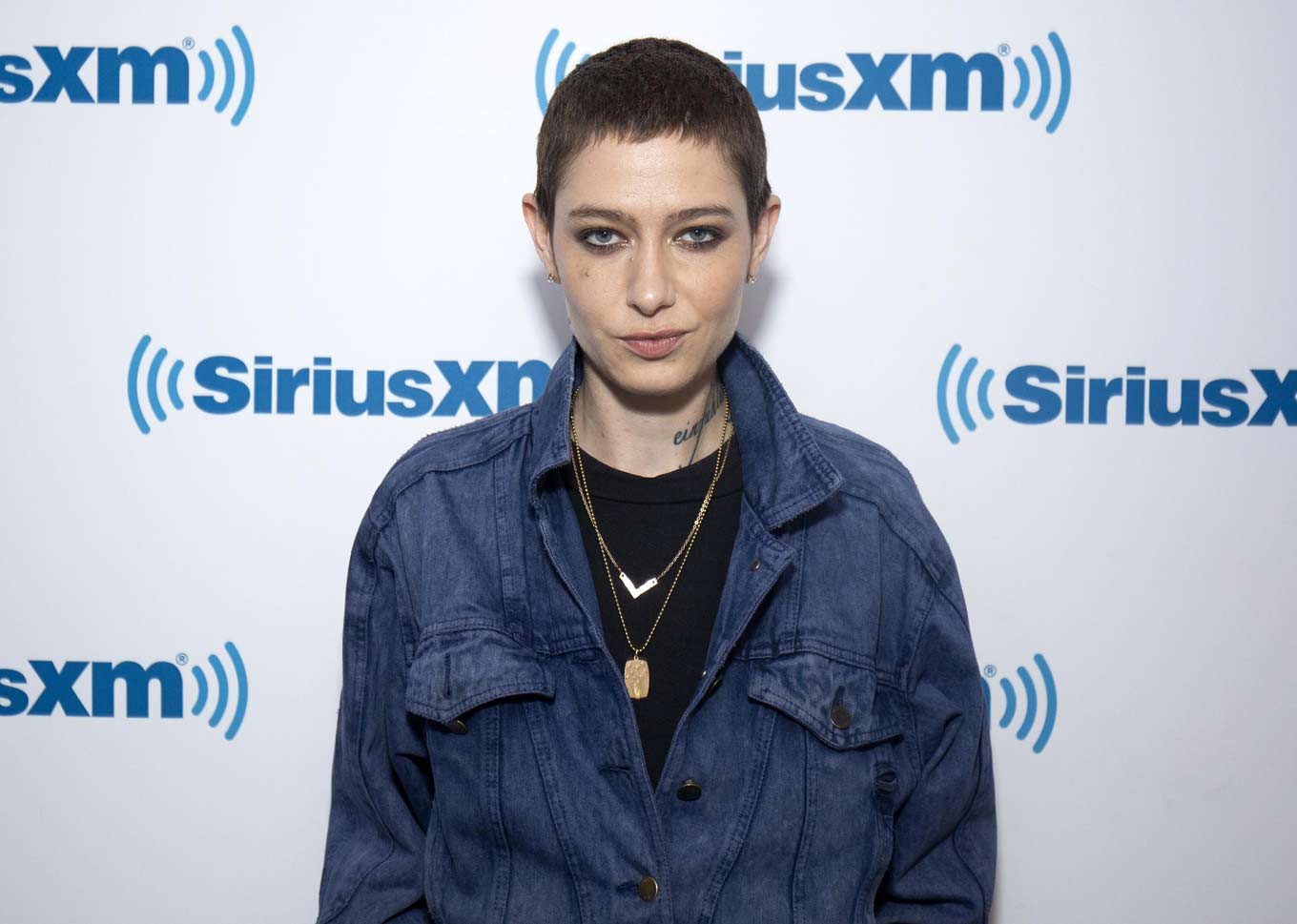
Asia Kate Dillon's breakout role on the show "Billions" was the first time a nonbinary actor played a nonbinary character. "When I read the script for episode two and I saw the 'they, theirs and them,' that's when the tears started to well up in my eyes," the star told Refinery29. They have since starred in "John Wick: Chapter 3 — Parabellum."
Halsey
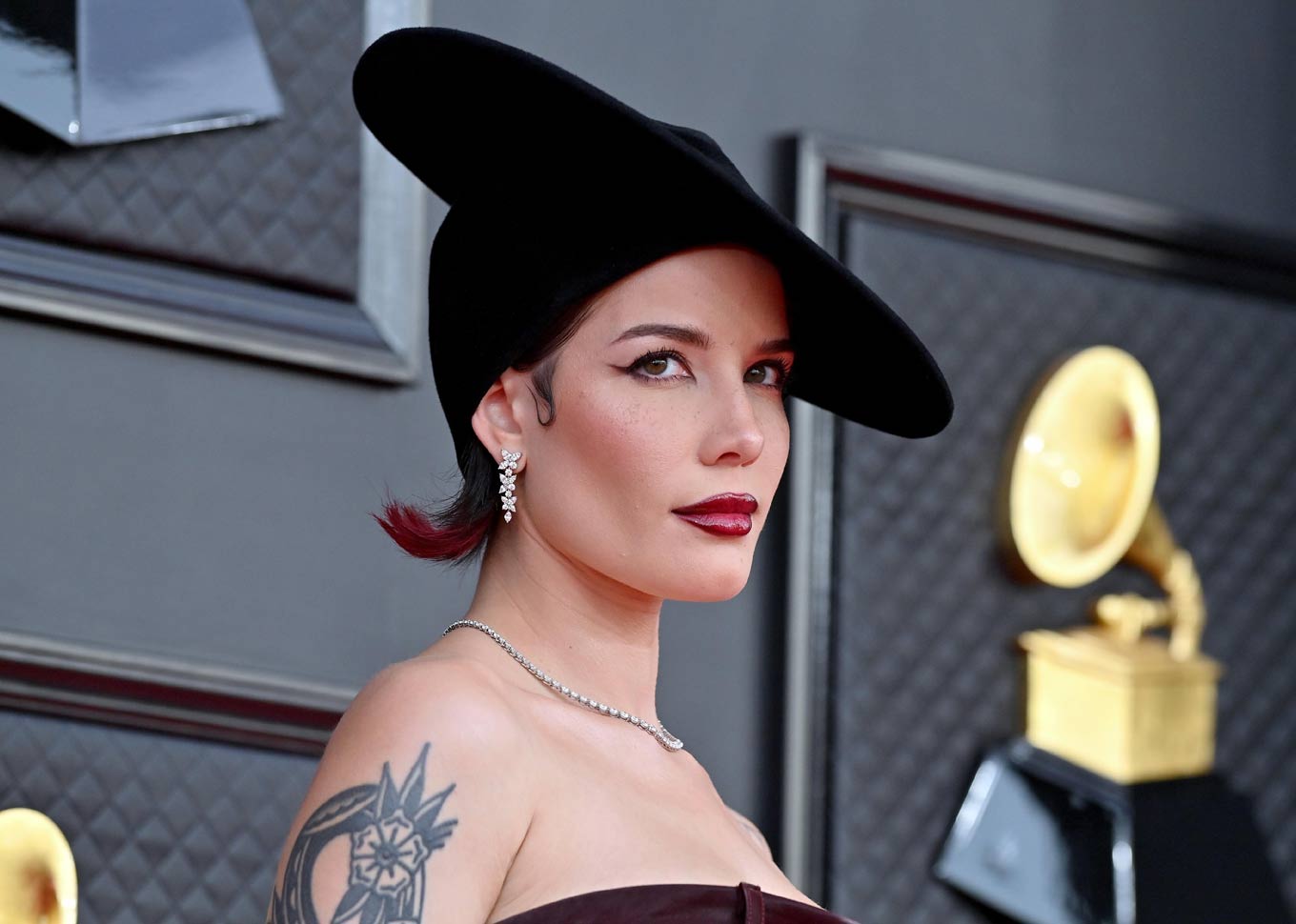
In March 2021, singer Halsey updated her Instagram bio to include the pronoun "they." Clarifying to fans via an Instagram Story a week later, the singer confirmed: "The inclusion of 'they' in addition to 'she' feels most authentic to me. If you know me at all, you know what it means to me to express this outwardly. Thanks for being the best."
Amandla Stenberg
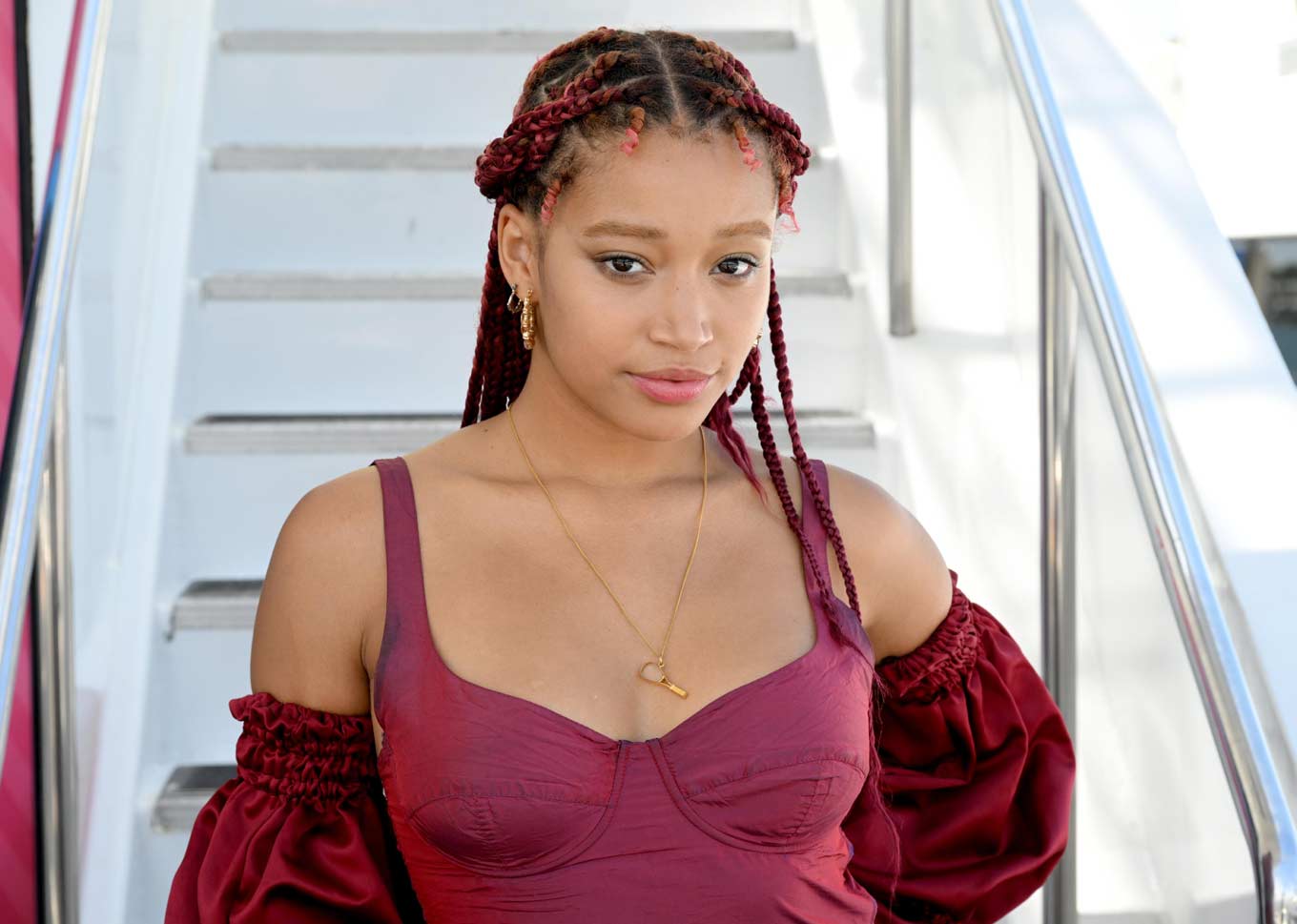
Originally coming out via a Tumblr post in 2016, Amandla Stenberg's gender identity has been known to fans for most of their career. During an interview with the Washington Post in 2021, Stenberg clarified — after her Wikipedia page was changed to adopt gender-neutral pronouns — that she doesn't "need those pronouns to feel comfortable" and expressed that it feels "almost detrimental" to those who need them.
Rebecca Ray Sugar
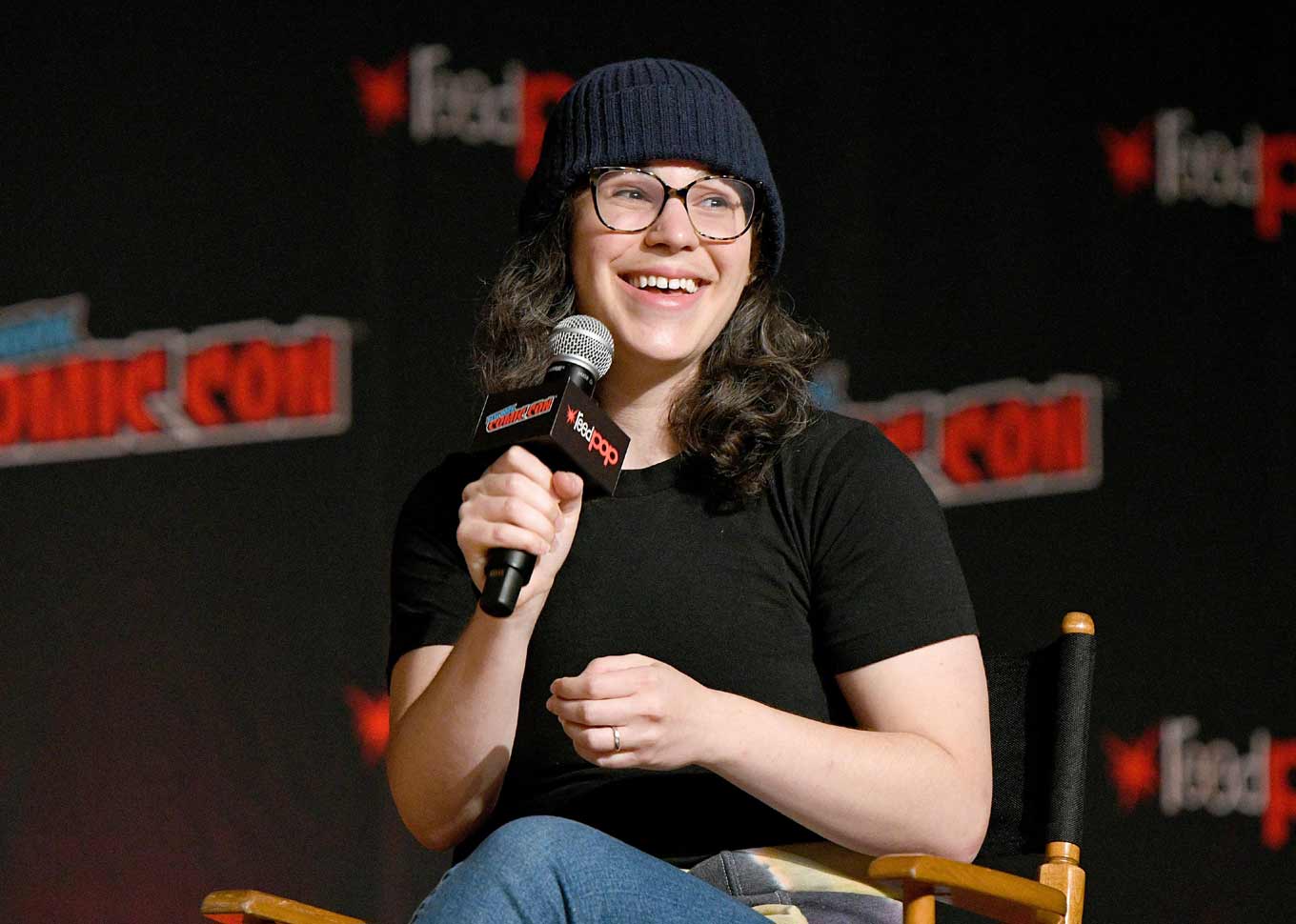
During an interview with NPR about their hit cartoon "Steven Universe," Sugar stated: "I am also a nonbinary woman, which has been really great to express myself through these characters because it's very much how I have felt throughout my life." As of 2022, Sugar uses she/they pronouns.
Grimes
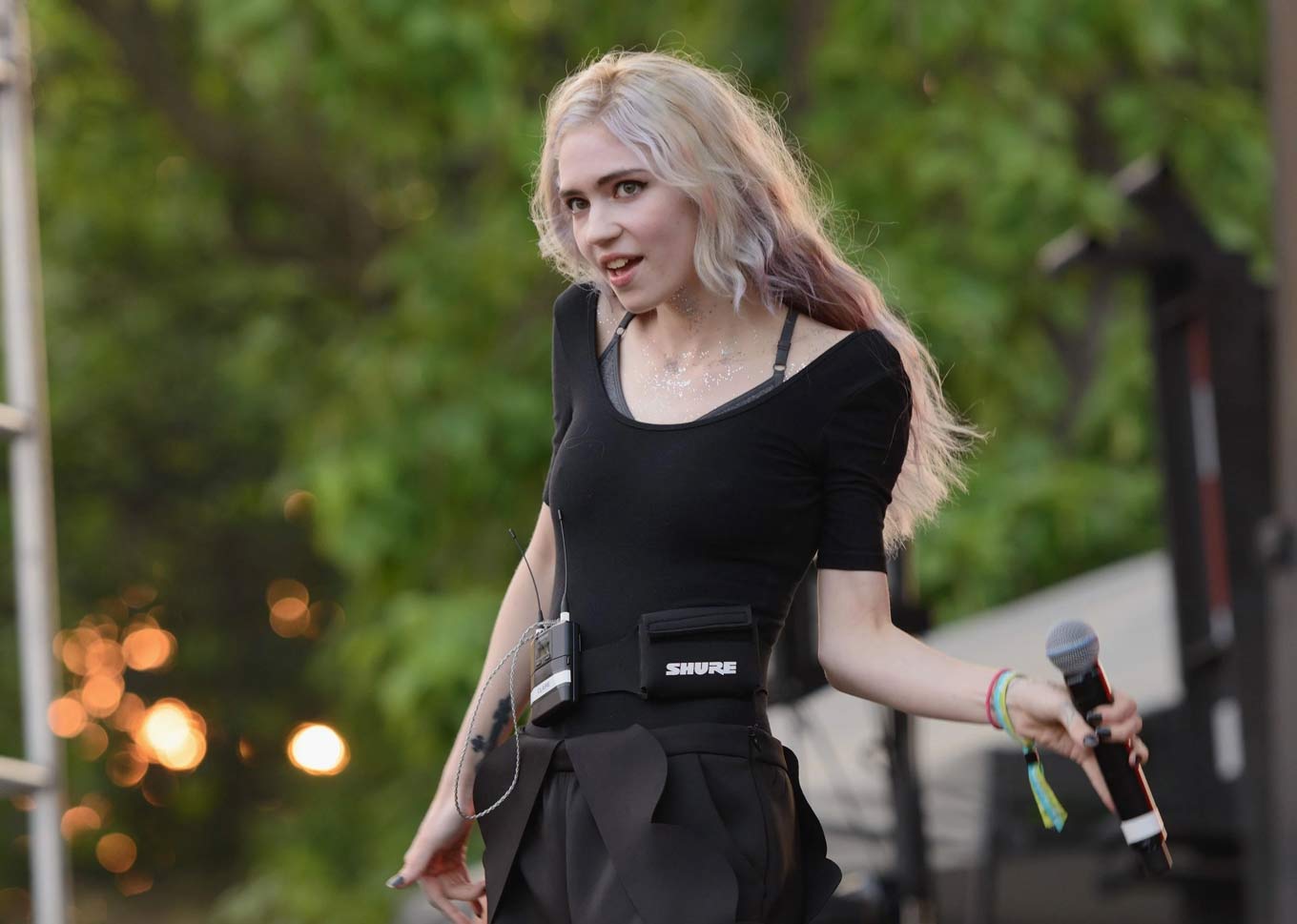
In a now-deleted tweet from 2015, the singer-songwriter shared: "I vibe in a gender-neutral space so I'm kinda impartial to pronouns for myself. Don't have a preference so much but I wish I didn't have to be categorized as female constantly."
In a September 2021 video for Vogue, Grimes spoke about their child calling them by their first name. "Maybe he can sense my distaste for the word 'mother,' which I don't even know why I have a distaste for it. I just — I can't identify with it, really."
Tilda Swinton
Academy Award-winning actor Tilda Swinton has long challenged traditional gender norms, both in her personal life and through her diverse range of film roles. Swinton has described herself as genderless and has played characters of various genders throughout her career, most notably in the film "Orlando," where her character changes sex from man to woman.
While Swinton hasn't explicitly identified as nonbinary, her comments and roles have contributed to broader conversations about gender fluidity and nonbinary representation in Hollywood.
Swinton has not specifically announced her preferred pronouns, but she has used she/her pronouns in recent interviews and has not corrected others who have done so.
Indya Moore
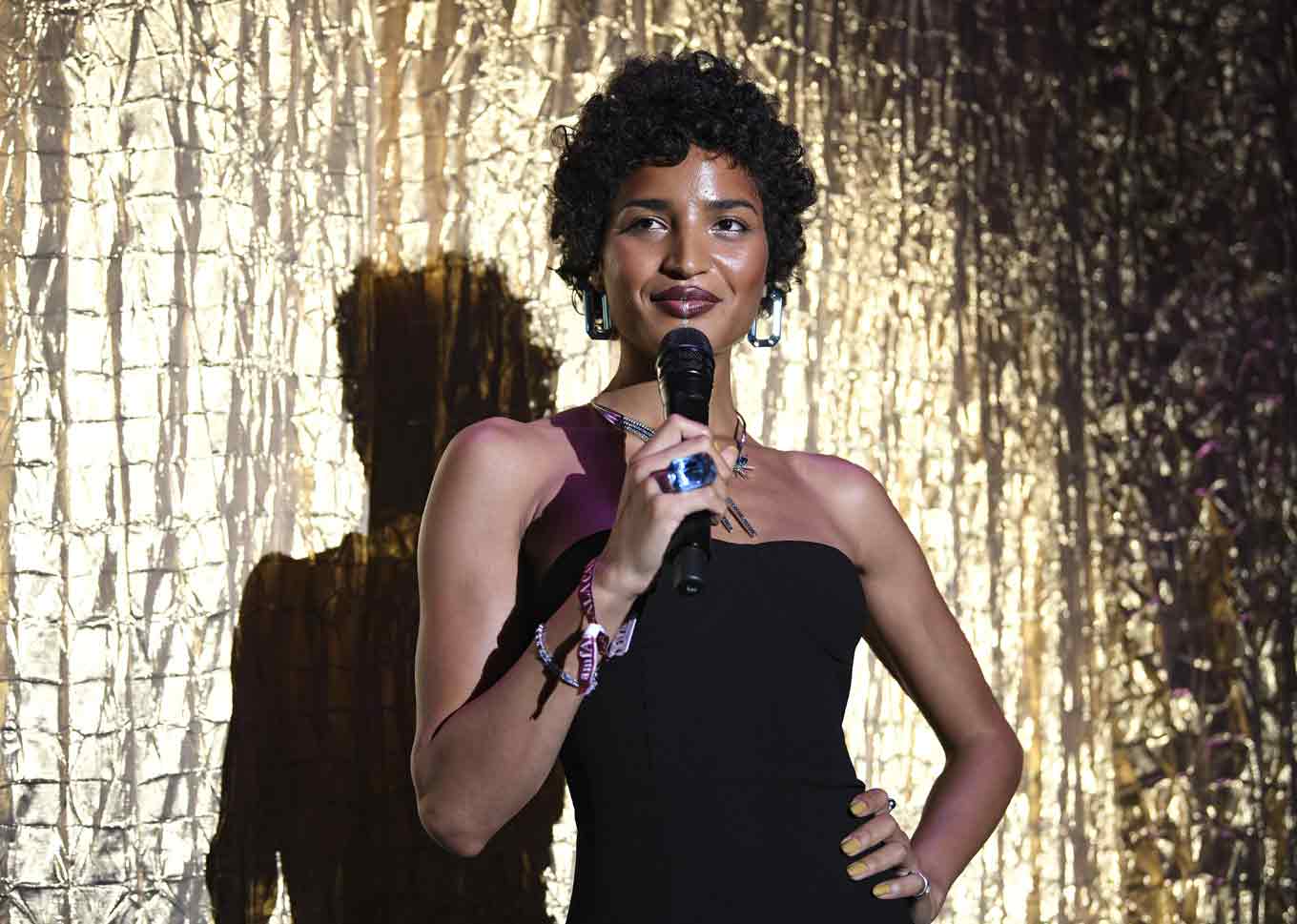
Indya Moore's shot to stardom came from their breakout role on FX's "Pose." They were subsequently named one of Time magazine's most influential people in the world in 2019 and came out as nonbinary that same year in an interview with Michaela Jaé Rodriguez for L'Officiel.
During the interview, Moore said: "I'm non-binary but I don't really talk about it that much. I don't feel like people really are there yet for understanding it, which I don't mind, but I also acknowledge the way people see me as a woman."
Nico Tortorella
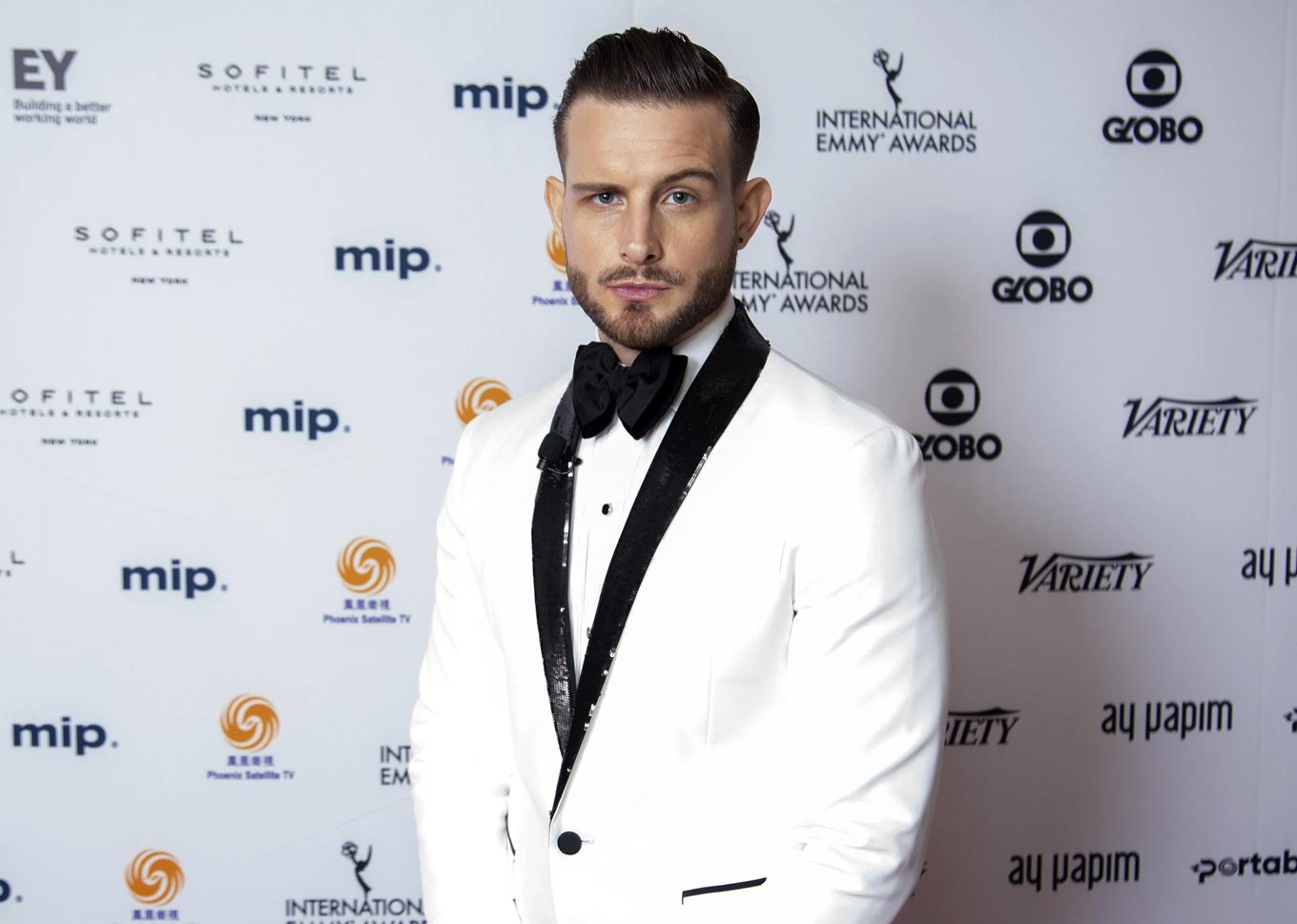
During a 2018 discussion with Trinity "The Tuck" Taylor, Nico Tortorella admitted they had been contemplating their gender identity. "I just pretty recently have come to terms with the fact that maybe I'm not fully cisgender," Tortorella shared at the time. After walking for New York Fashion Week, the actor called the opportunity "political" and added that it was about more than "throwing on a dress because I'm having fun. It's to prove a point."
Emma D'Arcy
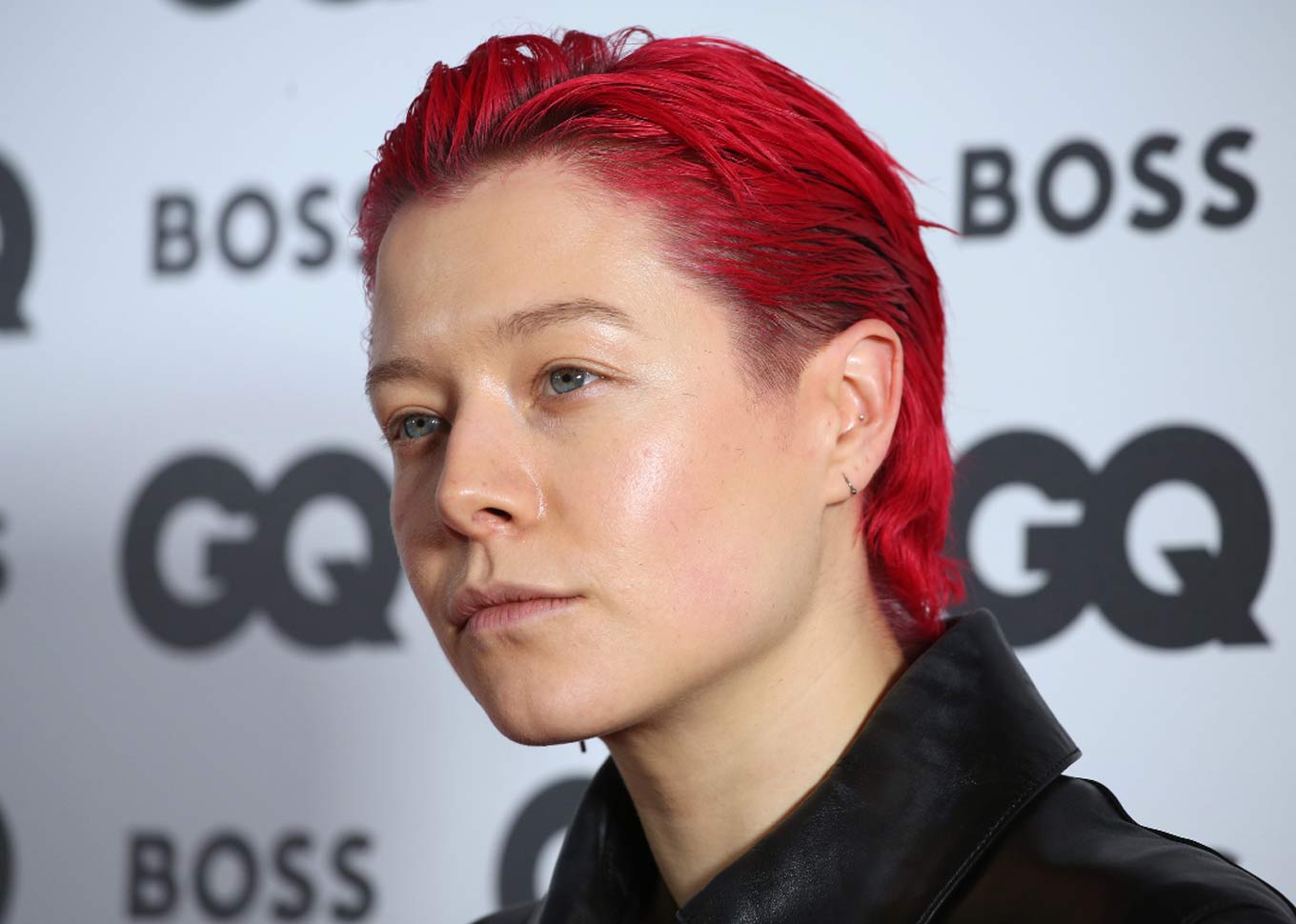
Emma D'Arcy rose to stardom in 2022 as the fearless face of "House of the Dragon" as Rhaenyra Targaryen. The nonbinary Golden Globe-nominated actor explained to The Hollywood Reporter how their gender identity imbued Rhaenyra's character and struggle with "what it means to be a woman." In the interview, D'Arcy said: "I've always found myself both pulled and repelled by masculine and feminine identity and I think that plays out truthfully here. She can't attend court in a way that comes easily to other people."
Liv Hewson
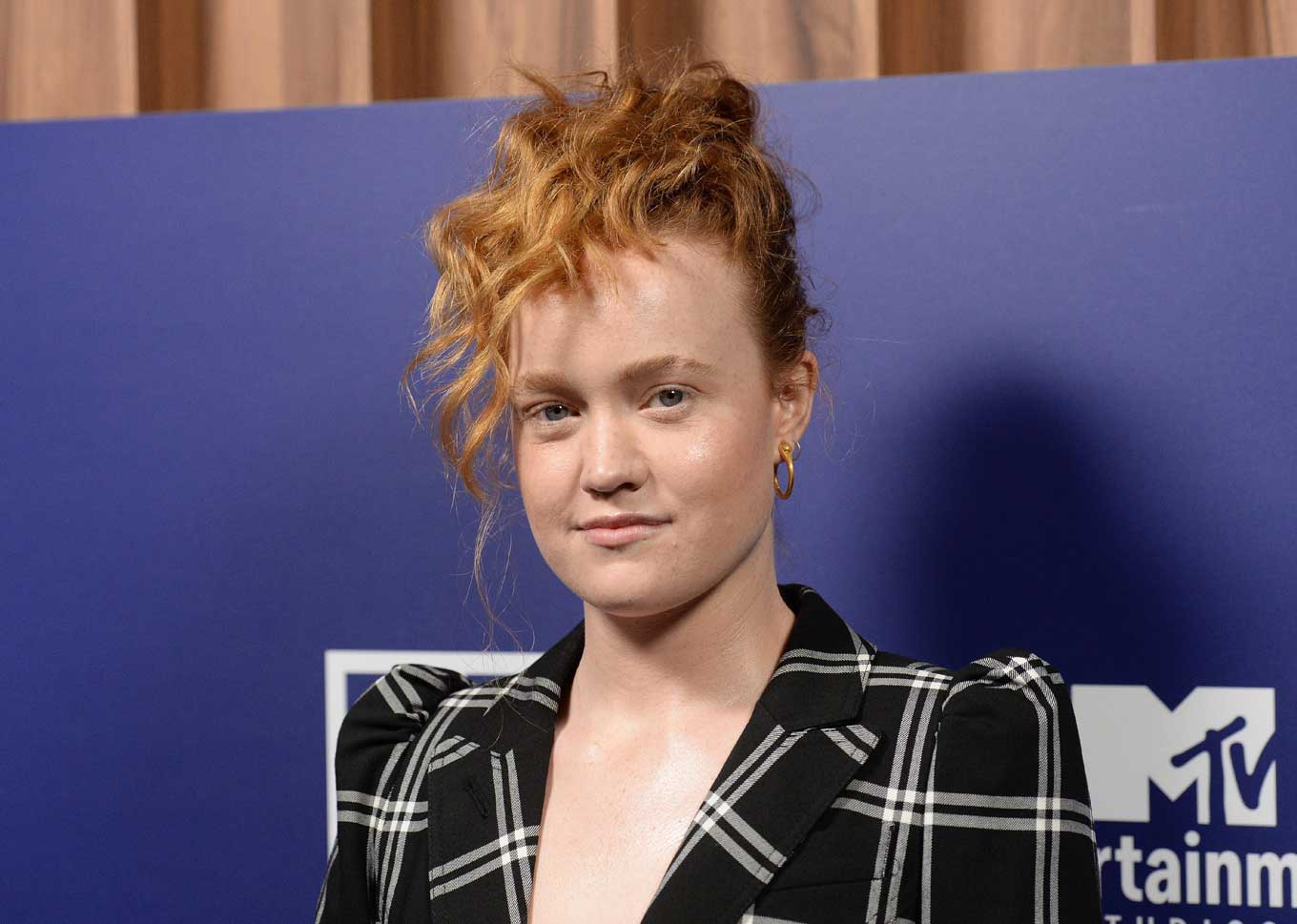
Finding their big break on Netflix's "Santa Clarita Diet," actor Liv Hewson identifies as nonbinary and goes by they/them pronouns. They've become a young queer icon, playing fan favorite Vanessa in "Yellowjackets," and receiving the Visibility Award at the 2020 HRC Austin Gala.
Bella Ramsey
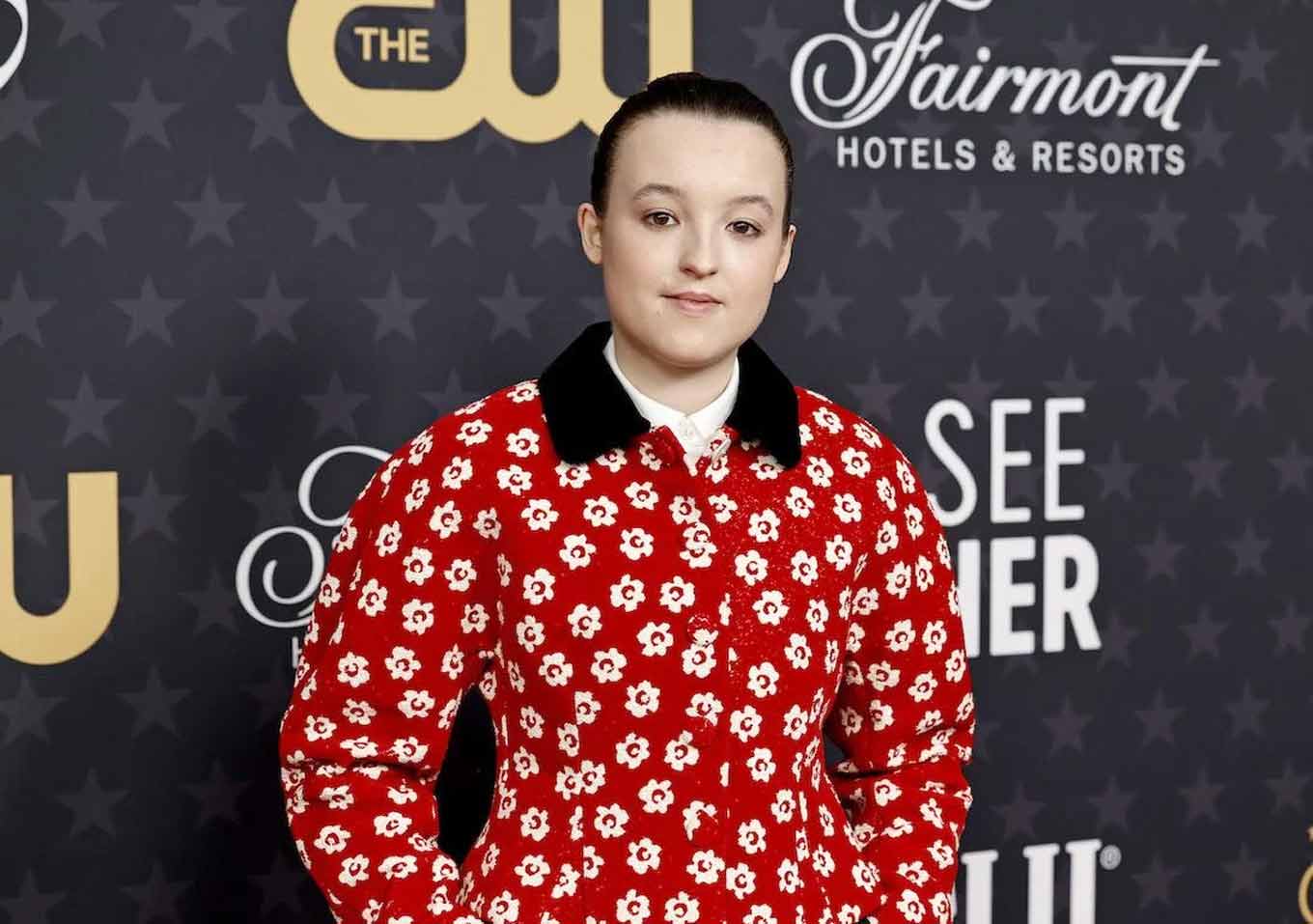
Bella Ramsey was 11 years old when the actor joined "Game of Thrones" as the small yet formidable Lyanna Mormont. Now, Ramsey's gripping audiences again, starring in HBO's dystopian zombie series "The Last of Us" alongside Pedro Pascal as the character Ellie, who may be humanity's last hope.
In January 2023, Ramsey, who uses various pronouns (she/her in more recent interviews), told the New York Times that her "gender has always been very fluid" and that "being gendered isn't something I particularly like, but in terms of pronouns, I really couldn't care less."
Expounding on the subject to GQ UK a month later, Ramsey explained said that while she finds it fun to play "feminine characters" that are "so opposite to myself," she doesn't tolerate being misgendered as a "powerful young woman."
Alex Newell
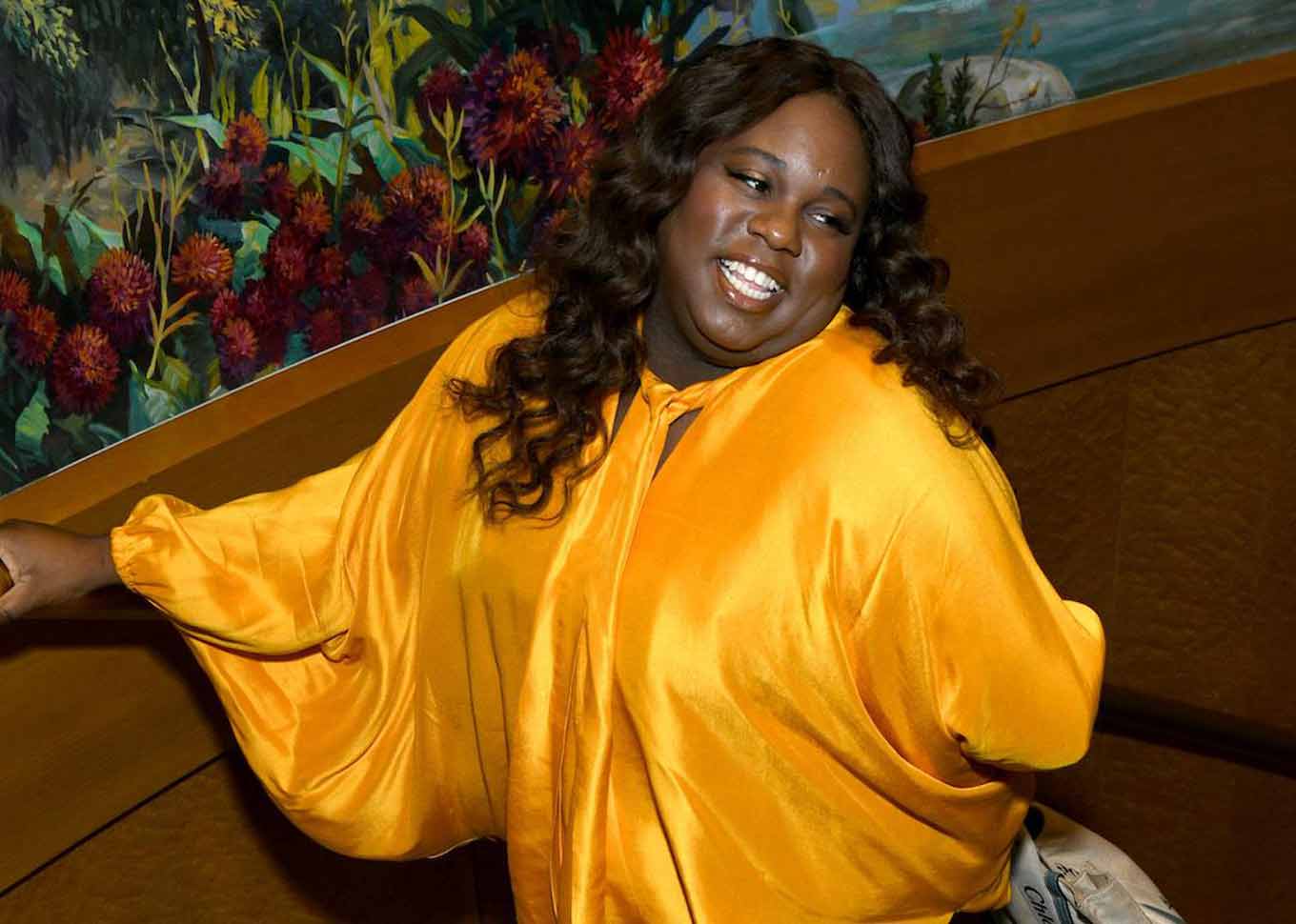
Since joining the TV show "Glee" as vocal powerhouse Unique Adams in 2012, Alex Newell has been blowing audiences away on-screen and onstage. The actor and singer, who is gender nonconforming and uses all pronouns, has appeared in various film, television, and theater productions, including 2022's critically acclaimed Broadway musical "Shucked."
In June 2023, Newell's star-making turn as Lulu in "Shucked" made them the first openly nonbinary Tony winner ever, taking home the award for Best Featured Actor in a Musical. "Thank you for seeing me, Broadway. I should not be up here as a queer, nonbinary, fat, Black little baby from Massachusetts," Newell said in their acceptance speech. "And to anyone that thinks that they can't do it, I'm going to look you dead in your face. That you can do anything you put your mind to."
J. Harrison Ghee
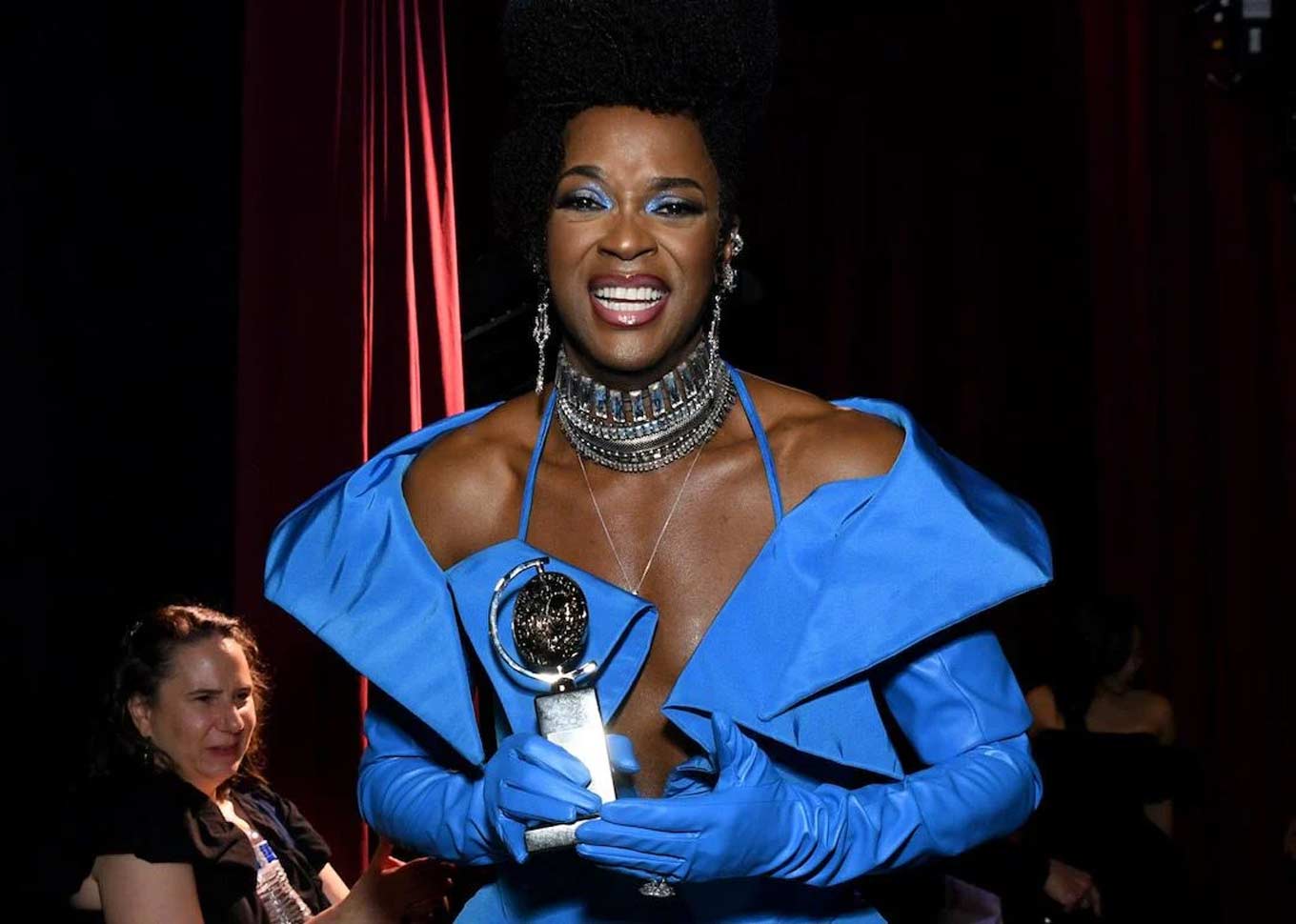
J. Harrison Ghee is an actor, singer, dancer, and one of the first nonbinary performers to win a Tony Award, making history on the same night as aforementioned winner Alex Newell.
Ghee worked on Disney cruise ships as a drag performer before turning to theater acting, landing their first Broadway gig in 2017 as Lola in "Kinky Boots." Since then, the multihyphenate — whose pronouns are he/she/they — has starred in such stage productions as "Mrs. Doubtfire" on Broadway and "Chicago" for the St. Louis Municipal Opera Theatre.
At the 2023 Tony Awards, Ghee became the second openly nonbinary actor to win a Tony, taking home Best Leading Actor in a Musical for their turn as Jerry/Daphne in 2022's "Some Like It Hot."
A version of story was originally published by Stacker and republished pursuant to a CC BY-NC 4.0 License.
The LGBTQ+ community has been integral to the performing arts (and the tech behind said arts) for as long as there has been performing arts — even though many members of the entertainment industry were at times reluctant to admit it.
Back in the days of the Hays Code from the 1930s to the 1960s, movies depicting gay love interests were censored by studios.
Even today, movies featuring gay sex or LGBTQ+ characters are typically rated more strictly than movies with straight characters.
Given the stigma around showing LGBTQ+ content on the silver screen, it makes sense that celebrities who identify as being LGBTQ+ haven't always been able to speak freely about their status.
It wasn't too long ago that the entertainment industry took every conceivable measure to keep the sexual orientation of its foremost stars under wraps.
Look no further than Old Hollywood actor Rock Hudson, whose homosexuality remained a tightly guarded secret during the height of his fame.
Thankfully, many of today's LGBTQ+ celebrities aren't overly pressured into keeping their status a secret.
Likewise, both the entertainment industry and society have made strides since the heyday of Rock Hudson, at least in terms of how both those entities approach and accept sexual identity.
This increased visibility of LGBTQ+ celebrities matters. Celebrities speaking openly about their identity and experiences can help destigmatize LGBTQ+ identities and boost the self-esteem of LGBTQ+ people by allowing them to see that there are successful people out there who are like them.
Our partners at Stacker curated a list of over 60 major celebrities in the LGBTQ+ community who have made significant contributions to the community itself and/or the entertainment industry.
Although there is still quite a way for society to go when it comes to the inclusion of LGBTQ+ individuals, it's increasingly apparent that a celebrity's sexual orientation need not be the career detriment it may have been in past years.
In fact now, more than ever, celebrities are speaking up for LGBTQ+ communities and becoming celebrated advocates for them.
Just look at Billy Eichner vying for more overtly gay characters in TV and film. Or Lil Nas X, who has become an LGBTQ+ icon after spending years closeted with no plans to publicly come out.
You might also like: Nonbinary Celebrities | Pansexual Celebrities | Celebrity Activists | Vegan Celebrities | LGBTQ+ Influencers
You might also like: What does LGBTQIA+ stand for? | Every LGBTQ+ pride flag and their meanings | Calendar of LGBTQ+ pride and awareness days
Get To Know These Celebrities You May Not Know Are LGBTQ+
Miley Cyrus
Since graduating from the role of Hannah Montana in 2011, actress and singer Miley Cyrus hasn't shied away from expressing her sexuality through performance art — sometimes to downright scandalous effect.
That said, it wasn't until 2015 that Cyrus announced she was gender-fluid, meaning she doesn't exclusively identify with one particular gender. In the time since, she's become a passionate and vocal advocate for various LGBTQ+ issues.
Her organization, Happy Hippie Foundation, concentrates on youth homelessness, the LGBTQ+ community, and other vulnerable populations.il
Elliot Page
Elliot Page, famous for roles in "Juno," "Hard Candy," "Tallulah," and "Inception," in 2014 declared his LGBTQ+ identity during a powerful speech at a human rights conference.
Page came out as transgender in December 2020; his public pronouncement and subsequent interview with Time was celebrated for giving hope to those struggling with their identities or those facing internal or external barriers to coming out publicly.
Page also graced the cover of TIME magazine in 2021, becoming the first openly trans man to do so.
Tim Cook
Apple CEO Tim Cook came out in 2014 in a poignant Bloomberg editorial. "I'm proud to be gay, and I consider being gay among the greatest gifts God has given me," Cook said.
While he doesn't consider himself an activist, Cook did once tell Stephen Colbert that he felt a "tremendous responsibility" to speak up about his LGBTQ+ status, particularly on behalf of all the young people who are bullied or even disowned because of their sexuality.
Drew Barrymore
In 2003, Drew Barrymore star told Contact Music, "I have always considered myself bisexual." She added, "I love a woman's body. I think a woman and a woman together are beautiful, just as a man and a woman together are beautiful."
Additionally, Barrymore has not only been open about her bisexuality but also issues around mental health and addiction.
Billie Joe Armstrong
Billie Joe Armstrong went mainstream in 1994 as the frontman to rock band Green Day. But while the celebrity is no stranger to headlines, it's not widely known that he's been openly bisexual since 1995.
That was when he told The Advocate: "I think I've always been bisexual… I think people are born bisexual, and it's just that our parents and society kind of veer us off into this feeling of, 'Oh, I can't.' They say it's taboo. It's ingrained in our heads that it's bad, when it's not bad at all. It's a very beautiful thing."
Armstrong also touched upon his sexuality in the song "Coming Clean" from Green Day's 1994 album "Dookie."
Evan Rachel Wood
Known for TV roles like "Westworld" and "True Blood" and films like "Thirteen" and "Frozen II," Emmy and Golden Globe-nominated actress Evan Rachel Wood is openly bisexual.
"I always say: Bisexuals aren't confused about who they are; they're confused about where they fit in the world," she said in a 2019 interview with Self.
Wood is also open about her experiences as a sexual abuse survivor, and was a key figure in the passage of the Phoenix Act, which extended protections for Californian domestic violence victims.
Colman Domingo
Gen Z might best recognize Colman Domingo as "Euphoria" protagonist Rue's mentor, a recovering drug addict named Ali.
However, the Tony and Emmy-nominated gay actor has also played Victor Strand on several seasons of "Fear the Walking Dead," and appeared in films like "If Beale Street Could Talk," "Selma," and "Zola." He met his husband Raúl Domingo in 2014, via a Craigslist ad.
Gregg Araki
Queer filmmaker Gregg Araki was a key figure in the New Queer Cinema movement of the 1990s. First coined by academic B. Ruby Rich, this describes the wave of queer-focused indie filmmaking at that time.
In 2010, Araki's film "Kaboom" became the first winner of the Cannes Film Festival's Queer Palm, which celebrates LGBTQ+ films.
Sasha Lane
Sasha Lane first gained mainstream recognition for her leading role in Andrea Arnold's 2016 film "American Honey." The queer actress went on to play queer characters in the films "The Miseducation of Cameron Post" and "Hearts Beat Loud," and the TV series "Conversations With Friends."
"If my heart wants it, my heart wants it," Lane told ASOS Magazine in 2019. "If my heart wants it, my heart wants it. That's been with anyone."
Ben Whishaw
Yes, Paddington himself is gay! English actor Ben Whishaw is also known for playing the villainous Q in the Daniel Craig "James Bond" films, as well as his Emmy-winning role in the miniseries "A Very English Scandal."
He discussed coming out as gay in 2014, after entering a civil partnership with composer Mark Bradshaw, calling public reactions "surprisingly lovely."
Michael Sam
In 2015, football player Michael Alan Sam Jr. made history as the first openly gay player to play in a Canadian Football League regular-season game, playing for the Montreal Alouettes.
Previously, Sam played college football at the University of Missouri, where he came out in 2014. "I want to own my truth," he said at the time. "Nobody should tell my story but me."
Matt Bomer
Gay actor Matt Bomer won a Golden Globe for playing a closeted journalist in the TV film adaptation of Larry Kramer's AIDS epidemic-focused play "The Normal Heart."
He's also known for projects like "Doom Patrol" and the "Magic Mike" films. Bomer came out in 2012, when he thanked his husband Simon Halls and their children during an acceptance speech.
Billy Porter
After winning a Tony for his role in the musical "Kinky Boots," Billy Porter achieved a new level of recognition by playing New York ball scene emcee Pray Tell on the celebrated LGBTQ+ drama series "Pose."
He also became the first openly gay Black man to win best lead actor in a drama at the Emmys for the role.
In 2022, Porter made his directorial debut with another LGBT story — "Anything's Possible," which tells a love story with a Black trans girl (Eva Reign) at its center.
Zachary Quinto
Zachary Quinto has built up a high-profile resume over the years, playing Spock in the most recent "Star Trek" films, as well as Dr. Oliver Thredson in "American Horror Story Asylum."
Quinto came out publicly as gay in 2011, following the suicide of gay teenager Jamey Rodemeyer.
The actor explained how he felt that "living a gay life without publicly acknowledging it is simply not enough to make any significant contribution to the immense work that lies ahead on the road to complete equality."
Andrew Rannells
Andrew Rannells first became well-known as a Broadway actor, receiving Tony nominations for his roles in "The Book of Mormon" and "Falsettos."
He pivoted to TV and film in the 2010s, notably appearing on "Big Mouth" and "Girls." Rannells has said he's known he was gay since high school.
He's currently dating Tuc Watkins, who he met while starring in the Broadway revival of "The Boys in the Band."
Clive Davis
A powerful music mogul, Clive Davis is best known as the man who helped launch or revive the careers of Whitney Houston, Barry Manilow, and Billy Joel, among numerous other superstars.
In 2013, the twice-married executive released an autobiography, "The Soundtrack of My Life," in which he detailed two long-term relationships with other men. In interviews, Davis has revealed being romantically involved with a male doctor for 13 years, and another man whom he doesn't name.
Fergie
Between her former gig with the Black Eyed Peas, her prior marriage to actor Josh Duhamel, and her unpopular 2018 performance of the national anthem, Fergie definitely manages to stay in the public consciousness year after year.
What's lesser-known about the singer, however, is that she's identified as bisexual since the early '00s. "I think women are beautiful," she told The Advocate. "I've had a lot of fun with women, and I'm not ashamed of it."
Kristen Stewart
While a certain percentage of Kristen Stewart's fan base probably prefers to think of her as the perennial soulmate of "Twilight" co-star Robert Pattinson, the edgy actress has definitely moved on to new partners from both sides of the gender spectrum.
Of course, that hasn't stopped the fans from clamoring for a reunion with Pattinson — or at least trying to box Stewart in as far as her sexual identity is concerned.
In 2017, Stewart stated that she is bisexual, telling The Guardian, "You're not confused if you're bisexual. It's not confusing at all. For me, it's quite the opposite."
Kate McKinnon
It wasn't until she began watching sci-fi TV series "The X-Files" that the first openly gay woman star of "SNL" Kate McKinnon said she realized she was attracted to women.
Specifically, McKinnon found herself swooning over actress Gillian Anderson in the 1990s. Even decades later, McKinnon continues to describe Anderson as the "queen of my heart."
McKinnon has also cited openly lesbian comedian and talk show host Ellen DeGeneres as an inspiration and saluted the decorated star at the 2020 Golden Globes for encouraging her to pursue a career in TV.
Gillian Anderson
"X-Files" star Gillian Anderson in 2015 told The Telegraph that she'd previously engaged in same-sex relationships, and was open to doing so again.
"To me a relationship is about loving another human being; their gender is irrelevant," said Anderson. In addition to "The X-Files," Anderson starred in other popular TV shows like "The Fall," "Sex Education," and "The Crown."
Lady Gaga
With her open-minded performance style, provocative lyrics, and massive LGBTQ+ fan base, it was not terribly shocking when pop star Lady Gaga identified as bisexual in a 2009 interview with Barbara Walters.
Since then, the pop star has been accused of possibly making up her LGBTQ+ status for marketing purposes.
She addressed the accusations head-on during an album release party and Q&A session in 2013, stating, "It's not a lie that I am bisexual and I like women... This is who I am and who I have always been."
Gaga has also been involved in many LGBTQ+ rights and mental health causes over the years, including launching her own Born This Way Foundation to empower youth, prevent bullying, and improve mental health.
Aubrey Plaza
In an interview with LGBTQ+ outlet The Advocate, Aubrey Plaza in 2016 spoke of having intense feelings for both sexes.
"Girls are into me — that's no secret. Hey, I'm into them too," said Plaza. "I fall in love with girls and guys. I can't help it."
She also pointed out that she emanates "masculine energy," and is attracted to men and women.
Kristian Nairn
"Game of Thrones" fans will recognize actor Kristian Nairn as Hodor, a hero who says nothing but his own name when speaking. Prior to 2014, he'd not spoken publicly about his gay identity.
In an interview with Winteriscoming.net that year, though, Nairn explained: "I've never hidden my sexuality from anyone, my whole life in fact, and I've been waiting for someone to ask about it in an interview, cos it's not something you just blurt out."
Frank Ocean
Frank Ocean, a member of hip-hop collective Odd Future and breakout solo star, is among the biggest names in contemporary music. In 2012, he posted a statement on his Tumblr account, in which he seemed to declare his love for another man. "
To my first love, I'm grateful for you," he expressed. "Grateful that even though it wasn't what I hoped for and even though it was never enough, it was."
A few years later, Ocean released his album, "Blonde," to substantial acclaim and healthy sales numbers. As famous and respected now as he ever was, Ocean occasionally uses his celebrity status to help spread LGBTQ+ awareness.
Jason Collins
Given the outward sense of machismo that permeates professional sports and its overzealous fan base, many LGBTQ+ athletes keep their sexuality a secret.
Helping to change that is former NBA player Jason Collins, who became the first openly gay man to play in one of the four major professional team sports.
In a 2014 Sports Illustrated article written by Collins in which he announces his retirement, he expressed a desire to see more of his fellow athletes come out without facing repercussions.
"When we get to the point where a gay pro athlete is no longer forced to live in fear that he'll be shunned by teammates or outed by tabloids … then coming out won't be such a big deal," Collins wrote, but ultimately conceded that we're "not there yet."
Angelina Jolie
Actor and director Angelina Jolie has been openly LGBTQ+ for so long that some folks might have forgotten about it.
When asked in 2003 if she was bisexual, Jolie replied, "Of course. If I fell in love with a woman tomorrow, would I feel that it's OK to want to kiss and touch her? If I fell in love with her? Absolutely! Yes!"
Speaking with the former website Movieline in another interview, Jolie revealed: "When I was 20, I fell in love with somebody who happened to be a woman. I was open about it (bisexuality) because I wanted people to know that I had been with a woman."
Victor Garber
Actor Victor Garber has starred in films like "Titanic" and "Argo," along with TV shows like "Alias" and "The Flash."
In 2013, he confirmed that he is gay, though he hadn't exactly been hiding his LGBTQ+ status—or his more than 20-year relationship with Rainer Andreesen, for that matter.
At the time, Garber said of his sexual orientation, "I don't really talk about it, but everybody knows." The couple married in 2015.
Raven-Symoné
According to a 2016 video for "It Gets Better," actress and singer Raven-Symoné knew she was sexually attracted to other females as early as the age of 12 but hid the fact from others.
Raven-Symoné hasn't exactly become Hollywood royalty, but that might have more to do with her critiques of various hip-hop figures than it does her LGBTQ+ status.
In 2020, Raven-Symoné announced she'd married Miranda Maday, a social media manager, in an intimate wedding ceremony.
Wanda Sykes
She might have been engaged to Krazee Eyez Killa on HBO's "Curb Your Enthusiasm," but in reality, Wanda Sykes prefers female partners.
After coming out at a Prop 8 rally in 2008, the comedian claimed she was subsequently treated like a "unicorn," in that most gay or bisexual African Americans don't openly share their LGBTQ+ statuses.
Sykes, who still performs to sold-out crowds, has been married to her wife Alex since 2008. The couple became parents in April 2009.
Charlie Carver
Known for his roles in shows like "Desperate Housewives" and "Teen Wolf," actor Charlie Carver came out in 2016. Carver took to Instagram to make the announcement in an emotional message to his fans.
Later, the actor claimed he made the decision in part because he was "ready to take on that conversation in a more public forum."
Carver has since been vocal about Hollywood's tendency to perpetuate negative LGBTQ+ stereotypes, as well as pigeonholing openly gay actors into playing specific types of roles.
Carver performed on Broadway in "The Boys in the Band," which details the gay experience in 20th-century America before the Stonewall Riots occurred.
Amber Heard
Star of the 2018 film "Aquaman," Amber Heard has been openly bisexual since 2010 when she was dating artist Tasya van Ree.
Heard and Ree dated from 2008 to 2012. Heard remains quite vocal about achieving equal rights, not just for members of the LGBTQ+ community, but for women in general.
In a 2017 interview with Allure, she acknowledged that gender inequality is far graver than she once suspected, saying, "I had been living with my head in the sand…I did not realize how far we have to go to be equal."
Sarah Paulson
In a relatively short time, Golden Globe-winner Sarah Paulson has gone from Hollywood bit player to one of TIME's 100 Most Influential People.
Meanwhile, the versatile actress has been openly dating women for years, though she prefers that people don't think of her as a lesbian.
Since dating actress Cherry Jones and playwright Tracy Letts in years past, Paulson has been in a relationship with actress Holland Taylor since 2015.
Bella Thorne
Actress, singer, and fashion designer Bella Thorne declared her bisexuality in true, modern style. That is, she shared a picture of her kissing another girl on Snapchat, then confirmed that she was indeed a member of the LGBTQ+ community.
Since that initial declaration, Thorne has made it a point to live life the way she wants to, making no apologies or compromises for her choices. In 2019, the actress has stated that she identifies as pansexual.
Amy Winehouse
Before her untimely death, singer Amy Winehouse was in the news for a variety of things. So it would be no surprise that word of her bisexuality might have slipped under the radar.
Winehouse's friends reported to News of the World that Winehouse once said, "I like girls as well. … There is something about being with a woman that is very satisfying. I don't care what people think about me being bi — I do what feels good."
Sir Alec Guinness
Best known for playing Obi-Wan Kenobi in the original "Star Wars" trilogy, Sir Alec Guinness kept his sexual orientation — and his arrest for a homosexual act in 1946 — away from the public eye for the entirety of his adult life.
It wasn't until after Guinness passed away that his bisexuality was revealed. According to reports by his biographers, however, Guinness' bisexuality had "always been known" to his family and friends.
Marlon Brando
Actor Marlon Brando once told his biographer, "Like a large number of men, I, too, have had homosexual experiences and I am not ashamed. I have never paid much attention to what people think about me."
Unlike many of his contemporaries, Brando was an actor who could land desirable roles no matter what he chose to do in his personal life. To this day, his performances are heralded as some of the best ever committed to the big screen. Among them include "The Godfather," "A Streetcar Named Desire," and "Apocalypse Now."
Richard Pryor
According to music legend Quincy Jones, one of Marlon Brando's alleged homosexual trysts was with comedy legend Richard Pryor in the 1970s.
Jones made the claim in a controversial interview with Vulture in 2018, and his assertion was later confirmed by Pryor's own widow, Jennifer Lee. "He'd f*** anything," Jones said of Brando. "Anything! He'd f*** a mailbox. James Baldwin. Richard Pryor. Marvin Gaye."
Anna Paquin
After coming out as bisexual in 2010, and then marrying actor Stephen Moyer that same year, "True Blood" and "X-Men" actress Anna Paquin experienced some backlash from the LGBTQ+ community.
At the time, Paquin described the outrage to her coming out as "hateful." In response, she said of her bisexuality, "I am a happily married woman and I married a man. I don't think that negates that aspect of my life."
Accordingly, Paquin hasn't let anyone or anything stop her from speaking her mind about LGBTQ+ issues.
As she told Cosmopolitan in 2014, "The reason I feel like it's important to talk about this stuff is that the more normal and, frankly, mundane and boring this stuff becomes, I think the better it's going to be for everyone who is part of our community."
Lee Daniels
Long before directing movies like "Precious" or co-creating Fox's "Empire," Lee Daniels was a young gay man coming to terms with his homosexuality while growing up in Philadelphia. (Daniels, in 2015, clarified his sexuality, describing himself as sexually fluid.)
As Daniels told the Hollywood Reporter in 2017, his father once threw him in a trashcan after he came down the stairs wearing high heels—a scene that "Empire" fans may find familiar. The director's struggles would continue through the '80s as his friends began dying from AIDS.
Daniels considers it a "miracle from God" that he never contracted the deadly virus himself.
Azealia Banks
Due to her liberal use of gay slurs on Twitter and in her lyrics, singer Azealia Banks faced accusations of homophobia in 2015.
Hoping to quash the controversy, Banks came out as bisexual that same year, adding that nearly all of her friends are gay and that one of her siblings is transgender.
Speaking to The New York Times, Banks said, "I'm not trying to be, like, the bisexual, lesbian rapper. I don't live on other people's terms."
Lil Nas X
Hailing from a conservative upbringing just outside Atlanta, Georgia, rapper Lil Nas X knew he was going to take the secret of his sexuality to his grave.
He would later publicly come out as gay on the last day of Pride Month in June 2019. At the age of 19, Lil Nas X became a superstar thanks to his hit "Old Town Road."
His superstardom, he discovered, also made him a hero among the queer community. Today, he embraces his role as a representative and icon for LGBTQ+.
Janelle Monáe
Janelle Monáe presented herself as an enigma when she first burst on the scenes in 2010 with her debut album, "The ArchAndroid." What she presented to the world was exactly that: an "immaculate android," or an "alien from outer space/the cybergirl without a face."
But as the world began to get to know Monáe through her music, androgynous style, and prog-pop music, she let the world in on who the human is underneath.
Originally she identified as bisexual but now aligns as queer as she continues to learn about topics like pansexuality and how they resonate with her. Monáe has also encouraged conversations on breaking the gender binary, tweeting the hashtag "#IAmNonbinary" in January 2020 in support of Nonbinary Day.
Brendon Urie
Panic! At The Disco frontman Brendon Urie is, as he puts it, attracted to "just people." The singer has been an advocate of the LGBTQ+ community and officially came out in 2018 as pansexual.
Speaking to PAPER Magazine in 2018, Urie stated, "I'm married to a woman and I'm very much in love with her but I'm not opposed to a man because to me, I like a person. [...] If a person is great, then a person is great."
He also told Pink News, "Yeah, I guess you could qualify me as pansexual because I really don't care," he said, referring to gender. That same month, he donated $1 million to GLSEN (Gay, Lesbian, and Straight Education Network), which works to create inclusive and safe environments in schools.
Andrew Scott
Many fell for Andrew Scott when they got to know him as "the hot priest" in the British comedy series, "Fleabag." For Scott, his LGBTQ+ "moment of fame" wasn't about coming out to the masses — he's been out for a while.
(He first spoke publicly about his sexuality in an interview with The Independent in 2013.)
What got the media's attention was his distaste at being referred to as, "openly gay." He told GQ during an interview, "You're never described as openly gay at a party...'This is my openly gay friend Darren.' 'She's openly Irish.' It implies a defiance I don't feel."
Lee Pace
While his most notable role of the last few years put being gay front and center stage, actor Lee Pace was not always as forthcoming about his own sexuality.
The actor, who played Joe Pitt in "Angels in America" on Broadway, came out every time he performed (as his character).
It wasn't until 2018, however, that he came out to the public as himself, Lee Pace. (Reportedly, however, Pace made headlines in 2012 when his "Hobbit" co-star, Ian McKellen, accidentally described Pace as gay in an interview.)
In an interview with The New York Times, he made it clear that his decision to keep quiet was to draw boundaries—that the public knew him as an actor who plays roles, and that's all that should matter. Pace was not always met with the most welcoming circumstances.
While he admits he was never outright scorned for being gay, there have been instances where he felt it was more of a hindrance than just a fact that shouldn't matter.
He told The New York Times, "Once you say those words and the sky doesn't fall down, or the earth doesn't open up, a lightning bolt doesn't zap you. You really can be anything."
Jason Mraz
Jason Mraz is all about the wordplay, though he doesn't mince words when it comes to his sexuality. The recording artist officially came out as bisexual in 2018, after admitting that it was hard for him to do so given his conservative upbringing.
(He penned an lover letter to the LGBTQ+ community in 2018 for Billboard for Pride Month.)
With the support of his now-wife, however, Mraz has fully embraced all sides of his sexuality and has celebrated how easy it was for him to be honest about who he is with the rest of the world.
Tessa Thompson
Not all heroes wear capes — but Tessa Thompson certainly does, especially for the LGBTQ+ community. She won hearts with her role as Valkyrie in "Thor: Ragnarok."
But it was in "Thor: Love and Thunder" that Marvel gave her an explicit LGBTQ+ storyline, a first for the brand, which made Thompson an icon not only for women but for the LGBTQ+ community, too.
Although Thompson has dated men and women, she chooses not to label herself as bisexual.
Rebecca Black
Rebecca Black skyrocketed to notoriety back in 2011 with the launch of her song, "Friday" — which wasn't exactly met warmly.
She came out on Amy Ordman and Jack Dodge's podcast, "Dating Straight," saying: "I made, like, a conscious decision not to come out, but... people started asking, and I stopped responding... I'm still in the process, it feels like." Black has stated that she identifies as queer.
Alia Shawkat
Alia Shawkat won fans' hearts as the sardonic, envelope-pushing Maeby on "Arrested Development."
Today, she's a filmmaker in her own right, following the debut of "Duck Butter," which premiered in 2018. It follows the story of L.A.-based 20-somethings, Naima and Sergio, who, over the course of 24 hours, fall in and out of love with each other.
Vulture called the film a "queer utopia," which was exactly what Shawkat and director Miguel Arteta had envisioned. Shawkat identifies as bisexual.
Annie Clark
Annie Clark, aka St. Vincent, expanded her creative resume in 2020 with her on-screen debut in "The Nowhere Inn."
The film, which debuted at Sundance Film Festival, is about Clark's on-stage persona, St. Vincent, as told from the perspective of her fellow musician and ex-girlfriend, Carrie Brownstein.
The "mockumentary" is all about satire and will resonate strongly with those who vibe well with "Portlandia," Brownstein's other claim to fame.
Clark also held a romantic relationship with actress-model Cara Delevingne, and according to rumoredly, Kristen Stewart.
Vanessa Carlton
In 2002 Vanessa Carlton sang her way into superstardom with her hit, "A Thousand Miles," which was nominated for a Grammy that year.
Then, in 2010, Carlton made another debut: She revealed at Nashville Pride that she is a "proud bisexual," though she revealed she's been part of the queer community since she was 13 years old after moving to New York.
As she's gotten older, she confessed to the George Voice, a media source for LGBTQ Georgia, that pop stardom wasn't really the path she wanted to follow.
"I don't look at the community as separate from my life," she told the outlet. "I was never able to differentiate it because I was just always in it."
Today, her songs are less about pleasing the pop gods and are more evocative of the type of music she wants to be known for—soothing, emotional, and deeply rooted in personal experience.
Halsey
The year 2020 was a breakout year for recording artist Halsey, but it didn't have anything to do with her coming out. She's been out for years, as evidenced by the rainbow flag that is omnipresent at her concerts.
2020 was about Halsey reclaiming the stage, in a manner of speaking. Halsey said that she has felt like she's playing a supporting role in her own life, and her album "Manic" is about taking back the spotlight.
In March 2021, Halsey announced their pronouns are they/them and she/her.
Jim Parsons
Jim Parsons may forever be known as the acerbic (yet lovable) Sheldon Cooper, a role he mastered over 12 years to the tune of four Emmys, but as of late he has become a public champion for the LGBTQ+ community.
Following the end of "The Big Bang Theory," Parsons has moved into more of a producer's role, and, most recently, worked on the docuseries "Equal," based on the history of the LGBTQ+ movements. Parsons has been married to art director Todd Spiewak since 2017.
Billy Eichner
In addition to being a brazen funnyman, Billy Eichner uses his vocal volume to fight for LGBTQ+ rights.
He frequently tries to rally his millions of followers to be more politically active, according to Variety.
He is also a huge proponent of developing more relatable characters for gay people in the media.
He told Variety that while watching "Love, Simon," a love story with a gay protagonist, he realized, "Straight people go to the movies and literally see themselves all the time. It was so unusual to have a connection to what was happening on-screen instead of being a step or two removed."
In March 2021, Eichner announced he is writing and will star in "Bros" from Universal Pictures, the first adult-oriented LGBT film to be produced by a mainstream movie studio.
Ben Platt
Ben Platt is a force to be reckoned with — and he's not slowing down anytime soon. Platt, the Tony winner who also starred in "Pitch Perfect" and "The Politician," is lightning in a bottle.
Platt came out as gay to his family at 13 and came out publicly in 2019. Unlike many gay actors, Platt was one of the few who has more or less always been out to the public.
He told Variety, "There was never like a gung-ho of 'Let's come out as soon as possible' because no matter how forward-thinking we all get, it becomes an obstacle a little bit in the case of auditioning, producers and casting and directors. Hopefully, we're moving a bit beyond that."
Sam Smith
Recording artist Sam Smith is a trailblazer for the LGBTQ+ community, having been one of the few celebrities to identify as nonbinary. The pop star decided to adopt the pronouns "they/them," not "he/him," in 2019.
The singer is known for their soulful voice and record hits like, "Lay Me Down," "Stay with Me," "Too Good at Goodbyes," among others.
Smith had also been in a romantic relationship with "13 Reasons Why" actor Brandon Flynn.
When they made the nonbinary announcement on Instagram, Smith said, "I understand there will be many mistakes and mis-gendering but all I ask is you please please try. I hope you can see me like I see myself now. Thank you."
Jameela Jamil
Jameela Jamil is a British actress known for her role in the comedy with Ted Danson and Kristen Bell.
While you won't be seeing Jamil's face on "The Good Place" anymore, you can hear her voice on her podcast, "I Weigh," which promotes the idea that people (women in particular) should be weighed by their achievements.
Jamil also came out as queer in February 2020, which was met with a considerable amount of backlash, seeing as she had been in a five-year relationship with musician James Blake.
She told The Guardian that she had not come out before, "because I was worried that people would think I was jumping on a trendy bandwagon. So I understand the pushback."
What she disagrees with, however, is that people seem to think she's lying about her identity. Her response? "What a weird lie," she said.
Demi Lovato
When it comes to owning their sexuality, Demi Lovato is, above all other things, "Sorry Not Sorry."
An advocate for LGBTQ+ rights, they told Andy Cohen on his "Radio Andy" SiriusXM show that telling Lovato's parents was emotional, but that their family's reaction could not have been more supportive.
In 2021, Lovato announced that they identify as pansexual and sexually fluid, and in 2022, they said their pronouns are "they/them" and "she/her."
Ariana Grande
Ariana Grande has been a controversial figure in the LGBTQ+ community ever since her song "Monopoly" came out in 2019.
For many it raised the question of whether or not the pop star herself was bisexual, while others criticized her for "queer baiting," which is when celebrities drop subtle hints at identifying somewhere on the LGBTQ+ spectrum in order to attract that fan base.
When asked about the song, whose lyrics say, "I like women and men," Grande replied on Twitter. "I haven't [labeled myself] before and still don't feel the need to now which is okay," she wrote at the time.
Lana and Lilly Wachowski
"The Matrix" made household names out of Lana and Lilly Wachowski, who are both transgender.
After "The Matrix" they go on to explore gender and identity in more sci-fi projects like "Cloud Atlas" and "Sense8."
"Many of the ideas Lilly and I explored 20 years ago about our reality are even more relevant now," Lana told Variety. "I'm very happy to have these characters back in my life and grateful for another chance to work with my brilliant friends."
(The sisters have since reunited to deliver the latest Matrix film, "The Matrix Resurrections," in December 2021.)
Noah Schnapp
Noah Schnapp won the hearts of sci-fi lovers everywhere as the beloved but haunted Will Byers on "Stranger Things."
For years, fans had theorized Schnapp's character was queer, but those assumptions wouldn't be confirmed until the show's fourth season, in which Will delivers an emotional monologue to his best friend, Mike Wheeler, whom he secretly loves, rendering himself (and viewers) to tears.
In a pure moment of art imitating life, Schnapp came out as gay on TikTok in January 2023.
"When I finally told my friends and family I was gay after being scared in the closet for 18 years, and all they said was 'we know,'" Schnapp wrote of his coming-out story, adding, "I guess I'm more similar to will than I thought."
This story was originally published by Stacker and republished pursuant to a CC BY-NC 4.0 License.

From the very beginning of Russia’s invasion of Ukraine in February 2022, millions of Ukrainians have lost access to clean drinking water — especially those living near the front lines of the conflict.
Between attacks on water supply and sanitation facilities, power outages that led to water cuts, and increasing need for generators and water treatment systems, Ukrainians are in dire need of clean water.
To make matters worse, the Kakhovka Hydroelectric Power Plant and the Kakhovka Dam in Kherson Oblast, Ukraine, were destroyed on June 6 of this year, leading to a life-threatening flood endangering the thousands of lives.
Floods caused 16,000 people to lose their homes, 80 settlements were impacted, and for those who have remained in the area, water contamination and scarcity put residents at risk of further impacts to human health and the environment.
As always, though, humanitarian helpers leapt to action.
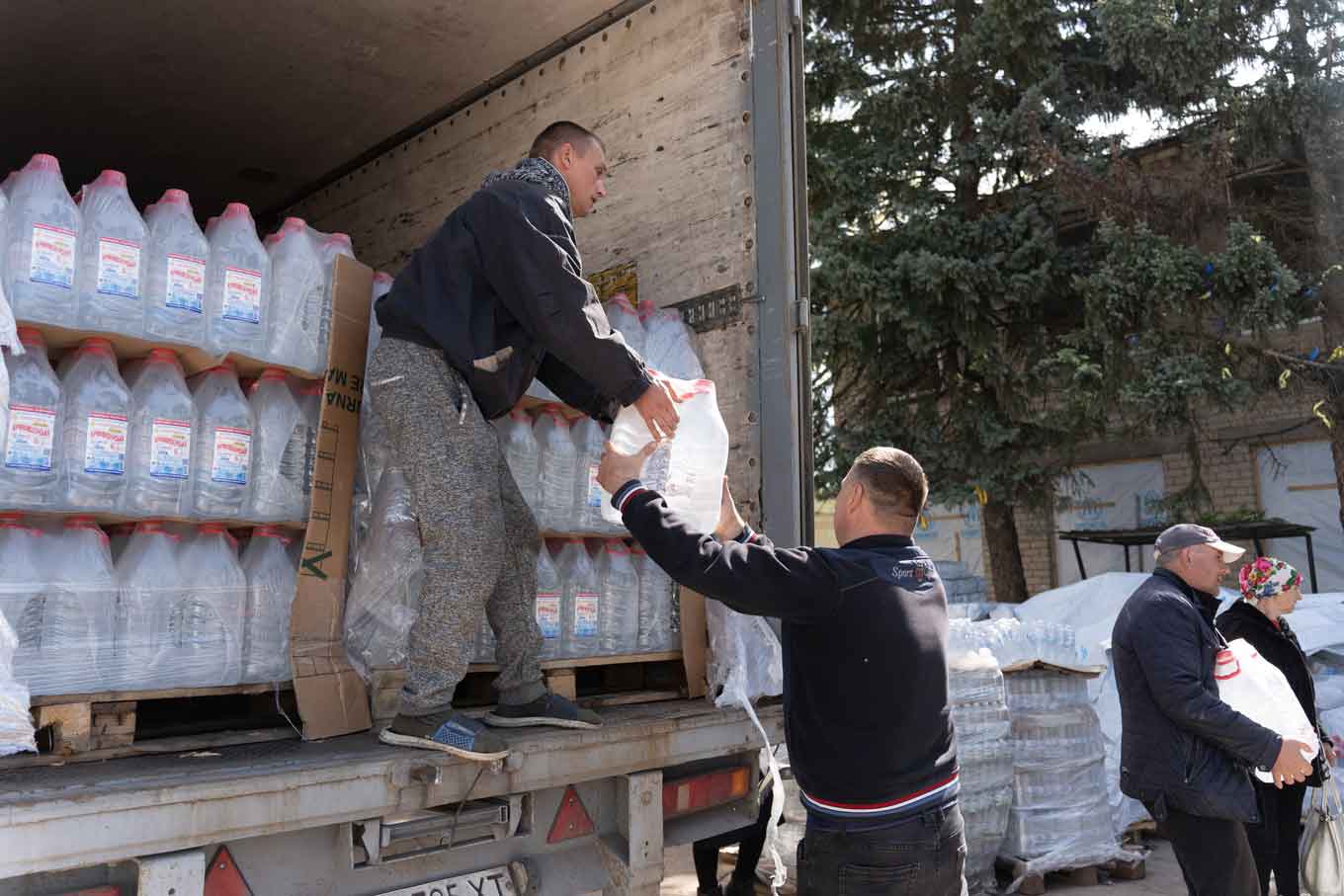
Project HOPE, a global humanitarian and health organization, has had teams on the front lines of the conflict since the invasion, but with this devastating attack in Kherson Oblast, organizers have put even more energy into their water distribution efforts.
“Amidst the unfolding tragedy, acts of bravery and heroism emerged,” Project HOPE shared in an email to Good Good Good. “Communities rallied together, offering shelter, provisions, and a glimmer of hope to the weary evacuees who sought solace in unfamiliar lands.”
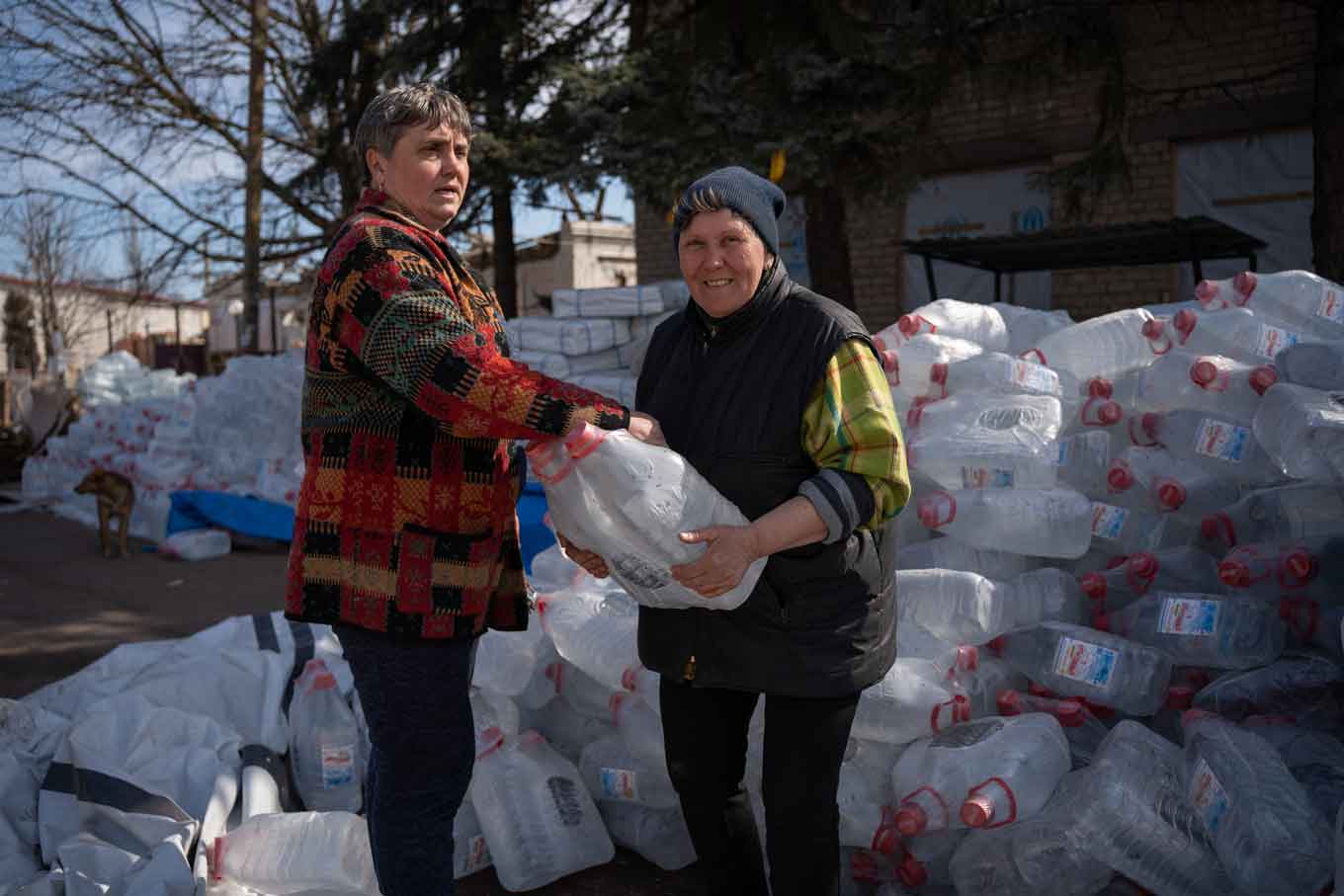
Project HOPE’s humanitarian teams have distributed necessities like water, hygiene products, power sources, and blankets — including 20,160 liters of much-needed drinking water to communities in the heart of the destruction.
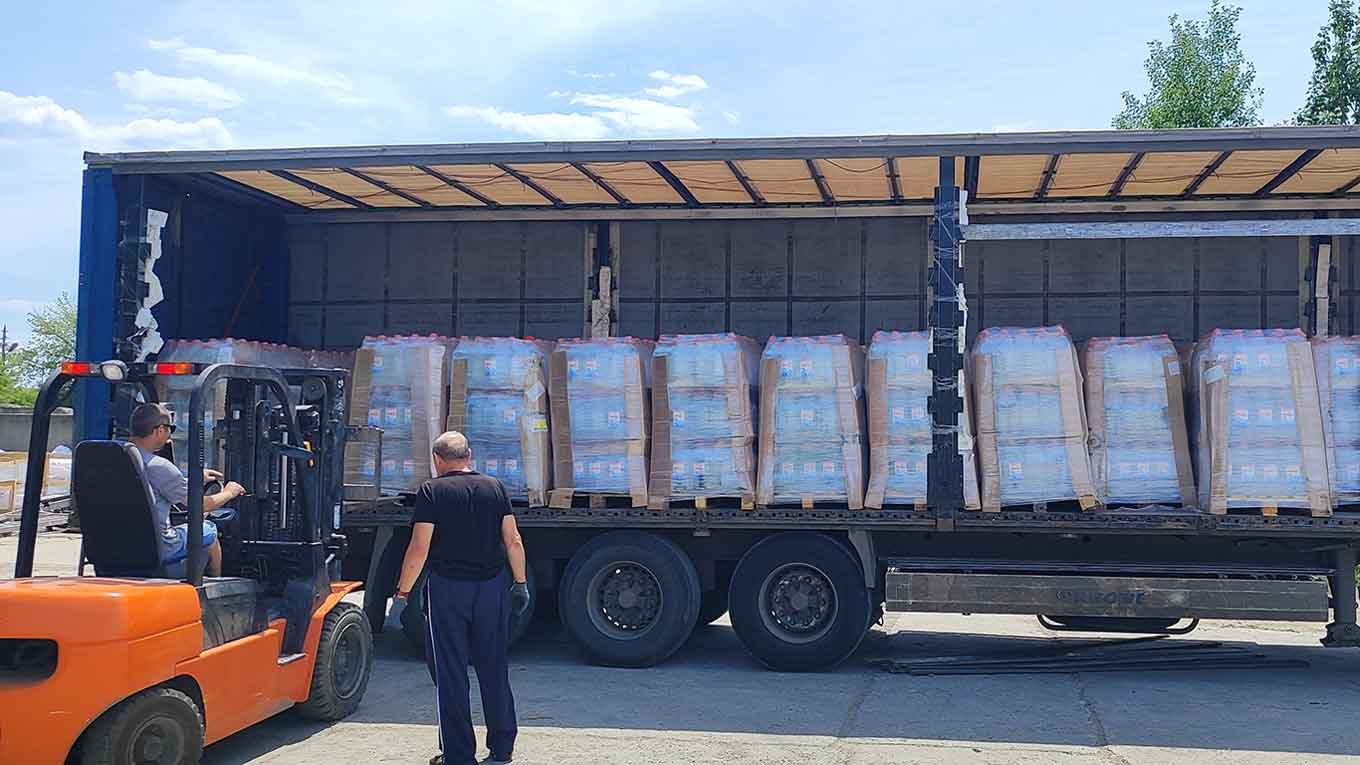
The organization — with the support of USAID — was already in the process of distributing over 2 million liters of drinking water (about 350,000 bottles) to Kherson residents following the liberation of the region. Prior to the flood, 79 trucks carrying 1.6 million liters of water were distributed. Of course, this crisis has restructured the response.
In total, Project HOPE has already delivered 141,140 liters of drinking water specifically in response to the floods. These distributions of water are ongoing and will be specific to the communities of Oleksandrivka, Bilozerka, Snihurivka, Antonivka, and Mykolaiv and will reach over 11,000 folks in need.
“The extensive flooding caused by the Kakhovka Dam destruction has resulted in even greater humanitarian needs for communities that were already lacking access to basic needs like food, water, and medical care,” Project HOPE’s country director for Ukraine, Giorgio Trombatore, said in a statement.
“While Project HOPE will continue to scale up our response to the affected areas to distribute supplies and to mitigate the health risks associated with water contamination, this disaster calls for a more robust and coordinated response from the international community.”
As immediate needs are met, Ukrainians are grateful for the relief — and Project HOPE workers are eager to provide continued support.
In addition to clean water, over 500 hygiene kits will be distributed to internally displaced people who are relocating to the city of Odesa, and Project HOPE is providing access to free psychological support from mental health specialists in the area.
“We are very grateful to the volunteers and everyone involved that you did not forget about us,” Iryna, a community member from Posad-Pokorovske, said in a Project HOPE blog post. “Drinking water for us is worth its weight in gold.”
The average cost of a U.S. wedding is about $29,000, according to Zola — a $1,000 increase from the average rate in 2022.
While jubilant couples pour their funds into special seating charts, documentary-style wedding videos, or any number of celebratory amenities, some have begun to reckon with a deeper truth.
While they have the privilege to make endless exciting decisions about their special day, millions of young girls across the world don’t even have a say in whether they are married.
Child marriage — any marriage or informal union where one person is under the age of 18 — is a pervasive and concerning issue. These unions most significantly impact girls and are not rooted in love or choice.

According to UNICEF, 720 million women alive today were married as children. For every girl who graduates high school in America, six girls under the age of 18 are married around the world.
This impacts nearly every facet of life for young women: from their education and careers, to their health, personal safety, and legal rights.
The United Nations Sustainable Development Goals call for global action to end child marriage by 2030, and it’s going to take the whole wedding industry to make it happen.
VOW for Girls is a nonprofit that works with couples, vendors, and industry professionals to help transform standard wedding celebrations into an opportunity to improve the lives of girls whose futures are at risk.
“Love and choice should be for everyone, regardless of where you’re born or what circumstance you’re in,” VOW CEO Clay Dunn told Good Good Good.

“Less than a ‘perfect day,’ I'm hearing that couples are looking for ways to add even more meaning to their events, as they make their own choices that showcase their individuality and their values,” Dunn said. “One way to do that and create lasting impact beyond the ‘big day’ is to align your celebration with a good cause like VOW for Girls.”
VOW has a number of initiatives to raise funds to support girls in need: making it easy for couples to accept donations to the organization in lieu of gifts or partnering with industry professionals and bridal brands to create veils, rings, and other accessories that fund the work to end child marriage.
So far, more than 8,000 couples have aligned with the VOW mission by asking for donations instead of gifts or making a donation in their guests’ honor instead of providing favors. VOW also works with over 30 major wedding brands, like Zola, Minted, The Knot, Birdy Grey, Justin Alexander Bridal, and more.
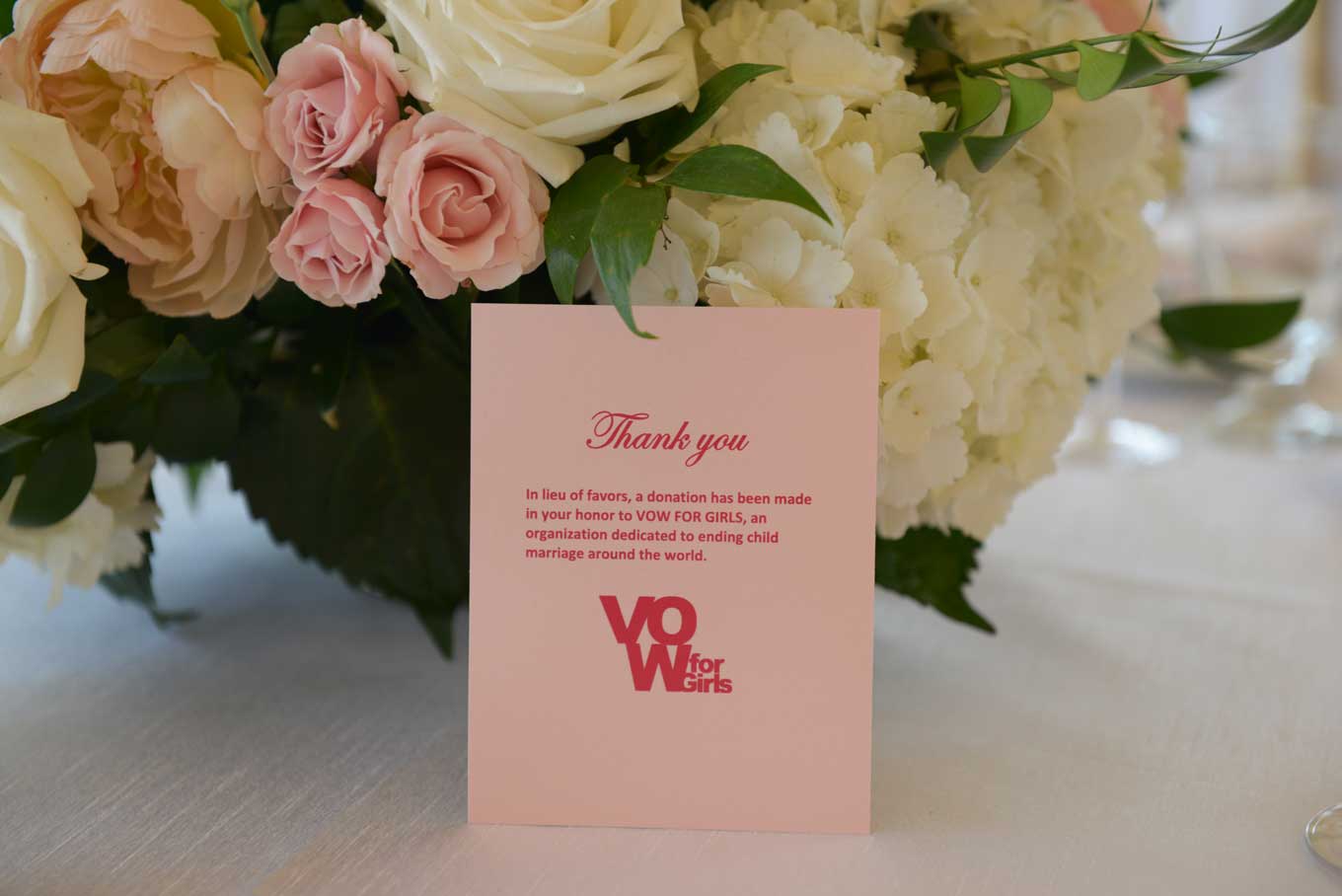
High-profile weddings have also brought attention to this work. Last year, when Sheryl Sandberg and Tom Bernthal tied the knot, they donated $1 million to VOW on their big day.
But it’s not just celebrity weddings that make a difference.
Dunn shared the story of a couple — Ruma and Matthew — who originally had a courthouse wedding over a decade ago. In a special vow renewal destination wedding in Jaipur, India, the couple finally hosted their dream wedding, and instead of asking for gifts, raised more than $14,000 for VOW, with the help of their friends and family.
This impact on the wedding industry allows the organization to directly fund grassroots organizations in areas in Africa, Asia, and Latin America — where child marriage rates are the highest globally.
“VOW for Girls was launched to fill a major funding gap in the timely global push to end child marriage: supporting efforts at the local level by funding proven [and] effective yet overlooked grassroots organizations that are directly engaging in the lives of young girls,” Dunn said. “We think these local leaders are in the best position to know what girls in their communities need.”
VOW has provided over $1.6 million in grants to over 175 community-based organizations, with programs that support girls’ completed education, build collective knowledge of rights and autonomy, and give young girls the tools and resources they need to advocate for themselves.
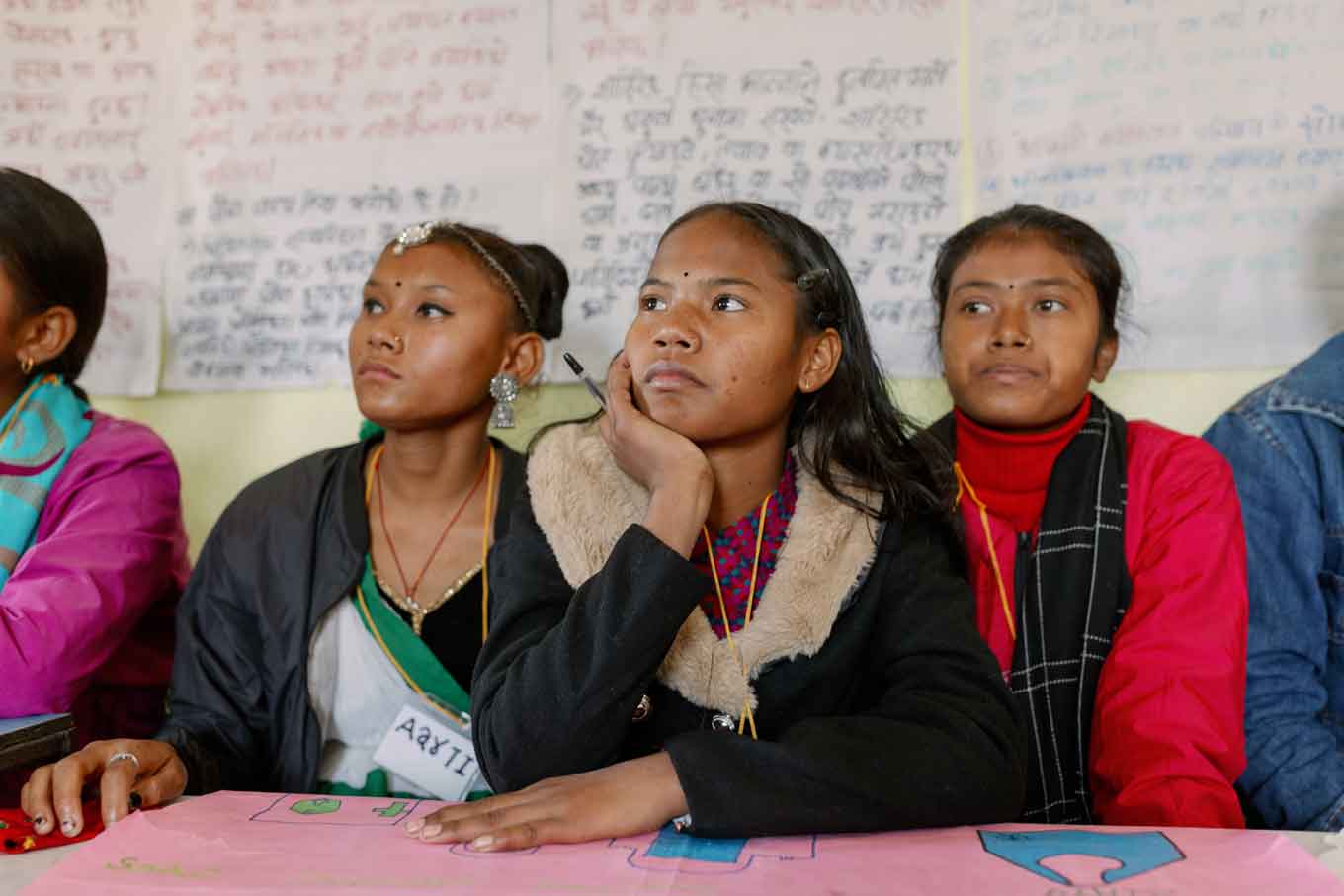
This money goes a long way. For instance, according to Dunn, VOW has calculated that about $181 USD can cover a girls’ school costs for an entire year.
(This number is from 2022 and calculated from representative costs in the Vow For Girls grantee pool in Africa, Latin America, and India.)
Considering this data, Ruma and Matthew’s wedding alone could pay for an entire year of schooling for more than 75 girls.
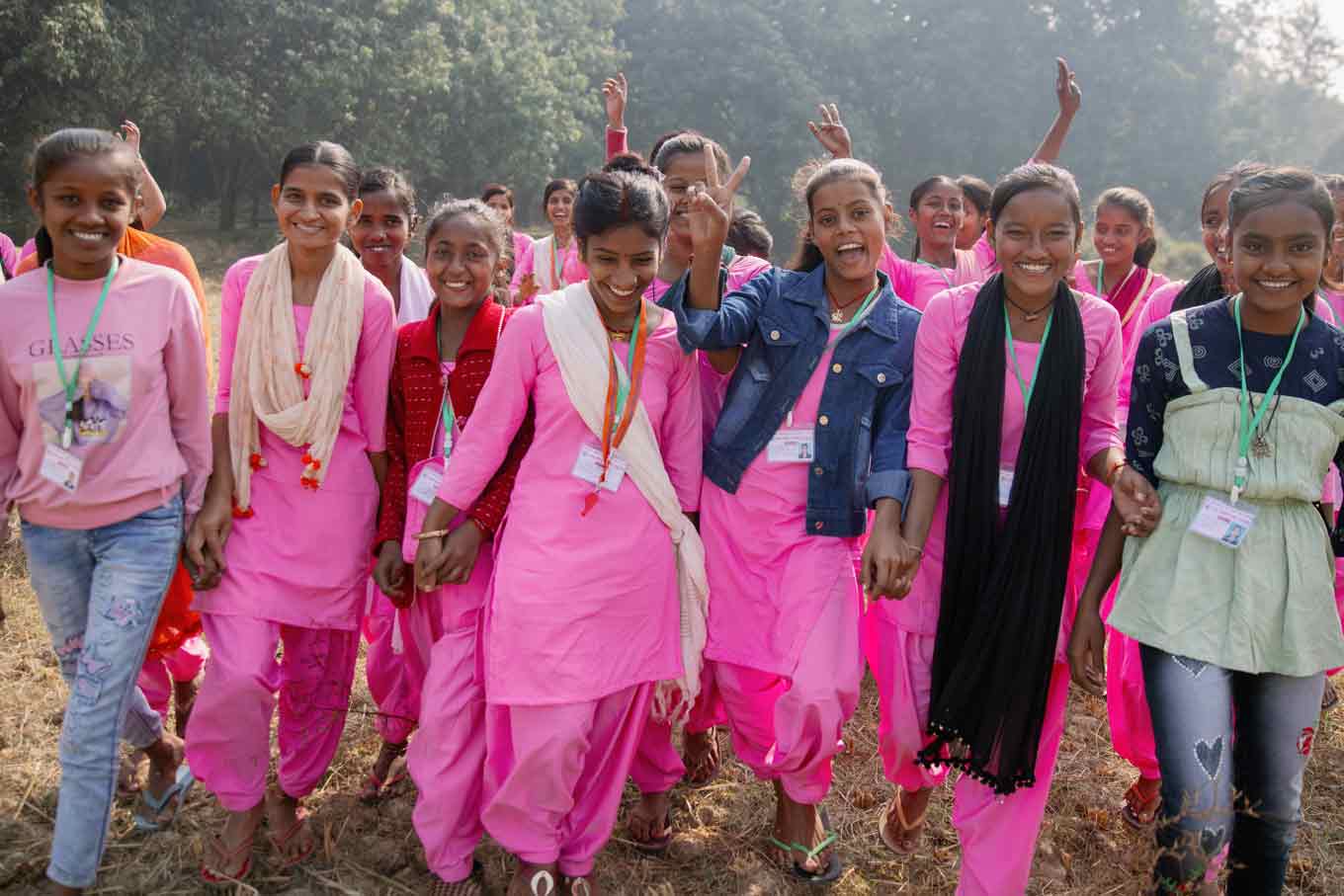
“That’s an incredible impact that lasts long after the celebration,” Dunn said.
Along with moving away from consumption and toward community service, Dunn says he’s seeing a huge global shift in the conversation around child marriage.
“The brave local leaders we fund are building consensus in their communities that girls’ lives are worth as much as boys’ lives — that girls are worthy of making their own decisions.”
Watching porn isn’t a shameful thing to do, and there are ways we can consume erotic content ethically. As a survivor of sexual abuse and navigating vaginismus, I’ve had to do a lot of relearning about what I find pleasurable.
I spent a lot of time thinking sex was just something I “had” to do, and not something I deserved to enjoy, let alone feel enthusiastic about.
However, I knew about the issues in the porn industry and how sex workers are unpaid and often exploited, so I always felt icky if it was something I wanted to explore. Once I found out there were ways to explore erotic content ethically, I was able to turn self-play into self-care.
Porn can be a good resource to help us get in touch with our sensual side, learn more about what’s possible in the world of desire, and unlock new fantasies to try with our partners.
I spoke with certified sexologist Rhiannon John at Bedbible, and she said, “While it should not be relied upon as the sole source of sex education, pornography can contribute to teaching people about pleasure.”
However, mainstream porn comes with an array of ethical problems — from the filmmaking process, to how we consume it to how it can perpetuate sex trafficking, and how it can be shared illegally.
So, how do we bridge the gap between wanting to explore our sexual desire while not contributing to problematic practices? Support ethical porn.
By the way, some of the links in this article are affiliates, which means we may earn a commission at no extra cost to you. Everything in this article was independently and honestly written by the author. Thank you for your support!
What is ethical porn?
Ethical porn is sexual content that’s created with safety, equity, and consent in mind. Many mainstream pornography sites aren’t regulated and can violate consent, just to name a few concerns. Ethical porn aims to combat these issues and destigmatize sex work, sex, and pleasure for everyone.
Whether you call it feminist porn, responsible porn, or ethical porn, these all essentially mean the same thing. They often move away from only portrayals of male pleasure, prioritize safe sex, and follow safety and distribution regulations.
Luckily, ethical porn has become more readily available, and there are amazing indie adult filmmakers who are creating content that viewers can feel good about watching.
We’ve provided some more insights into ethical porn, including what exactly makes it ethical, where you can find it, and what nuances still remain when it comes to exploring this content. Let’s dive in!
Where to watch ethical porn:
Now that you know the ins and outs of ethical porn (pun intended), you’re ready to start exploring thoughtfully made erotic content!
These indie adult filmmakers, women-owed, and queer-owned porn websites are providing people with erotica many of us crave and desire.
I have personally found each one of these websites to offer something different, which makes this list especially unique, because you will never run out of ways to learn more about your own body, your relationship desire, and what you may or may not bring you pleasure!
Below is a list of websites where you can watch ethical porn, see bodies that may look like your own, and be confident that the people on screen are experiencing authentic pleasure – just like you are about to.
These links will send you to a NSFW site. Proceed with intention and mindfulness of your surroundings.
Top Ethical Porn Platforms:
| Platform | Access Information |
|---|---|
| CHEEX | Subscription-based |
| Bellesa | Subscription-based (2-day trial) |
| Afterglow | Subscription-based; 1-day access option |
| FrolicMe | Subscription-based (5-day trial) |
| PinkLabel.TV | Subscription-based; Rent/buy individual films option |
| Sssh | Subscription-based (2-day trial) |
| Make Love Not Porn | Limited subscription; $5 per video option |
| Dreams of Spanking | Subscription-based; Non-recurring option |
| Aorta Films | Subscription-based; Rent individual films option |
| Bright Desire | Subscription-based; Non-recurring option |
| XConfessions | Subscription-based |
CHEEX
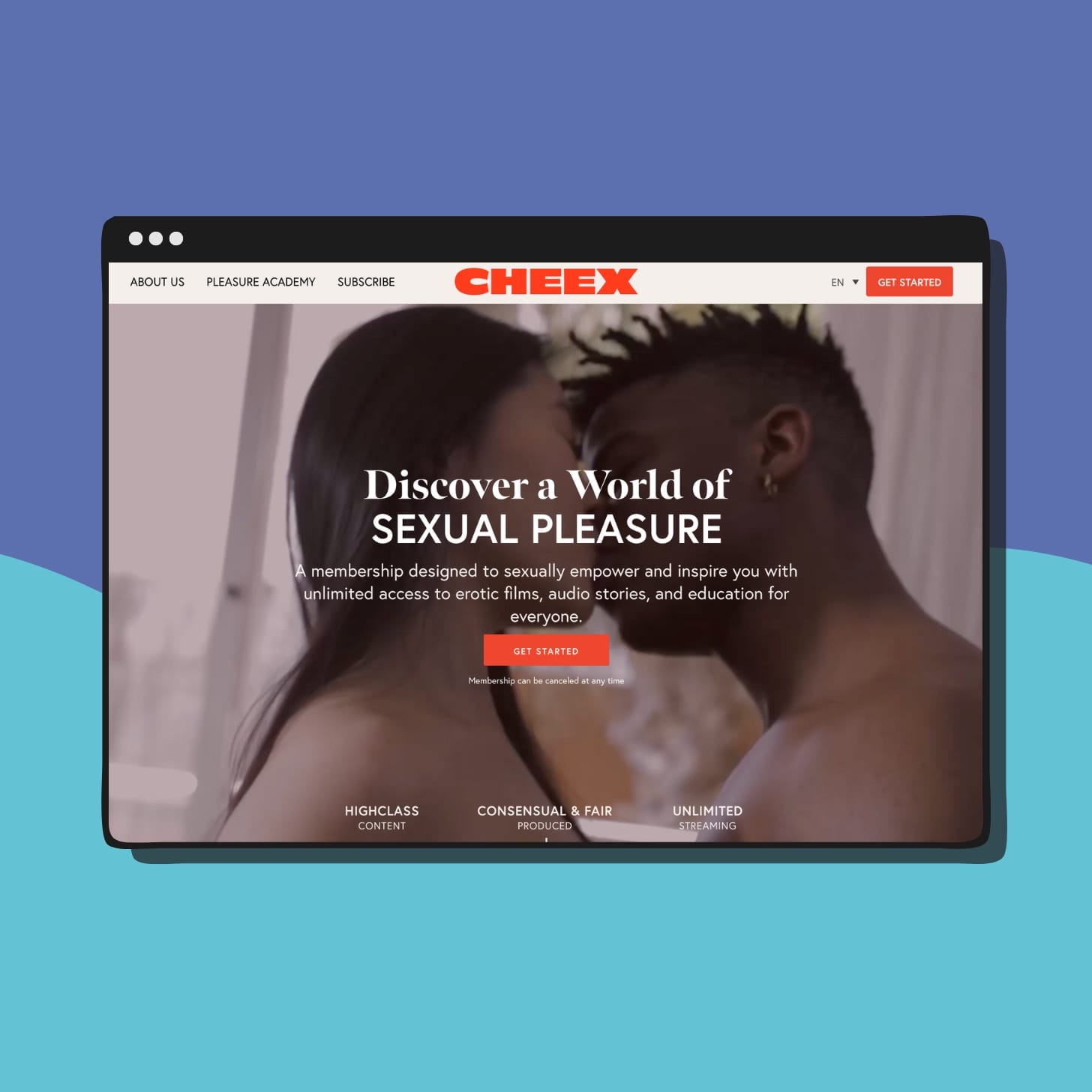
CHEEX is a sex-positive curated website where all content is produced fairly, only performers of legal age are shown, and licensing partners are selected according to strict ethical criteria.
Not only does CHEEX have videos and audio that you can filter by categories such as ‘penis only,’ ‘vulva only,’ ‘soft,’ ‘rough,’ ‘intense,’ ‘number of participants,’ ‘genre,’ and more, they also have educational content for those who are looking for more sex education.
CHEEX’s Pleasure Academy offers live workshops with expert sex educators, tutorials, and podcasts about topics such as queer sex, behind-the-scenes of sex work, and other sex-positive topics.
CHEEX is a subscription-based platform that costs a little more than the average streaming service.
Bellesa
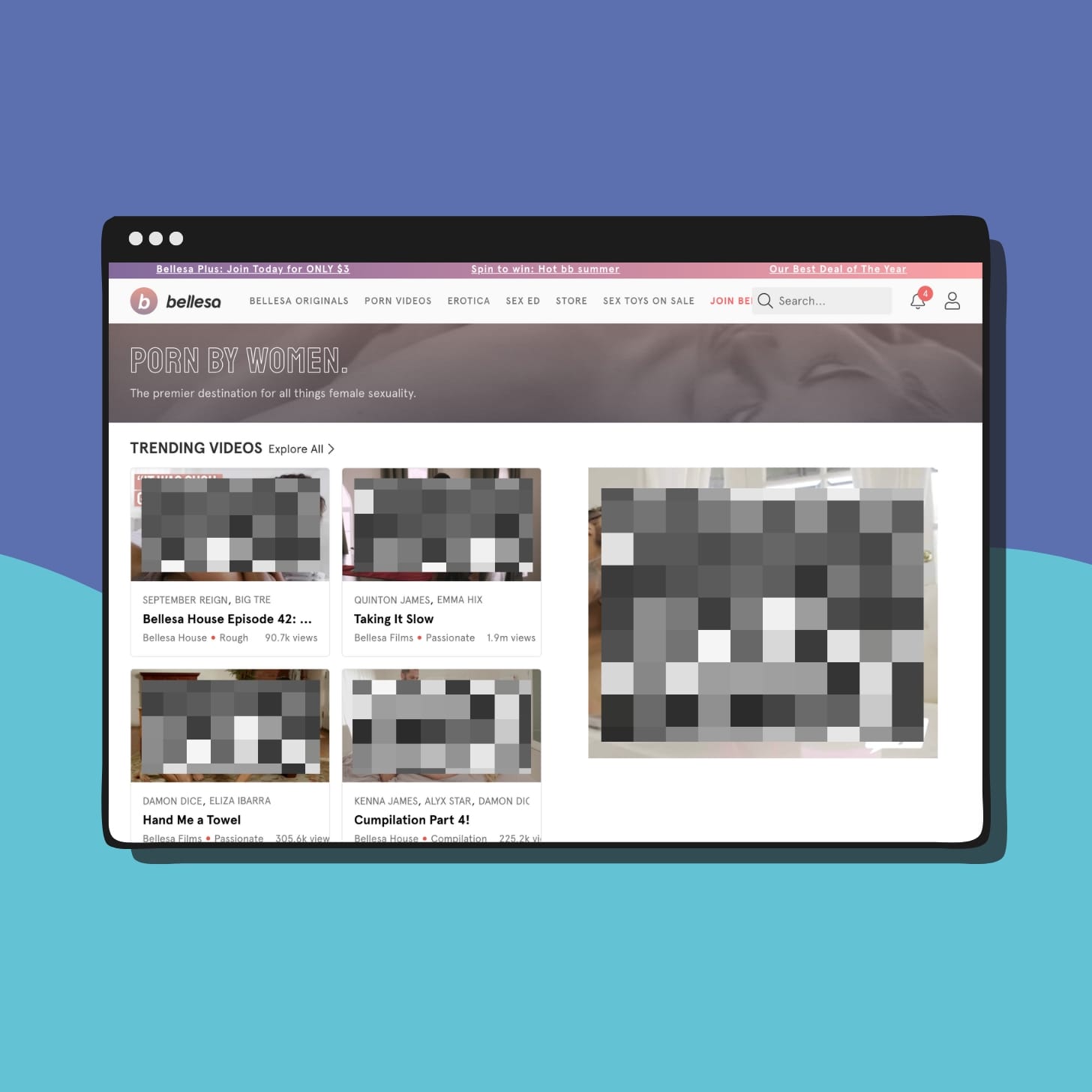
On top of making incredible sex toys, Bellesa also has a women-run porn company that caters to women and femmes. While content isn’t specifically “for women,” content is filmed, produced, and directed by women.
At the bottom of their website, Bellesa says, “We also believe that sex should be fun, empowering, and 100% shame-free. We are all deserving of pleasure.” Bellesa also notes that all performers’ needs (food, hydration, hygiene items) are provided for, and the company hosts regular STI testing and has a list of “dos and don’ts” for each performer.
Bellesa has a small library of free content, but you can access all of its content through Bellesa Plus — which offers a 2-day free trial.
Afterglow
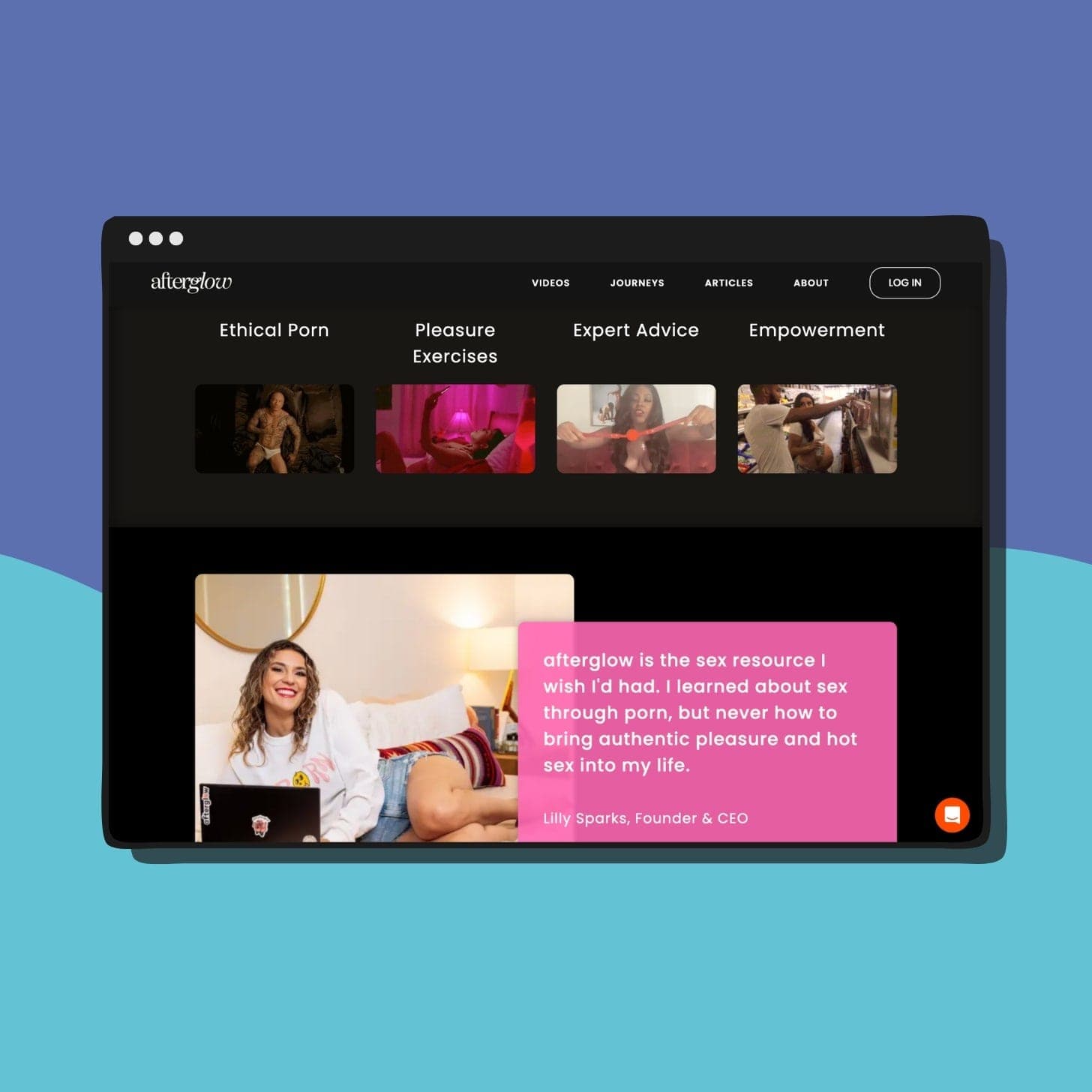
Afterglow is a beautiful site that not only has ethically made adult films but also has stunning guides to what ethical porn means to the brand, how to watch porn as a couple, and the history of creating a more ethical porn industry.
The site has a tab called “Journeys,” which can help guide you on your journey of curiosity and desire.
When you are finally ready to explore, you can pay a few dollars for one-day access — or sign up for a monthly or annual subscription.
FrolicMe
FrolicMe has an array of erotic content, including films, audio, photo galleries, and stories.
All content is independently produced and dedicated to healthy sexuality. FrolicMe highlights couples erotica to move away from demeaning and vulgar mainstream porn.
With the story at the forefront, FrolicMe offers literotica and adult fiction plus articles about sex tips and health to make sure everyone can have the most pleasurable experience.
There is limited free content, but to join as a member, you can access a 5-day trial before signing up for a monthly or annual membership. If you just want to sign up for a single month, they charge a bit more.
PinkLabel.TV
One thing that makes PinkLabel.TV feel safer right as you enter the site is an age verification process. You do this by showing your ID or having a photo of your face scanned through a webcam (the brand does not store data) for age estimation.
While some may feel unsure about the security of this process (especially with growing criticisms of governments mandating this), PinkLabel does have a robust section on its website to explain its security and privacy practices.
Once you enter the site, you are welcomed with a curated collection of indie films that features performers who are queer, trans, people of color, people with disabilities, and older folks.
PinkLabel also offers guides to help you find specific genres of porn, and you even learn about the filmmakers and the sex industry as a whole.
You can register with a basic account to rent or buy individual films to be added to your library, or you can subscribe at a monthly or yearly rate.
Sssh
For those wanting a cinematic experience when searching for ethical erotica, Sssh is the website for you. Not only does Sssh offer films from directors and filmmakers, but it also has original member-inspired and community-sourced erotic content.
Sssh also has unique VR Dynamic 360 movies (that don’t require a headset), artistic photo galleries for those wanting still images, and written stories and audiobooks to get lost in.
Sssh shares a full list of its on-set policies and practices including not asking a performer to do something that wasn’t discussed beforehand, finding a partner who they have real chemistry with, and all performers must be 21+.
Sssh can be accessed through a free 2-day trial, a 1-month membership, a 3-month membership, and a yearly membership.
Make Love Not Porn

Make Love Not Porn is “pro-sex, pro-porn, and pro-knowing the difference.” Make Love Not Porn is a curated sex video-sharing platform where people can submit videos, and users make an account to rent and access content.
The platform prides itself on showing real-world sex and showing what is sexy, messy, awkward, beautiful, and glorious.
Account holders can watch any video at $5 per video or subscribe for monthly rates that provide a specific number of videos per month.
Dreams of Spanking

If you are into spanking fantasies or want to dip your toe into kink content, Dreams of Spanking may be a good place to start.
With over 400 spanking scenes available, Dreams of Spanking is dedicated to paying performers fairly and produces enthusiastically consensual content.
If there is a specific scenario that you want played out, you can submit a custom request of an audio, solo, standard, or highly customized production.
When you create your account, you can choose to pay a non-recurring membership or save a bit of money by signing up for a recurring monthly or annual membership.
Aorta Films
Aorta Films creates short films and feature projects emphasizing queer pleasure. With lessons from the BDSM community, Aorta is creating ethically made films you can search by seemingly endless filters, such as ‘all androgynous,’ ‘fishnets,’ and even something as niche as ‘ice cubes.’
Based on clear and upfront policies about consent and safety, you know the performers and crew are creating content they are really excited about. You can access queer porn, as well as content highlighting queer kink through Community Hardcore.
To access films on Aorta Films, you can rent specific films or access their library by purchasing a 1-month, 3-month, or 12-month membership.
Bright Desire
“A feminist porn site for men and women,” Bright Desire features a variety of adult content. The brand notes that its content is largely focused on heterosexual sex, in hopes of helping people move away from the “tube” sites and towards a more ethical, consensual, and pleasurable experience for both the performers and the viewers.
Alongside its films, you can watch interviews with the performers and bloopers from the set.
To join Bright Desire, you sign up for an account and can choose a non-recurring charge or recurring subscription.
XConfessions
Have you ever wanted to submit your sex confessions anonymously and have those stories inspire an erotic film? XConfessions is where you need to go.
With the seven core values of equal pleasure, diversity, fair pay, transparency, safe sex environments, no surprise, and worker standards, you can be confident everything you are watching on XConfessions is ethically made.
If you are sick of watching porn that plays into the “pizza delivery guy” cliche (the creator of XConfessions created an alternative take on that cliche!), this is the site for you.
With over 36 categories to explore (including a limited free option), you can access XConfessions’ content by subscribing monthly or annually.
Else Cinema
If you like to watch something a little more soft and sensual, Else Cinema is for you. The site says, “We explore what sex feels like instead of showing you close-up, gynecological shots of what it looks like.”
If you are looking for less explicit content, but still want more erotic content than a Hollywood movie may offer, Else Cinema offers a library of movies and audio. Else Cinema’s content is made by the same producers as XConfessions, so it’s also made with those seven core values in mind.
Where to listen to ethical audio porn:
Watching videos is not the only way to consume erotic content. If you are more interested in audio stories with a narrative that leaves you to picture it all in your mind, audio porn may be the content for you.
These websites and apps, while not explicit upon first click, do contain NSFW audio. Be mindful of your location and volume.
Dipsea
Dipsea offers short and sweet empowering stories of sensuality and sexuality. The Dispea team is full of fairly paid writers and an editorial team to create scripts that are then moved to carefully chosen voice actors, over 50% of whom are voice actors of color, who make the story come to life.
After the recording, the audio is mastered into a truly sonic experience that is created with intention.
You can download Dipsea through your phone’s app store (iOS and Android) and try it free for 7 days if you choose the annual subscription option.
Quinn
Have you ever wanted an actor to read you an erotic story? “Grey’s Anatomy” lovers, what if I told you Dr. Jackson Avery could read you a sexy story based in a bookstore? Or you could listen to a “best friends to lovers” story — or even listen to erotic stories from past time periods? These are just a few of the options you can find on Quinn.
“Made by women, for the world,” Quinn offers spicy audio stories, guided masturbation sessions, and even dirty talk recordings.
You can access all their categories and content by paying less than $5 per month.
EmJoy
Not only does EmJoy have sexy stories, but it also hosts body acceptance and educational audio options for listeners.
You can only access EmJoy through a mobile phone app, (available on Apple and Google Play), but once you download, you can choose your goals of body acceptance, increased libido, healthier relationships, consistent climax, new techniques, or improved self-esteem.
You pay a monthly fee to access over 400 erotic stories, a personalized sexual wellbeing journey, and over 1,000 audio sessions to learn about new techniques and boost your libido.
Components of ethical porn:
1. Performers get paid fairly.
Ethical porn is often behind a paywall because it’s important that the performers and crew are paid a fair, living wage. Like any kind of work, it’s important that everyone involved is fairly compensated.
Ethical porn respects the workers and ensures all are getting the same pay and benefits like in any other industry. What some people don’t often understand is that sex work is often more accessible to marginalized communities.
Molly Smith and Juno Mac write in “Revolting Prostitutes: The Fight for Sex Workers' Rights:
“Trans women in particular often find that formal employment is out of reach. Increased school drop-out rates, lack of family support, and lack of access to adequate health care (including the means to finance gender-affirming treatment) leave them exposed to poverty, illness, and homelessness.”
With ethical porn behind a paywall, creators are less likely to cut corners that may lead to unsafe and unfair working conditions, and marginalized communities can access more resources.
Smith and Juno continue: “Outsiders often think that selling sex must be a horrible job, and many sex workers would agree. However, these sex workers may locate the problem not in sex but in work.”
If us humans must survive under capitalism, we must also make intentional choices about how our own actions reverberate into other communities, such as the sex industry and ethical porn creators.
2. Content shows real pleasure, desire, and aftercare.
Authentic pleasure and sex positivity are portrayed in ethical porn, and the “male gaze” is deprioritized. People with vaginas are shown as people with agency, rather than passive revivers, and you will often see other authentic moments such as using lube, giggling, checking in, and aftercare.
Aftercare is an aspect of intimacy where partners check in and spend time with one another after sex. This can include cuddling, massaging, bathing, and touching one another. Partners also often talk about what they did and didn’t enjoy after sex.
Portraying this in ethical porn helps normalize aftercare as a part of sex and intimacy. “Watching porn with aftercare or enthusiastic consent teaches you about healthy sexual behaviors. It's like a visual guide to awesome encounters that you can apply to your own sex life,” says Dainis Graveris, founder of SexualAlpha.
While not every ethical adult film will show aftercare, the ones that do can be especially healing for those with sexual trauma or abuse.
Abhainn Connolly, a queer and trans poet who has survived sexual assault and domestic violence, says: “I feel [porn] was integral in my own exploration of my queerness and kink, as well as in healing my experiences with violence.”
“I've encountered many production companies that feature other trans bodies with scarring from trans-affirming surgery and/or with people in larger bodies, engaging in queer sex, and it helped me see the beauty in my own sexuality, body, and desire.”
3. Videos are inclusive and diverse.
Ethical porn shows different genders, bodies, ages, abilities, and experiences. These demographics aren’t fetishized in ethical porn, either.
When erotic content is diverse and inclusive, more people may be able to see themselves in it, leading to more feelings of sexual pleasure, arousal, and positive self-image.
4. Participants are of legal age.
The use of underage performers is a big issue in the mainstream porn industry, as well as sex trafficking and the selling of child pornography, which to be clear, is child sexual abuse.
According to a study by The Ohio State University Pressbook, it was estimated that in 2016, 4.8 million women, men, and children were trafficked for the purpose of sexual exploitation around the world.
Ethical porn sites almost always have a disclaimer that participants are at least 18 years of age at the time of filming. Ethical adult filmmakers take steps to ensure children are protected and illegal content isn’t being produced or shared.
5. Ethical porn is consensual and takes performers’ boundaries into account.
There’s nothing less attractive than non-consensual sex. When you’re watching porn, we should all want to know that the people in the film have said “yes” to everything involved.
Ethical porn considers performers’ boundaries. This means everyone involved has consented, and filmmakers or producers haven’t made anyone do something they don’t want to do.
When ethical porn is filmed, performers are encouraged to speak up, and nothing less than an enthusiastic yes is accepted.
6. Responsible porn avoids harmful stereotypes.
Mainstream pornography often plays into harmful stereotypes, such as women being degraded, disrespected, or even harmed. A 2022 study found “men who consume pornography are more likely to practice or desire dominant and degrading practices, such as gagging and choking.”
There are also harmful racial stereotypes that mainstream porn is known to play into, including the fetishization of minorities. Ethical porn intentionally creates a safe, pleasurable, and respectable environment for all participants.
Criticisms & caveats on ethical porn:
Something important to remember is that, as a society, the porn industry is highly stigmatized. In order to create ethical porn, people have to want it.
Many sex workers can’t access things such as bank accounts, health insurance, or other necessities. By supporting ethical porn companies, sex workers gain greater access to fair and equal pay and resources.
Many turn to OnlyFans to support sex workers directly, but Sarah Ditum wrote in The Guardian about the more grim sides of OnlyFans, including the need for some performers to cross their own boundaries to maintain a lucrative business and moderators’ exposure to highly inappropriate and illegal content.
Still, if you are mindful of what you are consuming on OnlyFans and want to support someone directly, it may be an option.
Some may say that watching porn is bad for your health because it has links to gender-based violence, creates unrealistic expectations, or could lead to addiction. In fact, three out of five experts say so — and a study found that viewers prefer women’s pleasure over violence.That being said, these conclusions may be rooted in stigma and a lack of ethical porn watching.
Of course, if people are consuming porn that is non-consensual, doesn’t represent their demographic, or plays into harmful or fetishizing stereotypes, it can certainly be harmful.
But watching or listening to porn that reflects enthusiastic consent and authentic desire can often be healing and empowering for viewers.
John — the certified sexologist we spoke to earlier — explains: “Viewers have the opportunity to learn new techniques that can enhance their own experiences or be shared with partners, ultimately increasing overall pleasure. In a personal context, pornography facilitates the discovery of their sexuality, enables self-care, and allows people to experience the numerous benefits of sexual pleasure and orgasms.”
The good news is that ethical porn isn’t only available — it’s in large supply! There is no reason to be consuming mainstream porn that doesn’t prioritize the health and well-being of performers or filmmakers.
Ethical porn is one step toward empowering people to have agency over their own bodies and learn that pleasure is possible for them, no matter their body, age, race, gender, or other intersections.

When planning a wedding, it's easy to get swept up in the excitement, the details, and (our not-so-favorite part) the budget. However, it's also important to remember the wedding industry's environmental impact.
The average U.S. wedding produces an astonishing 400 pounds of garbage and 63 tons of CO2. Your carbon footprint could be much higher if your guest list is over 100. (Check out Less Stuff More Meaning’s interactive Wedding Footprint Calculator to calculate your wedding’s carbon footprint!)
With an estimated 2.5 million weddings a year, that’s about one billion pounds of trash and as many emissions as approximately four people would produce in a year, in just one single day, according to Kate L. Harrison of Green Bride Guide.
In most cases, the waste generated isn’t biodegradable and is considered single-use — like day-of stationery.
Thankfully, many eco-friendly stationery brands (like the ones mentioned in this article) are dedicated to offering green alternatives to drastically reduce our waste and carbon footprints — without sacrificing style.
To save you some time, we’ve narrowed your search for the most eco-friendly wedding stationery on the market, making it a little easier for you to plan the wedding of your dreams while keeping our planet in mind.
Weddings can and should be a platform for joyful and creative activism. It can be a way to weave our values, push back against traditional expectations, and use our consumer power.
Let’s start with wedding stationery!
Short on time? Here are our top 3 picks for eco-friendly wedding stationery:
→ Minted: Uses FSC-certified recycled paper with versatile designs by independent artists, and is powered by renewable wind energy.
→ Paper Culture: Each card and envelope is made with 100% post-consumer recycled paper; for every order made, the company plants a tree.
→ Artifact Uprising: Uses high-quality 100% recycled paper and powered by renewable wind energy.
By the way, some of the links in this article are affiliate links, which means if you make a purchase after clicking a link, we may earn a commission at no extra cost to you. Thank you!
Are paper products really THAT bad for the environment?
We’re willing to bet that it’s not the first time you’ve heard someone compare using paper with “killing trees.” While many have made the eco-conscious decision to opt for digital alternatives, how bad are paper products (like, say, our Save the Dates), really?
As a 2023 bride who aimed to plan a wedding with as little environmental impact as possible, one of my first questions revolved around paper usage — specifically stationery.
I learned that globally, we produce 420 million tons of paper and cardboard annually — that’s two pieces of paper for everyone on earth every single hour. That’s a lot of paper. Like, a lot.
Unfortunately, our paper usage does in fact kill trees. However, there’s a lot more to the story.
Paper production also contributes to environmental issues, like air and water pollution, agricultural waste and greenhouse gas emissions, and the (often overlooked) displacement of rural and Indigenous communities.
In fact, the paper industry accounts for about 26% of total waste in landfills and is the largest single industrial consumer of water in Western countries.
We’re not trying to convince you to ditch paper, though! We love when paper is printed responsibly. I mean, not only does our team work hard to sustainably produce a monthly physical good news newspaper on recycled paper using soy-based inks, but I ended up choosing to use paper stationery for my own wedding.
The good news is that paper is recyclable and can be responsibly sourced and produced.
What to look for in eco-friendly wedding stationery:
First and foremost, the most eco-friendly products out there are the ones you already own! Look around your place, take inventory of what you have (like kraft paper, calligraphy pens, etc.), and get crafty.
However, if you don’t have the capacity to add yet another item to your growing wedding planning to-do list (trust me, I get it), we’ve got a few things you should keep in mind when looking for eco-friendly paper options:
Responsible production process
You’ll likely see “FSC Certified” throughout your eco-friendly wedding stationery search; that’s a good starting point. Forest Stewardship Council certifications (or FSC Certified) paper products have less impact on the environment by using sustainable sourcing or post-consumer waste.
The FSC is a global network of over 1,000 individuals and member organizations that work in a democratic system to find solutions to safeguard healthy, resilient forests around the globe.
Though it has faced valid criticism, we find its certification process helpful for understanding brands’ thoughtfulness regarding their paper sourcing.
Materials
Look at the product description. Does it share details about the type of material used? You’ll want to keep an eye out for companies that provide details like whether its paper is FSC Certified, 100% post-consumer paper (aka recycled paper), or created with alternative materials like seed paper, cotton, sugar cane, hemp, or linen.
Beyond that, it's also a good rule of thumb to opt for natural, uncoated, and embellishment-free paper — this makes it easier for you and your guests to compost, recycle, or plant your invites later! I know it might be hard, but skip the fancy finishes (like foil and glitter). Your bank account (and the planet) will thank you for it.
Low-impact inks
Another factor to consider is the type of ink used to make your stationery. Many companies have now been offering algae-, soy-, and other vegetable-based inks — which are less harmful to the environment than the standard petroleum-based inks.
Consolidated paper
As a recent bride, I found out just how much waste we can eliminate by simply choosing not to use envelopes and RSVP cards, opting for shared table menus, and saying no to ceremony programs. It saved my partner and I a lot of money and made us feel a little better about environmental impact.
I know, I know, you’ve got a lot of information to share with your guests, but consider combining the essential information (such as time, location, and your wedding website link) to your invitations or day-of details.
For instance, in order to eliminate the need for envelopes, we chose to send out postcard Save the Dates that included our wedding date and location, our website link, and a “formal invitation to follow” message.
I also opted for an all-in-one formal invitation. All the information my guests needed were printed on the invite, and they were directed to head over to our website to RSVP and learn more details.
Company background and initiatives
While this isn’t a requirement for wedding stationery companies, it’s an added bonus when a brand not only provides its customers with earth-friendly options but also supports organizations focused on addressing climate change.
Some paper goods companies do a great job of pointing out their commitment to sustainability through their use of solar or wind energy, recycling programs, or labor practices. If all of this is important to you, dive into a company’s policies — often found in the “About” or “FAQs” pages of a website.
Using your wedding as an excuse to support businesses and organizations caring for people and our planet is definitely good, good, good.
The best sustainable wedding paper brands — for invitations, save-the-dates, and more:
Minted
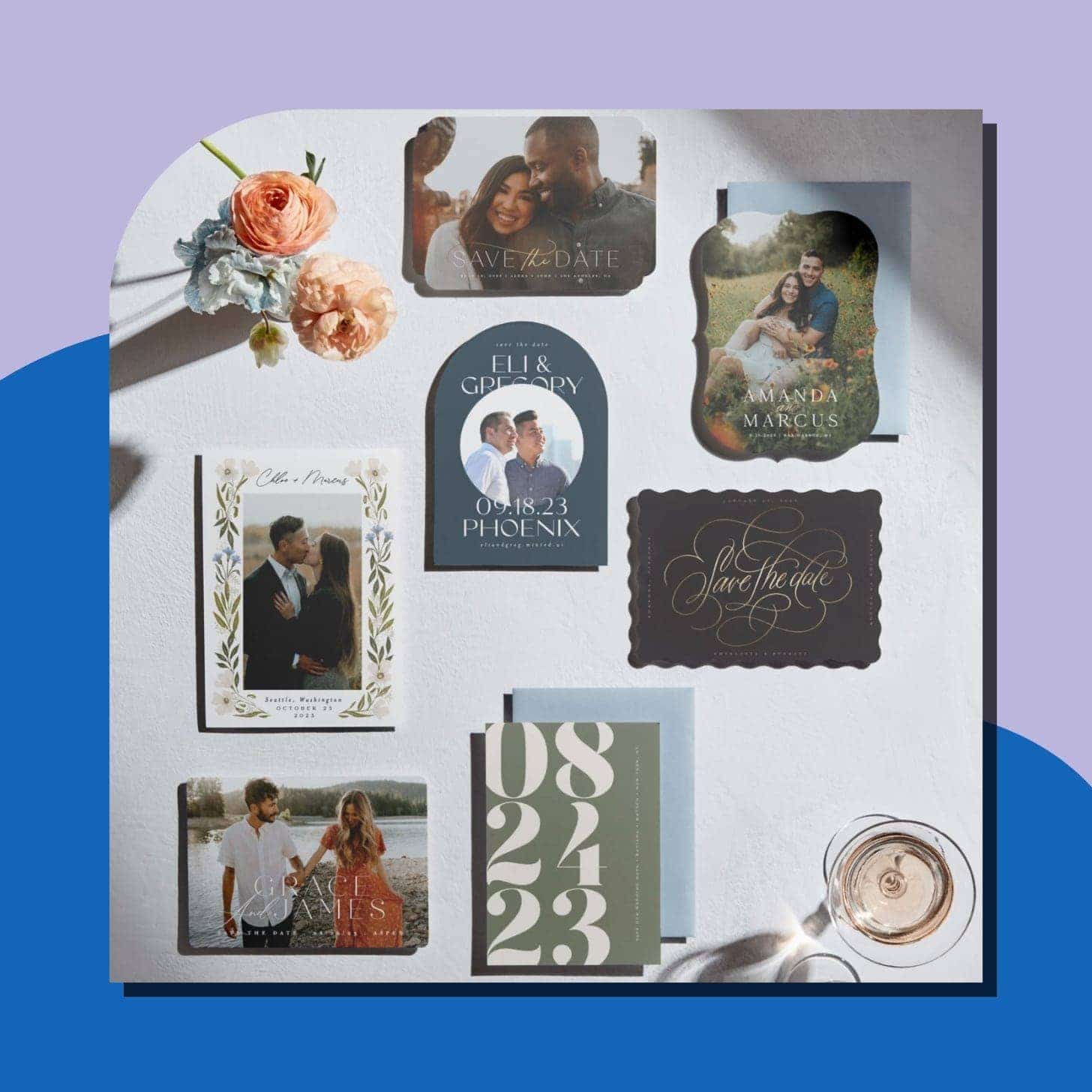
This article is supported by Minted — and as a part of that, we were able to test out the Minted shopping experience and some stationery products to add a brief review to this particular section. Everything in this article was independently and honestly written by the Good Good Good team. Thank you!
What’s good: Ready to level up your sustainable wedding stationery game? Look no further than Minted's selection of eco-friendly options! Whether you’re scouring the internet for Save the Dates, bridal shower invites, or formal wedding invitations, Minted has some of the most stunning eco-friendly designs.
And the best part? The brand offers recycled paper options that are optimized for the highest photo print quality.
You’ll wow your guests with your wedding stationery, while also being kind to the planet — a win-win!
Minted is a marketplace, made up of independent artists with unique designs. The brand also uses 100% recyclable packaging made from over 80% recycled, post-consumer waste or plant-based materials.
Plus, Minted's wedding stationery is made with FSC-certified 100% post-consumer waste, and all of its products are manufactured with wind power!
Every order comes with free envelope addressing, and you can easily collect your guests’ addresses in the Minted app. Plus, every invitation design has a corresponding wedding website, which you can create for free to share videos, letters, and more photos with a free QR code on the back of your cards.
Price: Check current prices
Wedding options:
- Save the Dates
- Parties & Showers
- Invitations
- All-In-One Invitations
- Foil-Pressed Invitations
- Letterpress Invitations
- Stationery Accessories
- Day-Of Essentials
- Thank You Cards
- Wedding Suites
- Stationery Consultation & Concierge Services
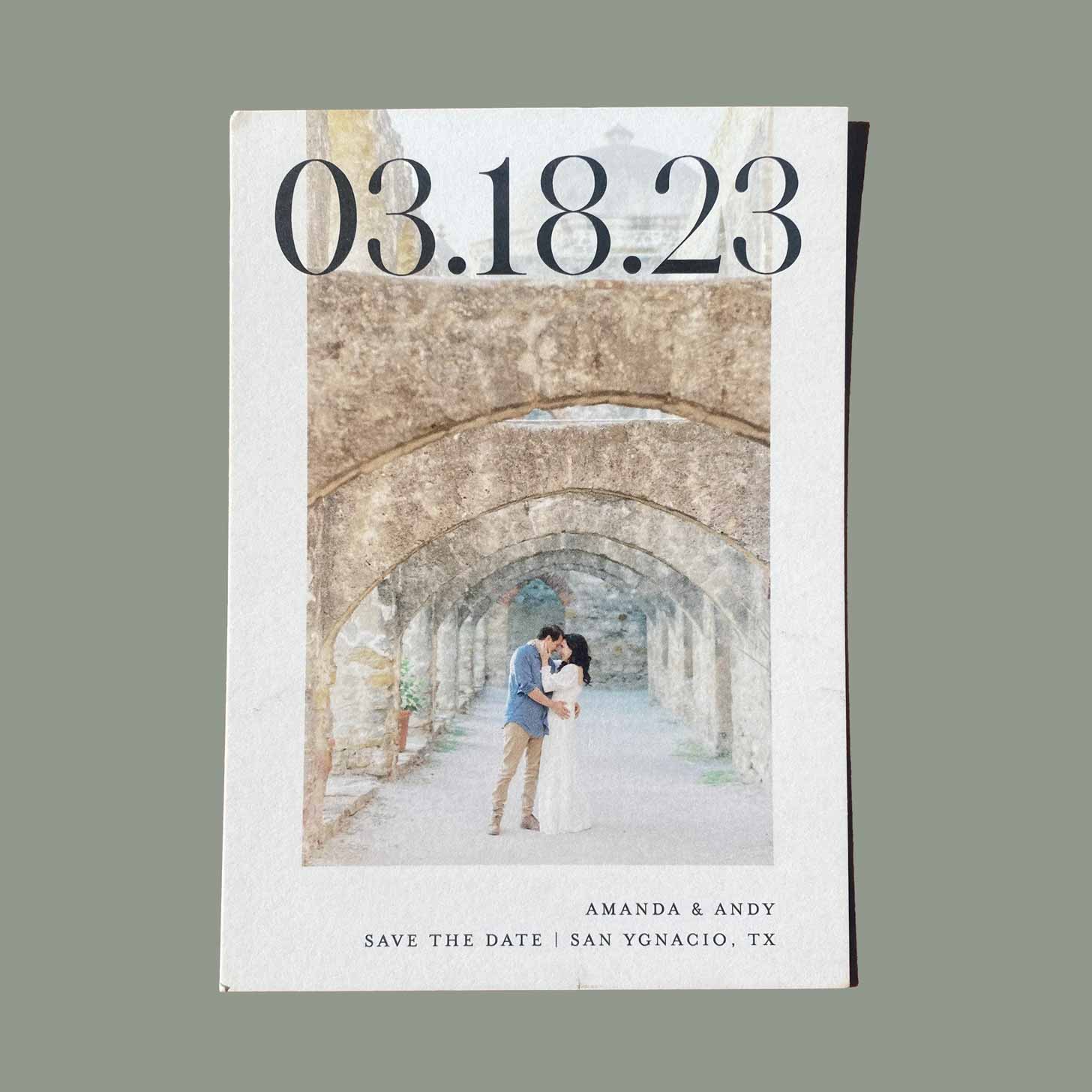
Amanda’s thoughts: Here’s the thing, I came in knowing exactly what I wanted for my Save the Dates: an eco-friendly postcard with a sleek and simple design that offered painless shipping options (who wants to spend precious time addressing dozens of invites?).
I found that in the All Stacked Up design, which Minted kindly gifted to my partner (now spouse!) and me. We absolutely loved the plastic-free packaging, the paper quality (which we got so many compliments on), and that Minted did the tedious work of addressing the postcards for us! All we needed to do was take care of stamping and mailing them out.
As visual people, we also found Minted’s “Find it Fast” tool — which allowed us to simultaneously see our engagement photos on every Save the Date design — was really helpful when narrowing down our choices. It undoubtedly saved us a lot of time and energy!
We were truly blown away by our Save the Dates, and we’re so glad we were able to find such a quality option that was also kind to the planet.
→ Shop Minted wedding stationery
Paper Culture
What’s good: Looking to make your wedding invitations pop while saving the planet? Paper Culture is a one-stop shop that offers vibrant, modern, eco-friendly paper goods that also give back.
Each card and envelope is crafted with 100% post-consumer recycled paper and powered by wind energy. Plus, the brand’s eco-friendly printing processes reduce water usage and don't use harmful chemicals.
Our favorite part is that for every order you make, Paper Culture plants a tree on your behalf. (The company has already planted over 1 million trees and counting!)
But it doesn't stop there. Paper Culture works with organizations both domestically and internationally to aid in reforestation and offset its carbon footprint through carbon credits.
The Environmental Protection Agency has even recognized it as a Top 10 Climate Leader and Certified California Green Business.
Not only does Paper Culture prioritize sustainability, but it also offers a design process that's just as amazing.
You can customize your invitations by choosing from a range of designs, colors, and fonts to make your wedding invitations unique and personalized to your style. We call that a win for the happy couple and a win for the planet!
Price: Check current prices
Wedding options:
- Save the Dates
- Bridal Shower Invitations
- Wedding Invitations
- Wedding Invitation Suites
- Day-Of Wedding Stationery
- Thank You Cards
→ Shop Paper Culture wedding stationery
Artifact Uprising
What’s good: You might already know and love Artifact Uprising for its gorgeous, high-quality photo books and prints, but did you know the brand also offers beautifully designed eco-friendly paper goods too?
The same company that creates Pinterest-worthy photo albums is also dedicated to creating gorgeous Save the Dates and Thank You Cards that won't harm the planet.
Each card is crafted on premium quality, 100% recycled paper, with the option of a recycled kraft envelope. And to make things even more impressive, all the electricity used to manufacture the paper is matched with renewable wind-generated electricity.
Price: Check current prices
Wedding options:
→ Shop Artifact Uprising wedding stationery
Papier
What’s good: Papier is a UK-based paper goods company (don’t worry; the brand has standard U.S. shipping rates!) that offers stunning designs and is committed to sustainable practices.
Papier offers a range of products made with FSC-certified paper that are sourced responsibly and createdon a made-to-order basis to reduce waste.
By doing this, Papier not only minimizes its environmental impact but also guarantees that its customers receive freshly printed, high-quality stationery.
Alongside its in-house collections, Papier collaborates with up-and-coming artists, iconic brands, and fashion labels to bring unique and artistic designs to couples.
Similar to other stationery brands, Papier provides free recipient addressing and colored envelopes, as well as minimal, recyclable packaging.
Price: Check current prices
Wedding options:
- Wedding Invitations
- Save the Dates
- Menus
- Place Cards & Escort Cards
- Table Names & Numbers
- Programs
- Welcome Signs
- Seating Charts
- Thank You Card Sets
→ Shop Papier wedding stationery
Botanical Paperworks
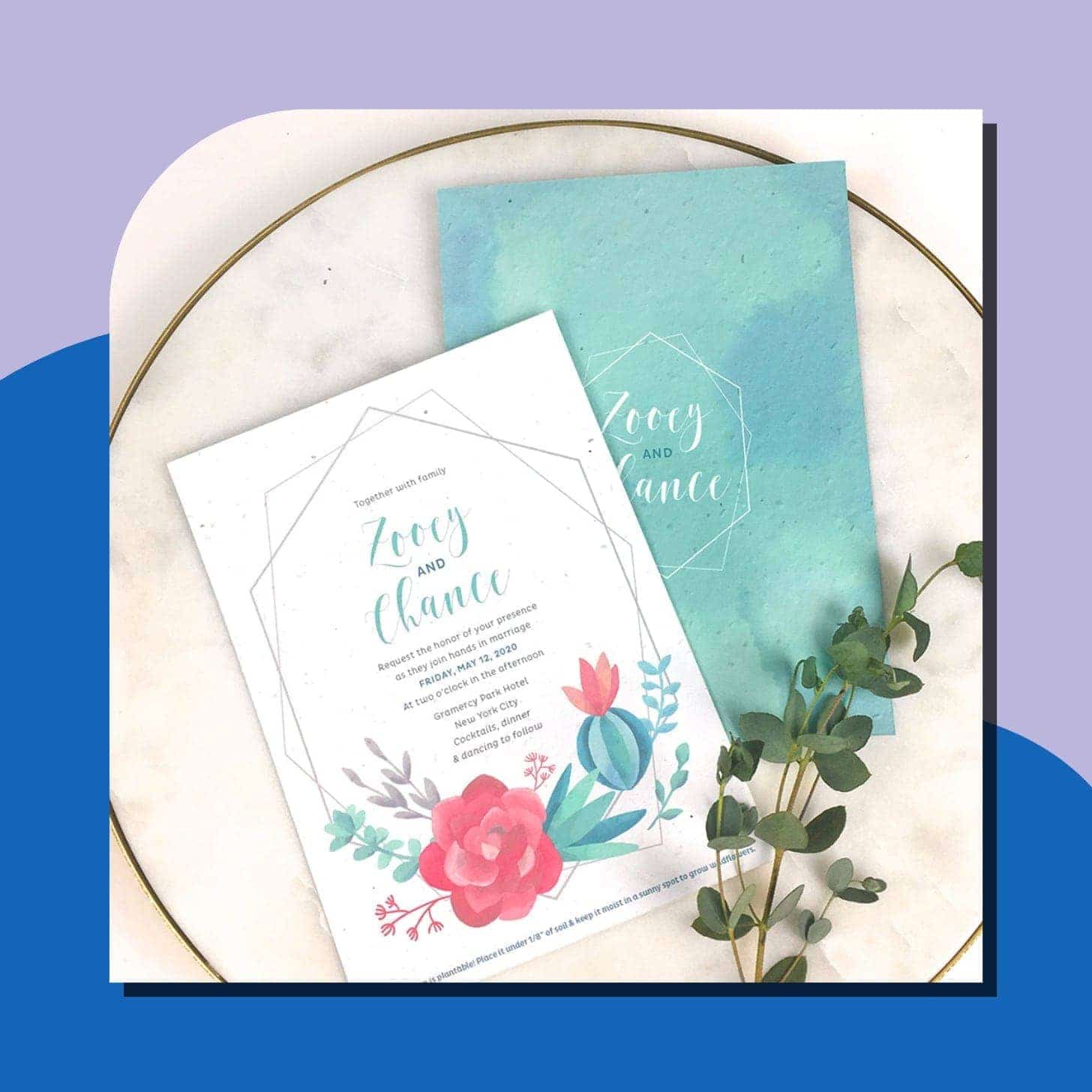
What’s good: Sure, recycling is great, but what if decisions you make during the wedding process could help your loved ones grow their own gardens? All that’s left behind is flowers, herbs, or vegetables — and zero waste.
Botanical Paperworks, a woman-owned business, offers plantable wedding collections of biodegradable seed paper that grow into wildflowers, herbs, or vegetables — all tested to ensure it’s free of weeds and invasive species.
The company’s products (including wedding invitations, favors, and confetti) are approved by the Canadian Food Inspection Agency and the United States Department of Agriculture for planting in the U.S., Canada, European Union, and other places around the world.
Price: Check current prices
Wedding options:
- Wedding Invitations
- Reply Cards
- Favors
- Favor Tags
- Save the Date Cards
- Thank You Cards
- Place Cards
- Menu Cards
- Confetti
- Seal & Send Invitations
- Wine Tags
- Design Your Own
- Coasters
- Wedding Banners
→ Shop Botanical Paperworks wedding stationery
Greenvelope
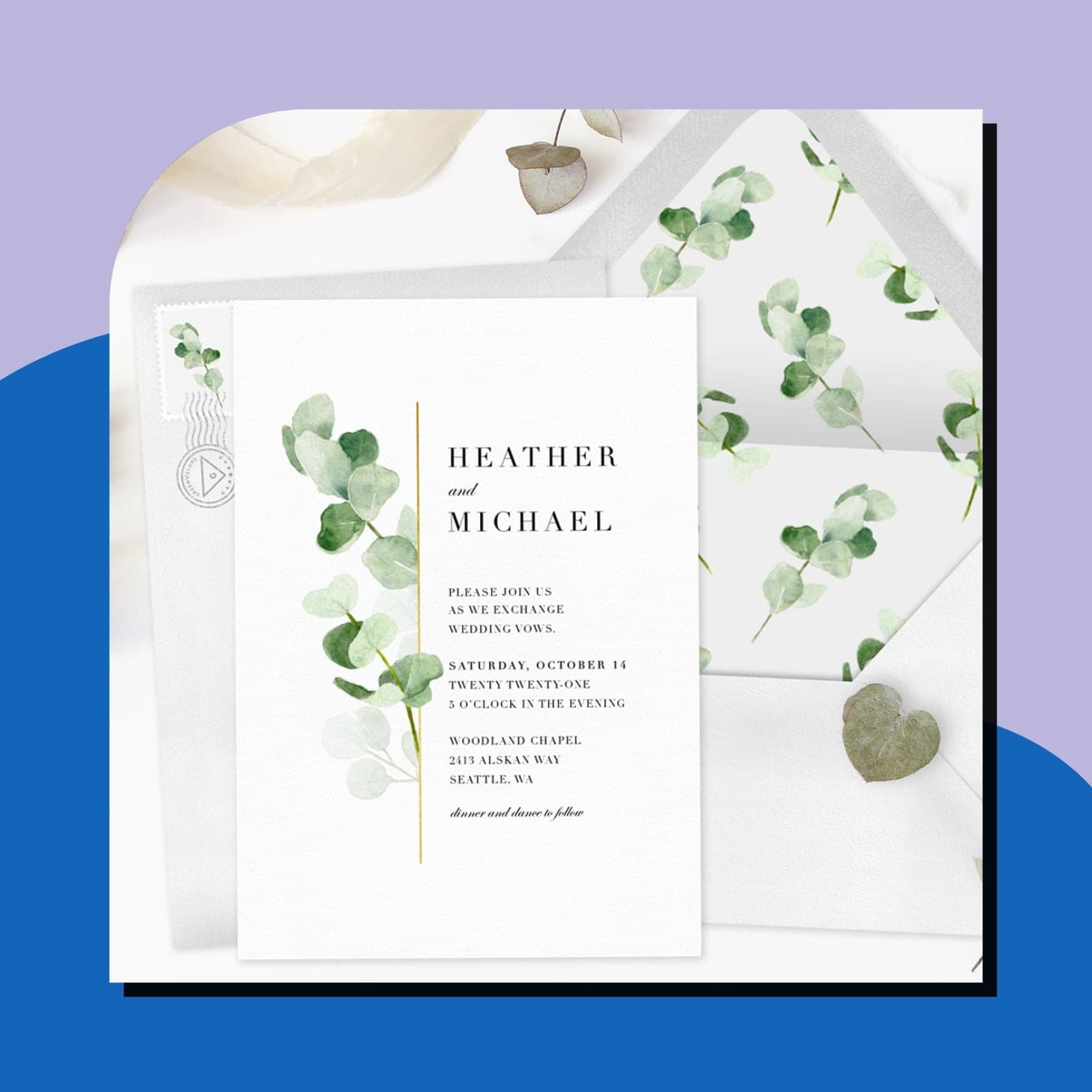
What’s good: Greenvelope is a Seattle-based company on a mission to save paper and preserve the beauty of the Pacific Northwest.
Eco-friendly at its core, Greenvelope was founded to create digital invitations that would provide all of the fun of traditional cards without any of the waste that comes with them.
The company’s beautiful wedding invitation templates feature elegant designs from its community of independent artists, stationers, illustrators, calligraphers, graphic artists, and painters.
Through partnerships with the National Forest Foundation, Mountains to Sound, the National Park Foundation, and 1% for the Planet, this online card and invitation service does more than save paper. (Explore more products that give back to our national parks in our National Parks Gift Guide)
Price: Check current prices
Wedding options:
→ Shop Greenvelope wedding stationery
Bella Figura
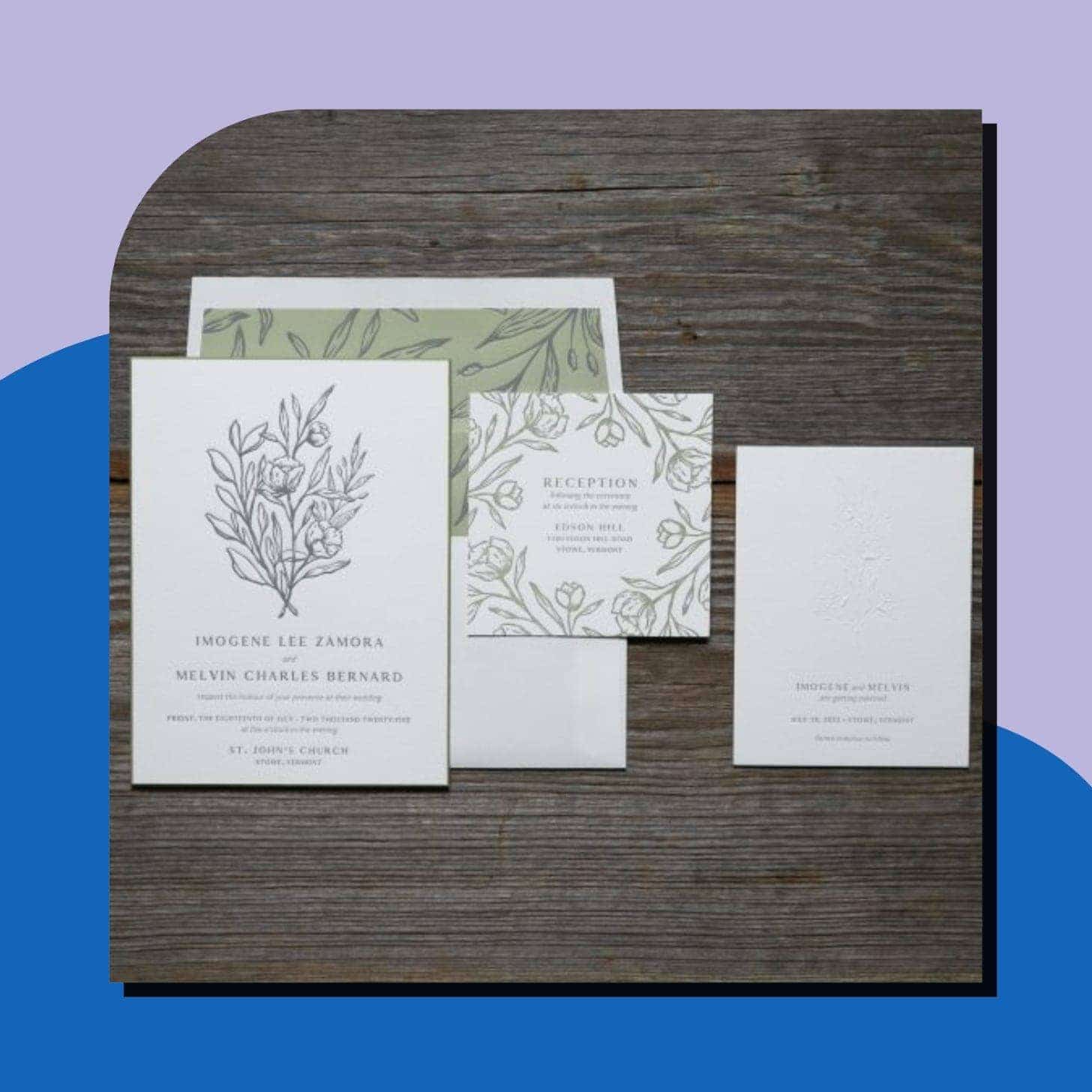
What’s good: Bella Figura is a New York-based company that designs high-quality stationery using old-school printing techniques like letterpress and foil stamping. (Seriously, check out its sweet designs!)
But the brand is not just about looks, it’s also dedicated to using the art of letterpress for good.
Beyond using tree-free paper and soy-based inks, Bella Figura recycles and composts its waste (think: paper offcuts, empty ink cans, old rags, and so on). The company also donates its surplus paper annually to local art teachers.
If you are curious about the energy usage of the company, it is completely powered by wind energy and it collaborates with a Native American-owned green energy company that constructs renewable energy projects for Native Americans, Alaska native villages, family farmers, and rural communities.
For its employees, Bella Figura even purchases bus passes to encourage public transportation usage and subsidizes Community Supported Agriculture memberships with a local organic farm because the company believes our food shouldn’t travel 1,500 miles to reach us.
Price: Check current prices
Wedding options:
- Wedding Invitations
- Save the Dates
- Thank You Notes
- Response Cards
- Reception Cards
- Direction and Accommodation Cards
- Website Cards
- Coasters
- Escort Cards & Place Cards
- Favor Cards
- Event Cards
- Wedding Programs
- Menus
→ Shop Bella Figura wedding stationery
ForeverFiances
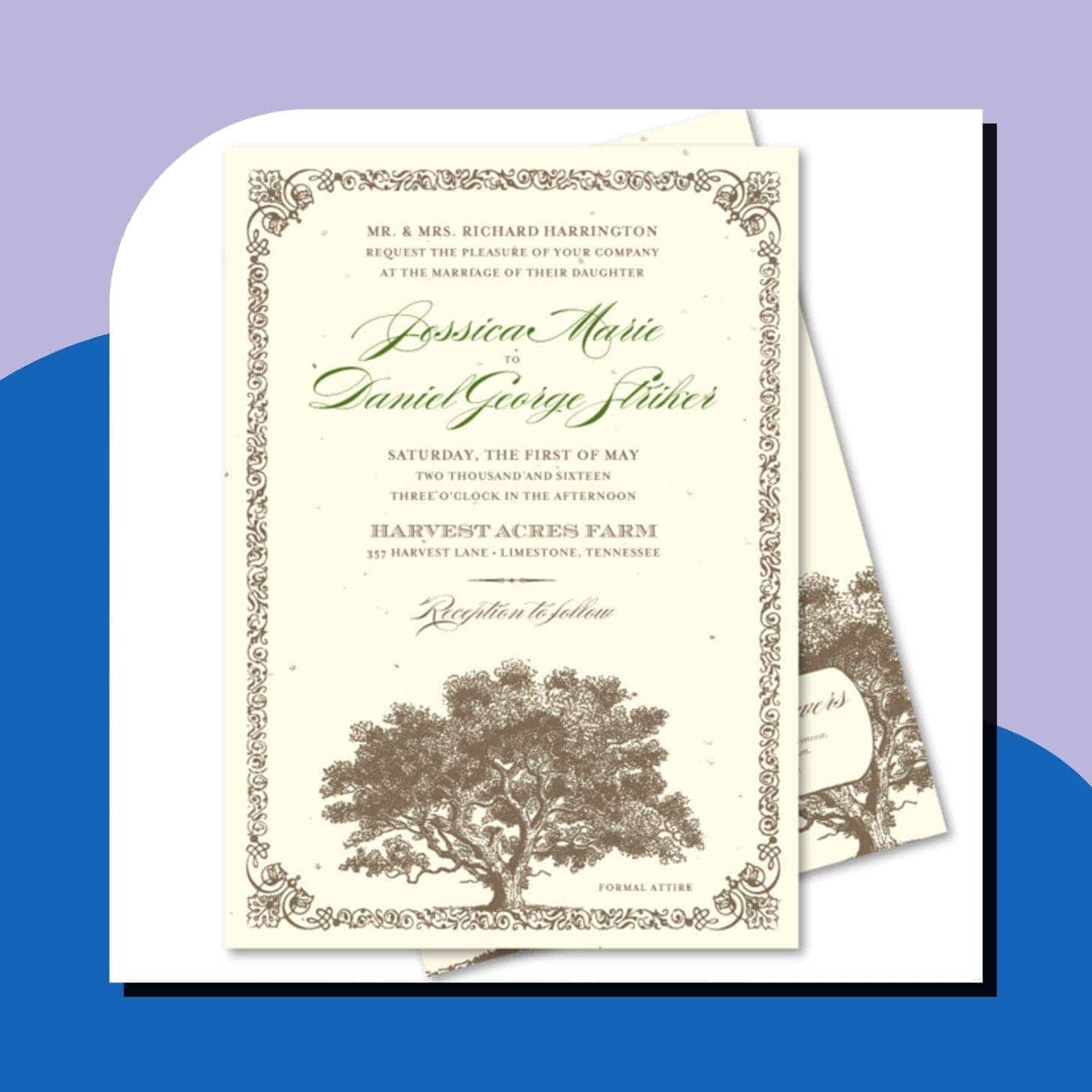
What’s good: ForeverFiances offers a selection of premium, plantable wedding stationery from 100% recycled paper and uses vegetable-based ink.
The company is FSC-certified and has pledged 1% of its revenues to nonprofit organizations supporting environmental causes, including Sea Shepherd Conservation Society and charity: water.
We love that ForeverFiances also offers an “All-In-One” invitation option which includes a detachable RSVP card that guests can easily pop in the mail to return — eliminating the need for additional envelopes!
Price: Check current prices
Wedding options:
→ Shop ForeverFiances wedding stationery
Words with Heart
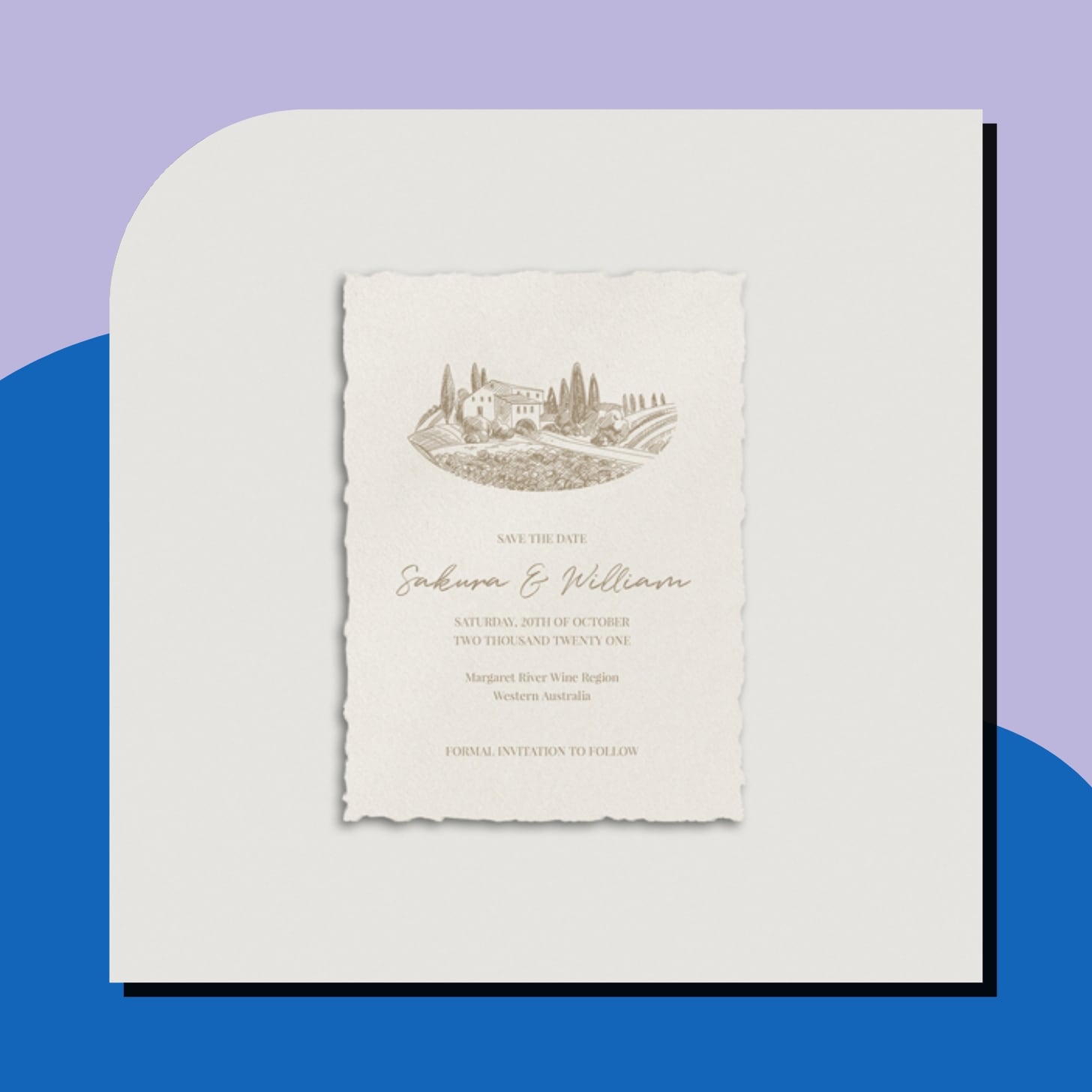
What’s good: Protecting the environment is a major priority for Australia-based social enterprise, Words with Heart. The company focuses on women's empowerment, girls' education, and sustainability by crafting its products with 100% post-consumer recycled paper using vegetable-based inks and green electricity.
Each piece of stationery sold helps fund a day of education for girls around the world. So far, Words with Heart has funded 100,000 days of education — and counting.
Price: Check current prices
Wedding options:
→ Shop Words With Heart wedding stationery
Other eco-friendly wedding invitation ideas:
Etsy
With Etsy’s seemingly endless directory of creative small businesses, this online marketplace is a great tool to take advantage of, especially if you want to find seed paper options or digital invites.
The advantage of shopping on Etsy is the wide variety of designs and value-specific options each individual seller focuses on. We’ve narrowed down the search for you:
E-vites
Invitations can get pretty pricey — especially when it comes to eco-friendly ones. That’s where e-vites (or invitations sent via email) come in!
E-vites are not only really convenient and cost-effective, but they are also a bit more kind to our planet. By opting for digital invitations, you can eliminate the need for paper, printing, and shipping materials, reducing your carbon footprint and waste. Plus, you can still create beautiful, personalized designs that will impress your guests.
Companies like Greenvelope and Paperless Post offer jaw-dropping designs from artists, calligraphers, and top fashion houses from around the world.
Some e-vite companies even offer couples tools (for free) that are meant to make the wedding planning process a little less stressful (like instantly tracking opens and RSVPs and beautiful animation features).
DIY
Choosing to do your own wedding invitations rather than buying them from companies has become a popular option for couples looking to save money and add a personal touch to their special day.
With the rise of online design tools like Canva and access to affordable printing services, creating your own invitations has actually never been easier.
By designing and printing your own stationery, you have full control over the look and feel of the final product, allowing you to tailor your invitations to match your wedding aesthetic.
Using what you already own, buying second hand, or opting for recycled or biodegradable materials (like seed or kraft paper) can also help make your DIY invitations even more eco-friendly.
It’s been over 30 years since the signing of the Americans with Disabilities Act (ADA) was passed in the United States. While this law did open the door for disabled folks to receive increased access to services, official celebrations (like Disability Pride Month), and increased rights, there’s still so much more that needs to be done.
As a proud disabled Latina, I am constantly reminded of the remarkable qualities that my experience with Cerebral Palsy has nurtured within me. It has shaped me into a person who is empathetic, resilient, and highly adaptable, like the many others in my diverse community.
Disability does not define me in isolation; it’s a part of my identity that contributes to my human experience. Through sharing our stories and embracing our shared humanity, we can work to break down barriers and foster a society that recognizes and celebrates the strength, resilience, and talents of all individuals — regardless of ability.
Before we dive into this reading list, it’s important to take a moment and reflect on our own attitudes toward disability. Let’s address and challenge the concept of ableism.
Ableism, as defined by activist Talila A. Lewis, is a system that assigns value to individuals based on societal notions of normalcy, productivity, desirability, intelligence, excellence, and fitness. Ableism affects everyone — regardless of their disability status. (You can find an expanded definition of ableism on Talila’s website.)
By acknowledging and challenging our own ableist beliefs and behaviors, we can actively create a more inclusive and equitable society.
Looking at the way people are portrayed across literature and media is a good start at examining our own beliefs. I’ve curated a list of some of my favorite books across genres like fiction, nonfiction, romance, young adult novels, and children’s books. Each book does a beautiful job of weaving in and centering someone with a disability.
Disability is a vibrant and multifaceted spectrum encompassing diverse conditions and experiences (from the visible to the invisible). It’s vital to challenge the dominant societal narrative that portrays disability as something separate or lacking — it’s quite the contrary.
Whether you’re a part of the disabled community or an able-bodied person, every book on this list covers a shared human experience or call to action for us all to take.
By the way, some of the links in this article are affiliate links, which means if you make a purchase after clicking a link, we may earn a commission at no extra cost to you. Thank you!
The Best Books About Disabilities
Disability Books Starter Kit
No one is an expert on a specific topic right off the bat. We’re allowed to not know, be beginners, and ask thoughtful questions when learning something new.
This is your place to start.
Welcome to your ultimate guide to exploring the narratives and rich history of the disability community. Think of this as Disability 101, where you’ll delve into disability literature, learning more about our lived experiences, challenges, and amazing triumphs.
I recommend following the suggested reading order. Each book in this starter kit intentionally builds upon the previous one, gradually immersing readers in the ever-evolving, ever-dynamic, and diverse world of disability.
This toolkit serves as a trusted guide, equipping you with the knowledge and empathy necessary to navigate the complexities of disability — and become an advocate within your community.
1. “Demystifying Disability: What to Know, What to Say, and How to Be an Ally” by Emily Ladau
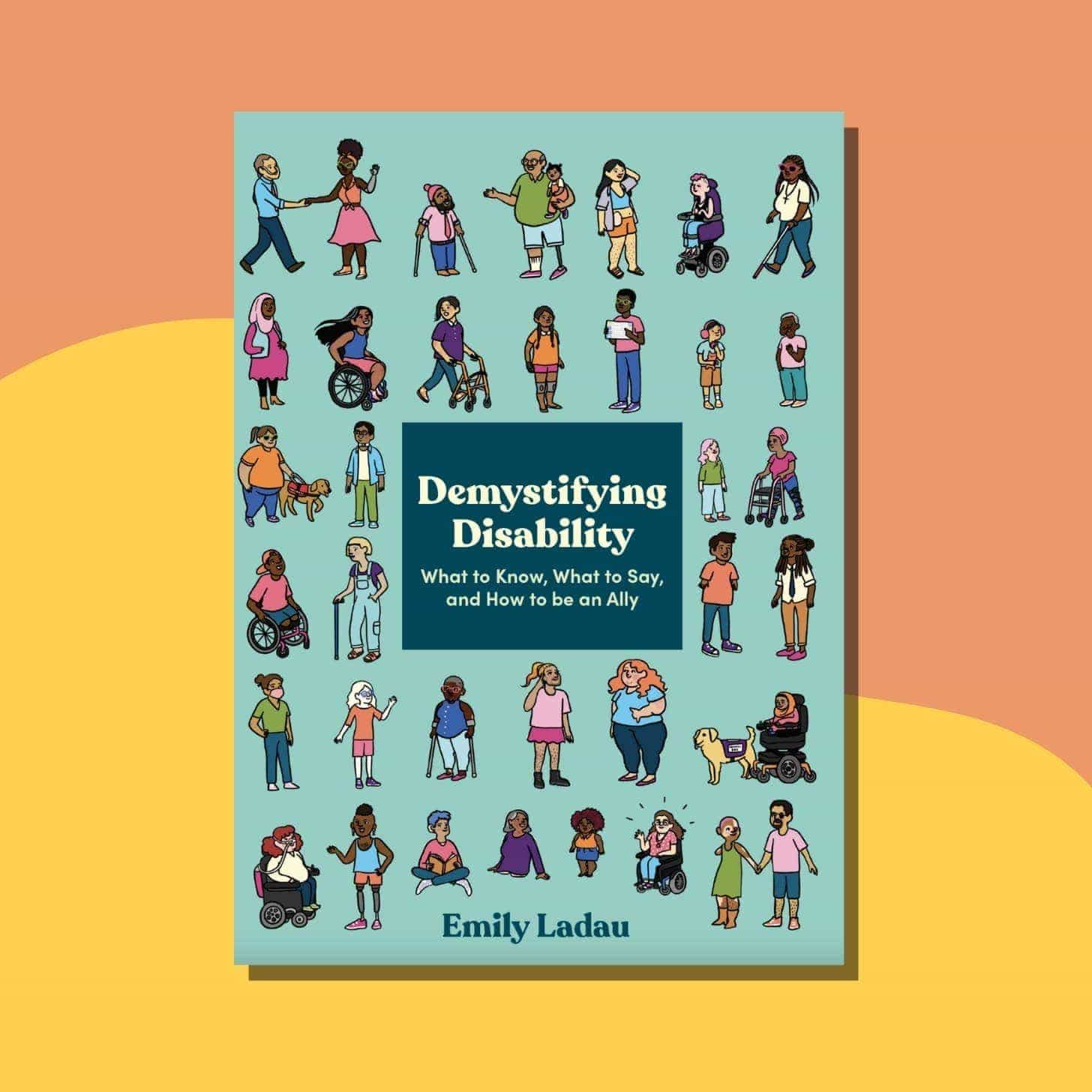
“Demystifying Disability” is a must-read for anyone seeking to understand and support disabled folks. It’s an approachable guide to being a thoughtful, informed ally — with the added bonus of actionable steps and language shifts.
Not only does Ladau share her experience of having the same disability as her mother — offering a new and eye-opening perspective that I had never come across before — but she also highlights an often overlooked form of discrimination: airline discrimination.
As a committee member of All Wheels Up, an organization dedicated to advocating for improved and dignified air travel for disabled individuals, I found it so impactful that she highlighted this critical issue in her book.
2. “Disability Visibility: First-Person Stories from the Twenty-First Century” edited by Alice Wong
“Disability Visibility” by Alice Wong is an essential anthology — from blog posts, manifestos, and eulogies to Congressional testimonies, and more — providing a glimpse into the rich, complex, and diverse experiences of disabled individuals.
Wong brings together a collection of essays that challenge misconceptions about the Americans with Disabilities Act (ADA), debunking the notion that it has achieved equality and accessibility in public spaces. We’re not there … yet.
Beyond this, Wong — who lost her ability to speak — has shown that the “traditional way” of communicating is not the only way to communicate. Her transition into using a speech reader has helped reinforce the idea that there are so many ways to be present, communicate, and create change.
3. “Black Disability Politics” by Sami Schalk
“Black Disability Politics” by Sami Schalk delves into the intersectionality of disability and Black activism, exploring how disability issues have been and continue to be central to the fight for racial justice. Schalk sheds light on the often-overlooked legacy of Black disability politics, which differs in language and approach from the mainstream white-dominated disability rights movement.
By drawing on archival research from influential organizations such as the Black Panther Party and the National Black Women’s Health Project, as well as interviews with contemporary Black-disabled cultural figures, Schalk uncovers the common qualities of Black disability politics.
She emphasizes the importance of grounding public health initiatives in the experiences and expertise of marginalized disabled individuals, enabling them to work in anti-racist, feminist, and anti-ableist ways.
In the context of the Black Lives Matter movement, this book addresses the crucial submovement called Black Disabled Lives Matter. This acknowledgment highlights the existence of Black lives on the margins that are often left out of the conversation on racial justice.
4. “Not So Different: What You Really Want to Ask About Having a Disability” by Shane Burcaw
“Not So Different” by Shane Burcaw is a children’s book that offers a lighthearted and relatable glimpse into the author’s life. With humor and refreshing honesty, Burcaw addresses the curious and sometimes awkward questions he often receives about living with a disability — showcasing that he is just as approachable, friendly, and funny as anyone else.
Born with spinal muscular atrophy, a rare disease that affects his muscles’ growth, Burcaw shares his experiences of navigating daily life with the help of friends and family — while also pursuing his passions (like playing sports and video gaming) and living a fulfilling life.
What sets this book apart is the much-needed humor it brings to the disability community. By sharing jokes and lighthearted stories, he models how laughter and poking fun at ourselves is not only acceptable but also an essential way to celebrate our shared humanity.
Burcaw’s work shines beyond his books, though. He and his wife, Hannah Aylward, are YouTube vloggers, podcasters, and run Laughing At My Nightmare Inc. — an organization providing assistive technology to people with disabilities and adaptive equipment to those with muscular dystrophy.
5. “Being Heumann: An Unrepentant Memoir of a Disability Rights Activist” by Judith Heumann
A friend of mine once coined “Being Heumann” by Judith “Judy” Heumann as the disability bible — and I wholeheartedly agree. Judy was an internationally recognized disability rights activist, widely regarded as “the mother” of the disability rights movement.
She was also considered by many of us within the community as the quintessential Jewish disabled grandma who regularly checked in on us.
This book, her first memoir, chronicles Judy’s remarkable journey and provides key insights into the development of disability justice movements from the 1970s to the 2010s.
From challenging discriminatory practices in schools to leading the historic 504 Sit-in, Judy’s actions paved the way for the implementation of vital protections for disabled people’s rights, ultimately leading to the creation of the ADA. Her memoir offers a candid, intimate perspective that invites able-bodied and disabled readers to get a sense of all the work she was doing before she passed.
6. “Crip Kinship: The Disability Justice & Art Activism of Sins Invalid” by Shayda Kafai

The fusion of art and activism creates a powerful catalyst for igniting movements, painting vibrant portraits of social change, merging rebellion with beauty, and transforming the world through creative revolution.
“Crip Kinship” by Shayda Kafai is a powerful exploration of those intersections. This book serves as a love letter and offering of disabled, queer survival teachings, shedding light on the transformative work of Sins Invalid, a San Francisco Bay Area-based performance project.
Through the lens of disability justice, this book dives into the radical possibilities that disabled, queer, trans, and gender-nonconforming people of color are capable of. It showcases their ability to rewrite oppressive narratives and provides invaluable lessons for collective survival and liberation.
Accessible to both fellow disabled community members and folks who may be encountering the concepts of disability justice and ableism for the first time, this book serves as an inclusive resource for learning, growth, and understanding.
For those interested, I encourage you to (of course) read this book but also take it a step further by exploring this organization’s free resources offered for all people with disabilities.
7. “Care Work: Dreaming Disability Justice” by Leah Lakshmi Piepzna-Samarasinha

I’d like to think that I know a lot about disability justice, but this book reminded me: You’re just getting started.
In this collection of essays, Lambda Literary Award–winning writer and longtime activist and performance artist Leah Lakshmi Piepzna-Samarasinha explore the politics and realities of disability justice.
It’s essentially the tool kit for anyone who wants to build radically resilient, sustainable communities of liberation where no one is left behind.
We live in a society that’s always telling us to go, go, go! This book really hones in on all the different ways we can show up and advocate for the disability community.
I read this book while I was undergoing chemo treatments. For six months, I was only focusing on myself, which meant I had to pause my activism. I was trying to see myself. And this book made me feel it’s OK to be in that space. You can put as much effort into yourself as you do with everybody else.
Memoirs
“The Pretty One: On Life, Pop Culture, Disability, and Other Reasons to Fall in Love with Me” by Keah Brown
Keah Brown’s “The Pretty One” offers a much-needed perspective on the experiences of being Black and disabled in a predominantly able-bodied white America.
As a disability rights advocate, journalist, and creator of the viral social media campaign #DisabledAndCute (which I fully immersed myself in), Brown has become a leading voice in the disabled community, and in this collection of essays, she brings her contemporary and deeply relatable voice to the forefront.
Born with Cerebral Palsy, Brown candidly shares her journey of self-discovery and self-acceptance. She reveals that her greatest desire used to be “normalcy.” Through introspection and connecting with others in her community, however, she’s since reclaimed her identity and shifted her perspective.
From breaking down her relationship with her able-bodied identical twin — who has often been referred to as “the pretty one” — to providing a poignant reflection on identity and societal beauty standards, Brown examines her experiences in navigating romance and uncovering the complexities and challenges of finding love while challenging societal perceptions of disability.
“The Pretty One” is more than just a book about disability; it’s a testament to the power of self-love, resilience, and the importance of embracing our authentic self.
“Year of the Tiger: An Activist’s Life” by Alice Wong
In the midst of her challenging healthcare journey, which led to the loss of her ability to speak, Alice Wong fearlessly released this book as a testament to the immense power that our voices and stories hold.
In traditional Chinese culture, the tiger is admired for its confidence, passion, and ferocity. In the “Year of the Tiger,” the animal symbolizes duality — being both the powerful king (and queen) of the jungle while at the same time embodying qualities of softness and gentleness.
Drawing from a rich collection of original essays, previously published work, conversations, graphics, photos, and commissioned art by disabled and Asian American artists, Wong uses her unique talent to curate a compelling scrapbook that showcases her life as an Asian American disabled activist, community organizer, and dreamer.
She traces her origins, shares her personal story, and creates a space for disabled individuals to engage in meaningful conversations with one another and the world. The book beautifully explores the complexities of disability and the constant fight for equality, while also highlighting the importance of leaning on community and sharing the burden of advocacy.
Alice’s narrative also delves into the process of becoming progressively more disabled as her life unfolds, offering a valuable and profound perspective.
Often, society tends to view disability as a static moment, assuming that individuals are either born disabled or experience a single tragic event that leads to disability. However, Alice reminds us that disability is dynamic and ever-evolving, shaping our lives in various ways as we age.
“Sitting Pretty: The View from My Ordinary, Resilient, Disabled Body” by Rebekah Taussig
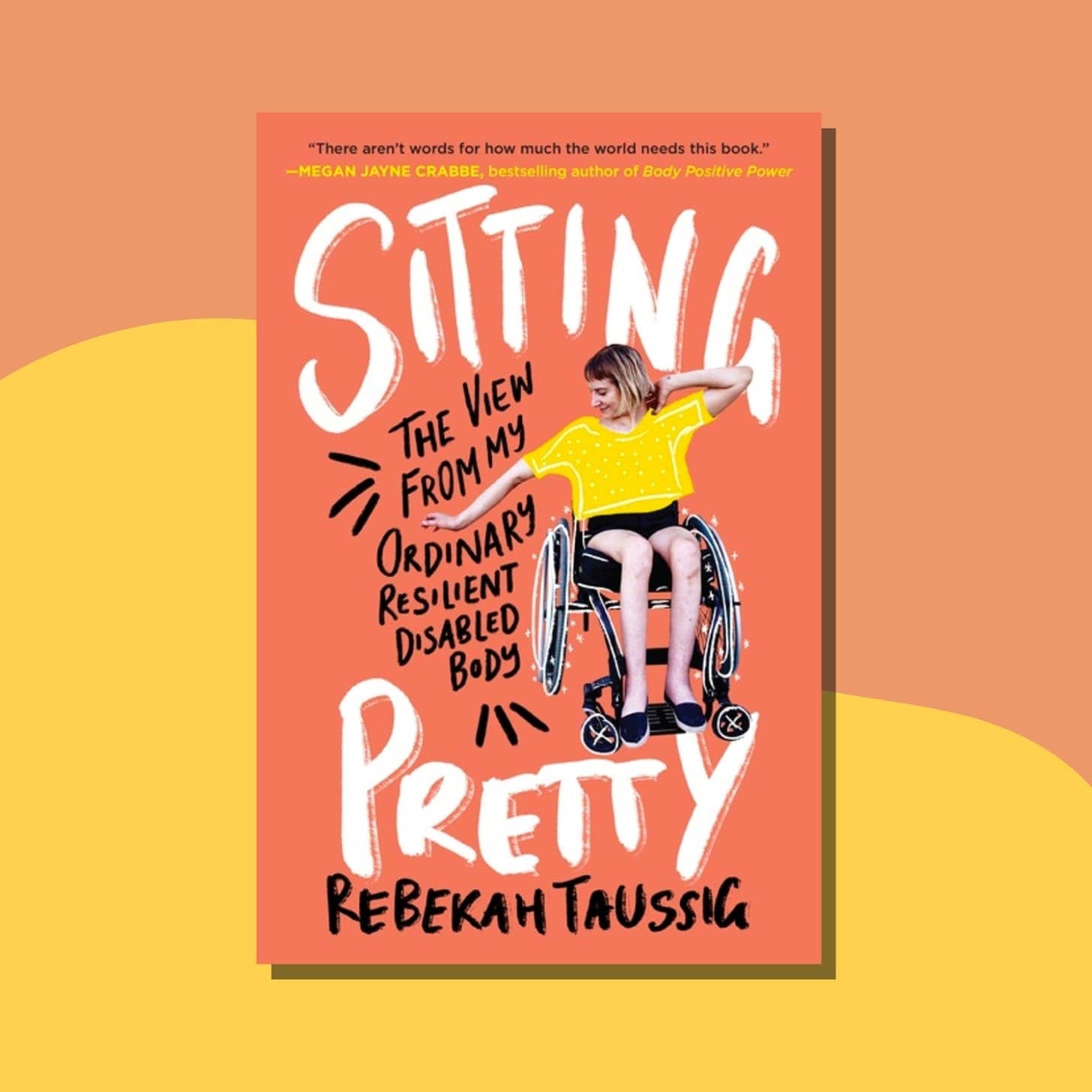
In “Sitting Pretty,” Rebekah Taussig, a disability advocate and content creator, paints a beautifully nuanced portrait of a body that defies conventional expectations and moves in ways that challenge societal norms.
Reflecting on her unique experience, Taussig dissects the complexities of kindness and charity, the relationship between independence and dependency, the pursuit of intimacy, and the pervasive influence of ableism in media and everyday life. By examining these facets, Taussig highlights the impact of disability — which affects all of us directly or indirectly at some point in our lives.
Something that resonated deeply with me was Taussig’s relationship with her wheelchair. She embraces her wheelchair as her throne — a symbol of empowerment and freedom.
She challenges the language commonly used to describe people’s relationships with their wheelchairs, rejecting the idea of being “wheelchair-bound” or a restriction and instead emphasizing its life-giving nature. They help us be the people that we are.
This book is a celebration, an embrace, and a call-to-action to begin recognizing every type of human body.
“Haben: The Deafblind Woman Who Conquered Harvard Law” by Haben Girma
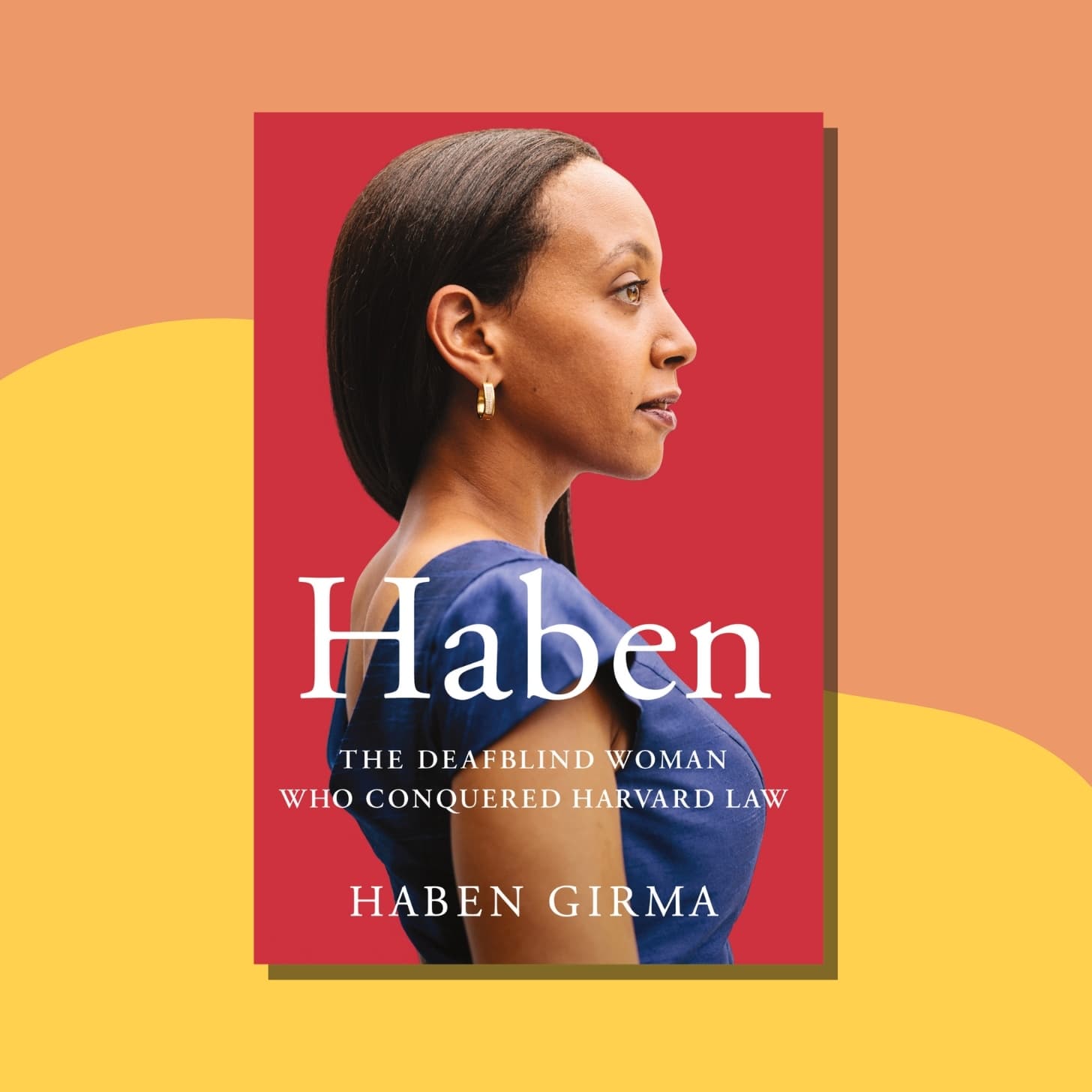
Let me start by saying Haben Girma is the coolest person in the world. Girma is a human rights lawyer advancing disability rights, the first deafblind graduate of Harvard Law School, and a dog mom to the most adorable German Shepherd named Mylo.
In her memoir, “Haben,” she takes readers on her journey from isolation to emergence onto the world stage.
A powerful story for both the disability community and able-bodied folks, she shares everything from her non-visual techniques for salsa dancing and handling an electric saw, to her encounter with President Obama at The White House, to the discrimination she felt while attending Harvard.
One of the invaluable lessons I took away from this book is the importance of alt-text when describing photos, a concept Girma skillfully explains. I often focused on literal details, like color, but realized after reading this book that there are other — more meaningful — ways to provide alt-text that consider the experiences of individuals who are blind or visually impaired.
Her warmth, humor, and thoughtfulness shine through every page, demonstrating that with creativity and determination, barriers can be overcome.
“Look Me in the Eye: My Life with Asperger’s” by John Elder Robison
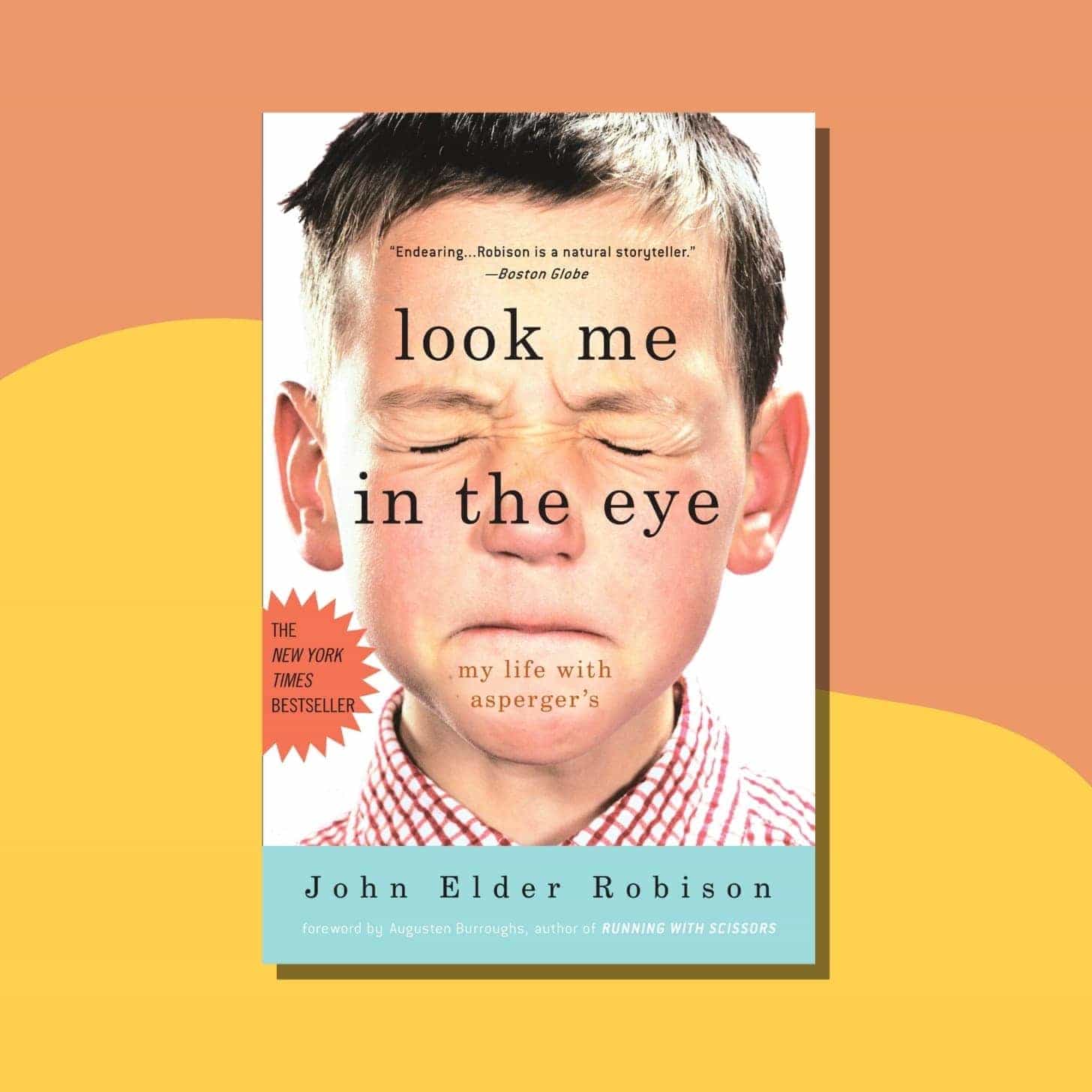
In a society where books about Asperger’s are lacking and the syndrome itself is often overlooked within the broader autism spectrum, “Look Me in the Eye” by John Elder Robison stands out as a significant contribution. This memoir sheds light on the experiences of individuals with Asperger’s syndrome and provides a poignant look into their struggles and unique perspectives.
Robison, a natural storyteller, takes readers on a journey through his life, filled with deeply welcoming dark humor. From his days designing exploding guitars for KISS to building his own family, his memoir paints a vivid portrait of a life shaped by Asperger’s.
Through this candid storytelling, we gain insight into the inner workings of Asperger’s syndrome, fostering empathy and understanding.
Fiction
“A Curse So Dark and Lonely” by Brigid Kemmerer

We all love a little royal love story (or is that just me?). In “A Curse So Dark and Lonely” by Brigid Kemmerer, we’re transported into a royal love story that’s not only a serious page-turner but also delves into themes of self-discovery and resilience — a type of journey we can all relate to.
“A Curse So Dark and Lonely” is the first book in its series that introduces us to a world where enchantment and reality collide. Kemmerer, known for her ability to create complex characters in realistic and fantastical forms, masterfully weaves in elements of fantasy, romance, and self-discovery similar to Disney’s “Beauty and the Beast.”
The story follows Prince Rhen, cursed to repeat the same autumn over and over, transforming into a beast with destructive tendencies. However, everything changes when the protagonist, Harper, enters his cursed world, and their paths intertwine.
As someone with the same disability as the protagonist, this story was incredibly exciting, inspiring, and relatable. A prince? A protagonist with cerebral palsy? A monster? A curse? Need I say more?
“A Time to Dance” by Padma Venkatrama

A dear friend of mine recommended “A Time to Dance,” and I’m grateful she did. It’s a wonderful book that sheds light on the intersection of disability and Indian culture, which is a perspective often overlooked.
The story revolves around Veda, a talented dancer whose life takes a drastic turn when she becomes a below-knee amputee. Despite the challenges and the loss of her dreams, Veda’s courage and resilience shine through as she embarks on a new path, starting from scratch and embracing beginner classes.
Along the way, she encounters Govinda, a young man whose spiritual approach to dance ignites a profound connection within Veda. Through their evolving relationship, Veda rediscovers her place in the world and unravels the true meaning of dance, providing us with a story of spiritual awakening, the power of art, and the relentless human spirit.
As an Indian American herself, my friend was surprised to find a story that celebrates the resilience and achievements of folks with disabilities within her own cultural background.
“Show Me a Sign” by Ann Clare LeZotte
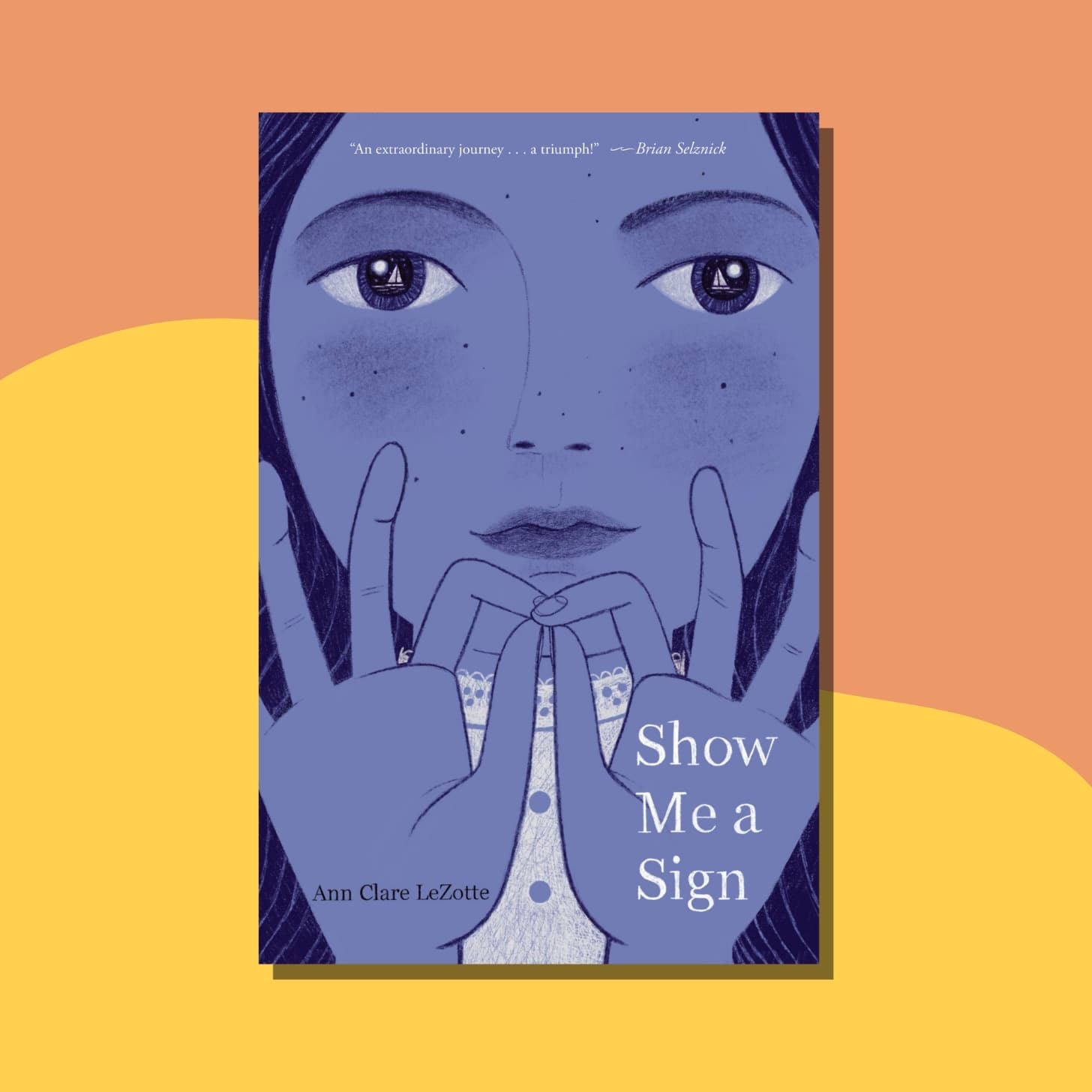
“Show Me a Sign” by Ann Clare LeZotte is a captivating novel that sheds light on a lesser-known period in Martha’s Vineyard history, where a unique sign language connected both deaf and hearing islanders.
Martha’s Vineyard Sign Language, which developed as its own distinct dialect, showcased the richness and complexity of sign language as a robust communication system. I found it eye-opening to discover the existence of different sign language dialects and appreciate them as fully-fledged languages in their own right.
The story revolves around Mary Lambert, a proud descendant of the island’s first deaf settler. Growing up in a tight-knit community where sign language is widely used, Mary has always felt a sense of belonging.
However, things begin to change when tragedy strikes her family, tensions escalate between English settlers and the Wampanoag people, and a relentless scientist arrives seeking answers about the island’s deaf population. Mary’s fight for survival against his cruel experiment forms the heart of this novel.
“Show Me a Sign” explores the profound themes of ability and disability and reminds both able-bodied individuals and the disability community of actively creating space for all — regardless of ability and background.
“One Two Three” by Laurie Frankel
“One Two Three” by Laurie Frankel explores the themes of love, family, and the power of expanding our perceptions of “normalcy.” With three unforgettable narrators, Frankel weaves a moving story filled with wit, wonder, and deep affection. Much like her previous bestseller, “This Is How It Always Is,” this book will have you laughing one moment and reaching for tissues the next.
What stood out to me is the complex dynamics between the triplets, two of whom have disabilities. One sibling relies on a wheelchair and uses an Augmentative and Alternative Communication device (known as AAC) to communicate, while the other has Asperger’s syndrome.
Against the backdrop of a town grappling with the aftermath of a contaminated water crisis caused by a big oil plant, the triplets, now 16 years old, find themselves fighting alongside their determined mother to hold the oil company accountable.
This book is important for both able-bodied people and the disability community, as it beautifully highlights the strength, resilience, and contributions of people with disabilities.
It reminds us that expanding our understanding of what is considered “normal” can create a more inclusive and compassionate world for everyone.
“True Biz: A Novel” by Sara Novic
I cannot wait to read this book! It touches on so many important aspects of disability culture. The protagonist, Charlie, who is deaf, embarks on a journey as she transitions to a deaf high school and discovers a sense of community for the first time — something I really resonate with as I didn’t have a place in the disability community for a long time.
In the halls of the River Valley School for the Deaf, readers will meet Charlie, the rebellious transfer student; Austin, the school’s golden boy, whose world is shaken when his baby sister is born hearing; and February, the hearing headmistress, a CODA who grapples with keeping the school open and her marriage intact.
This novel explores sign language, lip-reading, disability rights, isolation, love, and loss, all while showcasing the tremendous persistence, and joy found within the Deaf community.
One element that particularly stands out to me is Charlie’s complex relationship with her doctors, who have influenced her perception of her deafness. This realistic portrayal reflects the challenges many face in the disability community, as healthcare providers often struggle to understand our lived experiences and the desire to embrace our disabilities on our own terms.
What I appreciate about this book is that although it centers on deafness, it also addresses the universal realities that all teenagers encounter. Author Sara Novac also includes sign language diagrams throughout the book, which I think is the coolest thing!
Young Adult
“Two Girls Staring at the Ceiling” by Lucy Frank

“Two Girls Staring at the Ceiling” by Lucy Frank is a fantastic novel-in-verse that artfully blends the literary art form with emotional intensity. The story revolves around the blossoming friendship between two teenage girls who, despite their different backgrounds, find themselves sharing not only a hospital room but also an illness.
As someone who has found peace and healing in poetry, I appreciate the power of this book’s format. It personifies the delicate curtain that often separates patients within hospital rooms, allowing us to intimately witness the intertwined lives of the two protagonists.
This unique narrative style amplifies the raw emotions and challenges they face, drawing readers into their world with immense force.
What sets this book apart is its exploration of accepting one’s “cripness,” a journey that extends throughout a lifetime. It authentically portrays the experiences of living in a body that cannot always be relied on — yet somehow persists against all odds.
The novel fearlessly delves into the soul-crushing realities of shattered expectations and goals reduced to mere ashes. It bravely confronts the essence of disability.
“Love from A to Z” by S. K. Ali

“Love from A to Z” is a classic love story that explores the intricacies of love, identity, and the complexities of navigating life’s challenges. Author S. K. Ali weaves together themes of disability, cultural identity, and the power of self-expression — a portrayal that breaks down barriers and showcases that our experiences (which include love and romance) are universal.
The story follows Zayneb, who, after getting suspended for standing up to her teacher and endangering her activist friends, seeks solace at her aunt’s house in Doha, Qatar. Fueled by the guilt of getting her friends in trouble, she resolves to try out a newer, “nicer” version of herself in a place where no one knows her. Then her path crosses with Adam’s.
Adam, who has recently been diagnosed with multiple sclerosis, grapples with his new reality. He has withdrawn from his classes, focusing instead on preserving the memory of his late mother for his younger sister. Not only that, but Adam is hiding his diagnosis from his grieving father — adding another layer of complexity to his life.
“Love from A to Z” prompts readers to reflect on their own biases, deepen their understanding of the disability community, while also addressing the weight of illness and its impact on people and their families.
“All the Right Reasons” by Bethany Mangle

“All the Right Reasons” is a laugh-out-loud young adult romance that can only be described as a combination of The Bachelor and Gilmore Girls. Need I say more?
The story revolves around a girl accompanying her mother on a reality dating show designed for single parents. However, amidst the competition and the search for love, our young protagonist develops feelings for the son of one of the contestants. (Cue the popcorn!)
While we all love a good love story, something that makes this book truly special is its representation of disability. Author Bethany Mangle herself has Ehlers-Danlos Syndrome (EDS), a connective tissue disorder.
Her personal connection to the subject matter shines through and brings authenticity and depth to the portrayal of the male protagonist, Connor — who also has EDS.
In fact, the book’s cover art, featuring Connor in a sling, subtly acknowledges the challenges faced by individuals with EDS, such as joint dislocations. It’s refreshing to see disabled imagery presented in this way, and I hope more authors will follow suit in visually showcasing diverse experiences.
“One for All” by Lillie Lainoff

“One for All” is a captivating gender-bent retelling of “The Three Musketeers” that immerses readers in a world where a young girl with a chronic illness defies expectations, trains as a Musketeer, and embarks on a journey of self-discovery.
Tania de Batz, determined to prove her strength and independence despite her near-constant dizziness, dreams of becoming a fencer like her father, a former Musketeer. However, her world shatters when her father is tragically and mysteriously murdered, leaving her with a dying wish: to attend finishing school.
Author Lillie Lainoff’s debut novel is a powerful (and whirlwind) adventure that delves deep into themes of found family, inner strength, and the relentless pursuit of one’s passions.
Lainoff beautifully weaves her personal experience as a fencer with Postural Orthostatic Tachycardia Syndrome into the narrative, providing an authentic representation of disability.
Through Tania’s journey, readers gain a profound understanding of the dynamic nature of disability — both the good and bad days, the struggles of recovery, and the complexities of navigating internal and external ableism.
What truly sets this book apart is the portrayal of the supportive and inclusive community Tania finds at her training school. Here, she discovers acceptance, accommodations, and the opportunity to fully embrace her fierce fencer identity.
“Lakelore” by Anna-Marie McLemore

“Lakelore,” a mesmerizing young adult novel by award-winning author Anna-Marie McLemore, invites readers into a world where two non-binary teens find themselves entangled in a magical realm beneath a lake. As the boundaries between their two worlds blur, Bastián Silvano and Lore Garcia must strive to protect the delicate balance of their lives above water.
McLemore’s storytelling shines in this enchanting tale, where the lake’s hidden world — rumored to be both air and water — holds secrets and ethereal landscapes. Bastián, who has experienced both sides of the lake, and Lore, whose life was forever changed by a single encounter with the submerged realm, are the only ones who truly know its wonders.
However, when the world beneath the lake starts to emerge, threatening to expose their deepest secrets, Bastián and Lore must unite and take action. But there’s a significant obstacle: They haven’t spoken in seven years. Reconciliation and trust become crucial as they navigate the challenges ahead and confront the very vulnerabilities they strive to conceal.
One of the special aspects of “Lakelore” is the powerful representation it depicts. McLemore draws from their own experiences as a trans dyslexic person with ADHD.
Through Bastián’s journey, readers witness the emotional exploration of starting hormone replacement therapy, beautifully depicted with vivid imagery and profound sensitivity.
The incorporation of Mexican culture, exemplified by the mythical wood-carved creatures known as Alebrijes, serves as a coping mechanism for Bastián’s ADHD, adding rich cultural layers to the story which I found to be so beautiful.
Romance
“Get a Life, Chloe Brown: A Novel (The Brown Sisters Book 1)” by Talia Hibbert
“Get a Life, Chloe Brown” by Talia Hibbert is a witty and hilarious romantic comedy that will have you laughing out loud. This delightful read follows the journey of Chloe Brown, a chronically ill computer geek who is tired of feeling “boring” and decides to enlist the help of her mysteriously sexy neighbor to experience new adventures.
With her fibromyalgia, Chloe brings to light the gaslighting and disbelief that often accompanies living with a disability. This book tackles the complexities of invisible disabilities, shedding light on the challenges faced by folks whose symptoms may not be immediately apparent to others.
Through Chloe’s experiences, readers gain insight into the emotional toll and the resilience required to navigate a world that often fails to understand or acknowledge the realities of living with a chronic illness.
One of the standout aspects of this book is its portrayal of disability and sexuality. Disabled people are rarely depicted as “sexy” or desirable in mainstream media — perpetuating harmful stereotypes. However, the author breaks these barriers by presenting raunchy and passionate scenes showcasing Chloe’s sensuality.
As I read “Get a Life, Chloe Brown,” I was hooked by the charming and relatable characters, the humor, and the heartfelt moments that unfolded. The way Hibbert explores the intersection of disability and romance is so refreshing and empowering!
“Taxonomy of Love” by Rachael Allen
“Taxonomy of Love” by Rachael Allen is a coming-of-age story that explores the complexities of friendship, love, and identity.
From the moment Spencer meets Hope, he’s drawn to her in a way that feels almost magical. Their friendship blossoms as they embark on adventures, finding solace and belonging in each other’s company.
What makes this book truly significant is its portrayal of disability and its impact on relationships. Spencer, who has Tourette syndrome, has spent years feeling overshadowed by his older brother and facing teasing and misunderstanding from others. Through his friendship with Hope, he begins to embrace his true self and finds acceptance and understanding.
What I really love about this book is that Allen shows the depth of what it is like to live with a disability. There is never an off switch for your disability, and sometimes that means your body is doing things in public that can make other people uncomfortable. I also really appreciate that she shows Spencer dealing with medication management and the many uncomfortable side effects that come with it.
“My Heart to Find: An Aces in Love Romantic Mystery” by Elin Annalise
Meet Cara Tate, a devoted crime fiction reader who, at twenty-five years old, is shy, asexual, and yearning for love. However, her chronic Lyme disease has brought her brain inflammation and OCD, instilling a deep fear of physical contact with others.
Compounding her challenge is the difficulty of finding other aces — especially with no guarantee of a connection. Despite these obstacles, Cara finds solace in one man she knows, someone who shares her asexuality and sparks a special feeling within her. With the possibility of a hug (or more) on the line, Cara must gather the courage to defy the grip of her OCD.
In “My Heart to Find,” Elin Annalise delivers a narrative that authentically represents asexuality and chronic illness, specifically Lyme Disease and Encephalitis-induced OCD — also known as PANS — which was only officially recognized as a disability in 2013.
Annalise’s storytelling and heartfelt exploration of love, identity, and personal growth makes this book a compelling and important read. It sheds light on the struggles faced by those with chronic illnesses and asexuality, offering both validation and insight to those within these communities while fostering understanding and empathy among able-bodied readers.
“Always Only You” by Chloe Liese
Prepare yourself for a rollercoaster of emotions when diving into “Always Only You” by Chloe Liese. This sports romance takes you on an opposites-attract, forbidden love slow-burn journey (I don’t know about you, but I love those kinds of narratives!).
The story revolves around a nerdy, late-blooming hockey star and his coworker, a strong-willed woman who keeps both her gentle side and her autism diagnosis hidden from the world. With a delightful mix of meddling characters, tantric yoga, and an irresistibly gradual romance, this standalone novel is the second installment in a series that follows the adventures of a Swedish-American family as they each find their own happily ever after.
Liese skillfully portrays the complexities of autism and emphasizes the importance of understanding, acceptance, and embracing one’s true self.
“Something to Talk About” by Meryl Wilsner
In Meryl Wilsner’s debut romance, “Something to Talk About,” a showrunner and her assistant accidentally ignite a sensational rumor that ignites a media frenzy.
Jo, a prominent Hollywood figure, finds herself caught in a photograph sharing a laugh with her assistant Emma at a high-profile event, leading the tabloids to label them as a couple. This unexpected development couldn’t have come at a worse time, jeopardizing Emma’s promotion and Jo’s upcoming movie. As the rumor spreads like wildfire, their professional and personal lives are profoundly affected, with paparazzi hounding their every move and colleagues treating them differently.
What makes this book special is that it not only features queer characters, but it also resonates with readers who have asthma. Through the eyes of Emma, the author authentically portrays the challenges and medical attention required to live with the condition.
Three friends with asthma recommended this book to me, sharing their appreciation for finally encountering a relatable experience in a novel.
Children’s Books
“All the Way to the Top: How One Girl’s Fight for Americans with Disabilities Changed Everything” by Annette Bay Pimente and illustrated by Nabi Ali
“All the Way to the Top” by Annette Bay Pimente is an empowering autobiographical picture book that takes readers on a remarkable journey alongside lifelong activist Jennifer Keelan-Chaffins.
Through stunning illustrations, we witness Keelan-Chaffins’s unwavering determination and role in the historic Capitol Crawl — a moment that became a catalyst for change in the disability rights movement.
For able-bodied readers, it offers an opportunity to gain insight into the struggles faced by people within the disability community and the fight for equal rights. It’s an empowering and motivating reminder for those within the community that disability should not limit us.
This is the story of a little girl who just wanted to take action, even when others tried to stop her.
“El Deafo” by Cece Bell
“El Deafo” by Cece Bell is a fun book that not only entertains young readers but also provides a much-needed representation of a hero for children with hearing impairments.
The book provides representation for children with hearing impairments, fosters understanding and inclusivity among readers, and is a testament to the power of storytelling through its ability to bridge the gap between different lived experiences.
Bell’s book serves as a fun and powerful reminder that disability does not define a person’s abilities or potential and that everyone deserves to be seen, heard, and valued.
“Born Just Right” by Jordan Reeves
Get ready to be inspired by the incredible memoir penned by Jordan Reeves, a remarkable advocate for limb difference and the founder of Project Unicorn, along with her mom, Jen. In her book, she shares a powerful message about embracing uniqueness and celebrating the perfection of every child — just as they are.
Jordan’s journey began when she was born without the bottom half of her left arm. However, the doctors assured her parents that she was “born just right,” and Jordan has been proving them right ever since.
What makes Jordan and her mom even more extraordinary is their organization called Design With Us. Through this initiative, they empower young people to use their personal experiences with disabilities to create innovative, accessible technology and assistive devices. Their work is truly groundbreaking.
In fact, Jordan’s accomplishments have even caught the attention of Marvel, resulting in her having her very own comic book!
Reeves’ passion, resilience, and commitment to improving the world is truly awe-inspiring. Her story is a testament to the power of embracing differences, creating inclusive opportunities, and celebrating the limitless potential of every individual.
“The Chance to Fly” by Ali Stroker and Stacy Davidowitz
Let me start by saying that I absolutely love Ali Stroker — full stop. She is the first disabled actress to win a Tony Award. (I was actually backstage when Ali won her award!) I will never forget that moment, especially since I had never seen someone like me win a major award like that before.
In “The Chance to Fly,” Ali Stroker and Stacy Davidowitz created a sweet middle school grade-level novel that follows the story of Nat, a theater-loving girl who uses a wheelchair for mobility, as she embarks on a journey to defy expectations and gravity.
Nat’s passion for musicals knows no bounds (from Hamilton to Les Misérables — she loves it all). However, Nat has never had the opportunity to be part of a musical or witness an actor who uses a wheelchair on stage.
She wonders if someone like her would ever be cast.
Everything changes when Nat’s family relocates from California to New Jersey. By chance, she stumbles upon auditions for a children’s production of Wicked — one of her all-time favorite musicals.
Against all odds, Nat secures a spot in the ensemble, opening up a world of new possibilities and proving that her talent knows no limits.
“Dancing with Daddy” by Antira Rowe Schulte
“Dancing with Daddy” by Antira Rowe Schulte is the sweetest, most heartwarming children’s book that follows Elsie’s anticipation and excitement for her first father-daughter dance.
Despite being in a wheelchair, Elsie is determined to make the most of this special occasion, carefully choosing her dress and practicing swirling and swaying. Through gestures, smiles, and the help of a picture book, she shares her joy with her family.
Notable Mentions
- “A Face for Picasso: Coming of Age with Crouzon Syndrome” by Ariel Henry (Amazon | Bookshop | Libro.fm)
- “We’ve Got This: Essays by Disabled Parents” by Eliza Hull (Amazon | Bookshop)
- “Crip Up the Kitchen: Tools, Tips, and Recipes for the Disabled Cook” by Jules Sherred (Amazon | Bookshop)
- “Magonia” by Maria Dahvana Headley (Amazon | Bookshop | Libro.fm)
- “My Three Best Friends and Me, Zulay” by Cari Best and Vanessa Brantley-Newton (Amazon | Bookshop)
- “We’re All Wonders” by R.J. Palacio (Amazon | Bookshop | Libro.fm)
- “Roll With It” by Jamie Sumner (Amazon | Bookshop | Libro.fm)
- “Paperboy” by Vince Vawter (Amazon | Bookshop | Libro.fm)
- “Insignificant Events in the Life of a Cactus” by Dusti Bowling (Amazon | Bookshop | Libro.fm)
- “Blindsided” by Priscilla Cummings (Amazon)
Sushi, smoked salmon, or a tuna salad sandwich: Until now, it’s been impossible to know if the food on your plate has been caught illegally.
But researchers have a pretty good idea. According to Pew, illegal fishing accounts for up to $23.5 billion worth of seafood every year — or one out of every five fish taken from the ocean.
Illegal fishing is not only an industrial issue, either. It accounts for major environmental and human threats. A key driver of global overfishing, illegal fishing threatens marine ecosystems, increases food insecurity and regional economic instability, and is linked to huge human rights violations.
And Global Fishing Watch knows that something must be done.
The organization uses cutting-edge technology to create the world’s first livestream map monitoring the global fishing fleet and made it public and freely available to the entire world.
Basically, Global Fishing Watch keeps an eye on fishing across the globe and finally allows us to trace and track fishing activities better than ever before.
What started as a collaboration between Oceana, SkyTruth, and Google in 2015 is now an international data-organizing organization that keeps our oceans safe and sustainable.
A little over a year after its launch, Global Fishing Watch became a completely independent global nonprofit with the purpose of advancing ocean governance through increased transparency of human activity at sea.
This is done through free and public maps visualizations as well as data and analysis tools, which help everyone — regardless of their location — see what is going on in the ocean and subsequently protect biodiversity, fisheries, and livelihoods.
“Fishing is one of the largest human activities out on the ocean,” Global Fishing Watch CEO, Tony Long, told Good Good Good. “Due to the size and scale of the ocean, it’s very difficult to monitor it. With overfishing being a huge problem — a third of the world’s fisheries are now overfished, and illegal and unreported fishing cause huge problems — we knew we had to shine a light on this activity.”
Global Fishing Watch allows free and unfettered access to data surrounding human activity in the ocean — specifically, of course, illegal and unregulated fishing.
Using satellite technology, cloud computing, and machine learning, Global Fishing Watch aggregates tracking data from a myriad of sources, processes it to be easily readable, and disseminates it to anyone with an internet connection.
With publicly available tracking sources like the automatic identification system, vessel monitoring system, public vessel registries, and satellite imaging, the organization’s tech synthesizes all of this data and puts it in one place.
“You can’t manage what you can’t see,” Long said. “This comes back to the basics of why Global Fishing Watch exists. We want to put in the hands of everybody who needs it, the information about what’s happening out on our ocean.”
After gathering all of this data, Global Fishing Watch uses algorithms and machine learning models to monitor the activity of fishing vessels at sea.
Combined with its wide-ranging database, this information can be organized into categories like “trawler,” “longliner,” or “cargo” to help better identify and monitor the movements of various shipping vessels at any given time.
But what about the vessels that go undetected?
Take North Korea, for example, where some fishing vessels will turn off GPS tracking and go out onto the waters unregistered. By using other technologies in addition to GPS, the organization was able to detect these “dark vessels” and found that the area was pillaging over half a billion dollars worth of squid each year, one of the largest cases of illegal fishing.
Making these findings public compels authorities to take these matters seriously. In fact, as Long shared in his 2023 TED Talk, illegal fishing in that area has since gone down by 75%.
“Technologies used in North Korea can be used anywhere and everywhere to make the invisible visible,” Long said in his TED Talk. “You can go on the internet whenever you want to look at what’s happening on roads and land. Why can’t we do the same with the ocean?”

The invaluable tech and open-source philosophy is even more crucial in conjunction with the United Nations’ recently-signed High Seas Treaty, which aims to protect 30% of the world’s oceans by 2030.
The treaty will impose rules for member states to protect marine biodiversity and mitigate disputes over natural resources, shipping, and more.
“If we are going to fish the high seas, or indeed, protect the high seas, in the way the treaty suggests, then there needs to be some kind of common system,” Long told Good Good Good.
“We think an open reporting system like Global Fishing Watch, showing a transparency of what’s happening out on the high seas, is probably the best, most scalable, and most affordable methodology for the nations to come together to understand exactly what’s happening out there.”
With support from The Audacious Project, the philanthropic arm of TED, Global Fishing Watch has launched the Open Ocean Project. This will map 100% of industrial fishing vessels, hundreds of thousands of small-scale fishing boats and non-fishing vessels, as well as all fixed infrastructure at sea, over the next five years.
By creating a robust map, experts and watchful citizens alike will be able to pinpoint where destructive fishing activity is happening and work with governments and scientists to improve ocean stewardship.
“Advances in machine learning and cloud computing allow us to translate these billions of data points into understandable information,” the webpage for the Open Ocean Project reads.
“This exciting technology offers the opportunity to create a ‘digital ocean,’ an interactive online map that publicly reveals all industrial human activity at sea… It has the power to transform how we view the ocean—and protect it.”
And folks are taking the bait.
“This is a very proactive approach between Global Fishing Watch and our partners. There’s a shift in attitudes, also, within the market area,” Long said. “Buyers and suppliers want to try and prove their due-diligence. They’re starting to recognize the role transparency has to play. They use this information to hold fleets accountable.”
Global Fishing Watch is at the helm of the ship, implementing huge new initiatives and technologies over the course of the next few years that could reinvent how the ocean is governed. Long is ready to dive head-first.
“There seems to be a realization that things have to change,” Long said. “So now what we’ve got to do is make sure people have the tools they need to enact it.”

Dogs are a hot commodity. Think of all the fancy French bulldogs, perfectly-groomed corgis, or curly labradoodles in your neighborhood.
According to Forbes, 65.1 million American households are home to at least one dog, but only 38% of dog owners adopted their pups from an animal shelter.
While it’s always great to find the perfect fit when it comes to pet parenting, too many people are counting out their local shelters. In fact, adoption rates are down across the country, while intakes across rescue organizations are skyrocketing.
According to an annual report from Best Friends Animal Society, dogs acquired from breeders and pet stores have been steadily increasing over the past few years, while dog adoptions stalled.
Last year, over 4.4 million cats and dogs entered shelters, up about 100,000 more than the year prior. Of these animals, approximately 378,000 were killed because there was simply nowhere for them to go.
As millennials and Gen Z make up just shy of 50% of the pet owner population in America, it’s imperative that these new animal caretakers consider every option when it comes to introducing a furry friend into the family.
Adopting a dog (or any pet, for that matter) is obviously life-saving, but there are also so many other reasons why it’s an opportunity to do good and make the world a better place for our beloved animals.
Here are the best reasons to consider adopting — not shopping for — your next dog.
Top reasons to adopt a shelter dog
You’ll save lives.
Making the choice to adopt a dog has a ripple effect. By rescuing a dog, you’re making space for another to get the care they need in that very shelter and find their own fur-ever home.
Adopting a dog makes your new pup’s life infinitely greater, but it’s even more of a win to see how just one person’s decision to adopt a dog can change the lives of so many more.
You’ll be doing your part to stop cruel breeding practices.
While there are certainly plenty of reputable dog breeders in the world, the massive commercial scale of “puppy mills” or pet-breeding facilities is cruel and inhumane, and adopting a pet keeps your money from going toward one of these facilities and back into your own community.
Dogs in puppy mills are often kept in unhealthy and unsanitary environments and forced to breed quickly and without companionship. Some of these dogs are even bred for animal testing. This is animal abuse and can even lead to lifelong health conditions for these canines. Across the country, the Humane Society of the United States calculates that there are at least 10,000 puppy mills in operation.
“Behind closed doors, these dogs are suffering at the hands of breeders trying to make a quick buck,” John Goodwin, senior director of the Humane Society of the United States’ Stop Puppy Mills campaign, said in a statement. “Consumers will continue getting scammed while the animals pay the ultimate price.”
The conditions for these facilities are so reprehensible that a number of states, such as California and New York, have banned commercial pet sales.
Adopting a dog from a local shelter sends a message that these breeding facilities will not be tolerated — and decreases the demand for commercialized dog adoption.
Just like you might choose an ethical shopping option for your household goods or the clothes in your closet, adopting a dog is the ethical thing to do in a world so often driven by profit — and not by real love and care for animals.
You’ll save money.
Those commercial breeders do what they do so they can make a whole lot of money from folks who want a specific dog breed.
Of course, it’s totally OK to want a specific breed of dog for your lifestyle or to turn to an expert who knows how to care for a specific breed, but consider checking out your local rescues for those breeds first!
You’d be surprised how many Frenchies, pugs, Shiba Inus, and goldendoodles are waiting to go to loving homes — and for a much cheaper rate (as low as $50!) than the thousands you might spend shopping for a dog from a backyard breeder.
Some shelters even run sales or “pick your price” adoption rates to keep their facilities from overcrowding.
You won’t have to pay for vaccines, spay/neuter, or microchipping.
Part of the cost-saving of adopting a shelter dog comes in the form of reduced medical costs.
If you were to purchase a puppy today, you’d have loads of additional costs to consider, like puppy vaccines and vet check-ups, spaying or neutering, microchipping, and state registration fees.
If you’re adopting a dog from your local humane society or shelter, many of those procedures have already been done or will be free of charge. That’s a few hundred bucks saved right there!
The only thing better than a snuggly pup? One that was on sale.
The money you do spend will support a vital community resource.
Of course, you’ll still likely have to pay some adoption fees for your new best friend. When you adopt from a shelter, however, you can feel good knowing that those funds are going directly back to animals in need.
Whether it’s the salaries of shelter employees, upkeep and maintenance of facilities, food and medical care for animals, or the development of services for community members and their pets, the money you spend with your local shelter or rescue is always money well-spent.
It’s easier than starting with a puppy.
You can definitely adopt a puppy from a shelter or rescue, but adult and senior dogs are often most in-need of loving homes. And while puppies sure are cute and cuddly, they are also known to be little gremlins.
By adopting an adult or senior dog, you get to skip the puppy stage entirely. You will, of course, still need to adjust, and lots of grown-up pups can be reactive or nervous, but hopefully you’ll be able to bring home your new friend without puppy-proofing.
This is especially helpful for folks who are first-time dog owners. By starting with a more relaxed dog, you’ll be able to learn the ropes and jump right into the good part — sans pee pads and teething.
You can probably skip the potty-training.
With the above in mind, another advantage to adopting a dog is that you’ll probably spend a little less time on potty training (and little more time snuggling and frolicking!).
If you adopt an adult dog, you can feel pretty confident that they already know the bathroom rules and can quickly adjust to living (and pooping) in a new place.
If you adopt a puppy, chances are, they’ve already gotten some training under their belt by living in the shelter and socializing with volunteers and staff. Even if your pup isn’t fully potty-trained, they should be well on their way after learning from the pros.
You’ll be helping out an overworked shelter team.
Animal shelter employees and volunteers are overworked, and with minimal funding and ongoing demand, they work tirelessly — often without a break in sight.
Adopting a dog — and keeping that dog — is one more contribution you can make to help prevent burnout in shelter teams and create a community where all animals are cared for.
“If you can find ways to get animals out and to keep them out of the shelter, then that helps everybody,” Jennifer Jenkins, a manager at Louisiana-based Jefferson Protection and Animal Welfare Services, said in a blog post for Human Animal Support Services.
“That helps your staff. It helps so they don’t feel like there’s pressure and frustration and everything. And it helps the animals, too.”
Shelters provide ongoing resources and support.
When you adopt from a shelter or rescue organization, it’s not a one-and-done relationship, but rather an ongoing commitment to the well-being of your pet.
Many rescues and shelter programs provide free or discounted obedience classes, veterinary support, advice, and hands-on support as you transition to a new life with your furry friend.
Your pup will be full of personality.
One day you see a lonely pit bull in a kennel; the next, they’re begging to be swaddled in a blankie in their luxurious eco-friendly dog bed.
Rescue dogs are the poster children for a good redemption arc. While some rescues might be reactive and anxious — and you will have to learn how to work with them to find shared comfort and success — these dogs are so eager to be loved and cared for — and spoiled.
All dogs are full of individual personality and quirks, but rescues have a reputation for being extra goofy. Embrace the sing-song howls, fantastical fetch demands, and picky eating!
You’ll get to choose from a large selection of available dogs.
While you might be searching for a dog of a specific breed, age, or other qualifier, you’d be surprised which shelter dogs speak to your soul.
When you begin your search for adoptable dogs — whether online, in the shelter, at an adoption event, or elsewhere — you’ll find that the selection of mutts, purebreds, puppies, seniors, and canines of all kinds is vast and diverse.
As opposed to a pet store or breeder who only provides one option, shelters are full of different dogs who are ready to be loved.
Shelter dogs are known for their loyalty.
Not only are you committing to a lifetime of loving your new dog, but rescues are an endless well for unconditional love, too. While dogs who have been abused or traumatized might take a moment to warm up, once they do, the trust and loyalty you cultivate is second to none.
When you provide a shelter dog with safety and trust, they are very quick to show love, affection, and loyalty. This pack mentality comes from thousands of years of human-dog bonds. Once your dog knows they can rely on you to survive, you’ll be set for life.
Adopting changes the life of an animal — and yours, too.
Besides the “who rescued who?” bumper stickers and endless supply of festive bandanas, your new pup will provide you with something more: an unwavering support system.
When you adopt a dog, you also adopt a built-in exercise buddy, stress reduction program, daily companion — and if you work from home — the best kind of co-worker.
Adopting a dog requires lifestyle changes and commitments that prioritize another living being over yourself, and if you’re up to the task, it’s one of the most rewarding jobs on the planet.
You encourage others to adopt, too.
Adopting a dog — and you, know, bringing them everywhere with you — shows your friends and loved ones how easy and rewarding it can be to choose adopting a shelter pet over buying from a breeding facility.
You’ll be the resident dog parent in the friend group, and you can help your circle of friends find the right rescue organization or adoptable dog to grow your pack — and make the world a better place in the process.
Every day the Good Good Good team collects the best good news in the world and shares it with our community. Here are the highlights for this week!
If you want to get good news in your inbox every day, join the Goodnewsletter — the free daily newsletter designed to leave you feeling hopeful.
The Best Positive News We’re Celebrating This Week —
A nonprofit digital tool is helping connect teens with mental health support right on social media
While we might not be so quick to admit it, it’s not uncommon to turn to the endless expanse of life online as a way to get help for our mental health. There’s just one problem: social media apps and tech giants aren’t built for that. In fact, according to Rob Morris, they often end up making things worse.
It’s why Morris founded Koko, a nonprofit digital tool that helps internet platforms, like social networks and telehealth services, better support the mental health of their users.
This support happens through two key integrations: detecting high-risk content that could be detrimental to mental health and providing actually supportive resources to users who are at risk. In other words, Koko meets young internet users at the crossroads between risk and harm reduction.
Why is this good news? Right now, 95% of American teenagers have access to a smartphone and 13% of young people have reported attempting suicide, this tether between mental health and internet content must be severed — or, at least, reimagined.
Koko is doing exactly that — and it’s really working.
A Texas salon provides free gender-affirming haircuts to help make hair care more inclusive
When Charli Bonham opened Acute Salon — Fort Worth, Texas’s first gender-neutral hair salon — they did so as both an activist and a hairstylist. And it’s a breath of fresh air in Texas, a state that amplified its anti-trans sentiments and policies in the state legislature this year.
And since 2018, Acute has developed multiple opportunities for guests to get free or discounted haircuts through partnerships with partners with LGBTQ Saves, a local affirming youth center, and Finn’s Place, a local community center for trans and gender-diverse people.
Acute also offers sliding-scale appointments, and other opportunities to get a free cut through new stylists’ apprenticeship programs (many of whom are also in the LGBTQ+ community themselves).
Why is this good news? We’ll pass the mic to Bonham, who told us, “We have found that even outside of the queer community, folks struggle to find a safer space when dealing with issues like alopecia, trichotillomania, or sensory issues. We strive to do what we can to help facilitate a safer space, create community, and simply provide quality services that everyone needs.”
A nonprofit is turning standard wedding celebrations into an opportunity to end child marriage globally
While happily engaged couples in the U.S. likely have the privilege of making endless exciting decisions about their special day, millions of young girls across the world don’t even have a say in whether they are married at all.
Child marriage is still a pervasive and hugely concerning issue globally — one that VOW for Girls is working hard to end for good. VOW is a nonprofit that works with couples, vendors, and industry professionals to help transform standard wedding celebrations into an opportunity to improve the lives of girls whose futures are at risk.
They do it through a number of initiatives, like making it easy for couples to accept donations to VOW in lieu of gifts, or partnering with industry professionals and bridal brands to create veils, rings, and other accessories that fund their work. And so far, more than 8,000 couples have aligned with VOW’s mission, along with more than 30 major wedding brands.
Why is this good news? According to UNICEF, 720 million women alive today were married as children. And for every girl who graduates high school in America, six girls under the age of 18 are married around the world.
This impacts nearly every facet of life for young women: from their education and careers, to their health, personal safety, and legal rights.
After flooding in Ukraine caused 16,000 people to lose their homes, a nonprofit stepped in to provide immediate relief
From the very beginning of Russia’s invasion of Ukraine, millions of Ukrainians have lost access to clean drinking water — especially those living near the front lines of the conflict. To make matters worse, when a dam and hydroelectric power planet were destroyed earlier this month, a life-threatening flood endangered thousands of lives.
Floods caused 16,000 people to lose their homes, 80 settlements were impacted, and for those who have remained in the area, water contamination and scarcity put residents at risk of further impacts to both human health and the environment.
While they’ve had teams on the front lines of the conflict since the invasion, Project HOPE organizers put even more energy into their efforts following this attack. Their teams distributed necessities like water, hygiene products, power sources, and blankets — including 20,160 liters of much-needed drinking water to communities in the heart of the destruction.
Why is this good news? Even before this recent flooding Ukrainians were in dire need of clean water due to attacks on water supply and sanitation facilities, power outages that led to water cuts, and more. Project HOPE immediately recognized this need, and continues to work swiftly to meet it.
A group of scientists is working to save Florida’s endangered coral reefs from extinction
Since the 1980s, the Florida Keys have lost around 97% of its coral cover due to warming oceans, disease, and over-use by humans. And while some folks would consider that a lost cause, for a group of scientists — it’s room for a whole lot of restoration.
The scientists at the Mote Marine Laboratory in Summerland Key are breeding new coral on shore, and then grafting tiny pieces to the struggling reef underwater. Because the reef is so degraded, it can’t reproduce on its own — so the scientists are helping it along.
Their ultimate goal is to introduce half a million new coral “babies” to reefs all along the Florida Keys over the next two decades. And the implications are much further-reaching than just a beautiful thriving reef — humanity’s survival depends on their efforts.
More good news of the week —
The Netherlands is providing free sunscreen this summer to help tackle record skin cancer levels. The country will have dispensers available at schools and universities, festivals, parks, sports venues, and open public spaces.
The LGBTQ+ community in Sri Lanka's held a Pride march and demanded an end to discrimination in the country. Hundreds of marchers carried rainbow flags and signs calling for a ban on conversion therapies, an end to police harassment of the LGBTQ+ community, and equal treatment.
The United Kingdom announced it will wipe the records of women convicted of same-sex activity. Now, anyone can apply for a pardon if they have been convicted or cautioned for offenses that have since been repealed or abolished.
A federal judge struck down an Arkansas law banning gender transition care for young people. The judge cited evidence that showed gender-affirming care “improves the mental health and well-being of patients and that by prohibiting it, the state undermined the interests it claims to be advancing.”
The Golden Temple in Amritsar, India serves over 100,000 free meals a day to people in need. The temple is the most significant shrine of the Sikh religion, known for its seva tradition of serving others without expectation for reciprocity.
After 17 years, white rhinos have been reintroduced to the Democratic Republic of the Congo. A testament to the DRC’s commitment to conservation and biodiversity, sixteen southern white rhinoceroses were just reintroduced to Garamba National Park.
The UN will now require fossil fuel lobbyists to identify themselves when registering for the COP28 climate summit. Campaigners are hopeful the move will increase transparency and accountability for the heavily polluting industry at the annual talks.
New York City's mayor signed an executive order protecting healthcare access for transgender individuals. The order both protects access to gender-affirming care and prohibits those who seek it from being prosecuted.
The European Union will require all smartphones to have batteries that can be replaced by the user by 2027. It’s a major step for the “right to repair” movement, and the new rules also include strict targets for collecting waste and recovering materials from old batteries.
A federal judge struck down Florida’s ban on Medicaid coverage for gender dysphoria treatments. The judge said the ban violated federal laws on Medicaid, equal protection, and the Affordable Care Act’s prohibition of sex discrimination.
Officially certified by the WHO, Belize just became the latest country to eradicate malaria. Thanks to a national public health initiative, the country has officially been malaria-free for 3 years, after cases dropped from 10,000 in 1994 to zero in 2019.
Endangered Pacific blue whales are thriving in California again, recouping 97% of their pre-whaling population. Decades ago, blue whales were nearly hunted to extinction, and marine biologists and researchers are celebrating this huge win for conservation.
Let’s be clear: Disability activists are not simply inspiring because we are disabled. Our true inspiration lies in our steadfast determination to challenge societal barriers, dismantle ableism, and showcase the power of our community.
As a proud disabled activist, I am constantly encouraged by those within my community who are trailblazers in the fight for disability rights. They serve as role models, demonstrating the power of advocacy, resilience, and determination.
Learning from disability activists — during Disability Pride Month and all year long — is an opportunity to broaden our perspectives and deepen our understanding of the challenges faced by disabled individuals.
I’ve compiled a list of incredible disability activists fighting for increased visibility, policy changes, accessibility improvements, and social acceptance. These are activists that each of us can learn from and support — offering a pathway for us to become better allies and advocates.
While there are certainly more disability activists doing meaningful work than I’ve been able to include in this piece, this list serves as a starting point to highlight a diverse range of voices and perspectives within the disability community.
The Best Disability Activists To Learn From
Judy Heumann
Judy Heumann quite literally paved the way for disability justice in the United States.
The New York native contracted polio at 18 months and began using a wheelchair in elementary school. Judy later sued the New York Board of Education after they denied her a teaching license because she needed assistance evacuating due to her disability.
In 1973, Section 504 was passed, which was the first piece of federal legislation protecting disabled Americans.
Because of the its ambiguous language, however, further regulations needed to pass in order to clarify who would be protected under the law. Four years passed, and these regulations did not materialize.
In the spring of 1977, Heumann helped lead a 26-day sit-in.
This protest was monumental and got the needed regulations passed. Without this bill, we wouldn’t have the Americans With Disabilities Act.
Heumann is featured in the 2020 Oscar-nominated film “Crip Camp,” which documents the disability justice movement of the ’70s.
During her lifetime, Heumann had several novels published about her life. On March 4, 2023, she passed away at the age of 75.
Andrea Dalzell
Andrea Dalzell is the first registered nurse in a wheelchair in New York state. Diagnosed with transverse myelitis at five years old, she has since been committed to changing the narrative around disability.
The creator of The Seated Nurse, she uses her platform to show that disabled healthcare professionals exist, too. At the height of the pandemic, Dalzell was right on the frontlines.
When asked if her disability made it hard for her to fight against COVID-19, she told Yahoo, “The main point is I am doing the job, doing the job well, and not finding the issues that were supposed to make this job impossible for a wheelchair user.”
Dalzell, who starred in an Apple Watch commercial in 2020, was awarded the Craig H. Neilsen Visionary Prize live on Good Morning America that same year. When asked what she would do with this unrestricted $1 million prize, Dalzell said her dream is to create a nonprofit for future disabled healthcare professionals.
Currently, she is a school nurse at the Quad Manhattan. When speaking of Dalzell, the school’s founder, Kim Busi, told Good Morning America, “She’s not only extraordinarily professional and smart and good at what she does, but also very approachable, and the kids absolutely love her.”
Julian Gavino
Julian Gavino is a disabled trans writer, model, and influencer. Coming out as trans as a teen, their queer identity and disability are wholly intertwined. Gavino has Ehlers-Danlos Syndrome, which affects most of their body.
During the pandemic, they highlighted how dangerous and continuously disabling it had been for their community. On their Instagram, they shared with over 68 thousand followers about their time in the hospital due to complications with his feeding tube. As a result of COVID-19 supply chain issues, they could not maintain regular use of this life-saving device.
Gavino’s modeling career has been monumental in ensuring that the fashion industry is inclusive of all body types. Most recently, they appeared in New York Fashion Week sporting adaptive fashion.
In March of 2022, Gavino was announced as one of NYC Pride’s spokespeople. That year’s theme, “Unapologetically Us,” highlighted LGBTQ+ individuals of all body types.
Imani Barbarin
Imani Barbarin, a Black woman with cerebral palsy, is an influential figure known for her blog, Crutches and Spice, and her significant impact in creating conversations around disability.
The Philadelphia native is an adept communications professional and content creator and incredibly influential in creating conversations around disability that many shy away from.
Through her blogging, science fiction, and memoir writing, Barbarin fearlessly addresses the experiences and challenges faced by disabled folks — dismantling barriers and misconceptions while amplifying their voices.
As the creator of the hashtags #ThingsDisabledPeopleKnow and #AbledsAreWeird — and many more — Barbarin has facilitated honest and vulnerable conversations within the disabled community.
Alice Wong
Alice Wong is a self-proclaimed “disabled oracle” who is a titan in the disability community. She was born with spinal muscular atrophy and uses the power of storytelling to shed light on disabilities through her online community, Disability Visibility Project.
Under the Obama administration, she served on the National Council on Disability, advising the President and Congress on programs for disabled people. Alice is a published author whose books portray her own disability journey as well as anthologies from the community as a whole.
Wesley Hamilton
Wesley Hamilton, a Kansas City native, became disabled shortly after his 24th birthday when he was shot after a verbal altercation and became paralyzed.
A year prior, Hamilton had just gotten custody of his daughter. After his injury, he began a new health journey and lost 100 pounds, wanting to set a good example for his daughter.
After learning about business at his local community college, he founded his organization, Disabled But Not Really, which aims to help disabled people on their fitness journeys.
The organization’s mission is to build healthy connections between those with disabilities in their bodies, which can often be difficult due to internalized ableism. The organization has a mobile gym that travels to Kansas City’s disabled residents, restoring equal access to gyms.
Hamilton was even featured in season four of Queer Eye. On the show, he was able to meet his shooter. During this meeting, Hamilton thanked him for becoming paralyzed, as it allowed him to be who he is today.
Cory Lee
Cory Lee, a Forbes-featured travel blogger, is showing everyone that traveling with a disability is not only possible, but thrilling.
Lee has loved traveling since he was young. He is determined not to let his wheelchair stop him from seeing the world.
Lee chronicles his travels on his Webby Award-winning blog Curb Free with Cory Lee, where he shares his experiences, including hotel recommendations, excursions and travel tips, shared with disabled people in mind.
In 2018 he was named New Mobility Magazine’s Person of the Year. Lee’s travels have taken him to all seven continents.
Jillian Mercado
Jillian Mercado, a Dominican model and actress, has never let her wheels stop her. During her time as a fashion merchandising student at the Fashion Institute of Technology, she occasionally modeled for other students. In 2014, she appeared in the groundbreaking Diesel denim campaign — which landed her a contract with IMG models.
In 2019, Mercado was cast to play Maribel on the L Word: Generation Q.
In a groundbreaking achievement, Mercado signed with CAA, one of the premier talent agencies, marking a significant milestone for disability representation.
Through this historic move, Mercado is pushing boundaries and challenging the status quo, paving the way for greater visibility and opportunities for disabled individuals in the entertainment industry.
Beyond her acting and modeling career, Mercado is also the founder of Black Disabled Creatives, an online database that helps connect diverse, disabled professionals with job opportunities.
Kevin Patel
Kevin Patel has been fighting for the health of our planet for the past 11 years. The California native was diagnosed with a heart arrhythmia at 12 years old due to Los Angeles’ poor air quality.
Patel is the founder and executive director of OneUpAction, an intersectional youth-led organization aiming to provide those in marginalized communities with the resources to tackle the climate crisis.
He was also was recently appointed a commissioner of the LA County Youth Climate Commission, an initiative he helped spearhead.
Lauren “Lolo” Spencer
Lauren “Lolo” Spencer, known by many as Sitting Pretty, is a model, actress, and influencer who was diagnosed with ALS at 14.
Spencer began her YouTube channel shortly after graduating college in 2012. Her videos helped her earn her first modeling gig with Tommy Hilfiger Adaptive.
She now plays Jocelyn on HBO’s “The Sex Life of College Girls.”
Spencer is breaking barriers by showing others that disabled bodies are desirable. Recently she launched the lifestyle brand Live Solo, which is an online resource that inspires independence and creates a more positive narrative around disability.
Lucy Trieshman
Lucy Trieshman is a disabled lawyer currently working for the ACLU. She co-founded The Breaking Point Project, which highlights the stories of disabled incarcerated folks through the power of storytelling and art.
During her time as a law student at NYU, she fought for equal accommodations for disabled students during the pandemic. Trieshman is a fierce advocate for her disabled peers and is showing us that we can be anything and everything.
Andrea LaVant
Andrea LaVant is a writer and cultural authority on disability. As a result of her experience growing up, she knew she wanted to go into communications. Her experience includes working for Girl Scouts Nation’s Capital, where she increased access to membership for girls with all abilities.
She is the founder and executive director of Levant Consulting, a firm that employs a disability-focused strategy to help brands be more inclusive and ensure that disability is not an afterthought.
Most notably, she was the impact producer for a Crip Camp whose work helped the movie garner an Academy Award nomination.
Since then, she has maintained a relationship with the Academy, offering her expertise in creating an inclusive award ceremony. She has helped ensure that ramps, ASL signage, and service animals are now offered and implemented at the awards.
In what has become a divided society, many of us see a clear, preconceived distinction between faith communities and LGBTQ+ communities. The fact of the matter, though, is that people are full of multitudes and can be part of many communities and connect with various identities at once.
In fact, one in five LGBTQ+ youth says that their spirituality is important to them.
Yet — queer youth of faith are struggling.
While many young LGBTQ+ people find community and connection to their faith, they also experience ostracization, shame, and bullying in their homes and social circles.
In fact, according to the American Journal of Preventative Medicine, religiosity has been associated with significantly higher rates of suicide attempts among gay, lesbian, and questioning youth.
In instances where LGBTQ+ youth are sent to religious conversion therapy (harmful programs aimed at changing a person’s sexual orientation to heterosexual and their gender identity to the one they were assigned at birth), suicide rates increase.
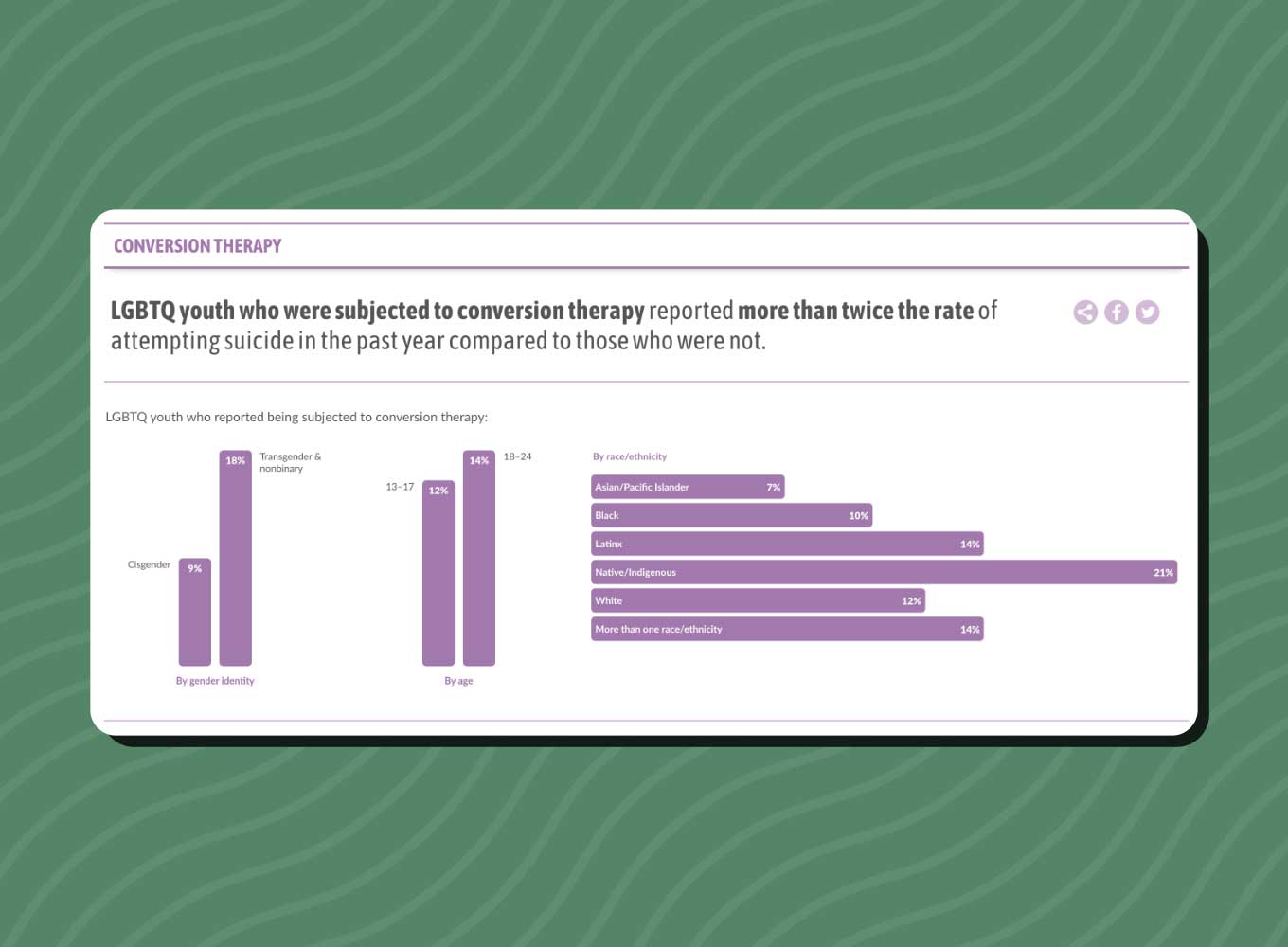
In 2020, 27% of LGBTQ+ youth who attempted suicide were sent to conversion therapy, according to a national survey from the Trevor Project.
The answer to these crises, of course, is not forcing young people to change to fit certain gender roles or expectations, but to create religious spaces and communities that are inclusive for all who seek a place there.
Beloved Arise is the first national organization for queer youth of faith, building relationships, offering support, and inspiring youth to embrace their truest selves.
A multi-faith approach inclusive to a myriad of spiritual modalities, Beloved Arise has a variety of affirming resources for LGBTQ+ youth who identify as Christian, Jewish, Buddhist, Muslim, Sikh, and Hindu.
The organization also has programming like youth groups, ambassadorships, campus groups, mental health resources, and storytelling and essay contests.
One of its major initiatives is Queer Youth of Faith Day. This multi-faith national holiday occurs on June 30 to round out Pride Month and unite in prayer for the “safety, well-being, and flourishing” of LGBTQ+ youth.
Participants can sign up to pray (either with a group or on their own) and join in for a virtual program on June 30 to come together in prayer.
The organization’s goal is to connect 1.8 million people for the event, which represents the estimated 1.8 million LGBTQ+ youth who will seriously consider suicide each year in the U.S.
“When you’re queer, it’s hard to be able to step into a church without worry of judgment from those around you,” Beloved Arise youth ambassador Sid High told Good Good Good. “Having a safe space to do so when so many of us are desperately seeking a space to belong is truly beautiful.”
High, who is a transgender Christian, said Queer Youth Day of Faith is an opportunity to bring together other queer siblings of various faith backgrounds under the same mission: to spread love, regardless of one’s individual religious teachings.
“Being queer and religious are not mutually exclusive; they are a part of each of us,” another Beloved Arise youth ambassador, Sabrina Hodak, a bisexual Modern Orthodox Jew, said.

“We have a place in religion just as much as everyone else. We can’t choose who we love, but we can choose our faith, and people need to respect that, regardless of their understanding.”
Regardless of the expansive communal experience of the day of prayer, each participant will likely connect to a personal meaning and spirituality completely unique to them.
Jacob Feldan, a youth ambassador who identifies as a bisexual Jew, hopes to break narratives surrounding tradition and strengthen his faith.
He said: “Queer Youth of Faith Day is an opportunity to engage with our whole selves, all aspects of our identities, and remind ourselves that we are all made in the divine image.”
We can all relate to the struggle of sifting through work emails and sales promotions, but our inboxes are capable of much more than that.
In fact, we’re so passionate about it that we created an epic list of the best newsletters on the internet right now!
The right email subscription can inspire connection, balance, and movement. Whether you’re struggling with your mental health, body image, overall motivation, or need more positivity, you’ve come to the right place.
We’ve gathered some of the most refreshing email newsletters seeking to transform your inbox from a mundane taskmaster to a vibrant sanctuary of wellness.
From industry experts to creatives committed to nurturing their online communities, these newsletters offer a tapestry of perspectives on wellness — each one providing a safe space to learn, grow, and discover.
However, while we’re celebrating the endless amounts of resources at our fingertips, it’s important to remember to find balance. Too many emails can quickly become overwhelming. And we’re aiming for the opposite of that, right?
So, go at your own pace, give yourself permission to unsubscribe or take a breather when needed, and treat your inbox as a sacred sanctuary.
By the way, some of the links in this article may be affiliate links — which simply means we may get to make money at no cost to you. As always, all our recommendations are genuine, unbiased, and based on our actual experiences. Thanks for your support!
Explore These Inspiring Health and Wellness Newsletters —
Downtime by Alisha Ramos
Downtime by Alisha Ramos is a weekly newsletter about the little (and big) things we do to feel good. It was born from the Girls’ Night In founder’s personal desire to establish a creative space for exploring the importance of self-care in an era marked by overwhelming demands and limited time for ourselves.
Delivered to your inbox every Friday (just in time to transition us into the weekend), this delightful newsletter delves into a range of fascinating topics, including pop culture, self-care practices, mental well-being, literature, and of course, the oh-so cherished concept of enjoying a cozy night in. Consider it your warm and comforting companion, providing a gentle nudge to honor and celebrate your downtime.
→ Subscribe to Downtime by Alisha Ramos
Wondermind
Wondermind takes you far beyond those cliché inspirational quotes, providing an exciting toolkit to conquer a healthy mindset. Led by none other than Selena Gomez alongside her mother Mandy Teefy (producer of “13 Reasons Why”) and Daniella Pierson (co-founder of The Newsette), Wondermind is here to carve a way for us to care for our mental fitness.
Wondermind’s free newsletter lands in your inbox three times a week (Monday, Wednesday, and Friday) with expert mental health advice, candid convos, and exclusive content.
Salt + Yams
Salt + Yams is a monthly Substack newsletter that archives Black health, investigates the many facets of health inequity, and uplifts interesting, underreported information about Black health.
Julia Craven, a health, science, and wellness journalist, aims to explore the injustices that still exist within the wellness industry today, pointing her community to stories and resources that serve her fellow Black community.
Refind
Refind is a unique daily roundup of information based on your own personal interests! This tailored newsletter allows you to only receive information relevant to your needs — like your interest in personal wellness, perhaps?
With a curated selection of five links per day — drawn from over 10,000 sources — it’s the perfect way to stay informed, inspired, and on top of the latest developments and tips. The more you interact with your daily roundups, the more personalized and relevant they become.
The Unpublishable
The Unpublishable is the beauty industry’s least-favorite weekly-ish Substack newsletter. While a beauty newsletter might not be what you initially think of going under the “wellness” category, we’d argue that what you put on your skin directly impacts your body.
Written by Jessica DeFino, a freelance beauty journalist for The New York Times, Vogue, WWD, and more, she unpacks current social trends and norms (like buccal fat removal and “filter”-inspired skincare). Defino, using research-based analysis, is on a mission to share what the beauty industry won’t tell you, from a reporter trying to reform it.
→ Subscribe to The Unpublishable
The Goodnewsletter
The Goodnewsletter is a daily newsletter curated by our team of good news journalists. (Well, of course, we had to include our newsletter on this list!) We find the top good news stories of the day — plus a few bonus goodies — to help you feel more hopeful about the world.
From one dance-loving nurse creating an immersive grief and trauma workshop series to ways you can celebrate, honor, and de-stigmatize mental health, we offer refreshing daily content to inspire you to be and do good.
→ Subscribe to The Goodnewsletter
NPR Life Kit
Our appreciation for NPR and all it does to support independent local journalism knows no bounds! NPR Life Kit sends out weekly newsletters to its subscribers, who receive weekly tips, guides, and content grounded in specific topic areas (like “tips on quashing negative self-talk” and “how to set boundaries and protect your energy”).
“Everyone needs a little help being a human,” the site says. Subscribers also get bonus content and alerts when new guides are released. They even offer weekly podcast episodes to listen to while preparing for the day.
3-2-1 by James Clear
3-2-1 by James Clear is written by author James Clear, who has been writing about habits and decision-making since 2012. (You might know him from his New York Times bestselling book, “Atomic Habits”).
Clear continues those same lessons through his weekly newsletter, where he shares three ideas, two inspiring quotes, and one question (hence, 3-2-1) for readers to reflect on. These weekly nuggets of gold give his community (of over 2 million!) a simple, reflective way to think about their daily habits.
→ Subscribe to 3-2-1 by James Clear
The Overview
The Overview is a weekly newsletter written by Willow Defebaugh, editor-in-chief of climate and culture magazine Atmos. From honeybees reminding us of working in community with one another to the unsuspecting pigeon and its message of peace, these weekly meditative love letters to our planet open the door for us to see the goodness in our daily lives.
This newsletter does a beautiful job of connecting nature with humanity. For those who appreciate a little introspection, this might be your weekly dose of self-care.
Out of Office
Out of Office is your refreshingly cheeky monthly newsletter exploring work culture and reimagining the way we work — and play! It provides helpful guides, tools, and creative ideas to help you learn how to find the oh-so-coveted work-life balance!
Out of Office Network is a life-centered research and design lab committed to scaling a culture of well-being by making work, life, and the relationship between the two more regenerative.
Well To Do
Well To Do is a monthly Substack newsletter written by journalist and author Rina Raphael. She focuses on the economics and cultural underpinnings of the health and wellness industry and is known to be one of the leading voices in scoping out scams and dark truths within the wellness industry.
From so-called wellness trends to the sexist side of wellness, Raphael packs these monthly newsletters with helpful information that’ll make any feminist inspired to take action!
The Marginalian
The Marginalian — formerly known as Brain Pickings — is a weekly digest written by Maria Popova. A one-woman labor of love, this newsletter explores what it means to live a tender, thoughtful life of purpose and gladness. She digs out wisdom from the past — across art, science, poetry, and philosophy — and presents it in new, refreshing ways.
What started as a small newsletter sent to her close friends in 2006, has since become a resource for thousands of people and has also been included in the Library of Congress permanent web archive of culturally valuable materials.
→ Subscribe to The Marginalian
Offline Time
Offline Time is a thought-provoking Substack newsletter penned by Lee Tilghman, a former wellness Instagram influencer. This newsletter is for folks who are eager to delve deeper into their digital lives and examine it with a critical eye.
The newsletter aims to serve as a resource for those who find the incessant cycle of online trends unsustainable and detrimental to our mental well-being and the environment. It also recognizes the importance of balance in the digital age — catering to those who acknowledge the role of social media in our lives and view it as a tool, but also want to mindfully engage with it.
The New Fatherhood
The New Fatherhood is a weekly newsletter founded by Kevin Maguire, a proud dad to two adorable kiddos and their sleepy basset hound. This community celebrates modern fatherhood, promoting diverse voices and embracing people of all backgrounds. Each newsletter dives into open, honest, and insightful explorations of the changing nature of fatherhood.
From navigating the joys and challenges of parenting to fostering a supportive environment for growth and understanding, this community is providing a safe space for dads to move beyond surface-level conversations and into deeper connections.
→ Subscribe to The New Fatherhood
How To Cure A Ghost
How To Cure A Ghost is a weekly-ish Substack newsletter dedicated to exploring the multifaceted aspects of healing, self-discovery, and personal growth — all done through the lens of exploring cultural appropriation and exclusivity in the wellness space. Rooted in empathy and understanding, this newsletter offers an insightful perspective on navigating life’s challenges, overcoming emotional obstacles, and finding solace in our shared human experiences.
Through introspective essays, thought-provoking discussions, and curated content, “How To Cure A Ghost” delves into mental health, self-care, relationships, identity, and the transformative power of storytelling.
→ Subscribe to How To Cure A Ghost
Gloria
Gloria is the unexpectedly delightful weekly newsletter that celebrates the unique intersection between not quite “old” but no longer “young,” or, in other words: midlife. Each week, Gloria brings a curated blend of content, including expert interviews, shopping advice, and much more.
Subscribers gain insights from accomplished professionals and thought leaders who understand the nuances of midlife, as they share their wisdom and experiences. From fashion and beauty tips tailored to your needs to thought-provoking articles that tackle the complexities of this life stage, Gloria offers a mix of fresh and empowering perspectives on midlife.
How Not To F*ck Up Your Face
How Not To F*ck Up Your Face is a newsletter by Valerie Monroe, former beauty director at O, The Oprah Magazine. She wants to help readers shift their mindset in the beauty space from “self-criticism to self-compassion.” Or, as she puts it in the title of her newsletter title: how to not “f*ck up your face.”
The newsletter covers all aspects of self-care while getting older, from whether facials are worth it to what it (actually) means to reject the “anti-aging” label.
→ Subscribe to How Not to F*ck Up Your Face
The Reset
The Reset is a relatable bi-weekly newsletter curated by Kate Eskuri — a registered dietitian with a doctorate in integrative health. Serving as a resource to help subscribers reset, she covers all things self-care, nutrition, holistic health, and intentional living. Her approach to healthy living is refreshingly straightforward and achievable, making it accessible to folks with busy lifestyles. (It was this approach that initially drew me to follow her work five years ago, and I have been hooked ever since.)
Eskuri blends science-backed wellness, intentional living, and holistic self-care, offering a treasure trove of valuable content right in your inbox. From guided meditations and nourishing recipes to engaging virtual book clubs, The Reset caters to those who seek holistic wellness.
Healthline
Healthline helps filter out the noise that is the wellness industry to instead nurture your inbox with health and wellness advice that’s inclusive and rooted in medical expertise. With 29 individual health-related newsletters to choose from — like building better connections, nutrition, and move your body challenges — subscribers are able to connect with content packed with expert guidance, research, and hacks to help stay informed and take steps toward a balanced lifestyle.
Burnt Toast by Virginia Sole-Smith
Burnt Toast by Virginia Sole-Smith is a weekly newsletter that tackles the intricacies of diet culture and fatphobia — especially within the health, fashion, and parenting spaces.
Sole-Smith — a New York Times bestselling author and journalist — confronts these issues by providing thought-provoking perspectives and engaging discussions that challenge societal norms and recalibrate our understanding of body image and self-worth — all while having some fun!
→ Subscribe to Burnt Toast by Virginia Sole-Smith
Recovering
Recovering, a weekly newsletter by Holly Whitaker, examines current cultural trends through the lens of addiction, recovery, alcohol, and all the other drugs (including our smartphones). Whatever form of addiction you’re working through, this newsletter offers weekly opportunities to thoughtfully reflect and learn.
Though she offers free content to all subscribers, her paid subscription model allows access to a library of more helpful content around recovery, while also donating 5% of all earnings to Drug Policy Alliance, an organization committed to ending the war on drugs, and Feed The Streets Los Angeles, direct mutual aid in Los Angeles for unhoused residents — we love to see that!
The Daily Good
The Daily Good is a thoughtfully curated daily newsletter from The Good Trade, a Los Angeles-based lifestyle media company. With a focus on sustainability, slow living, and self-care, this newsletter delivers a delightful dose of inspiration directly to your inbox.
Created to provide subscribers with a 30-second moment of respite from the daily grind, this newsletter offers soothing playlists, sustainable recipes that nourish both your body and the planet, and a collection of inspiring articles for mindful living.
Happiful
Happiful is a mental health and well-being community that exists to help folks find the support and advice they need. As a Certified B Corp, Happiful uses its business as a force for good (music to our ears!). Its immersive e-magazine — which is delivered straight to your inbox once a month — is packed with practical advice, inspiring true stories, insightful expert tips, and thought-provoking features, all intimately focused on mental health and wellness.
Aunt Jackie
Aunt Jackie is a weekly Substack newsletter written by your new favorite fun-loving, extremely cool, and quirky aunt. Jackie Dives, a photographer, photojournalist, and artist, channels her creative passions into a newsletter that celebrates the art of living authentically and childfree.
While she just launched this newsletter in early 2023, she’s quickly gathered a strong community of people hungry for a safe, creative outlet and deep reflection.
Looking for more great newsletters? Explore our curated list of the best newsletters on the internet.
Have more recommendations for the best daily and weekly wellness newsletters?
Send them our way via our contact page! We’ll consider them for future updates to this article. Thanks for reading!
Since the beginning of 2023, 49 U.S. state legislatures have introduced over 500 anti-trans bills.
While mainstream media increasingly cover violence and legislative attacks against trans people, many scholars and activists worry that focusing just on violence and discrimination fails to capture the full experience of being trans.
Drawing on the success of movements like the Black Joy Project, which uses art to promote Black healing and community-building, trans activists are challenging one-dimensional depictions of their community by highlighting the unique joys of being transgender.
My research on trans parents affirms the reality of trans joy. From 2019 to 2021, I interviewed 54 transgender women — both current and prospective parents — from diverse racial and class backgrounds across the country.
I found that while many have navigated discrimination in their parenting journeys, they also have fulfilling parent-child relationships, often with the support of partners, families of origin and their communities.
Gender euphoria
Scholars and community members use the term gender euphoria to describe a “joyful feeling of rightness in one’s gender/sex.”
It diverges from the diagnosis of gender dysphoria, or a sense of conflict between assigned sex and gender identity typically associated with feelings of distress and discomfort.
While gender dysphoria reflects some trans people’s experiences, physicians have historically used this concept to restrict access to gender-affirming care.
For example, doctors may prescribe hormones only to people who obtain a letter from a therapist attesting that they fit a narrow understanding of transness that includes expressing hatred for their body.
Gender euphoria celebrates feeling comfortable with who you are and how you are perceived by the world.
Some people transition with a specific set of goals, while others discover new sources of joy and new facets of their identity over time.
Many of the trans women I interviewed expressed their gender euphoria in relation to their role as mothers. A Black trans woman in her 20s, whom I will call Gloria, experiences joy in being recognized as a mother.
“I love being called Mom. That’s the greatest thing,” she told me. “I love waking up every morning to see [my child’s] beautiful face. It keeps me motivated.”
Other people experience euphoria in how they express their gender. Naomi, a white trans woman in her 40s, experienced her first spark of gender euphoria at the nail salon.
“It was the only gender-affirming thing I could express [at the time],” she said. “When the nail tech took the polish off and I saw how long my fingernails had gotten, my heart skipped a beat.”
For many trans people, transitioning opens up a new set of possibilities. When I asked Adriana, a trans Latina in her 30s, what it was like to come out as trans, she told me,
“I’ve never been happier. The happiest day of my life was when my daughter was born, and the second happiest day of my life was when I [started transitioning].”
Family and community connections
While some trans people do experience rejection from their families of origin, that is not true for the majority of the community.
In a 2015 national survey of over 27,700 trans adults, the U.S. Trans Survey, 60% of respondents reported having families who are supportive of their trans identity.
Liza, a white trans woman in her 20s, has a close relationship with her brothers.
“We are still a little triad. Yes, things change, but ultimately, I’m the same person just using a different name,” she said. “I can see myself as part of this family going forward. There’s no break. I’m not breaking anything by coming out.”
Trans women also form chosen families with friends, co-workers and other community members. Relationships with other trans people can have particularly positive effects on identity development and overall well-being, including emotional resilience, self-acceptance and a sense of connection.
Jane, a Black trans woman in her 20s, has a tight-knit group of first-time parents she can call “whenever [she’s] freaking out,” no matter the scope of the emergency.
While she laments her father’s lack of support, Jane’s friends are always there for her. “[T]hey come to visit, they bond with my son, [and] we get to spend time together like a big family, you know?”
Trans community care
In addition to caring for their biological and adopted children, the trans women I interviewed felt a responsibility to take care of their community.
Sometimes this care manifested as parent-child relationships, in which respondents provide financial or emotional support to LGBTQ+ youth.
Maggie, a white woman in her 50s, didn’t know she was a parental figure for her “queer kids” until they tagged her on Instagram to celebrate Mother’s Day.
“Someone might go, ‘Hey, can I stay on your sofa tonight? I’m having a hard time.’ Well, yeah, of course,” she said.
“Or they might hang around the shop [I work at], and only later it dawns on me, ‘Oh, this was the only place they could come and get affirmed and not feel weird.’”
Many also provide care outside their family units. Whitney, a Black trans woman in her 20s, reaches out to and tells local teachers they can refer parents of trans kids to her if they have any questions about how to support their children on their gender journeys or if their kids need someone to talk to.
Respondents like Whitney, who began questioning her gender identity in her early teens, also mentor trans women who are older than they. “Why not,” she told me, “if I have relevant experiences and can help make their lives easier?”
Miriam, a white trans woman in her 60s, agreed that she has a lot to learn from younger trans people.
“A lot of my community today, people who I count as family and my beloveds, are not of my generation,” she said. ‘Beloveds’ is the term she uses to describe her platonic loved ones.
“I learn a lot from my beloveds in their 20s and 30s, who don’t have the same baggage I [dealt with] about how I could be and who I could be.”
Anti-trans hate as a self-fulfilling prophecy
Anti-trans politicians deploy a variety of tactics to stigmatize transgender communities, from describing gender-affirming care as mutilation to falsely accusing trans people of predatory behavior.
While these politicians claim to be protecting children by restricting access to gender-affirming care, a 2021 Trevor Project survey found that recent political events have harmed the mental health of 94% of LGTBQ youth in the U.S.
A study based on data from the 2015 U.S. Trans Survey found that harassment based on gender identity at school also harms transgender youths, resulting in higher rates of suicide attempts and suicidal thoughts.
In contrast, research has shown that starting hormone replacement therapy reduces the risk of suicide by 73% for trans youth, among other mental health benefits.
Another study found that trans people who start hormones as adolescents report lower levels of binge drinking, drug use and suicidality than those who desired gender-affirming hormones but could not access them.
For Adriana, who described beginning transition as the second happiest day of her life, after the day her daughter was born, fear of rejection kept her in denial of her trans identity.
She used alcohol and made “reckless decisions” to cope with her gender dysphoria. Transitioning, meanwhile, brought her closer to her daughter.
“I was never myself around her, not completely, which my daughter noticed,” she said. “We’ve always been close, but now that I’m genuinely happy with myself, we’re even closer.”
Amid efforts to criminalize drag shows and ban LGBTQ topics from public schools, highlighting the joy of trans motherhood directly rejects myths that portray trans women as “groomers” or otherwise dangerous to children.
Extensive research shows that having a transgender parent does not affect children’s gender identity, sexual orientation or other developmental markers.
Yet trans people experience discrimination in both adoption and custody disputes based on these pervasive myths.
Trans motherhood showcases the resilience of trans people who work diligently to take care of each other, even when they are failed by their communities and other institutions.
Maria, an Indigenous Latina trans woman in her 30s, finds beauty in serving as a mother for the young queer and trans activists she works with.
“I find it an honor that someone holds you in such high esteem that they want to call you their mom. … Because motherhood is a beautiful thing,” she said.
“I think it’s a beautiful thing to help them in their journey to become the best versions of themselves.”
The problem of misinformation isn’t going away. Internet platforms like Facebook and Twitter have taken some steps to curb its spread and say they are working on doing more. But no method yet introduced has been completely successful at removing all misleading content from social media. The best defense, then, is self-defense.
Misleading or outright false information — broadly called “misinformation” — can come from websites pretending to be news outlets, political propaganda or “pseudo-profound” reports that seem meaningful but are not. Disinformation is a type of misinformation that is deliberately generated to maliciously mislead people. Disinformation is intentionally shared, knowing it is false, but misinformation can be shared by people who don’t know it’s not true, especially because people often share links online without thinking.
Emerging psychology research has revealed some tactics that can help protect our society from misinformation. Here are seven strategies you can use to avoid being misled, and to prevent yourself — and others — from spreading inaccuracies.
7 Ways To Avoid Becoming a Misinformation Superspreader
1. Educate yourself
The best inoculation against what the World Health Organization is calling the “infodemic” is to understand the tricks that agents of disinformation are using to try to manipulate you.
One strategy is called “prebunking” — a type of debunking that happens before you hear myths and lies. Research has shown that familiarizing yourself with the tricks of the disinformation trade can help you recognize false stories when you encounter them, making you less susceptible to those tricks.
Researchers at the University of Cambridge have developed an online game called “Bad News,” which their studies have shown can improve players’ identification of falsehoods.
In addition to the game, you can also learn more about how internet and social media platforms work, so you better understand the tools available to people seeking to manipulate you. You can also learn more about scientific research and standards of evidence, which can help you be less susceptible to lies and misleading statements about health-related and scientific topics.
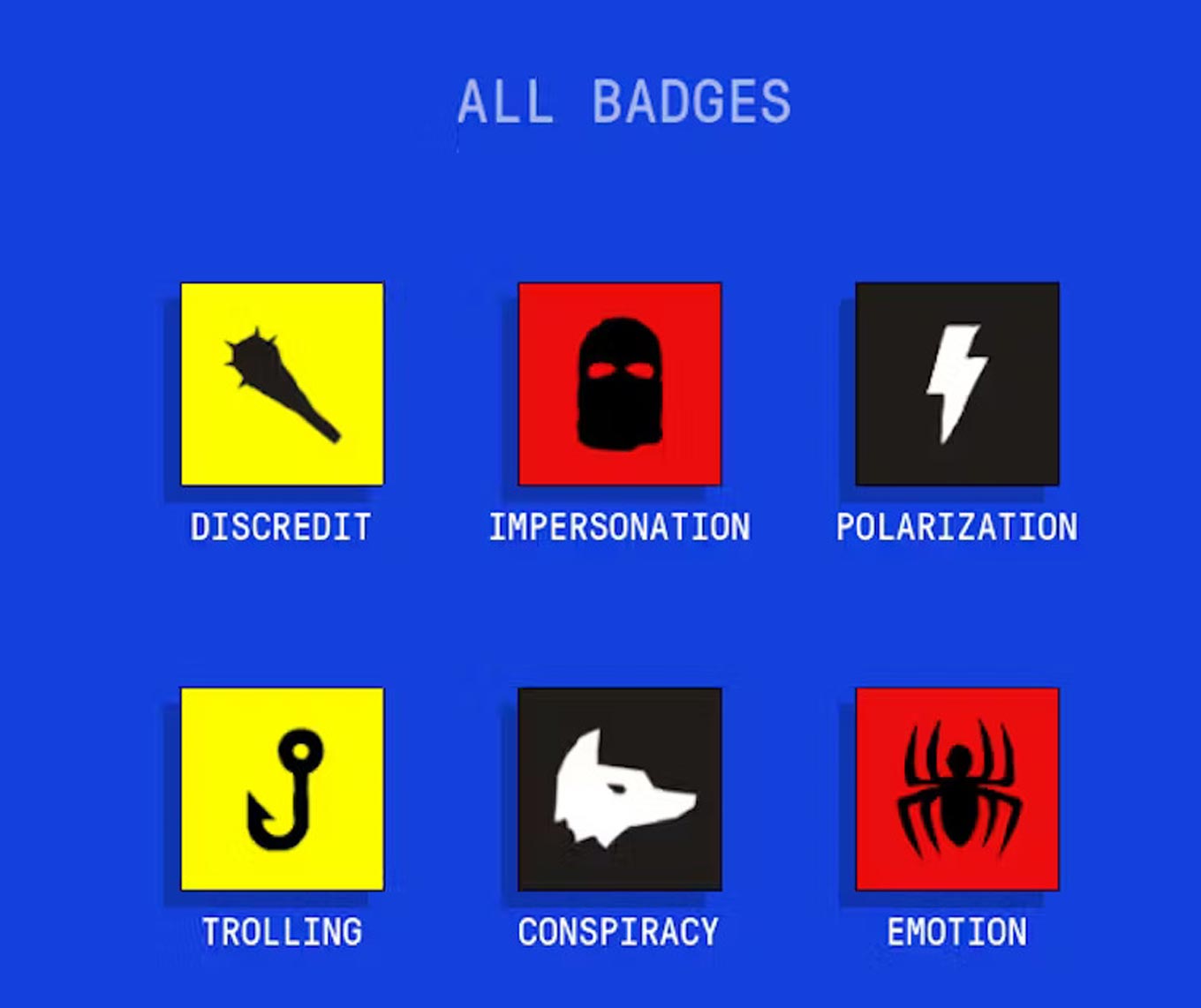
2. Recognize your vulnerabilities
The prebunking approach works for people across the political spectrum, but it turns out that people who underestimate their biases are actually more vulnerable to being misled than people who acknowledge their biases.
Research has found people are more susceptible to misinformation that aligns with their preexisting views. This is called “confirmation bias,” because a person is biased toward believing information that confirms what they already believe.
The lesson is to be particularly critical of information from groups or people with whom you agree or find yourself aligned — whether politically, religiously, or by ethnicity or nationality. Remind yourself to look for other points of view, and other sources with information on the same topic.
It is especially important to be honest with yourself about what your biases are. Many people assume others are biased, but believe they themselves are not – and imagine that others are more likely to share misinformation than they themselves are.
3. Consider the source
Media outlets have a range of biases. The Media Bias Chart describes which outlets are most and least partisan as well as how reliable they are at reporting facts.
You can play an online game called “Fakey” to see how susceptible you are to different ways news is presented online.
When consuming news, make sure you know how trustworthy the source is — or whether it’s not trustworthy at all. Double-check stories from other sources with low biases and high fact ratings to find out who — and what — you can actually trust, rather than just what your gut tells you.
Also, be aware that some disinformation agents make fake sites that look like real news sources — so make sure you’re conscious of which site you are actually visiting. Engaging in this level of thinking about your own thinking has been shown to improve your ability to tell fact from fiction.
4. Take a pause
When most people go online, especially on social media, they’re there for entertainment, connection or even distraction. Accuracy isn’t always high on the priority list. Yet few want to be a liar, and the costs of sharing misinformation can be high — to individuals, their relationships and society as a whole. Before you decide to share something, take a moment to remind yourself of the value you place on truth and accuracy.
Thinking “is what I am sharing true?” can help you stop the spread of misinformation and will encourage you to look beyond the headline and potentially fact-check before sharing.
Even if you don’t think specifically about accuracy, just taking a pause before sharing can give you a chance for your mind to catch up with your emotions. Ask yourself whether you really want to share it, and if so, why. Think about what the potential consequences of sharing it might be.
Research shows that most misinformation is shared quickly and without much thought. The impulse to share without thinking can even be more powerful than partisan sharing tendencies. Take your time. There is no hurry. You are not a breaking-news organization upon whom thousands depend for immediate information.
5. Be aware of your emotions
People often share things because of their gut reactions, rather than the conclusions of critical thinking. In a recent study, researchers found that people who viewed their social media feed while in an emotional mindset were significantly more likely to share misinformation than those who went in with a more rational state of mind.
Anger and anxiety, in particular, make people more vulnerable to falling for misinformation.
6. If you see something, say something
Stand up to misinformation publicly. It may feel uncomfortable to challenge your friends online, especially if you fear conflict. The person to whom you respond with a link to a Snopes post or other fact-checking site may not appreciate being called out.
But evidence shows that explicitly critiquing the specific reasoning in the post and providing counterevidence like a link about how it is fake is an effective technique.
Even short-format refutations — like “this isn’t true” — are more effective than saying nothing. Humor — though not ridicule of the person — can work, too. When actual people correct misinformation online, it can be as effective, if not more so, as when a social media company labels something as questionable.
People trust other humans more than algorithms and bots, especially those in our own social circles. That’s particularly true if you have expertise in the subject or are a close connection with the person who shared it.
An additional benefit is that public debunking notifies other viewers that they may want to look more closely before choosing to share it themselves. So even if you don’t discourage the original poster, you are discouraging others.
7. If you see someone else stand up, stand with them
If you see someone else has posted that a story is false, don’t say “well, they beat me to it so I don’t need to.” When more people chime in on a post as being false, it signals that sharing misinformation is frowned upon by the group more generally.
Stand with those who stand up. If you don’t and something gets shared over and over, that reinforces people’s beliefs that it is OK to share misinformation – because everyone else is doing it, and only a few, if any, are objecting.
Allowing misinformation to spread also makes it more likely that even more people will start to believe it — because people come to believe things they hear repeatedly, even if they know at first they’re not true.
There is no perfect solution. Some misinformation is harder to counter than others, and some countering tactics are more effective at different times or for different people. But you can go a long way toward protecting yourself and those in your social networks from confusion, deception and falsehood.
July is here — marking the height of summer and bringing a spirit of celebration that makes us want to soak in every sunlit moment! It’s a month of continued growth, exciting possibilities, and the joy of full-blown summer.
To help you savor the essence of July, we’ve curated a selection of positive and inspiring quotes (and poems) about the seventh month of the year.
And because we’re Good Good Good — we’ve also highlighted the best quotes around July’s awareness months and national days — like Disability Pride Month, Plastic Free July, Independence Day, Be Love Day, and International Self-Care Day. Plus, quotes from inspirational celebrities and leaders with July birthdays.
Whether you’re embracing the heart of summer, celebrating a July birthday, or just looking to add a dose of positivity to kick off the month, these quotes are for you. Scroll all the way through to find some hidden gems.
Here’s to making the most of July!
Explore more monthly quotes: January | February | March | April | May | June | July | August | September | October | November | December
The Best July Quotes
Famous Quotes About July
“July is hollyhocks and hammocks, fireworks and vacations, hot and steamy weather, cool and refreshing swims, beach picnics, and vegetables all out of the garden.”
— Jean Hersey
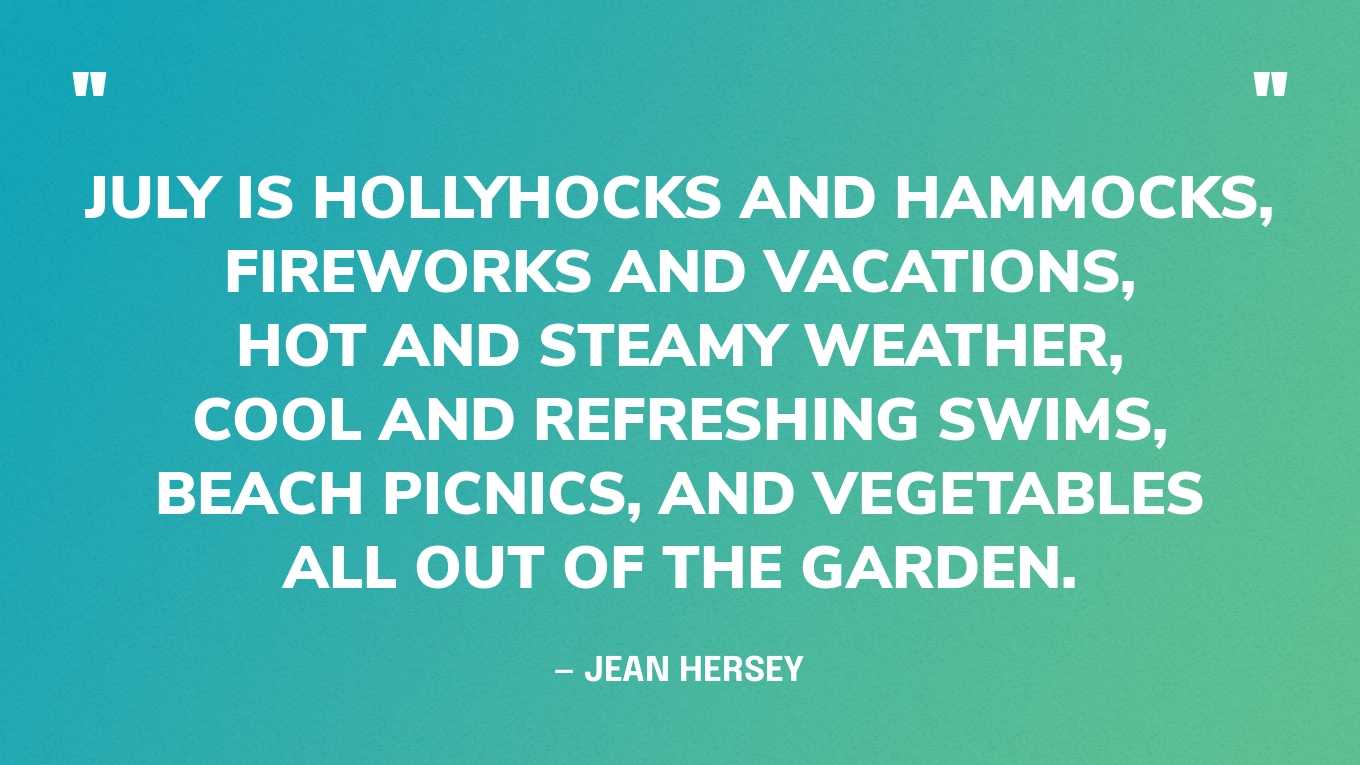
“There comes a time when people get tired of being pushed out of the glittering sunlight of life’s July and left standing amid the piercing chill of an alpine November.”
— Martin Luther King Jr.
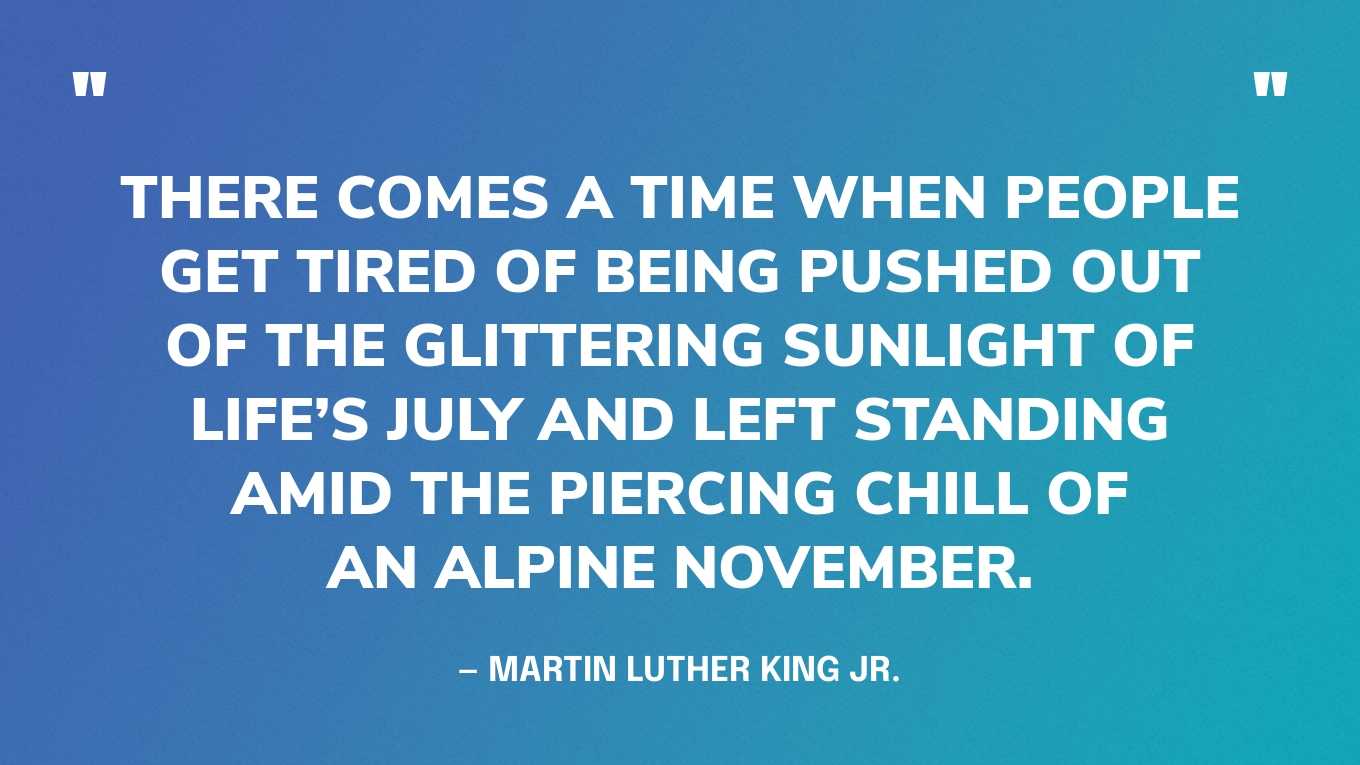
“July is hot afternoons and sultry nights and mornings when its joy just to be alive. July is a picnic and a red canoe and a sunburned neck and a softball game and ice tinkling in a tall glass. July is a blind date with summer.”
— Hal Borland, Sundial of the Seasons
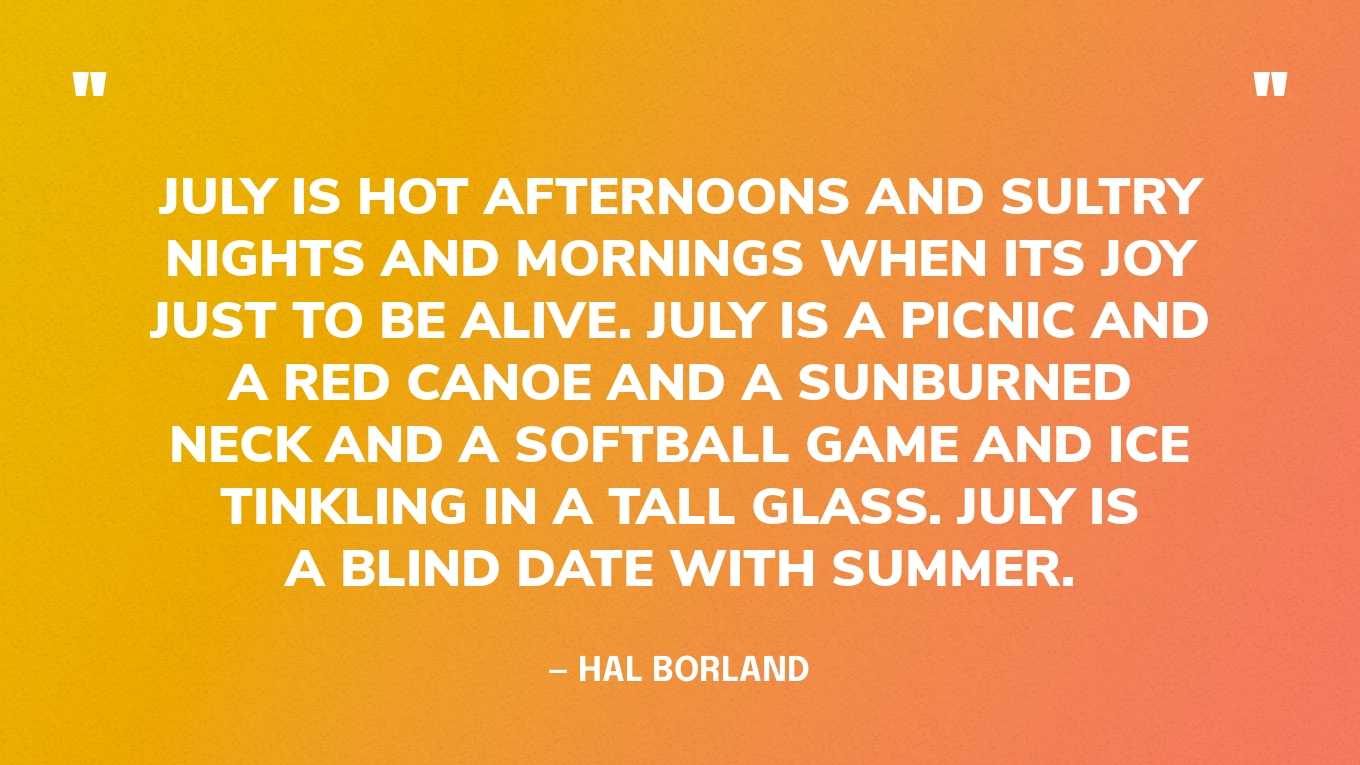
“If I had my way, I’d remove January from the calendar altogether and have an extra July instead.”
— Roald Dahl
“July, with its days of blue skies and time that seemingly stands still, holds a special place in my heart.”
— Daisaku Ikeda
Quotes for Awareness Holidays in July
A collection of quotes to celebrate July’s awareness months and national days.
→ Explore more of this month’s awareness days in our July calendar
Disability Pride Month
July 1 - July 31
“As people celebrate Disability Pride, they prove that disabled people haven’t just been surviving in the face of oppression — they’ve been thriving. As we celebrate Disability Pride, we honor the progress that the disability community has made thus far so that we can have these public events, so that we can be in public as ourselves. But we also express hope in building a future that’s even better for the disabled people who will come after us.”
— Laken Brooks, in an article
“Being proud to be disabled isn’t about liking my disability. It isn’t about pretending that disability doesn’t straight-up suck. Rather, claiming disability pride is a rejection of the notion that I should feel ashamed of my body or my disability. It’s a rejection of the idea that I am less able to contribute and participate in the world.”
— Ardra Shephard, in an article
“Disability Pride Month is a chance for the community I call home to show you all of our beauty. It is also a time for all disabled people to unapologetically celebrate our bodies as they are. Whether you are disabled or an ally, Disability Pride Month is full of so much to celebrate.”
— Daphne Frias, in an article
→ Read about how to celebrate Disability Pride Month
Plastic Free July
July 1 - July 31
“We don’t need a handful of people doing zero waste perfectly. We need millions of people doing it imperfectly.”
— Anne Marie Bonneau
“The most environmentally friendly product is the one you didn’t buy.”
— Joshua Becker
“If we want to move towards a low-polluting, sustainable society, we need to get consumers to think about their purchases.”
— David Suzuki
Independence Day (4th of July)
July 4
“It’s Fourth of July weekend, or, as I call it, Exploding Christmas.”
— Stephen Colbert
“Where you see wrong or inequality or injustice, speak out, because this is your country. This is your democracy. Make it. Protect it. Pass it on.”
— Thurgood Marshall
“I am red and white and blue, these are the colors that ring true, to all I am and, feel and love and do, I stand proud and brave and tall, I want justice for us all, so color me America, red, white and blue”
— Dolly Parton, Color Me America
Be Love Day
July 16
“Love is the only force capable of transforming an enemy to a friend.”
— Martin Luther King Jr.
“Love is not passive.
It is active, transformative, and just.”
— Bernice King
“Struggle is a never-ending process. Freedom is never really won, you earn it and win it in every generation.”
— Coretta Scott King
International Self-Care Day
July 24
“I have come to believe that caring for myself is not self-indulgent. Caring for myself is an act of survival.”
— Audre Lorde
“Talk to yourself like you would to someone you love.”
— Brené Brown
“When you take care of yourself, you’re a better person for others. When you feel good about yourself, you treat others better.”
— Solange Knowles
→ Read about how to celebrate International Self-Care Day
→ Read about ideas to practice self-care, the best self-care apps, and more self-care articles
→ Read more quotes about self-care
Birthday Quotes from Inspiring People Born in July
Sylvia Rivera
July 2
“We should not be ashamed of who we are. We have to show the world that we are numerous. There are many of us out there.”
— Sylvia Rivera, in an essay
“Before I die, I will see our community given the respect we deserve. I’ll be damned if I’m going to my grave without having the respect this community deserves. I want to go to wherever I go with that in my soul and peacefully say I’ve finally overcome.”
— Sylvia Rivera, in an essay
“I am tired of seeing my children — I call everybody including yous in this room, you are all my children. I am tired of seeing homeless transgender children, young, gay, youth children.”
— Sylvia Rivera, in a speech
→ Read more Sylvia Rivera quotes
→ Read more quotes from transgender leaders and activists
The Dalai Lama
July 6
“When we feel love and kindness towards others, it not only makes others feel loved and cared for, but it also helps us to develop inner happiness and peace.”
— The Dalai Lama
“Happiness is not something readymade, it comes from your own actions.”
— The Dalai Lama
Tom Hanks
July 9
“If it wasn’t hard, everyone would do it. It’s the hard that makes it great.”
— Tom Hanks
“Truth is, I’ll never know all there is to know about you just as you will never know all there is to know about me. Humans are by nature too complicated to be understood fully. So, we can choose either to approach our fellow human beings with suspicion or to approach them with an open mind, a dash of optimism and a great deal of candour.”
— Tom Hanks
“As long as you as an individual… can convince yourself that in order to move forward as best you can you have to be optimistic, you can be described as ‘one of the faithful,’ one of those people who can say, ‘Well, look, something’s going to happen! Let’s just keep trying. Let’s not give up.’”
— Tom Hanks
Arthur Ashe
July 10
“True heroism is remarkably sober, very undramatic. It is not the urge to surpass all others at whatever cost, but the urge to serve others at whatever cost.”
— Arthur Ashe
“One important key to success is self-confidence. An important key to self-confidence is preparation.”
— Arthur Ashe
“From what we get, we can make a living. What we give; however, makes a life.”
— Arthur Ashe
Malala Yousafzai
July 12
“Let us pick up our books and our pens, they are the most powerful weapons.”
— Malala Yousafzai
“We must tell girls their voices are important.”
— Malala Yousafzai
“All we are asking is for girls to be able to go to school, for women to be safer... we are not asking for a privilege, these are like basic human rights.”
— Malala Yousafzai
→ Read more Malala Yousafzai quotes
Chef José Andrés
July 13
“The modernity of yesterday is the tradition of today, and the modernity of today will be tradition tomorrow.”
— Chef José Andrés
“I realized very early the power of food to evoke memory, to bring people together, to transport you to other places, and I wanted to be a part of that.”
— Chef José Andrés
“As legal residents, immigrants would contribute more in taxes, spend more at our businesses, start companies of their own and create more jobs. Immigration is not a problem for us to solve but an opportunity for America to seize.”
— Chef José Andrés
→ Read more Chef José Andrés quotes
Nelson Mandela
July 18
“As we let our own light shine, we unconsciously give other people permission to do the same.”
— Nelson Mandela
“May your choices reflect your hopes, not your fears.”
— Nelson Mandela
“As I have said, the first thing is to be honest with yourself. You can never have an impact on society if you have not changed yourself... Great peacemakers are all people of integrity, of honesty, but humility.”
— Nelson Mandela
→ Read more Nelson Mandela quotes
Inspirational July Quotes
“In these divine pleasures permitted to me of walks in the July night under moon and stars, I can put my life as a fact before me and stand aloof from its honor and shame.”
— Ralph Waldo Emerson
“When the sun is shining, I can do anything; no mountain is too high, no trouble too difficult to overcome.”
— Wilma Rudolph
“What good is the warmth of summer, without the cold of winter to give it sweetness.”
— John Steinbeck
July Poems
“Hot July brings cooling showers, apricots and gillyflowers.”
— Sara Coleridge
“Grand against the crimson of the sky,
Kings of the sunshine and the thunder,
Come they and go they in July.”
— Edwin Arnold
“For sailing boats on little seas,
Where just the smallest summer breeze
Can blow; for picking flowers any day;
July comes for flags and play.”
— Annette Wynne
“Hey.
I don’t know
what kind of day
you’ve had so far,
but I do know this is true
you made it here,
through the wild of June,
and I hope July holds
something beautiful for you.
And if ‘something beautiful’ is small,
and it does not seem like much,
I do hope it’s just enough
to remind you that even here,
there is room for love.
And while love
might show up
in subtle and seemingly
fleeting ways,
and you might find yourself
with big questions
lingering at the edges
of seemingly ordinary days,
I hope this July
has one of those moments
where your playlist shuffles
in just the right way,
to that one song
that makes you feel
like you’re going to be okay,
and you are free to be just here,
in July’s unknowns,
breathing deep,
anyway.”
— Morgan Harper Nichols
“Such days are like a sigh
That beauty heaves from a full heart of bliss:
Such nights are like the sweetness of a kiss
On lips that half deny,
The warm lips of July.”
— Madison Cawein, July
“All through the languid July day
I catch the scent of new-mown hay.
The morning-glories and scarlet vine
Over the doorway twist and twine;
And every day, when the house is still,
The humming-bird comes to the window-sill.”
— Ella Wheeler Wilcox, My Home
“Sweet July, warm July!
Month when mosses near the stream,
Soft green mosses thick and shy,
Are a rapture and a dream.
Summer Queen! whose foot the fern
Fades beneath while chestnuts burn;
I welcome thee with thy fierce love,
Gloom below and gleam above.”
— George Meredith, July
“In vain the cruel skies their hot rays shed;
The lily does not feel their brazen glare.
In vain the pallid clouds refuse to share
Their dews, the lily feels no thirst, no dread.
Unharmed she lifts her queenly face and head;
She drinks of living waters and keeps fair.”
— Helen Hunt Jackson, ‘A Calendar of Sonnets: July’
Summer Quotes
“And so with the sunshine and the great bursts of leaves growing on the trees, just as things grow in fast movies, I had that familiar conviction that life was beginning over again with the summer.”
— F. Scott Fitzgerald
“Rest is not idleness, and to lie sometimes on the grass under trees on a summer’s day, listening to the murmur of the water, or watching the clouds float across the sky, is by no means a waste of time.”
— John Lubbock
“In the summer, the days were long, stretching into each other. Out of school, everything was on pause and yet happening at the same time, this collection of weeks when anything was possible.”
— Sarah Dessen
“In the long dusks of summer, we walked the suburban streets through scents of maple and cut grass, waiting for something to happen.”
— Steven Millhauser
“Summer was here again. Summer, summer, summer. I loved and hated summers. Summers had a logic all their own and they always brought something out in me. Summer was supposed to be about freedom and youth and no school and possibilities and adventure and exploration. Summer was a book of hope. That’s why I loved and hated summers. Because they made me want to believe.”
— Benjamin Alire Sáenz
“Summer is a period of luxurious growth. To be in harmony with the atmosphere of summer, awaken early in the morning and reach to the sun for nourishment to flourish as the gardens do. Work, play, travel, be joyful, and grow into selfless service. The bounty of the outside world enters and enlivens us.”
— Paul Pitchford
“Tears of joy are like the summer rain drops pierced by sunbeams.”
— Hosea Ballou
Funny Quotes
“July, that lovely hell, all velvet dresses and drapes stuffed into a hot little hole.”
— Laura Kasischke
“If summer had one defining scent, it’d definitely be the smell of barbecue.”
— Katie Lee
“Being a traditionalist, I’m a rabid sucker for Christmas. In July, I’m already worried that there are only 146 shopping days left.”
— John Waters
“I have always had a certain aversion to heat. And for me, the name of the game on the stage is ‘beat the heat.’ It’s always July under the lights.”
— Bob Weir
“Every July, I look forward to taping a Christmas show — in July in Nashville. In 98-degree weather. I love it.”
— Larry the Cable Guy
“In July and August, when everyone I know is at the beach, I am cooking through turkey, potato, and pie recipes for Bon Appetit’s November issue.”
— Chris Morocco
“One thing I love about Detroit is that in the wintertime, they have a great device for removing snow. It’s called July.”
— Soupy Sales
Short Quotes
“The summer looks out from her brazen tower, through the flashing bars of July.”
— Francis Thompson
“The noise from good toast should reverberate in the head like the thunder of July.”
— E. V. Lucas
“It’s July and I have hope in who I am becoming.”
— Charlotte Eriksson
“Everything good, everything magical happens between the months of June and August.”
— Jenny Han
“July, like eternity, has no end.”
— Jorge Luis Borges
“July, that lovely hell.”
— Gabrielle Zevin
“Thinking back to when it’s warm outside. Oh, why couldn’t Christmas be in July?”
— Haley Mary Artzab
“July is like the sunniest hour of the day.”
— William C. Bryant
More Quotes
“My life, I realize suddenly, is July. Childhood is June, and old age is August, but here it is, July, and my life, this year, is July inside of July.”
— Rick Bass
“All in all, it was a never-to-be-forgotten summer — one of those summers which come seldom into any life, but leave a rich heritage of beautiful memories in their going — one of those summers which, in a fortunate combination of delightful weather, delightful friends and delightful doing, come as near to perfection as anything can come in this world.”
— L.M. Montgomery
“They talk about big skies in the western United States, and they may indeed have them, but you have never seen such lofty clouds, such towering anvils, as in Iowa in July.”
— Bill Bryson
“If the first of July be rainy weather, It will rain, more of less, for four weeks together.”
— John Ray
“I have lived pain, and my life can tell: I only deepen the wound of the world when I neglect to give thanks to the heavy perfume of wild roses in early July and the song of crickets on summer humid nights, and the rivers that run and the stars that rise, and the rain that falls, and all the good things that a good God gives.”
— Ann Voskamp
“Words to repeat to yourself at the end of July:
I am proud of the ways I am learning to let go.
I am free to feel what I need to feel for everything that happened this month. I am free to be gentle with myself as I work through those feelings.
The small amounts of progress I've made this July are integral parts of my growth.
I am grateful for the progress I’ve made in learning when to say ‘no’ and when to say ‘yes.’
I am grateful for every opportunity I’ve had to grow in empathy and compassion.
I am grateful for the good music that found me this month.
I do not know all of what the future holds, but I will be grateful for slow and steady growth.
No matter what awaits me in August, I will continue to breathe deep. I will travel through each day seeking big and small ways to practice peace.
Somehow, after everything, I am learning to fall in love with the journey.”
— Morgan Harper Nichols
Is mainstream pornography becoming more and more violent? And if so, what’s driving the trend.
In our newly published study that examined a large representative sample of highly watched pornographic videos from a leading online streaming website, we found no evidence for the claim that pornography has become more violent over the last decade.
We also found no evidence for often-heard claims that viewers increasingly prefer aggressive content.
Pornography and sexually explicit materials have long been a matter of intense debate. Since the so-called sex wars of the 1970s, activists and academics have been embroiled in disputes concerning the production conditions, future directions and long-term consequences of pornography.
Opponents argue that porn leads to sexual aggression and misogyny. Others have been more skeptical about the pornography-violence relationship. They argue that pornography can be enjoyed by both men and women without necessarily causing harm .
Since the rise of online porn along with social media, discussions about pornography have taken on a life of their own, largely unhinged from a credible or systematic evidence base.
Debates about aggression in porn
Our interest in the topic of violence and aggression in pornography came out of reading and hearing claims both in the popular media and in academic circles that pornography is becoming “worse and worse.”
Part of this argument has been the result of scientifically dubious claims about pornography being addictive and users needing to constantly “up the stakes” in order to be satisfied.
According to this logic, porn viewers — who are mostly men — become desensitized to “soft” pornography. This forces producers to increasingly generate videos that are more hard-core, creating a growing demand for and supply of violent and degrading acts against women in mainstream pornographic videos.
However, we found no evidence to support these claims, and most of the existing evidence for the idea that porn is more hard-core than before was anecdotal.
Studies on the presence of aggression in pornographic videos have produced wildly diverging estimates, ranging from about two percent to 90 percent . Differences in the way porn is studied can cause this wide gap in results: Researchers who have looked at aggression in porn have looked at different forms of media and have used various methods to both study and choose their samples.
They have even used various definitions of aggression. Aggression can be strictly defined as a purposeful act resulting in harm in which the target of aggression attempts to avoid the harm, or more broadly defined as a purposeful act that results in harm to either the self or another . The choice of definition can have an impact on what is considered aggression, creating the potential to either under- or over-estimate prevalence.
Previous studies have not examined systematically changes in depictions of aggression over time, nor the relationship between aggressive contents and the popularity of videos.
Testing the claims porn is more violent
We set out to test the accepted wisdom of the “harder and harder” argument.
We also tested the assumption that viewers prefer increasingly hard-core pornography by analyzing 269 videos uploaded to PornHub over the past decade.
PornHub is one of the world’s top adult websites and, according to Alexa Internet, the 36th most visited site on the Internet as of 2017, with more than 80 million daily visits. PornHub is a freely accessible video-sharing website similar to YouTube.
Most of the videos we analyzed were frequently watched, but we also analyzed a smaller random sample of less frequently watched videos so that we could compare the highly popular videos versus the less popular ones.
We tested two related claims: One, that aggressive content in videos is on the rise and two, that viewers prefer such content. We used both the number of views as well as the rankings (“based on likes”) for videos containing aggression to help us assess popularity.
We used multiple definitions and measures of aggression (including visible, verbal, non-verbal and non-consensual aggression). Our results offered no support for either of these two claims. Viewers did not show a preference for violent content.
Visible aggression was present in slightly less than 40 per cent of the videos, non-consensual aggression appeared in about 12 per cent of the videos, and nearly 10 per cent of video titles clearly suggested aggression.
None of these showed an upward trend.
In fact, while in 2008, nearly 13 percent of the average videos portrayed non-consensual aggression, by 2016, this figure had dropped to less than three per cent. This decline in non-consensual aggression and a similar decline in aggressive video titles suggest that aggression has become less frequent in pornography over the last decade.
We also found that videos containing aggressive acts were both less likely to receive views and less likely to be ranked favorably by viewers, who preferred videos where women clearly demonstrated pleasure.
Whether the women are actually experiencing pleasure is another matter altogether, which our study cannot assess. Nevertheless, videos where women respond with pleasure are more likely to be watched and be “liked” (given a thumb’s up by viewers).
These findings clearly challenge the assumption about the popularity of aggression, at least among those viewers who choose to share their preferences.
A shift away from aggression
Our findings positively contribute to the conversation between scholars and activists who write and speak about the pernicious effects of aggression in pornography, such as its potential links to violence against women and an increased acceptance of rape myths.
Indeed, it seems like the majority of mainstream viewers are gradually moving away from depictions of aggression and degradation, particularly non-consensual aggression.
This shift away from non-consensual aggression may signify lower demand and, depending on the responsiveness of producers to the preferences of most consumers, might result in reduced distribution of material featuring non-consensual aggression.
That said, surveys and interviews with porn viewers are needed to further explore preferences for aggression-free pornography.
Our research suggests that those making the “harder and harder” argument may be confusing supply (what a substantial portion of mainstream porn still looks like) and demand (what most viewers actually want to watch.)
There is a fine line between the delight in having nothing to do and the absolute nightmare of having nothing to do. If you lean more towards the feeling of boredom, you know how excruciating it can feel to have “nothing to do.”
Dr. Raffaello Antonino, a licensed psychologist and senior lecturer at London Metropolitan University, has ADHD. While this can make boredom even more challenging, there’s no such thing as a “cure for boredom,” and there isn’t a need for one, either.
“Boredom is a signal from our brains telling us that what we’re currently engaged in isn’t satisfying our need for stimulation or interest,” Antonino told Good Good Good. “Instead of viewing it as an enemy, we can see boredom as an opportunity — a kind of internal nudge — to explore new things and flex our creativity.”
Antonino encourages folks to find activities that are novel, challenging, and activate different parts of the brain. Or, he says, you can also learn to sit with the boredom, too, and embrace it as ‘just another stimulus from our brain.”
If you’re trying to find something interesting to do, here are some ideas for the next time you need to beat the boredom.
By the way, some of the links in this article are affiliate links, which means we may earn a commission at no extra cost to you. Thank you for your support!
Fun ideas for when you need something to do —
Things to do at home
- Read. Yeah, we know it sounds dull, but a good book truly does transcend time, space, and boredom. Check out our best book recommendations.
- Do a jigsaw puzzle. We’ve got the corner pieces!
- Take a nap. Contrary to what you might think, sometimes we feel bored because we’re exhausted and don’t quite know what to do with ourselves. Allow us to tell you: Go to bed.
- Play with your pet. Teach that old dog new tricks, spend 30 minutes convincing your cat why cuddling with you is a good idea, or stare at that beautiful home aquarium until you feel like The Little Mermaid.
- Assemble a care package for someone in need. From care packages for folks experiencing homelessness to a little boost of moral support for a friend who’s going through it, this is a great activity that does a little good in the process!
- Take an online class. You can find all kinds of fun how-to videos on YouTube — or get fancy with it and try out a whole course on MasterClass!
- Listen to a podcast. There is very little in the world as exciting as when your emotional support podcast puts out a new episode. Turn it up and turn the rest of the world down.
- Listen to an audiobook. If you love books but want a new format, definitely give audiobooks a try!
- Practice learning a new language. There are plenty of apps and resources out there that make learning a new language easy. Practice your vocab words and transport yourself to a totally different culture right from your couch.
- Intentionally listen to that vinyl collection. Don’t let those Taylor Swift records collect dust! Turn up the speaker and spin that plastic.
- Find a new documentary to watch. You’re more than welcome to stream a docu-series about cults or true crime, but we’d also recommend some educational docs about climate change and water!
- Make some fun cocktails (or mocktails!). Now entering your mixology era.
- Try a food competition show-inspired meal, making something tasty from items you already have at home. You have no judges to impress, so just trust the process!
- Dance along to a YouTube tutorial. In the comfort of your own home, with no prying eyes, try out a TikTok dance, or learn a little choreography from a fun YouTube tutorial. It’s time to dance, because, literally no one is watching.
- Whip out a deck of conversation cards to explore with your partner or roommate. Sometimes being bored is also a symptom of not knowing what to talk about. Use some helpful conversation cards to guide meaningful discussions with some of the people you care about most.
- Take an online bystander intervention training. This is a great act of solidarity for your community and an awesome way to feel safe and empowered IRL!
- Add all the special awareness months and holidays to your calendar. You’ll impress everyone when you’re the first to wish a happy World Wildlife Day on March 3 — just saying.
- Cuddle a pet or loved one. If the nap wasn’t enough, just spend the rest of the day snug as a bug.
Creative ideas to beat boredom
- Reach for the coloring book. I can smell the fresh pack of crayons already.
- Try a new artistic medium. Watercoloring, sculpting with clay, collaging, wood-working — you name it!
- Play a musical instrument. If you’re proficient in a musical instrument, you’re set. But this is also a great opportunity to try to learn something new — perhaps start with the ukulele or recorder!
- Sing solo karaoke. You don’t need a fancy machine to work on those pipes. Pull up a karaoke recording of your favorite tunes on YouTube, and sing the night away.
- Write a short story. We’re not asking you to write the next great American novel — but maybe you have a story to share with the world, and now is your moment.
- Dye an article of clothing. Whether you’re tie-dying a T-shirt or giving a new life to an old garment, we’re always supportive of a good dye job.
- Start a sewing or clothing repair project. That being said, you can also grab a needle and thread and do some fun clothing repair (or upcycling!) projects that way, too.
- Scrapbook some old photos or artifacts. Do you have a collection of Polaroids and old movie tickets you’re not sure what to do with? Start scrapbooking!
- Make a playlist for each of your friends. Text your friends, ask them for a feeling and a favorite artist, and go to town making a themed playlist with some tracks they’re sure to love.
- Create a family cookbook. Do you have beloved recipes that have been passed down through generations? Now is the time to digitize them! Check out the Family Cookbook Project and start your own priceless keepsake.
- Upcycle an old piece of furniture. Whether you thrift an old piece of furniture or get crafty with an item you already have, this is a great project that will have your space feeling fresher and fancier in no time.
- Make a zine. Zines are a free and creative way to express yourself! Learn more about zines and how to make one.
- Pick up a screen-free hobby. Think of something you can do with your phone completely hidden away. Rollerblading? Fiber arts? Interior design? The possibilities are endless! (Check out our list of hobbies for women!)
- Read the Goodnewspaper, a publication filled with good news and action items in your mailbox each month. It’ll make you feel hopeful and empowered to do more good.
- Knit or crochet. Raise those knitting needles and crochet hooks and get ready to craft to your heart’s content.
- Create mood boards or dream boards on Pinterest. Pinterest has got to be the most wholesome and soothing scroll online these days. Spend some time scouring through some good vibes, and I don’t know, planning your 90th birthday party.
Self-care activities for stress relief
- Do a low-impact workout. No one’s asking you to run a marathon. Consider a brisk walk, a few minutes on an elliptical, or even lifting some small free weights to get the blood pumping. No matter what, choose a movement that makes you feel good, not something that adds shame or guilt to your day.
- Plan your meals for the week. If you’re sick of dining solely on Lunchables and frozen meals from Trader Joe’s (this is a self call-out), spend some of your downtime jotting down some meal ideas for the week. (Plus, this helps reduce food waste!)
- Paint your nails. Give yourself the full at-home mani-pedi treatment — we dare you.
- Try a new hairstyle. Do not take this as advice to cut your own bangs. I just mean, like, do a fun updo or braid pattern.
- Follow a makeup tutorial. There are countless makeup tutorials on YouTube that will help you feel creative and confident next time you step up to the mirror. Give one a go!
- Journal. Whether you need a place to brain dump, or you’re looking for a guided journaling experience, give your mind a space to wander. (Here are some top picks for our favorite self-care journals!)
- Meditate. Ah, yes, the radical acceptance of doing nothing — perhaps the most challenging task on this list. Try a meditation app or guided meditation recording online, and see where the wave takes you.
- Update your resume. Your future self will thank you.
- Balance your finances. Again, your future self will thank you.
- Clean out your email inbox. Your future self will actually thank you so much for this one.
- Practice yoga. This is a job for Adriene and Benji! Turn on a video of your favorite at-home yoga instructors and lean into a big stretch.
- Give yourself a massage. Whether you just gently massage your muscles with a free hand, or you commit fully to an electric massaging device, something tells me the tension in your shoulders needs somewhere else to go.
- Do some living room exercise while you watch TV. Simple sit-ups, leg lifts, or even “happy baby” poses are a great way to stimulate your body and mind when you’re watching yet another “Love Island” binge.
- Wash your makeup brushes. We don’t need to talk about how long it’s been. But it’s time.
- Take an “everything shower.” Shave, shampoo, condition, exfoliate, repeat!
- Make yourself a “self-care kit.” Next time you’re feeling overwhelmed or at a loss for your self-care routine, one of these kits will come in handy — trust us! Learn more about assembling a self-care kit (and what to include in yours).
Fun ways to organize your home
- Clean out your closet. Gather those items that are no longer sparking joy and have a little garage sale or clothing swap. If that sounds like too much work, you can also donate your old clothes or send them to be recycled in a Take Back Bag.
- Organize your linens. Whether it’s a whole closet or an under-the-bed storage container, we’re sure your bedding and towels need organizing.
- Create labels for your pantry. This is your chance to channel all the clear-storage-bin influencers on TikTok. Use some storage bins you already have, grab some colorful washi tape or a fancy grown-up label maker, and go to town!
- Rearrange your furniture. As labor-intensive as it may be, switching up the vibes of your home can be a huge energy cleanser. Even just swapping the couch and coffee table can make a huge difference.
- Do a big deep clean in one room in the house. Make it a game! How quickly can you scrub the toilet, sink, and shower?
- Color-code your bookshelf. Or organize them alphabetically. It’s your life and your personal library — make it unique to you!
- Decorate your walls. Do you have a collection of art prints you’ve been neglecting to hang up? Or maybe you have some professional photos you can finally print (on eco-friendly paper, of course) and display. Create a space that feels true to you!
- Reorganize your fridge (and clean out the yucky stuff all the way in the back). We know, it’s the worst. But you deserve fresh produce (and no more smelly condiment stains).
- Clean out the infamous junk drawer or “doom room.” You do not have to rid yourself of the junk drawer by any means, but maybe you can make it a little less overwhelming, or add in some organizers to keep things tidy.
- Sweep, mop, and vacuum the floors. If you’re anything like me, you are not at all regimented with your floor cleaning — even with a shedding pet. Set aside some time to sweep, mop, vacuum — or heck, even dust the baseboards.
- Create a new chore chart or system. The aforementioned “not at all regimented” habit is one I’d like to kick. If you find yourself feeling the same way, consider making a new chore chart or daily calendar to help you keep up with those pesky care tasks.
- Do a clean-up task you’ve been putting off. Pesky care tasks. They just never end, huh? Pick one you’ve been putting off and get ’er done!
- Shred or organize old documents. First, consider changing your preferences to only get electronic bills or bank statements. Next, file those babies away or shred what you no longer need.
- Wipe down all your countertops and door handles. Remember when we used to use disinfectant wipes on all our groceries at the height of the pandemic? Channel that energy and clean some surfaces that might be neglected.
- Refill or top off your reusable containers. Whether you’re refilling your soap dispensers or topping off the olive oil dispenser, these little check-ins are a lovely gift to your future self (or anyone you share your home with!).
- Water your plants. If you’ve got a lot of plant babies around, spend some time tending to them. Give ’em a little drink, pluck out those dead leaves, and speak those sweet nothings.
- Do some laundry (like the sheets and towels). Laundry seems to be a never-ending pile of dirty-to-clean-to-dirty-again clothes. If you don’t have a system in place, consider washing your sheets and towels today!
Ideas for activities when you’re stuck inside
- Play a board game. Rally your people for a Scrabble tournament, channel your inner evil billionaire for a game of Monopoly, or topple those Jenga blocks with pride.
- Bake a delicious treat (or two). To be fair, no one ever needs an excuse to pop a fresh batch of chocolate chip cookies in the oven. Get that apron and experiment with a new recipe.
- Complete a crossword puzzle. What’s an eight-letter phrase for something you should never stop celebrating? GOODNEWS.
- Download a new game on your phone. Not that anyone needs additional screen time, but Candy Crush or Temple Run are surefire ways to beat boredom.
- Settle in with some Sudoku. If you need us, we’ll be nose-deep in a huge book of Sudoku or the Good Sudoku app.
- Play a card game like Go-Fish or Solitaire. There’s honestly a card game for every occasion. Alone or with a group, let’s get shuffling.
- Build a fort. Couch cushions, blankets, and throw pillows beware! It’s time to channel your inner architect.
- Have a movie marathon. Watch your favorites or make it a themed marathon with rom-coms, horror films, or even some Wes Anderson classics.
- Tune into a comfort show. There is no such thing as rewatching “Parks & Recreation” too many times.
- Write letters to loved ones. Whip out your adorable stationery, grab some stamps, and send some snail mail to those dearest to you.
- Call your mom (or any other loved one or friend). She worries.
- Play video games. Hey, you don’t have to be a teenage boy to “hit the Griddy” in Fortnite. (Or, you know, cuddle up with your Switch and play Animal Crossing.)
- Have an indoor picnic. Lay out a blanket, prepare a tasty meal, and enjoy a change of scenery while you snack.
- Make a charcuterie board. Whether you’re eating said charcuterie board during said indoor picnic, or it’s just a beautiful display of your favorite snacks, you deserve a little moment of luxury.
- Listen to albums from Rolling Stones’ list of “The Greatest 500 Albums of All Time.” How many can you stream in a day?
- Go on a Google Earth field trip. Pick any spot on the map and explore right from the comfort of your own home.
- Pick one topic and do a deep-dive on Wikipedia. Better yet, use a random word generator online and learn everything you can about that subject.
- Have a classic tea party. We’re talking pinkies up, people.
- Work on a wish list or do some virtual “window shopping.” You don’t need to be getting married or having a kiddo to make a gift registry! Start window shopping and save your favorites for any upcoming holidays.
- Take a virtual museum tour. Lots of classic museums now have virtual collections so you can experience the magic of, say, the Museum of Natural History, from anywhere in the world.
- Stream a handful of TED Talks. There are truly so many experts with so many brilliant ideas! Check out a seemingly endless library of TED Talks online — more specifically, 4,200 TED Talks.
- Ring the fish doorbell. Volunteer to protect freshwater fish in the Netherlands by watching a livestream and ringing the “fish doorbell” when they swim by.
Outdoor activities to fight boredom
- Ride your bike. Whether you like to ride your bike for leisure, or you use it to commute without a car, there’s no denying the joy of breezing through the wind on two wheels.
- Create chalk drawings. Bet’cha can’t write your name in bubble letters as fast as we can!
- Play schoolyard games like hopscotch, Red Rover, or Four Square. Recess is in session, y’all.
- Go for a hike. Lace up your boots and try a new trail in your area.
- Take your dog for a walk. Let them remind you to stop and smell the flowers (or the butts).
- Landscape your yard. Is your yard looking a little shabby? Take some time to rake leaves, weed your garden, or care for your lawn. (Or … just ditch your lawn entirely.)
- Go to the library and check out something new. And we’re not just talking about books, people. See what kind of nontraditional items your library offers for checkout!
- Go star-gazing. Go somewhere untouched by light pollution and enjoy the expanse of a starry night sky. Can you spot any constellations?
- Clean up litter in a local park or beach. Partner with a local clean-up organization or get your own litter clean-up kit and commit a couple of hours to keeping your community beautiful.
- Bring a book and a hammock outside. Just make sure you’re responsibly pitching your hammock outdoors.
- Pitch a tent in the backyard. Get your camping gear and plan an adventure right in your own backyard — bonus points for indoor plumbing a short walk away!
- Go camping. You could “rough it” for real.
- Go for a drive with the windows down. Turn up your tunes and take a drive on a scenic route.
- Hit the skate park. Grab your skateboard or rollerblades and practice those kick flips, baby!
- Visit a dog park. If you’re not feeling the vibe of a long walk with your dog, you can take them to a nearby dog park. (This is also a good time for extra dog pets, too.)
- Play catch. Put your baseball glove and balls to good use! Work on your pitching and catching skills — or even play a casual game with your crew.
- Go for a swim. Wanna play mermaids?
- Plant native seeds in public areas in your town. Grab some wildflower or native grass seeds and sprinkle those babies in your community for some all-natural pollination.
- Go on a geocaching adventure. Download the Geocaching app and explore parts of your community in ways you’ve never seen before.
- Plan a scavenger hunt. Are you a sucker for a good mystery? Put together some clues and plan a scavenger hunt for a friend.
- Forage. This is a great way to connect with nature and find some (free!) food in nature. Not sure how to get started? Check out this beginner’s guide to foraging.
- Take up bird or wildlife watching. Break out the binoculars, babe. Whether you’re all-in on bird migration season, or you’re a fiend for tracking wildlife in the iNaturalist app, this is a fun and engaging way to connect to the beauty of Mother Nature.