When the first teaser trailer for the live-action remake of Disney’s “The Little Mermaid” dropped in September of 2022, over one million “dislikes” hit the YouTube video — all because the lead actress, Halle Bailey, is Black.
Now that the movie has made its cinematic debut, critics (and racists) are “review bombing” the film, to again, troll Bailey and the film’s creators, for their more inclusive casting move.
But “Little Mermaid” fans — like the thousands of young Black girls who have reacted to the film with unbridled enthusiasm — are swimming on a completely different wavelength.
One group of fans, led by the fan activist nonprofit Fandom Forward, is using the drama of the Disney film to make real change off the screen.
The organization launched the Protect Ariel’s Home campaign during Earth Month in April, to train Disney fans to become eco-activists, learning how to take collective action to protect water — especially for BIPOC communities.

As the movie entered theaters and seeped into June’s Pride Month festivities, Fandom Forward wanted to take the project one step further.
Now, organizers have launched a campaign called Protect the Water, Protect the Mermaids, which supports two urgent causes: defending the planet and transgender youth.
“So much of Fandom Forward's community is trans and queer, and we're obviously so disheartened by the anti-trans legislation and rhetoric that is sweeping through the U.S. and UK,” Fandom Forward campaigns director, Sara Mortensen, told Good Good Good.
The campaign was created alongside UK-based nonprofit Mermaids UK — which provides support to transgender, nonbinary and gender-diverse children, young people, and their families.
Every dollar raised in donations is split between both organizations and their efforts of training folks in climate activism and supporting trans youth.

“All of the online discourse inspired us to develop a climate campaign that was very grounded in intersectionality already, and when Pride Month approached, we started to think about how we could organize a queer offshoot of the Protect Ariel’s Home campaign and do something that felt positive and impactful for the trans community,” Mortensen said.
The campaign features a number of activations, such as informative blog posts about clean drinking water, coral reef preservation, and more; digital training livestreams hosted with other fan activists (and even actors from shows like “Our Flag Means Death”) to protect LGBTQ+ rights; and accessible training toolkits for folks to access after live-stream events.
The training videos and toolkits include information on topics such as representation in media and environmental justice (and the impact climate change has on marginalized communities), guided discussion topics, crafts, resources, and action steps.
This Pride Month, we're fundraising to protect our climate AND trans youth!
— Fandom Forward (@FandomForward) June 2, 2023
Every dollar donated will be split between Fandom Forward and @Mermaids_Gender, which means your money is twice as impactful. Protect the Water, Protect the Mermaids!https://t.co/gcF2OjQa4R
Participants can track their climate actions in a public spreadsheet (aptly called “Ariel’s Action Grotto”). Action steps include tasks like learning about Tribal Water Rights, contacting elected officials about the urgency of clean water legislation, and even ringing a digital “fish doorbell” to help fish pass through waterways safely in the Netherlands.
Additionally, each donation toward protecting trans youth includes fun “perks” as a thank you for fan support, including access to a drag makeup tutorial in recreating Ursula’s iconic look, or plushies made from recycled plastic bottles.
While the perks sure are fun, fans have quickly mobilized to make a splash all on their own.
Mortensen said over 200 fans have taken free online trainings or accessed informational toolkits to grow in their climate activism — and over 80 climate justice actions have been documented in Ariel’s Action Grotto.

On the fundraiser side of things, organizers are taking a new approach to measuring success: the number of people engaged, as opposed to the amount of money donated.
A week into the campaign, Fandom Forward is 20% of the way toward its goal of connecting 100 donors to the fundraiser in support of Mermaids UK.
Fandom Forward knows climate racism and transphobia are sadly “part of our world,” but also that the power of a community can truly create ripple effects — under the sea and beyond.
“The power fan communities have is incredible, especially when they work together on a common goal,” Fandom Forward’s training toolkit reads.
“While this campaign is about bringing attention to the environmental needs of communities, it is also about celebrating the visibility of BIPOC characters and the joy that diverse stories bring to these communities.”
The classic ‘Word of the Year’ concept is getting a twist. It can feel overwhelming trying to encapsulate your hopes, dreams, and aspirations for an entire year into one single word, let alone stick to it consistently.
Enter: Your ‘Word of the Month.’
A word of the month is a flexible approach to resolutions that offers you a different guiding light for each month — a touchstone to return to when the hustle of life threatens to derail your focus from your objectives or principles.
It can be an empowering concept, a soothing sentiment, or an exciting challenge that inspires you.
Of course, even with 12 months to pick for, it can be daunting to find the perfect words that speak to you. And because of that, we’re here to lend a hand.
We’ve put together a specially curated list of words, conveniently organized month by month. Each word is selected to resonate with the essence of each month, making your exploration all the more personal and meaningful.
We’ve also included a list of more words — beyond the themes — at the end of this article. And if you’re looking for even more, then check out our guide to positive words — organized letter by letter.
Enjoy the monthly journey, one word at a time:
Word of the Month Ideas:
January
Theme: New Beginnings & Resolution
- Start
- Action
- Ambition
- Aspiration
- Commit
- New
- Determination
- Discipline
- Empowerment
- Increase
February
Theme: Love & Connection
- Acceptance
- Ally
- Belong
- Connection
- Heart
- Love
- Loyalty
- Friendship
- Compassion
- Partnership
March
Theme: Growth & Transformation
- Growth
- Transform
- Flourish
- Emerge
- Progress
- Reinvent
- Rise
- Bloom
- Cultivate
- Change
April
Theme: Awareness & Earth
- Awareness
- Conscious
- Enlighten
- Mindfulness
- Observe
- Reflection
- Environment
- Nature
- Nurture
- Sustainability
May
Theme: Positivity & Appreciation
- Appreciation
- Joy
- Gratitude
- Happiness
- Positivity
- Celebration
- Delight
- Smile
- Optimism
- Generosity
June
Theme: Community & Social Justice
- Community
- Activism
- Social Justice
- Equality
- Justice
- Bridge-building
- Unity
- Respect
- Interdependence
- People
July
Theme: Joy & Relaxation
- Joy
- Relax
- Play
- Adventure
- Breathe
- Comfort
- Serenity
- Tranquility
- Wellness
- Delight
August
Theme: Self-Care & Balance
September
Theme: Learning & Development
- Education
- Learn
- Curiosity
- Growth
- Improvement
- Inspiration
- Knowledge
- Wisdom
- Perspective
- Teach
October
Theme: Change & Transformation
- Change
- Transformation
- Evolve
- Shift
- Adapt
- Transition
- Progress
- Evolution
- Create
- Creativity
November
Theme: Gratitude & Generosity
- Gratitude
- Generosity
- Appreciation
- Sharing
- Thankfulness
- Abundance
- Harmony
- Grace
- Humble
- Patience
December
Theme: Peace & Joy
- Peace
- Joy
- Celebration
- Family
- Love
- Unity
- Reflection
- Light
- Goodwill
- Tradition
Additional Word of the Month Ideas
- Abundance
- Alignment
- Allyship
- Attitude
- Authenticity
- Be
- Beauty
- Believe
- Bliss
- Boldness
- Boundaries
- Brat
- Brave
- Bravery
- Build
- Care
- Clarity
- Compromise
- Confidence
- Connect
- Considerate
- Consistency
- Contentment
- Contribute
- Courage
- Curiosity
- Dare
- Daring
- Deliberate
- Demure
- Depth
- Dream
- Encourage
- Encouragement
- Energy
- Enlightenment
- Enough
- Enthusiasm
- Equilibrium
- Example
- Expansion
- Explore
- Faith
- Fearless
- Finish
- Flow
- Focus
- Forgive
- Forgiveness
- Forward
- Free
- Freedom
- Give
- Glorious
- Glow
- Good
- Good News
- Good Trouble
- Grounded
- Happy
- Healing
- Here
- Hero
- Hobbies
- Honesty
- Hope
- Humility
- Imagination
- Imagine
- Improve
- Integrity
- Laugh
- Less
- Light
- Listen
- Look for the Helpers
- Love Your Neighbor
- Magic
- Meditate
- Mindful
- More
- Move
- Now
- Open-mindedness
- Organize
- Passion
- Persist
- Planet
- Playfulness
- Positive News
- Possibility
- Pray
- Present
- Priority
- Prosper
- Purpose
- Recycle
- Reduce
- Relationships
- Renew
- Repair
- Represent
- Responsibility
- Rest
- Reuse
- Rizz
- Routine
- Seek
- Self
- Self-confidence
- Service
- Shine
- Silliness
- Silly
- Simplicity
- Simplify
- Slow
- Soul
- Sparkle
- Spirit
- Strive
- Success
- Synergy
- Therapy
- Thoughtful
- Today
- Trust
- Truth
- Try
- Understanding
- Unlimited
- Vision
- Vulnerability
- Wake
- Walk
- Whole
- Wish
- Wonder
- Work
- Worth
- Worthy
Plus, explore more positive words articles:
- Positive Words That Start with A
- Positive Words That Start with B
- Positive Words That Start with C
- Positive Words That Start with D
- Positive Words That Start with E
- Positive Words That Start with F
- Positive Words That Start with G
- Positive Words That Start with H
- Positive Words That Start with I
- Positive Words That Start with J
- Positive Words That Start with K
- Positive Words That Start with L
- Positive Words That Start with M
- Positive Words That Start with N
- Positive Words That Start with O
- Positive Words That Start with P
- Positive Words That Start with Q
- Positive Words That Start with R
- Positive Words That Start with S
- Positive Words That Start with T
- Positive Words That Start with U
- Positive Words That Start with V
- Positive Words That Start with W
- Positive Words That Start with X
- Positive Words That Start with Y
- Positive Words That Start with Z
- and…
- Positive Words To Describe Someone
- Positive Words From A-Z
— Solar on former dumps could power millions of homes
— Nearly 300 landfill solar projects completed to date
— New federal renewables cash prioritizes brownfield sites
Running low on suitable land for solar power projects, officials in the U.S. city of Annapolis homed in on a spacious site they had long written off as useless — the old municipal garbage dump.
The 62-acre (25-hectare) landfill closed in 1993 and "just sat there as a liability", said David Jarrell, public works director in Annapolis, the state capital of Maryland.
Today, capped and covered with grass, the plot accommodates more than 50,000 solar energy modules with a total capacity of 18 megawatts (MW). The only clue to its past are the venting pipes that poke out of the ground intermittently to release gas emitted by the decomposing waste below.
"We changed a liability into an asset," Jarrell told Context of the solar park, which is being held up as a model as the U.S. government prepares to release new federal funding for solar development — including on brownfield sites such as landfills.
When it was completed in 2018, the Annapolis site was the largest landfill solar project in the country, but it has been overtaken repeatedly since then as cities recognize the potential to turn old landfills into solar parks.
Such projects not only help cities meet ambitious renewable energy targets, but they can also reduce local power bills and generate revenue for city coffers by leasing out idle land.
"It makes (the production of clean energy) tangible for residents, maybe makes it cheaper... and shows that they're trying to actively reduce their local emissions," said Matthew Popkin, a manager with think-tank RMI's U.S. program who leads its Brightfields Accelerator partnership, which helps local governments convert brownfield sites for clean energy use.
While the number of solar parks being built on landfills has increased in recent years, there is still huge untapped potential, industry specialists say.
There are at least 10,000 disused or closed landfills across the United States — and most are publicly owned, Popkin said.
He and his team were able to analyze about 4,300 of those sites and estimated that those alone could produce 63 gigawatts (GW) of electricity — enough to power 7.8 million U.S. homes.
Federal funding
Renewables make up more than 21% of U.S. electricity generation, according to U.S. Energy Information Administration data from February, though President Joe Biden has set a goal of creating a power sector that is carbon pollution-free by 2035.
Many cities are racing to hit similarly ambitious targets, with shortages of suitable land posing a major challenge in the switch to solar and wind power.
The city of Ann Arbor, Michigan, has a goal of being carbon-neutral and using 100% renewable energy by 2030, but figuring out where to site any major clean power development has been tricky, said Missy Stults, the city's sustainability and innovations director.
"We're pretty built-out. We just don't have large tracts of land that could go for renewables — except for this," she said of a plan to build a 20-MW solar project on the city's old landfill.

At the moment, there are about 300 solar installations on landfills across the United States, nearly 50 of which have been completed since 2019, a spokesperson for the Environmental Protection Agency (EPA) said.
And they are increasing in size.
In December, completion was announced on a more than 26-MW landfill project in New Jersey. Others include a nearly 50-MW development in Columbus, Ohio, and a 52-MW park in Houston.
Landfill solar is set to get another boost as new federal solar incentives are earmarked for landfills and other industrial areas in "energy communities" where the closure of fossil fuel industries has hit the local economy, Popkin said, citing regulatory guidance released in April.
Righting landfill wrongs
Such projects could also help address long-standing grievances over the location of landfill sites, which historically have tended to be built close to Black and other marginalized communities.
One study found that "race was the most significant factor in siting hazardous waste facilities, and that three out of every five African Americans and Hispanics live in a community housing toxic waste sites," according to a U.S. Department of Energy primer on environmental justice.
The large New Jersey project, in Mount Olive Township, was built on a so-called Superfund site that had been contaminating local groundwater for years after its operator went bankrupt in the early 1980s, according to the EPA.
Superfund sites are contaminated areas that have been officially recognized by the agency and prioritized for cleanup.
Not only was the project able to address that pollution by properly sealing the site, but it brought in $2.3 million for the township to fill tax arrears accrued by the site over decades, said Mayor Robert Greenbaum.
"The reclamation of the landfill was a win-win for the township," he said.

The project is currently the country's largest on a Superfund site, according to project developer CEP Renewables, which has been specializing in solar projects on landfills and other former industrial locations.
"Some of these landfills are capped, covered and maintained properly, but some of these are in total disarray when we get our hands on them," said Chris Ichter, the company's executive vice president.
State and federal funding incentives are critical to making such projects financially feasible, he added.
"It's a lot cheaper to go do a project in an open farm field than on a landfill, but it's a lot more beneficial for everyone (on a landfill)."
This article was originally published by Context from the Thomson Reuters Foundation, the charitable arm of Thomson Reuters, that covers the lives of people around the world who struggle to live freely or fairly.
— India leads the world in esports
— Women make strides in $1.5-billion industry
— But risk daily abuse and win lower prizes
— As girl gaming rises, tech wins women workers
When Sonali Singh was little, she would beg then brawl with her brother for a turn on his video games. Her mother would broker peace by handing Singh a story book.
"It's our Indian culture. Girls don't play games," Singh said.
Fast forward to adulthood and Singh now works remotely as a software engineer for a big U.S. university, adding an extra 50-60% to her already high earnings playing video games by night.
Singh's success comes as India's $1.5-billion-dollar gaming industry grows rapidly and opens up — slowly — to a generation of women and girls who play, earn and even date via video games.
But female players say they face a barrage of abuse when they talk to fellow gamers online, with rape threats a daily hazard.
Add to that abuse the vastly lower prizes offered in female tournaments, and gamers and industry experts say the eplaying field is far from fair, despite all the gains made.
"Women are carving out a space for themselves in an industry that has traditionally been dominated by men," said Salone Sehgal, founding general partner of Lumikai, a gaming-focused venture capital fund.
According to a recent report released by Lumikai, 43% of India's 507 million gamers are female — the first year they have counted players by gender.
With 27.3% of India's 1.4 billion population aged between 15 and 29, its gaming population is growing by 12% a year.
Cheap access to smartphones and the internet has brought mobile games to India's masses and now their appetite is huge. Indians consumed more mobile games last year than players in any other country, notching up a combined 15 billion downloads.
That has unlocked new revenue opportunities for female gamers, particularly in the competitive esports world, experts say.
Esports — which gained huge new popularity during COVID-19 lockdown — refers to competitive gaming, where players train, win sponsorship deals, and play in global tournaments.

The percentage of female players in competitive esports has risen from 12% in 2020 to 22% in 2022, according to the Federation of Indian Chambers of Commerce and Industry.
Income streams
After decades of campaigning for recognition as a mainstream sport, India's gaming industry last year broke away from other online games such as poker, which is banned in some states that want to crack down on gambling.
Competitive gamers chase the same sort of fame and fortune enjoyed by cricket and tennis stars through international tournaments and lucrative brand sponsorships.
But the gains have largely gone to male players.
According to the Esports Federation of India, women can win about $1,200 at a tournament, whereas open tournaments — which are dominated by male teams — offer prizes 100 times bigger.
Yet there are gains to be won beyond the cash, said Sehgal, even as women top up their prize money with streaming fees and brand sponsorships.
"Their increased visibility in the tech industry can help break down gender stereotypes and encourage more women to pursue careers in tech-related fields," she said.
With more games featuring female protagonists, and plots that resonate strongly with women, she said the gaming industry was changing to include and encourage women players.
Khushveen Kaur is a 21-year-old esports athlete who plays for GodLike, a leading pro team. She started playing video games when she was 6, and became a pro gamer at the age of 17.
When Kaur first started playing competitively, boys picked on her. But as she got better, her peers took note. Their appreciation and camaraderie helped her overcome depression.
"I became more confident," she said.
And as she changed, so did her industry.
"People started organising girls-only or women-only tournaments to push women forward, to create a safe space," said Kaur, whose sole income is gaming, such is her success.
"Three of four years ago, girls never got any opportunities. But I earn enough to live a good life."

Online abuse
But India's female gaming boom has come at a cost.
When Singh turns on her microphone to say 'hello', she is pelted with abuse. Rape threats and sexist taunts echo down her headphones as she parachutes to remote islands to slay enemies.
"It's horrible the kinds of things men say. The worst things a girl can hear," says Singh, who goes by the online moniker PlayLikeIncognito.
The level of online vitriol is high.
A 2023 survey by Local Circles — a community social media platform — found that eight in 10 urban Indian women use the internet and 86% of them expressed concerns about being trolled, harassed, abused, or subjected to cybercrimes.
In 2021, Singh was asked to lead an all-girl team in an online tournament with a prize pool of about $122,300.
Instead of celebrating the tournament's first all-girl team, the people streaming the tournament called them "free kills" — or easy targets, she said.
The female players were also derided as a "reservation" — India's term for a quota to bolster marginalised groups.
"My DMs (direct messages) filled up with hate," she said. "All these keyboard warriors... I just didn't want to play."
Lokesh Suji, director of the Esports Federation of India, admitted there was work still to be done.
He said the industry tries to stamp out abuse and that he would like to see women grow as rich as the top men in gaming.
But, ultimately, Suji said: "Its our culture — we don't really encourage girls to play."
This article was originally published by Context from the Thomson Reuters Foundation, the charitable arm of Thomson Reuters, that covers the lives of people around the world who struggle to live freely or fairly.
Whether you’re familiar with Pattie Gonia for their upcycled drag looks, eco-inspired drag performances, inclusive outdoors nonprofit The Outdoorist Oath, or a recent Pride Month campaign with The North Face, there’s no mistaking the ginger-haired queen on social media.
This weekend, Pattie shared a now-viral TikTok highlighting her Pride celebrations at Yosemite National Park.
“In case you didn’t know…” Pattie starts the narration of the video, “Gay people are taking over the National Park System.”
@pattiegonia all parks are gay now, those are the rules. #pride #yosemite #queer ♬ original sound - pattiegonia
This was Pattie’s third-consecutive Pride celebration in Yosemite, and by the looks of it, the festivities are getting bigger and brighter every year. It’s also part of their summer tour, where Pattie and partnering organizations host drag events and environmental stewardship outings across the country.
Pattie goes on to clarify that this wasn’t just a Pride party for visitors of Yosemite Valley — but an event specifically for park employees.
“As you can see, there are literal hundreds of queer Yosemite employees,” Pattie’s voiceover points out, as footage shows joyful, rainbow-clad park rangers rejoicing outdoors.
The video depicts quick clips of marching, dancing, smiling, and adventuring folks enjoying the outdoors together, and, of course, Pattie, in a stylish park ranger look.
While these celebrations are cause for contagious queer joy, they also speak to Pattie’s larger mission of intersectional environmentalism: making the outdoors a safer and more welcoming place for all kinds of people.
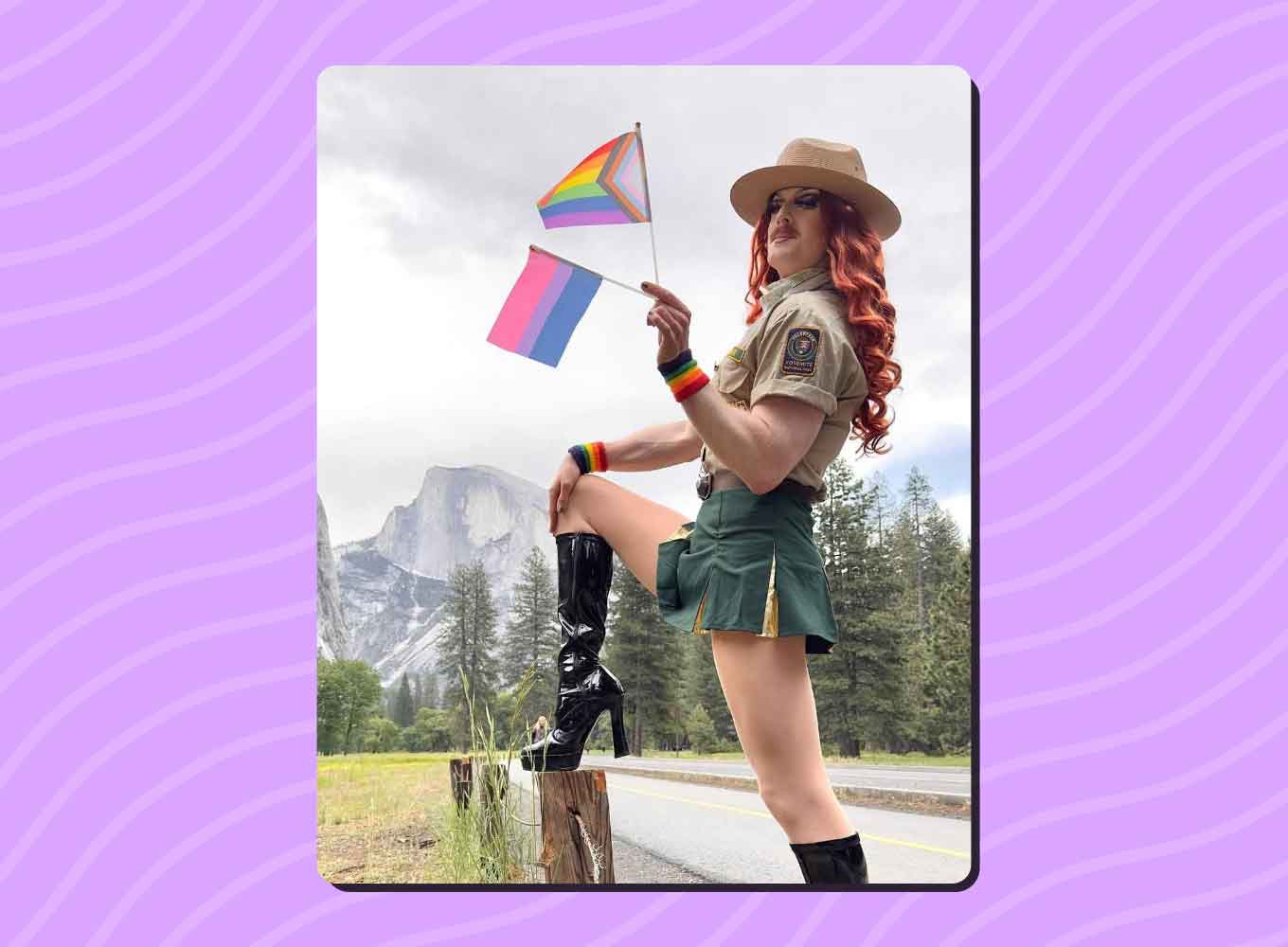
“I am so proud of all the community organizers in the park system who are making safe spaces for queer people all year round,” Pattie says in the video. “No planet; no Pride.”
Instagram user and former Pacific Crest Trail Association employee Hazel, whose trail name is Ranger Platypus, was part of Pattie’s Pride celebrations at Eastern Sierra Pride the weekend before Yosemite’s gathering.
Hazel is a trans-masculine outdoors enthusiast who just left their job to better focus on their self-care and transition — and Pattie’s Pride celebration was the perfect place to embrace and care for their whole self.
He said the event included drag performances, volunteer opportunities, and connection with fellow LGBTQ+ outdoor enthusiasts.
“I think it's very easy to get stuck in the doom and gloom when it comes to environmentalism these days,” he told Good Good Good. “Having spaces like this where you can really see and feel the sense of community helps you realize that together we are stronger and can make amazing things happen, but we also need to care for ourselves and one another along the way.”
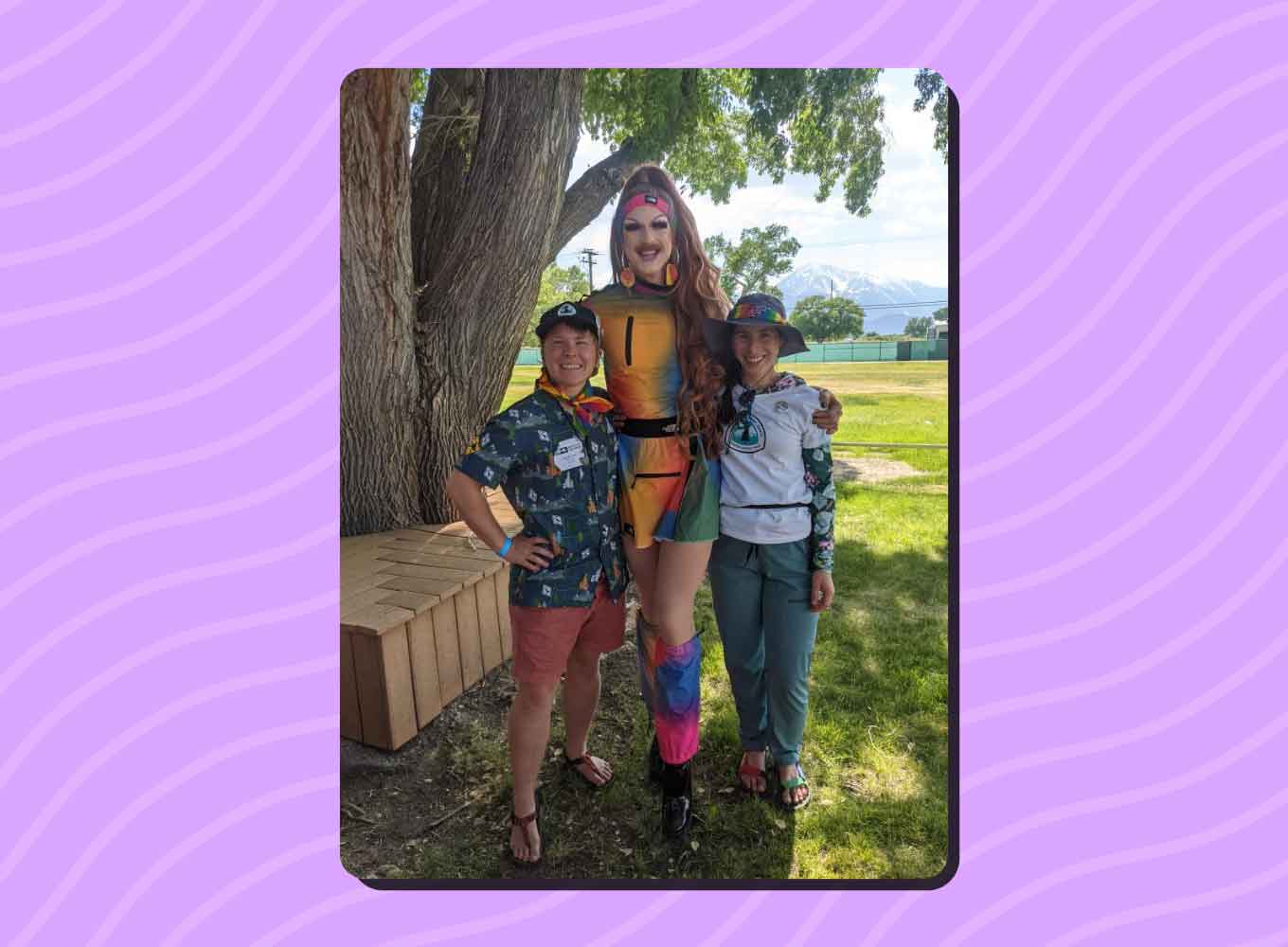
Hazel added that this Pride celebration felt “magical” and allowed them to exist fully in nature, away from any difficulties happening in their life or around the world.
“When I'm out in nature, I'm constantly bewildered by plants and wildlife and all of the adaptations and different ways that they manage to find a space where they can thrive,” Hazel said. “I think there is an important lesson we can learn there: There is not a singular way to be and move through the world. Nature is queer and often does not abide by the rules or categories that we artificially try to create.”
Hazel wasn’t the only person overjoyed by the inclusive nature of Pattie’s Pride gatherings. Thousands of TikTok commenters joined in on the fun of the Yosemite event — even virtually.
“I AM A LESBIAN THAT WANTS TO WORK IN A NATIONAL PARK AND THIS MADE ME SO HAPPY,” one commenter wrote, caps-lock for emphasis.
“You are such an icon,” another chimed in. “I hope someday there are safe spaces for everyone on a safe planet.”
“I’m so grateful for y’all taking care of our parks and caring about the community and the Earth,” said another.
Even the nonprofit Human Rights Campaign joined in on the buzz.
“Love safe spaces in nature!” the organization wrote.
While many of us dwell in the FOMO of this downright lovely LGBTQ+ gathering, it also leaves us feeling inspired and excited to get outdoors and take good care of our planet — and each other.
A post on the Yosemite Park Instagram account summarized it best:
“Nature is a wild and fluid place; we see that in the waterfalls, meadows, and flora and fauna that call this place home. Let Yosemite serve you as a space to process, dream, inspire, connect, find solitude, relax, adventure and be proud.”
Header image(s) courtesy of Pattie Gonia
Animals hold a mirror to our humanity, reflecting our capacity for empathy, compassion, and coexistence. And because of that, the topic of animal rights isn’t merely about animals — but also about us — about the kind of world we wish to inhabit.
It’s a conversation about respect for all life and the recognition that animals, like humans, are entitled to live free from harm and exploitation.
Countless animal lovers, conservationists, veterinarians, and activists have offered their words about the ethical treatment of animals and the urgency of this cause. These voices inspire us to reconsider our actions, encouraging us to foster a world that respects and values animal life.
We’ve worked to curate the best quotes about animal rights and from people on the frontlines of the fight. These quotes provide insights into the fundamental rights of animals, urging us to be kinder, more compassionate stewards of the planet.
Whether you’re an avid supporter of animal rights, a pet owner, or someone simply exploring the topic, these quotes will offer a fresh perspective on our relationship with animals and our responsibilities towards them.
Read on to be inspired by these thought-provoking and powerful quotes on animal rights:
The Best Animal Rights Quotes
Famous Quotes
“If we can teach people about wildlife, they will be touched. Share my wildlife with me. Because humans want to save things that they love.”
— Steve Irwin
“He who is cruel to animals becomes hard also in his dealings with men. We can judge the heart of a man by his treatment of animals.”
— Emmanuel Kant
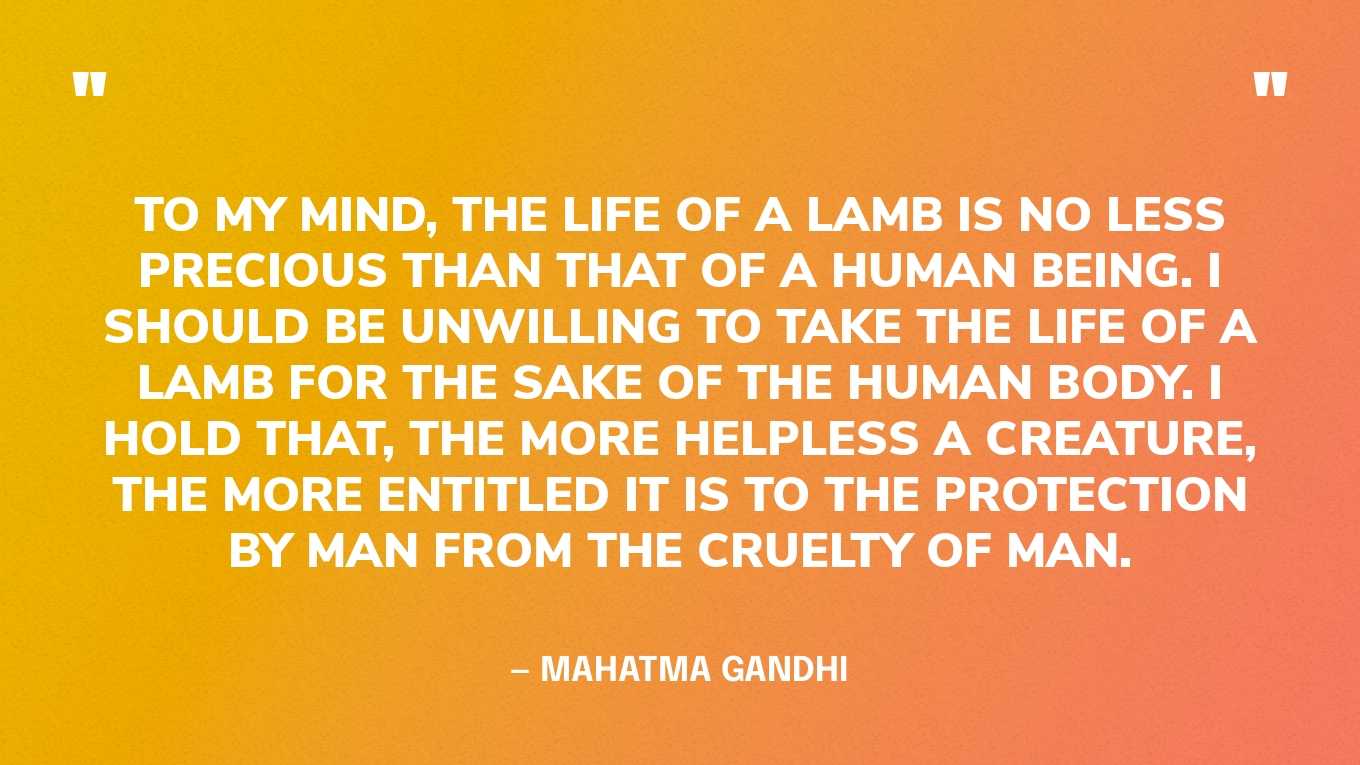
“To my mind, the life of a lamb is no less precious than that of a human being. I should be unwilling to take the life of a lamb for the sake of the human body. I hold that, the more helpless a creature, the more entitled it is to the protection by man from the cruelty of man.”
— Mahatma Gandhi
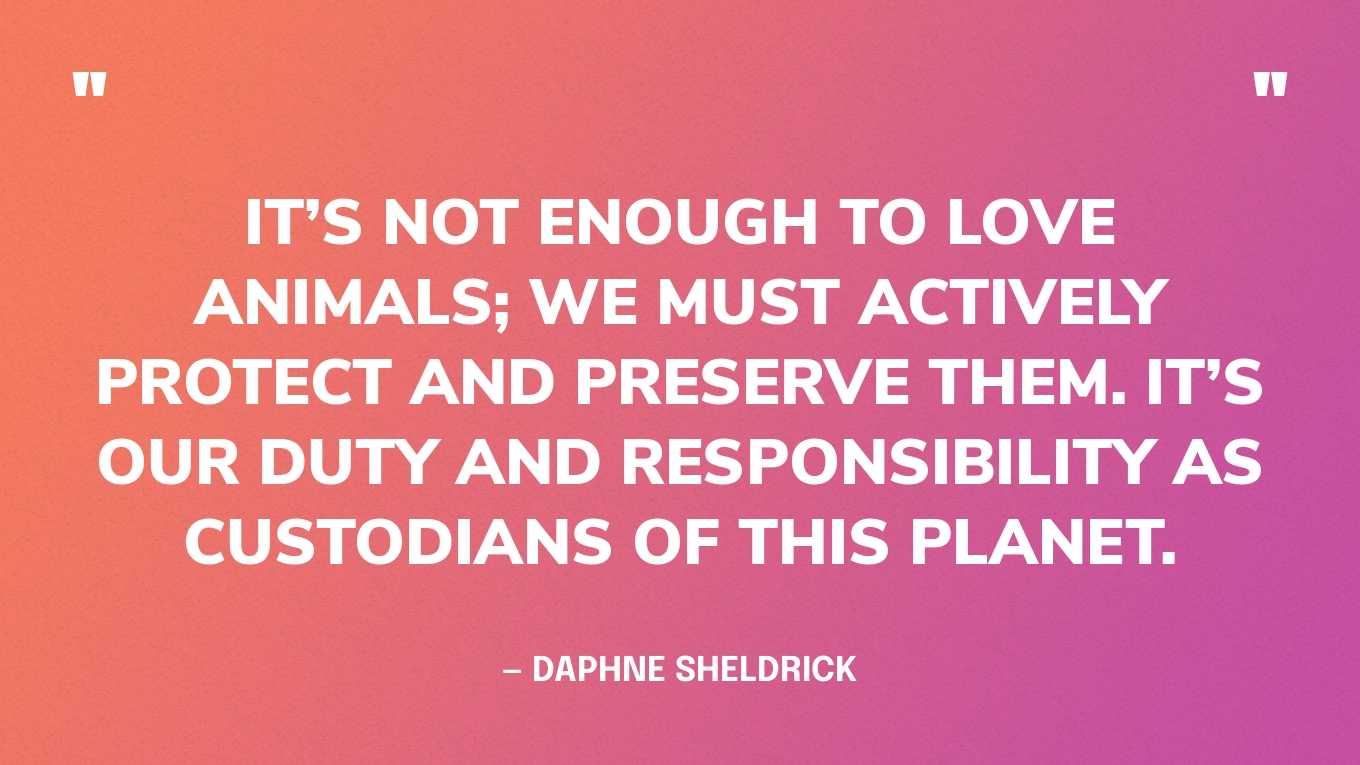
“It’s not enough to love animals; we must actively protect and preserve them. It’s our duty and responsibility as custodians of this planet.”
— Daphne Sheldrick
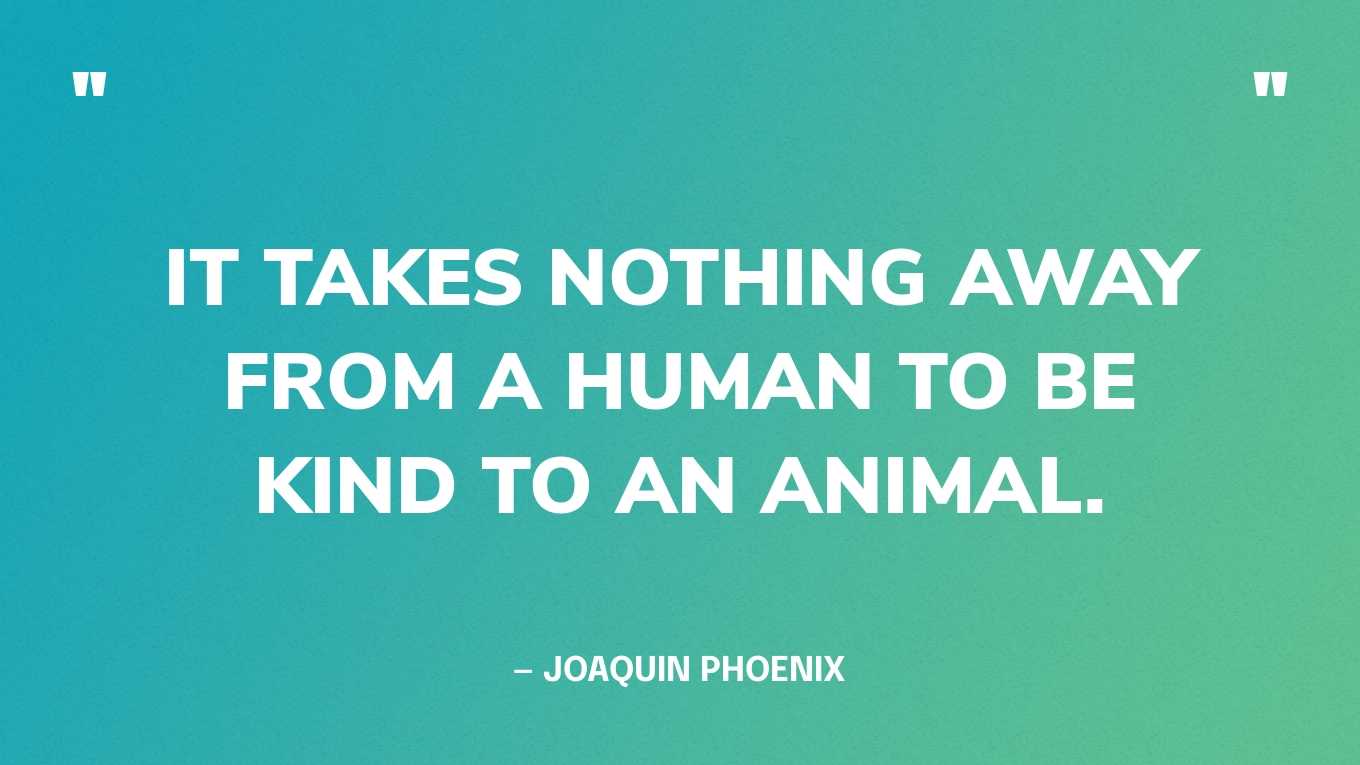
“It takes nothing away from a human to be kind to an animal.”
— Joaquin Phoenix
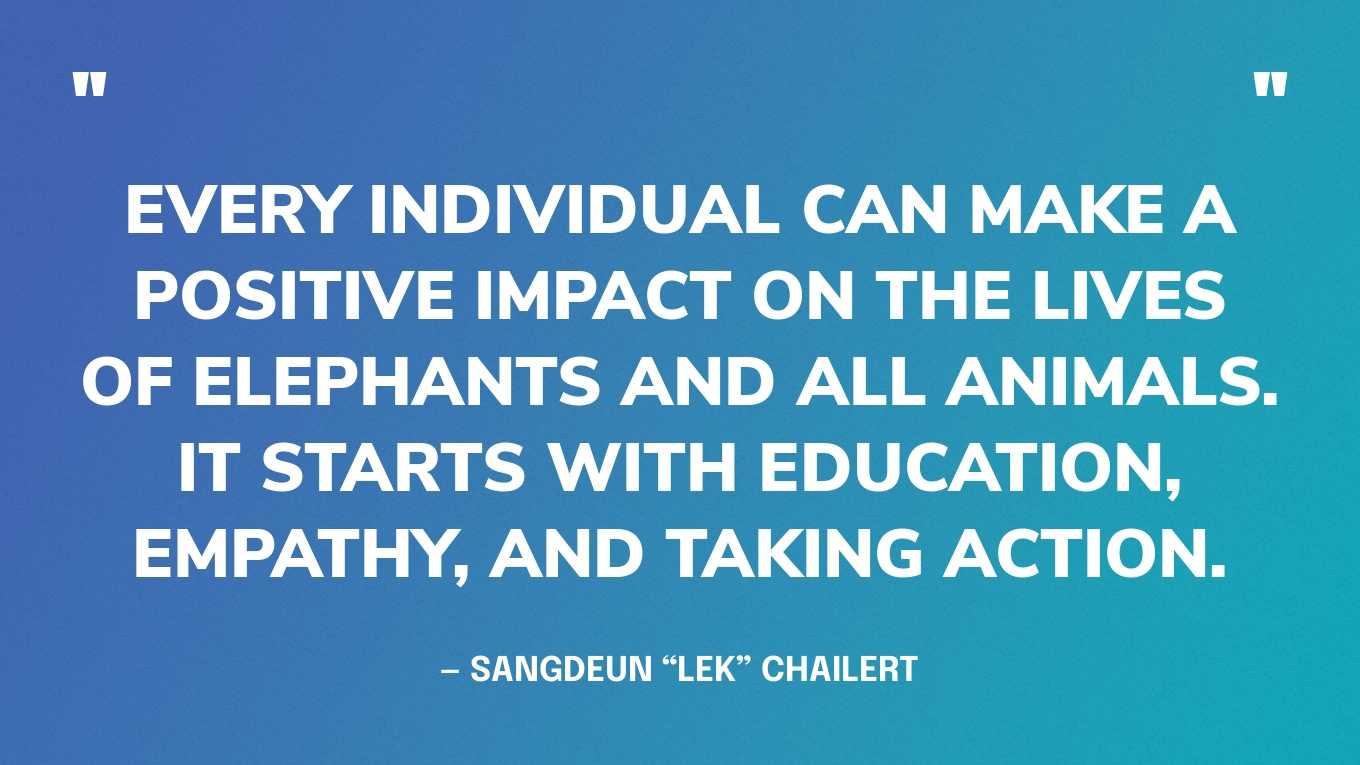
“Every individual can make a positive impact on the lives of elephants and all animals. It starts with education, empathy, and taking action.”
— Sangdeun “Lek” Chailert
“Animals don’t have a voice. But I do. A loud one. I’m a fucking big mouth. My voice is for them. And I’ll never shut up while they suffer.”
— Ricky Gervais
“You cannot share your life with a dog… or a cat, and not know perfectly well that animals have personalities and minds and feelings.”
— Jane Goodall
“There is no fundamental difference between man and the higher animals in their mental faculties. The lower animals, like man, manifestly feel pleasure and pain, happiness and misery.”
— Charles Darwin
“The animal shall not be measured by man. In a world older and more complete than ours, they move finished and complete, gifted with the extension of the senses we have lost or never attained, living by voices we shall never hear.”
— Caroline Earle White
On Caring for Animals
“Until one has loved an animal, a part of one’s soul remains unawakened.”
— Anatole France
“When it comes to the last hour of your life, it will be a great consolation to feel that you always protect the poor, the helpless, and the unfortunate; and that you exercised a particular care towards animals.”
— Caroline Earle White
“Pets are humanizing. They remind us we have an obligation and responsibility to preserve and nurture and care for all life.”
— James Cromwell
“I could discern clearly, even at that early age, the essential difference between people who are kind to dogs and people who really love them.”
— Frances Power Cobbe
“Animals need people, too. They need our care and kindness.”
— Mary Lindeen
“People who care about animals tend to care about people. They don’t care about animals to the exclusion of people. Caring is not a finite resource and, even more than that, it’s like a muscle: the more you exercise it, the stronger it gets.”
— Jonathan Foer
“My mother and dad were big animal lovers, too. I just don’t know how I would have lived without animals around me. I’m fascinated by them — both domestic pets and the wild community. They just are the most interesting things in the world to me, and it’s made such a difference in my lifetime.”
— Betty White
“True compassion is showing kindness towards animals, without expecting anything in return”
— Paul Oxton
“You have to love animals for what they are or leave them alone. The best thing you can do if you love them is leave them alone and see that other people do too.”
— Pat Derby
“Love of animals is a universal impulse, a common ground on which all of us may meet. By loving and understanding animals, perhaps we humans shall come to understand each other.”
— Louis J. Camuti
“We must remember that our actions towards animals reflect our humanity. It is our responsibility to be compassionate and kind.”
— Velma Bronn Johnston
“We need, in a special way, to work twice as hard to help people understand that the animals are fellow creatures, that we must protect them and love them as we love ourselves.”
— Cesar Chavez
Stop Animal Abuse Quotes
“I cannot, nor will I, stand still and see these animals mistreated, neglected, and abused by those who have no understanding of their needs and nature.”
— Velma Bronn Johnston
“It is up to the public to stop attending these theatrical, and aquatic shows, and circuses with wild animals. The rhetoric about how the animals are happy and well cared for are lies. Don’t be swayed by them. The money behind these shows is huge; there is nothing good about them.”
— Tippi Hedren
“Animals do not exist for our entertainment. They deserve to live their lives free from exploitation and abuse.”
— Pat Derby
“It made me feel particularly sickened to know that this kind of callous attitude toward animals is repeated again and again in laboratories around this country. Animals, whether they’re dogs, cats, monkeys, or any other sentient beings, should not be subjected to cruel and unnecessary experimentation.”
— Jane Goodall
“Animal abuse is an international problem, which has been part of human civilization for millennia.”
— Catherine Tiplady
“Animal abuse makes my blood boil, but that also fuels me into action. I don’t stay in the anger, as that just eats up my energy and my soul — I let it galvanize me. When I see something horrible I think, ‘What can I do? Who can I alert?’ I let that lead the way, rather than the bad feelings.”
— Jo-Anne McArthur
“We must break the cycle of violence by standing up against all forms of animal abuse.”
— Jane Velez-Mitchell
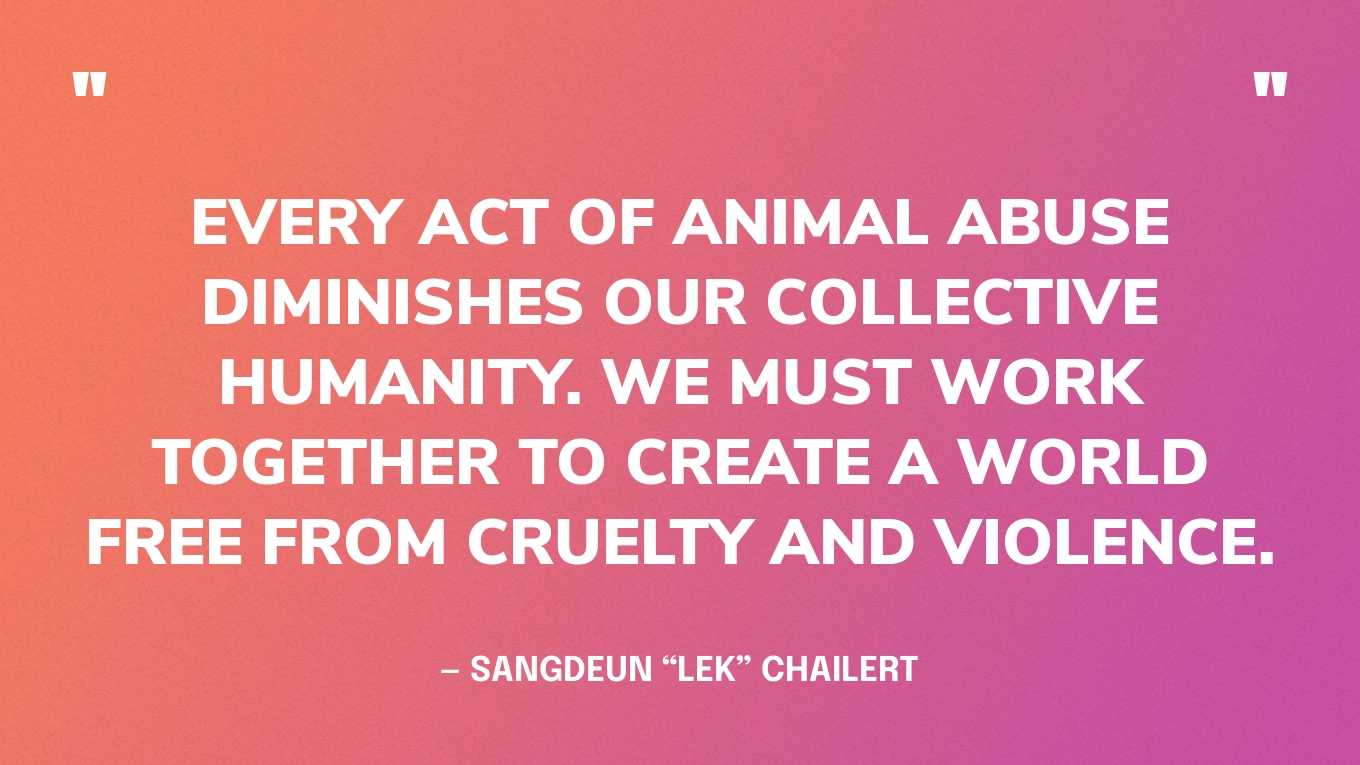
“Every act of animal abuse diminishes our collective humanity. We must work together to create a world free from cruelty and violence.”
— Sangdeun “Lek” Chailert
About Saving Animals
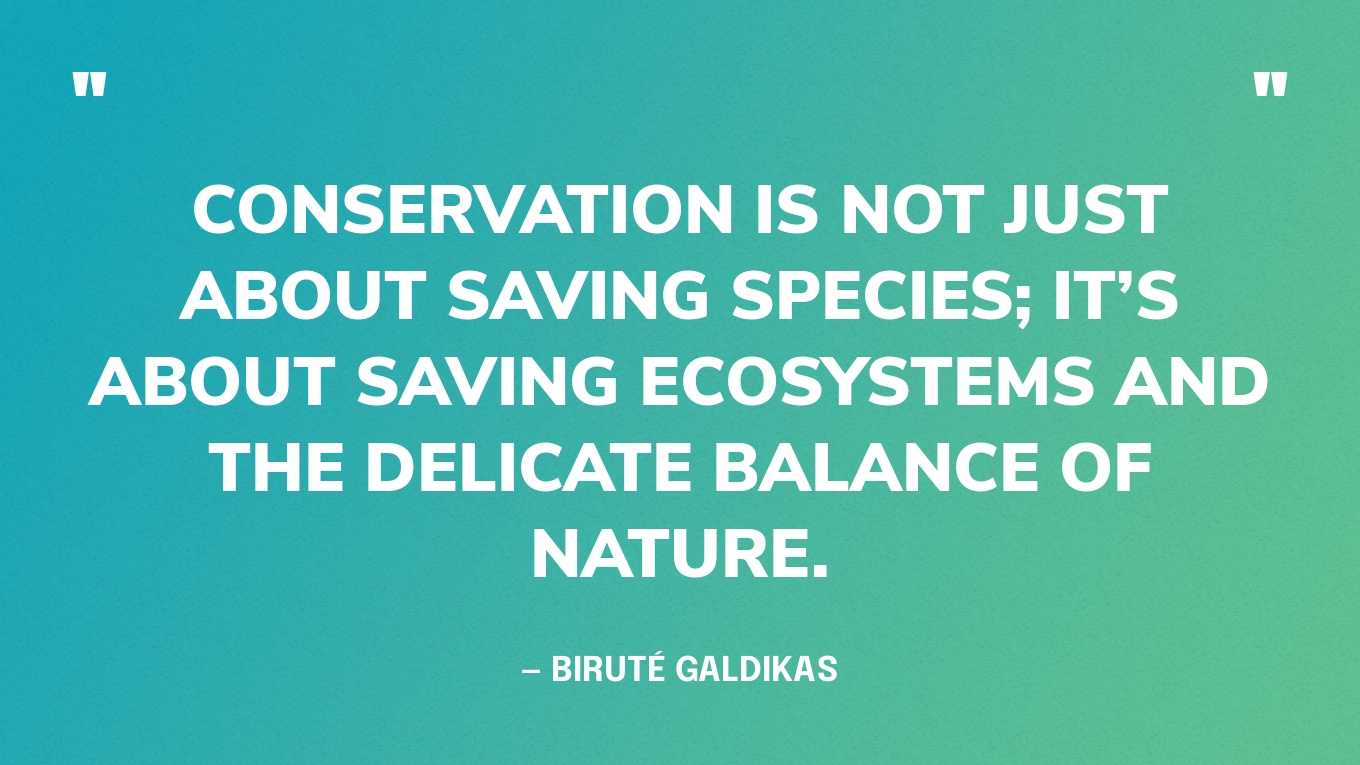
“Conservation is not just about saving species; it’s about saving ecosystems and the delicate balance of nature.”
— Biruté Galdikas
“The work to protect one species benefits us all.”
— Jennifer Skiff, Rescuing Ladybugs: Inspirational Encounters with Animals That Changed the World
“The only way to save a rhinoceros is to save the environment in which it lives, because there’s a mutual dependency between it and millions of other species of both animals and plants.”
— David Attenborough
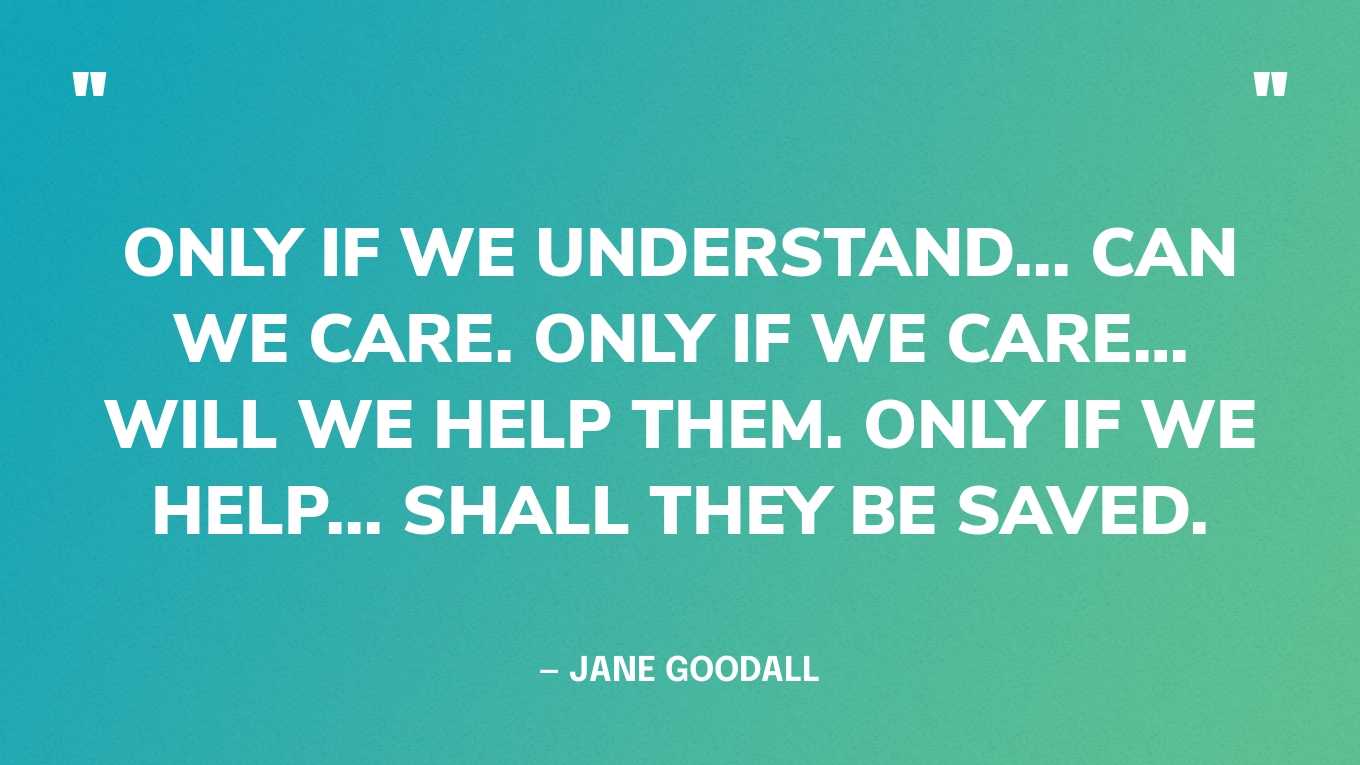
“Only if we understand... can we care. Only if we care… will we help them. Only if we help... shall they be saved.”
— Jane Goodall
“Saving animals is as simple as choosing synthetic alternatives instead of real fur”
— Natalie Imbruglia
“Gorilla tourism is not an intrusion into their world but a key to their survival.”
— Dian Fossey
“It’s not whether animals will survive, it’s whether man has the will to save them.”
— Anthony D. Williams
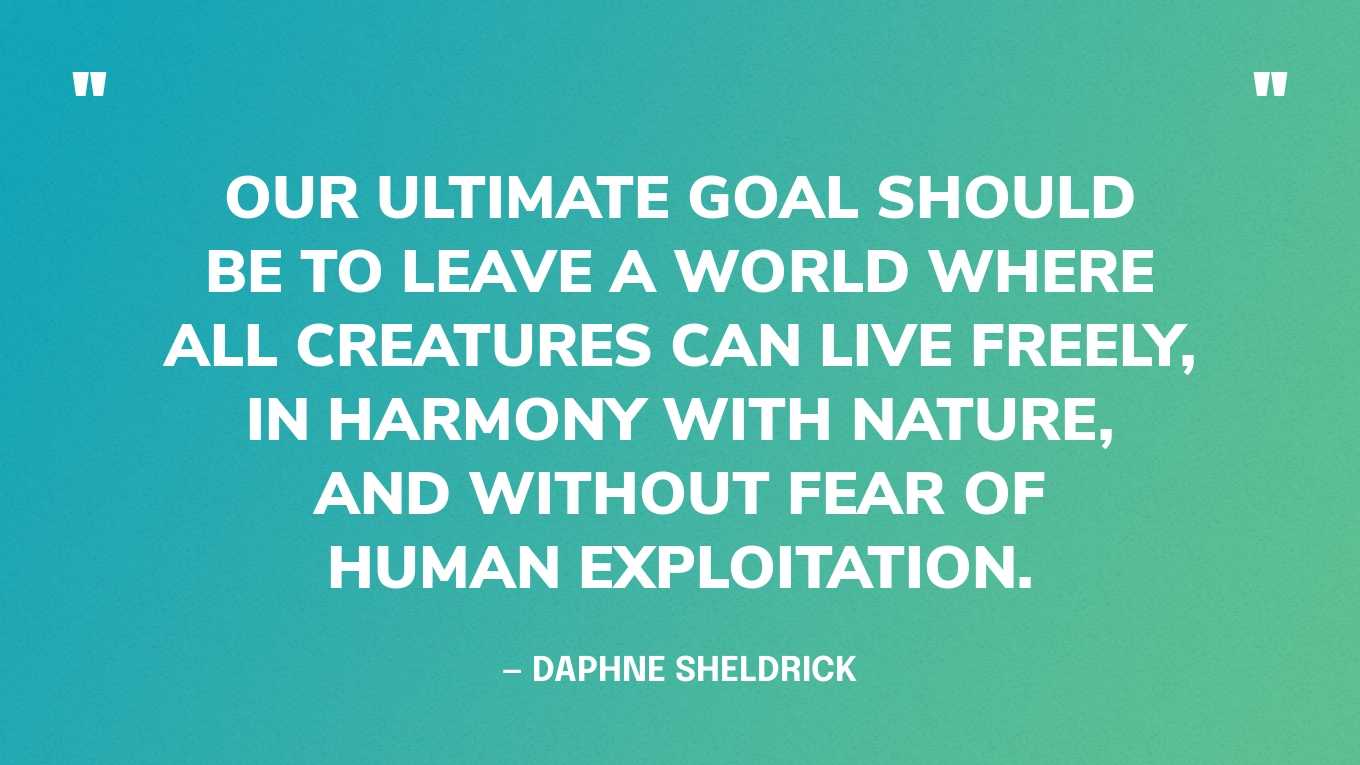
“Our ultimate goal should be to leave a world where all creatures can live freely, in harmony with nature, and without fear of human exploitation.”
— Daphne Sheldrick
About Adopting Pets
“Our goal: to convince people to rescue and adopt instead of buying or selling animals, to disavow the language and concept of animal ownership.”
— Eliot Katz
“Adopted pets are the best pets you can have. Most adoptable pets come from loving homes that simply cannot care for them anymore. Or they are strays who’ve been on their own without the loving care they deserve.”
— Josh Duhamel
“Saving one dog will not change the world, but surely for that one dog, the world will change forever.”
— Karen Davison
About Animal Cruelty
“Cruelty to animals is one of the most significant vices of a low and ignoble people. Wherever one notices them, they constitute a sign of ignorance and brutality which cannot be painted over even by all the evidence of wealth and luxury.”
— Alexander von Humboldt
“Until we have the courage to recognize cruelty for what it is, whether its victim is human or animal, we cannot expect things to be much better in this world. There can be no double standard. We cannot have peace among men whose hearts find delight in killing any living creature. By every act that glorifies or even tolerates such moronic delight in killing, we set back the progress of humanity.”
— Rachel Carson
“The reason that animals are being confined in this way, the reason that factory farms exist, is because of consumer demand for these products. The best thing that we can do as individuals to prevent animal cruelty is to stop supporting these industries.”
— Adam Durand
“As custodians of the planet, it is our responsibility to deal with all species with kindness, love, and compassion. That these animals suffer through human cruelty is beyond understanding. Please help to stop this madness.”
— Richard Gere
“Together, we can make a difference. By joining forces and working collaboratively, we can create a world where animals are no longer subjected to cruelty.”
— Jill Robinson
“The time will come when men such as I will look upon the murder of animals as they now look on the murder of men.”
— Leonardo da Vinci
“People speak sometimes about the bestial cruelty of man, but that is terribly unjust and offensive to beasts, no animal could ever be so cruel as a man, so artfully, so artistically cruel.”
— Fyodor Dostoyevsky
“Show me the enforced laws of a state for the prevention of cruelty to animals and I in turn will give you a correct estimate of the refinement, enlightenment, integrity, and equity of that commonwealth’s people.”
— L.T. Danshiell
“We must fight against the spirit of unconscious cruelty with which we treat the animals. Animals suffer as much as we do. True humanity does not allow us to impose such sufferings on them. It is our duty to make the whole world recognize it. Until we extend our circle of compassion to all living things, humanity will not find peace.”
— Albert Schweitzer
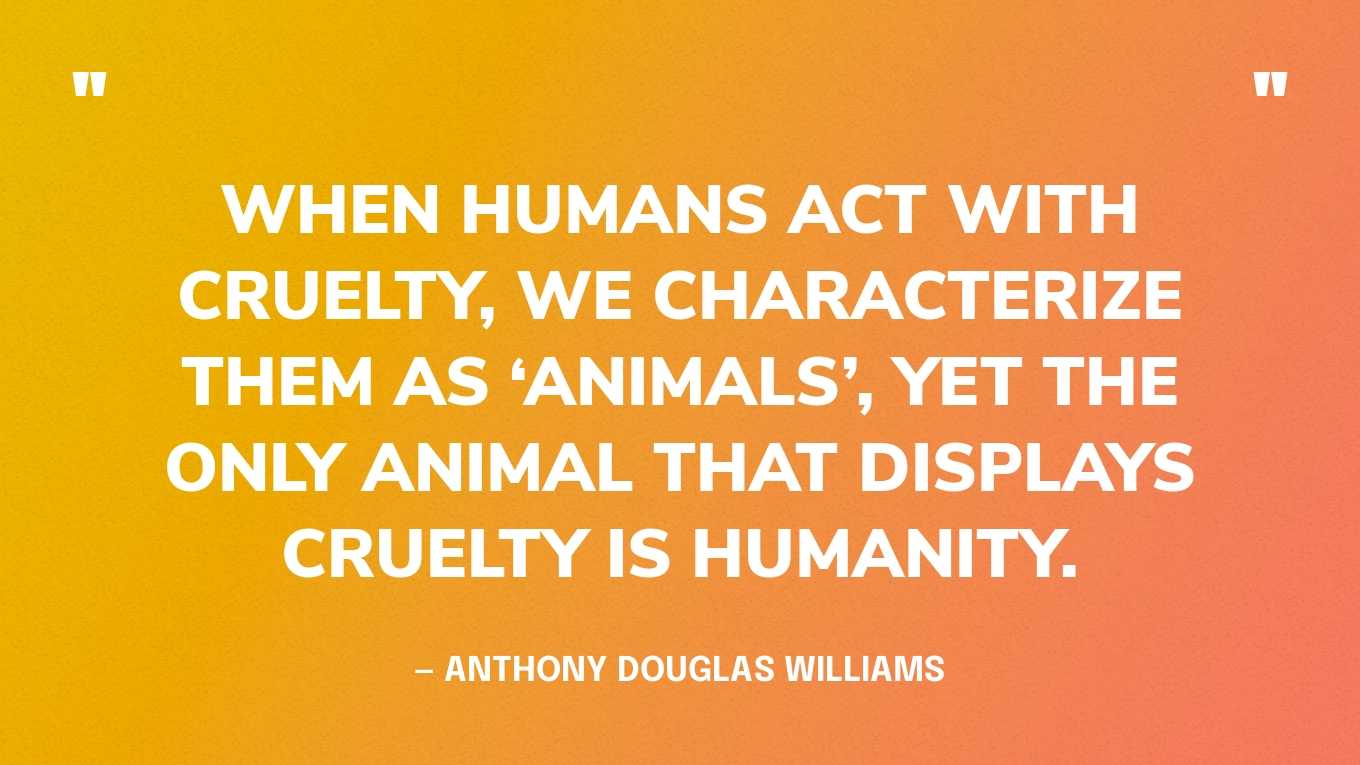
“When humans act with cruelty, we characterize them as ‘animals’, yet the only animal that displays cruelty is humanity.”
— Anthony Douglas Williams
On Respecting Animals
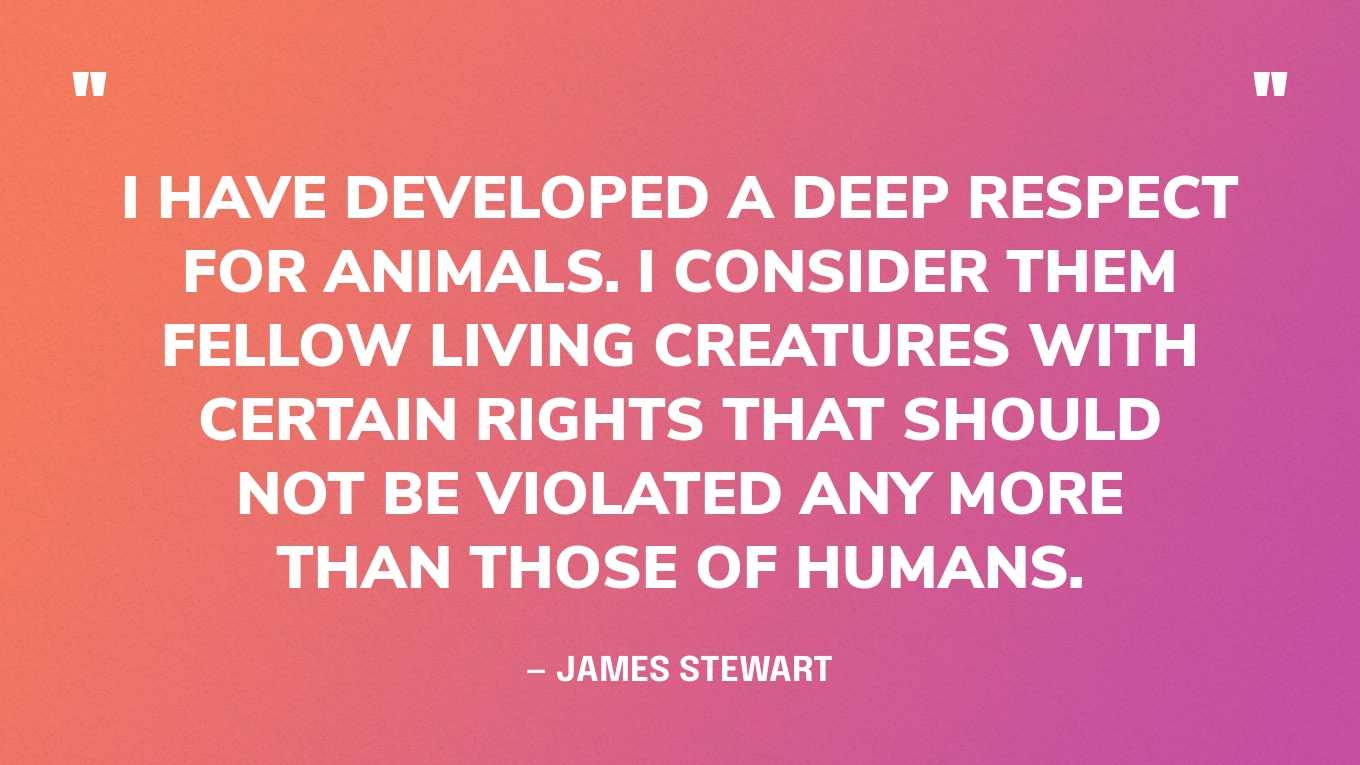
“I have developed a deep respect for animals. I consider them fellow living creatures with certain rights that should not be violated any more than those of humans.”
— James Stewart
“Animals are indeed more ancient, more complex and in many ways more sophisticated than us. They are more perfect because they remain within Nature’s fearful symmetry just as Nature intended. They should be respected and revered…”
— Daphne Sheldrick
“To be ‘for animals’ is not to be ‘against humanity.’ To require others to treat animals justly, as their rights require, is not to ask for anything more nor less in their case than in the case of any human to whom just treatment is due. The animal rights movement is a part of, not opposed to, the human rights movement. Attempts to dismiss it as anti-human are mere rhetoric.”
— Tom Regan
“Nothing living should ever be treated with contempt. Whatever it is that lives, a man, a tree, or a bird, should be touched gently, because the time is short. Civilization is another word for respect for life…”
— Elizabeth Goudge
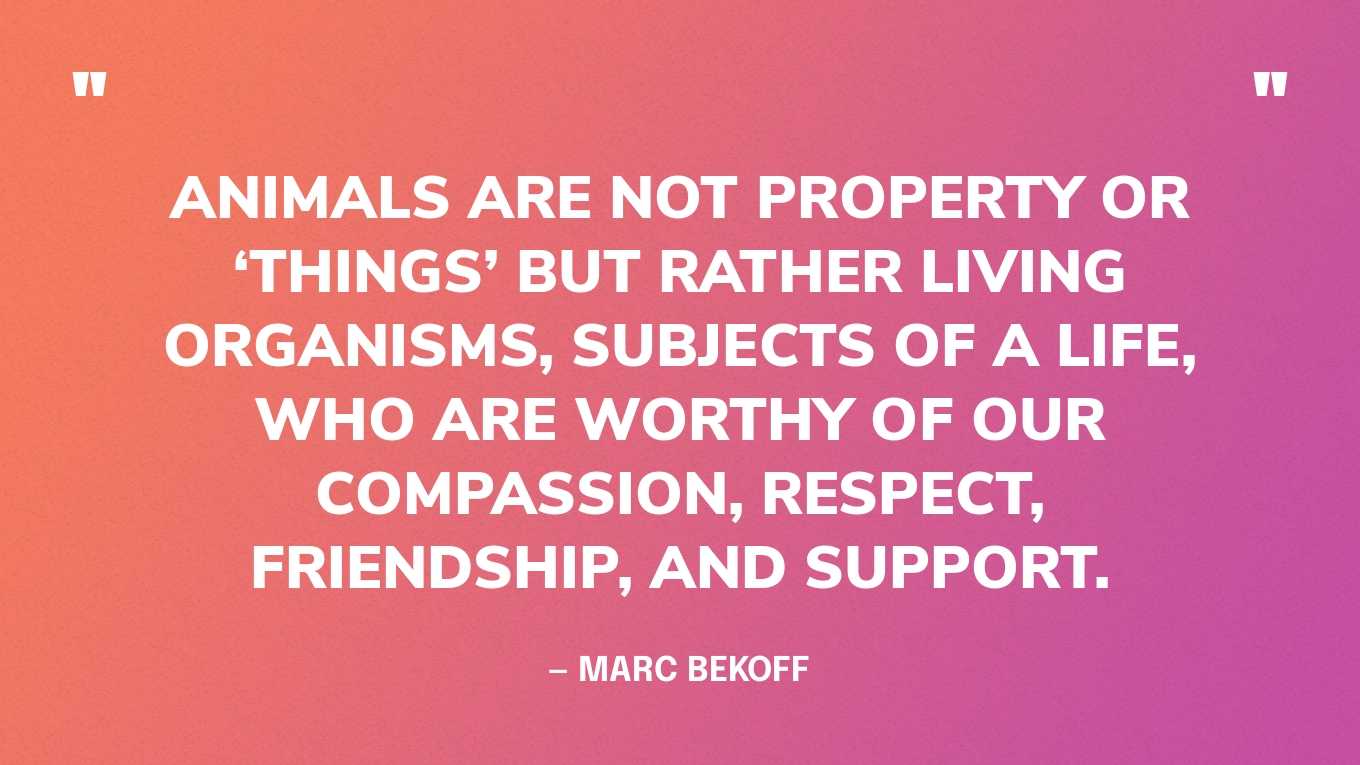
“Animals are not property or ‘things’ but rather living organisms, subjects of a life, who are worthy of our compassion, respect, friendship, and support.”
— Marc Bekoff
“This is what an animal rights philosophy is really about. Understanding the importance of recognizing that all animals have an inherent right not to be abused by us and then following the ethical path this understanding leads us to is special indeed.”
— John F. Kullberg
“Animals have certain rights, as inalienable as those of man to life, liberty, and the pursuit of happiness”
— Caroline Earle White
“Never believe that animals suffer less than humans. Pain is the same for them that it is for us. Even worse, because they cannot help themselves.”
— Louis J. Camuti
“Life is as dear to mute creature as it is to man. Just as one wants happiness and fears pain, just as one wants to live and not die, so do other creatures.”
— The Dalai Lama
“If you look into their [chimpanzees’] eyes, you know you’re looking into a thinking mind. They teach us that we are not the only beings with personalities, minds capable of rational thought, altruism and a sense of humor. That leads to new respect for other animals, respect for the environment and respect for all life.”
— Jane Goodall
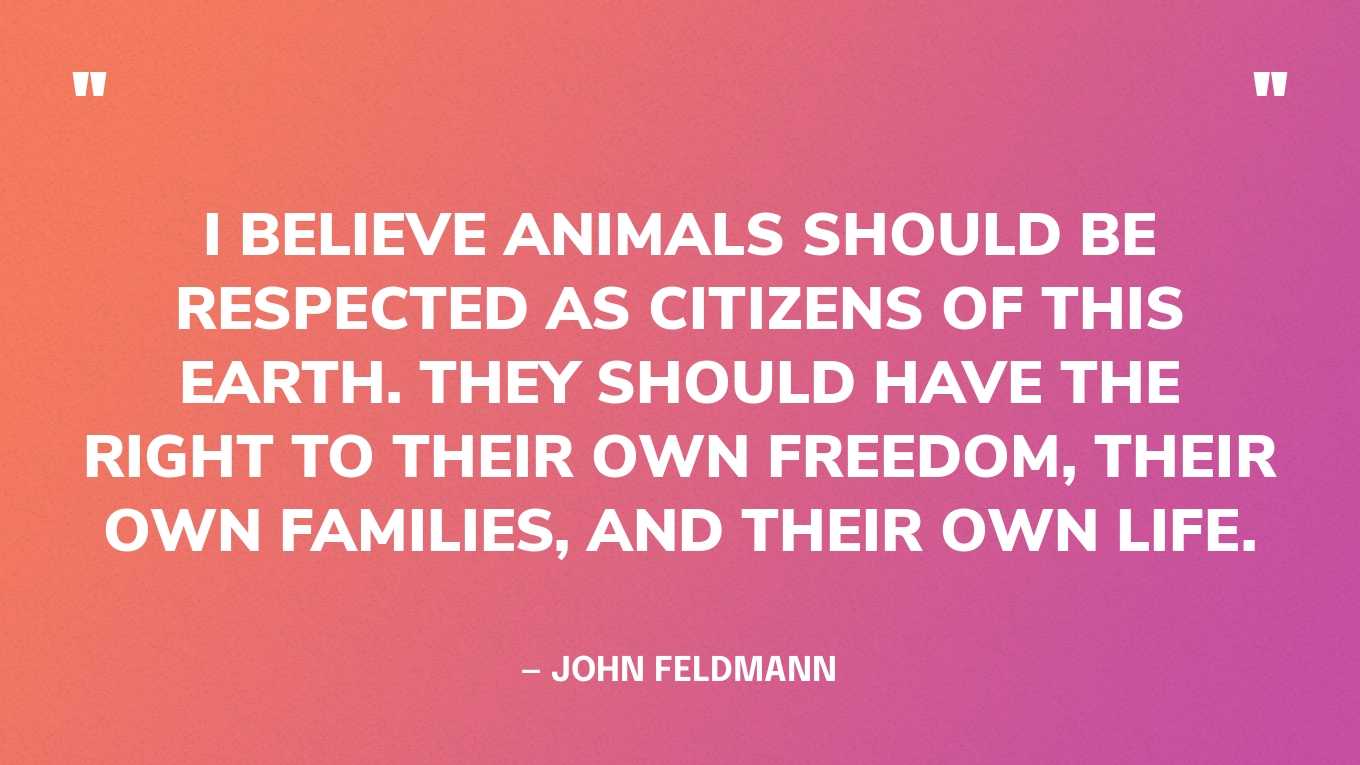
“I believe animals should be respected as citizens of this earth. They should have the right to their own freedom, their own families, and their own life.”
— John Feldmann
Quotes About How You Treat Animals
“How you treat animals will tell me what kind of person you are.”
— Karen Becker

“You can always tell about somebody by the way they put their hands on an animal.”
— Betty White
“The greatness of a nation and its moral progress can be judged by the way its animals are treated.”
— Mahatma Gandhi
“I call my horses ‘divine mirrors’ — they reflect back the emotions you put in. If you put in love and respect and kindness and curiosity, the horse will return that.”
— Allan Hamilton
“I have always felt that the way we treat animals is a pretty good indicator of the compassion we are capable of for the human race.”
— Ali MacGraw
“Our treatment of animals is important to our own internal state. If we are to expand our horizons, to grow to understand what the relatedness of each and every thing means, then our love and appreciation of all life is essential. Our respect and reverence for all living things will be reflected in our own living.”
— Bill Schul
“It always matters how you treat other people, how you treat animals, and how you treat yourself. It always matters what you do. It always matters what you say. And it always matters what you eat.”
— John Robbins
“The basis of all animal rights should be the Golden Rule: we should treat them as we would wish them to treat us, were any other species in our dominant position.”
— Christine Stevens

On Eating Meat & Being Vegan / Vegetarian
“Being vegan is not about perfection; it’s about progress. It’s about continuously learning and growing to reduce our impact on animals and the environment.”
— Genesis Butler
“Thousands of people who say they ‘love’ animals sit down once or twice a day to enjoy the flesh of creatures who have been utterly deprived of everything that could make their lives worth living and who endured the awful suffering and the terror of the abattoirs…”
— Jane Goodall
“There’s a tremendous amount of pain in the world. Every day, I do the best I can do to mitigate that. The easiest thing I can do every single day is to be vegan. I can additionally help animals through my work as a documentary photographer. Some days I can do quite a bit, and other days not so much. But I continue to do my best.”
— Jo-Anne McArthur
“I’m a vegetarian and very much active in regards to how I feel about animal rights and protecting animals and giving animals a voice. But at the same time, I appreciate and respect other people’s decisions to eat meat. The only thing that I hope is that people are educated, that they’re aware, that they’re living a conscious lifestyle.”
— Abbie Cornish
“Choosing a plant-based lifestyle is an act of empowerment, where we take control of our health and contribute to a more compassionate world.”
— Jane Velez-Mitchell
“‘Never again’ is not about what others shouldn’t do to us. It’s about what we shouldn’t do to others. ‘Never again’ means that we must never again perpetrate mass atrocities against other living beings. That we must never again raise animals for food or any other form of exploitation.”
— Alex Hershaft
“Some people express abhorrence at eating meat, yet make an exception for fish and other ‘seafood’ to remain a part of their diet. Fish, it seems to them, ‘don’t count.’ Nor, it turns out, do they count when it comes to compiling the daily toll of animals slaughtered: cows, chickens, pigs and sheep are counted individually — fish — on the other hand, have their lives measured by the tonne. But even by weight, theirs is a colossal number — over 150million tonnes killed for human consumption every year in the first decades of the 21st century.”
— Jo-Anne McArthur, Hidden: Animals in the Anthropocene
“If you are not vegan, please consider going vegan. It’s a matter of nonviolence. Being vegan is your statement that you reject violence to other sentient beings, to yourself, and to the environment, on which all sentient beings depend.”
— Gary L. Francione
“Make a heart connection when speaking with people about veganism. Speak with the intent to listen so you can connect with them on their level. Then what you say will count and have a true effect.”
— Gwenna Hunter
More Animal Rights Quotes
“If having a soul means being able to feel love and loyalty and gratitude, then animals are better off than a lot of humans.”
— James Herriot
“To survive today, other animals must endure global warming, pollution, and fewer habitats. More tragically, they must endure the silence of human hearts.”
— Anthony Douglas Williams, Inside the Divine Pattern
“But are we not working for human beings? Are we not constantly striving to make men and women more humane and disposed to all kindly feelings and to teach children to become gentle and merciful? Is not everything which tends to elevate man in the mortal scale a benefit to him, and is it not rendering him incalculable service to teach him to control his passions, as we do when we prevent him from weakening his anger upon his horses?”
— Caroline Earle White
“Such short little lives our pets have to spend with us, and they spend most of it waiting for us to come home each day. It is amazing how much love and laughter they bring into our lives and even how much closer we become with each other because of them.”
— John Grogan
“Dogs do speak, but only to those who know how to listen.”
— Orhan Pamuk
“People must have renounced, it seems to me, all natural intelligence to dare to advance that animals are but animated machines… It appears to me, besides, that such people can never have observed with attention the character of animals, not to have distinguished among them the different voices of need, of suffering, of joy, of pain, of love, of anger, and of all their affections. It would be very strange that they should express so well what they could not feel.”
— Voltaire
“We do not have the right to use animals for any real or perceived need, whether it be food, clothing, entertainment, medical issues.”
— Janine Motta
“Like it or not, we humans are bound up with our fellows, and with the other plants and animals all over the world. Our lives are intertwined.”
— Carl Sagan
“Species other than man have rights, too. Having finished all the requisites of our proud, materialistic civilization, our neon-lit society, does nature, which is the basis for our existence, have the right to live on? Do we have enough reverence for life to concede to wilderness this right?”
— Margaret Murie
“If you really care about animals, then stop trying to figure out how to exploit them ‘compassionately’. Just stop exploiting them.”
― Gary L Francione
“Non-violence leads to the highest ethics, which is the goal of all evolution. Until we stop harming all other living beings, we are still savages.”
— Thomas Edison
“I re-trained myself to focus on the good in the world. To focus on hope, and happiness, and optimism, rather than the bad I was seeing. My being depressed wasn’t going to help the animals, and it was going to lead to burnout. Animal advocacy is a hard thing because it’s a long, uphill battle, so we really all need to look after ourselves.”
— Jo-Anne McArthur
“We are not superior. There are no clear distinctions between us and animals.”
— Michael W. Fox
You might also like: The Ultimate List of Animals from A-Z
Thanks to the introduction of microtrends, viral “TikTok Made Me Buy It” videos, and fast fashion brands, our closets (and this planet) often bear the brunt of our desire to keep up.
Americans throw out more than 34 billion pounds of used textiles (yes, billion!) a year, with 66% of them sent to landfills where they often take hundreds of years to decompose.
So, the question on all of our minds is: What can we do with clothes we’re itching to get rid of?
Enter the world of reselling, a powerful solution to combat textile waste and promote sustainability.
As someone who has been buying and selling vintage since 2007 and who runs my own online thrift shop, I know a thing or two about selling secondhand clothes online.
What started out as a love for buying vintage styles morphed into a dedication to normalizing secondhand buying and selling. I’m not trying to influence you on your reselling journey, but don’t be surprised when a few years down the line you’re just as passionate about the circular economy as I am!
Short on time? Here’s a quick breakdown of our top picks:
Our Top Picks: Online Thrift Stores to Sell Used Clothes
It’s never been easier to sell your unwanted goods. In fact, according to thredUp’s 2022 Resale Report, the global secondhand apparel market is expected to grow three times faster than the global apparel market overall.
Technology growth and online marketplaces (like the ones we’re including in this article) are successfully driving the growth of the second-hand market — especially within the U.S. This is good news for you because that means more potential buyers!
So whether you have a pile of clothes ready to be cleared out, or you’re simply seeking a sustainable solution to reducing waste and overconsumption, reselling gives us all a way to still indulge in the shopping experience while reducing unnecessary textile waste.
By the way, some of the links in this article are affiliates, which means we may earn a commission at no extra cost to you. Everything in this article was independently and honestly written by the Good Good Good team. Thank you for your support!
Tips for selling clothes online:
Closely examine your items.
I’ve learned this from personal experience: Before you dedicate time and effort (which we all know is a valuable and precious resource) to listing your item, be real with yourself. Is the article of clothing worth selling? Examine the piece under natural lighting to make sure it’s in sellable, wearable condition (i.e. no major holes, tears, or stains).
While it’s perfectly normal to sell clothes with defects, you want to make sure that those defects won’t affect your profit margin. Unless it’s a rare vintage item (that can more than likely get away with a stain or two), you might want to explore sending your damaged items to companies like For Days or Terracycle instead.
However, if your clothing is considered wearable, it’s officially time to give it a second life!
Sell seasonally.
Cleaning out your coat closet in the spring? Perhaps hold off on listing it until the latter part of the summertime or leading up to the fall season.
I’ve found that while out-of-season clothing can sell, you have a better chance of selling them for a better price when the demand is higher. A good rule of thumb is to follow what retail brands are selling at the moment.
Understand the fees.
Each online marketplace has its own set of commission rates and fees, which vary quite a bit from platform to platform. Before signing up, take a moment to read the fine print, compare, and understand how payments are made.
Do some research.
Once you’ve determined you’re ready to list your item, it’s time to scope out the competition. I always type in the brand name or a short description of the item on the platform you want to sell on (I also do a quick Google search for internet-wide comparisons, too).
When settling on a price, use the information you gathered as a guide. On auction-type sites (like eBay and Poshmark), focus on “sold listings” to get a general idea of how much similar items were sold for.
Keep in mind that if you’re selling an item that’s never been used and is still in its original packaging, it’s technically still considered second-hand to the buyer. You may need to price the item slightly lower than its original retail value to make a sale.
Take good-quality pictures.
First impressions can make all the difference! The key to making it an absolute no-brainer for buyers to click the “buy” button has a lot to do with the photos you include. High-quality pictures that are well-lit and provide detailed information can help with this. You don’t need to invest in expensive camera equipment to achieve this, though.
All you need is a flat surface (like a table or a wall), your phone’s camera, and natural lighting (anywhere by a window works). Once you’ve got your shot location, it’s important to take pictures from different angles to give customers a good sense of what they’re buying.
Taking photos from the front, back, and sides, as well as close-ups of the fabric and tags, can give the customer an idea of what the product looks like and feels like — which ultimately helps them make an informed decision.
Write a detailed description.
Transparency is key. Just like you did when taking your photos, try to be as clear and detailed as possible. Things to consider including in your product descriptions are keywords like: brand and style name, size, color, measurements, material, and imperfections.
Look at your item and consider what your buyer wants to search for. (If you’re an SEO nerd, that knowledge comes into play here!). For example, if you’re planning on listing a summer maxi dress, you might want to include keywords like: beach, summer, pool, maxi dress, or vacation.
Leaving out detailed information could otherwise lead to returns, no sales, or bad reviews (which impacts consumer trust in your shop). Take it from me, save yourself the headache and jot down those details!
Prepare your items for sale.
First and foremost, make sure to thoroughly clean your items before packing them for shipping (nobody wants to receive dirty or smelly clothes — at least I know I wouldn’t want to!). To guarantee that your customers have a great unboxing experience and want to buy from you again, consider adding a personal touch to your packaging. Things like wrapping your item in kraft tissue paper or including a handwritten thank you card can make a big difference and help build customer loyalty.
If you’re looking for a low-budget way to ship out your products, and you live in the U.S., consider taking advantage of the United States Postal Service’s free shipping supplies that you can order online or pick up at your local post office.
Be extra cautious when making local sales.
While selling locally is a great way to meet new neighbors, bypass marketplace fees, and feel good about your items going to someone in your community, it’s always good to exercise caution.
Avoid giving out your home address, and instead suggest a secure public location — you can even bring a friend or family member along!
Protect your personal information.
To safeguard your personal information, maintain a strict privacy policy with yourself and others while selling items online. Interacting with potential buyers through external channels and disclosing your email address, phone number, or home address is generally a big no-no.
I’ve come across situations like this on marketplaces like Poshmark (one of my go-to platforms). If you stick to using the platform’s built-in messaging system for all communication, you’re guaranteeing that your personal information and privacy are a little more secure.
Where to sell used clothes online:
Poshmark
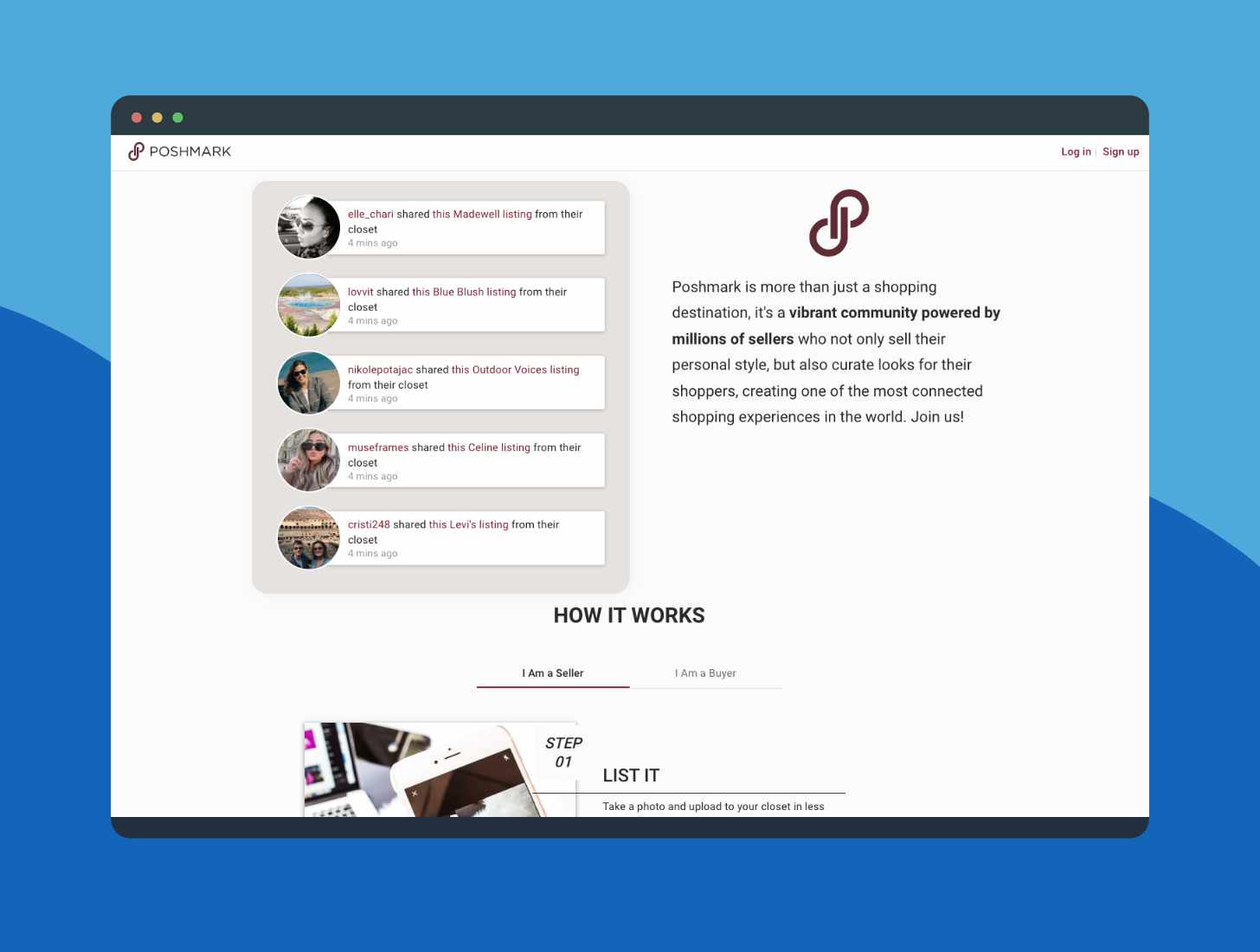
Poshmark is a social e-commerce platform where shoppers can discover and sell new or gently used clothes, shoes, accessories, and household goods. With a whopping 80 million registered users, Poshmark has become one of the most popular online marketplaces in the United States, Canada, Australia, and India.
This vibrant and bustling community is where I started dipping my toes into reselling. I love how shoppers can narrow down their search by exploring their favorite brands, styles, and vibes (Taylor Swift and Harry Styles concert outfits, anyone?) — making it easier for your customers to find your clothes! Even better, Poshmark curates suggested items to them to bring them closer to what they’re looking for.
While this social marketplace does offer opportunities to sell a wide range of products (from pet products to luxury goods), many sellers find the most success selling trendy, popular brands (like Reformation, Lululemon, or Rothy’s).
What’s good:
- You can list as many items as you want for free.
- Poshmark’s homepage is filled with curated suggestions, “Posh Parties” to virtually attend, and trends for you to keep up with. (This is great to utilize during the research phase.)
- Each shipping label comes prepaid and pre-addressed. All you need to do is print, package, and get it to USPS.
- Poshmark has built-in features to help sellers clear out their closets, including options to offer bundled discounts and Closet Clear Out online “parties.”
Keep in mind:
- For all sales under $15, you'll be charged a $2.95 fee; for anything $15 or more, the commission fee is 20%.
- Poshmark operates as a social media platform, so staying active on the platform as a seller is essential to increase your sales. Things like sharing your listings (and other’s people’s listings), participating in virtual “Posh Parties,” answering questions, and sending offers are ways to make your shop more visible and attract potential customers.
- Learning and using some of Poshmark’s common abbreviations and phrases — like NWT (New With Tags) and NWOT (New Without Tags) — can work in your favor.
Depop
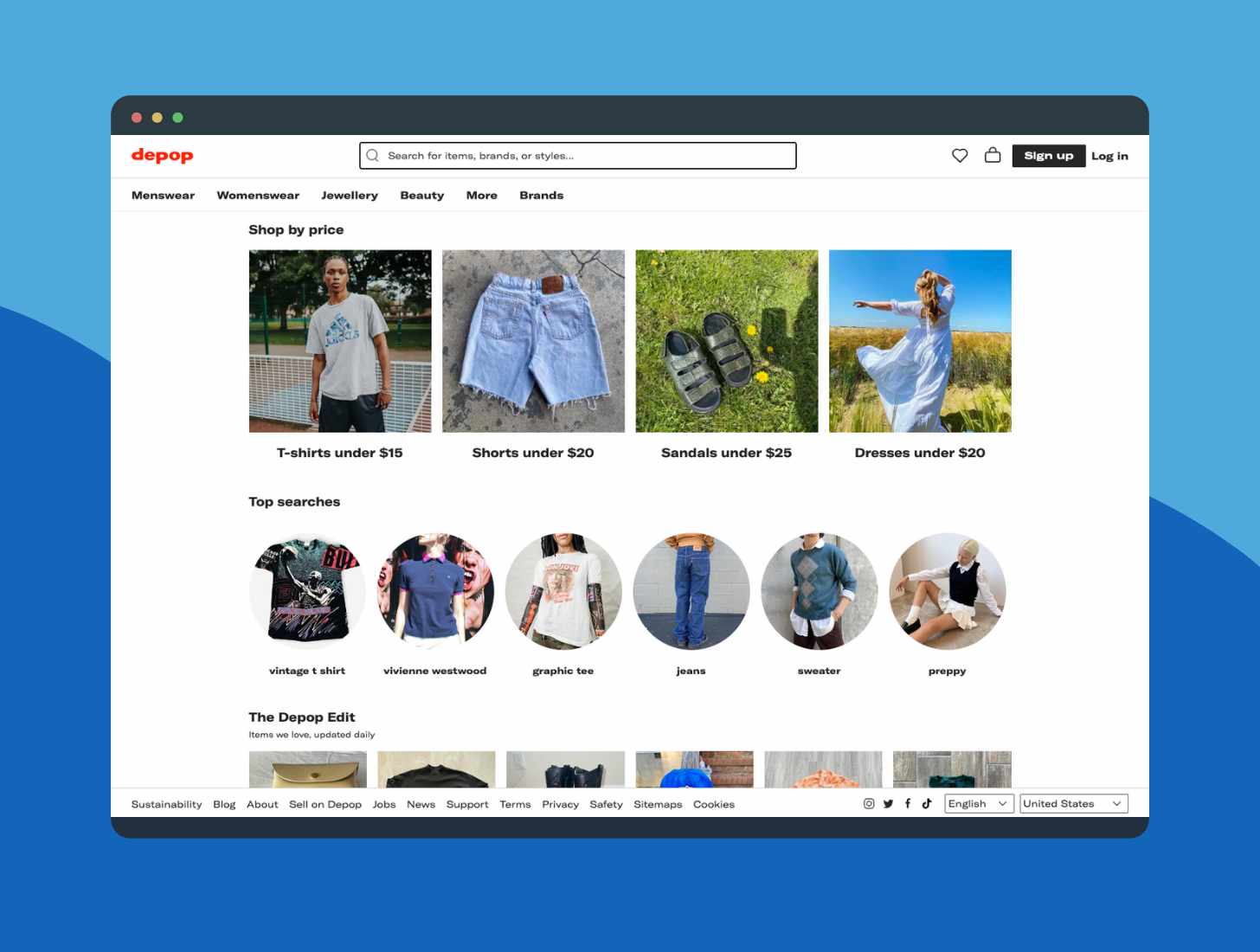
Depop is the quasi-Instagram online marketplace widely known to speak to the Millennial and Gen Z generations. The platform is dedicated to buying and selling second-hand clothing directly from popular influencers, celebrities, and diverse groups of (extremely stylish) folks.
I specifically go to this app when I’m looking to sell unique items or trendy vintage pieces (like Y2K dresses or streetwear).
What’s good:
- If you’re an avid Instagrammer, you’ll feel right at home in this app.
- Great for sellers looking to part ways with trendy items.
- Depop charges a flat 10% commission fee per sale — which is relatively low compared to other competitors.
- The company handles the payment and shipping for you. Simply package the item and drop it off at a local post office.
- Choose whether you or the buyer pays for shipping, and set your own rates.
Keep in mind:
- Because Depop is a social platform, like Poshmark, you have to put in a little work to get sales. This means posting new items regularly, responding to messages and offers, and shipping items out quickly.
- Offering free shipping on your items doubles your chances of selling. If you choose to offer this, be sure to include it in your bio!
- Depop does not allow stock photography. If a seller chooses to share a listing with one, the platform will more than likely take it down.
Etsy
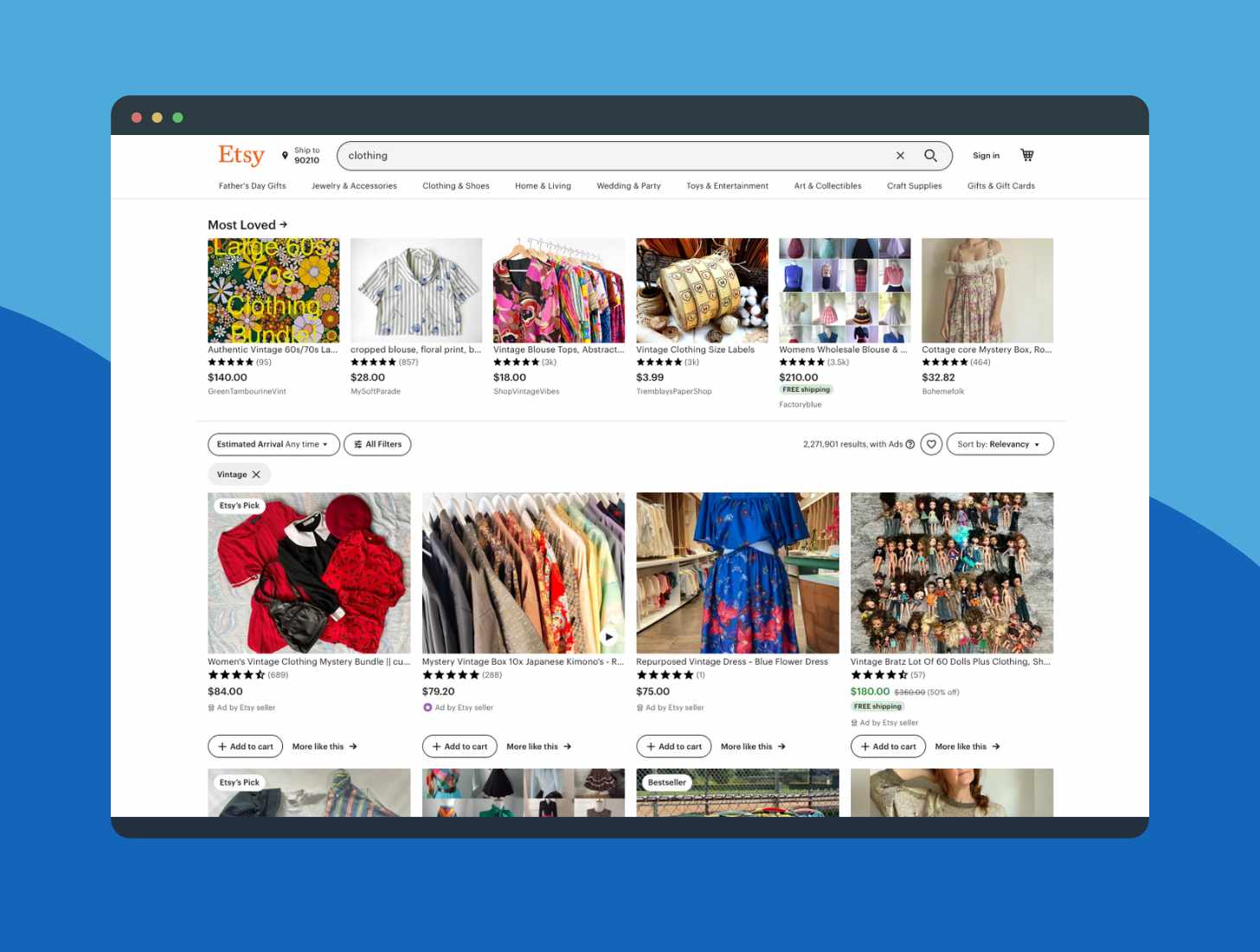
Etsy is a reselling paradise for those seeking to specifically sell handmade goods and vintage pieces. Launched in 2005, Etsy has since become one of the most popular platforms for artists, craftspeople, and collectors to sell their unique and thoughtful items.
With millions of active buyers from around the world (82 million to be exact!), Etsy offers you a massive global marketplace to showcase your unique clothes to shoppers who appreciate and are seeking out your specific niche.
I turn to this platform when I want to sell vintage pieces. I love the community Etsy has cultivated, the resources that the company offers sellers (I often turn to its podcast for tips and tricks), and the access to global marketplace filled with people who care about preserving vintage.
What’s good:
- Etsy provides its sellers with access to a wealth of community-driven resources, including seller education, marketing tips, and forums where you can connect with experienced sellers.
- You can access features like coupon codes and promotions to help you attract customers and drive sales.
- Etsy has built-in analytics, including page traffic, revenue, and more. (Which I find so helpful as a reseller!)
Keep in mind:
- Etsy is a platform that only sells handmade and vintage items.
- Sellers pay 20 cents to list an item and then a 6.5% transaction fee on the price you display for each listing, plus the amount you charge for shipping and gift wrapping.
- Simple, clean, and aesthetic photos can help you sell your clothes faster — at least that’s true for me!
- Keyword research is important when trying to sell your items on this platform, so use those SEO skills to get your clothes in front of the right people!
Mercari
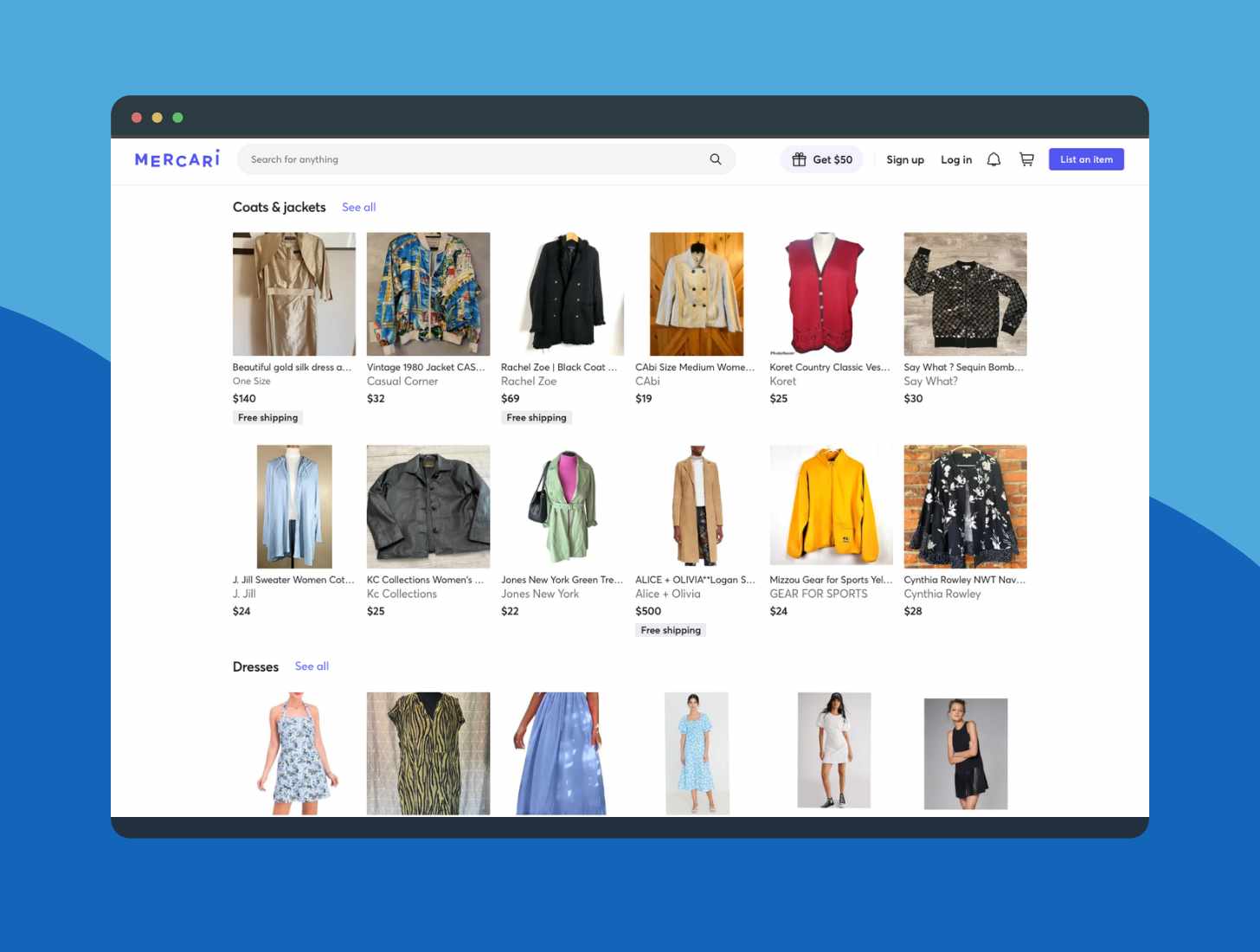
Mercari, like Poshmark and Depop, is all about making buying and selling online a breeze. Where Mercari differs from similar marketplaces is in its Mercari Local feature — a contactless way of buying and selling products under 50 pounds that are local to you. (So if you’re looking to sell your clothes or shoes in bulk, this might be a great option to consider.)
While I primarily use this platform to source items, I have yet to have a negative selling experience with Mercari. It’s one of those platforms that doesn’t require a lot of time or energy.
What’s good:
- Like Depop, Mercari has one of the lowest seller fees (10%) of any marketplace. This means higher profit margins for you!
- Unlike other reselling platforms (especially the social ones), there's no need for constant maintenance. Just make sure to provide detailed descriptions, measurements, and great pictures upfront, and you'll minimize any buyer questions. Listing and forgetting is the name of the game on Mercari.
- Hassle-free Mercari Local feature allows sellers to bypass shipping and take advantage of its contactless pick-up and drop-off service.
Keep in mind:
- While it’s great to set and forget, if you’re looking to get rid of your clothes ASAP, this might not be the platform for you.
- Mercari offers a free “Promote” feature that allows for an algorithmic boost and more eyeballs on your listing. If you reduce the price of your listing by 5% or more, Mercari boosts your listing in the search results and also notifies all the people who liked your item about the price reduction.
eBay
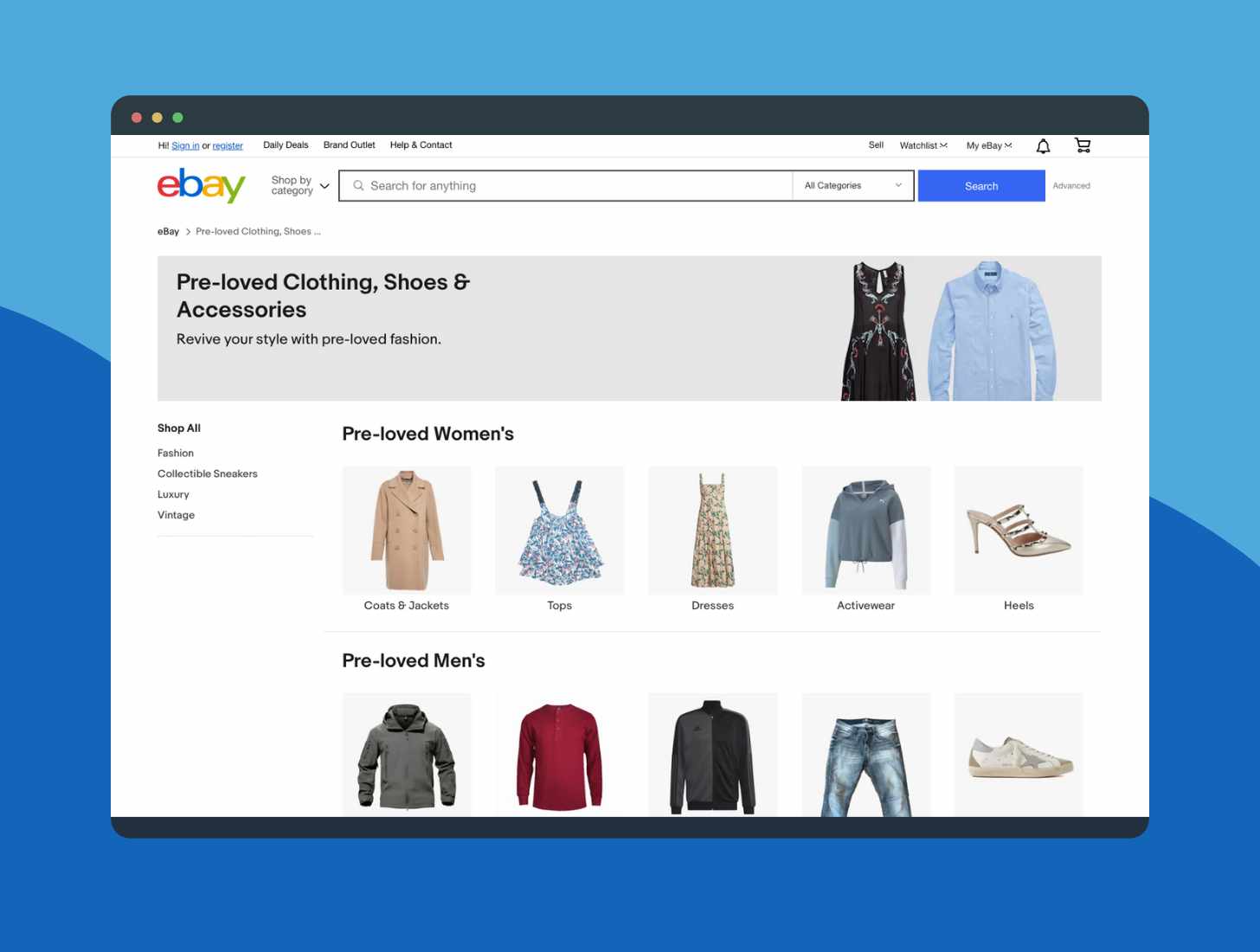
eBay revolutionized the online marketplace scene as one of the pioneering platforms connecting buyers and sellers worldwide, offering a treasure trove of pre-owned, unique, and niche-specific goods. Many thrifters of the early 2000s, like myself, might remember anxiously skipping dinnertime, connecting to their dial-up internet, and furiously outbidding fellow buyers for one-of-a-kind vintage pieces (or… was that just me?).
Today, eBay remains a powerhouse destination for all things secondhand and collector’s-related (from rare ’90s sneakers to the perfect denim jacket).
With over 133 million active buyers worldwide, your listings have the potential to reach a vast audience of eager customers from around the world. Whether you’re looking to clear out your closet, sell your collectibles, or start your own online business, eBay gives its sellers a platform to do it all.
What’s good:
- One of the standout features of eBay is its seller protection program, which helps safeguard sellers from fraudulent activity and provides support in case of disputes.
- eBay's reputation as a go-to destination for vintage, unique, and collectible items works to your advantage as a seller. Buyers specifically come to eBay in search of these items, increasing your chances of attracting interested customers.
- Setting up shop on eBay is straightforward. You can easily create your seller account, set your own prices, and customize your listings to showcase your items.
Keep in mind:
- Selling on eBay non-professionally is free. If you list more than 250 items per month, you’ll have to pay a $0.35 fee per listing.
- If you’re already a business seller, or you plan to sell regularly, you’ll need to get a monthly subscription to one of eBay’s professional plans.
- For casual sellers, eBay will charge “final value fees” when an item is sold. Fees are determined by item category (check out eBay’s fee breakdown).
- Sellers are responsible for shipping their sold items, and eBay provides tools to make shipping as convenient and affordable as possible.
The RealReal
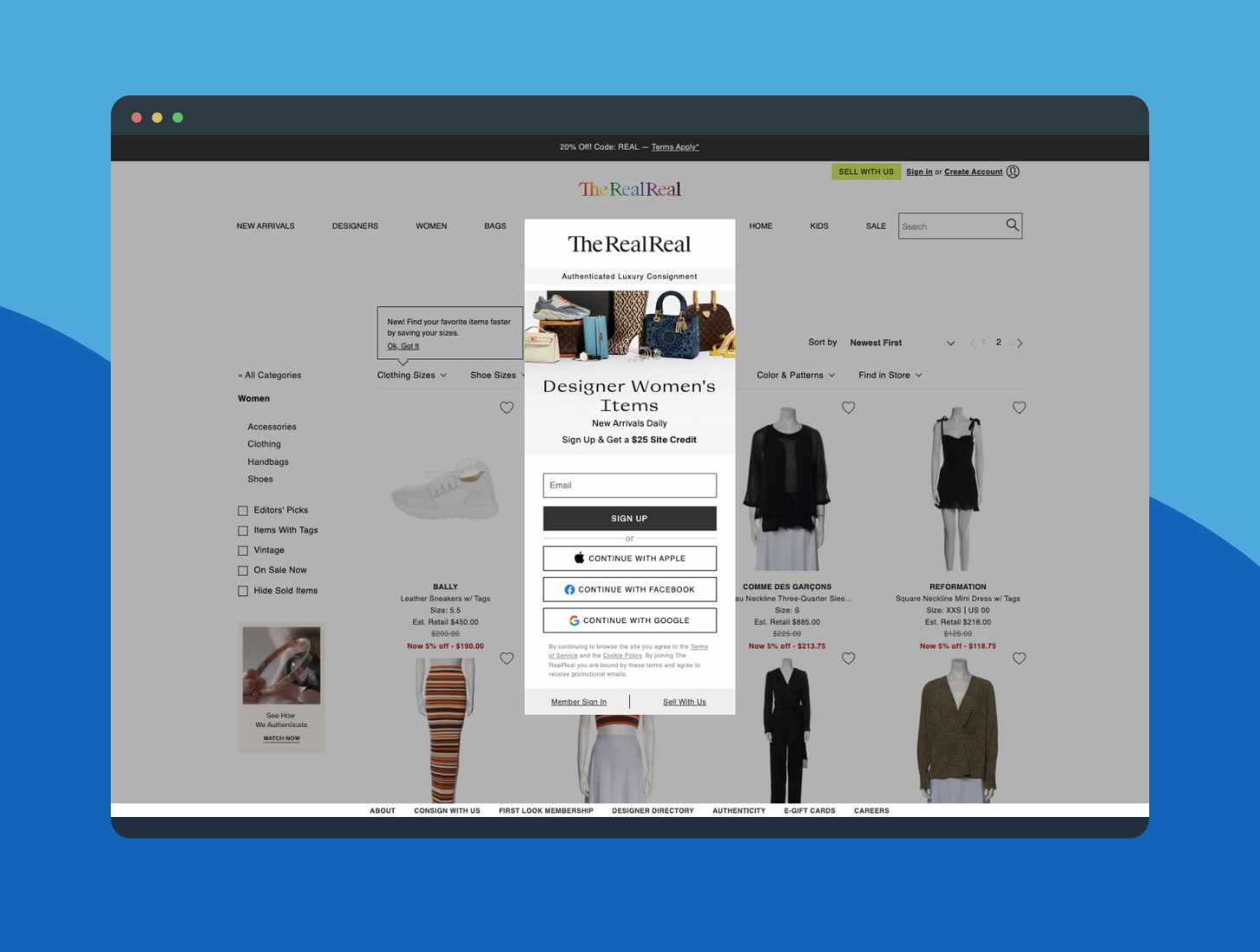
The RealReal is an online consignment marketplace for sellers looking to part ways with their luxury items (hello, cocktail and evening dresses collecting dust in our closets). Known for its authentication process, its team of in-house experts thoroughly inspect and authenticate every item — giving buyers and sellers peace of mind that every item is accurately represented and valued fairly.
Plus, with a global community of luxury enthusiasts, your consigned pieces have the potential to reach a wide audience of eager shoppers looking for exactly what you want to get rid of!
What’s good:
- The RealReal takes care of the entire selling process for you, from expert authentication, copywriting, photography, and shipping.
- The company offers appointments at all retail locations (find one here), free at-home pickup, or prepaid shipping labels to make it convenient for sellers to send their items.
- Items go through a rigorous, brand-specific authentication process conducted by authenticators with significant experience, who are highly specialized in specific categories.
Keep in mind:
- Unlike other marketplaces where the seller decides their listing prices, selling on the RealReal offers you less control. Their team of luxury fashion authenticators determines the cost of your luxury item based on its pricing strategy defined by the current market trends. Many people don’t like this part of their selling experience, so it’s something to keep in mind.
- The RealReal’s commission structure is based on its rewards program: Essentially, the more you sell, the more you earn, and the more benefits you receive. You earn more for in-demand, high-value pieces, while lower-value items with less demand have lower commission rates.
thredUP
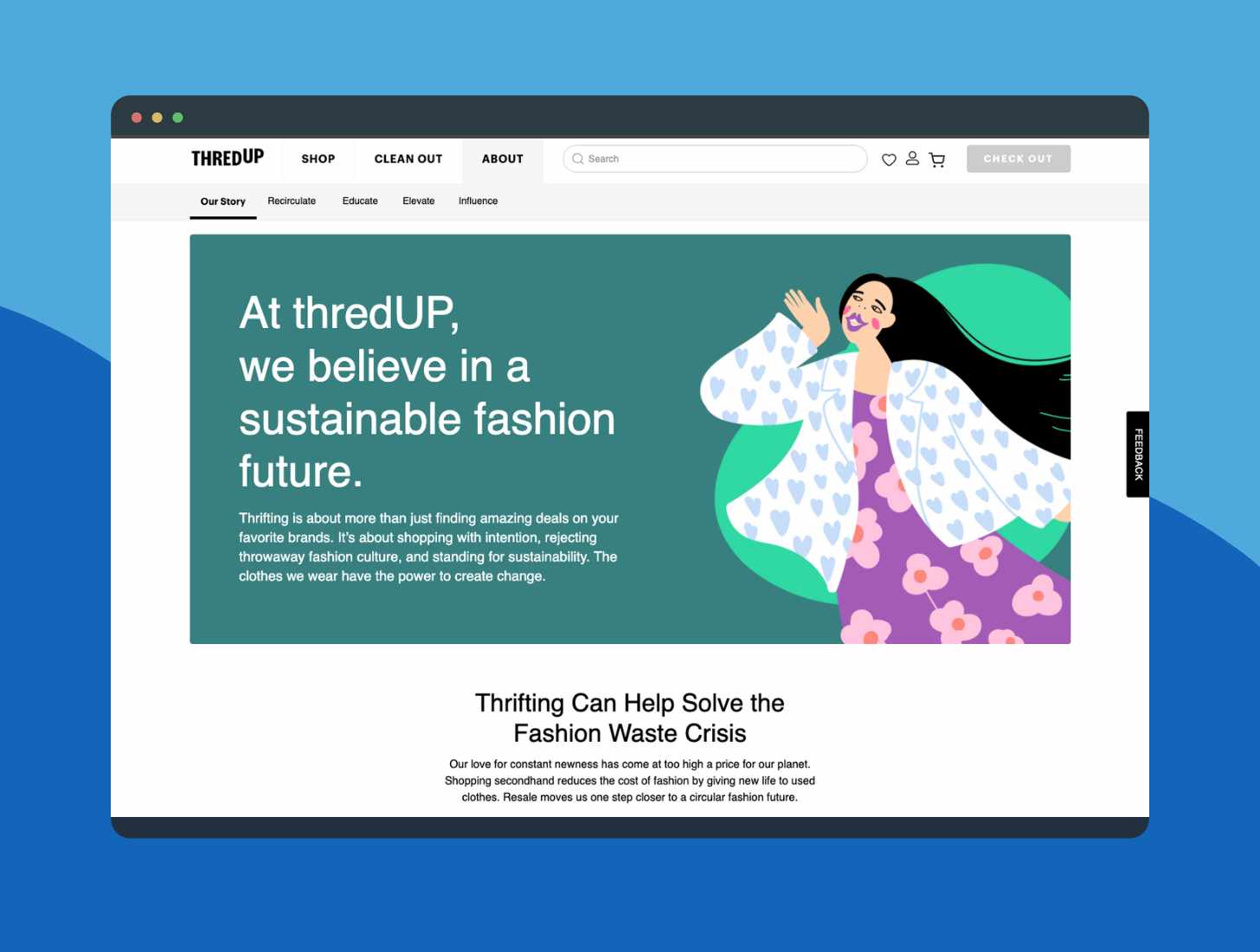
thredUP is the ultimate hassle-free online consignment marketplace for women’s and kids’ second-hand clothing. With a staggering 52.6 million sellers and a mind-boggling selection of items from 35,000 brands (seriously, they’ve got thousands of pages worth of goods), thredUP provides a massive platform for your listings.
You can sell virtually any style of clothing, from everyday essentials to high-end fashion. Sellers don’t have to invest too much time and energy into the selling process either! Fill up one of thredUP’s Clean Out Kits, which includes a pre-paid shipping bag, and its team takes care of the rest — photographing, listing, and even handling shipping.
What’s good:
- If you’re looking to invest the least amount of effort into selling your clothes, thredUP does all the hard work for you! Fill up your prepaid Clean Out Kit, send it to thredUP, and they’ll handle everything from there.
- A great option for anyone cleaning out their closets with styles ranging “from Gap to Gucci.”
- Minimal effort is needed to sell here.
Keep in mind:
- A $14.99 service fee will be deducted from earnings sent in Clean Out Kits. You will not be charged upfront.
- You don’t have control over pricing. Listing price is based on the brand, demand, and quality of the item.
- Payouts and consignment windows vary by brand. For premium and designer brands (like J. Crew, Lululemon, and Gucci), you can earn up to 80% of the selling price. For mid-priced brands (like Gap, Nike, and Zara), you can earn up to 60% of the selling price. Lastly, the items that would be considered low-priced value brands (like Forever 21 and Old Navy) may not be eligible for a payout, however, you can still send them in.
Facebook Marketplace
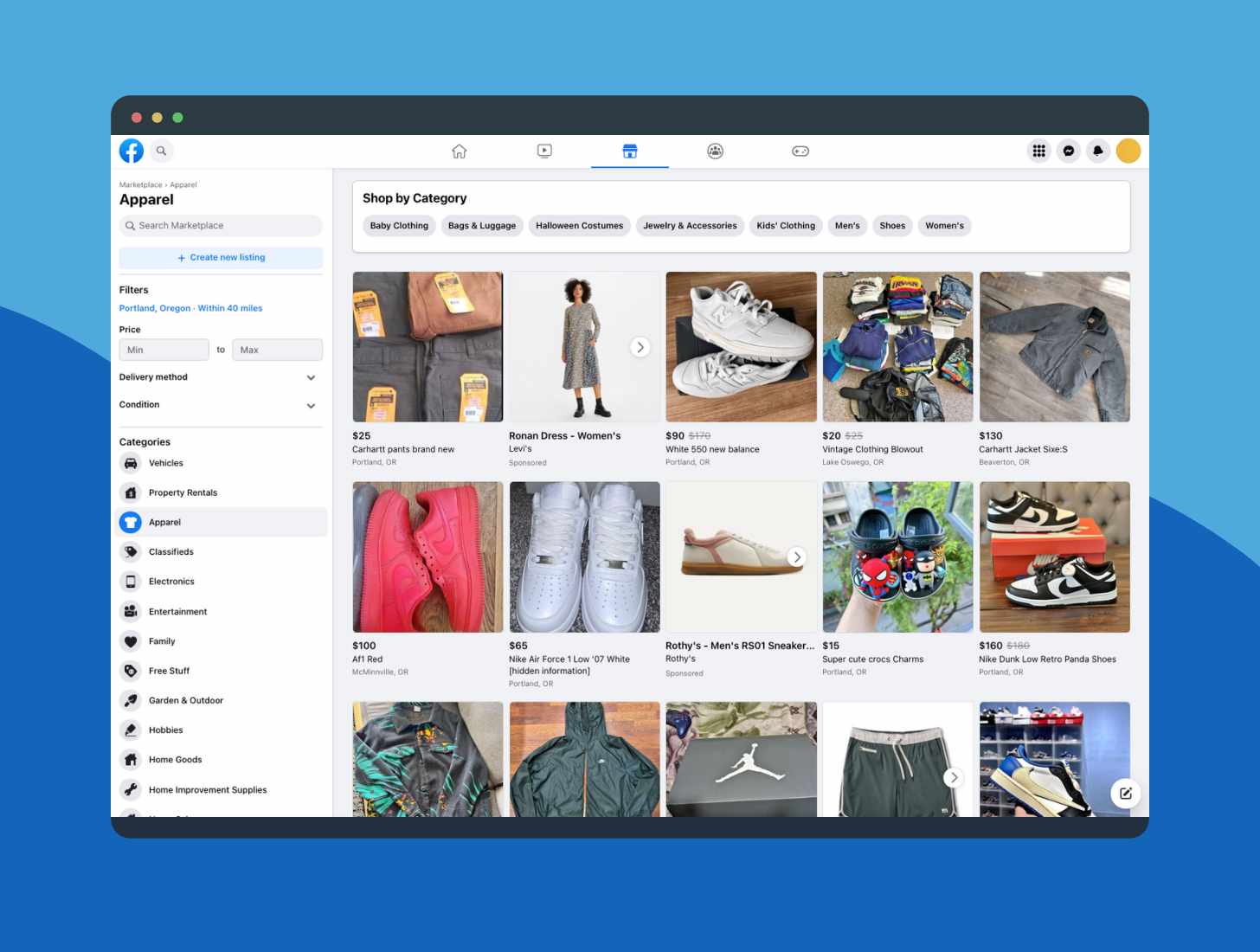
Facebook Marketplace is a platform within the Facebook app that allows users to buy and sell items with people within their local community. While most of us might think of Facebook Marketplace as a space to find great deals on household appliances, antique furniture, drool-worthy mid-century modern home decor, sellers are also finding success with selling their clothes — especially when they bundle their items.
According to Facebook’s Q1 2021 report, Facebook Marketplace has more than one billion visitors, and nearly three billion users on the site overall. With this massive reach, sellers are able to get their items seen immediately by large numbers of people.
What’s good:
- You don't need to pay any fees to list an item.
- Most of us have a general understanding of how to use Facebook, and the Marketplace has the same simple format — so it’s super easy to use.
- With its vast user base, the platform provides you with the opportunity to showcase your listings to billions of potential buyers. Not only can your items be seen by users within the Marketplace, but they can also be shared across specific Facebook groups that cater to niche interests relevant to what you're selling. This exposure increases the visibility of your listings and enhances the chances of finding interested buyers who are specifically looking for the items you have to offer.
Keep in mind:
- When selling items locally, it's important to prioritize your safety and choose meet-up locations that are secure, public, and in a neutral spot (try not to invite strangers into your neighborhood).
- Posting on the platform is simple for a reason. Facebook doesn’t verify products or vet buyers and sellers, which opens up the platform to scammers and junk. Be careful.
- When customers purchase an item from you and make the payment through Facebook, a small payment processing fee will be charged.
→ Sell on Facebook Marketplace
Kidizen
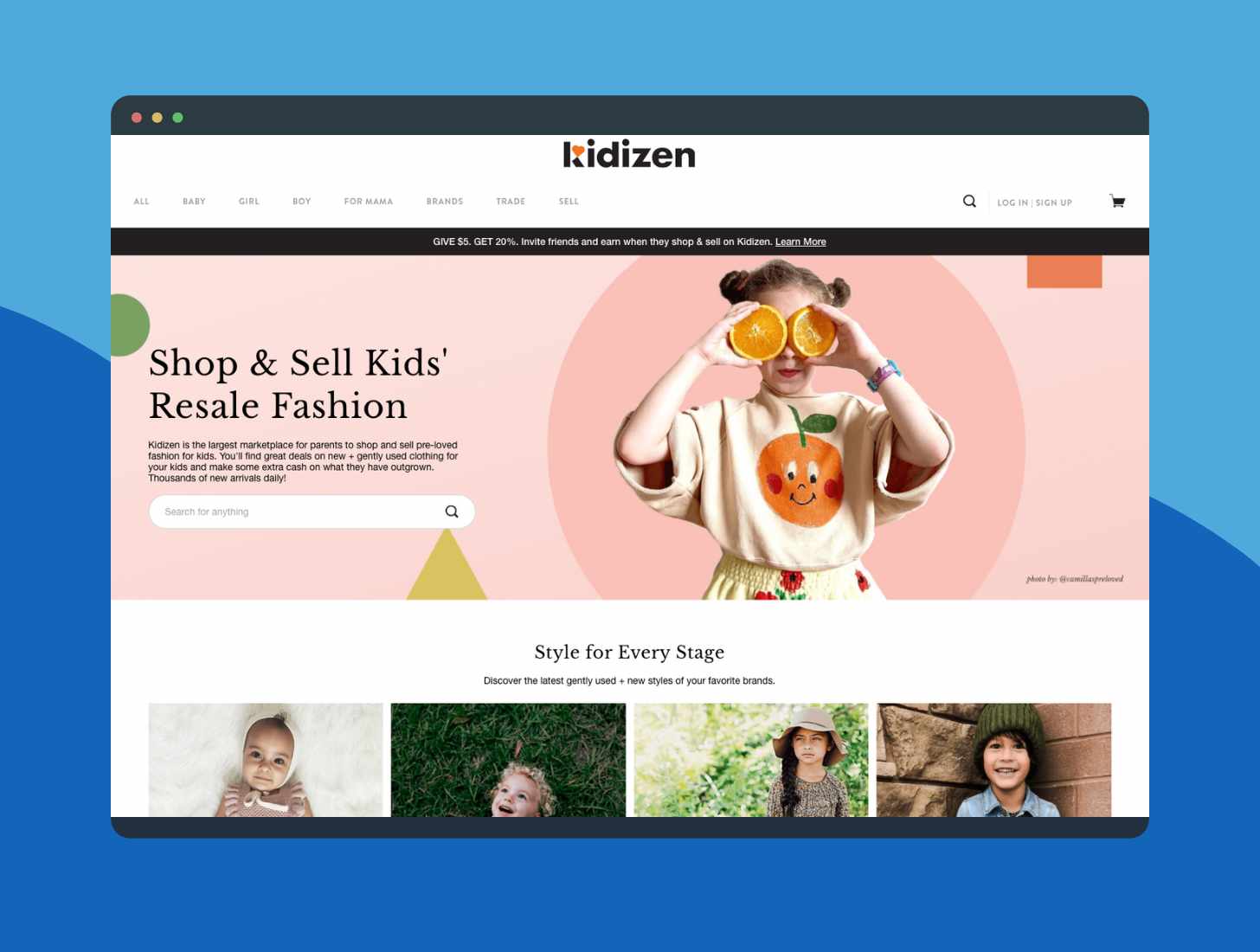
Kidizen is an online marketplace that allows parents to sell gently used clothing, accessories, toys, and gear for babies and kiddos.
While I don’t have kids or sell kid’s clothes, Kidizen seems to have a great online community of parents looking for sustainable options to get rid of their kid’s clothing. The company offers a user-friendly app where you can effortlessly upload photos and descriptions of your items (so no complicated processes or technical skills are required)!
What’s good:
- Listing an item on Kidizen is free.
- Kidizen’s engaged community allows sellers to connect with parents who are ready to discover and purchase secondhand clothing and share tips and tricks for selling and listing.
Keep in mind:
- Kidizen deducts a 12% fee from the list price when an item is sold.
- Sellers are responsible for shipping costs and generating a shipping label. You can purchase a label through Kidizen or on your own.
Vinted
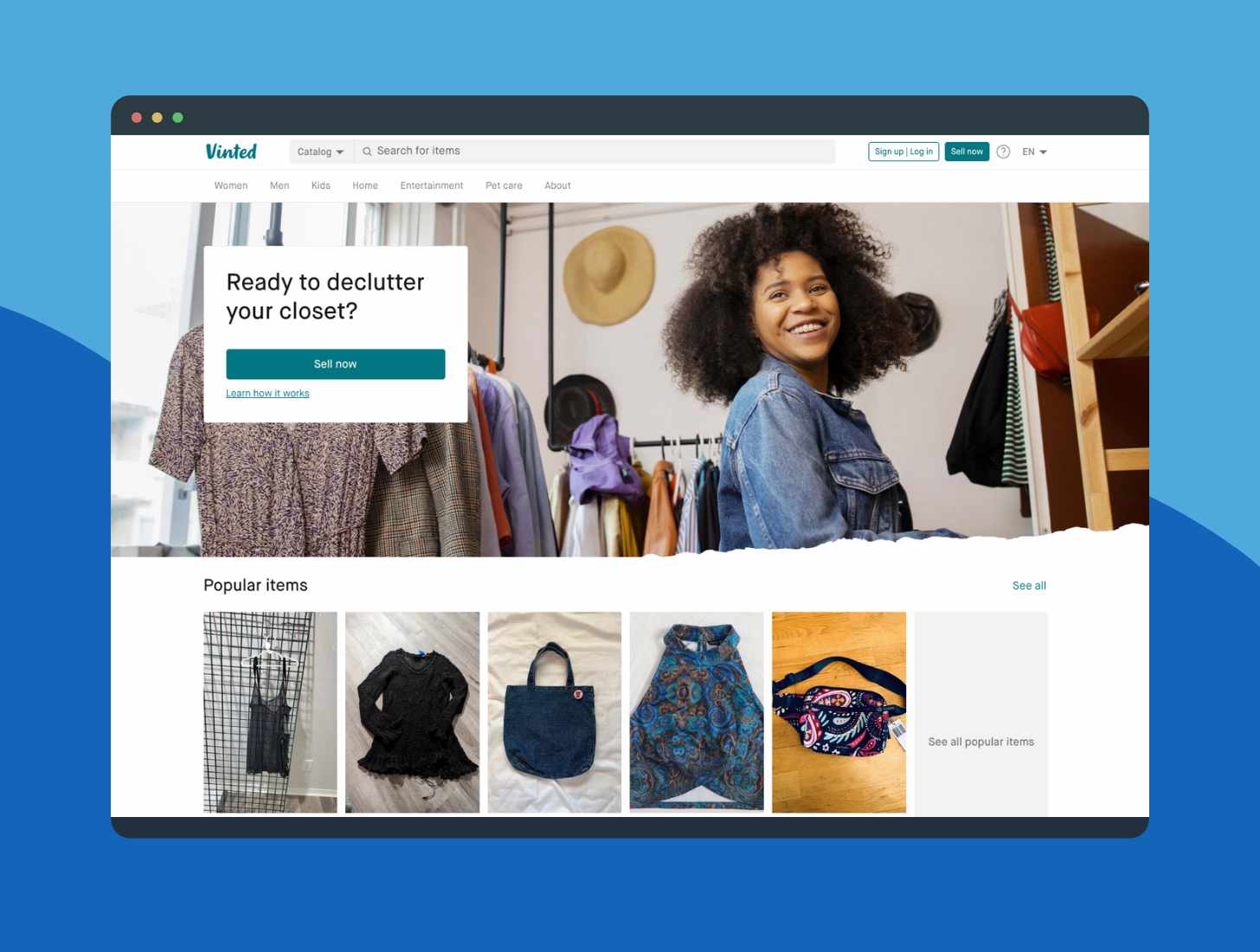
Vinted is an online second-hand marketplace that’s all about helping people (and pets) declutter their closets! Powered by a massive community of over 75 million members, this marketplace offers the opportunity to list pieces from a wide range of brands, catering to a diverse audience of potential buyers.
The best part is that Vinted has zero selling fees, meaning you get to keep 100% of the profits from each sale. This gives you the freedom to maximize your earnings and make the most out of your selling experience on the platform — something other platforms don’t offer.
What’s good:
- Sellers can list their items for free.
- Zero selling fees — so what you earn is 100% of what you keep!
- The buyer pays for shipping, so all you have to do is print out the prepaid shipping label and ship the package out!
Keep in mind:
- The more shipping options you offer your buyers, the higher your chances of selling!
- Sellers are paid as soon as the buyer confirms that everything looks good.
Geartrade
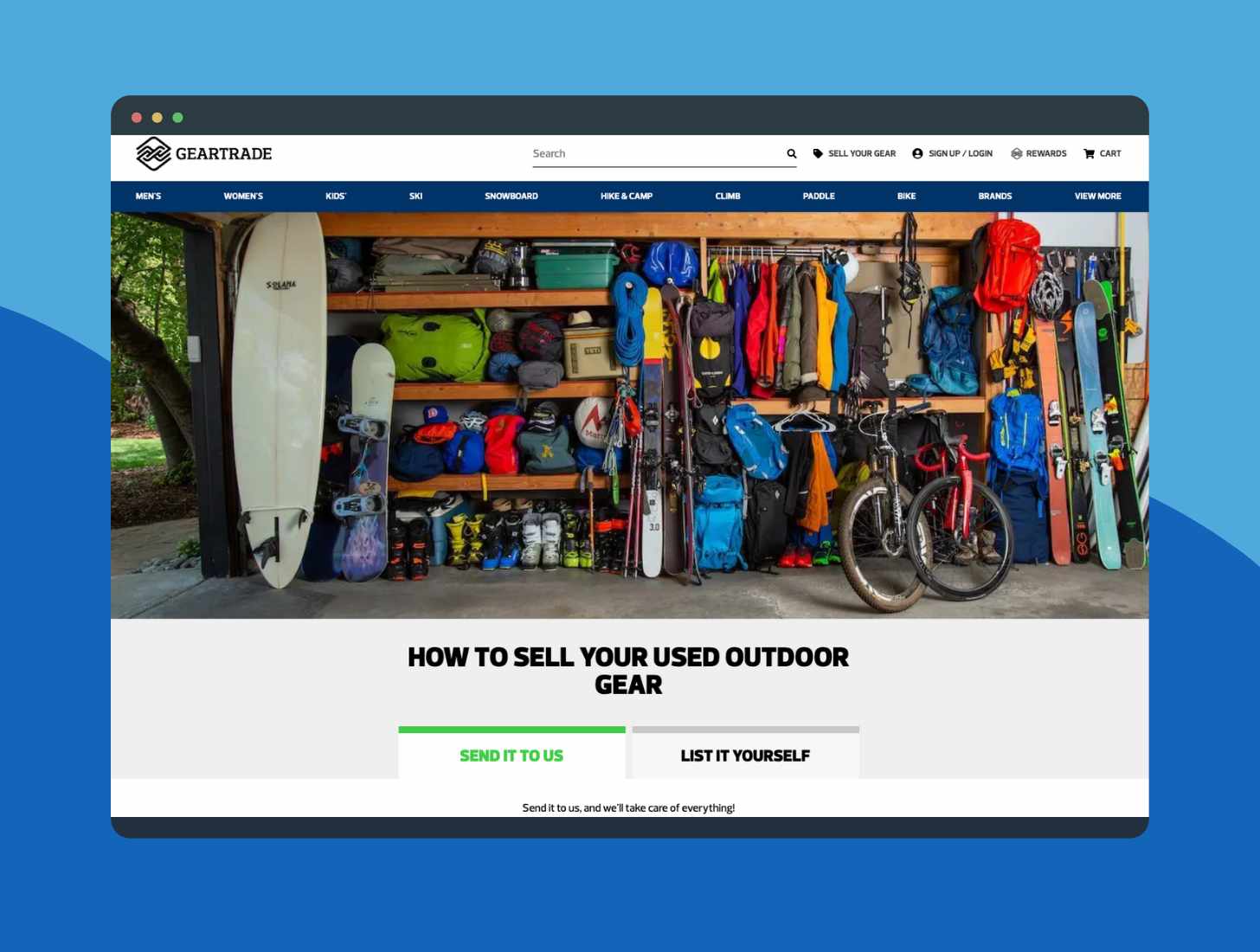
Geartrade is an online marketplace specifically geared (pun intended) toward buying and selling new and used outdoor clothing and equipment. The user-friendly platform offers a wide range of products, including clothing, footwear, camping gear, and sports equipment.
Sellers on Geartrade have two options to earn cash: They can either send their gear directly to Geartrade and let their team handle the selling process, or they can list their items themselves for more control and potentially higher profits.
What’s good:
- Geartrade handles customer service, payment processing, and seller protection.
- Niche marketplaces help your items reach a pool of buyers who are specifically interested in your stuff — it basically increases the likelihood of making successful sales and connecting with customers who have a genuine interest in what you’ve got to offer.
Keep in mind:
- Be sure to ship any sold items within seven days and input the tracking number so your buyers know you sent their gear — and so that Geartrade can pay you!
- Geartrade does not charge an account or listing fee. Instead, they charge a 15% commission fee plus added payment processing fees.
- While most clothing is accepted, please review the company’s list of items they do not accept.
Grailed
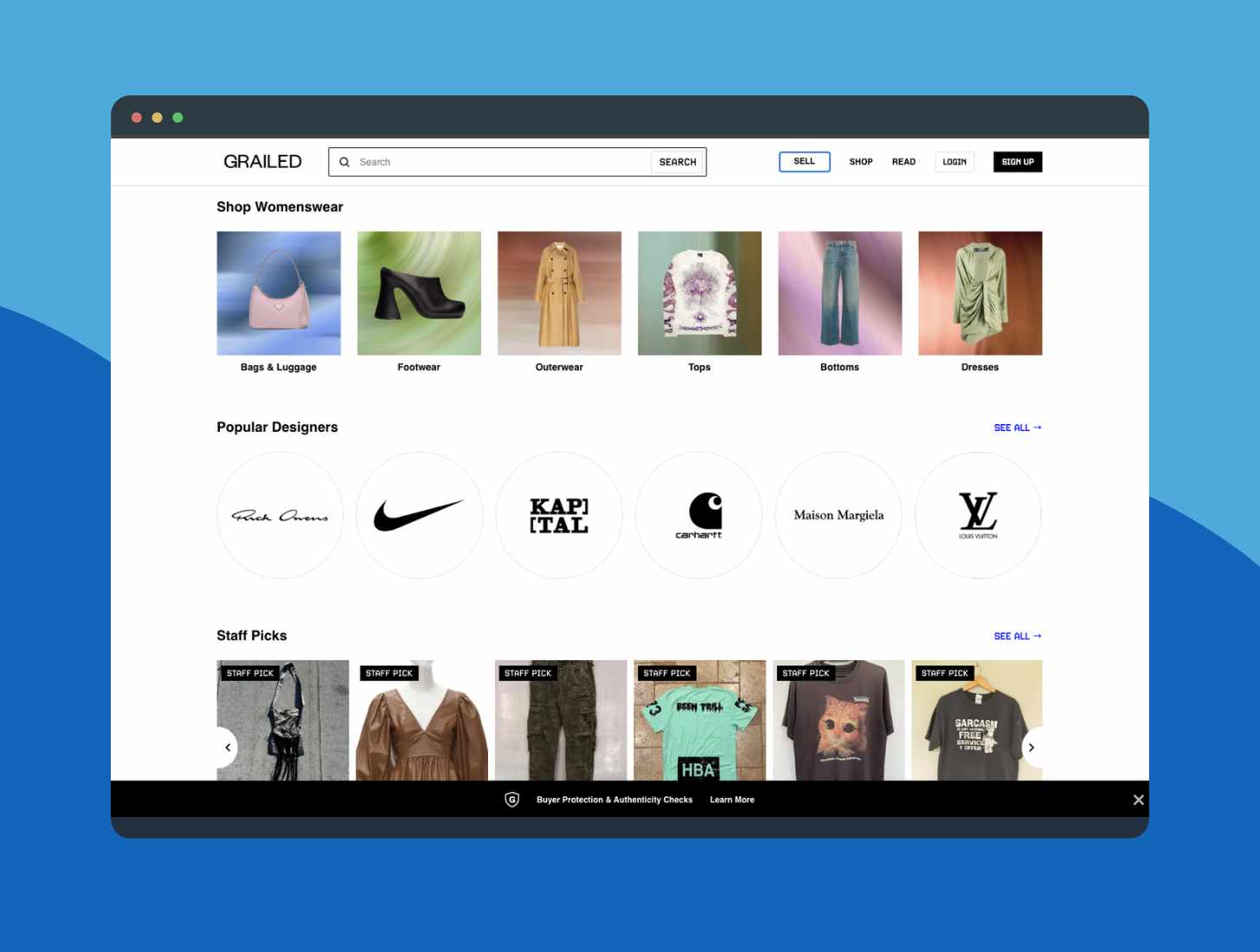
Grailed provides a specialized online marketplace for men’s clothing and streetwear. With its niche focus on men’s fashion and streetwear, the platform offers its sellers a targeted audience of passionate buyers.
Sellers looking to get rid of high-end designer clothing, sneakers, accessories, or vintage pieces gain access to a dedicated community of fashion-savvy folks actively seeking unique pieces.
What’s good:
- Post any item for free.
- Grailed functions like a specialized version of eBay, offering a user-friendly interface and powerful search engine that allows buyers to easily find specific brands, sizes, and categories — i.e. more opportunities for buyers to find your clothes!
- The platform organizes its listings into distinct categories to cater to different buyer preferences. The “Grailed” category is specifically for high-fashion pieces, while “Hype” focuses on up-and-coming brands, and “Basics” encompasses mainstream items. This categorization system ensures that your clothes are showcased to buyers actively seeking those specific types of items. By placing your listings in the appropriate category, you increase the chances of connecting with buyers who are intentionally looking for the type of clothing you have to offer.
Keep in mind:
- Grailed charges a 9% commission fee plus processing fees when your item sells.
- While they have introduced womenswear as a category, the platform's audience remains predominantly geared toward men's fashion.
- Grailed uses a strict digital authentication process to spot fake and inauthentic items. If a seller is found to be attempting to sell inauthentic items, the account will be permanently frozen by moderators with a zero-tolerance policy in action.
OfferUp
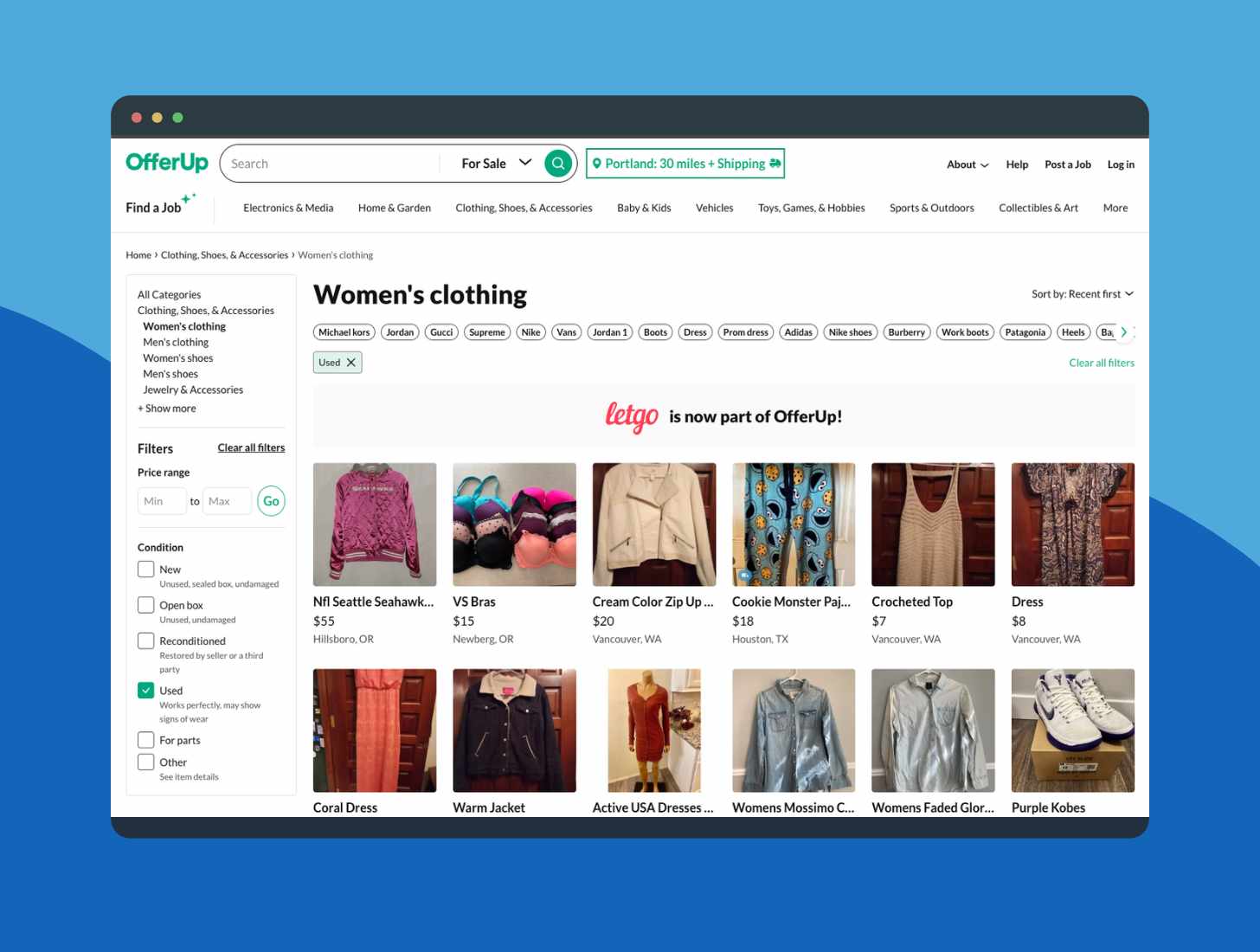
OfferUp is a popular online marketplace that provides a convenient platform for sellers to connect with local buyers and facilitate fast and easy purchases. What sets OfferUp apart is its emphasis on local interactions, which is a great way to lower your carbon footprint while eliminating the hassle of shipping items.
While I’ve only used this platform to buy home decor pieces, I’ve found it to be extremely easy to navigate and connect with sellers (like you). If you don’t have a Facebook account anymore and can’t take advantage Facebook Marketplace’s no fees perks, OfferUp is a great alternative!
What’s good:
- No listing fee.
- A great option for those who want to keep it local.
- Check out people’s profiles for ratings, badges, and transaction history.
Keep in mind:
- Your average response time and average reply rate appear on your profile, and users do look at this when deciding which buyer to buy from.
- Sellers are responsible for paying a service fee when they ship items sold via OfferUp.
- If meeting with a buyer in person, it's important to prioritize your safety and choose meet-up locations that are secure, public, and in a neutral spot (avoid inviting strangers into your neighborhood).
A woman’s inability to exercise basic human rights and to reach her full potential is an unfortunate reality for many around the world — including within our very own communities.
Systemic inequalities, discriminatory laws and policies, gender stereotypes and biases, lack of access to healthcare, education and economic opportunities, and gender-based violence are all very real issues that continue to impact women today — both individually and collectively.
What’s more, women from marginalized communities (this includes those within the BIPOC, LGBTQ+, and disabled communities), often face additional barriers to achieving gender equality and often experience compounded discrimination and oppression.
Enough is enough.
Staying informed on policies and movements related to women’s rights has never been more important. The good news is that newsletters written by passionate and informed feminists have become a powerful tool for building community and solidarity outside of traditional media.
From fighting for reproductive rights to closing the wage gap, we’re rounding up some of the most informative, inspiring, and action-oriented newsletters out there covering a range of topics, from politics and policy to pop culture and stories from diverse voices and perspectives.
Every day, our team diligently curates and shares a newsletter filled with the best good news stories (which also includes feminist good news!), so you can say we think about newsletters all day every day. Our passion for them has led us to create a comprehensive newsletter guide featuring the very best newsletters on the internet.
Whether you’re a seasoned activist or simply looking for ways to advocate for women’s rights in your daily life, these newsletters offer critical knowledge, resources, and hope.
By the way, some of the links in this article may be affiliate links — which simply means we may get to make money at no cost to you. As always, all our recommendations are genuine, unbiased, and based on our actual experiences. Thanks for your support!
You might also like: How To Empower Women & Girls | Best Feminist Quotes | International Women’s Day Quotes | How To (Thoughtfully) Celebrate Women’s History Month
Feminist Newsletters To Subscribe To
The 19th
The 19th is an independent, nonprofit newsroom reporting at the intersection of gender, politics, and policy. Its mission is to empower readers — particularly women, BIPOC, and the LGBTQ+ communities — with the information they need to be equal participants in democracy.
The 19th News(letter) covers a range of topics, including the latest on women and LGBTQ+ folks driving change across America and breaking news on gender and politics. It provides readers with carefully selected articles and op-eds, as well as original reporting from The 19th newsroom.
→ Subscribe to The 19th News(letter)
Girlboss Daily

Girlboss is a daily newsletter for women that’s packed with epic tips on everything from empowerment in the workplace to prioritizing wellness to current events and politics.
Tailored for ambitious women who want to take on the world and find success on their own terms, this newsletter gives you everything you need to feel equipped to slay.
Content includes career advice, dream job postings, and talking points that will impress your group chats and boardroom meetings; this empowering and oh-so-fun feminist newsletter is like having a best friend in your inbox who will keep you informed, inspired, and entertained.
Feminist

Feminist is a weekly newsletter for change-makers, activists, artists, and founders looking to connect with a community of fellow badass intersectional feminists.
From curated and vetted businesses founded by women, LGBTQ+, and BIPOC entrepreneurs to good news round-ups that keep you in the loop, this community-centered newsletter gives its subscribers ways to support others, stay informed, and create your own good in the world.
You can also expect exclusive interviews with contemporary artists, photographers, writers, and more, as well as a curated selection of readings to further your understanding of feminism.
The Newsette
The Newsette is a newsletter for the modern, ambitious woman who wants to stay informed on the latest news and trends in as little as five minutes a day.
This daily news, business, culture, beauty, and wellness newsletter is packed with actionable insights, inspiring stories, and practical tips that empower women to seize the day and achieve their goals.
With dedicated sections on wellness, career, beauty, and more, The Newsette is like a magazine in your inbox, providing fresh and engaging content that keeps you informed and motivated.
Whether you’re looking for the latest investment opportunities or the hottest beauty trends, this newsletter covers a lot of ground. Plus, you’ll get to meet inspiring founders and discover new products that can help you become the most informed person in the room.
The GIST

The GIST is a women-led, inclusive sports media company that’s leveling the playing field in sports by providing equal coverage to both men’s and women’s sports. Think of it as your witty, sports-obsessed bestie!
The company is focused on changing the game in the male-dominated sports industry where less than 15 percent of journalists are women, and less than 5 percent of coverage is on female athletes and non-binary folks.
Whether you’re a die-hard fan or simply curious about the latest sports news, The GIST is a great (free) way to stay informed on all things college sports, business, and news.
The United State of Women
The United State of Women (USOW) is an organization that offers subscribers two variations of newsletters that celebrate women’s rights and progress.
Its primary newsletter, The Feminist To-Do List, is an action-oriented newsletter that helps you stay informed about all things intersectional feminism. It features bi-weekly action items, events, and news on everything from organizing to pop culture.
Its second newsletter, Joy is Resistance, gives a nod of gratitude to poet Toi Derricotte, who coined the phrase, “Joy is an act of resistance.” The newsletter honors and uplifts joy during each Heritage Month. It showcases artists, creators, and storytellers from across the country who embody the essence of joy as an act of resistance.
Whether you’re an activist, entrepreneur, student, or simply someone who cares about making the world a better place for women, the USOW newsletters are a way to stay informed, inspired, and empowered.
→ Subscribe to the USOW newsletter
Abortion, Every Day

Abortion, Every Day by Jessica Valenti is a feminist newsletter that specifically provides daily coverage of abortion news and commentary. As a writer and activist who has been involved in the feminist movement for nearly 20 years, Valenti brings well-informed knowledge and experience to her coverage of abortion rights.
She offers a comprehensive analysis of the latest legal and political developments in the ongoing battle to ensure access to safe and legal reproductive care for women.
The newsletter also features personal stories, expert interviews, and resources to help readers get involved in the fight for reproductive rights and justice.
Much of the freedoms we have and enjoy today are thanks to the tireless efforts of Black activists who put their lives on the line in pursuit of a future that embraces and celebrates the rights of all individuals.
With their powerful voices and unwavering commitment, these extraordinary individuals have taken a stand against oppression, inequality, and systemic racism.
From the civil rights movement to where we find ourselves today, their courageous actions have disrupted the status quo, shattered stereotypes, and championed the fundamental principles of justice, dignity, and human rights.
Activists like Martin Luther King Jr., Marsha P. Johnson, and Amanda Gorman are some of many (which we’ll dive more into) who are paving the way for future generations of leaders leaving their marks on society, sparking movements, shaping legislation, and igniting hope.
Whether advocating for voting rights, education, criminal justice reform, or addressing environmental justice, LGBTQ+ rights, and intersectionality, their activism has set the stage for a more just and equitable future.
Pioneers of Progress: Black American Activists Fighting for Justice
Martin Luther King Jr.

Martin Luther King Jr. was an influential civil rights leader and Baptist minister. He’s best known for his role in advancing civil rights using nonviolent civil disobedience. Dr. King became a prominent figure in the American civil rights movement in the 1950s and 1960s, advocating for racial equality and ending racial segregation and discrimination in the U.S.
Dr. King gained national recognition for his leadership in the Montgomery Bus Boycott, a successful campaign that aimed to end racial segregation on public transportation in Montgomery, Alabama. He also played a crucial role in organizing and leading the 1963 March on Washington, where he delivered his iconic speech known as the “I Have a Dream” speech. The speech called for an end to racism and envisioned a future where people would be judged by their character and not the color of their skin.
Throughout his years of activism, he believed in peaceful protests, civil disobedience, and active resistance against racial injustice. Dr. King led many protests, marches, and boycotts to bring attention to racial inequality, voting rights, and economic injustice.
Dr. King was tragically and senselessly assassinated in Memphis, Tennessee on April 4, 1968. His death sparked outrage and led to a wave of deep mourning and unrest across America.
In recognition of his contributions to the civil rights movement, Martin Luther King Jr. Day was established as a national holiday in 1983, observed annually on the third Monday in January. Dr. King’s legacy continues to inspire people around the world in the ongoing struggle for equality, justice, and social change.
Coretta Scott King
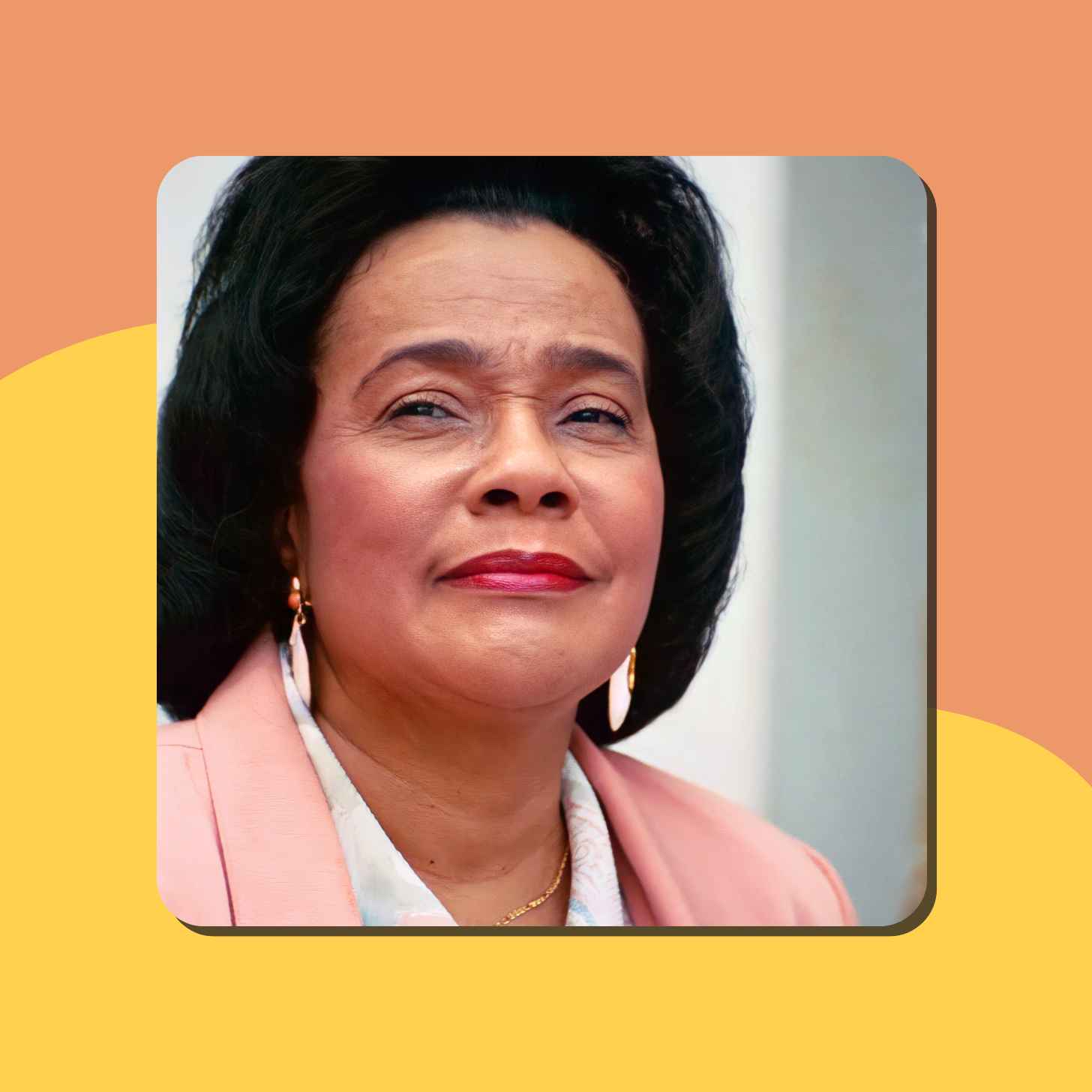
Coretta Scott King may be widely recognized as the wife of civil rights leader Martin Luther King Jr., but her legacy goes far beyond that.
Notably known as the chief architect of Martin Luther King’s legacy, Coretta Scott King spent her life fighting against racism, war, homophobia, and any other form of violence and inequality — all through peaceful advocacy.
Born in Marion, Alabama, King attended Antioch College and the New England Conservatory of Music, where she studied singing and violin. She met Dr. King while studying in Boston, and they married in 1953.
Following Dr. King’s assassination in 1968, King founded the Martin Luther King, Jr. Center for Nonviolent Social Change (also known as The King Center) in Atlanta, Georgia, as a memorial to her husband and a center for promoting social justice, human rights, and nonviolent activism.
King was also an accomplished author and public speaker. She wrote and published a collection of her speeches, writings, and interviews titled “Coretta Scott King: My Life, My Love, My Legacy.”
King passed away in 2006, but her legacy as a civil rights leader and advocate for justice and equality continues to inspire generations of activists.
Rosa Parks
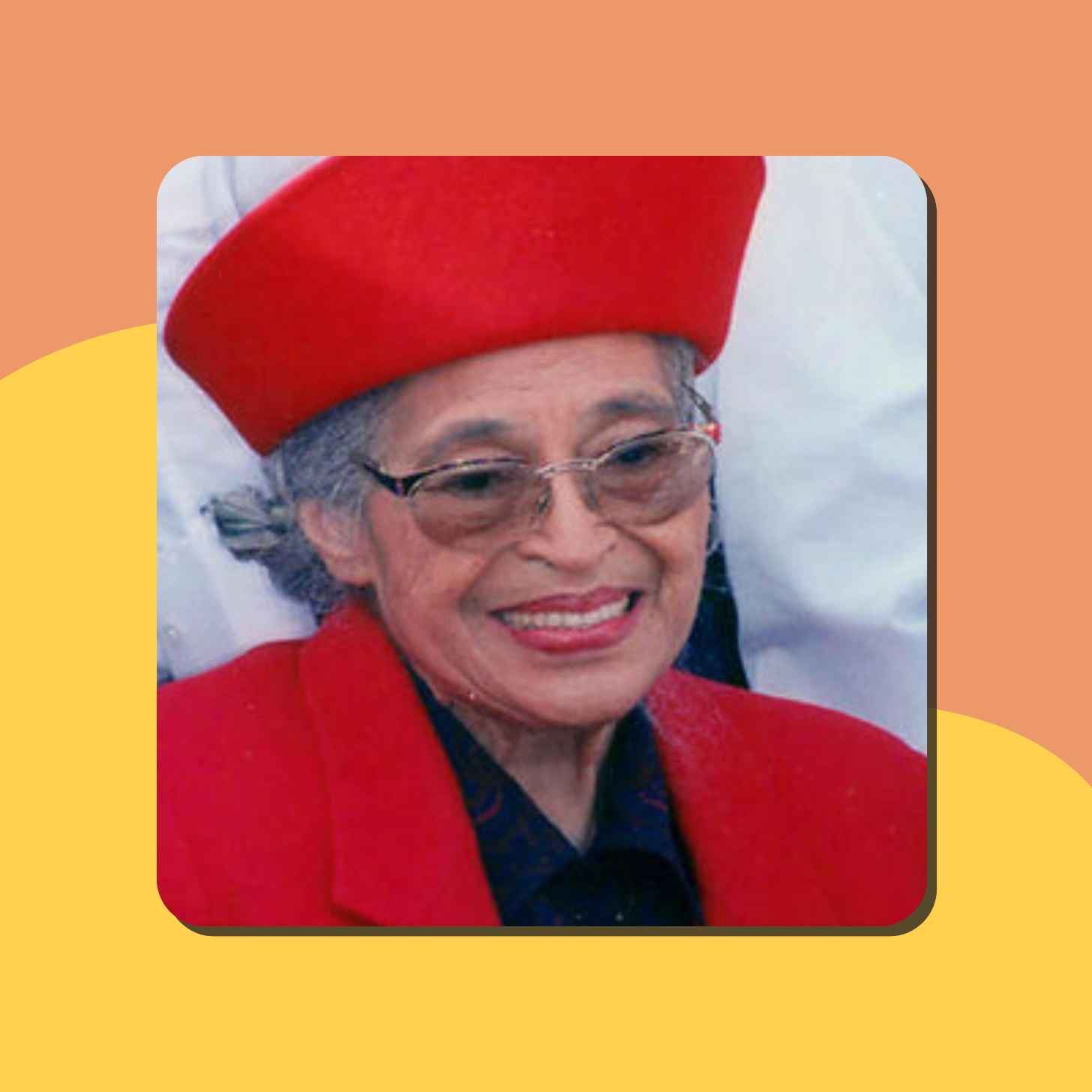
Rosa Parks was an influential civil rights activist best known for her pivotal role in the Montgomery Bus Boycott. Born on February 4, 1913 in Tuskegee, Alabama, Parks became a symbol of resistance against racial segregation in the United States.
On Dec. 1, 1955, the then-42-year-old seamstress refused to give up her seat to a white passenger on a Montgomery city bus. Her refusal to comply with the segregation laws of the time sparked a wave of protests and ultimately led to a citywide boycott of the bus system by Black Americans.
The Montgomery Bus Boycott, which lasted for over a year, was a significant turning point in the struggle against racial segregation and discrimination.
Parks’ act of civil disobedience inspired and energized the civil rights movement. The boycott resulted in a Supreme Court ruling that racial segregation on public transportation was unconstitutional — marking a major victory for the civil rights movement.
Parks’ courageous act and her involvement in the civil rights movement brought national attention to the issue of racial inequality in the U.S. She became an iconic figure in the fight for civil rights and continued her activism throughout her life. Parks worked for the National Association for the Advancement of Colored People (NAACP) and dedicated herself to promoting equal rights, fighting for voter registration, and combating racial injustice.
Parks received numerous awards and honors for her contributions to the civil rights movement, including the Presidential Medal of Freedom, the highest civilian honor in the U.S. Her legacy serves as a powerful reminder of the importance of how individual resistance and collective action in pursuit of equality and justice can move the needle forward for all.
Fannie Lou Hamer
Fannie Lou Hamer was a civil rights activist known for her fierce advocacy for voting rights and her efforts to combat racial inequality in the U.S. — especially when fighting for economic opportunities for Black Americans.
Born in rural Mississippi, Hamer faced the long-term effects of polio throughout her life. In 1961, during a surgery to remove a uterine tumor, a white doctor performed a hysterectomy on her without obtaining her consent. In 1963, she faced further adversity when she endured severe violence while incarcerated in a Mississippi jail for daring to exercise her right to vote.
These harrowing experiences left her physically disabled, yet they fueled her determination to fight for justice and equality.
Her involvement in activism began when she attended a meeting about voting rights in 1962. Inspired by the meeting, she became a member of the Student Nonviolent Coordinating Committee (SNCC) and dedicated herself to registering Black Americans to vote in Mississippi, where discriminatory practices and violence against Black voters were widespread.
Throughout her life, Hamer dedicated herself to fighting for social justice and advocating for the rights of marginalized communities. She worked tirelessly to register Black American voters (through campaigns like the Mississippi Freedom Summer in 1964), organized voter education programs, and fought against voter suppression tactics.
Despite facing threats, violence, and other forms of intimidation, Hamer remained steadfast in her mission to create a more equitable society.
W.E.B. Du Bois

W.E.B. Du Bois was a sociologist, historian, civil rights activist, and writer. Widely regarded as one of the most influential intellectuals and leaders in the early civil rights movement, Du Bois’s work played a significant role in shaping the civil rights efforts of the early 20th century.
Born in Massachusetts in 1868, Du Bois was the first Black American to earn a Ph.D. from Harvard University. He chose to focus on studying and documenting the social conditions and experiences of Black Americans and challenged the prevailing racist narratives of the time.
Du Bois co-founded the National Association for the Advancement of Colored People (NAACP) in 1909 and served as the editor of its magazine, The Crisis.
As a scholar, Du Bois produced groundbreaking works, including his book “The Souls of Black Folk,” which explored the psychological and social impacts of racism on Black Americans. He also conducted extensive research on the history and experiences contributing to the fields of sociology, history, and African American studies.
In his later years, he and his wife, Shirley Graham Du Bois, traveled around the globe supporting anti-colonial and antimilitarist movements. Du Bois died in Accra, Ghana, in 1963.
He left a lasting impact on civil rights activism, scholarship, and the pursuit of racial equality. His writings and teachings continue to inform ongoing efforts for social justice and racial progress.
Thurgood Marshall

Thurgood Marshall was a lawyer, civil rights activist, and jurist who made significant contributions to the advancement of civil rights in the U.S. — becoming the nation’s first Black United States Supreme Court Justice.
Born in Baltimore, Maryland, Marshall graduated from Howard University School of Law in 1933. He dedicated his legal career to fighting against racial segregation and discrimination, particularly in the area of public education. Marshall was a prominent figure in the legal team of the NAACP and argued several landmark civil rights cases before the Supreme Court.
Marshall played a crucial role in shaping the Court’s decisions on various civil rights issues, including voting rights, affirmative action, and criminal justice reform. He’s also best known for arguing the historic 1954 Brown v. Board of Education case, in which the Supreme Court declared “separate but equal” unconstitutional in public schools.
In 1967, Marshall became the first Black American to be appointed as a justice of the Supreme Court by President Lyndon B. Johnson. During his tenure — which spanned from 1967 to 1991 — Marshall consistently supported and advocated for equal protection under the law and challenged discriminatory practices.
His lifelong commitment to equality and justice continues to inspire generations of lawyers, activists, and jurists who strive to uphold and expand civil rights for all individuals in the U.S.
Ida B. Wells
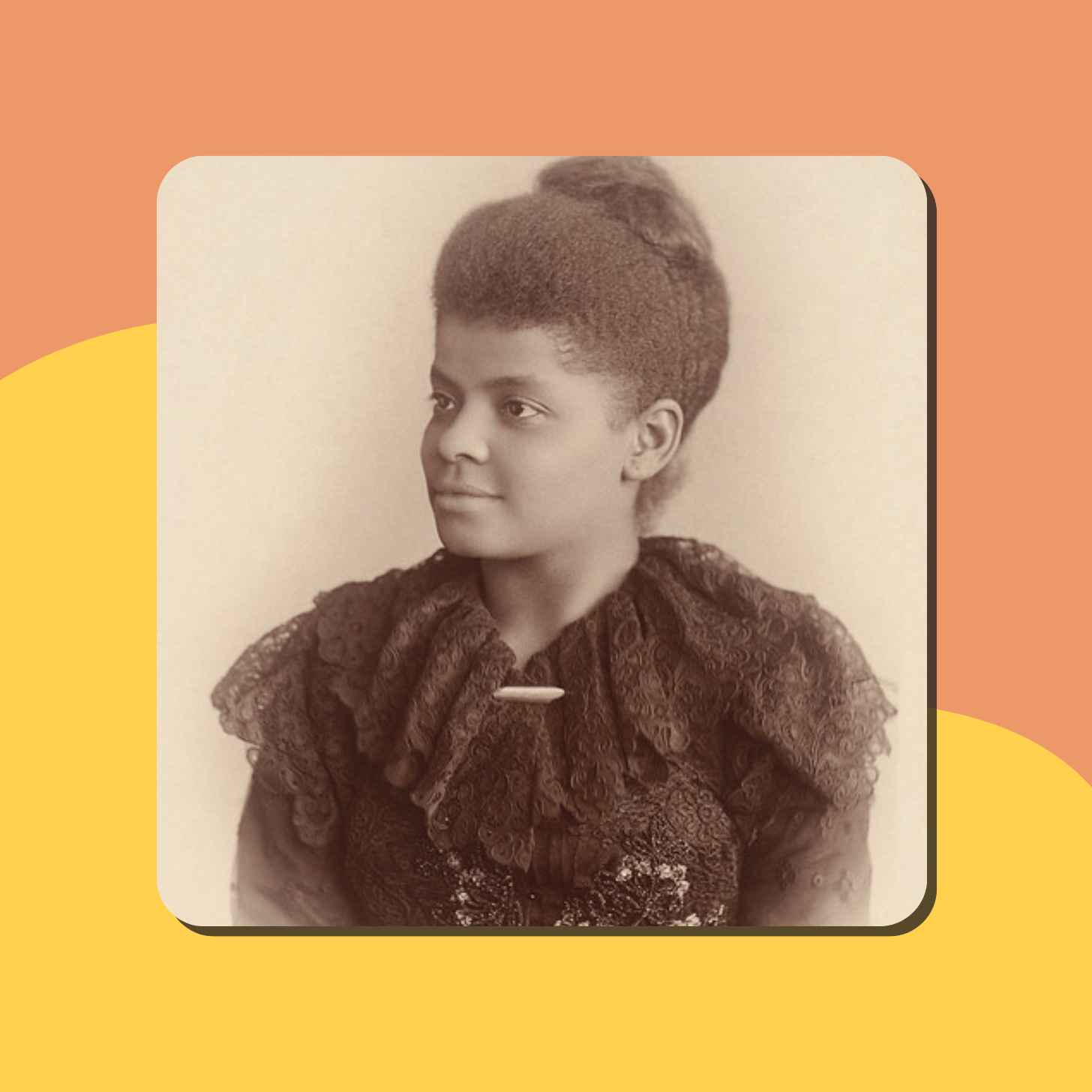
Ida B. Wells was an influential journalist, suffragist, researcher, and civil rights activist. She is best known for her fearless crusade against sexism, racism, and violence, pioneering efforts in investigative journalism.
Born into slavery in Mississippi, Wells became a teacher after the Civil War and eventually moved to Memphis, Tennessee, where she began her career as a journalist. Wells used her writing to expose and challenge racial injustice, particularly the brutal practice of lynching that targeted Black Americans.
Through her investigative efforts, Wells documented and publicized the grim reality of lynching, countering narratives that portrayed these acts as justified responses to alleged crimes. She revealed that many lynchings were actually racially motivated acts of violence and tools of white supremacy.
Wells co-owned and wrote for several Black American newspapers, including the Memphis Free Speech and Headlight. Her writings eventually angered locals, forcing her to move away from Memphis to Chicago, Illinois.
Beyond her powerful journalistic endeavors, Wells was also an active member of the women’s suffrage movement, fighting for the voting rights of Black American women. She co-founded and served in leadership positions in organizations such as the National Association of Colored Women and the NAACP.
Her relentless activism and writings were instrumental in mobilizing public opinion against lynching and challenging the status quo of racial oppression.
She died on March 25, 1931. In 2020, Wells was posthumously honored with a Pulitzer Prize special citation “for her outstanding and courageous reporting on the horrific and vicious violence against African Americans during the era of lynching.”
Bayard Rustin
Bayard Rustin was an influential civil rights activist and strategist best known for his instrumental role in organizing, planning, and executing the 1963 March on Washington, where Martin Luther King Jr. delivered his historic “I Have a Dream” speech.
Rustin was born in Pennsylvania and became involved in activism at a young age. He was deeply committed to nonviolent resistance and drew inspiration from his Quaker background.
One of Rustin’s notable contributions was his mentorship and guidance to Martin Luther King Jr. Rustin introduced King to the teachings of Mahatma Gandhi and advocated for nonviolent protest as a powerful tool for social change. He helped organize critical campaigns, including the Montgomery Bus Boycott.
Despite his significant contributions to the civil rights movement, Rustin faced discrimination and marginalization as an openly gay man — putting him at odds with the cultural norms of that day. This often led him to work behind the scenes. Nevertheless, he remained committed to his activism.
In addition to his civil rights work, Rustin was also a vocal advocate for other social justice causes, including labor rights, international peace, and economic equality. He worked tirelessly to promote equality and justice for all marginalized communities.
John Lewis
John Lewis was a politician, civil rights leader, and advocate for social justice. He dedicated his life to the pursuit of equality and played a pivotal role in the civil rights movement.
Born in Alabama, Lewis became inspired by Martin Luther King Jr.’s nonviolent activism, eventually becoming involved in the civil rights movement as a young man. Lewis was a Freedom Rider, the youngest speaker at 1963’s March on Washington, and led a march for voting rights from Selma to Montgomery, Alabama, known as Bloody Sunday.
As a key member of SNCC, he was instrumental in organizing sit-ins, freedom rides, and voter registration drives, often facing violent opposition and arrests.
Lewis’s diligent efforts eventually catalyzed national support for the Voting Rights Act of 1965, which outlawed discriminatory voting practices, including literacy tests as a prerequisite to voting.
After the civil rights movement, Lewis turned his attention to public service. In 1986, he was elected to represent Georgia’s 5th congressional district in the United States House of Representatives, a position he held until his death in 2020.
During his tenure, Lewis continued his fight for equality and social justice, championing voting rights, affordable healthcare, and immigration reform. His philosophy of “getting in good trouble” has inspired a generation of activists to stand up against injustice.
Ruby Bridges
Ruby Bridges gained national attention as a young child for her pioneering role in desegregating schools in the U.S. At just six years old, Bridges became the first Black American student to attend an all-white elementary school in the South.
Bridges was chosen to integrate the William Frantz Elementary School in New Orleans, Louisiana. Her enrollment in the previously all-white school was met with hostility from some white parents.
Despite facing daily threats, verbal abuse, and even having to be escorted to school by U.S. Marshals for her safety, the young activist remained steadfast in her pursuit of education and equal rights — becoming a symbol of courage and resilience and inspiring many with her bravery.
In the years following her historic enrollment, Bridges continues to advocate for equality and education.
Barbara Jordan
Barbara Jordan was a lawyer, educator, and politician who became the first Black American woman elected to the Texas Senate and the first Black American from the Deep South to be elected to the U.S. House of Representatives.
Born and raised in Houston, Texas, Jordan overcame racial and gender barriers to succeed in her career. She earned a law degree from Boston University and became a prominent attorney — specializing in civil rights and constitutional law.
In 1966, Jordan was elected to the Texas Senate, where she focused on improving education, welfare reform, and racial equality. She played a pivotal role in creating the state’s first Fair Employment Practices Commission, which aimed to eliminate employment discrimination.
In 1972, Jordan made history by winning a seat in the U.S. House of Representatives. During her time in Congress, she distinguished herself as an eloquent speaker and a champion for social justice. Jordan served on the House Judiciary Committee during the impeachment proceedings against President Richard Nixon, where she gained national recognition for her powerful speeches.
After leaving Congress in 1979, Jordan taught at the Lyndon B. Johnson School of Public Affairs at The University of Texas at Austin. Jordan died in Austin, Texas, on Jan. 17, 1996, from pneumonia, which was a complication of leukemia.
Folks across the country celebrated her legacy, her defense of the Constitution, and her role in inspiring generations of minority women in politics.
“She left Congress after only three terms, a mere six years,” the editors of the New York Times wrote. “No landmark legislation bears her name. Yet few lawmakers in this century have left a more profound and positive impression on the nation than Barbara Jordan.”
Marsha P. Johnson
Marsha P. Johnson — the “P” stood for “Pay It No Mind,” a phrase that became her motto — was a prominent figure of the gay rights movement in New York City during the 1960s and 1970s.
Holding intersecting identities as a Black trans woman, she was a tireless advocate for LGBTQ+ rights, particularly for homeless LGBTQ+ youth, those affected by H.I.V. and AIDS, and transgender people.
Johnson was an active participant in the June 1969 Stonewall Uprising, a series of demonstrations and clashes between LGBTQ+ individuals and the police, marking a turning point in the fight for LGBTQ+ rights and the catalyst for the modern LGBTQ+ rights movement.
While she was a fervent advocate for these movements, she was also an outspoken critic of the early gay rights movement, speaking out against the transphobia her community experienced. As a reaction, she and her friend Sylvia Rivera co-founded the group Street Transvestite Action Revolutionaries (S.T.A.R), which later opened the STAR House in 1972 — a shelter for gay and trans homeless youth that provided food, clothing, emotional support, and a sense of family.
Tragically, Johnson’s life was cut short when she was found dead in the Hudson River in 1992. She was only 46 years old. Her death was initially ruled as a suicide, but many activists and supporters believe she was a victim of violence due to her activism and identity.
Today, Johnson’s efforts are at the center of numerous documentaries and even inspired New York City to commission its first transgender monument honoring Johnson.
Decades after her passing, she is still one of the most influential figures in the gay liberation movement and remains one of the most recognized and admired LGBTQ+ advocates. Her legacy lives on as a reminder of the ongoing struggle for LGBTQ+ equality and the importance of intersectional activism.
The Mother and Father of Environmental Justice
Hazel M. Johnson and Robert Bullard, Ph.D., also known as the “mother” and “father” of environmental justice, are renowned scholars and activists to whom we owe much of today’s environmental progress.
Johnson was a longtime environmental activist from the South Side of Chicago. When her husband passed away from lung cancer at the age of 41, she was convinced it was due to environmental injustice and was intent on following her curiosity. Shortly after launching her investigative journey, she discovered that a toxic waste facility surrounded the area — a community built for Black World War II veterans — and her pursuit for true environmental justice was set.
In 1979, Johnson founded People for Community Recovery and was later pivotal in creating the 17 Principles of Environmental Justice, which she helped present to Congress in the ’90s.
Robert Bullard, Ph.D. — who coined the term “environmental racism” in 1979 — was also empowered by his spouse in his fight for environmental justice. His wife, attorney Linda McKeever Bullard, brought a lawsuit against Southwestern Waste Management for its plans to put a municipal landfill in a Houston neighborhood where 82 percent of the residents were Black.
This — as Bullard’s first-of-its-kind study uncovered — was not the only city-owned garbage dump located in Black neighborhoods. In fact, all five were located near Black communities.
This lawsuit ended up becoming the first in U.S. history leading to a charge against a corporation for racial discrimination in its environmental practices.
Bullard was brought in as an expert witness and quickly became the leading voice for environmental justice research. He wrote and published a number of research papers and books and later helped plan the First National People of Color Environmental Leadership Summit in 1991.
It was at this summit that the 17 Principles of Environmental Justice were developed, and Johnson and Bullard’s work overlapped.
While these two leaders are only two of the many Black, Indigenous, Latinx, Pacific Islander, people of color, and Asian activists who shaped this movement, Johnson and Bullard were pivotal figures in defining, leading, and empowering a movement for generations.
Kimberlé Crenshaw

Kimberlé Crenshaw is a pioneering scholar, lawyer, and feminist scholar known for her groundbreaking work on intersectionality (you may have seen her amazing TED Talk on intersectionality). Crenshaw furthered what the women in The Combahee River Collective were diligently fighting for by coining the term intersectionality in 1989.
The term effectively put a name to the interconnected nature of social identities, such as race, gender, class, and sexuality, and how they intersect to shape individuals’ experiences and systemic oppressions.
Her work highlights the importance of recognizing and addressing the unique challenges faced by individuals who belong to multiple marginalized groups.
As a professor of law at UCLA and Columbia Law School, Crenshaw has written extensively on critical race theory, feminist legal theory, and civil rights. Her influential work has shed light on the ways in which systems of power and oppression intersect and how marginalized individuals often face compounded discrimination.
Beyond her academic work, Crenshaw has been actively involved in advocacy and organizing efforts. She has worked with various organizations dedicated to advancing racial and gender equality, including the African American Policy Forum, which she co-founded.
Her work continues to influence scholars, activists (like Gen Z intersectional environmentalist Leah Thomas), and policymakers, challenging dominant narratives and advocating for more inclusive and equitable societies.
Anita Hill

Anita Hill is an attorney, academic, and advocate for women’s rights. Nearly three decades before the #MeToo movement, Hill testified before an all-white, all-male Senate Judiciary Committee about the sexual harassment she faced from then-Supreme Court nominee Clarence Thomas.
Hill was born in 1956 in Oklahoma and attended Yale Law School, later becoming a law professor, teaching at the University of Oklahoma and Brandeis University. It was during Thomas’s confirmation hearings for the Supreme Court that Hill’s testimony brought the issue of workplace sexual harassment into the national spotlight.
Hill testified before the Senate Judiciary Committee, describing instances of alleged sexual harassment by Thomas when she worked for him at the U.S. Department of Education and the Equal Employment Opportunity Commission. Her testimony and the subsequent hearings sparked intense public debate and scrutiny.
Despite Hill’s detailed and compelling testimony, Thomas was ultimately confirmed to the Supreme Court. However, Hill’s bravery and willingness to speak out paved the way for other survivors to speak out against workplace abuse and harassment — leading to new legislation protecting the rights of people with similar experiences.
Since then, Hill has remained engaged in her advocacy efforts, teaching gender, race, and law at Brandeis University and chairing the Hollywood Commission, which fights harassment in the entertainment industry.
Her contributions have had a profound impact on the ongoing fight for safe and inclusive work environments and have inspired countless individuals (like Tarana Burke of the #MeToo movement) to stand up against harassment and injustice.
Audre Lorde
Audre Lorde was a prominent writer, poet, and activist known for her contributions to feminist theory, intersectional feminism, and LGBTQ+ rights. She was a powerful voice in addressing the intersections of race, gender, sexuality, and class in her work.
Born in New York City, Lorde used her poetry and writings to explore and confront issues of social injustice, discrimination, and identity. Her work delved into themes of love, empowerment, and the experiences of marginalized communities.
Lorde’s writings, including her collections of poetry such as “The Black Unicorn” and “Coal,” explored the complexities of being a Black woman in a society marked by racism and sexism — seeking to amplify the voices of those who were often silenced and overlooked.
While she’s known and celebrated for her literary works, Lorde was an outspoken activist. She was involved in many social justice movements, including the civil rights movement, feminist movements, and LGBTQ+ activism. Lorde emphasized the importance of intersectionality and advocated for solidarity among different marginalized groups.
She believed in the transformative power of language and encouraged folks to use their voices to effect change. Lorde’s writings and activism continue to inspire generations of feminists, writers, and activists to fight for equality and liberation.
Mari Copeny
Mari Copeny — also known as Little Miss Flint — is a youth activist and advocate for clean water in Flint, Michigan. At the age of eight, she gained national attention when she wrote a letter to former President Barack Obama, urging him to visit Flint and address the water crisis that had plagued her city.
The president’s eventual visit ultimately led to him approving $100 million in relief for Flint.
Born in 2007, Copeny became a prominent figure in Flint’s fight for clean water after the city’s water supply became contaminated with lead in 2014.
The crisis disproportionately affected low-income, BIPOC communities. Copeny’s letter to President Obama helped draw attention to the issue and brought it to the forefront of national conversation.
Since then, Copeny has continued to raise awareness about the ongoing water crisis and advocate for the rights and well-being of Flint residents. The young activist also partnered with Hydroviv to produce her very own water filter for low-income families across the country — to date, she’s raised over $600k to produce and distribute her filters.
Her advocacy serves as a reminder that using your voice and fighting for the rights and well-being of marginalized communities can create widespread impact — regardless of age or experience.
Anthony Kapel “Van” Jones
Anthony Kapel “Van” Jones is a political commentator, author, and activist known for his work in the fields of environmental advocacy, criminal justice reform, and social justice.
Born in rural Tennessee in 1968, Jones graduated from the University of Tennessee and Yale Law School. He has worked for economic justice, both as a civil rights attorney and environmental activist.
At the age of 27, Jones convinced the California State Bar Association to let him provide lawyer referral services for police abuse victims, which led him to found the Ella Baker Center for Human Rights. The nonprofit agency works to reform California’s youth prison system, to create opportunities in the “green” economy for poor communities and communities of color, and to support victims and survivors of police abuse and their families.
Jones gained national recognition as a commentator and television host, appearing on CNN as a political contributor and hosting his own show, “The Van Jones Show.”
Though he’s a household name for his media presence, Jones has used his platform to raise awareness around pressing issues, leading him to co-found several organizations, including Dream.org (previously known as the Dream Corp), which offers programs working toward an America with fewer people behind bars, less pollution, and more opportunity for kids.
Jones has stewarded several bipartisan legislative and advocacy efforts. His most recent victory was for the passage of the FIRST STEP Act, which the New York Times called “the most substantial breakthrough in criminal justice in a generation.”
Jones — attempting to be a bridge builder in a time of extreme polarization — has worked across party lines on landmark criminal justice reform and a more humane response to the addiction crisis (you can watch his journey in the 2023 documentary “The First Step”).
Tarana Burke

Tarana Burke is an activist, advocate, and the founder of the #MeToo movement. Born in 1973, Burke has dedicated her life to fighting against sexual violence and supporting survivors — highlighting the importance of listening, believing, and supporting those who come forward with their experiences.
Burke initially developed the phrase “Me Too” as a means to connect with and support survivors of sexual assault — particularly young women of color. She began using the phrase in 2006 as part of her work with Just Be Inc., an organization focused on empowering and uplifting young women.
The “Me Too” movement gained widespread attention and recognition in 2017 when the hashtag #MeToo went viral on social media, following revelations of sexual misconduct allegations against famous figures in the entertainment industry. The movement became a global phenomenon, inspiring survivors to share their own stories and sparking a global conversation about the prevalence of sexual harassment and assault.
Burke has been an advocate for survivors of sexual violence for over two decades, working to amplify their voices, provide resources, and promote healing and empowerment.
In addition to her activism, Burke has served as a consultant and advisor to various organizations and initiatives focused on ending sexual violence and supporting survivors.
Burke’s dedication to fighting against sexual violence and her creation of the “Me Too” movement has had a profound impact on survivors, igniting a global movement for accountability, healing, and social change.
Stacey Abrams
Stacey Abrams is a politician, lawyer, and voting rights activist who has dedicated her career to advocating for social justice and equitable access to the democratic process.
Born in 1973, Abrams rose to prominence through her impactful work in Georgia and unwavering commitment to addressing systemic issues hindering marginalized communities.
As a politician, Abrams served in the Georgia House of Representatives from 2007 to 2017, becoming the first woman to lead either party in the Georgia General Assembly. In 2018, she made history by running for Governor of Georgia as the Democratic candidate. Although she narrowly lost the election, her campaign garnered national attention and highlighted the importance of fair elections and voting rights.
Abrams is widely recognized for her tireless efforts to combat voter suppression and expand access to the ballot box. She founded organizations such as the New Georgia Project and Fair Fight Action, which aim to address voter suppression, promote voter registration, and advocate for fair election practices.
Through grassroots organizing, legal challenges, and policy advocacy, she has fought to dismantle barriers that disproportionately affect communities of color, low-income individuals, and other marginalized groups.
Beyond her activism for voting rights, Abrams has been a vocal advocate for criminal justice reform, affordable healthcare, and economic equality. Her multifaceted approach to activism encompasses not only addressing immediate issues but also striving for systemic change and empowering marginalized communities to become active participants in the democratic process.
Her vision, determination, and ability to mobilize communities across the U.S. have inspired countless individuals to be active participants in the political process, challenge existing power structures, and advocate for a more inclusive and equitable society.
Amanda Gorman

Amanda Gorman is a young poet and activist who gained international recognition for her powerful poetry and captivating performances — particularly “The Hill We Climb,” which she performed at the January 2021 U.S. presidential inauguration.
The historical performance called for Americans to “rebuild, reconcile, and recover” from deeply rooted divides and racial inequities, particularly during a time of unprecedented illness, death, political strife, and calls for racial justice across the country.
Gorman grew up in Los Angeles and began writing to cope with a speech impediment. By age 16, she was named the Youth Poet Laureate of LA, and at 19, she became the first National Youth Poet Laureate while studying sociology at Harvard University.
Gorman’s poetry explores themes of identity, social justice, and the power of words — uniquely weaving together imagery, rhythm, and impactful language to convey powerful messages.
After her book was banned from elementary-aged students at Bob Graham Education Center after a single complaint from a parent in Miami Lakes, Florida, for promoting a message of “confusion and indoctrination,” Gorman, who was “gutted,” decided to quickly fight back by raising over $50,000 for PEN America, an organization that promotes free speech and fights book bans across the country.
Gorman continues to advocate for literacy, arts education, and social justice, using poetry as a means of storytelling and mobilizing communities to articulate complex emotions and ideas as a powerful tool for activism, artistic expression, and hope.
Cori Bush
Cori Bush is a politician, activist, and former nurse who currently serves as a U.S. Representative for Missouri’s 1st congressional district. Born in 1976, she made history as the first Black woman to represent Missouri in Congress.
Bush rose to prominence as a leader in the Ferguson protests following the police killing of Michael Brown in 2014. She was actively involved in the Black Lives Matter movement, advocating for police reform and racial justice. Her experiences as an activist and her firsthand knowledge of the healthcare system propelled her to run for public office.
Now, as a member of the House of Representatives, she has been an outspoken advocate for policies focused on issues such as criminal justice reform, affordable housing, healthcare access, and climate justice.
Bush’s own experiences with homelessness, poverty, and the healthcare system inform her legislative priorities. She has been a champion for marginalized communities and has fought to address systemic inequalities and uplift those who have been historically marginalized or overlooked.
RuPaul
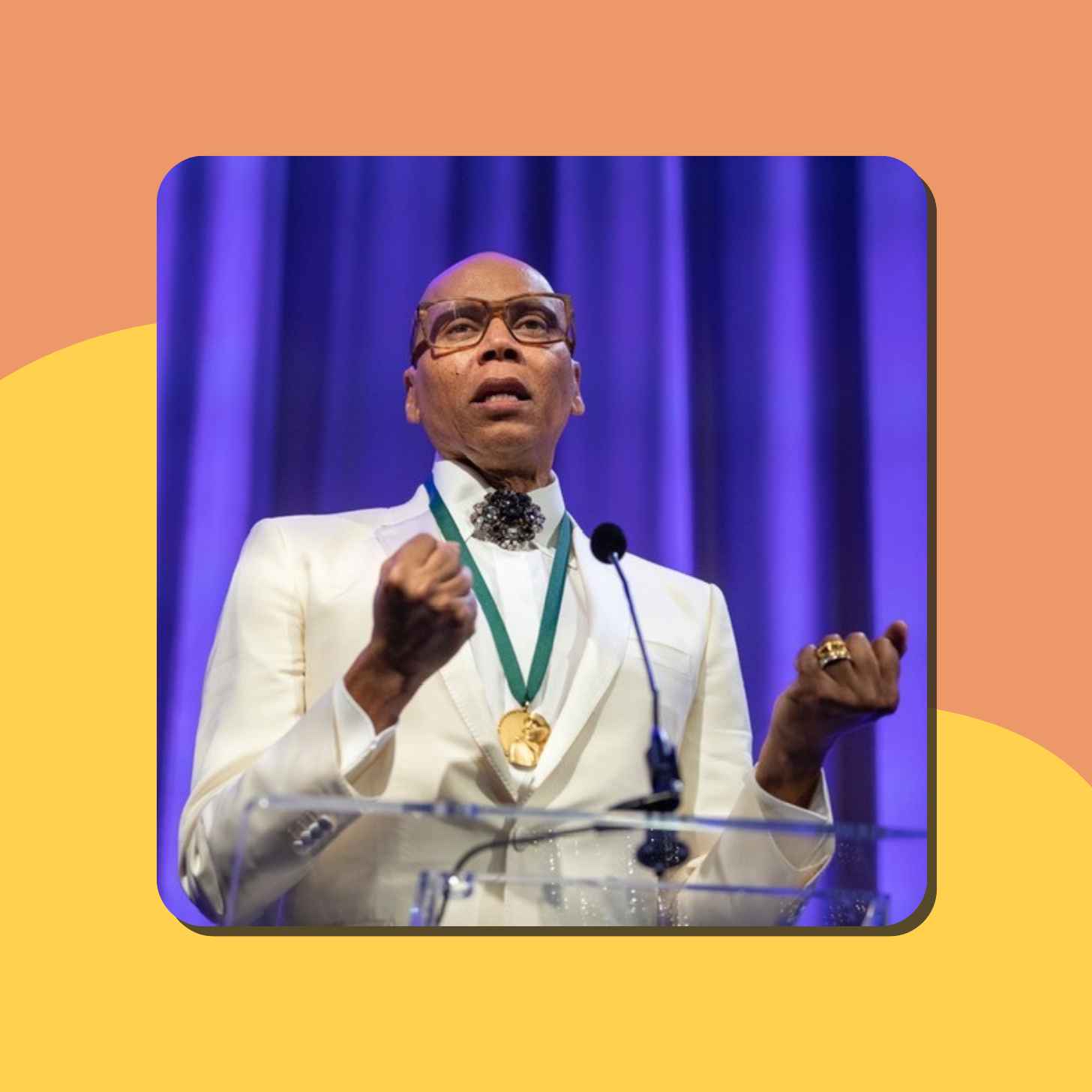
RuPaul is a fierce drag performer, TV host, recording artist, and activist. He’s widely recognized for hosting the Emmy-winning reality competition show, “RuPaul’s Drag Race” — a show that has transitioned the obscure subculture of drag into the mainstream.
Born in 1960, RuPaul has become an iconic figure in popular culture and is often referred to as the most successful drag queen in the world. RuPaul gained mainstream acclaim in the 1990s with the release of the dance-pop single “Supermodel (You Better Work),” which became a hit and established RuPaul as a prominent figure in the music industry.
Most of us know RuPaul, though, as the host of “RuPaul’s Drag Race.” The series — which first premiered in 2009 — has become global phenomenon, introducing audiences to a diverse group of drag performers and showcasing their talents in a variety of challenges.
Beyond his vibrant, barrier-breaking entertainment career, he’s been an outspoken advocate for LGBTQ+ rights (becoming the first “Viva Glam” ambassador for M.A.C. cosmetics’ AIDS fund, which helped raise millions for the cause) and sharing his experiences as a gay man. He has used his platform to promote inclusivity, self-acceptance, and the importance of celebrating individuality.
RuPaul’s larger-than-life persona and charisma have helped drastically change the way millions of people view and appreciate the fabulousness of drag culture — and most importantly provided financially sustainable futures for drag queens.
This article was originally published in 2023 — and has been updated.
Although many of us might not be quick to admit it, we’ve likely all used social media or internet searches to learn more about ourselves.
Whether it’s a Google search for “anxiety vs. heart attack” or a social media algorithm inclined to show us “weight loss hacks,” it’s not uncommon to turn to the endless expanse of life online as a way to get help for our mental health.
However, social media apps and tech giants aren’t built for that. In fact, according to Koko co-founder and CEO Rob Morris, they often end up making things worse.
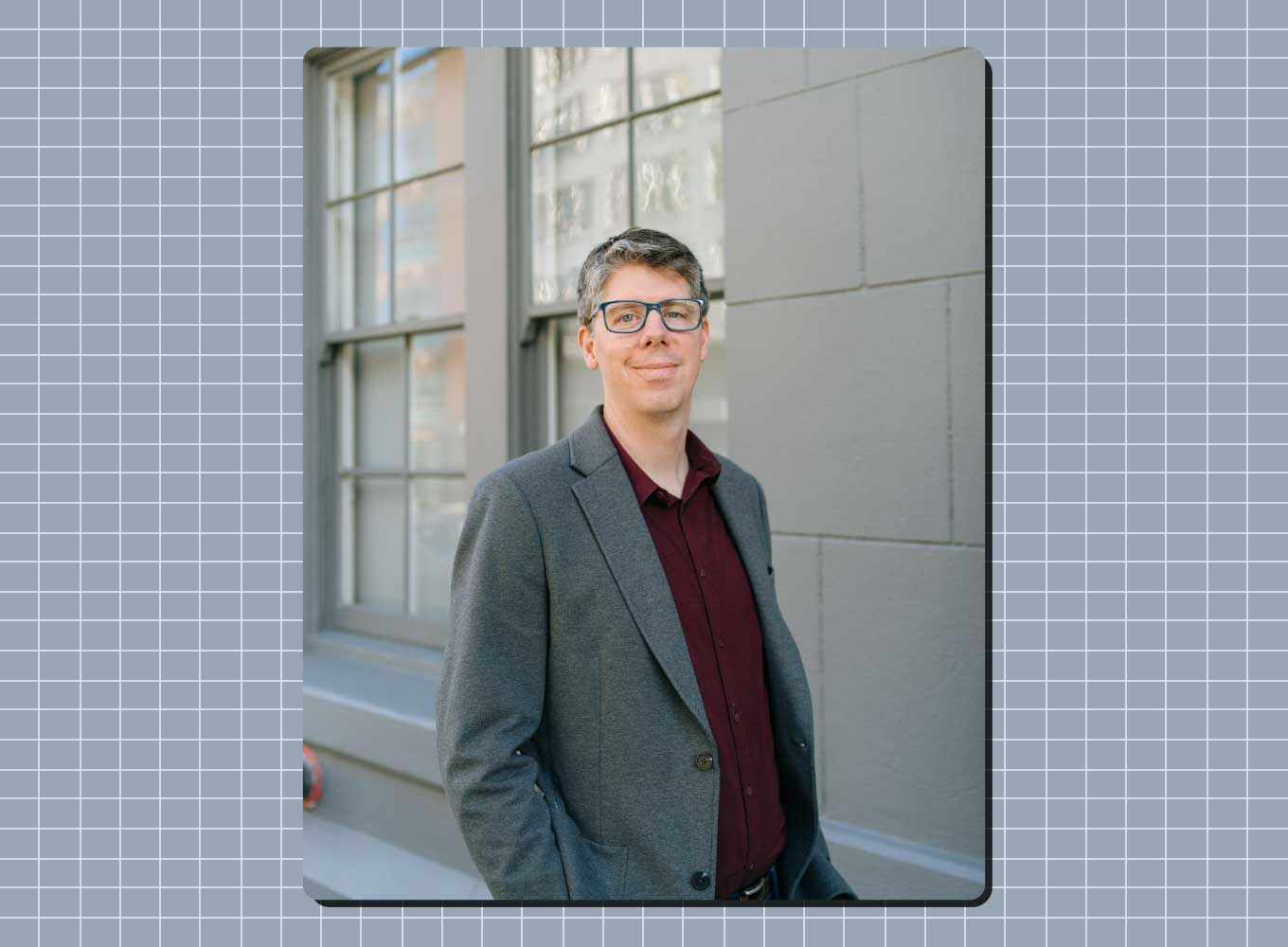
And at a time where 95% of American teenagers have access to a smartphone and 13% of young people have reported attempting suicide, this tether between mental health and internet content must be severed — or, at least, reimagined.
That’s where Morris’s organization, Koko, enters the picture.
Koko is a nonprofit digital tool that helps internet platforms, like social networks and telehealth services, better support the mental health of their users.
This support is done through two key digital integrations: detecting high-risk content that could be detrimental to mental health and providing resources to users who are at risk.
“Our mission is to end the youth mental health crisis,” Morris said at Fast Forward’s 2023 Virtual Demo Day, a funding event for tech startups that do good.
While Koko initially started as a peer support app for folks experiencing mental health challenges, ups and downs in tech have brought it to a new iteration from Morris’s original vision he had as a student at MIT.

Now a nonprofit, Koko meets young internet users at the crossroads between risk and harm reduction. Morris shared an example of how Koko works:
Say a young person searches for specific content on a social media platform like TikTok or Instagram, hoping to find information or content about anything from eating disorders to suicidal ideation.
Koko steps in before this young person can find something harmful. Because, let’s face it: As good as one’s intentions may be, there is a lot of harmful stuff online.
Trained by developers to understand a large library of online terminology and keywords, Koko’s algorithms detect and suppress dangerous content (like unsafe weight loss “tips” or stories about “unaliving”) and instead sends the user a direct message.
“Everything okay?” the message asks. “If you or someone you know is struggling, you are not alone. For peer support, self-help courses, and other resources, please try Koko.”
Users are then redirected to a number of mental health options, all of which are free.
“One click, and they are on an entirely different mental health trajectory,” Morris said.
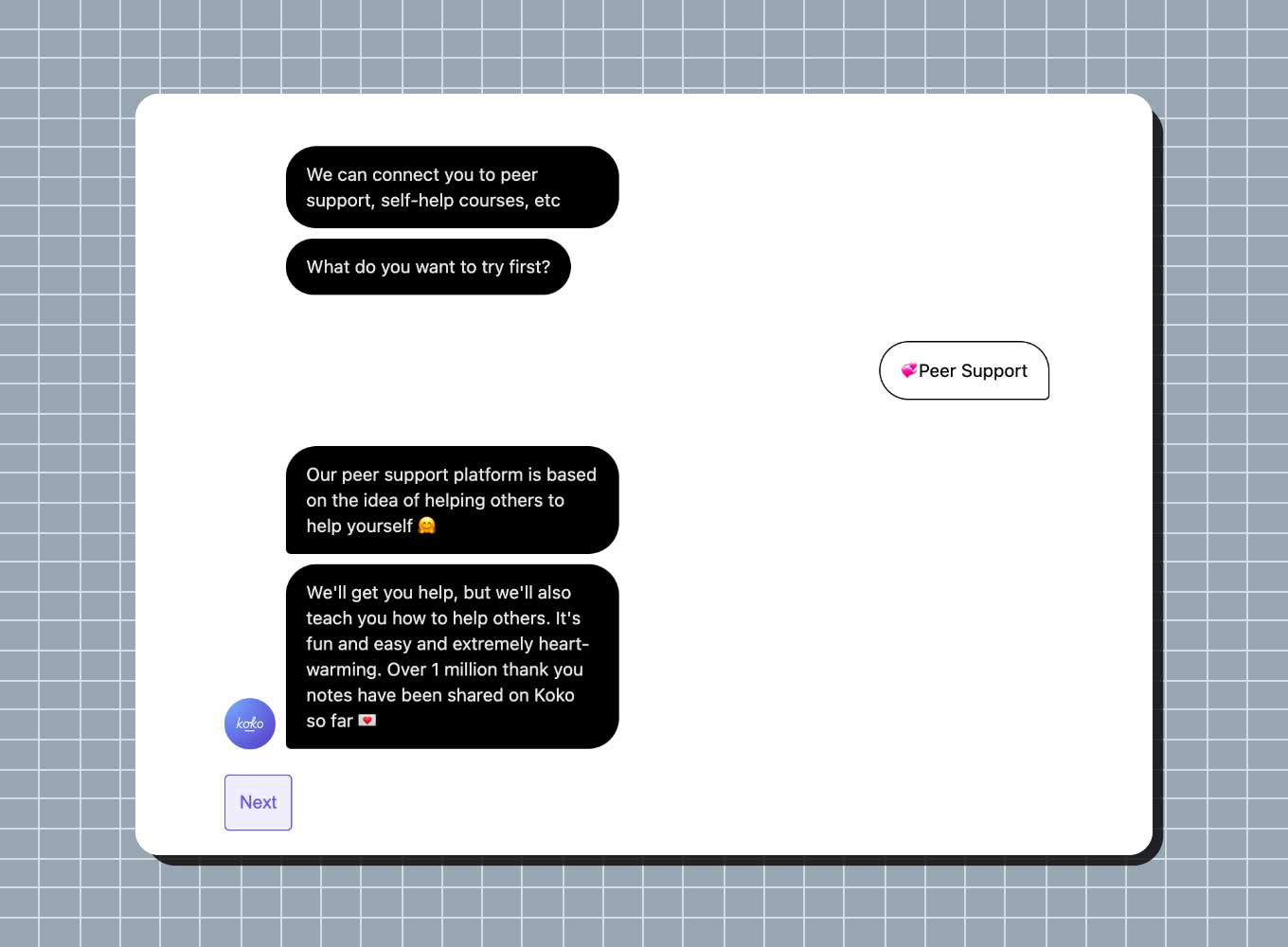
Once a user ventures into Koko’s interface, they can explore a whole world of resources that are actually supportive, like online peer support communities, global crisis lines, and personal safety plans.
“There are millions of young people reaching out right now on the platforms they use every day,” Morris said. “Imagine if all the millions of young people reaching out online actually got help. We could create the largest mental health intervention in history.”
Koko is embedded across the internet, with the hopes of reaching young people wherever they are, and over two million users have engaged with Koko in the last year.
Peer-reviewed studies have also shown Koko’s efficacy. In 2022, a study from Stony Brook University showed that young people exposed to Koko saw a significant decrease in feelings of hopelessness as opposed to traditional crisis intervention methods.
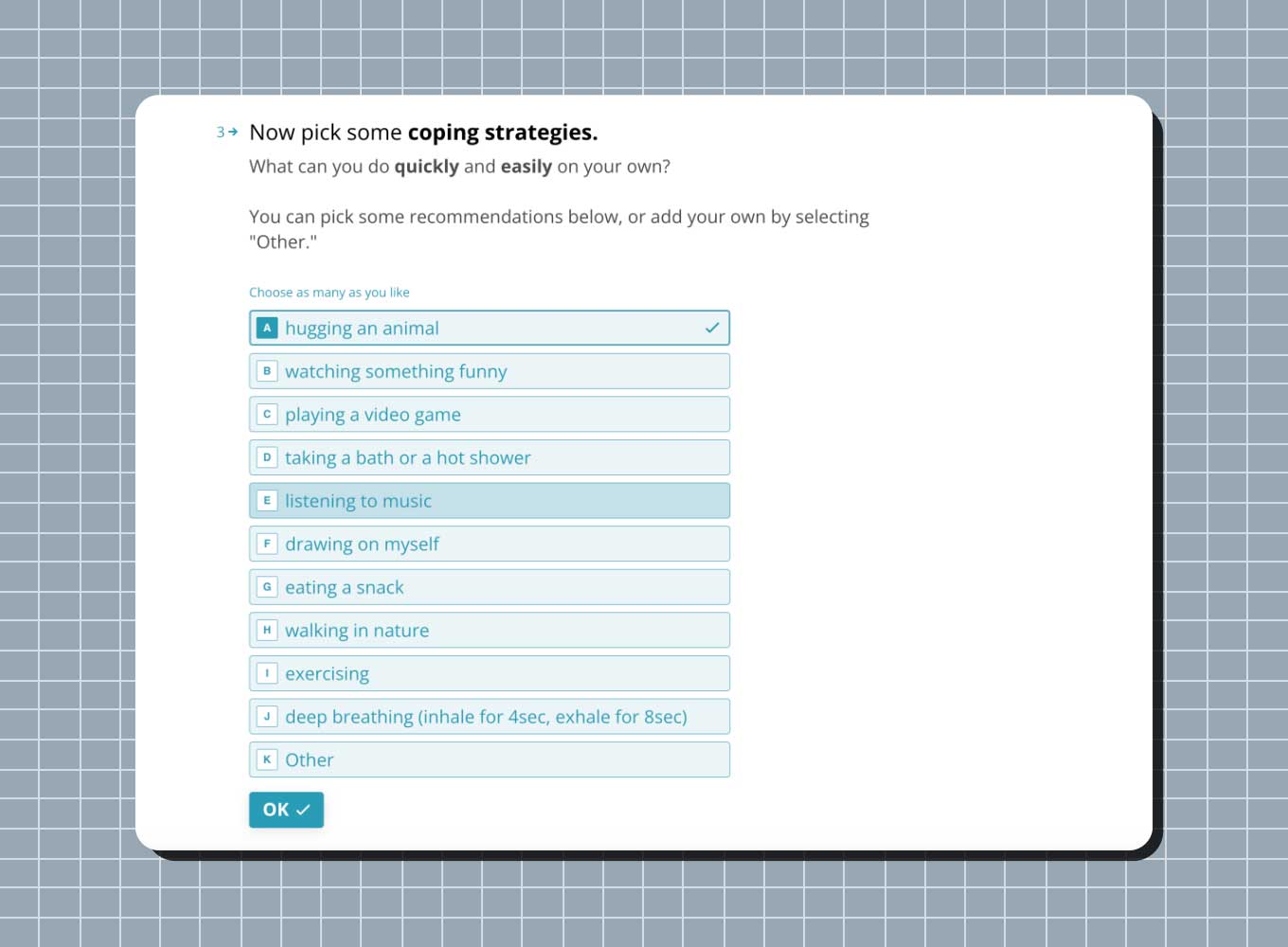
“A lot of people express online that they are struggling, and we don’t yet have a good understanding of how best to provide help and support,” Dr. Matthew Nock, the chair of Harvard University’s Department of Psychology said.
“Koko is filling this gap and providing scientifically-supported tools to help those who are struggling. They’re figuring out what works best and then putting it to work to help people.”
Now, Koko is hoping to grow its impact to reach 10,000 young people per day.
“We want to see a world where any teen in need can access a service like this for free — zero friction, completely ubiquitous,” Morris said. “This is about saving a generation.”
If you are in immediate need of safety or mental health support, please contact the following:
Emergency Medical Services
911
National Suicide Prevention Lifeline
suicidepreventionlifeline.org
988
Crisis Text Line
Text CRISIS to 741-741
crisistextline.org
And if you are not in immediate crisis and would still like access to more resources, visit our list of Mental Health Resources for more information.
If you’re seeking out a list of nonprofit organizations — we’ve got you covered.
At Good Good Good, we share positive news and resources about people making a difference in the world. We’ve interviewed hundreds of activists and nonprofit leaders — and reported on thousands of organizations filling the world with more good. As a humanitarian photographer, I’ve personally spent thousands of hours documenting and covering nonprofits on six continents.
And so, the Good Good Good team and I were excited to get to highlight inspiring and world-changing organizations in this article.
While no list can be completely comprehensive, our team has worked to ensure this list is incredibly thorough — curated based on impact.
This article is broken down into the following sections: Animals | Arts | Civics | Conservation | Justice | Disability | Disaster | Education | Environment | Food | Gun Safety | Health | Housing | Human Rights | Human Trafficking | International Aid | Journalism | LGBTQ+ | Mental Health | Nonprofit Support | Poverty | Race | Refugees | Sports | Tech | Veterans | Women | Youth
Some organizations appear twice, when they make a significant impact in more than one category. And when relevant, we’ve included links to inspiring stories about the organization.
Your Guide To Great Nonprofit Organizations To Support
Animal Welfare
These organizations work to protect animals from harm, advocating for their rights and promoting humane treatment across society.
15/10 Foundation
Read a good news article about how the popular WeRateDogs account makes a difference for dogs in need
Alley Cat Allies
Animal Legal Defense Fund
ASPCA
Best Friends Animal Society
The Humane Society of the United States
Lil BUB’s Big Fund
Read a good news article about Lil BUB and other pet influencers that give back
Old Friends Senior Dog Sanctuary
Praline’s Backyard Foundation
Read a good news article about this organization — and other organizations — that help dogs when their owners are in need
Project Street Vet
→ Read all of Good Good Good’s good news articles about animals
Arts and Culture
These groups promote and preserve arts and culture. They foster creativity and cultural appreciation in communities across the world.
Black Artists & Designers Guild
Creative Commons
Fandom Forward
Foundation to Decrease World Suck
Read all of Good Good Good’s coverage on FTDWS founders Hank and John Green
Narratio
NPR
PBS
PEN America
Smithsonian
StoryCorps
TED
Read Good Good Good’s coverage from this year’s TED conference
Women Make Movies
Women of Color Unite
→ Read all of Good Good Good’s good news articles about art and creativity
Civic Engagement
These organizations strive to foster active citizenship and community involvement. They aim to strengthen democracy, promote civil discourse, and facilitate public participation in community decision-making.
Ballotpedia
Bend the Arc
Brennan Center
Equal Vote Coalition
FairVote
Headcount
The Obama Foundation
Rock the Vote
She Should Run
We the Veterans
When We All Vote
→ Read all of Good Good Good’s good news articles about politics & democracy
Conservation & Wildlife
Focused on the environment and its diverse species, these organizations work towards preserving wildlife and their habitats.
Dian Fossey Gorilla Fund
Read a good news article about mountain gorilla populations rebounding
The Elephant Sanctuary in Tennessee
Greenpeace International
IFAW
Jane Goodall Institute
Read and share the best quotes from Jane Goodall
Keep America Beautiful
National Audubon Society
National Park Foundation
Ocean Conservancy
Panthera
Read a good news article about how synthetic furs are saving African leopards
Sierra Club
The World Wide Fund for Nature
→ Read all of Good Good Good’s good news articles about the environment
Criminal Justice Reform
These organizations are at the forefront of advocating for fair and effective criminal justice policies. They fight against systemic injustices, championing for legal reforms, rehabilitation programs, and an end to mass incarceration.
Clean Slate Initiative
Read a good news article about how Clean Slate Initiative aims to automatically clear records for 14 million people
Equal Justice Initiative
Read and share the best quotes from Equal Justice Initiative founder Bryan Stevenson
FreeWorld
Read a good news article about how FreeWorld founder Jason Wang committed to ending prison recidivism after he left prison
Innocence Project
Last Prisoner Project
The Marshall Project
NICJR
The Sentencing Project
USD Center for Restorative Justice
Disability Support & Advocacy
These groups strive to support individuals with disabilities, advocating for equal rights, opportunities, and societal inclusion.
Adaptive Climbing Group
Autistic Self-Advocacy Network
Disability Rights Fund
Disabled Hikers
Harper’s Playground
Listen to our podcast interview with the Harper’s Playground founder about why he was inspired to start the nonprofit
High Fives Foundation
New Disabled South
Wounded Warrior Project
Disaster Relief
These humanitarian groups provide immediate aid and long-term support to communities hit by natural disasters or crises. Their work spans emergency relief, rehabilitation efforts, and building resilience against future disasters.
CARE
FealGood Foundation
GoFundMe.org
Mercy Corps
Project HOPE
Team Rubicon
Education
Focused on promoting access to quality education for all, these organizations support students and classrooms from the school down the street to communities on the other side of the globe.
AdoptAClassroom.org
CAMFED
Read a good news article about how this NGO aims to educate 5 million girls by 2030
Dolly Parton’s Imagination Library
Read and share Dolly Parton’s most famous quotes
DonorsChoose
The Hispanic Scholarship Fund
Malala Fund
Read and share Malala Yousafzai’s most famous quotes
Mr. Holland’s Opus Foundation
Room to Read
Teach For America
Teaching for Change
These Numbers Have Faces
Thurgood Marshall College Fund
→ Read all of Good Good Good’s good news articles about education
Environment
These groups work to protect and preserve the environment, championing efforts towards sustainable practices and climate change mitigation. Many of them take an intersectional approach to their advocacy.
Arbor Day Foundation
The Climate Reality Project
Earthjustice
Global Fishing Watch
Honor the Earth
Intersectional Environmentalist
Read about the history of intersectional environmentalism and read our interview with Intersectional Environmentalist founder Leah Thomas
NRDC
Oceana
The Ocean Cleanup
Ocean Conservancy
The Outdoorist Oath
Rewiring America
The Solutions Project
Read a good news article about how this organization equips frontline communities fighting for environmental & racial justice
Sunrise Movement
Surfrider Foundation
→ Read all of Good Good Good’s good news articles about the environment
Food Security
Working to combat hunger, these organizations strive to ensure everyone has equitable access to nutritious and sufficient food.
Action Against Hunger
City Harvest
Feeding America
Heart of Dinner
Read a good news article about how AAPI women are helping feed East Asian elders
Meals on Wheels America
No Kid Hungry
World Central Kitchen
Read and share the best quotes from World Central Kitchen founder Chef José Andrés
→ Read all of Good Good Good’s good news articles about food
Gun Safety
These groups advocate for responsible gun ownership and policies that aim to reduce gun violence and accidents.
Brady Center
Change the Ref
Read a good news article about The Yellow Bus Project — a recent campaign from Change the Ref
Everytown for Gun Safety Support Fund
Giffords
RAWtools
Read a good news article about this organization that turns guns into garden tools
The Rebels Project
Sandy Hook Promise
→ Read all of Good Good Good’s good news articles about gun violence prevention
Health
These organizations focus on promoting health, conducting research, funding medical care, and providing healthcare services for a wide array of health-related issues.
American Red Cross
Carter Center
Read Jimmy Carter’s most famous quotes about health and justice
The DIVA Foundation
Dollar For
Indigenous Women Rising
Mercy Ships
The Michael J. Fox Foundation for Parkinson’s Research
National Network of Abortion Funds
Partners In Health
Read the best quotes about justice and global health from PIH founder Paul Farmer
Planned Parenthood
RIP Medical Debt
Read a good news article about how RIP Medical Debt has wiped out more than $6.7 billion in medical debt
Upstream USA
Read a good news article about how Upstream USA trains primary care doctors to offer contraceptive care to all
→ Read all of Good Good Good’s good news articles about health
Homelessness & Housing
Working towards secure and affordable housing for all, these organizations offer services for homeless individuals, work for better access to housing, and advocate for policy reform.
Covenant House
Habitat for Humanity
Lotus Campaign
Love Beyond Walls
National Alliance to End Homelessness
National Network for Youth
New Story
Listen to our podcast interview with New Story founder Brett Hagler about using innovation to end global homelessness
Project HOME
Transition Projects
True Colors United
→ Read all of Good Good Good’s good news articles about housing
Human Rights & Civil Liberties
These groups fight to protect and promote human rights and civil liberties, pushing back against discrimination and injustice through advocacy and the legal system.
ACLU
The Carter Center
Front Line Defenders
Human Rights Watch
Native American Rights Fund
National Women’s Law Center
→ Read all of Good Good Good’s good news articles about human rights
Human Trafficking & Exploitation Prevention
These organizations strive to combat human trafficking and exploitation, providing victim support and working towards prevention.
Atlas Free
Dressember
Read a good news article about how a community is using dresses to fight human trafficking
The Exodus Road
Human Trafficking Institute
International Justice Mission
Love146
Polaris Project
Thistle Farms
Thorn
Read a good news article about how Ashton Kutcher’s tech-led nonprofit is fighting child sex trafficking
Truckers Against Trafficking
International Aid
These organizations provide essential assistance to communities outside of their home country, addressing issues like poverty, health, education, and disaster relief on a global scale.
CARE
charity: water
Read a good news article about how these inspiring kids are raising money for charity: water
Fund For the Global Fund
Explore Good Good Good’s curated guide to the best products that give back to the Global Fund — through (RED)
International Federation of Red Cross and Red Crescent Societies
International Rescue Committee
Liberty in North Korea
Read a good news article about how this nonprofit is providing hope for North Korean refugees
Project HOPE
UNICEF
World Food Programme
World Vision International
Journalism & Information
These groups support the field of journalism and promote the free flow of information as a cornerstone of a democratic society.
The 19th
American Oversight
Committee to Protect Journalists
Creative Commons
Grist
High Country News
Institute for Nonprofit News
The Marshall Project
The News Literacy Project
Our World in Data
Rebuild Local News
Solutions Journalism Network
ProPublica
Wikipedia
LGBTQ+ Support
These organizations work to support and advocate for the rights and wellbeing of the LGBTQ+ community.
Audre Lorde Project
Read and share these inspiring quotes from Audre Lorde
Encircle
For The Gworls
GLAAD
GLSEN
Human Rights Campaign
Marsha P. Johnson Institute
Read and share Marsha P. Johnson’s most famous quotes
National Center for Trans Equality
Point of Pride
Rainbow Railroad
Read about this organization that helps LGBTQ+ refugees seek asylum in safe countries
SAGE
Trans Lifeline
Transgender Legal Defense & Education Fund
The Trevor Project
→ Read all of Good Good Good’s good news articles about the LGBTQ+ community
Mental Health
These groups focus on supporting mental health, offering support services, creating educational materials, advocating for patients’ rights, and working to remove societal stigmas.
American Foundation for Suicide Prevention
Asian Mental Health Collective
The Confess Project of America
Read this good news article about the barbers helping Black men talk about mental health
Crisis Text Line
Read this article from the Chief Program Officer at Crisis Text Line about how asking hard questions can save a life
The Jed Foundation
The Loveland Foundation
Explore Good Good Good’s guide to mental health apps and resources supporting Black Americans
Made of Millions Foundation
Learn about how to honor OCD Awareness Week — with advice from Made of Millions
Promise Resource Network
Read a good news article about the first peer-run respite center in North Carolina
Mental Health America
National Alliance on Mental Illness
Peace of Mind Foundation
Project LETS
Schizophrenia & Psychosis Action Alliance
Trans Lifeline
The Trevor Project
To Write Love On Her Arms
→ Read all of Good Good Good’s good news articles about mental health
Nonprofit Support
These organizations provide various forms of support to other nonprofit entities, enhancing their ability to grow and capacity to serve communities more effectively.
Develop for Good
Listen to our podcast interview with the founder of Develop for Good about how they empower people to help nonprofits through tech
Giving Tuesday
Explore Good Good Good’s guide on how to celebrate Giving Tuesday
Fast Forward
Plywood People
Poverty Alleviation
Focused on eliminating poverty, these groups provide direct assistance, create economic opportunities, and work on policy reform — both in the United States and around the world.
American Jewish World Service
The Borgen Project
CARE
Compassion International
GiveDirectly
Global Citizen
Kiva
ONE
Oxfam
Save the Children
World Vision
→ Read all of Good Good Good’s good news articles about economics
Racial Justice
These organizations strive to fight against racism and work towards achieving racial justice and equality in society.
The Audre Lorde Project
Center for Antiracist Research
Color of Change
Colorlines
Equal Justice Initiative
The King Center
Read and share the best quotes from Coretta Scott King and Bernice King
Know Your Rights Camp
NAACP
Stop AAPI Hate
UnidosUS
Very Asian Foundation
→ Read all of Good Good Good’s good news articles about racial justice
Refugee & Immigrant Support
These groups offer support and advocacy for refugees and immigrants, assisting with resettlement, legal aid, and integration into new communities.
Catholic Charities
Episcopal Migration Ministries
HIAS
Immigration Equality
International Rescue Committee
Liberty in North Korea
Read a good news article about how this nonprofit is providing hope for North Korean refugees
Lutheran Immigration and Refugee Service
#MeWeIntl
Narratio
Project Citizenship
RAICES
Rainbow Railroad
Read a good news article about how this organization that helps LGBTQ+ refugees seek asylum in safe countries
United States Conference of Catholic Bishops
Welcome.US
World Relief
→ Explore this guide to local refugee organizations you can support in all 50 states
→ Read all of Good Good Good’s good news articles about refugees
Sports and Recreation
These organizations promote sports and recreation activities for community engagement, personal development, and physical health.
Birdability
Black Outside
Campfire Institute
I AM ADAPTIVE
→ Read all of Good Good Good’s good news articles about sports
Technological Advancement
These groups are dedicated to fostering innovation and technological advancement, offering educational programs and driving research initiatives.
Black Sisters in STEM
Girls in Tech
Global Fishing Watch
Project CETI
The SpaceKind Foundation
→ Read all of Good Good Good’s good news articles about tech & innovation
Veterans’ Services
These organizations provide a range of services for veterans, offering support for their unique needs, from housing and employment to mental health care. Many also empower veterans to give back to communities using their unique skillsets.
Bunker Labs
CreatiVets
Listen to our podcast interview with Richard Casper about how he founded CreatiVets to help veterans like him
Force Blue
Read a good news article about how Force Blue empowers combat diving veterans to care for our oceans
Minority Veterans of America
Save A Suit
Read a good news article about how Save A Suit empowers veterans through professional clothing
Team Rubicon
Vet Voice Foundation
The Veterans Art Project
Warrior Dog Foundation
Wounded Warrior Project
→ Read all of Good Good Good’s good news articles about veterans
→ Read and share this guide on how to celebrate Veterans Day
Women’s Empowerment
These organizations work to empower women, advocating for gender equality, women’s rights, and against gender-based discrimination.
Black Mamas Matter Alliance
The Brigid Alliance
Dress For Success
Listen to our podcast conversation with Nancy Lublin about why she founded Dress For Success
Girls, Inc.
Girls Not Brides
Global Fund for Women
Hot Bread Kitchen
Malala Fund
Read and share the best quotes from Malala Yousafzai
National Indigenous Women’s Resource Center
National Network of Abortion Funds
National Women’s Law Center
Planned Parenthood
She Should Run
→ Read all of Good Good Good’s good news articles about women
Youth Support
These groups are dedicated to supporting youth through various initiatives, such as education, mentorship, health, recreation, and advocating for children’s rights.
Black Outside
Campfire Institute
Days for Girls
Doug the Pug Foundation
Read the good news article about how this pet influencer is giving back to children battling cancer and other life-threatening illnesses
Fred Rogers Productions
Read and share the best quotes from Mister Rogers
Girl Scouts
Girls Who Code
Happy Hippie Foundation
Harper’s Playground
Listen to our podcast with the founder and executive director of Harper’s Playground
Kids Boost
Listen to our podcast conversation about this nonprofit that helps kids grow $100 into thousands for charity
Make-A-Wish America
National 4-H Council
National FFA Foundation
Ronald McDonald House Charities
UNICEF
Where To Discover & Learn More About 501(c)(3) Organizations
Though we’ve curated and highlighted more than 200 nonprofits in this list, we’ve barely scratched the surface of impactful organizations. Below are some resources for you to discover more nonprofits — and to also verify the effectiveness of each.
- Charity Navigator runs a fantastic tool that organizes and objectively rates nonprofits based on set criteria. They use nonprofit organizations’ required financial statements to assess trustworthiness, efficiency, and effectiveness.
- Similarly, Candid has a number of resources (like GuideStar and Foundation Directory) to help you learn about nonprofits. (These require creating an account — but they’re mostly free to use.)
- You can verify that any organization is a registered 501(c)(3) — or a 501(c)(4) — via the IRS’s Tax Exempt Organization Search tool.
- Some types organizations are disproportionately underfunded — and thus, will benefit more from your donation or support. Giving Gap has compiled data around how Black-founded nonprofits are underfunded — and also curated a list of Black-founded nonprofits to support. Similarly, studies have shown that environmental nonprofits receive less than 2% of charitable dollars. Organizations like 1% for the Planet are trying to change that.

When Sierra Leone was hit by the Ebola outbreak in 2014, the country’s already-weak healthcare system was struck, too. With little international assistance established in the area, volunteer healthcare advocates had their work cut out for them.
Sierra Leone, a West African country that experiences extreme rates of poverty, has the highest maternal mortality rate in the world, with one in 20 women dying as a result of pregnancy or childbirth — and a significantly high infant mortality rate: 78 deaths per 1,000 live births.
These folks are at a severely high risk of death or debilitating illness, due to inadequate healthcare practices and facilities.
But there is hope. Specifically, Project HOPE.
The health and humanitarian nonprofit first began supporting the nation’s health initiatives with emergency aid during the Ebola epidemic, and when working with Sierra Leone’s health ministry to assess future interventions, experts saw an opportunity to intervene in another major health crisis: maternal and infant care.
Project HOPE began developing maternal and newborn-focused programs in Sierra Leone in 2015, with the intention of building the capacity of healthcare workers, and in turn, strengthening facilities and communities.
This work included the expansion of care units for newborns, co-authoring a set of national training tools for essential newborn care, and the development of a full curriculum for a specialized neonatal nursing program with the College of Medicine and Allied Health Sciences at the University of Sierra Leone (COMAHS).
In 2019, Sierra Leone was finally ready to create a skilled nursing workforce for small and sick newborns — and the neonatal nursing bachelor’s degree program at COMAHS was born.
“We found the health care community to be very receptive to Project HOPE’s programs, and there was a deep desire to improve the high neonatal mortality rate in the country,” Dr. Carolyn Kruger, a volunteer and former Director of Nursing at Project HOPE, wrote in a blog post for the organization.
“Sierra Leone had a history of civil war and was an epicenter for Ebola in Africa,” Kruger wrote. “This history depleted the human resources that were assigned to hospital care of mothers, children, and newborns. Many health care workers were not up-to-date on their skills; equipment and supplies were scarce; and the remaining nurses and doctors were often not paid for their services — but they were committed to improving newborn care.”
Project HOPE’s many volunteers helped develop curriculum, facilitate technical support, and served as mentors to Sierra Leone’s up-and-coming neonatal nurses — much of this done virtually during the COVID-19 pandemic.
When travel restrictions were lifted, volunteers visited Ola During Children’s Hospital to implement advanced training for COMAHS students.
The bachelor’s program has since had two classes of graduates: 13 in 2022 and 14 in 2023. These first students have now been placed in four special care baby and pediatric units, and the specialty unit at Ola During is being developed as a national neonatal teaching center for other nurses.
The goal is to create long-term impact to help lower the country’s astronomical neonatal mortality rates.
“Prior to this program, there were no nurses in the entire country who had advanced specialty training in neonatal care,” Project HOPE’s global technician officer of Maternal Neonatal Child Health, Kristin Anderson, told Good Good Good.
“In Sierra Leone, neonatal mortality rates are alarmingly high, and there is a critical human resource gap for skilled nurses to care for small and sick newborns,” Anderson said. “Project HOPE supports this need through clinical and academic mentorship.”
With Project HOPE’s support through volunteer programs, seminar series, and ongoing expert support to improve care in Sierra Leone, it’s only natural that the next step in this programming is a master’s degree track.
The first of its kind in the country, COMAHS Masters of Science in Neonatal Nursing class has accepted 12 students, 10 of whom Project HOPE has supported through scholarships. (The college has provided the remaining two students with tuition waivers).
These 12 students will begin the program in August 2023, which is a two-year degree track that will schedule classes and clinical hours around students’ work hours in nearby health clinics.
Similarly to the bachelor’s program, Project HOPE will help provide course content and curriculum. This support will also include guest lecturers from the Thomas Jeferson College of Nursing in Philadelphia and the UMTB School of Nursing in Galveston, Texas, according to Anderson.
“I’m very proud of what Project HOPE volunteers have accomplished with our partners and counterparts in Sierra Leone — especially in the development of a program that will train a generation of neonatal nurses,” Kruger wrote.
“This program is one of the first-of-its-kind in Africa and stands out as an example of true partnership and collaboration that other countries and organizations can follow.”
There is no shortage of stories in the world about everyday heroes who rise to the occasion in a crisis, even beyond comprehension: a woman who literally fought a bear to protect her dogs or bystanders who lift cars to save people from a near-deadly accident.
But the reality is: In a crisis, sometimes we need instructions to take action.
In traumatic situations, many folks lose sight of information they might have otherwise committed to memory. Felicia Jackson, the owner and founder of CPR Wrap, experienced this firsthand.
Jackson has decades of medical experience and was certified in CPR but froze in panic when her toddler son stopped breathing in the back seat of her car.
Her husband quickly stepped in to save the day, but she came away with a valuable realization: Performing CPR needs to be less intimidating — and more accessible.
“Emergency situations cause panic, leaving people unsure of how to help,” Jackson writes on the company’s website. “I hope CPR Wrap empowers people to save lives.”
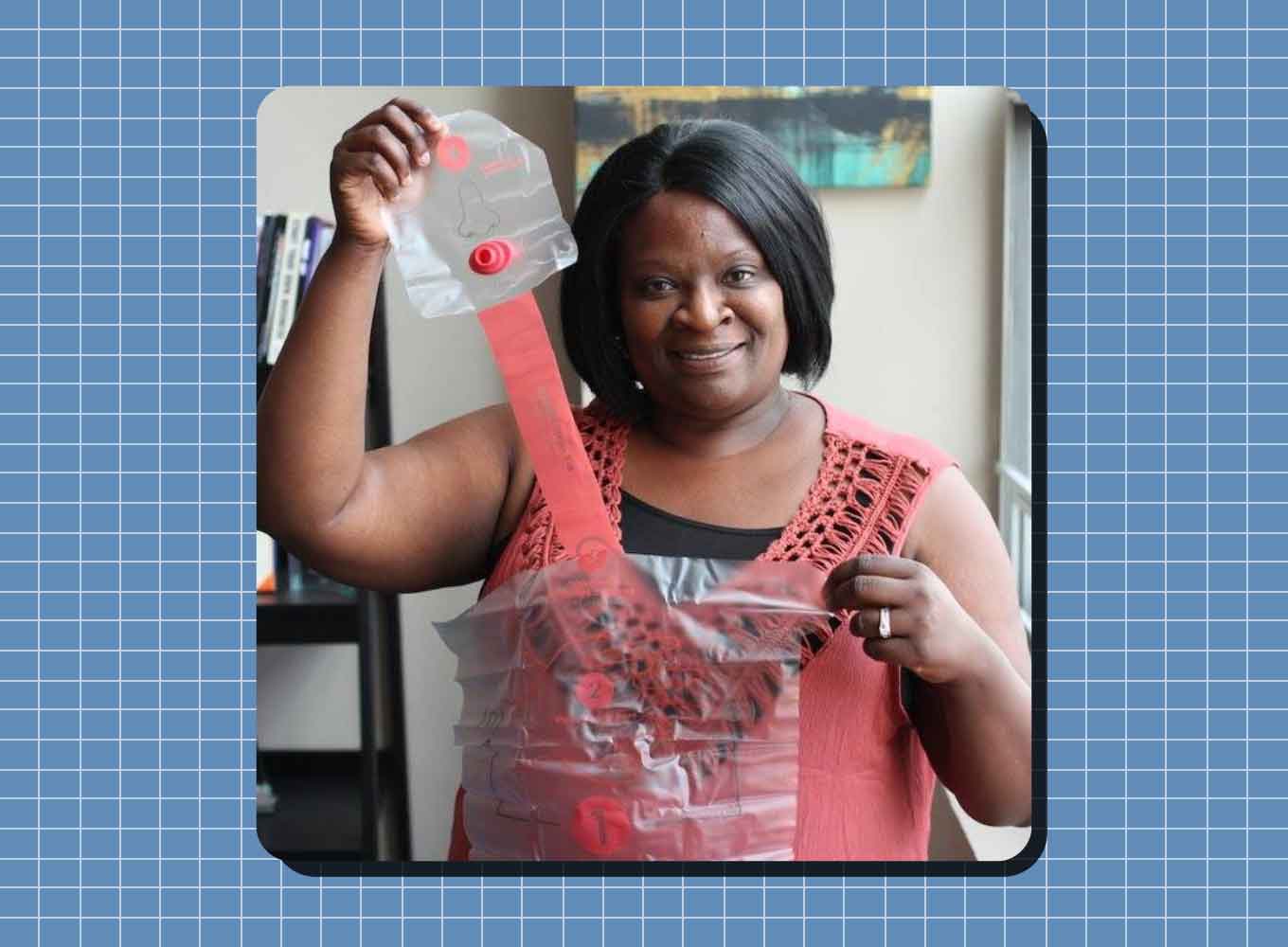
CPR Wrap is a simple and straightforward tool that reminds people how to perform CPR in an emergency situation. The device does not require any certifications to use, but it is especially intended for those who are already professionally trained in CPR.
It goes like this: Remove the product from its package, lay it on the chest of the “sudden cardiac arrest victim,” and follow the template printed on the device.
The device is made with a non-woven fabric (that’s eco-friendly!) and provides visual prompts to guide rescuers through the recommended steps of CPR. It also includes a mouth-to-mouth, one-way breathing barrier, and face shield, to help maintain sanitation.
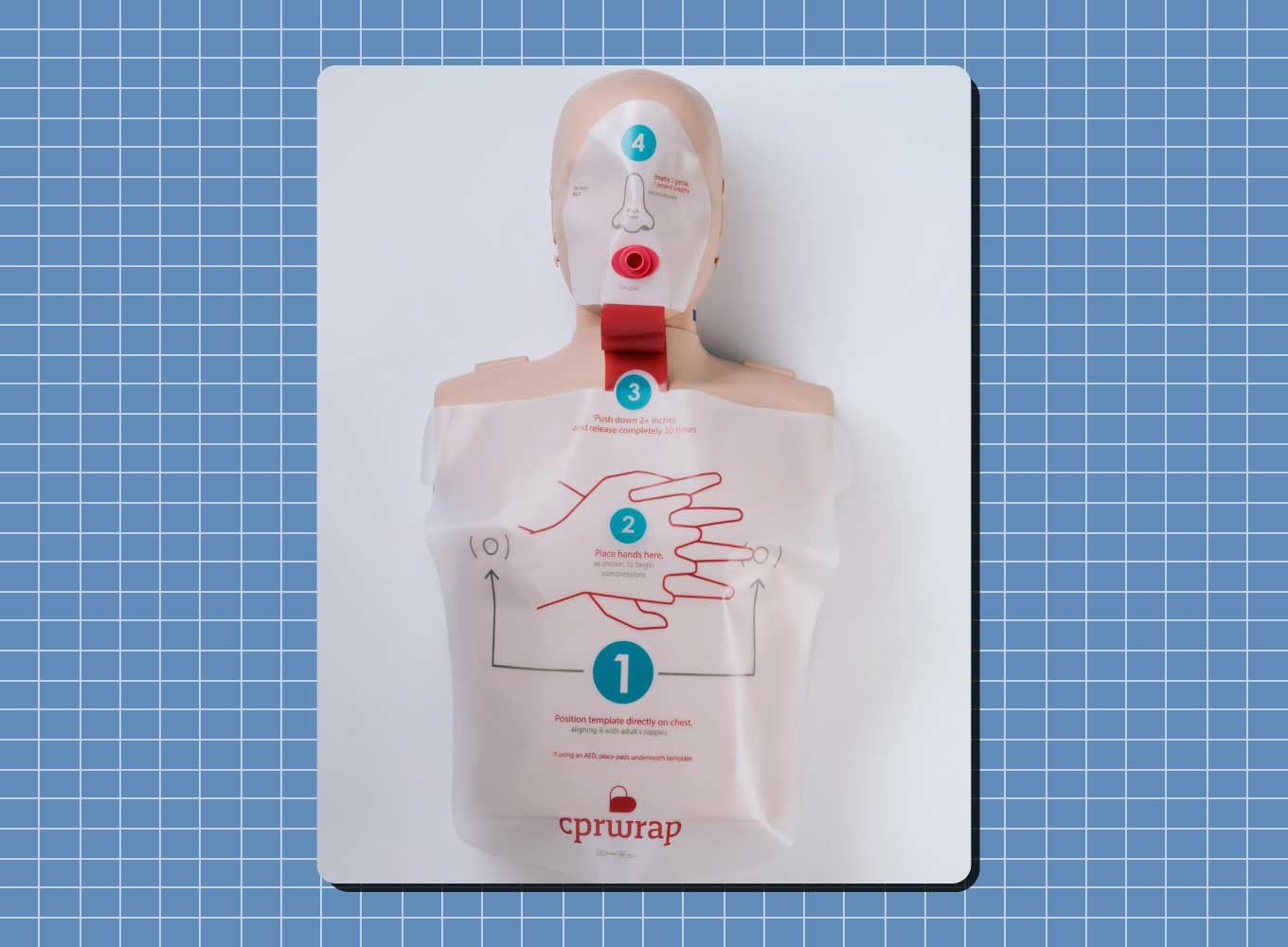
“Even people experienced in CPR can forget their training in stressful situations,” the company’s website reads. “CPR Wrap makes it possible for those individuals to effectively perform CPR at a moment’s notice.”
Jackson launched her invention at the end of 2017, and as of April 2022, she has sold more than 10,000 CPR Wraps globally. But her mission is to make these emergency procedures accessible to everyone.
Recently, a video of Jackson explaining the CPR Wrap went viral on TikTok, raking in over 4.5 million views in under a week.
“I made CPR Wrap so easy a child could do it,” she says in the video, before walking viewers through the process of using the device.
@cprwrap We are saving lives in 2023! #cprwrap #viral #tiktokshop #tiktokmademebuyit #cpr #cprsaveslives ♬ original sound - CPRWrap
Commenters flocked to share their support for such a vital resource, many of them even discussing their own experiences with CPR.
“As a veteran paramedic, I can 110% back this,” one viewer wrote. “This is a brilliant idea; not just for home, but for everywhere.”
“I am a certified American Heart Association instructor and this is genius,” another added. “I need to get some for my community classes!”
“I’ve been trained for years in CPR first aid. The first time I needed it, it vanished,” someone else shared. “This is super smart!”

The CPR Wrap is priced at $9.99, though Jackson also offers bulk pricing for medical facilities and instructors. The AED-compatible invention also comes in various sizes for adults, children, and infants.
“You can’t put a cost on life,” Jackson said in the video. “But we’re bringing you this affordable CPR template so you can save a life.”
A compliment, thoughtfully given, can brighten someone’s day in an instant. As someone who values words of affirmation, I’ve experienced firsthand the profound impact kind words can have, particularly during times when I’ve been privately wrestling with challenges.
Mark Twain once said, ‘I can live for two months on a good compliment.’ And I resonate deeply with that sentiment. But the transformative power of compliments isn’t just a poetic notion, it’s a scientifically-backed fact.
New research published in 2020 found that most of us actually underestimate how much our positive words are valued by others — and as a result, we naturally shy away from offering compliments.
But the reality is: When someone receives a compliment, studies have found that people feel more valued, can experience a boost in intelligence and memory, and activate the same reward center in the brain as paying them cash — plus accepting compliments can even help heal trauma. Giving more compliments doesn’t decrease their value — so there’s no reason not to give them freely.
Experts have found that compliments benefit the giver, too. They make you more happy, grateful, healthy, stress-free, and connected with others.
The very fact that you’re reading this article indicates that you genuinely care about the people in your life. Our team at Good Good Good has meticulously compiled a list of meaningful compliments that you can share with those you care about.
Whether you’re looking to compliment a best friend, a family member, a new romantic interest, or simply want to keep some in your back pocket for strangers — we’ve got you covered.
As you read on, picture the person you intend to compliment. Rather than selecting any random compliment, wait until you find one that resonates as uniquely applicable to them. Feel free to use these compliments as starting points and modify or expand them to best suit and celebrate your loved one.
One last note, you won’t find any compliments about physical appearance here. We’ve chosen to focus instead on the kind of compliments that truly matter: those that acknowledge and affirm an individual’s character, identity, and actions.
Dive into this list, embrace the power your words hold, and always remember: you, too, are deserving of meaningful, heartfelt compliments.
Nice, Positive Things To Say — To Make Someone’s Day
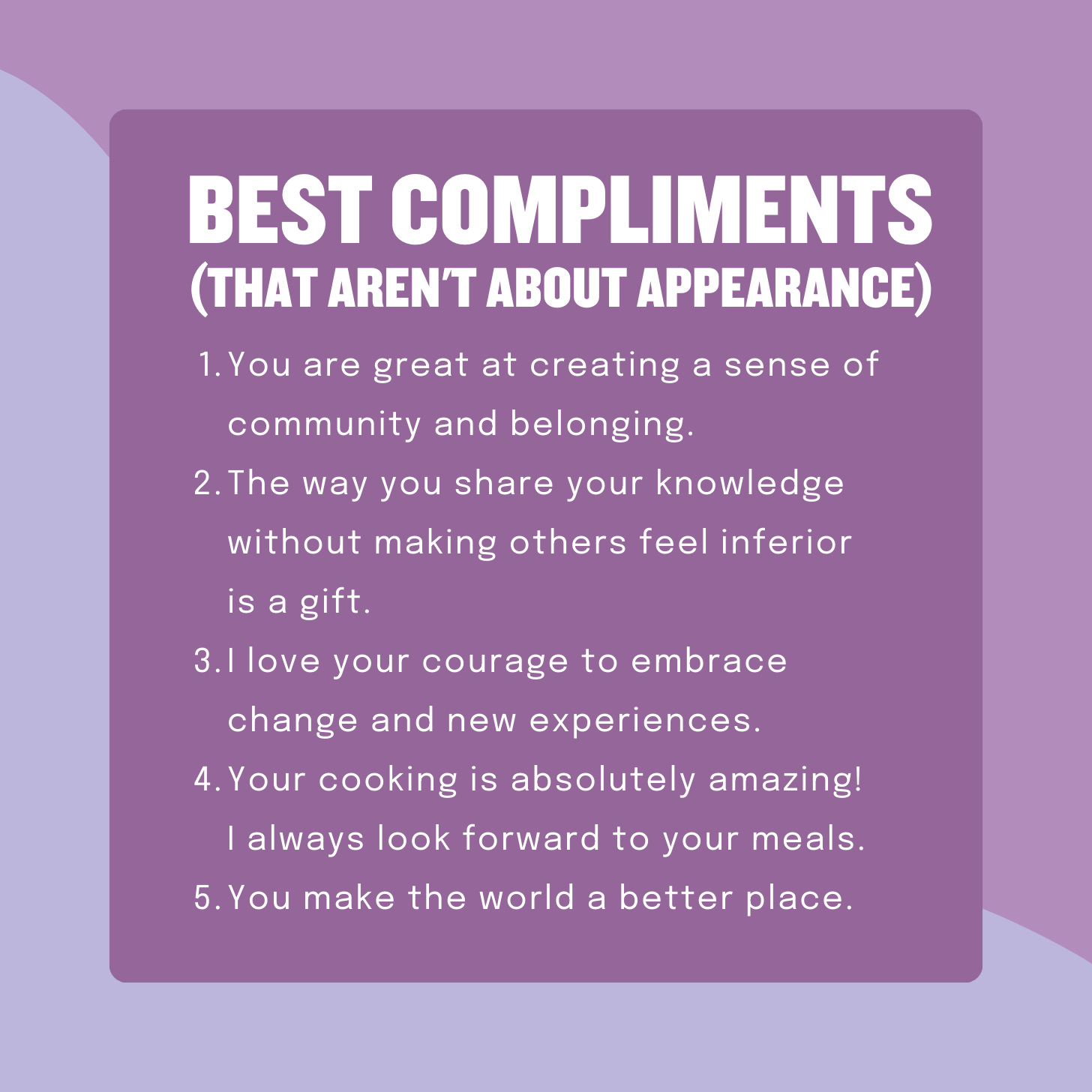
- You make the world a better place.
- Your commitment to the planet and sustainability really inspire me.
- You are always so thoughtful and considerate.
- I love when you share the things you’re interested in with me. I feel myself leaning forward, simply because I know you’re passionate about the topic.
- Your positivity and optimism are infectious.
- I love your sense of adventure.
- I genuinely love that you’re always clear and direct.
- You have a real talent for writing and communicating.
- You have such a great way of putting others at ease.
- Your dedication and commitment to your life’s purpose is truly admirable.
- You have a wonderful ability to make people feel heard and understood.
- Your wisdom and experience are truly valuable to me and I always feel honored to know I can turn to you for advice.
- You have such great taste in music and I always feel excited when you’re picking the playlists.
- Your intuition and insight are always so helpful.
- I know it’s not easy to _______, and I want you to know that I see your hard work and really admire you for it.
- Your dedication to self-improvement and personal growth has always inspired me.
- The way you continually speak up about important issues is brave and admirable.
- You have such a great way of breaking down complex ideas into understandable concepts.
- You radiate compassion.
- My life is better for having you in it.
- You are great at staying on top of the news and I feel like I can always turn to you to help me better understand the world.
- You always give the most thoughtful gifts; it’s clear you put a lot of care into them.
- I see all the small ways you actively work to care for the planet and I want you to know that it makes a difference for the planet and inspires me to do the same.
- You are so creative — and I can’t wait to see what you create next.
- Your approach to life with curiosity and wonder is truly infectious.
- You are great at creating a sense of community and belonging.
- You encourage and help me to be my full self around you. Thank you for accepting and celebrating my authentic self.
- I always look forward to your social media posts.
- You have great vibes.
- I love how you always know the right thing to say.
- You’re a really great husband/wife/boyfriend/girlfriend/partner and I learn so much from watching the way you support and care for your partner.
- I love your courage to embrace change and new experiences.
- Your patience and understanding when dealing with difficult situations is truly inspiring.
- You’re a really great parent and I learn so much from watching the way you’re raising and supporting your kid/kids.
- Your positive energy is truly contagious.
- It’s a really special thing that you see the world not for what it is, but for what it could be. And it’s inspiring to watch you work to make the world a better place.
- Your empathy and understanding make you a great friend.
- Your unique perspective always adds value to our conversations.
- The more I get to know you, the more that I appreciate you. Thank you for sharing more of yourself with me.
- You always seek out the good in the world — and you inspire me to look for positive news as well.
- Your commitment to making the world a better place is inspiring.
- You have such a fun/cool sense of style. You always put together the best outfits.
- I love your ability to remain positive without falling into toxic positivity.
- The way you handle setbacks with resilience is a real testament to your character.
- Your creativity and imagination have always made you a great problem solver.
- You always find ways to make everyone feel special.
- Your selfless acts of kindness never go unnoticed.
- I’ve always admired your ability to apologize when you make mistakes. It’s helped me to try to do the same more often.
- Your courage in standing up for what you believe in is an inspiration.
- Your activism comes from such a thoughtful place and it inspires so many people to fight for important causes.
- Every time I think of that time you _______, it makes me smile and feel so grateful for our friendship.
- I always notice your commitment to self-care and it’s inspired me to take better care of myself.
- Your ability to see the best in people, no matter what, is a testament to your great character.
- Your sense of humor always brightens my day.
- I love your storytelling skills, you make even the simplest experiences sound exciting.
- The way you share your knowledge without making others feel inferior is a gift.
- I really believe your self-motivation and determination are qualities that will take you far in life.
- You are a fantastic listener. I always feel understood by you.
- Your ability to stay positive in the face of adversity is truly inspiring.
- I always look forward to spending time with you.
- You’re a great photographer and I love seeing the world through your eyes.
- You give the best hugs.
- Your honesty is refreshing and I truly admire and appreciate your perspective.
- I love your unique perspective on things. It always opens up my mind.
- I love that I feel comfortable coming over to your house wearing sweatpants. Thank you for being somebody who cares about me for me — not how I present myself.
- Your ability to lead and inspire others toward a common goal is making a true difference — and I know it will continue to change the world.
- I appreciate the respect and dignity with which you treat everyone you encounter.
- Your dedication to fitness and health inspires me to take better care of myself.
- Your kindness towards those less fortunate is truly touching.
- You’re a really great sister/brother/sibling and I learn so much from how you maintain relationships with your sibling(s).
- You have a beautiful soul that shines through in everything you do.
- Your kindness and compassion make you a great friend and ally.
- Your love for learning and curiosity about the world is infectious.
- Your trustworthiness is something I deeply admire about you.
- You have a knack for finding joy and beauty in unexpected places.
- You have an incredible ability to make people laugh, even on their worst days.
- Your care and compassion for animals really inspires me — and you’ve made me care more about animals and the natural world as a result.
- Your cooking is absolutely amazing! I always look forward to your meals.
- I admire how you trust your intuition.
- I always trust your taste in tv shows and movies. You always discover the best stuff.
- You have a knack for bringing out the best in others.
- You are an amazing parent. I feel more hopeful about the world knowing that you’re raising the future.
- I never feel bored with you — even when we’re doing nothing.
- I deeply admire and appreciate your art.
- Your empathy and ability to put yourself in others’ shoes is a rare and wonderful quality.
- You are such a thoughtful host and I always feel welcome in your home.
- The way you value and respect everyone's ideas makes you a great team player.
- Your ability to face your fears and push through them is truly admirable.
- You have a great talent for expressing complex thoughts with clarity.
- You are so good at staying in touch. It makes me feel loved from afar — and inspires me to do the same.
- The way you handle criticism with grace and use it as a chance to grow is inspiring.
- You have the most eccentric hobbies and interests and you inspire me to try new things outside my comfort zone too.
- You are always there for me when I need someone to talk to. Thank you.
- The way you live your life with purpose and intention is inspiring.
- I love your confidence; it encourages me to be my full true self.
- The energy and dedication you bring to your work is truly impressive.
- Your unwavering loyalty to your friends and family is something I admire greatly.
- Your resilience in the face of challenges is commendable.
- Your open-mindedness and willingness to consider different perspectives is admirable.
- You have an amazing eye for design and aesthetics.
- You are a good person.
As the impacts of climate change continue to be felt across the world, there has never been a more important time to take action and adopt a more sustainable way of living.
However, for many people, making the shift to green living can feel overwhelming and inaccessible — especially with so much information and advice out there on how to do it “right.”
The good news is that there are bloggers and content creators out there who have made it their mission to change that narrative.
From sustainable fashion and eco-friendly home and gardening tips to plant-based living and ethical consumerism, these blogs cover a wide range of topics related to green living.
By providing practical advice, product recommendations, and engaging content, they offer a helping hand to those looking to embark on their green-living journeys.
These content creators play an important role in educating and empowering us to take action toward creating a more sustainable, vibrant future for all.
We’ve gathered some of the most dedicated and talented eco-activists out there who are providing intersectional tools, resources, and inspiration for people looking to reduce their environmental impact and make positive changes in their daily lives.
Green Living Websites for Ethical and Sustainable Living
Sustainably Chic

Sustainably Chic is a go-to destination for those looking to incorporate sustainable fashion, green beauty, and an eco-lifestyle into their lives. Launched in 2014, its founder Natalie Kay Costello has established herself as a leading voice in the slow fashion and sustainability movements.
She offers a fresh perspective on the garment industry and delves into the latest trends and styles that align with responsible fashion practices.
The Sustainably Chic community is made up of conscious consumers and fashion enthusiasts who share Costello’s belief in investing in people and the environment to make a positive impact.
What’s good:
- New to the world of sustainable fashion? Check out Costello’s in-depth sustainable fashion guide to help answer your questions!
- Easily find brands that are making the fashion industry cleaner, greener, and fairer place through the Sustainable Brand Directory.
- A big piece of sustainable fashion is making sure we’re mindful of what we already own. This means understanding where our clothes go when we no longer want them anymore. Sustainably Chic offers articles (like this one!) to help you make sense of what to do.
The Good Trade

The Good Trade is a Los Angeles-based lifestyle media company that provides its community with articles on ethical fashion brands, sustainable beauty products, wellness tips, and eco-friendly lifestyle choices.
The site strives to feature voices and perspectives from underrepresented communities and highlight brands and individuals prioritizing social and environmental justice.
What’s good:
- For those looking for short-and-sweet green living content, The Good Trade delivers daily newsletters with soothing playlists, sustainability tips, and inspiring articles straight to your inbox.
- From bed sheets to couches to sunscreen, read through The Good Trade’s eco-friendly product reviews for insights on the best sustainable and mindfully made options out there.
- A great way to incorporate green living is by literally starting in your own backyard. We love to see alternative options to the traditional (and often inefficient) grass lawns.
Melanin & Sustainable Style
Melanin & Sustainable Style promotes ethical living, sustainability, and diversity. Founder Dominique Drakeford is dedicated to celebrating holistic wellness and empowering communities of color.
The blog focuses on the intersection between the ethical and sustainable world and the experience of communities of color, helping build a more inclusive range of voices within the green living space. Melanin & Sustainable Style features interviews with ethical brands owned by BIPOC women and shares thoughtfully curated content on non-toxic style, sustainable beauty, and self-care.
What’s good:
- Melanin & Sustainable Style focuses on exploring green living, mental health, and empowerment for women of color. We love the authentic stories (like Blk Girls Green House) being highlighted.
- Learn more about these beautifully illustrated flashcards of Black, Latinx, and Afro-Indigenous "hidden" leaders redefining sustainability & youth development.
- Discover other eco-conscious folks out there (like this Black-owned farm inspiring Black women, femme, and queer farmers) by scrolling through the site’s archive.
Good Good Good
Here at Good Good Good we’re pretty passionate about sharing real good news and stories. While we cover a range of topics, a good chunk of them are centered around the importance of sustainability and green living — and how people like yourself can take action.
Our team works hard to highlight inspiring individuals, organizations, and initiatives making a difference in the fight against climate change, as well as provide practical tips, and resources (like this one you’re reading!) for living a more sustainable lifestyle.
What’s good:
- From where to find the best online thrift shops, to books about climate change, we scour the internet for most helpful resources to help bring people closer to creating an impact in their corner of the world.
- Looking for inspiring people to follow or fighting climate doom? We’ve got you covered.
- Looking for ideas on how to care for our planet and support your community? Articles like how to live without a car or easy ways to protect the environment are both great starting points for you to get started.
EcoCult
If you’re looking for more information around sustainable, ethical, and non-toxic fashion, beauty, and home recommendations, EcoCult will be right up your alley.
Its editor, Alden Wicker, is a passionate voice in the green living movement and provides practical ways to make conscious living easier. Whether she’s visiting artisans around the world or researching affordable ways to shop ethically, the award-winning journalist offers valuable knowledge and expertise for those looking to live more sustainably.
What’s good:
- Looking for deep dives into the sustainability world? Check out some of the many book recommendation articles EcoCult has about all things ethical and sustainable fashion — or learn more about what makes a “healthy household.”
- Discover sustainable swaps or eco-conscious gift recommendations that help support the planet.
Pick Up Limes

Pick Up Limes is a great go-to for plant-based recipes, tips on healthy eating, minimalism, mindfulness, and sustainable living.
Sadia Badiei — a registered dietitian and nutritionist — and her team feature accessible tools like grocery shopping lists, cooking tutorials, and self-care tips.
Her approach to nutrition is grounded in science and focuses on a balanced and sustainable approach to healthy eating and living.
What’s good:
- Scroll through an endless amount of plant-based recipes from a registered dietitian’s perspective: Our personal favorite recipes include her meals in a jar (which make for great consumable gifts), overnight oats recipes, and double chocolate mug cake.
- The blog also includes articles, videos, and guides on topics like the benefits of minimalism, plant care, and slow living.
- Badiei offers a free plant-based jumpstart guide to help those looking for a straightforward way to begin adopting a plant-based lifestyle.
ADIMAY
ADIMAY by Aditi Mayer examines the intersections between sustainability, style, and social justice. Mayer’s efforts to promote diversity and elevate women of color in sustainable spaces offer curious readers the opportunity to take a deeper look at sustainability through another lens.
Her work as an Indian-American activist advocating for garment workers’ rights in Los Angeles makes her a prominent figure in the sustainable fashion industry — we’re also obsessed with her style!
What’s good:
- Find articles on fashion, ethical living, and cultural representation: Our favorites include her interview with Alok Vaid-Menon and her thoughts on addressing greenwashing through policy.
- Watch Mayer’s “Sustainability Must Mean Decolonization” TED talk to learn more about the issues facing the fashion industry today.
- Explore Mayer’s growing list of favorite sustainable picks.
Reading My Tea Leaves

Reading My Tea Leaves is like taking a sip of a warm cup of tea on a cozy afternoon — comforting, delightful, and relaxing. With a focus on slow living, this whimsical blog covers topics like home organization, cooking, sustainable fashion, and raising children in an eco-friendly way.
Erin Boyle, a mom of two living in a tiny Brooklyn apartment, shares her adventures in discovering DIY decor projects, minimalist living tips, and natural beauty essentials.
What’s good:
- Boyle documents her family’s journey of living simply, sustainably, and seasonally — in a small space. From simple birthday parties to tiny gifts for grown-ups, she’s got great insight and advice on where to start.
- If you love a good DIY project, Boyle offers some great, minimalist ideas.
Treehugger
Treehugger is a sustainability-for-all-focused website that provides news, advice, and resources for people interested in living a more eco-friendly lifestyle.
The site covers topics from green living and home design to renewable energy and climate change. Treehugger is known for its engaging and informative content, as well as its community of readers who are passionate about sustainability.
What’s good:
- You can find just about every kind of clean beauty product review and DIY tutorial to help you live a green lifestyle.
- From aeroponics to zero waste, Treehugger's comprehensive glossary of environmental words is your guide to sustainability lingo.
- Curious about eco-design? Dive into articles related to downsizing your home, architects at the forefront of sustainable architecture, and urban planning.
EcoWatch
EcoWatch is made up of a community of experts publishing science-based content on environmental issues, causes, and solutions for a healthier planet. You can find content ranging from breaking news to in-depth analysis, as well as videos and podcasts.
The site provides a platform for scientists, journalists, and environmentalists to share news and information on critical environmental issues facing the planet.
What’s good:
- Find tried and tested tips on activities like car camping and zero waste air travel tips.
- Interested in starting your own garden? From urban gardening to suburbia gardening, EcoWatch offers great resources on how to start transitioning your living space into a green paradise.
- Stay informed and learn more about current policy changes and studies (like this new report on toxic consumer products).
Sustainable Jungle
Sustainable Jungle is a mission-driven blog that covers topics like zero waste living, eco-friendly travel, sustainable fashion, and green beauty. They provide practical tips and advice for reducing our environmental impact, as well as reviews of sustainable products and companies.
The website also features personal stories and interviews with people who have made significant changes to live more sustainably.
What’s good:
- Sustainable Jungle is a member of 1% for the Planet, meaning they commit to giving away 1% of revenue earned to highly vetted environmental nonprofit organizations.
- If you’re hungry for more information, Sustainable Jungle also has a podcast that you can dive into. They cover all things sustainability and green living and interview a diverse group of professionals.
- Learn more about green technology and how we can begin consuming and using it more sustainably.
Zero Waste Home
Webpage of Sustainable Jungle Showcasing Their Articles About Zero Waste
Bea Johnson, also known as “the mother of the zero waste movement,” transformed her home into a global movement in 2008 by introducing the trash jar — a small container she uses to fit her family’s annual garbage. (Check out what her trash jars have looked like throughout the years!)
Johnson’s blog, Zero Waste Home, is an informative and easy-to-use platform that has inspired a community of zero waste enthusiasts worldwide. From zero waste kitchen hacks to plastic-free travel and sustainable fashion choices, Johnson covers a wide range of topics that are both helpful and inspiring.
What’s good:
- Johnson offers a free starter guide to waste-free living with over 100 tips on slowly eliminating waste in your home.
- “Zero Waste Home” by none other than Johnson herself is a great comprehensive resource on zero waste and green living. It’s been translated into 28 languages!
- Locate your closest package-free location by accessing their Bulk Finder app!
Going Zero Waste
In 2015, Kathryn Kellogg’s health scare became a catalyst for her to spread awareness about the benefits of living a healthy lifestyle — and its impact on the environment. She began her blog, Going Zero Waste, as a platform to offer simple and practical guidance on how to adopt a zero waste lifestyle for everyday living (including beauty, travel, and food tips).
As a National Geographic spokesperson and Chief Sustainability Officer at the One Movement, Kellogg continues to advocate for plastic-free living. Her book “101 Ways to Go Zero Waste” provides readers with an easy-to-follow roadmap to embrace a sustainable lifestyle.
What’s good:
- Kellogg does a great job of breaking down some of the most impactful ways to reduce your carbon footprint.
- Some of us don’t have access to bulk bins in our area. Going Zero Waste shows us how to work around that barrier.
- If you’re just dipping your toes into the world of zero waste living, this 31-day challenge is a great stepping stone!
Sustainable Baddie
Sustainable Baddie is a sustainable lifestyle blog founded by fashion and sustainability influencer Jazmine Rogers (you might know her as @thatcurlytop on Instagram). The blog aims to focus on imperfect sustainable fashion and living.
Sustainable Baddie creates space for hope in a climate-anxious world through creativity and style while providing sustainable lifestyle advice from diverse voices.
What’s good:
- The Sustainable Baddie centers diverse voices within the sustainability movement – you’ll lose track of time reading through their fun (and informative) articles. We personally love their Sustainable Baddie of the Week series!
- More celebration, less pressure to be perfect! This site celebrates all the small steps we can take to make this planet habitable. Check out this article on free and easy sustainable swaps to get you started.
Insteading
Insteading is a go-to resource for anyone seeking practical tips and advice on eco-friendly living, gardening, and DIY projects that promote a low-impact lifestyle. The blog is dedicated to offering readers actionable steps they can take to reduce their environmental footprint and become more self-sufficient.
Whether you’re a seasoned homesteader or just starting out on your sustainable living journey, Insteading has something for everyone.
What’s good:
- Check out Insteading’s beginner's guides — like one on raising chickens, upcycling commonly used material, and DIY project ideas.
- Access pages of content to help you grow and sustain your household plants.
Browngirl Green

Kristy Drutman, also known as “Browngirl Green,” is a passionate youth climate activist focusing on the intersection of media, diversity, and environmentalism.
Drutman’s blog covers personal stories, calls-to-action, and content around sustainability and diversity in the environmental movement that can inspire anyone to stop what they’re doing and take action.
What’s good:
- Browngirl Green is really good about keeping well-known movements (like the green living movement) accountable. She often challenges organizers and those a part of the movements to be more inclusive and accessible to all.
- Drutman is also the co-founder of the Green Jobs Board, a climate tech start-up bridging the equity and inclusion gap within the green economy through conversations, resources, and pathways to bring more diverse talent into the environmental field.
Queer Brown Vegan
Queer Brown Vegan (aka Isaias Hernandez) is a Latine and queer environmentalist who uses his platform to educate his online community about environmental issues, ranging from agriculture and food waste, to race and labor in the environmentalist movement.
Through the lens of his lived experience, Hernandez highlights the immediate challenges faced by the LGBTQ+ and BIPOC communities, helping to elevate their voices in the conversation.
What’s good:
- Hernandez provides LGBTQ+ and BIPOC-informed resources on vegan living (like why there’s a lack of diversity in veganism) and ways you can advocate for marginalized communities.
- His presence on his blog and social media helps bring together climate activists from all backgrounds to learn, unlearn, and relearn — while finding solidarity in their shared mission to create a more sustainable future.
Sustainably Kind Living

Whether you’re a seasoned eco-warrior or a newbie just dipping your toes into the green living pool, Sustainably Kind Living is a great resource to help you on your green living journey.
From tips on reducing waste in your daily life to recipes for delicious, plant-based meals, this fun blog is full of resources for both adults and kiddos to help them live their best, most sustainable lives.
What’s good:
- You can learn so much just by scrolling through the library of blog posts, which include non-toxic living, sustainable fashion, and family and kids.
- Access free eco-guides to help you make sense of where to start and what to swap out.
The Green Hub
The Green Hub is an Australian sustainable living blog with resources on sustainable living and ethical consumerism — including climate action, plastic-free living, fashion, clean beauty, travel, and more.
With pages upon pages of articles, guides, and product recommendations, this site provides its community with a gold mine of tips and tricks to leading a green lifestyle.
What’s good:
- In addition to its content, The Green Hub also features a directory of sustainable and ethical brands and businesses to support.
- Check out The Green Hub’s guides for simple swaps to help you eliminate waste (like their lazy person’s guide to going plastic-free and reducing waste!).
The refugee crisis is a humanitarian issue that continues to touch every corner of our globe. Today, there are millions of refugees worldwide, each with their own unique story of resilience, hope, and survival against overwhelming odds.
These individuals have been forced to flee their homes due to war, persecution, or natural disasters — often embarking on dangerous journeys in search of safety and a better life. They represent some of the most vulnerable populations in the world, yet their courage and strength in the face of adversity are remarkable.
Various world leaders, artists, thinkers, humanitarians — and even refugees themselves — have shared their perspectives on the refugee experience, shedding light on their hardships, resilience, and unwavering hope for a safer future.
Their words serve as a stark reminder of our shared responsibility to protect and support refugees.
We’ve gathered a selection of powerful quotes about refugees in this collection. These quotes underscore the importance of compassion, empathy, and understanding in addressing the global refugee crisis. They remind us of the shared humanity that connects us all and the importance of standing in solidarity with those in need.
Whether you’re looking to celebrate World Refugee Day this year — or are simply a humanitarian, advocate, or someone who cares deeply about global justice and human rights — these quotes will provide a profound perspective on the refugee experience.
Read on to gain a deeper understanding of the lives, struggles, and hopes of refugees around the world:
The Best Quotes By Refugees and About Refugees
Famous Quotes
“No one leaves home unless home is the mouth of a shark.”
— Warsan Shire
“Give me your tired, your poor,
Your huddled masses yearning to breathe free…”
— Emma Lazarus, The New Colossus
“It is the obligation of every person born in a safer room to open the door when someone in danger knocks.”
— Dina Nayeri
“Either you lose hope completely and you shatter and break into pieces, or you become so resilient that no one can break you anymore.”
— Malala Yousafzai, We Are Displaced: My Journey and Stories from Refugee Girls Around the World
“No one chooses to be a refugee. We all deserve to have a home and to be safe.”
— Hangama Amiri, in a tweet
“Seeking safety is a right and it needs to be upheld for every person. Protecting people forced to flee is a collective global responsibility. We have to remember this could happen to anyone, anywhere.”
— Ben Stiller
“The bosom of America is open to receive not only the opulent and respectable stranger, but the oppressed and persecuted of all nations and religions.”
— George Washington
“We have a legal and moral obligation to protect people fleeing bombs, bullets and tyrants, and throughout history those people have enriched our society.”
— Juliet Stevenson
“Refugees don’t make our country less safe. But xenophobia, fear and hate do.”
— Ted Lieu
“I have mentioned these girls’ stories not in a way to show them as victims, as people who are suffering right now, but also they’re courageous, they’re brave. They’re overcoming these difficulties. So we have a lot to learn from these young girls.”
— Malala Yousafzai, in an interview
“Refugees are mothers, fathers, sisters, brothers, children, with the same hopes and ambitions as us — except that a twist of fate has bound their lives to a global refugee crisis on an unprecedented scale.”
— Khaled Hosseini
“It takes tenacity, creativity and bravery to get yourself and your family to a new country to begin your life over again. In my opinion, countries should be competing for refugees. But at the very least, everyone should have a safe place to call home and a safe way to get there.”
— Becca Heller, in a TED Talk
“Refugees are not terrorists. They are often the first victims of terrorism.”
— António Guterres
“The United States should be an asylum for the persecuted lovers of civil and religious liberty.”
— Thomas Paine
“Refugees didn’t just escape a place. They had to escape a thousand memories until they’d put enough time and distance between them and their misery to wake to a better day.”
— Nadia Hashimi
Quotes By Refugees
“Being a refugee is not a choice. No one chooses to be a refugee. It is imposed by different tyranny governments and people are escaping their own governments.”
— Ali Saeed
“We wanted to rebuild our lives, that was all… We lost our home, which means the familiarity of daily life. We lost our occupation, which means the confidence that we are of some use in this world. We lost our language, which means the naturalness of reactions, the simplicity of gestures, the unaffected expression of feelings.”
— Hannah Arendt, in an essay
“In a way, the same is true of the immigrants. They have contributed in their way to the flowering of the community, and their individual striving and suffering have remained unknown. Unemployment is not decreased by restricting immigration. For unemployment depends on faulty distribution of work among those capable of work. Immigration increases consumption as much as it does demand on labor. Immigration strengthens not only the internal economy of a sparsely populated country, but also its defensive power.”
— Albert Einstein, in a speech at the World’s Fair in New York, 1939
“I don’t support terrorism and never have. As a Sri Lankan that fled war and bombings, my music is the voice of the civilian refugee.”
— M.I.A.
“I chose America as my home because I value freedom and democracy, civil liberties and an open society.”
— George Soros
“There is a significant moral difference between a person who commits a violent crime and a person who tries to cross a border illegally in order to put food on the family table. Such migrants may violate our laws against illicit entry, but if that’s all they do they are trespassers, not criminals. They deserve to have their dignity respected.”
— Madeleine Albright
“It’s my job to help people. That’s how we can keep being nice and transfer love to our kids and our grandkids. If someone helps me, I don’t want to be the last one who has been helped.”
— Yassin Terou, in an interview
“When human lives are endangered, when human dignity is in jeopardy, national borders and sensitivities become irrelevant. Wherever men or women are persecuted because of their race, religion, or political views, that place must — at that moment — become the center of the universe.”
— Elie Wiesel
“We’re not going to give up who we are or our last name because that’s what this country has been built on. It’s a tapestry of different backgrounds, cultures, religions, and that’s the strength to me of what the United States is and what it stands for, freedom above all else.”
— Gloria Estefan, in an interview for USA Today
“There are millions of people, refugees, who have experienced the same conflicts and struggles I did. They have the same potential to defy the odds and achieve great things.”
— Clemantine Wamariya
“There’s the nature of being a refugee. We are all defined by our families but by our environments. Things we take for granted. What happens when all of that is gone when your family is gone? the country you were born in does not even exist anymore. You’re barely able to verbally communicate. You’re stripped down to the bare bone of who you are as a person. Your ego is completely irrelevant, doesn’t even exist. And you simply are. Interestingly, it was exactly this which became the foundation of my artistic work later on. This awareness of the basic human condition and the universal expression of it, which really when stripped of the socioeconomic artifice which we are developed in, in its revealing frank form that resonates with us all.”
— Zak Ozmo, in a TED talk
“I realized that by sharing my story, I was indirectly dispelling stereotypes and changing negative attitudes. I set out to create a platform for youth empowerment through storytelling.”
— Ahmed Badr, founder of Narratio
On Ukrainian Refugees
“Millions of people have been displaced either within Ukraine or forced to live as refugees, and alleviating the impact on them is one of our main priorities.”
— Odile Renaud-Basso, President of The European Bank for Reconstruction and Development

“Our moral duty is to help Ukrainian refugees by all means possible.”
— Gitanas Nausėda, President of Lithuania
“People of the world… Like you, I am distraught watching Ukraine under attack. We must come together as a force for good!”
— Chef José Andrés, World Central Kitchen
“We see that the international Red Cross is putting together shelters. We already see that Polish people are already feeding people as they cross the border. We are seeing people in Ukraine taking care of people and doing the best they can under the circumstances.”
— Chef José Andrés, World Central Kitchen
“Let me also take this opportunity to express my great satisfaction and gratitude for the solidarity that the people of my and many other countries have shown by letting people share their homes, by organizing charitable events, or by donating to organizations active in helping refugees and displaced people.”
— Xavier Bettel, Prime Minister of Luxembourg
“As millions of Ukrainians flee their homes seeking safety, we cannot be paralyzed by horror,” he said. “We must live up to the exemplary bravery and resilience of the Ukrainian people. We have to support them and those who are hosting them in Poland and elsewhere.”
— Werner Hoyer, President of the European Investment Bank

On Syrian Refugees
“Even if the war ends and we rebuild our homes, there are many things that can never be rebuilt. Syrians were never divided — alas, now they will never be the same.”
— Hamda, in an article

“We are living on the edge of hell. We have been waiting for so long for the day that the world would hear our voice. I hope it is today.”
— Zoher
“We have moral duties to the dispossessed — and should be taking our fair share of Syrian refugees, particularly parentless children.”
— Andrew Adonis, Baron Adonis
“Syria’s neighboring countries cannot and should not carry the cost of caring for refugees on their own. The international community must share the burden with them by providing economic aid, investing in development in those countries, and opening their own borders to desperate Syrian families looking for protection.”
— Khaled Hosseini
“My hunch, for what it’s worth, is that most of us probably find it much, much harder than we realize to really imagine what catastrophe is like. I have a hunch that we all labor under this rather convenient illusion that if we read about the Syrian refugee crisis, we can imagine what it feels like to set off from your home and your life with all your possessions in two bin liners. We all think that we can imagine that and my guess is that none of us have got a clue.”
— Decca Aitkenhead
More Quotes
“Everywhere inmigrants have enriched and strengthened the fabric of American life.”
— John F. Kennedy
“God doesn’t need your good works, but your neighbor does.”
— Martin Luther
“No one puts their children in a boat unless the water is safer than the land.”
— Warsan Shire
“We must continue to honor America’s commitment to keeping families together and not turn our backs on refugees and asylum seekers.”
— Jimmy Gomez
“A refugee is someone who survived and who can create the future.”
— Amela Koluder
“To be called a refugee is the opposite of an insult; it is a badge of strength, courage, and victory.”
— Tennessee Office for Refugees
“I never take for granted how lucky I am to be an American and what a privilege it is to spend each day at a nonprofit dedicated to helping the next generation of girls achieve their dreams. My journey, as the daughter of refugees, shows what refugees and the children of refugees can create for all Americans.”
— Reshma Saujani
“Immigrants deserve empathy and gentleness as the process of leaving your home is difficult. And yet, if asked to do it over, many of us would make that painful decision again.”
— Miguel Bermudez
“Too often we focus on the opportunities the U.S. provides immigrants in the land of the ‘American Dream,’ and not on how our mercurial national moods lead to small and large policy shifts that radically affect real people.”
— Jessica Goudeau, After the Last Border: Two Families and the Story of Refuge in America
“When you come, like we do, from a country with a different culture, finding [in your host country] something that you like, something that you’re passionate about, and being able to practice it, well, it fills them with a sense of peace and calm.”
— Juan Carlos Urquilla, in an article
“In a country where possessions counted for everything, we had no belongings except our stories.”
― Viet Thanh Nguyen, The Refugees
“This country was built and continues to survive off the backs of immigrants and refugees.”
— Lauren Jauregui
“Refugees need global solidarity and the ability to rebuild their lives in dignity. Given the opportunity, refugees make significant contributions to their host communities, but they need access to equal opportunities and to jobs, housing, and healthcare. Let us pledge to reaffirm the world’s collective responsibility in assisting and welcoming refugees.”
— UN Secretary-General António Guterres
“We are all migrants through time.”
— Mohsin Hamid, Exit West
Every day the Good Good Good team collects the best good news in the world and shares it with our community. Here are the highlights for this week!
If you want to get good news in your inbox every day, join the Goodnewsletter — the free daily newsletter designed to leave you feeling hopeful.
The Best Positive News We’re Celebrating This Week —
Offering free 3D-printed repairs, a Toronto man is on a mission to extend the lifespan of everyday objects
For those of us who want to be more sustainable with the items we use on a daily basis, one of the best places to start is by repairing our things rather than replacing them when they break. And Morely Kert is here to help with that worthy pursuit.
Kert is a maker, fixer, and content creator who takes viewers along on his various projects and designs, all from his tiny apartment workshop. And now he’s taking his beloved 3D printer on a field trip to offer free printed repairs in public spaces.
The first time he offered his services at a Toronto cafe last summer, he helped rejuvenate a pair of sunglasses with a simple, perfectly-carved piece of filament, fix a water bottle lid that no longer snapped shut with a new clasp, and more.
Why is this good news? If you aren’t savvy with a sewing machine, or some tools aren’t accessible to you, it can be intimidating — and sometimes impossible — to make simple fixes and extend the lifespan of some of these random goods. Kert is helping add a level of accessibility to repairing our things!
The first openly transgender judge in state history was just appointed in New York
New York Governor Kathy Hochul announced 15 new judicial appointments in the state, and one of them made state and U.S. history. With his appointment, Seth Marnin became the first openly transgender judge in the state of New York, and the first transgender man in U.S. history to serve as a judge.
Marnin’s appointment is a significant milestone both in representation and in building trust in our political systems. His history-making appointment builds on the progress made by transgender women who have been appointed and elected judges in the U.S.
And it's especially exciting news to celebrate during Pride Month.
“It was not so long ago that a trans person becoming a judge was unimaginable,” Marnin wrote in a statement to Gay City News on Wednesday. “I hope my nomination and service inspires young trans people and that I can serve as a role model.”
‘The Little Mermaid’ fan activists created a campaign to support and protect the ocean and trans youth
Contrary to the very loud (and racist) criticism of Disney’s casting of Black actress Halle Bailey in its remake of “The Little Mermaid” — one group of fans, led by the fan activist nonprofit Fandom Forward, is using the drama surrounding the film to make real change off the screen.
The organization launched the Protect Ariel’s Home campaign during Earth Month in April, to train Disney fans to become eco-activists, learning how to take collective action to protect water — especially for BIPOC communities.
And as the movie entered theaters just ahead of June’s Pride Month festivities, fans wanted to take it a step further. Organizers launched a campaign called Protect the Water, Protect the Mermaids to support two urgent causes: defending the planet and transgender youth.
Why is this good news? It can be challenging to know where to channel our frustration at issues like climate injustice, racism, and transphobia — and through this campaign, Fandom Forward gives folks an outlet (through trainings, trackable action steps, and more) to take action.
Specifically to celebrate park employees, drag queen Pattie Gonia hosted her third-consecutive Pride celebration in Yosemite National Park
Over the weekend, eco-drag queen Pattie Gonia shared a now-viral TikTok highlighting her Pride celebrations at Yosemite National Park. This was Pattie’s third-consecutive Pride celebration in Yosemite, and it wasn’t just a Pride party for visitors of Yosemite Valley — but an event specifically for park employees.
While these celebrations are cause for contagious queer joy, they also speak to Pattie’s larger mission of intersectional environmentalism: making the outdoors a safer and more welcoming place for everyone.
One attendee at an earlier stop on Pattie’s summer tour told us, “Having spaces like this where you can really see and feel the sense of community helps you realize that together we are stronger and can make amazing things happen, but we also need to care for ourselves and one another along the way.”
LGBTQ+ legislators all across the U.S. are working tirelessly to fight anti-trans legislation
All across the U.S., hundreds of pieces of harmful legislation are putting trans folks of all ages at risk of life-threatening violence, persecution, and mental health crises. It’s a tragic and heartbreaking reality — one that LGBTQ+ legislators in statehouses are working hard to combat.
Nebraska’s first openly LGBTQ+ senator and mother to a transgender son, Megan Hunt helped filibuster the senate for nine weeks over a bill that would ban gender-affirming care. In Montana, transgender Representative Zooey Zephyr was silenced and barred from the House floor for advocating for trans rights.
Alongside Senator John Fredrickson, the first openly gay man elected to Nebraska’s legislature, Hunt and Senator Machaela Cavanaugh created the Don’t Legislate Hate PAC to help put a stop to these discriminatory bills.
Meanwhile in states like Colorado, legislators like Representative Brianna Titone, the state’s first-ever transgender legislator, have helped solidify trans rights into the very fabric of their constitutions.
In Senator Hunt’s words: “We are united in our commitment to upholding the values of equality, fairness, and respect for all individuals, and we will not back down in the face of bigotry and intolerance.”
→ Read more
A mom invented a foolproof tool to help people perform CPR in emergencies — and it just went viral
In traumatic or crisis situations, many folks lose sight of information they might have otherwise committed to memory. Felicia Jackson has decades of medical experience and was certified in CPR — but froze in panic when her toddler son stopped breathing in the back seat of her car.
Her husband quickly stepped in to save the day, but she came away with a valuable realization: Performing CPR needs to be less intimidating — and more accessible.
So, she founded CPR Wrap, a simple and straightforward tool that reminds people how to perform CPR in an emergency situation. The device does not require any certifications to use, and she made it “so easy a child could do it,” she said in a now-viral TikTok video.
Why is this good news? In a crisis, sometimes even highly trained professionals need a little help to jump into action. And in the comments of that viral TikTok video, veteran paramedics, certified instructors, and folks long-trained in CPR confirmed the CPR Wrap’s value — it will save lives.
→ Read more
A first-of-its-kind neonatal nursing program is improving infant and maternal mortality rates in Sierra Leone
The people of Sierra Leone, a country in West Africa, are at a severely high risk of death or debilitating illness, due to inadequate healthcare practices and facilities. But there is hope, and health outcomes are turning around thanks to the health and humanitarian nonprofit Project HOPE.
Project HOPE first began supporting the nation’s health initiatives with emergency aid during the Ebola epidemic, and when working with the country's health ministry, experts saw an opportunity to intervene in another major health crisis: maternal and infant care.
So, they began developing maternal and newborn-focused programs in Sierra Leone in 2015, with the intention of building the capacity of healthcare workers, and in turn, strengthening both facilities and communities. Project HOPE’s many volunteers have helped develop curriculum, facilitate technical support, and serve as mentors to Sierra Leone’s up-and-coming neonatal nurses.
Why is this good news? Sierra Leone experiences extreme rates of poverty, has the highest maternal mortality rate in the world (one in 20 women dies as a result of pregnancy or childbirth), and has a significantly high infant mortality rate (78 deaths per 1,000 live births).
Everyone deserves equitable healthcare, and Project HOPE’s investment in these communities is already making such a huge difference.
→ Read more
More good news of the week —
California Governor Gavin Newsom laid out a plan to make the 28th Amendment to the Constitution about gun reform. Though it faces an uphill battle, it would raise the minimum age to buy a firearm, mandate universal background checks, institute a waiting period on all gun sales, and ban assault rifles.
After 27 years, the British Museum just ended its sponsorship deal with BP. The museum confirmed that no current or future exhibitions or other activities will be sponsored by BP, and environmental activists are celebrating the “massive victory.”
The Department of the Interior is investing $161 million into ecosystem restoration and resilience on public lands. The money will be used to restore wildlife habitat, recreate wetland meadows, repair watersheds, and more.
Starting as soon as October, residents in New York City will be required to compost their food scraps. The measure was just passed by city council, and mandatory composting will be rolled out to all five boroughs by next year.
For the first time, a pilot program in England will give people a universal basic income of £1,600 a month. The program will run in two places for two years and participants will be monitored for its impact on their mental and physical health.
Rescue workers found four missing children alive after 40 days in the Colombian jungle. Workers had been searching for the children, who were between the ages of 1 and 13, ever since their plane crashed, killing 3 adults on board.
Illinois just became the first state to pass legislation against banning books in public libraries. Book bans have seen a sharp increase in recent years across the U.S., especially books dealing with race, history, and LGBTQ+ topics.
Australia is planning to triple the size of an ecologically important and protected marine park. The country announced plans to close off an area larger than Germany to fishing and mining, protecting millions of vulnerable seabirds and animals.
A tiny home community just hosted the “world’s smallest” Pride march to “celebrate love in all its forms.” Around 80 people attended the event in Warwickshire, started by residents to support the LGBTQ+ community.
A new analysis found a “sharp and broad decline” in the U.S. murder rate in the first five months of 2023. While murder rates have increased in certain cities, overall a study of 90 U.S. cities showed a 12.2% drop — and in certain cities, it’s over 30%.
Garth Brooks said that Bud Light will be served and trans people will be safe at his new bar in Nashville. Responding to backlash in a Facebook Live, Brooks said, “Everybody’s got their opinions. But inclusiveness is always going to be me.”
New York City announced a new minimum wage of $17.96 an hour for food app delivery workers. Right now, Manhattan’s 60,000 food delivery workers make on average about $7.09 an hour, and the minimum wage will increase again to $19.96 in April 2025.
The American Medical Association is asking doctors to pay less attention to BMI in determining a patient’s health. Body mass index has long been used to define a “healthy” weight, despite mounting evidence that it's an inaccurate predictor of individual health risks.
The U.S. Supreme Court just upheld protections for Native American children. The Indian Child Welfare Act gives preference for Native tribes when American Indian children are adopted, preserving tribes’ ability to govern themselves.
The top science group in Europe announced their support for a moratorium on deep-sea mining. The practice extracts minerals like copper, zinc, and manganese from the seabed for commercial use — and harms marine ecosystems and wildlife.
When Target announced it would remove some of its 2023 Pride Collection from stores — siding with anti-LGBTQ+ fear-mongers who decried inclusive merchandise and threatened violence — it was LGBTQ+ folks who were harmed the most.
Not only did the popular department store regress in its support of LGBTQ+ representation by removing a swath of inclusive clothing and swimsuits from stores, but it also removed life-changing opportunities for LGBTQ-owned businesses.
Small, diverse LGBTQ-owned businesses took the brunt of the erasure — companies like Ash & Chess, JZD, and Flavnt Streetwear.
Ash & Chess, a small queer- and trans-owned business based in Upstate New York, creates greeting cards, prints, home goods, apparel, and accessories highlighting the beauty and vibrancy of the LGBTQ+ community.
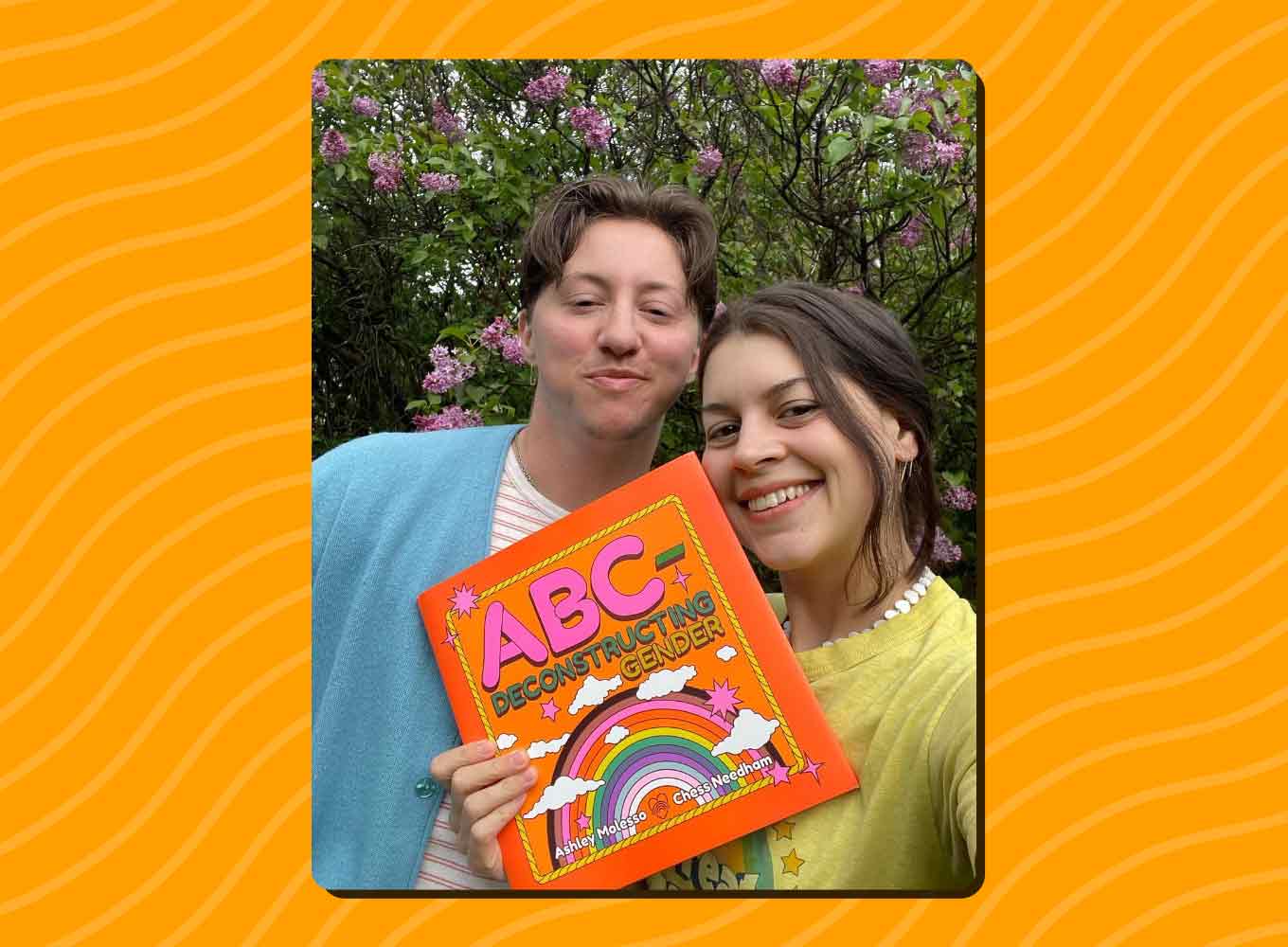
Owned by couple Ashley Molesso and Chess Needham, the duo’s work is stocked in small shops around the world — but the collaboration with Target would have been a game-changer.
Originally, the brand had been hired to design 16 unique and exclusive designs for Target’s Pride campaign. Target pulled 14 of those designs out of stores and moved them to be “online exclusives” and removed Ash & Chess’s “Trans People Will Always Exist” shirt from the collection completely.
“This came as a blow, not only to us as queer and trans artists whose work was supposed to be featured in Target stores all across the country,” the duo shared online, “but to the millions of LGBTQIA+ people and families who will not be able to see affirming messages displayed in a large retailer and who have been told that their existence is dangerous and doesn’t deserve to be celebrated and stood behind.”
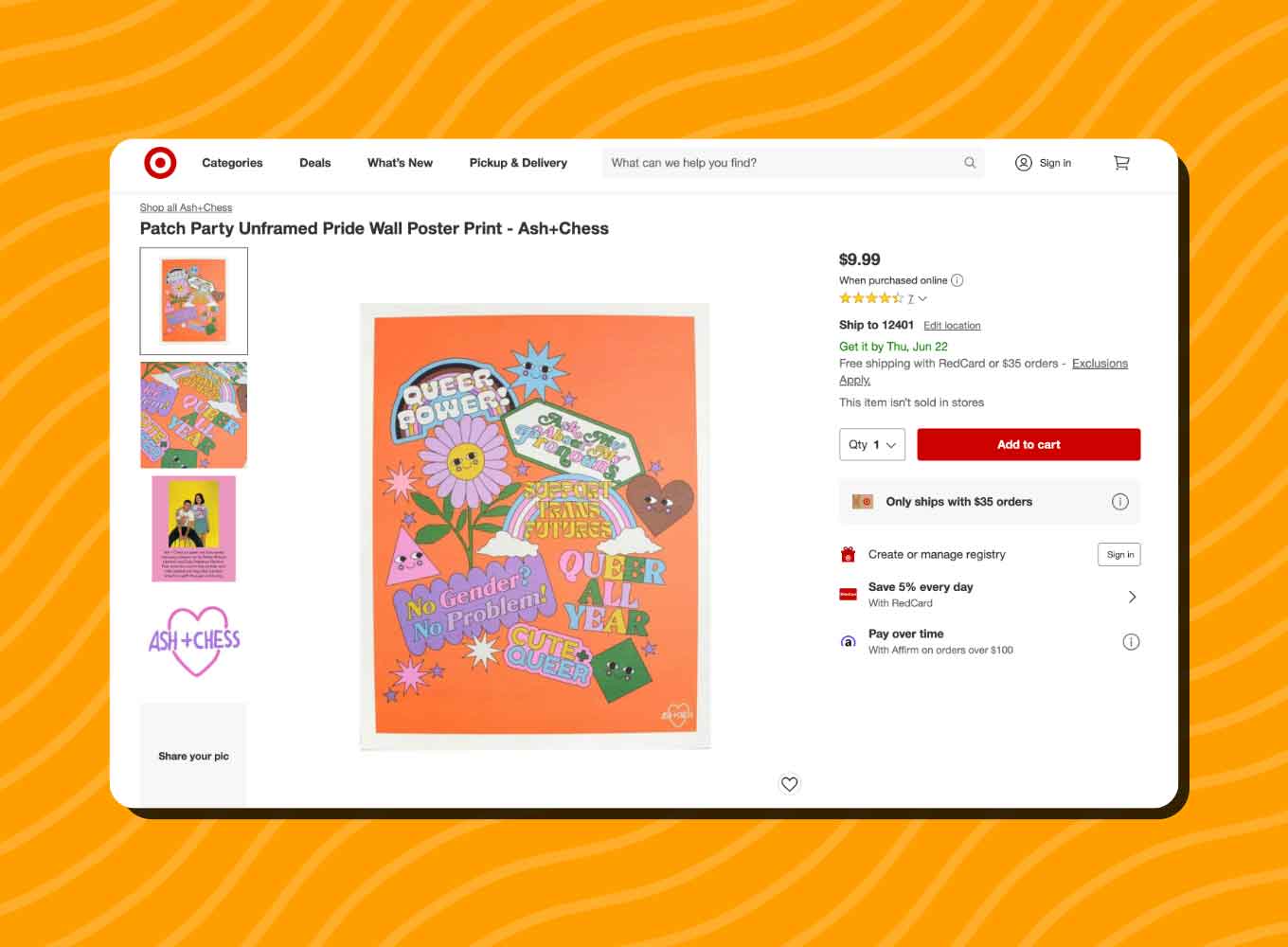
Amid the heartbreak and demoralization of Target’s decision, these queer creators have been met with resounding support from customers and other wholesale stockists.
This also led Ash & Chess to the decision to move their “Trans People Will Always Exist” shirt to Bonfire, an independent apparel fundraising platform where they are now raising funds for the Campaign For Southern Equality.
“We are putting this shirt up for sale for those of you who wanted it but couldn't get it, for those of you who love trans people, and of course, for those of you who aren't finished fighting,” Ash & Chess shared on the product page.
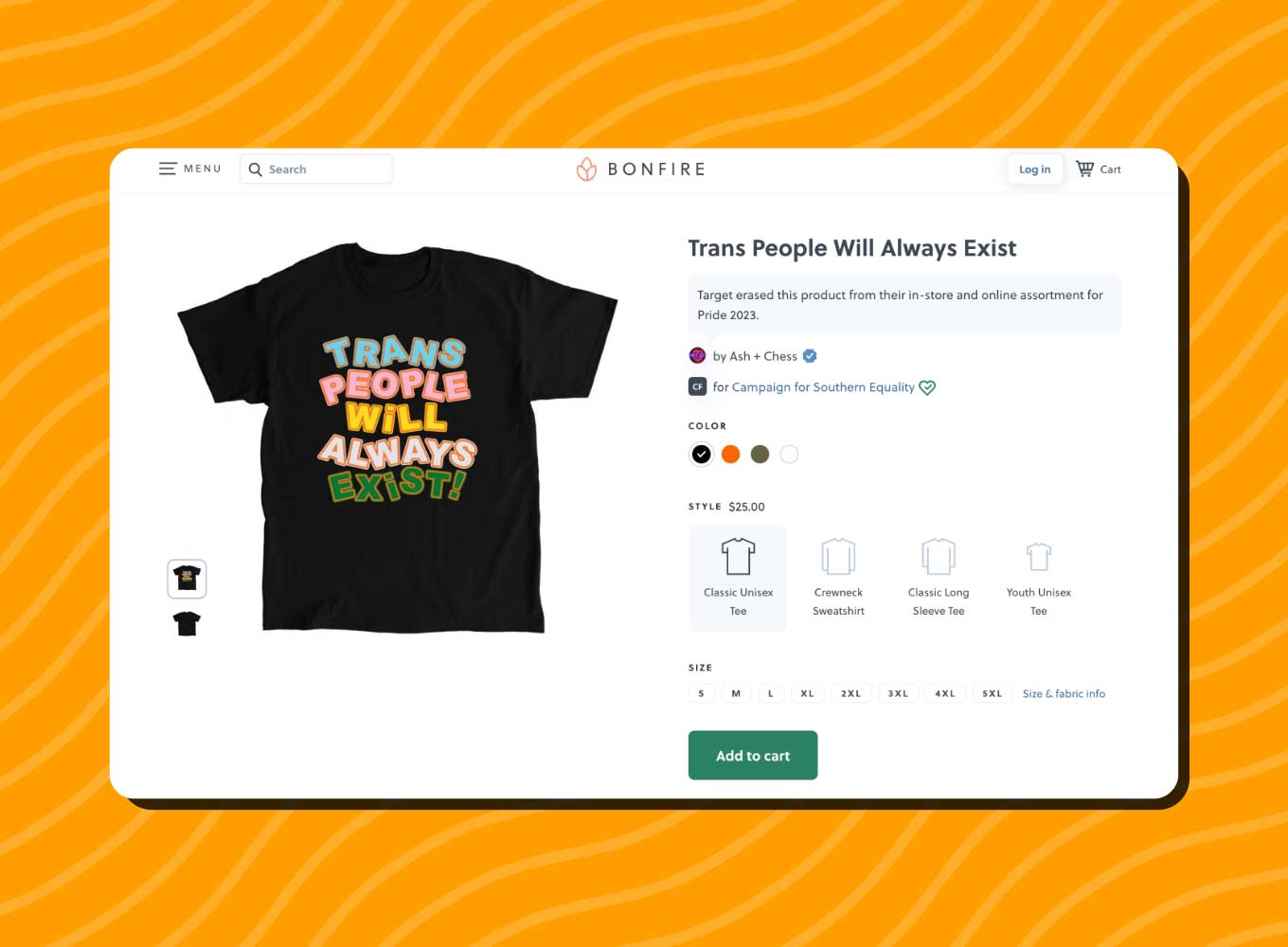
After production costs, the profits from shirt sales will be directly donated to the Southern Trans Youth Emergency Project through the Campaign for Southern Equality. This fund provides rapid response and direct support to families of youth who are impacted by anti-trans healthcare bans in the South.
In just a few days, shirt sales raised over $23,000.
What is the nuance?
While, of course, these funds and the actions of Ash & Chess provide invaluable support to trans youth and their families, a fundraiser like this should have never been necessary.
Trans youth and their families should never have been legislated into danger or social and financial insecurity. Target should have never pulled its Pride items — especially those made by LGBTQ+ designers.
“Once again, the community we love so dearly is left to pick up the pieces of another harmful and failed attempt at performative allyship,” Ash & Chess continued on the Bonfire product page.
This performative allyship is one enormous example of the concerning territory of “rainbow washing,” in which large brands and corporations sell products catered to the LGBTQ+ community during Pride but refuse to support — or actively cause harm to — the community at other times of the year.
LGBTQ+business owner and the first openly gay member of the U.S. Chamber of Commerce, Bill Rossi, said that the first step in mitigating this kind of harm from corporations is to see LGBTQ+ folks for who they are: people.
“We need to push companies to support LGBTQ+ people on a continual basis; not just during Pride Month,” Rossi told Good Good Good. “We are gay 365 days a year. Brands need to stop empowering hate.”
Of course, it’s not all bad news. The North Face is one standout example of a brand standing behind its LGBTQ+ collaborators amid backlash, continuing its partnership with eco-drag queen Pattie Gonia and the “Summer of Pride” campaign.
This continued support is not in celebration of The North Face, but in the beauty and visibility of the queer community.
“We know visibility doesn’t save us, and in fact, makes us more vulnerable a lot of the time,” Needham shares in an Instagram post on the Ash & Chess page, “but it really can save individuals.”
As difficult as this particular Pride Month has been, Ash & Chess — and thousands of other queer artists and community members — remind us to turn our attention to what really matters.
Pride has never been, and never will be, about corporate sponsors or performative products, but the ongoing commitment of individuals resisting hate through joy, creativity, and community action.
“Trans people deserve more than existence,” Needham continued. “We deserve to be loved and celebrated for who we are.”
Header image courtesy of Ash & Chess
Our interactions with the environment aren’t exclusive to the occasional national park visit or family beach day. Our interactions begin from the moment we wake up and brush our teeth to the moment we shut our eyes. Our lives and this planet are intimately interwoven.
While it probably feels overwhelming to think about the weight of climate change and its impact on our environment, it’s important to use that feeling of helplessness and heartbreak as motivation to fight for change.
We’ve gathered some of the best books out there providing inspiration, knowledge, and practical advice on how to be good stewards of this breathtaking planet we call home.
P.S. We’ve linked Amazon for convenience and accessibility, but we’re also linking to our favorite Amazon alternatives: Bookshop and Libro.fm, which are both great ways to support small, independent bookstores when you buy physical books and audiobooks.
(Learn more about Amazon alternatives for books and audiobooks)
Some of our links are affiliate links, which means that we may earn a commission if you buy something via this list. Thanks for supporting Good Good Good’s mission at no extra cost to you!
The Best Books About the Environment To Help You Learn More & Take Action
“The Climate Book: The Facts and the Solutions” by Greta Thunberg
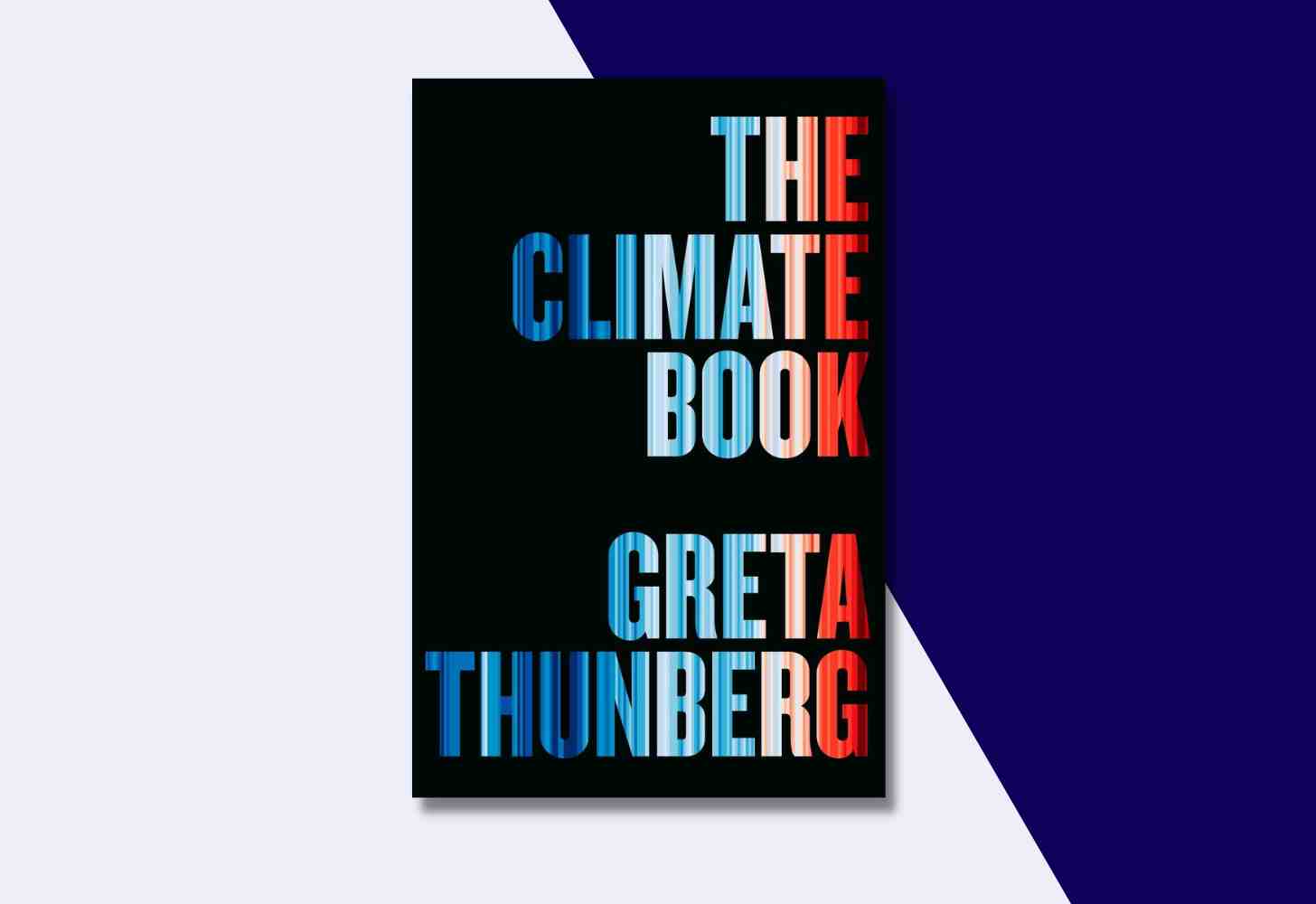
Greta Thunberg — one of the most well-known activists today — was only 15 years old when she protested outside the Swedish parliament in 2018. Her efforts to pressure political leaders to meet carbon emissions targets inspired other youth activists around the world to create similar protests in their communities.
In Greta Thunberg’s “The Climate Book: The Facts and The Solutions” she lays out an informative and accessible guide to understanding the climate crisis and the potential solutions. This book is an essential resource for anyone looking to understand and take action on the climate crisis.
“Saving Us: A Climate Scientist’s Case for Hope and Healing in a Divided World” by Katharine Hayhoe
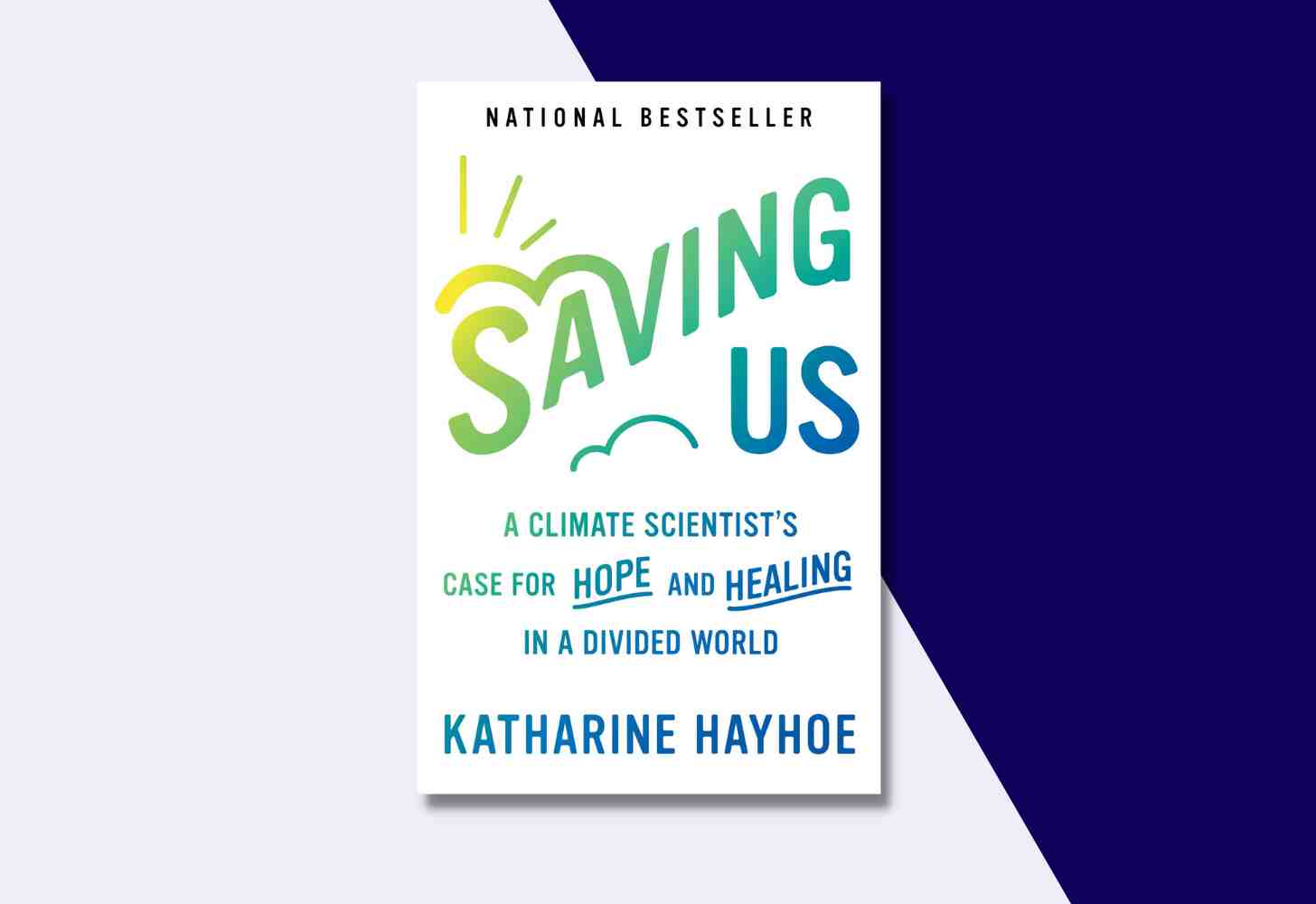
Called “one of the nation’s most effective communicators on climate change” by The New York Times, Katharine Hayhoe has spent her career navigating all sides of the conversation on our changing planet. She challenges readers to move beyond the politics and polarization that tend to divide us and encourages us to embrace the common values that unite us: justice and compassion.
Hayhoe’s book offers a compelling argument for why we must act now, and how we can do so with a renewed sense of hope and purpose. Through hard data, personal stories, and her own faith-based perspective, Hayhoe demonstrates that by understanding and engaging with each other, we can work together to create a sustainable future.
“The Story of Stuff: How Our Obsession with Stuff Is Trashing the Planet, Our Communities, and Our Health” by Annie Leonard
Annie Leonard, environmental activist, Time magazine’s 100 environmental heroes, and creator of the 2007 viral video “The Story of Stuff,” spent nearly 25 years traveling the world investigating environmental health issues and ecological sustainability.
Drawing on her extensive experience in the field of environmental science, Leonard makes a case for a more sustainable and equitable future by exploring the full cycle of our stuff — from extraction to production, distribution, consumption, and disposal — and ways we can transition into a more sustainable lifestyle.
“Healing Grounds: Climate, Justice, and the Deep Roots of Regenerative Farming” by Liz Carlisle
A powerful movement is happening in farming today — farmers are reconnecting with their roots to fight climate change. In “Healing Grounds” Liz Carlisle examines the potential of regenerative farming to address climate change, environmental justice, and food insecurity. Carlisle details how regenerative agriculture methods — which focus on soil health and organic farming practices — can boost biodiversity, reduce carbon emissions, and increase access to fresh, healthy food.
By highlighting the value of traditional knowledge, the need for systemic change, and the power of collaboration, Carlisle’s work emphasizes the importance of regenerative farming in creating a more just and sustainable food system.
“When The Rivers Run Dry: Water — The Defining Crisis of the Twenty-first Century” by Fred Pearce
“When The Rivers Run Dry: Water — The Defining Crisis of the Twenty-first Century” by Fred Pearce explores the global water crisis and the challenges we face in meeting the growing demand for fresh water. The book provides an in-depth look at the causes of the crisis and examines the impact of these factors on both developed and developing countries.
Pearce also explores solutions to the crisis — including water conservation, desalination, and the use of new technologies — as a way we can work towards a sustainable and equitable future for every human, animal, and living organism on this planet.
“The Hidden Life of Trees” by Tim Flannery
In “The Hidden Life of Trees,” acclaimed Australian scientist and author Tim Flannery explores the complex and fascinating world of trees and their vital role in the ecosystem. He examines the way trees communicate and cooperate with one another, and how they are integral to the health of the planet — including their role in regulating the Earth’s climate.
Flannery also highlights the cultural and historical significance of trees and the importance of protecting and preserving them for future generations. Through his research, he presents a new understanding of the natural world and how it functions, as well as encourages readers to appreciate the complexity and beauty of the trees around us.
“The Book of Hope: A Survival Guide for Trying Times” by Douglas Abrams and Jane Goodall
Globally celebrated primatologist and conservationist, Jane Goodall, teamed up with Douglas Abrams, bestselling co-author (with Desmond Tutu and the Dalai Lama) of “The Book of Joy,” to explore the most sought-after and least understood aspects of human nature: hope.
The book is a collection of stories, quotes, and reflections from Jane Goodall and other notable figures on a range of topics, like the environment, social justice, and personal growth. It serves as a reminder that we all have the power to make a difference, no matter how small, and that hope and determination can help us achieve our goals.
“How To Save Our Planet: The Facts” by Mark Maslin
Professor Mark Maslin, a leading climate change expert, provides an evidence-based approach to understanding the current state of the planet and the actions that need to be taken to ensure a sustainable future.
Covering a wide range of topics — including climate change, deforestation, plastic pollution, and the loss of biodiversity — Professor Maslin has created a helpful tool to help others better understand the science behind the environmental challenges we face — and a hopeful path forward.
“A Terrible Thing To Waste: Environmental Racism and its Assault on the American Mind” by Harriet A. Washington
Author Harriet A. Washington examines the intersection of environmental issues and racial inequality in the United States. The book delves into the historical (and ongoing) practices of environmental racism, in which communities of color are disproportionately affected (such as environmental hazards and pollution).
She carefully breaks down how these practices have led to significant health disparities and examines the resistance movements that have emerged in response to them.
“Inconspicuous Consumption: The Environmental Impact You Don’t Know You Have” by Tatiana Schlossberg
Tatiana Schlossberg explores the hidden environmental impacts of everyday consumer choices, including the systems and supply chains that go into producing the products we use (ahem, we’re looking at you, fast fashion).
Schlossberg also provides practical tips on making more sustainable and responsible choices in our daily lives, encouraging readers to consider the long-term impacts of our consumption habits.
“Trace: Memory, History, Race, and the American Landscape” by Lauret E. Savoy
Lauret E. Savoy, an award-winning author and professor of environmental studies, draws on her experiences as a Black American to explore the often-overlooked stories of those who have shaped and been shaped by our environment.
Savoy explores the complexities of the American landscape and how it has been shaped by people of color. The book powerfully explores how the landscape can be used as a tool for healing, reconciliation, and restoration.
“All We Can Save: Truth, Courage, and Solutions for the Climate Crisis” edited by Ayana Elizabeth Johnson and Katharine K. Wilkinson
“All We Can Save: Truth, Courage, and Solutions for the Climate Crisis,” edited by Ayana Elizabeth Johnson and Katharine K. Wilkinson, is a collection of essays by powerhouse women leading the charge on climate action.
The essays focus on the intersection of climate change, justice, and culture, while also exploring the power of storytelling, art, and activism. Through a mix of personal stories, hard science, and practical guidance, the book provides an urgent call to action and offers hope for building resilient communities.
“The Soil Will Save Us: How Scientists, Farmers, and Foodies Are Healing the Soil to Save the Planet” by Kristin Ohlson
Journalist and bestselling author Kristin Ohlson gives us an in-depth look into the power of soil and how it can be harnessed to save the planet. Exploring its complex biology and chemistry and the role it plays in mitigating climate change, she delves into how soil is more than meets the eye.
The book examines a variety of approaches to soil and profiles the helpers around the world who are pioneering innovative methods of restoring soil to its natural state.
“The Intersectional Environmentalist: How to Dismantle Systems of Oppression to Protect People + Planet” by Leah Thomas
Leah Thomas is an intersectional environmental educator, writer, and creative whose passion for the relationship between social justice and environmentalism led her to launch the Intersectional Environmentalist. (Check out our interview with Leah as part of our collaborative Intersectional Environmentalist Edition of the Goodnewspaper!)
In her debut book, Leah outlines the need for environmental activists to be aware of the connections (aka the intersections) between environmentalism, racism, sexism, classism, ableism, and other forms of oppression. Consider this book your introduction and call to action to create sustainable, systemic change within your community.
“Give a Sh*t: Do Good. Live Better. Save the Planet.” by Ashlee Piper
Y’all, it’s time to give a shit — about our health, footprint, and planet. If you’re all about putting good intentions into action, Ashlee Piper’s “Give a Sh*t: Do Good. Live Better. Save the Planet.” is a guide to doing just that. Piper provides an easy-to-follow path to live an eco-friendly and sustainable lifestyle — and all the amazing benefits that come from it.
Piper also provides resources to help readers become more educated on the impact of their choices and the importance of reducing their carbon footprint, along with a variety of recipes and activities that can help reduce waste and promote sustainability.
“Drawdown: The Most Comprehensive Plan Ever Proposed to Reverse Global Warming” by Paul Hawken
Paul Hawken — environmentalist, entrepreneur, author, and activist — has dedicated his life to environmental sustainability. “Drawdown” is his comprehensive plan to reverse the effects of global warming, which include 100 of the most substantive solutions to reverse global warming — based on meticulous research by leading scientists and policymakers around the world.
The book also provides an in-depth analysis of each solution’s economic and social benefits, as well as the challenges and obstacles that must be overcome to implement them. “Drawdown” is a valuable resource for concrete, actionable solutions to address global warming.
“The Sixth Extinction: An Unnatural History” by Elizabeth Kolbert
Elizabeth Kolbert’s “The Sixth Extinction: An Unnatural History” explores the current mass extinction of species, as well as its causes — and potential solutions. Kolbert details the catastrophic effects of human activity on the environment and how this has contributed to species extinction.
Kolbert weaves together insights from various fields of study, along with accounts of lost species and the history of extinction, to create a comprehensive and impactful overview of the ongoing sixth extinction caused by human activity. Through her work, she challenges us to reexamine what it means to be human and highlights the lasting impact this extinction will have on our environment.
“A Bigger Picture: My Fight to Bring a New African Voice to the Climate Crisis” by Vanessa Nakate
Vanessa Nakate, a young Black environmental activist, was catapulted into the world stage after she was cropped out of a group photo with five white climate activists — including Swedish activist Greta Thunberg — at the 2020 World Economic Forum in Switzerland.
After the Associated Press published the now infamous cropped photo, Nakate tweeted: “You didn’t just erase a photo, you erased a continent, but I am stronger than ever.” Her response created a larger, very important international conversation on erasure and diversity within the environmental movement and space.
She shares her personal fight to bring an African perspective to the global climate crisis and calls for the inclusion of African voices in the fight against the climate crisis, emphasizing the need to recognize the unique challenges and experiences of African countries.
“As Long as Grass Grows: The Indigenous Fight for Environmental Justice, from Colonization to Standing Rock” by Dina Gilio-Whitaker
“As Long as Grass Grows” centers itself around Indigenous activists and their resistance to environmental injustice. Author Dina Gilio-Whitaker argues that Indigenous people have been at the forefront of environmental movements for centuries and that their perspectives and traditional ecological knowledge should be central to any efforts to address environmental issues.
The book is a call to action for non-Indigenous people to learn from Indigenous struggles and to support Indigenous-led environmental movements.
“Losing Earth: A Recent History” by Nathaniel Rich
Nathaniel Rich’s “Losing Earth: A Recent History” chronicles the decades-long efforts to address climate change, beginning in the late 1970s. The book paints a vivid picture of the people, events, and forces that shaped the climate crisis and the missed opportunities on the way to a solution.
He offers a hopeful blueprint for how humanity can still make a difference, emphasizing that there is still time to act and avoid the most devastating consequences of climate change.
“Braiding Sweetgrass: Indigenous Wisdom, Scientific Knowledge and the Teachings of Plants” by Robin Wall Kimmerer
In “Braiding Sweetgrass,” Robin Wall Kimmerer — mother, scientist, member of the Citizen Potawatomi Nation, and botanist — interweaves three seemingly distinct, but intersectional narratives: Indigenous wisdom, scientific knowledge, and botany.
Through stories, observations, and teachings, Kimmerer models how these three different lenses can be used to deepen and celebrate our relationships with our resilient planet.
“Eating Animals” by Jonathan Safran Foer

Part memoir and part investigative report, “Eating Animals” is an examination of vegetarianism, farming, and the food we eat every day that inspired the documentary of the same name. Bestselling author Jonathan Safran Foer examines the consequences of animal agriculture on the environment, public health, and animal welfare.
Through personal stories, interviews, and research, Foer reveals factory farming’s devastating impact on the planet, its reliance on antibiotics, and the inhumane treatment of animals. This is an interesting read for anyone curious about the agriculture industry and its effects on the environment.
“Finding the Mother Tree: Discovering the Wisdom of the Forest” by Suzanne Simard
Suzanne Simard — a leading researcher in forest ecology — explores the complex and interconnected forest ecosystem. Through experiments, Simard shows us how trees form networks to share resources and support one another, as well as how this relationship is essential for the health and survival of the forest as a whole.
Simard’s research proves how trees rely on each other for survival and how, in turn, the health of the forest depends on the health of the trees. The book provides an inspiring and revelatory look at the natural world and the importance of preserving it for future generations.
“Consumed: The Need for Collective Change: Colonialism, Climate Change, and Consumerism” by Aja Barber
Aja Barber, a renowned writer and stylist, examines the interconnectedness of colonialism, climate change, and consumerism. “Consumed” is a call to action for consumers everywhere to look at how and why we buy what we buy, how it’s created, who it benefits, and how we can solve the problems created by a wasteful system.
Barber also dissects the current climate crisis and its direct connection to capitalism — which was built on the exploitation of marginalized people and precious resources. Ultimately, Barber aims to teach readers how to become citizens, not consumers.
“Regenesis: Feeding the World Without Devouring the Planet” by George Monbiot
We’ve plowed, fenced, and grazed beautifully vibrant areas of the planet, felling forests, killing wildlife, and poisoning rivers and oceans to feed ourselves. Yet, millions still go hungry.
“Regenesis” reimagines a future for food and humanity. Author George Monbiot draws on promising advances in soil ecology and reveals how our changing understanding of the environment could open doors for the agriculture industry to grow more food with less farming.
“Wilding: The Return of Nature to a British Farm” by Isabella Tree
When Isabella Tree and her husband were forced to accept that their land in West Sussex — farmed for centuries — was economically unsustainable, they decided to step back and let nature take over.
Despite Tree and her husband facing considerable opposition, their journey to bring nature back to the depleted 3,500 acres of land soon brought extraordinary change. Through this inspiring story, Tree reveals the incredible power of rewilding and how it can be used to restore the health of both nature and humans alike.
“Fresh Banana Leaves: Healing Indigenous Landscapes Through Indigenous Science” by Jessica Hernandez, Ph.D.
“Fresh Banana Leaves” by Jessica Hernandez, Ph.D. studies the ways Indigenous knowledge and practices have been (and continue to be) used to restore and protect the environment. Focusing on the traditional ecological knowledge of the Kuna people of Panama and how it can be used to preserve the natural resources of their homeland, Hernandez’s research provides an in-depth look at the way this community has traditionally used plants, animals, and natural resources — and how this knowledge can be applied to modern conservation efforts.
The author also explores how Indigenous science can be used to promote sustainable development and social justice, and the importance of recognizing and respecting Indigenous wisdom.
“Farming While Black: Soul Fire Farm’s Practical Guide to Liberation on the Land” by Leah Penniman
“Farming While Black” is the first comprehensive how-to guide for aspiring African-heritage growers to reclaim their dignity as agriculturists and for all farmers to understand the distinct, technical contributions of African-heritage people to sustainable agriculture.
Author Leah Penniman draws on her own experience as a Black farmer and provides readers with a holistic approach to sustainable farming that includes her core principles: healing, justice, and sovereignty. The book also provides advice on topics such as land access, seed sovereignty, and marketing for small farmers — we love to see that!
“Plant Coach: The Beginner’s Guide to Caring for Plants and the Planet” by Nick Cutsumpas
Urban gardener, “plantrepreneur,” and star of Netflix’s “Instant Dream Home,” Nick Cutsumpas combines sustainability, science, and philosophy to coach new plant owners on how to find the right houseplants for their space and help them thrive. Plant parents, this one’s for you!
Cutsumpas reframes what it means to be a plant parent by viewing the home as an ecosystem, introducing unconventional and sustainable plant tactics that go beyond the basic requirements of water and sunlight. At the same time, he inspires readers to care for the planet, using houseplants as a stepping stone toward sustainability and environmental action.
Sustainability is a topic that has been gaining more and more attention over the years, especially as we come to grips with the increasing amount of environmental disasters (think: climate change, pollution, and loss of biodiversity).
Though sustainability may seem trendy (who doesn’t love to watch an aesthetic TikTok about how to live a sustainable lifestyle?), this practice has been carefully cultivated by Black, Brown, and Indigenous communities over generations.
Sustainability is a holistic approach that seeks to meet present needs without compromising the ability of future generations to meet their own needs. It considers economic, social, and environmental factors in order to create a more equitable and livable world.
A surefire way to educate ourselves on its history and take action in our own lives is through … reading. From memoirs of environmental activists to how-to guides for living a more sustainable lifestyle, there’s no shortage of books (seriously, it was hard to narrow this list down!) providing inspiration, knowledge, and practical advice on reducing our environmental impact.
Whether you want to sustain your house plants, learn from Indigenous earth protectors, or are struggling to stay hopeful (hello, climate anxiety), we’ve got you covered.
P.S. We’ve linked Amazon for convenience and accessibility, but we’re also linking to our favorite Amazon alternatives: Bookshop and Libro.fm, which are both great ways to support small, independent bookstores when you buy physical books and audiobooks.
(Learn more about Amazon alternatives for books and audiobooks)
Some of our links are affiliate links, which means that we may earn a commission if you buy something via this list. Thanks for supporting Good Good Good’s mission at no extra cost to you!
Best Sustainability Books To Help You Learn More & Do Good
“Cradle to Cradle: Remaking the Way We Make Things” by William McDonough and Michael Braungart
In their 2002 book “Cradle to Cradle: Remaking the Way We Make Things,” architect William McDonough and chemist Michael Braungart present a radical new way of thinking about how humans interact with the environment — what they call “cradle to cradle,” an industrial system that shifts away from “take, make, waste” models and towards models of “renew, reuse, recycle.”
Focusing on creating products and systems that are safe, efficient, and ecologically responsible, this book argues that if humans are to live in harmony with nature, then our industrial systems must be designed to emulate natural systems.
“The Upcycle: Beyond Sustainability – Designing for Abundance” by William McDonough and Michael Braungart
If you’ve already read “Cradle to Cradle” by William McDonough and Michael Braungart, then “The Upcycle” is a great follow-up! Drawing on lessons learned from 10 years of applying the cradle-to-cradle concept with businesses, governments, and everyday folks, the authors map out the next step in the solution to our ecological crisis.
From reimaginations of everyday objects from chairs and cars, to factories and homes, this eye-opening, inspiring book shows us that there’s a way to not only sustain life on the planet — but to grow it.
“Doughnut Economics: Seven Ways to Think Like a 21st-Century Economist” by Kate Raworth
Essential reading for anyone interested in our economic system and its future, economist Kate Raworth’s “Doughnut Economics” explores the concept of a doughnut-shaped economy that balances the needs of both people and planet.
Drawing from her economics, ecology, and social science research, Raworth unravels the complexities of our current economic system and presents a compelling argument for a new economic model that considers both social and ecological values — creating an equitable and environmentally sustainable society.
“Let My People Go Surfing: The Education of a Reluctant Businessman — Including 10 More Years of Business Unusual” by Yvon Chouinard
Yvon Chouinard’s “Let My People Go Surfing” chronicles the journey of the successful founder of Patagonia and environmental activist. From Patagonia’s humble beginnings as a climbing equipment company to its current status as one of the world’s most socially and environmentally responsible companies, Chouinard gives readers an inside look into his life-long dedication to sustainability and his pursuit of incorporating his values into his business and promoting environmental conservation.
“The Story of Stuff: How Our Obsession with Stuff Is Trashing the Planet, Our Communities, and Our Health” by Annie Leonard
From sneaking into factories and dumps around the world, to visiting textile workers in Haiti and children mining coltan for cell phones in the Congo, Annie Leonard — named one of Time magazine’s 100 environmental heroes in 2009 — highlights each step of the materials economy and its eye-opening impact on our planet and people.
Drawing on her extensive experience in the field of environmental science, Leonard makes a case for a more sustainable and equitable future by exploring the full cycle of our stuff— from extraction to production, distribution, consumption, and disposal — and ways we can transition into a more sustainable lifestyle.
“A Life on Our Planet: My Witness Statement and a Vision for the Future” by David Attenborough

How could we talk about sustainability and the planet without including the renowned naturalist Sir David Attenborough? In “A Life on Our Planet: My Witness Statement and a Vision for the Future,” Attenborough offers a captivating exploration of his lifelong journey of discovery and challenges the reader to engage the natural world in a new way.
Through vivid stories and breathtaking photography, Attenborough takes readers on a journey to enjoy the beauty of our world — and the urgent need to protect it.
From filming the wildly diverse species of the Galapagos Islands to his efforts to protect the fragile ecosystems of the Antarctic, Attenborough paints a stark picture of the ecological damage that human activities have caused while proposing a bold vision for how we can reverse this destruction.
“The Intersectional Environmentalist: How to Dismantle Systems of Oppression to Protect People + Planet” by Leah Thomas
Leah Thomas is an intersectional environmental educator, writer, and creative whose passion for the relationship between social justice and environmentalism led her to found @greengirlleah and the Intersectional Environmentalist platform. (Check out our conversation with Leah as part of our collaborative Intersectional Environmentalist Edition of the Goodnewspaper!)
In her debut book, Leah outlines the need for environmental activists to be aware of the connections (aka the intersections) between environmentalism, racism, sexism, classism, ableism, and other forms of oppression. Consider this book your introduction and call to action to create sustainable, systemic change within your community.
“Wilding: The Return of Nature to a British Farm” by Isabella Tree
While the stress and anxiety of creating a sustainable lifestyle for yourself is intimidating, “Wilding” provides us with tangible hope and action.
When Isabella Tree and her husband were forced to accept that their land in West Sussex — farmed for centuries — was economically unsustainable, they decided to step back and let nature take over.
Despite Tree and her husband facing considerable opposition, their journey to bring nature back to the depleted 3,500 acres of land soon brought extraordinary change. This inspiring story reveals the incredible power of rewilding and how it can be used to restore the health of both nature and the humans living amongst it.
“Braiding Sweetgrass: Indigenous Wisdom, Scientific Knowledge and the Teachings of Plants” by Robin Wall Kimmerer
Robin Wall Kimmerer — mother, scientist, member of the Citizen Potawatomi Nation, and botanist — interweaves three seemingly distinct, but intersectional narratives: Indigenous wisdom, scientific knowledge, and botany.
Through stories, observations, and teachings, Kimmerer models how these three different lenses can be used in tandem to deepen and celebrate our relationships with the natural world.
“Traditional Ecological Knowledge: Learning from Indigenous Practices for Environmental Sustainability” edited by Melissa K. Nelson and Dan Shilling
Written by a team of scholars and leading experts in the field, this book offers a comprehensive look into how the Indigenous community has passed down traditional ecological knowledge (also referred to as TEK) for generations — and how this knowledge is essential to working toward global sustainability.
Through personal narratives, historical case studies, and cutting-edge research, readers explore how Indigenous peoples have lived in harmony with their environments for centuries, and how their practices can be applied to current environmental challenges.
“Who Really Feeds the World?: The Failures of Agribusiness and the Promise of Agroecology” by Vandana Shiva
Debunking the idea that the answer to addressing a food crisis must be managed through industrial agriculture and genetic modification, author and activist Vandana Shiva argues that those forces are actually the ones responsible for the hunger problem in the first place.
Shiva examines the causes of agribusiness’ failure, like its heavy reliance on chemical inputs, monocultures, and genetically modified organisms, and its disregard for ecological processes and local knowledge. She also looks at how agroecology — an alternative method of food production — offers a viable solution to the current food crisis.
“Can I Recycle This? A Guide To Better Recycling And How to Reduce Single-Use Plastics” by Jennie Romer
Ever find yourself standing in front of a recycling bin and asking yourself: “Can I actually recycle this?” Jennie Romer is here to make things a little less confusing for you.
Romer has been working for years to help cities and states across the U.S. better deal with the waste we produce, while also helping draft meaningful legislation to help communities better process their waste — and produce less of it in the first place.
In this book, she condenses her years of experience into this non-judgmental, easy-to-use guide that aims to change the way you think about what you throw away and how you do it.
“The Conscious Closet” by Elizabeth L. Cline
You might recognize the name Elizabeth L. Cline from her work within the sustainable fashion industry. Her knowledge and expertise on how to mindfully manage our consumption habits (and closets), shop responsibly, and take care of what we already own led her to create this comprehensive guide for people who want to make responsible fashion choices that are both stylish and sustainable.
Whether your goal is to build an effortless capsule wardrobe, keep up with trends (without harming the environment), buy better quality, seek out ethical brands, or all of the above, “The Conscious Closet” is packed with practical tools to help get you started.
“The Waste-Free World: How the Circular Economy Will Take Less, Make More, and Save the Planet” by Ron Gonen
“The Waste-Free World” makes a persuasive, bold case toward moving away from the traditional take-make-waste model our society has grown accustomed to and into a circular (“closed loop”) economic model. Entrepreneur, CEO, and sustainability expert Ron Gonen argues that circularity is not only crucial for the planet but holds immense business opportunities.
Gonen reveals brilliant innovations emerging worldwide, like “smart” packaging, robotics that optimize recycling, nutrient-rich fabrics, technologies that convert food waste into energy, and so much more. Through case studies and interviews with experts, Gonen offers a comprehensive overview of the movement for a waste-free world and its potential to create a more sustainable future.
“The Future We Choose: The Stubborn Optimist’s Guide to the Climate Crisis” by Christiana Figueres and Tom Rivett-Carnac
“The Future We Choose” by Christiana Figueres and Tom Rivett-Carnac is a cautionary (but optimistic) book about the world’s changing climate and the fate of our world. It offers practical solutions to the global climate crisis, while providing insight into the authors’ firsthand experience of leading the Paris Agreement negotiations.
The authors share their optimism that humanity can rise to the challenge of climate change while emphasizing the importance of individual action.
“Give a Sh*t: Do Good. Live Better. Save the Planet.” by Ashlee Piper
Y’all, it’s time to give a shit — about our health, footprint, and planet. If you’re all about putting good intentions into action, Ashlee Piper’s “Give a Sh*t: Do Good. Live Better. Save the Planet.” is a guide to doing just that. Piper provides an easy-to-follow guide on how to live an eco-friendly and sustainable lifestyle, and all the amazing benefits that come from it.
Piper also provides resources to help readers become more educated on the impact of their choices and the importance of reducing their carbon footprint, along with a variety of recipes and activities that can help reduce waste and promote sustainability.
“101 Ways to Go Zero Waste” by Kathryn Kellogg
Another good resource for readers looking to reduce their carbon footprint is Kathryn Kellog’s “101 Ways to Go Zero Waste.” Kellogg offers readers comprehensive tips on how to reduce their environmental footprint while providing simple and achievable strategies (like avoiding single-use plastic, how to participate in the circular economy, and eating unprocessed foods).
Even better, each tip is broken down into action steps with resources to help get you started. Through practical steps, the book provides a helpful outline of how to reduce waste and consumption — while still living a full and comfortable life.
“We Are the Weather: Saving the Planet Begins at Breakfast” by Jonathan Safran Foer
In Jonathan Safran Foer’s “We Are the Weather: Saving the Planet Begins at Breakfast,” he highlights the importance of dietary choices as a way to combat climate change.
Foer argues that the most effective way to reduce our collective carbon footprint is to adopt a plant-based diet, as the production of animal products is one of the leading causes of greenhouse gas emissions. The book, along with offering helpful tips, encourages the reader to view food and eating as a form of activism — which starts at our kitchen table.
“Go Gently: Actionable Steps to Nurture Yourself and the Planet” by Bonnie Wright

“Go Gently: Actionable Steps to Nurture Yourself and the Planet” is an inspiring and approachable tip-filled guide to changing your habits, living more sustainably, and taking action, by Greenpeace ambassador Bonnie Wright (aka Ginny Weasley of Harry Potter).
Wright lays out a wide range of strategies — from simple lifestyle changes to more involved actions — that can be used to reduce our carbon footprint and help protect the environment.
The book also provides tips and advice on how to go about making these changes while staying motivated. Sharing stories from her own journey as a sustainability advocate, Wright inspires readers to pursue their own eco-friendly goals, no matter how big or small.
“Healing Grounds: Climate, Justice, and the Deep Roots of Regenerative Farming” by Liz Carlisle
A powerful movement is happening in farming today — farmers are reconnecting with their roots to fight climate change. For one woman, that meant learning her tribe’s history to help bring back the buffalo. For another, it meant preserving the forest purchased by her great-great-uncle, among the first wave of African Americans to buy land.
In “Healing Grounds” Liz Carlisle examines the potential of regenerative farming to address climate change, environmental justice, and food insecurity. Carlisle details how regenerative agriculture methods — which focus on soil health and organic farming practices — can boost biodiversity, reduce carbon emissions, and increase access to fresh, healthy food.
By highlighting the value of traditional knowledge, the need for systemic change, and the power of collaboration, Carlisle’s work emphasizes the importance of regenerative farming in creating a more just and sustainable food system.
“Consumed: The Need for Collective Change: Colonialism, Climate Change, and Consumerism” by Aja Barber
Aja Barber, a renowned writer and stylist, examines the interconnectedness of colonialism, climate change, and consumerism and how we interact with them in the modern world. “Consumed” is a call to action for consumers everywhere to look at how and why we buy what we buy, how it’s created, who it benefits, and how we can solve the problems created by a wasteful system.
Barber also dissects the current climate crisis and its direct connection to capitalism — which was built on the exploitation of marginalized people and precious resources. Ultimately, Barber aims to teach readers how to become citizens, not consumers.
“Cultivating Food Justice: Race, Class, and Sustainability (Food, Health, and the Environment)” edited by Alison Hope Alkon and Julian Agyeman
“Cultivating Food Justice: Race, Class, and Sustainability” examines how food justice is a critical issue in the effort to create a sustainable world. The book explores the intersections between race, class, and food justice, and how these facets shape people’s access to resources and decision-making.
Offering essays from a collection of authors and perspectives — including public policy, sociology, environmental studies, and law — the book examines the importance of promoting social equity and provides strategies for creating a more equitable and sustainable food system.
“Farming While Black: Soul Fire Farm’s Practical Guide to Liberation on the Land” by Leah Penniman
“Farming While Black” is the first comprehensive “how to” guide for aspiring African-heritage growers to reclaim their dignity as agriculturists and for all farmers to understand the distinct, technical contributions of African-heritage people to sustainable agriculture.
Author Leah Penniman draws on her own experience as a Black farmer and provides readers with a holistic approach to sustainable farming that includes her core principles: healing, justice, and sovereignty. The book also provides advice on topics such as land access, seed sovereignty, and marketing for small farmers — we love to see that!
“Plant Coach: The Beginner’s Guide to Caring for Plants and the Planet” by Nick Cutsumpas
Urban gardener, “plantrepreneur,” and star of Netflix’s “Instant Dream Home,” Nick Cutsumpas combines sustainability, science, and philosophy to coach new plant owners on how to find the right houseplants for their space and help them thrive. Plant parents, this one’s for you!
Cutsumpas reframes what it means to be a plant parent by viewing the home as an ecosystem, introducing unconventional and sustainable plant tactics that go beyond the basic requirements of water and sunlight. At the same time, he inspires readers to care for the planet, using houseplants as a stepping stone toward sustainability and environmental action.
“A Zero Waste Life: In Thirty Days” by Anita Vandyke
Anita Vandyke (@rocket_science on Instagram) offers practical advice and tips that will benefit both your wallet and the planet. “A Zero Waste Life” is structured as a 30-day guide, with each day focused on a different aspect of reducing waste including: reducing food waste, using reusable products, and learning to live with less.
Vandyke shares her personal experiences and challenges she faced while transitioning to a zero-waste lifestyle, providing readers with actionable steps they can take to make a difference in their own lives.
“Drawdown: The Most Comprehensive Plan Ever Proposed to Reverse Global Warming” by Paul Hawken
Paul Hawken — environmentalist, entrepreneur, author, and activist — has dedicated his life to environmental sustainability. “Drawdown” is his comprehensive plan to reverse the effects of global warming, which include 100 of the most substantive solutions to reverse global warming — based on meticulous research by leading scientists and policymakers around the world.
The book also provides an in-depth analysis of each solution’s economic and social benefits, as well as the challenges and obstacles that must be overcome to implement them. “Drawdown” is a valuable resource for concrete, actionable solutions to address global warming.
“Inconspicuous Consumption: The Environmental Impact You Don’t Know You Have” by Tatiana Schlossberg
Tatiana Schlossberg explores the hidden environmental impacts of everyday consumer choices, including the systems and supply chains that go into producing the products we use (ahem, we’re looking at you, fast fashion).
Schlossberg also provides practical tips on making more sustainable and responsible choices in our daily lives, encouraging readers to consider the long-term impacts of our consumption habits.
“Climate Justice: Hope, Resilience, and the Fight for a Sustainable Future” by Mary Robinson
“Climate Justice: Hope, Resilience, and the Fight for a Sustainable Future” by Mary Robinson (former President of Ireland and former UN High Commissioner for Human Rights) examines the global impact of climate change and argues that the fight against it is a matter of justice — as many living in poverty and in developing countries are disproportionately affected.
Robinson provides a historical perspective on the issue and examines the political and social factors hindering progress in addressing climate change. She also shares a vision of collective resilience and hope that’s driving change, and the role civil society, global governments, and individuals play in achieving a sustainable future.
“Third Culture Kids of the World: Exploring Sustainable Travel Mindsets” by Priyanka Surio
“Third Culture Kids of the World: Exploring Sustainable Travel Mindsets” by Priyanka Surio offers the perspectives and experiences of “Third Culture Kids” (TCKs) — individuals who have spent a significant portion of their childhood in a culture different from that of their parents.
Surio provides a fresh (rarely covered) perspective on the topic of sustainable travel, and highlights the potential of TCKs to promote responsible travel and contribute to the conservation of natural and cultural heritage.
The book explores how TCKs’ unique experiences and perspectives shape their attitudes towards and approaches to travel, and how they can be a source of inspiration for sustainable travel practices. The author suggests that TCKs’ ability to adapt to different cultures and their awareness of the impact of their actions on the environment and local communities can lead to more responsible and sustainable travel practices.
“How to Give Up Plastic: A Guide to Changing the World One Plastic Water Bottle at a Time” by Will McCallum
Will McCallum’s “How to Give Up Plastic” is an accessible guide to the changes we can all make — big and small — to reduce our dependence on disposable plastic and clean up the world’s oceans. McCallum uses his expertise in marine conservation and plastic pollution to provide a comprehensive overview of the plastic crisis and the impact it has on our oceans and wildlife.
“How to Save the World For Free” by Natalie Fee
Natalie Fee’s “How to Save the World for Free” outlines a range of simple, cost-free steps people can take to help protect the environment. Fee stresses that small, simple changes in everyday habits can greatly impact our environmental footprint and provides tips and advice on how to reduce waste, save energy, and live a more sustainable lifestyle.
The book also includes information on how to get involved in local and national campaigns and organizations that are working to protect the environment and provides guidance on how to make your voice heard and advocate for change.