Shopping sustainably doesn’t have to be expensive.
Whether you’re seeking a gift for a self-care aficionado, a music lover, or a home cook looking to level up from frozen Trader Joe’s meals, why not give a gift that’s unique, good for the environment, and won’t break the bank?
We’ve curated a list of gift ideas that fit all three of these qualifications, and we’ve highlighted what makes each item eco-friendly and ethical.
Along with all this good stuff, you’ll also find specifics about what makes the companies producing these gifts so deserving of our attention. Plus, every item on this list comes in under $50!
By the way, some of the links in this article are affiliate links, which means if you make a purchase after clicking a link, we may earn a commission at no extra cost to you. Everything in this article was independently and honestly written by the Good Good Good team. Thank you!
Explore more eco-friendly gift guides: Best Eco Friendly Gifts | Inexpensive | For Him | For Her | For Mom | For Kids | For Coworkers
Your guide to sustainable and budget-friendly gifts
Hemp Cotton Rounds & Bamboo Storage Box

While a set of cotton wipes might seem like a generic gift, this set and storage box from Me Mother Earth is anything but.
The brand was founded by a husband and wife duo who wanted to make it easier to transition to plastic-free living. And everyday staples like these are the kinds of investments that help people live cleaner, more sustainable lives.
What’s good:
- Carbon neutral shipping
- Every purchase supports donations in ocean and animal conservation, beach cleanups, plastic pollution advocacy, mangrove planting, coral reef restoration, soil carbon sequestration, or rainforest reforestation
- No plastic packaging
Shop: Me Mother Earth
Klean Kanteen Rise Mug

What better gift could you give the coffee or tea lover in your life than a reusable, insulated travel mug that will keep their fuel hot for over three hours?
Made out of certified 90% post-consumer recycled stainless steel, this 14-oz mug is good for the environment and the soul.
What’s good:
- BPA-free
- Made from certified 90% post-consumer recycled 18/8 stainless steel
- B Corp- and Climate Neutral-certified
- 1% of the Planet member, meaning the brand donates to organizations bettering the environment and making the world a better, safer place
- Family- and employee-owned company
Shop: Klean Kanteen | Amazon
Rise Beyond the Reef Classic Canvas Tote Bags
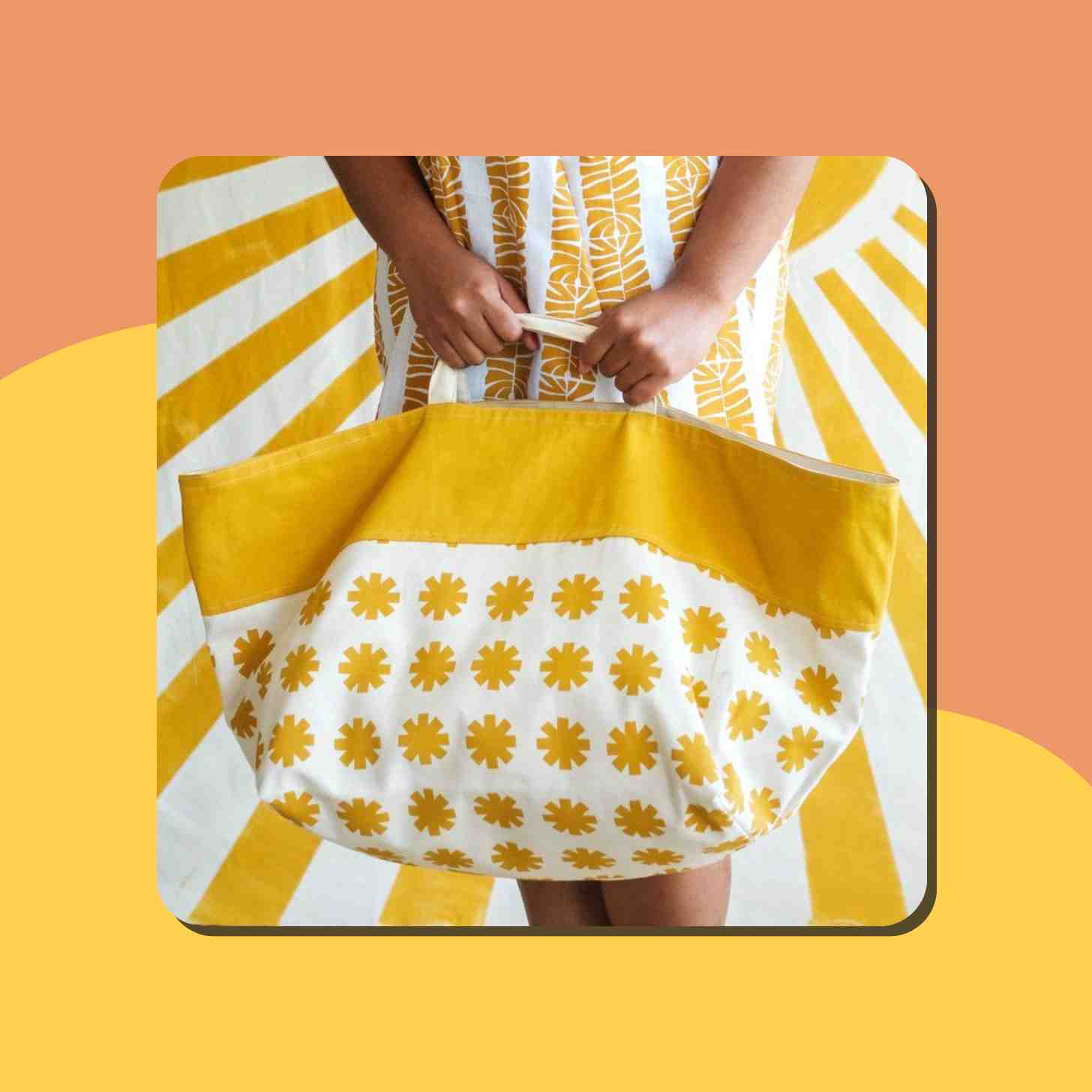
There are few things we love more than a good tote bag. They serve as an alternative to single-use plastic and paper bags, and they’re a fun accessory that can make any outfit that much more interesting — especially this vibrant, patterned one from Rise Beyond the Reef.
Rise Beyond the Reef sells products that are handmade by women in Fiji, an island in which nearly 25% of the population lives below the poverty line.
Rise Beyond the Reef supplies Fijian women — largely, women Indigenous to the island — with materials they use to create a variety of handmade products that are then sold online. In doing so, these women gain economic resilience and independence.
What’s good:
- Products are handcrafted and naturally dyed
- Ethical manufacturing practices
- Empowers Fijian women and girls by providing education, skill building, and opportunities to earn income
Shop: Rise Beyond the Reef | NOVICA
Material’s The reBoard

There’s always room to become more sustainable in the kitchen, and Material’s The reBoard is the perfect gift for anyone looking to sharpen their cooking skills without hurting the environment.
Made entirely of upcycled and renewable materials (75% repurposed kitchenware plastic scraps, 25% renewable sugarcane), this cutting board is as good on the earth as it is on the eyes, and that’s saying a lot.
The reBoard comes in five stunning shades, including To Pó-Po, with Love — a color option that, when purchased, donates half of its profits to Heart of Dinner, an organization delivering food and handwritten letters to Asian elders in NYC.
What’s good:
- 100% upcycled and renewable materials
- BPA-free
- Nearly $185,000donated to organizations “at the intersection of food and underserved groups across the U.S.”
Shop: Material
Upcycled Record Coasters from Uncommon Goods
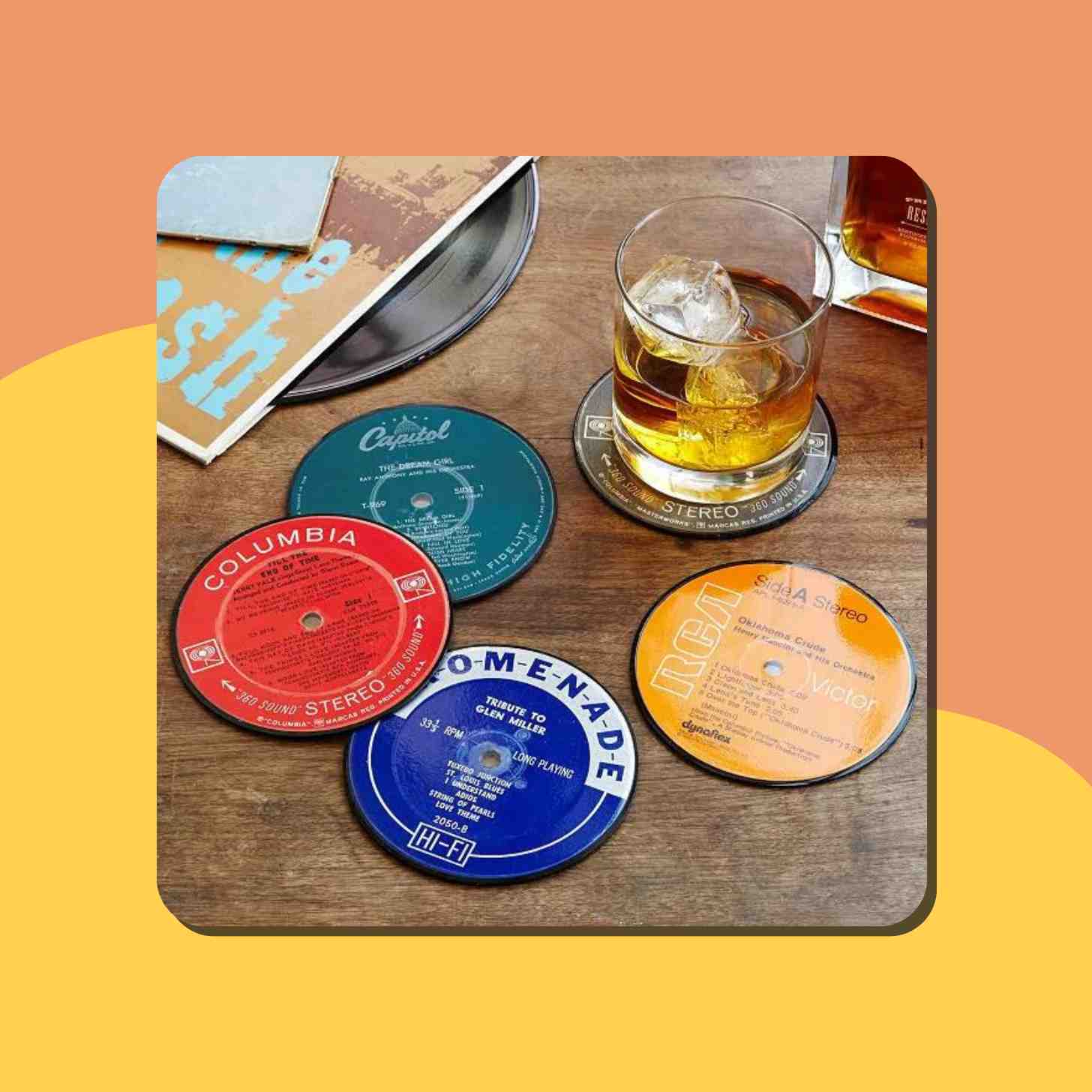
We’re just going to say it: Coasters are underrated. First of all, they save your favorite pieces of furniture from being ruined by condensation. Second, and more importantly, they give you the chance to add a pop of color — or, in this case, a bit of funk — to your space in an accessible, budget-friendly way.
These upcycled record coasters are made by repurposing labels from genuine vinyl records — cool, right?
What’s good:
- B Corp-certified
- Starting pay for hourly employees is double the federal minimum wage
- Nearly $3 million has been donated to several causes through their Better to Give program
- Recycled materials
Shop: Uncommon Goods
Dieux Forever Eye Mask
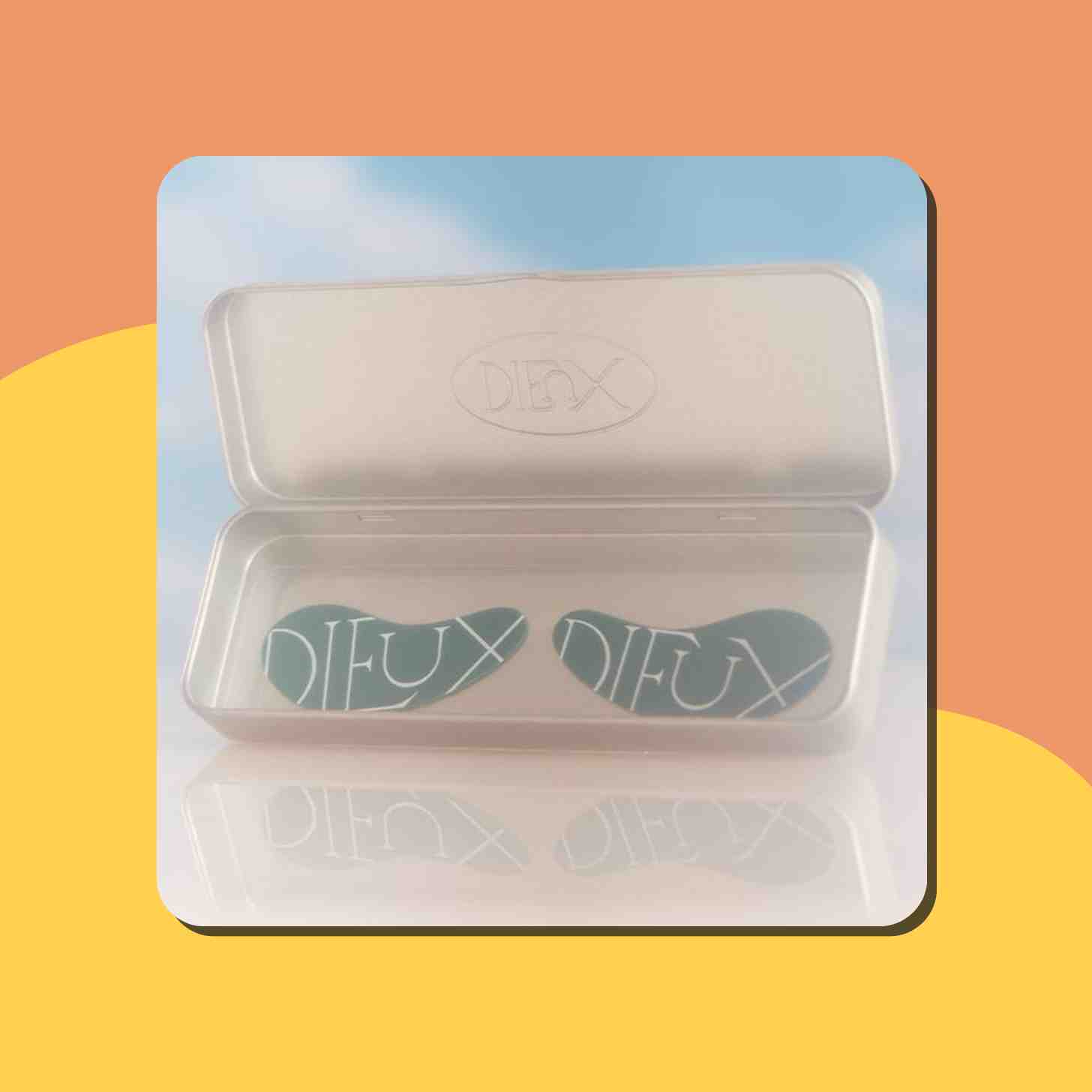
This one is for the friend who stays up-to-date on the latest and greatest in wellness — the one who’s somehow always in the middle of ice rolling their face when you FaceTime them.
With new trends constantly emerging and the cosmetics industry producing a whopping 120 billion units of packaging every single year, it can be difficult to find a sustainable gift for the self-care expert in your life.
Enter the Dieux Forever Eye Mask, a reusable pair of under-eye patches designed to de-puff and hydrate over and over again. Just 11 uses make this product less harmful to the environment than its single-use alternative.
What’s good:
- Recyclable packaging
- Vegan & cruelty-free
- Below-average carbon emissions and waste output
Shop: Dieux
Stripe & Stare Unisex Boxer

We know what you’re thinking; underwear is the kind of gift a parent concerned about the frequency (or, rather, infrequency) of their child’s laundry being done would give.
But this is a cool pair of underwear, we promise.
What makes this pair of underwear so very cool, you ask? Well, it’s made out of TENCEL, a sustainably sourced, 95% biodegradable fabric that is twice as soft as cotton and made from renewable beech wood.
What’s good:
- Climate Positive Workforce
- B Corp-certified
- Woman-owned brand
- One tree is planted with every purchase
- The brand donates underwear, pajamas, and loungewear to Trevi, a women’s and children’s charity based in South West England, as well as financial and mentorship support to female entrepreneurs
Shop: Stripe & Stare
Meow Meow Tweet Lavender Sweet Orange Hand + Body Wash
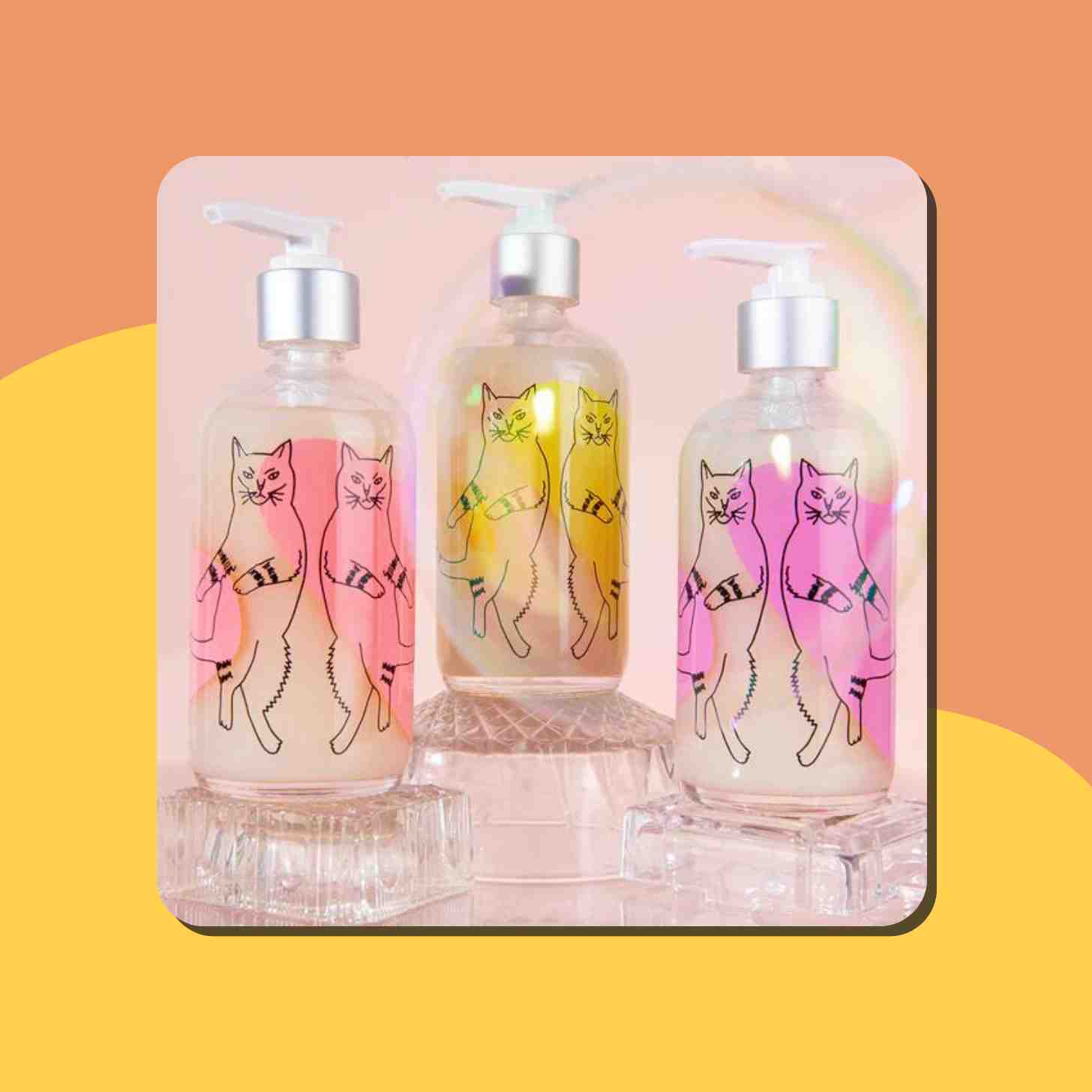
What’s not to love about a natural, multi-use soap that smells like a thriving garden and has grumpy cats adorning its reusable bottle? No, seriously, what’s not to love? We can’t think of anything.
Meow Meow Tweet is an LGBTQ+-owned personal care brand dedicated to producing cruelty-free, low-waste soaps, deodorants, skincare products, and more. All of the brand’s packaging is recyclable, and they offer bulk products to refill bottles and jars.
What’s good:
- B Corp- and Climate Neutral-certified
- All packaging is sustainable and recyclable
- Certified Plastic Negative Product
- LGBTQ-owned brand that prioritizes living wages
- Redistributes funds to a different organization each month
Shop: Meow Meow Tweet
Nature could literally save lives.
A recent study by the University of Exeter revealed that spending two hours a week outside in nature — walking through a park, watering plants in a community garden, or simply sitting on a sun-bathed bench — can improve your health and mental well-being.
Indiana-based nonprofit Keep Indianapolis Beautiful put that methodology to the test when they sought a link between the greenspaces built throughout Indianapolis and the rate of gun violence in their community.
The term “greenspace” refers to parks, gardens, meadows, trees, or other nature-filled community spaces in an otherwise urban area.
Taking into account differences in demographics and the citywide rise in gun violence, researchers at the University of Michigan School of Public Health saw a 12% decrease in gun violence within a half-mile radius of community greenspaces.
The range of the study showed that KIB greenspaces reduced the incidence of an assault with a gun by 6% at minimum — and in some cases — as much as 20%.
“This study proves something we have long believed: investments in our neighborhoods — and specifically in greenspaces — can play an outsized role in making communities safer,” Indianapolis Mayor Joe Hogsett told WRTV Indianapolis.
KIB President and CEO Jeremy Kranowitz celebrated the research results and said that the nonprofit is “delighted” to grow and expand more greenspaces throughout the city.
“At KIB, we believe there is immense power in coming together and making our communities cleaner, greener, and — with the numbers we see in this study — safer,” Kranowitz told WRTV. “We continue to focus efforts to improve quality of life, helping people and nature thrive.”
Several cities saw a dramatic drop in crime after investing in green spaces.
Indianapolis is one of many cities across the U.S. that have adopted “greening” efforts. In 2016, the USDA Forest Service conducted an experimental study to see if greener spaces in Youngstown, Ohio could deter crime. The five-year program saw an 85% reduction in felony assaults.
In 2018, residents in Flint, Michigan helped turn vacant lots into community gardens and saw a 40% drop in violent crime in a single year.
Laney Rupp — the center manager at the Michigan Youth Violence Prevention Center — explained that abandoned buildings and crumbling infrastructure create a “negative spiral of neighborhood decline.”
“If you engage residents and improve their neighborhoods, they’ll get to know each other, they’ll build social resources. They’ll then feel like their environment is safer and more orderly. They might be more likely to go outside,” Rupp told the Capital News Service of Michigan.
For Indianapolis Mayor Joe Hogsett, creating greenspaces is just one of many methods the city has employed in the fight to reduce gun violence.
“[We’re] working every single day to tackle the menace of gun violence in Indianapolis, leveraging new technologies, recruiting more officers and advocating for changes to misguided state policy,” Mayor Joe Hogsett told WRTV. “But we won’t be satisfied until we’ve used every tool in our toolbox.”
Header image courtesy of Michigan Youth Violence Prevention Center
Every day the Good Good Good team collects the best good news in the world and shares it with our community. Here are the highlights for this week!
If you want to get good news in your inbox every day, join the Goodnewsletter — the free daily newsletter designed to leave you feeling hopeful.
The Best Positive News We’re Celebrating This Week —
The city of Columbus, Ohio just canceled $335 million in medical debt for its residents
Joining faith organizations, online communities, and other local governments in the movement to forgive medical debt, the Columbus City Council in Ohio just voted to cancel $335 million in medical debt for thousands of residents.
The decision will impact about 334,000 — about one in three — Columbus residents who have medical debt from treatment received at any of the four area hospital systems between 2015 and 2020. It will cost the city around $500,000 to accomplish.
Unlike other groups that have utilized the services of the nonprofit RIP Medical Debt, local health providers decided to forgive the medical debt directly, rather than going through a third party. This option offers another pathway for cities looking to provide debt relief for residents.
Why is this good news? According to a KFF poll, more than half of U.S. adults say they’ve gone into debt in the past five years because of medical or dental bills. Cities stepping up to help residents avoid financial catastrophe due to unforeseen medical bills is not only an investment in the health (physical, mental, and financial) of those individuals — but in the community overall.
New Orleans has seen a 24% drop in homicides so far this year compared to this time last year — nearly twice the average of 150 other cities
Last month, New Orleans achieved a milestone worth celebrating: for the first time since October 2019, the city went 12 days without a homicide. The New Orleans Police Department also reported that from September 1 to 12, there were “hardly any” nonfatal shootings.
New Orleans saw a devastating spike in gun violence in 2020 that continued through 2022, when it had one of the highest homicide rates from firearms in the country. But now, like the rest of the country, it’s seeing that gun violence rate decline — particularly dramatically, and it’s not just over 12 days.
So far this year, New Orleans has seen a 24% decline in homicides — nearly double the average among 150 other cities, which have also seen a (still encouraging) 12% decline. And even better: between July and September there were 36% fewer homicides compared to the same period last year, and the fewest since October 2019.
While the cause of this encouraging progress is not immediately clear, city leaders point to an expanded summer work program for young people, pandemic recovery, and more as potential contributors.
And the city is already making plans to ensure this trend is long-term and sustainable by investing in public health and community-driven approaches to violence reduction.
A ‘groundbreaking’ bionic arm that fuses bone and nerves could transform amputee treatment options
The Bionics Institute of Australia and Center for Bionics and Pain Research have partnered to create a new technique aimed at improving the lives of amputees.
The novel technology fuses the bionic arm to the user’s skeleton and nervous system by implanting electrodes into their nerves and muscles. The implant acts as a permanent anchor for the prosthetic, which can then be easily attached and removed.
The outcomes are remarkable: decreased pain and better control of the prosthetic. Amazingly, it can allow users to carry out about 80% of their daily activities.
The first person to receive the prosthetic, a woman who lost her arm to a farming accident more than 20 years ago, said the bionic arm has reduced her pain and transformed her life. After her accident, she experienced high levels of phantom limb pain and relied on various painkillers. She’s now been able to use the new prosthetic comfortably and effectively for years, her pain has decreased, and she needs much less medication.
Why is this good news? Traditional prosthetic limbs present discomfort or challenges for users, including issues with attachment and unreliable control. This new advanced technology can be used reliably in daily life and reduce pain — a game-changer for individuals experiencing limb loss.
A new ‘real estate agency’ in Los Angeles is helping thousands of people experiencing homelessness get into homes faster
A nonprofit partnering with Los Angeles County’s Department of Health Services is helping people find housing in a city that’s known for a tight and expensive real estate market.
The organization, Brilliant Corners, scouts vacant units and lobbies landlords. Their strategy is to have a stock of move-in ready apartments so that as soon as clients receive their housing vouchers and have their documents ready, they can move in immediately.
The nonprofit works with landlords to negotiate rent, and what gives the program an edge is that the organization can begin paying rent immediately — making landlords keen to participate. The program can also pay for move-in costs, offers funding for unexpected needs — like if electricity rates go up or if a one-time expense makes it hard to pay rent one month.
On average, Brilliant Corners places 192 people into permanent housing every month, and it's helped more than 12,000 people since it launched nearly a decade ago.
Why is this good news? Unhoused community members usually face a lengthy and complicated process to get permanent housing, but Brilliant Corners’ model is a coordinated and streamlined strategy for locating, securing, and funding housing. By coordinating the major aspects of the housing process, Brilliant Corners can speed housing times considerably, eliminate piecemeal administrative processes, and readily match people to a home — creating a seamless experience for the tenants.
A nonprofit provides free cleaning for recovering cancer patients across the U.S. and Canada
Nonprofit Cleaning for a Reason is providing free home cleanings to cancer patients so they can focus on rest and recovery — not household chores. Founder Debbie Sardone said the service comes with “no strings attached.”
“We have over 1,200 cleaning services throughout the entire United States and Canada, giving back to their community by serving families who are battling cancer with the gift of free cleaning,” Sardone said.
Since it was founded in 2006, Cleaning for a Reason has partnered with 1,300 cleaning companies, served over 50,000 patients, and donated about $15 million in services. They also partner with a cleaning company to use non-toxic and refillable cleaning supplies that are better for people and the environment.
Why is this good news? After leaving exhausting hospital care, chemotherapy, or surgery, the last thing anyone wants (or is even able!) to do is clean their house. Cleaning for a Reason helps alleviate the burden of household chores so that patients can focus on rest and recovery.
A group of activists and legislators are putting an end to prison phone fees
A group of advocates, legislators, and community members challenged a multibillion-dollar company and achieved a groundbreaking victory. Following a lengthy campaign, in 2021 Connecticut became the first state to abolish prison phone fees, allowing inmates to make free calls and saving their families about $10 million annually.
The campaign, spearheaded by criminal justice reformer Bianca Tylek and her nonprofit Worth Rises, took a multifaceted approach, combining lobbying, community engagement, and financial pressure on private equity firms that generate major profits from the prison telecommunications industry.
The achievement in Connecticut has inspired other states to consider eliminating prison phone fees, offering hope for ending this exploitative practice, which disproportionately affects low-income communities and perpetuates financial hardship.
Why is this good news? Prison phone calls play a crucial role, enabling people in incarceration to coordinate housing and employment upon re-entry and maintain vital connections to the outside world, reducing recidivism. The success in Connecticut showcases the potential for change in the prison telecommunications industry, shedding light on the path to ending exploitative prison phone fees for families and reducing the cycle of poverty within low-income communities.
→ Read more
A teen invented a soap that treats skin cancer
A 14-year-old student in Virginia, Heman Bekele, has invented an affordable and safe-to-use soap using cancer-fighting chemicals to treat Melanoma and was named “America's Top Young Scientist” in an annual nationwide competition.
The soap helps protect skin and enhances the body’s immune response by reviving cancer-destroyed cells, which are then able to fight against the cancer cells.
Earlier this month, Heman gave his final presentation at the 3M Young Scientist Challenge, an annual competition that invites students in grades five through eight to “change their world for the better with a single innovative idea.”
After competing against nine other finalists in the challenge, he won the title of America’s Top Young Scientist.
Heman told the judges he hoped the soap would be a “symbol of hope, accessibility, and a world where skin cancer treatment is within reach for all.”
→ Read more
More good news of the week —
According to a new world ranking, Colombia and Mali are leading the world in improving air quality. In fact, countries from the global south have the most ambitious strategies to address air pollution and its health impacts, while wealthier countries lag behind.
Robert Irwin just announced the successful breeding of the endangered turtle species named after his late father. Steve Irwin discovered the Elseya irwini turtle — a freshwater species also known as “Irwin’s turtle” — on a boating trip with his own dad.
The Biden-Harris administration announced plans to invest $7 billion to build seven “hydrogen hubs” across the U.S. Widely seen as a promising tool to fight climate change, hydrogen is a clean-burning fuel with the potential to power ships or factories without producing any planet-warming emissions.
To help make the process more affordable, the IRS is testing a new, free, electronic tax filing program in 13 states. Currently, people in the U.S. spend about $11 billion each year on services such as tax preparation services and accountants to help them fill out their returns.
Residents of a New York City condo building are pushing for more bird-friendly glass to prevent deadly collisions. Audubon NYC put Circa Central Park in the top three for bird-killing buildings last year, and residents want to install a bird-deterring window film that could save hundreds, even thousands of birds.
Thanks to a new law, California will now guarantee time off work following a miscarriage or other reproductive loss, including failed adoption, in-vitro fertilization, or surrogacy. This new law ensures leave for grieving and recovering would-be parents and was passed with largely bipartisan support.
A new sustainable tech partnership in Jamaica aimed at cleaning the Kingston Harbour could become a global model for tackling ocean pollution. The pilot project recruits community members as crew and staff and offers training on the importance of the environment and waste management.
Solar panels orbiting Earth could become the planet's cheapest and most widespread form of green energy. Traditional solar panels (like the ones on rooftops) are in the dark or under clouds for a huge portion of time, but solar panels on satellites would rarely leave sunlight.
An old church is being turned into a greenhouse aimed at fighting food insecurity. The volunteer-run nonprofit, which grows food and collects vegetables from local farms that would otherwise go to waste, purchased the building for just $1 thanks to parishioners who wanted to support the organization’s mission.
After decades of being unused, Britain’s abandoned coal mines have gradually flooded and are now being used to heat homes. The water is directed through heat pumps and offers a carbon-neutral method to heating the buildings above the mines.
A city in Japan is piloting a way to wirelessly charge electric vehicles at stoplights. The city aims to make it easier for EV drivers to drive locally without having to stop to charge as often.
After a woman petitioned a 2004 law, Japan’s top court just ruled it unconstitutional to require citizens to be sterilized before they can officially change genders. Human Rights Watch called the ruling a "important victory for transgender rights in Japan.”
A growing number of startups are taking on the climate impact of cement-making, a process that contributes to about 8% of human-caused CO2 emissions yearly. Startups and manufacturers are working to develop new methods and formulas for making carbon-free cement.
A franchise of sensory gyms is creating inclusive activity spaces catered to the needs of neurodivergent children. “We Rock the Spectrum” also provides volunteering and employment opportunities for neurodivergent individuals, helping them gain valuable skills and prepare for the workforce.
A new recycling method can recover 98% of lithium from electric vehicle batteries. The process aims to tackle waste and solve bottlenecks in EV battery recycling — a key factor in their sustainability.

Homelessness is a situation that inherently lacks dignity and autonomy, as people experience unsafe living conditions and social isolation that strips them of their connection to others.
But experiencing homelessness does not make someone less human, and how we talk about homelessness matters in building and maintaining human dignity for all.
Besides, homelessness is not a personal or moral failure of an individual, but rather a failure of our systems and governments, that keeps people from accessing quality, affordable housing and support.
However, in a time where there are so many buzzwords or “politically correct” terms, it can be hard to know the right thing to say when talking about homelessness — more specifically, individuals who are experiencing homelessness.
Language is an ever-evolving tool, and accepting the nuance and fluidity of the words we use helps us become more informed, thoughtful people. Plus, having a shared language helps us better describe things that can be difficult to understand.
So… we’re here to help! We’ve done the research and spoken with an expert to help you find the best ways to talk about homelessness, so you can be a part of the solution for all folks to live safe, dignified lives.
First, what is the proper term for ‘homeless?’
These days, you’ll find that the general consensus is not to use ‘homeless’ as a noun (ie: “I want to help feed the homeless.”) but rather an adjective (ie: “I shared my lunch with a homeless person today”).
Language guides, like those from the Associated Press, for instance, also suggest switching to person-first language altogether (like ‘person experiencing homelessness’), instead of defining someone by their living situation.
So, does that mean calling someone ‘homeless’ is offensive?
Describing someone homeless isn’t necessarily offensive, as long as you’re using it as an adjective and not a blanket noun for a group of people. That said, some folks might prefer you use person-first language, or a different adjective like “unhoused” or “houseless.”
Sarah Armour-Jones is the deputy director of Housing Narrative Lab, an organization that aims to change what the public feels and thinks about homelessness in order to build greater support for proven solutions.
“When speaking directly with people who are or have been homeless or in unstable housing, we think it’s best to ask them what they prefer,” Armour-Jones told Good Good Good.
“We recognize that labeling people based solely on their housing situation is limited and demeaning, but we also encourage people not to focus so much energy on the latest language and instead focus on being part of the movement to solve homelessness.”
So, while you definitely should be thoughtful about your language, we should keep in mind that true dignity comes from listening to the lived experiences of unhoused folks first and foremost.
Take Sapphire, for instance. They are a TikTok creator who shares their perspective as someone experiencing homelessness.
“I cannot tell you how meaningful a shred of humanity feels to me,” they said. “I’ve talked many times on my page about how I don’t feel like a person, and when people interact with me, I feel like they don’t view me as a person. Using the terms ‘unhoused’ and ‘houseless’ help me regain some of that humanity.”
At the end of the day, there is no one “politically correct” term for homelessness, but rather a more nuanced consideration of what is going to do the most good. Here are a few more explanations to help you decide the best terminology to use:
Considering new words for ‘homeless’
Unhoused vs. Homeless
‘Unhoused’ is a common alternative to ‘homeless.’ This refers to a more diverse set of experiences among those experiencing homelessness, as some people view a city or community as their home, rather than the physical building or property they occupy.
In fact, Dictionary.com recently added ‘unhoused’ to its database as a unique term suitable for replacing “homeless,” though it is ultimately a matter of personal preference.
“Unhoused” also has a connotation that speaks to the societal and systemic failures of governments to house their people, as opposed to putting “blame” on a person for not having a house or home.
This is another reason some people may prefer this term to “homeless,” since it re-centers the conversation on the many societal injustices that keep people from accessing stable housing.
Houseless vs. Homeless
Similarly to ‘unhoused,’ ‘houseless’ is a term that reconsiders what we call a house or home. While folks may not live in traditional houses or apartments, they may live in a tent encampment, vehicle, or other location, which is indeed their home, since they spend their time there and store their belongings there.
This is important to consider because sweeps, searches, and seizures of these kinds of shelters contribute to a loss of dignity and safety. Reconceptualizing “home” helps folks living in these shelters or camps reclaim their humanity.
The impact of how we use ‘homeless’ terminology
Ultimately, these words are one component of a larger issue: ensuring dignity and safety for all. When speaking with someone directly, you should ask them what they want to be called (probably just their name!), but when talking about homelessness as a large issue, it’s perfectly acceptable to call it what it is.
“Homelessness is a policy and budget choice. It is a solvable problem. We also know that we all benefit when everyone has a safe place to live – our communities are healthier, more vibrant, and safer places when everyone has housing,” Armour-Jones said.
According to Amour-Jones, using the right adjectives is not nearly as important as the context in which they are used. After all, the word ‘homeless’ isn’t what’s stigmatized; it’s the experience of homelessness that is.
“The words we use and the images we share are the foundation of the stories we tell ourselves about the world – about our place in it, about our communities and our country. Stories connect us with one another, so language is essential,” she said.
“But it’s not just our word choices, it’s also how we frame the information. When we talk about people as part of our community, we frame them as people who belong – we build connection and empathy. When we label people as criminals or drug addicts, we make it easy to see them as less worthwhile and undeserving of dignity. Language is powerful.”
For example, a messaging guide from Housing Narrative Lab suggests that we embrace the language of ‘solving’ homelessness, rather than ‘eradicating’ it, since it’s a collective social problem we can confront — not a disease or moral failing.
Plus, more specific terminology can help clarify the type of homelessness someone is experiencing. For instance, someone might have ‘unstable housing,’ which likely suggests that they don’t have a house of their own, but may be able to find safety and support by staying with friends or in shelters.
While using the wrong words does not cause the same kind of harm that homelessness itself causes, using more thoughtful and meaningful words can bridge gaps and help us treat unhoused folks with more respect and dignity — and ultimately change the conversation around homelessness as a whole.
Housing Narrative Lab aims to use language as a tool to articulate a positive vision of the future by establishing shared values and connection to the central goal: that everyone can afford a safe place to live and call home.
“Advocating for people to be housed … doesn’t have to be at the State House or in the newspaper — it can be around the dinner table or in a cab when the topic of homelessness comes up,” Armour-Jones said.
“We all have a role to play in changing what people think about the causes of homelessness and helping people understand that it’s solvable if we want to solve it.”
Fireflies — also called lightning bugs, big dippers, and moon bugs— are known for their trademark glow.
In addition to lighting up the evening sky with a twinkling luminescence, fireflies are hugely beneficial to the environment.
They feed on plant-destroying garden pests. They don’t bite or sting. And unlike most insects, they don’t carry diseases.
Now, the nocturnal beetle — yes, beetle! — is finally getting global attention.
At 2023’s TEDWomen conference, conservationist and insect scientist Wan Faridah Akmal Jusoh took the stage to share her passion for fireflies and spread conservation awareness.
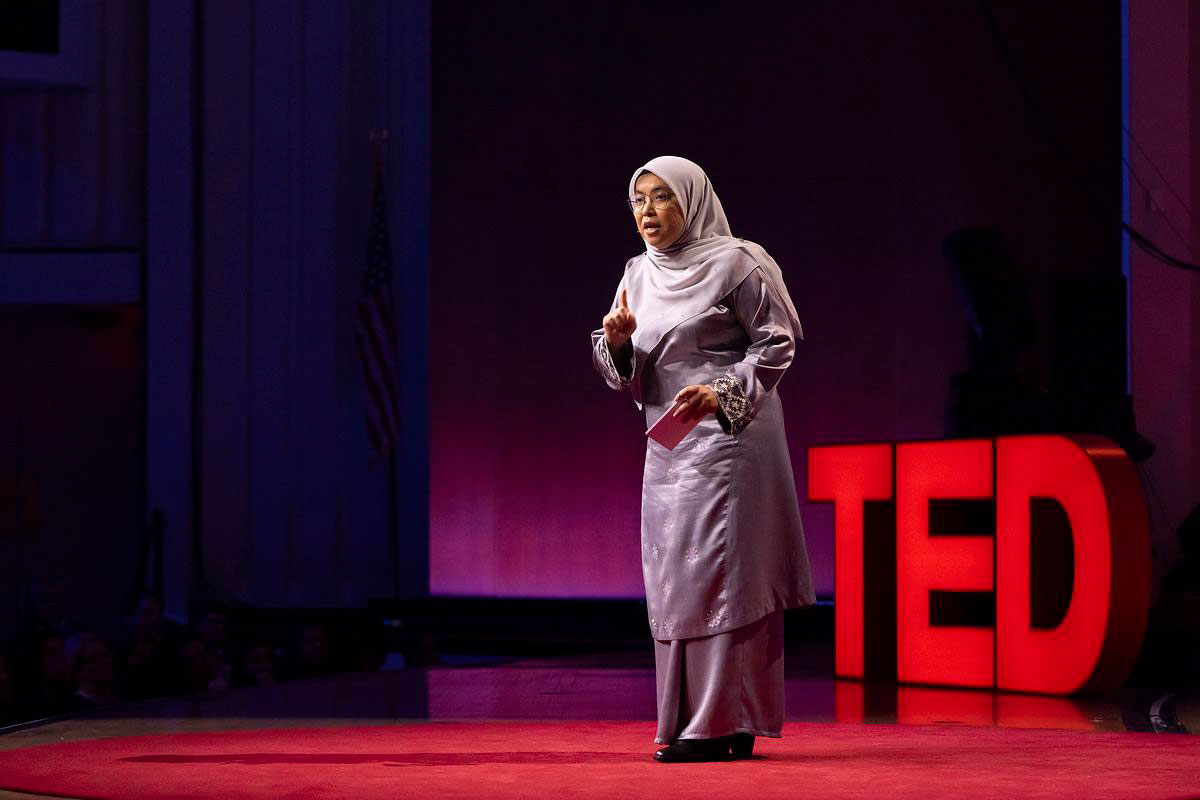
As a child, Jusoh grew up along the coast of Peninsular Malaysia and traveled to a mangrove estuary to see countless fireflies — known as “kelip-kelip” in Malay — “flashing in almost perfect unison.”
From that day on, Jusoh became entranced by the small, twinkling insects and dedicated her scientific career to studying and preserving them.
Every firefly species is unique.
“There are more than 2,000 firefly species that we know of, and they live all around the world,” Jusoh said in her Talk. “They are found in every continent, except for Antarctica.”
Although most fireflies have wings and emit light, Jusoh said that each species has a “unique light pattern.”
“The light is produced by special organs under the abdomen. … Some glow continuously, while others emit discrete flashing patterns, almost like a secret code,” Jusoh said in her Talk.
Although the lights have a near-magical quality to them, Jusoh explained that fireflies are “so much more than pretty lights.”
Firefly loss points to bigger issues in environmental health.
“They are an essential part of a healthy ecosystem. The lifecycle of fireflies keeps the ecosystem balanced. Each firefly, in each indicative life stage, has specific needs for habitat to thrive,” Jusoh explained.
Jusoh said that dwindling firefly populations are huge indicators of an ecosystem in decline.
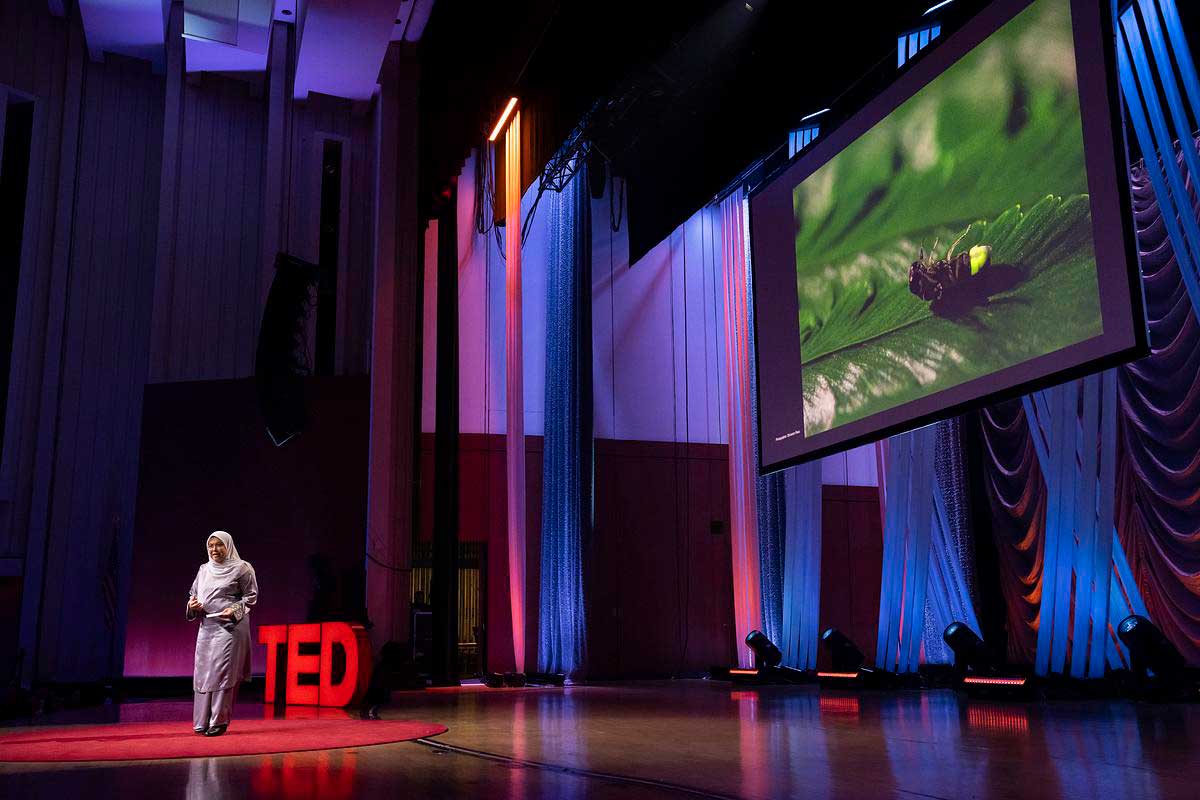
“In a mangrove forest, when you see a population of fireflies decreasing, that could be due to water quality degradation, which can be a sign of a collapsing food chain,” Jusoh said in her Talk. “Why? Because firefly larvae eat snails, and snails need good water quality to thrive.”
In a way, fireflies are a “canary in a coal mine” when it comes to signaling a habitat in distress. If fireflies are dying off, that means that other species in that same habitat are also declining, and the ecosystem is unhealthy.
Fireflies need our help.
In addition to their ability to signal broader systemic issues in ecosystems around the world, fireflies play a unique role as both predator and prey in their local food chain.
They feed on soft-bodied invertebrates like slugs, snails, and earthworms, while also providing food sources for critical species like birds, spiders, and frogs. In short, fireflies are crucial to food-web stability.
Unfortunately, firefly populations are threatened by climate change and an abundance of artificial light pollution, which can “disorient, repel, or blind them.”
According to the Washington Post, nearly 1 in 3 firefly species in the United States and Canada may be threatened with extinction.
“This is bad for the Earth [and] humans too,” Jusoh warned. “It is a sign of overdevelopment that can induce climate effects such as flood and drought.”
There are ways to make a difference for fireflies.
Fortunately, there are a number of eco-friendly actions you can take to help preserve fireflies in your own backyard.
First, avoid using pesticides and chemical fertilizers in your yard. Although many pesticides promise an easy weed-killing solution for your lawn, they’ve also proven to be toxic to other organisms like birds, plants, and our glowing beetle friends.
Other action steps include planting native trees and grasses and cutting down on mowing, which helps preserve pollinators like bees as well.
You can also help by reducing excessive use of artificial lights, which endanger fireflies and make it more difficult for them to reproduce. Clicking off artificial lights at night also helps protect birds, owls, and other nocturnal wildlife that rely on moonlight and starlight for navigation, migration, and hunting.
Lastly, you can help fireflies and cut down on your chore list at the same time by not raking leaves. Firefly larvae live in leaf piles along with butterflies, chipmunks, turtles, toads, and more. Raking or blowing leaves could disrupt a firefly’s lifecycle before it even begins.
Countless fireflies are still waiting to be discovered.
With population decrease on the rise, Jusoh has become fiercely protective of fireflies and the “fascinating mysteries” they present.
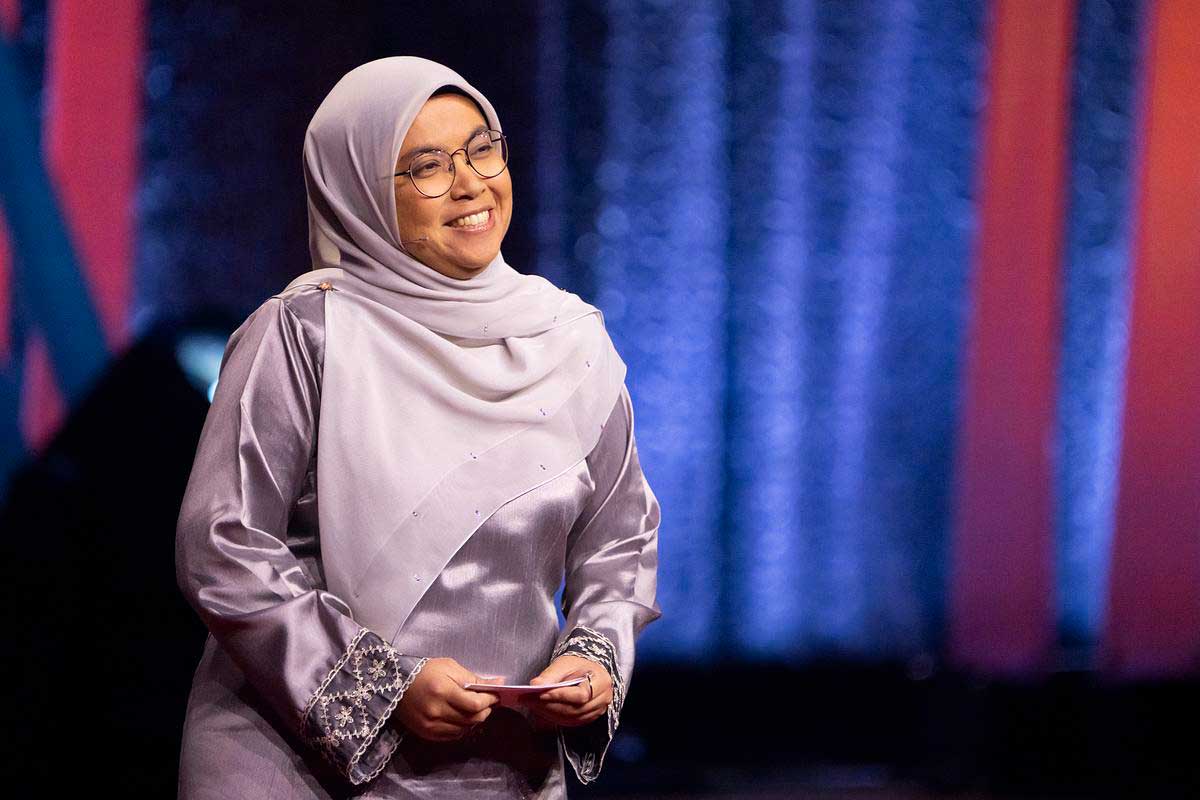
In Singapore, Jusoh discovered the first new luminescent firefly species — the Luciola Singapora — in the region in over a century.
On another occasion, while exploring and collecting samples of new firefly colonies, Jusoh and her team found themselves surrounded by a bask of crocodiles blinking up at them out of the dark and narrowly escaped to safety.
No matter where her self-made mission takes her, Jusoh hopes to identify and conserve firefly species around the world.
Jusoh said: “Imagine how many more remarkable firefly species are waiting to be found. … Fireflies need your help before they flash that one last time.’”
Header image courtesy of Erin Lubin / TED
When scrolling through designer and artist Courn Ahn’s Instagram page (@candy.courn), not only will users see the bright pink interior of Ahn’s Portland residence, but they’ll also notice Ahn’s hot pink hair, colorful makeup, and playful outfits.
Influencers and runways alike have long traded minimalism and restrictive dress codes for more experimental designs — but the term “dopamine dressing” has introduced those seriously unserious fashion principles in the mainstream.
What is Dopamine Dressing?
Fashion magazines and hashtags seem to consider “dopamine dressing,” the use of bright colors, textures, or patterns to dress for joy and expression.
But individual creators usually have their own perspective on the movement.
“As a designer, and particularly an autistic one, inputting both joy and functionality into all my work has always been a priority, if not a requirement,” Ahn said. “Seeing how we can do that in all aspects of our life, our clothes, our homes, our art, is the type of movement I’d love to see more of.”
“What I don’t want to be lost in this conversation is that dopamine dressing looks different to each person.”
Rachael Renae (@rachaelrenae) is also a style-centric creator on Instagram, a self-titled “internet hype gal,” who helps people dress in ways that are authentic to them.
Her platform grew out of her independent style challenges, hoping to instill an element of creativity in her life as she navigated depression.
“When I started to experiment with my style many years ago, I found myself excluding a lot of things because I felt like I had to have a really cohesive look,” Renae said. “But dopamine dressing allows that authentic expression to come out by giving it a label that doesn’t actually mean much of anything.”

According to Renae, the trend of dopamine dressing seems to stick because it’s actually more of a rejection of trends.
“I don’t have to say ‘I’m a motorcycle girl so I only wear leather,’ or ‘I’m a jock so I only wear jerseys,’” she continued. “Dopamine dressing is just dressing authentically and allowing all of these facets of my wardrobe, my life, and my personality to go beyond those boundaries.”
For Ahn, the definition is similar: taking a multi-faceted approach to encompass two central ideas: comfort and creativity.
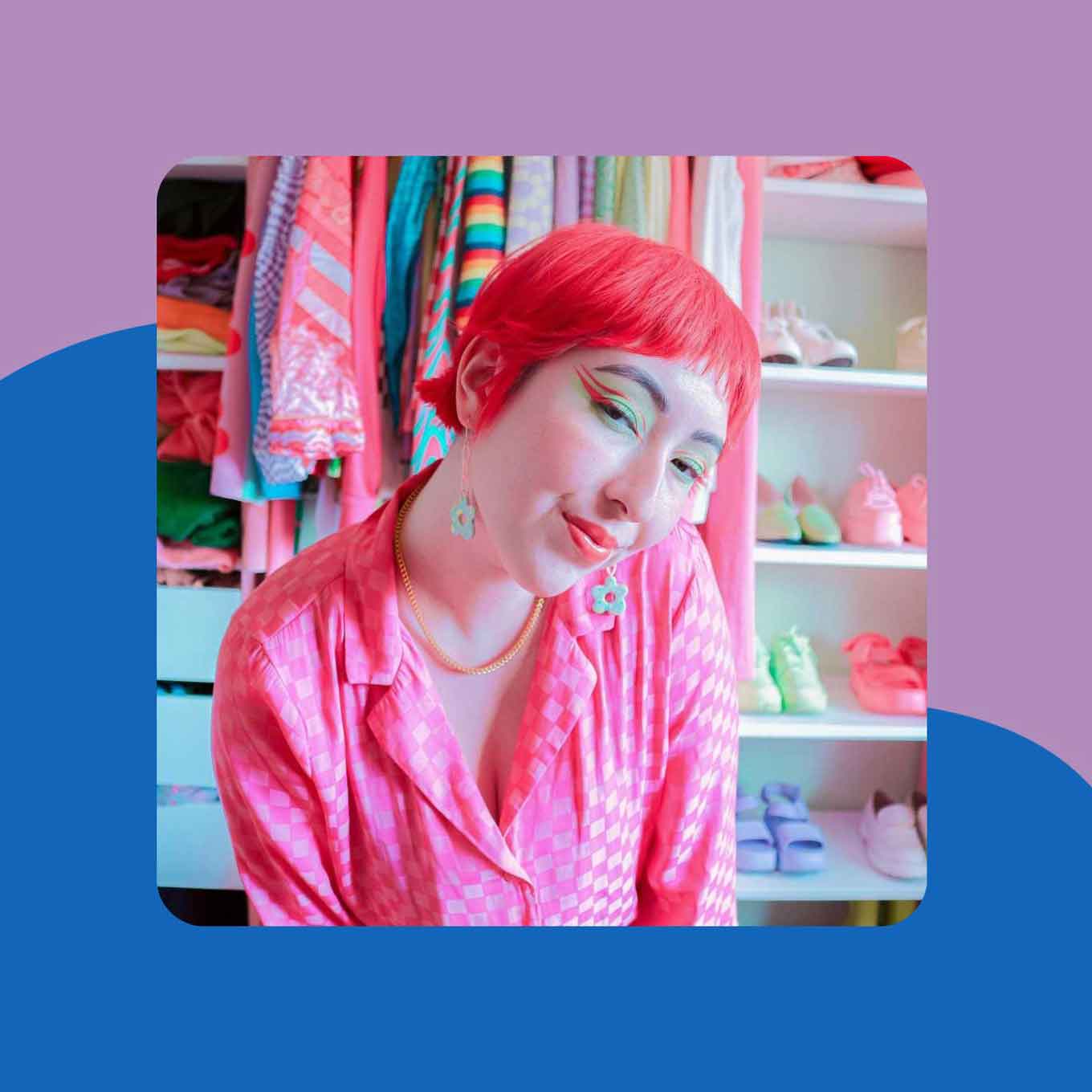
“I see two sides of dopamine dressing,” Ahn said. “One: a focus on bright colors, textures, and unexpected clothing combinations that defy trends and ideas of form-fitting fashion. Two: a secondary focus on comfort — often led by those with sensory processing disorders and other disabilities — and the rejection of gendered norms in fashion.”
Not only is dopamine dressing about the visual expression of someone’s style — it’s also the acceptance and celebration of simply wearing what feels good.
“We all have to wear clothes, so why not have fun with them?”
“Interconnected in both of these is the underlying idea of just wearing things that bring you joy — whatever that is. Maybe that’s a colorful explosion of rainbow tones like me, or maybe it’s an all-black fit with goth details,” Ahn said.
“What I don’t want to be lost in this conversation is that dopamine dressing looks different to each person.”
Renae builds on that, explaining that dopamine dressing looks different, even for just herself, every day. She sees clothing as tools to self awareness; just like a painter might use brushes, or a woodworker might use power tools.
Prioritizing Creativity and Self-Care
Not only is dopamine dressing a creative craft, but it also becomes a form of self-care and exploration, inviting wearers of clothing (so… all human beings) to find small opportunities to feel good.
“It’s such an easy way for us to be able to tap into that creativity and practice play because the stakes are so low. It’s such a low barrier to entry,” Renae said. “We all have to wear clothes, so why not have fun with them?”
In that invitation to play with style, both Ahn and Renae have found something deeper. For Ahn, it’s about living more peacefully, to “unmask and unwind” with visual stimuli in their home and wardrobe.
"The idea of wearing clothes just for you, to accommodate your sensory needs, to affirm your gender and sexuality, can be absolutely radical."
“Dopamine dressing has really been one of the biggest manifestations of prioritizing myself and my needs after repressing them for so many years. I've always dressed for others, highly influenced by the male gaze and the sexist idea that clothes are worn to make our bodies look thinner and thicker in the places they're ‘supposed’ to,’” Ahn said.
“But the idea of wearing clothes just for you, to accommodate your sensory needs, to affirm your gender and sexuality, can be absolutely radical. And that's what dopamine dressing has done for me.”

For Renae, it all comes back to a central human desire: to be known and loved — by other people, and by yourself.
“By understanding myself and what I feel awesome in and how I want to present that awesome creature on the inside to the outside world, I find that style is so much more than just what we’re wearing,” she said.
“It’s understanding yourself, being able to express that, and to find deep connection with other humans.”
A version of this article was originally published in The 2023 Play Edition of the Goodnewspaper.
Get your own Goodnewspaper by becoming a good news subscriber today.

In 2020, the World Health Organization launched a new endeavor: the Health for All Film Festival, an annual event that uses cinema to improve the health of people around the world.
Since its inaugural run, HAFF has received submissions of more than 4,300 short films from 110 countries, and its catalog currently includes nearly 300 titles, all showcasing important stories about global health.
While any internet user can access these short films for free online, the film festival and accompanying awards banquet takes place at the WHO headquarters in Geneva — a far journey for many folks from various parts of the world.

So, this year, the Pan American Health Organization and the Mexican Social Security Institute hosted a sister festival in Mexico City: “Cinema and Health.”
The festival took place over the course of four days in October, offering a screening cycle that included 11 short films from this year’s HAFF, as well as films made by Mexican directors that deal with topics related to health and welfare.
“Cinema invites us to reflect on emotions. Storytelling is as old as human civilization. It inspires, motivates, creates empathy and helps us find and share solutions together,” PAHO director, Jarbas Barbosa, said during the opening of the festival.
Throughout the festival, guests were invited to presentations by directors, Q&A sessions with experts, and debates that promoted conversation, proposals, and actions to engage the general public through cinema with one common goal: better health.

“Movies enable us to collect stories about actions for global health and can encourage behavior change by providing knowledge, motivation, or skills needed to motivate people to act,” Barbosa said.
The HAFF short films shown at the festival address a wide range of topics, including: the evolution of Alzheimer’s disease in patients in Mexico, efforts of Brazilian health care workers during COVID-19, and the complex challenges of people battling mental illnesses across the globe.
Other HAFF films that received awards this year touched on topics such as climate change and public health, the experiences of those with disabilities in Sierra Leone, and sexual and reproductive health in Israel.
The Cinema and Health festival was held at the Linterna Mágica cinema in Mexico City, a historic building that recently reopened its doors after years of closure and a recent renovation.
The arts — and film specifically — have been hit by the impact of social issues such as labor disputes, COVID-19, and rising costs of living. In fact, a report from the National Cinema Foundation estimates that the U.S. saw the closure of over 2,000 movie theater screens amid the pandemic.
As the industry continues to attempt to rebound, the Cinema and Health festival is one way global cinephiles can keep the magic of movies alive.

“Let’s keep going to the movies,” IMSS director Zoé Robledo said at the festival. “Movies that make us think and reflect.”
Along with the screening, the Cinema and Health festival provided an opportunity to announce the submission guidelines and theme of the fifth-annual HAFF that will take place in 2024.
“Everything WHO does is about stories because everything we do is about people,” Tedros Adhanom Ghebreyesus, WHO’s director-general, shares on the film festival’s website.
“Ultimately, we hope the festival is not just a way to tell stories, but to change the arc of people’s stories around the world, towards better health.”
Header image courtesy of the Mexican Social Security Institute
Things just got a little breezier for the Coastal Virginia Offshore Wind project.
The 2.6 gigawatt project will become the United States’ largest offshore wind farm, now that it has received approval from the U.S. Bureau of Ocean Energy Management.
The BOEM completed the project’s environmental review on September 25 and issued its official decision on Oct. 30, making this the fifth commercial-scale offshore wind farm to be approved since the beginning of President Biden’s administration.
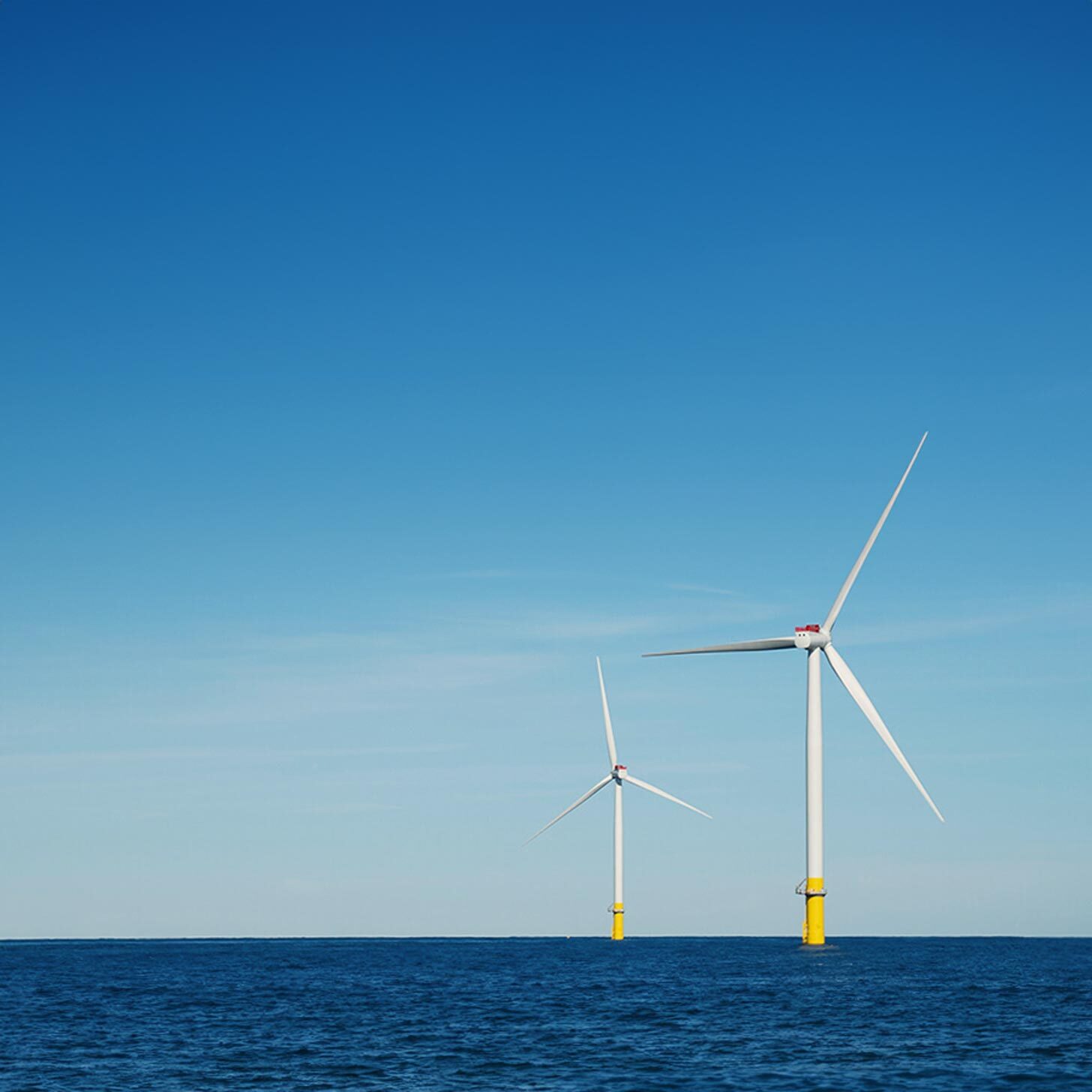
With this key green light, the CVOW joins the ranks of projects like Vineyard Wind 1, South Fork Wind, Ocean Wind 1, and Revolution Wind.
Owned and developed by Dominion Energy, the project will feature 176 Siemens Gamesa 14 megawatt wind turbines, three offshore substations, and a new onshore transmission infrastructure. It will be located about 27 miles off of the Virginia coast.
Once construction is complete in 2026, CVOW will provide clean electricity for an estimated 900,000 households. It will also support thousands of jobs in the area, and will add 1,600 megawatts of renewable energy to the grid, according to a statement from the U.S. Department of the Interior.
“More progress and economic opportunity are on the horizon as we put to use every tool available to bring offshore wind benefits to American workers and communities nationwide,” White House National Climate Advisor Ali Zaidi said in a statement.
With the CVOW milestone, the BOEM remains on track to complete reviews of at least 16 offshore wind energy project plans by 2025, according to the Department of the Interior.
Included in the BOEM review were findings that CVOW could have adverse impacts on fisheries, resulting in gear loss, navigational hazards, and construction work. To mitigate this, the Bureau is requiring Dominion to create a program that compensates commercial and for-hire fishermen, according to the Richmond Times-Dispatch.
Dominion is also planning to take steps to reduce underwater noise and use technology to keep whales and other protected species away from danger.
“Receiving a favorable Record of Decision from the Bureau of Ocean Energy Management is a monumental achievement for Dominion Energy and the Coastal Virginia Offshore Wind team,” Bob Blue, Dominion Energy's chair, president and chief executive officer, said in a statement.
“More than a decade of work has gone into the development, design, and permitting of CVOW,” Blue continued.
Since 2020, the site has been home to a pilot project made of two six-megawatt wind turbines and was the first offshore wind project installed in U.S. federal waters.
The full project is already underway, as CVOW’s first eight monopiles arrived in late October. The work of German company EEW SPC, 168 more monopiles will make their way to the site. Construction is scheduled to begin in 2024.
The Pacific Northwest is a postcard-perfect collection of green river valleys, dense forests, arid deserts, and breathtaking coastal cliff faces. But it is also home to a thick flow of basaltic rock throughout Washington, Oregon, and Idaho — which could be instrumental in trapping carbon.
When carbon interacts with basalt, the chemical reactions allow mineral trapping through the formation of carbonates. The same reaction occurs in nature when carbon dioxide-rich saline water enters a basaltic rock formation.
The Ankeron Carbon Management Hub was recently awarded $3 million in federal funding to extract carbon emissions from the atmosphere. This will result in the utilization or permanent storage of emissions in the basaltic rock throughout the Pacific Northwest region.
The Hub is a consortium of leading scientists in clean energy, carbon mineralization, and technology innovations. The millions in funding will go towards carbon dioxide removal solutions like direct air capture (DAC), with an additional focus on the community and economic benefits to the region.
The carbon removal hub includes top scientists.
The Ankeron Carbon Management Hub is comprised of three DAC companies: U.S. startups Heirloom and Sustaera, and Norway-based Removr.
Four innovative carbon technology companies are also attached — Carbfix, Blue Planet, Twelve, and LanzaTech — all of which have various projects underway. These include speeding up mineralization, manufacturing sustainable aviation fuel, and feeding CO2 to fuel-producing bacteria.
“This project brings together three fields of carbontech — DAC, carbon mineralization and carbon utilization — into one hub,” Curt Graham said on behalf of Flour, an EPC provider for the hub. “We are excited to collaborate with innovative leaders in the CDR [Carbon Dioxide Removal] space while using our experience in Washington State and carbon management to advance sustainable solutions that support climate goals.”
The Ankeron project is just one of many carbon removal projects across the U.S.
The project is also hoped to advance President Joe Biden’s Justice40 Initiative, which ensures that 40% of the overall benefits of certain federal investments go to marginalized communities that are disproportionately impacted by pollution.
This summer, the Biden administration awarded $1.2 billion to carbon removal hubs in Texas and Louisiana, in addition to 19 other early-phase projects across the country.
Amidst the other regions studying carbon technologies, the Pacific Northwest stands out — and not just as a treasure trove of basaltic rock. Its abundance of forests also supplies the clean, renewable energy that’s needed to power the carbon technology needed to capture and store carbon.
In addition to becoming home base for the Ankeron Carbon Management Hub, the region is also playing host to the Pacific Northwest Hydrogen Association’s PNWH2 hydrogen fuel hub, carbon-friendly Sustainable Northwest mass timber, and the American Aerospace Materials Manufacturing Center’s lightweight aircraft project.
Carbon removal is vital to reversing climate change.
Globally, scientists agree that carbon removal is critical to mitigating climate disasters. For radical climate solutions, carbon emissions need to be dramatically reduced in every sector, but also must be removed from the atmosphere.
In 2022, the United Nations released a 3,000 page report detailing the dire need to reduce and remove carbon emissions.
“The jury has reached a verdict, and it is damning,” said secretary-general of the UN António Guterres. “We are on a fast track to climate disaster.”
Diána Ürge-Vorsatz — vice chair of the UN’s Intergovernmental Panel on Climate Change — expressed the same urgency.
“Carbon dioxide removal is essential to achieve net zero [greenhouse-gas emissions],” Ürge-Vorsatz said.
Unfortunately, carbon removal projects are also incredibly expensive.
“At this early stage, the capital requirements and the costs of those technologies are high,” said Daniel Pike — Ankeron’s project director and the principal of the Carbon Dioxide Removal Initiative. “And on the other side of the ledger, the revenue streams are also very uncertain.”
Big Tech, one of the biggest contributors to carbon emissions, is trying to be part of the solution.
The Pacific Northwest region is rich with tech companies that are vying to play a role in carbon removal.
Microsoft — which is based in Redmond, Washington — and leading Ankeron Hub organization Heirloom recently signed one of the largest permanent carbon dioxide removal dates to date.
In the contract, Microsoft promised to purchase up to 315,00 metric tons of CO2 removal over the next decade. The deal is projected to offset the equivalent of 70,000 gasoline-powered cars.
“Microsoft’s agreement with Heirloom is another important step in helping build the market for high-quality carbon removal and supports our path to become carbon negative by 2030,” said Microsoft Senior Director of Energy and Carbon Brian Marrs said in an Heirloom press release.
Microsoft is not alone. Amazon — which has its headquarters in Seattle — also recently struck a deal with 1PointFive to pull 250,000 metric tons of carbon from the air and permanently store it in underground rock formations in south Texas.
“These investments in direct air capture complement our emissions reductions plans, and we are excited to support the growth and deployment of this technology,” said Kara Hurst, vice president of worldwide sustainability at Amazon.
This deal comes after Amazon’s Climate Pledge to become carbon neutral by 2040. In the last year, Amazon emitted 71.3 million tons of carbon dioxide. In comparison, Microsoft emitted 13 million tons.
All eyes are on direct air capture as a model for climate solutions.
In a RMI press release, Pike said that the decisions that the Ankeron Hub makes in the next decade could have a “massive impact” on how DAC evolves in the future of climate solutions.
“As we assess the feasibility of this concept, we will hold ourselves accountable to local communities and the scientific community,” Pike said. “We will find ways to build up clean energy systems in the region, not overload them.”
Header image courtesy of Greg Shine/Bureau of Land Management (CC BY 2.0)
If there’s one thing Portlanders love, it’s cycling.
This proved to be true on November 1 when a group of concerned residents stood in front of a truck to prevent a bike lane removal in the Concordia neighborhood in Northeast Portland, Oregon.
Portland is a hub for bicyclers — Grist even called it “the cyclist's utopia” in a 2014 article — and car-free dwellers rely on safe bike lanes to move through the city.
That makes the unannounced removal of a new bike lane (located on Northeast 33rd Avenue) particularly frustrating for the community.
The bike lane had been installed less than a month ago, but residents were surprised when they saw a Portland Bureau of Transportation truck stripping down the lane Wednesday morning.
The Bureau claims the installation of the bike lane was a “mistake” due to a lack of “public outreach,” although the bike was part of a mobility corridor plan and was adopted by the city council with a 5-0 vote.
“PBOT did not conduct a parking study, look at the impacts and tradeoffs of the bike lane treatments, or the status quo,” a statement from the Bureau said. “Notice was not provided to adjacent residents and the critical step of discussing the project with neighbors was not completed.”
The truck sent to strip the lanes on Wednesday came at a cost of $25,000, according to KPTV FOX12, but protesters from local bike advocacy nonprofit BikeLoud PDX responded and halted the truck.
About a dozen BikeLoud community members showed up to the site and stood in front of the truck to stop the bike lane removal.
One contractor reportedly told one of the protesters that the city was there to “modify” the bike lanes, rather than “remove” them, though a neighbor in the area received a letter in their door that morning reading:
“PBOT will deploy contractors to remove lane striping in this section and return this section to its original condition.”
After a contentious stand-off, the trucks eventually left for the day, with organizers staying behind to continue their protest.
“As cars get larger and larger, as well as wider and wider, that means the edges of those cars are encroaching bike lanes less and less safe,” community member Chistopher Hale told KPTV FOX12. “As an ER physician, I’ve seen what happens when a vehicle hits an unprotected body.”
At the end of the day, protesters say they just want to move through their communities safely.
“Putting this bike lane and making it safe for people has been in the long-term plan,” Hale added.
In their call to action inviting members to stand against the removal on Twitter, BikeLoud also shared a similar sentiment:
“Portlanders rely on these lanes and removing them is dangerous and wrong,” the organization posted.
In another tweet, they added: “Join us as we bring voice to the Portlanders who rely on bike lanes as well as believe PBOT should spend its ‘valuable’ resources on making roads safer.”
While construction halted on Wednesday, it is unclear what will come next in the future of this — or other — Portland bike lanes. But one thing was made loud and clear Wednesday: Cyclists won’t surrender their safety without a fight.
Header image: A cyclist rides along an unspecified bike lane in downtown Portland. Photo courtesy of Oregon Department of Transportation (CC BY 2.0)
Public television's place is "to serve the actual young and the forever young, the open and curious, those who still want to learn," Boston's WGBH longtime production chief Peter McGhee said in 2002.
Though he made this statement decades ago, these words remain true today.
The idea of broad and free education goes back to the United States' earliest days. Thomas Jefferson and Horace Mann believed it would uplift society and be a bedrock for self-government.
As broadcast media developed, the shared destinies of broadcasting and education materialized.
In the 1920s, the Federal Radio Commission asserted the need for broadcasting to serve the common good and created education radio stations in various colleges and universities.
By 1969, PBS emerged in a society where 97% of American households had a TV, preschoolers watched 27 hours of it every week, and programming was a "vast wasteland," according to former Federal Communications Commission chairman Newton Minow.
With the birth of PBS came programming aimed at young children with more than just vaudevillian Howdy Doody-esque entertainment in mind. Shows like "Sesame Street" and "Mister Rogers' Neighborhood" broke racial barriers and pioneered a way of engaging children as people capable of understanding and learning about complex topics.
Their success also paved the way for shows that successfully marry education and entertainment in later decades, many of which — including "Cyberchase" and "Dragon Tales" — would become classics in their own right.
Gradually, more diverse programming and technological advances gave rise to many of the shows on PBS today. But for kids in the '80s, '90s, and early aughts, some PBS shows — many of which have been discontinued or iterated on in new ways — remain unforgettable hallmarks of their childhoods.
To commemorate some of these programs and celebrate their impact, the team at HeyTutor created a list of educational public television shows spanning several decades that captured kids' imaginations, drawing from critics' reviews and news reports.
Look back on these classic 90s and early 2000s PBS kids shows —
Dragon Tales
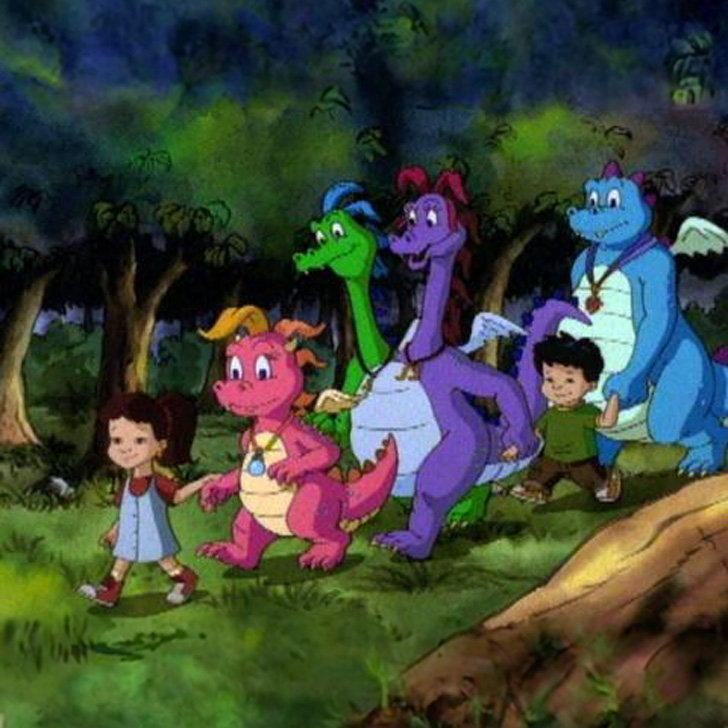
"Dragon Tales" features young Mexican American siblings Emmy and Max, who find a magic dragon scale that allows them to visit the Dragon Land. There, they become friends with a group of playful dragons and embark on a series of adventures.
The animated show aired between 1999 and 2005 and focused on educating kids about creative ways to solve problems, the importance of community and friendship, and approaching the world with curiosity. Interspersed with Spanish-language elements and education, "Dragon Tales" was made for kids ages 3 to 6.
Cyberchase
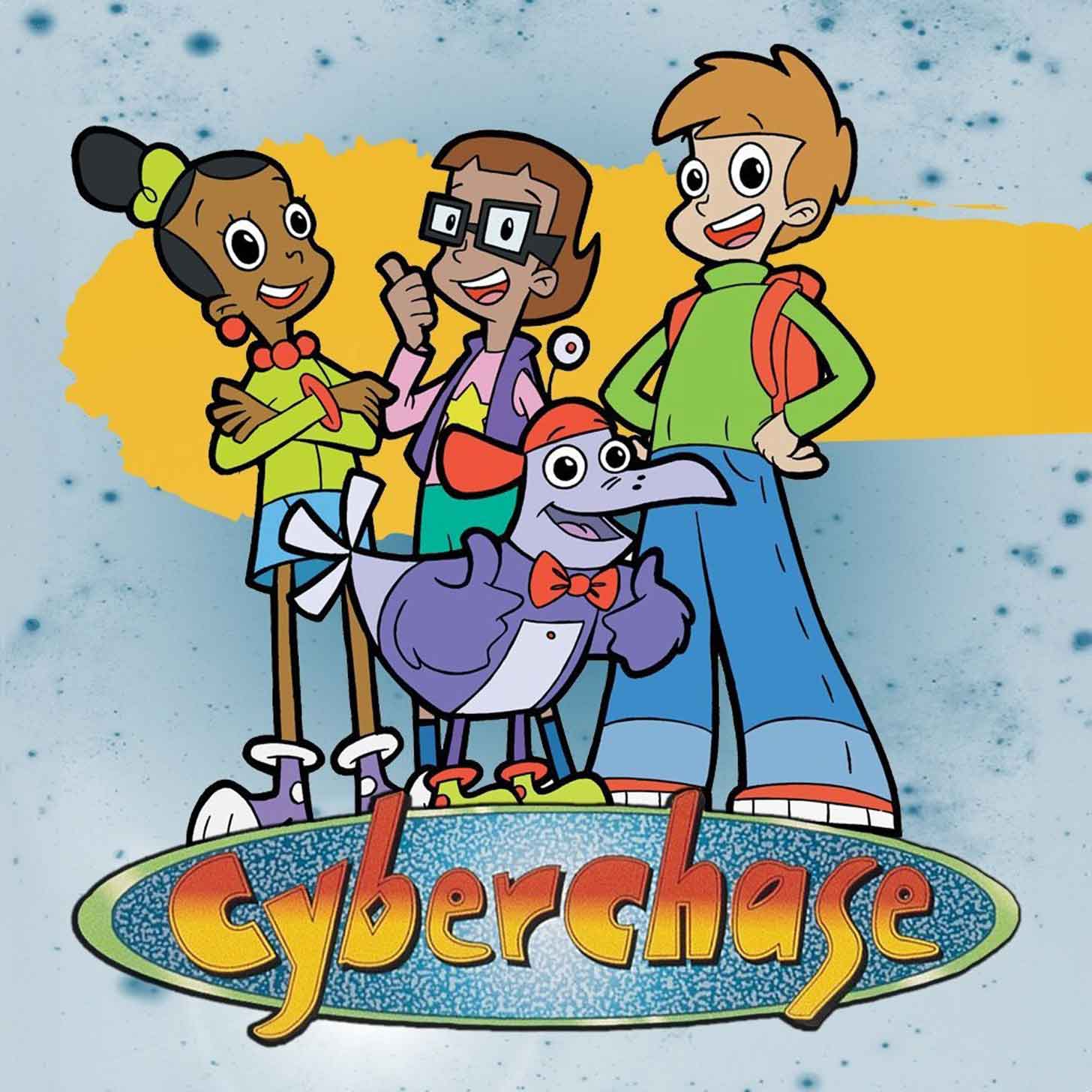
"Cyberchase" started airing in 2002 and is on its 14th season. The animated show centers around three kids — Jackie, Inez, and Matt — using math to prevent the villainous Hacker from taking over Cyberspace.
Each episode ends with a live-action segment in which hosts Harry and Bianca teach math concepts and discuss their real-world applications.
Geared toward kids between 6 and 8, "Cyberchase" has been a fixture of public television for decades, winning multiple Emmys and engaging children with its lovable characters and exciting action-based plot.
Entertainment value is not the show's only calling card, however. Its educational value has also been extensively studied, particularly in the realm of increasing kids' interest in math and problem-solving.
In recent seasons, the show has incorporated important themes like climate change and environmental responsibility.
Sesame Street
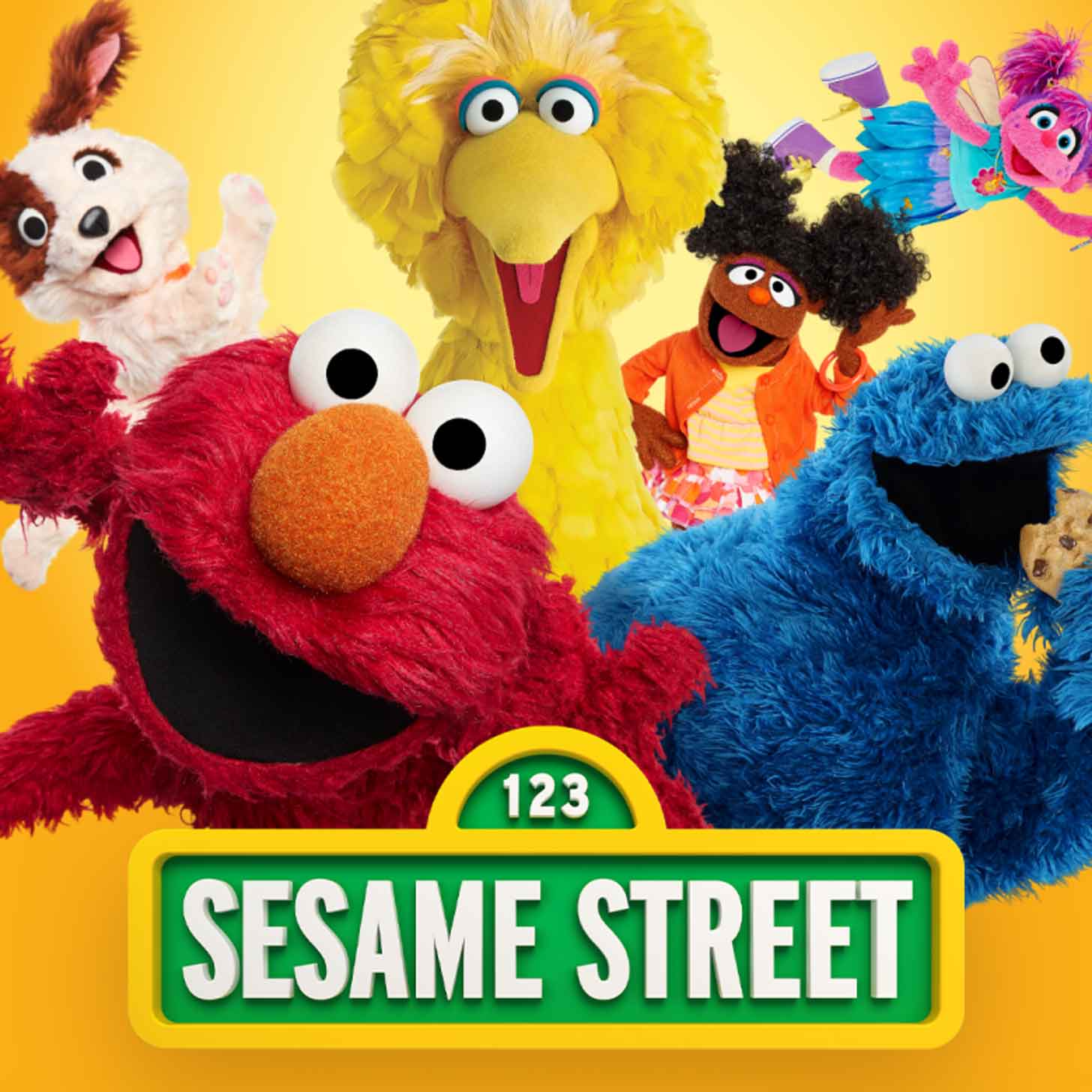
This legendary kids' show is the longest-running in history; it first premiered in 1969 with an intentionally integrated cast and is still in production today.
With more than 50 seasons in its library, "Sesame Street" takes place in a world inhabited by humans and Muppets (created by Jim Henson).
The show is geared towards very young children, but has tidbits that adults appreciate, too, like appearances from popular bands, celebrities, and political figures.
Over the years, beloved characters like Elmo, Big Bird, and Oscar the Grouch have transcended the show itself and become household names.
Though the structure of "Sesame Street" has changed over the years, it has always balanced entertainment with education, teaching kids straightforward lessons about how to count and learn the alphabet, as well as less tangible concepts like finding beauty in diversity and developing a love of learning.
Over the years, studies of the show have concluded that kids who watched "Sesame Street" went on to do better in school than kids who didn't, in general.
Sagwa, the Chinese Siamese Cat
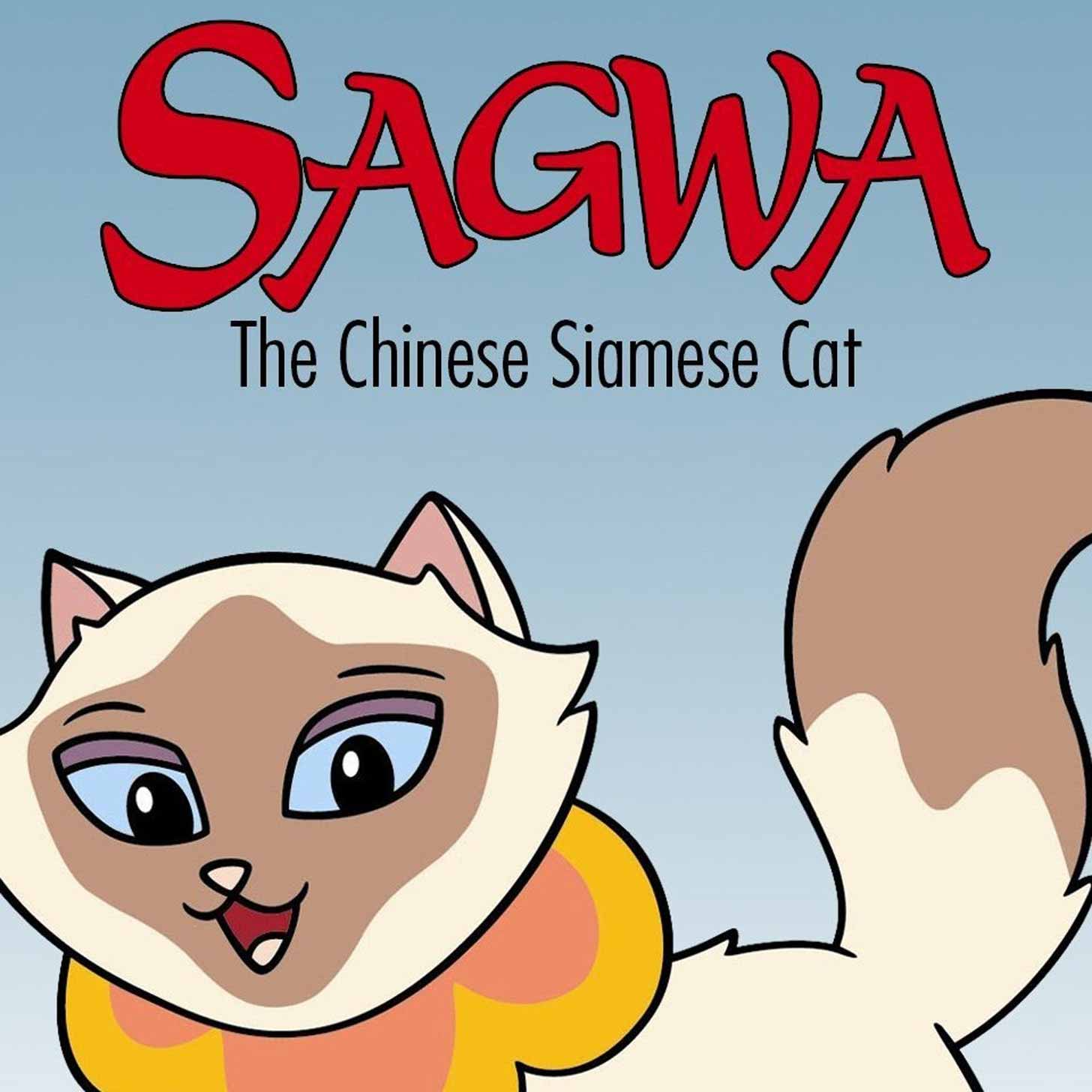
Based on the children's book "The Chinese Siamese Cat" by "The Joy Luck Club" author Amy Tan, "Sagwa" was a short-lived show that aired for one season beginning in 2001.
Despite its brief airtime, the animated show made a big impression on young viewers.
"Sagwa" takes place sometime during the late Qing dynasty and follows the titular Sagwa, a young Siamese cat, her cat siblings, and the humans who live in the palace as she navigates growing up and learning about the world.
The show, whose theme song is in English and Mandarin, educated young audiences about Chinese history, language, and culture.
Clifford the Big Red Dog
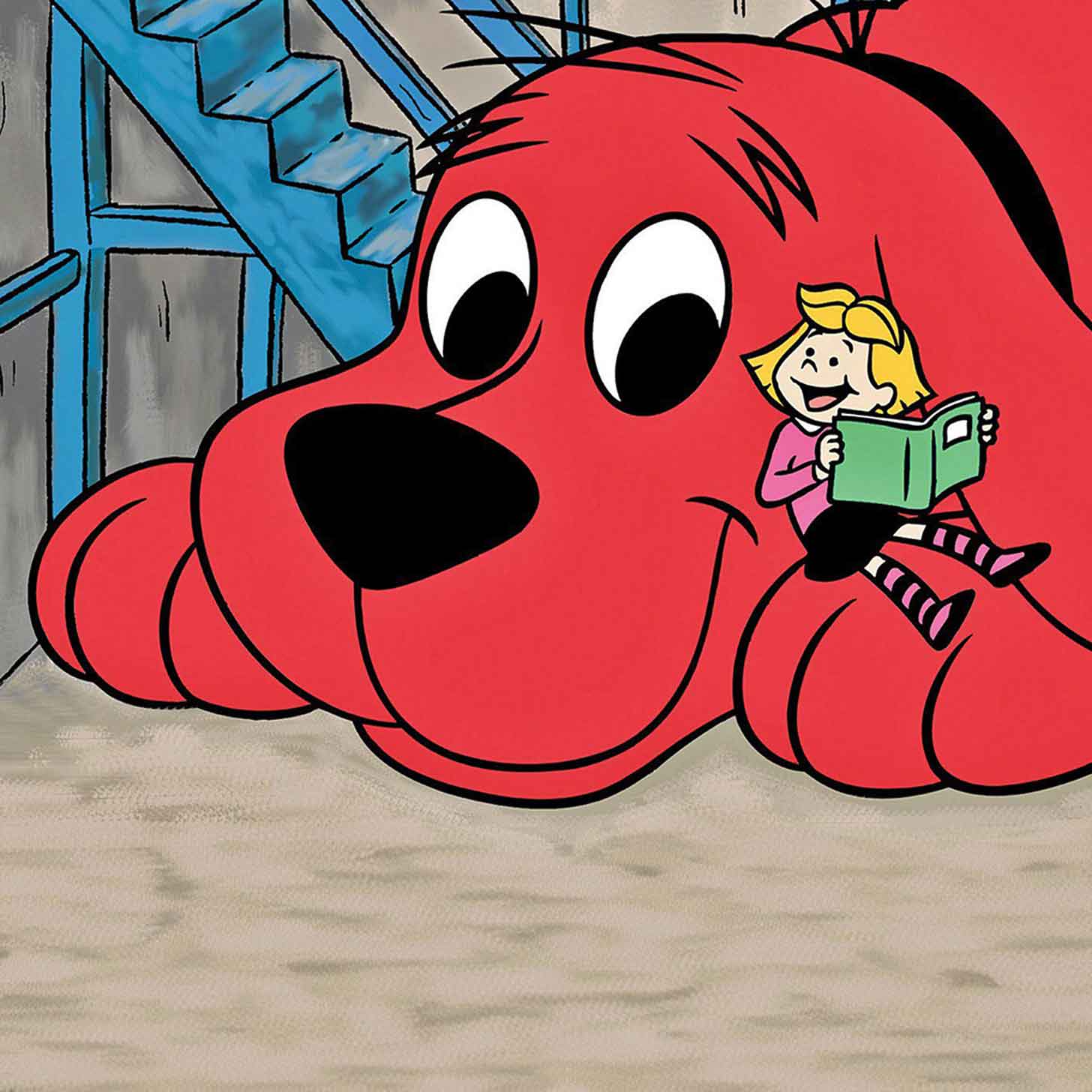
This iconic show followed Emily Elizabeth and Clifford, her enormous, bright red dog, and their human and dog friends. Clifford grew to be massive due to Emily Elizabeth's love for him.
Airing for a few years beginning in 2000, "Clifford" taught children about growing up, the value of community, and being kind to others.
The show was based on a book series of the same name by Norman Bridwell and inspired the spinoff series "Clifford's Puppy Days," a reboot in 2019, and a 2021 live-action movie adaptation.
Arthur
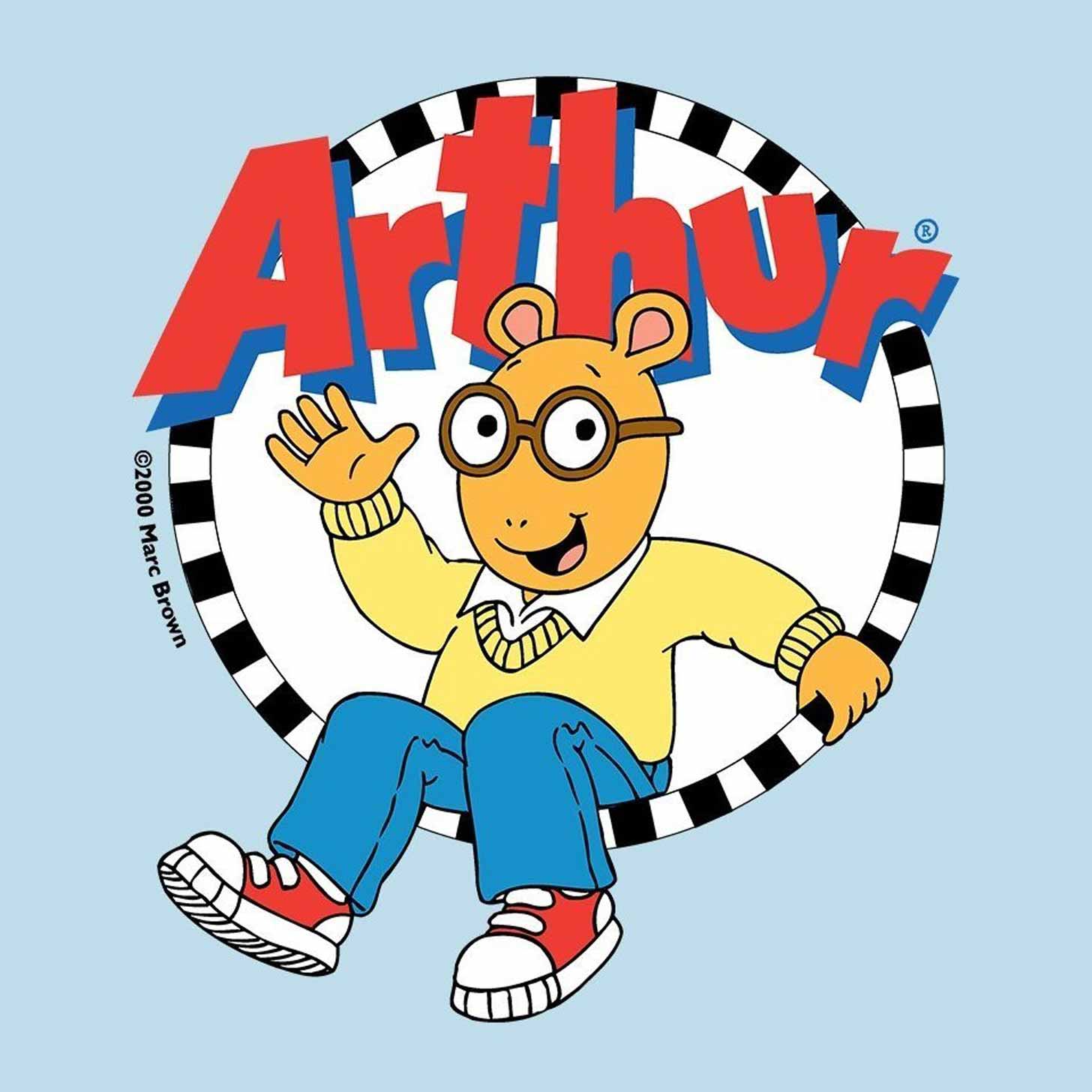
"Arthur," the animated children's show centered around a young aardvark and his family and friends, ended in 2022 after 25 seasons — the longest of any animated kids' show in history.
The series educated kids about navigating hurt feelings, bullying, and complicated familial and friend relationships through the proxies of Arthur, D.W., Buster, and other animals who endeared themselves to kids by being relatable.
"Arthur" was so popular that dozens of celebrities, from the Backstreet Boys to Lance Armstrong, appeared as animated guests on the show.
Mister Rogers' Neighborhood
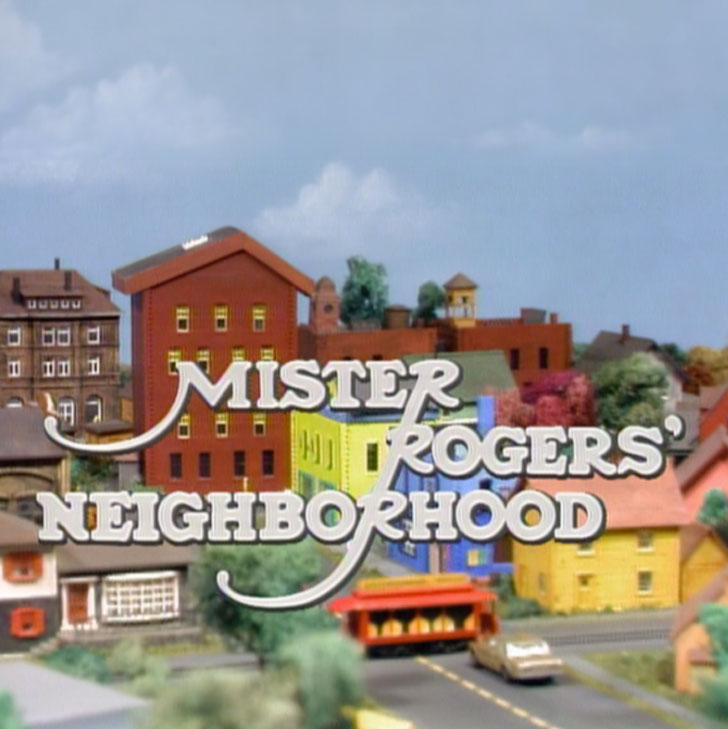
"Mister Rogers' Neighborhood" ran from 1968 until 2001, but the show's legacy and that of its host have persisted.
The program's host was Fred Rogers, a gentle and compassionate man known for his cardigan and his unwavering kindness to everyone.
In each episode, Mister Rogers would interact with various characters in his neighborhood and discuss a different theme. A puppet-based segment, set in the Neighborhood of Make-Believe, would break up the show into parts.
Known for diving into complex topics that many other children's programming avoided, Mister Rogers touched on how to deal with negative emotions and difficult things happening in the world.
Unlike the educational lessons highlighted in other shows, "Mister Rogers' Neighborhood" focused on teaching kids to foster relationships and empathy with and for others.
One of its oft-cited episodes involved Rogers and African American Officer Clemmons washing their feet in a shared tub, a subtle way of challenging segregation.
The spinoff series "Daniel Tiger's Neighborhood" features Daniel Tiger, who wears a signature red cardigan similar to Rogers and sings a speedier version of the original show's theme song.
You might also like: The best quotes Fred Rogers ever said
The Magic School Bus
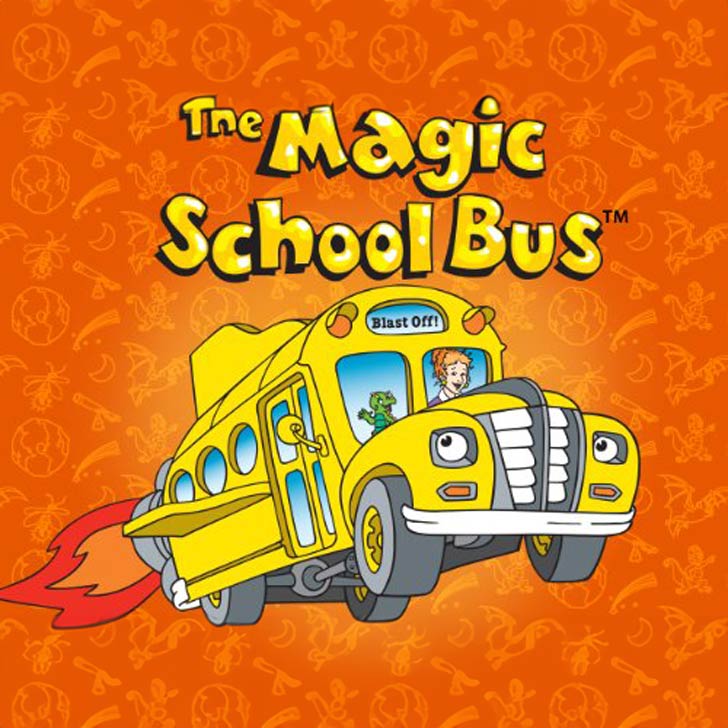
"The Magic School Bus" is still popular despite going off the air in 1997. The animated show follows the quirky teacher Ms. Valerie Frizzle (voiced by Lily Tomlin) and her class of kids as they go on educational adventures in a school bus that can change shape and size and even time travel.
Many of these antics involve getting out of sticky situations using science concepts, showing the real-world applications of classroom lessons.
Based on a kids' book series of the same name, the show explores places and times ranging from outer space to inside the body's immune system.
"The Magic School Bus" has been praised for its ability to engage young audiences with science while encouraging curiosity and a willingness to make mistakes while learning.
Due to the show's enduring popularity, Netflix created a reboot series, "The Magic School Bus Rides Again," featuring Kate McKinnon as Fiona Frizzle, the original Ms. Frizzle's sister. Lily Tomlin's voice is still behind Valerie, who acquired a few advanced degrees and became Professor Frizzle.
However, the new show has not experienced the success of its predecessor; fans of the original series have panned the new show's visuals, pointing out that characters from "The Magic School Bus" with darker skin were whitewashed in the reboot. Viewers took aim at Ms. Frizzle's signature frizzy red hair, which was sleeker, mistaking Fiona for Valerie.
Zoboomafoo
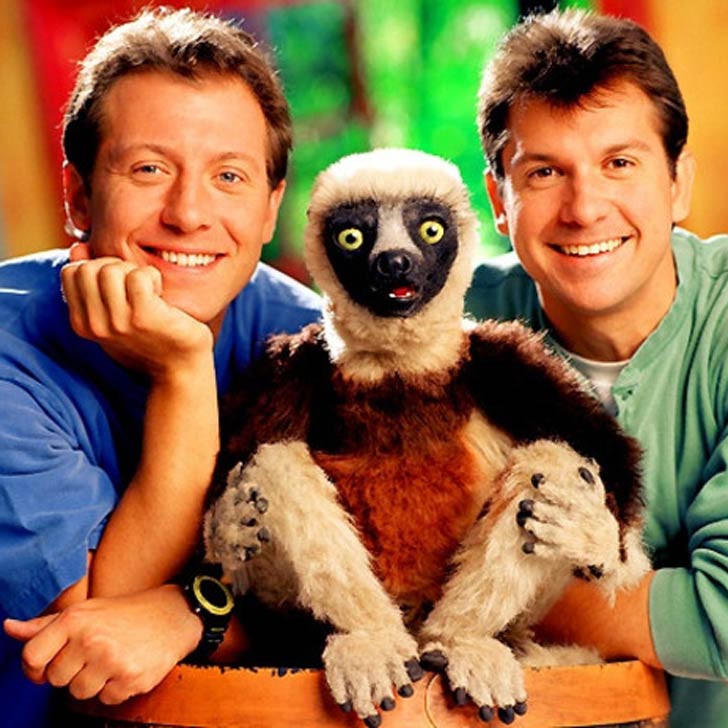
This short-lived but fondly remembered show aired between 1999 and 2001. Featuring Zoboomafoo, the talking lemur (played by both a puppet as well as a real lemur named Jovian), and two zoologist brothers, Martin and Chris Kratt, "Zoboomafoo" introduced kids to animals from all over the world and taught them about the environment.
Each episode centered around a mystery animal — upon its reveal, the brothers and Zoboomafoo would learn about the animal, its habitat, and more.
Some watchers of the show have since credited it with encouraging a love for and interest in nature and the animal kingdom.
Since "Zoboomafoo" ended, the Kratt brothers have continued to work on other wildlife-focused shows — most famously, "Wild Kratts," a half-hour animated show featuring Martin and Chris who gain powers inspired by their creature friends thanks to their Creature Power Suits, invented by Aviva Corcovado.
Reading Rainbow
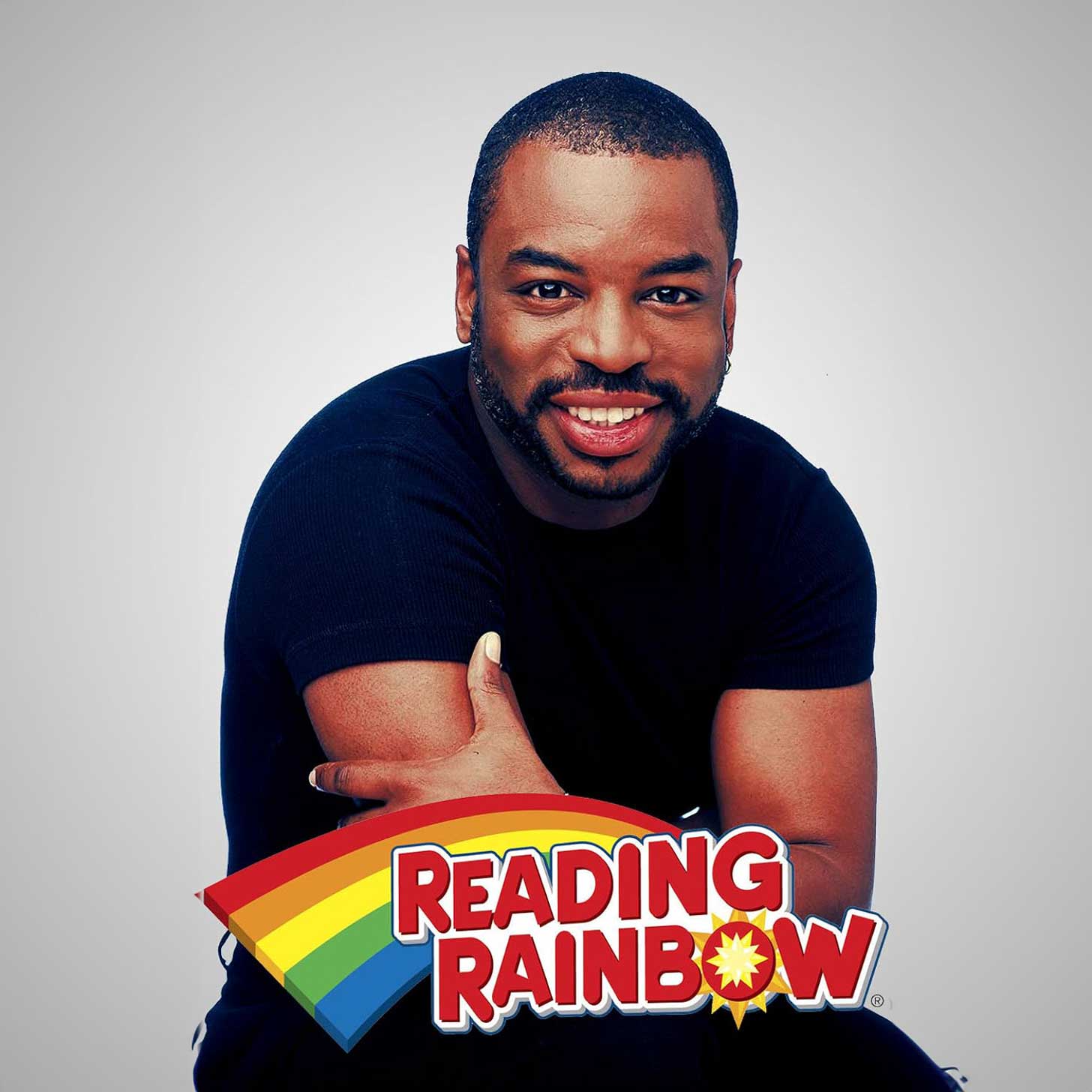
Hosted by LeVar Burton over two decades, "Reading Rainbow" taught reading skills and a love of books to young audiences.
The show, premiering in 1983, presented stories in an animated picture book format, read aloud by celebrities or other guests.
Originally, "Reading Rainbow" was conceptualized as a way for kids whose families couldn't afford to send them to summer camp to stay engaged with reading, according to Lynne Ganek, a writer on the show.
While the show's scope expanded, literacy and instilling kids with a love of reading remained integral to its mission and eventual format.
Burton continues to advocate for literacy. He launched a digital library of books and videos for kids and a reading podcast.
This story was originally published by Stacker and republished pursuant to a CC BY-NC 4.0 License.
When shopping for a gift for the women in your life, we know you’re looking for something special that doesn’t break the bank — and more people than ever are shopping with impact in mind.
What if your gift could make a difference beyond just the joy of opening and using it? Of course, you’ll want to be sure you’re selecting a sustainable gift that isn’t just labeled that way (a practice known as greenwashing).
Never fret! We’re here with some suggestions for eco-friendly gifts for her to help you narrow down your search.
Whether you’re on a tight budget or looking for a special splurge gift for the woman in your life, you can rest assured a gift selected from this list will not harm the planet (or the people on it).
By the way, some of the links in this article are affiliate links, which means if you make a purchase after clicking a link, we may earn a commission at no extra cost to you. Everything in this article was independently and honestly written by the Good Good Good team. Thank you!
Explore more eco-friendly gift guides: Best Eco Friendly Gifts | Inexpensive | For Him | For Her | For Mom | For Kids | For Coworkers
Your guide to sustainable gifts for women
MATE the Label Loungewear

Everyone deserves to have nice clothing, even for lounging around the house. This Los Angeles-based company makes non-toxic, natural and organic loungewear essentials you can be proud of.
The neutral colors can be worn in any season, and they’ll be sure to last — even if they quickly turn into your daily work from home uniform.
What’s good:
- Founded by women, run by women, and focused on making sustainable products for women
- Climate Neutral certified, B Corp certified
- Plastic-free labels and packaging
- Recycling program to take old garments and give them new life, and cutting scraps from production are reused
Shop: MATE the Label
Everlane EverPuff Coat

You can never go wrong with a stylish puffer coat to keep your gift recipient warm in the winter, and now you can feel even better about your purchase.
Everland just released its EverPuff, a product the brand is calling their “most sustainable yet.” In sleek colors like navy, red, cream, dark green, and black, it’s the perfect fit for anyone on your list.
What’s good:
- Made almost entirely out of certified recycled materials (excluding zipper pull, snaps, and drawstring clasp)
- Filled with 100% ReDown to repurpose feathers and down from pillows, comforters, and sleeping bags
- Covered by a warranty and take-back program to encourage shoppers to repair and recycle the coat to last longer
- Everlane has a comprehensive net-zero plan for the company, among other sustainability initiatives
- The brand maintains a commitment to diversity, equity, and inclusion in its hiring and leadership practices
Shop: Everlane
Pela Phone Case

More than 1 billion plastic phone cases are sold every year, creating tons of pollution and waste. Help your friends and loved ones upgrade in a sustainable way with products from Pela, which makes compostable phone cases made from flax shive and plant-based polymer.
Pela stands by its products: If your screen cracks while wearing a Pela case and liquid screen protector, the company will pay for the repairs. Plus, each case comes with an extra envelope to send back your old phone case, which can then be recycled properly.
Cases come in dozens of clear, engraved, solid, abstract, animal, and landscape designs (and more!), with options available for pretty much every type of phone. The company also makes mini wallets, phone grips, and other accessories.
What’s good:
- Donates a percentage of every sale to ocean cleanup and preservation initiatives
- Certified B Corp and Climate Neutral certified
- All products free of lead, cadmium, BPA, and phthalates
Shop: Pela
Jade Yoga Mat

Yoga mats from Jade Yoga are eco-friendly and made with natural rubber tapped from rubber trees. The mats are free of PVC, EVA, or other synthetic rubbers, and are all made in the U.S.
Try the best-selling Harmony mat, or a “Yoga Starter Kit,” which includes a natural rubber yoga mat, a cork yoga block, a yoga strap, and 30 days of free online yoga classes from Yoga International.
What’s good:
- Plants a tree for every mat sold
- “Color cause” program donates to causes for each color bought
- Runs a community partner program to bring yoga to those who might benefit from it, such as people in prisons, hospitals, and shelters
Shop: Jade Yoga
Siblings DIY Candle
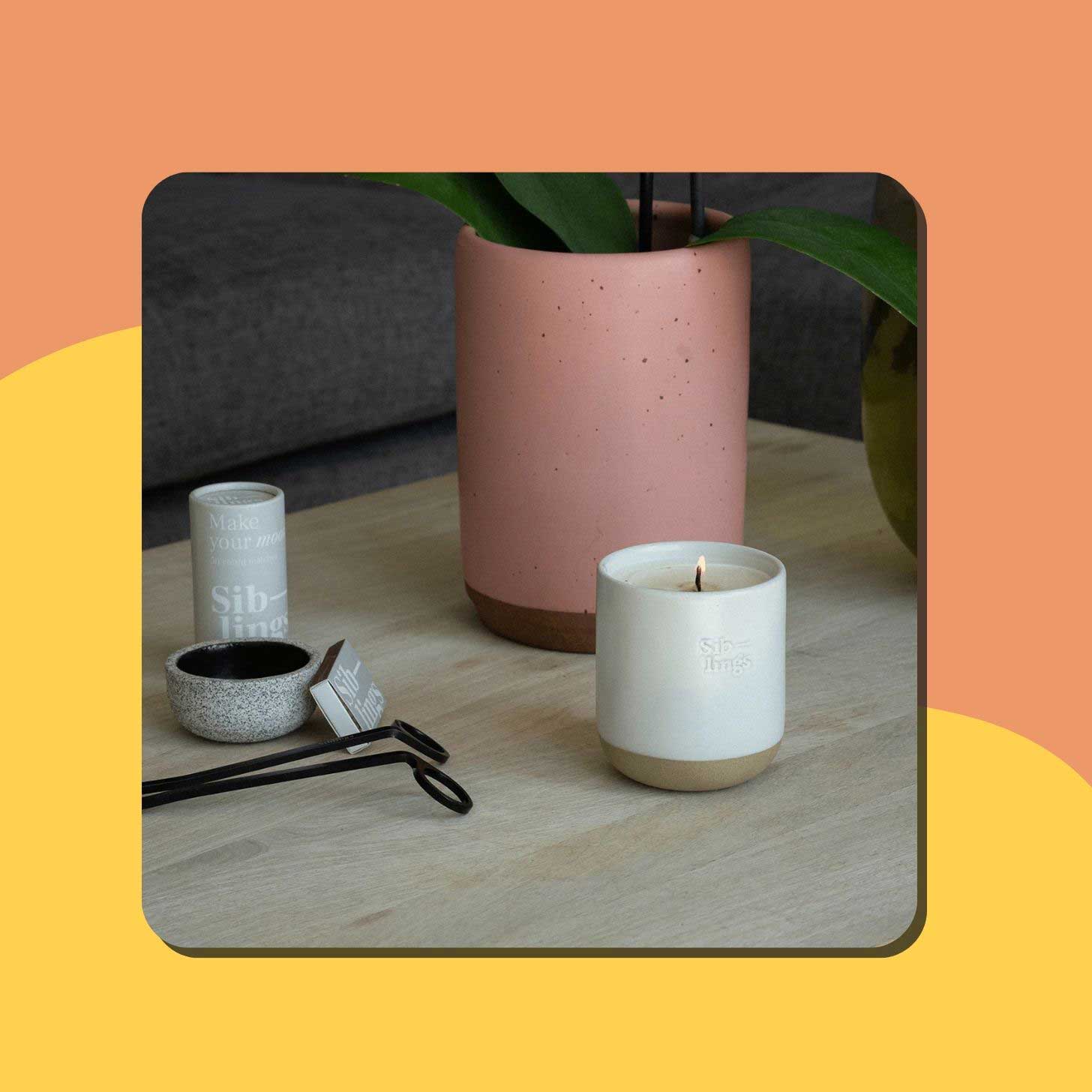
Saving the planet never smelled so good.
Siblings is an eco-friendly candle brand that meshes its commitment to the planet with a DIY element.
With non-toxic scents, clean coconut wax blends, and 100% compostable packaging, your gift recipient can create their own candle completely guilt-free.
What’s good:
- Vessels are endlessly reusable
- Trees are planted with every 3-pack purchase, and the brand dedicates a portion of its Black Friday sales to reforestation every year
- Siblings is certified Carbon Neutral
- Eco-luxury candles produce 86% less waste and 50% fewer carbon emissions than traditional candles
Shop: Siblings
→ Check out our full guide to eco-friendly candles for more options!
French Broad Chocolates

Most commercially available chocolate are sweet treats with a bitter side effect: Many cocoa companies run on child labor or even child slavery. Luckily, there are ethical companies offering gift boxes for the chocolate lover in your life.
French Broad Chocolates is an Asheville, North Carolina-based company that makes delicious small-batch chocolate bars, bonbons and other treats in a small factory.
The company roasts, fronts, conches, and tempers chocolate themselves. Grab a 12-piece Signature collection box for a little of everything, or try a Carolina-themed box or dark chocolate-themed box for a unique tasty gift.
What’s good:
- Certified B Corp
- Locally-sourced fillings and ethically-sourced cacao
- Made in the United States
Shop: French Broad Chocolates
→ Learn more about vegan chocolate, too!
Tentree Apparel Items

The textile industry creates a lot of waste — about 92 million tons per year, to be exact. To combat this, Tentree plants ten trees for every item purchased and makes its clothing from sustainable materials, like wool, organic cotton, and recycled polyester.
The Highline wool sweaters are particularly popular, though the brand also makes T-shirts, hoodies, dresses, joggers, and other items. Your loved one’s closet could do with a cozy and eco-conscious upgrade, right?
What’s good:
- Carbon-neutral company and certified B Corp
- Partners with Fair Trade-certified factories and suppliers
- Has planted 100 million trees in the last 10 years
Shop: Tentree
Sustainable Makeup from Dab Herb Makeup

Most women like trying a new makeup brand every once in a while, especially if it’s a gift or at no cost to them. Dab Herb makes cruelty-free, certified organic, and vegan makeup products that are sure to please.
Each item is handmade and hand-poured, with zero waste products like mascara, eyeliners, eyeshadow, primer, contour powder, blush, and more.
What’s good:
- Cruelty-free and nontoxic products
- Thoughtful packaging with refill options
- Supports “Made in the Free World,” which works with global partners to fight human trafficking
Shop: Dab Herb Makeup
GLDN Jewelry

Feeling beautiful doesn’t have to come at the cost of workers or the planet.
From necklaces and rings to bracelets and earrings, 90% of GLDN’s metals are recycled and 100% are sourced ethically. Plus, 85% are made to order, meaning they create almost zero waste.
Whether you want to give your mom a pair of ethical pearl earrings, or a beautiful gold chain with a meaningful charm, GLDN’s jewelry is as pretty as it is planet-forward.
What’s good:
- Raw materials are USA sourced
- 85% of pieces are made to order
- 10% of profits are donated to organizations that promote mental wellness, support the arts, and more
Shop: GLDN
The Goodnewspaper

Every month, our team of optimists, journalists, and artists makes a beautiful print newspaper filled with good news.
We offer gift subscriptions for three, six, or 12 months — and we also recommend just picking up a subscription for yourself.
What’s good:
- Printed on recycled paper using soy-based inks
- Climate Neutral Certified
- Gives back to environmental nonprofits with 1% for the Planet
Shop: Good Good Good
Zero-Waste Lip-To-Lid Balmies from Axiology

Axiology makes plastic-free cosmetic products that resemble really fancy crayons. With a helpful color quiz, you’ll be able to find the perfect shade or kit to use on the reg.
Plus, since the makeup is made without any toxins, it’s easy to use anywhere on your face, including as blush and eyeshadow, in addition to lip balm.
What’s good:
- Certified vegan
- Certified cruelty-free
- Packaging made with recycled island trash
- Cosmetics made without fragrance, alcohol, gluten, palm oil, or synthetic preservatives
Revitalizing Eye Cream from Cocokind

There are very few people on the planet these days who aren’t walking around with tired, dark circles under their eyes. Getting a little energizing, brightening boost is what so many of us need.
Luckily, Cocokind makes a delightful revitalizing eye cream that hydrates that skin and leaves you feeling fresh.
Made with ingredients like persian silk tree, hibiscus flower acids, and oat extract, the cream comes out of a tube to a metal lid that adds a cooling aspect to the application, as well.
What’s good:
- Packaging displays sustainability facts
- Uses upcycled and recycled materials in packaging and production
- Robust carbon offset plan
Bombas Gripper Slippers

Bombas, while known for its cozy give-back socks, also makes slippers! The Gripper Slippers are a half slipper-half sock hybrid with a soft brushed lining and special non-slip grippers.
What’s good:
- Certified B corp
- One essential clothing item donated with every purchase
- All products designed with durability in mind, with a “happiness guarantee” to keep items lasting longer
Shop: Bombas
A Pet-Friendly Plant Subscription

Chances are, your eco-friendly gift recipient is also an animal lover and/or green thumb. So, if you can meet all of those criteria, you’ll hit a home run.
The Sill offers a monthly plant subscription tailored to various plant parent needs — including pet-friendly plants. Subscribers receive a new, non-toxic plant (no duplicates!) and chic ceramic planter delivered to their door every month for three months.
What’s good:
- Woman of color-owned
- Designed to make plants more accessible
- Plants! Plants are good for the planet!
Shop: The Sill
Activist Skincare Travel Kit

This skincare starter kit comes with three cleansers, one toner, two serums, and one oil to get them started on their natural skincare routine.
What’s good:
- All products are 100% vegan and cruelty free
- Activist Skincare donates 5% of its revenue to environmental organizations
Shop: Activist Skincare | Earth Hero
Weighted Blanket from Let’s Cuddle
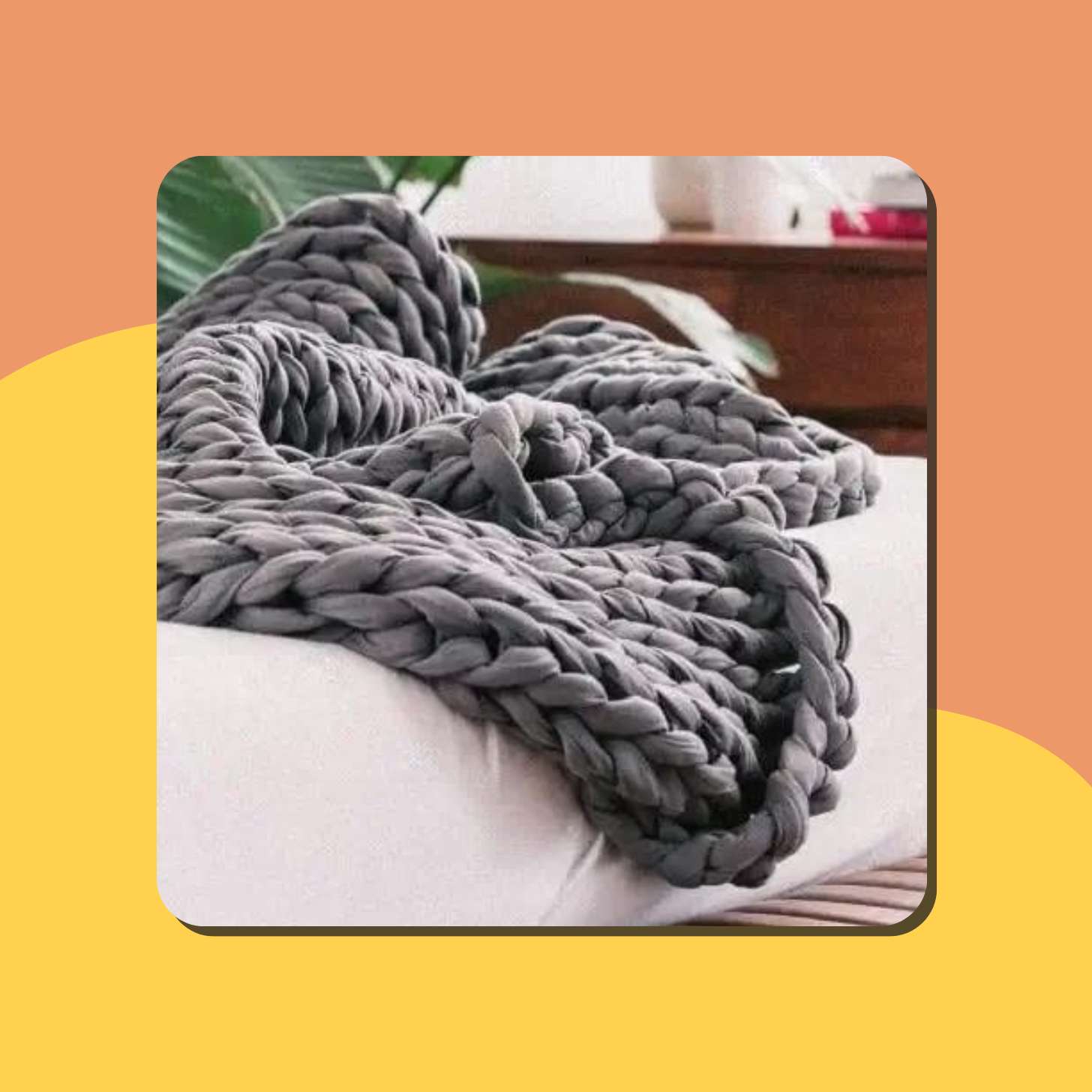
Weighted blankets reduce stress, improve sleep, and help us relax. Who doesn’t need a little more of that in their life?
Let’s Cuddle makes weighted blankets that are cozy, aesthetically-pleasing, and plastic pollution-fighting. With sleek neutral colors like white, gray, and tan, these are a surefire, sustainable addition to anyone’s bedroom setup.
What’s good:
- Made from 100% recycled plastic bottles
- OEKO-TEX certified cotton
- Vegan and cruelty-free, from manufacturing to disposal
Shop: Let’s Cuddle
→ Check out our full guide to eco-friendly weighted blankets while you’re at it!
Custom Stationery from Papier

Is there anything that feels more luxurious than writing a sweet note or a helpful memo on a fancy piece of paper? Of course not!
We love the Scallop Trim and Paws & Prose notecards most of all.
What’s good:
- FSC-certified recycled paper
- Items made-to-order to reduce waste
- Recyclable packaging
Shop: Papier
→ Check out more eco-friendly stationery recommendations!
Our Place Night + Day Glasses

Known for its cult-favorite best-selling Always Pan, Our Place is an LA-based brand that turns to vetted artisans to manufacture its products. Our Place’s Drinking Glasses are crafted by a team of expert glassblowers and produced by traditional handmade techniques.
This set of four or eight 12-ounce glasses comes in various colors, including mix and match color options. They’re also dishwasher-safe and stackable!
What’s good:
- Made by artisan glassblowers
- Made from recycled glass and sand
- Naturally dyed
Shop: Our Place
→ Explore our guide to eco-friendly and recycled glassware!
Trashie Take-Back Bag

There are few things more stressful than the quarterly closet clean-out. Give the gift of making it easier.
The Take Back Bag can be filled with old clothes your gift recipient no longer wears, and Trashie will do the work of recycling their pre-loved items and turning them into something useful.
Plus, purchasing a bag will give you credits to use toward a new sustainable clothing item or other reward.
What’s good:
- Keeps old clothes out of landfills
- Contributes to a circular economy
Shop: Trashie
Solgaard Shoreline Watch

Solgaard is a company dedicated to creating everyday items with a positive impact on the environment. This stylish watch helps keep time — and keep your promise to take care of the planet.
In fact, over 600,000 pounds of plastic have been diverted from the ocean for use in Solgaard’s goods.
What’s good:
- Made from recycled plastics and polycarbonate
- Each purchase saves 229 plastic water bottles from the ocean
- Partners with Sungai Watch, Eco_Brick Project, and NextWave Plastics
Shop: Solgaard
→ Check out more ethical and eco-friendly watches!
Bath Soak from Maude
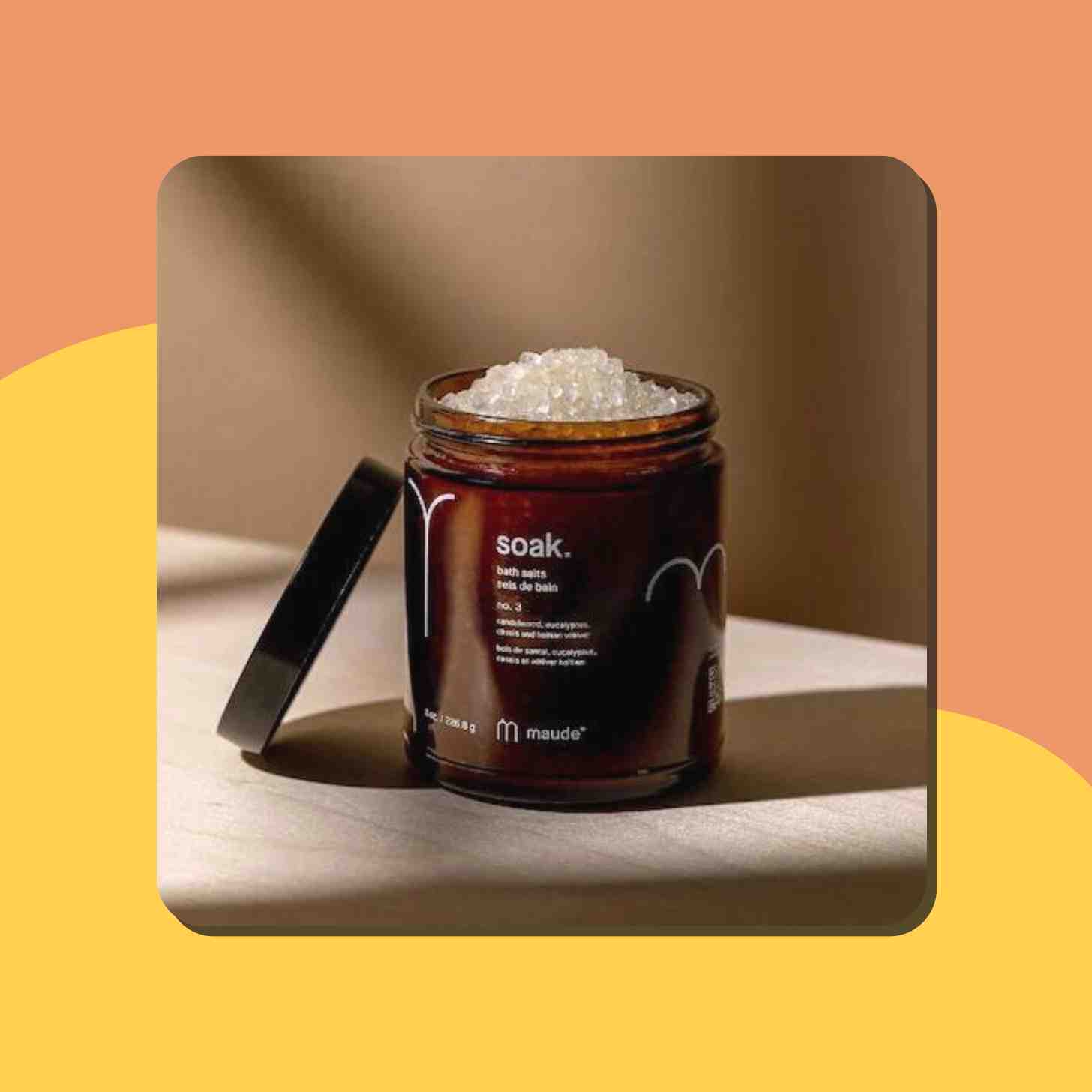
This hydrating coconut milk bath soak is the perfect symbol of “you deserve some peace and quiet alone in the tub.”
Made with a mixture of coconut milk powder and hand-harvested salts from the Southern Dead Sea, this soak also contains vitamins and minerals like magnesium, potassium, sulfur, and zinc.
Help put her mind at ease, knowing she can relax without yet another plastic bottle on the side of the bathtub.
What’s good:
- Vegan and cruelty-free
- Glass is curbside recyclable
→ Read our full review of Maude’s self-care products
Earrings from Mejuri
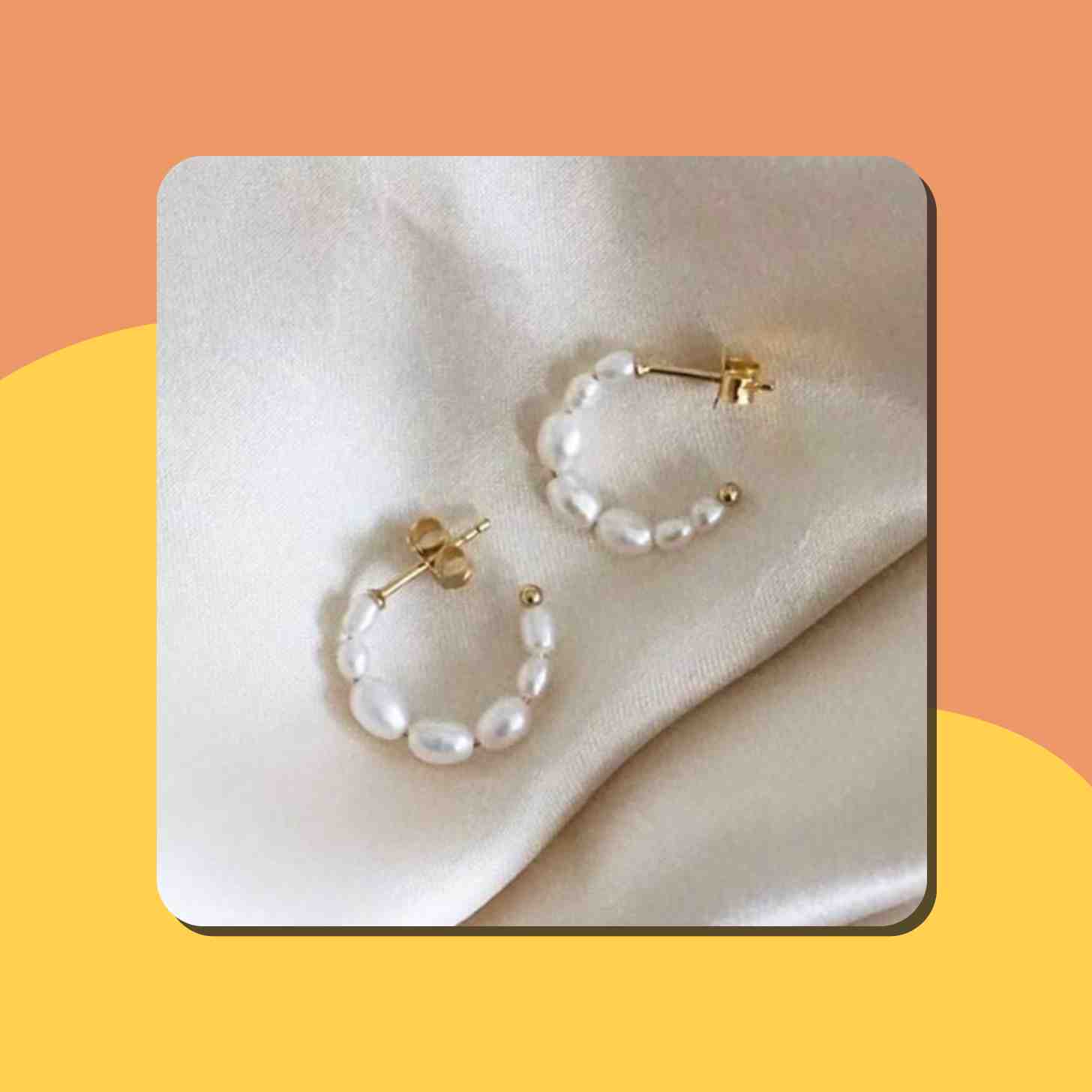
You truly can never go wrong with a pair of gold hoops.
Beloved for its signature gold hoops, Mejuri is a sustainable luxury jewelry company that focuses on traceability and transparency in its craftsmanship.
What’s good:
- Over 80% of its gold from recycled sources
- Created the Empowerment Fund, which provides women and non-binary people with broader financial and educational resources to empower themselves
- Follows a specific code of conduct for responsible sourcing of materials
- Partners with coalition of nonprofits to raise funds and awareness for reproductive justice
Shop: Mejuri
SAALT Period Essentials
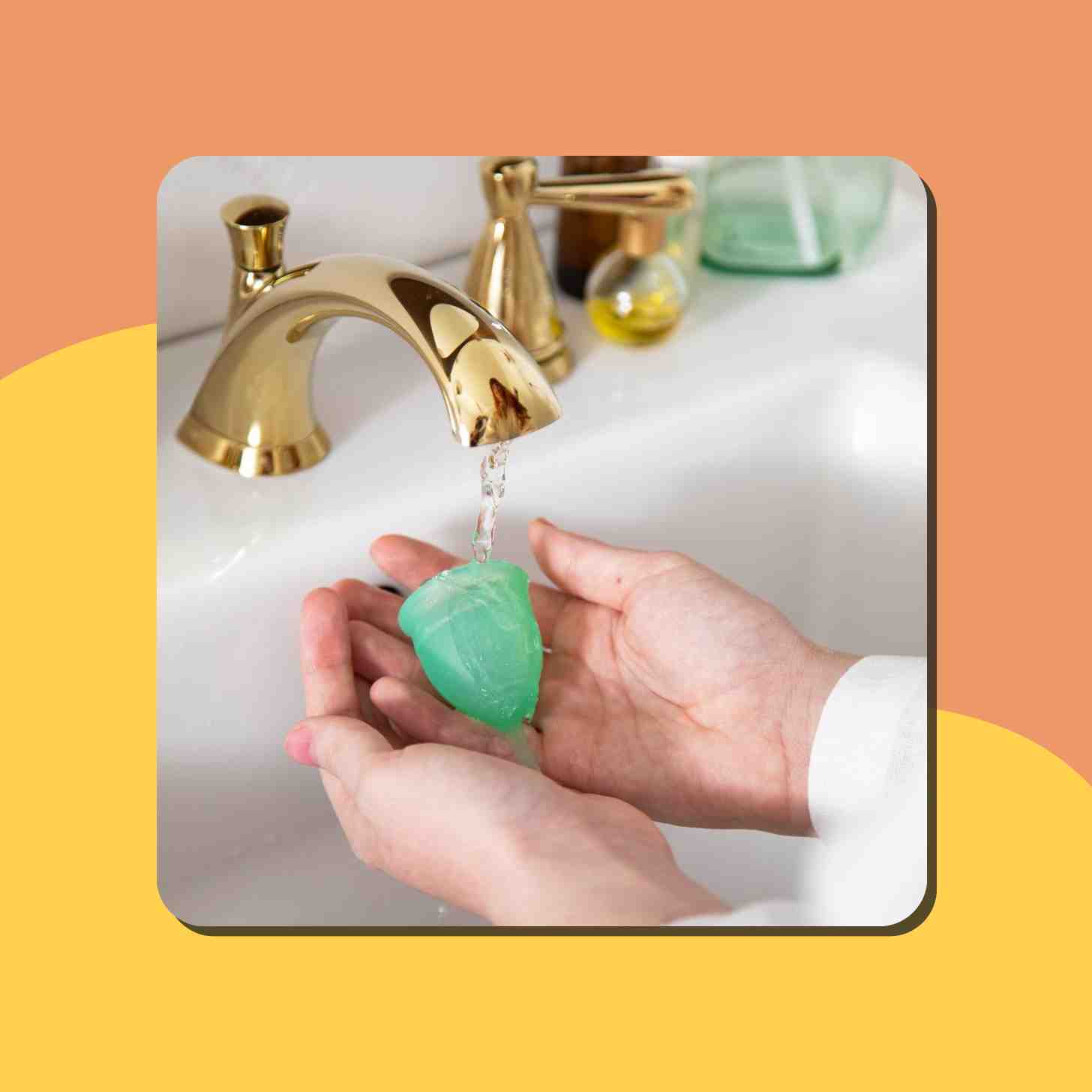
SAALT is on a mission to “bring periods out of the dark ages” by creating reusable, safe menstrual products for all. With menstrual discs and cups, as well as period underwear, the brand aims to make having a period better for the planet — and in general!
And period-havers would likely all agree that a better experience every month is perhaps the best gift they could ever receive.
What’s good:
- Certified B Corp
- Donates 2% of revenue to provide period care to regions in need
- Reusable alternative to disposable menstrual products
Cloud Cotton Robe from Parachute

A cozy robe is always a treat, but a light and breezy option is a great go-to for year-round comfort.
Parachute’s Cloud Cotton robe is woven into a fluffy four-ply gauze with an exceptionally soft feel. In colors like light pink, olive green, and dark gray, there are a plethora of earth tones to choose from.
What’s good:
- Made from premium Turkish cotton
- Climate Neutral certified
- Partners with Fair Trade and GOTS certified manufacturers
Shop: Parachute
Diaspora Co. Spices

Sana Javeri Kadri started Diaspora Co. when she was 23 in 2017, selling just one item: Pragati Turmeric.
Today, Diaspora Co. sources 30 single-origin spices from 150 farms across India and Sri Lanka, paying farm partners an average of over six times above the commodity price.
What’s good:
- Company works to invest in land stewardship and climate resistance
- Farm Worker Fund invests in social and economic well-being of farmers in South Asia
- Founded to start an equitable spice trade
Shop: Diaspora Co.
→ Explore more consumable gifts!
Cotopaxi Del Dia Hip Pack

Every woman I have ever met is on a continuous hunt to find the perfect day-to-day bag. Cotopaxi’s Del Dia hip packs might just be the solution.
Made from 100% repurposed nylon that was headed to the landfill from other factories, each hip pack features a totally unique colorway that will elevate any look.
What’s good:
- Made from repurposed nylon scraps
- Lifetime warranty and repairs
- B Corp and Climate Neutral certified
- Through 1% for the Planet and other foundation efforts, Cotopaxi donates and provides grants to do more good
Cariuma Sneakers
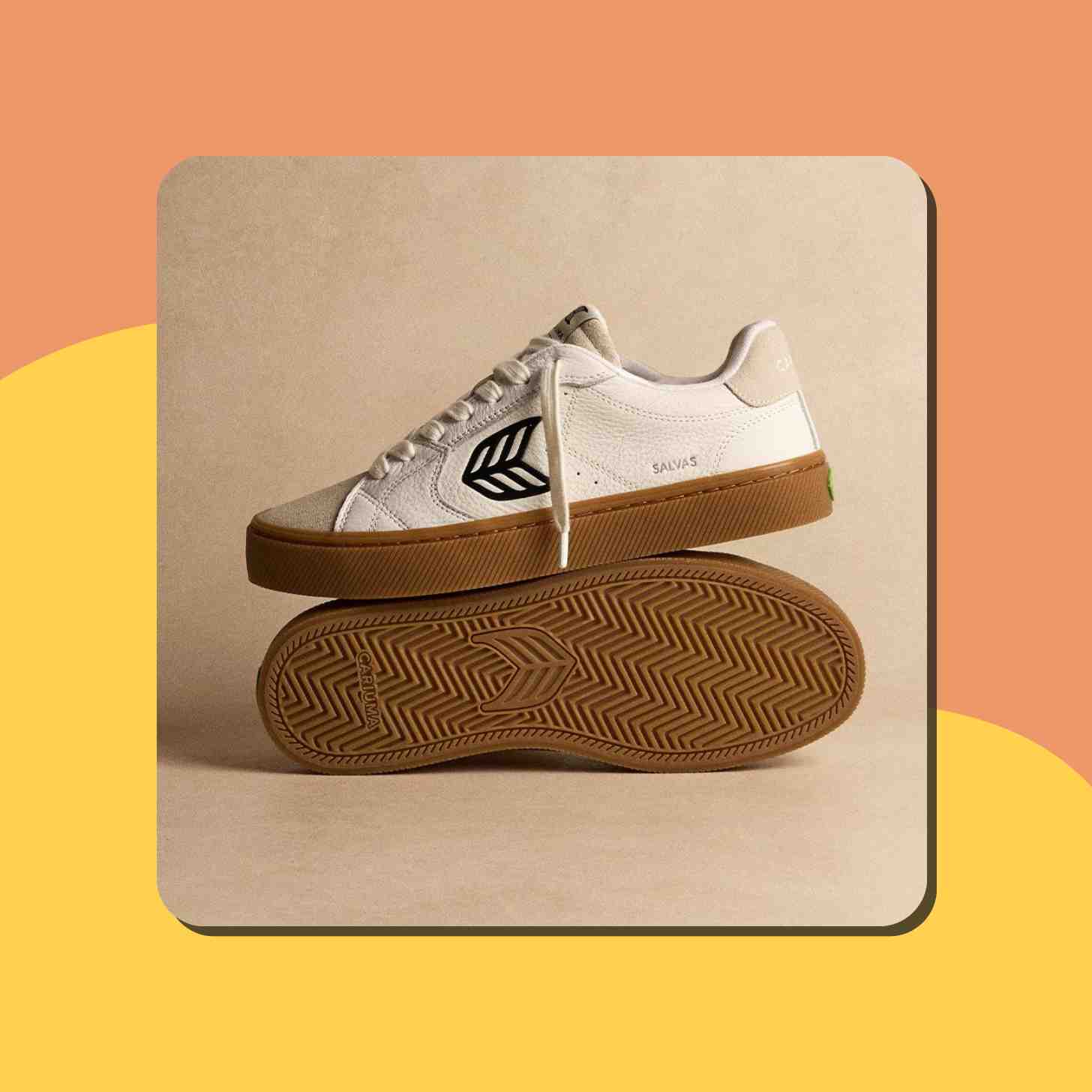
Whether your gift recipient is a wave rider, skater, or just needs a stylish and comfy pair of shoes to brave the ups and downs of every day, Cariuma sneakers will be the perfect fit.
With high-top styles, fun collaborations, and more, snagging a pair of Cariuma sneaks is a step in the right direction.
What’s good:
- Every pair of sneakers plants two trees
- B Corp certified
- Shoes made in ethical factories
- Responsibly sourced materials
Shop: Cariuma
Klean Kanteen Rise Mug
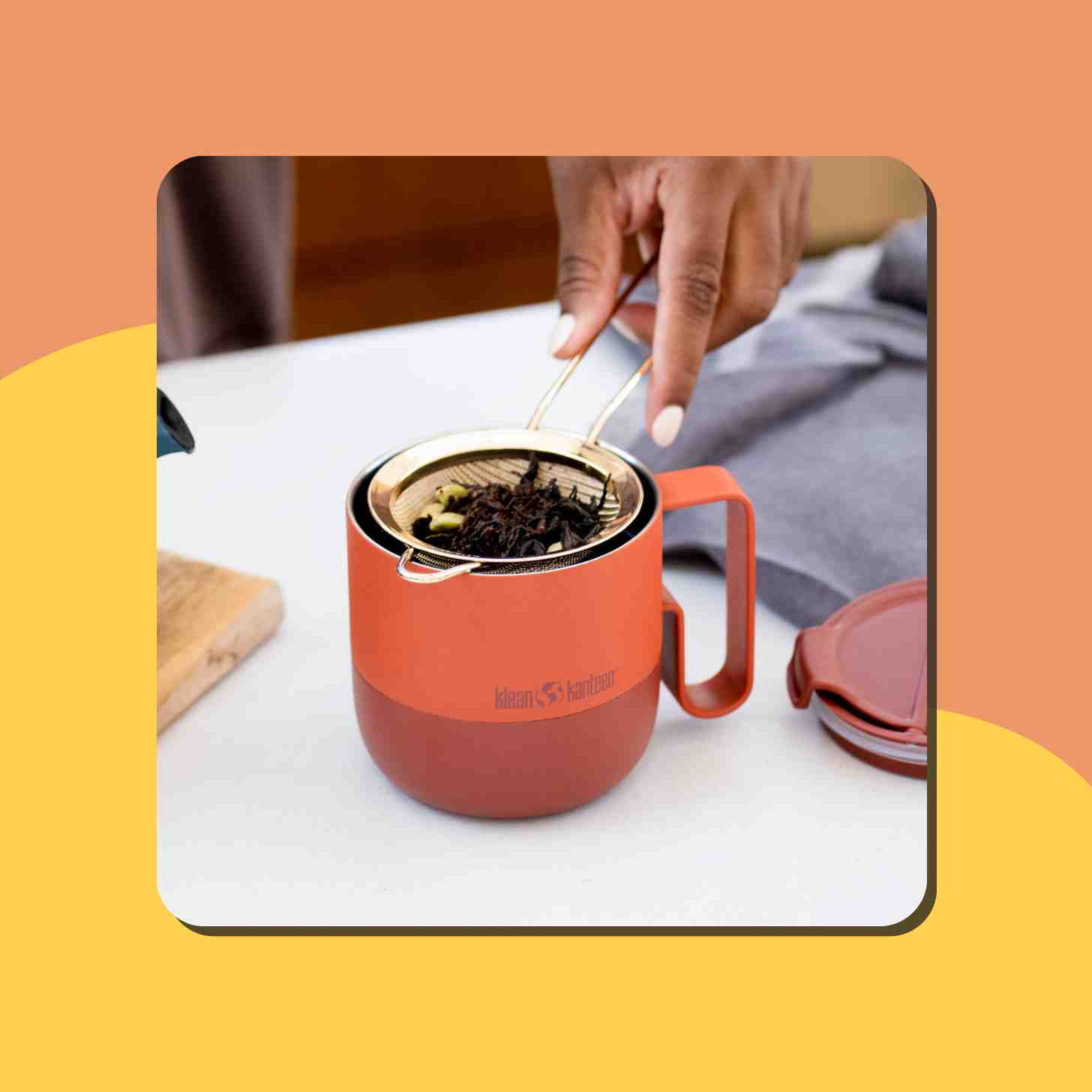
Perfect for busy go-getters and travel enthusiasts, the 14-ounce Rise Mug from Klean Kanteen is a great, practical gift.
With vacuum insulation, a chip-resistant finish, and splash-proof flip lid, she’ll be set for consistent caffeinating all day long.
What’s good:
- Certified B Corp and Climate Neutral
- Member of 1% for the Planet
- Made with recycled plastic and food-grade stainless steel
Shop: Klean Kanteen | Amazon
Reusable Bags from Baggu
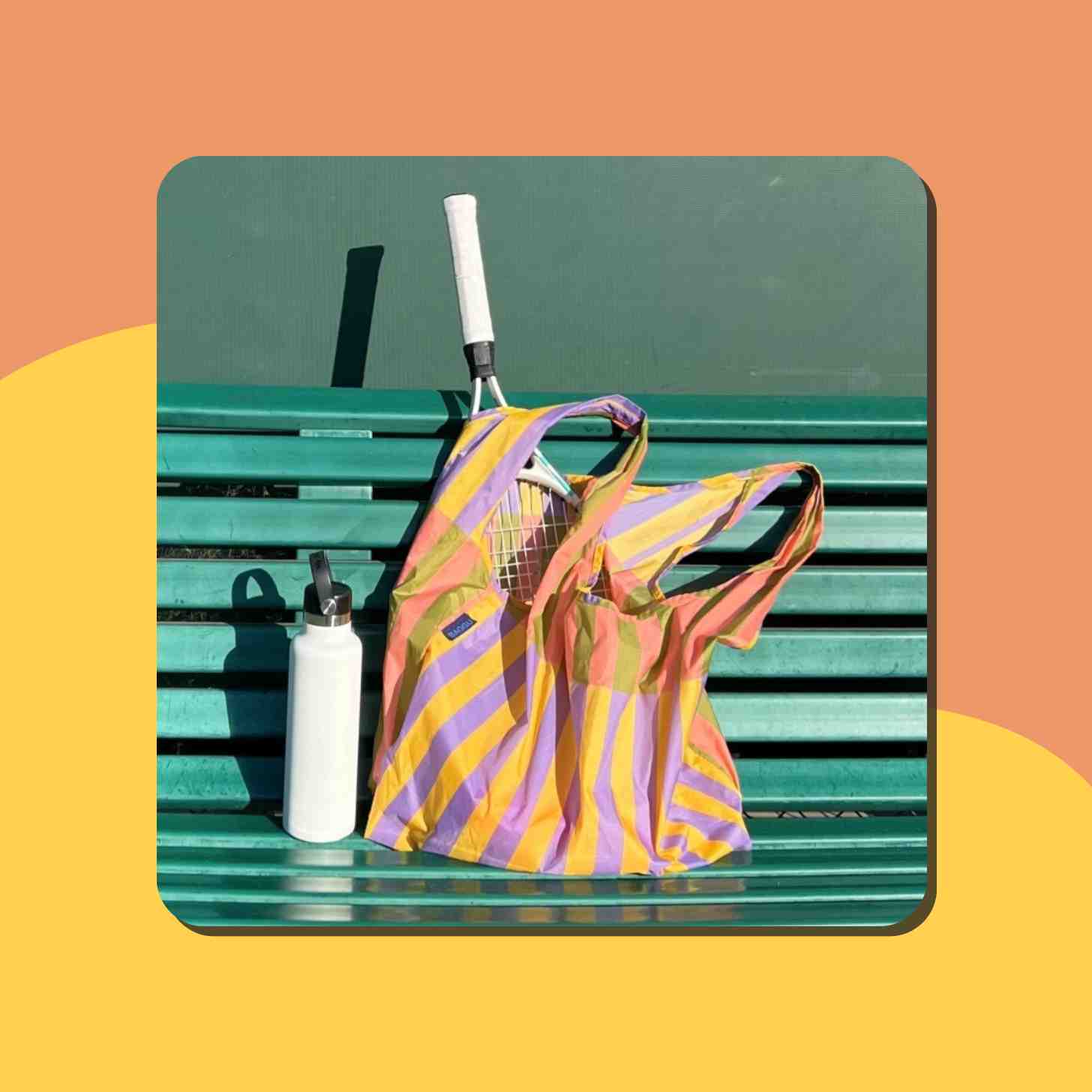
Join the swaths of stylish girlies who frequent the market with their reusable Baggu totes!
With a huge library of patterns to choose from, there’s bound to be a style fit for the gift recipient you’re thinking about.
What’s good:
- Aims to eliminate plastic bag waste
- Made with recycled nylon
Thanksgiving — as it’s celebrated today — is a time of reflection, gratitude, and togetherness. It’s an opportunity to pause and appreciate both the big and small blessings in our lives.
Of course, the story our country has perpetuated about the origin of Thanksgiving is a lie. But that doesn’t mean we can’t rethink and reclaim what this holiday means.
Whether it’s cherished moments with family and friends, the beauty of the world around us, or the simple joys of life, Thanksgiving reminds us to acknowledge and celebrate our many privileges and fortunes.
Throughout history, writers, poets, public figures, and everyday people have captured the essence of Thanksgiving in their words. They speak of gratitude, the importance of community, sharing, and the beauty of acknowledging what we have.
As we gather around the Thanksgiving table, share in festivities, or simply take a moment to count our blessings, these quotes can be a source of warmth and inspiration. They remind us that Thanksgiving isn’t just about the feast on our tables but the gratitude in our hearts.
In this collection, we’ve curated some of the most touching, thoughtful, and uplifting quotes about Thanksgiving.
Whether you’re looking for words to share at your Thanksgiving gathering or simply seeking a moment of gratitude-inspired reflection, these quotes will surely resonate:
You might also like: The Ultimate List of Things To Be Grateful For
The Best Quotes About Thanksgiving
Famous Thanksgiving Quotes
“We should just be thankful for being together. I think that’s what they mean by Thanksgiving.”
— Charles M. Schulz
“I am grateful for what I am and have. My thanksgiving is perpetual.”
— Henry David Thoreau

“I try very hard to be grateful and appreciative all year, but it doesn’t hurt to have one dedicated day.”
— Sarah Michelle Gellar
“As we express our gratitude, we must never forget that the highest appreciation is not to utter words, but to live by them.”
— John F. Kennedy
“On Thanksgiving Day we acknowledge our dependence.”
— William Jennings Bryan
“Remembering that the real meaning of Thanksgiving is gratitude and not food will bring the focus back there.”
— Joshua Rosenthal
“What I love about Thanksgiving is that it’s purely about getting together with friends or family and enjoying food. It’s really for everybody, and it doesn’t matter where you’re from.”
— Daniel Humm
“Thanksgiving day is a jewel, to set in the hearts of honest men; but be careful that you do not take the day, and leave out the gratitude.”
— E.P. Powell

Words of Thanksgiving and Gratitude
“Let gratitude be the pillow upon which you kneel to say your nightly prayer.”
— Maya Angelou
“Gratitude is when memory is stored in the heart and not in the mind.”
— Lionel Hampton
“If you don’t think you have anything to be grateful for, keep looking. Because you don’t just receive optimism.
You can’t wait for things to be great and the be grateful for that. You’ve got to behave in a way that promotes that.”
— Michael J. Fox
“When I started counting my blessings, my whole life turned around.”
— Willie Nelson
“When you arise in the morning, give thanks for the food and for the joy of living. If you see no reason for giving thanks, the fault lies only in yourself.”
— Chief Tecumseh
“For me, every hour is grace. And I feel gratitude in my heart each time I can meet someone and look at his or her smile.”
— Elie Wiesel
“Gratitude is the inward feeling of kindness received. Thankfulness is the natural impulse to express that feeling. Thanksgiving is the following of that impulse.”
— Henry Van Dyke
“In November, people are good to each other. They carry pies to each other’s homes and talk by crackling woodstoves, sipping mellow cider. They travel very far on a special November day just to share a meal with one another and to give thanks for their many blessings.”
— Cynthia Rylant
“Be consistent in your dedication to showing your gratitude to others. Gratitude is a fuel, a medicine and spiritual and emotional nourishment.”
— Steve Maraboli
“‘Thank you’ is the best prayer that anyone could say. I say that one a lot. Thank you expresses extreme gratitude, humility, understanding.”
— Alice Walker
“Showing gratitude is one of the simplest yet most powerful things humans can do for each other.”
— Randy Pausch
“Thanksgiving is a time of togetherness and gratitude.”
— Nigel Hamilton
“Wear gratitude like a cloak, and it will feed every corner of your life.”
— Rumi
→ Read more quotes about gratitude
→ Read more ‘thank you’ quotes
Thanksgiving Quotes for Family
“What greater blessing to give thanks for at a family gathering than the family and the gathering.”
— Robert Breault

“I do think that Thanksgiving is a very nice holiday because it’s all about saying thank you; it’s being thankful.”
— Jacob Tremblay
“Thanksgiving is one of my favorite days of the year because it reminds us to give thanks and to count our blessings. Suddenly, so many things become so little when we realize how blessed and lucky we are.” — Joyce Giraud

Thanksgiving Quotes for Friends
“Drink and be thankful to the host! What seems insignificant when you have it, is important when you need it.”
— Franz Grillparzer
“Let us be grateful to people who make us happy; they are the charming gardeners who make our souls blossom.”
— Marcel Proust, Pleasures and Days
“I awoke this morning with devout thanksgiving for my friends, the old and the new.”
— Ralph Waldo Emerson
“We must find time to stop and thank the people who make a difference in our lives.”
— John F. Kennedy
On Giving Back
“Thanksgiving Day is a good day to recommit our energies to giving thanks and just giving.”
— Amy Grant

“You may have heard of Black Friday and Cyber Monday. There’s another day you might want to know about: Giving Tuesday. The idea is pretty straightforward. On the Tuesday after Thanksgiving, shoppers take a break from their gift-buying and donate what they can to charity.”
— Bill Gates
“To give back during a holiday where it’s all about giving and being thankful — I’ve always been blessed to have a meal on my plate during Thanksgiving — and to spread that feeling to someone else’s family, it’s special. This is something that is truly important to me.”
— Tobias Harris
“My parents came from little, so they made a choice to give a lot: buying turkeys for homeless shelters at Thanksgiving, delivering meals to people in hospices, giving spare change to those asking for it.”
— Meghan Markle
“I’ve been giving back since I was a teen, handing out turkeys at Thanksgiving and handing out toys at toys drives for Christmas. It’s very important to give back as a youth. It’s as simple as helping an old lady across the street or giving up your seat on the bus for someone who is pregnant.”
— Queen Latifah
→ Read more quotes about giving back
On Thanksgiving Food
“Stuffing is my favorite food in the world! I actually have been known to go buy stuffing and make it in the middle of summer.”
— Emma Roberts

“The turkey. The sweet potatoes. The stuffing. The pumpkin pie. Is there anything else we all can agree so vehemently about? I don’t think so.”
— Nora Ephron
“The key to a successful Thanksgiving is planning. Know what needs to get done, when it needs to be done, and how much effort and time it’s going to take you.”
— J. Kenji Lopez-Alt
“Thanksgiving dinners take eighteen hours to prepare. They are consumed in twelve minutes. Half-times take twelve minutes. This is not coincidence.”
— Erma Bombeck
Funny Quotes
“I like football. I find it’s an exciting strategic game. It’s a great way to avoid conversation with your family at Thanksgiving.”
— Craig Ferguson

“I come from a family where gravy is considered a beverage.”
— Erma Bombeck
“When people come to my act any time after Thanksgiving, I usually say, ‘You shouldn’t be here. You should be shopping. Our economy depends on you! You should be out there buying stuff.’”
— Lewis Black
“I’m from Canada, so Thanksgiving to me is just Thursday with more food. And I’m thankful for that.”
— Howie Mandel
“That’s one of the great things about Thanksgiving: Football’s on!”
— Michael Strahan
“An optimist is a person who starts a new diet on Thanksgiving Day.”
— Irv Kupcinet
“Thanksgiving is a time to count your blessings, one by one, as each relative goes home.”
— Melanie White
“After a good dinner, one can forgive anybody, even one’s own relations.”
— Oscar Wilde, A Woman of No Importance
Short Quotes
“Although Thanksgiving comes but once a year, every day should be a day of thanks.”
— Monique Hammond

“Thanksgiving is the meal we aspire for other meals to resemble.”
— Jonathan Safran Foer
“Small cheer and great welcome make a merry feast.”
— William Shakespeare
“To be grateful is to recognize the Love of God in everything.”
— Thomas Merton
“Forever on Thanksgiving the heart will find the pathway home.”
— Wilbur D. Nesbit
“He who thanks but with the lips thanks but in part; the full, the true Thanksgiving comes from the heart.”
— J.A. Shedd
“If you are really thankful, what do you do? You share.”
— W. Clement Stone
“The thankful receiver bears a plentiful harvest.”
— William Blake

More Thanksgiving Quotes & Greetings
“There are three things that people pick up on the instant they walk into your home on Thanksgiving. They will be able to feel the human energy. They’ll smell the food. And they will see, instantly, the table.”
— Danny Meyer

“Thanksgiving just gets me all warm and tingly and all kinds of wonderful inside.”
— Willard Scott
“Let us remember that, as much has been given us, much will be expected from us, and that true homage comes from the heart as well as from the lips, and shows itself in deeds.”
— Theodore Roosevelt
“Give thanks not just on Thanksgiving Day, but every day of your life. Appreciate and never take for granted all that you have.”
— Catherine Pulsifer
“Thanksgiving is the holiday that encompasses all others. All of them, from Martin Luther King Day to Arbor Day to Christmas to Valentine’s Day, are in one way or another about being thankful.”
— Jonathan Safran Foer
P.S. Thanksgiving is followed by Small Business Saturday and Giving Tuesday. Learn more about each of these holidays and more November holidays via our awareness days guides.
James Baldwin, an American writer and social critic, was a profound voice in American literature and an influential figure in the civil rights movement.
His works explored the intricacies of racial, sexual, and class distinctions in Western societies, particularly in mid-20th-century America.
Baldwin’s eloquent and direct style of writing and speaking tackled issues of race, freedom, and human rights with a depth and intensity that continues to resonate today.
Below, we’ve compiled a collection of James Baldwin’s most memorable quotes.
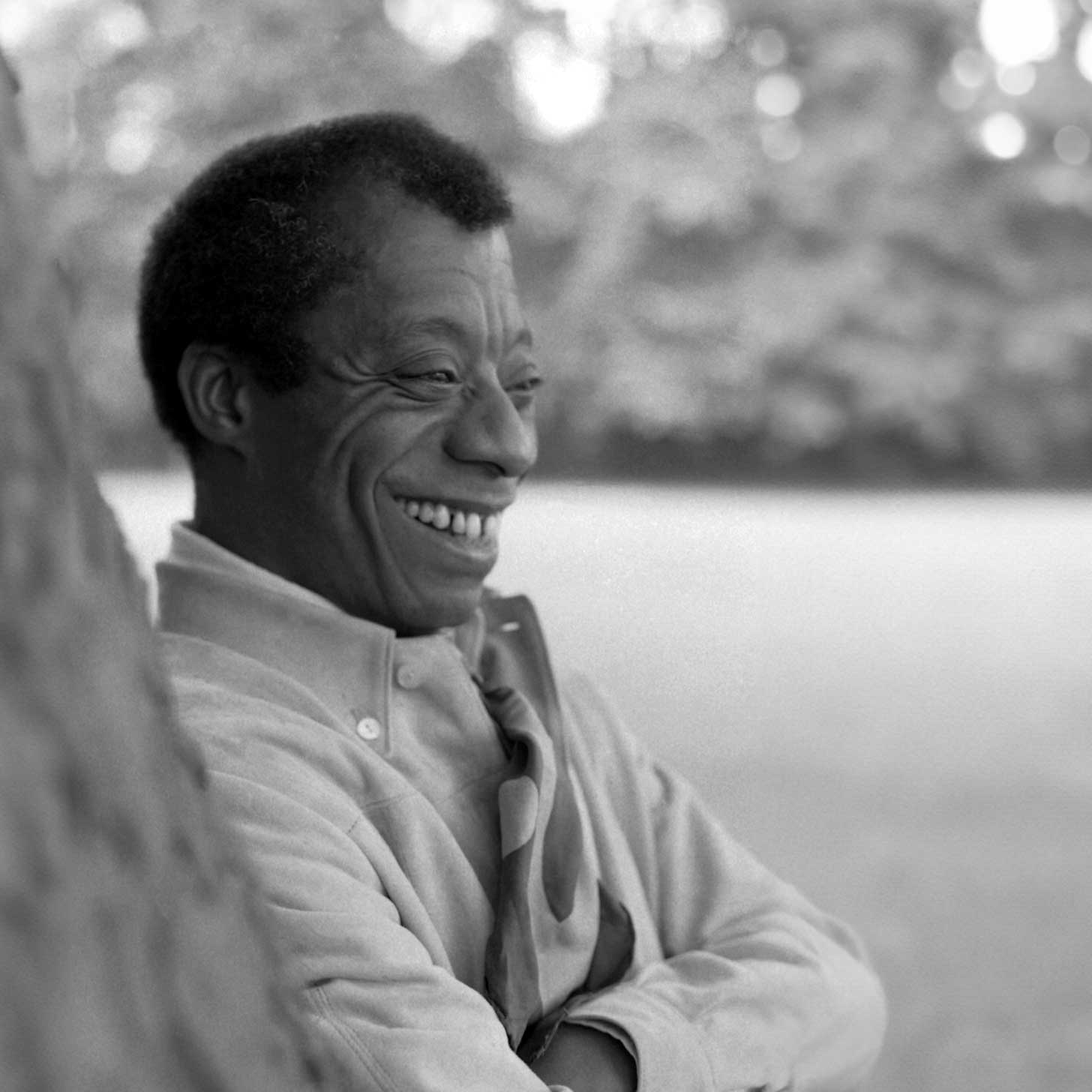
Let these quotes guide you through an exploration of Baldwin’s profound wisdom and enduring legacy:
The Best James Baldwin Quotes
Famous James Baldwin Quotes
“Not everything that is faced can be changed, but nothing can be changed until it is faced.”
— James Baldwin
“Be careful what you set your heart upon — for it will surely be yours.”
— James Baldwin
“Trust life, and it will teach you, in joy and sorrow, all you need to know.”
— James Baldwin
“The longer I live, the more deeply I learn that love — whether we call it friendship or family or romance — is the work of mirroring and magnifying each other’s light.”
— James Baldwin
“One cannot deny the humanity of another without diminishing one’s own.”
— James Baldwin
“You have to go the way your blood beats. If you don’t live the only life you have, you won’t live some other life, you won’t live any life at all.”
— James Baldwin
“I am what time, circumstance, history, have made of me, certainly, but I am also so much more than that. So are we all.”
— James Baldwin, Notes of a Native Son
“Perhaps home is not a place but simply an irrevocable condition.”
— James Baldwin, Giovanni’s Room
“I love America more than any other country in the world, and, exactly for this reason, I insist on the right to criticize her perpetually.”
— James Baldwin, Notes of a Native Son
“I can’t believe what you say, because I see what you do.”
— James Baldwin
“Know from whence you came. If you know whence you came, there are absolutely no limitations to where you can go.”
— James Baldwin
“One must say yes to life and embrace it wherever it is found — and it is found in terrible places; nevertheless, there it is.”
— James Baldwin
“You’ve got to tell the world how to treat you. If the world tells you how you are going to be treated, you are in trouble.”
— James Baldwin
On Love
“Love does not begin and end the way we seem to think it does. Love is a battle, love is a war; love is a growing up.”
— James Baldwin, Notes of a Native Son
“Love takes off the masks that we fear we cannot live without and know we cannot live within. I use the word ‘love’ here not merely in the personal sense but as a state of being, or a state of grace - not in the infantile American sense of being made happy but in the tough and universal sense of quest and daring and growth.”
— James Baldwin, The Fire Next Time
“People can’t, unhappily, invent their mooring posts, their lovers and their friends, anymore than they can invent their parents. Life gives these and also takes them away and the great difficulty is to say Yes to life.”
— James Baldwin, Giovanni’s Room
“The role of the artist is exactly the same as the role of the lover. If I love you, I have to make you conscious of the things you don’t see.”
— James Baldwin
“Everybody’s journey is individual. If you fall in love with a boy, you fall in love with a boy. The fact that many Americans consider it a disease says more about them than it does about homosexuality.”
— James Baldwin, Conversations with James Baldwin
“To be sensual, I think, is to respect and rejoice in the force of life, of life itself, and to be present in all that one does, from the effort of loving to the breaking of bread.”
— James Baldwin, The Fire Next Time
“I guess it can’t be too often that two people can laugh and make love, too, make love because they are laughing, laugh because they’re making love. The love and the laughter come from the same place: but not many people go there.”
— James Baldwin, If Beale Street Could Talk
“Love him and let him love you. Do you think anything else under heaven really matters?”
— James Baldwin, Giovanni's Room
“You think your pain and your heartbreak are unprecedented in the history of the world, but then you read. It was books that taught me that the things that tormented me most were the very things that connected me with all the people who were alive, who had ever been alive.”
— James Baldwin
“And love will simply have no choice but to go into battle with space and time, and furthermore, to win.”
— James Baldwin
On Equality
“No label, no slogan, no party, no skin color, and no religion is more important than the human being.”
— James Baldwin
“Please try to remember that what they believe, as well as what they do and cause you to endure does not testify to your inferiority but to their inhumanity.”
— James Baldwin
“I’m not interested in anybody’s guilt. Guilt is a luxury that we can no longer afford. I know you didn’t do it, and I didn’t do it either, but I am responsible for it because I am a man and a citizen of this country and you are responsible for it, too, for the very same reason… Anyone who is trying to be conscious must begin to dismiss the vocabulary which we’ve used so long to cover it up, to lie about the way things are.”
— James Baldwin
“If the word ‘integration’ means anything, this is what it means that we, with love, shall force our brothers to see themselves as they are, to cease fleeing from reality and begin to change it.”
— James Baldwin
“There are too many things we do not wish to know about ourselves. People are not, for example, terribly anxious to be equal (equal, after all, to what and to whom?) but they love the idea of being superior.”
— James Baldwin
“It is not a romantic matter. It is the unutterable truth: all men are brothers. That’s the bottom line.”
— James Baldwin
On Identity
“An identity would seem to be arrived at by the way in which the person faces and uses his experience.”
— James Baldwin
“Identity would seem to be the garment with which one covers the nakedness of the self: in which case, it is best that the garment be loose, a little like the robes of the desert, through which one’s nakedness can always be felt, and, sometimes, discerned. This trust in one’s nakedness is all that gives one the power to change one’s robes.”
— James Baldwin
“It took many years of vomiting up all the filth I’d been taught about myself, and half-believed, before I was able to walk on the earth as though I had a right to be here.”
— James Baldwin
“It is rare indeed that people give. Most people guard and keep; they suppose that it is they themselves and what they identify with themselves that they are guarding and keeping, whereas what they are actually guarding and keeping is their system of reality and what they assume themselves to be.”
— James Baldwin
“To ask questions of the universe, and then learn to live with those questions, is the way he achieves his own identity.”
— James Baldwin
“Perhaps, as we say in America, I wanted to find myself. This is an interesting phrase, not current as far as I know in the language of any other people, which certainly does not mean what it says but betrays a nagging suspicion that something has been misplaced. I think now that if I had any intimation that the self I was going to find would turn out to be only the same self from which I had spent so much time in flight, I would have stayed at home.”
— James Baldwin, Giovanni’s Room
“What passes for identity in America is a series of myths about one’s heroic ancestors. It’s astounding to me, for example, that so many people really seem to believe that the country was founded by a band of heroes who wanted to be free.”
— James Baldwin
On Education
“The paradox of education is precisely this - that as one begins to become conscious one begins to examine the society in which he is being educated.”
— James Baldwin
“The purpose of education… is to create in a person the ability to look at the world for himself, to make his own decisions.”
— James Baldwin
“It is true that the more one learns the less one knows.”
— James Baldwin
“Children have never been very good at listening to their elders, but they have never failed to imitate them.”
— James Baldwin, Notes of a Native Son
“It is very nearly impossible to become an educated person in a country so distrustful of the independent mind.”
— James Baldwin
“It demands great spiritual resilience not to hate the hater whose foot is on your neck, and an even greater miracle of perception and charity not to teach your child to hate.”
— James Baldwin
“To accept one’s past — one’s history — is not the same thing as drowning in it; it is learning how to use it.”
— James Baldwin, The Fire Next Time
On Change
“People can cry much easier than they can change.”
— James Baldwin, in an interview
“It is certain, in any case, that ignorance, allied with power, is the most ferocious enemy justice can have.”
— James Baldwin
“This is the charged, the dangerous moment, when everything must be re-examined, must be made new, when nothing at all can be taken for granted.”
— James Baldwin
“Any real change implies the breakup of the world as one has always known it, the loss of all that gave one an identity, the end of safety.”
— James Baldwin, Nobody Knows My Name
“There is never time in the future in which we will work out our salvation. The challenge is in the moment; the time is always now.”
— James Baldwin
→ Read more quotes about change
On Freedom
“Freedom is not something that anybody can be given. Freedom is something people take, and people are as free as they want to be.”
— James Baldwin
“For nothing is more unbearable, once one has it, than freedom.”
— James Baldwin, Giovanni’s Room
“Freedom is hard to bear. It can be objected that I am speaking of political freedom in spiritual terms, but the political institutions of any nation are always menaced and are ultimately controlled by the spiritual state of that nation. We are controlled here by our confusion, far more than we know, and the American dream has therefore become something much more closely resembling a nightmare, on the private, domestic, and international levels. Privately, we cannot stand our lives and dare not examine them; domestically, we take no responsibility for (and no pride in) what goes on in our country; and, internationally, for many millions of people, we are an unmitigated disaster.”
— James Baldwin, The Fire Next Time
“I think people ought to do what they want to do, what else are they alive for?”
— James Baldwin
Short James Baldwin Quotes
“In order to have a conversation with someone you must reveal yourself.”
— James Baldwin
“The place in which I’ll fit will not exist until I make it.”
— James Baldwin
“Those who say it can't be done are usually interrupted by others doing it.”
— James Baldwin
“To defend oneself against a fear is simply to insure that one will, one day, be conquered by it; fears must be faced.”
— James Baldwin, The Fire Next Time
“Neither love nor terror makes one blind: indifference makes one blind.”
— James Baldwin, If Beale Street Could Talk
“The most dangerous creation of any society is the man who has nothing to lose.”
— James Baldwin, The Fire Next Time
“What a great difference there is, she said, between dreaming of something and dealing with it!”
— James Baldwin, Another Country
“You have to decide who you are and force the world to deal with you, not with its idea of you.”
— James Baldwin
More James Baldwin Quotes
“Anyone who has ever struggled with poverty knows how extremely expensive it is to be poor.”
— James Baldwin
“One discovers the light in darkness, that is what darkness is for; but everything in our lives depends on how we bear the light. It is necessary, while in darkness, to know that there is a light somewhere, to know that in oneself, waiting to be found, there is a light.”
— James Baldwin
“I know that people can be better than they are. We are capable of bearing a great burden, once we discover that the burden is reality and arrive where reality is.”
— James Baldwin, The Fire Next Time
“If one really wishes to know how justice is administered in a country, one does not question the policemen, the lawyers, the judges, or the protected members of the middle class. One goes to the unprotected — those, precisely, who need the law’s protection most! — and listens to their testimony.”
— James Baldwin
“We can disagree and still love each other unless your disagreement is rooted in my oppression and denial of my humanity and right to exist.”
— James Baldwin
“Talent is insignificant. I know a lot of talented ruins. Beyond talent lie all the usual words: discipline, love, luck, but, most of all, endurance.”
— James Baldwin
“I imagine one of the reasons people cling to their hates so stubbornly is because they sense, once hate is gone, they will be forced to deal with pain.”
— James Baldwin, Notes of a Native Son
“All art is a kind of confession, more or less oblique. All artists, if they are to survive, are forced, at last, to tell the whole story; to vomit the anguish up.”
— James Baldwin
“People pay for what they do, and still more for what they have allowed themselves to become. And they pay for it very simply; by the lives they lead.”
— James Baldwin
Dog videos on TikTok have long taken the app by storm, but one popular genre of video, in particular, is “before and after” slideshows and videos of dogs who have been adopted from animal shelters.
Animal shelters on social media are in the business of saving lives and bringing fur families together — and this trend is no exception.
One such slideshow, shared by NWT SPCA, a rescue based in Canada’s Northwest Territories, shows a series of darling dogs changing their expressions after being adopted.
There’s Zelda, who sat timidly in her kennel at first, and is then seen fully content with a big smile outdoors in her new home.

A crowd favorite is Nero, who braved a small smile at the shelter, showing off some visible scarring on his snout. In the next image, he sits tall in his new home, with his ears perked up and his injuries nearly absent.
One comment below the video simply says “Nero,” followed by four crying emojis.
Users were enchanted by all of the other dogs featured in the post, whose “after” photos all displayed clear relaxation or joyful energy.
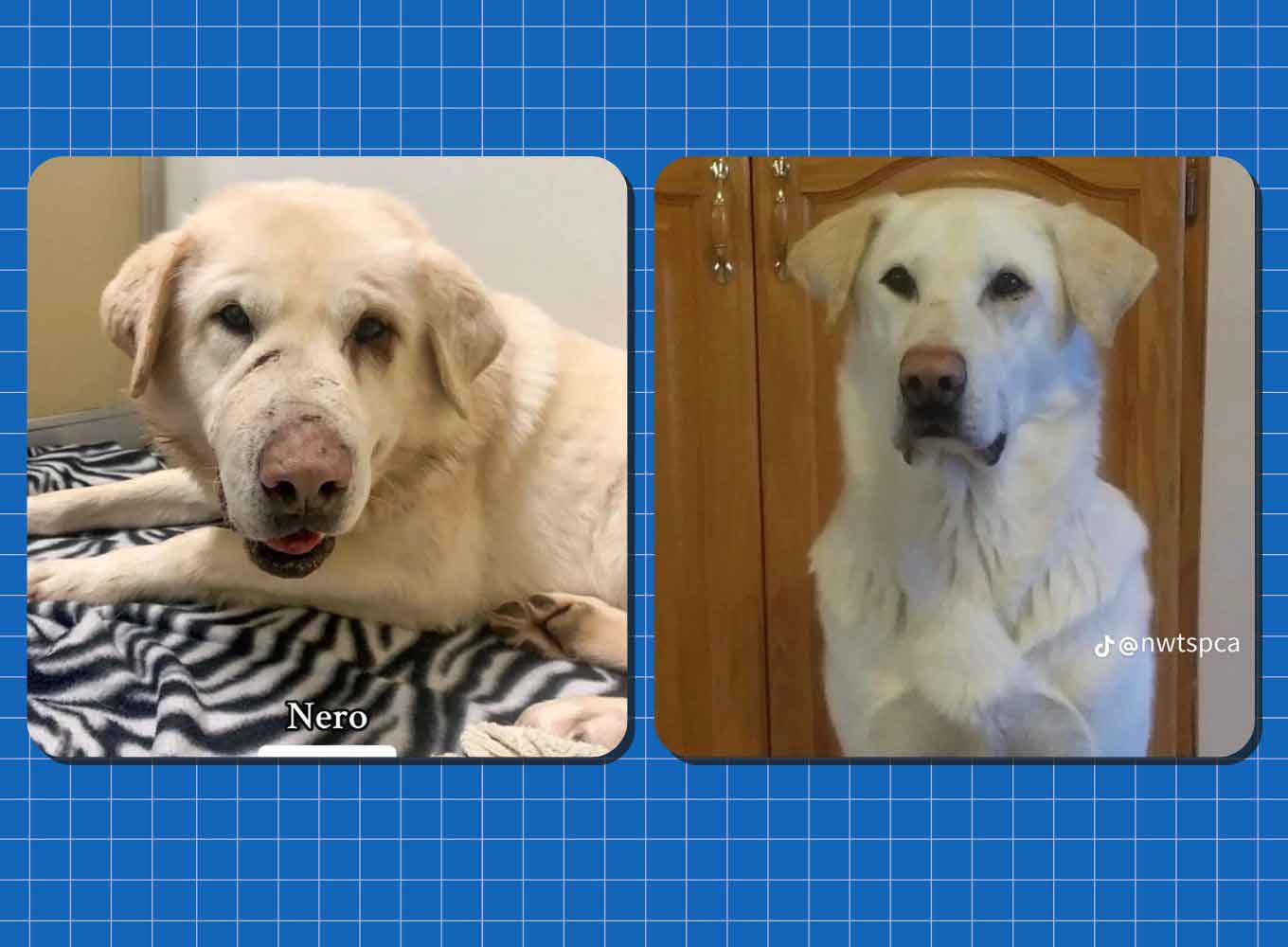
Whether they were having a snooze alongside their new owners or joyfully playing in the snow, the photos of these dogs made one thing very apparent: Life is better in a forever home.
Shelters are overcrowded.
Although it’s heart-warming and necessary to celebrate the dogs who have found their beloved families, it’s also important to acknowledge the work of shelters like NWT SPCA, who provide safety and love for these pups in the interim.
“I feel like y’all are doing something very right because your pups always seem so calm and content, even in their before pictures,” one TikTok user commented. “Go team!”
One way shelter workers take care of their residents is by doing exactly this: sharing content on social media that helps people see the benefits of adopting a dog.
And the truth is: Overcrowding is rampant in shelters these days, meaning workers are stretched thin, and it’s even harder to get pets in the arms of the right owners.
According to a recent annual report from Best Friends Animal Society, getting a dog from breeders and pet stores has steadily increased in recent years, while shelter adoptions have stalled.
The report states that in 2022, over 4.4 million cats and dogs entered shelters, which is up about 100,000 more than a year prior. The most devastating fact is that of these animals, approximately 378,000 were killed because there was simply nowhere for them to go.
So, as much as these TikToks are “aww”-worthy, they’re also an important tool to illustrate the need for willing and dedicated pet parents to adopt instead of shop.
Dog parents are sharing adoption transformation videos, too.
It’s not just the hard-working shelters showing us the benefits of adoption. Other viral videos on the app depict the visual and behavioral changes they saw in their dogs following adoption.
Take Finn, for instance, the pup behind the popular account @keepingfinn.
@keepingfinn Before/After, 2 years later… Notice the change in body language, eye contact, and confidence… Until now, this was a dog that never had peace in his life… It’s amazing what a little love (and some cookies) can do for a dog in need. Can you believe this is the same dog?! A very special thank you to @theanimalpad @losadoptables and the #teamfinn community for never giving up on Simba. And to Simba’s forever mother, Alisha, who loves him for who he is.. ❤️🙏 #fyp #foryou #animalrescue #rescue #dogsoftiktok #beforeandafter #transformation ♬ Pope Is a Rockstar - SALES
A transformation video posted on his page shows Finn, malnourished, crying with matted fur, as his parents rescued him and placed him in their car. This is quickly followed by a total 180-degree difference: A clip of him calmly accepting a treat with luscious long fur, perky ears, and an attentive expression.
“Two years later… Notice the change in body language, eye contact, and confidence,” the caption reads. “Until now, this was a dog that never had peace in his life… It’s amazing what a little love (and some cookies) can do for a dog in need.”
Another video, posted by dog account @thebernerbunch, shows the day Bernese Mountain Dog Annie was adopted. She sulks around her new house, whimpering, with her tail between her legs. Seconds later, a clip shows her wagging her tail rapidly, a smile plastered on her face.

“Annie has been in our home for a little over a month and is settling in so well,” the caption reads. “Her tail never stops wagging and she’s just the happiest dog ever!”
Shelter dogs are especially loyal and loving.
Beyond their puppy dog eyes and satisfied smiles, the “after” videos and photos of adopted dogs are also an indicator of their affection for their human counterparts.
For shelter dogs who have been abused or traumatized, it can be a difficult transition to trust a new owner. But once that bond is formed, there’s no going back.
“I think if you adopt a dog who’s had a less than perfect life, they are the ones who appreciate it the most when you give them a wonderful life with the attention, food, love, and training they crave,” professional dog trainer Trish McMillan told Reader’s Digest.
This is tied to dogs’ innate pack mentality that stems from thousands of years of human-dog bonds. Once you’ve provided a rescue dog with safety and trust, and you’ve proven to them they can rely on you to survive, that kind of loyalty and affection is unbreakable.
“Through science, we have learned that our canine friends are social, emotional beings that respond to human smells and voices,” an article by VCA Animal Hospital shares. “They react with joy to our scent and respond to the tone of our voice.”
Based on these TikToks, there’s no doubt about the bond humans and canines share.
“Thank you for giving them love,” one commenter wrote on NWT SPCA’s post. “That is all they need.”
Header images courtesy of Keeping Finn and NWT SPCA
The reality is, there's a lot of bad news in the world. The last several weeks have felt especially heartbreaking.
But, as experts in positive news, we feel inclined to offer the reminder that there is always more good news happening in the world than bad news.
We're inspired by the words of Mister Rogers when he said, “When I was a boy and I would see scary things in the news, my mother would say to me, ‘Look for the helpers. You will always find people who are helping.’” Every day, when bad things happen, countless Helpers step up and look for ways to make a difference.
And every day the Good Good Good’s team of journalists works hard to collect the best good news in the world — the stories of Helpers showing up to do good — and then we share it with our community. Here are the highlights for this week!
If you want to get good news in your inbox every day, join the Goodnewsletter — the free daily newsletter designed to leave you feeling hopeful. These stories are all sourced from this week's emails.
The Best Positive News We’re Celebrating This Week —
A teen started an ambitious coral reef restoration project that’s planted more than 50,000 corals in French Polynesia and Fiji
Titouan Bernicot, CEO and founder of Coral Gardeners, is revolutionizing coral reef restoration and conservation.
After witnessing coral bleaching and realizing the importance of coral reefs while growing up on a pearl farm in French Polynesia, he decided to take action. Instead of following the traditional path of becoming a marine biologist, at the age of 18 he founded a coral reef restoration and conservation project called Coral Gardeners.
The organization finds and cultivates heat-resilient corals, plants and transplants thousands of corals, and is dedicated to increasing biodiversity. To date, they’ve planted more than 52,000 corals. By the end of this year, they will have planted 100,000, and their goal is to plant one million corals by the end of 2025.
Using advanced technology — including AI and underwater robots — the group can monitor coral reefs in real time. They have also launched an ecotourism program, the Coral Gardeners Experience, where travelers can participate in planting corals.
Why is this good news? Given the challenges posed by climate change, continued efforts to protect the world's coral reefs are needed more than ever. Bernicot has built an impressive team of 50 full-time employees, including six marine biologists, who work to restore coral populations — and biodiversity.
→ Read more
The world has made substantial progress in increasing basic levels of education
Education gives people the opportunity to lead more fulfilling lives, and, at a societal level, it equips humanity to address its pressing challenges.
In recent centuries, the world has shifted from limited access to basic education for a few to widespread education for most. This transformation is evident not only in enrollment and attendance but also in improved literacy rates.
In the early 1800s, fewer than 1 in 5 adults had basic education, and it was a luxury available only to a small elite. However, this has changed significantly over time.
Today, 4 in 5 adults have received some type of formal education, reflecting a dramatic increase in the share of the adult population with access to education.
This progress is also evident in literacy data, as two centuries ago, very few people could read and write, but now the majority of adults have basic literacy skills.
What’s the nuance? Merely enrolling children in school is insufficient — the quality of education and what students learn is crucial. And while many children worldwide get the opportunity to go to school, hundreds of millions still don’t.
Disparities in educational outcomes continue to be substantial, particularly in low-income countries, where most children cannot read by the end of primary school. These educational inequalities exacerbate poverty and reinforce existing global income disparities. More work can be done to improve the quality of education around the world and ensure that children have access to it.
→ Read more
Debt activists bought $10 million of student debt for $125,000 — and canceled it all
A debtors' union called the Debt Collective, in collaboration with its sister organization, Rolling Jubilee Fund, purchased nearly $10 million of debt from Morehouse College for just $125,000 — and canceled it.
Morehouse College is a historically Black men's liberal arts college in Atlanta, whose alumni includes notable figures like Martin Luther King Jr. The debt elimination covers 2,777 accounts from the fall 2022 term and earlier.
This is one of the largest debt cancellations undertaken by the Debt Collective and Rolling Jubilee Fund and aims to help Black graduates save for retirement, buy homes, or start businesses.
The Debt Collective has also launched a tool to help borrowers get their debt canceled through authority established by the Higher Education Act. According to the group, more than 30,000 borrowers have used the tool in the two months of its existence so far.
Why is this good news? Morehouse’s president, David A. Thomas, said student debt and the cost of higher education is often a major deterrent for students. This cancellation allows borrowers to access their transcripts and receive their diplomas without thousands of dollars of debt looming over them — enabling students to move forward with their lives without the burden of existing student loans.
Daniel Radcliffe produced a documentary about his ‘Harry Potter’ stunt double, who was paralyzed while filming the franchise
Daniel Radcliffe will serve as an executive producer in a new documentary, "The Boy Who Lived," about his Harry Potter stunt double, David Holmes, who became paralyzed while filming the franchise.
The documentary, which took four years to create, will be released on HBO and features interviews with both Radcliffe and Holmes, as well as footage from David's stunts.
Holmes, a former teenage gymnast from Essex, was selected to be Radcliffe's double in the first film when Radcliffe was 11. In 2009, a stunt rehearsal accident left Holmes with a spinal injury that paralyzed him from the chest down.
The documentary tells the story of his achievements and the challenges he faces every day, featuring personal footage, behind-the-scenes material, and interviews with Holmes, Radcliffe, and others. It also showcases the enduring collaborative relationship between Radcliffe and Holmes, who co-launched the "Cunning Stunts" podcast in 2020.
The documentary will be available to stream in November.
Why is this good news? The documentary raises awareness about the risks stunt performers face — sparking discussions and action for a safer, more inclusive industry with better safety measures. It also promotes empathy by showcasing David's journey, challenges stereotypes about disabilities, and underscores the need for support networks for injured stunt performers.
→ Read more
A 17-year-old invented a cost-effective ‘smart spoon’ that helps Parkinson’s patients during meal times
After witnessing his uncle struggle to eat due to tremors caused by Parkinson's disease, a 17-year-old inventor from Bengaluru, India was inspired to create a smart spoon for people with the condition.
The smart spoon, which is equipped with microcontrollers, sensors, and motors, stabilizes itself by detecting tremors and counteracting the shaking, allowing individuals with Parkinson's to eat more easily. Inventor Aarrav Anil, who has a passion for robotics, has refined the design to make it waterproof, detachable for cleaning, and added a deeper spoon that holds more food.
The smart spoon is currently undergoing trials at the RV College of Physiotherapy in Bengaluru, with plans to publish the results in a medical journal.
Anil hopes to make it affordable for those who need it and has initial plans to manufacture it for hospitals. The cost of his smart spoon is expected to be around $80, making it more accessible than similar products from the U.S.
Why is this good news? Anil's invention aims to improve the quality of life for the estimated 7 million people with Parkinson's in India by helping them to feed themselves without relying on caregivers. Without the frustration of spilling food or needing assistance, meal times can become much simpler and can help people with Parkinson’s regain a degree of independence — boosting self-esteem and improving emotional well-being.
An innovative brain implant has helped a paralyzed woman speak again
Researchers at UCSF and UC Berkeley have made groundbreaking progress in developing an implantable AI-powered device that translates brain signals into speech and facial expressions. This innovation has enabled a woman — who lost the ability to speak due to a stroke — to communicate using a talking digital avatar that conveys emotion.
The ability to convey emotions and facial expressions through a digital avatar enhances the richness of communication, allowing users to express not only words but also the subtleties of their feelings, which makes interactions more meaningful.
The device uses machine learning to map brain signals and synthesize them into speech and facial expressions. The breakthrough builds upon previous work to decode full words from brain activity and advance toward more natural speech and communication methods. Researchers aim to create a standalone, portable device for long-term use.
Why is this good news? For individuals who have lost their ability to speak due to conditions such as strokes, paralysis, or diseases, this implantable device offers a means to regain their voice and communicate with others — leading to increased quality of life, deeper social connections, and greater independence. The milestone shows the power of collaboration in combining engineering and medical expertise, along with AI.
→ Read more
More good news of the week —
Scientists say they may have made the biggest breakthrough in treating cervical cancer in 20 years. The new treatment involves a course of existing, accessible chemotherapy drugs along with the typical treatment of radiotherapy and chemoradiation.
A fracking site is now taking on a "second life" as a source of clean geothermal energy. The underground well was drilled but never fracked following protests, and now it’s “perfect for testing geothermal energy.”
Walmart — the nation’s largest private employer — is expanding its nationwide health care coverage for employees who want doulas during pregnancy. Walmart said the program is meant to address racial inequities in health care and improve the health of its workers and their babies, especially in areas where access to care may be limited.
Renewable energy broke records in Australia this fall. At one point in September, nearly all of eastern Australia’s demand could have been met by renewables — the closest to reaching 100% clean power in the grid’s history.
‘Recovery doulas’ are helping moms in rural Montana navigate addiction and motherhood. As part of the health program, doulas, non-medical support workers, and peer support specialists connect pregnant patients to mental health care and substance use resources.
A student in Rwanda created a ChatGPT-driven Swahili chatbot that serves smallholder farmers by detecting crop diseases and providing agricultural advice. Farmers can ask questions about topics including farm preparation, maize disease management, and post-harvest procedures.
Old diesel-powered recycling trucks are being upcycled into electric vehicles. Upcycling old trucks can be a more carbon-friendly process compared to purchasing new EVs.
A new study shows that greenspaces could reduce gun violence. In the study, researchers saw a 12% decrease in gun violence within a half-mile radius of community greenspaces.
Legislators in the EU just voted to limit pesticide use. The environment committee voted to set binding targets that cut pesticide use in half by 2030.
The FDA is one step closer to approving an innovative sickle cell cure. If approved, the treatment could be a game-changer for the 100,000 people in the U.S. who live with the inherited blood disorder, most of whom are Black.
Seven countries in Europe committed to combating loneliness and isolation through a multi-pronged initiative. The European I2I project involves collaboration between universities, municipalities, companies, and associations to improve people's quality of life by promoting inclusion.
Engineers have developed a new process for making fuel from carbon dioxide. Most conversion processes have problems with low carbon efficiency, but researchers at MIT and Harvard University have developed an efficient process that could provide emissions-free heat and power for homes.
Dementia rates in developed countries have dropped 13% per decade over the last 25 years. Better cardiovascular health, education, and cognitive reserve have all contributed to reducing dementia risk.
A new analysis found that the Inflation Reduction Act will create about 400,000 jobs in the construction of electric vehicle and battery factories, as well as wind and solar projects. The economic impact includes a boost of $156 billion to the U.S. GDP and over $32 billion in tax revenue for federal, state, and local governments over a five-year period.
The Michigan legislature has passed a gun violence prevention bill aimed at prohibiting domestic abusers from possessing firearms. The move intends to protect survivors from abusers armed with guns, as access to firearms increases the risk of fatal violence against domestic abuse victims.
After writing countless articles about sustainable shopping, we at Good Good Good consider ourselves experts on the hunt for eco-friendly products.
But conscious consumption is more than just finding the best B Corp certified brands out there. We have to strike a balance between usefulness, meaning, and affordability. There’s just a lot to think about!
Whether you’re shopping for the holidays, someone’s birthday — or maybe even Earth Day — it is indeed possible to find great gifts that are special and sustainable all at once.
Lucky for you, this article is full of some of the best eco-friendly gifts out there.
Explore more eco-friendly gift guides: Inexpensive | For Him | For Her | For Mom | For Kids | For Coworkers
By the way, some of the links in this article are affiliate links, which means if you make a purchase after clicking a link, we may earn a commission at no extra cost to you. Everything in this article was independently and honestly written by the Good Good Good team. Thank you!
Our favorite sustainable gift ideas —
Cadence Capsule Containers
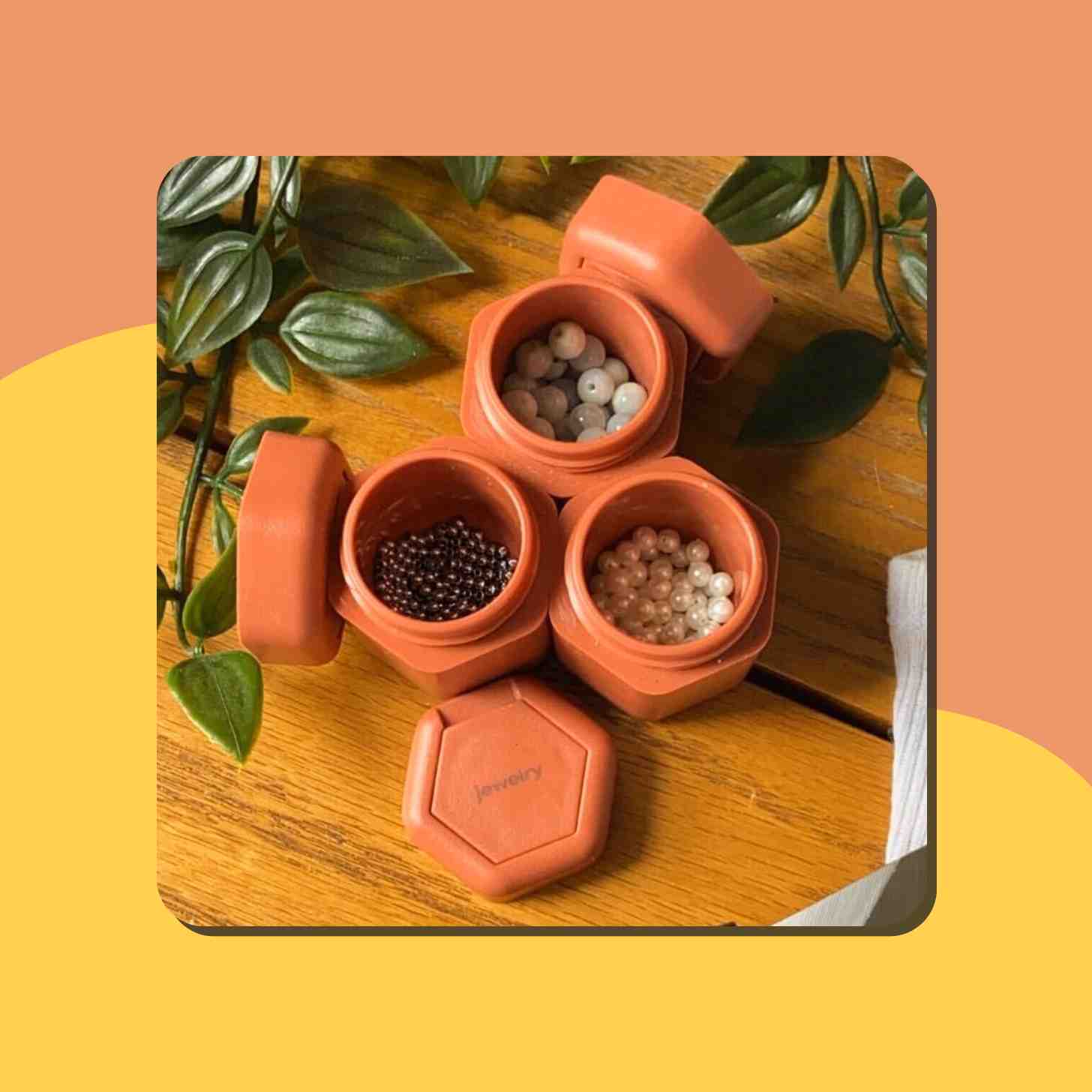
The Capsule will make anyone’s life easier when traveling — and help reduce the waste of plastic. These containers are customizable, magnetic, leak-proof — and TSA-compliant. You can build a whole system, or just add to your loved one’s existing set.
What’s good:
- Made with 20% recycled ocean-bound plastic and 30% excess manufacturing material
- Constructed with BPA-free and non-leaching plastics
- Shipped in recycled packaging
- No more single-use drugstore travel shampoos!
Bombas Socks

Listen, we all need socks, so why not gift a pair of socks that give back? Bombas is the real deal.
Plus, we believe their socks are way more comfortable than any others from a big box store like Target or Old Navy.
What’s good:
- Certified B corp
- One essential clothing item donated with every purchase
- All products designed with durability in mind, with a “happiness guarantee” to keep items lasting longer
Shop: Bombas
Siblings DIY "Forever" Candle
Saving the planet never smelled so good.
Siblings is an eco-friendly candle brand that meshes its commitment to the planet with a DIY element.
With non-toxic scents, clean coconut wax blends, and 100% compostable packaging, your gift recipient can create their own candle completely guilt-free.
What’s good:
- Vessels are endlessly reusable
- Trees are planted with every 3-pack purchase, and the brand dedicates a portion of its Black Friday sales to reforestation every year
- Siblings is certified Carbon Neutral
- Eco-luxury candles produce 86% less waste and 50% fewer carbon emissions than traditional candles
Shop: Siblings
→ Explore more of our favorite sustainable candles
Rechargeable Lighter
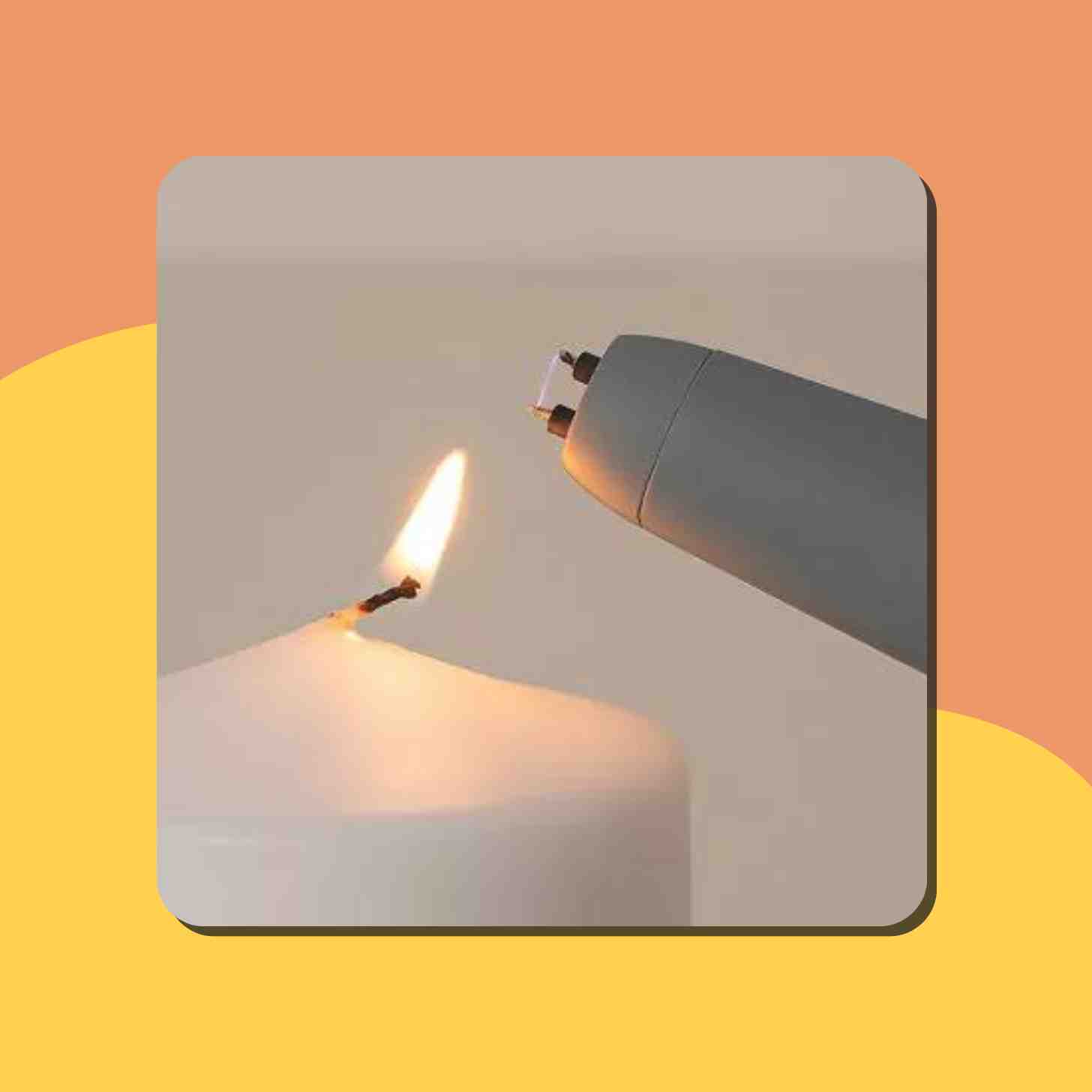
If your gift recipient is a big candle fan, this rechargeable lighter is a great alternative to unnecessary fuel-based disposable lighters. This particular lighter is our favorite — and is ideal for bending into a candle vessel.
What’s good:
- Alternative to single-use plastic lighters that end up in landfills every year (95% of the annual 600 million lighters sold to U.S. consumers every year)
- Fully rechargeable and made to last
Shop: Amazon
Check out our full list of rechargeable electric lighters to explore other options, too!
Reusable Produce Bags

Make your gift recipient’s next grocery trip a breeze with these handy reusable produce bags.
What’s good:
- A simple alternative to grocery store plastic produce bags
- Made to last and use over and over again
Vegan Chocolate

Need a consumable gift for your favorite sweet tooth? Vegan chocolate is the answer.
Lovo Chocolate makes 100% vegan chocolate from ethically sourced beans and plant milks, including almond milk, coconut milk, hazelnut milk, and oat milk. Plus, they come in a 4-pack, so you can drop one in everyone’s stocking or Valentine’s mailbox!
What’s good:
- Sourced ethically
- 100% vegan — no animal products here!
- 80% of Lovo Chocolate’s employees are women
Shop: Amazon | Lovo Chocolate
→ Snack on more of our favorite vegan chocolate bar brands
Organic Cotton Sheets

Cozy doesn’t have to come at the cost of the planet’s well-being. Gift a sheet set that makes your gift recipient sleep guilt-free.
What’s good:
- Bedding companies that use organic cotton end up using about 90% less water than conventional cotton crops!
Shop: Avocado | Nest Bedding | Saatva
→ Explore more sustainable bedding
VEJA Sneakers
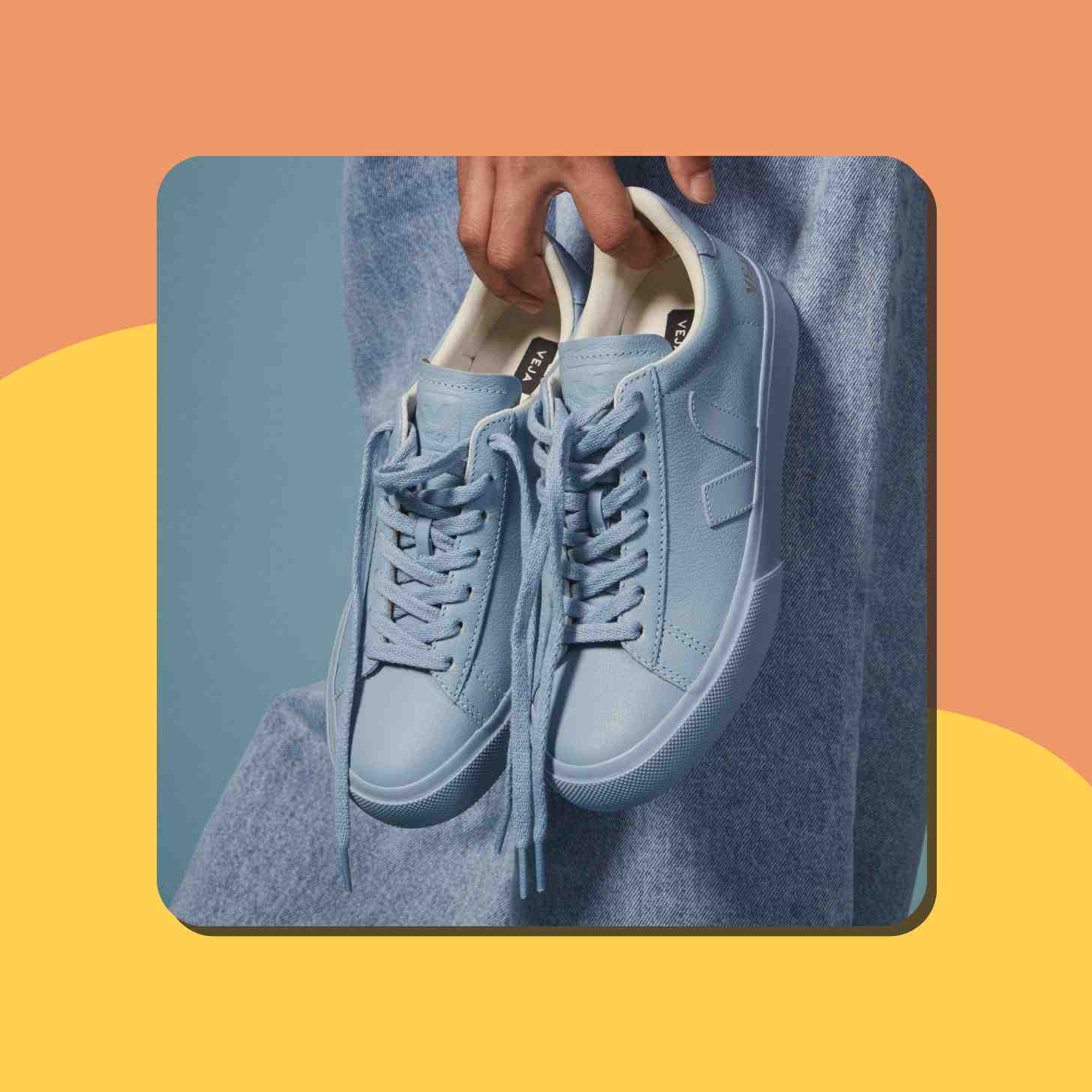
VEJA is a regenerative company, certified B Corp dedicated to making shoes sustainably. That means being intentional about the materials that go into every pair of shoes.
The soles on every pair of VEJA sneakers are made from natural rubber that is ethically harvested from the Amazon Rainforest, as well as organic cotton and recycled plastics.
What’s good:
- Certified B Corp
- Uses ethically sourced or recycled materials
Tushy Classic 3.0 Bidet

Did you know that switching to a bidet can save the 384 trees required for one person’s lifetime supply of toilet paper?
Plus, they just make your bathroom breaks feel extra fancy.
What’s good:
- A portion of profits go toward building community toilets around the globe to improve dignity and sanitation worldwide
- Tushy uses just an eighth of a gallon of water per use
- Reduces the risk of health issues like UTIs, yeast infections, hemorrhoids, and more
Stasher Starter Kit
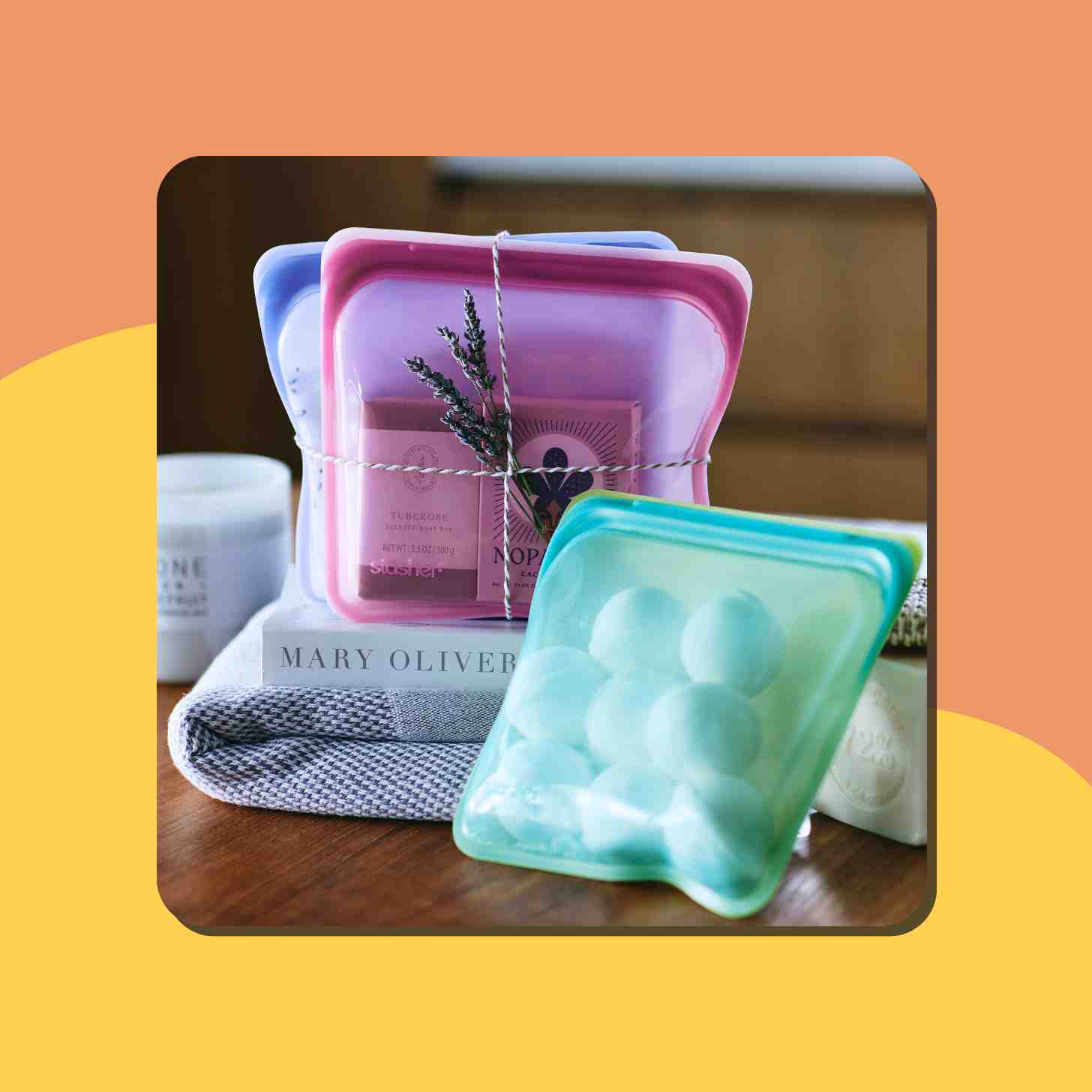
End your gift recipient’s reliance on plastic baggies by getting them set up with a Stasher set of reusable zipper baggies.
I’ve tried several other brands of reusable silicone bags and Stasher’s are hands-down the easiest to use and clean — plus they look really cute.
What’s good:
- One Stasher bag replaces 260 single-use plastic bags every year
- Made with the patented Pinch-Loc® seal and food-grade platinum silicone, these are the gold standard for reusable bags and are extremely durable
- Stasher is part of 1% for the Planet
Shop: Amazon | Stasher | EarthHero
Furoshiki Reusable Cloths
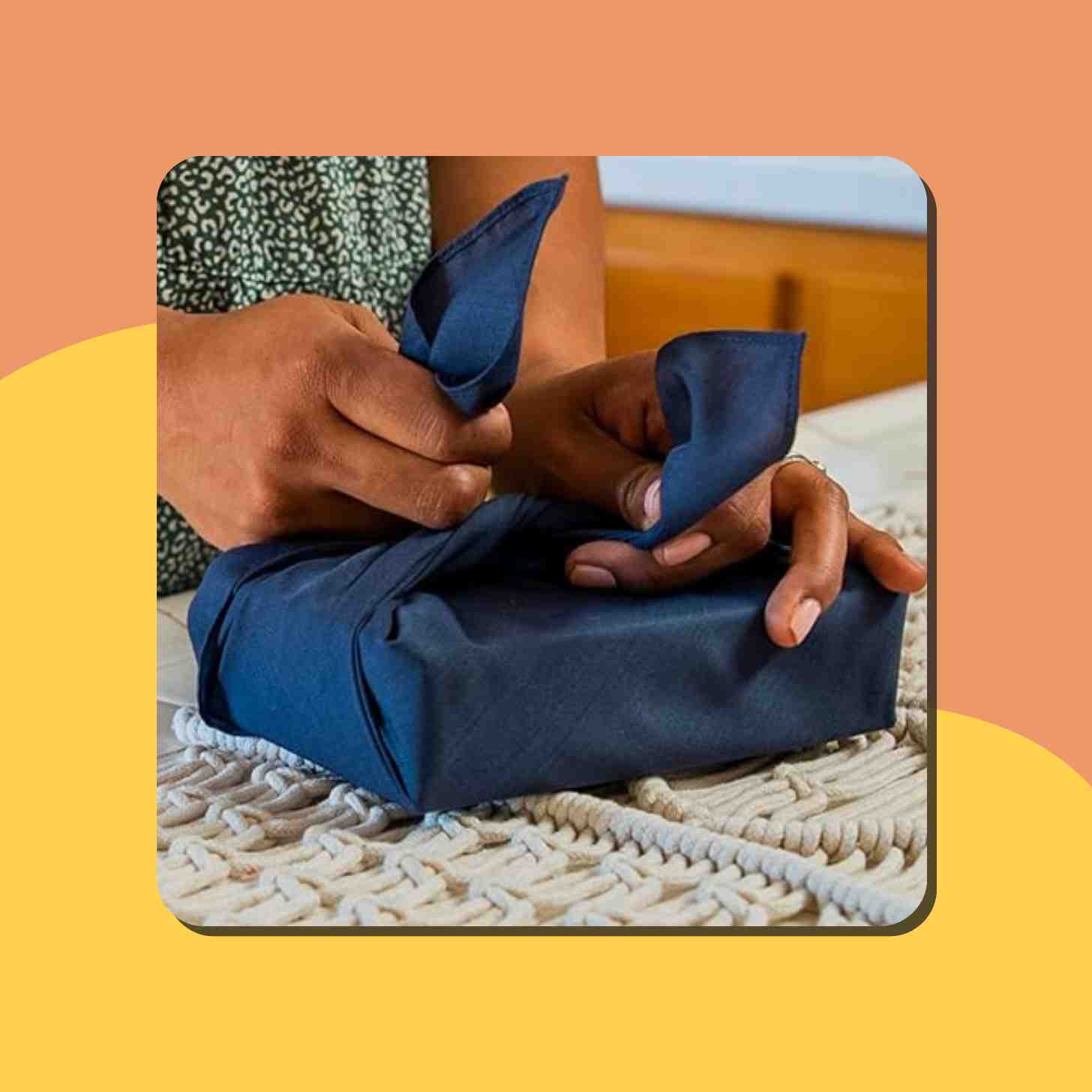
The best kind of gift wrap is the kind you can use over and over again! Furoshiki is a Japanese concept that started as a means for merchants to carry their goods through a flat folded fabric bundle.
From bento boxes to gifts alike, these cloths are a staple for those trying to reduce their waste.
What’s good:
- Multi-purpose reusable
- Gift wrap that is also a gift
Enviroscent Scent Stix Diffuser

These Scent Stix from Enviroscent make for a fresher space without the use of water or flames. The scented sticks provide a subtle scent for up to 30 days.
What’s good:
- Non-toxic
- Comes in plastic-free packaging
- Easy to recycle and refill
Shop: Amazon | Enviroscent
Recycled Glassware
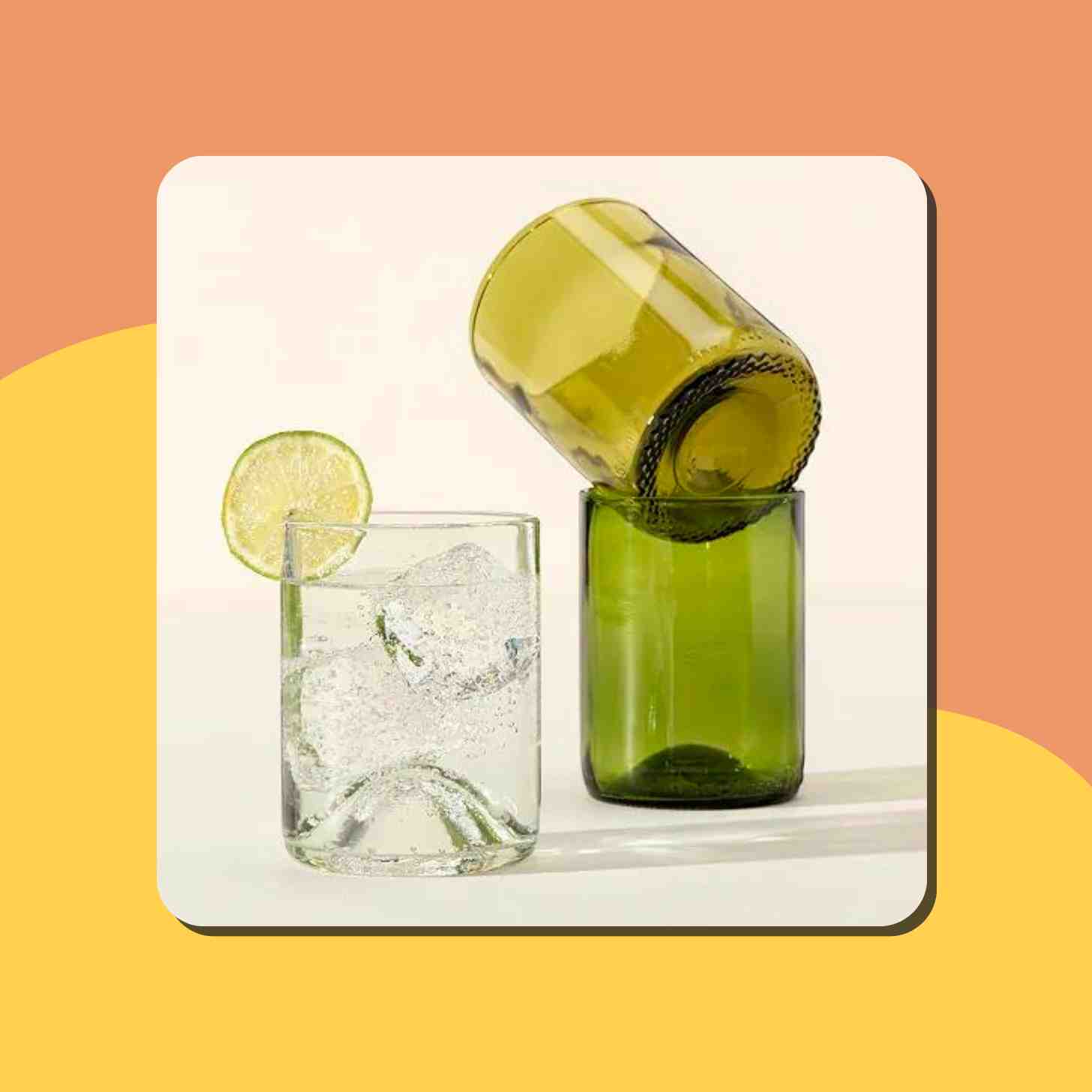
Glassware is one of the best ways to add a little character to the kitchen.
What’s good:
- Cuts emissions and raw materials used in new products
- Extends the life of existing glass products
→ Check out more of our favorite recycled glassware options
Indoor Herb Garden
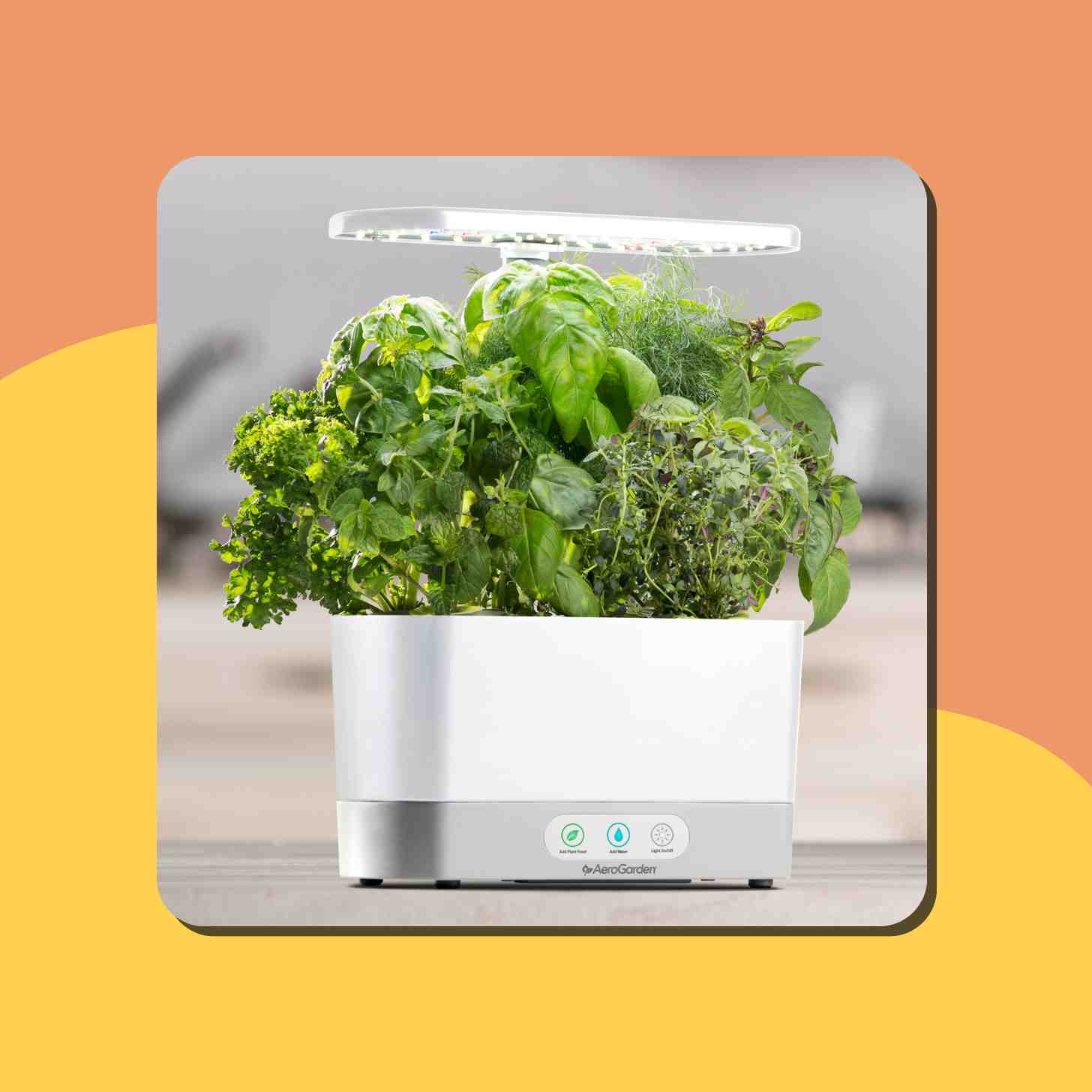
No more plastic-packaged basil from the produce aisle! Help them start a super-simple at-home garden right on their kitchen counter.
These indoor hydroponic gardens include light systems, water reminders, and more.
What’s good:
- Home-grown produce reduces emissions and packaging
Shop: AeroGarden | Amazon | Uncommon Goods
Meal Subscription
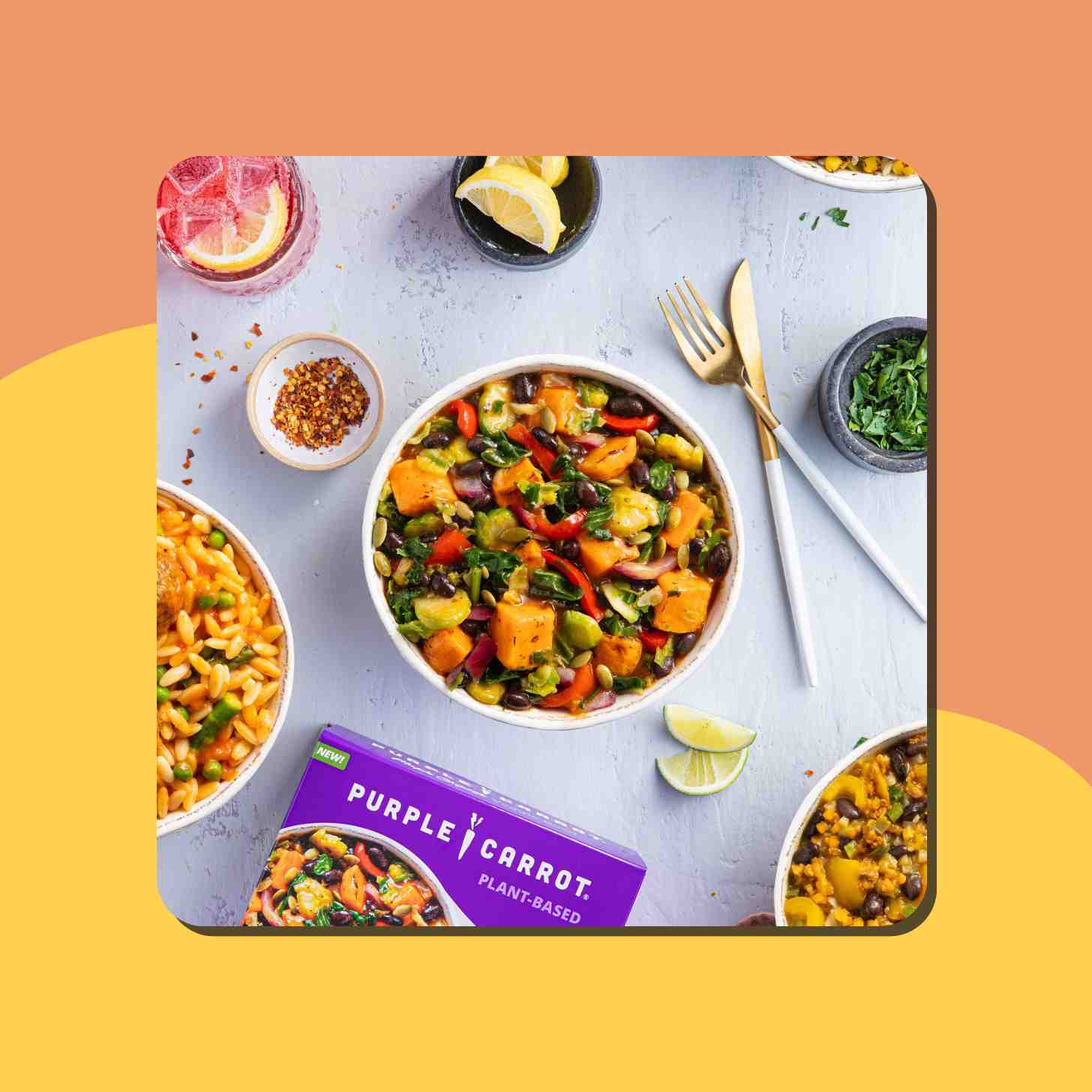
Fight food waste with “misfit” produce or perfectly-sized portions. Even more appealing? The convenience that comes with a tasty meal delivery on your doorstep every week. Once we opted for grocery delivery, we never looked back.
What’s good:
- “Upcycles” food that would otherwise be wasted
- Makes a vegan lifestyle easier and more accessible
Shop: Misfits Market | Purple Carrot
→ Read our complete breakdown and review of Misfits Market!
Compost Bin
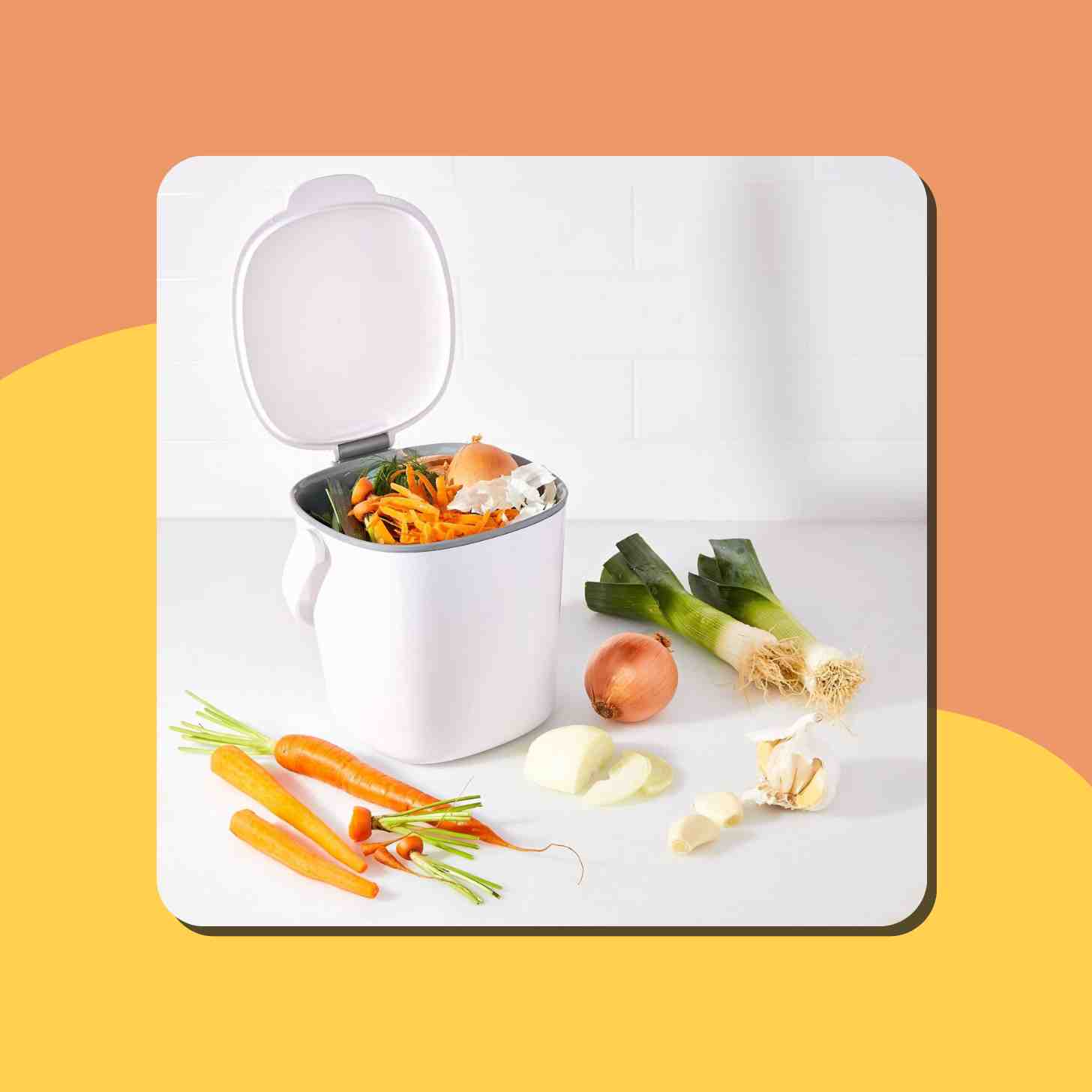
Help plant the seeds of a compost-friendly lifestyle by giving them a home for their food scraps. This OXO compost bin is the perfect countertop companion to add to the heap.
What’s good:
- Makes composting easier and more accessible
- OXO gives back to 1% for the Planet
Material’s ReBoard
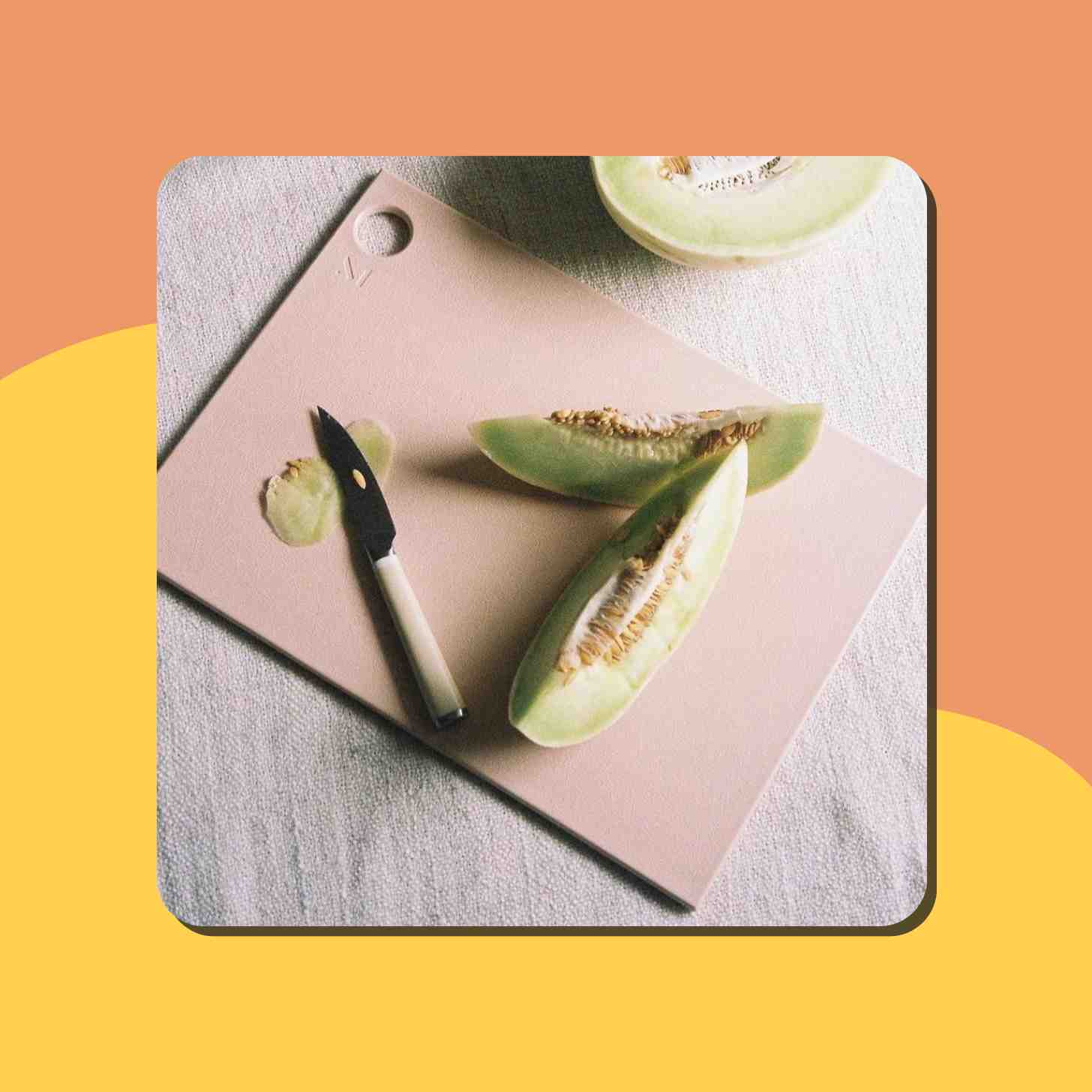
This cutting board is happily utilized in at least two Good Good Good team members’ kitchens — and they swear by it.
The reBoard comes in five stunning shades, including To Pó-Po, with Love — a color option that, when purchased, donates half of its profits to Heart of Dinner, an organization delivering food and handwritten letters to Asian elders in NYC.
What’s good:
- 100% upcycled and renewable materials (75% repurposed kitchenware plastic scraps, 25% renewable sugarcane)
- BPA-free
- Nearly $185,000 donated to organizations “at the intersection of food and underserved groups across the U.S.”
Shop: Material
→ Check out our guide to great eco-friendly kitchenware gifts
Cotopaxi Del Dia Hip Pack
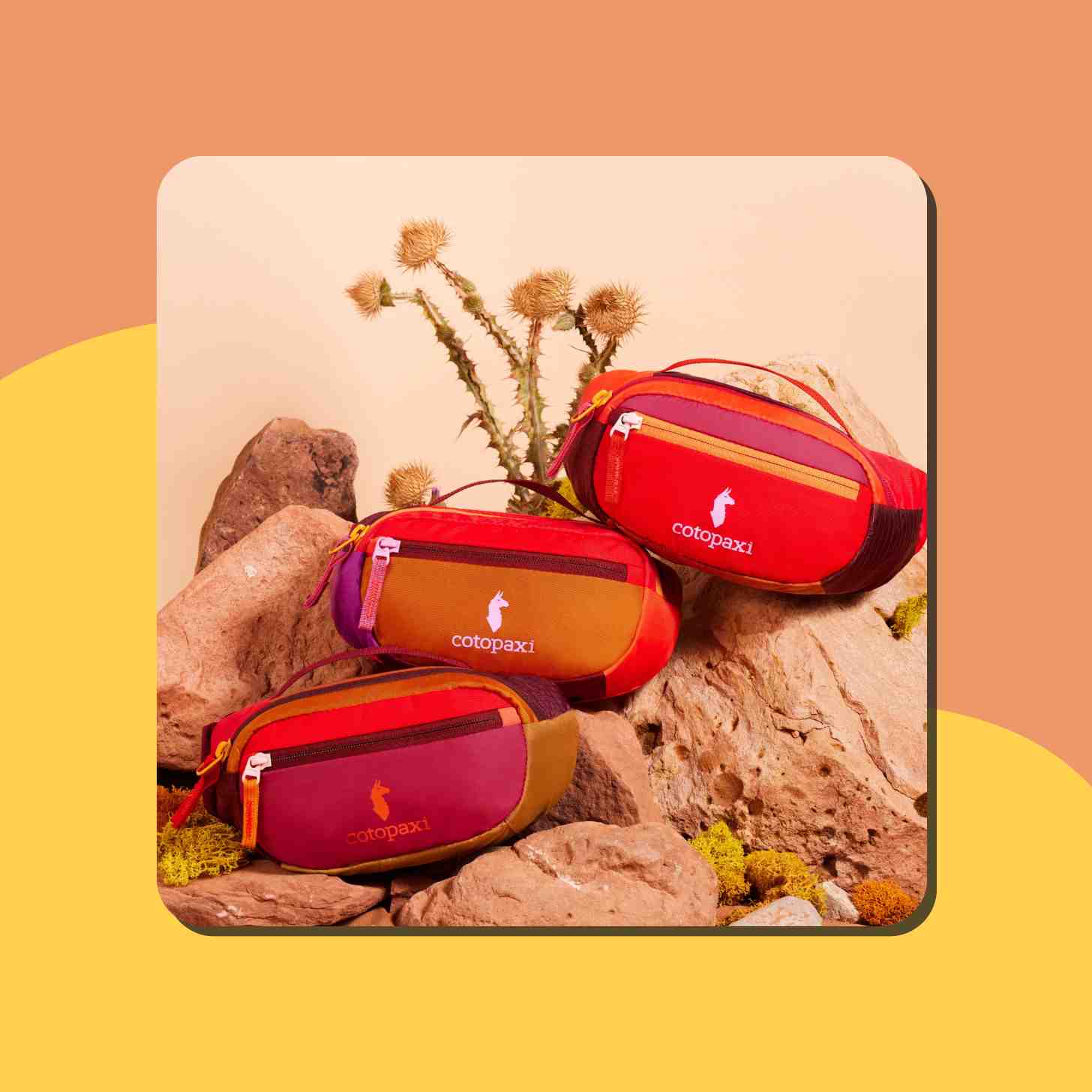
Appeal to their adventurous side. Cotopaxi’s Del Dia packs are made from 100% repurposed nylon that was headed to the landfill from other factories.
The bags feature a unique colorway, so be prepared for a fun surprise!
What’s good:
- Made from repurposed nylon scraps
- Lifetime warranty and repairs
- B Corp and Climate Neutral certified
- Through 1% for the Planet and other foundation efforts, Cotopaxi donates and provides grants to do more good
UpCircle Vegan Hand Cream
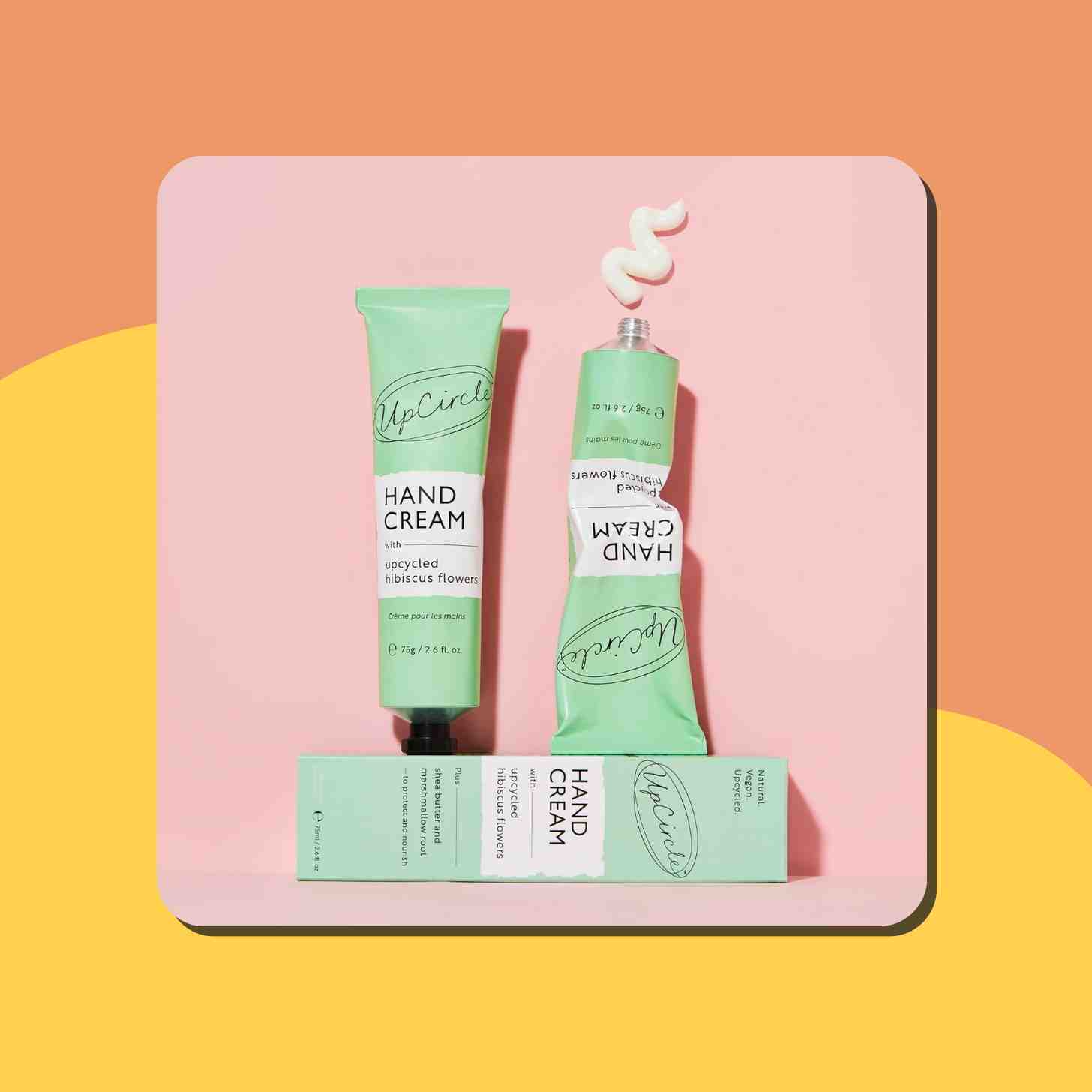
Soothing hand cream is a great gift for anyone afflicted by cold weather and dry air.
This moisturizer from UpCircle is formulated with upcycled hibiscus flowers.
What’s good:
- 100% natural and cruelty-free
- All packaging is recyclable
Zero Waste Dish Brush Kit

Doing the dishes isn’t exactly the most fun, but having the right tools makes it a whole lot more tolerable. Help build out their zero waste collection with a kit of sustainable brushes.
What’s good:
- Made of 100% compostable materials
- Alternative to sponges and dish brushes made from plastic and synthetic fibers
Shop: Earth Hero | Package Free Shop | Zero Waste Store
Rumpl Blanket
Keep cozy at your campsite, festival, or sporting event with any of Rumpl’s awesome blankets.
What’s good:
- Made with recycled plastic bottles
- Rumpl is a certified B Corp with partnerships with Climate Neutral and 1% for the Planet
Pela Phone Case

Pela makes compostable phone cases, mini wallets, phone grips, and other tech accessories that are stylish and sustainable.
What’s good:
- Products are made from flax shive and plant-based biopolymer materials
- Donates a percentage of every sale to ocean cleanup and preservation initiatives
- Certified B Corp and Climate Neutral certified
- All products free of lead, cadmium, BPA, and phthalates
- Each case comes with an extra envelope to send back your old phone case, which can then be recycled properly.
Shop: Pela
Solar-Powered Portable Phone Charger
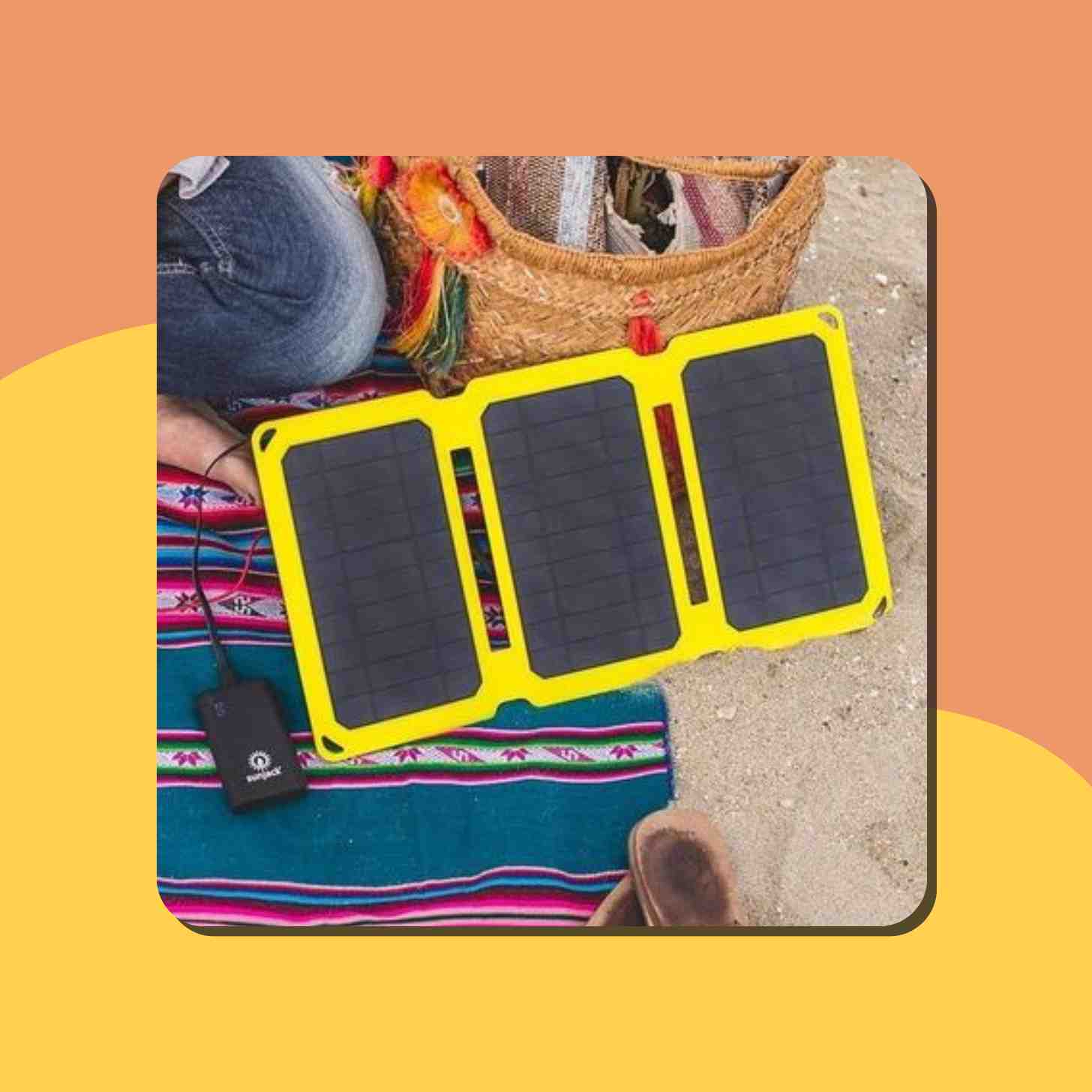
Although it might be a small switch, help lower their energy bill (and carbon footprint) with this solar-powered device charger. It also makes for a dependable companion in the great outdoors.
What’s good:
- Provides power and safety off-grid
- Lightweight and waterproof
Shop: Amazon | Uncommon Goods
Nut Milk Maker
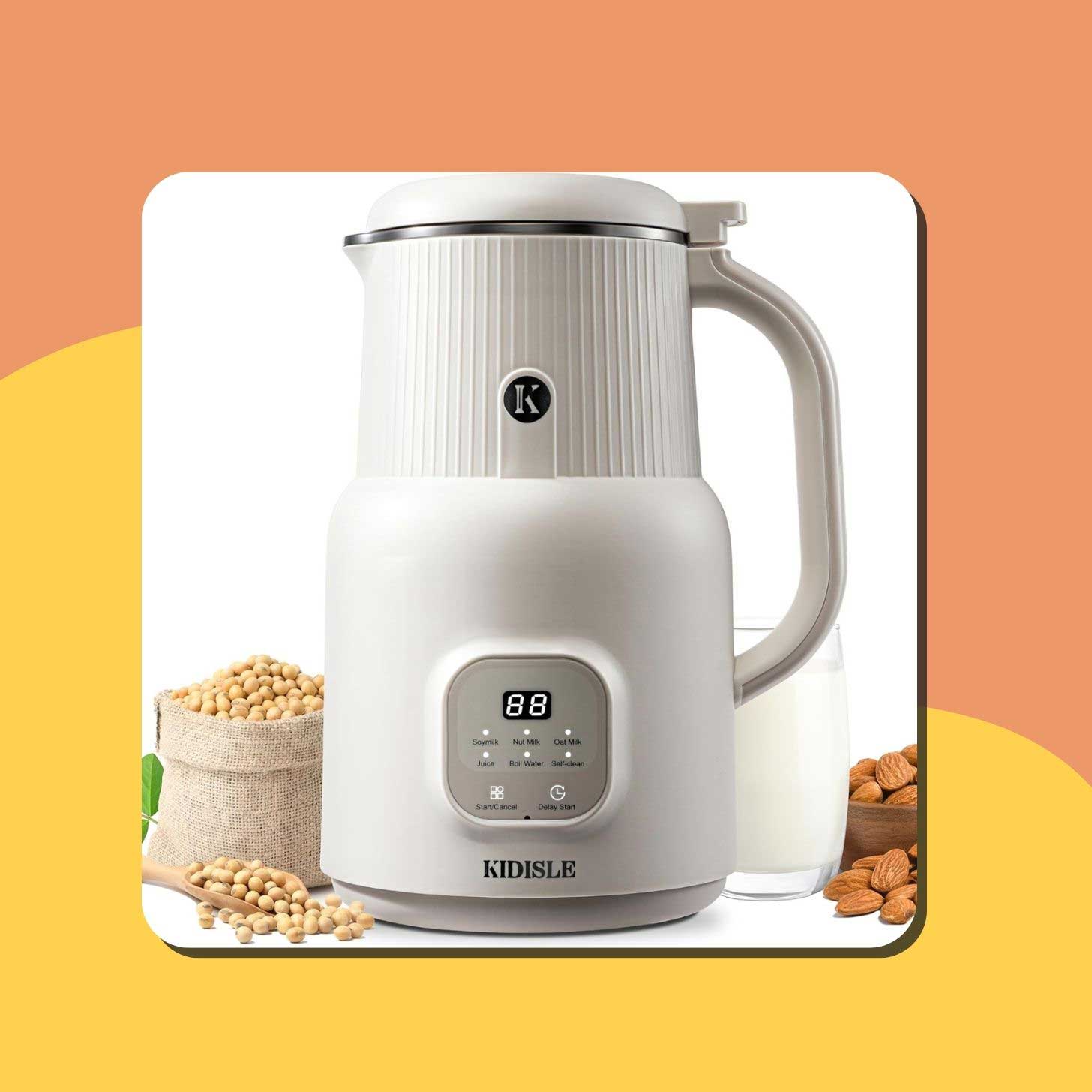
There’s only one thing better than stocking up on oat milk at the grocery store: making it yourself! Plus, it saves a whole lot of money and packaging waste.
Using a plant-based milk maker, your gift recipient can make fresh plant-based milk at home in just a few easy steps.
What’s good:
- Reduces waste from packaging and shipping of plant-based milks
- Makes drinking plant-based milks easier and more accessible
- Offers six functions: Making nut milk, oat milk, soy milk, preparing fresh juice, boiling water, and self-cleaning
Shop: Amazon
Girlfriend Collective Leggings

When I first invested in some staples from Girlfriend Collective, I was taken aback by how comfortable and high-quality they were.
Made to be soft yet supportive for high-impact workouts, each pair of Girlfriend Collective’s leggings is made from 79% recycled plastic bottles. That means 25 water bottles are diverted from landfills for each pair made.
Girlfriend Collective doesn’t just say that being eco-friendly is a top priority; they prove it with a list of ways they’re taking action. That includes the ReGirlfriend program which allows customers to return old leggings so they can be upcycled into a new pair.
What’s good:
- Packaging is 100% recycled and recyclable
- OEKO-certified safe dyes
- High-standard wastewater practices that separates dyes and stray fibers so nearby water sources aren’t contaminated
- Ethical manufacturing practices - SA8000 certified
- Items can be sent back through recycling program at the end of their life
Shop: Girlfriend Collective
“The Intersectional Environmentalist: How to Dismantle Systems of Oppression to Protect People + Planet” by Leah Thomas
We’re big fans of intersectional environmentalism and think anyone looking for an eco-friendly gift would be, too!
Leah Thomas’ book makes the perfect primer on climate justice for the next generation of activists.
What’s good:
- Teaches any reader about intersectional environmentalism and climate justice
- Supports nonprofit climate media organization Intersectional Environmentalist
Shop: Amazon | Bookshop | Libro.fm
→ Looking for more books about sustainability? We’ve got you.
Decomposition Notebook
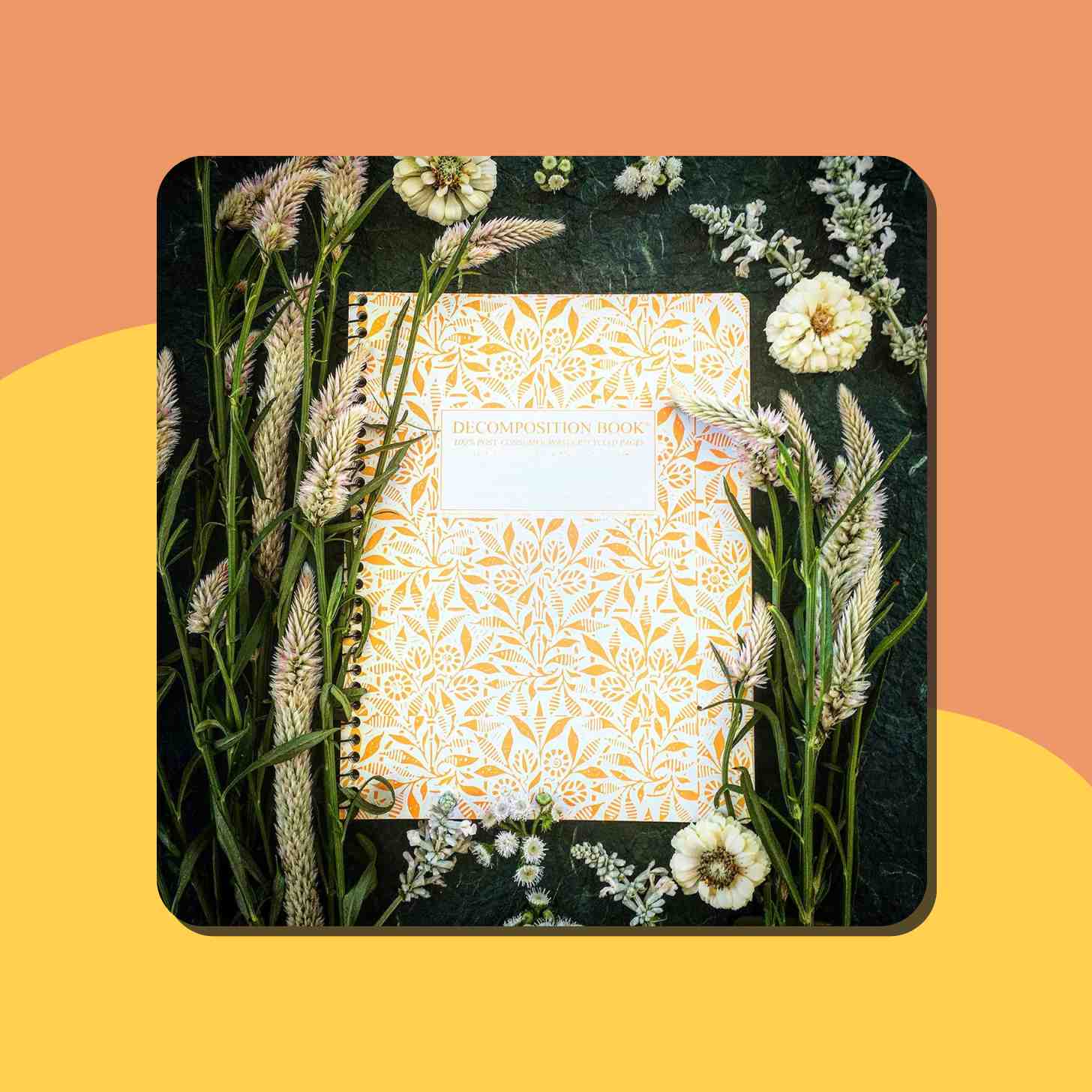
For the voracious note-takers, there’s the XL spiral Decomposition Notebook.
What’s good:
- Made from 100% post-consumer recycled paper
- Contains 160 pages of soy-printed, lined college-ruled paper.
Shop: Amazon | Earth Hero
CoffeeSock Reusable Coffee Filter
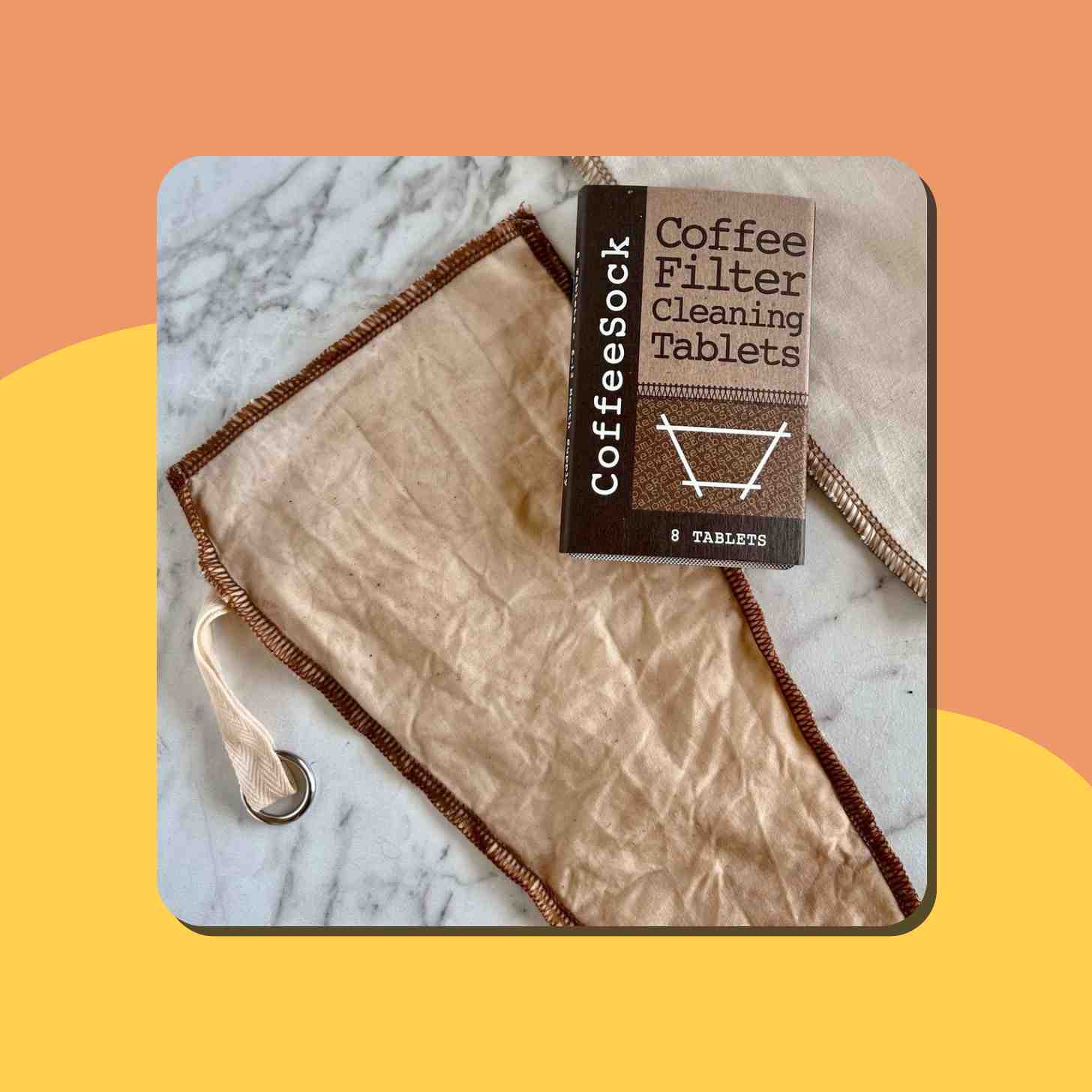
Kiss those one-time use coffee filters goodbye! Enjoy the full flavor of your coffee without the unsavory paper filter taste.
What’s good:
- Handmade with GOTS-certified organic cotton
- Durable and last for about a year of use
Shop: Amazon | Earth Hero
Upcycled Duffle Bag
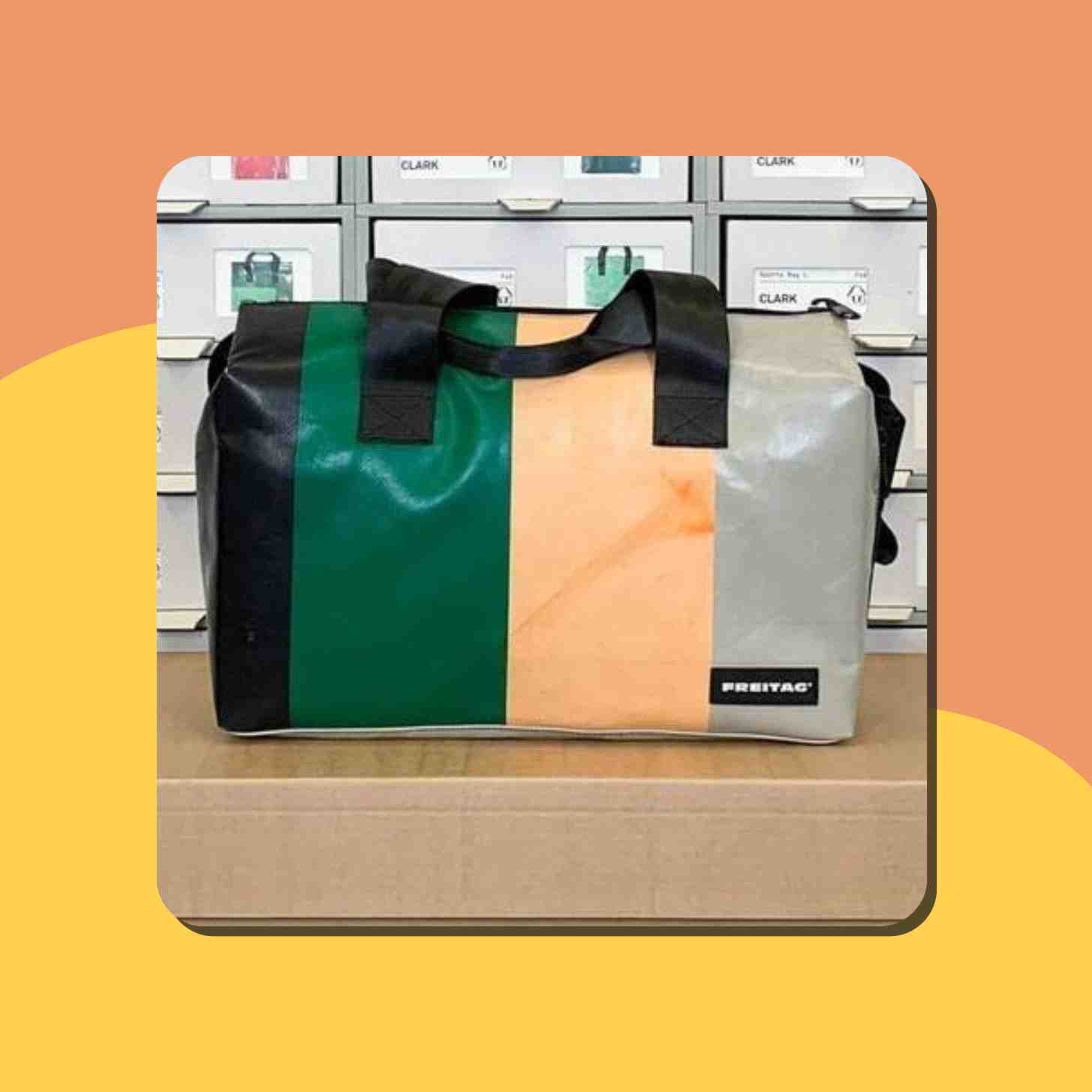
Whether it’s Cotopaxi’s use of scrap fabrics, an Etsy seller’s recycled windsurfer sails, or Freitag’s upcycling of old truck tarps, there’s a unique and stylish way to carry everything they might need.
What’s good:
- Uses existing materials instead of new ones
Shop: Cotopaxi | Etsy | Freitag | Patagonia
West Paw Toppl Dog Toy

For the person whose dog is their whole world, get a sustainable pet product they’ll both love!
This Toppl Treat Toy by West Paw is a crowd pleaser for a reason.
What’s good:
- Made with a durable “Zogoflex” material that can be infinitely recycled
- West Paw’s “Join the Loop” recycling program keeps old toys from going into the landfill
Shop: Amazon | Chewy | West Paw
→ Check out more gifts for animal lovers and eco-friendly dog products
Activist Skincare Travel Kit
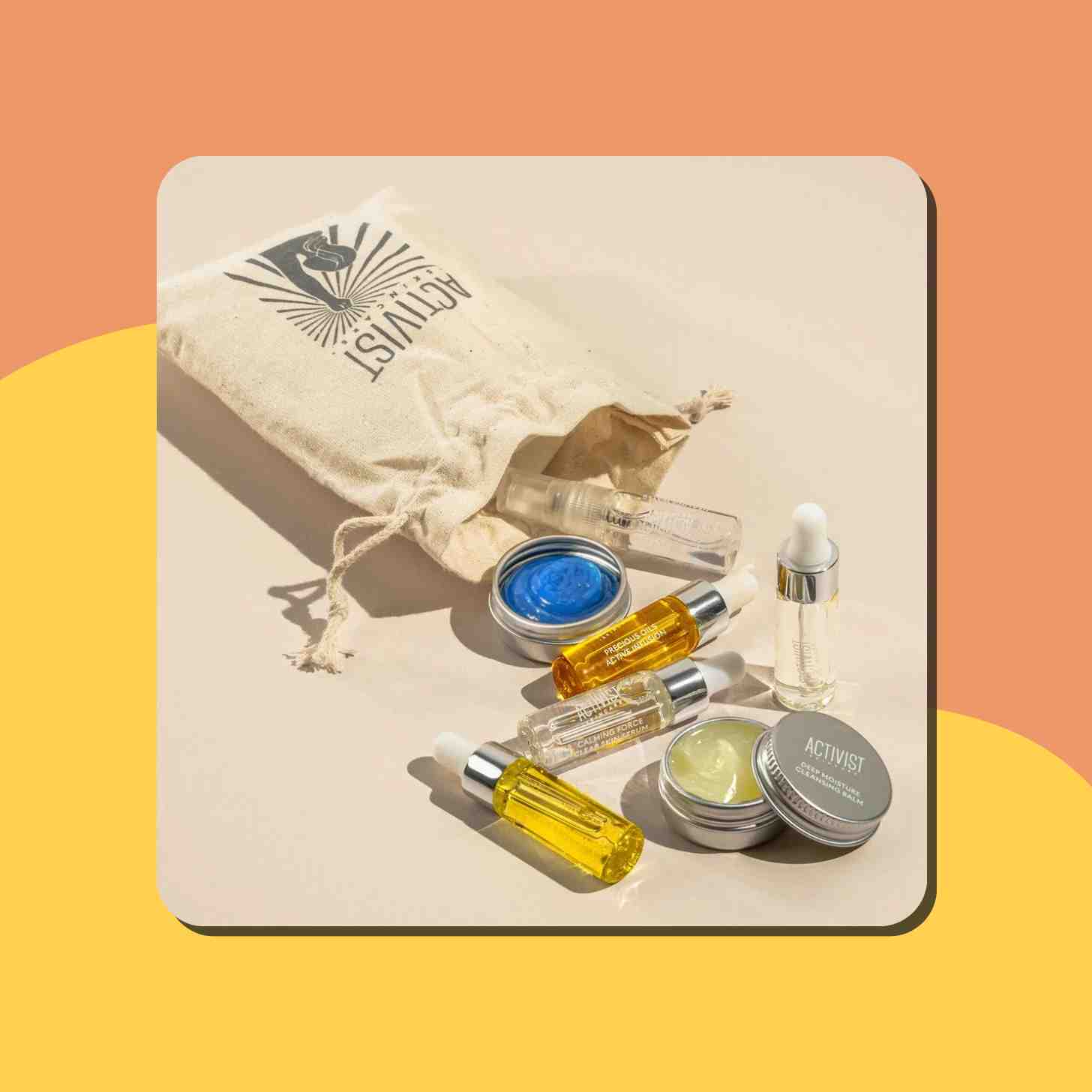
This skincare starter kit comes with three cleansers, one toner, two serums, and one oil to get them started on their natural skincare routine.
What’s good:
- All products are 100% vegan and cruelty free
- Activist Skincare donates 5% of its revenue to environmental organizations
Shop: Activist Skincare | Earth Hero
Trashie Take-Back Bag
The Take Back Bag can be filled with old clothes your gift recipient no longer wears, and Trashie will do the work of recycling their pre-loved items and turning them into something useful.
Plus, purchasing a bag will give you credits to use toward a new sustainable clothing item or other reward.
What’s good:
- Keeps old clothes out of landfills
- Contributes to a circular economy
Shop: Trashie
Stainless Steel Razor
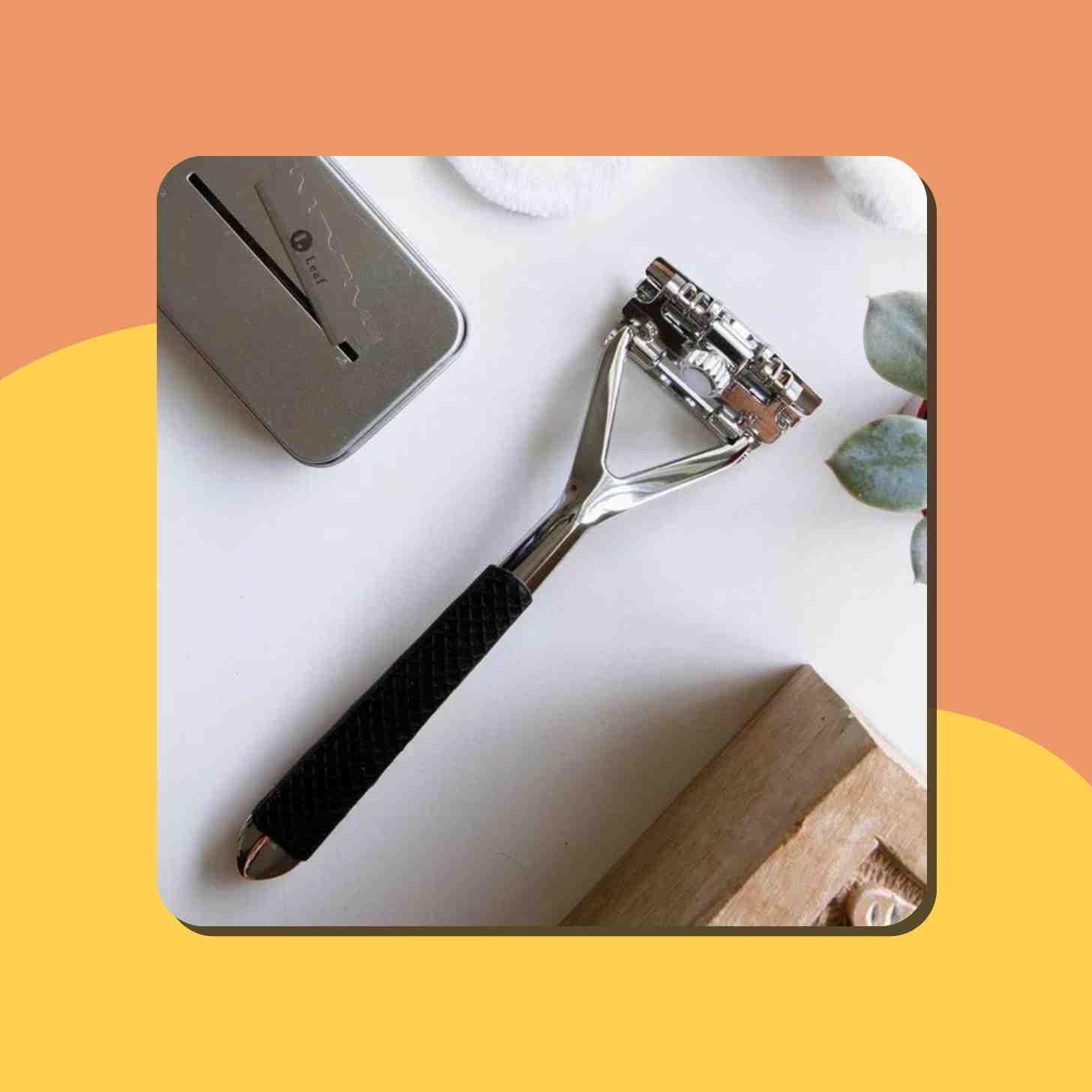
Say goodbye to plastic razors. Leaf razors are made with stainless steel and are made to last — and provide a clean and easy shave without all the disposable waste.
What’s good:
- Reduces plastic waste
- Lowers risk of skin irritation
Shop: Amazon | Earth Hero | Leaf Shave
Personalized Recycled Paper Stationery
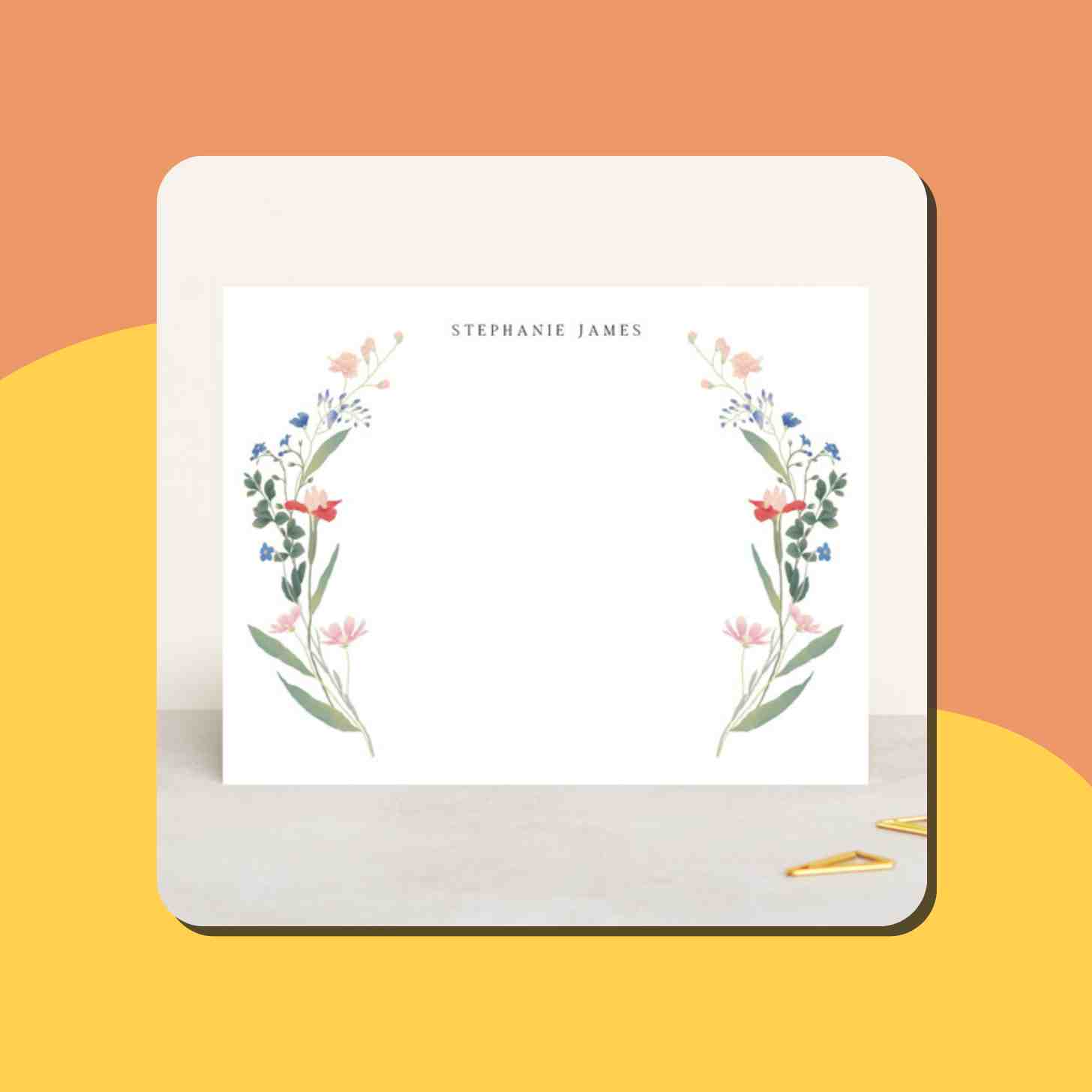
Is there anything that feels more luxurious than writing a sweet note or a helpful memo on a fancy piece of paper? Of course not!
Stationery made with recycled paper undergoes audits and certifications from the Forest Stewardship Council to make sure it’s good for the planet — and your desk.
What’s good:
- FSC-certified recycled paper
- Items made-to-order to reduce waste
- Recyclable packaging
→ Check out more eco-friendly stationery recommendations!
The Goodnewspaper
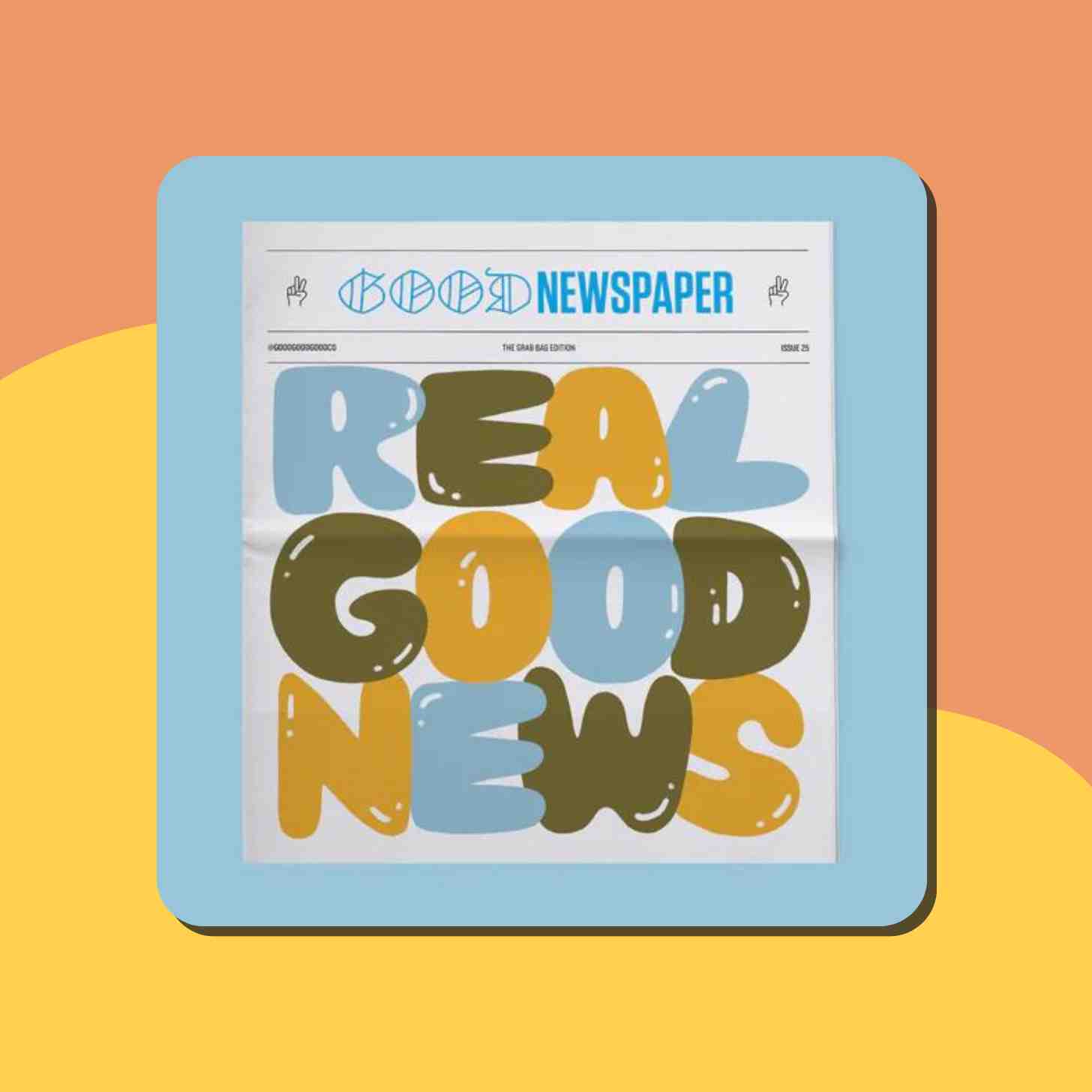
Every month, our team of optimists, journalists, and artists makes a beautiful print newspaper filled with good news.
We offer gift subscriptions for three, six, or 12 months — and we also recommend just picking up a subscription for yourself.
What’s good:
- Printed on recycled paper using soy-based inks
- Climate Neutral Certified
- Gives back to environmental nonprofits with 1% for the Planet
Shop: Good Good Good
Sea Glass Necklace
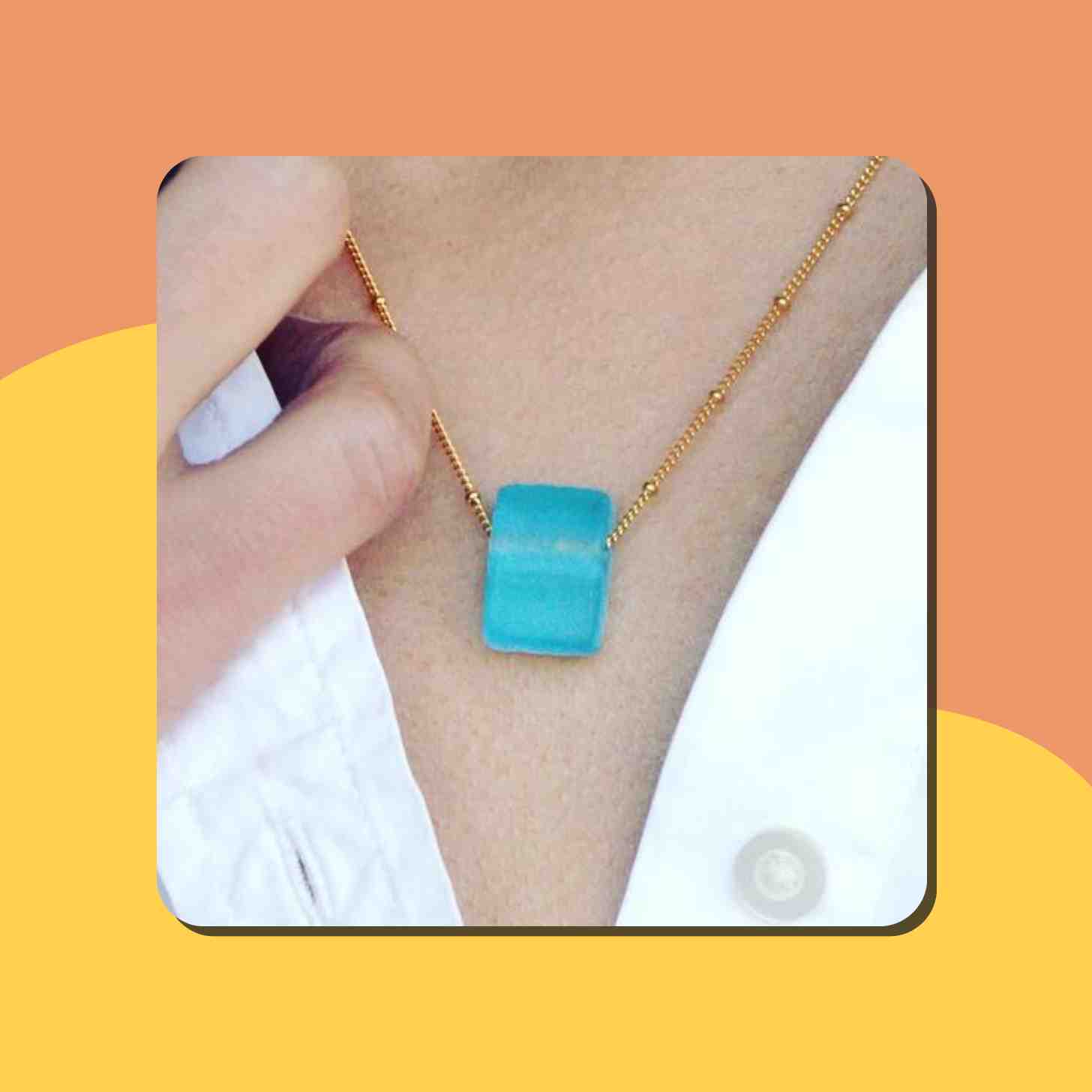
Handmade with upcycled beach treasures (or, uh, beach trash), a sea glass necklace is a special, sustainable accessory for anyone who loves this blue planet.
What’s good:
- Made with recycled and unique materials
- Inspires a deeper connection with nature
Shop: Etsy | Uncommon Goods
If you’re looking for more sustainable choices for gift shopping, you might also like:
After a seven-year hiatus, the “Planet Earth” nature documentary series just premiered its much-anticipated third installment.
In “Planet Earth 3” — also stylized as “Planet Earth III” — British broadcaster Sir David Attenborough returns to narrate wildlife scenes around the world from butterfly migrations to harrowing shark hunts.
You can click here to view a trailer for “Planet Earth 3” and catch a glimpse of sweeping glacial views, timelapses, and never-before-seen animal footage.
“Once again, we journey across our magnificent planet to meet the astonishing animals that live here and reveal their extraordinary stories,” Attenborough teases in the trailer.
Where to stream “Planet Earth 3”
“Planet Earth 3” began airing live on the BBC America channel on November 4th. For those with a cable subscription, the series will continue airing weekly on BBC America every Saturday at 8pm ET. “Planet Earth 3” is set to air for eight episodes and wrap its finale on December 10th.
To stream “Planet Earth 3” online, you can watch the series through AMC+, which is currently offering a 7-day free trial.
The series is also accessible through BBC America online with a 5-day free trial through DirecTV Stream subscription.
If you want to go back and watch the entire nature docuseries, “Planet Earth” (2006) and “Planet Earth II” (2016) are currently available to stream on Amazon Prime, Max, and Discovery Plus.
Header images courtesy of: BBC Studios/Rémi Emeriau; Sean Crane/Minden/naturepl.com; Barrie Britton
Yosemite National Park, known for its gorgeous granite cliffs, waterfalls, and giant sequoia trees, is also home to a number of communities who love to care for natural spaces.
There is perhaps no greater example than the annual Yosemite Facelift, a yearly trash clean-up that takes place on National Public Lands Day.
This year, for the event’s 20th anniversary, approximately 1,500 volunteers gathered in Yosemite and the Stanislaus National Forest to pick up 10,432 pounds of trash.
Volunteers clocked in at 12,138 hours of work throughout the event, and the event served as an excellent reminder to park guests to pack it in and out.
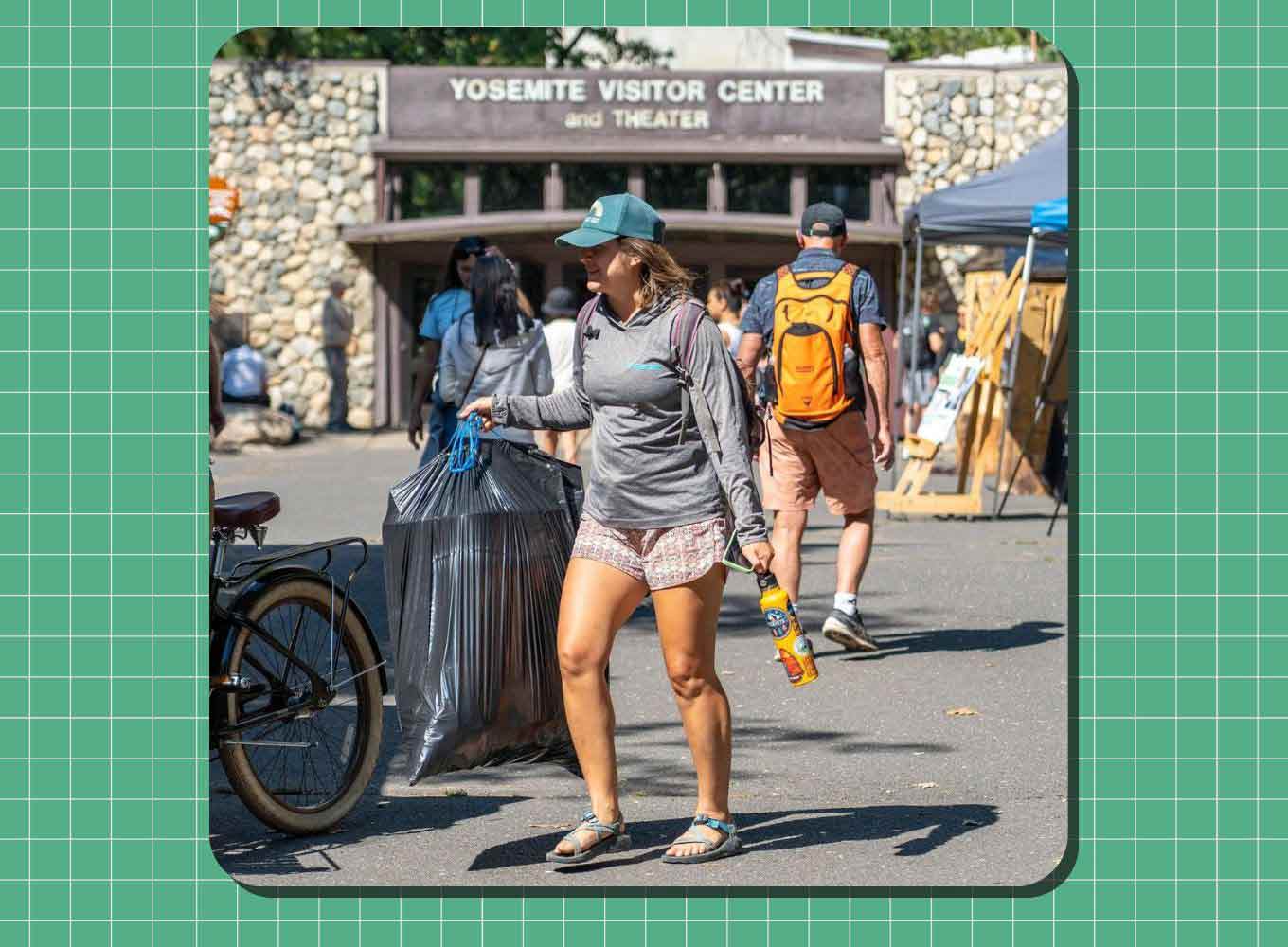
The Yosemite Facelift event is hosted by the Yosemite Climbing Association, which was started over 20 years ago by Ken Yager, a Yosemite climber and guide who wanted to do something about the litter problem in his beloved park.
Now, the week-long event has expanded into 20 additional locations throughout America and celebrates the cleaning up of over a million pounds of Yosemite trash in the last two decades.
YCA works with the National Park Service and its climbing rangers and stewards to coordinate the event and ensure volunteer safety.
Organizers also had the hospitality sector on their side. The Yosemite Rush Creek Lodge & Spa partnered with YCA to offer a 10% discount on lodging for guests during Yosemite Facelift.
Along with this, the Spa offered an exclusive “thank you,” providing lodge guests a free spa treatment (a magnesium foot soak) after contributing to the cleanup efforts.
“We’re honored to partner with the Yosemite Climbing Association to bring stewardship and volunteerism to our favorite local areas,” Rush Creek shared on its website.
“We hope to welcome you to Yosemite to enjoy some fresh air and warm hospitality while doing something good for our beautiful park.”
This kind of incentive seemed to increase participation for the event, as well, and led to a historic milestone in the park’s zero waste ambitions.
“Through our efforts and coordination with our partners at Yosemite Conservancy and Yosemite Hospitality, we succeeded [in] our goal of becoming the first Zero Landfill event in Yosemite National Park, with a total of 91.12% diversion rate!” the YCA shared on its website, following this year’s event.
Other special projects were also hosted during the National Public Lands Day celebration, including collections for Yosemite’s seed banking program, the installation of campground food lockers, maintenance of designative climbing trails, and planting of native grasses in the park’s meadows.
“National parks belong to people, and it doesn’t truly feel like your park until you go out and take care of it. That’s the magic of Yosemite Facelift,” Yager told Yosemite Conservancy.
“I believed that by involving everyone – all park visitors and park partners — this event offers a platform to collectively do something great for Yosemite, making it a place where we all play an active part in its preservation.”
Header images courtesy of the Yosemite Climbing Association
One person can make a world of difference. Tim Wong, a senior biologist at the California Academy of Sciences, single-handedly brought a struggling butterfly species back to his home city of San Francisco.
“I became aware of the California Pipevine swallowtail — which is native here to San Francisco — a couple years ago,” Wong said in an interview with The Weather Channel this past summer. “I was looking into trying to create a pollinator habitat in my own backyard and I found that there were some native butterflies that needed a little extra help.”
Although the California pipevine butterfly was still common near the coast and in the Sierra foothills, they had all but disappeared from San Francisco. In the city, the species’ host plant — the California Pipevine — was extremely sparse.
“What I learned is that a lot of our native butterflies have really tight relationships with native plants and some types of butterflies may only feed on one native plant,” Wong told meteorologists Stephanie Abrams and Jordan Steele.
Fortunately, Wong was able to find the plant in the San Francisco Botanical Garden in Golden Gate Park and was allowed to take home a few clippings of the plant.
"[I built] a large screen enclosure to protect the butterflies and to allow them to mate under outdoor environmental conditions — natural sun, airflow, temp fluctuations," Wong told Vox.
Once his butterfly garden was complete, Wong traveled outside of the city to carefully source 20 California Pipevine swallowtail caterpillars.
"They feed as a little army," Wong explained to Vox. "They roam around the Pipevine plant from leaf to leaf, munching on it as a group."
After three to four weeks, the caterpillars began pupating and forming a chrysalis. Some remained in a chrysalis for weeks, others for years. Once they hatched, Wong continued caring for them as they laid eggs on the Pipevine plants and raised new caterpillars in the same habitat.
"From there," Wong said, "the cycle continues."
Wong appreciates the spotlight on his favorite butterflies, but he reminded Vox that conservation efforts can start anywhere.
"Improving habitat for native fauna is something anyone can do," Wong said. "Conservation and stewardship can start in your very own backyard."
Header images courtesy of Tim Wong