
President Joe Biden is prioritizing mental health initiatives through The Unity Agenda.
First discussed in his 2022 State of the Union address, the Unity Agenda confronts a number of topics — including cancer research and the opioid epidemic — and includes three objectives related to supporting mental health.
These objectives are: creating healthy environments, strengthening system capacity, and connecting more Americans to care.
Building on the Unity Agenda, the Biden-Harris administration recently announced $206 million in grants dedicated to supporting youth mental health and community-based behavioral health care and treatment.
This investment comes through collaborations with the U.S. Department of Health and Human Services, the Substance Abuse and Mental Health Services Administration, the Health Resources and Services Administration, and the Administration for Children and Families.
So what will this funding do?
“Combined, these awards will help expand access to mental health services for students in schools, bolster the behavioral health workforce, and improve access to mental health prevention and treatment for children and youth in communities across the country,” an HHS press release states.
This will all be accomplished through the following investments across multiple government agencies:
- Develop infrastructure to promote the mental health of youth in Native American communities
- Build school-based, trauma-informed support services
- Improve life trajectories for youth with serious mental disorders
- Expand substance abuse treatment capacity in adult and family treatment drug courts
- Increase training and education to prevent youth overdose
- Expand family counseling and support for LGBTQ+ youth and families
- Increase funding to 77 HRSA-funded health centers
- Supply 25 states and territories with the resources to train pediatricians and mental health care
- Provide funds to 23 organizations to train more behavioral health providers who serve children, adolescents, and young adults in underserved and rural areas
- Create the first National Center to Support Mental Health Services in the Child Welfare System
“The Biden-Harris Administration is deeply committed to tackling the mental health crisis facing America, particularly among our young people. Expanding mental health care services to ensure that everyone who needs help can access care when and where they seek it is a key element of President Biden’s Unity Agenda,” HHS Secretary, Xavier Becerra, said in a press release.
“We are transforming mental health and substance use treatment across the country by providing equitable access to services for all Americans. These tools and resources will help families struggling to meet the mental health care needs of their children.”
Among these key investments are large sums dedicated to mental health in schools and in communities that have long been underserved by the healthcare system.
The funds given to schools are made possible by the Bipartisan Safer Communities Act, which President Biden signed into law in June of 2022, that will invest over $1 billion over the course of five years to improve and expand school-based mental health programs.
Part of this most recent $206 million investment in youth mental health includes establishing a national Mental Health Evaluation, Training, Research, and Innovation Center for Schools (METRICS) to increase support and offer new resources for schools nationwide.
The new METRICS Center will double the number of mental health providers in schools and distribute resources to states, districts, and schools nationwide to implement social, emotional, and mental health learning.
“The youth mental health crisis continues to be among the top concerns raised to me by the students, parents, families, educators, and school leaders I've visited in 43 states across America,” U.S. Secretary of Education Miguel Cardona said in a press release.
“We are making unprecedented investments in mental health that will help states, districts, and schools raise the bar for students’ overall well-being and academic recovery.”
By investing in underserved demographics — like LGBTQ+ families, Native and Indigenous communities, youth impacted by the child welfare system, and low-income families — these funds will support young people across the country as they address mental health and substance use challenges.
“These awards reflect the extraordinary commitment of the Biden-Harris Administration to addressing youth mental health,” Deputy Secretary Andrea Palm said in a statement. “The tools and resources that we are providing will help children who are struggling by meeting them and their families where they are, and ensuring there is no wrong door to behavioral health care.”
Inner peace isn’t just a state of mind but a genuine key for a meaningful life.
It’s the mental and emotional stillness that comes with understanding yourself, even amid the chaos and stress of the outside world. This inner calm enables us to navigate life’s complexities with clarity and courage — fostering resilience and empathy along the way.
At Good Good Good, our mission is to help people feel more hopeful and do more good. In our work sharing positive news, we’ve found that it’s impossible to feel hopeful simply by ignoring the bad in the world. You have to fully feel the heartbreak to be able to feel a sense of genuine hope and relief.
Similarly, finding inner peace isn’t about avoiding challenges — but rather, facing them head-on with a calm mind and a resilient spirit.
When we are at peace internally, our actions reflect this tranquility — influencing our relationships, work, and even our contributions to global peace and well-being.
Throughout history, spiritual leaders, philosophers, and trailblazers from diverse walks of life have shed light on the path to inner peace.
Their words serve as both comfort and a call-to-action — nudging us toward a deeper understanding of ourselves and the world.
We’ve curated some of the most profound quotes about inner peace to guide you in your own journey toward finding it.
Whether you’re struggling with life’s ups and downs or are seeking to fill the world with a bit more peace — may these quotes offer timeless wisdom that can help bring serenity to your soul.
You might also like: Good Good Good’s Guide To Quotes About World Peace
The Best Peace Quotes
Famous Quotes
“Peace is not merely a distant goal that we seek, but a means by which we arrive at that goal.”
— Martin Luther King Jr.
“Peace begins with a smile.”
— Mother Teresa
“You find peace not by rearranging the circumstances of your life, but by realizing who you are at the deepest level.”
— Eckhart Tolle
“Better than a thousand hollow words is one word that brings peace.”
— Buddha
“There are two ways of spreading light: to be the candle or the mirror that reflects it.”
— Edith Wharton
“Peace is the opposite of dreaming. It’s built slowly and surely through brutal compromises and tiny victories that you don’t even see. It’s a messy business, bringing peace into the world.”
— Bono
“Do your little bit of good where you are; it’s those little bits of good put together that overwhelm the world.”
— Desmond Tutu
“I still believe that peace and plenty and happiness can be worked out some way. I am a fool.”
— Kurt Vonnegut
“There is peace even in the storm.”
— Vincent van Gogh
“Imagine all the people living life in peace. You may say that I’m a dreamer, but I’m not the only one. I hope someday you’ll join us and the world will be as one.”
— John Lennon, Imagine
“Courage is the price that life exacts for granting peace.”
— Amelia Earhart
“You cannot find peace by avoiding life.”
— Michael Cunningham, The Hours
Inner Peace Quotes
“Nobody can bring you peace but yourself.”
— Ralph Waldo Emerson
“World peace must develop from inner peace. Peace is not just mere absence of violence. Peace is, I think, the manifestation of human compassion.”
— The Dalai Lama
“A quiet conscience makes one strong!”
— Anne Frank, The Diary of a Young Girl
“Not one of us can rest, be happy, be at home, be at peace with ourselves, until we end hatred and division.”
— John Lewis
“You should feel beautiful and you should feel safe. What you surround yourself with should bring you peace of mind and peace of spirit.”
— Stacy London
“Don’t search for anything except peace. Try to calm the mind. Everything else will come on its own.”
— Baba Hari Das
“Peace of mind for five minutes, that’s what I crave.”
— Alanis Morissette
“Do not let the behavior of others destroy your inner peace.”
— The Dalai Lama
“I took a deep breath and listened to the old bray of my heart. I am. I am. I am.”
— Sylvia Plath
“If you are depressed you are living in the past if you are anxious you are living in the future, if you are at peace, you are living in the present.”
— Lao Tzu
Short Peace Quotes
“Every breath we take, every step we make, can be filled with peace, joy and serenity.”
— Thich Nhat Hanh
“Peace is the only battle worth waging.”
— Albert Camus
“The more we sweat in peace, the less we bleed in war.”
— Vijaya Lakshmi Pandit
“That’s all nonviolence is — organized love.”
— Joan Baez
“Peace cannot be kept by force. It can only be achieved by understanding.”
— Albert Einstein
“Peace is liberty in tranquility.”
— Marcus Tullius Cicero
“Run to the rescue with love, and peace will follow.”
— River Phoenix
“Whatever peace I know rests in the natural world, in feeling myself a part of it, even in a small way.”
— May Sarton
“When the power of love overcomes the love of power the world will know peace.”
— Jimi Hendrix
“An eye for an eye only ends up making the whole world blind.”
— Mahatma Gandhi
“Peace is our gift to each other.”
— Elie Wiesel
“We shall find peace. We shall hear angels, we shall see the sky sparkling with diamonds.”
— Anton Pavlovich Chekhov
More Quotes & Captions About Peace & Serenity
“If there is righteousness in the heart, there will be beauty in the character. If there is beauty in the character, there will be harmony in the home. If there is harmony in the home, there will be order in the nations. When there is order in the nations, there will peace in the world.”
— Confucius
“Until we have the courage to recognize cruelty for what it is — whether its victim is human or animal — we cannot expect things to be much better in this world… We cannot have peace among men whose hearts delight in killing any living creature.”
— Rachel Carson
“We can’t just hope for a brighter day, we have to work for a brighter day. Love too often gets buried in a world of hurt and fear. And we have to work to dig it out so we can share it with our family, our friends, and our neighbors.”
— Dolly Parton
“Small acts, when multiplied by millions of people, can quietly become a power no government can suppress, a power than can transform the world.”
— Howard Zinn
“If you don’t know the guy on the other side of the world, love him anyway because he’s just like you. He has the same dreams, the same hopes and fears. It’s one world, pal. We’re all neighbors.”
— Frank Sinatra
“I believe we are here on the planet Earth to live, grow up and do what we can to make this world a better place for all people to enjoy freedom.”
— Rosa Parks
“The Art of Peace functions everywhere on earth, in realms ranging from the vastness of space down to the tiniest plants and animals. The life force is all-pervasive and its strength boundless. The Art of Peace allows us to perceive and tap into that tremendous reserve of universal energy.”
— Morihei Ueshiba
“Peace cannot exist without justice, justice cannot exist without fairness, fairness cannot exist without development, development cannot exist without democracy, democracy cannot exist without respect for the identity and worth of cultures and peoples.”
— Rigoberta Menchu, Nobel Peace Prize laureate
“Peace comes from being able to contribute the best that we have, and all that we are, toward creating a world that supports everyone. But it is also securing the space for others to contribute the best that they have and all that they are.”
— Hafsat Abiola
“We who in engage in nonviolent direct action are not the creators of tension. We merely bring to the surface the hidden tension that is already alive.”
— Martin Luther King Jr.
“Dogs are our link to paradise. They don’t know evil or jealousy or discontent. To sit with a dog on a hillside on a glorious afternoon is to be back in Eden, where doing nothing was not boring — it was peace.”
— Milan Kundera, Unbearable Lightness of Being
“Don’t wait for a better world. Start now to create a world of harmony and peace. It is up to you, and it always has been. You may even find the solution at the end of your fork.”
— Sharon Gannon
“Peace is not something you wish for, it is something you make, something you are, something you do and something you give away.”
— Robert Fulghum
“Every person needs to take one day away. A day in which one consciously separates the past from the future. Jobs, family, employers, and friends can exist one day without any one of us, and if our egos permit us to confess, they could exist eternally in our absence. Each person deserves a day away in which no problems are confronted, no solutions searched for. Each of us needs to withdraw from the cares which will not withdraw from us.”
— Maya Angelou, Wouldn’t Take Nothing for My Journey Now
“We are either going to have a future where women lead the way to make peace with the Earth or we are not going to have a human future at all.”
— Vandana Shiva
“If people want to protest, to get out there and express themselves, as long as they do it peacefully, they should be encouraged to do so.”
— Keith Ellison
“Peace is always beautiful.”
— Walt Whitman, Leaves of Grass
You might also like: Quotes About Self Care | Quotes About Mental Health
Acclaimed writer, producer, and director Ava DuVernay is best known for her titles “Selma,” “13th,” “When They See Us,” and “A Wrinkle In Time.”
But along with her new movie, “Origin,” which debuts in December 2023, she wants to share the gift of education with teens across the country.
“Origin” is inspired by the best-selling nonfiction book by Isabel Wilkerson, “Caste: The Origins of Our Discontents.”
While “Caste” is a nonfiction read that ties together Wilkinson’s theory about a powerful caste system in the United States, similar to those of India and Nazi Germany, DuVernay’s film is a narrative film.
It features actors Aunjanue Ellis, Jon Bernthal, Vera Farmiga, Audra McDonald, Niecy Nash-Betts, Nick Offerman, and Blair Underwood. (Some of whom can be spotted in the film’s teaser trailer).
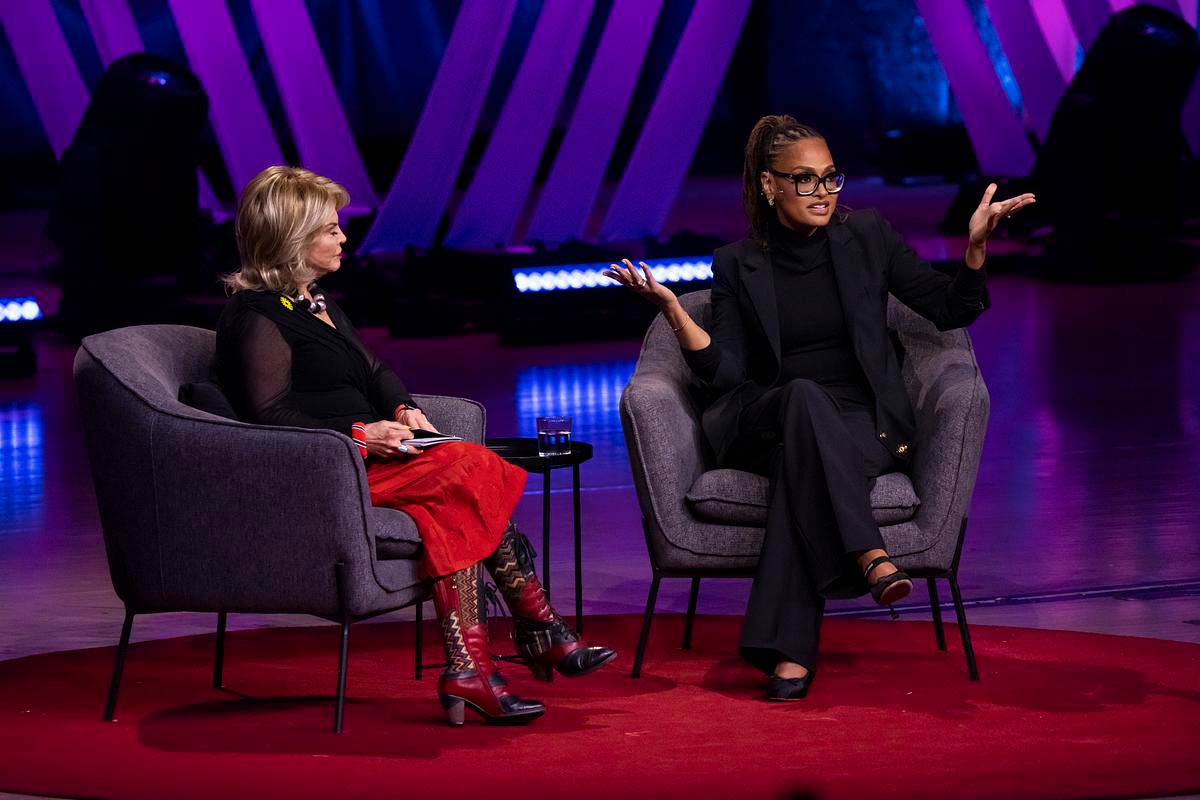
DuVernay appeared at TEDWomen in Atlanta, Georgia on Wednesday to discuss the film — which recently stunned audiences at Venice Film Festival.
In conversation with TED host Pat Mitchell, DuVernay shared what she finds most important about the film.
“The book really grabbed me… I read it three times and I started to feel really connected to some of the stories and some of the characters the author uses to bring us into this idea she has; this thesis that so much of our oppression is linked,” DuVernay said.
“And if we embrace some of the commonalities of our challenges, that there was a way forward. A blueprint to combat some of our social ills.”
Wilkerson’s life and work became the impetus for the film, DuVernay said, and Aunjanue Ellis plays the author in the movie, traveling to three continents throughout production.
“People told me this was an unadaptable book, so the only logical thing to do is try to adapt it,” she joked on stage at TED.
16-year-olds in America can access free tickets to see DuVernay’s new film ‘Origin’
This body of work, she said, was so important that she felt it necessary to make sure this film is accessible to young people across the country.
So she launched Seat16.com, a website where anyone can visit and donate $16 to gift a ticket and a digital learning companion to teens in the United States.
“Starting this December, we want to share ‘Origin’ with 10,000 young people,” the website states. “Let’s help them change the world.”
In the face of ongoing book bans and concerning regulations limiting meaningful curriculum about the U.S. history of slavery and systemic racism, “Origin” is not only a narrative film; DuVernay sees it as an important addition to any young American’s syllabus.
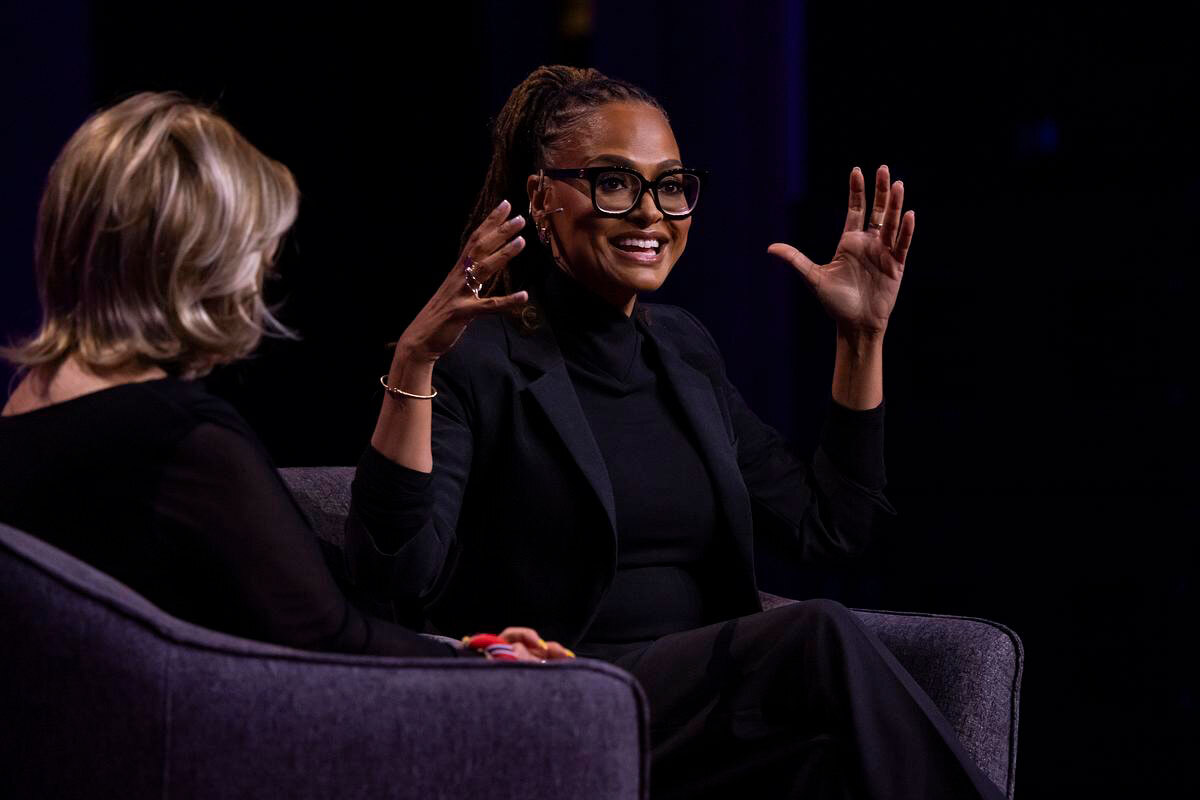
“I need to make sure it [the film] gets to the audience, that it reaches folks, that it’s understood, that it’s interrogated, that it’s shared,” she said on the TED stage. “So, I have this crazy idea that I want every 16-year-old in the country to see the film for free, if they want.”
She reminds the quickly-impressed audience that there are 4 million 16-year-olds in the country right now, but she still wants to reach as many as she can, with a starting goal of 10,000 (or $160,000 in donations).
“The idea that, at that age, you’re starting to interrogate your place in the world, and what the world means to you, and how you fit in, it’s such a tender age, especially at this time, that young people be able to autonomous in what they learn,” DuVernay said.
“That they’re not told what they can’t learn. That they’re able to read what they want to read, see what they want to see. So, that’s our little solution.”
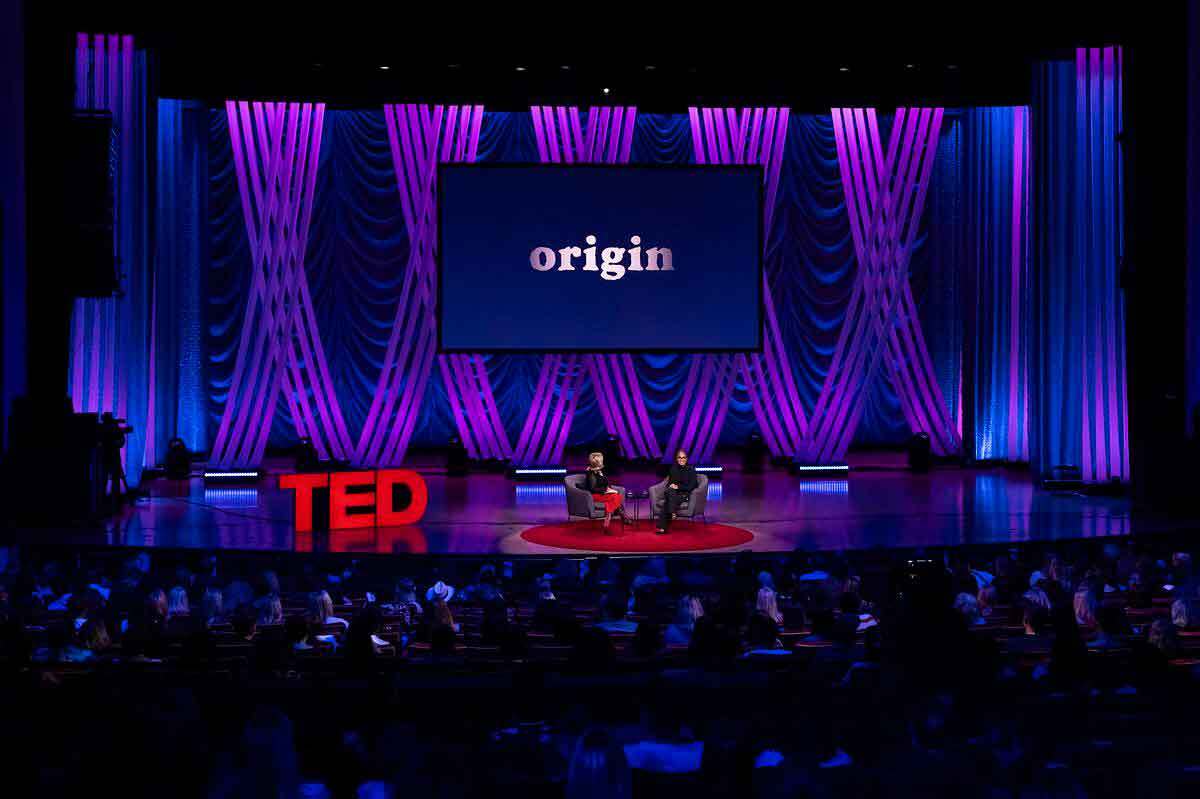
The ticket donations go into a fund through DuVernay’s Array Alliance, Inc. and when the film comes out, tickets will be distributed to young people.
“I want people to enter into the film with an open heart and mind. I’ve seen when people do that — with this work, for whatever reason — good things happen.”
Header image: Ava DuVernay speaks at SESSION 1 at TEDWomen 2023: Two Steps Forward. October 11-13, 2023, Atlanta, GA. Photo: Jasmina Tomic / TED
Books and reading are more than just hobbies — they’re gateways to other worlds, a form of travel while staying in place, and a catalyst for personal and social transformation.
They inspire our imaginations, broaden our horizons, and offer us perspectives we might never encounter otherwise. (And as Arthur taught us, having fun isn’t hard when you’ve got a library card.)
Books are tools for change. They’ve sparked revolutions, preserved cultures, and even helped topple oppressive regimes.
But beyond their societal impact, books also provide personal growth and comfort. From classic literature to modern non-fiction, every page holds the potential for new knowledge and insight.
Prominent figures and authors have spoken on the impact reading has had on their lives, shaping them into the changemakers they are today.
In this article, we’ve gathered some of the most empowering quotes about books and reading.
These quotes encapsulate the joy, the education, and the transformative power that comes with being lost in a good book.
Whether you’re an avid reader seeking affirmation or someone looking to cultivate a reading habit, these quotes are sure to resonate with you and perhaps inspire you to open that book you’ve been meaning to read.
Dive in and be reminded of the incredible value of a well-written word:
You might also like: Quotes About Banned Books | Good Good Good Book Recommendations | Book Holidays & Months Calendar
The Best Quotes About Books & Reading
Famous Quotes
“One glance at a book and you hear the voice of another person, perhaps someone dead for 1,000 years. To read is to voyage through time.”
— Carl Sagan

“Let us remember: One book, one pen, one child, and one teacher can change the world.”
— Malala Yousafzai

“I declare after all there is no enjoyment like reading! How much sooner one tires of anything than of a book! When I have a house of my own, I shall be miserable if I have not an excellent library.”
— Jane Austen, Pride and Prejudice

“A book is a garden, an orchard, a storehouse, a party, a company by the way, a counselor, a multitude of counselors.”
— Charles Baudelaire

“That is part of the beauty of all literature. You discover that your longings are universal longings, that you’re not lonely and isolated from anyone. You belong.”
— F. Scott Fitzgerald

“Books are a uniquely portable magic.”
— Stephen King, On Writing: A Memoir of the Craft

“Lock up your libraries if you like; but there is no gate, no lock, no bolt that you can set upon the freedom of my mind.”
— Virginia Woolf, A Room of One’s Own

“When I look back, I am so impressed again with the life-giving power of literature. If I were a young person today, trying to gain a sense of myself in the world, I would do that again by reading, just as I did when I was young.”
— Maya Angelou

“The magic is only in what books say, how they stitched the patches of the universe together into one garment for us.”
— Ray Bradbury, Fahrenheit 451

“There is more treasure in books than in all the pirate’s loot on Treasure Island.”
— Walt Disney
“If we encounter a man of rare intellect, we should ask him what books he reads.”
— Ralph Waldo Emerson

Quotes About Books
“Great books help you understand, and they help you feel understood.”
— John Green

“That’s the thing about books. They let you travel without moving your feet.”
— Jhumpa Lahiri, The Namesake
“I can never read all the books I want; I can never be all the people I want and live all the lives I want. I can never train myself in all the skills I want. And why do I want? I want to live and feel all the shades, tones and variations of mental and physical experience possible in my life. And I am horribly limited.”
— Sylvia Plath, The Unabridged Journals of Sylvia Plath
“A great book should leave you with many experiences, and slightly exhausted at the end. You live several lives while reading.”
— William Styron
“Books are the quietest and most constant of friends; they are the most accessible and wisest of counselors, and the most patient of teachers.”
— Charles W. Eliot

“Books don’t offer real escape, but they can stop a mind scratching itself raw.”
— David Mitchell, Cloud Atlas
“I am eternally grateful for my knack of finding in great books, some of them very funny books, reason enough to feel honored to be alive, no matter what else might be going on.”
— Kurt Vonnegut, Timequake
“Books and doors are the same thing. You open them, and you go through into another world.”
— Jeanette Winterson
“I love the way that each book — any book — is its own journey. You open it, and off you go…”
— Sharon Creech
“And most of all, books. They were, in and of themselves, reasons to stay alive. Every book written is the product of a human mind in a particular state. Add all the books together and you get the end sum of humanity. Every time I read a great book I felt I was reading a kind of map, a treasure map, and the treasure I was being directed to was in actual fact myself.”
— Matt Haig, Reasons to Stay Alive
“I think books are like people, in the sense that they’ll turn up in your life when you most need them.”
— Emma Thompson
“Read the best books first, or you may not have a chance to read them at all.”
— Henry David Thoreau, A Week on the Concord and Merrimack Rivers
“Books to the ceiling, Books to the sky, My pile of books is a mile high. How I love them! How I need them! I’ll have a long beard by the time I read them.”
— Arnold Lobel

Reading Quotes
“Read books. Care about things. Get excited. Try not to be too down on yourself. Enjoy the ever-present game of knowing.”
— Hank Green
“I think reading is part of the birthright of the human being.”
— LeVar Burton
“The ability to read awoke inside of me some long dormant craving to be mentally alive.”
— Malcolm X, The Autobiography of Malcolm X
“Reading should not be presented to children as a chore, a duty. It should be offered as a gift.”
— Kate DiCamillo
“You should never read just for ‘enjoyment.’ Read to make yourself smarter! Less judgmental. More apt to understand your friends’ insane behavior, or better yet, your own. Pick ‘hard books.’ Ones you have to concentrate on while reading. And for god’s sake, don’t let me ever hear you say, ‘I can’t read fiction. I only have time for the truth.’ Fiction is the truth, fool! Ever hear of ‘literature’? That means fiction, too, stupid.”
— John Waters, Role Models
“We read books to find out who we are. What other people, real or imaginary, do and think and feel… is an essential guide to our understanding of what we ourselves are and may become.”
— Ursula K. LeGuin
“Sometimes, you read a book and it fills you with this weird evangelical zeal, and you become convinced that the shattered world will never be put back together unless and until all living humans read the book.”
— John Green, The Fault in Our Stars
“Reading makes immigrants of us all. It takes us away from home, but more important, it finds homes for us everywhere.”
— Jean Rhys
“I am reading six books at once, the only way of reading; since, as you will agree, one book is only a single unaccompanied note, and to get the full sound, one needs ten others at the same time.”
— Virginia Woolf, The Letters of Virginia Woolf: Volume Three, 1923-1928
“Maybe this is why we read, and why in moments of darkness we return to books: to find words for what we already know.”
— Alberto Manguel, A Reading Diary
“Read the books they don’t want you to. That’s where the good stuff is.”
— LeVar Burton

Inspiring Quotes About Reading
“Once you have read a book you care about, some part of it is always with you.”
— Louis L’Amour

“I read a book one day and my whole life was changed.”
— Orhan Pamuk, The New Life
“Reading is an exercise in empathy; an exercise in walking in someone else’s shoes for a while.”
— Malorie Blackman
“Reading is like thinking, like praying, like talking to a friend, like expressing your ideas, like listening to other people’s ideas, like listening to music, like looking at the view, like taking a walk on the beach.”
— Roberto Bolaño, 2666
“Reading well is one of the great pleasures that solitude can afford you.”
— Harold Bloom
“Reading is escape, and the opposite of escape; it’s a way to make contact with reality after a day of making things up, and it’s a way of making contact with someone else’s imagination after a day that’s all too real.”
— Nora Ephron
“Reading a book is like re-writing it for yourself. You bring to a novel, anything you read, all your experience of the world. You bring your history and you read it in your own terms.”
— Angela Carter
“Reading was my escape and my comfort, my consolation, my stimulant of choice: reading for the pure pleasure of it, for the beautiful stillness that surrounds you when you hear an author’s words reverberating in your head.”
— Paul Auster, The Brooklyn Follies
“To acquire the habit of reading is to construct for yourself a refuge from almost all the miseries of life.”
— W. Somerset Maugham, Books and You
“If you would tell me the heart of a man, tell me not what he reads, but what he rereads.”
— François Mauriac

Funny Quotes
“Reading one book is like eating one potato chip.”
— Diane Duane, So You Want to Be a Wizard

“Books were safer than other people anyway.”
— Neil Gaiman, The Ocean at the End of the Lane
“I am an omnivorous reader with a strangely retentive memory for trifles.”
— Arthur Conan Doyle, The Complete Sherlock Holmes
“People say that life is the thing, but I prefer reading.”
— Logan Pearsall Smith
“The problem with books is that they end.”
— Caroline Kepnes, You
“Words can be like X-rays if you use them properly — they’ll go through anything. You read and you’re pierced.”
— Aldous Huxley, Brave New World
“Never trust anyone who has not brought a book with them.”
— Lemony Snicket, Horseradish: Bitter Truths You Can’t Avoid
“Literature is the most agreeable way of ignoring life.”
— Fernando Pessoa, The Book of Disquiet.
“No entertainment is so cheap as reading, nor any pleasure so lasting.”
— Mary Wortley Montagu
“You can never get a cup of tea large enough or a book long enough to suit me.”
— C.S. Lewis
“Everything in the world exists in order to end up as a book.”
— Stéphane Mallarmé

Short Quotes About Books and Reading
“Books may well be the only true magic.”
— Alice Hoffman

“Reading is an active, imaginative act; it takes work.”
— Khaled Hosseini
“The whole world opened to me when I learned to read.”
— Mary McLeod Bethune
“Think before you speak. Read before you think.”
— Fran Lebowitz, The Fran Lebowitz Reader
“A well-read woman is a dangerous creature.”
— Lisa Kleypas, A Wallflower Christmas
“Reading brings us unknown friends”
— Honoré de Balzac

“In the end, we’ll all become stories.”
— Margaret Atwood, Moral Disorder and Other Stories
“Ah, how good it is to be among people who are reading.”
— Rainer Maria Rilke
“Children are made readers on the laps of their parents.”
— Emilie Buchwald
“If you only read the books that everyone else is reading, you can only think what everyone else is thinking.”
— Haruki Murakami, Norwegian Wood
“A good book is an event in my life.”
— Stendhal, The Red and the Black
“Some books should be tasted, some devoured, but only a few should be chewed and digested thoroughly.”
— Sir Francis Bacon
“I have always imagined that Paradise will be a kind of library.”
— Jorge Luis Borges
“The best books… are those that tell you what you know already.”
— George Orwell, 1984
“Today a reader, tomorrow a leader.”
— Margaret Fuller
“Books are mirrors: you only see in them what you already have inside you.”
— Carlos Ruiz Zafón, The Shadow of the Wind

About Reading Making You a Better Writer
“You should write because you love the shape of stories and sentences and the creation of different words on a page. Writing comes from reading, and reading is the finest teacher of how to write.”
— Annie Proulx

“Read, read, read. Read everything — trash, classics, good and bad, and see how they do it. Just like a carpenter who works as an apprentice and studies the master. Read! You’ll absorb it.
Then write. If it’s good, you’ll find out. If it’s not, throw it out of the window.”
— William Faulkner
“No tears in the writer, no tears in the reader. No surprise in the writer, no surprise in the reader.”
— Robert Frost
“Either write something worth reading or do something worth writing.”
— Benjamin Franklin

More Quotes & Captions
“There are many little ways to enlarge your child’s world. Love of books is the best of all.”
— Jacqueline Kennedy Onassis

“Salvation is certainly among the reasons I read. Reading and writing have always pulled me out of the darkest experiences in my life. Stories have given me a place in which to lose myself. They have allowed me to remember. They have allowed me to forget. They have allowed me to imagine different endings and better possible worlds.”
— Roxane Gay, Bad Feminist
“Writing and reading decrease our sense of isolation. They deepen and widen and expand our sense of life: they feed the soul… It’s like singing on a boat during a terrible storm at sea. You can’t stop the raging storm, but singing can change the hearts and spirits of the people who are together on that ship.”
— Anne Lamott, Bird by Bird
“The reason that fiction is more interesting than any other form of literature, to those who really like to study people, is that in fiction the author can really tell the truth without humiliating himself.”
— Eleanor Roosevelt
“Until I feared I would lose it, I never loved to read. One does not love breathing.”
— Harper Lee, To Kill a Mockingbird
“You think your pain and your heartbreak are unprecedented in the history of the world, but then you read. It was books that taught me that the things that tormented me most were the very things that connected me with all the people who were alive, who had ever been alive.”
— James Baldwin
“A reader lives a thousand lives before he dies, said Jojen. The man who never reads lives only one.”
— George R.R. Martin, A Dance with Dragons: A Song of Ice and Fire: Book Five
“What really knocks me out is a book that, when you’re all done reading it, you wish the author that wrote it was a terrific friend of yours and you could call him up on the phone whenever you felt like it. That doesn’t happen much, though.”
— J.D. Salinger, The Catcher in the Rye
“The reading of all good books is like conversation with the finest people of the past centuries.”
— Descartes

“Man reading should be man intensely alive. The book should be a ball of light in one’s hand.”
— Ezra Pound
“Reading is my favourite occupation, when I have leisure for it and books to read.”
— Anne Brontë, Agnes Grey
“The more that you read, the more things you will know. The more that you learn, the more places you’ll go.”
— Dr. Seuss, I Can Read With My Eyes Shut!

You might also like: Calendar of Book Holidays | Calendar of Library Celebrations | Quotes About Banned Books
After her best friend was murdered in the Democratic Republic of Congo in 1998, Christine Schuler Deschryver dedicated her life to ending violence in her region and empowering the women of Congo.
Deschryver is the co-founder and director of City of Joy which is both a leadership center and sanctuary for women in war-torn Congo. Its mission was captured in the 2018 documentary “City of Joy” (currently available to stream on Netflix).
At TEDWomen in Atlanta this week, Deschryver gave a TED Talk on the ways City of Joy transforms “pain into power” and helps Congolese women take leadership positions throughout the country.
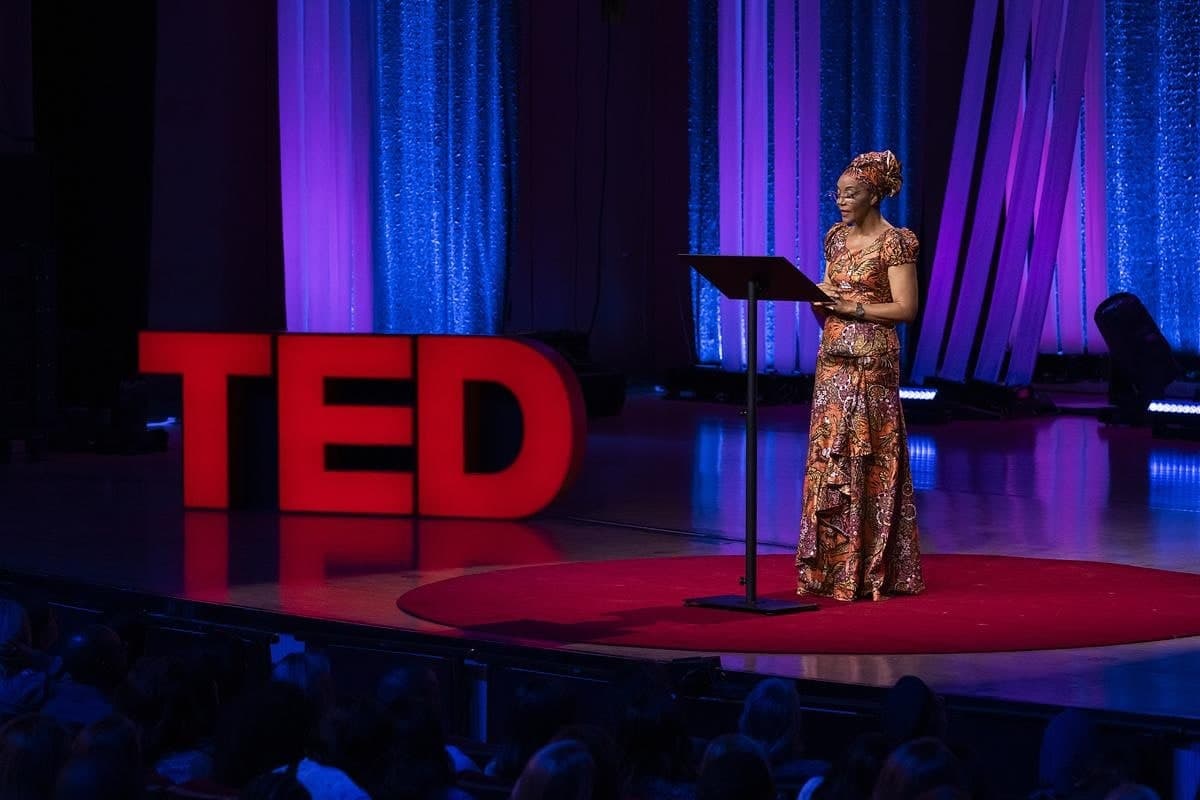
“City of Joy is a physical place, but it is also a desire, a vision, a metaphor for turning pain into power,” Deschryver said in her Talk. “And by power, we mean care, compassion, community.”
How City of Joy Supports Survivors of Sexual Violence
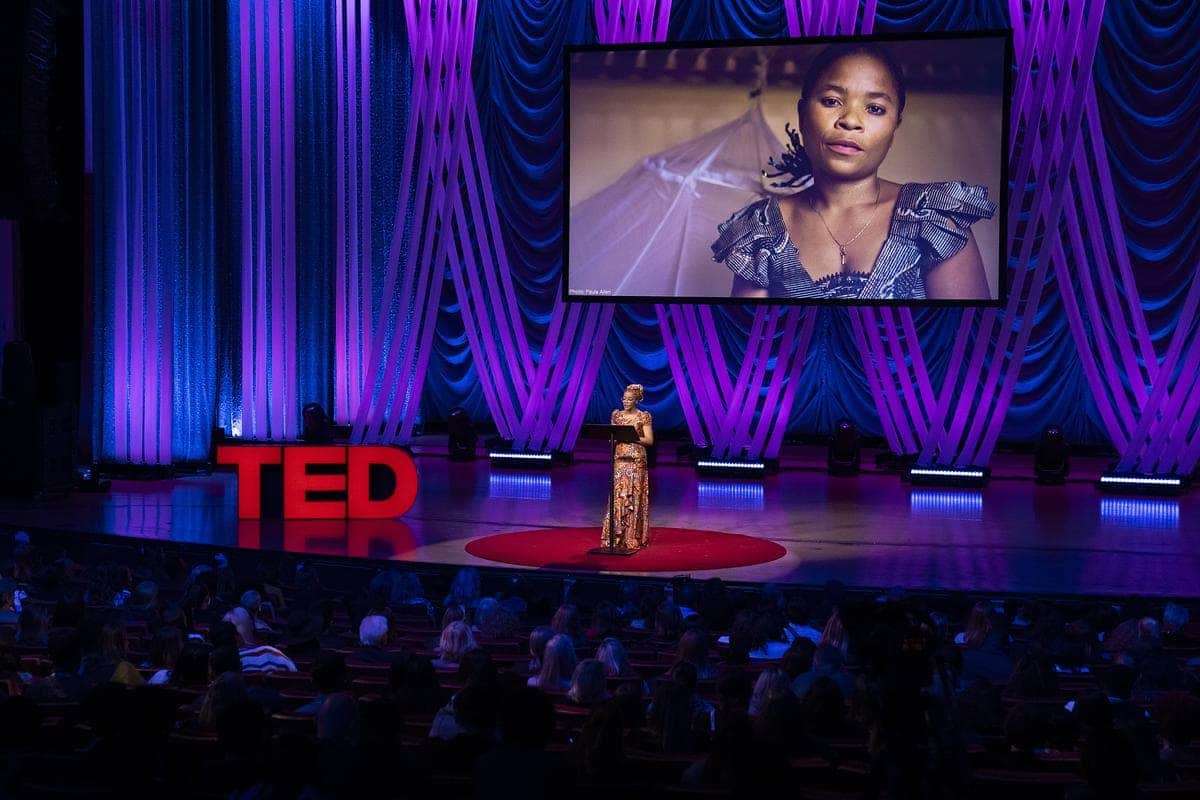
City of Joy is located in Bukavu in the Eastern Democratic Republic of Congo. Since it opened in 2011, the center has served 90 women at a time – from ages 18 to 30 – for six-month spans. 1,987 Women from the program have gone on to become restaurant owners, farmers, educators, entrepreneurs and more.
Deschryver said that she opened City of Joy in the most “impoverished, impossible place in the world” and succeeded against all odds.
“This may look like a miracle but it is based on a set of hard-earned guiding principles,” said Deschryver. “I share them with you in the hope that they may inspire you.”
City of Joy’s Guiding Principles:
1. “Rebirth is possible.”
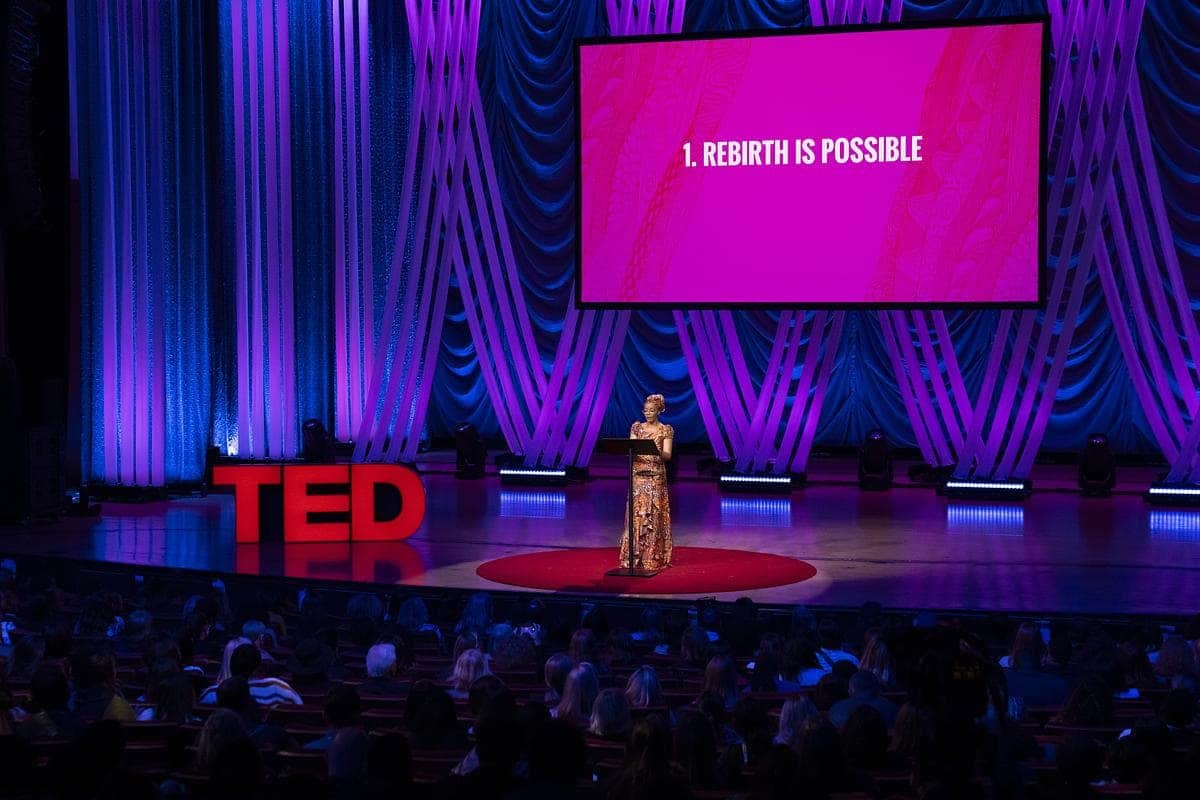
Deschryver says that the living principle of City of Joy is the belief that there is “no woman, no matter how hurt or validated, broken or lost who cannot be restored.”
Deschryver went on to tell the story of a woman who had been brutally assaulted in Congo by a group of men and still held onto a dream of helping those in her community as she recovered in the hospital.
In 2011, she joined City of Joy’s first class of graduates and left the program armed with new skills and renewed confidence. After the program, she was able to read and write, buy a plot of land, construct a small house, and rebuild her life.
The graduate renamed herself Jane and now works for the organization as a staff member.
Deschryver says that Jane is “a woman of magnificent energy, vision, and lifeforce” and is proof that even those who have suffered unimaginable trauma “can become the most visionary leaders.”
2. “Grassroots women know what they need.”
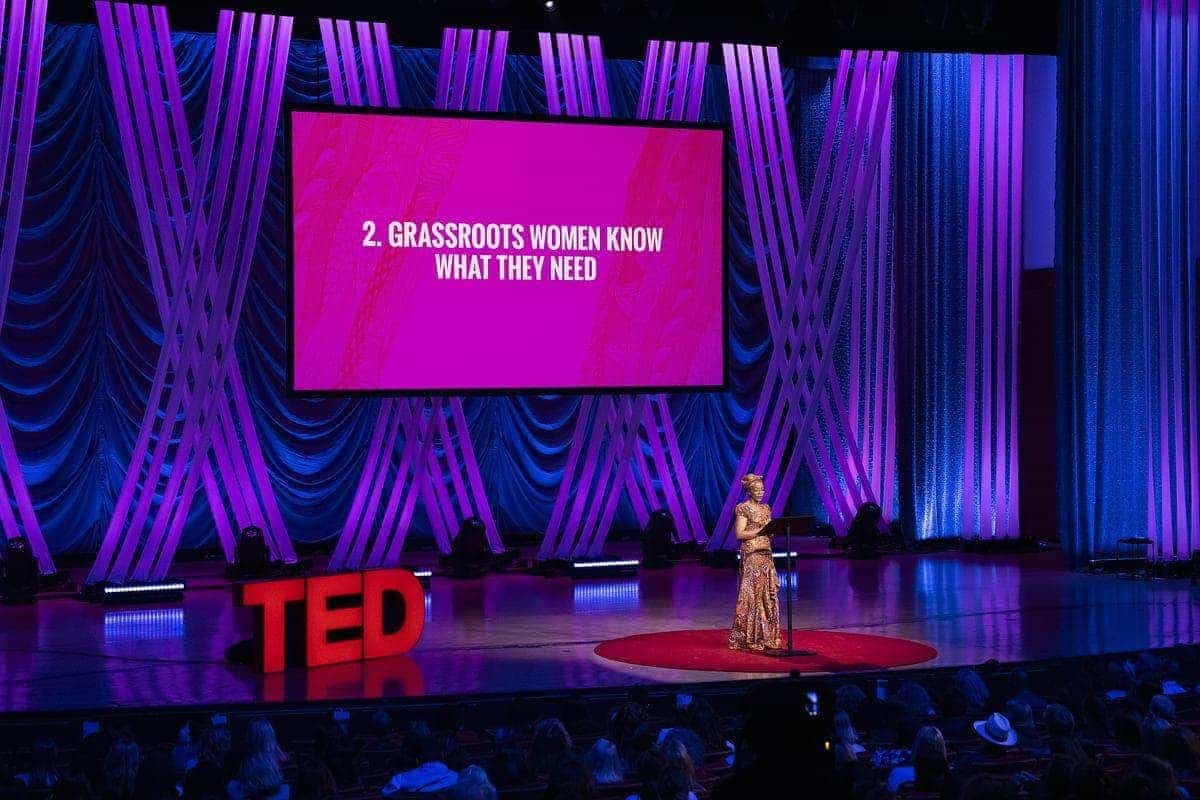
Deschryver emphasized that City of Joy succeeds because the women who run it actually live and work in the community they serve.
“The women of Congo envisioned the City of Joy and they are the ones who run it,” Deschryver continued. “Our sisters in the West help by providing resources and sharing our story by being wings at our back.”
Deschryver explained that the best way to aid a grassroots organization is to voice support, share stories, and place funds directly in the hands of organizers.
“[Grassroots women] don’t need direction or coercion from outside funders,” Deschryver said. “They need resources and respect.”
As City of Joy has grown and expanded, Deschryver said that additional funding has empowered them to “take risks” and reshape their movement from one of “social service to social justice.”
3. “Women heal in community.”
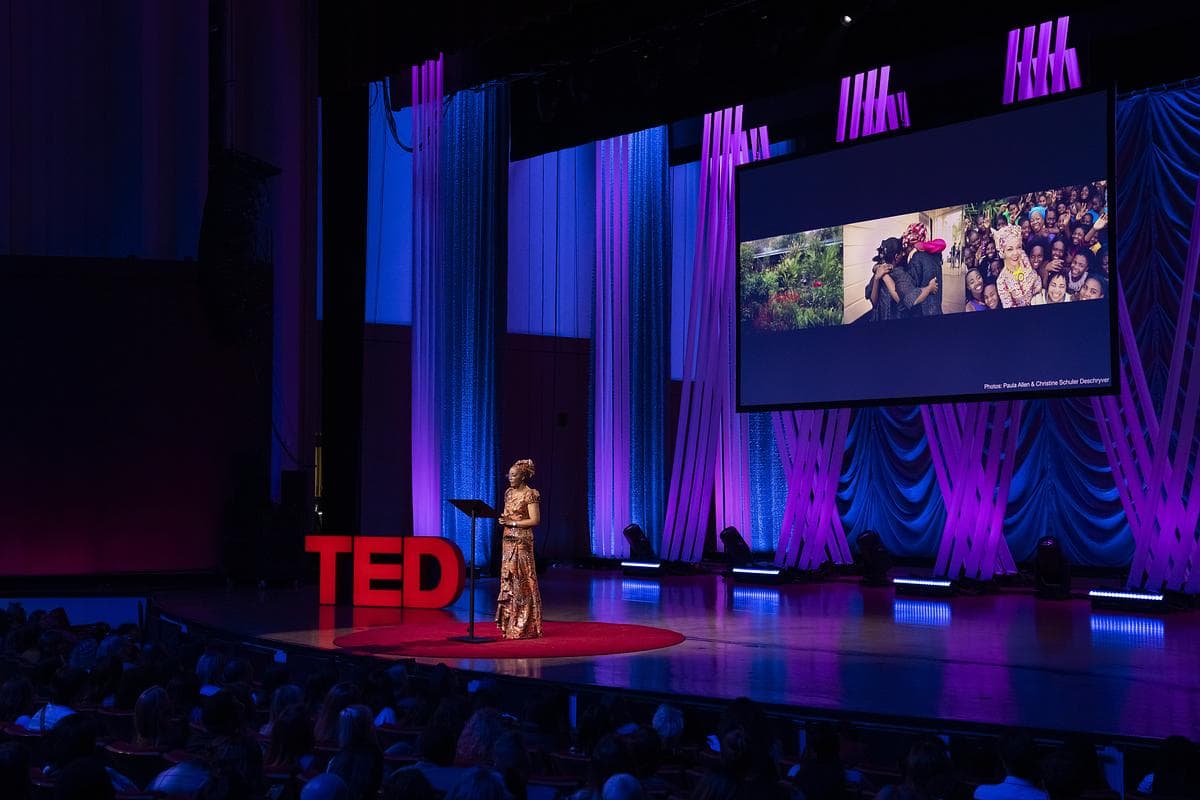
Deschryver explained that many women who enter therapy at City of Joy reside in violent communities that have only compounded their trauma.
“As long as the community remains ill, sexist, or violent, women remain oppressed and unseen,” said Deschryver.
Deschryver explained that group therapy is a critical tenet of the care center's mission to rebuild a sense of community.
“At City of Joy, women come to understand that their healing is intertwined with their sister’s healing,” said Deschryver. “The collective healing of women leads to radical political awakening. It teaches women … how to lead by investing in the whole community.”
4. “The Earth is a central part of our healing.”
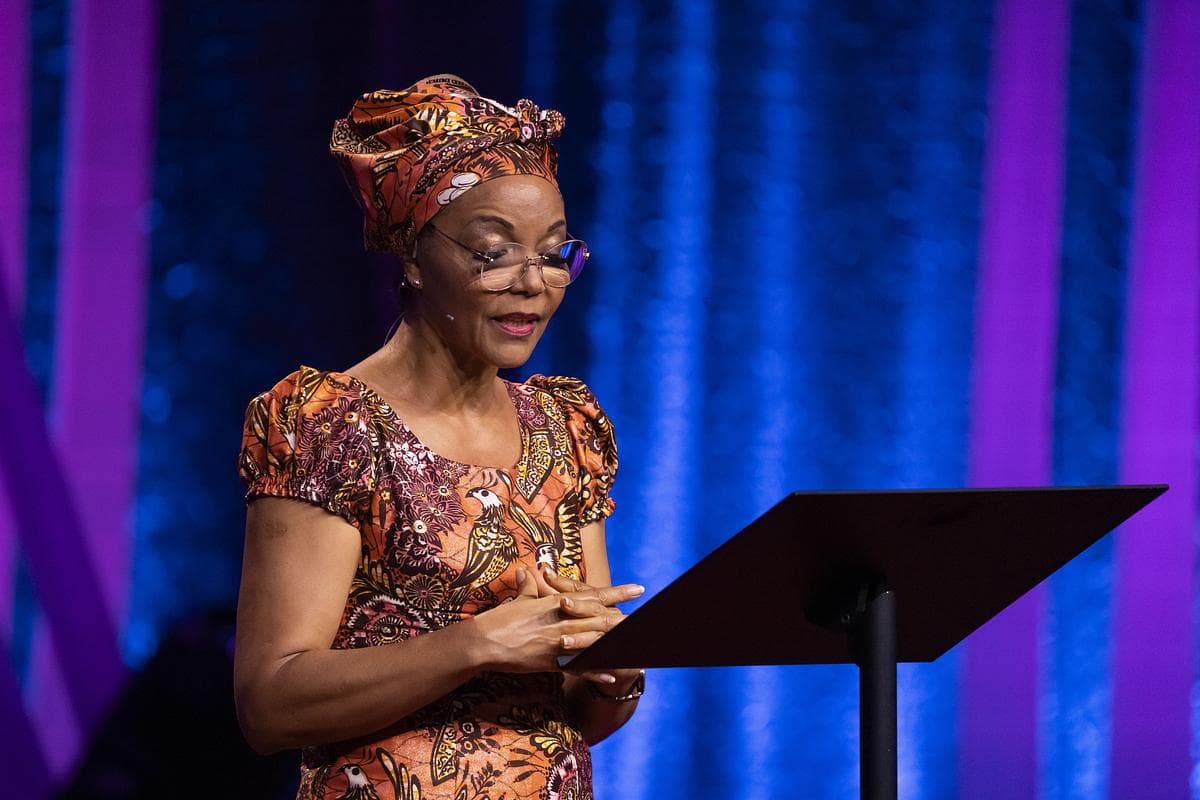
As they expanded, City of Joy acquired 350 acres of farmland, which has become foundational to therapeutic care at the center as women “turn pain to power to planting.”
“I grew up with a deep love and respect for the earth and a vision for connecting the healing of women with the healing of the earth,” said Deschryver.
On the farmlands, the women learn how to grow a range of foods including cassava, rice, avocados, mangos, sweet potatoes, and beans. They take care of pigs and cows, harvest and dry fish, and make honey from beehives.
“The farm is a living classroom and we have witnessed the profound healing of survivors as they connect with and cherish the Earth,” said Deschryver.
5. “Art, theater, music, dance are critical to recovery.”
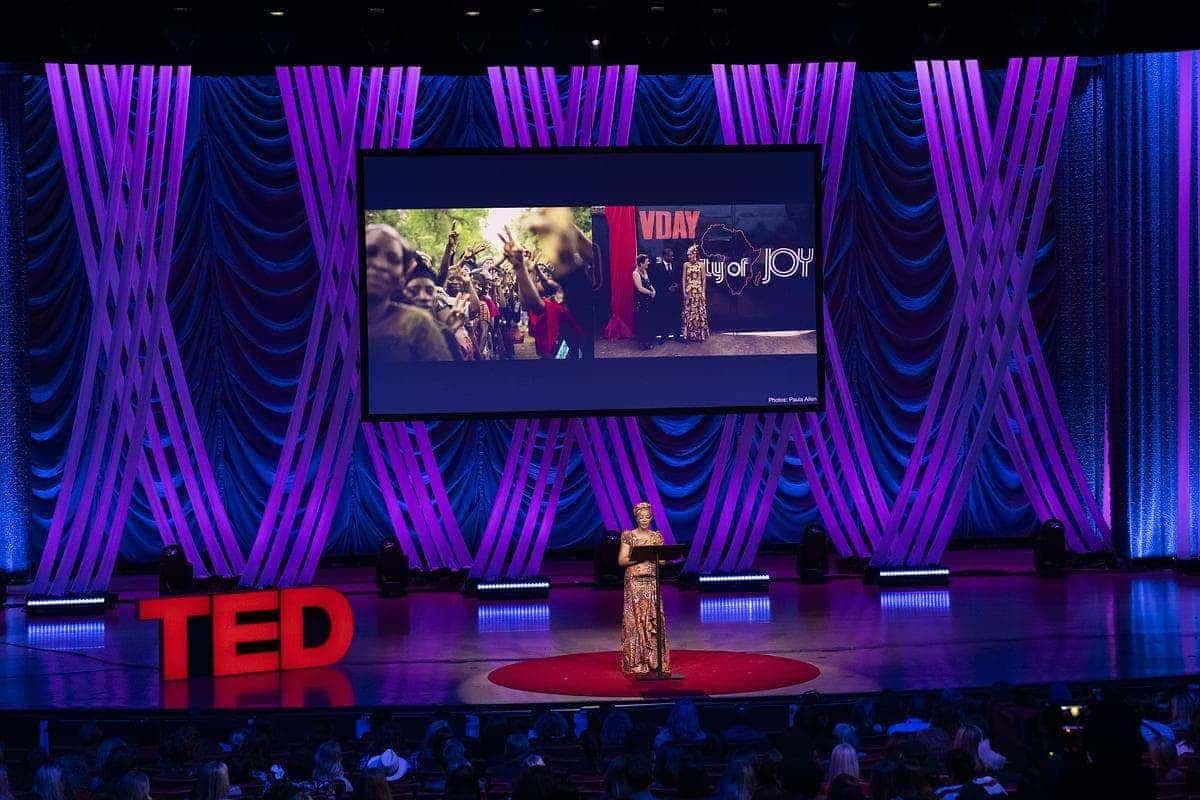
At City of Joy, song, art, dance, and creativity are vital to the survivors' recovery and further build a sense of community.
Deschryver said: “Dance is central to healing as it allows women to feel the expanse of their power and energy. To begin to love their bodies. To move in community. To express their creativity. To share community tribal dances and remove cultural barriers.”
Deschryver said that in many ways, dancing and singing can be just as critical as learning new skills and opening up in group therapy.
“As we move our bodies, we move the trauma out and bring in the new energy. We sing together and dance throughout every day,” Deschryver said. “1,987 women have turned poison into medicine, isolation into community, shame into self love, silence into story.”
Good Good Good has been covering TED's annual conference and spinoff events — like TED Women, TED Next, and TED Countdown — as press since 2023. Our journalists watch TED Talks live and interview speakers after they get off stage, giving Good Good Good the opportunity to share stories like this before TED Talks are released online.
Award-winning actor Glenn Close is best known for her roles in iconic films like “Fatal Attraction,” “101 Dalmatians,” and “The Big Chill.”
And while her work is certainly iconic, the cause closest to her heart is mental health advocacy.
It was nearly 15 years ago that Close began her foray into advocacy when she created a public service announcement with her sister, Jessie, who lives with bipolar disorder (and is the author of the book “Resilience”).
“She [Jessie] came up to me one summer… and she said ‘I need your help. I can’t stop thinking about killing myself,’” Close recalled solemnly on stage at TEDWomen in Atlanta, Georgia on Thursday, in conversation with host Pat Mitchell.

“I was in shock. I had absolutely no clue of what she was dealing with. My mom and I were able to get her help.”
The PSA, filmed in Grand Central Station, was one of the first bold steps toward destigmatizing mental health conditions, featuring real-life people wearing their diagnoses and conditions emblazoned across their chests on t-shirts.
Along with the 2009 PSA, Close started her own foundation, Bring Change to Mind.
Since then, the nonprofit has worked to end the stigma and discrimination surrounding mental illness by working with industry and policy leaders to make a real difference in the lives of teens and adults across the country.
The nonprofit is also aimed at helping young people because Jessie Close’s son, Calen, lives with schizophrenia.

“You have to be very resilient,” Close said about her sister and nephew. “They’ve said, we have found that the stigma around what we are dealing with can be worse than the diseases themselves.”
She recalled Calen’s time in a psychiatric hospital and how none of his friends were around when he returned from treatment. That loneliness is what she hopes to combat.
Now, Bring Change to Mind works in over 500 high schools in 40 states across the country to support peer-to-peer clubs that “create stigma-free schools.”
“I thought my main contribution would be making PSAs and things like that, but we have evolved,” Close said.
“The thing I’m very proud of is the kids. It’s peer-to-peer. It’s not high schools that write to us. It’s the kids that write to us. The kids say ‘We need a Bring Change to Mind club in our high school.’ They are phenomenal.”

According to Close, of the nearly 14,000 students involved in Bring Change to Mind’s high school program, 61% want to go into mental health care careers after they graduate.
This is a hopeful statistic, as Close spoke from the TED stage about how America faces a “crisis of care,” forcing people to travel great distances to find treatment and support — and continuing to stigmatize folks living with mental health conditions.
“People can not be hired because they actually admit that they have had the courage to ask for treatment. That’s wrong,” Close said. “Our whole attitude has to change.”
But there’s reason to hope, Close said, as the Bipartisan Safer Neighborhoods Act, signed into law by President Biden in June 2022, is helping to create community behavioral health clinics in every state.

“They have put aside $8.5 billion in the next ten years to establish what they’re calling Certified Community Behavioral Health Clinics in every state of the union, in whatever town or country needs one,” Close said. “Look into it.”
At the end of the day, Close simply no longer wants people to slip through the cracks. The cause is especially close to her heart, as she continues to live in Montana alongside her sister and nephew.
Most recently, she shared, her family lost a close friend who died as a result of untreated PTSD. This friend, John Allen, was a dedicated U.S. veteran who completed three tours in Afghanistan, and even officiated Close’s daughter’s wedding.

Just two days prior to Close taking the stage in Atlanta, John lost his life through alcohol poisoning, from untreated PTSD. She dedicated her time at TEDWomen discussing mental health to him.
“I dedicate this talk to a young man who should still be alive,” Close said. “But because he fell through the cracks in a country that has not cared enough to create care… may we remember John, and many, many, many like him — and make a difference.”
Good Good Good has been covering TED's annual conference and spinoff events — like TED Women, TED Next, and TED Countdown — as press since 2023. Our journalists watch TED Talks live and interview speakers after they get off stage, giving Good Good Good the opportunity to share stories like this before TED Talks are released online.
Every day the Good Good Good team collects the best good news in the world and shares it with our community. Here are the highlights for this week!
If you want to get good news in your inbox every day, join the Goodnewsletter — the free daily newsletter designed to leave you feeling hopeful.
The Best Positive News We’re Celebrating This Week —
The leader of the world's top energy agency just said the recent ‘staggering’ growth of investments in clean energy gives real hope for limiting global heating
To avoid the worst, most catastrophic impacts of the climate crisis, it’s long been established that the world needs to stay below 1.5 degrees Celsius of warming. For years, the world was not on track to meet that, but thanks to a recent boost in investments in renewable energy, electric vehicles, and more — it’s more possible than ever.
That’s according to Fatih Birol, energy economist and the executive director of the International Energy Agency, who said he feels “more optimistic than I felt two years ago” about limiting warming to 1.5C despite the challenges that remain.
According to Birol, clean energy investments have seen a “staggering” 40% increase in the last two years, and are “perfectly in line” with where they should be to reach net zero by 2050, a key target in limiting warming.
What’s the nuance? The IEA’s latest report also found that almost all countries need to move up their target net zero dates — for most, it’s 2050, and for some key countries like India and China, it’s 2070. The energy industry still emits far too much carbon dioxide, and recent extreme weather events put a spotlight on how the climate is already changing rapidly.
Still, this hopeful shift ought to be a reminder that change is possible — and limiting warming is entirely achievable.
New research shows there is far more support for women’s rights around the world than people think
New research from the NHH Norwegian School of Economics and other universities looked at survey responses from more than 60,000 people representing 60 different counties — and found that in 41 countries, 90% of people around support basic rights for women.
This includes supporting the right for women to work outside of the home, and be hired for leadership positions. While the share of women who support their basic rights was higher than men — a majority of men reported being in support of basic rights in every country.
Some countries that are typically considered less gender-equal still reported lower support for women’s rights, others had surprising results. In Saudi Arabia, for example, the “vast majority” of men both supported women working outside the home privately and underestimated the number of people who did, too.
The research found there was a “universal underestimation” of support for women’s basic rights, especially among men. In Tanzania and Turkey, for example, more than 80% of male respondents supported women’s right to work outside the home, but believed it to be a “minority view” among men.
These misperceptions must be brought to light so we can make even more progress in the fight to achieve gender equality globally.
Philadelphia just made history by hosting the first-ever National Coming Out Pride parade and festival in the country
Over the weekend, the City of Brotherly Love hosted the only parade and festival in the country dedicated to and inspired by National Coming Out Day, which is celebrated annually on October 11.
Called “OURFest: National Coming Out Parade and Festival,” the three-day celebration was all about supporting the LGBTQ+ community. The festival came on the heels of Philadelphia already breaking records for the city’s largest Pride march and festival in history.
In addition to a record-breaking 200-foot rainbow flag, the parade featured community organizations, bands, live performances, and more — all putting a spotlight on the thriving LGBTQ+ community in the region.
Why is this good news? At a time when anti-LGBTQ+ legislation and sentiment is persistent on the news and among those in positions of power, celebrations like these are incredibly important for communities to come together, and provide a safe, supportive, celebratory place for folks to be their truest, most vibrant selves.
A New York City-based clothing business and mending club is helping prevent textile waste from ending up in a landfill
Reclypt is a New York City-based business founded in 2021 that strives to educate consumers on circular fashion, diminish waste through upcycling, and bring fashion lovers and activists together at clothing swaps.
While it got its start as an upcycled fashion marketplace by selling upcycled clothing from other small businesses, over time, Reclypt’s founder Rachel Ceruti began joining forces with friends and community partners to teach mending basics like sewing, embroidering, embellishing, and repairing clothes.
With that, Reclypt’s Mending Club was born. The club gathers all over New York City at pop-up happy hours and skill-sharing spaces — and because of its accessibility and community partnerships, its already seen incredible growth and success.
Why is this good news? The EPA measured the amount of discarded clothing and textile materials generated annually lept drastically from 1.7 million tons in 1960 to 11.3 million tons in 2018 — and it’s only kept growing.
Reclypt’s work helps champion a circular fashion, which is designed to last longer, utilize sustainable material sourcing, and be repaired, resold, or exchanged at its end of life — not sent to a landfill.
A startup in Washington has created a device that destroys ‘forever chemicals’
For decades, companies have added PFAS (an acronym for per- and polyfluoroalkyl substances) to firefighting foams, food packaging, carpets and fabrics, water-repellent clothing, and non-stick pans.
While the chemicals are great at deflecting water, stains, and grease, they often escape from products and contaminate drinking water, and they’re also notoriously difficult to break down. If left untreated, PFAS-contaminated water could remain hazardous for thousands of years.
But a startup called Aquagga has successfully deployed a PFAS destruction unit nicknamed “Eleanor.” Aquagga’s solution solves a lot of common issues with eliminating PFAS: It’s more compact than other systems, requires a lower temperature, can run continuously, and can destroy some of the more stubborn PFAS.
Why is this good news? PFAS are still in use (although it’s been banned in some states), and researchers and regulators are increasingly concerned by their serious health impacts. Through this innovative technology, companies like Aquagga can slash the lifespan of “forever chemicals” like PFAS, removing toxic substances from water — making it safe for consumption again.
A values-based healthcare company is transforming the healthcare experience of Medicare and Medicaid recipients
When Bill Frist and Brad Smith co-founded CareBridge in 2019, their goal was to focus on caring for Medicaid patients who receive home and community-based services, particularly those with physical, intellectual, or developmental challenges.
By focusing on this specific healthcare industry, they’ve accepted lower profit margins — but also provided a critical solution to the complexity and inefficiency of the healthcare industry and Medicaid system. They do this by using two-way tablets to monitor health signals and provide 24/7 access to services, allowing immediate access to care and proactive monitoring of patient well-being.
It’s helped lower healthcare costs and reduced hospitalizations and nursing home days for patients. CareBridge also promotes social care to encourage patient independence and offers job training for disabled individuals who wish to work.
Why is this good news? The healthcare industry (often deservedly) comes under fire for putting profits over patients, and CareBridge’s alternative, values-based approach has already addressed and overcome challenges in the industry. And their model is catching on — some of the largest Medicaid plans have now invested in the company, bringing their values-based care model to more than 30 states.
Three former Duke football players took their skills from the locker room to the lab to improve player safety
When Kevin Gehsmann, Tim Skapek, and Clark Bulleit were engineering students and student-athletes at Duke, they got quarterback Daniel Jones back on the field after he broke his clavicle.
Now their company, Protect3D (pronounced “protected”), uses personalized scanning and 3D printing to make customized athletic pads to help prevent injury and speed up the rehab process.
The athletic trainer on staff uses the company’s iPhone app to take a 30-second 3D scan of the patient’s anatomy — whatever body part is injured or needs protection. From there, the scan is uploaded, and the company uses medical-grade 3D printing materials to create custom athletic protective pads for players of all types of sports.
Designs are lightweight, low-profile, and, amazingly, they can be printed and delivered within 48 hours.
When the co-founders decided to make a customized 3D-printed collarbone brace, they were just trying to help out an injured fellow football player (who went on to play in the NFL for the New York Giants).
Now, more than 60 professional and collegiate athletic programs use Protect3D to prevent injury and help players heal faster.
→ Learn more
More good news of the week —
A Canadian judge ruled that the province of British Colombia has a constitutional mandate to consult with First Nations on mining rights. The Gitxaala Nation filed a petition to challenge a rule that automatically granted mineral rights to the province on its territory without consultation.
In Ireland, wind power generation temporarily exceeded the total demand for electricity for the first time ever. In total, Irish wind farms provided 32% of the country’s power over the first eight months of 2023.
Scientists in Brazil just rediscovered a tree that was thought to be extinct for nearly 200 years. The Pernambuco holly, a species of small holly tree, is one of conservation group Re:wild’s “top 25 most wanted lost species” and the ninth to be rediscovered since it started looking for them in 2017.
Maryland gave lower-income folks free healthcare regardless of immigration status, and it’s already improving maternal health. The new Healthy Babies Equity Act has helped doctors provide prenatal care, and provide pregnant folks with education around labor, nutrition, postpartum depression, and more.
Ecologists are looking to abandoned farmland as a way to restore biodiversity and capture carbon. Globally, around one billion acres of farmland (about half the size of Australia) have recently been abandoned, and it’s ripe for restoration.
Despite delays to the UK’s ban on new gas-powered vehicles, Nissan announced it’s accelerating its plans to go all-electric by 2030. The manufacturer also says it will introduce new battery technology that will reduce both the charging time and the cost of electric vehicles.
The Nobel Prize in Economics was awarded to a Harvard professor who studies the impact of women in the workforce. The third woman to ever win the prize, Claudia Goldin’s research uncovered the reasons for gender gaps in labor force participation and earnings.
A new Swedish report found that feeding cows seaweed can cut methane emissions by up to 45 percent. More research is needed, but the discovery is significant — it works by preventing microorganisms in the cow’s first stomach from producing methane.
Formerly incarcerated people are finding refuge in the food industry — and becoming hugely successful. Chef Keith Corbin is a two-time James Beard award nominee, and taps into soul food’s “intent to nourish, sustain, and feed the soul of each other.”
An experiment with a universal income in Denver resulted in reduced homelessness, higher full-time employment, and more. In a recent study, around 800 Denver residents experiencing homelessness were given monthly payments ranging from $50 to $1,000.
Massachusetts just approved changes to its sex and health education curriculum for the first time in 24 years. The changes will be more inclusive of the LGBTQ+ community and teach about bodily autonomy, mental and emotional health, dating safety, sexually transmitted infections, consent, and more.
Cities all over the country are beginning to transition their school bus fleets to electric — a win for both the climate and students’ health. In addition to reducing air pollution, advocates believe the quieter electric buses help children’s mental and physical well-being as they journey to and from school.
Ava DuVernay just launched an initiative to help every 16-year-old in the U.S. see her new film, ‘Origin’ for free. The film is based on a nonfiction book about a powerful caste system in the U.S., and DuVernay said the film is especially important for young people working out where they “fit in” in the world.
The Biden-Harris administration just announced $206 million in grants to build and expand youth mental health services. The grants will go to expand mental health services in schools, bolster the behavioral health workforce, and improve access to mental health services in communities.
California is simplifying the complex process of overturning wrongful convictions. A new bill will eliminate obstructive technical requirements to ensure that courts can fairly and fully examine newly discovered evidence and give an exonerated person the ability to have continuous counsel if tried again.
Demographer and reproductive health researcher Diana Greene Foster, Ph.D., has spent a decade studying the impact of unwanted pregnancies on the women who seek abortions — and the ones who are denied them.
Using research laid out in her book “The Turnaway Study” and its corresponding lecture course, Foster gave a TED Talk at TEDWomen in Atlanta, Georgia earlier this week about the mental, physical, and socioeconomic consequences that occur when women are denied access to abortion.

Foster and her team of researchers followed 1,000 American women over the course of five years. They were separated into three groups: women who received an abortion in the first trimester, women who were narrowly able to receive an abortion, and women who were turned away when attempting to access abortion care.
Foster began her Talk by quickly summarizing the stories of two women from generations before: One — Sally — who was able to access an abortion, and another — Dorothy — who was forced to carry an unintended pregnancy to term and put the baby up for adoption.
As it turns out, Sally went on to have other children, including Foster’s father. And the baby Dorothy gave up for adoption was Foster’s mother. So, she shared, both her work and her life are intimately tied to the outcomes of unintended pregnancy.

“Women often give many reasons: housing and financial circumstances, their relationship with the man involved in the pregnancy, their need to take care of existing children,” Foster said in her Talk. “More than half of those seeking abortions nationally are already parenting at least one child.”
Ultimately, the Turnaway Study helped demystify a lot of commonly held beliefs about abortion.
For instance, although restrictions in abortion care often coincide with concern for the mental harm inflicted by abortion, 95% of women included in the study reported that having an abortion was the right decision for them over five years after the procedure.
“We found no mental health harm from abortion,” Foster said. “Instead, we saw higher anxiety, lower self-esteem, and lower life satisfaction for women denied abortions.”

Foster also shared that women who were turned away and experienced childbirth in the observed group were more than three times as likely to be unemployed than women who obtained abortions.
“Working with economists, I was able to show that those that received and those that were denied abortions were similar economically for years before the year of the unwanted pregnancy, but for years after, we see more debt, lower credit scores, and a greater chance of eviction and bankruptcy,” Foster explained.
Additionally, Foster’s research found a significant divergence in the physical wellbeing of women who received an abortion, compared to those who did not receive an abortion.
“We find worse physical health for women who carried their pregnancy to term and gave birth,” Foster said in her Talk. “Consistent with a vast medical literature, we see that childbirth is associated with greater risks than abortion including hemorrhage, eclampsia, and even death.”
How does this data impact abortion care in the United States?
In the wake of Roe v. Wade being overturned, Foster pointed out the extreme differences between women’s healthcare access in the United States in comparison to global trends.
“The overwhelming international trend is towards liberalizing abortion laws, and not like the United States, of imposing new restrictions,” Foster said in her Talk.

Her current work takes place in Nepal, as she and her colleagues study abortion in a global context. She was just named a 2023 MacArthur Fellow for her continual work to provide reliable data for what has become a heavily politicized topic.
“Nepal has one of the world’s best abortion laws. It’s available up to 12 weeks for almost any reason, and beyond that for generous, common reasons. And it’s free in public hospitals,” Foster told Good Good Good. “That is a huge innovation that we [the United States] don’t have.”
Foster shared that the Turnaway study looked at the differences of wellbeing in children based on whether their mother was able to access an abortion in the U.S. Looking at Nepal’s more liberal abortion policy, Foster proposed the study to look at a place where rates of child stunting could be more dire without abortion care.
“It’s a lot of lessons learned for the U.S.,” she said. “They have a better policy than we do.”

While Foster is a demographer and academic — not a politician — her work provides vital data abortion advocates can use to better provide care for Americans experiencing unintended pregnancy. She told Good Good Good her research has been used in court cases in both the U.S. — and even in Chile.
Additionally, she is energized by the fact that better data means that conversations surrounding abortion can be destigmatized.
“The important thing is to center the person who is pregnant when they don’t want to be, to understand their motivations. If it’s just an abstract political thing, you’re like ‘Mother or fetus. What’s more important?’ and that doesn’t really get you anywhere,” she told Good Good Good.
“Our research shows it’s completely clear that people know how to judge their own circumstances and make decisions that are right for themselves. They’re not thinking of the politics. They’re not thinking of the law. They’re just trying to make a good decision for themselves and their kids and their family and their future.”
In addition to wider abortion access, Foster called for more generous social programs, comprehensive healthcare coverage, and extensive childcare and parental leave in her TED Talk.

To make those programs — and abortion care in general — more commonplace, it’s important to have evidence that legislators and judges can consider, to “not just vote on ideology,” as Foster shared.
In the complicated constellation of human life, bodily autonomy, and data, Foster stands in the middle; eager to learn from the rest of the world. Her research, both domestic and international, aims to provide women, children, and families greater health outcomes — and to provide the general public a more complete truth.
“Yes, I wouldn’t be here if Dorothy had been able to get an abortion. I also wouldn’t be here if Sally hadn’t gotten an abortion. My dad wouldn’t have been born,” she said.
“We’re all here for all the crazy accidents that led to the long line of people leading up to us. All we can want for the future is that our kids have more say over the trajectory of their lives than our ancestors did.”
Good Good Good has been covering TED's annual conference and spinoff events — like TED Women, TED Next, and TED Countdown — as press since 2023. Our journalists watch TED Talks live and interview speakers after they get off stage, giving Good Good Good the opportunity to share stories like this before TED Talks are released online.
Within just a few decades after Europeans began to develop what is now Vancouver, British Columbia, in the 1870s, 99 percent of Pacific herring, surf smelt, and eulachon had been wiped out in nearby waters.
According to new research, the three species of forage fishes, which feed whales, salmon, seabirds and many other animals, were quickly decimated by destructive fishing practices, industrial activity and pollution.
For millennia before colonization, səlilwətaɬ (Tsleil-Waututh), xʷməθkʷəy̓əm (Musqueam) and Sḵwx̱wú7mesh (Squamish) nations relied on these species, using sophisticated technologies including nets and weirs to catch them.
But by the 1930s the fisheries’ near-total collapse had deprived First Nations of crucial foods and destabilized the entire ecosystem.
The research results are no surprise to Gabriel George, a cultural leader and the director of treaty, lands and resources for the Tsleil-Waututh Nation, which commissioned the study. The nation’s name translates to “the people of the inlet,” and they have lived in səlilwət—or Burrard Inlet, the narrow fjord that bisects Vancouver—since time out of mind.
For generations, elders have passed down detailed knowledge about the state of səlilwət before and after settlers arrived.
To understand forage fish populations during that period, archaeologist Jesse Morin, an adjunct professor at the University of British Columbia and Simon Fraser University in British Columbia, and a team of researchers combined information from archaeological digs with archival records, mostly from the turn of the 20th century.
They combed through field notes, journals, reports and maps from ethnographers, early scientists and fisheries regulators, and through recordings from Tsleil-Waututh knowledge keepers, including George’s late grandfather, Dan George, a notable leader and chief.
The accounts describe settlers’ rapacious fishing methods, including the common practice of tossing dynamite in the ocean to kill schools of herring. After the fish floated to the surface, oil collected from their carcasses was used to grease wooden skids to slide huge logs out of the forests.
In 1888, a fisheries regulator noted that herring, which had previously seemed “inexhaustible,” were becoming very difficult to catch around Vancouver.
“We’ve got people fishing in the most destructive way humanly possible way before scientists even glanced at those waters and thought about [measuring the herring population],” says Morin.
Indeed, the magnitude of these forage fish collapses more than a century ago was almost entirely overlooked by federal fisheries scientists, who didn’t begin studying the populations systematically until the 1970s.
The 1970s population estimates are still used to manage what little is left of these species. The new study, however, has the potential to push that historical baseline back to before colonization.
Although environmental regulations are now much more stringent, the ecosystem in Burrard Inlet remains vulnerable to the combined impacts of human activities.

The inlet that George knows today is like a different world from the place his ancestors described, George says, where wolves and elk roamed the old-growth forests and ancient clam gardens were passed down through generations.
The waters are now contaminated with 700 different chemicals, the seafood largely off-limits to community harvesting. Vancouver is Canada’s most densely populated city, and high-rises and other shoreline developments press in from all sides.
And the kilometers of dense cə́ləm (eelgrass) beds that stretched along the shoreline during George’s childhood, providing nursery habitat for small fish, have since disappeared.
“Even relatively modest impacts to something that’s been so severely devastated already can be the tipping point that destroys it entirely,” says Morin.
To Iain McKechnie, a coastal archaeologist at the University of Victoria in British Columbia who was not involved in the recent research, the results align with a paper he published in 2014. That study found that, unlike today, herring were consistently abundant in waters between Washington and Alaska prior to colonization.
By combing through fish bones from upward of 100 First Nations’ village sites, including Tsleil-Waututh’s, McKechnie and his co-authors determined that for more than 3,500 years people ate this tiny fish more than any other, including salmon.
Studies like these led by Morin and McKechnie combat the tendency to assume that the ecological conditions we observe within our lifetimes are normal.
“It’s really hard for people to imagine something different than what they see,” says Simon Fraser University archaeologist Dana Lepofsky, a co-author of the 2014 study who was not involved in the recent research.
Lepofsky, who also studies clam gardens, sees the Tsleil-Waututh Nation’s work as part of a global movement of Indigenous nations conducting their own historical baseline research to “reset the clock” for modern resource management.
The forage fish research is part of the Tsleil-Waututh Nation’s broader efforts to restore the inlet by combining scientific research with traditional knowledge. The nation is collecting data to map the changes in culturally important species, water quality, shoreline development and even shipping traffic in each part of their territory to quantify the ongoing impacts of colonization.
The Nation is also taking action in many ways, including planting eelgrass in intertidal zones, removing toxic creosote pilings from spawning sites so forage fish eggs can survive and working with the province to adjust water-quality standards so the community can eventually eat shellfish safely.
There have been successes. In 2019, killer whales ventured into the inlet, and herring returned for the first time in 50 years.
It may be impossible to revive the ecology of the pre-colonization era, George says, but restoring the inlet as a source of food would benefit all Vancouverites, who rely on the health of the ecosystem whether they realize it or not.
“People that live in Vancouver,” George says, “don’t realize how much has been lost and [that] this isn’t the natural state of this inlet.”
“We can’t undo all of what’s happened, but we want to do better in this generation. And I think many Canadians feel that way,” George says.
This article by Lauren Kaljur was originally published on Crosscut.com. Visit crosscut.com/donate to support nonprofit, freely distributed, local journalism.
So, you’re seeking out short positive quotes… We’ve got your back.
Sometimes, we all just need a few uplifting words to carry us through a challenging moment — or to share in the hopes of helping someone else.
As experts on positive news, our team is constantly collecting the best quotes that remind us that the world is filled with goodness and we can each play a role in making people's lives better.
Today, we’re sharing our quote collection with you — specifically our roundup of short quotes.
As you read these quotes (which are divided up into simple sections) we hope you feel more hopeful — and that you also feel motivated to get involved and make a positive difference.
Scroll through, find some quotes that mean a lot to you, and don't be afraid to click on some of the links to our other curated quote collections.
Enjoy our roundup of the best short quotes to leave you feeling more hopeful —
The Best Short Quotes About Life
Famous Short Quotes
“The only way out is through.”
— Robert Frost
“In this life we cannot always do great things. But we can do small things with great love.”
— Mother Teresa
“Don’t count the days, Make the days count.”
— Muhammad Ali
“I am no longer accepting the things I cannot change. I am changing the things I cannot accept.”
— Angela Davis
“Life isn’t about finding yourself. Life is about creating yourself.”
— George Bernard Shaw
“Life is a succession of lessons which must be lived to be understood.”
— Ralph Waldo Emerson
“Pick up the battle and make it a better world. Just where you are.”
— Maya Angelou
“You’ll never find a rainbow if you’re looking down.”
— Charlie Chaplin
“Great things are done by a series of small things brought together.”
— Vincent van Gogh
“You must take action. You must do the impossible. Because giving up is never an option.”
— Greta Thunberg
“And now that you don’t have to be perfect, you can be good.”
— John Steinbeck
“I am not afraid of storms, for I am learning how to sail my ship.”
— Louisa May Alcott
“Small acts, when multiplied by millions of people, can transform the world.”
— Howard Zinn
“The most difficult thing is the decision to act, the rest is merely tenacity.”
— Amelia Earhart
“If you know whence you came, there is really no limit to where you can go.”
— James Baldwin
“We must live together as brothers or perish together as fools.”
— Martin Luther King Jr
“If you want the rainbow, you have to put up with the rain.”
— Dolly Parton
“Those who have the privilege to know have the duty to act.”
— Albert Einstein
Short Positive Quotes
“I am stronger than my challenges, and my challenges are making me stronger.”
— Karen Salmansohn
“I thought the most beautiful thing in the world must be shadow.”
— Sylvia Plath, The Bell Jar
“Nothing is impossible. The word itself says, ‘I’m possible!’”
— Audrey Hepburn
“Can we overcome apathy? Yes, but only if we have hope.”
— Jane Goodall
“I choose to make the rest of my life the best of my life.”
— Louise Hay
“Give for the right reason — and that is, give for no reason at all.”
— Frank Sonnenberg, The Path to a Meaningful Life
“What I am trying to cultivate is not blind optimism… but radical hope.”
— Junot Diaz
“Act as if what you do makes a difference. It does.”
— William James
“My guiding principles in life are to be honest, genuine, thoughtful and caring.”
— Prince William
“Every drop in the ocean counts.”
— Yoko Ono
“The world is more malleable than you think, and it’s waiting for you to hammer it into shape.”
— Bono
“Let us make our future now, and let us make our dreams tomorrow’s reality.”
— Malala Yousafzai
“Keep your face always toward the sunshine — and shadows will fall behind you.”
— Walt Whitman.
“Remember: things can be bad, and getting better.”
— Hans Rosling
“Celebrating good news reminds you that there’s still hope — and the end of the story isn’t here yet.”
— Branden Harvey
“Dance with the waves, move with the sea. Let the rhythm of the water set your soul free.”
— Christy Ann Martine
“You cannot do a kindness too soon, for you never know when it will be too late.”
— Ralph Waldo Emerson
“Every small positive change we make in ourselves repays us in confidence in the future.”
— Alice Walker
“You are never too old to set another goal or to dream a new dream.”
— C.S. Lewis
“Make visible what, without you, might perhaps never have been seen.”
— Oprah Winfrey
“The more that you read, the more things you will know. The more you learn, the more places you’ll go.”
— Dr. Seuss
Short Powerful Quotes
“The world is changed by your example, not by your opinion.”
— Tim Ferriss
“We have to be visible. We should not be ashamed of who we are.”
— Marsha P. Johnson
“For while we have our eyes on the future, history has its eyes on us”
— Amanda Gorman
“I can and I will. Watch me.”
— Carrie Green
“That's when I feel most alive, when I'm helping people.”
— Paul Farmer
“The most common way people give up their power is by thinking they don’t have any.”
— Alice Walker
“We can’t just choose to tell some facts and not others because we don’t want to upset people. We have to tell it like it is.”
— Greta Thunberg
“Immortality is to live your life doing good things, and leaving your mark behind.”
— Brandon Lee
“You don’t have to choose between doing good and doing well. It’s a false choice, today more than ever.”
— Tim Cook
“Owning our story can be hard but not nearly as difficult as spending our lives running from it.”
— Brené Brown
“Cultures, nations, religions, and people are not rocks. They are in constant transformation.”
— Hans Rosling, Factfulness: Ten Reasons We’re Wrong About the World—and Why Things Are Better Than You Think
“Self-care is how you take your power back.”
— Lalah Delia
“If the world seems cold to you, kindle fires to warm it.”
― Lucy Larcom
“You can’t separate peace from freedom, because no one can be at peace unless he has his freedom.”
— Malcom X
“Education is the most powerful weapon which you can use to change the world.”
— Nelson Mandela
“Look for causes, not villains.”
— Hans Rosling, Factfulness
“Some of us think holding on makes us strong, but sometimes it is letting go.”
— Hermann Hesse
“The oak fought the wind and was broken, the willow bent when it must and survived.”
— Robert Jordan
“We need much less than we think we need.”
— Maya Angelou
“You do not have to agree with me to love me.”
— Glennon Doyle
Short Quotes For Young Adults
“There is always light. If only we’re brave enough to see it. If only we’re brave enough to be it.”
— Amanda Gorman
“We are not what other people say we are. We are who we know ourselves to be, and we are what we love. That’s okay.”
— Laverne Cox
“Your vocation in life is where your greatest joy meets the world’s greatest need.”
— Frederick Buechner
“Start where you are. Use what you have. Do what you can.”
— Arthur Ashe
“Believe in yourself. Stay in your own lane. There’s only one you.”
— Queen Latifah
“They always say time changes things, but you actually have to change them yourself.”
— Andy Warhol
“The more I hold myself close and fully embrace who I am, the more I thrive.”
— Elliot Page
“Those who say it can’t be done are usually interrupted by others doing it.”
— James Baldwin
“Do your little bit of good where you are; it is those little bits of good put together that overwhelm the world.”
— Archbishop Desmond Tutu
“You wouldn’t worry so much about what others think of you if you realized how seldom they do.”
— Eleanor Roosevelt
“The hardest thing in the world is to simplify your life; it’s so easy to make it complex.”
— Yvon Chouinard
“If it doesn’t make the world better, don’t do it.”
— Brad Montague
“We need joy as we need air. We need love as we need water. We need each other as we need the earth we share.”
— Maya Angelou
“The best way to find yourself is to lose yourself in the service of others.”
— Mahatma Gandhi
“Figure out who you are. Then do it on purpose.”
— Dolly Parton
“Caring — about people, about things, about life — is an act of maturity.”
— Tracy McMillan
“We have to be visible. We are not ashamed of who we are.”
— Sylvia Rivera
Short Quotes About Life and Struggles
“I have one life and one chance to make it count for something…”
— Jimmy Carter
“In three words I can sum up everything I’ve learned about life: It goes on.”
— Robert Frost
“Equity is the only acceptable goal.”
— Paul Farmer
“What counts in life is not the mere fact that we have lived. It is what difference we have made to the lives of others.”
— Nelson Mandela
“Vitality shows not only in the ability to persist but in the ability to start over.”
— F. Scott Fitzgerald
“Life shrinks or expands in proportion to one’s courage.”
— Anaïs Nin
“If there is no struggle, there is no progress.”
— Frederick Douglas
“The harder the struggle, the more glorious the triumph. Self-realization demands very great struggle.”
— Swami Sivananda
“If you’re going through hell, keep going.”
— Winston Churchill
“When you have exhausted all possibilities, remember this: you haven’t.”
— Thomas Edison
“Three things in human life are important: the first is to be kind; the second is to be kind; and the third is to be kind.”
— Henry James
“In the middle of difficulty lies opportunity.”
— Albert Einstein
“Struggle is a never ending process. Freedom is never really won, you earn it and win it in every generation.”
— Coretta Scott King
“So often in life, things that you regard as an impediment turn out to be great, good fortune.”
— Ruth Bader Ginsburg
“The most impactful thing you can do with power is almost always to give it away.”
— Hank Green, A Beautifully Foolish Endeavor
“It is not the strength of the body that counts, but the strength of the spirit.”
— J.R.R. Tolkien
Short Quotes for Women
“Women can’t do everything at the same time, we need to understand milestones in our lives comes in segments.”
— Madeleine Albright
“Feminism is not just about women; it’s about letting all people lead fuller lives.”
— Jane Fonda
“Women are the real architects of society.”
— Harriet Beecher Stowe
“I do not wish women to have power over men; but over themselves.”
— Mary Wollstonecraft
“It took me quite a long time to develop a voice and now that I have it, I am not going to be silent.”
— Madeleine Albright
“A powerful woman is a heat-resistant and storm-bracing caliber. There is nothing she cannot handle.”
— Gift Gugu Mona
“Each time a woman stands up for herself she stands up for all women.”
— Maya Angelou
“A feminist is any woman who tells the truth about her life.”
— Virginia Woolf
“There is nothing stronger than a broken woman who has rebuilt herself.”
— Hannah Gadsby
“Where there is woman, there is magic.”
— Ntozake Shange
“Feminism is layered and its power comes from its diversity.”
— Scarlett Curtis
“Think like a queen. A queen is not afraid to fail. Failure is another stepping stone to greatness.”
— Oprah Winfrey
“There is no force more powerful than a woman determined to rise.”
— W.E.B. Dubois
Short Quotes For Success
“The secret of getting ahead is getting started.”
— Mark Twain
“Only those who dare to fail greatly can ever achieve greatly.”
— Robert F. Kennedy
“There is no finish line. There are only mile markers.”
— Michael Ventura
“Failure is an important part of your growth and developing resilience.”
— Michelle Obama
“I really think that everybody, every day, should be able to feel some success.”
— Fred Rogers
“In order to succeed. We must first believe that we can.”
— Nikos Kazantzakis
“Never let success get to your head and never let failure get to your heart.”
— Drake
“I attribute my success to this: I never gave or took any excuse.”
— Florence Nightingale
“You just can’t beat the person who never gives up.”
— Babe Ruth
“The successful warrior is the average man, with laser-like focus.”
— Bruce Lee
“I never dreamed about success. I worked for it.”
— Estée Lauder
“By failing to prepare you are preparing to fail.”
— Benjamin Franklin
“I couldn’t wait for success, so I went ahead without it.”
— Jonathan Winters
“What would you do if you weren’t afraid?”
— Sheryl Sandberg
“Show up, show up, show up, and after a while the muse shows up, too.”
— Isabel Allende
Short Love Quotes
“Be you, love you. All ways, always.”
— Alexandra Elle
“Talk to yourself like you would to someone you love.”
— Brené Brown
“Be with her in meaningful ways because that is beautiful and that is generous and that is what loving someone is.”
— Harvey Milk
“Choose, every day, to forgive yourself. You are human, flawed, and most of all worthy of love.”
— Alison Malee
“Darkness cannot drive out darkness: only light can do that. Hate cannot drive out hate: only love can do that.”
— Martin Luther King Jr., A Testament of Hope: The Essential Writings and Speeches
“You’ve got to learn to leave the table when love’s no longer being served.”
— Nina Simone
“Love yourself first and everything else falls into place.”
— Lucille Ball
“We need joy as we need air. We need love as we need water. We need each other as we need the earth we share.”
— Maya Angelou
“I don’t think anyone can grow unless he’s loved exactly as he is now, appreciated for what he is rather than what he will be.”
— Fred Rogers
“We deserve to experience love fully, equally, without shame, and without compromise.”
— Elliot Page
“Love is not passive. It is active, transformative, and just.”
— Bernice King
“To love one another just may be the fight of our lives.”
— Amanda Gorman
“Everything goes except the love you pour into others and the world.”
— John Green
Short Friendship Quotes
“No one can take the place of a friend, no one.”
— Maya Angelou
“Things are never quite as scary when you’ve got a best friend.”
— Bill Watterson
“The connections we make in the course of a life — maybe that’s what heaven is.”
— Fred Rogers
“Alone we can do so little; together we can do so much.”
— Helen Keller
“Keep good company, read good books, love good things, and cultivate soul and body as faithfully as you can.”
— Louisa May Alcott
“The bond of our common humanity is stronger than the divisiveness of our fears and prejudices.”
— Jimmy Carter
“The good man is the friend of all living things.”
— Mahatma Gandhi
“We rise by lifting others.”
— Robert Ingersoll
“Your real friends are the people who like you for who you are, not what you have.”
— Fred Rogers
Short Funny Quotes
“Making your Christmas cake in September is perfect, as too fresh a cake crumbles when cut.”
— Mary Berry
“A man may be a pessimistic determinist before lunch and an optimistic believer in the will’s freedom after it.”
— Aldous Huxley
“People often say that motivation doesn’t last. Well, neither does bathing — that’s why we recommend it daily.”
— Zig Ziglar
“I may be crazy, but that don’t make me wrong.”
— Marsha P. Johnson
“People say nothing is impossible, but I do nothing every day.”
— Winnie the Pooh
“I always wanted to be somebody, but now I realize I should have been more specific.”
— Lily Tomlin
“It’s amazing that the amount of news that happens in the world every day always just exactly fits the newspaper.”
— Jerry Seinfeld
“The noise from good toast should reverberate in the head like the thunder of July.”
— E. V. Lucas
“Be yourself; everyone else is already taken.”
— Oscar Wilde
More Short Quotes & Captions
“The need is great and so are the opportunities to make a difference.”
— Paul Newman
“Your now is not your forever.”
— John Green, Turtles All the Way Down
“I’ve found the cure for depression is action”
— Yvon Chouinard
“Knowing trees, I understand the meaning of patience.”
— Hal Borland
“The breaking of a wave cannot explain the whole sea.”
— Vladimir Nabokov
“I feel we are all islands — in a common sea.”
— Anne Morrow Lindbergh
“It is the obligation of every person born in a safer room to open the door when someone in danger knocks.”
— Dina Nayeri
“I am deliberate and afraid of nothing.”
— Audre Lorde
“There comes a time when silence is betrayal.”
— Martin Luther King Jr.
“Be messy and complicated and afraid and show up anyway.”
— Glennon Doyle
“In wilderness is the preservation of the world.”
— Henry David Thoreau
“Once you have dialogue starting, you know you can break down prejudice.”
— Harvey Milk
The fight for world peace is not just the work of diplomats and politicians — it’s a collective effort that requires the hearts and minds of each and every one of us.
Across countless generations and conflicts, advocates and activists have worked to create a more peaceful world. Despite a number of devastating setbacks, peacemaking efforts have been successful in creating a more peaceful world, overall. Still, there is more work to be done... and we all have a responsibility to be a part of that work.
Peacemaking is an ongoing process that requires education, activism, courage, and continual dialogue.
Over time, inspiring peacemakers have imparted their wisdom through speeches, literature, and actions — urging humanity to choose the path of understanding and compassion over conflict.
We’ve curated a selection of quotes that center on the idea of world peace — to inspire, challenge, and encourage you to play your part in this vital mission.
Whether you’re already involved in peace-building efforts or in need of some perspective in light of heartbreaking current world events — may these quotes galvanize your own journey toward promoting world peace.
You might also like: Quotes About Humanity | Quotes About Activism | Quotes About Social Justice | Quotes About Peace
The Best Quotes About Creating Peace in the World
“It isn’t enough to talk about peace. One must believe in it. And it isn’t enough to believe in it. One must work at it.”
— Eleanor Roosevelt
“Peace is a daily, a weekly, a monthly process, gradually changing opinions, slowly eroding old barriers, quietly building new structures.”
— John F. Kennedy
“Peace is not merely a distant goal that we seek, but a means by which we arrive at that goal.”
— Martin Luther King Jr.
“Peace begins with a smile.”
— Mother Teresa
“There are two ways of spreading light: to be the candle or the mirror that reflects it.”
— Edith Wharton
“Peace is the opposite of dreaming. It’s built slowly and surely through brutal compromises and tiny victories that you don’t even see. It’s a messy business, bringing peace into the world.”
— Bono
“Establishing lasting peace is the work of education; all politics can do is keep us out of war.”
— Maria Montessori
“Do your little bit of good where you are; it’s those little bits of good put together that overwhelm the world.”
— Desmond Tutu
“I still believe that peace and plenty and happiness can be worked out some way. I am a fool.”
— Kurt Vonnegut
“If you want to end the war, then instead of sending guns, send books. Instead of sending tanks, send pens. Instead of sending soldiers, send teachers.”
— Malala Yousafzai
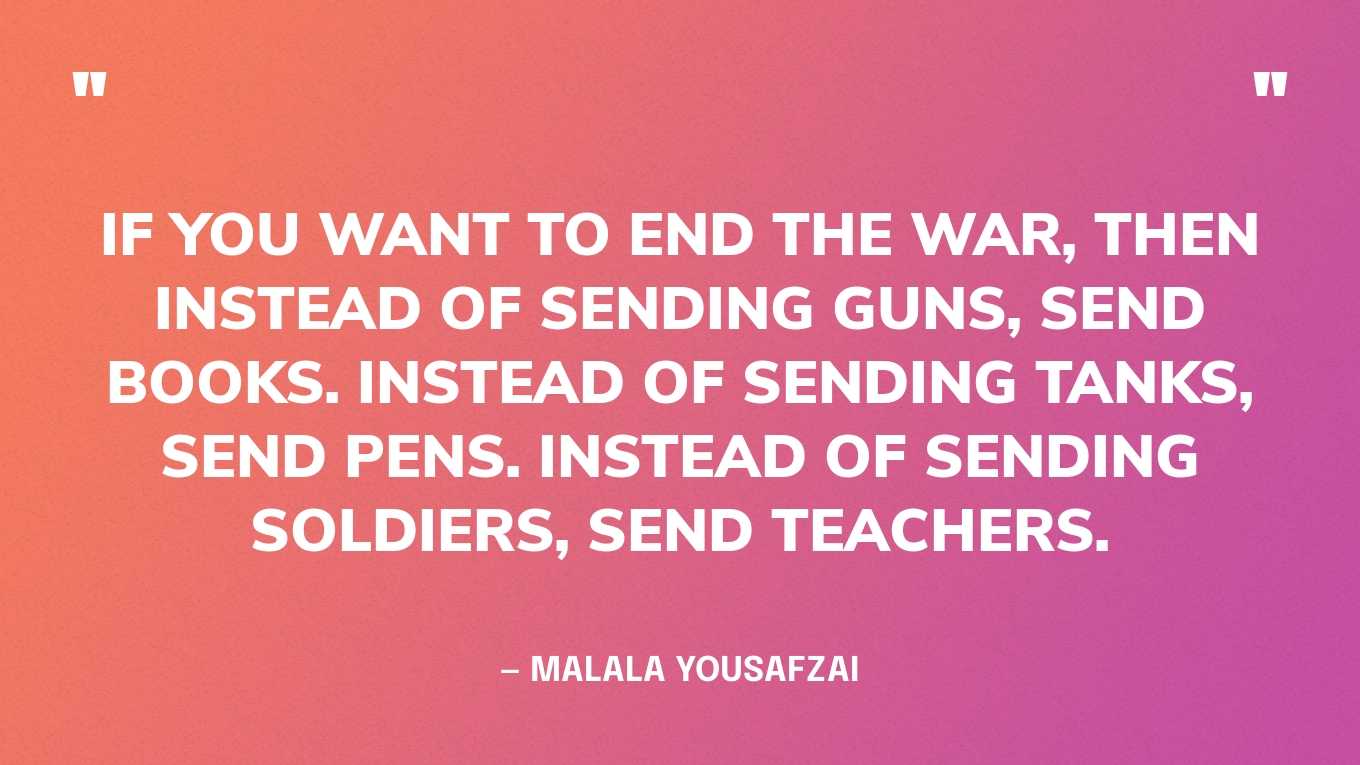
“Is world peace ever going to be a reality? Sadly, likely not in our lifetimes. But that does not mean we should give in to despair. Mahatma Gandhi once said, ‘When I despair, I remember that all through history the way of truth and love have always won. There have been tyrants and murderers, and for a time, they can seem invincible, but in the end, they always fall. Think of it — always.’”
— Jane Goodall
“Imagine all the people living life in peace. You may say that I’m a dreamer, but I’m not the only one. I hope someday you’ll join us and the world will be as one.”
— John Lennon, Imagine
“Peace cannot be achieved through violence, it can only be attained through understanding.”
— Ralph Waldo Emerson
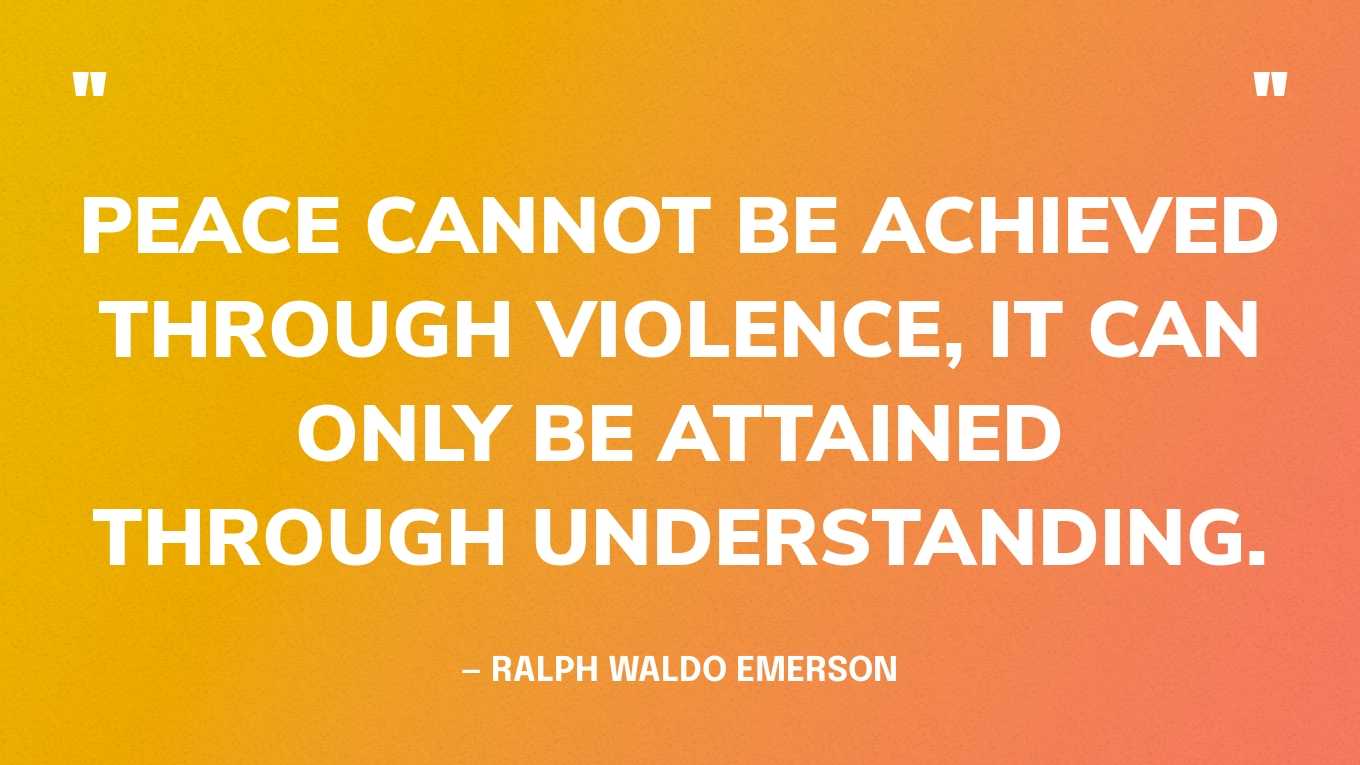
“Courage is the price that life exacts for granting peace.”
— Amelia Earhart
“World peace must develop from inner peace. Peace is not just mere absence of violence. Peace is, I think, the manifestation of human compassion.”
— The Dalai Lama
“Not one of us can rest, be happy, be at home, be at peace with ourselves, until we end hatred and division.”
— John Lewis
“Peace is the only battle worth waging.”
— Albert Camus
“The more we sweat in peace, the less we bleed in war.”
— Vijaya Lakshmi Pandit
“That’s all nonviolence is — organized love.”
— Joan Baez
“Peace cannot be kept by force. It can only be achieved by understanding.”
— Albert Einstein
“An eye for an eye only ends up making the whole world blind.”
— Mahatma Gandhi
“Peace is our gift to each other.”
— Elie Wiesel
“Until we have the courage to recognize cruelty for what it is — whether its victim is human or animal — we cannot expect things to be much better in this world… We cannot have peace among men whose hearts delight in killing any living creature.”
— Rachel Carson
“We can’t just hope for a brighter day, we have to work for a brighter day. Love too often gets buried in a world of hurt and fear. And we have to work to dig it out so we can share it with our family, our friends, and our neighbors.”
— Dolly Parton
“Small acts, when multiplied by millions of people, can quietly become a power no government can suppress, a power than can transform the world.”
— Howard Zinn
“If you don’t know the guy on the other side of the world, love him anyway because he’s just like you. He has the same dreams, the same hopes and fears. It’s one world, pal. We’re all neighbors.”
— Frank Sinatra
“I think it’s naive to pray for world peace if we’re not going to change the form in which we live.”
— Godfrey Reggio
“I believe we are here on the planet Earth to live, grow up and do what we can to make this world a better place for all people to enjoy freedom.”
— Rosa Parks
“Peace cannot exist without justice, justice cannot exist without fairness, fairness cannot exist without development, development cannot exist without democracy, democracy cannot exist without respect for the identity and worth of cultures and peoples.”
— Rigoberta Menchu, Nobel Peace Prize laureate
“World peace, like community peace, does not require that each man love his neighbor — it requires only that they live together with mutual tolerance, submitting their disputes to a just and peaceful settlement.”
— John F. Kennedy
“Peace comes from being able to contribute the best that we have, and all that we are, toward creating a world that supports everyone. But it is also securing the space for others to contribute the best that they have and all that they are.”
— Hafsat Abiola
“We who in engage in nonviolent direct action are not the creators of tension. We merely bring to the surface the hidden tension that is already alive.”
— Martin Luther King Jr.
“Don’t wait for a better world. Start now to create a world of harmony and peace. It is up to you, and it always has been. You may even find the solution at the end of your fork.”
— Sharon Gannon
“Peace is not something you wish for, it is something you make, something you are, something you do and something you give away.”
— Robert Fulghum
In the wake of an ongoing humanitarian crisis in Israel and the Gaza Strip, both Jewish and Muslim communities worry about a rise of hate crimes around the globe.
Tragically, this weekend, Wadea Al-Fayoume, a six-year-old boy in Chicago was reportedly killed by his landlord for being Palestinian and Muslim.
Al-Fayoume and his mother, Hanan Shaheen, were stabbed in their home by their landlord, who, according to the Will County sheriff’s office, was motivated by hate for Muslims amid the fighting in Israel and Gaza.
The landlord, Joseph M. Czuba was charged with first-degree murder, attempted first-degree murder, two counts of hate crimes, and aggravated battery with a deadly weapon, according to NPR.
Shaheen is currently recovering in the hospital from serious injuries.
Attorney General Merrick Garland said The Justice Department opened a hate crime investigation into the attack.
As a way to bridge divides and show solidarity, a group of Chicago-area rabbis attended the funeral of Al-Fayoume.
Skokie Valley Agudath Jacob Synagogue’s Rabbi Ari Hart was one of the rabbis present at the service. He wrote about the experience in a Facebook post, sharing that he spoke with the Imam of the mosque where the funeral was held, as well as Al-Fayoume’s father.
“We witnessed the pain. We expressed our shock and condemnation of the attack. We wept,” Rabbi Hart writes.
Also in his post, Rabbi Hart shared: “The Jerusalem Talmud teaches that the Jewish people are obligated to comfort the mourners of our people and of all people because of the darchei shalom — the paths of peace.”
“The murder of a six year old because of his faith and identity is not complicated. It is a heinous crime. And that’s why we went today.”
Rabbi Hart has a reputation for other acts of solidarity among his community. Three years ago, he started a community program called “Solu,” stemming from a word from the Haftorah meaning to make a path.
Solu aims to use an interfaith approach to do more good during a three-week period of activism and programming every year.
The first Solu program formed alongside African-American Christians to host a book drive and build furniture for families in need.
Rabbi Hart’s second Solu program connected the synagogue’s community to The Rohingya, a Muslim minority group from Burma. Rabbi Hart helped organize English language and citizenship classes, daycare, a youth club, a dinner of traditional foods, and more.
Outside of Solu, Rabbi Hart has partnered with communities combating gun violence, led anti-hate vigils, and advocated for women, LGBTQ+ and disabled members of his community.
“We have these ideals that we’re trying to manifest in the world,” Rabbi Hart told nonprofit news outlet The Forward.
“Judaism is not just something relegated to prayer halls, but something that needs to be in the streets. For people with deep Torah values and a desire to make the world a better place beyond communal boundaries, we create a path and invite them to walk it with us.”
Arab-Jewish solidarity has inspired a sense of hope in other parts of the world, as well.
On October 12, Muslim women led an interfaith vigil for victims of Hamas’ attacks in Israel outside of the White House. Leaders of the American Muslim & Multifaith Women’s Empowerment Council gathered with other diverse faith groups to mourn and mobilize against hate.
“We cannot let extremists hijack defame the word of God in the name of hate and atrocity, Anila Ali, AMWEC’s President, told Forbes.
In Israel, multifaith organizers have also been working together to help protect people of all backgrounds after the October 7 attacks.
In Jaffa, a city south of Tel Aviv, activists in WhatsApp groups developed a joint Arab-Jewish civil guard (unarmed) that alerts authorities if violence breaks out. The groups now include over 1,000 people, according to The Guardian.
Volunteers have also teamed up to search for missing Israelis, cooked meals for families who have been displaced, and more.
Abed, a team member with nonprofit Standing Together, told The Guardian: “I hope the solidarity we have built between different communities can endure against such a polarizing moment.”
Imagine a world where you could pick out an outfit without worrying about the cost of fabric, access to high-quality materials, or even the effects of gravity.
According to The Dematerialized co-founder Karinna Grant, digital clothing will be a realistic possibility in the next decade.
“By 2033, you just might have a smaller wardrobe than you have now … because dematerialization will have taken over fashion,” Grant said at the TEDWomen conference.
The digital couture expert and fashion professor teased the concept of a future where the lines between digital and physical clothing are blurred for the better.
“When you design virtually, you have limitless possibilities,” Grant said in her Talk.
Digital fashion could reduce the harmful consequences of fast fashion.
A move toward digital fashion could be the answer to clothing overproduction and the harmful cycle of fast fashion.
Fast fashion perpetuates unfair labor practices and leads to poor working conditions for garment workers around the world.

Fast fashion also has a negative impact on the environment. There has been a concerning surge of clothing waste over the past half-century, but Grant said that digital fashion could “help reduce the impact of the 92 million tons of clothing that end up in landfills each year.”
“Looking to the future, by 2033 it’s probably likely that you’ll have a Spotify-style subscription to download the latest fashion to wear on your work hologram calls or to flex on your avatar to a virtual gallery opening,” Grant said in her Talk. “Just another couple reasons why that wardrobe of yours might have a lot less in it.”
Digital fashion trends are already being implemented in 2023.
Digital clothing could revolutionize the fashion industry over the next decade, but some businesses are already implementing digital trends today.
“Digital versions of physical products and digital-only products are making their way into our lives through gaming, social media, and shopping,” Grant said in her Talk.
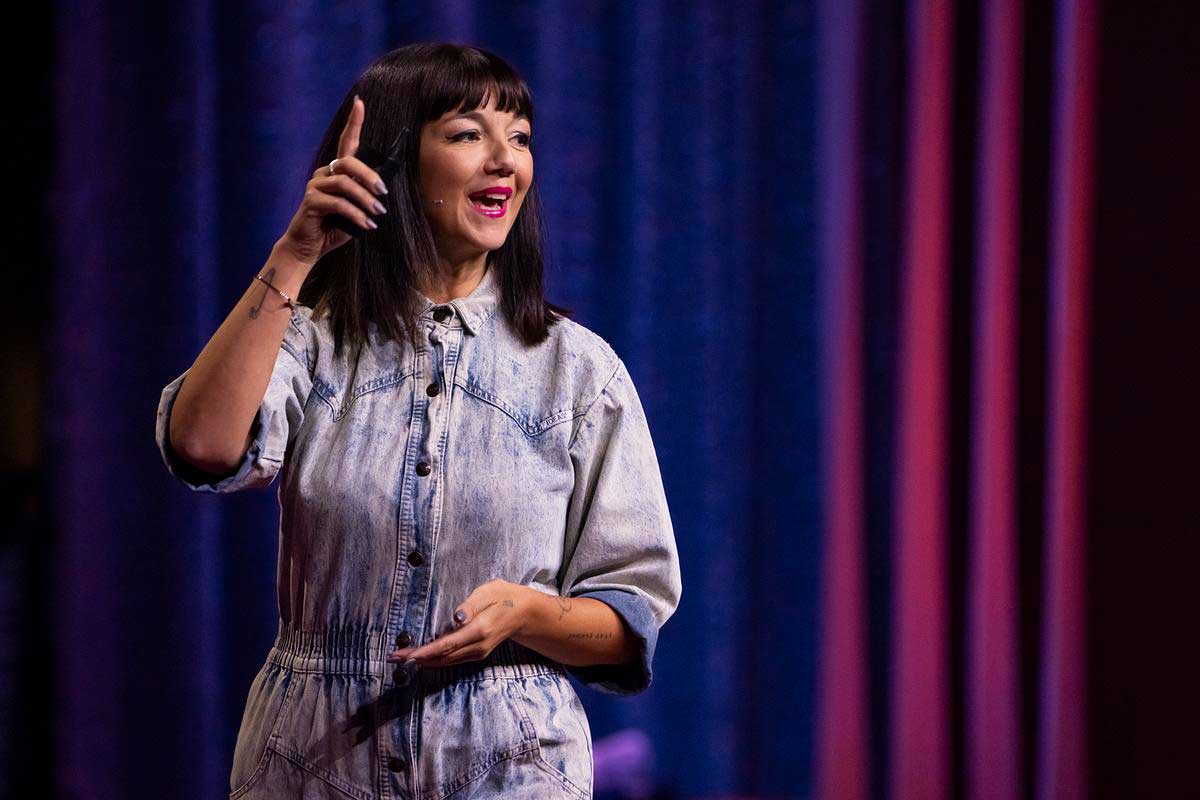
But it’s not just virtual reality skins and Balenciaga outfits on Fortnite. Groundbreaking apps like Save Your Wardrobe are already in place to help consumers cut down on clothing waste in real life.
“Save Your Wardrobe is an amazing tool that digitizes your wardrobe [and] helps you style outfits together and facilitates care and repair, so that your outfits last longer,” Grant said.
Other websites like Style.me and PICTOFiT.com allow consumers to virtually “try on” clothes before they buy them by uploading outfits to their digital avatar.
Grant believes this could eliminate e-commerce return rates, which have soared between 40 and 60 percent.
“E-commerce return rates [have] a real environmental cost,” Grant warned. “How about if retailers helped try things digitally, before we purchase them physically?”
Digital clothing could democratize fashion consumption and creation.
Grant expects digital fashion will completely change the way people buy and create clothing.
“You could update the clothes that you’re wearing with new messages [and] slogans on a daily basis,” Grant said in her Talk.
The rate at which people can change their outfits could also affect the rate at which fashion trends come and go — and who is dictating those trends.
“The types of garments, styles, and the types of creativity we’ll see will be broadened, and also the barriers to entry — whether you’re a creator or a consumer — will be lower,” Grant told Good Good Good.

Grant thinks this democratization of clothing will generate a “bottom-up movement rather than a top-down movement” where individuals and small businesses will be the biggest influencers in the market.
“We’ll be able to see this power shift and power balance, particularly for creatives who can be empowered from a social capital, economic capital perspective,” Grant told Good Good Good. “I think digital fashion breaks down all those barriers.”
Header image courtesy of Jasmina Tomic/TED
After leaving exhausting hospital care, chemotherapy, or surgery, the last thing anyone wants to do is clean their house.
Fortunately, the nonprofit Cleaning for a Reason provides free home cleanings to cancer patients so they can focus on rest and recovery — not household chores.
Debbie Sardone — founder of Cleaning for a Reason — told Denver 7 News that the service comes with “no strings attached.”
“We have over 1,200 cleaning services throughout the entire United States and Canada, giving back to their community by serving families who are battling cancer with the gift of free cleaning,” Sardone said.
The concept of Cleaning for a Reason first came from a phone call.
Sardone was running a cleaning company when she received a call from a woman in chemotherapy. After Sardone gave her a quote, the caller said she couldn’t afford it because of her treatment expenses.
“I was in business mode and I wasn’t thinking and we hung up — and this was before the days of caller ID,” Sardone recollected. “And I sat there at my desk and I wondered, ‘Why did I not think to just offer her the cleaning for free?’”

Since it was founded in 2006, Cleaning for a Reason has partnered with 1,300 cleaning companies, served over 50,000 patients, and donated about $15 million in services.
Cleaning for a Reason is a designated charity of ISSA, the Worldwide Cleaning Industry Association. The nonprofit relies on a vast network of residential cleaners and volunteers to sweep in and help people who are emotionally drained and physically limited.
“After my cancer diagnosis, I tried to wrap my head around what it would mean on a practical level to not really use either of my arms for six weeks after bilateral surgery,” one client, Elyssa, said in a website post. “[This] program swept in and did what I couldn’t.”
Cleaning for a Reason recently partnered with cleaning company, Truly Free, which specializes in non-toxic and refillable cleaning supplies that are better for people and the environment.
Starting this October, in honor of Breast Cancer Awareness month, Truly Free is donating free cleaning supplies to cancer patients and Cleaning for a Reason’s partner companies. Just one of many partner companies, the brand hopes to make a ripple effect for Cleaning For A Reason, pledging to continue donating supplies on a monthly basis for the foreseeable future.
“Truly Free is committed to making a difference in the lives of cancer patients,” said Stephen Ezell, CEO of Truly Free. “We firmly believe that everyone, particularly those battling cancer and facing weakened immune systems due to treatment, deserves a safe and non-toxic home environment.”
Any individual with cancer living in the U.S. or Canada can qualify for Cleaning for a Reason. They can sign up directly or be nominated by a friend or family member.
Header image courtesy of Cleaning for a Reason

One of the most heartbreaking and violent conflicts in our world right now is occurring in Sudan, where, in April of this year, violent civil conflict between the Sudanese Armed Forces and the Rapid Support Forces broke out and displaced at least 5.6 million people.
Not only have millions been displaced, but thousands have been killed. The conflict has devastated the nation’s health system and has left an estimated 24.7 million people (over half of Sudan’s population) needing urgent humanitarian support.
In addition to the targeting of health workers and health facilities, increased gender-based violence, and a crisis of internally displaced people, the disbursement of humanitarian aid has also been disrupted by the conflict.
For months, on-the-ground responders have struggled to secure access to supply routes, electricity, internet, and fuel, and some militant groups are reported to have stolen and pillaged aid supplies.
The good news? A collaborative effort between global humanitarian health organization Project HOPE and Airlink (as well as key partners, including MAP International, Flexport.org, Astral Aviation, and Qatar Airways), has secured a delivery of $13 million worth of vital aid supplies.
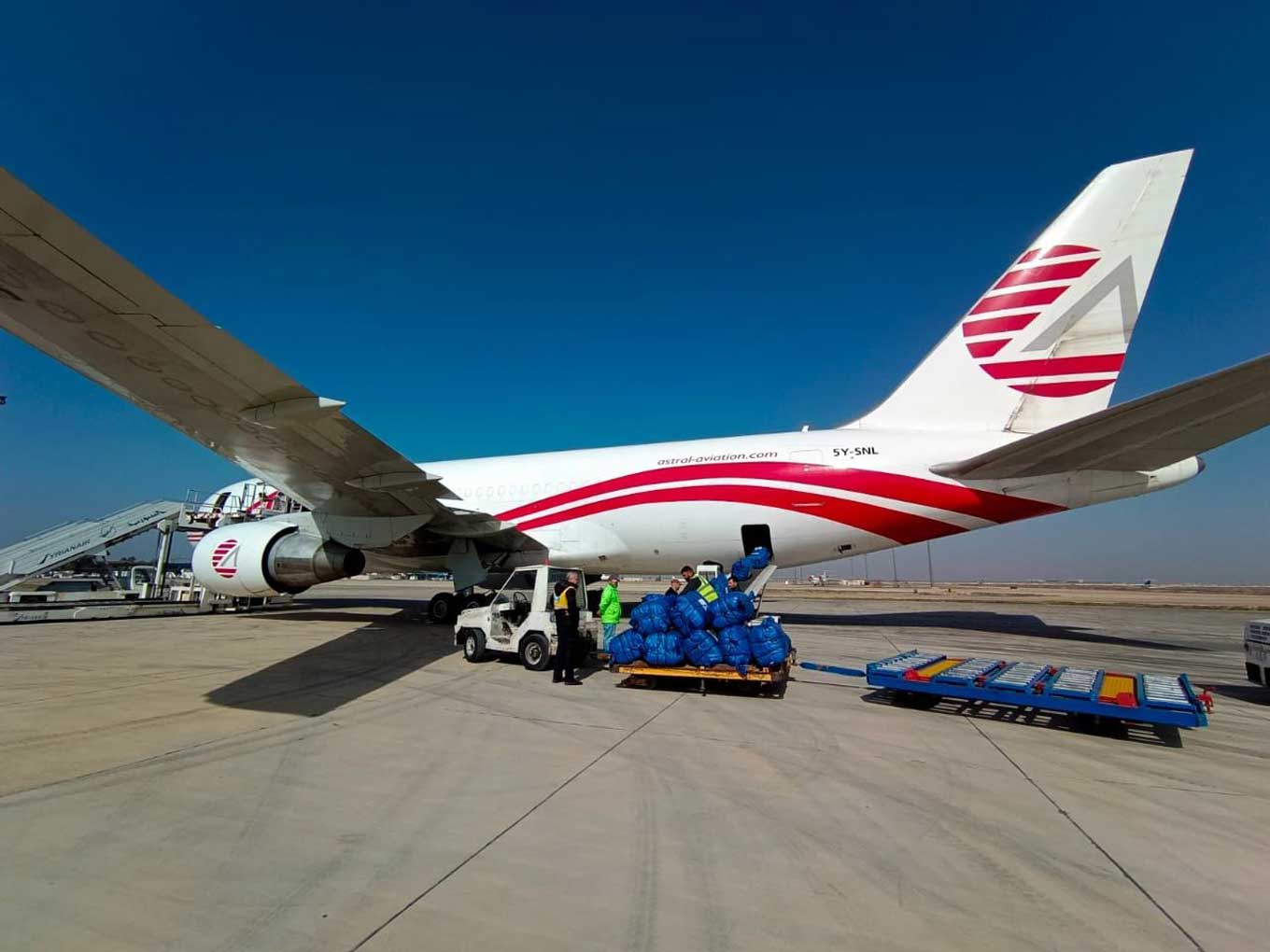
These supplies, including medical necessities, pharmaceuticals, hygiene supplies, and food, weigh in at 24,000 pounds. They will support over 100,000 people across Sudan, where communities are grappling with increased cholera and dengue outbreaks in the face of violence and displacement.
“This shipment is a lifeline for many hospitals that are lacking the supplies and resources to address the influx of patients seeking care and lifesaving medication for everything from cholera to gunshot wounds to pregnancy,” Arlan Fuller, director of emergency preparedness and response for Project HOPE, said in a statement.
“This partnership exemplifies the essence of humanitarianism — nonprofits and corporations coming together to share resources and knowledge to reach those who need support the most.”
Project HOPE will work with the Sudanese American Physicians Association to oversee the distribution of the shipment, ensuring that hospitals and health facilities facing the most critical shortages are prioritized to continue their vital work.
“SAPA is honored to continue supporting health personnel in Sudan who have been working tirelessly to provide essential medical services. This shipment will ensure that hospitals and doctors on the ground are able to obtain the supplies necessary to carry out their incredible work,” Yasir Elamin, president of SAPA, said in a statement.
“We are grateful for the opportunity to collaborate with Project HOPE and so many incredible partners to deliver much-needed medical aid to the region.”
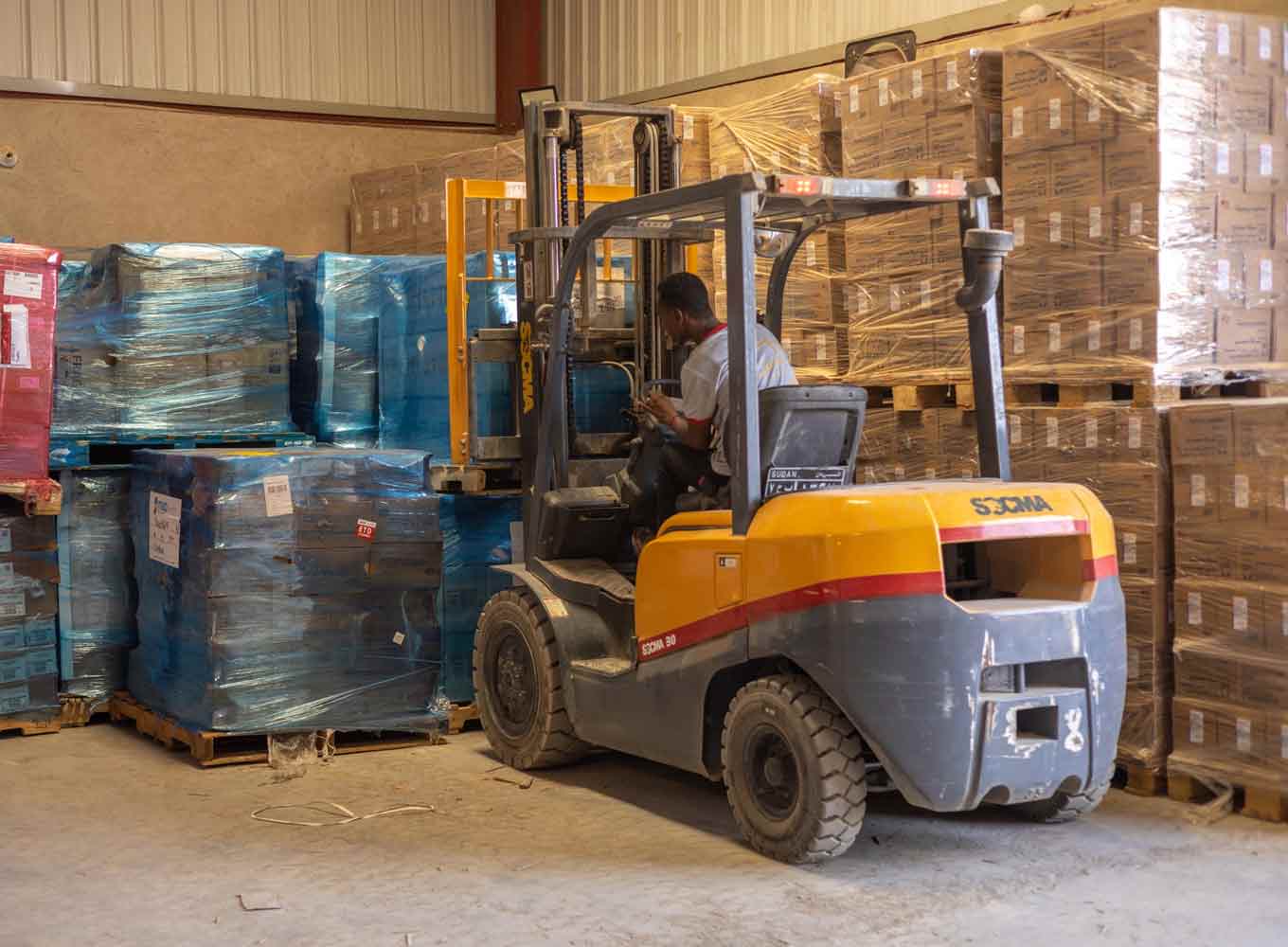
By partnering with donors and partners in the private aviation sector, this shipment “makes the impossible possible,” according to Steve Smith, the president and CEO of Airlink.
In addition to essential medical supplies such as syringes, wound care, antibiotics, antiparasitics, and pain relievers, the shipment will also include items like prenatal vitamins, oral rehydration tables, and protective equipment.
As displaced populations also face mounting food insecurity, the shipment will also include therapeutic food, to help those facing exacerbated conditions in the area.
“Airlink’s partners have struggled to get needed medical aid into Sudan since the conflict broke out in April, owing to the limited flight options and high cost of airlift into Port Sudan — the country’s only operating airport,” Smith said in a statement.
“We are proud to say, we’ve found a way to get aid there. … We hope this is just the start of our work in Sudan, breaking down the logistical barriers to get aid where it is needed most.”
Header image courtesy of SAPA/Project HOPE
Every day the Good Good Good team collects the best good news in the world and shares it with our community. Here are the highlights for this week!
If you want to get good news in your inbox every day, join the Goodnewsletter — the free daily newsletter designed to leave you feeling hopeful.
The Best Positive News We’re Celebrating This Week —
To boost climate awareness and literacy, New Jersey just established the first ‘Office of Climate Education’ in the country
To continue building on its legacy as a leader in climate education (it became the first state to require schools to teach about climate change in 2020), New Jersey just made history as the first state in the U.S. to establish an Office of Climate Education. The goal of the office is to improve climate literacy and environmental awareness among the state’s students and educators.
The state’s governor said the office is their way of taking a “proactive stance” in the face of increasingly frequent and intense climate-related events. It will help prepare young people “to innovate, lead, and shape effective solutions for a greener world.”
The office will help implement the state’s standards for Climate Change Education, prepare students for future jobs in the green economy, and more.
Why is this good news? Climate change education is overwhelmingly supported by young people, parents (84%), and teachers (86%), but most states don’t require it, provide misinformation, or deny climate change entirely. New Jersey offers an alternative blueprint for states to embrace.
In just three years, California increased its grid battery storage capacity from 500 megawatts to over 5,000 megawatts
One of the greatest challenges to the clean energy transition is storage — building enough capacity to store energy for when renewable energy sources, like wind and solar, aren’t producing enough to meet the real-time demand, like at night.
California is meeting that challenge head-on, and according to a recent report, is putting battery storage online faster than any other kind of power plant. Battery capacity in the state reached 5,000 megawatts in May this year — up from 500 megawatts in 2020.
The batteries they’ve gotten online have already paid dividends, backing up the state’s electric grid during its heat wave in September 2022.
The state has been able to lead the way through long-term policy strategy that prioritized storage for renewable energy. Like in 2010, when it ordered state utility services to install storage in anticipation of all the renewable energy capacity that would be built in the coming years.
A new recycling program will provide detailed, local recycling instructions with the scan of a QR code
According to the national nonprofit The Recycling Partnership, about 60% of consumers are confused about what and how to recycle. Understandably so, since the recycling rules differ based on where you live. And that confusion contributes to low recycling rates in the U.S. — around 32% and under 6% for plastics.
The nonprofit wants to change that and launched a new program called Recycle Check, which will put a QR code on consumer products with hyper-local instructions about how to recycle the item.
Several larger brands have already signed up for the program, which will provide real-time instructions on how to recycle an item based on your ZIP code when scanned. And the information will update in real-time if a facility changes what materials it accepts or rejects.
What’s the nuance? Recycling isn’t a perfect solution to the problem of waste and pollution around the world — even before we get to the act of recycling, we ought to first be doing our best to do the other “R’s” — refuse, reduce, reuse, and repair. Even better: the companies who produce it should be responsible for recycling it.
→ Read more
In an act of solidarity, a group of Chicago-area rabbis attended the funeral of the 6-year-old boy killed in anti-Muslim hate crime
Tragically, this weekend, Wadea Al-Fayoume, a six-year-old Palestinian-American boy in Chicago was reportedly killed by his landlord for being Palestinian and Muslim.
Al-Fayoume and his mother, Hanan Shaheen, were stabbed in their home by their landlord, who, according to the Will County sheriff’s office, was motivated by hate for Muslims amid the fighting in Israel and Gaza. Shaheen is now recovering from her serious injuries.
To share in the grief of their neighbors over the “heinous crime,” a group of Chicago-area rabbis attended Al-Fayoume’s funeral. Rabbi Ari Hart shared on Facebook that they wept and mourned with the community, Al-Fayoume's dad, and condemned the attack.
Why is this good news? In times of tragedy, it’s more important than ever that we reconnect with our shared humanity — and Rabbi Hart said it best: “The murder of a six year old because of his faith and identity is not complicated. It is a heinous crime. And that’s why we went today.”
→ Read more
Malala just announced a $300,000 donation to three charities providing relief to Palestinians in Gaza
Nobel Peace Prize winner Malala Yousafzai just announced a $300,000 donation to organizations working to meet immediate needs of Palestinian people in Gaza.
Malala’s donation will support three organizations: Anera, which has helped refugees and vulnerable communities in Palestine, Lebanon, and Jordan since 1968; The PCRF, a nonprofit organization addressing the medical and humanitarian crisis facing children in the Middle East; and UNRWA USA National Committee Inc., a nonprofit showing Palestinian refugees that Americans care.
What’s the nuance? The scale of the heartbreak and injustice of what's happening in Israel and Palestine is too large to fathom. While it’s important to celebrate individuals like Malala stepping up and doing good in the ways that they can (and we’ll continue to share those stories!), diplomats and world leaders have the responsibility to bring an end to this crisis and save as many lives as possible.
→ Read more
In 24 hours, a group of humanitarians fed 30,000 people displaced in the war between Israel and Hamas
Earlier this week, Washington, D.C.-based chef José Andrés and his nonprofit World Central Kitchen — the global nonprofit that provides meals in the wake of natural disasters and crises by partnering with local chefs — announced they have helped feed thousands of families displaced by the ongoing war between Israel and Hamas.
In 24 hours alone, Anera, the nonprofit’s local partner in Khan Yunis (a city in the southern Gaza Strip), has been able to distribute 30,000 food kits and warm meals to Palestinian families seeking safety at shelters in the city. And they’ve been preparing and providing thousands of meals every single day.
According to the nonprofit’s website, it is also working with local restaurants across Israel, serving meals to people who have been displaced from their homes there.
Why is this good news? The war between Israel and Hamas is a humanitarian crisis; many innocent people have been caught in the middle of the volatile and escalating crisis — and its led to countless barriers to delivering crucial aid. When humanitarian organizations are able to overcome these barriers and help meet people’s most basic needs, it’s worth celebrating.
A woman in Congo has turned her “pain into power” by opening a leadership center and sanctuary for women in the country
After her best friend was murdered in the Democratic Republic of the Congo in 1998, Christine Schuler Deschryver dedicated her life to ending violence in her region and empowering the women of Congo.
Deschryver is the co-founder and director of City of Joy, which is both a leadership center and sanctuary for women in war-torn Congo. Since it opened in 2011, the center has served 90 women at a time – from ages 18 to 30 – for six-month spans. Since then, 1,987 women from the program have gone on to become restaurant owners, farmers, educators, entrepreneurs, and more.
Deschryver said that she opened City of Joy in the most “impoverished, impossible place in the world” and succeeded against all odds.
To help survivors of sexual violence heal and recover, the center prioritizes group therapy and uses song, art, dance, and creativity to build a sense of community. Women also have the opportunity to connect with nature as they learn to grow a range of foods, take care of farm animals, and make honey from beehives.
More good news of the week —
A Minnesota judge dismissed charges against three Native women for peacefully protesting an oil pipeline. The three activists, from the Mississippi band of Anishinaabe were arrested in January 2021 for protesting the Enbridge Line 3 pipeline while dancing to a drumbeat.
The flu vaccine is highly effective — but it works in a way that most people don’t (yet) appreciate. This year, the CDC has shifted its messaging to present a more nuanced (and accurate) framing of how the vaccine works to prevent serious illness.
The Hong Kong Fire Services Department is using artificial intelligence to find missing hikers. The region’s terrain is challenging to hikers and rescue services alike, but the fire department is partnering with a local tech startup to locate people lost in remote areas.
A 2,000-year-old water system is helping people in Sri Lanka cope with drought made worse by climate change. The hydraulic system uses natural features to help harvest and store rainwater and is a lifeline for rural communities.
The World Bank approved $365 million to help advance girls’ and women's empowerment in Africa. Bringing the bank’s total investment to over $1 billion, the funding will also support economic opportunities and access to health services to strengthen gender equality.
With 55,646 fans in attendance at a preseason game, Iowa just broke the women's college basketball attendance record. The previous record was just under 29,619 fans at the 2002 national championship game between UConn and Oklahoma.
The European Union is launching a “humanitarian air bridge” to get essential aid supplies into Gaza. The first two flights with supplies will be sent to Egypt this week to then be brought to aid organizations on the ground in Gaza.
In Nigeria, AI and a mobile app are helping save children’s lives. The app is helping mothers keep on top of their babies’ immunization schedules and lowering infant mortality rates.
In Massachusetts, farmers are restoring wetlands by turning former cranberry bogs into carbon-storing swamps. Wetlands are effective at storing carbon, filtering overabundant nutrients (like nitrogen) out of water, provide good fish habitat, and can serve as buffers that shield nearby communities from flooding and sea-level rise.
A new PlayStation controller is making play easier for gamers with disabilities. With its adaptive design principles, the new controller could also be a gamechanger for aging gamers suffering from arthritis or other limiting conditions.
Parking lots across the U.S. are being turned into affordable housing and parks. There are currently between 700 million and 2 billion parking places in the U.S., but as cities realize that they’ve built more parking than they need, they’re repurposing these car-centric areas to better serve communities.
Crash and fatality rates for drivers under 21 years old have fallen sharply in the U.S. in the past 20 years. Young people are driving less than they were 20 years ago, but state programs that phase in driving privileges for teens (such as driving at night or with peers) were also a significant reason for the dramatic improvement.
Scientists created a biodegradable sponge that can soak up microplastics. The new invention could be used in wastewater treatment plants to filter microplastics out of the water or in food production facilities to decontaminate water.
A new device could make life easier for those with Type 1 diabetes by freeing them from insulin injections and pumps. MIT engineers have created an implantable device that’s about the size of a quarter and could mitigate the daily difficulties, discomfort, and potential health problems the condition brings.
The Supreme Court of Mauritius just overturned an 1898 law criminalizing same-sex relationships. Four years ago, four young people in the East African nation filed a legal challenge against the law, and the new court ruling said the law did not align with the values of indigenous Mauritians.
Former USAID Administrator Mark Green said: “When women do better, countries do better, communities do better, and families do better.”
Every day, activists and nonprofit organizations work to eliminate wage gaps, minimize violence, and support women in marginalized communities around the world.
We can celebrate the leaps in progress made in voting rights, governance, financial autonomy, and education access while continuing to fight for true gender equality.
Here is a comprehensive list of actions that everyone — regardless of gender — can take part in to empower the women and girls in their lives.
How to support women and girls
Practice inclusivity at work.
It is important to strive for inclusivity in the office — and that goes beyond equitable hiring practices. It’s also about the culture that you create in your workplace.
Men tend to gravitate toward other men when it comes to workplace connections, which can make for a boy’s club mentality.
Mentorships — and even office friendships that extend outside the office — can open doors and set people up for promotions. If you are a man in a position of seniority at your office, practice inclusivity toward all coworkers and offer support to younger female peers.
If you are a woman in power, be cognizant of young women entering the workplace and offer them a seat at the table. Empowered women empower women.
Close the wage gap.
Similarly, modern workplaces still have a long way to go when it comes to equal pay.
In 2023, American women still earn 15.5% less than men. But the wage gap is only a part of a larger social problem of patriarchal gender stereotypes still at play in daily life.
Unfortunately, a double standard exists in a majority of workplaces where positive qualities in men — like aggressive leadership and outspoken values — are perceived as problematic behavior in women.
You can help dispel harmful hypocrisies like this by giving credit and support to the female coworkers in your workplace and encouraging them to apply for promotions and work programs.
You can also unilaterally support everyone in your workplace by practicing wage transparency and reporting unethical behavior to human resources.
Support new moms.
A new mother goes through countless physical, hormonal, and psychological changes before and after giving birth, which can place them in a vulnerable position. According to the National Library of Medicine, one in seven women are at risk of developing postpartum depression.
If there is a new mother in your life, you can offer support in a variety of ways: dropping off prepared meals, offering to babysit, helping clean around the house, and even simply picking up the phone and checking in on them.
Having an open line of communication with a new parent can be just as important on the first day of their baby’s birth as it is 3, 6, and 12 months in.
Protect women’s reproductive rights.
When Roe v. Wade was overturned in 2022, a ripple effect tore through the U.S. that shut down health clinics, limited access to women’s health care, and placed many pregnant women in dangerous situations.
In June of 2023, a nationwide Gallup poll revealed that 85% of Americans believe that abortion should be legal in all or some circumstances. And yet, 12 states have placed near-total bans on abortion with very limited exceptions.
There are many ways that you can advocate for abortion rights and reproductive freedom. You can research restrictions in your state, support abortion funds on a local level and national level, or even become an abortion clinic escort.
Help women in crisis.
Unfortunately, 1 in 3 women will experience sexual or physical assault in their lifetimes at the hands of their domestic partner.
If someone you know is being abused, it is important to listen to them without judgment. There are many reasons that victims can become trapped by their abuser: emotional manipulation, lack of finances, or threat to their safety or the safety of their pets or children.
You can encourage them to build a wide support system outside of their abuser, validate the harm that has been inflicted on them, and provide them with resources, such as local women’s shelters.
You can also research code words and hand signals that relate to women’s safety. In 2020, an international hand gesture was created that could be covertly used by victims of violence to signal that they were in danger.
Most importantly, you can support nonprofit organizations like The National Domestic Violence Hotline, Futures Without Violence, and Safe Horizon — which provide support and resources to women fleeing domestic violence or recovering from assault.
Support education for girls around the world.
Access to education can literally be lifesaving.
The Education For All Global Monitoring Report estimated that if all women had a secondary education, child deaths would be cut in half, saving 3 million lives.
Literacy and education are tantamount to ending child marriages and young pregnancies, bridging healthcare gaps, and empowering women to lead businesses in their communities.
To help, you can donate to nonprofit organizations like the CAMFED, a Pan-African organization that has funded the education of 1.6 million girls in secondary schools and seeks to educate 5 million by the end of the decade.
Support women-owned businesses.
Although 42% of U.S. businesses are owned by women, there is still a significant disparity in the amount of revenue generated by female- and male-operated businesses.
To help close the gap, you can research women-owned businesses in your community by looking through your local business directory or asking friends and family for recommendations.
We’ve also curated a list of women-owned businesses you can support online. The list specifically includes companies that are ethical, sustainable, and give back.
Be respectful of women in public spaces.
Crowded spaces like bars, clubs, and subways can be nightmarish for a lot of women. Poorly lit establishments and throngs of people can leave them susceptible to inappropriate touches, grabs, and uncomfortable exchanges.
Although a long trail of Hollywood movies has perpetuated the idea that women like to play “hard to get,” the modern reality is that the ideal night out involves enthusiastic consent from both parties.
When spending time with women in public, keep an eye out for predatory behavior and make sure that everyone in your friend group can get home safely. You can even take a bystander intervention training to learn how to intervene and de-escalate potentially dangerous situations in public.
Normalize women’s health.
For far too long women’s health has been the butt of the joke in TV sitcoms, boardroom meetings, locker rooms, and dinner table discussions. Although the average person with a uterus will have 450 periods in their lifetime, menstrual cycles are still treated with disgust and ignorance.
The easiest way to normalize and support women’s health is to have menstrual products available in your workplace or home within easy reach of a bathroom cupboard. Even if you’re a woman with a diva cup or a man living by yourself, consider the possibility that a friend, family member, or neighbor might need a tampon or pad unexpectedly.
If you hear distasteful jokes about periods, menopause, or pregnancy, speak up and shut it down. Be kind and supportive when women are vulnerable about their physical health and chronic pain.
Donate to women and teen girls experiencing homelessness.
Although the majority of people experiencing homelessness in the U.S. are male, there has been a 35% increase in women experiencing homelessness since 2016.
Women and girls experiencing homelessness grapple with unique challenges compared to men. They face limited access to necessary menstruation products like tampons and pads — which are taxed as luxury goods in a majority of states across the U.S.
Alarmingly, unhoused women and young girls are also extremely vulnerable to sexual assault, forced prostitution, and human trafficking.
We’ve created a few resources on how to help people experiencing homelessness in general — including this guide on how to help folks who are homeless, this guide on how to create a homeless care package, and how to participate in seasonal events like Socktober.
In addition to these general guides, you can specifically support women and girls experiencing homelessness by donating to the Hope House Foundation, an organization that specifically provides housing and support for women in crisis and their children.
Header photo by Tara Etienne Levros, courtesy of USAID
It can feel overwhelming to live in our eco-friendly values when we have children, especially considering how quickly children grow, change, and age out of certain products.
In fact, consumers throw 28.6 million toys away every year! Being mindful of the ones we choose for our kids is a significant first step in being kinder to our planet.
Eco-friendly toys are durable for long-lasting play, use non-toxic stains, glues, and dyes, have less plastic in the packaging and the toys themselves, rarely need batteries, promote creativity and imagination, and can support small artists, creators, and manufacturers.
If you have a kiddo in your life and are looking for a toy you feel good about gifting, these eco-friendly options will help you feel better knowing they are helping take care of the planet, all while creating their own unique little worlds.
By the way, some of the products and links in this article are affiliates, which means we may earn a commission at no extra cost to you. Everything in this article was independently and honestly written by the Good Good Good team. Thank you for your support!
Explore more eco-friendly gift guides: Best Eco Friendly Gifts | Inexpensive | For Him | For Her | For Mom | For Kids | For Coworkers
The best eco-friendly toys to gift the little ones in your life
Beeswax Crayons from Honeysticks

For the creatives who love to draw and color, Honeystick’s beeswax crayons are made with 100% natural New Zealand beeswax, vegetable fats, natural minerals and food-grade pigments.
The founders of Honeysticks are committed to making an impact on the world, living an eco-friendly lifestyle and using natural products for families.
Crayons are for all ages but are specifically designed for little hands and can be grasped without opposable thumb dexterity.
What’s good:
- Made with a natural by-product of honey production
- Contains no paraffin wax, fragrances or fillers
- Made with food-grade, non-toxic colors
- Recyclable product and packaging
Shop: Amazon | Honeysticks
Eco Bricks from Once-Kids
For the LEGO-loving kids, Once-Kids makes a natural wood alternative that is biodegradable and compatible with pre-existing LEGO pieces, allowing for a more sustainable alternative to mix in what you may already have.
Once-Kids is committed to keeping plastic out of oceans and landfills — and believes “that by educating consumers and offering sustainable alternatives, we can make a positive impact on our planet and its future.”
What’s good:
- Uses FSC-certified solid wood and bamboo, and natural non-toxic water-based paints
- Plants one tree for every product sold through a partnership with One Tree Planted
- Free from harmful chemicals that are often found in plastic bricks, such as ABS, BPA, phthalates, and PVC
- Sturdy and durable, which means they can withstand rough play and last for many years
- Promotes education about the importance of environmental conservation, sustainable practices, and deepens an understanding of the natural world
Micro Maxi Eco Scooter from Micro Kickboard

For adventurous kids, Micro Kickboard makes scooters, kickboards, and other innovative personal transport solutions to create a better, more eco-friendly lifestyle.
The company is passionate about fuel-free transport and has an eco line made from recycled fishing nets and plastic.
The scooter is super-safe with a smooth glide and three-wheel design, allowing kiddos more control when riding. It’s great for school-aged children or taller and has an adjustable handle bar so it will grow with your child (from ages 5-12, up to 110 pounds).
What’s good:
- Donates a portion of annual sales to 1% for the Planet
- Made from recycled fishing nets and plastic
- All parts are replaceable so you never throw it away, allowing you to pass it on to a sibling, cousin or friend when your young one is done
Therapy Dough from eco-kids

For the hands-on kiddos, eco-kids makes squishing and squeezing that much more fun.
The brand’s Therapy Dough comes in a number of colors and scents and all its ingredients are safe and natural, including essential oils, soybean oil, organic vegetable extract, salt, citric acid, and wheat flour.
Designed by art therapists, this putty helps promote fine motor skills, imagination, and sensory experiences.
What’s good:
- Made of all-natural ingredients
- Come with recyclable and reusable plastic jars.
- Ships plastic-free
Shop: EarthHero
“My Friend Earth” by Patricia MacLachlan

When your kid is more interested in reading than playing with toys, there’s an eco-friendly option for that, too! This book, “My Friend Earth” by Patricia MacLachlan, turns every day into Earth Day with bursting colors, textures, clever cut-outs, flaps, and curved contours that encourage exploration.
This book celebrates everything Earth does for us, all the while reminding us to be a good friend in return.
What’s good:
- Celebrates the natural world and is also a timely rallying cry for positive action for saving Planet Earth
- Great opportunity to share life science concepts and amazing facts about the environment with children
- Perfect for anyone looking for climate change books for kids, stories for boys and girls who love space and the solar system, or books that explore the science and wonder of nature
Wobble Board from Bunny Hopkins

Wobble boards are awesome for active play and development, using a simply-crafted wooden board for endless possibilities.
Made with child-safe materials and an open-ended design, the Bunny Hopkins wobble board lends itself to the vastness of childhood imagination, as your little one transforms it into a balance board, slide, rocker, bridge, and more!
What’s good:
- Handcrafted in the U.S.
- Made with sustainably harvested U.S.-grown birch wood
- Wood stains are non-toxic, water-based, and heavy metal-free
- Built to last and hold up to 450 pounds of weight
- Uses recycled paper and eco-friendly shipping materials
Shop: Earth Hero | Etsy | Maisonette
Flamingo Doll from Apple Park

Meet Franny the Flamingo! This plush doll from Apple Park is made with 100% GOTS-certified organic cotton and filled with naturally hypoallergenic corn fiber.
It’s a safe and snuggly alternative to plastic plush toys — plus, it’s just plain cute.
What’s good:
- Made with organic and hypoallergenic materials and colored with low-impact dyes
- Ships in plastic-free packaging
- Designed by woman-led team dedicated to using only organic, renewable, and recycled materials
Shop: EarthHero | Amazon | Apple Park
Lovevery Play Kits

Lovevery is a brand that enlisted the help of a whole panel of experts to create play kits that are perfect for every stage of childhood development.
With playthings and books delivered every 2-3 months, week-by-week developmental tips for parents, and a Play Guide that supports play time with your kiddo from age 0-4, every kit is built to last — and even be reused. The company has a Pre-Loved market for parents to shop, too.
What’s good:
- Made with “premium, natural materials”
- Available to sell or reuse through a Pre-Loved marketplace
- Parents can access an on-call Disability Support Specialist at no additional cost to help make the right, customized purchase for their kiddo
American Sign Language Blocks from Uncle Goose

Make building even more fun and engaging by adding some American Sign Language to the mix! These ASL blocks make learning the ABCs easier than ever with easy-to-follow diagrams.
Plus, they’re handcrafted by a small business in Michigan, made with basswood grown in the Great Lakes area.
What’s good:
- Materials include non-toxic inks and renewably sourced wood
- Wood is natural and uncoated
- Too big to be a choking hazard
- Packaged in recyclable cardboard
- Made in the U.S. by craftspeople paid a living wage
Shop: Uncommon Goods | Amazon
Micro D Snap-T Jacket from Patagonia

You’re never too young for your first Patagonia fleece. This jacket — which comes in sizes for babies and toddlers alike — is a stylish addition to their wardrobe to keep those chilly breezes on the playground from slowing them down.
Plus, there are plenty of stylish color options for even the pickiest of kiddos.
What’s good:
- Made with recycled materials in a Fair Trade Certified factory
- Patagonia donates a percentage of its sales to 1% For the Planet
- The company has a long history of environmental activism
- Available to shop used for shoppers on a budget or looking to reduce their carbon footprint
One last thing: If you’re looking for the best places to donate new and gently used toys, check out our guide.
When things go wrong in the world — and we mean really wrong — the first people to step in and take action are often humanitarian aid workers.
Whether communities are confronting war or violent conflict, climate disasters, or global pandemics (heartbreakingly, sometimes all of these things at once), humanitarians respond swiftly and with expertise and care. They’re the ultimate helpers.
According to the United Nations’ Global Humanitarian Overview from 2022, an estimated 274 million people needed humanitarian assistance and protection in 2022. These numbers show us that the world needs humanitarian support now more than ever.
In order to support the safety and longevity of the aid workers who step up to help, we need to understand the work they do — and perhaps learn what role we play in humanitarian aid, as well.
What is a humanitarian aid worker?
A humanitarian aid worker is anyone who works to provide humanitarian aid, which is defined by the United Nations as, “material or logistical assistance provided for humanitarian purposes, typically in response to humanitarian crises.” The objective of this work, according to the UN, is to “save lives, alleviate suffering and maintain human dignity.”
But most humanitarian aid workers have their own unique perspective on what it means to provide aid.
Nezahat Yildirim is the senior program and external relations manager for health and humanitarian nonprofit Project HOPE, representing Turkey and Syria. She joined the team in the direct aftermath of the recent devastating earthquake in the area. Her humanitarian career started in Iraq between 2004 and 2006.
“I have my own definition for [humanitarian aid,] which is ‘to help others when they are in need, regardless of their color, religion, gender, age, or nationality, and serve them with others if you are capable to,’” Yildirim told Good Good Good.
“Being a humanitarian aid worker means you should be ready and willing to help others and be able to travel immediately around the world when it’s needed.”
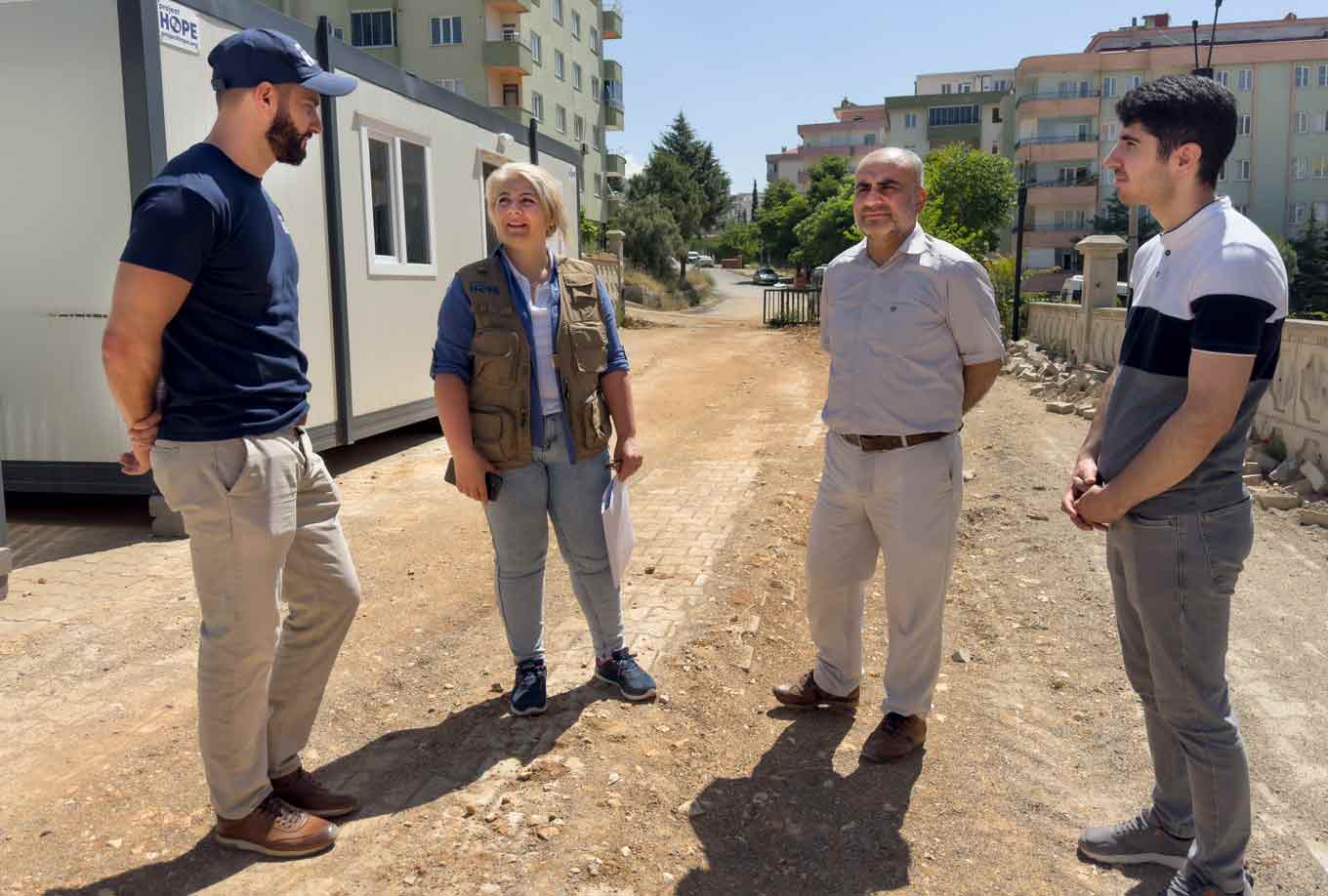
She put it simply: There are disasters, conflicts, and wars ongoing in countries around the world. And everyone deserves help.
“If you were in one of those countries or regions, you would expect someone to hear your voice and help you,” she said. “Being a humanitarian aid worker means having this empathy and wanting to help people in need in an unfamiliar place without distinction.”
That detail — “without distinction” — is foundational to the four principles of humanitarian aid, which lay the groundwork for individual aid workers as well as organizations that deploy aid around the globe.
What are the four principles of humanitarian aid?
The four principles of humanitarian aid broadly embraced by aid organizations globally include humanity, neutrality, impartiality, and independence. These are central to the approach of humanitarianism, centering an unbiased, transparent, and humane delivery of assistance to anyone who needs it.
Yildirim breaks these principles down for us even further.
She said humanity refers to the belief that all people have equal value and should be treated with respect and dignity.
“It is the duty of humanitarian aid actors to protect and assist those who are suffering, without discrimination or bias,” Yildirim said.
Neutrality, similarly, insists that humanitarian aid workers or aid organizations remain impartial and not take sides in conflicts or disputes.
“This allows them to gain the trust of all parties involved and to help and protect those who need it most, regardless of their affiliation or background,” Yildirim continued.
Impartiality refers to the principle that aid is delivered based on need alone, and not on any other factors, like ethnicity or political affiliation. This supports the idea of humanity, that all people are deserving of help, no matter who they are or what they believe.
“This ensures that the most vulnerable and marginalized people receive the help they need,” Yildirim explained.
Lastly, independence keeps humanitarian aid workers and organizations free from political, economic, or military influence.
“This allows [aid workers] to operate independently to aid and protect, based solely on the needs of the people they are serving,” Yildirim said.
By operating under these principles, the core objectives of humanitarianism can be reached, ending suffering, and saving lives on a huge scale.
Yildirim added, “When these principles are followed, …. it also promotes peace, stability, and security by addressing the root causes of conflict and by promoting respect for human rights and human dignity.”
How do humanitarian aid workers help people in need?
They put their lives on the line for others.
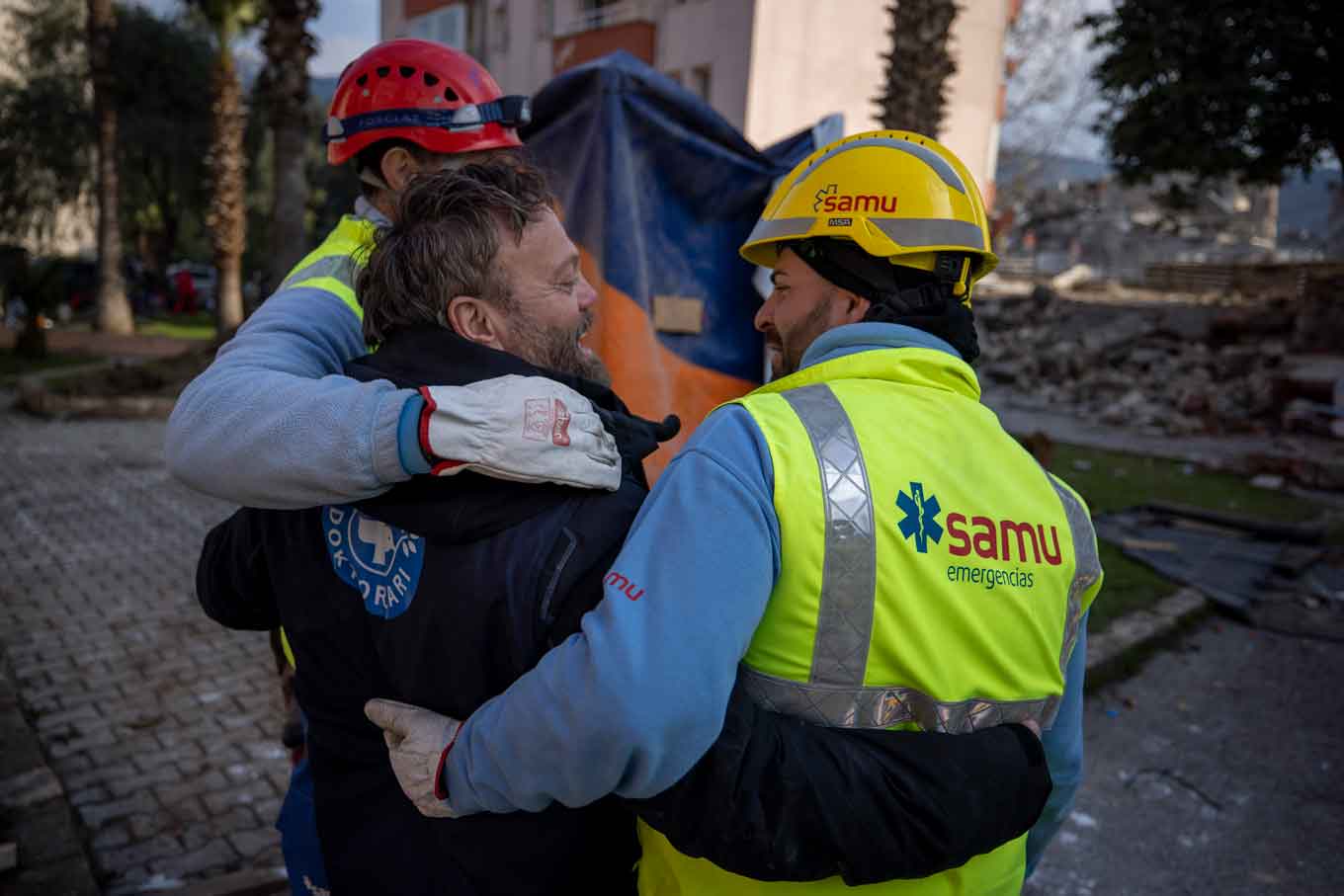
In August of 2023, the UN Office for the Coordination of Humanitarian Affairs shared that so far this year, 62 humanitarian workers have been killed in crises around the world — a staggering 40% increase from the same period in 2022.
Additionally, 84 aid workers have been wounded, and 34 have been kidnapped.
Aid work is a life-threatening job.
“Humanitarian aid workers, especially during the emergency response period, can often be victims of the crisis, directly or indirectly,” Yildirim said.
“Whether you are part of an international humanitarian organization's emergency response team or a member of a crisis-stricken community, you must first help yourself and should keep yourself calm. Only in this way can you also help others.”
The life-saving method of caring for yourself before others remains paramount, even in the most dire of situations. No matter what you do, Yildirim said, aid workers must stay intimately connected to the reality that the work they do puts them in danger.
“Despite all precautions and personal preparations, the most important issue that should not be forgotten is that you are doing a life-threatening job,” she said. “If you're doing this job by taking that risk, there's only one explanation for it; you love being a humanitarian worker.”
They provide necessary supplies for people in crisis.
When the UN was formed following World War II, like many humanitarian organizations, it focused on creating coalitions to solve problems that lead to humanitarian crises.
This led to arms of the UN, like the World Food Programme and the United Nations Population Fund, that distribute necessities to people in need. Other networks of humanitarian organizations are also vital to coordinating relief efforts.
This often includes the disbursement of life-saving supplies, such as food, medicines and medical equipment, blankets and tents, water, and more.
In fact, humanitarian organization Sphere has determined a commonly used and widely known set of minimum standards for humanitarian aid, focusing on four main areas of response in any crisis: Water supply, sanitation and hygiene promotion; food security and nutrition; shelter and settlement; and health.
“Without humanitarian aid, it would not be difficult to predict that people affected by these disasters and crises would face more dramatic conditions and deaths and diseases would spread inexorably,” Yildirim said.
They use their unique skills to respond to crises.
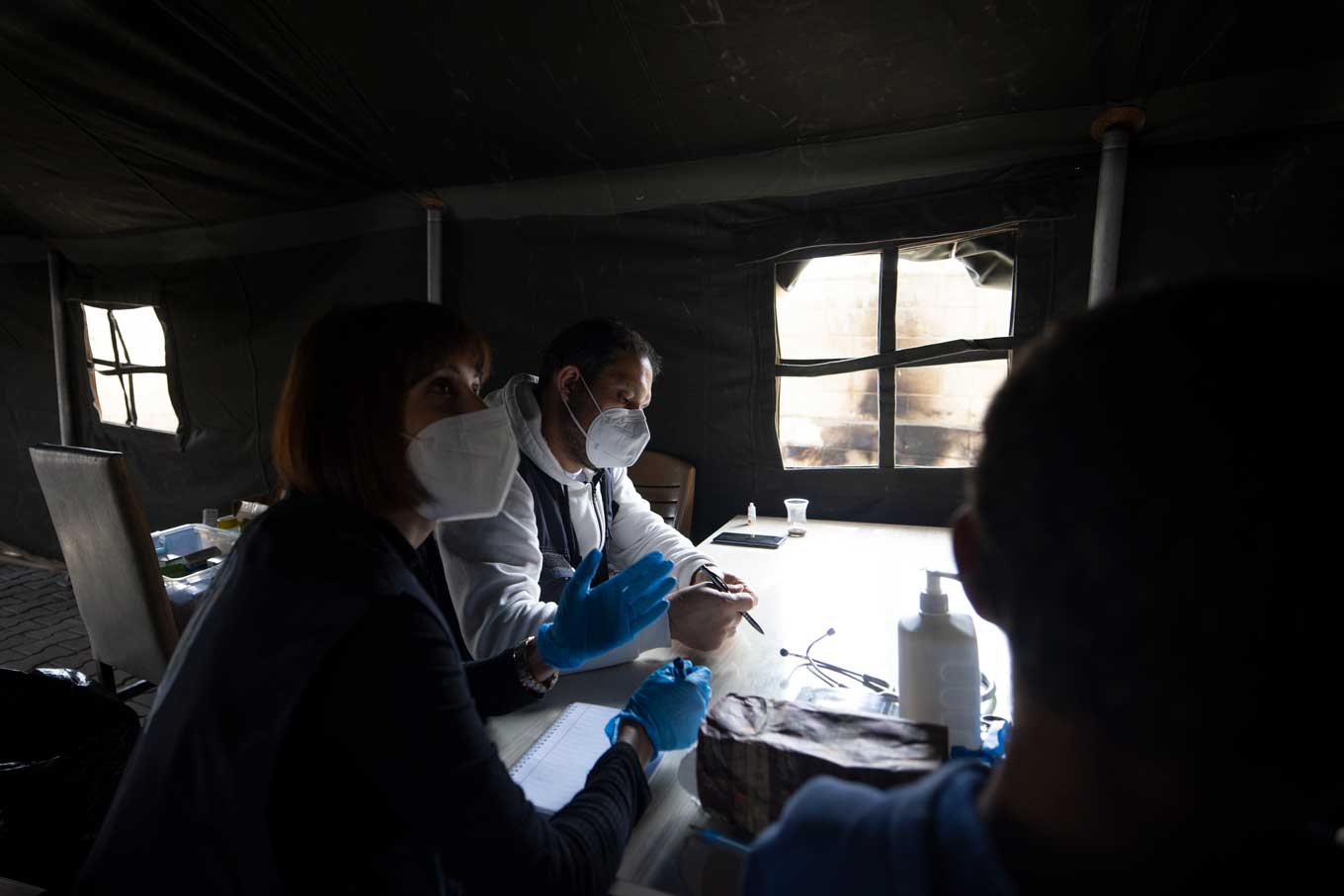
While many humanitarian workers’ on-the-ground work consists of distributing materials or helping connect people with other resources, many have unique skills that make them even more well-equipped to help.
For instance, doctors and medical professionals provide immediate first aid. Translators offer timely information in appropriate languages to help people find what they need. Search and rescue teams help people who are trapped. Contractors build temporary shelters to house people who have lost everything.
“It is important to have features such as crisis solving, analytical thinking, and leadership, and improving your external relations through the right channels,” Yildirim explained. “These are the strengths that you as a humanitarian worker should have while working.”
They share on-the-ground updates to help us understand what is going on in the world.
When aid workers enter a region impacted by a crisis, they also have a responsibility to share new, reliable information with the world.
While journalists are always digging out stories and helping us make sense of matters like conflict or climate catastrophes, aid workers often provide updates on communities directly impacted by crisis, or specific areas such as health and sanitation.
If working with a larger humanitarian organization, this data collection can contribute to major trend reports to locate areas with the biggest need — and to celebrate the impact of the aid already provided.
“Seeing how important and how invaluable your work as a humanitarian aid worker is the biggest source of morale and motivation that keeps you alive,” Yildirim said.
They work with partners all around the globe to best support the needs of local communities.
The ability to work within new, diverse communities is also a key part of humanitarian work.
“Knowing the dynamics in the locality, at least having an idea, and having knowledge of the local culture and beliefs will always make it easier for you to work as a humanitarian aid worker,” Yildirim said.
Many times, global humanitarian organizations have ongoing partnerships with grassroots teams in regions around the world, tapping into those relationships to best disperse aid and achieve success when entering a new place.
For instance, Project HOPE was just able to secure a huge aid delivery in Sudan, thanks to its connections to private airline companies, as well as the Sudanese American Physicians Association, which continues to work on the ground to support its own communities.
They solve problems quickly and creatively to help as many people as possible.
Along with being flexible in a new environment, aid work requires a lot of on-your-feet thinking and mobility. Decisions need to be made immediately and wisely to avoid further harm — or even loss of life.
“There is also an external dimension to the work,” Yildirim said. “Whether you're working in a natural forgiveness zone or working in a crisis zone, you need to be prepared for any situation.”
She recalled her time entering the earthquake zone in Turkey and Syria with Project HOPE, when she came into the situation prepared for further damage from aftershocks.
“In such situations, it’s important to prepare yourself for the worst, but it’s not enough,” she said. “You need good guidance — from the shelter where you will stay to the roads you will use. It is possible to say that this is often life-saving.”
They teach all of us to be humanitarians ourselves.
While the world needs dedicated humanitarians to join these efforts, Yildirim knows that the life-threatening work of on-the-ground aid is not for everyone.
But she, like many of her colleagues, knows that many of us are eager to help solve the problems of the world.
“Anyone can be a humanitarian. You don’t have to make it your career,” she said. “Everyone can work to advance equity in their everyday lives. Even if you don’t take an active role in humanitarian aid, you can support it in many different ways.”
Of course, many folks are familiar with making monetary donations to aid organizations or nonprofits working to make the world a better place. But Yildirim urges people to also consider the day-to-day human interactions that can make a difference.
“For example, if you are a decision-maker or policymaker, you can make your policies more refugee- or immigrant-friendly. Or you can be hospitable to people who are victims of disasters and wars who come to your country, your city, your neighborhood, or the apartment next door,” she said.
“These are approaches that indirectly contribute significantly to humanitarian aid.”
Header image by James Buck/Project HOPE
When it’s time to find the perfect gift for the person you call Mom, you might find yourself overthinking a bit. Okay, maybe a lot. Afterall, how do you choose what to get such an important person in your life?
We get it. You don’t want to get her something she’ll never use, especially when there’s already a massive problem with gift-related waste.
Worry not! We’ve done some research of our own to share a gift guide that will help make your search easier, including details about why you can feel good about each item on this list.
So, no matter the holiday or special occasion that has you celebrating your mom, you can rest assured knowing that it’s possible to make her happy all while treating the planet with care.
By the way, some of the links in this article may be affiliate links, which means if you make a purchase after clicking a link, we may earn a commission at no extra charge to you. Everything in this article was independently and honestly written by the author. Thank you!
Explore more eco-friendly gift guides: Best Eco Friendly Gifts | Inexpensive | For Him | For Her | For Mom | For Kids | For Coworkers
Your guide to sustainable gifts for Mom
A Custom Journal from Papier
Journaling can provide lots of mental health benefits, but it’s not always the best for trees. That’s why we adore this notebook from Papier (or any of its journal designs!)
What’s good:
- Papier only harvests paper from sustainably managed forests
- The brand encourages shoppers to recycle the pages of their journals
- Papier only uses paper packaging and provides guides for how to reuse the materials in your own home or journaling practice
Shop: Papier
→ Check out some more of our favorite guided journals, too!
Girlfriend Collective Compressive High-Rise Leggings
Anyone who puts on a pair of these leggings is bound to exclaim, “Wait, these have pockets!?”
Made to be soft yet supportive for high-impact workouts, each pair of Girlfriend Collective’s leggings is made from 79% recycled plastic bottles. That means 25 water bottles are diverted from landfills for each pair made.
Girlfriend Collective doesn’t just say that being eco-friendly is a top priority; they prove it with a list of ways they’re taking action. That includes the ReGirlfriend program which allows customers to return old leggings so they can be upcycled into a new pair.
What’s good:
- Packaging is 100% recycled and recyclable
- OEKO-certified safe dyes
- High-standard wastewater practices that separates dyes and stray fibers so nearby water sources aren’t contaminated
- Ethical manufacturing practices - SA8000 certified
- Items can be sent back through recycling program at the end of their life
Shop: Girlfriend Collective
Numi Rooibos Chai Tea
Just about any activity can become cozier with a warm cup of tea.
When Numi crafts its organic, delicious teas, the company aims to keep “people, planet, profitability, and purpose” in mind, something that is also carried over to the Numi Foundation.
As one of the first 30 B Corps, Numi makes it clear what steps are being taken to not only be eco-friendly but to actively fight back against the climate crisis. This includes a five-step plan shared on the brand’s website.
Choose from a variety of flavors, including their popular rooibos chai which includes warm spices like cinnamon, ginger, and cloves.
What’s good:
- Fair Trade and B Corp certified
- Compostable tea bag wrappers
- 5-step plan to fight the climate crisis
GLDN Made-to-Order Jewelry
Feeling beautiful doesn’t have to come at the cost of workers or the planet.
From necklaces and rings to bracelets and earrings, 90% of GLDN’s metals are recycled and 100% are sourced ethically. Plus, 85% are made to order, meaning they create almost zero waste.
Whether you want to give your mom a pair of ethical pearl earrings, or a beautiful gold chain with a meaningful charm, GLDN’s jewelry is as pretty as it is planet-forward.
What’s good:
- Raw materials are USA sourced
- 85% of pieces are made to order
- 10% of profits are donated to organizations that promote mental wellness, support the arts, and more
Shop: GLDN
Siblings Calming ‘Forever’ Candle
Saving the planet never smelled so good.
Siblings is an eco-friendly candle brand that meshes its commitment to the planet with a DIY element.
With non-toxic scents, clean coconut wax blends, and 100% compostable packaging, your gift recipient can create their own candle completely guilt-free.
What’s good:
- Vessels are endlessly reusable
- Trees are planted with every 3-pack purchase, and the brand dedicates a portion of its Black Friday sales to reforestation every year
- Siblings is certified Carbon Neutral
- Eco-luxury candles produce 86% less waste and 50% fewer carbon emissions than traditional candles
Shop: Siblings
→ Explore more eco-friendly candles
Allbirds Sneakers
Allbirds creates comfy, stylish shoes made with sustainably sourced materials that are either natural or recycled. The brand uses stuff like recycled bottles and castor bean oil in its manufacturing, and they’re only getting started.
By 2030, the company wants to cut its carbon emissions down to zero. Until then, Allbirds funds high-impact carbon projects as a way to offset its carbon emissions.
What’s good:
- Certified B Corp and Climate Neutral
- Created from sustainably sourced natural and recycled materials
- Supports high-impact carbon projects to offset carbon emissions
- Has a “ReRun” marketplace to buy gently used products to extend their life
Shop: Allbirds
Allégorie’s Black Gala Apple Leather Fanny Bag
Allégorie is a BIPOC-owned brand that makes purses, wallets, hats, and other accessories made with recycled plant-based materials, like apple, cactus, and pineapple. The Black Gala Apple Leather Fanny Bag is made with apple peel and recycled plant-based material.
You can wear it multiple ways with two detachable, adjustable and interchangeable straps: Across the body, on shoulder, or on the back. To top it all off, the sophisticated vibe is sure to help Mom serve some looks.
What’s good:
- Materials are certified by PETA, OEKE-TEX and Fair Trade
- BIPOC-owned company
- Materials help reduce food waste
Shop: Allégorie
Avocado Organic Yoga Meditation Pillow
If there’s one thing moms deserve more of it’s time to unwind. Avocado’s meditation pillow was made exactly for those moments.
Each pillow cover is made of GOTS organic certified cotton and is filled with plant-based buckwheat hulls. Plus, you can also relax knowing that each product is made in Los Angeles in a GOTS certified factory, meaning Avocado’s team earns fair wages in safe working conditions.
We’ve previously highlighted Avocado as one of our favorite brands for an eco-friendly bedroom — from mattresses and bed frames to pillows and bedding.
What’s good:
- Net-negative carbon footprint
- GOTS organic, vegan, and Climate Neutral certified
- Highest-scoring Certified B Corp in the mattress and bedding industry
Shop: Avocado