Olivia Rodrigo’s Daisy Chain Fields Festival is tomorrow — but she has already shared a big announcement.
“It’s a real honor to announce that we are donating $10 million to be given directly to these 10 nonprofit partners,” Rodrigo said in a press conference on Friday afternoon.
The “stupid song” singer is producing and headlining an all-women music festival on Saturday in Irvine, California, featuring mega acts like Chappell Roan, Bikini Kill, Doechii, and even Stevie Nicks.
All artists are performing for free, with 100% of net proceeds of the event being donated. Daisy Chain Fields has encouraged attendees and supporters to donate on their own, as well.

The 10 nonprofits listed as beneficiaries on the Daisy Chain Fields website include:
- Baby2Baby
- Jhpiego
- National Institute for Reproductive Health
- Black Mamas Matter Alliance
- Johns Hopkins Center for Indigenous Health
- National Women’s Law Center
- Center for Reproductive Rights
- National Domestic Workers Alliance
- Planned Parenthood
- FreeFrom
“The festival celebrates the voices, artistry, and contributions of women in music, fostering an inclusive environment in which all are welcome,” a mission statement on the festival’s website reads.
“Daisy Chain offers more than live performances; it provides opportunities for education, dialogue, and engagement around issues affecting women and girls in the United States and globally.”
At the event, attendees can expect on-site resources, activations, and engagement opportunities with partner nonprofits and brands — in addition to two stages full of performances all day long.
“The festival seeks to ensure that girls and young people have access to information and support they may not otherwise know how to find, and real-life interactions with women and girls who are the bright lights in our world,” the festival’s website continues.
For fans, it’ll be an opportunity to hear some of their favorite artists live in one place — and possibly where they will find their voices as activists.
For the nonprofits involved, it’ll be an opportunity to build support for the impactful work they are already doing for women and girls.
“All of us at the Center for Reproductive Rights are honored to be included in Daisy Chain Fields. In this political climate, it's easy to feel powerless or overwhelmed. But events like this remind us that we can accomplish so much when we band together across generations, backgrounds, causes, and artistic voices,” Catherine Mevs, deputy chief communications and marketing officer at the Center for Reproductive Rights, told Good Good Good in an email on Friday.
“That shared energy is what gives us hope and keeps us moving. An equitable future for women and girls is possible. The excitement around this festival, from artists and fans of all ages, reminds us that the future we're fighting for is already taking shape.”
Rodrigo herself echoes the sentiment.
“The women performing tomorrow and those sitting beside me today inspire me so much. They have taught me a lot about how we are all stronger when we come together and support each other,” she said at the Friday press conference, in a video shared by The Cut on Instagram.
“That’s actually why I fell in love with the name Daisy Chain. It served as a reminder of how individual parts can come together to create something strong and unbreakable,” Rodrigo continued.
“It’s easy to be discouraged by all of the sadness and regression of women’s rights in our world today, but it’s artists like the ones playing tomorrow, and activists, like the ones sitting next to me today, that give me so much hope.”
Featured Image: Nick Walker
Every day the Good Good Good team collects the best good news in the world and shares it with our community. Here are the highlights for this week!
If you want to get good news in your inbox every day, join the Goodnewsletter — the free daily newsletter designed to leave you feeling hopeful.
The Best Positive News We’re Celebrating This Week —
California’s new ‘tire efficiency’ rules will save drivers $1 billion a year and reduce 2 million tons of carbon emissions
California just became the first U.S. state to address a problem most people don’t know they have: inefficient tires.
When automakers design a new vehicle, low rolling resistance tires are one of the least expensive ways to improve fuel economy. When they are replaced, the “new” tires are often less efficient, causing internal combustion engine vehicles to burn more gasoline and EVs to need more electricity.
California’s new rule is “designed to ensure that replacement tires sold in the state are at least as energy efficient, on average, as tires sold in the state as original equipment.” It also establishes a labeling system that gives tires a “leaf” rating, to make it easier for consumers to find the best options.
Why is this good news? In addition to saving drivers money, the state projects that the changes could reduce carbon dioxide emissions by 2 million tons annually, which it says is equivalent to taking around 400,000 cars off the road.
Trump just paused border wall construction in Big Bend. Activists are still fighting to protect the region for good
→ Read more
Scientists identified five key factors linked to happiness and well-being
According to a new study of over 97,000 people across 66 countries, collective well-being depends on building supportive communities, not pursuing your own personal joy.
The evidence suggests that societies that foster environments that care for others boost a nation’s overall happiness.
The researchers identified five categories that drive overall societal happiness, including satisfying basic human needs, effective governing and security, and close in-group ties.
Food influencer Keith Lee is distributing food and supplies to Gary, Indiana after storms cause ongoing power outages
Following severe storms in Northwest Indiana earlier this month, thousands of residents in Gary, Indiana remain without power — 12 days later.
As the town’s mayor continues to push the state’s utility company to restore power, and the state and federal government send in relief, two public figures are stepping in to help, too: Food influencer Keith Lee and Indiana Pacers basketball player Tyrese Haliburton.
The pair partnered with the Salvation Army, Ace Hardware, and city officials to host a relief drive for locals, distributing food and supplies, and coming together to enjoy a little music.
Why is this good news? While Lee acknowledged the event wasn’t the same as “turning the power on,” he’s made his fame from uplifting small, independently owned food vendors and restaurants, especially supporting BIPOC communities. Gary is a predominantly Black city, and this effort to give back is no exception.
→ Read more
A new species of seahorse was hiding in plain sight for more than a century. It’s named after the ‘mother’ of seahorse research
Smoking rates have reached a historic low among young people in the U.S.
Smoking and vaping continued to decline among middle school and high school students in 2025, according to the latest school-based survey that has been tracking smoking and other nicotine product use in American youth ages 11 to 18 since 1999.
The survey found that smoking — the leading cause of preventable death and disease in the U.S. and worldwide — is at a historic low among U.S. youth, at just 1.4%. In 1997, smoking rates among U.S. high school students peaked at 36%.
The use of nicotine vapes, or e-cigarettes, also fell to 5.2% in 2025, the lowest it’s been since its peak in 2019. The use of nicotine pouches, which had been rising, is now stable compared with the previous year and remains relatively low at 1.7%.
For one day only, 100 Michelin-star restaurants are hosting a ‘pay what you can day’
A simple idea born during the COVID-19 pandemic has spurred a global movement designed to make fine dining more accessible.
In Mexico City, the Michelin-starred restaurant Masala y Maíz created “Paga Lo Que Puedas,” or Pay What You Can, as a one-off experiment. But after massive success, husband-and-wife co-founders Norma Listman and Saqib Keval made it a recurring event every year on August 26.
Last year, 20 other Mexico City restaurants joined in. Today, for this year’s Pay What You Can Day, 100 other restaurants from 14 countries will join Masala y Maíz in the offering.
Why is this good news? Masala y Maíz’s initiative began during the COVID-19 pandemic, when household finances were strained, and unemployment had reached historic highs. Listman and Keval demonstrated that a “pay what you can” model could succeed even within the world of Michelin-starred dining — challenging the notion that exceptional food and hospitality should be reserved for those who can afford it.
Rescue crew miraculously saves family dog who was swept out to sea: ‘An emotional reunion’
→ Read more
An 8-year-old asked NYC Mayor Mamdani to reopen his local playground — it inspired a $2.3 million initiative
McKinley Park in Brooklyn had been closed for almost two years and 8-year-old Maxime recorded a video asking New York City Mayor Zohran Mamdani to reopen it. A couple of weeks later, it did.
It even inspired an entirely new city initiative, dubbed the “Renew Crew,” to fix small but highly visible problems in city parks quickly.
A 24-member team of plumbers, painters, electricians, and other tradespeople will carry out repair and maintenance jobs that typically get caught up in lengthier capital-project timelines. It aims to have the projects completed in three weeks or less.
New research shows Dolly Parton’s Imagination Library had a proven impact on kids all over the world
Launched in 1995, the Imagination Library sends children a free, age-appropriate, culturally inclusive book in the mail every month from birth until their fifth birthday. It’s distributed 318 million books, with 3.4 million books sent out monthly.
It started in Parton’s home county in Tennessee and has since expanded to the entire U.S., Australia, Canada, the U.K., and Ireland. In Australia, 50,000 children get books monthly.
New data collected from over 86,000 caregivers across the five countries where Imagination Library operates showed that children enrolled in the Imagination Library were significantly more likely to display foundational early literacy skills and to develop an interest in reading compared to those not in the program.
Even better: In Australia, when compared to the average Australian child, children in the Imagination Library in a region with 98% participation were found to be read to more often, for longer, and have more books in the home. Further, these early reading routines were maintained.
→ Read more
Right before they graduated, these service dogs reunited with the volunteers who raised them: ‘They can be a puppy one last time’
→ Read more
The homicide rate in the US is at its lowest point in 75 years
New data from the FBI shows that violent crime decreased by 9.3% from 2024 to 2025, the sharpest annual drop since 1900, when those records began.
Homicides specifically dropped by 18.1%, tied for the lowest rate since 1955 and 1956.
Experts note that national violent crime rates have been declining since 2022, and pinpointing the reasons behind it is difficult. Regardless of contributing factors, experts who have been tracking violent and property crime anticipated reaching this milestone.
→ Read more
The Bronx Zoo has rescued 800 endangered turtles from an ‘unprecedented surge in trafficking’
Since 2024, the Wildlife Conservation Society’s Bronx Zoo has officially helped rescue and rehabilitate more than 800 North American box turtles saved from the illegal wildlife trade.
In partnership with the United States Fish and Wildlife Service, the zoo has been a lifeline for the endangered turtles since October 2024, in what officials call “an unprecedented surge in turtle trafficking.”
Many of the turtles arrive at the zoo severely dehydrated, emaciated, injured, or suffering from disease after rough handling and enduring poor transport and holding conditions.
Why is this good news? Box turtles are a “long-lived” animal, which means they mature slowly and have low reproductive rates. Wild populations struggle to replace adults that are trafficked and taken out of their natural environments. Experts at the zoo give these turtles the best possible chance to recover.
→ Read more
Scientists recycled plastic bottles into protein-rich cookies. They could be used as space rations
→ Read more
Despite recent setbacks, the world is much more democratic than it was half a century ago
In 1789, only two of the 76 countries in the world had an elected parliamand and elected government — the United Kingdom and the United States. As of 2025, 34 countries do not have elected parliaments and governments — and 165 do.
Electoral democracies — classified in the data by having an elected government and parliament, universal voting rights, a political opposition, and competitive elections — did not become the global majority until the 1990s. By 2025, 117 countries could be classified as democracies, while 82 could not.
While dozens of countries have become less democratic over the last decade, in the much larger arc of history, the world has made incredible progress — which is also indicative that future progress is possible, too.
More good news of the week —
Latin America’s first solar-powered train travels through a stunning 10,000-year-old canyon. The Tren Solar de la Quebrada travels through a UNESCO World Heritage Site.
British households have earned over £1 million from selling their spare solar power through a utility company over the past year. Inquiries for Octopus-installed solar panels jumped 34% during May, June and July compared to the same time last year.
Canada’s prime minister announced the largest clean energy investment in North American history. It’s a package of hydropower, onshore wind and transmission projects aimed at meeting electricity needs while also exporting power to Massachusetts and New York.
An otter was spotted for the first time in 100 years in the Bronx River in New York City. It’s a further sign that New York’s previously contaminated waterways are recovering some of their ecological health.
Researchers are developing a drug that targets an inflammatory enzyme that could help prevent lung cancer. Every year, lung cancer kills more than 100,000 people in the United States. Smoking is the leading risk factor for lung cancer, but other environmental exposures can also contribute to the disease.
Under a new program in England, hundreds of thousands of people are getting free morning-after pills at pharmacies. (May require login) The scheme launched in October to improve access and save women from having to book a GP or sexual health clinic appointment.
Once a wildlife trafficking victim, a reintroduced orangutan is now a mother in the wild. Indonesia’s forestry minister named the baby Badar, a Malay word with Arabic origin meaning “full moon.” The mother’s name, Bulan, also means “moon” in Indonesian.
A wildlife crossing in Washington State celebrated 10,000 safe crossings and zero roadkill. The Snoqualmie Pass on I-90 has been open for 12 years, and it’s been so successful that the state is planning to build 15 more undercrossings and one more overcrossing.
The world’s largest coral restoration organization just helped 1,000 corals escape extreme ocean heat. After a heat advisory was issued across Florida, the team of divers carefully moved the endangered corals farther north.
Aerial footage shows that protected land in Somerset, England has remained green across five heatwaves. The rewilded forests and restored wetlands on the National Trust’s Holnicote estate have proven resilient to recent drought, wildfires, and flooding.
As renewable energy gains popularity across Europe, market demand for methane has dropped dramatically. In the last quarter century, Europe’s wind and solar capacity has surged from under 20 GW to nearly 750 GW.
Two community solar projects just opened on a former coal mine in Illinois. The two projects utilize 16,950 solar panels across about 40 acres of land and are capable of generating enough energy to power almost 1,650 average households.
Arkansas Medicaid is now covering doula care, complying with a new law meant to improve maternal health. Doulas provide emotional, physical, educational, and logistical support to parents-to-be and serve as middlemen between them and other medical professionals.
A California woman gave $1 million in bonuses to teachers in her local school district. Local resident Maja Kristin said she was upset over the “injustice” of Marin County’s public school funding, which is among the lowest in the state despite being one of the wealthiest counties in the entire country.
U.K. researchers are growing miniature human organs to improve drug testing. The work is part of the government’s plan to reduce the use of animals in research by expanding alternatives known as new approach methodologies.
The largest hybrid renewable energy project in Africa was just inaugurated in South Africa’s Northern Cape province. The Hydra project combines a 216 MW solar photovoltaic plant with a 500 MWh battery energy storage system, marking a significant contribution to the country’s Just Energy Transition program that aims to decarbonize the economy.
More than 270,000 square miles around Easter Island is becoming an Indigenous-managed ocean reserve. It will be one of the largest Indigenous-managed reserves on land or sea anywhere in the world.
Rescued orangutans are rebuilding a new wild population in Sumatra. Just fifteen years ago, Jantho Pine Forest Nature Reserve in Indonesia’s western Aceh province, on the island of Sumatra, had no orangutans.
With “55 acres free to the public,” Maryland’s newest state park opens this week. Savage Highlands State Park was a former privately held woodland resort in Garrett County and is now home to yurts, cabins, and campsites at a much lower price.
Amtrak’s sleeker, cleaner new trains are officially making their debut in the Pacific Northwest this fall. The $8-billion Airo fleet, which will eventually serve places in New England, Pennsylvania, and more, promises cleaner, more reliable service as passenger rail enjoys record ridership.
On the opening night of her new tour, Kacey Musgraves encouraged fans to donate to a nonprofit protecting immigrant children. Musgraves told fans to donate to the Young Center, a Chicago-based advocacy group for immigrant children.
A “depressed” pit bull had zero adoption applications until a TikToker gave her weekly playdates. The woman showed the internet how lovable the shelter’s “least wanted dog” really was.
In Australia, a subsidized home battery program has helped cut wholesale power prices in half. Australia now has more home batteries than the United States, which has a population 12 times larger.
Scientists in the United Kingdom created a new type of plastic that vaporizes when it's heated and then “reassembles” itself. Researchers hope that the innovation will reduce waste and inspire an entirely new generation of circular materials.
Petfinder rescue flights are relocating over 100 pets from overcrowded shelters to adoption-ready homes. To celebrate its 30th birthday, the online pet adoption website’s “Runway to Forever” campaign will fund two rescue flights that will relocate pets from high-intake shelters to communities that are ready to adopt.
A trail camera captured a rare sighting of a mama-and-baby lynx family in Colorado. The lynx has been listed as an endangered species in Colorado since 1976, due to fur trapping and widespread habitat loss.
The USDA announced its “Harvest to Hallways” program, which promotes farm-to-school practices and more nutritious school lunches. The initiative also included a new investment of $50 million to help school cafeterias purchase equipment such as cold storage and stoves.
A Chinese automaker is producing a revolutionary solid-state EV battery that could beat diesel. Geely’s current liquid-electrolyte cells are around 250 Wh/kg, which means the new cells would roughly double the amount of energy stored.
A frog that has been “invisible” to the science community for over a century is finally getting a name. The adorable frog can be found across 16 million acres in the Chocó forests of Colombia.
Over the past 50 years, the Gibbon Conservation Center has become a world leader in gibbon conservation. Known for their signature singing, they are among the rarest and most critically endangered primates on Earth.
On August 8, the Coast Guard team stationed in Marathon, Florida responded to an urgent call: A female loggerhead sea turtle was struggling to swim in nearby waters.
When they came upon the sea turtle, the issue became clear — one of her front flippers was hopelessly ensnared by a fishing line. Working together, the men safely hauled the massive turtle aboard their ship and rushed her to The Turtle Hospital.
In 1986, The Turtle Hospital became the world’s first veterinary hospital dedicated solely to the rescue, rehabilitation, and release of injured sea turtles. Since its founding, it has successfully treated over 3,000 sea turtles.
“We have our newest patient just pulled in in the turtle hospital ambulance,” Bette Zirkelbach, The Turtle Hospital’s general manager, said in a recent TikTok.
The guardsmen who rescued the sea turtle had named her Roxanne. After they dropped her off, many of them stayed behind to help with her intake exam.
“The Coast Guard is an incredible partner for the Turtle Hospital,” Zirkelbach said. “It takes a village to get these turtles rescued. And Roxanne is a big girl.”

221 pounds, in fact.
Zirkelbach went on to explain that sea turtle entanglements were on the rise, now that commercial lobster season in the Florida Keys was in full swing.
“She is entangled in a trap line, and fortunately, it doesn’t look nearly as bad as Hope’s entanglement, so we are cautiously optimistic that that flipper can be saved,” the manager said, referring to another sea turtle that the Coast Guard had rescued in early June.
Hope, a 150-pound loggerhead, had been wrapped in an anchor line. Her right flipper had been injured so badly that it called for a life-saving amputation. Two months later, Hope is thriving in rehabilitation, with the potential for ocean release.
Fortunately for Roxanne, her flipper looked salvageable upon first glance, although it was swollen.

“We won’t know until we work with her, but every effort will be made,” Zirkelbach said.
Several of the guardsmen followed them into the backrooms to help hold Roxanne down for her X-rays.
“You can see the challenge with these lateral X-rays with a big, strong turtle,” Zirkelbach explained.
As they conducted the X-rays to inspect her flipper, the technician pointed out that Roxanne was pregnant.
“Take a look,” she said. “100 eggs.”
“Really?” a Coast Guardsman gaped.

“There can be 200 in each nest, about 120 — although this year it seems like they’ve been a lot bigger,” the X-ray technician explained.
On August 9, The Turtle Hospital gave another update: Roxanne was heading back to the ocean.
“Our medical team determined she was healthy enough to return to the ocean,” The Turtle Hospital wrote in the caption for a recent video. “She was tagged and released back into the wild, where hopefully she’ll continue on her journey toward nesting season.”
The same guardsmen who had helped with her initial rescue came back to carry her from van to beach.

“Another entanglement rescue with a happy ending — and another reminder of how important it is to properly secure fishing gear and keep our ocean friends safe.”
Watch Roxanne’s release video below:
@turtlehospital ROXANNE IS GOING HOME! 🐢🌊💙 After being found entangled in a trap line off the Florida Keys, Roxanne received a full evaluation at the Turtle Hospital before our medical team determined she was healthy enough to return to the ocean. She was tagged and released back into the wild, where hopefully she’ll continue on her journey toward nesting season 🥚🌴 Another entanglement rescue with a happy ending — and another reminder of how important it is to properly secure fishing gear and keep our ocean friends safe ❤️🩹 Swim free, Roxanne! We’re rooting for you! 🐢💙 #seaturtlerescue #seaturtle #floridakeys #marineconservation #savetheturtles @TurtleBette ♬ Acoustic, summer, trip, sea, refreshing, spirit, pop - arachang
You may also like: Beachgoers are learning a vital lesson from this harrowing sea turtle rescue: 'Fill in your holes'
Featured Image: Screenshot via @turtlehospital/TikTok
Anyone who is anyone was at Daisy Chain Fields — the Olivia Rodrigo-hosted all-women benefit music festival — in Irvine, California on Saturday, August 29.
And anyone who wasn’t there was watching on their phones — as umpteen angles of Rodrigo and Stevie Nicks singing “Landslide,” captioned “peak girlhood,” flowed one after another.
The performances were hardly the headline-makers at Daisy Chain, however, where a lineup exclusively of women artists like Chappell Roan and Doechii played without pay in service of a greater mission.

The main sound bite of the weekend came when Rodrigo first announced that $10 million would be donated among 10 nonprofits uplifting women and girls on Friday — and by Saturday night, that number was doubled with the help of Melinda French Gates.
“She’s pledged to double every dollar that we made here today, bringing the grand total of funds being donated to $20 million,” Rodrigo announced gleefully on stage, to raucous applause.
Daisy Chain nonprofits share how they will use inaugural funding
Those ten nonprofits include Baby2Baby, Jhpiego, National Institute for Reproductive Health, Black Mamas Matter Alliance, Johns Hopkins Center for Indigenous Health, National Women’s Law Center, Center for Reproductive Rights, National Domestic Workers Alliance, Planned Parenthood, and FreeFrom.
They all uplift women and girls in one way or another: By advancing women’s health among marginalized communities, protecting access to reproductive care, uplifting survivors of gender-based violence, organizing domestic workers, and more.

What Rodrigo — and French Gates — have given them is a life raft. Many of the nonprofits honored, especially those focused on reproductive justice and women’s health as a whole, have faced major losses in federal funding.
In addition to research grants being cut through the now-defunct Department of Government Efficiency, Title X funds have been frozen by the Department of Health and Human Services, and the “One Big Beautiful Bill Act” championed by the Trump administration has significantly scaled back federal Medicaid allocations.
“Philanthropy and private donations have quickly become a major funding lifeline for the work of our Center. Our team has experienced cuts to major federal grant programming and uncertainty about funding options moving forward,” Melissa Walls, co-director of the Johns Hopkins Center for Indigenous Health, told Good Good Good.

The Center, founded in 1991, provides public health programs, research, and advocacy for Indigenous communities across the country.
“Simply put, we would be unable to do our place-based work led by and with Indigenous Peoples without private funding,” Walls said. “Olivia’s support is a massive contribution to our Center’s teams, programs, and initiatives, and we could not be more thrilled for her support.”
Walls said the festival’s donation will allow the organization to “sustain and fill several critical programs,” including family visiting efforts and cultural revitalization programming.
“We also hope to sow new seeds to promote the well-being of Indigenous women and girls with pilot funding made possible by Daisy Chain Fields proceeds.”
All of the nonprofits included in the festival also tabled at a “philanthropy village,” where attendees — many of whom were young women — were invited to collect pin badges for a themed tote bag after visiting with each organization.
Walls said The Center’s goals were to “create new relationships with younger generations,” and that her team was inspired by the warmth and genuine interest shown by festival attendees.
“Our social media platforms have blossomed over the past few days, and they are one space where we hope to keep DCF fans engaged and motivated to support our vision for thriving Indigenous communities,” she added.
For the National Institute for Reproductive Health, which works to protect access to abortion and advance reproductive justice nationwide, the philanthropy village offered a way to make political engagement fun and accessible.

“On-site, we ran a quiz called “What Kind of Repro Flower Are You?” Attendees took the quiz to learn how they are best positioned to join the movement to advance bodily autonomy in their own community, whether that’s showing up at a city council meeting, organizing friends, or backing a local group already doing the work,” NIRH president Christian LoBue told Good Good Good.
“We also had a fun photo booth where people could capture memories from the day, friendship bracelets, and plenty of swag to help people remember the day. We want people to leave with great memories and with a deeper understanding of how they can take action.”
The idea is to create an experience so fun that attendees stay connected to the organization and continue to learn how to engage with local advocacy efforts in their respective communities.
“The attacks on reproductive freedom may be relentless, but they only grow the public’s commitment to bodily autonomy. We’ve seen that people continue to support access to reproductive health care and want to be part of creating change in their communities,” LoBoue said.
“And that is exactly why partnerships like Daisy Chain are so critical: people are hungry to support reproductive freedom. This festival provides not only financial support, but opportunities for attendees to channel their energy into meaningful action — and lasting change.”
NIRH will also use its newfound funding to directly support its ongoing campaigns and programming.
“We work with state and local organizations to make abortion care affordable and within reach, to make sure Black and Indigenous families have midwives and doulas and can give birth safely, and to keep people’s reproductive health data out of the hands of anyone who would use it against them,” LaBoue said.
“This funding lets us invest in our partners, build and sustain the infrastructure that policy wins require, and give the movement resources that outlast any single campaign or news cycle.”

The Center for Reproductive Rights had similar goals in mind while on-site at the festival, with a booth for attendees to learn about the abortion laws in their home state and how they can defend access to abortion care where they live — with a digital version for anyone to engage with, whether or not they were at the festival.
“We want everyone at the festival and beyond to learn their rights, use the Center as a resource to navigate this complex landscape of reproductive rights access and share what they learn with their communities,” Catherine Mevs, deputy chief communications and marketing officer at the Center for Reproductive Rights, told Good Good Good.
The Center for Reproductive Rights will use its share of the funding to continue filing lawsuits against restrictions on abortion care and advocating for laws that expand those rights globally.

“One of our top priorities right now is protecting access to abortion pills, which have become the number one target of the anti-abortion movement,” Mevs said. “Medication abortion accounts for more than 60% of abortions in the U.S. today. These pills are a lifeline for women in post-Roe America, especially in places where lawmakers have banned abortions.”
Mevs emphasized that abortion pills are “incredibly safe, effective, and well-researched,” and that 7.5 million Americans have used mifepristone safely since it was FDA-approved in 2000.
“We recently won a case challenging the FDA’s existing restrictions on the abortion pill mifepristone as unjustified,” Mevs said. “The Center is doing everything we can to protect nationwide access to medication abortion.”
The larger Daisy Chain movement
These are just three examples of what kind of work Rodrigo’s efforts will support. Daisy Chain Fields also did the work of creating a culture of advocacy among young women through art, community, and, as Rodrigo said, joy.
“Seeing Daisy Chain come to fruition yesterday was the greatest joy of my career,” Rodrigo wrote in a recap post on Instagram Sunday.
“I am still in a bit of disbelief that it happened and I still feel incapable of properly expressing the gratitude that I feel for every person who believed in this vision and fought so hard to make it a reality.”
She said after the festival grounds cleared out, she and her friends walked around Great Park, “trying to process all that we had just witnessed.”
They ended their night, she recalled, reading submissions to an interactive “Wish Tree” installation, an ongoing participatory art project by Yoko Ono, which invites people to write their wishes on a piece of paper and tie them to a tree.
“We read so many of them,” Rodrigo said. “Some were silly like, ‘I hope my dog lives forever,’ or ‘I hope my hair grows longer’ … But by and large, almost every tag said the same thing. Everyone hoped for the world to be more peaceful, they all hoped that the people they loved were happy, they all hoped to make a difference.”
She said it was this realization that Daisy Chain represented a “collective hope that things can get better,” and a reminder “of how much we really care about people.”
“Thank you to everyone who came yesterday who showed me that joy is a part of the solution,” Rodrigo concluded in her post, and promised to see fans next year — at the second-annual festival.
This concept of joy fueling political advocacy is not a new concept. Black writer and activist Toni Cade Bambara long encouraged others to “make the revolution irresistible,” and writer adrienne maree brown also carries this flame in her book, “Pleasure Activism,” in which she argues that joy is vital to creating long-lasting and sustainable social justice movements.
It’s the kind of sustenance nonprofits facing federal attacks need to keep the lights on — literally and spiritually.

“Our team left the festival with inspiration and deep hope for the future,” Walls, from the Center for Indigenous Health, said. “We felt the love, joy, and safety created by a women-led and female-focused movement, and we will continue to carry this energy into the work we do.”
Mevs, at the Center for Reproductive Rights, said events like Daisy Chain Fields are a reminder of what can be accomplished together, even when the political climate makes individuals feel powerless or overwhelmed.
“That shared energy is what gives us hope and keeps us moving,” Mevs said. “An equitable future for women and girls is possible. The excitement around this festival, from artists and fans of all ages, reminds us that the future we're fighting for is already taking shape.”
And while NIRH hopes to create a “tidal wave” of support among young attendees to advance reproductive freedom, LaBoue emphasized that the work is not only in responding to losses, but holding on to a vision of a brighter future.
“Our movement is about not just responding to attacks, but building a future where everyone has the freedom and resources they need to make decisions about their own lives,” LaBoue said.
“At NIRH, we get to see the joy in this movement all the time, whether it’s because we’ve launched a new partnership, achieved a hard-fought policy win, or heard from a local advocate about the impact of our support. Daisy Chain is proof that joy is what sustains our work.”
You may also like: 16 Free Pro-Abortion Posters to Print & Display
Featured Image: Kevin Mazur/Getty Images for Daisy Chain Fields
Crews are nearing completion of a new wildlife underpass in southeast Idaho after the public, nonprofit agencies, conservation groups, and government agencies pushed for years to protect migrating wildlife herds and drivers.
The Rocky Point Wildlife Underpass is expected to be completed this fall along U.S. Highway 30, south of Montpelier in Bear Lake County, public officials and conservationists announced jointly this week.
The wildlife crossing features three underpasses, as well as extensive fencing on either side of the project to direct animals like deer to the wildlife crossing.
“We were seeing just all kinds of problems there; we were losing at least 100 deer a year,” Idaho Transportation Department public information officer Justin Smith said in an interview Wednesday. “Over 10 years, that is 1,000 animals we know we lost.”
Officials also said those collisions cost drivers and taxpayers millions of dollars every year.
“Our primary concern is the safety of the traveling public. Whether they are going through a construction zone or whether they are in a wildlife area, we want to keep people safe on our highways, and this is part of that effort,” Smith said.
The Rocky Point Wildlife Underpass represents a partnership between the Idaho Transportation Department, Idaho Department of Fish and Game, the Greater Yellowstone Coalition, the Idaho Conservation League, and Bear Lake County, officials said.
“Rocky Point shows what’s possible when agencies, conservation, and sporting groups, and local communities work toward the same goal,” Matt Lucia, Idaho conservation manager at the Greater Yellowstone Coalition, said in a written statement. “[The Greater Yellowstone Coalition] has been part of this project for years — contributing time, energy, and funds toward the effort. The next step is making sure the federal funding that made this project possible stays available.”
To build the crossing, the Idaho Transportation Department secured a $20.8 million grant from the Federal Highway Administration’s Wildlife Crossing Pilot Program. Funding comes from the federal Infrastructure Investment and Jobs Act that was passed by Congress and signed into law by former President Joe Biden in 2021.
The federal grant was estimated to cover 98% of the construction costs, but the project may come in under budget, allowing the state to return some of the money to the Federal Highway Administration, Smith said.
Idaho’s first major highway wildlife crossing was built outside of Boise in 2023
The Rocky Point Wildlife Underpass near Montpelier is the second major wildlife highway crossing in Idaho.
In 2023, crews built the Cervidae Peak Wildlife Overpass on Idaho Highway 21 near Lucky Peak, between Boise and Idaho City.
The Cervidae overpass features more than one mile of big game fencing to direct the animals to the safe crossing.
Fish and Game officials installed a wildlife camera at the crossing to document how it is working. In 2024, state officials posted a time-lapse video showing more than 1,000 deer safely using the Cervidae Peak Wildlife Overpass between Oct. 17, 2024, and Dec. 18, 2024.
Smith said officials with the Idaho Transportation Department are studying other highway corridors with heavy wildlife populations, and the state is open to pursuing other new wildlife crossings as well.
“It is something that as Idaho’s population continues to grow, we need to look at ways to protect drivers and protect the wildlife,” Smith said. “It’s something we continue to look at.”
“We’re always open to doing what needs to be done for the safety of the traveling public; that is our primary concern,” Smith added. “We will continue to look at these projects as ways to improve the safety on our highways.”
The Idaho Legislature has also called for more wildlife crossings. In March, the Idaho Legislature adopted Senate Concurrent Resolution 124.
The resolution encourages the Idaho Legislature, Idaho’s congressional delegation, the governor, the Idaho Transportation Department, and Fish and Game to recognize and support wildlife corridors to improve public safety and protect big game migration corridors.
“The Legislature strongly supports the advancement of public safety and conservation of Idaho’s big game migration corridors through the development and implementation of wildlife crossings where appropriate and supported by local communities,” the resolution states.
This article was originally published on Idaho Capital Sun.
Featured Image: Courtesy of Greater Yellowstone Coalition
In 1905, the Point Defiance Zoo & Aquarium opened in Tacoma, Washington. Over the last century, the zoo has grown to house more than 9,000 specimens representing 367 animal species.
And on August 17, the PDZA welcomed a prehensile-tailed porcupine baby for the first time in the zoo’s 121-year history.
The “porcupette,” who has yet to be named, was born to parents Nigel and Quillow. On August 27, the PDZA posted a TikTok video of the new arrival getting a health exam.
The top commenter marvelled at its “emotional support log!”

“It’s only two popcorns long,” another TikTok user commented.
“It’s so cruel and unfair that they’re called porcupettes but I can’t ‘pette’ them,” one person joked.
In a press release, the PDZA said that the birth was the result of the Association of Zoos and Aquariums’ Species Survival Plan, which recommends routine breeding programs to “maintain healthy, genetically diverse populations of animals in accredited zoos and aquariums.”
“At just one week old, the porcupette had a hands-on wellness exam with the zoo’s veterinary team,” the PDZA stated. “Head Veterinarian Dr. Karen Wolf listened to its heart and lungs, checked its eyes and mouth, and weighed the youngster.”
According to the zoo, the team also collected several quills for DNA analysis to determine whether the porcupette is male or female, since young porcupines have no external characteristics that indicate their sex.
Prehensile-tailed porcupines, which are also called coendous, live high in the treetops of tropical forests across Central and South America.

“Their prehensile tails help them balance and climb, while the bare soles of their feet give them a firm grip on branches,” the PDZA explained. “Their quills provide their best defense, with many being semi-hollow and barbed at the tips. They also have soft, velvety noses and long whiskers that help them navigate their surroundings.”
As the herbivores move through the treetops, they feed on leaves, shoots, flowers, and tree bark, naturally thinning the forest canopies. Light gaps in the treetops allow sunlight to reach the forest floor, providing food and sunlight for the creatures below.
As it continues growing, the baby will receive regular health checks from the veterinary staff. When it's fully grown, the porcupine will weigh between four and 11 pounds.
“Prehensile-tailed porcupines are born with bright reddish-orange hair to provide camouflage and protection for their soft quills,” the PDZA explained on Threads. “As the baby grows, it'll shed its hair, revealing spiny black-and-white quills.”
For now, the porcupette will remain behind the scenes, with first-time parents Nigel and Quillow, at the zoo’s Wild Wonders Outdoor Theater.
You may also like: Two of Africa's rarest birds broke a dry spell after the dad finally stepped in to raise his eggs, a first in 95 years
Featured Image: Point Defiance Zoo & Aquarium
Set to open on June 4, 2027, The Whale is a new museum in Norway dedicated to exploring the “science, behavior, evolution, and cultural history of whales.”
Using immersive art, storytelling, sound, and architectural features, The Whale will be unlike any other museum experience before — mostly because it will feel like guests are visiting the actual interior of a massive whale.

The building is still under construction in Andenes, a village on the northern tip of the Norwegian island of Andoya, but Copenhagen-based architecture firm Dorte Mandrup has big plans.
The spot is located roughly 190 miles from the Arctic Circle, which Dorte Mandrup says makes the location a “small town located amid dramatic landscapes.”
“It is frequently visited by migrating whales, making Andenes one of the best places in the world to see this fabled animal up close,” the firm shares on its website.

“The new Arctic attraction, The Whale, tells the story of the big inhabitants of this underwater world, rising as a soft hill on the rocky shore — as if a giant had lifted a thin layer of the crust of the earth and created a cavity underneath.”
Mockups of the building show the museum emerging underground as the architects described, almost like a breaching humpback has come up for air.
Atop the museum, there will be a curved, concrete roof covered in stones, which serves as a viewing platform for visitors hoping to catch a glimpse of the migrating whales, which can include a myriad of species: sperm whales, humpbacks, orcas, minke whales, and pilot whales.

During the summer, visitors can enjoy the midnight sun, and in winter, the northern lights.
But inside is just as majestic.

Divided into a number of “experience areas,” guests will immerse all of their senses while learning about whales.
Five life-size wooden sculptures will depict individual orcas known to swim in the nearby waters, along with one massive suspended sculpture that gives visitors an introduction to whales’ penchant for communication, cooperation, and caregiving — a lot like humans.

A “species gallery” will also feature all 90 modern-day whale species in an art installation, but then visitors will get a chance to go below the surface. An “Under the Skin” section includes anatomical specimens, like a jar full of an entire whale’s blood, and rib bones hanging from the ceiling.

An immersive soundscape room will also allow visitors to listen to the frequencies of whale calls inside of a dark room, as light and sound create a full under-the-sea experience.

A Library of Relations will also explore humanity’s complicated history of industrial whaling, along with the cultural significance of whales throughout history.
The experience rounds out with a clear message of human and whale coexistence: with a gallery showcasing whale habitats and migration routes and how they intersect with human activity, giving homo sapien visitors a chance to understand their own interconnectedness with the ocean.
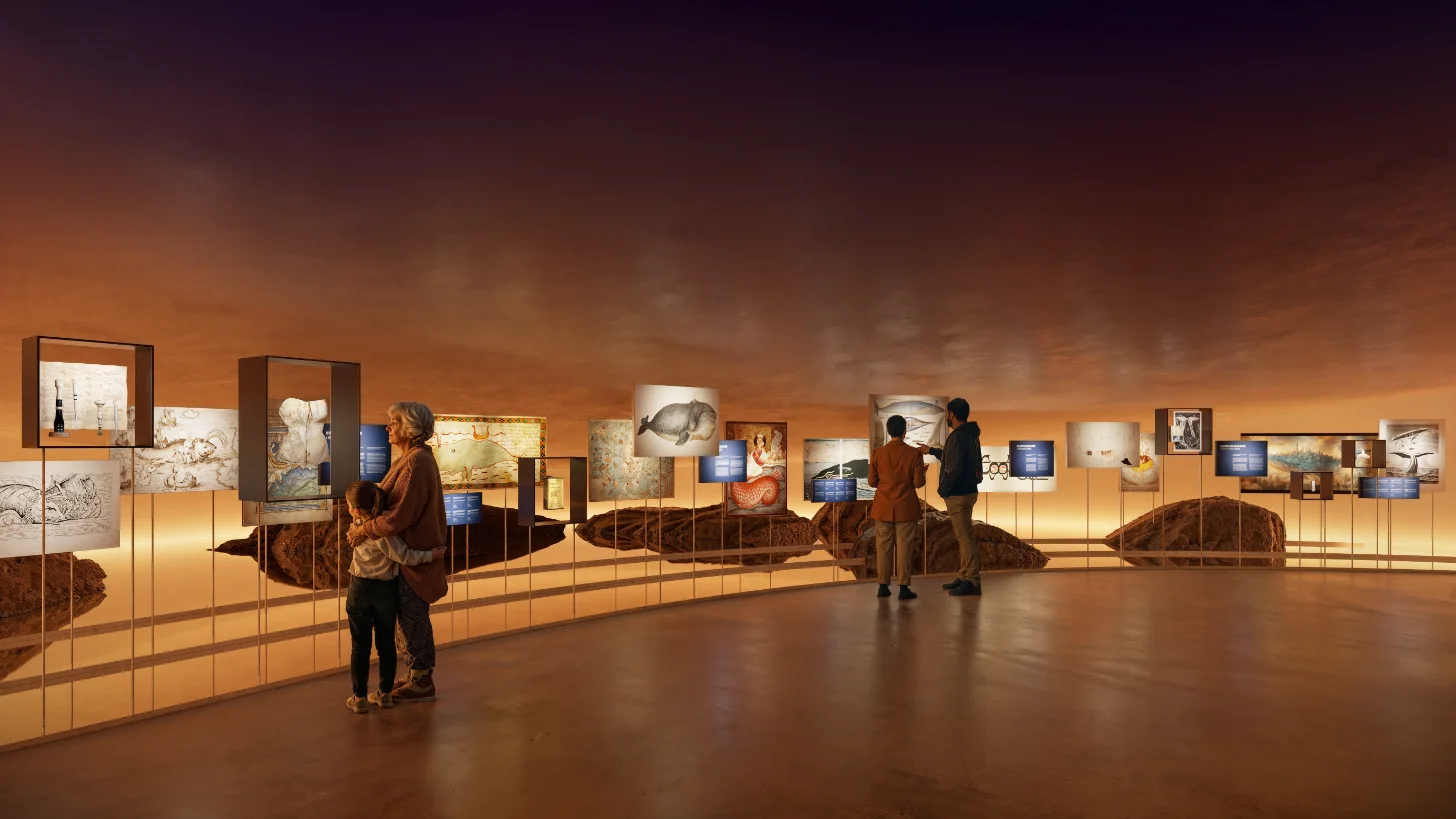
“At The Whale, knowledge is presented as [an] immersive experience, rather than static information. Science and art come together to explore whales from every perspective: their evolution, biology, communication, social structures, and their crucial role in maintaining healthy ocean ecosystems,” The Whale’s website reads.
“Interactive installations immerse visitors in the mysteries of the deep sea, surround them with the beauty of whale songs, and reveal the global links between whale habitats, migration routes and human activity.”

Once open, the museum will be a year-round attraction, with exhibitions, concerts, and collaborations with local and international partners planned, the website shares.
There will also be a cafe and restaurant on-site, and The Whale will serve as a meeting point for local whale-watching tours or other hiking and walking excursions.
“Rooted in one of the world’s best places for year-round whale watching, The Whale invites visitors to discover, reflect, and engage with the ocean and the life it sustains,” its website reads.
Tickets will go on sale for the grand opening this fall.
You may also like: Latin America's first solar-powered train travels through a stunning 10,000-year-old canyon
Featured Image: Courtesy of Dorte Mandrup/Renderings by MIR
It's been a rough summer for outdoor sports. July was the hottest month ever recorded in the contiguous United States, and wildfire smoke has repeatedly reached unhealthy levels across large areas of the country.
Soccer players competing in the World Cup had to grapple with potentially dangerous heat and humidity, two ski areas suffered major damage from wildfires this summer, trout streams in the Rockies were closed to fishing in the afternoons due to warm water, and the list goes on.
Many people who love the outdoors are left with choosing between not recreating at all or doing so in marginal conditions.
But athletes, fans, and outdoor enthusiasts can all be part of the solution. Outdoor recreation is a potentially powerful constituency — it engages millions of people across many age groups, demographics, and geographies. Outdoor recreation is also a substantial contributor to the U.S. economy, with a lot on the line as a warming climate threatens outdoor activities.

“I think there is a role for outdoor recreation to step up more, be more vocal,” said John Burrows, the energy and climate policy director of the Wyoming Outdoors Council. “I think it’s a really important constituency.”
Here are ideas for getting started.
How fans, athletes, and outdoor enthusiasts can fight against climate change
1. Recognize that sports and recreation have more influence than you might think
Athletes, teams, and recreational organizations have a powerful tool that the fossil fuel industry lacks: popular goodwill.
Participation in sports can be an important part of people’s identities, so a brand or a team can have an outsize impact compared to its size or financial might.
2. Don’t be afraid to share your climate values
Climate change is a polarizing topic, but that doesn’t mean you shouldn’t embrace it.
“It’s OK to say something and have people disagree,” said Chris Miller, senior vice president of sustainability at Aspen One, which owns four ski areas.
“I get that it feels scary,” Miller said, “but being led by something real and authentic and rooted in values is an incredible competitive advantage.”
The clothing company Patagonia is known for its commitment to environmental activism.
“Why is Patagonia constantly mentioned as one of the most authentic brands in the world?” Miller asked. “It isn’t because they’re a jacket company. Because there are a lot of jacket companies.”
The middle of the road may feel safe, but having noncommittal values can do lasting damage to a brand’s reputation. Miller described recent high-profile examples of companies that backtracked on their support for diversity, equity, and inclusion, which angered customers on both sides of the political spectrum.
“When someone disagrees with your point of view, the most important thing is not to say, ‘Oh, whoops, we made a mistake, we didn’t really believe that,’” Miller said. “It’s to lean in and say why you believe it and why it’s important.”
“Have a bit of courage, stand for something. And people will respect you for it,” he added.
Read more: The ski industry is oddly quiet on climate change
3. Consider making climate an integral part of your team or brand’s identity
The Vermont Green soccer club in Burlington, Vermont, has made addressing climate change part of the team’s mission since its founding. The team promotes activism, social justice, and climate action at every game.
Read: A champion soccer team is taking on climate change, too
“We’re gonna not miss that. We’re not going to let that opportunity go to waste and just watch soccer,” said Patrick Infurna, a co-founder of the team.
At home matches, nonprofit organizations set up tables and educate fans about actions they can take. Halftime includes a 15-minute talk about pressing issues in front of sold-out crowds, Infurna said.
Infurna said that the team’s stance on climate has helped it become more popular.
“You might find a whole new audience of people that are more attracted to your thing, your products, your event, because you are showing not just a compassionate approach to things, but maybe a backbone as well,” Infurna said.
“We’ve been fortunate to have a pretty cool fan base, and we sell out all of our games.”
Vermont Green’s men’s team had an undefeated season in 2025 and won the national championship.
“We’re taking care of the planet, and we’re winning as we do it,” Infurna said.
4. Identify the ways that climate is affecting your sport
Outdoor sports are subject to all sorts of weather conditions, and you can use recent research and free tools to help identify the role of climate change.
After some extreme weather events, the researchers at World Weather Attribution rapidly analyze the influence of climate change on the event. For example, the group found that a heat wave that caused dozens of ski resorts to close in the Western U.S. in 2026 was virtually impossible without climate change.
Climate Central, a nonprofit research organization, offers several tools that can help you determine how climate change is affecting your sport, including a marathon tool that shows how warm race-day temperatures are slowing running performance, a database of billion-dollar climate disasters that adds up the costs in each state, and the Climate Shift Index, which shows how much the temperature in your area has been affected by climate change on a given day.
Meanwhile, NOAA’s Climate at a Glance tool makes it easy to look up temperatures, precipitation, drought, and other climate indicators over time. The data is available at the national, state, county, and city level and is easily customizable.

5. Leverage the economic impact of outdoor sports
Miller sees climate change as not just an environmental issue: “It’s an economic issue. It’s a jobs issue. It’s a tax issue,” he said.
In fact, outdoor recreation is a powerful economic engine, generating $1.3 trillion dollars in economic output in 2024.
You can make that case to elected officials using a dashboard that shows the economic impact of outdoor recreation in all 50 states, including jobs, wages, and the contribution to each state’s GDP. This tool was compiled by nonpartisan researchers at Headwaters Economics.
6. Participate in climate and energy policy
The Wyoming Outdoor Council works with groups around the state to address environmental challenges for public land, air quality, water quality, and wildlife.
“But in the last 10 years, the intersection with climate has just been so obvious,” said Burrows, the energy and climate policy director. “It impacts all these other things. And so I think that’s how we justify working on it, even in one of the most heavily dependent states on fossil fuels in the country.”
During the last legislative session, the group worked at the state level to push for plug-in solar, which allows households to shave 10 to 20% off their electricity bills.
Burrows offered this suggestion for individuals or groups working on climate solutions: “Narrow it down to a few things that you and your group, or you and your friends, or you and your sports team can really digest and are passionate about, and focus on that.”
“That’s how you’re going to make a meaningful impact,” he added.
7. Become a watchdog of your energy provider
Ski resorts, stadiums, and other outdoor recreation amenities need electricity. And you can influence the climate footprint of that electricity by getting involved with your public utility commission, which makes decisions about energy sources, power plants, energy prices, and more.
Public utility commissions offer regular opportunities for public input, including during the selection or election of commissioners. Canary Media wrote a beginner’s guide to public utility commissions, and Earthjustice has a detailed explainer that describes how and where action can make a difference.
8. Step up to the mic and give public comments
It’s not too often that you can speak your mind directly to policymakers, and opportunities to do so can be especially valuable. A powerful example of this is the relentless public pushback on data center proposals, which are often reviewed by county commissioners.
The Center for Health Law and Policy Innovation at Harvard Law School wrote a short guide for giving effective public comments. This is a great time to make use of what you learned from the fourth item in this list: Show the ways climate change is affecting your sport.
9. Coordinate with other teams and groups
Many sports have organizing bodies and networks of guides, coaches, or athletes. These groups can be useful for communicating to larger groups, pooling resources, and building coalitions. For example, the International Climbing and Mountaineering Federation published a Climate Action Plan for Member Federations, which outlines steps for getting started.
That said, many sports organizations position themselves in a safe, middle-of-the-road stance or nibble at the edges of climate policy with less controversial topics like access to public lands.
For more assertive climate action, look for organizations that are unapologetically working to reduce fossil fuel development and burning, such as the Surfrider Foundation and Protect Our Winters.
Another option is to join nearby efforts to advance climate action. In many locations, you can find advocacy groups working to expand climate solutions and improve public policy. Joining an existing group is easier than trying to launch a new initiative from scratch.
“Look at groups that are doing that good work,” Burrows said, “and support them, however you can.”
10. Work to end fossil fuel sponsorships
Sponsorships of events, teams, and athletes can create a positive brand image and build consumer trust. Fossil fuel companies use sports sponsorships to boost their image — which has been termed “sportswashing” — even as the actions of these companies put athletes in jeopardy.
There are many efforts underway to remove fossil fuel advertising from sports teams and events, and this is an action that a team of any scale can tackle.
The Ski Fossil Free campaign is circulating a petition demanding sports organizing bodies publish a report that evaluates whether fossil fuel marketing is acceptable in organized winter sports. Over 25,000 people have signed the petition, and winter sports brands and organizations can sign up to join the campaign.
A similar effort is underway for soccer, prompted in part by Saudi Aramco’s sponsorship of the World Cup. A Dutch advocacy group is calling for Fossil Free Football.
Another group, called Cool Down, is advocating to end fossil fuel advertising across multiple sports and countries.
Most of all, show up
Burrows acknowledged it can be hard to know where to start with a new climate advocacy effort.
“I do think we kind of have this decision paralysis, like, ‘It’s too big of an issue. I don’t know how to even get started,’” he said. “We gotta get past that.”
Burrows advised new advocates to find an angle that they find especially motivating, and dig in to become a bit of an expert.
If only a small fraction of people did that, Burrows said, “I think it would really move the needle in good ways.”
This article was originally published by Yale Climate Connections.
Featured Image: Dmitriy Ignatenko/Unsplash
- Some former hunters on the Indonesian island of Java have abandoned catching birds for the songbird trade and have since become notable local conservation figures.
- The Menoreh Hills is a karst biosphere in Central Java province where sightings of songbirds have declined over several years due to hunting and land-use change.
- One local songbird, the Javan blue flycatcher, has become critically endangered due to hunting, with population assessments indicating the number of caged birds is at least an order of magnitude greater than the total population living freely in low- and mid-lying forests in Java.
PURWOREJO, Indonesia — As a young man, Parman hunted songbirds here in the Menoreh Hills, a landscape of karst valleys near the Indonesian city of Yogyakarta. The area is now a UNESCO Biosphere Reserve, but back then Parman would raid nests for rare birds, taking fledglings before they had learned to fly, then raising them himself until they were old enough to sell.
“Most buyers came from outside the area, especially Yogyakarta and Magelang,” Parman told Mongabay Indonesia in June, referring to the two nearest cities to his home in Donorejo village. “They’d ask local people to catch them, and we’d sell them — for a pretty good price.”
The colorful Javan blue flycatcher (Cyornis banyumas), for example, used to be a common sight and sound here in the Menoreh Hills.
But the species is now critically endangered, a sad reflection of the depth of Indonesia’s songbird trade. Today, many more of these birds are held in cages than live freely in forests.
“Remarkably, the population in captivity likely numbers in the tens of thousands, while the wild population is now suspected to number fewer than 1,000, and maybe much lower,” notes the most recent assessment of the Javan blue flycatcher, published in 2022 by the IUCN, the global wildlife conservation authority.
“It became really difficult to find birds here,” Parman said. “So that’s why we stopped, and chose to focus on raising goats instead.”
But after Parman and his peers stopped hunting for the songbird trade, they found outsiders soon filled the vacuum, which prompted him to see these hills differently.

Corridor of uncertainty
Across Java, the world’s most populous island, a small number of former bird hunters are making the switch to conservation.
For some, like Parman, this has meant preservation of the birds they once hunted by helping to bolster animal corridors in the landscape, the connective tissue between forests that prevents outright habitat fragmentation.
Last year Mongabay reported on two former hunters near Java’s Mount Slamet, including the environmental prizes won for the conservation work.
In Donorejo, village authorities enacted a ban on hunting songbirds in response to dwindling numbers. Anecdotal testimony suggests an increase in sightings of the Javan blue flycatcher may have occurred since the ban took effect around two years ago.
Some local residents have also planted fruit trees, nectar-rich flowers, and crops like sorghum, which help sustain the local birdlife.
Adhita Virya Akmilius Lala, a young conservationist in neighboring Pandanrejo village, said local springs were habitats for a range of birds, but that hunting and environmental damage had put pressure on these water sources.
“We don’t have the authority, so all we can do is coordinate,” Adhita said. “We also ensure that trees containing nests are protected and monitored.”

Tegar Cahaya Putra, who founded a separate local conservation organization to support bird populations, said protecting the Menoreh Hills landscape had been integrated into local development planning.
“At least now there are efforts by residents to build bird corridors to maintain bird diversity and populations,” Tegar said.
Much of the local land here remains privately owned, but bird charity Kanopi Indonesia Foundation, which works in this area of Java, says community outreach could help to avert further declines.
“For example, the landowners of the upland there already know that their area is a nesting ground for Javan blue flycatchers, so they won’t clear-cut the hill,” said Arif Rudiyanto, program implementation associate from Kanopi.
Spring awakening
Across the ninth-century Borobudur temple complex, located just to the east of the Menoreh Hills, thousands of stone carvings depict birds from the Buddha’s past lives, alongside the Garuda, Indonesia’s national symbol.
Local legend contends the Menoreh Hills are the final resting place of Gunadharma, the mythical architect of Borobudur, a UNESCO World Heritage Site.
However, around five years ago, Parman noticed the Menoreh Hills appeared to go quiet as birds seemed to no longer nest here.
He said he hopes it’s not too late for the Javan blue flycatcher and other birds, which face an array of threats from climate change to hunting and land-use change.

Parman wanted to go further, and in concert with others in the village has coalesced a grassroots organization to record bird sightings and map their locations.
The data collected have shown an agglomeration of birds around local springs, five of which have been identified as being in critical state owing to low water levels.
“This data will be our material for rehabilitating the bird corridor here.” Parman said.
This article was originally published on Mongabay.
Featured Image: boasemmanuel/iNaturalist (CC BY-NC 4.0)
On the Fourth of July, a picture of a black bear sitting on the edge of a Tennessee cornfield sparked a social media flurry.
It was the beginning of a deluge. Over the next month, bears would be recorded running through yards and sprinting through a golf course on a rainy day.
Reactions ranged from bewilderment to humor. Many responded with shock — mainly over the location. Because these bears were not being observed in the rolling mountains and hollows of East Tennessee. They were hundreds of miles away, on the opposite side of the state, in the flatlands of West Tennessee.
But these sightings did not surprise Dan Gibbs, black bear coordinator at the Tennessee Wildlife Resources Agency. While most black bears in Tennessee are concentrated in the east, reports from Middle and West Tennessee residents have steadily streamed in over recent years.
The recent sightings are likely several bears, and probably came from bordering states with expanding populations, like Kentucky, Mississippi, Arkansas, and Missouri.
“It will be a slow process, but bears are going to recolonize Middle and West Tennessee,” Gibbs said. “You can’t stop it … they’re going to be in Northern Mississippi, they’re going to be in Eastern Arkansas, Eastern Missouri, Western Kentucky. That’s just their historical range, and they’re going to reclaim it.”
Mississippi Alluvial Valley was ‘breadbasket’ for black bears
Black bears were once abundant across most of the United States, including the lower Mississippi River basin. But decades of habitat destruction and overhunting in the 1800s and 1900s threatened to wipe out the population altogether. In Tennessee, the animals’ range shrunk to just 10 secluded, mountainous counties along the state’s eastern border by the early 1970s.
In Mississippi, the population was estimated at just 12 bears when the Mississippi Game and Fish Commission (now Mississippi Department of Wildlife, Fisheries and Parks) was founded in 1932.
One of the biggest misconceptions about black bears is that they are a mountain species.
They’re really “generalists” that can survive — and thrive — in a variety of ecosystems, including swamps and wetlands.
In Tennessee, European settlement and hunting pushed bears into the Great Smoky Mountains and the Cherokee National Forest, large areas of conserved land and places that were harder for people to reach. But wetlands are rich, productive ecosystems that make great food sources for black bears.
“The whole Mississippi Alluvial Valley … the historical floodwaters that used to flood miles and miles before the levee system, that was kind of the breadbasket of the black bears in this part of the southeast,” said Anthony Ballard, black bear program leader for the Mississippi Department of Wildlife, Fisheries and Parks.

Mississippi’s core black bear population is concentrated along the Mississippi River in the bottomland hardwood systems — frequently flooded, low-lying areas where oak, hickory, and old-growth cypress trees are common. Increasingly, bears are colonizing the state’s southeast corner, establishing home ranges in a very different habitat: pine stands with thick underbrush, Ballard said.
Another myth about black bears is that they form their dens in caves, according to Janelle Musser, TWRA’s assistant black bear coordinator. In reality, caves are damp and not particularly attractive.
“They are great at finding dens in the habitat that they are living in,” Musser said.
In Southern Alabama, bears often create dens in shallow depressions in brush on the ground. In the Mississippi Delta, dens can be found in cane thickets and tree tops, Ballard said, sometimes as high as 50 feet off the ground in old-growth cypress.
Black bear populations take decades to recolonize.
Female black bears don’t begin to have cubs until they reach 3 years of age, and if they’re eating natural foods, they’ll have a couple of cubs every other year. Young males begin to move away from their mothers at around a year and a half old, sometimes traveling tens or hundreds of miles to establish their own home range, Ballard said. “It’s kind of nature’s way of making sure that there’s not inbreeding.”
Male black bears can have home ranges anywhere from 25 to more than 60 square miles, depending on the availability of food and presence of female bears. Females’ home ranges are much smaller, and a female cub’s home range may overlap with her mother’s.
These large home ranges and frequent movement make it difficult to survey bear populations, Gibbs said.
A population of black bears is generally considered “established” if there are breeding females in the area.
Tennessee has received cub sighting reports in counties just east of Nashville, Gibbs said. But it will probably be another 10 to 15 years before Middle and West Tennessee have a bear population large enough to survey.
Bear hunting
Hunting black bears was a “part of life” in the southeast in the 1800s and early 1900s, Ballard said. “It was as much a part of the hunting world as whitetail deer are today.”
Davy Crockett wrote about killing dozens of bears in a personal account of his life published in 1834.
“Of all the hunting I ever did, I have always delighted most in bear hunting,” he wrote.
When Crockett arrived in Lincoln County, just north of the Alabama-Tennessee border, around 1809, he noted an “abundance” of deer and smaller game, “but the bear had been much hunted in these parts before, and were not so plenty as I could have wished,” Crockett wrote. He had better luck along the Obion River in the western-most part of the state.
Almost a century later, President Theodore Roosevelt went on a storied hunting trip in Mississippi in 1902, failing to find a bear. When assistants located a bear, tied it to a tree and suggested he shoot it, Roosevelt refused. The story led to the invention of the Teddy Bear.
Mississippi put protections in place preventing black bear hunting in 1932, when the estimated population dropped to around 12 bears.
Arkansas — once called the Bear State — was home to an estimated 50,000 black bears before settlement began, according to the Arkansas Game and Fish Commission. The state banned black bear hunting in 1927 due to declining populations. By the 1950s, an estimated 40 to 50 bears remained in the state, according to an article published in The Mountain Echo in 1979.
Arkansas officials trucked in more than 250 black bears from Minnesota and Manitoba, Canada, to the Ozark and Ouachita Mountains in western Arkansas in the 1960s in an attempt to bolster their population. Today, the Arkansas Game and Fish Commission estimates there are around 5,000 black bears in the state.

Louisiana’s Wildlife and Fisheries Commission closed all bear harvest seasons temporarily in 1956 as the population there plummeted. The state similarly brought 161 bears from Minnesota to the Mississippi and Atchafalaya River basins from 1964 through 1967, but continued habitat destruction as agriculture replaced forest land contributed to continuing population decline, according to Louisiana’s Black Bear Management Plan.
The state banned bear hunting in the late 1980s, and the Louisiana black bear was listed as a federally threatened species in 1992.
At least two dozen of the bears relocated to Louisiana were recorded as killed, according to a 1968 article in The Times-Picayune. Others wandered far from their release sites, with one recorded traveling 260 miles. Musser said moving bears away from their home range is not considered effective practice now, because bears frequently attempt to find their way back, increasing the chance that they are killed on the journey.
A 2003 study found that bears in the Arkansas mountains have genetics indicating they descended from bears released in the reintroduction program.
After population growth, the Louisiana black bear was removed from the federally threatened species list in 2016, and the state opened a limited December hunting season in 2024. Louisiana issued 26 tags to hunters in 2025, allowing each to bag one bear.
The number of tags increased to 42 this year, and the state’s wildlife department expanded hunting boundaries. The Louisiana Department of Wildlife and Fisheries estimates there are now around 1,500 black bears in the state.
Black bears were thought to be all but wiped out in Missouri by 1931, but sightings began to tick up after Arkansas began its reintroduction program in the late 1950s. Missouri opened a limited, highly regulated hunting season in 2021, and the University of Missouri Extension now estimates there are around 1,000 black bears in the state.
Tennessee closed its hunting season from 1970 through 1972, and partnered with North Carolina and Georgia in 1976 to share management information, ultimately adding Kentucky, South Carolina, and Virginia to the fold. Tennessee’s black bear hunting regulations are focused on reducing poaching and protecting breeding females. Bear hunting is prohibited in more than 450,000 acres of bear sanctuary reserves, including the Great Smoky Mountain National Park. Tennessee estimates its current population at around 6,000 bears.
Mississippi has yet to reopen a hunting season for black bears. The state has been studying its black bear population in a standalone program since 2002, initially collaring individual bears to document their home range habitat and reproduction. The population has since grown to the size that it’s no longer feasible to track each individual.
The program is expected to release its most up-to-date population estimates in the coming weeks. (The state typically waits 10 years between estimates to measure a full generation.) The most recent estimate from 2012 put the bear count between 150 to 300.
“Obviously, there’s a lot more now,” Ballard said.
A bill that would have forced a hunting season in 2027 passed through Mississippi’s Senate last year but stopped in the House. Ballard said there’s no set bear population that the state needs to reach before granting hunting licenses, but there are many considerations, including different management objectives for different populations and parts of the state.
“We don’t shy away from the fact that we want to have a season, because that’s a natural outgrowth of having a sustainable population,” Ballard said. “We just want to make sure that we’re not doing it at the risk of potentially over-harvesting an animal that’s just made a recovery to a point where we can harvest.”
Mississippi wouldn’t want to over-harvest its “core population” along the state’s western edge, he said, but in the southeast, where there are more human developments and less ideal habitat, there may be a different hunting strategy.
Coexistence
Residents and visitors to areas with black bear sightings should start preparing now to live alongside established bear populations, Musser said.
“We don’t know exactly how long that will be until it’s more common per se, but if they continue to wait [to adjust], that’s when we’re going to see those [human-] bear conflicts,” she said.
That means learning more about black bears using resources like bearwise.org and transitioning to using bear-resistant trash cans in residential and public areas.
“We have many people in East Tennessee living with bears, and throughout the country, living in areas with bears, and it’s not a huge safety risk as long as you do a few simple things,” Musser said.
One of those things is preventing bears from eating human food. In Tennessee, it is now a Class B misdemeanor to feed a black bear or fail to secure trash in areas where the state fish and wildlife commission prohibits it.
“I try to impress upon people just how good of a sense of smell that bears have. It’s about seven times better than a bloodhound,” Ballard said. “Anything that a dog can get into, a bear is going to be able to smell better and is going to be much more able to get into that.”
Farmers may see bears attempting to eat crops, mostly corn, Ballard and Gibbs said. But populations in West Tennessee and Mississippi are not dense enough to make a noticeable difference.
Compared to other animals like deer, Ballard said, bears cause much less crop damage. Gibbs said people have had success using herd dogs to keep bears, coyotes, and other animals away from livestock and crops.
For smaller-scale farms and chicken coops, electric fences may be a solution, Musser and Ballard said.
And then there’s hazing — using loud noise deterrents or paintball guns to scare bears away.
“Stuff that doesn’t cause long-term harm, but enough that it makes that bear uncomfortable,” Musser said.
Chris Dowdy, 52, grew up in Paris, Tennessee. He has a picture of his grandmother from the 1950s standing next to a bear in her yard. He describes himself as an outdoorsman and hunter. “Ironically,” he said, “my grandmother … and myself are descendants of Davy Crockett.”
He now lives in Dover, which has had several recent reported bear sightings. Dowdy said he welcomes the animals’ return to their original habitat.
Their presence in West Tennessee is literally written into the region’s maps, he said: Dover abuts the Cumberland River, and has an area called “Cub Creek.” To the east, an unincorporated town called Bear Spring was named for the place where the supposed last bear in Stewart County was killed, according to a 1928 article in the Nashville Banner.
“It’s not abnormal [for bears to coexist with people], it’s just abnormal to us because it’s not something we’re used to having,” he said.
This story is a product of the Mississippi River Basin Ag & Water Desk, an independent reporting network based at the University of Missouri in partnership with Report for America, with major funding from the Walton Family Foundation. It was originally published on the Tennessee Lookout.
Featured Image: Courtesy of Tennessee Wildlife Resources Agency
On August 31, a manatee returned to the spring-fed waters of Crystal River, Florida — which is widely considered the “Manatee Capital of the World.”
The manatee, Citron, had a unique story.
“Citron was rescued last year in 2025, but she had a short time with us, so we were able to get her out pretty quickly,” Elysa Tripp, a zoological expert and animal care specialist for SeaWorld Orlando, said in a Facebook video. “But unfortunately, she was re-rescued this year.”
In January, Citron was rescued from Kings Bay after she was found swimming on her side after she was injured in a boat strike. The veterinary staff at SeaWorld Orlando quickly assessed that she had a pneumothorax — a collapsed lung.
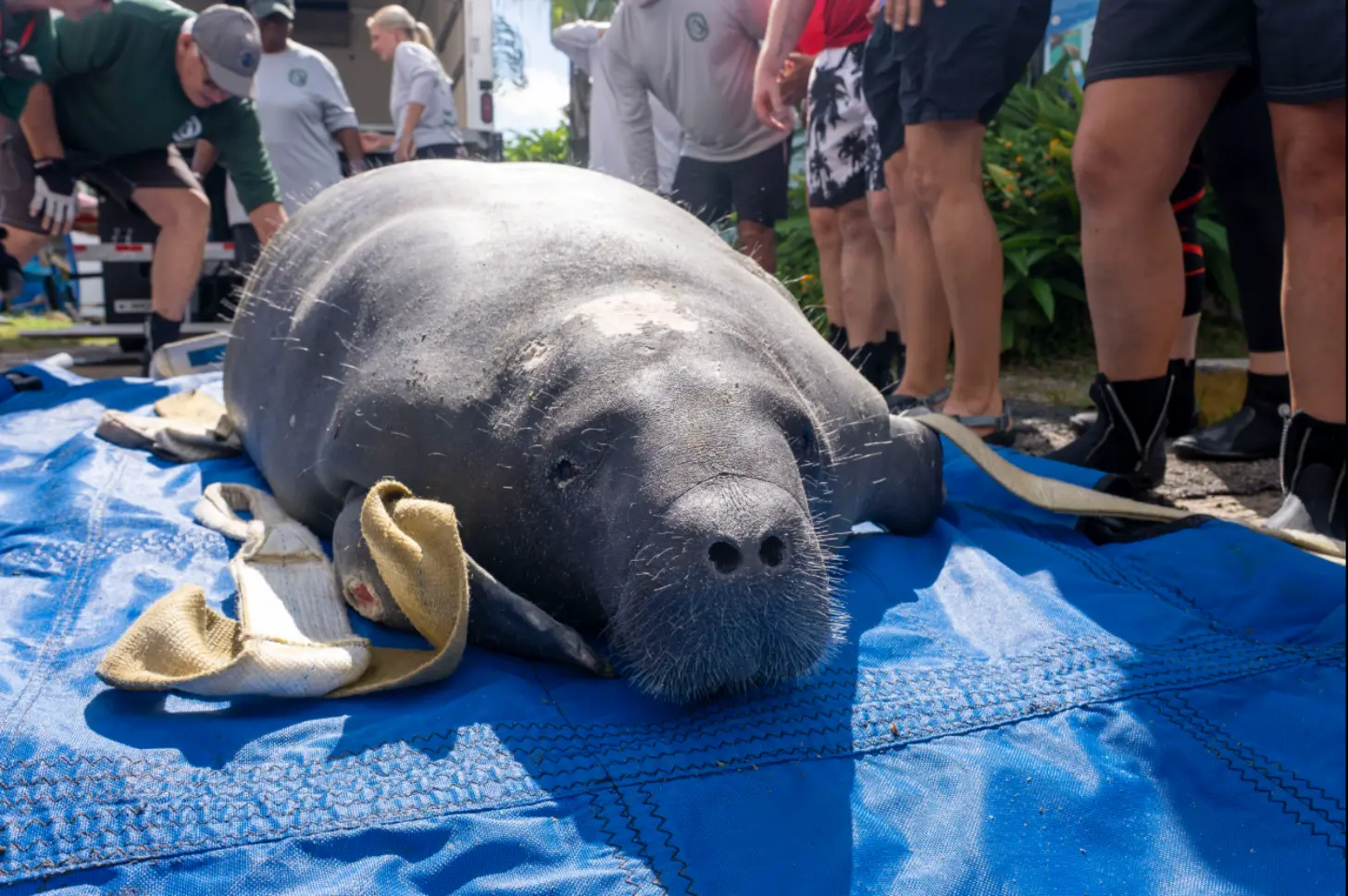
“The second time we rescued her, she had a watercraft injury that was a little bit more severe than her original rescue,” Tripp added. “She did have multiple procedures, including surgeries, where we had to bring her into the surgery suite, and our vet staff was able to do these procedures.”
Over the next seven months, Citron received around-the-clock care.
“We’ve been able to help her gain her health back,” Tripp said. “She’s been able to eat, and she’s no longer [having] any medical issues. Her buoyancy is great.”
Tripp said that the whole team at SeaWorld Orlando became quite attached to the twice-rescued “sea cow.”
“Citron is pretty special, being a re-rescue that we’ve been able to help again, and see her go through the cycle of rehab and returning her,” she said. “It’s really bittersweet to see this full-circle cycle again, all the teamwork that we’ve had, with the vet staff, our own team, and also other people from the park.”
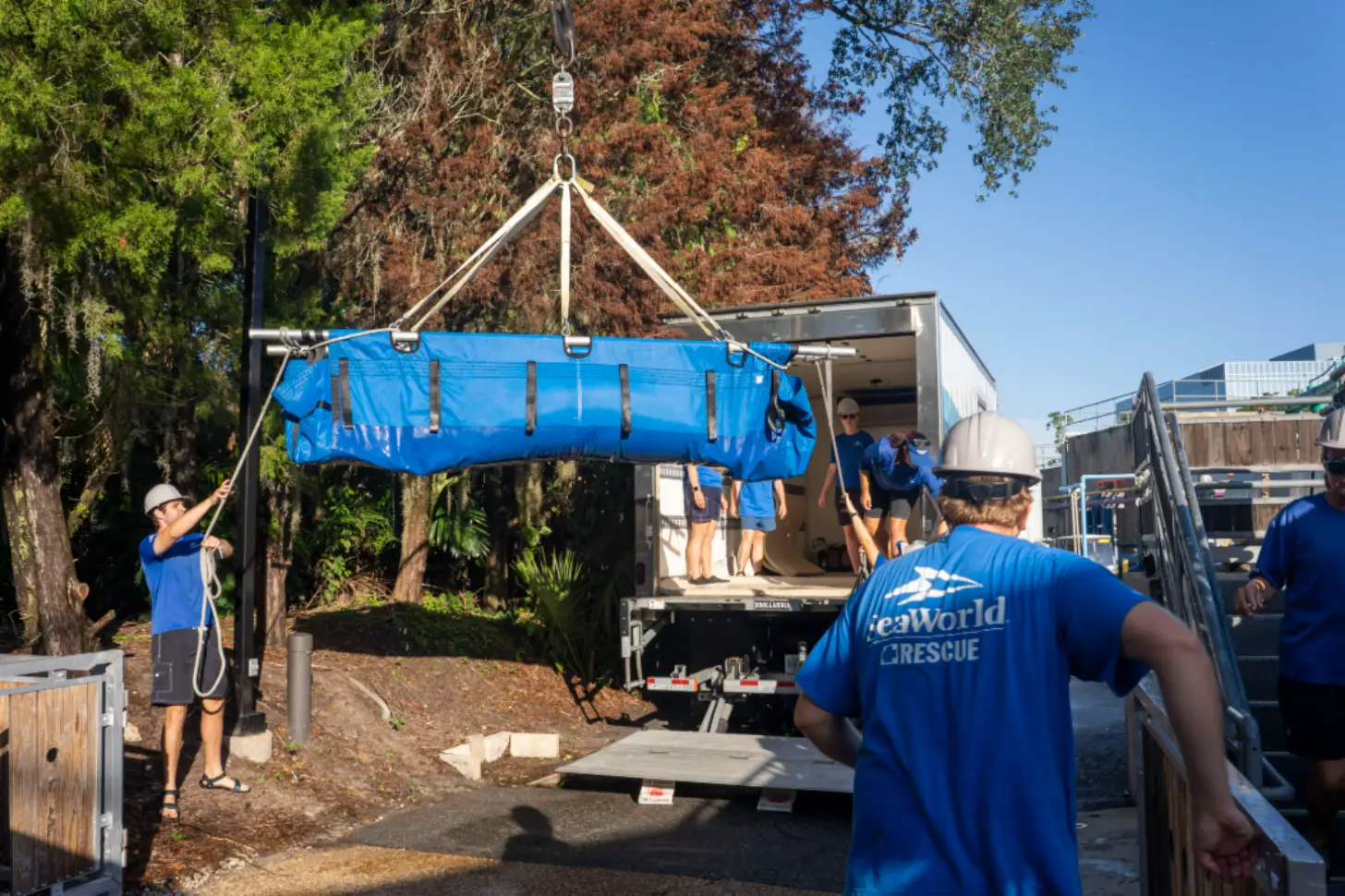
Across its six decades of operation, SeaWorld has garnered a great deal of criticism from animal welfare activists and the media at large. In 2016, after the documentary “Blackfish” brought widespread condemnation from the public, SeaWorld ended its captive orca breeding program.
“By making this the last generation of orcas in our care and reimagining how guests will experience these beautiful animals, we are fulfilling our mission of providing visitors to our parks with experiences that matter,” Joel Manby, then-president and CEO of SeaWorld Entertainment Inc., said in a statement.
Today, SeaWorld remains one of the largest marine rescue organizations in the world. Since 1965, it has rehabilitated over 43,000 marine animals, with Citron being its latest rescue.
“We love Citron, and we’re so proud of all of our work and our [ability] to help give her that second chance of life, to return her to her natural environment, and to see her nice and healthy,” Tripp said.
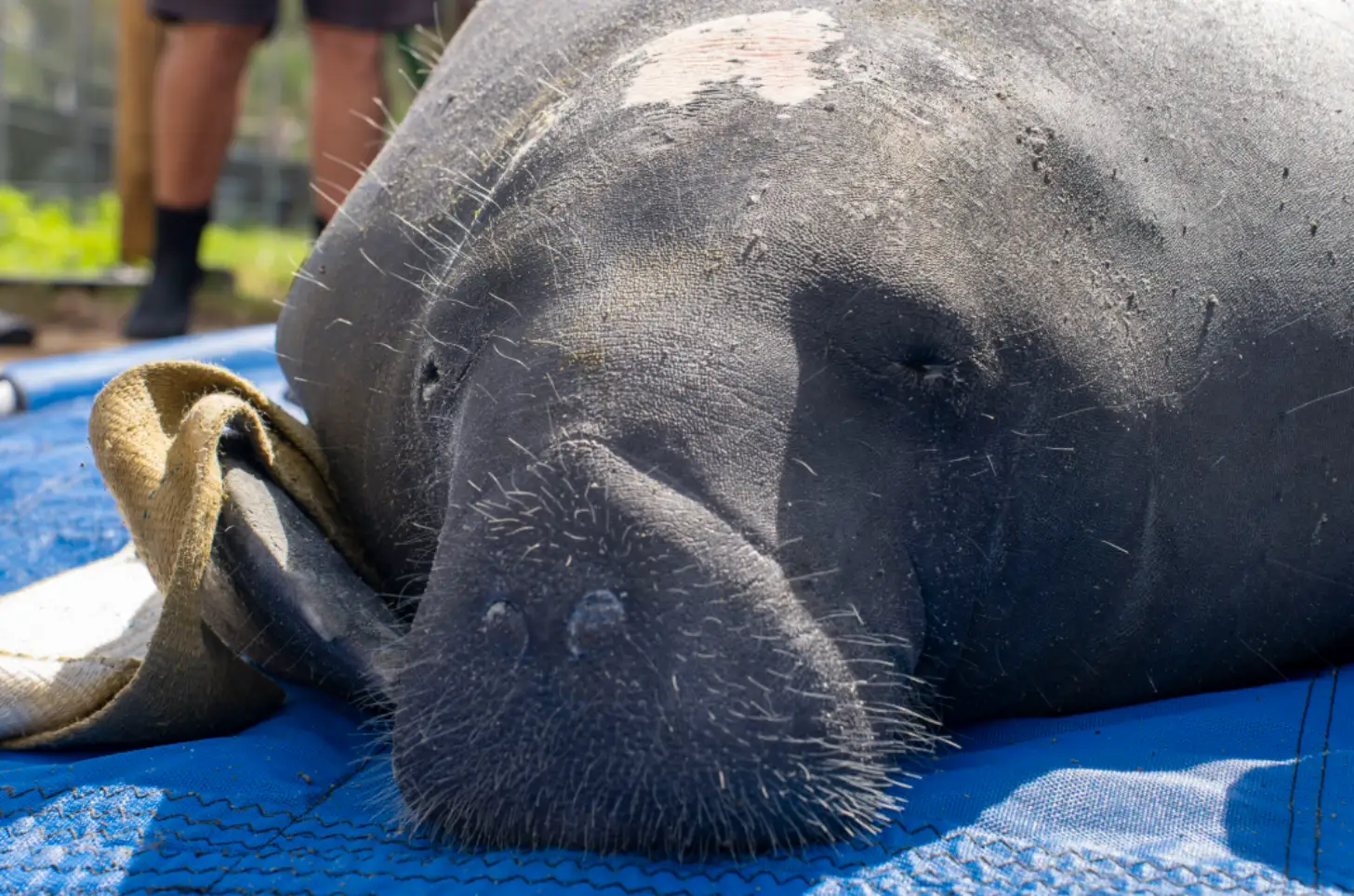
You may also like: A fisherman caught a baby manatee in his net. When he realized it was too young to be released, he nursed it himself
Featured Image: SeaWorld Orlando
Gov. Greg Abbott has ordered all state agencies to pause funding for Flock cameras as scrutiny over the AI-powered surveillance devices has mounted.
The order came as The Texas Tribune was preparing to publish an investigation detailing how a state agency has devoted at least $30 million to building up the state’s Flock surveillance network by providing grants to local police departments.
Abbott gave the order Thursday night to halt state funding for Flock cameras, his spokesman confirmed Friday.
“To the extent that cities get any funding for those cameras, most of it comes from the federal government. To the extent any funding comes from Texas agencies, those agencies are clarifying that those funds cannot be used for Flock cameras,” Abbott spokesperson Andrew Mahaleris said in a statement shared first with the Tribune.
The Motor Vehicle Crime Prevention Authority, led by a board mostly appointed by Abbott, has helped state and local agencies install at least 3,200 Flock cameras since 2023. Almost 1,200 of cameras are being installed by the Department of Public Safety thanks to a three-year, $15.9 million contract with the authority.

The authority’s grants came from a 2023 law that added $1 to Texas auto insurance policies to combat rampant catalytic converter theft. Before the law passed unanimously in the House and Senate, there had been no discussion of using the money for Flock cameras and similar devices, lawmakers told the Tribune.
Flock cameras are a unique type of license plate reader that utilize artificial intelligence to track and store data on vehicle characteristics including the make, model, and color, as well as details like bumper stickers and dents. Departments that use Flock cameras can allow other agencies to access their devices, creating a massive nationwide network.
A statement from Flock Safety about the pause said the company supports “thoughtful legislation” with privacy guardrails that preserved officers’ use of their product for public safety.
“Flock’s technology is an important public safety tool for law enforcement agencies across Texas, helping officers solve serious crimes, find missing people, recover stolen vehicles, and support safer communities,” the statement read.
In a radio interview Friday morning, Abbott described a “crackdown” happening across Texas as cities and counties have begun canceling contracts with the Flock Safety surveillance company as residents have raised privacy concerns and as reports of misuse have exploded.
Abbott pointed to a Lufkin police officer who is facing 100 counts of misusing public information for allegedly using the area’s Flock cameras to surveil 11 people for more than a year. At least six police departments and sheriff’s offices across Texas in the past month have announced that officers were being placed on leave, investigated, or criminally charged.
“This is something that is easily containable, easily controllable, and we’re ensuring that whether it be through criminal crackdowns, whether it be through cancellation of contracts, whatever the case may be, Flock cameras are being reduced dramatically,” Abbott said in the interview with Glenn Beck. “They’re going to be required to be used responsibly if they’re used at all.”
Earlier this week, Democratic gubernatorial candidate Rep. Gina Hinojosa released an ad blaming Abbott for the spread of Flock cameras across the state, calling the devices a method of “warrantless surveillance.” A social media post from Hinojosa asked Abbott to “stop turning Texas into a surveillance state.”
Democratic and Republican lawmakers have begun raising concerns about the broad scale of Flock’s network and the amount of data each camera captures. Law enforcement agencies that opt into Flock’s national lookup program can search each other’s data from anywhere in the country.
In July, Republican U.S. Rep. Keith Self proposed legislation to require federal agencies to obtain warrants before accessing Flock camera data. The McKinney Republican said in a news release that the bill would restore privacy rights.
“Americans’ Fourth Amendment right to be secure in their privacy does not disappear just because of new technology or artificial intelligence,” Self said.
This story was originally published by The Texas Tribune. The Texas Tribune is a nonprofit, nonpartisan media organization that informs Texans — and engages with them — about public policy, politics, government, and statewide issues.
Featured Image: Jon Shapley/The Texas Tribune
Incarcerated individuals at La Moye Prison in Jersey, United Kingdom have been hard at work helping some of the smallest members of the community.
Inmates have given Jersey Hedgehog Preservation Group 20 feeding and nesting boxes made out of reclaimed pallet timber. It’s part of a vocational skills training program at the prison, which says it’s committed to “reducing reoffending and ensuring prisoners’ time at La Moye is used constructively,” the Jersey Prison Service writes on its website.
In addition to carpentry classes that led to this project, there are a variety of other educational courses, vocational qualification courses, gym and sport sessions, physical education courses, and group therapy work offered to inmates at the facility, the website continued.
According to the website, all prisoners meet with a member of the facility’s education department within two weeks of being incarcerated. In this time, individuals are asked about their education and work background, take literacy and numeracy tests, and are supported to find courses at the right level.
“For some, the project provides a valuable introduction to skills that could lead to recognized qualifications and careers in the construction industry,” Peter Gould, the prison’s vocational manager, told the BBC about the carpentry project.

He added that classes like this give inmates a “sense of purpose, achievement, and connection to the community,” which is “incredibly valuable.”
Those involved in the project are taught health and safety standards, as well as introductory knowledge of machinery and equipment. They have also worked on other community-oriented projects like refurbishing bikes for donation, restoring memorial benches, growing plants and vegetables for charity, and helping to create other wildlife habitats.
Their work is especially impactful for those working to protect area wildlife.

“If it helps with carpentry skills training, so much the better,” Dru Burdon from Jersey Hedgehog Preservation Group told the BBC. “These boxes are certainly saving hedgehogs' lives.”
Hedgehogs, native to the U.K., are often vulnerable to road traffic and garden hazards like lawnmowers or poisonous gardening products. The Jersey preservation group has extensive resources on how to practice hedgehog-safe gardening.
Giving them grass cuttings or dry leaves to make a winter nest is one option, but creating a “hedgehog box” out of wood is especially helpful to keep the spiky critters safe.
The boxes don’t have floors, so the hedgehogs are able to burrow in the soil and make a natural nest, while being protected up top. People can also line the boxes with newspapers and set out hedgehog-safe food and water.

The project with La Moye stemmed from a chance encounter, Burdon told the BBC, when she ran into a prison officer at the vet.
“He found a little hedgehog in need of care, and we got talking,” she said. “So the upshot was that I gave them the templates for both nesting and feeding boxes.”
The charity then sells the boxes to locals who are looking to keep local wildlife safe in their gardens and yards. Of the 20 that the prisoners made, all had sold out.
“The response from the public and our members has been terrific,” Burdon concluded.
You may also like: British neighbors are cutting holes in their backyard fences to create a 'hedgehog highway'
Featured Image: Jersey Hedgehog Preservation Group/Facebook
In January, a dog-walker found a loggerhead sea turtle “lifeless” on a beach in Jersey, about 85 miles south of England, after an extratropical cyclone swept across Western Europe and washed her ashore.
The sea turtle was malnourished and cold-stunned — a hypothermia-like condition that can cause an animal’s body to shut down. Initially, she was treated at New Era Veterinary Hospital in Jersey and even spent two weeks recovering at the home of clinic director Peter Hawarth, but it soon became clear that she needed more specialized care. That’s when Hawarth flew the turtle to Southampton.
There, the care team named her Crush, after the good-natured sea turtle in “Finding Nemo.”
Although the researchers can’t say with certainty that Crush is female, they have been referring to the sea turtle as a “she” due to her longer tail — a characteristic typically associated with female turtles.
But Crush’s journey was far from over. In February, she was flown to the Sea Life Weymouth center, an aquarium and conservation hub in the United Kingdom, where she was cared for alongside other rescued sea turtles.
In Weymouth, she underwent six months of rehabilitation with caretakers who fell in love with their new flippered friend. Then, more than 200 days after her initial rescue, Crush was finally given the green light to return home.
The turtles were flown 1,500 miles in special boxes and underwent a short quarantine period on Faial Island’s Aquario do Porto Pim.

On September 1, Crush was released into warmer waters off the coast of the Azores — a group of islands near Portugal — alongside two other loggerheads, Eden and Tiree, who were rescued on the west coast of Scotland in 2025.
Sea Life Brighton’s curator, Joe Williams, said that, despite “a lot of anxious moments and a lot of adrenaline,” the release went “as well as we could have ever dreamed of.”
“All three of them have gone back out into the blue,” Williams said.
Crush’s primary carer, Victoria Goodier, told BBC Radio that the release couldn’t have gone better.
“Crush and her friends all swam beautifully off into the ocean,” the aquarist said. “She’s got a satellite tag on, so hopefully we will be able to track her for the next few months to see her journey.”

But researchers know that Crush’s tracker will eventually disappear.
“As long as that tag stays on, we will be monitoring where she is, but once the tag comes off or stops sending us information, that will be it — we won’t ever see her again,” Goodier said.
Deva Edge of Sea Life Brighton told BBC 5 Live it was “one of the best moments” of her life.
“We were all bawling on the boat afterwards. It’s very bittersweet,” she said. “You definitely form very strong attachments, but it’s the best goodbye possible.”
You may also like: Manatee with collapsed lung gets airlifted back into the sea after months of specialized care
Featured Image: SEA LIFE / Brave New Beast
The ocelot, a spotted, medium-sized wild cat, used to be prominent along the American Southwest. But now, fewer than 100 individual wild ocelots remain in the United States.
Habitat loss and fragmentation due to industrial development, agriculture, and roads have become the most nefarious threats facing the ocelot population.
Though their stronghold remains in Laguna Atascosa National Wildlife Refuge in the Lower Rio Grande Valley in Texas, the 120,000-acre refuge still required the cats to cross a busy road to access the dense habitat they need to thrive in the wild.

Fortunately, in 2013, Texas began development on eight wildlife underpasses on FM 106, including on a road that runs through and adjacent to the wildlife refuge.
Construction finally began in November 2015, and all the underpasses in the project were completed in the summer of 2019. But it wasn’t until a few months later that ocelots began making their appearance.
Using remote trail cameras, the state’s Fish and Wildlife Service and Department of Transportation have monitored the species that use the wildlife crossings.
On January 25, 2020, the cameras captured the first sighting of an ocelot, a key species the underpasses were built to protect.
The ocelot was identified as OM331, a 5-year-old ocelot wearing a tracking collar as part of a study that used tracking collars to follow five ocelots between 2013 and 2021.
“OM331 … crossed beneath the FM106 roadway, perhaps starting the dispersal process or maybe just exploring his range’s boundaries,” a press release from the U.S. Fish and Wildlife Service reported.
“Photographed approaching the same underpass on January 17, he took more than a week to actually use the underpass to travel to the other side of the road — without ever needing to cross the road surface.”

According to a 2024 study on wildlife crossing structures, animals may take years to acclimate to the presence of a crossing structure, “suggesting that the use of these structures may increase over time.”
Even seeing one ocelot so quickly after the crossing was installed is cause for celebration — and future improvements.
“Additional fencing could further help limit high-risk road encounters by ocelots in this region,” the study concluded.
An estimated 40% of ocelot deaths are caused by vehicle collisions, so the use of underpasses and other crossing structures is “crucial” to reducing any further population decline, USFWS said.
After seeing proof of concept at these initial underpass crossings, the Texas DOT applied for grant funding from the Federal Highway Administration’s Wildlife Crossings Pilot Program in 2023.
The state was rewarded with $1.8 million to build more wildlife crossings, particularly to reduce collisions with ocelots. The funding came through former President Joe Biden’s Bipartisan Infrastructure Law, which set aside $350 million for wildlife crossing projects nationwide.

Laguna Atascosa was one of the first 19 projects to receive funding in the first round of grants.
“We are pleased to announce the first round of grants under the Wildlife Crossings Pilot Program to projects that will significantly reduce the number of collisions between motorists and wildlife,” former Federal Highway Administrator Shailen Bhatt said in a press release.
“These roadway safety investments will ensure that motorists and wildlife in Texas get to their destinations safely and are a win-win for safety and the environment.”
To date, the Texas Department of Transportation has built 32 animal crossings across the state, and at 21 locations in South Texas specifically to protect ocelots. As the Laguna Atascosa remains home to one of the last breeding populations remaining in the U.S., these wildlife crossings have proven to be a means of avoiding extinction — at least for now.
And it’s not just ocelots that have benefited.
“TxDOT has been monitoring results and found that the crossings are successful in allowing multiple wildlife species to cross our roads,” TxDOT environmental specialist John Young Jr. said in a statement.
“As many as 26 different species have been documented using TxDOT wildlife crossings, including mountain lion, alligator, ocelot, bobcat, coyote, Texas indigo snake, striped skunk, raccoon, beaver, bridled weasel, to name a few.”
You may also like: Since 2018, over 9,000 animals have crossed this wildlife bridge in Washington. Trail cameras just spotted its first bear
Featured Image: Caesar Kleberg Wildlife Research Institute/USFWS
This story was originally published by Grist. Sign up for Grist’s weekly newsletter here.
Ancient Egyptian civilization blossomed in the scorching desert thanks to the Nile River, which delivered fresh water and annual dumps of nutrient-rich sediment. Clever engineering moved H2O so efficiently that farmers were able to churn out huge surpluses of staple crops like wheat, which fed the Roman Empire.
Thousands of years later, the African nation’s farmers — like so many others around the world — are grappling with water shortages and ever-fiercer temperatures, which threaten to wilt their crops.
So like their ancestors before them, they’re innovating, this time with a burgeoning technique known as agrivoltaics: By covering fields with solar panels, farmers generate clean electricity and shade crops, reducing evaporation, and mitigating heat stress.
Two pilot projects in Egypt — from a variety of funders and partnering organizations — are testing how the technology might fare in small farming communities and on a larger scale in the country.
“There is no perfect guideline on how to get there, so I imagine many projects like ours will be trying out different things,” said Gofran Chowdhury, head of innovation at the renewable energy company 3E, one of the partners in the campaign.
Researchers around the world are finding that instead of solar panels stopping plants from flourishing, what with all that shade, they can supercharge growth. Many plants evolved to grow in the dappled light of the forest floor, for instance, and struggle under full sun.
The partner groups and farmers in Egypt are experimenting with different arrangements of panels, like a checkerboard. This doesn’t generate as much electricity as a sprawling solar farm, with row after row of solid panels with few gaps, but it lets more sunlight reach the crops.
At the same time, the panels’ shade reduces water loss from the soil. Other researchers in the deserts of Nevada have found that this hydrological protection helps a rare plant there thrive.
And up in Colorado, scientists are growing crops on rooftops under panels, finding that this uses a third as much water than if the plants weren’t shaded. (Agrivoltaics also provides relief from the relentless amount of sun on a rooftop, and shields the plants from high winds up there.) They’re also experimenting with transparent solar panels, which let light through while still producing power.
Really, every crop is going to have different needs, hence the variety of projects in Egypt and beyond. Early results from experiments are promising: On those Colorado rooftops, cucumbers are growing to the size of baseball bats. Not that anyone is going to force Egyptian farmers to grow cucumbers — they’ll keep cultivating what they’ve always cultivated.
“We want to adapt and see what is the community doing right now,” Chowdhury said, “and trying to see if we can support them with that adaptation.”
All the while, the program’s organizers will collect data on the performance of plants and panels, which will inform how to deploy agrivoltaics elsewhere.
Maged El-Said, founder of Habiba Community, which runs a regenerative farm in South Sinai, said that it’s still too early to tell what crops will do best under the panels installed in May. But one early candidate seems to be watermelon. “Honestly, it’s growing well for the first time,” El-Said said.
The community will also have to decide what model works best as they decide if farms should adopt agrivoltaics individually, or band together in groups. There’s also the question of who should get the clean electricity, and what it should be used for. For now, it’s helping run irrigation equipment, but could also potentially power desalination plants for purifying the region’s brackish water.
With that additional H2O, more places could support agriculture and agrivoltaics — a self-reinforcing cycle. Ultimately, the simple application of solar panels promises to make agriculture more resilient as temperatures continue to climb.
Whatever the model that works best for a given community, agrivoltaics obviates the tension between using land to generate electricity and using it to make a living growing crops. “I have the solution that I can have both,” El-Said said. “Well, why not?”
Featured Image: Michael Förtsch/Unsplash
Florida gets a lot of attention for its sinkholes, especially when they swallow cars and entire houses. But its sinkhole risk has nothing on Alaska’s.
Much of Alaska’s soil is permafrost — ground that remains below 32 degrees Fahrenheit or 0 degrees Celsius for at least two consecutive years. It is often rich with ice, but when that ice melts, the ground can collapse. As temperatures rise, that’s happening more often across the Arctic.
The consequences are the same as in Florida: substantial property damage as the land that buildings, roads, and pipes were built on sinks.
Yet despite the high potential for damage, up-to-date maps of permafrost thaw that could help Arctic residents and community leaders prepare are often rare.
To fill in the gap, our team, led by hydrologists and data scientists, created an interactive website to track permafrost thaw in near-real time across the Arctic, using a unique quality of the Arctic’s version of the sinkhole.
Clear signs of permafrost thaw
There is no way to directly measure permafrost without digging into it, but there are signs to watch for.
When ice-rich permafrost thaws, the ground surface subsides, creating what are known as thermokarst ponds — depressions that fill with water. Much of the Arctic has become dotted by ponds and lakes that formed this way, as temperatures there rise at two to three times the global average rate.

Looking at satellite imagery, it’s easy to spot these lakes. Watching how they change over time can then provide clues to how the permafrost is changing below.
When big lakes disappear overnight
Sometimes, the same process that started the sinkhole can form new stream channels that drain the lake, leaving a circular basin of bare ground behind. A lake that is several hundred meters long might have taken a millennium to form, yet permafrost thaw triggered by one unusually warm summer can completely drain the same lake in just a few hours.
When a lake abruptly disappears, that’s a strong indicator that the ice-rich permafrost has thawed. Disappearing lakes also provide a way to monitor permafrost over wide areas and track where thawing is most active.

Aerial photos starting from the late 1940s and satellite imagery that became available in the 1970s have helped scientists map what the Arctic’s permafrost landscapes looked like in the past, including where its permafrost lakes were and were not.
Using artificial intelligence, scientists can then quickly analyze new images from across large swaths of the Arctic for signs of permafrost changes, such as the appearance of new ponds or the disappearance of old ones.

An international team of scientists we work with through the Permafrost Discovery Gateway has mapped and now actively monitors over 4 million lakes across the Arctic, including 70 million thermokarst ponds — also known as trough ponds — across the Alaska tundra.
Detecting signs of permafrost thaw in those landscapes can help communities plan for changes to their environment. The new maps can show where land is underlain by ice-rich permafrost, meaning bad choices for building sites, and where the frozen soil has less ice, likely indicating it’s safer for building sites.
Permafrost changes underway in 2026
The Seward and Baldwin peninsulas in northwestern Alaska are hot spots for lakes suddenly draining.
Over the past two decades, this region lost many large lakes that had covered its landscape for thousands of years. In the summer of 2018 alone, almost 200 of the region’s approximately 4,600 lakes lost more than a quarter of their area following an unusually warm winter.
Although winter 2025-26 was on the cold side for Alaska, this region continued to lose lake area — suggesting evidence of permafrost thaw. We found around 30 more lakes that were affected by drainage in June and July 2026.
This process happens with hundreds of lakes across the Arctic every summer, especially in June and July. However, not all lake changes are caused by permafrost thaw.
For example, it is not uncommon that lakes in floodplains and wetlands change dramatically across each season due to the abundance of snowmelt water in spring. Wildlife can also play a role. Beavers, for example, can recreate a lake after it abruptly drained by blocking the newly formed drainage channels.
Living with permafrost thaw
In the past, information about where permafrost was changing was primarily available through scientific studies published years later.
With near-real-time data available today, researchers can more closely study the processes of permafrost thaw, and communities can get up-to-date insights about the status of the permafrost before they plan new construction, and know where they’re likely to have trouble.
This article was written by Anna Liljedahl from the University of Alaska- Fairbanks and Ingmar Nitze from the Alfred Wegener Institute Helmholtz Centre for Polar and Marine Research and was originally published on The Conversation.
Featured Image: Jacek Urbanski/Unsplash
This story was originally published by The 19th and was republished with permission.
Gloria Steinem, one of the leaders of second-wave feminism and a feminist thought leader for generations, has died at the age of 92.
In a career that saw attitudes on women change (and change again — and again), Steinem — often with her signature aviators — served as the literal face of second-wave, intersectional feminism for decades. From her coming of age during the Mad Men era and Civil Rights Movement to her founding Ms. magazine at the start of a new push for gender equality to #MeToo and the ensuing backlash, Steinem was a tireless champion for furthering the work of the feminist movement and promoting gender, racial, and class equity, even when it has meant reevaluating some of her own past positions.

"We are the women our parents warned us against, and we are proud.” — Gloria Steinem
Born in Toledo, Ohio, in 1934, Steinem’s childhood was largely shaped by her parents’ divorce when she was 10. She watched her mother struggle to find and hold a job, which, later in life, Steinem said had a significant impact on her understanding of patriarchal systems and the impact they can have on women, especially working women.
Likewise, Steinem bore witness to the way doctors routinely wrote off her mother’s health concerns, often with a gendered bias, because she had once experienced what was then described as a nervous breakdown. Seeing firsthand the way society treats women — especially single women, working mothers, and those with marginalized identities — led Steinem to develop a core belief that women were inherently unequal in modern American society. She was also born less than 15 years after the 19th Amendment was ratified, with a mother who remembered life before it.
After attending the all-women’s Smith College in Massachusetts, Steinem entered the public sphere as a young journalist; one of her first major bylines was a 1962 story for Esquire magazine that came from what was ostensibly an assignment about contemporary contraception use. That article, “The Moral Disarmament of Betty Coed,” became a feature-length treatise on the way American women are unjustly faced with the binary choice of career or family.
This was followed the next year by a story for Show magazine entitled: “A Bunny’s Tale,” for which Steinem spent a year working as a Playboy Bunny at New York City’s Playboy Club. In the piece, Steinem focused on the exploitative labor conditions of the Playboy Club and the impact these working conditions had on the women there, including, but not limited to, sexual demands frequently made of them as part of their employment.
"The truth will set you free, but first it will piss you off.”
In interviews, Steinem spoke about how attending an abortion access rally in 1969 for a story for New York Magazine was a life-changing event for her, one that put her on a path of being a public, activist feminist for the rest of her life. (Steinem had received an abortion herself in 1957 in London, when the procedure was still illegal. She dedicated her 2015 memoir, “My Life on the Road,” to Dr. John Sharpe, the English doctor who had provided her care.)
Steinem’s work combining journalism and feminist action converged in 1972, when she co-founded Ms. magazine and quickly emerged as a key symbol of second-wave feminism and its focus on the way reproductive rights, labor rights, and sexuality converged in women’s lived experiences.
Steinem was among the first generation of White women who were allowed to vote, and the magazine debuted at a time when women were not legally allowed to own a credit card or apply for a mortgage without their husband’s permission.
It was the same year women were allowed for the first time to register to run the Boston Marathon. The Supreme Court’s landmark Roe v. Wade decision making abortion legal in America was still a year away. Women could not equally participate in sports or attend universities or U.S. service academies. Rape within marriage was not illegal, and working women who became pregnant could be fired from their jobs. Family leave was still more than two decades away.
For these reasons and beyond, Steinem was a longtime critic of marriage.

She did eventually marry David Bale, an environmentalist and animal welfare activist, in 2000. He died in 2003. Steinem had no biological children, but is survived by her four adult stepchildren, including the actor Christian Bale.
Steinem’s decision to marry appeared on the surface to contradict her earlier arguments against the institution. Years later, in a 2019 interview with National Geographic, she offered an explanation that also underscored the changes she had helped bring.
“I didn’t change. Marriage changed,” she said. “We spent 30 years in the United States changing the marriage laws. If I had married when I was supposed to get married, I would have lost my name, my legal residence, my credit rating, many of my civil rights. That’s not true anymore. It’s possible to make an equal marriage.”
"The abolition and suffrage movements progressed when united and were damaged by division; we should remember that.” — "Women Are Never the Front Runners," 2008
A key proponent of the Equal Rights Amendment, Steinem was politically outspoken throughout her life — criticizing the Vietnam War during the 1968 presidential election, supporting Shirley Chisholm’s candidacy in 1972, being arrested outside of the South African embassy for protesting against apartheid in South Africa in 1984, becoming a vocal defender of Anita Hill during Supreme Court Justice Clarence Thomas’ 1991 confirmation hearings, and endorsing Secretary of State Hillary Clinton as the Democratic nominee for president in 2008 and 2016.
She also found herself at the center of a cross-generational debate on what feminism is and who it is there to serve after she wrote an op-ed in 1998 defending President Bill Clinton in the midst of the scandal involving his sexual relationship with a former White House intern, Monica Lewinsky.
In her op-ed, which ran in The New York Times under the headline “Feminists and the Clinton Question,” Steinem sharply criticized those calling for the president’s resignation or impeachment in light of his behavior with Lewinsky and other women who had come forward with allegations of sexual misconduct, arguing that much of the right-wing vitriol aimed at Clinton was in fact because of his support for reproductive rights.
Perhaps even more notably, she said to condemn Clinton’s behavior was to also work against one of the key wins of the feminist movement: asserting women’s sexual independence and agency. Steinem wrote that by the letter of the law, Clinton had not engaged in any form of sexual harassment because his sexual relationship with Lewinsky was consensual. This relationship, she said, was clearly explained, and without fault, by “the common-sense guideline to sexual behavior that came out of the women’s movement 30 years ago: no means no; yes means yes.”
"Women may be the one group that grows more radical with age.” — “Outrageous Acts and Everyday Rebellions,” 1983
Decades later, in the throes of 2017’s #MeToo movement and the public reckoning with and reevaluation of the Lewinsky situation through a lens of power differentials, Steinem told reporters that in the present day, she might have written about Clinton differently.
The Clinton op-ed in many ways perfectly encapsulates the life and legacy of Gloria Steinem: A woman who changed the landscape in terms of what it meant to think about women’s power and agency, most notably through the written word — and a woman whose hand in the creation of second wave feminism, and its failures to often operate in an intersectional manner, gave Americans reason to pause and reconsider just who is being served up power by what iterations of feminism.
Until the end of her life, Steinem’s Upper East Side brownstone was a headquarters for her allyship, and she hosted diverse, intergenerational talking circles around the issues she championed. The salons were a space for strategizing, mentoring, community, and collective building.
In the end, when Gloria Steinem spoke, the world listened — and kept talking and evolving through it.
Dying seems less sad than having lived too little.” — “Outrageous Acts and Everyday Rebellions,” 1983
Featured Image: Courtesy of Gloria's Foundation
The first inaugural “Hike for Hope” in honor of legendary conservationist Dr. Jane Goodall has just been announced.
The Jane Goodall Institute is calling on people to spend time in nature from October 1-4, 2026, either by attending an event or hosting a hike of their own.
Honoring Goodall’s legacy, the event is scheduled around the anniversary of her death, October 1, 2025.
“This global celebration provides a hope-filled opportunity to mark the late scientist’s passing,” the nonprofit shared in a press release.

“Dr. Jane Goodall died peacefully last October 1st, leaving behind a legacy of research, conservation, and youth action that continues through the Jane Goodall Institute.”
There is already a growing calendar of hikes across the U.S., but the institute’s Roots & Shoots Basecamps will also host official events in the following locations:
- Los Angeles, California
- Tampa Bay, Florida
- Chicago, Illinois
- Portland, Oregon
Basecamps are local centers that promote the institute’s youth program, Roots & Shoots, which encourages young people to make a positive impact on the world.
And JGI emphasizes that this event is not only for the pro hikers among us — it also aims to be inclusive and honor Goodall’s belief that every individual has the power to make a difference.
“Whether you're a seasoned outdoor enthusiast, a commuter in a bustling city, or a suburbanite simply looking for a moment of connection with nature, you can participate in the way that works best for you,” the JGI press release continued.
“There is no required distance, pace, or activity — what matters is taking part and sharing in a collective commitment to hope and positive action.”
The Hike for Hope memorial follows the official naming of April 3 as Jane Goodall Day earlier this year, which celebrates Goodall’s birthday and encourages fans of her work to support the institute and other conservation-related causes.

While the nationwide hike is not specifically a fundraiser, JGI said it will help raise awareness for the nonprofit’s work to protect wildlife and habitats, inspire young people, and advance conservation solutions for all.
Participants are encouraged to share their experiences on social media using the hashtag #HikeForHope and tagging @JaneGoodallInst.
“Dr. Jane Goodall spent a lifetime fulfilling a vision of inspiring hope and transforming it into action. She was a powerful force, but she was also adamant that we all have the power to build a brighter future,” JGI USA executive director Anna Rathmann said in a statement.
“Hike for Hope is a reminder that we can all make an impact, and that impact is greater when we do it together. It is also an opportunity to reconnect with nature and admire its resilience, which was one of Jane’s greatest reasons for hope. I look forward to honoring Jane this October by lacing up my hiking boots and doing what she loved most: spending time outdoors, observing, and appreciating the natural world.”
You may also like: Jane Goodall's grandson keeps her conservation work alive: 'Hope is rooted in action'
Featured Image: L.J. Garcia/Jane Goodall Institute
For much of the 20th century, farmers sought to combat food insecurity caused by war and famine by maximizing their yields.
A majority of farmers began relying on chemicals like synthetic fertilizers, herbicides, and pesticides — unaware that that style of farming depletes the soil, inhibits plant growth, and harms pollinators.
So in 1984, the Vergenoegd Löw Wine Estate in Stellenbosch, South Africa decided to try something new. Then-owner John Faure introduced long-necked Indian Runner ducks to the farm so they could gobble up vineyard pests on the raised, trellised vines — and naturally fertilize the soil with their droppings.
“It became clear that by learning from and imitating nature, it was possible to cultivate more eco-sustainably,” Vergenoegd Löw Wine Estate stated on its website.
According to the farm’s ecology ranger, Milan Germishuizen, Indian Runner ducks were originally bred in Indonesia over 2,000 years ago to control pests in rice paddies.
For centuries, farmers across Indonesia have herded large flocks onto the flooded fields to eat wayward snails, slugs, and weeds.
“Using the ducks instead of pesticides is obviously better for the ecology,” Christiaan Cloete, the estate and farm manager, told Enca. “When you use chemicals, you sometimes kill a lot of beneficial insects. We are trying to create a more biodiverse ecology in the vineyards.”
It also makes for better wine.

“The more pesticides and artificial fertilizers you put onto your soil, eventually your soil will degenerate,” Germishuizen explained.
“So by using natural methods ... we are really looking after our soils, which eventually does give us a much better product at the end of the day.”
When grapes are on the vines, ducks are gently directed away and sent towards irrigation dams, where their droppings enrich the water through “fertigation.” The ducks also help break down manure from the farm’s sheep and cattle, enriching the vineyard’s soil.
According to Cloete, the farmers now breed the ducks themselves — and even sell them to ten surrounding farms that have adopted the practice, too.
The number of ducks has changed over the last 40 years, but the wine farm typically has around 1,000 ducks in their “fleet.”

As of August 21, they had 890 ducks on the property, with 400 ducklings expected to hatch by the end of October. Vergenoegd Löw Wine Estate plans to sell half of them to local farmers and keep the rest to replace elderly ducks who are aging out of the pest-control business.
“A lot of our neighbors have gotten on board with regenerative farming,” said Tessa Kleynhans, the commercial manager of the estate’s on-site hotel.
“We’re trying to set the precedent for regenerative farming,” she added. “We are trying to make a use case that, if you invest the capital in the beginning, even though it’s a long, tedious process, it is worth it in the end.”
You may also like: When he learned 75% of produce was crawling with pesticides, a teen invented a handheld AI chemical scanner
Featured Image: Vergenoegd Löw Wine Estate