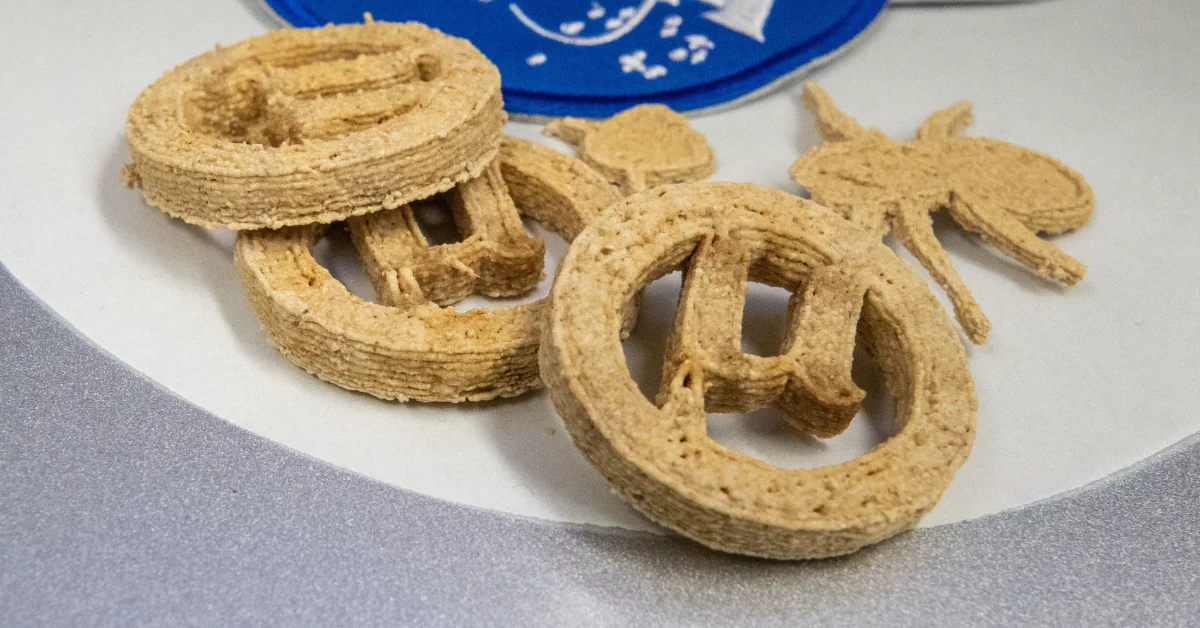
Scientists at Southern Illinois University, Carbondale have successfully transformed plastic waste into an edible, vanilla-flavored cookie.
It all started with a prompt from NASA’s Deep Space Food Challenge and a grant from the National Science Foundation: Could we use the world’s growing plastic pollution crisis to turn one problem into a solution for another?
“Global food demand is expected to rise 35–56% by the year 2050, and about 30% of the world population will be at risk of hunger in the future,” SIUC associate professor Lahiru Jayakody said in a statement. “The way to address that, I believe, is by using microbes.”
So, Jayakody and his research team programmed yeasts to turn plastic and agricultural waste into edible proteins and flavored molecules.
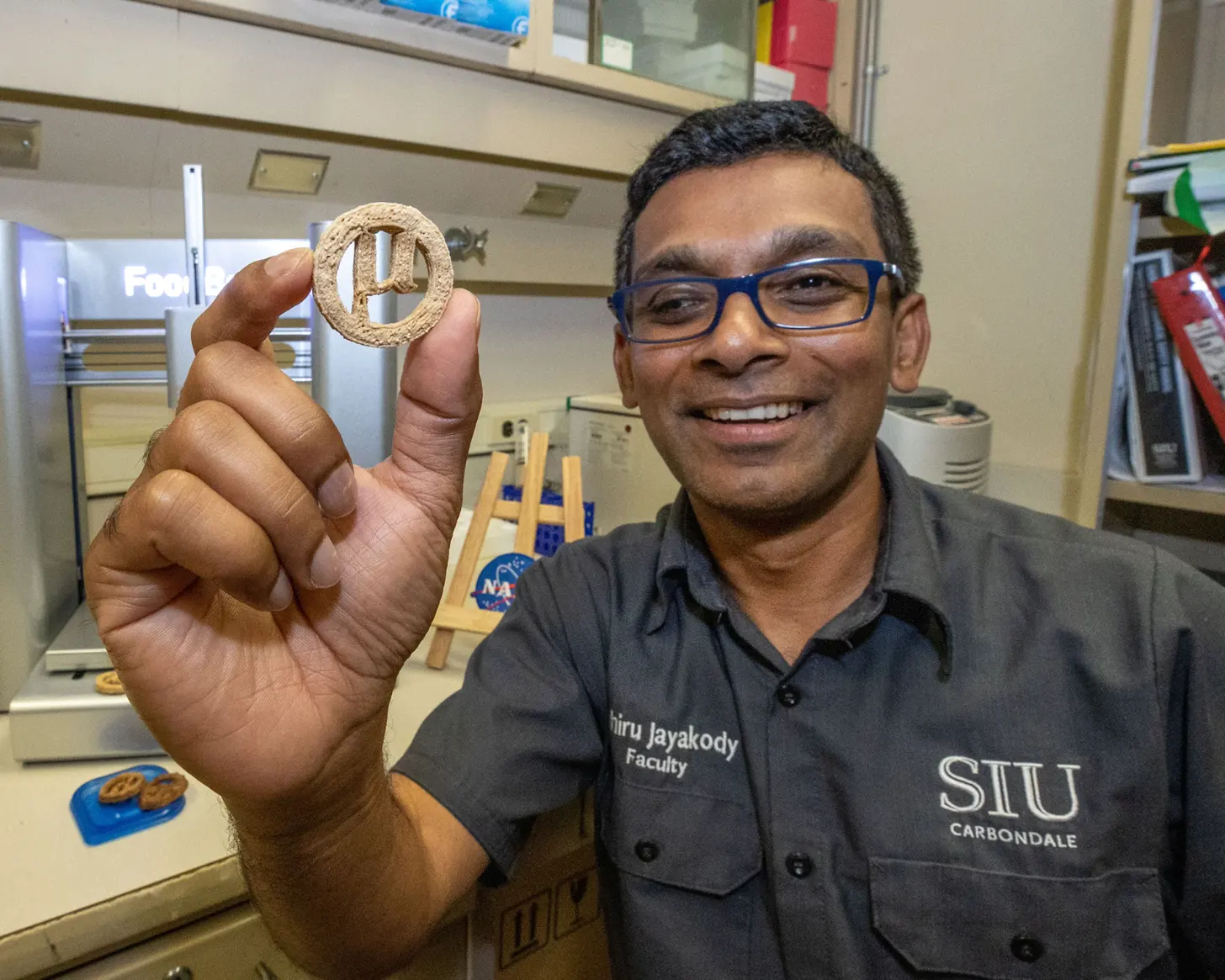
The final product is an upcycled cookie called a µBite.
“We were trying to develop technologies for plastic upcycling to make more valuable products,” Jayakody said. “We thought, why not focus on making food? Because plastic is carbon and food is carbon.”
The team used polyethylene terephthalate, or PET, one of the most common forms of plastic — which is often used to make soda and water bottles. PET contains molecules with a lot of carbon, which can be rebuilt into something like a protein through the use of chemical reactions and solvents in a lab.
But Jayakody wanted to try breaking down that PET with microbes instead.
“Microbes are very clever,” he said. “So, we are using their traits to solve the problems we created.”
In the past, scientists have used microbes, like yeast, as “miniature factories” to make new molecules. One of the biggest examples of this is insulin; instead of it being extracted from animals, yeast can be programmed to make it instead.
Jayakody and graduate student Sandhya Jayasekara programmed baker’s yeast, among other types of yeast, to convert molecules in plastic waste into proteins, vitamins, and flavorings.
Here’s how they actually did it: The researchers took PET plastic, discarded corn plant stalks and leaves, and other agricultural waste, and put it through a process called oxidative hydrothermal dissolution.
This method uses water and oxygen at high temperatures to break down tough material into “microbe-accessible pieces.”
Those pieces are then fed to the programmed yeasts, which turn them into new food ingredients, like proteins, fats, and acids. The researchers also added fiber, starch, and sweetener before extruding the final mixture through a 3D printer to form the cookie shapes.
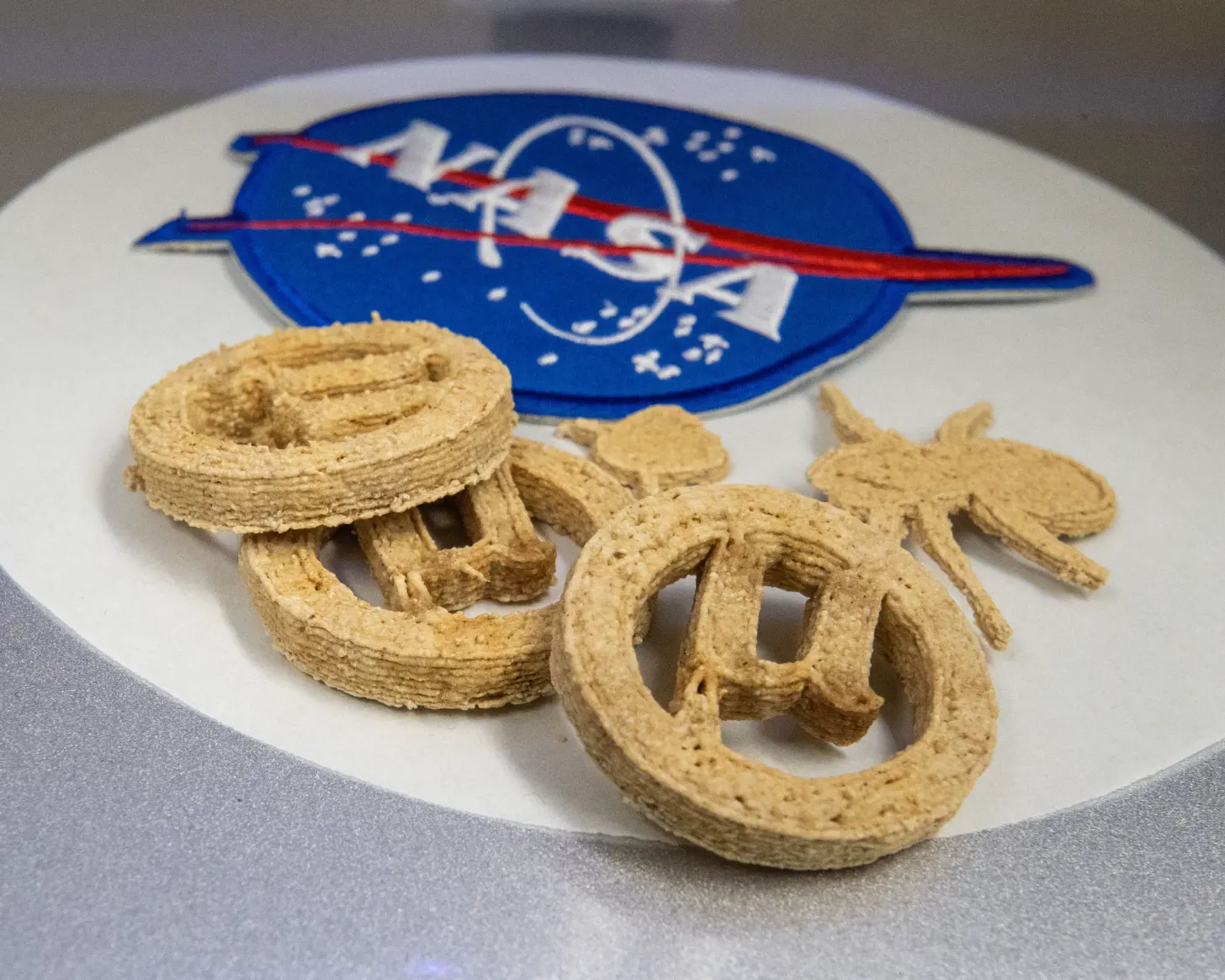
The µBites, which are pronounced “micro-bites,” almost look like animal crackers. But they aren’t quite ready to win the everyday consumer’s affections.
With their preliminary research, the scientists found that the cookies are safe to eat, but they are awaiting approval to conduct taste tests.
“For now, the cookies have received high marks on aroma, with most participants agreeing that they would be willing to eat the cookies in resource-limited situations,” a press release said.
The overall goal, stemming from NASA, is to support humans on deep space missions, or even, according to the American Chemical Society, “colonies on the moon or Mars.”
But they can also be used on Earth for populations that are in dire circumstances without food.
In the future, Jayasekara plans to use yeasts that produce more food additives, like vanilla flavoring or beta-carotene that the body can convert into vitamin A.
“We’re using microbes to develop the cookie into a more attractive, consumer-friendly product,” Jayasekara said.
You may also like: From mushroom caskets to coral cremations, these eco-friendly burials are gaining popularity
Featured Image: Rusty Bailey/SIUC Media & Communication Resources