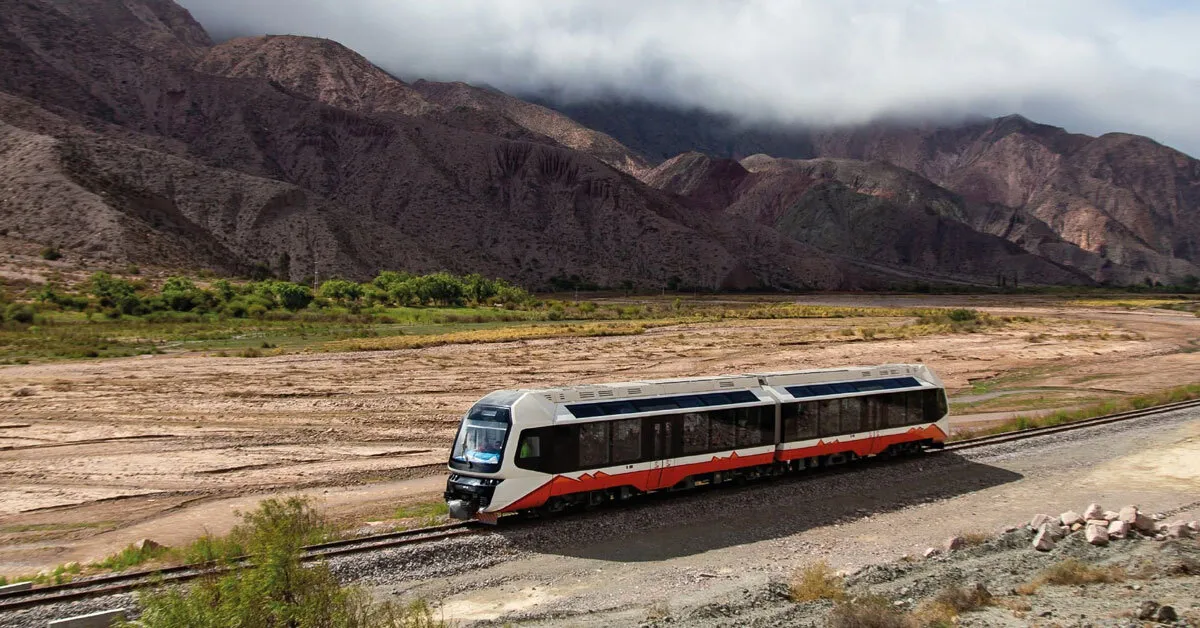
The first fully solar-powered luxury train in Latin America is rolling into the station: Argentina’s Tren Solar de la Quebrada.
It’s been operational for about two years now, but the Quebrada solar train, located in the province of Jujuy, is still attracting new fans and tourists.
The train can hold up to 388 passengers, with 72 seated, and is powered by a 352-kilowatt-hour battery pack. This, along with “regenerative braking” on downhill parts of the journey, easily accommodates the standard 52-mile round trip on one charge.
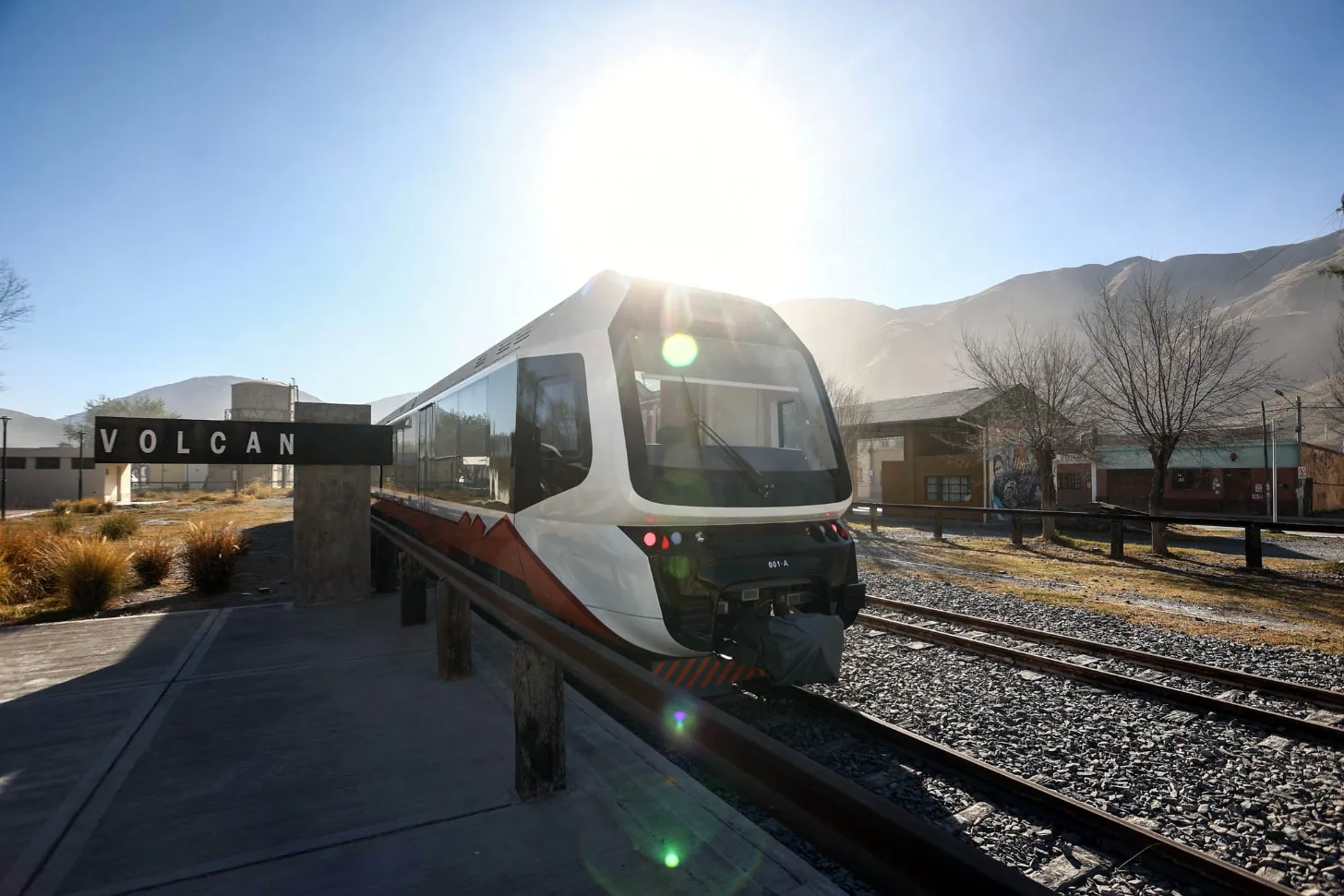
That said, each of the six stations on the route has EV-style chargers for the train to charge up, in the event that it needs more juice. There is no combustion engine anywhere on the vehicle.
Not only does the passenger train emit no noise or emissions, but its 26-mile route connects one of UNESCO’s World Heritage Sites.
Departing from the village of Volcán, the two-car train cuts through Quebrada de Humahuaca, known as one of South America’s oldest cultural corridors.
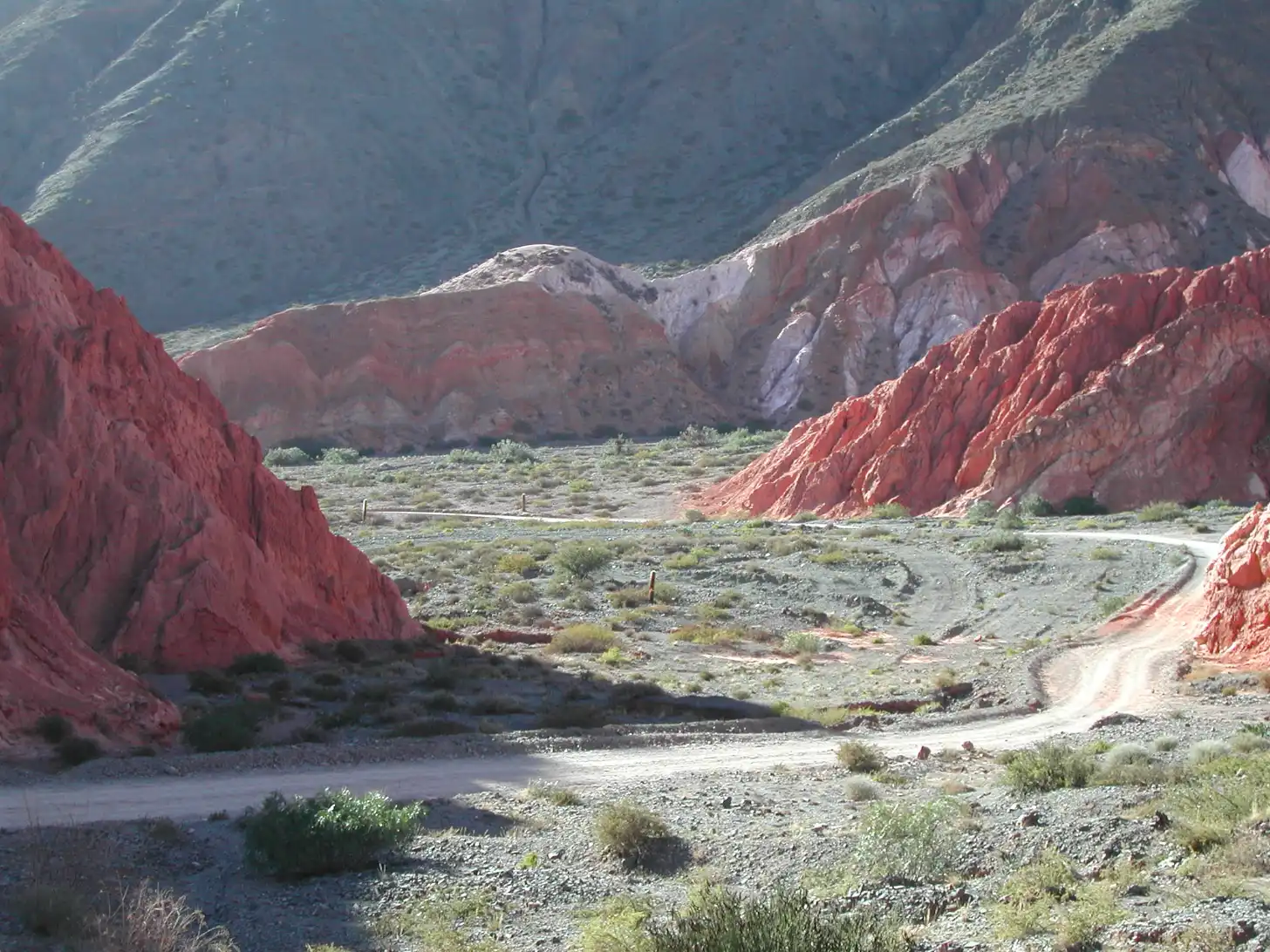
Clocking in at about 10,000 years old, the ancient canyon was a trade route first traveled by hunter-gatherers, and later, Indigenous traders, Inca messengers, Spanish colonists, and railway workers.
Over the course of history, the route has been a constant, and now it merges that long lineage with modern solar power innovation. The route is lined with stunning rock formations and red hillsides that make for gorgeous views.
“Quebrada de Humahuaca follows the line of a major cultural route, the Camino Inca, along the spectacular valley of the Rio Grande, from its source in the cold high desert plateau of the High Andean lands to its confluence with the Rio Leone some 150 kilometers to the south,” UNESCO describes the valley on its world heritage profile.
“The valley shows substantial evidence of its use as a major trade route over the past 10,000 years. It features visible traces of prehistoric hunter-gatherer communities, of the Inca Empire, and of the fight for independence in the 19th and 20th centuries.”
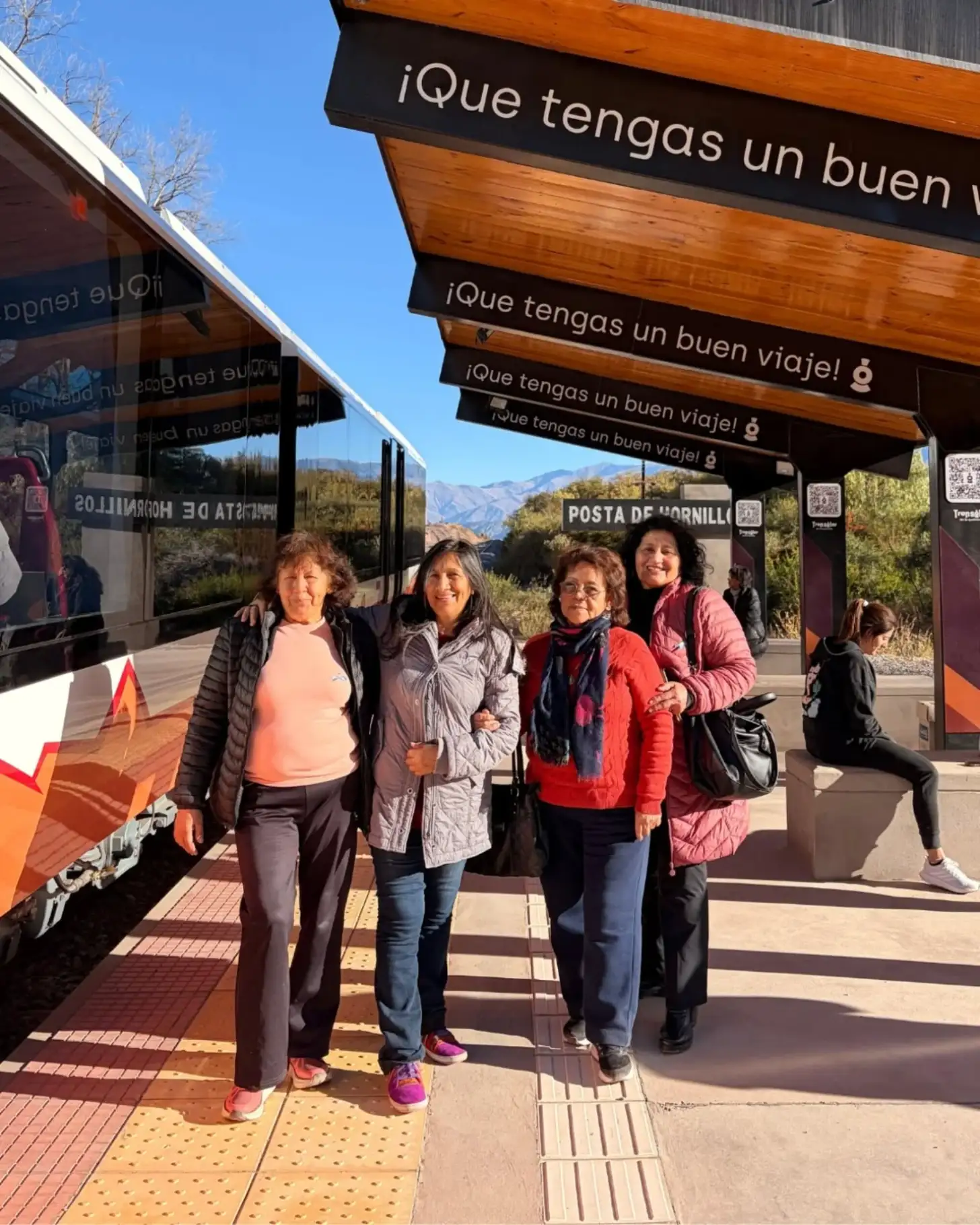
For locals hoping to learn more about the region and enjoy a scenic ride — or tourists wanting an immersive experience — the Quebrada solar train provides an environmentally-friendly way to experience the site.
“One of the defining characteristics of the project is its social impact,” the train’s official site reads. “Of the more than 90,000 passengers transported in the last two years, around a third traveled as part of the Solar Train’s social responsibility program. In other words, one in three passengers accessed the experience through initiatives aimed at bringing the train closer to the community.”

The train runs daily across the 26-mile route, leaving from Volcán, and making stops in Tumbaya, Purmamarca, Posta de Hornillos, Maimará, and Tilcara. The culmination of the trip is the Hill of Seven Colors, or the Cerro de los Siete Colores, outside of Purmamarca, a “rainbow mountain” known for its beautiful stripes of color.
For a full tour of the route, there is a 360° Experience, which includes an on-board guide and six stops along villages throughout the route, giving passengers time to explore each town, along with food and activities at each destination. The total experience takes about 10 hours.
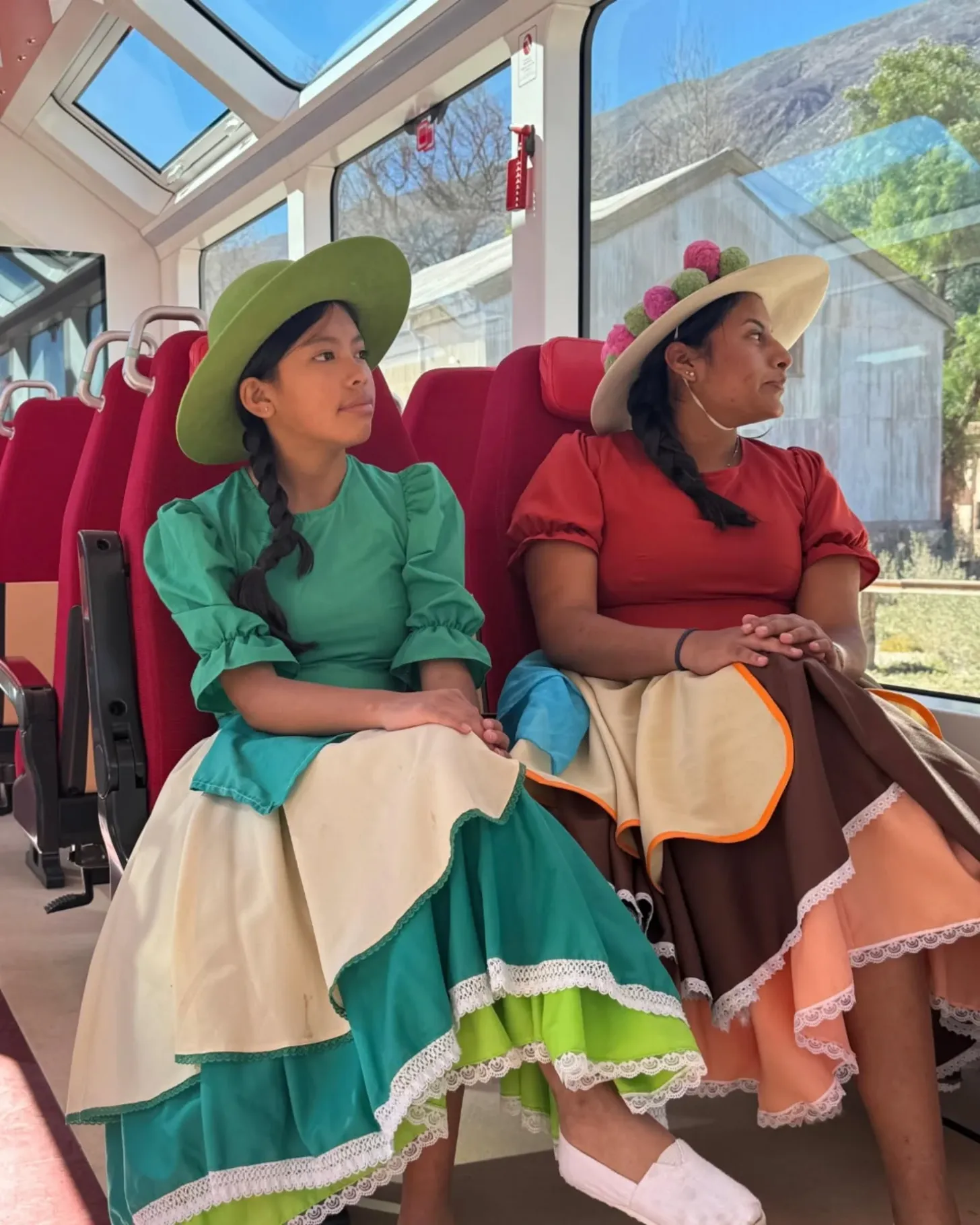
There is also a half-day option — aptly called the 180° Experience — in which passengers choose one of two round-trip routes. This includes a 15-minute break for coffee and exploration, but the total trip only lasts about an hour and a half.
The 360° Experience starts at $134 per person for visitors, while the 180° Experience starts at $53.
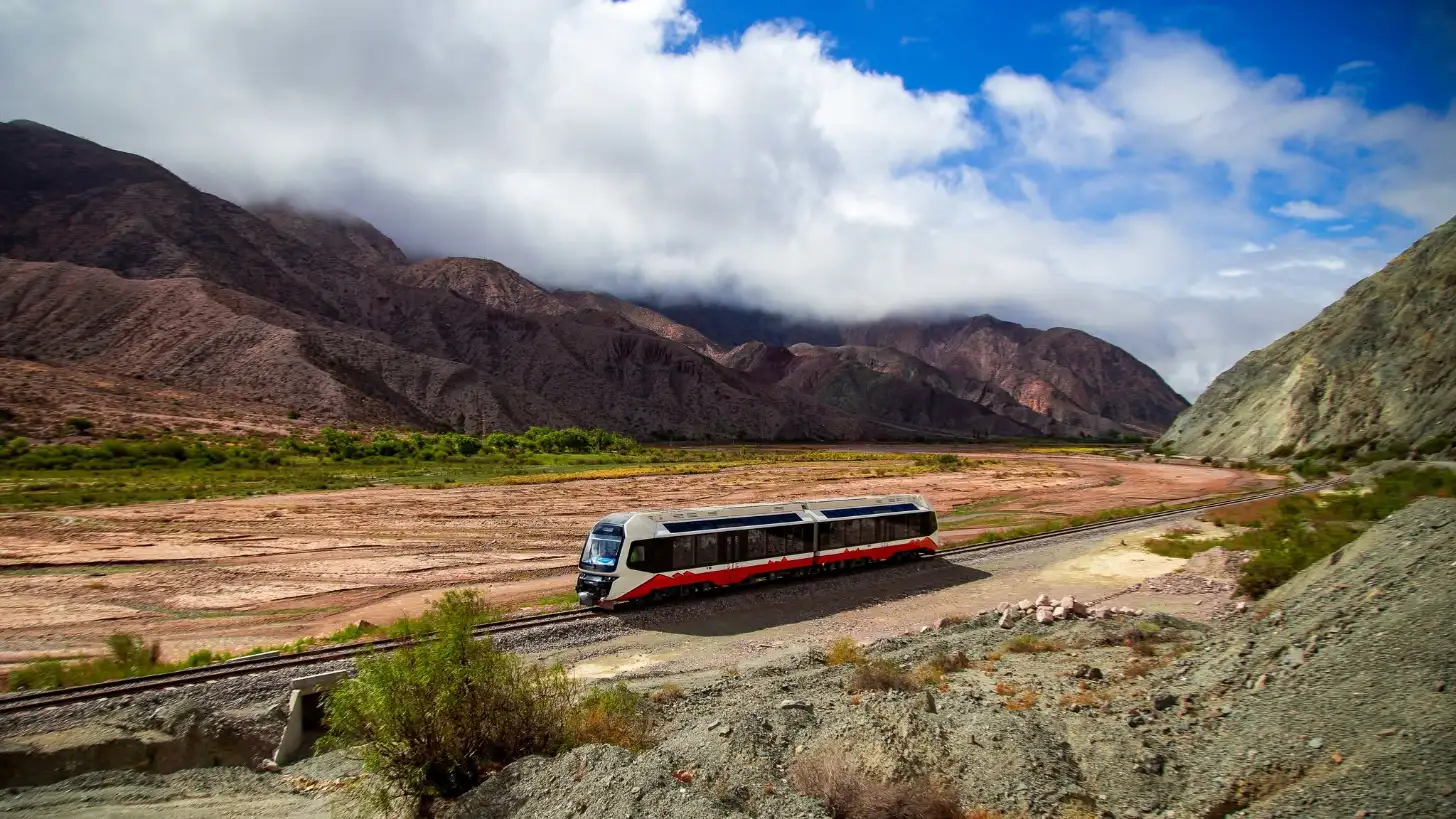
From the beginning, the Quebrada solar train has represented a commitment to sustainable tourism, its website reads, hoping to engage visitors in the area’s rich history while still protecting the natural environment.
“The Solar Train of the Quebrada is not only a means of transport, but a declaration of commitment to the environment and cultural heritage of the region,” the website reads, “inviting travelers to discover and preserve the beauty of Jujuy while enjoying an unforgettable journey.”
You may also like: University students invent first-ever solar-powered ambulance. It provides fully off-grid care in rural areas
Featured Image: Tren Solar de la Quebrada/Facebook