Thrifting is a fantastic way to reduce waste, help the planet, save money, practice conscious consumerism, and contribute to the circular economy. We’ve curated the absolute best online thrift stores from the U.S. and around the world — to help you find your next great outfit.
Short on time? Here’s a quick breakdown of our top picks:
Top Picks: Online Thrift Stores — Global, U.S., Canada, U.K., and Australia
| Thrift Store | Location | Action |
|---|---|---|
| eBay | Global | Shop now |
| Poshmark | Global | Shop now |
| Vinted | Global | Shop now |
| Depop | Global | Shop now |
| Etsy | Global | Shop now |
| Mercari | U.S. | Shop now |
| OfferUp | U.S. | Shop now |
| fomeno | U.S. | Shop now |
| Nuuly Thrift | U.S. | Shop now |
| Bissell | Canada | Shop now |
| Thriftsome | Canada | Shop now |
| Thrift+ | U.K. | Shop now |
| HEWI | U.K. | Shop now |
| SWOP | Australia | Shop now |
| Vintage Marketplace | Australia | Shop now |
Every second, the equivalent of one garbage truck’s worth of clothing is burned or buried in a landfill, according to the Ellen MacArthur Foundation.
Let that sink in. Every second.
Even if we (with good intentions) choose to donate our clothes to thrift stores or charities, in some cases, these places are often forced to throw out some of these donations, of which an estimated 25% go directly to landfill or contribute to the extremely problematic global second-hand clothing industry, which impacts local textile markets in countries like Ghana and Chile.
It’s also reported that textile waste is set to increase by roughly 60% between 2015 and 2030, with an additional 57 million tons of waste being generated annually, reaching an annual total of 148 million tons.
Things can change, though.
A simple (and economical) solution to help both people and our planet address this problem? Reducing our waste and overconsumption habits by using what we already own and shopping second-hand.
According to thredUp’s 2022 Resale Report, the global secondhand apparel market is expected to grow three times faster than the global apparel market overall. Technology growth and online marketplaces and thrift shops (like the ones we’re including in this article) are successfully driving the growth of the second-hand market — especially within the U.S.
While it’s great to see that the resale market is booming, many large retailers have begun using marketing and greenwashing tactics to capitalize on this trend. So though we’re assuming you’re here to find the most sustainable way to shop, we’re also here to remind you that sustainability first and foremost means using what you already own and extending the lifespan of the items you interact with daily.
If you are, however, thoughtfully seeking to add to your wardrobe or space, second-hand shopping is among the best ways to reduce your carbon footprint.
The good news is that there’s a great selection of platforms offering tailored shopping experiences for their customers. Whether you’re new to thrifting or a seasoned vet, we’ve gathered some of the best second-hand marketplaces and independent sellers out there to help you curate your closet and home.
This article is broken down into:
- Global marketplaces, available around the world
- Online thrift stores in the United States
- Online thrift stores in Canada
- Online thrift stores in the UK
- Online thrift stores in Australia
Happy thrifting!
By the way, some of the links in this article are affiliates, which means we may earn a commission at no extra cost to you. Everything in this article was independently and honestly written by the Good Good Good team. Thank you for your support!
Explore the best second hand shops to buy used clothes online —
Online Thrift Stores (Worldwide)
eBay
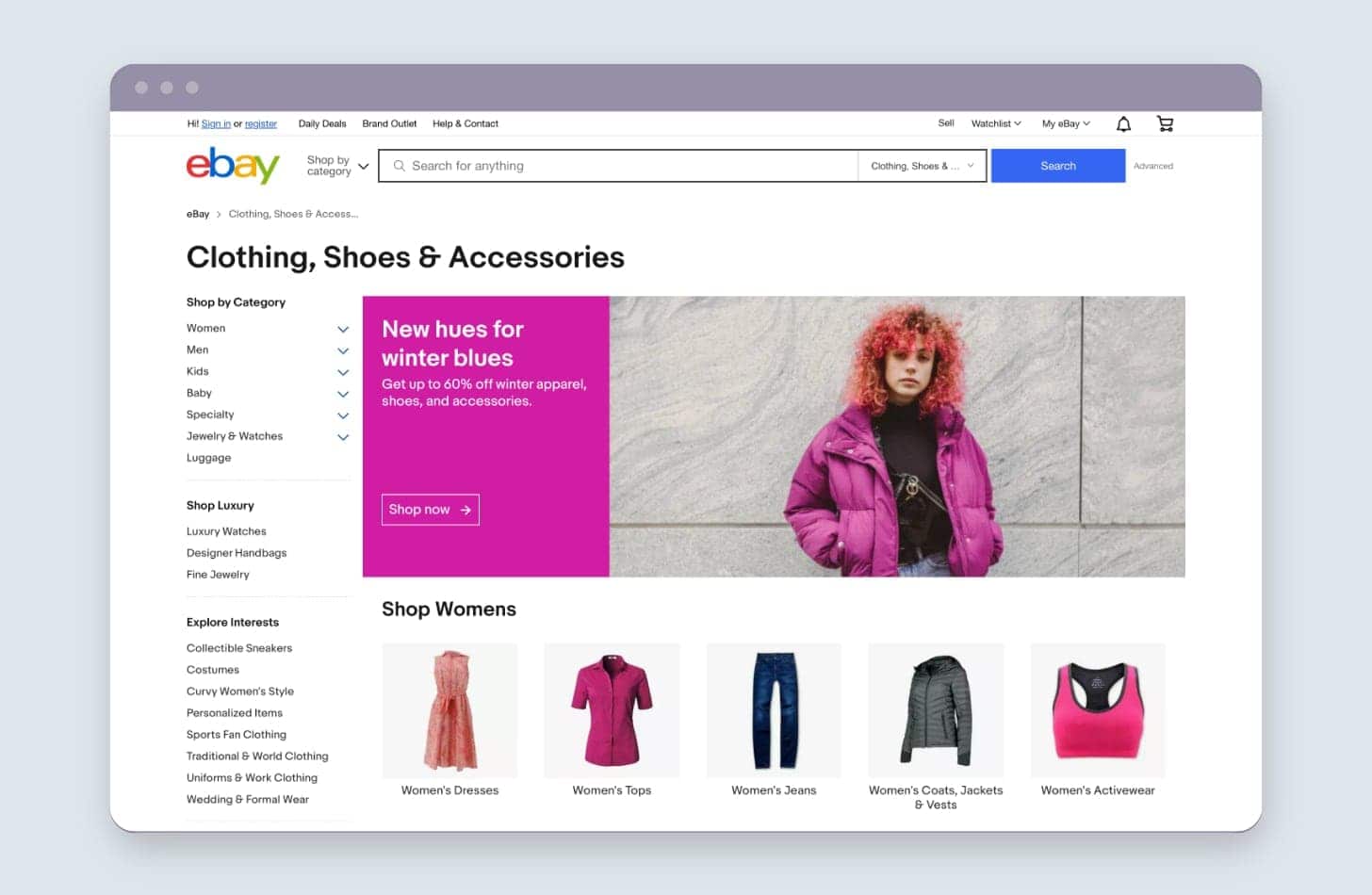
eBay was one of the first global online marketplaces that provided buyers and sellers with a platform to access pre-owned, unique, and niche-specific goods. Many thrifters of the early 2000s might remember anxiously skipping dinnertime, connecting to their dial-up internet, and furiously outbidding fellow buyers for one-of-a-kind vintage pieces (or… was that just me?).
Today, eBay stands strong as one of the go-to places for just about anything secondhand or collectors-related (from rare 90s sneakers to the perfect denim jacket). We recommend heading over to eBay if you’re specifically looking for vintage or collector’s items.
Poshmark
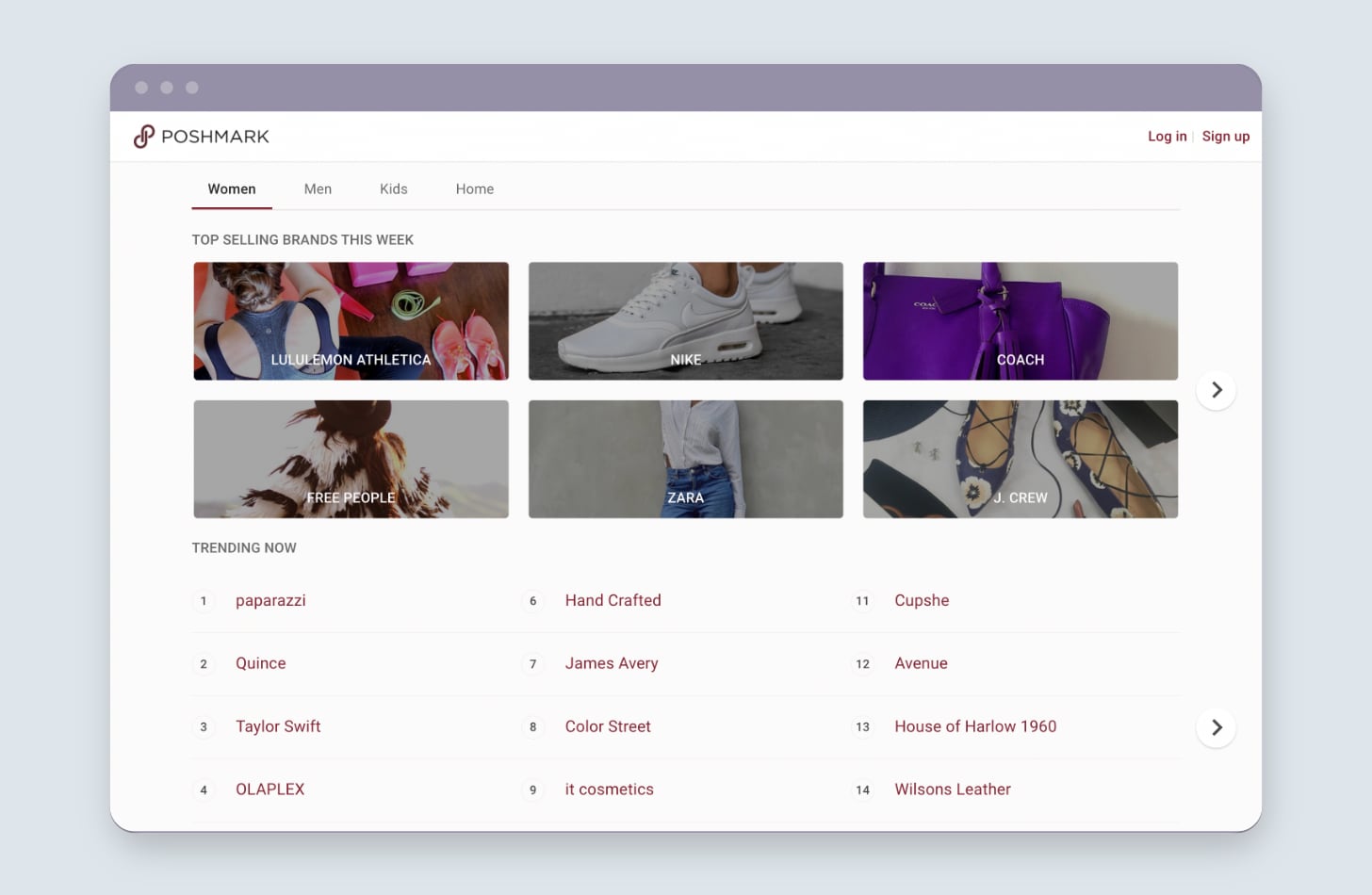
Poshmark is a social e-commerce platform and mobile app where shoppers and buyers can find and sell new and used clothes, shoes, accessories, and household goods. Starting in 2011, Poshmark has grown to over 80 million registered users, making it one of the most popular online marketplaces in the US, Canada, Australia, and India.
Apart from personalizing the shopping experience by brand, size, and price, shoppers also can negotiate for lower prices and attend virtual “Posh Parties,” real-time, virtual shopping events where users from all around the world shop, share, and sell pre-loved items — from preppy attire parties to Nike to home decor.
While this social marketplace does offer a wide variety of items and caters to a wider range of people (and pets), we recommend turning to it whenever you’re looking to shop for an item from a specific brand (like Reformation, Hoka, or Everlane).
Vinted
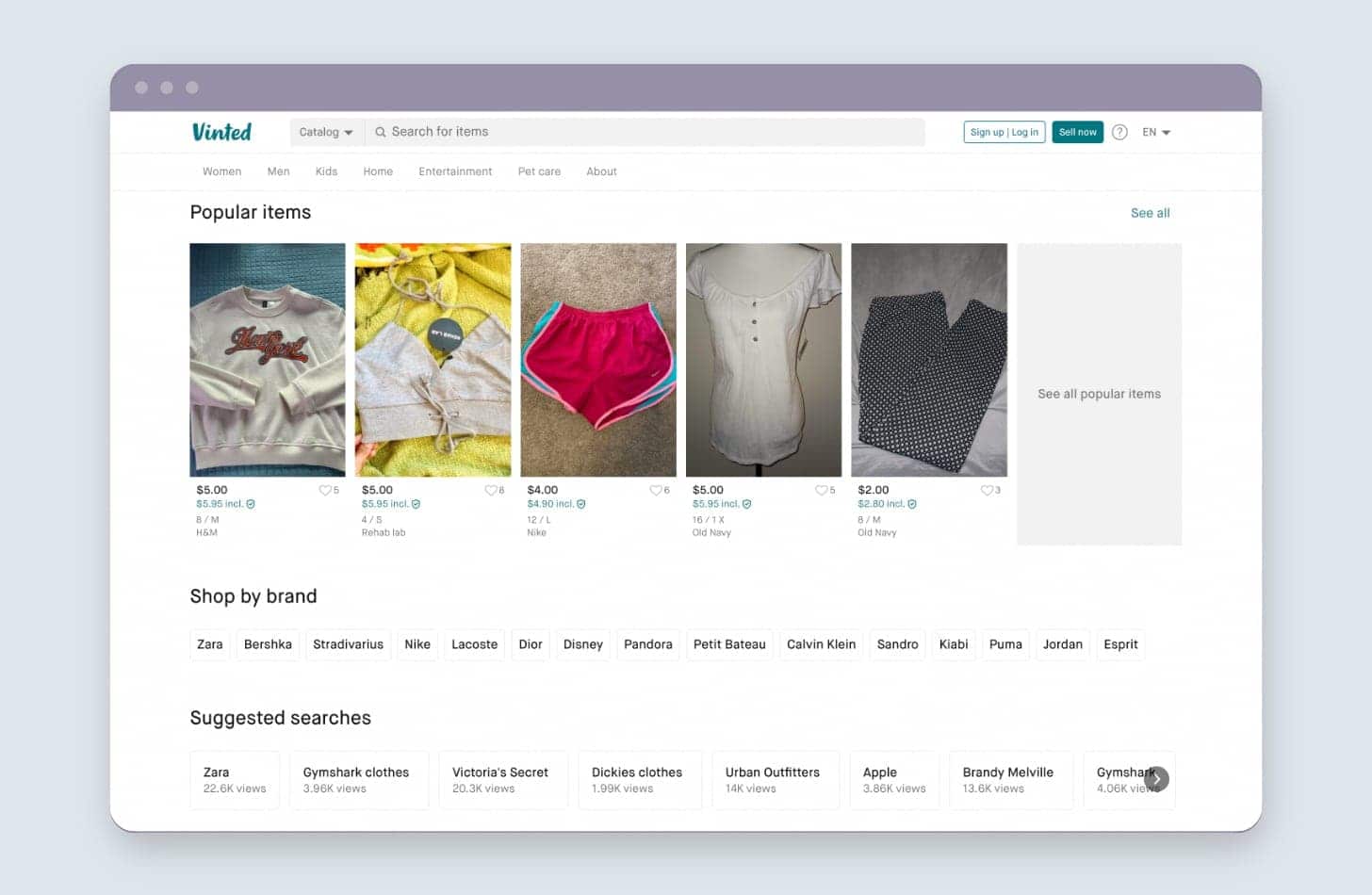
Vinted is an international (operating in 16 markets) online second-hand marketplace powered by a massive community of over 45 million members. It's available on iOS, Android, and desktop browsers and provides options to shop for affordable clothing and accessories.
For those who not only buy secondhand but sell, Vinted has zero selling fees (aka you keep 100% of the profits from a sale). We recommend turning to Vinted if you’re looking for a wide variety of affordable vintage or thrifted pieces.
Depop
Depop is the quasi-Instagram online marketplace widely known to speak to Millennials and Gen Z. The platform is dedicated to buying and selling second-hand clothing directly from popular influencers, celebrities, and diverse groups of (very stylish) global members.
Available via iOS and Android apps for those living in Australia, Italy, the UK, and the U.S., Depop allows people to negotiate prices, follow one another, and participate in virtual events. We recommend opening up the app when you’re looking for trendy vintage pieces (think: Y2K dresses or unique streetwear).
Etsy
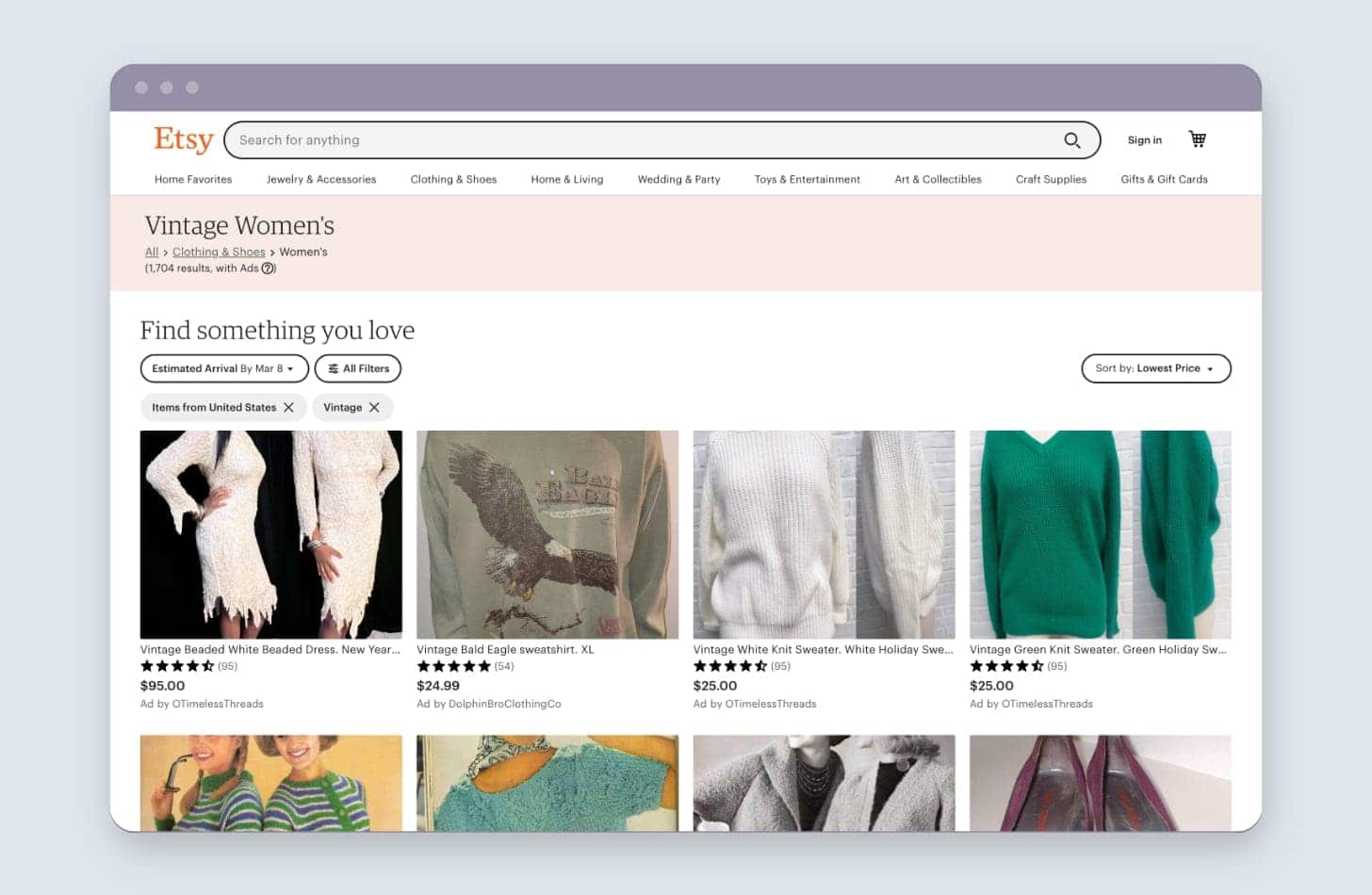
Etsy is a true treasure trove for people looking to buy or sell handmade goods and vintage pieces. Launched in 2005, it has since become one of the most popular platforms for artists, craftspeople, and collectors to sell their unique and thoughtful items.
We recommend turning to Etsy if you’re looking for unique vintage pieces, as well as a way to support small businesses around the world. Some of our favorite secondhand shops include:
Imparfaite.
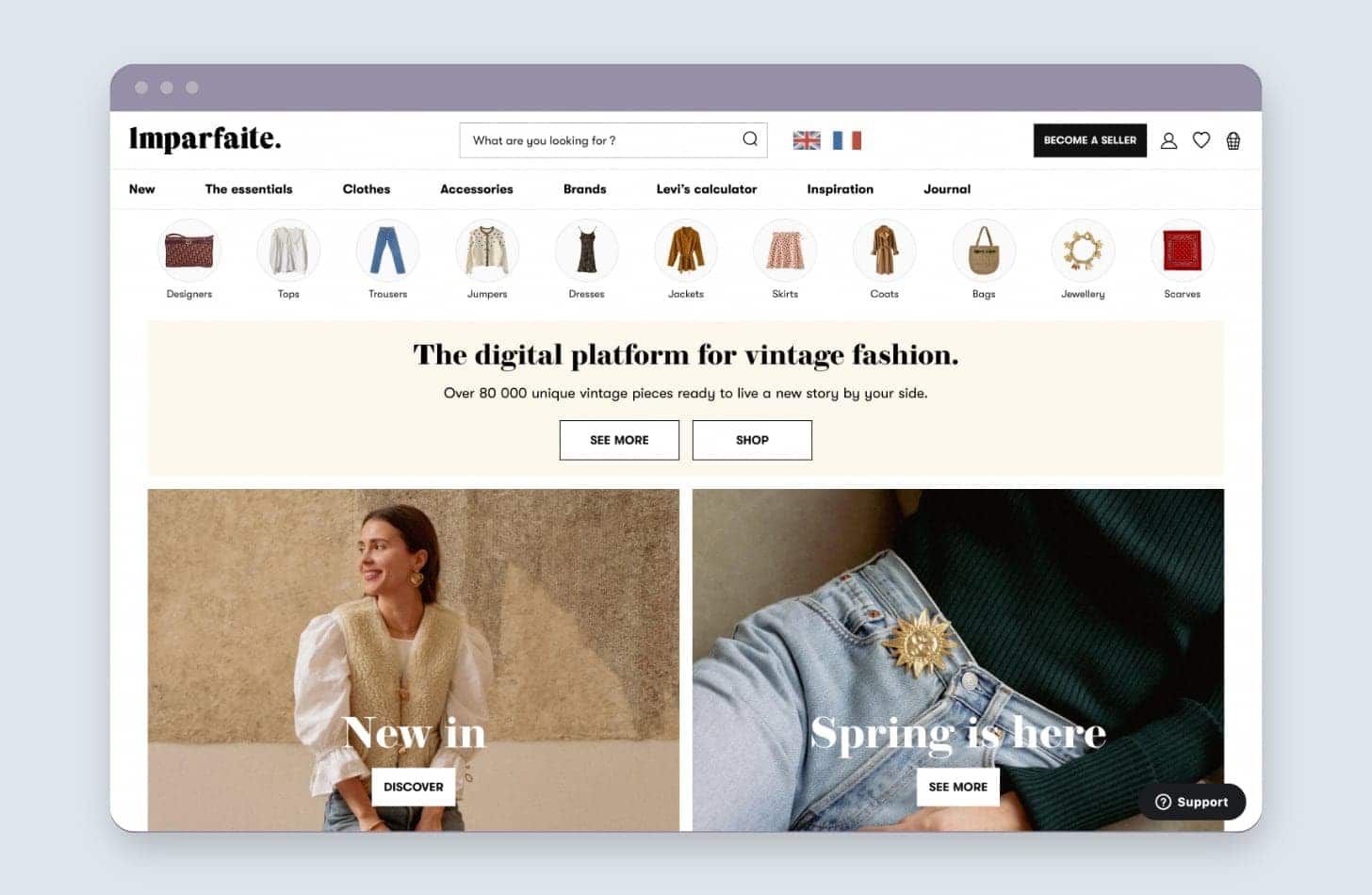
Imparfaite. is a Parisian vintage online marketplace that specializes in curated vintage clothing and accessories. Partnering with professional vintage resellers in France, Imparfaite. connects quality pieces to secondhand shoppers from around the world.
Its inventory includes more than 8,000 vintage items (like bags, jewelry, and shoes), vintage Levi’s, as well as a designer collection. We recommend checking them out if you’re looking to channel that effortlessly chic European stlye.
Shop Goodwill
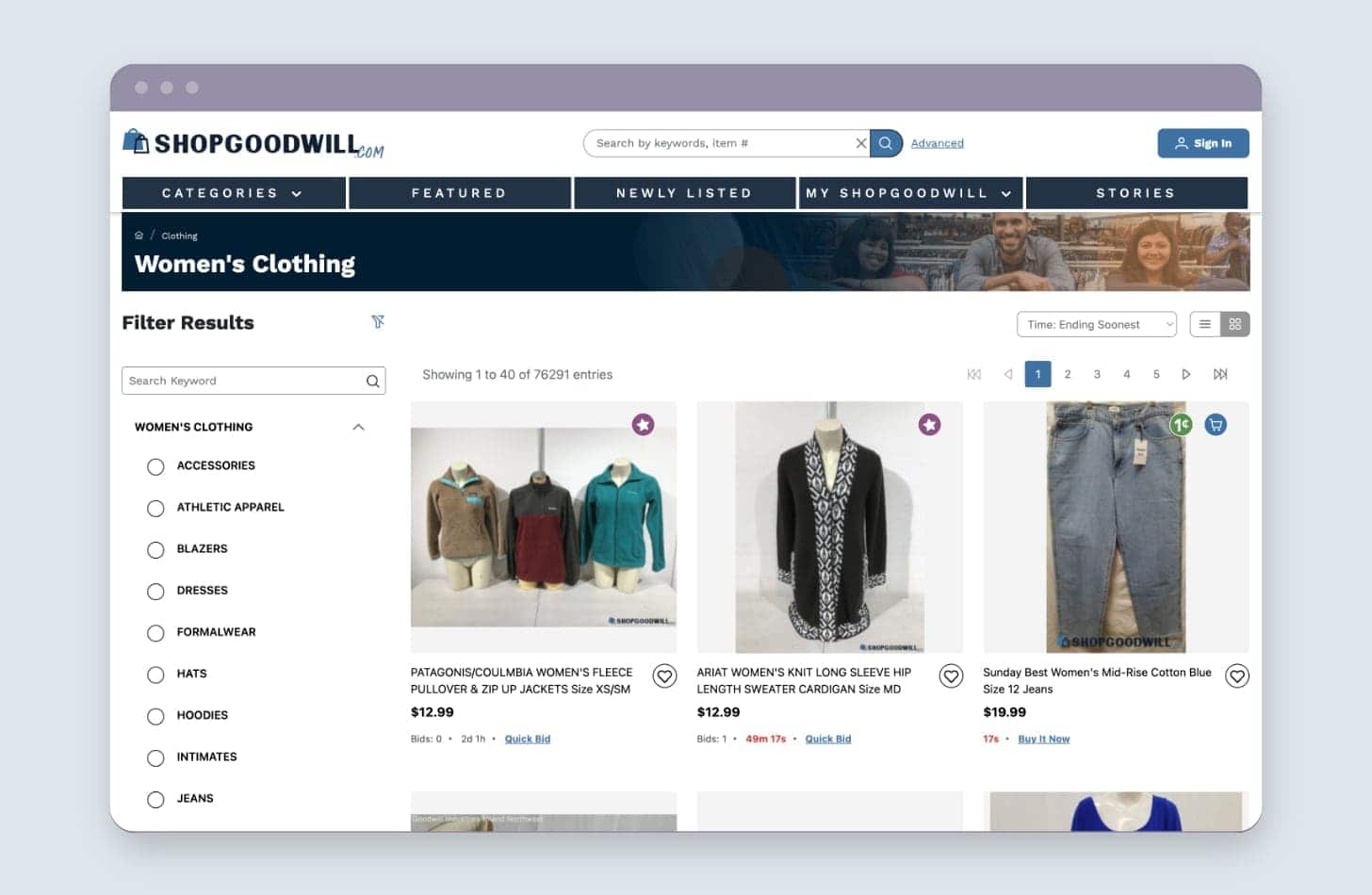
Shop Goodwill is one of the programs associated with the nonprofit Goodwill— chances are if you’re in the U.S., you’ve walked into one of them. (You may have also read about a number of valid criticisms of Goodwill — most notably, significantly underpaying employees and overpaying its CEO.)
Shop Goodwill ships internationally, offering shoppers access to an almost endless amount of used items, including clothing, books, electronics, home goods, and more. Goodwill has a lot to offer at affordable prices but we’d primarily recommend this platform to those who don’t mind the hunt and are a little more patient (we’ve found some gems on here but it does take time).
Stillwhite
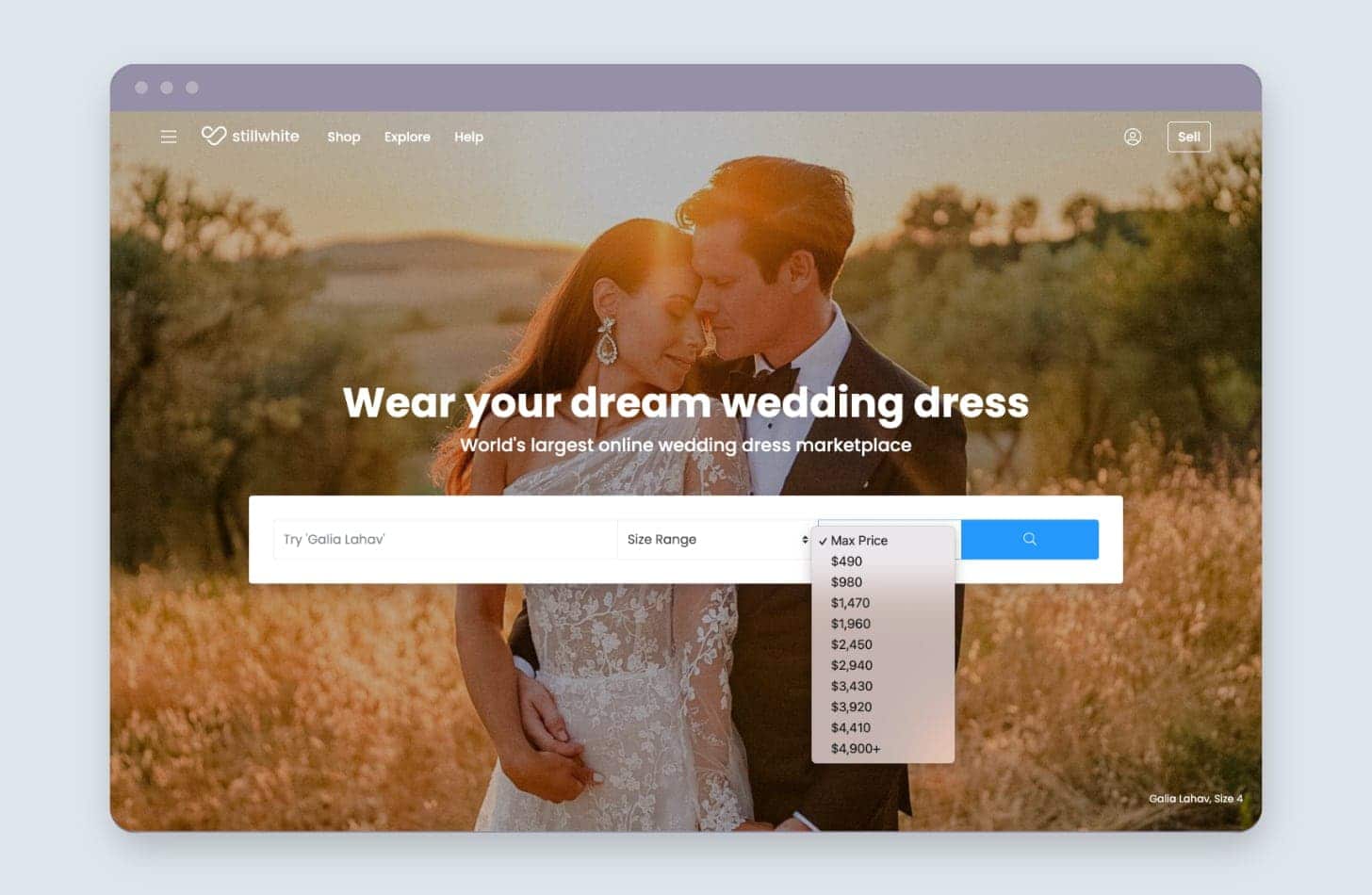
Stillwhite is for the soon-to-be bride looking for a sustainable way to celebrate their big day. Since wedding dresses are traditionally a single-use product, Still White is looking to change that by offering an online marketplace for buyers and sellers to give their beautiful dresses a second (or third, or fourth!) life.
Shoppers can filter through designers (like Vera Wang and Monique Lhuillier), size, and style. For obvious reasons, we recommend this specifically to brides looking for a sustainable and affordable way to celebrate their big day.
Designer Revival
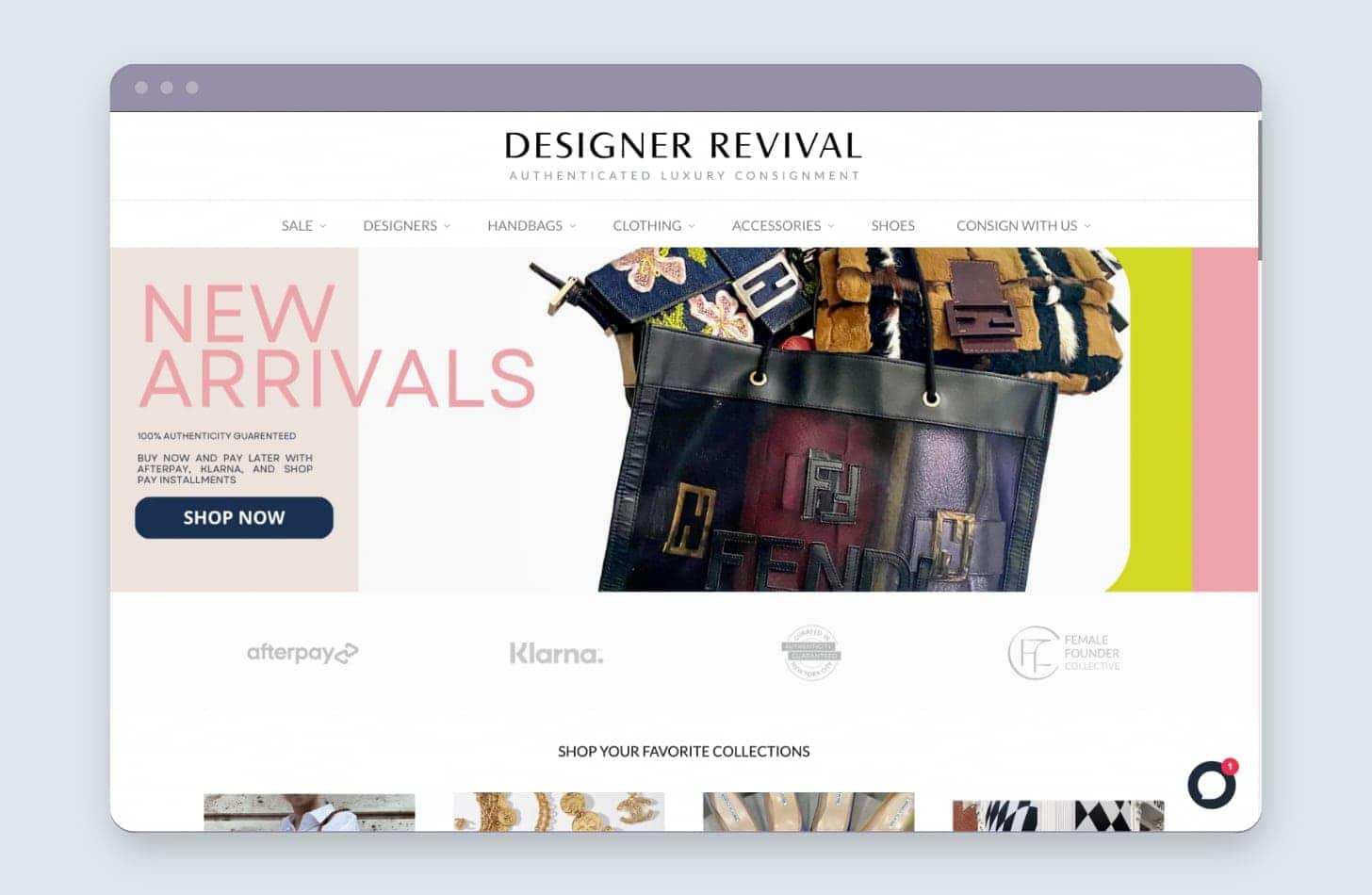
Designer Revival specializes in high-end pre-owned designer, vintage, and contemporary clothing, handbags, jewelry, shoes, and accessories. This online consignment marketplace is a proud woman-owned business that employs a diverse team of creatives, and is a part of the Female Founder Collective — a nonprofit supporting women-led organizations.
All products featured on the platform are inspected for brand-specific guidelines and are put through a rigorous authenticity testing process before being sold. You can turn to this online marketplace if you’re looking for higher-end secondhand investment pieces.
Goodfair
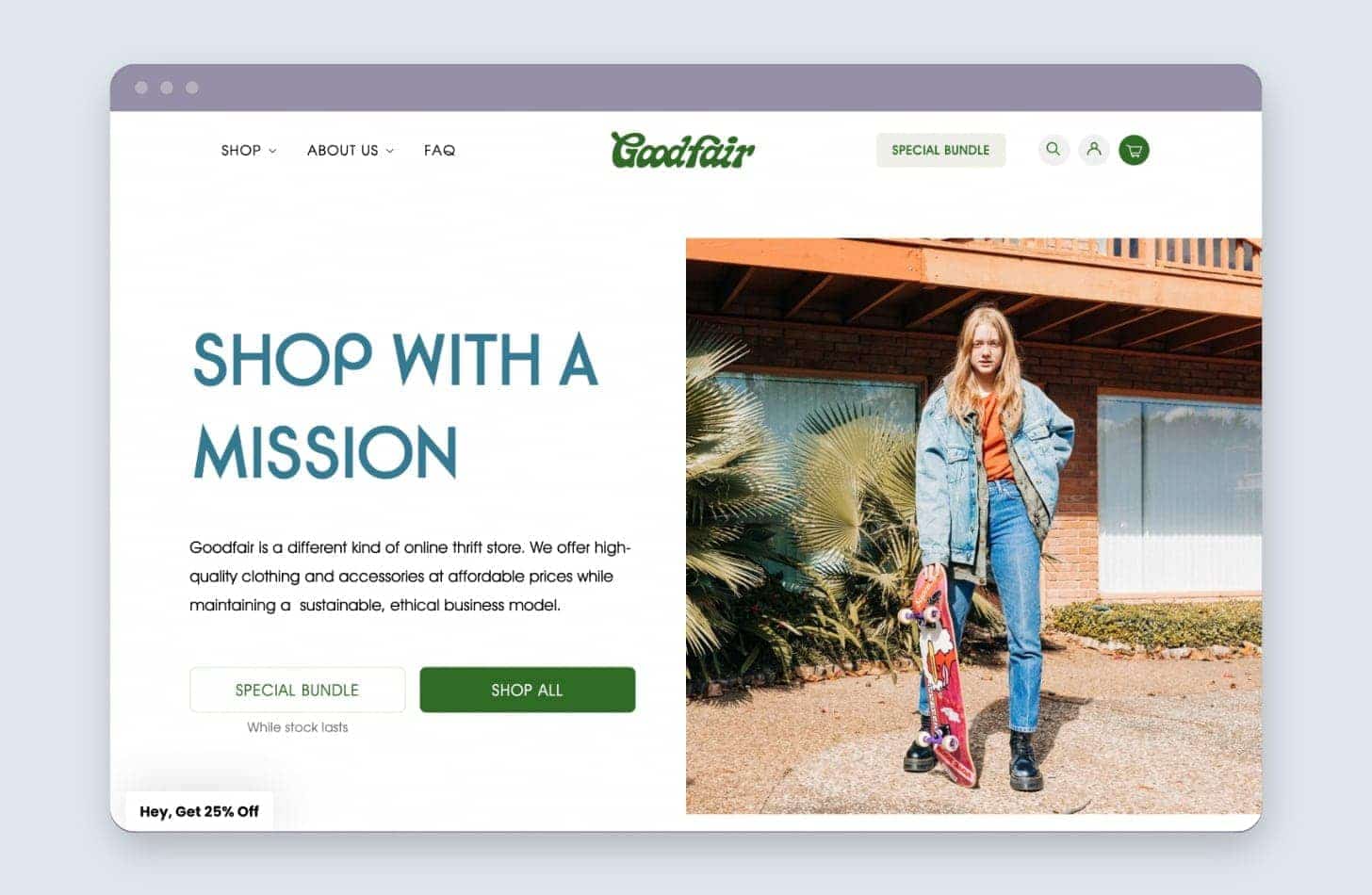
Goodfair is a unique online thrift store specializing in pre-owned, good-quality, themed bundles of clothing. Shoppers choose their size and the type of garment they're looking for, then Goodfair's team hand-selects their bundle for them.
The actual items in these bundles are a complete surprise until customers unpack them. You can opt for this online shopping experience if you love taking risks and surprises (also, this might be a great eco-conscious gift idea).
Trendy Seconds
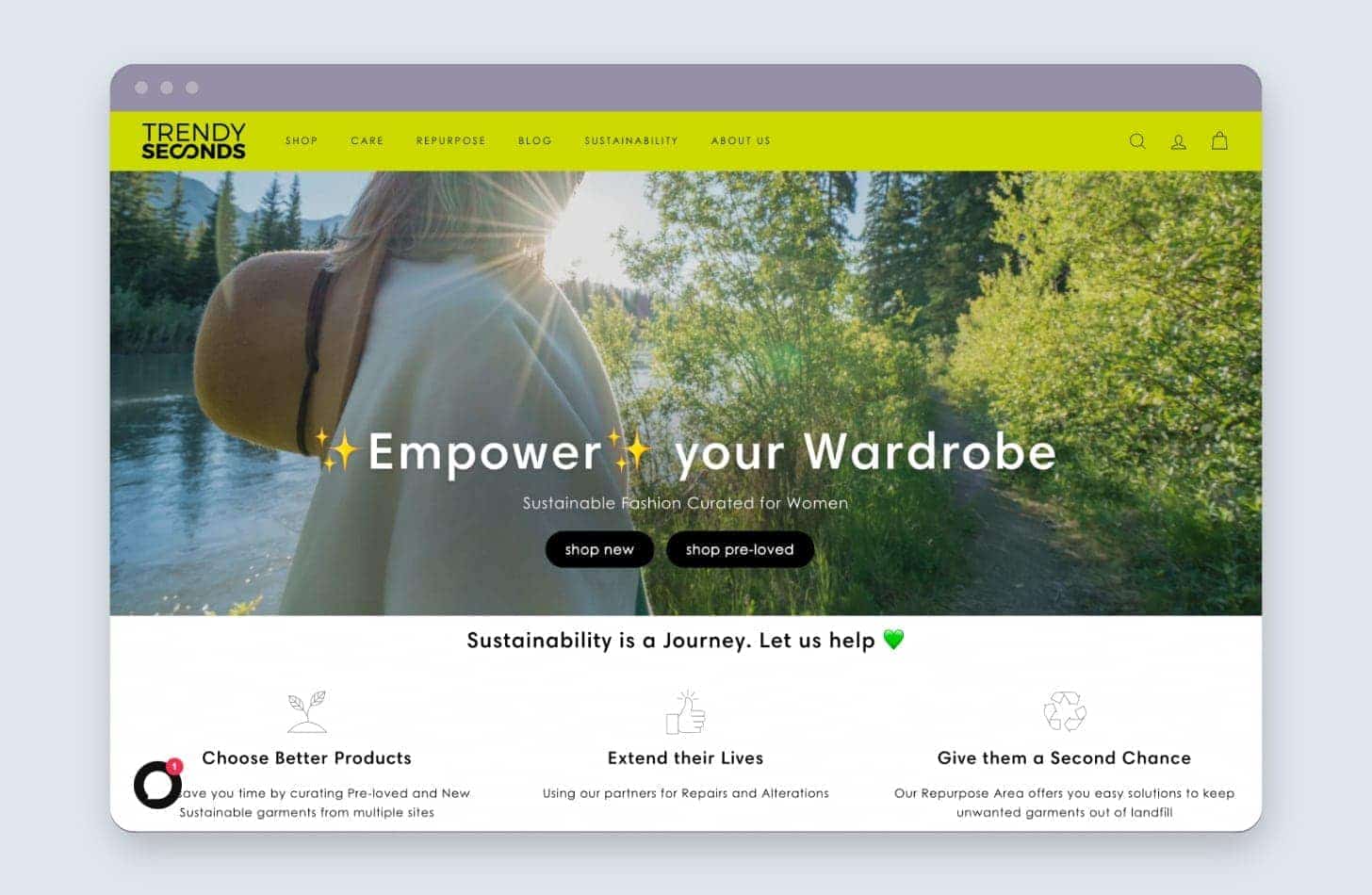
Trendy Seconds is a Latina-owned e-commerce platform that curates second-hand clothes from sustainable brands and secondhand marketplaces. You can shop by impact-type (like people, planet, animals, and waste) as well as your desired style preference.
From second-hand clothing, shoes, and accessories to sustainably made products, Trendy Seconds offers a palatable batch of items to sift through. We recommend this platform to those who are just venturing into the secondhand market.
Worn Wear by Patagonia
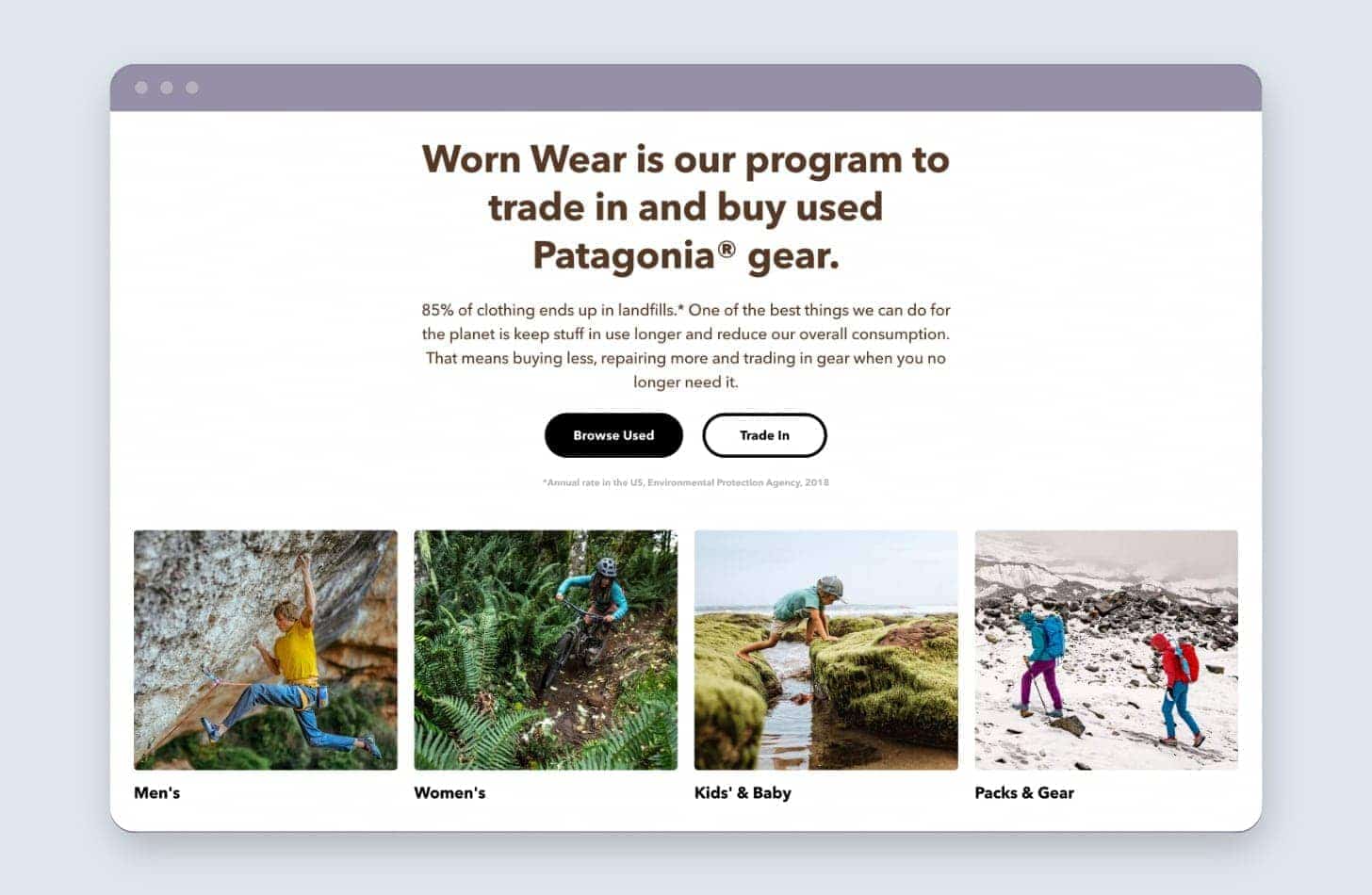
Worn Wear by Patagonia is perfect for those looking for gently-used outdoor clothing and gear. Called the online thrift store for adventurers, Worn Wear is Patagonia’s trade-in and buy-used program.
This online platform offers shoppers a way to purchase secondhand men’s, women’s, and children's Patagonia products at a more affordable price. You can try heading over to this site anytime you’re in the market for good-quality outerwear products.
Luxury Garage Sale
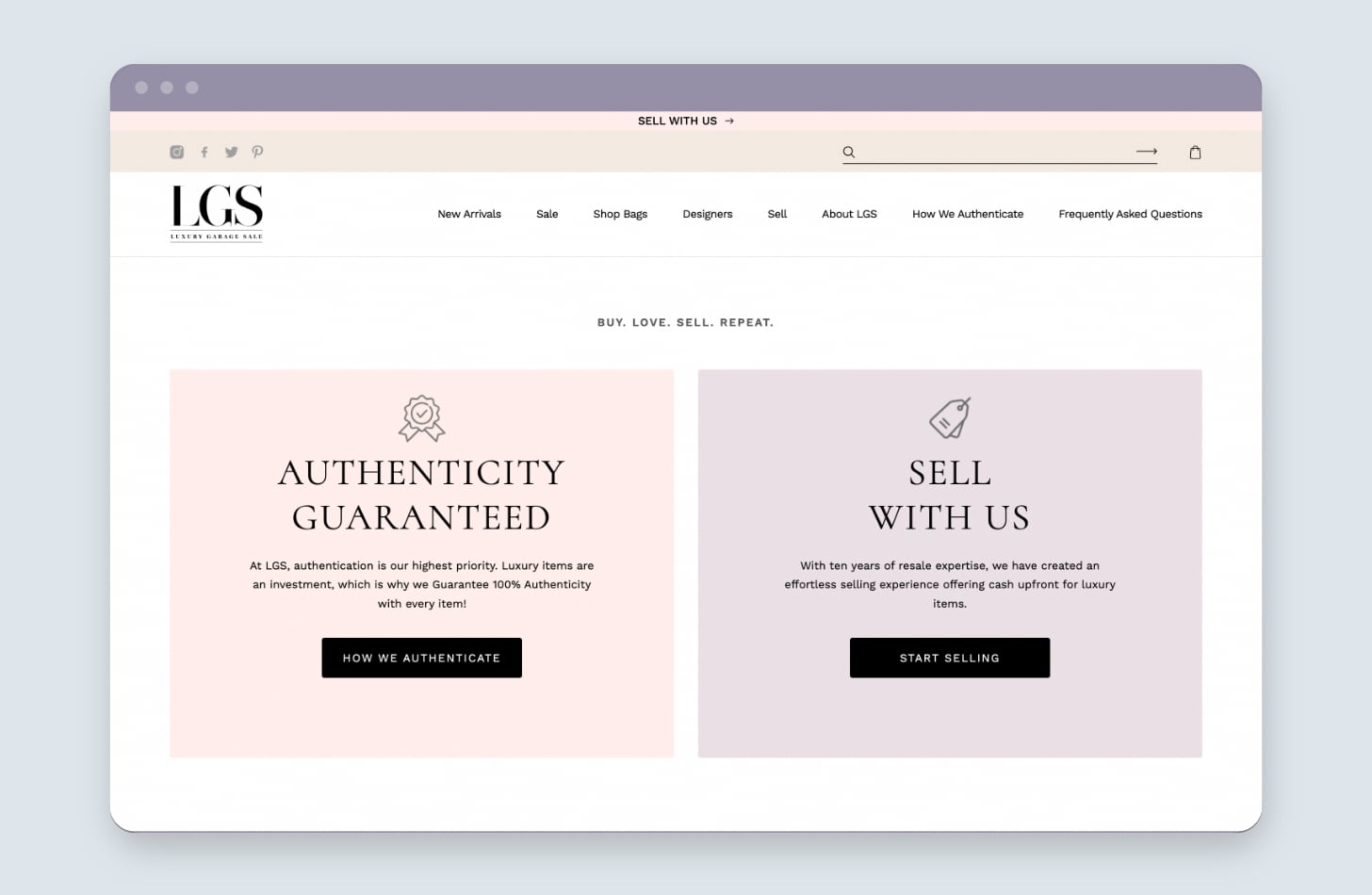
Luxury Garage Sale is a highly curated online thrift store specializing in genuine second-hand designer apparel, shoes, and accessories. It offers authentic, pre-owned pieces from the world’s most beloved luxury brands.
Each product undergoes a rigorous authentication process conducted by experts in the field. If you’re looking to invest in a luxury product, add this marketplace to your list.
Vestiaire Collective
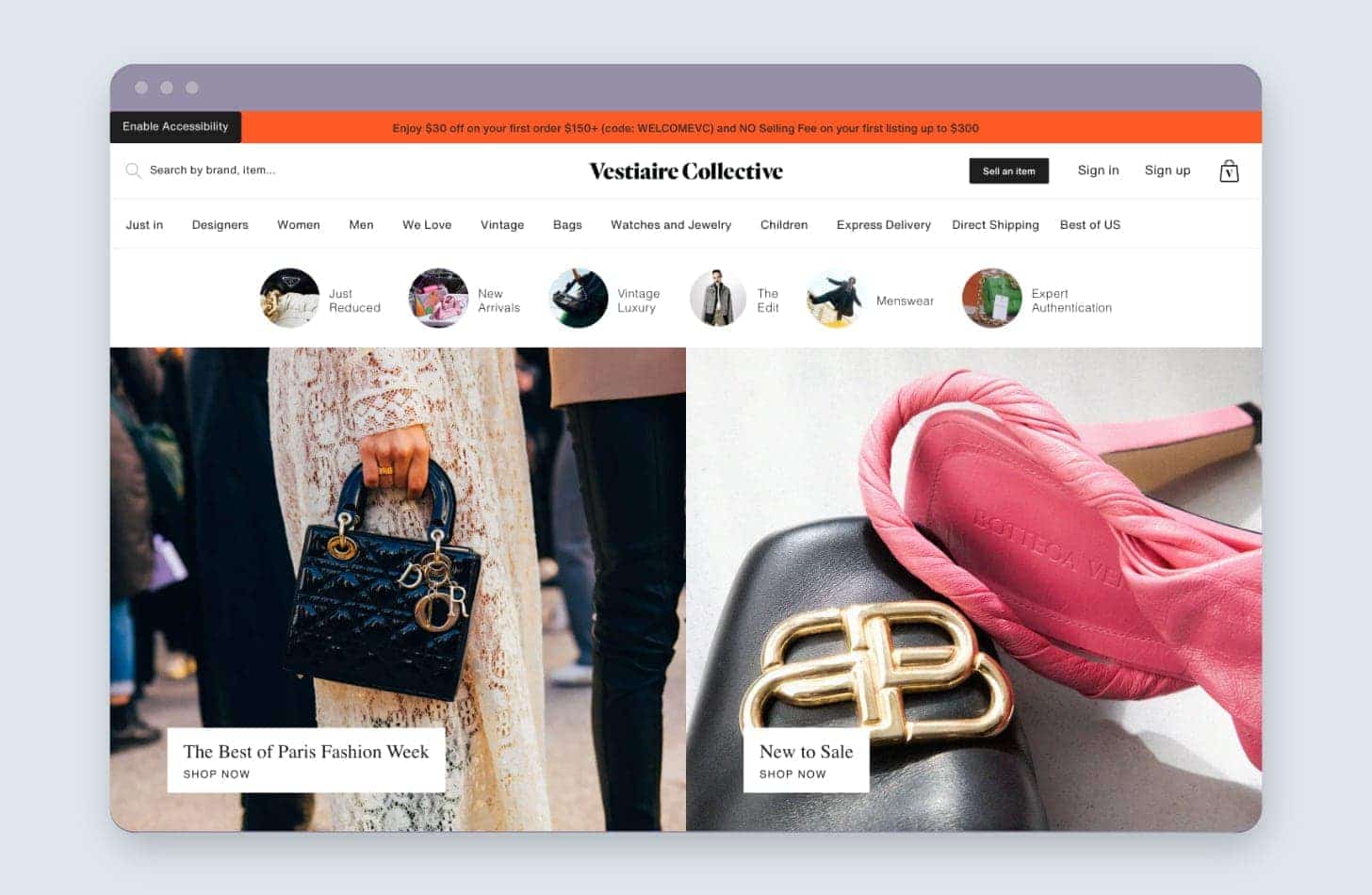
Vestiaire Collective is a B Corp-certified thrift store available to conscious consumers all over the world. The company is also an active member of groups pushing for a more sustainable fashion system, like, the Ellen MacArthur Foundation, UN Fashion Alliance, and ParisGoodFashion.
Shoppers can find high-end thrift clothing store, with a team of counterfeit experts that checks product authenticity (very important when shopping luxury). We’d recommend heading over to Vestiaire Collective if you’re browsing for investment luxury items, as well as if you care deeply about a brand’s social and environmental impact initiatives.
Rebag
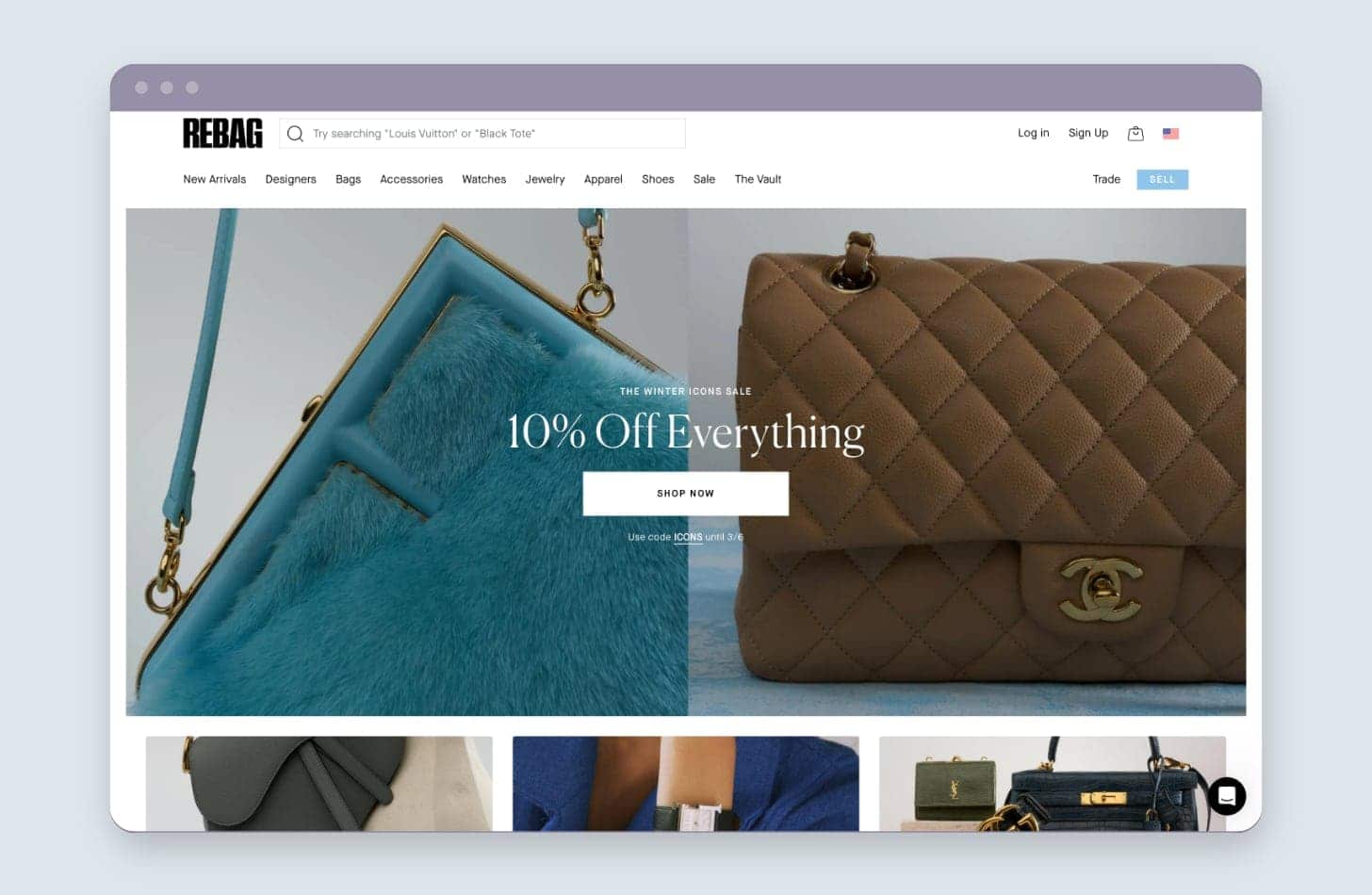
Rebag is a designer online thrift store that’s dedicated to buying, selling, and trading luxury accessories including handbags, fine jewelry, watches, and small leather goods. Rebag specialists inspect and certify every item before listing them on its site. Rebag is a good option for those who want to access an online market of active sellers and buyers with high-quality designer pieces looking for renewed life.
The RealReal
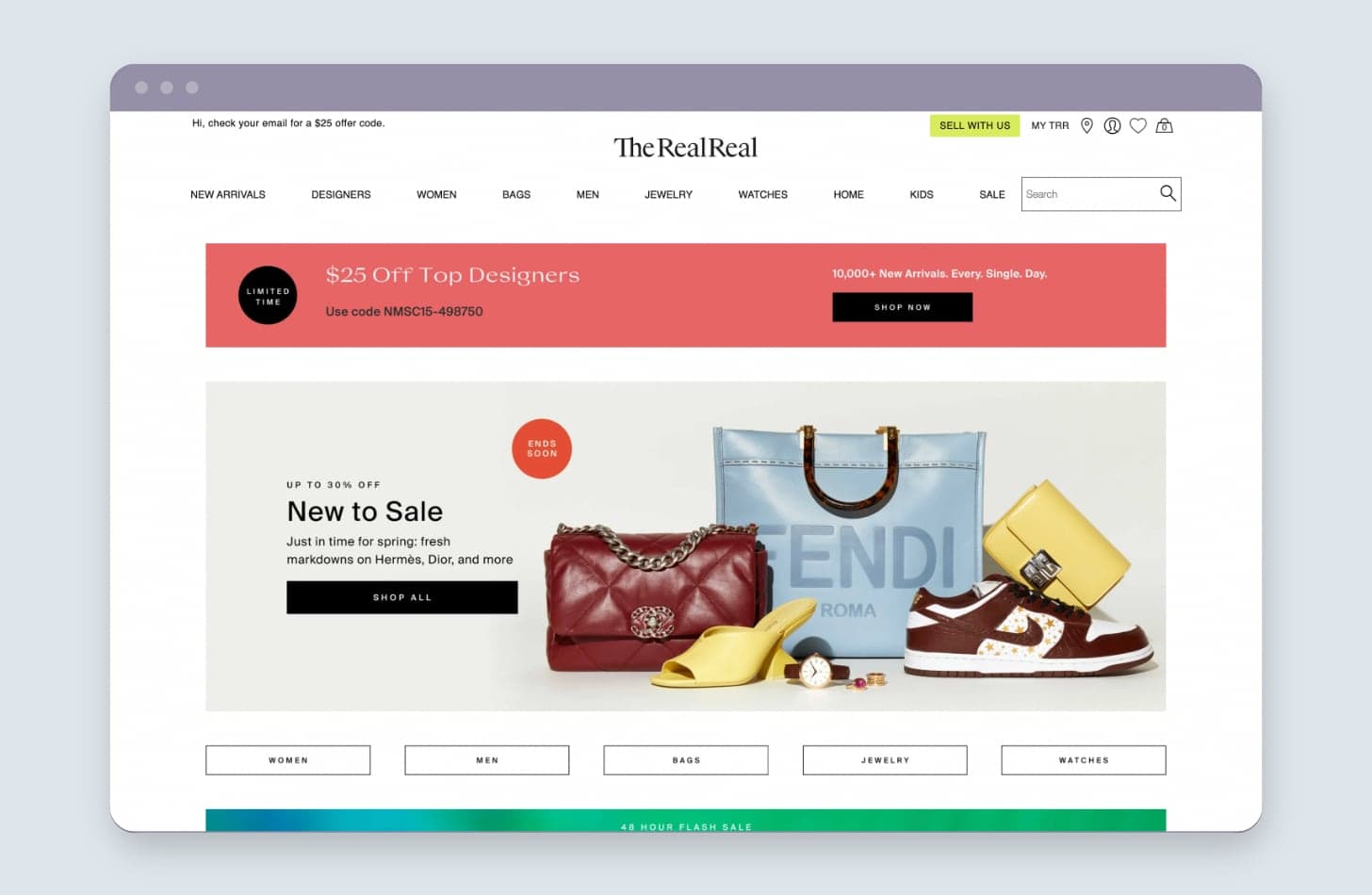
The RealReal is one of the leaders in the online luxury resale market. Its mission is to help reduce the impact that the luxury industry has on our planet by offering a global community of people access to certified luxury consignments.
With in-house experts — horologists, gemologists, art curators, and luxury fashion authenticators — that curate and inspect each piece, The RealReal offers pages on pages of luxury consigned clothing, bags, and fine jewelry. Consider this a great go-to for when you’re looking to shop for your next special occasion dress.
Curtsy
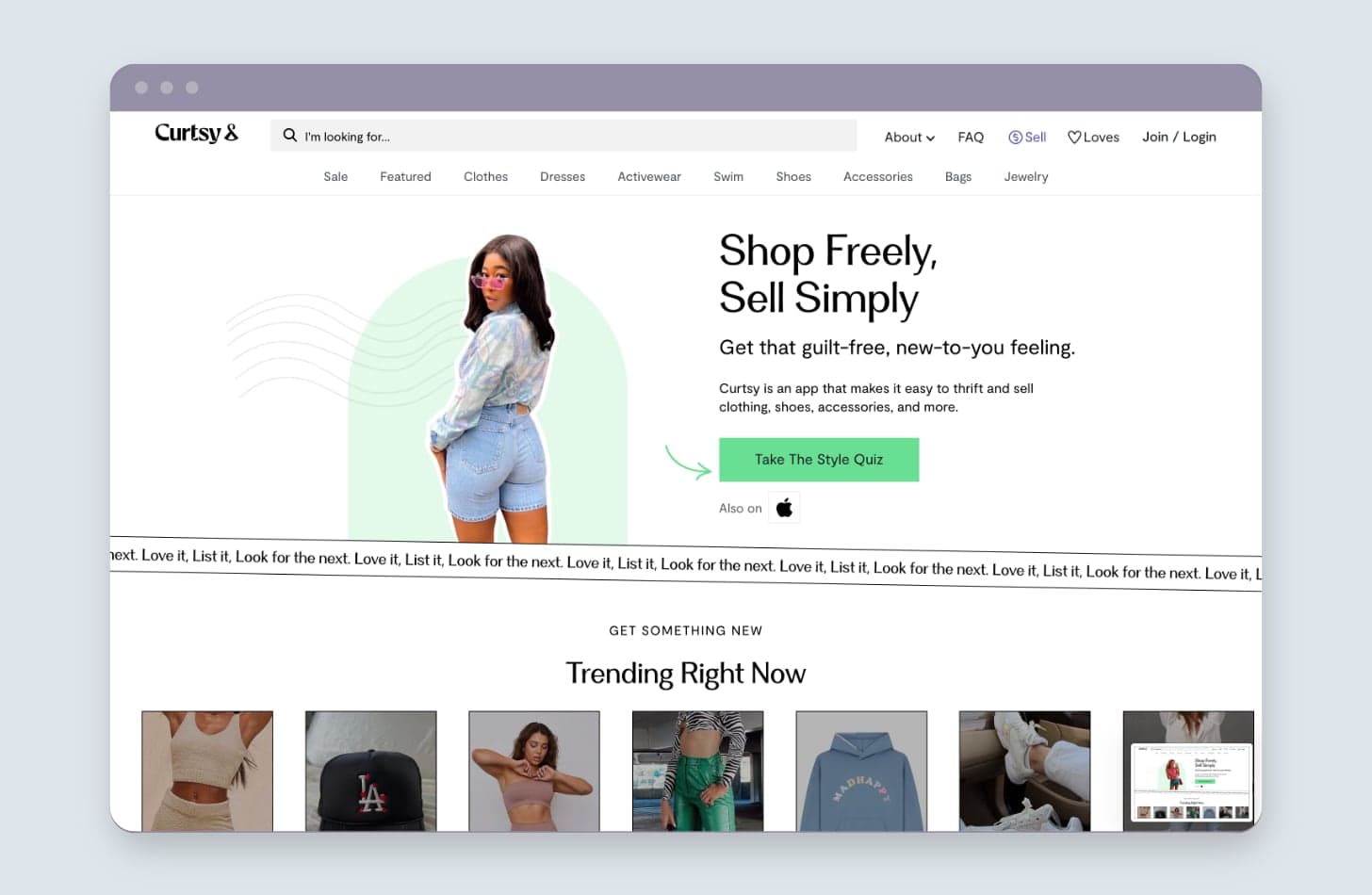
Curtsy is an app aiming to #ExtendTheTrend by helping sellers and buyers participate in a more sustainable way of shopping. Available on iOS and Android devices, members gain access to some of the most popular brands while simultaneously participating in the circular economy. This app is great for thrifters looking for more trendy, modern apparel, accessories, and even costumes.
thredUp
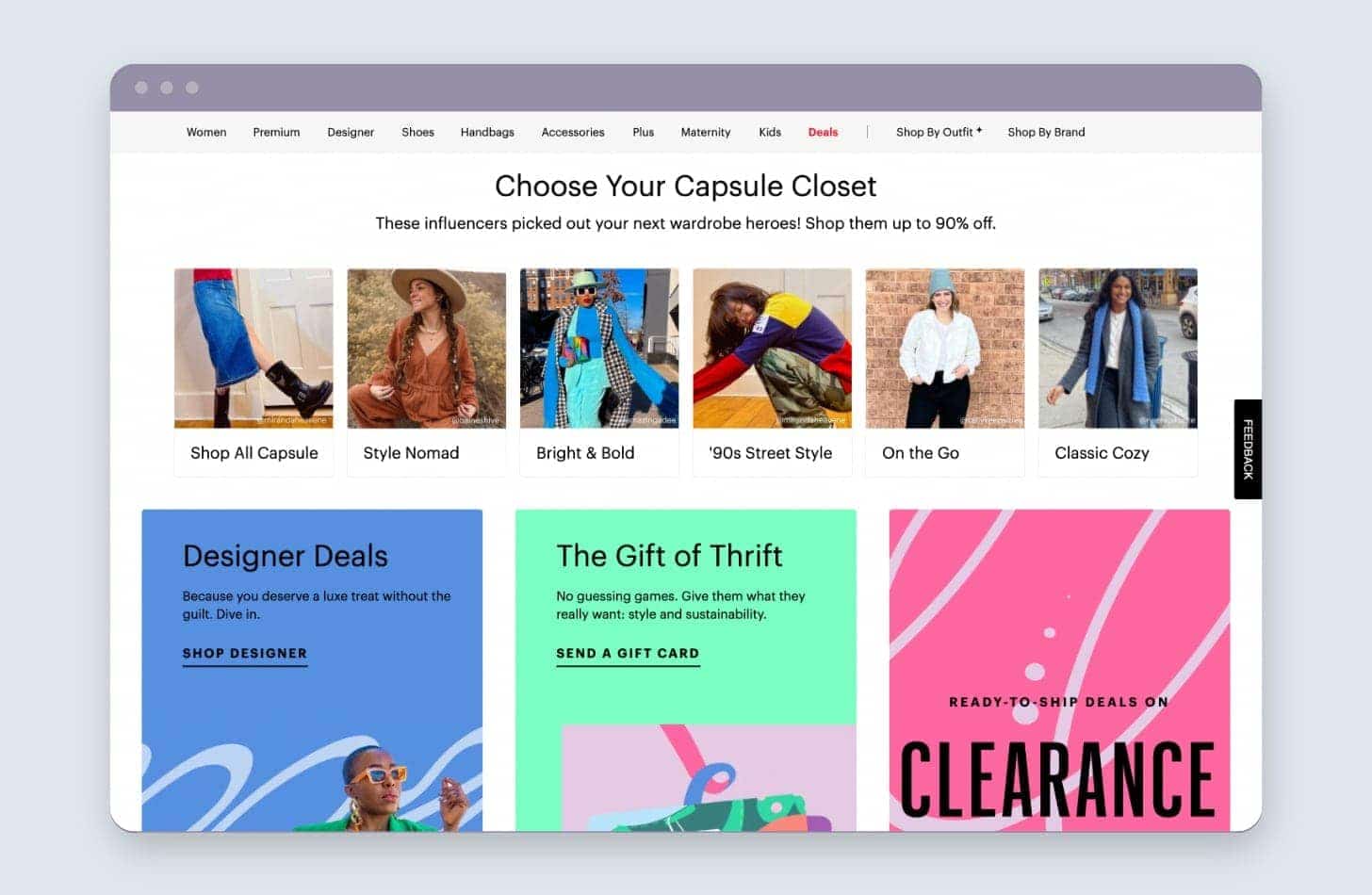
thredUp is an online consignment marketplace that offers women's and kids' second-hand clothing. As one of the biggest online thrift stores for clothes — with more than 52.6 million sellers, and millions of items across 35,000 brands — this platform caters to people looking for anything “from Gap to Gucci.”
The company also offers “Rescue Boxes,” a program that saves items that don’t qualify for listing on its marketplace. Offering everything from clothing to bags to shoes, it provides a refreshing opportunity for people upcycling or DIY projects. We recommend heading over to thredUp not only to take advantage of the variety of products and sizing options, but also for its Rescue Box program.
Facebook Marketplace
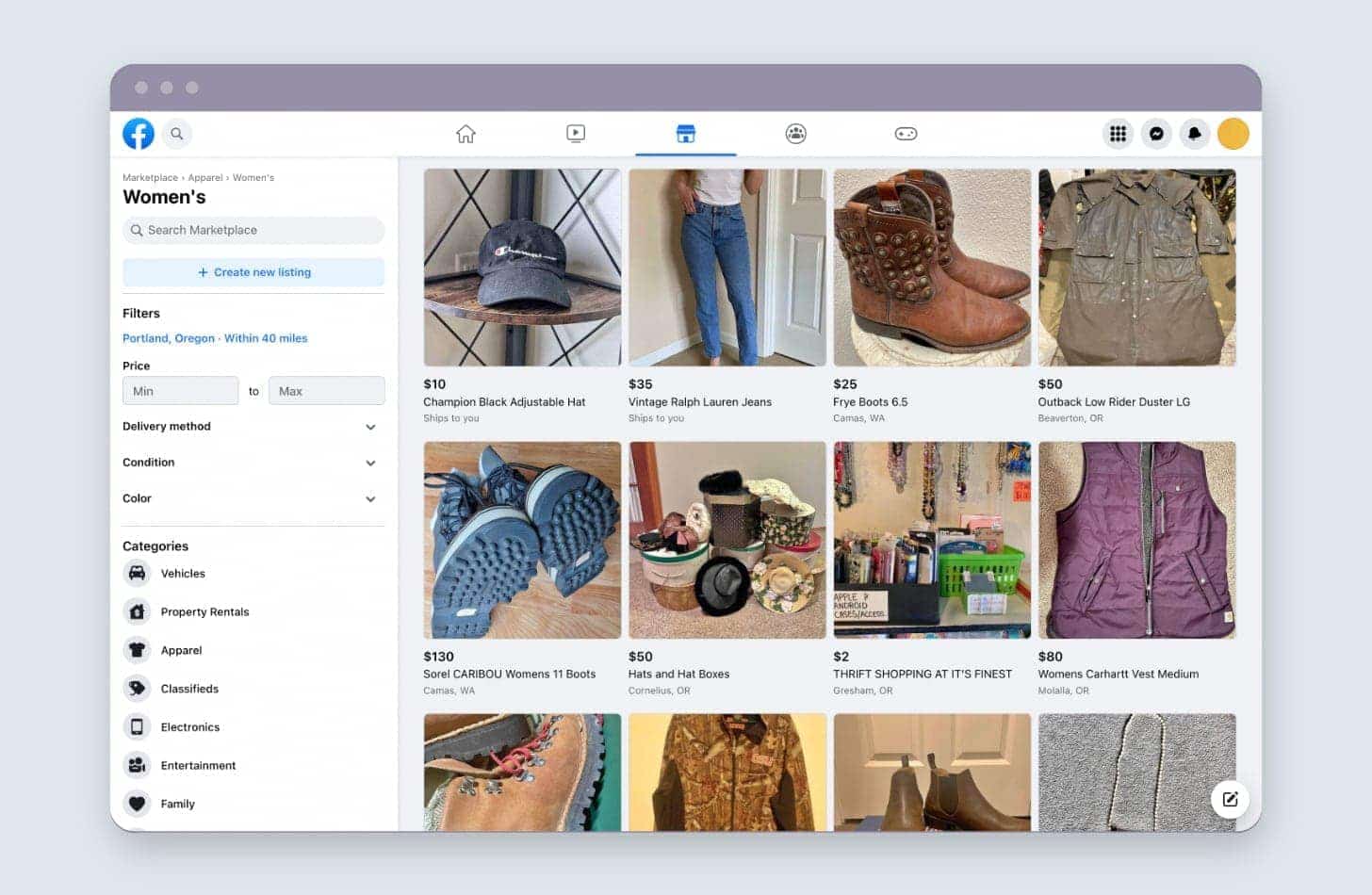
Facebook Marketplace is a platform within the Facebook app that allows users to buy and sell items with people within their local community. Perhaps the only thing keeping us on Facebook these days, the platform offers great deals on things like household appliances, antique furniture, drool-worthy mid-century modern home decor, and so much more. We’ve had great luck finding and negotiating great clothes at affordable prices.
Whatnot
Whatnot is a social marketplace where people can buy, sell, or discover some of their favorite collectibles, luxury handbags, and more through live auctions. Whatnot Drops also allow people to purchase rare, big-ticket items (like grail Funkos and sneakers) at discounted rates every week.
Products, especially expensive or commonly counterfeited items go through additional layers of verification. Check this app out if you’re a collector seeking another marketplace to find what you’re looking for.
Community Thrift & Vintage
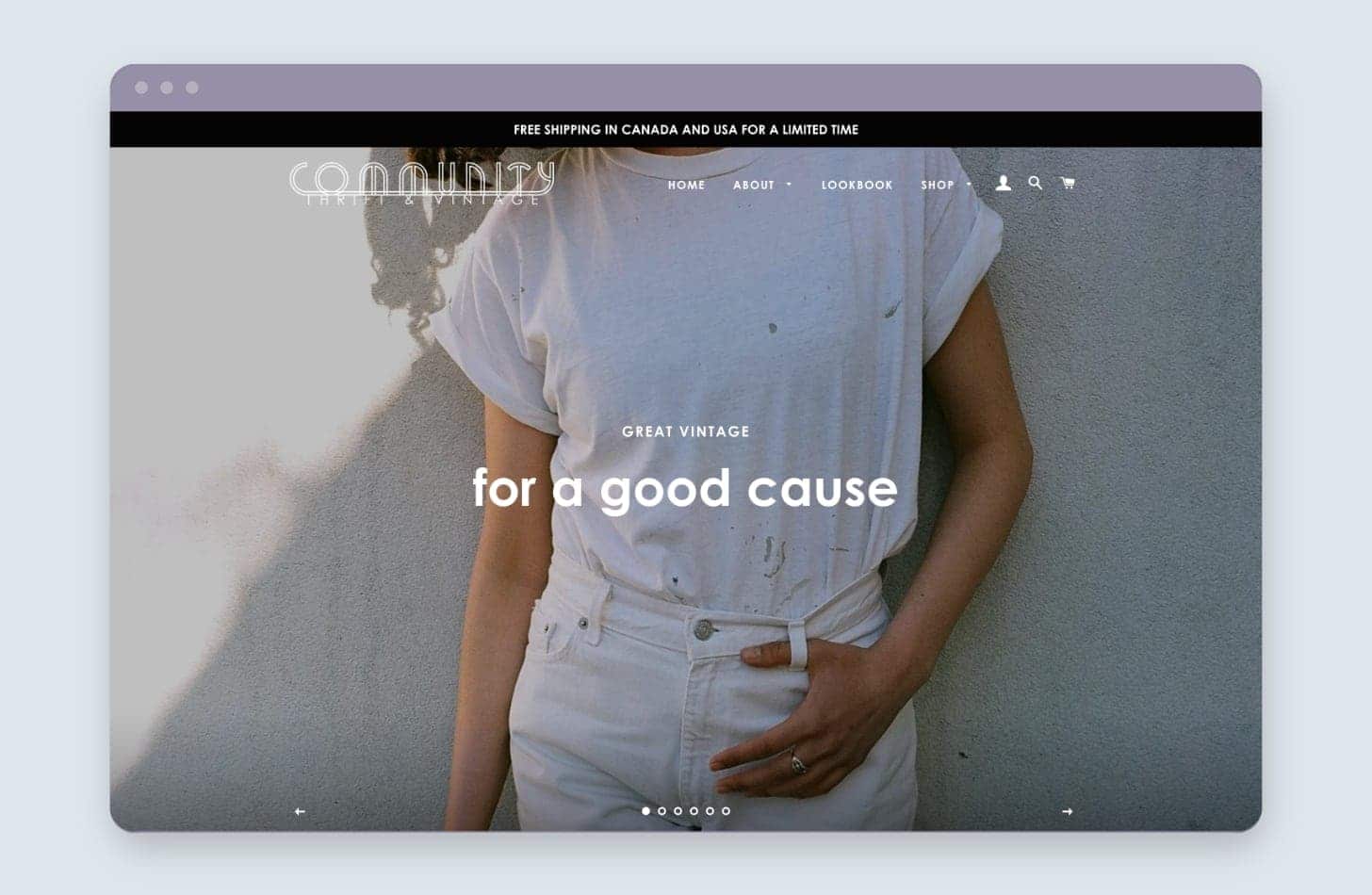
Community Thrift & Vintage was founded in 2011 as a social enterprise based in Vancouver, selling thoughtfully edited collections of recycled fashion at low price points. They support at-risk individuals through their compassionate and supportive work training program, while also donating all of their profits to the PHS Community Services Society.
This socially-minded shop offers a great range of clothing in all sizes — including silks, linens, menswear, and designer items— as well as vintage accessories, with weekly drops.
→ Shop Community Thrift & Vintage
Beyond Retro
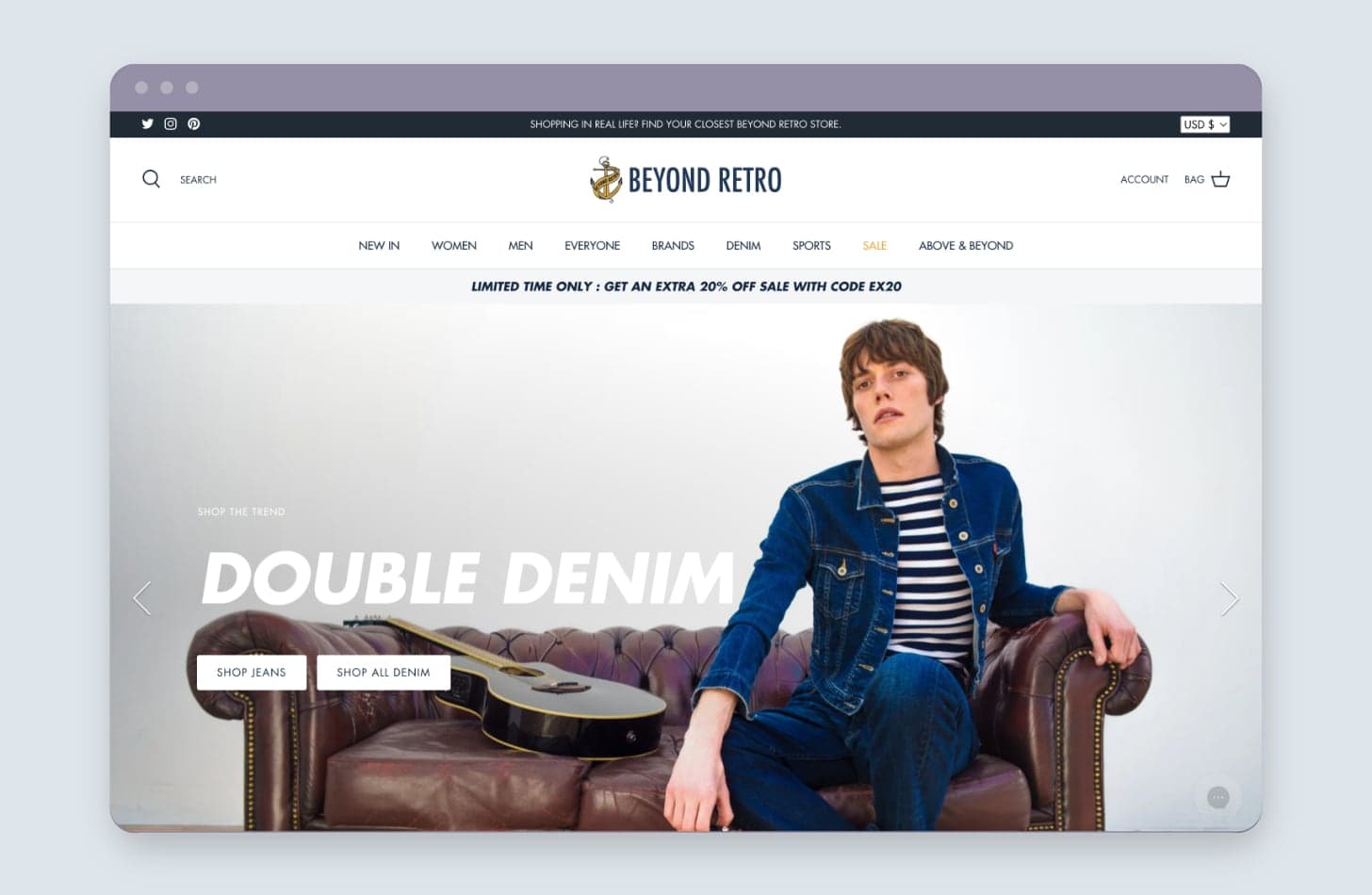
Beyond Retro is the largest vintage retailer in the UK, Sweden, and (most recently) Finland, and ships globally to conscious consumers. This shop is known for handpicking the best vintage since 2002, earning them the reputation as the go-to for on-trend fashion — without the hefty carbon footprint.
Online Thrift Stores in the U.S.
Mercari
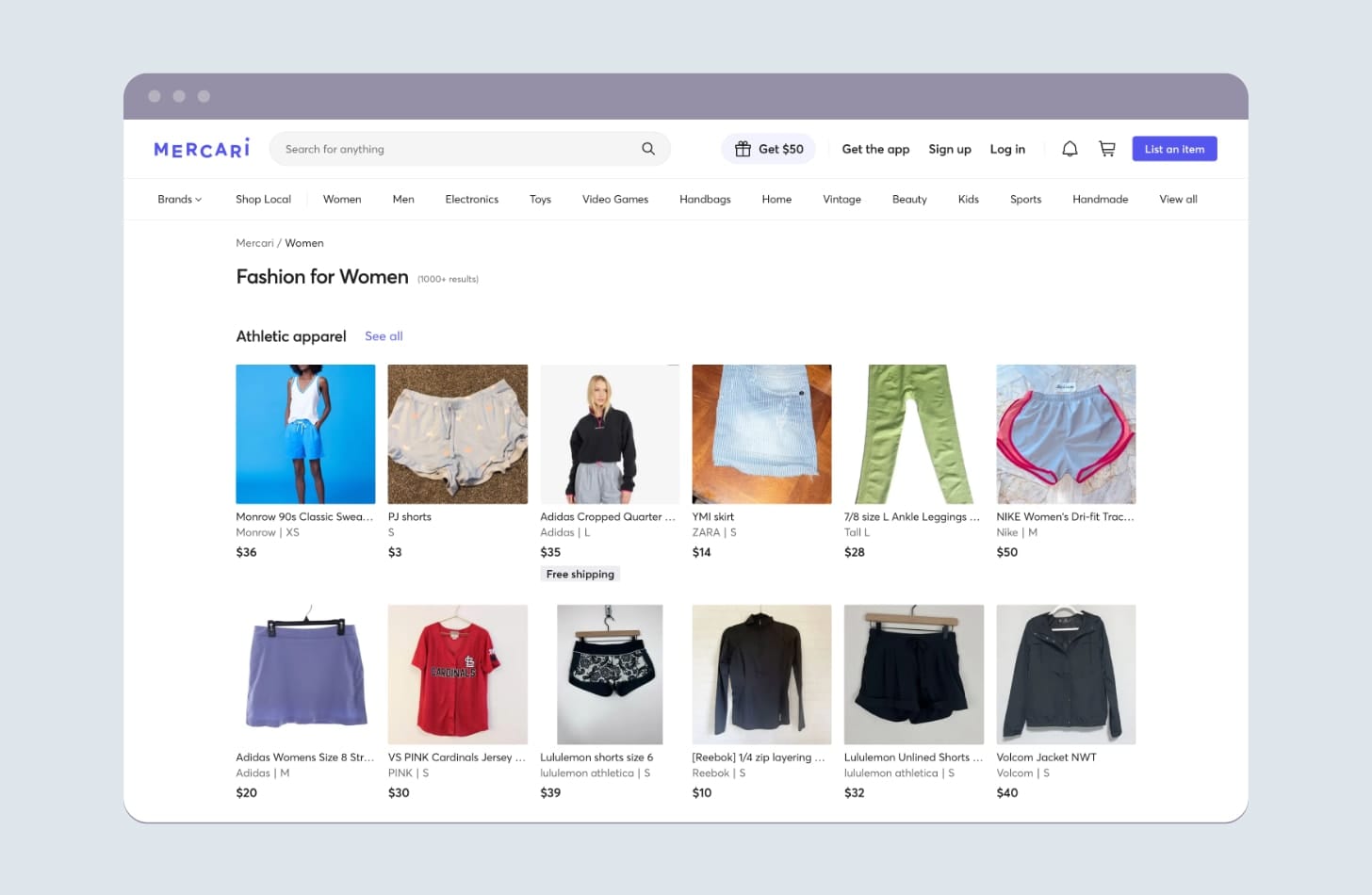
Mercari, like Poshmark and Depop, makes it really easy for people to buy and sell items online. Where Mercari differs from similar marketplaces is in its Mercari Local feature — a contactless way of buying and selling products under 50 pounds that are local to you.
This platform tries to take away the sketchiness that tends to be associated with local marketplace meetups and instead offers scheduled pickups and door deliveries by its trusted local partners. While Mercari does offer a wide range of products for people and pets, we recommend taking advantage of its local feature when possible!
OfferUp
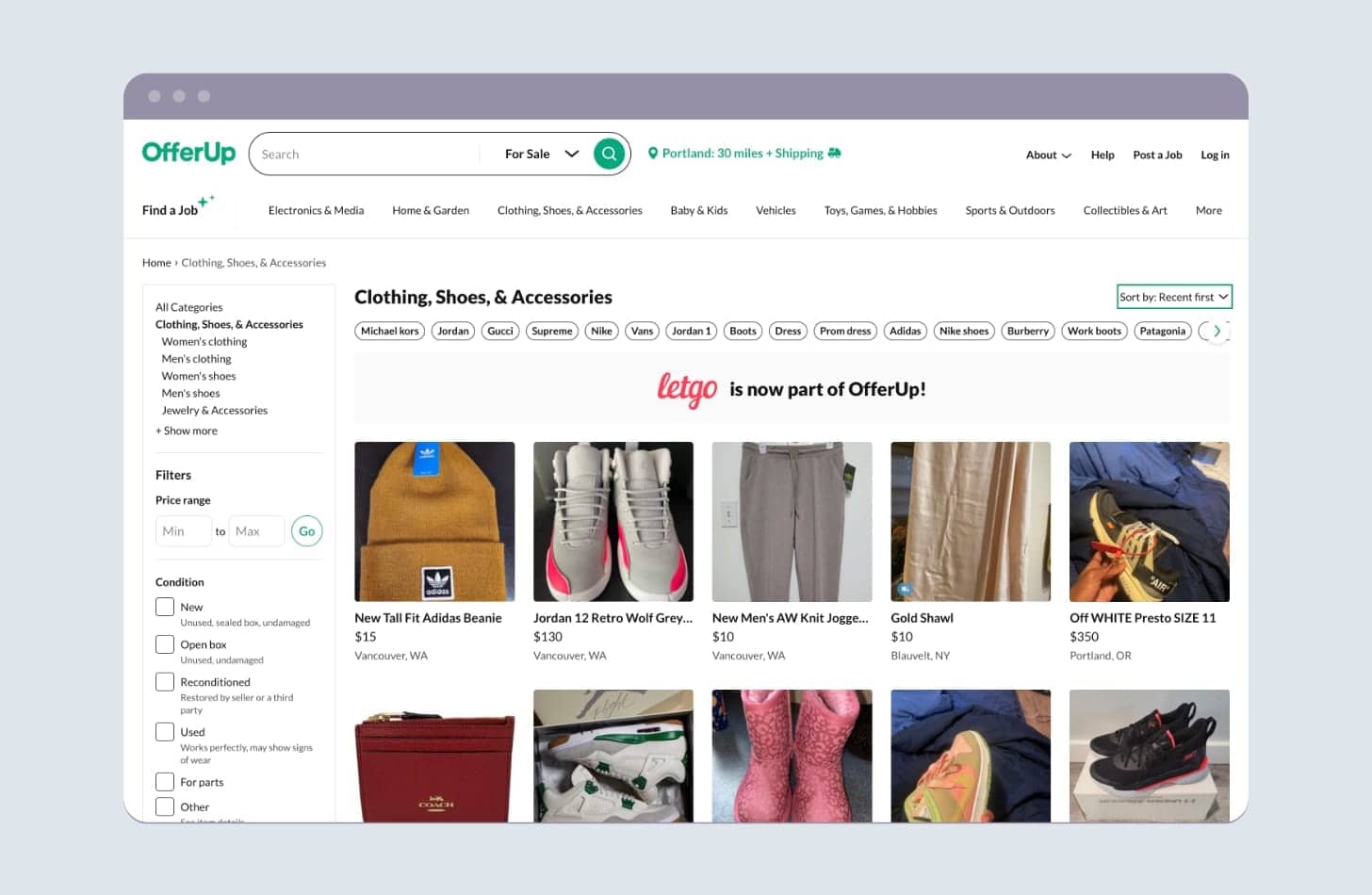
OfferUp is one of the largest free mobile marketplaces for people seeking to buy and sell locally. It's designed to make it simple for people to connect with their local community and buy or sell items without the hassle that comes with shipping or complicated online transactions. Members can browse through anything from clothing, second-hand furniture, electronics, and cars (to name a few).
They’ve also implemented features to help ensure that any interaction on the app is safe and secure, including the ability to message the seller directly and rate them after a transaction is completed. We recommend this if you’re looking to avoid high shipping fees, don’t want to give out your phone number to strangers, and want to shop locally.
fomeno
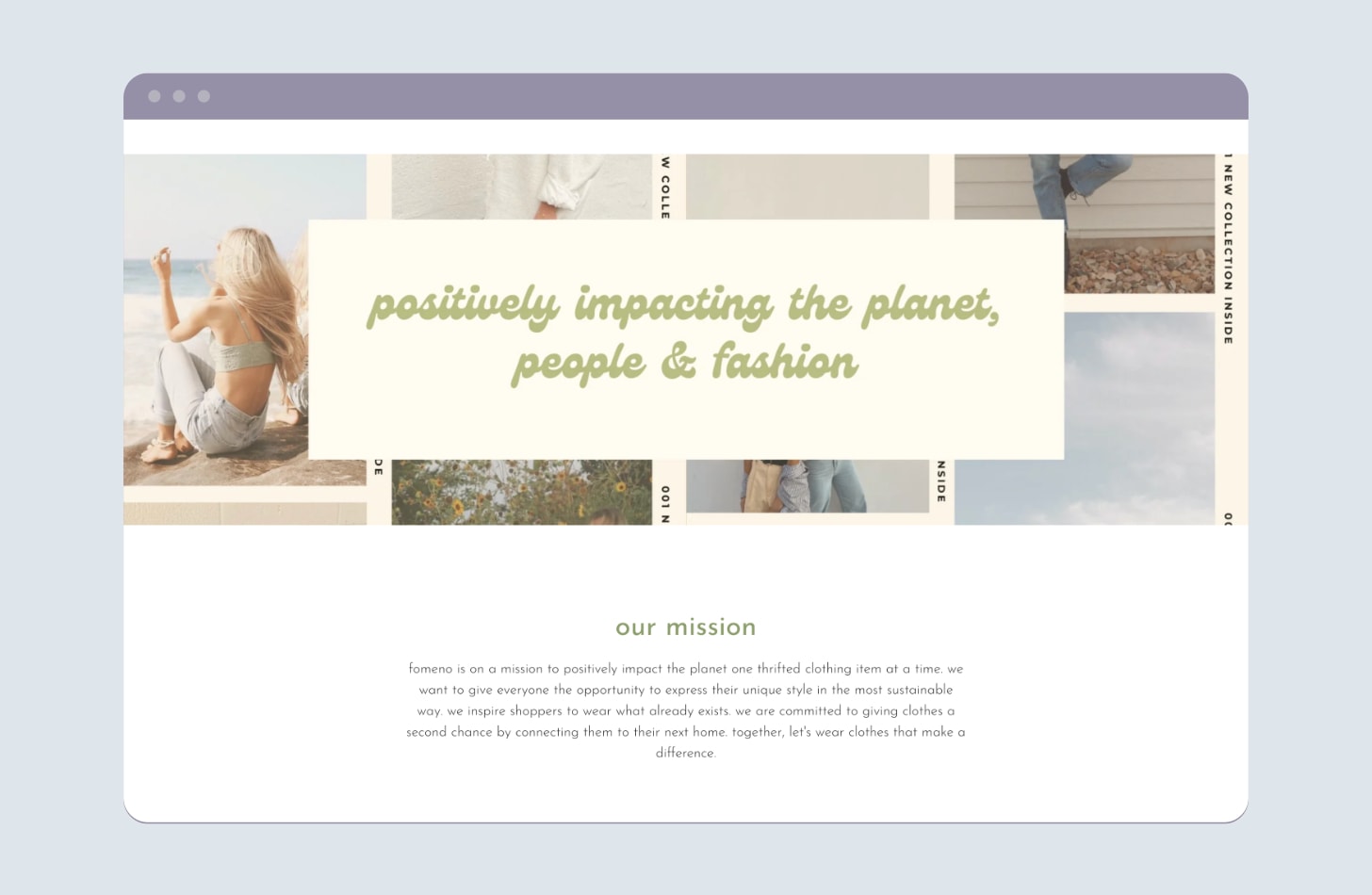
fomeno is a free app (currently only available on iOS devices) started by three university students seeking a way to connect consumers to their personal styles — sustainably. Pulling from both men's and women’s styles, this team is trying to bridge the gap between the massive waste and overconsumption caused by the trendy fast fashion industry and instead providing a way for young consumers to shop a little more mindfully.
This app features an “Explore” page where users can scroll through different fashion influencer photos and shop similar second-hand items — think a simplified Pinterest experience. People can search and personalize their thrifting experiences based on specific trendy looks. We recommend turning to this app if you’re in the market for trendy looks and need a simplified, less overwhelming way of finding what you want.
Nuuly Thrift
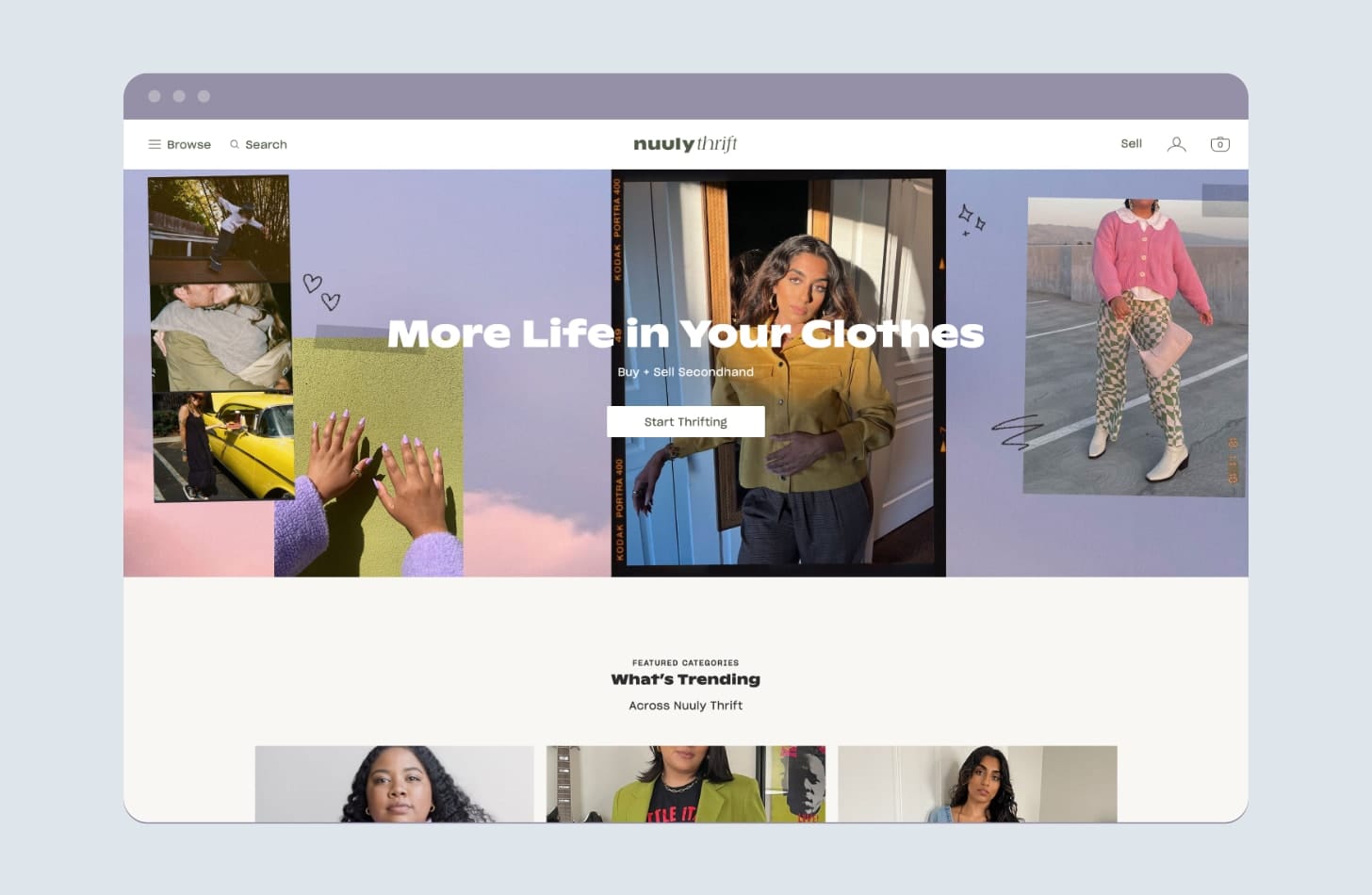
Nuuly Thrift is a curated clothing rental and resale marketplace launched by URBN. Similar to the likes of Depop, Poshmark, and ThredUp, Nuuly Thrift offers vintage and thrift lovers a way to shop and sell their pre-loved women’s, men’s, kids’, and baby's clothing, accessories, and shoes from any brand. If you enjoy shopping at URBN stores (like Urban Outfitters, Free People, Anthropologie, and BHLDN) but don’t like the price tags, questionable labor practices, or contributing to fast fashion, this could be a possible solution for you to explore second-hand options.
Lucky Sweater
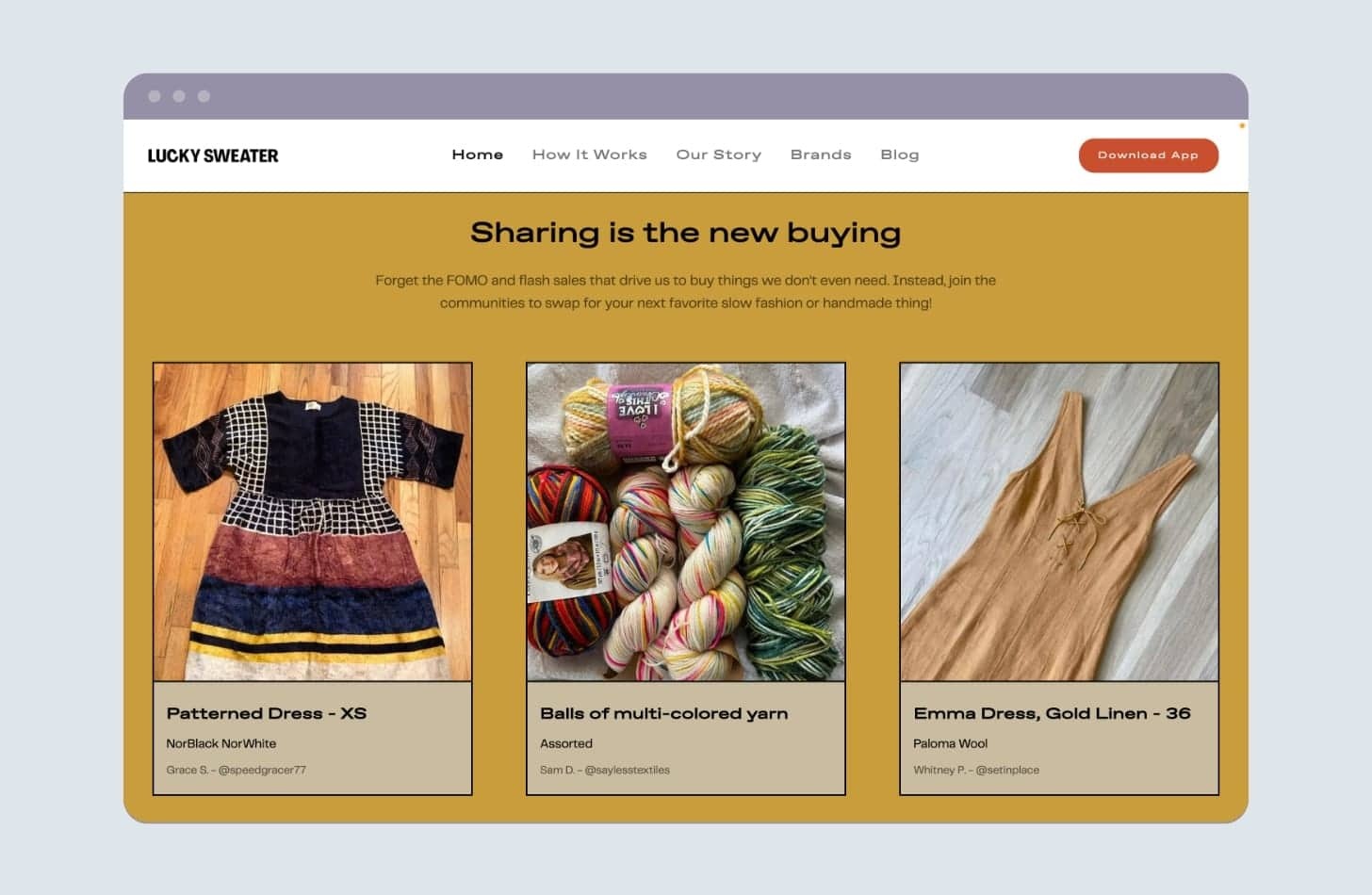
Lucky Sweater is an app for people who love sustainable and curated fashion brands to share advice, express their styles, and trade their favorite things — all at once!
Users can trade items from a vetted brand list of indie and sustainable brands, with items from the Lucky Sweater community dropping every Tuesday in a weekly “swap drop.”
Aside from trading, users can also access a community space in the app to catalog favorite looks, show off their pieces, get inspired, or ask for slow fashion advice (help us patch our jeans, please!) Last but not least, Lucky Sweater also has a secondhand community for handmade and DIY supplies like fabrics, yarn, and patterns.
More Than Your Average
More Than Your Average is a bold and bright vintage and thrift boutique that sells secondhand clothing to curvy women. This online shop is on a mission to provide a vintage experience for plus-sized women who often can’t find their sizes at traditional vintage stores.
More Than Your Average sells statement apparel and accessories for the fiercely stylish and original human. We recommend heading their way if you’re looking for one-of-a-kind plus-size vintage finds.
StockX
StockX is an online streetwear resale shop where buyers and sellers can place bids on their favorite brands — most known for selling high-end and rare sneakers like retro Jordan and Nike shoes. However, the online thrifting platform also sells lesser-known streetwear clothing brands, bags, shoes, and watches.
StockX also guarantees that every item on the platform is authentic and in excellent condition. Beyond what they offer online, the company also gives back to the community through its arts and youth entrepreneurship programs. If you’re a shoe enthusiast and looking for an alternative marketplace to the more traditional ones, StockX might just be a great option for you.
Mighty Thrift
Mighty Thrift is an online thrift shop that finds and shares affordable, inclusive vintage that caters to a range of different personal styles. The shop intentionally makes an effort to showcase its clothing for all genders and body types — reselling clothing from size XXS-5XL.
Mighty Thrift offers a slate of highly curated clothing (like Levi’s, Y2K dresses, and lingerie), shoes, and accessories. We recommend supporting this small business if you’re looking for affordable 90s and Y2K finds.
The Plus Bus
The Plus Bus is a curated plus-size consignment store where shoppers can swap and shop fun pieces. They offer consignment clothing (sometimes even offering beautiful wedding gowns) and accessories that include a range of fast fashion to luxury brands.
Their in-house buyers carefully curate inventory to feature the most trendy pieces from popular brands. They also update their online inventory weekly and have daily sales through Instagram Live. If you’re looking for fun plus-size thrift and vintage we recommend scrolling through The Plus Bus’s online shop and Instagram profile.
The Slow Seeker
Editor’s Note: Amanda Martinez, the author of this article, is the founder of her own extraordinary online thrift shop… and she’s too humble to include her own shop in this list — so we’re adding it.
The Slow Seeker is a Latina-owned vintage and thrift shop that aims to offer carefully curated collections of clothing, accessories, and home goods that work for all budgets. The shop specializes in versatile, statement pieces that can easily be incorporated into anyone’s existing wardrobe and home. Ultimately, the goal is to help modern-day busy humans with a simplified way to create meaningful environmental change.
The Slow Seeker aims to provide second-hand options for a wide range of body shapes and sizes. While they offer a variety of style options, we recommend turning to this small business if you’re specifically looking to add good-quality statement blazers to your collection.
Kaiyo
While most shops on this list are focused on clothing, Kaiyo is an online marketplace for pre-owned furniture. Whether you’re looking to buy or sell, this platform allows those living within the greater New York City, Los Angeles, San Diego, Philadelphia, Baltimore, and Washington D.C. metro areas a chance to shop for good-quality furniture pieces while keeping our planet in mind.
For those who dread the pick-up, drop-off, or setting-up experience, its white-glove pickup and delivery provide an additional layer of ease that many other online thrifting sites might not offer. If you’re looking into adding unique pieces to your home but don’t want to hassle, we recommend taking a peek at Kaiyo’s inventory.
Online Thrift Stores in Canada
Bissell Thrift Shop
Bissell Thrift Shop is a Canadian organization that sells secondhand clothing and homewares as a way to provide essential services — like housing, job services, family support, childcare, and poverty reduction — to the city of Edmonton.
The nonprofit offers in-store and online opportunities for Canadians to thrift men’s, women’s, and children’s items at affordable prices — they even have an Etsy shop dedicated to vintage finds and rarities! If you’re looking to shop while making a difference in your community while positively impacting the planet, consider bookmarking Bissell’s online shop.
Thriftsome
Thriftsome is an online thrift clothing shop — with the occasional new affordable sample clothes from the world’s leading brands — based in Winnipeg. Its mission is to make thrifting mainstream, accessible, and convenient for shoppers. This is a great option for any Canadian looking for men’s or women’s clothing and accessories in a variety of styles and at low price points.
Babys Basement
Babys Basement is an online thrift shop that specializes in fun wearable vintage, funky home decor, and locally made goods. Allow your 90s nostalgia to take over when browsing through this shop.
If you’re local to Oshawa, Babys Basement holds frequent events that invite and support its local community, however, the online shop is also where the party is at. We recommend heading over to this shop if you’re looking for fun pieces, rare tees, bomber jackets, and jeans.
Thrift Stores (UK)
Thrift+
Thrift+ is a B Corp-certified marketplace hoping to become the Amazon (in terms of selection and efficiency) of secondhand clothing. Hundreds of items are added daily to its online platform, all of which are carefully inspected (meaning no more surprise stains or fake brands).
Thrift+ has over 500,000 clothes, shoes, and accessories from top high street and designer brands, as well as allows its sellers to donate half of their profits to a charity of choice (from a list of partnering organizations) — donating over £2 million so far. We recommend going to Thrift+ when you’re looking for your favorite trendy pre-loved items from brands like Zara, & Other Stories, and Levi’s, while having a positive impact.
HEWI
HEWI (Hardly Ever Worn It) is an eBay-like online marketplace that specializes in luxury fashion resale while striving to offset employee and customer carbon footprints. The mother-daughter duo behind this marketplace launched this site as a way to honor the exceptional level of care, quality, and craftsmanship that goes into the production of luxury items — and as a result, deserve to have more than one life.
Buyers can monitor products, track sellers, and select either an immediate purchase or make offers. While it’s a great platform to hunt for designer goods at reduced prices, this site is a great option for anyone specifically looking for high-quality pieces for women, men, and kids.
Goldsmith Vintage
Goldsmith Vintage is an LGBTQ+-owned and run business known for a distinctive, boundary-pushing aesthetic and a strong commitment to diversity and social justice. Their team is best known for its selection of top-quality branded clothing from big names in denim such as Levi’s, Lee, and Wrangler, and original vintage sportswear by Champion, Adidas, Reebok, Nike, and Fila.
While they are known for their street style selection and mystery boxes, they also love adding in one-of-a-kind designer looks from brands like Burberry, Valentino, Missoni, and Prada. This shop is perfect for those who tend to gravitate more towards Y2K or streetwear styles.
Thrifted.
Thrifted. is one of the leading online vintage clothing retailers in the UK that aim to deliver quality second-hand clothing for festivals and everyday wear. This marketplace offers men’s and women’s vintage clothing and accessories, as well as a selection of designer pieces. Head over to this shop if you’re seeking to add popular vintage from brands like Adidas, Versace, Levi’s, Fendi, and Fila.
Denim Library
Denim Library is a denim resale platform giving upcycled and preloved jeans a second chance. Founded by Claire John in 2021, following a 30-year career working for one of the world’s most recognized denim brands, John set out to create a space specifically focused on reselling hand-picked, lovingly worn-in, and upcycled jeans to conscious consumers.
Brands you can find within this platform include Levi’s, Acne, and Wrangler in price ranges of £20-40 — intentionally accessible to help promote a circular economy. If you’re in the market for vintage denim, be sure to check out the Denim Library before shopping new.
Oxfam Shop
Oxfam Shop is part of Oxfam, the global charitable organization that works to reduce poverty and injustice around the world. (Chances are you’ve seen a physical Oxfam Shop sprinkled across the UK at some point.) Oxfam Shop is an online marketplace that sells donated items like clothes, books, homewares, and collectibles to raise funds for their charitable programs.
This platform is perfect for those who want to shop sustainably out of the comfort of their own home. Volunteers list hundreds of affordable items on the site every day, so if you’re looking to find treasures for your home while supporting a charity, we’d recommend making this platform your go-to.
One Scoop Store
One Scoop Store is an online platform that sells affordable, quirky second-hand vintage, designer, and high-street pieces. The company is home to a wide variety of clothing labels — from Zara to Betsy Johnson and Oscar De La Renta.
While most online shops tend to stock an overwhelming amount of clothing that often requires hours of scouring, One Scoop Store only stocks thrifted clothing you’d likely not find anywhere else.
Online Thrift Shops in Australia
SWOP
SWOP is a female-founded clothing consignment store that buys, sells, and trades quality vintage and on-trend clothing. The shop aims to disrupt the wasteful practices of the current fashion industry at large by offering an alternative way to shop.
The company offers a same-day buying and exchange service, and purchases items directly from customers — prioritizing garments that are high-quality (think: something in good enough condition to gift a best friend). Explore SWOP's inventory you’re picky about a garment’s cut, color, and fabric.
Vintage Marketplace
Vintage Marketplace is a platform that specializes in American sportswear — ranging from Ralph Lauren, Tommy Hilfiger, and Nike. If you’re nostalgic for the 90s, add this to your list of vintage online shops to scour. The team behind Vintage Marketplace updates the shop daily and
SwapUp
SwapUp is a female-owned and led online second-hand clothing marketplace geared specifically toward women. It was intentionally created to give more people access to affordable clothing. Users are able to buy, sell, and swap clothes at their convenience. They even use compostable satchels and recyclable boxes to ship out every item (we love to see that!).
This platform provides an option for women who are looking for something different from high street shops, but don't want to pay full price for it.
RetroStar Vintage
RetroStar Vintage is Australia’s largest vintage store, sourcing one-of-a-kind pieces from the 1940s through to the 2000s. They add fresh items daily in a range of styles.
From vintage band t-shirts to vintage Disney clothing, this shop makes it fun and accessible to shop while making a positive impact on our planet.
Women mean business on East Passyunk Avenue in South Philadelphia, Pennsylvania.
The East Passyunk Avenue Business Improvement District (EPABID) is a major business and culture hub in South Philly — and it has just reached the milestone of becoming 50% women-owned-and-operated.
EPABID is home to over 160 independently-owned businesses — including over 50 diverse eateries — across a mile-long walkable corridor.
Whether you’re in the area for world-famous cheesesteaks, boutique shopping, or handmade artisan goods, unique shopping and dining options are aplenty.
The equal mix of women-owned businesses is certainly a plus, and this statistic is up roughly 5% from just last year.
Why is this good news?
East Passyunk’s support of women-owned businesses depicts a significant achievement for gender equality in business and entrepreneurship. According to Motley Fool, women own 42% of all businesses in the United States as a whole.
While women-owned businesses are on the rise, women — and Black women in particular — still lack access to necessary education, networking, and capital, making it that much harder to thrive.
Seeing East Passyunk proud to uplift its women-owned businesses sends a message that diverse, creative entrepreneurship is not only good for gender equality and empowerment — it’s good for the local economy, too.
“I looked around and I said ‘Wow, we really do have a lot of women who own businesses here, and the interest has not slowed down,’” the EPABID Board of Directors Chair Pam Zenzola told The Philadelphia Inquirer — back in 2018, when women-owned businesses made up just 35% of the avenue.
In honor of Women’s History Month, EPABID and nonprofit She Rocked It are hosting a panel discussion and networking event that brings together many of the area’s business owners.
Discussions will include overcoming misconceptions about women’s business acumen, real talk about launching and sustaining a business, raising your voice in negotiations, and creating a supportive business community full of women business owners.
Women-owned businesses on East Passyunk Avenue
These small businesses aren’t just owned by women — they’re also great for the community.
Take Urban Jungle, a plant shop and nursery hoping to bring nature to the urban environment. Co-owner Tara Alexander puts it plainly: “Plants make people happy — and we want to bring that happiness to our community in Philadelphia.”
A newcomer to the area is the Sawubona Creativity Project, a nonprofit theater with programs that combine social emotional learning and character education with theater arts for kids and adults alike.
Teaching artist Tanya Morgan leads the charge, creating a space that aims to “provide access to theater arts education, performance, mental well-being programs, and community resources.”
When it comes to dining, River Twice is another woman-run establishment walking the walk. The modern American restaurant builds all of its dishes around sustainable practices to the Delaware River Valley and mid-Atlantic region.
While head chef Randy Rucker is in the kitchen, his wife, co-owner Amanda Rucker is the guiding force behind the restaurant’s sustainable design and approach, connecting to local purveyors and harvesters.
These are only three stand-out residents on East Passyunk Avenue, but you can find the rest of the women-owned-and-operated businesses along the corridor — or online!
They include:
- A Novel Idea
- A Star is Born
- A. Criniti Realty
- Alphabet Academy Tree House
- Alphabet Aquarium
- Alphabet Station
- Amelie’s Bark Shop
- Art of Wellness, LLC
- August Moon
- B2 Cafe
- Bianca Simone
- Big Catch Poke
- Birds of Prey Artistry and Aesthetics
- Black & Brew
- Capo’s Coins & Collectibles
- Carolyn Zinni Bridal
- Creations by Coppola
- Ember and Ash
- Essen Bakery
- Favors and Flavors
- Frame Fatale
- Gabriella’s Vietnam
- Good Buy Supply
- Ground Up Cafe & Coffee
- Halo Hair Philly
- Haus of Wax
- Headhunters Hair Design
- Heavy Metal Hair Salon
- Hollywood Style Josie & Frank’s
- Juana Tamale
- Jazmin Rae & Co.
- Kala’s Estetica Unisex
- Kouklet Brazilian Bakehouse
- LA Hair
- Le Virtu
- Lime Organic Cleaner
- Lucidi Salon & Jewelry
- Mamma Maria Ristorante
- Marra’s
- Mesh Vintage
- Milk Jawn
- Mockingbird Salon
- Moon Night
- Motherland Midwifery
- Movement Source Pilates
- Mr. Martino’s Trattoria
- Mystical Life Meditation Center
- Nice Things Handmade
- Nicole Rae Styer Boutique
- Noir Restaurant
- Occasionette
- Ocho Rios Parrilla
- Palo Santo Wellness
- Pasquale and Anna Scioli, Tailor
- Primal Supply Meats Butcher Shop
- P’unk Burger
- Ray’s Happy Birthday Bar
- River Twice
- Sally’s Paw Spaw
- Sawubona Creativity Project
- Sermania Jewelry
- Society Hill Dance Academy
- South Philadelphia Chiropractic Center
- South Philadelphia Community Acupuncture
- Styland Beauty
- Super Loa
- Supreme Beauty Philly
- The Bottle Shop
- The Dutch
- The Painted Lady
- Tildie’s Toy Box
- Today’s Nail Salon
- Train & Nourish
- Uprising Arts Culture
- Urban Jungle
- Vanilya Bakery
- Whiplash Allure
Featured image courtesy of Melissa Moore/Moore In Focus
Let’s be honest: Most of us probably have a preconceived image of what a craft beer enthusiast looks like. (Perhaps a rugged outdoorsman, wearing a flannel shirt with a beard?)
But just like tiki-themed cocktails aren’t just for bachelorette parties, craft beer is not a gendered drink, either.
Unfortunately, though, the beer industry tends to keep diverse libationists from success. In fact, according to the Brewer’s Association, only 2% of breweries in the United States are owned by women.
Lady Justice Brewing, an all-woman-owned community-focused brewery in Aurora, Colorado, on the other hand, shows that there is power in reimagining the industry.
Drink a beer, change a life
Lady Justice Brewery honors legends like Ruth Bader Ginsburg and Marsha P. Johnson with a colorful mural, and beers are named after historical icons like Sandra Day O’Connor (the Double Sandra Day IPA even got a thumbs-up from the woman herself).
However, their mission goes beyond sipping a cold one with the girls.
Lady Justice dedicates its time, space, and money to nonprofit partners that support and empower women, girls, and nonbinary people in Colorado. The brewery offers a “Community-Supported Beer” membership, with 100% of profits going directly to these organizations.
All three owners of the brewery — Betsy Lay, Kate Power, and Jen Cuesta — have day jobs in law and academia outside of the brewery, allowing them to funnel Lady Justice’s funds to causes they care about. To date, Lady Justice has given more than $20,000 to over 30 local organizations.
Some previous partners include Hands Of The Carpenter, an organization that provides car donations to women in need; and Cleo Parker Robinson Dance, an organization that teaches dance to honor African American heritage; and Frontline Farming, a food justice group in Denver.
“It’s literally a liquid form of breaking bread with people,” Lay told CBS News.
In 2023, Lady Justice is splitting 100% of membership profits directly between the Aurora Public Library and the Colorado Doula Project.
“The people who support Lady J are not just people who drink our beer,” the brewery’s website reads. “They are also the most wonderful, compassionate, and engaged community. It’s not just donations, it’s people getting involved in issues and organizations and working to make the world a better place.”
A version of this article was originally published in The 2023 Food Edition of the Goodnewspaper.
Get your own Goodnewspaper by becoming a good news subscriber today.
Perhaps you’ve been there: Enjoying a simple cup of yogurt, when suddenly, the next spoonful you put in your mouth is absolutely revolting — for no reason other than the fact that you can feel the yogurt in your mouth.
Perhaps there have been days when you’ve forgotten to eat altogether because it simply hadn’t crossed your mind until you’re ten minutes from fainting.
Or perhaps — the most common case of all — you find yourself without the energy to cook, so you order takeout because it’s the most accessible way to get food in your body.
While these situations might happen to anyone, they are especially common for neurodivergent folks. For people with ADHD and autism, eating can get lost in the wave of suppressed appetite side effects, executive dysfunction, or sensory issues, making mealtimes extremely difficult.
Those with histories of eating disorders also may find mealtimes to be triggering and uncomfortable, and the joy of embarking on a delightful, savory journey is swapped for panic attacks, nausea, or even relapse.
Many of us have been raised with preconceived notions of what makes food “good” or “bad,” and what our eating and meal prep habits should look like. But people are just as diverse as the recipes, ingredients, and pantries of the world, and we all deserve a more holistic and inclusive approach to how we dine.
Kelley Bligh is the executive director of Culikid, a New York City-based nonprofit that provides inclusive and adaptive culinary programs for people of all abilities — including those with physical limitations, differences in cognitive and emotional processing, and sensory sensitivities.
Cuilkid provides individual food-centric support that helps people meet their goals; whether that’s independence, motor skills practice, improved nutrition, or socialization opportunities. Between our conversations and our culinary creations, Bligh gives us the recipe for more thoughtful approaches to food.
How to be more inclusive and accessible when it comes to food
Reduce stress in meal prep and grocery shopping
“One of the things we keep in mind is to first be kind to ourselves,” Bligh said. “‘Cooking’ can put a lot of emphasis on raw, fresh, farm-to-table ingredients, which is fine, but would buying pre-cut onions help you cook more easily? What about swapping onions for onion powder?”
Integrating easier, time-saving options, like pre-cut produce or tools that cut down on steps in the kitchen, is a great first step in making food more accessible.
Meal prep doesn’t just start with the cutting board, though. Grocers have an opportunity to improve the steep costs and overwhelming environments that come with accessing food.
Online grocery shopping, grocery delivery, or even implementing a designated time for sensory-friendly shopping could make a world of difference. This is a great option for those in recovery from eating disorders, as well, embracing more structured, positive experiences to prepare and select foods.
Have neutral conversations about eating, drinking & food in general
Bligh also encourages folks to reframe their understanding of picky eating, refraining from commenting on someone’s dietary restrictions, or even their “table manners.”
“What looks like ‘picky eating’ can seem just like that — pickiness or not being open-minded,” she said. “But it can also be sensory sensitivities, a sensitive gag reflex, anxiety, dietary restrictions, medical issues, or more. Instead of drawing attention to these things, create a safe space for everyone to experience food however they feel comfortable.”
Forcing someone to try a new food, pushing alcoholic drinks on someone, or making comments about diets or body shapes is not only not helpful; it can cause more harm to someone who already has a complicated relationship with food.
“It’s important to remember that not all disabilities are visible,” Bligh said. “If we want to treat neurodiverse people with empathy, patience, and understanding, that means we have to practice those things all the time — regardless of how someone looks or acts.”
Make food more fun
At the end of the day, food should be a source of joy; not fear. There is no age limit on applesauce pouches or dinosaur chicken nuggets, and there is certainly something about a fun little serving platter that makes a charcuterie board taste that much better.
Help your loved ones lean into the exciting, enjoyable elements of eating — and turn the kitchen into a place of relief — not responsibility.
We all have reasons why we avoid or enjoy certain foods. Whether you have that cilantro-tastes-like-soap gene, are experiencing curious pregnancy cravings, live with sensory issues, or are simply allergic to a certain food, we all deserve the dignity, autonomy, and independence to feed ourselves as we please.
Being thoughtful and gracious about food is something that helps everyone — and no matter how cool someone thinks they are, no one is above a good Lunchable.
A version of this article was originally published in The 2023 Food Edition of the Goodnewspaper.
Get your own Goodnewspaper by becoming a good news subscriber today.
TikToker Keith Lee (@keith_lee125) has quickly risen through the ranks of social media’s biggest food reviewers.
The Las Vegas dad takes a no-frills approach to TikTok, filming genuine food reviews from a Paw Patrol-themed kid’s chair.
He started creating content in 2020, filming family vlogs and looks into his behind-the-scenes life as a mixed martial artist.
But what has made the most impact for viewers is his food review of mom-and-pop restaurants.
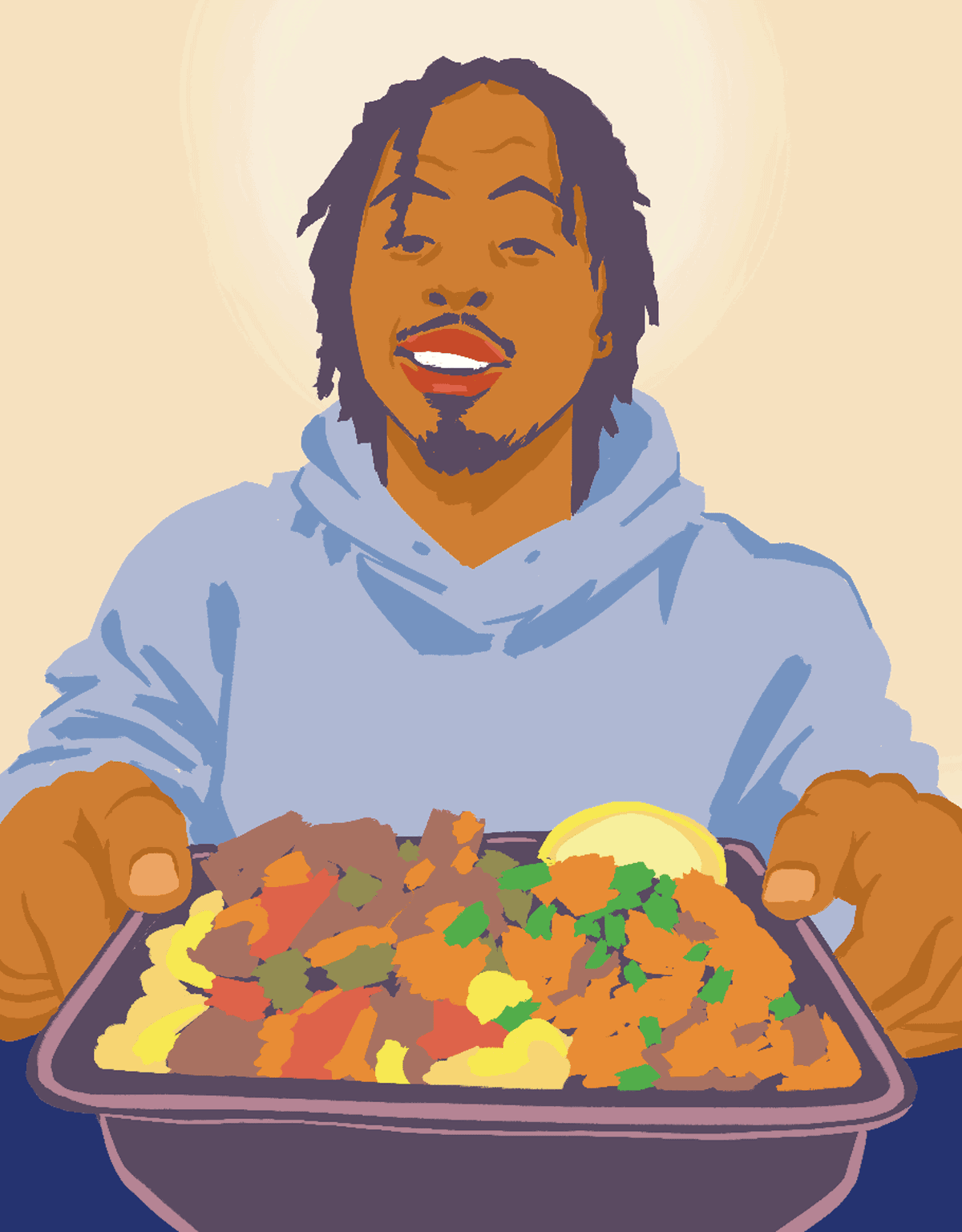
His TikTok following has rapidly topped 10 million, and whenever he reviews a new establishment, the masses follow.
For instance, when he reviewed the once-struggling pizza shop in Vegas, Frankenson's, his video received over 42.5 million views, and lines of customers traveled down the block in the following days.
@keith_lee125 #stitch with @mackenziesol Franccesca Açaí bowls & Coffee shop taste test 💕 would you try it ? 💕 #foodcritic ♬ original sound - Keith Lee
In January, Lee highlighted the Southern Taste Seafood truck, and not only did customers come hungry, but they also donated funds to the food truck’s owner on Cash App, totaling nearly $30,000 in funds to help support his struggling business.
Lee reviewed Aroma Latin American Cocina on TikTok after being invited to check it out by owner Yasser Zermeno, and the restaurant experienced a similar influx in traffic.
“We went from not being able to pay the bills to now having to hire people to come and help us,” Zermeno told NBC News. “We call it the Keith effect.”
While many businesses may not be able to easily handle the sudden demand from Lee’s videos, he echoes this to his followers; reminding them to be patient and respectful upon their visits.
@keith_lee125 Frankensons Pizzeria 4 day update @keith_lee125 💕 2-3 hour wait times ALL DAY , line down the street , him and his family are working 16 hour shifts EVERYDAY 💕 God is amazing, God bless you all 🙏🏽 #foodcritic ♬ original sound - Keith Lee
Most of all, he’s just grateful to tap into his foodie fun side and help hard-working people out in the process.
“With great power comes great responsibility,” Lee quoted the famous line from ‘Spider-Man’ to NBC News. “As somebody who’s in this position, I think it’s up to me to understand that and not shy away from it.”
A version of this article was originally published in The 2023 Food Edition of the Goodnewspaper.
Get your own Goodnewspaper by becoming a good news subscriber today.
In 2022, for the first time in history, the number of refugees worldwide reached more than 100 million people.
Millions of people are fleeing violence, persecution, and economic instability, and attempting to start a new life in a more tolerant and secure country.
Recognizing this global issue, the Biden administration has agreed to accept up to 125,000 refugees during the 2023 fiscal year. The White House set the same acceptance parameter for FY 2022, which ended on Sept. 30, 2022; however, only 25,465 refugees were admitted, falling 80% short of the administration's target.
The remarkable discrepancy between the U.S.' ambitions for refugee resettlement and the reality of what it managed to achieve can be attributed to several factors, among them the continued struggle to bolster the nation's refugee program after its diminishment under the Trump administration, a need for additional personnel at overseas processing centers, and old-fashioned political bureaucracy.
How exactly is an individual classified as a "refugee?" The Department of Homeland Security defines a refugee as "a person outside his or her country of nationality who is unable or unwilling to return to his or her country of nationality because of persecution or a well-founded fear of persecution on account of race, religion, nationality, membership in a particular social group, or political opinion."
Refugees are not to be confused with individuals seeking asylum — or asylees — who meet the definition of a refugee but who are also already present in the United States or at a U.S. port of entry.
To find where refugees to the U.S. come from, Stacker utilized data from the Refugee Processing Center, operated by the Department of State. Countries were ranked by total refugee acceptance from 2017 to Nov. 30, 2022.
Read on for a better understanding of why these individuals are seeking a new start in America:
Where Refugees Come From:
#20. Central African Republic
Total refugees accepted since 2017: 682
2017: 148
2018: 244 (64.9% increase)
2019: 85 (65.2% decrease)
2020: 22 (74.1% decrease)
2021: 181 (722.7% increase)
2022 (as of November 30): 2
A country roughly the size of Texas, the Central African Republic has seen 1.9 million of its citizens — over one-third of the total population — displaced from their homes.
Poverty and unrest have been issues in the area for years, but the December 2020 elections have only made things worse, igniting a civil war between rebel factions and those who hold political power.
Though several outside groups, including the United Nations peacekeepers, have attempted to intervene, there appears to be no end to the conflict and the resulting instability in sight, meaning refugee numbers are likely to increase.
It is estimated that at present, 63% of the country's population is in need of humanitarian aid.
#19. Burundi
Total refugees accepted since 2017: 772
2017: 201
2018: 196 (2.5% decrease)
2019: 46 (76.5% decrease)
2020: 124 (169.6% increase)
2021: 185 (49.2% increase)
2022 (as of November 30): 20
While the worst of the violence in Burundi — which stemmed from the Tutsi and Hutu conflict — has passed, the effects of years of fighting are still felt by the country's citizens, particularly in food insecurity, economic decline, and disease outbreak.
While many of the refugees have traveled to nearby countries, including Rwanda, Tanzania, and the Democratic Republic of Congo, the unrest in those countries means that many are looking for other, more stable, places to settle permanently.
Since September 2017, more than 185,000 Burundi refugees have been repatriated back to their home nation, due to unrest in nations where they had attempted to relocate.
#18. Honduras
Total refugees accepted since 2017: 852
2017: 59
2018: 74 (25.4% increase)
2019: 91 (23.0% increase)
2020: 83 (8.8% decrease)
2021: 450 (442.2% increase)
2022 (as of November 30): 95
Honduras is one of the poorest and most dangerous countries in the world. With over 50% of its population living in poverty and one of the highest homicide rates in the world, large numbers of Hondurans flee the country each year.
About half of all Honduran migrants in the United States over age 25 do not have a high school education. Honduran migrants' poverty levels are higher than the average of other immigrant groups in the United States.
In late 2022, President Xiomara Castro declared a national emergency and suspended constitutional rights in two cities to combat the rising number of extortion cases and violent crime by street gangs like Barrio 18 and MS-13.
#17. Iran
Total refugees accepted since 2017: 856
2017: 51
2018: 199 (290.2% increase)
2019: 137 (31.2% decrease)
2020: 184 (34.3% increase)
2021: 255 (38.6% increase)
2022 (as of November 30): 30
Beginning with the installation of an ultra-conservative dictatorship in 1979, human rights violations have been increasing at a rapid pace in Iran. Executions over petty offenses, a crackdown on the freedom of speech, and an extremely strict religious and cultural code of conduct governing culture as a whole have made life unbearable for many in the country.
Sanctions put in place by Donald Trump in 2018 did little to help the economic or cultural situation in the country. More recently, the Biden administration has made known its intention to have Iran removed from the U.N. Commission on the Status of Women.
#16. Russia
Total refugees accepted since 2017: 877
2017: 437
2018: 184 (57.9% decrease)
2019: 188 (2.2% increase)
2020: 40 (78.7% decrease)
2021: 19 (52.5% decrease)
2022 (as of November 30): 9
The number of Russian asylum applicants has been increasing steadily since 2012 when Vladimir Putin was reinstated as president. Up until the February 2022 invasion of Ukraine, Putin's violent crackdown on dissent and ostracization of the LGBTQ+ community seems to have been the driving force behind the number of citizens leaving the motherland behind.
Since the country's invasion of Ukraine, the exodus of Russian citizens has grown exponentially. Since a military draft was announced by Putin in September 2022 in an effort to grow Russia's invasion force, an estimated 200,000 people have fled Russia, many going to Kazakhstan, Turkey, Israel, and Dubai.
#15. Colombia
Total refugees accepted since 2017: 1,045
2017: 128
2018: 298 (132.8% increase)
2019: 215 (27.9% decrease)
2020: 48 (77.7% decrease)
2021: 261 (443.8% increase)
2022 (as of November 30): 95
Refugees from Colombia constitute the seventh-largest refugee population in the world. Largely driven from their home country by a 40-year-long war ranging between the government, rebel groups, paramilitaries, and narco-traffickers, huge numbers of Colombians are leaving the country each year, even while they open their own borders to refugees from neighboring Venezuela.
It seems that the current attitude among the international community towards the crisis in the Latin American country is one of giving up, leaving many to wonder if the U.S. will be accepting more Colombian citizens in the near future. There are an estimated 7.6 million internally displaced persons in Colombia.
#14. Pakistan
Total refugees accepted since 2017: 1,060
2017: 441
2018: 264 (40.1% decrease)
2019: 169 (36.0% decrease)
2020: 131 (22.5% decrease)
2021: 36 (72.5% decrease)
2022 (as of November 30): 19
Slow economic development, fragile security, and religious persecution are the primary reasons citizens are emigrating from Pakistan.
Malala Yousafzai, one of the country's most prominent refugees, has done a lot of work to bring attention to this often-overlooked refugee crisis. The largest Pakistani refugee communities in the United States are in New York state, California, and Texas.
#13. Ethiopia
Total refugees accepted since 2017: 1,127
2017: 376
2018: 247 (34.3% decrease)
2019: 116 (53.0% decrease)
2020: 72 (37.9% decrease)
2021: 252 (250.0% increase)
2022 (as of November 30): 64
A political conflict in Ethiopia between the prime minister and the Tigray People's Liberation Front has led to full-fledged fighting and an increase in violence that is causing a jump in the number of refugees leaving the African country.
Massive poverty, a rise in unemployment, religious persecution, and human rights violations are other commonly cited reasons for leaving.
The most common destination for Ethiopian refugees is the United States, with particularly high clusters in California, Virginia, Maryland, Minnesota, Texas, and Washington D.C. In December 2022, a cease-fire was negotiated in the two-year civil conflict.
#12. Moldova
Total refugees accepted since 2017: 1,285
2017: 207
2018: 120 (42.0% decrease)
2019: 364 (203.3% increase)
2020: 78 (78.6% decrease)
2021: 507 (550.0% increase)
2022 (as of November 30): 9
Bordered by Romania and Ukraine, Moldova has lost almost one-third of its population since earning its independence in 1991.
Many people are leaving the country due to stunted economic viability caused by a lack of decent jobs, but economic upheaval and corruption on a grand scale also play a role in citizens' decisions to flee.
A large number of Moldovan refugees have resettled in New York, which accepted a huge number of citizens from Union of Soviet Socialist Republics countries between 1983 and 2004.
#11. Somalia
Total refugees accepted since 2017: 1,423
2017: 316
2018: 231 (26.9% decrease)
2019: 149 (35.5% decrease)
2020: 174 (16.8% increase)
2021: 456 (162.1% increase)
2022 (as of November 30): 97
Drought and war are the most commonly given reasons behind the uptick of Somalian refugees over the last 30 years. The country in the horn of Africa can be an especially dangerous place for young people, who are often kidnapped by rebel groups that then indenture them as soldiers.
The largest concentration of Somali refugees in the United States is in Minnesota, which is now home to some 52,000 people of Somali descent.
#10. Guatemala
Total refugees accepted since 2017: 1,823
2017: 42
2018: 118 (181.0% increase)
2019: 247 (109.3% increase)
2020: 64 (74.1% decrease)
2021: 1,085 (1595.3% increase)
2022 (as of November 30): 267
Guatemalan migrants have fled the country in large numbers since the 1980s. Many migrants attribute widespread poverty, violence, government corruption, lack of public services, and natural disasters as the main causes for leaving.
In 2019, U.S. Customs and Border Protection detained more unaccompanied minors from Guatemala than any other country.
The State Department has criticized Guatemalan President Alejandro Giammattei's administration for committing significant human rights abuses and limiting free speech.
#9. Iraq
Total refugees accepted since 2017: 2,228
2017: 158
2018: 465 (194.3% increase)
2019: 537 (15.5% increase)
2020: 497 (7.4% decrease)
2021: 498 (0.2% increase)
2022 (as of November 30): 73
Years of war would cause almost anyone to flee home in search of a more peaceful place to raise a family and lead a life. This is certainly the case in Iraq, where violent war, conflict with ISIS, and overall political instability have caused an estimated 3 million people to flee since 2014.
Although the U.S. had been in the habit of accepting thousands of refugees from the country, particularly those who helped assist in the 2003 invasion, President Trump's strict immigration policies have kept many in limbo for years.
Under the Biden administration, the situation does not look to be improving — in May 2022, the White House filed a motion to be relieved of the federal government's obligation to process long-delayed applications from Afghans and Iraqis seeking a special immigrant visas for assisting the United States in their home countries.
#8. Bhutan
Total refugees accepted since 2017: 2,288
2017: 2,228
2018: 32 (98.6% decrease)
2019: 7 (78.1% decrease)
2020: 1 (85.7% decrease)
2021: 14 (1300.0% increase)
2022 (as of November 30): 6
In the 1980s, the government in Bhutan adopted a "One Nation, One People" policy, essentially banning ethnic Nepalis in favor of the majority Drukpa.
Since then, nearly 100,000 Bhutanese refugees have been resettled in the United States, fleeing violence and political unrest in their home country.
The largest Buhtanese communities can be found in New York, Texas, Indiana, North Carolina, and Georgia.
#7. El Salvador
Total refugees accepted since 2017: 2,314
2017: 725
2018: 311 (57.1% decrease)
2019: 365 (17.4% increase)
2020: 200 (45.2% decrease)
2021: 519 (159.5% increase)
2022 (as of November 30): 194
Growing rates of violence, particularly gender-based violence, are believed to be behind the jump in the number of individuals fleeing El Salvador and requesting refuge in the United States.
Rising poverty levels, corrupt governments, climate change, and a global pandemic are other factors driving the increase in refugees from this Latin American country.
As of 2010, more than 50% of El Salvadoran refugees lived in California and Texas. Salvadorans comprise the second largest group of unauthorized Latin American migrants in the U.S., as well as the second largest group of Latin American DACA recipients.
#6. Eritrea
Total refugees accepted since 2017: 4,096
2017: 1,269
2018: 1,757 (38.5% increase)
2019: 475 (73.0% decrease)
2020: 184 (61.3% decrease)
2021: 325 (76.6% increase)
2022 (as of November 30): 86
A small country on the Red Sea, Eritrea is bordered by Sudan, Ethiopia, and Djibouti. Many of the refugees that flee to America and other western countries are running from the totalitarian government that has held power for 25 years, torturing its people, controlling individual movements and resources, and mandating military service, among other human rights violations.
The U.S. made headlines around the world when it deported nearly 1,000 Eritreans, sending them back to near-certain death in the country that has been dubbed "the North Korea of Africa."
#5. Afghanistan
Total refugees accepted since 2017: 5,638
2017: 806
2018: 1,198 (48.6% increase)
2019: 604 (49.6% decrease)
2020: 872 (44.4% increase)
2021: 1,618 (85.6% increase)
2022 (as of November 30): 540
In an ironic twist of fate, the United States has had a hand in creating the crisis in Afghanistan that has driven out upwards of 2 million refugees. Political unrest, as well as the violence and intolerance that comes with it, are forcing people to look elsewhere for a safe and stable life.
Taliban rule has further exacerbated internal displacement as well as the number of refugees seeing asylum elsewhere. In the United States, Fremont, California is home to the largest population of Afghani refugees in the country.
#4. Syria
Total refugees accepted since 2017: 7,391
2017: 76
2018: 563 (640.8% increase)
2019: 481 (14.6% decrease)
2020: 1,246 (159.0% increase)
2021: 4,556 (265.7% increase)
2022 (as of November 30): 469
According to World Vision, the Syrian refugee crisis is the largest refugee and displacement crisis of our time. Thanks to a civil war that began in 2011, millions of people have fled the country while millions more have been internally displaced.
During the Trump administration, the number of refugees the United States accepted from this Middle Eastern country was cut dramatically, thanks to largely unfounded fears that the program was being exploited in order to funnel terrorists into the U.S.
Recently, a Syrian refugee camp was infiltrated by ISIS for the purpose of recruiting to its cause; the Biden administration has taken a stance to aid in the repatriation of refugees from the camp.
#3. Ukraine
Total refugees accepted since 2017: 11,725
2017: 2,635
2018: 4,451 (68.9% increase)
2019: 1,927 (56.7% decrease)
2020: 803 (58.3% decrease)
2021: 1,610 (100.5% increase)
2022 (as of November 30): 299
Russia's invasion of Ukraine in February 2022 and the ongoing war of resistance among the Ukrainian people has had a profound effect on those seeking refuge. The U.S. agreed to protections for approximately 180,000 Ukrainians since the war began, of which 100,000 were admitted in the first five months post-invasion.
Most were admitted through one of various temporary or time-restricted programs rather than the standard refugee process. A website has been established to help Ukrainian refugees connect with family, friends, and potential sponsors in the U.S.
In December, the U.S. Citizenship and Immigration Services published a report indicating that 82,000 Ukrainians and their immediate family members within U.S. borders were granted "parole," allowing them to stay in the U.S. for at least two years in light of the uncertain end to Russian aggression.
#2. Myanmar
Total refugees accepted since 2017: 14,114
2017: 3,557
2018: 4,932 (38.7% increase)
2019: 2,115 (57.1% decrease)
2020: 772 (63.5% decrease)
2021: 2,156 (179.3% increase)
2022 (as of November 30): 582
In 2017, The World reported that over the previous 10 years, an estimated 1 in every 4 U.S.-bound refugees had been from Myanmar (also known as Burma).
People are leaving the country en masse due to religious and ethnic persecution as well as high levels of violence. A military coup in February 2021 made an already dire human rights situation even worse, resulting in the extermination of more than 1,000 people and the systemic crushing of public dissent via police and military action.
By and large, Burmese citizens settle in the South upon arrival in the United States, though the Midwest is another popular region.
#1. Democratic Republic of the Congo
Total refugees accepted since 2017: 37,442
2017: 7,883
2018: 12,958 (64.4% increase)
2019: 2,868 (77.9% decrease)
2020: 4,891 (70.5% increase)
2021: 7,810 (59.7% increase)
2022 (as of November 30): 1,032
One of the most complex societal and political situations in the world, the Democratic Republic of the Congo has been dealing with various civil wars and pockets of violence since 2003.
The continuous fighting and violence, as well as the human rights violations that accompany it, have forced many to flee their country, in search of a better life in the U.S. and other stable nations.
Most DRC refugees have settled in New York, Texas, Arizona, Kentucky, and Colorado, while a few others have been resettled in states like North Carolina. The UNHCR estimates that there are more than 920,000 DCR refugees and asylum seekers scattered across the globe.
This story was originally published by Stacker and republished pursuant to a CC BY-NC 4.0 License.
Despite calls for actors, athletes, musicians, and other celebrities to eschew activism to focus on entertainment, there is a long-standing precedent for famous people to leverage their platforms to enact change.
From Harry Belafonte and Sidney Poitier establishing themselves as leaders during the civil rights movement to Leonardo DiCaprio and Jane Fonda among many stars pushing for environmental protections and justice, hundreds if not thousands of celebrities in the last century have pushed the needle on a wide variety of causes.
Today’s celebrities commonly use their mantles to protest animal cruelty, police brutality, government surveillance, military action, environmental injustice, and civil rights among dozens of other causes.
Our partners at Stacker have compiled a collection of 50 celebrities from the last 75 years with a history of protest. The list includes actors, athletes, and musicians. Several of the contemporary stars made headlines in 2020 for their efforts in support of the Black Lives Matter movement, appearing at numerous protests in the wake of the killings of Breonna Taylor, George Floyd, and many others. Others were instrumental in successful efforts to shut down the Keystone XL pipeline. The Good Good Good team also made some edits and adjustments to the article.
Keep reading to find out what causes some of your favorite celebrities are fighting for.
PS: You might also like: Good Good Good’s Guide To Different Types of Activism
These famous celebrity advocates used their platforms to fight for environmental and social justice —
Jane Fonda
Actor Jane Fonda has been known for her activism throughout her decades-spanning career. She was arrested in 1970 for protesting the Vietnam War.
Despite continued action against the conflict, Fonda avoided further arrests until 2019, when she was arrested five times while protesting fossil fuels and calling for environmental action.
Muhammad Ali
Legendary boxing champion Muhammad Ali became an outspoken figure against the Vietnam War, refusing to join the U.S. Army. Declaring himself a conscientious objector, in part due to his religious beliefs, Ali was arrested and stripped of his titles.
Ali became a countercultural figure for civil rights and pacifism, and his conviction for draft evasion was eventually overturned by the Supreme Court.
Mark Ruffalo
“Avengers” star Mark Ruffalo is one of the highest-profile activists against fracking, participating in multiple protests against oil companies.
Ruffalo also produced and starred in a 2019 anti-fracking film called “Dark Waters” and co-founded The Solutions Project, an organization providing funding for climate justice projects in the U.S. and Puerto Rico.
While fracking has been a central issue for Ruffalo for decades, the actor also protested against former President Donald Trump's policies during his term, and was one of the few celebrities to call for justice for Palestine in 2021.
Alicia Keys
As a musician, Alicia Keys has added musical flair to her activism. Keys spoke at various demonstrations protesting Trump administration immigration policies, the nomination of Brett Kavanaugh to the Supreme Court, and police brutality, and contributed several protest songs speaking to some of these issues, notably “Perfect Way to Die.”
George Clooney
As one of the most prolific celebrities in Hollywood, George Clooney has used his star power time and again to bolster his humanitarian efforts.
Clooney had long been vocal about finding a resolution to the War in Darfur, interfacing with world leaders and the United Nations as well as taking part in a number of documentaries spreading awareness about the conflict. In 2012, Clooney was arrested along with his father during a protest at the Sudanese Embassy in Washington D.C.
In 2020, Clooney and his wife Amal donated $500,000 to the Equal Justice Initiative following the murder of George Floyd.
Rosario Dawson
Actor Rosario Dawson is a well-documented activist, primarily demonstrating in support of the Democratic Party. In 2004, Dawson was arrested during the Republican National Convention while protesting against President George W. Bush. She also protested in Washington D.C. in 2016 while attending a rally and spoke out against the role of money in politics.
Dawson founded the non-profit organization Voto Latino, which works to motivate young Hispanic and Latino Americans to register to vote.
Her political activism led her to a fundraiser for Ben Jealous, a 2018 gubernatorial candidate for Maryland, where she met her previous partner, Senator Cory Booker.
Marlon Brando
Oscar-winning actor Marlon Brando was influential not only for his roles in films like “The Godfather” and “On the Waterfront,” but also for his political idealism and activism.
Brando participated in the movement for civil rights in the 1960s and favored a boycott toward South Africa for its apartheid policies.
In support of Indigenous people in the Americas, Brando refused to accept his Best Actor trophy at the 1973 Academy Awards and sent Native American actor Sacheen Littlefeather to speak on his behalf.
Eartha Kitt
Active in a number of social causes, actor Eartha Kitt advocated for and supported underprivileged children in Los Angeles. Kitt also protested against the Vietnam War, and as with many politically active celebrities at the time, she was surveilled by the CIA. Her most public and vocal criticism of the war came during a White House luncheon that President Lyndon Johnson attended.
Christopher Reeve
Former “Superman” Christopher Reeve had a well-documented history of human rights and environmental activism dating back to at least the mid-’70s. He was very involved with America’s Watch, Amnesty International, The Environmental Air Force, Natural Resources Defense Council, and Save the Children.
He flew to Santiago, Chile, in 1987 in support of 77 actors whom the Pinochet regime threatened to execute.
Thrown from a horse and paralyzed in 1995, Christopher Reeve spent the rest of his life and career advocating for stem cell research and the treatment of neurological disorders.
He creating the Christopher and Dana Reeve Foundation to fund research and improve the quality of life for patients, testified in support of federal funding for stem cell research before the Senate Appropriations Subcommittee on Labor, Health and Human Services, Education and Related Agencies, and successfully helped get the budget for that National Institute of Health doubled over the course of five years.
John Lennon & Yoko Ono
The power couple of former Beatle John Lennon and musician and artist Yoko Ono primarily focused on promoting peace with their works of art, with “Imagine” and “Give Peace a Chance” being some of the more famous songs from the duo.
The Nixon administration attempted to deport Lennon from the United States over the musician's outspoken leftist politics.
Following Lennon’s murder in 1980, Ono has continued with her peace activism and art through today; she had a massive retrospective exhibit called “Peace is Power” in 2019 at the Leipzig Museum of Fine Arts in Germany.
→ Read some of Yoko Ono’s most famous quotes
Woody Harrelson
Actor Woody Harrelson has made many of his sociopolitical views known to the public, including his support for marijuana legalization and environmental protection.
At a 1996 protest, Harrelson and several other protesters scaled the Golden Gate Bridge to hang up a sign criticizing Maxxam Inc. CEO Charles Hurwitz.
The outspoken activist and vegan narrated the 2020 documentary “Kiss the Ground,” which centers on promoting regenerative agriculture as a method for mitigating ecologically damaging farming practices from fossil-fuel use to factory farming.
Elliot Page
After coming out at the Human Rights Campaign’s Time to Thrive conference in 2014, actor Elliot Page became a public advocate for LGBTQ+ rights. In an anti-Donald Trump protest after the president’s inauguration, a video of Page debating a homophobic preacher went viral online.
After coming out as transgender in December of 2020, Page has become an outspoken advocate and activist for trans issues.
Leonardo DiCaprio
Being one of the most famous actors in film today benefited Leonardo DiCaprio’s environmental activism. For the bulk of his career, DiCaprio has been active in efforts for preservation and combating climate change.
His activism led to him conferring with national leaders, donating millions of dollars to environmental causes, attending marches, and speaking out about climate change in his acceptance speech for Best Actor at the 88th Academy Awards.
He formed the Leonardo DiCaprio Foundation in 1998 (now part of Earth Alliance), which forms partnerships with organizations, experts, and activists to foster biodiversity and mitigate climate change.
Janelle Monae
In support of the Black Lives Matter movement, musical artist Janelle Monae wrote and performed a protest song called “Hell You Talmbout,” which invoked the names of several Black Americans who were victims of police violence and racially motivated crimes. Monae also marched in Black Lives Matter protests.
James Cromwell
Actor James Cromwell, who became a vegan while shooting the film “Babe,” began his activism during the civil rights movement and Vietnam War. He was arrested in 1971 for civil disobedience at the famed May Day anti-war protests in Washington D.C.
His half-century-plus of activism has run the gamut from environmental issues, peace efforts, animal rights, and equality.
He has participated in Black Lives Matter protests back to at least 2017, served as a spokesperson for PETA, was arrested during a protest against a dog laboratory in 2019.
Shailene Woodley
“Divergent” and “The Fault in Our Stars” actor Shailene Woodley is an avid activist for environmental issues and is active in a number of progressive organizations. While protesting against the Dakota Access Pipeline, Woodley was arrested and charged with criminal trespassing.
Mos Def
Rapper and actor Yasiin Bey, also known as Mos Def, has been outspoken about police brutality and violence against Black Americans.
He held an impromptu concert outside the MTV Video Music Awards in 2006, performing a protest song called “Katrina Clap” that criticized the Bush administration’s response to the Hurricane Katrina disaster. Despite having a permit, Mos Def was arrested for the performance.
Adèle Haenel
French actor Adèle Haenel (“Portrait of a Lady on Fire”) has been active in France's #MeToo movement. Having had her own experiences with abuse and harassment in the film industry, Haenel in 2020 protested Roman Polanski's win at the César Awards by walking out of the ceremony with several others.
America Ferrera
The daughter of Honduran immigrants, actor America Ferrera has spent most of her career encouraging and mobilizing Latin Americans to be politically active.
Ferrera spoke several times at Democratic national conventions as well as at the 2017 Women’s March.
She has also served as a prominent voice in the Keep Families Together movement against family separations at the U.S.-Mexico border and served as an artist ambassador for the global organization Save the Children.
Joaquin Phoenix
When winning multiple awards for his lead role in the film “Joker,” Joaquin Phoenix used the awards stage to promote diversity in the film industry and awareness of animal cruelty.
His 2020 speech at the Oscars specifically condemned the dairy industry for its treatment of cows. Phoenix was arrested in 2020 while protesting the climate crisis along with Jane Fonda and Martin Sheen.
Emily Ratajkowski
Model Emily Ratajkowski has used her platform to advocate for feminism, sexual expression, and a positive body image.
She has designed dresses with partial proceeds supporting Planned Parenthood, and leveraged her Instagram profile to speak out against an Alabama state law that banned abortion.
Upon the nomination and eventual confirmation of Brett Kavanaugh to the Supreme Court, Ratajkowski and others were arrested at a protest in Washington D.C.
Ted Danson
Star of “Cheers” and “The Good Place,” Ted Danson has been an outspoken voice for environmental issues, particularly those concerning the world’s oceans.
Danson, in late 2019, participated in one of Fonda’s many protests demanding action on climate change and arrested alongside her.
Ossie Davis and Ruby Dee
Along with being legendary performers on stage and screen, married couple Ossie Davis and Ruby Dee were also both prominent activists in the civil rights movement.
Organizing a number of marches, the two were also friends with Martin Luther King Jr., Jesse Jackson, and Malcolm X, with Davis delivering eulogies for King and Malcolm X.
Humphrey Bogart
During a period in which politicians such as Joseph McCarthy were leading a fight against communism in America, several individuals and figures in the film industry were targeted and blacklisted for their suspected political alignments. Classic Hollywood actor Humphrey Bogart organized the Committee for the First Amendment and protested the House Un-American Activities Committee.
Sammy Davis Jr.
The multi-talented Sammy Davis Jr. was also politically active, supporting the election campaigns of John F. Kennedy and Robert Kennedy, although he later became close with Richard Nixon — a friendship he eventually regretted.
Regardless, Davis remained active in the civil rights movement, especially after the assassination of Martin Luther King Jr., and criticized Nixon for his shortcomings on civil rights.
Cate Blanchett
Australian actor Cate Blanchett has been outspoken up about the role of women in the film industry. Blanchett is also a longtime ambassador for the Australian Conservation Foundation. She has also advocated for the rights and protection of refugees.
Danny Glover
Since his time as a student, “Lethal Weapon” star Danny Glover has been an activist fighting for civil rights and worker unions.
Politically, Glover has endorsed progressive candidates running for president of the United States.
Glover was arrested in 2010 in Maryland during a protest for better working wages and conditions outside French food corporation Sodexo.
In May of 2021, Glover spoke at a rally against anti-Asian bias in New York City.
Emma Watson
Hermione Granger herself, actor Emma Watson, was appointed as a U.N. Women Goodwill Ambassador in 2014.
Watson has used her worldwide fame to speak out about women’s issues and human rights and declared her support for transgender people after transphobic comments from “Harry Potter” author J.K. Rowling.
In 2021, Watson was one of 400 signatories in a letter demanding the UK government include women in decision-making roles at the 2021 UN Climate Change Conference.
→ Read some of Emma Watson’s top book recommendations
Martin Sheen
Martin Sheen may be famous for his acting, but he has stated that activism is “what [he does] to stay alive.” A humanitarian and social activist, Sheen has been arrested more than 65 times for protesting. Sheen primarily participates in anti-war, pro-worker, and environmental protests.
Hayden Panettiere
“Heroes” star Hayden Panettiere was 18 when she was involved in a confrontation in Japan in which she and several others attempted to prevent dolphin hunting by paddling out on the water and blocking fishermen.
A warrant for her arrest was issued and she and the other participants left the country. Panettiere has since been protesting for liberal causes and animal rights.
Bill Nye
Being a celebrity science advocate famous for his children’s educational television show “Bill Nye the Science Guy,” Bill Nye has used his status to promote climate change activism.
Against perceived anti-science rhetoric from conservatives, Nye participated and spoke in the 2017 March for Science and continues to advocate for science on cable news appearances.
He launched a successful Netflix series in 2017 aptly titled “Bill Nye Saves the World” — followed by a Peacock original, “The End Is Nye” in 2022.
Joan Baez
Much of the music by Joan Baez is rooted in activism, counterculture, and protest. Baez has been politically active for several decades since the beginning of the civil rights movement and has written and performed songs for marches and protests, among her most famous being her cover of “We Shall Overcome.”
Steve-O
Steve-O has never shied away from controversy, including making waves with a pro-environmental stunt. The daredevil in 2015 climbed a 100-foot crane and held up a sign that said “SeaWorld Sucks,” while also holding an inflatable Shamu balloon and shooting fireworks.
He was, unsurprisingly, arrested.
Daryl Hannah
Actor Daryl Hannah, known to audiences for her roles in “Casino” and “Kill Bill,” has been an environmentalist for most of her life and has been arrested multiple times at protests. One such instance had her protesting the development of farmland and handcuffing herself to a tree.
Bruce Springsteen
Rock and folk musician Bruce Springsteen has been one of the more prolific musical activists in recent history and has consistently spoken out for gay rights, same-sex marriage, and transgender rights.
Springsteen was an outspoken critic of Donald Trump, especially in regard to the coronavirus pandemic response.
Jamie Lee Curtis
Actor Jamie Lee Curtis has fought for numerous humanitarian causes and engaged in extensive philanthropy. For gay marriage rights, Curtis acted in a play by Dustin Lance Black called “8” that reenacted the trial that overturned the same-sex marriage ban, appearing alongside Brad Pitt and Martin Sheen.
In 2020, she came out in support of professional athletes who boycotted games and league events in response to the police shooting of Jacob Blake in Kenosha, Wisconsin.
John Boyega
One of the main stars of the contemporary “Star Wars” trilogy, British actor John Boyega received attention for his passionate speech and participation in Black Lives Matter protests in 2020 following the murder of George Floyd.
Stating “I don’t know if I’m going to have a career after this” while speaking to other protesters with a megaphone, Boyega’s co-stars and collaborators came out in support of his activism.
Halsey
As a young bisexual musical artist, Halsey has spoken for a number of issues that affect young women and LGBTQ+ people. She has advocated for mental health and suicide prevention awareness, transgender rights, and support for sexual assault victims.
During the 2020 protests for Black Lives Matter, Halsey marched alongside protesters and came to the aid of injured demonstrators.
(She also follows us on Instagram!)
Sean Penn
Oscar-winning actor Sean Penn hasn’t shied away from controversy over his political views and affiliations.
He widely criticized former President George W. Bush, during whose term Penn provided aid to Hurricane Katrina victims, supported same-sex marriage, and protested against the Iraq War.
Penn has also been involved internationally, defending Hugo Chavez and marching alongside Egyptian protesters in 2011.
Laura Dern
Actor Laura Dern has had her hands in several social causes, including gender pay disparity, Down syndrome awareness, women’s rights, the environment, and immigrants’ rights.
With the latter two issues, Dern has been involved in organizations and protests for those causes in the past few years, particularly Families Belong Together.
Amy Schumer
After a fatal shooting during a screening of her film “Trainwreck,” comedian and actor Amy Schumer joined her father’s cousin, Senator Chuck Schumer, in advocating for gun control reform in the United States.
Alongside Emily Ratajkowski, Schumer was arrested in 2018 during a protest against the nomination of Brett Kavanaugh to the Supreme Court.
She came out in full support of the Black Lives Matter movement in 2020.
Susan Sarandon
Primarily fighting for progressive and leftist causes, actor Susan Sarandon is also known for being a UNICEF Goodwill Ambassador. A demonstration in 1999 over the police killing of an African immigrant in New York City led to the arrests of Sarandon and 218 other protesters.
She was a firm supporter of the farmers’ protests in India in early 2021.
Miley Cyrus
Though the public image and perception of Miley Cyrus has changed through the years, the singer has made her support for social causes quite clear in the past decade.
Cyrus has participated in benefit concerts and contributed charity singles.
Her biggest contribution to date is her founding of the Happy Hippie Foundation, which supports LGBTQ+ rights, homeless youths, and other vulnerable populations.
Miley Cyrus hosted our founder, Branden Harvey, on her web show in 2020.
Liza Minnelli
Broadway and Hollywood star Liza Minnelli is also a well-known philanthropist and has expressed her support for multiple causes, including LGBTQ+ rights.
Minnelli was heavily invested in the AIDS crisis and incited Elizabeth Taylor’s own activism in raising awareness and funds for AIDS research.
Charlize Theron
Hailing from South Africa, actor Charlize Theron has been involved in movements and organizations meant to support African youth in the fight against AIDS.
Theron has also marched in several pro-choice and women’s rights marches, including the 2017 Women’s March.
Lucy Lawless
In addition to her famed role as the titular character on “Xena: Warrior Princess,” Lucy Lawless is also a climate ambassador for Greenpeace.
In 2012, Lawless and five other activists boarded an Arctic oil-drilling ship in protest and were subsequently arrested.
Even still, Lawless continues to protest with the organization against climate change and oil drilling.
Olivia Wilde
Actor and director Olivia Wilde was a vocal supporter of Barack Obama during his presidential run and terms, as well as serving as an advocate for Planned Parenthood and Time’s Up.
As a feminist, Wilde has also participated in multiple Women’s Marches. In response to the Charlottesville white supremacist marches in 2017, Wilde, alongside other celebrities such as Mark Ruffalo, protested outside of Trump Tower.
Cynthia Nixon
“Sex and the City” star Cynthia Nixon has long been an advocate for public education. She was arrested in 2002 while protesting outside of City Hall in New York City to demand better funding for schools.
As a Bernie Sanders-supporting progressive, Nixon ran against Gov. Andrew Cuomo in the Democratic gubernatorial primaries in New York in 2018 but lost by 30 points.
She spoke at a June 2021 rally in Albany, New York, where people advocated for single-payer health care.
Madonna
Superstar Madonna has spent decades-long advocating for LGBTQ+ rights and HIV/AIDS awareness. For her work and advocacy, Madonna was awarded the Advocate for Change award at the 30th annual GLAAD Media Awards.
In June 2020, Madonna was also seen protesting for Black Lives Matter, even with an injury that left her in crutches.
Cher
Cher has contributed to numerous causes throughout the decades, including but not limited to AIDS relief, veterans care, the Flint water crisis, and COVID-19 relief.
In response to the election of Donald Trump as president of the United States, Cher participated in a number of anti-Trump rallies, including one right after election night in 2016 that included Madonna and Mark Ruffalo.
This story was originally published by Stacker and republished pursuant to a CC BY-NC 4.0 License.
Juneteenth — a portmanteau of “June” and “nineteenth” — marks an historic day in American history.
On this day in 1865, in Galveston, Texas, the last enslaved individuals in the U.S. finally heard the liberating words of President Abraham Lincoln’s Emancipation Proclamation, a good two and a half years after it was originally issued.
This day started as a quiet acknowledgment of freedom with prayer and family gatherings — and over the years, Juneteenth has transformed into a widespread celebration marked by community parades, backyard parties, solemn memorials, and sumptuous meals.
As descendants of the original 250,000 liberated individuals from Galveston began to spread across the nation, so too did the tradition of Juneteenth.
Related: Explore our guide on how to thoughtfully celebrate Juneteenth this year
And in this tradition, words play a significant role. The quotes associated with Juneteenth offer a bridge to the past and a reflection on the continued journey toward equality.
As we engage in the celebration of Juneteenth, these quotes serve as poignant reminders of this pivotal moment in history and its enduring relevance.
Let’s explore a selection of these quotes, each offering a unique perspective on this important American celebration:
Explore the best quotes about Juneteenth
Famous Quotes
“Juneteenth means so much to me. It represents the freedom that my ancestors fought so tirelessly for. But rather than focusing on the brutalization of my people then and now. I choose to focus on hope. June 19th reminds me that I am the force of power to change this world and to follow in the footsteps of my ancestors to work towards liberation.”
— Mariah Cooley
“Juneteenth was never about commemorating a delayed proclamation but about celebrating a people’s enduring spirit.”
— Annette Gordon-Reed
“What I love about Juneteenth is that even in that extended wait, we still find something to celebrate. Even though the story has never been tidy, and Black folks have had to march and fight for every inch of our freedom, our story is nonetheless one of progress.”
— Michelle Obama, in an Instagram post
“Liberty is slow fruit. It is never cheap; it is made difficult because freedom is the accomplishment and perfectness of man.”
— Ralph Waldo Emerson
“Your high independence only reveals the immeasurable distance between us. The blessings in which you, this day, rejoice, are not enjoyed in common. The rich inheritance of justice, liberty, prosperity and independence, bequeathed by your fathers, is shared by you, not by me. The sunlight that brought light and healing to you, has brought stripes and death to me. This Fourth July is yours, not mine. You may rejoice, I must mourn.”
— Frederick Douglass
“Struggle is a never ending process. Freedom is never really won, you earn it and win it in every generation.”
— Coretta Scott King
“Juneteenth means freedom for so many people, for so many reasons. I try to get people to understand it’s not a Texas thing, is not a Black thing — it’s freedom for everybody. I’m hoping, eventually, we will celebrate from the 19th of June to the Fourth of July; that would be celebrating freedom.”
— Opal Lee, on Forbes
“Hold those things that tell your history and protect them. During slavery, who was able to read or write or keep anything? The ability to have somebody to tell your story to is so important… it says: “I was here. I may be sold tomorrow. But you know I was here.””
— Maya Angelou
About Juneteenth
“Juneteenth was a promise that was broken. Reconstruction failed and this country has continued to wage war on the Black body. Juneteenth also embodies the resilience of Black people. Even in the face of a broken system, we choose to find joy in resistance and celebrate in community.”
— Obrian Rosario
“I’m hoping that Juneteenth’s history reminds us that we’ve got to take some responsibility for educating our people. It’s worn out to say ‘each one teach one’, but it’s true. I’m hoping that Juneteenth will not just be about festivals, but that it will be about uplifting each other. Could you just imagine if all the cities in the U.S. would do Juneteenth like the Fourth of July? Wouldn’t that be something? I’ve even advocated for having a celebration from the 19th to the Fourth of July, just like Mardi Gras. I can dream, can’t I?”
— Opal Lee, in an interview with Shondaland
“Juneteenth has never been a celebration of victory or an acceptance of the way things are. It’s a celebration of progress. It’s an affirmation that despite the most painful parts of our history, change is possible — and there is still so much work to do.”
— Barack Obama, on Twitter
“This Juneteenth, we celebrate the emancipation of Black Americans and reflect on their activism pushing our nation towards its founding ideals. From the ballot box to housing, employment, & more — we must continue working for equal justice. The march towards freedom continues.”
— Stacey Abrams, on Twitter
“Today on Juneteenth, the day we celebrate the end of slavery, the day we memorialize those who offered us hope for the future and the day when we renew our commitment to the struggle for freedom.”
— Angela Davis
“The 4th of July was never about Black people. Juneteenth is just for us. As Black people, we are told we don’t deserve our own holidays rooted in our own history. Everything is whitewashed. Juneteenth is for us… Juneteenth symbolizes the hope that my children and grandchildren will be free. It’s Black Joy and Black tenacity to survive.”
— Tanesha Grant
“The American education system has taught us as children that Black people have history in pain and survival. They have failed to teach us our history in joy, success, innovations and so much more. Juneteenth is a reclaim on our history that has been stolen. Juneteenth is greater to us than a Fourth of July or Christmas because it represents our culture, resilience, and deserving respect from a country WE built.”
— Nia White
“Juneteenth is important to me because till this day black people are still subject to racial injustice on a global scale, and are still victims of racial abuse regardless of where they are from. Juneteenth allows us to remember how far black people have progressed since and it is a reminder of the strength we have within us.”
— Bethel Kyeza
“Every June 19th is an opportunity for us to continue the momentum of memory, and the parade and the self-determination movements.”
— Dr. Greg Carr
“The Juneteenth vote was a relatively easy thing to do. There was one senator who gave up his opposition, and this was something that everybody agreed on. I went to the White House for the signing. John Cornyn was there and Sheila Jackson Lee was there. They probably don’t agree on a lot, but they could agree on that. So it was a good moment. And we need feel-good moments from time to time. But we also need these serious things that we want them to move on, and we have to press them to move on.”
— Annette Gordon-Reed, in an interview with The Forum
“Black Texans have been celebrating Juneteenth for 157 years now. And there’s a template for the kinds of things you do. It’s a holiday about history. And most of the celebrations have someone giving a speech or discussion of the history. You’ll have art that depicts the moment. Those kinds of things that keep the purpose of the holiday upfront. And we just have to keep doing that, and protest when people do things that don’t align with the history.”
— Annette Gordon-Reed, in an interview with The Forum
“Making Juneteenth an American holiday and not just a Black holiday underscores that Americans — all Americans — are (or should be) rightly proud that we did away with an institution existentially at war with the best version of ourselves.”
— Jonah Goldberg
“Throughout history, Juneteenth has been known by many names: Jubilee Day, Freedom Day, Liberation Day, Emancipation Day and, today, a national holiday.”
— Kamala Harris
“Juneteenth calls us to engage our country’s complex history — and recognize all that Black Americans have done to build and shape America’s democracy, society, and culture.”
— Pete Buttigieg
About History
“If the cruelties of slavery could not stop us, the opposition we now face will surely fail. Because the goal of America is freedom, abused and scorned tho’ we may be, our destiny is tied up with America’s destiny.”
— Martin Luther King Jr.
“Slavery is theft — theft of a life, theft of work, theft of any property or produce, theft even of the children a slave might have born.”
— Kevin Bales
“Emancipation was as a result of dedication, hard work, speaking up, and speaking out. For people like me who believe in speaking up and speaking out, for times when we feel overwhelmed, or that laws and the world is moving backwards, it gives me hope. These landmarks from emancipation to the end of segregation and enactment of laws that push us one step closer to equality for all gives me hope. I remain aware that laws alone don’t cause the change, but they give a backing, a recognition, I believe is so important.”
— Sikemi Okunrinboye
“The history of slavery is the history of the United States. It was not peripheral to our founding; it was central to it. It is not irrelevant to our contemporary society; it created it. This history is in our soil, it is in our policies, and it must, too, be in our memories.”
— Clint Smith, How the Word Is Passed: A Reckoning with the History of Slavery Across America
“At some point it is no longer a question of whether we can learn this history but whether we have the collective will to reckon with it.”
— Clint Smith, How the Word Is Passed
“When I think about the history of slavery and racism in this country, I think about how quick we are to espouse notions of progress without accounting for its uncertain and serpentine path.”
— Clint Smith, How the Word Is Passed
“I long for the time when all the human history is taught as one history, because it really is one history.”
— Maya Angelou
Inspirational Quotes
“If you know whence you came, there is really no limit to where you can go.”
— James Baldwin
“Because, none of us can be free until all of us are free…”
— LeVar Burton
“My humanity is bound up in yours, for we can only be human together.”
— Desmond Tutu
“I prayed for freedom for twenty years, but received no answer until I prayed with my legs.”
— Frederick Douglas
“Unshackled from terror, To love is how we vow that we are here, that we are. It is how we break free.”
— Amanda Gorman
“You must never, ever give out. We must keep the faith because we are one people. We are brothers and sisters. We all live in the same house: The American house.”
— John Lewis
“Every Black person you meet is a MIRACLE. We are descended of lineages meant to be destroyed by slavery or colonization. Our lives are hard-fought and hard-earned. We are priceless. We are valuable because of our humanity-and declared valuable because our ancestors declared our worth when they fought for us to live.”
— Brittany Packnett Cunningham, in an Instagram post
“Studying atrocities committed by our ancestors isn’t an indictment of you. It’s a lesson for us.
Acknowledging the horrors of our history isn’t a source of division. It’s a force for unity.
Recognizing yesterday’s oppression aligns us to pursue tomorrow’s freedom.”
— Adam Grant
“Every Juneteenth, I think about how generations of people fought for a freedom they knew they might not see themselves, but they fought for it anyway because they knew some day, someone would. My life, my children’s lives, are only possible because of those centuries of struggle.”
— Clint Smith, in a 2023 tweet
“If you dare to struggle, you dare to win. If you dare not struggle, then damn it, you don’t deserve to win.”
— Fred Hampton
“There are still many causes worth sacrificing for, so much history yet to be made.”
— Michelle Obama
On Freedom & Liberation
“Whether it’s freedom to express, freedom to live, freedom to earn, freedom to thrive, freedom to learn, whatever it is, I want to make sure that I’m a part of these spaces and opening doors.”
— Angela Rye
“Nobody’s free until everybody’s free.”
— Fannie Lou Hamer
“Freedom to me means the ability to have a decent place to live, a place where the people around me have those same things, and that we don’t have poverty like we have it now.
Freedom to me means everybody having what they need. It means education of our children, healthcare for every person who needs it. Freedom means being able to dialogue and learn from somebody from another race and not living in this climate of hate and resentment that we’re living in now. That’s what freedom means to me.”
— Opal Lee, in an interview with Shondaland
“I would like to be remembered as a person who wanted to be free... so other people would be also free.”
— Rosa Parks
“You can’t separate peace from freedom, because no one can be at peace unless he has his freedom.”
— Malcom X
“I had crossed the line. I was free; but there was no one to welcome me to the land of freedom. I was a stranger in a strange land.”
— Harriet Tubman
“Freedom is never voluntarily given by the oppressor; it must be demanded by the oppressed.”
— Martin Luther King Jr.
“Emancipation wasn’t a gift bestowed on the slaves; it was something they took for themselves, the culmination of their long struggle for freedom, which began as soon as chattel slavery was established in the 17th century, and gained even greater steam with the Revolution and the birth of a country committed, at least rhetorically, to freedom and equality.
In fighting that struggle, Black Americans would open up new vistas of democratic possibility for the entire country.”
— Jamelle Bouie, in a New York Times opinion article
“Juneteenth may mark just one moment in the struggle for emancipation, but the holiday gives us an occasion to reflect on the profound contributions of enslaved Black Americans to the cause of human freedom.
It gives us another way to recognize the central place of slavery and its demise in our national story.
And it gives us an opportunity to remember that American democracy has more authors than the shrewd lawyers and erudite farmer-philosophers of the Revolution, that our experiment in liberty owes as much to the men and women who toiled in bondage as it does to anyone else in this nation’s history.”
— Jamelle Bouie, in a New York Times opinion article
More Sayings & Captions
“I don’t know if I’ve gotten over the fact that each one of us needs to be responsible for making our country the country it needs to be. We can’t leave it to the government and to other people to do it. Make ourselves a committee of one to address the things that are happening that we know can be erased. That’s all I need to see. I hope people will listen that we can do this.”
— Opal Lee, on Forbes
“But what a feeling can come over a man just from seeing the things he believes in and hopes for symbolized in the concrete form of a man. In something that gives a focus to all the other things he knows to be real. Something that makes unseen things manifest and allows him to come to his hopes and dreams through his outer eye and through the touch and feel of his natural hand.”
— Ralph Ellison, Juneteenth
“Today on Juneteenth, the day we celebrate the end of slavery, the day we memorialize those who offered us hope for the future and the day when we renew our commitment to the struggle for freedom.”
— Angela Davis, in a speech for ILWU Juneteenth Work Action
“Every year we must remind successive generations that this event triggered a series of events that one by one defines the challenges and responsibilities of successive generations. That's why we need this holiday.”
— Al Edwards
“Understanding history is one of many ways to break the cycle. Lift up/amplify Black voices. Support Black owned businesses. Reach back. Mentor.”
— Chadwick Boseman
“What is the morality that would say that the oppressors’ version of historical events should naturally take precedence over the knowledge of the oppressed?”
— Annette Gordon-Reed
“This Juneteenth, we celebrate the emancipation of Black Americans and honor those who fought for this nation to live up to its founding ideals of liberty and equality for all. May we honor their legacies through action — building a world fueled by justice and steeped in equity.”
— Stacey Abrams, on Twitter
Climate change is one of the biggest challenges facing our planet today. Polluted air and steadily rising temperatures are linked to health issues ranging from increased heart attacks and heat strokes to the spread of infectious diseases and psychological trauma.
One of the many struggles with communicating climate change is its complexity. It both exacerbates naturally occurring events — like floods, droughts, hurricanes, disease spread, and more — and forces those who contribute the least to greenhouse gas emissions to suffer the most. When these kinds of forces — that seemingly feel out of our control — are blended together it can feel quite hopeless.
However, there’s so much being done across the globe that’s creating meaningful, incremental change.
Documentaries are a powerful tool for bringing important environmental issues to the forefront of our minds, inspiring us to engage with the topic and inspiring us to take practical and immediate action.
From the devastating effects of plastic pollution, to innovative approaches to regenerative agriculture, these films offer a glimpse into the state of the planet and the work that is being done to address the challenges we face.
Whether you’re already an environmentalist or simply looking to gain a deeper understanding of the issues facing our planet, these documentaries provide a thought-provoking and inspiring look at the world around us.
Some of the links in this article are affiliate links, which means that we may earn a commission if you buy something via this list. Thanks for supporting Good Good Good’s mission at no extra cost to you!
Dive Into These Documentaries About Climate Change
Kiss the Ground (2020)
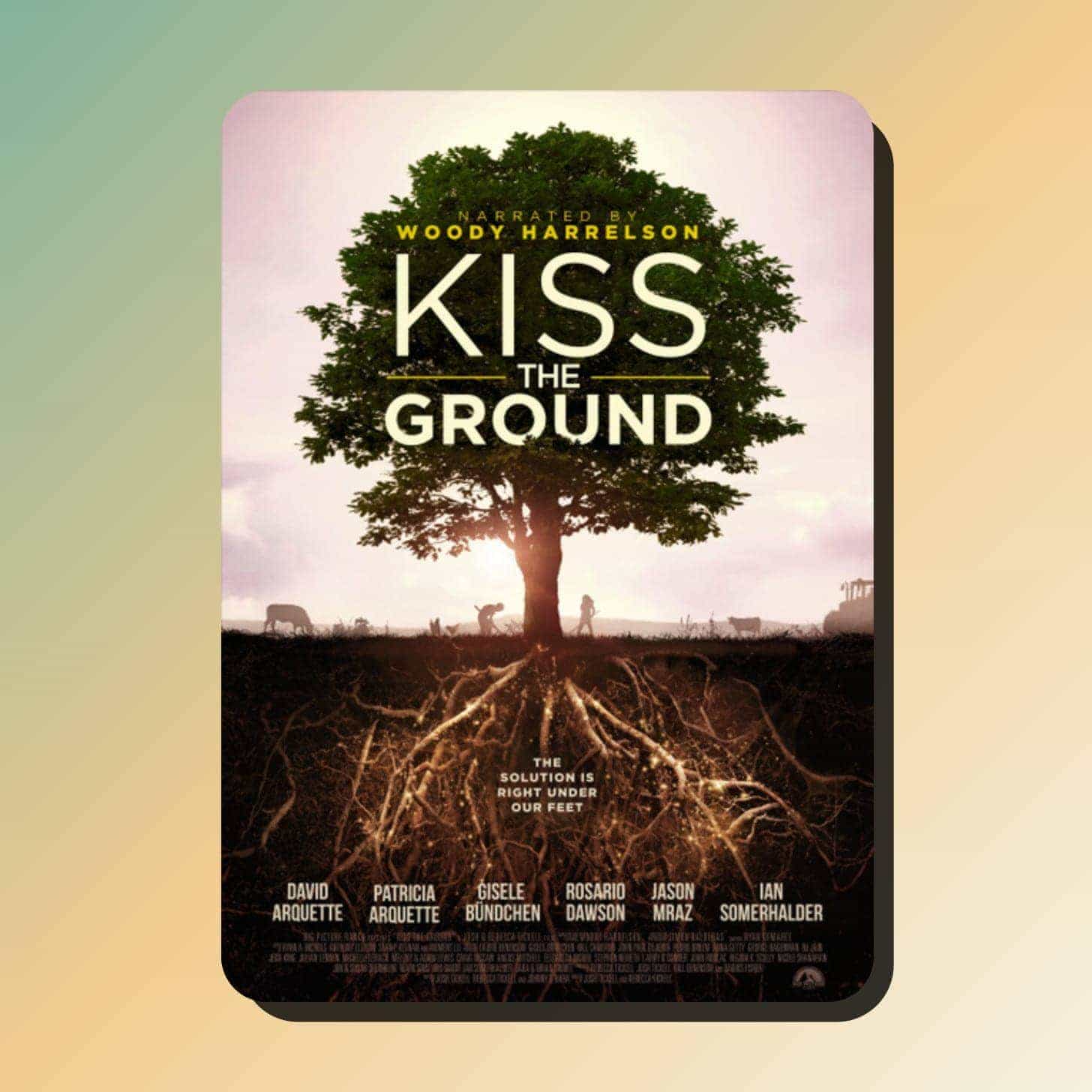
Narrated by and featuring Woody Harrelson, “Kiss the Ground” is an inspiring and groundbreaking documentary film that explores the potential of regenerative agriculture to heal the planet and help mitigate the effects of climate change.
The film features a range of experts and advocates for regenerative agriculture — including farmers, ranchers, scientists, and activists — who explain how this type of farming can improve soil health, reduce the amount of greenhouse gasses in the atmosphere, and help create a more sustainable future for the planet.
Through a combination of storytelling, stunning imagery, and scientific analysis, the film unpacks its case for the transformative power of regenerative agriculture to help solve some of the world’s most pressing environmental challenges.
How to watch: Netflix | Amazon | Apple TV
David Attenborough: A Life on Our Planet (2020)
If you need a little reminder of both the beauty and wonder that this world beholds and why it needs our protection, “David Attenborough: A Life on Our Planet” is a great start.
In this documentary film, one of the world’s most respected naturalists, Sir David Attenborough (you might recognize his iconic voiceovers) combines stunning footage from his over 60 years of broadcasting and filmmaking to provide a powerful call to action for global action on climate change and conservation.
How to watch: Netflix
I Am Greta (2020)
Greta Thunberg — one of the most well-known climate activists today — was only 15 years old when she protested outside the Swedish parliament in 2018.
“I Am Greta” highlights the young activist’s rise to global fame and the impact her activism had on both herself and the world.
The documentary also provides a behind-the-scenes look at Greta’s life as she travels the world speaking at rallies, meetings with world leaders, and her experiences dealing with online hate and media attention.
Through interviews with her family and friends, the film offers an intimate perspective on the personal sacrifices and challenges faced by Greta as she becomes one of the most prominent voices for environmental activism in the world.
How to watch: Hulu
An Inconvenient Truth (2006)
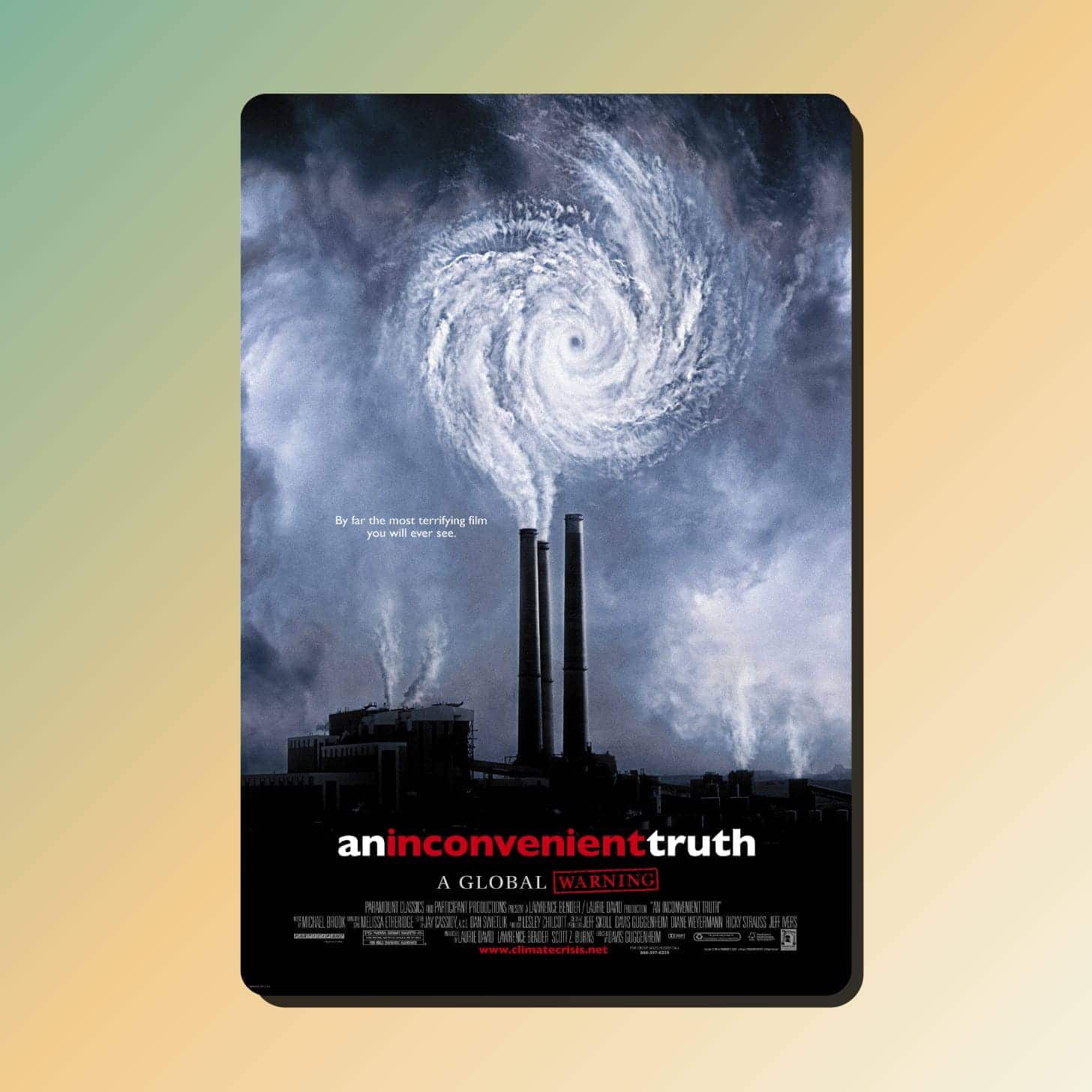
For many of us, Al Gore’s 2006 documentary, “An Inconvenient Truth,” was one of the first climate change documentaries that opened our eyes to the serious effects of global warming.
Directed by Davis Guggenheim, this film presents a visual on the science of global warming and its potential consequences — including rising sea levels, devastating hurricanes, and the melting of the polar ice caps.
The film also encourages viewers to become informed and involved in efforts to combat climate change.
Since its release in 2006, Gore has continued to speak out about the climate crisis, with his follow-up documentary “An Inconvenient Sequel: Truth to Power (2017)” looking at the efforts being made to tackle the issue.
How to watch: Amazon | Apple TV
Remothering the Land (2021)
Don’t want to commit to a long documentary? “Remothering the Land” is a short 10-minute film by Patagonia — a clothing and outdoor gear company known for its environmental activism.
The documentary focuses on the efforts of regenerative agriculture and its potential to mitigate climate change, improve soil health, and enhance food security.
Showcasing farmers and ranchers who are leading the way in this practice and the impact it has on their communities and the environment, “Remothering the Land” highlights the importance of regenerative agriculture in creating a more sustainable future for all.
How to watch: YouTube
Gather (2020)
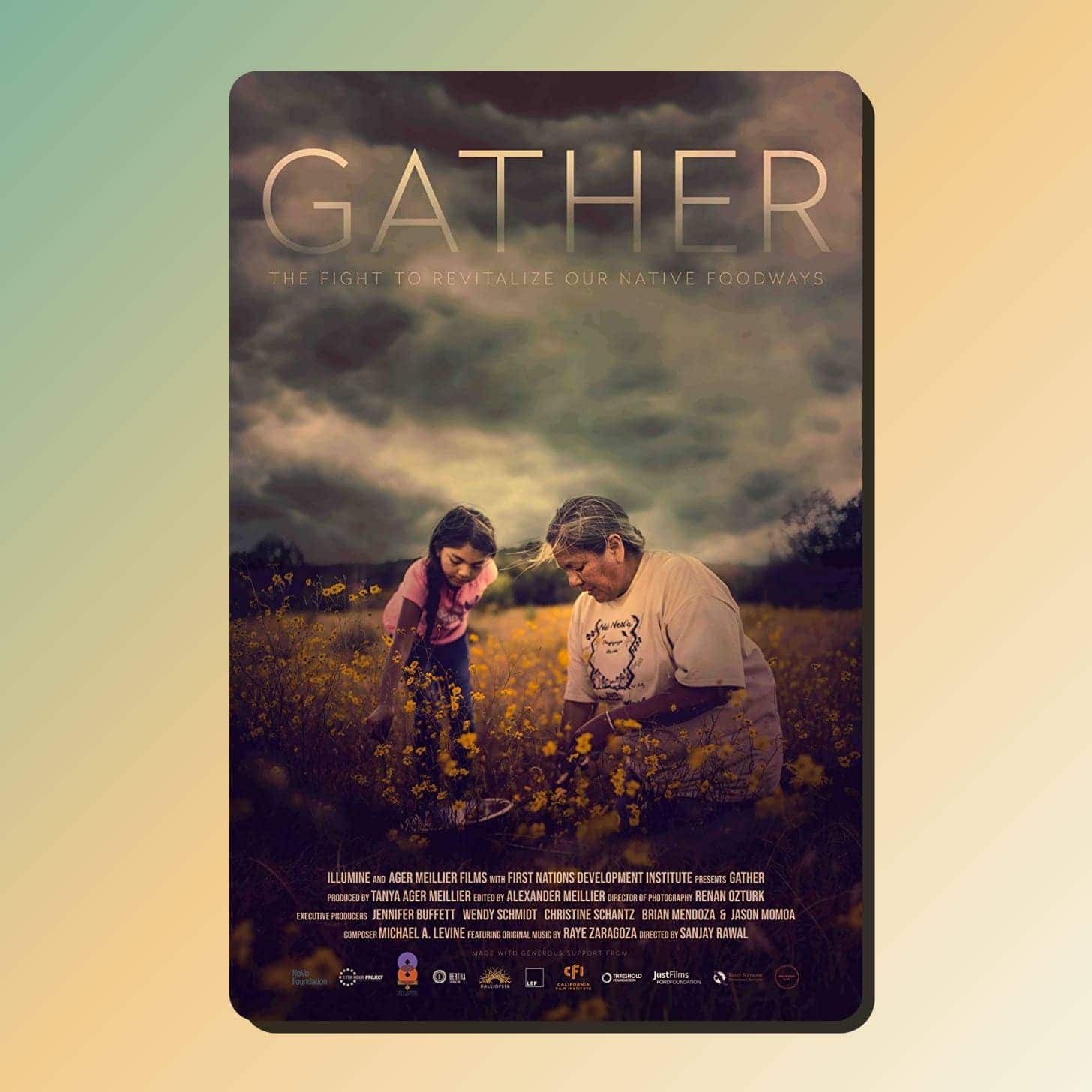
“Gather” is an intimate documentary film that explores the relationship between Indigenous communities, the land, and its resources. The film highlights the importance of Indigenous knowledge and finding solutions to the current global climate crisis.
Executive producers Jason Momoa and Brian Mendoza follow the efforts of Indigenous communities to preserve their ancestral lands and cultural traditions and the role of these communities in the fight for environmental justice.
The film beautifully showcases the resilience and strength of these frontline communities as they work to heal the land and provide a sustainable future for future generations.
How to watch: Amazon | Apple TV | Vimeo
2040 (2019)

Award-winning director Damon Gameau embarks on a journey to explore what the future could look like by the year 2040 if we embrace the best solutions already available to us to improve our planet.
The film features interviews with experts in various fields and showcases innovative solutions to some of the world’s most pressing environmental challenges, including climate change, pollution, and food security. O
ffering an optimistic way forward, Gameau sets out a positive (and realistic) that we can all get on board with.
How to watch: Amazon | Apple TV
Anthropocene: The Human Epoch (2018)
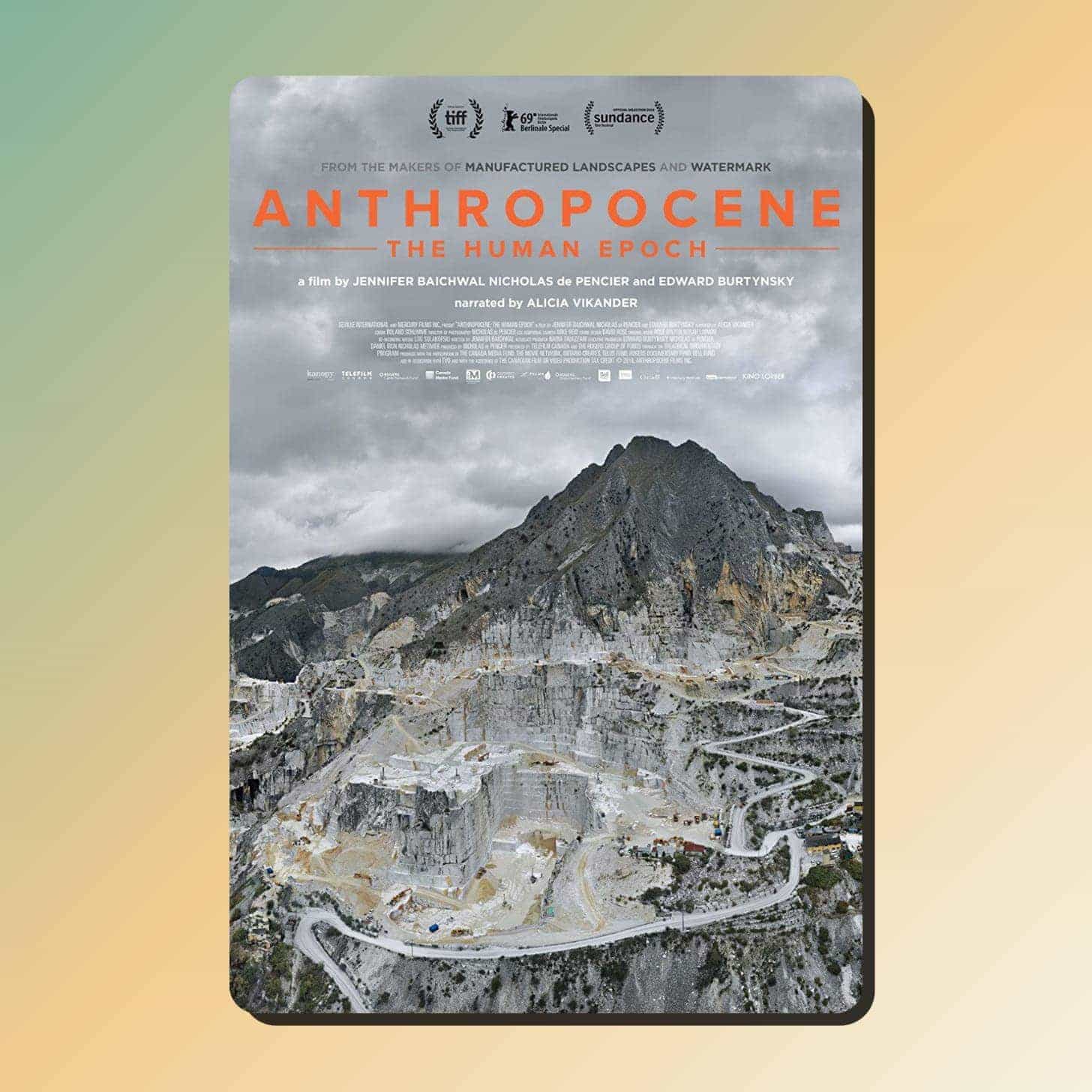
“Anthropocene: The Human Epoch” covers various aspects of human-caused changes to the Earth’s systems, including the mass extinction of species, the alteration of ecosystems, and the depletion of natural resources.
The film, narrated by Alicia Vikander, portrays stunning imagery and expert commentary on the global scale of the climate crisis and the urgency of action to mitigate its effects.
It also highlights the need for a fundamental change in the way we interact with the planet, emphasizing the role of science and innovation in finding solutions to the environmental challenges we face.
How to watch: Amazon | Apple TV
The Biggest Little Farm (2018)
“The Biggest Little Farm” follows the journey of John and Molly Chester, a couple who leave their busy city life for 200 acres of barren farmland and a dream to harvest in harmony with nature.
The film showcases their struggles and successes as they learn about regenerative farming practices and the challenges of growing food in a changing environment. The couple works to create a diverse, interdependent ecosystem that includes crops, livestock, and wildlife.
Highlighting the importance of sustainable agriculture in creating a healthy environment, this film serves as a testament to the power of hard work, resilience, and passion for the land.
Through their journey, the Chesters come to understand the complex relationships between soil, water, air, and all living things — and their role in preserving the planet for future generations.
How to watch: Amazon | Apple TV
Before the Flood (2016)
From Academy Award-winning filmmaker Fisher Stevens and Academy Award-winning actor and environmental advocate, Leonardo DiCaprio, “Before the Flood” explores the effects of climate change and the actions needed to prevent its catastrophic consequences.
The film takes a comprehensive look at the science of climate change and how it is affecting the planet, as well as the political and economic forces behind it.
It features interviews with experts and policymakers, as well as action steps that we as individuals and as a society can take to address climate change.
How to watch: Disney+
Doughnut Economics (2017)
“Doughnut Economics” by Dutch filmmaker Alexander Oey follows economist, researcher, and author Kate Raworth as she gives us a taste of an alternative economic model that emphasizes the balance of social and environmental boundaries.
The documentary explores the concept of “doughnut economics,” a framework for sustainable development based on the idea of creating economic systems that meet the needs of all people within the boundaries of the planet’s ecological limits.
The film features interviews with experts in the field and showcases real-world examples of how the doughnut economics model can be applied in practice — shaping our world and ensuring a sustainable future for all.
How to watch: YouTube
A Plastic Ocean (2016)

“A Plastic Ocean” sheds light on the damaging effects of plastic pollution on the world’s oceans and its sensitive (yet wildly resilient) inhabitants.
The documentary follows a team of researchers, journalists, and divers as they explore plastic pollution in the world’s oceans and the impact it has on marine life and the ecosystem.
Through their journey, they discover the shocking amount of ocean plastic and its devastating effects on marine life, including entanglement, ingestion, and habitat destruction.
The film highlights the urgent need for action to address this issue and the steps we can take to reduce our use of plastic and protect the oceans.
How to watch: Amazon | Apple TV | Peacock
The Magnitude of All Things (2020)
In this documentary film, director Jennifer Abbott explores the impact of human actions on the environment and the planet.
The film focuses on the consequences of our behavior and how it has led to the current state of the world, including climate change, loss of biodiversity, and depletion of resources.
It features interviews with scientists, experts, and activists and offers a comprehensive look at the challenges facing our planet and what we can do to mitigate the damage.
Abbott aims to raise awareness and encourage action, and this documentary serves as a call for individuals and governments to work together to tackle the environmental crisis.
How to watch: Tubi
Chasing Coral (2017)

“Chasing Coral” highlights the rapid decline of coral reefs around the world and the impact this loss has on our ocean ecosystems and the millions of people who depend on them for food and livelihoods.
Follow a team of divers, photographers, and scientists as they document the coral bleaching event in the Great Barrier Reef and the cause behind it (spoiler alert: it’s global warming).
The film sheds light on the urgent need to reduce our carbon footprint and the positive impact individual actions can have on the environment.
Consider this film a call to action and a reminder of the critical role coral reefs play in maintaining the health of our oceans and the planet as a whole.
How to watch: Netflix
How to Let Go of the World and Love All the Things Climate Can’t Change (2016)

“How to Let Go of the World and Love All the Things Climate Can’t Change” explores the impacts of climate change and the efforts being made to mitigate its effects.
The film follows Oscar-nominated filmmaker Josh Fox as he travels around the world to witness the devastating consequences of global warming and to meet with activists and experts who are working to address the issue.
Through his journey, Fox grapples with the realities of climate change and the hopeful qualities — like courage, resilience, and innovation — that people rely on in the ongoing fight to save our planet.
How to watch: Vimeo
Every day the Good Good Good team collects the best good news in the world and shares it with our community. Here are the highlights for this week!
If you want to get good news in your inbox every day, join the Goodnewsletter — the free daily newsletter designed to leave you feeling hopeful.
The Best Positive News We’re Celebrating This Week —
A trans woman activist is making history by competing in the Puerto Rico Miss Universe pageant this year
Transgender activist Daniela Arroyo González has been selected as the first trans woman to compete in the Puerto Rico Miss Universe pageant this year. She will compete among other women representing the island’s 78 municipalities, and the winner will compete in the global pageant.
After winning a federal lawsuit against the Puerto Rican government, González is best known for her fight to allow Puerto Ricans to change their gender markers on their birth certificates.
She is also a co-founder of the Puerto Rico Trans Youth Coalition, an advocacy group that provides a safe support group for trans youth in the U.S. territory.
Why is this good news? The Miss Universe pageant has allowed transgender participation since 2012, and the first trans woman competed in the global event in 2018 — it’s the first time a trans woman has been among Puerto Rico’s local competitors.
It shows promising resistance, as basic human rights for trans folks are threatened by lawmakers around the country.
Forest cover in Scotland is almost back to where it was 1,000 years ago
One-thousand years ago, 20% of Scotland’s land was covered by forest, but by the mid-18th century, that number dropped to just 4%.
About that time, the trend reversed, as the country moved from deforestation to reforestation efforts, and forests began to grow back. After growing for two centuries, forest cover is almost back to where it was 1,000 years ago.
While countries who have seen similar dips in deforestation as Scotland haven’t made such an incredible recovery, they follow a similar trend — with forest cover dipping before starting to recover, likely thanks to regulations, reforestation, and conservation efforts to bring tree cover back to a healthy level.
A viral TikTok sleep trailer is providing safe transitional shelter and helping end homelessness
Looking to help those experiencing homelessness, Jason Christiansen “wanted to do more than give somebody a meal for one day.” Instead, he looked to “give them a space that could be a real foundation and be a launch pad to help them break the cycle of homelessness.”
So, he founded Sleep Trailer, a company that aims to provide safety, security, and dignity to those in need.
Inspired by capsule hotels in Japan (except on wheels), the Sleep Trailer is a compact, portable option for transitional housing that allows folks to have a safe, dignified space to sleep and house their belongings. Each 7.8-foot long pod within the trailer comes equipped with amenities like climate control, four vents for airflow, and more.
Why is this good news? While large, systemic shifts in housing affordability, accessibility, and equality are necessary to truly solve the homelessness crisis, innovations like Christensen’s Sleep Trailers are vital to providing transitional support.
The portable nature of the Sleep Trailers allows them to meet people where they need support, providing a space for folks to truly rest while they access other necessary resources on their path to long-term stability.
→ Read more
Women-owned businesses now make up 50% of a Philadelphia business district
The East Passyunk Avenue Business Improvement District (EPABID) is a major business and culture hub in South Philly — and it has just reached the milestone of becoming 50% women-owned and operated — an increase of roughly 5% from last year.
EPABID is home to over 160 independently-owned businesses across a mile-long walkable corridor, including over 50 diverse eateries.
While the equal mix of women-owned businesses is certainly a plus on its own — they’re also great for the community. Newcomer to the area, the Sawubona Creativity Project is a nonprofit theater with programs that combine social-emotional learning and character education with theater arts for kids and adults alike.
Why is this good news? While women-owned businesses are on the rise, women (and Black women in particular) still lack access to necessary education, networking, and capital — making it that much harder to thrive.
Seeing East Passyunk proud to uplift its women-owned businesses sends a message that diverse, creative entrepreneurship is not only good for gender equality and empowerment — it’s good for the local economy, too.
A hydrogen-powered commuter airplane just made a historic, record-setting flight
Last week in Washington state, a 40-person airplane powered by hydrogen fuel successfully made a historic flight. The plane had a traditional jet engine on its left side and an electric motor completely powered by hydrogen on its right.
After takeoff, the Universal Hydrogen airplane essentially turned off the gas engine and relied almost entirely on the hydrogen-powered engine. It flew for 15 minutes and became the largest plane ever “to cruise principally on hydrogen.”
It’s just one carbon-free travel innovation scientists are working on to help the aviation industry reach its emission-reduction goals. Whereas traditional jet fuel releases emissions and particulate pollution, this plane’s hydrogen system gives off only water vapor and heat.
What’s the nuance? Some critics say hydrogen fuel won’t be a magic solution (there rarely are!) to getting the aviation industry to lower its emissions enough to make a difference in fighting climate change. Additionally, it requires a lot of storage space on board the plane, which would significantly reduce the number of seats on the plane, especially for longer flights.
Still, transitioning away from fossil fuels is non-negotiable, so we’re glad to see some progress and innovation being made in the airline industry.
The Michigan House just passed a bill to expand civil rights protections to LGBTQ+ people
Earlier this week, with 64 votes in favor, the Michigan House voted to expand the Elliott-Larsen Civil Rights Act to include protections for LGBTQ+ people. The bill now heads to Governor Gretchen Whitmer’s desk, who is expected to sign it into law.
The civil rights act was expanded to explicitly include protections for sexual orientation and gender identity. Specifically, it stops someone from firing, evicting, or discriminating against an individual because they are LGBTQ+.
While activists and advocates wish it happened long ago and saved so many people from heartbreaking discrimination, they’re celebrating that it will now be enshrined into state law. The fact that the bill came to a vote at all is thanks to years of grassroots activism.
Why is this good news? Right now, it’s difficult to go even a day without seeing a new attack on the rights of LGBTQ+ people in the U.S. (and globally) — from book bans to restricting basic health care. This barrage of bad news can feel intensely discouraging, especially for those who belong to the groups coming under targeted attack.
While it may feel like we’re taking five steps back for every one we move forward — those steps forward matter and are so important to see, recognize, and celebrate. We’re celebrating this step of progress with all Michiganders and the LGBTQ+ community.
More good news of the week —
After 15 years of talks, more than 100 countries agreed on a global treaty to protect marine life on the high seas. Environmental groups say it will help reverse marine biodiversity losses and ensure sustainable development.
Pay-what-you-can farmstands are helping keep communities fed with healthy, nutritious foods. These farms are playing a critical role as COVID and inflation have made fresh fruit and vegetables harder for many to access.
Washington state introduced a new program to charge companies for their CO2 emissions. With the Climate Commitment Act, the state joins 14 others that have implemented some kind of program with declining caps on emissions.
The U.S. is restoring more bison herds on tribal lands utilizing Indigenous knowledge. The Interior Department announced funding to build new herds, transfer more bison to tribal lands, and forge new bison management agreements with tribes.
Clean energy hit a record in the U.S. in 2022, with more than 40% of electricity coming from carbon-free sources. In addition to nuclear plants and hydroelectric dams, the majority of the increase has come from the rapid build-out of solar and wind power.
Scotland just became the first country to ban an environmentally harmful anesthetic. Desflurane has a global warming potential 2,500 times greater than carbon dioxide and banning it will cut emissions equal to powering 1,700 homes a year.
With the belief that reading ‘shouldn’t be a privilege,’ a writer and cultural historian has given away 6,000 books for free. Sofia Akel’s started the Free Books Campaign in 2020 to get books by authors of color to those who can't afford them.
A teen shamed online for her “luxury” handbag is now a model in the brand’s International Women’s Day campaign. After Zoe Gabriel responded to the comments sharing that she didn’t grow up with a lot, Charles & Keith invited her to their headquarters and made her one of the faces of their IWD campaign.
Minnesota’s House passed a measure to create the first-ever Office of Missing and Murdered African American Women. It would be the first office of its kind in the country, created as Black women in Minnesota are three times more likely to be murdered than white women, and their cases are less likely to be solved.
Two women in Atlanta started a nonprofit to help formerly incarcerated people navigate life after their release. Barred Business provides funding, housing, and training while advocating for legal protections for people who have faced unemployment and homelessness after incarceration.
Thailand will ban imports of plastic waste from other countries at the end of 2024. Sending our waste around the world to be disposed of is environmental injustice at its worst, and we’re glad Thailand is taking action (we’re just sorry we weren’t the ones to do it).
A solar panel manufacturer in Switzerland announced it’s shifting away from using any plastic in its panels. Meyer Burger says the shift to 100% glass panels will lead to faster scalability and it’s just better technology.
Spain announced a new law to promote gender equality in both politics and business. The law will require more equal representation of women and men in politics, business, and other spheres of public life.
Scientists found a new way to remove CO2 from the air that’s up to three times more effective than current technology. The method transforms the gas, stores it safely and cheaply in seawater, and could help speed up the deployment of carbon removal technology.
An Afghan broadcaster aired a rare all-woman panel to discuss women’s rights in honor of International Women’s Day. The broadcast was a rare occurrence since the Taliban took over and many female journalists left the profession or started working off-air.
Imagine growing up in a world where everybody functions using a Windows operating system.
The world is designed with Windows in mind, all of the programs that you need to use to live and work are created for Windows, and all of the operating guides for life are written for use with Windows, too.
When you look at the people (or the computers, if we’re really going for the analogy) around you, everything seems to be running perfectly smoothly for them. They’ve got all the correct software downloaded, they’re whizzing their way through everything they need to achieve, and everything seems to be going to plan.
For you, though, this doesn’t seem to be the case. You keep trying to download programs, but they crash out at the last moment. When you search for something, all you get is Error 404, and when you try to read up in the operating manuals, it feels as though everybody else must be reading some invisible ink that you’re not able to see.
You’ve never been given any plausible explanation as to why Windows doesn’t work for you, though — as far as you’re aware, you’re just the same as everybody else.
"deep down, you know that You're ... not the same."
But in reality, deep down, you know that you’re not. You’re not the same.
You can’t do things in the same way as everybody else around you can, you can’t achieve things in the same way that everybody else does, and you just don’t seem to be able to exist quite as easily as they can, either.
Then one day, after 20+ years of these struggles, and after 20+ years of truly believing that you were broken, that you were damaged, and that you were a bad person, somebody comes along and says, “Hey, have you ever considered that you might just be a Mac?”.
And suddenly, it all makes sense.
There was nothing wrong with you as a Mac — you were, in fact, a perfectly good Mac. You’d just spent your whole life trying to live the way that all the Windows PCs were living, and that, obviously, hadn’t suited you.
But now, with that new insight, you could go off, meet other Macs, and run Mac programs — and realize that you were never broken, you were just trying to run programs that physically weren’t designed for your operating system.
You were never damaged — you just weren’t able to process the coding that you were expected to.
You were never a bad person — you just didn’t have the right information to build up an accurate picture of yourself.
This is the story of my life — but instead of spending a lifetime thinking that I was a shitty Windows PC and then finding out that I was, in fact, a Mac, I spent 24 years thinking that I was a shitty neurotypical person, to then discover that I was an autistic ADHDer.
I’d spent years desperately trying, and miserably failing, to be something that I wasn’t — and then the second that I found out who I really was, and started trying to authentically live my life that way, I could actually achieve things, and I could finally feel good.
"Getting my autism & ADHD diagnoses at the age of 24 was the beginning of unlearning all of the negative things that I'd been repeatedly told about myself, both by the people around me and by the voice inside of my head. "
Getting my autism & ADHD diagnoses at the age of 24 was the beginning of unlearning all of the negative things that I’d been repeatedly told about myself, both by the people around me and by the voice inside of my head.
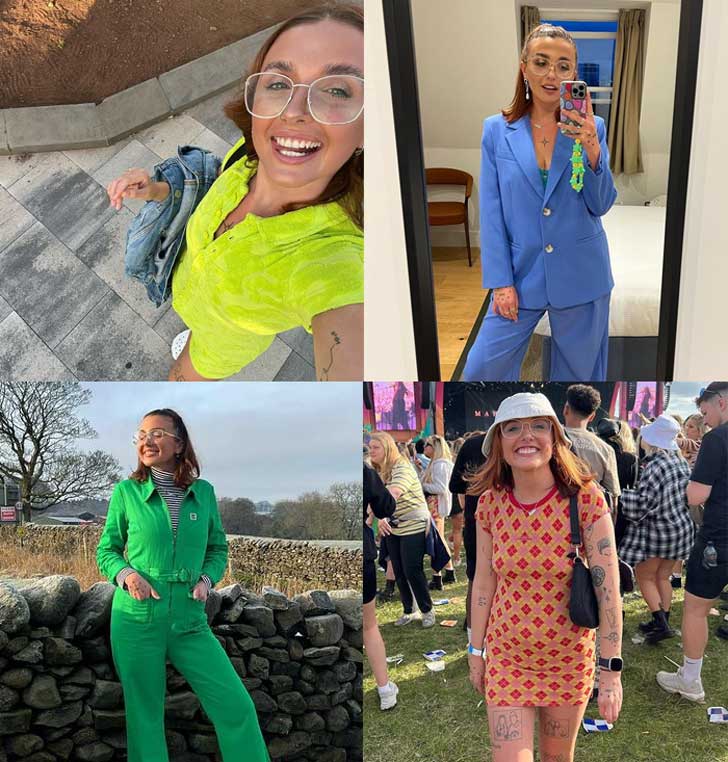
I had spent my whole life being told over and over again that I was selfish, self-absorbed, dramatic, too much, annoying, bitchy, and a whole host of almost every possible insult you could come up with — and not only did I hear these insults from other people, but I genuinely believed them myself.
I’d never been given any reason or explanation that could justify or make sense of people feeling this way about me, so the only plausible explanation in my mind was that they must have been right.
I must have been the horrible person that they painted me out to be; what else could possibly have been so wrong with me or so bad about me in order to make every single person that I ever became friends with want to leave?
"But on discovering that I was an autistic ADHDer — a Mac trying to function in a Windows world — I could begin to learn to forgive myself for being different."
But on discovering that I was an autistic ADHDer — a Mac trying to function in a Windows world — I could begin to learn to forgive myself for being different.
I could see that I was never a bitch; I just naturally communicate in a more concise and monotonous way.
I could see that I was never selfish; I just operate in a different way from the people around me, so it can be hard for me to see things from their point of view.
I could see that I was never dramatic; I just have a brain that is physically able to see, hear and sense things in a much more intense way than other people’s brains can.
And most importantly, I could see that I was never “too much”; I was just an honest, upfront, excitable human being who experienced life at 100%.
I learned that I was never damaged; I am disabled. I was never broken; I am different. I was never a bad person; I am just hugely misunderstood.
And that is why getting my diagnosis was the best thing to ever happen to me, and why we must ensure that others who have slipped under the radar are able to find their own answers, too.
Ellie Middleton is an autistic and ADHD creator, speaker, writer, and consultant. She was diagnosed with both Autism Spectrum Condition and ADHD at the age of 24.
Since then, she’s gone on to build an audience of over 300,000 people online, create the (un)masked community for neurodivergents, and work with global brands like The Independent, Google, and LinkedIn to change the narrative on neurodiversity.
The President’s Emergency Program for AIDS Relief, or PEPFAR, has revolutionized the fight against global AIDS over the last 20 years.
In that time, the U.S. program has brought antiretroviral treatment to nearly 19 million people living with HIV, the virus that causes AIDS; prevented mother-to-child transmission of HIV for 2.8 million babies; and brought HIV testing and prevention services to millions of others.
But this program would not be so successful — and might not even exist — without the work of grassroots AIDS activists around the world.
As a historian of social movements, I spent years interviewing AIDS activists, digging through their papers, and scanning old websites, group email lists and message boards.
These sources showed that, over the course of more than a decade, these activists challenged the status quo to demand — and deliver — HIV treatment to millions of poor people around the world.
AIDS drugs for Africa
In his 2003 State of the Union address, then-U.S. President George W. Bush announced the creation of PEPFAR when he called for an astounding US$15 billion in funding over five years for the fight against AIDS in Africa and the Caribbean.
His announcement did not come out of nowhere. By that point, AIDS activists had spent years fighting to bring treatments for HIV to low- and middle-income countries hardest hit by the epidemic.
My book, “To Make the Wounded Whole,” describes how members of the AIDS Coalition to Unleash Power (ACT UP) Philadelphia linked their own struggles for affordable, quality health care for poor people with AIDS in the U.S. to similar struggles around the world.
This fight began in earnest in the late 1990s when highly effective antiretrovirals to treat HIV became available, giving a new lease on life to those who could access them. But the new drugs were expensive, and activists saw that their high cost would put them out of reach for most who needed them.
Some low- and middle-income countries took their own steps to make life-saving antiretrovirals available.
In 1997, South Africa, in the midst of a rapidly growing HIV epidemic, passed the Medicines and Related Substances Act, allowing the government to produce or acquire less-expensive generic versions of the drugs.
Meanwhile, domestically produced generics were a cornerstone of Brazil’s program to provide access to free antiretrovirals for people living with HIV/AIDS in the country.
Pharmaceutical companies opposed these efforts, with a representative of the Pharmaceutical Research and Manufacturers Association (PhRMA) claiming that countries that produced generics committed “a form of patent piracy.”
So, too, did the Clinton administration, claiming that South Africa and Brazil violated intellectual property agreements under the World Trade Organization.
In particular, former Vice President Al Gore, acting as chair of the U.S.-South Africa Binational Commission, and Charlene Barshefsky, the U.S. Trade Representative, pressured their South African counterparts to change the law in 1999.
Activists fought back against both the pharmaceutical industry and the policymakers who put intellectual property rules, and the corporate profits they protected, ahead of saving people’s lives.
Members of ACT UP Philadelphia, along with others, hounded Gore on the presidential campaign trail, chanting, “Gore is killing Africans – AIDS drugs now,” and occupied Barshefsky’s office in Washington.
They also participated in a massive demonstration at the 2000 International AIDS Conference in Durban, South Africa, with thousands of marchers from around the world crying “Phansi, Pfizer, phansi!” (“phansi” is Zulu for “down”) to demand a reduction in the drug company’s AIDS treatment prices.
All of this agitation worked. Clinton curbed his administration’s pressure campaign against South Africa.
Thanks in part to the wider availability of generics, the average cost of antiretrovirals fell dramatically. And the 2001 World Trade Organization Ministerial Conference in Doha, Qatar, affirmed that public health and “access to medicines for all” would be paramount in the fight against HIV/AIDS and other epidemics.
Having succeeded in making antiretrovirals more affordable, activists pressed for an international program to purchase and distribute them.
According to journalist Emily Bass, external pressure from grassroots activists gave global health advocates within the Bush administration, including National Institute of Allergy and Infectious Diseases Director and chief medical advisor Anthony Fauci, the opportunity to push forward their proposal for a massive effort by the U.S. to treat AIDS in Africa. That proposal quickly evolved into PEPFAR.
Activists continued to shape PEPFAR as the program came together. They advocated for people with AIDS to be treated with generic antiretrovirals, which allowed more people to be treated than would otherwise be possible with patented drugs.
And when it came time to renew PEPFAR in 2008, they extracted promises from presidential candidates to reauthorize the program at $50 billion, over three times Bush’s initial pledge.
Today, PEPFAR works in over 50 countries, including in Central and South America, Southeast Asia and the former Soviet Union. Since 2003, the program has injected over $100 billion into the fight against global AIDS, although annual funding levels have been flat for most of that time.
Yet despite stagnant funds, PEPFAR has brought treatment to an increasing number of people in need.
That it has done so is in no small part thanks to the AIDS activists who fought to make generic antiretrovirals available, allowing the program to treat many more people than would otherwise be possible.
Lessons unlearned
To be sure, the Bush administration had its own reasons to address AIDS in Africa. National security experts at the U.S. State Department had long worried that AIDS would destabilize the continent, as historian Jennifer Brier has shown, and PEPFAR burnished the president’s commitment to “compassionate conservatism” and faith-based social programs.
But by the time of Bush’s announcement, grassroots activists had already spent years arguing in public that treating AIDS in Africa was not only possible but imperative. And their advocacy for low-cost generic antiretrovirals paved the way for global AIDS treatment on a scale that had once been thought impossible.
Unfortunately, U.S. responses to recent viral epidemics have not shown evidence that the nation has learned from the PEPFAR example.
The hoarding of COVID-19 vaccines by the U.S. and other wealthy nations shows the same persistent disregard for human life that was evident in attempts to block generic medicines from reaching people who needed them.
At the same time, millions of doses of a highly effective vaccine against mpox in the U.S. national vaccine stockpile were allowed to expire while outbreaks of the virus raged in West and Central Africa in 2022.
And early 2023 announcements that Pfizer and Moderna may both price their COVID-19 vaccines at well over $100 per dose in the U.S. recalls the exorbitant drug prices that aroused activist fury in the fight against AIDS.
PEPFAR has saved millions of lives, in no small part because activists thought big and fought hard for justice in the U.S. response to global AIDS.
Although the program is far from perfect, it serves as a reminder of what is possible when solidarity guides responses to humanity’s biggest challenges, and the power of grassroots organizing in turning principles into policy.
This week, Harry Styles finally kicked off the Australian leg of his much anticipated tour. Fans have been preparing for months, creating handmade outfits and learning the “boot scoot” — a dance associated on tour with Styles’ song Treat People With Kindness.
As one of the world’s biggest pop stars, the ex-One Direction singer has amassed millions of fans, referred to as “Harries”.
You’d be hard pressed to find an article about Styles that doesn’t mention his fans.
They’ve sold out shows in minutes, taken over TikTok trends and camped outside venues. They’re also a highly creative bunch of young people, using their fandom to learn new skills that will carry them forward in many aspects of their lives.
Fan creativity
Fandoms can be spaces where young people develop important transferable creative skills. Fans are mastering video-editing skills to remix existing footage into fan edits, learning coding and web design to customize fan sites, and creating organized marketing campaigns to promote their idols’ music and help them win awards.
My research shows these skills have positive flow-on effects into other areas of fans’ lives, including their careers.
@emilyinghamart Wait for it 😍 #hslot #harrystyles #hslotoutfit #auslot #auslot2023 #harryshouseoutfits #emilyinghamart #australianartist ♬ original sound - kenia🎀
The relationship between creativity and fandom isn’t new. Fan productivity has been a central focus of fan studies research since the early 1990s, and there have been great case studies on fans of The Beatles, hardcore music, and K-pop, just to name a few.
Today, the rise of social media platforms means fan creativity is being showcased to a much wider audience.
Fans create and circulate user-generated content, such as fan fiction, video edits or graphics, often referred to as “fan-art”.
Spend some time on TikTok and you’ll see intricate cookie designs, ceramics, and tour outfit illustrations all inspired by Styles.
Fashion, fiction, and finding deeper meaning
A fandom is essentially a group of like-minded people coming together over a shared interest. Being part of a music fandom means there is a captive audience with whom to share your work. Fellow fans provide encouragement, feedback and recognition.
Learning a new skill takes practice. Dedicated fans are spending a significant amount of their spare time interacting in these communities, developing creative skills as they participate.
This community aspect of fandom creates a supportive, peer-to-peer learning environment where expertise is distributed among fans. The shared sense of belonging creates a safe space where fans feel comfortable to experiment with their work.
In my research, I surveyed 63 fans of Styles to get a better idea of just what skills they are learning through their fandom. Their answers included:
- graphic design. As fans create posters, art and graphics, they’re learning how to use Photoshop and developing their own design style.
- sewing. Inspired by Styles’ own love of fashion, it’s become customary to dress up for Love On Tour. His New York show actually caused a shortage of feather boas across the city after Styles wore one on stage. Fans have been designing their own merchandise, and learning how to sew by observing other fans.
@neishaadmaweda HSLOT OUTFIT part 2!!! Perth 💗💚 #auslot #hslot #auslot2023 #loveontour2023 #harrystyles #australia #crochet #hslotoutfit #hslotperth #hslot2023 #2023 #perth #crochettiktok #crochetersoftiktok @hslotaus ‘un’official account ♬ Harry Styles Megamix by JungleSue - Jungle Sue Mashups🐵🌴
- writing. Engaging in fan fiction communities can help fans develop important literary skills through writing, reading, collaborating and critiquing texts. On the popular fan fiction site Wattpad, there are more than 270,000 stories under the tag “Harry Styles”, some which have attracted millions of readers.
- close reading. By analyzing lyrics and music videos, fans are developing close reading strategies, seeking out small details and extracting meanings.
- digital literacy. Fans have been recognized as early adopters of the internet. Their ability to jump onto new platforms has been referred to as “fan literacy”. By observing trends and seeing what’s popular, fans are learning how to create engaging content across social media platforms.
Participation potential
Realizing their capabilities and potential, and gaining confidence in their own abilities flowed into other aspects of the fans’ lives. The accumulation of these skills was helpful in preparing them for the workplace.
As one Styles fan explained:
"It taught me how to create engaging content, how to interact with people on the internet, what looks unprofessional, and also how to do design elements and marketing strategies."
In my PhD research, I’ve found fan participation can become a stepping stone for aspiring creative professionals.
One Styles fan, who is now working in media design, said:
"By trying out so much in Photoshop for fandom edits, I learnt a lot and was able to express myself and experiment freely. Getting so much encouragement and positive feedback, that kept me so productive."
Fan-made creations can provide a body of creative work fans can include in their portfolio when applying for jobs in the creative industries.
@shazzabazza22 making my AUSLOT outfit P1!!!! 🪩🌼🌺💐 #melbn1 #harrystyles #auslot #auslot2023 #auslotoutfit #diy ♬ sushi harry at big weekend 2022 - BBC Radio 1
However, these skills can be overlooked because of gendered views of fan culture. Pop musicians such as Styles have predominantly female audiences, and cultural products associated with girls are frequently looked down upon.
It’s hard to forget the time GQ Magazine described a typical One Direction fan as a:
"rabid, knicker-wetting banshee who will tear off her own ears in hysterical fervor when presented with the objects of her fascinations."
Yikes.
These assumptions are limiting the opportunities for fans to leverage their skills.
From fandom to creative futures
Pop music fandom is often considered trivial and childish, positioned as a phase fans must grow out of. Because of this, we don’t often consider how being a fan could actually be useful in adult environments, such as the workplace.
While perceptions of female fans are shifting, these overarching stereotypes mean fangirls are often dismissed as obsessive or juvenile. But this is a limited view of their experiences and capabilities. Pop music fans are acquiring valuable skills which can set them up for future success in other areas of their lives.
As Styles said in a Rolling Stone article:
How can you say young girls don’t get it? They’re our future.
It’s time we start taking fans seriously.
There’s a special bond that exists among small business owners — as we understand the challenges, triumphs, and dedication that go into pursuing our entrepreneurial dreams.
To honor this connection and highlight the importance of small businesses, I’ve curated a list of quotes that perfectly convey the spirit and significance of building a scrappy little company.
Whether you’re a fellow founder or simply a lover of small businesses — these quotes serve as a reminder of the many benefits that come from supporting local businesses, including strengthening the local economy, fostering personal connections, and enabling the growth of unique, innovative ideas.
Let’s dive into these powerful words, which not only recognize the hard work and passion of small business owners but also encourage each of us to continue championing the entrepreneurs who make our communities so vibrant and creative.
The Best Small Business Quotes
Famous Quotes
“There’s nothing wrong with staying small. You can do big things with a small team.”
— Jason Fried, CEO of Basecamp
“It’s not about ideas. It’s about making ideas happen.”
— Scott Belsky, co-founder of Behance
“Success comes from the inside out. In order to change what is on the outside, you must first change what is on the inside.”
— Idowu Koyenikan
“You never achieve real success unless you like what you are doing.”
— Dale Carnegie
“Talent is cheaper than table salt. What separates the talented individual from the successful one is a lot of hard work.”
— Stephen King
“You can’t be successful in business without taking risks. It’s really that simple.”
— Adena Friedman
“The heart and soul of a company is creativity and innovation.”
— Robert Iger, CEO of Disney
“Keep on going, and the chances are that you will stumble on something, perhaps when you are least expecting it. I never heard of anyone ever stumbling on something sitting down.”
— Charles F. Kettering
“Make something people want includes making a company that people want to work for.”
— Sahil Lavingia, CEO of Gumroad
“When you find an idea that you just can’t stop thinking about, that’s probably a good one to pursue.”
— Josh James, CEO and co-founder of Omniture
“Some people dream of success, while other people get up every morning and make it happen.”
— Wayne Huizenga
“Do not focus on numbers. Focus on doing what you do best. It’s about building a community who want to visit your site every day because you create value and offer expertise.”
— Cassey Ho
For Entrepreneurs
“The most successful entrepreneurs I know are optimistic. It’s part of the job description.”
— Caterina Fake, co-founder of Flickr
“What helps people, helps business.”
— Leo Burnett
“Find a great mentor, someone who has already been through the many challenges of being an entrepreneur...”
— Jodi Levine
“You don’t build a business, you build the people, then people build the business.”
— Zig Ziglar
“Bringing great people onto your team is about demonstrating that size really doesn’t matter — people do.”
— Jess Campbell
“I never dreamed about success — I worked for it.”
— Estée Lauder
“Entrepreneurs understand that there is little difference between obstacle and opportunity.”
— Victor Kiam
“A goal without a plan is just a wish.”
— Antoine De Saint-Exupéry
“The secret to successful hiring is this: look for the people who want to change the world.”
— Marc Benioff
“A big business starts small.”
— Richard Branson
“A small business is an amazing way to serve and leave an impact on the world you live in.”
— Nicole Snow
“Whenever you see a successful business, someone once made a courageous decision.”
— Peter F. Drucker
For Inspiration
“Where do you put the fear when you choose to innovate? The fear is there, but you have to find a place to put it.”
— Seth Godin
“I don’t believe in luck, I believe in preparation.”
— Bobby Knight
“Winning is great, sure, but if you are really going to do something in life, the secret is learning how to lose. Nobody goes undefeated all the time. If you can pick up after a crushing defeat, and go on to win again, you are going to be a champion someday.”
— Wilma Rudolph
“The secret of success in any field is redefining what success means to you.”
— RuPaul
“One way to keep momentum going is to have constantly greater goals.”
— Michael Korda
“Don’t be afraid to assert yourself, have confidence in your abilities and don’t let the bastards get you down.”
— Michael Bloomberg
“Knowledge exists to be imparted.”
— Ralph Waldo Emerson
“Never ever give up! Constant effort is the key to success.”
— Xavier Davis
“Fearlessness is not the absence of fear, it’s the mastery of fear. It’s about getting up one more time when we fall down.”
— Arianna Huffington
“If we tried to think of a good idea, we wouldn’t have been able to think of a good idea. You just have to find the solution for a problem in your own life.”
— Brian Chesky, co-founder of Airbnb
“You build on failure. Use it as a stepping stone and close the door on the past. Don’t try to forget the mistakes, but don’t dwell on it.”
— Johnny Cash
“Keep your face always toward the sunshine and shadows will fall behind you.”
— Walt Whitman
“If we did all the things we were capable of, we would astound ourselves.”
— Thomas Edison
“We are really competing against ourselves, we have no control over how other people perform.”
— Pete Cashmore, founder of Mashable
For Customers
“The best time to support small businesses is always today.”
— Gisele Barreto Fetterman
“Nearly one in four small businesses reported that their holiday sales will determine if their business can survive into next year. Remember that the next time you wonder if shopping small this holiday matters. It does. It truly does.”
— Natalie Franke
“When you do your holiday shopping this year — be sure to shop local as much as possible. When we support our small businesses, we create jobs and commerce in the communities that need it most.”
— Chris Jones
“Everyday is a good day to shop local, small, Black & brown businesses in our community.”
— Ayanna Pressley
About Customer Service
“I’ve learned that people will forget what you said, people will forget what you did, but people will never forget how you made them feel.”
— Maya Angelou
“Great customer service is a critical competitive advantage for a business.”
— Steve Benson
“Customer service is an opportunity to exceed your customer’s expectations.”
— John Jantsch
“Know your communities well! Ask your customers questions and get feedback, get to know them and their needs, chat with other small businesses, work together, and above all: support each other!”
— Andrew Young, owner of Bubble and Brown Bakery
“My advice is to focus on the importance of forging a long-term relationship, whether with colleagues, partners, or customers. It is often easy to get caught up in short-term decisions.”
— Sheila Lirio Marcelo, founder of Care.com
Short Quotes
“Business is the salt of life.”
— Voltaire
“There is no finish line. There are only mile markers.”
— Michael Ventura
“Without deviation from the norm, progress is not possible.”
— Frank Zappa
“Alone we can do so little; together we can do so much.”
— Helen Keller
“In the middle of difficulty lies opportunity.”
— Albert Einstein
“Never let success get to your head and never let failure get to your heart.”
— Drake
“Don’t count the days, Make the days count.”
— Muhammad Ali
“In order to succeed. We must first believe that we can.”
— Nikos Kazantzakis
“I attribute my success to this: I never gave or took any excuse.”
— Florence Nightingale
“The successful warrior is the average man, with laser-like focus.”
— Bruce Lee
“By failing to prepare you are preparing to fail.”
— Benjamin Franklin
“I couldn’t wait for success, so I went ahead without it.”
— Jonathan Winters
“What would you do if you weren’t afraid?”
— Sheryl Sandberg
“Show up, show up, show up, and after a while the muse shows up, too.”
— Isabel Allende
More Inspirational Quotes
“Don’t worry about being successful, but work toward being significant and the success will naturally follow.”
— Oprah Winfrey
“Our greatest glory is not in never falling, but in rising every time we fall.”
— Confucius
“You gain strength, courage, and confidence by every experience in which you really stop to look fear in the face. You must do the thing you think you cannot do.”
— Eleanor Roosevelt
“The way to get started is to quit talking and begin doing.”
— Walt Disney
“Plan for what is difficult while it is easy. Do what is great while it is small.”
— Sun Tzu
“The secret of getting ahead is getting started.”
— Mark Twain
“Hardships often prepare ordinary people for an extraordinary destiny.”
— C.S. Lewis
“Failure is the condiment that gives success its flavor.”
— Truman Capote
“Small opportunities are often beginning of great achievements.”
— Demosthenes
“You need to spend all of your time and energy on creating something that actually brings value to the people you’re asking for money!”
— Gary Vaynerchuk
Earth Month takes place in April every year. This annual awareness month is an opportunity to raise awareness and advocate for change around the issues most impacting our planet!
Throughout Earth Month, environmental leaders and activists all around the world present plans, strategies, and solutions for mitigating and preventing further damage to the planet and its resources.
Earth Month, which surrounds the all-important Earth Day on April 22, feels (and arguably is) especially important this year, as our window to make the urgent changes we need to address the climate crisis — from adapting to the damage we can no longer avoid, to preventing the worst-of-the-worst from happening.
And while the urgency surrounding climate action should inspire us all into action during Earth Month and beyond — so should the incredible progress we’re already making and will continue to make.
There are so many inspiring helpers making a real, meaningful difference for our planet, and by extension all the life it sustains, including humanity. We’ll go into the opportunities each of us has to join them in taking action to protect the planet this Earth Month and all year long.
But first, some facts about Earth Month!
5 Facts About Earth Month
- Earth Month was started by a group of activists after they witnessed a massive, destructive oil spill in Santa Barbara, California in 1969.
- Wisconsin senator Gaylor Nelson wanted to harness the energy of the anti-war movement for environmental activism, which inspired a group of activists to start a proactive environmental initiative, which they called Earth Day.
- Earth Month became a month-long extension of Earth Day, both of which have been celebrated and recognized in the U.S. since 1970.
- By 1990, Earth Month reached a global scale when 200 million people from 141 countries joined in participating in the month-long event.
- The theme of this year’s Earth Day and Earth Month is “Our Power, Our Planet” — focused on the role of people and communities worldwide in sustaining environmental protections that affect the cost of living, public health, infrastructure reliability, and long-term stability.
While it’s important to learn more about and advocate for the health of the planet (and the people on it!) every single day, it’s helpful to have somewhere to start. We’ve created a guide on how to celebrate Earth Month this year.
By the way, some of the links in this article (like books!) are affiliate links, which means if you make a purchase after clicking a link, we may earn a commission at no extra cost to you. Thank you!
Activities and Ideas: How To Celebrate Earth Month
Learn
Watch documentaries about the Earth.
Documentaries are a powerful tool for bringing important environmental issues to the forefront of our minds — especially when they’re narrated by legends like David Attenborough or even former President Barack Obama.
There is no shortage of Earth-related documentaries — and we’ve curated a whole list of climate change documentaries you can add to your watchlist for Earth Month.
Listen to podcasts about the environment.
We know the vibe: Every time you head out of the house, it’s you and your headphones against the world. But what if you and your headphones teamed up with the world? Add these environment-saving pods to your queue for Earth Month!
Read books about protecting the planet.
Saving the world sure would be a lot easier if we all had a guidebook. The good news is that so many environmental experts have lended their brilliance to books you can buy or check out from your local library — so you can start learning even more about this beautiful planet we call home.
- “Healing Grounds: Climate, Justice, and the Deep Roots of Regenerative Farming” by Liz Carlisle (Bookshop) (Amazon)
- “Saving Us: A Climate Scientist's Case for Hope and Healing in a Divided World” by Katharine Hayhoe (Bookshop) (Amazon)
- “The Intersectional Environmentalist: How to Dismantle Systems of Oppression to Protect People + Planet” by Leah Thomas (Bookshop) (Amazon)
- “A Bigger Picture: My Fight to Bring a New African Voice to the Climate Crisis” by Vanessa Nakate (Bookshop) (Amazon)
- “Braiding Sweetgrass: Indigenous Wisdom, Scientific Knowledge, and the Teachings of Plants” by Robin Wall Kimmerer (Bookshop) (Amazon)
- “The Climate Book: The Facts and the Solutions” by Greta Thunberg (Bookshop) (Amazon)
- “How to Save Our Planet: The Facts” by Mark Maslin (Bookshop) (Amazon)
Read good news about the environment.
Earth Month is not only about learning more and doing our part to take care of the planet, but also celebrating the progress we’ve made.
Ditch the climate doom and join us in celebrating good news! We’re all about good news at Good Good Good — and we create an Environment Edition of our Goodnewspaper every year.
Plus, we have a whole library of good climate news stories to inspire you, too.
- ‘Youth Councils’ Are Playing A Big Role In Saving Cities From Climate Change
- Fighting Climate Doom With Garbage Queen, Alaina Wood
- Scientists Invented Sustainable Glitter Made From Fruit
- A Building Material That Consumes CO2 Has Finally Come To The U.S.
- Conservation Efforts Are Saving Humpback Whales
- Researchers Are Creating Road Salts That Aren’t Terrible For The Planet
- Cities Across Europe Install 'Moss Banks' To Reduce Pollution From Busy Roadways
- A New Website Calculates How Many Marine Animals Are Saved Every Time You Pick Up Trash
Volunteer
Tend to your local community garden.
Even if you’re more of a farmer’s market stand shopper or mindful grocery store visitor than a community garden user, you can still be involved in providing fresh produce to your community!
Connect with people in your local gardens, food distribution, or urban landscaping communities, and see where you can volunteer. Can you tend to the garden once a week? Can you distribute seasonal fruits and veggies to neighbors? Maybe you can even make social media graphics to spread the word. No matter your skills, building local, regenerative agriculture systems takes all of us.
Clean up litter in your community.
Whether you rally a clean team, or you just bring a bucket along on your next dog walk to pick up trash, cleaning up litter in your community is a small but mighty way to volunteer in service of the planet.
Register for a cleanup kit from Keep America Beautiful and track your cleanup progress with the Clean Planet Project app for the ultimate litter elimination experience yet.
Restore nature in your area.
Want to get your hands dirty? There are plenty of opportunities! Use Earth Month as a launchpad to get involved in nature conservation. Plant trees and native plants, help restore wildlife habitats, and more.
You can visit The Nature Conservancy to find various volunteer opportunities near you.
Take Action
Donate to environmental justice organizations in your community.
We know that Indigenous and Black communities have been at the forefront of the environmental justice movement long before trendy “eco-friendly” ideas entered the scene. Still, these communities remain marginalized and lack access to funds and resources to do the important work of protecting our planet.
When donating to environmental organizations, keep in mind intersectionality, and redistribute wealth to grassroots organizations that count on your support. Here are a few to keep in mind:
- Intersectional Environmentalist
- Black Farmer Fund
- Climate Justice Alliance
- Sunrise Movement
- Indigenous Environmental Network
- Honor The Earth
- Living Lands & Waters
Urge your elected officials to enact meaningful climate legislation.
Every day is a good day to call your elected officials and urge them to take action against climate change. Not sure where to start? The Citizens Climate Lobby is a great resource to turn to.
Work with political groups to champion environmental justice.
Let’s face it: Fighting climate change requires us to work with politicians and corporations who maybe don’t have the best interests of our planet in mind. But our collective power can make a difference.
Check out the Citizens Climate Lobby and the Sierra Club to learn more about getting involved with political groups to champion environmental justice.
Whether you can canvas, write postcards, testify to your local elected officials, or even just register people to vote, this work truly matters.
Host a clothing swap in your community.
The fashion industry is one of the biggest polluters in the world. In fact, according to the Ellen MacArthur Foundation, every second, the equivalent of one garbage truck’s worth of clothing is burned or buried in a landfill. Yeah, that’s not great.
Aside from shopping secondhand, you can also coordinate a clothing swap with your friends and fellow tree-huggers. Share your most beloved pieces, try new styles for free, and help the planet all at the same time!
Make small lifestyle changes that benefit the planet.
Sometimes a “zero waste” lifestyle or sustainability journey can seem really out of reach, but the truth is that making sustainability swaps doesn’t have to be difficult or costly! Even a few small changes can make a big difference. Here are a few you can consider this Earth Month:
- Consider making energy efficient home swaps.
- Choose seasonal produce next time you get groceries.
- Set up a carpool — or choose any other car-free mode of transportation.
- Try to buy — and waste — less. And if you do need something, consider investing in mindful eco-friendly (or pre-loved!) products.
- Compost your food scraps.
Spend time in nature.
Last but not least, spend time in the great outdoors as you celebrate this big, blue beauty we call Mother Earth. This is a great way to mitigate some climate anxiety, renew your sense of wonder and hope for the world, and honor the planet in all its glory.
Frequently Asked Questions
Why do we celebrate Earth Month?
Millions of people around the world celebrate and recognize Earth Month as a means to both advocate for and protect the planet and its resources. Earth Month puts a collective global focus on celebrating and preserving the earth’s beauty for decades and centuries to come.
What is the theme for Earth Month 2026?
The theme for both Earth Day and Earth Month in 2026 is “Our Power, Our Planet." This theme is focused on the role of people and communities worldwide in sustaining environmental protections that affect the cost of living, public health, infrastructure reliability, and long-term stability.
When is Earth Month 2026?
Earth Month is celebrated annually in April — the same month as Earth Day and Earth Week.
When is Earth Day?
Earth Day is held every year on the same day, April 22. This year, Earth Day is on Wednesday, April 22, 2026.
What are some good quotes for Earth Month?
We’ve curated several collections of quotes worth reading and sharing during Earth Month. Check out these articles:
- Best Earth Day Quotes
- Best National Parks Quotes
- Best Quotes About Trees
- Best Quotes From Jane Goodall
- Best Yvon Chouinard Quotes
What are some other environmental holidays?
Honoring and celebrating the earth goes beyond the month of April. We’ve curated a list of all environmental and sustainability holidays, weeks, and months to celebrate — all year long.
Every day the Good Good Good team collects the best good news in the world and shares it with our community. Here are the highlights for this week!
If you want to get good news in your inbox every day, join the Goodnewsletter — the free daily newsletter designed to leave you feeling hopeful.
The Best Positive News We’re Celebrating This Week —
In an analysis of over 150 countries, researchers found that those with more gender equality also had a longer life expectancy
In what’s believed to be the first study to analyze the relationship between the gender gap and life expectancy, a recent study found that in countries with more gender equality, both men and women are more likely to live longer.
Researchers used a gender gap index developed by the World Economic Forum to estimate the gender quality of 156 countries from 2010 to 2021. The index focuses on equality in four areas: health, economic opportunities, education, and political leadership.
And while all play a role in creating positive life expectancy outcomes, one stood out as having the most significant impact: education. Girls’ access to education has incredible long-term effects not only on their own health but the health of their entire community.
Why is this good news? This latest study adds to an ever-increasing amount of research that shows advances in women’s rights benefit everyone — in this case, it’s better for everyone’s long-term health!
A new report found that the global decline of democracy has hit a “possible turning point” toward recovery
For the past 17 years, democracy has been declining globally, but that decline has slowed in recent years and reached what researchers believe to be a turning point.
The report noted specifically some contentious elections last year, like those in Colombia, Kenya, and Malaysia that ended in peaceful transfers of power. And in scoring countries’ political and civil rights of citizens, 35 countries declined and 34 improved — the narrowest gap since 2005.
The report’s findings give us a glimmer of hope after a decade of rising authoritarianism and eroding democracies around the world. While no political system is perfect — and corruption can (and does) exist in any of them — one that prioritizes the voice of its citizens in choosing leaders and lawmakers (from the local level to national!) is one we can celebrate.
We’re glad to see it gaining more ground for the benefit of people around the world.
An Instagram and TikTok creator is fighting climate doom by filling social media with good climate news
Alaina Wood — or as she’s better known on Instagram and TikTok, the Garbage Queen — isn’t just a climate communicator, she’s also a sustainability scientist out to make the world a better and greener place.
With a background in waste and water, Wood uses her expertise to help explain climate concepts, science, policy, and news. And in her social media videos and newsletter, she directs folks to the solutions to the climate crisis and empowers them to take action, too.
She also doesn’t shy away from acknowledging when the climate news is not so good. On Monday, for example, a new, hugely contested oil drilling project in Alaska, the Willow Project was approved by the Biden Administration, inviting a whole slew of negative consequences for both the planet and people.
But even in those instances, Wood is in our feeds to combat the climate doom that says “it’s all over now” with not a more hopeful reality — and a scientifically accurate one: it’s not too late to solve the climate crisis and there’s so much good progress happening.
→ Read more
Some recent good climate news:
- The use of fossil fuels to produce electricity has likely already peaked. Analysts believe they will start declining as soon as 2025 or 2026.
- To protect biodiversity, the EPA a proposed copper and gold mining project near Alaska’s Bristol Bay. It also moved to prevent any future mining projects in the area.
- Fishermen in Chile created five coastal marine protected areas. They will help restore biodiversity, make the region more resilient to climate change, and help sustain the local economy.
After a disability rights advocate shared her negative experience, Melbourne’s Marvel Stadium announced new accessibility plans and protocols
At a recent Harry Styles concert in Melbourne, disability rights advocate Chloe Hayden, who is also autistic, was dismissed by staff and denied access to Marvel Stadium’s sensory room. She was one of several concert attendees who had the same experience.
A sensory room is a quiet and secure space for people with sensitivity to overstimulation and noise. Hayden made public comments on social media about her experience, calling out the venue for ableism, and sharing details about how she was treated by staff.
In response, Marvel Stadium invited Hadyen to meet with them in person to hear feedback and recently announced they’d be building a second sensory room and retraining its staff on accessibility protocols.
What’s the nuance? It shouldn’t take a negative experience like this for a venue, business, restaurant, or any other establishment to have proper accessibility protocols in place.
At the same time, we’re glad Hayden both was able and felt empowered to use her voice (and was supported by a chorus of others backing her up!) and fight for these important changes. They will undoubtedly help someone else in the future.
Amidst attacks from Russia, Ukraine just completed the first 114 MW of a 500 MW wind farm
As Ukraine enters its second year defending itself against Russia — it’s letting its opposition show in another way: by embracing a green, clean energy future. Despite the challenges of an ongoing war, the country just completed the first 114 MW of a 500 MW wind farm project.
The wind farm will begin operating this spring, and while it’s been difficult, the installation company’s employees have displayed “high levels of professionalism and bravery,” even wearing body armor to complete construction.
Currently, Ukraine has about 10 GW of installed renewable energy capacity, and a goal of reaching 30 GW by 2030. When they reach that goal, 50% of the country’s power will come from renewable sources.
Why is this good news? One of Russia’s main sources of power (both literally and figuratively) on the global stage is fossil fuels. Ukraine fighting for not just its independence as a country, but for its energy independence is a poetic way to fight back, too.
A mechanic is modifying motorcycles so veterans and others with disabilities can continue riding
For those who come to Sharine Milne for help, motorcycling is a passion and a way of life — but a disability has hindered their ability to continue riding. Milne is here to get them back on the road.
Assessing the physical needs of her customer — from an amputated leg to accommodating a service animal — Milne gets to work making modifications, which can take anywhere from a day to 18 months.
She takes special care to ensure the modifications look like a “natural extension of the bike” so drivers can experience a “sense of normalcy” rather than sticking out. And she says that the entire process has helped her customers share their stories and come to terms with their past trauma.
Right now, she’s working on adding a carrier to the back of a veteran’s motorcycle so his assistance dog Sasha (who he relies on for “everything”) can come along wherever he goes.
A town in Puerto Rico just completed a first-of-its-kind solar microgrid project to boost its energy resiliency
In the line of fire for many devastating hurricanes, the mountainous town of Adjuntas in Puerto Rico just celebrated the successful completion of the island’s first-ever cooperatively managed solar microgrid.
The town is now home to a network of about 700 solar panels mounted on seven buildings in the town’s central plaza as well as battery storage units, which together can provide up to 187 kilowatts of power.
In the event of a power outage (which is common on the island), the system can provide enough electricity to power 14 downtown businesses for up to 10 days. In an emergency, those businesses can become hubs for the community.
To make it even better, residents and businesses run the microgrid through a nonprofit, which will also sell electricity generated to the commonwealth. Any money saved by not purchasing power from Puerto Rico’s main power company will be used to maintain the microgrid and fund community projects.
Why is this good news? Solar energy generation and storage solutions continue to prove their weight in daily life and disaster situations. Puerto Rico often finds itself in the path of hurricanes during the Atlantic hurricane season, and in recent years has been without power for days on end after storms. This solution is good for the planet — and for people.
More good news of the week —
Researchers have been awarded roughly $300,000 in funding to investigate a new treatment for endometriosis. It could lead to the first-ever non-hormonal and non-surgical treatment for endometriosis – and the first new treatment in 40 years.
A captive-breeding program for an endangered Australian mouse has already proven hugely successful. Less than 12 months into the program, the Pookila mouse has given birth to more than 20 pups.
A breakthrough new drug is effective in fighting all the main types of bone cancer. Current treatments are grueling, and this new one increases survival rates by 50 percent without the need for surgery or chemotherapy.
France announced it is investing €100 billion in its railway infrastructure by 2040. It will help modernize the nation’s aging rail network to deliver more reliable and frequent services.
An Olympian is auctioning off three of his medals to raise money for Indiana’s largest and oldest AIDS service center. Greg Louganis was one of the first high-profile athletes to come out publicly as gay when he did so at the 1994 Gay Games.
Honduras just lifted a decade-long ban on the use and sale of the “morning after pill.” Influenced heavily by Catholicism, the country banned the form of emergency contraception in 2009, saying it would cause abortions.
Daisy Chain, an organization that provides nationwide support for autistic folks in the UK, runs a gardening group for autistic adults. 92% of participants said gardening with their community helped them feel more confident being around others.
Doctors from the National Institutes of Health are hopeful about new treatments for OCD in development. In one small study, researchers found that patients who received a low dose of an FDA-approved anesthetic reported a rapid decrease in symptoms.
Lewis Capaldi’s fans took over singing for him when he started having tics onstage due to his Tourette syndrome. Open about his diagnosis, Capaldi has helped demystify Tourette’s and later commented that his tics happen “when I get like tired, nervous, excited, whatever.”
The EPA just proposed the strongest standards yet for keeping coal plant pollution out of U.S. waterways. Coal plants emit toxins like mercury, arsenic, and chloride that cause cancer in humans and make it harder for wildlife to reproduce.
The Biden Administration announced it would strictly limit the amounts of two “forever chemicals” found in drinking water. A peer-reviewed study found that as many as 200 million people in the U.S. are exposed to PFAS (which have been linked to a range of health impacts even in small doses) in their drinking water.
The UN just signed a deal to purchase and move a stranded oil tanker off the coast of Yemen. The rusting tanker has more than 1 million barrels and poses the threat of massive environmental damage from a possible oil spill or explosion.
University students in the UK are using microorganisms in soil to generate clean energy. The electricity generated could help decontaminate polluted landscapes, and it’s already been used to remote communities in Brazil purify their water supply.
The Department of Energy is giving out $22 million to accelerate equitable energy efficiency and building electrification upgrades. The first phase of the Buildings Upgrade Prize focuses on upgrades to low- and moderate-income homes, small, disadvantaged businesses, and other equity-eligible buildings.
Scientists and experts around the world are pushing for a space junk cleanup treaty. Estimates predict there could be over 100 trillion pieces of old, untracked satellites orbiting the planet that pose a risk both to other satellites and human space exploration.
A Portland woman was sick of watching women’s games on mute at sports bars (if they even played them at all), so she opened her own. Jenny Nguyen raised $50,000 in nine days to open “The Sports Bra,” which shows only women’s sports.
The 2023 NCAA women’s basketball tournament features 11 Black head coaches. There were 12 Black head coaches in last year’s tournament (all women, too!), but it’s still a big win for representation — it’s almost double the six in the 2020 tourney.
The NCAA women’s tournament also announced it sold out of its advertising inventory for the second year in a row. After averaging 634K viewers per game and earning an audience of over 5M for the final, advertisers and ESPN responded accordingly with increased demand and offerings.
The global soccer players' union proposed equal conditions and prize money at the men's and women's World Cups. FIFpro’s letter to FIFA set an equal framework of regulations and conditions for both WCs — including travel, facilities and delegation size — and pay out equal prize money for the competitions.
The Professional Women’s Hockey Players Association says it’s finalizing plans to introduce a professional league this year. It would be the second professional women’s hockey league in North America, the other of which has 7 teams.
April is Arab American Heritage Month!
Officially recognized by President Biden in April 2021, Arab Heritage Month is an annual, month-long celebration of the diversity and richness of Arab American identity, culture, and experience.
Regardless of the relatively recent recognition, Arab Americans have contributed to, shaped (and reshaped) American society across literature, food, music, and culture. Critically, Arab Americans have transformed America by continuously exploring (and creating space for) the complexity of their multiple identities.
There is no singular Arab American experience or story. Rather, it’s made up of an intertwining, continuously evolving set of lived experiences that come together under a shared love for home — and all that it represents.
While it’s important to learn more about and uplift the experiences of Arab Americans every single day, it’s helpful to have somewhere to start. We’ve created a guide on how to celebrate Arab American Heritage Month this year.
By the way, some of the links in this article (like books!) are affiliate links, which means if you make a purchase after clicking a link, we may earn a commission at no extra cost to you. Thank you!
Activities and Ideas: How To Recognize Arab American Heritage Month
Learn
Read books by Arab Americans.
Arab American authors have shaped global literature across genres. Engage with their work and learn more about the beauty, diversity, and complexity of their perspectives and lived experiences.
Here are a few of my recommendations:
- “The Prophet” by Khalil Gibran (Bookshop) (Amazon)
- “Out of Place” by Edward Said (Bookshop) (Amazon)
- “How Does It Feel to Be a Problem?: Being Young and Arab in America” by Moustafa Bayoumi (Bookshop) (Amazon)
- “The Turtle of Oman” by Naomi Shihab Nye (Bookshop) (Amazon)
- “The Arsonists' City” by Hala Alyan (Bookshop) (Amazon)
- “Book of Khalid” by Ameen Rihani (Bookshop) (Amazon)
- “The Other Americans” by Laila Lalani (Bookshop) (Amazon)
- “The January Children” by Safia Elhillo (Amazon)
Bonus: Learn about the Mahjar, a literary movement started in the early 20th century by some of the first Arab Americans.
Explore and engage with Arab American history, art, and culture.
Learn about the history of Arab Americans by exploring the galleries of the Arab American National Museum, and browsing the catalog of the Barjeel Art Foundation.
Explore the work of Arab American artists:
- Etel Adnan
- Khalil Gibran
- Jason Seife
- Michael Rakowitz
- Sherin Guirguis
Watch a documentary on Arab American history.
The depth and breadth of the Arab American experience can be explored through multiple lenses. Documentaries can be a powerful way to get started:
- Arab Indianapolis: A Hidden History (PBS)
- American Arab (PBS)
- Reel Bad Arabs: How Hollywood Vilifies a People (Kanopy)
- A Thousand And One Journeys: The Arab Americans
Take Action
Advocate for the inclusion of the MENA category in the US Census.
The 3.7 million Arab Americans are still federally classified as “white” by the U.S. Census. This contributes to the undercounting and underrepresentation of Arab Americans and leads to a disproportionate allocation of resources across communities.
Read this article to learn more about the push to add the Middle East or North African (MENA) category to the U.S. Census.
Support Arab American-owned businesses.
Buy from Arab American-owned restaurants, bookstores, grocery stores, and e-commerce businesses. These ventures and their Arab American founders create beautiful, high-quality products with social impact at the forefront.
Celebrate
Explore the work of Arab American musicians.
Arab American musicians have a long history of revolutionizing genres across hip-hop, R&B, rock, and much more. These artists honor their heritage and their intersecting identities by creating powerful work, on their own terms. Add some of these artists to your next playlist:
- Omar Offendum
- Felukah
- Anees
- Thanks Joey
- Paul Anka
- Faraj Abyad
- French Montana
Watch movies and shows by Arab American filmmakers.
Storytelling is the most powerful form of human connection. Check out these critically acclaimed films and shows that have redefined Arab American representation across the U.S., and the world:
- Ramy (Hulu)
- Mo (Netflix)
- Marjoun and the Flying Headscarf (Netflix)
- Slingshot Hip Hop (Vimeo)
- The Feeling of Being Watched (Amazon & Kanopy)
- The Square (Netflix)
- Amreeka (Prime Video)
Take an online cooking class or check out Arab recipes.
Arab cuisine is one of the most well-known across the world. Its variety is as diverse as the countries it represents; check out these recipe books and try out a new dish this Arab American Heritage Month:
- “The Kitchen Without Borders: Recipes and Stories from Refugee and Immigrant Chefs” by The Eat Offbeat Chefs (Bookshop) (Amazon)
- “My Lebanese Cookbook” by Tariq Fallous (Amazon)
- “Eat, Habibi, Eat!: Fresh Recipes for Modern Egyptian Cooking” by Shahir Massoud (Bookshop) (Amazon)
At Work
Highlight Arab Americans in your company newsletter or in company blog posts.
Create meaningful, intentional, and non-performative space within your company for the stories and experiences of Arab American employees. Whether you write a blog post on your company’s site or include a thoughtful mention in your company newsletter, your inclusion can make a difference. Feel free to include a link to this article, as well!
Volunteer with or match employee donations to a nonprofit.
Learn more about the Arab American National Museum, Arab American Institute, and Arab-American Family Support Center. These organizations work with Arab American communities across the U.S., creating networks of mutual support and collaboration.
For Kids / Students At School
Read poems by Arab Americans and discuss them.
From classics like Khalil Gibran’s The Prophet to contemporary works like Naomi Shihab Nye’s Sitti’s Secrets, Arab American poets have continuously built a rich poetic tradition.
- “from ‘Surge’” by Etel Adnan
- “On Friendship” by Kahlil Gibran
- “how to say” by Safia Elhillo
- “I Belong There” by Mahmoud Darwish
- “Sitti’s Secrets” & “Everything Comes Next” by Naomi Shihab Nye
Give presentations on major Arab American leaders and cultural figures.
Researching and preparing an informative presentation can go a long way in educating and learning more about a specific community and their rich historical tradition.
Here are a few Arab American leaders students can learn about:
- Khalil Gibran
- Candy Lightner
- Linda Sarsour
- Farouk el-Baz
- Rashida Tlaib
- Ameen Rihani
- Steve Jobs
On Social Media
Follow and amplify the voices of Arab-American media creators.
Arab American comedians, journalists, storytellers, and scholars regularly produce humorous, thoughtful, and informative content across all social media platforms. Their voices and stories are important to keep up with and amplify. Here are a few recommendations on new people to follow during Arab American Heritage Month:
- Ayman Mohyeldin
- Mai (@maisvault)
- Ahmed Shihab-Eldin
- Dena Takruri
- Maytha Alhassen
- Alex Tarzikhan (@meetarefugee)
5 Facts About Arab American Heritage Month
- Nearly 4 million Americans can trace their heritage to an Arab country.
- Arab immigration to the U.S. began in the 1880s, primarily from the Ottoman Empire (Migration Policy Institute).
- The first official push for national recognition of Arab American Heritage Month began in 2017 by members of Arab American Foundation.
- Michigan, Illinois, California, and New York have the largest Arab American populations in the country.
- The majority of Arab Americans are native-born, and nearly 82% of Arabs in the U.S. are citizens, according to the Arab American Institute.
Frequently Asked Questions
Who are some famous Arab Americans to celebrate during Arab American Heritage Month?
Arab Americans have made their mark on global culture, science, literature, music, comedy, and film. Famous Arab Americans include Khalil Gibran, Steve Jobs, Ramy Youssef, Mo Amer, Candy Lightner, Linda Sarsour, Naomi Shihab Nye, and Farouk el-Baz.
Who is considered Arab American?
According to the Arab American Institute, “Arab Americans are a diverse community of immigrants and the descendants of immigrants… who have come from throughout the Arab world. [They] are Syrians, Lebanese, Egyptians, Palestinians, Iraqis, Jordanians, and Yemenis — from North Africa to Southwest Asia.”
What is the 2026 theme for Arab American Heritage Month?
The theme for Arab American Heritage Month 2026 is “Many Voices, One Community”, according to the Arab American Foundation. This year's theme reflects the breadth of Arab American identities while affirming the shared values that unite the community.
When was Arab American Heritage Month established?
Arab American Heritage Month was officially established in April 2021 via a declaration from President Joe Biden. According to the Arab America Foundation, “In 2022, Congress, the U.S. Department of State, and 45 state governors issued proclamations commemorating the initiative.” Illinois, Oregon, and Virginia have all passed permanent legislation around Arab American Heritage Month.
You can learn more about other heritage months in our guide.
This article was originally written for Arab American Heritage Month 2023 — and has been updated
March 22 is World Water Day!
This year’s World Water Day is about accelerating change to solve the water and sanitation crisis globally. And accelerating change is something we can all be a part of.
We’ve collected the best good news about and for water — we hope it inspires you to take action this World Water Day and beyond to protect and advocate for access to clean water.
Good News for World Water Day
Arguing the legal rights of nature, five bodies of water threatened by development are suing the state of Florida as well as a developer.
In November 2020, voters in Orange County, Florida approved a charter amendment to protect the “rights of nature” by a margin of nearly 90 percent. Along with the human right to have clean water, it granted nature four rights: the right to exist, to flow, to be protected against pollution, and to maintain a healthy ecosystem.
And in approving the “earth law,” they’re taking a page from the playbook of Indigenous peoples all over the planet. They passed similar laws protecting the rights of nature in places like Ecuador and New Zealand.
Now, a group of five bodies of water in Florida are testing the new amendment. Threatened by a development that would destroy more than wetlands and streams by filling and polluting them, the bodies of water are suing the state and developer.
Why is this good news?
Wetlands and waterways are critical to both local ecosystems and the planet’s (and by extension, human) health overall — we can’t keep destroying them. Right now, nature is viewed as property, and when you buy property you can do whatever you want with it. Laws like this prevent unsustainable development.
The UN is hosting a Water Conference this week for the first time in nearly 50 years.
It comes at a critical time, as billions of people worldwide still live without safely managed drinking water and sanitation, a long-established human right.
A nonprofit is empowering kids to take action for clean water — and many of them are growing up to become activists.
Collectively, charity: water’s Tiny Heroes program brought clean water to 45,000 people and counting.
Water dispensers are bringing cheap, clean water to one of Nairobi’s largest slums.
Previously, residents had no option but to buy polluted water from informal vendors charging hugely inflated prices.
Looking for even more good news about water? Explore our entire collection of water-related good news stories.
Good Quote for World Water Day
“We need leaders that have a heart and care about everyone and not just the interests of big business and the top 10 percent. We need to protect dreamers, we need to protect kids in the most vulnerable areas, we need love and for people to care about their communities.”
— Mari Copeny (a.k.a. “Little Miss Flint”)
→ More teen activists who inspire us to do good
Good Bits for World Water Day
💧 After all that good news, we’re ready to join in and take action.
🌊 From plastic pollution to coral conservation, learn more about the issues facing our precious oceans.
💦 If you want to be a friend to water, you likely need to look no further than your front yard.
🚰 We’d be remiss to not remind you to learn about and support the ultimate protectors of clean water today.
Some of these good bits may include affiliate links, which means if you buy anything, we may get something in return at no extra cost to you. (Thanks for your support!)
P.S. Need a good water news refill?
If you care about protecting clean water (in your community and around the world), and learning more about the ways people are taking good action for water — we made an entire issue of the Goodnewspaper filled (pun intended) to the brim with good news about and for water!
→ Get a copy of The Water Edition
Change is the only constant in life — a phrase we’ve heard time and again, and for good reason. It captures the essence of human existence, where every moment is transient, every situation impermanent.
Change can be exhilarating, intimidating, challenging, or liberating, depending on our perspective and readiness to embrace it.
From personal growth to societal progress, change is the driving force that propels us forward. Sometimes we fight for change — and other times we just focus on accepting change.
Throughout history, countless thinkers, activists, and leaders have pondered the nature and impact of change. Their insights shed light on the many different facets of change — from its inevitability to its potential to reshape our lives and the world around us.
Today, we’ve compiled a selection of the most thought-provoking quotes about change.
These words of wisdom will inspire you to embrace change, view challenges as opportunities, and never stop evolving.
Whether you’re in the midst of a transition, seeking a new direction, or simply looking for a fresh perspective, these quotes will provide you with ample food for thought.
Read on to be inspired by the transformative power of change:
The Best Change Quotes
Famous Quotes
“Change will not come if we wait for some other person or some other time. We are the ones we’ve been waiting for. We are the change that we seek.”
— Barack Obama
“It doesn’t matter how strong your opinions are. If you don’t use your power for positive change, you are indeed part of the problem.”
— Coretta Scott King
“Not everything that is faced can be changed, but nothing can be changed until it is faced.”
— James Baldwin
“Progress is impossible without change, and those who cannot change their minds cannot change anything.”
— George Bernard Shaw
“I am no longer accepting the things I cannot change. I am changing the things I cannot accept.”
— Angela Davis
“We cannot change anything until we accept it. Condemnation does not liberate, it oppresses.”
— Carl Jung
“One child, one teacher, one book, and one pen can change the world.”
— Malala Yousafzai
“I alone cannot change the world, but I can cast a stone across the waters to create many ripples.”
— Mother Teresa
“Education is the most powerful weapon which you can use to change the world.”
— Nelson Mandela
“The world as we have created it is a process of our thinking. It cannot be changed without changing our thinking.”
— Albert Einstein
“If you don’t like something, change it. If you can’t change it, change your attitude.”
— Maya Angelou
“The dogmas of the quiet past, are inadequate to the stormy present. The occasion is piled high with difficulty, and we must rise with the occasion. As our case is new, so we must think anew and act anew.”
— Abraham Lincoln
Short Quotes
“There is nothing permanent except change.”
— Heraclitus
“Intelligence is the ability to adapt to change.”
— Stephen Hawking
“Consciousness is only possible through change; change is only possible through movement.”
— Aldous Huxley, The Art of Seeing
“All things change; nothing perishes.”
— Ovid
“Some of us think holding on makes us strong, but sometimes it is letting go.”
— Hermann Hesse
“If you don’t like the road you’re walking, start paving another one.”
— Dolly Parton
“Those who cannot change their minds cannot change anything.”
— George Bernard Shaw
“Words are where most change begins.”
— Brandon Sanderson
“Every moment wasted looking back, keeps us from moving forward.”
— Hillary Clinton
“I wanted to change the world. But I have found that the only thing one can be sure of changing is oneself.”
— Aldous Huxley, Point Counter Point
“I’m not interested in preserving the status quo; I want to overthrow it.”
— Niccolo Machiavelli
“The world is changed by your example, not by your opinion.”
— Tim Ferriss
“Act the way you’d like to be and soon you’ll be the way you’d like to act.”
— Bob Dylan
On Changing Yourself
“All changes, even the most longed for, have their melancholy; for what we leave behind us is a part of ourselves; we must die to one life before we can enter another.”
— Anatole France
“The greatest discovery of all time is that a person can change his future by merely changing his attitude.”
— Oprah Winfrey
“The first step toward change is awareness. The second step is acceptance.”
— Nathaniel Branden
“Every twist and turn in life is an opportunity to learn something new about yourself, your interests, your talents, and how to set and then achieve goals.”
— Jameela Jamil
“The universe is transformation; our life is what our thoughts make it.”
— Marcus Aurelius
“It’s not about standing still and becoming safe. If anybody wants to keep creating they have to be about change.”
— Miles Davis
“Yesterday I was clever, so I wanted to change the world. Today I am wise, so I am changing myself.”
— Rumi
“No one can tell what goes on in between the person you were and the person you become. No one can chart that blue and lonely section of hell. There are no maps of the change. You just come out the other side.
Or you don’t.”
— Stephen King, The Stand
“If I am an advocate for anything, it is to move. As far as you can, as much as you can. Across the ocean, or simply across the river.”
— Anthony Bourdain
“Change your life today. Don’t gamble on the future, act now, without delay.”
— Simone de Beauvoir
For Work
“The secret of change is to focus all of your energy not on fighting the old, but on building the new.”
— Socrates
“You never change things by fighting the existing reality. To change something, build a new model that makes the existing model obsolete.”
— Buckminster Fuller
“Every successful organization has to make the transition from a world defined primarily by repetition to one primarily defined by change. This is the biggest transformation in the structure of how humans work together since the Agricultural Revolution.”
— Bill Drayton
“Change your opinions, keep to your principles; change your leaves, keep intact your roots.”
— Victor Hugo
“Culture does not change because we desire to change it. Culture changes when the organization is transformed; the culture reflects the realities of people working together every day.”
— Frances Hesselbein
On Change and Growth
“In any given moment we have two options: to step forward into growth or step back into safety.”
— Abraham Maslow
“We should strive to welcome change and challenges, because they are what help us grow. With out them we grow weak like the Eloi in comfort and security. We need to constantly be challenging ourselves in order to strengthen our character and increase our intelligence.”
— H.G. Wells, The Time Machine
“No matter who you are, no matter what you did, no matter where you’ve come from, you can always change, become a better version of yourself.”
— Madonna
More Quotes
“Sometimes it’s the smallest decisions that can change your life forever.”
— Keri Russell
“It is change, continuing change, inevitable change, that is the dominant factor in society today. No sensible decision can be made any longer without taking into account not only the world as it is, but the world as it will be.”
— Isaac Asimov
“And all the lives we ever lived and all the lives to be are full of trees and changing leaves.”
— Virginia Woolf
“Our dilemma is that we hate change and love it at the same time; what we really want is for things to remain the same but get better.”
— Sydney J. Harris
“What man actually needs is not a tensionless state but rather the striving and struggling for some goal worthy of him. What he needs is not the discharge of tension at any cost, but the call of a potential meaning waiting to be fulfilled by him.”
— Victor Frankl
“You’re always you, and that don’t change, and you’re always changing, and there’s nothing you can do about it.”
— Neil Gaiman, The Graveyard Book
“We cannot change what we are not aware of, and once we are aware, we cannot help but change.”
— Sheryl Sandberg
“Nothing can stop the power of a committed and determined people to make a difference in our society. Why? Because human beings are the most dynamic link to the divine on this planet.”
— John Lewis, Across That Bridge: A Vision for Change and the Future of America
“Once social change begins, it cannot be reversed. You cannot un-educate the person who has learned to read. You cannot humiliate the person who feels pride. You cannot oppress the people who are not afraid anymore.”
— Cesar Chavez
“So many people live within unhappy circumstances and yet will not take the initiative to change their situation because they are conditioned to a life of security, conformity, and conservatism, all of which may appear to give one peace of mind, but in reality nothing is more dangerous to the adventurous spirit within a man than a secure future. The very basic core of a man’s living spirit is his passion for adventure. The joy of life comes from our encounters with new experiences, and hence there is no greater joy than to have an endlessly changing horizon, for each day to have a new and different sun.”
— Jon Krakauer, Into the Wild
“Change is the law of life and those who look only to the past or present are certain to miss the future.”
— John F. Kennedy
“I cannot say whether things will get better if we change; what I can say is they must change if they are to get better.”
— Georg C. Lichtenberg
Supporting and learning from trans people is essential in fostering an inclusive and compassionate world. Members and allies of the trans community recognize the unique struggles and challenges that trans individuals currently face: discrimination, marginalization, and dangerous legislation.
By actively supporting and learning from trans activists and leaders, we can better understand these challenges and work together to create an environment where everyone is treated with respect and dignity, regardless of their gender identity.
We’ve compiled a list of impactful quotes from trans activists to foster understanding and appreciation for the trans community.
Please share and utilize these quotes to promote support for trans people and create a more inclusive, respectful, and supportive environment for everyone.
Explore inspirational transgender quotes and captions — to help celebrate trans liberation & fight for trans rights
“I’ve never been interested in being invisible and erased.”
— Laverne Cox
“Trans people are extraordinary, strong, intelligent, persistent and resilient. We have to be. And we will not stand for the picking and choosing of rights. We still have hope.”
— Grace Dolan-Sandrino
“Despite the constant hatred we face as the LGBTQ+ community, we must stand united and strong in spreading our message of love.”
— Jazz Jennings, in a tweet
“I think trans women, and trans people in general, show everyone that you can define what it means to be a man or woman on your own terms.
A lot of what feminism is about is moving outside of roles and moving outside of expectations of who and what you’re supposed to be to live a more authentic life.”
— Laverne Cox
“They can try to ban us. They can try to get rid of our health care. They can try to deny us housing, credit, and public accommodations. They can try to shame us. They can try all they want to erase us, but at some point, they will realize the trans community is never going away.
Trans people are everywhere.
Every country, every race, every ethnicity, every religion, every socioeconomic level, every period of human history — we are everywhere. We are natural. You can’t rid of what’s natural. I think they know that, and it terrifies them.”
— Charlotte Clymer
“I want to make a difference in the world by speaking out and spreading hopeful messages. I want to send the message of “you are not alone and you are safe” to other transgender kids.”
— Rebekah Bruesehoff
“I don’t know what I am if I’m not a woman.”
— Marsha P. Johnson
“We have to be visible. We are not ashamed of who we are.”
— Sylvia Rivera
“Being transgender is not just a medical transition. … [It’s about] discovering who you are, living your life authentically, loving yourself, and spreading that love towards other people and accepting one another.”
— Jazz Jennings
“Trans people are extraordinary, strong, intelligent, persistent and resilient. We have to be. And we will not stand for the picking and choosing of rights. We still have hope.”
— Grace Dolan-Sandrino, in an interview with the Washington Post
“All of us are put in boxes by our family, by our religion, by our society, our moment in history, even our own bodies. Some people have the courage to break free.”
— Geena Rocero
“We have to remain visible. They have to see us, they have to know that we’re not going [nowhere], that we’ve been here ever since God made man and woman, and they have to get over it.
I don’t need their permission to exist; I exist in spite of them. I want you to train and teach and love on and create families within my community and gender non-conforming people, so that we can understand that we have a culture, we have a history, we have a reason to be here.
We have a purpose.
We’re entitled to be loved, and seek happiness, and share that with the people that we care about.”
— Miss Major Griffin-Gracy
“We used to accept this crap of: ‘We’re not worthy,’ and ‘We shouldn’t exist’…We’ve got to revolt, and we’ve got to reclaim who [we] are and let these people realize, before they came along, we were honored and worshiped and appreciated and adored.
If this world is going to get its act together, they have to support and put in the front to lead this revolution the people who are the most oppressed, which is my Black transgender community.”
— Miss Major Griffin-Gracy
“I genuinely hope that... anti-trans folks someday experience the joy and liberation of being comfortable in your own skin enough to know that the liberation of others is no threat to you.
Equality is not a pie; there is more than enough for everyone.”
— Charlotte Clymer
“When I was younger, I wish I would have been told more often that I was right and nothing was wrong with me, that I was deserving of everything this world has to offer, and that my visions for my future were worthy of pursuit.”
— Janet Mock
“Nature made a mistake, which I have corrected.”
— Christine Jorgensen
“Breaking apart the forced unity of sex and gender, while increasing the scope of liveable lives, needs to be a central goal of feminism and other forms of social justice activism. This is important for everybody, especially, but not exclusively, for trans people.”
— Susan Stryker
“I’ve always been Sarah. My gender identity has always existed. I’ve always been a woman. Gay people aren’t straight before they come out as gay, and transgender people are who they are before they come out and transition.”
— Sarah McBride
“Every time a trans person comes out publicly, my heart leaps for joy. That kind of visibility is essential to progress.”
— Charlotte Clymer
“It’s easy to stand tall when you’re on the right side of history.”
— Zooey Zephyr
“The more I hold myself close and fully embrace who I am, the more I thrive.”
— Elliot Page